From the author
Real, Last, Future…
In one good song sung by all favourite Russian “musketeer” — such words are Mikhail Boyarsky, –: “Everything will pass …". As they say, you won’t throw out words from a song and whether costs: the song isn’t bad. And, nevertheless, Mikhail Sergeyevich, — at all respect! — will pass not everything: there is a Past, it is always with us! It helps to live in the Present and to trust in the Future. On that it is — the Past!
In other song, — and too, good! — it is sung: “There is only an instant between the past and future, — it is called life…” And here is about what to argue. At first sight everything is correct: life, — only a chain of imperceptible moments of the Present, which each link clamped in a vice, between the Past and Future. Instant! — and it is absent any more, it in the Past; and the next instant — it is absent yet as it only in the future… and we live only in the Present, between “already” and “still”! But, whether so it actually?
“Dashing nineties” of the last century! What did they leave in our memory? — Disintegration of the state, revelry of obscurantism: occultism, pseudo-healing… However, among thousands of deceivers and charlatans who filled a TV screen, stadiums and clubs units of carriers of the phenomenon of clairvoyance sometimes appeared, — and it cannot be denied! — units of the people capable to see our past and the future as if considering a certain photo…
Give, think: in what way (even if the most fantastic!) it is possible to photograph our Past or the Future… which are absent?! And if it, nevertheless, is somehow possible, then it is necessary to recognize that the Past and the Future exist along with the Present and — “now”! There is nothing surprising: it is enough to present of itself in the train with company the name “Present”, departed from the station with the name “Past” and rushing to another — “Future”: behind a window the twilight not to see either that, or other station… but they, nevertheless, exist and — “now”! Here also leaves that the past — at all not what isn’t present any more, and the future … — well, you understand!
And by all well familiar art form — the photo — whether is created it in order that to make the Past property of the Future?! — Isn’t it?!
The photo … — a riddle in which philosophical judgment still nobody was engaged yet. I remember myself six-year-old… and now, considering that photo, — I… mother… the father … — I remember not only the area where acted, but even the thoughts which have visited me at the time of “photoclick”. To me it was thought then: “there will pass a lot of time, and I, looking at this photo, I will remember what I thought many years back of: that there will pass a lot of time, and I, looking at this photo, I will remember what I thought… of” — and so many time! It is remembered, me, the six-year-old boy, it very surprised. I am surprised to this day!
Yes, — a set of riddles! And the most mysterious of them, perhaps, — the Photographer! — the person capable “to catch an instant”!
And here, with such person, with Valery Gulyakin, the destiny… or rather — a personal exhibition of his photoworks devoted to our St. Petersburg has also brought together me!
Being, in essence, a professional, Valery Nikolaevich was presented as the fan, having explained the position with the fact that only the person in love with the business can decide to display the favourite city, the favourite country — in the photoetudes. It will quite be coordinated also with my vital installation. And we had had an idea…
— And that if to try to create something like a creative tandem: the writer — the photographer… Whether it is possible in that case, doing present pictures, to glance in the past … — in the past, in the past of the edge, the country? But whether not to try?!
As a result of similar cooperation there was the whole series of the photosketches entirely devoted to one of the most beautiful cities of the world — to brilliant, unique St. Petersburg.
By means of these photostories different both on subject, and on character of the narration, we will try to show round the city it what it is represented to ourselves.
To tell about the Great City in one book — an impossible task. Moreover, the danger of temptation to come down to such guide with lots of photos of beauty of St. Petersburg, forced to reconsider critically already well fulfilled and given a dry run receptions of a similar genre. And therefore the project, perhaps, will represent a series of the art photobooks united by the general idea: to acquaint the whole world do not, not only with fantastic beauty, and first of all, with soul of the Northern Capital of Russia!
— Yours faithfully! Valery Pikulev
All photos placed in the book — and their nearly two hundred! — are executed by Valery Gulyakin
“Surprises”
St. Petersburg… Leningrad … — is not present, it not just the name of the city, once, as the fates decree, visited the capital of Russia, — something such that heart of any kind and in the slightest degree forces to be clogged quicker the competent person of Earth also is connected with this name! And for the Russian people, for all residents of Russia, — for all “Russians” as we for some reason were christened recently, is also a symbol of invincible Firmness, Spirit height… and man-made Beauty!
I remember, being in Tallinn, in Soviet period, we wanted — I with parents, — to lodge in hotel near the station for transients, for two days …“There are no places!” — the grandmother person on duty has answered in Russian, but with characteristic accent; however, seeing that we don’t hurry to leave, — and there was no place to leave: hotels are crowded too, — has thrown, having taken pity: “through the area hotel … — From Moscow?”. We have told that we aren’t present, — from Leningrad… The old woman has right there become kinder: “wait, I learn” — both she has learned, and she has lodged… and even for three days!
With what only titles don’t call our Great City, — and the Northern Capital of Russia… both the Cultural capital… and Northern Venice… St. Petersburg… However, Venice and Palmyra, in my opinion, could also with honor to bear a proud name — the Southern St. Petersburg.
Yes, our city was more than two hundred years actually the capital of Russia, — since 1712 (from final moving from Moscow of the imperial yard and embassies of the European states) and prior to a Bolshevist revolution (before the return moving of the government to Moscow in March, 1918). However…
“Surprise” the first. Being, — and more than two hundred years! — the actual capital of Russia, St. Petersburg legally never in such quality stayed! We don’t know any law, the act or at least the decree on transfer of the capital from Moscow where — or! Moreover, all Russian emperors (except for Peter I) were crowned at accession to the throne, as well as it is necessary, in Assumption Cathedral of the Moscow Kremlin! (In this regard we were reached by one interesting story, — or perhaps and beautiful fiction, — connected with Paul I’s crowning which was held on April 5, 1797. And so, the message about the moment of a crowning has reached from Moscow to St. Petersburg… in two and a half hours! — by mail by means of a voice organized by the soldiers built on a chain throughout a way).
We will go further.
The second “surprise” (more true, mystical coincidence). He is connected with a city name.
The city named originally in honor of Saint Apostle Peter (and at all not by the name of its founder as still someone considers), three times — whether and this not historical delusion! — I renounced on its own behalf, following destiny of this favourite pupil Christ. (Saint Peter, too three times, renounced the Teacher… but, nevertheless, has been forgiven them!)
The first renunciation of the city on its own behalf — from the Sacred Name! — happened in August, 1914. Here a root of all troubles (what “Bolsheviks” have no relation to)! It happened on a wave of patriotic upsurge, in connection with the beginning of World War I (The second Domestic as it was called then): the city was decided to be called in Russian, in honor of its founder, Peter the Great, — Petrograd.
The second renunciation happened in January, 1924. The city began to bear a name of the Leader of the world proletariat, Lenin, — Leningrad. And the third … — in correction of historical delusions, (also give, God, the last!) — in September, 1991. And everything was turned back “into place”!
Thus, for more than tercentenary history the city “thrashed” with renamings of 77 years, — three quarters of the century under an assumed name! — the period for which cruel tests and shocks fell to its lot terrible and really: horrors of World War I… falling of the Monarchy… ruin and adversities Civil… terrible Blockade during Domestic! — Do not renounce!
And, at last, — the third historical “surprise”. And the most interesting, perhaps! It is connected with purpose of St. Petersburg as the cities, with time and the place of its bookmark.
Imagine the huge, wild country (which Russia to Peter was), which capital the sovereign suddenly decided to move to the suburb, under a nose of the dangerous and strong neighbor enemy (which Sweden was then), in the heat of war with it and, — keep more strong! — on yet the territory which is not recaptured off it! What it would be possible to tell about judiciousness of such sovereign? (We will remind that Northern war went since February the 1700th till September of the 1721st year, and laying of St. Petersburg happened in May of the 1703rd).
And what was represented by Sweden of that time, — perhaps, rather weak, worthless opponent on whom and attention you should not have turned? — By no means! Sweden in the 18th century played in the world the same role, as America in the 21st, — the powerful, impudent state! And if Russia, pining with a war burden with Sweden, pulled more than 20 years a military strap, then Sweden at the same time successfully was at war… and a half Europe! Otherwise, how to explain that Swedes appeared near Poltava, without passing through the Russian territory? — They passed, conquering the state behind the state, across Western Europe!
Now we will try to understand in whose territory the tsar Peter put St. Petersburg, — on enemy or, nevertheless, on the Russian.
Undoubtedly, — the Karelian, Izhora, Spassky, Rovduzhsky churchyards of the Votic pyatina (all present Leningrad Region) since ancient times were a part of lands of Mister of Veliky Novgorod and opened for him a way to Baltic!
Koporye (1237), Korela and Tiversk (after 1293), … — network of these Novgorod fortresses covered with Rovduzh (1480) all territory of northwest Russian lands, providing their protection. However, with construction of the Swedish fortress Vyborg (1293) begins expansion of Swedes to the east. Moreover, under the Stolbovsky peace treaty of February, 1617 which ended the Russian-Swedish war of 1614 — 1617, unsuccessful for Russia, all lands of the present Leningrad Region departed to Sweden, having formed its province — Ingria; and in 1632 on the Neva River there was also the Swedish fortified city Nienschanz. Thus, an exit of Russia to the Baltic Sea was tightly closed. And only in September, 1721 the Nishtadtsky world which topped a victory of Russia in Northern war returned to the Empire its primordial lands (Vyborg also was their part) — the territory exceeding on squares Belgium and Holland, combined!
But St. Petersburg, nevertheless, was put to the Nishtadtsky peace treaty, so… in the territory which is temporarily occupied by the opponent! — here in what all piece! So, why “temporarily occupied”? This question, I think, deserves special attention.
Running forward, I want to notice that after the end of Northern war all lands of the Karelian Isthmus (including Vyborg) were a part of the Russian Empire. Moreover, as a result of the last in the history of the Russian-Swedish (Findyandskaya) war of 1808—1809 all Finland also was a part of the Russian Empire (as the Grand duchy Finnish) that was fixed by the Fridrikhsgamsky peace treaty. At the same time the “administrative” border of Finland with other part of the Russian Empire passed to the northwest from Vyborg which already, was not a part of the Finnish principality. However, the Russian emperor Alexander I, in purely administrative purposes, attributed to Finland the earth of the Karelian Isthmus, up to St. Petersburg (1811). And since then the internal (administrative) border between the Grand duchy Finnish and other part of the Russian Empire passed down the river The Sister, near Sestroretsk.
In December, 1917 Lenin, “having granted” to Finland independence, “forgot” to select back the earth of the Karelian Isthmus, attributed to it by Alexander I administratively. In March, 1940, as a result of completion of war with Finland, the Soviet Union eliminated historical injustice, having returned to Russia its primordial lands — the Karelian Isthmus (well, and in the 2014th, as we know, Russia returned also the Crimea!).
Let’s return, however, at the time of the basis of St. Petersburg. No doubt, — desire of the tsar to gain a foothold in the territories which are just won from Swedes in the mouth of Neva was quite natural and reasonable. However, to build here, near by at Swedes, the new capital … — well is not present, only not it! — Dangerously! And here, if to build good, strong fortress, is, of course… Moreover, it is possible to create around this fortress and a recess lovely to heart, — small such seaside town for rest of soul, — as opposed to enormous, mossy and archaic Moscow with which at Peter very unpleasant childhood memories and youth were connected: Sofya… a streletsky revolt … — and in it, in own town by the sea, far from capital vanity to begin to build the Russian fleet and to live by new rules! And there, you look, and Russia mother will be accustomed to them…
Well, tsar Peter, — saying to the modern language, — conceived to construct certain “science and technology park” and with its help to develop wild to Rasey facing Europe, to allow it to look to the west through just cut through window! No new capital and in thoughts existed, — Moscow is enough! Peter created the new city, — native! — and for; built as an amusing toy!
Let’s remember, for example, its children’s entertainments on the Pleshcheevy lake: the amusing fleet, amusing regiments, — Semyonovsky, Preobrazhenskiy (according to names of villages from where peasants), — were taken and in what they turned then?! They became the terrible force and protection of Russia bearing the help to sufferers and horror to enemies on the sails and bayonets! They became beauty and pride of the State Russian!
Isn’t it and St. Petersburg…
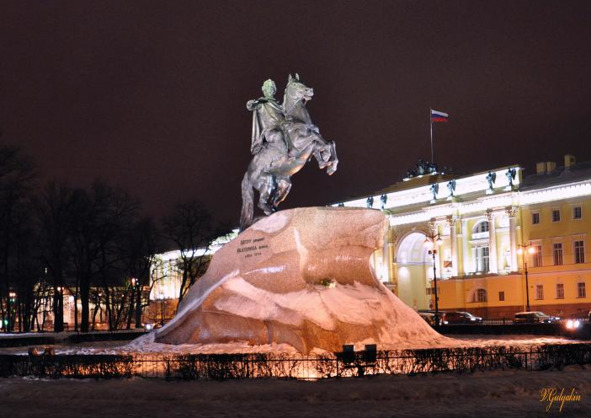
“The Bronze Horseman”: the most known in the world
monument to Peter I — the main symbol of St. Petersburg
First acquaintance
So, so St. Petersburg… And that, and we will go according to its avenues and the areas, stopping (as if a doggie at columns) before each of in the slightest degree interesting structures, monuments … — “look to the right… and now look on the left …", — as crowd of the tourists who became stupid from impressions to whom if only “to be noted” yes to pass away time to the train, and then, so, pompously to speak at home: “about — oh, — I was in St. Petersburg!” — so, perhaps? Of course, no, is not the guide! Give, not hurry, — time at us a pile! — give, it is detailed and… carefully.
Before to meet someone, — to learn who such is what represents, “than breathes”, — not harm to have a look from outside: and what boring whether it is good a figure, whether the blonde… the brunette … — Oh! Where was I? About the city agreed! Well, all right, — about the city, so about the city.
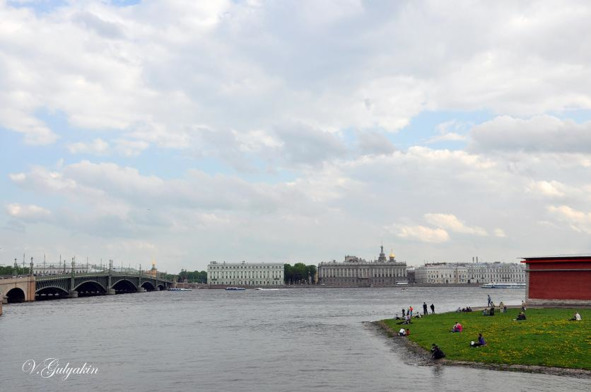
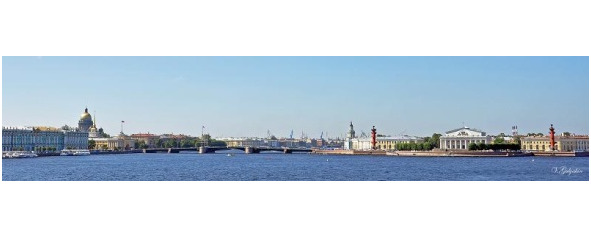
And, nevertheless, — there is in St. Petersburg such town from which it is possible, having taken of the city a broad view, time to survey both immense breadth of stately Neva, and all its historic center: Petrograd Side, Vyborg, Moscow… Spit of Vasilyevsky Island, Peter and Paul Fortress… And the place it — of course, Trinity Bridge.
Those from Petersburgers who managed to visit Paris fall in love with this city to a descent, from the first acquaintance! And, why? — Yes therefore only that in places, — the small such specks of ancient building clamped in a vice of concrete urbanism, — it reminds them native Piter (quite so we call the favourite St. Petersburg). And now imagine thirty square kilometers of magnificence of palaces, monuments, cathedrals … — what specks there! — thirty square kilometers of only one historic center of the city!
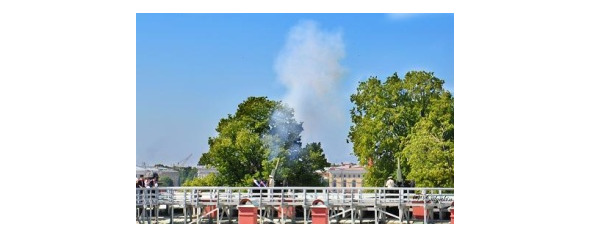
There now, we also reached meanwhile, — we stand just on the middle of Trinity Bridge. Clear solar midday, a clear sky … — and, suddenly! — no, calm down, it is not a thunder. It is a shot of the midday gun, — still the smoke did not vanish over one of Peter and Paul Fortress bastions (so we, Petersburgers, call Peter and Paul, — or rather St. Petersburg — fortress).
It is necessary to tell several words about the midday gun. In the winter its shot is heard even from Sestroretsk (there is such lovely town in thirty kilometers to the northwest from St. Petersburg), — “Moscow time… twelve hours!” — we hear the announcer’s voice, confident in the correctness. But, here in what a question: whether the Moscow this time, in the business? And “counter” is that so-called “Moscow” time is defined at us — in Pulkovo Observatory that near St. Petersburg, on the thirtieth, — “pulkovsky”! — meridian. (This meridian, by the way, in exactly passes almost along Trinity Bridge!) Thus, the exact time is defined in St. Petersburg, corresponding to it “with an accuracy”, — forgive for a tautology, — about one seconds; and the signal is right there reported to Moscow. And “white stone” Moscow gives it for the, “violating” any there author’s rights, and even carries across all Russia! And the fact that its own (astronomical) time advances so-called “Moscow” approximately for 30 minutes is to it “to a bulb”: there are affairs more important. — So, so Russia lives not on Moscow at all, and on St. Petersburg time!
So, Trinity Bridge. Frankly speaking, the tsar Peter was an ardent opponent of any bridges. Having placed the city with the sea, more, than on one hundred islands, the tsar wanted to acquaint all the citizens with water elements also; and for this purpose, on his plan, the only means of crossing of water barriers which in the city there was great variety, boats had to serve. In such simple way he wanted to accustom citizens to water, and it, this water, not to be frightened. (And waters here, — oh as there is a lot of; only imagine that the spillway of Neva makes… cubic kilometer in 7 minutes!)
However the yard which gradually moved to coasts of Neva from Moscow could not appreciate this whim of Peter; and bridges, of course, had to be built. — At first on floats…
The Trinity Bridge in this plan an exception was not. At first, is slightly higher on a current, there was a floating bridge (already not the first in the city), — and there was it in 1803, — which provided more convenient way to the Emperor Alexander I to the “country” palace on the Stone island. This palace flaunts on that island with the same name also now; truth, now it not country, but quite “city”. And so, this bridge first was called St. Petersburg. Then, already in 1827, the bridge (besides, floating) connecting the area to a monument to Suvorov and Trinity Square was built. In the beginning it was called Suvorov, and then renamed in Trinty; it was length more than a half a kilometer and is ornated by the lampposts and a handrail of art casting covered with gold leaf. It is already direct predecessor of that bridge whom we now also admire.
Took construction of the constant bridge seriously: even the international competition was announced. Representation and consideration of projects lasted till 1897; and eventually the Emperor Nicholas II — personally! — approved the project of the French firm “Batinyol”. The choice of the French firm was not casual, at all, — at the same time, in Paris, through Seine put the bridge of a name of the Russian Emperor Alexander III, the father of Nikolay.
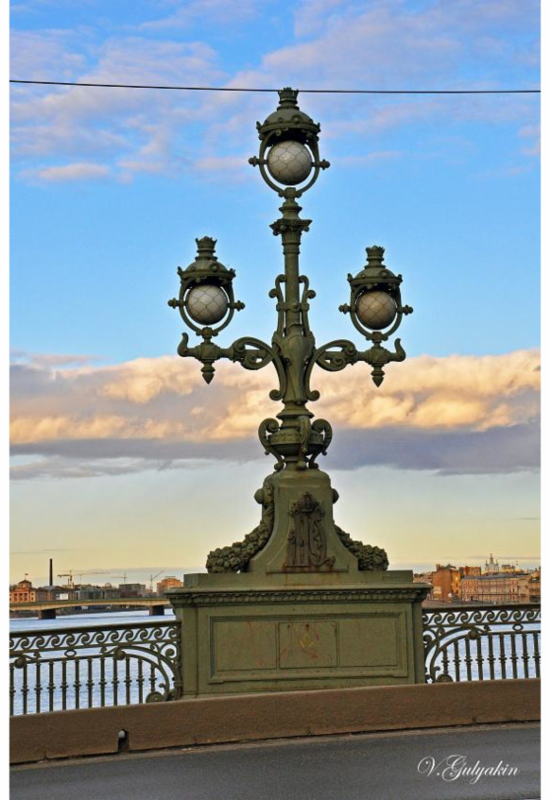
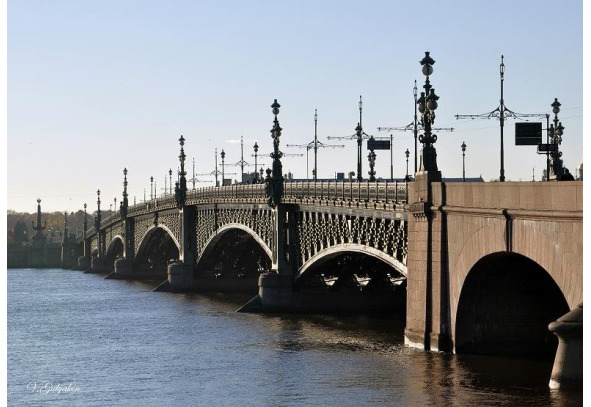
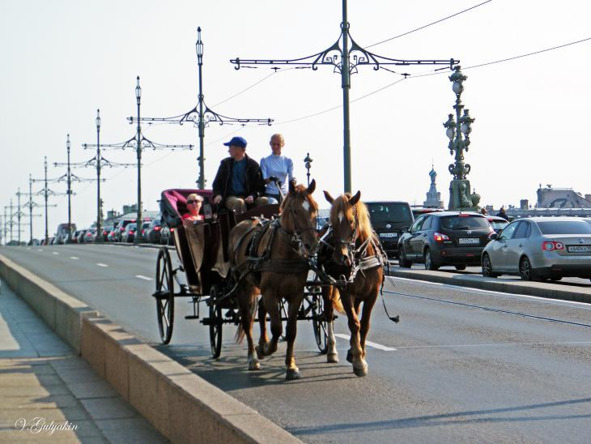
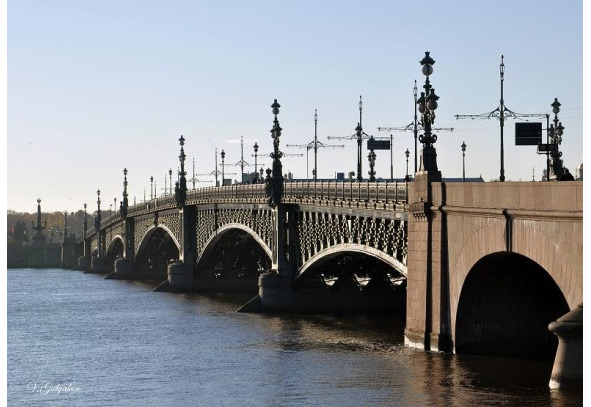
Laying of the bridge was made on August 12, 1897 — in memory of the 25 anniversary of a wedding of the Emperor Alexander III and Imperatritsy Maria Fyodorovna. A bookmark was made in very solemn situation and even in the presence of the president of the French republic! Trinity Bridge was built by 1903. It was majestic: ten flights, adjustable, with a pig-iron protection of art casting, with three-lamp lamps on granite pedestals! It was opened in May, 1903, in days of celebration of the 200 anniversary of St. Petersburg.
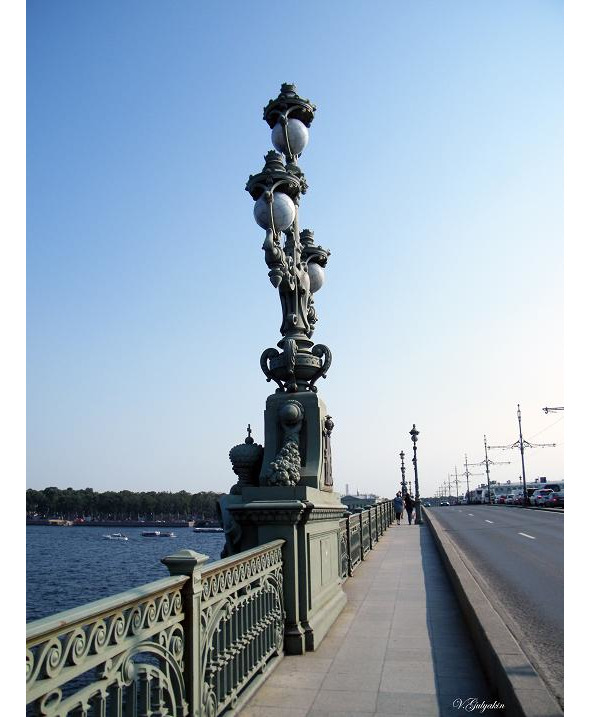
In Soviet period the bridge was called Kirovski, — in honor of Sergey Mironovich Kirov, the First secretary of the Leningrad regional committee of the Communist Party, really, it is a lot of made both for the city, and for its inhabitants. Before construction in 1965 of Alexander Nevsky Bridge it remained the longest in the city (582 m). A northern part of the bridge crosses as I already told you, the Pulkovsky meridian on which is defined “Moscow” time. Some experts claim even that the meridian passes on Trinity Bridge axis. But if it and not so, — that from that? All the same, Trinity Bridge — the most beautiful bridge in our city! You judge…
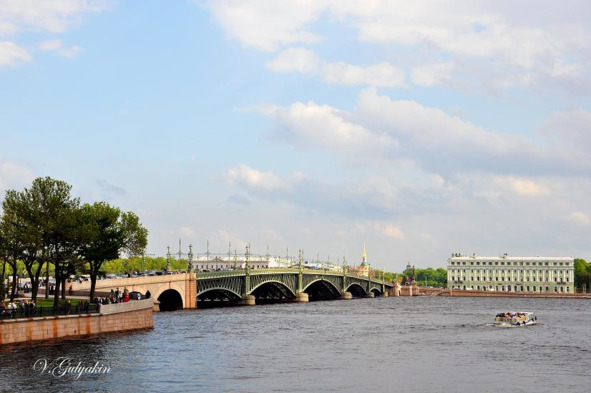
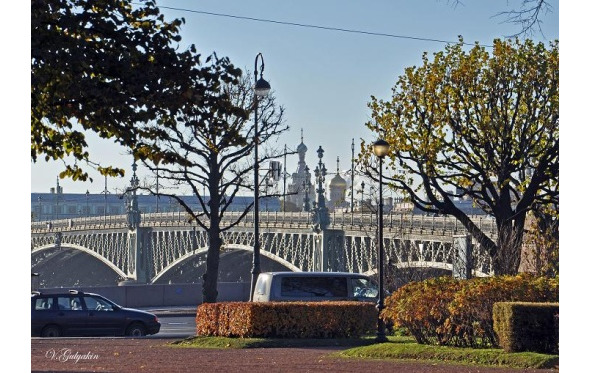
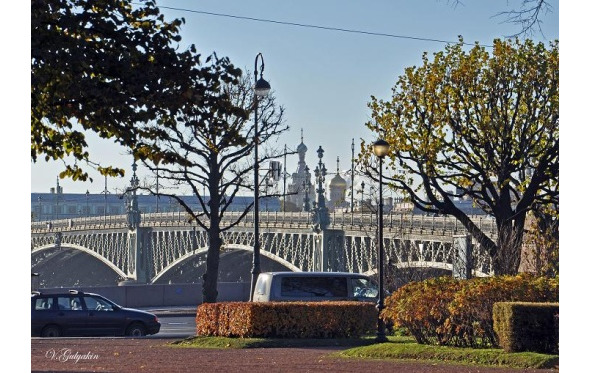
Trinity Bridge. View from the right coast of Neva
Let’s approach closer…
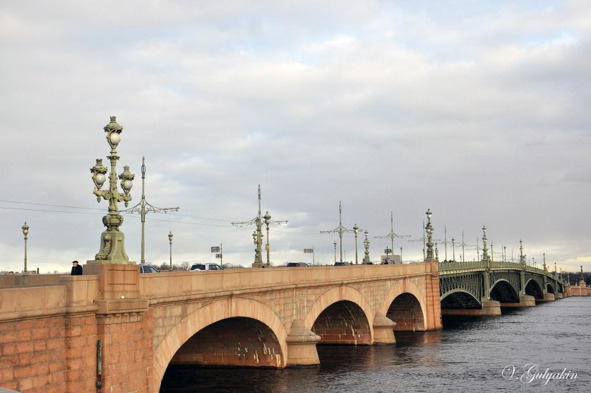
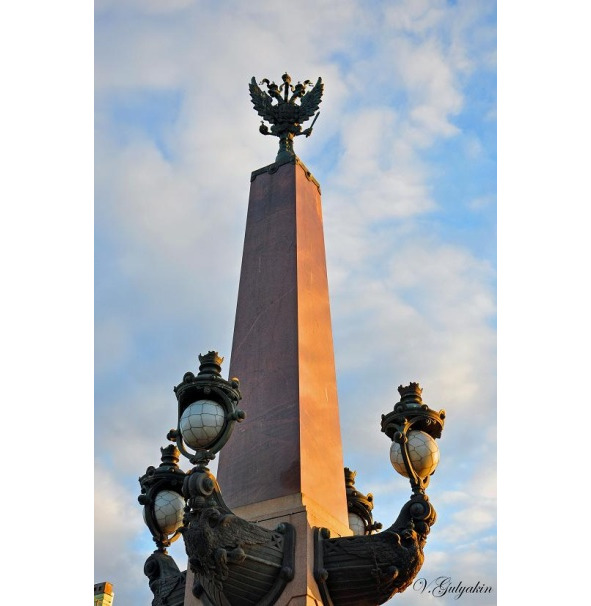
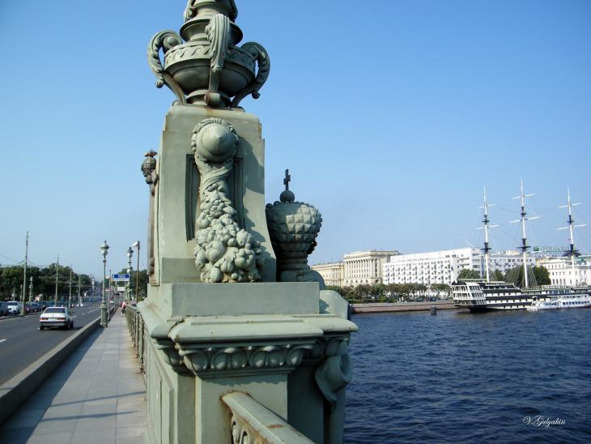
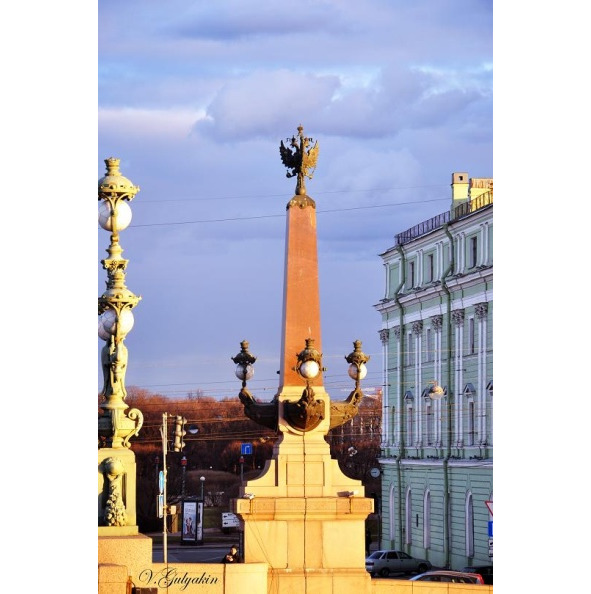
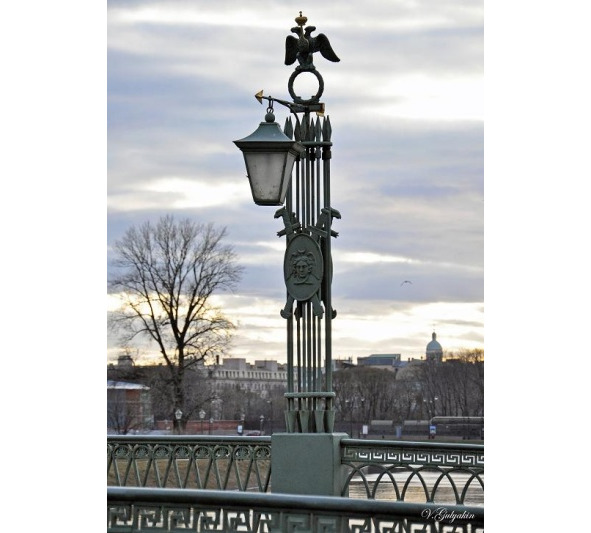
Lampposts and lamps
Lampposts and lamps of the bridge
Here it, our handsome, — Trinity Bridge! View from the right coast of Neva
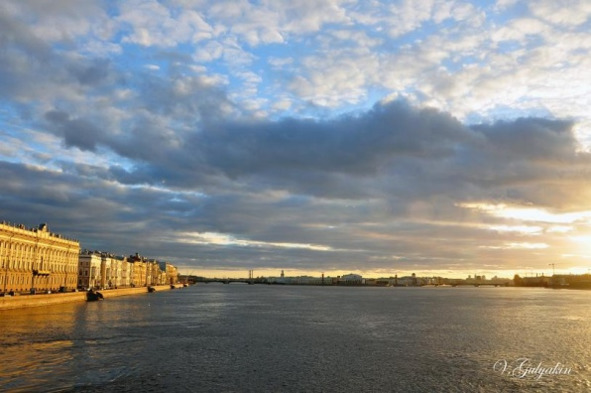
And now, being on the Pulkovsky meridian, from the middle of Trinity Bridge we will admire our St. Petersburg, having surveyed immense breadth of a water scope, granite of the Nevsky coast… a full breast we will inhale the fresh Baltik wind, — it here, it absolutely nearby! — and with great gratitude we will remember Great Peter!
Yes, here, on fenny coast of Neva, all also began with Peter! And then… is then already great “guest workers” of the past, — Domenico Trezzini, Francesco Bartolomeo Rastrelli, Antonio Rinaldi, Jean Baptiste Valen-Delamot, Etienne Falcone, Giacomo Quarenghi, Vincenzo Brenna, Charlz Cameron, Thomas de Tomon, Luigi Rusca, Karl Rossi, August Montferrand … — it is already created then by their genius all that stunning magnificence which is now called St. Petersburg!
Let’s not forget also the Russian architects whose talent was embodied in the stone anthem to Great City which stiffened in centuries on the highest note! — Savva Chevakinsky, Yury Felten, Vasily Bazhenov, Ivan Starov, Andrey Voronikhin, Andreyan Zakharov, Vasily Stasov, Konstantin Ton, Andrey Shtakenshneyder, Peter Clodt, Alexander Bryullov … — low to all of them bow!
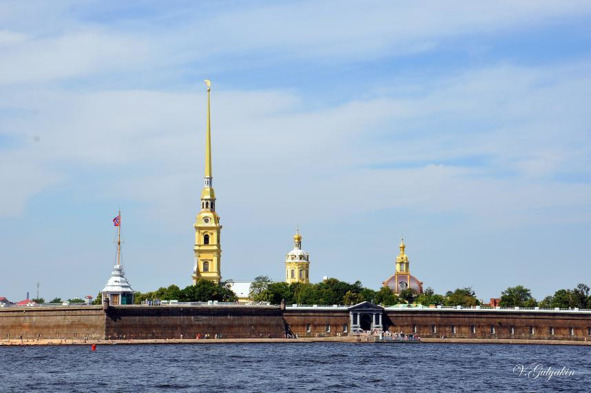
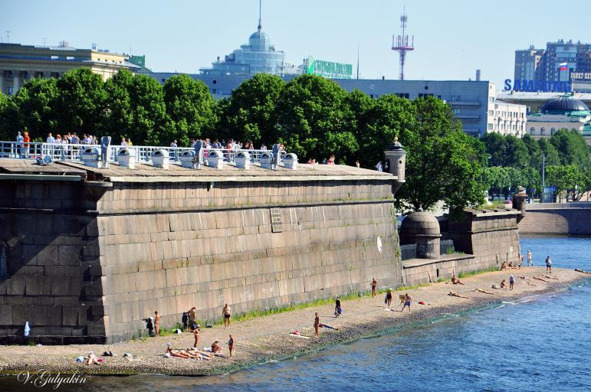
Let’s begin to admire the city, of course, from the place of its birth — from the St. Petersburg fortress which bastions were approved on the right coast of Neva, to the left of Trinity Bridge. And then and we will go clockwise…
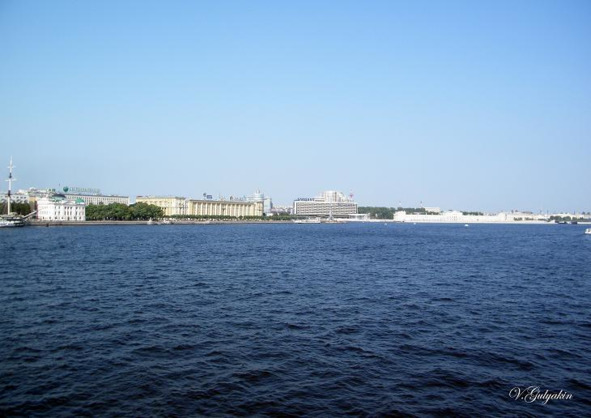
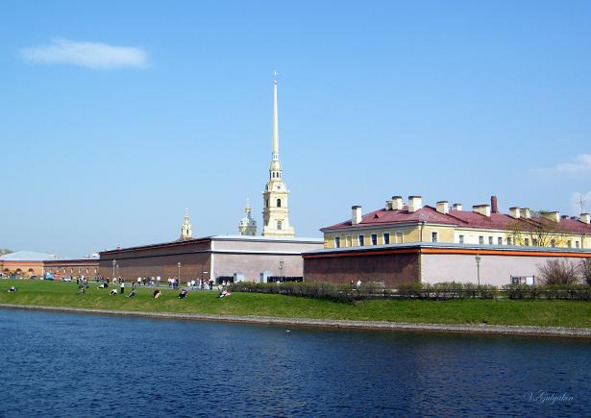
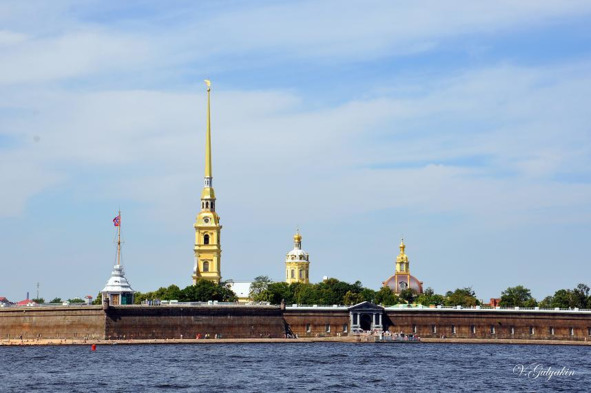
Panorama of St. Petersburg (Peter and Paul) fortress, on the right coast of Neva (view from Trinity Bridge; the bridge — on the right, off-screen)
Architectural fragment of the bridge (Peter and Paul Fortress — at the left, off-screen).View from side of the left coast of Neva
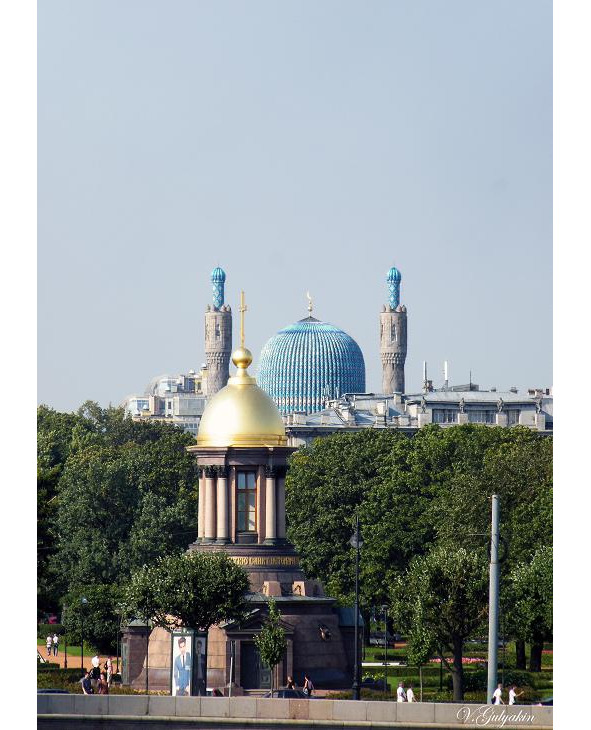
On a background — a dome of the Tatar mosque. View from the bridge, from outside left coast of Neva. (The bridge — at the left, off-screen)
Right coast
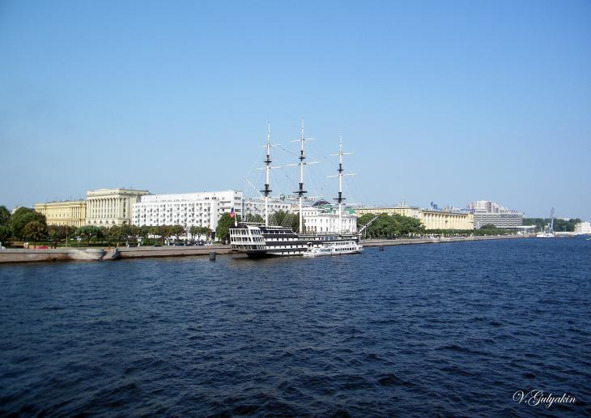
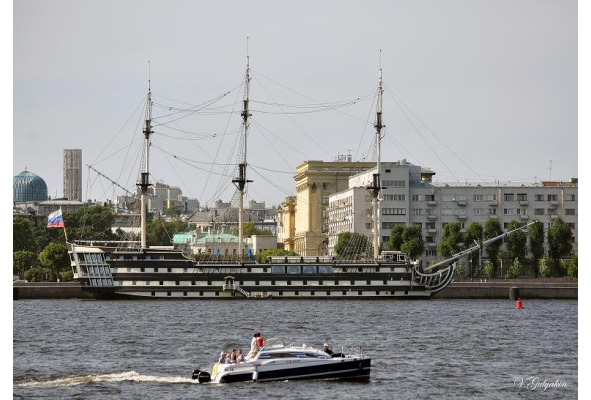
Right coast of Neva (views from The Trinity Bridge)
Panorama of The Petrograd Side (the same right coast of Neva, to the right of the bridge)
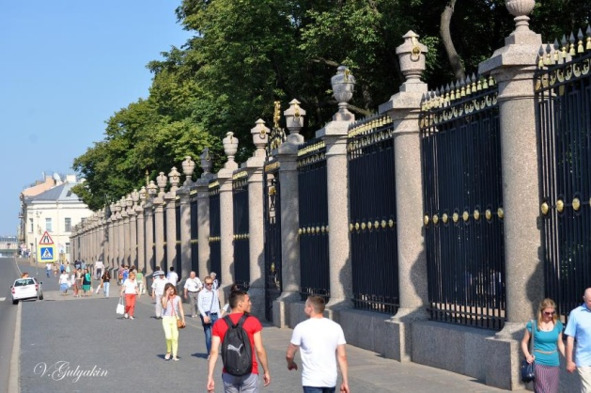
To the left of The Trinity Bridge the strip of greens of The Summer garden is seen (it is already left coast of Neva)
The Trinity Bridge. Left coast of Neva
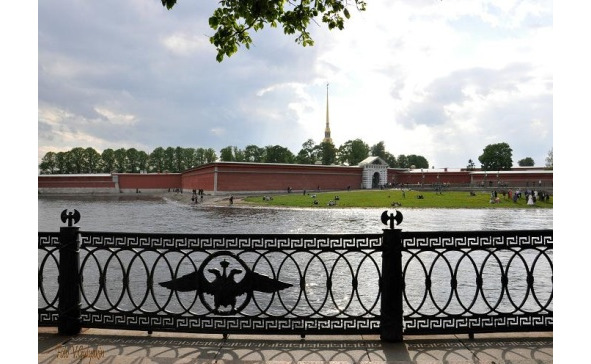
Fencing of The Summer garden well-known for the whole world
On a background — a left bank of Neva
Protected at the left, protected on the right…
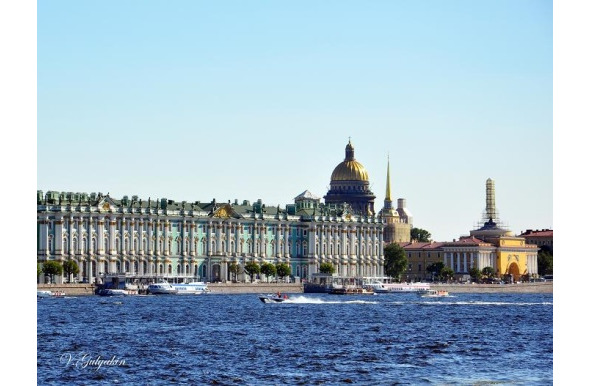
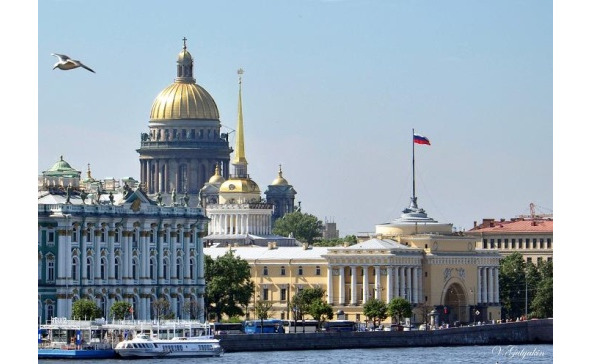
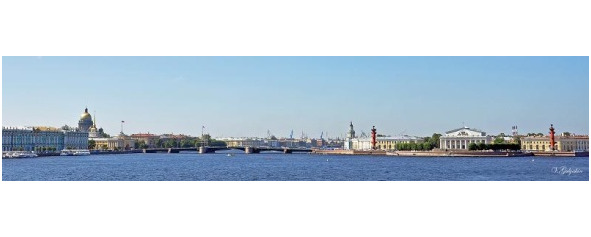
Winter Palace, St. Isaac’s Cathedral and Admiralty…
Even closer…
Panorama of The Winter Palace, Admiralty and Spit of Vasilyevsky Island
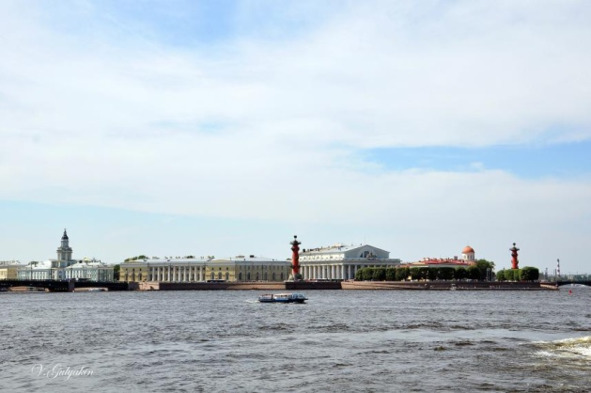
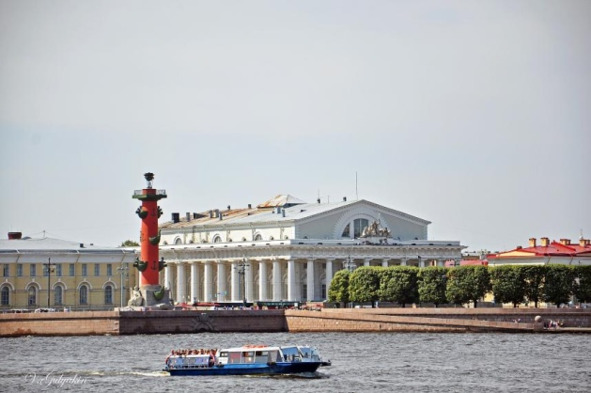
Here it, Spit of Vasilyevsky Island well-known for the whole world
The Saint Petersburg Stock Exchange building
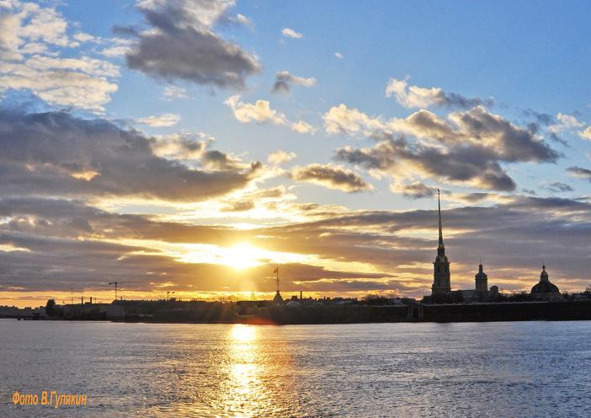
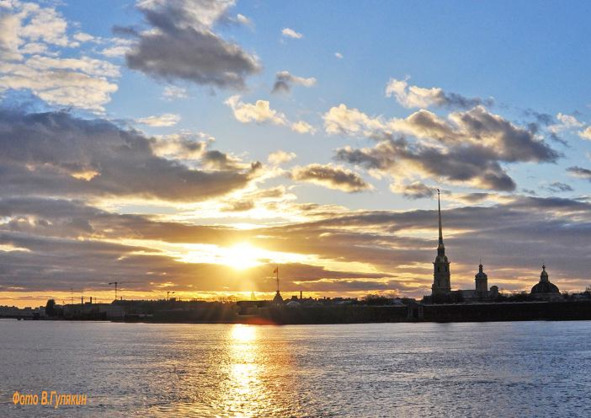
Also we were turned back into place. And again Peter and Paul Fortress. Evening falls by St. Petersburg
So, the first acquaintance, with St. Petersburg took place. And now, dear readers if you had a desire to learn about this Great City more, we will go further.
Having surveyed the historic center of St. Petersburg from Trinity Bridge, “right on the spot” — and most of guests arrives in our city, as a rule, from the South (from Moscow), and it is simple to them not to bypass this bridge, — now “from the place to descend”, to us, nevertheless, it is necessary: we pass from “nodding” acquaintance to The Great City to deeper which for the majority, it is sure, will turn into great friendship. So, we will descend from Trinity Bridge and we will go there from where the city “eats-went”.
And so far we will look once more at our handsome, — at The Trinity Bridge.
The Trinity Bridge. View from the right coast of Neva
…Like the good old days!
It is a little history
Rainy October, 1702. Troops of the associate and the friend Peter I, the general field marshal Boris Sheremetev take storm the Swedish fortress Noteburg. Peter participates in this nice business! No, not in the Commander-in-chief rank — save, God! — and only goal-scorer captain: he has no need “to be stuck out”, he and so — Peter The Great! This fortress, having a reputation for unapproachable hitherto, costs on the island in the mouth of the Neva River and, together with other fortress, — Nienschanz, — that is lower on a current, controls, and, speaking simply, — tightly bars for Russians all waterway from Lake Ladoga to the Baltic Sea. In half a year, at the beginning of May, 1703, the Nienschanz is given. Without fight.
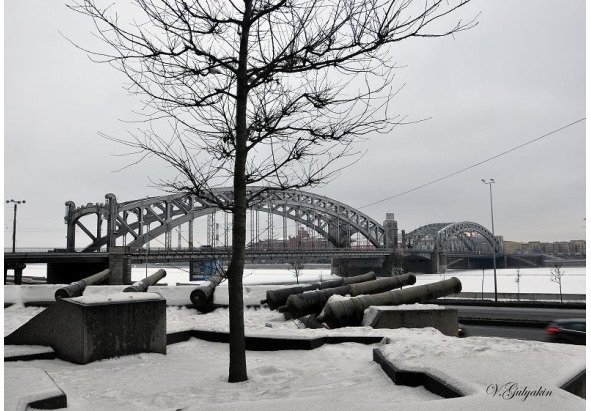
Symbolical reconstruction of fortress Nienschanz
Well, on the lands which are just won from the Swede, on this major water communication, it is necessary to be fixed. Prompt in the rushes Peter makes the fast decision! And here, on May 16, 1703 — remember this blessed date (in old style)! — marshy coast of the Nevsky delta are disclosed by amicable knock of axes and squeal of saws: the forced construction of fortress began. — And, of course, on the island, that around water! The island is this, known to Swedes as Lust-Eland (“cheerful”), and to Finns — Enisaari, by Russians it was nicknamed Hare. But, about it a bit later…
Generally, St. Petersburg is located more than on 30 islands (and to these nobody found time to bring full clarity in this question: some bring their number to the 42nd if to consider also artificial). In the city 342 bridges (and together with suburban, there are a lot of more than five hundred: call even number 580). Five hundred bridges which hung over nearly fifty rivers, channels, small rivers and channels — than not Venice!
Let’s return, however, that May day. “In the 16th day of May (in a week of Pentecost) fortress is put and called Sanktpiterburkh” — so about this event the tsar Peter will write! This date — on May 16 (on May 27 on new style) 1703 — is also the Birthday of St. Petersburg!
Dear reader, at you can arise a reasonable question: and why, actually, on May 27, but not the 29th … — upon transition from the Julian calendar, — by the way, one of Peter’s reforms to which time in Russia was considered not since Christmas, and… from creation of the world! — and so, upon transition from the Julian calendar to Gregorian on which there lives the whole Europe it would be necessary to add 13 days, but not 11. And it is absolutely fair … — for start date of the twentieth century. To dates of the nineteenth century agreed to add only 12 days; for the 18th — already 11. And for all other centuries leaving deep into stories add 13 days, again “not to take a steam bath”. There is such piece!
The small island on which put fortress is separated from the neighboring huge island rather narrow, but quite fast by a channel. From this blessed island, all also began with it. There, on this small island, we will also go.
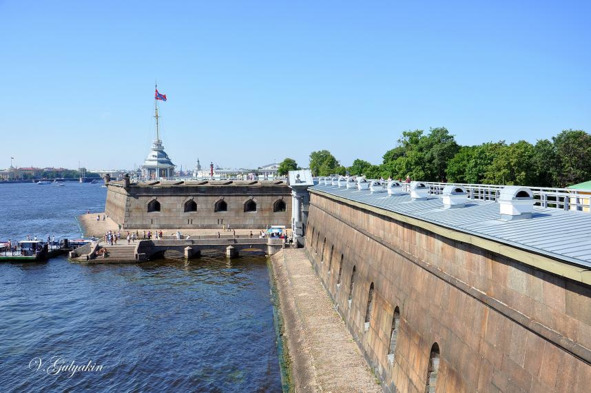
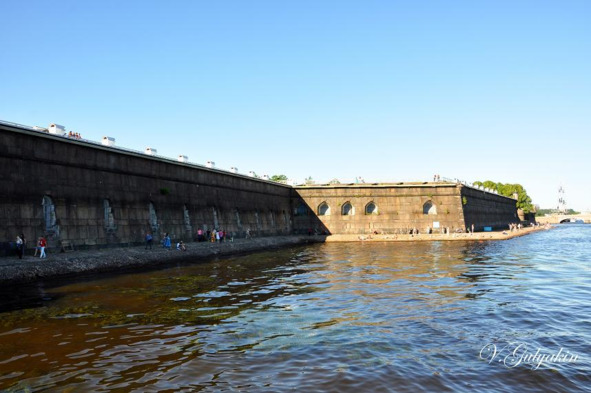
Type of The St. Petersburg (Peter and Paul) fortress from a channel. Big Neva — at the left (off-screen)
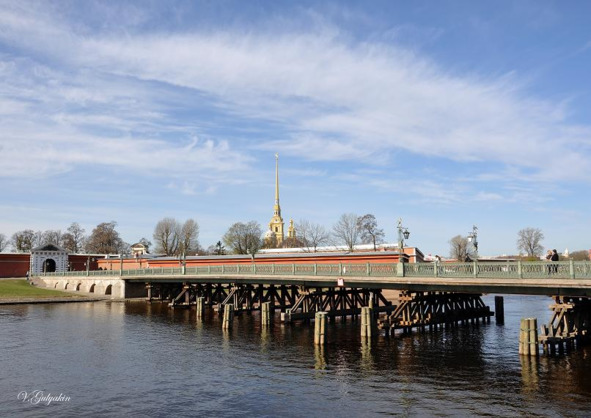
And so “Peter and Paul Fortress” at a descent from Trinity Bridge looks
“Storm” of The St. Petersburg Fortress
Well, we start “storm” of the Peter and Paul Fortress … — quite so we, Petersburgers, in a familiar way we call Peter and Paul and if absolutely officially, — St. Petersburg — fortress. Before starting this no laughing matter, — detailed acquaintance to fortress, — investigating all its back streets and being inspired by genius of architectural concepts, we will approach at first Ioannovsky Bridge, to very first of the St. Petersburg bridges. However, in those far times it was called Petrovsky…
Ioannovsky Bridge through the Kronverksky passage (through that to a channel)
On one of pile ice-cutting blocks before the bridge the figure of “the hare who escaped from a flood” established here to the 300 anniversary of the city is well distinguishable. On one of legends, during a flood the hare found rescue, having jumped on a boot to the tsar Peter… Here, tourists “for luck” also throw coins, trying to get a hare directly into a pan!
Ioannovsky Bridge — one of two ways conducting in The Peter and Paul Fortress.
One more symbol of the city: the hare who escaped from a flood
The bridge is thrown through the Kronverksky passage and connects the Hare island on which The Peter and Paul Fortress is located, to the Petrograd island where we now also are, having descended on it from Trinity Bridge.
Petrovsky Bridge, namely so it was called in the beginning, arose at the same time with construction of The St. Petersburg fortress, was adjustable and leaned on wooden barques. Then, in 1706, instead of the floating bridge appeared lifting, already on the wooden piles replaced subsequently with stone foundations. Since 1887 began to be called Ioannovsky — according to the name of one of fortress ravelins.
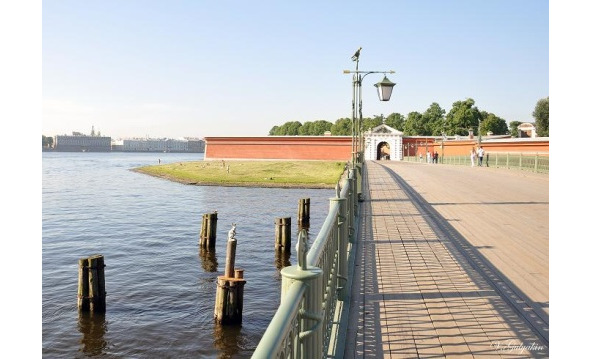
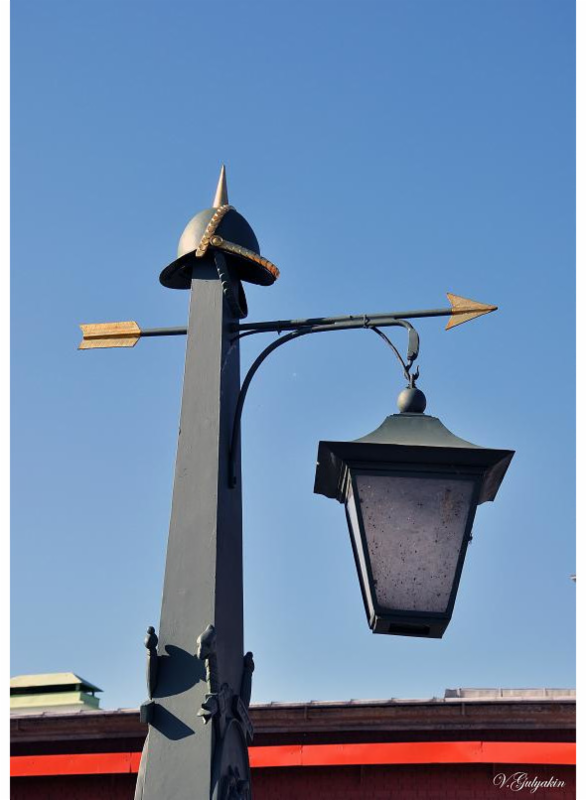
A little more than 150 meters long and 10 meters wide, the bridge does not suppress the sizes, but its wooden flooring which is boomingly “giving” steps, a decor of a protective lattice with “semi-antique” lamps… Yes, link of times is felt here — mighty well!
Lamps and fragments of a decor of a protective lattice of Ioannovsky Bridge
Yes, link of times is felt here…
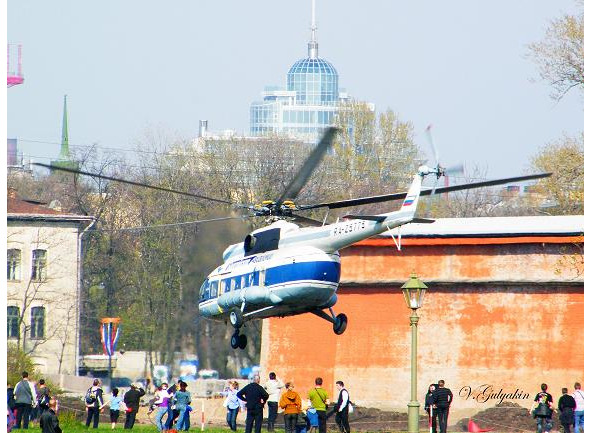
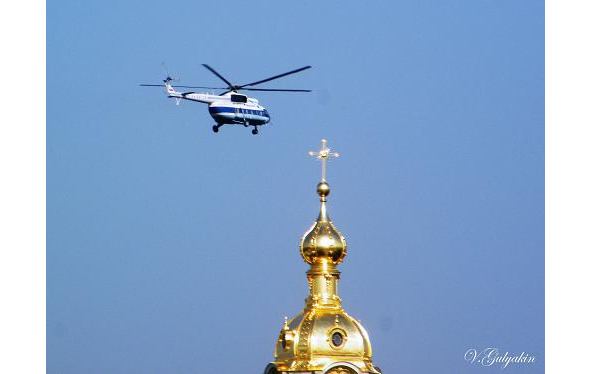
Footpath, to the left of the bridge, winding along external walls of fortress, conducts directly to the city beach, and the path which is running away to the right — to the helipad from where it is possible to make flight over the city.
We get into the helicopter…
…Also we fly
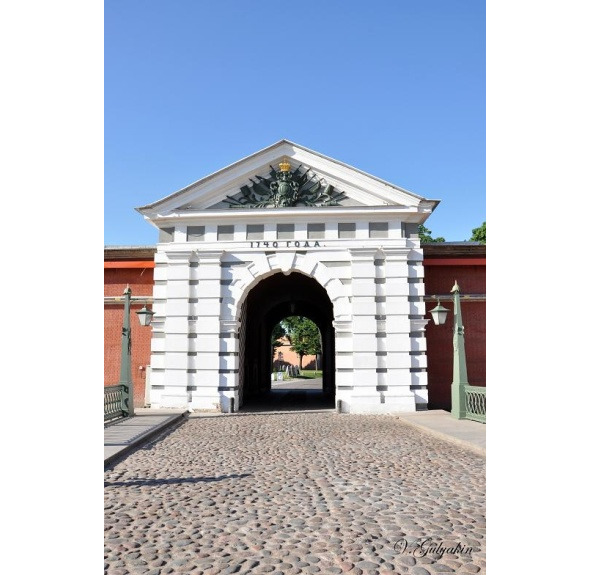
No, we will not depart, and we will go directly, anywhere without turning, — in fortress. And here, we go on a wooden flooring of Ioannovsky Bridge, listening attentively to boomingly given steps, and we go to gate of the Ioannovsky ravelin. Their cool twilight as if foretells a meeting with history…
Nevertheless, why for Peter this fortress, never, besides, not being involved in battles was necessary? What forced him which just took two terrible fortresses at Swedes — Noteburg and Nienschanz, — to urgently build one more? Besides, the Nienschanz located in the median Neva Current as well as possible corresponded to a role of customs “latch” for collection of duty from all who will carry down the river to Russia goods. And militarily fortress could serve still, covering future city from the West, be built it under protection of its walls. And Noteburg, — fire of its serf artillery would stop any who will dare to threaten the city from the East. But, probably, in that there was also Peter’s idea, — “we will threaten the Swede from here!” — that it was also not going to defend, he looked further!
Peter needed the fleet. Only the military fleet could make Russia the great sea power — “a leg firm to become at the sea”! But whether the fleet which construction only still began could, and crews of the ships are untrained, — whether such fleet could resist to skilled Swedes in the high sea? And where to cover the ships having big draft from the perfidious opponent, — not in narrow bends of the river?! — No, the Nienschanz for this purpose was no good at all! — The big water area, broad river lands is necessary. At the Gulf!
And here, if to construct fortress on the island, in the delta of Neva, — in that place where the river, being divided into two deep sleeves, forms the widest smooth surface of quiet water, — here then pass from the sea will be closed reliably!
“For several days the convenient place is found to that…” — Peter in the diary will write down. The island on which it decided to build fortress from three parties is washed by waters of wide Neva, and from the neighboring big island it is separated quite fast a channel, representing a natural defensive barrier. Here on this island the first stone of the city of Saint Apostle Peter was also put… and there was it, as we know, in the 1703rd year A.D., May, the 16th day…
Speed with which construction of fortress began, did not leave any doubts in Peter’s determination to embody the grand designs. In the beginning all works were conducted only by soldiers. However, it became soon clear that 15 thousand soldiers are obviously not enough, and it began to be gathered work people from civilians. In total about 20 thousand people participated in construction of fortress. By fall construction of fortress was fully complete. — It is an example and a reproach to modern builders! — And on its terrible bastions there were 300 tools!
Earth fortress, in an original form was built according to the joint plan of Peter and the French military construction engineer Joseph Lambert de Guerin and represented the Russia’s first military construction of not tower — bastion! — type. — The ledges bastions located on corners hexagonal (extended from the West to the East) fortresses, unlike towers, allowed to conduct circular firing. Fortress was built in the form of earth “verok” — the strengthenings capable to conduct independent defense, had 6 bastions connected by curtains, 2 ravelins and is already connected to Beryozovyo the island (with the present Petrograd Side on which we just were) Petrovsky Bridge.
Watched construction of bastions and directed works — the tsar Peter, princes Menshikov, Golovkin, Zotov, Trubetskoy, Naryshchkin. Then, already dressed in a stone, in such sequence these bastions also began to be called (starting with Monarchic, southeast, and further, counterclockwise).
In the first years the fortress and the city were synonyms and therefore, its official name — Sankt-Pterburgskaya. Then, with construction of the wooden Church of the Holy Apostles Peter and Paul consecrated in April, 1704, fortress began to be called Peter and Paul…
Fortress was not involved in one battle and therefore perfectly remained, being a unique monument of the late Middle Ages in Europe.
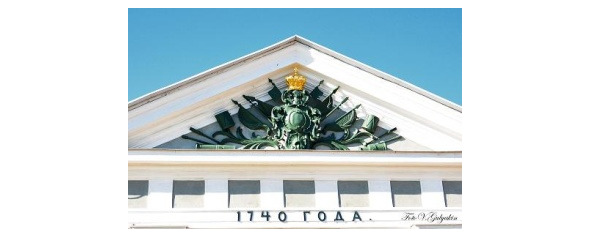
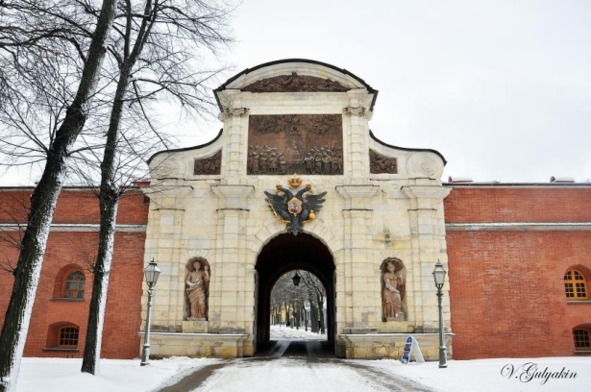
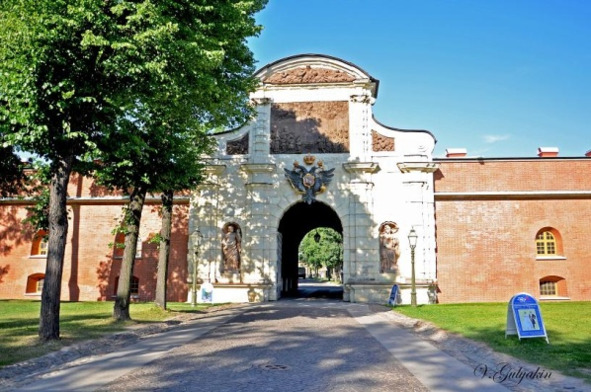
Well, — now at way! And our way — on Ioannovsky Bridge, to Ioannovsky gate… Ioannovsky ravelin. — All these names — in honor of the tsar Ioann V, the elder brother (on the father) Peter I, the father of the empress Anna Ioannovna during whose government these gate were built. They became the last stroke of completion of all works on fortress vestments in a stone. And there was it in 1740 what also the date imprinted over an aperture of gate testifies to.
Fortress “put on in a stone” already on Domenico Trezzini’s project. This process went gradually, since 1706. As a result height of walls reached 12 meters, and their thickness — more than 20! Now each wall began to have internal and external speak rapidly between which rooms casemates are placed. Direct sites of the walls connecting bastions — curtains, — are cut through by serf gate.
Trezini is this great guest worker of the past — played a big role in construction of St. Petersburg of Petrovsky time, having given to Russia the whole 30 years of life!
The Ioannovsky gate
Pediment of The Ioannovsky gate
Domenico Trezzini, carrying out supervision over construction of stone walls of fortress, invited to participation in design of its separate fragments of various experts. So the military engineer count Burchard Christof von Muennich better known as Hristofor Antonovich Münnich, the general field marshal, guards the lieutenant colonel of Preobrazhenskoye of leyb-guard of a regiment became the author of the project of Ioannovsky gate. By the way, Münnich, — the German! — all life stood up for increase to the Russian experts to level foreign the same rank… getting paid twice more. And, — thanks to it! — achieved, eventually!
Let’s remember the kind word of the foreigners serving Russia faithfully: it both Scots Yakov and Robert (Roman) of Vilimovichi Bryusa, and Germans Rodion Hristoforovich Bour, Burchard Christof Muennich… later — besides Germans Mikhail Bogdanovich Barclay-de-Tolly, Peterr Khristianovich Wittgenstein, Leonti Leontyevich Bennigsen, Alexander Samoylovich Figner, Ivan Hristoforovich Benkendorf, Ferdinand Fyodorovich Vintsingerode … — Honour to them both glory… and low bow!
So, we entered The St. Petersburg fortress. Through Ioannovsky gate. In The Peter and Paul Fortress, — namely so we, Petersburgers, call it, — is what to have a look at! It and Ioannovsky gate through which we just entered… and the oldest Petrovsky, only triumphal arch constructed at the beginning of the 18th century (in 1718), on the Trezini project… The Nevsky gate with Commandant’s pier built in a stone in the early twenties of the 18th century (besides on the Trezini project).
Through these gate from the fortress serving also prison, prisoners went across Neva to the mournful way… The matter is that soon after construction, The Peter and Paul Fortress began to be used as prison for political criminals. Peter I’s son tsarevitch Alexey became the first, perhaps, to them. Then walls of its casemates were disclosed by secret knocks of the prison alphabet of Decembrists… After casemates of fortress writers and publicists Dostoyevsky, Chernyshevsky, Gorky… commoners, narodovolets did not pass…
In the beginning under prison bastions and casemates were taken away, but then, already at Catherine II, in the territory of fortress built the special prison building — the Confidential house of the Alekseevsky ravelin. In the second half of the 19th century also Trubetskoy’s prison of a bastion was built. There were only solitary confinements for especially dangerous political prisoners. Bauman, Trotsky, Alexander Ulyanov… is not a complete list of her “lodgers”.
The February revolution of 1917 directed new “settlers” here — imperial ministers, After the Bolshevist revolution in October, 1917 members of Provisional government became prisoners of prison already. At the Soviet power in Peter and Paul Cathedral prayers and services stopped, and Trubetskoy’s cameras of a bastion became prison liquidating: in the territory of fortress mass executions began to be carried out.
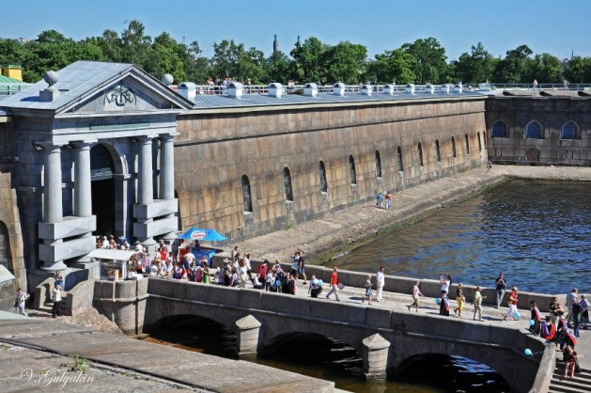
Petrovsky gate — the first Triumphal arch of St. Petersburg
Here such they, Petrovsky gate, in violence of greens
The Peter and Paul Fortress. The Nevsky gate
The Nevsky gate and Commandant’s pier
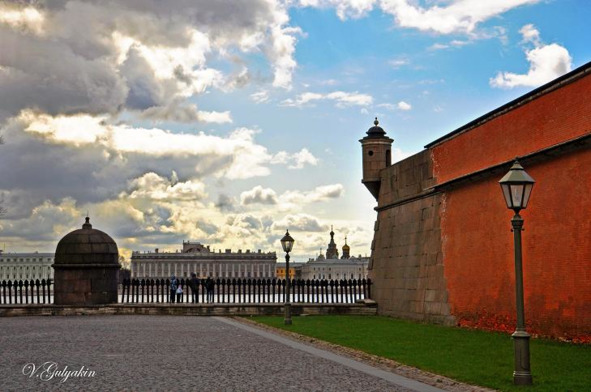
So, we entered fortress. Where will we move in the beginning, — to the right, to the left? Here so much interesting! No, in the beginning, of course, we will rise by the Monarchic bastion and we will admire the stunning, world-famous “Nevsky panorama”. It, from bastion height, will appear before us in all the beauty!
The Nevsky panorama from height of the Monarchic bastion
The Monarchic bastion
All it, Monarchic…
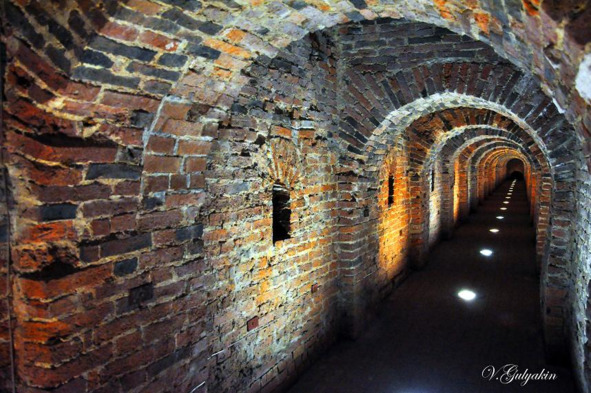
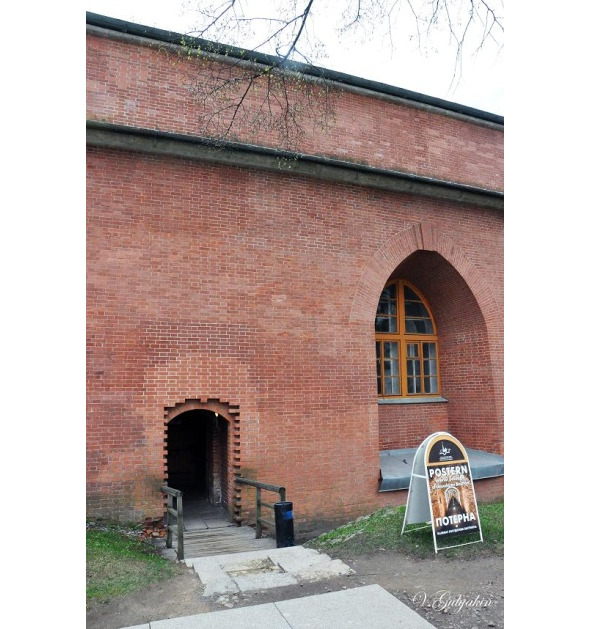
The monarchic bastion was dressed in a stone on the Trezini project, with Münnich’s participation, after Peter, by 1732nd year. It had a secret underground poterna on which it was possible to get out imperceptibly of fortress (in case of its siege) to Neva.
Poterna: the secret underpass conducting to Neva
Entrance to a poterna from fortress
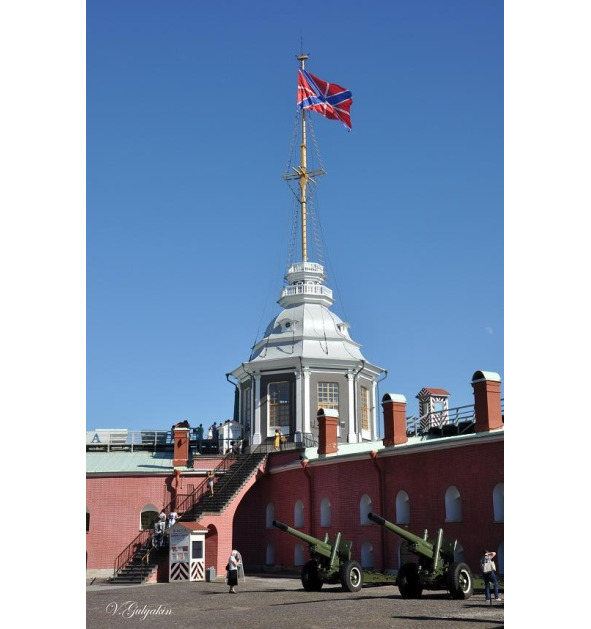
Here famous Naryshkin a bastion from which by the long tradition started since the beginning of the 18th century the “midday” gun scorches; and the Flag tower, which purpose — to notify the population, — well, say, about floods which are frequent here.
And that it the shot announces in St. Petersburg the midday which is given out by Moscow in a midday… but for some reason — on “Moscow time” you learned about the “midday” gun in last meeting, on The Trinity bridge. There is an opportunity to contemplate this gun and its shot directly, close.
Naryshkin bastion and Flag tower
The Flag tower from fortress
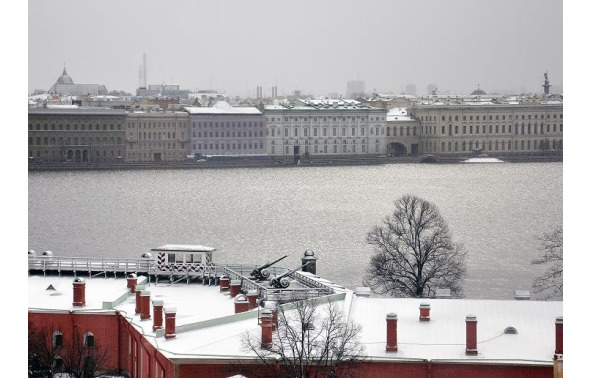
Naryshkin bastion. “Midday” guns
Shot of the “midday” gun
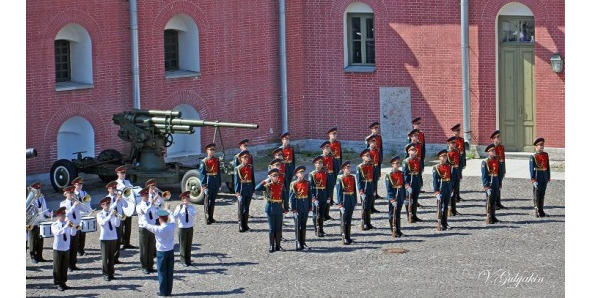
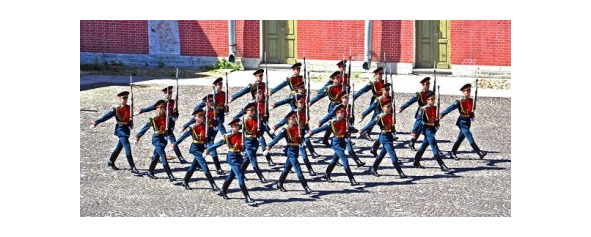
Naryshkin bastion. “On guard!”
Guard divorce ceremony
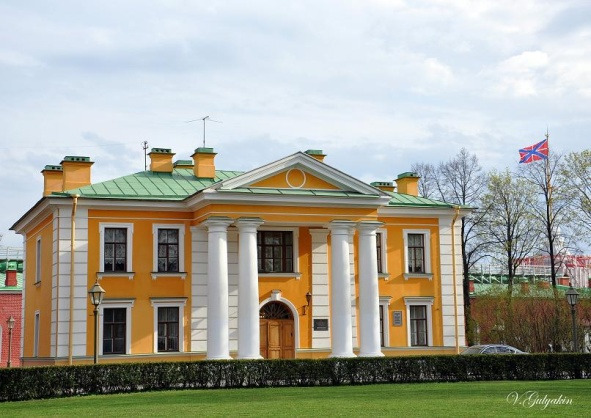
In the Peter and Paul Fortress, except bastions and fortifications, it is possible to see also a set of other structures, — inhabited and auxiliary. Here and buildings of the Main treasury, the Officer meeting, archives of the Ministry of Defence, the Guardroom, and it is equal with them and at home: Engineering, Commandant’s, Headquarters-officer, Church … — Well it, frankly speaking, on the fan, though, you see, some types…
Building of the Guardroom, for example…
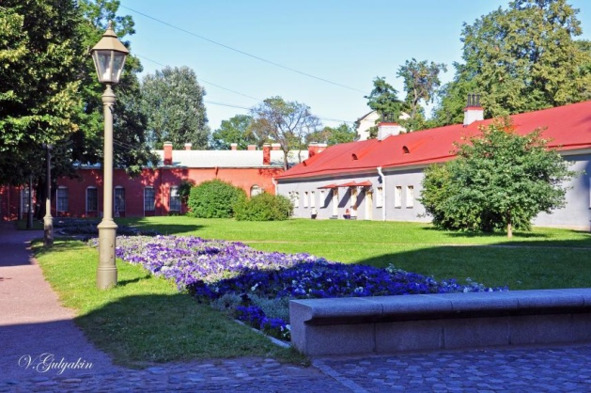
Or this charming recess…
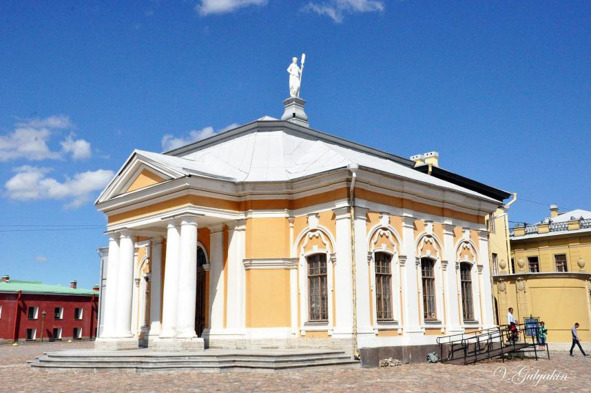
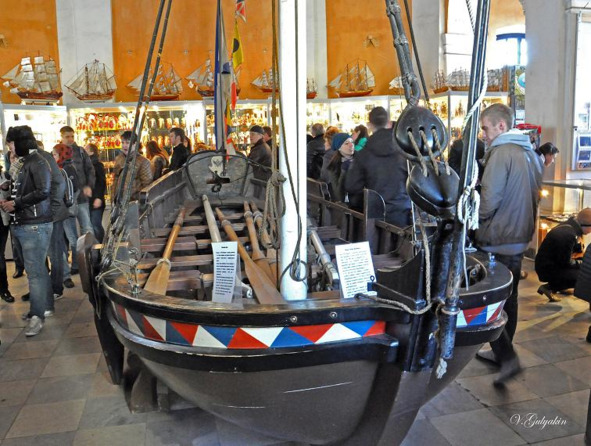
And here, the Boat house in which the boat of Peter the Great — the grandfather of the Russian fleet was stored! — perhaps, to pass it is more useless. They say, the architect who designed this construction in 1761 a little missed in sizes… and for placement of boat in a lodge it was necessary to break walls. Here therefore, probably, boat is in Central Naval Museum now, and here only its copy…
The Boat house where the boat of Peter the Great — “the grandfather of the Russian fleet” was stored
Here itself “the grandfather…” — is more faithful, the copy
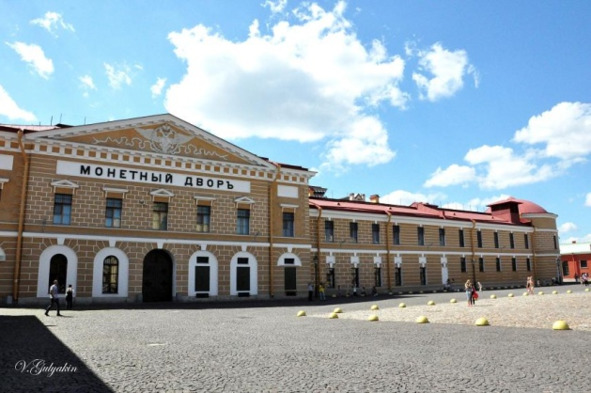
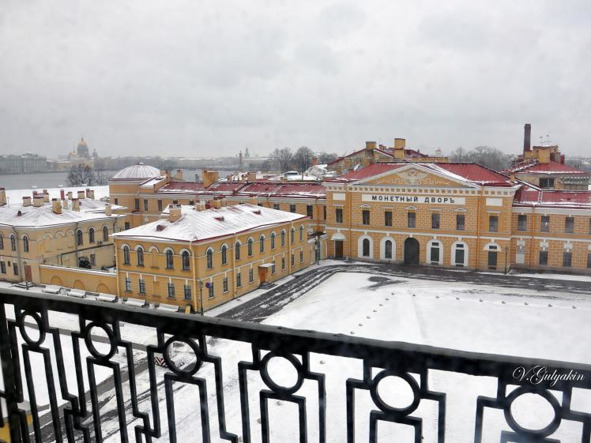
Well and, of course, Mint … — one of the world’s largest minting medals (including and medals from precious metals) and coins. It was transferred here, to The Peter and Paul Fortress, from Moscow Peter in 1724 and is one of the oldest industrial enterprises of St. Petersburg. Nowadays it is the leading center of stamping of medals and awards of Russia! The building of Mint found a present look already at the Emperor Paul I.
Here it is appropriate to notice that modern coins of the Russian Federation of identical advantage are not equivalent at all. The matter is that on coins there is a brand of the producer: small such badge. And so, on coins of Moscow Mint, microscopic “MMD” is put, and the Mint of St. Petersburg puts “SPMD”. I think, it is easy to guess what coins are “more expensive”. At one time asked delivery to give in shops only “ours” … But with itself to drag a magnifying glass whether you know… and not all understand…
The Saint Petersburg Mint
Type of Mint from the bell tower of The Peter and Paul Cathedral
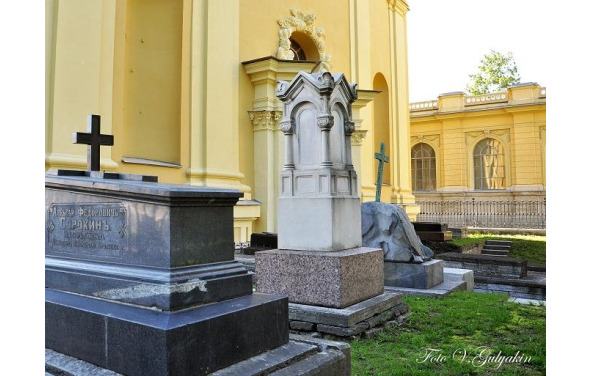
Here, we also approached the most important of what is in The Peter and Paul Fortress. — Let’s visit the Commandant’s cemetery in the beginning.
The position of the Commandant of The St. Petersburg fortress in the 18th century was one of the most important. The matter is that the Commandant of fortress was at the same time and the Commandant of St. Petersburg. It was the third party in the city, — after the Sovereign and the Governor general. Commandants of fortresses of Shlisselburg, Koporya, Kronstadt, Vyborg, Keksgolm and Yamburg were under its supervision. Commandants were recommended to live in the territory of fortress; buried them mainly here, in fortress. From 1703 to 1917 31 Commandant was replaced; at the cemetery it is buried 19 of them. Let’s call only those who were on this post at the time of Peter’s government:
— Renne, Karl Ewald, — from 1703 to 1704;
— Bruce, Roman Vilimovich, — from 1704 to 1720;
— Chemezov, Mikhail Osipovich, — from 1720 to 1723;
— Bakhmiotov, Yakov Hrisanfovich, — from 1723 to 1725.
The commandant’s cemetery of The Peter and Paul Fortress — one of the oldest in St. Petersburg on which both Catholics, and Lutherans, and Orthodox Christians found rest…
So, Karl-Ewald von Renne was the first Commandant of The St. Petersburg fortress. For what merits in front of Russia did this person receive so great honor and a position? It is necessary to dwell upon it a little.
Beginning of July, 1703 … In the early foggy morning from Vyborg the group numbering 4000 people acted, at 13 tools, and went towards The St. Petersburg fortress built by Russians on the lands recaptured off its majesty, the king Karl. The 69-year-old major general Abraham Kroniort ordered group.
The order given to the general by Karl was categorical: to beat out hated Muscovites from the territory of the kingdom and to specify, at last, to it to “lanky Peter” its place! Went without being thawed what to be afraid of: to the river of the Sister one lakes yes of the swamp, and only rather narrow track along the coastline, — the enemy here you can’t find! And if to wait for Russians, then only for the Sister…
The column crept on rather narrow track, coiling a huge blue snake. Rumbled on tool potholes, charging boxes jumped up on hummocks…
The group approached on July 7 the Sister’s bend. The river, being curved by a long loop to the South, again then bore the waters to the North soon to dump them to the Gulf of Finland. Here also planned a crossing, the benefit, there was a bridge.
And at this time Peter anticipated by spies, on July 7 — personally! — already brought six regiments: Preobrazhensky, Semyonovsky Guards infantry (under guidance of the major general Chambers) and four dragoon (Baur, Renne, Kropotov, Malines) to the same bend of the river, but from the South…
And here, they met — Swedes and Russians. It happened on July 8 (on old style) 1703 — the event which forever put an end to the Swedish occupation of primordial Russian lands in suburbs of just born St. Petersburg (that in 1721 was fixed by the Nishtadtsky peace treaty). From this point the Russian history of the lands which are once occupied by Swedes begins.
Troops met, — “green” with “blue”! Without waiting for the lagged behind infantry, hot Karl Renne led dashing the dragoon directly to the bridge. Whistle of kernels, squeal of a case-shot, neighing of the gone mad horses, — everything mixed up in terrible roar of fight! Whether yes the impact of the Russian daredevils could only stop fire of the Swedish tools!
“Hurrah! We ache, — Swedes bend!” — and Kroniort began to move back. Russians with Swedes, a uniform blue-green wave having splashed out on open space, continued fight. Soon, however, having managed to be separated with “green”, shapeless blue weight rushed in hope for rescue to the wood where almost all fell under blows of sabers of Russians the dragoon…
The general Kroniort, having lost a half of the group in this terrible fight, hastily receded to Vyborg…
The colonel Karl-Ewald von Renne before the Fatherland received a position of the Commandant of The St. Petersburg fortress for the merits, — the first in its history! Thus, he became also the first Commandant of future capital of he Russian Empire. And in 1704 Karl Renne the first in the Russian cavalry received also the major general’s rank.
Commandant’s cemetery of The Peter and Paul Fortress
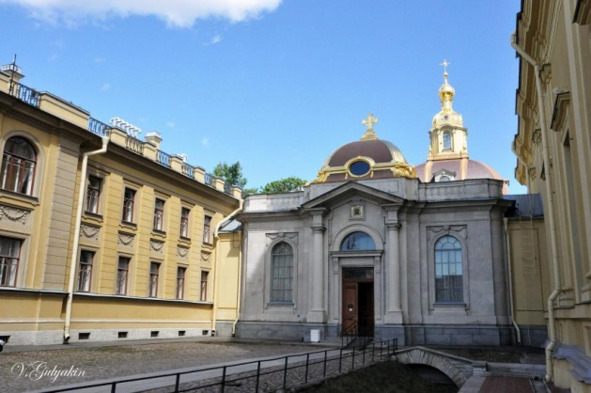
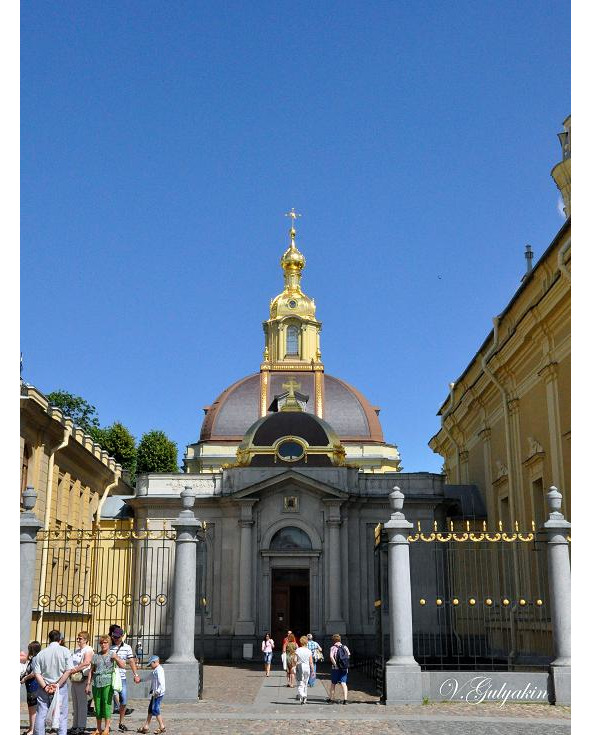
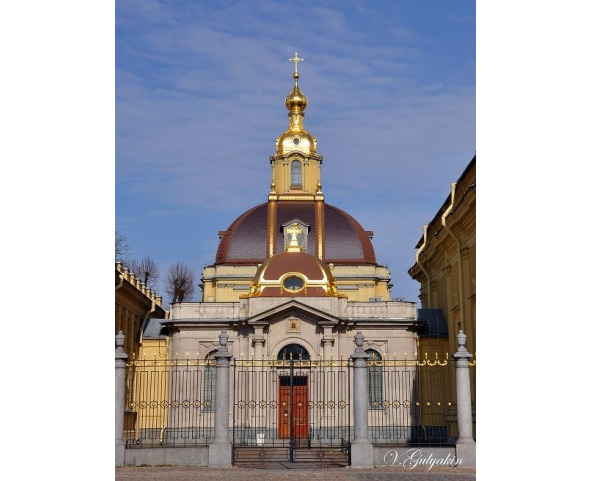
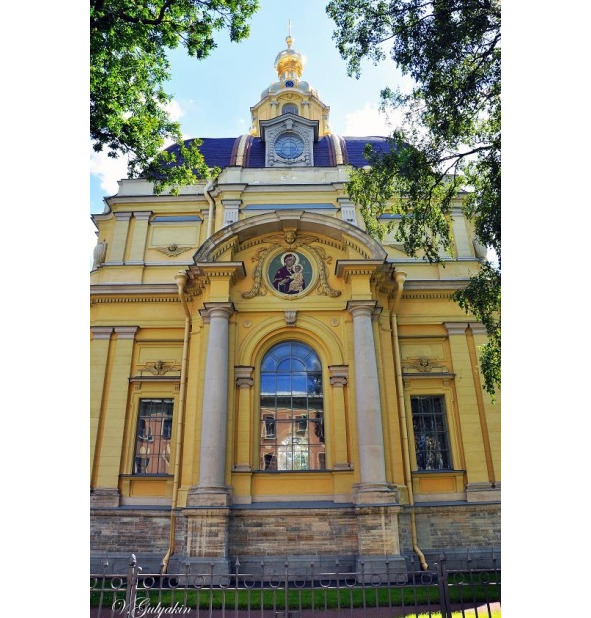
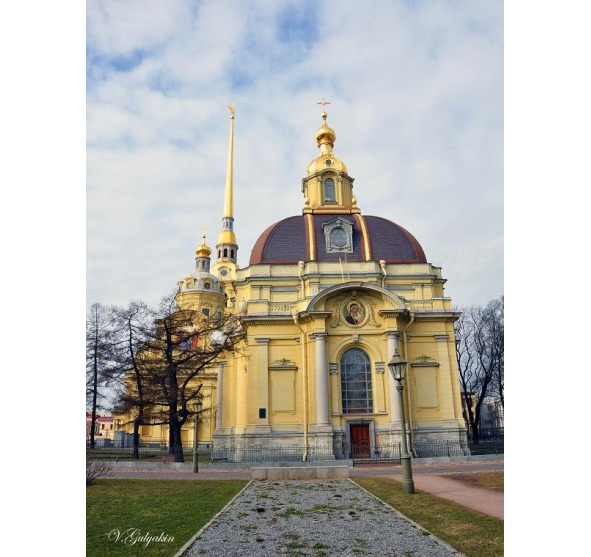
Here Grand-ducal tomb. This grave of uncrowned members of the Russian Imperial house. However found in it the last shelter and those who had no title of Grand dukes and princesses, but belonged to imperial blood or became related with Romanov.
The building of a tomb was built in 1896; and since then here find rest as well modern members of imperial blood. The tomb is acting. So, in 1992 the grandson of The Emperor Alexander II Grand duke Vladimir Kirillovich Romanov, and in 2010 — his wife, Leonida Georgiyevna Bagration-Mukhranskaya was buried here.
Grand-ducal tomb. View from the West
The same, western, look…
Grand-ducal tomb. Let’s approach even closer
Grand-ducal tomb. View from the South
Grand-ducal tomb. View from the East
Also the tomb of Peter and Paul Cathedral to which now we also will go is acting.
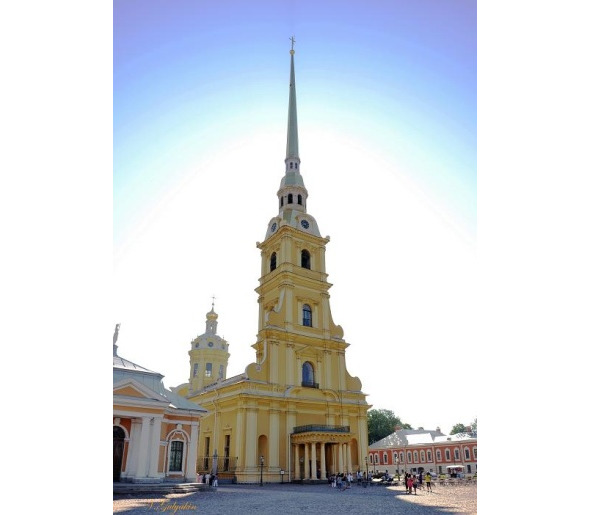
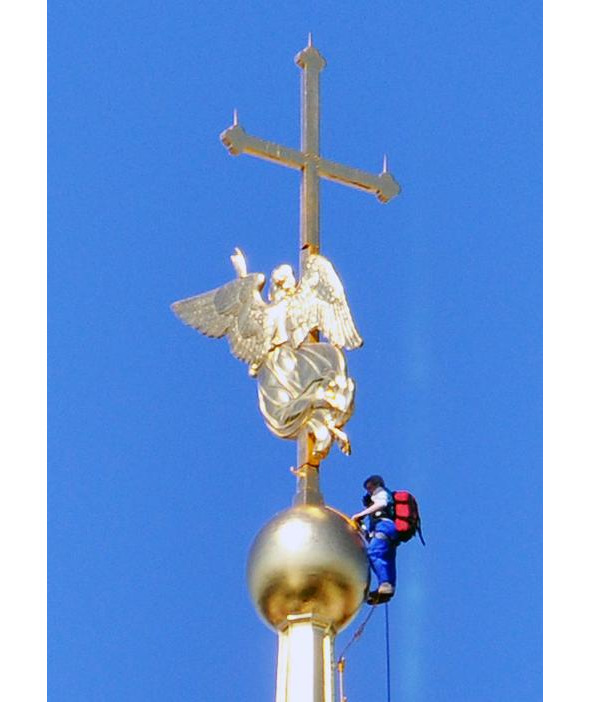
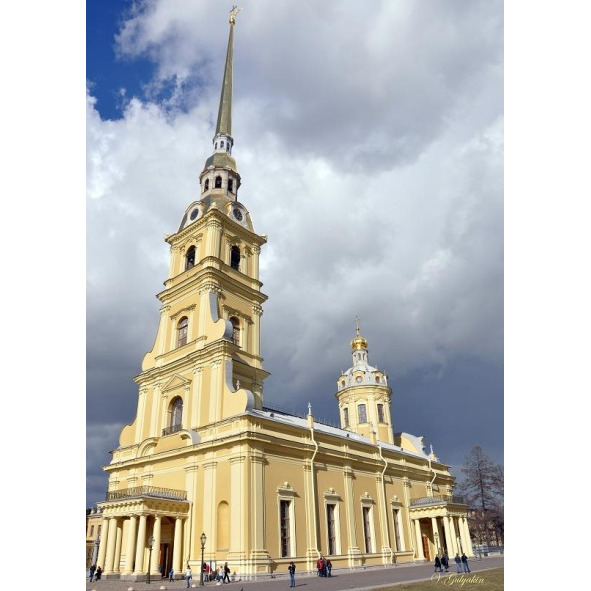
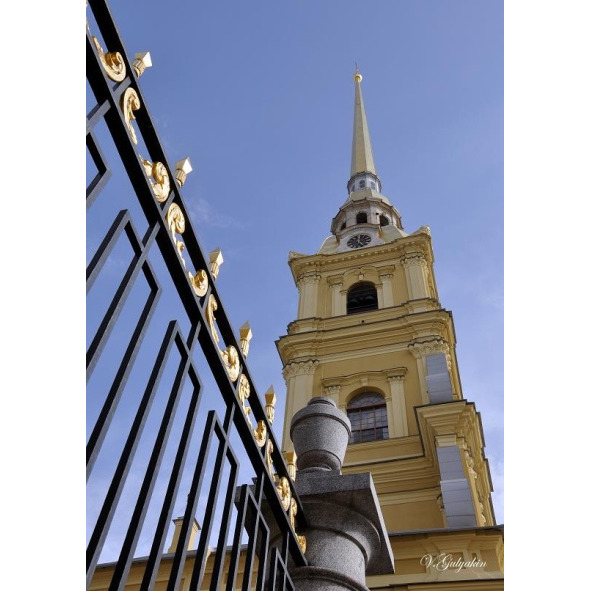
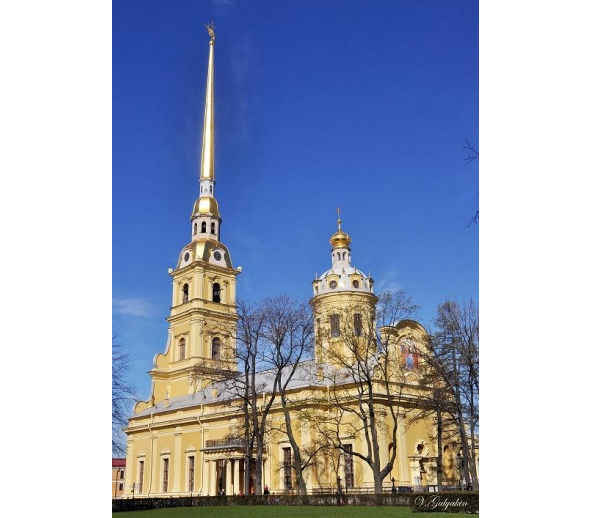
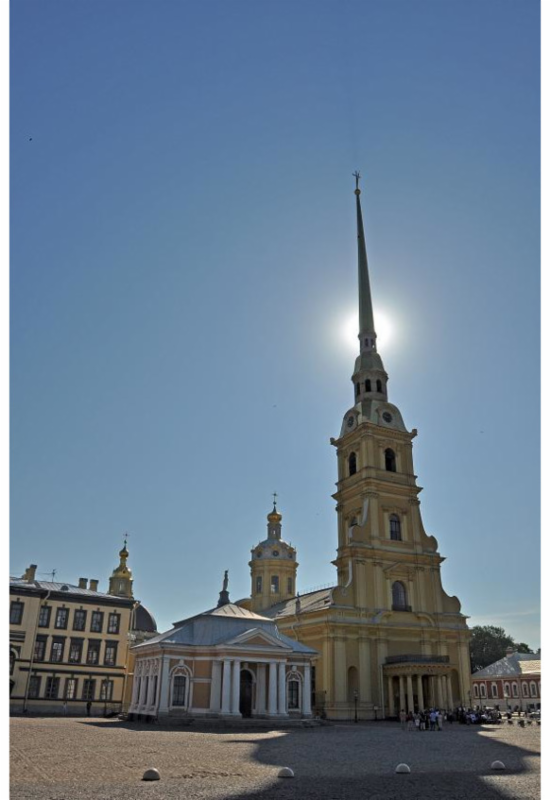
The Cathedral of Saint Apostles Peter and Paul — an ideological kernel and a symbol not only The Peter and Paul Fortress, but also St. Petersburg directed up to victories, to God! Here everything is unusual and nonconventional. The cathedral is not similar at all to Orthodox church of which is more characteristic dome or tent forms. It is executed rather in the Western European style and topped with a high spike which comes to the end with a cross and a figure of Angel — … The guardian angel and one of the main symbols of The City on Neva.
The general height of Cathedral — 122,5 meters, and a figure of an angel weather vane with a cross … — such tiny if to look from the earth! — 6,5 high and with wingspan 3,5 meters.
Here it, Cathedral of Saint Apostles Peter and Paul. View from the northwest
And now imagine that the person scrambled on such upper part once — the history even kept a name of this daredevil: the being serf Peter Telushkin, — climbed up without the woods, without insurance, without climbing equipment… and even without helicopter (using only a rope and relying on God!), to repair Angel, damaged by lightning stroke. And there was it in 1830…
This is, of course, not Peter Telushkin, but, nevertheless…
To contemplate that Peter And Paul Cathedral which we have pleasure, — stone, with the spike directed into the sky — it was put on May 30, 1712 according to Domenico Trezzini’s project. It was constructed on the place wooden, standing in fortress since 1703. Construction of stone cathedral was complete only in 1732. The cathedral long time was a pantheon of glory of the Russian weapon: its walls decorated trophy Turkish and Swedish banners, keys from the fortresses and the cities occupied by the Russian troops were stored. Now the Cathedral is known as The Tomb of The Russian Emperors.
In Peter And Paul Cathedral of The St. Petersburg fortress all are based (with rare exception) Emperors and Empressis of Russia, starting with Peter I. Moreover, as the Cathedral is the operating tomb, find rest and remains of the Russian monarchs who rested in the foreign land in Soviet period in it. So, in 2006 ashes of the wife of Alexander III Empress of Maria Fyodorovna who died in 1928 in Copenhagen were reburied here. And before, — on July 17, 1998 — in Cathedral also group reburial was made. That sad day the remains of nine people found near Yekaterinburg and classified by independent foreign experts and experts of State commission as remains of the last Emperor of Russia Nicholas II, the members of his family and confidants shot in Yekaterinburg in 1918 were solemnly reburied. This mournful list:
Nicholas II Aleksandrovich (1868 — 1918), Emperor
Aleksandra Fyodorovna (1872 — 1918), Empress
Olga Nikolaevna (1895 — 1918), Great princess
Tatyana Nikolaevna (1897 — 1918), Great princess
Anastasia Nikolaevna (1901 — 1918), Great princess
Alexey Nikolaevich (1904 — 1918), Grand duke
Botkin E. Page (1865 — 1918), physician-in-ordinary
A.E. Troup (1856 — 1918), cameras footmen
Demidova A. S. (1878 — 1918), maid
Kharitonov I. M (1870 — 1918), cook.
The ceremony of burial took place without The Most Saint Patriarch of Moscow and all Russia Alexy II and ruling bishops as The Russian Orthodox Church did not recognize (and does not recognize still) these remains belonging to family of the last Emperor of Russia which is already canonized as Saint new martyrs.
During the memorial service the priest did not say concrete names, and only proclaimed: “Accept, My God, souls the slave to yours which names You know!” — to It there are quite good and reasonable reasons.
Matter in the following. The Synod commission did not deal with an issue of authenticity of the Ekaterinburg remains. Their researches on authenticity were conducted (and are conducted to this day) by various “independent” scientific groups of experts from ninetieth years of the last century, however there is no absolute unity of opinions yet. Church, having recognized remains belonging to imperial family, thereby will undertake also responsibility for finding of Sacred Relics of New martyrs… And there is a question: and if other remains … — whereas are found? And, the probability of such turn of events is not so small. And here, why…
From time to time, — and at us, in Russia, and abroad, — some circles bring up a question that Russia has to become… Orthodox Monarchy. Question, undoubtedly, interesting! Moreover, a certain part of orthodox believers belongs to it with undisguised enthusiasm… forgetting History.
The orthodox monarch … — even if from Romanov’ family! — unless it is capable, being The Russian President, to make us, there Are no Russians, more believing, more orthodox, … any more! It not in its forces! It depends only on ourselves! And who will be charged that the Russian people, — which yet are not absolutely believing, which were not in time to become The Orthodox Christian really — “will not be led” again on ardent speeches of any neocommunists and will not go to overthrow the orthodox tsar-father (it is not The President whom it is possible to re-elect on elections!) Let’s remember History of 100-year: the people were much more believing, than now — the Word of God in gymnasiums was learned! — and and… that? — Allowed to overthrow the tsar-anointed sovereign… and then and temples to blow up went!
There is one more aspect of a problem. It is known that descendants of various branches of a family of Romanov, stretched in this world, would like to see the Russian tsar the representative of the branch, but not competing … — and remains of New martyrs can become the defining factor here.
The Russian Orthodox Church very seriously treats canonization of Saints, — it well is known to all, — and the fate of The State Russian is not indifferent for it at all! And I am deeply convinced that the answer to a question of finding of Relics of Saint new martyrs will be given us by the Lord. While there is no answer, will not hurry.
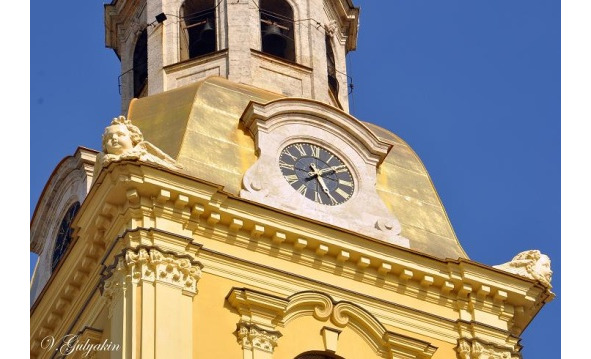
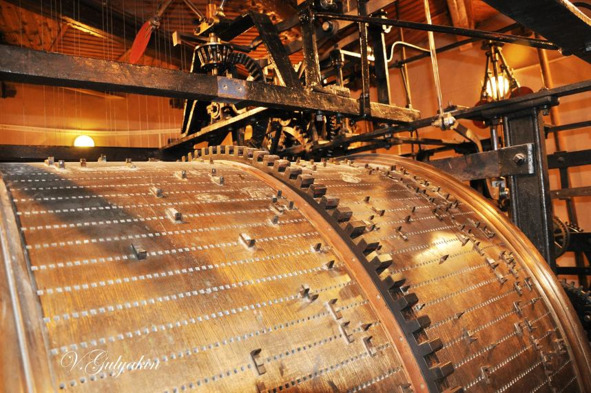
We also did not notice as behind a talk came to the square in front of Cathedral. Here, perhaps, it is worth waiting a little until shooters of cathedral hours show a quarter of hour, a half, or the whole hour. And if carries to appear here at twelve or eighteen hours … — well, then — and! Then hours on the bell tower of Cathedral will execute The Anthem of the Russian Empire: “God Save the Tsar!”. It will take effect the mechanism chiming clock, consisting of tens of bells of various size. The mechanism is this, having surprising melody, is unceasing works nearly 150 years, beating off each fifteen minutes! However, in the period from 1952 to 1989 a chiming clock of Peter And Paul Cathedral played The Anthem of the Soviet Union…
Chiming clock of Peter and Paul Cathedral
Drum the mechanism chiming clock with record of The Anthem of the Russian Empire
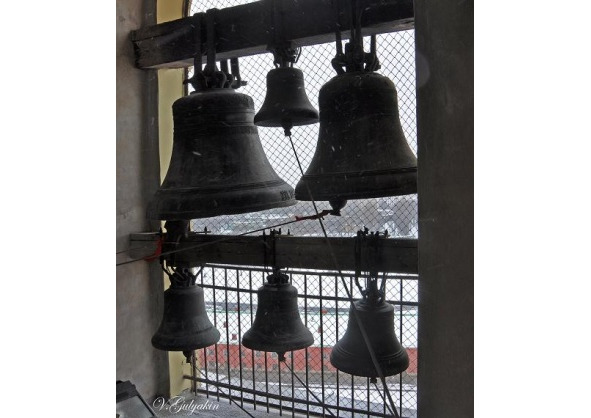
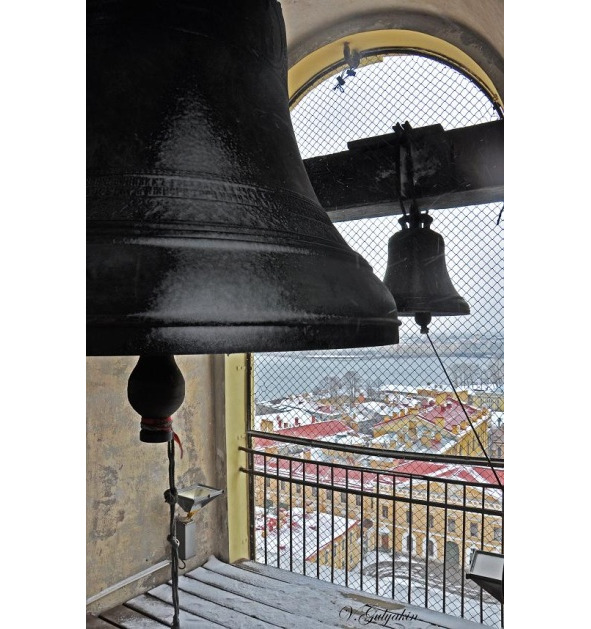
Bells of Peter and Paul Cathedral
Bells…
Southwest look…
Type of Peter and Paul Cathedral from the North
From the southeast…
Northwest type of Cathedral
The solemnity and magnificence of Cathedral of Saint Apostles Peter and Paul, his tendency up, to God — all this and in soul of any of us causes aspiration to celestial. However … — and what we see it, from South side of Cathedral?!
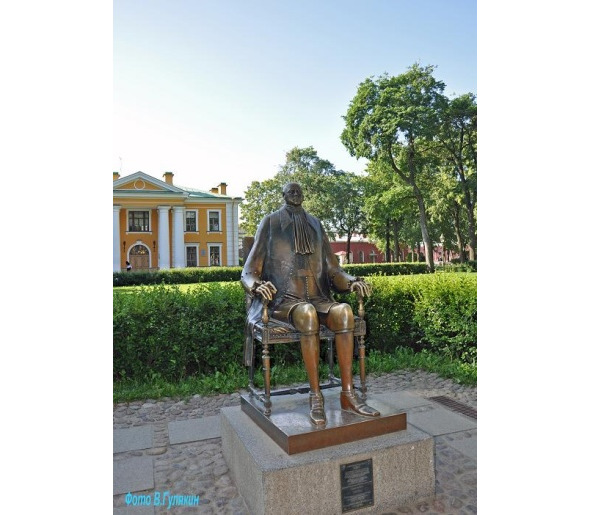
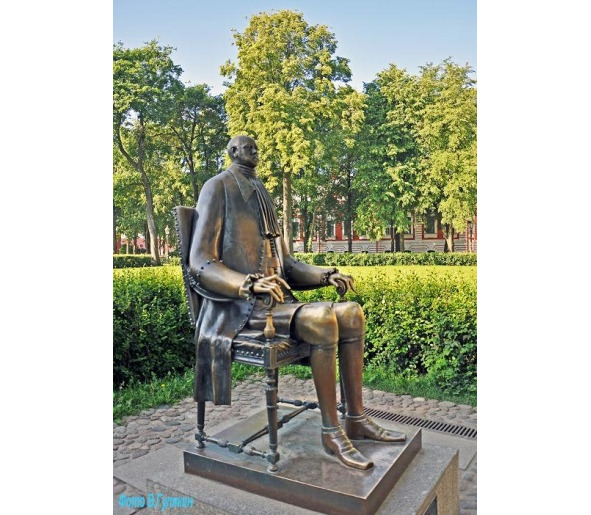
About! Be not frightened! — It is the “gift” to Petersburgers from the sculptor Mikhail Shemyakin given them in 1991. “A monument to Peter I” for which the city administration could not find more fitting place, — that spoon of tar which for some reason decided to splash in a honey barrel. However, you look…
Unforgettable, — yes unless you will forget it! — “monument” to Peter I Mikhail Shemyakin’s works
Here, it, — “the shemyakinsky freak”, — as it was “christened” in the people!
Having created this, the sculptor claimed that it is the most realistic and historically reliable portrait of the tsar Peter executed in bronze! Well, — let so! But, unless reliability monuments are valuable?!
I can express, in this regard, some thoughts of historical reliability if it came about monuments. Give, honestly answer (at least to!) on a question: and what in creation of monuments it is required more, — justice and reliability… or love? Difficult question: the love and justice (in our case — historical reliability) are not really compatible. When you love, a lot of things you forgive (and where your justice?!); and when it is fair someone … — well, you understand! — where then love?! And in general, — unless to teach justice us the Lord sent the Son? — No! It sent it to teach us to love!
So, what requirements we have to impose to monuments; and why, actually, they are necessary to people? — For the sake of historical reliability? — No! For the sake of grateful memory!
Historical reliability … — it in scientific articles, in the stunning results of archival search, in discussions of scientists-historians, at last. But whether it will be a shame to us before descendants with that — shemyakinsky — “historical reliability” which should be contemplated before the grave of Peter the Great?! — “The Shemyakinsky freak”! — as he is called now, — he also will enter History under this name!
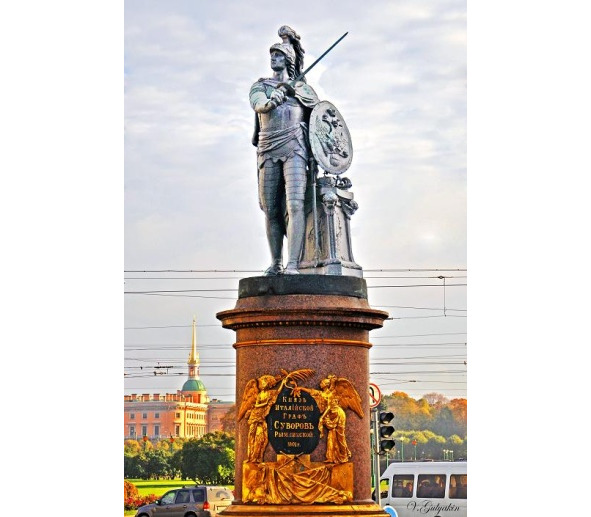
And now — a monument to Alexander Suvorov at Trinity Bridge, Mikhail Kozlowski, — whom it represents, this stately, mighty antique soldier, — whether Suvorova? By no means! Our Alexander Vasilyevich, never before, it was not: small, thin… cocky! But it is the Monument to our Suvorov, — a symbol of our Former and Future Victories! Well, and reliability historical…
The monument to Alexander Vasilyevich Suvorov
When the great Michelangelo working on creation of a gravestone for the eminent dignitary was blamed for dissimilarity of a monument with the original, he is proud answered approximately so: “There will pass centuries, and nobody will remember your original, and to it will admire this monument!”
All right, tastes differ! There as it was fallen in love to citizens, — knees of “freak” are given by persons interested to be photographed with it a high polish!
And now again we will go through the Nevsky gate and we will round fortress from outer side, having passed through the city beach, through Kronverk Bridge… and we will leave the Hare island.
Here we also left fortress…
Over The Peter and Paul Fortress evening…
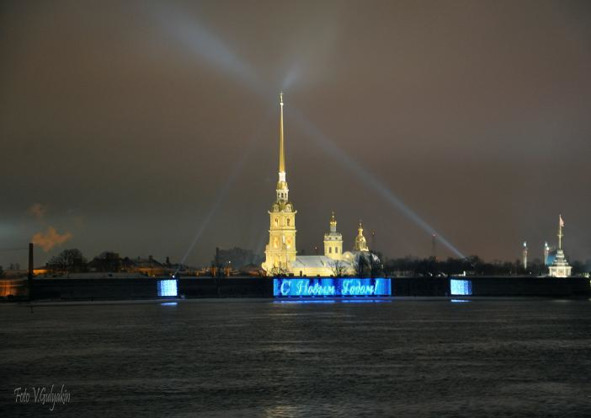
And so The St. Petersburg fortress looks at night…
Now acquaintance to a right-bank part of the historic center of St. Petersburg is necessary to us (and it, this “center”, occupying the space more than 30 square kilometers, covers both The Peter and Paul Fortress, and the right coast of Neva, and left… and to The Shooter of huge Vasilyevsky Island… — and all this waits for us still ahead!)
And so far we will go to wander about the enormous island of the delta of Neva River adjoining from the northeast a small island on which The St. Petersburg (Peter and Paul) fortress was built…
First inhabited house of St.Petersburg
The island about which the speech will go in a century before last called St. Petersburg, and at the time of Peter — at first Koyvisaari, then already, in Russian, Beryozovy, then Gorodovy (City) island. Now Petersburgers call the island the Petrograd Side.
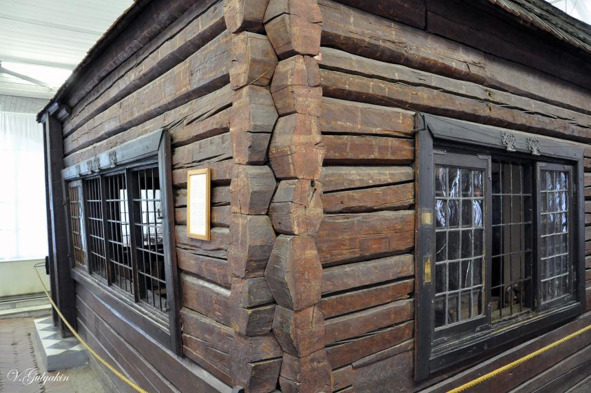
It is the best of all to begin acquaintance to this island, perhaps, with that place where the St. Petersburg’s first house was built… Go, and we will modestly bow to the first inhabited construction of our Great City which so happily remained … — give, approach Cabin of Peter the Great.
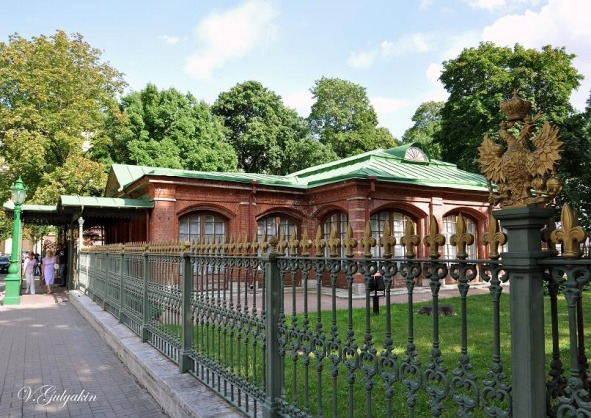
So, the city began to be built up, exactly, from here — from a small one-storey timbered “monarchic lodge”. The house was cut down from pine logs by grenadiers of the Semyonovsky regiment in three days, — by May 26, 1703!
Cabin of Peter the Great — the very first structure of St. Petersburg. So the lodge looks outside, put in brick “case”.
And here it — Cabin of Peter the Great!
Here so all also began! These are then already great “guest workers” of the past, — Domenico Trezzini, Francesco Bartolomeo Rastrelli, Antonio Rinaldi, Jean Baptiste Valen-Delamot, Etienne Falcone, Giacomo Quarenghi, Vincenzo Brenna, Charlz Cameron, Thomas de Tomon, Luigi Rusca, Karl Rossi, August Montferrand … — it is already created then by their genius all that stunning magnificence which is now called St. Petersburg! And in the beginning there was this lodge…
“Red mansion” as called then a monarchic lodge, was worked in three days, without efforts and troubles: an outer entrance hall in the middle, on each side … — at Russians so did not build two little rooms with wide windows. And that as, — more than hundred years here Swedes managed! — here also semyonovets copied a usual Swedish log hut which in the siikh places only and met. Built quickly and without special inventions!
Already shortly before Peter death the architect Domenico Trezzini built, being afraid of floods, so frequent in these parts, stone protection around a lodge. And in 1731 “the tsar lodge” was covered, wishing to keep it for descendants, wooden construction. In 1784 over this construction established the stone case which accepted in 1844 present outlines in style of Petrovsky baroque. Still later, from 1872 to 1875, also the garden with Peter I’s bust appeared.
The main square of The Empire
And now, having bowed to Peter’s lodge, we will go along the Neva Current to Trinity Square, is absolutely nearby, a stone’s throw away! — and from its party once again we will admire our handsome, — Trinity Bridge.
View of The Trinity Bridge from Trinity Square (the right coast of Neva)
Let’s approach even closer…
Trinity Square… Red Square in Moscow, even Palace — in St. Petersburg, — cannot apply for the status of the Main square of Russia at Peter! This status by right belongs to Trinity Square, oldest in the city! Exactly here the tsar Peter accepted the Emperor’s title, and Russia became the Empire! There was it on October 22, 1721 in Holy Trinity Cathedral from which and the name of the area went.
This temple was built in the center of the area in 1710 on Domenico Trezzini’s project — in honor of a victory over Swedes near Vyborg. It long time remained the main temple of the city. On the square, near the temple, imperial decrees were announced, parades and reviews of troops were organized.
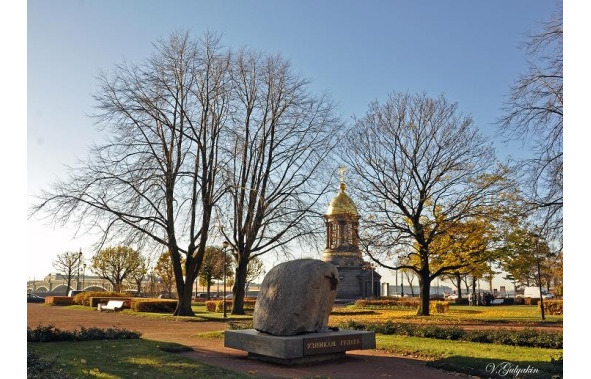
Trinity Square (on a background — Trinity Bridge)
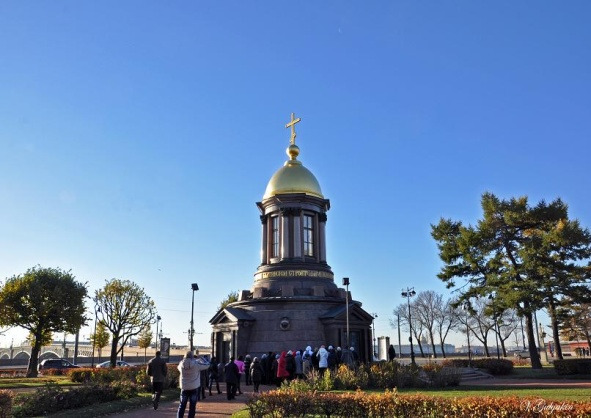
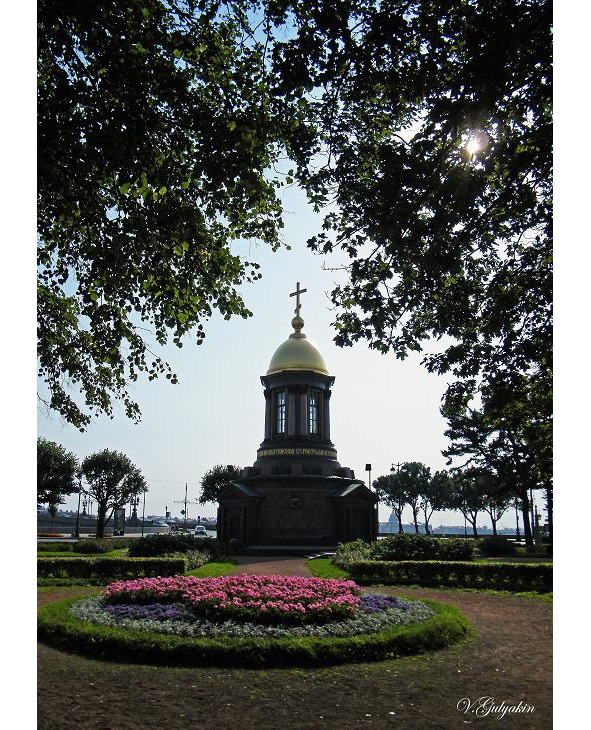
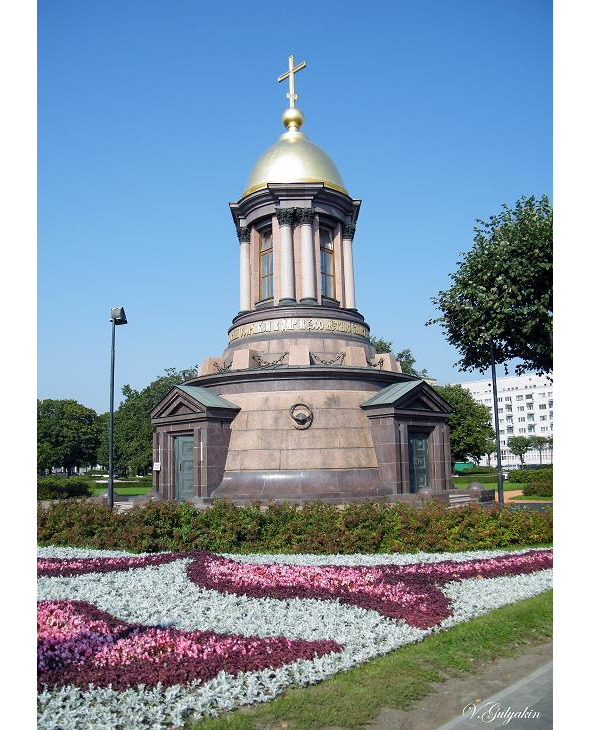
Trinity chapel. There was Holy Trinity Cathedral
Trinity…
One more type of the Chapel of The Trinity
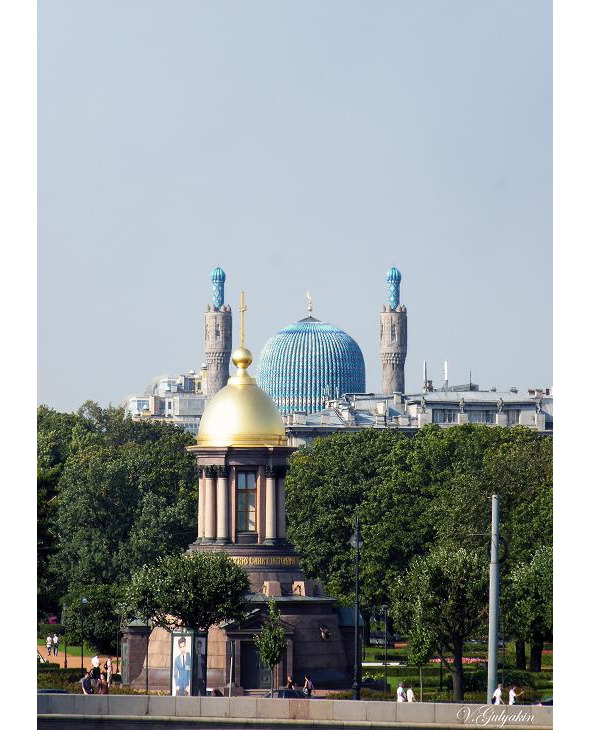
View of Trinity Square from Neva (on a background — The Tatar Mosque)
Here, at Trinity Square, in 1714, the Russia’s first Triumphal arch (besides on the Trezini project), — in honor of the first large victory of the Russian fleet at the cape of Gangut was erected. On the square the Senate and the Synod were also located. Still earlier, in 1705, there was also the city’s first Gostiny Dvor, and on the bank of Neva — port and customs.
On the square arose also the first food market, — Obzhorny, — and the first city printing house printing decrees and resolutions… and the first bookstore. It remained only in the city till 1760. And in the St. Petersburg’s first tavern of Austeriya which appeared besides at Trinity Square, also the tsar Peter, the big fan of beer and a game in chess liked to look…
In 1923 the area was renamed into “Revolution Square” … — however, we will have enough revolutions! — and since 1991 it bears the real name again.
View of the former river port at Trinity Square
Finishing the story about Trinity Square, I cannot but tell of what occurred at it during the salute in honor of full lifting the blockade of Leningrad. And there was it on January 27, 1944.
Here, I write, and the hackneyed stamp asks for a line: “tears of joy”! — But is not present, not here. Not in this case!
According to stories by mine of the grandmother and mother, the people who gathered then on the square — from those who could move even after 872-day hungry blockade, after the longest in the history of all times fights to the country! — of course, rejoiced! — Yes! They joyfully looked into the sky decked by salute fires… being ready to drop at each its volley! Yes! They cried with happiness… but without tears! — At their exhausted people was not, — tears just did not flow! Now, gathering these lines, I cannot constrain them, but then…
— No, did not know, the tsar Peter what price descendants will be fated to execute his order: “… to hold this place, even unto death!”
Aleksandrovsky park
Let’s descend from Trinity Bridge and, without turning anywhere, we will go north, on wide Avenue. On the right — Trinity Square, at the left … — And here, at the left just will also rustle with foliage the Aleksandrovsky park.
Ahead — Trinity Bridge. Trinity Square — in the picture at the left, and on the right — the Aleksandrovsky park
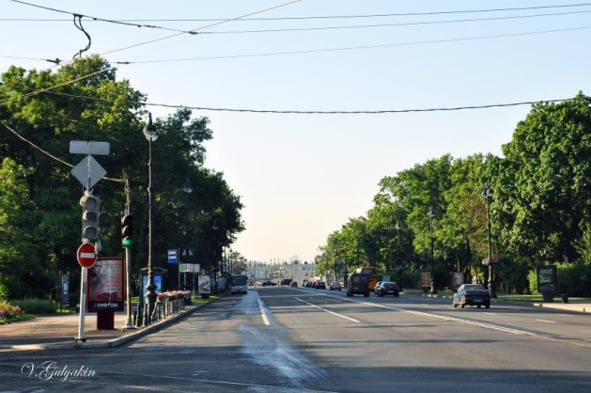
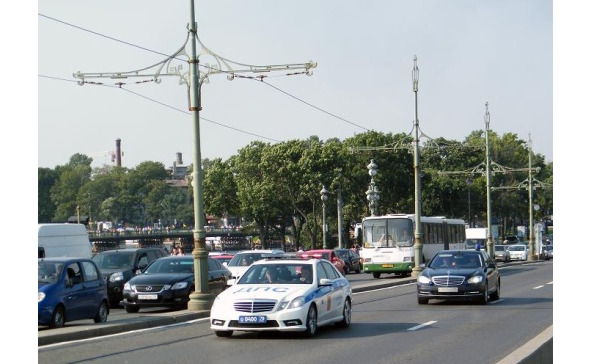
Avenue. Cars move to Trinity Bridge. On a background — green massif of the Aleksandrovsky park
Aleksandrovsky park … — It is, perhaps, the first park in St. Petersburg for “commonalty”. The glacis of the Peter and Paul Fortress once was at the place of the park: open space from the North, behind the Kronverksy passage, created for defense and well looked through from fortress.
For the first time a thought to arrange the park here appeared at The Emperor Alexander I. The architect Menelas even prepared the project which, however, due to various reasons, was not realized by order of Alexander. There passed years. The thought of creation of the park visited also The Minister of Finance Kankrin, — to him who was often as obliges on Mint bothered to wander about the waste ground to and fro, here he also offered (already to The Emperor Nicholas I) to improve a route of the foot walks.
The idea was pleasant to the autocrat: Kankrin suggested to carry out it due to savings of the ministry, without asking anything from treasury! It was in January, 1842, and in February the project was already approved.
The new park was broken into two parts: east and western. East part was transferred to the jurisdiction of Mint. Kankrin personally approved the prices and the menu of the restaurant which opened here (vodka on 5 and liqueur on 10 kopeks a glass); also institutions of mineral waters were provided. In the park laid a circular path for ride, nearby — and a walking path. Established arbors, a lodge coffee house, sandboxes for children. Arrangement of the western part of the park was charged to Head department of means of communication and public buildings which was headed by the count Peter Andreevich Kleynmikhel.
The park was called by Aleksandrovsky in memory of The Patron saint Grad on Neva, the Blessed prince Alexander Nevsky. The first festivity took place in the park on August 30, 1845 (on old style) — to Alexandrov day.
Today The Aleksandrovsky park — the real “green” pearl of the city! It is a successful example of caring attitude of the city authorities to vacation spots of citizens. The park blossomed in all the beauty, surprisingly harmoniously combining magnificence of natural landscapes with sculptural compositions of small forms! Well, you look…
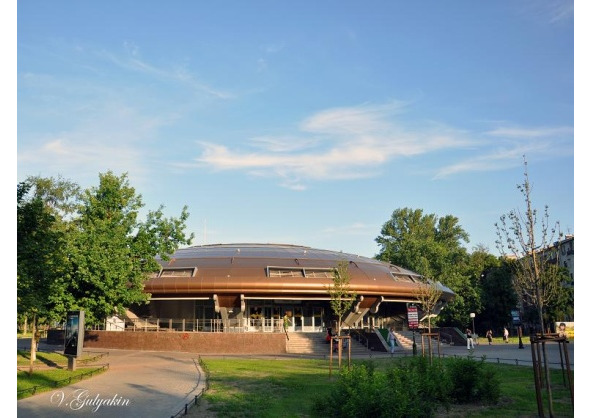
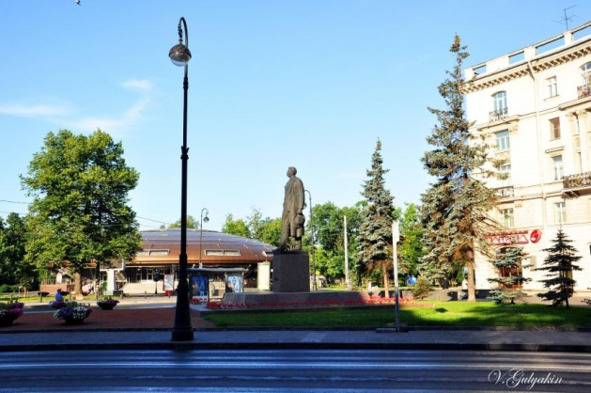
This “the alien ship” — The Maxim Gorky Avenue metro station, at the very beginning of The Aleksandrovsky park…
Monument to the writer Maxim Gorky living nearby
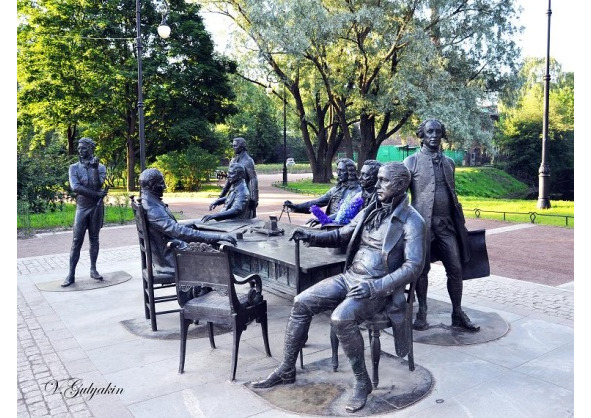
The composition “Architects” devoted to Great Architects of our city
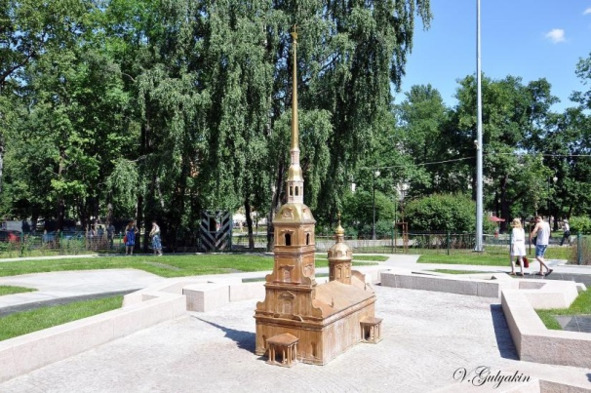
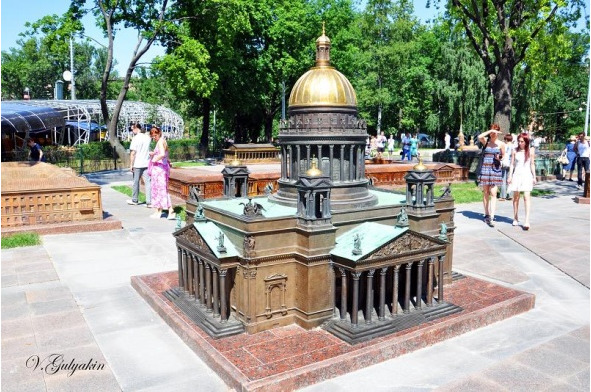
Composition “City in a miniature”: Peter and Paul Cathedral
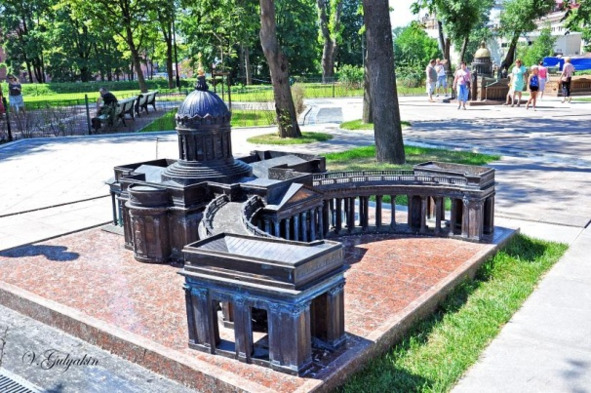
…Kazan Cathedral
…St. Isaac’s Cathedral
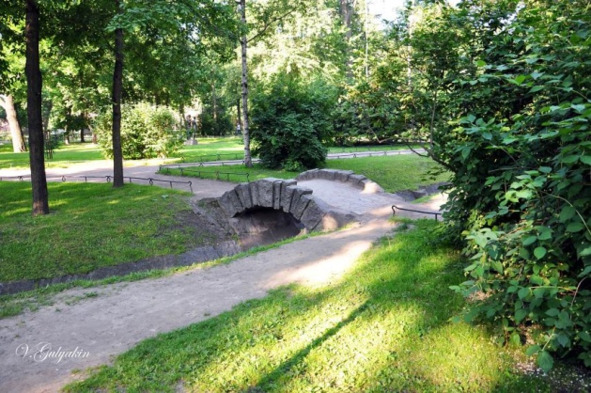
Park corner: there are also such bridges in St. Petersburg
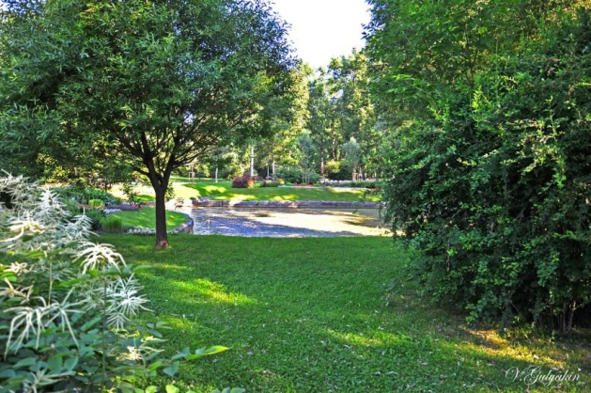
Charming lawns…
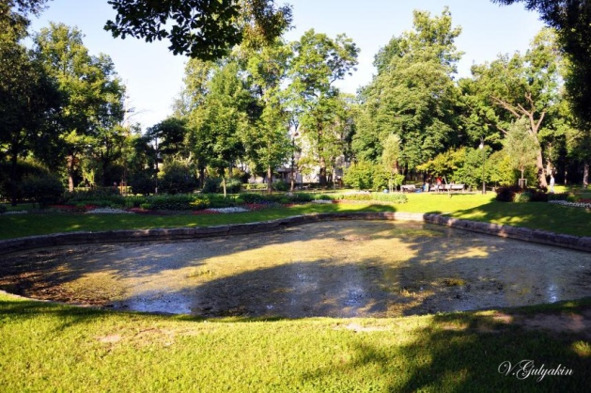
Pond…
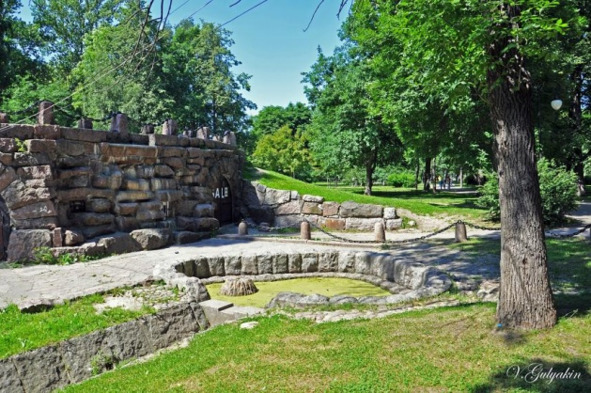
Grot cafe, so memorable…
To Grot cafe me it is memorable… Exactly here, in far June, 1973, in the heat of the white nights, we are two graduates of Electrotechnical institute together with our head — noted safe protection of theses. Ah, as long ago it was! However, I will remember the words of our mentor which sounded under the arches of this blessed Grot well: “So, yesterday you were … — whom? — he said not by absolutely sober voice any more, — Yes so … — nobody! And today … — Today you with the higher education!!! And it to you not a tail dog! … — and you drink it, the Lord, as laundresses!”
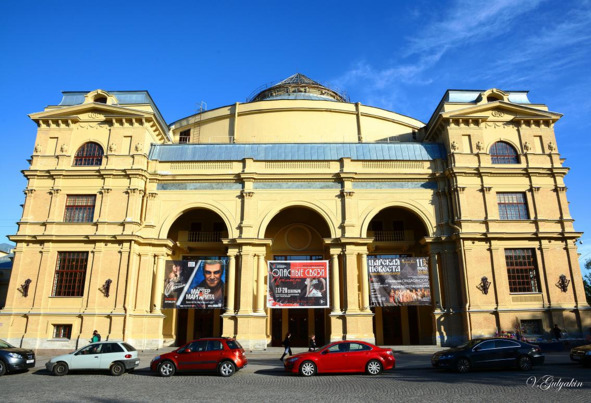
Let’s continue, however. In Aleksandrovsky park, in 1898 — 1900, at insistance of prince Alexander Petrovich Oldenburgsky, The Supreme chief of a sanitary and evacuation part, the building of “People’s house of The Emperor Nicholas II” transferred to Guardianship about national sobriety was built. At “People’s house” constantly there were drama, opera and ballet troupes, and all famous guest performers (including such as Shalyapin, Sobinov …), exactly here gave the city’s first concerts.
“People’s house” in which our Music-Hall is placed now
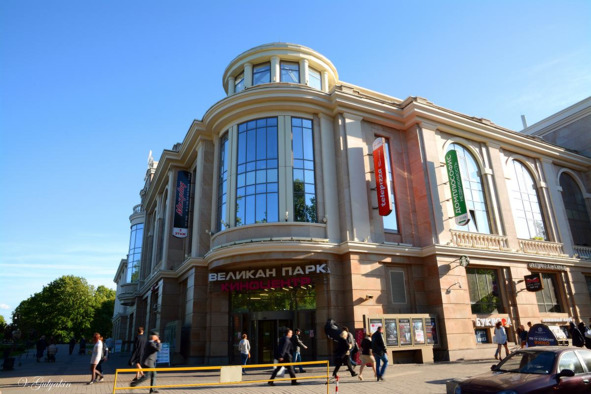
Modern extension remake to “People’s house”: movie center “Giant park”
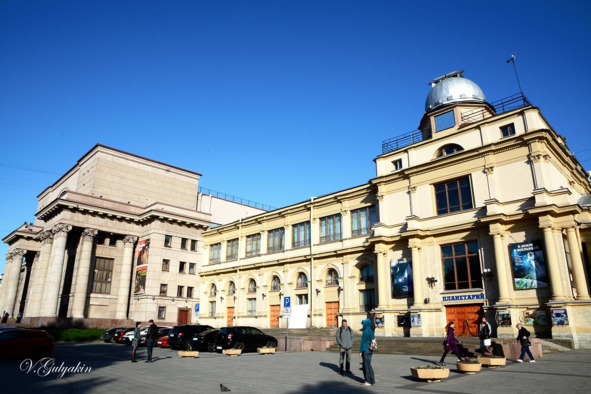
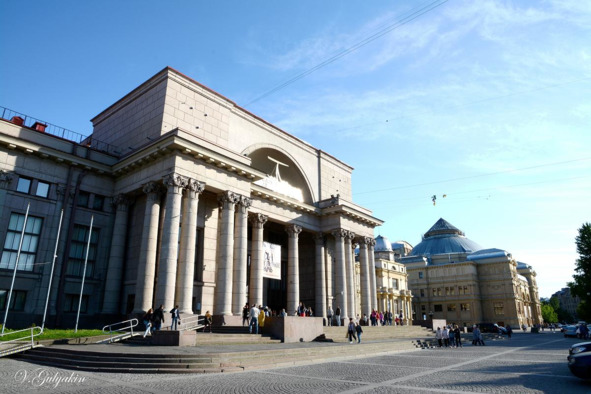
In the park both various attractions, and the first in Russia (and, most likely, and in the world) the children’s railroad opened in 1903, — unfortunately, not reached were also constructed up to now. But, already in Soviet period, in the late thirties, the building of “Red theater” was built quite gloomy, with a colonnade, — nowadays “The Baltic House”. Well I remember how among these columns we played at hide-and-seek once with the grandfather…
“Red theater” (nowadays “Baltic House” theater) and St. Petersburg Planetarium
Here all ensemble of buildings…
There was before war also an attraction taking the breath away with trolleys on the rails twirled by loops and spirals here — “The American mountains”, — yes burned down, unfortunately, during blockade. By the way, similar attractions are also in America, but they are called for some reason “The Russian mountains” there…
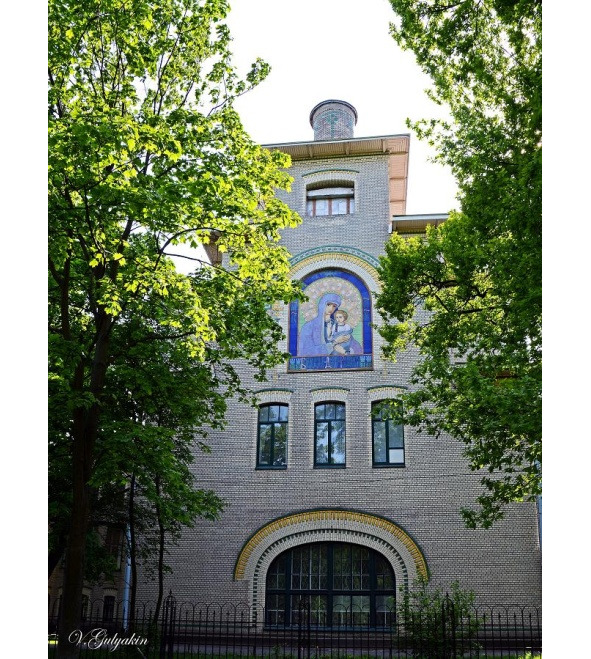
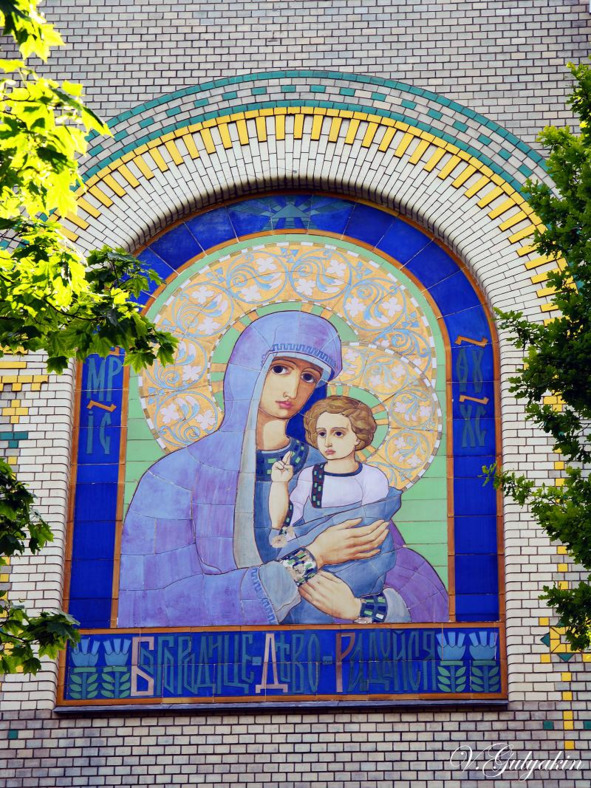
In 1901, on the ground which is free of charge allocated with City Duma construction of the model orthopedic medical institution organized according to the decree of the Empress Aleksandra Fyodorovna began. This establishment had to meet all requirements of modern science. The majolica The “Mother of God with The Baby” executed according to Kuzma Petrov-Vodkin’s drawing and placed on a wall of the central projection intended for house church of Saviour of The Healer became decoration of the building in modernist style.
House church of Saviour of The Healer at orthopedic medical institution Empress Aleksandra Fyodorovna
“Mother of God with The Baby”
Leaving The Aleksandrovsky park, we will approach a monument to The “Guarding” torpedo boat which heroically was killed in battle during The Russian-Japanese war, and we will honor memory of The Russian heroes! In The Land of The Rising Sun the monument to the Russian seamen, “estimated devotion to the fatherland above own life” is established too!
It is the only monument in St. Petersburg in modernist style an