



автордың кітабын онлайн тегін оқу The Life of John Marshall (Volume 2 of 4)
THE LIFE OF JOHN MARSHALL
Standard Library Edition
IN FOUR VOLUMES
VOLUME II
JOHN MARSHALL AS CHIEF JUSTICE From the portrait by Jarvis
THE LIFE
OF
JOHN MARSHALL
BY
ALBERT J. BEVERIDGE
Volume II
POLITICIAN, DIPLOMATIST
STATESMAN
1789-1801
BOSTON AND NEW YORK
HOUGHTON MIFFLIN COMPANY
The Riverside Press Cambridge
COPYRIGHT, 1916, BY ALBERT J. BEVERIDGE
COPYRIGHT, 1919, BY HOUGHTON MIFFLIN COMPANY
ALL RIGHTS RESERVED
CONTENTS
I.INFLUENCE OF THE FRENCH REVOLUTION ON AMERICA
1The effort of the French King to injure Great Britain by assisting the revolt of the colonists hastens the upheaval in France—The French Revolution and American Government under the Constitution begins at the same time—The vital influence of the French convulsion on Americans—Impossible to understand American history without considering this fact—All Americans, at first, favor the French upheaval which they think a reform movement—Marshall's statement—American newspapers—Gouverneur Morris's description of the French people—Lafayette's infatuated reports—Marshall gets black and one-sided accounts through personal channels—The effect upon him—The fall of the Bastille—Lafayette sends Washington the key of the prison—The reign of blood in Paris applauded in America—American conservatives begin to doubt the wisdom of the French Revolution—Burke writes his "Reflections"—Paine answers with his "Rights of Man"—The younger Adams replies in the "Publicola" essays—He connects Jefferson with Paine's doctrines—"Publicola" is viciously assailed in the press—Jefferson writes Paine—The insurrection of the blacks in St. Domingo—Marshall's account—Jefferson writes his daughter: "I wish we could distribute the white exiles among the Indians"—Marshall's statement of effect of the French Revolution in America—Jefferson writes to Short: "I would rather see half the earth desolated"—Louis XVI guillotined—Genêt arrives in America—The people greet him frantically—His outrageous conduct—The Republican newspapers suppress the news of or defend the atrocities of the revolutionists—The people of Philadelphia guillotine Louis XVI in effigy—Marie Antoinette is beheaded—American rejoicing at her execution—Absurd exaggeration by both radicals and conservatives in America—The French expel Lafayette—Washington sends Marshall's brother to secure his release from the Allies—He fails—Effect upon Marshall—Ridiculous conduct of the people in America—All titles are denounced: "Honorable," "Reverend," even "Sir" or "Mr." considered "aristocratic"—The "democratic societies" appear—Washington denounces them—Their activities—Marshall's account of their decline—The influence on America of the French Revolution summarized—Marshall and Jefferson.
II.A VIRGINIA NATIONALIST
45The National Government under the Constitution begins—Popular antagonism to it is widespread—Virginia leads this general hostility—Madison has fears—Jefferson returns from France—He is neutral at first—Madison is humiliatingly defeated for Senator of the United States because of his Nationalism—The Legislature of Virginia passes ominous Anti-Nationalist resolutions—The Republicans attack everything done or omitted by Washington's Administration—Virginia leads the opposition—Washington appoints Marshall to be United States District Attorney—Marshall declines the office—He seeks and secures election to the Legislature—Is given his old committees in the House of Delegates—Is active in the general business of the House—The amendments to the Constitution laid before the House of Delegates—They are intended only to quiet opposition to the National Government—Hamilton presents his financial plan—"The First Report on the Public Credit"—It is furiously assailed—Hamilton and Jefferson make the famous Assumption-Capitol "deal"—Jefferson's letters—The Virginia Legislature strikes Assumption—Virginia writes the Magna Charta of State Rights—Marshall desperately resists these Anti-Nationalist resolutions and is badly beaten—Jefferson finally agrees to the attitude of Virginia—He therefore opposes the act to charter the Bank of the United States—He and Hamilton give contrary opinions—The contest over "implied powers" begins—Political parties appear, divided by Nationalism and localism—Political parties not contemplated by the Constitution—The word "party" a term of reproach to our early statesmen.
III.LEADING THE VIRGINIA FEDERALISTS
77Marshall, in Richmond, is aggressive for the unpopular measures of Washington's Administration—danger of such conduct in Virginia—Jefferson takes Madison on their celebrated northern tour—Madison is completely changed—Jefferson fears Marshall—Wishes to get rid of him: "Make Marshall a judge"—Jefferson's unwarranted suspicions—He savagely assails the Administration of which he is a member—He comes to blows with Hamilton—The Republican Party grows—The causes for its increased strength—Pennsylvania resists the tax on whiskey—The Whiskey Rebellion—Washington denounces and Jefferson defends it—Militia ordered to suppress it—Marshall, as brigadier-general of militia, prepares to take the field—War breaks out between England and France—Washington proclaims American Neutrality—Outburst of popular wrath against him—Jefferson resigns from the Cabinet—Marshall supports Washington—At the head of the military forces he suppresses the riot at Smithfield and takes a French privateer—The Republicans in Richmond attack Mar
shall savagely—Marshall answers his assailants—They make insinuations against his character: the Fairfax purchase, the story of Marshall's heavy drinking—The Republicans win on their opposition to Neutrality—Great Britain becomes more hostile than ever—Washington resolves to try for a treaty in order to prevent war—Jay negotiates the famous compact bearing his name—Terrific popular resentment follows: Washington abused, Hamilton stoned, Jay burned in effigy, many of Washington's friends desert him—Toast drank in Virginia "to the speedy death of General Washington"—Jefferson assails the treaty—Hamilton writes "Camillus"—Marshall stands by Washington—Jefferson names him as the leading Federalist in Virginia.
IV.WASHINGTON'S DEFENDER
122Marshall becomes the chief defender of Washington in Virginia—The President urges him to accept the office of Attorney-General—He declines—Washington depends upon Marshall's judgment in Virginia politics—Vicious opposition to the Jay Treaty in Virginia—John Thompson's brilliant speech expresses popular sentiment—He couples the Jay Treaty with Neutrality: "a sullen neutrality between freemen and despots"—The Federalists elect Marshall to the Legislature—Washington is anxious over its proceedings—Carrington makes absurdly optimistic forecast—The Republicans in the Legislature attack the Jay Treaty—Marshall defends it with great adroitness—Must the new House of Representatives be consulted about treaties?—Carrington writes Washington that Marshall's argument was a demonstration—Randolph reports to Jefferson that Marshall's speech was tricky and ineffectual—Marshall defeated—Amazing attack on Washington and stout defense of him led by Marshall—Washington's friends beaten—Legislature refuses to vote that Washington has "wisdom"—Jefferson denounces Marshall: "His lax, lounging manners and profound hypocrisy"—Washington recalls Monroe from France and tenders the French mission to Marshall, who declines—The Fauchet dispatch is intercepted and Randolph is disgraced—Washington forces him to resign as Secretary of State—The President considers Marshall for the head of his Cabinet—The opposition to the Jay Treaty grows in intensity—Marshall arranges a public meeting in Richmond—The debate lasts all day—The reports as to the effect of his speeches contradictory—Marshall describes situation—The Republicans make charges and Marshall makes counter-charges—The national Federalist leaders depend on Marshall—They commission him to sound Henry on the Presidency as the successor of Washington—Washington's second Administration closes—He is savagely abused by the Republicans—The fight in the Legislature over the address to him—Marshall leads the Administration forces and is beaten—The House of Delegates refuse to vote that Washington is wise, brave, or even patriotic—Washington goes out of the
Presidency amid storms of popular hatred—The "Aurora's" denunciation of him—His own description of the abuse: "indecent terms that could scarcely be applied to a Nero, a defaulter, or a common pickpocket"—Jefferson is now the popular hero—All this makes a deep and permanent impression on Marshall.
V.THE MAN AND THE LAWYER
166An old planter refuses to employ Marshall as his lawyer because of his shabby and unimpressive appearance—He changes his mind after hearing Marshall address the court—Marshall is conscious of his superiority over other men—Wirt describes Marshall's physical appearance—He practices law as steadily as his political activities permit—He builds a fine house adjacent to those of his powerful brothers-in-law—Richmond becomes a flourishing town—Marshall is childishly negligent of his personal concerns: the Beaumarchais mortgage; but he is extreme in his solicitude for the welfare of his relatives: the letter on the love-affair of his sister; and he is very careful of the business entrusted to him by others—He is an enthusiastic Free Mason and becomes Grand Master of that order in Virginia—He has peculiar methods at the bar: cites few authorities, always closes in argument, and is notably honest with the court: "The law is correctly stated by opposing counsel"—Gustavus Schmidt describes Marshall—He is employed in the historic case of Ware
vs.Hylton—His argument in the lower court so satisfactory to his clients that they select him to conduct their case in the Supreme Court of the United States—Marshall makes a tremendous and lasting impression by his effort in Philadelphia—Rufus King pays him high tribute—After twenty-four years William Wirt remembers Marshall's address and describes it—Wirt advises his son-in-law to imitate Marshall—Francis Walker Gilmer writes, from personal observation, a brilliant and accurate analysis of Marshall as lawyer and orator—The Federalist leaders at the Capital court Marshall—He has business dealings with Robert Morris—The Marshall syndicate purchases the Fairfax estate—Marshall's brother marries Hester Morris—The old financier makes desperate efforts to raise money for the Fairfax purchase—Marshall compromises with the Legislature of Virginia—His brother finally negotiates a loan in Antwerp on Morris's real estate and pays half of the contract price—Robert Morris becomes bankrupt and the burden of the Fairfax debt falls on Marshall—He is in desperate financial embarrassment—President Adams asks him to go to France as a member of the mission to that country—The offer a "God-send" to Marshall, who accepts it in order to save the Fairfax estate.
VI.ENVOY TO FRANCE
214Marshall starts for France—Letters to his wife—Is bored by the social life of Philadelphia—His opinion of Adams—The President's opinion of Marshall—The "Aurora's" sarcasm—The reason for sending the mission—Monroe's conduct in Paris—The Republicans a French party—The French resent the Jay Treaty and retaliate by depredations on American Commerce—Pinckney, as Monroe's successor, expelled from France—President Adams's address to Congress—Marshall, Pinckney, and Gerry are sent to adjust differences between France and America—Gerry's appointment is opposed by entire Cabinet and all Federalist leaders because of their distrust of him—Adams cautions Gerry and Jefferson flatters him—Marshall arrives at The Hague—Conditions in France—Marshall's letter to his wife—His long, careful and important letter to Washington—His letter to Lee from Antwerp—Marshall and Pinckney arrive at Paris—The city—The corruption of the Government—Gerry arrives—The envoys meet Talleyrand—Description of the Foreign Minister—His opinion of America and his estimate of the envoys—Mysterious intimations.
VII.FACING TALLEYRAND
257Marshall urges formal representation of American grievances to French Government—Gerry opposes action—The intrigue begins—Hottenguer appears—The Directory must be "soothed" by money "placed at the disposal of M. Talleyrand"—The French demands: "pay debts due from France to American citizens, pay for French spoliations of American Commerce, and make a considerable loan and something for the pocket" (a bribe of two hundred and fifty thousand dollars)—Marshall indignantly opposes and insists on formally presenting the American case—Gerry will not agree—Bellamy comes forward and proposes still harder terms: "
you must pay money, you must pay a great deal of money"—The envoys consult—Marshall and Gerry disagree—Hottenguer and Bellamy breakfast with Gerry—They again urge loan and bribe—Marshall writes Washington—His letter an able review of the state of the country—News of Bonaparte's diplomatic success at Campo Formio reaches Paris—Talleyrand's agents again descend on the envoys and demand money—"No! not a sixpence"—Marshall's bold but moderate statement—Hauteval joins Hottenguer and Bellamy—Gerry calls on Talleyrand: is not received—Talleyrand's agents hint at war—They threaten the envoys with "the French party in America"—Marshall and Pinckney declare it "degrading to carry on indirect intercourse"—Marshall again insists on written statement to Talleyrand—Gerry again objects—Marshall's letter to his wife
—His letter in cipher to Lee—Bonaparte appears in Paris—His consummate acting—The fête at the Luxemburg to the Conqueror—Effect on Marshall.
VIII.THE AMERICAN MEMORIAL
290Madame de Villette—Her friendship with Marshall—Her proposals to Pinckney—Beaumarchais enters the plot—Marshall his attorney in Virginia—Bellamy suggests an arrangement between Marshall and Beaumarchais—Marshall rejects it—Gerry asks Talleyrand to dine with him—The dinner—Hottenguer in Talleyrand's presence again proposes the loan and bribe—Marshall once more insists on written statement of the American case—Gerry reluctantly consents—Marshall writes the American memorial—That great state paper—The French decrees against American commerce become harsher—Gerry holds secret conferences with Talleyrand—Marshall rebukes Gerry—Talleyrand at last receives the envoys formally—The fruitless discussion—Altercation between Marshall and Gerry—Beaumarchais comes with alarming news—Marshall again writes Washington—Washington's answer—The French Foreign Minister answers Marshall's memorial—He proposes to treat with Gerry alone—Marshall writes reply to Talleyrand—Beaumarchais makes final appeal to Marshall—Marshall replies with spirit—He sails for America.
IX.THE TRIUMPHANT RETURN
335Anxiety in America—Jefferson is eager for news—Skipwith writes Jefferson from Paris—Dispatches of envoys, written by Marshall, are received by the President—Adams makes alarming speech to Congress—The strength of the Republican Party increases—Republicans in House demand that dispatches be made public—Adams transmits them to Congress—Republicans are thrown into consternation and now oppose publication—Federalist Senate orders publication—Effect on Republicans in Congress—Effect on the country—Outburst of patriotism: "Hail, Columbia!" is written—Marshall arrives, unexpectedly, at New York—His dramatic welcome at Philadelphia—The Federalist banquet: Millions "for defense but not one cent for tribute"—Adams wishes to appoint Marshall Associate Justice of the Supreme Court—He declines—He is enthusiastically received at Richmond—Marshall's speech—He is insulted at the theater in Fredericksburg—Congress takes decisive action: Navy Department is created and provisional army raised—Washington accepts command—His opinions of the French—His letter to Marshall's brother—Jefferson attacks X. Y. Z. dispatches and defends Talleyrand—Alien and Sedition Laws are enacted—Gerry's predicament in France—His return—Marshall disputes Gerry's statements—Marshall's letter to his wife—He is hard pressed for
money—Compensation for services as envoy saves the Fairfax estate—Resolves to devote himself henceforth exclusively to his profession.
X.CANDIDATE FOR CONGRESS
374Plight of the Federalists in Richmond—They implore Marshall to be their candidate for Congress—He refuses—Washington personally appeals to him—Marshall finally yields—Violence of the campaign—Republicans viciously attack Marshall—the Alien and Sedition Laws the central issue—"Freeholder's" questions to Marshall—His answers—Federalists disgusted with Marshall—"The Letters of Curtius"—The Kentucky and Virginia Resolutions—The philosophy of secession—Madison writes address of majority of Virginia Legislature to their constituents—Marshall writes address of the minority which Federalists circulate as campaign document—Republicans ridicule its length and verbosity—Federalists believe Republicans determined to destroy the National Government—Campaign charges against Marshall—Marshall's disgust with politics: "Nothing more debases or pollutes the human mind"—Despondent letter to his brother—On the brink of defeat—Patrick Henry saves Marshall—Riotous scenes on election day—Marshall wins by a small majority—Washington rejoices—Federalist politicians not sure of Marshall—Jefferson irritated at Marshall's election—Marshall visits his father—Jefferson thinks it a political journey: "the visit of apostle Marshall to Kentucky excites anxiety"—Naval war with France in progress—Adams sends the second mission to France—Anger of the Federalists—Republican rejoicing—Marshall supports President's policy—Adams pardons Fries—Federalists enraged, Republicans jubilant—State of parties when Marshall takes his seat in Congress.
XI.INDEPENDENCE IN CONGRESS
432Speaker Sedgwick's estimate of Marshall—Cabot's opinion—Marshall a leader in Congress from the first—Prepares answer of House to President's speech—It satisfies nobody—Wolcott describes Marshall—Presidential politics—Marshall writes his brother analysis of situation—Announces death of Washington, presents resolutions, and addresses House: "first in war, first in peace and first in the hearts of his countrymen"—Marshall's activity in the House—He clashes with John Randolph of Roanoke—Debate on Slavery and Marshall's vote—He votes against his party on Sedition Law—Opposes his party's favorite measure, the Disputed Elections Bill—Forces amendment and kills the bill—Federalist resentment of his action: Speaker Sedgwick's comment on Marshall—The celebrated case of Jonathan Robins—Republicans make it principal ground of attack on Administration—The Livingston Resolution—Marshall's great speech on Executive
power—Gallatin admits it to be "unanswerable"—It defeats the Republicans—Jefferson's faint praise—the "Aurora's" amusing comment—Marshall defends the army and the policy of preparing for war—His speech the ablest on the Army Bill—His letter to Dabney describing conditions—Marshall helps draw the first Bankruptcy Law and, in the opinion of the Federalists, spoils it—Speaker Sedgwick vividly portrays Marshall as he appeared to the Federalist politicians at the close of the session.
XII.CHIEF JUSTICE OF THE UNITED STATES
485The shattering of Adams's Cabinet—Marshall declines office of Secretary of War—Offered that of Secretary of State—Adams's difficult party situation—The feud with Hamilton—Marshall finally, and with reluctance, accepts portfolio of Secretary of State—Republican comment—Federalist politicians approve: "Marshall a state conservator"—Adams leaves Marshall in charge at Washington—Examples of his routine work—His retort to the British Minister—His strong letter to Great Britain on the British debts—Controversy with Great Britain over contraband, treatment of neutrals, and impressment—Marshall's notable letter on these subjects—His harsh language to Great Britain—Federalist disintegration begins—Republicans overwhelmingly victorious in Marshall's home district—Marshall's despondent letter to Otis: "The tide of real Americanism is on the ebb"—Federalist leaders quarrel; rank and file confused and angered—Hamilton's faction plots against Adams—Adams's inept retaliation: Hamilton and his friends "a British faction"—Republican strength increases—Jefferson's platform—The second mission to France succeeds in negotiating a treaty—Chagrin of Federalists and rejoicing of Republicans—Marshall dissatisfied but favors ratification—Hamilton's amazing personal attack on Adams—The Federalists dumbfounded, the Republicans in glee—The terrible campaign of 1800—Marshall writes the President's address to Congress—The Republicans carry the election by a narrow margin—Tie between Jefferson and Burr—Federalists in House determine to elect Burr—Hamilton's frantic efforts against Burr: "The
Catilineof America"—Hamilton appeals to Marshall, who favors Burr—Marshall refuses to aid Jefferson, but agrees to keep hands off—Ellsworth resigns as Chief Justice—Adams reappoints Jay, who declines—Adams then appoints Marshall, who, with hesitation, accepts—The appointment unexpected and arouses no interest—Marshall continues as Secretary of State—The dramatic contest in the House over Burr and Jefferson—Marshall accused of advising Federalists that Congress could provide for Presidency by law in case of deadlock—Federalists consider Marshall for the Presidency—Hay assails Marshall—Burr refuses Federalist proposals—The Federalist bargain with Jefferson—He is elected—The "midnight judges"—The power over the Supreme
Court which Marshall was to exercise totally unsuspected by anybody—Failure of friend and foe to estimate properly his courage and determination.
APPENDIX 565 I. List of Cases 567 II. General Marshall's Answer to an Address of the Citizens of Richmond, Virginia 571 III. Freeholder's Questions to General Marshall 574 WORKS CITED IN THIS VOLUME 579ILLUSTRATIONS
JOHN MARSHALL AS CHIEF JUSTICE
Colored FrontispieceFrom the portrait by John Wesley Jarvis in the possession of Mr. Roland Gray, of Boston. It represents Marshall as he was during his early years as Chief Justice and as he appeared when Representative in Congress and Secretary of State. The Jarvis portrait is by far the best likeness of Marshall during this period of his life.
JOHN MARSHALL
48From a painting by E. F. Petticolas, presented by the artist to John Marshall and now in the possession of Mr. Malcolm G. Bruce, of South Boston, Va.
JOHN MARSHALL
124From a painting by Rembrandt Peale in the rooms of the Long Island Historical Society.
JOHN MARSHALL'S HOUSE, RICHMOND
172From a photograph taken especially for this book. The house was built by Marshall between 1789 and 1793. It was his second home in Richmond and the one in which he lived for more than forty years.
THE LARGE ROOM WHERE THE FAMOUS "LAWYERS' DINNERS" WERE GIVEN
172From a photograph taken especially for this book. The woodwork of the room, which is somewhat indistinct in the reproduction, is exceedingly well done.
WILLIAM WIRT
192From an engraving by A. B. Walter, from a portrait by Charles B. King, in "Memoirs of William Wirt," by John P. Kennedy, published by Lea & Blanchard, Philadelphia, 1849. Autograph from the Chamberlain collection, Boston Public Library.
ROBERT MORRIS
202From an original painting by Gilbert Stuart through kind permission of the owner, C. F. M. Stark, Esq., of Winchester, Mass. Autograph from the Declaration of Independence.
FACSIMILE OF A PAGE OF JAMES MARSHALL'S ACCOUNT WITH ROBERT MORRIS, HIS FATHER-IN-LAW
210From the original in the possession of James M. Marshall, of Front Royal, Virginia. This page shows £7700 sterling furnished by Robert Morris to the Marshall brothers for the purchase of the Fairfax estate. This documentary evidence of the source of the money with which the Marshalls purchased this holding has not hitherto been known to exist.
FACSIMILE OF THE FIRST PAGE OF A LETTER FROM JOHN MARSHALL TO HIS WIFE, JULY 2, 1797
214From the original in the possession of Miss Emily Harvie, of Richmond. The letter was written from Philadelphia immediately after Marshall's arrival at the capital when starting on his journey to France on the X. Y. Z. Mission. It is characteristic of Marshall in the fervid expressions of tender affection for his wife, whom he calls his "dearest life." It is also historically important as describing his first impression of President Adams.
FACSIMILE OF PART OF LETTER OF JULY 17, 1797, FROM JOHN ADAMS TO ELBRIDGE GERRY DESCRIBING JOHN MARSHALL
228From the original in the Adams Manuscripts. President Adams writes of Marshall as he appeared to him just before he sailed for France.
CHARLES MAURICE DE TALLEYRAND-PÉRIGORD
252From an engraving by Bocourt after a drawing by Mullard, reproduced through the kindness of Mr. Charles E. Goodspeed. This portrait represents Talleyrand as he was some time after the X. Y. Z. Mission.
GENERAL CHARLES COTESWORTH PINCKNEY
274From an engraving by E. Wellmore after the miniature by Edward Greene Malbone.
ELBRIDGE GERRY
310From an engraving by J. B. Longacre after a drawing made from life by Vanderlyn in 1798, when Gerry was in Paris.
FACSIMILE OF PART OF A LETTER FROM JOHN MARSHALL TO HIS BROTHER, DATED APRIL 3, 1799, REFERRING TO THE VIRULENCE OF THE CAMPAIGN IN WHICH MARSHALL WAS A CANDIDATE FOR CONGRESS
410The word "faction" in this excerpt meant "party" in the vernacular of the period.
STATUE OF JOHN MARSHALL, BY RANDOLPH ROGERS
456This is one of six statues at the base of the Washington monument in Richmond, Va., the other figures being Jefferson, Henry, Mason, Nelson, and Lewis. The Washington Monument was designed by Thomas Crawford, who died before completing the work, and was finished by Rogers. From a photograph.
STATUE OF MARSHALL, BY W. W. STORY
530At the Capitol, Washington, D.C. From a photograph.
LIST OF ABBREVIATED TITLES MOST FREQUENTLY CITED
All references here are to the List of Authorities at the end of this volume.
Am. St. Prs. See American State Papers.
Beard: Econ. I. C. See Beard, Charles A. Economic Interpretation of the Constitution of the United States.
Beard: Econ. O. J. D. See Beard, Charles A. Economic Origins of Jeffersonian Democracy.
Cor. Rev.: Sparks. See Sparks, Jared. Correspondence of the Revolution.
Cunningham Letters. See Adams, John. Correspondence with William Cunningham.
Letters: Ford. See Vans Murray, William. Letters to John Quincy Adams. Edited by Worthington Chauncey Ford.
Monroe's Writings: Hamilton. See Monroe, James. Writings. Edited by Stanislaus Murray Hamilton.
Old Family Letters. See Adams, John. Old Family Letters. Edited by Alexander Biddle.
Works: Adams. See Adams, John. Works. Edited by Charles Francis Adams.
Works: Ames. See Ames, Fisher. Works. Edited by Seth Ames.
Works: Ford. See Jefferson, Thomas. Works. Federal Edition. Edited by Paul Leicester Ford.
Works: Hamilton. See Hamilton, Alexander. Works. Edited by John C. Hamilton.
Works: Lodge. See Hamilton, Alexander. Works. Federal Edition. Edited by Henry Cabot Lodge.
Writings: Conway. See Paine, Thomas. Writings. Edited by Moncure Daniel Conway.
Writings: Ford. See Washington, George. Writings. Edited by Worthington Chauncey Ford.
Writings: Hunt. See Madison, James. Writings. Edited by Gaillard Hunt.
Writings, J. Q. A.: Ford. See Adams, John Quincy. Writings. Edited by Worthington Chauncey Ford.
Writings: Smyth. See Franklin, Benjamin. Writings. Edited by Albert Henry Smyth.
Writings: Sparks. See Washington, George. Writings. Edited by Jared Sparks.
THE LIFE OF JOHN MARSHALL
THE LIFE OF JOHN MARSHALL
CHAPTER I
INFLUENCE OF THE FRENCH REVOLUTION ON AMERICA
Were there but an Adam and an Eve left in every country, and left free, it would be better than it now is. (Jefferson.)
That malignant philosophy which can coolly and deliberately pursue, through oceans of blood, abstract systems for the attainment of some fancied untried good. (Marshall.)
The only genuine liberty consists in a mean equally distant from the despotism of an individual and a million. ("Publicola": J. Q. Adams, 1792.)
The decision of the French King, Louis XVI, on the advice of his Ministers, to weaken Great Britain by aiding the Americans in their War for Independence, while it accomplished its purpose, was fatal to himself and to the Monarchy of France. As a result, Great Britain lost America, but Louis lost his head. Had not the Bourbon Government sent troops, fleets, munitions, and money to the support of the failing and desperate American fortunes, it is probable that Washington would not have prevailed; and the fires of the French holocaust which flamed throughout the world surely would not have been lit so soon.
The success of the American patriots in their armed resistance to the rule of George III, although brought about by the aid of the French Crown, was, nevertheless, the shining and dramatic example which Frenchmen imitated in beginning that vast and elemental upheaval called the French Revolution.[1] Thus the unnatural alliance in 1778 between French Autocracy and American Liberty was one of the great and decisive events of human history.
In the same year, 1789, that the American Republic began its career under the forms of a National Government, the curtain rose in France on that tremendous drama which will forever engage the interest of mankind. And just as the American Revolution vitally influenced French opinion, so the French Revolution profoundly affected American thought; and, definitely, helped to shape those contending forces in American life that are still waging their conflict.
While the economic issue, so sharp in the adoption of the Constitution, became still keener, as will appear, after the National Government was established, it was given a higher temper in the forge of the French Revolution. American history, especially of the period now under consideration, can be read correctly only by the lights that shine from that titanic smithy; can be understood only by considering the effect upon the people, the thinkers, and the statesmen of America, of the deeds done and words spoken in France during those inspiring if monstrous years.
The naturally conservative or radical temperaments of men in America were hardened by every episode of the French convulsion. The events in France, at this time, operated upon men like Hamilton on the one hand, and Jefferson on the other hand, in a fashion as deep and lasting as it was antagonistic and antipodal; and the intellectual and moral phenomena, manifested in picturesque guise among the people in America, impressed those who already were, and those who were to become, the leaders of American opinion, as much as the events of the Gallic cataclysm itself.
George Washington at the summit of his fame, and John Marshall just beginning his ascent, were alike confirmed in that non-popular tendency of thought and feeling which both avowed in the dark years between our War for Independence and the adoption of our Constitution.[2] In reviewing all the situations, not otherwise to be fully understood, that arose from the time Washington became President until Marshall took his seat as Chief Justice, we must have always before our eyes the extraordinary scenes and consider the delirious emotions which the French Revolution produced in America. It must be constantly borne in mind that Americans of the period now under discussion did not and could not look upon it with present-day knowledge, perspective, or calmness. What is here set down is, therefore, an attempt to portray the effects of that volcanic eruption of human forces upon the minds and hearts of those who witnessed, from across the ocean, its flames mounting to the heavens and its lava pouring over the whole earth.
Unless this portrayal is given, a blank must be left in a recital of the development of American radical and conservative sentiment and of the formation of the first of American political parties. Certainly for the purposes of the present work, an outline, at least, of the effect of the French Revolution on American thought and feeling is indispensable. Just as the careers of Marshall and Jefferson are inseparably intertwined, and as neither can be fully understood without considering the other, so the American by-products of the French Revolution must be examined if we would comprehend either of these great protagonists of hostile theories of democratic government.
At first everybody in America heartily approved the French reform movement. Marshall describes for us this unanimous approbation. "A great revolution had commenced in that country," he writes, "the first stage of which was completed by limiting the powers of the monarch, and by the establishment of a popular assembly. In no part of the globe was this revolution hailed with more joy than in America. The influence it would have on the affairs of the world was not then distinctly foreseen; and the philanthropist, without becoming a political partisan, rejoiced in the event. On this subject, therefore, but one sentiment existed."[3]
Jefferson had written from Paris, a short time before leaving for America: "A complete revolution in this [French] government, has been effected merely by the force of public opinion; ... and this revolution has not cost a single life."[4] So little did his glowing mind then understand the forces which he had helped set in motion. A little later he advises Madison of the danger threatening the reformed French Government, but adds, reassuringly, that though "the lees ... of the patriotic party [the French radical party] of wicked principles & desperate fortunes" led by Mirabeau who "is the chief ... may produce a temporary confusion ... they cannot have success ultimately. The King, the mass of the substantial people of the whole country, the army, and the influential part of the clergy, form a firm phalanx which must prevail."[5]
So, in the beginning, all American newspapers, now more numerous, were exultant. "Liberty will have another feather in her cap.... The ensuing winter [1789] will be the commencement of a Golden Age,"[6] was the glowing prophecy of an enthusiastic Boston journal. Those two sentences of the New England editor accurately stated the expectation and belief of all America.
But in France itself one American had grave misgivings as to the outcome. "The materials for a revolution in this country are very indifferent. Everybody agrees that there is an utter prostration of morals; but this general position can never convey to an American mind the degree of depravity.... A hundred thousand examples are required to show the extreme rottenness.... The virtuous ... stand forward from a background deeply and darkly shaded.... From such crumbling matter ... the great edifice of freedom is to be erected here [in France].... [There is] a perfect indifference to the violation of engagements.... Inconstancy is mingled in the blood, marrow, and very essence of this people.... Consistency is a phenomenon.... The great mass of the common people have ... no morals but their interest. These are the creatures who, led by drunken curates, are now in the high road à la liberté."[7] Such was the report sent to Washington by Gouverneur Morris, the first American Minister to France under the Constitution.
Three months later Morris, writing officially, declares that "this country is ... as near to anarchy as society can approach without dissolution."[8] And yet, a year earlier, Lafayette had lamented the French public's indifference to much needed reforms; "The people ... have been so dull that it has made me sick" was Lafayette's doleful account of popular enthusiasm for liberty in the France of 1788.[9]
Gouverneur Morris wrote Robert Morris that a French owner of a quarry demanded damages because so many bodies had been dumped into the quarry that they "choked it up so that he could not get men to work at it." These victims, declared the American Minister, had been "the best people," killed "without form of trial, and their bodies thrown like dead dogs into the first hole that offered."[10] Gouverneur Morris's diary abounds in such entries as "[Sept. 2, 1792] the murder of the priests, ... murder of prisoners,... [Sept. 3] The murdering continues all day.... [Sept. 4th].... And still the murders continue."[11]
John Marshall was now the attorney of Robert Morris; was closely connected with him in business transactions; and, as will appear, was soon to become his relative by the marriage of Marshall's brother to the daughter of the Philadelphia financier. Gouverneur Morris, while not related to Robert Morris, was "entirely devoted" to and closely associated with him in business; and both were in perfect agreement of opinions.[12] Thus the reports of the scarlet and revolting phases of the French Revolution that came to the Virginia lawyer were carried through channels peculiarly personal and intimate.
They came, too, from an observer who was thoroughly aristocratic in temperament and conviction.[13] Little of appreciation or understanding of the basic causes and high purposes of the French Revolution appears in Gouverneur Morris's accounts and comments, while he portrays the horrible in unrelieved ghastliness.[14]
Such, then, were the direct and first-hand accounts that Marshall received; and the impression made upon him was correspondingly dark, and as lasting as it was somber. Of this, Marshall himself leaves us in no doubt. Writing more than a decade later he gives his estimate of Gouverneur Morris and of his accounts of the French Revolution.
"The private correspondence of Mr. Morris with the president [and, of course, much more so with Robert Morris] exhibits a faithful picture, drawn by the hand of a master, of the shifting revolutionary scenes which with unparalleled rapidity succeeded each other in Paris. With the eye of an intelligent, and of an unimpassioned observer, he marked all passing events, and communicated them with fidelity. He did not mistake despotism for freedom, because it was sanguinary, because it was exercised by those who denominated themselves the people, or because it assumed the name of liberty. Sincerely wishing happiness and a really free government to France, he could not be blind to the obvious truth that the road to those blessings had been mistaken."[15]
Everybody in America echoed the shouts of the Parisian populace when the Bastille fell. Was it not the prison where kings thrust their subjects to perish of starvation and torture?[16] Lafayette, "as a missionary of liberty to its patriarch," hastened to present Washington with "the main key of the fortress of despotism."[17] Washington responded that he accepted the key of the Bastille as "a token of the victory gained by liberty."[18] Thomas Paine wrote of his delight at having been chosen by Lafayette to "convey ... the first ripe fruits of American principles, transplanted into Europe, to his master and patron."[19] Mutual congratulations were carried back and forth by every ship.
Soon the mob in Paris took more sanguinary action and blood flowed more freely, but not in sufficient quantity to quench American enthusiasm for the cause of liberty in France. We had had plenty of mobs ourselves and much crimson experience. Had not mobs been the precursors of our own Revolution?
The next developments of the French uprising and the appearance of the Jacobin Clubs, however, alarmed some and gave pause to all of the cautious friends of freedom in America and other countries.
Edmund Burke hysterically sounded the alarm. On account of his championship of the cause of American Independence, Burke had enjoyed much credit with all Americans who had heard of him. "In the last age," exclaimed Burke in Parliament, February 9, 1790, "we were in danger of being entangled by the example of France in the net of a relentless despotism.... Our present danger from the example of a people whose character knows no medium, is, with regard to government, a danger from anarchy; a danger of being led, through an admiration of successful fraud and violence, to an imitation of the excesses of an irrational, unprincipled, proscribing, confiscating, plundering, ferocious, bloody, and tyrannical democracy."[20]
Of the French declaration of human rights Burke declared: "They made and recorded a sort of institute and digest of anarchy, called the rights of man, in such a pedantic abuse of elementary principles as would have disgraced boys at school.... They systematically destroyed every hold of authority by opinion, religious or civil, on the minds of the people.[21]... On the scheme of this barbarous philosophy, which is the offspring of cold hearts and muddy understandings," exclaimed the great English liberal, "laws are to be supported only by their own terrours.... In the groves of their academy, at the end of every vista, you see nothing but the gallows."[22]
Burke's extravagant rhetoric, although reprinted in America, was little heeded. It would have been better if his pen had remained idle. For Burke's wild language, not yet justified by the orgy of blood in which French liberty was, later, to be baptized, caused a voice to speak to which America did listen, a page to be written that America did read. Thomas Paine, whose "Common Sense" had made his name better known to all people in the United States than that of any other man of his time except Washington, Franklin, Jefferson, and Henry, was then in France. This stormy petrel of revolution seems always to have been drawn by instinct to every part of the human ocean where hurricanes were brooding.[23]
Paine answered Burke with that ferocious indictment of monarchy entitled "The Rights of Man," in which he went as far to one extreme as the English political philosopher had gone to the other; for while Paine annihilated Burke's Brahminic laudation of rank, title, and custom, he also penned a doctrine of paralysis to all government. As was the case with his "Common Sense," Paine's "Rights of Man" abounded in attractive epigrams and striking sentences which quickly caught the popular ear and were easily retained by the shallowest memory.
"The cause of the French people is that of ... the whole world," declared Paine in the preface of his flaming essay;[24] and then, the sparks beginning to fly from his pen, he wrote: "Great part of that order which reigns among mankind is not the effect of government.... It existed prior to government, and would exist if the formality of government was abolished.... The instant formal government is abolished," said he, "society begins to act; ... and common interest produces common security." And again: "The more perfect civilization is, the less occasion has it for government.... It is but few general laws that civilised life requires."
Holding up our own struggle for liberty as an illustration, Paine declared: "The American Revolution ... laid open the imposition of governments"; and, using our newly formed and untried National Government as an example, he asserted with grotesque inaccuracy: "In America ... all the parts are brought into cordial unison. There the poor are not oppressed, the rich are not privileged.... Their taxes are few, because their government is just."[25]
Proceeding thence to his assault upon all other established governments, especially that of England, the great iconoclast exclaimed: "It is impossible that such governments as have hitherto [1790] existed in the world, could have commenced by any other means than a violation of every principle sacred and moral."
Striking at the foundations of all permanent authority, Paine declared that "Every age and generation must be ... free to act for itself in all cases.... The vanity and presumption of governing beyond the grave is the most ridiculous and insolent of all tyrannies." The people of yesterday have "no right ... to bind or to control ... the people of the present day ... in any shape whatever.... Every generation is, and must be, competent to all the purposes which its occasions require."[26] So wrote the incomparable pamphleteer of radicalism.
Paine's essay, issued in two parts, was a torch successively applied to the inflammable emotions of the American masses. Most newspapers printed in each issue short and appealing excerpts from it. For example, the following sentence from Paine's "Rights of Man" was reproduced in the "Columbian Centinel" of Boston on June 6, 1792: "Can we possibly suppose that if government had originated in right principles and had not an interest in pursuing a wrong one, that the world could have been in the wretched and quarrelsome condition it is?" Such quotations from Paine appeared in all radical and in some conservative American publications; and they were repeated from mouth to mouth until even the backwoodsmen knew of them—and believed them.
"Our people ... love what you write and read it with delight" ran the message which Jefferson sent across the ocean to Paine. "The printers," continued Jefferson, "season every newspaper with extracts from your last, as they did before from your first part of the Rights of Man. They have both served here to separate the wheat from the chaff.... Would you believe it possible that in this country there should be high & important characters[27] who need your lessons in republicanism & who do not heed them. It is but too true that we have a sect preaching up & pouting after an English constitution of king, lords, & commons, & whose heads are itching for crowns, coronets & mitres....
"Go on then," Jefferson urged Paine, "in doing with your pen what in other times was done with the sword, ... and be assured that it has not a more sincere votary nor you a more ardent well-wisher than ... Thoṣ Jefferson."[28]
And the wheat was being separated from the chaff, as Jefferson declared. Shocked not more by the increasing violence in France than by the principles which Paine announced, men of moderate mind and conservative temperament in America came to have misgivings about the French Revolution, and began to speak out against its doings and its doctrines.
A series of closely reasoned and well-written articles were printed in the "Columbian Centinel" of Boston in the summer of 1791, over the nom de guerre "Publicola"; and these were widely copied. They were ascribed to the pen of John Adams, but were the work of his brilliant son.[29]
The American edition of Paine's "Rights of Man" was headed by a letter from Secretary of State Jefferson to the printer, stating his pleasure that the essay was to be printed in this country and "that something is at length to be publickly said against the political heresies which have sprung up among us."[30] Publicola called attention to this and thus, more conspicuously, displayed Jefferson as an advocate of Paine's doctrines.[31]
All Americans had "seen with pleasure the temples of despotism levelled with the ground," wrote the keen young Boston law student.[32] There was "but one sentiment...—that of exultation." But what did Jefferson mean by "heresies"? asked Publicola. Was Paine's pamphlet "the canonical book of scripture?" If so, what were its doctrines? "That which a whole nation chooses to do, it has a right to do" was one of them.
Was that "principle" sound? No! avowed Publicola, for "the eternal and immutable laws of justice and of morality are paramount to all human legislation." A nation might have the power but never the right to violate these. Even majorities have no right to do as they please; if so, what security has the individual citizen? Under the unrestrained rule of the majority "the principles of liberty must still be the sport of arbitrary power, and the hideous form of despotism must lay aside the diadem and the scepter, only to assume the party-colored garments of democracy."
"The only genuine liberty consists in a mean equally distant from the despotism of an individual and of a million," asserted Publicola. "Mr. Paine seems to think it as easy for a nation to change its government as for a man to change his coat." But "the extreme difficulty which impeded the progress of its [the American Constitution's] adoption ... exhibits the fullest evidence of what a more than Herculean task it is to unite the opinions of a free people on any system of government whatever."
The "mob" which Paine exalted as the common people, but which Publicola thought was really only the rabble of the cities, "can be brought to act in concert" only by "a frantic enthusiasm and ungovernable fury; their profound ignorance and deplorable credulity make them proper tools for any man who can inflame their passions; ... and," warned Publicola, "as they have nothing to lose by the total dissolution of civil society, their rage may be easily directed against any victim which may be pointed out to them.... To set in motion this inert mass, the eccentric vivacity of a madman is infinitely better calculated than the sober coolness of phlegmatic reason."
"Where," asked Publicola, "is the power that should control them [Congress]?" if they violate the letter of the Constitution. Replying to his own question, he asserted that the real check on Congress "is the spirit of the people."[33] John Marshall had said the same thing in the Virginia Constitutional Convention; but even at that early period the Richmond attorney went further and flatly declared that the temporary "spirit of the people" was not infallible and that the Supreme Court could and would declare void an unconstitutional act of Congress—a truth which he was, unguessed at that time by himself or anybody else, to announce with conclusive power within a few years and at an hour when dissolution confronted the forming Nation.
Such is a rapid précis of the conservative essays written by the younger Adams. Taken together, they were a rallying cry to those who dared to brave the rising hurricane of American sympathy with the French Revolution; but they also strengthened the force of that growing storm. Multitudes of writers attacked Publicola as the advocate of "aristocracy" and "monarchy." "The papers under the signature of Publicola have called forth a torrent of abuse," declared the final essay of the series.
Brown's "Federal Gazette" of Philadelphia branded Publicola's doctrines as "abominable heresies"; and hoped that they would "not procure many proselytes either to monarchy or aristocracy."[34] The "Independent Chronicle" of Boston asserted that Publicola was trying to build up a "system of Monarchy and Aristocracy ... on the ruins both of the Reputation and Liberties of the People."[35] Madison reported to Jefferson that because of John Adams's reputed authorship of these unpopular letters, the supporters of the Massachusetts statesman had become "perfectly insignificant in ... number" and that "in Boston he is ... distinguished for his unpopularity."[36]
In such fashion the controversy began in America over the French Revolution.
But whatever the misgivings of the conservative, whatever the alarm of the timid, the overwhelming majority of Americans were for the French Revolution and its doctrines;[37] and men of the highest ability and station gave dignity to the voice of the people.
In most parts of the country politicians who sought election to public office conformed, as usual, to the popular view. It would appear that the prevailing sentiment was influential even with so strong a conservative and extreme a Nationalist as Madison, in bringing about his amazing reversal of views which occurred soon after the Constitution was adopted.[38] But those who, like Marshall, were not shaken, were made firmer in their opinions by the very strength of the ideas thus making headway among the masses.
An incident of the French Revolution almost within sight of the American coast gave to the dogma of equality a new and intimate meaning in the eyes of those who had begun to look with disfavor upon the results of Gallic radical thought. Marshall and Jefferson best set forth the opposite impressions made by this dramatic event.
"Early and bitter fruits of that malignant philosophy," writes Marshall, "which ... can coolly and deliberately pursue, through oceans of blood, abstract systems for the attainment of some fancied untried good, were gathered in the French West Indies.... The revolutionists of France formed the mad and wicked project of spreading their doctrines of equality among persons [negroes and white people] between whom distinctions and prejudices exist to be subdued only by the grave. The rage excited by the pursuit of this visionary and baneful theory, after many threatening symptoms, burst forth on the 23d day of August 1791, with a fury alike destructive and general.
"In one night, a preconcerted insurrection of the blacks took place throughout the colony of St. Domingo; and the white inhabitants of the country, while sleeping in their beds, were involved in one indiscriminate massacre, from which neither age nor sex could afford an exemption. Only a few females, reserved for a fate more cruel than death, were intentionally spared; and not many were fortunate enough to escape into the fortified cities. The insurgents then assembled in vast numbers, and a bloody war commenced between them and the whites inhabiting the towns."[39]
After the African disciples of French liberty had overthrown white supremacy in St. Domingo, Jefferson wrote his daughter that he had been informed "that the Patriotic party [St. Domingo revolutionists] had taken possession of 600 aristocrats & monocrats, had sent 200 of them to France, & were sending 400 here.... I wish," avowed Jefferson, in this intimate family letter, "we could distribute our 400 [white French exiles] among the Indians, who would teach them lessons of liberty & equality."[40]
Thus Jefferson could be quoted on both sides and claimed by neither or by both. But, because of his absence in France and of the reports he had received from the then extreme Nationalist, Madison, he had not yet apprehended the people's animosity to National rule. Upon his arrival in Virginia, however, he discovered that "Antifederalism is not yet dead in this country."[102] That much, indeed, was clear at first sight. The Legislature of Virginia, which met three months after her Convention had ratified the Constitution, was determined to undo that work, as Madison had foreseen.[103]
In 1789 Marshall bought the tract of land amounting to an entire city "square" of two acres,[465] on which, four years later, he built the comfortable brick residence where he lived, while in Richmond, during the remainder of his life. This house still stands (1916) and is in excellent repair. It contains nine rooms, most of them commodious, and one of them of generous dimensions where Marshall gave the "lawyer dinners" which, later, became so celebrated. This structure was one of a number of the important houses of Richmond.[466] Near by were the residences of Colonel Edward Carrington, Daniel Call, an excellent lawyer, and George Fisher, a wealthy merchant; these men had married the three sisters of Marshall's wife. The house of Jacquelin Ambler was also one of this cluster of dwellings. So that Marshall was in daily association with four men to whom he was related by marriage, a not negligible circumstance; for every one of them was a strong and successful man, and all of them were, like Marshall, pronounced Federalists. Their views and tastes were the same, they mutually aided and supported one another; and Marshall was, of course, the favorite of this unusual family group.
Cold and dry as it appears in the reporter's notes, Marshall's address to the Supreme Court made a tremendous impression on all who heard it. When he left the court-room, he was followed by admiring crowds. The ablest public men at the Capital were watching Marshall narrowly and these particularly were captivated by his argument. "His head is one of the best organized of any one that I have known," writes the keenly observant King, a year later, in giving to Pinckney his estimate of Marshall. "This I say from general Reputation, and more satisfactorily from an Argument that I heard him deliver before the fed'l Court at Philadelphia."[503] King's judgment of Marshall's intellectual strength was that generally held.
"Mr. Marshall is at the head of his profession in Virginia, enjoying every convenience and comfort; in the midst of his friends and the relations of his wife at Richmond; in a practice of his profession that annually produces about five thousand dollars on an average; with a young and increasing family; and under a degree of necessity to continue his profession, for the purpose of complying with contracts not yet performed."[518]
"Your Brother John Marshall Esqṛ is now in this City," writes Robert Morris to his son-in-law, "and his principal business I believe is to see how you are provided with Money to pay Lord Fairfax.... I am so sensible of the necessity there is for your being prepared for Lord Fairfax's payment that there is nothing within my power that I would not do to enable you to meet it."[539]
No appointment could have better pleased that unrivaled politician. Gerry was in general agreement with Jefferson and was, temperamentally, an easy instrument for craft to play upon. When Gerry hesitated to accept, Jefferson wrote his "dear friend" that "it was with infinite joy to me that you were yesterday announced to the Senate" as one of the envoys; and he pleaded with Gerry to undertake the mission.[580]
It was a striking group—Talleyrand, tall and thin of body, with pallid, shrunken cheeks and slumberous eyes, shambling forward with a limp, as, with halting speech,[603] he coldly greeted his diplomatic visitors; Gerry, small, erect, perfectly attired, the owl-like solemnity of his face made still heavier by his long nose and enormous wig; Pinckney, handsome, well-dressed, clear-eyed, of open countenance;[604] and Marshall, tall, lean, loose-jointed, carelessly appareled, with only his brilliant eyes to hint at the alert mind and dominant personality of the man.
The persistent Hottenguer does not desist. He tells the envoys that they do not know the kind of men they are dealing with. The Directory, he insists, disregard the justice of American claims; care nothing even for the French colonies; "consider themselves as perfectly invulnerable" from the United States. Money is the only thing that will interest such terrible men. The Americans, parrying, ask whether, even if they give money, Talleyrand will furnish proofs that it will produce results. Hottenguer evades the question. A long discussion ensues.
But Marshall's extraordinary power of statement and logic availed nothing with Talleyrand and the Directory. "I consider Marshall, whom I have heard speak on a great subject,[696] as one of the most powerful reasoners I ever met with either in public or in print," writes William Vans Murray from The Hague, commenting on the task of the envoys. "Reasoning in such cases will have a fine effect in America, but to depend upon it in Europe is really to place Quixote with Ginés de Passamonte and among the men of the world whom he reasoned with, and so sublimely, on their way to the galleys. They answer him, with you know stones and blows, though the Knight is an armed as well as an eloquent Knight."[697]
From the desperate nature of the struggle and the temper and political habit of the times, one might expect far harder things to have been said. Indeed, as the violence of the contest mounted to its climax, worse things were charged or intimated by word of mouth than were then put into type. Again it is the political hack, John Wood, who gives us a hint of the baseness of the slanders that were circulated; he describes a scandal in which Marshall and Pinckney were alleged to have been involved while in Paris, the unhappy fate of a woman, her desperate voyage to America, her persecution and sad ending.[923]
Opposed as he was to the measure as it came from the Senate, he nevertheless was against its indefinite postponement and so voted.[1046] His objections were to the autocratic and definitive power of the Grand Committee; with this cut from the measure, he was in favor of a joint committee of the House and Senate to examine into alleged election frauds and illegalities. The Senate bill was referred to a special committee of the House,[1047] which reported a measure in accordance with Marshall's views.[1048] After much debate and several roll-calls, the bill, as modified by Marshall, passed the House.[1049]
The campaign was a havoc of virulence. The Federalists' hatred for one another increased their fury toward the compact Republicans, who assailed their quarreling foes with a savage and unrestrained ferocity. The newspapers, whose excesses had whipped even the placid Franklin into a rage a few years before, now became geysers spouting slander, vituperation, and unsavory[1231] insinuations. "The venal, servile, base and stupid"[1232] "newspapers are an overmatch for any government," cried Ames. "They will first overawe and then usurp it."[1233] And Noah Webster felt that "no government can be durable ... under the licentiousness of the press that now disgraces our country."[1234] Discordant Federalists and harmonious Republicans resorted to shameful methods.[1235] "Never ... was there such an Election in America."[1236]
[1] "That the principles of America opened the Bastille is not to be doubted." (Thomas Paine to Washington, May 1, 1790; Cor. Rev.2: Sparks, iv, 328.) "The principles of it [the French Revolution] were copied from America." (Paine to Citizens of the United States, Nov. 15, 1802; Writings: Conway, iii, 381.)
[2] See vol. i, chap. viii, of this work.
[3] Marshall, ii, 155. "The mad harangues of the [French] National Convention were all translated and circulated through the States. The enthusiasm they excited it is impossible for me to describe." (Cobbett in "Summary View"; Cobbett, i, 98.)
[4] Jefferson to Humphreys, March 18, 1789; Works: Ford, v, 467.
[5] Jefferson to Madison, Aug. 28, 1789; ib., 490.
[6] Boston Gazette, Sept. 7 and Nov. 30, 1789; as quoted in Hazen; and see Hazen, 142-43.
[7] Gouverneur Morris to Washington, Paris, April 29, 1789; Cor. Rev.: Sparks, iv, 256. Even Jefferson had doubted French capacity for self-government because of what he described as French light-mindedness. (Jefferson to Mrs. Adams, Feb. 22, 1787; Works: Ford, v, 263; also see vol. i, chap. viii, of this work.)
[8] Morris to Washington, July 31, 1789; Cor. Rev.: Sparks, iv, 270.
[9] Lafayette to Washington, May 25, 1788; Cor. Rev.: Sparks, iv, 216. Lafayette's letters to Washington, from the beginning of the French Revolution down to his humiliating expulsion from France, constitute a thermometer of French temperature, all the more trustworthy because his letters are so naïve. For example, in March, 1790: "Our revolution is getting on as well as it can, with a nation that has swallowed liberty at once, and is still liable to mistake licentiousness for freedom." Or, in August of the same year: "I have lately lost some of my favor with the mob, and displeased the frantic lovers of licentiousness, as I am bent on establishing a legal subordination." Or, six months later: "I still am tossed about in the ocean of factions and commotions of every kind." Or, two months afterwards: "There appears a kind of phenomenon in my situation; all parties against me, and a national popularity which, in spite of every effort, has been unshakable." (Lafayette to Washington, March 17, 1790; ib., 321; Aug. 28, ib., 345; March 7, 1791, ib., 361; May 3, 1791, ib., 372.)
[10] G. Morris to R. Morris, Dec. 24, 1792; Morris, ii, 15.
[11] Ib., i, 582-84.
[12] Louis Otto to De Montmorin, March 10, 1792; Writings: Conway, iii, 153.
[13] Ib., 154-56.
[14] Morris associated with the nobility in France and accepted the aristocratic view. (Ib.; and see A. Esmein, Membre de l'Institut: Gouverneur Morris, un témoin américain de la révolution française, Paris, 1906.)
[15] Marshall, ii, note xvi, p. 17.
[16] Recent investigation establishes the fact that the inmates of the Bastille generally found themselves very well off indeed. The records of this celebrated prison show that even prisoners of mean station, when incarcerated for so grave a crime as conspiracy against the King's life, had, in addition to remarkably abundant meals, an astonishing amount of extra viands and refreshments including comfortable quantities of wine, brandy, and beer. Prisoners of higher station fared still more generously, of course. (Funck-Brentano: Legends of the Bastille, 85-113; see also ib., introduction.) It should be said, however, that the lettres de cachet were a chief cause of complaint, although the stories, generally exaggerated, concerning the cruel treatment of prisoners came to be the principal count of the public indictment of the Bastille.
[17] Lafayette to Washington, March 17, 1790; Cor. Rev.: Sparks, iv, 322.
[18] Washington to Lafayette, August 11, 1790; Writings: Ford, xi, 493.
[19] Paine to Washington, May 1, 1790; Cor. Rev.: Sparks, iv, 328. Paine did not, personally, bring the key, but forwarded it from London.
[20] Burke in the House of Commons; Works: Burke, i, 451-53.
[21] Ib.
[22] Reflections on the Revolution in France; ib., i, 489. Jefferson well stated the American radical opinion of Burke: "The Revolution of France does not astonish me so much as the Revolution of Mr. Burke.... How mortifying that this evidence of the rottenness of his mind must oblige us now to ascribe to wicked motives those actions of his life which were the mark of virtue & patriotism." (Jefferson to Vaughan, May 11, 1791; Works: Ford, vi, 260.)
[23] Paine had not yet lost his immense popularity in the United States. While, later, he came to be looked upon with horror by great numbers of people, he enjoyed the regard and admiration of nearly everybody in America at the time his Rights of Man appeared.
[24] Writings: Conway, ii, 272.
[25] Writings: Conway, ii, 406. At this very moment the sympathizers with the French Revolution in America were saying exactly the reverse.
[26] Writings: Conway, ii, 278-79, 407, 408, 413, 910.
[27] Compare with Jefferson's celebrated letter to Mazzei (infra, chap. vii). Jefferson was now, however, in Washington's Cabinet.
[28] Jefferson to Paine, June 19, 1792; Works: Ford, vii, 121-22; and see Hazen, 157-60. Jefferson had, two years before, expressed precisely the views set forth in Paine's Rights of Man. Indeed, he stated them in even more startling terms. (See Jefferson to Madison, Sept. 6, 1789; ib., vi, 1-11.)
[29] Writings, J. Q. A.: Ford, i, 65-110. John Quincy Adams wrote these admirable essays when he was twenty-four years old. Their logic, wit, and style suggest the writer's incomparable mother. Madison, who remarked their quality, wrote to Jefferson: "There is more of method ... in the arguments, and much less of clumsiness & heaviness in the style, than characterizes his [John Adams's] writings." (Madison to Jefferson, July 13, 1791; Writings: Hunt, vi, 56.)
[30] Jefferson to Adams, July 17, 1791; Works: Ford, vi, 283, and footnote; also see Jefferson to Washington, May 8, 1791; ib., 255-56.
[31] Writings, J. Q. A.: Ford, i, 65-66.
[32] Although John Quincy Adams had just been admitted to the bar, he was still a student in the law office of Theophilus Parsons at the time he wrote the Publicola papers.
[33] Writings, J. Q. A.: Ford, i, 65-110.
[34] Writings, J. Q. A.: Ford, i, footnote to 107.
[35] Writings, J. Q. A.: Ford, i, 110.
[36] Madison to Jefferson, July 13, 1791; Writings; Hunt, vi, 56; and see Monroe to Jefferson, July 25, 1791; Monroe's Writings: Hamilton, i, 225-26.
[37] A verse of a song by French Revolutionary enthusiasts at a Boston "Civic Festival in commemoration of the Successes of their French brethren in their glorious enterprise for the Establishment of Equal Liberty," as a newspaper describes the meeting, expresses in reserved and moderate fashion the popular feeling:—
[38] It is certain that Madison could not possibly have continued in public life if he had remained a conservative and a Nationalist. (See next chapter.)
[39] Marshall, ii, 239.
[40] Jefferson to Martha Jefferson Randolph, May 26, 1793; Works: Ford, vii, 345.
Events in France marched swiftly from one bloody climax to another still more scarlet. All were faithfully reflected in the views of the people of the United States. John Marshall records for us "the fervour of democracy" as it then appeared in our infant Republic. He repeats that, at first, every American wished success to the French reformers. But the later steps of the movement "impaired this ... unanimity of opinion.... A few who had thought deeply on the science of government ... believed that ... the influence of the galleries over the legislature, and of mobs over the executive; ... the tumultuous assemblages of the people and their licentious excesses ... did not appear to be the symptoms of a healthy constitution, or of genuine freedom.... They doubted, and they feared for the future."
Of the body of American public opinion, however, Marshall chronicles that: "In total opposition to this sentiment was that of the public. There seems to be something infectious in the example of a powerful and enlightened nation verging towards democracy, which imposes on the human mind, and leads human reason in fetters.... Long settled opinions yield to the overwhelming weight of such dazzling authority. It wears the semblance of being the sense of mankind, breaking loose from the shackles which had been imposed by artifice, and asserting the freedom, and the dignity, of his nature."
American conservative writers, says Marshall, "were branded as the advocates of royalty, and of aristocracy. To question the duration of the present order of things [in France] was thought to evidence an attachment to unlimited monarchy, or a blind prejudice in favour of British institutions.... The war in which the several potentates of Europe were engaged against France, although in almost every instance declared by that power, was pronounced to be a war for the extirpation of human liberty, and for the banishment of free government from the face of the earth. The preservation of the constitution of the United States was supposed to depend on its issue; and the coalition against France was treated as a coalition against America also."[41]
Marshall states, more clearly, perhaps, than any one else, American conservative opinion of the time: "The circumstances under which the abolition of royalty was declared, the massacres which preceded it, the scenes of turbulence and violence which were acted in every part of the nation, appeared to them [American conservatives] to present an awful and doubtful state of things.... The idea that a republic was to be introduced and supported by force, was, to them, a paradox in politics."
Thus it was, he declares, that "the French revolution will be found to have had great influence on the strength of parties, and on the subsequent political transactions of the United States."[42]
As the French storm increased, its winds blew ever stronger over the responsive waters of American opinion. Jefferson, that accurate barometer of public weather, thus registers the popular feeling: "The sensations it [the French Revolution] has produced here, and the indications of them in the public papers, have shown that the form our own government was to take depended much more on the events of France than anybody had before imagined."[43] Thus both Marshall and Jefferson bear testimony as to the determining effect produced in America by the violent change of systems in France.
William Short, whom Jefferson had taken to France as his secretary, when he was the American Minister to France, and who, when Jefferson returned to the United States, remained as chargé d'affaires,[44] had written both officially and privately of what was going on in France and of the increasing dominance of the Jacobin Clubs.[45] Perhaps no more trustworthy statement exists of the prevailing American view of the French cataclysm than that given in Jefferson's fatherly letter to his protégé:—
"The tone of your letters had for some time given me pain," wrote Jefferson, "on account of the extreme warmth with which they censured the proceedings of the Jacobins of France.[46]... Many guilty persons [aristocrats] fell without the forms of trial, and with them some innocent:... It was necessary to use the arm of the people, a machine not quite so blind as balls and bombs, but blind to a certain degree....
"The liberty of the whole earth," continued Jefferson, "was depending on the issue of the contest, and was ever such a prize won with so little innocent blood? My own affections have been deeply wounded by some of the martyrs to this cause, but rather than it should have failed, I would have seen half the earth desolated.
"Were there but an Adam & an Eve left in every country, & left free, it would be better than as it now is," declared Jefferson; and "my sentiments ... are really those of 99 in an hundred of our citizens," was that careful political observer's estimate of American public opinion. "Your temper of mind," Jefferson cautions Short, "would be extremely disrelished if known to your countrymen.
"There are in the U.S. some characters of opposite principles.... Excepting them, this country is entirely republican, friends to the constitution.... The little party above mentioned have espoused it only as a stepping stone to monarchy.... The successes of republicanism in France have given the coup de grace to their prospects, and I hope to their projects.
"I have developed to you faithfully the sentiments of your country," Jefferson admonishes Short, "that you may govern yourself accordingly."[47]
Jefferson's count of the public pulse was accurate. "The people of this country [Virginia] ... are unanimous & explicit in their sympathy with the Revolution" was the weather-wise Madison's report.[48] And the fever was almost as high in other States.
When, after many executions of persons who had been "denounced" on mere suspicion of unfriendliness to the new order of things, the neck of Louis XVI was finally laid beneath the knife of the guillotine and the royal head rolled into the executioner's basket, even Thomas Paine was shocked. In a judicious letter to Danton he said:—
"I now despair of seeing the great object of European liberty accomplished" because of "the tumultuous misconduct" of "the present revolution" which "injure[s its] character ... and discourage[s] the progress of liberty all over the world.... There ought to be some regulation with respect to the spirit of denunciation that now prevails."[49]
So it was that Thomas Paine, in France, came to speak privately the language which, in America, at that very hour, was considered by his disciples to be the speech of "aristocracy," "monarchy," and "despotism"; for the red fountains which drenched the fires of even Thomas Paine's enthusiasm did not extinguish the flames his burning words had lighted among the people of the United States. Indeed Paine, himself, was attacked for regretting the execution of the King.[50]
Three months after the execution of the French King, the new Minister of the French Republic, "Citizen" Genêt, arrived upon our shores. He landed, not at Philadelphia, then our seat of government, but at Charleston, South Carolina. The youthful[51] representative of Revolutionary France was received by public officials with obsequious flattery and by the populace with a frenzy of enthusiasm almost indescribable in its intensity.
He acted on the welcome. He fitted out privateers, engaged seamen, issued letters of marque and reprisal, administered to American citizens oaths of "allegiance" to the authority then reigning in Paris. All this was done long before he presented his credentials to the American Government. His progress to our Capital was an unbroken festival of triumph. Washington's dignified restraint was interpreted as hostility, not only to Genêt, but also to "liberty." But if Washington's heart was ice, the people's heart was fire.
"We expect Mr. Genest here within a few days," wrote Jefferson, just previous to the appearance of the French Minister in Philadelphia and before our ignored and offended President had even an opportunity to receive him. "It seems," Jefferson continued, "as if his arrival would furnish occasion for the people to testify their affections without respect to the cold caution of their government."[52]
Again Jefferson measured popular sentiment accurately. Genêt was made an idol by the people. Banquets were given in his honor and extravagant toasts were drunk to the Republic and the guillotine. Showers of fiery "poems" filled the literary air.[53] "What hugging and tugging! What addressing and caressing! What mountebanking and chanting! with liberty caps and other wretched trumpery of sans culotte foolery!" exclaimed a disgusted conservative.[54]
While all this was going on in America, Robespierre, as the incarnation of liberty, equality, and fraternity in France, achieved the summit of power and "The Terror" reached high tide. Marie Antoinette met the fate of her royal husband, and the executioners, overworked, could not satisfy the lust of the Parisian populace for human life. All this, however, did not extinguish American enthusiasm for French liberty.
Responding to the wishes of their subscribers, who at that period were the only support of the press, the Republican newspapers suppressed such atrocities as they could, but when concealment was impossible, they defended the deeds they chronicled.[55] It was a losing game to do otherwise, as one of the few journalistic supporters of the American Government discovered to his sorrow. Fenno, the editor of the "Gazette of the United States," found opposition to French revolutionary ideas, in addition to his support of Hamilton's popularly detested financial measures,[56] too much for him. The latter was load enough; but the former was the straw that broke the conservative editor's back.
"I am ... incapacitate[d] ... from printing another paper without the aid of a considerable loan," wrote the bankrupt newspaper opponent of French doctrines and advocate of Washington's Administration. "Since the 18th September, [1793] I have rec'd only 35¼ dollars," Fenno lamented. "Four years & an half of my life is gone for nothing; & worse (for I have a Debt of 2500 Dollars on my Shoulders), if at this crisis the hand of benevolence & patriotism is not extended."[57]
Forgotten by the majority of Americans was the assistance which the demolished French Monarchy and the decapitated French King had given the American army when, but for that assistance, our cause had been lost. The effigy of Louis XVI was guillotined by the people, many times every day in Philadelphia, on the same spot where, ten years before, as a monument of their gratitude, these same patriots had erected a triumphal arch, decorated with the royal lilies of France bearing the motto, "They exceed in glory," surmounted by a bust of Louis inscribed, "His merit makes us remember him."[58]
At a dinner in Philadelphia upon the anniversary of the French King's execution, the dead monarch was represented by a roasted pig. Its head was cut off at the table, and each guest, donning the liberty cap, shouted "tyrant" as with his knife he chopped the sundered head of the dead swine.[59] The news of the beheading of Louis's royal consort met with a like reception. "I have heard more than one young woman under the age of twenty declare," testifies Cobbett, "that they would willingly have dipped their hands in the blood of the queen of France."[60]
But if the host of American radicals whom Jefferson led and whose spirit he so truly interpreted were forgetful of the practical friendship of French Royalty in our hour of need, American conservatives, among whom Marshall was developing leadership, were also unmindful of the dark crimes against the people which, at an earlier period, had stained the Monarchy of France and gradually cast up the account that brought on the inevitable settlement of the Revolution. The streams of blood that flowed were waters of Lethe to both sides.
Yet to both they were draughts which produced in one an obsession of reckless unrestraint and in the other a terror of popular rule no less exaggerated.[61] Of the latter class, Marshall was, by far, the most moderate and balanced, although the tragic aspect of the convulsion in which French liberty was born, came to him in an especially direct fashion, as we have seen from the Morris correspondence already cited.
Another similar influence on Marshall was the case of Lafayette. The American partisans of the French Revolution accused this man, who had fought for us in our War for Independence, of deserting the cause of liberty because he had striven to hold the Gallic uprising within orderly bounds. When, for this, he had been driven from his native land and thrown into a foreign dungeon, Freneau thus sang the conviction of the American majority:—
"Here, bold in arms, and firm in heart,
He help'd to gain our cause,
Yet could not from a tyrant part,
But, turn'd to embrace his laws!"[62]
Lafayette's expulsion by his fellow Republicans and his imprisonment by the allied monarchs, was brought home to John Marshall in a very direct and human fashion. His brother, James M. Marshall, was sent by Washington[63] as his personal representative, to plead unofficially for Lafayette's release. Marshall tells us of the strong and tender personal friendship between Washington and Lafayette and of the former's anxiety for the latter. But, writes Marshall: "The extreme jealousy with which the persons who administered the government of France, as well as a large party in America, watched his [Washington's] deportment towards all those whom the ferocious despotism of the jacobins had exiled from their country" rendered "a formal interposition in favour of the virtuous and unfortunate victim [Lafayette] of their furious passions ... unavailing."
Washington instructed our ministers to do all they could "unofficially" to help Lafayette, says Marshall; and "a confidential person [Marshall's brother James] had been sent to Berlin to solicit his discharge: but before this messenger had reached his destination, the King of Prussia had delivered over his illustrious prisoner to the Emperor of Germany."[64] Washington tried "to obtain the powerful mediation of Britain" and hoped "that the cabinet of St. James would take an interest in the case; but this hope was soon dissipated." Great Britain would do nothing to secure from her allies Lafayette's release.[65]
Thus Marshall, in an uncommonly personal way, was brought face to face with what appeared to him to be the injustice of the French revolutionists. Lafayette, under whom John Marshall had served at Brandywine and Monmouth; Lafayette, leader of the movement in France for a free government like our own; Lafayette, hated by kings and aristocrats because he loved genuine liberty, and yet exiled from his own country by his own countrymen for the same reason[66]—this picture, which was the one Marshall saw, influenced him profoundly and permanently.
Humor as well as horror contributed to the repugnance which Marshall and men of his type felt ever more strongly for what they considered to be mere popular caprice. The American passion for equality had its comic side. The public hatred of all rank did not stop with French royalty and nobility. Because of his impassioned plea in Parliament for the American cause, a statue of Lord Chatham had been erected at Charleston, South Carolina; the people now suspended it by the neck in the air until the sculptured head was severed from the body. But Chatham was dead and knew only from the spirit world of this recognition of his bold words in behalf of the American people in their hour of trial and of need. In Virginia the statue of Lord Botetourt was beheaded.[67] This nobleman was also long since deceased, guilty of no fault but an effort to help the colonists, more earnest than some other royal governors had displayed. Still, in life, he had been called a "lord"; so off with the head of his statue!
In the cities, streets were renamed. "Royal Exchange Alley" in Boston became "Equality Lane"; and "Liberty Stump" was the name now given to the base of a tree that formerly had been called "Royal." In New York, "Queen Street became Pearl Street; and King Street, Liberty Street."[68] The liberty cap was the popular headgear and everybody wore the French cockade. Even the children, thus decorated, marched in processions,[69] singing, in a mixture of French and English words, the meaning of which they did not in the least understand, the glories of "liberté, égalité, fraternité."
At a town meeting in Boston resolutions asking that a city charter be granted were denounced as an effort to "destroy the liberties of the people; ... a link in the chain of aristocratic influence."[70] Titles were the especial aversion of the masses. Even before the formation of our government, the people had shown their distaste for all formalities, and especially for terms denoting official rank; and, after the Constitution was adopted, one of the first things Congress did was to decide against any form of address to the President. Adams and Lee had favored some kind of respectful designation of public officials. This all-important subject had attracted the serious thought of the people more than had the form of government, foreign policy, or even taxes.
Scarcely had Washington taken his oath of office when David Stuart warned him that "nothing could equal the ferment and disquietude occasioned by the proposition respecting titles. As it is believed to have originated from Mr. Adams and Mr. Lee, they are not only unpopular to an extreme, but highly odious.... It has given me much pleasure to hear every part of your conduct spoken of with high approbation, and particularly your dispensing with ceremony, occasionally walking the streets; while Adams is never seen but in his carriage and six. As trivial as this may appear," writes Stuart, "it appears to be more captivating to the generality, than matters of more importance. Indeed, I believe the great herd of mankind form their judgments of characters, more from such slight occurrences, than those of greater magnitude."[71]
This early hostility to ostentation and rank now broke forth in rabid virulence. In the opinion of the people, as influenced by the French Revolution, a Governor or President ought not to be referred to as "His Excellency"; nor a minister of the gospel as "Reverend." Even "sir" or "esquire" were, plainly, "monarchical." The title "Honorable" or "His Honor," when applied to any official, even a judge, was base pandering to aristocracy. "Mr." and "Mrs." were heretical to the new religion of equality. Nothing but "citizen"[72] would do—citizen judge, citizen governor, citizen clergyman, citizen colonel, major, or general, citizen baker, shoemaker, banker, merchant, and farmer,—citizen everybody.
To address the master of ceremonies at a dinner or banquet or other public gathering as "Mr. Chairman" or "Mr. Toastmaster" was aristocratic: only "citizen chairman" or "citizen toastmaster" was the true speech of genuine liberty.[73] And the name of the Greek letter college fraternity, Phi Beta Kappa, was the trick of kings to ensnare our unsuspecting youth. Even "Φ.Β.Κ." was declared to be "an infringement of the natural rights of society." A college fraternity was destructive of the spirit of equality in American colleges.[74] "Lèse-républicanisme" was the term applied to good manners and politeness.[75]
Such were the surface and harmless evidences of the effect of the French Revolution on the great mass of American opinion. But a serious and practical result developed. Starting with the mother organization at Philadelphia, secret societies sprang up all over the Union in imitation of the Jacobin Clubs of France. Each society had its corresponding committee; and thus these organizations were welded into an unbroken chain. Their avowed purpose was to cherish the principles of human freedom and to spread the doctrine of true republicanism. But they soon became practical political agencies; and then, like their French prototype, the sowers of disorder and the instigators of insurrection.[76]
The practical activities of these organizations aroused, at last, the open wrath of Washington. They "are spreading mischief far and wide," he wrote;[77] and he declared to Randolph that "if these self-created societies cannot be discountenanced, they will destroy the government of this country."[78]
Conservative apprehensions were thus voiced by George Cabot: "We have seen ... the ... representatives of the people butchered, and a band of relentless murderers ruling in their stead with rods of iron. Will not this, or something like it, be the wretched fate of our country?... Is not this hostility and distrust [to just opinions and right sentiments] chiefly produced by the slanders and falsehoods which the anarchists incessantly inculcate?"[79]
Young men like John Quincy Adams of Massachusetts and John Marshall of Virginia thought that "the rabble that followed on the heels of Jack Cade could not have devised greater absurdities than" the French Revolution had inspired in America;[80] but they were greatly outnumbered by those for whom Jefferson spoke when he said that "I feel that the permanence of our own [Government] leans" on the success of the French Revolution.[81]
The American democratic societies, like their French originals, declared that theirs was the voice of "the people," and popular clamor justified the claim.[82] Everybody who dissented from the edicts of the clubs was denounced as a public robber or monarchist. "What a continual yelping and barking are our Swindlers, Aristocrats, Refugees, and British Agents making at the Constitutional Societies" which were "like a noble mastiff ... with ... impotent and noisy puppies at his heels," cried the indignant editor of the "Independent Chronicle" of Boston,[83] to whom the democratic societies were "guardians of liberty."
While these organizations strengthened radical opinion and fashioned American sympathizers of the French Revolution into disciplined ranks, they also solidified the conservative elements of the United States. Most viciously did the latter hate these "Jacobin Clubs," the principles they advocated, and their interference with public affairs. "They were born in sin, the impure offspring of Genêt," wrote Fisher Ames.
"They are the few against the many; the sons of darkness (for their meetings are secret) against those of the light; and above all, it is a town cabal, attempting to rule the country."[84] This testy New Englander thus expressed the extreme conservative feeling against the "insanity which is epidemic":[85] "This French mania," said Ames, "is the bane of our politics, the mortal poison that makes our peace so sickly."[86] "They have, like toads, sucked poison from the earth. They thirst for vengeance."[87] "The spirit of mischief is as active as the element of fire and as destructive."[88] Ames describes the activities of the Boston Society and the aversion of the "better classes" for it: "The club is despised here by men of right heads," he writes. "But ... they [the members of the Club] poison every spring; they whisper lies to every gale; they are everywhere, always acting like Old Nick and his imps.... They will be as busy as Macbeth's witches at the election."[89]
In Virginia the French Revolution and the American "Jacobins" helped to effect that change in Patrick Henry's political sentiments which his increasing wealth had begun. "If my Country," wrote Henry to Washington, "is destined in my day to encounter the horrors of anarchy, every power of mind or body which I possess will be exerted in support of the government under which I live."[90] As to France itself, Henry predicted that "anarchy will be succeeded by despotism" and Bonaparte, "Caesar-like, subvert the liberties of his country."[91]
Marshall was as much opposed to the democratic societies as was Washington, or Cabot, or Ames, but he was calmer in his opposition, although vitriolic enough. When writing even ten years later, after time had restored perspective and cooled feeling, Marshall says that these "pernicious societies"[92] were "the resolute champions of all the encroachments attempted by the agents of the French republic on the government of the United States, and the steady defamers of the views and measures of the American executive."[93] He thus describes their decline:—
"The colossean power of the [French] clubs, which had been abused to an excess that gives to faithful history the appearance of fiction, fell with that of their favourite member, and they sunk into long merited disgrace. The means by which their political influence had been maintained were wrested from them; and, in a short time, their meetings were prohibited. Not more certain is it that the boldest streams must disappear, if the fountains which fed them be emptied, than was the dissolution of the democratic societies of America, when the Jacobin clubs were denounced by France. As if their destinies depended on the same thread, the political death of the former was the unerring signal for that of the latter."[94]
Such was the effect of the French Revolution on American thought at the critical period of our new Government's first trials. To measure justly the speech and conduct of men during the years we are now to review, this influence must always be borne in mind. It was woven into every great issue that arose in the United States. Generally speaking, the debtor classes and the poorer people were partisans of French revolutionary principles; and the creditor classes, the mercantile and financial interests, were the enemies of what they called "Jacobin philosophy." In a broad sense, those who opposed taxes, levied to support a strong National Government, sympathized with the French Revolution and believed in its ideas; those who advocated taxes for that purpose, abhorred that convulsion and feared its doctrines.
Those who had disliked government before the Constitution was established and who now hated National control, heard in the preachings of the French revolutionary theorists the voice of their hearts; while those who believed that government is essential to society and absolutely indispensable to the building of the American Nation, heard in the language and saw in the deeds of the French Revolution the forces that would wreck the foundations of the state even while they were but being laid and, in the end, dissolve society itself. Thus were the ideas of Nationality and localism in America brought into sharper conflict by the mob and guillotine in France.
All the passion for irresponsible liberty which the French Revolution increased in America, as well as all the resentment aroused by the financial measures and foreign policy of the "Federal Administrations," were combined in the opposition to and attacks upon a strong National Government. Thus provincialism in the form of States' Rights was given a fresh impulse and a new vitality. Through nearly all the important legislation and diplomacy of those stirring and interpretative years ran, with ever increasing clearness, the dividing line of Nationalism as against localism.
Such are the curious turns of human history. Those whom Jefferson led profoundly believed that they were fighting for human rights; and in their view and as a practical matter at that particular time this sacred cause meant State Rights. For everything which they felt to be oppressive, unjust, and antagonistic to liberty, came from the National Government. By natural contrast in their own minds, as well as by assertions of their leaders, the State Governments were the sources of justice and the protectors of the genuine rights of man.
In the development of John Marshall as well as of his great ultimate antagonist, Thomas Jefferson, during the formative decade which we are now to consider, the influence of the French Revolution must never be forgotten. Not a circumstance of the public lives of these two men and scarcely an incident of their private experience but was shaped and colored by this vast series of human events. Bearing in mind the influence of the French Revolution on American opinion, and hence, on Marshall and Jefferson, let us examine the succeeding years in the light of this determining fact.
FOOTNOTES:
[1] "That the principles of America opened the Bastille is not to be doubted." (Thomas Paine to Washington, May 1, 1790; Cor. Rev.2: Sparks, iv, 328.) "The principles of it [the French Revolution] were copied from America." (Paine to Citizens of the United States, Nov. 15, 1802; Writings: Conway, iii, 381.)
"Did not the American Revolution produce the French Revolution? And did not the French Revolution produce all the Calamities and Desolations to the human Race and the whole Globe ever since?" (Adams to Rush, Aug. 28, 1811; Old Family Letters, 352.)
"Many of ... the leaders [of the French Revolution] have imbibed their principles in America, and all have been fired by our example." (Gouverneur Morris to Washington, Paris, April 29, 1789; Cor. Rev.: Sparks, iv, 256.)
"All the friends of freedom on this side the Atlantic are now rejoicing for an event which ... has been accelerated by the American Revolution.... You have been the means of raising that spirit in Europe which ... will ... extinguish every remain of that barbarous servitude under which all the European nations, in a less ... degree, have so long been subject." (Catharine M. Graham to Washington, Berks (England), Oct. 1789; ib., 284; and see Cobbett, i, 97.)
[2] See vol. i, chap. viii, of this work.
[3] Marshall, ii, 155. "The mad harangues of the [French] National Convention were all translated and circulated through the States. The enthusiasm they excited it is impossible for me to describe." (Cobbett in "Summary View"; Cobbett, i, 98.)
[4] Jefferson to Humphreys, March 18, 1789; Works: Ford, v, 467.
[5] Jefferson to Madison, Aug. 28, 1789; ib., 490.
[6] Boston Gazette, Sept. 7 and Nov. 30, 1789; as quoted in Hazen; and see Hazen, 142-43.
[7] Gouverneur Morris to Washington, Paris, April 29, 1789; Cor. Rev.: Sparks, iv, 256. Even Jefferson had doubted French capacity for self-government because of what he described as French light-mindedness. (Jefferson to Mrs. Adams, Feb. 22, 1787; Works: Ford, v, 263; also see vol. i, chap. viii, of this work.)
[8] Morris to Washington, July 31, 1789; Cor. Rev.: Sparks, iv, 270.
[9] Lafayette to Washington, May 25, 1788; Cor. Rev.: Sparks, iv, 216. Lafayette's letters to Washington, from the beginning of the French Revolution down to his humiliating expulsion from France, constitute a thermometer of French temperature, all the more trustworthy because his letters are so naïve. For example, in March, 1790: "Our revolution is getting on as well as it can, with a nation that has swallowed liberty at once, and is still liable to mistake licentiousness for freedom." Or, in August of the same year: "I have lately lost some of my favor with the mob, and displeased the frantic lovers of licentiousness, as I am bent on establishing a legal subordination." Or, six months later: "I still am tossed about in the ocean of factions and commotions of every kind." Or, two months afterwards: "There appears a kind of phenomenon in my situation; all parties against me, and a national popularity which, in spite of every effort, has been unshakable." (Lafayette to Washington, March 17, 1790; ib., 321; Aug. 28, ib., 345; March 7, 1791, ib., 361; May 3, 1791, ib., 372.)
[10] G. Morris to R. Morris, Dec. 24, 1792; Morris, ii, 15.
[11] Ib., i, 582-84.
[12] Louis Otto to De Montmorin, March 10, 1792; Writings: Conway, iii, 153.
[13] Ib., 154-56.
[14] Morris associated with the nobility in France and accepted the aristocratic view. (Ib.; and see A. Esmein, Membre de l'Institut: Gouverneur Morris, un témoin américain de la révolution française, Paris, 1906.)
[15] Marshall, ii, note xvi, p. 17.
[16] Recent investigation establishes the fact that the inmates of the Bastille generally found themselves very well off indeed. The records of this celebrated prison show that even prisoners of mean station, when incarcerated for so grave a crime as conspiracy against the King's life, had, in addition to remarkably abundant meals, an astonishing amount of extra viands and refreshments including comfortable quantities of wine, brandy, and beer. Prisoners of higher station fared still more generously, of course. (Funck-Brentano: Legends of the Bastille, 85-113; see also ib., introduction.) It should be said, however, that the lettres de cachet were a chief cause of complaint, although the stories, generally exaggerated, concerning the cruel treatment of prisoners came to be the principal count of the public indictment of the Bastille.
[17] Lafayette to Washington, March 17, 1790; Cor. Rev.: Sparks, iv, 322.
[18] Washington to Lafayette, August 11, 1790; Writings: Ford, xi, 493.
[19] Paine to Washington, May 1, 1790; Cor. Rev.: Sparks, iv, 328. Paine did not, personally, bring the key, but forwarded it from London.
[20] Burke in the House of Commons; Works: Burke, i, 451-53.
[21] Ib.
[22] Reflections on the Revolution in France; ib., i, 489. Jefferson well stated the American radical opinion of Burke: "The Revolution of France does not astonish me so much as the Revolution of Mr. Burke.... How mortifying that this evidence of the rottenness of his mind must oblige us now to ascribe to wicked motives those actions of his life which were the mark of virtue & patriotism." (Jefferson to Vaughan, May 11, 1791; Works: Ford, vi, 260.)
[23] Paine had not yet lost his immense popularity in the United States. While, later, he came to be looked upon with horror by great numbers of people, he enjoyed the regard and admiration of nearly everybody in America at the time his Rights of Man appeared.
[24] Writings: Conway, ii, 272.
[25] Writings: Conway, ii, 406. At this very moment the sympathizers with the French Revolution in America were saying exactly the reverse.
[26] Writings: Conway, ii, 278-79, 407, 408, 413, 910.
[27] Compare with Jefferson's celebrated letter to Mazzei (infra, chap. vii). Jefferson was now, however, in Washington's Cabinet.
[28] Jefferson to Paine, June 19, 1792; Works: Ford, vii, 121-22; and see Hazen, 157-60. Jefferson had, two years before, expressed precisely the views set forth in Paine's Rights of Man. Indeed, he stated them in even more startling terms. (See Jefferson to Madison, Sept. 6, 1789; ib., vi, 1-11.)
[29] Writings, J. Q. A.: Ford, i, 65-110. John Quincy Adams wrote these admirable essays when he was twenty-four years old. Their logic, wit, and style suggest the writer's incomparable mother. Madison, who remarked their quality, wrote to Jefferson: "There is more of method ... in the arguments, and much less of clumsiness & heaviness in the style, than characterizes his [John Adams's] writings." (Madison to Jefferson, July 13, 1791; Writings: Hunt, vi, 56.)
The sagacious industry of Mr. Worthington C. Ford has made these and all the other invaluable papers of the younger Adams accessible, in his Writings of John Quincy Adams now issuing.
[30] Jefferson to Adams, July 17, 1791; Works: Ford, vi, 283, and footnote; also see Jefferson to Washington, May 8, 1791; ib., 255-56.
Jefferson wrote Washington and the elder Adams, trying to evade his patronage of Paine's pamphlet; but, as Mr. Ford moderately remarks, "the explanation was somewhat lame." (Writings, J. Q. A.: Ford, i, 65; and see Hazen, 156-57.) Later Jefferson avowed that "Mr. Paine's principles ... were the principles of the citizens of the U. S." (Jefferson to Adams, Aug. 30, 1791; Works: Ford, vi, 314.) To his intimate friend, Monroe, Jefferson wrote that "Publicola, in attacking all Paine's principles, is very desirous of involving me in the same censure with the author. I certainly merit the same, for I profess the same principles." (Jefferson to Monroe, July 10, 1791; ib., 280.)
Jefferson at this time was just on the threshold of his discovery of and campaign against the "deep-laid plans" of Hamilton and the Nationalists to transform the newborn Republic into a monarchy and to deliver the hard-won "liberties" of the people into the rapacious hands of "monocrats," "stockjobbers," and other "plunderers" of the public. (See next chapter.)
[31] Writings, J. Q. A.: Ford, i, 65-66.
[32] Although John Quincy Adams had just been admitted to the bar, he was still a student in the law office of Theophilus Parsons at the time he wrote the Publicola papers.
[33] Writings, J. Q. A.: Ford, i, 65-110.
[34] Writings, J. Q. A.: Ford, i, footnote to 107.
"As soon as Publicola attacked Paine, swarms appeared in his defense.... Instantly a host of writers attacked Publicola in support of those [Paine's] principles." (Jefferson to Adams, Aug. 30, 1791; Works: Ford, vi, 314; and see Jefferson to Madison, July 10, 1791; ib., 279.)
[35] Writings, J. Q. A.: Ford, i, 110.
[36] Madison to Jefferson, July 13, 1791; Writings; Hunt, vi, 56; and see Monroe to Jefferson, July 25, 1791; Monroe's Writings: Hamilton, i, 225-26.
[37] A verse of a song by French Revolutionary enthusiasts at a Boston "Civic Festival in commemoration of the Successes of their French brethren in their glorious enterprise for the Establishment of Equal Liberty," as a newspaper describes the meeting, expresses in reserved and moderate fashion the popular feeling:—
"See the bright flame arise,
In yonder Eastern skies
Spreading in veins;
'T is pure Democracy
Setting all Nations free
Melting their chains."
At this celebration an ox with gilded horns, one bearing the French flag and the other the American; carts of bread and two or three hogsheads of rum; and other devices of fancy and provisions for good cheer were the material evidence of the radical spirit. (See Columbian Centinel, Jan. 26, 1793.)
[38] It is certain that Madison could not possibly have continued in public life if he had remained a conservative and a Nationalist. (See next chapter.)
[39] Marshall, ii, 239.
[40] Jefferson to Martha Jefferson Randolph, May 26, 1793; Works: Ford, vii, 345.
[41] Marshall, ii, 249-51.
[42] Marshall, ii, 251-52.
[43] Jefferson to T. M. Randolph, Jan. 7, 1793; Works: Ford, vii, 207.
[44] Mass. Hist. Collections (7th Series), i, 138.
[45] Typical excerpts from Short's reports to Jefferson are: July 20, 1792: "Those mad & corrupted people in France who under the name of liberty have destroyed their own government [French Constitution of 1791] & disgusted all ... men of honesty & property.... All the rights of humanity ... are daily violated with impunity ... universal anarchy prevails.... There is no succour ... against mobs & factions which have assumed despotic power."
July 31: "The factions which have lately determined the system ... for violating all the bonds of civil society ... have disgusted all, except the sans culottes ... with the present order of things ... the most perfect & universal disorder that ever reigned in any country. Those who from the beginning took part in the revolution ... have been disgusted, by the follies, injustice, & atrocities of the Jacobins.... All power [is] in the hands of the most mad, wicked & atrocious assembly that ever was collected in any country."
August 15: "The Swiss guards have been massacred by the people & ... streets literally are red with blood."
October 12: "Their [French] successes abroad are unquestionably evils for humanity. The spirit which they will propagate is so destructive of all order ... so subversive of all ideas of justice—the system they aim at so absolutely visionary & impracticable—that their efforts can end in nothing but despotism after having bewildered the unfortunate people, whom they render free in their way, in violence & crimes, & wearied them with sacrifices of blood, which alone they consider worthy of the furies whom they worship under the names of Liberté & Egalité!"
August 24: "I shḍ not be at all surprized to hear of the present leaders being hung by the people. Such has been the moral of this revolution from the beginning. The people have gone farther than their leaders.... We may expect ... to hear of such proceedings, under the cloak of liberty, égalité & patriotism as would disgrace any chambre ardente that has ever created in humanity shudders at the idea." (Short MSS., Lib. Cong.)
These are examples of the statements to which Jefferson's letter, quoted in the text following, was the reply. Short's most valuable letters are from The Hague, to which he had been transferred. They are all the more important, as coming from a young radical whom events in France had changed into a conservative. And Jefferson's letter is conclusive of American popular sentiment, which he seldom opposed.
[46] Almost at the same time Thomas Paine was writing to Jefferson from Paris of "the Jacobins who act without either prudence or morality." (Paine to Jefferson, April 20, 1793; Writings: Conway, iii, 132.)
[47] Jefferson to Short, Jan. 3, 1793; Works: Ford, vii, 202-05. Short had written Jefferson that Morris, then in Paris, would inform him of French conditions. Morris had done so. For instance, he wrote officially to Jefferson, nearly four months before the latter's letter to Short quoted in the text, that: "We have had one week of unchecked murders, in which some thousands have perished in this city [Paris]. It began with between two and three hundred of the clergy, who would not take the oath prescribed by law. Thence these executors of speedy justice went to the Abbaye, where the prisoners were confined who were at Court on the 10th. Madame de Lamballe ... was beheaded and disembowelled; the head and entrails paraded on pikes through the street, and the body dragged after them," etc., etc. (Morris to Jefferson, Sept. 10, 1792; Morris, i, 583-84.)
[48] Madison to Jefferson, June 17, 1793; Writings: Hunt, vi, 133.
[49] Paine to Danton, May 6, 1793; Writings: Conway, iii, 135-38.
[50] "Truth," in the General Advertiser (Philadelphia), May 8, 1793. "Truth" denied that Louis XVI had aided us in our Revolution and insisted that it was the French Nation that had come to our assistance. Such was the disregard of the times for even the greatest of historic facts, and facts within the personal knowledge of nine tenths of the people then living.
[51] See Writings, J. Q. A.: Ford, i, 151.
[52] Jefferson to Madison, April 28, 1793; Works: Ford, vii, 301.
[53] For examples of these, see Hazen, 220-45.
[54] Graydon, 363.
[55] Freneau's National Gazette defended the execution of the King and the excesses of the Terror. (Hazen, 256; and see Cobbett, iii, 4.) While Cobbett, an Englishman, was a fanatic against the whole democratic movement, and while his opinions are violently prejudiced, his statements of fact are generally trustworthy. "I have seen a bundle of Gazettes published all by the same man, wherein Mirabeau, Fayette, Brissot, Danton, Robespierre, and Barras, are all panegyrized and execrated in due succession." (Ib., i, 116.) Cobbett did his best to turn the radical tide, but to no purpose. "Alas!" he exclaimed, "what can a straggling pamphlet ... do against a hundred thousand volumes of miscellaneous falsehood in folio?" (Ib., iii, 5.)
[56] See next chapter.
[57] Fenno to Hamilton, Nov. 9, 1793; King, i, 501-02. "The hand of benevolence & patriotism" was extended, it appears: "If you can ... raise 1000 Dollars in New York, I will endeavor to raise another Thousand at Philadelphia. If this cannot be done, we must lose his [Fenno's and the Gazette of the United States] services & he will be the Victim of his honest public spirit." (Hamilton to King, Nov. 11, 1793; King, i, 502.)
[58] Cobbett, i, footnote to 114. Curiously enough Louis XVI had believed that he was leading the French people in the reform movement. Thomas Paine, who was then in Paris, records that "The King ... prides himself on being the head of the revolution." (Paine to Washington, May 1, 1790; Cor. Rev.: Sparks, iv, 328.)
[59] Cobbett, i, 113-14; and see Hazen, 258. For other accounts of the "feasts" in honor of liberté, égalité, et fraternité, in America, see ib., 165-73.
[60] Cobbett, i, 113.
[61] For instance, the younger Adams wrote that the French Revolution had "contributed more to ... Vandalic ignorance than whole centuries can retrieve.... The myrmidons of Robespierre were as ready to burn libraries as the followers of Omar; and if the principle is finally to prevail which puts the sceptre of Sovereignty in the hands of European Sans Culottes, they will soon reduce everything to the level of their own ignorance." (John Quincy Adams to his father, July 27, 1795; Writings, J. Q. A.: Ford, i, 389.)
And James A. Bayard wrote that: "The Barbarians who inundated the Roman Empire and broke to pieces the institutions of the civilized world, in my opinion innovated the state of things not more than the French revolution." (Bayard to Bassett, Dec. 30, 1797; Bayard Papers: Donnan, 47.)
[62] Freneau, iii, 86.
[63] Marshall, ii, 387.
[64] Austria.
[65] Marshall, ii, 387.
[66] "They have long considered the Mis de lafayette as really the firmest supporter of the principles of liberty in France—& as they are for the most part no friends to these principles anywhere, they cannot conceal the pleasure they [the aristocracy at The Hague] feel at their [principles of liberty] supporters' being thus expelled from the country where he laboured to establish them." (Short to Jefferson, Aug. 24, 1792; Short MSS., Lib. Cong.)
[67] Cobbett, i, 112.
[68] Ib. When the corporation of New York City thus took all monarchy out of its streets, Noah Webster suggested that, logically, the city ought to get rid of "this vile aristocratical name New York"; and, why not, inquired he, change the name of Kings County, Queens County, and Orange County? "Nay," exclaimed the sarcastic savant, "what will become of the people named King? Alas for the liberties of such people!" (Hazen, 216.)
[69] Hazen, 218.
[70] J. Q. Adams, to T. B. Adams, Feb. 1, 1792; Writings, J. Q. A.: Ford, i, 111-13.
[71] Stuart to Washington, July 14, 1789; Cor. Rev.: Sparks, iv, 265-66; and see Randolph to Madison, May 19, 1789; Conway, 124.
[72] See Hazen, 209-15.
[73] Ib., 213.
[74] See Hazen, 215.
[75] Cobbett, i, 111.
[76] For an impartial and comprehensive account of these clubs see Hazen, 188-208; also, Marshall, ii, 269 et seq. At first many excellent and prominent men were members; but these withdrew when the clubs fell under the control of less unselfish and high-minded persons.
[77] Washington to Thruston, Aug. 10, 1794; Writings: Ford, xii, 451.
[78] Washington to Randolph, Oct. 16, 1794; ib., 475; and see Washington to Lee, Aug. 26, 1794; ib., 455.
[79] Cabot to Parsons, Aug. 12, 1794; Lodge: Cabot, 79.
[80] J. Q. Adams to John Adams, Oct. 19, 1790; Writings, J. Q. A.: Ford, i, 64.
[81] Jefferson to Rutledge, Aug. 29, 1791; Works: Ford, vi, 309.
[82] See Hazen, 203-07.
[83] September 18, 1794.
[84] Ames to Dwight, Sept. 11, 1794; Works: Ames, i, 150.
[85] Cabot to King, July 25, 1795; Lodge: Cabot, 80.
[86] Ames to Gore, March 26, 1794; Works: Ames, i, 139.
[87] Ames to Minot, Feb. 20, 1793; ib., 128.
[88] Ames to Gore, Jan. 28, 1794; ib., 134.
[89] Ames to Dwight, Sept. 3, 1794; ib., 148.
[90] Henry to Washington, Oct. 16, 1795; Henry, ii, 559.
[91] Ib., 576.
[92] Marshall, ii, 353.
[93] Ib., 269.
[94] Marshall, ii, 353-54.
[41] Marshall, ii, 249-51.
[42] Marshall, ii, 251-52.
[43] Jefferson to T. M. Randolph, Jan. 7, 1793; Works: Ford, vii, 207.
[44] Mass. Hist. Collections (7th Series), i, 138.
[45] Typical excerpts from Short's reports to Jefferson are: July 20, 1792: "Those mad & corrupted people in France who under the name of liberty have destroyed their own government [French Constitution of 1791] & disgusted all ... men of honesty & property.... All the rights of humanity ... are daily violated with impunity ... universal anarchy prevails.... There is no succour ... against mobs & factions which have assumed despotic power."
[46] Almost at the same time Thomas Paine was writing to Jefferson from Paris of "the Jacobins who act without either prudence or morality." (Paine to Jefferson, April 20, 1793; Writings: Conway, iii, 132.)
[47] Jefferson to Short, Jan. 3, 1793; Works: Ford, vii, 202-05. Short had written Jefferson that Morris, then in Paris, would inform him of French conditions. Morris had done so. For instance, he wrote officially to Jefferson, nearly four months before the latter's letter to Short quoted in the text, that: "We have had one week of unchecked murders, in which some thousands have perished in this city [Paris]. It began with between two and three hundred of the clergy, who would not take the oath prescribed by law. Thence these executors of speedy justice went to the Abbaye, where the prisoners were confined who were at Court on the 10th. Madame de Lamballe ... was beheaded and disembowelled; the head and entrails paraded on pikes through the street, and the body dragged after them," etc., etc. (Morris to Jefferson, Sept. 10, 1792; Morris, i, 583-84.)
[48] Madison to Jefferson, June 17, 1793; Writings: Hunt, vi, 133.
[49] Paine to Danton, May 6, 1793; Writings: Conway, iii, 135-38.
[50] "Truth," in the General Advertiser (Philadelphia), May 8, 1793. "Truth" denied that Louis XVI had aided us in our Revolution and insisted that it was the French Nation that had come to our assistance. Such was the disregard of the times for even the greatest of historic facts, and facts within the personal knowledge of nine tenths of the people then living.
[51] See Writings, J. Q. A.: Ford, i, 151.
[52] Jefferson to Madison, April 28, 1793; Works: Ford, vii, 301.
[53] For examples of these, see Hazen, 220-45.
[54] Graydon, 363.
[55] Freneau's National Gazette defended the execution of the King and the excesses of the Terror. (Hazen, 256; and see Cobbett, iii, 4.) While Cobbett, an Englishman, was a fanatic against the whole democratic movement, and while his opinions are violently prejudiced, his statements of fact are generally trustworthy. "I have seen a bundle of Gazettes published all by the same man, wherein Mirabeau, Fayette, Brissot, Danton, Robespierre, and Barras, are all panegyrized and execrated in due succession." (Ib., i, 116.) Cobbett did his best to turn the radical tide, but to no purpose. "Alas!" he exclaimed, "what can a straggling pamphlet ... do against a hundred thousand volumes of miscellaneous falsehood in folio?" (Ib., iii, 5.)
[56] See next chapter.
[57] Fenno to Hamilton, Nov. 9, 1793; King, i, 501-02. "The hand of benevolence & patriotism" was extended, it appears: "If you can ... raise 1000 Dollars in New York, I will endeavor to raise another Thousand at Philadelphia. If this cannot be done, we must lose his [Fenno's and the Gazette of the United States] services & he will be the Victim of his honest public spirit." (Hamilton to King, Nov. 11, 1793; King, i, 502.)
[58] Cobbett, i, footnote to 114. Curiously enough Louis XVI had believed that he was leading the French people in the reform movement. Thomas Paine, who was then in Paris, records that "The King ... prides himself on being the head of the revolution." (Paine to Washington, May 1, 1790; Cor. Rev.: Sparks, iv, 328.)
[59] Cobbett, i, 113-14; and see Hazen, 258. For other accounts of the "feasts" in honor of liberté, égalité, et fraternité, in America, see ib., 165-73.
[60] Cobbett, i, 113.
[61] For instance, the younger Adams wrote that the French Revolution had "contributed more to ... Vandalic ignorance than whole centuries can retrieve.... The myrmidons of Robespierre were as ready to burn libraries as the followers of Omar; and if the principle is finally to prevail which puts the sceptre of Sovereignty in the hands of European Sans Culottes, they will soon reduce everything to the level of their own ignorance." (John Quincy Adams to his father, July 27, 1795; Writings, J. Q. A.: Ford, i, 389.)
[62] Freneau, iii, 86.
[63] Marshall, ii, 387.
[64] Austria.
[65] Marshall, ii, 387.
[66] "They have long considered the Mis de lafayette as really the firmest supporter of the principles of liberty in France—& as they are for the most part no friends to these principles anywhere, they cannot conceal the pleasure they [the aristocracy at The Hague] feel at their [principles of liberty] supporters' being thus expelled from the country where he laboured to establish them." (Short to Jefferson, Aug. 24, 1792; Short MSS., Lib. Cong.)
[67] Cobbett, i, 112.
[68] Ib. When the corporation of New York City thus took all monarchy out of its streets, Noah Webster suggested that, logically, the city ought to get rid of "this vile aristocratical name New York"; and, why not, inquired he, change the name of Kings County, Queens County, and Orange County? "Nay," exclaimed the sarcastic savant, "what will become of the people named King? Alas for the liberties of such people!" (Hazen, 216.)
[69] Hazen, 218.
[70] J. Q. Adams, to T. B. Adams, Feb. 1, 1792; Writings, J. Q. A.: Ford, i, 111-13.
[71] Stuart to Washington, July 14, 1789; Cor. Rev.: Sparks, iv, 265-66; and see Randolph to Madison, May 19, 1789; Conway, 124.
[72] See Hazen, 209-15.
[73] Ib., 213.
[74] See Hazen, 215.
[75] Cobbett, i, 111.
[76] For an impartial and comprehensive account of these clubs see Hazen, 188-208; also, Marshall, ii, 269 et seq. At first many excellent and prominent men were members; but these withdrew when the clubs fell under the control of less unselfish and high-minded persons.
[77] Washington to Thruston, Aug. 10, 1794; Writings: Ford, xii, 451.
[78] Washington to Randolph, Oct. 16, 1794; ib., 475; and see Washington to Lee, Aug. 26, 1794; ib., 455.
[79] Cabot to Parsons, Aug. 12, 1794; Lodge: Cabot, 79.
[80] J. Q. Adams to John Adams, Oct. 19, 1790; Writings, J. Q. A.: Ford, i, 64.
[81] Jefferson to Rutledge, Aug. 29, 1791; Works: Ford, vi, 309.
[82] See Hazen, 203-07.
[83] September 18, 1794.
[84] Ames to Dwight, Sept. 11, 1794; Works: Ames, i, 150.
[85] Cabot to King, July 25, 1795; Lodge: Cabot, 80.
[86] Ames to Gore, March 26, 1794; Works: Ames, i, 139.
[87] Ames to Minot, Feb. 20, 1793; ib., 128.
[88] Ames to Gore, Jan. 28, 1794; ib., 134.
[89] Ames to Dwight, Sept. 3, 1794; ib., 148.
[90] Henry to Washington, Oct. 16, 1795; Henry, ii, 559.
[91] Ib., 576.
[92] Marshall, ii, 353.
[93] Ib., 269.
[94] Marshall, ii, 353-54.
The success of the American patriots in their armed resistance to the rule of George III, although brought about by the aid of the French Crown, was, nevertheless, the shining and dramatic example which Frenchmen imitated in beginning that vast and elemental upheaval called the French Revolution.[1] Thus the unnatural alliance in 1778 between French Autocracy and American Liberty was one of the great and decisive events of human history.
George Washington at the summit of his fame, and John Marshall just beginning his ascent, were alike confirmed in that non-popular tendency of thought and feeling which both avowed in the dark years between our War for Independence and the adoption of our Constitution.[2] In reviewing all the situations, not otherwise to be fully understood, that arose from the time Washington became President until Marshall took his seat as Chief Justice, we must have always before our eyes the extraordinary scenes and consider the delirious emotions which the French Revolution produced in America. It must be constantly borne in mind that Americans of the period now under discussion did not and could not look upon it with present-day knowledge, perspective, or calmness. What is here set down is, therefore, an attempt to portray the effects of that volcanic eruption of human forces upon the minds and hearts of those who witnessed, from across the ocean, its flames mounting to the heavens and its lava pouring over the whole earth.
At first everybody in America heartily approved the French reform movement. Marshall describes for us this unanimous approbation. "A great revolution had commenced in that country," he writes, "the first stage of which was completed by limiting the powers of the monarch, and by the establishment of a popular assembly. In no part of the globe was this revolution hailed with more joy than in America. The influence it would have on the affairs of the world was not then distinctly foreseen; and the philanthropist, without becoming a political partisan, rejoiced in the event. On this subject, therefore, but one sentiment existed."[3]
Jefferson had written from Paris, a short time before leaving for America: "A complete revolution in this [French] government, has been effected merely by the force of public opinion; ... and this revolution has not cost a single life."[4] So little did his glowing mind then understand the forces which he had helped set in motion. A little later he advises Madison of the danger threatening the reformed French Government, but adds, reassuringly, that though "the lees ... of the patriotic party [the French radical party] of wicked principles & desperate fortunes" led by Mirabeau who "is the chief ... may produce a temporary confusion ... they cannot have success ultimately. The King, the mass of the substantial people of the whole country, the army, and the influential part of the clergy, form a firm phalanx which must prevail."[5]
Jefferson had written from Paris, a short time before leaving for America: "A complete revolution in this [French] government, has been effected merely by the force of public opinion; ... and this revolution has not cost a single life."[4] So little did his glowing mind then understand the forces which he had helped set in motion. A little later he advises Madison of the danger threatening the reformed French Government, but adds, reassuringly, that though "the lees ... of the patriotic party [the French radical party] of wicked principles & desperate fortunes" led by Mirabeau who "is the chief ... may produce a temporary confusion ... they cannot have success ultimately. The King, the mass of the substantial people of the whole country, the army, and the influential part of the clergy, form a firm phalanx which must prevail."[5]
So, in the beginning, all American newspapers, now more numerous, were exultant. "Liberty will have another feather in her cap.... The ensuing winter [1789] will be the commencement of a Golden Age,"[6] was the glowing prophecy of an enthusiastic Boston journal. Those two sentences of the New England editor accurately stated the expectation and belief of all America.
But in France itself one American had grave misgivings as to the outcome. "The materials for a revolution in this country are very indifferent. Everybody agrees that there is an utter prostration of morals; but this general position can never convey to an American mind the degree of depravity.... A hundred thousand examples are required to show the extreme rottenness.... The virtuous ... stand forward from a background deeply and darkly shaded.... From such crumbling matter ... the great edifice of freedom is to be erected here [in France].... [There is] a perfect indifference to the violation of engagements.... Inconstancy is mingled in the blood, marrow, and very essence of this people.... Consistency is a phenomenon.... The great mass of the common people have ... no morals but their interest. These are the creatures who, led by drunken curates, are now in the high road à la liberté."[7] Such was the report sent to Washington by Gouverneur Morris, the first American Minister to France under the Constitution.
Three months later Morris, writing officially, declares that "this country is ... as near to anarchy as society can approach without dissolution."[8] And yet, a year earlier, Lafayette had lamented the French public's indifference to much needed reforms; "The people ... have been so dull that it has made me sick" was Lafayette's doleful account of popular enthusiasm for liberty in the France of 1788.[9]
Three months later Morris, writing officially, declares that "this country is ... as near to anarchy as society can approach without dissolution."[8] And yet, a year earlier, Lafayette had lamented the French public's indifference to much needed reforms; "The people ... have been so dull that it has made me sick" was Lafayette's doleful account of popular enthusiasm for liberty in the France of 1788.[9]
Gouverneur Morris wrote Robert Morris that a French owner of a quarry demanded damages because so many bodies had been dumped into the quarry that they "choked it up so that he could not get men to work at it." These victims, declared the American Minister, had been "the best people," killed "without form of trial, and their bodies thrown like dead dogs into the first hole that offered."[10] Gouverneur Morris's diary abounds in such entries as "[Sept. 2, 1792] the murder of the priests, ... murder of prisoners,... [Sept. 3] The murdering continues all day.... [Sept. 4th].... And still the murders continue."[11]
Gouverneur Morris wrote Robert Morris that a French owner of a quarry demanded damages because so many bodies had been dumped into the quarry that they "choked it up so that he could not get men to work at it." These victims, declared the American Minister, had been "the best people," killed "without form of trial, and their bodies thrown like dead dogs into the first hole that offered."[10] Gouverneur Morris's diary abounds in such entries as "[Sept. 2, 1792] the murder of the priests, ... murder of prisoners,... [Sept. 3] The murdering continues all day.... [Sept. 4th].... And still the murders continue."[11]
John Marshall was now the attorney of Robert Morris; was closely connected with him in business transactions; and, as will appear, was soon to become his relative by the marriage of Marshall's brother to the daughter of the Philadelphia financier. Gouverneur Morris, while not related to Robert Morris, was "entirely devoted" to and closely associated with him in business; and both were in perfect agreement of opinions.[12] Thus the reports of the scarlet and revolting phases of the French Revolution that came to the Virginia lawyer were carried through channels peculiarly personal and intimate.
They came, too, from an observer who was thoroughly aristocratic in temperament and conviction.[13] Little of appreciation or understanding of the basic causes and high purposes of the French Revolution appears in Gouverneur Morris's accounts and comments, while he portrays the horrible in unrelieved ghastliness.[14]
They came, too, from an observer who was thoroughly aristocratic in temperament and conviction.[13] Little of appreciation or understanding of the basic causes and high purposes of the French Revolution appears in Gouverneur Morris's accounts and comments, while he portrays the horrible in unrelieved ghastliness.[14]
"The private correspondence of Mr. Morris with the president [and, of course, much more so with Robert Morris] exhibits a faithful picture, drawn by the hand of a master, of the shifting revolutionary scenes which with unparalleled rapidity succeeded each other in Paris. With the eye of an intelligent, and of an unimpassioned observer, he marked all passing events, and communicated them with fidelity. He did not mistake despotism for freedom, because it was sanguinary, because it was exercised by those who denominated themselves the people, or because it assumed the name of liberty. Sincerely wishing happiness and a really free government to France, he could not be blind to the obvious truth that the road to those blessings had been mistaken."[15]
Everybody in America echoed the shouts of the Parisian populace when the Bastille fell. Was it not the prison where kings thrust their subjects to perish of starvation and torture?[16] Lafayette, "as a missionary of liberty to its patriarch," hastened to present Washington with "the main key of the fortress of despotism."[17] Washington responded that he accepted the key of the Bastille as "a token of the victory gained by liberty."[18] Thomas Paine wrote of his delight at having been chosen by Lafayette to "convey ... the first ripe fruits of American principles, transplanted into Europe, to his master and patron."[19] Mutual congratulations were carried back and forth by every ship.
Everybody in America echoed the shouts of the Parisian populace when the Bastille fell. Was it not the prison where kings thrust their subjects to perish of starvation and torture?[16] Lafayette, "as a missionary of liberty to its patriarch," hastened to present Washington with "the main key of the fortress of despotism."[17] Washington responded that he accepted the key of the Bastille as "a token of the victory gained by liberty."[18] Thomas Paine wrote of his delight at having been chosen by Lafayette to "convey ... the first ripe fruits of American principles, transplanted into Europe, to his master and patron."[19] Mutual congratulations were carried back and forth by every ship.
Everybody in America echoed the shouts of the Parisian populace when the Bastille fell. Was it not the prison where kings thrust their subjects to perish of starvation and torture?[16] Lafayette, "as a missionary of liberty to its patriarch," hastened to present Washington with "the main key of the fortress of despotism."[17] Washington responded that he accepted the key of the Bastille as "a token of the victory gained by liberty."[18] Thomas Paine wrote of his delight at having been chosen by Lafayette to "convey ... the first ripe fruits of American principles, transplanted into Europe, to his master and patron."[19] Mutual congratulations were carried back and forth by every ship.
Everybody in America echoed the shouts of the Parisian populace when the Bastille fell. Was it not the prison where kings thrust their subjects to perish of starvation and torture?[16] Lafayette, "as a missionary of liberty to its patriarch," hastened to present Washington with "the main key of the fortress of despotism."[17] Washington responded that he accepted the key of the Bastille as "a token of the victory gained by liberty."[18] Thomas Paine wrote of his delight at having been chosen by Lafayette to "convey ... the first ripe fruits of American principles, transplanted into Europe, to his master and patron."[19] Mutual congratulations were carried back and forth by every ship.
Edmund Burke hysterically sounded the alarm. On account of his championship of the cause of American Independence, Burke had enjoyed much credit with all Americans who had heard of him. "In the last age," exclaimed Burke in Parliament, February 9, 1790, "we were in danger of being entangled by the example of France in the net of a relentless despotism.... Our present danger from the example of a people whose character knows no medium, is, with regard to government, a danger from anarchy; a danger of being led, through an admiration of successful fraud and violence, to an imitation of the excesses of an irrational, unprincipled, proscribing, confiscating, plundering, ferocious, bloody, and tyrannical democracy."[20]
Of the French declaration of human rights Burke declared: "They made and recorded a sort of institute and digest of anarchy, called the rights of man, in such a pedantic abuse of elementary principles as would have disgraced boys at school.... They systematically destroyed every hold of authority by opinion, religious or civil, on the minds of the people.[21]... On the scheme of this barbarous philosophy, which is the offspring of cold hearts and muddy understandings," exclaimed the great English liberal, "laws are to be supported only by their own terrours.... In the groves of their academy, at the end of every vista, you see nothing but the gallows."[22]
Of the French declaration of human rights Burke declared: "They made and recorded a sort of institute and digest of anarchy, called the rights of man, in such a pedantic abuse of elementary principles as would have disgraced boys at school.... They systematically destroyed every hold of authority by opinion, religious or civil, on the minds of the people.[21]... On the scheme of this barbarous philosophy, which is the offspring of cold hearts and muddy understandings," exclaimed the great English liberal, "laws are to be supported only by their own terrours.... In the groves of their academy, at the end of every vista, you see nothing but the gallows."[22]
Burke's extravagant rhetoric, although reprinted in America, was little heeded. It would have been better if his pen had remained idle. For Burke's wild language, not yet justified by the orgy of blood in which French liberty was, later, to be baptized, caused a voice to speak to which America did listen, a page to be written that America did read. Thomas Paine, whose "Common Sense" had made his name better known to all people in the United States than that of any other man of his time except Washington, Franklin, Jefferson, and Henry, was then in France. This stormy petrel of revolution seems always to have been drawn by instinct to every part of the human ocean where hurricanes were brooding.[23]
"The cause of the French people is that of ... the whole world," declared Paine in the preface of his flaming essay;[24] and then, the sparks beginning to fly from his pen, he wrote: "Great part of that order which reigns among mankind is not the effect of government.... It existed prior to government, and would exist if the formality of government was abolished.... The instant formal government is abolished," said he, "society begins to act; ... and common interest produces common security." And again: "The more perfect civilization is, the less occasion has it for government.... It is but few general laws that civilised life requires."
Holding up our own struggle for liberty as an illustration, Paine declared: "The American Revolution ... laid open the imposition of governments"; and, using our newly formed and untried National Government as an example, he asserted with grotesque inaccuracy: "In America ... all the parts are brought into cordial unison. There the poor are not oppressed, the rich are not privileged.... Their taxes are few, because their government is just."[25]
Striking at the foundations of all permanent authority, Paine declared that "Every age and generation must be ... free to act for itself in all cases.... The vanity and presumption of governing beyond the grave is the most ridiculous and insolent of all tyrannies." The people of yesterday have "no right ... to bind or to control ... the people of the present day ... in any shape whatever.... Every generation is, and must be, competent to all the purposes which its occasions require."[26] So wrote the incomparable pamphleteer of radicalism.
"Our people ... love what you write and read it with delight" ran the message which Jefferson sent across the ocean to Paine. "The printers," continued Jefferson, "season every newspaper with extracts from your last, as they did before from your first part of the Rights of Man. They have both served here to separate the wheat from the chaff.... Would you believe it possible that in this country there should be high & important characters[27] who need your lessons in republicanism & who do not heed them. It is but too true that we have a sect preaching up & pouting after an English constitution of king, lords, & commons, & whose heads are itching for crowns, coronets & mitres....
"Go on then," Jefferson urged Paine, "in doing with your pen what in other times was done with the sword, ... and be assured that it has not a more sincere votary nor you a more ardent well-wisher than ... Thoṣ Jefferson."[28]
A series of closely reasoned and well-written articles were printed in the "Columbian Centinel" of Boston in the summer of 1791, over the nom de guerre "Publicola"; and these were widely copied. They were ascribed to the pen of John Adams, but were the work of his brilliant son.[29]
The American edition of Paine's "Rights of Man" was headed by a letter from Secretary of State Jefferson to the printer, stating his pleasure that the essay was to be printed in this country and "that something is at length to be publickly said against the political heresies which have sprung up among us."[30] Publicola called attention to this and thus, more conspicuously, displayed Jefferson as an advocate of Paine's doctrines.[31]
The American edition of Paine's "Rights of Man" was headed by a letter from Secretary of State Jefferson to the printer, stating his pleasure that the essay was to be printed in this country and "that something is at length to be publickly said against the political heresies which have sprung up among us."[30] Publicola called attention to this and thus, more conspicuously, displayed Jefferson as an advocate of Paine's doctrines.[31]
All Americans had "seen with pleasure the temples of despotism levelled with the ground," wrote the keen young Boston law student.[32] There was "but one sentiment...—that of exultation." But what did Jefferson mean by "heresies"? asked Publicola. Was Paine's pamphlet "the canonical book of scripture?" If so, what were its doctrines? "That which a whole nation chooses to do, it has a right to do" was one of them.
"Where," asked Publicola, "is the power that should control them [Congress]?" if they violate the letter of the Constitution. Replying to his own question, he asserted that the real check on Congress "is the spirit of the people."[33] John Marshall had said the same thing in the Virginia Constitutional Convention; but even at that early period the Richmond attorney went further and flatly declared that the temporary "spirit of the people" was not infallible and that the Supreme Court could and would declare void an unconstitutional act of Congress—a truth which he was, unguessed at that time by himself or anybody else, to announce with conclusive power within a few years and at an hour when dissolution confronted the forming Nation.
Brown's "Federal Gazette" of Philadelphia branded Publicola's doctrines as "abominable heresies"; and hoped that they would "not procure many proselytes either to monarchy or aristocracy."[34] The "Independent Chronicle" of Boston asserted that Publicola was trying to build up a "system of Monarchy and Aristocracy ... on the ruins both of the Reputation and Liberties of the People."[35] Madison reported to Jefferson that because of John Adams's reputed authorship of these unpopular letters, the supporters of the Massachusetts statesman had become "perfectly insignificant in ... number" and that "in Boston he is ... distinguished for his unpopularity."[36]
Brown's "Federal Gazette" of Philadelphia branded Publicola's doctrines as "abominable heresies"; and hoped that they would "not procure many proselytes either to monarchy or aristocracy."[34] The "Independent Chronicle" of Boston asserted that Publicola was trying to build up a "system of Monarchy and Aristocracy ... on the ruins both of the Reputation and Liberties of the People."[35] Madison reported to Jefferson that because of John Adams's reputed authorship of these unpopular letters, the supporters of the Massachusetts statesman had become "perfectly insignificant in ... number" and that "in Boston he is ... distinguished for his unpopularity."[36]
Brown's "Federal Gazette" of Philadelphia branded Publicola's doctrines as "abominable heresies"; and hoped that they would "not procure many proselytes either to monarchy or aristocracy."[34] The "Independent Chronicle" of Boston asserted that Publicola was trying to build up a "system of Monarchy and Aristocracy ... on the ruins both of the Reputation and Liberties of the People."[35] Madison reported to Jefferson that because of John Adams's reputed authorship of these unpopular letters, the supporters of the Massachusetts statesman had become "perfectly insignificant in ... number" and that "in Boston he is ... distinguished for his unpopularity."[36]
But whatever the misgivings of the conservative, whatever the alarm of the timid, the overwhelming majority of Americans were for the French Revolution and its doctrines;[37] and men of the highest ability and station gave dignity to the voice of the people.
In most parts of the country politicians who sought election to public office conformed, as usual, to the popular view. It would appear that the prevailing sentiment was influential even with so strong a conservative and extreme a Nationalist as Madison, in bringing about his amazing reversal of views which occurred soon after the Constitution was adopted.[38] But those who, like Marshall, were not shaken, were made firmer in their opinions by the very strength of the ideas thus making headway among the masses.
"In one night, a preconcerted insurrection of the blacks took place throughout the colony of St. Domingo; and the white inhabitants of the country, while sleeping in their beds, were involved in one indiscriminate massacre, from which neither age nor sex could afford an exemption. Only a few females, reserved for a fate more cruel than death, were intentionally spared; and not many were fortunate enough to escape into the fortified cities. The insurgents then assembled in vast numbers, and a bloody war commenced between them and the whites inhabiting the towns."[39]
After the African disciples of French liberty had overthrown white supremacy in St. Domingo, Jefferson wrote his daughter that he had been informed "that the Patriotic party [St. Domingo revolutionists] had taken possession of 600 aristocrats & monocrats, had sent 200 of them to France, & were sending 400 here.... I wish," avowed Jefferson, in this intimate family letter, "we could distribute our 400 [white French exiles] among the Indians, who would teach them lessons of liberty & equality."[40]
American conservative writers, says Marshall, "were branded as the advocates of royalty, and of aristocracy. To question the duration of the present order of things [in France] was thought to evidence an attachment to unlimited monarchy, or a blind prejudice in favour of British institutions.... The war in which the several potentates of Europe were engaged against France, although in almost every instance declared by that power, was pronounced to be a war for the extirpation of human liberty, and for the banishment of free government from the face of the earth. The preservation of the constitution of the United States was supposed to depend on its issue; and the coalition against France was treated as a coalition against America also."[41]
Thus it was, he declares, that "the French revolution will be found to have had great influence on the strength of parties, and on the subsequent political transactions of the United States."[42]
As the French storm increased, its winds blew ever stronger over the responsive waters of American opinion. Jefferson, that accurate barometer of public weather, thus registers the popular feeling: "The sensations it [the French Revolution] has produced here, and the indications of them in the public papers, have shown that the form our own government was to take depended much more on the events of France than anybody had before imagined."[43] Thus both Marshall and Jefferson bear testimony as to the determining effect produced in America by the violent change of systems in France.
William Short, whom Jefferson had taken to France as his secretary, when he was the American Minister to France, and who, when Jefferson returned to the United States, remained as chargé d'affaires,[44] had written both officially and privately of what was going on in France and of the increasing dominance of the Jacobin Clubs.[45] Perhaps no more trustworthy statement exists of the prevailing American view of the French cataclysm than that given in Jefferson's fatherly letter to his protégé:—
William Short, whom Jefferson had taken to France as his secretary, when he was the American Minister to France, and who, when Jefferson returned to the United States, remained as chargé d'affaires,[44] had written both officially and privately of what was going on in France and of the increasing dominance of the Jacobin Clubs.[45] Perhaps no more trustworthy statement exists of the prevailing American view of the French cataclysm than that given in Jefferson's fatherly letter to his protégé:—
"The tone of your letters had for some time given me pain," wrote Jefferson, "on account of the extreme warmth with which they censured the proceedings of the Jacobins of France.[46]... Many guilty persons [aristocrats] fell without the forms of trial, and with them some innocent:... It was necessary to use the arm of the people, a machine not quite so blind as balls and bombs, but blind to a certain degree....
"I have developed to you faithfully the sentiments of your country," Jefferson admonishes Short, "that you may govern yourself accordingly."[47]
Jefferson's count of the public pulse was accurate. "The people of this country [Virginia] ... are unanimous & explicit in their sympathy with the Revolution" was the weather-wise Madison's report.[48] And the fever was almost as high in other States.
"I now despair of seeing the great object of European liberty accomplished" because of "the tumultuous misconduct" of "the present revolution" which "injure[s its] character ... and discourage[s] the progress of liberty all over the world.... There ought to be some regulation with respect to the spirit of denunciation that now prevails."[49]
So it was that Thomas Paine, in France, came to speak privately the language which, in America, at that very hour, was considered by his disciples to be the speech of "aristocracy," "monarchy," and "despotism"; for the red fountains which drenched the fires of even Thomas Paine's enthusiasm did not extinguish the flames his burning words had lighted among the people of the United States. Indeed Paine, himself, was attacked for regretting the execution of the King.[50]
Three months after the execution of the French King, the new Minister of the French Republic, "Citizen" Genêt, arrived upon our shores. He landed, not at Philadelphia, then our seat of government, but at Charleston, South Carolina. The youthful[51] representative of Revolutionary France was received by public officials with obsequious flattery and by the populace with a frenzy of enthusiasm almost indescribable in its intensity.
"We expect Mr. Genest here within a few days," wrote Jefferson, just previous to the appearance of the French Minister in Philadelphia and before our ignored and offended President had even an opportunity to receive him. "It seems," Jefferson continued, "as if his arrival would furnish occasion for the people to testify their affections without respect to the cold caution of their government."[52]
Again Jefferson measured popular sentiment accurately. Genêt was made an idol by the people. Banquets were given in his honor and extravagant toasts were drunk to the Republic and the guillotine. Showers of fiery "poems" filled the literary air.[53] "What hugging and tugging! What addressing and caressing! What mountebanking and chanting! with liberty caps and other wretched trumpery of sans culotte foolery!" exclaimed a disgusted conservative.[54]
Again Jefferson measured popular sentiment accurately. Genêt was made an idol by the people. Banquets were given in his honor and extravagant toasts were drunk to the Republic and the guillotine. Showers of fiery "poems" filled the literary air.[53] "What hugging and tugging! What addressing and caressing! What mountebanking and chanting! with liberty caps and other wretched trumpery of sans culotte foolery!" exclaimed a disgusted conservative.[54]
Responding to the wishes of their subscribers, who at that period were the only support of the press, the Republican newspapers suppressed such atrocities as they could, but when concealment was impossible, they defended the deeds they chronicled.[55] It was a losing game to do otherwise, as one of the few journalistic supporters of the American Government discovered to his sorrow. Fenno, the editor of the "Gazette of the United States," found opposition to French revolutionary ideas, in addition to his support of Hamilton's popularly detested financial measures,[56] too much for him. The latter was load enough; but the former was the straw that broke the conservative editor's back.
Responding to the wishes of their subscribers, who at that period were the only support of the press, the Republican newspapers suppressed such atrocities as they could, but when concealment was impossible, they defended the deeds they chronicled.[55] It was a losing game to do otherwise, as one of the few journalistic supporters of the American Government discovered to his sorrow. Fenno, the editor of the "Gazette of the United States," found opposition to French revolutionary ideas, in addition to his support of Hamilton's popularly detested financial measures,[56] too much for him. The latter was load enough; but the former was the straw that broke the conservative editor's back.
"I am ... incapacitate[d] ... from printing another paper without the aid of a considerable loan," wrote the bankrupt newspaper opponent of French doctrines and advocate of Washington's Administration. "Since the 18th September, [1793] I have rec'd only 35¼ dollars," Fenno lamented. "Four years & an half of my life is gone for nothing; & worse (for I have a Debt of 2500 Dollars on my Shoulders), if at this crisis the hand of benevolence & patriotism is not extended."[57]
Forgotten by the majority of Americans was the assistance which the demolished French Monarchy and the decapitated French King had given the American army when, but for that assistance, our cause had been lost. The effigy of Louis XVI was guillotined by the people, many times every day in Philadelphia, on the same spot where, ten years before, as a monument of their gratitude, these same patriots had erected a triumphal arch, decorated with the royal lilies of France bearing the motto, "They exceed in glory," surmounted by a bust of Louis inscribed, "His merit makes us remember him."[58]
At a dinner in Philadelphia upon the anniversary of the French King's execution, the dead monarch was represented by a roasted pig. Its head was cut off at the table, and each guest, donning the liberty cap, shouted "tyrant" as with his knife he chopped the sundered head of the dead swine.[59] The news of the beheading of Louis's royal consort met with a like reception. "I have heard more than one young woman under the age of twenty declare," testifies Cobbett, "that they would willingly have dipped their hands in the blood of the queen of France."[60]
At a dinner in Philadelphia upon the anniversary of the French King's execution, the dead monarch was represented by a roasted pig. Its head was cut off at the table, and each guest, donning the liberty cap, shouted "tyrant" as with his knife he chopped the sundered head of the dead swine.[59] The news of the beheading of Louis's royal consort met with a like reception. "I have heard more than one young woman under the age of twenty declare," testifies Cobbett, "that they would willingly have dipped their hands in the blood of the queen of France."[60]
Yet to both they were draughts which produced in one an obsession of reckless unrestraint and in the other a terror of popular rule no less exaggerated.[61] Of the latter class, Marshall was, by far, the most moderate and balanced, although the tragic aspect of the convulsion in which French liberty was born, came to him in an especially direct fashion, as we have seen from the Morris correspondence already cited.
"Here, bold in arms, and firm in heart,
He help'd to gain our cause,
Yet could not from a tyrant part,
But, turn'd to embrace his laws!"[62]
Lafayette's expulsion by his fellow Republicans and his imprisonment by the allied monarchs, was brought home to John Marshall in a very direct and human fashion. His brother, James M. Marshall, was sent by Washington[63] as his personal representative, to plead unofficially for Lafayette's release. Marshall tells us of the strong and tender personal friendship between Washington and Lafayette and of the former's anxiety for the latter. But, writes Marshall: "The extreme jealousy with which the persons who administered the government of France, as well as a large party in America, watched his [Washington's] deportment towards all those whom the ferocious despotism of the jacobins had exiled from their country" rendered "a formal interposition in favour of the virtuous and unfortunate victim [Lafayette] of their furious passions ... unavailing."
Washington instructed our ministers to do all they could "unofficially" to help Lafayette, says Marshall; and "a confidential person [Marshall's brother James] had been sent to Berlin to solicit his discharge: but before this messenger had reached his destination, the King of Prussia had delivered over his illustrious prisoner to the Emperor of Germany."[64] Washington tried "to obtain the powerful mediation of Britain" and hoped "that the cabinet of St. James would take an interest in the case; but this hope was soon dissipated." Great Britain would do nothing to secure from her allies Lafayette's release.[65]
Washington instructed our ministers to do all they could "unofficially" to help Lafayette, says Marshall; and "a confidential person [Marshall's brother James] had been sent to Berlin to solicit his discharge: but before this messenger had reached his destination, the King of Prussia had delivered over his illustrious prisoner to the Emperor of Germany."[64] Washington tried "to obtain the powerful mediation of Britain" and hoped "that the cabinet of St. James would take an interest in the case; but this hope was soon dissipated." Great Britain would do nothing to secure from her allies Lafayette's release.[65]
Thus Marshall, in an uncommonly personal way, was brought face to face with what appeared to him to be the injustice of the French revolutionists. Lafayette, under whom John Marshall had served at Brandywine and Monmouth; Lafayette, leader of the movement in France for a free government like our own; Lafayette, hated by kings and aristocrats because he loved genuine liberty, and yet exiled from his own country by his own countrymen for the same reason[66]—this picture, which was the one Marshall saw, influenced him profoundly and permanently.
Humor as well as horror contributed to the repugnance which Marshall and men of his type felt ever more strongly for what they considered to be mere popular caprice. The American passion for equality had its comic side. The public hatred of all rank did not stop with French royalty and nobility. Because of his impassioned plea in Parliament for the American cause, a statue of Lord Chatham had been erected at Charleston, South Carolina; the people now suspended it by the neck in the air until the sculptured head was severed from the body. But Chatham was dead and knew only from the spirit world of this recognition of his bold words in behalf of the American people in their hour of trial and of need. In Virginia the statue of Lord Botetourt was beheaded.[67] This nobleman was also long since deceased, guilty of no fault but an effort to help the colonists, more earnest than some other royal governors had displayed. Still, in life, he had been called a "lord"; so off with the head of his statue!
In the cities, streets were renamed. "Royal Exchange Alley" in Boston became "Equality Lane"; and "Liberty Stump" was the name now given to the base of a tree that formerly had been called "Royal." In New York, "Queen Street became Pearl Street; and King Street, Liberty Street."[68] The liberty cap was the popular headgear and everybody wore the French cockade. Even the children, thus decorated, marched in processions,[69] singing, in a mixture of French and English words, the meaning of which they did not in the least understand, the glories of "liberté, égalité, fraternité."
In the cities, streets were renamed. "Royal Exchange Alley" in Boston became "Equality Lane"; and "Liberty Stump" was the name now given to the base of a tree that formerly had been called "Royal." In New York, "Queen Street became Pearl Street; and King Street, Liberty Street."[68] The liberty cap was the popular headgear and everybody wore the French cockade. Even the children, thus decorated, marched in processions,[69] singing, in a mixture of French and English words, the meaning of which they did not in the least understand, the glories of "liberté, égalité, fraternité."
At a town meeting in Boston resolutions asking that a city charter be granted were denounced as an effort to "destroy the liberties of the people; ... a link in the chain of aristocratic influence."[70] Titles were the especial aversion of the masses. Even before the formation of our government, the people had shown their distaste for all formalities, and especially for terms denoting official rank; and, after the Constitution was adopted, one of the first things Congress did was to decide against any form of address to the President. Adams and Lee had favored some kind of respectful designation of public officials. This all-important subject had attracted the serious thought of the people more than had the form of government, foreign policy, or even taxes.
Scarcely had Washington taken his oath of office when David Stuart warned him that "nothing could equal the ferment and disquietude occasioned by the proposition respecting titles. As it is believed to have originated from Mr. Adams and Mr. Lee, they are not only unpopular to an extreme, but highly odious.... It has given me much pleasure to hear every part of your conduct spoken of with high approbation, and particularly your dispensing with ceremony, occasionally walking the streets; while Adams is never seen but in his carriage and six. As trivial as this may appear," writes Stuart, "it appears to be more captivating to the generality, than matters of more importance. Indeed, I believe the great herd of mankind form their judgments of characters, more from such slight occurrences, than those of greater magnitude."[71]
This early hostility to ostentation and rank now broke forth in rabid virulence. In the opinion of the people, as influenced by the French Revolution, a Governor or President ought not to be referred to as "His Excellency"; nor a minister of the gospel as "Reverend." Even "sir" or "esquire" were, plainly, "monarchical." The title "Honorable" or "His Honor," when applied to any official, even a judge, was base pandering to aristocracy. "Mr." and "Mrs." were heretical to the new religion of equality. Nothing but "citizen"[72] would do—citizen judge, citizen governor, citizen clergyman, citizen colonel, major, or general, citizen baker, shoemaker, banker, merchant, and farmer,—citizen everybody.
To address the master of ceremonies at a dinner or banquet or other public gathering as "Mr. Chairman" or "Mr. Toastmaster" was aristocratic: only "citizen chairman" or "citizen toastmaster" was the true speech of genuine liberty.[73] And the name of the Greek letter college fraternity, Phi Beta Kappa, was the trick of kings to ensnare our unsuspecting youth. Even "Φ.Β.Κ." was declared to be "an infringement of the natural rights of society." A college fraternity was destructive of the spirit of equality in American colleges.[74] "Lèse-républicanisme" was the term applied to good manners and politeness.[75]
To address the master of ceremonies at a dinner or banquet or other public gathering as "Mr. Chairman" or "Mr. Toastmaster" was aristocratic: only "citizen chairman" or "citizen toastmaster" was the true speech of genuine liberty.[73] And the name of the Greek letter college fraternity, Phi Beta Kappa, was the trick of kings to ensnare our unsuspecting youth. Even "Φ.Β.Κ." was declared to be "an infringement of the natural rights of society." A college fraternity was destructive of the spirit of equality in American colleges.[74] "Lèse-républicanisme" was the term applied to good manners and politeness.[75]
To address the master of ceremonies at a dinner or banquet or other public gathering as "Mr. Chairman" or "Mr. Toastmaster" was aristocratic: only "citizen chairman" or "citizen toastmaster" was the true speech of genuine liberty.[73] And the name of the Greek letter college fraternity, Phi Beta Kappa, was the trick of kings to ensnare our unsuspecting youth. Even "Φ.Β.Κ." was declared to be "an infringement of the natural rights of society." A college fraternity was destructive of the spirit of equality in American colleges.[74] "Lèse-républicanisme" was the term applied to good manners and politeness.[75]
Such were the surface and harmless evidences of the effect of the French Revolution on the great mass of American opinion. But a serious and practical result developed. Starting with the mother organization at Philadelphia, secret societies sprang up all over the Union in imitation of the Jacobin Clubs of France. Each society had its corresponding committee; and thus these organizations were welded into an unbroken chain. Their avowed purpose was to cherish the principles of human freedom and to spread the doctrine of true republicanism. But they soon became practical political agencies; and then, like their French prototype, the sowers of disorder and the instigators of insurrection.[76]
The practical activities of these organizations aroused, at last, the open wrath of Washington. They "are spreading mischief far and wide," he wrote;[77] and he declared to Randolph that "if these self-created societies cannot be discountenanced, they will destroy the government of this country."[78]
The practical activities of these organizations aroused, at last, the open wrath of Washington. They "are spreading mischief far and wide," he wrote;[77] and he declared to Randolph that "if these self-created societies cannot be discountenanced, they will destroy the government of this country."[78]
Conservative apprehensions were thus voiced by George Cabot: "We have seen ... the ... representatives of the people butchered, and a band of relentless murderers ruling in their stead with rods of iron. Will not this, or something like it, be the wretched fate of our country?... Is not this hostility and distrust [to just opinions and right sentiments] chiefly produced by the slanders and falsehoods which the anarchists incessantly inculcate?"[79]
Young men like John Quincy Adams of Massachusetts and John Marshall of Virginia thought that "the rabble that followed on the heels of Jack Cade could not have devised greater absurdities than" the French Revolution had inspired in America;[80] but they were greatly outnumbered by those for whom Jefferson spoke when he said that "I feel that the permanence of our own [Government] leans" on the success of the French Revolution.[81]
Young men like John Quincy Adams of Massachusetts and John Marshall of Virginia thought that "the rabble that followed on the heels of Jack Cade could not have devised greater absurdities than" the French Revolution had inspired in America;[80] but they were greatly outnumbered by those for whom Jefferson spoke when he said that "I feel that the permanence of our own [Government] leans" on the success of the French Revolution.[81]
The American democratic societies, like their French originals, declared that theirs was the voice of "the people," and popular clamor justified the claim.[82] Everybody who dissented from the edicts of the clubs was denounced as a public robber or monarchist. "What a continual yelping and barking are our Swindlers, Aristocrats, Refugees, and British Agents making at the Constitutional Societies" which were "like a noble mastiff ... with ... impotent and noisy puppies at his heels," cried the indignant editor of the "Independent Chronicle" of Boston,[83] to whom the democratic societies were "guardians of liberty."
The American democratic societies, like their French originals, declared that theirs was the voice of "the people," and popular clamor justified the claim.[82] Everybody who dissented from the edicts of the clubs was denounced as a public robber or monarchist. "What a continual yelping and barking are our Swindlers, Aristocrats, Refugees, and British Agents making at the Constitutional Societies" which were "like a noble mastiff ... with ... impotent and noisy puppies at his heels," cried the indignant editor of the "Independent Chronicle" of Boston,[83] to whom the democratic societies were "guardians of liberty."
"They are the few against the many; the sons of darkness (for their meetings are secret) against those of the light; and above all, it is a town cabal, attempting to rule the country."[84] This testy New Englander thus expressed the extreme conservative feeling against the "insanity which is epidemic":[85] "This French mania," said Ames, "is the bane of our politics, the mortal poison that makes our peace so sickly."[86] "They have, like toads, sucked poison from the earth. They thirst for vengeance."[87] "The spirit of mischief is as active as the element of fire and as destructive."[88] Ames describes the activities of the Boston Society and the aversion of the "better classes" for it: "The club is despised here by men of right heads," he writes. "But ... they [the members of the Club] poison every spring; they whisper lies to every gale; they are everywhere, always acting like Old Nick and his imps.... They will be as busy as Macbeth's witches at the election."[89]
"They are the few against the many; the sons of darkness (for their meetings are secret) against those of the light; and above all, it is a town cabal, attempting to rule the country."[84] This testy New Englander thus expressed the extreme conservative feeling against the "insanity which is epidemic":[85] "This French mania," said Ames, "is the bane of our politics, the mortal poison that makes our peace so sickly."[86] "They have, like toads, sucked poison from the earth. They thirst for vengeance."[87] "The spirit of mischief is as active as the element of fire and as destructive."[88] Ames describes the activities of the Boston Society and the aversion of the "better classes" for it: "The club is despised here by men of right heads," he writes. "But ... they [the members of the Club] poison every spring; they whisper lies to every gale; they are everywhere, always acting like Old Nick and his imps.... They will be as busy as Macbeth's witches at the election."[89]
"They are the few against the many; the sons of darkness (for their meetings are secret) against those of the light; and above all, it is a town cabal, attempting to rule the country."[84] This testy New Englander thus expressed the extreme conservative feeling against the "insanity which is epidemic":[85] "This French mania," said Ames, "is the bane of our politics, the mortal poison that makes our peace so sickly."[86] "They have, like toads, sucked poison from the earth. They thirst for vengeance."[87] "The spirit of mischief is as active as the element of fire and as destructive."[88] Ames describes the activities of the Boston Society and the aversion of the "better classes" for it: "The club is despised here by men of right heads," he writes. "But ... they [the members of the Club] poison every spring; they whisper lies to every gale; they are everywhere, always acting like Old Nick and his imps.... They will be as busy as Macbeth's witches at the election."[89]
"They are the few against the many; the sons of darkness (for their meetings are secret) against those of the light; and above all, it is a town cabal, attempting to rule the country."[84] This testy New Englander thus expressed the extreme conservative feeling against the "insanity which is epidemic":[85] "This French mania," said Ames, "is the bane of our politics, the mortal poison that makes our peace so sickly."[86] "They have, like toads, sucked poison from the earth. They thirst for vengeance."[87] "The spirit of mischief is as active as the element of fire and as destructive."[88] Ames describes the activities of the Boston Society and the aversion of the "better classes" for it: "The club is despised here by men of right heads," he writes. "But ... they [the members of the Club] poison every spring; they whisper lies to every gale; they are everywhere, always acting like Old Nick and his imps.... They will be as busy as Macbeth's witches at the election."[89]
"They are the few against the many; the sons of darkness (for their meetings are secret) against those of the light; and above all, it is a town cabal, attempting to rule the country."[84] This testy New Englander thus expressed the extreme conservative feeling against the "insanity which is epidemic":[85] "This French mania," said Ames, "is the bane of our politics, the mortal poison that makes our peace so sickly."[86] "They have, like toads, sucked poison from the earth. They thirst for vengeance."[87] "The spirit of mischief is as active as the element of fire and as destructive."[88] Ames describes the activities of the Boston Society and the aversion of the "better classes" for it: "The club is despised here by men of right heads," he writes. "But ... they [the members of the Club] poison every spring; they whisper lies to every gale; they are everywhere, always acting like Old Nick and his imps.... They will be as busy as Macbeth's witches at the election."[89]
"They are the few against the many; the sons of darkness (for their meetings are secret) against those of the light; and above all, it is a town cabal, attempting to rule the country."[84] This testy New Englander thus expressed the extreme conservative feeling against the "insanity which is epidemic":[85] "This French mania," said Ames, "is the bane of our politics, the mortal poison that makes our peace so sickly."[86] "They have, like toads, sucked poison from the earth. They thirst for vengeance."[87] "The spirit of mischief is as active as the element of fire and as destructive."[88] Ames describes the activities of the Boston Society and the aversion of the "better classes" for it: "The club is despised here by men of right heads," he writes. "But ... they [the members of the Club] poison every spring; they whisper lies to every gale; they are everywhere, always acting like Old Nick and his imps.... They will be as busy as Macbeth's witches at the election."[89]
In Virginia the French Revolution and the American "Jacobins" helped to effect that change in Patrick Henry's political sentiments which his increasing wealth had begun. "If my Country," wrote Henry to Washington, "is destined in my day to encounter the horrors of anarchy, every power of mind or body which I possess will be exerted in support of the government under which I live."[90] As to France itself, Henry predicted that "anarchy will be succeeded by despotism" and Bonaparte, "Caesar-like, subvert the liberties of his country."[91]
In Virginia the French Revolution and the American "Jacobins" helped to effect that change in Patrick Henry's political sentiments which his increasing wealth had begun. "If my Country," wrote Henry to Washington, "is destined in my day to encounter the horrors of anarchy, every power of mind or body which I possess will be exerted in support of the government under which I live."[90] As to France itself, Henry predicted that "anarchy will be succeeded by despotism" and Bonaparte, "Caesar-like, subvert the liberties of his country."[91]
Marshall was as much opposed to the democratic societies as was Washington, or Cabot, or Ames, but he was calmer in his opposition, although vitriolic enough. When writing even ten years later, after time had restored perspective and cooled feeling, Marshall says that these "pernicious societies"[92] were "the resolute champions of all the encroachments attempted by the agents of the French republic on the government of the United States, and the steady defamers of the views and measures of the American executive."[93] He thus describes their decline:—
Marshall was as much opposed to the democratic societies as was Washington, or Cabot, or Ames, but he was calmer in his opposition, although vitriolic enough. When writing even ten years later, after time had restored perspective and cooled feeling, Marshall says that these "pernicious societies"[92] were "the resolute champions of all the encroachments attempted by the agents of the French republic on the government of the United States, and the steady defamers of the views and measures of the American executive."[93] He thus describes their decline:—
"The colossean power of the [French] clubs, which had been abused to an excess that gives to faithful history the appearance of fiction, fell with that of their favourite member, and they sunk into long merited disgrace. The means by which their political influence had been maintained were wrested from them; and, in a short time, their meetings were prohibited. Not more certain is it that the boldest streams must disappear, if the fountains which fed them be emptied, than was the dissolution of the democratic societies of America, when the Jacobin clubs were denounced by France. As if their destinies depended on the same thread, the political death of the former was the unerring signal for that of the latter."[94]
CHAPTER II
A VIRGINIA NATIONALIST
Lace Congress up straitly within the enumerated powers. (Jefferson.)
Construe the constitution liberally in advancement of the common good. (Hamilton.)
To organize government, to retrieve the national character, to establish a system of revenue, to create public credit, were among the duties imposed upon them. (Marshall.)
I trust in that Providence which has saved us in six troubles, yea, in seven, to rescue us again. (Washington.)
The Constitution's narrow escape from defeat in the State Conventions did not end the struggle against the National principle that pervaded it.[95] The Anti-Nationalists put forth all their strength to send to the State Legislatures and to the National House and Senate as many antagonists of the National idea as possible.[96] "Exertions will be made to engage two thirds of the legislatures in the task of regularly undermining the government" was Madison's "hint" to Hamilton.[97]
Madison cautioned Washington to the same effect, suggesting that a still more ominous part of the plan was "to get a Congress appointed in the first instance that will commit suicide on their own Authority."[98] Not yet had the timorous Madison personally felt the burly hand of the sovereign people so soon to fall upon him. Not yet had he undergone that familiar reversal of principles wrought in those politicians who keep an ear to the ground. But that change was swiftly approaching. Even then the vox populi was filling the political heavens with a clamor not to be denied by the ambitious. The sentiment of the people required only an organizer to become formidable and finally omnipotent.
Such an artisan of public opinion was soon to appear. Indeed, the master political potter was even then about to start for America where the clay for an Anti-Nationalist Party was almost kneaded for the moulder's hands. Jefferson was preparing to leave France; and not many months later the great politician landed on his native soil and among his fellow citizens, who, however, welcomed him none too ardently.[99]
No one knew just where Jefferson stood on the fundamental question of the hour when, with his two daughters, he arrived in Virginia in 1789. The brilliant Virginian had uttered both Nationalist and Anti-Nationalist sentiments. "I am not of the party of the Federalists," he protested, "but I am much farther from that of the Antifederalists." Indeed, declared Jefferson, "If I could not go to heaven but with a party, I would not go there at all."[100]
His first opinions of the Constitution were, as we have seen, unfavorable. But after he had learned that the new Government was to be a fact, Jefferson wrote Washington: "I have seen with infinite pleasure our new constitution accepted." Careful study had taught him, he said, "that circumstances may arise, and probably will arise, wherein all the resources of taxation will be necessary for the safety of the state." He saw probability of war which "requires every resource of taxation & credit." He thought that "the power of making war often prevents it."[101]
Thus Jefferson could be quoted on both sides and claimed by neither or by both. But, because of his absence in France and of the reports he had received from the then extreme Nationalist, Madison, he had not yet apprehended the people's animosity to National rule. Upon his arrival in Virginia, however, he discovered that "Antifederalism is not yet dead in this country."[102] That much, indeed, was clear at first sight. The Legislature of Virginia, which met three months after her Convention had ratified the Constitution, was determined to undo that work, as Madison had foreseen.[103]
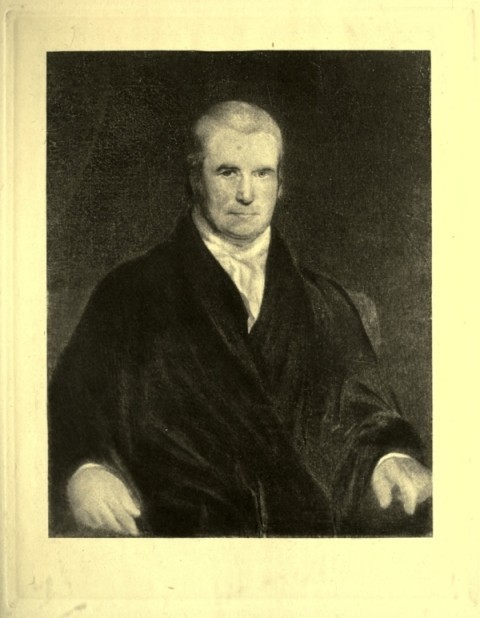
John Marshall From a painting by E. F. Petticolas
That body was militantly against the new Government as it stood. "The conflict between the powers of the general and state governments was coeval with those governments," declares Marshall. "The old line of division was still as strongly marked as ever." The enemies of National power thought that "liberty could be endangered only by encroachments upon the states; and that it was the great duty of patriotism to restrain the powers of the general government within the narrowest possible limits." On the other hand, the Nationalists, says Marshall, "sincerely believed that the real danger which threatened the republic was to be looked for in the undue ascendency of the states."[104]
Patrick Henry was supreme in the House of Delegates. Washington was vastly concerned at the prospect. He feared that the enemies of Nationalism would control the State Legislature and that it would respond to New York's appeal for a new Federal Constitutional Convention. He was "particularly alarmed" that the General Assembly would elect Senators "entirely anti-Federal."[105] His apprehension was justified. Hardly a week passed after the House convened until it passed resolutions, drawn by Henry,[106] to answer Clinton's letter, to ask Congress to call a new Federal Convention, and to coöperate with other States in that business.
In vain did the Nationalist members strive to soften this resolution. An amendment which went so far as to request Congress to recommend to the several States "the ratification of a bill of rights" and of the twenty amendments proposed by the Virginia Convention, was defeated by a majority of 46 out of a total vote of 124.[107] Swiftly and without mercy the triumphant opposition struck its next blow. Washington had urged Madison to stand for the Senate,[108] and the Nationalists exerted themselves to elect him. Madison wrote cleverly in his own behalf.[109] But he had no hope of success because it was "certain that a clear majority of the assembly are enemies to the Govṭ."[110] Madison was still the ultra-Nationalist, who, five years earlier, had wanted the National Government to have an absolute veto on every State law.[111]
Henry delivered "a tremendous philippic" against Madison as soon as his name was placed before the General Assembly.[112] Madison was badly beaten, and Richard Henry Lee and William Grayson were chosen as the first Senators from Virginia under the new National Government.[113] The defeated champion of the Constitution attributed Henry's attack and his own misfortune to his Nationalist principles: Henry's "enmity was levelled ... agst the whole system; and the destruction of the whole system, I take to be the secret wish of his heart."[114]
In such fashion did Madison receive his first chastisement for his Nationalist views and labors. He required no further discipline of a kind so rough and humiliating; and he sought and secured election to the National House of Representatives,[115] with opinions much subdued and his whole being made pliant for the wizard who so soon was to invoke his spell over that master mind.
Though Marshall was not in the Virginia Legislature at that session, it is certain that he worked with its members for Madison's election as Senator. But even Marshall's persuasiveness was unavailing. "Nothing," wrote Randolph to Madison, "is left undone which can tend to the subversion of the new government."[116]
Hard upon its defeat of Madison the Legislature adopted an ominous address to Congress. "The sooner ... the [National] government is possessed of the confidence of the people ... the longer its duration"—such was the language and spirit of Virginia's message to the lawmakers of the Nation, even before they had assembled.[117] The desperate Nationalists sought to break the force of this blow. They proposed a substitute which even suggested that the widely demanded new Federal Convention should be called by Congress if that body thought best. But all to no purpose. Their solemn[118] amendment was beaten by a majority of 22 out of a total vote of 122.[119]
Thus again was displayed that hostility to Nationalism which was to focus upon the newborn National Government every burning ray of discontent from the flames that sprang up all over the country during the constructive but riotous years that followed. Were the people taxed to pay obligations incurred in our War for Independence?—the National Government was to blame. Was an excise laid on whiskey, "the common drink of the nation"[120]—it was the National Government which thus wrung tribute from the universal thirst. Were those who owed debts compelled, at last, to pay them?—it was the National Government which armed the creditor with power to recover his own.
Why did we not aid French Republicans against the hordes of "despotism"? Because the National Government, with its accursed Neutrality, would not let us! And who but the National Government would dare make a treaty with British Monarchy, sacrificing American rights? Speculation and corruption, parade and ostentation,—everything that could, reasonably or unreasonably, be complained of,—were, avowed the Anti-Nationalists, the wretched but legitimate offspring of Nationalism. The remedy, of course, was to weaken the power of the Nation and strengthen that of the States. Such was the course pursued by the foes of Nationalism, that we shall trace during the first three administrations of the Government of the United States.
Thus, the events that took place between 1790 and 1800, supplemented and heated by the French Revolution, developed to their full stature those antagonistic theories of which John Marshall and Thomas Jefferson were to become the chief expounders. Those events also finished the preparation of these two men for the commanding stations they were to occupy. The radical politician and States' Rights leader on the one hand, and the conservative politician and Nationalist jurist on the other hand, were finally settled in their opinions during these developing years, at the end of which one of them was to occupy the highest executive office and the other the highest judicial office in the Government.
It was under such circumstances that the National Government, with Washington at its head, began its uncertain career. If the Legislature of Virginia had gone so far before the infant National establishment was under way, how far might not succeeding Legislatures go? No one knew. But it was plain to all that every act of the new Administration, even with Washington at the helm, would be watched with keen and jealous eyes; and that each Nationalist turn of the wheel would meet with prompt and stern resistance in the General Assembly of the greatest of American Commonwealths. Mutiny was already aboard.
John Marshall, therefore, determined again to seek election to the House of Delegates.
Immediately upon the organization of the National Government, Washington appointed Marshall to be United States Attorney for the District of Virginia. The young lawyer's friends had suggested his name to the President, intimating that he wished the place.[121] Marshall, high in the esteem of every one, had been consulted as to appointments on the National bench,[122] and Washington gladly named him for District Attorney. But when notified of his appointment, Marshall declined the honor.
A seat in the Virginia Legislature, was, however, quite another matter. Although his work as a legislator would interfere with his profession much more than would his duties as United States Attorney, he could be of practical service to the National Government in the General Assembly of the State where, it was plain, the first battle for Nationalism must be fought.
The Virginia Nationalists, much alarmed, urged him to make the race. The most popular man in Richmond, he was the only Nationalist who could be elected by that constituency; and, if chosen, would be the ablest supporter of the Administration in the Legislature. Although the people of Henrico County were more strongly against a powerful National Government than they had been when they sent Marshall to the Constitutional Convention the previous year, they nevertheless elected him; and in 1789 Marshall once more took his seat as a member of Virginia's law-making and law-marring body.
He was at once given his old place on the two principal standing committees;[123] and on special committees to bring in various bills,[124] among them one concerning descents, a difficult subject and of particular concern to Virginians at that time.[125] As a member of the Committee of Privileges and Elections, he passed on a hotly contested election case.[126] He was made a member of the important special committee to report upon the whole body of laws in force in Virginia, and helped to draw the committee's report, which is comprehensive and able.[127] The following year he was appointed a member of the committee to revise the tangled laws of the Commonwealth.[128]
The irrepressible subject of paying taxes in something else than money soon came up. Marshall voted against a proposition to pay the taxes in hemp and tobacco, which was defeated by a majority of 37 out of a total vote of 139; and he voted for the resolution "that the taxes of the present year ought to be paid in specie only or in warrants equivalent thereto," which carried.[129] He was added to the committee on a notable divorce case.[130]
Marshall was, of course, appointed on the special committee to bring in a bill giving statehood to the District of Kentucky.[131] Thus he had to do with the creation of the second State to be admitted after the Constitution was adopted. A bill was passed authorizing a lottery to raise money to establish an academy in Marshall's home county, Fauquier.[132] He voted with the majority against the perennial Baptist petition to democratize religion;[133] and for the bill to sell lands for taxes.[134]
Marshall was appointed on the committee to bring in bills for proceeding against absent debtors;[135] on another to amend the penal code;[136] and he was made chairman of the special committee to examine the James River Company,[137] of which he was a stockholder. Such are examples of his routine activities in the Legislature of 1789.
The Legislature instructed the Virginia Senators in Congress "to use their utmost endeavors to procure the admission of the citizens of the United States to hear the debates of their House, whenever they are sitting in their legislative capacity."[138]
An address glowing with love, confidence, and veneration was sent to Washington.[139] Then Jefferson came to Richmond; and the Legislature appointed a committee to greet him with polite but coldly formal congratulations.[140] No one then foresaw that a few short years would turn the reverence and affection for Washington into disrespect and hostility, and the indifference toward Jefferson into fiery enthusiasm.
The first skirmish in the engagement between the friends and foes of a stronger National Government soon came on. On November 30, 1789, the House ratified the first twelve amendments to the Constitution,[141] which the new Congress had submitted to the States; but three days later it was proposed that the Legislature urge Congress to reconsider the amendments recommended by Virginia which Congress had not adopted.[142] An attempt to make this resolution stronger was defeated by the deciding vote of the Speaker, Marshall voting against it.[143]
The Anti-Nationalist State Senate refused to concur in the House's ratification of the amendments proposed by Congress;[144] and Marshall was one of the committee to hold a conference with the Senate committee on the subject.
After Congress had passed the laws necessary to set the National Government in motion, Madison had reluctantly offered his summary of the volume of amendments to the Constitution recommended by the States "in order," as he said, "to quiet that anxiety which prevails in the public mind."[145] The debate is illuminating. The amendments, as agreed to, fell far short of the radical and extensive alterations which the States had asked and were understood to be palliatives to popular discontent.[146]
Randolph in Richmond wrote that the amendments were "much approved by the strong federalists ... being considered as an anodyne to the discontented. Some others ... expect to hear, ... that a real amelioration of the Constitution was not so much intended, as a soporific draught to the restless. I believe, indeed," declared Randolph, "that nothing—nay, not even the abolishment of direct taxation—would satisfy those who are most clamorous."[147]
The amendments were used by many, who changed from advocates to opponents of broad National powers, as a pretext for reversed views and conduct; but such as were actually adopted were not a sufficient justification for their action.[148]
The great question, however, with which the First Congress had to deal, was the vexed and vital problem of finance. It was the heart of the whole constitutional movement.[149] Without a solution of it the National Government was, at best, a doubtful experiment. The public debt was a chaos of variegated obligations, including the foreign and domestic debts contracted by the Confederation, the debts of the various States, the heavy accumulation of interest on all.[150] Public and private credit, which had risen when the Constitution finally became an accomplished fact, was now declining with capital's frail timidity of the uncertain.
In his "First Report on the Public Credit," Hamilton showed the way out of this maddening jungle. Pay the foreign debt, said Hamilton, assume as a National obligation the debts of the States and fund them, together with those of the Confederation. All had been contracted for a common purpose in a common cause; all were "the price of liberty." Let the owners of certificates, both State and Continental, be paid in full with arrears of interest, without discrimination between original holders and those who had purchased from them. And let this be done by exchanging for the old certificates those of the new National Government bearing interest and transferable. These latter then would pass as specie;[151] the country would be supplied with a great volume of sound money, so badly needed,[152] and the debt be in the process of extinguishment.[153]
Hamilton's entire financial system was assailed with fury both in Congress and among the people. The funding plan, said its opponents, was a stock-jobbing scheme, the bank a speculator's contrivance, the National Assumption of State debts a dishonest trick. The whole was a plot designed to array the moneyed interests in support of the National Government.[154] Assumption of State debts was a device to increase the National power and influence and to lessen still more the strength and importance of the States.[155] The speculators, who had bought the depreciated certificates of the needy, would be enriched from the substance of the whole people.
Without avail had Hamilton answered every objection in advance; the careful explanations in Congress of his financial measures went for naught; the materials for popular agitation against the National Government were too precious to be neglected by its foes.[156] "The first regular and systematic opposition to the principles on which the affairs of the union were administered," writes Marshall, "originated in the measures which were founded on it [the "First Report on the Public Credit"]."[157]
The Assumption of State debts was the strategic point of attack, especially for the Virginia politicians; and upon Assumption, therefore, they wisely concentrated their forces. Nor were they without plausible ground of opposition; for Virginia, having given as much to the common cause as any State and more than most of her sisters, and having suffered greatly, had by the sale of her public lands paid off more of her debt than had any of the rest of them.
It seemed, therefore, unjust to Virginians to put their State on a parity with those Commonwealths who had been less prompt. On the other hand, the certificates of debt, State and Continental, had accumulated in the North and East;[158] and these sections were determined that the debt should be assumed by the Nation.[159] So the debate in Congress was heated and prolonged, the decision doubtful. On various amendments, sometimes one side and sometimes the other prevailed, often by a single vote.[160]
At the same time the question of the permanent location of the National Capital arose.[161] On these two subjects Congress was deadlocked. Both were disposed of finally by the famous deal between Jefferson and Hamilton, by which the latter agreed to get enough votes to establish the Capital on the Potomac and the former enough votes to pass the Assumption Bill.
Washington had made Jefferson his Secretary of State purely on merit. For similar reasons of efficiency Hamilton had been appointed Secretary of the Treasury, after Robert Morris, Washington's first choice, had declined that office.
At Jefferson's dinner table, the two Secretaries discussed the predicament and made the bargain. Thereupon, Jefferson, with all the zeal of his ardent temperament, threw himself into the contest to pass Hamilton's financial measure; and not only secured the necessary votes to make Assumption a law, but wrote letters broadcast in support of it.
"Congress has been long embarrassed," he advised Monroe, "by two of the most irritating questions that ever can be raised, ... the funding the public debt and ... the fixing on a more central residence.... Unless they can be reconciled by some plan of compromise, there will be no funding bill agreed to, our credit ... will burst and vanish and the states separate to take care every one of itself." Jefferson outlines the bargain for fixing the Capital and assuming the debts, and concludes: "If this plan of compromise does not take place, I fear one infinitely worse."[162] To John Harvie he writes: "With respect to Virginia the measure is ... divested of ... injustice."[163]
Jefferson delivered three Southern votes to pass the bill for Assumption of the State debts, and Hamilton got enough Northern votes to locate the National Capital permanently where it now stands.[164] Thus this vital part of Hamilton's comprehensive financial plan was squeezed through Congress by only two votes.[165] But Virginia was not appeased and remained the center of the opposition.[166]
Business at once improved. "The sudden increase of monied capital," writes Marshall, "invigorated commerce, and gave a new stimulus to agriculture."[167] But the "immense wealth which individuals acquired" by the instantaneous rise in the value of the certificates of debt caused popular jealousy and discontent. The debt was looked upon, not as the funding of obligations incurred in our War for Independence, but as a scheme newly hatched to strengthen the National Government by "the creation of a monied interest ... subservient to its will."[168]
The Virginia Legislature, of which Marshall was now the foremost Nationalist member, convened soon after Assumption had become a National law. A smashing resolution, drawn by Henry,[169] was proposed, asserting that Assumption "is repugnant to the constitution of the United States, as it goes to the exercise of a power not expressly granted to the general government."[170] Marshall was active among and, indeed, led those who resisted to the uttermost the attack upon this thoroughly National measure of the National Government.
Knowing that they were outnumbered in the Legislature and that the people were against Assumption, Marshall and his fellow Nationalists in the House of Delegates employed the expedient of compromise. They proposed to amend Henry's resolution by stating that Assumption would place on Virginia a "heavy debt ... which never can be extinguished" so long as the debt of any other State remained unpaid; that it was "inconsistent with justice"; that it would "alienate the affections of good citizens of this Commonwealth from the government of the United States ... and finally tend to produce measures extremely unfavorable to the interests of the Union."[171]
Savage enough for any one, it would seem, was this amendment of the Nationalists in the Virginia Legislature; but its fangs were not sufficiently poisonous to suit the opposition. It lacked, particularly, the supreme virtue of asserting the law's unconstitutionality. So the Virginia Anti-Nationalists rejected it by a majority of 41 votes out of a total of 135.
Marshall and his determined band of Nationalists labored hard to retrieve this crushing defeat. On Henry's original resolution, they slightly increased their strength, but were again beaten by a majority of 23 out of 127 voting.[172]
Finally, the triumphant opposition reported a protest and remonstrance to Congress. This brilliant Anti-Nationalist State paper—the Magna Charta of States' Rights—sounded the first formal call to arms for the doctrine that all powers not expressly given in the Constitution were reserved to the States. It also impeached the Assumption Act as an effort "to erect and concentrate and perpetuate a large monied interest in opposition to the landed interests," which would prostrate "agriculture at the feet of commerce" or result in a "change in the present form of Federal Government, fatal to the existence of American liberty."[173]
But the unconstitutionality of Assumption was the main objection. The memorial declared that "during the whole discussion of the federal constitution by the convention of Virginia, your memorialists were taught to believe 'that every power not expressly granted was retained' ... and upon this positive condition" the Constitution had been adopted. But where could anything be found in the Constitution "authorizing Congress to express terms or to assume the debts of the states?" Nowhere! Therefore, Congress had no such power.
"As the guardians, then, of the rights and interests of their constituents; as sentinels placed by them over the ministers of the Federal Government, to shield it from their encroachments," the Anti-Nationalists in the Virginia Legislature sounded the alarm.[174] It was of this jealous temper of the States that Ames so accurately wrote a year later: "The [National] government is too far off to gain the affections of the people.... Instead of feeling as a Nation, a State is our country. We look with indifference, often with hatred, fear, and aversion, to the other states."[175]
Marshall and his fellow Nationalists strove earnestly to extract from the memorial as much venom as possible, but were able to get only three or four lines left out;[176] and the report was adopted practically as originally drafted.[177] Thus Marshall was in the first skirmish, after the National Government had been established, of that constitutional engagement in which, ultimately, Nationalism was to be challenged on the field of battle. Sumter and Appomattox were just below the horizon.
The remainder of Hamilton's financial plan was speedily placed upon the statute books of the Republic, though not without determined resistance which, more and more, took on a grim and ugly aspect both in Congress and throughout the country.
When Henry's resolution, on which the Virginia remonstrance was based, reached Hamilton, he instantly saw its logical result. It was, he thought, the major premise of the syllogism of National disintegration. "This," exclaimed Hamilton, of the Virginia resolution, "is the first symptom of a spirit which must either be killed or it will kill the Constitution of the United States."[178]
The Anti-Nationalist memorial of the Legislature of Virginia accurately expressed the sentiment of the State. John Taylor of Caroline two years later, in pamphlets of marked ability, attacked the Administration's entire financial system and its management. While he exhaustively analyzed its economic features, yet he traced all its supposed evils to the Nationalist idea. The purpose and result of Hamilton's whole plan and of the manner of its execution was, declared Taylor, to "Swallow up ... the once sovereign ... states.... Hence all assumptions and ... the enormous loans." Thus "the state governments will become only speculative commonwealths to be read for amusement, like Harrington's Oceana or Moore's Utopia."[179]
The fight apparently over, Marshall declined to become a candidate for the Legislature in the following year. The Administration's financial plan was now enacted into law and the vital part of the National machinery thus set up and in motion. The country was responding with a degree of prosperity hitherto unknown, and, for the time, all seemed secure.[180] So Marshall did not again consent to serve in the House of Delegates until 1795. But the years between these periods of his public life brought forth events which were determinative of the Nation's future. Upon the questions growing out of them, John Marshall was one of the ever-decreasing Virginia minority which stanchly upheld the policies of the National Government.
Virginia's declaration of the unconstitutionality of the Assumption Act had now thundered in Jefferson's ears. He himself was instrumental in the enactment of this law and its unconstitutionality never occurred to him[181] until Virginia spoke. But, faithful to the people's voice,[182] Jefferson was already publicly opposing, through the timid but resourceful Madison[183] and the fearless and aggressive[184] Giles, the Nationalist statesmanship of Hamilton.[185]
Thus it came about that when Washington asked his Cabinet's opinion upon the bill to incorporate the Bank of the United States, Jefferson promptly expressed with all his power the constitutional theory of the Virginia Legislature. The opposition had reached the point when, if no other objection could be found to any measure of the National Government, its "unconstitutionality" was urged against it. "We hear, incessantly, from the old foes of the Constitution 'this is unconstitutional and that is,' and, indeed, what is not? I scarce know a point which has not produced this cry, not excepting a motion for adjourning."[186] Jefferson now proceeded "to produce this cry" against the Bank Bill.
Hamilton's plan, said Jefferson, violated the Constitution. "To take a single step beyond the boundaries thus specially drawn around the powers of Congress [the Twelfth Amendment][187] is to take possession of a boundless field of power, no longer susceptible of any definition." Even if the bank were "convenient" to carry out any power specifically granted in the Constitution, yet it was not "necessary," argued Jefferson; all powers expressly given could be exercised without the bank. It was only indispensable powers that the Constitution permitted to be implied from those definitely bestowed on Congress—"convenience is not necessity."[188]
Hamilton answered with his argument for the doctrine of implied powers.[189] Banks, said he, are products of civilized life—all enlightened commercial nations have them. He showed the benefits and utility of banks; answered all the objections to these financial agencies; and then examined the disputed constitutionality of the bill for the incorporation of the Bank of the United States.
All the powers of the National Government were not set down in words in the Constitution and could not be. For instance, there are the "resulting powers," as over conquered territory. Nobody could deny the existence of such powers—yet they were not granted by the language of the fundamental law. As to Jefferson's argument based on the word "necessary," his contention meant, said Hamilton, that "no means are to be considered necessary without which the power would be nugatory"—which was absurd. Jefferson's reasoning would require that an implied power should be "absolutely or indispensably necessary."
But this was not the ordinary meaning of the word and it was by this usual and customary understanding of terms that the Constitution must be interpreted. If Jefferson was right, Congress could act only in "a case of extreme necessity." Such a construction of the Constitution would prevent the National Government even from erecting lighthouses, piers, and other conveniences of commerce which could be carried on without them. These illustrations revealed the paralysis of government concealed in Jefferson's philosophy.
The true test of implied powers, Hamilton showed, was the "natural relation [of means] to the ... lawful ends of the government." Collection of taxes, foreign and interstate trade, were, admittedly, such ends. The National power to "regulate" these is "sovereign"; and therefore "to employ all the means which will relate to their regulation to the best and greatest advantage" is permissible.
"This general principle is inherent in the very definition of government," declared he, "and essential to every step of the progress to be made by that of the United States, namely: That every power vested in a government is in its nature sovereign and included by force of the term, a right to employ all the means requisite and fairly applicable to the attainment of the ends of such power, and which are not precluded by restrictions and exceptions specified in the Constitution or not immoral, or not contrary to the essential ends of political society....
"The powers of the Federal Government, as to its objects are sovereign"; the National Constitution, National laws, and treaties are expressly declared to be "the supreme law of the land." And he added, sarcastically: "The power which can create the supreme law of the land in any case is doubtless sovereign as to such case." But, said Hamilton, "it is unquestionably incident to sovereign power to erect corporations, and consequently to that of the United States, in relation to the objects intrusted to the management of the government."
And, finally: "The powers contained in a constitution of government ... ought to be construed liberally in advancement of the public good.... The means by which natural exigencies are to be provided for, national inconveniences obviated, national prosperity promoted are of such infinite variety, extent, and complexity, that there must of necessity be great latitude of discretion in the selection and application of those means."[190]
So were stated the opposing principles of liberal and narrow interpretation of the Constitution, about which were gathering those political parties that, says Marshall, "in their long and dubious conflict ... have shaken the United States to their centre."[191] The latter of these parties, under the name "Republican," was then being shaped into a compact organization. Its strength was increasing. The object of Republican attack was the National Government; that of Republican praise and affection was the sovereignty of the States.
"The hatred of the Jacobites towards the house of Hanover was never more deadly than that ... borne by many of the partisans of State power towards the government of the United States," testifies Ames.[192] In the Republican view the basis of the two parties was faith as against disbelief in the ability of the people to govern themselves; the former favored the moneyed interests, the latter appealed to the masses.[193] Such was the popular doctrine preached by the opponents of the National Government; but all economic objections centered in a common assault on Nationalism.
Thus a clear dividing line was drawn separating the people into two great political divisions; and political parties, in the present-day sense of definite organizations upon fundamental and popularly recognized principles, began to emerge. Henceforth the terms "Federalist" and "Republican" mean opposing party groups, the one standing for the National and the other for the provincial idea. The various issues that arose were referred to the one or the other of these hostile conceptions of government.
In this rise of political parties the philosophy of the Constitution was negatived; for our fundamental law, unlike those of other modern democracies, was built on the non-party theory and did not contemplate party government. Its architects did not foresee parties. Indeed, for several years after the Constitution was adopted, the term "party" was used as an expression of reproach. The correspondence of the period teems with illustrations of this important fact.
For a considerable time most of the leading men of the period looked with dread upon the growing idea of political parties; and the favorite rebuke to opponents was to accuse them of being a "party" or a "faction," those designations being used interchangeably. The "Farewell Address" is a solemn warning against political parties[194] almost as much as against foreign alliances.
[95] Marshall, ii, 150-51. "The agitation had been too great to be suddenly calmed; and for the active opponents of the system [Constitution] to become suddenly its friends, or even indifferent to its fate, would have been a victory of reason over passion." (Ib.; and see Beard: Econ. O. J. D., 85, 101, 102-07.)
[96] "The effort was made to fill the legislature with the declared enemies of the government, and thus to commit it, in its infancy, to the custody of its foes." (Marshall, ii, 151.)
[97] Madison to Hamilton, June 27, 1788; Hamilton MSS., Lib. Cong. Madison adds this cryptic sentence: "This hint may not be unworthy of your attention."
[98] Madison to Washington, June 27, 1788; Writings: Hunt, v, 234. Madison here refers to the project of calling a new Federal Convention for the purpose of amending the Constitution or making a new one.
[99] When Jefferson left Virginia for France, his political fortunes were broken. (Eckenrode: R. V., chap. viii; and Dodd, 63-64; and Ambler, 35-36.) The mission to France at the close of the American Revolution, while "an honor," was avoided rather than sought by those who were keen for career. (Dodd, 36-39.)
[100] Jefferson to Hopkinson, March 13, 1789; Works: Ford, v, 456.
[101] Jefferson to Washington, Paris, Dec. 4, 1788; Works: Ford, v, 437-38. Compare with Jefferson's statements when the fight was on against ratifying the Constitution. (See vol. i, chap. viii; also Jefferson to Humphreys, Paris, March 18, 1789; Works: Ford, v, 470.)
[102] Jefferson to Short, Dec. 14, 1789; Works: Ford, vi, 24.
[103] The Legislature which met on the heels of the Virginia Constitutional Convention hastened to adjourn in order that its members might attend to their harvesting. (Monroe to Jefferson, July 12, 1788; Monroe's Writings: Hamilton, i, 188.) But at its autumn session, it made up for lost time in its practical display of antagonism to the Nationalist movement.
[104] Marshall, ii, 205-26. Throughout this chapter the terms "Nationalist" and "Anti-Nationalist" are used instead of the customary terms "Federalist" and "Anti-Federalist," the latter not clearly expressing the fundamental difference between the contending political forces at that particular time.
[105] Carrington to Madison, Oct. 19, 1788; quoted in Henry, ii, 415.
[106] Ib., 416-18.
[107] Journal, H.D. (Oct. 30, 1788), 16-17; see Grigsby, ii, 319; also see the vivid description of the debate under these resolutions in Henry, ii, 418-23.
[108] Carrington to Madison, Oct. 19, 1788; quoted in Henry, ii, 415.
[109] Madison to Randolph, Oct. 17, 1788; to Pendleton, Oct. 20, 1788; Writings: Hunt, v, 269-79.
[110] Madison to Randolph, Nov. 2, 1788; Writings: Hunt, v, 296.
[111] See vol. i of this work.
[112] Henry, ii, 427; see also Scott, 172.
[113] Journal, H.D. (Nov. 8, 1788), 32; see also Conway, 120; and Henry, ii, 427-28.
[114] Madison to Randolph, Nov. 2, 1788; Writings: Hunt, v, 295.
[115] Monroe became a candidate against Madison and it was "thought that he [would] ... carry his election." (Mason to John Mason, Dec. 18, 1788; Rowland, ii, 304.) But so ardent were Madison's assurances of his modified Nationalist views that he was elected. His majority, however, was only three hundred. (Monroe to Jefferson, Feb. 15, 1789; Monroe's Writings: Hamilton, i, 199.)
[116] Randolph to Madison, Nov. 10, 1788; Conway, 121.
[117] Journal, H.D. (Nov. 14, 1788), 42-44. Also see Annals, 1st Cong., 1st Sess., 259.
[118] The Nationalist substitute is pathetic in its apprehensive tone. It closes with a prayer "that Almighty God in his goodness and wisdom will direct your councils to such measures as will establish our lasting peace and welfare and secure to our latest posterity the blessings of freedom; and that he will always have you in his holy keeping." (Journal, H.D. (Nov. 14, 1788), 43.)
[119] Ib., 44.
[120] Pennsylvania Resolutions: Gallatin's Writings: Adams, i, 3. This was unjust to New England, where rum was "the common drink of the nation" and played an interesting part in our tariff laws and New England trade.
[121] Washington to Marshall, Nov. 23, 1789; MS., Lib. Cong.
[122] Randolph to Madison, July 19, 1789; Conway, 127.
[123] Journal, H.D. (Oct. 20, 1789), 4.
[124] Ib., 7-16.
[125] Ib., 16. Marshall probably drew the bill that finally passed. He carried it from the House to the Senate. (Ib., 136.)
[126] Ib. (Oct. 28, 1790), 19-22. Whether or not a voter owned land was weighed in delicate scales. Even "treating" was examined.
[127] Journal, H.D. (Oct. 28, 1790), 24-29.
[128] Ib., 1st Sess. (1790), 41; and 2d Sess. (Dec. 8), 121-22. For extent of this revision see Conway, 130.
[129] Journal, H.D. (1789), 57-58.
[130] Ib., 78. See report of the committee in this interesting case. (Ib., 103.) The bill was passed. (Ib., 141.) At that time divorces in Virginia could be had only by an act of the Legislature. Contrast the above case, where the divorce was granted for cruelty, abandonment, waste of property, etc., with that of the Mattauer case (ib. (1793), 112, 126), where the divorce was refused for admitted infidelity on the part of the wife who bore a child by the brother of her husband while the latter was abroad.
[131] Ib. (1789), 96. Kentucky was then a part of Virginia and legislation by the latter State was necessary. It is more than probable that Marshall drew this important statute, which passed. (Ib., 115, 131, 141.)
[132] Journal, H.D. (1789), 112. At this period, lotteries were the common and favorite methods of raising money for schools, and other public institutions and enterprises. Even the maintenance of cemeteries was provided for in this way. The Journals of the House of Delegates are full of resolutions and Hening's Statutes contain many acts concerning these enterprises. (See, for example, Journal, H.D. (1787), 16-20; (1797), 39.)
[133] An uncommonly able state paper was laid before the House of Delegates at this session. It was an arraignment of the Virginia Constitution of 1776, and mercilessly exposed, without the use of direct terms, the dangerous political machine which that Constitution made inevitable; it suggested "that as harmony with the Federal Government ... is to be desired our own Constitution ought to be compared with that of the United States and retrenched where it is repugnant"; and it finally recommended that the people instruct their representatives in the Legislature to take the steps for reform. The author of this admirable petition is unknown. (Journal, H.D. (1789), 113.)
[134] Ib. (Nov. 17, 1789), 20.
[135] Ib. (Nov. 13, 1789), 12.
[136] Ib. (Nov. 16, 1789), 14.
[137] Ib. (Nov. 27, 1789), 49. The James River Company was formed in 1784. Washington was its first president. (Randolph to Washington, Aug. 8, 1784; Conway, 58.) Marshall's Account Book shows many payments on stock in this company.
[138] Journal, H.D. (1789), 117, 135. For many years after the Constitution was adopted the United States Senate sat behind closed doors. The Virginia Legislature continued to demand public debate in the National Senate until that reform was accomplished. (See Journal, H.D. (Oct. 25, 1791), 14; (Nov. 8, 1793), 57, etc.)
[139] Journal, H.D. (1789), 17, 19, 98.
[140] Ib., 107-12.
[141] Ib., 90-91.
[142] Journal, H.D. (1789), 96.
[143] Ib., 102.
[144] Ib., 119. The objections were that the liberty of the press, trial by jury, freedom of speech, the right of the people to assemble, consult, and "to instruct their representatives," were not guaranteed; and in general, that the amendments submitted "fall short of affording security to personal rights." (Senate Journal, December 12, 1789; MS., Va. St. Lib.)
[145] Annals, 1st Cong., 1st Sess., 444; and see entire debate. The amendments were offered as a measure of prudence to mollify the disaffected. (Rives, iii, 38-39.)
[146] The House agreed to seventeen amendments. But the Senate reduced these to twelve, which were submitted to the States. The first of these provided for an increase of the representation in the House; the second provided that no law "varying" the salaries of Senators or Representatives "shall take effect until an election of Representatives shall have intervened." (Annals, 1st Cong., 1st Sess., Appendix to ii, 2033.) The States ratified only the last ten. (For good condensed treatment of the subject see Hildreth, iv, 112-24.) Thus the Tenth Amendment, as ratified, was the twelfth as submitted and is sometimes referred to by the latter number in the documents and correspondence of 1790-91, as in Jefferson's "Opinion on the Constitutionality of the Bank of the United States." (See infra.) New York, Virginia, Maryland, South Carolina, North Carolina, and Rhode Island accepted the twelve amendments as proposed. The other States rejected one or both of the first two amendments.
[147] Randolph to Madison, June 30, 1789; Conway, 126.
[148] See Beard: Econ. O. J. D., 76.
[149] Ib., 86.
[150] Ib., 132-33.
[151] Marshall, ii, 192.
[152] Money was exceedingly scarce. Even Washington had to borrow to travel to New York for his inauguration, and Patrick Henry could not attend the Federal Constitutional Convention for want of cash. (Conway, 132.)
[153] "First Report on the Public Credit"; Works: Lodge, ii, 227 et seq. The above analysis, while not technically precise, is sufficiently accurate to give a rough idea of Hamilton's plan. (See Marshall's analysis; Marshall, ii, 178-80.)
[154] This, indeed, was a portion of Hamilton's plan and he succeeded in it as he did in other parts of his broad purpose to combine as much strength as possible in support of the National Government. "The northern states and the commercial and monied people are zealously attached to ... the new government." (Wolcott to his father, Feb. 12, 1791; Gibbs, i, 62.)
[155] This was emphatically true. From the National point of view it was the best feature of Hamilton's plan.
[156] In his old age, John Adams, Hamilton's most venomous and unforgiving enemy, while unsparing in his personal abuse, paid high tribute to the wisdom and necessity of Hamilton's financial statesmanship. "I know not," writes Adams, "how Hamilton could have done otherwise." (Adams to Rush, Aug. 23, 1805; Old Family Letters, 75.) "The sudden rise of public securities, after the establishment of the funding system was no misfortune to the Public but an advantage. The necessity of that system arose from the inconsistency of the People in contracting debts and then refusing to pay them." (Same to same, Jan. 25, 1806; ib., 93.)
[157] Marshall, ii, 181. The attack on Hamilton's financial plan and especially on Assumption was the beginning of the definite organization of the Republican Party. (Washington's Diary: Lossing, 166.)
[158] Gore to King, July 25, 1790; King, i, 392; and see McMaster, ii, 22.
[159] At one time, when it appeared that Assumption was defeated, Sedgwick of Massachusetts intimated that his section might secede. (Annals, 1st Cong., April 12, 1790, pp. 1577-78; and see Rives, iii, 90 et seq.)
[160] Marshall's statement of the debate is the best and fairest brief account of this historic conflict. (See Marshall, ii, 181-90. See entire debate in Annals, 1st Cong., i, ii, under caption "Public Debt.")
[161] "This despicable grog-shop contest, whether the taverns of New York or Philadelphia shall get the custom of Congress, keeps us in discord and covers us all with disgrace." (Ames to Dwight, June 11, 1790; Works: Ames, i, 80.)
[162] Jefferson to Monroe, June 20, 1790; Works: Ford, vi, 78-80; and see ib., 76; to Gilmer, June 27, ib., 83; to Rutledge, July 4, ib., 87-88; to Harvie, July 25, ib., 108.
[163] Ib.; and see also Jefferson to Eppes, July 25, ib., 106; to Randolph, March 28, ib., 37; to same, April 18, ib., 47; to Lee, April 26, ib., 53; to Mason, June 13, ib., 75; to Randolph, June 20, ib., 76-77; to Monroe, June 20, ib., 79; to Dumas, June 23, ib., 82; to Rutledge, July 4, ib., 87-88; to Dumas, July 13, ib., 96. Compare these letters with Jefferson's statement, February, 1793; ib., vii, 224-26; and with the "Anas," ib., i, 171-78. Jefferson then declared that "I was really a stranger to the whole subject." (Ib., 176.)
[164] Jefferson's statement; Works: Ford, vii, 224-26, and i, 175-77.
[165] Gibbs, i, 32; and see Marshall, ii, 190-91.
[166] Henry, ii, 453. But Marshall says that more votes would have changed had that been necessary to consummate the bargain. (See Marshall, ii, footnote to 191.)
[167] Ib., 192.
[168] Marshall, ii, 191-92.
[169] Henry, ii, 453-55.
[170] Journal, H.D. (1790), 35.
[171] Journal, H.D. (1790), 35.
[172] Ib.
[173] Ib., 80-81.
[174] Journal, H.D. (1790), 80-81; and see Am. St. Prs., Finance, i, 90-91. The economic distinction is here clearly drawn. Jefferson, who later made this a chief part of his attack, had not yet raised the point.
[175] Ames to Minot, Feb. 16, 1792; Works: Ames, i, 113.
[176] This was the sentence which declared that Hamilton's reasoning would result in "fictitious wealth through a paper medium," referring to his plan for making the transferable certificates of the National debt serve as currency.
[177] Journal, H.D. (1790), 141.
[178] Hamilton to Jay, Nov. 13, 1790; Works: Lodge, ix, 473-74. Virginia was becoming very hostile to the new Government. First, there was a report that Congress was about to emancipate the slaves. Then came the news of the Assumption of the State debts, with the presence in Virginia of speculators from other States buying up State securities; and this added gall to the bitter cup which Virginians felt the National Government was forcing them to drink. Finally the tidings that the Senate had defeated the motion for public sessions inflamed the public mind still more. (Stuart to Washington, June 2, 1790; Writings: Ford, xi, footnote to 482.)
[179] Taylor's "An Enquiry, etc.," as quoted in Beard: Econ. O. J. D., 209. (Ib., chap. vii.) Taylor's pamphlet was revised by Pendleton and then sent to Madison before publication. (Monroe to Madison, May 18, 1793; Monroe's Writings: Hamilton, i, 254.) Taylor wanted "banks ... demolished" and bankers "excluded from public councils." (Beard: Econ. O. J. D., 209.)
[180] Marshall, ii, 192.
[181] In Jefferson's letters, already cited, not the faintest suggestion appears that he thought the law unconstitutional. Not until Patrick Henry's resolution, and the address of the Virginia Legislature to Congress based thereon, made the point that Assumption was in violation of this instrument, because the power to pass such a law was not expressly given in the Constitution, did Jefferson take his stand against implied powers.
[182] "Whether ... right or wrong, abstractedly, more attention should be paid to the general opinion." (Jefferson to Mason, Feb. 4, 1791; Works: Ford, vi, 186.)
[183] Monroe had advised Madison of the hostility of Virginia to Assumption and incidentally asked for an office for his own brother-in-law. (Monroe to Madison, July 2, 1790; Monroe's Writings: Hamilton, i, 208; and see Monroe to Jefferson, July 3, 1790; ib., 209.)
[184] Anderson, 21.
[185] Jefferson himself, a year after he helped pass the Assumption Act, had in a Cabinet paper fiercely attacked Hamilton's plan; and the latter answered in a formal statement to the President. These two documents are the ablest summaries of the opposing sides of this great controversy. (See Jefferson to President, May 23, 1792; Works: Ford, vi, 487-95; and Hamilton to Washington, Aug. 18, 1792; Works: Lodge, ii, 426-72.)
[186] Ames to Minot, March 8, 1792; Works: Ames, i, 114.
[187] Tenth Amendment, as ratified.
[188] "Opinion on the Constitutionality of a National Bank of the United States"; Works: Ford, vi, 198; and see Madison's argument against the constitutionality of the Bank Act in Annals, 1st Cong., Feb. 2, 1791, pp. 1944-52; Feb. 8, 2008-12; also, Writings: Hunt, vi, 19-42. This argument best shows Madison's sudden and radical change from an extreme Nationalist to an advocate of the most restricted National powers.
[189] Hamilton's "Opinion as to the Constitutionality of the Bank of the United States"; Works: Lodge, iii, 445-93. Adams took the same view. (See Adams to Rush, Dec. 27, 1810; Old Family Letters, 272.)
[190] "Opinion as to the Constitutionality of the Bank of the United States"; Works: Lodge, iii, 445-93. Washington was sorely perplexed by the controversy and was on the point of vetoing the Bank Bill. (See Rives, iii, 170-71.)
[191] Marshall, ii, 206-07.
[192] Ames to Dwight, Jan. 23, 1792; Works: Ames, i, 110-11.
[193] "A Candid State of Parties"—National Gazette, Sept. 26, 1792.
[194] "I was no party man myself and the first wish of my heart was, if parties did exist, to reconcile them." (Washington to Jefferson, July 6, 1796; Writings: Ford, xiii, 230.)
FOOTNOTES:
[95] Marshall, ii, 150-51. "The agitation had been too great to be suddenly calmed; and for the active opponents of the system [Constitution] to become suddenly its friends, or even indifferent to its fate, would have been a victory of reason over passion." (Ib.; and see Beard: Econ. O. J. D., 85, 101, 102-07.)
[96] "The effort was made to fill the legislature with the declared enemies of the government, and thus to commit it, in its infancy, to the custody of its foes." (Marshall, ii, 151.)
[97] Madison to Hamilton, June 27, 1788; Hamilton MSS., Lib. Cong. Madison adds this cryptic sentence: "This hint may not be unworthy of your attention."
[98] Madison to Washington, June 27, 1788; Writings: Hunt, v, 234. Madison here refers to the project of calling a new Federal Convention for the purpose of amending the Constitution or making a new one.
Randolph was still more apprehensive. "Something is surely meditated against the new Constitution more animated, forcible, and violent than a simple application for calling a Convention." (Randolph to Madison, Oct. 23, 1788; Conway, 118.)
[99] When Jefferson left Virginia for France, his political fortunes were broken. (Eckenrode: R. V., chap. viii; and Dodd, 63-64; and Ambler, 35-36.) The mission to France at the close of the American Revolution, while "an honor," was avoided rather than sought by those who were keen for career. (Dodd, 36-39.)
Seldom has any man achieved such a recovery as that of Jefferson in the period now under review. Perhaps Talleyrand's rehabilitation most nearly approaches Jefferson's achievement. From the depths of disfavor this genius of party management climbed to the heights of popularity and fame.
[100] Jefferson to Hopkinson, March 13, 1789; Works: Ford, v, 456.
[101] Jefferson to Washington, Paris, Dec. 4, 1788; Works: Ford, v, 437-38. Compare with Jefferson's statements when the fight was on against ratifying the Constitution. (See vol. i, chap. viii; also Jefferson to Humphreys, Paris, March 18, 1789; Works: Ford, v, 470.)
[102] Jefferson to Short, Dec. 14, 1789; Works: Ford, vi, 24.
[103] The Legislature which met on the heels of the Virginia Constitutional Convention hastened to adjourn in order that its members might attend to their harvesting. (Monroe to Jefferson, July 12, 1788; Monroe's Writings: Hamilton, i, 188.) But at its autumn session, it made up for lost time in its practical display of antagonism to the Nationalist movement.
[104] Marshall, ii, 205-26. Throughout this chapter the terms "Nationalist" and "Anti-Nationalist" are used instead of the customary terms "Federalist" and "Anti-Federalist," the latter not clearly expressing the fundamental difference between the contending political forces at that particular time.
[105] Carrington to Madison, Oct. 19, 1788; quoted in Henry, ii, 415.
[106] Ib., 416-18.
[107] Journal, H.D. (Oct. 30, 1788), 16-17; see Grigsby, ii, 319; also see the vivid description of the debate under these resolutions in Henry, ii, 418-23.
[108] Carrington to Madison, Oct. 19, 1788; quoted in Henry, ii, 415.
[109] Madison to Randolph, Oct. 17, 1788; to Pendleton, Oct. 20, 1788; Writings: Hunt, v, 269-79.
[110] Madison to Randolph, Nov. 2, 1788; Writings: Hunt, v, 296.
[111] See vol. i of this work.
[112] Henry, ii, 427; see also Scott, 172.
[113] Journal, H.D. (Nov. 8, 1788), 32; see also Conway, 120; and Henry, ii, 427-28.
[114] Madison to Randolph, Nov. 2, 1788; Writings: Hunt, v, 295.
[115] Monroe became a candidate against Madison and it was "thought that he [would] ... carry his election." (Mason to John Mason, Dec. 18, 1788; Rowland, ii, 304.) But so ardent were Madison's assurances of his modified Nationalist views that he was elected. His majority, however, was only three hundred. (Monroe to Jefferson, Feb. 15, 1789; Monroe's Writings: Hamilton, i, 199.)
[116] Randolph to Madison, Nov. 10, 1788; Conway, 121.
[117] Journal, H.D. (Nov. 14, 1788), 42-44. Also see Annals, 1st Cong., 1st Sess., 259.
[118] The Nationalist substitute is pathetic in its apprehensive tone. It closes with a prayer "that Almighty God in his goodness and wisdom will direct your councils to such measures as will establish our lasting peace and welfare and secure to our latest posterity the blessings of freedom; and that he will always have you in his holy keeping." (Journal, H.D. (Nov. 14, 1788), 43.)
[119] Ib., 44.
[120] Pennsylvania Resolutions: Gallatin's Writings: Adams, i, 3. This was unjust to New England, where rum was "the common drink of the nation" and played an interesting part in our tariff laws and New England trade.
[121] Washington to Marshall, Nov. 23, 1789; MS., Lib. Cong.
[122] Randolph to Madison, July 19, 1789; Conway, 127.
[123] Journal, H.D. (Oct. 20, 1789), 4.
[124] Ib., 7-16.
[125] Ib., 16. Marshall probably drew the bill that finally passed. He carried it from the House to the Senate. (Ib., 136.)
[126] Ib. (Oct. 28, 1790), 19-22. Whether or not a voter owned land was weighed in delicate scales. Even "treating" was examined.
[127] Journal, H.D. (Oct. 28, 1790), 24-29.
[128] Ib., 1st Sess. (1790), 41; and 2d Sess. (Dec. 8), 121-22. For extent of this revision see Conway, 130.
[129] Journal, H.D. (1789), 57-58.
[130] Ib., 78. See report of the committee in this interesting case. (Ib., 103.) The bill was passed. (Ib., 141.) At that time divorces in Virginia could be had only by an act of the Legislature. Contrast the above case, where the divorce was granted for cruelty, abandonment, waste of property, etc., with that of the Mattauer case (ib. (1793), 112, 126), where the divorce was refused for admitted infidelity on the part of the wife who bore a child by the brother of her husband while the latter was abroad.
[131] Ib. (1789), 96. Kentucky was then a part of Virginia and legislation by the latter State was necessary. It is more than probable that Marshall drew this important statute, which passed. (Ib., 115, 131, 141.)
[132] Journal, H.D. (1789), 112. At this period, lotteries were the common and favorite methods of raising money for schools, and other public institutions and enterprises. Even the maintenance of cemeteries was provided for in this way. The Journals of the House of Delegates are full of resolutions and Hening's Statutes contain many acts concerning these enterprises. (See, for example, Journal, H.D. (1787), 16-20; (1797), 39.)
[133] An uncommonly able state paper was laid before the House of Delegates at this session. It was an arraignment of the Virginia Constitution of 1776, and mercilessly exposed, without the use of direct terms, the dangerous political machine which that Constitution made inevitable; it suggested "that as harmony with the Federal Government ... is to be desired our own Constitution ought to be compared with that of the United States and retrenched where it is repugnant"; and it finally recommended that the people instruct their representatives in the Legislature to take the steps for reform. The author of this admirable petition is unknown. (Journal, H.D. (1789), 113.)
From this previous vote for a new Constitution, it is probable that Marshall warmly supported this resolution. But the friends of the old and vicious system instantly proposed an amendment "that the foregoing statement contains principles repugnant to Republican Government and dangerous to the freedom of this country, and, therefore, ought not to meet with the approbation of this House or be recommended to the consideration of the people"; and so strong were they that the whole subject was dropped by postponement, without further contest. (Journal, H.D. (1789), 108-09.)
[134] Ib. (Nov. 17, 1789), 20.
[135] Ib. (Nov. 13, 1789), 12.
[136] Ib. (Nov. 16, 1789), 14.
[137] Ib. (Nov. 27, 1789), 49. The James River Company was formed in 1784. Washington was its first president. (Randolph to Washington, Aug. 8, 1784; Conway, 58.) Marshall's Account Book shows many payments on stock in this company.
[138] Journal, H.D. (1789), 117, 135. For many years after the Constitution was adopted the United States Senate sat behind closed doors. The Virginia Legislature continued to demand public debate in the National Senate until that reform was accomplished. (See Journal, H.D. (Oct. 25, 1791), 14; (Nov. 8, 1793), 57, etc.)
In 1789 the Nationalists were much stronger in the Legislatures of the other States than they had been in the preceding year. Only three States had answered Virginia's belated letter proposing a new Federal Convention to amend the Constitution. Disgusted and despondent, Henry quitted his seat in the House of Delegates in the latter part of November and went home in a sulk. (Henry, ii, 448-49; Conway, 131.)
[139] Journal, H.D. (1789), 17, 19, 98.
[140] Ib., 107-12.
[141] Ib., 90-91.
[142] Journal, H.D. (1789), 96.
[143] Ib., 102.
[144] Ib., 119. The objections were that the liberty of the press, trial by jury, freedom of speech, the right of the people to assemble, consult, and "to instruct their representatives," were not guaranteed; and in general, that the amendments submitted "fall short of affording security to personal rights." (Senate Journal, December 12, 1789; MS., Va. St. Lib.)
[145] Annals, 1st Cong., 1st Sess., 444; and see entire debate. The amendments were offered as a measure of prudence to mollify the disaffected. (Rives, iii, 38-39.)
[146] The House agreed to seventeen amendments. But the Senate reduced these to twelve, which were submitted to the States. The first of these provided for an increase of the representation in the House; the second provided that no law "varying" the salaries of Senators or Representatives "shall take effect until an election of Representatives shall have intervened." (Annals, 1st Cong., 1st Sess., Appendix to ii, 2033.) The States ratified only the last ten. (For good condensed treatment of the subject see Hildreth, iv, 112-24.) Thus the Tenth Amendment, as ratified, was the twelfth as submitted and is sometimes referred to by the latter number in the documents and correspondence of 1790-91, as in Jefferson's "Opinion on the Constitutionality of the Bank of the United States." (See infra.) New York, Virginia, Maryland, South Carolina, North Carolina, and Rhode Island accepted the twelve amendments as proposed. The other States rejected one or both of the first two amendments.
[147] Randolph to Madison, June 30, 1789; Conway, 126.
[148] See Beard: Econ. O. J. D., 76.
[149] Ib., 86.
[150] Ib., 132-33.
[151] Marshall, ii, 192.
[152] Money was exceedingly scarce. Even Washington had to borrow to travel to New York for his inauguration, and Patrick Henry could not attend the Federal Constitutional Convention for want of cash. (Conway, 132.)
[153] "First Report on the Public Credit"; Works: Lodge, ii, 227 et seq. The above analysis, while not technically precise, is sufficiently accurate to give a rough idea of Hamilton's plan. (See Marshall's analysis; Marshall, ii, 178-80.)
[154] This, indeed, was a portion of Hamilton's plan and he succeeded in it as he did in other parts of his broad purpose to combine as much strength as possible in support of the National Government. "The northern states and the commercial and monied people are zealously attached to ... the new government." (Wolcott to his father, Feb. 12, 1791; Gibbs, i, 62.)
[155] This was emphatically true. From the National point of view it was the best feature of Hamilton's plan.
[156] In his old age, John Adams, Hamilton's most venomous and unforgiving enemy, while unsparing in his personal abuse, paid high tribute to the wisdom and necessity of Hamilton's financial statesmanship. "I know not," writes Adams, "how Hamilton could have done otherwise." (Adams to Rush, Aug. 23, 1805; Old Family Letters, 75.) "The sudden rise of public securities, after the establishment of the funding system was no misfortune to the Public but an advantage. The necessity of that system arose from the inconsistency of the People in contracting debts and then refusing to pay them." (Same to same, Jan. 25, 1806; ib., 93.)
Fisher Ames thus states the different interests of the sections: "The funding system, they [Southern members of Congress] say, is in favor of the moneyed interest—oppressive to the land; that is, favorable to us [Northern people], hard on them. They pay tribute, they say, and the middle and eastern people ... receive it. And here is the burden of the song, almost all the little [certificates of State or Continental debts] that they had and which cost them twenty shillings, for supplies or services, has been bought up, at a low rate, and now they pay more tax towards the interest than they received for the paper. This tribute, they say, is aggravating." (Ames to Minot, Nov. 30, 1791; Works: Ames, i, 104.)
[157] Marshall, ii, 181. The attack on Hamilton's financial plan and especially on Assumption was the beginning of the definite organization of the Republican Party. (Washington's Diary: Lossing, 166.)
[158] Gore to King, July 25, 1790; King, i, 392; and see McMaster, ii, 22.
[159] At one time, when it appeared that Assumption was defeated, Sedgwick of Massachusetts intimated that his section might secede. (Annals, 1st Cong., April 12, 1790, pp. 1577-78; and see Rives, iii, 90 et seq.)
[160] Marshall's statement of the debate is the best and fairest brief account of this historic conflict. (See Marshall, ii, 181-90. See entire debate in Annals, 1st Cong., i, ii, under caption "Public Debt.")
[161] "This despicable grog-shop contest, whether the taverns of New York or Philadelphia shall get the custom of Congress, keeps us in discord and covers us all with disgrace." (Ames to Dwight, June 11, 1790; Works: Ames, i, 80.)
[162] Jefferson to Monroe, June 20, 1790; Works: Ford, vi, 78-80; and see ib., 76; to Gilmer, June 27, ib., 83; to Rutledge, July 4, ib., 87-88; to Harvie, July 25, ib., 108.
[163] Ib.; and see also Jefferson to Eppes, July 25, ib., 106; to Randolph, March 28, ib., 37; to same, April 18, ib., 47; to Lee, April 26, ib., 53; to Mason, June 13, ib., 75; to Randolph, June 20, ib., 76-77; to Monroe, June 20, ib., 79; to Dumas, June 23, ib., 82; to Rutledge, July 4, ib., 87-88; to Dumas, July 13, ib., 96. Compare these letters with Jefferson's statement, February, 1793; ib., vii, 224-26; and with the "Anas," ib., i, 171-78. Jefferson then declared that "I was really a stranger to the whole subject." (Ib., 176.)
[164] Jefferson's statement; Works: Ford, vii, 224-26, and i, 175-77.
[165] Gibbs, i, 32; and see Marshall, ii, 190-91.
[166] Henry, ii, 453. But Marshall says that more votes would have changed had that been necessary to consummate the bargain. (See Marshall, ii, footnote to 191.)
[167] Ib., 192.
[168] Marshall, ii, 191-92.
[169] Henry, ii, 453-55.
[170] Journal, H.D. (1790), 35.
[171] Journal, H.D. (1790), 35.
[172] Ib.
[173] Ib., 80-81.
[174] Journal, H.D. (1790), 80-81; and see Am. St. Prs., Finance, i, 90-91. The economic distinction is here clearly drawn. Jefferson, who later made this a chief part of his attack, had not yet raised the point.
[175] Ames to Minot, Feb. 16, 1792; Works: Ames, i, 113.
[176] This was the sentence which declared that Hamilton's reasoning would result in "fictitious wealth through a paper medium," referring to his plan for making the transferable certificates of the National debt serve as currency.
[177] Journal, H.D. (1790), 141.
[178] Hamilton to Jay, Nov. 13, 1790; Works: Lodge, ix, 473-74. Virginia was becoming very hostile to the new Government. First, there was a report that Congress was about to emancipate the slaves. Then came the news of the Assumption of the State debts, with the presence in Virginia of speculators from other States buying up State securities; and this added gall to the bitter cup which Virginians felt the National Government was forcing them to drink. Finally the tidings that the Senate had defeated the motion for public sessions inflamed the public mind still more. (Stuart to Washington, June 2, 1790; Writings: Ford, xi, footnote to 482.)
Even close friends of Washington deeply deplored a "spirit so subversive of the true principles of the constitution.... If Mr. Henry has sufficient boldness to aim the blow at its [Constitution's] existence, which he has threatened, I think he can never meet with a more favorable opportunity if the assumption should take place." (Ib.)
Washington replied that Stuart's letter pained him. "The public mind in Virginia ... seems to be more irritable, sour, and discontented than ... it is in any other State in the Union except Massachusetts." (Washington to Stuart, June 15, 1790; ib., 481-82.)
Marshall's father most inaccurately reported to Washington that Kentucky favored the measures of the Administration; and the President, thanking him for the welcome news, asked the elder Marshall for "any information of a public or private nature ... from your district." (Washington to Thomas Marshall, Feb., 1791; Washington's Letter Book, MS., Lib. Cong.) Kentucky was at that time in strong opposition and this continued to grow.
[179] Taylor's "An Enquiry, etc.," as quoted in Beard: Econ. O. J. D., 209. (Ib., chap. vii.) Taylor's pamphlet was revised by Pendleton and then sent to Madison before publication. (Monroe to Madison, May 18, 1793; Monroe's Writings: Hamilton, i, 254.) Taylor wanted "banks ... demolished" and bankers "excluded from public councils." (Beard: Econ. O. J. D., 209.)
[180] Marshall, ii, 192.
[181] In Jefferson's letters, already cited, not the faintest suggestion appears that he thought the law unconstitutional. Not until Patrick Henry's resolution, and the address of the Virginia Legislature to Congress based thereon, made the point that Assumption was in violation of this instrument, because the power to pass such a law was not expressly given in the Constitution, did Jefferson take his stand against implied powers.
[182] "Whether ... right or wrong, abstractedly, more attention should be paid to the general opinion." (Jefferson to Mason, Feb. 4, 1791; Works: Ford, vi, 186.)
[183] Monroe had advised Madison of the hostility of Virginia to Assumption and incidentally asked for an office for his own brother-in-law. (Monroe to Madison, July 2, 1790; Monroe's Writings: Hamilton, i, 208; and see Monroe to Jefferson, July 3, 1790; ib., 209.)
[184] Anderson, 21.
[185] Jefferson himself, a year after he helped pass the Assumption Act, had in a Cabinet paper fiercely attacked Hamilton's plan; and the latter answered in a formal statement to the President. These two documents are the ablest summaries of the opposing sides of this great controversy. (See Jefferson to President, May 23, 1792; Works: Ford, vi, 487-95; and Hamilton to Washington, Aug. 18, 1792; Works: Lodge, ii, 426-72.)
[186] Ames to Minot, March 8, 1792; Works: Ames, i, 114.
[187] Tenth Amendment, as ratified.
[188] "Opinion on the Constitutionality of a National Bank of the United States"; Works: Ford, vi, 198; and see Madison's argument against the constitutionality of the Bank Act in Annals, 1st Cong., Feb. 2, 1791, pp. 1944-52; Feb. 8, 2008-12; also, Writings: Hunt, vi, 19-42. This argument best shows Madison's sudden and radical change from an extreme Nationalist to an advocate of the most restricted National powers.
[189] Hamilton's "Opinion as to the Constitutionality of the Bank of the United States"; Works: Lodge, iii, 445-93. Adams took the same view. (See Adams to Rush, Dec. 27, 1810; Old Family Letters, 272.)
[190] "Opinion as to the Constitutionality of the Bank of the United States"; Works: Lodge, iii, 445-93. Washington was sorely perplexed by the controversy and was on the point of vetoing the Bank Bill. (See Rives, iii, 170-71.)
[191] Marshall, ii, 206-07.
[192] Ames to Dwight, Jan. 23, 1792; Works: Ames, i, 110-11.
[193] "A Candid State of Parties"—National Gazette, Sept. 26, 1792.
[194] "I was no party man myself and the first wish of my heart was, if parties did exist, to reconcile them." (Washington to Jefferson, July 6, 1796; Writings: Ford, xiii, 230.)
CHAPTER III
LEADING THE VIRGINIA FEDERALISTS
I think nothing better could be done than to make him [Marshall] a judge. (Jefferson to Madison, June 29, 1792.)
To doubt the holiness of the French cause was the certain road to odium and proscription. (Alexander Graydon.)
The trouble and perplexities have worn away my mind. (Washington.)
In Richmond, Marshall was growing ever stronger in his belief in Nationalism. Hamilton's immortal plea for a vital interpretation of the fundamental law of the Nation and his demonstration of the constitutionality of extensive implied powers was a clear, compact statement of what Marshall himself had been thinking. The time was coming when he would announce it in language still more lucid, expressive of a reasoning even more convincing. Upon Hamilton's constitutional doctrine John Marshall was to place the seal of finality.[195]
But Marshall did not delay until that great hour to declare his Nationalist opinions. Not only did he fight for them in the House of Delegates; but in his club at Farmicola's Tavern, on the street corners, riding the circuit, he argued for the constitutionality and wisdom of those measures of Washington's Administration which strengthened and broadened the powers of the National Government.[196]
Although he spoke his mind, in and out of season, for a cause increasingly unpopular, Marshall, as yet, lost little favor with the people. At a time when political controversy severed friendship and interrupted social relations,[197] his personality still held sway over his associates regardless of their political convictions. Even Mason, the ultra-radical foe of broad National powers, wrote, at this heated juncture, that Marshall "is an intimate friend of mine."[198]
His winning frankness, easy manner, and warm-heartedness saved him from that dislike which his bold views otherwise would have created. "Independent principles, talents, and integrity are denounced [in Virginia] as badges of aristocracy; but if you add to these good manners and a decent appearance, his political death is decreed without the benefit of a hearing," testifies Francis Corbin.[199]
"Independent principles, talents, and integrity" Marshall possessed in fullest measure, as all admitted; but his manners were far from those which men like the modish Corbin called "good," and his appearance would not have passed muster under the critical eye of that fastidious and disgruntled young Federalist. We shall soon hear Jefferson denouncing Marshall's deportment as the artifice of a cunning and hypocritical craft. As yet, however, Jefferson saw in Marshall only an extremely popular young man who was fast becoming the most effective supporter in Virginia of the National Government.
In the year of the Bank Act, Jefferson and Madison went on their eventful "vacation," swinging up the Hudson and through New England. During this journey Jefferson drew around Madison "the magic circle" of his compelling charm and won entirely to the extreme Republican cause[200] the invaluable aid of that superb intellect. In agreement as to common warfare upon the Nationalist measures of the Administration,[201] the two undoubtedly talked over the Virginia Federalists.[202]
Marshall's repeated successes at the polls with a constituency hostile to the young lawyer's views particularly impressed them. Might not Marshall become a candidate for Congress? If elected, here would be a skillful, dauntless, and captivating supporter of all Nationalist measures in the House of Representatives. What should be done to avert this misfortune?
Jefferson's dexterous intellect devised the idea of getting rid of Marshall, politically, by depositing him on the innocuous heights of the State bench. Better, far better, to make Marshall a Virginia judge than to permit him to become a Virginia Representative in Congress. So, upon his return, Jefferson wrote to Madison:—
"I learn that he [Hamilton] has expressed the strongest desire that Marshall should come into Congress from Richmond, declaring that there is no man in Virginia whom he wishes so much to see there; and I am told that Marshall has expressed half a mind to come. Hence I conclude that Hamilton has plyed him well with flattery & sollicitation and I think nothing better could be done than to make him a judge."[203]
Hamilton's "plying" Marshall with "flattery & solicitation" occurred only in Jefferson's teeming, but abnormally suspicious, mind. Marshall was in Virginia all this time, as his Account Book proves, while Hamilton was in New York, and no letters seem to have passed between them.[204] But Jefferson's information that his fellow Secretary wished the Nationalist Richmond attorney in Congress was probably correct. Accounts of Marshall's striking ability and of his fearless zeal in support of the Administration's measures had undoubtedly reached Hamilton, perhaps through Washington himself; and so sturdy and capable a Federalist in Congress from Virginia would have been of great strategic value.
But Jefferson might have spared his pains to dispose of Marshall by cloistering him on the State bench. Nothing could have induced the busy lawyer to go to Congress at this period. It would have been fatal to his law practice[205] which he had built up until it was the largest in Richmond and upon the returns from which his increasing family depended for support. Six years later, Washington himself labored with Marshall for four days before he could persuade him to stand for the National House, and Marshall then yielded to his adored leader only as a matter of duty, at one of the Nation's most critical hours, when war was on the horizon.[206]
The break-up of Washington's Cabinet was now approaching. Jefferson was keeping pace with the Anti-Nationalist sentiment of the masses—drilling his followers into a sternly ordered political force. "The discipline of the [Republican] party," wrote Ames, "is as severe as the Prussian."[207] Jefferson and Madison had secured an organ in the "National Gazette,"[208] edited by Freneau, whom Jefferson employed as translator in the State Department. Through this paper Jefferson attacked Hamilton without mercy. The spirited Secretary of the Treasury keenly resented the opposition of his Cabinet associate which was at once covert and open.
In vain the President pathetically begged Jefferson for harmony and peace.[209] Jefferson responded with a bitter attack on Hamilton. "I was duped," said he, "by the Secretary of the Treasury and made a tool for forwarding his schemes, not then sufficiently understood by me."[210] To somewhat, but not much, better purpose did Washington ask Hamilton for "mutual forbearances."[211] Hamilton replied with spirit, yet pledged his honor that he would "not, directly or indirectly, say or do a thing that shall endanger a feud."[212]
The immense speculation, which had unavoidably grown out of the Assumption and Funding Acts, inflamed popular resentment against the whole financial statesmanship of the Federalists.[213] More material, this, for the hands of the artificer who was fashioning the Republican Party into a capacious vessel into which the people might pour all their discontent, all their fears, all their woes and all their hopes. And Jefferson, with practical skill, used for that purpose whatever material he could find.
Still more potter's earth was brought to Jefferson. The National Courts were at work. Creditors were securing judgments for debts long due them. In Virginia the debtors of British merchants, who for many years had been rendered immune from payment, were brought to the bar of this "alien" tribunal. Popular feeling ran high. A resolution was introduced into the House of Delegates requesting the Virginia Senators and Representatives in Congress to "adopt such measures as will tend, not only to suspend all executions and the proceedings thereon, but prevent any future judgments to be given by the Federal Courts in favor of British creditors until" Great Britain surrendered the posts and runaway negroes.[214] Thus was the practical overthrow of the National Judiciary proposed.[215]
Nor was this all. A State had been haled before a National Court.[216] The Republicans saw in this the monster "consolidation." The Virginia Legislature passed a resolution instructing her Senators and Representatives to "unite their utmost and earliest exertions" to secure a constitutional amendment preventing a State from being sued "in any court of the United States."[217] The hostility to the National Bank took the form of a resolution against a director or stockholder of the Bank of the United States being a Senator or Representative in Congress.[218] But apparently this trod upon the toes of too many ambitious Virginians, for the word "stockholders" was stricken out.[219]
The slander that the Treasury Department had misused the public funds had been thoroughly answered;[220] but the Legislature of Virginia by a majority of 111 out of a total vote of 124, applauded her Senators and Representatives who had urged the inquiry.[221] Such was the developing temper of Republicanism as revealed by the emotionless pages of the public records; but these furnish scarcely a hint of the violence of public opinion.
Jefferson was now becoming tigerish in his assaults on the measures of the Administration. Many members of Congress had been holders of certificates which Assumption and Funding had made valuable. Most but not all of them had voted for every feature of Hamilton's financial plan.[222] Three or four were directors of the Bank, but no dishonesty existed.[223] Heavy speculation went on in Philadelphia.[224] This, said Republicans, was the fruit which Hamilton's Nationalist financial scheme gathered from the people's industry to feed to "monocrats."
"Here [Philadelphia]," wrote Jefferson, "the unmonied farmer ... his cattle & corps [sic] are no more thought of than if they did not feed us. Script & stock are food & raiment here.... The credit & fate of the nation seem to hang on the desperate throws & plunges of gambling scoundrels."[225] But Jefferson comforted himself with the prophecy that "this nefarious business" would finally "tumble its authors headlong from their heights."[226]
The National law taxing whiskey particularly aroused the wrath of the multitude. Here it was at last!—a direct tax laid upon the universal drink of the people, as the razor-edged Pennsylvania resolutions declared.[227] Here it was, just as the patriotic foes of the abominable National Constitution had predicted when fighting the ratification of that "oppressive" instrument. Here was the exciseman at every man's door, just as Henry and Mason and Grayson had foretold—and few were the doors in the back counties of the States behind which the owner's private still was not simmering.[228] And why was this tribute exacted? To provide funds required by the corrupt Assumption and Funding laws, asserted the agitators.
Again it was the National Government that was to blame; in laying the whiskey tax it had invaded the rights of the States, hotly declared the Republicans. "All that powerful party," Marshall bears witness, "which attached itself to the local [State] rather than to the general [National] government ... considered ... a tax by Congress on any domestic manufacture as the intrusion of a foreign power into their particular concerns which excited serious apprehensions for state importance and for liberty."[229] The tariff did not affect most people, especially those in the back country, because they used few or no imported articles; but the whiskey tax did reach them, directly and personally.[230]
Should such a despotic law be obeyed? Never! It was oppressive! It was wicked! Above all, it was "unconstitutional"! But what to do! The agencies of the detested and detestable National Government were at work! To arms, then! That was the only thing left to outraged freemen about to be ravaged of their liberty![231] Thus came the physical defiance of the law in Pennsylvania; Washington's third proclamation[232] demanding obedience to the National statutes after his earnest pleas[233] to the disaffected to observe the laws; the march of the troops accompanied by Hamilton[234] against the insurgents; the forcible suppression of this first armed assault on the laws of the United States in which men had been killed, houses burned, mails pillaged—all in the name of the Constitution,[235] which the Republicans now claimed as their peculiar property.[236]
Foremost in the fight for the whiskey insurgents were the democratic societies, which, as has been seen, were the offspring of the French Jacobin Clubs. Washington finally became certain that these organizations had inspired this uprising against National law and authority. While the Whiskey Rebellion was economic in its origin, yet it was sustained by the spirit which the French Revolution had kindled in the popular heart. Indeed, when the troops sent to put down the insurrection reached Harrisburg, they found the French flag flying over the courthouse.[237]
Marshall's old comrade in the Revolution, close personal friend, and business partner,[238] Henry Lee, was now Governor of Virginia. He stood militantly with Washington and it was due to Lee's efforts that the Virginia militia responded to help suppress the Whiskey Rebellion. He was made Commander-in-Chief of all the forces that actually took the field.[239] To Lee, therefore, Washington wrote with unrestrained pen.
"I consider," said the President, "this insurrection as the first formidable fruit of the Democratic Societies ... instituted by ... artful and designing members [of Congress] ... to sow the seeds of jealousy and distrust among the people of the government.... I see, under a display of popular and fascinating guises, the most diabolical attempts to destroy ... the government."[240] He declared: "That they have been the fomenters of the western disturbances admits of no doubt."[241]
Never was that emphatic man more decided than now; he was sure, he said, that, unless lawlessness were overcome, republican government was at an end, "and nothing but anarchy and confusion is to be expected hereafter."[242] If "the daring and factious spirit" is not crushed, "adieu to all government in this country, except mob and club government."[243]
Such were Washington's positive and settled opinions, and they were adopted and maintained by Marshall, his faithful supporter.
And not only by argument and speech did Marshall uphold the measures of Washington's Administration. In 1793 he had been commissioned as Brigadier-General of Militia, and when the President's requisition came for Virginia troops to enforce the National revenue law against those who were violently resisting the execution of it, he was placed in command of one of the detachments to be raised for that purpose.[244] Although it is not established that his brigade was ordered to Pennsylvania, the probabilities are that it was and that Marshall, in command of it, was on the scene of the first armed opposition to the National Government. And it is certain that Marshall was busy and effective in the work of raising and properly equipping the troops for duty. He suggested practical plans for expediting the muster and for economizing the expenditure of the public money, and his judgment was highly valued.[245]
All the ability, experience, and zeal at the disposal of the State were necessary, for the whiskey tax was only less disliked in Virginia than in Pennsylvania, and a portion of the Commonwealth was inclined to assist rather than to suppress the insurrection.[246] Whether or not he was one of the military force that, on the ground, overawed the whiskey insurgents, it is positively established that Marshall was ready, in person, to help put down with arms all forcible opposition to the National laws and authority.
Jefferson, now the recognized commander-in-chief of the new party, was, however, heartily with the popular outbreak. He had approved Washington's first proclamations against the whiskey producers;[247] but, nevertheless, as the anger of the people grew, it found Jefferson responsive. "The excise law is an infernal one," he cried; the rebellion against it, nothing more than "riotous" at the worst.[248]
And Jefferson wielded his verbal cat-o'-nine-tails on Washington's order to put the rebellion down by armed forces.[249] It was all "for the favorite purpose of strengthening government and increasing public debt."[250] Washington thought the Whiskey Rebellion treasonable; and Jefferson admitted that "there was ... a meeting to consult about a separation" from the Union; but talking was not acting.[251] Thus the very point was raised which Marshall enforced in the Burr trial twelve years later, when Jefferson took exactly opposite grounds. But to take the popular view now made for Republican solidarity and strength. Criticism is ever more profitable politics than building.
All this had different effects on different public men. The Republican Party was ever growing stronger, and under Jefferson's skillful guidance, was fast becoming a seasoned political army. The sentiment of the multitude against the National Government continued to rise. But instead of weakening John Marshall's Nationalist principles, this turbulent opposition strengthened and hardened them. So did other and larger events of that period which tumultuously crowded fast upon one another's heels. As we have seen, the horrors of the Reign of Terror in Paris did not chill the frenzied enthusiasm of the masses of Americans for France. "By a strange kind of reasoning," wrote Oliver Wolcott to his brother, "some suppose the liberties of America depend on the right of cutting throats in France."[252]
In the spring of 1793 France declared war against England. The popular heart in America was hot for France, the popular voice loud against England. The idea that the United States was an independent nation standing aloof from foreign quarrels did not enter the minds of the people. But it was Washington's one great conception. It was not to make the American people the tool of any foreign government that he had drawn his sword for their independence. It was to found a separate nation with dignity and rights equal to those of any other nation; a nation friendly to all, and allied with none[253]—this was the supreme purpose for which he had fought, toiled, and suffered. And Washington believed that only on this broad highway could the American people travel to ultimate happiness and power.[254] He determined upon a policy of absolute impartiality.
On the same day that the Minister of the new French Republic landed on American shores, Washington proclaimed Neutrality.[255] This action, which to-day all admit to have been wise and far-seeing statesmanship, then caused an outburst of popular resentment against Neutrality and the Administration that had dared to take this impartial stand. For the first time Washington was openly abused by Americans.[256]
"A great majority of the American people deemed it criminal to remain unconcerned spectators of a conflict between their ancient enemy [Great Britain] and republican France," declares Marshall. The people, he writes, thought Great Britain was waging war "with the sole purpose of imposing a monarchical government on the French people. The few who did not embrace these opinions, and they were certainly very few, were held up as objects of public detestation; and were calumniated as the tools of Britain and the satellites of despotism."[257]
The National Government was ungrateful, cried the popular voice; it was aiding the tyrants of Europe against a people struggling for freedom; it was cowardly, infamous, base. "Could any friend of his kind be neutral?" was the question on the popular tongue; of course not! unless, indeed, the miscreant who dared to be exclusively American was a monarchist at heart. "To doubt the holiness of their [the French] cause was the certain road to odium and proscription," testifies an observer.[258] The Republican press, following Paine's theory, attacked "all governments, including that of the United States, as naturally hostile to the liberty of the people," asserts Marshall.[259] Few were the friends of Neutrality outside of the trading and shipping interests.[260]
Jefferson, although still in Washington's Cabinet, spoke of "the pusillanimity of the proclamation"[261] and of "the sneaking neutrality" it set up.[262] "In every effort made by the executive to maintain the neutrality of the United States," writes Marshall, "that great party [Republican] which denominated itself 'The People' could perceive only a settled hostility to France and to liberty."[263]
And, of course, Washington's proclamation of Neutrality was "unconstitutional," shouted the Republican politicians. Hamilton quickly answered. The power to deal with foreign affairs was, he said, lodged somewhere in the National Government. Where, then? Plainly not in the Legislative or Judicial branches, but in the Executive Department, which is "the organ of intercourse between the nation and foreign nations" and "the interpreter of ... treaties in those cases in which the judiciary is not competent—that is between government and government.... The executive power of the United States is completely lodged in the President," with only those exceptions made by the Constitution, as that of declaring war. But if it is the right of Congress to declare war, "it is the duty of the Executive to preserve peace till the declaration is made."[264]
Washington's refusal to take sides in the European war was still more fuel for the Republican furnace. The bill to maintain Neutrality escaped defeat in Congress by a dangerously narrow margin: on amendments and motions in the Senate it was rescued time and again only by the deciding vote of the Vice-President.[265] In the House, resolutions were introduced which, in the perspective of history, were stupid. Public speakers searched for expressions strong enough for the popular taste; the newspapers blazed with denunciation. "The artillery of the press," declares Marshall, "was played with unceasing fury on" the supporters of Neutrality; "and the democratic societies brought their whole force into operation. Language will scarcely afford terms of greater outrage, than were employed against those who sought to stem the torrent of public opinion and to moderate the rage of the moment."[266]
At the most effective hour, politically, Jefferson resigned[267] from the Cabinet, as he had declared, two years before, he intended to do.[268] He had prepared well for popular leadership. His stinging criticism of the Nationalist financial measures, his warm championship of France, his bitter hostility to Great Britain, and most of all, his advocacy of the popular view of the Constitution, secured him the favor of the people. Had he remained Secretary of State, he would have found himself in a hazardous political situation. But now, freed from restraint, he could openly lead the Republican forces which so eagerly awaited his formal command.[269]
As in the struggle for the Constitution, so now Neutrality was saved by the combined efforts of the mercantile and financial interests who dreaded the effect of the war on business and credit;[270] and by the disinterested support of those who wished the United States to become a nation, distinct from, unconnected with, and unsubservient to any other government.
Among these latter was John Marshall, although he also held the view of the commercial classes from which most of his best clients came; and his personal loyalty to Washington strengthened his opinions. Hot as Virginia was against the Administration, Marshall was equally hot in its favor. Although he was the most prudent of men, and in Virginia silence was the part of discretion for those who approved Washington's course, Marshall would not be still. He made speeches in support of Washington's stand, wrote pamphlets, and appealed in every possible way to the solid reason and genuine Americanism of his neighbors. He had, of course, read Hamilton's great defense of Neutrality; and he asserted that sound National policy required Neutrality and that it was the duty of the President to proclaim and enforce it. Over and over again, by tongue and pen, he demonstrated the constitutional right of the Executive to institute and maintain the Nation's attitude of aloofness from foreign belligerents.[271]
The Constitution's narrow escape from defeat in the State Conventions did not end the struggle against the National principle that pervaded it.[95] The Anti-Nationalists put forth all their strength to send to the State Legislatures and to the National House and Senate as many antagonists of the National idea as possible.[96] "Exertions will be made to engage two thirds of the legislatures in the task of regularly undermining the government" was Madison's "hint" to Hamilton.[97]
The Constitution's narrow escape from defeat in the State Conventions did not end the struggle against the National principle that pervaded it.[95] The Anti-Nationalists put forth all their strength to send to the State Legislatures and to the National House and Senate as many antagonists of the National idea as possible.[96] "Exertions will be made to engage two thirds of the legislatures in the task of regularly undermining the government" was Madison's "hint" to Hamilton.[97]
The Constitution's narrow escape from defeat in the State Conventions did not end the struggle against the National principle that pervaded it.[95] The Anti-Nationalists put forth all their strength to send to the State Legislatures and to the National House and Senate as many antagonists of the National idea as possible.[96] "Exertions will be made to engage two thirds of the legislatures in the task of regularly undermining the government" was Madison's "hint" to Hamilton.[97]
Madison cautioned Washington to the same effect, suggesting that a still more ominous part of the plan was "to get a Congress appointed in the first instance that will commit suicide on their own Authority."[98] Not yet had the timorous Madison personally felt the burly hand of the sovereign people so soon to fall upon him. Not yet had he undergone that familiar reversal of principles wrought in those politicians who keep an ear to the ground. But that change was swiftly approaching. Even then the vox populi was filling the political heavens with a clamor not to be denied by the ambitious. The sentiment of the people required only an organizer to become formidable and finally omnipotent.
Such an artisan of public opinion was soon to appear. Indeed, the master political potter was even then about to start for America where the clay for an Anti-Nationalist Party was almost kneaded for the moulder's hands. Jefferson was preparing to leave France; and not many months later the great politician landed on his native soil and among his fellow citizens, who, however, welcomed him none too ardently.[99]
No one knew just where Jefferson stood on the fundamental question of the hour when, with his two daughters, he arrived in Virginia in 1789. The brilliant Virginian had uttered both Nationalist and Anti-Nationalist sentiments. "I am not of the party of the Federalists," he protested, "but I am much farther from that of the Antifederalists." Indeed, declared Jefferson, "If I could not go to heaven but with a party, I would not go there at all."[100]
His first opinions of the Constitution were, as we have seen, unfavorable. But after he had learned that the new Government was to be a fact, Jefferson wrote Washington: "I have seen with infinite pleasure our new constitution accepted." Careful study had taught him, he said, "that circumstances may arise, and probably will arise, wherein all the resources of taxation will be necessary for the safety of the state." He saw probability of war which "requires every resource of taxation & credit." He thought that "the power of making war often prevents it."[101]
Thus Jefferson could be quoted on both sides and claimed by neither or by both. But, because of his absence in France and of the reports he had received from the then extreme Nationalist, Madison, he had not yet apprehended the people's animosity to National rule. Upon his arrival in Virginia, however, he discovered that "Antifederalism is not yet dead in this country."[102] That much, indeed, was clear at first sight. The Legislature of Virginia, which met three months after her Convention had ratified the Constitution, was determined to undo that work, as Madison had foreseen.[103]
Thus Jefferson could be quoted on both sides and claimed by neither or by both. But, because of his absence in France and of the reports he had received from the then extreme Nationalist, Madison, he had not yet apprehended the people's animosity to National rule. Upon his arrival in Virginia, however, he discovered that "Antifederalism is not yet dead in this country."[102] That much, indeed, was clear at first sight. The Legislature of Virginia, which met three months after her Convention had ratified the Constitution, was determined to undo that work, as Madison had foreseen.[103]
That body was militantly against the new Government as it stood. "The conflict between the powers of the general and state governments was coeval with those governments," declares Marshall. "The old line of division was still as strongly marked as ever." The enemies of National power thought that "liberty could be endangered only by encroachments upon the states; and that it was the great duty of patriotism to restrain the powers of the general government within the narrowest possible limits." On the other hand, the Nationalists, says Marshall, "sincerely believed that the real danger which threatened the republic was to be looked for in the undue ascendency of the states."[104]
Patrick Henry was supreme in the House of Delegates. Washington was vastly concerned at the prospect. He feared that the enemies of Nationalism would control the State Legislature and that it would respond to New York's appeal for a new Federal Constitutional Convention. He was "particularly alarmed" that the General Assembly would elect Senators "entirely anti-Federal."[105] His apprehension was justified. Hardly a week passed after the House convened until it passed resolutions, drawn by Henry,[106] to answer Clinton's letter, to ask Congress to call a new Federal Convention, and to coöperate with other States in that business.
Patrick Henry was supreme in the House of Delegates. Washington was vastly concerned at the prospect. He feared that the enemies of Nationalism would control the State Legislature and that it would respond to New York's appeal for a new Federal Constitutional Convention. He was "particularly alarmed" that the General Assembly would elect Senators "entirely anti-Federal."[105] His apprehension was justified. Hardly a week passed after the House convened until it passed resolutions, drawn by Henry,[106] to answer Clinton's letter, to ask Congress to call a new Federal Convention, and to coöperate with other States in that business.
In vain did the Nationalist members strive to soften this resolution. An amendment which went so far as to request Congress to recommend to the several States "the ratification of a bill of rights" and of the twenty amendments proposed by the Virginia Convention, was defeated by a majority of 46 out of a total vote of 124.[107] Swiftly and without mercy the triumphant opposition struck its next blow. Washington had urged Madison to stand for the Senate,[108] and the Nationalists exerted themselves to elect him. Madison wrote cleverly in his own behalf.[109] But he had no hope of success because it was "certain that a clear majority of the assembly are enemies to the Govṭ."[110] Madison was still the ultra-Nationalist, who, five years earlier, had wanted the National Government to have an absolute veto on every State law.[111]
In vain did the Nationalist members strive to soften this resolution. An amendment which went so far as to request Congress to recommend to the several States "the ratification of a bill of rights" and of the twenty amendments proposed by the Virginia Convention, was defeated by a majority of 46 out of a total vote of 124.[107] Swiftly and without mercy the triumphant opposition struck its next blow. Washington had urged Madison to stand for the Senate,[108] and the Nationalists exerted themselves to elect him. Madison wrote cleverly in his own behalf.[109] But he had no hope of success because it was "certain that a clear majority of the assembly are enemies to the Govṭ."[110] Madison was still the ultra-Nationalist, who, five years earlier, had wanted the National Government to have an absolute veto on every State law.[111]
In vain did the Nationalist members strive to soften this resolution. An amendment which went so far as to request Congress to recommend to the several States "the ratification of a bill of rights" and of the twenty amendments proposed by the Virginia Convention, was defeated by a majority of 46 out of a total vote of 124.[107] Swiftly and without mercy the triumphant opposition struck its next blow. Washington had urged Madison to stand for the Senate,[108] and the Nationalists exerted themselves to elect him. Madison wrote cleverly in his own behalf.[109] But he had no hope of success because it was "certain that a clear majority of the assembly are enemies to the Govṭ."[110] Madison was still the ultra-Nationalist, who, five years earlier, had wanted the National Government to have an absolute veto on every State law.[111]
In vain did the Nationalist members strive to soften this resolution. An amendment which went so far as to request Congress to recommend to the several States "the ratification of a bill of rights" and of the twenty amendments proposed by the Virginia Convention, was defeated by a majority of 46 out of a total vote of 124.[107] Swiftly and without mercy the triumphant opposition struck its next blow. Washington had urged Madison to stand for the Senate,[108] and the Nationalists exerted themselves to elect him. Madison wrote cleverly in his own behalf.[109] But he had no hope of success because it was "certain that a clear majority of the assembly are enemies to the Govṭ."[110] Madison was still the ultra-Nationalist, who, five years earlier, had wanted the National Government to have an absolute veto on every State law.[111]
In vain did the Nationalist members strive to soften this resolution. An amendment which went so far as to request Congress to recommend to the several States "the ratification of a bill of rights" and of the twenty amendments proposed by the Virginia Convention, was defeated by a majority of 46 out of a total vote of 124.[107] Swiftly and without mercy the triumphant opposition struck its next blow. Washington had urged Madison to stand for the Senate,[108] and the Nationalists exerted themselves to elect him. Madison wrote cleverly in his own behalf.[109] But he had no hope of success because it was "certain that a clear majority of the assembly are enemies to the Govṭ."[110] Madison was still the ultra-Nationalist, who, five years earlier, had wanted the National Government to have an absolute veto on every State law.[111]
Henry delivered "a tremendous philippic" against Madison as soon as his name was placed before the General Assembly.[112] Madison was badly beaten, and Richard Henry Lee and William Grayson were chosen as the first Senators from Virginia under the new National Government.[113] The defeated champion of the Constitution attributed Henry's attack and his own misfortune to his Nationalist principles: Henry's "enmity was levelled ... agst the whole system; and the destruction of the whole system, I take to be the secret wish of his heart."[114]
Henry delivered "a tremendous philippic" against Madison as soon as his name was placed before the General Assembly.[112] Madison was badly beaten, and Richard Henry Lee and William Grayson were chosen as the first Senators from Virginia under the new National Government.[113] The defeated champion of the Constitution attributed Henry's attack and his own misfortune to his Nationalist principles: Henry's "enmity was levelled ... agst the whole system; and the destruction of the whole system, I take to be the secret wish of his heart."[114]
Henry delivered "a tremendous philippic" against Madison as soon as his name was placed before the General Assembly.[112] Madison was badly beaten, and Richard Henry Lee and William Grayson were chosen as the first Senators from Virginia under the new National Government.[113] The defeated champion of the Constitution attributed Henry's attack and his own misfortune to his Nationalist principles: Henry's "enmity was levelled ... agst the whole system; and the destruction of the whole system, I take to be the secret wish of his heart."[114]
In such fashion did Madison receive his first chastisement for his Nationalist views and labors. He required no further discipline of a kind so rough and humiliating; and he sought and secured election to the National House of Representatives,[115] with opinions much subdued and his whole being made pliant for the wizard who so soon was to invoke his spell over that master mind.
Though Marshall was not in the Virginia Legislature at that session, it is certain that he worked with its members for Madison's election as Senator. But even Marshall's persuasiveness was unavailing. "Nothing," wrote Randolph to Madison, "is left undone which can tend to the subversion of the new government."[116]
Hard upon its defeat of Madison the Legislature adopted an ominous address to Congress. "The sooner ... the [National] government is possessed of the confidence of the people ... the longer its duration"—such was the language and spirit of Virginia's message to the lawmakers of the Nation, even before they had assembled.[117] The desperate Nationalists sought to break the force of this blow. They proposed a substitute which even suggested that the widely demanded new Federal Convention should be called by Congress if that body thought best. But all to no purpose. Their solemn[118] amendment was beaten by a majority of 22 out of a total vote of 122.[119]
Hard upon its defeat of Madison the Legislature adopted an ominous address to Congress. "The sooner ... the [National] government is possessed of the confidence of the people ... the longer its duration"—such was the language and spirit of Virginia's message to the lawmakers of the Nation, even before they had assembled.[117] The desperate Nationalists sought to break the force of this blow. They proposed a substitute which even suggested that the widely demanded new Federal Convention should be called by Congress if that body thought best. But all to no purpose. Their solemn[118] amendment was beaten by a majority of 22 out of a total vote of 122.[119]
Hard upon its defeat of Madison the Legislature adopted an ominous address to Congress. "The sooner ... the [National] government is possessed of the confidence of the people ... the longer its duration"—such was the language and spirit of Virginia's message to the lawmakers of the Nation, even before they had assembled.[117] The desperate Nationalists sought to break the force of this blow. They proposed a substitute which even suggested that the widely demanded new Federal Convention should be called by Congress if that body thought best. But all to no purpose. Their solemn[118] amendment was beaten by a majority of 22 out of a total vote of 122.[119]
Thus again was displayed that hostility to Nationalism which was to focus upon the newborn National Government every burning ray of discontent from the flames that sprang up all over the country during the constructive but riotous years that followed. Were the people taxed to pay obligations incurred in our War for Independence?—the National Government was to blame. Was an excise laid on whiskey, "the common drink of the nation"[120]—it was the National Government which thus wrung tribute from the universal thirst. Were those who owed debts compelled, at last, to pay them?—it was the National Government which armed the creditor with power to recover his own.
Immediately upon the organization of the National Government, Washington appointed Marshall to be United States Attorney for the District of Virginia. The young lawyer's friends had suggested his name to the President, intimating that he wished the place.[121] Marshall, high in the esteem of every one, had been consulted as to appointments on the National bench,[122] and Washington gladly named him for District Attorney. But when notified of his appointment, Marshall declined the honor.
Immediately upon the organization of the National Government, Washington appointed Marshall to be United States Attorney for the District of Virginia. The young lawyer's friends had suggested his name to the President, intimating that he wished the place.[121] Marshall, high in the esteem of every one, had been consulted as to appointments on the National bench,[122] and Washington gladly named him for District Attorney. But when notified of his appointment, Marshall declined the honor.
He was at once given his old place on the two principal standing committees;[123] and on special committees to bring in various bills,[124] among them one concerning descents, a difficult subject and of particular concern to Virginians at that time.[125] As a member of the Committee of Privileges and Elections, he passed on a hotly contested election case.[126] He was made a member of the important special committee to report upon the whole body of laws in force in Virginia, and helped to draw the committee's report, which is comprehensive and able.[127] The following year he was appointed a member of the committee to revise the tangled laws of the Commonwealth.[128]
He was at once given his old place on the two principal standing committees;[123] and on special committees to bring in various bills,[124] among them one concerning descents, a difficult subject and of particular concern to Virginians at that time.[125] As a member of the Committee of Privileges and Elections, he passed on a hotly contested election case.[126] He was made a member of the important special committee to report upon the whole body of laws in force in Virginia, and helped to draw the committee's report, which is comprehensive and able.[127] The following year he was appointed a member of the committee to revise the tangled laws of the Commonwealth.[128]
He was at once given his old place on the two principal standing committees;[123] and on special committees to bring in various bills,[124] among them one concerning descents, a difficult subject and of particular concern to Virginians at that time.[125] As a member of the Committee of Privileges and Elections, he passed on a hotly contested election case.[126] He was made a member of the important special committee to report upon the whole body of laws in force in Virginia, and helped to draw the committee's report, which is comprehensive and able.[127] The following year he was appointed a member of the committee to revise the tangled laws of the Commonwealth.[128]
He was at once given his old place on the two principal standing committees;[123] and on special committees to bring in various bills,[124] among them one concerning descents, a difficult subject and of particular concern to Virginians at that time.[125] As a member of the Committee of Privileges and Elections, he passed on a hotly contested election case.[126] He was made a member of the important special committee to report upon the whole body of laws in force in Virginia, and helped to draw the committee's report, which is comprehensive and able.[127] The following year he was appointed a member of the committee to revise the tangled laws of the Commonwealth.[128]
He was at once given his old place on the two principal standing committees;[123] and on special committees to bring in various bills,[124] among them one concerning descents, a difficult subject and of particular concern to Virginians at that time.[125] As a member of the Committee of Privileges and Elections, he passed on a hotly contested election case.[126] He was made a member of the important special committee to report upon the whole body of laws in force in Virginia, and helped to draw the committee's report, which is comprehensive and able.[127] The following year he was appointed a member of the committee to revise the tangled laws of the Commonwealth.[128]
He was at once given his old place on the two principal standing committees;[123] and on special committees to bring in various bills,[124] among them one concerning descents, a difficult subject and of particular concern to Virginians at that time.[125] As a member of the Committee of Privileges and Elections, he passed on a hotly contested election case.[126] He was made a member of the important special committee to report upon the whole body of laws in force in Virginia, and helped to draw the committee's report, which is comprehensive and able.[127] The following year he was appointed a member of the committee to revise the tangled laws of the Commonwealth.[128]
The irrepressible subject of paying taxes in something else than money soon came up. Marshall voted against a proposition to pay the taxes in hemp and tobacco, which was defeated by a majority of 37 out of a total vote of 139; and he voted for the resolution "that the taxes of the present year ought to be paid in specie only or in warrants equivalent thereto," which carried.[129] He was added to the committee on a notable divorce case.[130]
The irrepressible subject of paying taxes in something else than money soon came up. Marshall voted against a proposition to pay the taxes in hemp and tobacco, which was defeated by a majority of 37 out of a total vote of 139; and he voted for the resolution "that the taxes of the present year ought to be paid in specie only or in warrants equivalent thereto," which carried.[129] He was added to the committee on a notable divorce case.[130]
Marshall was, of course, appointed on the special committee to bring in a bill giving statehood to the District of Kentucky.[131] Thus he had to do with the creation of the second State to be admitted after the Constitution was adopted. A bill was passed authorizing a lottery to raise money to establish an academy in Marshall's home county, Fauquier.[132] He voted with the majority against the perennial Baptist petition to democratize religion;[133] and for the bill to sell lands for taxes.[134]
Marshall was, of course, appointed on the special committee to bring in a bill giving statehood to the District of Kentucky.[131] Thus he had to do with the creation of the second State to be admitted after the Constitution was adopted. A bill was passed authorizing a lottery to raise money to establish an academy in Marshall's home county, Fauquier.[132] He voted with the majority against the perennial Baptist petition to democratize religion;[133] and for the bill to sell lands for taxes.[134]
Marshall was, of course, appointed on the special committee to bring in a bill giving statehood to the District of Kentucky.[131] Thus he had to do with the creation of the second State to be admitted after the Constitution was adopted. A bill was passed authorizing a lottery to raise money to establish an academy in Marshall's home county, Fauquier.[132] He voted with the majority against the perennial Baptist petition to democratize religion;[133] and for the bill to sell lands for taxes.[134]
Marshall was, of course, appointed on the special committee to bring in a bill giving statehood to the District of Kentucky.[131] Thus he had to do with the creation of the second State to be admitted after the Constitution was adopted. A bill was passed authorizing a lottery to raise money to establish an academy in Marshall's home county, Fauquier.[132] He voted with the majority against the perennial Baptist petition to democratize religion;[133] and for the bill to sell lands for taxes.[134]
Marshall was appointed on the committee to bring in bills for proceeding against absent debtors;[135] on another to amend the penal code;[136] and he was made chairman of the special committee to examine the James River Company,[137] of which he was a stockholder. Such are examples of his routine activities in the Legislature of 1789.
Marshall was appointed on the committee to bring in bills for proceeding against absent debtors;[135] on another to amend the penal code;[136] and he was made chairman of the special committee to examine the James River Company,[137] of which he was a stockholder. Such are examples of his routine activities in the Legislature of 1789.
Marshall was appointed on the committee to bring in bills for proceeding against absent debtors;[135] on another to amend the penal code;[136] and he was made chairman of the special committee to examine the James River Company,[137] of which he was a stockholder. Such are examples of his routine activities in the Legislature of 1789.
The Legislature instructed the Virginia Senators in Congress "to use their utmost endeavors to procure the admission of the citizens of the United States to hear the debates of their House, whenever they are sitting in their legislative capacity."[138]
An address glowing with love, confidence, and veneration was sent to Washington.[139] Then Jefferson came to Richmond; and the Legislature appointed a committee to greet him with polite but coldly formal congratulations.[140] No one then foresaw that a few short years would turn the reverence and affection for Washington into disrespect and hostility, and the indifference toward Jefferson into fiery enthusiasm.
An address glowing with love, confidence, and veneration was sent to Washington.[139] Then Jefferson came to Richmond; and the Legislature appointed a committee to greet him with polite but coldly formal congratulations.[140] No one then foresaw that a few short years would turn the reverence and affection for Washington into disrespect and hostility, and the indifference toward Jefferson into fiery enthusiasm.
The first skirmish in the engagement between the friends and foes of a stronger National Government soon came on. On November 30, 1789, the House ratified the first twelve amendments to the Constitution,[141] which the new Congress had submitted to the States; but three days later it was proposed that the Legislature urge Congress to reconsider the amendments recommended by Virginia which Congress had not adopted.[142] An attempt to make this resolution stronger was defeated by the deciding vote of the Speaker, Marshall voting against it.[143]
The first skirmish in the engagement between the friends and foes of a stronger National Government soon came on. On November 30, 1789, the House ratified the first twelve amendments to the Constitution,[141] which the new Congress had submitted to the States; but three days later it was proposed that the Legislature urge Congress to reconsider the amendments recommended by Virginia which Congress had not adopted.[142] An attempt to make this resolution stronger was defeated by the deciding vote of the Speaker, Marshall voting against it.[143]
The first skirmish in the engagement between the friends and foes of a stronger National Government soon came on. On November 30, 1789, the House ratified the first twelve amendments to the Constitution,[141] which the new Congress had submitted to the States; but three days later it was proposed that the Legislature urge Congress to reconsider the amendments recommended by Virginia which Congress had not adopted.[142] An attempt to make this resolution stronger was defeated by the deciding vote of the Speaker, Marshall voting against it.[143]
The Anti-Nationalist State Senate refused to concur in the House's ratification of the amendments proposed by Congress;[144] and Marshall was one of the committee to hold a conference with the Senate committee on the subject.
After Congress had passed the laws necessary to set the National Government in motion, Madison had reluctantly offered his summary of the volume of amendments to the Constitution recommended by the States "in order," as he said, "to quiet that anxiety which prevails in the public mind."[145] The debate is illuminating. The amendments, as agreed to, fell far short of the radical and extensive alterations which the States had asked and were understood to be palliatives to popular discontent.[146]
After Congress had passed the laws necessary to set the National Government in motion, Madison had reluctantly offered his summary of the volume of amendments to the Constitution recommended by the States "in order," as he said, "to quiet that anxiety which prevails in the public mind."[145] The debate is illuminating. The amendments, as agreed to, fell far short of the radical and extensive alterations which the States had asked and were understood to be palliatives to popular discontent.[146]
Randolph in Richmond wrote that the amendments were "much approved by the strong federalists ... being considered as an anodyne to the discontented. Some others ... expect to hear, ... that a real amelioration of the Constitution was not so much intended, as a soporific draught to the restless. I believe, indeed," declared Randolph, "that nothing—nay, not even the abolishment of direct taxation—would satisfy those who are most clamorous."[147]
The amendments were used by many, who changed from advocates to opponents of broad National powers, as a pretext for reversed views and conduct; but such as were actually adopted were not a sufficient justification for their action.[148]
The great question, however, with which the First Congress had to deal, was the vexed and vital problem of finance. It was the heart of the whole constitutional movement.[149] Without a solution of it the National Government was, at best, a doubtful experiment. The public debt was a chaos of variegated obligations, including the foreign and domestic debts contracted by the Confederation, the debts of the various States, the heavy accumulation of interest on all.[150] Public and private credit, which had risen when the Constitution finally became an accomplished fact, was now declining with capital's frail timidity of the uncertain.
The great question, however, with which the First Congress had to deal, was the vexed and vital problem of finance. It was the heart of the whole constitutional movement.[149] Without a solution of it the National Government was, at best, a doubtful experiment. The public debt was a chaos of variegated obligations, including the foreign and domestic debts contracted by the Confederation, the debts of the various States, the heavy accumulation of interest on all.[150] Public and private credit, which had risen when the Constitution finally became an accomplished fact, was now declining with capital's frail timidity of the uncertain.
In his "First Report on the Public Credit," Hamilton showed the way out of this maddening jungle. Pay the foreign debt, said Hamilton, assume as a National obligation the debts of the States and fund them, together with those of the Confederation. All had been contracted for a common purpose in a common cause; all were "the price of liberty." Let the owners of certificates, both State and Continental, be paid in full with arrears of interest, without discrimination between original holders and those who had purchased from them. And let this be done by exchanging for the old certificates those of the new National Government bearing interest and transferable. These latter then would pass as specie;[151] the country would be supplied with a great volume of sound money, so badly needed,[152] and the debt be in the process of extinguishment.[153]
In his "First Report on the Public Credit," Hamilton showed the way out of this maddening jungle. Pay the foreign debt, said Hamilton, assume as a National obligation the debts of the States and fund them, together with those of the Confederation. All had been contracted for a common purpose in a common cause; all were "the price of liberty." Let the owners of certificates, both State and Continental, be paid in full with arrears of interest, without discrimination between original holders and those who had purchased from them. And let this be done by exchanging for the old certificates those of the new National Government bearing interest and transferable. These latter then would pass as specie;[151] the country would be supplied with a great volume of sound money, so badly needed,[152] and the debt be in the process of extinguishment.[153]
In his "First Report on the Public Credit," Hamilton showed the way out of this maddening jungle. Pay the foreign debt, said Hamilton, assume as a National obligation the debts of the States and fund them, together with those of the Confederation. All had been contracted for a common purpose in a common cause; all were "the price of liberty." Let the owners of certificates, both State and Continental, be paid in full with arrears of interest, without discrimination between original holders and those who had purchased from them. And let this be done by exchanging for the old certificates those of the new National Government bearing interest and transferable. These latter then would pass as specie;[151] the country would be supplied with a great volume of sound money, so badly needed,[152] and the debt be in the process of extinguishment.[153]
Hamilton's entire financial system was assailed with fury both in Congress and among the people. The funding plan, said its opponents, was a stock-jobbing scheme, the bank a speculator's contrivance, the National Assumption of State debts a dishonest trick. The whole was a plot designed to array the moneyed interests in support of the National Government.[154] Assumption of State debts was a device to increase the National power and influence and to lessen still more the strength and importance of the States.[155] The speculators, who had bought the depreciated certificates of the needy, would be enriched from the substance of the whole people.
Hamilton's entire financial system was assailed with fury both in Congress and among the people. The funding plan, said its opponents, was a stock-jobbing scheme, the bank a speculator's contrivance, the National Assumption of State debts a dishonest trick. The whole was a plot designed to array the moneyed interests in support of the National Government.[154] Assumption of State debts was a device to increase the National power and influence and to lessen still more the strength and importance of the States.[155] The speculators, who had bought the depreciated certificates of the needy, would be enriched from the substance of the whole people.
Without avail had Hamilton answered every objection in advance; the careful explanations in Congress of his financial measures went for naught; the materials for popular agitation against the National Government were too precious to be neglected by its foes.[156] "The first regular and systematic opposition to the principles on which the affairs of the union were administered," writes Marshall, "originated in the measures which were founded on it [the "First Report on the Public Credit"]."[157]
Without avail had Hamilton answered every objection in advance; the careful explanations in Congress of his financial measures went for naught; the materials for popular agitation against the National Government were too precious to be neglected by its foes.[156] "The first regular and systematic opposition to the principles on which the affairs of the union were administered," writes Marshall, "originated in the measures which were founded on it [the "First Report on the Public Credit"]."[157]
It seemed, therefore, unjust to Virginians to put their State on a parity with those Commonwealths who had been less prompt. On the other hand, the certificates of debt, State and Continental, had accumulated in the North and East;[158] and these sections were determined that the debt should be assumed by the Nation.[159] So the debate in Congress was heated and prolonged, the decision doubtful. On various amendments, sometimes one side and sometimes the other prevailed, often by a single vote.[160]
It seemed, therefore, unjust to Virginians to put their State on a parity with those Commonwealths who had been less prompt. On the other hand, the certificates of debt, State and Continental, had accumulated in the North and East;[158] and these sections were determined that the debt should be assumed by the Nation.[159] So the debate in Congress was heated and prolonged, the decision doubtful. On various amendments, sometimes one side and sometimes the other prevailed, often by a single vote.[160]
It seemed, therefore, unjust to Virginians to put their State on a parity with those Commonwealths who had been less prompt. On the other hand, the certificates of debt, State and Continental, had accumulated in the North and East;[158] and these sections were determined that the debt should be assumed by the Nation.[159] So the debate in Congress was heated and prolonged, the decision doubtful. On various amendments, sometimes one side and sometimes the other prevailed, often by a single vote.[160]
At the same time the question of the permanent location of the National Capital arose.[161] On these two subjects Congress was deadlocked. Both were disposed of finally by the famous deal between Jefferson and Hamilton, by which the latter agreed to get enough votes to establish the Capital on the Potomac and the former enough votes to pass the Assumption Bill.
"Congress has been long embarrassed," he advised Monroe, "by two of the most irritating questions that ever can be raised, ... the funding the public debt and ... the fixing on a more central residence.... Unless they can be reconciled by some plan of compromise, there will be no funding bill agreed to, our credit ... will burst and vanish and the states separate to take care every one of itself." Jefferson outlines the bargain for fixing the Capital and assuming the debts, and concludes: "If this plan of compromise does not take place, I fear one infinitely worse."[162] To John Harvie he writes: "With respect to Virginia the measure is ... divested of ... injustice."[163]
"Congress has been long embarrassed," he advised Monroe, "by two of the most irritating questions that ever can be raised, ... the funding the public debt and ... the fixing on a more central residence.... Unless they can be reconciled by some plan of compromise, there will be no funding bill agreed to, our credit ... will burst and vanish and the states separate to take care every one of itself." Jefferson outlines the bargain for fixing the Capital and assuming the debts, and concludes: "If this plan of compromise does not take place, I fear one infinitely worse."[162] To John Harvie he writes: "With respect to Virginia the measure is ... divested of ... injustice."[163]
Jefferson delivered three Southern votes to pass the bill for Assumption of the State debts, and Hamilton got enough Northern votes to locate the National Capital permanently where it now stands.[164] Thus this vital part of Hamilton's comprehensive financial plan was squeezed through Congress by only two votes.[165] But Virginia was not appeased and remained the center of the opposition.[166]
Jefferson delivered three Southern votes to pass the bill for Assumption of the State debts, and Hamilton got enough Northern votes to locate the National Capital permanently where it now stands.[164] Thus this vital part of Hamilton's comprehensive financial plan was squeezed through Congress by only two votes.[165] But Virginia was not appeased and remained the center of the opposition.[166]
Jefferson delivered three Southern votes to pass the bill for Assumption of the State debts, and Hamilton got enough Northern votes to locate the National Capital permanently where it now stands.[164] Thus this vital part of Hamilton's comprehensive financial plan was squeezed through Congress by only two votes.[165] But Virginia was not appeased and remained the center of the opposition.[166]
Business at once improved. "The sudden increase of monied capital," writes Marshall, "invigorated commerce, and gave a new stimulus to agriculture."[167] But the "immense wealth which individuals acquired" by the instantaneous rise in the value of the certificates of debt caused popular jealousy and discontent. The debt was looked upon, not as the funding of obligations incurred in our War for Independence, but as a scheme newly hatched to strengthen the National Government by "the creation of a monied interest ... subservient to its will."[168]
Business at once improved. "The sudden increase of monied capital," writes Marshall, "invigorated commerce, and gave a new stimulus to agriculture."[167] But the "immense wealth which individuals acquired" by the instantaneous rise in the value of the certificates of debt caused popular jealousy and discontent. The debt was looked upon, not as the funding of obligations incurred in our War for Independence, but as a scheme newly hatched to strengthen the National Government by "the creation of a monied interest ... subservient to its will."[168]
The Virginia Legislature, of which Marshall was now the foremost Nationalist member, convened soon after Assumption had become a National law. A smashing resolution, drawn by Henry,[169] was proposed, asserting that Assumption "is repugnant to the constitution of the United States, as it goes to the exercise of a power not expressly granted to the general government."[170] Marshall was active among and, indeed, led those who resisted to the uttermost the attack upon this thoroughly National measure of the National Government.
The Virginia Legislature, of which Marshall was now the foremost Nationalist member, convened soon after Assumption had become a National law. A smashing resolution, drawn by Henry,[169] was proposed, asserting that Assumption "is repugnant to the constitution of the United States, as it goes to the exercise of a power not expressly granted to the general government."[170] Marshall was active among and, indeed, led those who resisted to the uttermost the attack upon this thoroughly National measure of the National Government.
Knowing that they were outnumbered in the Legislature and that the people were against Assumption, Marshall and his fellow Nationalists in the House of Delegates employed the expedient of compromise. They proposed to amend Henry's resolution by stating that Assumption would place on Virginia a "heavy debt ... which never can be extinguished" so long as the debt of any other State remained unpaid; that it was "inconsistent with justice"; that it would "alienate the affections of good citizens of this Commonwealth from the government of the United States ... and finally tend to produce measures extremely unfavorable to the interests of the Union."[171]
Marshall and his determined band of Nationalists labored hard to retrieve this crushing defeat. On Henry's original resolution, they slightly increased their strength, but were again beaten by a majority of 23 out of 127 voting.[172]
Finally, the triumphant opposition reported a protest and remonstrance to Congress. This brilliant Anti-Nationalist State paper—the Magna Charta of States' Rights—sounded the first formal call to arms for the doctrine that all powers not expressly given in the Constitution were reserved to the States. It also impeached the Assumption Act as an effort "to erect and concentrate and perpetuate a large monied interest in opposition to the landed interests," which would prostrate "agriculture at the feet of commerce" or result in a "change in the present form of Federal Government, fatal to the existence of American liberty."[173]
"As the guardians, then, of the rights and interests of their constituents; as sentinels placed by them over the ministers of the Federal Government, to shield it from their encroachments," the Anti-Nationalists in the Virginia Legislature sounded the alarm.[174] It was of this jealous temper of the States that Ames so accurately wrote a year later: "The [National] government is too far off to gain the affections of the people.... Instead of feeling as a Nation, a State is our country. We look with indifference, often with hatred, fear, and aversion, to the other states."[175]
"As the guardians, then, of the rights and interests of their constituents; as sentinels placed by them over the ministers of the Federal Government, to shield it from their encroachments," the Anti-Nationalists in the Virginia Legislature sounded the alarm.[174] It was of this jealous temper of the States that Ames so accurately wrote a year later: "The [National] government is too far off to gain the affections of the people.... Instead of feeling as a Nation, a State is our country. We look with indifference, often with hatred, fear, and aversion, to the other states."[175]
Marshall and his fellow Nationalists strove earnestly to extract from the memorial as much venom as possible, but were able to get only three or four lines left out;[176] and the report was adopted practically as originally drafted.[177] Thus Marshall was in the first skirmish, after the National Government had been established, of that constitutional engagement in which, ultimately, Nationalism was to be challenged on the field of battle. Sumter and Appomattox were just below the horizon.
Marshall and his fellow Nationalists strove earnestly to extract from the memorial as much venom as possible, but were able to get only three or four lines left out;[176] and the report was adopted practically as originally drafted.[177] Thus Marshall was in the first skirmish, after the National Government had been established, of that constitutional engagement in which, ultimately, Nationalism was to be challenged on the field of battle. Sumter and Appomattox were just below the horizon.
When Henry's resolution, on which the Virginia remonstrance was based, reached Hamilton, he instantly saw its logical result. It was, he thought, the major premise of the syllogism of National disintegration. "This," exclaimed Hamilton, of the Virginia resolution, "is the first symptom of a spirit which must either be killed or it will kill the Constitution of the United States."[178]
The Anti-Nationalist memorial of the Legislature of Virginia accurately expressed the sentiment of the State. John Taylor of Caroline two years later, in pamphlets of marked ability, attacked the Administration's entire financial system and its management. While he exhaustively analyzed its economic features, yet he traced all its supposed evils to the Nationalist idea. The purpose and result of Hamilton's whole plan and of the manner of its execution was, declared Taylor, to "Swallow up ... the once sovereign ... states.... Hence all assumptions and ... the enormous loans." Thus "the state governments will become only speculative commonwealths to be read for amusement, like Harrington's Oceana or Moore's Utopia."[179]
The fight apparently over, Marshall declined to become a candidate for the Legislature in the following year. The Administration's financial plan was now enacted into law and the vital part of the National machinery thus set up and in motion. The country was responding with a degree of prosperity hitherto unknown, and, for the time, all seemed secure.[180] So Marshall did not again consent to serve in the House of Delegates until 1795. But the years between these periods of his public life brought forth events which were determinative of the Nation's future. Upon the questions growing out of them, John Marshall was one of the ever-decreasing Virginia minority which stanchly upheld the policies of the National Government.
Virginia's declaration of the unconstitutionality of the Assumption Act had now thundered in Jefferson's ears. He himself was instrumental in the enactment of this law and its unconstitutionality never occurred to him[181] until Virginia spoke. But, faithful to the people's voice,[182] Jefferson was already publicly opposing, through the timid but resourceful Madison[183] and the fearless and aggressive[184] Giles, the Nationalist statesmanship of Hamilton.[185]
Virginia's declaration of the unconstitutionality of the Assumption Act had now thundered in Jefferson's ears. He himself was instrumental in the enactment of this law and its unconstitutionality never occurred to him[181] until Virginia spoke. But, faithful to the people's voice,[182] Jefferson was already publicly opposing, through the timid but resourceful Madison[183] and the fearless and aggressive[184] Giles, the Nationalist statesmanship of Hamilton.[185]
Virginia's declaration of the unconstitutionality of the Assumption Act had now thundered in Jefferson's ears. He himself was instrumental in the enactment of this law and its unconstitutionality never occurred to him[181] until Virginia spoke. But, faithful to the people's voice,[182] Jefferson was already publicly opposing, through the timid but resourceful Madison[183] and the fearless and aggressive[184] Giles, the Nationalist statesmanship of Hamilton.[185]
Virginia's declaration of the unconstitutionality of the Assumption Act had now thundered in Jefferson's ears. He himself was instrumental in the enactment of this law and its unconstitutionality never occurred to him[181] until Virginia spoke. But, faithful to the people's voice,[182] Jefferson was already publicly opposing, through the timid but resourceful Madison[183] and the fearless and aggressive[184] Giles, the Nationalist statesmanship of Hamilton.[185]
Virginia's declaration of the unconstitutionality of the Assumption Act had now thundered in Jefferson's ears. He himself was instrumental in the enactment of this law and its unconstitutionality never occurred to him[181] until Virginia spoke. But, faithful to the people's voice,[182] Jefferson was already publicly opposing, through the timid but resourceful Madison[183] and the fearless and aggressive[184] Giles, the Nationalist statesmanship of Hamilton.[185]
Thus it came about that when Washington asked his Cabinet's opinion upon the bill to incorporate the Bank of the United States, Jefferson promptly expressed with all his power the constitutional theory of the Virginia Legislature. The opposition had reached the point when, if no other objection could be found to any measure of the National Government, its "unconstitutionality" was urged against it. "We hear, incessantly, from the old foes of the Constitution 'this is unconstitutional and that is,' and, indeed, what is not? I scarce know a point which has not produced this cry, not excepting a motion for adjourning."[186] Jefferson now proceeded "to produce this cry" against the Bank Bill.
Hamilton's plan, said Jefferson, violated the Constitution. "To take a single step beyond the boundaries thus specially drawn around the powers of Congress [the Twelfth Amendment][187] is to take possession of a boundless field of power, no longer susceptible of any definition." Even if the bank were "convenient" to carry out any power specifically granted in the Constitution, yet it was not "necessary," argued Jefferson; all powers expressly given could be exercised without the bank. It was only indispensable powers that the Constitution permitted to be implied from those definitely bestowed on Congress—"convenience is not necessity."[188]
Hamilton's plan, said Jefferson, violated the Constitution. "To take a single step beyond the boundaries thus specially drawn around the powers of Congress [the Twelfth Amendment][187] is to take possession of a boundless field of power, no longer susceptible of any definition." Even if the bank were "convenient" to carry out any power specifically granted in the Constitution, yet it was not "necessary," argued Jefferson; all powers expressly given could be exercised without the bank. It was only indispensable powers that the Constitution permitted to be implied from those definitely bestowed on Congress—"convenience is not necessity."[188]
Hamilton answered with his argument for the doctrine of implied powers.[189] Banks, said he, are products of civilized life—all enlightened commercial nations have them. He showed the benefits and utility of banks; answered all the objections to these financial agencies; and then examined the disputed constitutionality of the bill for the incorporation of the Bank of the United States.
And, finally: "The powers contained in a constitution of government ... ought to be construed liberally in advancement of the public good.... The means by which natural exigencies are to be provided for, national inconveniences obviated, national prosperity promoted are of such infinite variety, extent, and complexity, that there must of necessity be great latitude of discretion in the selection and application of those means."[190]
So were stated the opposing principles of liberal and narrow interpretation of the Constitution, about which were gathering those political parties that, says Marshall, "in their long and dubious conflict ... have shaken the United States to their centre."[191] The latter of these parties, under the name "Republican," was then being shaped into a compact organization. Its strength was increasing. The object of Republican attack was the National Government; that of Republican praise and affection was the sovereignty of the States.
"The hatred of the Jacobites towards the house of Hanover was never more deadly than that ... borne by many of the partisans of State power towards the government of the United States," testifies Ames.[192] In the Republican view the basis of the two parties was faith as against disbelief in the ability of the people to govern themselves; the former favored the moneyed interests, the latter appealed to the masses.[193] Such was the popular doctrine preached by the opponents of the National Government; but all economic objections centered in a common assault on Nationalism.
"The hatred of the Jacobites towards the house of Hanover was never more deadly than that ... borne by many of the partisans of State power towards the government of the United States," testifies Ames.[192] In the Republican view the basis of the two parties was faith as against disbelief in the ability of the people to govern themselves; the former favored the moneyed interests, the latter appealed to the masses.[193] Such was the popular doctrine preached by the opponents of the National Government; but all economic objections centered in a common assault on Nationalism.
For a considerable time most of the leading men of the period looked with dread upon the growing idea of political parties; and the favorite rebuke to opponents was to accuse them of being a "party" or a "faction," those designations being used interchangeably. The "Farewell Address" is a solemn warning against political parties[194] almost as much as against foreign alliances.
[195] Compare Hamilton's "Opinion as to the Constitutionality of the Bank of the United States" with Marshall's opinion in McCulloch vs. Maryland, The student of Marshall cannot devote too much attention to Hamilton's great state papers, from the "First Report on the Public Credit" to "Camillus." It is interesting that Hamilton produced all these within five years, notwithstanding the fact that this was the busiest and most crowded period of his life.
[196] Binney, in Dillon, iii, 301-02.
[197] La Rochefoucauld, iii, 73. For a man even "to be passive ... is a satisfactory proof that he is on the wrong side." (Monroe to Jefferson, July 17, 1792; Monroe's Writings: Hamilton, i, 238.)
[198] George Mason to John Mason, July 12, 1791; Rowland, ii, 338.
[199] Corbin to Hamilton, March 17, 1793; as quoted in Beard: Econ. O. J. D., 226.
[200] "Patrick Henry once said 'that he could forgive anything else in Mr. Jefferson, but his corrupting Mr. Madison.'" (Pickering to Marshall, Dec. 26, 1828; Pickering MSS., Mass. Hist. Soc.) "His [Madison's] placing himself under the pupilage of Mr. Jefferson and supporting his public deceptions, are sufficient to put him out of my book." (Pickering to Rose, March 22, 1808; ib.)
[201] Madison's course was irreconcilable with his earlier Nationalist stand. (See Beard: Econ. O. J. D., 77; and see especially the remarkable and highly important letter of Hamilton to Carrington, May 26, 1792; Works: Lodge, ix, 513-35, on Madison's change, Jefferson's conduct, and the politics of the time.) Carrington was now the brother-in-law of Marshall and his most intimate friend. Their houses in Richmond almost adjoined. (See infra, chap. v.)
[202] See brief but excellent account of this famous journey in Gay: Madison (American Statesmen Series), 184-85; and contra, Rives, iii, 191.
[203] Jefferson to Madison, June 29, 1792; Works: Ford, vii, 129-30.
[204] No letters have been discovered from Hamilton to Marshall or from Marshall to Hamilton dated earlier than three years after Jefferson's letter to Madison.
[205] "The length of the last session has done me irreparable injury in my profession, as it has made an impression on the general opinion that two occupations are incompatible." (Monroe to Jefferson, June 17, 1792; Monroe's Writings: Hamilton, i, 230.)
[206] See infra, chap. x.
[207] Ames to Dwight, Jan., 1793; Works: Ames, i, 126-27.
[208] Rives, iii, 192-94; and see McMaster, ii, 52-53; also Hamilton to Carrington, May 26, 1792; Works: Lodge, ix, 513-35.
[209] Washington to Jefferson, Aug. 23, 1792; Writings: Ford, xii, 174-75. This letter is almost tearful in its pleading.
[210] Jefferson to Washington, Sept. 9, 1792; Works: Ford, vii, 137 et seq. The quotation in the text refers to Jefferson's part in the deal fixing the site of the Capital and passing the Assumption Act. Compare with Jefferson's letters written at the time. (Supra, 64.) It is impossible that Jefferson was not fully advised; the whole country was aroused over Assumption, Congress debated it for weeks, it was the one subject of interest and conversation at the seat of government, and Jefferson himself so testifies in his correspondence.
[211] Washington to Hamilton, Aug. 26, 1792; Writings: Ford, xii, 177-78.
[212] Hamilton to Washington, Sept, 9, 1792; Works: Lodge, vii, 306.
[213] See Marshall, ii, 191-92.
[214] Journal, H.D. (Nov. 28, 1793), 101.
[215] Ib. The Legislature instructed Virginia's Senators and Representatives to endeavor to secure measures to "suspend the operation and completion" of the articles of the treaty of peace looking to the payment of British debts until the posts and negroes should be given up. (Ib., 124-25; also see Virginia Statutes at Large, New Series, i, 285.) Referring to this Ames wrote: "Thus, murder, at last, is out." (Ames to Dwight, May 6, 1794; Works: Ames, i, 143-44.)
[216] Chisholm vs. Georgia, 2 Dallas, 419.
[217] Journal, H.D. (1793), 92-99; also see Virginia Statutes at Large, New Series, i, 284. This was the origin of the Eleventh Amendment to the Constitution. The Legislature "Resolved, That a State cannot, under the Constitution of the United States, be made a defendant at the suit of any individual or individuals, and that the decision of the Supreme Federal Court, that a State may be placed in that situation, is incompatible with, and dangerous to the sovereignty and independence of the individual States, as the same tends to a general consolidation of these confederated republics." Virginia Senators were "instructed" to make "their utmost exertions" to secure an amendment to the Constitution regarding suits against States. The Governor was directed to send the Virginia resolution to all the other States. (Journal, H.D. (1793), 99.)
[218] Ib., 125.
[219] Ib.; also Statutes at Large, supra, 284.
[220] See Annals, 2d Cong., 900-63.
[221] Journal, H.D. (1793), 56-57. Of Giles's methods in this attack on Hamilton the elder Wolcott wrote that it was "such a piece of baseness as would have disgraced the council of Pandemonium." (Wolcott to his son, March 25, 1793; Gibbs, i, 91.)
[222] Beard: Econ. O. J. D., chap. vi.
[223] Professor Beard, after a careful treatment of this subject, concludes that "The charge of mere corruption must fall to the ground." (Ib., 195.)
[224] "To the northward of Baltimore everybody ... speculates, trades, and jobs in the stocks. The judge, the advocate, the physician and the minister of divine worship, are all, or almost all, more or less interested in the sale of land, in the purchase of goods, in that of bills of exchange, and in lending money at two or three per cent." (La Rochefoucauld, iv, 474.) The French traveler was also impressed with the display of riches in the Capital. "The profusion of luxury of Philadelphia, on great days, at the tables of the wealthy, in their equipages and the dresses of their wives and daughters, are ... extreme. I have seen balls on the President's birthday where the splendor of the rooms, and the variety and richness of the dresses did not suffer, in comparison with Europe." The extravagance extended to working-men who, on Sundays, spent money with amazing lavishness. Even negro servants had balls; and negresses with wages of one dollar per week wore dresses costing sixty dollars. (Ib., 107-09.)
[225] Jefferson to T. M. Randolph, March 16, 1792; Works: Ford, vi, 408.
[226] Jefferson to Short, May 18, 1792; Works: Ford, vi, 413; and see "A Citizen" in the National Gazette, May 3, 1792, for a typical Republican indictment of Funding and Assumption.
[227] Gallatin's Writings: Adams, i, 3.
[228] Pennsylvania alone had five thousand distilleries. (Beard: Econ. O. J. D., 250.) Whiskey was used as a circulating medium. (McMaster, ii, 29.) Every contemporary traveler tells of the numerous private stills in Pennsylvania and the South. Practically all farmers, especially in the back country, had their own apparatus for making whiskey or brandy. (See chap. vii, vol. i, of this work.)
[229] Marshall, ii, 200.
[230] Ib., 238.
[231] Graydon, 372.
[232] Sept. 25, 1794; Writings: Ford, xii, 467.
[233] Sept. 15, 1792; Richardson, i, 124; Aug. 7, 1794; Writings: Ford, xii, 445.
[234] Hamilton remained with the troops until the insurrection was suppressed and order fully established. (See Hamilton's letters to Washington, written from various points, during the expedition, from Oct. 25 to Nov. 19, 1794; Works: Lodge, vi, 451-60.)
[235] Marshall, ii, 200, 235-38, 340-48; Gibbs, i, 144-55; and see Hamilton's Report to the President, Aug. 5, 1794; Works: Lodge, vi, 358-88. But see Gallatin's Writings: Adams, i, 2-12; Beard: Econ. O. J. D., 250-60. For extended account of the Whiskey Rebellion from the point of view of the insurgents, see Findley: History of the Insurrection, etc., and Breckenridge: History of the Western Insurrection.
[236] The claim now made by the Republicans that they were the only friends of the Constitution was a clever political turn. Also it is an amusing incident of our history. The Federalists were the creators of the Constitution; while the Republicans, generally speaking and with exceptions, had been ardent foes of its adoption. (See Beard: Econ. O. J. D.)
[237] Graydon, 374. Jefferson's party was called Republican because of its championship of the French Republic. (Ambler, 63.)
[238] In the Fairfax purchase. (See infra, chap. v.)
[239] See Hamilton's orders to General Lee; Works: Lodge, vi, 445-51; and see Washington to Lee, Oct. 20, 1794; Writings: Ford, xii, 478-80.
[240] Washington to Lee, Aug. 26, 1794; Writings: Ford, xii, 454-56.
[241] Washington to Jay, Nov. 1, 1794; ib., 486.
[242] Washington to Thruston, Aug. 10, 1794; ib., 452.
[243] Washington to Morgan, Oct. 8, 1794; ib., 470. The Virginia militia were under the Command of Major-General Daniel Morgan.
[244] General Order, June 30, 1794; Cal. Va. St. Prs., vii, 202.
[245] Carrington to Lieutenant-Governor Wood, Sept. 1, 1794; ib., 287.
[246] Major-General Daniel Morgan to the Governor of Virginia, Sept. 7, 1794; ib., 297.
[247] Jefferson to Washington, Sept. 18, 1792; Works: Ford, vii, 153.
[248] Jefferson to Madison, Dec. 28, 1794; ib., viii, 157.
[249] Ib.
[250] Jefferson to Monroe, May 26, 1795; ib., 177.
[251] Jefferson to Madison, Dec. 28, 1794; ib., 157.
[252] Wolcott to Wolcott, Dec. 15, 1792; Gibbs, i, 85.
[253] Marshall, ii, 256; see Washington's "Farewell Address."
[254] John Adams claimed this as his particular idea. "Washington learned it from me ... and practiced upon it." (Adams to Rush, July 7, 1805; Old Family Letters, 71.)
[255] Marshall, ii, 259; and see Rules of Neutrality, ib., note 13, p. 15. Washington's proclamation was drawn by Attorney-General Randolph. (Conway, 202.)
[256] Marshall, ii, 259-60. "The publications in Freneau's and Bache's papers are outrages on common decency." (Washington to Lee, July 21, 1793; Writings: Ford, xii, 310.)
[257] Marshall, ii, 256.
[258] Graydon, 382.
[259] Marshall, ii, 260. "A Freeman" in the General Advertiser of Philadelphia stated the most moderate opinion of those who opposed Neutrality. "France," said he, "is not only warring against the despotism of monarchy but the despotism of aristocracy and it would appear rather uncommon to see men [Washington and those who agreed with him] welcoming the Ambassador of republicanism who are warring [against] their darling aristocracy. But ... shall the officers of our government prescribe rules of conduct to freemen? Fellow citizens, view this conduct [Neutrality] well and you will discover principles lurking at bottom at variance with your liberty. Who is the superior of the people? Are we already so degenerate as to acknowledge a superior in the United States?" (General Advertiser, April 25, 1793.)
[260] "Our commercial and maritime people feel themselves deeply interested to prevent every act that may put our peace at hazard." (Cabot to King, Aug. 2, 1793; Lodge: Cabot, 74.)
[261] Jefferson to Madison, May 19, 1793; Works: Ford, vii, 336.
[262] Jefferson to Monroe, May 5, 1793; ib., 309.
[263] Marshall, ii, 273.
[264] Pacificus No. 1; Works: Lodge, iv, 432-44.
[265] Marshall, ii, 327.
[266] Marshall, ii, 322.
[267] Jefferson to Washington, Dec. 31, 1793; Works: Ford, viii, 136.
[268] Jefferson to Short, Jan. 28, 1792; ib., vi, 382.
[269] Marshall, ii, 233.
[270] Generally speaking, the same classes that secured the Constitution supported all the measures of Washington's Administration. (See Beard: Econ. O. J. D., 122-24.)
[271] Story, in Dillon, iii, 350.
Marshall rallied the friends of the Administration, not only in Richmond, but elsewhere in Virginia. "The [Administration] party in Richmond was soon set in motion," Monroe reported to Jefferson; "from what I have understood here [I] have reason to believe they mean to produce the most extensive effect they are capable of. Mr Marshall has written G. Jones[272] on the subject and the first appearances threatened the most furious attack on the French Minister [Genêt]."[273]
At last Marshall's personal popularity could no longer save him from open and public attack. The enraged Republicans assailed him in pamphlets; he was criticized in the newspapers; his character was impugned.[274] He was branded with what, in Virginia, was at that time the ultimate reproach: Marshall, said the Republicans, was the friend and follower of Alexander Hamilton, the monarchist, the financial manipulator, the father of Assumption, the inventor of the rotten Funding system, the designer of the stock-jobbing Bank of the United States, and, worst of all, the champion of a powerful Nationalism and the implacable foe of the sovereignty of the States.
Spiritedly Marshall made reply. He was, indeed, a disciple of Washington's great Secretary of the Treasury, he said, and proud of it; and he gloried in his fealty to Washington, for which also he had been blamed. In short, Marshall was aggressively for the Administration and all its measures. These were right, he said, and wise and necessary. Above all, since that was the chief ground of attack, all of them, from Assumption to Neutrality, were plainly constitutional. At a public meeting at Richmond, Marshall offered resolutions which he had drawn up in support of the Administration's foreign policy, spoke in their favor, and carried the meeting for them by a heavy majority.[275]
Marshall's bold course cost him the proffer of an honor. Our strained relations with the Spaniards required an alert, able, and cool-headed representative to go to New Orleans. Jefferson[276] confided to Madison the task of finding such a man in Virginia. "My imagination has hunted thro' this whole state," Madison advised the Secretary of State in reply, "without being able to find a single character fitted for the mission to N. O. Young Marshall seems to possess some of the qualifications, but there would be objections of several sorts to him."[277] Three months later Madison revealed one of these "several objections" to Marshall; but the principal one was his sturdy, fighting Nationalism. This "objection" was so intense that anybody who was even a close friend of Marshall was suspected and proscribed by the Republicans. The Jacobin Clubs of Paris were scarcely more intolerant than their disciples in America.
So irritated, indeed, were the Republican leaders by Marshall's political efforts in support of Neutrality and other policies of the Administration, that they began to hint at improper motives. With his brother, brother-in-law, and General Henry Lee (then Governor of Virginia) Marshall had purchased the Fairfax estate.[278] This was evidence, said the Republicans, that he was the tool of the wicked financial interests. Madison hastened to inform Jefferson.
"The circumstances which derogate from full confidence in W[ilson] N[icholas]," cautioned Madison, "are ... his connection & intimacy with Marshall, of whose disinterestedness as well as understanding he has the highest opinion. It is said that Marshall, who is at the head of the great purchase from Fairfax, has lately obtained pecuniary aids from the bank [of the United States] or people connected with it. I think it certain that he must have felt, in the moment of purchase, an absolute confidence in the monied interests which will explain him to everyone that reflects in the active character he is assuming."[279]
In such fashion do the exigencies of politics generate suspicion and false witness. Marshall received no money from the Bank for the Fairfax purchase and it tied him to "the monied interests" in no way except through business sympathy. He relied for help on his brother's father-in-law, Robert Morris, who expected to raise the funds for the Fairfax purchase from loans negotiated in Europe on the security of Morris's immense real-estate holdings in America.[280] But even the once poised, charitable, and unsuspicious Madison had now acquired that state of mind which beholds in any business transaction, no matter how innocent, something furtive and sinister. His letter proves, however, that the fearless Richmond lawyer was making himself effectively felt as a practical power for Washington's Administration, to the serious discomfort of the Republican chieftains.
While Marshall was beloved by most of those who knew him and was astonishingly popular with the masses, jealousy of his ability and success had made remorseless enemies for him. It appears, indeed, that a peculiarly malicious envy had pursued him almost from the time he had gone to William and Mary College. His sister-in-law, with hot resentment, emphasizes this feature of Marshall's career. "Notwithstanding his amiable and correct conduct," writes Mrs. Carrington, "there were those who would catch at the most trifling circumstance to throw a shade over his fair fame." He had little education, said his detractors; "his talents were greatly overrated"; his habits were bad. "Tho' no man living ever had more ardent friends, yet there does not exist one who had at one time more slanderous enemies."[281]
These now assailed Marshall with all their pent-up hatred. They stopped at no charge, hesitated at no insinuation. For instance, his conviviality was magnified into reports of excesses and the tale was carried to the President. "It was cruelly insinuated to G[eorge] W[ashington]," writes Marshall's sister-in-law, "by an after great S[olo?]n that to Mr. M[arsha]lls fondness for play was added an increasing fondness for liquor." Mrs. Carrington loyally defends Marshall, testifying, from her personal knowledge, that "this S——n knew better than most others how Mr. M——ll always played for amusement and never, never for gain, and that he was, of all men, the most temperate."[282]
Considering the custom of the time[283] and the habits of the foremost men of that period,[284] Marshall's sister-in-law is entirely accurate. Certainly this political slander did not impress Washington, for his confidence in Marshall grew steadily; and, as we shall presently see, he continued to tender Marshall high honors and confide to him political tasks requiring delicate judgment.
Such petty falsehoods did not disturb Marshall's composure. But he warmly resented the assault made upon him because of his friendship for Hamilton; and his anger was hot against what he felt was the sheer dishonesty of the attacks on the measures of the National Government. "I wish very much to see you," writes Marshall to Archibald Stuart at this time: "I want to observe [illegible] how much honest men you and I are [illegible] half our acquaintance. Seriously there appears to me every day to be more folly, envy, malice, and damn rascality in the world than there was the day before and I do verily begin to think that plain downright honesty and unintriguing integrity will be kicked out of doors."[285]
A picturesque incident gave to the Virginia opponents of Washington's Administration more substantial cause to hate Marshall than his pamphlets, speeches, and resolutions had afforded. At Smithfield, not far from Norfolk, the ship Unicorn was fitting out as a French privateer. The people of Isle of Wight County were almost unanimous in their sympathy with the project, and only seven or eight men could be procured to assist the United States Marshal in seizing and holding the vessel.[286] Twenty-five soldiers and three officers were sent from Norfolk in a revenue cutter;[287] but the Governor, considering this force insufficient to outface resistance and take the ship, dispatched Marshall, with a considerable body of militia, to Smithfield.
Evidently the affair was believed to be serious; "the Particular Orders ... to Brigadier General Marshall" placed under his command forces of cavalry, infantry, and artillery from Richmond and another body of troops from Petersburg. The Governor assures Marshall that "the executive know that in your hands the dignity and rights of the Commonwealth will ever be safe and they are also sure that prudence, affection to our deluded fellow citizens, and marked obedience to law in the means you will be compelled to adopt, will equally characterize every step of your procedure." He is directed to "collect every information respecting this daring violation of order," and particularly "the conduct of the Lieutenant Colonel Commandant of Isle of Wight," who had disregarded his instructions.[288]
Clad in the uniform of a brigadier-general of the Virginia Militia,[289] Marshall set out for Smithfield riding at the head of the cavalry, the light infantry and artillery following by boat.[290] He found all thought of resistance abandoned upon his arrival. A "peaceable search" of Captain Sinclair's house revealed thirteen cannon with ball, grape-shot, and powder. Three more pieces of ordnance were stationed on the shore. Before General Marshall and his cavalry arrived, the United States Marshal had been insulted, and threatened with violence. Men had been heard loading muskets in Sinclair's house, and fifteen of these weapons, fully charged, were discovered. The house so "completely commanded the Deck of the" Unicorn "that ... one hundred men placed in the vessel could not have protected her ten minutes from fifteen placed in the house."[291]
The State and Federal officers had previously been able to get little aid of any kind, but "since the arrival of distant militia," reports Marshall, "those of the County are as prompt as could be wished in rendering any service required of them," and he suggests that the commandant of the county, rather than the men, was responsible for the failure to act earlier. He at once sent messengers to the infantry and artillery detachment which had not yet arrived, with orders that they return to Richmond and Petersburg.[292]
Marshall "had ... frequent conversations with individuals of the Isle of Wight" and found them much distressed at the necessity for calling distant militia "to protect from violence the laws of our common country.... The commanding officers [of the county] ... seem not to have become sufficiently impressed with the importance of maintaining the Sovereignty of the law" says Marshall, but with unwarranted optimism he believes "that a more proper mode of thinking is beginning to prevail."[293]
Thus was the Smithfield defiance of Neutrality and the National laws quelled by strong measures, taken before it had gathered dangerous headway. "I am very much indebted to Brig.-Gen'l Marshall and Major Taylor[294] for their exertions in the execution of my orders," writes Governor Lee to the Secretary of War.[295]
But the efforts of the National Government and the action of Governor Lee in Virginia to enforce obedience to National laws and observance of Neutrality, while they succeeded locally in their immediate purpose, did not modify the public temper toward the Administration. Neutrality, in particular, grew in disfavor among the people. When the congressional elections of 1794 came on, all complaints against the National Government were vivified by that burning question. As if, said the Republicans, there could be such a status as neutrality between "right and wrong," between "liberty" and "tyranny."[296]
Thus, in the campaign, the Republicans made the French cause their own. Everything that Washington's Administration had accomplished was wrong, said the Republicans, but Neutrality was the work of the Evil One. The same National power which had dared to issue this "edict" against American support of French "liberty" had foisted on the people Assumption, National Courts, and taxes on whiskey. This identical Nationalist crew had, said the Republicans, by Funding and National Banks, fostered, nay, created, stock-jobbing and speculation by which the few "monocrats" were made rich, while the many remained poor. Thus every Republican candidate for Congress became a knight of the flaming sword, warring upon all evil, but especially and for the moment against the dragon of Neutrality that the National Government had uncaged to help the monarchs of Europe destroy free government in France.[297] Chiefly on that question the Republicans won the National House of Representatives.
But if Neutrality lit the flames of public wrath, Washington's next act in foreign affairs was powder and oil cast upon fires already fiercely burning. Great Britain, by her war measures against France, did not spare America. She seized hundreds of American vessels trading with her enemy and even with neutrals; in order to starve France[298] she lifted cargoes from American bottoms; to man her warships she forcibly took sailors from American ships, "often leaving scarcely hands enough to navigate the vessel into port";[299] she conducted herself as if she were not only mistress of the seas, but their sole proprietor. And the British depredations were committed in a manner harsh, brutal, and insulting.
Even Marshall was aroused and wrote to his friend Stuart: "We fear, not without reason, a war. The man does not live who wishes for peace more than I do; but the outrages committed upon us are beyond human bearing. Farewell—pray Heaven we may weather the storm."[300] If the self-contained and cautious Marshall felt a just resentment of British outrage, we may, by that measure, accurately judge of the inflamed and dangerous condition of the general sentiment.
Thus it came about that the deeply rooted hatred of the people for their former master[301] was heated to the point of reckless defiance. This was the same Monarchy, they truly said, that still kept the military and trading posts on American soil which, more than a decade before, it had, by the Treaty of Peace, solemnly promised to surrender.[302] The Government that was committing these savage outrages was the same faithless Power, declared the general voice, that had pledged compensation for the slaves its armies had carried away, but not one shilling of which had been paid.
If ever a country had good cause for war, Great Britain then furnished it to America; and, had we been prepared, it is impossible to believe that we should not have taken up arms to defend our ravaged interests and vindicate our insulted honor. In Congress various methods of justifiable retaliation were urged with intense earnestness, marred by loud and extravagant declamation.[303] "The noise of debate was more deafening than a mill.... We sleep upon our arms," wrote a member of the National House.[304] But these bellicose measures were rejected because any one of them would have meant immediate hostilities.
For we were not prepared. War was the one thing America could not then afford. Our Government was still tottering on the unstable legs of infancy. Orderly society was only beginning and the spirit of unrest and upheaval was strong and active. In case of war, wrote Ames, expressing the conservative fears, "I dread anarchy more than great guns."[305] Our resources had been bled white by the Revolution and the desolating years that followed. We had no real army, no adequate arsenals,[306] no efficient ships of war; and the French Republic, surrounded by hostile bayonets and guns and battling for very existence, could not send us armies, fleets, munitions, and money as the French Monarchy had done.
Spain was on our south eager for more territory on the Mississippi, the mouth of which she controlled; and ready to attack us in case we came to blows with Great Britain. The latter Power was on our north, the expelled Loyalists in Canada burning with that natural resentment[307] which has never cooled; British soldiers held strategic posts within our territory; hordes of Indians, controlled and their leaders paid by Great Britain,[308] and hostile to the United States, were upon our borders anxious to avenge themselves for the defeats we had inflicted on them and their kinsmen in the savage wars incited by their British employers.[309] Worst of all, British warships covered the oceans and patrolled every mile of our shores just beyond American waters. Our coast defenses, few, poor, and feeble in their best estate, had been utterly neglected for more than ten years and every American port was at the mercy of British guns.[310]
Evidence was not wanting that Great Britain courted war.[311] She had been cold and unresponsive to every approach for a better understanding with us. She had not even sent a Minister to our Government until eight years after the Treaty of Peace had been signed.[312] She not only held our posts, but established a new one fifty miles south of Detroit; and her entire conduct indicated, and Washington believed, that she meant to draw a new boundary line which would give her exclusive possession of the Great Lakes.[313] She had the monopoly of the fur trade[314] and plainly meant to keep it.
Lord Dorchester, supreme representative of the British Crown in Canada, had made an ominous speech to the Indians predicting hostilities against the United States within a year and declaring that a new boundary line would then be drawn "by the warriors."[315] Rumors flew and gained volume and color in their flight. Even the poised and steady Marshall was disturbed.
"We have some letters from Philadelphia that wear a very ugly aspect," he writes Archibald Stuart. "It is said that Simcoe, the Governor of Upper Canada, has entered the territory of the United States at the head of about 500 men and has possessed himself of Presque Isle." But Marshall cannot restrain his humor, notwithstanding the gravity of the report: "As this is in Pennsylvania," he observes, "I hope the democratic society of Philadelphia will at once demolish him and if they should fail I still trust that some of our upper brothers [Virginia Republicans] will at one stride place themselves by him and prostrate his post. But seriously," continues Marshall, "if this be true we must bid adieu to all hope of peace and prepare for serious war. My only hope is that it is a mere speculating story."[316]
Powerless to obtain our rights by force or to prevent their violation by being prepared to assert them with arms, Washington had no recourse but to diplomacy. At all hazards and at any cost, war must be avoided for the time being. It was one of Great Britain's critical mistakes that she consented to treat instead of forcing a conflict with us; for had she taken the latter course it is not improbable that, at the end of the war, the southern boundary of British dominion in America would have been the Ohio River, and it is not impossible that New York and New England would have fallen into her hands. At the very least, there can be little doubt that the Great Lakes and the St. Lawrence would have become exclusively British waters.[317]
Amid a confusion of counsels, Washington determined to try for a treaty of amity, commerce, and navigation with Great Britain, a decision, the outcome of which was to bring Marshall even more conspicuously into politics than he ever had been before. Indeed, the result of the President's policy, and Marshall's activity in support of it, was to become one of the important stepping-stones in the latter's career.
Chief Justice Jay was selected for the infinitely delicate task of negotiation. Even the news of such a plan was received with stinging criticism. What! Kiss the hand that smote us! It was "a degrading insult to the American people; a pusillanimous surrender of their honor; and an insidious injury to France."[318] And our envoy to carry out this shameful programme!—was it not that same Jay who once tried to barter away the Mississippi?[319]
It was bad enough to turn our backs on France; but to treat with the British Government was infamous. So spoke the voice of the people. The democratic societies were especially virulent; "Let us unite with France and stand or fall together"[320] was their heroic sentiment. But abhorrence of the mission did not blind the Republicans to the advantages of political craft. While the negotiations were in progress they said that, after all, everything would be gained that America desired, knowing that they could say afterward, as they did and with just cause, that everything had been lost.[321]
At last Jay secured from Great Britain the famous treaty that bears his name. It is perhaps the most humiliating compact into which America ever entered. He was expected to secure the restriction of contraband—it was enlarged; payment for the slaves—it was refused; recognition of the principle that "free ships make free goods"—it was denied; equality with France as to belligerent rights—it was not granted; opening of the West Indian trade—it was conceded upon hard and unjust conditions; payment for British spoliation of American commerce—it was promised at some future time, but even then only on the award of a commission; immediate surrender of the posts—their evacuation was agreed to, but not until a year and a half after the treaty was signed.
On the other hand, the British secured from us free navigation and trading rights on the Mississippi—never contemplated; agreement that the United States would pay all debts due from American citizens to British creditors—a claim never admitted hitherto; prohibition of any future sequestration of British debts; freedom of all American ports to British vessels, with a pledge to lay no further restrictions on British commerce—never before proposed; liberty of Indians and British subjects to pass our frontiers, trade on our soil, retain lands occupied without becoming American citizens, but privileged to become such at pleasure—an odious provision, which, formerly, had never occurred to anybody.
Thus, by the Treaty of 1794, we yielded everything and gained little not already ours. But we secured peace; we were saved from war. That supreme end was worth the sacrifice and that, alone, justified it. It more than demonstrated the wisdom of the Jay Treaty.
While the Senate was considering the bitter terms which Great Britain, with unsheathed sword, had forced upon us, Senator Stephen T. Mason of Virginia, in violation of the Senate rules, gave a copy of the treaty to the press.[322] Instantly the whole land shook with a tornado of passionate protest.[323] From one end of the country to the other, public meetings were held. Boston led off.[324] Washington was smothered with violent petitions that poured in upon him from every quarter praying, demanding, that he withhold his assent.[325] As in the struggle for the Constitution and in the violent attacks on Neutrality, so now the strongest advocates of the Jay Treaty were the commercial interests. "The common opinion among men of business of all descriptions is," declares Hamilton, "that a disagreement would greatly shock and stagnate pecuniary plans and operations in general."[326]
The printing presses belched pamphlets and lampoons, scurrilous, inflammatory, even indecent. An example of these was a Boston screed. This classic of vituperation, connecting the treaty with the financial measures of Washington's Administration, represented the Federalist leaders as servants of the Devil; Independence, after the death of his first wife, Virtue, married a foul creature, Vice, and finally himself expired in convulsions, leaving Speculation, Bribery, and Corruption as the base offspring of his second marriage.[327]
Everywhere Jay was burned in effigy. Hamilton was stoned in New York when he tried to speak to the mob; and with the blood pouring down his face went, with the few who were willing to listen to him, to the safety of a hall.[328] Even Washington's granite resolution was shaken. Only once in our history have the American people so scourged a great public servant.[329] He was no statesman, raged the Republicans; everybody knew that he had been a failure as a soldier, they said; and now, having trampled on the Constitution and betrayed America, let him be impeached, screamed the infuriated opposition.[330] Seldom has any measure of our Government awakened such convulsions of popular feeling as did the Jay Treaty, which, surrendering our righteous and immediate demands, yet saved our future. Marshall, watching it all, prepared to defend the popularly abhorred compact; and thus he was to become its leading defender in the South.
When, finally, Washington reluctantly approved its ratification by the Senate,[331] many of his friends deserted him.[332] "The trouble and perplexities ... have worn away my mind," wrote the abused and distracted President.[333] Mercer County, Kentucky, denounced Senator Humphrey Marshall for voting for ratification and demanded a constitutional amendment empowering State Legislatures to recall Senators at will.[334] The Legislature of Virginia actually passed a resolution for an amendment of the National Constitution to make the House of Representatives a part of the treaty-making power.[335] The Lexington, Kentucky, resolutions branded the treaty as "shameful to the American name."[336] It was reported that at a dinner in Virginia this toast was drunk: "A speedy death to General Washington."[337] Orators exhausted invective; poets wrote in the ink of gall.[338]
Jefferson, in harmony, of course, with the public temper, was against the treaty. "So general a burst of dissatisfaction," he declared, "never before appeared against any transaction.... The whole body of the people ... have taken a greater interest in this transaction than they were ever known to do in any other."[339] The Republican chieftain carefully observed the effect of the popular commotion on his own and the opposite party. "It has in my opinion completely demolished the monarchical party here[340] [Virginia]." Jefferson thought the treaty itself so bad that it nearly turned him against all treaties. "I am not satisfied," said he, "we should not be better without treaties with any nation. But I am satisfied we should be better without such as this."[341]
The deadliest charge against the treaty was the now familiar one of "unconstitutionality." Many urged that the President had no power to begin negotiations without the assent of the Senate;[342] and all opponents agreed that it flagrantly violated the Constitution in several respects, especially in regulating trade, to do which was the exclusive province of Congress.[343] Once more, avowed the Jeffersonians, it was the National Government which had brought upon America this disgrace. "Not one in a thousand would have resisted Great Britain ... in the beginning of the Revolution" if the vile conduct of Washington had been foreseen; and it was plain, at this late day, that "either the Federal or State governments must fall"—so wrote Republican pamphleteers, so spoke Republican orators.[344]
Again Hamilton brought into action the artillery of his astounding intellect. In a series of public letters under the signature of "Camillus," he vindicated every feature of the treaty, evading nothing, conceding nothing. These papers were his last great constructive work. In numbers three, six, thirty-seven, and thirty-eight of "Camillus," he expounded the Constitution on the treaty-making power; demonstrated the exclusive right of the President to negotiate, and, with the Senate, to conclude, treaties; and proved, not only that the House should not be consulted, but that it is bound by the Constitution itself to pass all laws necessary to carry treaties into effect.[345]
Fearless, indeed, and void of political ambition were those who dared to face the tempest. "The cry against the Treaty is like that against a mad-dog," wrote Washington from Mount Vernon.[346] Particularly was this true of Virginia, where it raged ungovernably.[347] A meeting of Richmond citizens "have outdone all that has gone before them" in the resolutions passed,[348] bitterly complained Washington. Virginians, testified Jefferson, "were never more unanimous. 4. or 5. individuals of Richmond, distinguished however, by their talents as by their devotion to all the sacred acts of the government, & the town of Alexandria constitute the whole support of that instrument [Jay Treaty] here."[349] These four or five devoted ones, said Jefferson, were "Marshall, Carrington, Harvey, Bushrod Washington, Doctor Stewart."[350] But, as we are now to see, Marshall made up in boldness and ability what the Virginia friends of the Administration lacked in numbers.
[272] Gabriel Jones, the ablest lawyer in the Valley, and, of course, a stanch Federalist.
[273] Monroe to Jefferson, Sept. 3, 1793; Monroe's Writings: Hamilton, i, 274-75. Considering the intimate personal friendship existing between Monroe and Marshall, the significance and importance of this letter cannot be overestimated.
[274] It was at this point, undoubtedly, that the slander concerning Marshall's habits was started. (See infra, 101-03.)
[275] The above paragraphs are based on Justice Story's account of Marshall's activities at this period, supplemented by Madison and Monroe's letters; by the well-known political history of that time; and by the untrustworthy but not negligible testimony of tradition. While difficult to reconstruct a situation from such fragments, the account given in the text is believed to be substantially accurate.
[276] See Works: Ford, xii, footnote to 451.
[277] Madison to Jefferson, June 17, 1793; Writings: Hunt, vi, 134.
[278] See infra, chap. v.
[279] Madison to Jefferson, Sept. 2, 1793; Writings: Hunt, vi, 196.
[280] See infra, chap. v. Robert Morris secured in this way all the money he was able to give his son-in-law for the Fairfax purchase.
[281] Mrs. Carrington to her sister Nancy; undated; MS.
[282] Ib.
[283] See supra, vol. i, chap. vii.
[284] See, for instance, Jefferson to Short (Sept 6, 1790; Works: Ford, vi, 146), describing a single order of wine for Washington and one for himself; and see Chastellux's account of an evening with Jefferson: "We were conversing one evening over a bowl of punch after Mrs. Jefferson had retired. Our conversation turned on the poems of Ossian.... The book was sent for and placed near the bowl, where by their mutual aid the night far advanced imperceptibly upon us." (Chastellux, 229.)
[285] Marshall to Stuart, March 27, 1794; MS., Va. Hist. Soc.
[286] Major George Keith Taylor to Brigadier-General Mathews, July 19, 1794; Cal. Va. St. Prs., vii, 223.
[287] Mathews to Taylor, July 20, 1794; ib., 224.
[288] Governor Henry Lee "Commander-in-chief," to Marshall, July 21, 1794; MS., "War 10," Archives, Va. St. Lib.
[289] "Dark blue coat, skirts lined with buff, capes, lapels and cuffs buff, buttons yellow. Epaulets gold one on each shoulder, black cocked hat, with black cockade, black stock, boots and side arms." (Division Orders, July 4, 1794; Cal. Va. St. Prs., vii, 204. But see Schoepf (ii, 43), where a uniform worn by one brigadier-general of Virginia Militia is described as consisting of "a large white hat, a blue coat, a brown waistcoat, and green breeches.")
[290] Particular Orders, supra.
[291] Marshall to Governor of Virginia, July 23, 1794; Cal. Va. St. Prs., vii, 228; and same to same, July 28, 1794; ib., 234.
[292] Ib.
[293] Marshall to Governor of Virginia, July 28, 1794; Cal. Va. St. Prs., vii, 235.
[294] George Keith Taylor; see infra, chaps. x and xii.
[295] Lee to the Secretary of War, July 28, 1794; Cal. Va. St. Prs., vii, 234.
[296] See, for instance, Thompson's speech, infra, chap. vi.
[297] Marshall, ii, 293.
[298] Ib., 285.
[299] Ib., 285.
[300] Marshall to Stuart, March 27, 1794; MS., Va. Hist. Soc.
[301] "The idea that Great Britain was the natural enemy of America had become habitual" long before this time. (Marshall, ii, 154.)
[302] One reason for Great Britain's unlawful retention of these posts was her purpose to maintain her monopoly of the fur trade. (Ib., 194. And see Beard: Econ. O. J. D., 279.)
[303] Marshall, ii, 320-21; and see Annals, 3d Cong., 1st Sess., 1793, 274-90; also Anderson, 29; and see prior war-inviting resolves and speeches in Annals, 3d Cong., supra, 21, 30, 544 et seq.; also Marshall, ii, 324 et seq.
[304] Ames to Dwight, Dec. 12, 1794; Works: Ames, i, 154.
[305] Ames to Gore, March 26, 1794; Works: Ames, i, 140. And see Marshall, ii, 324 et seq.
[306] See Washington to Ball, Aug. 10, 1794; Writings: Ford, xii, 449.
[307] See Van Tyne, chap. xi.
[308] Marshall, ii, 286, 287.
[309] Ib.
[310] John Quincy Adams, who was in London and who was intensely irritated by British conduct, concluded that: "A war at present with Great Britain must be total destruction to the commerce of our country; for there is no maritime power on earth that can contend with the existing naval British force." (J. Q. Adams to Sargent, The Hague, Oct. 12, 1795; Writings, J. Q. A.: Ford, i, 419.)
[311] "I believe the intention is to draw the United States into it [war] merely to make tools of them.... The conduct of the British government is so well adapted to increasing our danger of war, that I cannot but suppose they are secretly inclined to produce it." (J. Q. Adams to his father, The Hague, Sept. 12, 1795; ib., 409.)
[312] Marshall, ii, 194.
[313] Marshall, ii, 337.
[314] Ib., 195; and see Beard: Econ. O. J. D., 279.
[315] See this speech in Rives, iii, footnote to 418-19. It is curious that Marshall, in his Life of Washington, makes the error of asserting that the account of Dorchester's speech was "not authentic." It is one of the very few mistakes in Marshall's careful book. (Marshall, ii, 320.)
[316] Marshall to Stuart, May 28, 1794; MS., Va. Hist. Soc.
[317] It must not be forgotten that we were not so well prepared for war in 1794 as the colonies had been in 1776, or as we were a few years after Jay was sent on his mission. And on the traditional policy of Great Britain when intending to make war on any country, see J. Q. Adams to his father, June 24, 1796; Writings, J. Q. A.: Ford, i, 499-500.
[318] Marshall, ii, 363.
[319] American Remembrancer, i, 9.
[320] Resolution of Wythe County (Va.) Democratic Society, quoted in Anderson, 32.
[321] Ames to Dwight, Feb. 3, 1795; Works: Ames, i, 166.
[322] Marshall, ii, 362-64.
[323] Ib., 366.
[324] The Boston men, it appears, had not even read the treaty, as was the case with other meetings which adopted resolutions of protest. (Marshall, ii, 365 et seq.) Thereupon the Boston satirists lampooned the hasty denunciators of the treaty as follows:—
[325] See Marshall's vivid description of the popular reception of the treaty; Marshall, ii, 365-66.
[326] Hamilton to King, June 20, 1795; Works: Lodge, x, 103.
[327] "An Emetic for Aristocrats.... Also a History of the Life and Death of Independence; Boston, 1795." Copies of such attacks were scattered broadcast—"Emissaries flew through the country spreading alarm and discontent." (Camillus, no. 1; Works: Lodge, v, 189-99.)
[328] McMaster, ii, 213-20; Gibbs, i, 207; and Hildreth, iv, 548.
[329] Present-day detraction of our public men is gentle reproof contrasted with the savagery with which Washington was, thenceforth, assailed.
[330] Marshall, ii, 370. Of the innumerable accounts of the abuse of Washington, Weld may be cited as the most moderate. After testifying to Washington's unpopularity this acute traveler says: "It is the spirit of dissatisfaction which forms a leading trait in the character of the Americans as a people, which produces this malevolence [against Washington]; if their public affairs were regulated by a person sent from heaven, I firmly believe his acts, instead of meeting with universal approbation, would by many be considered as deceitful and flagitious." (Weld, i, 108-09.)
[331] Washington almost determined to withhold ratification. (Marshall, ii, 362.) The treaty was signed November 19, 1794; received by the President, March 7, 1795; submitted to the Senate June 8, 1795; ratified by the Senate June 24; and signed by Washington August 12, 1795. (Ib., 360, 361, 368.)
[332] "Washington now defies the whole Sovereign that made him what he is——and can unmake him again. Better his hand had been cut off when his glory was at its height before he blasted all his Laurels!" (Dr. Nathaniel Ames's Diary, Aug. 14, 1795; Dedham (Mass.) Historical Register, vii, 33.) Of Washington's reply to the address of the merchants and traders of Philadelphia "An Old Soldier of '76," wrote: "Has adulation ... so bewildered his senses, that relinquishing even common decency, he tells 408 merchants and traders of Philadelphia that they are more immediately concerned than any other class of his fellow citizens?" (American Remembrancer, ii, 280-81.)
[333] Washington to Jay, May 8, 1796; Writings: Ford, xiii, 189.
[334] American Remembrancer, ii, 265.
[335] Journal, H.D. (1795), 54-55; and see Anderson, 43.
[336] American Remembrancer, ii, 269.
[337] Ames to Gore, Jan. 10, 1795; Works: Ames, i, 161.
[338]
"This treaty in one page confines,
The sad result of base designs;
The wretched purchase here behold
Of Traitors—who their country sold.
Here, in their proper shape and mien,
Fraud, perjury, and guilt are seen."
(Freneau, iii, 133.)
[339] Jefferson to Monroe, Sept. 6, 1795; Works: Ford, viii, 187-88.
[340] Ib.
[341] Jefferson to Tazewell, Sept. 13, 1795; Works: Ford, viii, 191. The Jay Treaty and Neutrality must be considered together, if the temper of the times is to be understood. "If our neutrality be still preserved, it will be due to the President alone," writes the younger Adams from Europe. "Nothing but his weight of character and reputation, combined with his firmness and political intrepidity could have stood against the torrent that is still tumbling with a fury that resounds even across the Atlantic.... If his system of administration now prevails, ten years more will place the United States among the most powerful and opulent nations on earth.... Now, when a powerful party at home and a mighty influence from abroad, are joining all their forces to assail his reputation, and his character I think it my duty as an American to avow my sentiments." (J. Q. Adams to Bourne, Dec. 24, 1795; Writings, J. Q. A.: Ford, i, 467.)
[342] Charles Pinckney's Speech; American Remembrancer, i, 7.
[343] Marshall, ii, 378. The Republicans insisted that the assent of the House of Representatives is necessary to the ratification of any treaty that affects commerce, requires appropriation of money, or where any act of Congress whatever may be necessary to carry a treaty into effect. (Ib.; and see Livingston's resolutions and debate; Annals, 4th Cong., 1st Sess., 1795, 426; 628.)
[344] "Priestly's Emigration," printed in Cobbett, i, 196, quoting "Agricola."
[345] "Camillus"; Works: Lodge, v and vi. It is impossible to give a satisfactory condensation of these monumental papers. Struck off in haste and under greatest pressure, they equal if not surpass Hamilton's "First Report on the Public Credit," his "Opinion as to the Constitutionality of the Bank of the United States," or his "Report on Manufactures." As an intellectual performance, the "Letters of Camillus" come near being Hamilton's masterpiece.
[346] Washington to Hamilton, July 29, 1795; Writings: Ford, xiii, 76.
[347] The whole country was against the treaty on general grounds; but Virginia was especially hostile because of the sore question of runaway slaves and the British debts.
[348] Washington to Randolph, Aug. 4, 1795; Writings: Ford, xiii, footnote to 86. See Resolutions, which were comparatively mild; American Remembrancer, i, 133-34; and see Richmond and Manchester Advertiser, of July 30, and Aug. 6, 1795.
[349] Jefferson to Coxe, Sept. 10, 1795; Works: Ford, vii, 29.
[350] Jefferson to Monroe, Sept. 6, 1795; ib., 27.
FOOTNOTES:
[195] Compare Hamilton's "Opinion as to the Constitutionality of the Bank of the United States" with Marshall's opinion in McCulloch vs. Maryland, The student of Marshall cannot devote too much attention to Hamilton's great state papers, from the "First Report on the Public Credit" to "Camillus." It is interesting that Hamilton produced all these within five years, notwithstanding the fact that this was the busiest and most crowded period of his life.
[196] Binney, in Dillon, iii, 301-02.
[197] La Rochefoucauld, iii, 73. For a man even "to be passive ... is a satisfactory proof that he is on the wrong side." (Monroe to Jefferson, July 17, 1792; Monroe's Writings: Hamilton, i, 238.)
[198] George Mason to John Mason, July 12, 1791; Rowland, ii, 338.
[199] Corbin to Hamilton, March 17, 1793; as quoted in Beard: Econ. O. J. D., 226.
[200] "Patrick Henry once said 'that he could forgive anything else in Mr. Jefferson, but his corrupting Mr. Madison.'" (Pickering to Marshall, Dec. 26, 1828; Pickering MSS., Mass. Hist. Soc.) "His [Madison's] placing himself under the pupilage of Mr. Jefferson and supporting his public deceptions, are sufficient to put him out of my book." (Pickering to Rose, March 22, 1808; ib.)
[201] Madison's course was irreconcilable with his earlier Nationalist stand. (See Beard: Econ. O. J. D., 77; and see especially the remarkable and highly important letter of Hamilton to Carrington, May 26, 1792; Works: Lodge, ix, 513-35, on Madison's change, Jefferson's conduct, and the politics of the time.) Carrington was now the brother-in-law of Marshall and his most intimate friend. Their houses in Richmond almost adjoined. (See infra, chap. v.)
[202] See brief but excellent account of this famous journey in Gay: Madison (American Statesmen Series), 184-85; and contra, Rives, iii, 191.
[203] Jefferson to Madison, June 29, 1792; Works: Ford, vii, 129-30.
[204] No letters have been discovered from Hamilton to Marshall or from Marshall to Hamilton dated earlier than three years after Jefferson's letter to Madison.
[205] "The length of the last session has done me irreparable injury in my profession, as it has made an impression on the general opinion that two occupations are incompatible." (Monroe to Jefferson, June 17, 1792; Monroe's Writings: Hamilton, i, 230.)
[206] See infra, chap. x.
[207] Ames to Dwight, Jan., 1793; Works: Ames, i, 126-27.
[208] Rives, iii, 192-94; and see McMaster, ii, 52-53; also Hamilton to Carrington, May 26, 1792; Works: Lodge, ix, 513-35.
[209] Washington to Jefferson, Aug. 23, 1792; Writings: Ford, xii, 174-75. This letter is almost tearful in its pleading.
[210] Jefferson to Washington, Sept. 9, 1792; Works: Ford, vii, 137 et seq. The quotation in the text refers to Jefferson's part in the deal fixing the site of the Capital and passing the Assumption Act. Compare with Jefferson's letters written at the time. (Supra, 64.) It is impossible that Jefferson was not fully advised; the whole country was aroused over Assumption, Congress debated it for weeks, it was the one subject of interest and conversation at the seat of government, and Jefferson himself so testifies in his correspondence.
[211] Washington to Hamilton, Aug. 26, 1792; Writings: Ford, xii, 177-78.
[212] Hamilton to Washington, Sept, 9, 1792; Works: Lodge, vii, 306.
[213] See Marshall, ii, 191-92.
[214] Journal, H.D. (Nov. 28, 1793), 101.
[215] Ib. The Legislature instructed Virginia's Senators and Representatives to endeavor to secure measures to "suspend the operation and completion" of the articles of the treaty of peace looking to the payment of British debts until the posts and negroes should be given up. (Ib., 124-25; also see Virginia Statutes at Large, New Series, i, 285.) Referring to this Ames wrote: "Thus, murder, at last, is out." (Ames to Dwight, May 6, 1794; Works: Ames, i, 143-44.)
[216] Chisholm vs. Georgia, 2 Dallas, 419.
[217] Journal, H.D. (1793), 92-99; also see Virginia Statutes at Large, New Series, i, 284. This was the origin of the Eleventh Amendment to the Constitution. The Legislature "Resolved, That a State cannot, under the Constitution of the United States, be made a defendant at the suit of any individual or individuals, and that the decision of the Supreme Federal Court, that a State may be placed in that situation, is incompatible with, and dangerous to the sovereignty and independence of the individual States, as the same tends to a general consolidation of these confederated republics." Virginia Senators were "instructed" to make "their utmost exertions" to secure an amendment to the Constitution regarding suits against States. The Governor was directed to send the Virginia resolution to all the other States. (Journal, H.D. (1793), 99.)
[218] Ib., 125.
[219] Ib.; also Statutes at Large, supra, 284.
[220] See Annals, 2d Cong., 900-63.
[221] Journal, H.D. (1793), 56-57. Of Giles's methods in this attack on Hamilton the elder Wolcott wrote that it was "such a piece of baseness as would have disgraced the council of Pandemonium." (Wolcott to his son, March 25, 1793; Gibbs, i, 91.)
[222] Beard: Econ. O. J. D., chap. vi.
[223] Professor Beard, after a careful treatment of this subject, concludes that "The charge of mere corruption must fall to the ground." (Ib., 195.)
[224] "To the northward of Baltimore everybody ... speculates, trades, and jobs in the stocks. The judge, the advocate, the physician and the minister of divine worship, are all, or almost all, more or less interested in the sale of land, in the purchase of goods, in that of bills of exchange, and in lending money at two or three per cent." (La Rochefoucauld, iv, 474.) The French traveler was also impressed with the display of riches in the Capital. "The profusion of luxury of Philadelphia, on great days, at the tables of the wealthy, in their equipages and the dresses of their wives and daughters, are ... extreme. I have seen balls on the President's birthday where the splendor of the rooms, and the variety and richness of the dresses did not suffer, in comparison with Europe." The extravagance extended to working-men who, on Sundays, spent money with amazing lavishness. Even negro servants had balls; and negresses with wages of one dollar per week wore dresses costing sixty dollars. (Ib., 107-09.)
[225] Jefferson to T. M. Randolph, March 16, 1792; Works: Ford, vi, 408.
[226] Jefferson to Short, May 18, 1792; Works: Ford, vi, 413; and see "A Citizen" in the National Gazette, May 3, 1792, for a typical Republican indictment of Funding and Assumption.
[227] Gallatin's Writings: Adams, i, 3.
[228] Pennsylvania alone had five thousand distilleries. (Beard: Econ. O. J. D., 250.) Whiskey was used as a circulating medium. (McMaster, ii, 29.) Every contemporary traveler tells of the numerous private stills in Pennsylvania and the South. Practically all farmers, especially in the back country, had their own apparatus for making whiskey or brandy. (See chap. vii, vol. i, of this work.)
Nor was this industry confined to the lowly and the frontiersmen. Washington had a large distillery. (Washington to William Augustine Washington, Feb. 27, 1798; Writings: Ford, xiii, 444.)
New England's rum, on the other hand, was supplied by big distilleries; and these could include the tax in the price charged the consumer. Thus the people of Pennsylvania and the South felt the tax personally, while New Englanders were unconscious of it. Otherwise there doubtless would have been a New England "rum rebellion," as Shays's uprising and as New England's implied threat in the Assumption fight would seem to prove. (See Beard: Econ. O. J. D., 250-51.)
[229] Marshall, ii, 200.
[230] Ib., 238.
[231] Graydon, 372.
[232] Sept. 25, 1794; Writings: Ford, xii, 467.
[233] Sept. 15, 1792; Richardson, i, 124; Aug. 7, 1794; Writings: Ford, xii, 445.
[234] Hamilton remained with the troops until the insurrection was suppressed and order fully established. (See Hamilton's letters to Washington, written from various points, during the expedition, from Oct. 25 to Nov. 19, 1794; Works: Lodge, vi, 451-60.)
[235] Marshall, ii, 200, 235-38, 340-48; Gibbs, i, 144-55; and see Hamilton's Report to the President, Aug. 5, 1794; Works: Lodge, vi, 358-88. But see Gallatin's Writings: Adams, i, 2-12; Beard: Econ. O. J. D., 250-60. For extended account of the Whiskey Rebellion from the point of view of the insurgents, see Findley: History of the Insurrection, etc., and Breckenridge: History of the Western Insurrection.
[236] The claim now made by the Republicans that they were the only friends of the Constitution was a clever political turn. Also it is an amusing incident of our history. The Federalists were the creators of the Constitution; while the Republicans, generally speaking and with exceptions, had been ardent foes of its adoption. (See Beard: Econ. O. J. D.)
[237] Graydon, 374. Jefferson's party was called Republican because of its championship of the French Republic. (Ambler, 63.)
[238] In the Fairfax purchase. (See infra, chap. v.)
[239] See Hamilton's orders to General Lee; Works: Lodge, vi, 445-51; and see Washington to Lee, Oct. 20, 1794; Writings: Ford, xii, 478-80.
[240] Washington to Lee, Aug. 26, 1794; Writings: Ford, xii, 454-56.
[241] Washington to Jay, Nov. 1, 1794; ib., 486.
[242] Washington to Thruston, Aug. 10, 1794; ib., 452.
[243] Washington to Morgan, Oct. 8, 1794; ib., 470. The Virginia militia were under the Command of Major-General Daniel Morgan.
[244] General Order, June 30, 1794; Cal. Va. St. Prs., vii, 202.
[245] Carrington to Lieutenant-Governor Wood, Sept. 1, 1794; ib., 287.
[246] Major-General Daniel Morgan to the Governor of Virginia, Sept. 7, 1794; ib., 297.
[247] Jefferson to Washington, Sept. 18, 1792; Works: Ford, vii, 153.
[248] Jefferson to Madison, Dec. 28, 1794; ib., viii, 157.
[249] Ib.
[250] Jefferson to Monroe, May 26, 1795; ib., 177.
[251] Jefferson to Madison, Dec. 28, 1794; ib., 157.
[252] Wolcott to Wolcott, Dec. 15, 1792; Gibbs, i, 85.
[253] Marshall, ii, 256; see Washington's "Farewell Address."
[254] John Adams claimed this as his particular idea. "Washington learned it from me ... and practiced upon it." (Adams to Rush, July 7, 1805; Old Family Letters, 71.)
"I trust that we shall have too just a sense of our own interest to originate any cause, that may involve us in it [the European war]." (Washington to Humphreys, March 23, 1793; Writings: Ford, xii, 276.)
[255] Marshall, ii, 259; and see Rules of Neutrality, ib., note 13, p. 15. Washington's proclamation was drawn by Attorney-General Randolph. (Conway, 202.)
[256] Marshall, ii, 259-60. "The publications in Freneau's and Bache's papers are outrages on common decency." (Washington to Lee, July 21, 1793; Writings: Ford, xii, 310.)
[257] Marshall, ii, 256.
[258] Graydon, 382.
[259] Marshall, ii, 260. "A Freeman" in the General Advertiser of Philadelphia stated the most moderate opinion of those who opposed Neutrality. "France," said he, "is not only warring against the despotism of monarchy but the despotism of aristocracy and it would appear rather uncommon to see men [Washington and those who agreed with him] welcoming the Ambassador of republicanism who are warring [against] their darling aristocracy. But ... shall the officers of our government prescribe rules of conduct to freemen? Fellow citizens, view this conduct [Neutrality] well and you will discover principles lurking at bottom at variance with your liberty. Who is the superior of the people? Are we already so degenerate as to acknowledge a superior in the United States?" (General Advertiser, April 25, 1793.)
[260] "Our commercial and maritime people feel themselves deeply interested to prevent every act that may put our peace at hazard." (Cabot to King, Aug. 2, 1793; Lodge: Cabot, 74.)
The merchants and traders of Baltimore, "as participants in the general prosperity resulting from peace, and the excellent laws and constitution of the United States ... beg leave to express the high sense they entertain of the provident wisdom and watchfulness over the concerns and peace of a happy people which you have displayed in your late proclamation declaring neutrality ... well convinced that the true interests of America consist in a conduct, impartial, friendly, and unoffending to all the belligerent powers." (Address of the Merchants and Traders of Baltimore to George Washington, President of the United States; General Advertiser, Philadelphia, June 5, 1793.)
[261] Jefferson to Madison, May 19, 1793; Works: Ford, vii, 336.
[262] Jefferson to Monroe, May 5, 1793; ib., 309.
[263] Marshall, ii, 273.
[264] Pacificus No. 1; Works: Lodge, iv, 432-44.
[265] Marshall, ii, 327.
[266] Marshall, ii, 322.
[267] Jefferson to Washington, Dec. 31, 1793; Works: Ford, viii, 136.
[268] Jefferson to Short, Jan. 28, 1792; ib., vi, 382.
[269] Marshall, ii, 233.
[270] Generally speaking, the same classes that secured the Constitution supported all the measures of Washington's Administration. (See Beard: Econ. O. J. D., 122-24.)
While the Republicans charged that Washington's Neutrality was inspired by favoritism to Great Britain, as it was certainly championed by trading and moneyed interests which dealt chiefly with British houses, the Federalists made the counter-charge, with equal accuracy, that the opponents of Neutrality were French partisans and encouraged by those financially interested.
The younger Adams, who was in Europe during most of this period and who carefully informed himself, writing from The Hague, declared that many Americans, some of them very important men, were "debtors to British merchants, creditors to the French government, and speculators in the French revolutionary funds, all to an immense amount," and that other Americans were heavily indebted in England. All these interests were against Neutrality and in favor of war with Great Britain—those owing British debts, because "war ... would serve as a sponge for their debts," or at least postpone payment, and the creditors of the French securities, because French success would insure payment. (J. Q. Adams to his father, June 24, 1796; Writings, J. Q. A.: Ford, i, 506.)
[271] Story, in Dillon, iii, 350.
[272] Gabriel Jones, the ablest lawyer in the Valley, and, of course, a stanch Federalist.
[273] Monroe to Jefferson, Sept. 3, 1793; Monroe's Writings: Hamilton, i, 274-75. Considering the intimate personal friendship existing between Monroe and Marshall, the significance and importance of this letter cannot be overestimated.
[274] It was at this point, undoubtedly, that the slander concerning Marshall's habits was started. (See infra, 101-03.)
[275] The above paragraphs are based on Justice Story's account of Marshall's activities at this period, supplemented by Madison and Monroe's letters; by the well-known political history of that time; and by the untrustworthy but not negligible testimony of tradition. While difficult to reconstruct a situation from such fragments, the account given in the text is believed to be substantially accurate.
[276] See Works: Ford, xii, footnote to 451.
[277] Madison to Jefferson, June 17, 1793; Writings: Hunt, vi, 134.
[278] See infra, chap. v.
[279] Madison to Jefferson, Sept. 2, 1793; Writings: Hunt, vi, 196.
[280] See infra, chap. v. Robert Morris secured in this way all the money he was able to give his son-in-law for the Fairfax purchase.
[281] Mrs. Carrington to her sister Nancy; undated; MS.
[282] Ib.
[283] See supra, vol. i, chap. vii.
[284] See, for instance, Jefferson to Short (Sept 6, 1790; Works: Ford, vi, 146), describing a single order of wine for Washington and one for himself; and see Chastellux's account of an evening with Jefferson: "We were conversing one evening over a bowl of punch after Mrs. Jefferson had retired. Our conversation turned on the poems of Ossian.... The book was sent for and placed near the bowl, where by their mutual aid the night far advanced imperceptibly upon us." (Chastellux, 229.)
Marshall's Account Book does not show any purchases of wine at all comparable with those of other contemporaries. In March, 1791, Marshall enters, "wine £60"; August, ditto, "£14-5-8"; September, 1792, "Wine £70"; in July, 1793, "Whisky 6.3.9" (pounds, shillings, and pence); in May, 1794, "Rum and brandy 6-4"; August, 1794, ditto, five shillings, sixpence; May, 1795, "Whisky £6.16"; Sept., "wine £3"; Oct., ditto, "£17.6."
[285] Marshall to Stuart, March 27, 1794; MS., Va. Hist. Soc.
[286] Major George Keith Taylor to Brigadier-General Mathews, July 19, 1794; Cal. Va. St. Prs., vii, 223.
[287] Mathews to Taylor, July 20, 1794; ib., 224.
[288] Governor Henry Lee "Commander-in-chief," to Marshall, July 21, 1794; MS., "War 10," Archives, Va. St. Lib.
[289] "Dark blue coat, skirts lined with buff, capes, lapels and cuffs buff, buttons yellow. Epaulets gold one on each shoulder, black cocked hat, with black cockade, black stock, boots and side arms." (Division Orders, July 4, 1794; Cal. Va. St. Prs., vii, 204. But see Schoepf (ii, 43), where a uniform worn by one brigadier-general of Virginia Militia is described as consisting of "a large white hat, a blue coat, a brown waistcoat, and green breeches.")
[290] Particular Orders, supra.
[291] Marshall to Governor of Virginia, July 23, 1794; Cal. Va. St. Prs., vii, 228; and same to same, July 28, 1794; ib., 234.
[292] Ib.
[293] Marshall to Governor of Virginia, July 28, 1794; Cal. Va. St. Prs., vii, 235.
[294] George Keith Taylor; see infra, chaps. x and xii.
[295] Lee to the Secretary of War, July 28, 1794; Cal. Va. St. Prs., vii, 234.
[296] See, for instance, Thompson's speech, infra, chap. vi.
[297] Marshall, ii, 293.
[298] Ib., 285.
[299] Ib., 285.
[300] Marshall to Stuart, March 27, 1794; MS., Va. Hist. Soc.
[301] "The idea that Great Britain was the natural enemy of America had become habitual" long before this time. (Marshall, ii, 154.)
[302] One reason for Great Britain's unlawful retention of these posts was her purpose to maintain her monopoly of the fur trade. (Ib., 194. And see Beard: Econ. O. J. D., 279.)
[303] Marshall, ii, 320-21; and see Annals, 3d Cong., 1st Sess., 1793, 274-90; also Anderson, 29; and see prior war-inviting resolves and speeches in Annals, 3d Cong., supra, 21, 30, 544 et seq.; also Marshall, ii, 324 et seq.
[304] Ames to Dwight, Dec. 12, 1794; Works: Ames, i, 154.
[305] Ames to Gore, March 26, 1794; Works: Ames, i, 140. And see Marshall, ii, 324 et seq.
[306] See Washington to Ball, Aug. 10, 1794; Writings: Ford, xii, 449.
[307] See Van Tyne, chap. xi.
[308] Marshall, ii, 286, 287.
[309] Ib.
[310] John Quincy Adams, who was in London and who was intensely irritated by British conduct, concluded that: "A war at present with Great Britain must be total destruction to the commerce of our country; for there is no maritime power on earth that can contend with the existing naval British force." (J. Q. Adams to Sargent, The Hague, Oct. 12, 1795; Writings, J. Q. A.: Ford, i, 419.)
[311] "I believe the intention is to draw the United States into it [war] merely to make tools of them.... The conduct of the British government is so well adapted to increasing our danger of war, that I cannot but suppose they are secretly inclined to produce it." (J. Q. Adams to his father, The Hague, Sept. 12, 1795; ib., 409.)
[312] Marshall, ii, 194.
[313] Marshall, ii, 337.
[314] Ib., 195; and see Beard: Econ. O. J. D., 279.
[315] See this speech in Rives, iii, footnote to 418-19. It is curious that Marshall, in his Life of Washington, makes the error of asserting that the account of Dorchester's speech was "not authentic." It is one of the very few mistakes in Marshall's careful book. (Marshall, ii, 320.)
[316] Marshall to Stuart, May 28, 1794; MS., Va. Hist. Soc.
[317] It must not be forgotten that we were not so well prepared for war in 1794 as the colonies had been in 1776, or as we were a few years after Jay was sent on his mission. And on the traditional policy of Great Britain when intending to make war on any country, see J. Q. Adams to his father, June 24, 1796; Writings, J. Q. A.: Ford, i, 499-500.
Also, see same to same, The Hague, June 9, 1796; ib., 493, predicting dissolution of the Union in case of war with Great Britain. "I confess it made me doubly desirous to quit a country where the malevolence that is so common against America was exulting in triumph." (Ib.)
"The truth is that the American Government ... have not upon earth more rancorous enemies, than the springs which move the machine of this Country [England] ... Between Great Britain and the United States no cordiality can exist." (Same to same, London, Feb. 10, 1796; ib., 477; also, March 24, 1794; ib., 18, 183, 187.)
[318] Marshall, ii, 363.
[319] American Remembrancer, i, 9.
[320] Resolution of Wythe County (Va.) Democratic Society, quoted in Anderson, 32.
[321] Ames to Dwight, Feb. 3, 1795; Works: Ames, i, 166.
[322] Marshall, ii, 362-64.
[323] Ib., 366.
[324] The Boston men, it appears, had not even read the treaty, as was the case with other meetings which adopted resolutions of protest. (Marshall, ii, 365 et seq.) Thereupon the Boston satirists lampooned the hasty denunciators of the treaty as follows:—
"I've never read it, but I say 'tis bad.
If it goes down, I'll bet my ears and eyes,
It will the people all unpopularize;
Boobies may hear it read ere they decide,
I move it quickly be unratified."
On Dr. Jarvis's speech at Faneuil Hall against the Jay Treaty; Loring: Hundred Boston Orators, 232. The Republicans were equally sarcastic: "I say the treaty is a good one ... for I do not think about it.... What did we choose the Senate for ... but to think for us.... Let the people remember that it is their sacred right to submit and obey; and that all those who would persuade them that they have a right to think and speak on the sublime, mysterious, and to them incomprehensible affairs of government are factious Democrats and outrageous Jacobins." (Essay on Jacobinical Thinkers: American Remembrancer, i, 141.)
[325] See Marshall's vivid description of the popular reception of the treaty; Marshall, ii, 365-66.
[326] Hamilton to King, June 20, 1795; Works: Lodge, x, 103.
[327] "An Emetic for Aristocrats.... Also a History of the Life and Death of Independence; Boston, 1795." Copies of such attacks were scattered broadcast—"Emissaries flew through the country spreading alarm and discontent." (Camillus, no. 1; Works: Lodge, v, 189-99.)
[328] McMaster, ii, 213-20; Gibbs, i, 207; and Hildreth, iv, 548.
[329] Present-day detraction of our public men is gentle reproof contrasted with the savagery with which Washington was, thenceforth, assailed.
[330] Marshall, ii, 370. Of the innumerable accounts of the abuse of Washington, Weld may be cited as the most moderate. After testifying to Washington's unpopularity this acute traveler says: "It is the spirit of dissatisfaction which forms a leading trait in the character of the Americans as a people, which produces this malevolence [against Washington]; if their public affairs were regulated by a person sent from heaven, I firmly believe his acts, instead of meeting with universal approbation, would by many be considered as deceitful and flagitious." (Weld, i, 108-09.)
[331] Washington almost determined to withhold ratification. (Marshall, ii, 362.) The treaty was signed November 19, 1794; received by the President, March 7, 1795; submitted to the Senate June 8, 1795; ratified by the Senate June 24; and signed by Washington August 12, 1795. (Ib., 360, 361, 368.)
[332] "Washington now defies the whole Sovereign that made him what he is——and can unmake him again. Better his hand had been cut off when his glory was at its height before he blasted all his Laurels!" (Dr. Nathaniel Ames's Diary, Aug. 14, 1795; Dedham (Mass.) Historical Register, vii, 33.) Of Washington's reply to the address of the merchants and traders of Philadelphia "An Old Soldier of '76," wrote: "Has adulation ... so bewildered his senses, that relinquishing even common decency, he tells 408 merchants and traders of Philadelphia that they are more immediately concerned than any other class of his fellow citizens?" (American Remembrancer, ii, 280-81.)
[333] Washington to Jay, May 8, 1796; Writings: Ford, xiii, 189.
[334] American Remembrancer, ii, 265.
[335] Journal, H.D. (1795), 54-55; and see Anderson, 43.
[336] American Remembrancer, ii, 269.
[337] Ames to Gore, Jan. 10, 1795; Works: Ames, i, 161.
"This treaty in one page confines,
The sad result of base designs;
The wretched purchase here behold
Of Traitors—who their country sold.
Here, in their proper shape and mien,
Fraud, perjury, and guilt are seen."
(Freneau, iii, 133.)
[339] Jefferson to Monroe, Sept. 6, 1795; Works: Ford, viii, 187-88.
[340] Ib.
[341] Jefferson to Tazewell, Sept. 13, 1795; Works: Ford, viii, 191. The Jay Treaty and Neutrality must be considered together, if the temper of the times is to be understood. "If our neutrality be still preserved, it will be due to the President alone," writes the younger Adams from Europe. "Nothing but his weight of character and reputation, combined with his firmness and political intrepidity could have stood against the torrent that is still tumbling with a fury that resounds even across the Atlantic.... If his system of administration now prevails, ten years more will place the United States among the most powerful and opulent nations on earth.... Now, when a powerful party at home and a mighty influence from abroad, are joining all their forces to assail his reputation, and his character I think it my duty as an American to avow my sentiments." (J. Q. Adams to Bourne, Dec. 24, 1795; Writings, J. Q. A.: Ford, i, 467.)
[342] Charles Pinckney's Speech; American Remembrancer, i, 7.
[343] Marshall, ii, 378. The Republicans insisted that the assent of the House of Representatives is necessary to the ratification of any treaty that affects commerce, requires appropriation of money, or where any act of Congress whatever may be necessary to carry a treaty into effect. (Ib.; and see Livingston's resolutions and debate; Annals, 4th Cong., 1st Sess., 1795, 426; 628.)
[344] "Priestly's Emigration," printed in Cobbett, i, 196, quoting "Agricola."
[345] "Camillus"; Works: Lodge, v and vi. It is impossible to give a satisfactory condensation of these monumental papers. Struck off in haste and under greatest pressure, they equal if not surpass Hamilton's "First Report on the Public Credit," his "Opinion as to the Constitutionality of the Bank of the United States," or his "Report on Manufactures." As an intellectual performance, the "Letters of Camillus" come near being Hamilton's masterpiece.
[346] Washington to Hamilton, July 29, 1795; Writings: Ford, xiii, 76.
[347] The whole country was against the treaty on general grounds; but Virginia was especially hostile because of the sore question of runaway slaves and the British debts.
[348] Washington to Randolph, Aug. 4, 1795; Writings: Ford, xiii, footnote to 86. See Resolutions, which were comparatively mild; American Remembrancer, i, 133-34; and see Richmond and Manchester Advertiser, of July 30, and Aug. 6, 1795.
[349] Jefferson to Coxe, Sept. 10, 1795; Works: Ford, vii, 29.
[350] Jefferson to Monroe, Sept. 6, 1795; ib., 27.
CHAPTER IV
WASHINGTON'S DEFENDER
In Richmond, Marshall was growing ever stronger in his belief in Nationalism. Hamilton's immortal plea for a vital interpretation of the fundamental law of the Nation and his demonstration of the constitutionality of extensive implied powers was a clear, compact statement of what Marshall himself had been thinking. The time was coming when he would announce it in language still more lucid, expressive of a reasoning even more convincing. Upon Hamilton's constitutional doctrine John Marshall was to place the seal of finality.[195]
But Marshall did not delay until that great hour to declare his Nationalist opinions. Not only did he fight for them in the House of Delegates; but in his club at Farmicola's Tavern, on the street corners, riding the circuit, he argued for the constitutionality and wisdom of those measures of Washington's Administration which strengthened and broadened the powers of the National Government.[196]
Although he spoke his mind, in and out of season, for a cause increasingly unpopular, Marshall, as yet, lost little favor with the people. At a time when political controversy severed friendship and interrupted social relations,[197] his personality still held sway over his associates regardless of their political convictions. Even Mason, the ultra-radical foe of broad National powers, wrote, at this heated juncture, that Marshall "is an intimate friend of mine."[198]
Although he spoke his mind, in and out of season, for a cause increasingly unpopular, Marshall, as yet, lost little favor with the people. At a time when political controversy severed friendship and interrupted social relations,[197] his personality still held sway over his associates regardless of their political convictions. Even Mason, the ultra-radical foe of broad National powers, wrote, at this heated juncture, that Marshall "is an intimate friend of mine."[198]
His winning frankness, easy manner, and warm-heartedness saved him from that dislike which his bold views otherwise would have created. "Independent principles, talents, and integrity are denounced [in Virginia] as badges of aristocracy; but if you add to these good manners and a decent appearance, his political death is decreed without the benefit of a hearing," testifies Francis Corbin.[199]
In the year of the Bank Act, Jefferson and Madison went on their eventful "vacation," swinging up the Hudson and through New England. During this journey Jefferson drew around Madison "the magic circle" of his compelling charm and won entirely to the extreme Republican cause[200] the invaluable aid of that superb intellect. In agreement as to common warfare upon the Nationalist measures of the Administration,[201] the two undoubtedly talked over the Virginia Federalists.[202]
In the year of the Bank Act, Jefferson and Madison went on their eventful "vacation," swinging up the Hudson and through New England. During this journey Jefferson drew around Madison "the magic circle" of his compelling charm and won entirely to the extreme Republican cause[200] the invaluable aid of that superb intellect. In agreement as to common warfare upon the Nationalist measures of the Administration,[201] the two undoubtedly talked over the Virginia Federalists.[202]
In the year of the Bank Act, Jefferson and Madison went on their eventful "vacation," swinging up the Hudson and through New England. During this journey Jefferson drew around Madison "the magic circle" of his compelling charm and won entirely to the extreme Republican cause[200] the invaluable aid of that superb intellect. In agreement as to common warfare upon the Nationalist measures of the Administration,[201] the two undoubtedly talked over the Virginia Federalists.[202]
"I learn that he [Hamilton] has expressed the strongest desire that Marshall should come into Congress from Richmond, declaring that there is no man in Virginia whom he wishes so much to see there; and I am told that Marshall has expressed half a mind to come. Hence I conclude that Hamilton has plyed him well with flattery & sollicitation and I think nothing better could be done than to make him a judge."[203]
Hamilton's "plying" Marshall with "flattery & solicitation" occurred only in Jefferson's teeming, but abnormally suspicious, mind. Marshall was in Virginia all this time, as his Account Book proves, while Hamilton was in New York, and no letters seem to have passed between them.[204] But Jefferson's information that his fellow Secretary wished the Nationalist Richmond attorney in Congress was probably correct. Accounts of Marshall's striking ability and of his fearless zeal in support of the Administration's measures had undoubtedly reached Hamilton, perhaps through Washington himself; and so sturdy and capable a Federalist in Congress from Virginia would have been of great strategic value.
But Jefferson might have spared his pains to dispose of Marshall by cloistering him on the State bench. Nothing could have induced the busy lawyer to go to Congress at this period. It would have been fatal to his law practice[205] which he had built up until it was the largest in Richmond and upon the returns from which his increasing family depended for support. Six years later, Washington himself labored with Marshall for four days before he could persuade him to stand for the National House, and Marshall then yielded to his adored leader only as a matter of duty, at one of the Nation's most critical hours, when war was on the horizon.[206]
But Jefferson might have spared his pains to dispose of Marshall by cloistering him on the State bench. Nothing could have induced the busy lawyer to go to Congress at this period. It would have been fatal to his law practice[205] which he had built up until it was the largest in Richmond and upon the returns from which his increasing family depended for support. Six years later, Washington himself labored with Marshall for four days before he could persuade him to stand for the National House, and Marshall then yielded to his adored leader only as a matter of duty, at one of the Nation's most critical hours, when war was on the horizon.[206]
The break-up of Washington's Cabinet was now approaching. Jefferson was keeping pace with the Anti-Nationalist sentiment of the masses—drilling his followers into a sternly ordered political force. "The discipline of the [Republican] party," wrote Ames, "is as severe as the Prussian."[207] Jefferson and Madison had secured an organ in the "National Gazette,"[208] edited by Freneau, whom Jefferson employed as translator in the State Department. Through this paper Jefferson attacked Hamilton without mercy. The spirited Secretary of the Treasury keenly resented the opposition of his Cabinet associate which was at once covert and open.
The break-up of Washington's Cabinet was now approaching. Jefferson was keeping pace with the Anti-Nationalist sentiment of the masses—drilling his followers into a sternly ordered political force. "The discipline of the [Republican] party," wrote Ames, "is as severe as the Prussian."[207] Jefferson and Madison had secured an organ in the "National Gazette,"[208] edited by Freneau, whom Jefferson employed as translator in the State Department. Through this paper Jefferson attacked Hamilton without mercy. The spirited Secretary of the Treasury keenly resented the opposition of his Cabinet associate which was at once covert and open.
In vain the President pathetically begged Jefferson for harmony and peace.[209] Jefferson responded with a bitter attack on Hamilton. "I was duped," said he, "by the Secretary of the Treasury and made a tool for forwarding his schemes, not then sufficiently understood by me."[210] To somewhat, but not much, better purpose did Washington ask Hamilton for "mutual forbearances."[211] Hamilton replied with spirit, yet pledged his honor that he would "not, directly or indirectly, say or do a thing that shall endanger a feud."[212]
In vain the President pathetically begged Jefferson for harmony and peace.[209] Jefferson responded with a bitter attack on Hamilton. "I was duped," said he, "by the Secretary of the Treasury and made a tool for forwarding his schemes, not then sufficiently understood by me."[210] To somewhat, but not much, better purpose did Washington ask Hamilton for "mutual forbearances."[211] Hamilton replied with spirit, yet pledged his honor that he would "not, directly or indirectly, say or do a thing that shall endanger a feud."[212]
In vain the President pathetically begged Jefferson for harmony and peace.[209] Jefferson responded with a bitter attack on Hamilton. "I was duped," said he, "by the Secretary of the Treasury and made a tool for forwarding his schemes, not then sufficiently understood by me."[210] To somewhat, but not much, better purpose did Washington ask Hamilton for "mutual forbearances."[211] Hamilton replied with spirit, yet pledged his honor that he would "not, directly or indirectly, say or do a thing that shall endanger a feud."[212]
In vain the President pathetically begged Jefferson for harmony and peace.[209] Jefferson responded with a bitter attack on Hamilton. "I was duped," said he, "by the Secretary of the Treasury and made a tool for forwarding his schemes, not then sufficiently understood by me."[210] To somewhat, but not much, better purpose did Washington ask Hamilton for "mutual forbearances."[211] Hamilton replied with spirit, yet pledged his honor that he would "not, directly or indirectly, say or do a thing that shall endanger a feud."[212]
The immense speculation, which had unavoidably grown out of the Assumption and Funding Acts, inflamed popular resentment against the whole financial statesmanship of the Federalists.[213] More material, this, for the hands of the artificer who was fashioning the Republican Party into a capacious vessel into which the people might pour all their discontent, all their fears, all their woes and all their hopes. And Jefferson, with practical skill, used for that purpose whatever material he could find.
Still more potter's earth was brought to Jefferson. The National Courts were at work. Creditors were securing judgments for debts long due them. In Virginia the debtors of British merchants, who for many years had been rendered immune from payment, were brought to the bar of this "alien" tribunal. Popular feeling ran high. A resolution was introduced into the House of Delegates requesting the Virginia Senators and Representatives in Congress to "adopt such measures as will tend, not only to suspend all executions and the proceedings thereon, but prevent any future judgments to be given by the Federal Courts in favor of British creditors until" Great Britain surrendered the posts and runaway negroes.[214] Thus was the practical overthrow of the National Judiciary proposed.[215]
Still more potter's earth was brought to Jefferson. The National Courts were at work. Creditors were securing judgments for debts long due them. In Virginia the debtors of British merchants, who for many years had been rendered immune from payment, were brought to the bar of this "alien" tribunal. Popular feeling ran high. A resolution was introduced into the House of Delegates requesting the Virginia Senators and Representatives in Congress to "adopt such measures as will tend, not only to suspend all executions and the proceedings thereon, but prevent any future judgments to be given by the Federal Courts in favor of British creditors until" Great Britain surrendered the posts and runaway negroes.[214] Thus was the practical overthrow of the National Judiciary proposed.[215]
Nor was this all. A State had been haled before a National Court.[216] The Republicans saw in this the monster "consolidation." The Virginia Legislature passed a resolution instructing her Senators and Representatives to "unite their utmost and earliest exertions" to secure a constitutional amendment preventing a State from being sued "in any court of the United States."[217] The hostility to the National Bank took the form of a resolution against a director or stockholder of the Bank of the United States being a Senator or Representative in Congress.[218] But apparently this trod upon the toes of too many ambitious Virginians, for the word "stockholders" was stricken out.[219]
Nor was this all. A State had been haled before a National Court.[216] The Republicans saw in this the monster "consolidation." The Virginia Legislature passed a resolution instructing her Senators and Representatives to "unite their utmost and earliest exertions" to secure a constitutional amendment preventing a State from being sued "in any court of the United States."[217] The hostility to the National Bank took the form of a resolution against a director or stockholder of the Bank of the United States being a Senator or Representative in Congress.[218] But apparently this trod upon the toes of too many ambitious Virginians, for the word "stockholders" was stricken out.[219]
Nor was this all. A State had been haled before a National Court.[216] The Republicans saw in this the monster "consolidation." The Virginia Legislature passed a resolution instructing her Senators and Representatives to "unite their utmost and earliest exertions" to secure a constitutional amendment preventing a State from being sued "in any court of the United States."[217] The hostility to the National Bank took the form of a resolution against a director or stockholder of the Bank of the United States being a Senator or Representative in Congress.[218] But apparently this trod upon the toes of too many ambitious Virginians, for the word "stockholders" was stricken out.[219]
Nor was this all. A State had been haled before a National Court.[216] The Republicans saw in this the monster "consolidation." The Virginia Legislature passed a resolution instructing her Senators and Representatives to "unite their utmost and earliest exertions" to secure a constitutional amendment preventing a State from being sued "in any court of the United States."[217] The hostility to the National Bank took the form of a resolution against a director or stockholder of the Bank of the United States being a Senator or Representative in Congress.[218] But apparently this trod upon the toes of too many ambitious Virginians, for the word "stockholders" was stricken out.[219]
The slander that the Treasury Department had misused the public funds had been thoroughly answered;[220] but the Legislature of Virginia by a majority of 111 out of a total vote of 124, applauded her Senators and Representatives who had urged the inquiry.[221] Such was the developing temper of Republicanism as revealed by the emotionless pages of the public records; but these furnish scarcely a hint of the violence of public opinion.
The slander that the Treasury Department had misused the public funds had been thoroughly answered;[220] but the Legislature of Virginia by a majority of 111 out of a total vote of 124, applauded her Senators and Representatives who had urged the inquiry.[221] Such was the developing temper of Republicanism as revealed by the emotionless pages of the public records; but these furnish scarcely a hint of the violence of public opinion.
Jefferson was now becoming tigerish in his assaults on the measures of the Administration. Many members of Congress had been holders of certificates which Assumption and Funding had made valuable. Most but not all of them had voted for every feature of Hamilton's financial plan.[222] Three or four were directors of the Bank, but no dishonesty existed.[223] Heavy speculation went on in Philadelphia.[224] This, said Republicans, was the fruit which Hamilton's Nationalist financial scheme gathered from the people's industry to feed to "monocrats."
Jefferson was now becoming tigerish in his assaults on the measures of the Administration. Many members of Congress had been holders of certificates which Assumption and Funding had made valuable. Most but not all of them had voted for every feature of Hamilton's financial plan.[222] Three or four were directors of the Bank, but no dishonesty existed.[223] Heavy speculation went on in Philadelphia.[224] This, said Republicans, was the fruit which Hamilton's Nationalist financial scheme gathered from the people's industry to feed to "monocrats."
Jefferson was now becoming tigerish in his assaults on the measures of the Administration. Many members of Congress had been holders of certificates which Assumption and Funding had made valuable. Most but not all of them had voted for every feature of Hamilton's financial plan.[222] Three or four were directors of the Bank, but no dishonesty existed.[223] Heavy speculation went on in Philadelphia.[224] This, said Republicans, was the fruit which Hamilton's Nationalist financial scheme gathered from the people's industry to feed to "monocrats."
"Here [Philadelphia]," wrote Jefferson, "the unmonied farmer ... his cattle & corps [sic] are no more thought of than if they did not feed us. Script & stock are food & raiment here.... The credit & fate of the nation seem to hang on the desperate throws & plunges of gambling scoundrels."[225] But Jefferson comforted himself with the prophecy that "this nefarious business" would finally "tumble its authors headlong from their heights."[226]
"Here [Philadelphia]," wrote Jefferson, "the unmonied farmer ... his cattle & corps [sic] are no more thought of than if they did not feed us. Script & stock are food & raiment here.... The credit & fate of the nation seem to hang on the desperate throws & plunges of gambling scoundrels."[225] But Jefferson comforted himself with the prophecy that "this nefarious business" would finally "tumble its authors headlong from their heights."[226]
The National law taxing whiskey particularly aroused the wrath of the multitude. Here it was at last!—a direct tax laid upon the universal drink of the people, as the razor-edged Pennsylvania resolutions declared.[227] Here it was, just as the patriotic foes of the abominable National Constitution had predicted when fighting the ratification of that "oppressive" instrument. Here was the exciseman at every man's door, just as Henry and Mason and Grayson had foretold—and few were the doors in the back counties of the States behind which the owner's private still was not simmering.[228] And why was this tribute exacted? To provide funds required by the corrupt Assumption and Funding laws, asserted the agitators.
The National law taxing whiskey particularly aroused the wrath of the multitude. Here it was at last!—a direct tax laid upon the universal drink of the people, as the razor-edged Pennsylvania resolutions declared.[227] Here it was, just as the patriotic foes of the abominable National Constitution had predicted when fighting the ratification of that "oppressive" instrument. Here was the exciseman at every man's door, just as Henry and Mason and Grayson had foretold—and few were the doors in the back counties of the States behind which the owner's private still was not simmering.[228] And why was this tribute exacted? To provide funds required by the corrupt Assumption and Funding laws, asserted the agitators.
Again it was the National Government that was to blame; in laying the whiskey tax it had invaded the rights of the States, hotly declared the Republicans. "All that powerful party," Marshall bears witness, "which attached itself to the local [State] rather than to the general [National] government ... considered ... a tax by Congress on any domestic manufacture as the intrusion of a foreign power into their particular concerns which excited serious apprehensions for state importance and for liberty."[229] The tariff did not affect most people, especially those in the back country, because they used few or no imported articles; but the whiskey tax did reach them, directly and personally.[230]
Again it was the National Government that was to blame; in laying the whiskey tax it had invaded the rights of the States, hotly declared the Republicans. "All that powerful party," Marshall bears witness, "which attached itself to the local [State] rather than to the general [National] government ... considered ... a tax by Congress on any domestic manufacture as the intrusion of a foreign power into their particular concerns which excited serious apprehensions for state importance and for liberty."[229] The tariff did not affect most people, especially those in the back country, because they used few or no imported articles; but the whiskey tax did reach them, directly and personally.[230]
Should such a despotic law be obeyed? Never! It was oppressive! It was wicked! Above all, it was "unconstitutional"! But what to do! The agencies of the detested and detestable National Government were at work! To arms, then! That was the only thing left to outraged freemen about to be ravaged of their liberty![231] Thus came the physical defiance of the law in Pennsylvania; Washington's third proclamation[232] demanding obedience to the National statutes after his earnest pleas[233] to the disaffected to observe the laws; the march of the troops accompanied by Hamilton[234] against the insurgents; the forcible suppression of this first armed assault on the laws of the United States in which men had been killed, houses burned, mails pillaged—all in the name of the Constitution,[235] which the Republicans now claimed as their peculiar property.[236]
Should such a despotic law be obeyed? Never! It was oppressive! It was wicked! Above all, it was "unconstitutional"! But what to do! The agencies of the detested and detestable National Government were at work! To arms, then! That was the only thing left to outraged freemen about to be ravaged of their liberty![231] Thus came the physical defiance of the law in Pennsylvania; Washington's third proclamation[232] demanding obedience to the National statutes after his earnest pleas[233] to the disaffected to observe the laws; the march of the troops accompanied by Hamilton[234] against the insurgents; the forcible suppression of this first armed assault on the laws of the United States in which men had been killed, houses burned, mails pillaged—all in the name of the Constitution,[235] which the Republicans now claimed as their peculiar property.[236]
Should such a despotic law be obeyed? Never! It was oppressive! It was wicked! Above all, it was "unconstitutional"! But what to do! The agencies of the detested and detestable National Government were at work! To arms, then! That was the only thing left to outraged freemen about to be ravaged of their liberty![231] Thus came the physical defiance of the law in Pennsylvania; Washington's third proclamation[232] demanding obedience to the National statutes after his earnest pleas[233] to the disaffected to observe the laws; the march of the troops accompanied by Hamilton[234] against the insurgents; the forcible suppression of this first armed assault on the laws of the United States in which men had been killed, houses burned, mails pillaged—all in the name of the Constitution,[235] which the Republicans now claimed as their peculiar property.[236]
Should such a despotic law be obeyed? Never! It was oppressive! It was wicked! Above all, it was "unconstitutional"! But what to do! The agencies of the detested and detestable National Government were at work! To arms, then! That was the only thing left to outraged freemen about to be ravaged of their liberty![231] Thus came the physical defiance of the law in Pennsylvania; Washington's third proclamation[232] demanding obedience to the National statutes after his earnest pleas[233] to the disaffected to observe the laws; the march of the troops accompanied by Hamilton[234] against the insurgents; the forcible suppression of this first armed assault on the laws of the United States in which men had been killed, houses burned, mails pillaged—all in the name of the Constitution,[235] which the Republicans now claimed as their peculiar property.[236]
Should such a despotic law be obeyed? Never! It was oppressive! It was wicked! Above all, it was "unconstitutional"! But what to do! The agencies of the detested and detestable National Government were at work! To arms, then! That was the only thing left to outraged freemen about to be ravaged of their liberty![231] Thus came the physical defiance of the law in Pennsylvania; Washington's third proclamation[232] demanding obedience to the National statutes after his earnest pleas[233] to the disaffected to observe the laws; the march of the troops accompanied by Hamilton[234] against the insurgents; the forcible suppression of this first armed assault on the laws of the United States in which men had been killed, houses burned, mails pillaged—all in the name of the Constitution,[235] which the Republicans now claimed as their peculiar property.[236]
Should such a despotic law be obeyed? Never! It was oppressive! It was wicked! Above all, it was "unconstitutional"! But what to do! The agencies of the detested and detestable National Government were at work! To arms, then! That was the only thing left to outraged freemen about to be ravaged of their liberty![231] Thus came the physical defiance of the law in Pennsylvania; Washington's third proclamation[232] demanding obedience to the National statutes after his earnest pleas[233] to the disaffected to observe the laws; the march of the troops accompanied by Hamilton[234] against the insurgents; the forcible suppression of this first armed assault on the laws of the United States in which men had been killed, houses burned, mails pillaged—all in the name of the Constitution,[235] which the Republicans now claimed as their peculiar property.[236]
Foremost in the fight for the whiskey insurgents were the democratic societies, which, as has been seen, were the offspring of the French Jacobin Clubs. Washington finally became certain that these organizations had inspired this uprising against National law and authority. While the Whiskey Rebellion was economic in its origin, yet it was sustained by the spirit which the French Revolution had kindled in the popular heart. Indeed, when the troops sent to put down the insurrection reached Harrisburg, they found the French flag flying over the courthouse.[237]
Marshall's old comrade in the Revolution, close personal friend, and business partner,[238] Henry Lee, was now Governor of Virginia. He stood militantly with Washington and it was due to Lee's efforts that the Virginia militia responded to help suppress the Whiskey Rebellion. He was made Commander-in-Chief of all the forces that actually took the field.[239] To Lee, therefore, Washington wrote with unrestrained pen.
Marshall's old comrade in the Revolution, close personal friend, and business partner,[238] Henry Lee, was now Governor of Virginia. He stood militantly with Washington and it was due to Lee's efforts that the Virginia militia responded to help suppress the Whiskey Rebellion. He was made Commander-in-Chief of all the forces that actually took the field.[239] To Lee, therefore, Washington wrote with unrestrained pen.
"I consider," said the President, "this insurrection as the first formidable fruit of the Democratic Societies ... instituted by ... artful and designing members [of Congress] ... to sow the seeds of jealousy and distrust among the people of the government.... I see, under a display of popular and fascinating guises, the most diabolical attempts to destroy ... the government."[240] He declared: "That they have been the fomenters of the western disturbances admits of no doubt."[241]
"I consider," said the President, "this insurrection as the first formidable fruit of the Democratic Societies ... instituted by ... artful and designing members [of Congress] ... to sow the seeds of jealousy and distrust among the people of the government.... I see, under a display of popular and fascinating guises, the most diabolical attempts to destroy ... the government."[240] He declared: "That they have been the fomenters of the western disturbances admits of no doubt."[241]
Never was that emphatic man more decided than now; he was sure, he said, that, unless lawlessness were overcome, republican government was at an end, "and nothing but anarchy and confusion is to be expected hereafter."[242] If "the daring and factious spirit" is not crushed, "adieu to all government in this country, except mob and club government."[243]
Never was that emphatic man more decided than now; he was sure, he said, that, unless lawlessness were overcome, republican government was at an end, "and nothing but anarchy and confusion is to be expected hereafter."[242] If "the daring and factious spirit" is not crushed, "adieu to all government in this country, except mob and club government."[243]
And not only by argument and speech did Marshall uphold the measures of Washington's Administration. In 1793 he had been commissioned as Brigadier-General of Militia, and when the President's requisition came for Virginia troops to enforce the National revenue law against those who were violently resisting the execution of it, he was placed in command of one of the detachments to be raised for that purpose.[244] Although it is not established that his brigade was ordered to Pennsylvania, the probabilities are that it was and that Marshall, in command of it, was on the scene of the first armed opposition to the National Government. And it is certain that Marshall was busy and effective in the work of raising and properly equipping the troops for duty. He suggested practical plans for expediting the muster and for economizing the expenditure of the public money, and his judgment was highly valued.[245]
And not only by argument and speech did Marshall uphold the measures of Washington's Administration. In 1793 he had been commissioned as Brigadier-General of Militia, and when the President's requisition came for Virginia troops to enforce the National revenue law against those who were violently resisting the execution of it, he was placed in command of one of the detachments to be raised for that purpose.[244] Although it is not established that his brigade was ordered to Pennsylvania, the probabilities are that it was and that Marshall, in command of it, was on the scene of the first armed opposition to the National Government. And it is certain that Marshall was busy and effective in the work of raising and properly equipping the troops for duty. He suggested practical plans for expediting the muster and for economizing the expenditure of the public money, and his judgment was highly valued.[245]
All the ability, experience, and zeal at the disposal of the State were necessary, for the whiskey tax was only less disliked in Virginia than in Pennsylvania, and a portion of the Commonwealth was inclined to assist rather than to suppress the insurrection.[246] Whether or not he was one of the military force that, on the ground, overawed the whiskey insurgents, it is positively established that Marshall was ready, in person, to help put down with arms all forcible opposition to the National laws and authority.
Jefferson, now the recognized commander-in-chief of the new party, was, however, heartily with the popular outbreak. He had approved Washington's first proclamations against the whiskey producers;[247] but, nevertheless, as the anger of the people grew, it found Jefferson responsive. "The excise law is an infernal one," he cried; the rebellion against it, nothing more than "riotous" at the worst.[248]
Jefferson, now the recognized commander-in-chief of the new party, was, however, heartily with the popular outbreak. He had approved Washington's first proclamations against the whiskey producers;[247] but, nevertheless, as the anger of the people grew, it found Jefferson responsive. "The excise law is an infernal one," he cried; the rebellion against it, nothing more than "riotous" at the worst.[248]
And Jefferson wielded his verbal cat-o'-nine-tails on Washington's order to put the rebellion down by armed forces.[249] It was all "for the favorite purpose of strengthening government and increasing public debt."[250] Washington thought the Whiskey Rebellion treasonable; and Jefferson admitted that "there was ... a meeting to consult about a separation" from the Union; but talking was not acting.[251] Thus the very point was raised which Marshall enforced in the Burr trial twelve years later, when Jefferson took exactly opposite grounds. But to take the popular view now made for Republican solidarity and strength. Criticism is ever more profitable politics than building.
And Jefferson wielded his verbal cat-o'-nine-tails on Washington's order to put the rebellion down by armed forces.[249] It was all "for the favorite purpose of strengthening government and increasing public debt."[250] Washington thought the Whiskey Rebellion treasonable; and Jefferson admitted that "there was ... a meeting to consult about a separation" from the Union; but talking was not acting.[251] Thus the very point was raised which Marshall enforced in the Burr trial twelve years later, when Jefferson took exactly opposite grounds. But to take the popular view now made for Republican solidarity and strength. Criticism is ever more profitable politics than building.
And Jefferson wielded his verbal cat-o'-nine-tails on Washington's order to put the rebellion down by armed forces.[249] It was all "for the favorite purpose of strengthening government and increasing public debt."[250] Washington thought the Whiskey Rebellion treasonable; and Jefferson admitted that "there was ... a meeting to consult about a separation" from the Union; but talking was not acting.[251] Thus the very point was raised which Marshall enforced in the Burr trial twelve years later, when Jefferson took exactly opposite grounds. But to take the popular view now made for Republican solidarity and strength. Criticism is ever more profitable politics than building.
All this had different effects on different public men. The Republican Party was ever growing stronger, and under Jefferson's skillful guidance, was fast becoming a seasoned political army. The sentiment of the multitude against the National Government continued to rise. But instead of weakening John Marshall's Nationalist principles, this turbulent opposition strengthened and hardened them. So did other and larger events of that period which tumultuously crowded fast upon one another's heels. As we have seen, the horrors of the Reign of Terror in Paris did not chill the frenzied enthusiasm of the masses of Americans for France. "By a strange kind of reasoning," wrote Oliver Wolcott to his brother, "some suppose the liberties of America depend on the right of cutting throats in France."[252]
In the spring of 1793 France declared war against England. The popular heart in America was hot for France, the popular voice loud against England. The idea that the United States was an independent nation standing aloof from foreign quarrels did not enter the minds of the people. But it was Washington's one great conception. It was not to make the American people the tool of any foreign government that he had drawn his sword for their independence. It was to found a separate nation with dignity and rights equal to those of any other nation; a nation friendly to all, and allied with none[253]—this was the supreme purpose for which he had fought, toiled, and suffered. And Washington believed that only on this broad highway could the American people travel to ultimate happiness and power.[254] He determined upon a policy of absolute impartiality.
In the spring of 1793 France declared war against England. The popular heart in America was hot for France, the popular voice loud against England. The idea that the United States was an independent nation standing aloof from foreign quarrels did not enter the minds of the people. But it was Washington's one great conception. It was not to make the American people the tool of any foreign government that he had drawn his sword for their independence. It was to found a separate nation with dignity and rights equal to those of any other nation; a nation friendly to all, and allied with none[253]—this was the supreme purpose for which he had fought, toiled, and suffered. And Washington believed that only on this broad highway could the American people travel to ultimate happiness and power.[254] He determined upon a policy of absolute impartiality.
On the same day that the Minister of the new French Republic landed on American shores, Washington proclaimed Neutrality.[255] This action, which to-day all admit to have been wise and far-seeing statesmanship, then caused an outburst of popular resentment against Neutrality and the Administration that had dared to take this impartial stand. For the first time Washington was openly abused by Americans.[256]
On the same day that the Minister of the new French Republic landed on American shores, Washington proclaimed Neutrality.[255] This action, which to-day all admit to have been wise and far-seeing statesmanship, then caused an outburst of popular resentment against Neutrality and the Administration that had dared to take this impartial stand. For the first time Washington was openly abused by Americans.[256]
"A great majority of the American people deemed it criminal to remain unconcerned spectators of a conflict between their ancient enemy [Great Britain] and republican France," declares Marshall. The people, he writes, thought Great Britain was waging war "with the sole purpose of imposing a monarchical government on the French people. The few who did not embrace these opinions, and they were certainly very few, were held up as objects of public detestation; and were calumniated as the tools of Britain and the satellites of despotism."[257]
The National Government was ungrateful, cried the popular voice; it was aiding the tyrants of Europe against a people struggling for freedom; it was cowardly, infamous, base. "Could any friend of his kind be neutral?" was the question on the popular tongue; of course not! unless, indeed, the miscreant who dared to be exclusively American was a monarchist at heart. "To doubt the holiness of their [the French] cause was the certain road to odium and proscription," testifies an observer.[258] The Republican press, following Paine's theory, attacked "all governments, including that of the United States, as naturally hostile to the liberty of the people," asserts Marshall.[259] Few were the friends of Neutrality outside of the trading and shipping interests.[260]
The National Government was ungrateful, cried the popular voice; it was aiding the tyrants of Europe against a people struggling for freedom; it was cowardly, infamous, base. "Could any friend of his kind be neutral?" was the question on the popular tongue; of course not! unless, indeed, the miscreant who dared to be exclusively American was a monarchist at heart. "To doubt the holiness of their [the French] cause was the certain road to odium and proscription," testifies an observer.[258] The Republican press, following Paine's theory, attacked "all governments, including that of the United States, as naturally hostile to the liberty of the people," asserts Marshall.[259] Few were the friends of Neutrality outside of the trading and shipping interests.[260]
The National Government was ungrateful, cried the popular voice; it was aiding the tyrants of Europe against a people struggling for freedom; it was cowardly, infamous, base. "Could any friend of his kind be neutral?" was the question on the popular tongue; of course not! unless, indeed, the miscreant who dared to be exclusively American was a monarchist at heart. "To doubt the holiness of their [the French] cause was the certain road to odium and proscription," testifies an observer.[258] The Republican press, following Paine's theory, attacked "all governments, including that of the United States, as naturally hostile to the liberty of the people," asserts Marshall.[259] Few were the friends of Neutrality outside of the trading and shipping interests.[260]
Jefferson, although still in Washington's Cabinet, spoke of "the pusillanimity of the proclamation"[261] and of "the sneaking neutrality" it set up.[262] "In every effort made by the executive to maintain the neutrality of the United States," writes Marshall, "that great party [Republican] which denominated itself 'The People' could perceive only a settled hostility to France and to liberty."[263]
Jefferson, although still in Washington's Cabinet, spoke of "the pusillanimity of the proclamation"[261] and of "the sneaking neutrality" it set up.[262] "In every effort made by the executive to maintain the neutrality of the United States," writes Marshall, "that great party [Republican] which denominated itself 'The People' could perceive only a settled hostility to France and to liberty."[263]
Jefferson, although still in Washington's Cabinet, spoke of "the pusillanimity of the proclamation"[261] and of "the sneaking neutrality" it set up.[262] "In every effort made by the executive to maintain the neutrality of the United States," writes Marshall, "that great party [Republican] which denominated itself 'The People' could perceive only a settled hostility to France and to liberty."[263]
And, of course, Washington's proclamation of Neutrality was "unconstitutional," shouted the Republican politicians. Hamilton quickly answered. The power to deal with foreign affairs was, he said, lodged somewhere in the National Government. Where, then? Plainly not in the Legislative or Judicial branches, but in the Executive Department, which is "the organ of intercourse between the nation and foreign nations" and "the interpreter of ... treaties in those cases in which the judiciary is not competent—that is between government and government.... The executive power of the United States is completely lodged in the President," with only those exceptions made by the Constitution, as that of declaring war. But if it is the right of Congress to declare war, "it is the duty of the Executive to preserve peace till the declaration is made."[264]
Washington's refusal to take sides in the European war was still more fuel for the Republican furnace. The bill to maintain Neutrality escaped defeat in Congress by a dangerously narrow margin: on amendments and motions in the Senate it was rescued time and again only by the deciding vote of the Vice-President.[265] In the House, resolutions were introduced which, in the perspective of history, were stupid. Public speakers searched for expressions strong enough for the popular taste; the newspapers blazed with denunciation. "The artillery of the press," declares Marshall, "was played with unceasing fury on" the supporters of Neutrality; "and the democratic societies brought their whole force into operation. Language will scarcely afford terms of greater outrage, than were employed against those who sought to stem the torrent of public opinion and to moderate the rage of the moment."[266]
Washington's refusal to take sides in the European war was still more fuel for the Republican furnace. The bill to maintain Neutrality escaped defeat in Congress by a dangerously narrow margin: on amendments and motions in the Senate it was rescued time and again only by the deciding vote of the Vice-President.[265] In the House, resolutions were introduced which, in the perspective of history, were stupid. Public speakers searched for expressions strong enough for the popular taste; the newspapers blazed with denunciation. "The artillery of the press," declares Marshall, "was played with unceasing fury on" the supporters of Neutrality; "and the democratic societies brought their whole force into operation. Language will scarcely afford terms of greater outrage, than were employed against those who sought to stem the torrent of public opinion and to moderate the rage of the moment."[266]
At the most effective hour, politically, Jefferson resigned[267] from the Cabinet, as he had declared, two years before, he intended to do.[268] He had prepared well for popular leadership. His stinging criticism of the Nationalist financial measures, his warm championship of France, his bitter hostility to Great Britain, and most of all, his advocacy of the popular view of the Constitution, secured him the favor of the people. Had he remained Secretary of State, he would have found himself in a hazardous political situation. But now, freed from restraint, he could openly lead the Republican forces which so eagerly awaited his formal command.[269]
At the most effective hour, politically, Jefferson resigned[267] from the Cabinet, as he had declared, two years before, he intended to do.[268] He had prepared well for popular leadership. His stinging criticism of the Nationalist financial measures, his warm championship of France, his bitter hostility to Great Britain, and most of all, his advocacy of the popular view of the Constitution, secured him the favor of the people. Had he remained Secretary of State, he would have found himself in a hazardous political situation. But now, freed from restraint, he could openly lead the Republican forces which so eagerly awaited his formal command.[269]
At the most effective hour, politically, Jefferson resigned[267] from the Cabinet, as he had declared, two years before, he intended to do.[268] He had prepared well for popular leadership. His stinging criticism of the Nationalist financial measures, his warm championship of France, his bitter hostility to Great Britain, and most of all, his advocacy of the popular view of the Constitution, secured him the favor of the people. Had he remained Secretary of State, he would have found himself in a hazardous political situation. But now, freed from restraint, he could openly lead the Republican forces which so eagerly awaited his formal command.[269]
As in the struggle for the Constitution, so now Neutrality was saved by the combined efforts of the mercantile and financial interests who dreaded the effect of the war on business and credit;[270] and by the disinterested support of those who wished the United States to become a nation, distinct from, unconnected with, and unsubservient to any other government.
Among these latter was John Marshall, although he also held the view of the commercial classes from which most of his best clients came; and his personal loyalty to Washington strengthened his opinions. Hot as Virginia was against the Administration, Marshall was equally hot in its favor. Although he was the most prudent of men, and in Virginia silence was the part of discretion for those who approved Washington's course, Marshall would not be still. He made speeches in support of Washington's stand, wrote pamphlets, and appealed in every possible way to the solid reason and genuine Americanism of his neighbors. He had, of course, read Hamilton's great defense of Neutrality; and he asserted that sound National policy required Neutrality and that it was the duty of the President to proclaim and enforce it. Over and over again, by tongue and pen, he demonstrated the constitutional right of the Executive to institute and maintain the Nation's attitude of aloofness from foreign belligerents.[271]
Marshall rallied the friends of the Administration, not only in Richmond, but elsewhere in Virginia. "The [Administration] party in Richmond was soon set in motion," Monroe reported to Jefferson; "from what I have understood here [I] have reason to believe they mean to produce the most extensive effect they are capable of. Mr Marshall has written G. Jones[272] on the subject and the first appearances threatened the most furious attack on the French Minister [Genêt]."[273]
Marshall rallied the friends of the Administration, not only in Richmond, but elsewhere in Virginia. "The [Administration] party in Richmond was soon set in motion," Monroe reported to Jefferson; "from what I have understood here [I] have reason to believe they mean to produce the most extensive effect they are capable of. Mr Marshall has written G. Jones[272] on the subject and the first appearances threatened the most furious attack on the French Minister [Genêt]."[273]
At last Marshall's personal popularity could no longer save him from open and public attack. The enraged Republicans assailed him in pamphlets; he was criticized in the newspapers; his character was impugned.[274] He was branded with what, in Virginia, was at that time the ultimate reproach: Marshall, said the Republicans, was the friend and follower of Alexander Hamilton, the monarchist, the financial manipulator, the father of Assumption, the inventor of the rotten Funding system, the designer of the stock-jobbing Bank of the United States, and, worst of all, the champion of a powerful Nationalism and the implacable foe of the sovereignty of the States.
Spiritedly Marshall made reply. He was, indeed, a disciple of Washington's great Secretary of the Treasury, he said, and proud of it; and he gloried in his fealty to Washington, for which also he had been blamed. In short, Marshall was aggressively for the Administration and all its measures. These were right, he said, and wise and necessary. Above all, since that was the chief ground of attack, all of them, from Assumption to Neutrality, were plainly constitutional. At a public meeting at Richmond, Marshall offered resolutions which he had drawn up in support of the Administration's foreign policy, spoke in their favor, and carried the meeting for them by a heavy majority.[275]
Marshall's bold course cost him the proffer of an honor. Our strained relations with the Spaniards required an alert, able, and cool-headed representative to go to New Orleans. Jefferson[276] confided to Madison the task of finding such a man in Virginia. "My imagination has hunted thro' this whole state," Madison advised the Secretary of State in reply, "without being able to find a single character fitted for the mission to N. O. Young Marshall seems to possess some of the qualifications, but there would be objections of several sorts to him."[277] Three months later Madison revealed one of these "several objections" to Marshall; but the principal one was his sturdy, fighting Nationalism. This "objection" was so intense that anybody who was even a close friend of Marshall was suspected and proscribed by the Republicans. The Jacobin Clubs of Paris were scarcely more intolerant than their disciples in America.
Marshall's bold course cost him the proffer of an honor. Our strained relations with the Spaniards required an alert, able, and cool-headed representative to go to New Orleans. Jefferson[276] confided to Madison the task of finding such a man in Virginia. "My imagination has hunted thro' this whole state," Madison advised the Secretary of State in reply, "without being able to find a single character fitted for the mission to N. O. Young Marshall seems to possess some of the qualifications, but there would be objections of several sorts to him."[277] Three months later Madison revealed one of these "several objections" to Marshall; but the principal one was his sturdy, fighting Nationalism. This "objection" was so intense that anybody who was even a close friend of Marshall was suspected and proscribed by the Republicans. The Jacobin Clubs of Paris were scarcely more intolerant than their disciples in America.
So irritated, indeed, were the Republican leaders by Marshall's political efforts in support of Neutrality and other policies of the Administration, that they began to hint at improper motives. With his brother, brother-in-law, and General Henry Lee (then Governor of Virginia) Marshall had purchased the Fairfax estate.[278] This was evidence, said the Republicans, that he was the tool of the wicked financial interests. Madison hastened to inform Jefferson.
"The circumstances which derogate from full confidence in W[ilson] N[icholas]," cautioned Madison, "are ... his connection & intimacy with Marshall, of whose disinterestedness as well as understanding he has the highest opinion. It is said that Marshall, who is at the head of the great purchase from Fairfax, has lately obtained pecuniary aids from the bank [of the United States] or people connected with it. I think it certain that he must have felt, in the moment of purchase, an absolute confidence in the monied interests which will explain him to everyone that reflects in the active character he is assuming."[279]
In such fashion do the exigencies of politics generate suspicion and false witness. Marshall received no money from the Bank for the Fairfax purchase and it tied him to "the monied interests" in no way except through business sympathy. He relied for help on his brother's father-in-law, Robert Morris, who expected to raise the funds for the Fairfax purchase from loans negotiated in Europe on the security of Morris's immense real-estate holdings in America.[280] But even the once poised, charitable, and unsuspicious Madison had now acquired that state of mind which beholds in any business transaction, no matter how innocent, something furtive and sinister. His letter proves, however, that the fearless Richmond lawyer was making himself effectively felt as a practical power for Washington's Administration, to the serious discomfort of the Republican chieftains.
While Marshall was beloved by most of those who knew him and was astonishingly popular with the masses, jealousy of his ability and success had made remorseless enemies for him. It appears, indeed, that a peculiarly malicious envy had pursued him almost from the time he had gone to William and Mary College. His sister-in-law, with hot resentment, emphasizes this feature of Marshall's career. "Notwithstanding his amiable and correct conduct," writes Mrs. Carrington, "there were those who would catch at the most trifling circumstance to throw a shade over his fair fame." He had little education, said his detractors; "his talents were greatly overrated"; his habits were bad. "Tho' no man living ever had more ardent friends, yet there does not exist one who had at one time more slanderous enemies."[281]
These now assailed Marshall with all their pent-up hatred. They stopped at no charge, hesitated at no insinuation. For instance, his conviviality was magnified into reports of excesses and the tale was carried to the President. "It was cruelly insinuated to G[eorge] W[ashington]," writes Marshall's sister-in-law, "by an after great S[olo?]n that to Mr. M[arsha]lls fondness for play was added an increasing fondness for liquor." Mrs. Carrington loyally defends Marshall, testifying, from her personal knowledge, that "this S——n knew better than most others how Mr. M——ll always played for amusement and never, never for gain, and that he was, of all men, the most temperate."[282]
Considering the custom of the time[283] and the habits of the foremost men of that period,[284] Marshall's sister-in-law is entirely accurate. Certainly this political slander did not impress Washington, for his confidence in Marshall grew steadily; and, as we shall presently see, he continued to tender Marshall high honors and confide to him political tasks requiring delicate judgment.
Considering the custom of the time[283] and the habits of the foremost men of that period,[284] Marshall's sister-in-law is entirely accurate. Certainly this political slander did not impress Washington, for his confidence in Marshall grew steadily; and, as we shall presently see, he continued to tender Marshall high honors and confide to him political tasks requiring delicate judgment.
Such petty falsehoods did not disturb Marshall's composure. But he warmly resented the assault made upon him because of his friendship for Hamilton; and his anger was hot against what he felt was the sheer dishonesty of the attacks on the measures of the National Government. "I wish very much to see you," writes Marshall to Archibald Stuart at this time: "I want to observe [illegible] how much honest men you and I are [illegible] half our acquaintance. Seriously there appears to me every day to be more folly, envy, malice, and damn rascality in the world than there was the day before and I do verily begin to think that plain downright honesty and unintriguing integrity will be kicked out of doors."[285]
A picturesque incident gave to the Virginia opponents of Washington's Administration more substantial cause to hate Marshall than his pamphlets, speeches, and resolutions had afforded. At Smithfield, not far from Norfolk, the ship Unicorn was fitting out as a French privateer. The people of Isle of Wight County were almost unanimous in their sympathy with the project, and only seven or eight men could be procured to assist the United States Marshal in seizing and holding the vessel.[286] Twenty-five soldiers and three officers were sent from Norfolk in a revenue cutter;[287] but the Governor, considering this force insufficient to outface resistance and take the ship, dispatched Marshall, with a considerable body of militia, to Smithfield.
A picturesque incident gave to the Virginia opponents of Washington's Administration more substantial cause to hate Marshall than his pamphlets, speeches, and resolutions had afforded. At Smithfield, not far from Norfolk, the ship Unicorn was fitting out as a French privateer. The people of Isle of Wight County were almost unanimous in their sympathy with the project, and only seven or eight men could be procured to assist the United States Marshal in seizing and holding the vessel.[286] Twenty-five soldiers and three officers were sent from Norfolk in a revenue cutter;[287] but the Governor, considering this force insufficient to outface resistance and take the ship, dispatched Marshall, with a considerable body of militia, to Smithfield.
Evidently the affair was believed to be serious; "the Particular Orders ... to Brigadier General Marshall" placed under his command forces of cavalry, infantry, and artillery from Richmond and another body of troops from Petersburg. The Governor assures Marshall that "the executive know that in your hands the dignity and rights of the Commonwealth will ever be safe and they are also sure that prudence, affection to our deluded fellow citizens, and marked obedience to law in the means you will be compelled to adopt, will equally characterize every step of your procedure." He is directed to "collect every information respecting this daring violation of order," and particularly "the conduct of the Lieutenant Colonel Commandant of Isle of Wight," who had disregarded his instructions.[288]
Clad in the uniform of a brigadier-general of the Virginia Militia,[289] Marshall set out for Smithfield riding at the head of the cavalry, the light infantry and artillery following by boat.[290] He found all thought of resistance abandoned upon his arrival. A "peaceable search" of Captain Sinclair's house revealed thirteen cannon with ball, grape-shot, and powder. Three more pieces of ordnance were stationed on the shore. Before General Marshall and his cavalry arrived, the United States Marshal had been insulted, and threatened with violence. Men had been heard loading muskets in Sinclair's house, and fifteen of these weapons, fully charged, were discovered. The house so "completely commanded the Deck of the" Unicorn "that ... one hundred men placed in the vessel could not have protected her ten minutes from fifteen placed in the house."[291]
Clad in the uniform of a brigadier-general of the Virginia Militia,[289] Marshall set out for Smithfield riding at the head of the cavalry, the light infantry and artillery following by boat.[290] He found all thought of resistance abandoned upon his arrival. A "peaceable search" of Captain Sinclair's house revealed thirteen cannon with ball, grape-shot, and powder. Three more pieces of ordnance were stationed on the shore. Before General Marshall and his cavalry arrived, the United States Marshal had been insulted, and threatened with violence. Men had been heard loading muskets in Sinclair's house, and fifteen of these weapons, fully charged, were discovered. The house so "completely commanded the Deck of the" Unicorn "that ... one hundred men placed in the vessel could not have protected her ten minutes from fifteen placed in the house."[291]
Clad in the uniform of a brigadier-general of the Virginia Militia,[289] Marshall set out for Smithfield riding at the head of the cavalry, the light infantry and artillery following by boat.[290] He found all thought of resistance abandoned upon his arrival. A "peaceable search" of Captain Sinclair's house revealed thirteen cannon with ball, grape-shot, and powder. Three more pieces of ordnance were stationed on the shore. Before General Marshall and his cavalry arrived, the United States Marshal had been insulted, and threatened with violence. Men had been heard loading muskets in Sinclair's house, and fifteen of these weapons, fully charged, were discovered. The house so "completely commanded the Deck of the" Unicorn "that ... one hundred men placed in the vessel could not have protected her ten minutes from fifteen placed in the house."[291]
The State and Federal officers had previously been able to get little aid of any kind, but "since the arrival of distant militia," reports Marshall, "those of the County are as prompt as could be wished in rendering any service required of them," and he suggests that the commandant of the county, rather than the men, was responsible for the failure to act earlier. He at once sent messengers to the infantry and artillery detachment which had not yet arrived, with orders that they return to Richmond and Petersburg.[292]
Marshall "had ... frequent conversations with individuals of the Isle of Wight" and found them much distressed at the necessity for calling distant militia "to protect from violence the laws of our common country.... The commanding officers [of the county] ... seem not to have become sufficiently impressed with the importance of maintaining the Sovereignty of the law" says Marshall, but with unwarranted optimism he believes "that a more proper mode of thinking is beginning to prevail."[293]
Thus was the Smithfield defiance of Neutrality and the National laws quelled by strong measures, taken before it had gathered dangerous headway. "I am very much indebted to Brig.-Gen'l Marshall and Major Taylor[294] for their exertions in the execution of my orders," writes Governor Lee to the Secretary of War.[295]
Thus was the Smithfield defiance of Neutrality and the National laws quelled by strong measures, taken before it had gathered dangerous headway. "I am very much indebted to Brig.-Gen'l Marshall and Major Taylor[294] for their exertions in the execution of my orders," writes Governor Lee to the Secretary of War.[295]
But the efforts of the National Government and the action of Governor Lee in Virginia to enforce obedience to National laws and observance of Neutrality, while they succeeded locally in their immediate purpose, did not modify the public temper toward the Administration. Neutrality, in particular, grew in disfavor among the people. When the congressional elections of 1794 came on, all complaints against the National Government were vivified by that burning question. As if, said the Republicans, there could be such a status as neutrality between "right and wrong," between "liberty" and "tyranny."[296]
Thus, in the campaign, the Republicans made the French cause their own. Everything that Washington's Administration had accomplished was wrong, said the Republicans, but Neutrality was the work of the Evil One. The same National power which had dared to issue this "edict" against American support of French "liberty" had foisted on the people Assumption, National Courts, and taxes on whiskey. This identical Nationalist crew had, said the Republicans, by Funding and National Banks, fostered, nay, created, stock-jobbing and speculation by which the few "monocrats" were made rich, while the many remained poor. Thus every Republican candidate for Congress became a knight of the flaming sword, warring upon all evil, but especially and for the moment against the dragon of Neutrality that the National Government had uncaged to help the monarchs of Europe destroy free government in France.[297] Chiefly on that question the Republicans won the National House of Representatives.
But if Neutrality lit the flames of public wrath, Washington's next act in foreign affairs was powder and oil cast upon fires already fiercely burning. Great Britain, by her war measures against France, did not spare America. She seized hundreds of American vessels trading with her enemy and even with neutrals; in order to starve France[298] she lifted cargoes from American bottoms; to man her warships she forcibly took sailors from American ships, "often leaving scarcely hands enough to navigate the vessel into port";[299] she conducted herself as if she were not only mistress of the seas, but their sole proprietor. And the British depredations were committed in a manner harsh, brutal, and insulting.
But if Neutrality lit the flames of public wrath, Washington's next act in foreign affairs was powder and oil cast upon fires already fiercely burning. Great Britain, by her war measures against France, did not spare America. She seized hundreds of American vessels trading with her enemy and even with neutrals; in order to starve France[298] she lifted cargoes from American bottoms; to man her warships she forcibly took sailors from American ships, "often leaving scarcely hands enough to navigate the vessel into port";[299] she conducted herself as if she were not only mistress of the seas, but their sole proprietor. And the British depredations were committed in a manner harsh, brutal, and insulting.
Even Marshall was aroused and wrote to his friend Stuart: "We fear, not without reason, a war. The man does not live who wishes for peace more than I do; but the outrages committed upon us are beyond human bearing. Farewell—pray Heaven we may weather the storm."[300] If the self-contained and cautious Marshall felt a just resentment of British outrage, we may, by that measure, accurately judge of the inflamed and dangerous condition of the general sentiment.
Thus it came about that the deeply rooted hatred of the people for their former master[301] was heated to the point of reckless defiance. This was the same Monarchy, they truly said, that still kept the military and trading posts on American soil which, more than a decade before, it had, by the Treaty of Peace, solemnly promised to surrender.[302] The Government that was committing these savage outrages was the same faithless Power, declared the general voice, that had pledged compensation for the slaves its armies had carried away, but not one shilling of which had been paid.
Thus it came about that the deeply rooted hatred of the people for their former master[301] was heated to the point of reckless defiance. This was the same Monarchy, they truly said, that still kept the military and trading posts on American soil which, more than a decade before, it had, by the Treaty of Peace, solemnly promised to surrender.[302] The Government that was committing these savage outrages was the same faithless Power, declared the general voice, that had pledged compensation for the slaves its armies had carried away, but not one shilling of which had been paid.
If ever a country had good cause for war, Great Britain then furnished it to America; and, had we been prepared, it is impossible to believe that we should not have taken up arms to defend our ravaged interests and vindicate our insulted honor. In Congress various methods of justifiable retaliation were urged with intense earnestness, marred by loud and extravagant declamation.[303] "The noise of debate was more deafening than a mill.... We sleep upon our arms," wrote a member of the National House.[304] But these bellicose measures were rejected because any one of them would have meant immediate hostilities.
If ever a country had good cause for war, Great Britain then furnished it to America; and, had we been prepared, it is impossible to believe that we should not have taken up arms to defend our ravaged interests and vindicate our insulted honor. In Congress various methods of justifiable retaliation were urged with intense earnestness, marred by loud and extravagant declamation.[303] "The noise of debate was more deafening than a mill.... We sleep upon our arms," wrote a member of the National House.[304] But these bellicose measures were rejected because any one of them would have meant immediate hostilities.
For we were not prepared. War was the one thing America could not then afford. Our Government was still tottering on the unstable legs of infancy. Orderly society was only beginning and the spirit of unrest and upheaval was strong and active. In case of war, wrote Ames, expressing the conservative fears, "I dread anarchy more than great guns."[305] Our resources had been bled white by the Revolution and the desolating years that followed. We had no real army, no adequate arsenals,[306] no efficient ships of war; and the French Republic, surrounded by hostile bayonets and guns and battling for very existence, could not send us armies, fleets, munitions, and money as the French Monarchy had done.
For we were not prepared. War was the one thing America could not then afford. Our Government was still tottering on the unstable legs of infancy. Orderly society was only beginning and the spirit of unrest and upheaval was strong and active. In case of war, wrote Ames, expressing the conservative fears, "I dread anarchy more than great guns."[305] Our resources had been bled white by the Revolution and the desolating years that followed. We had no real army, no adequate arsenals,[306] no efficient ships of war; and the French Republic, surrounded by hostile bayonets and guns and battling for very existence, could not send us armies, fleets, munitions, and money as the French Monarchy had done.
Spain was on our south eager for more territory on the Mississippi, the mouth of which she controlled; and ready to attack us in case we came to blows with Great Britain. The latter Power was on our north, the expelled Loyalists in Canada burning with that natural resentment[307] which has never cooled; British soldiers held strategic posts within our territory; hordes of Indians, controlled and their leaders paid by Great Britain,[308] and hostile to the United States, were upon our borders anxious to avenge themselves for the defeats we had inflicted on them and their kinsmen in the savage wars incited by their British employers.[309] Worst of all, British warships covered the oceans and patrolled every mile of our shores just beyond American waters. Our coast defenses, few, poor, and feeble in their best estate, had been utterly neglected for more than ten years and every American port was at the mercy of British guns.[310]
Spain was on our south eager for more territory on the Mississippi, the mouth of which she controlled; and ready to attack us in case we came to blows with Great Britain. The latter Power was on our north, the expelled Loyalists in Canada burning with that natural resentment[307] which has never cooled; British soldiers held strategic posts within our territory; hordes of Indians, controlled and their leaders paid by Great Britain,[308] and hostile to the United States, were upon our borders anxious to avenge themselves for the defeats we had inflicted on them and their kinsmen in the savage wars incited by their British employers.[309] Worst of all, British warships covered the oceans and patrolled every mile of our shores just beyond American waters. Our coast defenses, few, poor, and feeble in their best estate, had been utterly neglected for more than ten years and every American port was at the mercy of British guns.[310]
Spain was on our south eager for more territory on the Mississippi, the mouth of which she controlled; and ready to attack us in case we came to blows with Great Britain. The latter Power was on our north, the expelled Loyalists in Canada burning with that natural resentment[307] which has never cooled; British soldiers held strategic posts within our territory; hordes of Indians, controlled and their leaders paid by Great Britain,[308] and hostile to the United States, were upon our borders anxious to avenge themselves for the defeats we had inflicted on them and their kinsmen in the savage wars incited by their British employers.[309] Worst of all, British warships covered the oceans and patrolled every mile of our shores just beyond American waters. Our coast defenses, few, poor, and feeble in their best estate, had been utterly neglected for more than ten years and every American port was at the mercy of British guns.[310]
Spain was on our south eager for more territory on the Mississippi, the mouth of which she controlled; and ready to attack us in case we came to blows with Great Britain. The latter Power was on our north, the expelled Loyalists in Canada burning with that natural resentment[307] which has never cooled; British soldiers held strategic posts within our territory; hordes of Indians, controlled and their leaders paid by Great Britain,[308] and hostile to the United States, were upon our borders anxious to avenge themselves for the defeats we had inflicted on them and their kinsmen in the savage wars incited by their British employers.[309] Worst of all, British warships covered the oceans and patrolled every mile of our shores just beyond American waters. Our coast defenses, few, poor, and feeble in their best estate, had been utterly neglected for more than ten years and every American port was at the mercy of British guns.[310]
Evidence was not wanting that Great Britain courted war.[311] She had been cold and unresponsive to every approach for a better understanding with us. She had not even sent a Minister to our Government until eight years after the Treaty of Peace had been signed.[312] She not only held our posts, but established a new one fifty miles south of Detroit; and her entire conduct indicated, and Washington believed, that she meant to draw a new boundary line which would give her exclusive possession of the Great Lakes.[313] She had the monopoly of the fur trade[314] and plainly meant to keep it.
Evidence was not wanting that Great Britain courted war.[311] She had been cold and unresponsive to every approach for a better understanding with us. She had not even sent a Minister to our Government until eight years after the Treaty of Peace had been signed.[312] She not only held our posts, but established a new one fifty miles south of Detroit; and her entire conduct indicated, and Washington believed, that she meant to draw a new boundary line which would give her exclusive possession of the Great Lakes.[313] She had the monopoly of the fur trade[314] and plainly meant to keep it.
Evidence was not wanting that Great Britain courted war.[311] She had been cold and unresponsive to every approach for a better understanding with us. She had not even sent a Minister to our Government until eight years after the Treaty of Peace had been signed.[312] She not only held our posts, but established a new one fifty miles south of Detroit; and her entire conduct indicated, and Washington believed, that she meant to draw a new boundary line which would give her exclusive possession of the Great Lakes.[313] She had the monopoly of the fur trade[314] and plainly meant to keep it.
Evidence was not wanting that Great Britain courted war.[311] She had been cold and unresponsive to every approach for a better understanding with us. She had not even sent a Minister to our Government until eight years after the Treaty of Peace had been signed.[312] She not only held our posts, but established a new one fifty miles south of Detroit; and her entire conduct indicated, and Washington believed, that she meant to draw a new boundary line which would give her exclusive possession of the Great Lakes.[313] She had the monopoly of the fur trade[314] and plainly meant to keep it.
Lord Dorchester, supreme representative of the British Crown in Canada, had made an ominous speech to the Indians predicting hostilities against the United States within a year and declaring that a new boundary line would then be drawn "by the warriors."[315] Rumors flew and gained volume and color in their flight. Even the poised and steady Marshall was disturbed.
"We have some letters from Philadelphia that wear a very ugly aspect," he writes Archibald Stuart. "It is said that Simcoe, the Governor of Upper Canada, has entered the territory of the United States at the head of about 500 men and has possessed himself of Presque Isle." But Marshall cannot restrain his humor, notwithstanding the gravity of the report: "As this is in Pennsylvania," he observes, "I hope the democratic society of Philadelphia will at once demolish him and if they should fail I still trust that some of our upper brothers [Virginia Republicans] will at one stride place themselves by him and prostrate his post. But seriously," continues Marshall, "if this be true we must bid adieu to all hope of peace and prepare for serious war. My only hope is that it is a mere speculating story."[316]
Powerless to obtain our rights by force or to prevent their violation by being prepared to assert them with arms, Washington had no recourse but to diplomacy. At all hazards and at any cost, war must be avoided for the time being. It was one of Great Britain's critical mistakes that she consented to treat instead of forcing a conflict with us; for had she taken the latter course it is not improbable that, at the end of the war, the southern boundary of British dominion in America would have been the Ohio River, and it is not impossible that New York and New England would have fallen into her hands. At the very least, there can be little doubt that the Great Lakes and the St. Lawrence would have become exclusively British waters.[317]
Chief Justice Jay was selected for the infinitely delicate task of negotiation. Even the news of such a plan was received with stinging criticism. What! Kiss the hand that smote us! It was "a degrading insult to the American people; a pusillanimous surrender of their honor; and an insidious injury to France."[318] And our envoy to carry out this shameful programme!—was it not that same Jay who once tried to barter away the Mississippi?[319]
Chief Justice Jay was selected for the infinitely delicate task of negotiation. Even the news of such a plan was received with stinging criticism. What! Kiss the hand that smote us! It was "a degrading insult to the American people; a pusillanimous surrender of their honor; and an insidious injury to France."[318] And our envoy to carry out this shameful programme!—was it not that same Jay who once tried to barter away the Mississippi?[319]
It was bad enough to turn our backs on France; but to treat with the British Government was infamous. So spoke the voice of the people. The democratic societies were especially virulent; "Let us unite with France and stand or fall together"[320] was their heroic sentiment. But abhorrence of the mission did not blind the Republicans to the advantages of political craft. While the negotiations were in progress they said that, after all, everything would be gained that America desired, knowing that they could say afterward, as they did and with just cause, that everything had been lost.[321]
It was bad enough to turn our backs on France; but to treat with the British Government was infamous. So spoke the voice of the people. The democratic societies were especially virulent; "Let us unite with France and stand or fall together"[320] was their heroic sentiment. But abhorrence of the mission did not blind the Republicans to the advantages of political craft. While the negotiations were in progress they said that, after all, everything would be gained that America desired, knowing that they could say afterward, as they did and with just cause, that everything had been lost.[321]
While the Senate was considering the bitter terms which Great Britain, with unsheathed sword, had forced upon us, Senator Stephen T. Mason of Virginia, in violation of the Senate rules, gave a copy of the treaty to the press.[322] Instantly the whole land shook with a tornado of passionate protest.[323] From one end of the country to the other, public meetings were held. Boston led off.[324] Washington was smothered with violent petitions that poured in upon him from every quarter praying, demanding, that he withhold his assent.[325] As in the struggle for the Constitution and in the violent attacks on Neutrality, so now the strongest advocates of the Jay Treaty were the commercial interests. "The common opinion among men of business of all descriptions is," declares Hamilton, "that a disagreement would greatly shock and stagnate pecuniary plans and operations in general."[326]
While the Senate was considering the bitter terms which Great Britain, with unsheathed sword, had forced upon us, Senator Stephen T. Mason of Virginia, in violation of the Senate rules, gave a copy of the treaty to the press.[322] Instantly the whole land shook with a tornado of passionate protest.[323] From one end of the country to the other, public meetings were held. Boston led off.[324] Washington was smothered with violent petitions that poured in upon him from every quarter praying, demanding, that he withhold his assent.[325] As in the struggle for the Constitution and in the violent attacks on Neutrality, so now the strongest advocates of the Jay Treaty were the commercial interests. "The common opinion among men of business of all descriptions is," declares Hamilton, "that a disagreement would greatly shock and stagnate pecuniary plans and operations in general."[326]
While the Senate was considering the bitter terms which Great Britain, with unsheathed sword, had forced upon us, Senator Stephen T. Mason of Virginia, in violation of the Senate rules, gave a copy of the treaty to the press.[322] Instantly the whole land shook with a tornado of passionate protest.[323] From one end of the country to the other, public meetings were held. Boston led off.[324] Washington was smothered with violent petitions that poured in upon him from every quarter praying, demanding, that he withhold his assent.[325] As in the struggle for the Constitution and in the violent attacks on Neutrality, so now the strongest advocates of the Jay Treaty were the commercial interests. "The common opinion among men of business of all descriptions is," declares Hamilton, "that a disagreement would greatly shock and stagnate pecuniary plans and operations in general."[326]
While the Senate was considering the bitter terms which Great Britain, with unsheathed sword, had forced upon us, Senator Stephen T. Mason of Virginia, in violation of the Senate rules, gave a copy of the treaty to the press.[322] Instantly the whole land shook with a tornado of passionate protest.[323] From one end of the country to the other, public meetings were held. Boston led off.[324] Washington was smothered with violent petitions that poured in upon him from every quarter praying, demanding, that he withhold his assent.[325] As in the struggle for the Constitution and in the violent attacks on Neutrality, so now the strongest advocates of the Jay Treaty were the commercial interests. "The common opinion among men of business of all descriptions is," declares Hamilton, "that a disagreement would greatly shock and stagnate pecuniary plans and operations in general."[326]
While the Senate was considering the bitter terms which Great Britain, with unsheathed sword, had forced upon us, Senator Stephen T. Mason of Virginia, in violation of the Senate rules, gave a copy of the treaty to the press.[322] Instantly the whole land shook with a tornado of passionate protest.[323] From one end of the country to the other, public meetings were held. Boston led off.[324] Washington was smothered with violent petitions that poured in upon him from every quarter praying, demanding, that he withhold his assent.[325] As in the struggle for the Constitution and in the violent attacks on Neutrality, so now the strongest advocates of the Jay Treaty were the commercial interests. "The common opinion among men of business of all descriptions is," declares Hamilton, "that a disagreement would greatly shock and stagnate pecuniary plans and operations in general."[326]
The printing presses belched pamphlets and lampoons, scurrilous, inflammatory, even indecent. An example of these was a Boston screed. This classic of vituperation, connecting the treaty with the financial measures of Washington's Administration, represented the Federalist leaders as servants of the Devil; Independence, after the death of his first wife, Virtue, married a foul creature, Vice, and finally himself expired in convulsions, leaving Speculation, Bribery, and Corruption as the base offspring of his second marriage.[327]
Everywhere Jay was burned in effigy. Hamilton was stoned in New York when he tried to speak to the mob; and with the blood pouring down his face went, with the few who were willing to listen to him, to the safety of a hall.[328] Even Washington's granite resolution was shaken. Only once in our history have the American people so scourged a great public servant.[329] He was no statesman, raged the Republicans; everybody knew that he had been a failure as a soldier, they said; and now, having trampled on the Constitution and betrayed America, let him be impeached, screamed the infuriated opposition.[330] Seldom has any measure of our Government awakened such convulsions of popular feeling as did the Jay Treaty, which, surrendering our righteous and immediate demands, yet saved our future. Marshall, watching it all, prepared to defend the popularly abhorred compact; and thus he was to become its leading defender in the South.
Everywhere Jay was burned in effigy. Hamilton was stoned in New York when he tried to speak to the mob; and with the blood pouring down his face went, with the few who were willing to listen to him, to the safety of a hall.[328] Even Washington's granite resolution was shaken. Only once in our history have the American people so scourged a great public servant.[329] He was no statesman, raged the Republicans; everybody knew that he had been a failure as a soldier, they said; and now, having trampled on the Constitution and betrayed America, let him be impeached, screamed the infuriated opposition.[330] Seldom has any measure of our Government awakened such convulsions of popular feeling as did the Jay Treaty, which, surrendering our righteous and immediate demands, yet saved our future. Marshall, watching it all, prepared to defend the popularly abhorred compact; and thus he was to become its leading defender in the South.
Everywhere Jay was burned in effigy. Hamilton was stoned in New York when he tried to speak to the mob; and with the blood pouring down his face went, with the few who were willing to listen to him, to the safety of a hall.[328] Even Washington's granite resolution was shaken. Only once in our history have the American people so scourged a great public servant.[329] He was no statesman, raged the Republicans; everybody knew that he had been a failure as a soldier, they said; and now, having trampled on the Constitution and betrayed America, let him be impeached, screamed the infuriated opposition.[330] Seldom has any measure of our Government awakened such convulsions of popular feeling as did the Jay Treaty, which, surrendering our righteous and immediate demands, yet saved our future. Marshall, watching it all, prepared to defend the popularly abhorred compact; and thus he was to become its leading defender in the South.
When, finally, Washington reluctantly approved its ratification by the Senate,[331] many of his friends deserted him.[332] "The trouble and perplexities ... have worn away my mind," wrote the abused and distracted President.[333] Mercer County, Kentucky, denounced Senator Humphrey Marshall for voting for ratification and demanded a constitutional amendment empowering State Legislatures to recall Senators at will.[334] The Legislature of Virginia actually passed a resolution for an amendment of the National Constitution to make the House of Representatives a part of the treaty-making power.[335] The Lexington, Kentucky, resolutions branded the treaty as "shameful to the American name."[336] It was reported that at a dinner in Virginia this toast was drunk: "A speedy death to General Washington."[337] Orators exhausted invective; poets wrote in the ink of gall.[338]
When, finally, Washington reluctantly approved its ratification by the Senate,[331] many of his friends deserted him.[332] "The trouble and perplexities ... have worn away my mind," wrote the abused and distracted President.[333] Mercer County, Kentucky, denounced Senator Humphrey Marshall for voting for ratification and demanded a constitutional amendment empowering State Legislatures to recall Senators at will.[334] The Legislature of Virginia actually passed a resolution for an amendment of the National Constitution to make the House of Representatives a part of the treaty-making power.[335] The Lexington, Kentucky, resolutions branded the treaty as "shameful to the American name."[336] It was reported that at a dinner in Virginia this toast was drunk: "A speedy death to General Washington."[337] Orators exhausted invective; poets wrote in the ink of gall.[338]
When, finally, Washington reluctantly approved its ratification by the Senate,[331] many of his friends deserted him.[332] "The trouble and perplexities ... have worn away my mind," wrote the abused and distracted President.[333] Mercer County, Kentucky, denounced Senator Humphrey Marshall for voting for ratification and demanded a constitutional amendment empowering State Legislatures to recall Senators at will.[334] The Legislature of Virginia actually passed a resolution for an amendment of the National Constitution to make the House of Representatives a part of the treaty-making power.[335] The Lexington, Kentucky, resolutions branded the treaty as "shameful to the American name."[336] It was reported that at a dinner in Virginia this toast was drunk: "A speedy death to General Washington."[337] Orators exhausted invective; poets wrote in the ink of gall.[338]
When, finally, Washington reluctantly approved its ratification by the Senate,[331] many of his friends deserted him.[332] "The trouble and perplexities ... have worn away my mind," wrote the abused and distracted President.[333] Mercer County, Kentucky, denounced Senator Humphrey Marshall for voting for ratification and demanded a constitutional amendment empowering State Legislatures to recall Senators at will.[334] The Legislature of Virginia actually passed a resolution for an amendment of the National Constitution to make the House of Representatives a part of the treaty-making power.[335] The Lexington, Kentucky, resolutions branded the treaty as "shameful to the American name."[336] It was reported that at a dinner in Virginia this toast was drunk: "A speedy death to General Washington."[337] Orators exhausted invective; poets wrote in the ink of gall.[338]
When, finally, Washington reluctantly approved its ratification by the Senate,[331] many of his friends deserted him.[332] "The trouble and perplexities ... have worn away my mind," wrote the abused and distracted President.[333] Mercer County, Kentucky, denounced Senator Humphrey Marshall for voting for ratification and demanded a constitutional amendment empowering State Legislatures to recall Senators at will.[334] The Legislature of Virginia actually passed a resolution for an amendment of the National Constitution to make the House of Representatives a part of the treaty-making power.[335] The Lexington, Kentucky, resolutions branded the treaty as "shameful to the American name."[336] It was reported that at a dinner in Virginia this toast was drunk: "A speedy death to General Washington."[337] Orators exhausted invective; poets wrote in the ink of gall.[338]
When, finally, Washington reluctantly approved its ratification by the Senate,[331] many of his friends deserted him.[332] "The trouble and perplexities ... have worn away my mind," wrote the abused and distracted President.[333] Mercer County, Kentucky, denounced Senator Humphrey Marshall for voting for ratification and demanded a constitutional amendment empowering State Legislatures to recall Senators at will.[334] The Legislature of Virginia actually passed a resolution for an amendment of the National Constitution to make the House of Representatives a part of the treaty-making power.[335] The Lexington, Kentucky, resolutions branded the treaty as "shameful to the American name."[336] It was reported that at a dinner in Virginia this toast was drunk: "A speedy death to General Washington."[337] Orators exhausted invective; poets wrote in the ink of gall.[338]
When, finally, Washington reluctantly approved its ratification by the Senate,[331] many of his friends deserted him.[332] "The trouble and perplexities ... have worn away my mind," wrote the abused and distracted President.[333] Mercer County, Kentucky, denounced Senator Humphrey Marshall for voting for ratification and demanded a constitutional amendment empowering State Legislatures to recall Senators at will.[334] The Legislature of Virginia actually passed a resolution for an amendment of the National Constitution to make the House of Representatives a part of the treaty-making power.[335] The Lexington, Kentucky, resolutions branded the treaty as "shameful to the American name."[336] It was reported that at a dinner in Virginia this toast was drunk: "A speedy death to General Washington."[337] Orators exhausted invective; poets wrote in the ink of gall.[338]
When, finally, Washington reluctantly approved its ratification by the Senate,[331] many of his friends deserted him.[332] "The trouble and perplexities ... have worn away my mind," wrote the abused and distracted President.[333] Mercer County, Kentucky, denounced Senator Humphrey Marshall for voting for ratification and demanded a constitutional amendment empowering State Legislatures to recall Senators at will.[334] The Legislature of Virginia actually passed a resolution for an amendment of the National Constitution to make the House of Representatives a part of the treaty-making power.[335] The Lexington, Kentucky, resolutions branded the treaty as "shameful to the American name."[336] It was reported that at a dinner in Virginia this toast was drunk: "A speedy death to General Washington."[337] Orators exhausted invective; poets wrote in the ink of gall.[338]
Jefferson, in harmony, of course, with the public temper, was against the treaty. "So general a burst of dissatisfaction," he declared, "never before appeared against any transaction.... The whole body of the people ... have taken a greater interest in this transaction than they were ever known to do in any other."[339] The Republican chieftain carefully observed the effect of the popular commotion on his own and the opposite party. "It has in my opinion completely demolished the monarchical party here[340] [Virginia]." Jefferson thought the treaty itself so bad that it nearly turned him against all treaties. "I am not satisfied," said he, "we should not be better without treaties with any nation. But I am satisfied we should be better without such as this."[341]
Jefferson, in harmony, of course, with the public temper, was against the treaty. "So general a burst of dissatisfaction," he declared, "never before appeared against any transaction.... The whole body of the people ... have taken a greater interest in this transaction than they were ever known to do in any other."[339] The Republican chieftain carefully observed the effect of the popular commotion on his own and the opposite party. "It has in my opinion completely demolished the monarchical party here[340] [Virginia]." Jefferson thought the treaty itself so bad that it nearly turned him against all treaties. "I am not satisfied," said he, "we should not be better without treaties with any nation. But I am satisfied we should be better without such as this."[341]
Jefferson, in harmony, of course, with the public temper, was against the treaty. "So general a burst of dissatisfaction," he declared, "never before appeared against any transaction.... The whole body of the people ... have taken a greater interest in this transaction than they were ever known to do in any other."[339] The Republican chieftain carefully observed the effect of the popular commotion on his own and the opposite party. "It has in my opinion completely demolished the monarchical party here[340] [Virginia]." Jefferson thought the treaty itself so bad that it nearly turned him against all treaties. "I am not satisfied," said he, "we should not be better without treaties with any nation. But I am satisfied we should be better without such as this."[341]
The deadliest charge against the treaty was the now familiar one of "unconstitutionality." Many urged that the President had no power to begin negotiations without the assent of the Senate;[342] and all opponents agreed that it flagrantly violated the Constitution in several respects, especially in regulating trade, to do which was the exclusive province of Congress.[343] Once more, avowed the Jeffersonians, it was the National Government which had brought upon America this disgrace. "Not one in a thousand would have resisted Great Britain ... in the beginning of the Revolution" if the vile conduct of Washington had been foreseen; and it was plain, at this late day, that "either the Federal or State governments must fall"—so wrote Republican pamphleteers, so spoke Republican orators.[344]
The deadliest charge against the treaty was the now familiar one of "unconstitutionality." Many urged that the President had no power to begin negotiations without the assent of the Senate;[342] and all opponents agreed that it flagrantly violated the Constitution in several respects, especially in regulating trade, to do which was the exclusive province of Congress.[343] Once more, avowed the Jeffersonians, it was the National Government which had brought upon America this disgrace. "Not one in a thousand would have resisted Great Britain ... in the beginning of the Revolution" if the vile conduct of Washington had been foreseen; and it was plain, at this late day, that "either the Federal or State governments must fall"—so wrote Republican pamphleteers, so spoke Republican orators.[344]
The deadliest charge against the treaty was the now familiar one of "unconstitutionality." Many urged that the President had no power to begin negotiations without the assent of the Senate;[342] and all opponents agreed that it flagrantly violated the Constitution in several respects, especially in regulating trade, to do which was the exclusive province of Congress.[343] Once more, avowed the Jeffersonians, it was the National Government which had brought upon America this disgrace. "Not one in a thousand would have resisted Great Britain ... in the beginning of the Revolution" if the vile conduct of Washington had been foreseen; and it was plain, at this late day, that "either the Federal or State governments must fall"—so wrote Republican pamphleteers, so spoke Republican orators.[344]
Again Hamilton brought into action the artillery of his astounding intellect. In a series of public letters under the signature of "Camillus," he vindicated every feature of the treaty, evading nothing, conceding nothing. These papers were his last great constructive work. In numbers three, six, thirty-seven, and thirty-eight of "Camillus," he expounded the Constitution on the treaty-making power; demonstrated the exclusive right of the President to negotiate, and, with the Senate, to conclude, treaties; and proved, not only that the House should not be consulted, but that it is bound by the Constitution itself to pass all laws necessary to carry treaties into effect.[345]
Fearless, indeed, and void of political ambition were those who dared to face the tempest. "The cry against the Treaty is like that against a mad-dog," wrote Washington from Mount Vernon.[346] Particularly was this true of Virginia, where it raged ungovernably.[347] A meeting of Richmond citizens "have outdone all that has gone before them" in the resolutions passed,[348] bitterly complained Washington. Virginians, testified Jefferson, "were never more unanimous. 4. or 5. individuals of Richmond, distinguished however, by their talents as by their devotion to all the sacred acts of the government, & the town of Alexandria constitute the whole support of that instrument [Jay Treaty] here."[349] These four or five devoted ones, said Jefferson, were "Marshall, Carrington, Harvey, Bushrod Washington, Doctor Stewart."[350] But, as we are now to see, Marshall made up in boldness and ability what the Virginia friends of the Administration lacked in numbers.
Fearless, indeed, and void of political ambition were those who dared to face the tempest. "The cry against the Treaty is like that against a mad-dog," wrote Washington from Mount Vernon.[346] Particularly was this true of Virginia, where it raged ungovernably.[347] A meeting of Richmond citizens "have outdone all that has gone before them" in the resolutions passed,[348] bitterly complained Washington. Virginians, testified Jefferson, "were never more unanimous. 4. or 5. individuals of Richmond, distinguished however, by their talents as by their devotion to all the sacred acts of the government, & the town of Alexandria constitute the whole support of that instrument [Jay Treaty] here."[349] These four or five devoted ones, said Jefferson, were "Marshall, Carrington, Harvey, Bushrod Washington, Doctor Stewart."[350] But, as we are now to see, Marshall made up in boldness and ability what the Virginia friends of the Administration lacked in numbers.
Fearless, indeed, and void of political ambition were those who dared to face the tempest. "The cry against the Treaty is like that against a mad-dog," wrote Washington from Mount Vernon.[346] Particularly was this true of Virginia, where it raged ungovernably.[347] A meeting of Richmond citizens "have outdone all that has gone before them" in the resolutions passed,[348] bitterly complained Washington. Virginians, testified Jefferson, "were never more unanimous. 4. or 5. individuals of Richmond, distinguished however, by their talents as by their devotion to all the sacred acts of the government, & the town of Alexandria constitute the whole support of that instrument [Jay Treaty] here."[349] These four or five devoted ones, said Jefferson, were "Marshall, Carrington, Harvey, Bushrod Washington, Doctor Stewart."[350] But, as we are now to see, Marshall made up in boldness and ability what the Virginia friends of the Administration lacked in numbers.
Fearless, indeed, and void of political ambition were those who dared to face the tempest. "The cry against the Treaty is like that against a mad-dog," wrote Washington from Mount Vernon.[346] Particularly was this true of Virginia, where it raged ungovernably.[347] A meeting of Richmond citizens "have outdone all that has gone before them" in the resolutions passed,[348] bitterly complained Washington. Virginians, testified Jefferson, "were never more unanimous. 4. or 5. individuals of Richmond, distinguished however, by their talents as by their devotion to all the sacred acts of the government, & the town of Alexandria constitute the whole support of that instrument [Jay Treaty] here."[349] These four or five devoted ones, said Jefferson, were "Marshall, Carrington, Harvey, Bushrod Washington, Doctor Stewart."[350] But, as we are now to see, Marshall made up in boldness and ability what the Virginia friends of the Administration lacked in numbers.
Fearless, indeed, and void of political ambition were those who dared to face the tempest. "The cry against the Treaty is like that against a mad-dog," wrote Washington from Mount Vernon.[346] Particularly was this true of Virginia, where it raged ungovernably.[347] A meeting of Richmond citizens "have outdone all that has gone before them" in the resolutions passed,[348] bitterly complained Washington. Virginians, testified Jefferson, "were never more unanimous. 4. or 5. individuals of Richmond, distinguished however, by their talents as by their devotion to all the sacred acts of the government, & the town of Alexandria constitute the whole support of that instrument [Jay Treaty] here."[349] These four or five devoted ones, said Jefferson, were "Marshall, Carrington, Harvey, Bushrod Washington, Doctor Stewart."[350] But, as we are now to see, Marshall made up in boldness and ability what the Virginia friends of the Administration lacked in numbers.
His [Marshall's] lax, lounging manners have made him popular. (Jefferson.)
Having a high opinion of General Marshall's honor, prudence, and judgment, consult him. (Washington.)
The man [Washington] who is the source of all the misfortunes of our country is no longer possessed of the power to multiply evils on the United States. (The Aurora on Washington's retirement from the Presidency.)
Jefferson properly named Marshall as the first of Washington's friends in Virginia. For, by now, he had become the leader of the Virginia Federalists. His lucid common sense, his level poise, his steady courage, his rock-like reliability—these qualities, together with his almost uncanny influence over his constituents, had made him chief in the Virginia Federalist councils.
So high had Marshall risen in Washington's esteem and confidence that the President urged him to become a member of the Cabinet.
"The office of Attorney Genḷ of the United States has become vacant by the death of Will Bradford, Esq.[351] I take the earliest opportunity of asking if you will accept the appointment? The salary annexed thereto, and the prospects of lucrative practice in this city [Philadelphia]—the present seat of the Genḷ Government, must be as well known to you, perhaps better, than they are to me, and therefore I shall say nothing concerning them.
"If your answer is in the affirmative, it will readily occur to you that no unnecessary time should be lost in repairing to this place. If, on the contrary, it should be the negative (which would give me concern) it might be as well to say nothing of this offer. But in either case, I pray you to give me an answer as promptly as you can."[352]
Marshall decided instantly; he could not possibly afford to accept a place yielding only fifteen hundred dollars annually, the salary of the Attorney-General at that period,[353] and the duties of which permitted little time for private practice which was then allowable.[354] So Marshall, in a "few minutes" declined Washington's offer in a letter which is a model of good taste.
"I had the honor of receiving a few minutes past your letter of the 26th inst.
"While the business I have undertaken to complete in Richmond,[355] forbids me to change my situation tho for one infinitely more eligible, permit me Sir to express my sincere acknowledgments for the offer your letter contains & the real pride & gratification I feel at the favorable opinion it indicates.
"I respect too highly the offices of the present government of the United States to permit it to be suspected that I have declined one of them."[356]
When he refused the office of Attorney-General, Washington, sorely perplexed, wrote Marshall's brother-in-law,[357] Edward Carrington, United States Marshal and Collector of Internal Revenue for the District of Virginia,[358] a letter, "the whole" of which "is perfectly confidential, written, perhaps, with more candor than prudence," concerning Innes or Henry for the place; but, says the President, "having a high opinion of General[359] Marshall's honor, prudence, and judgment," Carrington must consult him.[360]
The harassed President had now come to lean heavily on Marshall in Virginia affairs; indeed, it may be said that he was Washington's political agent at the State Capital. Carrington's answer is typical of his reports to the President: "The inquiry [concerning the selection of an Attorney-General] which you have been pleased to submit to Genḷ Marshall and myself demands & receives our most serious attention—On his [Marshall's] aid I rely for giving you accurate information."[361]
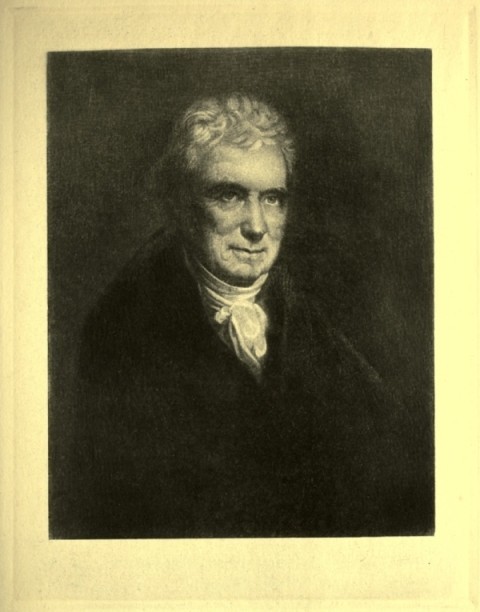
John Marshall From a painting by Rembrandt Peale
Later Carrington advises Washington that Marshall "wishes an opportunity of conversing with Col. Innes before he decides."[362] Innes was absent at Williamsburg; and although the matter was urgent, Marshall and Carrington did not write Innes, because, to do so, would involve a decisive offer from Washington which "Genḷ Marshall does not think advisable."[363]
When Washington's second letter, suggesting Patrick Henry, was received by Carrington, he "immediately consulted Genḷ Marshall thereon"; and was guided by his opinion. Marshall thought that Washington's letter should be forwarded to Henry because "his nonacceptance, from domestic considerations, may be calculated on"; the offer "must tend to soften" Henry "if he has any asperities"; and the whole affair would make Henry "active on the side of Government & order."[364]
Marshall argued that, if Henry should accept, his friendship for the Administration could be counted on. But Marshall's strongest reason for trying to induce Henry to become a member of the Cabinet was, says Carrington, that "we are fully persuaded that a more deadly blow could not be given to the Faction [Republican party] in Virginia, & perhaps elsewhere, than that Gentleman's acceptance of the" Attorney-Generalship. "So much have the opposers of the Government held him [Henry] up as their oracle, even since he has ceased to respond to them, that any event demonstrating his active support to Government, could not but give the [Republican] party a severe shock."[365]
A week later Carrington reports that Henry's "conduct & sentiments generally both as to government & yourself [Washington] are such as we [Marshall and Carrington] calculated on ... which assure us of his discountenancing calumny of every description & disorder,"[366] meaning that Henry was hostile to the Republicans.
In the rancorous assaults upon the Jay Treaty in Virginia, Marshall, of course, promptly took his position by Washington's side, and stoutly defended the President and even the hated compact itself. Little cared Marshall for the effect of his stand upon his popularity. Not at all did he fear or hesitate to take that stand. And high courage was required to resist the almost universal denunciation of the treaty in Virginia. Nor was this confined to the masses of the people; it was expressed also by most of the leading men in the various communities. At every meeting of protest, well-drawn and apparently convincing resolutions were adopted, and able, albeit extravagant, speeches were made against the treaty and the Administration.
Typical of these was the address of John Thompson at Petersburg, August 1, 1795.[367] With whom, asked Thompson, was the treaty made? With the British King "who had sworn eternal enmity to republics"; that hateful monarch who was trying "to stifle the liberty of France" and "to starve thirty millions of men" by "intercepting the correspondence and plundering the commerce of neutral nations," especially that of the United States. The British, declared Thompson, sought "the destruction of our rising commerce; the annihilation of our growing navigation," and were pursuing that object "with all the ... oppression which rapacity can practice."
Sequestration of British debts and other justifiable measures of retaliation would, said he, have stopped Great Britain's lawless practices. But the Administration preferred to treat with that malign Power; and our envoy, Jay, instead of "preserving the attitude of dignity and speaking the language of truth ... basely apostatizing from republican principles, stooped to offer the incense of flattery to a tyrant, the scourge of his country, the foe of mankind.... Yes!" exclaimed the radical orator, "we hesitated to offend a proud King, who had captured our vessels, enslaved our fellow-citizens, ruined our merchants, invaded our territory and trampled on our sovereignty." In spite of these wrongs and insults, "we prostrated ourselves before him, smiled in his face, flattered, and obtained this treaty."
The treaty thus negotiated was, declared Thompson, the climax of the Funding system which had "organized a great aristocracy ... usurped the dominion of the senate ... often preponderated in the house of representatives and which proclaims itself in servile addresses to our supreme executive, in dangerous appointments, in monstrous accumulations of debt, in violation of the constitution, in proscriptions of democrats, and, to complete the climax of political infamy, in this treaty."
Concerning the refusal to observe the principle that "free bottoms make free goods," our yielding the point rendered us, avowed Thompson, "a cowardly confederate ... of ... ruthless despots, who march to desolate France, to restore the altars of barbarous superstition and to extinguish the celestial light which has burst upon the human mind. O my countrymen, when you are capable of such monstrous baseness, even the patriot will invoke upon you the contempt of ages." This humiliation had been thrust upon us as a natural result of Washington's Neutrality proclamation—"a sullen neutrality between freemen and despots."
Thompson's searching, if boyish, rhetoric truly expressed the feeling in the hearts of the people; it was a frenzied sentiment with which Marshall had to contend. Notwithstanding his blazing language, Thompson analyzed the treaty with ability. In common with opponents of the treaty everywhere, he laid strongest emphasis on its unconstitutionality and the "usurpation" by the President and Senate of the rights and powers of the House of Representatives.
But Thompson also mentioned one point that touched Marshall closely. "The ninth article," said he, "invades the rights of this commonwealth, by contemplating the case of Denny Fairfax."[369] Marshall and his brother were now the owners of this estate;[370] and the Jay Treaty confirmed all transfers of British property and authorized British subjects to grant, sell, or devise lands held in America in the same manner as if they were citizens of the United States. In Congress a few months later, Giles, who, declared Ames, "has no scruples and certainly less sense,"[371] touched lightly on this same chord.[372] So did Heath, who was from that part of Virginia lying within the Fairfax grant.[373]
Such was the public temper in Virginia, as accurately if bombastically expressed by the youthful Thompson, when the elections for the Legislature of 1795 were held. It was certain that the General Assembly would take drastic and hostile action against the treaty; and, perhaps, against Washington himself, in case the Republicans secured a majority in that body. The Federalists were in terror and justly so; for the Republicans, their strength much increased by the treaty, were aggressive and confident.
The Federalist candidate in Richmond was the member of the Legislature whom the Federalists had succeeded in electing after Marshall's retirement three years before. He was Marshall's intimate friend and a stanch supporter of Washington's Administration. But it appears that in the present crisis his popularity was not sufficient to secure his election, nor his courage robust enough for the stern fight that was certain to develop in the General Assembly.
The polls were open and the voting in progress. Marshall was among the first to arrive; and he announced his choice.[374] Upon his appearance "a gentleman demanded that a poll be opened for Mr. Marshall."[375] Marshall, of course, indignantly refused; he had promised to support his friend, he avowed, and now to become a candidate was against "his wishes and feeling and honor." But Marshall promised that he would stand for the Legislature the following year.
Thereupon Marshall left the polls and went to the court-house to make an argument in a case then pending. No sooner had he departed than a poll was opened for him in spite of his objections;[376] he was elected; and in the evening was told of the undesired honor with which the freeholders of Richmond had crowned him.
Washington was apprehensive of the newly elected Legislature. He anxiously questioned Carrington "as to the temper of our Assembly." The latter reported that he did not "expect an extravagant conduct during the session."[377] He thought that "the spirit of dissatisfaction is considerably abated abroad" (throughout Virginia and away from Richmond), because recent attempts to hold county and district meetings "for the avowed purpose of condemning the Administration & the Treaty" had been "abortive." It seemed to him, however, that "there is a very general impression unfavorable to the Treaty, owing to the greater industry of those who revile, over the supporters of it."[378]
Still, Carrington was not sure about the Legislature itself; for, as he said, "it has every year for several past been observable, that, at meeting [of the Legislature] but few hot heads were to be seen, while the great body were rational; but in the course of the session it has seldom happened otherwise than that the spirit of party has been communicated so as to infect a majority. In the present instance I verily believe a question put on this day [the first day of the session] for making the Treaty a subject of consideration would be negatived—yet sundry members are here who will attempt every injury to both the Administration & the Treaty. The party will want ability in their leaders.... General Lee, C. Lee, Genḷ Marshall & Mr. Andrews will act with ability on the defensive."[379]
Three days later the buoyant official advised the President that the Republicans doubted their own strength and, at worst, would delay their attack "in order that, as usual, a heat may be generated." Marshall was still busy searching for a properly qualified person to appoint to the unfilled vacancy in the office of Attorney-General; and Carrington tells Washington that "Genḷ Marshall and myself have had a private consultation" on that subject and had decided to recommend Judge Blain. But, he adds, "The suggestion rests entirely with Genḷ M[arshall] & myself & will there expire, should you, for any consideration, forbear to adopt it." His real message of joy, however, was the happy frame of mind of the Legislature.[380]
Alas for this prophecy of optimism! The Legislature had not been in session a week before the anti-Administration Banquo's ghost showed its grim visage. The Republicans offered a resolution approving the vote of Virginia Senators against the Jay Treaty. For three days the debate raged. Marshall led the Federalist forces. "The support of the Treaty has fallen altogether on Genḷ Marshall and Mr. Chas. Lee," Carrington reports to Washington.[382]
Among the many objections to the treaty the principal one, as we have seen, was that it violated the Constitution. The treaty regulated commerce; the Constitution gave that power to Congress, which included the House of Representatives; yet the House had not been consulted. The treaty involved naturalization, the punishment of piracies, the laying of imposts and the expenditure of money—all of these subjects were expressly placed under the control of Congress and one of them[383] (the raising and expending of public money) must originate in the House; yet that popular branch of the Government had been ignored. The treaty provided for a quasi-judicial commission to settle the question of the British debts; yet "all the power of the Federal government with respect to debts is given [Congress] by a concise article of the Constitution.... What article of the Constitution authorizes President and Senate to establish a judiciary colossus which is to stand with one foot on America and the other on Britain, and drag the reluctant governments of those countries to the altar of justice?"[384]
Thus the question was raised whether a commercial treaty, or an international compact requiring an appropriation of money, or, indeed, any treaty whatever in the execution of which any action of any kind on the part of the House of Representatives was necessary, could be made without the concurrence of the House as well as the Senate. On this, the only vital and enduring question involved, Marshall's views were clear and unshakable.
The defense of the constitutional power of the President and Senate to make treaties was placed solely on Marshall's shoulders. The Federalists considered his argument a conclusive demonstration. Carrington wrote Washington that "on the point of constitutionality many conversions were acknowledged."[385] He was mistaken; the Republicans were not impressed. On the contrary, they thought that the treaty "was much less ably defended than opposed."[386]
The Republicans had been very much alarmed over Marshall and especially feared the effect of one clever move. "John Marshall," wrote Jefferson's son-in-law from Richmond to the Republican commander in Monticello, "it was once apprehended would make a great number of converts by an argument which cannot be considered in any other light than an uncandid artifice. To prevent what would be a virtual censure of the President's conduct he maintained that the treaty in all its commercial parts was still under the power of the H.[ouse] of R.[epresentatives]."[387]
Marshall, indeed, did make the most of this point. It was better, said he, and "more in the spirit of the constitution" for the National House to refuse support after ratification than to have a treaty "stifled in embryo" by the House passing upon it before ratification. "He compared the relation of the Executive and the Legislative department to that between the states and the Congress under the old confederation. The old Congress might have given up the right of laying discriminating duties in favor of any nation by treaty; it would never have thought of taking beforehand the assent of each state thereto. Yet, no one would have pretended to deny the power of the states to lay such [discriminating duties]."[388]
Such is an unfriendly report of this part of Marshall's effort which, wrote Jefferson's informant, "is all that is original in his argument. The sophisms of Camillus, & the nice distinctions of the Examiner made up the rest."[389] Marshall's position was that a "treaty is as completely a valid and obligatory contract when negotiated by the President and ratified by him, with the assent and advice of the Senate, as if sanctioned by the House of Representatives also, under a constitution requiring such sanction"; and he admitted only that the powers of the House in reference to a treaty were limited to granting or refusing appropriations to carry it into effect.[390]
But as a matter of practical tactics to get votes, Marshall appears to have put this in the form of an assertion—no matter what treaty the President and Senate made, the House held the whip hand, he argued, and in the end, could do what it liked; why then unnecessarily affront and humiliate Washington by applauding the Virginia Senators for their vote against the treaty? This turn of Marshall's, thought the Republicans, "was brought forward for the purpose of gaining over the unwary & wavering. It has never been admitted by the writers in favor of the treaty to the northward."[391]
But neither Marshall's unanswerable argument on the treaty-making power, nor his cleverness in holding up the National House of Representatives as the final arbiter, availed anything. The Federalists offered an amendment affirming that the President and Senate "have a right to make" a treaty; that discussion of a treaty in a State Legislature, "except as to its constitutionality," was unnecessary; and that the Legislature could not give "any mature opinion upon the conduct of the Senators from Virginia ... without a full investigation of the treaty." They were defeated by a majority of 46 out of a total of 150 members present and voting; John Marshall voting for the amendment.[392] On the main resolution proposed by the Republicans the Federalists lost two votes and were crushed by a majority of two to one; Marshall, of course, voting with the minority.[393]
Carrington hastily reported to Washington that though "the discussion has been an able one on the side of the Treaty," yet, "such was the apprehension that a vote in its favor would be unpopular, that argument was lost"; and that, notwithstanding many members were convinced by Marshall's constitutional argument, "obligations of expediency" held them in line against the Administration. The sanguine Carrington assured the President, however, that "during the discussion there has been preserved a decided respect for & confidence in you."[394]
But alas again for the expectations of sanguinity! The Republican resolution was, as Jefferson's son-in-law had reported to the Republican headquarters at Monticello, "a virtual censure of the President's conduct." This was the situation at the close of the day's debate. Realizing it, as the night wore on, Washington's friends determined to relieve the President of this implied rebuke by the Legislature of his own State. The Republicans had carried their point; and surely, thought Washington's supporters, the Legislature of Virginia would not openly affront the greatest of all Americans, the pride of the State, and the President of the Nation.
Infatuated imagination! The next morning the friends of the Administration offered a resolution that Washington's "motives" in approving the treaty met "the entire approbation of this House"; and that Washington, "for his great abilities, wisdom and integrity merits and possesses the undiminished confidence of his country." The resolution came near passing. But some lynx-eyed Republican discovered in the nick of time the word "wisdom."[395] That would never do. The Republicans, therefore, offered an amendment "that this House do entertain the highest sense of the integrity and patriotism of the President of the United States; and that while they approve of the vote of the Senators of this State" on the treaty, "they in no wise censure the motives which influenced him in his [Washington's] conduct thereupon."[396]
The word "wisdom" was carefully left out. Marshall, Lee, and the other Federalists struggled hard to defeat this obnoxious amendment; but the Republicans overwhelmed them by a majority of 33 out of a total of 145 voting, Marshall, of course, casting his vote against it.[397]
In worse plight than ever, Washington's friends moved to amend the Republican amendment by resolving: "That the President of the United States, for his great abilities, wisdom, and integrity, merits and possesses the undiminished confidence of this House." But even this, which omitted all reference to the treaty and merely expressed confidence in Washington's "abilities, wisdom, and integrity," was beaten by a majority of 20 out of a total of 138 voting.[398]
As soon as Jefferson got word of Marshall's support of Washington's Administration in the Legislature, he poured out his dislike which had long been distilling:—
"Though Marshall will be able to embarras [sic] the republican party in the assembly a good deal," wrote Jefferson to Madison, "yet upon the whole his having gone into it will be of service. He has been, hitherto, able to do more mischief acting under the mask of Republicanism than he will be able to do after throwing it plainly off. His lax lounging manners have made him popular with the bulk of the people of Richmond; & a profound hypocrisy, with many thinking men of our country. But having come forth in the plenitude of his English principles the latter will see that it is high time to make him known."[399]
Such was Jefferson's inability to brook any opposition, and his readiness to ascribe improper motives to any one having views different from his own. So far from Marshall's having cloaked his opinions, he had been and was imprudently outspoken in avowing them. Frankness was as much a part of Marshall's mental make-up as his "lax, lounging manners" were a part of his physical characteristics. Of all the men of the period, not one was cleaner of hypocrisy than he. From Patrick Henry in his early life onward to his associates on the bench at the end of his days the testimony as to Marshall's open-mindedness is uniform and unbroken.
With the possible exception of Giles and Roane, Jefferson appears to have been the only man who even so much as hinted at hypocrisy in Marshall. Although strongly opposing his views and suggesting the influence of supposed business connections, Madison had supreme confidence in Marshall's integrity of mind and character. So had Monroe. Even Jefferson's most panegyrical biographer declares Marshall to have been "an earnest and sincere man."[400]
The House of Delegates having refused to approve Washington, even indirectly, the matter went to the State Senate. There for a week Washington's friends fought hard and made a slight gain. The Senate struck out the House resolution and inserted instead: "The General Assembly entertain the highest sense of the integrity, patriotism and wisdom of the President of the United States, and in approving the vote of the Senators of the State in the Congress of the United States, relative to the treaty with Great Britain, they in no wise mean to censure the motives which influenced him in his conduct thereupon." To this the House agreed, although by a slender majority, Marshall, of course, voting for the Senate amendment.[401]
During this session Marshall was, as usual, on the principal standing committees and did his accustomed share of general legislative work. He was made chairman of a special committee to bring in a bill "authorizing one or more branches of the bank of the United States in this commonwealth";[402] and later presented the bill,[403] which finally passed, December 8, 1795, though not without resistance, 38 votes being cast against it.[404]
But the Republicans had not yet finished with the Jay Treaty or with its author. On December 12, 1795, they offered a resolution instructing Virginia's Senators and Representatives in Congress to attempt to secure amendments to the Constitution providing that: "Treaties containing stipulations upon the subject of powers vested in Congress shall be approved by the House of Representatives"; that "a tribunal other than the Senate be instituted for trying impeachments"; that "Senators shall be chosen for three years"; and that "U.S. Judges shall hold no other appointments."[405]
The Federalists moved to postpone this resolution until the following year "and print and distribute proposed amendments for the consideration of the people"; but they were beaten by a majority of 11 out of a total vote of 129, Marshall voting for the resolution. The instruction to secure these radical constitutional changes then passed the House by a majority of 56 out of a total vote of 120, Marshall voting against it.[406]
Marshall's brother-in-law, United States Marshal Carrington, had a hard time explaining to Washington his previous enthusiasm. He writes: "The active powers of the [Republican] party ... unveiled themselves, & carried in the House some points very extraordinary indeed, manifesting disrespect towards you." But, he continues, when the Virginia Senate reversed the House, "the zealots of Anarchy were backward to act ... while the friends of Order were satisfied to let it [the Virginia Senate amendment] remain for farther effects of reflection"; and later succeeded in carrying it.
"The fever has raged, come to its crisis, and is abating." Proof of this, argued Carrington, was the failure of the Republicans to get signatures to "some seditious petitions [against the Jay Treaty] which was sent in vast numbers from Philadelphia" and which "were at first patronized with great zeal by many of our distinguished anarchists; but ... very few copies will be sent to Congress fully signed."[407]
Never was appointive officer so oblivious of facts in his reports to his superior, as was Carrington. Before adjournment on December 12, 1795, the Legislature adopted part of the resolution which had been offered in the morning: "No treaty containing any stipulation upon the subject of powers vested in Congress by the eighth section of the first article [of the Constitution] shall become the Supreme law of the land until it shall have been approved in those particulars by a majority in the House of Representatives; and that the President, before he shall ratify any treaty, shall submit the same to the House of Representatives."[408]
Carrington ignored or failed to understand this amazing resolution of the Legislature of Virginia; for nearly three months later he again sought to solace Washington by encouraging reports. "The public mind in Virginia was never more tranquil than at present. The fever of the late session of our assembly, had not been communicated to the Country.... The people do not approve of the violent and petulant measures of the Assembly, because, in several instances, public meetings have declared a decided disapprobation." In fact, wrote Carrington, Virginia's "hostility to the treaty has been exaggerated." Proof "of the mass of the people being less violent than was asserted" would be discovered "in the failure of our Zealots in getting their signatures to certain printed papers, sent through the Country almost by Horse loads, as copies of a petition to Congress on the subject of the Treaty."[409] But a few short months would show how rose-colored were the spectacles which Mr. Carrington wore when he wrote this reassuring letter.
The ratification of the British treaty; the rage against England; and the devotion to France which already had made the Republican a French party; the resentment of the tri-color Republic toward the American Government—all forged a new and desperate menace. It was, indeed, Scylla or Charybdis, as Washington had foreseen, and bluntly stated, that confronted the National Government. War with France now seemed the rock on which events were driving the hard-pressed Administration—war for France or war from France.
The partisan and simple-minded Monroe had been recalled from his diplomatic post at Paris. The French mission, which at the close of our Revolution was not a place of serious moment,[410] now became critically—vitally—important. Level must be the head and stout the heart of him who should be sent to deal with that sensitive, proud, and now violent country. Lee thus advises the President: "No person would be better fitted than John Marshall to go to France for supplying the place of our minister; but it is scarcely short of absolute certainty that he would not accept any such office."[411]
But Washington's letter was already on the way, asking Marshall to undertake this delicate task:—
"In confidence I inform you," wrote Washington to Marshall, "that it has become indispensably necessary to recall our minister at Paris & to send one in his place, who will explain faithfully the views of this government & ascertain those of France.
"Nothing would be more pleasing to me than that you should be this organ, if it were only for a temporary absence of a few months; but it being feared that even this could not be made to comport with your present pursuits, I have in order that as little delay as possible may be incurred put the enclosed letter [to Charles Cotesworth Pinckney] under cover to be forwarded to its address, if you decline the present offer or to be returned to me if you accept it. Your own correct knowledge of circumstances renders details unnecessary."[412]
Marshall at once declined this now high distinction and weighty service, as he had already refused the United States district attorneyship and a place in Washington's Cabinet. Without a moment's delay, he wrote the President:—
"I will not attempt to express those sensations which your letter of the 8th instant has increased. Was it possible for me in the present crisis of my affairs to leave the United States, such is my conviction of the importance of that duty which you would confide to me, &, pardon me if I add, of the fidelity with which I shoud attempt to perform it, that I woud certainly forego any consideration not decisive with respect to my future fortunes, & woud surmount that just diffidence I have entertaind of myself, to make one effort to convey truly & faithfully to the government of France those sentiments which I have ever believed to be entertained by that of the United States.
"I have forwarded your letter to Mr. Pinckney. The recall of our minister at Paris has been conjectured while its probable necessity has been regretted by those who love more than all others, our own country. I will certainly do myself the honor of waiting on you at Mt. Vernon."[413]
Washington, although anticipating Marshall's refusal of the French mission, promptly answered: "I ... regret that present circumstances should deprive our Country of the services, which, I am confident, your going to France would have rendered it"; and Washington asks Marshall's opinion on the proper person to appoint to the office of Surveyor-General.[414]
The President's letter, offering the French post to Pinckney, was lost in the mails; and the President wrote Marshall about it, because it also enclosed a note "containing three bank bills for one hundred dollars each for the sufferers by fire in Charlestown."[415] In answer, Marshall indulged in a flash of humor, even at Washington's expense. "Your letter to General Pinckney was delivered by myself to the post master on the night on which I received it and was, as he says, immediately forwarded by him. Its loss is the more remarkable, as it could not have been opened from a hope that it contained bank notes." He also expressed his gratification "that a gentleman of General Pinckney's character will represent our government at the court of France."[416]
The office of Secretary of State now became vacant, under circumstances apparently forbidding. The interception of Fauchet's[417] famous dispatch number 10[418] had been fatal to Randolph. The French Minister, in this communication to his Government, portrays a frightful state of corrupt public thinking in America; ascribes this to the measures of Washington's Administration; avows that a revolution is imminent; declares that powerful men, "all having without doubt" Randolph at their head, are balancing to decide on their party; asserts that Randolph approached him with suggestions for money; and concludes:—
"Thus with some thousands of dollars the [French] republic could have decided on civil war or on peace [in America]! Thus the consciences of the pretended patriots of America have already their prices!... What will be the old age of this [American] government, if it is thus early decrepid!"[419]
The discovery of this dispatch of the French Minister destroyed Randolph politically. Washington immediately forced his resignation.[420]
The President had great difficulty in finding a suitable successor to the deposed Secretary of State. He tendered the office to five men, all of whom declined.[421] "What am I to do for a Secretary of State?" he asks Hamilton; and after recounting his fruitless efforts to fill that office the President adds that "Mr. Marshall, of Virginia, has declined the office of Attorney General, and I am pretty certain, would accept of no other."[422] It is thus made clear that Washington would have made Marshall the head of his Cabinet in 1795 but for the certainty that his Virginia champion would refuse the place, as he had declined other posts of honor and power.
Hardly had the Virginia Legislature adjourned when the conflict over the treaty was renewed in Congress. The Republicans had captured the House of Representatives and were full of fight. They worked the mechanism of public meetings and petitions to its utmost. On March 7 the House plunged into a swirl of debate over the British treaty; time and again it seemed as though the House would strangle the compact by withholding appropriations to make it effective.[423] If the treaty was to be saved, all possible pressure must be brought to bear on Congress. So the Federalists took a leaf out of the book of Republican tactics, and got up meetings wherever they could to petition Congress to grant the necessary money.
In Virginia, as elsewhere, the merchants were the principal force in arranging these meetings.[424] As we have seen, the business and financial interests had from the first been the stanchest supporters of Washington's Administration. "The commercial and monied people are zealously attached to" and support the Government, wrote Wolcott in 1791.[425] And now Hamilton advised King that "men of business of all descriptions" thought the defeat of the treaty "would greatly shock and stagnate pecuniary plans and operations in general."[426] Indeed, the one virtue of the treaty, aside from its greatest purpose, that of avoiding war, was that it prevented the collapse of credit and the wreck of Hamilton's financial system.
Washington, with the deceptive hopefulness of responsibility, had, even when it seemed that the people were as one man against the treaty, "doubted much whether the great body of the yeomanry have formed any opinions on the subject."[427] The Federalist meetings were designed to show that the "yeomanry," having been "educated," had at last made up its mind in favor of Washington's policy.
Marshall and Carrington arranged for the Richmond gathering. "The disorganizing machinations of a faction [Republicans]," reported the busy United States Marshal, "are no longer left to be nourished and inculcated on the minds of the credulous by clamorous demagogues, while the great mass of citizens, viewing these, as evils at a distance, remain inactive.... All who are attached to peace and order, ... will now come forward and speak for themselves.... A meeting of the people of this city will take place on Monday next" to petition the National House of Representatives to support the treaty. So Carrington advised the President; and the same thing, said he, was to be done "extensively" by "public meetings and Petitions throughout Virginia."[428]
Washington was expecting great results from the Richmond demonstration. "It would give me and ... every friend to order and good government throughout the United States very great satisfaction," he wrote to encourage the Virginia Federalists; "more so than similar sentiments from any other State in the Union; for people living at a distance from it [Virginia] know not how to believe it possible" that the Virginia Legislature and her Senators and Representatives in Congress should speak and act as they had done.[429] "It is," philosophized Washington, "on great occasions only and after time has been given for cool and deliberate reflection that the real voice of the people can be known. The present ... is one of those great occasions, than which none more important has occurred, or probably may occur again to call forth their decision."[430]
By such inspiration and management the historic Federalist gathering was brought about at Richmond on April 25, 1796, where the "Marshall eloquence" was to do its utmost to convert a riotously hostile sentiment into approval of this famous treaty and of the Administration which was responsible for it. All day the meeting lasted. Marshall put forth his whole strength. At last a "decided majority" adopted a favorable resolution drawn by an "original opponent" of the treaty. Thus were sweetened the bitter resolutions adopted by these same freeholders of Richmond some months before, which had so angered Washington.
The accounts of this all-day public discussion are as opposite as were the prejudices and interests of the narrators. Justice Story tells us that Marshall's speech was "masterly," the majority for the resolution "flattering," and the assemblage itself made up of the "same citizens" who formerly had "denounced" the treaty.[431] But there was present at the meeting an onlooker who gives a different version. Randolph, who, in disgrace, was then sweating venom from every pore, thus reports to Madison at the end of the hard-fought day:—
"Between 3 & 400 persons were present; a large proportion of whom were British merchants, some of whom pay for the British purchases of horses—their clerks—officers, who have held posts under the President at his will,—stockholders—expectants of office—and many without the shadow of a freehold.[432] Notwithstanding this, the numbers on the republican side, tho' inferior, were inferior in a small degree only; and it is believed on good grounds that the majority of free-holders were on the side of the house of representatives [against the treaty].
"Campbell[433] and Marshall the principal combatants [word illegible] as you know without being told. Marshall's argument was inconsistent, and shifting; concluding every third sentence with the horrors of war. Campbell spoke elegantly and forcibly; and threw ridicule and absurdity upon his antagonist with success. Mr. Clofton [Clopton, member of Congress from Richmond] will receive two papers; one signed by the treaty men, many of whom he will know to have neither interest nor feeling in common with the citizens of Virginia, and to have been transplanted hither from England or Caledonia since the war, interspersed pretty considerably with fugitive tories who have returned under the amnesty of peace.
"The notice, which I sent you the other day," he goes on to say, "spoke of instructions and a petition; but Marshall, suspecting that he would be outnumbered by freeholders, and conscious that none should instruct those who elect, quitted the idea of instruction, and betook himself to a petition, in which he said all the inhabitants of Richmond, though not freeholders, might join. Upon which Campbell gave notice, that it would be published that he (Marshall) declined hazarding the question on the true sense of the country. Very few of the people [freeholders] of the county were present; but three-fourths of those who were present voted with Campbell. Dr. Foushee was extremely active and influential."[434]
Marshall, on the contrary, painted in rich colors his picture of this town-hall contest. He thus reports to Hamilton: "I had been informed of the temper of the House of Representatives and we [Richmond Federalists] had promptly taken such measures as appeared to us fitted to the occasion. We could not venture an expression of the public mind under the violent prejudices with which it has been impressed, so long as a hope remained, that the House of Representatives might ultimately consult the interest or honor of the nation.... But now, when all hope of this has vanished, it was deemed advisable to make the experiment, however hazardous it might be.
"A meeting was called," continues Marshall, "which was more numerous than I have ever seen at this place; and after a very ardent and zealous discussion which consumed the day, a decided majority declared in favor of a resolution that the wellfare and honor of the nation required us to give full effect to the treaty negotiated with Britain. This resolution, with a petition drawn by an original opponent of the treaty, will be forwarded by the next post to Congress."[435]
The resolution which Marshall's speech caused an "original opponent"[436] of the treaty to draw was "that the Peace, Happiness, & Wellfare, not less than the National Honor of the United States, depend in a great degree upon giving, with good faith, Full effect to the Treaty lately negotiated with Great Britain." The same newspaper that printed this resolution, in another account of the meeting "which was held at the instance of some friends of the British Treaty," says that "in opposition to that resolution a vast number of the meeting" subscribed to counter-declarations which "are now circulated throughout this City and the county of Henrico for the subscription of all those who" are opposed to the treaty.[437] Even the exultant Carrington reported "that the enemies of the Treaty or rather of the Government, are putting in practice every part and effort to obtain subscriptions to a counteracting paper."
Carrington denounced the unfavorable newspaper account as "a most absolute falsehood." He tells Washington that the opposition resolution "was not even listened [to] in the meeting." But still he is very apprehensive—he beholds the politician's customary "crisis" and strives to make the people see it: "There never was a crisis at which the activity of the Friends of Government was more urgently called for—some of us here have endeavored to make this impression in different parts of the Country."[438] The newspaper reported that the Federalists had induced "school boys & apprentices" to sign the petition in favor of the treaty; Carrington adds a postscript stating that this was, "I believe, a little incorrect."
Marshall foresaw that the Republicans would make this accusation and hastened to anticipate it by advancing the same charge against his opponents. The Republicans, says Marshall, secured the signatures to their petition not only "of many respectable persons but of still a greater number of mere boys.... Altho' some caution has been used by us in excluding those who might not be considered as authorized to vote," yet, Marshall advises King, "they [Republicans] will not fail to charge us with having collected a number of names belonging to foreigners and to persons having no property in the place. The charge is as far untrue," asserts Marshall, "as has perhaps ever happened on any occasion of the sort. We could, by resorting to that measure, have doubled our list of petitioners." And he adds that "the ruling party [Republican] of Virginia are extremely irritated at the vote of to-day, and will spare no exertion to obtain a majority in other counties. Even here they will affect to have the greater number of freeholders."[439]
It was in this wise that petitions favorable to the Jay Treaty and to Washington were procured in the President's own State. It was thus that the remainder of the country was assured that the Administration was not without support among the people of Virginia. Unsuspected and wholly unforeseen was the influence on Marshall's future which his ardent championship of this despised treaty was to exercise.
The Federalists were wise to follow the Republican practice of petition to Congress; for, "nothing ... but the torrent of petitions and remonstrances ... would have produced a division (fifty-one to forty-eight) in favor of the appropriation."[440] So great was the joy of the commercial classes that in Philadelphia, the financial heart of the country, a holiday was celebrated when the House voted the money.[441]
Marshall's activity, skill, courage, ability, and determination in the Legislature and before the people at this critical hour lifted him higher than ever, not only in the regard of Washington, but in the opinion of the Federalist leaders throughout the country.[442] They were casting about for a successor to Washington who could be most easily elected. The Hamiltonian Federalists were already distrustful of Adams for the presidency, and, even then, were warily searching for some other candidate. Why not Patrick Henry? Great changes had occurred in the old patriot's mind and manner of thinking. He was now a man of wealth and had come to lean strongly toward the Government. His friendship for Washington, Marshall, and other Virginia Federalists had grown; while for Jefferson and other Virginia Republicans it had turned to dislike. Still, with Henry's lifelong record, the Federalists could not be sure of him.
To Marshall's cautious hands the Federalist leaders committed the delicate business of sounding Henry. King of New York had written Marshall on the subject. "Having never been in habits of correspondence with Mr. H.[enry]," replies Marshall, "I cou'd not by letter ask from him a decision on the proposition I was requested to make him without giving him at the same time a full statement of the whole conversation & of the persons with whom that conversation was held." Marshall did not think this wise, for "I am not positively certain what course that Gentleman might take. The proposition might not only have been rejected but mentioned publickly to others in such manner as to have become an unpleasant circumstance."
A prudent man was Marshall. He thought that Lee, who "corresponds familiarly with Mr. H. & is in the habit of proposing offices to him," was the man to do the work; and he asked Lee "to sound Mr. H. as from himself or in such manner as might in any event be perfectly safe." Lee did so, but got no answer. However, writes Marshall, "Mr. H.[enry] will be in Richmond on the 22d of May. I can then sound him myself & if I find him (as I suspect I shall) totally unwilling to engage in the contest, I can stop where prudence may direct. I trust it will not then be too late to bring forward to public view Mr. H. or any other gentleman who may be thought of in his stead. Shou'd anything occur to render it improper to have any communication with Mṛ H. on this subject, or shou'd you wish the communication to take any particular shape you will be so obliging as to drop me a line concerning it."[443]
Marshall finally saw Henry and at once wrote the New York lieutenant of Hamilton the result of the interview. "Mr. Henry has at length been sounded on the subject you communicated to my charge," Marshall advises King. "Genḷ Lee and myself have each conversed with him on it, tho' without informing him particularly of the persons who authorized the communication. He is unwilling to embark in the business. His unwillingness, I think, proceeds from an apprehension of the difficulties to be encountered by those who shall fill high Executive offices."[444]
The autumn of 1796 was at hand. Washington's second term was closing in Republican cloudbursts and downpours of abuse of him. He was, said the Republicans, an aristocrat, a "monocrat," a miser, an oppressor of the many for the enrichment of the few. Nay, more! Washington was a thief, even a murderer, charged the Republicans. His personal habits were low and base, said these champions of purity.[445] Washington had not even been true to the cause of the Revolution, they declared; and to prove this, an ancient slander, supported by forged letters alleged to have been written by Washington during the war, was revived.[446]
Marshall, outraged and insulted by these assaults on the great American, the friend of his father and himself and the commander of the patriots who had, by arms, won liberty and independence for the very men who were now befouling Washington's name, earnestly defended the President. Although his law practice and private business called for all his strength and time, Marshall, in order to serve the President more effectively, again stood for the Legislature, and again he was elected.
In the Virginia House of Delegates, Marshall and the other friends of Washington took the initiative. On November 17, 1796, they carried a motion for an address to the President, declaratory of Virginia's "gratitude for the services of their most excellent fellow citizen"; who "has so wisely and prosperously administrated the national concerns."[447] But how should the address be worded? The Republicans controlled the committee to which the resolution was referred. Two days later that body reported a cold and formal collection of sentences as Virginia's address to Washington upon his leaving, apparently forever, the service of America. Even Lee, who headed the committee, could not secure a declaration that Washington was or had been wise.
This stiff "address" to Washington, reported by the committee, left out the word "wisdom." Commendation of Washington's conduct of the Government was carefully omitted. Should his friends submit to this? No! Better to be beaten in a manly contest. Marshall and the other supporters of the President resolved to try for a warmer expression. On December 10, they introduced a substitute declaring that, if Washington had not declined, the people would have reëlected him; that his whole life had been "strongly marked by wisdom, valor, and patriotism"; that "posterity to the most remote generations and the friends of true and genuine liberty and of the rights of man throughout the world, and in all succeeding ages, will unite" in acclaiming "that you have never ceased to deserve well of your country"; that Washington's "valor and wisdom ... had essentially contributed to establish and maintain the happiness and prosperity of the nation."[448]
But the Republicans would have none of it. After an acrid debate and in spite of personal appeals made to the members of the House, the substitute was defeated by a majority of three votes. John Marshall was the busiest and most persistent of Washington's friends, and of course voted for the substitute,[449] which, almost certainly, he drew. Cold as was the original address which the Federalists had failed to amend, the Republicans now made it still more frigid. They would not admit that Washington deserved well of the whole country. They moved to strike out the word "country" and in lieu thereof insert "native state."[450]
Many years afterward Marshall told Justice Story his recollection of this bitter fight: "In the session of 1796 ... which," said Marshall, "called forth all the strength and violence of party, some Federalist moved a resolution expressing the high confidence of the House in the virtue, patriotism, and wisdom of the President of the United States. A motion was made to strike out the word wisdom. In the debate the whole course of the Administration was reviewed, and the whole talent of each party was brought into action. Will it be believed that the word was retained by a very small majority? A very small majority in the legislature of Virginia acknowledged the wisdom of General Washington!"[451]
Dazed for a moment, the Federalists did not resist. But, their courage quickly returning, they moved a brief amendment of twenty words declaring that Washington's life had been "strongly marked by wisdom, in the cabinet, by valor, in the field, and by the purest patriotism in both." Futile effort! The Republicans would not yield. By a majority of nine votes[452] they flatly declined to declare that Washington had been wise in council, brave in battle, or patriotic in either; and the original address, which, by these repeated refusals to endorse either Washington's sagacity, patriotism, or even courage, had now been made a dagger of ice, was sent to Washington as the final comment of his native State upon his lifetime of unbearable suffering and incalculable service to the Nation.
Arctic as was this sentiment of the Virginia Republicans for Washington, it was tropical compared with the feeling of the Republican Party toward the old hero as he retired from the Presidency. On Monday, March 5, 1797, the day after Washington's second term expired, the principal Republican newspaper of America thus expressed the popular sentiment:—
"'Lord, now lettest thou thy servant depart in peace, for mine eyes have seen thy salvation,' was the pious ejaculation of a man who beheld a flood of happiness rushing in upon mankind....
"If ever there was a time that would license the reiteration of the exclamation, that time is now arrived, for the man [Washington] who is the source of all the misfortunes of our country, is this day reduced to a level with his fellow citizens, and is no longer possessed of power to multiply evils upon the United States.
"If ever there was a period for rejoicing this is the moment—every heart, in unison with the freedom and happiness of the people ought to beat high with exultation, that the name of Washington from this day ceases to give a currency to political iniquity, and to legalize corruption....
"A new æra is now opening upon us, an æra which promises much to the people; for public measures must now stand upon their own merits, and nefarious projects can no longer be supported by a name.
"When a retrospect is taken of the Washingtonian administration for eight years, it is a subject of the greatest astonishment, that a single individual should have cankered the principles of republicanism in an enlightened people, just emerged from the gulph of despotism, and should have carried his designs against the public liberty so far as to have put in jeopardy its very existence.
"Such however are the facts, and with these staring us in the face, this day ought to be a Jubilee in the United States."[453]
Such was Washington's greeting from a great body of his fellow citizens when he resumed his private station among them after almost twenty years of labor for them in both war and peace. Here rational imagination must supply what record does not reveal. What must Marshall have thought? Was this the fruit of such sacrifice for the people's welfare as no other man in America and few in any land throughout all history had ever made—this rebuke of Washington—Washington, who had been the soul as well as the sword of the Revolution; Washington, who alone had saved the land from anarchy; Washington, whose level sense, far-seeing vision, and mighty character had so guided the newborn Government that the American people had taken their place as a separate and independent Nation? Could any but this question have been asked by Marshall?
He was not the only man to whom such reflections came. Patrick Henry thus expressed his feelings: "I see with concern our old commander-in-chief most abusively treated—nor are his long and great services remembered.... If he, whose character as our leader during the whole war, was above all praise, is so roughly handled in his old age, what may be expected by men of the common standard of character?"[454]
[351] When Jefferson resigned, Randolph succeeded him as Secretary of State, and continued in that office until driven out of public life by the famous Fauchet disclosure. William Bradford of Pennsylvania succeeded Randolph as Attorney-General.
[352] Washington to Marshall, Aug. 26, 1795; Washington MSS., Lib. Cong.
[353] Act of 1789, Annals, 1st Cong., 1st Sess., Appendix, 2238.
[354] For Randolph's pathetic account of his struggles to subsist as Attorney-General, see Conway, chap. xv.
[355] The Fairfax purchase. See infra, chap. v.
[356] Marshall to Washington, Aug. 31, 1795; Washington MSS., Lib. Cong.
[357] See infra, chap. v.
[358] Executive Journal, U.S. Senate, i, 81, 82. And see Washington's Diary: Lossing, 166. Carrington held both of these offices at the same time.
[359] Referring to Marshall's title as General of Virginia Militia. He was called "General" from that time until he became Chief Justice of the United States.
[360] Washington to Carrington, Oct. 9, 1795; Writings: Ford, xiii, 116.
[361] Carrington to Washington, Oct. 2, 1795; MS., Lib. Cong.
[362] Ib.
[363] Carrington to Washington, Oct. 8, 1795; MS., Lib. Cong.
[364] Ib., Oct. 13, 1795; MS., Lib. Cong.
[365] Ib. A passage in this letter clearly shows the Federalist opinion of the young Republican Party and suggests the economic line dividing it from the Federalists. "In the present crisis Mr. H.[enry] may reasonably be calculated on as taking the side of Government, even though he may retain his old prejudices against the Constitution. He has indubitably an abhorrence of Anarchy.... We know too that he is improving his fortune fast, which must additionally attach him to the existing Government & order, the only Guarantees of property. Add to all this, that he has no affection for the present leaders of the opposition in Virga." (Carrington to Washington, Oct. 13, 1795; MS., Lib. Cong.)
[366] Carrington to Washington, Oct. 20, 1795; MS., Lib. Cong. Carrington's correspondence shows that everything was done on Marshall's judgment and that Marshall himself personally handled most of the negotiations. (See ib., Oct. 28; Oct. 30, 1795.)
[367] American Remembrancer, i, 21 et seq. John Thompson was nineteen years old when he delivered this address. His extravagant rhetoric rather than his solid argument is quoted in the text as better illustrating the public temper and prevailing style of oratory. (See sketch of this remarkable young Virginian, infra, chap. x.)
[369] American Remembrancer, i, 27.
[370] See infra, chap. v.
[371] Ames to Gore, March 11, 1796; Works: Ames, i, 189.
[372] Annals, 4th Cong., 1st Sess., 1033-34.
[373] Ib., 1063. See Anderson, 41-43. As one of the purchasers of the Fairfax estate, Marshall had a personal interest in the Jay Treaty, though it does not appear that this influenced him in his support of it.
[374] The voting was viva voce. See infra, chap. x.
[375] Undoubtedly this gentleman was one of the perturbed Federalist managers.
[376] North American Review, xxvi, 22. While this story seems improbable, no evidence has appeared which throws doubt upon it. At any rate, it serves to illustrate Marshall's astonishing popularity.
[377] Carrington's reports to Washington were often absurd in their optimistic inaccuracy. They are typical of those which faithful office-holding politicians habitually make to the appointing power. For instance, Carrington told Washington in 1791 that, after traveling all over Virginia as United States Marshal and Collector of Internal Revenue, he was sure the people were content with Assumption and the whiskey tax (Washington's Diary: Lossing, footnote to 166), when, as a matter of fact, the State was boiling with opposition to those very measures.
[378] The mingling, in the Republican mind, of the Jay Treaty, Neutrality, unfriendliness to France, and the Federalist Party is illustrated in a toast at a dinner in Lexington, Virginia, to Senator Brown, who had voted against the treaty: "The French Republic—May every power or party who would attempt to throw any obstacle in the way of its independence or happiness receive the reward due to corruption." (Richmond and Manchester Advertiser, Oct. 15, 1795.)
[379] Carrington to Washington, Nov. 10, 1795; MS., Lib. Cong.
[380] Ib., Nov. 13, 1795; MS.; Lib. Cong.
[382] Carrington to Washington, Nov. 20, 1795; MS., Lib. Cong.
[383] See debates; Annals, 4th Cong., 1st Sess., 423-1291; also see Petersburg Resolutions; American Remembrancer, i, 102-07.
[384] Thompson's address, Aug. 1, 1795, at Petersburg; ib., 21 et seq.
[385] Carrington to Washington, Nov. 20, 1795; MS., Lib. Cong.
[386] Randolph to Jefferson, Nov. 22, 1795; Works: Ford, viii, footnote to 197.
[387] Randolph to Jefferson, Nov. 22, 1795; Works: Ford, viii, footnote to 197.
[388] Ib.
[389] Ib. See Hamilton's dissertation on the treaty-making power in numbers 36, 37, 38, of his "Camillus"; Works: Lodge, vi, 160-97.
[390] Marshall to Hamilton, April 25, 1796; Works: Hamilton, vi, 109.
[391] Randolph to Jefferson, Nov. 22, 1795; Works: Ford, viii, 198.
[392] Journal, H.D. (Nov. 20, 1795), 27-28.
[393] Journal, H.D. (Nov. 20, 1795), 28.
[394] Carrington to Washington, Nov. 20, 1795; MS., Lib. Cong.
[395] The italics are mine. "The word 'wisdom' in expressing the confidence of the House in the P.[resident] was so artfully introduced that if the fraudulent design had not been detected in time the vote of the House, as to its effect upon the P. would have been entirely done away.... A resolution so worded as to acquit the P. of all evil intention, but at the same time silently censuring his error, was passed by a majority of 33." (Letter of Jefferson's son-in-law, enclosed by Jefferson to Madison; Works: Ford, viii, footnote to 198.)
[396] Journal, H.D. (Nov. 21, 1795), 29.
[397] Ib.
[398] Journal, H.D. (Nov. 21, 1795), 29.
[399] Jefferson to Madison, Nov. 26, 1795; Works: Ford, viii, 197-98.
[400] Randall, ii, 36.
[401] Journal, H.D. (1795), 72.
[402] Journal, H.D. (1795), 50.
[403] Ib., 53.
[404] Ib., 79.
[405] Ib., 90.
[406] Ib., 91-92.
[407] Carrington to Washington, Dec. 6, 1795; MS., Lib. Cong.
[408] Journal, H.D. (Dec. 12, 1795), 91-92.
[409] Carrington to Washington, Feb. 24, 1796; MS., Lib. Cong.
[410] Dodd, 39.
[411] Lee to Washington, July 7, 1796; Writings: Sparks, xi, 487.
[412] Washington to Marshall, July 8, 1796; Washington MSS., Lib. Cong.
[413] Marshall to Washington, July 11, 1796; ib.
[414] Washington to Marshall, July 15, 1796; Washington's Private Letter Book; MS., Lib. Cong.
[415] Washington to Marshall, Oct. 10, 1796; ib.
[416] Marshall to Washington, Oct. 12, 1796; Washington MSS., Lib. Cong.
[417] Genêt's successor as French Minister to the United States.
[418] Interesting State Papers, 48 et seq.
[419] Interesting State Papers, 55.
[420] For able defense of Randolph see Conway, chap. xxiii; but contra, see Gibbs, i, chap. ix.
[421] Patterson of New Jersey, Johnson of Maryland, C. C. Pinckney of South Carolina, Patrick Henry of Virginia, and Rufus King of New York. (Washington to Hamilton, Oct. 29, 1795; Writings: Ford, xiii, 129-30.) King declined because of the abuse heaped upon public officers. (Hamilton to Washington, Nov. 5, 1795; ib., footnote to 130.)
[422] Washington to Hamilton, Oct. 29, 1795; Writings: Ford, xiii, 131.
[423] For debate see Annals, 4th Cong., 1st Sess., 423-1291.
[424] Carrington to Washington, May 9, 1796; MS., Lib. Cong.
[425] Oliver Wolcott to his father, Feb. 12, 1791; Gibbs, i, 62.
[426] Hamilton to King, June 20, 1795; Works: Lodge, x, 103.
[427] Washington to Knox, Sept. 20, 1795; Writings: Ford, xiii, 105-06.
[428] Carrington to the President, April 22, 1796; Writings: Ford, xiii, footnote to 185.
[429] Washington to Carrington, May 1, 1796; ib., 185.
[430] Ib., 186.
[431] Story, in Dillon, iii, 352.
[432] Senator Stephen Thompson Mason wrote privately to Tazewell that the Fairfax purchasers and British merchants were the only friends of the treaty in Virginia. (Anderson, 42.)
[433] Alexander Campbell. (See infra, chap. v.)
[434] Randolph to Madison, Richmond, April 25, 1796; Conway, 362. Only freeholders could vote.
[435] Marshall to Hamilton, April 25, 1796; Works: Hamilton, vi, 109.
[436] Author unknown.
[437] Richmond and Manchester Advertiser, April 27, 1796.
[438] Carrington to the President, April 27, 1796; MS., Lib. Cong.
[439] Marshall to King, April 25, 1796; King, ii, 45-46.
[440] Washington to Thomas Pinckney, May 22, 1796; Writings: Ford, xiii, 208.
[441] Robert Morris to James M. Marshall, May 1, 1796; Morris's Private Letter Book; MS., Lib. Cong.
[442] Story, in Dillon, iii, 350.
[443] Marshall to King, April 19, 1796; Hamilton MSS., Lib. Cong. Hamilton, it seems, had also asked Marshall to make overtures to Patrick Henry for the Presidency. (King, ii, footnote to 46.) But no correspondence between Hamilton and Marshall upon this subject has been discovered. Marshall's correspondence about Henry was with King.
[444] Marshall to King, May 24, 1796; King, ii, 48.
[445] For an accurate description of the unparalleled abuse of Washington, see McMaster, ii, 249-50, 289-91, 302-06.
[446] Marshall, ii, 391-92. Also see Washington to Pickering, March 3, 1797; Writings: Ford, xiii, 378-80; and to Gordon, Oct. 15; ib., 427.
[447] Journal, H.D. (1796), 46-47; MS. Archives, Va. St. Lib.
[448] Journal, H.D. (1796), 153; MS. Archives, Va. St. Lib.
[449] Ib.
[450] Ib. This amendment is historically important for another reason. It is the first time that the Virginia Legislature refers to that Commonwealth as a "State" in contra-distinction to the country. Although the Journal shows that this important motion was passed, the manuscript draft of the resolution signed by the presiding officer of both Houses does not show the change. (MS. Archives, Va. St. Lib.)
[451] Story, in Dillon, iii, 355. Marshall's account was inaccurate, as we have seen. His memory was confused as to the vote in the two contests (supra), a very natural thing after the lapse of twenty years. In the first contest the House of Delegates voted overwhelmingly against including the word "wisdom" in the resolutions; and on the Senate amendment restored it by a dangerously small majority. On the second contest in 1796, when Marshall declares that Washington's friends won "by a very small majority," they were actually defeated.
[452] Journal, H. D., 153-90.
[453] Aurora, Monday, March 5, 1797. This paper, expressing Republican hatred of Washington, had long been assailing him. For instance, on October 24, 1795, a correspondent, in the course of a scandalous attack upon the President, said: "The consecrated ermine of Presidential chastity seems too foul for time itself to bleach." (See Cobbett, i, 411; and ib., 444, where the Aurora is represented as having said that "Washington has the ostentation of an eastern bashaw.") From August to September the Aurora had accused Washington of peculation. (See "Calm Observer" in Aurora, Oct. 23 to Nov. 5, 1795.)
[454] Henry to his daughter, Aug. 20, 1796; Henry, ii, 569-70. Henry was now an enemy of Jefferson and his dislike was heartily reciprocated.
And Jefferson! Had he not become the voice of the majority?
Great as he was, restrained as he had arduously schooled himself to be, Washington personally resented the brutal assaults upon his character with something of the fury of his unbridled youth: "I had no conception that parties would or even could go to the length I have been witness to; nor did I believe, until lately, that it was within the bounds of probability—hardly within those of possibility—that ... every act of my administration would be tortured and the grossest and most insidious misrepresentations of them be made ... and that too in such exaggerated and indecent terms as could scarcely be applied to a Nero—a notorious defaulter—or even to a common pickpocket."[455]
Here, then, once more, we clearly trace the development of that antipathy between Marshall and Jefferson, the seeds of which were sown in those desolating years from 1776 to 1780, and in the not less trying period from the close of the Revolution to the end of Washington's Administration. Thus does circumstance mould opinion and career far more than abstract thinking; and emotion quite as much as reason shape systems of government. The personal feud between Marshall and Jefferson, growing through the years and nourished by events, gave force and speed to their progress along highways which, starting at the same point, gradually diverged and finally ran in opposite directions.
FOOTNOTES:
[351] When Jefferson resigned, Randolph succeeded him as Secretary of State, and continued in that office until driven out of public life by the famous Fauchet disclosure. William Bradford of Pennsylvania succeeded Randolph as Attorney-General.
[352] Washington to Marshall, Aug. 26, 1795; Washington MSS., Lib. Cong.
[353] Act of 1789, Annals, 1st Cong., 1st Sess., Appendix, 2238.
[354] For Randolph's pathetic account of his struggles to subsist as Attorney-General, see Conway, chap. xv.
[355] The Fairfax purchase. See infra, chap. v.
[356] Marshall to Washington, Aug. 31, 1795; Washington MSS., Lib. Cong.
[357] See infra, chap. v.
[358] Executive Journal, U.S. Senate, i, 81, 82. And see Washington's Diary: Lossing, 166. Carrington held both of these offices at the same time.
[359] Referring to Marshall's title as General of Virginia Militia. He was called "General" from that time until he became Chief Justice of the United States.
[360] Washington to Carrington, Oct. 9, 1795; Writings: Ford, xiii, 116.
[361] Carrington to Washington, Oct. 2, 1795; MS., Lib. Cong.
[362] Ib.
[363] Carrington to Washington, Oct. 8, 1795; MS., Lib. Cong.
[364] Ib., Oct. 13, 1795; MS., Lib. Cong.
[365] Ib. A passage in this letter clearly shows the Federalist opinion of the young Republican Party and suggests the economic line dividing it from the Federalists. "In the present crisis Mr. H.[enry] may reasonably be calculated on as taking the side of Government, even though he may retain his old prejudices against the Constitution. He has indubitably an abhorrence of Anarchy.... We know too that he is improving his fortune fast, which must additionally attach him to the existing Government & order, the only Guarantees of property. Add to all this, that he has no affection for the present leaders of the opposition in Virga." (Carrington to Washington, Oct. 13, 1795; MS., Lib. Cong.)
[366] Carrington to Washington, Oct. 20, 1795; MS., Lib. Cong. Carrington's correspondence shows that everything was done on Marshall's judgment and that Marshall himself personally handled most of the negotiations. (See ib., Oct. 28; Oct. 30, 1795.)
[367] American Remembrancer, i, 21 et seq. John Thompson was nineteen years old when he delivered this address. His extravagant rhetoric rather than his solid argument is quoted in the text as better illustrating the public temper and prevailing style of oratory. (See sketch of this remarkable young Virginian, infra, chap. x.)
[368] A favorite Republican charge was that the treaty would separate us from France and tie us to Great Britain: "A treaty which children cannot read without discovering that it tends to disunite us from our present ally, and unite us to a government which we abhor, detest and despise." ("An Old Soldier of '76"; American Remembrancer, ii, 281.)
[369] American Remembrancer, i, 27.
[370] See infra, chap. v.
[371] Ames to Gore, March 11, 1796; Works: Ames, i, 189.
[372] Annals, 4th Cong., 1st Sess., 1033-34.
[373] Ib., 1063. See Anderson, 41-43. As one of the purchasers of the Fairfax estate, Marshall had a personal interest in the Jay Treaty, though it does not appear that this influenced him in his support of it.
[374] The voting was viva voce. See infra, chap. x.
[375] Undoubtedly this gentleman was one of the perturbed Federalist managers.
[376] North American Review, xxvi, 22. While this story seems improbable, no evidence has appeared which throws doubt upon it. At any rate, it serves to illustrate Marshall's astonishing popularity.
[377] Carrington's reports to Washington were often absurd in their optimistic inaccuracy. They are typical of those which faithful office-holding politicians habitually make to the appointing power. For instance, Carrington told Washington in 1791 that, after traveling all over Virginia as United States Marshal and Collector of Internal Revenue, he was sure the people were content with Assumption and the whiskey tax (Washington's Diary: Lossing, footnote to 166), when, as a matter of fact, the State was boiling with opposition to those very measures.
[378] The mingling, in the Republican mind, of the Jay Treaty, Neutrality, unfriendliness to France, and the Federalist Party is illustrated in a toast at a dinner in Lexington, Virginia, to Senator Brown, who had voted against the treaty: "The French Republic—May every power or party who would attempt to throw any obstacle in the way of its independence or happiness receive the reward due to corruption." (Richmond and Manchester Advertiser, Oct. 15, 1795.)
[379] Carrington to Washington, Nov. 10, 1795; MS., Lib. Cong.
[380] Ib., Nov. 13, 1795; MS.; Lib. Cong.
[381] The resolution "was warmly agitated three whole days." (Randolph to Jefferson, Nov. 22, 1795; Works: Ford, viii, footnote to 197.)
[382] Carrington to Washington, Nov. 20, 1795; MS., Lib. Cong.
[383] See debates; Annals, 4th Cong., 1st Sess., 423-1291; also see Petersburg Resolutions; American Remembrancer, i, 102-07.
[384] Thompson's address, Aug. 1, 1795, at Petersburg; ib., 21 et seq.
[385] Carrington to Washington, Nov. 20, 1795; MS., Lib. Cong.
[386] Randolph to Jefferson, Nov. 22, 1795; Works: Ford, viii, footnote to 197.
[387] Randolph to Jefferson, Nov. 22, 1795; Works: Ford, viii, footnote to 197.
[388] Ib.
[389] Ib. See Hamilton's dissertation on the treaty-making power in numbers 36, 37, 38, of his "Camillus"; Works: Lodge, vi, 160-97.
[390] Marshall to Hamilton, April 25, 1796; Works: Hamilton, vi, 109.
[391] Randolph to Jefferson, Nov. 22, 1795; Works: Ford, viii, 198.
[392] Journal, H.D. (Nov. 20, 1795), 27-28.
[393] Journal, H.D. (Nov. 20, 1795), 28.
[394] Carrington to Washington, Nov. 20, 1795; MS., Lib. Cong.
[395] The italics are mine. "The word 'wisdom' in expressing the confidence of the House in the P.[resident] was so artfully introduced that if the fraudulent design had not been detected in time the vote of the House, as to its effect upon the P. would have been entirely done away.... A resolution so worded as to acquit the P. of all evil intention, but at the same time silently censuring his error, was passed by a majority of 33." (Letter of Jefferson's son-in-law, enclosed by Jefferson to Madison; Works: Ford, viii, footnote to 198.)
[396] Journal, H.D. (Nov. 21, 1795), 29.
[397] Ib.
[398] Journal, H.D. (Nov. 21, 1795), 29.
[399] Jefferson to Madison, Nov. 26, 1795; Works: Ford, viii, 197-98.
[400] Randall, ii, 36.
[401] Journal, H.D. (1795), 72.
[402] Journal, H.D. (1795), 50.
[403] Ib., 53.
[404] Ib., 79.
[405] Ib., 90.
[406] Ib., 91-92.
[407] Carrington to Washington, Dec. 6, 1795; MS., Lib. Cong.
[408] Journal, H.D. (Dec. 12, 1795), 91-92.
[409] Carrington to Washington, Feb. 24, 1796; MS., Lib. Cong.
[410] Dodd, 39.
[411] Lee to Washington, July 7, 1796; Writings: Sparks, xi, 487.
[412] Washington to Marshall, July 8, 1796; Washington MSS., Lib. Cong.
[413] Marshall to Washington, July 11, 1796; ib.
[414] Washington to Marshall, July 15, 1796; Washington's Private Letter Book; MS., Lib. Cong.
[415] Washington to Marshall, Oct. 10, 1796; ib.
[416] Marshall to Washington, Oct. 12, 1796; Washington MSS., Lib. Cong.
[417] Genêt's successor as French Minister to the United States.
[418] Interesting State Papers, 48 et seq.
[419] Interesting State Papers, 55.
[420] For able defense of Randolph see Conway, chap. xxiii; but contra, see Gibbs, i, chap. ix.
[421] Patterson of New Jersey, Johnson of Maryland, C. C. Pinckney of South Carolina, Patrick Henry of Virginia, and Rufus King of New York. (Washington to Hamilton, Oct. 29, 1795; Writings: Ford, xiii, 129-30.) King declined because of the abuse heaped upon public officers. (Hamilton to Washington, Nov. 5, 1795; ib., footnote to 130.)
[422] Washington to Hamilton, Oct. 29, 1795; Writings: Ford, xiii, 131.
[423] For debate see Annals, 4th Cong., 1st Sess., 423-1291.
[424] Carrington to Washington, May 9, 1796; MS., Lib. Cong.
[425] Oliver Wolcott to his father, Feb. 12, 1791; Gibbs, i, 62.
[426] Hamilton to King, June 20, 1795; Works: Lodge, x, 103.
[427] Washington to Knox, Sept. 20, 1795; Writings: Ford, xiii, 105-06.
[428] Carrington to the President, April 22, 1796; Writings: Ford, xiii, footnote to 185.
[429] Washington to Carrington, May 1, 1796; ib., 185.
[430] Ib., 186.
[431] Story, in Dillon, iii, 352.
[432] Senator Stephen Thompson Mason wrote privately to Tazewell that the Fairfax purchasers and British merchants were the only friends of the treaty in Virginia. (Anderson, 42.)
[433] Alexander Campbell. (See infra, chap. v.)
[434] Randolph to Madison, Richmond, April 25, 1796; Conway, 362. Only freeholders could vote.
[435] Marshall to Hamilton, April 25, 1796; Works: Hamilton, vi, 109.
[436] Author unknown.
[437] Richmond and Manchester Advertiser, April 27, 1796.
[438] Carrington to the President, April 27, 1796; MS., Lib. Cong.
[439] Marshall to King, April 25, 1796; King, ii, 45-46.
[440] Washington to Thomas Pinckney, May 22, 1796; Writings: Ford, xiii, 208.
[441] Robert Morris to James M. Marshall, May 1, 1796; Morris's Private Letter Book; MS., Lib. Cong.
[442] Story, in Dillon, iii, 350.
[443] Marshall to King, April 19, 1796; Hamilton MSS., Lib. Cong. Hamilton, it seems, had also asked Marshall to make overtures to Patrick Henry for the Presidency. (King, ii, footnote to 46.) But no correspondence between Hamilton and Marshall upon this subject has been discovered. Marshall's correspondence about Henry was with King.
[444] Marshall to King, May 24, 1796; King, ii, 48.
[445] For an accurate description of the unparalleled abuse of Washington, see McMaster, ii, 249-50, 289-91, 302-06.
[446] Marshall, ii, 391-92. Also see Washington to Pickering, March 3, 1797; Writings: Ford, xiii, 378-80; and to Gordon, Oct. 15; ib., 427.
[447] Journal, H.D. (1796), 46-47; MS. Archives, Va. St. Lib.
[448] Journal, H.D. (1796), 153; MS. Archives, Va. St. Lib.
[449] Ib.
[450] Ib. This amendment is historically important for another reason. It is the first time that the Virginia Legislature refers to that Commonwealth as a "State" in contra-distinction to the country. Although the Journal shows that this important motion was passed, the manuscript draft of the resolution signed by the presiding officer of both Houses does not show the change. (MS. Archives, Va. St. Lib.)
[451] Story, in Dillon, iii, 355. Marshall's account was inaccurate, as we have seen. His memory was confused as to the vote in the two contests (supra), a very natural thing after the lapse of twenty years. In the first contest the House of Delegates voted overwhelmingly against including the word "wisdom" in the resolutions; and on the Senate amendment restored it by a dangerously small majority. On the second contest in 1796, when Marshall declares that Washington's friends won "by a very small majority," they were actually defeated.
[452] Journal, H. D., 153-90.
[453] Aurora, Monday, March 5, 1797. This paper, expressing Republican hatred of Washington, had long been assailing him. For instance, on October 24, 1795, a correspondent, in the course of a scandalous attack upon the President, said: "The consecrated ermine of Presidential chastity seems too foul for time itself to bleach." (See Cobbett, i, 411; and ib., 444, where the Aurora is represented as having said that "Washington has the ostentation of an eastern bashaw.") From August to September the Aurora had accused Washington of peculation. (See "Calm Observer" in Aurora, Oct. 23 to Nov. 5, 1795.)
[454] Henry to his daughter, Aug. 20, 1796; Henry, ii, 569-70. Henry was now an enemy of Jefferson and his dislike was heartily reciprocated.
[455] Washington to Jefferson, July 6, 1796; Writings: Ford, xiii, 230-31. This letter is in answer to a letter from Jefferson denying responsibility for the publication of a Cabinet paper in the Aurora. (Jefferson to Washington, June 19, 1796; Works: Ford, viii, 245; and see Marshall, ii, 390-91.) Even in Congress Washington did not escape. In the debate over the last address of the National Legislature to the President, Giles of Virginia declared that Washington had been "neither wise nor firm." He did not think "so much of the President." He "wished him to retire ... the government of the United States could go on very well without him." (Annals, 4th Cong., 2d Sess. (Dec. 14, 1796), 1614-18.) On the three roll-calls and passage of the address Giles voted against Washington. (Ib., 1666-68.) So did Andrew Jackson, a new member from Tennessee. (Ib.)
The unpopularity of Washington's Administration led to the hostile policy of Bache's paper, largely as a matter of business. This provident editor became fiercely "Republican" because, as he explained to his relative, Temple Franklin, in England, he "could not [otherwise] maintain his family," and "he had determined to adopt a bold experiment and to come out openly against the Administration. He thought the public temper would bear it." (Marshall to Pickering, Feb. 28, 1811, relating the statement of Temple Franklin to James M. Marshall while in England in 1793.)
CHAPTER V
THE MAN AND THE LAWYER
Tall, meagre, emaciated, his muscles relaxed, his joints loosely connected, his head small, his complexion swarthy, his countenance expressing great good humor and hilarity. (William Wirt.)
Mr. Marshall can hardly be regarded as a learned lawyer. (Gustavus Schmidt.)
His head is one of the best organized of any I have known. (Rufus King.)
On a pleasant summer morning when the cherries were ripe, a tall, ungainly man in early middle life sauntered along a Richmond street. His long legs were encased in knee breeches, stockings, and shoes of the period; and about his gaunt, bony frame hung a roundabout or short linen jacket. Plainly, he had paid little attention to his attire. He was bareheaded and his unkempt hair was tied behind in a queue. He carried his hat under his arm, and it was full of cherries which the owner was eating as he sauntered idly along.[456] Mr. Epps's hotel (The Eagle) faced the street along which this negligently appareled person was making his leisurely way. He greeted the landlord as he approached, cracked a joke in passing, and rambled on in his unhurried walk.
At the inn was an old gentleman from the country who had come to Richmond where a lawsuit, to which he was a party, was to be tried. The venerable litigant had a hundred dollars to pay to the lawyer who should conduct the case, a very large fee for those days. Who was the best lawyer in Richmond, asked he of his host? "The man who just passed us, John Marshall by name," said the tavern-keeper. But the countryman would have none of Marshall. His appearance did not fill the old man's idea of a practitioner before the courts. He wanted, for his hundred dollars, a lawyer who looked like a lawyer. He would go to the court-room itself and there ask for further recommendation. But again he was told by the clerk of the court to retain Marshall, who, meanwhile, had ambled into the court-room.
But no! This searcher for a legal champion would use his own judgment. Soon a venerable, dignified person, solemn of face, with black coat and powdered wig, entered the room. At once the planter retained him. The client remained in the court-room, it appears, to listen to the lawyers in the other cases that were ahead of his own. Thus he heard the pompous advocate whom he had chosen; and then, in astonishment, listened to Marshall.
The attorney of impressive appearance turned out to be so inferior to the eccentric-looking advocate that the planter went to Marshall, frankly told him the circumstances, and apologized. Explaining that he had but five dollars left, the troubled old farmer asked Marshall whether he would conduct his case for that amount. With a kindly jest about the power of a black coat and a powdered wig, Marshall good-naturedly accepted.[457]
This not too highly colored story is justified by all reports of Marshall that have come down to us. It is some such picture that we must keep before us as we follow this astonishing man in the henceforth easy and giant, albeit accidental, strides of his great career. John Marshall, after he had become the leading lawyer of Virginia, and, indeed, throughout his life, was the simple, unaffected man whom the tale describes. Perhaps consciousness of his own strength contributed to his disregard of personal appearance and contempt for studied manners. For Marshall knew that he carried heavier guns than other men. "No one," says Story, who knew him long and intimately, "ever possessed a more entire sense of his own extraordinary talents ... than he."[458]
Marshall's most careful contemporary observer, William Wirt, tells us that Marshall was "in his person, tall, meagre, emaciated; his muscles relaxed and his joints so loosely connected, as not only to disqualify him, apparently, for any vigorous exertion of body, but to destroy everything like elegance and harmony in his air and movements.
"Indeed, in his whole appearance, and demeanour; dress, attitudes, gesture; sitting, standing, or walking; he is as far removed from the idolized graces of lord Chesterfield, as any other gentleman on earth.
"To continue the portrait; his head and face are small in proportion to his height; his complexion swarthy; the muscles of his face being relaxed; ... his countenance has a faithful expression of great good humour and hilarity; while his black eyes—that unerring index—possess an irradiating spirit which proclaims the imperial powers of the mind that sits enthroned within....
"His voice is dry, and hard; his attitude, in his most effective orations, often extremely awkward; as it was not unusual for him to stand with his left foot in advance, while all his gesture proceeded from his right arm, and consisted merely in a vehement, perpendicular swing of it from about the elevation of his head to the bar, behind which he was accustomed to stand."[459]
During all the years of clamorous happenings, from the great Virginia Convention of 1788 down to the beginning of Adams's Administration and in the midst of his own active part in the strenuous politics of the time, Marshall practiced his profession, although intermittently. However, during the critical three weeks of plot and plan, debate and oratory in the famous month of June, 1788, he managed to do some "law business": while Virginia's Constitutional Convention was in session, he received twenty fees, most of them of one and two pounds and the largest from "Colọ W. Miles Cary 6.4." He drew a deed for his fellow member of the Convention, James Madison, while the Convention was in session, for which he charged his colleague one pound and four shillings.
But there was no time for card-playing during this notable month and no whist or backgammon entries appear in Marshall's Account Book. Earlier in the year we find such social expenses as "Card table 5.10 Cards 8/ paper 2/-6" and "expenses and loss at billiards at dift times 3" (pounds). In September, 1788, occurs the first entry for professional literature, "Law books 20/-1"; but a more important book purchase was that of "Mazai's book sur les etats unis[460] 18" (shillings), an entry which shows that some of Marshall's family could read French.[461]
Marshall's law practice during this pivotal year was fairly profitable. He thus sums up his earnings and outlay, "Recḍ in the year 1788 1169.05; and expended in year 1788, 515-13-7" which left Marshall more than 653 pounds or about $1960 Virginia currency clear profit for the year.[462]
The following year (1789) he did a little better, his net profit being a trifle over seven hundred pounds, or about $2130 Virginia currency. In 1790 he earned a few shillings more than 1427 pounds and had about $2400 Virginia currency remaining, after paying all expenses. In 1791 he did not do so well, yet he cleared over $2200 Virginia currency. In 1792 his earnings fell off a good deal, yet he earned more than he expended, over 402 pounds (a little more than $1200 Virginia currency).
In 1793 Marshall was slightly more successful, but his expenses also increased, and he ended this year with a trifle less than 400 pounds clear profit. He makes no summary in 1794, but his Account Book shows that he no more than held his own. This business barometer does not register beyond the end of 1795,[463] and there is no further evidence than the general understanding current in Richmond as to the amount of his earnings after this date. La Rochefoucauld reported in 1797 that "Mr. Marshall does not, from his practice, derive above four or five thousand dollars per annum and not even that sum every year."[464] We may take this as a trustworthy estimate of Marshall's income; for the noble French traveler and student was thorough in his inquiries and took great pains to verify his statements.
In 1789 Marshall bought the tract of land amounting to an entire city "square" of two acres,[465] on which, four years later, he built the comfortable brick residence where he lived, while in Richmond, during the remainder of his life. This house still stands (1916) and is in excellent repair. It contains nine rooms, most of them commodious, and one of them of generous dimensions where Marshall gave the "lawyer dinners" which, later, became so celebrated. This structure was one of a number of the important houses of Richmond.[466] Near by were the residences of Colonel Edward Carrington, Daniel Call, an excellent lawyer, and George Fisher, a wealthy merchant; these men had married the three sisters of Marshall's wife. The house of Jacquelin Ambler was also one of this cluster of dwellings. So that Marshall was in daily association with four men to whom he was related by marriage, a not negligible circumstance; for every one of them was a strong and successful man, and all of them were, like Marshall, pronounced Federalists. Their views and tastes were the same, they mutually aided and supported one another; and Marshall was, of course, the favorite of this unusual family group.
In the same locality lived the Leighs, Wickhams, Ronalds, and others, who, with those just mentioned, formed the intellectual and social aristocracy of the little city.[467] Richmond grew rapidly during the first two decades that Marshall lived there. From the village of a few hundred people abiding in small wooden houses, in 1783, the Capital became, in 1795, a vigorous town of six thousand inhabitants, dwelling mostly in attractive brick residences.[468] This architectural transformation was occasioned by a fire which, in 1787, destroyed most of the buildings in Richmond.[469] Business kept pace with the growth of the city, wealth gradually and healthfully accumulated, and the comforts of life appeared. Marshall steadily wove his activities into those of the developing Virginia metropolis and his prosperity increased in moderate and normal fashion.
[455] Washington to Jefferson, July 6, 1796; Writings: Ford, xiii, 230-31. This letter is in answer to a letter from Jefferson denying responsibility for the publication of a Cabinet paper in the Aurora. (Jefferson to Washington, June 19, 1796; Works: Ford, viii, 245; and see Marshall, ii, 390-91.) Even in Congress Washington did not escape. In the debate over the last address of the National Legislature to the President, Giles of Virginia declared that Washington had been "neither wise nor firm." He did not think "so much of the President." He "wished him to retire ... the government of the United States could go on very well without him." (Annals, 4th Cong., 2d Sess. (Dec. 14, 1796), 1614-18.) On the three roll-calls and passage of the address Giles voted against Washington. (Ib., 1666-68.) So did Andrew Jackson, a new member from Tennessee. (Ib.)
"The office of Attorney Genḷ of the United States has become vacant by the death of Will Bradford, Esq.[351] I take the earliest opportunity of asking if you will accept the appointment? The salary annexed thereto, and the prospects of lucrative practice in this city [Philadelphia]—the present seat of the Genḷ Government, must be as well known to you, perhaps better, than they are to me, and therefore I shall say nothing concerning them.
"If your answer is in the affirmative, it will readily occur to you that no unnecessary time should be lost in repairing to this place. If, on the contrary, it should be the negative (which would give me concern) it might be as well to say nothing of this offer. But in either case, I pray you to give me an answer as promptly as you can."[352]
Marshall decided instantly; he could not possibly afford to accept a place yielding only fifteen hundred dollars annually, the salary of the Attorney-General at that period,[353] and the duties of which permitted little time for private practice which was then allowable.[354] So Marshall, in a "few minutes" declined Washington's offer in a letter which is a model of good taste.
Marshall decided instantly; he could not possibly afford to accept a place yielding only fifteen hundred dollars annually, the salary of the Attorney-General at that period,[353] and the duties of which permitted little time for private practice which was then allowable.[354] So Marshall, in a "few minutes" declined Washington's offer in a letter which is a model of good taste.
"While the business I have undertaken to complete in Richmond,[355] forbids me to change my situation tho for one infinitely more eligible, permit me Sir to express my sincere acknowledgments for the offer your letter contains & the real pride & gratification I feel at the favorable opinion it indicates.
"I respect too highly the offices of the present government of the United States to permit it to be suspected that I have declined one of them."[356]
When he refused the office of Attorney-General, Washington, sorely perplexed, wrote Marshall's brother-in-law,[357] Edward Carrington, United States Marshal and Collector of Internal Revenue for the District of Virginia,[358] a letter, "the whole" of which "is perfectly confidential, written, perhaps, with more candor than prudence," concerning Innes or Henry for the place; but, says the President, "having a high opinion of General[359] Marshall's honor, prudence, and judgment," Carrington must consult him.[360]
When he refused the office of Attorney-General, Washington, sorely perplexed, wrote Marshall's brother-in-law,[357] Edward Carrington, United States Marshal and Collector of Internal Revenue for the District of Virginia,[358] a letter, "the whole" of which "is perfectly confidential, written, perhaps, with more candor than prudence," concerning Innes or Henry for the place; but, says the President, "having a high opinion of General[359] Marshall's honor, prudence, and judgment," Carrington must consult him.[360]
When he refused the office of Attorney-General, Washington, sorely perplexed, wrote Marshall's brother-in-law,[357] Edward Carrington, United States Marshal and Collector of Internal Revenue for the District of Virginia,[358] a letter, "the whole" of which "is perfectly confidential, written, perhaps, with more candor than prudence," concerning Innes or Henry for the place; but, says the President, "having a high opinion of General[359] Marshall's honor, prudence, and judgment," Carrington must consult him.[360]
When he refused the office of Attorney-General, Washington, sorely perplexed, wrote Marshall's brother-in-law,[357] Edward Carrington, United States Marshal and Collector of Internal Revenue for the District of Virginia,[358] a letter, "the whole" of which "is perfectly confidential, written, perhaps, with more candor than prudence," concerning Innes or Henry for the place; but, says the President, "having a high opinion of General[359] Marshall's honor, prudence, and judgment," Carrington must consult him.[360]
The harassed President had now come to lean heavily on Marshall in Virginia affairs; indeed, it may be said that he was Washington's political agent at the State Capital. Carrington's answer is typical of his reports to the President: "The inquiry [concerning the selection of an Attorney-General] which you have been pleased to submit to Genḷ Marshall and myself demands & receives our most serious attention—On his [Marshall's] aid I rely for giving you accurate information."[361]
Later Carrington advises Washington that Marshall "wishes an opportunity of conversing with Col. Innes before he decides."[362] Innes was absent at Williamsburg; and although the matter was urgent, Marshall and Carrington did not write Innes, because, to do so, would involve a decisive offer from Washington which "Genḷ Marshall does not think advisable."[363]
Later Carrington advises Washington that Marshall "wishes an opportunity of conversing with Col. Innes before he decides."[362] Innes was absent at Williamsburg; and although the matter was urgent, Marshall and Carrington did not write Innes, because, to do so, would involve a decisive offer from Washington which "Genḷ Marshall does not think advisable."[363]
When Washington's second letter, suggesting Patrick Henry, was received by Carrington, he "immediately consulted Genḷ Marshall thereon"; and was guided by his opinion. Marshall thought that Washington's letter should be forwarded to Henry because "his nonacceptance, from domestic considerations, may be calculated on"; the offer "must tend to soften" Henry "if he has any asperities"; and the whole affair would make Henry "active on the side of Government & order."[364]
Marshall argued that, if Henry should accept, his friendship for the Administration could be counted on. But Marshall's strongest reason for trying to induce Henry to become a member of the Cabinet was, says Carrington, that "we are fully persuaded that a more deadly blow could not be given to the Faction [Republican party] in Virginia, & perhaps elsewhere, than that Gentleman's acceptance of the" Attorney-Generalship. "So much have the opposers of the Government held him [Henry] up as their oracle, even since he has ceased to respond to them, that any event demonstrating his active support to Government, could not but give the [Republican] party a severe shock."[365]
A week later Carrington reports that Henry's "conduct & sentiments generally both as to government & yourself [Washington] are such as we [Marshall and Carrington] calculated on ... which assure us of his discountenancing calumny of every description & disorder,"[366] meaning that Henry was hostile to the Republicans.
Typical of these was the address of John Thompson at Petersburg, August 1, 1795.[367] With whom, asked Thompson, was the treaty made? With the British King "who had sworn eternal enmity to republics"; that hateful monarch who was trying "to stifle the liberty of France" and "to starve thirty millions of men" by "intercepting the correspondence and plundering the commerce of neutral nations," especially that of the United States. The British, declared Thompson, sought "the destruction of our rising commerce; the annihilation of our growing navigation," and were pursuing that object "with all the ... oppression which rapacity can practice."
The treaty thus negotiated was, declared Thompson, the climax of the Funding system which had "organized a great aristocracy ... usurped the dominion of the senate ... often preponderated in the house of representatives and which proclaims itself in servile addresses to our supreme executive, in dangerous appointments, in monstrous accumulations of debt, in violation of the constitution, in proscriptions of democrats, and, to complete the climax of political infamy, in this treaty."
But Thompson also mentioned one point that touched Marshall closely. "The ninth article," said he, "invades the rights of this commonwealth, by contemplating the case of Denny Fairfax."[369] Marshall and his brother were now the owners of this estate;[370] and the Jay Treaty confirmed all transfers of British property and authorized British subjects to grant, sell, or devise lands held in America in the same manner as if they were citizens of the United States. In Congress a few months later, Giles, who, declared Ames, "has no scruples and certainly less sense,"[371] touched lightly on this same chord.[372] So did Heath, who was from that part of Virginia lying within the Fairfax grant.[373]
But Thompson also mentioned one point that touched Marshall closely. "The ninth article," said he, "invades the rights of this commonwealth, by contemplating the case of Denny Fairfax."[369] Marshall and his brother were now the owners of this estate;[370] and the Jay Treaty confirmed all transfers of British property and authorized British subjects to grant, sell, or devise lands held in America in the same manner as if they were citizens of the United States. In Congress a few months later, Giles, who, declared Ames, "has no scruples and certainly less sense,"[371] touched lightly on this same chord.[372] So did Heath, who was from that part of Virginia lying within the Fairfax grant.[373]
But Thompson also mentioned one point that touched Marshall closely. "The ninth article," said he, "invades the rights of this commonwealth, by contemplating the case of Denny Fairfax."[369] Marshall and his brother were now the owners of this estate;[370] and the Jay Treaty confirmed all transfers of British property and authorized British subjects to grant, sell, or devise lands held in America in the same manner as if they were citizens of the United States. In Congress a few months later, Giles, who, declared Ames, "has no scruples and certainly less sense,"[371] touched lightly on this same chord.[372] So did Heath, who was from that part of Virginia lying within the Fairfax grant.[373]
But Thompson also mentioned one point that touched Marshall closely. "The ninth article," said he, "invades the rights of this commonwealth, by contemplating the case of Denny Fairfax."[369] Marshall and his brother were now the owners of this estate;[370] and the Jay Treaty confirmed all transfers of British property and authorized British subjects to grant, sell, or devise lands held in America in the same manner as if they were citizens of the United States. In Congress a few months later, Giles, who, declared Ames, "has no scruples and certainly less sense,"[371] touched lightly on this same chord.[372] So did Heath, who was from that part of Virginia lying within the Fairfax grant.[373]
But Thompson also mentioned one point that touched Marshall closely. "The ninth article," said he, "invades the rights of this commonwealth, by contemplating the case of Denny Fairfax."[369] Marshall and his brother were now the owners of this estate;[370] and the Jay Treaty confirmed all transfers of British property and authorized British subjects to grant, sell, or devise lands held in America in the same manner as if they were citizens of the United States. In Congress a few months later, Giles, who, declared Ames, "has no scruples and certainly less sense,"[371] touched lightly on this same chord.[372] So did Heath, who was from that part of Virginia lying within the Fairfax grant.[373]
The polls were open and the voting in progress. Marshall was among the first to arrive; and he announced his choice.[374] Upon his appearance "a gentleman demanded that a poll be opened for Mr. Marshall."[375] Marshall, of course, indignantly refused; he had promised to support his friend, he avowed, and now to become a candidate was against "his wishes and feeling and honor." But Marshall promised that he would stand for the Legislature the following year.
The polls were open and the voting in progress. Marshall was among the first to arrive; and he announced his choice.[374] Upon his appearance "a gentleman demanded that a poll be opened for Mr. Marshall."[375] Marshall, of course, indignantly refused; he had promised to support his friend, he avowed, and now to become a candidate was against "his wishes and feeling and honor." But Marshall promised that he would stand for the Legislature the following year.
Thereupon Marshall left the polls and went to the court-house to make an argument in a case then pending. No sooner had he departed than a poll was opened for him in spite of his objections;[376] he was elected; and in the evening was told of the undesired honor with which the freeholders of Richmond had crowned him.
Washington was apprehensive of the newly elected Legislature. He anxiously questioned Carrington "as to the temper of our Assembly." The latter reported that he did not "expect an extravagant conduct during the session."[377] He thought that "the spirit of dissatisfaction is considerably abated abroad" (throughout Virginia and away from Richmond), because recent attempts to hold county and district meetings "for the avowed purpose of condemning the Administration & the Treaty" had been "abortive." It seemed to him, however, that "there is a very general impression unfavorable to the Treaty, owing to the greater industry of those who revile, over the supporters of it."[378]
Washington was apprehensive of the newly elected Legislature. He anxiously questioned Carrington "as to the temper of our Assembly." The latter reported that he did not "expect an extravagant conduct during the session."[377] He thought that "the spirit of dissatisfaction is considerably abated abroad" (throughout Virginia and away from Richmond), because recent attempts to hold county and district meetings "for the avowed purpose of condemning the Administration & the Treaty" had been "abortive." It seemed to him, however, that "there is a very general impression unfavorable to the Treaty, owing to the greater industry of those who revile, over the supporters of it."[378]
Still, Carrington was not sure about the Legislature itself; for, as he said, "it has every year for several past been observable, that, at meeting [of the Legislature] but few hot heads were to be seen, while the great body were rational; but in the course of the session it has seldom happened otherwise than that the spirit of party has been communicated so as to infect a majority. In the present instance I verily believe a question put on this day [the first day of the session] for making the Treaty a subject of consideration would be negatived—yet sundry members are here who will attempt every injury to both the Administration & the Treaty. The party will want ability in their leaders.... General Lee, C. Lee, Genḷ Marshall & Mr. Andrews will act with ability on the defensive."[379]
Three days later the buoyant official advised the President that the Republicans doubted their own strength and, at worst, would delay their attack "in order that, as usual, a heat may be generated." Marshall was still busy searching for a properly qualified person to appoint to the unfilled vacancy in the office of Attorney-General; and Carrington tells Washington that "Genḷ Marshall and myself have had a private consultation" on that subject and had decided to recommend Judge Blain. But, he adds, "The suggestion rests entirely with Genḷ M[arshall] & myself & will there expire, should you, for any consideration, forbear to adopt it." His real message of joy, however, was the happy frame of mind of the Legislature.[380]
Alas for this prophecy of optimism! The Legislature had not been in session a week before the anti-Administration Banquo's ghost showed its grim visage. The Republicans offered a resolution approving the vote of Virginia Senators against the Jay Treaty. For three days the debate raged. Marshall led the Federalist forces. "The support of the Treaty has fallen altogether on Genḷ Marshall and Mr. Chas. Lee," Carrington reports to Washington.[382]
Alas for this prophecy of optimism! The Legislature had not been in session a week before the anti-Administration Banquo's ghost showed its grim visage. The Republicans offered a resolution approving the vote of Virginia Senators against the Jay Treaty. For three days the debate raged. Marshall led the Federalist forces. "The support of the Treaty has fallen altogether on Genḷ Marshall and Mr. Chas. Lee," Carrington reports to Washington.[382]
Among the many objections to the treaty the principal one, as we have seen, was that it violated the Constitution. The treaty regulated commerce; the Constitution gave that power to Congress, which included the House of Representatives; yet the House had not been consulted. The treaty involved naturalization, the punishment of piracies, the laying of imposts and the expenditure of money—all of these subjects were expressly placed under the control of Congress and one of them[383] (the raising and expending of public money) must originate in the House; yet that popular branch of the Government had been ignored. The treaty provided for a quasi-judicial commission to settle the question of the British debts; yet "all the power of the Federal government with respect to debts is given [Congress] by a concise article of the Constitution.... What article of the Constitution authorizes President and Senate to establish a judiciary colossus which is to stand with one foot on America and the other on Britain, and drag the reluctant governments of those countries to the altar of justice?"[384]
Among the many objections to the treaty the principal one, as we have seen, was that it violated the Constitution. The treaty regulated commerce; the Constitution gave that power to Congress, which included the House of Representatives; yet the House had not been consulted. The treaty involved naturalization, the punishment of piracies, the laying of imposts and the expenditure of money—all of these subjects were expressly placed under the control of Congress and one of them[383] (the raising and expending of public money) must originate in the House; yet that popular branch of the Government had been ignored. The treaty provided for a quasi-judicial commission to settle the question of the British debts; yet "all the power of the Federal government with respect to debts is given [Congress] by a concise article of the Constitution.... What article of the Constitution authorizes President and Senate to establish a judiciary colossus which is to stand with one foot on America and the other on Britain, and drag the reluctant governments of those countries to the altar of justice?"[384]
The defense of the constitutional power of the President and Senate to make treaties was placed solely on Marshall's shoulders. The Federalists considered his argument a conclusive demonstration. Carrington wrote Washington that "on the point of constitutionality many conversions were acknowledged."[385] He was mistaken; the Republicans were not impressed. On the contrary, they thought that the treaty "was much less ably defended than opposed."[386]
The defense of the constitutional power of the President and Senate to make treaties was placed solely on Marshall's shoulders. The Federalists considered his argument a conclusive demonstration. Carrington wrote Washington that "on the point of constitutionality many conversions were acknowledged."[385] He was mistaken; the Republicans were not impressed. On the contrary, they thought that the treaty "was much less ably defended than opposed."[386]
The Republicans had been very much alarmed over Marshall and especially feared the effect of one clever move. "John Marshall," wrote Jefferson's son-in-law from Richmond to the Republican commander in Monticello, "it was once apprehended would make a great number of converts by an argument which cannot be considered in any other light than an uncandid artifice. To prevent what would be a virtual censure of the President's conduct he maintained that the treaty in all its commercial parts was still under the power of the H.[ouse] of R.[epresentatives]."[387]
Marshall, indeed, did make the most of this point. It was better, said he, and "more in the spirit of the constitution" for the National House to refuse support after ratification than to have a treaty "stifled in embryo" by the House passing upon it before ratification. "He compared the relation of the Executive and the Legislative department to that between the states and the Congress under the old confederation. The old Congress might have given up the right of laying discriminating duties in favor of any nation by treaty; it would never have thought of taking beforehand the assent of each state thereto. Yet, no one would have pretended to deny the power of the states to lay such [discriminating duties]."[388]
Such is an unfriendly report of this part of Marshall's effort which, wrote Jefferson's informant, "is all that is original in his argument. The sophisms of Camillus, & the nice distinctions of the Examiner made up the rest."[389] Marshall's position was that a "treaty is as completely a valid and obligatory contract when negotiated by the President and ratified by him, with the assent and advice of the Senate, as if sanctioned by the House of Representatives also, under a constitution requiring such sanction"; and he admitted only that the powers of the House in reference to a treaty were limited to granting or refusing appropriations to carry it into effect.[390]
Such is an unfriendly report of this part of Marshall's effort which, wrote Jefferson's informant, "is all that is original in his argument. The sophisms of Camillus, & the nice distinctions of the Examiner made up the rest."[389] Marshall's position was that a "treaty is as completely a valid and obligatory contract when negotiated by the President and ratified by him, with the assent and advice of the Senate, as if sanctioned by the House of Representatives also, under a constitution requiring such sanction"; and he admitted only that the powers of the House in reference to a treaty were limited to granting or refusing appropriations to carry it into effect.[390]
But as a matter of practical tactics to get votes, Marshall appears to have put this in the form of an assertion—no matter what treaty the President and Senate made, the House held the whip hand, he argued, and in the end, could do what it liked; why then unnecessarily affront and humiliate Washington by applauding the Virginia Senators for their vote against the treaty? This turn of Marshall's, thought the Republicans, "was brought forward for the purpose of gaining over the unwary & wavering. It has never been admitted by the writers in favor of the treaty to the northward."[391]
But neither Marshall's unanswerable argument on the treaty-making power, nor his cleverness in holding up the National House of Representatives as the final arbiter, availed anything. The Federalists offered an amendment affirming that the President and Senate "have a right to make" a treaty; that discussion of a treaty in a State Legislature, "except as to its constitutionality," was unnecessary; and that the Legislature could not give "any mature opinion upon the conduct of the Senators from Virginia ... without a full investigation of the treaty." They were defeated by a majority of 46 out of a total of 150 members present and voting; John Marshall voting for the amendment.[392] On the main resolution proposed by the Republicans the Federalists lost two votes and were crushed by a majority of two to one; Marshall, of course, voting with the minority.[393]
But neither Marshall's unanswerable argument on the treaty-making power, nor his cleverness in holding up the National House of Representatives as the final arbiter, availed anything. The Federalists offered an amendment affirming that the President and Senate "have a right to make" a treaty; that discussion of a treaty in a State Legislature, "except as to its constitutionality," was unnecessary; and that the Legislature could not give "any mature opinion upon the conduct of the Senators from Virginia ... without a full investigation of the treaty." They were defeated by a majority of 46 out of a total of 150 members present and voting; John Marshall voting for the amendment.[392] On the main resolution proposed by the Republicans the Federalists lost two votes and were crushed by a majority of two to one; Marshall, of course, voting with the minority.[393]
Carrington hastily reported to Washington that though "the discussion has been an able one on the side of the Treaty," yet, "such was the apprehension that a vote in its favor would be unpopular, that argument was lost"; and that, notwithstanding many members were convinced by Marshall's constitutional argument, "obligations of expediency" held them in line against the Administration. The sanguine Carrington assured the President, however, that "during the discussion there has been preserved a decided respect for & confidence in you."[394]
Infatuated imagination! The next morning the friends of the Administration offered a resolution that Washington's "motives" in approving the treaty met "the entire approbation of this House"; and that Washington, "for his great abilities, wisdom and integrity merits and possesses the undiminished confidence of his country." The resolution came near passing. But some lynx-eyed Republican discovered in the nick of time the word "wisdom."[395] That would never do. The Republicans, therefore, offered an amendment "that this House do entertain the highest sense of the integrity and patriotism of the President of the United States; and that while they approve of the vote of the Senators of this State" on the treaty, "they in no wise censure the motives which influenced him in his [Washington's] conduct thereupon."[396]
Infatuated imagination! The next morning the friends of the Administration offered a resolution that Washington's "motives" in approving the treaty met "the entire approbation of this House"; and that Washington, "for his great abilities, wisdom and integrity merits and possesses the undiminished confidence of his country." The resolution came near passing. But some lynx-eyed Republican discovered in the nick of time the word "wisdom."[395] That would never do. The Republicans, therefore, offered an amendment "that this House do entertain the highest sense of the integrity and patriotism of the President of the United States; and that while they approve of the vote of the Senators of this State" on the treaty, "they in no wise censure the motives which influenced him in his [Washington's] conduct thereupon."[396]
The word "wisdom" was carefully left out. Marshall, Lee, and the other Federalists struggled hard to defeat this obnoxious amendment; but the Republicans overwhelmed them by a majority of 33 out of a total of 145 voting, Marshall, of course, casting his vote against it.[397]
In worse plight than ever, Washington's friends moved to amend the Republican amendment by resolving: "That the President of the United States, for his great abilities, wisdom, and integrity, merits and possesses the undiminished confidence of this House." But even this, which omitted all reference to the treaty and merely expressed confidence in Washington's "abilities, wisdom, and integrity," was beaten by a majority of 20 out of a total of 138 voting.[398]
"Though Marshall will be able to embarras [sic] the republican party in the assembly a good deal," wrote Jefferson to Madison, "yet upon the whole his having gone into it will be of service. He has been, hitherto, able to do more mischief acting under the mask of Republicanism than he will be able to do after throwing it plainly off. His lax lounging manners have made him popular with the bulk of the people of Richmond; & a profound hypocrisy, with many thinking men of our country. But having come forth in the plenitude of his English principles the latter will see that it is high time to make him known."[399]
With the possible exception of Giles and Roane, Jefferson appears to have been the only man who even so much as hinted at hypocrisy in Marshall. Although strongly opposing his views and suggesting the influence of supposed business connections, Madison had supreme confidence in Marshall's integrity of mind and character. So had Monroe. Even Jefferson's most panegyrical biographer declares Marshall to have been "an earnest and sincere man."[400]
The House of Delegates having refused to approve Washington, even indirectly, the matter went to the State Senate. There for a week Washington's friends fought hard and made a slight gain. The Senate struck out the House resolution and inserted instead: "The General Assembly entertain the highest sense of the integrity, patriotism and wisdom of the President of the United States, and in approving the vote of the Senators of the State in the Congress of the United States, relative to the treaty with Great Britain, they in no wise mean to censure the motives which influenced him in his conduct thereupon." To this the House agreed, although by a slender majority, Marshall, of course, voting for the Senate amendment.[401]
During this session Marshall was, as usual, on the principal standing committees and did his accustomed share of general legislative work. He was made chairman of a special committee to bring in a bill "authorizing one or more branches of the bank of the United States in this commonwealth";[402] and later presented the bill,[403] which finally passed, December 8, 1795, though not without resistance, 38 votes being cast against it.[404]
During this session Marshall was, as usual, on the principal standing committees and did his accustomed share of general legislative work. He was made chairman of a special committee to bring in a bill "authorizing one or more branches of the bank of the United States in this commonwealth";[402] and later presented the bill,[403] which finally passed, December 8, 1795, though not without resistance, 38 votes being cast against it.[404]
During this session Marshall was, as usual, on the principal standing committees and did his accustomed share of general legislative work. He was made chairman of a special committee to bring in a bill "authorizing one or more branches of the bank of the United States in this commonwealth";[402] and later presented the bill,[403] which finally passed, December 8, 1795, though not without resistance, 38 votes being cast against it.[404]
But the Republicans had not yet finished with the Jay Treaty or with its author. On December 12, 1795, they offered a resolution instructing Virginia's Senators and Representatives in Congress to attempt to secure amendments to the Constitution providing that: "Treaties containing stipulations upon the subject of powers vested in Congress shall be approved by the House of Representatives"; that "a tribunal other than the Senate be instituted for trying impeachments"; that "Senators shall be chosen for three years"; and that "U.S. Judges shall hold no other appointments."[405]
The Federalists moved to postpone this resolution until the following year "and print and distribute proposed amendments for the consideration of the people"; but they were beaten by a majority of 11 out of a total vote of 129, Marshall voting for the resolution. The instruction to secure these radical constitutional changes then passed the House by a majority of 56 out of a total vote of 120, Marshall voting against it.[406]
"The fever has raged, come to its crisis, and is abating." Proof of this, argued Carrington, was the failure of the Republicans to get signatures to "some seditious petitions [against the Jay Treaty] which was sent in vast numbers from Philadelphia" and which "were at first patronized with great zeal by many of our distinguished anarchists; but ... very few copies will be sent to Congress fully signed."[407]
Never was appointive officer so oblivious of facts in his reports to his superior, as was Carrington. Before adjournment on December 12, 1795, the Legislature adopted part of the resolution which had been offered in the morning: "No treaty containing any stipulation upon the subject of powers vested in Congress by the eighth section of the first article [of the Constitution] shall become the Supreme law of the land until it shall have been approved in those particulars by a majority in the House of Representatives; and that the President, before he shall ratify any treaty, shall submit the same to the House of Representatives."[408]
Carrington ignored or failed to understand this amazing resolution of the Legislature of Virginia; for nearly three months later he again sought to solace Washington by encouraging reports. "The public mind in Virginia was never more tranquil than at present. The fever of the late session of our assembly, had not been communicated to the Country.... The people do not approve of the violent and petulant measures of the Assembly, because, in several instances, public meetings have declared a decided disapprobation." In fact, wrote Carrington, Virginia's "hostility to the treaty has been exaggerated." Proof "of the mass of the people being less violent than was asserted" would be discovered "in the failure of our Zealots in getting their signatures to certain printed papers, sent through the Country almost by Horse loads, as copies of a petition to Congress on the subject of the Treaty."[409] But a few short months would show how rose-colored were the spectacles which Mr. Carrington wore when he wrote this reassuring letter.
The partisan and simple-minded Monroe had been recalled from his diplomatic post at Paris. The French mission, which at the close of our Revolution was not a place of serious moment,[410] now became critically—vitally—important. Level must be the head and stout the heart of him who should be sent to deal with that sensitive, proud, and now violent country. Lee thus advises the President: "No person would be better fitted than John Marshall to go to France for supplying the place of our minister; but it is scarcely short of absolute certainty that he would not accept any such office."[411]
The partisan and simple-minded Monroe had been recalled from his diplomatic post at Paris. The French mission, which at the close of our Revolution was not a place of serious moment,[410] now became critically—vitally—important. Level must be the head and stout the heart of him who should be sent to deal with that sensitive, proud, and now violent country. Lee thus advises the President: "No person would be better fitted than John Marshall to go to France for supplying the place of our minister; but it is scarcely short of absolute certainty that he would not accept any such office."[411]
"Nothing would be more pleasing to me than that you should be this organ, if it were only for a temporary absence of a few months; but it being feared that even this could not be made to comport with your present pursuits, I have in order that as little delay as possible may be incurred put the enclosed letter [to Charles Cotesworth Pinckney] under cover to be forwarded to its address, if you decline the present offer or to be returned to me if you accept it. Your own correct knowledge of circumstances renders details unnecessary."[412]
"I have forwarded your letter to Mr. Pinckney. The recall of our minister at Paris has been conjectured while its probable necessity has been regretted by those who love more than all others, our own country. I will certainly do myself the honor of waiting on you at Mt. Vernon."[413]
Washington, although anticipating Marshall's refusal of the French mission, promptly answered: "I ... regret that present circumstances should deprive our Country of the services, which, I am confident, your going to France would have rendered it"; and Washington asks Marshall's opinion on the proper person to appoint to the office of Surveyor-General.[414]
The President's letter, offering the French post to Pinckney, was lost in the mails; and the President wrote Marshall about it, because it also enclosed a note "containing three bank bills for one hundred dollars each for the sufferers by fire in Charlestown."[415] In answer, Marshall indulged in a flash of humor, even at Washington's expense. "Your letter to General Pinckney was delivered by myself to the post master on the night on which I received it and was, as he says, immediately forwarded by him. Its loss is the more remarkable, as it could not have been opened from a hope that it contained bank notes." He also expressed his gratification "that a gentleman of General Pinckney's character will represent our government at the court of France."[416]
The President's letter, offering the French post to Pinckney, was lost in the mails; and the President wrote Marshall about it, because it also enclosed a note "containing three bank bills for one hundred dollars each for the sufferers by fire in Charlestown."[415] In answer, Marshall indulged in a flash of humor, even at Washington's expense. "Your letter to General Pinckney was delivered by myself to the post master on the night on which I received it and was, as he says, immediately forwarded by him. Its loss is the more remarkable, as it could not have been opened from a hope that it contained bank notes." He also expressed his gratification "that a gentleman of General Pinckney's character will represent our government at the court of France."[416]
The office of Secretary of State now became vacant, under circumstances apparently forbidding. The interception of Fauchet's[417] famous dispatch number 10[418] had been fatal to Randolph. The French Minister, in this communication to his Government, portrays a frightful state of corrupt public thinking in America; ascribes this to the measures of Washington's Administration; avows that a revolution is imminent; declares that powerful men, "all having without doubt" Randolph at their head, are balancing to decide on their party; asserts that Randolph approached him with suggestions for money; and concludes:—
The office of Secretary of State now became vacant, under circumstances apparently forbidding. The interception of Fauchet's[417] famous dispatch number 10[418] had been fatal to Randolph. The French Minister, in this communication to his Government, portrays a frightful state of corrupt public thinking in America; ascribes this to the measures of Washington's Administration; avows that a revolution is imminent; declares that powerful men, "all having without doubt" Randolph at their head, are balancing to decide on their party; asserts that Randolph approached him with suggestions for money; and concludes:—
"Thus with some thousands of dollars the [French] republic could have decided on civil war or on peace [in America]! Thus the consciences of the pretended patriots of America have already their prices!... What will be the old age of this [American] government, if it is thus early decrepid!"[419]
The discovery of this dispatch of the French Minister destroyed Randolph politically. Washington immediately forced his resignation.[420]
The President had great difficulty in finding a suitable successor to the deposed Secretary of State. He tendered the office to five men, all of whom declined.[421] "What am I to do for a Secretary of State?" he asks Hamilton; and after recounting his fruitless efforts to fill that office the President adds that "Mr. Marshall, of Virginia, has declined the office of Attorney General, and I am pretty certain, would accept of no other."[422] It is thus made clear that Washington would have made Marshall the head of his Cabinet in 1795 but for the certainty that his Virginia champion would refuse the place, as he had declined other posts of honor and power.
The President had great difficulty in finding a suitable successor to the deposed Secretary of State. He tendered the office to five men, all of whom declined.[421] "What am I to do for a Secretary of State?" he asks Hamilton; and after recounting his fruitless efforts to fill that office the President adds that "Mr. Marshall, of Virginia, has declined the office of Attorney General, and I am pretty certain, would accept of no other."[422] It is thus made clear that Washington would have made Marshall the head of his Cabinet in 1795 but for the certainty that his Virginia champion would refuse the place, as he had declined other posts of honor and power.
Hardly had the Virginia Legislature adjourned when the conflict over the treaty was renewed in Congress. The Republicans had captured the House of Representatives and were full of fight. They worked the mechanism of public meetings and petitions to its utmost. On March 7 the House plunged into a swirl of debate over the British treaty; time and again it seemed as though the House would strangle the compact by withholding appropriations to make it effective.[423] If the treaty was to be saved, all possible pressure must be brought to bear on Congress. So the Federalists took a leaf out of the book of Republican tactics, and got up meetings wherever they could to petition Congress to grant the necessary money.
In Virginia, as elsewhere, the merchants were the principal force in arranging these meetings.[424] As we have seen, the business and financial interests had from the first been the stanchest supporters of Washington's Administration. "The commercial and monied people are zealously attached to" and support the Government, wrote Wolcott in 1791.[425] And now Hamilton advised King that "men of business of all descriptions" thought the defeat of the treaty "would greatly shock and stagnate pecuniary plans and operations in general."[426] Indeed, the one virtue of the treaty, aside from its greatest purpose, that of avoiding war, was that it prevented the collapse of credit and the wreck of Hamilton's financial system.
In Virginia, as elsewhere, the merchants were the principal force in arranging these meetings.[424] As we have seen, the business and financial interests had from the first been the stanchest supporters of Washington's Administration. "The commercial and monied people are zealously attached to" and support the Government, wrote Wolcott in 1791.[425] And now Hamilton advised King that "men of business of all descriptions" thought the defeat of the treaty "would greatly shock and stagnate pecuniary plans and operations in general."[426] Indeed, the one virtue of the treaty, aside from its greatest purpose, that of avoiding war, was that it prevented the collapse of credit and the wreck of Hamilton's financial system.
In Virginia, as elsewhere, the merchants were the principal force in arranging these meetings.[424] As we have seen, the business and financial interests had from the first been the stanchest supporters of Washington's Administration. "The commercial and monied people are zealously attached to" and support the Government, wrote Wolcott in 1791.[425] And now Hamilton advised King that "men of business of all descriptions" thought the defeat of the treaty "would greatly shock and stagnate pecuniary plans and operations in general."[426] Indeed, the one virtue of the treaty, aside from its greatest purpose, that of avoiding war, was that it prevented the collapse of credit and the wreck of Hamilton's financial system.
Washington, with the deceptive hopefulness of responsibility, had, even when it seemed that the people were as one man against the treaty, "doubted much whether the great body of the yeomanry have formed any opinions on the subject."[427] The Federalist meetings were designed to show that the "yeomanry," having been "educated," had at last made up its mind in favor of Washington's policy.
Marshall and Carrington arranged for the Richmond gathering. "The disorganizing machinations of a faction [Republicans]," reported the busy United States Marshal, "are no longer left to be nourished and inculcated on the minds of the credulous by clamorous demagogues, while the great mass of citizens, viewing these, as evils at a distance, remain inactive.... All who are attached to peace and order, ... will now come forward and speak for themselves.... A meeting of the people of this city will take place on Monday next" to petition the National House of Representatives to support the treaty. So Carrington advised the President; and the same thing, said he, was to be done "extensively" by "public meetings and Petitions throughout Virginia."[428]
Washington was expecting great results from the Richmond demonstration. "It would give me and ... every friend to order and good government throughout the United States very great satisfaction," he wrote to encourage the Virginia Federalists; "more so than similar sentiments from any other State in the Union; for people living at a distance from it [Virginia] know not how to believe it possible" that the Virginia Legislature and her Senators and Representatives in Congress should speak and act as they had done.[429] "It is," philosophized Washington, "on great occasions only and after time has been given for cool and deliberate reflection that the real voice of the people can be known. The present ... is one of those great occasions, than which none more important has occurred, or probably may occur again to call forth their decision."[430]
Washington was expecting great results from the Richmond demonstration. "It would give me and ... every friend to order and good government throughout the United States very great satisfaction," he wrote to encourage the Virginia Federalists; "more so than similar sentiments from any other State in the Union; for people living at a distance from it [Virginia] know not how to believe it possible" that the Virginia Legislature and her Senators and Representatives in Congress should speak and act as they had done.[429] "It is," philosophized Washington, "on great occasions only and after time has been given for cool and deliberate reflection that the real voice of the people can be known. The present ... is one of those great occasions, than which none more important has occurred, or probably may occur again to call forth their decision."[430]
The accounts of this all-day public discussion are as opposite as were the prejudices and interests of the narrators. Justice Story tells us that Marshall's speech was "masterly," the majority for the resolution "flattering," and the assemblage itself made up of the "same citizens" who formerly had "denounced" the treaty.[431] But there was present at the meeting an onlooker who gives a different version. Randolph, who, in disgrace, was then sweating venom from every pore, thus reports to Madison at the end of the hard-fought day:—
"Between 3 & 400 persons were present; a large proportion of whom were British merchants, some of whom pay for the British purchases of horses—their clerks—officers, who have held posts under the President at his will,—stockholders—expectants of office—and many without the shadow of a freehold.[432] Notwithstanding this, the numbers on the republican side, tho' inferior, were inferior in a small degree only; and it is believed on good grounds that the majority of free-holders were on the side of the house of representatives [against the treaty].
"Campbell[433] and Marshall the principal combatants [word illegible] as you know without being told. Marshall's argument was inconsistent, and shifting; concluding every third sentence with the horrors of war. Campbell spoke elegantly and forcibly; and threw ridicule and absurdity upon his antagonist with success. Mr. Clofton [Clopton, member of Congress from Richmond] will receive two papers; one signed by the treaty men, many of whom he will know to have neither interest nor feeling in common with the citizens of Virginia, and to have been transplanted hither from England or Caledonia since the war, interspersed pretty considerably with fugitive tories who have returned under the amnesty of peace.
"The notice, which I sent you the other day," he goes on to say, "spoke of instructions and a petition; but Marshall, suspecting that he would be outnumbered by freeholders, and conscious that none should instruct those who elect, quitted the idea of instruction, and betook himself to a petition, in which he said all the inhabitants of Richmond, though not freeholders, might join. Upon which Campbell gave notice, that it would be published that he (Marshall) declined hazarding the question on the true sense of the country. Very few of the people [freeholders] of the county were present; but three-fourths of those who were present voted with Campbell. Dr. Foushee was extremely active and influential."[434]
"A meeting was called," continues Marshall, "which was more numerous than I have ever seen at this place; and after a very ardent and zealous discussion which consumed the day, a decided majority declared in favor of a resolution that the wellfare and honor of the nation required us to give full effect to the treaty negotiated with Britain. This resolution, with a petition drawn by an original opponent of the treaty, will be forwarded by the next post to Congress."[435]
The resolution which Marshall's speech caused an "original opponent"[436] of the treaty to draw was "that the Peace, Happiness, & Wellfare, not less than the National Honor of the United States, depend in a great degree upon giving, with good faith, Full effect to the Treaty lately negotiated with Great Britain." The same newspaper that printed this resolution, in another account of the meeting "which was held at the instance of some friends of the British Treaty," says that "in opposition to that resolution a vast number of the meeting" subscribed to counter-declarations which "are now circulated throughout this City and the county of Henrico for the subscription of all those who" are opposed to the treaty.[437] Even the exultant Carrington reported "that the enemies of the Treaty or rather of the Government, are putting in practice every part and effort to obtain subscriptions to a counteracting paper."
The resolution which Marshall's speech caused an "original opponent"[436] of the treaty to draw was "that the Peace, Happiness, & Wellfare, not less than the National Honor of the United States, depend in a great degree upon giving, with good faith, Full effect to the Treaty lately negotiated with Great Britain." The same newspaper that printed this resolution, in another account of the meeting "which was held at the instance of some friends of the British Treaty," says that "in opposition to that resolution a vast number of the meeting" subscribed to counter-declarations which "are now circulated throughout this City and the county of Henrico for the subscription of all those who" are opposed to the treaty.[437] Even the exultant Carrington reported "that the enemies of the Treaty or rather of the Government, are putting in practice every part and effort to obtain subscriptions to a counteracting paper."
Carrington denounced the unfavorable newspaper account as "a most absolute falsehood." He tells Washington that the opposition resolution "was not even listened [to] in the meeting." But still he is very apprehensive—he beholds the politician's customary "crisis" and strives to make the people see it: "There never was a crisis at which the activity of the Friends of Government was more urgently called for—some of us here have endeavored to make this impression in different parts of the Country."[438] The newspaper reported that the Federalists had induced "school boys & apprentices" to sign the petition in favor of the treaty; Carrington adds a postscript stating that this was, "I believe, a little incorrect."
Marshall foresaw that the Republicans would make this accusation and hastened to anticipate it by advancing the same charge against his opponents. The Republicans, says Marshall, secured the signatures to their petition not only "of many respectable persons but of still a greater number of mere boys.... Altho' some caution has been used by us in excluding those who might not be considered as authorized to vote," yet, Marshall advises King, "they [Republicans] will not fail to charge us with having collected a number of names belonging to foreigners and to persons having no property in the place. The charge is as far untrue," asserts Marshall, "as has perhaps ever happened on any occasion of the sort. We could, by resorting to that measure, have doubled our list of petitioners." And he adds that "the ruling party [Republican] of Virginia are extremely irritated at the vote of to-day, and will spare no exertion to obtain a majority in other counties. Even here they will affect to have the greater number of freeholders."[439]
The Federalists were wise to follow the Republican practice of petition to Congress; for, "nothing ... but the torrent of petitions and remonstrances ... would have produced a division (fifty-one to forty-eight) in favor of the appropriation."[440] So great was the joy of the commercial classes that in Philadelphia, the financial heart of the country, a holiday was celebrated when the House voted the money.[441]
The Federalists were wise to follow the Republican practice of petition to Congress; for, "nothing ... but the torrent of petitions and remonstrances ... would have produced a division (fifty-one to forty-eight) in favor of the appropriation."[440] So great was the joy of the commercial classes that in Philadelphia, the financial heart of the country, a holiday was celebrated when the House voted the money.[441]
Marshall's activity, skill, courage, ability, and determination in the Legislature and before the people at this critical hour lifted him higher than ever, not only in the regard of Washington, but in the opinion of the Federalist leaders throughout the country.[442] They were casting about for a successor to Washington who could be most easily elected. The Hamiltonian Federalists were already distrustful of Adams for the presidency, and, even then, were warily searching for some other candidate. Why not Patrick Henry? Great changes had occurred in the old patriot's mind and manner of thinking. He was now a man of wealth and had come to lean strongly toward the Government. His friendship for Washington, Marshall, and other Virginia Federalists had grown; while for Jefferson and other Virginia Republicans it had turned to dislike. Still, with Henry's lifelong record, the Federalists could not be sure of him.
A prudent man was Marshall. He thought that Lee, who "corresponds familiarly with Mr. H. & is in the habit of proposing offices to him," was the man to do the work; and he asked Lee "to sound Mr. H. as from himself or in such manner as might in any event be perfectly safe." Lee did so, but got no answer. However, writes Marshall, "Mr. H.[enry] will be in Richmond on the 22d of May. I can then sound him myself & if I find him (as I suspect I shall) totally unwilling to engage in the contest, I can stop where prudence may direct. I trust it will not then be too late to bring forward to public view Mr. H. or any other gentleman who may be thought of in his stead. Shou'd anything occur to render it improper to have any communication with Mṛ H. on this subject, or shou'd you wish the communication to take any particular shape you will be so obliging as to drop me a line concerning it."[443]
Marshall finally saw Henry and at once wrote the New York lieutenant of Hamilton the result of the interview. "Mr. Henry has at length been sounded on the subject you communicated to my charge," Marshall advises King. "Genḷ Lee and myself have each conversed with him on it, tho' without informing him particularly of the persons who authorized the communication. He is unwilling to embark in the business. His unwillingness, I think, proceeds from an apprehension of the difficulties to be encountered by those who shall fill high Executive offices."[444]
The autumn of 1796 was at hand. Washington's second term was closing in Republican cloudbursts and downpours of abuse of him. He was, said the Republicans, an aristocrat, a "monocrat," a miser, an oppressor of the many for the enrichment of the few. Nay, more! Washington was a thief, even a murderer, charged the Republicans. His personal habits were low and base, said these champions of purity.[445] Washington had not even been true to the cause of the Revolution, they declared; and to prove this, an ancient slander, supported by forged letters alleged to have been written by Washington during the war, was revived.[446]
The autumn of 1796 was at hand. Washington's second term was closing in Republican cloudbursts and downpours of abuse of him. He was, said the Republicans, an aristocrat, a "monocrat," a miser, an oppressor of the many for the enrichment of the few. Nay, more! Washington was a thief, even a murderer, charged the Republicans. His personal habits were low and base, said these champions of purity.[445] Washington had not even been true to the cause of the Revolution, they declared; and to prove this, an ancient slander, supported by forged letters alleged to have been written by Washington during the war, was revived.[446]
In the Virginia House of Delegates, Marshall and the other friends of Washington took the initiative. On November 17, 1796, they carried a motion for an address to the President, declaratory of Virginia's "gratitude for the services of their most excellent fellow citizen"; who "has so wisely and prosperously administrated the national concerns."[447] But how should the address be worded? The Republicans controlled the committee to which the resolution was referred. Two days later that body reported a cold and formal collection of sentences as Virginia's address to Washington upon his leaving, apparently forever, the service of America. Even Lee, who headed the committee, could not secure a declaration that Washington was or had been wise.
This stiff "address" to Washington, reported by the committee, left out the word "wisdom." Commendation of Washington's conduct of the Government was carefully omitted. Should his friends submit to this? No! Better to be beaten in a manly contest. Marshall and the other supporters of the President resolved to try for a warmer expression. On December 10, they introduced a substitute declaring that, if Washington had not declined, the people would have reëlected him; that his whole life had been "strongly marked by wisdom, valor, and patriotism"; that "posterity to the most remote generations and the friends of true and genuine liberty and of the rights of man throughout the world, and in all succeeding ages, will unite" in acclaiming "that you have never ceased to deserve well of your country"; that Washington's "valor and wisdom ... had essentially contributed to establish and maintain the happiness and prosperity of the nation."[448]
But the Republicans would have none of it. After an acrid debate and in spite of personal appeals made to the members of the House, the substitute was defeated by a majority of three votes. John Marshall was the busiest and most persistent of Washington's friends, and of course voted for the substitute,[449] which, almost certainly, he drew. Cold as was the original address which the Federalists had failed to amend, the Republicans now made it still more frigid. They would not admit that Washington deserved well of the whole country. They moved to strike out the word "country" and in lieu thereof insert "native state."[450]
But the Republicans would have none of it. After an acrid debate and in spite of personal appeals made to the members of the House, the substitute was defeated by a majority of three votes. John Marshall was the busiest and most persistent of Washington's friends, and of course voted for the substitute,[449] which, almost certainly, he drew. Cold as was the original address which the Federalists had failed to amend, the Republicans now made it still more frigid. They would not admit that Washington deserved well of the whole country. They moved to strike out the word "country" and in lieu thereof insert "native state."[450]
Many years afterward Marshall told Justice Story his recollection of this bitter fight: "In the session of 1796 ... which," said Marshall, "called forth all the strength and violence of party, some Federalist moved a resolution expressing the high confidence of the House in the virtue, patriotism, and wisdom of the President of the United States. A motion was made to strike out the word wisdom. In the debate the whole course of the Administration was reviewed, and the whole talent of each party was brought into action. Will it be believed that the word was retained by a very small majority? A very small majority in the legislature of Virginia acknowledged the wisdom of General Washington!"[451]
Dazed for a moment, the Federalists did not resist. But, their courage quickly returning, they moved a brief amendment of twenty words declaring that Washington's life had been "strongly marked by wisdom, in the cabinet, by valor, in the field, and by the purest patriotism in both." Futile effort! The Republicans would not yield. By a majority of nine votes[452] they flatly declined to declare that Washington had been wise in council, brave in battle, or patriotic in either; and the original address, which, by these repeated refusals to endorse either Washington's sagacity, patriotism, or even courage, had now been made a dagger of ice, was sent to Washington as the final comment of his native State upon his lifetime of unbearable suffering and incalculable service to the Nation.
"Such however are the facts, and with these staring us in the face, this day ought to be a Jubilee in the United States."[453]
He was not the only man to whom such reflections came. Patrick Henry thus expressed his feelings: "I see with concern our old commander-in-chief most abusively treated—nor are his long and great services remembered.... If he, whose character as our leader during the whole war, was above all praise, is so roughly handled in his old age, what may be expected by men of the common standard of character?"[454]
Great as he was, restrained as he had arduously schooled himself to be, Washington personally resented the brutal assaults upon his character with something of the fury of his unbridled youth: "I had no conception that parties would or even could go to the length I have been witness to; nor did I believe, until lately, that it was within the bounds of probability—hardly within those of possibility—that ... every act of my administration would be tortured and the grossest and most insidious misrepresentations of them be made ... and that too in such exaggerated and indecent terms as could scarcely be applied to a Nero—a notorious defaulter—or even to a common pickpocket."[455]
[456] Southern Literary Messenger, 1836, ii, 181-91; also see Howe, 266.
[457] Southern Literary Messenger, ii, 181-91; also Howe, 266. Apparently the older lawyer had been paid the one hundred dollars, for prepayment was customary in Virginia at the time. (See La Rochefoucauld, iii, 76.) This tale, fairly well authenticated, is so characteristic of Marshall that it is important. It visualizes the man as he really was. (See Jefferson's reference, in his letter to Madison, to Marshall's "lax, lounging manners," supra, 139.)
[458] Story, in Dillon, iii, 363.
[459] Wirt: The British Spy, 110-12.
[460] Mazzei's Recherches sur les États-Unis, published in this year (1788) in four volumes.
[461] Marshall himself could not read French at this time. (See infra, chap. vi.)
[462] In this chapter of Marshall's receipts and expenditures all items are from his Account Book, described in vol. i, chap. v, of this work.
[463] Marshall's third child, Mary, was born Sept. 17, of this year.
[464] La Rochefoucauld, iii, 75-76.
[465] Records, Henrico County, Virginia, Deed Book, iii, 74.
[466] In 1911 the City Council of Richmond presented this house to the Association for the Preservation of Virginia Antiquities, which now owns and occupies it.
[467] Mordecai, 63-70; and ib., chap. vii.
[468] La Rochefoucauld, iii, 63. Negroes made up one third of the population.
[469] Ib., 64; also Christian, 30.
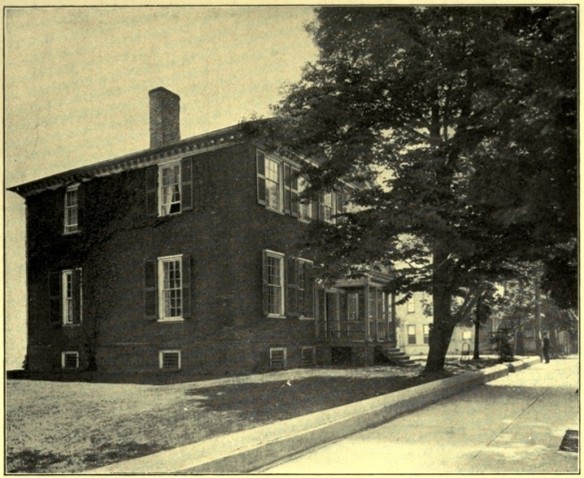
JOHN MARSHALL'S HOUSE, RICHMOND
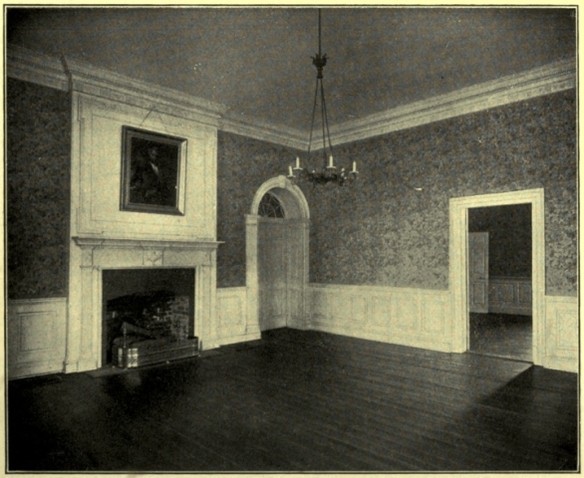
THE LARGE ROOM WHERE THE FAMOUS "LAWYERS' DINNERS" WERE GIVEN
In his personal business affairs Marshall showed a childlike faith in human nature which sometimes worked to his disadvantage. For instance, in 1790 he bought a considerable tract of land in Buckingham County, which was heavily encumbered by a deed of trust to secure "a debt of a former owner" of the land to Caron de Beaumarchais.[470] Marshall knew of this mortgage "at the time of the purchase, but he felt no concern ... because" the seller verbally "promised to pay the debt and relieve the land from the incumbrance."
So he made the payments through a series of years, in spite of the fact that Beaumarchais's mortgage remained unsatisfied, that Marshall urged its discharge, and, finally, that disputes concerning it arose. Perhaps the fact that he was the attorney of the Frenchman in important litigation quieted apprehension. Beaumarchais having died, his agent, unable to collect the debt, was about to sell the land under the trust deed, unless Marshall would pay the obligation it secured. Thus, thirteen years after this improvident transaction, Marshall was forced to take the absurd tangle into a court of equity.[471]
But he was as careful of matters entrusted to him by others as this land transaction would suggest that he was negligent of his own affairs. Especially was he in demand, it would seem, when an enterprise was to be launched which required public confidence for its success. For instance, the subscribers to a fire insurance company appointed him on the committee to examine the proposed plan of business and to petition the Legislature for a charter,[472] which was granted under the name of the "Mutual Assurance Society of Virginia."[473] Thus Marshall was a founder of one of the oldest American fire insurance companies.[474] Again, when in 1792 the "Bank of Virginia," a State institution, was organized,[475] Marshall was named as one of the committee to receive and approve subscriptions for stock.[476]
No man could have been more watchful than was Marshall of the welfare of members of his family. At one of the most troubled moments of his life, when greatly distressed by combined business and political complications,[477] he notes a love affair of his sister and, unasked, carefully reviews the eligibility of her suitor. Writing to his brother James on business and politics, he says:—
"I understand that my sister Jane, while here [Richmond], was addressed by Major Taylor and that his addresses were encouraged by her. I am not by any means certain of the fact nor did I suspect it until we had separated the night preceding her departure and consequently I could have no conversation with her concerning it.
"I believe that tho' Major Taylor was attach'd to her, it would probably have had no serious result if Jane had not manifested some partiality for him. This affair embarrasses me a good deal. Major Taylor is a young gentleman of talents and integrity for whom I profess and feel a real friendship. There is no person with whom I should be better pleased if there were not other considerations which ought not to be overlook'd. Mr. Taylor possesses but little if any fortune, he is encumbered with a family, and does not like his profession. Of course he will be as eminent in his profession as his talents entitle him to be. These are facts unknown to my sister but which ought to be known to her.
"Had I conjectured that Mr. Taylor was contemplated in the character of a lover I shou'd certainly have made to her all proper communications. I regret that it was concealed from me. I have a sincere and real affection and esteem for Major Taylor but I think it right in affairs of this sort that the real situation of the parties should be mutually understood. Present me affectionately to my sister."[478]
From the beginning of his residence in Richmond, Marshall had been an active member of the Masonic Order. He had become a Free Mason while in the Revolutionary army,[479] which abounded in camp lodges. It was due to his efforts as City Recorder of Richmond that a lottery was successfully conducted to raise funds for the building of a Masonic hall in the State Capital in 1785.[480] The following year Marshall was appointed Deputy Grand Master. In 1792 he presided over the Grand Lodge as Grand Master pro tempore; and the next year he was chosen as the head of the order in Virginia. He was reëlected as Grand Master in 1794; and presided over the meetings of the Grand Lodge held during 1793 until 1795 inclusive. During the latter year the Masonic hall in Manchester was begun and he assisted in the ceremonies attending the laying of the corner-stone, which bore this inscription: "This stone was laid by the Worshipful Archibald Campbell, Master of the Manchester Lodge of free & accepted Masons Assisted by & in the presence of the Most Worshipful John Marshall Grand Master of Masons to Virginia."[481]
Upon the expiration of his second term in this office, the Grand Lodge "Resolved, that the Grand Lodge are truly sensible of the great attention of our late Grand Master, John Marshall, to the duties of Masonry, and that they entertain an high sense of the wisdom displayed by him in the discharge of the duties of his office; and as a token of their entire approbation of his conduct do direct the Grand Treasurer to procure and present him with an elegant Past Master's jewel."[482]
From 1790 until his election to Congress, nine years later,[483] Marshall argued one hundred and thirteen cases decided by the Court of Appeals of Virginia. Notwithstanding his almost continuous political activity, he appeared, during this time, in practically every important cause heard and determined by the supreme tribunal of the State. Whenever there was more than one attorney for the client who retained Marshall, the latter almost invariably was reserved to make the closing argument. His absorbing mind took in everything said or suggested by counsel who preceded him; and his logic easily marshaled the strongest arguments to support his position and crushed or threw aside as unimportant those advanced against him.
Marshall preferred to close rather than open an argument. He wished to hear all that other counsel might have to say before he spoke himself; for, as has appeared, he was but slightly equipped with legal learning[484] and he informed himself from the knowledge displayed by his adversaries. Even after he had become Chief Justice of the Supreme Court of the United States and throughout his long and epochal occupancy of that high place, Marshall showed this same peculiarity which was so prominent in his practice at the bar.
Every contemporary student of Marshall's method and equipment notes the meagerness of his learning in the law. "Everyone has heard of the gigantick abilities of John Marshall; as a most able and profound reasoner he deserves all the praise which has been lavished upon him," writes Francis Walker Gilmer, in his keen and brilliant contemporary analysis of Marshall. "His mind is not very richly stored with knowledge," he continues, "but it is so creative, so well organized by nature, or disciplined by early education, and constant habits of systematick thinking, that he embraces every subject with the clearness and facility of one prepared by previous study to comprehend and explain it."[485]
Gustavus Schmidt, who was a competent critic of legal attainments and whose study of Marshall as a lawyer was painstaking and thorough, bears witness to Marshall's scanty acquirements. "Mr. Marshall," says Schmidt, "can hardly be regarded as a learned lawyer.... His acquaintance with the Roman jurisprudence as well as with the laws of foreign countries was not very extensive. He was what is called a common law lawyer in the best & noblest acceptation of that term."
Mr. Schmidt attempts to excuse Marshall's want of those legal weapons which knowledge of the books supply.
"He was educated for the bar," writes Schmidt, "at a period when digests, abridgments & all the numerous facilities, which now smooth the path of the law student were almost unknown & when you often sought in vain in the Reporters which usually wore the imposing form of folios, even for an index of the decisions & when marginal notes of the points determined in a case was a luxury not to be either looked for or expected.
"At this period when the principles of the Common Law had to be studied in the black-letter pages of Coke upon Littleton, a work equally remarkable for quaintness of expression, profundity of research and the absence of all method in the arrangements of its very valuable materials; when the rules of pleading had to be looked for in Chief Justice Saunders's Reports, while the doctrinal parts of the jurisprudence, based almost exclusively on the precedents had to be sought after in the reports of Dyer, Plowden, Coke, Popham ... it was ... no easy task to become an able lawyer & it required no common share of industry and perseverance to amass sufficient knowledge of the law to make even a decent appearance in the forum."[486]
It would not be strange, therefore, if Marshall did cite very few authorities in the scores of cases argued by him. But it seems certain that he would not have relied upon the "learning of the law" in any event; for at a later period, when precedents were more abundant and accessible, he still ignored them. Even in these early years other counsel exhibited the results of much research; but not so Marshall. In most of his arguments, as reported in volumes one, two, and four of Call's Virginia Reports and in volumes one and two of Washington's Virginia Reports,[487] he depended on no authority whatever. Frequently when the arguments of his associates and of opposing counsel show that they had explored the whole field of legal learning on the subject in hand, Marshall referred to no precedent.[488] The strongest feature of his argument was his statement of the case.
The multitude of cases which Marshall argued before the General Court of Appeals and before the High Court of Chancery at Richmond covered every possible subject of litigation at that time. He lost almost as frequently as he won. Out of one hundred and twenty-one cases reported, Marshall was on the winning side sixty-two times and on the losing side fifty times. In two cases he was partly successful and partly unsuccessful, and in seven it is impossible to tell from the reports what the outcome was.
Once Marshall appeared for clients whose cause was so weak that the court decided against him on his own argument, refusing to hear opposing counsel.[489] He was extremely frank and honest with the court, and on one occasion went so far as to say that the opposing counsel was in the right and himself in the wrong.[490] "My own opinion," he admitted to the court in this case, "is that the law is correctly stated by Mr. Ronald [the opposing counsel], but the point has been otherwise determined in the General Court." Marshall, of course, lost.[491]
Nearly all the cases in which Marshall was engaged concerned property rights. Only three or four of the controversies in which he took part involved criminal law. A considerable part of the litigation in which he was employed was intricate and involved; and in this class of cases his lucid and orderly mind made him the intellectual master of the contending lawyers. Marshall's ability to extract from the confusion of the most involved question its vital elements and to state those elements in simple terms was helpful to the court, and frankly appreciated by the judges.
Few letters of Marshall to his fellow lawyers written during this period are extant. Most of these are very brief and confined strictly to the particular cases which he had been retained by his associate attorneys throughout Virginia to conduct before the Court of Appeals. Occasionally, however, his humor breaks forth.
"I cannot appear for Donaghoe," writes Marshall to a country member of the bar who lived in the Valley over the mountains. "I do not decline his business from any objection to his bank. To that I should like very well to have free access & wou'd certainly discount from it as largely as he wou'd permit, but I am already fixed by Rankin & as those who are once in the bank do not I am told readily get out again I despair of being ever able to touch the guineas of Donaghoe.
"Shall we never see you again in Richmond? I was very much rejoiced when I heard that you were happily married but if that amounts to a ne exeat which is to confine you entirely to your side of the mountain, I shall be selfish enough to regret your good fortune & almost wish you had found some little crooked rib among the fish and oysters which would once a year drag you into this part of our terraqueous globe.
"You have forgotten I believe the solemn compact we made to take a journey to Philadelphia together this winter and superintend for a while the proceedings of Congress."[492]
Again, writing to Stuart concerning a libel suit, Marshall says: "Whether the truth of the libel may be justified or not is a perfectly unsettled question. If in that respect the law here varies from the law of England it must be because such is the will of their Honors for I know of no legislative act to vary it. It will however be right to appeal was it only to secure a compromise."[493]
Marshall's sociableness and love of play made him the leader of the Barbecue Club, consisting of thirty of the most agreeable of the prominent men in Richmond. Membership in this club was eagerly sought and difficult to secure, two negatives being sufficient to reject a candidate. Meetings were held each Saturday, in pleasant weather, at "the springs" on the farm of Mr. Buchanan, the Episcopal clergyman. There a generous meal was served and games played, quoits being the favorite sport. One such occasion of which there is a trustworthy account shows the humor, the wit, and the good-fellowship of Marshall.
He welcomed the invited guests, Messrs. Blair and Buchanan, the famous "Two Parsons" of Richmond, and then announced that a fine of a basket of champagne, imposed on two members for talking politics at a previous meeting of the club, had been paid and that the wine was at hand. It was drunk from tumblers and the Presbyterian minister joked about the danger of those who "drank from tumblers on the table becoming tumblers under the table." Marshall challenged "Parson" Blair to a game of quoits, each selecting four partners. His quoits were big, rough, heavy iron affairs that nobody else could throw, those of the other players being smaller and of polished brass. Marshall rang the meg and Blair threw his quoit directly over that of his opponent. Loud were the cries of applause and a great controversy arose as to which player had won. The decision was left to the club with the understanding that when the question was determined they should "crack another bottle of champagne."
Marshall argued his own case with great solemnity and elaboration. The one first ringing the meg must be deemed the winner, unless his adversary knocked off the first quoit and put his own in its place. This required perfection, which Blair did not possess. Blair claimed to have won by being on top of Marshall; but suppose he tried to reach heaven "by riding on my back," asked Marshall. "I fear that from my many backslidings and deficiencies, he may be badly disappointed." Blair's method was like playing leap frog, said he. And did anybody play backgammon in that way? Also there was the ancient legal maxim, "Cujus est solum, ejus est usque ad cœlum": being "the first occupant his right extended from the ground up to the vault of heaven and no one had a right to become a squatter on his back." If Blair had any claim "he must obtain a writ of ejectment or drive him [Marshall] from his position vi et armis." Marshall then cited the boys' game of marbles and, by analogy, proved that he had won and should be given the verdict of the club.
Wickham argued at length that the judgment of the club should be that "where two adversary quoits are on the same meg, neither is victorious." Marshall's quoit was so big and heavy that no ordinary quoit could move it and "no rule requires an impossibility." As to Marshall's insinuation that Blair was trying to reach "Elysium by mounting on his back," it was plain to the club that such was not the parson's intention, but that he meant only to get a more elevated view of earthly things. Also Blair, by "riding on that pinnacle," will be apt to arrive in time at the upper round of the ladder of fame. The legal maxim cited by Marshall was really against his claim, since the ground belonged to Mr. Buchanan and Marshall was as much of a "squatter" as Blair was. "The first squatter was no better than the second." And why did Marshall talk of ejecting him by force of arms? Everybody knew that "parsons are men of peace and do not vanquish their antagonists vi et armis. We do not deserve to prolong this riding on Mr. Marshall's back; he is too much of a Rosinante to make the ride agreeable." The club declined to consider seriously Marshall's comparison of the manly game of quoits with the boys' game of marbles, for had not one of the clergymen present preached a sermon on "marvel not"? There was no analogy to quoits in Marshall's citation of leap frog nor of backgammon; and Wickham closed, amid the cheers of the club, by pointing out the difference between quoits and leap frog.
The club voted with impressive gravity, taking care to make the vote as even as possible and finally determined that the disputed throw was a draw. The game was resumed and Marshall won.[494]
Such were Marshall's diversions when an attorney at Richmond. His "lawyer dinners" at his house,[495] his card playing at Farmicola's tavern, his quoit-throwing and pleasant foolery at the Barbecue Club, and other similar amusements which served to take his mind from the grave problems on which, at other times, it was constantly working, were continued, as we shall see, and with increasing zest, after he became the world's leading jurist-statesman of his time. But neither as lawyer nor judge did these wholesome frivolities interfere with his serious work.
Marshall's first case of nation-wide interest, in which his argument gave him fame among lawyers throughout the country, was the historic controversy over the British debts. When Congress enacted the Judiciary Law of 1789 and the National Courts were established, British creditors at once began action to recover their long overdue debts. During the Revolution, other States as well as Virginia had passed laws confiscating the debts which their citizens owed British subjects and sequestering British property.
Under these laws, debtors could cancel their obligations in several ways. The Treaty of Peace between the United States and Great Britain provided, among other things, that "It is agreed that creditors on either side shall meet with no legal impediments to the recovery of the full value in sterling money of all bona fide debts heretofore contracted." The Constitution provided that "All treaties made, or which shall be made, under the authority of the United States, shall be the supreme law of the land; and the judges in every State shall be bound thereby, anything in the Constitution or laws of any State to the contrary notwithstanding,"[496] and that "The judicial power shall extend to all cases in law and equity arising under this Constitution, the laws of the United States, and treaties made, or which shall be made, under their authority; to all cases ... between a State, or the citizens thereof, and foreign States citizens, or subjects."[497]
Thus the case of Ware, Administrator, vs. Hylton et al., which involved the validity of a State law in conflict with a treaty, attracted the attention of the whole country when finally it reached the Supreme Court. The question in that celebrated controversy was whether a State law, suspending the collection of a debt due to a subject of Great Britain, was valid as against the treaty which provided that no "legal impediment" should prevent the recovery of the obligation.
Ware vs. Hylton was a test case; and its decision involved immense sums of money. Large numbers of creditors who had sought to cancel their debts under the confiscation laws were vitally interested. Marshall, in this case, made the notable argument that carried his reputation as a lawyer beyond Virginia and won for him the admiration of the ablest men at the bar, regardless of their opinion of the merits of the controversy.
It is an example of "the irony of fate" that in this historic legal contest Marshall supported the theory which he had opposed throughout his public career thus far, and to demolish which his entire after life was given. More remarkable still, his efforts for his clients were opposed to his own interests; for, had he succeeded for those who employed him, he would have wrecked the only considerable business transaction in which he ever engaged.[498] He was employed by the debtors to uphold those laws of Virginia which sequestered British property and prevented the collection of the British debts; and he put forth all his power in this behalf.
Three such cases were pending in Virginia; and these were heard twice by the National Court in Richmond as a consolidated cause, the real issue being the same in all. The second hearing was during the May Term of 1793 before Chief Justice Jay, Justice Iredell of the Supreme Court, and Judge Griffin of the United States District Court. The attorneys for the British creditors were William Ronald, John Baker, John Stark, and John Wickham. For the defendants were Alexander Campbell, James Innes, Patrick Henry, and John Marshall. Thus we see Marshall, when thirty-six years of age, after ten years of practice at the Richmond bar, interrupted as those years were by politics and legislative activities, one of the group of lawyers who, for power, brilliancy, and learning, were unsurpassed in America.
The argument at the Richmond hearing was a brilliant display of eloquence, reasoning, and erudition, and, among lawyers, its repute has reached even to the present day. Counsel on both sides exerted every ounce of their strength. When Patrick Henry had finished his appeal, Justice Iredell was so overcome that he cried, "Gracious God! He is an orator indeed!"[499] The Countess of Huntingdon, who was then in Richmond and heard the arguments of all the attorneys, declared: "If every one had spoken in Westminster Hall, they would have been honored with a peerage."[500]
In his formal opinion, Justice Iredell thus expressed his admiration: "The cause has been spoken to, at the bar, with a degree of ability equal to any occasion.... I shall as long as I live, remember with pleasure and respect the arguments which I have heard on this case: they have discovered an ingenuity, a depth of investigation, and a power of reasoning fully equal to anything I have ever witnessed.... Fatigue has given way under its influence; the heart has been warmed, while the understanding has been instructed."[501]
Marshall's argument before the District Court of Richmond must have impressed his debtor clients more than that of any other of their distinguished counsel, with the single exception of Alexander Campbell; for when, on appeal to the Supreme Court of the United States, the case came on for hearing in 1796, we find that only Marshall and Campbell appeared for the debtors.
It is unfortunate that Marshall's argument before the Supreme Court at Philadelphia is very poorly reported. But inadequate as the report is, it still reveals the peculiar clearness and the compact and simple reasoning which made up the whole of Marshall's method, whether in legal arguments, political speeches, diplomatic letters, or judicial opinions.
Marshall argued that the Virginia law barred the recovery of the debts regardless of the treaty. "It has been conceded," said he, "that independent nations have, in general, the right to confiscation; and that Virginia, at the time of passing her law, was an independent nation." A State engaged in war has the powers of war, "and confiscation is one of those powers, weakening the party against whom it is employed and strengthening the party that employs it." Nations have equal powers; and, from July 4, 1776, America was as independent a nation as Great Britain. What would have happened if Great Britain had been victorious? "Sequestration, confiscation, and proscription would have followed in the train of that event," asserted Marshall.
Why, then, he asked, "should the confiscation of British property be deemed less just in the event of an American triumph?" Property and its disposition is not a natural right, but the "creature of civil society, and subject in all respects to the disposition and control of civil institutions." Even if "an individual has not the power of extinguishing his debts," still "the community to which he belongs ... may ... upon principles of public policy, prevent his creditors from recovering them." The ownership and control of property "is the offspring of the social state; not the incident of a state of nature. But the Revolution did not reduce the inhabitants of America to a state of nature; and if it did, the plaintiff's claim would be at an end." Virginia was within her rights when she confiscated these debts.
As an independent nation Virginia could do as she liked, declared Marshall. Legally, then, at the time of the Treaty of Peace in 1783, "the defendant owed nothing to the plaintiff." Did the treaty revive the debt thus extinguished? No: For the treaty provides "that creditors on either side shall meet with no lawful impediment to the recovery" of their debts. Who are the creditors? "There cannot be a creditor where there is not a debt; and the British debts were extinguished by the act of confiscation," which was entirely legal.
Plainly, then, argued Marshall, the treaty "must be construed with reference to those creditors" whose debts had not been extinguished by the sequestration laws. There were cases of such debts and it was to these only that the treaty applied. The Virginia law must have been known to the commissioners who made the treaty; and it was unthinkable that they should attempt to repeal those laws in the treaty without using plain words to that effect.
Such is an outline of Marshall's argument, as inaccurately and defectively reported.[502]
Cold and dry as it appears in the reporter's notes, Marshall's address to the Supreme Court made a tremendous impression on all who heard it. When he left the court-room, he was followed by admiring crowds. The ablest public men at the Capital were watching Marshall narrowly and these particularly were captivated by his argument. "His head is one of the best organized of any one that I have known," writes the keenly observant King, a year later, in giving to Pinckney his estimate of Marshall. "This I say from general Reputation, and more satisfactorily from an Argument that I heard him deliver before the fed'l Court at Philadelphia."[503] King's judgment of Marshall's intellectual strength was that generally held.
Marshall's speech had a more enduring effect on those who listened to it than any other address he ever made, excepting that on the Jonathan Robins case.[504] Twenty-four years afterwards William Wirt, then at the summit of his brilliant career, advising Francis Gilmer upon the art of oratory, recalled Marshall's argument in the British Debts case as an example for Gilmer to follow. Wirt thus contrasts Marshall's method with that of Campbell on the same occasion:—
"Campbell played off all his Apollonian airs; but they were lost. Marshall spoke, as he always does, to the judgment merely and for the simple purpose of convincing. Marshall was justly pronounced one of the greatest men of the country; he was followed by crowds, looked upon, and courted with every evidence of admiration and respect for the great powers of his mind. Campbell was neglected and slighted, and came home in disgust.
"Marshall's maxim seems always to have been, 'aim exclusively at Strength:' and from his eminent success, I say, if I had my life to go over again, I would practice on his maxim with the most rigorous severity, until the character of my mind was established."[505]
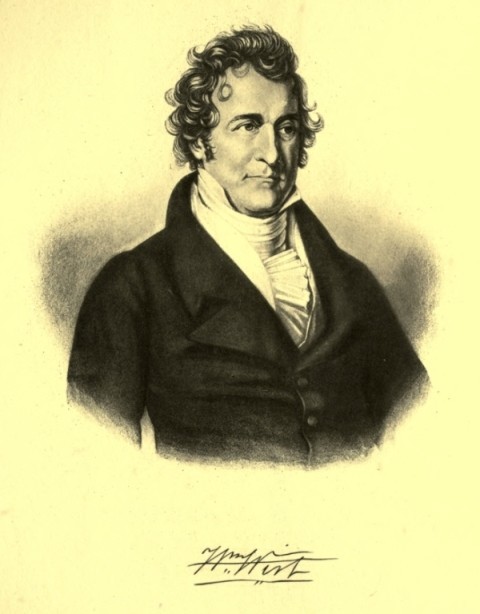
In another letter to Gilmer, Wirt again urges his son-in-law to imitate Marshall's style. In his early career Wirt had suffered in his own arguments from too much adornment which detracted from the real solidity and careful learning of his efforts at the bar. And when, finally, in his old age he had, through his own mistakes, learned the value of simplicity in statement and clear logic in argument, he counseled young Gilmer accordingly.
"In your arguments at the bar," he writes, "let argument strongly predominate. Sacrifice your flowers.... Avoid as you would the gates of death, the reputation for floridity.... Imitate ... Marshall's simple process of reasoning."[506]
Following the advice of his distinguished brother-in-law, Gilmer studied Marshall with the hungry zeal of ambitious youth. Thus it is that to Francis Gilmer we owe what is perhaps the truest analysis, made by a personal observer, of Marshall's method as advocate and orator.
"So perfect is his analysis," records Gilmer, "that he extracts the whole matter, the kernel of the inquiry, unbroken, undivided, clean and entire. In this process, such is the instinctive neatness and precision of his mind that no superfluous thought, or even word, ever presents itself and still he says everything that seems appropriate to the subject.
"This perfect exemption from any unnecessary encumbrance of matter or ornament, is in some degree the effect of an aversion for the labour of thinking. So great a mind, perhaps, like large bodies in the physical world, is with difficulty set in motion. That this is the case with Mr. Marshall's is manifest, from his mode of entering on an argument both in conversation and in publick debate.
"It is difficult to rouse his faculties; he begins with reluctance, hesitation, and vacancy of eye; presently his articulation becomes less broken, his eye more fixed, until finally, his voice is full, clear, and rapid, his manner bold, and his whole face lighted up, with the mingled fires of genius and passion; and he pours forth the unbroken stream of eloquence, in a current deep, majestick, smooth, and strong.
"He reminds one of some great bird, which flounders and flounces on the earth for a while before it acquires the impetus to sustain its soaring flight.
"The characteristick of his eloquence is an irresistible cogency, and a luminous simplicity in the order of his reasoning. His arguments are remarkable for their separate and independent strength, and for the solid, compact, impenetrable order in which they are arrayed.
"He certainly possesses in an eminent degree the power which had been ascribed to him, of mastering the most complicated subjects with facility, and when moving with his full momentum, even without the appearance of resistance."
Comparing Marshall and Randolph, Gilmer says:—
"The powers of these two gentlemen are strikingly contrasted by nature. In Mr. Marshall's speeches, all is reasoning; in Mr. Randolph's everything is declamation. The former scarcely uses a figure; the latter hardly an abstraction. One is awkward; the other graceful.
"One is indifferent as to his words, and slovenly in his pronunciation; the other adapts his phrases to the sense with poetick felicity; his voice to the sound with musical exactness.
"There is no breach in the train of Mr. Marshall's thoughts; little connection between Mr. Randolph's. Each has his separate excellence, but either is far from being a finished orator."[507]
Another invaluable first-hand analysis of Marshall's style and manner of argument is that of William Wirt, himself, in the vivacious descriptions of "The British Spy":—
"He possesses one original, and, almost supernatural faculty, the faculty of developing a subject by a single glance of his mind, and detecting at once, the very point on which every controversy depends. No matter what the question; though ten times more knotty than 'the gnarled oak,' the lightning of heaven is not more rapid nor more resistless, than his astonishing penetration.
"Nor does the exercise of it seem to cost him an effort. On the contrary, it is as easy as vision. I am persuaded that his eye does not fly over a landscape and take in its various objects with more promptitude and facility, than his mind embraces and analyses the most complex subject.
"Possessing while at the bar this intellectual elevation, which enabled him to look down and comprehend the whole ground at once, he determined immediately and without difficulty, on which side the question might be most advantageously approached and assailed.
"In a bad cause his art consisted in laying his premises so remotely from the point directly in debate, or else in terms so general and so spacious, that the hearer, seeing no consequence which could be drawn from them, was just as willing to admit them as not; but his premises once admitted, the demonstration, however distant, followed as certainly, as cogently, as inevitably, as any demonstration in Euclid."[508]
Marshall's supremacy, now unchallenged, at the Virginia bar was noted by foreign observers. La Rochefoucauld testifies to this in his exhaustive volumes of travel:—
"Mr. J. Marshall, conspicuously eminent as a professor of the law, is beyond all doubt one of those who rank highest in the public opinion at Richmond. He is what is termed a federalist, and perhaps somewhat warm in support of his opinions, but never exceeding the bounds of propriety, which a man of his goodness and prudence and knowledge is incapable of transgressing.
"He may be considered as a distinguished character in the United States. His political enemies allow him to possess great talents but accuse him of ambition. I know not whether the charge be well or ill grounded, or whether that ambition might ever be able to impel him to a dereliction of his principles—a conduct of which I am inclined to disbelieve the possibility on his part.
"He has already refused several employments under the general government, preferring the income derived from his professional labours (which is more than sufficient for his moderate system of economy), together with a life of tranquil ease in the midst of his family and in his native town.
"Even by his friends he is taxed with some little propensity to indolence; but even if this reproach were well founded, he nevertheless displays great superiority in his profession when he applies his mind to business."[509]
When Jefferson foresaw Marshall's permanent transfer to public life he advised James Monroe to practice law in Richmond because "the business is very profitable;[510] ... and an opening of great importance must be made by the retirement of Marshall."[511]
Marshall's solid and brilliant performance in the British Debts case before the Supreme Court at Philadelphia did much more than advance him in his profession. It also focused upon him the keen scrutiny of the politicians and statesmen who at that time were in attendance upon Congress in the Quaker City. Particularly did the strength and personality of the Virginia advocate impress the Federalist leaders.
These vigilant men had learned of Marshall's daring championship of the Jay Treaty in hostile Virginia. And although in the case of Ware vs. Hylton, Marshall was doing his utmost as a lawyer before the Supreme Court to defeat the collection of the British debts, yet his courageous advocacy of the Jay Treaty outweighed, in their judgment, his professional labors in behalf of the clients who had employed him.
The Federalist leaders were in sore need of Southern support; and when Marshall was in Philadelphia on the British Debts case, they were prompt and unsparing in their efforts to bind this strong and able man to them by personal ties. Marshall himself unwittingly testifies to this. "I then [during this professional visit to Philadelphia] became acquainted," he relates, "with Mr. Cabot, Mr. Ames, Mr. Dexter, and Mr. Sedgwick of Massachusetts, Mr. Wadsworth of Connecticut, and Mr. King of New York. I was delighted with these gentlemen. The particular subject (the British Treaty) which introduced me to their notice was at that time so interesting, and a Virginian who supported, with any sort of reputation, the measures of the government, was such a rara avis, that I was received by them all with a degree of kindness which I had not anticipated. I was particularly intimate with Mr. Ames, and could scarcely gain credit with him when I assured him that the appropriations [to effectuate the treaty] would be seriously opposed in Congress."[512]
As we shall presently see, Marshall became associated with Robert Morris in the one great business undertaking of the former's life. Early in this transaction when, for Marshall, the skies were still clear of financial clouds, he appears to have made a small purchase of bank stock and ventured modestly into the commercial field. "I have received your letter of 18 ulto," Morris writes Marshall, "& am negotiating for Bank Stock to answer your demand."[513]
And again: "I did not succeed in the purchase of the Bank Stock mentioned in my letter of the 3d Ulto to you and as Mr Richard tells me in his letter of the 4 Inst that you want the money for the Stock, you may if you please draw upon me for $7000 giving me as much time in the sight as you can, and I will most certainly pay your drafts as they become due. The Brokers shall fix the price of the Stock at the market price at the time I pay the money & I will then state the Amt including Dividends & remit you the Balance but if you prefer having the Stock I will buy it on receiving your Answer to this, cost what it may."[514]
Soon afterward, Morris sent Marshall the promised shares of stock, apparently to enable him to return shares to some person in Richmond from whom he had borrowed them.
"You will receive herewith enclosed the Certificates for four shares of Bank Stock of the United States placed in your name to enable you to return the four shares to the Gentlemen of whom you borrowed them, this I thought better than remitting the money lest some difficulty should arise about price of shares. Two other shares in the name of Mr Geo Pickett is also enclosed herewith and I will go on buying and remitting others untill the number of Ten are completed for him which shall be done before the time limited in your letter of the 12h Inst The dividends shall also be remitted speedily."[515]
Again Washington desired Marshall to fill an important public office, this time a place on the joint commission, provided for in the Jay Treaty, to settle the British claims. These, as we have seen, had been for many years a source of grave trouble between the two countries. Their satisfactory adjustment would mean, not only the final settlement of this serious controversy, but the removal of an ever-present cause of war.[516] But since Marshall had refused appointment to three offices tendered him by Washington, the President did not now communicate with him directly, but inquired of Charles Lee, Attorney-General of Virginia, whether Marshall might be prevailed upon to accept this weighty and delicate business.
"I have very little doubt," replied Lee, "that Mr. John Marshall would not act as a Commissioner under the Treaty with Great Britain, for deciding on the claims of creditors. I have been long acquainted with his private affairs, and I think it almost impossible for him to undertake that office. If he would, I know not any objection that subsists against him.
"First, he is not a debtor.[517] Secondly, he cannot be benefitted or injured by any decision of the Commissioners. Thirdly, his being employed as counsel, in suits of that kind, furnishes no reasonable objection; nor do I know of any opinions that he has published, or professes, that might, with a view of impartiality, make him liable to be objected to.
"Mr. Marshall is at the head of his profession in Virginia, enjoying every convenience and comfort; in the midst of his friends and the relations of his wife at Richmond; in a practice of his profession that annually produces about five thousand dollars on an average; with a young and increasing family; and under a degree of necessity to continue his profession, for the purpose of complying with contracts not yet performed."[518]
The "contracts" which Marshall had to fulfill concerned the one important financial adventure of his life. It was this, and not, as some suppose, the condition of his invalid wife, to which Marshall vaguely referred in his letter to Washington declining appointment as Attorney-General and as Minister to France.
The two decades following the establishment of the National Government under the Constitution were years of enormous land speculation. Hardly a prominent man of the period failed to secure large tracts of real estate, which could be had at absurdly low prices, and to hold the lands for the natural advance which increasing population would bring. The greatest of these investors was Robert Morris, the financier of the Revolution, the second richest man of the time,[519] and the leading business man of the country.
[470] This celebrated French playwright and adventurer is soon to appear again at a dramatic moment of Marshall's life. (See infra, chaps. vi to viii.)
[471] Marshall's bill in equity in the "High Court of Chancery sitting in Richmond," January 1, 1803; Chamberlin MSS., Boston Public Library. Marshall, then Chief Justice, personally drew this bill. After the Fairfax transaction, he seems to have left to his brother and partner, James M. Marshall, the practical handling of his business affairs.
[472] Memorial of William F. Ast and others; MS. Archives, Va. St. Lib.
[473] Christian, 46.
[474] This company is still doing business in Richmond.
[475] Christian, 46.
[476] The enterprise appears not to have filled the public with investing enthusiasm and no subscriptions to it were received.
[477] See infra, chap. x.
[478] Marshall to James M. Marshall, April 3, 1799; MS. This was the only one of Marshall's sisters then unmarried. She was twenty years of age at this time and married Major George Keith Taylor within a few months. He was a man of unusual ability and high character and became very successful in his profession. In 1801 he was appointed by President Adams, United States Judge for a Virginia district. (See infra, chap. xii.) The union of Mr. Taylor and Jane Marshall turned out to be very happy indeed. (Paxton, 77.)
[479] Marshall to Everett, July 22, 1833.
[480] Christian, 28.
[481] Richmond and Manchester Advertiser, Sept. 24, 1795.
[482] Proceedings of the M. W. Grand Lodge of Ancient York Masons of the State of Virginia, from 1778 to 1822, by John Dove, i, 144; see also 121, 139.
[483] See infra, chap. x.
[484] See vol. i, chap. v, of this work.
[485] Gilmer, 23-24.
[486] Gustavus Schmidt, in Louisiana Law Journal (1841), 81-82.
[487] For a list of cases argued by Marshall and reported in Call and Washington, with title of case, date, volume, and page, see Appendix I.
[488] A good illustration of a brilliant display of legal learning by associate and opposing counsel, and Marshall's distaste for authorities when he could do without them, is the curious and interesting case of Coleman vs. Dick and Pat, decided in 1793, and reported in 1 Washington, 233. Wickham for appellant and Campbell for appellee cited ancient laws and treaties as far back as 1662. Marshall cited no authority whatever.
[489] See Stevens vs. Taliaferro, Adm'r, 1 Washington, 155, Spring Term, 1793.
[490] Johnson vs. Bourn, 1 Washington, 187, Spring Term, 1793.
[491] Ib.
[492] Marshall to Archibald Stuart, March 27, 1794; MS., Va. Hist. Soc.
[493] Ib., May 28, 1794.
[494] Munford, 326-38.
[495] See vol. iii of this work.
[496] Constitution of the United States, article vi.
[497] Ib., article iii, section 2.
[498] The Fairfax deal; see infra, 203 et seq.
[499] Henry, ii, 475.
[500] Howe, 221-22.
[501] 3 Dallas, 256-57, and footnote. In his opinion Justice Iredell decided for the debtors. When the Supreme Court of the United States, of which he was a member, reversed him in Philadelphia, the following year, Justice Iredell, pursuant to a practice then existing, and on the advice of his brother justices, placed his original opinion on record along with those of Justices Chase, Paterson, Wilson, and Cushing, each of whom delivered separate opinions in favor of the British creditors.
[502] For Marshall's argument in the British Debts case before the Supreme Court, see 3 Dallas, 199-285.
[503] King to Pinckney, Oct. 17, 1797; King, ii, 234-35. King refers to the British Debts case, the only one in which Marshall had made an argument before the Supreme Court up to this time.
[504] See infra, chap. xi.
[505] Kennedy, ii, 76. Mr. Wirt remembered the argument well; but twenty-four years having elapsed, he had forgotten the case in which it was made. He says that it was the Carriage Tax case and that Hamilton was one of the attorneys. But it was the British Debts case and Hamilton's name does not appear in the records.
[506] Kennedy, ii, 66. Francis W. Gilmer was then the most brilliant young lawyer in Virginia. His health became too frail for the hard work of the law; and his early death was universally mourned as the going out of the brightest light among the young men of the Old Dominion.
[507] Gilmer, 23-24.
[508] Wirt: The British Spy, 112-13.
[509] La Rochefoucauld, iii, 120. Doubtless La Rochefoucauld would have arrived at the above conclusion in any event, since his estimate of Marshall is borne out by every contemporary observer; but it is worthy of note that the Frenchman while in Richmond spent much of his time in Marshall's company. (Ib., 119.)
[510] Ib., 75. "The profession of a lawyer is ... one of the most profitable.... In Virginia the lawyers usually take care to insist on payment before they proceed in a suit; and this custom is justified by the general disposition of the inhabitants to pay as little and as seldom as possible."
[511] Jefferson to Monroe, Feb. 8, 1798; Works: Ford, viii, 365. Marshall was in France at the time. (See infra, chaps. vi to viii inclusive.)
[512] Story, in Dillon, iii, 354. Ware vs. Hylton was argued Feb. 6, 8, 9, 10, 11, and 12. The fight against the bill to carry out the Jay Treaty did not begin in the National House of Representatives until March 7, 1796.
[513] Morris to Marshall, May 3, 1796; Morris's Private Letter Book; MS., Lib. Cong. The stock referred to in this correspondence is probably that of the Bank of the United States.
[514] Morris to Marshall, June 16, 1796; Morris's Private Letter Book; MS., Lib. Cong.
[515] Morris to Marshall, Aug. 24, 1796; ib.
[516] The commission failed and war was narrowly averted by the payment of a lump sum to Great Britain. It is one of the curious turns of history that Marshall, as Secretary of State, made the proposition that finally concluded the matter and that Jefferson consummated the transaction. (See infra, chap. xii.)
[517] Lee means a debtor under the commission. Marshall was a debtor to Fairfax. (See infra.)
[518] Lee to Washington, March 20, 1796; Cor. Rev.: Sparks, iv, 481-82.
[519] William Bingham of Philadelphia was reputed to be "the richest man of his time." (Watson: Annals of Philadelphia i. 414.) Chastellux estimates Morris's wealth at the close of the Revolution at 8,000,000 francs. (Chastellux, 107.) He increased his fortune many fold from the close of the war to 1796.
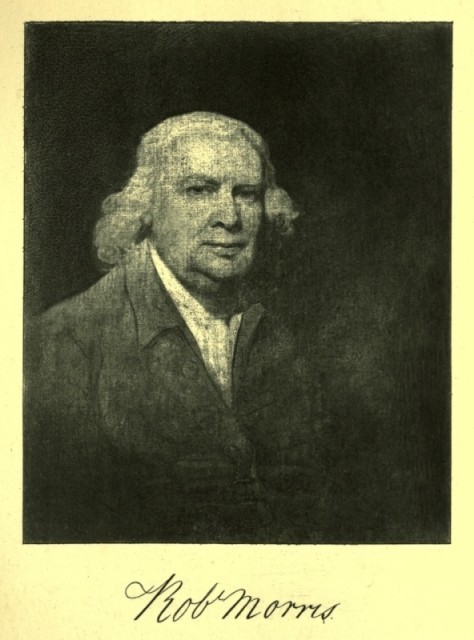
John Marshall had long been the attorney in Virginia for Robert Morris, who frequently visited that State, sometimes taking his family with him. In all probability, it was upon some such journey that James M. Marshall, the brother of John Marshall, met and became engaged to Hester Morris, daughter of the great speculator, whom he married on April 19, 1795.[520] James M. Marshall—nine years younger than his brother—possessed ability almost equal to John Marshall and wider and more varied accomplishments.[521]
It is likely that the Pennsylvania financier, before the marriage, suggested to the Marshall brothers the purchase of what remained of the Fairfax estate in the Northern Neck, embracing over one hundred and sixty thousand acres of the best land in Virginia.[522] At any rate, sometime during 1793 or 1794 John Marshall, his brother, James M. Marshall, his brother-in-law, Rawleigh Colston, and General Henry Lee contracted for the purchase of this valuable holding.[523] In January of that year James M. Marshall sailed for England to close the bargain.[524] The money to buy the Fairfax lands was to be advanced by Robert Morris, who, partly for this purpose, sent James M. Marshall to Europe to negotiate[525] loans, immediately after his marriage to Hester Morris.
At Amsterdam "some Capitalists proposed to supply on very hard terms a Sum more than Sufficient to pay Mr. Fairfax," writes Morris, and James M. Marshall "has my authority to apply the first Monies he receives on my accot to that Payment."[526] By the end of 1796 Morris's over-speculations had gravely impaired his fortune. The old financier writes pathetically to James M. Marshall: "I am struggling hard, very hard, indeed to regain my Position." He tells his son-in-law that if a loan cannot be obtained on his other real estate he "expects these Washington Lotts will be the most certain of any Property to raise Money on"; and that "[I] will have a number of them Placed under your Controul."[527]
The loan failed, for the time being, but, writes Morris to John Marshall, "Mr. Hottenguer[528] who first put the thing in motion says it will come on again" and succeed; "if so, your brother will, of course, be ready for Mr. Fairfax." Morris is trying, he says, to raise money from other sources lest that should fail. "I am here distressed exceedingly in money matters," continues the harried and aging speculator "as indeed every body here are but I will immediately make such exertions as are in my power to place funds with your brother and I cannot but hope that his and my exertions will produce the needful in proper time to prevent mischief."[529]
A month later Morris again writes John Marshall that he is "extremely anxious & fearing that it [the Amsterdam loan] may fall through I am trying to obtain a loan here for the purposes of your Brother in London. This," says the now desperate financier, "is extremely difficult, for those who have money or credit in Europe seem to dread every thing that is American." He assures John Marshall that he will do his utmost. "My anxiety ... [to make good the Fairfax purchase] is beyond what I can express." Alexander Baring "could supply the money ... but he parries me. He intends soon for the Southward I will introduce him to you."[530]
The title to the Fairfax estate had been the subject of controversy for many years. Conflicting grants, overlapping boundaries, sequestration laws, the two treaties with Great Britain, were some of the elements that produced confusion and uncertainty in the public mind and especially in the minds of those holding lands within the grant. The only real and threatening clouds upon the title to the lands purchased by the Marshall syndicate, however, were the confiscatory laws passed during the Revolution[531] which the Treaty of Peace and the Jay Treaty nullified.[532] There were also questions growing out of grants made by the colonial authorities between 1730 and 1736, but these were not weighty.
The case of Hunter vs. Fairfax, Devisee, involving these questions, was pending in the Supreme Court of the United States. John Marshall went to Philadelphia and tried to get the cause advanced and decided. He was sadly disappointed at his failure and so wrote his brother. "Your Brother has been here," writes Morris to his son-in-law, "as you will see by a letter from him forwarded by this conveyance. He could not get your case brought forward in the Supreme Court of the U. S. at which he was much dissatisfied & I am much concerned thereat, fearing that real disadvantage will result to your concern thereby."[533]
The case came on for hearing in regular course during the fall term. Hunter, on the death of his attorney, Alexander Campbell, prayed the Court, by letter, for a continuance, which was granted over the protest of the Fairfax attorneys of record, Lee and Ingersoll of Philadelphia, who argued that "from the nature of the cause, delay would be worse for the defendant in error [the Fairfax heir] than a decision adverse to his claim." The Attorney-General stated that the issue before the Court was "whether ... the defendant in error being an alien can take and hold the lands by devise. And it will be contended that his title is completely protected by the treaty of peace." Mr. Justice Chase remarked: "I recollect that ... a decision in favor of such a devisee's title was given by a court in Maryland. It is a matter, however, of great moment and ought to be deliberately and finally settled."[534] The Marshalls, of course, stood in the shoes of the Fairfax devisee; had the Supreme Court decided against the Fairfax title, their contract of purchase would have been nullified and, while they would not have secured the estate, they would have been relieved of the Fairfax indebtedness. It was, then, a very grave matter to the Marshalls, in common with all others deriving their titles from Fairfax, that the question be settled quickly and permanently.
A year or two before this purchase by the Marshalls of what remained of the Fairfax estate, more than two hundred settlers, occupying other parts of it, petitioned the Legislature of Virginia to quiet their titles.[535] Acting on these petitions and influenced, perhaps, by the controversy over the sequestration laws which the Marshall purchase renewed, the Legislature in 1796 passed a resolution proposing to compromise the dispute by the State's relinquishing "all claim to any lands specifically appropriated by ... Lord Fairfax to his own use either by deed or actual survey ... if the devises of Lord Fairfax, or those claiming under them, will relinquish all claims to lands ... which were waste and unappropriated at the time of the death of Lord Fairfax."[536]
Acting for the purchasing syndicate, John Marshall, in a letter to the Speaker of the House, accepted this legislative offer of settlement upon the condition that "an act passes during this session confirming ... the title of those claiming under Mr. Fairfax the lands specifically appropriated and reserved by the late Thomas Lord Fairfax or his ancestors for his or their use."[537]
When advised of what everybody then supposed to be the definitive settlement of this vexed controversy, Robert Morris wrote John Marshall that "altho' you were obliged to give up a part of your claim yet it was probably better to do that than to hold a contest with such an opponent [State of Virginia]. I will give notice to Mṛ Jaṣ Marshall of this compromise."[538] John Marshall, now sure of the title, and more anxious than ever to consummate the deal by paying the Fairfax heir, hastened to Philadelphia to see Morris about the money.
"Your Brother John Marshall Esqṛ is now in this City," writes Robert Morris to his son-in-law, "and his principal business I believe is to see how you are provided with Money to pay Lord Fairfax.... I am so sensible of the necessity there is for your being prepared for Lord Fairfax's payment that there is nothing within my power that I would not do to enable you to meet it."[539]
The members of the Marshall syndicate pressed their Philadelphia backer unremittingly, it appears, for a few days later he answers what seems to have been a petulant letter from Colston assuring that partner in the Fairfax transaction that he is doing his utmost to "raise the money to enable Mr. James Marshall to meet the Payments for your Purchase at least so far as it is incumbent on me to supply the means.... From the time named by John Marshall Esqre when here, I feel perfect Confidence, because I will furnish him before that period with such Resources & aid as I think cannot fail."[540]
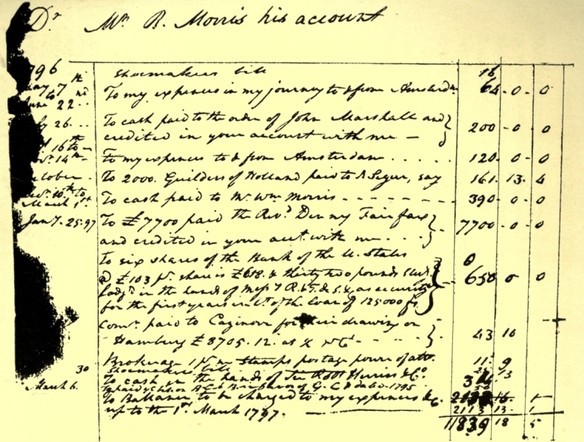
PAGE OF JAMES MARSHALL'S ACCOUNT WITH ROBERT MORRIS SHOWING PAYMENT OF £7700 TO FAIRFAX (Facsimile)
Finally Marshall's brother negotiated the loan, an achievement which Morris found "very pleasing, as it enables you to take the first steps with Lord Fairfax for securing your bargain."[541] Nearly forty thousand dollars of this loan was thus applied. In his book of accounts with Morris, James M. Marshall enters: "Jany 25 '97 To £7700 paid the Revḍ Denny Fairfax and credited in your [Morris's] account with me 7700" (English pounds sterling).[542] The total amount which the Marshalls had agreed to pay for the remnant of the Fairfax estate was "fourteen thousand pounds British money."[543] When Robert Morris became bankrupt, payment of the remainder of the Fairfax indebtedness fell on the shoulders of Marshall and his brother.
This financial burden caused Marshall to break his rule of declining office and to accept appointment as one of our envoys to France at the time of Robert Morris's failure and imprisonment for debt; for from that public employment of less than one year, Marshall, as we shall see, received in the sorely needed cash, over and above his expenses, three times the amount of his annual earnings at the bar.[544] "Mr. John Marshall has said here," relates Jefferson after Marshall's return, "that had he not been appointed minister [envoy] to France, he was desperate in his affairs and must have sold his estate [the Fairfax purchase] & that immediately. That that appointment was the greatest God-send that could ever have befallen a man."[545] Jefferson adds: "I have this from J. Brown and S. T. Mason [Senator Mason]."[546]
So it was that Marshall accepted a place on the mission to France[547] when it was offered to him by Adams, who "by a miracle," as Hamilton said, had been elected President.[548]
FOOTNOTES:
[456] Southern Literary Messenger, 1836, ii, 181-91; also see Howe, 266.
[457] Southern Literary Messenger, ii, 181-91; also Howe, 266. Apparently the older lawyer had been paid the one hundred dollars, for prepayment was customary in Virginia at the time. (See La Rochefoucauld, iii, 76.) This tale, fairly well authenticated, is so characteristic of Marshall that it is important. It visualizes the man as he really was. (See Jefferson's reference, in his letter to Madison, to Marshall's "lax, lounging manners," supra, 139.)
[458] Story, in Dillon, iii, 363.
[459] Wirt: The British Spy, 110-12.
[460] Mazzei's Recherches sur les États-Unis, published in this year (1788) in four volumes.
[461] Marshall himself could not read French at this time. (See infra, chap. vi.)
[462] In this chapter of Marshall's receipts and expenditures all items are from his Account Book, described in vol. i, chap. v, of this work.
[463] Marshall's third child, Mary, was born Sept. 17, of this year.
[464] La Rochefoucauld, iii, 75-76.
[465] Records, Henrico County, Virginia, Deed Book, iii, 74.
[466] In 1911 the City Council of Richmond presented this house to the Association for the Preservation of Virginia Antiquities, which now owns and occupies it.
[467] Mordecai, 63-70; and ib., chap. vii.
[468] La Rochefoucauld, iii, 63. Negroes made up one third of the population.
[469] Ib., 64; also Christian, 30.
[470] This celebrated French playwright and adventurer is soon to appear again at a dramatic moment of Marshall's life. (See infra, chaps. vi to viii.)
[471] Marshall's bill in equity in the "High Court of Chancery sitting in Richmond," January 1, 1803; Chamberlin MSS., Boston Public Library. Marshall, then Chief Justice, personally drew this bill. After the Fairfax transaction, he seems to have left to his brother and partner, James M. Marshall, the practical handling of his business affairs.
[472] Memorial of William F. Ast and others; MS. Archives, Va. St. Lib.
[473] Christian, 46.
[474] This company is still doing business in Richmond.
[475] Christian, 46.
[476] The enterprise appears not to have filled the public with investing enthusiasm and no subscriptions to it were received.
[477] See infra, chap. x.
[478] Marshall to James M. Marshall, April 3, 1799; MS. This was the only one of Marshall's sisters then unmarried. She was twenty years of age at this time and married Major George Keith Taylor within a few months. He was a man of unusual ability and high character and became very successful in his profession. In 1801 he was appointed by President Adams, United States Judge for a Virginia district. (See infra, chap. xii.) The union of Mr. Taylor and Jane Marshall turned out to be very happy indeed. (Paxton, 77.)
Compare this letter of Marshall with that of Washington to his niece, in which he gives extensive advice on the subject of love and marriage. (Washington to Eleanor Parke Custis, Jan. 16, 1795; Writings: Ford, xiii, 29-32.)
[479] Marshall to Everett, July 22, 1833.
[480] Christian, 28.
[481] Richmond and Manchester Advertiser, Sept. 24, 1795.
[482] Proceedings of the M. W. Grand Lodge of Ancient York Masons of the State of Virginia, from 1778 to 1822, by John Dove, i, 144; see also 121, 139.
[483] See infra, chap. x.
[484] See vol. i, chap. v, of this work.
[485] Gilmer, 23-24.
[486] Gustavus Schmidt, in Louisiana Law Journal (1841), 81-82.
[487] For a list of cases argued by Marshall and reported in Call and Washington, with title of case, date, volume, and page, see Appendix I.
[488] A good illustration of a brilliant display of legal learning by associate and opposing counsel, and Marshall's distaste for authorities when he could do without them, is the curious and interesting case of Coleman vs. Dick and Pat, decided in 1793, and reported in 1 Washington, 233. Wickham for appellant and Campbell for appellee cited ancient laws and treaties as far back as 1662. Marshall cited no authority whatever.
[489] See Stevens vs. Taliaferro, Adm'r, 1 Washington, 155, Spring Term, 1793.
[490] Johnson vs. Bourn, 1 Washington, 187, Spring Term, 1793.
[491] Ib.
[492] Marshall to Archibald Stuart, March 27, 1794; MS., Va. Hist. Soc.
[493] Ib., May 28, 1794.
[494] Munford, 326-38.
[495] See vol. iii of this work.
[496] Constitution of the United States, article vi.
[497] Ib., article iii, section 2.
[498] The Fairfax deal; see infra, 203 et seq.
[499] Henry, ii, 475.
[500] Howe, 221-22.
[501] 3 Dallas, 256-57, and footnote. In his opinion Justice Iredell decided for the debtors. When the Supreme Court of the United States, of which he was a member, reversed him in Philadelphia, the following year, Justice Iredell, pursuant to a practice then existing, and on the advice of his brother justices, placed his original opinion on record along with those of Justices Chase, Paterson, Wilson, and Cushing, each of whom delivered separate opinions in favor of the British creditors.
[502] For Marshall's argument in the British Debts case before the Supreme Court, see 3 Dallas, 199-285.
[503] King to Pinckney, Oct. 17, 1797; King, ii, 234-35. King refers to the British Debts case, the only one in which Marshall had made an argument before the Supreme Court up to this time.
[504] See infra, chap. xi.
[505] Kennedy, ii, 76. Mr. Wirt remembered the argument well; but twenty-four years having elapsed, he had forgotten the case in which it was made. He says that it was the Carriage Tax case and that Hamilton was one of the attorneys. But it was the British Debts case and Hamilton's name does not appear in the records.
[506] Kennedy, ii, 66. Francis W. Gilmer was then the most brilliant young lawyer in Virginia. His health became too frail for the hard work of the law; and his early death was universally mourned as the going out of the brightest light among the young men of the Old Dominion.
[507] Gilmer, 23-24.
[508] Wirt: The British Spy, 112-13.
[509] La Rochefoucauld, iii, 120. Doubtless La Rochefoucauld would have arrived at the above conclusion in any event, since his estimate of Marshall is borne out by every contemporary observer; but it is worthy of note that the Frenchman while in Richmond spent much of his time in Marshall's company. (Ib., 119.)
[510] Ib., 75. "The profession of a lawyer is ... one of the most profitable.... In Virginia the lawyers usually take care to insist on payment before they proceed in a suit; and this custom is justified by the general disposition of the inhabitants to pay as little and as seldom as possible."
[511] Jefferson to Monroe, Feb. 8, 1798; Works: Ford, viii, 365. Marshall was in France at the time. (See infra, chaps. vi to viii inclusive.)
[512] Story, in Dillon, iii, 354. Ware vs. Hylton was argued Feb. 6, 8, 9, 10, 11, and 12. The fight against the bill to carry out the Jay Treaty did not begin in the National House of Representatives until March 7, 1796.
[513] Morris to Marshall, May 3, 1796; Morris's Private Letter Book; MS., Lib. Cong. The stock referred to in this correspondence is probably that of the Bank of the United States.
[514] Morris to Marshall, June 16, 1796; Morris's Private Letter Book; MS., Lib. Cong.
[515] Morris to Marshall, Aug. 24, 1796; ib.
[516] The commission failed and war was narrowly averted by the payment of a lump sum to Great Britain. It is one of the curious turns of history that Marshall, as Secretary of State, made the proposition that finally concluded the matter and that Jefferson consummated the transaction. (See infra, chap. xii.)
[517] Lee means a debtor under the commission. Marshall was a debtor to Fairfax. (See infra.)
[518] Lee to Washington, March 20, 1796; Cor. Rev.: Sparks, iv, 481-82.
[519] William Bingham of Philadelphia was reputed to be "the richest man of his time." (Watson: Annals of Philadelphia i. 414.) Chastellux estimates Morris's wealth at the close of the Revolution at 8,000,000 francs. (Chastellux, 107.) He increased his fortune many fold from the close of the war to 1796.
The operations of Robert Morris in land were almost without limit. For instance, one of the smaller items of his purchases was 199,480 acres in Burke County, North Carolina. (Robert Morris to James M. Marshall, Sept. 24, 1795; Morris's Private Letter Book; MS., Lib. Cong.)
Another example of Morris's scattered and detached deals was his purchase of a million acres "lying on the western counties of Virginia ... purchased of William Cary Nicholas.... I do not consider one shilling sterling as one fourth the real value of the lands.... If, therefore," writes Morris to James M. Marshall, "a little over £5000 Stg. could be made on this security it would be better than selling especially at 12ḍ per acre." (Robert Morris to James M. Marshall, Oct. 10, 1795; ib.)
Morris owned at one time or another nearly all of the western half of New York State. (See Oberholtzer, 301 et seq.) "You knew of Mr. Robert Morris's purchase ... of one million, three hundred thousand acres of land of the State of Massachusetts, at five pence per acre. It is said he has sold one million two hundred thousand acres of these in Europe." (Jefferson to Washington, March 27, 1791; Cor. Rev.: Sparks, iv, 365.)
Patrick Henry acquired considerable holdings which helped to make him, toward the end of his life, a wealthy man. Washington, who had a keen eye for land values, became the owner of immense quantities of real estate. In 1788 he already possessed two hundred thousand acres. (De Warville, 243.)
[520] Oberholtzer, 266 et seq. Hester Morris, at the time of her marriage to John Marshall's brother, was the second greatest heiress in America.
[521] Grigsby, i, footnote to 150.
[522] Deed of Lieutenant-General Phillip Martin (the Fairfax heir who made the final conveyance) to Rawleigh Colston, John Marshall, and James M. Marshall; Records at Large, Fauquier County (Virginia) Circuit Court, 200 et seq. At the time of the contract of purchase, however, the Fairfax estate was supposed to be very much larger than the quantity of land conveyed in this deed. It was considerably reduced before the Marshalls finally secured the title.
[523] Lee is mentioned in all contemporary references to this transaction as one of the Marshall syndicate, but his name does not appear in the Morris correspondence nor in the deed of the Fairfax heir to the Marshall brothers and Colston.
[524] Jṣ Marshall to —— [Edmund Randolph] Jan. 21, 1794; MS. Archives Department of State. Marshall speaks of dispatches which he is carrying to Pinckney, then American Minister to Great Britain. This letter is incorrectly indexed in the Archives as from John Marshall. It is signed "Jṣ Marshall" and is in the handwriting of James M. Marshall. John Marshall was in Richmond all this year, as his Account Book shows.
[525] Morris to John Marshall, Nov. 21, 1795; and Aug. 24, 1796; Morris's Private Letter Book; MS., Lib. Cong.
[526] Morris to Colston, Nov. 11, 1796; ib.
[527] Robert Morris to James M. Marshall, Dec. 3, 1796; Morris's Private Letter Book; MS., Lib. Cong. By the expression "Washington Lotts" Morris refers to his immense real estate speculations on the site of the proposed National Capital. Morris bought more lots in the newly laid out "Federal City" than all other purchasers put together. Seven thousand two hundred and thirty-four lots stood in his name when the site of Washington was still a primeval forest. (Oberholtzer, 308-12.) Some of these he afterwards transferred to the Marshall brothers, undoubtedly to make good his engagement to furnish the money for the Fairfax deal, which his failure prevented him from advancing entirely in cash. (For account of Morris's real estate transactions in Washington see La Rochefoucauld, iii, 622-26.)
[528] This Hottenguer soon appears again in John Marshall's life as one of Talleyrand's agents who made the corrupt proposals to Marshall, Pinckney, and Gerry, the American Commissioners to France in the famous X.Y.Z. transaction of 1797-98. (See infra, chaps. vi to viii.)
[529] Robert Morris to John Marshall, Dec. 30, 1796; Morris's Private Letter Book; MS., Lib. Cong.
[530] Morris to John Marshall, Jan. 23, 1797; Morris's Private Letter Book; MS., Lib. Cong.
[531] Hening, ix, chap. ix, 377 et seq.; also ib., x, chap. xiv, 66 et seq.; xi, chap. xliv, 75-76; xi, chap. xlv, 176 et seq.; xi, chap. xlvii, 81 et seq.; xi, chap. xxx, 349 et seq.
[532] Such effect of these treaties was not yet conceded, however.
[533] Morris to James M. Marshall, March 4, 1796; Morris's Private Letter Book; MS., Lib. Cong.
[534] Hunter vs. Fairfax, Devisee, 3 Dallas, 303, and footnote.
[535] Originals in Archives of Virginia State Library. Most of the petitions were by Germans, many of their signatures being in German script. They set forth their sufferings and hardships, their good faith, loss of papers, death of witnesses, etc.
[536] Laws of Virginia, Revised Code (1819), i, 352.
[537] Laws of Virginia, Revised Code (1819), i, 352. Marshall's letter accepting the proposal of compromise is as follows:—
"Richmond, November 24th, 1796.
"Sir, being one of the purchasers of the lands of Mr. Fairfax, and authorized to act for them all, I have considered the resolution of the General Assembly on the petitions of sundry inhabitants of the counties of Hampshire, Hardy, and Shenandoah, and have determined to accede to the proposition it contains.
"So soon as the conveyance shall be transmitted to me from Mr. Fairfax, deeds extinguishing his title to the waste and unappropriated lands in the Northern Neck shall be executed, provided an act passes during this session, confirming, on the execution of such deeds, the title of those claiming under Mr. Fairfax the lands specifically appropriated and reserved by the late Thomas Lord Fairfax, or his ancestors, for his or their use.
"I remain Sir, with much respect and esteem,
"Your obedient servant,
John Marshall.
"The Honorable, the Speaker of the House of Delegates."
(Laws of Virginia.)
[538] Morris to John Marshall, Dec. 30, 1796; Morris's Private Letter Book; MS., Lib. Cong.
[539] Morris to James M. Marshall, Feb. 10, 1797; Morris's Private Letter Book; MS., Lib. Cong. Morris adds that "I mortgaged to Colọ Hamilton 100,000 acres of Genesee Lands to secure payment of $75,000 to Mr. Church in five years. This land is worth at this moment in Cash two Dollars pr Acre."
[540] Morris to Colston, Feb. 25, 1797; ib.
[541] Morris to James M. Marshall, April 27, 1797; ib.
[542] MS. The entry was made in Amsterdam and Morris learned of the loan three months afterwards.
[543] Records at Large in Clerk's Office of Circuit Court of Fauquier County, Virginia, 200 et seq. The deed was not filed until 1806, at which time, undoubtedly, the Marshalls made their last payment.
[544] See infra, chap. viii. It was probably this obligation too, that induced Marshall, a few years later, to undertake the heavy task of writing the Life of Washington, quite as much as his passionate devotion to that greatest of Americans. (See vol. iii of this work.)
[545] "Anas," March 21, 1800; Works: Ford, i, 355.
[546] Ib. Misleading as Jefferson's "Anas" is, his information in this matter was indisputably accurate.
[547] See infra, chap. vi. A short time before the place on the French mission was tendered Marshall, his father in Kentucky resigned the office of Supervisor of Revenue for the District of Ohio. In his letter of resignation Thomas Marshall gives a résumé of his experiences as an official under Washington's Administrations. Since this is one of the only two existing letters of Marshall's father on political subjects, and because it may have turned Adams's mind to John Marshall, it is worthy of reproduction:—
Sir,
Having determined to resign my Commission as Supervisor of the Revenue for the district of Ohio, on the 30th day of June next, which terminates the present fiscal year, I have thought it right to give this timely notice to you as President of the United States, in whom the nomination and appointment of my successor is vested; in order that you may in the meantime select some fit person to fill the office. You will therefore be pleased to consider me as out of office on the first day of July ensuing.
It may possibly be a subject of enquiry, why, after holding the office during the most critical & troublesome times, I should now resign it, when I am no longer insulted, and abused, for endeavoring to execute the Laws of my Country—when those Laws appear to be, more than formerly, respected—and when the probability is, that in future they may be carried into effect with but little difficulty?
In truth this very change, among other considerations, furnishes a reason for the decision I have made. For having once engaged in the business of revenue I presently found myself of sufficient importance with the enemies of the Government here to be made an object of their particular malevolence—and while this was the case, I was determined not to be driven from my post.
At this time, advanced in years and declining in health, I find myself unfit for the cares, and active duties of the office; and therefore cheerfully resign a situation, which I at first accepted and afterwards held, more from an attachment to the Government, than from any pecuniary consideration, to be filled by some more active officer, as still more conducive to the public service.
To the late President I had the honor of being known, and combined, with respect and veneration for his public character, the more social and ardent affections of the man, and of the friend.
You Sir I have not the honor to know personally, but you have filled too many important stations in the service of your country; & fame has been too busy with your name to permit me to remain ignorant of your character; for which in all its public relations permit me to say, I feel the most entire respect and esteem: Nor is it to me among the smallest motives for my rejoicing that you are the President; and of my attachment to your administration to know that you have ever been on terms of friendship with the late President—that you have approved his administration,—and that you propose to yourself his conduct as an example for your imitation.
On this occasion I may say without vanity that I have formerly and not infrequently, given ample testimony of my attachment to Republican Government, to the peace, liberty and happiness of my country and that it is not now to be supposed that I have changed my principles—or can esteem those who possess different ones.
And altho' I am too old [Thomas Marshall was nearly sixty-five years of age when he wrote this letter] and infirm for active services, (for which I pray our country may not feel a call) yet my voice shall ever be excited in opposition to foreign influence, (from whence the greatest danger seems to threaten, as well as against internal foes) and in support of a manly, firm, and independent, exercise of those constitutional rights, which belong to the President, and Government of the United States. And, even opinions, have their effect.
I am Sir with the most
John Adams, Esq.entire respect and esteem
President of the
Your very humble Servt,
United States.
T. Marshall.
(Thomas Marshall to Adams, April 28, 1797; MS., Dept. of State.)
[548] See infra, chaps. xi and xii.
CHAPTER VI
ENVOY TO FRANCE
[520] Oberholtzer, 266 et seq. Hester Morris, at the time of her marriage to John Marshall's brother, was the second greatest heiress in America.
[521] Grigsby, i, footnote to 150.
[522] Deed of Lieutenant-General Phillip Martin (the Fairfax heir who made the final conveyance) to Rawleigh Colston, John Marshall, and James M. Marshall; Records at Large, Fauquier County (Virginia) Circuit Court, 200 et seq. At the time of the contract of purchase, however, the Fairfax estate was supposed to be very much larger than the quantity of land conveyed in this deed. It was considerably reduced before the Marshalls finally secured the title.
[523] Lee is mentioned in all contemporary references to this transaction as one of the Marshall syndicate, but his name does not appear in the Morris correspondence nor in the deed of the Fairfax heir to the Marshall brothers and Colston.
[524] Jṣ Marshall to —— [Edmund Randolph] Jan. 21, 1794; MS. Archives Department of State. Marshall speaks of dispatches which he is carrying to Pinckney, then American Minister to Great Britain. This letter is incorrectly indexed in the Archives as from John Marshall. It is signed "Jṣ Marshall" and is in the handwriting of James M. Marshall. John Marshall was in Richmond all this year, as his Account Book shows.
[525] Morris to John Marshall, Nov. 21, 1795; and Aug. 24, 1796; Morris's Private Letter Book; MS., Lib. Cong.
[526] Morris to Colston, Nov. 11, 1796; ib.
[527] Robert Morris to James M. Marshall, Dec. 3, 1796; Morris's Private Letter Book; MS., Lib. Cong. By the expression "Washington Lotts" Morris refers to his immense real estate speculations on the site of the proposed National Capital. Morris bought more lots in the newly laid out "Federal City" than all other purchasers put together. Seven thousand two hundred and thirty-four lots stood in his name when the site of Washington was still a primeval forest. (Oberholtzer, 308-12.) Some of these he afterwards transferred to the Marshall brothers, undoubtedly to make good his engagement to furnish the money for the Fairfax deal, which his failure prevented him from advancing entirely in cash. (For account of Morris's real estate transactions in Washington see La Rochefoucauld, iii, 622-26.)
[528] This Hottenguer soon appears again in John Marshall's life as one of Talleyrand's agents who made the corrupt proposals to Marshall, Pinckney, and Gerry, the American Commissioners to France in the famous X.Y.Z. transaction of 1797-98. (See infra, chaps. vi to viii.)
[529] Robert Morris to John Marshall, Dec. 30, 1796; Morris's Private Letter Book; MS., Lib. Cong.
[530] Morris to John Marshall, Jan. 23, 1797; Morris's Private Letter Book; MS., Lib. Cong.
[531] Hening, ix, chap. ix, 377 et seq.; also ib., x, chap. xiv, 66 et seq.; xi, chap. xliv, 75-76; xi, chap. xlv, 176 et seq.; xi, chap. xlvii, 81 et seq.; xi, chap. xxx, 349 et seq.
[532] Such effect of these treaties was not yet conceded, however.
[533] Morris to James M. Marshall, March 4, 1796; Morris's Private Letter Book; MS., Lib. Cong.
[534] Hunter vs. Fairfax, Devisee, 3 Dallas, 303, and footnote.
[535] Originals in Archives of Virginia State Library. Most of the petitions were by Germans, many of their signatures being in German script. They set forth their sufferings and hardships, their good faith, loss of papers, death of witnesses, etc.
[536] Laws of Virginia, Revised Code (1819), i, 352.
[537] Laws of Virginia, Revised Code (1819), i, 352. Marshall's letter accepting the proposal of compromise is as follows:—
[538] Morris to John Marshall, Dec. 30, 1796; Morris's Private Letter Book; MS., Lib. Cong.
[539] Morris to James M. Marshall, Feb. 10, 1797; Morris's Private Letter Book; MS., Lib. Cong. Morris adds that "I mortgaged to Colọ Hamilton 100,000 acres of Genesee Lands to secure payment of $75,000 to Mr. Church in five years. This land is worth at this moment in Cash two Dollars pr Acre."
[540] Morris to Colston, Feb. 25, 1797; ib.
[541] Morris to James M. Marshall, April 27, 1797; ib.
[542] MS. The entry was made in Amsterdam and Morris learned of the loan three months afterwards.
[543] Records at Large in Clerk's Office of Circuit Court of Fauquier County, Virginia, 200 et seq. The deed was not filed until 1806, at which time, undoubtedly, the Marshalls made their last payment.
[544] See infra, chap. viii. It was probably this obligation too, that induced Marshall, a few years later, to undertake the heavy task of writing the Life of Washington, quite as much as his passionate devotion to that greatest of Americans. (See vol. iii of this work.)
[545] "Anas," March 21, 1800; Works: Ford, i, 355.
[546] Ib. Misleading as Jefferson's "Anas" is, his information in this matter was indisputably accurate.
[547] See infra, chap. vi. A short time before the place on the French mission was tendered Marshall, his father in Kentucky resigned the office of Supervisor of Revenue for the District of Ohio. In his letter of resignation Thomas Marshall gives a résumé of his experiences as an official under Washington's Administrations. Since this is one of the only two existing letters of Marshall's father on political subjects, and because it may have turned Adams's mind to John Marshall, it is worthy of reproduction:—
[548] See infra, chaps. xi and xii.
On a pleasant summer morning when the cherries were ripe, a tall, ungainly man in early middle life sauntered along a Richmond street. His long legs were encased in knee breeches, stockings, and shoes of the period; and about his gaunt, bony frame hung a roundabout or short linen jacket. Plainly, he had paid little attention to his attire. He was bareheaded and his unkempt hair was tied behind in a queue. He carried his hat under his arm, and it was full of cherries which the owner was eating as he sauntered idly along.[456] Mr. Epps's hotel (The Eagle) faced the street along which this negligently appareled person was making his leisurely way. He greeted the landlord as he approached, cracked a joke in passing, and rambled on in his unhurried walk.
The attorney of impressive appearance turned out to be so inferior to the eccentric-looking advocate that the planter went to Marshall, frankly told him the circumstances, and apologized. Explaining that he had but five dollars left, the troubled old farmer asked Marshall whether he would conduct his case for that amount. With a kindly jest about the power of a black coat and a powdered wig, Marshall good-naturedly accepted.[457]
This not too highly colored story is justified by all reports of Marshall that have come down to us. It is some such picture that we must keep before us as we follow this astonishing man in the henceforth easy and giant, albeit accidental, strides of his great career. John Marshall, after he had become the leading lawyer of Virginia, and, indeed, throughout his life, was the simple, unaffected man whom the tale describes. Perhaps consciousness of his own strength contributed to his disregard of personal appearance and contempt for studied manners. For Marshall knew that he carried heavier guns than other men. "No one," says Story, who knew him long and intimately, "ever possessed a more entire sense of his own extraordinary talents ... than he."[458]
"His voice is dry, and hard; his attitude, in his most effective orations, often extremely awkward; as it was not unusual for him to stand with his left foot in advance, while all his gesture proceeded from his right arm, and consisted merely in a vehement, perpendicular swing of it from about the elevation of his head to the bar, behind which he was accustomed to stand."[459]
But there was no time for card-playing during this notable month and no whist or backgammon entries appear in Marshall's Account Book. Earlier in the year we find such social expenses as "Card table 5.10 Cards 8/ paper 2/-6" and "expenses and loss at billiards at dift times 3" (pounds). In September, 1788, occurs the first entry for professional literature, "Law books 20/-1"; but a more important book purchase was that of "Mazai's book sur les etats unis[460] 18" (shillings), an entry which shows that some of Marshall's family could read French.[461]
But there was no time for card-playing during this notable month and no whist or backgammon entries appear in Marshall's Account Book. Earlier in the year we find such social expenses as "Card table 5.10 Cards 8/ paper 2/-6" and "expenses and loss at billiards at dift times 3" (pounds). In September, 1788, occurs the first entry for professional literature, "Law books 20/-1"; but a more important book purchase was that of "Mazai's book sur les etats unis[460] 18" (shillings), an entry which shows that some of Marshall's family could read French.[461]
Marshall's law practice during this pivotal year was fairly profitable. He thus sums up his earnings and outlay, "Recḍ in the year 1788 1169.05; and expended in year 1788, 515-13-7" which left Marshall more than 653 pounds or about $1960 Virginia currency clear profit for the year.[462]
In 1793 Marshall was slightly more successful, but his expenses also increased, and he ended this year with a trifle less than 400 pounds clear profit. He makes no summary in 1794, but his Account Book shows that he no more than held his own. This business barometer does not register beyond the end of 1795,[463] and there is no further evidence than the general understanding current in Richmond as to the amount of his earnings after this date. La Rochefoucauld reported in 1797 that "Mr. Marshall does not, from his practice, derive above four or five thousand dollars per annum and not even that sum every year."[464] We may take this as a trustworthy estimate of Marshall's income; for the noble French traveler and student was thorough in his inquiries and took great pains to verify his statements.
In 1793 Marshall was slightly more successful, but his expenses also increased, and he ended this year with a trifle less than 400 pounds clear profit. He makes no summary in 1794, but his Account Book shows that he no more than held his own. This business barometer does not register beyond the end of 1795,[463] and there is no further evidence than the general understanding current in Richmond as to the amount of his earnings after this date. La Rochefoucauld reported in 1797 that "Mr. Marshall does not, from his practice, derive above four or five thousand dollars per annum and not even that sum every year."[464] We may take this as a trustworthy estimate of Marshall's income; for the noble French traveler and student was thorough in his inquiries and took great pains to verify his statements.
In 1789 Marshall bought the tract of land amounting to an entire city "square" of two acres,[465] on which, four years later, he built the comfortable brick residence where he lived, while in Richmond, during the remainder of his life. This house still stands (1916) and is in excellent repair. It contains nine rooms, most of them commodious, and one of them of generous dimensions where Marshall gave the "lawyer dinners" which, later, became so celebrated. This structure was one of a number of the important houses of Richmond.[466] Near by were the residences of Colonel Edward Carrington, Daniel Call, an excellent lawyer, and George Fisher, a wealthy merchant; these men had married the three sisters of Marshall's wife. The house of Jacquelin Ambler was also one of this cluster of dwellings. So that Marshall was in daily association with four men to whom he was related by marriage, a not negligible circumstance; for every one of them was a strong and successful man, and all of them were, like Marshall, pronounced Federalists. Their views and tastes were the same, they mutually aided and supported one another; and Marshall was, of course, the favorite of this unusual family group.
In 1789 Marshall bought the tract of land amounting to an entire city "square" of two acres,[465] on which, four years later, he built the comfortable brick residence where he lived, while in Richmond, during the remainder of his life. This house still stands (1916) and is in excellent repair. It contains nine rooms, most of them commodious, and one of them of generous dimensions where Marshall gave the "lawyer dinners" which, later, became so celebrated. This structure was one of a number of the important houses of Richmond.[466] Near by were the residences of Colonel Edward Carrington, Daniel Call, an excellent lawyer, and George Fisher, a wealthy merchant; these men had married the three sisters of Marshall's wife. The house of Jacquelin Ambler was also one of this cluster of dwellings. So that Marshall was in daily association with four men to whom he was related by marriage, a not negligible circumstance; for every one of them was a strong and successful man, and all of them were, like Marshall, pronounced Federalists. Their views and tastes were the same, they mutually aided and supported one another; and Marshall was, of course, the favorite of this unusual family group.
In the same locality lived the Leighs, Wickhams, Ronalds, and others, who, with those just mentioned, formed the intellectual and social aristocracy of the little city.[467] Richmond grew rapidly during the first two decades that Marshall lived there. From the village of a few hundred people abiding in small wooden houses, in 1783, the Capital became, in 1795, a vigorous town of six thousand inhabitants, dwelling mostly in attractive brick residences.[468] This architectural transformation was occasioned by a fire which, in 1787, destroyed most of the buildings in Richmond.[469] Business kept pace with the growth of the city, wealth gradually and healthfully accumulated, and the comforts of life appeared. Marshall steadily wove his activities into those of the developing Virginia metropolis and his prosperity increased in moderate and normal fashion.
In the same locality lived the Leighs, Wickhams, Ronalds, and others, who, with those just mentioned, formed the intellectual and social aristocracy of the little city.[467] Richmond grew rapidly during the first two decades that Marshall lived there. From the village of a few hundred people abiding in small wooden houses, in 1783, the Capital became, in 1795, a vigorous town of six thousand inhabitants, dwelling mostly in attractive brick residences.[468] This architectural transformation was occasioned by a fire which, in 1787, destroyed most of the buildings in Richmond.[469] Business kept pace with the growth of the city, wealth gradually and healthfully accumulated, and the comforts of life appeared. Marshall steadily wove his activities into those of the developing Virginia metropolis and his prosperity increased in moderate and normal fashion.
In the same locality lived the Leighs, Wickhams, Ronalds, and others, who, with those just mentioned, formed the intellectual and social aristocracy of the little city.[467] Richmond grew rapidly during the first two decades that Marshall lived there. From the village of a few hundred people abiding in small wooden houses, in 1783, the Capital became, in 1795, a vigorous town of six thousand inhabitants, dwelling mostly in attractive brick residences.[468] This architectural transformation was occasioned by a fire which, in 1787, destroyed most of the buildings in Richmond.[469] Business kept pace with the growth of the city, wealth gradually and healthfully accumulated, and the comforts of life appeared. Marshall steadily wove his activities into those of the developing Virginia metropolis and his prosperity increased in moderate and normal fashion.
In his personal business affairs Marshall showed a childlike faith in human nature which sometimes worked to his disadvantage. For instance, in 1790 he bought a considerable tract of land in Buckingham County, which was heavily encumbered by a deed of trust to secure "a debt of a former owner" of the land to Caron de Beaumarchais.[470] Marshall knew of this mortgage "at the time of the purchase, but he felt no concern ... because" the seller verbally "promised to pay the debt and relieve the land from the incumbrance."
So he made the payments through a series of years, in spite of the fact that Beaumarchais's mortgage remained unsatisfied, that Marshall urged its discharge, and, finally, that disputes concerning it arose. Perhaps the fact that he was the attorney of the Frenchman in important litigation quieted apprehension. Beaumarchais having died, his agent, unable to collect the debt, was about to sell the land under the trust deed, unless Marshall would pay the obligation it secured. Thus, thirteen years after this improvident transaction, Marshall was forced to take the absurd tangle into a court of equity.[471]
But he was as careful of matters entrusted to him by others as this land transaction would suggest that he was negligent of his own affairs. Especially was he in demand, it would seem, when an enterprise was to be launched which required public confidence for its success. For instance, the subscribers to a fire insurance company appointed him on the committee to examine the proposed plan of business and to petition the Legislature for a charter,[472] which was granted under the name of the "Mutual Assurance Society of Virginia."[473] Thus Marshall was a founder of one of the oldest American fire insurance companies.[474] Again, when in 1792 the "Bank of Virginia," a State institution, was organized,[475] Marshall was named as one of the committee to receive and approve subscriptions for stock.[476]
But he was as careful of matters entrusted to him by others as this land transaction would suggest that he was negligent of his own affairs. Especially was he in demand, it would seem, when an enterprise was to be launched which required public confidence for its success. For instance, the subscribers to a fire insurance company appointed him on the committee to examine the proposed plan of business and to petition the Legislature for a charter,[472] which was granted under the name of the "Mutual Assurance Society of Virginia."[473] Thus Marshall was a founder of one of the oldest American fire insurance companies.[474] Again, when in 1792 the "Bank of Virginia," a State institution, was organized,[475] Marshall was named as one of the committee to receive and approve subscriptions for stock.[476]
But he was as careful of matters entrusted to him by others as this land transaction would suggest that he was negligent of his own affairs. Especially was he in demand, it would seem, when an enterprise was to be launched which required public confidence for its success. For instance, the subscribers to a fire insurance company appointed him on the committee to examine the proposed plan of business and to petition the Legislature for a charter,[472] which was granted under the name of the "Mutual Assurance Society of Virginia."[473] Thus Marshall was a founder of one of the oldest American fire insurance companies.[474] Again, when in 1792 the "Bank of Virginia," a State institution, was organized,[475] Marshall was named as one of the committee to receive and approve subscriptions for stock.[476]
But he was as careful of matters entrusted to him by others as this land transaction would suggest that he was negligent of his own affairs. Especially was he in demand, it would seem, when an enterprise was to be launched which required public confidence for its success. For instance, the subscribers to a fire insurance company appointed him on the committee to examine the proposed plan of business and to petition the Legislature for a charter,[472] which was granted under the name of the "Mutual Assurance Society of Virginia."[473] Thus Marshall was a founder of one of the oldest American fire insurance companies.[474] Again, when in 1792 the "Bank of Virginia," a State institution, was organized,[475] Marshall was named as one of the committee to receive and approve subscriptions for stock.[476]
But he was as careful of matters entrusted to him by others as this land transaction would suggest that he was negligent of his own affairs. Especially was he in demand, it would seem, when an enterprise was to be launched which required public confidence for its success. For instance, the subscribers to a fire insurance company appointed him on the committee to examine the proposed plan of business and to petition the Legislature for a charter,[472] which was granted under the name of the "Mutual Assurance Society of Virginia."[473] Thus Marshall was a founder of one of the oldest American fire insurance companies.[474] Again, when in 1792 the "Bank of Virginia," a State institution, was organized,[475] Marshall was named as one of the committee to receive and approve subscriptions for stock.[476]
No man could have been more watchful than was Marshall of the welfare of members of his family. At one of the most troubled moments of his life, when greatly distressed by combined business and political complications,[477] he notes a love affair of his sister and, unasked, carefully reviews the eligibility of her suitor. Writing to his brother James on business and politics, he says:—
"Had I conjectured that Mr. Taylor was contemplated in the character of a lover I shou'd certainly have made to her all proper communications. I regret that it was concealed from me. I have a sincere and real affection and esteem for Major Taylor but I think it right in affairs of this sort that the real situation of the parties should be mutually understood. Present me affectionately to my sister."[478]
From the beginning of his residence in Richmond, Marshall had been an active member of the Masonic Order. He had become a Free Mason while in the Revolutionary army,[479] which abounded in camp lodges. It was due to his efforts as City Recorder of Richmond that a lottery was successfully conducted to raise funds for the building of a Masonic hall in the State Capital in 1785.[480] The following year Marshall was appointed Deputy Grand Master. In 1792 he presided over the Grand Lodge as Grand Master pro tempore; and the next year he was chosen as the head of the order in Virginia. He was reëlected as Grand Master in 1794; and presided over the meetings of the Grand Lodge held during 1793 until 1795 inclusive. During the latter year the Masonic hall in Manchester was begun and he assisted in the ceremonies attending the laying of the corner-stone, which bore this inscription: "This stone was laid by the Worshipful Archibald Campbell, Master of the Manchester Lodge of free & accepted Masons Assisted by & in the presence of the Most Worshipful John Marshall Grand Master of Masons to Virginia."[481]
From the beginning of his residence in Richmond, Marshall had been an active member of the Masonic Order. He had become a Free Mason while in the Revolutionary army,[479] which abounded in camp lodges. It was due to his efforts as City Recorder of Richmond that a lottery was successfully conducted to raise funds for the building of a Masonic hall in the State Capital in 1785.[480] The following year Marshall was appointed Deputy Grand Master. In 1792 he presided over the Grand Lodge as Grand Master pro tempore; and the next year he was chosen as the head of the order in Virginia. He was reëlected as Grand Master in 1794; and presided over the meetings of the Grand Lodge held during 1793 until 1795 inclusive. During the latter year the Masonic hall in Manchester was begun and he assisted in the ceremonies attending the laying of the corner-stone, which bore this inscription: "This stone was laid by the Worshipful Archibald Campbell, Master of the Manchester Lodge of free & accepted Masons Assisted by & in the presence of the Most Worshipful John Marshall Grand Master of Masons to Virginia."[481]
From the beginning of his residence in Richmond, Marshall had been an active member of the Masonic Order. He had become a Free Mason while in the Revolutionary army,[479] which abounded in camp lodges. It was due to his efforts as City Recorder of Richmond that a lottery was successfully conducted to raise funds for the building of a Masonic hall in the State Capital in 1785.[480] The following year Marshall was appointed Deputy Grand Master. In 1792 he presided over the Grand Lodge as Grand Master pro tempore; and the next year he was chosen as the head of the order in Virginia. He was reëlected as Grand Master in 1794; and presided over the meetings of the Grand Lodge held during 1793 until 1795 inclusive. During the latter year the Masonic hall in Manchester was begun and he assisted in the ceremonies attending the laying of the corner-stone, which bore this inscription: "This stone was laid by the Worshipful Archibald Campbell, Master of the Manchester Lodge of free & accepted Masons Assisted by & in the presence of the Most Worshipful John Marshall Grand Master of Masons to Virginia."[481]
Upon the expiration of his second term in this office, the Grand Lodge "Resolved, that the Grand Lodge are truly sensible of the great attention of our late Grand Master, John Marshall, to the duties of Masonry, and that they entertain an high sense of the wisdom displayed by him in the discharge of the duties of his office; and as a token of their entire approbation of his conduct do direct the Grand Treasurer to procure and present him with an elegant Past Master's jewel."[482]
From 1790 until his election to Congress, nine years later,[483] Marshall argued one hundred and thirteen cases decided by the Court of Appeals of Virginia. Notwithstanding his almost continuous political activity, he appeared, during this time, in practically every important cause heard and determined by the supreme tribunal of the State. Whenever there was more than one attorney for the client who retained Marshall, the latter almost invariably was reserved to make the closing argument. His absorbing mind took in everything said or suggested by counsel who preceded him; and his logic easily marshaled the strongest arguments to support his position and crushed or threw aside as unimportant those advanced against him.
Marshall preferred to close rather than open an argument. He wished to hear all that other counsel might have to say before he spoke himself; for, as has appeared, he was but slightly equipped with legal learning[484] and he informed himself from the knowledge displayed by his adversaries. Even after he had become Chief Justice of the Supreme Court of the United States and throughout his long and epochal occupancy of that high place, Marshall showed this same peculiarity which was so prominent in his practice at the bar.
Every contemporary student of Marshall's method and equipment notes the meagerness of his learning in the law. "Everyone has heard of the gigantick abilities of John Marshall; as a most able and profound reasoner he deserves all the praise which has been lavished upon him," writes Francis Walker Gilmer, in his keen and brilliant contemporary analysis of Marshall. "His mind is not very richly stored with knowledge," he continues, "but it is so creative, so well organized by nature, or disciplined by early education, and constant habits of systematick thinking, that he embraces every subject with the clearness and facility of one prepared by previous study to comprehend and explain it."[485]
"At this period when the principles of the Common Law had to be studied in the black-letter pages of Coke upon Littleton, a work equally remarkable for quaintness of expression, profundity of research and the absence of all method in the arrangements of its very valuable materials; when the rules of pleading had to be looked for in Chief Justice Saunders's Reports, while the doctrinal parts of the jurisprudence, based almost exclusively on the precedents had to be sought after in the reports of Dyer, Plowden, Coke, Popham ... it was ... no easy task to become an able lawyer & it required no common share of industry and perseverance to amass sufficient knowledge of the law to make even a decent appearance in the forum."[486]
It would not be strange, therefore, if Marshall did cite very few authorities in the scores of cases argued by him. But it seems certain that he would not have relied upon the "learning of the law" in any event; for at a later period, when precedents were more abundant and accessible, he still ignored them. Even in these early years other counsel exhibited the results of much research; but not so Marshall. In most of his arguments, as reported in volumes one, two, and four of Call's Virginia Reports and in volumes one and two of Washington's Virginia Reports,[487] he depended on no authority whatever. Frequently when the arguments of his associates and of opposing counsel show that they had explored the whole field of legal learning on the subject in hand, Marshall referred to no precedent.[488] The strongest feature of his argument was his statement of the case.
It would not be strange, therefore, if Marshall did cite very few authorities in the scores of cases argued by him. But it seems certain that he would not have relied upon the "learning of the law" in any event; for at a later period, when precedents were more abundant and accessible, he still ignored them. Even in these early years other counsel exhibited the results of much research; but not so Marshall. In most of his arguments, as reported in volumes one, two, and four of Call's Virginia Reports and in volumes one and two of Washington's Virginia Reports,[487] he depended on no authority whatever. Frequently when the arguments of his associates and of opposing counsel show that they had explored the whole field of legal learning on the subject in hand, Marshall referred to no precedent.[488] The strongest feature of his argument was his statement of the case.
Once Marshall appeared for clients whose cause was so weak that the court decided against him on his own argument, refusing to hear opposing counsel.[489] He was extremely frank and honest with the court, and on one occasion went so far as to say that the opposing counsel was in the right and himself in the wrong.[490] "My own opinion," he admitted to the court in this case, "is that the law is correctly stated by Mr. Ronald [the opposing counsel], but the point has been otherwise determined in the General Court." Marshall, of course, lost.[491]
Once Marshall appeared for clients whose cause was so weak that the court decided against him on his own argument, refusing to hear opposing counsel.[489] He was extremely frank and honest with the court, and on one occasion went so far as to say that the opposing counsel was in the right and himself in the wrong.[490] "My own opinion," he admitted to the court in this case, "is that the law is correctly stated by Mr. Ronald [the opposing counsel], but the point has been otherwise determined in the General Court." Marshall, of course, lost.[491]
Once Marshall appeared for clients whose cause was so weak that the court decided against him on his own argument, refusing to hear opposing counsel.[489] He was extremely frank and honest with the court, and on one occasion went so far as to say that the opposing counsel was in the right and himself in the wrong.[490] "My own opinion," he admitted to the court in this case, "is that the law is correctly stated by Mr. Ronald [the opposing counsel], but the point has been otherwise determined in the General Court." Marshall, of course, lost.[491]
"You have forgotten I believe the solemn compact we made to take a journey to Philadelphia together this winter and superintend for a while the proceedings of Congress."[492]
Again, writing to Stuart concerning a libel suit, Marshall says: "Whether the truth of the libel may be justified or not is a perfectly unsettled question. If in that respect the law here varies from the law of England it must be because such is the will of their Honors for I know of no legislative act to vary it. It will however be right to appeal was it only to secure a compromise."[493]
The club voted with impressive gravity, taking care to make the vote as even as possible and finally determined that the disputed throw was a draw. The game was resumed and Marshall won.[494]
Such were Marshall's diversions when an attorney at Richmond. His "lawyer dinners" at his house,[495] his card playing at Farmicola's tavern, his quoit-throwing and pleasant foolery at the Barbecue Club, and other similar amusements which served to take his mind from the grave problems on which, at other times, it was constantly working, were continued, as we shall see, and with increasing zest, after he became the world's leading jurist-statesman of his time. But neither as lawyer nor judge did these wholesome frivolities interfere with his serious work.
Under these laws, debtors could cancel their obligations in several ways. The Treaty of Peace between the United States and Great Britain provided, among other things, that "It is agreed that creditors on either side shall meet with no legal impediments to the recovery of the full value in sterling money of all bona fide debts heretofore contracted." The Constitution provided that "All treaties made, or which shall be made, under the authority of the United States, shall be the supreme law of the land; and the judges in every State shall be bound thereby, anything in the Constitution or laws of any State to the contrary notwithstanding,"[496] and that "The judicial power shall extend to all cases in law and equity arising under this Constitution, the laws of the United States, and treaties made, or which shall be made, under their authority; to all cases ... between a State, or the citizens thereof, and foreign States citizens, or subjects."[497]
Under these laws, debtors could cancel their obligations in several ways. The Treaty of Peace between the United States and Great Britain provided, among other things, that "It is agreed that creditors on either side shall meet with no legal impediments to the recovery of the full value in sterling money of all bona fide debts heretofore contracted." The Constitution provided that "All treaties made, or which shall be made, under the authority of the United States, shall be the supreme law of the land; and the judges in every State shall be bound thereby, anything in the Constitution or laws of any State to the contrary notwithstanding,"[496] and that "The judicial power shall extend to all cases in law and equity arising under this Constitution, the laws of the United States, and treaties made, or which shall be made, under their authority; to all cases ... between a State, or the citizens thereof, and foreign States citizens, or subjects."[497]
It is an example of "the irony of fate" that in this historic legal contest Marshall supported the theory which he had opposed throughout his public career thus far, and to demolish which his entire after life was given. More remarkable still, his efforts for his clients were opposed to his own interests; for, had he succeeded for those who employed him, he would have wrecked the only considerable business transaction in which he ever engaged.[498] He was employed by the debtors to uphold those laws of Virginia which sequestered British property and prevented the collection of the British debts; and he put forth all his power in this behalf.
The argument at the Richmond hearing was a brilliant display of eloquence, reasoning, and erudition, and, among lawyers, its repute has reached even to the present day. Counsel on both sides exerted every ounce of their strength. When Patrick Henry had finished his appeal, Justice Iredell was so overcome that he cried, "Gracious God! He is an orator indeed!"[499] The Countess of Huntingdon, who was then in Richmond and heard the arguments of all the attorneys, declared: "If every one had spoken in Westminster Hall, they would have been honored with a peerage."[500]
The argument at the Richmond hearing was a brilliant display of eloquence, reasoning, and erudition, and, among lawyers, its repute has reached even to the present day. Counsel on both sides exerted every ounce of their strength. When Patrick Henry had finished his appeal, Justice Iredell was so overcome that he cried, "Gracious God! He is an orator indeed!"[499] The Countess of Huntingdon, who was then in Richmond and heard the arguments of all the attorneys, declared: "If every one had spoken in Westminster Hall, they would have been honored with a peerage."[500]
In his formal opinion, Justice Iredell thus expressed his admiration: "The cause has been spoken to, at the bar, with a degree of ability equal to any occasion.... I shall as long as I live, remember with pleasure and respect the arguments which I have heard on this case: they have discovered an ingenuity, a depth of investigation, and a power of reasoning fully equal to anything I have ever witnessed.... Fatigue has given way under its influence; the heart has been warmed, while the understanding has been instructed."[501]
Such is an outline of Marshall's argument, as inaccurately and defectively reported.[502]
Cold and dry as it appears in the reporter's notes, Marshall's address to the Supreme Court made a tremendous impression on all who heard it. When he left the court-room, he was followed by admiring crowds. The ablest public men at the Capital were watching Marshall narrowly and these particularly were captivated by his argument. "His head is one of the best organized of any one that I have known," writes the keenly observant King, a year later, in giving to Pinckney his estimate of Marshall. "This I say from general Reputation, and more satisfactorily from an Argument that I heard him deliver before the fed'l Court at Philadelphia."[503] King's judgment of Marshall's intellectual strength was that generally held.
Marshall's speech had a more enduring effect on those who listened to it than any other address he ever made, excepting that on the Jonathan Robins case.[504] Twenty-four years afterwards William Wirt, then at the summit of his brilliant career, advising Francis Gilmer upon the art of oratory, recalled Marshall's argument in the British Debts case as an example for Gilmer to follow. Wirt thus contrasts Marshall's method with that of Campbell on the same occasion:—
"Marshall's maxim seems always to have been, 'aim exclusively at Strength:' and from his eminent success, I say, if I had my life to go over again, I would practice on his maxim with the most rigorous severity, until the character of my mind was established."[505]
"In your arguments at the bar," he writes, "let argument strongly predominate. Sacrifice your flowers.... Avoid as you would the gates of death, the reputation for floridity.... Imitate ... Marshall's simple process of reasoning."[506]
"There is no breach in the train of Mr. Marshall's thoughts; little connection between Mr. Randolph's. Each has his separate excellence, but either is far from being a finished orator."[507]
"In a bad cause his art consisted in laying his premises so remotely from the point directly in debate, or else in terms so general and so spacious, that the hearer, seeing no consequence which could be drawn from them, was just as willing to admit them as not; but his premises once admitted, the demonstration, however distant, followed as certainly, as cogently, as inevitably, as any demonstration in Euclid."[508]
"Even by his friends he is taxed with some little propensity to indolence; but even if this reproach were well founded, he nevertheless displays great superiority in his profession when he applies his mind to business."[509]
When Jefferson foresaw Marshall's permanent transfer to public life he advised James Monroe to practice law in Richmond because "the business is very profitable;[510] ... and an opening of great importance must be made by the retirement of Marshall."[511]
When Jefferson foresaw Marshall's permanent transfer to public life he advised James Monroe to practice law in Richmond because "the business is very profitable;[510] ... and an opening of great importance must be made by the retirement of Marshall."[511]
The Federalist leaders were in sore need of Southern support; and when Marshall was in Philadelphia on the British Debts case, they were prompt and unsparing in their efforts to bind this strong and able man to them by personal ties. Marshall himself unwittingly testifies to this. "I then [during this professional visit to Philadelphia] became acquainted," he relates, "with Mr. Cabot, Mr. Ames, Mr. Dexter, and Mr. Sedgwick of Massachusetts, Mr. Wadsworth of Connecticut, and Mr. King of New York. I was delighted with these gentlemen. The particular subject (the British Treaty) which introduced me to their notice was at that time so interesting, and a Virginian who supported, with any sort of reputation, the measures of the government, was such a rara avis, that I was received by them all with a degree of kindness which I had not anticipated. I was particularly intimate with Mr. Ames, and could scarcely gain credit with him when I assured him that the appropriations [to effectuate the treaty] would be seriously opposed in Congress."[512]
As we shall presently see, Marshall became associated with Robert Morris in the one great business undertaking of the former's life. Early in this transaction when, for Marshall, the skies were still clear of financial clouds, he appears to have made a small purchase of bank stock and ventured modestly into the commercial field. "I have received your letter of 18 ulto," Morris writes Marshall, "& am negotiating for Bank Stock to answer your demand."[513]
And again: "I did not succeed in the purchase of the Bank Stock mentioned in my letter of the 3d Ulto to you and as Mr Richard tells me in his letter of the 4 Inst that you want the money for the Stock, you may if you please draw upon me for $7000 giving me as much time in the sight as you can, and I will most certainly pay your drafts as they become due. The Brokers shall fix the price of the Stock at the market price at the time I pay the money & I will then state the Amt including Dividends & remit you the Balance but if you prefer having the Stock I will buy it on receiving your Answer to this, cost what it may."[514]
"You will receive herewith enclosed the Certificates for four shares of Bank Stock of the United States placed in your name to enable you to return the four shares to the Gentlemen of whom you borrowed them, this I thought better than remitting the money lest some difficulty should arise about price of shares. Two other shares in the name of Mr Geo Pickett is also enclosed herewith and I will go on buying and remitting others untill the number of Ten are completed for him which shall be done before the time limited in your letter of the 12h Inst The dividends shall also be remitted speedily."[515]
Again Washington desired Marshall to fill an important public office, this time a place on the joint commission, provided for in the Jay Treaty, to settle the British claims. These, as we have seen, had been for many years a source of grave trouble between the two countries. Their satisfactory adjustment would mean, not only the final settlement of this serious controversy, but the removal of an ever-present cause of war.[516] But since Marshall had refused appointment to three offices tendered him by Washington, the President did not now communicate with him directly, but inquired of Charles Lee, Attorney-General of Virginia, whether Marshall might be prevailed upon to accept this weighty and delicate business.
"First, he is not a debtor.[517] Secondly, he cannot be benefitted or injured by any decision of the Commissioners. Thirdly, his being employed as counsel, in suits of that kind, furnishes no reasonable objection; nor do I know of any opinions that he has published, or professes, that might, with a view of impartiality, make him liable to be objected to.
"Mr. Marshall is at the head of his profession in Virginia, enjoying every convenience and comfort; in the midst of his friends and the relations of his wife at Richmond; in a practice of his profession that annually produces about five thousand dollars on an average; with a young and increasing family; and under a degree of necessity to continue his profession, for the purpose of complying with contracts not yet performed."[518]
The two decades following the establishment of the National Government under the Constitution were years of enormous land speculation. Hardly a prominent man of the period failed to secure large tracts of real estate, which could be had at absurdly low prices, and to hold the lands for the natural advance which increasing population would bring. The greatest of these investors was Robert Morris, the financier of the Revolution, the second richest man of the time,[519] and the leading business man of the country.
John Marshall had long been the attorney in Virginia for Robert Morris, who frequently visited that State, sometimes taking his family with him. In all probability, it was upon some such journey that James M. Marshall, the brother of John Marshall, met and became engaged to Hester Morris, daughter of the great speculator, whom he married on April 19, 1795.[520] James M. Marshall—nine years younger than his brother—possessed ability almost equal to John Marshall and wider and more varied accomplishments.[521]
John Marshall had long been the attorney in Virginia for Robert Morris, who frequently visited that State, sometimes taking his family with him. In all probability, it was upon some such journey that James M. Marshall, the brother of John Marshall, met and became engaged to Hester Morris, daughter of the great speculator, whom he married on April 19, 1795.[520] James M. Marshall—nine years younger than his brother—possessed ability almost equal to John Marshall and wider and more varied accomplishments.[521]
It is likely that the Pennsylvania financier, before the marriage, suggested to the Marshall brothers the purchase of what remained of the Fairfax estate in the Northern Neck, embracing over one hundred and sixty thousand acres of the best land in Virginia.[522] At any rate, sometime during 1793 or 1794 John Marshall, his brother, James M. Marshall, his brother-in-law, Rawleigh Colston, and General Henry Lee contracted for the purchase of this valuable holding.[523] In January of that year James M. Marshall sailed for England to close the bargain.[524] The money to buy the Fairfax lands was to be advanced by Robert Morris, who, partly for this purpose, sent James M. Marshall to Europe to negotiate[525] loans, immediately after his marriage to Hester Morris.
It is likely that the Pennsylvania financier, before the marriage, suggested to the Marshall brothers the purchase of what remained of the Fairfax estate in the Northern Neck, embracing over one hundred and sixty thousand acres of the best land in Virginia.[522] At any rate, sometime during 1793 or 1794 John Marshall, his brother, James M. Marshall, his brother-in-law, Rawleigh Colston, and General Henry Lee contracted for the purchase of this valuable holding.[523] In January of that year James M. Marshall sailed for England to close the bargain.[524] The money to buy the Fairfax lands was to be advanced by Robert Morris, who, partly for this purpose, sent James M. Marshall to Europe to negotiate[525] loans, immediately after his marriage to Hester Morris.
It is likely that the Pennsylvania financier, before the marriage, suggested to the Marshall brothers the purchase of what remained of the Fairfax estate in the Northern Neck, embracing over one hundred and sixty thousand acres of the best land in Virginia.[522] At any rate, sometime during 1793 or 1794 John Marshall, his brother, James M. Marshall, his brother-in-law, Rawleigh Colston, and General Henry Lee contracted for the purchase of this valuable holding.[523] In January of that year James M. Marshall sailed for England to close the bargain.[524] The money to buy the Fairfax lands was to be advanced by Robert Morris, who, partly for this purpose, sent James M. Marshall to Europe to negotiate[525] loans, immediately after his marriage to Hester Morris.
It is likely that the Pennsylvania financier, before the marriage, suggested to the Marshall brothers the purchase of what remained of the Fairfax estate in the Northern Neck, embracing over one hundred and sixty thousand acres of the best land in Virginia.[522] At any rate, sometime during 1793 or 1794 John Marshall, his brother, James M. Marshall, his brother-in-law, Rawleigh Colston, and General Henry Lee contracted for the purchase of this valuable holding.[523] In January of that year James M. Marshall sailed for England to close the bargain.[524] The money to buy the Fairfax lands was to be advanced by Robert Morris, who, partly for this purpose, sent James M. Marshall to Europe to negotiate[525] loans, immediately after his marriage to Hester Morris.
At Amsterdam "some Capitalists proposed to supply on very hard terms a Sum more than Sufficient to pay Mr. Fairfax," writes Morris, and James M. Marshall "has my authority to apply the first Monies he receives on my accot to that Payment."[526] By the end of 1796 Morris's over-speculations had gravely impaired his fortune. The old financier writes pathetically to James M. Marshall: "I am struggling hard, very hard, indeed to regain my Position." He tells his son-in-law that if a loan cannot be obtained on his other real estate he "expects these Washington Lotts will be the most certain of any Property to raise Money on"; and that "[I] will have a number of them Placed under your Controul."[527]
At Amsterdam "some Capitalists proposed to supply on very hard terms a Sum more than Sufficient to pay Mr. Fairfax," writes Morris, and James M. Marshall "has my authority to apply the first Monies he receives on my accot to that Payment."[526] By the end of 1796 Morris's over-speculations had gravely impaired his fortune. The old financier writes pathetically to James M. Marshall: "I am struggling hard, very hard, indeed to regain my Position." He tells his son-in-law that if a loan cannot be obtained on his other real estate he "expects these Washington Lotts will be the most certain of any Property to raise Money on"; and that "[I] will have a number of them Placed under your Controul."[527]
The loan failed, for the time being, but, writes Morris to John Marshall, "Mr. Hottenguer[528] who first put the thing in motion says it will come on again" and succeed; "if so, your brother will, of course, be ready for Mr. Fairfax." Morris is trying, he says, to raise money from other sources lest that should fail. "I am here distressed exceedingly in money matters," continues the harried and aging speculator "as indeed every body here are but I will immediately make such exertions as are in my power to place funds with your brother and I cannot but hope that his and my exertions will produce the needful in proper time to prevent mischief."[529]
The loan failed, for the time being, but, writes Morris to John Marshall, "Mr. Hottenguer[528] who first put the thing in motion says it will come on again" and succeed; "if so, your brother will, of course, be ready for Mr. Fairfax." Morris is trying, he says, to raise money from other sources lest that should fail. "I am here distressed exceedingly in money matters," continues the harried and aging speculator "as indeed every body here are but I will immediately make such exertions as are in my power to place funds with your brother and I cannot but hope that his and my exertions will produce the needful in proper time to prevent mischief."[529]
A month later Morris again writes John Marshall that he is "extremely anxious & fearing that it [the Amsterdam loan] may fall through I am trying to obtain a loan here for the purposes of your Brother in London. This," says the now desperate financier, "is extremely difficult, for those who have money or credit in Europe seem to dread every thing that is American." He assures John Marshall that he will do his utmost. "My anxiety ... [to make good the Fairfax purchase] is beyond what I can express." Alexander Baring "could supply the money ... but he parries me. He intends soon for the Southward I will introduce him to you."[530]
The title to the Fairfax estate had been the subject of controversy for many years. Conflicting grants, overlapping boundaries, sequestration laws, the two treaties with Great Britain, were some of the elements that produced confusion and uncertainty in the public mind and especially in the minds of those holding lands within the grant. The only real and threatening clouds upon the title to the lands purchased by the Marshall syndicate, however, were the confiscatory laws passed during the Revolution[531] which the Treaty of Peace and the Jay Treaty nullified.[532] There were also questions growing out of grants made by the colonial authorities between 1730 and 1736, but these were not weighty.
The title to the Fairfax estate had been the subject of controversy for many years. Conflicting grants, overlapping boundaries, sequestration laws, the two treaties with Great Britain, were some of the elements that produced confusion and uncertainty in the public mind and especially in the minds of those holding lands within the grant. The only real and threatening clouds upon the title to the lands purchased by the Marshall syndicate, however, were the confiscatory laws passed during the Revolution[531] which the Treaty of Peace and the Jay Treaty nullified.[532] There were also questions growing out of grants made by the colonial authorities between 1730 and 1736, but these were not weighty.
The case of Hunter vs. Fairfax, Devisee, involving these questions, was pending in the Supreme Court of the United States. John Marshall went to Philadelphia and tried to get the cause advanced and decided. He was sadly disappointed at his failure and so wrote his brother. "Your Brother has been here," writes Morris to his son-in-law, "as you will see by a letter from him forwarded by this conveyance. He could not get your case brought forward in the Supreme Court of the U. S. at which he was much dissatisfied & I am much concerned thereat, fearing that real disadvantage will result to your concern thereby."[533]
The case came on for hearing in regular course during the fall term. Hunter, on the death of his attorney, Alexander Campbell, prayed the Court, by letter, for a continuance, which was granted over the protest of the Fairfax attorneys of record, Lee and Ingersoll of Philadelphia, who argued that "from the nature of the cause, delay would be worse for the defendant in error [the Fairfax heir] than a decision adverse to his claim." The Attorney-General stated that the issue before the Court was "whether ... the defendant in error being an alien can take and hold the lands by devise. And it will be contended that his title is completely protected by the treaty of peace." Mr. Justice Chase remarked: "I recollect that ... a decision in favor of such a devisee's title was given by a court in Maryland. It is a matter, however, of great moment and ought to be deliberately and finally settled."[534] The Marshalls, of course, stood in the shoes of the Fairfax devisee; had the Supreme Court decided against the Fairfax title, their contract of purchase would have been nullified and, while they would not have secured the estate, they would have been relieved of the Fairfax indebtedness. It was, then, a very grave matter to the Marshalls, in common with all others deriving their titles from Fairfax, that the question be settled quickly and permanently.
A year or two before this purchase by the Marshalls of what remained of the Fairfax estate, more than two hundred settlers, occupying other parts of it, petitioned the Legislature of Virginia to quiet their titles.[535] Acting on these petitions and influenced, perhaps, by the controversy over the sequestration laws which the Marshall purchase renewed, the Legislature in 1796 passed a resolution proposing to compromise the dispute by the State's relinquishing "all claim to any lands specifically appropriated by ... Lord Fairfax to his own use either by deed or actual survey ... if the devises of Lord Fairfax, or those claiming under them, will relinquish all claims to lands ... which were waste and unappropriated at the time of the death of Lord Fairfax."[536]
A year or two before this purchase by the Marshalls of what remained of the Fairfax estate, more than two hundred settlers, occupying other parts of it, petitioned the Legislature of Virginia to quiet their titles.[535] Acting on these petitions and influenced, perhaps, by the controversy over the sequestration laws which the Marshall purchase renewed, the Legislature in 1796 passed a resolution proposing to compromise the dispute by the State's relinquishing "all claim to any lands specifically appropriated by ... Lord Fairfax to his own use either by deed or actual survey ... if the devises of Lord Fairfax, or those claiming under them, will relinquish all claims to lands ... which were waste and unappropriated at the time of the death of Lord Fairfax."[536]
Acting for the purchasing syndicate, John Marshall, in a letter to the Speaker of the House, accepted this legislative offer of settlement upon the condition that "an act passes during this session confirming ... the title of those claiming under Mr. Fairfax the lands specifically appropriated and reserved by the late Thomas Lord Fairfax or his ancestors for his or their use."[537]
When advised of what everybody then supposed to be the definitive settlement of this vexed controversy, Robert Morris wrote John Marshall that "altho' you were obliged to give up a part of your claim yet it was probably better to do that than to hold a contest with such an opponent [State of Virginia]. I will give notice to Mṛ Jaṣ Marshall of this compromise."[538] John Marshall, now sure of the title, and more anxious than ever to consummate the deal by paying the Fairfax heir, hastened to Philadelphia to see Morris about the money.
"Your Brother John Marshall Esqṛ is now in this City," writes Robert Morris to his son-in-law, "and his principal business I believe is to see how you are provided with Money to pay Lord Fairfax.... I am so sensible of the necessity there is for your being prepared for Lord Fairfax's payment that there is nothing within my power that I would not do to enable you to meet it."[539]
The members of the Marshall syndicate pressed their Philadelphia backer unremittingly, it appears, for a few days later he answers what seems to have been a petulant letter from Colston assuring that partner in the Fairfax transaction that he is doing his utmost to "raise the money to enable Mr. James Marshall to meet the Payments for your Purchase at least so far as it is incumbent on me to supply the means.... From the time named by John Marshall Esqre when here, I feel perfect Confidence, because I will furnish him before that period with such Resources & aid as I think cannot fail."[540]
Finally Marshall's brother negotiated the loan, an achievement which Morris found "very pleasing, as it enables you to take the first steps with Lord Fairfax for securing your bargain."[541] Nearly forty thousand dollars of this loan was thus applied. In his book of accounts with Morris, James M. Marshall enters: "Jany 25 '97 To £7700 paid the Revḍ Denny Fairfax and credited in your [Morris's] account with me 7700" (English pounds sterling).[542] The total amount which the Marshalls had agreed to pay for the remnant of the Fairfax estate was "fourteen thousand pounds British money."[543] When Robert Morris became bankrupt, payment of the remainder of the Fairfax indebtedness fell on the shoulders of Marshall and his brother.
Finally Marshall's brother negotiated the loan, an achievement which Morris found "very pleasing, as it enables you to take the first steps with Lord Fairfax for securing your bargain."[541] Nearly forty thousand dollars of this loan was thus applied. In his book of accounts with Morris, James M. Marshall enters: "Jany 25 '97 To £7700 paid the Revḍ Denny Fairfax and credited in your [Morris's] account with me 7700" (English pounds sterling).[542] The total amount which the Marshalls had agreed to pay for the remnant of the Fairfax estate was "fourteen thousand pounds British money."[543] When Robert Morris became bankrupt, payment of the remainder of the Fairfax indebtedness fell on the shoulders of Marshall and his brother.
Finally Marshall's brother negotiated the loan, an achievement which Morris found "very pleasing, as it enables you to take the first steps with Lord Fairfax for securing your bargain."[541] Nearly forty thousand dollars of this loan was thus applied. In his book of accounts with Morris, James M. Marshall enters: "Jany 25 '97 To £7700 paid the Revḍ Denny Fairfax and credited in your [Morris's] account with me 7700" (English pounds sterling).[542] The total amount which the Marshalls had agreed to pay for the remnant of the Fairfax estate was "fourteen thousand pounds British money."[543] When Robert Morris became bankrupt, payment of the remainder of the Fairfax indebtedness fell on the shoulders of Marshall and his brother.
This financial burden caused Marshall to break his rule of declining office and to accept appointment as one of our envoys to France at the time of Robert Morris's failure and imprisonment for debt; for from that public employment of less than one year, Marshall, as we shall see, received in the sorely needed cash, over and above his expenses, three times the amount of his annual earnings at the bar.[544] "Mr. John Marshall has said here," relates Jefferson after Marshall's return, "that had he not been appointed minister [envoy] to France, he was desperate in his affairs and must have sold his estate [the Fairfax purchase] & that immediately. That that appointment was the greatest God-send that could ever have befallen a man."[545] Jefferson adds: "I have this from J. Brown and S. T. Mason [Senator Mason]."[546]
This financial burden caused Marshall to break his rule of declining office and to accept appointment as one of our envoys to France at the time of Robert Morris's failure and imprisonment for debt; for from that public employment of less than one year, Marshall, as we shall see, received in the sorely needed cash, over and above his expenses, three times the amount of his annual earnings at the bar.[544] "Mr. John Marshall has said here," relates Jefferson after Marshall's return, "that had he not been appointed minister [envoy] to France, he was desperate in his affairs and must have sold his estate [the Fairfax purchase] & that immediately. That that appointment was the greatest God-send that could ever have befallen a man."[545] Jefferson adds: "I have this from J. Brown and S. T. Mason [Senator Mason]."[546]
This financial burden caused Marshall to break his rule of declining office and to accept appointment as one of our envoys to France at the time of Robert Morris's failure and imprisonment for debt; for from that public employment of less than one year, Marshall, as we shall see, received in the sorely needed cash, over and above his expenses, three times the amount of his annual earnings at the bar.[544] "Mr. John Marshall has said here," relates Jefferson after Marshall's return, "that had he not been appointed minister [envoy] to France, he was desperate in his affairs and must have sold his estate [the Fairfax purchase] & that immediately. That that appointment was the greatest God-send that could ever have befallen a man."[545] Jefferson adds: "I have this from J. Brown and S. T. Mason [Senator Mason]."[546]
So it was that Marshall accepted a place on the mission to France[547] when it was offered to him by Adams, who "by a miracle," as Hamilton said, had been elected President.[548]
So it was that Marshall accepted a place on the mission to France[547] when it was offered to him by Adams, who "by a miracle," as Hamilton said, had been elected President.[548]