S. V. Zharnikova
Secrets of the ancient Aries
Digest of articles
Fonts by «ParaType»
Editor Алексей Германович Виноградов
Translator Алексей Германович Виноградов
Photograph Алексей Германович Виноградов
© S. V. Zharnikova, 2025
© Алексей Германович Виноградов, translation, 2025
© Алексей Германович Виноградов, photos, 2025
Book scientific articles outstanding scientist S. V. Zharnikova devoted to the study of culture and ethnography of the Indo-Europeanpeoples. The birth of their rites and traditions. Reveals the secrets of Vedic history.
ISBN 978-5-0065-4517-5
Created with Ridero smart publishing system
Contents
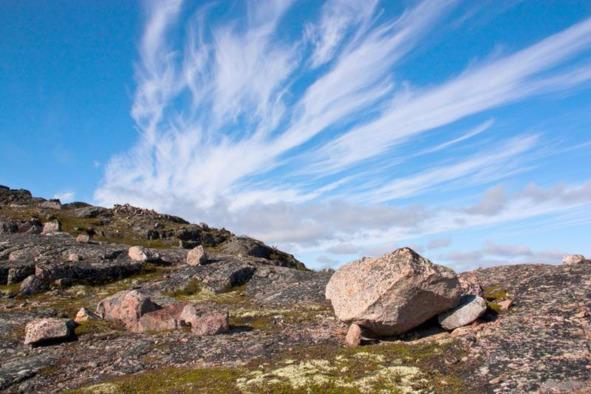
Book scientific articles outstanding scientist S. V. Zharnikova devoted to the study of culture and ethnography of the Indo-Europeanpeoples. The birth of their rites and traditions. Reveals the secrets of Vedic history.
Thread of knowledge
The Russian North is an amazing, fabulous land. He is sung in our ancient songs, epics, traditions and legends. And not only in them. The most ancient myths of Greece tell about the distant northern side of Hyperborea, which lies near the coast of the cold Cronian Ocean. They told us that it was here, behind the harsh northeastern wind of Boreas, that there is a land where a wonderful tree with golden apples of eternal youth grows. At the foot of this tree, feeding its roots, a spring of living water gushes — the water of immortality. Here, for the golden apples of the maiden-birds of the Hesperides, the hero Hercules once went. In the far north, in Hyperborea, at Tartess — «the city where the wonders of the whole world sleep until the time comes for them to be born and come out to mortals on earth», the golden boat of the Sun was waiting for Hercules. And this is not surprising, because Hyperborea is the birthplace of the solar Apollo and here, according to the ancient Greek myth, snow-white winged swan horses brought him here every summer.
But not only had the ancient Greeks glorified the distant northern land in their legends.
From the depths of millennia, this hymn sounds to the land lying at the northern border of the world, near the shores of the Milky (White) Sea: «That country rises above evil, and therefore it is called the Ascended! It is believed that it is in the middle between the east and west… This is the ascended Golden Bucket road… In this vast northern land, a cruel, insensitive and lawless man does not live… There is a murava and a wonderful tree of gods… Here the Great Ancestor strengthened the Pole Star… The northern land is known as „ascended“, for it rises in all relationship». With such heartfelt words, the ancient Indian epic «Mahabharata» tells about the far circumpolar north.
The Russian North — its forests and fields were not trampled by hordes of conquerors, its free and proud people, for the most part, did not know serfdom, and it is here that the most ancient songs, fairy tales, and epics of Russia have been preserved in purity and integrity. It is here, in the opinion of many researchers, that such archaic rituals, rituals, and traditions have been preserved, which are older than not only the ancient Greek ones, but even those recorded in the Vedas, the most ancient cultural monument of all Indo-European peoples.
Paleolithic. Golden Age of Matriarchy
Among the many unresolved problems of the history of the peoples of Eurasia, one of the most interesting is the problem of the ancient history of the European North of that distant time, in which we must look for the origins and roots of a peculiar and unique North Russian culture.
«The fairy tale of the North is deep and captivating,» wrote Nicholas Roerich about this land.
The northern winds are cheerful and cheerful. Northern lakes are brooding. Northern rivers are silvery. Darkened forests are wise. The green hills are seasoned. The gray stones in the circles are full of miracles. We are all looking for beautiful Ancient Russia.»
«The people do not remember that he ever invented his own mythology, his language, his laws, customs and rituals. All these national foundations have already deeply entered his moral being, like life itself, experienced by him during many prehistoric centuries, as the past, on which the present order of things and all future development of life firmly rest. Therefore, all moral ideas for the people of the primitive epoch constitute their sacred tradition, the great native antiquity, the sacred testament of the ancestors to the descendants "- and these words of the outstanding Russian folklorist of the 19th century. F. I. Buslaeva, pronounced by him at a solemn act at Moscow University in 1859, has not lost their relevance today. Turning today to the depths of folk memory, captured in legends and fairy tales, epics and blades, legends and conspiracies, in songs and dances, rituals and rituals, in the traditional art of embroidery, weaving, carving and painting, we willingly or unwillingly plunge into the darkness of centuries and millennia, we are leaving in that distant time when all these forms of folk culture were just emerging. When did this happen?
N. A. Krinichnaya believes that the prototypes of the characters depicted in the legends and the motives associated with them are formed already in the myth of the totemic ancestor, «the formation of which belongs to the period of early clan society (this is approximately the Middle Paleolithic), that is, 100,000 — 50,000 years ago.
What time was it and how is it remarkable for the territory of the north of Eastern Europe?
H. E. Bader, in his work From the Depths of the Paleolithic, writes that already in the Mousterian era, the settlement of human collectives covered vast areas in the north. He believed that it was at this time, during the so-called «Mikulinsky» or Ries-Wurm interglacial, characterized by a relatively warm climate, that people probably first met the Arctic Ocean in northeastern Europe.
«All the sites of the Middle Paleolithic Mousterian tools stretched along the Western Urals, along the banks of the ancient Pra-Kama River (now the Volga) from Volgograd to the mouths of the Chusovaya, Obva and Vishera, outlined the path along which the ancients traveled, settling in Eastern Europe.»
And this conclusion seems to be quite logical in the light of the latest paleogeographic data indicating that in the Mikulinskoe interglacial (130,000 — 70,000 years ago) there was no tundra at all in the European north of our country. Up to 65° N mixed spruce and birch forests with hornbeam included, and up to 60° N. there were broad-leaved forests of linden and oak. That is, a wide strip of birch and coniferous forests with the inclusion of oak and elm stretched to the far north along the western tip of the Northern and Subpolar Urals. The average winter temperatures in northern Europe were then much higher than modern ones: in Scandinavia by 7° C, and in the northeast of the Russian Plain by 7—8° and even 11° C.
Paleogeographers, soil scientists, paleoclimatologists came to the conclusion that «130,000 — 70,000 years ago, conditions typical of the western Atlantic regions of Europe were spread over Eastern Europe. The differences in the climate of Western Europe at present and the Mikulino interglacial, in contrast to Eastern Europe, were small. Moreover, in the Mediterranean-Black Sea zone at some points in winter the temperatures were 1—2° lower than in our time.
«The warm Artika of the Mikulino interglacial, when January temperatures were 4—8° C higher than modern ones, suggests that the influx of warm waters of the Gulf Stream at that time 3 was much more powerful than now (with a higher temperature),» the authors of the atlas believe — monograph «Palaeography of Europe over the last 100,000 years».
They note that pine forests were typical for the White Sea region (within the eastern part of the North European archipelago) in the interglacial period, and then mixed birch with spruce and broad-leaved species, and at the end of the interglacial the dominant position passed to birch forests. During the Mikulinsky interglacial period up to about 60° N, and in the basin of the upper reaches of the Northern Dvina and Vyatka up to 57° N. birch and spruce forests were widespread with more or less participation of oak, hornbeam and elm. Therefore, there is nothing unrealistic in the development of the north of Eastern Europe by ancient human communities already in the Mousterian time.
Archaeologists believe that people inhabited the Pechora River («Krutaya Gora» camp) 70 millennia ago. Moreover, «primitive archeology now possesses massive and indisputable materials proving a long prehistory of agriculture, which began at least at the end of the Middle Paleolithic era», i.e. archaeologists determine the time of the birth of primitive agriculture, 50 or 70 millennia from us.
For its emergence in the form of gathering, a necessary condition was the presence of herb and cereal steppes. And those were not only in the traditional zone — in the south of the Russian Plain, but also in the north, where, for the time 45210 +1430 years ago, pine-birch forests with a herb-grass cover are noted in the basin of the Vychegda and Pechora rivers. 44 millennium BC — the time of new, in comparison with the very warm Mikulinsky interglacial, climatic conditions — Molo-Shcheksninsky interglacial.
About 70 thousand years ago, the Mikulinsky or Ries-Wurms interglacial, which lasted about 60 thousand years, ended. The next Ice Age began, which was named Valdai in Eastern Europe. This name is very arbitrary, because this entire period is divided into two unequal parts: 70 — 24 thousand years ago — the glacial Valdai and 24 — 13 thousand years ago — glacial Valdai.
Moreover, during the ice-free Valdai, a slow increase in cooling alternated with periods of warming.
One of such warmings, very long, was the Mologo-Sheksna interglacial, which lasted with short periods of cooling from 50 millennia to 24 millennia to the present day, and the time from 32 to 24 millennia ago was the warmest.
So, broad-leaved forests spread on the Don, the so-called Kostenkovo-Streletskaya Paleolithic culture develops here, part of the population of which during the Mologo-Shcheksnin interglacial period advanced along the Russian plain to the Oka basin.
A number of archaeologists suggest that the tribes of the Strelets culture at this time inhabited the banks of the Pechora. Researchers note that: «In the north-east of Europe, which includes the vast areas of the Volga and Ural regions, outstanding monuments of the early Paleolithic period have been found in recent years, and a turning point has already been outlined towards intensifying work on their study. Certain areas of the Russian Plain (northwest) in the Molo-Sheksna time may not have been inhabited. It should be emphasized that from the south to the north of the Russian Plain, during the formation and development of the Upper Paleolithic, it was not wandering lipstick hunters who advanced, but the sedentary tribes who built long-term dwellings of various types, leading complex household activities based on hunting and gathering… The hunt for herds of horses and reindeer required the improvement of throwing weapons and, probably, led already at such an early time to the invention of the bow and arrow.
In the same period, spiritual culture was formed and developed.»
Monuments of the spiritual culture of the ancient Stone Age — Paleolithic have been preserved in places of long-term habitation, at the ancient sites of Paleolithic man.
Apparently, in the near future on the territory of the Russian Plain and, in particular, the Russian North, first-class monuments dating back to the Molo-Sheksninsky interstadial, the warmest time of the Valdai glacier, will be opened.
On the territory of Wormwood and Germany, all the monuments of the Ancient Stone Age are concentrated south of the 52nd parallel in the basin of the upper Vistula and in the Silesian Mountains. On the territory of Eastern Europe, they are distributed unevenly. In the western part, such monuments can be traced only up to the 52nd parallel.
In the central part of the Russian Plain, Mousterian sites are known up to the 54th parallel, and the Upper Paleolithic Byzovaya site (in the middle reaches of the Pechora River) is located north of 64° N, about 175 km from the Arctic Circle. Its age is 25450 ± 380 years ago, the Sungir site on Klyazma — just north of 56° N. — its age is 25500 ± 200 years ago. In addition, by the 24th millennium BC include such sites in the northeast of the Russian Plain as Bear Cave in the upper Pechora, Ostrovskaya site, Smirnovskaya and Buranovskaya caves. In the northwest, monuments of this time are unknown.
The cultural traditions of the population of the northern part of the Russian Plain of that distant time are very well represented by the burials of the Sungir site near the city of Vladimir, dating back to the end of the Mologo-Sheksna period. Here, observing a long-established ritual, people who lived in the 24 millennium BC, before burying their dead, sprinkled the bottom of the grave with hot coals, cleaning it, perhaps, with the remains of a funeral feast. Then chalk or other white substance, similar to lime, was poured onto the bottom, and then red ocher was thickly sprinkled over the white layer.
White and red are symbols of purity and blood, snow and fire, already at that distant time, was together, escorting a person to another world. The dead were placed in the grave in richly decorated clothes, with numerous stone and bone tools and weapons; they were covered with fur cloaks and abundantly covered with red ocher.
So in Sungir, in one of the graves, a tall, broad-shouldered man of 55 — 56 years old was buried, lying on his back with his hands folded on his stomach, his head turned to the northeast.
He wore a suede or fur shirt, leather pants and leather moccasin shoes. All the clothes of this man of the 24 millennium BC was embroidered with 3,500 beads carved from mammoth tusks.
On his hands he wore over 20 bracelets made of thin plates cut from mammoth tusks, as well as bracelets made of strung beads. The entire headdress was embroidered with beads and ended at the back of the head with arctic foxes. On the shoulders of the man lay a short fur cloak embroidered with larger beads.
A girl of 7—8 years old and a boy of 12—13 years old were buried next to the man. Their burials were also accompanied by a large number of mammoth bone artifacts. Spears made from split and straightened tusks are of particular interest: 2 m 42 cm for a boy and 1 m 66 cm for a girl. Today it is not yet clear how our distant ancestors straightened and split three-meter tusks, how long, straight; hard and sharp spears were cut out. The children’s clothes were embroidered with beads even richer than the clothes of the man. A total of about 7,500 beads were sewn on it, and the children wore bracelets and rings made of mammoth bones. In addition, the clothes were decorated with graceful ornamented slotted discs, hairpins, fasteners. Archaeologists suggest that the burial of children was not simultaneously the burial of a man and was done much earlier.
This testifies to the fact that before us is not an accidental rich burial, but a stable tradition that has evolved for a long time and has been preserved for thousands of years.
The abstract thinking of a man of the Upper Paleolithic of Eastern Europe was significantly developed, as evidenced not only by the burials of the Sungir, but also by the numerous ornamented articles of that distant time, which are highly perfect examples of Paleolithic art. So on the Don (Kostenki), on products made of bone and flint — female figurines — as a rule, mites-belts on the chest and waist are graphically depicted. Of the decorative elements, the most common is the oblique cross. M. D. Gvozdover writes: «Obviously, this ornament should be considered the most characteristic of the Kostenko culture, especially since rows of oblique crosses are almost unknown in other Paleolithic cultures… The choice of ornament and its location on the object is not caused by technological reasons or material… the placement of ornamental elements and their choice is not due to technological reasons, but to cultural tradition.»
M. D. Gvozdover believes that «the archaeological culture is characterized both by the elements of the ornament, and the type of their location on the ornamental field and the grouping of elements», another type of ornament appears — the meander and swastika motif.
Outstanding Russian researcher V. A. Gorodtsov wrote in 1926, analyzing the North Russian peasant weaving and embroidery: «Until recently it was believed that the meander and the ova are the fruits of the ancient art of Greece, and the swastika is the art of India, but all this turned out to be incorrect, since it was documented that the swastika, meander and oves were the favorite motives of the ornament of the ancient centuries of the Bronze Age, when, perhaps, there were no Greeks or Indians hiding in one Indo-European family, and when these motifs managed to spread not only to all continents of the Old World, but also to penetrate into the Middle America. And this is not surprising, because the swastika and meander were earlier and those remote from us: they were found in Russia on objects of art from the Mezin Paleolithic site, the time of which, as geologists believe, is many tens of millennia from us. And in what amazingly developed form they are there! And what is most surprising of all is the fact that even there they were associated with figurines of birds, undoubtedly having the same cult religious meaning as they have in our time, i.e. the meaning of the symbol of the spring sun and related ideas of happiness, well-being and joy. Thus, in the charming complex of swastika signs, in the patterns of the northern Russian skilled craftswomen, there is reminiscence (living memory) of the most ancient common human religious symbols. And what a fresh, what a solid memory!»
What was the initial model for the most complex rhombo-meander and swastika ornament of Mezin is still a mystery.
Paleontologist V. I. Bibikova in 1965 suggested that the meander spiral, broken meander stripes and rhombuses on objects from Mezin arose as a repetition of the natural dentin pattern of mammoth tusks.
From this, she concluded that such an ornament for the people of the Upper Paleolithic was a kind of magical symbol of the mammoth, which embodied (as the main object of hunting) their ideas of wealth, power and abundance.
I. G. Shovkoplyas, who published the materials of the Mezinskaya site, notes that the meander patterns characteristic of the monuments of this Upper Paleolithic culture have no direct analogies in the Paleolithic art of Europe and can be put «on a par with the perfect geometric ornament of later historical eras, for example, the Neolithic and copper-bronze». In the division of V. A. Gorodtsov of European Upper Paleolithic cultures of the 25—20 millennium BC into three separate regions — Western European, Central European and Eastern European in terms of the nature of art monuments, the unique ornament of Mezin served as the basis for distinguishing the Eastern European region.
Thus, Mezin in the Chernihiv region is famous for its geometric meander ornament on the bone. In the rest of the Old World, the meander appears only in the Bronze Age. True, in connection with the origins of this ornamental motif, various researchers have developed very different points of view.
V. I. Bibikova considers it possible to deduce the Mezinian meander and the swastika from the repetition of the natural pattern of the dentin of mammoth tusks.
A. A. Formozov comes to the conclusion that: «the meander, characteristic of the antique vase painting, was adopted by the ancient Greek potters from the weavers, and they only copied the pattern from threads that they got involuntarily in the manufacture of clothes.
For the Paleolithic hunters of Eastern Europe, who were not familiar with weaving, the meander appeared, most likely, as a result of the complication of the zigzags, often engraved on their bone products.»
It seems that both the first and the second assumptions of A.A. Formozov it is difficult to agree. Ancient Greek potters could also adopt a different pattern of weaving of threads, as long as their weavers were so virtuoso that they received meander patterns in the structure of the fabric. After all, it is impossible to obtain a meander by «involuntary» interweaving of threads, this requires mastering the most complex multi-thread weaving technique, so, probably, both antique weavers and potters sought to decorate their products with a meander pattern not accidentally, but quite deliberately, linking it with a certain complex of ancient ideas… As for the Paleolithic hunters, they hunted mammoths not only in Eastern, but also in Western Europe, however, there the «complication of zigzags», also engraved on bone products, did not occur.
Probably, nevertheless, B. A. Frolov is closer to the truth, who, deciphering the ornament of the Mezin bracelet, came to the conclusion that this reflects a complex of the most complex ideas of Paleolithic man about the movement of time, about the change of seasons of the year, about the lunar calendar, i.e. we are not dealing with a simple imitation of a natural pattern and not with the «complication of zigzags», but with the complication of thinking, with a complex worldview system. He writes: «Analysis of the Paleolithic graphics of Eurasia now indisputably testifies: certain patterns, a kind of algorithms for constructing the first ornaments really existed.
The number of elements in the groups of the ornament, the intervals between homogeneous groups repeats the cycles of the most frequent and visible for the inhabitants of the Earth cosmic phenomena associated, first of all, with the movement of the Sun and the Moon».
It should be noted that A. A. Formozov believes that it was «with the development of the thinking of our ancestors, who managed to move from a concrete-figurative perception of life to complex abstractions, that the change in the appearance of art in the Neolithic and Bronze was connected, when the ornament experienced a true heyday».
The fact that the world of Paleolithic man was much more complex and spiritually richer than we imagined before is evidenced by the extremely developed and specialized industry of stone, and the complex structures of bone-sod houses, and thousands of drilled polished beads, spears and bracelets from mammoth tusks in the burials of Sungir, musical instruments and statuettes of Mezin and much more.
As noted earlier, already in the Upper Paleolithic we meet with a peculiar contrast between red and white: the whiteness of the bone was contrasted with the rich color of the engraved ornaments worn with red ocher. In the Sungir graves, the bottom was covered with white matter (chalk or lime) and «already over the white layer of the grave, they were thickly covered with bright red ocher».
The researchers noted that it was the red color that played a huge role in the cult rites and aesthetics of this period. Red dyes were used even in the Mousterian (even before 50 millennium BC), and for a very long time there was a belief that ancient people used only natural dyes. As a result of the research, it was found that by firing ferruginous nodules in different modes in the Upper Paleolithic, red dyes of various shades were obtained. N. D. Praslov notes that «in general, it can be stated that more than 20 thousand years ago primitive people used a wide range of dyes, at least four primary colors: white, ocher, red and black. Red paint is presented in a particularly rich range.» It should be noted that in the textile decor of many peoples of Eurasia, such a traditional combination of red and white survived until the beginning of the 20th century. And this is especially typical for East Slavic ornamentation in general and North Russian, in particular. It is in such a strict and ancient red-and-white color scheme that the ornaments of the «lovely complex of swastika signs in the patterns of the North Russian skilled craftswomen» are made, in which, according to V. A. Gorodtsov, «there is a vivid memory of the most ancient universal (or rather, common Indo-European) symbols. And what a fresh, what a solid memory!» — exclaims the researcher.
This is not surprising. I. G. Shovkoplyas, who studied the Mezin Upper Paleolithic site, believed that the common ornamental assemblages indicate the kinship of the groups using these assemblages. He believed that the population of Kostenki II on the Don, the Mezinskaya site in the Dnieper region, and the East Siberian sites of Malta and Buret were closely related. He notes that: «the very distant migration of individual groups of the East European Late Paleolithic population, possibly also originating from the Middle Dnieper basin (the Middle Dnieper ethnocultural region), probably should also explain the presence of the sites Malta and Buret in Eastern Siberia, which are extremely close and even identical in many manifestations material and spiritual culture (flint tools, bone products, the nature of dwellings, etc.) with the sites of the Middle Dnieper basin, primarily with the same Mezinskaya. It is not excluded that the inhabitants of the sites of the Mezin culture in the Middle Dnieper basin, on the one hand, and the named Siberian sites, on the other, had a common origin and even constituted for some time one group of the population at an early stage of their history.»
It should be added that the inventory of the Upper Paleolithic Byzovaya site, located 175 km from the Arctic Circle, 25—29 thousand years away from us, has much in common with the complex of the lower layer Kostenki I, 12 on the Don and belongs to the same time as, according to the conclusions of I. G. Shovkoplyas, it testifies to the genetic relationship of the human collectives that left these sites. At present, for most researchers, the population of the Urals and the Urals at the end of the Molo-Sheksna time seems to be indisputable.
The exceptional development and perfection of the forms of ornaments, sculptures, and reliefs belonging to this time convinces us that their roots should be sought in the more ancient Mousterian era, in that period of the Mikulinsky interglacial (130 — 70 thousand years ago), when human collectives were already mastered the Pechora basin and the coast of the Arctic Ocean, and when the climate of northern Eastern Europe did not differ from the modern climate of England and southern Germany. The discovery in the last decades of first-class Paleolithic monuments in the north of the European part of our country (Bear Cave is located at 65° N), with a large number of flint implements and even wall paintings, is an outstanding event. It once again testifies to the fact that in the ancient Stone Age, human groups widely settled in the north of Eastern Europe, i.e. the territories of the future Arkhangelsk, Vologda, Kostroma, Vyatka regions and the Komi Republic.
The warm Mologo-Shcheksninskoe time was replaced by a sharp cold snap about 20—18 millennia ago, when the overgrown Scandinavian ice sheet reached its maximum development.
The data of modern science indicate that the limiting boundary of the distribution of the Valdai glaciation was in the latitudinal direction from Vilnius to Smolensk, and then to the northwest to the Rybinsk reservoir, Lake Kubenskoe and Nyandoma. Further to the northeast, the border has not been reliably established.
At this time, the Atlantic tundra and subarctic meadows stretched across the glacier-free territory of England and Ireland. Sparse birch forest (park tundra) was widespread in the western part of Europe, and light forest with birch and birch-pine stands occupied most of Central Europe and then followed a relatively narrow strip along the coast of the future Baltic Sea, and then the Baltic Glacial Lake, to the northeast. True forests, or as they are called «typical forest boreal formations», in the western and middle parts of Europe at that time were very few, and they were mainly in the valleys of large rivers and intermountain basins.
Within the Russian Plain, forests occupied, in contrast to Western Europe, a large area in the form of a wide strip crossing it in the direction from southwest to northeast. These were birch, pine, spruce and fir forests. Paleogeographers note that: «in a number of regions there already existed forests with the participation of such broad-leaved species as oak and elm; in the southern part of the Russian Plain, steppe vegetation was widespread.» It is interesting to note that during the maximum of the Valdai glaciation, when almost the entire territory of England was covered with glacier, and habitable areas were tundra and arctic meadows, primitive people and animals such as wolf, cave bear, woolly rhinoceros, reindeer, bull and the mammoth lived only 50 km from the edge of the glacier. At the same time, meadow steppes with spruce-birch and pine forests were widespread in the Upper Volga basin. In the Oka basin, during the maximum glaciation, spruce-pine forests of the north-taiga type rustled. In the area of the village of Pokrovskaya on the Puchka River (near Lake Kubenskoye, at 60° N), about 38 species of flowering and spore plants grew directly at the edge of the glacier, and the open forest consisted of birch, spruce, and larch.
It should be noted that the actual tundra type of vegetation in Eastern Europe was a relatively narrow strip running along the border of the Scandinavian ice sheet. But in Central Europe, the tundra occupied, apparently, «the entire strip between the Scandinavian ice sheet in the north and the Alpine glacier in the south, and in the Atlantic part of their distribution was even greater.»
So, if during the period of the maximum stage of the Valdai glaciation (20—18 thousand years ago), almost the entire territory of Western Europe, with the exception of the south-west of France, the upper reaches of the Danube and the foothills of the Eastern Carpathians, was occupied by subarctic meadows and tundra with birch and deciduous sparse forest, then on the territory of Eastern Europe from the upper reaches of the Dniester began a wide strip of meadow steppes with pine, larch and birch forests, passing through the Pripyat basin, the Middle Dnieper, the middle course of the Oka. Expanding in the direction from the southwest to the northeast, it reached in the northwest to the Upper Volga (in the Yaroslavl region) and the middle Vychegda in the north. The entire southeast of Eastern Europe was at that time occupied by cereal steppes, reaching 55° N in the northeast; in a number of regions there were forests with the participation of such broad-leaved species as oak and elm. Thus, the vegetation zones were located in the submeridian direction, «sharply different from the mainly latitudinal zonation of the modern vegetation cover of Eurasia», which «can be considered as one of the most characteristic features of the nature of Europe in the era of glaciation.»
On most of the European territory of our country, there was no glacier, even during the maximum of the Valdai glaciation. And of course, given the natural conditions that existed then, it is unlikely that the population left these lands.
Moreover, experts believe that during the peak of the Valdai glaciation, during the period of the greatest cooling, the outflow of the population from the territories bordering on the edge of the glacier went «south to the mountains, to the southwest to the territory of the Massif Central of France and along the Sudetenland and the Carpathians towards the Russian Plain», with its meadow steppes and forests, and therefore with an abundance of food.» However, it should be noted that the entire territory of the Baltic States, Northern Belarus, the North-West of the Smolensk, Leningrad, Novgorod and a significant part of the Tver region wer e covered glacier and their settlement occurs only at the end of the Late Glacial, at the turn of the Paleolithic and Mesolithic.
It remains to be assumed that with the climate change towards the worsening, and then with the arrival of the glacier, the population that left these territories, to a large extent, moved to the east of the Russian Plain and the Urals. Archeology confirms that «by the beginning of the cold snap, vast settlements existed in the center and north of the Russian Plain… these monuments allow us to draw a certain conclusion about the significant population of the periglacial zone of the Ostashkovsky glacier during the period when the climate became more and more severe. The population was sedentary and provided itself with supplies of livelihood for the winter.»
It should be noted that in the «strong and long-term dwellings of the population of the Russian Plain» of that time, there are a large number of «grater pestles and real grain-grinding slabs of granite, quartzite and Shoksha sandstone». «The authors of the» Paleolithic of the USSR «note that only on the Russian Plain, these devices for obtaining flour» by ordinary methods similar to those used in agricultural crops «are found» in such quantities, starting with the Mousterian industries (i.e., no later than 50 millennium BC) and passing like a red thread through almost all the different cultural and different times of the late Paleolithic industries.»
P. P. Efimenko back in 1958, speaking about the outstanding monument of the Paleolithic era — the Kostenki site on the Don, wrote that «the oldest cultural horizon Kostenok I …, which still retains the living features of the Mousterian technique, belongs interglacial. If this is really so, then the upper horizon of the site… can be attributed with a high degree of probability to the end of the same interglacial or the early stages of the Wurm», i.e. to 70—50 thousand ago. P. P. Efimenko, the remains of a large ground dwelling (31 m long and 8 m wide, i.e. 248 square meters) with eight hearths and a complex heating system were uncovered in layer I of Kostenki.
There were grain pits — storage rooms next to the dwelling. Apparently, these pantries were filled with precisely those grasses that made up the meadow cereal steppes that stretched during the Valdai (Ostashkovsky) glaciation up to the Middle Pechora. These were barley, rye, oats, wheat and flax in their wild sowing forms, which L. S. Berg called «plants of long daylight hours», since they need at least 18 hours of indirect solar radiation per day for normal vegetation, an abundance of moisture in the soil and lack of overheating from direct sunlight. Such conditions are south of 55—56 N just missing.
Note that even Academician I. Lepekhin, a student of M. V. Lomonosov in the 18th century, discovered wild sown rye and wild flax in the Kaninskaya tundra, and in 1861, ears of this wild Kanin rye, flour and bread were presented at an agricultural exhibition in Arkhangelsk, baked from it. Moreover, it was noted that «the Lapps, roaming the tundra, knew nothing about rye or flax and did not use them in any way.» Speaking about the Paleolithic East European proto-agriculture, it should be noted that the people of that era that was far from us were closer to nature and much more observant than the inhabitants of the megacities of the early 21st century, pampered by civilization. And they, of course, should have noted for themselves the fact that if the straw left in the field after harvesting the grain burned for any reason, then the next summer the grain grew more than such repeated observations were enough to quite consciously set fire to this straw and thus fertilize the soil. Apparently, this is the very source, the starting point, from which the real cult of straw later grew. Hence the custom to burn straw fires on Christmastide, Kupala, to burn a straw effigy on Shrovetide, which marked the beginning of a new agricultural year — traditions that have come down to our days.
In the Paleolithic era, the type of economic activity and division of labor took shape, in which it was women who were engaged in the collection, storage and processing of grain, as evidenced by the preserved in the Russian folk tradition until the middle — end of the twentieth century very archaic «stubble» ritual songs, in which only «girls, young men» were charged with the obligation to harvest, dry and grind grain. Moreover, perhaps, the alarming closeness of such words as «muka-flour» and «muka- torment». It was in the Paleolithic that, together with the idea that «bread is the head of everything,» the cult of the Mother, the giver of life and the keeper of grain, the mistress of the harvest, water and fire, the Great Goddess, took shape. This vast epoch is often called the «Golden Age of Equality of the Matriarchy».
It ended 13 millennia ago, when a global catastrophe changed both the landscapes and the Earth’s climate.
Mother-in-law — as a character of Shrovetide
Turu-turu, shepherd, do you sound far off?
From the sea to the sea, to the Keiev city
There is our homeland, in the homeland there is an oak tree,
An owl is on the oak, an owl is my mother-in-law, and she grazed horses One of the most difficult and mysterious in the Russian calendar rites, of course, is a holiday called Maslenitsa. All ethnographers, without exception, noted and note the strange circumstance that Maslenitsa (or Maslyanitsa) is the only major pre-Christian holiday that was not timed to coincide with a Christian holiday and did not receive a new interpretation. And really why? After all, if we look at the ritual cycles of the so-called «cross of the year», that is, the winter and summer solstices, the autumn and spring equinoxes, then there is a paradox. The winter solstice (Christmastide or Kolyada) is associated with the Nativity of Christ. Summer solstice (Kupalo) is the Nativity of John the Baptist. The autumnal equinox (Oat tree) is the Nativity of the Virgin. And spring — nothing. Have you forgotten the spring equinox?
In order to deal with this strange phenomenon, we will have to plunge into the depths of millennia. And remember that during a huge time interval — from 7 thousand BC. until the middle of the 1st millennium BC in the north of Eastern Europe (from 69° N to 55° N), the average summer temperatures were 4—5° C higher than at present. Spring began a month earlier than now. Accordingly, the arrival of autumn shifted, the winter pattern changed, in which the temperatures were close to 0° С, winter was very mild.
Since spring practically began already at the turn of February and March, the rituals of meeting spring, which lasted in antiquity (like the winter Christmastide) month, began at the end of February and ended on the day of the vernal equinox — March 22 (more precisely, on the night of March 21—22). It was from this day that a new agricultural year began, marked by the rites of Maslenitsa — «the only major pre-Christian holiday not timed to coincide with a Christian holiday.» Judging by the Western European and Slavic traditions, in which dressing was, adopted everywhere for these days, and zoomorphic masks were mainly used, the addition of these traditions can be attributed to the common Indo-European period, i.e. no later than the turn of 4—3 thousand BC. The fact that Maslenitsa, as a holiday of the beginning of the agricultural year — spring, took shape in the common Indo-European period is evidenced not only by the traditions of European peoples, preserved up to the present day, but also by the traditions of India, which came from ancient times.
In ancient Indian rituals, many elements of Maslenitsa (and subsequent Easter) are traced in one of the brightest holidays on the border of winter and spring — Holi, which is celebrated in February — March (the end of the cold season). N. R. Guseva emphasized that «all ritual actions of the holiday are inseparable from the magic of fertility and historically go back to the pre-Indian period of the life of the Aryans». The ritual and magical manifestations associated with the vernal equinox are extremely close to the Easter ones, going directly back to paganism, which passed into the Easter rituals of the Slavic peoples.
The common ceremonies of Maslenitsa and Holi included: performing obscene songs of an erotic content, drinking alcoholic beverages, preparing ritual food from dough and cottage cheese. In India, during the Holi festival, the effigy of Holiki, which is made from straw, is necessarily burned. For the ritual bonfire collect: brushwood, straw, old things, cow dung.
In Russia, fires were also burned on Shrovetide. Moreover, the material for the fires was hay, straw, old things. Cow dung was also used. And they also burned an effigy of Maslenitsa, which was made of straw.
In Indian tradition, there is a custom during Holi to sprinkle the ash from the fire on the floor of the house and sprinkle it on each other. But in the Vologda province, for example, at Maslenitsa, mummers often poured ashes and ashes on the floor of the hut and danced on them, and also smeared with soot and sprinkled ashes and ashes on all participants in the ceremony.
We should especially note that in the East Slavic tradition one of the main elements of the Maslenitsa ritual, a holiday associated with the commemoration of the dead, was ritual food — pancakes. Being a very ancient ritual food by origin — fresh cakes baked on hot stones — pancakes are in no way associated with the cult of the sun, but are a common Indo-European symbol of the moon — «the sun of the dead». Russians, for example, baked pancakes on «parental Saturday». In some villages, the first pancake was smeared with honey, butter and put on the goddess — «parents». Sometimes the first pancake was carried to the churchyard and laid on the grave. Note that pancakes are a must (along with oatmeal jelly), and the latter is food for funerals, funerals and weddings. And another interesting circumstance is that the dough for pancakes on Shrovetide was necessarily created by the oldest woman in the house, and in secret from family and strangers and always in the light of the month. And if she was the mother of adult married daughters, then her name was Mother-in-law. It was to the mother-in-law (and not to the father-in-law and mother-in-law) that they went «for pancakes». Mother-in-law — as a character of Maslenitsa, is, in our deep conviction, the greatest interest of everything connected with this archaic ritual complex.
Why? We will try to answer this question. First of all, let us note that the text of the Veles Book (translated by Valentina and Yulia Gnatyuk) contains a list of the main holidays of the year.
These are Kolyada, Yaro, Krasnaya Gora and Ovseni (Great and Small). Kolyada, of course, is our Winter Christmastide with ritual songs — «kolyadki» and performing those mummers — «kolyadniki», «kolyadovshchiki». The very term «Kolyada» (that is, «kolyada» — giving a circle) is directly related to the end of the divine day, when the Night of the Gods, which ends on the night of December 21 to 22, is replaced by a new Divine Day, starting from December 22. The entire period of Winter Christmas (December 19 — January 19) is dedicated to the worship of the Divine Light — the Creator of the Universe, whom our ancestors called the Immutable Law — Grandfather. During this month, those who were able to comprehend the Cosmic Law in earthly life and after death acquired a light body («holy») returned to the world of people, that is became a Saint.
Thus, Winter Christmas is a period of worshiping the Light — the Creator, summing up the results of the annual circle and meeting the new Kolo — the Sun.
Yaro or Yarilin Day (Kupalo) — June 22 — the summer solstice and the beginning of the Divine Night. Note that this is a celebration of youth, those who were to find a mate and pass the test of Divine Fire on the right to enter into marriage with a chosen one or chosen one. And after marriage, to fulfill the cosmic law of reincarnation, giving life to new people. It is no accident that our ancestors said: «To be born to death. To die for life». And again: «Children eat us from the nave (dead)», i.e. in the form of newborns bring us back to this world.
The next most important holiday in the list of the «Veles Book» is Krasnaya Gora, followed by Ovsen (Avsen, Usen, Tausen), i.e. the holiday of the autumn equinox. But here we stop at a paradox — today’s Krasnaya Gorka has nothing to do with the vernal equinox. We don’t have a holiday close to this calendar date — March 22. Krasnaya Gorka today is a holiday of the Easter fortyda.
In most cases, Krasnaya Gorka is called either Fomino’s Sunday (the next after Easter), or the first three days of Fomin’s week (including Sunday), or the entire Fomin week. B. A. Rybakov, analyzing the ancient Slavic calendar ritual, wrote in «Paganism of the Ancient Slavs»
that: «The church calendar, which in many cases has adapted to the old pagan times of prayers and festivities, greatly shattered these dates in cases where the church used a movable Easter calendar, at which the amplitude of fluctuations of the „great day“ (Easter) exceeded a month — from March 22 to April 25 according to the old style, or April 4 to May 8 according to our Gregorian style. A seven-week great fast was associated with Easter, drowning out all pagan festivity: the Trinity day also depends on the period of Easter. For these reasons, the ancient pagan holidays were shifted in one direction or another. The ancient Shrovetide was supposed to be celebrated in one of the solar phases — on the days of the vernal equinox, March 20—25, but in reality a wild spring holiday… moved away to February».
So, apparently, the ancient name of Shrovetide is «Red Mountain». And many facts confirm this. First of all, the presence of the appeal «Krasnaya Krasigorka» to the deceased mother, recorded at the beginning of the twentieth century in the Arkhangelsk province (White Sea coast). Here, the bride is an orphan, going out to the crossroads, just like this: «My Red Krasigorka», addressed the deceased mother. We have good reason to believe that the mountain (be it a grave mound, a pyramid or an ice mountain that was built on Shrovetide) was a symbol of the mother’s womb of Mother Earth, Foremother or Mother-in-law.
There are enough grounds for conclusions. Recall that the wife of Zeus — «blonde Hera» — the supreme Olympic goddess, daughter of Kronos and Rhea, whose name means «guardian», «mistress», is called «Mother-in-law» in ancient hymns. Researchers note that in her image «features of the great female deity of the pre-Olympic period are seen» and indicate her connection with the chthonic forces. This great matriarchal Deity had a zoomorphic incarnation — a cow, and was called «drawing.» And her ancient fetish in the temple of Hera of Samos on the island of Samos was a wooden carved spinning board. We also note that the famous love scene of Zeus and Hera from the Iliad takes place among fragrant flowers on the top of Mount Ida. But Ida Mountain and the Ida River are in the north of Russia, in the Subpolar Urals.
Thus, «mother-in-law» in the archaic tradition, judging by the above, was called not only and not so much the wife’s mother as the oldest woman in the family or the Foremother. Here I would like to cite a number of ritual songs recorded by folklorists in the Vologda and Vladimir regions. The Vologda version was recorded in 1978 by a Leningrad folklorist (A. M. Mekhnetsov) in the village of Karmakino, Totemsky District:
Turu-turu, shepherd, do you sound far off?
From the sea to the sea, to the Keiev city (option «Kiev») There is our homeland, in the homeland there is an oak tree, an owl is on the oak, an owl is my mother-in-law, she grazed horses The «Keyev City» of this song is of unconditional interest. So in the ancient Greek tradition, the inhabitants of the north of Eastern Europe — Hyperboreans were considered the descendants of the titans — «who grew out of the blood of the most ancient titans.» But in the same tradition, Kei is the titan, the son of the heavens of Uranus and the land of Gaia. His daughters are Asteria (Star) and Leto. The first (Asteria), taking the form of a quail, rushed into the sea and turned into the wandering island of Delos. It was on Delos that the second sister, Leto, gave birth to Artemis and Apollo of Hyperborean, the great Olympic gods of Ancient Greece. Thus, the titan Key, who lived on the shore of the Kronian (Arctic) Ocean and owned the «Keyev city», where «our Motherland» of the Vologda ritual song was located, was the grandfather of the ancient Greek Apollo and Artemis. As for Leto, she was married to Zeus in the form of a quail (Zeus accordingly took the form of a quail). It makes sense to cite the ritual Kupala song recorded in 1969 in the Smolensk region:
And I’m from a kind
And I’m from a good kind,
And I’m from a kind.
And I’m dad,
And I’m a rich dad
And I’m dad.
And my dad,
And my dad — the month is clear,
And my dad.
And my mom,
My mom is a red sun
My math.
And my brothers,
My brothers are nightingales in the forest
My brothers.
And my sisters,
My sisters are in the life of the quail,
My sisters.
The month is clear
The moon shines at night,
The month is clear.
Red sun,
The red sun warms in summer
Red sun.
Siza nightingales,
Nightingales are singing in the summer,
Gray nightingales.
In the quail field
In the field, quails are calling for the harvest,
Quail in the field.
Let us return to the Vologda ritual song recorded in 1978, which refers to the «mother-in-law». In the Vladimir version, it sounds as follows:
Tutu-turu, shepherd boy,
Viburnum podozhok,
Where do you graze?
— From sea to sea,
From sea to sea
To the city of Toev.
There is my homeland.
An oak stands at home.
An owl sits on an oak tree.
The owl is my mother-in-law.
(Vladimir region, Murom district, Popolutovo village)
The second option:
Tutu-turu, shepherd boy,
Viburnum podozhok,
Are you chasing a breakaway? —
From sea to sea
To Chiev city?
An oak stands on the city.
An owl sits on an oak tree.
The owl is my mother-in-law
The little calf is motley.
(Vladimir region, Gorokhovets district, Bykosovo village).
Third option:
The man went on the water
To Kiev city.
There is my homeland.
There is an oak at home
An owl sits on an oak tree
The owl is my mother-in-law.
(Vladimir region, Melenkovsky district, the village of Levino).
The Tale of Tsar Saltan. I. Bilibin
As we can see, despite the considerable distance from Srednyaya Sukhona to the Vladimir region, the texts are almost identical. And what is most interesting — everywhere is an owl — Mother-in-law. In the Vologda text, she «grazed horses», and in the Vladimir text she is also called «the motley little heifer.» And here it is pertinent to recall that in the ancient Iranian (Avestan) tradition, the motley cow is a symbol of Mother Earth, she is the magic cow Bermaie in the Iranian epic. Khlopin notes that: «The image of the Bermaye cow is very interesting: firstly, it was spotted, and secondly, it symbolized Khvanirasa — the land of the ancient Aryans».
Consequently, the drawings of a spotted cow and her sculptural images of the Eneolithic time (ie 5—3 thousand BC) can be considered as a symbol of the middle world, inhabited by people and livestock of the land.» Note that in the ancient Greek Orphic hymns about Earth-Gaia it is said: «You are the basis of the immortal world, the all-motley virgin», i.e. is no longer a «motley little calf», but Virgo. Thus, the Vladimir text, recorded in the second half of the 20th century, is actually more archaic than the ancient Greek one.
In the Vologda text, «Owl — mother-in-law grazed horses». But E. E. Kuzmina notes that
«the horse played a large role in the cult of the goddess — the mother.» In the Indo-European tradition, the image of the goddess, the mistress of horses, was widespread. «She was represented standing between two horsemen», personifying the opposite elements — life and death, over which the Goddess — Mother, is in control. Sometimes, instead of horsemen, just two horses were depicted.» On Shrovetide, the newlyweds, who got married last year, went «to their mother-in-law for pancakes» in a sleigh, which rushed horses decorated with bells, ribbons, and paper flowers. Moreover, it was on Shrovetide that the horses were dressed most richl Horses in the Indo-European tradition are symbols of the Sun. So in the ancient Russian ritual practice one of the names of the Sun was «Khors». But in English «Khors» is a horse, and in Sanskrit «hara» or «hari» is golden, sparkling, and an appeal to a deity. We emphasize once again that the Indo-European peoples had a widespread idea of the Goddess — the Foremother as the Lady or Lady of the horses. Suffice it to recall the images of the goddess with two horses on the sides, so widespread in embroidery and weaving in the Russian North, and found in a vast territory — from Scandinavia to India. Here it is worth remembering our «Baba Yaga» — the mistress of horses, holding in her hands the threads of life and death. And when she is the mother of Vasilisa the Wise or the Beautiful, (i.e. the Lady of wisdom or the Lady of beauty), she is also a mother-in-law. And the birds of Baba Yaga, besides the geese-swans, were owls.
Turning to the «owl» hypostasis of Mother-in-law