


автордың кітабын онлайн тегін оқу The Collected Writing of Thomas De Quincey, Vol. II
DE QUINCEY'S COLLECTED WRITINGS
VOL. II
AUTOBIOGRAPHY AND LITERARY REMINISCENCES
THE
COLLECTED WRITINGS
OF
THOMAS
DE QUINCEY
BY
DAVID MASSON
EMERITUS PROFESSOR OF ENGLISH LITERATURE
IN THE UNIVERSITY OF EDINBURGH
Vol. II
LONDON
A. & C. BLACK, SOHO SQUARE
1896
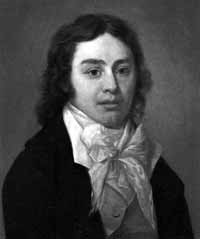
Samuel Taylor Coleridge.
From a picture by Peter Vandyke in the National Portrait Gallery
CONTENTS OF VOL. II
PAGE Editor's Preface1
Autobiography Continued from 1803 to 1808—
CHAP.
I.
Oxford9
II.
German Studies and Kant in particular81
Literary and Lake Reminiscences—
CHAP.
I. A Manchester Swedenborgian and a Liverpool Literary Coterie113
II.
Samuel Taylor Coleridge138
III.
The Lake Poets: William Wordsworth229
IV. The Lake Poets: William Wordsworth and Robert Southey303
V.
The Lake Poets: Southey, Wordsworth, and Coleridge138
VI.
The Saracen's Head348
VII. Westmoreland and the Dalesmen: Society of the Lakes360
VIII.
Society of the Lakes: Charles Lloyd381
IX.
Society of the Lakes: Miss Elizabeth Smith, the Sympsons, and the K—— Family403
X.
Society of the Lakes: Professor Wilson: Death of Little Kate Wordsworth432
XI.
Rambles from the Lakes: Mrs. Siddons and Hannah More446

William Wordsworth.
From a drawing by Robert Hancock in the National Portrait Gallery.
EDITOR'S PREFACE
The matter of this volume breaks itself into two main divisions, as follows:—
I.—Autobiography continued from 1803 to 1808
Although De Quincey's Autobiography, so far as it was revised by himself in 1853 for the Edinburgh Collective Edition of his writings, stopped at 1803, when he went to Oxford, he left a continuation of that Autobiography, accessible to those that might be curious about it, in two old papers of his in Tait's Edinburgh Magazine. One of these, bearing the continued general title "Sketches of Life and Manners from the Autobiography of an English Opium-Eater," but with the sub-title "Oxford," had appeared, in three successive parts, in the numbers of the magazine for February, June, and August 1835; the other, forming but a single article, had appeared in the number for June 1836, with the simple title, "Autobiography of an English Opium-Eater continued," but without any sub-title, or any indication of its nature except what might be conveyed by the head-lines,—"The German Language," "The German Philosophic Literature," and "The Philosophy of Kant,"—at the tops of the right-hand pages. As the two papers together carry on the Autobiography from 1803 to 1808, they are reproduced in this volume from the columns of the magazine as two chapters of De Quincey's Autobiography additional to the Revised Autobiography contained in the preceding volume. The first, and much the larger, is sufficiently described by the title "Oxford," used as a sub-title for it in Tait's Magazine. It is a careful and very readable account of the system of Oxford life and education during the five years of De Quincey's connexion with the University, with glimpses of himself, though not so numerous or continuous as might be wished, as he moved obscurely through the academic medium. The other chapter will take most readers aback. Beginning in a popular vein, and even humorously, it turns itself, through two-thirds of its extent, into a dissertation on Kant's philosophy which is one of the toughest things that De Quincey ever wrote. It is probably on this account that the American Collective Edition of De Quincey, while gladly reprinting his Oxford paper, omits this one altogether. That, however, is scarcely allowable. Nor is it allowable to yield to the natural temptation which would suggest the omission of the paper in the place where De Quincey put it, and the reservation of it for some other place in the collection of his writings where it might be in the company of other demons as abstruse as itself. It belongs vitally to the autobiographic series, and to that part of the autobiographic series which deals with De Quincey's Oxford life from 1803 to 1808. It is as if De Quincey had said to his readers—as, in fact, he does virtually say in the paper—"It was during those five years that I betook myself to German studies, and especially to studies in German Philosophy; they had an immense effect upon me at the time, and a permanent influence afterwards; and, if you would understand my subsequent life and mind, you must, at the risk of a headache yourselves, listen at this point to a description of the exact nature and symptoms of the headache they caused me." To indicate as precisely as possible this autobiographic purport of the paper, I have ventured, in the absence of any title to it by De Quincey himself, to entitle it "German Studies and Kant in particular." It will be of much interest to some readers; and others can skip it if they choose.
II.—Literary and Lake Reminiscences.
Concurrently with the series of the expressly autobiographic papers in Tait's Magazine, there had appeared in the same magazine another series of papers by De Quincey, also autobiographic in a general sense, but in a more indirect fashion.
Having known a number of remarkable persons in the course of his life, some of them of great literary celebrity, it had occurred to him that a series of sketches of these, from his own recollections and impressions of them, partly in their relations to himself, but not exclusively so, would be welcome, and might at all events be made instructively De Quincey-like. He had begun with Coleridge, and had contributed four papers of Reminiscences of Coleridge to the numbers of Tait's Magazine for September, October, and November 1834, and January 1835. These, though necessarily autobiographic to a pretty large extent, had been interjected into the series of his expressly autobiographic articles in the magazine. Then, that expressly autobiographic series having been finished in 1836 in the above-mentioned papers on his Oxford life and his first German studies, he had ranged back, in an article in the magazine for February 1837, for a recollection of certain literary notabilities of Manchester and Liverpool whom he had known or seen in his schoolboy days. After that, zig-zagging in his memory for suitable additions, he had brought in,—sometimes under cover of the standing general magazine title of "Sketches of Life and Manners from the Autobiography of an English Opium-Eater," but sometimes under independent titles,—accounts of other acquaintances of his, either famous to all the world already, or about whom the world might be inquisitive. Of these our concern in the present volume, for chronological reasons, is with Wordsworth and his fellow-celebrities of the Lake district, whether those that were resident there when De Quincey first visited it in Coleridge's company in 1807, or those that were resident there from 1809 onwards, when De Quincey had become a Lakist too, and was domiciled permanently, as it seemed, close to Wordsworth at Grasmere. To Wordsworth himself,—always De Quincey's man of men, or at least poet of poets, of his generation,—there were devoted three articles in Tait's Magazine for January, February, and April 1839, entitled "Lake Reminiscences: No. I. William Wordsworth, No. II. William Wordsworth, No. III. William Wordsworth." These were followed in July of the same year by a No. IV, entitled "William Wordsworth and Robert Southey," and in August by a No. V, in which Coleridge came back for some notice, and which was therefore entitled "Southey, Wordsworth, and Coleridge." For the minor celebrities of the Lakes, after these three dii majorum gentium, and for sketches of Lake scenery and society generally, there was a relapse into the older magazine title "Sketches of Life and Manners" etc.; and the seven additional articles required for these straggled through the numbers of Tait's Magazine from September 1839 to August 1840.
Save that one of the articles so inventoried goes back beyond the Lake period of De Quincey's life altogether, and that the main set of the Coleridge articles treats Coleridge generally and apart from his Lakist connexion, one might designate them collectively by that title of Lake Reminiscences which De Quincey did use for some of them. As it is, however, the title Literary and Lake Reminiscences seems, on the whole, the fittest.
One question remains. Whence are we to take the text of these Literary and Lake Reminiscences left by De Quincey? For the largest number of the included articles there is no option. They were not reprinted by De Quincey in the Collective Edition of 1853-60, though he must have contemplated reprinting them some time; and the text of them must therefore be taken from the pages of Tait's Magazine, in which they originally appeared. But for a portion of the Reminiscences, and a very important portion, there is an option. De Quincey did reprint in his Collective Edition the whole of his special set of Coleridge Recollections, with the exception of the last article of the four, throwing all the reprinted articles into one block, after somewhat careful revision; and he reprinted also in the same way the whole set of the special articles on Wordsworth, without any omission. These main Coleridge and Wordsworth papers are therefore reproduced in our present volume from De Quincey's own revised text of them,—with the restoration, however, in the case of the Coleridge chapter, of that fourth of the magazine articles on Coleridge which De Quincey omitted. The omission was unnecessary; and, as the American Collective Edition contains the omitted article, the present edition is entitled to the same benefit. What, however, about the two minor papers of the Lake Reminiscences which appeared as Nos. IV and V in Tait's Magazine for July and August 1839, under the titles of "William Wordsworth and Robert Southey," and "Southey, Wordsworth, and Coleridge," respectively? These also De Quincey reprinted in his Collective Edition, after a fashion; but it was after a fashion which greatly impaired their interest. He threw them, or rather parts of them, into one, under the single title "Robert Southey," omitting a great deal of what was liveliest and best in the original articles. This may have been caused merely by his hurry at the time, in consequence of the pressure of the printers for copy in any form; but possibly it had another cause. De Quincey's Reminiscences of Coleridge, Wordsworth, and Southey, on their first appearance in Tait's Magazine between 1834 and 1840, had provoked a good deal of resentment among those concerned. Coleridge was then dead; but Wordsworth and Dorothy Wordsworth were still living; as was also Southey. Little wonder that the surviving relatives of Coleridge felt aggrieved by the extreme frankness of some of De Quincey's personal recollections of the dead sage, or that the Wordsworth and Southey families were annoyed and offended on similar grounds. Wordsworth, with his massive serenity, seems, indeed, to have tossed the matter aside easily enough; but not so Southey. Carlyle tells us that, when he first met Southey in London, Southey was full of the subject of De Quincey's delinquencies in publishing so many anecdotes of a confidential kind respecting Wordsworth, Coleridge, and himself, and spoke on the subject in terms which Carlyle, who had read the articles, thought needlessly angry and vehement. Something of all this may have been in De Quincey's mind when, in reproducing his Lake Reminiscences in 1853 for his Collective Edition, he came to the two Tait articles in which Southey had principally figured. Hence, perhaps, though Southey had died in 1843, De Quincey's large excisions from those articles, and his consolidation of them into one paper, pleasant enough in the main, but comparatively insipid. It was an editorial mistake on De Quincey's part, and must not bind us now. The articles in their original livelier and more extensive magazine form being irrevocable at any rate, and forming part and parcel of the American Collective Edition, we have acted accordingly. We revert in the present edition to the text of Tait's Magazine for the particular articles in question, and print them as they stood there, with their separate titles.
Respecting the present volume as a whole, it will now be understood that, while a portion of its contents consists of matter derived from De Quincey's revised edition of 1853-60, considerably the larger proportion consists of recovered magazine articles that have been practically inaccessible hitherto to British readers. So composed, the volume is certainly one of the richest specimens that could be offered of De Quincey's general characteristics. There are ups and downs in it, portions inferior to others in literary merit, and occasional lapses into what may seem spiteful or in bad taste. All in all, however, it illustrates most variously and most amusingly the shrewdness of De Quincey's observations of men and things, the range and readiness of his erudition, the subtlety and originality of his speculative intellect, his faculty of poetic imagination, his power of mournful pathos on the one hand and the most whimsical humour on the other, and the marvellous versatility and flexibility of his style. D. M.
AUTOBIOGRAPHY
(continued)
FROM 1803 TO 1808
CHAPTER I
OXFORD
I[1]
It was in winter, and in the wintry weather of the year 1803, that I first entered Oxford with a view to its vast means of education, or rather with a view to its vast advantages for study. A ludicrous story is told of a young candidate for clerical orders—that, being asked by the bishop's chaplain if he had ever "been to Oxford," as a colloquial expression for having had an academic education, he replied, "No: but he had twice been to Abingdon": Abingdon being only seven miles distant. In the same sense I might say that once before I had been at Oxford: but that was as a transient visitor with Lord W——,[2] when we were both children. Now, on the contrary, I approached these venerable towers in the character of a student, and with the purpose of a long connexion; personally interested in the constitution of the University, and obscurely anticipating that in this city, or at least during the period of my nominal attachment to this academic body, the remoter parts of my future life would unfold before me. All hearts were at this time occupied with the public interests of the country. The "sorrow of the time" was ripening to a second harvest. Napoleon had commenced his Vandal, or rather Hunnish war with Britain, in the spring of this year, about eight months before; and profound public interest it was, into which the very coldest hearts entered, that a little divided with me the else monopolizing awe attached to the solemn act of launching myself upon the world. That expression may seem too strong as applied to one who had already been for many months a houseless wanderer in Wales, and a solitary roamer in the streets of London. But in those situations, it must be remembered, I was an unknown, unacknowledged vagrant; and without money I could hardly run much risk, except of breaking my neck. The perils, the pains, the pleasures, or the obligations, of the world, scarcely exist in a proper sense for him who has no funds. Perfect weakness is often secure: it is by imperfect power, turned against its master, that men are snared and decoyed. Here in Oxford I should be called upon to commence a sort of establishment upon the splendid English scale; here I should share in many duties and responsibilities, and should become henceforth an object of notice to a large society. Now first becoming separately and individually answerable for my conduct, and no longer absorbed into the general unit of a family, I felt myself, for the first time, burthened with the anxieties of a man, and a member of the world.
Oxford, ancient Mother! hoary with ancestral honours, time-honoured, and, haply, it may be, time-shattered power—I owe thee nothing! Of thy vast riches I took not a shilling, though living amongst multitudes who owed to thee their daily bread. Not the less I owe thee justice; for that is a universal debt. And at this moment, when I see thee called to thy audit by unjust and malicious accusers—men with the hearts of inquisitors and the purposes of robbers—I feel towards thee something of filial reverence and duty. However, I mean not to speak as an advocate, but as a conscientious witness in the simplicity of truth; feeling neither hope nor fear of a personal nature, without fee, and without favour.
I have been assured from many quarters that the great body of the public are quite in the dark about the whole manner of living in our English Universities; and that a considerable portion of that public, misled by the totally different constitution of Universities in Scotland, Ireland, and generally on the Continent, as well as by the different arrangements of collegiate life in those institutions, are in a state worse than ignorant (that is, more unfavourable to the truth)—starting, in fact, from prejudices, and absolute errors of fact, which operate most uncharitably upon their construction of those insulated statements, which are continually put forward by designing men. Hence, I can well believe that it will be an acceptable service, at this particular moment [1835], when the very constitution of the two English Universities is under the unfriendly revision of Parliament, when some roving commission may be annually looked for, under a contingency which I will not utter in words (for I reverence the doctrine of ευφημισμος (euphêmismos)), far worse than Cromwellian, that is, merely personal, and to winnow the existing corporation from disaffection to the state—a Henry the Eighth commission of sequestration, and levelled at the very integrity of the institution—under such prospects, I can well believe that a true account of Oxford as it is (which will be valid also for Cambridge) must be welcome both to friend and foe. And instead of giving this account didactically, or according to a logical classification of the various items in the survey, I will give it historically, or according to the order in which the most important facts of the case opened themselves before myself, under the accidents of my own personal inquiry. No situation could be better adapted than my own for eliciting information; for, whereas most young men come to the University under circumstances of absolute determination as to the choice of their particular college, and have, therefore, no cause for search or inquiry, I, on the contrary, came thither in solitary self-dependence, and in the loosest state of indetermination.
Every single point of my future position and connection, to what college I would attach myself, and in which of the two orders open to my admission I would enrol myself, was left absolutely to my own election. My coming at all, in this year, arose out of an accident of conversation. In the latter half of 1803, I was living with my mother at the Priory of St. J——, a beautiful place which she had in part planned, and built, but chiefly repaired out of a very ancient Gothic monastery; when my uncle, a military man, on a visit to England, after twenty-five years' absence in India, suddenly remarked, that in my case he should feel it shameful to be "tied to my mother's apron-string," for was I not eighteen years old? I answered that certainly I was: but what could I do? My guardians had the power to control my expenditure until I should be twenty-one; and they, it was certain, would never aid my purpose of going to Oxford, having quarrelled with me on that very point. My uncle, a man of restless activity, spoke to my mother immediately, I presume, for within one hour I was summoned to her presence. Among other questions, she put this to me, which is importantly connected with my future experience at Oxford, and my coming account of it:—"Your guardians," she prefaced, "still continue to me your school allowance of £100. To this, for the present, when your sisters cost me such heavy deductions from my own income, I cannot undertake to make any addition—that is, you are not to count upon any. But, of course, you will be free to spend your entire Oxford vacations, and as much time besides as the rules of your college will dispense with your attendance, at my house, wherever that may be. On this understanding, are you willing to undertake an Oxford life, upon so small an allowance as £100 per annum?" My answer was by a cheerful and prompt assent. For I felt satisfied, and said as much to my mother, that, although this might sound, and might really prove, on a common system of expenditure, ludicrously below the demands of the place, yet in Oxford, no less than in other cities, it must be possible for a young man of firm mind to live on a hundred pounds annually, if he pleased to do so, and to live respectably. I guessed even then how the matter stood; and so in my own experience I found it. If a young man were known to be of trivial pursuits, with slight habits of study, and "strong book-mindedness," naturally enough his college peers who should happen to be idlers would question his right to court solitude. They would demand a sight of his warrant of exemption from ordinary usages; and, finding none, they would see a plain argument of his poverty. And, doubtless, when this happens to be the sole characteristic point about a man, and is balanced by no form of personal respectability, it does so far lead to contempt as to make a man's situation mortifying and painful; but not more so, I affirm, in Oxford than anywhere else. Mere defect of power, as such, and where circumstances force it into violent relief, cannot well be other than a degrading feature in any man's position. Now, in other cities, the man of £100 a-year never can be forced into such an invidious insulation—he finds many to keep him in countenance; but in Oxford he is a sort of monster—he stands alone in the only class with which he can be compared. So that the pressure upon Oxford predispositions to contempt is far stronger than elsewhere; and, consequently, there would be more allowance due, if the actual contempt were also stronger—which I deny. But, no doubt, in every climate, and under all meridians, it must be humiliating to be distinguished by pure defect. Now and for ever, to be weak is in some sense to be miserable; and simple poverty, without other qualification or adjunct, is merely defect of power. But, on the other hand, in Oxford, at least, as much as in any other place I ever knew, talents and severe habits of study are their own justification. And upon the strongest possible warrant, viz., my own experience in a college then recently emerging from habits of riotous dissipation, I can affirm that a man who pleads known habits of study as his reason for secluding himself, and for declining the ordinary amusements and wine parties, will meet with neither molestation nor contempt.[3]
For my part, though neither giving nor accepting invitations for the first two years of my residence, never but once had I reason to complain of a sneer, or indeed any allusion whatever to habits which might be understood to express poverty. Perhaps even then I had no reason to complain, for my own conduct in that instance was unwise; and the allusion, though a personality, and so far ill-bred, might be meant in real kindness. The case was this: I neglected my dress in one point habitually; that is, I wore clothes until they were threadbare—partly in the belief that my gown would conceal their main defects, but much more from carelessness and indisposition to spend upon a tailor what I had destined for a bookseller. At length, an official person, of some weight in the college, sent me a message on the subject through a friend. It was couched in these terms: That, let a man possess what talents or accomplishments he might, it was not possible for him to maintain his proper station in the public respect, amongst so many servants and people servile to external impressions, without some regard to the elegance of his dress. A reproof so courteously prefaced I could not take offence at; and at that time I resolved to spend some cost upon decorating my person. But always it happened that some book, or set of books,—that passion being absolutely endless, and inexorable as the grave,—stepped between me and my intentions; until one day, upon arranging my toilet hastily before dinner, I suddenly made the discovery that I had no waistcoat (or vest, as it is now called, through conceit or provincialism) which was not torn or otherwise dilapidated; whereupon, buttoning up my coat to the throat, and drawing my gown as close about me as possible, I went into the public "hall" (so is called in Oxford the public eating-room) with no misgiving. However, I was detected; for a grave man, with a superlatively grave countenance, who happened on that day to sit next me, but whom I did not personally know, addressing his friend sitting opposite, begged to know if he had seen the last Gazette, because he understood that it contained an Order in Council laying an interdict upon the future use of waistcoats. His friend replied, with the same perfect gravity, that it was a great satisfaction to his mind that his Majesty's Government should have issued so sensible an order; which he trusted would be soon followed up by an interdict on breeches, they being still more disagreeable to pay for. This said, without the movement on either side of a single muscle, the two gentlemen passed to other subjects; and I inferred, upon the whole, that, having detected my manœuvre, they wished to put me on my guard in the only way open to them. At any rate, this was the sole personality, or equivocal allusion of any sort, which ever met my ear during the years that I asserted my right to be as poor as chose. And, certainly, my censors were right, whatever were the temper in which they spoke, kind or unkind; for a little extra care in the use of clothes will always, under almost any extremity of poverty, pay for so much extra cost as is essential to neatness and decorum, if not even to elegance. They were right, and I was wrong, in a point which cannot be neglected with impunity.
But, to enter upon my own history, and my sketch of Oxford life.—Late on a winter's night, in the latter half of December, 1803, when a snow-storm, and a heavy one, was already gathering in the air, a lazy Birmingham coach, moving at four and a half miles an hour, brought me through the long northern suburb of Oxford, to a shabby coach-inn, situated in the Corn Market. Business was out of the question at that hour. But the next day I assembled all the acquaintances I had in the University, or had to my own knowledge; and to them, in council assembled, propounded my first question: What college would they, in their superior state of information, recommend to my choice? This question leads to the first great characteristic of Oxford, as distinguished from most other Universities. Before me at this moment lie several newspapers, reporting, at length, the installation in office (as Chancellor) of the Duke of Wellington. The original Oxford report, having occasion to mention the particular college from which the official procession moved, had said, no doubt, that the gates of University, the halls of University, &c., were at such a point of time thrown open. But most of the provincial editors, not at all comprehending that the reference was to an individual college, known by the name of University College, one of twenty-five such establishments in Oxford, had regularly corrected it into "gates of the University," &c. Here is the first misconception of all strangers. And this feature of Oxford it is which has drawn such exclamations of astonishment from foreigners. Lipsius, for example, protested with fervour, on first seeing this vast establishment of Oxford, that one college of this University was greater in its power and splendour, that it glorified and illustrated the honours of literature more conspicuously by the pomps with which it invested the ministers and machinery of education, than any entire University of the Continent.
What is a University almost everywhere else? It announces little more, as respects the academic buildings, than that here is to be found the place of rendezvous—the exchange, as it were, or, under a different figure, the palæstra of the various parties connected with the prosecution of liberal studies. This is their "House of Call," their general place of muster and parade. Here it is that the professors and the students converge, with the certainty of meeting each other. Here, in short, are the lecture-rooms in all the faculties. Well: thus far we see an arrangement of convenience—that is, of convenience for one of the parties, namely, the professors. To them it spares the disagreeable circumstances connected with a private reception of their students at their own rooms. But to the students it is a pure matter of indifference. In all this there is certainly no service done to the cause of good learning which merits a state sanction, or the aid of national funds. Next, however, comes an academic library, sometimes a good one; and here commences a real use in giving a national station to such institutions, because their durable and monumental existence, liable to no flux or decay from individual caprice, or accidents of life, and their authentic station, as expressions of the national grandeur, point them out to the bequests of patriotic citizens. They fall also under the benefit of another principle—the conservative feeling of amateurship. Several great collections have been bequeathed to the British Museum, for instance—not chiefly as a national institution, and under feelings of nationality, but because, being such, it was also permanent; and thus the painful labours of collecting were guaranteed from perishing. Independently of all this, I, for my part, willingly behold the surplus of national funds dedicated to the consecration, as it were, of learning, by raising temples to its honour, even where they answer no purpose of direct use. Next after the service of religion, I would have the service of learning externally embellished, recommended to the affections of men, and hallowed by the votive sculptures, as I may say, of that affection, gathering in amount from age to age. Magnificabo apostolatum meum is a language almost as becoming to the missionaries and ministers of knowledge, as to the ambassadors of religion. It is fit that by pompous architectural monuments a voice may for ever be sounding audibly in human ears of homage to these powers, and that even alien feelings may be compelled into secret submission to their influence. Therefore, amongst the number of those who value such things upon the scale of direct proximate utility rank not me: that arithmetica officina is in my ears abominable. But still I affirm that, in our analysis of an ordinary university, or "college," as it is provincially called, we have not yet arrived at any element of service rendered to knowledge or education, large enough to call for very extensive national aid. Honour has thus far been rendered to the good cause by a public attestation, and that is well: but no direct promotion has been given to that cause, no impulse communicated to its progress, such that it can be held out as a result commensurate to the name and pretensions of a University. As yet there is nothing accomplished which is beyond the strength of any little commercial town. And, as to the library in particular, besides that in all essential departments it might be bought, to order, by one day's common subscription of Liverpool or Glasgow merchants, students very rarely indeed have admission to its free use.
What other functions remain to a University? For those which I have mentioned of furnishing a point of rendezvous to the great body of professors and students, and a point of concentration to the different establishments of implements and machinery for elaborate researches (as, for instance, of books and MSS., in the first place; secondly, of maps, charts, and globes; and, thirdly, perhaps of the costly apparatus required for such studies as sideral astronomy, galvanic chemistry or physiology, &c.); all these are uses which cannot be regarded in a higher light than as conveniences merely incidental and collateral to the main views of the founders. There are, then, two much loftier and more commanding ends met by the idea and constitution of such institutions, and which first rise to a rank of dignity sufficient to occupy the views of a legislator, or to warrant a national interest. These ends are involved: 1st, in the practice of conferring degrees, that is, formal attestations and guarantees of competence to give advice, instruction, or aid, in the three great branches of liberal knowledge applicable to human life; 2d, in that appropriation of fixed funds to fixed professorships, by means of which the uninterrupted succession of public and authorised teachers is sustained in all the higher branches of knowledge, from generation to generation, and from century to century. By the latter result it is secured that the great well-heads of liberal knowledge and of severe science shall never grow dry. By the former it is secured that this unfailing fountain shall be continually applied to the production and to the tasting of fresh labours in endless succession for the public service, and thus, in effect, that the great national fountain shall not be a stagnant reservoir, but, by an endless derivation (to speak in a Roman metaphor), applied to a system of national irrigation. These are the two great functions and qualifications of a collegiate incorporation: one providing to each separate generation its own separate rights of heirship to all the knowledge accumulated by its predecessors, and converting a mere casual life-annuity into an estate of inheritance—a mere fleeting αγωνισμα (agônisma) into a κτημα ες αει (ktêma es aei); the other securing for this eternal dowry as wide a distribution as possible: the one function regarding the dimension of length in the endless series of ages through which it propagates its gifts; the other regarding the dimension of breadth in the large application throughout any one generation of these gifts to the public service. Here are grand functions, high purposes; but neither one nor the other demands any edifices of stone and marble; neither one nor the other presupposes any edifice at all built with human hands. A collegiate incorporation, the church militant of knowledge, in its everlasting struggle with darkness and error, is, in this respect, like the Church of Christ—that is, it is always and essentially invisible to the fleshly eye. The pillars of this church are human champions; its weapons are great truths so shaped as to meet the shifting forms of error; its armouries are piled and marshalled in human memories; its cohesion lies in human zeal, in discipline, in childlike docility; and all its triumphs, its pomps, and glories, must for ever depend upon talent, upon the energies of the will, and upon the harmonious co-operation of its several divisions. Thus far, I say, there is no call made out for any intervention of the architect.
Let me apply all this to Oxford. Among the four functions commonly recognised by the founders of Universities are—1st, to find a set of halls or places of meeting; 2d, to find the implements and accessaries of study; 3d, to secure the succession of teachers and learners; 4th, to secure the profitable application of their attainments to the public service. Of these four, the two highest need no buildings; and the other two, which are mere collateral functions of convenience, need only a small one. Wherefore, then, and to what end, are the vast systems of building, the palaces and towers of Oxford? These are either altogether superfluous, mere badges of ostentation and luxurious wealth, or they point to some fifth function not so much as contemplated by other Universities, and, at present, absolutely and chimerically beyond their means of attainment. Formerly we used to hear attacks upon the Oxford discipline as fitted to the true intellectual purposes of a modern education. Those attacks, weak and most uninstructed in facts, false as to all that they challenged, and puerile as to what implicitly they propounded for homage, are silent. But, of late, the battery has been pointed against the Oxford discipline in its moral aspects, as fitted for the government and restraint of young men, or even as at all contemplating any such control. The Beverleys would have us suppose, not only that the great body of the students are a licentious crew, acknowledging no discipline or restraints, but that the grave elders of the University, and those who wield the nominal authority of the place, passively resign the very shows of power, and connive at general excesses, even when they do not absolutely authorize them in their personal examples. Now, when such representations are made, to what standard of a just discipline is it that these writers would be understood as appealing? Is it to some ideal, or to some existing and known reality? Would they have England suppose that they are here comparing the actual Oxford with some possible hypothetic or imaginable Oxford,—with some ideal case, that is to say, about which great discussions would arise as to its feasibility,—or that they are comparing it with some known standard of discipline actually realized and sustained for generations, in Leipsic, suppose, or Edinburgh, or Leyden, or Salamanca? This is the question of questions, to which we may demand an answer; and, according to that answer, observe the dilemma into which these furciferous knaves must drop. If they are comparing Oxford simply with some ideal and better Oxford, in some ideal and better world, in that case all they have said—waiving its falsehoods of fact—is no more than a flourish of rhetoric, and the whole discussion may be referred to the shadowy combats of scholastic declamation-mongers—those mock gladiators, and umbratiles doctores. But if, on the other hand, they pretend to take their station upon the known basis of some existing institution,—if they will pretend that, in this impeachment of Oxford, they are proceeding upon a silent comparison with Edinburgh, Glasgow, Jena, Leipsic, Padua, &c.,—then are they self-exposed, as men not only without truth, but without shame. For now comes in, as a sudden revelation, and as a sort of deus ex machina, for the vindication of the truth, the simple answer to that question proposed above, Wherefore, and to what end, are the vast edifices of Oxford? A University, as Universities are in general, needs not, I have shown, to be a visible body—a building raised with hands. Wherefore, then, is the visible Oxford? To what fifth end, refining upon the ordinary ends of such institutions, is the far-stretching system of Oxford hospitia, or monastic hotels, directed by their founders, or applied by their present possessors? Hearken, reader, to the answer:—
These vast piles are applied to an end absolutely indispensable to any even tolerable system of discipline, and yet absolutely unattainable upon any commensurate scale in any other University of Europe. They are applied to the personal settlement and domestication of the students within the gates and walls of that college to whose discipline they are amenable. Everywhere else the young men live where they please and as they please; necessarily distributed amongst the towns-people; in any case, therefore, liable to no control or supervision whatever; and, in those cases where the University forms but a small part of a vast capital city, as it does in Paris, Edinburgh, Madrid, Vienna, Berlin, and Petersburg, liable to every mode of positive temptation and distraction which besiege human life in high-viced and luxurious communities. Here, therefore, it is a mockery to talk of discipline; of a nonentity there can be no qualities; and we need not ask for the description of the discipline in situations where discipline there can be none. One slight anomaly I have heard of as varying pro tanto the uniform features of this picture. In Glasgow I have heard of an arrangement by which young academicians are placed in the family of a professor. Here, as members of a private household, and that household under the presiding eye of a conscientious, paternal, and judicious scholar, doubtless they would enjoy as absolute a shelter from peril and worldly contagion as parents could wish; but not more absolute, I affirm, than belongs, unavoidably, to the monastic seclusion of an Oxford college—the gates of which open to no egress after nine o'clock at night, nor after eleven to any ingress which is not regularly reported to a proper officer of the establishment. The two forms of restraint are, as respects the effectual amount of control, equal; and were they equally diffused, Glasgow and Oxford would, in this point, stand upon the same level of discipline. But it happens that the Glasgow case was a personal accident; personal, both as regarded him who volunteered the exercise of this control, and those who volunteered to appropriate its benefits; whereas the Oxford case belongs to the very system, is coextensive with the body of undergraduates, and, from the very arrangement of Oxford life, is liable to no decay or intermission.
Here, then, the reader apprehends the first great characteristic distinction of Oxford—that distinction which extorted the rapturous admiration of Lipsius as an exponent of enormous wealth, but which I now mention as applying, with ruinous effect, to the late calumnies upon Oxford, as an inseparable exponent of her meritorious discipline. She, most truly and severely an "Alma Mater," gathers all the juvenile part of her flock within her own fold, and beneath her own vigilant supervision. In Cambridge there is, so far, a laxer administration of this rule, that, when any college overflows undergraduates are allowed to lodge at large in the town. But in Oxford this increase of peril and discretionary power is thrown by preference upon the senior graduates, who are seldom below the age of twenty-two or twenty-three; and the college accommodations are reserved, in almost their whole extent, for the most youthful part of the society. This extent is prodigious. Even in my time, upwards of two thousand persons were lodged within the colleges; none having fewer than two rooms, very many having three, and men of rank, or luxurious habits, having often large suites of rooms. But that was a time of war, which Oxford experience has shown to have operated most disproportionably as a drain upon the numbers disposable for liberal studies; and the total capacity of the University was far from being exhausted. There are now, I believe, between five and six thousand names upon the Oxford books; and more than four thousand, I understand, of constant residents. So that Oxford is well able to lodge, and on a very sumptuous scale, a small army of men; which expression of her great splendour I now mention (as I repeat) purely as applying to the question of her machinery for enforcing discipline. This part of her machinery, it will be seen, is unique, and absolutely peculiar to herself. Other Universities, boasting no such enormous wealth, cannot be expected to act upon her system of seclusion. Certainly, I make it no reproach to other Universities, that, not possessing the means of sequestering their young men from worldly communion, they must abide by the evils of a laxer discipline. It is their misfortune, and not their criminal neglect, which consents to so dismal a relaxation of academic habits. But let them not urge this misfortune in excuse at one time, and at another virtually disavow it. Never let them take up a stone to throw at Oxford, upon this element of a wise education; since in them, through that original vice in their constitution, the defect of all means for secluding and insulating their society, discipline is abolished by anticipation—being, in fact, an impossible thing; for the walls of the college are subservient to no purpose of life, but only to a purpose of convenience; they converge the students for the hour or two of what is called lecture; which over, each undergraduate again becomes sui juris, is again absorbed into the crowds of the world, resorts to whatsoever haunts he chooses, and finally closes his day at—— if, in any sense, at home—at a home which is not merely removed from the supervision and control, but altogether from the bare knowledge, of his academic superiors. How far this discipline is well administered in other points at Oxford, will appear from the rest of my account. But, thus far, at least, it must be conceded, that Oxford, by and through this one unexampled distinction—her vast disposable fund of accommodations for junior members within her own private cloisters—possesses an advantage which she could not forfeit, if she would, towards an effectual knowledge of each man's daily habits, and a control over him which is all but absolute.
This knowledge and this control is much assisted and concentrated by the division of the University into separate colleges. Here comes another feature of the Oxford system. Elsewhere the University is a single college; and this college is the University. But in Oxford the University expresses, as it were, the army, and the colleges express the several brigades, or regiments.
To resume, therefore, my own thread of personal narration. On the next morning after my arrival in Oxford, I assembled a small council of friends to assist me in determining at which of the various separate societies I should enter, and whether as a "commoner," or as a "gentleman commoner." Under the first question was couched the following latitude of choice: I give the names of the colleges, and the numerical account of their numbers, as it stood in January 1832; for this will express, as well as the list of that day (which I do not accurately know), the proportions of importance amongst them.
Mem.
1.
University
College
207
2.
Balliol
"
257
3.
Merton
"
124
4.
Exeter
"
299
5.
Oriel
"
293
6.
Queen's
"
351
7.
New
"
157
8.
Lincoln
"
141
9.
All Souls'
"
98
10.
Magdalene
"
165
11.
Brasenose
"
418
12.
Corpus Christi
"
127
13.
Christ Church
"
949
14.
Trinity
"
259
15.
St. John's
"
218
16.
Jesus
"
167
17.
Wadham
"
217
18.
Pembroke
"
189
19.
Worcester
"
231
Then, besides these colleges, five Halls, as they are technically called (the term Hall implying chiefly that they are societies not endowed, or not endowed with fellowships as the colleges are), namely:
Mem.
1.
St. Mary
Hall
83
2.
Magdalen
"
178
3.
New Inn
"
10
4.
St. Alban
"
41
5.
St. Edmund
"
96
Such being the names, and general proportions on the scale of local importance, attached to the different communities, next comes the very natural question, What are the chief determining motives for guiding the selection amongst them? These I shall state. First of all, a man not otherwise interested in the several advantages of the colleges has, however, in all probability, some choice between a small society and a large one; and thus far a mere ocular inspection of the list will serve to fix his preference. For my part, supposing other things equal, I greatly preferred the most populous college, as being that in which any single member, who might have reasons for standing aloof from the general habits of expense, of intervisiting, &c., would have the best chance of escaping a jealous notice. However, amongst those "other things" which I presumed equal, one held a high place in my estimation, which a little inquiry showed to be very far from equal. All the colleges have chapels, but all have not organs; nor, amongst those which have, is the same large use made of the organ. Some preserve the full cathedral service; others do not. Christ Church, meantime, fulfilled all conditions: for the chapel here happens to be the cathedral of the diocese; the service, therefore, is full and ceremonial; the college, also, is far the most splendid, both in numbers, rank, wealth, and influence. Hither I resolved to go; and immediately I prepared to call on the head.
The "head," as he is called generically, of an Oxford college (his specific appellation varies almost with every college—principal, provost, master, rector, warden, etc.), is a greater man than the uninitiated suppose. His situation is generally felt as conferring a degree of rank not much less than episcopal; and, in fact, the head of Brasenose at that time, who happened to be the Bishop of Bangor, was not held to rank much above his brothers in office. Such being the rank of heads generally, à fortiori, that of Christ Church was to be had in reverence; and this I knew. He is always, ex officio, dean of the diocese; and, in his quality of college head, he only, of all deans that ever were heard of, is uniformly considered a greater man than his own diocesan. But it happened that the present dean had even higher titles to consideration. Dr. Cyril Jackson had been tutor to the Prince of Wales (George IV); he had repeatedly refused a bishopric; and that, perhaps, is entitled to place a man one degree above him who has accepted one. He was also supposed to have made a bishop, and afterwards, at least, it is certain that he made his own brother a bishop. All things weighed, Dr. Cyril Jackson seemed so very great a personage that I now felt the value of my long intercourse with great dons in giving me confidence to face a lion of this magnitude.
Those who know Oxford are aware of the peculiar feelings which have gathered about the name and pretensions of Christ Church; feelings of superiority and leadership in the members of that college, and often enough of defiance and jealousy on the part of other colleges. Hence it happens that you rarely find yourself in a shop, or other place of public resort, with a Christ-Church man, but he takes occasion, if young and frivolous, to talk loudly of the Dean, as an indirect expression of his own connection with this splendid college; the title of Dean being exclusively attached to the headship of Christ Church. The Dean, as maybe supposed, partakes in this superior dignity of his "House"; he is officially brought into connection with all orders of the British aristocracy—often with royal personages; and with the younger branches of the aristocracy his office places him in a relation of authority and guardianship—exercised, however, through inferior ministry, and seldom by direct personal interference. The reader must understand that, with rare exceptions, all the princes and nobles of Great Britain who choose to benefit by an academic education resort either to Christ Church College in Oxford, or to Trinity College in Cambridge: these are the alternatives. Naturally enough, my young friends were somewhat startled at my determination to call upon so great a man; a letter, they fancied, would be a better mode of application. I, however, who did not adopt the doctrine that no man is a hero to his valet, was of opinion that very few men indeed are heroes to themselves. The cloud of external pomp, which invests them to the eyes of the attoniti, cannot exist to their own; they do not, like Kehama entering the eight gates of Padalon at once, meet and contemplate their own grandeurs; but, more or less, are conscious of acting a part. I did not, therefore, feel the tremor which was expected of a novice, on being ushered into so solemn a presence.
II[4]
The Dean was sitting in a spacious library or study, elegantly, if not luxuriously, furnished. Footmen, stationed as repeaters, as if at some fashionable rout, gave a momentary importance to my unimportant self, by the thundering tone of their annunciations. All the machinery of aristocratic life seemed indeed to intrench this great Don's approaches; and I was really surprised that so very great a man should condescend to rise on my entrance. But I soon found that, if the Dean's station and relation to the higher orders had made him lofty, those same relations had given a peculiar suavity to his manners. Here, indeed, as on other occasions, I noticed the essential misconception, as to the demeanour of men of rank, which prevails amongst those who have no personal access to their presence. In the fabulous pictures of novels (such novels as once abounded), and in newspaper reports of conversations, real or pretended, between the King and inferior persons, we often find the writer expressing his sense of aristocratic assumption, by making the King address people without their titles. The Duke of Wellington, for instance, or Lord Liverpool, figures usually, in such scenes, as "Wellington," or "Arthur," and as "Liverpool." Now, as to the private talk of George IV in such cases, I do not pretend to depose; but, speaking generally, I may say that the practice of the highest classes takes the very opposite course. Nowhere is a man so sure of his titles or official distinctions as amongst them; for it is upon giving to every man the very extreme punctilio of his known or supposed claims that they rely for the due observance of their own. Neglecting no form of courtesy suited to the case, they seek, in this way, to remind men unceasingly of what they expect; and the result is what I represent—that people in the highest stations, and such as bring them continually into contact with inferiors, are, of all people, the least addicted to insolence or defect of courtesy. Uniform suavity of manner is indeed rarely found except in men of high rank. Doubtless this may arise upon a motive of self-interest, jealous of giving the least opening or invitation to the retorts of ill-temper or low breeding. But, whatever be its origin, such I believe to be the fact. In a very long conversation of a general nature upon the course of my studies, and the present direction of my reading, Dr. Cyril Jackson treated me just as he would have done his equal in station and in age. Coming, at length, to the particular purpose of my visit at this time to himself, he assumed a little more of his official stateliness. He condescended to say that it would have given him pleasure to reckon me amongst his flock; "But, sir," he said, in a tone of some sharpness, "your guardians have acted improperly. It was their duty to have given me at least one year's notice of their intention to place you at Christ Church. At present I have not a dog-kennel in my college untenanted." Upon this, I observed that nothing remained for me to do but to apologize for having occupied so much of his time; that, for myself, I now first heard of this preliminary application; and that, as to my guardians, I was bound to acquit them of all oversight in this instance, they being no parties to my present scheme. The Dean expressed his astonishment at this statement. I, on my part, was just then making my parting bows, and had reached the door, when a gesture of the Dean's, courteously waving me back to the sofa I had quitted, invited me to resume my explanations; and I had a conviction at the moment that the interview would have terminated in the Dean's suspending his standing rule in my favour. But, just at that moment, the thundering heralds of the Dean's hall announced some man of high rank: the sovereign of Christ Church seemed distressed for a moment; but then, recollecting himself, bowed in a way to indicate that I was dismissed. And thus it happened that I did not become a member of Christ Church.[5]
A few days passed in thoughtless indecision. At the end of that time, a trivial difficulty arose to settle my determination. I had brought about fifty guineas to Oxford; but the expenses of an Oxford inn, with almost daily entertainments to young friends, had made such inroads upon this sum, that, after allowing for the contingencies incident to a college initiation, enough would not remain to meet the usual demand for what is called "caution money." This is a small sum, properly enough demanded of every student, when matriculated, as a pledge for meeting any loss from unsettled arrears, such as his sudden death or his unannounced departure might else continually be inflicting upon his college. By releasing the college, therefore, from all necessity for degrading vigilance or persecution, this demand does, in effect, operate beneficially to the feelings of all parties. In most colleges it amounts to twenty-five pounds: in one only it was considerably less. And this trifling consideration it was, concurring with a reputation at that time for relaxed discipline, which finally determined me in preferring W—— College[6] to all others. This college had the capital disadvantage, in my eyes, that its chapel possessed no organ, and no musical service. But any other choice would have driven me to an instant call for more money—a measure which, as too flagrantly in contradiction to the whole terms on which I had volunteered to undertake an Oxford life, I could not find nerves to face.
At Worcester College, therefore, I entered: and here arises the proper occasion for stating the true costs of an Oxford education. First comes the question of lodging. This item varies, as may be supposed; but my own case will place on record the two extremes of cost in one particular college, nowadays differing, I believe, from the general standard. The first rooms assigned me, being small and ill-lighted, as part of an old Gothic building, were charged at four guineas a year. These I soon exchanged for others a little better, and for them I paid six guineas. Finally, by privilege of seniority, I obtained a handsome set of well-proportioned rooms, in a modern section of the college, charged at ten guineas a year. This set was composed of three rooms; namely, an airy bed-room, a study, and a spacious room for receiving visitors. This range of accommodation is pretty general in Oxford, and, upon the whole, may be taken perhaps as representing the average amount of luxury in this respect, and at the average amount of cost. The furniture and the fittings up of these rooms cost me about twenty-five guineas; for the Oxford rule is, that if you take the rooms (which is at your own option), in that case, you third the furniture and the embellishments—that is, you succeed to the total cost diminished by one third. You pay, therefore, two guineas out of each three to your immediate predecessor. But, as he also may have succeeded to the furniture upon the same terms, whenever there happens to have been a rapid succession of occupants, the original cost to a remote predecessor is sometimes brought down, by this process of diminution, to a mere fraction of the true value; and yet no individual occupant can complain of any heavy loss. Whilst upon this subject, I may observe that, in the seventeenth century, in Milton's time, for example (about 1624), and for more than sixty years after that era, the practice of chumship prevailed: every set of chambers was possessed by two co-occupants; they had generally the same bed-room, and a common study; and they were called chums. This practice, once all but universal, is now entirely extinct; and the extinction serves to mark the advance of the country, not so much in luxury as in refinement.
The next item which I shall notice is that which in college bills is expressed by the word Tutorage. This is the same in all colleges, I believe: viz., ten guineas per annum. And this head suggests an explanation which is most important to the reputation of Oxford, and fitted to clear up a very extensive delusion. Some years ago, a most elaborate statement was circulated of the number and costly endowment of the Oxford Professorships. Some thirty or more there were, it was alleged, and five or six only which were not held as absolute sinecures. Now, this is a charge which I am not here meaning to discuss. Whether defensible or not, I do not now inquire. It is the practical interpretation and construction of this charge which I here wish to rectify. In most Universities, except those of England, the Professors are the body on whom devolves the whole duty and burthen of teaching; they compose the sole fountains of instruction; and if these fountains fail, the fair inference is, that the one great purpose of the institution is defeated. But this inference, valid for all other places, is not so for Oxford and Cambridge. And here, again, the difference arises out of the peculiar distribution of these bodies into separate and independent colleges. Each college takes upon itself the regular instruction of its separate inmates—of these and of no others; and for this office it appoints, after careful selection, trial, and probation, the best qualified amongst those of its senior members who choose to undertake a trust of such heavy responsibility. These officers are called Tutors; and they are connected by duties and by accountability, not with the University at all, but with their own private colleges. The Professors, on the other hand, are public functionaries, not connected (as respects the exercise of their duties) with any college whatsoever—not even with their own—but altogether and exclusively with the whole University. Besides the public tutors appointed in each college, on the scale of one to each dozen or score of students, there are also tutors strictly private, who attend any students in search of special and extraordinary aid, on terms settled privately by themselves. Of these persons, or their existence, the college takes no cognisance; but between the two classes of tutors, the most studious young men—those who would be most likely to avail themselves of the lectures read by the professors—have their whole time pretty severely occupied: and the inference from all this is, not only that the course of Oxford education would suffer little if no Professors at all existed, but also that, if the existing Professors were ex abundanti to volunteer the most exemplary spirit of exertion, however much this spectacle of conscientious dealing might edify the University, it would contribute but little to the promotion of academic purposes. The establishment of Professors is, in fact, a thing of ornament and pomp. Elsewhere, they are the working servants; but, in Oxford, the ministers corresponding to them bear another name,—they are called Tutors. These are the working agents in the Oxford system; and the Professors, with salaries in many cases merely nominal, are persons sequestered, and properly sequestered, to the solitary cultivation and advancement of knowledge which a different order of men is appointed to communicate.
Here let us pause for one moment, to notice another peculiarity in the Oxford system, upon the tendency of which I shall confidently make my appeal to the good sense of all unprejudiced readers. I have said that the Tutors of Oxford correspond to the Professors of other Universities. But this correspondence, which is absolute and unquestionable as regards the point then at issue,—viz., where we are to look for that limb of the establishment on which rests the main teaching agency,—is liable to considerable qualification, when we examine the mode of their teaching. In both cases, this is conveyed by what is termed "lecturing";—but what is the meaning of a lecture in Oxford and elsewhere? Elsewhere, it means a solemn dissertation, read, or sometimes histrionically declaimed, by the Professor. In Oxford, it means an exercise performed orally by the students, occasionally assisted by the tutor, and subject, in its whole course, to his corrections, and what may be called his scholia, or collateral suggestions and improvements. Now, differ as men may as to other features of the Oxford, compared with the hostile system, here I conceive that there is no room for doubt or demur. An Oxford lecture imposes a real bona fide task upon the student; it will not suffer him to fall asleep, either literally or in the energies of his understanding; it is a real drill, under the excitement, perhaps, of personal competition, and under the review of a superior scholar. But, in Germany, under the declamations of the Professor, the young men are often literally sleeping; nor is it easy to see how the attention can be kept from wandering, on this plan, which subjects the auditor to no risk of sudden question or personal appeal. As to the prizes given for essays, etc., by the Professors, these have the effect of drawing forth latent talent, but they can yield no criterion of the attention paid to the Professor; not to say that the competition for these prizes is a matter of choice. Sometimes it is true that examinations take place; but the Oxford lecture is a daily examination; and, waiving that, what chance is there (I would ask) for searching examinations, for examinations conducted with the requisite auctoritas (or weight of influence derived from personal qualities), if—which may Heaven prevent!—the German tenure of Professorships were substituted for our British one: that is, if for independent and liberal teachers were substituted poor mercenary haberdashers of knowledge—cap in hand to opulent students—servile to their caprices—and, at one blow, degrading the science they profess, the teacher, and the pupil? Yet I hear that such advice was given to a Royal Commission, sent to investigate one or more of the Scottish Universities. In the German Universities, every Professor holds his situation, not on his good behaviour, but on the capricious pleasure of the young men who resort to his market. He opens a shop, in fact: others, without limit, generally men of no credit or known respectability, are allowed to open rival shops; and the result is, sometimes, that the whole kennel of scoundrel Professors ruin one another; each standing with his mouth open, to leap at any bone thrown amongst them from the table of the "Burschen"; all hating, fighting, calumniating each other, until the land is sick of its base knowledge-mongers, and would vomit the loathsome crew, were any natural channel open to their instincts of abhorrence. The most important of the Scottish Professorships—those which are fundamentally morticed to the moral institutions of the land—are upon the footing of Oxford tutorships, as regards emoluments; that is, they are not suffered to keep up a precarious mendicant existence, upon the alms of the students, or upon their fickle admirations. It is made imperative upon a candidate for admission into the ministry of the Scottish Kirk, that he shall show a certificate of attendance through a given number of seasons at given lectures.
[1] From Tait's Magazine for February 1835.—M.
[2] I.e. Lord Westport. Sec vol. i. pp. 161-2 et seq.—M.
[3] This paragraph is omitted in the American reprint of the Tait paper, probably because it repeats information given already. See the chapter entitled "The Priory, Chester," in Vol. I, and especially the concluding pages of that chapter. As, however, the paragraph contains some new particulars, and explains what follows, I have retained it, the rather because it ought to be the rule not to tamper with De Quincey's text on any such occasion.—M.
[4] From Tait's Magazine for June 1835.
[5] Among the students in Christ Church at this time was Charles Kirkpatrick Sharpe, afterwards so well known as a fellow-resident with De Quincey in Edinburgh. He was De Quincey's senior by four years, and had entered Christ Church in 1798. Among his acquaintances and fellow-students were Lord Gower, afterwards Duke of Sutherland, Lord Newtown, Elijah Impey (son of the famous Indian judge of that name), and others of high name and rank. In the Memoirs and Correspondence of Kirkpatrick Sharpe (published 1888) there are descriptions of the society of the college, with sketches of Dean Cyril Jackson, &c., from Sharpe's cynical pen.—M.
[6] It was Worcester College; and we shall use the full name, instead of the blank W., in the sequel.—M.
The next item in the quarterly (or, technically, the term) bills of Oxford is for servants. This, in my college, and, I believe, in all others, amounted, nominally, to two guineas a year. That sum, however, was paid to a principal servant, whom, perhaps, you seldom or never saw; the actual attendance upon yourself being performed by one of his deputies; and to this deputy—who is, in effect, a factotum, combining in his single person all the functions of chamber-maid, valet, waiter at meals, and porter or errand-boy—by the custom of the place and your own sense of propriety, you cannot but give something or other in the shape of perquisites. I was told, on entering, that half a guinea a quarter was the customary allowance,—the same sum, in fact, as was levied by the college for his principal; but I gave mine a guinea a quarter, thinking that little enough for the many services he performed; and others, who were richer than myself, I dare say, often gave much more. Yet, sometimes, it struck me, from the gratitude which his looks testified, on my punctual payment of this guinea,—for it was the only bill with regard to which I troubled myself to practise any severe punctuality,—that perhaps some thoughtless young man might give him less, or might even forget to give anything; and, at all events, I have reason to believe that half that sum would have contented him. These minutiæ I record purposely; my immediate object being to give a rigorous statement of the real expenses incident to an English university education, partly as a guide to the calculations of parents, and partly as an answer to the somewhat libellous exaggerations which are current on this subject, in times like these, when even the truth itself, and received in a spirit of candour the most indulgent, may be all too little to defend these venerable seats of learning from the ruin which seems brooding over them. Yet, no! Abominable is the language of despair even in a desperate situation. And, therefore, Oxford, ancient mother! and thou, Cambridge, twin-light of England! be vigilant and erect, for the enemy stands at all your gates! Two centuries almost have passed since the boar was within your vineyards, laying waste and desolating your heritage. Yet that storm was not final, nor that eclipse total. May this also prove but a trial and a shadow of affliction! which affliction, may it prove to you, mighty incorporations, what, sometimes, it is to us, poor, frail homunculi—a process of purification, a solemn and oracular warning! And, when that cloud is overpast, then, rise, ancient powers, wiser and better—ready, like the λαμπαδηφοροι (lampadêphoroi) of old, to enter upon a second stadium, and to transmit the sacred torch through a second period of twice[7] five hundred years. So prays a loyal alumnus, whose presumption, if any be, in taking upon himself a monitory tone, is privileged by zeal and filial anxiety.
To return, however, into the track from which I have digressed. The reader will understand that any student is at liberty to have private servants of his own, as many and of what denomination he pleases. This point, as many others of a merely personal bearing, when they happen to stand in no relation to public discipline, neither the University nor the particular college of the student feels summoned or even authorized to deal with. Neither, in fact, does any other University in Europe; and why, then, notice the case? Simply thus: if the Oxford discipline, in this particular chapter, has nothing special or peculiar about it, yet the case to which it applies has, and is almost exclusively found in our Universities. On the Continent it happens most rarely that a student has any funds disposable for luxuries so eminently such as grooms or footmen; but at Oxford and Cambridge the case occurs often enough to attract notice from the least vigilant eye. And thus we find set down to the credit account of other Universities the non-existence of luxury in this or other modes, whilst, meantime, it is well known to the fair inquirer that each or all are indulgences not at all or so much as in idea proscribed by the sumptuary edicts of those Universities, but, simply, by the lower scale of their general revenues. And this lower scale, it will be said—how do you account for that? I answer, not so much by the general inferiority of Continental Europe to Great Britain in diffusive wealth (though that argument goes for something, it being notorious that, whilst immoderate wealth, concentrated in a small number of hands, exists in various continental states upon a larger scale than with us, moderately large estates, on the other hand, are, with them, as one to two hundred, or even two hundred and fifty, in comparison with ours), but chiefly upon this fact, which is too much overlooked, that the foreign Universities are not peopled from the wealthiest classes, which are the classes either already noble, or wishing to become such. And why is that? Purely from the vicious constitution of society on the Continent, where all the fountains of honour lie in the military profession or in the diplomatic. We English, haters and revilers of ourselves beyond all precedent, disparagers of our own eminent advantages beyond all sufferance of honour or good sense, and daily playing into the hands of foreign enemies, who hate us out of mere envy or shame, have amongst us some hundreds of writers who will die or suffer martyrdom upon this proposition—that aristocracy, and the spirit and prejudices of aristocracy, are more operative (more effectually and more extensively operative) amongst ourselves than in any other known society of men. Now, I, who believe all errors to arise in some narrow, partial, or angular view of truth, am seldom disposed to meet any sincere affirmation by a blank, unmodified denial. Knowing, therefore, that some acute observers do really believe this doctrine as to the aristocratic forces, and the way in which they mould English society, I cannot but suppose that some symptoms do really exist of such a phenomenon; and the only remark I shall here make on the case is this, that, very often, where any force or influence reposes upon deep realities, and upon undisturbed foundations, there will be the least heard of loquacious and noisy expressions of its power; which expressions arise most, not where the current is most violent, but where (being possibly the weakest) it is most fretted with resistance.
In England, the very reason why the aristocratic feeling makes itself so sensibly felt and so distinctly an object of notice to the censorious observer is, because it maintains a troubled existence amongst counter and adverse influences, so many and so potent. This might be illustrated abundantly. But, as respects the particular question before me, it will be sufficient to say this: With us the profession and exercise of knowledge, as a means of livelihood, is honourable; on the Continent it is not so. The knowledge, for instance, which is embodied in the three learned professions, does, with us, lead to distinction and civil importance; no man can pretend to deny this; nor, by consequence, that the Professors personally take rank with the highest order of gentlemen. Are they not, I demand, everywhere with us on the same footing, in point of rank and consideration, as those who bear the king's commission in the army and navy? Can this be affirmed of the Continent, either generally, or, indeed, partially? I say, no. Let us take Germany as an illustration. Many towns (for anything I know, all) present us with a regular bisection of the resident notables, or wealthier class, into two distinct (often hostile) coteries: one being composed of those who are "noble"; the other, of families equally well educated and accomplished, but not, in the continental sense, "noble." The meaning and value of the word is so entirely misapprehended by the best English writers,—being, in fact, derived from our own way of applying it,—that it becomes important to ascertain its true value. A "nobility" which is numerous enough to fill a separate ball-room in every sixth-rate town, it needs no argument to show, cannot be a nobility in any English sense. In fact, an edelmann or nobleman, in the German sense, is strictly what we mean by a born gentleman; with this one only difference, that, whereas, with us, the rank which denominates a man such passes off by shades so insensible, and almost infinite, into the ranks below, that it becomes impossible to assign it any strict demarkation or lines of separation, on the contrary, the Continental noble points to certain fixed barriers, in the shape of privileges, which divide him, per saltum, from those who are below his own order. But, were it not for this one legal benefit of accurate circumscription and slight favour, the Continental noble, whether Baron of Germany, Count of France, or Prince of Sicily and of Russia, is simply on a level with the common landed esquire of Britain, and not on a level in very numerous cases. Such being the case, how paramount must be the spirit of aristocracy in Continental society! Our haute noblesse—our genuine nobility, who are such in the general feeling of their compatriots—will do that which the phantom of nobility of the Continent will not: the spurious nobles of Germany will not mix, on equal terms, with their untitled fellow-citizens living in the same city and in the same style as themselves; they will not meet them in the same ball or concert-room. Our great territorial nobility, though sometimes forming exclusive circles (but not, however, upon any principle of high birth), do so daily. They mix as equal partakers in the same amusements of races, balls, musical assemblies, with the baronets (or élite of the gentry); with the landed esquires (or middle gentry); with the superior order of tradesmen (who, in Germany, are absolute ciphers, for political weight, or social consideration, but, with us, constitute the lower and broader stratum of the nobilitas,[8] or gentry). The obscure baronage of Germany, it is undeniable, insist upon having "an atmosphere of their own"; whilst the Howards, the Stanleys, the Talbots, of England, the Hamiltons, the Douglases, the Gordons, of Scotland, are content to acknowledge a sympathy with the liberal part of their untitled countrymen, in that point which most searchingly tries the principle of aristocratic pride, viz., in their pleasures. To have the same pursuits of business with another may be a result of accident or position; to have the same pleasures, being a matter of choice, argues a community of nature in the moral sensibilities, in that part of our constitution which differences one man from another in the capacities of greatness and elevation.
As with their amusements, so with their graver employments; the same mutual repulsion continues to divide the two orders through life. The nobles either live in gloomy seclusion upon their private funds, wherever the privilege of primogeniture has enabled them to do so; or, having no funds at all (the case of ninety-nine in one hundred), they go into the army; that profession, the profession of arms, being regarded as the only one compatible with an edelmann's pretensions. Such was once the feeling in England; such is still the feeling on the Continent. It is a prejudice naturally clinging to a semi-barbarous (because growing out of a barbarous) state, and, in its degree, clinging to every stage of imperfect civilization; and, were there no other argument, this would be a sufficient one, that England, under free institutions, has outrun the Continent, in real civilization, by a century; a fact which is concealed by the forms of luxurious refinement in a few exclusive classes, too often usurping the name and honours of radical civilization.
From the super-appreciation of the military profession arises a corresponding contempt of all other professions whatsoever paid by fellow-citizens, and not by the King or the State. The clerical profession is in the most abject degradation throughout Southern Germany; and the reason why this forces itself less imperiously upon the public notice is, that, in rural situations, from the absence of a resident gentry (speaking generally), the pastor is brought into rare collision with those who style themselves noble; whilst, in towns, the clergy find people enough to countenance those who, being in the same circumstances as to comfort and liberal education, are also under the same ban of rejection from the "nobility," or born gentry. The legal profession is equally degraded; even a barrister or advocate holds a place in the public esteem little differing from that of an Old Bailey attorney of the worst class. And this result is the less liable to modification from personal qualities, inasmuch as there is no great theatre (as with us) for individual display. Forensic eloquence is unknown in Germany, as it is too generally on the Continent, from the defect of all popular or open judicatures. A similar defect of deliberative assemblies—such, at least, as represent any popular influences and debate with open doors—intercepts the very possibility of senatorial eloquence.[9] That of the pulpit only remains. But even of this—whether it be from want of the excitement and contagious emulation from the other fields of oratory, or from the peculiar genius of Lutheranism—no models have yet arisen that could, for one moment, sustain a comparison with those of England or France. The highest names in this department would not, to a foreign ear, carry with them any of that significance or promise which surrounds the names of Jeremy Taylor or Barrow, Bossuet or Bourdaloue, to those even who have no personal acquaintance with their works. This absence of all fields for gathering public distinctions co-operates, in a very powerful way, with the contempt of the born gentry, to degrade these professions; and this double agency is, a third time, reinforced by those political arrangements which deny every form of state honour or conspicuous promotion to the very highest description of excellence, whether of the bar, the pulpit, or the civic council. Not "the fluent Murray," or the accomplished Erskine, from the English bar—not Pericles or Demosthenes, from the fierce democracies of Greece—not Paul preaching at Athens—could snatch a wreath from public homage, nor a distinction from the state, nor found an influence, nor leave behind them an operative model, in Germany, as now constituted. Other walks of emolument are still more despised. Alfieri, a Continental "noble," that is, a born gentleman, speaks of bankers as we in England should of a Jewish usurer, or tricking money-changer. The liberal trades, such as those which minister to literature or the fine arts, which, with us, confer the station of gentleman upon those who exercise them, are, in the estimate of a Continental "noble," fitted to assign a certain rank or place in the train and equipage of a gentleman, but not to entitle their most eminent professors to sit down, except by sufferance, in his presence. And, upon this point, let not the reader derive his notions from the German books: the vast majority of German authors are not "noble"; and, of those who are, nine tenths are liberal in this respect, and speak the language of liberality, not by sympathy with their own order, or as representing their feelings, but in virtue of democratic or revolutionary politics.
Such as the rank is, and the public estimation of the leading professions, such is the natural condition of the Universities which rear them. The "nobles" going generally into the army, or leading lives of indolence, the majority by far of those who resort to Universities do so as a means of future livelihood. Few seek an academic life in Germany who have either money to throw away on superfluities and external show, or who have such a rank to support as might stimulate their pride to expenses beyond their means. Parsimony is, therefore, in these places, the governing law; and pleasure, not less fervently wooed than at Oxford or at Cambridge, putting off her robes of elegance and ceremony, descends to grossness, and not seldom to abject brutality.
The sum of my argument is—that, because, in comparison of the army, no other civil profession is, in itself, held of sufficient dignity, and not less, perhaps, because, under governments essentially unpopular, none of these professions has been so dignified artificially by the state, or so attached to any ulterior promotion, either through the state or in the state, as to meet the demands of aristocratic pride, none of them is cultivated as a means of distinction, but originally as a means of livelihood; that the Universities, as the nurseries of these unhonoured professions, share naturally in their degradation, and that, from this double depreciation of the place and its final objects, few or none resort thither who can be supposed to bring any extra funds for supporting a system of luxury; that the general temperance, or sobriety of demeanour, is far enough, however, from keeping pace with the absence of costly show; and that, for this absence even, we are to thank their poverty rather than their will. It is to the great honour, in my opinion, of our own country, that those often resort to her fountains who have no motive but that of disinterested reverence for knowledge; seeking, as all men perceive, neither emolument directly from University funds, nor knowledge as the means of emolument. Doubtless, it is neither dishonourable, nor, on a large scale, possible to be otherwise, that students should pursue their academic career chiefly as ministerial to their capital object of a future livelihood. But still I contend that it is for the interest of science and good letters that a considerable body of volunteers should gather about their banners without pay or hopes of preferment. This takes place on a larger scale at Oxford and Cambridge than elsewhere; and it is but a trivial concession in return, on the part of the University, that she should allow, even if she had the right to withhold, the privilege of living within her walls as they would have lived at their fathers' seats; with one only reserve, applied to all modes of expense that are, in themselves, immoral excesses, or occasions of scandal, or of a nature to interfere too much with the natural hours of study, or specially fitted to tempt others of narrower means to ruinous emulation.
Upon these principles, as it seems to me, the discipline of the University is founded. The keeping of hunters, for example, is unstatutable. Yet, on the other hand, it is felt to be inevitable that young men of high spirit, familiar with this amusement, will find means to pursue it in defiance of all the powers, however exerted, that can properly be lodged in the hands of academic officers. The range of the proctor's jurisdiction is limited by positive law; and what should hinder a young man, bent upon his pleasure, from fixing the station of his hunter a few miles out of Oxford, and riding to cover on a hack, unamenable to any censure? For, surely, in this age, no man could propose so absurd a thing as a general interdiction of riding. How, in fact, does the University proceed? She discountenances the practice; and, if forced upon her notice, she visits it with censure, and that sort of punishment which lies within her means. But she takes no pains to search out a trespass, which, by the mere act of seeking to evade public display in the streets of the University, already tends to limit itself; and which, besides, from its costliness, can never become a prominent nuisance. This I mention as illustrating the spirit of her legislation; and, even in this case, the reader must carry along with him the peculiar distinction which I have pressed with regard to English Universities, in the existence of a large volunteer order of students seeking only the liberalization, and not the profits, of academic life. In arguing upon their case, it is not the fair logic to say, These pursuits taint the decorum of the studious character; it is not fair to calculate how much is lost to the man of letters by such addiction to fox-hunting, but, on the contrary, what is gained to the fox-hunter, who would, at any rate, be such, by so considerable a homage paid to letters, and so inevitable a commerce with men of learning. Anything whatsoever attained in this direction is probably so much more than would have been attained under a system of less toleration. Lucro ponamus, we say, of the very least success in such a case. But, in speaking of toleration as applied to acts or habits positively against the statutes, I limit my meaning to those which, in their own nature, are morally indifferent, and are discountenanced simply as indirectly injurious, or as peculiarly open to excess. Because, on graver offences (as gambling, &c.), the malicious impeachers of Oxford must well have known that no toleration whatsoever is practised or thought of. Once brought under the eye of the University in a clear case and on clear evidence, it would be punished in the most exemplary way open to a limited authority; by rustication, at least—that is, banishment for a certain number of terms, and consequent loss of these terms—supposing the utmost palliation of circumstances; and, in an aggravated case, or on a second offence, most certainly by final expulsion. But it is no part of duty to serve the cause even of good morals by impure means; and it is as difficult beforehand to prevent the existence of vicious practices so long as men have, and ought to have, the means of seclusion liable to no violation, as it is afterwards difficult, without breach of honour, to obtain proof of their existence. Gambling has been known to exist in some dissenting institutions; and, in my opinion, with no blame to the presiding authorities. As to Oxford in particular, no such habit was generally prevalent in my time; it is not an English vice; nor did I ever hear of any great losses sustained in this way. But, were it otherwise, I must hold, that, considering the numbers, rank, and great opulence, of the students, such a habit would impeach the spirit and temper of the age rather than the vigilance or magisterial fidelity of the Oxford authorities. They are limited, like other magistrates, by honour and circumstances, in a thousand ways; and if a knot of students will choose to meet for purposes of gaming, they must always have it in their power to baffle every honourable or becoming attempt at detecting them. But upon this subject I shall make two statements, which may have some effect in moderating the uncharitable judgments upon Oxford discipline. The first respects the age of those who are the objects of this discipline; on which point a very grave error prevails. In the last Parliament, not once, but many times over, Lord Brougham and others assumed that the students of Oxford were chiefly boys; and this, not idly or casually, but pointedly, and with a view to an ulterior argument; for instance, by way of proving how little they were entitled to judge of those thirty-nine articles to which their assent was demanded. Now, this argued a very extraordinary ignorance; and the origin of the error showed the levity in which their legislation was conducted. These noble lords had drawn their ideas of a University exclusively from Glasgow. Here, it is well known, and I mention it neither for praise nor blame, that students are in the habit of coming at the early age of fourteen. These may allowably be styled boys. But, with regard to Oxford, eighteen is about the earliest age at which young men begin their residence: twenty and upwards is, therefore, the age of the majority; that is, twenty is the minimum of age for the vast majority, as there must always be more men of three years' standing than of two or of one. Apply this fact to the question of discipline: young men beyond twenty, generally,—that is to say, of the age which qualifies men for seats in the national council,—can hardly, with decency, either be called or treated as boys; and many things become impossible as applied to them, which might be of easy imposition upon an assemblage really childish. In mere justice, therefore, when speculating upon this whole subject of Oxford discipline, the reader must carry along with him, at every step, the recollection of that signal difference as to age which I have now stated between Oxonians and those students whom the hostile party contemplate in their arguments.[10] Meantime, to show that, even under every obstacle presented by this difference of age, the Oxford authorities do, nevertheless, administer their discipline with fidelity, with intrepidity, and with indifference as respects the high and the low, I shall select from a crowd of similar recollections two anecdotes, which are but trifles in themselves, and yet are not such to him who recognizes them as expressions of a uniform system of dealing.
A great Whig Lord (Earl C——) happened (it may be ten years ago) to present himself one day at Trinity (the leading college of Cambridge), for the purpose of introducing Lord F—— ch, his son, as a future member of that splendid society. Possibly it mortified his aristocratic feelings to hear the head of the college, even whilst welcoming the young nobleman in courteous terms, yet suggesting, with some solemnity, that, before taking any final resolution in the matter, his lordship would do well to consider whether he were fully prepared to submit himself to college discipline; for that, otherwise, it became his own duty frankly to declare that the college would not look upon his accession to their society as any advantage. This language arose out of some recent experience of refractory and turbulent conduct upon the part of various young men of rank; but it is very possible that the noble Earl, in his surprise at a salutation so uncourtly, might regard it, in a Tory mouth, as having some lurking reference to his own Whig politics. If so, he must have been still more surprised to hear of another case, which would meet him before he left Cambridge, and which involved some frank dealing as well as frank speaking, when a privilege of exception might have been presumed, if Tory politics, or services the most memorable, could ever create such a privilege. The Duke of W—— had two sons at Oxford. The affair is now long past; and it cannot injure either of them to say, that one of the brothers trespassed against the college discipline, in some way which compelled (or was thought to compel) the presiding authorities into a solemn notice of his conduct. Expulsion appeared to be the appropriate penalty of his offences: but, at this point, a just hesitation arose. Not in any servile spirit, but under a proper feeling of consideration for so eminent a public benefactor as this young nobleman's father. the rulers paused—and at length signified to him that he was at liberty to withdraw himself privately from the college, but also, and at the same time, from the University. He did so, and his brother, conceiving him to have been harshly treated, withdrew also; and both transferred themselves to Cambridge. That could not be prevented: but there they were received with marked reserve. One was not received, I believe, in a technical sense; and the other was received conditionally; and such restrictions were imposed upon his future conduct as served most amply, and in a case of great notoriety, to vindicate the claims of discipline, and, in an extreme case, a case so eminently an extreme one that none like it is ever likely to recur, to proclaim the footing upon which the very highest rank is received at the English Universities. Is that footing peculiar to them? I willingly believe that it is not; and, with respect to Edinburgh and Glasgow, I am persuaded that their weight of dignity is quite sufficient, and would be exerted to secure the same subordination from men of rank, if circumstances should ever bring as large a number of that class within their gates, and if their discipline were equally applicable to the habits of students not domiciled within their walls. But, as to the smaller institutions for education within the pale of dissent, I feel warranted in asserting, from the spirit of the anecdotes which have reached me, that they have not the auctoritas requisite for adequately maintaining their dignity.
So much for the aristocracy of our English Universities: their glory is, and the happiest application of their vast influence, that they have the power to be republican, as respects their internal condition. Literature, by substituting a different standard of rank, tends to republican equality; and, as one instance of this, properly belonging to the chapter of servants, which originally led to this discussion, it ought to be known that the class of "servitors," once a large body in Oxford, have gradually become practically extinct under the growing liberality of the age. They carried in their academic dress a mark of their inferiority; they waited at dinner on those of higher rank, and performed other menial services, humiliating to themselves, and latterly felt as no less humiliating to the general name and interests of learning. The better taste, or rather the relaxing pressure of aristocratic prejudice, arising from the vast diffusion of trade and the higher branches of mechanic art, have gradually caused these functions of the order (even where the law would not permit the extinction of the order) to become obsolete. In my time, I was acquainted with two servitors: but one of them was rapidly pushed forward into a higher station; and the other complained of no degradation, beyond the grievous one of exposing himself to the notice of young women in the streets with an untasselled cap; but this he contrived to evade, by generally going abroad without his academic dress. The servitors of Oxford are the sizars of Cambridge; and I believe the same changes[11] have taken place in both.
One only account with the college remains to be noticed; but this is the main one. It is expressed in the bills by the word battels, derived from the old monkish word patella (or batella), a plate; and it comprehends whatsoever is furnished for dinner and for supper, including malt liquor, but not wine, as well as the materials for breakfast, or for any casual refreshment to country visitors, excepting only groceries. These, together with coals and faggots, candles, wine, fruit, and other more trifling extras, which are matters of personal choice, form so many private accounts against your name, and are usually furnished by tradesmen living near to the college, and sending their servants daily to receive orders. Supper, as a meal not universally taken, in many colleges is served privately in the student's own room; though some colleges still retain the ancient custom of a public supper. But dinner is, in all colleges, a public meal, taken in the refectory or "hall" of the society; which, with the chapel and library, compose the essential public suite belonging to every college alike. No absence is allowed, except to the sick, or to those who have formally applied for permission to give a dinner-party. A fine is imposed on all other cases of absence. Wine is not generally allowed in the public hall, except to the "high table," that is, the table at which the fellows and some other privileged persons are entitled to dine. The head of the college rarely dines in public. The other tables, and, after dinner, the high table, usually adjourn to their wine, either upon invitations to private parties, or to what are called the "common rooms" of the several orders—graduates and undergraduates, &c. The dinners are always plain, and without pretensions—those, I mean, in the public hall; indeed, nothing can be plainer in most colleges—a simple choice between two or three sorts of animal food, and the common vegetables. No fish, even as a regular part of the fare; no soups, no game; nor, except on some very rare festivity, did I ever see a variation from this plain fare at Oxford. This, indeed, is proved sufficiently by the average amount of the battels. Many men "battel" at the rate of a guinea a week: I did so for years: that is, at the rate of three shillings a day for everything connected with meals, excepting only tea, sugar, milk, and wine. It is true that wealthier men, more expensive men, and more careless men, often "battelled" much higher; but, if they persisted in this excess, they incurred censures, more and more urgent, from the head of the college.
Now, let us sum up; promising that the extreme duration of residence in any college at Oxford amounts to something under thirty weeks. It is possible to keep "short terms," as the phrase is, by a residence of thirteen weeks, or ninety-one days; but, as this abridged residence is not allowed, except in here and there a college, I shall assume—as something beyond the strict maximum of residence—thirty weeks as my basis. The account will then stand thus:
1.
Rooms
£10
10
0
2.
Tutorage
10
10
0
3.
Servants (subject to the explanations made above), say
5
5
0
4.
Battels (allowing one shilling a day beyond what I and
others spent in much dearer times; that is, allowing
twenty-eight shillings weekly), for thirty weeks
40
4
0
—
—
—
£66
9
0
This will be a liberal calculation for the college bill. What remains? 1. Candles, which the reader will best calculate upon the standard of his own general usage in this particular. 2. Coals, which are remarkably dear at Oxford—dearer, perhaps, than anywhere else in the island; say, three times as dear as at Edinburgh. 3. Groceries. 4. Wine. 5. Washing. This last article was, in my time, regulated by the college, as there were certain privileged washerwomen, between whom and the students it was but fair that some proper authority should interfere to prevent extortion, in return for the monopoly granted. Six guineas was the regulated sum; but this paid for everything,—table-linen, &c., as well as for wearing apparel; and it was understood to cover the whole twenty-eight or thirty weeks. However, it was open to every man to make his own arrangements, by insisting on a separate charge for each separate article. All other expenses of a merely personal nature, such as postage, public amusements, books, clothes, &c., as they have no special connection with Oxford, but would, probably, be balanced by corresponding, if not the very same, expenses in any other place or situation, I do not calculate. What I have specified are the expenses which would accrue to a student in consequence of leaving his father's house. The rest would, in these days, be the same, perhaps, everywhere. How much, then, shall we assume as the total charge on account of Oxford? Candles, considering the quantity of long days amongst the thirty weeks, may be had for one shilling and sixpence a week; for few students—unless they have lived in India, after which a physical change occurs in the sensibility of the nostrils—are finical enough to burn wax-lights. This will amount to two pounds five shillings. Coals, say sixpence a day; for three-pence a day will amply feed one grate in Edinburgh; and there are many weeks in the thirty which will demand no fire at all. Groceries and wine, which are all that remain, I cannot calculate. But suppose we allow for the first a shilling a day, which will be exactly ten guineas for thirty weeks; and for the second, nothing at all. Then the extras, in addition to the college bills, will stand thus:
Washing for thirty weeks, at the privileged rate
£6
6
0
Candles
2
5
0
Fire
5
5
0
Groceries
10
10
0
—
—
—
£24
6
0
The college bills, therefore, will be £66: 9s.; the extras, not furnished by the college, will be about £24: 6s.,—making a total amount of £90: 15s. And for this sum, annually, a man may defray every expense incident to an Oxford life, through a period of weeks (viz., thirty) something more than he will be permitted to reside. It is true, that, for the first year, there will be, in addition to this, his outfit: and for every year there will be his journeys. There will also be twenty-two weeks uncovered by this estimate; but for these it is not my business to provide, who deal only with Oxford.
That this estimate is true, I know too feelingly. Would that it were not! would that it were false! Were it so, I might the better justify to myself that commerce with fraudulent Jews which led me so early to commence the dilapidation of my small fortune. It is true; and true for a period (1804-8) far dearer than this. And to any man who questions its accuracy I address this particular request—that he will lay his hand upon the special item which he disputes. I anticipate that he will answer thus: "I dispute none: it is not by positive things that your estimate errs, but by negations. It is the absence of all allowance for indispensable items that vitiates the calculation." Very well: but to this, as to other things, we may apply the words of Dr. Johnson—"Sir, the reason I drink no wine, is because I can practise abstinence, but not temperance." Yes: in all things, abstinence is easier than temperance; for a little enjoyment has invariably the effect of awaking the sense of enjoyment, irritating it, and setting it on edge. I, therefore, recollecting my own case, have allowed for no wine-parties. Let our friend, the abstraction we are speaking of, give breakfast-parties, if he chooses to give any; and certainly to give none at all, unless he were dedicated to study, would seem very churlish. Nobody can be less a friend than myself to monkish and ascetic seclusion, unless it were for twenty-three hours out of the twenty-four.
But, however this be settled, let no mistake be made; nor let that be charged against the system which is due to the habits of individuals. Early in the last century, Dr. Newton, the head of a college in Oxford, wrote a large book against the Oxford system, as ruinously expensive. But then, as now, the real expense was due to no cause over which the colleges could exercise any effectual control. It is due exclusively to the habits of social intercourse amongst the young men; from which he may abstain who chooses. But, for any academic authorities to interfere by sumptuary laws with the private expenditure of grown men, many of them, in a legal sense, of age, and all near it, must appear romantic and extravagant, for this (or, indeed, any) stage of society. A tutor being required, about 1810, to fix the amount of allowance for a young man of small fortune, nearly related to myself, pronounced three hundred and twenty pounds little enough. He had this allowance, and was ruined in consequence of the credit which it procured for him, and the society it connected him with. The majority have two hundred pounds a year: but my estimate stands good, for all that.
Having stated, generally, the expenses of the Oxford system, I am bound, in candour, to mention one variety in the mode of carrying this system into effect, open to every man's adoption, which confers certain privileges, but, at the same time (by what exact mode, I know not), considerably increases the cost, and in that degree disturbs my calculation. The great body of undergraduates, or students, are divided into two classes—Commoners, and Gentlemen Commoners. Perhaps nineteen out of twenty belong to the former class; and it is for that class, as having been my own, that I have made my estimate. The other class of Gentlemen Commoners (who, at Cambridge, bear the name of Fellow Commoners) wear a peculiar dress, and have some privileges which naturally imply some corresponding increase of cost; but why this increase should go to the extent of doubling the total expense, as it is generally thought to do, or how it can go to that extent, I am unable to explain. The differences which attach to the rank of "Gentlemen Commoners" are these: At his entrance he pays double "caution money"; that is, whilst Commoners in general pay about twenty-five guineas, he pays fifty; but this can occur only once; and, besides, in strict point of right, this sum is only a deposit, and is liable to be withdrawn on leaving the University, though it is commonly enough finally presented to the college in the shape of plate. The next difference is, that, by comparison with the Commoner, he wears a much more costly dress. The Commoner's gown is made of what is called prince's stuff, and, together with the cap, costs about five guineas. But the Gentleman Commoner has two gowns—an undress for the morning, and a full dress-gown for the evening; both are made of silk, and the latter is very elaborately ornamented. The cap also is more costly, being covered with velvet instead of cloth. At Cambridge, again, the tassel is made of gold fringe or bullion, which, in Oxford, is peculiar to the caps of noblemen; and there are many other varieties in that University, where the dress for "pensioners" (that is, the Oxford "Commoners") is specially varied in almost every college; the object being, perhaps, to give a ready means to the academic officers for ascertaining, at a glance, not merely the general fact that such or such a delinquent is a gownsman (which is all that can be ascertained at Oxford), but also the particular college to which he belongs. Allowance being made for these two items of "dress" and "caution-money," both of which apply only to the original outfit, I know of no others in which the expenditure of a Gentleman Commoner ought to exceed, or could with propriety exceed, that of a Commoner. He has, indeed, a privilege as regards the choice of rooms; he chooses first, and probably chooses those rooms which, being best, are dearest; that is, they are on a level with the best; but usually there are many sets almost equally good; and of these the majority will be occupied by Commoners. So far, there is little opening for a difference. More often, again, it will happen that a man of this aristocratic class keeps a private servant; yet this happens also to Commoners, and is, besides, no properly college expense. Tutorage is charged double to a Gentleman Commoner—namely, twenty guineas a year: this is done upon a fiction (as it sometimes turns out) of separate attention, or aid given in a private way to his scholastic pursuits. Finally, there arises naturally another and peculiar source of expense to the "Gentleman Commoner," from a fact implied in his Cambridge designation of "Fellow Commoner," commensalis—viz., that he associates at meals with the "fellows" and other authorities of the college. Yet this again expresses rather the particular shape which his expenditure assumes than any absolute increase in its amount. He subscribes to a regular mess, and pays, therefore, whether present or not; but so, in a partial sense, does the Commoner, by his forfeits for "absent commons." He subscribes also to a regular fund for wine; and, therefore, he does not enjoy that immunity from wine-drinking which is open to the Commoner. Yet, again, as the Commoner does but rarely avail himself of this immunity, as he drinks no less wine than the Gentleman Commoner, and, generally speaking, wine not worse in quality, it is difficult to see any ground for a regular assumption of higher expenditure in the one class than the other. However, the universal impression favours that assumption. All people believe that the rank of Gentleman Commoner imposes an expensive burden, though few people ever ask why. As a matter of fact, I believe it to be true that Gentlemen Commoners spend more by a third, or a half, than any equal number of Commoners, taken without selection. And the reason is obvious: those who become Gentlemen Commoners are usually determined to that course by the accident of having very large funds; they are eldest sons, or only sons, or men already in possession of estates, or else (which is as common a case as all the rest put together) they are the heirs of newly-acquired wealth—sons of the nouveaux riches—a class which often requires a generation or two to rub off the insolence of a too conscious superiority. I have called them an "aristocratic" class; but, in strictness, they are not such; they form a privileged class, indeed, but their privileges are few and trifling, not to add that these very privileges are connected with one or two burdens, more than outweighing them in the estimate of many; and, upon the whole, the chief distinction they enjoy is that of advertising themselves to the public as men of great wealth, or great expectations, and, therefore, as subjects peculiarly adapted to fraudulent attempts. Accordingly, it is not found that the sons of the nobility are much inclined to enter this order: these, if they happen to be the eldest sons of earls, or of any peers above the rank of viscount, so as to enjoy a title themselves by the courtesy of England, have special privileges in both Universities as to length of residence, degrees, &c.; and their rank is ascertained by a special dress. These privileges it is not usual to forgo; though sometimes that happens, as, in my time, in the instance of Lord George Grenville (now Lord Nugent); he neither entered at the aristocratic college (Christ Church), nor wore the dress of a nobleman. Generally, however, an elder son appears in his true character of nobleman; but the younger sons rarely enter the class of Gentlemen Commoners. They enter either as "Commoners," or under some of those various designations ("scholars," "demies," "students," "junior fellows") which imply that they stand upon the foundation of the college to which they belong, and are aspirants for academic emoluments.
Upon the whole, I am disposed to regard this order of Gentlemen Commoners as a standing temptation held out by authority to expensive habits, and a very unbecoming proclamation of honour paid to the aristocracy of wealth. And I know that many thoughtful men regard it in the same light with myself, and regret deeply that any such distribution of ranks should be authorized, as a stain upon the simplicity and general manliness of the English academic laws. It is an open profession of homage and indulgence to wealth, as wealth—to wealth disconnected from everything that might ally it to the ancestral honours and heraldries of the land. It is also an invitation, or rather a challenge, to profuse expenditure. Regularly, and by law, a Gentleman Commoner is liable to little heavier burdens than a Commoner; but, to meet the expectations of those around him, and to act up to the part he has assumed, he must spend more, and he must be more careless in controlling his expenditure, than a moderate and prudent Commoner. In every light, therefore, I condemn the institution, and give it up to the censures of the judicious. So much in candour I concede. But, to show equal candour on the other side, it must be remembered that this institution descends to us from ancient times, when wealth was not so often divided from territorial or civic honours, conferring a real precedency.
III[12]
There was one reason why I sought solitude at that early age, and sought it in a morbid excess, which must naturally have conferred upon my character some degree of that interest which belongs to all extremes. My eye had been couched into a secondary power of vision, by misery, by solitude, by sympathy with life in all its modes, by experience too early won, and by the sense of danger critically escaped. Suppose the case of a man suspended by some colossal arm over an unfathomed abyss,—suspended, but finally and slowly withdrawn,—it is probable that he would not smile for years. That was my case: for I have not mentioned in the "Opium Confessions" a thousandth part of the sufferings I underwent in London and in Wales; partly because the misery was too monotonous, and, in that respect, unfitted for description; but still more because there is a mysterious sensibility connected with real suffering, which recoils from circumstantial rehearsal or delineation, as from violation offered to something sacred, and which is, or should be, dedicated to privacy. Grief does not parade its pangs, nor the anguish of despairing hunger willingly count again its groans or its humiliations. Hence it was that Ledyard, the traveller, speaking of his Russian experiences, used to say that some of his miseries were such that he never would reveal them. Besides all which, I really was not at liberty to speak, without many reserves, on this chapter of my life, at a period (1821) not twenty years removed from the actual occurrences, unless I desired to court the risk of crossing at every step the existing law of libel, so full of snares and man-traps, to the careless equally with the conscientious writer. This is a consideration which some of my critics have lost sight of in a degree which surprises me. One, for example, puts it to his readers whether any house such as I describe as the abode of my money-lending friend could exist "in Oxford-street"; and, at the same time, he states, as circumstances drawn from my description, but, in fact, pure coinages of his own, certain romantic impossibilities, which, doubtless, could as little attach to a house in Oxford-street as they could to a house in any other quarter of London. Meantime, I had sufficiently indicated that, whatsoever street was concerned in that affair, Oxford-street was not: and it is remarkable enough, as illustrating this amiable reviewer's veracity, that no one street in London was absolutely excluded but one, and that one, Oxford-street. For I happened to mention that, on such a day (my birth-day), I had turned aside from Oxford-street to look at the house in question. I will now add that this house was in Greek-street: so much it may be safe to say. But every candid reader will see that both prudential restraints, and also disinterested regard to the feelings of possibly amiable descendants from a vicious man, would operate with any thoughtful writer, in such a case, to impose reserve upon his pen. Had my guardians, had my money-lending friend of Jewry, and others concerned in my memoirs, been so many shadows, bodiless abstractions, and without earthly connections, I might readily have given my own names to my own creations, and have treated them as unceremoniously as I pleased. Not so under the real circumstances of the case. My chief guardian, for instance, though obstinate to a degree which risked the happiness and the life of his ward, was an upright man otherwise; and his children are entitled to value his memory. Again, my Greek-street τραπεζιτης (trapezitês), the "fœnerator Alpheus," who delighted to reap where he had not sown, and too often (I fear) allowed himself in practices which not impossibly have long since been found to qualify him for distant climates and "Botanic" regions,—even he, though I might truly describe him as a mere highwayman whenever he happened to be aware that I had received a friendly loan, yet, like other highwaymen of repute, and "gentle thieves," was not inexorable to the petitions of his victim: he would sometimes toss back what was required for some instant necessity of the road; and at his breakfast-table it was, after all, as elsewhere recorded, that I contrived to support life; barely, indeed, and most slenderly, but still with the final result of escaping absolute starvation. With that recollection before me, I could not allow myself to probe his frailties too severely, had it even been certainly safe to do so. But enough; the reader will understand that a year spent either in the valleys of Wales, or upon the streets of London, by a wanderer too often houseless in both situations, might naturally have peopled the mind of one constitutionally disposed to solemn contemplations with memorials of human sorrow and strife too profound to pass away for years.
Thus, then, it was. Past experience of a very peculiar kind, the agitations of many lives crowded into the compass of a year or two, in combination with a peculiar structure of mind, offered one explanation of the very remarkable and unsocial habits which I adopted at college; but there was another not less powerful, and not less unusual. In stating this, I shall seem, to some persons, covertly designing an affront to Oxford. But that is far from my intention. It is noways peculiar to Oxford, but will, doubtless, be found in every University throughout the world, that the younger part of the members—the undergraduates, I mean, generally, whose chief business must have lain amongst the great writers of Greece and Rome—cannot have found leisure to cultivate extensively their own domestic literature. Not so much that time will have been wanting; but that the whole energy of the mind, and the main course of the subsidiary studies and researches, will naturally have been directed to those difficult languages amongst which lie their daily tasks. I make it no subject of complaint or scorn, therefore, but simply state it as a fact, that few or none of the Oxford undergraduates, with whom parity of standing threw me into collision at my first outset, knew anything at all of English Literature. The Spectator seemed to me the only English book of a classical rank which they had read; and even this less for its inimitable delicacy, humour, and refined pleasantry in dealing with manners and characters, than for its insipid and meagre essays, ethical or critical. This was no fault of theirs: they had been sent to the book chiefly as a subject for Latin translations, or of other exercises; and, in such a view, the vague generalities of superficial morality were more useful and more manageable than sketches of manner or character, steeped in national peculiarities. To translate the terms of Whig politics into classical Latin would be as difficult as it might be for a Whig himself to give a consistent account of those politics from the year 1688. Natural, however, and excusable, as this ignorance might be, to myself it was intolerable and incomprehensible. Already, at fifteen, I had made myself familiar with the great English poets. About sixteen, or not long after, my interest in the story of Chatterton had carried me over the whole ground of the Rowley controversy; and that controversy, by a necessary consequence, had so familiarised me with the "Black Letter" that I had begun to find an unaffected pleasure in the ancient English metrical romances; and in Chaucer, though acquainted as yet only with part of his works, I had perceived and had felt profoundly those divine qualities which, even at this day, are so languidly acknowledged by his unjust countrymen. With this knowledge, and this enthusiastic knowledge of the elder poets—of those most remote from easy access—I could not well be a stranger in other walks of our literature, more on a level with the general taste, and nearer to modern diction, and, therefore, more extensively multiplied by the press. Yet, after all—as one proof how much more commanding is that part of a literature which speaks to the elementary affections of men than that which is founded on the mutable aspects of manners—it is a fact that, even in our elaborate system of society, where an undue value is unavoidably given to the whole science of social intercourse, and a continual irritation applied to the sensibilities which point in that direction, still, under all these advantages, Pope himself is less read, less quoted, less thought of, than the elder and graver section of our literature. It is a great calamity for an author such as Pope, that, generally speaking, it requires so much experience of life to enjoy his peculiar felicities as must argue an age likely to have impaired the general capacity for enjoyment. For my part, I had myself a very slender acquaintance with this chapter of our literature; and what little I had was generally, at that period of my life, as with most men it continues to be to the end of life, a reflex knowledge, acquired through those pleasant miscellanies, half gossip, half criticism—such as Warton's Essay on Pope, Boswell's Johnson, Mathias's Pursuits of Literature, and many scores besides of the same indeterminate class: a class, however, which do a real service to literature, by diffusing an indirect knowledge of fine writers in their most effective passages, where else, in a direct shape, it would often never extend.
In some parts, then, having even a profound knowledge of our literature, in all parts having some, I felt it to be impossible that I should familiarly associate with those who had none at all; not so much as a mere historical knowledge of the literature in its capital names and their chronological succession. Do I mention this in disparagement of Oxford? By no means. Among the undergraduates of higher standing, and occasionally, perhaps, of my own, I have since learned that many might have been found eminently accomplished in this particular. But seniors do not seek after juniors; they must be sought; and, with my previous bias to solitude, a bias equally composed of impulses and motives, I had no disposition to take trouble in seeking any man for any purpose.
But, on this subject, a fact still remains to be told, of which I am justly proud; and it will serve, beyond anything else that I can say, to measure the degree of my intellectual development. On coming to Oxford, I had taken up one position in advance of my age by full thirty years: that appreciation of Wordsworth, which it has taken full thirty years to establish amongst the public, I had already made, and had made operative to my own intellectual culture, in the same year when I clandestinely quitted school. Already, in 1802, I had addressed a letter of fervent admiration to Mr. Wordsworth. I did not send it until the spring of 1803; and, from misdirection, it did not come into his hands for some months. But I had an answer from Mr. Wordsworth before I was eighteen; and that my letter was thought to express the homage of an enlightened admirer may be inferred from the fact that his answer was long and full. On this anecdote I do not mean to dwell; but I cannot allow the reader to overlook the circumstances of the case. At this day [1835] it is true, no journal can be taken up which does not habitually speak of Mr. Wordsworth as of a great, if not the great, poet of the age. Mr. Bulwer, living in the intensest pressure of the world, and though recoiling continually from the judgments of the world, yet never in any violent degree ascribes to Mr. Wordsworth (in his England and the English, p. 308) "an influence of a more noble and purely intellectual character than any writer of our age or nation has exercised." Such is the opinion held of this great poet in 1835; but what were those of 1805-15,—nay, of 1825? For twenty years after the date of that letter to Mr. Wordsworth above referred to, language was exhausted, ingenuity was put on the rack, in the search after images and expressions vile enough, insolent enough, to convey the unutterable contempt avowed for all that he had written by the fashionable critics. One critic—who still, I believe, edits a rather popular journal, and who belongs to that class, feeble, fluttering, ingenious, who make it their highest ambition not to lead, but, with a slave's adulation, to obey and to follow all the caprices of the public mind—described Mr. Wordsworth as resembling, in the quality of his mind, an old nurse babbling in her paralytic dotage to sucking babies. If this insult was peculiarly felt by Mr. Wordsworth, it was on a consideration of the unusual imbecility of him who offered it, and not because in itself it was baser or more insolent than the language held by the majority of journalists who then echoed the public voice. Blackwood's Magazine (1817) first accustomed the public ear to the language of admiration coupled with the name of Wordsworth. This began with Professor Wilson; and well I remember—nay, the proofs are still easy to hunt up—that, for eight or ten years, this singularity of opinion, having no countenance from other journals, was treated as a whim, a paradox, a bold extravagance, of the Blackwood critics. Mr. Wordsworth's neighbours in Westmoreland, who had (generally speaking) a profound contempt for him, used to rebut the testimony of Blackwood by one constant reply—"Ay, Blackwood praises Wordsworth, but who else praises him?" In short, up to 1820, the name of Wordsworth was trampled under foot; from 1820 to 1830, it was militant; from 1830 to 1835, it has been triumphant. In 1803, when I entered at Oxford, that name was absolutely unknown; and the finger of scorn, pointed at it in 1802 by the first or second number of the Edinburgh Review, failed to reach its mark from absolute defect of knowledge in the public mind. Some fifty besides myself knew who was meant by "that poet who had cautioned his friend against growing double," etc.; to all others it was a profound secret.
These things must be known and understood properly to value the prophetic eye and the intrepidity of two persons, like Professor Wilson and myself, who, in 1802-3, attached themselves to a banner not yet raised and planted; who outran, in fact, their contemporaries by one entire generation, and did that about 1802 which the rest of the world are doing in chorus about 1832.
Professor Wilson's period at Oxford exactly coincided with my own; yet, in that large world, we never met. I know, therefore, but little of his policy in regard to such opinions or feelings as tended to dissociate him from the mass of his coëvals. This only I know, that he lived as it were in public, and must, therefore, I presume, have practised a studied reserve as to his deepest admirations; and, perhaps, at that day (1803-8) the occasions would be rare in which much dissimulation would be needed. Until Lord Byron had begun to pilfer from Wordsworth and to abuse him, allusions to Wordsworth were not frequent in conversations; and it was chiefly on occasions of some question arising about poetry in general, or about the poets of the day, that it became difficult to dissemble. For my part, hating the necessity for dissimulation as much as the dissimulation itself, I drew from this peculiarity also of my own mind a fresh reinforcement of my other motives for sequestering myself; and, for the first two years of my residence in Oxford, I compute that I did not utter one hundred words.
I remember distinctly the first (which happened also to be the last) conversation that I ever held with my tutor. It consisted of three sentences, two of which fell to his share, one to mine. On a fine morning, he met me in the Quadrangle, and, having then no guess of the nature of my pretensions, he determined (I suppose) to probe them. Accordingly, he asked me, "What I had been lately reading?" Now, the fact was that I, at that time immersed in metaphysics, had really been reading and studying very closely the Parmenides, of which obscure work some Oxford man, early in the last century, published a separate edition. Yet, so profound was the benignity of my nature that, in those days, I could not bear to witness, far less to cause, the least pain or mortification to any human being. I recoiled, indeed, from the society of most men, but not with any feelings of dislike. On the contrary, in order that I might like all men, I wished to associate with none. Now, then, to have mentioned the Parmenides to one who, fifty thousand to one, was a perfect stranger to its whole drift and purpose, looked too méchant, too like a trick of malice, in an age when such reading was so very unusual. I felt that it would be taken for an express stratagem for stopping my tutor's mouth. All this passing rapidly through my mind, I replied, without hesitation, that I had been reading Paley. My tutor's rejoinder I have never forgotten: "Ah! an excellent author; excellent for his matter; only you must be on your guard as to his style; he is very vicious there." Such was the colloquy; we bowed, parted, and never more (I apprehend) exchanged one word. Now, trivial and trite as this comment on Paley may appear to the reader, it struck me forcibly that more falsehood, or more absolute falsehood, or more direct inversion of the truth, could not, by any artifice or ingenuity, have been crowded into one short sentence. Paley, as a philosopher, is a jest, the disgrace of the age; and, as regards the two Universities, and the enormous responsibility they undertake for the books which they sanction by their official examinations for degrees, the name of Paley is their great opprobrium. But, on the other hand, for style, Paley is a master. Homely, racy, vernacular English, the rustic vigour of a style which intentionally forgoes the graces of polish on the one hand, and of scholastic precision on the other—that quality of merit has never been attained in a degree so eminent. This first interchange of thought upon a topic of literature did not tend to slacken my previous disposition to retreat into solitude; a solitude, however, which at no time was tainted with either the moroseness or the pride of a cynic.
Neither must the reader suppose that, even in that day, I belonged to the party who disparage the classical writers, or the classical training of the great English schools. The Greek drama I loved and revered. But, to deal frankly, because it is a subject which I shall hereafter bring before the public, I made great distinctions. I was not that indiscriminate admirer of Greek and Roman literature which those too generally are who admire it at all. This protesting spirit against a false and blind idolatry was with me, at that time, a matter of enthusiasm—almost of bigotry. I was a bigot against bigots. Let us take the Greek oratory, for example:—What section of the Greek literature is more fanatically exalted, and studiously in depreciation of our own? Let us judge of the sincerity at the base of these hollow affectations, by the downright facts and the producible records. To admire, in any sense which can give weight and value to your admiration, pre-supposes, I presume, some acquaintance with its object. As the earliest title to an opinion, one way or other, of the Greek eloquence, we ought to have studied some of its most distinguished artists; or, say one, at least; and this one, we may be sure, will be, as it ought to be, Demosthenes. Now, it is a fact, that all the copies of Demosthenes sold within the last hundred years would not meet the demand of one considerable town, were that orator a subject of study amongst even classical scholars. I doubt whether, at this day, there exist twenty men in Europe who can be said to have even once read Demosthenes; and, therefore, it was that, when Mr. Mitford, in his "History of Greece," took a new view of this orator's political administration—a view which lowered his character for integrity—he found an unresisting acceder to his doctrines in a public having no previous opinion upon the subject, and, therefore, open to any casual impression of malice or rash judgment. Had there been any acquaintance with the large remains which we still possess of this famous orator, no such wrong could have been done. I, from my childhood, had been a reader, nay, a student, of Demosthenes; and simply for this reason, that, having meditated profoundly on the true laws and philosophy of diction, and of what is vaguely denominated style, and finding nothing of any value in modern writers upon this subject, and not much as regards the grounds and ultimate principles even in the ancient rhetoricians, I have been reduced to collect my opinions from the great artists and practitioners, rather than from the theorists; and, among those artists, in the most plastic of languages, I hold Demosthenes to have been the greatest.
The Greek is, beyond comparison, the most plastic of languages. It was a material which bent to the purposes of him who used it beyond the material of other languages; it was an instrument for a larger compass of modulations; and it happens that the peculiar theme of an orator imposes the very largest which is consistent with a prose diction. One step further in passion, and the orator would become a poet. An orator can exhaust the capacities of a language—an historian, never. Moreover, the age of Demosthenes was, in my judgment, the age of highest development for arts dependent upon social refinement. That generation had fixed and ascertained the use of words; whereas the previous generation of Thucydides, Xenophon, Plato, &c., was a transitional period: the language was still moving, and tending to a meridian not yet attained; and the public eye had been directed consciously upon language, as in and for itself an organ of intellectual delight, for too short a time to have mastered the whole art of managing its resources. All these were reasons for studying Demosthenes, as the one great model and standard of Attic prose; and studied him I had, more than any other prose writer whatever. Pari passu, I had become sensible that others had not studied him. One monotonous song of applause I found raised on every side; something about being "like a torrent, that carries everything before it." This original image is all we get in the shape of criticism, and never any attempt even at illustrating what is greatest in him, or characterising what is most peculiar. The same persons who discovered that Lord Brougham was the modern Bacon have also complimented him with the title of the English Demosthenes. Upon this hint, Lord Brougham, in his address to the Glasgow students, has deluged the great Athenian with wordy admiration. There is an obvious prudence in lodging your praise upon an object from which you count upon a rebound to yourself. But here, as everywhere else, you look in vain for any marks or indications of a personal and direct acquaintance with the original orations. The praise is built rather upon the popular idea of Demosthenes than upon the real Demosthenes. And not only so, but even upon style itself, and upon the art of composition in abstracto, Lord Brougham does not seem to have formed any clear conceptions,—principles he has none. Now, it is useless to judge of an artist until you have some principles on the art. The two capital secrets in the art of prose composition are these: 1st, The philosophy of transition and connection, or the art by which one step in an evolution of thought is made to arise out of another: all fluent and effective composition depends on the connections;—2dly, The way in which sentences are made to modify each other; for the most powerful effects in written eloquence arise out of this reverberation, as it were, from each other in a rapid succession of sentences; and, because some limitation is necessary to the length and complexity of sentences, in order to make this interdependency felt: hence it is that the Germans have no eloquence. The construction of German prose tends to such immoderate length of sentences that no effect of intermodification can ever be apparent. Each sentence, stuffed with innumerable clauses of restriction, and other parenthetical circumstances, becomes a separate section—an independent whole. But, without insisting on Lord Brougham's oversights, or errors of defect, I will digress a moment to one positive caution of his, which will measure the value of his philosophy on this subject. He lays it down for a rule of indefinite application that the Saxon part of our English idiom is to be favoured at the expense of that part which has so happily coalesced with the language from the Latin or Greek. This fancy, often patronized by other writers, and even acted upon, resembles that restraint which some metrical writers have imposed upon themselves—of writing a long copy of verses from which some particular letter, or from each line of which some different letter, should be carefully excluded. What followed? Was the reader sensible, in the practical effect upon his ear, of any beauty attained? By no means; all the difference, sensibly perceived, lay in the occasional constraints and affectations to which the writer had been driven by his self-imposed necessities. The same chimera exists in Germany; and so much further is it carried that one great puritan in this heresy (Wolf) has published a vast dictionary, the rival of Adelung's, for the purpose of expelling every word of foreign origin and composition out of the language, by assigning some equivalent term spun out from pure native Teutonic materials. Bayonet, for example, is patriotically rejected, because a word may be readily compounded tantamount to musket-dirk; and this sort of composition thrives showily in the German, as a language running into composition with a fusibility only surpassed by the Greek. But what good purpose is attained by such caprices? In three sentences the sum of the philosophy may be stated. It has been computed (see Duclos) that the Italian opera has not above six hundred words in its whole vocabulary: so narrow is the range of its emotions, and so little are these emotions disposed to expand themselves into any variety of thinking. The same remark applies to that class of simple, household, homely passion, which belongs to the early ballad poetry. Their passion is of a quality more venerable, it is true, and deeper than that of the opera, because more permanent and coextensive with human life; but it is not much wider in its sphere, nor more apt to coalesce with contemplative or philosophic thinking. Pass from these narrow fields of the intellect, where the relations of the objects are so few and simple, and the whole prospect so bounded, to the immeasurable and sea-like arena upon which Shakspeare careers—co-infinite with life itself—yes, and with something more than life. Here is the other pole, the opposite extreme. And what is the choice of diction? What is the lexis? Is it Saxon exclusively, or is it Saxon by preference? So far from that, the Latinity is intense—not, indeed, in his construction, but in his choice of words; and so continually are these Latin words used with a critical respect to their earliest (and, where that happens to have existed, to their unfigurative) meaning, that, upon this one argument I would rely for upsetting the else impregnable thesis of Dr. Farmer as to Shakspeare's learning. Nay, I will affirm that, out of this regard to the Latin acceptation of Latin words, may be absolutely explained the Shakspearian meaning of certain words which has hitherto baffled all his critics. For instance, the word modern, of which Dr. Johnson professes himself unable to explain the rationale or principle regulating its Shakspearian use, though he felt its value, it is to be deduced thus: First of all, change the pronunciation a little, by substituting for the short o, as we pronounce it in modern, the long o, as heard in modish, and you will then, perhaps, perceive the process of analogy by which it passed into the Shakspearian use. The matter or substance of a thing is, usually, so much more important than its fashion or manner, that we have hence adopted, as one way for expressing what is important as opposed to what is trivial, the word material. Now, by parity of reason, we are entitled to invert this order, and to express what is unimportant by some word indicating the mere fashion or external manner of an object as opposed to its substance. This is effected by the word modal or mōdern, as the adjective from modus, a fashion or manner; and in that sense Shakspeare employs the word. Thus, Cleopatra, undervaluing to Cæsar's agent the bijouterie which she has kept back from inventory, and which her treacherous steward had betrayed, describes them as mere trifles—
[7] Oxford may confessedly claim a duration of that extent; and the pretensions of Cambridge, in that respect, if less aspiring, are, however, as I believe, less accurately determined.
[8] It may be necessary to inform some readers that the word noble, by which so large a system of imposition and fraud, as to the composition of foreign society, has long been practised upon the credulity of the British, corresponds to our word gentlemanly (or, rather, to the vulgar word genteel, if that word were ever used legally, or extra gradum), not merely upon the argument of its virtual and operative value in the general estimate of men (that is, upon the argument that a count, baron, &c., does not, qua such, command any deeper feeling of respect or homage than a British esquire), but also upon the fact, that, originally, in all English registers, as, for instance, in the Oxford matriculation registers, all the upper gentry (knights, esquires, &c.) are technically designated by the word nobiles.—See Chamberlayne, &c.
[9] The subject is amusingly illustrated by an anecdote of Goethe, recorded by himself in his autobiography. Some physiognomist, or phrenologist, had found out, in Goethe's structure of head, the sure promise of a great orator. "Strange infatuation of nature!" observes Goethe, on this assurance, "to endow me so richly and liberally for that particular destination which only the institutions of my country render impossible. Music for the deaf! Eloquence without an audience!"
[10] Whilst I am writing, a debate of the present Parliament, reported on Saturday, March 7, 1835, presents us with a determinate repetition of the error which I have been exposing; and, again, as in the last Parliament, this error is not inert, but is used for a hostile (apparently a malicious) purpose; nay, which is remarkable, it is the sole basis upon which the following argument reposes. Lord Radnor again assumes that the students of Oxford are "boys"; he is again supported in this misrepresentation by Lord Brougham; and again the misrepresentation is applied to a purpose of assault upon the English Universities, but especially upon Oxford. And the nature of the assault does not allow any latitude in construing the word boys, nor any room for evasion as respects the total charge, except what goes the length of a total retraction. The charge is, that, in a requisition made at the very threshold of academic life, upon the understanding and the honour of the students, the University burdens their consciences to an extent which, in after life, when reflection has enlightened them to the meaning of their engagements, proves either a snare to those who trifle with their engagements, or an insupportable burden to those who do not. For the inculpation of the party imposing such oaths, it is essential that the party taking them should be in a childish condition of the moral sense, and the sense of responsibility; whereas, amongst the Oxonian under-graduates, I will venture to say that the number is larger of those who rise above than of those who fall below twenty; and, as to sixteen (assumed as the representative age by Lord Radnor), in my time, I heard of only one student, amongst, perhaps, sixteen hundred, who was so young. I grieve to see that the learned prelate who replied to the assailants was so much taken by surprise; the defence might have been made triumphant. With regard to oaths incompatible with the spirit of modern manners, and yet formally unrepealed—that is a case of neglect and indolent oversight. But the gravamen of that reproach does not press exclusively upon Oxford; all the ancient institutions of Europe are tainted in the same way, more especially the monastic orders of the Romish church.
[11] These changes have been accomplished, according to my imperfect knowledge of the case, in two ways: first, by dispensing with the services whenever that could be done; and, secondly, by a wise discontinuance of the order itself in those colleges which were left to their own choice in this matter.
[12] From Tait's Magazine for August 1835.
"Such gifts as we greet modern friends withal";
where all commentators have felt that modern must from the position mean slight and inconsiderable, though perplexed to say how it came by such a meaning. A modern friend is, in the Shakspearian sense, with relation to a real and serviceable friend, that which the fashion of a thing is by comparison with its substance. But a still better illustration may be taken from a common line, quoted every day, and ludicrously misinterpreted. In the famous picture of life—"All the world's a stage"—the justice of the peace is described as
"Full of wise saws and modern instances";
which (horrendum dictu!) has been explained, and, I verily believe, is generally understood to mean, full of wise sayings and modern illustrations. The true meaning is—full of proverbial maxims of conduct and of trivial arguments; that is, of petty distinctions, or verbal disputes, such as never touch the point at issue. The word modern I have already deduced; the word instances is equally Latin, and equally used by Shakspeare in its Latin sense. It is originally the word instantia, which, by the monkish and scholastic writers, is uniformly used in the sense of an argument, and originally of an argument urged in objection to some previous argument.[13]
I affirm, therefore, that Lord Brougham's counsel to the Glasgow students is not only bad counsel,—and bad counsel for the result, as well as for the grounds, which are either capricious or nugatory,—but also that, in the exact proportion in which the range of thought expands, it is an impossible counsel, an impracticable counsel—a counsel having for its purpose to embarrass and lay the mind in fetters, where even its utmost freedom and its largest resources will be found all too little for the growing necessities of the intellect. "Long-tailed words in osity and ation!" What does that describe? Exactly the Latin part of our language. Now, those very terminations speak for themselves:—All high abstractions end in ation; that is, they are Latin; and, just in proportion as the abstracting power extends and widens, do the circles of thought widen, and the horizon or boundary (contradicting its own Grecian name) melts into the infinite. On this account it was that Coleridge (Biographia Literaria) remarks on Wordsworth's philosophical poetry, that, in proportion as it goes into the profound of passion and of thought, do the words increase which are vulgarly called "dictionary words." Now, these words, these "dictionary" words, what are they? Simply words of Latin or Greek origin: no other words, no Saxon words, are ever called by illiterate persons dictionary words. And these dictionary words are indispensable to a writer, not only in the proportion by which he transcends other writers as to extent and as to subtlety of thinking, but also as to elevation and sublimity. Milton was not an extensive or discursive thinker, as Shakspeare was; for the motions of his mind were slow, solemn, sequacious, like those of the planets; not agile and assimilative; not attracting all things within its own sphere; not multiform: repulsion was the law of his intellect—he moved in solitary grandeur. Yet, merely from this quality of grandeur, unapproachable grandeur, his intellect demanded a larger infusion of Latinity into his diction. For the same reason (and without such aids he would have had no proper element in which to move his wings) he enriched his diction with Hellenisms and with Hebraisms[14]; but never, as could be easy to show, without a full justification in the result. Two things may be asserted of all his exotic idioms—1st, That they express what could not have been expressed by any native idiom; 2d, That they harmonize with the English language, and give a colouring of the antique, but not any sense of strangeness, to the diction. Thus, in the double negative, "Nor did they not perceive," &c., which is classed as a Hebraism—if any man fancy that it expresses no more than the simple affirmative, he shows that he does not understand its force; and, at the same time, it is a form of thought so natural and universal that I have heard English people, under corresponding circumstances, spontaneously fall into it. In short, whether a man differ from others by greater profundity or by greater sublimity, and whether he write as a poet or as a philosopher, in any case, he feels, in due proportion to the necessities of his intellect, an increasing dependence upon the Latin section of the English language; and the true reason why Lord Brougham failed to perceive this, or found the Saxon equal to his wants, is one which I shall not scruple to assign, inasmuch as it does not reflect personally on Lord Brougham, or, at least, on him exclusively, but on the whole body to which he belongs. That thing which he and they call by the pompous name of statesmanship, but which is, in fact, statescraft—the art of political intrigue—deals (like the opera) with ideas so few in number, and so little adapted to associate themselves with other ideas, that, possibly, in the one case equally as in the other, six hundred words are sufficient to meet all their demands.
I have used my privilege of discursiveness to step aside from Demosthenes to another subject, no otherwise connected with the Attic orator than, first, by the common reference of both subjects to rhetoric; but, secondly, by the accident of having been jointly discussed by Lord Brougham in a paper which (though now forgotten) obtained, at the moment, most undue celebrity. For it is one of the infirmities of the public mind with us, that whatever is said or done by a public man,—any opinion given by a member of Parliament, however much out of his own proper jurisdiction and range of inquiry,—commands an attention not conceded even to those who speak under the known privilege of professional knowledge. Thus, Cowper was not discovered to be a poet worthy of any general notice until Charles Fox, a most slender critic, had vouchsafed to quote a few lines, and that not so much with a view to the poetry as to its party application. But now, returning to Demosthenes, I affirm that his case is the case of nearly all the classical writers,—at least, of all the prose writers. It is, I admit, an extreme one; that is, it is the general case in a more intense degree. Raised almost to divine honours, never mentioned but with affected rapture, the classics of Greece and Rome are seldom read, most of them never; are they, indeed, the closet companions of any man? Surely it is time that these follies were at an end; that our practice were made to square a little better with our professions, and that our pleasures were sincerely drawn from those sources in which we pretend that they lie.
The Greek language, mastered in any eminent degree, is the very rarest of all accomplishments, and precisely because it is unspeakably the most difficult. Let not the reader dupe himself by popular cant. To be an accomplished Grecian demands a very peculiar quality of talent; and it is almost inevitable that one who is such should be vain of a distinction which represents so much labour and difficulty overcome. For myself, having, as a school-boy, attained to a very unusual mastery over this language, and (though as yet little familiar with the elaborate science of Greek metre) moving through all the obstacles and resistances of a Greek book with the same celerity and ease as through those of the French and Latin, I had, in vanquishing the difficulties of the language, lost the main stimulus to its cultivation. Still, I read Greek daily; but any slight vanity which I might connect with a power so rarely attained, and which, under ordinary circumstances, so readily transmutes itself into a disproportionate admiration of the author, in me was absolutely swallowed up in the tremendous hold taken of my entire sensibilities at this time by our own literature. With what fury would I often exclaim: He who loveth not his brother whom he hath seen, how shall he love God whom he hath not seen? You, Mr. A, L, M, O, you who care not for Milton, and value not the dark sublimities which rest ultimately (as we all feel) upon dread realities, how can you seriously thrill in sympathy with the spurious and fanciful sublimities of the classical poetry—with the nod of the Olympian Jove, or the seven-league strides of Neptune? Flying Childers had the most prodigious stride of any horse on record; and at Newmarket that is justly held to be a great merit; but it is hardly a qualification for a Pantheon. The parting of Hector and Andromache—that is tender, doubtless; but how many passages of far deeper, far diviner tenderness, are to be found in Chaucer! Yet in these cases we give our antagonist the benefit of an appeal to what is really best and most effective in the ancient literature. For, if we should go to Pindar, and some other great names, what a revelation of hypocrisy as respects the fade enthusiasts for the Greek poetry!
Still, in the Greek tragedy, however otherwise embittered against ancient literature by the dismal affectations current in the scenical poetry, at least I felt the presence of a great and original power. It might be a power inferior, upon the whole, to that which presides in the English tragedy; I believed that it was; but it was equal and appealed equally to real and deep sensibilities in our nature. Yet, also, I felt that the two powers at work in the two forms of the drama were essentially different; and, without having read a line of German at that time, or knowing of any such controversy, I began to meditate on the elementary grounds of difference between the Pagan and the Christian forms of poetry. The dispute has since been carried on extensively in France, not less than in Germany, as between the classical and the romantic. But I will venture to assert that not one step in advance has been made, up to this day. The shape into which I threw the question it may be well to state; because I am persuaded that out of that one idea, properly pursued, might be evolved the whole separate characteristics of the Christian and the Antique. Why is it, I asked, that the Christian idea of sin is an idea utterly unknown to the Pagan mind? The Greeks and Romans had a clear conception of a moral ideal, as we have; but this they estimated by a reference to the will; and they called it virtue, and the antithesis they called vice. The lacheté or relaxed energy of the will, by which it yielded to the seductions of sensual pleasure, that was vice; and the braced-up tone by which it resisted these seductions was virtue. But the idea of holiness, and the antithetic idea of sin, as a violation of this awful and unimaginable sanctity, was so utterly undeveloped in the Pagan mind, that no word exists in classical Greek or classical Latin which approaches either pole of this synthesis; neither the idea of holiness, nor of its correlate, sin, could be so expressed in Latin as at once to satisfy Cicero and a scientific Christian. Again (but this was some years after), I found Schiller and Goethe applauding the better taste of the ancients, in symbolizing the idea of death by a beautiful youth, with a torch inverted, &c., as compared with the Christian types of a skeleton and hourglasses, &c. And much surprised I was to hear Mr. Coleridge approving of this German sentiment. Yet, here again, I felt, the peculiar genius of Christianity was covertly at work moving upon a different road, and under opposite ideas, to a just result, in which the harsh and austere expression yet pointed to a dark reality, whilst the beautiful Greek adumbration was, in fact, a veil and a disguise. The corruptions and the other "dishonours" of the grave, and whatsoever composes the sting of death in the Christian view, is traced up to sin as its ultimate cause. Hence, besides the expression of Christian humility, in thus nakedly exhibiting the wrecks and ruins made by sin, there is also a latent profession indicated of Christian hope. For the Christian contemplates steadfastly, though with trembling awe, the lowest point of his descent; since, for him, that point, the last of his fall, is also the first of his re-ascent, and serves, besides, as an exponent of its infinity; the infinite depth becoming, in the rebound, a measure of the infinite re-ascent. Whereas, on the contrary, with the gloomy uncertainties of a Pagan on the question of his final restoration, and also (which must not be overlooked) with his utter perplexity as to the nature of his restoration, if any were by accident in reserve, whether in a condition tending downwards or upwards, it was the natural resource to consult the general feeling of anxiety and distrust, by throwing a thick curtain and a veil of beauty over the whole too painful subject. To place the horrors in high relief could here have answered no purpose but that of wanton cruelty; whereas, with the Christian hopes, the very saddest memorials of the havocks made by death are antagonist prefigurations of great victories in the rear.
These speculations, at that time, I pursued earnestly; and I then believed myself, as I yet do, to have ascertained the two great and opposite laws under which the Grecian and the English tragedy has each separately developed itself. Whether wrong or right in that belief, sure I am that those in Germany who have treated the case of Classical and Romantic are not entitled to credit for any discovery at all. The Schlegels, who were the hollowest of men, the windiest and wordiest (at least, Frederick was so), pointed to the distinction; barely indicated it; and that was already some service done, because a presumption arose that the antique and the modern literatures, having clearly some essential differences, might, perhaps, rest on foundations originally distinct, and obey different laws. And hence it occurred that many disputes, as about the unities, &c., might originate in a confusion of these laws. This checks the presumption of the shallow criticism, and points to deeper investigations. Beyond this, neither the German nor the French disputers on the subject have talked to any profitable purpose.
I have mentioned Paley as accidentally connected with my début in literary conversation; and I have taken occasion to say how much I admired his style and its unstudied graces, how profoundly I despised his philosophy. I shall here say a word or two more on that subject. As respects his style, though secretly despising the opinion avowed by my tutor (which was, however, a natural opinion for a stiff lover of the artificial and the pompous), I would just as unwillingly be supposed to adopt the extravagant opinions, in the other extreme, of Dr. Parr and Mr. Coleridge. These two gentlemen, who privately hated Paley, and, perhaps, traduced him, have hung like bees over one particular paragraph in his Evidences, as though it were a flower transplanted from Hymettus. Dr. Parr pronounced it the finest sentence in the English language. It is a period (that is, a cluster of sentences) moderately well, but not too well, constructed, as the German nurses are accustomed to say. Its felicity depends on a trick easily imitated—on a balance happily placed (namely, "in which the wisest of mankind would rejoice to find an answer to their doubts and rest to their inquiries)." As a bravura, or tour de force, in the dazzling fence of rhetoric, it is surpassed by many hundreds of passages which might be produced from rhetoricians; or, to confine myself to Paley's contemporaries, it is very far surpassed by a particular passage in Burke's letter upon the Duke of Bedford's base attack upon him in the House of Lords; which passage I shall elsewhere produce, because I happen to know, on the authority of Burke's executors, that Burke himself considered it the finest period which he had ever written. At present, I will only make one remark, viz. that it is always injudicious, in the highest degree, to cite for admiration that which is not a representative specimen of the author's manner. In reading Lucian, I once stumbled on a passage of German pathos, and of German effect. Would it have been wise, or would it have been intellectually just, to quote this as the text of an eulogium on Lucian? What false criticism it would have suggested to every reader! what false anticipations! To quote a formal and periodic pile of sentences was to give the feeling that Paley was what the regular rhetorical artists designate as a periodic writer, when, in fact, no one conceivable character of style more pointedly contradicted the true description of his merits.
But, leaving the style of Paley, I must confess that I agree with Mr. Bulwer (England and the English) in thinking it shocking and almost damnatory to an English University, the great well-heads of creeds, moral and evangelical, that authors such in respect of doctrine as Paley and Locke should hold that high and influential station as teachers, or rather oracles of truth, which has been conceded to them. As to Locke, I, when a boy, had made a discovery of one blunder full of laughter and of fun, which, had it been published and explained in Locke's lifetime, would have tainted his whole philosophy with suspicion. It relates to the Aristotelian doctrine of syllogism, which Locke undertook to ridicule. Now, a flaw, a hideous flaw, in the soi-disant detecter of flaws, a ridicule in the exposer of the ridiculous—that is fatal; and I am surprised that Lee, who wrote a folio against Locke in his lifetime, and other examiners, should have failed in detecting this. I shall expose it elsewhere; and, perhaps, one or two other exposures of the same kind will give an impetus to the descent of this falling philosophy. With respect to Paley, and the naked prudentialism of his system, it is true that in a longish note Paley disclaims that consequence. But to this we may reply, with Cicero, Non quæro quid neget Epicurus, sed quid congruenter neget. Meantime, waiving all this as too notorious, and too frequently denounced, I wish to recur to this trite subject, by way of stating an objection made to the Paleyan morality in my seventeenth year, and which I have never since seen reason to withdraw. It is this:—I affirm that the whole work, from first to last, proceeds upon that sort of error which the logicians call ignoratio elenchi, that is, ignorance of the very question concerned—of the point at issue. For, mark, in the very vestibule of ethics, two questions arise—two different and disconnected questions, A and B; and Paley has answered the wrong one. Thinking that he was answering A, and meaning to answer A, he has, in fact, answered B. One question arises thus: Justice is a virtue; temperance is a virtue; and so forth. Now, what is the common principle which ranks these several species under the same genus? What, in the language of logicians, is the common differential principle which determines these various aspects of moral obligation to a common genus? Another question, and a more interesting question to men in general, is this,—What is the motive to virtue? By what impulse, law, or motive, am I impelled to be virtuous rather than vicious? Whence is the motive derived which should impel me to one line of conduct in preference to the other? This, which is a practical question, and, therefore, more interesting than the other, which is a pure question of speculation, was that which Paley believed himself to be answering. And his answer was,—that utility, a perception of the resulting benefit, was the true determining motive. Meantime, it was objected that often the most obvious results from a virtuous action were far otherwise than beneficial. Upon which, Paley, in the long note referred to above, distinguished thus: that, whereas actions have many results, some proximate, some remote, just as a stone thrown into the water produces many concentric circles, be it known that he, Dr. Paley, in what he says of utility, contemplates only the final result, the very outermost circle; inasmuch as he acknowledges a possibility that the first, second, third, including the penultimate circle, may all happen to clash with utility; but then, says he, the outermost circle of all will never fail to coincide with the absolute maximum of utility. Hence, in the first place, it appears that you cannot apply this test of utility in a practical sense; you cannot say, This is useful, ergo, it is virtuous; but, in the inverse order, you must say, This is virtuous, ergo, it is useful. You do not rely on its usefulness to satisfy yourself of its being virtuous; but, on the contrary, you rely on its virtuousness, previously ascertained, in order to satisfy yourself of its usefulness. And thus the whole practical value of this test disappears, though in that view it was first introduced; and a vicious circle arises in the argument; as you must have ascertained the virtuousness of an act, in order to apply the test of its being virtuous. But, secondly, it now comes out that Paley was answering a very different question from that which he supposed himself answering. Not any practical question as to the motive or impelling force in being virtuous, rather than vicious,—that is, to the sanctions of virtue,—but a purely speculative question, as to the essence of virtue, or the common vinculum amongst the several modes or species of virtue (justice, temperance, &c.)—this was the real question which he was answering. I have often remarked that the largest and most subtle source of error in philosophic speculations has been the confounding of the two great principles so much insisted on by the Leibnitzians, viz., the ratio cognoscendi and the ratio essendi. Paley believed himself to be assigning—it was his full purpose to assign—the ratio cognoscendi; but, instead of that, unconsciously and surreptitiously, he has actually assigned the ratio essendi, and, after all, a false and imaginary ratio essendi.
APPENDED NOTE
As De Quincey's long and interesting Chapter on Oxford from 1803 to 1808 leaves the incidents of his own passage through the University rather hazy, the following condensation of particulars on the subject may not be unwelcome. They are partly from one of his own conversations in 1821 with Richard Woodhouse (the notes of which conversations are appended to Mr. Garnett's edition in 1885 of the Confessions of an English Opium-Eater), partly from an article in the Quarterly Review for July 1861 containing information supplied by Dr. Cotton of Worcester College, and partly from information collected by Mr. Page for his Life of De Quincey:—Admitted into Worcester College on the 17th of December 1803, he did for the first two years of his residence lead, as he tells us, a very solitary life, withdrawing himself from wine-parties, and frequenting chiefly the society of a German named Schwartzburg. Even then, however, he had the reputation with some in the college of being, though of shy and quaint ways, a man of uncommon genius and erudition; and, latterly, as this reputation spread in the college, and some inevitable appearances of his in college declamations and the like confirmed it, he became the object of more general attention, and was urged to go up for honours in taking his degree. He did attend the first examination for B.A. honours at Michaelmas in the year 1808, with the result that Dr. Goodenough of Christ Church, who was one of the examiners, is said to have told one of the Worcester College dons, "You have sent us to-day the cleverest man I ever met with; if his vivâ voce examination to-morrow correspond with what he has done in writing, he will carry everything before him." De Quincey's own account to Mr. Woodhouse was that the examination was an oral one and in Latin; which agrees more with the possibility of such a report from Dr. Goodenough on the same day. De Quincey further adds that this examination was on a Saturday, and that the remaining examination, which was to follow on Monday, was to be in Greek. He had been looking forward to this examination with much interest, his Greek readings having been of wide range and in many directions out of the ordinary academic track; and his interest had been increased by the regulation that the answers to the questions were to be wholly or largely in the Greek tongue itself. The fact that this rule had been altered at the last moment had, however, disgusted him; and this, together with "his contempt for his examiners" and the thought that the examination would be of a kind that would leave his real resources untested, had such an effect upon him that, "when the time came, he was non inventus." Mr. Woodhouse's report from himself is that "on the Sunday morning he left Oxford"; the Worcester College tradition, which is equally precise as to the main fact that he "packed up his things and walked away from Oxford," makes the flight occur in the night following the first examination. Whatever other causes there may have been for the break-down, the opium-eating habit must have been chiefly responsible. That habit had been formed by De Quincey in 1804 in one of those visits of his to London which, with visits to other places, are to be understood as having varied the monotony of his Oxford residence. The habit had grown upon him in his solitude in his college rooms; and part of the college tradition respecting his break-down is that, having taken a large dose of the drug to stimulate him sufficiently for the first day's examination, he was wrecked by the reaction. He took no University degree; and, though his name remained on the college books to as late as 15th December 1810, his real connexion with Oxford ceased in 1808.—D. M.
CHAPTER II
GERMAN STUDIES AND KANT IN PARTICULAR[15]
Using a New Testament, of which (in the narrative parts at least) any one word being given will suggest most of what is immediately consecutive, you evade the most irksome of the penalties annexed to the first breaking ground in a new language: you evade the necessity of hunting up and down a dictionary. Your own memory, and the inevitable suggestions of the context, furnish a dictionary pro hac vice. And afterwards, upon advancing to other books, where you are obliged to forgo such aids, and to swim without corks, you find yourself already in possession of the particles for expressing addition, succession, exception, inference—in short, of all the forms by which transition or connexion is effected (if, but, and, therefore, however, notwithstanding), together with all those adverbs for modifying or restraining the extent of a subject or a predicate, which in all languages alike compose the essential frame-work or extra-linear machinery of human thought. The filling-up—the matter (in a scholastic sense)—may differ infinitely; but the form, the periphery, the determining moulds into which this matter is fused—all this is the same for ever: and so wonderfully limited in its extent is this frame-work, so narrow and rapidly revolving is the clock-work of connexions among human thoughts, that a dozen pages of almost any book suffice to exhaust all the επεα πτεροεντα (epea pteroenta)[16] which express them. To have mastered these επεα πτεροεντα (epea pteroenta) is in effect to have mastered seven-tenths, at the least, of any language; and the benefit of using a New Testament, or the familiar parts of an Old Testament, in this preliminary drill, is, that your own memory is thus made to operate as a perpetual dictionary or nomenclator. I have heard Mr. Southey say that, by carrying in his pocket a Dutch, Swedish, or other Testament, on occasion of a long journey performed in "muggy" weather, and in the inside of some venerable "old heavy"—such as used to bestow their tediousness upon our respectable fathers some thirty or forty years ago—he had more than once turned to so valuable an account the doziness or the dulness of his fellow-travellers, that, whereas he had "booked" himself at the coach-office utterly αναλφαβητος (analphabêtos), unacquainted with the first rudiments of the given language, he had made his parting bows to his coach brethren (secretly returning thanks to them for their stupidity) in a condition for grappling with any common book in that dialect. One of the polyglot Old or New Testaments published by Bagster would be a perfect Encyclopædia, or Panorganon, for such a scheme of coach discipline, upon dull roads and in dull company. As respects the German language in particular, I shall give one caution from my own experience to the self-instructor: it is a caution which applies to the German language exclusively, or to that more than to any other, because the embarrassment which it is meant to meet grows out of a defect of taste characteristic of the German mind. It is this: elsewhere, you would naturally, as a beginner, resort to prose authors, since the license and audacity of poetic thinking, and the large freedom of a poetic treatment, cannot fail to superadd difficulties of individual creation to the general difficulties of a strange dialect. But this rule, good for every other case, is not good for the literature of Germany. Difficulties there certainly are, and perhaps in more than the usual proportion, from the German peculiarities of poetic treatment; but even these are overbalanced in the result by the single advantage of being limited in the extent by the metre, or (as it may happen) by the particular stanza. To German poetry there is a known, fixed, calculable limit. Infinity, absolute infinity, is impracticable in any German metre. Not so with German prose. Style, in any sense, is an inconceivable idea to a German intellect. Take the word in the limited sense of what the Greeks called Συνθεσις ονοματων (Synthesis onomatôn)—i.e., the construction of sentences—I affirm that a German (unless it were here and there a Lessing) cannot admit such an idea. Books there are in German, and, in other respects, very good books too, which consist of one or two enormous sentences. A German sentence describes an arch between the rising and the setting sun. Take Kant for illustration: he has actually been complimented by the cloud-spinner, Frederick Schlegel, who is now in Hades, as a most original artist in the matter of style. "Original" Heaven knows he was! His idea of a sentence was as follows:—We have all seen, or read of, an old family coach, and the process of packing it for a journey to London some seventy or eighty years ago. Night and day, for a week at least, sate the housekeeper, the lady's maid, the butler, the gentleman's gentlemen, &c., packing the huge ark in all its recesses, its "imperials," its "wells," its "Salisbury boots," its "sword-cases," its front pockets, side pockets, rear pockets, its "hammer-cloth cellars" (which a lady explains to me as a corruption from hamper-cloth, as originally a cloth for hiding a hamper, stored with viaticum), until all the uses and needs of man, and of human life, savage or civilized, were met with separate provision by the infinite chaos. Pretty nearly upon the model of such an old family coach packing did Kant institute and pursue the packing and stuffing of one of his regular sentences. Everything that could ever be needed in the way of explanation, illustration, restraint, inference, by-clause, or indirect comment, was to be crammed, according to this German philosopher's taste, into the front pockets, side pockets, or rear pockets, of the one original sentence. Hence it is that a sentence will last in reading whilst a man
"Might reap an acre of his neighbour's corn."
Nor is this any peculiarity of Kant's. It is common to the whole family of prose-writers of Germany, unless when they happen to have studied French models, who cultivate the opposite extreme. As a caution, therefore, practically applied to this particular anomaly in German prose-writing, I advise all beginners to choose between two classes of composition—ballad poetry, or comedy—as their earliest school of exercise: ballad poetry, because the form of the stanza (usually a quatrain) prescribes a very narrow range to the sentences; comedy, because the form of dialogue, and the imitation of daily life in its ordinary tone of conversation, and the spirit of comedy, naturally suggesting a brisk interchange of speech, all tend to short sentences. These rules I soon drew from my own experience and observation. And the one sole purpose towards which I either sought or wished for aid respected the pronunciation; not so much for attaining a just one (which I was satisfied could not be realized out of Germany, or, at least, out of a daily intercourse with Germans) as for preventing the formation, unawares, of a radically false one. The guttural and palatine sounds of the ch, and some other German peculiarities, cannot be acquired without constant practice. But the false Westphalian or Jewish pronunciation of the vowels, diphthongs, &c., may easily be forestalled, though the true delicacy of Meissen should happen to be missed. Thus much guidance I purchased, with a very few guineas, from my young Dresden tutor, who was most anxious for permission to extend his assistance; but this I would not hear of: and, in the spirit of fierce (perhaps foolish) independence, which governed most of my actions at that time of life, I did all the rest for myself.
"It was a banner broad unfurl'd, The picture of that western world."
These, or words like these, in which Wordsworth conveys the sudden apocalypse, as by an apparition, to an ardent and sympathising spirit, of the stupendous world of America, rising, at once, like an exhalation, with all its shadowy forests, its endless savannas, and its pomp of solitary waters—well and truly might I have applied to my first launching upon that vast billowy ocean of the German literature. As a past literature, as a literature of inheritance and tradition, the German was nothing. Ancestral titles it had none; or none comparable to those of England, Spain, or even Italy; and there, also, it resembled America, as contrasted with the ancient world of Asia, Europe, and North Africa.[17] But, if its inheritance were nothing, its prospects, and the scale of its present development, were in the amplest style of American grandeur. Ten thousand new books, we are assured by Menzel, an author of high reputation—a literal myriad—is considerably below the number annually poured from all quarters of Germany into the vast reservoir of Leipsic: spawn infinite, no doubt, of crazy dotage, of dreaming imbecility, of wickedness, of frenzy, through every phasis of Babylonian confusion; yet, also, teeming and heaving with life and the instincts of truth—of truth hunting and chasing in the broad daylight, or of truth groping in the chambers of darkness; sometimes seen as it displays its cornucopia of tropical fruitage; sometimes heard dimly, and in promise, working its way through diamond mines. Not the tropics, not the ocean, not life itself, is such a type of variety, of infinite forms, or of creative power, as the German literature in its recent motions (say for the last twenty years), gathering, like the Danube, a fresh volume of power at every stage of its advance. A banner it was, indeed, to me of miraculous promise, and suddenly unfurled. It seemed, in those days, an El Dorado as true and undeceiving as it was evidently inexhaustible. And the central object in this interminable wilderness of what then seemed imperishable bloom and verdure—the very tree of knowledge in the midst of this Eden—was the new or transcendental philosophy of Immanuel Kant.
I have described the gorgeousness of my expectations in those early days of my prelusive acquaintance with German literature. I have a little lingered in painting that glad aurora of my first pilgrimage to the fountains of the Rhine and of the Danube, in order adequately to shadow out the gloom and blight which soon afterwards settled upon the hopes of that golden dawn. In Kant, I had been taught to believe, were the keys of a new and a creative philosophy. Either "ejus ductu," or "ejus auspiciis"—that is, either directly under his guidance, or indirectly under any influence remotely derived from his principles—I looked confidingly to see the great vistas and avenues of truth laid open to the philosophic inquirer. Alas! all was a dream. Six weeks' study was sufficient to close my hopes in that quarter for ever. The philosophy of Kant—so famous, so commanding in Germany from about the period of the French Revolution—already, in 1805, I had found to be a philosophy of destruction, and scarcely in any one chapter so much as tending to a philosophy of reconstruction. It destroys by wholesale, and it substitutes nothing. Perhaps, in the whole history of man, it is an unexampled case that such a scheme of speculation—which offers nothing seducing to human aspirations, nothing splendid to the human imagination, nothing even positive and affirmative to the human understanding—should have been able to found an interest so broad and deep among thirty-five millions of cultivated men. The English reader who supposes this interest to have been confined to academic bowers, or the halls of philosophic societies, is most inadequately alive to the case. Sects, heresies, schisms, by hundreds, have arisen out of this philosophy; many thousands of books have been written by way of teaching it, discussing it, extending it, opposing it. And yet it is a fact that all its doctrines are negative—teaching, in no case, what we are, but simply what we are not, to believe—and that all its truths are barren. Such being its unpopular character, I cannot but imagine that the German people have received it with so much ardour from profound incomprehension of its meaning, and utter blindness to its drift: a solution which may seem extravagant, but is not so; for, even amongst those who have expressly commented on this philosophy, not one of the many hundreds whom I have myself read but has retracted from every attempt to explain its dark places. In these dark places lies, indeed, the secret of its attraction. Were light poured into them, it would be seen that they are culs-de-sac, passages that lead to nothing; but, so long as they continue dark, it is not known whither they lead, how far, in what direction, and whether, in fact, they may not issue into paths connected directly with the positive and the infinite. Were it known that upon every path a barrier faces you insurmountable to human steps—like the barriers which fence in the Abyssinian valley of Rasselas—the popularity of this philosophy would expire at once; for no popular interest can long be sustained by speculations which, in every aspect, are known to be essentially negative and essentially finite. Man's nature has something of infinity within itself, which requires a corresponding infinity in its objects. We are told, indeed, by Mr. Bulwer, that the Kantian system has ceased to be of any authority in Germany—that it is defunct, in fact—and that we have first begun to import it into England after its root had withered, or begun to wither, in its native soil. But Mr. Bulwer is mistaken. The philosophy has never withered in Germany. It cannot even be said that its fortunes have retrograded: they have oscillated: accidents of taste and ability in particular professors, or caprices of fashion, have given a momentary fluctuation to this or that new form of Kantianism—an ascendency, for a period, to various, and, in some respects, conflicting modifications of the transcendental system; but all alike have derived their power mediately from Kant. No weapons, even if employed as hostile weapons, are now forged in any armoury but that of Kant; and, to repeat a Roman figure which I used above, all the modern polemic tactics of what is called metaphysics are trained and made to move either ejus ductu or ejus auspiciis. Not one of the new systems affects to call back the Leibnitzian philosophy, the Cartesian, or any other of earlier or later date, as adequate to the purposes of the intellect in this day, or as capable of yielding even a sufficient terminology. Let this last fact decide the question of Kant's vitality. Qui bene distinguit bene docet. This is an old adage. Now, he who imposes new names upon all the acts, the functions, and the objects of the philosophic understanding must be presumed to have distinguished most sharply, and to have ascertained with most precision, their general relations—so long as his terminology continues to be adopted. This test, applied to Kant, will show that his spirit yet survives in Germany. Frederick Schlegel, it is true, twenty years ago, in his lectures upon Literature, assures us that even the disciples of the great philosopher have agreed to abandon his philosophic nomenclature. But the German philosophic literature, since that date, tells another tale. Mr. Bulwer is, therefore, wrong; and, without going to Germany, looking only to France, he will see cause to revise his sentence. Cousin—the philosophic Cousin, the only great name in philosophy for modern France—familiar as he is with North Germany, can hardly be presumed unacquainted with a fact so striking, if it were a fact, as the extinction of a system once so triumphantly supreme as that of Kant; and yet Mr. Bulwer, admiring Cousin as he does, cannot but have noticed his efforts to naturalize Kant in France. Meantime, if it were even true that transcendentalism had lost its hold of the public mind in Germany, prima facie, this would prove little more than the fickleness of that public which must have been wrong in one of the two cases—either when adopting the system, or when rejecting it. Whatever there may be of truth and value in the system will remain unimpeached by such caprices, whether of an individual or of a great nation; and England would still be in the right to import the philosophy, however late in the day, if it were true even (which I doubt greatly) that she is importing it.
Both truth and value there certainly is in one part of the Kantian philosophy; and that part is its foundation. I had intended, at this point, to introduce an outline of the transcendental philosophy—not, perhaps, as entering by logical claim of right into any biographical sketch, but as a very allowable digression in the record of that man's life to whom, in the way of hope and of profound disappointment, it had been so memorable an object. For two or three years before I mastered the language of Kant,[18] it had been a pole-star to my hopes, and in hypothesi, agreeably to the uncertain plans of uncertain knowledge, the luminous guide to my future life—as a life dedicated and set apart to philosophy. Such it was some years before I knew it: for at least ten long years after I came into a condition of valuing its true pretensions and measuring its capacities, this same philosophy shed the gloom of something like misanthropy upon my views and estimates of human nature; for man was an abject animal if the limitations which Kant assigned to the motions of his speculative reason were as absolute and hopeless as, under his scheme of the understanding and his genesis of its powers, too evidently they were. I belonged to a reptile race, if the wings by which we had sometimes seemed to mount, and the buoyancy which had seemed to support our flight, were indeed the fantastic delusions which he represented them. Such, and so deep and so abiding in its influence upon my life, having been the influence of this German philosophy, according to all logic of proportions, in selecting the objects of my notice, I might be excused for setting before the reader, in its full array, the analysis of its capital sections. However, in any memorial of a life which professes to keep in view (though but as a secondary purpose) any regard to popular taste, the logic of proportions must bend, after all, to the law of the occasion—to the proprieties of time and place. For the present, therefore, I shall restrict myself to the few sentences in which it may be proper to gratify the curiosity of some readers, the two or three in a hundred, as to the peculiar distinctions of this philosophy. Even to these two or three out of each hundred I shall not venture to ascribe a larger curiosity than with respect to the most general "whereabouts" of its position—from what point it starts, whence and from what aspect it surveys the ground, and by what links from this starting point it contrives to connect itself with the main objects of philosophic inquiry.
Immanuel Kant was originally a dogmatist in the school of Leibnitz and Wolf; that is, according to his trisection of all philosophy into dogmatic, sceptical, and critical, he was, upon all questions disposed to a strong affirmative creed, without courting any particular examination into the grounds of this creed, or into its assailable points. From this slumber, as it is called by himself, he was suddenly aroused by the Humian doctrine of cause and effect. This celebrated essay on the nature of necessary connexion—so thoroughly misapprehended at the date of its first publication to the world by its soi-disant opponents, Oswald, Beattie, &c., and so imperfectly comprehended since then by various soi-disant defenders—became in effect the "occasional cause" (in the phrase of the logicians) of the entire subsequent philosophic scheme of Kant; every section of which arose upon the accidental opening made to analogical trains of thought by this memorable effort of scepticism applied by Hume to one capital phenomenon among the necessities of the human understanding. What is the nature of Hume's scepticism as applied to this phenomenon? What is the main thesis of his celebrated Essay on Cause and Effect? For few, indeed, are they who really know anything about it. If a man really understands it, a very few words will avail to explain the nodus. Let us try. It is a necessity of the human understanding (very probably not a necessity of a higher order of intelligences) to connect its experiences by means of the idea of cause and its correlate, effect: and, when Beattie, Oswald, Reid, &c., were exhausting themselves in proofs of the indispensableness of this idea, they were fighting with shadows; for no man had ever questioned the practical necessity for such an idea to the coherency of human thinking. Not the practical necessity, but the internal consistency of this notion, and the original right to such a notion, was the point of inquisition. For, attend, courteous reader, and three separate propositions will set before your eyes the difficulty. First Prop., which, for the sake of greater precision, permit me to throw into Latin:—Non datur aliquid [A] quo posito ponitur aliud [B] a priori; that is, in other words, You cannot lay your hands upon that one object or phenomenon [A] in the whole circle of natural existences, which, being assumed, will entitle you to assume a priori, any other object whatsoever [B] as succeeding it. You could not, I say, of any object or phenomenon whatever, assume this succession a priori—that is, previously to experience. Second Prop. But, if the succession of B to A be made known to you, not a priori (by the involution of B in the idea of A), but by experience, then you cannot ascribe necessity to the succession: the connection between them is not necessary but contingent. For the very widest experience—an experience which should stretch over all ages, from the beginning to the end of time—can never establish a nexus having the least approximation to necessity; no more than a rope of sand could gain the cohesion of adamant by repeating its links through a billion of successions. Prop. Third. Hence (i.e. from the two preceding propositions), it appears that no instance or case of nexus that ever can have been offered to the notice of any human understanding has in it, or by possibility could have had, anything of necessity. Had the nexus been necessary, you would have seen it beforehand; whereas, by Prop. 1, Non datur aliquid, quo posito ponitur aliud a priori. This being so, now comes the startling fact, that the notion of a cause includes the notion of necessity. For, if A (the cause) be connected with B (the effect) only in a casual or accidental way, you do not feel warranted in calling it a cause. If heat, applied to ice (A) were sometimes followed by a tendency to liquefaction (B) and sometimes not, you would not consider A connected with B as a cause, but only as some variable accompaniment of the true and unknown cause, which might allowably be present or be absent. This, then, is the startling and mysterious phenomenon of the human understanding—that, in a certain notion, which is indispensable to the coherency of our whole experience, indispensable to the establishing any nexus between the different parts and successions of our whole train of notions, we include an accessary notion of necessity, which yet has no justification or warrant, no assignable derivation from any known or possible case of human experience. We have one idea at least—viz. the idea of causation—which transcends our possible experience by one important element, the element of necessity, that never can have been derived from the only source of ideas recognised by the philosophy of this day. A Lockian never can find his way out of this dilemma. The experience (whether it be the experience of sensation or the experience of reflection) which he adopts for his master-key never will unlock this case; for the sum total of human experience, collected from all ages, can avail only to tell us what is, but never what must be. The idea of necessity is absolutely transcendent to experience, per se, and must be derived from some other source. From what source? Could Hume tell us? No: he, who had started the game so acutely (for, with every allowance for the detection made in Thomas Aquinas of the original suggestion, as recorded in the Biographia Literaria of Coleridge, we must still allow great merit of a secondary kind to Hume for his modern revival and restatement of the doctrine), this same acute philosopher broke down confessedly in his attempt to hunt the game down. His solution is worthless.
Kant, however, having caught the original scent from Hume, was more fortunate. He saw, at a glance, that here was a test applied to the Lockian philosophy, which showed, at the very least, its insufficiency. If it were good even for so much as it explained—which Burke is disposed to receive as a sufficient warrant for the favourable reception of a new hypothesis—at any rate, it now appeared that there was something which it could not explain. But, next, Kant took a large step in advance proprio marte. Reflecting upon the one idea adduced by Hume as transcending the ordinary source of ideas, he began to ask himself whether it were likely that this idea should stand alone? Were there not other ideas in the same predicament; other ideas including the same element of necessity, and, therefore, equally disowning the parentage assigned by Locke? Upon investigation, he found that there were: he found that there were eleven others in exactly the same circumstances. The entire twelve he denominated categories; and the mode by which he ascertained their number—that there were so many and no more—is of itself so remarkable as to merit notice in the most superficial sketch. But, in fact, this one explanation will put the reader in possession of Kant's system, so far as he could understand it without an express and toilsome study. With this explanation, therefore, of the famous categories, I shall close my slight sketch of the system. Has the reader ever considered the meaning of the term Category—a term so ancient and so venerable from its connexion with the most domineering philosophy that has yet appeared amongst men? The doctrine of the Categories (or, in its Roman appellation, of the Predicaments) is one of the few wrecks from the Peripatetic philosophy which still survives as a doctrine taught by public authority in the most ancient academic institutions of Europe.[19] It continues to form a section in the code of public instruction; and perhaps under favour of a pure accident. For, though, strictly speaking, a metaphysical speculation, it has always been prefixed as a sort of preface to the Organon (or logical treatises) of Aristotle, and has thus accidentally shared in the immortality conceded to that most perfect of human works. Far enough were the Categories from meriting such distinction. Kant was well aware of this: he was aware that the Aristotelian Categories were a useless piece of scholastic lumber: unsound in their first conception; and, though illustrated through long centuries by the schoolmen, and by still earlier Grecian philosophers, never in any one known instance turned to a profitable account. Why, then, being aware that even in idea they were false, besides being practically unsuitable, did Kant adopt or borrow a name laden with this superfetation of reproach—all that is false in theory superadded to all that is useless in practice? He did so for a remarkable reason: he felt, according to his own explanation, that Aristotle had been groping (the German word expressive of his blind procedure is herumtappen)—groping in the dark, but under a semi-conscious instinct of truth. Here is a most remarkable case or situation of the human intellect, happening alike to individuals and to entire generations—in the situation of yearning or craving, as it were, for a great idea as yet unknown, but dimly and uneasily prefigured.
Sometimes the very brink, as it may be called, of such an idea is approached; sometimes it is even imperfectly discovered; but with marks in the very midst of its imperfections which serve as indications to a person coming better armed for ascertaining the sub-conscious thought which had governed their tentative motions. As it stands in Aristotle's scheme, the idea of a category is a mere lifeless abstraction. Rising through a succession of species to genera, and from these to still higher genera, you arrive finally at a highest genus—a naked abstraction, beyond which no farther regress is possible. This highest genus, this genus generalissimum, is, in peripatetic language, a category; and no purpose or use has ever been assigned to any one of these categories, of which ten were enumerated at first, beyond that of classification—i.e. a purpose of mere convenience. Even for as trivial a purpose as this, it gave room for suspecting a failure, when it was afterwards found that the original ten categories did not exhaust the possibilities of the case; that other supplementary categories (post-prœdicamenta) became necessary. And, perhaps, "more last words" might even yet be added, supplementary supplements, and so forth, by a hair-splitting intellect. Failures as gross as these, revisals still open to revision, and amendments calling for amendments, were at once a broad confession that here there was no falling in with any great law of nature. The paths of nature may sometimes be arrived at in a tentative way; but they are broad and determinate; and, when found, vindicate themselves. Still, in all this erroneous subtilisation, and these abortive efforts, Kant perceived a grasping at some real idea—fugitive indeed and coy, which had for the present absolutely escaped; but he caught glimpses of it continually in the rear; he felt its necessity to any account of the human understanding that could be satisfactory to one who had meditated on Locke's theory as probed and searched by Leibnitz. And in this uneasy state—half sceptical, half creative, rejecting and substituting, pulling down and building up—what was, in sum and finally, the course which he took for bringing his trials and essays to a crisis? He states this himself, somewhere in the Introduction to his Critik der reinen Vernunft; and the passage is a memorable one. Fifteen years at the least have passed since I read it; and, therefore, I cannot pretend to produce the words; but the substance I shall give; and I appeal to the candour of all his readers whether they have been able to apprehend his meaning. I certainly did not for years. But, now that I do, the passage places his procedure in a most striking and edifying light. Astronomers, says Kant, had gone on for ages, assuming that the earth was the central body of our system; and insuperable were the difficulties which attended that assumption. At length, it occurred to try what would result from inverting the assumption. Let the earth, instead of offering a fixed centre for the revolving motions of other heavenly bodies, be supposed itself to revolve about some one of these, as the sun. That supposition was tried, and gradually all the phenomena which, before, had been incoherent, anomalous, or contradictory, began to express themselves as parts of a most harmonious system. "Something," he goes on to say, "analogous to this I have practised with regard to the subject of my inquiry—the human understanding. All others had sought their central principle of the intellectual phenomena out of the understanding, in something external to the mind. I first turned my inquiries upon the mind itself. I first applied my examination to the very analysis of the understanding." In words not precisely these, but pretty nearly equivalent to them, does Kant state, by contradistinction, the value and the nature of his own procedure. He first, according to his own representation, thought of applying his investigation to the mind itself. Here was a passage which for years (I may say) continued to stagger and confound me. What! he, Kant, in the latter end of the 18th century, about the year 1787—he the first who had investigated the mind! This was not arrogance so much as it was insanity. Had he said—I, first, upon just principles, or with a fortunate result, investigated the human understanding, he would have said no more than every fresh theorist is bound to suppose, as his preliminary apology for claiming the attention of a busy world. Indeed, if a writer, on any part of knowledge, does not hold himself superior to all his predecessors, we are entitled to say—Then, why do you presume to trouble us? It may look like modesty, but is, in effect, downright effrontery, for you to think yourself no better than other critics; you were at liberty to think so whilst no claimant of public notice—as being so, it is most arrogant in you to be modest. This would be the criticism applied justly to a man who, in Kant's situation, as the author of a new system, should use a language of unseasonable modesty or deprecation. To have spoken boldly of himself was a duty; we could not tolerate his doing otherwise. But to speak of himself in the exclusive terms I have described does certainly seem, and for years did seem to myself, little short of insanity. Of this I am sure,—that no student of Kant, having the passage before him, can have known heretofore what consistent, what rational interpretation to give it; and, in candour, he ought to own himself my debtor for the light he will now receive. Yet, so easy is it to imagine, after a meaning is once pointed out, and the station given from which it shows itself as the meaning—so easy, under these circumstances, is it to imagine that one has, or that one could have, found it for one's self—that I have little expectation of reaping much gratitude for my explanation. I say this, not as of much importance one way or the other in a single case of the kind, but because a general consideration of this nature has sometimes operated to make me more indifferent or careless as to the publication of commentaries on difficult systems when I had found myself able to throw much light on the difficulties. The very success with which I should have accomplished the task—the perfect removal of the obstacles in the student's path—were the very grounds of my assurance that the service would be little valued. For I have found what it was occasionally, in conversation, to be too luminous—to have explained, for instance, too clearly a dark place in Ricardo. In such a case, I have known a man of the very greatest powers mistake the intellectual effort he had put forth to apprehend my elucidation, and to meet it half way, for his own unassisted conquest over the difficulties; and, within an hour or two after, I have had, perhaps, to stand, as an attack upon myself, arguments entirely and recently furnished by myself. No case is more possible: even to apprehend complex explanation, a man cannot be passive; he must exert considerable energy of mind; and, in the fresh consciousness of this energy, it is the most natural mistake in the world for him to feel the argument which he has by considerable effort appropriated to be an argument which he has originated. Kant is the most unhappy champion of his own doctrines, the most infelicitous expounder of his own meaning, that has ever existed. Neither has any other commentator succeeded in throwing a moonlight radiance upon his philosophy. Yet certain I am that, were I, or any man, to disperse all his darkness, exactly in that proportion in which we did so—exactly in the proportion in which we smoothed all hindrances—exactly in that proportion would it cease to be known or felt that there had ever been any hindrances to be smoothed. This, however, is digression, to which I have been tempted by the interesting nature of the grievance. In a jesting way, this grievance is obliquely noticed in the celebrated couplet—
[13] I cannot for a moment believe that the original and most eloquent critic in Blackwood is himself the dupe of an argument which he has alleged against this passage, under too open a hatred of Shakspeare, as though it involved a contradiction to common sense, by representing all human beings of such an age as school-boys, all of such another age as soldiers, of such another as magistrates, &c. Evidently the logic of the famous passage is this,—that, whereas every age has its peculiar and appropriate temper, that profession or employment is selected for the exemplification which seems best fitted, in each case, to embody the characteristic or predominating quality. Thus, because impetuosity, self-esteem, and animal or irreflective courage, are qualities most intense in youth, next it is considered in what profession those qualities find their most unlimited range; and, because that is obviously the military profession, therefore it is that the soldier is selected as the representative of young men. For the same reason, as best embodying the peculiar temper of garrulous old age, the magistrate comes forward as supporting the part of that age. Not that old men are not also soldiers; but that the military profession, so far from strengthening, moderates and tempers the characteristic temper of old age.
[14] The diction of Milton is a case absolutely unique in literature: of many writers it has been said, but of him only with truth, that he created a peculiar language. The value must be tried by the result, not by inferences from a priori principles; such inferences might lead us to anticipate an unfortunate result; whereas, in fact, the diction of Milton is such that no other could have supported his majestic style of thinking. The final result is a transcendent answer to all adverse criticism; but still it is to be lamented that no man properly qualified has undertaken the examination of the Miltonic diction as a separate problem. Listen to a popular author of this day (Mr. Bulwer). He, speaking on this subject, asserts (England and the English, p. 329) that "there is scarcely an English idiom which Milton has not violated, or a foreign one which he has not borrowed." Now, in answer to this extravagant assertion, I will venture to say that the two following are the sole cases of questionable idiom throughout Milton:—1st, "Yet virgin of Proserpina from Jove"; and, in this case, the same thing might be urged in apology which Aristotle urges in another argument, namely, that πρωτον ψευδος (anônymon to pathos), the case is unprovided with any suitable expression. How would it be possible to convey in good English the circumstances here indicated: viz. that Ceres was yet in those days of maiden innocence, when she had borne no daughter to Jove? 2d, I will cite a case which, so far as I remember, has been noticed by no commentator; and, probably, because they have failed to understand it. The case occurs in the "Paradise Regained"; but where I do not at this moment remember. "Will they transact with God?" [The only case of the use of the word transact by Milton registered in the Verbal Indexes is in Par. Lost, vi. 286, where Satan says, "Easier to transact with me."—M.] This is the passage; and a most flagrant instance it offers of pure Latinism. Transigere, in the language of the civil law, means to make a compromise; and the word transact is here used in that sense—a sense utterly unknown to the English language. This is the worst case in Milton; and I do not know that it has been ever noticed. Yet even here it may be doubted whether Milton is not defensible; asking if they proposed to terminate their difference with God after the fashion in use amongst courts of law, he points properly enough to these worldly settlements by the technical term which designated them. Thus might a divine say: Will he arrest the judgments of God by a demurrer? Thus, again, Hamlet apostrophises the lawyer's skull by the technical terms used in actions for assault, &c. Besides, what proper term is there in English for expressing a compromise? Edmund Burke, and other much older authors, express the idea by the word temperament; but that word, though a good one, was at one time considered an exotic term—equally a Gallicism and a Latinism.
[15] From Tait's Magazine for June 1836. See ante, Preface, pp. 1, 2.—M.
[16] Επεα πτεροεντα (Epea pteroenta) literally winged words. To explain the use and origin of this phrase to non-classical readers, it must be understood that, originally, it was used by Homer to express the few, rapid, and significant words which conveyed some hasty order, counsel, or notice, suited to any sudden occasion or emergency: e.g. "To him flying from the field the hero addressed these winged words—'Stop, coward, or I will transfix thee with my spear.'" But by Horne Tooke the phrase was adopted on the title-page of his Diversions of Purley, as a pleasant symbolic expression for all the non-significant particles, the articuli or joints of language, which in his well-known theory are resolved into abbreviations or compendious forms (and therefore rapid, flying, winged forms), substituted for significant forms of greater length. Thus, if is a non-significant particle, but it is an abbreviated form of an imperative in the second person—substituted for gif, or give, or grant the case—put the case that. All other particles are shewn by Horne Tooke to be equally short-hand (or winged) substitutions.
[17] It has been rather too much forgotten that Africa, from the northern margin of Bilidulgerid and the Great Desert, southwards—everywhere, in short, beyond Egypt, Cyrene, and the modern Barbary States—belongs, as much as America, to the New World, the world unknown to the ancients.
[18] I might have mastered the philosophy of Kant without waiting for the German language, in which all his capital works are written; for there is a Latin version of the whole by Born, and a most admirable digest of the cardinal work (admirable for its fidelity and the skill by which that fidelity is attained) in the same language by Rhiseldek, a Danish professor. But this fact, such was the slight knowledge of all things connected with Kant in England, I did not learn for some years.
[19] De Quincey was so fastidious in the matter of grammatical correctness that he would have been shocked to find that he had let this sentence go forth in print.—M.
"Had you seen but these roads before they were made, You'd lift up your hands and bless Marshal Wade."
The pleasant bull here committed conceals a most melancholy truth, and one of large extent. Innumerable are the services to truth, to justice, or society, which never can be adequately valued by those who reap their benefits, simply because the transition from the early and bad state to the final or improved state cannot be retraced or kept alive before the eyes. The record perishes. The last point gained is seen; but the starting point, the point from which it was gained, is forgotten. And the traveller never can know the true amount of his obligations to Marshal Wade, because, though seeing the roads which the Marshal has created, he can only guess at those which he superseded. Now, returning to this impenetrable passage of Kant, I will briefly inform the reader that he may read it into sense by connecting it with a part of Kant's system from which it is in his own delivery entirely dislocated. Going forwards some thirty or forty pages, he will find Kant's development of his own categories. And, by placing in juxtaposition with that development this blind sentence, he will find a reciprocal light arising. All philosophers, worthy of that name, have found it necessary to allow of some great cardinal ideas that transcended all the Lockian origination—ideas that were larger in their compass than any possible notices of sense or any reflex notices of the understanding; and those who have denied such ideas will be found invariably to have supported their denial by a vitium subreptionis, and to have deduced their pretended genealogies of such ideas by means of a petitio principii—silently and stealthily putting into some step of their leger-de-main process everything that they would pretend to have extracted from it. But, previously to Kant, it is certain that all philosophers had left the origin of these higher or transcendent ideas unexplained. Whence came they? In the systems to which Locke replies they had been called innate or connate. These were the Cartesian systems. Cudworth, again, who maintained certain "immutable ideas" of morality, had said nothing about their origin; and Plato had supposed them to be reminiscences from some higher mode of existence. Kant first attempted to assign them an origin within the mind itself, though not in any Lockian fashion of reflection upon sensible impressions. And this is doubtless what he means by saying that he first had investigated the mind—that is, he first for such a purpose.
Where, then, is it, in what act or function of the mind, that Kant finds the matrix of these transcendent ideas? Simply in the logical forms of the understanding. Every power exerts its agency under some laws—that is, in the language of Kant, by certain forms. We leap by certain laws—viz., of equilibrium, of muscular motion, of gravitation. We dance by certain laws. So also we reason by certain laws. These laws, or formal principles, under a particular condition, become the categories.
Here, then, is a short derivation, in a very few words, of those ideas transcending sense which all philosophy, the earliest, has been unable to dispense with, and yet none could account for. Thus, for example, every act of reasoning must, in the first place, express itself in distinct propositions; that is, in such as contain a subject (or that concerning which you affirm or deny something), a predicate (that which you affirm or deny), and a copula, which connects them. These propositions must have what is technically called, in logic, a certain quantity, or compass (viz., must be universal, particular, or singular); and again they must have what is called quality (that is, must be affirmative, or negative, or infinite): and thus arises a ground for certain corresponding ideas, which are Kant's categories of quantity and quality.
But, to take an illustration more appropriately from the very idea which first aroused Kant to the sense of a vast hiatus in the received philosophies—the idea of cause, which had been thrown as an apple of discord amongst the schools by Hume. How did Kant deduce this? Simply thus: it is a doctrine of universal logic that there are three varieties of syllogism—viz., 1st, Categoric, or directly declarative [A is B]; 2d, Hypothetic, or conditionally declarative [If C is D, then A is B]; 3d, Disjunctive, or declarative by means of a choice which exhausts the possible cases [A is either B, or C, or D; but not C or D, ergo B]. Now, the idea of causation, or, in Kant's language, the category of Cause and Effect, is deduced immediately, and most naturally, as the reader will acknowledge on examination, from the 2d or hypothetic form of syllogism, when the relation of dependency is the same as in the idea of causation, and the necessary connexion a direct type of that which takes place between a cause and its effect.
Thus, then, without going one step further, the reader will find grounds enough for reflection, and for reverence towards Kant, in these two great results: 1st, That an order of ideas has been established which all deep philosophy has demanded, even when it could not make good its claim. This postulate is fulfilled. 2dly, The postulate is fulfilled without mysticism or Platonic reveries. Ideas, however indispensable to human needs, and even to the connexion of our thoughts, which came to us from nobody knew whence must for ever have been suspicious; and, as in the memorable instance cited from Hume, must have been liable for ever to a question of validity. But, deduced as they now are from a matrix within our own minds, they cannot reasonably fear any assaults of scepticism.
Here I shall stop. A reader new to these inquiries may think all this a trifle. But he who reflects a little will see that, even thus far, and going no step beyond this point, the Kantian doctrine of the Categories answers a standing question hanging aloft as a challenge to human philosophy, fills up a lacuna pointed out from the era of Plato. It solves a problem which has startled and perplexed every age: viz. this—that man is in possession, nay, in the hourly exercise, of ideas larger than he can show any title to. And, in another way, the reader may measure the extent of this doctrine, by reflecting that, even so far as now stated, it is precisely coextensive with the famous scheme of Locke. For what is the capital thesis of that scheme? Simply this—that all necessity for supposing immediate impressions made upon our understandings by God, or other supernatural, or antenatal, or connatal, agencies, is idle and romantic; for that, upon examining the furniture of our minds, nothing will be found there which cannot adequately be explained out of our daily experience; and, until we find something that cannot be solved by this explanation, it is childish to go in quest of higher causes. Thus says Locke: and his whole work, upon its first plan, is no more than a continual pleading of this single thesis, pursuing it through all the plausible objections. Being, therefore, as large in its extent as Locke, the reader must not complain of the transcendental scheme as too narrow, even in that limited section of it here brought under his notice.
For the purpose of repelling it, he must do one of two things: either he must shew that these categories or transcendent notions are not susceptible of the derivation and genesis here assigned to them—that is, from the forms of the logos or formal understanding; or, if content to abide by that derivation, he must allege that there are other categories besides those enumerated, and unprovided with any similar parentage.
Thus much in reply to him who complains of the doctrine here stated as, 1st, Too narrow, or, 2d, As insufficiently established. But, 3d, in reply to him who wishes to see it further pursued or applied, I say that the possible applications are perhaps infinite. With respect to those made by Kant himself, they are chiefly contained in his main and elementary work, the Critik der reinen Vernunft; and they are of a nature to make any man melancholy. Indeed, let a man consider merely this one notion of causation; let him reflect on its origin; let him remember that, agreeably to this origin, it follows that we have no right to view anything in rerum naturâ as objectively, or in itself, a cause; that, when, upon the fullest philosophic proof, we call A the cause of B, we do in fact only subsume A under the notion of a cause—we invest it with that function under that relation; that the whole proceeding is merely with respect to a human understanding, and by way of indispensable nexus to the several parts of our experience; finally, that there is the greatest reason to doubt whether the idea of causation is at all applicable to any other world than this, or any other than a human experience. Let a man meditate but a little on this or other aspects of this transcendental philosophy, and he will find the steadfast earth itself rocking as it were beneath his feet; a world about him which is in some sense a world of deception; and a world before him which seems to promise a world of confusion, or "a world not realised." All this he might deduce for himself without further aid from Kant. However, the particular purposes to which Kant applies his philosophy, from the difficulties which beset them, are unfitted for anything below a regular treatise. Suffice it to say here, that, difficult as these speculations are from one or two embarrassing doctrines on the Transcendental Consciousness, and depressing as they are from their general tendency, they are yet painfully irritating to the curiosity, and especially so from a sort of experimentum crucis which they yield in the progress of their development on behalf of the entire doctrine of Kant—a test which, up to this hour, has offered defiance to any hostile hand. The test or defiance which I speak of takes the shape of certain antinomies (so they are termed), severe adamantine arguments, affirmative and negative, on two or three celebrated problems, with no appeal to any possible decision, but one which involves the Kantian doctrines. A quæstio vexata is proposed—for instance, the infinite divisibility of matter; each side of this question, thesis and antithesis, is argued; the logic is irresistible, the links are perfect, and for each side alternately there is a verdict, thus terminating in the most triumphant reductio ad absurdum,—viz. that A, at one and the same time and in the same sense, is and is not B,—from which no escape is available but through a Kantian solution. On any other philosophy, it is demonstrated that this opprobrium of the human understanding, this scandal of logic, cannot be removed. This celebrated chapter of antinomies has been of great service to the mere polemics of the transcendental philosophy: it is a glove or gage of defiance, constantly lying on the ground, challenging the rights of victory and supremacy so long as it is not taken up by any antagonist, and bringing matters to a short decision when it is.
One section, and that the introductory section, of the transcendental philosophy, I have purposely omitted, though in strictness not to be insulated or dislocated from the faithful exposition even of that which I have given. It is the doctrine of Space and Time. These profound themes, so confounding to the human understanding, are treated by Kant under two aspects—1st, as Anschauungen, or Intuitions—(so the German word is usually translated for want of a better); 2dly, as forms, a priori, of all our other intuitions. Often have I laughed internally at the characteristic exposure of Kant's style of thinking—that he, a man of so much worldly sagacity, could think of offering, and of the German scholastic habits, that any modern nation could think of accepting such cabalistic phrases, such a true and very "Ignotium per Ignotius," in part payment of an explanatory account of Time and Space. Kant repeats these words—as a charm before which all darkness flies; and he supposes continually the case of a man denying his explanations or demanding proofs of them, never once the sole imaginable case—viz., of all men demanding an explanation of these explanations. Deny them! Combat them! How should a man deny, why should he combat, what might, for anything to the contrary appearing, contain a promissory note at two months after date for 100 guineas? No; it will cost a little preliminary work before such explanations will much avail any scheme of philosophy, either for the pro or the con. And yet I do myself really profess to understand the dark words; and a great service it would be to sound philosophy amongst us, if this one word anschauung were adequately unfolded and naturalized (as naturalized it might be) in the English philosophic dictionary, by some full Grecian equivalent. Strange that no man acquainted with German philosophy should yet have been struck by the fact—or, being struck, should not have felt it important to call public attention to the fact,—of our inevitable feebleness in a branch of study for which as yet we want the indispensable words. Our feebleness is at once argued by this want, and partly caused. Meantime, as respects the Kantian way of viewing space, by much the most important innovation which it makes upon the old doctrines is—that it considers space as a subjective not an objective aliquid; that is, as having its whole available foundation lying ultimately in ourselves, not in any external or alien tenure. This one distinction, as applied to space, for ever secures (what nothing else can secure or explain) the cogency of geometrical evidence. Whatever is true for any determinations of a space originally included in ourselves, must be true for such determinations for ever, since they cannot become objects of consciousness to us but in and by that very mode of conceiving space, that very form of schematism which originally presented us with these determinations of space, or any whatever. In the uniformity of our own space-conceiving faculty we have a pledge of the absolute and necessary uniformity (or internal agreement among themselves) of all future or possible determinations of space; because they could no otherwise become to us conceivable forms of space than by adapting themselves to the known conditions of our conceiving faculty. Here we have the necessity which is indispensable to all geometrical demonstration: it is a necessity founded in our human organ, which cannot admit or conceive a space, unless as preconforming to these original forms or schematisms. Whereas, on the contrary, if space were something objective, and consequently, being a separate existence, independent of a human organ, then it is altogether impossible to find any intelligible source of obligation or cogency in the evidence—such as is indispensable to the very nature of geometrical demonstration. Thus we will suppose that a regular demonstration has gradually, from step to step downwards, through a series of propositions—No. 8 resting upon 7, that upon 5, 5 upon 3—at length reduced you to the elementary axiom that Two straight lines cannot enclose a space. Now, if space be subjective originally—that is to say, founded (as respects us and our geometry) in ourselves—then it is impossible that two such lines can enclose a space, because the possibility of anything whatever relating to the determinations of space is exactly co-extensive with (and exactly expressed by) our power to conceive it. Being thus able to affirm its impossibility universally, we can build a demonstration upon it. But, on the other hypothesis, of space being objective, it is impossible to guess whence we are to draw our proof of the alleged inaptitude in two straight lines for enclosing a space. The most we could say is, that hitherto no instance has been found of an enclosed space circumscribed by two straight lines. It would not do to allege our human inability to conceive, or in imagination to draw, such a circumscription. For, besides that such a mode of argument is exactly the one supposed to have been rejected, it is liable to this unanswerable objection, so long as space is assumed to have an objective existence, viz. that the human inability to conceive such a possibility only argues (what in fact is often found in other cases) that the objective existence of space—i.e. the existence of space in itself, and in its absolute nature—is far larger than its subjective existence—i.e. than its mode of existing quoad some particular subject. A being more limited than man might be so framed as to be unable to conceive curve lines; but this subjective inaptitude for those determinations of space would not affect the objective reality of curves, or even their subjective reality for a higher intelligence. Thus, on the hypothesis of an objective existence for space, we should be thrown upon an ocean of possibilities, without a test for saying what was—what was not possible. But, on the other hypothesis, having always in the last resort what is subjectively possible or impossible (i.e. what is conceivable or not by us, what can or cannot be drawn or circumscribed by a human imagination), we have the means of demonstration in our power, by having the ultimate appeals in our power to a known uniform test—viz. a known human faculty.
This is no trifling matter, and therefore no trifling advantage on the side of Kant and his philosophy, to all who are acquainted with the disagreeable controversies of late years among French geometricians of the first rank, and sometimes among British ones, on the question of mathematical evidence. Legendre and Professor Leslie took part in one such a dispute; and the temper in which it was managed was worthy of admiration, as contrasted with the angry controversies of elder days, if, indeed, it did not err in an opposite spirit, by too elaborate and too calculating a tone of reciprocal flattery. But, think as we may of the discussion in this respect, most assuredly it was painful to witness so infirm a philosophy applied to an interest so mighty. The whole aerial superstructure—the heaven-aspiring pyramid of geometrical synthesis—all tottered under the palsying logic of evidence, to which these celebrated mathematicians appealed. And wherefore?—From the want of any philosophic account of space, to which they might have made a common appeal, and which might have so far discharged its debt to truth as at least to reconcile its theory with the great outstanding phenomena in the most absolute of sciences. Geometry is the science of space: therefore, in any philosophy of space, geometry is entitled to be peculiarly considered, and used as a court of appeal. Geometry has these two further claims to distinction—that, 1st, It is the most perfect of the sciences, so far as it has gone; and, 2dly, That it has gone the farthest. A philosophy of space which does not consider and does not reconcile to its own doctrines the facts of geometry, which, in the two points of beauty and of vast extent, is more like a work of nature than of man, is, prima facie, of no value. A philosophy of space might be false which should harmonize with the facts of geometry—it must be false if it contradict them. Of Kant's philosophy it is a capital praise that its very opening section—that section which treats the question of space—not only quadrates with the facts of geometry, but also, by the subjective character which it attributes to space, is the very first philosophic scheme which explains and accounts for the cogency of geometrical evidence.
These are the two primary merits of the transcendental theory—1st, Its harmony with mathematics, and the fact of having first, by its doctrine of space, applied philosophy to the nature of geometrical evidence; 2dly, That it has filled up, by means of its doctrine of categories, the great hiatus in all schemes of the human understanding from Plato downwards. All the rest, with a reserve as to the part which concerns the practical reason (or will), is of more questionable value, and leads to manifold disputes. But I contend that, had transcendentalism done no other service than that of laying a foundation, sought but not found for ages, to the human understanding—namely, by showing an intelligible genesis to certain large and indispensable ideas—it would have claimed the gratitude of all profound inquirers. To a reader still disposed to undervalue Kant's service in this respect, I put one parting question—Wherefore he values Locke? What has he done, even if value is allowed in full to his pretensions? Has the reader asked himself that? He gave a negative solution at the most. He told his reader that certain disputed ideas were not deduced thus and thus. Kant, on the other hand, has given him at the least a positive solution. He teaches him, in the profoundest revelation, by a discovery in the most absolute sense on record, and the most entirely a single act—without parts, or contributions, or stages, or preparations from other quarters—that these long disputed ideas could not be derived from the experience assigned by Locke, inasmuch as they are themselves previous conditions under which any experience at all is possible: he teaches him that these ideas are not mystically originated, but are, in fact, but another phasis of the functions or forms of his own understanding; and, finally, he gives consistency, validity, and a charter of authority, to certain modes of nexus without which the sum total of human experience would be a rope of sand.
In terminating this slight account of the Kantian philosophy, I may mention that, in or about the year 1818-19, Lord Grenville, when visiting the lakes of England, observed to Professor Wilson that, after five years' study of this philosophy, he had not gathered from it one clear idea. Wilberforce, about the same time, made the same confession to another friend of my own.
It is not usual for men to meet with their capital disappointments in early life, at least not in youth. For, as to disappointments in love, which are doubtless the most bitter and incapable of comfort, though otherwise likely to arise in youth, they are in this way made impossible at a very early age, that no man can be in love to the whole extent of his capacity until he is in full possession of all his faculties, and with the sense of dignified maturity. A perfect love, such as is necessary to the anguish of a perfect disappointment, presumes also for its object not a mere girl, but woman, mature both in person and character, and womanly dignity. This sort of disappointment, in a degree which could carry its impression through life, I cannot therefore suppose occurring earlier than at twenty-five or twenty-seven. My disappointment—the profound shock with which I was repelled from German philosophy, and which thenceforwards tinged with cynical disgust towards man in certain aspects a temper which originally I will presume to consider the most benign that can ever have been created—occurred when I was yet in my twentieth year. In a poem under the title of Saul, written many years ago by Mr. Sotheby, and perhaps now forgotten, having never been popular, there occurs a passage of some pathos, in which Saul is described as keeping amongst the splendid equipments of a royal wardrobe that particular pastoral habit which he had worn in his days of earliest manhood, whilst yet humble and undistinguished by honour, but also yet innocent and happy. There, also, with the same care, he preserved his shepherd's crook, which, in hands of youthful vigour, had been connected with remembrances of heroic prowess. These memorials, in after times of trouble or perplexity, when the burthen of royalty, its cares, or its feverish temptations, pointed his thoughts backwards, for a moment's relief, to scenes of pastoral gaiety and peace, the heart-wearied prince would sometimes draw from their repository, and in solitude would apostrophise them separately, or commune with the bitter-sweet remembrances which they recalled. In something of the same spirit—but with a hatred to the German philosopher such as men are represented as feeling towards the gloomy enchanter, Zamiel or whomsoever, by whose hateful seductions they have been placed within a circle of malign influences—did I at times revert to Kant: though for me his power had been of the very opposite kind; not an enchanter's, but the power of a disenchanter—and a disenchanter the most profound. As often as I looked into his works, I exclaimed in my heart, with the widowed queen of Carthage, using her words in an altered application—
"Quæsivit lucem—ingemuitque repertâ."
Had the transcendental philosophy corresponded to my expectations, and had it left important openings for further pursuit, my purpose then was to have retired, after a few years spent in Oxford, to the woods of Lower Canada. I had even marked out the situation for a cottage and a considerable library, about seventeen miles from Quebec. I planned nothing so ambitious as a scheme of Pantisocracy. My object was simply profound solitude, such as cannot now be had in any part of Great Britain—with two accessary advantages, also peculiar to countries situated in the circumstances and under the climate of Canada: viz. the exalting presence in an under-consciousness of forests endless and silent, the everlasting sense of living amongst forms so ennobling and impressive, together with the pleasure attached to natural agencies, such as frost, more powerfully manifested than in English latitudes, and for a much longer period. I hope there is nothing fanciful in all this. It is certain that in England, and in all moderate climates, we are too slightly reminded of nature or the forces of nature. Great heats, or great colds (and in Canada there are both), or great hurricanes, as in the West Indian latitudes, recall us continually to the sense of a powerful presence, investing our paths on every side; whereas in England it is possible to forget that we live amongst greater agencies than those of men and human institutions. Man, in fact, "too much man," as Timon complained most reasonably in Athens, was then, and is now, our greatest grievance in England. Man is a weed everywhere too rank. A strange place must that be with us from which the sight of a hundred men is not before us, or the sound of a thousand about us.
Nevertheless, being in this hotbed of man inevitably for some years, no sooner had I dismissed my German philosophy than I relaxed a little that spirit of German abstraction which it had prompted; and, though never mixing freely with society, I began to look a little abroad. It may interest the reader, more than anything else which I can record of this period, to recall what I saw within the ten first years of the century that was at all noticeable or worthy of remembrance amongst the literati, the philosophers, or the poets of the time. For, though I am now in my academic period from 1804 to 1808, my knowledge of literary men—or men distinguished in some way or other, either by their opinions, their accomplishments, or their position and the accidents of their lives—began from the first year of the century, or, more accurately, from the year 1800; which, with some difficulty and demurs, and with some arguments from the Laureate Pye, the world was at length persuaded to consider the last year of the eighteenth century.[20]
LITERARY & LAKE REMINISCENCES
CHAPTER I
A MANCHESTER SWEDENBORGIAN AND A LIVERPOOL LITERARY COTERIE[21]
It was in the year 1801, whilst yet at school, that I made my first literary acquaintance. This was with a gentleman now dead, and little, at any time, known in the literary world; indeed, not at all; for his authorship was confined to a department of religious literature as obscure and as narrow in its influence as any that can be named—viz. Swedenborgianism.
Already, on the bare mention of that word, a presumption arises against any man, that, writing much (or writing at all) for a body of doctrines so apparently crazy as those of Mr. Swedenborg, a man must have bid adieu to all good sense and manliness of mind. Indeed, this is so much of a settled case, that even to have written against Mr. Swedenborg would be generally viewed as a suspicious act, requiring explanation, and not very easily admitting of it. Mr. Swedenborg I call him, because I understand that his title to call himself "Baron" is imaginary; or rather he never did call himself by any title of honour—that mistake having originated amongst his followers in this country, who have chosen to designate him as the "Honourable" and as the "Baron" Swedenborg, by way of translating, to the ear of England, some one or other of those irrepresentable distinctions, Legations-Rath, Hofrath, &c., which are tossed about with so much profusion in the courts of continental Europe, on both sides the Baltic. For myself, I cannot think myself qualified to speak of any man's writings without a regular examination of some one or two among those which his admirers regard as his best performances. Yet, as any happened to fall in my way, I have looked into them; and the impression left upon my mind was certainly not favourable to their author. They laboured, to my feeling, with two opposite qualities of annoyance, but which I believe not uncommonly found united in lunatics—excessive dulness or matter-of-factness in the execution, with excessive extravagance in the conceptions. The result, at least, was most unhappy: for, of all writers, Swedenborg is the only one I ever heard of who has contrived to strip even the shadowy world beyond the grave of all its mystery and all its awe. From the very heaven of heavens, he has rent away the veil; no need for seraphs to "tremble while they gaze"; for the familiarity with which all objects are invested makes it impossible that even poor mortals should find any reason to tremble. Until I saw this book, I had not conceived it possible to carry an atmosphere so earthy, and steaming with the vapours of earth, into regions which, by early connexion in our infant thoughts with the sanctities of death, have a hold upon the reverential affections such as they rarely lose. In this view, I should conceive that Swedenborg, if it were at all possible for him to become a popular author, would, at the same time, become immensely mischievous. He would dereligionize men beyond all other authors whatsoever.
Little could this character of Swedenborg's writings—this, indeed, least of all—have been suspected from the temper, mind, or manners of my new friend. He was the most spiritual-looking, the most saintly in outward aspect, of all human beings whom I have known throughout life. He was rather tall, pale, and thin; the most unfleshly, the most of a sublimated spirit dwelling already more than half in some purer world, that a poet could have imagined. He was already aged when I first knew him, a clergyman of the Church of England; which may seem strange in connexion with his Swedenborgianism; but he was, however, so. He was rector of a large parish in a large town, the more active duties of which parish were discharged by his curate; but much of the duties within the church were still discharged by himself, and with such exemplary zeal that his parishioners, afterwards celebrating the fiftieth anniversary, or golden jubilee of his appointment to the living (the twenty-fifth anniversary is called in German the silver—the fiftieth, the golden jubilee), went farther than is usual in giving a public expression and a permanent shape to their sentiments of love and veneration. I am surprised, on reflection, that this venerable clergyman should have been unvexed by Episcopal censures. He might, and I dare say would, keep back the grosser parts of Swedenborg's views from a public display; but, in one point, it would not be easy for a man so conscientious to make a compromise between his ecclesiastical duty and his private belief; for I have since found, though I did not then know it, that Swedenborg held a very peculiar creed on the article of atonement. From the slight pamphlet which let me into this secret I could not accurately collect the exact distinctions of his creed; but it was very different from that of the English Church.
However, my friend continued unvexed for a good deal more than fifty years, enjoying that peace, external as well as internal, which, by so eminent a title, belonged to a spirit so evangelically meek and dovelike. I mention him chiefly for the sake of describing his interesting house and household, so different from all which belong to this troubled age, and his impressive style of living. The house seemed almost monastic; and yet it stood in the centre of one of the largest, busiest, noisiest towns in England; and the whole household seemed to have stepped out of their places in some Vandyke, or even some Titian, picture, from a forgotten century and another climate. On knocking at the door, which of itself seemed an outrage to the spirit of quietness which brooded over the place, you were received by an ancient manservant in the sober livery which belonged traditionally to Mr.—— 's[22] family; for he was of a gentleman's descent, and had had the most finished education of a gentleman. This venerable old butler put me in mind always, by his noiseless steps, of the Castle of Indolence, where the porter or usher walked about in shoes that were shod with felt, lest any rude echoes might be roused. An ancient housekeeper was equally venerable, equally gentle in her deportment, quiet in her movements, and inaudible in her tread. One or other of these upper domestics,—for the others rarely crossed my path,—ushered me always into some room expressing by its furniture, its pictures, and its coloured windows, the solemn tranquillity which, for half a century, had reigned in that mansion. Among the pictures were more than one of St. John, the beloved apostle, by Italian masters. Neither the features nor the expression were very wide of Mr. Clowes's own countenance; and, had it been possible to forget the gross character of Swedenborg's reveries, or to substitute for these fleshly dreams the awful visions of the Apocalypse, one might have imagined easily that the pure, saintly, and childlike evangelist had been once again recalled to this earth, and that this most quiet of mansions was some cell in the island of Patmos. Whence came the stained glass of the windows I know not, and whether it were stained or painted. The revolutions of that art are known from Horace Walpole's account; and, nine years after this period, I found that, in Birmingham, where the art of staining glass was chiefly practised, no trifling sum was charged even for a vulgar lacing of no great breadth round a few drawing-room windows, which one of my friends thought fit to introduce as an embellishment. These windows, however, of my clerical friend were really "storied windows," having Scriptural histories represented upon them. A crowning ornament to the library or principal room was a sweet-toned organ, ancient, and elaborately carved in its wood-work, at which my venerable friend readily sate down, and performed the music of anthems as often as I asked him, sometimes accompanying it with his voice, which was tremulous from old age, but neither originally unmusical, nor (as might be perceived) untrained.
Often, from the storms and uproars of this world, I have looked back upon this most quiet and, I believe, most innocent abode (had I said saintly I should hardly have erred), conneacting it in thought with Little Gidding, the famous mansion (in Huntingdonshire, I believe) of the Farrers, an interesting family in the reigns of James I. and Charles I. Of the Farrers there is a long and circumstantial biographical account, and of the conventual discipline maintained at Little Gidding. For many years it was the rule at Gidding—and it was the wish of the Farrers to have transmitted that practice through succeeding centuries—that a musical or cathedral service should be going on at every hour of night and day in the chapel of the mansion. Let the traveller, at what hour he would, morning or evening, summer or winter, and in what generation or century soever, happen to knock at the gate of Little Gidding, it was the purpose of Nicholas Farrer—a sublime purpose—that always he should hear the blare of the organ, sending upwards its surging volumes of melody, God's worship for ever proceeding, anthems of praise for ever ascending, and jubilates echoing without end or known beginning. One stream of music, in fact, never intermitting, one vestal fire of devotional praise and thanksgiving, was to connect the beginnings with the ends of generations, and to link one century into another. Allowing for the sterner asceticism of N. Farrer—partly arising out of the times, partly out of personal character, and partly, perhaps, out of his travels in Spain—my aged friend's arrangement of the day, and the training of his household, might seem to have been modelled on the plans of Mr. Farrer; whom, however, he might never have heard of. There was also, in each house, the same union of religion with some cultivation of the ornamental arts, or some expression of respect for them. In each case, a monastic severity, that might, under other circumstances, have terminated in the gloom of a La Trappe, had been softened by English sociality, and by the habits of a gentleman's education, into a devotional pomp, reconcilable with Protestant views. When, however, remembering this last fact in Mr. Clowes's case (the fact I mean of his liberal education), I have endeavoured to explain the possibility of one so much adorned by all the accomplishments of a high-bred gentleman, and one so truly pious, falling into the grossness, almost the sensuality, which appears to besiege the visions of Swedenborg, I fancy that the whole may be explained out of the same cause which occasionally may be descried, through a distance of two complete centuries, as weighing heavily upon the Farrers—viz. the dire monotony of daily life, when visited by no irritations either of hope or fear—no hopes from ambition, no fears from poverty.
Nearly (if not quite) sixty years did my venerable friend inhabit that same parsonage house, without any incident more personally interesting to himself than a cold or a sore throat. And I suppose that he resorted to Swedenborg—reluctantly, perhaps, at the first—as to a book of fairy tales connected with his professional studies. And one thing I am bound to add in candour, which may have had its weight with him, that more than once, on casually turning over a volume of Swedenborg, I have certainly found most curious and felicitous passages of comment—passages which extracted a brilliant meaning from numbers, circumstances, or trivial accidents, apparently without significance or object, and gave to things, without a place or a habitation in the critic's regard, a value as hieroglyphics or cryptical ciphers, which struck me as elaborately ingenious. This acknowledgment I make not so much in praise of Swedenborg, whom I must still continue to think a madman, as in excuse for Mr. Clowes. It may easily be supposed that a person of Mr. Clowes's consideration and authority was not regarded with indifference by the general body of the Swedenborgians. At his motion it was, I believe, that a society was formed for procuring and encouraging a translation into English of Swedenborg's entire works, most of which are written in Latin. Several of these translations are understood to have been executed personally by Mr. Clowes; and in this obscure way, for anything I know, he may have been an extensive author. But it shows the upright character of the man that never, in one instance, did he seek to bias my opinions in this direction. Upon every other subject, he trusted me confidentially—and, notwithstanding my boyish years (15-16), as his equal. His regard for me, when thrown by accident in his way, had arisen upon his notice of my fervent simplicity, and my unusual thoughtfulness. Upon these merits, I had gained the honourable distinction of a general invitation to his house, without exception as to days and hours, when few others could boast of any admission at all. The common ground on which we met was literature—more especially the Greek and Roman literature; and much he exerted himself, in a spirit of the purest courtesy, to meet my animation upon these themes. But the interest on his part was too evidently a secondary interest in me, for whom he talked, and not in the subject: he spoke much from memory, as it were of things that he had once felt, and little from immediate sympathy with the author; and his animation was artificial, though his courtesy, which prompted the effort, was the truest and most unaffected possible.
The connexion between us must have been interesting to an observer; for, though I cannot say with Wordsworth, of old Daniel and his grandson, that there were "ninety good years of fair and foul weather" between us, there were, however, sixty, I imagine, at the least; whilst as a bond of connexion there was nothing at all that I know of beyond a common tendency to reverie, which is a bad link for a social connexion. The little ardour, meantime, with which he had, for many years, participated in the interests of this world, or all that it inherits, was now rapidly departing. Daily and consciously he was loosening all ties which bound him to earlier recollections; and, in particular, I remember—because the instance was connected with my last farewell visit, as it proved—that for some time he was engaged daily in renouncing with solemnity (though often enough in cheerful words) book after book of classical literature in which he had once taken particular delight. Several of these, after taking his final glance at a few passages to which a pencil reference in the margin pointed his eye, he delivered to me as memorials in time to come of himself. The last of the books given to me under these circumstances was a Greek "Odyssey," in Clarke's edition. "This," said he, "is nearly the sole book remaining to me of my classical library—which, for some years, I have been dispersing amongst my friends. Homer I retained to the last, and the 'Odyssey,' by preference to the 'Iliad,' both in compliance with my own taste, and because this very copy was my chosen companion for evening amusement during my freshman's term at Trinity College, Cambridge—whither I went early in the spring of 1743. Your own favourite Grecian is Euripides; but still you must value—we must all value—Homer. I, even as old as I am, could still read him with delight; and, as long as any merely human composition ought to occupy my time, I should have made an exception in behalf of this solitary author. But I am a soldier of Christ; the enemy, the last enemy, cannot be far off; sarcinas colligere is, at my age, the watchword for every faithful sentinel, hourly to keep watch and ward, to wait and to be vigilant. This very day I have taken my farewell glance at Homer, for I must no more be found seeking my pleasure amongst the works of man; and, that I may not be tempted to break my resolution, I make over this my last book to you."
Words to this effect, uttered with his usual solemnity, accompanied his gift; and, at the same time, he added, without any separate comment, a little pocket Virgil—the one edited by Alexander Cunningham, the bitter antagonist of Bentley—with a few annotations placed at the end. The act was in itself a solemn one; something like taking the veil for a nun—a final abjuration of the world's giddy agitations. And yet to him—already and for so long a time linked so feebly to anything that could be called the world, and living in a seclusion so profound—it was but as if an anchorite should retire from his outer to his inner cell. Me, however, it impressed powerfully in after years; because this act of self-dedication to the next world, and of parting from the intellectual luxuries of this, was also, in fact, though neither of us at the time knew it to be such, the scene of his final parting with myself. Immediately after his solemn speech, on presenting me with the "Odyssey," he sat down to the organ, sang a hymn or two, then chanted part of the liturgy, and, finally, at my request, performed the anthem so well known in the English Church service—the collect for the seventh Sunday after Trinity—(Lord of all power and might, &c.) It was summer—about half after nine in the evening; the light of day was still lingering, and just strong enough to illuminate the Crucifixion, the Stoning of the Protomartyr, and other grand emblazonries of the Christian faith, which adorned the rich windows of his library. Knowing the early hours of his household, I now received his usual fervent adieus—which, without the words, had the sound and effect of a benediction—felt the warm pressure of his hand, saw dimly the outline of his venerable figure, more dimly his saintly countenance, and quitted that gracious presence, which, in this world, I was destined no more to revisit. The night was one in the first half of July 1802; in the second half of which, or very early in August, I quitted school clandestinely, and consequently the neighbourhood of Mr. Clowes. Some years after, I saw his death announced in all the public journals, as having occurred at Leamington Spa, then in the springtime of its medicinal reputation. Farewell, early friend! holiest of men whom it has been my lot to meet! Yes, I repeat, thirty-five years are past since then, and I have yet seen few men approaching to this venerable clergyman in paternal benignity—none certainly in child-like purity, apostolic holiness, or in perfect alienation of heart from the spirit of this fleshly world.
I have delineated the habits and character of Mr. Clowes at some length, chiefly because a connexion is rare and interesting between parties so widely asunder in point of age—one a schoolboy, and the other almost an octogenarian, to quote a stanza from one of the most spiritual sketches of Wordsworth—
[20] Those who look back to the newspapers of 1799 and 1800 will see that considerable discussion went on at that time upon the question whether the year 1800 was entitled to open the 19th century or to close the 18th. Mr. Laureate Pye wrote a poem with a long and argumentative preface on the point.
[21] From Tait's Magazine for February 1837, where the title was "A Literary Novitiate."—M.
[22] As De Quincey has divulged the name of this clergyman in his Autobiography (see vol. i. pp. 136-138), there is no need for concealing it here. He was the Rev. John Clowes, Rector of St. John's Church, Manchester, and we shall substitute the full name for the blank in the sequel.—M.
"We talked with open heart and tongue, Affectionate and free— A pair of friends, though I was young, And Matthew seventy-three."
I have stated a second reason for this record, in the fact that Mr. Clowes was the first of my friends who had any connexion with the press. At one time I have reason to believe that this connexion was pretty extensive, though not publicly avowed, and so far from being lucrative that at first I believe it to have been expensive to him, and whatever profits might afterwards arise were applied, as much of his regular income, to the benefit of others.[23] Here, again, it seems surprising that a spirit so beneficent and, in the amplest sense, charitable, could coalesce in any views with Swedenborg, who, in some senses, was not charitable. Swedenborg had been scandalized by a notion which, it seems, he found prevalent amongst the poor of the Continent—viz., that, if riches were a drag and a negative force on the road to religious perfection, poverty must be positive title per se to the favour of Heaven. Grievously offended with this error, he came almost to hate poverty as a presumptive indication of this offensive heresy; scarcely would he allow it an indirect value, as removing in many cases the occasions or incitements of evil. No: being in itself neutral and indifferent, he argued that it had become erroneously a ground of presumptuous hope; whilst the rich man, aware of his danger, was, in some degree, armed against it by fear and humility. And, in this course of arguing and of corresponding feeling, Mr. Swedenborg had come to hate the very name of a poor candidate for Heaven, as bitterly as a sharking attorney hates the applications of a pauper client. Yet so entirely is it true that "to the pure, all things are pure," and that perfect charity "thinketh no ill," but is gifted with a power to transmute all things into its own resemblance—so entirely is all this true, that this most spiritual, and, as it were, disembodied of men, could find delight in the dreams of the very "fleshliest incubus" that has intruded amongst heavenly objects; and, secondly, this benignest of men found his own pure feelings not outraged by one who threw a withering scowl over the far larger half of his fellow-creatures.
Concurrently with this acquaintance, so impressive and so elevating to me, from the unusual sanctity of Mr. Clowes's character, I formed another with a well-known coterie, more avowedly, and in a more general sense, literary, resident at Liverpool or its neighbourhood. In my sixteenth year [1801] I had accompanied my mother and family on a summer's excursion to Everton, a well-known village upon the heights immediately above Liverpool; though by this time I believe it has thrown out so many fibres of connexion as to have become a mere quarter or suburban "process" (to speak by anatomical phrase) of the great town below it. In those days, however, distant by one third of a century from ours, Everton was still a distinct village (for a mile of ascent is worth three of level ground in the way of effectual separation); it was delightfully refreshed by marine breezes, though raised above the sea so far that its thunders could be heard only under favourable circumstances. There we had a cottage for some months; and the nearest of our neighbours happened to be that Mr. Clarke, the banker, to whom acknowledgments are made in the Lorenzo the Magnificent, for aid in procuring MSS. and information from Italy. This gentleman called on my mother, merely in the general view of offering neighbourly attentions to a family of strangers. I, as the eldest of my brothers, and already with strong literary propensities, had received a general invitation to his house. Thither I went, indeed, early and late; and there I met Mr. Roscoe, Dr. Currie (who had just at that time published his Life and Edition of Burns), and Mr. Shepherd of Gatacre, the author of some works on Italian literature (particularly a Life of Poggio Bracciolini), and, since then, well known to all England by his Reform politics.
There were other members of this society—some, like myself, visitors merely to that neighbourhood; but those I have mentioned were the chief. Here I had an early opportunity of observing the natural character and tendencies of merely literary society—by which society I mean all such as, having no strong distinctions in power of thinking or in native force of character, are yet raised into circles of pretension and mark by the fact of having written a book, or of holding a notorious connexion with some department or other of the periodical press. No society is so vapid and uninteresting in its natural quality, none so cheerless and petrific in its influence upon others. Ordinary people, in such company, are in general repressed from uttering with cordiality the natural expression of their own minds or temperaments, under a vague feeling of some peculiar homage due, or at least customarily paid, to those lions: such people are no longer at their ease, or masters of their own natural motions in their own natural freedom; whilst indemnification of any sort is least of all to be looked for from the literary dons who have diffused this unpleasant atmosphere of constraint. They disable others, and yet do nothing themselves to fill up the void they have created. One and all—unless by accident people of unusual originality, power, and also nerve, so as to be able without trepidation to face the expectations of men—the literary class labour under two opposite disqualifications for a good tone of conversation. From causes visibly explained, they are either spoiled by the vices of reserve, and of over-consciousness directed upon themselves—this is one extreme; or, where manliness of mind has prevented this, beyond others of equal or inferior natural power, they are apt to be desperately commonplace. The first defect is an accident arising out of the rarity of literary pretensions, and would rapidly subside as the proportion became larger of practising literati to the mass of educated people. But the other is an adjunct scarcely separable from the ordinary prosecution of a literary career, and growing in fact out of literature per se, as literature is generally understood. That same day, says Homer, which makes a man a slave robs him of half his value. That same hour which first awakens a child to the consciousness of being observed, and to the sense of admiration, strips it of its freedom and unpremeditated graces of motion. Awkwardness at the least—and too probably, as a consequence of that, affectation and conceit—follow hard upon the consciousness of special notice or admiration. The very attempt to disguise embarrassment too often issues in a secondary and more marked embarrassment.
Another mode of reserve arises with some literary men, who believe themselves to be in possession of novel ideas. Cordiality of communication, or ardour of dispute, might betray them into a revelation of those golden thoughts, sometimes into a necessity of revealing them, since, without such aid, it might be impossible to maintain theirs in the discussion. On this principle it was—a principle of deliberate unsocial reserve—that Adam Smith is said to have governed his conversation; he professed to put a bridle on his words, lest by accident a pearl should drop out of his lips amongst the vigilant bystanders. And in no case would he have allowed himself to be engaged in a disputation, because both the passions of dispute and the necessities of dispute are alike apt to throw men off their guard. A most unamiable reason it certainly is, which places a man in one constant attitude of self-protection against petty larceny. And yet, humiliating as that may be to human nature, the furtive propensities or instincts of petty larceny are diffused most extensively through all ranks—directed, too, upon a sort of property far more tangible and more ignoble, as respects the possible motives of the purloiner, than any property in subjects purely intellectual. Rather more than ten years ago, a literary man of the name of Alton published, some little time before his own death, a very searching essay upon this chapter of human integrity—arraying a large list of common cases (cases of hats, gloves, umbrellas, books, newspapers, &c.) where the claim of ownership, left to itself and unsupported by accidents of shame and exposure, appeared to be weak indeed amongst classes of society prescriptively "respectable." And yet, for a double reason, literary larceny is even more to be feared; both because it is countenanced by a less ignoble quality of temptation, and because it is far more easy of achievement—so easy, indeed, that it may be practised without any clear accompanying consciousness.
I have myself witnessed or been a party to a case of the following kind:—A new truth—suppose for example, a new doctrine or a new theory—was communicated to a very able man in the course of conversation, not didactically, or directly as a new truth, but polemically,—communicated as an argument in the current of a dispute. What followed? Necessarily it followed that a very able man would not be purely passive in receiving this new truth; that he would co-operate with the communicator in many ways—as by raising objections, by half dissipating his own objections, and in a variety of other co-agencies. In such cases, a very clever man does in effect half-generate the new idea for himself, but then he does this entirely under your leading; you stand ready at each point of possible deviation, to warn him away from the wrong turn—from the turn which leads nowhither or the turn which leads astray. Yet the final result has been that the catechumen, under the full consciousness of self-exertion, has so far confounded his just and true belief of having contributed to the evolution of the doctrine, quoad his own apprehension of it, with the far different case of having evolved the truth itself into light, as to go off with the firm impression that the doctrine had been a product of his own.[24] There is therefore ground enough for the jealousy of Adam Smith, since a robbery may be committed unconsciously; though, by the way, it is not a peril peculiarly applicable to himself, who has not so much succeeded in discovering new truths as in establishing a logical connexion amongst old ones.
On the other hand, it is not by reserve, whether of affectation or of Smithian jealousy, that the majority of literary people offend—at least not by the latter; for, so far from having much novelty to protect against pirates, the most general effect of literary pursuits is to tame down all points of originality to one standard of insipid monotony. I shall not go into the reasons for this. I make my appeal to the matter of fact. Try a Parisian populace, very many of whom are highly cultivated by reading, against a body of illiterate rustics. Mr. Scott of Aberdeen,[25] in his "Second Tour to Paris" (1815), tells us that, on looking over the shoulder of poor stall women selling trifles in the street, he usually found them reading Voltaire, Rousseau, or even (as I think he adds) Montesquieu; but, notwithstanding the polish which such reading both presumes as a previous condition and produces as a natural effect, yet no people could be more lifeless in their minds, or more barren of observing faculties, than they; and so he describes them. Words! words! nothing but words! On the other hand, listen to the conversation of a few scandalous village dames collected at a tea-table. Vulgar as the spirit may be which possesses them, and not seldom malicious, still how full of animation and of keen perception it will generally be found, and of a learned spirit of connoisseurship in human character, by comparison with the fade generalities and barren recollections of mere literati!
All this was partially illustrated in the circle to which I was now presented. Mr. Clarke was not an author, and he was by much the most interesting person of the whole. He had travelled, and, particularly, he had travelled in Italy—then an aristocratic distinction; had a small, but interesting, picture gallery; and, at this time, amused himself by studying Greek, for which purpose he and myself met at sunrise every morning through the summer, and read Æschylus together. These meetings, at which we sometimes had the company of any stranger who might happen to be an amateur in Greek, were pleasant enough to my schoolboy vanity—placing me in the position of teacher and guide to men old enough to be my grandfathers. But the dinner parties, at which the literati sometimes assembled in force, were far from being equally amusing. Mr. Roscoe[26] was simple and manly in his demeanour; but there was the feebleness of a mere belle-lettrist, a mere man of virtù, in the style of his sentiments on most subjects. Yet he was a politician, and took an ardent interest in politics, and wrote upon politics—all which are facts usually presuming some vigour of mind. And he wrote, moreover, on the popular side, and with a boldness which, in that day, when such politics were absolutely disreputable, seemed undeniably to argue great moral courage. But these were accidents arising out of his connexion with the Whig party, or (to speak more accurately) with the Opposition party in Parliament; by whom he was greatly caressed. Mr. Fox, the Duchess of Devonshire, Mr. Sheridan, and all the powers on that side of the question, showed him the most marked attention in a great variety of forms; and this it was, not any native propensity for such speculations, which drove him into pamphleteering upon political questions. Mr. Fox (himself the very feeblest of party writers) was probably sincere in his admiration of Mr. Roscoe's pamphlets; and did seriously think him, as I know that he described him in private letters, an antagonist well matched against Burke; and that he afterwards became in form. The rest of the world wondered at his presumption, or at his gross miscalculation of his own peculiar powers. An eminent person, in after years (about 1815), speaking to me of Mr. Roscoe's political writings, especially those which had connected his name with Burke, declared that he always felt of him in that relation not so much as of a feeble man, but absolutely as of a Sporus (that was his very expression), or a man emasculated. Right or wrong in his views, he showed the most painful defect of good sense and prudence in confronting his own understanding, so plain and homely, with the Machiavelian Briareus of a hundred arms—the Titan whom he found in Burke; all the advantages of a living antagonist over a dead one could not compensate odds so fearful in original power.
It was a striking illustration of the impotence of mere literature against natural power and mother wit that the only man who was considered indispensable in these parties, for giving life and impulse to their vivacity, was a tailor; and not, I was often assured, a person deriving a designation from the craft of those whose labours he supported as a capitalist, but one who drew his own honest daily bread from his own honest needle, except when he laid it aside for the benefit of drooping literati, who needed to be watered with his wit. Wit, perhaps, in a proper sense, he had not—it was rather drollery, and sometimes even buffoonery.
These, in the lamentable absence of the tailor, could be furnished of an inferior quality by Mr. Shepherd,[27] who (as may be imagined from this fact) had but little dignity in private life. I know not how far he might alter in these respects; but certainly, at the time (1801-2), he was decidedly, or could be, a buffoon, and seemed even ambitious of the title, by courting notice for his grotesque manner and coarse stories, more than was altogether compatible with the pretensions of a scholar and a clergyman. I must have leave to think that such a man could not have emerged from any great University, or from any but a sectarian training. Indeed, about Poggio himself there were circumstances which would have indisposed any regular clergyman of the Church of England, or of the Scottish Kirk, to usher him into the literature of his country. With what coarseness and low buffoonery have I heard this Mr. Shepherd in those days run down the bishops then upon the bench, but especially those of any public pretensions or reputation, as Horsley and Porteus, and, in connexion with them, the pious Mrs. Hannah More! Her he could not endure.
Of this gentleman, having said something disparaging, I am bound to go on and add, that I believe him to have been at least a truly upright man—talking often wildly, but incapable of doing a conscious wrong to any man, be his party what it might; and, in the midst of fun or even buffoonery, a real, and, upon occasion, a stern patriot, Mr. Canning and others he opposed to the teeth upon the Liverpool hustings, and would take no bribe, as others did, from literary feelings of sympathy, or (which is so hard for an amiable mind to resist) from personal applications of courtesy and respect. Amusing it is to look back upon any political work of Mr. Shepherd's, as upon his "Tour to France," published in 1815, and to know that the pale pink of his Radicalism was then accounted deep, deep scarlet.
Nothing can better serve to expound the general force of intellect amongst the Liverpool coterie than the quality of their poetry, and the general standard which they set up in poetry. Not that even in their errors, as regarded poetry, they were of a magnitude to establish any standard or authority in their own persons. Imitable or seducing there could be nothing in persons who wrote verses occasionally, and as a παρεργον (parergon) or by-labour, and were themselves the most timid of imitators. But to me, who, in that year, 1801, already knew of a grand renovation of poetic power—of a new birth in poetry, interesting not so much to England as to the human mind—it was secretly amusing to contrast the little artificial usages of their petty traditional knack with the natural forms of a divine art—the difference being pretty much as between an American lake, Ontario, or Superior, and a carp pond or a tench preserve. Mr. Roscoe had just about this time published a translation from the Balia of Luigi Tansillo—a series of dullish lines, with the moral purpose of persuading young women to suckle their own children. The brilliant young Duchess of Devonshire, some half century ago, had, for a frolic—a great lady's caprice—set a precedent in this way; against which, however, in that rank, medical men know that there is a good deal to be said; and in ranks more extensive than those of the Duchess it must be something of an Irish bull to suppose any general neglect of this duty, since, upon so large a scale, whence could come the vicarious nurses? There is, therefore, no great sense in the fundamental idea of the poem, because the abuse denounced cannot be large enough; but the prefatory sonnet, addressed to the translator's wife, as one at whose maternal breast "six sons successive" had hung in infancy—this is about the one sole bold, natural thought, or natural expression of feeling, to which Mr. Roscoe had committed himself in verse. Everywhere else, the most timid and blind servility to the narrowest of conventional usages, conventional ways of viewing things, conventional forms of expression, marks the style. For example, Italy is always Italia, Scotland Scotia, France Gallia; so inveterately had the mind, in this school of feeling, been trained, alike in the highest things and in the lowest, to a horror of throwing itself boldly upon the great realities of life: even names must be fictions for their taste. Yet what comparison between "France, an Ode," and "Gallia, an Ode"?
Dr. Currie was so much occupied with his professional duties that of him I saw but little. His edition of Burns was just then published (I think in that very month), and in everybody's hands. At that time, he was considered not unjust to the memory of the man, and (however constitutionally phlegmatic, or with little enthusiasm, at least in external show) not much below the mark in his appreciation of the poet.[28]
So stood matters some twelve or fourteen years; after which period a "craze" arose on the subject of Burns, which allowed no voice to be heard but that of zealotry and violent partisanship. The first impulse to this arose out of an oblique collision between Lord Jeffrey and Mr. Wordsworth; the former having written a disparaging critique upon Burns's pretensions—a little, perhaps, too much coloured by the fastidiousness of long practice in the world, but, in the main, speaking some plain truths on the quality of Burns's understanding, as expressed in his epistolary compositions. Upon which, in his celebrated letter to Mr. James Gray, the friend of Burns, himself a poet, and then a master in the High School of Edinburgh, Mr. Wordsworth commented with severity, proportioned rather to his personal resentments towards Lord Jeffrey than to the quantity of wrong inflicted upon Burns. Mr. Wordsworth's letter, in so far as it was a record of embittered feeling, might have perished; but, as it happened to embody some profound criticisms, applied to the art of biography, and especially to the delicate task of following a man of original genius through his personal infirmities or his constitutional aberrations—this fact, and its relation to Burns and the author's name, have all combined to embalm it.[29] Its momentary effect, in conjunction with Lord Jeffrey's article, was to revive the interest (which for some time had languished under the oppression of Sir Walter Scott and Lord Byron) in all that related to Burns. Fresh Lives appeared in a continued succession, until, upon the death of Lord Byron in 1824, Mr. Allan Cunningham, who had personally known Burns, so far as a boy could know a mature man, gave a new impulse to the interest, by an impressive paper in which he contrasted the circumstances of Burns's death with those of Lord Byron's, and also the two funerals—both of which, one altogether, and the other in part, Mr. Cunningham had personally witnessed. A man of genius, like Mr. Cunningham, throws a new quality of interest upon all which he touches; and, having since brought fresh research and the illustrative power of the arts to bear upon the subject, and all this having gone on concurrently with the great modern revolution in literature—that is, the great extension of a popular interest, through the astonishing reductions of price—the result is, that Burns has, at length, become a national, and, therefore, in a certain sense, a privileged subject; which, in a perfect sense, he was not, until the controversial management of his reputation had irritated the public attention. Dr. Currie did not address the same alert condition of the public feeling, nor, by many hundred degrees, so diffused a condition of any feeling which might imperfectly exist, as a man must consciously address in these days, whether as the biographer or the critic of Burns. The lower-toned enthusiasm of the public was not of a quality to irritate any little enthusiasm which the worthy Doctor might have felt. The public of that day felt with regard to Burns exactly as with regard to Bloomfield—not that the quality of his poems was then the staple of the interest, but the extraordinary fact that a ploughman or a lady's shoemaker should have written any poems at all. The sole difference in the two cases, as regarded by the public of that day, was that Burns's case was terminated by a premature, and, for the public, a very sudden death: this gave a personal interest to his case which was wanting in the other; and a direct result of this was that his executors were able to lay before the world a series of his letters recording his opinions upon a considerable variety of authors, and his feelings under many ordinary occasions of life.
Dr. Currie, therefore, if phlegmatic, as he certainly was, must be looked upon as upon a level with the public of his own day—a public how different, different by how many centuries, from the world of this present 1837! One thing I remember which powerfully illustrates the difference. Burns, as we all know, with his peculiarly wild and almost ferocious spirit of independence, came a generation too soon. In this day, he would have been forced to do that, clamorously called upon to do that, and would have found his pecuniary interest in doing that, which in his own generation merely to attempt doing loaded him with the reproach of Jacobinism. It must be remembered that the society of Liverpool wits on whom my retrospect is now glancing were all Whigs—all, indeed, fraternizers with French Republicanism. Yet so it was that—not once, not twice, but daily almost, in the numerous conversations naturally elicited by this Liverpool monument to Burns's memory—I heard every one, clerk or layman, heartily agreeing to tax Burns with ingratitude and with pride falsely directed, because he sate uneasily or restively under the bridle-hand of his noble self-called "patrons." Aristocracy, then, the essential spirit of aristocracy—this I found was not less erect and clamorous amongst partisan democrats—democrats who were such merely in a party sense of supporting his Majesty's Opposition against his Majesty's Servants—than it was or could be among the most bigoted of the professed feudal aristocrats. For my part, at this moment, when all the world was reading Currie's monument to the memory of Burns and the support of his family, I felt and avowed my feeling most loudly—that Burns was wronged, was deeply, memorably wronged. A £10 bank note, by way of subscription for a few copies of an early edition of his poems—this is the outside that I could ever see proof given of Burns having received anything in the way of patronage; and doubtless this would have been gladly returned, but from the dire necessity of dissembling.
Lord Glencairn is the "patron" for whom Burns appears to have felt the most sincere respect. Yet even he—did he give him more than a seat at his dinner table? Lord Buchan again, whose liberalities are by this time pretty well appreciated in Scotland, exhorts Burns, in a tone of one preaching upon a primary duty of life, to exemplary gratitude towards a person who had given him absolutely nothing at all. The man has not yet lived to whose happiness it was more essential that he should live unencumbered by the sense of obligation; and, on the other hand, the man has not lived upon whose independence as professing benefactors so many people practised, or who found so many others ready to ratify and give value to their pretences.[30] Him, whom beyond most men nature had created with the necessity of conscious independence, all men besieged with the assurance that he was, must be, ought to be dependent; nay, that it was his primary duty to be grateful for his dependence. I have not looked into any edition of Burns, except once for a quotation, since this year 1801—when I read the whole of Currie's edition, and had opportunities of meeting the editor—and once subsequently, upon occasion of a fifth or supplementary volume being published. I know not, therefore, how this matter has been managed by succeeding editors, such as Allan Cunningham, far more capable of understanding Burns's situation, from the previous struggles of their own honourable lives, and Burns's feelings, from something of congenial power.
I, in this year, 1801, when in the company of Dr. Currie, did not forget, and, with some pride I say that I stood alone in remembering, the very remarkable position of Burns: not merely that, with his genius, and with the intellectual pretensions generally of his family, he should have been called to a life of early labour, and of labour unhappily not prosperous, but also that he, by accident about the proudest of human spirits, should have been by accident summoned, beyond all others, to eternal recognitions of some mysterious gratitude which he owed to some mysterious patrons little and great, whilst yet, of all men, perhaps, he reaped the least obvious or known benefit from any patronage that has ever been put on record. Most men, if they reap little from patronage, are liberated from the claims of patronage, or, if they are summoned to a galling dependency, have at least the fruits of their dependency. But it was this man's unhappy fate—with an early and previous irritability on this very point—to find himself saddled, by his literary correspondents, with all that was odious in dependency, whilst he had every hardship to face that is most painful in unbefriended poverty.
On this view of the case, I talked, then, being a schoolboy, with and against the first editor of Burns:—I did not, and I do not, profess to admire the letters (that is, the prose), all or any, of Burns. I felt that they were liable to the charges of Lord Jeffrey, and to others beside; that they do not even express the natural vigour of Burns's mind, but are at once vulgar, tawdry, coarse, and commonplace; neither was I a person to affect any profound sympathy with the general character and temperament of Burns, which has often been described as "of the earth, earthy"—unspiritual—animal—beyond those of most men equally intellectual. But still I comprehended his situation; I had for ever ringing in my ears, during that summer of 1801, those groans which ascended to heaven from his over-burthened heart—those harrowing words, "To give him leave to toil," which record almost a reproach to the ordinances of God—and I felt that upon him, amongst all the children of labour, the primal curse had fallen heaviest and sunk deepest. Feelings such as these I had the courage to express: a personal compliment, or so, I might now and then hear; but all were against me on the matter. Dr. Currie said—"Poor Burns! such notions had been his ruin"; Mr. Shepherd continued to draw from the subject some scoff or growl at Mr. Pitt and the Excise; the laughing tailor told us a good story of some proud beggar; Mr. Clarke proposed that I should write a Greek inscription for a cenotaph which he was to erect in his garden to the memory of Burns;—and so passed away the solitary protestation on behalf of Burns's jacobinism, together with the wine and the roses, and the sea-breezes of that same Everton, in that same summer of 1801. Mr. Roscoe is dead, and has found time since then to be half forgotten; Dr. Currie, the physician, has been found "unable to heal himself"; Mr. Shepherd of Gatacre is a name and a shadow; Mr. Clarke is a shadow without a name; the tailor, who set the table in a roar, is dust and ashes; and three men at the most remain of all who in those convivial meetings held it right to look down upon Burns as upon one whose spirit was rebellious overmuch against the institutions of man, and jacobinical in a sense which "men of property" and master manufacturers will never brook, albeit democrats by profession.[31]
[Pg 137] [Pg 138]
CHAPTER II
SAMUEL TAYLOR COLERIDGE[32]
It was, I think, in the month of August, but certainly in the summer season, and certainly in the year 1807, that I first saw this illustrious man. My knowledge of him as a man of most original genius began about the year 1799. A little before that time Wordsworth had published the first edition (in a single volume) of the "Lyrical Ballads,"[33] and into this had been introduced Mr. Coleridge's poem of the "Ancient Mariner," as the contribution of an anonymous friend. It would be directing the reader's attention too much to myself if I were to linger upon this, the greatest event in the unfolding of my own mind. Let me say, in one word, that, at a period when neither the one nor the other writer was valued by the public—both having a long warfare to accomplish of contumely and ridicule before they could rise into their present estimation—I found in these poems "the ray of a new morning," and an absolute revelation of untrodden worlds teeming with power and beauty as yet unsuspected amongst men. I may here mention that, precisely at the same time, Professor Wilson, entirely unconnected with myself, and not even known to me until ten years later, received the same startling and profound impressions from the same volume.[34] With feelings of reverential interest, so early and so deep, pointing towards two contemporaries, it may be supposed that I inquired eagerly after their names. But these inquiries were self-baffled; the same deep feelings which prompted my curiosity causing me to recoil from all casual opportunities of pushing the inquiry, as too generally lying amongst those who gave no sign of participating in my feelings; and, extravagant as this may seem, I revolted with as much hatred from coupling my question with any occasion of insult to the persons whom it respected, as a primitive Christian from throwing frankincense upon the altars of Cæsar, or a lover from giving up the name of his beloved to the coarse license of a Bacchanalian party. It is laughable to record for how long a period my curiosity in this particular was thus self-defeated. Two years passed before I ascertained the two names. Mr. Wordsworth published his in the second and enlarged edition of the poems[35]; and for Mr. Coleridge's I was "indebted" to a private source; but I discharged that debt ill, for I quarrelled with my informant for what I considered his profane way of dealing with a subject so hallowed in my own thoughts. After this I searched, east and west, north and south, for all known works or fragments of the same authors. I had read, therefore, as respects Mr. Coleridge, the Allegory which he contributed to Mr. Southey's "Joan of Arc."[36] I had read his fine Ode entitled "France,"[37] his Ode to the Duchess of Devonshire, and various other contributions, more or less interesting, to the two volumes of the "Anthology" published at Bristol, about 1799-1800, by Mr. Southey[38]; and, finally, I had, of course, read the small volume of poems published under his own name. These, however, as a juvenile and immature collection, made expressly with a view to pecuniary profit, and therefore courting expansion at any cost of critical discretion, had in general greatly disappointed me.[39]
Meantime, it had crowned the interest which to me invested his name, that about the year 1804 or 1805 I had been informed by a gentleman from the English Lakes, who knew him as a neighbour, that he had for some time applied his whole mind to metaphysics and psychology—which happened to be my own absorbing pursuit. From 1803 to 1808, I was a student at Oxford; and, on the first occasion when I could conveniently have sought for a personal knowledge of one whom I contemplated with so much admiration, I was met by a painful assurance that he had quitted England, and was then residing at Malta, in the quality of secretary to the Governor. I began to inquire about the best route to Malta; but, as any route at that time promised an inside place in a French prison, I reconciled myself to waiting; and at last, happening to visit the Bristol Hotwells in the summer of 1807, I had the pleasure to hear that Coleridge was not only once more upon English ground, but within forty and odd miles of my own station. In that same hour I bent my way to the south; and, before evening, reaching a ferry on the river Bridgewater, at a village called, I think, Stogursey (i.e., Stoke de Courcy, by way of distinction from some other Stoke), I crossed it, and a few miles farther attained my object—viz., the little town of Nether Stowey, amongst the Quantock Hills. Here I had been assured that I should find Mr. Coleridge, at the house of his old friend Mr. Poole. On presenting myself, however, to that gentleman, I found that Coleridge was absent at Lord Egmont's, an elder brother (by the father's side) of Mr. Perceval, the Prime Minister, assassinated five years later; and, as it was doubtful whether he might not then be on the wing to another friend's in the town of Bridgewater, I consented willingly, until his motions should be ascertained, to stay a day or two with this Mr. Poole—a man on his own account well deserving a separate notice; for, as Coleridge afterwards remarked to me, he was almost an ideal model for a useful member of Parliament.[40] I found him a stout, plain-looking farmer, leading a bachelor life, in a rustic, old-fashioned house; the house, however, upon further acquaintance, proving to be amply furnished with modern luxuries, and especially with a good library, superbly mounted in all departments bearing at all upon political philosophy; and the farmer turning out a polished and liberal Englishman, who had travelled extensively, and had so entirely dedicated himself to the service of his humble fellow-countrymen—the hewers of wood and drawers of water in this southern part of Somersetshire—that for many miles round he was the general arbiter of their disputes, the guide and counsellor of their difficulties; besides being appointed executor and guardian to his children by every third man who died in or about the town of Nether Stowey.
The first morning of my visit, Mr. Poole was so kind as to propose, knowing my admiration of Wordsworth, that we should ride over to Alfoxton[41]—a place of singular interest to myself, as having been occupied in his unmarried days by that poet, during the minority of Mr. St. Aubyn, its present youthful proprietor. At this delightful spot, the ancient residence of an ancient English family, and surrounded by those ferny Quantock Hills which are so beautifully glanced at in the poem of "Ruth," Wordsworth, accompanied by his sister, had passed a good deal of the interval between leaving the University (Cambridge) and the period of his final settlement amongst his native lakes of Westmoreland: some allowance, however, must be made—but how much I do not accurately know—for a long residence in France, for a short one in North Germany, for an intermitting one in London, and for a regular domestication with his sister at Race Down in Dorsetshire.
Returning late from this interesting survey, we found ourselves without company at dinner; and, being thus seated tête-à-tête, Mr. Poole propounded the following question to me, which I mention because it furnished me with the first hint of a singular infirmity besetting Coleridge's mind:—"Pray, my young friend, did you ever form any opinion, or, rather, did it ever happen to you to meet with any rational opinion or conjecture of others, upon that most revolting dogma of Pythagoras about beans? You know what I mean: that monstrous doctrine in which he asserts that a man might as well, for the wickedness of the thing, eat his own grandmother as meddle with beans."[42]
"Yes," I replied; "the line is, I believe, in the Golden Verses. I remember it well."
P.—"True: now, our dear excellent friend Coleridge, than whom God never made a creature more divinely endowed, yet, strange it is to say, sometimes steals from other people, just as you or I might do; I beg your pardon—just as a poor creature like myself might do, that sometimes have not wherewithal to make a figure from my own exchequer: and the other day, at a dinner party, this question arising about Pythagoras and his beans, Coleridge gave us an interpretation which, from his manner, I suspect to have been not original. Think, therefore, if you have anywhere read a plausible solution."
"I have: and it was a German author. This German, understand, is a poor stick of a man, not to be named on the same day with Coleridge: so that, if Coleridge should appear to have robbed him, be assured that he has done the scamp too much honour."
P.—"Well: what says the German?"
"Why, you know the use made in Greece of beans in voting and balloting? Well: the German says that Pythagoras speaks symbolically; meaning that electioneering, or, more generally, all interference with political intrigues, is fatal to a philosopher's pursuits and their appropriate serenity. Therefore, says he, follower of mine, abstain from public affairs as you would from parricide."
P.—"Well, then, Coleridge has done the scamp too much honour: for, by Jove, that is the very explanation he gave us!"
Here was a trait of Coleridge's mind, to be first made known to me by his best friend, and first published to the world by me, the foremost of his admirers! But both of us had sufficient reasons:—Mr. Poole knew that, stumbled on by accident, such a discovery would be likely to impress upon a man as yet unacquainted with Coleridge a most injurious jealousy with regard to all he might write: whereas, frankly avowed by one who knew him best, the fact was disarmed of its sting; since it thus became evident that, where the case had been best known and most investigated, it had not operated to his serious disadvantage. On the same argument,—to forestall, that is to say, other discoverers, who would make a more unfriendly use of the discovery,—and also as matters of literary curiosity, I shall here point out a few others of Coleridge's unacknowledged obligations, noticed by myself in a very wide course of reading.[43]
1. The Hymn to Chamouni is an expansion of a short poem in stanzas, upon the same subject, by Frederica Brun, a female poet of Germany, previously known to the world under her maiden name of Münter. The mere framework of the poem is exactly the same—an appeal to the most impressive features of the regal mountain (Mont Blanc), adjuring them to proclaim their author: the torrent, for instance, is required to say by whom it had been arrested in its headlong raving, and stiffened, as by the petrific touch of Death, into everlasting pillars of ice; and the answer to these impassioned apostrophes is made by the same choral burst of rapture. In mere logic, therefore, and even as to the choice of circumstances, Coleridge's poem is a translation. On the other hand, by a judicious amplification of some topics, and by its far deeper tone of lyrical enthusiasm, the dry bones of the German outline have been awakened by Coleridge into the fulness of life. It is not, therefore, a paraphrase, but a re-cast of the original. And how was this calculated, if frankly avowed, to do Coleridge any injury with the judicious?
2. A more singular case of Coleridge's infirmity is this:—In a very noble passage of "France," a fine expression or two occur from "Samson Agonistes." Now, to take a phrase or an inspiriting line from the great fathers of poetry, even though no marks of quotation should be added, carries with it no charge of plagiarism. Milton is justly presumed to be as familiar to the ear as nature to the eye; and to steal from him as impossible as to appropriate, or sequester to a private use, some "bright particular star." And there is a good reason for rejecting the typographical marks of quotation: they break the continuity of the passion, by reminding the reader of a printed book; on which account Milton himself (to give an instance) has not marked the sublime words, "tormented all the air" as borrowed; nor has Wordsworth, in applying to an unprincipled woman of commanding beauty the memorable expression "a weed of glorious feature," thought it necessary to acknowledge it as originally belonging to Spenser. Some dozens of similar cases might be adduced from Milton. But Coleridge, when saying of republican France that,
[23] In a recent [1889] catalogue of a Manchester book-sale I find this entry:—"Clowes (John, of Manchester, the Church of England Swedenborgian). Sermons, Translations, etc., with a Life of him by Theo. Crompton, principally published in Manchester from 1799 to 1850. 17 vols."—M.
[24] For a similar passage, see ante, pp. 96, 97.—M.
[25] He was first editor of the London Magazine, and was killed in an unfortunate duel in February 1821.—M.
[26] William Roscoe (1753-1831), author of Life of Lorenzo de' Medici, Life and Pontificate of Leo X, and other works, was a native of Liverpool, and spent the main part of his life as a banker in that town.—M.
[27] The Rev. William Shepherd, author of a Life of Poggio Bracciolini (Liverpool, 1802) and Paris in 1802 and 1814 (London, 1814), and joint author of a work in two volumes called Systematic Education, or Elementary Instruction in the various Departments of Literature and Science (London, 1815).—M.
[28] Dr. James Currie, born 1756, a native of Dumfriesshire, settled in Liverpool, in medical practice, in 1781. His edition of Burns, with memoir and criticism, published in 1800, was for the benefit of the widow and children of the poet, and realised £1400. Currie died in 1805.—M.
[29] Wordsworth's publication was in 1816, under the title A Letter to a Friend of Robert Burns, occasioned by an intended Republication of the Account of the Life of Burns by Dr. Currie. By William Wordsworth.—M.
[30] Jacobinism—although the seminal principle of all political evil in all ages alike of advanced civilization—is natural to the heart of man, and, in a qualified sense, may be meritorious. A good man, a high-minded man, in certain circumstances, must be a Jacobin in a certain sense. The aspect under which Burns's Jacobinism appears is striking: there is a thought which an observing reader will find often recurring, which expresses its peculiar bitterness. It is this: the necessity which in old countries exists for the labourer humbly to beg permission that he may labour. To eat in the sweat of a man's brow—that is bad; and that is a curse, and pronounced such by God. But, when that is all, the labourer is by comparison happy. The second curse makes that a jest: he must sue, he must sneak, he must fawn like an Oriental slave, in order to win his fellow-man, in Burns's indignant words, "to give him leave to toil." That was the scorpion thought that was for ever shooting its sting into Burns's meditations, whether forward-looking or backward-looking; and, that considered, there arises a world of allowance for that vulgar bluster of independence which Lord Jeffrey, with so much apparent reason charges upon his prose writings.
[31] De Quincey's strictures in this paper of 1837 on the Liverpool literary coterie of 1801 gave great offence in that town. The Liverpool papers attacked him for it; and Dr. Shepherd of Gatacre, apparently then the sole survivor of the coterie, addressed a letter of remonstrance to the editor of Tait's Magazine. It appeared in the number of the magazine for May 1837, with some editorial comments. "The question of which I have to treat," wrote Dr. Shepherd, "is a question of accuracy of recollection; and I am constrained to remark that, as, from the appellation by which, with an extraordinary kind of taste, Mr. De Quincey chooses to designate himself in his literary character, he seems to have been at one period of his life the slave of a deleterious drug, which shakes the nerves, and, inflaming the brain, impairs the memory, whilst I have avoided that poison even in its medical application, therefore my recollection is more likely to be correct that his." The letter proceeds to vindicate Dr. Currie, Mr. Roscoe, and the writer himself, from the charge of defective appreciation of the manly demeanour of Burns in his relations with the Scottish aristocracy and lairds; after which come some words of special self-defence of the writer in the matters of his political consistency and his jests at Hannah More. The letter altogether is destitute of effective point; and the editor of Tait was quite justified in standing by De Quincey. This is done in every particular of the offending paper, with this included sting: "It may tempt a smile from the few who are likely to trouble themselves about this foolish affair to find that, though solemnly assuming the office of advocate-general for the other members of the extinct coterie, Dr. Shepherd, as well as the newspaper writers, has entirely overlooked the vivacious tailor celebrated by Mr. De Quincey, of whom we think none of his literary friends have the least reason to be ashamed."—— The main matter of interest now in this little controversy of 1837 respects De Quincey's own estimate of Burns. Although he had taken up the cudgels for Burns in that particular in which he thought Dr. Currie and the rest of the Liverpool coterie of 1801, professed democrats though they were, had done Burns injustice,—viz. his spirit of manly independence and superiority to considerations of mere worldly rank,—it remains true that De Quincey's own estimate of Burns all in all fell woefully beneath the proper mark. There are evidences of this in the present paper, and there are other evidences at different points of De Quincey's life. Wordsworth in this respect differed immensely from his friend De Quincey, and might have taught him better. In that letter of Wordsworth's which is referred to by De Quincey (ante, p. 131) precisely because it had deprecated the republication in 1816 of Dr. Currie's Life of Burns in 1800, how enthusiastic was the feeling for Burns and his memory compared with anything that De Quincey seems ever to have permitted himself! And, as long before as 1803, had not Wordsworth, in his lines At the Grave of Burns, given expression to the same feeling in more personal shape? Who can forget that deathless stanza in which, remembering that Burns had died so recently, and that, though they had never met, they had been near neighbours by their places of habitation, the new poet of England had confessed his own indebtedness to the example of the Scottish ploughman bard?—
[32] This chapter is composed of four articles contributed to Tait's Magazine under the title of "Samuel Taylor Coleridge: By the English Opium-Eater." They appeared, respectively, in the numbers of the Magazine for September, October, and November 1834, and January 1835. Three of these articles were revised by De Quincey, and thrown into one paper for Vol. II of the Collective Edition of his writings, published in 1854. The fourth article was not included in that paper; but it is added to the reprint of the paper in the American Collective Edition of De Quincey, and is necessary to complete his sketch of Coleridge. It is therefore reproduced here. The reader will understand, accordingly, that as far as to p. 208 we follow De Quincey's revised text of three of his Coleridge articles; after which we have to print the fourth article as it originally stood in Tait.—M.
[33] Published in 1798.—M.
[34] See ante, p. 61.—M.
[35] Published in 1800.—M.
[36] The first edition of Southey's epic was published in 1796, the second in 1798, both at Bristol.—M.
[37] Published, with other political pieces, in 1798, after having appeared in the Morning Post newspaper.—M.
[38] English Anthology for 1799-1800, in 2 vols., published at Bristol, and edited by Southey.—M.
[39] The first edition, entitled Poems on Various Subjects, by S. T. Coleridge, late of Jesus College, Cambridge, was published at Bristol in 1796; the second at London in 1797; the third at London in 1803.—M.
[40] For a full account of this interesting Mr. Poole see Thomas Poole and his Friends, by Mrs. Henry Sandford, 2 vols., 1888. He was born 1765, and died 1837.—M.
[41] More properly spelt Alfoxden.—M.
[42] In the abrupt phrasing of Mr. Poole's question De Quincey must surely have recollected the similar question put by the clown in Twelfth Night to the supposed madman Malvolio to test his sanity—"Clown. What is the opinion of Pythagoras concerning wild fowl?"—M.
[43] With respect to all these cases of apparent plagiarism, see an explanatory Note at the end of this chapter.
"Insupportably advancing, Her arm made mockery of the warrior's tramp,"
not satisfied with omitting the marks of acknowledgment, thought fit positively to deny that he was indebted to Milton. Yet who could forget that semi-chorus in the "Samson" where the "bold Ascalonite" is described as having "fled from his lion ramp"? Or who, that was not in this point liable to some hallucination of judgment, would have ventured on a public challenge (for virtually it was that) to produce from the "Samson" words so impossible to be overlooked as those of "insupportably advancing the foot"? The result was that one of the critical journals placed the two passages in juxtaposition and left the reader to his own conclusions with regard to the poet's veracity. But, in this instance, it was common sense rather than veracity which the facts impeach.
3. In the year 1810 I happened to be amusing myself by reading, in their chronological order, the great classical circumnavigations of the earth; and, coming to Shelvocke, I met with a passage to this effect:—That Hatley, his second captain (i.e. lieutenant), being a melancholy man, was possessed by a fancy that some long season of foul weather, in the solitary sea which they were then traversing, was due to an albatross which had steadily pursued the ship; upon which he shot the bird, but without mending their condition. There at once I saw the germ of the "Ancient Mariner"; and I put a question to Coleridge accordingly. Could it have been imagined that he would see cause utterly to disown so slight an obligation to Shelvocke? Wordsworth, a man of stern veracity, on hearing of this, professed his inability to understand Coleridge's meaning; the fact being notorious, as he told me, that Coleridge had derived from the very passage I had cited the original hint for the action of the poem; though it is very possible, from something which Coleridge said on another occasion, that, before meeting a fable in which to embody his ideas, he had meditated a poem on delirium, confounding its own dream-scenery with external things, and connected with the imagery of high latitudes.
4. All these cases amount to nothing at all as cases of plagiarism, and for this reason expose the more conspicuously that obliquity of feeling which could seek to decline the very slight acknowledgments required. But now I come to a case of real and palpable plagiarism; yet that, too, of a nature to be quite unaccountable in a man of Coleridge's attainments. It is not very likely that this particular case will soon be detected; but others will. Yet who knows? Eight hundred or a thousand years hence, some reviewer may arise who having read the "Biographia Literaria" of Coleridge, will afterwards read the "Philosophical——"[44] of Schelling, the great Bavarian professor—a man in some respects worthy to be Coleridge's assessor; and he will then make a singular discovery. In the "Biographia Literaria" occurs a dissertation upon the reciprocal relations of the Esse and the Cogitare,—that is, of the objective and the subjective: and an attempt is made, by inverting the postulates from which the argument starts, to show how each might arise as a product, by an intelligible genesis, from the other. It is a subject which, since the time of Fichte, has much occupied the German metaphysicians; and many thousands of essays have been written on it, or indirectly so, of which many hundreds have been read by many tens of persons. Coleridge's essay, in particular, is prefaced by a few words in which, aware of his coincidence with Schelling, he declares his willingness to acknowledge himself indebted to so great a man in any case where the truth would allow him to do so; but, in this particular case, insisting on the impossibility that he could have borrowed arguments which he had first seen some years after he had thought out the whole hypothesis proprio marte. After this, what was my astonishment to find that the entire essay, from the first word to the last, is a verbatim translation from Schelling, with no attempt in a single instance to appropriate the paper by developing the arguments or by diversifying the illustrations? Some other obligations to Schelling, of a slighter kind, I have met with in the "Biographia Literaria"; but this was a barefaced plagiarism, which could in prudence have been risked only by relying too much upon the slight knowledge of German literature in this country, and especially of that section of the German literature. Had, then, Coleridge any need to borrow from Schelling? Did he borrow in forma pauperis? Not at all: there lay the wonder. He spun daily, and at all hours, for mere amusement of his own activities, and from the loom of his own magical brain, theories more gorgeous by far, and supported by a pomp and luxury of images such as neither Schelling—no, nor any German that ever breathed, not John Paul—could have emulated in his dreams. With the riches of El Dorado lying about him, he would condescend to filch a handful of gold from any man whose purse he fancied, and in fact reproduced in a new form, applying itself to intellectual wealth, that maniacal propensity which is sometimes well known to attack enormous proprietors and millionaires for acts of petty larceny. The last Duke of Anc—— could not abstain from exercising his furtive mania upon articles so humble as silver spoons; and it was the nightly care of a pious daughter, watching over the aberrations of her father, to have his pockets searched by a confidential valet, and the claimants of the purloined articles traced out.
Many cases have crossed me in life of people, otherwise not wanting in principle, who had habits, or at least hankerings, of the same kind. And the phrenologists, I believe, are well acquainted with the case, its signs, its progress, and its history. Dismissing, however, this subject, which I have at all noticed only that I might anticipate, and (in old English) that I might prevent, the uncandid interpreter of its meaning, I will assert finally that, after having read for thirty years in the same track as Coleridge—that track in which few of any age will ever follow us, such as German metaphysicians, Latin schoolmen, thaumaturgic Platonists, religious Mystics—and having thus discovered a large variety of trivial thefts, I do, nevertheless, most heartily believe him to have been as entirely original in all his capital pretensions as any one man that ever has existed; as Archimedes in ancient days, or as Shakspere in modern. Did the reader ever see Milton's account of the rubbish contained in the Greek and Latin Fathers?[45] Or did he ever read a statement of the monstrous chaos with which an African Obeah man stuffs his enchanted scarecrows? Or, take a more common illustration, did he ever amuse himself by searching the pockets of a child—three years old, suppose—when buried in slumber after a long summer's day of out-o'-doors intense activity? I have done this; and, for the amusement of the child's mother, have analyzed the contents, and drawn up a formal register of the whole. Philosophy is puzzled, conjecture and hypothesis are confounded, in the attempt to explain the law of selection which can have presided in the child's labours; stones remarkable only for weight, old rusty hinges, nails, crooked skewers stolen when the cook had turned her back, rags, broken glass, tea-cups having the bottom knocked out, and loads of similar jewels, were the prevailing articles in this procès-verbal. Yet, doubtless, much labour had been incurred, some sense of danger perhaps had been faced, and the anxieties of a conscious robber endured, in order to amass this splendid treasure. Such in value were the robberies of Coleridge; such their usefulness to himself or anybody else; and such the circumstances of uneasiness under which he had committed them. I return to my narrative.
Two or three days had slipped away in waiting for Coleridge's re-appearance at Nether Stowey, when suddenly Lord Egmont called upon Mr. Poole, with a present for Coleridge: it was a canister of peculiarly fine snuff, which Coleridge now took profusely. Lord Egmont, on this occasion, spoke of Coleridge in the terms of excessive admiration, and urged Mr. Poole to put him upon undertaking some great monumental work, that might furnish a sufficient arena for the display of his various and rare accomplishments; for his multiform erudition on the one hand, for his splendid power of theorizing and combining large and remote notices of facts on the other. And he suggested, judiciously enough, as one theme which offered a field at once large enough and indefinite enough to suit a mind that could not show its full compass of power unless upon very plastic materials—a History of Christianity, in its progress and in its chief divarications into Church and Sect, with a continual reference to the relations subsisting between Christianity and the current philosophy; their occasional connexions or approaches, and their constant mutual repulsions. "But, at any rate, let him do something," said Lord Egmont; "for at present he talks very much like an angel, and does nothing at all." Lord Egmont I understood from everybody to be a truly good and benevolent man; and on this occasion he spoke with an earnestness which agreed with my previous impression. Coleridge, he said, was now in the prime of his powers—uniting something of youthful vigour with sufficient experience of life; having the benefit, beside, of vast meditation, and of reading unusually discursive. No man had ever been better qualified to revive the heroic period of literature in England, and to give a character of weight to the philosophic erudition of the country upon the Continent. "And what a pity," he added, "if this man were, after all, to vanish like an apparition, and you, I, and a few others, who have witnessed his grand bravuras of display, were to have the usual fortune of ghost-seers, in meeting no credit for any statements that we might vouch on his behalf!"
On this occasion we learned, for the first time, that Lord Egmont's carriage had, some days before, conveyed Coleridge to Bridgewater, with a purpose of staying one single day at that place, and then returning to Mr. Poole's. From the sort of laugh with which Lord Egmont taxed his own simplicity, in having confided at all in the stability of any Coleridgian plan, I now gathered that procrastination in excess was, or had become, a marking feature in Coleridge's daily life. Nobody who knew him ever thought of depending on any appointment he might make: spite of his uniformly honourable intentions, nobody attached any weight to his assurances in re futura: those who asked him to dinner or any other party, as a matter of course, sent a carriage for him, and went personally or by proxy to fetch him; and, as to letters, unless the address were in some female hand that commanded his affectionate esteem, he tossed them all into one general dead-letter bureau, and rarely, I believe, opened them at all.[46] Bourrienne mentions a mode of abridging the trouble attached to a very extensive correspondence, by which infinite labour was saved to himself, and to Napoleon, when First Consul. Nine out of ten letters, supposing them letters of business with official applications of a special kind, he contends, answer themselves: in other words, time alone must soon produce events which virtually contain the answer. On this principle the letters were opened periodically, after intervals, suppose, of six weeks; and, at the end of that time, it was found that not many remained to require any further more particular answer. Coleridge's plan, however, was shorter: he opened none, I understood, and answered none. At least such was his habit at that time. But, on that same day, all this, which I heard now for the first time, and with much concern, was fully explained; for already he was under the full dominion of opium, as he himself revealed to me, and with a deep expression of horror at the hideous bondage, in a private walk of some length which I took with him about sunset.
Lord Egmont's information, and the knowledge now gained of Coleridge's habits, making it very uncertain when I might see him in my present hospitable quarters, I immediately took my leave of Mr. Poole, and went over to Bridgewater. I had received directions for finding out the house where Coleridge was visiting; and, in riding down a main street of Bridgewater, I noticed a gateway corresponding to the description given me. Under this was standing, and gazing about him, a man whom I will describe. In height he might seem to be about five feet eight (he was, in reality, about an inch and a-half taller, but his figure was of an order which drowns the height); his person was broad and full, and tended even to corpulence; his complexion was fair, though not what painters technically style fair, because it was associated with black hair; his eyes were large, and soft in their expression; and it was from the peculiar appearance of haze or dreaminess which mixed with their light that I recognised my object. This was Coleridge.[47] I examined him steadfastly for a minute or more; and it struck me that he saw neither myself nor any other object in the street. He was in a deep reverie; for I had dismounted, made two or three trifling arrangements at an inn-door, and advanced close to him, before he had apparently become conscious of my presence. The sound of my voice, announcing my own name, first awoke him; he started, and for a moment seemed at a loss to understand my purpose or his own situation; for he repeated rapidly a number of words which had no relation to either of us. There was no mauvaise honte in his manner, but simple perplexity, and an apparent difficulty in recovering his position amongst daylight realities. This little scene over, he received me with a kindness of manner so marked that it might be called gracious. The hospitable family with whom he was domesticated were distinguished for their amiable manners and enlightened understandings: they were descendants from Chubb, the philosophic writer, and bore the same name. For Coleridge they all testified deep affection and esteem—sentiments in which the whole town of Bridgewater seemed to share; for in the evening, when the heat of the day had declined, I walked out with him; and rarely, perhaps never, have I seen a person so much interrupted in one hour's space as Coleridge, on this occasion, by the courteous attentions of young and old.
All the people of station and weight in the place, and apparently all the ladies, were abroad to enjoy the lovely summer evening; and not a party passed without some mark of smiling recognition, and the majority stopping to make personal inquiries about his health, and to express their anxiety that he should make a lengthened stay amongst them. Certain I am, from the lively esteem expressed towards Coleridge at this time by the people of Bridgewater, that a very large subscription might, in that town, have been raised to support him amongst them, in the character of a lecturer, or philosophical professor. Especially I remarked that the young men of the place manifested the most liberal interest in all that concerned him; and I can add my attestation to that of Mr. Coleridge himself, when describing an evening spent amongst the enlightened tradesmen of Birmingham, that nowhere is more unaffected good sense exhibited, and particularly nowhere more elasticity and freshness of mind, than in the conversation of the reading men in manufacturing towns. In Kendal, especially, in Bridgewater, and in Manchester, I have witnessed more interesting conversations, as much information, and more natural eloquence in conveying it, than usually in literary cities, or in places professedly learned. One reason for this is that in trading towns the time is more happily distributed; the day given to business and active duties—the evening to relaxation; on which account, books, conversation, and literary leisure are more cordially enjoyed: the same satiation never can take place which too frequently deadens the genial enjoyment of those who have a surfeit of books and a monotony of leisure. Another reason is that more simplicity of manner may be expected, and more natural picturesqueness of conversation, more open expression of character, in places where people have no previous name to support. Men in trading towns are not afraid to open their lips for fear they should disappoint your expectations, nor do they strain for showy sentiments that they may meet them. But, elsewhere, many are the men who stand in awe of their own reputation: not a word which is unstudied, not a movement in the spirit of natural freedom, dare they give way to, because it might happen that on review something would be seen to retract or to qualify—something not properly planed and chiselled to build into the general architecture of an artificial reputation. But to return:—
Coleridge led me to a drawing-room, rang the bell for refreshments, and omitted no point of a courteous reception. He told me that there would be a very large dinner party on that day, which, perhaps, might be disagreeable to a perfect stranger; but, if not, he could assure me of a most hospitable welcome from the family. I was too anxious to see him under all aspects to think of declining this invitation. That point being settled, Coleridge, like some great river, the Orellana, or the St. Lawrence, that, having been checked and fretted by rocks or thwarting islands, suddenly recovers its volume of waters and its mighty music, swept at once, as if returning to his natural business, into a continuous strain of eloquent dissertation, certainly the most novel, the most finely illustrated, and traversing the most spacious fields of thought by transitions the most just and logical, that it was possible to conceive. What I mean by saying that his transitions were "just" is by way of contradistinction to that mode of conversation which courts variety through links of verbal connexions. Coleridge, to many people, and often I have heard the complaint, seemed to wander; and he seemed then to wander the most when, in fact, his resistance to the wandering instinct was greatest—viz., when the compass and huge circuit by which his illustrations moved travelled farthest into remote regions before they began to revolve. Long before this coming round commenced most people had lost him, and naturally enough supposed that he had lost himself. They continued to admire the separate beauty of the thoughts, but did not see their relations to the dominant theme. Had the conversation been thrown upon paper, it might have been easy to trace the continuity of the links; just as in Bishop Berkeley's "Siris,"[48] from a pedestal so low and abject, so culinary, as Tar Water, the method of preparing it, and its medicinal effects, the dissertation ascends, like Jacob's ladder, by just gradations, into the Heaven of Heavens and the thrones of the Trinity. But Heaven is there connected with earth by the Homeric chain of gold; and, being subject to steady examination, it is easy to trace the links; whereas, in conversation, the loss of a single word may cause the whole cohesion to disappear from view. However, I can assert, upon my long and intimate knowledge of Coleridge's mind, that logic the most severe was as inalienable from his modes of thinking as grammar from his language.
On the present occasion, the original theme, started by myself, was Hartley and the Hartleian theory. I had carried as a little present to Coleridge a scarce Latin pamphlet, "De Ideis," written by Hartley about 1746,—that is, about three years earlier than the publication of his great work. He had also preluded to this great work in a little English medical tract upon Joanna Stephens's medicine for the stone; for indeed Hartley was the person upon whose evidence the House of Commons had mainly relied in giving to that same Joanna a reward of £5000 for her idle medicines—an application of public money not without its use, in so far as it engaged men by selfish motives to cultivate the public service, and to attempt public problems of very difficult solution; but else, in that particular instance, perfectly idle, as the groans of three generations since Joanna's era have too feelingly established. It is known to most literary people that Coleridge was, in early life, so passionate an admirer of the Hartleian philosophy that "Hartley" was the sole baptismal name which he gave to his eldest child; and in an early poem, entitled "Religious Musings," he has characterized Hartley as
"Him of mortal kind Wisest, him first who mark'd the ideal tribes Up the fine fibres through the sentient brain Pass in fine surges."
But at present (August 1807) all this was a forgotten thing. Coleridge was so profoundly ashamed of the shallow Unitarianism of Hartley, and so disgusted to think that he could at any time have countenanced that creed, that he would scarcely allow to Hartley the reverence which is undoubtedly his due; for I must contend that, waiving all question of the extent to which Hartley would have pushed it (as though the law of association accounted not only for our complex pleasures and pains, but also might be made to explain the act of ratiocination),—waiving also the physical substratum of nervous vibrations and miniature vibrations to which he has chosen to marry his theory of association;—all this apart, I must contend that the "Essay on Man, his Frame, his Duty, and his Expectations" stands forward as a specimen almost unique of elaborate theorizing, and a monument of absolute beauty in the impression left of its architectural grace. In this respect it has, to my mind, the spotless beauty and the ideal proportions of some Grecian statue. However, I confess that, being myself, from my earliest years, a reverential believer in the doctrine of the Trinity, simply because I never attempted to bring all things within the mechanic understanding, and because, like Sir Thomas, Browne, my mind almost demanded mysteries in so mysterious a system of relations as those which connect us with another world, and also because the farther my understanding opened the more I perceived of dim analogies to strengthen my creed, and because nature herself, mere physical nature, has mysteries no less profound; for these, and for many other "becauses," I could not reconcile with my general reverence for Mr. Coleridge the fact, so often reported to me, that he was a Unitarian. But, said some Bristol people to me, not only is he a Unitarian—he is also a Socinian. In that case, I replied, I cannot hold him a Christian. I am a liberal man, and have no bigotry or hostile feelings towards a Socinian; but I can never think that man a Christian who has blotted out of his scheme the very powers by which only the great offices and functions of Christianity can be sustained; neither can I think that any man, though he make himself a marvellously clever disputant, ever could tower upwards into a very great philosopher unless he should begin or should end with Christianity. Kant is a dubious exception. Not that I mean to question his august pretensions, so far as they went, and in his proper line. Within his own circle none durst tread but he. But that circle was limited. He was called by one who weighed him well, the alles-zermalmender, the world-shattering Kant. He could destroy—his intellect was essentially destructive. He was the Gog and he was the Magog of Hunnish desolation to the existing schemes of Philosophy. He probed them; he showed the vanity of vanities which besieged their foundations—the rottenness below, the hollowness above. But he had no instincts of creation or restoration within his Apollyon mind; for he had no love, no faith, no self-distrust, no humility, no childlike docility; all which qualities belonged essentially to Coleridge's mind, and waited only for manhood and for sorrow to bring them forward.
Who can read without indignation of Kant that, at his own table, in social sincerity and confidential talk, let him say what he would in his books, he exulted in the prospect of absolute and ultimate annihilation; that he planted his glory in the grave, and was ambitious of rotting for ever? The King of Prussia, though a personal friend of Kant's, found himself obliged to level his state thunders at some of his doctrines, and terrified him in his advance; else I am persuaded that Kant would have formally delivered Atheism from the professor's chair, and would have enthroned the horrid Ghoulish creed (which privately he professed) in the University of Königsberg. It required the artillery of a great king to make him pause: his menacing or warning letter to Kant is extant. The general notion is, that the royal logic applied so austerely to the public conduct of Kant in his professor's chair was of that kind which rests its strength "upon thirty legions." My own belief is that the king had private information of Kant's ultimate tendencies as revealed in his table-talk. The fact is that, as the stomach has been known, by means of its own potent acid secretion, to attack not only whatsoever alien body is introduced within it, but also (as John Hunter first showed) sometimes to attack itself and its own organic structure, so, and with the same preternatural extension of instinct, did Kant carry forward his destroying functions, until he turned them upon his own hopes and the pledges of his own superiority to the dog, the ape, the worm. But "exoriare aliquis"—and some philosopher, I am persuaded, will arise; and "one sling of some victorious arm" ("Paradise Lost," B. x.) will yet destroy the destroyer, in so far as he has applied himself to the destruction of Christian hope. For my faith is that, though a great man may, by a rare possibility, be an infidel, an intellect of the highest order must build upon Christianity. A very clever architect may choose to show his power by building with insufficient materials; but the supreme architect must require the very best, because the perfection of the forms cannot be shown but in the perfection of the matter.
On these accounts I took the liberty of doubting, as often as I heard the reports I have mentioned of Coleridge; and I now found that he disowned most solemnly (and I may say penitentially) whatever had been true in these reports. Coleridge told me that it had cost him a painful effort, but not a moment's hesitation, to abjure his Unitarianism, from the circumstance that he had amongst the Unitarians many friends, to some of whom he was greatly indebted for great kindness. In particular, he mentioned Mr. Estlin of Bristol, a distinguished Dissenting clergyman, as one whom it grieved him to grieve. But he would not dissemble his altered views. I will add, at the risk of appearing to dwell too long on religious topics, that, on this my first introduction to Coleridge, he reverted with strong compunction to a sentiment which he had expressed in earlier days upon prayer. In one of his youthful poems, speaking of God, he had said—
"Of whose omniscient and all-spreading love Aught to implore were impotence of mind."
This sentiment he now so utterly condemned that, on the contrary, he told me, as his own peculiar opinion, that the act of praying was the very highest energy of which the human heart was capable; praying, that is, with the total concentration of the faculties; and the great mass of worldly men, and of learned men, he pronounced absolutely incapable of prayer.
For about three hours he had continued to talk, and in the course of this performance he had delivered many most striking aphorisms, embalming more weight of truth, and separately more deserving to be themselves embalmed, than would easily be found in a month's course of select reading. In the midst of our conversation, if that can be called conversation which I so seldom sought to interrupt, and which did not often leave openings for contribution, the door opened, and a lady entered. She was in person full and rather below the common height; whilst her face showed to my eye some prettiness of rather a commonplace order. Coleridge paused upon her entrance; his features, however, announced no particular complacency, and did not relax into a smile. In a frigid tone he said, whilst turning to me, "Mrs. Coleridge"; in some slight way he then presented me to her: I bowed; and the lady almost immediately retired. From this short but ungenial scene, I gathered, what I afterward learned redundantly, that Coleridge's marriage had not been a very happy one. But let not the reader misunderstand me. Never was there a baser insinuation, viler in the motive, or more ignoble in the manner, than that passage in some lampoon of Lord Byron's, where, by way of vengeance on Mr. Southey (who was the sole delinquent), he described both him and Coleridge as having married "two milliners from Bath." Everybody knows what is meant to be conveyed in that expression, though it would be hard, indeed, if, even at Bath, there should be any class under such a fatal curse, condemned so irretrievably, and so hopelessly prejudged, that ignominy must, at any rate, attach, in virtue of a mere name or designation, to the mode by which they gained their daily bread, or possibly supported the declining years of a parent. However, in this case, the whole sting of the libel was a pure falsehood of Lord Byron's. Bath was not the native city, nor at any time the residence, of the ladies in question, but Bristol. As to the other word, "milliners," that is not worth inquiring about. Whether they, or any one of their family, ever did exercise this profession, I do not know; they were, at all events, too young, when removed by marriage from Bristol, to have been much tainted by the worldly feelings which may beset such a mode of life. But, what is more to the purpose, I heard, at this time, in Bristol, from Mr. Cottle, the author, a man of high principle, as also from his accomplished sisters,—from the ladies, again, who had succeeded Mrs. Hannah More in her school, and who enjoyed her entire confidence,—that the whole family of four or five sisters had maintained an irreproachable character, though naturally exposed, by their personal attractions, to some peril, and to the malevolence of envy. This declaration, which I could strengthen by other testimony equally disinterested, if it were at all necessary, I owe to truth; and I must also add, upon a knowledge more personal, that Mrs. Coleridge was, in all circumstances of her married life, a virtuous wife and a conscientious mother; and, as a mother, she showed at times a most meritorious energy. In particular, I remember that, wishing her daughter to acquire the Italian language, and having in her retirement at Keswick no means of obtaining a master, she set to work resolutely, under Mr. Southey's guidance, to learn the language herself, at a time of life when such attainments are not made with ease or pleasure. She became mistress of the language in a very respectable extent, and then communicated her new accomplishment to her most interesting daughter.
I go on, therefore, to say, that Coleridge afterwards made me, as doubtless some others, a confidant in this particular. What he had to complain of was simply incompatibility of temper and disposition. Wanting all cordial admiration, or indeed comprehension, of her husband's intellectual powers, Mrs. Coleridge wanted the original basis for affectionate patience and candour. Hearing from everybody that Coleridge was a man of most extraordinary endowments, and attaching little weight, perhaps, to the distinction between popular talents and such as by their very nature are doomed to a slower progress in the public esteem, she naturally looked to see, at least, an ordinary measure of worldly consequence attend upon their exercise. Now, had Coleridge been as persevering and punctual as the great mass of professional men, and had he given no reason to throw the onus of the different result upon his own different habits, in that case this result might, possibly and eventually, have been set down to the peculiar constitution of his powers, and their essential mal-adaptation to the English market. But, this trial having never fairly been made, it was natural to impute his non-success exclusively to his own irregular application, and to his carelessness in forming judicious connexions. In circumstances such as these, however, no matter how caused or how palliated, was laid a sure ground of discontent and fretfulness in any woman's mind, not unusually indulgent or unusually magnanimous. Coleridge, besides, assured me that his marriage was not his own deliberate act, but was in a manner forced upon his sense of honour by the scrupulous Southey, who insisted that he had gone too far in his attentions to Miss Fricker for any honourable retreat. On the other hand, a neutral spectator of the parties protested to me, that, if ever in his life he had seen a man under deep fascination, and what he would have called desperately in love, Coleridge, in relation to Miss F., was that man. Be that as it might, circumstances occurred soon after the marriage which placed all the parties in a trying situation for their candour and good temper. I had a full outline of the situation from two of those who were chiefly interested, and a partial one from a third: nor can it be denied that all the parties offended in point of prudence. A young lady became a neighbour, and a daily companion of Coleridge's walks, whom I will not describe more particularly than by saying that intellectually she was very much superior to Mrs. Coleridge. That superiority alone, when made conspicuous by its effects in winning Coleridge's regard and society, could not but be deeply mortifying to a young wife. However, it was moderated to her feelings by two considerations:—1. That the young lady was much too kind-hearted to have designed any annoyance in this triumph, or to express any exultation; 2. That no shadow of suspicion settled upon the moral conduct or motives of either party: the young lady was always attended by her brother; she had no personal charms; and it was manifest that mere intellectual sympathies, in reference to literature and natural scenery, had associated them in their daily walks.
Still, it is a bitter trial to a young married woman to sustain any sort of competition with a female of her own age for any part of her husband's regard, or any share of his company. Mrs. Coleridge, not having the same relish for long walks or rural scenery, and their residence being, at this time, in a very sequestered village, was condemned to a daily renewal of this trial.[49] Accidents of another kind embittered it still further: often it would happen that the walking party returned drenched with rain; in which case, the young lady, with a laughing gaiety, and evidently unconscious of any liberty that she was taking, or any wound that she was inflicting, would run up to Mrs. Coleridge's wardrobe, array herself, without leave asked, in Mrs. Coleridge's dresses, and make herself merry with her own unceremoniousness and Mrs. Coleridge's gravity. In all this, she took no liberty that she would not most readily have granted in return; she confided too unthinkingly in what she regarded as the natural privileges of friendship; and as little thought that she had been receiving or exacting a favour, as, under an exchange of their relative positions, she would have claimed to confer one. But Mrs. Coleridge viewed her freedoms with a far different eye: she felt herself no longer the entire mistress of her own house; she held a divided empire; and it barbed the arrow to her womanly feelings that Coleridge treated any sallies of resentment which might sometimes escape her as narrow-mindedness; whilst, on the other hand, her own female servant, and others in the same rank of life, began to drop expressions which alternately implied pity for her as an injured woman, or contempt for her as a very tame one.
The reader will easily apprehend the situation, and the unfortunate results which it boded to the harmony of a young married couple, without further illustration. Whether Coleridge would not, under any circumstances, have become indifferent to a wife not eminently capable of enlightened sympathy with his own ruling pursuits, I do not undertake to pronounce. My own impression is, that neither Coleridge nor Lord Byron could have failed, eventually, to quarrel with any wife, though a Pandora sent down from heaven to bless him. But, doubtless, this consummation must have been hastened by a situation which exposed Mrs. Coleridge to an invidious comparison with a more intellectual person; as, on the other hand, it was most unfortunate for Coleridge himself to be continually compared with one so ideally correct and regular in his habits as Mr. Southey. Thus was their domestic peace prematurely soured: embarrassments of a pecuniary nature would be likely to demand continual sacrifices; no depth of affection existing, these would create disgust or dissension; and at length each would believe that their union had originated in circumstances overruling their own deliberate choice.
The gloom, however, and the weight of dejection which sat upon Coleridge's countenance and deportment at this time could not be accounted for by a disappointment (if such it were) to which time must, long ago, have reconciled him. Mrs. Coleridge, if not turning to him the more amiable aspects of her character, was at any rate a respectable partner. And the season of youth was now passed. They had been married about ten years; had had four children, of whom three survived; and the interests of a father were now replacing those of a husband. Yet never had I beheld so profound an expression of cheerless despondency. And the restless activity of Coleridge's mind, in chasing abstract truths, and burying himself in the dark places of human speculation, seemed to me, in a great measure, an attempt to escape out of his own personal wretchedness. I was right. In this instance, at least, I had hit the mark; and Coleridge bore witness himself at an after period to the truth of my divination by some impressive verses. At dinner, when a very numerous party had assembled, he knew that he was expected to talk, and exerted himself to meet the expectation. But he was evidently struggling with gloomy thoughts that prompted him to silence, and perhaps to solitude: he talked with effort, and passively resigned himself to the repeated misrepresentations of several amongst his hearers. The subject chiefly discussed was Arthur Young, not for his Rural Economy, but for his Politics.[50] It must be to this period of Coleridge's life that Wordsworth refers in those exquisite "Lines written in my pocket copy of the 'Castle of Indolence.'" The passage which I mean comes after a description of Coleridge's countenance, and begins in some such terms as these:—
"A piteous sight it was to see this man, When he came back to us, a wither'd flow'r," &c.
Withered he was, indeed, and to all appearance blighted. At night he entered into a spontaneous explanation of this unhappy overclouding of his life, on occasion of my saying accidentally that a toothache had obliged me to take a few drops of laudanum. At what time or on what motive he had commenced the use of opium, he did not say; but the peculiar emphasis of horror with which he warned me against forming a habit of the same kind impressed upon my mind a feeling that he never hoped to liberate himself from the bondage. My belief is that he never did. About ten o'clock at night I took leave of him; and, feeling that I could not easily go to sleep after the excitement of the day, and fresh from the sad spectacle of powers so majestic already besieged by decay, I determined to return to Bristol through the coolness of the night. The roads, though, in fact, a section of the great highway between seaports so turbulent as Bristol and Plymouth, were as quiet as garden-walks. Once only I passed through the expiring fires of a village fair or wake: that interruption excepted, through the whole stretch of forty miles from Bridgewater to the Hot-wells, I saw no living creature but a surly dog, who followed me for a mile along a park-wall, and a man, who was moving about in the half-way town of Cross. The turnpike-gates were all opened by a mechanical contrivance from a bedroom window; I seemed to myself in solitary possession of the whole sleeping country. The summer night was divinely calm; no sound, except once or twice the cry of a child as I was passing the windows of cottages, ever broke upon the utter silence; and all things conspired to throw back my thoughts upon that extraordinary man whom I had just quitted.
The fine saying of Addison is familiar to most readers—that Babylon in ruins is not so affecting a spectacle, or so solemn, as a human mind overthrown by lunacy. How much more awful, then, when a mind so regal as that of Coleridge is overthrown, or threatened with overthrow, not by a visitation of Providence, but by the treachery of its own will, and by the conspiracy, as it were, of himself against himself! Was it possible that this ruin had been caused or hurried forward by the dismal degradations of pecuniary difficulties? That was worth inquiring. I will here mention briefly that I did inquire two days after; and, in consequence of what I heard, I contrived that a particular service should be rendered to Mr. Coleridge, a week after, through the hands of Mr. Cottle of Bristol, which might have the effect of liberating his mind from anxiety for a year or two, and thus rendering his great powers disposable to their natural uses. That service was accepted by Coleridge.[51] To save him any feelings of distress, all names were concealed; but, in a letter written by him about fifteen years after that time, I found that he had become aware of all the circumstances, perhaps through some indiscretion of Mr. Cottle's. A more important question I never ascertained, viz. whether this service had the effect of seriously lightening his mind. For some succeeding years, he did certainly appear to me released from that load of despondency which oppressed him on my first introduction. Grave, indeed, he continued to be, and at times absorbed in gloom; nor did I ever see him in a state of perfectly natural cheerfulness. But, as he strove in vain, for many years, to wean himself from his captivity to opium, a healthy state of spirits could not be much expected. Perhaps, indeed, where the liver and other organs had, for so large a period in life, been subject to a continual morbid stimulation, it might be impossible for the system ever to recover a natural action. Torpor, I suppose, must result from continued artificial excitement; and, perhaps, upon a scale of corresponding duration. Life, in such a case, may not offer a field of sufficient extent for unthreading the fatal links that have been wound about the machinery of health, and have crippled its natural play.
Meantime—to resume the thread of my wandering narrative—on this serene summer night of 1807, as I moved slowly along, with my eyes continually settling upon the northern constellations, which, like all the fixed stars, by their immeasurable and almost spiritual remoteness from human affairs, naturally throw the thoughts upon the perishableness of our earthly troubles, in contrast with their own utter peace and solemnity—I reverted, at intervals, to all I had ever heard of Coleridge, and strove to weave it into some continuous sketch of his life. I hardly remember how much I then knew; I know but little now: that little I will here jot down upon paper.
Samuel Taylor Coleridge was the son of a learned clergyman—the vicar of Ottery St. Mary, in the southern quarter of Devonshire.[52] It is painful to mention that he was almost an object of persecution to his mother; why, I could never learn. His father was described to me, by Coleridge himself, as a sort of Parson Adams, being distinguished by his erudition, his inexperience of the world, and his guileless simplicity. I once purchased in London, and, I suppose, still possess, two elementary books on the Latin language by this reverend gentleman; one of them, as I found, making somewhat higher pretensions than a common school grammar.[53] In particular, an attempt is made to reform the theory of the cases; and it gives a pleasant specimen of the rustic scholar's naïveté, that he seriously proposes to banish such vexatious terms as the accusative; and, by way of simplifying the matter to tender minds, that we should call it, in all time to come, the "quale-quare-quidditive" case, upon what incomprehensible principle I never could fathom. He used regularly to delight his village flock, on Sundays, with Hebrew quotations in his sermons, which he always introduced as the "immediate language of the Holy Ghost." This proved unfortunate to his successor: he also was a learned man, and his parishioners admitted it, but generally with a sigh for past times, and a sorrowful complaint that he was still far below Parson Coleridge—for that he never gave them any "immediate language of the Holy Ghost." I presume that, like the reverend gentleman so pleasantly sketched in "St. Ronan's Well," Mr. Coleridge, who resembled that person in his oriental learning, in his absence of mind, and in his simplicity, must also have resembled him in shortsightedness, of which his son used to relate this ludicrous instance. Dining in a large party, one day, the modest divine was suddenly shocked by perceiving some part, as he conceived, of his own snowy shirt emerging from a part of his habiliments, which we will suppose to have been his waistcoat. It was not that; but for decorum we will so call it. The stray portion of his own supposed tunic was admonished of its errors by a forcible thrust back into its proper home; but still another limbus persisted to emerge, or seemed to persist, and still another, until the learned gentleman absolutely perspired with the labour of re-establishing order. And, after all, he saw with anguish that some arrears of the snowy indecorum still remained to reduce into obedience. To this remnant of rebellion he was proceeding to apply himself—strangely confounded, however, at the obstinacy of the insurrection—when, the mistress of the house rising to lead away the ladies from the table, and all parties naturally rising with her, it became suddenly apparent to every eye that the worthy Orientalist had been most laboriously stowing away into the capacious receptacles of his own habiliments—under the delusion that it was his own shirt—the snowy folds of a lady's gown, belonging to his next neighbour; and so voluminously that a very small portion of it, indeed, remained for the lady's own use; the natural consequence of which was, of course, that the lady appeared inextricably yoked to the learned theologian, and could not in any way effect her release, until after certain operations upon the vicar's dress, and a continued refunding and rolling out of snowy mazes upon snowy mazes, in quantities which at length proved too much for the gravity of the company. Inextinguishable laughter arose from all parties, except the erring and unhappy doctor, who, in dire perplexity, continued still refunding with all his might—perspiring and refunding—until he had paid up the last arrears of his long debt, and thus put an end to a case of distress more memorable to himself and his parishioners than any "quale-quare-quidditive" case that probably had ever perplexed his learning.
In his childish days, and when he had become an orphan, Coleridge was removed to the heart of London, and placed on the great foundation of Christ's Hospital.[54] He there found himself associated, as a school-fellow, with several boys destined to distinction in after life; particularly the brilliant Leigh Hunt, and more closely with one who, if not endowed with powers equally large and comprehensive as his own, had, however, genius not less original or exquisite—viz. the inimitable Charles Lamb. But, in learning, Coleridge outstripped all competitors, and rose to be the captain of the school. It is, indeed, a memorable fact to be recorded of a boy, that, before completing his fifteenth year, he had translated the Greek Hymns of Synesius into English Anacreontic verse. This was not a school task, but a labour of love and choice. Before leaving school, Coleridge had an opportunity of reading the sonnets of Bowles, which so powerfully impressed his poetic sensibility that he made forty transcripts of them with his own pen, by way of presents to youthful friends. From Christ's Hospital, by the privilege of his station at school, he was transferred to Jesus College, Cambridge.[55] It was here, no doubt, that his acquaintance began with the philosophic system of Hartley, for that eminent person had been a Jesus man. Frend also, the mathematician, of heretical memory (he was judicially tried, and expelled from his fellowship, on some issue connected with the doctrine of the Trinity), belonged to that college, and was probably contemporary with Coleridge.[56] What accident, or imprudence, carried him away from Cambridge before he had completed the usual period of study, I never heard. He had certainly won some distinction as a scholar, having obtained the prize for a Greek ode in Sapphic metre, of which the sentiments (as he observes himself) were better than the Greek. Porson was accustomed, meanly enough, to ridicule the Greek lexis of this ode; which was to break a fly upon the wheel. The ode was clever enough for a boy; but to such skill in Greek as could have enabled him to compose with critical accuracy Coleridge never made pretensions.
The incidents of Coleridge's life about this period, and some account of a heavy disappointment in love, which probably it was that carried him away from Cambridge, are to be found embodied (with what modifications I know not) in the novel of "Edmund Oliver," written by Charles Lloyd. It is well known that, in a frenzy of unhappy feeling at the rejection he met with from the lady of his choice, Coleridge enlisted as a private into a dragoon regiment.[57] He fell off his horse on several occasions, but perhaps not more than raw recruits are apt to do when first put under the riding-master. But Coleridge was naturally ill framed for a good horseman.
He is also represented in "Edmund Oliver" as having found peculiar difficulty or annoyance in grooming his horse. But the most romantic incident in that scene of his life was in the circumstances of his discharge. It is said (but I vouch for no part of the story) that Coleridge, as a private, mounted guard at the door of a room in which his officers were giving a ball. Two of them had a dispute upon some Greek word or passage when close to Coleridge's station. He interposed his authentic decision of the case. The officers stared as though one of their own horses had sung "Rule Britannia"; questioned him; heard his story; pitied his misfortune; and finally subscribed to purchase his discharge. So the story has been told; and also otherwise.[58] Not very long after this, Coleridge became acquainted with the two celebrated Wedgwoods of Etruria, both of whom, admiring his fine powers, subscribed to send him into North Germany, where, at the University of Göttingen, he completed his education according to his own scheme. The most celebrated professor whose lectures he attended was the far-famed Blumenbach, of whom he continued to speak through life with almost filial reverence. Returning to England, he attended Mr. Thomas Wedgwood, as a friend, throughout the afflicting and anomalous illness which brought him to the grave. It was supposed by medical men that the cause of Mr. Wedgwood's continued misery was a stricture of the colon. The external symptoms were torpor and morbid irritability, together with everlasting restlessness. By way of some relief to this latter symptom, Mr. Wedgwood purchased a travelling carriage, and wandered up and down England, taking Coleridge as his companion. And, as a desperate attempt to rouse and irritate the decaying sensibility of his system, I have been assured, by a surviving friend, that Mr. Wedgwood at one time opened a butcher's shop, conceiving that the affronts and disputes to which such a situation would expose him might act beneficially upon his increasing torpor. This strange expedient[59] served only to express the anguish which had now mastered his nature; it was soon abandoned; and this accomplished but miserable man at length sank under his sufferings. What made the case more memorable was the combination of worldly prosperity which forced into strong relief and fiery contrast this curse written in the flesh. He was rich, he was young, he was popular, distinguished for his scientific attainments, publicly honoured for patriotic services, and had before him, when he first fell ill, every prospect of a career even nationally splendid.
By the death of Mr. Wedgwood, Coleridge succeeded to a regular annuity of £75, which that gentleman had bequeathed to him. The other Mr. Wedgwood granted him an equal allowance. Now came his marriage, his connexion with politics and political journals, his residence in various parts of Somersetshire, and his consequent introduction to Mr. Wordsworth. In his politics, Mr. Coleridge was most sincere and most enthusiastic. No man hailed with profounder sympathy the French Revolution; and, though he saw cause to withdraw his regard from many of the democratic zealots in this country, and even from the revolutionary interest as it was subsequently conducted, he continued to worship the original revolutionary cause in a pure Miltonic spirit; and he continued also to abominate the policy of Mr. Pitt in a degree which I myself find it difficult to understand. The very spirited little poem of "Fire, Famine, and Slaughter," who are supposed to meet in conference, to describe their horrid triumphs, and then to ask in a whisper who it was that unchained them,—to which each in turn replies,
[44] I forget the exact title, not having seen the book since 1823, and then only for one day; but I believe it was Schelling's "Kleine Philosophische Werke."
[45] "Whatever Time, or the heedless hand of blind Chance, hath drawn down from of old to this present in her huge drag-net, whether fish, or seaweed, shells or shrubs, unpicked, unchosen, these are the Fathers." Milton's Tract Of Prelatical Episcopacy, published in 1641.—M.
[46] This might pass as a description of De Quincey himself in his later years, if not all through his life.—M.
[47] At the date of this first meeting of De Quincey with Coleridge, De Quincey was twenty-two years of age and Coleridge nearly thirty-seven.—M.
[48] Seiris ought to have been the title—i.e. Σειρις (Seiris), a chain. From this defect in the orthography, I did not in my boyish days perceive, nor could obtain any light upon, its meaning.
[49] Another sentence of faulty grammar: a rare thing with De Quincey.—M.
[50] Arthur Young's numerous works, published between 1768 and 1812, are mainly on agricultural subjects, in the form of tours and statistics, but include political doctrines and theories.—M.
[51] The service consisted in a gift by De Quincey of £300 conveyed to Coleridge through the Bristol bookseller Cottle. Coleridge's receipt to Cottle for the money is dated 12th November 1807. Coleridge knew nothing more at the time than that the gift came from "a young man of fortune who admired his talents." De Quincey, who had but recently attained his majority, had then plenty of money. He wanted, indeed, to make the gift £500; but Cottle insisted on reducing the sum.—M.
[52] Coleridge was born there 21st October 1772, the youngest of a family of nine brothers and four sisters, three of the sisters by a previous marriage of his father.—M.
[53] A Critical Latin Grammar, published for the author in 1772, and Sententiæ Excerptæ, explaining the Rules of Grammar, printed for the author in 1777. He also published a political sermon. Besides being vicar of Ottery St. Mary, he was master of the grammar school there.—M.
[54] This was in July 1782.—M.
[55] In February 1791.—M.
[56] The Rev. William Frend (1757-1831), a very eminent scholar, had been ejected from his tutorship in Jesus College in 1788, because of his Unitarian opinions and general liberalism, but was still about the University in Coleridge's time, battling stoutly with the authorities.
[57] He enlisted in the 15th Light Dragoons, 3d December 1793, under the name of Silas Titus Comberback. So says a very minute memoir of him prefixed to Messrs. Macmillan's edition of his Poetical and Dramatic Works in four volumes, 1880.—M.
[58] Somewhat otherwise in the memoir mentioned in last note, where the date of his discharge is given as 10th April 1794, and the place as Hounslow. He returned to Cambridge for a few months, and then, after shifting about a little, settled in Bristol with Southey, where he married, 4th October 1795, Sara Fricker, the sister of Southey's wife. De Quincey seems to misdate his first visit to Germany.—M.
[59] Which, however, his brother denied as a pure fable. On reading this account, he wrote to me, and in very courteous terms assured me that I had been misinformed. I now retain the story simply as a version, partially erroneous, no doubt, of perhaps some true anecdote that may have escaped the surviving Mr. Wedgwood's knowledge; my reason for thinking thus being that the same anecdote essentially but varied in the circumstances, has reached me at different periods from parties having no connexion whatsoever.
"Letters four do form his name!"—
expresses his horror of Mr. Pitt personally in a most extravagant shape, but merely for the purpose of poetic effect; for he had no real unkindness in his heart towards any human being; and I have often heard him disclaim the hatred which is here expressed for Mr. Pitt, as he did also very elaborately and earnestly in print. Somewhere about this time, Coleridge attempted, under Sheridan's countenance, to bring a tragedy upon the stage of Drury Lane; but his prospect of success, as I once heard or read, was suddenly marred by Mr. Sheridan's inability to sacrifice what he thought a good jest. One scene presented a cave with streams of water weeping down the sides; and the first words were, in a sort of mimicry of the sound, "Drip, drip, drip!" Upon which Sheridan repeated aloud to the assembled green-room, expressly convoked for the purpose of hearing the play read, "Drip, drip, drip!—why, God bless me, there's nothing here but dripping!" and so arose a chorus of laughter amongst the actors fatal for the moment to the probationary play.
About the latter end of the century, Coleridge visited North Germany again, in company with Mr. and Miss Wordsworth.[60] Their tour was chiefly confined to the Hartz Forest and its neighbourhood. But the incident most worthy of remembrance in their excursion was a visit made to Klopstock; either at Hamburgh, or, perhaps, at the Danish town of Altona, on the same river Elbe; for Klopstock was a pensioner of the Danish king. An anonymous writer, who attacked Coleridge most truculently in an early number of "Blackwood," and with an acharnement that must astonish the neutral reader, has made the mistake of supposing Coleridge to have been the chief speaker, who did not speak at all. The case was this: Klopstock could not speak English, though everybody remembers the pretty broken English[61] of his second wife. Neither Coleridge nor Wordsworth, on the other hand, was able to speak German with any fluency. French, therefore, was the only medium of free communication; that being pretty equally familiar to Wordsworth and to Klopstock. But Coleridge found so much difficulty even in reading French that, wherever (as in the case of Leibnitz's "Theodicée") there was a choice between an original written in French and a translation, though it might be a very faulty one, in German, he always preferred the latter. Hence it happened that Wordsworth, on behalf of the English party, was the sole supporter of the dialogue. The anonymous critic says another thing, which certainly has an air of truth—viz. that Klopstock plays a very secondary rôle in the interview (or words to that effect). But how was this to be avoided in reporting the case, supposing the fact to have been such? Now, the plain truth is that Wordsworth, upon his own ground, was an incomparable talker; whereas "Klubstick" (as Coleridge used to call him) was always a feeble and slovenly one, because a loose and incoherent thinker. Besides, he was now old and decaying. Nor at any time, nor in any accomplishment, could Klopstock have shone, unless in the respectable art of skating. There he had a real advantage. The author of "The Messiah," I have authority for saying, skated with the ease and grace of a regular artist; whereas the poet of the "Excursion" sprawled upon the ice like a cow dancing a cotillon. Wordsworth did the very opposite of that with which he was taxed; for, happening to look down at Klopstock's swollen legs, and recollecting his age, he felt touched by a sort of filial pity for his helplessness. And he came to the conclusion that it would not seem becoming in a young and as yet obscure author to report too consciously the real superiority which he found it easy to maintain in such a colloquy.
But neither had Klopstock the pretensions as a poet which the Blackwood writer seems to take for granted. Germany, the truth is, wanted a great epic poet. Not having produced one in that early and plastic stage of her literary soil when such a growth is natural and spontaneous, the next thing was to bespeak a substitute. The force of Coleridge's well-known repartee, when, in reply to a foreigner asserting for Klopstock the rank of German Milton, he said, "True, sir; a very German Milton," cannot be fully appreciated but by one who is familiar with the German poetry, and the small proportion in which it is a natural, racy, and domestic growth. It has been often noticed as the misfortune of the Roman literature that it grew up too much under the oppression of Grecian models, and of Grecian models depraved by Alexandrian art—a fact, so far as it was a fact, which tended to cripple the genial and characteristic spirit of the national mind. But this evil, after all, did not take effect except in a partial sense. Rome had cast much of her literature in her own moulds before these exotic models had begun to domineer. In fact, the reproach is in a very narrow sense true. Not so with Germany. Her literature, since its revival in the last century (and the revival upon the impulse of what cattle!—Bodmer on the one hand, and Gottsched, the never-enough-to-be-despised Gottsched, on the other!) has hardly moved a step in the freedom of natural grace. England for nineteen, and France for the twentieth, of all her capital works, has given the too servile law: and, with regard to Klopstock, if ever there was a good exemplification of the spurious and the counterfeit in literature, seek it in "The Messiah." He is verily and indeed the Birmingham Milton. This Klopstockian dialogue, by the way, was first printed (hardly published) in the original, or Lake edition of "The Friend." In the recast of that work it was omitted; nor has it been printed anywhere else that I am aware of.
About the close of the first revolutionary war it must have been, or in the brief interval of peace, that Coleridge resorted to the English Lakes as a place of residence.[62] Wordsworth had a natural connexion with that region, by birth, breeding, and family alliances. Wordsworth must have attracted Coleridge to the Lakes; and Coleridge, through his affinity to Southey, eventually attracted him. Southey, as is known to all who take an interest in the Lake colony, married a sister of Mrs. Coleridge's; and, as a singular eccentricity in the circumstances of that marriage, I may mention that, on his wedding-day, and from the very portico of the church, Southey left his bride to embark for Lisbon. His uncle, Dr. Herbert, was chaplain to the English factory in that city; and it was to benefit by the facilities in that way opened to him for seeing Portugal that Southey now went abroad. He extended his tour to Spain; and the result of his notices was communicated to the world in a volume of travels. By such accidents of personal or family connexion as I have mentioned was the Lake colony gathered; and the critics of the day, unaware of the real facts, supposed them to have assembled under common views in literature—particularly with regard to the true functions of poetry, and the true theory of poetic diction. Under this original blunder, laughable it is to mention that they went on to find in their writings all the agreements and common characteristics which their blunder had presumed; and they incorporated the whole community under the name of the Lake School. Yet Wordsworth and Southey never had one principle in common; their hostility was even flagrant. Indeed, Southey troubled himself little about abstract principles in anything; and, so far from agreeing with Wordsworth to the extent of setting up a separate school in poetry, he told me himself (August 1812) that he highly disapproved both of Mr. Wordsworth's theories and of his practice. It is very true that one man may sympathize with another, or even follow his leading, unconscious that he does so; or he may go so far as, in the very act of virtual imitation, to deem himself in opposition; but this sort of blind agreement could hardly be supposed of two men so discerning and so self-examining as Wordsworth and Southey. And, in fact, a philosophic investigation of the difficult questions connected with this whole slang about schools, Lake schools, &c., would show that Southey has not, nor ever had, any peculiarities in common with Wordsworth, beyond that of exchanging the old prescriptive diction of poetry, introduced between the periods of Milton and Cowper, for the simpler and profounder forms of daily life in some instances, and of the Bible in others. The bold and uniform practice of Wordsworth was here adopted, on perfectly independent views, by Southey. In this respect, however, Cowper had already begun the reform; and his influence, concurring with the now larger influence of Wordsworth, has operated so extensively as to make their own original differences at this day less perceptible.
By the way, the word colony reminds me that I have omitted to mention in its proper place some scheme for migrating to America which had been entertained by Coleridge and Southey about the year 1794-95, under the learned name of Pantisocracy. So far as I ever heard, it differed little, except in its Grecian name, from any other scheme for mitigating the privations of a wilderness by settling in a cluster of families, bound together by congenial tastes and uniform principles, rather than in self-depending, insulated households. Steadily pursued, it might, after all, have been a fortunate plan for Coleridge. "Soliciting my food from daily toil," a line in which Coleridge alludes to the scheme, implies a condition of life that would have upheld Coleridge's health and happiness somewhat better than the habits of luxurious city life as now constituted in Europe. But, returning[63] to the Lakes, and to the Lake colony of poets: So little were Southey and Wordsworth connected by any personal intercourse in those days, and so little disposed to be connected, that, whilst the latter had a cottage in Grasmere, Southey pitched his tent at Greta Hall, on a little eminence rising immediately from the river Greta and the town of Keswick. Grasmere is in Westmoreland; Keswick in Cumberland; and they are thirteen good miles apart. Coleridge and his family were domiciliated in Greta Hall; sharing that house, a tolerably large one, on some principle of amicable division, with Mr. Southey. But Coleridge personally was more often to be found at Grasmere—which presented the threefold attractions of loveliness so complete as to eclipse even the scenery of Derwentwater; a pastoral state of society, free from the deformities of a little town like Keswick; and, finally, for Samuel Taylor Coleridge, the society of Wordsworth. Not before 1815 or 1816 could it be said that Southey and Wordsworth were even upon friendly terms; so entirely is it untrue that they combined to frame a school of poetry. Up to that time, they viewed each other with mutual respect, but also with mutual dislike; almost, I might say, with mutual disgust. Wordsworth disliked in Southey the want of depth, or the apparent want, as regards the power of philosophic abstraction. Southey disliked in Wordsworth the air of dogmatism, and the unaffable haughtiness of his manner. Other more trivial reasons combined with these.
At this time, when Coleridge first settled at the Lakes, or not long after, a romantic and somewhat tragical affair drew the eyes of all England, and, for many years, continued to draw the steps of tourists, to one of the most secluded Cumberland valleys, so little visited previously that it might be described almost as an undiscovered chamber of that romantic district. Coleridge was brought into a closer connexion with this affair than merely by the general relation of neighbourhood; for an article of his in a morning paper, I believe, unintentionally furnished the original clue for unmasking the base impostor who figured as the central actor in this tale. The tale was at that time dramatized, and scenically represented by some of the minor theatres in London, as noticed by Wordsworth in the "Prelude." But other generations have arisen since that time, who must naturally be unacquainted with the circumstances; and on their account I will here recall them:—One day in the Lake season there drove up to the Royal Oak, the principal inn at Keswick, a handsome and well-appointed travelling carriage, containing one gentleman of somewhat dashing exterior. The stranger was a picturesque-hunter, but not of that order who fly round the ordinary tour with the velocity of lovers posting to Gretna, or of criminals running from the police; his purpose was to domiciliate himself in this beautiful scenery, and to see it at his leisure. From Keswick, as his head-quarters, he made excursions in every direction amongst the neighbouring valleys; meeting generally a good deal of respect and attention, partly on account of his handsome equipage, and still more from his visiting cards, which designated him as "The Hon. Augustus Hope." Under this name, he gave himself out for a brother of Lord Hopetoun's. Some persons had discernment enough to doubt of this; for the man's breeding and deportment, though showy, had an under-tone of vulgarity about it; and Coleridge assured me that he was grossly ungrammatical in his ordinary conversation. However, one fact, soon dispersed by the people of a little rustic post-office, laid asleep all demurs; he not only received letters addressed to him under this assumed name—that might be through collusion with accomplices—but he himself continually franked letters by that name. Now, this being a capital offence, being not only a forgery, but (as a forgery on the Post-Office) sure to be prosecuted, nobody presumed to question his pretensions any longer; and, henceforward, he went to all places with the consideration attached to an earl's brother. All doors flew open at his approach; boats, boatmen, nets, and the most unlimited sporting privileges, were placed at the disposal of the "Honourable" gentleman: and the hospitality of the district was put on its mettle, in offering a suitable reception to the patrician Scotsman. It could be no blame to a shepherd girl, bred in the sternest solitude which England has to show, that she should fall into a snare which many of her betters had not escaped. Nine miles from Keswick, by the nearest bridle-road through Newlands, but fourteen or fifteen by any route which the honourable gentleman's travelling-carriage could traverse, lies the Lake of Buttermere. Its margin, which is overhung by some of the loftiest and steepest of the Cumbrian mountains, exhibits on either side few traces of human neighbourhood; the level area, where the hills recede enough to allow of any, is of a wild pastoral character, or almost savage; the waters of the lake are deep and sullen; and the barrier mountains, by excluding the sun for much of his daily course, strengthen the gloomy impressions. At the foot of this lake (that is, at the end where its waters issue) lie a few unornamented fields, through which rolls a little brook-like river, connecting it with the larger lake of Crummock; and at the edge of this miniature domain, upon the roadside, stands a cluster of cottages, so small and few that in the richer tracts of England they would scarcely be complimented with the name of hamlet. One of these, and I believe the principal, belonged to an independent proprietor, called, in the local dialect, a "Statesman"[64]; and more, perhaps, for the sake of attracting a little society than with much view to pecuniary profit at that era, this cottage offered the accommodations of an inn to the traveller and his horse. Rare, however, must have been the mounted traveller in those days, unless visiting Buttermere for itself, and as a terminus ad quem; since the road led to no further habitations of man, with the exception of some four or five pastoral cabins, equally humble, in Gatesgarthdale.
Hither, however, in an evil hour for the peace of this little brotherhood of shepherds, came the cruel spoiler from Keswick. His errand was, to witness or to share in the char-fishing; for in Derwentwater (the Lake of Keswick) no char is found, which breeds only in the deep waters, such as Windermere, Crummock, Buttermere, and Coniston—never in the shallow ones. But, whatever had been his first object, that was speedily forgotten in one more deeply interesting. The daughter of the house, a fine young woman of eighteen, acted as waiter.[65] In a situation so solitary, the stranger had unlimited facilities for enjoying her company, and recommending himself to her favour. Doubts about his pretensions never arose in so simple a place as this; they were overruled before they could well have arisen by the opinion now general in Keswick, that he really was what he pretended to be: and thus, with little demur, except in the shape of a few natural words of parting anger from a defeated or rejected rustic admirer, the young woman gave her hand in marriage to the showy and unprincipled stranger. I know not whether the marriage was, or could have been, celebrated in the little mountain chapel of Buttermere. If it were, I persuade myself that the most hardened villain must have felt a momentary pang on violating the altar of such a chapel; so touchingly does it express, by its miniature dimensions, the almost helpless humility of that little pastoral community to whose spiritual wants it has from generation to generation administered. It is not only the very smallest chapel by many degrees in all England, but is so mere a toy in outward appearance that, were it not for its antiquity, its wild mountain exposure, and its consecrated connexion with the final hopes and fears of the adjacent pastoral hamlet—but for these considerations, the first movement of a stranger's feelings would be towards loud laughter; for the little chapel looks not so much a mimic chapel in a drop-scene from the Opera House as a miniature copy from such a scene; and evidently could not receive within its walls more than half a dozen of households. From this sanctuary it was—from beneath the maternal shadow, if not from the very altar,[66] of this lonely chapel—that the heartless villain carried off the flower of the mountains. Between this place and Keswick they continued to move backwards and forwards, until at length, with the startling of a thunder-clap to the affrighted mountaineers, the bubble burst: officers of justice appeared: the stranger was easily intercepted from flight, and, upon a capital charge, was borne away to Carlisle. At the ensuing assizes he was tried for forgery on the prosecution of the Post-Office, found guilty, left for execution, and executed accordingly.[67] On the day of his condemnation, Wordsworth and Coleridge passed through Carlisle, and endeavoured to obtain an interview with him. Wordsworth succeeded; but, for some unknown reason, the prisoner steadily refused to see Coleridge; a caprice which could not be penetrated. It is true that he had, during his whole residence at Keswick, avoided Coleridge with a solicitude which had revived the original suspicions against him in some quarters, after they had generally gone to sleep. But for this his motive had then been sufficient: he was of a Devonshire family, and naturally feared the eye, or the inquisitive examination of one who bore a name immemorially associated with the southern part of that county.
Coleridge, however, had been transplanted so immaturely from his native region that few people in England knew less of its family connexions. That, perhaps, was unknown to this malefactor; but, at any rate, he knew that all motive was now at an end for disguise of any sort; so that his reserve, in this particular, had now become unintelligible. However, if not him, Coleridge saw and examined his very interesting papers. These were chiefly letters from women whom he had injured, pretty much in the same way, and by the same impostures, as he had so recently practised in Cumberland; and, as Coleridge assured me, were in part the most agonizing appeals that he had ever read to human justice and pity. The man's real name was, I think, Hatfield. And amongst the papers were two separate correspondences, of some length, with two young women, apparently of superior condition in life (one the daughter of an English clergyman), whom this villain had deluded by marriage, and, after some cohabitation, abandoned,—one of them with a family of young children. Great was the emotion of Coleridge when he recurred to his remembrance of these letters, and bitter, almost vindictive, was the indignation with which he spoke of Hatfield. One set of letters appeared to have been written under too certain a knowledge of his villany to whom they were addressed; though still relying on some possible remains of humanity, or perhaps (the poor writer might think) on some lingering preference for herself. The other set was even more distressing; they were written under the first conflicts of suspicions, alternately repelling with warmth the gloomy doubts which were fast arising, and then yielding to their afflicting evidence; raving in one page under the misery of alarm, in another courting the delusions of hope, and luring back the perfidious deserter,—here resigning herself to despair, and there again labouring to show that all might yet be well. Coleridge said often, in looking back upon that frightful exposure of human guilt and misery, that the man who, when pursued by these heart-rending apostrophes, and with this litany of anguish sounding in his ears, from despairing women and from famishing children, could yet find it possible to enjoy the calm pleasures of a Lake tourist, and deliberately to hunt for the picturesque, must have been a fiend of that order which fortunately does not often emerge amongst men. It is painful to remember that, in those days, amongst the multitudes who ended their career in the same ignominious way, and the majority for offences connected with the forgery of bank notes, there must have been a considerable number who perished from the very opposite cause—viz., because they felt, too passionately and profoundly for prudence, the claims of those who looked up to them for support. One common scaffold confounds the most flinty hearts and the tenderest. However, in this instance, it was in some measure the heartless part of Hatfield's conduct which drew upon him his ruin: for the Cumberland jury honestly declared their unwillingness to hang him for having forged a frank; and both they, and those who refused to aid his escape when first apprehended, were reconciled to this harshness entirely by what they heard of his conduct to their injured young fellow-countrywoman.
She, meantime, under the name of The Beauty of Buttermere, became an object of interest to all England; melodramas were produced in the London suburban[68] theatres upon her story; and, for many a year afterwards, shoals of tourists crowded to the secluded lake, and the little homely cabaret, which had been the scene of her brief romance; It was fortunate for a person in her distressing situation that her home was not in a town: the few and simple neighbours, who had witnessed her imaginary elevation, having little knowledge of worldly feelings, never for an instant connected with her disappointment any sense of the ludicrous, or spoke of it as a calamity to which her vanity might have co-operated. They treated it as unmixed injury, reflecting shame upon nobody but the wicked perpetrator. Hence, without much trial to her womanly sensibilities, she found herself able to resume her situation in the little inn; and this she continued to hold for many years. In that place, and that capacity, I saw her repeatedly, and shall here say a word upon her personal appearance, because the Lake poets all admired her greatly. Her figure was, in my eyes, good; but I doubt whether most of my readers would have thought it such. She was none of your evanescent, wasp-waisted beauties; on the contrary, she was rather large every way; tallish, and proportionably broad. Her face was fair, and her features feminine; and, unquestionably, she was what all the world would have agreed to call "good-looking." But, except in her arms, which had something of a statuesque beauty, and in her carriage, which expressed a womanly grace, together with some degree of dignity and self-possession, I confess that I looked in vain for any positive qualities of any sort or degree. Beautiful, in any emphatic sense, she was not. Everything about her face and bust was negative; simply without offence. Even this, however, was more than could be said at all times; for the expression of her countenance could be disagreeable. This arose out of her situation; connected as it was with defective sensibility and a misdirected pride. Nothing operates so differently upon different minds and different styles of beauty as the inquisitive gaze of strangers, whether in the spirit of respectful admiration or of insolence. Some I have seen upon whose angelic beauty this sort of confusion settled advantageously, and like a softening veil; others, in whom it meets with proud resentment, are sometimes disfigured by it. In Mary of Buttermere it roused mere anger and disdain; which, meeting with the sense of her humble and dependent situation, gave birth to a most unhappy aspect of countenance. Men who had no touch of a gentleman's nature in their composition sometimes insulted her by looks and by words, supposing that they purchased the right to do this by an extra half-crown; and she too readily attributed the same spirit of impertinent curiosity to every man whose eyes happened to settle steadily upon her face. Yet, once at least, I must have seen her under the most favourable circumstances: for, on my first visit to Buttermere, I had the pleasure of Mr. Southey's company, who was incapable of wounding anybody's feelings, and to Mary, in particular, was well known by kind attentions, and I believe by some services. Then, at least, I saw her to advantage, and perhaps, for a figure of her build, at the best age; for it was about nine or ten years after her misfortune, when she might be twenty-seven or twenty-eight years old. We were alone, a solitary pair of tourists: nothing arose to confuse or distress her. She waited upon us at dinner, and talked to us freely. "This is a respectable young woman," I said to myself; but nothing of that enthusiasm could I feel which beauty, such as I have beheld at the Lakes, would have been apt to raise under a similar misfortune. One lady, not very scrupulous in her embellishments of facts, used to tell an anecdote of her which I hope was exaggerated. Some friend of hers (as she affirmed), in company with a large party, visited Buttermere within one day after that upon which Hatfield suffered; and she protested that Mary threw upon the table, with an emphatic gesture, the Carlisle paper containing an elaborate account of his execution.
It is an instance of Coleridge's carelessness that he, who had as little of fixed ill-nature in his temper as any person whom I have ever known, managed, in reporting this story at the time of its occurrence, to get himself hooked into a personal quarrel, which hung over his head unsettled for nine or ten years. A Liverpool merchant, who was then meditating a house in the Vale of Grasmere, and perhaps might have incurred Coleridge's anger by thus disturbing, with inappropriate intrusions, this loveliest of all English landscapes, had connected himself a good deal with Hatfield during his Keswick masquerade; and was said even to have carried his regard to that villain so far as to have christened one of his own children by the names of "Augustus Hope." With these and other circumstances, expressing the extent of the infatuation amongst the swindler's dupes, Coleridge made the public merry. Naturally, the Liverpool merchant was not amongst those who admired the facetiousness of Coleridge on this occasion, but swore vengeance whenever they should meet. They never did meet, until ten years had gone by; and then, oddly enough, it was in the Liverpool man's own house—in that very nuisance of a house which had, I suppose, first armed Coleridge's wrath against him. This house, by time and accident, in no very wonderful way, had passed into the hands of Wordsworth as tenant. Coleridge, as was still less wonderful, had become the visitor of Wordsworth on returning from Malta; and the Liverpool merchant, as was also natural, either seeking his rent, or on the general errand of a friendly visit, calling upon Wordsworth, met Coleridge in the hall. Now came the hour for settling old accounts. I was present, and can report the case. Both looked grave, and coloured a little. But ten years work wonders: an armistice of that duration heals many a wound; and Samuel Taylor Coleridge, requesting his enemy's company in the garden, entered upon a long metaphysical dissertation, bordering upon what you might call philosophical rigmarole, and rather puzzling to answer. It seemed to be an expansion, by Thomas Aquinas, of that parody upon a well-known passage in Shenstone, where the writer says—
"He kick'd me down-stairs with such a sweet grace That I thought he was handing me up."
And, in the upshot, this conclusion eventuated (to speak Yankeeishly), that purely on principles of good neighbourhood and universal philanthropy could Coleridge have meditated or executed the insult offered in the "Morning Post." The Liverpool merchant rubbed his forehead, and seemed a little perplexed; but he was a most good-natured man; and he was eminently a gentleman. At length, considering, perhaps, how very like Duns Scotus, or Albertus Magnus, Coleridge had shown himself in this luminous explanation, he might begin to reflect that, had any one of those distinguished men offered a similar affront, it would have been impossible to resent it; for who could think of kicking the "Doctor Seraphicus," or would it tell to any man's advantage in history that he had caned Thomas Aquinas? On these principles, therefore, without saying one word, Liverpoliensis held out his hand, and a lasting reconciliation followed.
Not very long, I believe, after this affair of Hatfield, Coleridge went to Malta.[69] His inducement to such a step must have been merely a desire to see the most interesting regions of the Mediterranean under the shelter and advantageous introduction of an official station. It was, however, an unfortunate chapter of his life: for, being necessarily thrown a good deal upon his own resources in the narrow society of a garrison, he there confirmed and cherished, if he did not there form, his habit of taking opium in large quantities. I am the last person in the world to press conclusions harshly or uncandidly against Coleridge; but I believe it to be notorious that he first began the use of opium, not as a relief from any bodily pains or nervous irritations (since his constitution was strong and excellent), but as a source of luxurious sensations. It is a great misfortune, at least it is a great peril, to have tasted the enchanted cup of youthful rapture incident to the poetic temperament. That fountain of high-wrought sensibility once unlocked experimentally, it is rare to see a submission afterwards to the insipidities of daily life. Coleridge, to speak in the words of Cervantes, wanted better bread than was made of wheat; and, when youthful blood no longer sustained the riot of his animal spirits, he endeavoured to excite them by artificial stimulants.
At Malta he became acquainted with Commodore Decatur and other Americans of distinction; and this brought him afterwards into connexion with Allston, the American artist. Of Sir Alexander Ball, one of Lord Nelson's captains in the battle of the Nile, and Governor of Malta, he spoke and wrote uniformly in a lavish style of panegyric, for which plainer men found it difficult to see the slightest ground. It was, indeed, Coleridge's infirmity to project his own mind, and his own very peculiar ideas, nay, even his own expressions and illustrative metaphors, upon other men, and to contemplate these reflex images from himself as so many characters having an absolute ground in some separate object. "Ball and Bell"—"Bell and Ball,"[70] were two of these pet subjects; he had a "craze" about each of them; and to each he ascribed thoughts and words to which, had they been put upon the rack, they never would have confessed.
From Malta, on his return homewards,[71] he went to Rome and Naples. One of the cardinals, he tells us, warned him, by the Pope's wish, of some plot, set on foot by Bonaparte, for seizing him as an anti-Gallican writer. This statement was ridiculed by the anonymous assailant in "Blackwood" as the very consummation of moonstruck vanity; and it is there compared to John Dennis's frenzy in retreating from the sea-coast, under the belief that Louis XIV had commissioned emissaries to land on the English shore and make a dash at his person. But, after all, the thing is not so entirely improbable. For it is certain that some orator of the Opposition (Charles Fox, as Coleridge asserts) had pointed out all the principal writers in the "Morning Post" to Napoleon's vengeance, by describing the war as a war "of that journal's creation."[72] And, as to the insinuation that Napoleon was above throwing his regards upon a simple writer of political essays, that is not only abundantly confuted by many scores of established cases, but also is specially put down by a case circumstantially recorded in the Second Tour to Paris by the celebrated John Scott of Aberdeen.[73] It there appears that, on no other ground whatever than that of his connexion with the London newspaper press, some friend of Mr. Scott's had been courted most assiduously by Napoleon during the Hundred Days. Assuredly Coleridge deserved, beyond all other men that ever were connected with the daily press, to be regarded with distinction. Worlds of fine thinking lie buried in that vast abyss, never to be disentombed or restored to human admiration. Like the sea, it has swallowed treasures without end, that no diving-bell will bring up again. But nowhere, throughout its shoreless magazines of wealth, does there lie such a bed of pearls confounded with the rubbish and "purgamenta" of ages, as in the political papers of Coleridge. No more appreciable monument could be raised to the memory of Coleridge than a republication of his essays in the "Morning Post," and afterwards in the "Courier." And here, by the way, it may be mentioned that the sagacity of Coleridge, as applied to the signs of the times, is illustrated by this fact, that distinctly and solemnly he foretold the restoration of the Bourbons, at a period when most people viewed such an event as the most romantic of visions, and not less chimerical than that "march upon Paris" of Lord Hawkesbury's which for so many years supplied a theme of laughter to the Whigs.
Why Coleridge left Malta, is as difficult to explain upon any principles of ordinary business, as why he had ever gone thither. The post of secretary, if it imposed any official attendance of a regular kind, or any official correspondence, must have been but poorly filled by him; and Sir Alexander Ball, if I have collected his character justly, was not likely to accept the gorgeous philosophy of Coleridge as an indemnification for irregular performance of his public duties. Perhaps, therefore, though on the best terms of mutual regard, mutually they might be pleased to part. Part they did, at any rate, and poor Coleridge was sea-sick the whole of his homeward (as he had been through the whole of his outward) voyage.
It was not long after this event that my own introduction to Coleridge occurred. At that time some negotiation was pending between him and the Royal Institution,which ended in their engaging him to deliver a course of lectures on Poetry and the Fine Arts during the ensuing winter. For this series (twelve or sixteen, I think) he received a sum of one hundred guineas. And, considering the slightness of the pains which he bestowed upon them, he was well remunerated. I fear that they did not increase his reputation; for never did any man treat his audience with less respect, or his task with less careful attention. I was in London for part of the time, and can report the circumstances, having made a point of attending duly at the appointed hours. Coleridge was at that time living uncomfortably enough at the "Courier" office, in the Strand.[74] In such a situation, annoyed by the sound of feet passing his chamber-door continually to the printing-rooms of this great establishment, and with no gentle ministrations of female hands to sustain his cheerfulness, naturally enough his spirits flagged; and he took more than ordinary doses of opium. I called upon him daily, and pitied his forlorn condition. There was no bell in the room; which for many months answered the double purpose of bedroom and sitting-room. Consequently, I often saw him, picturesquely enveloped in nightcaps, surmounted by handkerchiefs indorsed upon handkerchiefs, shouting from the attics of the "Courier" office, down three or four flights of stairs, to a certain "Mrs. Brainbridge," his sole attendant, whose dwelling was in the subterranean regions of the house. There did I often see the philosopher, with the most lugubrious of faces, invoking with all his might this uncouth name of "Brainbridge," each syllable of which he intonated with long-drawn emphasis, in order to overpower the hostile hubbub coming downwards from the creaking press, and the roar from the Strand, which entered at all the front windows. "Mistress Brainbridge! I say, Mistress Brainbridge!" was the perpetual cry, until I expected to hear the Strand, and distant Fleet Street, take up the echo of "Brainbridge!" Thus unhappily situated, he sank more than ever under the dominion of opium; so that, at two o'clock, when he should have been in attendance at the Royal Institution, he was too often unable to rise from bed. Then came dismissals of audience after audience, with pleas of illness; and on many of his lecture days I have seen all Albemarle Street closed by a "lock" of carriages, filled with women of distinction, until the servants of the Institution or their own footmen advanced to the carriage-doors with the intelligence that Mr. Coleridge had been suddenly taken ill. This plea, which at first had been received with expressions of concern, repeated too often, began to rouse disgust. Many in anger, and some in real uncertainty whether it would not be trouble thrown away, ceased to attend. And we that were more constant too often found reason to be disappointed with the quality of his lecture. His appearance was generally that of a person struggling with pain and overmastering illness. His lips were baked with feverish heat, and often black in colour; and, in spite of the water which he continued drinking through the whole course of his lecture, he often seemed to labour under an almost paralytic inability to raise the upper jaw from the lower. In such a state, it is clear that nothing could save the lecture itself from reflecting his own feebleness and exhaustion, except the advantage of having been precomposed in some happier mood. But that never happened: most unfortunately he relied upon his extempore ability to carry him through. Now, had he been in spirits, or had he gathered animation, and kindled by his own motion, no written lecture could have been more effectual than one of his unpremeditated colloquial harangues. But either he was depressed originally below the point from which any re-ascent was possible, or else this re-action was intercepted by continual disgust from looking back upon his own ill-success; for, assuredly, he never once recovered that free and eloquent movement of thought which he could command at any time in a private company. The passages he read, moreover, in illustrating his doctrines, were generally unhappily chosen, because chosen at haphazard, from the difficulty of finding at a moment's summons those passages which his purpose required. Nor do I remember any that produced much effect, except two or three, which I myself put ready marked into his hands, among the Metrical Romances edited by Ritson.
Generally speaking, the selections were as injudicious and as inappropriate as they were ill delivered; for, amongst Coleridge's accomplishments, good reading was not one; he had neither voice (so, at least, I thought) nor management of voice. This defect is unfortunate in a public lecturer; for it is inconceivable how much weight and effectual pathos can be communicated by sonorous depth and melodious cadences of the human voice to sentiments the most trivial; nor, on the other hand, how the grandest are emasculated by a style of reading which fails in distributing the lights and shadows of a musical intonation. However, this defect chiefly concerned the immediate impression; the most afflicting to a friend of Coleridge's was the entire absence of his own peculiar and majestic intellect; no heart, no soul, was in anything he said; no strength of feeling in recalling universal truths; no power of originality or compass of moral relations in his novelties: all was a poor faint reflection from jewels once scattered in the highway by himself in the prodigality of his early opulence—a mendicant dependence on the alms dropped from his own overflowing treasury of happier times.
The next opportunity I had of seeing Coleridge was at the Lakes, in the winter of 1809, and up to the autumn of the following year. During this period it was that he carried on the original publication of "The Friend"[75]; and for much the greater part of the time I saw him daily. He lived as a visitor in the house occupied by Mr. Wordsworth. This house (Allan Bank by name) was in Grasmere; and in another part of the same vale, at a distance of barely one mile, I myself had a cottage, and a considerable library. Many of my books being German, Coleridge borrowed them in great numbers. Having a general license from me to use them as he would, he was in the habit of accumulating them so largely at Allan Bank (the name of Mr. Wordsworth's house) that sometimes as many as five hundred were absent at once: which I mention in order to notice a practice of Coleridge's, indicating his very scrupulous honour in what regarded the rights of ownership. Literary people are not always so strict in respecting property of this description; and I know more than one celebrated man who professes as a maxim that he holds it no duty of honour to restore a borrowed book; not to speak of many less celebrated persons, who, without openly professing such a principle, do however, in fact, exhibit a lax morality in such cases. The more honourable it was to poor Coleridge, who had means so trifling of buying books for himself, that, to prevent my flocks from mixing and being confounded with the flocks already folded at Allan Bank (his own and Wordsworth's), or rather that they might mix without danger, he duly inscribed my name in the blank leaves of every volume; a fact which became rather painfully made known to me; for, as he had chosen to dub me Esquire, many years after this it cost myself and a female friend some weeks of labour to hunt out these multitudinous memorials and to erase this heraldic addition; which else had the appearance to a stranger of having been conferred by myself.
"The Friend," in its original publication, was, as a pecuniary speculation, the least judicious, both for its objects and its means, I have ever known. It was printed at Penrith, a town in Cumberland, on the outer verge of the Lake district, and precisely twenty-eight miles removed from Coleridge's abode. This distance, enough of itself, in all conscience, was at least trebled in effect by the interposition of Kirkstone, a mountain which is scaled by a carriage ascent of three miles long, and so steep in parts that, without four horses, no solitary traveller can persuade the neighbouring innkeepers to carry him. Another road, by way of Keswick, is subject to its own separate difficulties. And thus, in any practical sense, for ease, for certainty, and for despatch, Liverpool, ninety-five miles distant, was virtually nearer. Dublin even, or Cork, was more eligible. Yet, in this town, so situated as I have stated, by way of purchasing such intolerable difficulties at the highest price, Coleridge was advised, and actually persuaded, to set up a printer, to buy, to lay in a stock of paper, types, &c., instead of resorting to some printer already established in Kendal, a large and opulent town not more than eighteen miles distant, and connected by a daily post, whereas between himself and Penrith there was no post at all. Building his mechanical arrangements upon this utter "upside-down" inversion of all common sense, it is not surprising (as "madness ruled the hour") that in all other circumstances of plan or execution the work moved by principles of downright crazy disregard to all that a judicious counsel would have suggested. The subjects were chosen obstinately in defiance of the popular taste; they were treated in a style studiously disfigured by German modes of thinking, and by a German terminology; no attempt was made to win or conciliate public taste; and the plans adopted for obtaining payment were of a nature to insure a speedy bankruptcy to the concern. Coleridge had a list—nobody could ever say upon whose authority gathered together—of subscribers. He tells us himself that many of these renounced the work from an early period; and some (as Lord Corke) rebuked him for his presumption in sending it unordered, but (as Coleridge asserts) neither returned the copies nor remitted the price. And even those who were conscientious enough to do this could not remit four or five shillings for as many numbers without putting Coleridge to an expense of treble postage at the least. This he complains of bitterly in his "Biographia Literaria," forgetting evidently that the evil was due exclusively to his own defective arrangements. People necessarily sent their subscriptions through such channels as were open to them, or such as were pointed out by Coleridge himself. It is also utterly unworthy of Coleridge to have taxed, as he does, many of his subscribers (or really, for anything that appears, the whole body) with neglecting to pay at all. Probably not one neglected. And some ladies, to my knowledge, scrupulously anxious about transmitting their subscriptions, paid three times over. Managed as the reader will collect from these indications, the work was going down-hill from the first. It never gained any accessions of new subscribers; from what source, then, was the continual dropping off of names to be supplied? The printer became a bankrupt: Coleridge was as much in arrear with his articles as with his lectures at the Royal Institution. That he was from the very first; but now he was disgusted and desponding; and with No. 28 or 29 the work came to a final stop. Some years after, it was re-cast and re-published. But, in fact, this re-cast was altogether and absolutely a new work. The sole contributors to the original work had been, first of all, Wordsworth who gave a very valuable paper on the principles concerned in the composition of Epitaphs; and, secondly, Professor Wilson, who, in conjunction with Mr. (now Dr.) Blair, an early friend,[76] then visiting Mr. W. on Windermere, wrote the letter signed "Mathetes," the reply to which came from Wordsworth.
At the Lakes, and summoned abroad by scenery so exquisite—living, too, in the bosom of a family endeared to him by long friendship and by sympathy the closest with all his propensities and tastes—Coleridge (it may be thought) could not sequester himself so profoundly as at the "Courier" Office within his own shell, or shut himself out so completely from that large dominion of eye and ear amongst the hills, the fields, and the woods, which once he had exercised so delightfully to himself, and with a participation so immortal, through his exquisite poems, to all generations. He was not now reduce to depend upon "Mrs. Brainbridge"—— (Mistress Brain—Brain—Brainbridge, I say—— Oh heavens! is there, can there, was there, will there ever at any future period be, an undeniable use in saying and in pressing upon the attention of the Strand and Fleet Street at their earliest convenience the painful subject of Mistress Brain—Brain—Brainbridge, I say—— Do you hear, Mrs. Brain—Brain—Brainbridge——? Brain or Bain, it matters little—Bran or Brain, it's all one, I conceive):—here, on the contrary, he looked out from his study windows upon the sublime hills of Seat Sandal and Arthur's Chair, and upon pastoral cottages at their feet; and all around him he heard hourly the murmurings of happy life, the sound of female voices, and the innocent laughter of children. But apparently he was not happy; opium, was it, or what was it, that poisoned all natural pleasure at its sources? He burrowed continually deeper into scholastic subtleties and metaphysical abstractions; and, like that class described by Seneca in the luxurious Rome of his days, he lived chiefly by candlelight. At two or four o'clock in the afternoon he would make his first appearance. Through the silence of the night, when all other lights had disappeared in the quiet cottages of Grasmere, his lamp might be seen invariably by the belated traveller, as he descended the long steep from Dunmailraise; and at seven or eight o'clock in the morning, when man was going forth to his labour, this insulated son of reverie was retiring to bed.
Society he did not much court, because much was not to be had; but he did not shrink from any which wore the promise of novelty. At that time the leading person about the Lakes, as regarded rank and station, amongst those who had any connexion with literature, was Dr. Watson, the well-known Bishop of Llandaff.[77] This dignitary I knew myself as much as I wished to know him; he was interesting; yet also not interesting; and I will speak of him circumstantially. Those who have read his Autobiography, or are otherwise acquainted with the outline of his career, will be aware that he was the son of a Westmoreland schoolmaster. Going to Cambridge, with no great store of classical knowledge, but with the more common accomplishment of Westmoreland men, and one better suited to Cambridge, viz. a sufficient basis of mathematics, and a robust though commonplace intellect for improving his knowledge according to any direction which accident should prescribe—he obtained the Professorship of Chemistry without one iota of chemical knowledge up to the hour when he gained it; and then, setting eagerly to work, that he might not disgrace the choice which had thus distinguished him, long before the time arrived for commencing his prelections he had made himself capable of writing those beautiful essays on that science which, after a revolution and a counter-revolution so great as succeeding times have witnessed, still remain a cardinal book of introductory discipline to such studies: an opinion deliberately expressed to myself by the late Sir Humphry Davy, and in answer to an earnest question which I took the liberty of proposing to him on that point. Sir Humphry said that he could scarcely imagine a time, or a condition of the science, in which the Bishop's "Essays" would be superannuated.[78] With this experimental proof that a Chemical Chair might be won and honoured without previous knowledge even of the chemical alphabet, he resolved to play the same feat with the Royal Chair of Divinity; one far more important for local honour and for wealth. Here, again, he succeeded; and this time he extended his experiment; for, whereas both Chairs had been won without previous knowledge, he resolved that in this case it should be maintained without after knowledge. He applied himself simply to the improvement of its income, which he raised from £300 to at least £1000 per annum. All this he had accomplished before reaching the age of thirty-five.
Riches are with us the parent of riches; and success, in the hands of an active man, is the pledge of further success. On the basis of this Cambridge preferment Dr. Watson built upwards, until he had raised himself, in one way or other, to a seat in the House of Lords, and to a commensurate income. For the latter half of his life, he—originally a village schoolmaster's son—was able to associate with the magnates of the land upon equal terms. And that fact, of itself, without another word, implies, in this country, a degree of rank and fortune which one would think a sufficient reward even for merit as unquestionable as was that of Dr. Watson, considering that in quality it was merit of so vulgar a class. Yet he was always a discontented man, a railer at the government and the age which could permit merit such as his to pine away ingloriously in one of the humblest amongst the bishoprics, with no other addition to its emoluments than the richest professorship in Europe, and such other accidents in life as gave him in all, perhaps, not above five thousand per annum! Poor man!—only five thousand per annum! What a trial to a man's patience!—and how much he stood in need of philosophy, or even of religion, to face so dismal a condition!
This bishop was himself, in a secondary way, no uninteresting study. What I mean is, that, though originally the furthest removed from an interesting person, being a man remarkable indeed for robust faculties, but otherwise commonplace in his character, worldly-minded, and coarse, even to obtuseness, in his sensibilities, he yet became interesting from the strength of degree with which these otherwise repulsive characteristics were manifested. He was one of that numerous order in whom even the love of knowledge is subordinate to schemes of advancement; and to whom even his own success, and his own honour consequent upon that success, had no higher value than according to their use as instruments for winning further promotion. Hence it was that, when by such aids he had mounted to a certain eminence, beyond which he saw little promise of further ascent through any assistance of theirs—since at this stage it was clear that party connexion in politics must become his main reliance—he ceased to regard his favourite sciences with interest. The very organs of his early advancement were regarded with no gratitude or tenderness, when it became clear that they could yield no more. Even chemistry was now neglected. This, above all, was perplexing to one who did not understand his character. For hither one would have supposed he might have retreated from his political disappointments, and have found a perpetual consolation in honours which no intrigues could defeat, and in the esteem, so pure and untainted, which still attended the honourable exertions of his youth. But he had not feeling enough for that view; he looked at the matter in a very different light. Other generations had come since then, and "other palms were won." To keep pace with the advancing science, and to maintain his station amongst his youthful competitors, would demand a youthful vigour and motives such as theirs. But, as to himself, chemistry had given all it could give. Having first raised himself to distinction by that, he had since married into an ancient family—one of the leaders amongst the landed aristocracy of his own county: he had thus entitled himself to call the head of that family—a territorial potentate with ten thousand per annum—by the contemptuous sobriquet of "Dull Daniel"; he looked down upon numbers whom, twenty years before, he scarcely durst have looked up to, except perhaps as a cat is privileged to look at a king; he had obtained a bishopric. Chemistry had done all this for him; and had, besides, co-operating with luck, put him in the way of reaping a large estate from the gratitude and early death of his pupil, Mr. Luther. All this chemistry had effected. Could chemistry do anything more? Clearly not. It was a burnt-out volcano. And here it was that, having lost his motives for cultivating it farther, he regarded the present improvers of the science, not with the feelings natural to a disinterested lover of such studies on their own account, but with jealousy, as men who had eclipsed or had bedimmed his own once brilliant reputation. Two revolutions had occurred since his own "palmy days"; Sir Humphry Davy, he said, might be right; and all might be gold that glistened; but, for his part, he was too old to learn new theories—he must be content to hobble to his grave with such old-fashioned creeds as had answered in his time, when, for aught he could see, men prospered as much as in this newfangled world. Such was the tone of his ordinary talk; and, in one sense—as regards personal claims, I mean—it was illiberal enough; for the leaders of modern chemistry never overlooked his claims. Professor Thomson of Glasgow always spoke of his "Essays" as of a book which hardly any revolution could antiquate; and Sir Humphry Davy, in reply to a question which I put to him upon that point in 1813, declared that he knew of no book better qualified as one of introductory discipline to the youthful experimenter, or as an apprenticeship to the taste in elegant selection of topics.
Yet, querulous and discontented as the bishop was, when he adverted either to chemistry or to his own position in life, the reader must not imagine to himself the ordinary "complement" and appurtenances of that character—such as moroseness, illiberality, or stinted hospitalities. On the contrary, his lordship was a joyous, jovial, and cordial host. He was pleasant, and even kind, in his manners; most hospitable in his reception of strangers, no matter of what party; and I must say that he was as little overbearing in argument, and as little stood upon his privilege in his character of a church dignitary, as any "big wig" I have happened to know. He was somewhat pompous, undoubtedly; but that, in an old academic hero, was rather agreeable, and had a characteristic effect. He listened patiently to all your objections; and, though steeped to the lips in prejudice, he was really candid. I mean to say that, although, generally speaking, the unconscious pre-occupation of his understanding shut up all avenues to new convictions, he yet did his best to open his mind to any views that might be presented at the moment. And, with regard to his querulous egotism, though it may appear laughable enough to all who contrast his real pretensions with their public appreciation as expressed in his acquired opulence and rank, and who contrast, also, his case with that of other men in his own profession—with that of Paley, for example—yet it cannot be denied that fortune had crossed his path, latterly, with foul winds, no less strikingly than his early life had been seconded by her favouring gales. In particular, Lord Holland[79] mentioned to a friend of my own the following anecdote:—"What you say of the bishop may be very true" (they were riding past his grounds at the time, which had turned the conversation upon his character and public claims): "but to us" (Lord Holland meant to the Whig party) "he was truly honourable and faithful; insomuch that my uncle" (meaning, of course, Charles Fox) "had agreed with Lord Grenville to make him Archbishop of York, sede vacante;—all was settled; and, had we staid in power a little longer, he would, beyond a doubt, have had that dignity."
Now, if the reader happens to recollect how soon the death of Dr. Markham followed the sudden dissolution of that short-lived administration in 1807, he will see how narrowly Dr. Watson missed this elevation; and one must allow for a little occasional spleen under such circumstances. How grand a thing, how princely, to be an English archbishop! Yet, what an archbishop! He talked openly, at his own table, as a Socinian; ridiculed the miracles of the New Testament, which he professed to explain as so many chemical tricks, or cases of legerdemain; and certainly had as little of devotional feeling as any man that ever lived. It is, by comparison, a matter of little consequence that, so slightly regarding the Church of which he called himself a member in her spiritual interest, he should, in her temporal interests, have been ready to lay her open to any assaults from almost any quarter. He could naturally have little reverence for the rights of the shepherds, having so very little for the pastoral office itself, or for the manifold duties it imposes. All his public, all his professional duties, he systematically neglected. He was a lord in Parliament, and for many a year he never attended in his place: he was a bishop, and he scarcely knew any part of his diocese by sight, living three hundred miles away from it: he was a professor of divinity, holding the richest professorship in Europe—the weightiest, for its functions, in England—drawing, by his own admission, one thousand per annum from its endowments (deducting some stipend to his locum tenens at Cambridge), and for thirty years he never read a lecture, or performed a public exercise. Spheres how vast of usefulness to a man as able as himself!—subjects of what bitter anguish on his deathbed to one who had been tenderly conscientious! In his political purism, and the unconscious partisanship of his constitutional scruples, he was a true Whig, and thoroughly diverting. That Lord Lonsdale or that the Duke of Northumberland should interfere with elections, this he thought scandalous and awful; but that a lord of the house of Cavendish or Howard, a Duke of Devonshire or Norfolk, or an Earl of Carlisle, should traffic in boroughs, or exert the most despotic influence as landlords, mutato nomine, he viewed as the mere natural right of property; and so far was he from loving the pure-hearted and unfactious champions of liberty, that, in one of his printed works, he dared to tax Milton with having knowingly, wilfully, deliberately told a falsehood.[80]
Could Coleridge—was it possible that he could reverence a man like this? Ordinary men might, because they were told that he had defended Christianity against the vile blasphemers and impotent theomachists of the day. But Coleridge had too pure an ideal of a Christian philosopher, derived from the age of the English Titans in theology, to share in that estimate. It is singular enough, and interesting to a man who has ever heard Coleridge talk, but especially to one who has assisted (to speak in French phrase) at a talking party between Coleridge and the Bishop, to look back upon an article in the "Quarterly Review," where, in connexion with the Bishop's Autobiography, some sneers are dropped with regard to the intellectual character of the neighbourhood in which he had settled. I have been told, on pretty good authority, that this article was written by the late Dr. Whittaker of Craven, the topographical antiquarian; a pretty sort of person, doubtless, to assume such a tone, in speaking of a neighbourhood so dazzling in its intellectual pretensions as that region at that time. Listen, reader, and judge!
The Bishop had fixed his abode on the banks of Windermere. In a small, but by the necessity of its situation a beautiful park, he had himself raised a plain, but handsome and substantial mansion; Calgarth, or Calgarth Park, was its name. Now, at Keswick (I am looking back to the sneer of the "Quarterly Review") lived Southey; twenty miles distant, it is true, but still, for a bishop with a bishop's equipage, not beyond a morning's drive. At Grasmere, about eight miles from Calgarth, were to be found Wordsworth and Coleridge. At Brathay, about four miles from Calgarth, lived Charles Lloyd; and he, far as he might be below the others I have mentioned, could not in candour be considered a common man. Common! he was a man never to be forgotten! He was somewhat too Rousseauish; but he had, in conversation, the most extraordinary powers for analysis of a certain kind, applied to the philosophy of manners, and the most delicate nuances of social life; and his translation of "Alfieri," together with his own poems, shows him to have been an accomplished scholar. Then, not much above a mile from Calgarth, at his beautiful creation of Elleray, lived Professor Wilson; of whom I need not speak. He, in fact, and Mr. Lloyd were on the most intimate terms with the Bishop's family. The meanest of these persons was able to have "taken the conceit" out of Dr. Whittaker and all his tribe. But even in the town of Kendal, about nine miles from Calgarth, there were many men of information, at least as extensive as Dr. Watson's, and amply qualified to have met him upon equal terms in conversation. Mathematics, it is well known, are extensively cultivated in the north of England. Sedburgh, for many years, was a sort of nursery or rural chapel-of-ease to Cambridge. Dawson of Sedburgh was a luminary better known than ever Dr. Watson was, by mathematicians both foreign and domestic. Gough, the blind mathematician and botanist of Kendal, is known to this day; but many others in that town had accomplishments equal to his; and, indeed, so widely has mathematical knowledge extended itself throughout Northern England that, even amongst the poor Lancashire weavers, mechanic labourers for their daily bread, the cultivation of pure geometry, in the most refined shape, has long prevailed; of which some accounts have been recently published. Local pique, therefore, must have been at the bottom of Dr. Whittaker's sneer. At all events, it was ludicrously contrasted with the true state of the case, as brought out by the meeting between Coleridge and the Bishop.
Coleridge was armed, at all points, with the scholastic erudition which bore upon all questions that could arise in polemic divinity. The philosophy of ancient Greece, through all its schools, the philosophy of the schoolmen technically so called, Church history, &c., Coleridge had within his call. Having been personally acquainted, or connected as a pupil, with Eichhorn and Michaelis, he knew the whole cycle of schisms and audacious speculations through which Biblical criticism or Christian philosophy has revolved in Modern Germany. All this was ground upon which the Bishop of Llandaff trod with the infirm footing of a child. He listened to what Coleridge reported with the same sort of pleasurable surprise, alternating with starts of doubt or incredulity, as would naturally attend a detailed report from Laputa—which aërial region of speculation does but too often recur to a sober-minded person in reading of the endless freaks in philosophy of Modern Germany, where the sceptre of Mutability, that potentate celebrated by Spenser, gathers more trophies in a year than elsewhere in a century; "the anarchy of dreams" presides in her philosophy; and the restless elements of opinion, throughout every region of debate, mould themselves eternally, like the billowy sands of the desert as beheld by Bruce, into towering columns, soar upwards to a giddy altitude, then stalk about for a minute, all aglow with fiery colour, and finally unmould and "dislimn," with a collapse as sudden as the motions of that eddying breeze under which their vapoury architecture had arisen. Hartley and Locke, both of whom the bishop made into idols, were discussed; especially the former, against whom Coleridge alleged some of those arguments which he has used in his "Biographia Literaria." The bishop made but a feeble defence; and upon some points none at all. He seemed, I remember, much struck with one remark of Coleridge's, to this effect:—"That, whereas Hartley fancied that our very reasoning was an aggregation, collected together under the law of association, on the contrary, we reason by counteracting that law: just," said he, "as, in leaping, the law of gravitation concurs to that act in its latter part; but no leap could take place were it not by a counteraction of the law." One remark of the bishop's let me into the secret of his very limited reading. Coleridge had used the word "apperception," apparently without intention; for, on hearing some objection to the word, as being "surely not a word that Addison would have used," he substituted transcendental consciousness. Some months afterwards, going with Charles Lloyd to call at Calgarth, during the time when "The Friend" was appearing, the bishop again noticed this obnoxious word, and in the very same terms:—"Now, this word apperception, which Mr. Coleridge uses in the last number of 'The Friend,' surely, surely it would not have been approved by Addison; no, Mr. Lloyd, nor by Swift; nor even, I think, by Arbuthnot." Somebody suggested that the word was a new word of German mintage, and most probably due to Kant—of whom the bishop seemed never to have heard. Meantime the fact was, and to me an amusing one, that the word had been commonly used by Leibnitz, a classical author on such subjects, 120 years before.
In the autumn of 1810, Coleridge left the Lakes; and, so far as I am aware, for ever. I once, indeed, heard a rumour of his having passed through with some party of tourists—some reason struck me at the time for believing it untrue—but, at all events, he never returned to them as a resident. What might be his reason for this eternal self-banishment from scenes which he so well understood in all their shifting forms of beauty, I can only guess. Perhaps it was the very opposite reason to that which is most obvious: not, possibly, because he had become indifferent to their attractions, but because his undecaying sensibility to their commanding power had become associated with too afflicting remembrances, and flashes of personal recollections, suddenly restored and illuminated—recollections which will
[60] He was absent on this tour in Germany from September 1798 to November 1799.—M.
[61] Published in Richardson's Correspondence.
[62] It was in 1800 that Coleridge removed from London to Keswick, Wordsworth being then at Grasmere.—M.
[63] This peculiar usage of an unrelated participle is pretty frequent with De Quincey, and is perhaps the only recurring peculiarity of his grammar to which a purist would object.—M.
[64] i.e.—A 'Statesman elliptically for an Estatesman,—a native dalesman possessing and personally cultivating a patrimonial landed estate.
[65] "Waiter":—Since this was first written, social changes in London, by introducing females very extensively into the office (once monopolized by men) of attending the visitors at the tables of eating-houses have introduced a corresponding new word—viz., waitress; which word, twenty-five years back, would have been simply ludicrous; but now is become as indispensable to precision of language as the words traitress, heiress, inheritrix, &c.
[66] My doubt is founded upon the varying tenure of these secluded chapels as to privileges of marrying or burying. The mere name of chapel, though, of course, in regular connexion with some mother church, does not of itself imply whether it has or has not the power to solemnize a marriage.
[67] At Carlisle, 3d September 1803. His marriage with Mary Robinson, the Beauty of Buttermere, had been on 3d October 1802, when he was forty-three years of age. Originally he had been a commercial traveller; and his early marriage with an illegitimate daughter of a younger son of an English nobleman seems to have had much to do with his subsequent career. Deserting this wife and her children in 1782, he had lived a life of swindling ever since, had married a second wife and deserted her, and was wooing a young Irish lady at the very time when the Buttermere girl became his victim. "His manners were extremely polished and insinuating, and he was possessed of qualities which might have rendered him an ornament of society," is the pleasant character I find of him in one Newgate Calendar compendium.—M.
[68] In connexion with this mention of "suburban" and minor theatres, it is but fair to cite a passage expressly relating to Mary of Buttermere from the Seventh Book (entitled "Residence in London") of Wordsworth's "Prelude":—
[69] In April 1804.—M.
[70] "Ball and Bell"—"Bell and Ball":—viz. Sir Alexander Ball, Governor of Malta, and Dr. Andrew Bell, the importer into England from Madras of that machinery for facilitating popular education which was afterwards fraudulently appropriated by Joseph Lancaster. The Bishop of Durham (Shute Barrington) gave to Dr. Bell, in reward of his Madras services, the princely Mastership of Sherborne Hospital. The doctor saved in this post £125,000, and with this money founded Trinity College, Glenalmond, in Perthshire. Most men have their enemies and calumniators: Dr. Bell had his, who happened rather indecorously to be his wife—from whom he was legally separated, or (as in Scotch law it is called) divorced; not, of course, divorced à vinculo matrimonii (which only amounts to a divorce in the English sense—such a divorce as enables the parties to contract another marriage), but simply divorced à mensâ et thoro. This legal separation, however, did not prevent the lady from persecuting the unhappy doctor with everlasting letters, indorsed outside with records of her enmity and spite. Sometimes she addressed her epistles thus:—"To that supreme of rogues, who looks the hang-dog that he is, Doctor (such a doctor!) Andrew Bell." Or again:—"To the ape of apes, and the knave of knaves, who is recorded to have once paid a debt—but a small one, you may be sure, it was that he selected for this wonderful experiment—in fact, it was 4 1/2d. Had it been on the other side of 6d., he must have died before he could have achieved so dreadful a sacrifice." Many others, most ingeniously varied in the style of abuse, I have heard rehearsed by Coleridge, Southey, Lloyd, &c.; and one, in particular, addressed to the doctor, when spending a summer at the cottage of Robert Newton, an old soldier, in Grasmere, presented on the back two separate adjurations: one specially addressed to Robert himself, pathetically urging him to look sharply after the rent of his lodgings; and the other more generally addressed to the unfortunate person, as yet undisclosed to the British public (and in this case turning out to be myself) who might be incautious enough to pay the postage at Ambleside. "Don't grant him an hour's credit," she urged upon the person unknown, "if I had any regard to my family." "Cash down!" she wrote twice over. Why the doctor submitted to these annoyances, nobody knew. Some said it was mere indolence; but others held it to be a cunning compromise with her inexorable malice. The letters were certainly open to the "public " eye; but meantime the "public" was a very narrow one; the clerks in the post-office had little time for digesting such amenities of conjugal affection; and the chance bearer of the letters to the doctor would naturally solve the mystery by supposing an extra portion of madness in the writer, rather than an extra portion of knavery in the reverend receiver.
[71] He left Malta 27th September 1805.—M.
[72] Coleridge had long been a contributor to the Morning Post.—M.
[73] Paris Revisited in 1815 by way of Brussels is the title of this publication in 1816 of the Aberdonian John Scott. He had previously published A Visit to Paris in 1814. He wrote other things, and was editor of the London Magazine from January 1820 till his death, February 1821, the result of a duel.—M.
[74] The very accurate memoir prefixed to Messrs. Macmillan's four-volume edition of Coleridge's Poetical Works states that Stuart, who had been proprietor of the Morning Post, and had become proprietor of the Courier, gave Coleridge apartments in the Courier office to save expense in his contributorship to that newspaper.—M.
[75] The first number of this celebrated but unfortunate periodical, "printed on stamped paper by a printer of the name of Brown at Penrith," was issued, the already cited memoir of Coleridge informs us, on Thursday, 1st June 1809, and the last on 15th March 1810.—M.
[76] Alexander Blair, LL.D., Professor of English Literature in University College, London, from 1830 to 1836.—M.
[77] Bishop Richard Watson (1737-1816) is perhaps best remembered now for his Apology for the Bible; of which George III said, when he heard of it, "What, what! Apology for the Bible! Didn't know that it needed an apology." There were, however, two Apologies, published together in 1806,—one for Christianity against Gibbon, the other for the Bible against Thomas Paine.—M.
[78] Chemical Essays, in 5 vols., published 1781-7.—M.
[79] It was Lady Holland. I know not how I came to make such a mistake. And the friend was Wordsworth.
[80] This supposed falsehood respected the sect called Brownists, and occurs in the "Defensio pro Pop. Anglicano." The whole charge is a blunder, and rests upon the bishop's own imperfect Latinity.
"Sometimes leap From hiding-places ten years deep,"
and bring into collision the present with some long-forgotten past, in a form too trying and too painful for endurance. I have a brilliant Scotch friend, who cannot walk on the seashore—within sight of its ανηριθμον γελασμα (anêrithmon gelasma), the multitudinous laughter of its waves, or within hearing of its resounding uproar, because they bring up, by links of old association, too insupportably to his mind the agitations of his glittering, but too fervid youth. There is a feeling—morbid, it may be, but for which no anodyne is found in all the schools from Plato to Kant—to which the human mind is liable at times: it is best described in a little piece by Henry More, the "Platonist." He there represents himself as a martyr to his own too passionate sense of beauty, and his consequent too pathetic sense of its decay. Everywhere—above, below, around him, in the earth, in the clouds, in the fields, and in their "garniture of flowers"—he beholds a beauty carried to excess; and this beauty becomes a source of endless affliction to him, because everywhere he sees it liable to the touch of decay and mortal change. During one paroxysm of this sad passion, an angel appears to comfort him; and, by the sudden revelation of her immortal beauty, does, in fact, suspend his grief. But it is only a suspension; for the sudden recollection that her privileged condition, and her exemption from the general fate of beauty, is only by way of exception to a universal rule, restores his grief: "And thou thyself," he says to the angel—
"And thou thyself, that com'st to comfort me, Wouldst strong occasion of deep sorrow bring, If thou wert subject to mortality!"
Every man who has ever dwelt with passionate love upon the fair face of some female companion through life must have had the same feeling, and must often, in the exquisite language of Shakspere's sonnets, have commanded and adjured all-conquering Time, there, at least, and upon that one tablet of his adoration,
"To write no wrinkle with his antique hand."
Vain prayer! Empty adjuration! Profitless rebellion against the laws which season all things for the inexorable grave! Yet not the less we rebel again and again; and, though wisdom counsels resignation, yet our human passions, still cleaving to their object, force us into endless rebellion. Feelings the same in kind as these attach themselves to our mental power, and our vital energies. Phantoms of lost power, sudden intuitions, and shadowy restorations of forgotten feelings, sometimes dim and perplexing, sometimes by bright but furtive glimpses, sometimes by a full and steady revelation, overcharged with light—throw us back in a moment upon scenes and remembrances that we have left full thirty years behind us. In solitude, and chiefly in the solitudes of nature, and, above all, amongst the great and enduring features of nature, such as mountains, and quiet dells, and the lawny recesses of forests, and the silent shores of lakes, features with which (as being themselves less liable to change) our feelings have a more abiding association—under these circumstances it is that such evanescent hauntings of our past and forgotten selves are most apt to startle and to waylay us. These are positive torments from which the agitated mind shrinks in fear; but there are others negative in their nature—that is, blank mementoes of powers extinct, and of faculties burnt out within us. And from both forms of anguish—from this twofold scourge—poor Coleridge fled, perhaps, in flying from the beauty of external nature. In alluding to this latter, or negative form of suffering—that form, I mean, which presents not the too fugitive glimpses of past power, but its blank annihilation—Coleridge himself most beautifully insists upon and illustrates the truth that all which we find in Nature must be created by ourselves; and that alike whether Nature is so gorgeous in her beauty as to seem apparelled in her wedding-garment or so powerless and extinct as to seem palled in her shroud. In either case,
"O, Lady, we receive but what we give, And in our life alone does nature live; Ours is her wedding-garment, ours her shroud.
It were a vain endeavour, Though I should gaze for ever On that green light that lingers in the west: I may not hope from outward forms to win The passion and the life whose fountains are within."
This was one, and the most common, shape of extinguished power from which Coleridge fled to the great city. But sometimes the same decay came back upon his heart in the more poignant shape of intimations and vanishing glimpses, recovered for one moment from the paradise of youth, and from fields of joy and power, over which, for him, too certainly, he felt that the cloud of night was settling for ever. Both modes of the same torment exiled him from nature; and for the same reasons he fled from poetry and all commerce with his own soul; burying himself in the profoundest abstractions from life and human sensibilities.
"For not to think of what I needs must feel, But to be still and patient all I can; And haply by abstruse research to steal, From my own nature, all the natural man; This was my sole resource, my only plan; Till that, which suits a part, infects the whole, And now is almost grown the habit of my soul."
Such were, doubtless, the true and radical causes which, for the final twenty-four years of Coleridge's life, drew him away from those scenes of natural beauty in which only, at an earlier stage of life, he found strength and restoration. These scenes still survived; but their power was gone, because that had been derived from himself, and his ancient self had altered. Such were the causes; but the immediate occasion of his departure from the Lakes, in the autumn of 1810, was the favourable opportunity then presented to him of migrating in a pleasant way. Mr. Basil Montagu, the Chancery barrister, happened at that time to be returning to London, with Mrs. Montagu, from a visit to the Lakes, or to Wordsworth.[81] His travelling carriage was roomy enough to allow of his offering Coleridge a seat in it; and his admiration of Coleridge was just then fervent enough to prompt a friendly wish for that sort of close connexion (viz. by domestication as a guest under Mr. Basil Montagu's roof) which is the most trying to friendship, and which in this instance led to a perpetual rupture of it. The domestic habits of eccentric men of genius, much more those of a man so irreclaimably irregular as Coleridge, can hardly be supposed to promise very auspiciously for any connexion so close as this. A very extensive house and household, together with the unlimited licence of action which belongs to the ménage of some great Dons amongst the nobility, could alone have made Coleridge an inmate perfectly desirable. Probably many little jealousies and offences had been mutually suppressed; but the particular spark which at length fell amongst the combustible materials already prepared, and thus produced the final explosion, took the following shape:—Mr. Montagu had published a book against the use of wine and intoxicating liquors of every sort.[82] Not out of parsimony or under any suspicion of inhospitality, but in mere self-consistency and obedience to his own conscientious scruples, Mr. Montagu would not countenance the use of wine at his own table. So far all was right. But doubtless, on such a system, under the known habits of modern life, it should have been made a rule to ask no man to dinner: for to force men, without warning, to a single (and, therefore, thoroughly useless) act of painful abstinence, is what neither I nor any man can have a right to do. In point of sense, it is, in fact, precisely the freak of Sir Roger de Coverley, who drenches his friend the "Spectator" with a hideous decoction: not, as his confiding visitor had supposed, for some certain and immediate benefit to follow, but simply as having a tendency (if well supported by many years' continuance of similar drenches) to abate the remote contingency of the stone. Hear this, ye Gods of the Future! I am required to perform a most difficult sacrifice; and forty years hence I may, by persisting so long, have some dim chance of reward. One day's abstinence could do no good on any scheme: and no man was likely to offer himself for a second. However, such being the law of the castle, and that law well known to Coleridge, he nevertheless, thought fit to ask to dinner Colonel (then Captain) Pasley, of the Engineers, well known in those days for his book on the "Military Policy of England," and since for his "System of Professional Instruction." Now, where or in what land abides that
"Captain, or Colonel, or Knight-in-arms,"
to whom wine in the analysis of dinner is a neutral or indifferent element? Wine, therefore, as it was not of a nature to be omitted, Coleridge took care to furnish at his own private cost. And so far, again, all was right. But why must Coleridge give his dinner to the captain in Mr. Montagu's house? There lay the affront; and, doubtless, it was a very inconsiderate action on the part of Coleridge. I report the case simply as it was then generally borne upon the breath, not of scandal, but of jest and merriment. The result, however, was no jest; for bitter words ensued—words that festered in the remembrance; and a rupture between the parties followed, which no reconciliation has ever healed.
Meantime, on reviewing this story, as generally adopted by the learned in literary scandal, one demur rises up. Dr. Parr, a lisping Whig pedant, without personal dignity or conspicuous power of mind, was a frequent and privileged inmate at Mr. Montagu's. Him now—this Parr—there was no conceivable motive for enduring; that point is satisfactorily settled by the pompous inanities of his works. Yet, on the other hand, his habits were in their own nature far less endurable than Samuel Taylor Coleridge's; for the monster smoked;—and how? How did the "Birmingham Doctor"[83] smoke? Not as you, or I, or other civilized people smoke, with a gentle cigar—but with the very coarsest tobacco. And those who know how that abomination lodges and nestles in the draperies of window-curtains will guess the horror and detestation in which the old Whig's memory is held by all enlightened women. Surely, in a house where the Doctor had any toleration at all, Samuel Taylor Coleridge might have enjoyed an unlimited toleration.[84]
From Mr. Montagu's Coleridge passed, by favour of what introduction I never heard, into a family as amiable in manners and as benign in disposition as I remember to have ever met with. On this excellent family I look back with threefold affection, on account of their goodness to Coleridge, and because they were then unfortunate, and because their union has long since been dissolved by death. The family was composed of three members: of Mr. M——, once a lawyer, who had, however, ceased to practise; of Mrs. M——, his wife, a blooming young woman, distinguished for her fine person; and a young lady, her unmarried sister.[85] Here, for some years, I used to visit Coleridge; and, doubtless, as far as situation merely, and the most delicate attentions from the most amiable women, could make a man happy, he must have been so at this time; for both the ladies treated him as an elder brother, or as a father. At length, however, the cloud of misfortune, which had long settled upon the prospects of this excellent family, thickened; and I found, upon one of my visits to London, that they had given up their house in Berners Street, and had retired to a cottage in Wiltshire. Coleridge had accompanied them; and there I visited them myself, and, as it eventually proved, for the last time. Some time after this, I heard from Coleridge, with the deepest sorrow, that poor M—— had been thrown into prison, and had sunk under the pressure of his misfortunes. The gentle ladies of his family had retired to remote friends; and I saw them no more, though often vainly making inquiries about them.
Coleridge, during this part of his London life, I saw constantly—generally once a day, during my own stay in London; and sometimes we were jointly engaged to dinner parties. In particular, I remember one party at which we met Lady Hamilton—Lord Nelson's Lady Hamilton—the beautiful, the accomplished, the enchantress! Coleridge admired her, as who would not have done, prodigiously; and she, in her turn, was fascinated with Coleridge. He was unusually effective in his display; and she, by way of expressing her acknowledgments appropriately, performed a scene in Lady Macbeth—how splendidly, I cannot better express than by saying that all of us who then witnessed her performance were familiar with Mrs. Siddons's matchless execution of that scene, and yet, with such a model filling our imaginations, we could not but acknowledge the possibility of another, and a different perfection, without a trace of imitation, equally original, and equally astonishing. The word "magnificent" is, in this day, most lavishly abused: daily I hear or read in the newspapers of magnificent objects, as though scattered more thickly than blackberries; but for my part I have seen few objects really deserving that epithet. Lady Hamilton was one of them. She had Medea's beauty, and Medea's power of enchantment. But let not the reader too credulously suppose her the unprincipled woman she has been described. I know of no sound reason for supposing the connexion between Lord Nelson and her to have been other than perfectly virtuous. Her public services, I am sure, were most eminent—for that we have indisputable authority; and equally sure I am that they were requited with rank ingratitude.
After the household of the poor M—— s had been dissolved, I know not whither Coleridge went immediately: for I did not visit London until some years had elapsed. In 1823-24 I first understood that he had taken up his residence as a guest with Mr. Gillman, a surgeon, in Highgate. He had then probably resided for some time at that gentleman's: there he continued to reside on the same terms, I believe, of affectionate friendship with the members of Mr. Gillman's family as had made life endurable to him in the time of the M—— s; and there he died in July of the present year. If, generally speaking, poor Coleridge had but a small share of earthly prosperity, in one respect at least he was eminently favoured by Providence: beyond all men who ever perhaps have lived, he found means to engage a constant succession of most faithful friends; and he levied the services of sisters, brothers, daughters, sons, from the hands of strangers—attracted to him by no possible impulses but those of reverence for his intellect, and love for his gracious nature. How, says Wordsworth—
----"How can he expect that others should Sow for him, reap for him, and at his call Love him, who for himself will take no thought at all?"
How can he, indeed? It is most unreasonable to do so: yet this expectation, if Coleridge ought not to have entertained, at all events he realized. Fast as one friend dropped off, another, and another, succeeded: perpetual relays were laid along his path in life, of judicious and zealous supporters, who comforted his days, and smoothed the pillow for his declining age, even when it was beyond all human power to take away the thorns which stuffed it.
And what were those thorns?—and whence derived? That is a question on which I ought to decline speaking, unless I could speak fully. Not, however, to make any mystery of what requires none, the reader will understand that originally his sufferings, and the death within him of all hope—the palsy, as it were, of that which is the life of life, and the heart within the heart—came from opium. But two things I must add—one to explain Coleridge's case, and the other to bring it within the indulgent allowance of equitable judges:—First, the sufferings from morbid derangements, originally produced by opium, had very possibly lost that simple character, and had themselves re-acted in producing secondary states of disease and irritation, not any longer dependent upon the opium, so as to disappear with its disuse: hence, a more than mortal discouragement to accomplish this disuse, when the pains of self-sacrifice were balanced by no gleams of restorative feeling. Yet, secondly, Coleridge did make prodigious efforts to deliver himself from this thraldom; and he went so far at one time in Bristol, to my knowledge, as to hire a man for the express purpose, and armed with the power of resolutely interposing between himself and the door of any druggist's shop. It is true that an authority derived only from Coleridge's will could not be valid against Coleridge's own counter-determination: he could resume as easily as he could delegate the power. But the scheme did not entirely fail; a man shrinks from exposing to another that infirmity of will which he might else have but a feeble motive for disguising to himself; and the delegated man, the external conscience, as it were, of Coleridge, though destined—in the final resort, if matters came to absolute rupture, and to an obstinate duel, as it were, between himself and his principal—in that extremity to give way, yet might have long protracted the struggle before coming to that sort of dignus vindice nodus: and in fact, I know, upon absolute proof, that, before reaching that crisis, the man showed fight, and, faithful to his trust, and comprehending the reasons for it, declared that, if he must yield, he would "know the reason why."
Opium, therefore, subject to the explanation I have made, was certainly the original source of Coleridge's morbid feelings, of his debility, and of his remorse. His pecuniary embarrassments pressed as lightly as could well be expected upon him. I have mentioned the annuity of £150 made to him by the two Wedgwoods. One half, I believe, could not be withdrawn, having been left by a regular testamentary bequest. But the other moiety, coming from the surviving brother, was withdrawn on the plea of commercial losses, somewhere, I think, about 1815. That would have been a heavy blow to Coleridge; and assuredly the generosity is not very conspicuous of having ever suffered an allowance of that nature to be left to the mercy of accident. Either it ought not to have been granted in that shape—viz. as an annual allowance, giving ground for expecting its periodical recurrence—or it ought not to have been withdrawn. However, this blow was broken to Coleridge by the bounty of George IV, who placed Coleridge's name in the list of twelve to whom he granted an annuity of 100 guineas per annum. This he enjoyed so long as that Prince reigned. But at length came a heavier blow than that from Mr. Wedgwood: a new King arose, who knew not Joseph. Yet surely he was not a King who could so easily resolve to turn adrift twelve men of letters, many of them most accomplished men, for the sake of appropriating a sum no larger to himself than 1200 guineas—no less to some of them than the total freight of their earthly hopes?—No matter: let the deed have been from whose hand it might, it was done: ἑιργασται (heirgastai), it was perpetrated, as saith the Medea of Euripides; and it will be mentioned hereafter, "more than either once or twice." It fell with weight, and with effect upon the latter days of Coleridge; it took from him as much heart and hope as at his years, and with his unworldly prospects, remained for man to blight: and, if it did not utterly crush him, the reason was—because for himself he had never needed much, and was now continually drawing near to that haven in which, for himself, he would need nothing; secondly, because his children were now independent of his aid; and, finally, because in this land there are men to be found always of minds large enough to comprehend the claims of genius, and with hearts, by good luck, more generous, by infinite degrees, than the hearts of Princes.
Coleridge, as I now understand, was somewhere about sixty-two years of age when he died.[86] This, however, I take upon the report of the public newspapers; for I do not, of my own knowledge, know anything accurately upon that point.
It can hardly be necessary to inform any reader of discernment or of much practice in composition that the whole of this article upon Mr. Coleridge, though carried through at intervals, and (as it has unexpectedly happened) with time sufficient to have made it a very careful one, has, in fact, been written in a desultory and unpremeditated style. It was originally undertaken on the sudden but profound impulse communicated to the writer's feelings by the unexpected news of this great man's death; partly, therefore, to relieve, by expressing, his own deep sentiments of reverential affection to his memory, and partly, in however imperfect a way, to meet the public feeling of interest or curiosity about a man who had long taken his place amongst the intellectual potentates of the age. Both purposes required that it should be written almost extempore: the greater part was really and unaffectedly written in that way, and under circumstances of such extreme haste as would justify the writer in pleading the very amplest privilege of licence and indulgent construction which custom concedes to such cases. Hence it had occurred to the writer, as a judicious principle, to create a sort of merit out of his own necessity, and rather to seek after the graces which belong to the epistolary form, or to other modes of composition professedly careless, than after those which grow out of preconceived biographies, which, having originally settled their plan upon a regular foundation, are able to pursue a course of orderly development, such as his slight sketch had voluntarily renounced from the beginning. That mode of composition having been once adopted, it seemed proper to sustain it, even after delays and interruption had allowed time for throwing the narrative into a more orderly movement, and modulating it, as it were, into a key of the usual solemnity. The qualis ab incepto processerit—the ordo prescribed by the first bars of the music predominated over all other considerations, and to such an extent that he had purposed to leave the article without any regular termination or summing up—as, on the one hand, scarcely demanded by the character of a sketch so rapid and indigested, whilst, on the other, he was sensible that anything of so much pretension as a formal peroration challenged a sort of consideration to the paper which it was the author's chief wish to disclaim. That effect, however, is sufficiently parried by the implied protest now offered; and, on other reasons, it is certainly desirable that a general glance, however cursory, should be thrown over the intellectual claims of Mr. Coleridge by one who knew him so well, and especially in a case where those very claims constitute the entire and sole justification of the preceding personal memoir. That which furnishes the whole moving reason for any separate notice at all, and forms its whole latent interest, ought not, in mere logic, to be left without some notice itself, though as rapidly executed as the previous biographical sketch, and, from the necessity of the subject, by many times over more imperfect.
To this task, therefore, the writer now addresses himself; and by way of gaining greater freedom of movement and of resuming his conversational tone, he will here again take the liberty of speaking in the first person.
If Mr. Coleridge had been merely a scholar—merely a philologist—or merely a man of science—there would be no reason apparent for travelling in our survey beyond the field of his intellect, rigorously and narrowly so called. But, because he was a poet, and because he was a philosopher in a comprehensive and a most human sense, with whose functions the moral nature is so largely interwoven, I shall feel myself entitled to notice the most striking aspects of his character (using that word in its common limited meaning), of his disposition, and his manners, as so many reflex indications of his intellectual constitution. But let it be well understood that I design nothing elaborate, nothing comprehensive or ambitious: my purpose is merely to supply a few hints and suggestions drawn from a very hasty retrospect, by way of adding a few traits to any outline which the reader may have framed to himself, either from some personal knowledge, or from more full and lively memorials.
One character in which Mr. Coleridge most often came before the public was that of politician. In this age of fervent partisanship, it will, therefore, naturally occur as a first question to inquire after his party and political connexions: was he Whig, Tory, or Radical? Or, under a new classification, were his propensities Conservative or Reforming? I answer that, in any exclusive or emphatic sense, he was none of these; because, as a philosopher, he was, according to circumstances, and according to the object concerned, all of these by turns. These are distinctions upon which a cloud of delusion rests. It would not be difficult to show that in the speculations built upon the distinction of Whig and Tory, even by as philosophic a politician as Edmund Burke, there is an oversight of the largest practical importance. But the general and partisan use of these terms superadds to this πρωτον ψευδος (prôton pseudos) a second which is much more flagrant. It is this: the terms Whig or Tory, used by partisans, are taken extra gradum, as expressing the ideal or extreme cases of the several creeds; whereas, in actual life, few such cases are found realized, by far the major part of those who answer to either one or the other denomination making only an approximation (differing by infinite degrees) to the ideal or abstract type. A third error there is, relating to the actual extent of the several denominations, even after every allowance made for the faintest approximations. Listen to a Whig, or to a Tory, and you will suppose that the great bulk of society range under his banner: all, at least, who have any property at stake. Listen to a Radical, and you will suppose that all are marshalled in the same ranks with himself, unless those who have some private interest in existing abuses, or have aristocratic privileges to defend. Yet, upon going extensively into society as it is, you find that a vast majority of good citizens are of no party whatsoever, own no party designation, care for no party interest, but carry their good wishes by turns to men of every party, according to the momentary purpose they are pursuing. As to Whig and Tory, it is pretty clear that only two classes of men, both of limited extent, acknowledge these as their distinctions: first, those who make politics in some measure their profession or trade—whether by standing forward habitually in public meetings as leaders or as assistants, or by writing books and pamphlets in the same cause; secondly, those whose rank, or birth, or position in a city, or a rural district, almost pledges them to a share in the political struggles of the day, under the penalty of being held fainéans, truants, or even malignant recusants, if they should decline a warfare which often, perhaps, they do not love in secret. These classes, which, after all, are not numerous, and not entirely sincere, compose the whole extent of professing Whigs and Tories who make any approach to the standards of their two churches; and, generally speaking, these persons have succeeded to their politics and their party ties, as they have to their estates, viz. by inheritance. Not their way of thinking in politics has dictated their party connexions; but these connexions, traditionally bequeathed from one generation to another, have dictated their politics. With respect to the Radical or the Reformer, the case is otherwise; for it is certain that in this, as in every great and enlightened nation, enjoying an intense and fervid communication of thought through the press, there is, and must be, a tendency widely diffused to the principles of sane reform—an anxiety to probe and examine all the institutions of the land by the increasing lights of the age—and a salutary determination that no acknowledged abuse shall be sheltered by prescription, or privileged by its antiquity. In saying, therefore, that his principles are spread over the length and breadth of the land, the Reformer says no more than the truth. Whig and Tory, as usually understood, express only two modes of aristocratic partisanship: and it is strange, indeed, to find people deluded by the notion that the reforming principle has any more natural connexion with the first than the last. Reformer, on the other hand, to a certain extent expresses the political creed and aspect of almost every enlightened citizen: but, then, how? Not, as the Radical would insinuate, as pledging a man to a specific set of objects, or to any visible and apparent party, having known leaders and settled modes of action. British society, in its large majority, may be fairly described as Reformers, in the sense of being favourably disposed to a general spirit of ventilation and reform carried through all departments of public business, political or judicial; but it is so far from being, therefore, true that men in general are favourably disposed to any known party, in or out of Parliament, united for certain objects and by certain leaders, that, on the contrary, this reforming party itself has no fixed unity, and no generally acknowledged heads. It is divided both as to persons and as to things: the ends to be pursued create as many schisms as the course of means proper for the pursuit, and the choice of agents for conducting the public wishes. In fact, it would be even more difficult to lay down the ideal standard of a Reformer, or his abstract creed, than of a Tory: and, supposing this done, it would be found, in practice, that the imperfect approximations to the pure faith would differ by even broader shades as regarded the reforming creed than as regarded that of the rigorous or ultra Tory.
With respect to Mr. Coleridge: he was certainly a friend to all enlightened reforms; he was a friend, for example, to Reform in Parliament. Sensible as he was of the prodigious diffusion of knowledge and good sense amongst the classes immediately below the gentry in British society, he could not but acknowledge their right to a larger and a less indirect share of political influence. As to the plan, and its extent, and its particular provisions,—upon those he hesitated and wavered; as other friends to the same views have done, and will continue to do. The only avowed objects of modern Reformers which he would strenuously have opposed, nay, would have opposed with the zeal of an ancient martyr, are those which respect the Church of England, and, therefore, most of those which respect the two Universities of Oxford and Cambridge. There he would have been found in the first ranks of the Anti-Reformers. He would also have supported the House of Peers, as the tried bulwark of our social interests in many a famous struggle, and sometimes, in the hour of need, the sole barrier against despotic aggressions on the one hand, and servile submissions on the other. Moreover, he looked with favour upon many modes of aristocratic influence as balances to new-made commercial wealth, and to a far baser tyranny likely to arise from that quarter when unbalanced. But, allowing for these points of difference, I know of little else stamped with the general seal of modern reform, and claiming to be a privileged object for a national effort, which would not have had his countenance. It is true,—and this I am sensible will be objected,—that his party connexions were chiefly with the Tories; and it adds a seeming strength to this objection, that these connexions were not those of accident, nor those which he inherited, nor those of his youthful choice. They were sought out by himself, and in his maturer years; or else they were such as sought him for the sake of his political principles; and equally, in either case, they argued some affinity in his political creed. This much cannot be denied. But one consideration will serve greatly to qualify the inference from these facts. In those years when Mr. Coleridge became connected with Tories, what was the predominating and cardinal principle of Toryism, in comparison with which all else was willingly slighted? Circumstances of position had thrown upon the Tories the onus of a great national struggle, the greatest which History anywhere records, and with an enemy the most deadly. The Whigs were then out of power: they were therefore in opposition; and that one fact, the simple fact, of holding an anti-ministerial position, they allowed, by a most fatal blunder, to determine the course of their foreign politics. Napoleon was to be cherished simply because he was a thorn in Mr. Pitt's side. So began their foreign policy—and in that pettiest of personal views. Because they were anti-ministerial, they allowed themselves passively to become anti-national. To be a Whig, therefore, in those days, implied little more than a strenuous opposition to foreign war; to be a Tory pledged a man to little more than war with Napoleon Bonaparte. And this view of our foreign relations it was that connected Coleridge with Tories,—a view which arose upon no motives of selfish interest (as too often has been said in reproach), but upon the changes wrought in the spirit of the French Republic, which gradually transmuted its defensive warfare (framed originally to meet a conspiracy of kings crusading against the new-born democracy of French institutions, whilst yet in their cradle) into a warfare of aggression and sanguinary ambition. The military strength evoked in France by the madness of European kings had taught her the secret of her own power—a secret too dangerous for a nation of vanity so infinite, and so feeble in all means of moral self-restraint. The temptation to foreign conquest was too strong for the national principles; and, in this way, all that had been grand and pure in the early pretensions of French Republicanism rapidly melted away before the common bribes of vulgar ambition. Unoffending states, such as Switzerland, were the first to be trampled under foot; no voice was heard any more but the "brazen throat of war"; and, after all that had been vaunted of a golden age, and a long career opened to the sceptre of pure political justice, the clouds gathered more gloomily than ever; and the sword was once more reinstated, as the sole arbiter of right, with less disguise and less reserve than under the vilest despotism of kings. The change was in the French Republicans, not in their foreign admirers; they, in mere consistency, were compelled into corresponding changes, and into final alienation of sympathy, as they beheld, one after one, all titles forfeited by which that grand explosion of pure democracy had originally challenged and sustained their veneration. The mighty Republic had now begun to revolve through those fierce transmigrations foreseen by Burke, to every one of which, by turns, he had denounced an inevitable "purification by fire and blood": no trace remained of her primitive character: and of that awful outbreak of popular might which once had made France the land of hope and promise to the whole human race, and had sounded a knell to every form of oppression or abuse, no record was to be found, except in the stupendous power which cemented its martial oligarchy. Of the people, of the democracy—or that it had ever for an hour been roused from its slumbers—one sole evidence remained; and that lay in the blank power of destruction, and its perfect organization, which none but a popular movement, no power short of that, could have created. The people, having been unchained, and as if for the single purpose of creating a vast system of destroying energies, had then immediately recoiled within their old limits, and themselves become the earliest victim of their own stratocracy. In this way France had become an object of jealousy and alarm. It remained to see to what purpose she would apply her new energies. That was soon settled; her new-born power was wielded from the first by unprincipled and by ambitious men; and, in 1800, it fell under the permanent control of an autocrat, whose unity of purpose, and iron will, left no room for any hope of change.
Under these circumstances, under these prospects, coupled with this retrospect, what became the duty of all foreign politicians? of the English above all, as natural leaders in any hopeful scheme of resistance? The question can scarcely be put with decency. Time and season, place or considerations of party, all alike vanished before an elementary duty to the human race, which much transcended any duty of exclusive patriotism. Plant it, however, on that narrower basis, and the answer would have been the same for all centuries, and for every land under a corresponding state of circumstances. Of Napoleon's real purposes there cannot now be any reasonable doubt. His confessions—and, in particular, his indirect revelations at St. Helena—have long since removed all demurs or scruples of scepticism. For England, therefore, as in relation to a man bent upon her ruin, all distinctions of party were annihilated—Whig and Tory were merged and swallowed up in the transcendent duties of patriots, Englishmen, lovers of liberty. Tories, as Tories, had here no peculiar or separate duties—none which belonged to their separate creed in politics. Their duties were paramount; and their partisanship had here no application—was perfectly indifferent, and spoke neither this way nor that. In one respect only they had peculiar duties, and a peculiar responsibility; peculiar, however, not by any difference of quality, but in its supreme degree; the same duties which belonged to all, belonged to them by a heavier responsibility. And how, or why? Not as Tories had they, or could they have, any functions at all applying to this occasion; it was as being then the ministerial party, as the party accidentally in power at the particular crisis: in that character it was that they had any separate or higher degree of responsibility; otherwise, and as to the kind of their duty apart from this degree, the Tories stood in the same circumstances as men of all other parties. To the Tories, however, as accidentally in possession of the supreme power, and wielding the national forces at that time, and directing their application—to them it was that the honour belonged of making a beginning: on them had devolved the privilege of opening and authorizing the dread crusade. How and in what spirit they acquitted themselves of that most enviable task—enviable for its sanctity, fearful for the difficulty of its adequate fulfilment—how they persevered, and whether, at any crisis, the direst and most ominous to the righteous cause, they faltered or gave sign of retreating—History will tell—History has already told. To the Whigs belonged the duty of seconding their old antagonists: and no wise man could have doubted that, in a case of transcendent patriotism, where none of those principles could possibly apply by which the two parties were divided and distinguished, the Whigs would be anxious to show that, for the interests of their common country, they could cheerfully lay aside all those party distinctions, and forget those feuds which now had no pertinence or meaning. Simply as Whigs, had they stood in no other relation, they probably would have done so. Unfortunately, however, for their own good name and popularity in after times, they were divided from the other party, not merely as Whigs opposed to Tories, but also upon another and a more mortifying distinction, which was not, like the first, a mere inert question of speculation or theory, but involved a vast practical difference of honours and emoluments:—they were divided, I say, on another and more vexatious principle, as the Outs opposed to the Ins. Simply as Whigs, they might have coalesced with the Tories quoad hoc, and merely for this one purpose. But, as men out of power, they could not coalesce with those who were in. They constituted "his Majesty's Opposition"; and, in a fatal hour, they determined that it was fitting to carry their general scheme of hostility even into this sacred and privileged ground. That resolution once taken, they found it necessary to pursue it with zeal. The case itself was too weighty and too interesting to allow of any moderate tone for the abetters or opposers. Passion and personal bitterness soon animated the contest: violent and rash predictions were hazarded—prophecies of utter ruin and of captivity for our whole army were solemnly delivered: and it soon became evident, as indeed mere human infirmity made it beforehand but too probable, that, where so much personal credit was at stake upon the side of our own national dishonour, the wishes of the prophet had been pledged to the same result as the credit of his political sagacity. Many were the melancholy illustrations of the same general case. Men were seen fighting against the evidences of some great British victory with all the bitterness and fierce incredulity which usually meet the first rumours of some private calamity: that was in effect the aspect in their eyes of each national triumph in its turn. Their position, connected with the unfortunate election made by the Whig leaders of their tone, from the very opening of the contest, gave the character of a calamity for them and for their party to that which to every other heart in Britain was the noblest of triumphs in the noblest of causes; and, as a party, the Whigs mourned for years over those events which quickened the pulses of pleasure and sacred exultation in every other heart. God forbid that all Whigs should have felt in this unnatural way! I speak only of the tone set by the Parliamentary leaders. The few who were in Parliament, and exposed to daily taunts from the just exultation of their irritated opponents, had their natural feelings poisoned and envenomed. The many who were out of Parliament, and not personally interested in this warfare of the Houses, were left open to natural influences of patriotic pride, and to the contagion of public sympathy: and these, though Whigs, felt as became them.
These are things too unnatural to be easily believed, or, in a land where the force of partisanship is less, to be easily understood. Being true, however, they ought not to be forgotten:- and at present it is almost necessary that they should be stated for the justification of Coleridge. Too much has been written upon this part of his life, and too many reproaches thrown out upon his levity or his want of principle in his supposed sacrifice of his early political connexions, to make it possible for any reverencer of Coleridge's memory to pass over the case without a full explanation. That explanation is involved in the strange and scandalous conduct of the Parliamentary Whigs. Coleridge passed over to the Tories only in that sense in which all patriots did so at that time, and in relation to our great foreign interest—viz. by refusing to accompany the Whigs in their almost perfidious demeanour towards Napoleon Bonaparte. Anti-ministerial they affect to style their policy, but in the most eminent sense it was anti-national. It was thus far—viz. exclusively, or almost exclusively, in relation to our great feud with Napoleon—that Coleridge adhered to the Tories. But, because this feud was so capital and so earth-shaking a quarrel that it occupied all hearts and all the councils of Christendom, suffering no other question almost to live in its neighbourhood, hence it happened that he who acceded to the Tories in this one chapter of their policy was regarded as an ally in the most general sense. Domestic politics were then, in fact, forgotten; no question, in any proper sense a Tory one, ever arose in that era; or, if it had, the public attention would not have settled upon it, and it would speedily have been dismissed.
Hence I deduce as a possibility, and, from my knowledge of Coleridge, I deduce it as a fact, that his adhesion to the Tories was bounded by his approbation of their foreign policy; and even of that rarely in its executive details, rarely even in its military plans (for these he assailed with more keenness of criticism than to me the case seemed to justify), but solely in its animating principle, its moving and sustaining force, viz. the doctrine and entire faith that Napoleon Bonaparte ought to be resisted, was not a proper object of diplomacy or negotiation, and could be resisted hopefully and triumphantly. Thus far he went along with the Tories: in all else he belonged quite as much to other parties—so far as he belonged to any. And that he did not follow any bias of private interest in connecting himself with Tories, or rather in allowing Tories to connect themselves with him, appears (rather more indeed than it ought to have appeared) on the very surface of his life. From Tory munificence he drew nothing at all, unless it should be imputed to his Tory connexions that George IV selected him for one of his academicians. But this slight mark of royal favour he owed, I believe, to other considerations; and I have reason to think that this way of treating political questions, so wide of dogmatism, and laying open so vast a field to scepticism that might else have gone unregarded, must have been held as evidence of too latitudinarian a creed to justify a title to Toryism. And, upon the whole, I am of opinion that few events of Mr. Coleridge's life were better calculated to place his disinterested pursuit of truth in a luminous aspect. In fact, his carelessness of all worldly interests was too notorious to leave him open to suspicions of that nature: nor was this carelessness kept within such limits as to be altogether meritorious. There is no doubt that his indolence concurred, in some degree, to that line of conduct and to that political reserve which would, at all events, have been pursued, in a degree beyond what honour the severest, or delicacy the most nervous, could have enjoined.
It is a singular anecdote, after all, to report of Coleridge, who incurred the reproach of having ratted solely by his inability to follow the friends of his early days into what his heart regarded as a monstrous and signal breach of patriotism, that in any eminent sense he was not a patriot. His understanding, in this, as in many instances, was too active, too restless, for any abiding feelings to lay hold of him, unless when they coincided with some palpable command of nature. Parental love, for instance, was too holy a thing to be submitted for an instant to any scrutiny or any jealousy of his hair-splitting understanding. But it must be something as sacred and as profound as that which with Coleridge could long support the endless attrition of his too active intellect. In this instance, he had the same defect, derived in part from the same cause, as a contemporary, one of the idols of the day, more celebrated, and more widely celebrated, than Coleridge, but far his inferior in power and compass of intellect. I speak of Goethe: he also was defective, and defective under far stronger provocations and excitement, in patriotic feeling. He cared little for Weimar, and less for Germany. And he was, thus far, much below Coleridge—that the passion which he could not feel Coleridge yet obliged himself practically to obey in all things which concerned the world, whereas Goethe disowned this passion equally in his acts, his words, and his writings. Both are now gone—Goethe and Coleridge; both are honoured by those who knew them, and by multitudes who did not. But the honours of Coleridge are perennial, and will annually grow more verdant; whilst from those of Goethe every generation will see something fall away, until posterity will wonder at the subverted idol, whose basis, being hollow and unsound, will leave the worship of their fathers an enigma to their descendants.
NOTE REFERRED TO ON PAGE 143
I have somewhere seen it remarked with respect to these charges of plagiarism, that, however incontrovertible, they did not come with any propriety or grace from myself as the supposed friend of Coleridge, and as writing my sketch of slight reminiscences on the immediate suggestion of his death. My answer is this: I certainly was the first person (first, I believe, by some years) to point out the plagiarisms of Coleridge, and above all others that circumstantial plagiarism, of which it is impossible to suppose him unconscious, from Schelling. Many of his plagiarisms were probably unintentional, and arose from that confusion between things floating in the memory and things self-derived which happens at times to most of us that deal much with books on the one hand, and composition on the other. An author can hardly have written much and rapidly who does not sometimes detect himself, and perhaps, therefore, sometimes fail to detect himself, in appropriating the thoughts, images, or striking expressions of others. It is enough for his conscientious self-justification, that he is anxiously vigilant to guard himself from such unacknowledged obligations, and forward to acknowledge them as soon as ever they are pointed out. But no excess of candour the most indulgent will allow us to suppose that a most profound speculation upon the original relations inter se of the subjective and the objective, literally translated from the German, and stretching over some pages, could, after any interval of years, come to be mistaken by the translator for his own. This amounted to an entire essay. But suppose the compass of the case to lie within a single word, yet if that word were so remarkable, so provocative to the curiosity, and promising so much weight of meaning (which reasonably any great departure from ordinary diction must promise), as the word esemplastic,[87] we should all hold it impossible for a man to appropriate this word inadvertently. I, therefore, greatly understated the case against Coleridge, instead of giving to it an undue emphasis. Secondly, in stating it at all, I did so (as at the time I explained) in pure kindness. Well I knew that, from the direction in which English philosophic studies were now travelling, sooner or later these appropriations of Coleridge must be detected; and I felt that it would break the force of the discovery, as an unmitigated sort of police detection, if first of all it had been announced by one who, in the same breath, was professing an unshaken faith in Coleridge's philosophic power. It could not be argued that one of those who most fervently admired Coleridge had professed such feelings only because he was ignorant of Coleridge's obligations to others. Here was a man who had actually for himself, unguided and unwarned, discovered these obligations; and yet, in the very act of making that discovery, this man clung to his original feelings and faith. But, thirdly, I must inform the reader that I was not, nor ever had been, the "friend" of Coleridge in any sense which could have a right to restrain my frankest opinions upon his merits. I never had lived in such intercourse with Coleridge as to give me an opportunity of becoming his friend. To him I owed nothing at all; but to the public, to the body of his own readers, every writer owes the truth, and especially on a subject so important as that which was then before me.
With respect to the comparatively trivial case of Pythagoras, an author of great distinction in literature and in the Anglican Church has professed himself unable to understand what room there could be for plagiarism in a case where the solution ascribed to Coleridge was amongst the commonplaces of ordinary English academic tuition. Locally this may have been so; but hardly, I conceive, in so large an extent as to make that solution publici juris. Yet, however this may be, no help is given to Coleridge; since, according to Mr. Poole's story, whether the interpretation of the riddle were or were not generally diffused, Coleridge claimed it for his own.—[In Mrs. Sandford's Thomas Poole and his Friends (1888), vol. ii. pp. 304-6, there is printed a letter of Mr. Poole's, dated June 1835, doubting the accuracy of De Quincey's story of their discourse in 1807, respecting Coleridge's plagiarisms.—M.]
Finally—for distance from the press and other inconveniences of unusual pressure oblige me to wind up suddenly—the whole spirit of my record at the time (twenty years ago), and in particular the special allusion to the last Duke of Ancaster's case, as one which ran parallel to Coleridge's, involving the same propensity to appropriate what generally were trifles in the midst of enormous and redundant wealth, survives as an indication of the animus with which I approached this subject, starting even from the assumption that I was bound to consider myself under the restraints of friendship—which, for the second time let me repeat, I was not. In reality, the notes contributed to the Aldine edition of the "Biographia Literaria," by Coleridge's admirable daughter, have placed this whole subject in a new light; and, in doing this, have unavoidably reflected some degree of justification upon myself. Too much so, I understand to be the feeling in some quarters. This lamented lady is thought to have shown partialities in her distributions of praise and blame upon this subject. I will not here enter into that discussion. But, as respects the justification of her father, I regard her mode of argument as unassailable. Filial piety the most tender never was so finely reconciled with candour towards the fiercest of his antagonists. Wherever the plagiarism was undeniable, she has allowed it; whilst palliating its faultiness by showing the circumstances under which it arose. But she has also opened a new view of other circumstances under which an apparent plagiarism arose that was not real. I myself, for instance, knew cases where Coleridge gave to young ladies a copy of verses, headed thus—"Lines on——, from the German of Hölty." Other young ladies made transcripts of these lines; and, caring nothing for the German authorship, naturally fathered them upon Coleridge, the translator. These lines were subsequently circulated as Coleridge's, and as if on Coleridge's own authority. Thus arose many cases of apparent plagiarism. And, lastly, as his daughter most truly reports, if he took—he gave. Continually he fancied other men's thoughts his own; but such were the confusions of his memory that continually, and with even greater liberality, he ascribed his own thoughts to others.
CHAPTER III
THE LAKE POETS: WILLIAM WORDSWORTH[88]
In 1807 it was, at the beginning of winter, that I first saw William Wordsworth. I have already mentioned[89] that I had introduced myself to his notice by letter as early as the spring of 1803. To this hour it has continued, I believe, a mystery to Wordsworth why it was that I suffered an interval of four and a half years to slip away before availing myself of the standing invitation with which I had been honoured to the poet's house. Very probably he accounted for this delay by supposing that the new-born liberty of an Oxford life, with its multiplied enjoyments, acting upon a boy just emancipated from the restraints of a school, and, in one hour, elevated into what we Oxonians so proudly and so exclusively denominate "a man,"[90] might have tempted me into pursuits alien from the pure intellectual passions which had so powerfully mastered my youthful heart some years before. Extinguished such a passion could not be; nor could he think so, if remembering the fervour with which I had expressed it, the sort of "nympholepsy" which had seized upon me, and which, in some imperfect way, I had avowed with reference to the very lakes and mountains amongst which the scenery of this most original poetry had chiefly grown up and moved. The very names of the ancient hills—Fairfield, Seat Sandal, Helvellyn, Blencathara, Glaramara; the names of the sequestered glens—such as Borrowdale, Martindale, Mardale, Wasdale, and Ennerdale; but, above all, the shy pastoral recesses, not garishly in the world's eye, like Windermere or Derwentwater, but lurking half unknown to the traveller of that day—Grasmere, for instance, the lovely abode of the poet himself, solitary, and yet sowed, as it were, with a thin diffusion of humble dwellings—here a scattering, and there a clustering, as in the starry heavens—sufficient to afford, at every turn and angle, human remembrances and memorials of time-honoured affections, or of passions (as the "Churchyard amongst the Mountains" will amply demonstrate) not wanting even in scenic and tragical interest: these were so many local spells upon me, equally poetic and elevating with the Miltonic names of Valdarno and Vallombrosa.
Deep are the voices which seem to call, deep is the lesson which would be taught, even to the most thoughtless of men,
[81] Basil Montagu (1770-1851) and his wife were celebrities in London society for many years. Among his publications, besides legal treatises, were an edition of Bacon's Works and a volume of selections from the older English Prose-writers.
[82] Inquiry into the Effects of Fermented Liquors. By a Waterdrinker. London. 1814.—M.
[83] "Birmingham Doctor":—This was a sobriquet imposed on Dr. Parr by "The Pursuits of Literature," that most popular of satires at the end of the eighteenth and opening of the nineteenth centuries. The name had a mixed reference to the Doctor's personal connexion with Warwickshire, but chiefly to the Doctor's spurious and windy imitation of Dr. Johnson. He was viewed as the Birmingham (or mock) Dr. Johnson. Why the word Birmingham has come for the last sixty or seventy years to indicate in every class of articles the spurious in opposition to the genuine, I suppose to have arisen from the Birmingham habit of reproducing all sorts of London or Paris trinkets, bijouterie, &c., in cheaper materials and with inferior workmanship.
[84] It is at this point that De Quincey's revised reprint in 1854 of his Recollections of Coleridge stops. What follows is from the unrevised sequel in Tait's Magazine for January 1835. See note, ante, p. 138.—M.
[85] The Mr. M—— of this sentence was Mr. John Morgan. He had known Coleridge and Southey in Bristol, and now lived in London.—M.
[86] Coleridge died at Highgate, 25th July 1834, in the sixty-second year of his age, and the eighteenth of his residence with Mr. Gillman.—M.
[87] "Esemplastic":—A writer in "Blackwood," who carried a wrath into the discussion for which I and others found it hard to account, made it a sort of charge against myself, that I had overlooked this remarkable case. If I had, there would have been no particular reason for anger or surprise, seeing that the particular German work in which these plagiarisms were traced had been lent to me under most rigorous limitations as to the time for returning it; the owner of the volume was going out of London, and a very few hours (according to my present remembrance only two) were all that he could allow me for hunting through the most impracticable of metaphysical thickets (what Coleridge elsewhere calls "the holy jungle of metaphysics"). Meantime I had not overlooked the case of esemplastic; I had it in my memory, but hurry of the press and want of room obliged me to omit a good deal. Indeed, if such omissions constituted any reproach, then the critic in "Blackwood" was liable to his own censure. For I remember to this hour several Latin quotations made by Schelling, and repeated by Coleridge as his own, which neither I nor my too rigorous reviewer had drawn out for public exposure. As regarded myself, it was quite sufficient that I had indicated the grounds, and opened the paths, on which the game must be sought; that I left the rest of the chase to others, was no subject for blame, but part of my purpose; and, under the circumstances, very much a matter of necessity.—In taking leave of this affair, I ought to point out a ground of complaint against my reviewer under his present form of expression, which I am sure could not have been designed. It happened that I had forgotten the particular title of Schelling's work; naturally enough, in a situation where no foreign books could be had, I quoted it under a false one. And this inevitable error of mine on a matter so entirely irrelevant is so described that the neutral reader might suppose me to have committed against Coleridge the crime of Lauder against Milton—that is, taxing him with plagiarism by referring, not to real works of Schelling, but to pretended works, of which the very titles were forgeries of my own. This, I am sure, my unknown critic never could have meant. The plagiarisms were really there; more and worse in circumstances than any denounced by myself; and, of all men, the "Blackwood" critic was the most bound to proclaim this; or else what became of his own clamorous outcry? Being, therefore, such as I had represented, of what consequence was the special title of the German volume to which these plagiarisms were referred?—[The reference in this footnote, written by De Quincey in 1854, is to an article on "The Plagiarisms of S. T. Coleridge," which had appeared in Blackwood for March 1840, the writer of which had animadverted on De Quincey's previous disclosures on the subject in his Tait papers of 1834-5.—M.]
[88] Composed of articles in Tait's Magazine for January, February, and April 1839, as revised and recast by De Quincey, published, with some additions, for the second volume of the Collective Edinburgh Edition of his writings in 1854.—M.
[89] Ante, p. 59.—M.
[90] At the Universities of Oxford and Cambridge, where the town is viewed as a mere ministerial appendage to the numerous colleges—the civic Oxford, for instance, existing for the sake of the academic Oxford, and not vice versâ—it has naturally happened that the students honour with the name of "a man" him only who wears a cap and gown.
"Could field, or grove, or any spot of earth, Show to his eye an image of the pangs Which it hath witnessed; render back an echo Of the sad steps by which it hath been trod."[91]
Meantime, my delay was due to anything rather than to waning interest. On the contrary, the real cause of my delay was the too great profundity, and the increasing profundity, of my interest in this regeneration of our national poetry, and the increasing awe, in due proportion to the decaying thoughtlessness of boyhood, which possessed me for the character of its author. So far from neglecting Wordsworth, it is a fact that twice I had undertaken a long journey expressly for the purpose of paying my respects to Wordsworth; twice I came so far as the little rustic inn (then the sole inn of the neighbourhood) at Church Coniston; and on neither occasion could I summon confidence enough to present myself before him. It was not that I had any want of proper boldness for facing the most numerous company of a mixed or ordinary character: reserved, indeed, I was, perhaps even shy—from the character of my mind, so profoundly meditative, and the character of my life, so profoundly sequestered—but still, from counteracting causes, I was not deficient in a reasonable self-confidence towards the world generally. But the very image of Wordsworth, as I prefigured it to my own planet-struck eye, crushed my faculties as before Elijah or St. Paul. Twice, as I have said, did I advance as far as the Lake of Coniston; which is about eight miles from the church of Grasmere, and once I absolutely went forwards from Coniston to the very gorge of Hammerscar, from which the whole Vale of Grasmere suddenly breaks upon the view in a style of almost theatrical surprise, with its lovely valley stretching before the eye in the distance, the lake lying immediately below, with its solemn ark-like island of four and a half acres in size seemingly floating on its surface, and its exquisite outline on the opposite shore, revealing all its little bays[92] and wild sylvan margin, feathered to the edge with wild flowers and ferns. In one quarter, a little wood, stretching for about half a mile towards the outlet of the lake; more directly in opposition to the spectator, a few green fields; and beyond them, just two bowshots from the water, a little white cottage gleaming from the midst of trees, with a vast and seemingly never-ending series of ascents rising above it to the height of more than three thousand feet. That little cottage was Wordsworth's from the time of his marriage, and earlier; in fact, from the beginning of the century to the year 1808. Afterwards, for many a year, it was mine. Catching one hasty glimpse of this loveliest of landscapes, I retreated like a guilty thing, for fear I might be surprised by Wordsworth, and then returned faintheartedly to Coniston, and so to Oxford, re infectâ.
This was in 1806. And thus far, from mere excess of nervous distrust in my own powers for sustaining a conversation with Wordsworth, I had for nearly five years shrunk from a meeting for which, beyond all things under heaven, I longed. In early youth I laboured under a peculiar embarrassment and penury of words, when I sought to convey my thoughts adequately upon interesting subjects: neither was it words only that I wanted; but I could not unravel, I could not even make perfectly conscious to myself, the subsidiary thoughts into which one leading thought often radiates; or, at least, I could not do this with anything like the rapidity requisite for conversation. I laboured like a sibyl instinct with the burden of prophetic woe, as often as I found myself dealing with any topic in which the understanding combined with deep feelings to suggest mixed and tangled thoughts: and thus partly—partly also from my invincible habit of reverie—at that era of my life, I had a most distinguished talent "pour le silence." Wordsworth, from something of the same causes, suffered (by his own report to myself) at the same age from pretty much the same infirmity. And yet, in more advanced years—probably about twenty-eight or thirty—both of us acquired a remarkable fluency in the art of unfolding our thoughts colloquially. However, at that period my deficiencies were what I have described. And, after all, though I had no absolute cause for anticipating contempt, I was so far right in my fears, that since that time I have had occasion to perceive a worldly tone of sentiment in Wordsworth, not less than in Mrs. Hannah More and other literary people, by which they were led to set a higher value upon a limited respect from a person high in the world's esteem than upon the most lavish spirit of devotion from an obscure quarter. Now, in that point, my feelings are far otherwise.
Meantime, the world went on; events kept moving; and, amongst them, in the course of 1807, occurred the event of Coleridge's return to England from his official station in the Governor's family at Malta. At Bridgewater, as I have already recorded, in the summer of 1807, I was introduced to him. Several weeks after he came with his family to the Bristol Hot-Wells, at which, by accident, I was then visiting. On calling upon him, I found that he had been engaged by the Royal Institution to lecture at their theatre in Albemarle Street during the coming winter of 1807-8, and, consequently, was embarrassed about the mode of conveying his family to Keswick. Upon this, I offered my services to escort them in a post-chaise. This offer was cheerfully accepted; and at the latter end of October we set forwards—Mrs. Coleridge, viz., with her two sons—Hartley, aged nine, Derwent, about seven—her beautiful little daughter,[93] about five, and, finally, myself. Going by the direct route through Gloucester, Bridgenorth, &c., on the third day we reached Liverpool, where I took up my quarters at a hotel, whilst Mrs. Coleridge paid a visit of a few days to a very interesting family, who had become friends of Southey during his visit to Portugal. These were the Misses Koster, daughters of an English gold-merchant of celebrity, who had recently quitted Lisbon on the approach of the French army under Junot. Mr. Koster did me the honour to call at my quarters, and invite me to his house; an invitation which I very readily accepted, and had thus an opportunity of becoming acquainted with a family the most accomplished I had ever known. At dinner there appeared only the family party—several daughters, and one son, a fine young man of twenty, but who was consciously dying of asthma. Mr. Koster, the head of the family, was distinguished for his good sense and practical information; but, in Liverpool, even more so by his eccentric and obstinate denial of certain notorious events; in particular, some two years later, he denied that any such battle as Talavera had ever been fought, and had a large wager depending upon the decision. His house was the resort of distinguished foreigners; and, on the first evening of my dining there, as well as afterwards, I there met that marvel of women, Madame Catalani. I had heard her repeatedly; but never before been near enough to see her smile and converse—even to be honoured with a smile myself. She and Lady Hamilton were the most effectively brilliant women I ever saw. However, on this occasion, the Misses Koster outshone even La Catalani; to her they talked in the most fluent Italian; to some foreign men, in Portuguese; to one in French; and to most of the party in English; and each, by turns, seemed to be their native tongue. Nor did they shrink, even in the presence of the mighty enchantress, from exhibiting their musical skill.
Leaving Liverpool, after about a week's delay, we pursued our journey northwards. We had slept on the first day at Lancaster. Consequently, at the rate of motion which then prevailed throughout England—which, however, was rarely equalled on that western road, where all things were in arrear by comparison with the eastern and southern roads of the kingdom—we found ourselves, about three o'clock in the afternoon, at Ambleside, fourteen miles to the north-west of Kendal, and thirty-six from Lancaster. There, for the last time, we stopped to change horses; and about four o'clock we found ourselves on the summit of the White Moss, a hill which rises between the second and third milestones on the stage from Ambleside to Keswick, and which then retarded the traveller's advance by a full fifteen minutes, but is now evaded by a lower line of road. In ascending this hill, from weariness of moving so slowly, I, with the two Coleridges, had alighted; and, as we all chose to refresh ourselves by running down the hill into Grasmere, we had left the chaise behind us, and had even lost the sound of the wheels at times, when all at once we came, at an abrupt turn of the road, in sight of a white cottage, with two yew-trees breaking the glare of its white walls. A sudden shock seized me on recognising this cottage, of which, in the previous year, I had gained a momentary glimpse from Hammerscar, on the opposite side of the lake. I paused, and felt my old panic returning upon me; but just then, as if to take away all doubt upon the subject, I saw Hartley Coleridge, who had gained upon me considerably, suddenly turn in at a garden gate; this motion to the right at once confirmed me in my belief that here at last we had reached our port; that this little cottage was tenanted by that man whom, of all the men from the beginning of time, I most fervently desired to see; that in less than a minute I should meet Wordsworth face to face. Coleridge was of opinion that, if a man were really and consciously to see an apparition, in such circumstances death would be the inevitable result; and, if so, the wish which we hear so commonly expressed for such experience is as thoughtless as that of Semele in the Grecian Mythology, so natural in a female, that her lover should visit her en grand costume—presumptuous ambition, that unexpectedly wrought its own ruinous chastisement! Judged by Coleridge's test, my situation could not have been so terrific as his who anticipates a ghost; for, certainly, I survived this meeting; but at that instant it seemed pretty much the same to my own feelings.
Never before or since can I reproach myself with having trembled at the approaching presence of any creature that is born of woman, excepting only, for once or twice in my life, woman herself. Now, however, I did tremble; and I forgot, what in no other circumstances I could have forgotten, to stop for the coming up of the chaise, that I might be ready to hand Mrs. Coleridge out. Had Charlemagne and all his peerage been behind me, or Cæsar and his equipage, or Death on his pale horse, I should have forgotten them at that moment of intense expectation, and of eyes fascinated to what lay before me, or what might in a moment appear. Through the little gate I pressed forward; ten steps beyond it lay the principal door of the house. To this, no longer clearly conscious of my own feelings, I passed on rapidly; I heard a step, a voice, and, like a flash of lightning, I saw the figure emerge of a tallish man, who held out his hand, and saluted me with most cordial expressions of welcome. The chaise, however, drawing up to the gate at that moment, he (and there needed no Roman nomenclator to tell me that this he was Wordsworth) felt himself summoned to advance and receive Mrs. Coleridge. I, therefore, stunned almost with the actual accomplishment of a catastrophe so long anticipated and so long postponed, mechanically went forward into the house. A little semi-vestibule between two doors prefaced the entrance into what might be considered the principal room of the cottage. It was an oblong square, not above eight and a half feet high, sixteen feet long, and twelve broad; very prettily wainscoted from the floor to the ceiling with dark polished oak, slightly embellished with carving. One window there was—a perfect and unpretending cottage window, with little diamond panes, embowered at almost every season of the year with roses, and in the summer and autumn with a profusion of jasmine and other fragrant shrubs. From the exuberant luxuriance of the vegetation around it, and from the dark hue of the wainscoting, this window, though tolerably large, did not furnish a very powerful light to one who entered from the open air. However, I saw sufficiently to be aware of two ladies just entering the room, through a doorway opening upon a little staircase, The foremost, a tallish young woman, with the most winning expression of benignity upon her features, advanced to me, presenting her hand with so frank an air that all embarrassment must have fled in a moment before the native goodness of her manner. This was Mrs. Wordsworth, cousin of the poet, and, for the last five years or more, his wife.[94] She was now mother of two children, a son and a daughter; and she furnished a remarkable proof how possible it is for a woman neither handsome nor even comely according to the rigour of criticism—nay, generally pronounced very plain—to exercise all the practical fascination of beauty, through the mere compensatory charms of sweetness all but angelic, of simplicity the most entire, womanly self-respect and purity of heart speaking through all her looks, acts, and movements. Words, I was going to have added; but her words were few. In reality, she talked so little that Mr. Slave-Trade Clarkson used to allege against her that she could only say "God bless you!" Certainly, her intellect was not of an active order; but, in a quiescent, reposing, meditative way, she appeared always to have a genial enjoyment from her own thoughts; and it would have been strange, indeed, if she, who enjoyed such eminent advantages of training, from the daily society of her husband and his sister, failed to acquire some power of judging for herself, and putting forth some functions of activity. But undoubtedly that was not her element: to feel and to enjoy in a luxurious repose of mind—there was her forte and her peculiar privilege; and how much better this was adapted to her husband's taste, how much more adapted to uphold the comfort of his daily life, than a blue-stocking loquacity, or even a legitimate talent for discussion, may be inferred from his verses, beginning—
"She was a phantom of delight, When first she gleam'd upon my sight."
Once for all,[95] these exquisite lines were dedicated to Mrs. Wordsworth; were understood to describe her—to have been prompted by the feminine graces of her character; hers they are, and will remain for ever. To these, therefore, I may refer the reader for an idea of what was most important in the partner and second self of the poet. And I will add to this abstract of her moral portrait these few concluding traits of her appearance in a physical sense. Her figure was tolerably good. In complexion she was fair, and there was something peculiarly pleasing even in this accident of the skin, for it was accompanied by an animated expression of health, a blessing which, in fact, she possessed uninterruptedly. Her eyes, the reader may already know, were
"Like stars of twilight fair; Like twilight, too, her dark brown hair; But all things else about her drawn From May-time and the cheerful dawn."
Yet strange it is to tell that, in these eyes of vesper gentleness, there was a considerable obliquity of vision; and much beyond that slight obliquity which is often supposed to be an attractive foible in the countenance: this ought to have been displeasing or repulsive; yet, in fact, it was not. Indeed all faults, had they been ten times more and greater, would have been neutralized by that supreme expression of her features to the unity of which every lineament in the fixed parts, and every undulation in the moving parts, of her countenance, concurred, viz. a sunny benignity—a radiant graciousness—such as in this world I never saw surpassed.
Immediately behind her moved a lady, shorter, slighter, and perhaps, in all other respects, as different from her in personal characteristics as could have been wished for the most effective contrast. "Her face was of Egyptian brown"; rarely, in a woman of English birth, had I seen a more determinate gipsy tan. Her eyes were not soft, as Mrs. Wordsworth's, nor were they fierce or bold; but they were wild and startling, and hurried in their motion. Her manner was warm and even ardent; her sensibility seemed constitutionally deep; and some subtle fire of impassioned intellect apparently burned within her, which, being alternately pushed forward into a conspicuous expression by the irrepressible instincts of her temperament, and then immediately checked, in obedience to the decorum of her sex and age, and her maidenly condition, gave to her whole demeanour, and to her conversation, an air of embarrassment, and even of self-conflict, that was almost distressing to witness. Even her very utterance and enunciation often suffered, in point of clearness and steadiness, from the agitation of her excessive organic sensibility. At times, the self-counteraction and self-baffling of her feelings caused her even to stammer, and so determinately to stammer that a stranger who should have seen her and quitted her in that state of feeling would have certainly set her down for one plagued with that infirmity of speech as distressingly as Charles Lamb himself. This was Miss Wordsworth, the only sister of the poet—his "Dorothy"; who naturally owed so much to the lifelong intercourse with her great brother in his most solitary and sequestered years; but, on the other hand, to whom he has acknowledged obligations of the profoundest nature; and, in particular, this mighty one, through which we also, the admirers and the worshippers of this great poet, are become equally her debtors—that, whereas the intellect of Wordsworth was, by its original tendency, too stern, too austere, too much enamoured of an ascetic harsh sublimity, she it was—the lady who paced by his side continually through sylvan and mountain tracks, in Highland glens, and in the dim recesses of German charcoal-burners—that first couched his eye to the sense of beauty, humanized him by the gentler charities, and engrafted, with her delicate female touch, those graces upon the ruder growths of his nature which have since clothed the forest of his genius with a foliage corresponding in loveliness and beauty to the strength of its boughs and the massiness of its trunks. The greatest deductions from Miss Wordsworth's attractions, and from the exceeding interest which surrounded her in right of her character, of her history, and of the relation which she fulfilled towards her brother, were the glancing quickness of her motions, and other circumstances in her deportment (such as her stooping attitude when walking), which gave an ungraceful, and even an unsexual character to her appearance when out-of-doors. She did not cultivate the graces which preside over the person and its carriage. But, on the other hand, she was a person of very remarkable endowments intellectually; and, in addition to the other great services which she rendered to her brother, this I may mention, as greater than all the rest, and it was one which equally operated to the benefit of every casual companion in a walk—viz. the exceeding sympathy, always ready and always profound, by which she made all that one could tell her, all that one could describe, all that one could quote from a foreign author, reverberate, as it were, à plusieurs reprises, to one's own feelings, by the manifest impression it made upon hers. The pulses of light are not more quick or more inevitable in their flow and undulation, than were the answering and echoing movements of her sympathizing attention. Her knowledge of literature was irregular, and thoroughly unsystematic. She was content to be ignorant of many things; but what she knew and had really mastered lay where it could not be disturbed—in the temple of her own most fervid heart.
Such were the two ladies who, with himself and two children, and at that time one servant, composed the poet's household. They were both, I believe, about twenty-eight years old; and, if the reader inquires about the single point which I have left untouched in their portraiture—viz. the style of their manners—I may say that it was, in some points, naturally of a plain household simplicity, but every way pleasing, unaffected, and (as respects Mrs. Wordsworth) even dignified. Few persons had seen so little as this lady of the world. She had seen nothing of high life, for she had seen little of any. Consequently, she was unacquainted with the conventional modes of behaviour, prescribed in particular situations by high breeding. But, as these modes are little more than the product of dispassionate good sense, applied to the circumstances of the case, it is surprising how few deficiencies are perceptible, even to the most vigilant eye—or, at least, essential deficiencies—in the general demeanour of any unaffected young woman, acting habitually under a sense of sexual dignity and natural courtesy. Miss Wordsworth had seen more of life, and even of good company; for she had lived, when quite a girl, under the protection of Dr. Cookson, a near relative, canon of Windsor, and a personal favourite of the Royal Family, especially of George III. Consequently, she ought to have been the more polished of the two; and yet, from greater natural aptitudes for refinement of manner in her sister-in-law, and partly, perhaps, from her more quiet and subdued manner, Mrs. Wordsworth would have been pronounced very much the more lady-like person.
From the interest which attaches to anybody so nearly connected as these two ladies with a great poet, I have allowed myself a larger latitude than else might have been justifiable in describing them. I now go on with my narrative:—
I was ushered up a little flight of stairs, fourteen in all, to a little drawing-room, or whatever the reader chooses to call it. Wordsworth himself has described the fireplace of this room as his
"Half-kitchen and half-parlour fire."
It was not fully seven feet six inches high, and, in other respects, pretty nearly of the same dimensions as the rustic hall below. There was, however, in a small recess, a library of perhaps three hundred volumes, which seemed to consecrate the room as the poet's study and composing room; and such occasionally it was. But far oftener he both studied, as I found, and composed, on the high road. I had not been two minutes at the fireside, when in came Wordsworth, returning from his friendly attentions to the travellers below, who, it seemed, had been over-persuaded by hospitable solicitations to stay for this night in Grasmere, and to make out the remaining thirteen miles of their road to Keswick on the following day. Wordsworth entered. And "what-like"—to use a Westmoreland as well as a Scottish expression—"what-like" was Wordsworth? A reviewer in "Tait's Magazine," noticing some recent collection of literary portraits, gives it as his opinion that Charles Lamb's head was the finest among them.[96] This remark may have been justified by the engraved portraits; but, certainly, the critic would have cancelled it, had he seen the original heads—at least, had he seen them in youth or in maturity; for Charles Lamb bore age with less disadvantage to the intellectual expression of his appearance than Wordsworth, in whom a sanguine complexion had, of late years, usurped upon the original bronze-tint; and this change of hue, and change in the quality of skin, had been made fourfold more conspicuous, and more unfavourable in its general effect, by the harsh contrast of grizzled hair which had displaced the original brown. No change in personal appearance ever can have been so unfortunate; for, generally speaking, whatever other disadvantages old age may bring along with it, one effect, at least in male subjects, has a compensating tendency—that it removes any tone of vigour too harsh, and mitigates the expression of power too unsubdued. But, in Wordsworth, the effect of the change has been to substitute an air of animal vigour, or, at least, hardiness, as if derived from constant exposure to the wind and weather, for the fine sombre complexion which he once wore, resembling that of a Venetian senator or a Spanish monk.
Here, however, in describing the personal appearance of Wordsworth, I go back, of course, to the point of time at which I am speaking. He was, upon the whole, not a well-made man. His legs were pointedly condemned by all female connoisseurs in legs; not that they were bad in any way which would force itself upon your notice—there was no absolute deformity about them; and undoubtedly they had been serviceable legs beyond the average standard of human requisition; for I calculate, upon good data, that with these identical legs Wordsworth must have traversed a distance of 175,000 to 180,000 English miles—a mode of exertion which, to him, stood in the stead of alcohol and all other stimulants whatsoever to the animal spirits; to which, indeed, he was indebted for a life of unclouded happiness, and we for much of what is most excellent in his writings. But, useful as they have proved themselves, the Wordsworthian legs were certainly not ornamental; and it was really a pity, as I agreed with a lady in thinking, that he had not another pair for evening dress parties—when no boots lend their friendly aid to mask our imperfections from the eyes of female rigorists—those elegantes formarum spectatrices. A sculptor would certainly have disapproved of their contour. But the worst part of Wordsworth's person was the bust; there was a narrowness and a droop about the shoulders which became striking, and had an effect of meanness, when brought into close juxtaposition with a figure of a more statuesque build. Once on a summer evening, walking in the Vale of Langdale with Wordsworth, his sister, and Mr. J—-, a native Westmoreland clergyman, I remember that Miss Wordsworth was positively mortified by the peculiar illustration which settled upon this defective conformation. Mr. J—-, a fine towering figure, six feet high, massy and columnar in his proportions, happened to be walking, a little in advance, with Wordsworth; Miss Wordsworth and myself being in the rear; and from the nature of the conversation which then prevailed in our front rank, something or other about money, devises, buying and selling, we of the rear-guard thought it requisite to preserve this arrangement for a space of three miles or more; during which time, at intervals, Miss Wordsworth would exclaim, in a tone of vexation, "Is it possible,—can that be William? How very mean he looks!" And she did not conceal a mortification that seemed really painful, until I, for my part, could not forbear laughing outright at the serious interest which she carried into this trifle. She was, however, right, as regarded the mere visual judgment. Wordsworth's figure, with all its defects, was brought into powerful relief by one which had been cast in a more square and massy mould; and in such a case it impressed a spectator with a sense of absolute meanness, more especially when viewed from behind and not counteracted by his countenance; and yet Wordsworth was of a good height (five feet ten), and not a slender man; on the contrary, by the side of Southey, his limbs looked thick, almost in a disproportionate degree. But the total effect of Wordsworth's person was always worst in a state of motion. Meantime, his face—that was one which would have made amends for greater defects of figure. Many such, and finer, I have seen amongst the portraits of Titian, and, in a later period, amongst those of Vandyke, from the great era of Charles I, as also from the court of Elizabeth and of Charles II, but none which has more impressed me in my own time.
Haydon, in his great picture of "Christ's Entry into Jerusalem," has introduced Wordsworth in the character of a disciple attending his Divine Master, and Voltaire in the character of a sneering Jewish elder. This fact is well known; and, as the picture itself is tolerably well known to the public eye, there are multitudes now living who will have seen a very impressive likeness of Wordsworth—some consciously, some not suspecting it. There will, however, always be many who have not seen any portrait at all of Wordsworth; and therefore I will describe its general outline and effect. It was a face of the long order, often falsely classed as oval: but a greater mistake is made by many people in supposing the long face which prevailed so remarkably in the Elizabethan and Carolinian periods to have become extinct in our own. Miss Ferrier, in one of her novels ("Marriage," I think), makes a Highland girl protest that "no Englishman with his round face" shall ever wean her heart from her own country; but England is not the land of round faces; and those have observed little, indeed, who think so: France it is that grows the round face, and in so large a majority of her provinces that it has become one of the national characteristics. And the remarkable impression which an Englishman receives from the eternal recurrence of the orbicular countenance proves of itself, without any conscious testimony, how the fact stands; in the blind sense of a monotony, not felt elsewhere, lies involved an argument that cannot be gainsaid. Besides, even upon an a priori argument, how is it possible that the long face so prevalent in England, by all confession, in certain splendid eras of our history, should have had time, in some five or six generations, to grow extinct? Again, the character of face varies essentially in different provinces. Wales has no connexion in this respect with Devonshire, nor Kent with Yorkshire, nor either with Westmoreland. England, it is true, tends, beyond all known examples, to a general amalgamation of differences, by means of its unrivalled freedom of intercourse. Yet, even in England, law and necessity have opposed as yet such and so many obstacles to the free diffusion of labour that every generation occupies, by at least five-sixths of its numbers, the ground of its ancestors.
The movable part of a population is chiefly the higher part; and it is the lower classes that, in every nation, compose the fundus, in which lies latent the national face, as well as the national character. Each exists here in racy purity and integrity, not disturbed in the one by alien intermarriages, nor in the other by novelties of opinion, or other casual effects, derived from education and reading. Now, look into this fundus, and you will find, in many districts, no such prevalence of the round orbicular face as some people erroneously suppose; and in Westmoreland, especially, the ancient long face of the Elizabethan period, powerfully resembling in all its lineaments the ancient Roman face, and often (though not so uniformly) the face of northern Italy in modern times. The face of Sir Walter Scott, as Irving, the pulpit orator, once remarked to me, was the indigenous face of the Border: the mouth, which was bad, and the entire lower part of the face, are seen repeated in thousands of working-men; or, as Irving chose to illustrate his position, "in thousands of Border horse-jockeys." In like manner, Wordsworth's face was, if not absolutely the indigenous face of the Lake district, at any rate a variety of that face, a modification of that original type. The head was well filled out; and there, to begin with, was a great advantage over the head of Charles Lamb, which was absolutely truncated in the posterior region—sawn off, as it were, by no timid sawyer. The forehead was not remarkably lofty—and, by the way, some artists, in their ardour for realizing their phrenological preconceptions, not suffering nature to surrender quietly and by slow degrees her real alphabet of signs and hieroglyphic characters, but forcing her language prematurely into conformity with their own crude speculations, have given to Sir Walter Scott a pile of forehead which is unpleasing and cataphysical, in fact, a caricature of anything that is ever seen in nature, and would (if real) be esteemed a deformity; in one instance—that which was introduced in some annual or other—the forehead makes about two-thirds of the entire face. Wordsworth's forehead is also liable to caricature misrepresentations in these days of phrenology: but, whatever it may appear to be in any man's fanciful portrait, the real living forehead, as I have been in the habit of seeing it for more than five-and-twenty years, is not remarkable for its height; but it is, perhaps, remarkable for its breadth and expansive development. Neither are the eyes of Wordsworth "large," as is erroneously stated somewhere in "Peter's Letters"[97]; on the contrary, they are (I think) rather small; but that does not interfere with their effect, which at times is fine, and suitable to his intellectual character. At times, I say, for the depth and subtlety of eyes, even their colouring (as to condensation or dilation), varies exceedingly with the state of the stomach; and, if young ladies were aware of the magical transformations which can be wrought in the depth and sweetness of the eye by a few weeks' walking exercise, I fancy we should see their habits in this point altered greatly for the better. I have seen Wordsworth's eyes oftentimes affected powerfully in this respect; his eyes are not, under any circumstances, bright, lustrous, or piercing; but, after a long day's toil in walking, I have seen them assume an appearance the most solemn and spiritual that it is possible for the human eye to wear. The light which resides in them is at no time a superficial light; but, under favourable accidents, it is a light which seems to come from unfathomed depths: in fact, it is more truly entitled to be held "the light that never was on land or sea," a light radiating from some far spiritual world, than any the most idealizing that ever yet a painter's hand created. The nose, a little arched, is large; which, by the way (according to a natural phrenology, existing centuries ago amongst some of the lowest amongst the human species), has always been accounted an unequivocal expression of animal appetites organically strong. And that expressed the simple truth: Wordsworth's intellectual passions were fervent and strong: but they rested upon a basis of preternatural animal sensibility diffused through all the animal passions (or appetites); and something of that will be found to hold of all poets who have been great by original force and power, not (as Virgil) by means of fine management and exquisite artifice of composition applied to their conceptions. The mouth, and the whole circumjacencies of the mouth, composed the strongest feature in Wordsworth's face; there was nothing specially to be noticed that I know of in the mere outline of the lips; but the swell and protrusion of the parts above and around the mouth are both noticeable in themselves, and also because they remind me of a very interesting fact which I discovered about three years after this my first visit to Wordsworth.
Being a great collector of everything relating to Milton, I had naturally possessed myself, whilst yet very young, of Richardson the painter's thick octavo volume of notes on the "Paradise Lost."[98] It happened, however, that my copy, in consequence of that mania for portrait collecting which has stripped so many English classics of their engraved portraits, wanted the portrait of Milton. Subsequently I ascertained that it ought to have had a very good likeness of the great poet; and I never rested until I procured a copy of the book which had not suffered in this respect by the fatal admiration of the amateur. The particular copy offered to me was one which had been priced unusually high, on account of the unusually fine specimen which it contained of the engraved portrait. This, for a particular reason, I was exceedingly anxious to see; and the reason was—that, according to an anecdote reported by Richardson himself, this portrait, of all that were shown to her, was the only one acknowledged by Milton's last surviving daughter to be a strong likeness of her father. And her involuntary gestures concurred with her deliberate words:—for, on seeing all the rest, she was silent and inanimate; but the very instant she beheld that crayon drawing from which is derived the engraved head in Richardson's book, she burst out into a rapture of passionate recognition; exclaiming—"That is my father! that is my dear father!" Naturally, therefore, after such a testimony, so much stronger than any other person in the world could offer to the authentic value of this portrait, I was eager to see it.[99]
Judge of my astonishment when, in this portrait of Milton, I saw a likeness nearly perfect of Wordsworth, better by much than any which I have since seen of those expressly painted for himself. The likeness is tolerably preserved in that by Carruthers, in which one of the little Rydal waterfalls, &c., composes a background; yet this is much inferior, as a mere portrait of Wordsworth, to the Richardson head of Milton; and this, I believe, is the last which represents Wordsworth in the vigour of his power. The rest, which I have not seen, may be better as works of art (for anything I know to the contrary), but they must labour under the great disadvantage of presenting the features when "defeatured," in the degree and the way I have described, by the peculiar ravages of old age, as it affects this family; for it is noticed of the Wordsworths, by those who are familiar with their peculiarities, that in their very blood and constitutional differences lie hidden causes that are able, in some mysterious way,
"Those shocks of passion to prepare That kill the bloom before its time, And blanch, without the owner's crime, The most resplendent hair."
Some people, it is notorious, live faster by much than others, the oil is burned out sooner in one constitution than another: and the cause of this may be various; but in the Wordsworths one part of the cause is, no doubt, the secret fire of a temperament too fervid; the self-consuming energies of the brain, that gnaw at the heart and life-strings for ever. In that account which "The Excursion" presents to us of an imaginary Scotsman who, to still the tumult of his heart, when visiting the cataracts of a mountainous region, obliges himself to study the laws of light and colour as they affect the rainbow of the stormy waters, vainly attempting to mitigate the fever which consumed him by entangling his mind in profound speculations; raising a cross-fire of artillery from the subtilizing intellect, under the vain conceit that in this way he could silence the mighty battery of his impassioned heart: there we read a picture of Wordsworth and his own youth. In Miss Wordsworth every thoughtful observer might read the same self-consuming style of thought. And the effect upon each was so powerful for the promotion of a premature old age, and of a premature expression of old age, that strangers invariably supposed them fifteen to twenty years older than they were. And I remember Wordsworth once laughingly reporting to me, on returning from a short journey in 1809, a little personal anecdote, which sufficiently showed what was the spontaneous impression upon that subject of casual strangers, whose feelings were not confused by previous knowledge of the truth. He was travelling by a stage-coach, and seated outside, amongst a good half-dozen of fellow-passengers. One of these, an elderly man, who confessed to having passed the grand climacterical year (9 multiplied into 7) of 63, though he did not say precisely by how many years, said to Wordsworth, upon some anticipations which they had been mutually discussing of changes likely to result from enclosures, &c., then going on or projecting—"Ay, ay, another dozen of years will show us strange sights; but you and I can hardly expect to see them."—"How so?" said Wordsworth. "How so, my friend? How old do you take me to be?"—"Oh, I beg pardon," said the other; "I meant no offence—but what?" looking at Wordsworth more attentively—"you'll never see threescore, I'm of opinion"; meaning to say that Wordsworth had seen it already. And, to show that he was not singular in so thinking, he appealed to all the other passengers; and the motion passed (nem. con.) that Wordsworth was rather over than under sixty. Upon this he told them the literal truth—that he had not yet accomplished his thirty-ninth year. "God bless me!" said the climacterical man; "so then, after all, you'll have a chance to see your childer get up like, and get settled! Only to think of that!" And so closed the conversation, leaving to Wordsworth an undeniable record of his own prematurely expressed old age in this unaffected astonishment, amongst a whole party of plain men, that he could really belong to a generation of the forward-looking, who live by hope; and might reasonably expect to see a child of seven years old matured into a man. And yet, as Wordsworth lived into his 82d year,[100] it is plain that the premature expression of decay does not argue any real decay.
Returning to the question of portraits, I would observe that this Richardson engraving of Milton has the advantage of presenting, not only by far the best likeness of Wordsworth, but of Wordsworth in the prime of his powers—a point essential in the case of one so liable to premature decay. It may be supposed that I took an early opportunity of carrying the book down to Grasmere, and calling for the opinions of Wordsworth's family upon this most remarkable coincidence. Not one member of that family but was as much impressed as myself with the accuracy of the likeness. All the peculiarities even were retained—a drooping appearance of the eyelids, that remarkable swell which I have noticed about the mouth, the way in which the hair lay upon the forehead. In two points only there was a deviation from the rigorous truth of Wordsworth's features—the face was a little too short and too broad, and the eyes were too large. There was also a wreath of laurel about the head, which (as Wordsworth remarked) disturbed the natural expression of the whole picture[101]; else, and with these few allowances, he also admitted that the resemblance was, for that period of his life, perfect, or as nearly so as art could accomplish.
I have gone into so large and circumstantial a review of my recollections on this point as would have been trifling and tedious in excess, had these recollections related to a less important man; but I have a certain knowledge that the least of them will possess a lasting and a growing interest in connexion with William Wordsworth. How peculiar, how different from the interest which we grant to the ideas of a great philosopher, a great mathematician, or a great reformer, is that burning interest which settles on the great poets who have made themselves necessary to the human heart; who have first brought into consciousness, and have clothed in words, those grand catholic feelings that belong to the grand catholic situations of life through all its stages; who have clothed them in such words that human wit despairs of bettering them! Mighty were the powers, solemn and serene is the memory, of Archimedes; and Apollonius shines like "the starry Galileo" in the firmament of human genius; yet how frosty is the feeling associated with these names by comparison with that which, upon every sunny lawn, by the side of every ancient forest, even in the farthest depths of Canada, many a young innocent girl, perhaps at this very moment—looking now with fear to the dark recesses of the infinite forest, and now with love to the pages of the infinite poet, until the fear is absorbed and forgotten in the love—cherishes in her heart for the name and person of Shakspere!
The English language is travelling fast towards the fulfilment of its destiny. Through the influence of the dreadful Republic[102] that within the thirty last years has run through all the stages of infancy into the first stage of maturity, and through the English colonies—African, Canadian, Indian, Australian—the English language (and, therefore, the English literature) is running forward towards its ultimate mission of eating up, like Aaron's rod, all other languages. Even the German and the Spanish will inevitably sink before it; perhaps within 100 or 150 years. In the recesses of California, in the vast solitudes of Australia, The Churchyard amongst the Mountains, from Wordsworth's "Excursion," and many a scene of his shorter poems, will be read, even as now Shakspere is read amongst the forests of Canada. All which relates to the writer of these poems will then bear a value of the same kind as that which attaches to our personal memorials (unhappily so slender) of Shakspere.
Let me now attempt to trace, in a brief outline, the chief incidents in the life of William Wordsworth, which are interesting, not only in virtue of their illustrious subject, but also as exhibiting a most remarkable (almost a providential) arrangement of circumstances, all tending to one result—that of insulating from worldly cares, and carrying onward from childhood to the grave, in a state of serene happiness, one who was unfitted for daily toil, and, at all events, who could not, under such demands upon his time and anxieties, have prosecuted those genial labours in which all mankind have an interest.
William Wordsworth was born[103] at Cockermouth, a small town of Cumberland, lying about a dozen miles to the north-west of Keswick, on the high road from that town to Whitehaven. His father was a solicitor, and acted as an agent for that Lord Lonsdale, the immediate predecessor of the present,[104] who is not unfrequently described by those who still remember him, as "the bad Lord Lonsdale." In what was he bad? Chiefly, I believe, in this—that, being a man of great local power, founded on his rank, on his official station of Lord-Lieutenant over two counties, and on a very large estate, he used his power at times in a most oppressive way. I have heard it said that he was mad; and, at any rate, he was inordinately capricious—capricious even to eccentricity. But, perhaps, his madness was nothing more than the intemperance of a haughty and a headstrong will, encouraged by the consciousness of power, and tempted to abuses of it by the abject servility which poverty and dependence presented in one direction, embittering the contrast of that defiance which inevitably faced him in another, throughout a land of freedom and amongst spirits as haughty as his own. He was a true feudal chieftain; and, in the very approaches to his mansion, in the style of his equipage, or whatever else was likely to meet the public eye, he delighted to express his disdain of modern refinements, and the haughty carelessness of his magnificence. The coach in which he used to visit Penrith, the nearest town to his principal house of Lowther, was old and neglected; his horses fine, but untrimmed; and such was the impression diffused about him by his gloomy temper and his habits of oppression, that the streets were silent as he traversed them, and an awe sat upon many faces (so, at least, I have heard a Penrith contemporary of the old despot declare), pretty much like that which may be supposed to attend the entry into a guilty town of some royal commission for trying state criminals. In his park you saw some of the most magnificent timber in the kingdom—trees that were coeval with the feuds of York and Lancaster, yews that possibly had furnished bows to Cœur de Lion, and oaks that might have built a navy. All was savage grandeur about these native forests: their sweeping lawns and glades had been unapproached, for centuries it might be, by the hand of art; and amongst them roamed—not the timid fallow deer—but thundering droves of wild horses.
Lord Lonsdale went to London less frequently than else he might have done, because at home he was allowed to forget that in this world there was any greater man than himself. Even in London, however, his haughty injustice found occasions for making itself known. On a court day (I revive an anecdote once familiarly known), St. James's Street was lined by cavalry, and the orders were peremptory that no carriages should be allowed to pass, except those which were carrying parties to court. Whether it were by accident or by way of wilfully provoking such a collision, Lord Lonsdale's carriage advanced; and the coachman, in obedience to orders shouted out from the window, was turning down the forbidden route, when a trooper rode up to the horses' heads, and stopped them; the thundering menaces of Lord Lonsdale perplexed the soldier, who did not know but he might be bringing himself into a scrape by persisting in his opposition; but the officer on duty, observing the scene, rode up, and, in a determined tone, enforced the order, causing two of his men to turn the horses' heads round into Piccadilly. Lord Lonsdale threw his card to the officer, and a duel followed; in which, however, the outrageous injustice of his lordship met with a pointed rebuke; for the first person whom he summoned to his aid, in the quality of second, though a friend, and, I believe, a relative of his own, declined to sanction by any interference so scandalous a quarrel with an officer for simply executing an official duty. In this dilemma (for probably he was aware that few military men would fail to take the same disapproving view of the affair) he applied to the present[105] Earl of Lonsdale, then Sir William Lowther. Either there must have been some needless discourtesy in the officer's mode of fulfilling his duty, or else Sir William thought the necessity of the case, however wantonly provoked, a sufficient justification for a relative giving his assistance, even under circumstances of such egregious injustice. At any rate, it is due to Sir William, in mere candour, to suppose that he did nothing in this instance but what his conscience approved; seeing that in all others his conduct has been such as to win him the universal respect of the two counties in which he is best known. He it was that acted as second; and, by a will which is said to have been dated the same day, he became eventually possessed of a large property, which did not necessarily accompany the title.
Another anecdote is told of the same Lord Lonsdale which expresses, in a more eccentric way, and a way that to many people will be affecting—to some shocking—the moody energy of his passions. He loved, with passionate fervour, a fine young woman, of humble parentage, in a Cumberland farmhouse. Her he had persuaded to leave her father, and put herself under his protection. Whilst yet young and beautiful, she died: Lord Lonsdale's sorrow was profound; he could not bear the thought of a final parting from that face which had become so familiar to his heart: he caused her to be embalmed; a glass was placed over her features; and at intervals, when his thoughts reverted to her memory, he found a consolation (or perhaps a luxurious irritation) of his sorrow in visiting this sad memorial of his former happiness. This story, which I have often heard repeated by the country-people of Cumberland, strengthened the general feeling of this eccentric nobleman's self-willed character, though in this instance complicated with a trait of character that argued nobler capacities. By what rules he guided himself in dealing with the various lawyers, agents, or stewards whom his extensive estates brought into a dependency upon his justice or his moderation—whether, in fact, he had no rule, but left all to accident or caprice—I have never learned. Generally, I have heard it said that in some years of his life he resisted the payment of all bills indiscriminately which he had any colourable plea for supposing to contain overcharges; some fared ill, because they were neighbours, and his lordship could say that "he knew them to be knaves"; others fared worse, because they were so remote that "how could his lordship know what they were?" Of this number, and possibly for this reason left unpaid, was Wordsworth's father. He died whilst his four sons and one daughter were yet helpless children, leaving to them respectable fortunes, but which, as yet, were unrealized and tolerably hypothetic, as they happened to depend upon so shadowy a basis as the justice of Lord Lonsdale. The executors of the will, and trustees of the children's interests, in one point acted wisely: foreseeing the result of a legal contest with so potent a defendant as this leviathan of two counties, and that, under any nominal award, the whole estate of the orphans might be swallowed up in the costs of any suit that should be carried into Chancery, they prudently withdrew from all active measures of opposition, confiding the event to Lord Lonsdale's returning sense of justice. Unfortunately for that nobleman's reputation, and also, as was thought, for the children's prosperity, before this somewhat rusty quality of justice could have time to operate, his lordship died.
However, for once the world was wrong in its malicious anticipations: the successor to Lord Lonsdale's titles and Cumberland estates was made aware of the entire case, in all its circumstances; and he very honourably gave directions for full restitution being made. This was done; and in one respect the result was more fortunate for the children than if they had been trained from youth to rely upon their expectations: for, by the time this repayment was made, three out of the five children were already settled in life, with the very amplest prospects opening before them—so ample as to make their private patrimonial fortunes of inconsiderable importance in their eyes; and very probably the withholding of their inheritance it was, however unjust, and however little contemplated as an occasion of any such effect, that urged these three persons to the exertions requisite for their present success. Two only of the children remained to whom the restoration of their patrimony was a matter of grave importance; but it was precisely those two whom no circumstances could have made independent of their hereditary means by personal exertions—viz. William Wordsworth, the poet, and Dorothy, the sole daughter of the house. The three others were:—Richard, the eldest: he had become a thriving solicitor, at one of the inns of court in London; and, if he died only moderately rich, and much below the expectations of his acquaintance, in the final result of his laborious life, it was because he was moderate in his desires, and, in his later years, reverting to the pastoral region of his infancy and boyhood, chose rather to sit down by a hearth of his own amongst the Cumberland mountains, and wisely to woo the deities of domestic pleasures and health, than to follow the chase after wealth in the feverish crowds of the capital. The third son (I believe) was Christopher (Dr. Wordsworth), who, at an early age, became a man of importance in the English Church, being made one of the chaplains and librarians of the Archbishop of Canterbury (Dr. Manners Sutton, father of the late Speaker, Lord Canterbury). He has since risen to the important and dignified station—once held by Barrow, and afterwards by Bentley—of Master of Trinity in Cambridge. Trinity in Oxford is not a first-rate college; but Trinity, Cambridge, answers in rank and authority to Christ Church in Oxford; and to be the head of that college is rightly considered a very splendid distinction.
Dr. Wordsworth has distinguished himself as an author by a very useful republication, entitled, "Ecclesiastical Biography," which he has enriched with valuable notes. And in his own person, besides other works more professional, he is the author of one very interesting work of historical research upon the difficult question of "Who wrote the 'Eicon Basilike'?" a question still unsettled, but much nearer to a settlement, in consequence of the strong presumptions which Dr. Wordsworth has adduced on behalf of the King's claim.[106]
The fourth and youngest son, John, was in the service of the East India Company, and perished most unhappily, at the very outset of the voyage which he had meant to be his last, off the coast of Dorsetshire, in the Company's ship Abergavenny. A calumny was current in some quarters, that Captain Wordsworth was in a state of intoxication at the time of the calamity. But the printed report of the affair, revised by survivors, entirely disproves this calumny; which, besides, was in itself incredible to all who were acquainted with Captain Wordsworth's most temperate and even philosophic habits of life. So peculiarly, indeed, was Captain Wordsworth's temperament, and the whole system of his life, coloured by a grave and meditative turn of thought, that amongst his brother officers in the Company's service he bore the surname of "The Philosopher." And William Wordsworth, the poet, not only always spoke of him with a sort of respect that argued him to have been no ordinary man, but he has frequently assured me of one fact which, as implying some want of sincerity in himself, gave me pain to hear—viz. that in the fine lines entitled "The Happy Warrior," reciting the main elements which enter into the composition of a hero, he had in view chiefly his brother John's character. That was true, I daresay, but it was inconsistent in some measure with the note attached to the lines, by which the reader learns that it was out of reverence for Lord Nelson, as one who transcended the estimate here made, that the poem had not been openly connected with his name, as the real suggester of the thoughts. Now, privately, though still professing a lively admiration for the mighty Admiral, as one of the few men who carried into his professional labours a real and vivid genius (and thus far Wordsworth often testified a deep admiration for Lord Nelson), yet, in reference to these particular lines, he uniformly declared that Lord Nelson was much below the ideal there contemplated, and that, in fact, it had been suggested by the recollection of his brother. But, if so, why should it have been dissembled? And surely, in some of the finest passages, this cannot be so; for example, when he makes it one trait of the heaven-born hero that he, if called upon to face some mighty day of trial—
[91] See the divine passage (in the Sixth Book of "The Excursion") beginning—
[92] All which inimitable graces of nature have, by the hands of mechanic art, by solid masonry, by whitewashing, &c., been exterminated, as a growth of weeds and nuisances, for thirty years.—August 17, 1853.
[93] That most accomplished, and to Coleridge most pious daughter, whose recent death afflicted so very many who knew her only by her writings. She had married her cousin, Mr. Serjeant Coleridge, and in that way retained her illustrious maiden name as a wife. At seventeen, when last I saw her, she was the most perfect of all pensive, nun-like, intellectual beauties that I have seen in real breathing life. The upper parts of her face were verily divine. See, for an artist's opinion, the Life of that admirable man Collins, by his son.
[94] Mary Hutchinson, who became Wordsworth's wife in October 1802, had been known to him since 1777, when she was his fellow-pupil in a Dame's school at Penrith.—M.
[95] Once for all, I say—on recollecting that Coleridge's verses to Sara were made transferable to any Sara who reigned at the time. At least three Saras appropriated them; all three long since in the grave.
[96] Vol. iv. p. 793 (Dec. 1837).—So De Quincey notes; but I may add that the paper in Tait referred to was a Review of Books of the Season, one of them being "Tilt's Medallion Portraits of Modern English Authors, with Illustrative notices by H. F. Chorley." The reviewer's words were "The finest head, in every way, in the series, is that of Charles Lamb."—M.
[97] Lockhart's famous publication of 1819 under the name of Peter's Letters to his Kinsfolk.—M.
[98] Jonathan Richardson (born about 1665, died 1745) published in 1734 a volume of Explanatory Notes and Remarks on Paradise Lost, with a Life of Milton, containing particulars which Richardson had collected about Milton personally.—M.
[99] It was between 1721 and 1725, when Mrs. Deborah Clarke, Milton's youngest and only surviving daughter, was living in old age and in very humble circumstances in Moorfields, London, that the engraver Vertue and others went to see her for the special purpose of consulting her about portraits of her father. Some that were shown her she rejected at once; but one "crayon drawing" moved her in the manner which De Quincey reports. This is the portrait which came into Richardson's possession; and after Richardson's death in 1745 it was acquired by Jacob Tonson tertius, of the Tonson publishing family. There seems to be little doubt that it was a drawing of Milton from the life by Faithorne about 1670, when Milton's History of Britain appeared with that portrait of him by Faithorne which is the only authentic print of him in later life, and worth all the other current portraits put together. Faithorne seems to have made two drawings, closely resembling each other, of Milton,—that (now lost) from which the engraving was made for the History of Britain, and this other "crayon drawing" which Richardson possessed. Richardson's reproduction of it in his book is spoilt by a laureate wreath and other flummery about the head; and the only genuine copy of it known to me is a beautiful one prefixed to Mr. Leigh Sotheby's sumptuous volume entitled Ramblings in Elucidation of the Autograph of Milton, published in 1871. The face there is identically the same in essentials as that in the Faithorne engraving of 1670, though somewhat less sad in expression; and the two drawings must have been by the same hand.—M.
[100] Into his 81st only.—M.
[101] See footnote 99, p. 247.—M.
[102] Not many months ago, the blind hostility of the Irish newspaper editors in America forged a ludicrous estimate of the Irish numerical preponderance in the United States, from which it was inferred, as at least a possibility, that the Irish Celtic language might come to dispute the pre-eminence with the English. Others anticipated the same destiny for the German. But, in the meantime, the unresting career of the law-courts, of commerce, and of the national senate, that cannot suspend themselves for an hour, reduce the case to this dilemma: If the Irish and the Germans in the United States adapt their general schemes of education to the service of their public ambition, they must begin by training themselves to the use of the language now prevailing on all the available stages of ambition. On the other hand, by refusing to do this, they lose in the very outset every point of advantage. In other words, adopting the English, they renounce the contest—not adopting it, they disqualify themselves for the contest.
[103] 7th April 1770.—M.
[104] "The present":—This was written about 1835, when the present Earl of Lonsdale meant the late Earl.
[105] Who must now (1854) be classed as the late Earl.
[106] "Eicon Basilike":—By the way, in the lamented Eliot Warburton's "Prince Rupert," this book, by a very excusable mistake, is always cited as the "Eicon Basilicon": he was thinking of the "Doron Basilicon," written by Charles's father: each of the nouns Eicon and Doron, having the same terminal syllable—on—it was most excusable to forget that the first belonged to an imparisyllabic declension, so as to be feminine, the second not so; which made it neuter. With respect to the great standing question as to the authorship of the work, I have myself always held that the natural freedom of judgment in this case has been intercepted by one strong prepossession (entirely false) from the very beginning. The minds of all people have been pre-occupied with the notion that Dr. Gauden, the reputed author, obtained his bishopric confessedly on the credit of that service. Lord Clarendon, it is said, who hated the Doctor, nevertheless gave him a bishopric, on the sole ground of his having written the "Eicon." The inference therefore is that the Prime Minister, who gave so reluctantly, must have given under an irresistible weight of proof that the Doctor really had done the work for which so unwillingly he paid him. Any shade of doubt, such as could have justified Lord Clarendon in suspending this gift, would have been eagerly snatched at. Such a shade, therefore, there was not. Meantime the whole of this reasoning rests upon a false assumption: Dr. Gauden did not owe his bishopric to a belief (true or false) that he had written the "Eicon." The bishopric was given on another account: consequently it cannot, in any way of using the fact, at all affect the presumptions, small or great, which may exist separately for or against the Doctor's claim on that head.—[So far De Quincey; but let not the reader trust to him too much in this matter. The evidence is overwhelming that Clarendon gave Gauden his bishopric after the Restoration because he believed Gauden to have been the author of the Eikon Basilike and dared not face Gauden's threats of revelations on the subject if promotion were refused him; and the evidence is conclusive, all Dr. Wordsworth's arguments notwithstanding, that Gauden was the real author of the book.—M.]


