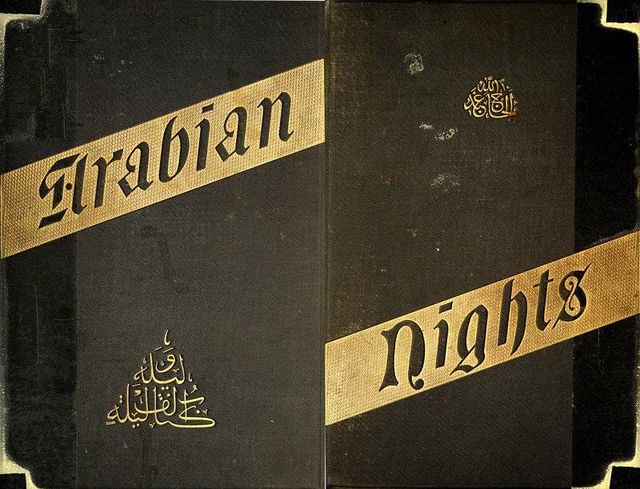



автордың кітабын онлайн тегін оқу A plain and literal translation of the Arabian nights entertainments, now entituled The Book of the Thousand Nights and a Night, Volume 1 (of 17)
Transcriber's Note:
The cover image was created by the transcriber and is placed in the public domain.


"TO THE PURE ALL THINGS ARE PURE."
(Puris omnia para)
—Arab Proverb.
"Niuna corrotta mente intese mai sanamente parole."
—"Decameron"—conclusion.
"Erubuit, posuitque meum Lucretia librum
Sed coram Bruto. Brute! recede, leget."
—Martial.
"Mieulx est de ris que de larmes escripre,
Pour ce que rire est le propre des hommes."
—Rabelais.
"The pleasure we derive from perusing the Thousand-and-One Stories makes us regret that we possess only a comparatively small part of these truly enchanting fictions."
—Crichton's "History of Arabia."


A PLAIN AND LITERAL TRANSLATION OF THE ARABIAN NIGHTS ENTERTAINMENTS. NOW ENTITULED
THE BOOK OF THE
Thousand Nights and a Night
WITH INTRODUCTION EXPLANATORY NOTES ON THE MANNERS AND CUSTOMS OF MOSLEM MEN AND A TERMINAL ESSAY UPON THE HISTORY OF THE NIGHTS VOLUME I.
BY
RICHARD F. BURTON

PRINTED BY THE BURTON CLUB FOR PRIVATE
SUBSCRIBERS ONLY
Shammar Edition
Limited to one thousand numbered sets, of which this is
Number 547
Printed in U. S. A.
Inscribed to the Memory
OF
MY LAMENTED FRIEND
John Frederick Steinhaeuser,
(CIVIL SURGEON, ADEN)
WHO
A QUARTER OF A CENTURY AGO
ASSISTED ME IN THIS TRANSLATION.
THE TRANSLATOR'S FOREWORD.
This work, laborious as it may appear, has been to me a labour of love, an unfailing source of solace and satisfaction. During my long years of official banishment to the luxuriant and deadly deserts of Western Africa, and to the dull and dreary half-clearings of South America, it proved itself a charm, a talisman against ennui and despondency. Impossible even to open the pages without a vision starting into view; without drawing a picture from the pinacothek of the brain; without reviving a host of memories and reminiscences which are not the common property of travellers, however widely they may have travelled. From my dull and commonplace and "respectable" surroundings, the Jinn bore me at once to the land of my predilection, Arabia, a region so familiar to my mind that even at first sight, it seemed a reminiscence of some by-gone metempsychic life in the distant Past. Again I stood under the diaphanous skies, in air glorious as æther, whose every breath raises men's spirits like sparkling wine. Once more I saw the evening star hanging like a solitaire from the pure front of the western firmament; and the after-glow transfiguring and transforming, as by magic, the homely and rugged features of the scene into a fairy-land lit with a light which never shines on other soils or seas. Then would appear the woollen tents, low and black, of the true Badawin, mere dots in the boundless waste of lion-tawny clays and gazelle-brown gravels, and the camp-fire dotting like a glow-worm the village centre. Presently, sweetened by distance, would be heard the wild weird song of lads and lasses, driving or rather pelting, through the gloaming their sheep and goats; and the measured chant of the spearsmen gravely stalking behind their charge, the camels; mingled with the bleating of the flocks and the bellowing of the humpy herds; while the rere-mouse flitted overhead with his tiny shriek, and the rave of the jackal resounded through deepening glooms, and—most musical of music—the palm-trees answered the whispers of the night-breeze with the softest tones of falling water.
And then a shift of scene. The Shaykhs and "white-beards" of the tribe gravely take their places, sitting with outspread skirts like hillocks on the plain, as the Arabs say, around the camp-fire, whilst I reward their hospitality and secure its continuance by reading or reciting a few pages of their favourite tales. The women and children stand motionless as silhouettes outside the ring; and all are breathless with attention; they seem to drink in the words with eyes and mouths as well as with ears. The most fantastic flights of fancy, the wildest improbabilities, the most impossible of impossibilities, appear to them utterly natural, mere matters of every-day occurrence. They enter thoroughly into each phase of feeling touched upon by the author: they take a personal pride in the chivalrous nature and knightly prowess of Taj al-Mulúk; they are touched with tenderness by the self-sacrificing love of Azízah; their mouths water as they hear of heaps of untold gold given away in largesse like clay; they chuckle with delight every time a Kázi or a Fakír—a judge or a reverend—is scurvily entreated by some Pantagruelist of the Wilderness; and, despite their normal solemnity and impassibility, all roar with laughter, sometimes rolling upon the ground till the reader's gravity is sorely tried, at the tales of the garrulous Barber and of Ali and the Kurdish Sharper. To this magnetising mood the sole exception is when a Badawi of superior accomplishments, who sometimes says his prayers, ejaculates a startling "Astaghfaru'llah"—I pray Allah's pardon!—for listening, not to Carlyle's "downright lies," but to light mention of the sex whose name is never heard amongst the nobility of the Desert.
Nor was it only in Arabia that the immortal Nights did me such notable service: I found the wildlings of Somali-land equally amenable to its discipline; no one was deaf to the charm and the two women-cooks of my caravan, on its way to Harar, were incontinently dubbed by my men "Shahrazad" and "Dinazad."
It may be permitted me also to note that this translation is a natural outcome of my Pilgrimage to Al-Medinah and Meccah. Arriving at Aden in the (so-called) winter of 1852, I put up with my old and dear friend, Steinhaeuser, to whose memory this volume is inscribed; and, when talking over Arabia and the Arabs, we at once came to the same conclusion that, while the name of this wondrous treasury of Moslem folk-lore is familiar to almost every English child, no general reader is aware of the valuables it contains, nor indeed will the door open to any but Arabists. Before parting we agreed to "collaborate" and produce a full, complete, unvarnished, uncastrated copy of the great original, my friend taking the prose and I the metrical part; and we corresponded upon the subject for years. But whilst I was in the Brazil, Steinhaeuser died suddenly of apoplexy at Berne in Switzerland and, after the fashion of Anglo-India, his valuable MSS. left at Aden were dispersed, and very little of his labours came into my hands.
Thus I was left alone to my work, which progressed fitfully amid a host of obstructions. At length, in the spring of 1879, the tedious process of copying began and the book commenced to take finished form. But, during the winter of 1881-82, I saw in the literary journals a notice of a new version by Mr. John Payne, well known to scholars for his prowess in English verse, especially for his translation of "The Poems of Master Francis Villon, of Paris." Being then engaged on an expedition to the Gold Coast (for gold), which seemed likely to cover some months, I wrote to the "Athenæum" (Nov. 13, 1881) and to Mr. Payne, who was wholly unconscious that we were engaged on the same work, and freely offered him precedence and possession of the field till no longer wanted. He accepted my offer as frankly, and his priority entailed another delay lasting till the spring of 1885. These details will partly account for the lateness of my appearing, but there is yet another cause. Professional ambition suggested that literary labours, unpopular with the vulgar and the half-educated, are not likely to help a man up the ladder of promotion. But common sense presently suggested to me that, professionally speaking, I was not a success; and, at the same time, that I had no cause to be ashamed of my failure. In our day, when we live under a despotism of the lower "middle-class" Philister who can pardon anything but superiority, the prizes of competitive services are monopolised by certain "pets" of the Médiocratie, and prime favourites of that jealous and potent majority—the Mediocrities who know "no nonsense about merit." It is hard for an outsider to realise how perfect is the monopoly of commonplace, and to comprehend how fatal a stumbling-stone that man sets in the way of his own advancement who dares to think for himself, or who knows more or who does more than the mob of gentlemen-employés who know very little and who do even less.
Yet, however behindhand I may be, there is still ample room and verge for an English version of the "Arabian Nights' Entertainments."
Our century of translations, popular and vernacular, from (Professor Antoine) Galland's delightful abbreviation and adaptation (A.D. 1704), in no wise represent the eastern original. The best and latest, the Rev. Mr. Foster's, which is diffuse and verbose, and Mr. G. Moir Bussey's, which is a re-correction, abound in gallicisms of style and idiom; and one and all degrade a chef-d'œuvre of the highest anthropological and ethnographical interest and importance to a mere fairy-book, a nice present for little boys.
After nearly a century had elapsed, Dr. Jonathan Scott (LL.D. H.E.I.C.'s S., Persian Secretary to the G. G. Bengal; Oriental Professor, etc., etc.), printed his "Tales, Anecdotes, and Letters, translated from the Arabic and Persian," (Cadell and Davies, London, A.D. 1800); and followed in 1811 with an edition of "The Arabian Nights' Entertainments" from the MS. of Edward Wortley Montague (in 6 vols., small 8vo, London: Longmans, etc.). This work he (and he only) describes as "Carefully revised and occasionally corrected from the Arabic." The reading public did not wholly reject it, sundry texts were founded upon the Scott version and it has been imperfectly reprinted (4 vols., 8vo, Nimmo and Bain, London, 1883). But most men, little recking what a small portion of the original they were reading, satisfied themselves with the Anglo-French epitome and metaphrase. At length in 1838, Mr. Henry Torrens, B.A., Irishman, lawyer ("of the Inner Temple") and Bengal Civilian, took a step in the right direction; and began to translate, "The Book of the Thousand Nights and One Night," (1 vol., 8vo, Calcutta: W. Thacker and Co.) from the Arabic of the Ægyptian (!) MS. edited by Mr. (afterwards Sir) William H. Macnaghten. The attempt, or rather the intention, was highly creditable; the copy was carefully moulded upon the model and offered the best example of the verbatim et literatim style. But the plucky author knew little of Arabic, and least of what is most wanted, the dialect of Egypt and Syria. His prose is so conscientious as to offer up spirit at the shrine of letter; and his verse, always whimsical, has at times a manner of Hibernian whoop which is comical when it should be pathetic. Lastly he printed only one volume of a series which completed would have contained nine or ten.
That amiable and devoted Arabist, the late Edward William Lane does not score a success in his "New Translation of the Tales of a Thousand and One Nights" (London: Charles Knight and Co., MDCCCXXXIX.) of which there have been four English editions, besides American, two edited by E. S. Poole. He chose the abbreviating Bulak Edition; and, of its two hundred tales, he has omitted about half and by far the more characteristic half: the work was intended for "the drawing-room table;" and, consequently, the workman was compelled to avoid the "objectionable" and aught "approaching to licentiousness." He converts the Arabian Nights into the Arabian Chapters, arbitrarily changing the division and, worse still, he converts some chapters into notes. He renders poetry by prose and apologises for not omitting it altogether: he neglects assonance and he is at once too Oriental and not Oriental enough. He had small store of Arabic at the time—Lane of the Nights is not Lane of the Dictionary—and his pages are disfigured by many childish mistakes. Worst of all, the three handsome volumes are rendered unreadable as Sale's Koran by their anglicised Latin, their sesquipedalian un-English words, and the stiff and stilted style of half a century ago when our prose was, perhaps, the worst in Europe. Their cargo of Moslem learning was most valuable to the student, but utterly out of place for readers of "The Nights;" re-published, as these notes have been separately (London, Chatto, 1883), they are an ethnological text-book.
Mr. John Payne has printed, for the Villon Society and for private circulation only, the first and sole complete translation of the great compendium, "comprising about four times as much matter as that of Galland, and three times as much as that of any other translator;" and I cannot but feel proud that he has honoured me with the dedication of "The Book of The Thousand Nights and One Night." His version is most readable: his English, with a sub-flavour of the Mabinogionic archaicism, is admirable; and his style gives life and light to the nine volumes whose matter is frequently heavy enough. He succeeds admirably in the most difficult passages and he often hits upon choice and special terms and the exact vernacular equivalent of the foreign word, so happily and so picturesquely that all future translators must perforce use the same expression under pain of falling far short. But the learned and versatile author bound himself to issue only five hundred copies, and "not to reproduce the work in its complete and uncastrated form." Consequently his excellent version is caviaire to the general—practically unprocurable.
And here I hasten to confess that ample use has been made of the three versions above noted, the whole being blended by a callida junctura into a homogeneous mass. But in the presence of so many predecessors a writer is bound to show some raison d'être for making a fresh attempt and this I proceed to do with due reserve.
Briefly, the object of this version is to show what "The Thousand Nights and a Night" really is. Not, however, for reasons to be more fully stated in the terminal Essay, by straining verbum reddere verbo, but by writing as the Arab would have written in English. On this point I am all with Saint Jerome (Pref. in Jobum) "Vel verbum e verbo, vel sensum e sensu, vel ex utroque commixtum, et medie temperatum genus translationis." My work claims to be a faithful copy of the great Eastern Saga-book, by preserving intact, not only the spirit, but even the mécanique, the manner and the matter. Hence, however prosy and long-drawn out be the formula, it retains the scheme of the Nights because they are a prime feature in the original. The Ráwí or reciter, to whose wits the task of supplying details is left, well knows their value: the openings carefully repeat the names of the dramatis personæ and thus fix them in the hearer's memory. Without the Nights no Arabian Nights! Moreover it is necessary to retain the whole apparatus: nothing more ill-advised than Dr. Jonathan Scott's strange device of garnishing The Nights with fancy head-pieces and tail-pieces or the splitting-up of Galland's narrative by merely prefixing "Nuit," etc., ending moreover, with the ccxxxivth Night: yet this has been done, apparently with the consent of the great Arabist Sylvestre de Sacy (Paris, Ernest Bourdin). Moreover, holding that the translator's glory is to add something to his native tongue, while avoiding the hideous hag-like nakedness of Torrens and the bald literalism of Lane, I have carefully Englished the picturesque turns and novel expressions of the original in all their outlandishness; for instance, when the dust-cloud raised by a tramping host is described as "walling the horizon." Hence peculiar attention has been paid to the tropes and figures which the Arabic language often packs into a single term; and I have never hesitated to coin a word when wanted, such as "she snorted and snarked," fully to represent the original. These, like many in Rabelais, are mere barbarisms unless generally adopted; in which case they become civilised and common currency.
Despite objections manifold and manifest, I have preserved the balance of sentences and the prose rhyme and rhythm which Easterns look upon as mere music. This "Saj'a," or cadence of the cooing dove, has in Arabic its special duties. It adds a sparkle to description and a point to proverb, epigram and dialogue; it corresponds with our "artful alliteration" (which in places I have substituted for it) and, generally, it defines the boundaries between the classical and the popular styles which jostle each other in The Nights. If at times it appear strained and forced, after the wont of rhymed prose, the scholar will observe that, despite the immense copiousness of assonants and consonants in Arabic, the strain is often put upon it intentionally, like the Rims cars of Dante and the Troubadours. This rhymed prose may be "un-English" and unpleasant, even irritating to the British ear; still I look upon it as a sine quâ non for a complete reproduction of the original. In the terminal Essay I shall revert to the subject.
On the other hand when treating the versicle portion, which may represent a total of ten thousand lines, I have not always bound myself by the metrical bonds of the Arabic, which are artificial in the extreme, and which in English can be made bearable only by a tour de force. I allude especially to the monorhyme, Rim continuat or tirade monorime, whose monotonous simplicity was preferred by the Troubadours for threnodies. It may serve well for three or four couplets but, when it extends, as in the Ghazal-canzon, to eighteen, and in the Kasidah, elegy or ode, to more, it must either satisfy itself with banal rhyme-words, when the assonants should as a rule be expressive and emphatic; or, it must display an ingenuity, a smell of the oil, which assuredly does not add to the reader's pleasure. It can perhaps be done and it should be done; but for me the task has no attractions: I can fence better in shoes than in sabots. Finally I print the couplets in Arab form separating the hemistichs by asterisks.
And now to consider one matter of special importance in the book—its turpiloquium. This stumbling-block is of two kinds, completely distinct. One is the simple, naïve and child-like indecency which, from Tangiers to Japan, occurs throughout general conversation of high and low in the present day. It uses, like the holy books of the Hebrews, expressions "plainly descriptive of natural situations;" and it treats in an unconventionally free and naked manner of subjects and matters which are usually, by common consent, left undescribed. As Sir William Jones observed long ago, "that anything natural can be offensively obscene never seems to have occurred to the Indians or to their legislators; a singularity (?) pervading their writings and conversation, but no proof of moral depravity." Another justly observes, Les peuples primitifs n'y entendent pas malice: ils appellent les choses par leurs noms et ne trouvent pas condamnable ce qui est naturel. And they are prying as children. For instance the European novelist marries off his hero and heroine and leaves them to consummate marriage in privacy; even Tom Jones has the decency to bolt the door. But the Eastern story-teller, especially this unknown "prose Shakespeare," must usher you, with a flourish, into the bridal chamber and narrate to you, with infinite gusto, everything he sees and hears. Again we must remember that grossness and indecency, in fact les turpitudes, are matters of time and place; what is offensive in England is not so in Egypt; what scandalises us now would have been a tame joke tempore Elisæ. Withal The Nights will not be found in this matter coarser than many passages of Shakspeare, Sterne, and Swift, and their uncleanness rarely attains the perfection of Alcofribas Nasier, "divin maître et atroce cochon." The other element is absolute obscenity, sometimes, but not always, tempered by wit, humour and drollery; here we have an exaggeration of Petronius Arbiter, the handiwork of writers whose ancestry, the most religious and the most debauched of mankind, practised every abomination before the shrine of the Canopic Gods.
In accordance with my purpose of reproducing the Nights, not virginibus puerisque, but in as perfect a picture as my powers permit, I have carefully sought out the English equivalent of every Arabic word, however low it may be or "shocking" to ears polite; preserving, on the other hand, all possible delicacy where the indecency is not intentional; and, as a friend advises me to state, not exaggerating the vulgarities and the indecencies which, indeed, can hardly be exaggerated. For the coarseness and crassness are but the shades of a picture which would otherwise be all lights. The general tone of The Nights is exceptionally high and pure. The devotional fervour often rises to the boiling-point of fanaticism. The pathos is sweet, deep and genuine; tender, simple and true, utterly unlike much of our modern tinsel. Its life, strong, splendid and multitudinous, is everywhere flavoured with that unaffected pessimism and constitutional melancholy which strike deepest root under the brightest skies and which sigh in the face of heaven:—
Vita quid est hominis? Viridis floriscula mortis;
Sole Oriente oriens, sole cadente cadens.
Poetical justice is administered by the literary Kází with exemplary impartiality and severity; "denouncing evil doers and eulogising deeds admirably achieved." The morale is sound and healthy; and at times we descry, through the voluptuous and libertine picture, vistas of a transcendental morality, the morality of Socrates in Plato. Subtle corruption and covert licentiousness are utterly absent; we find more real "vice" in many a short French roman, say La Dame aux Camelias, and in not a few English novels of our day than in the thousands of pages of the Arab. Here we have nothing of that most immodest modern modesty which sees covert implication where nothing is implied, and "improper" allusion, when propriety is not outraged; nor do we meet with the Nineteenth Century refinement; innocence of the word not of the thought; morality of the tongue not of the heart, and the sincere homage paid to virtue in guise of perfect hypocrisy. It is, indeed, this unique contrast of a quaint element, childish crudities and nursery indecencies and "vain and amatorious" phrase jostling the finest and highest views of life and character, shown in the kaleidoscopic shiftings of the marvellous picture with many a "rich truth in a tale's pretence"; pointed by a rough dry humour which compares well with "wut;" the alternations of strength and weakness, of pathos and bathos, of the boldest poetry (the diction of Job) and the baldest prose (the Egyptian of to-day); the contact of religion and morality with the orgies of African Apuleius and Petronius Arbiter—at times taking away the reader's breath—and, finally, the whole dominated everywhere by that marvellous Oriental fancy, wherein the spiritual and the supernatural are as common as the material and the natural; it is this contrast, I say, which forms the chiefest charm of The Nights, which gives it the most striking originality and which makes it a perfect expositor of the medieval Moslem mind.
Explanatory notes did not enter into Mr. Payne's plan. They do with mine: I can hardly imagine The Nights being read to any profit by men of the West without commentary. My annotations avoid only one subject, parallels of European folk-lore and fabliaux which, however interesting, would overswell the bulk of a book whose speciality is anthropology. The accidents of my life, it may be said without undue presumption, my long dealings with Arabs and other Mahommedans, and my familiarity not only with their idiom but with their turn of thought, and with that racial individuality which baffles description, have given me certain advantages over the average student, however deeply he may have studied. These volumes, moreover, afford me a long-sought opportunity of noticing practices and customs which interest all mankind and which "Society" will not hear mentioned. Grote, the historian, and Thackeray, the novelist, both lamented that the bégueulerie of their countrymen condemned them to keep silence where publicity was required; and that they could not even claim the partial licence of a Fielding and a Smollett. Hence a score of years ago I lent my best help to the late Dr. James Hunt in founding the Anthropological Society, whose presidential chair I first occupied (pp. 2-4 Anthropologia; London, Balliere, vol. i., No. 1, 1873). My motive was to supply travellers with an organ which would rescue their observations from the outer darkness of manuscript, and print their curious information on social and sexual matters out of place in the popular book intended for the Nipptisch and indeed better kept from public view. But, hardly had we begun when "Respectability," that whited sepulchre full of all uncleanness, rose up against us. "Propriety" cried us down with her brazen blatant voice, and the weak-kneed brethren fell away. Yet the organ was much wanted and is wanted still. All now known barbarous tribes in Inner Africa, America and Australia, whose instincts have not been overlaid by reason, have a ceremony which they call "making men." As soon as the boy shows proofs of puberty, he and his coevals are taken in hand by the mediciner and the Fetisheer; and, under priestly tuition, they spend months in the "bush," enduring hardships and tortures which impress the memory till they have mastered the "theorick and practick" of social and sexual relations. Amongst the civilised this fruit of the knowledge-tree must be bought at the price of the bitterest experience, and the consequences of ignorance are peculiarly cruel. Here, then, I find at last an opportunity of noticing in explanatory notes many details of the text which would escape the reader's observation, and I am confident that they will form a repertory of Eastern knowledge in its esoteric phase. The student who adds the notes of Lane ("Arabian Society," etc., before quoted) to mine will know as much of the Moslem East and more than many Europeans who have spent half their lives in Orient lands. For facility of reference an index of anthropological notes is appended to each volume.
The reader will kindly bear with the following technical details. Steinhaeuser and I began and ended our work with the first Bulak ("Bul.") Edition printed at the port of Cairo in A.H. 1251=A.D. 1835. But when preparing my MSS. for print I found the text incomplete, many of the stories being given in epitome and not a few ruthlessly mutilated with head or feet wanting. Like most Eastern scribes the Editor could not refrain from "improvements," which only debased the book; and his sole title to excuse is that the second Bulak Edition (4 vols. A.H. 1279=A.D. 1863), despite its being "revised and corrected by Sheik Mahommed Qotch Al-Adewi," is even worse; and the same may be said of the Cairo Edit. (4 vols. A.H. 1297=A.D. 1881). The Calcutta ("Calc.") Edition, with ten lines of Persian preface by the Editor, Ahmed al-Shirwani (A.D. 1814), was cut short at the end of the first two hundred Nights, and thus made room for Sir William Hay Macnaghten's Edition (4 vols, royal 4to) of 1839-42. This ("Mac."), as by far the least corrupt and the most complete, has been assumed for my basis with occasional reference to the Breslau Edition ("Bres.") wretchedly edited from a hideous Egyptian MS. by Dr. Maximilian Habicht (1825-43). The Bayrut Text "Alif-Leila we Leila" (4 vols. gt. 8vo, Beirut. 1881-83) is a melancholy specimen of The Nights taken entirely from the Bulak Edition by one Khalil Sarkis and converted to Christianity; beginning without Bismillah, continued with scrupulous castration and ending in ennui and disappointment. I have not used this missionary production.
As regards the transliteration of Arabic words I deliberately reject the artful and complicated system, ugly and clumsy withal, affected by scientific modern Orientalists. Nor is my sympathy with their prime object, namely to fit the Roman alphabet for supplanting all others. Those who learn languages, and many do so, by the eye as well as by the ear, well know the advantages of a special character to distinguish, for instance, Syriac from Arabic, Gujrati from Marathi. Again this Roman hand bewitched may have its use in purely scientific and literary works; but it would be wholly out of place in one whose purpose is that of the novel, to amuse rather than to instruct. Moreover the devices perplex the simple and teach nothing to the learned. Either the reader knows Arabic, in which case Greek letters, italics and "upper case," diacritical points and similar typographic oddities are, as a rule with some exceptions, unnecessary; or he does not know Arabic, when none of these expedients will be of the least use to him. Indeed it is a matter of secondary consideration what system we prefer, provided that we mostly adhere to one and the same, for the sake of a consistency which saves confusion to the reader. I have especially avoided that of Mr. Lane, adopted by Mr. Payne for special reasons against which it was vain to protest: it represents the debased brogue of Egypt or rather of Cairo; and such a word as Kemer (ez-Zeman) would be utterly unpronounceable to a Badawi. Nor have I followed the practice of my learned friend, Reverend G. P. Badger, in mixing bars and acute accents; the former unpleasantly remind man of those hateful dactyls and spondees, and the latter should, in my humble opinion, be applied to long vowels which in Arabic double, or should double, the length of the shorts. Dr. Badger uses the acute symbol to denote accent or stress of voice; but such appoggio is unknown to those who speak with purest articulation; for instance whilst the European pronounces Mus-cat´, and the Arab villager Mas´-kat; the Children of the Waste, "on whose tongues Allah descended," articulate Mas-kat. I have therefore followed the simple system adopted in my "Pilgrimage," and have accented Arabic words only when first used, thinking it unnecessary to preserve throughout what is an eyesore to the reader and a distress to the printer. In the main I follow "Johnson on Richardson," a work known to every Anglo-Orientalist as the old and trusty companion of his studies early and late; but even here I have made sundry deviations for reasons which will be explained in the terminal Essay. As words are the embodiment of ideas and writing is of words, so the word is the spoken word; and we should write it as pronounced. Strictly speaking, the e-sound and the o-sound (viz. the Italian o-sound not the English which is peculiar to us and unknown to any other tongue) are not found in Arabic, except when the figure Imálah obliges: hence they are called "Yá al-Majhúl" and "Waw al-Majhúl" the unknown y (í) and u. But in all tongues vowel-sounds, the flesh which clothes the bones (consonants) of language, are affected by the consonants which precede and more especially which follow them, hardening and softening the articulation; and deeper sounds accompany certain letters as the sád (ص) compared with the sín (س). None save a defective ear would hold, as Lane does, "Maulid" (=birth-festival) "more properly pronounced 'Molid.'" Yet I prefer Khokh (peach) and Jokh (broad-cloth) to Khukh and Jukh; Ohod (mount) to Uhud; Obayd (a little slave) to Ubayd; and Hosayn (a fortlet, not the P. N. Al-Husayn) to Husayn. As for the short e in such words as "Memlúk" for "Mamlúk" (a white slave), "Eshe" for "Asha" (supper), and "Yemen" for "Al-Yaman," I consider it a flat Egyptianism, insufferable to an ear which admires the Badawi pronunciation. Yet I prefer "Shelebi" (a dandy) from the Turkish Chelebi, to "Shalabi;" "Zebdani" (the Syrian village) to "Zabdani," and "Fes and Miknes" (by the figure Imálah) to "Fás and Miknás," our "Fez and Mequinez."
With respect to proper names and untranslated Arabic words I have rejected all system in favour of common sense. When a term is incorporated in our tongue, I refuse to follow the purist and mortify the reader by startling innovation. For instance, Aleppo, Cairo and Bassorah are preferred to Halab, Kahirah and Al-Basrah; when a word is half-naturalised, like Alcoran or Koran, Bashaw or Pasha, which the French write Pacha; and Mahomet or Mohammed (for Muhammad), the modern form is adopted because the more familiar. But I see no advantage in retaining, simply because they are the mistakes of a past generation, such words as "Roc" (for Rukh), Khalif (a pretentious blunder for Khalífah and better written Caliph) and "genie" (=Jinn) a mere Gallic corruption not so terrible, however, as "a Bedouin" (=Badawi). As little too would I follow Mr. Lane in foisting upon the public such Arabisms as "Khuff" (a riding-boot), "Mikra'ah" (a palm-rod) and a host of others for which we have good English equivalents. On the other hand I would use, but use sparingly, certain Arabic exclamations, as "Bismillah" (=in the name of Allah!) and "Inshallah" (=if Allah please!), which have special applications and which have been made familiar to English ears by the genius of Fraser and Morier.
I here end these desultory but necessary details to address the reader in a few final words. He will not think lightly of my work when I repeat to him that with the aid of my annotations supplementing Lane's, the student will readily and pleasantly learn more of the Moslem's manners and customs, laws and religion than is known to the average Orientalist; and, if my labours induce him to attack the text of The Nights he will become master of much more Arabic than the ordinary Arab owns. This book is indeed a legacy which I bequeath to my fellow-countrymen in their hour of need. Over devotion to Hindu, and especially to Sanskrit literature, has led them astray from those (so-called) "Semitic" studies, which are the more requisite for us as they teach us to deal successfully with a race more powerful than any pagans—the Moslem. Apparently England is ever forgetting that she is at present the greatest Mohammedan empire in the world. Of late years she has systematically neglected Arabism and, indeed, actively discouraged it in examinations for the Indian Civil Service, where it is incomparably more valuable than Greek and Latin. Hence, when suddenly compelled to assume the reins of government in Moslem lands, as Afghanistan in times past and Egypt at present, she fails after a fashion which scandalises her few (very few) friends; and her crass ignorance concerning the Oriental peoples which should most interest her, exposes her to the contempt of Europe as well as of the Eastern world. When the regretable raids of 1883-84, culminating in the miserable affairs of Tokar, Teb and Tamasi, were made upon the gallant Sudani Negroids, the Bisharin outlying Sawakin, who were battling for the holy cause of liberty and religion and for escape from Turkish task-masters and Egyptian tax-gatherers, not an English official in camp, after the death of the gallant and lamented Major Morice, was capable of speaking Arabic. Now Moslems are not to be ruled by raw youths who should be at school and college instead of holding positions of trust and emolument. He who would deal with them successfully must be, firstly, honest and truthful and, secondly, familiar with and favourably inclined to their manners and customs if not to their law and religion. We may, perhaps, find it hard to restore to England those pristine virtues, that tone and temper, which made her what she is; but at any rate we (myself and a host of others) can offer her the means of dispelling her ignorance concerning the Eastern races with whom she is continually in contact.
In conclusion I must not forget to notice that the Arabic ornamentations of these volumes were designed by my excellent friend Yacoub Artin Pasha, of the Ministry of Instruction, Cairo, with the aid of the well-known writing-artist, Shaykh Mohammed Muunis the Cairene. My name, Al-Hajj Abdullah (=the Pilgrim Abdallah) was written by an English calligrapher, the lamented Professor Palmer who found a premature death almost within sight of Suez.
RICHARD F. BURTON.
Wanderers' Club, August 15, 1885.
CONTENTS OF THE FIRST VOLUME.
PAGE
INTRODUCTION
1STORY OF KING SHAHRYAR AND HIS BROTHER
2 a. Tale of the Bull and the Ass 16(
Lane, vol. I., 1-16.)
1. TALE OF THE TRADER AND THE JINNI
24(
Chapt. I. Story of the Merchant and the Jinnee: p. 43.)
a. The First Shaykh's Story 27(
Story of the First Sheykh and the Gazelle: p. 48.)
b. The Second Shaykh's Story 32(
Story of the Second Sheykh and the two Black Hounds: p. 52.)
c. The Third Shaykh's Story 36(
Story of the Third Sheykh and the Mule: p. 56.)
2. THE FISHERMAN AND THE JINNI
38(
Chapt. II. Story of the Fisherman: p. 78.)
a. Tale of the Wazir and the Sage Duban 45(
Story of King Yoonan and the Sage Dooban: p. 84.)
ab. Story of King Sindibad and his Falcon 50 ac. Tale of the Husband and the Parrot 52(
Story of the Husband and the Parrot: p. 89.)
ad. Tale of the Prince and the Ogress 54(
Story of the Envious Wezeer and the Prince and the Ghoolah: p. 91.)
b. Tale of the Ensorcelled Prince 69(
Story of the Young King of the Black Islands: p. 106.)
3. THE PORTER AND THE THREE LADIES OF BAGHDAD
82(
Chapt. III. Story of the Porter and the Ladies of Baghdad, and of the three Royal Mendicants, etc.: p. 136.)
a. The First Kalandar's Tale 104(
Story of the First Royal Mendicant: p. 150.)
b. The Second Kalandar's Tale 113(
Story of the Second Royal Mendicant: p. 157.)
ba. Tale of the Envier and the Envied 123(
Story of the Envier and the Envied: p. 166.)
c. The Third Kalandar's Tale 139(
Story of the Third Royal Mendicant: p. 178.)
d. The Eldest Lady's Tale 162 e. Tale of the Portress 173 Conclusion of the Story of the Porter and Three Ladies 1844. TALE OF THE THREE APPLES
186(
Chapt. IV. Story of the Three Apples, etc.: p. 250.)
5. TALE OF NUR AL-DIN ALI AND HIS SON BADR AL-DIN HASAN
195(
Story of Noor ed-Deen and his Son, and of Shems ed-Deen and his Daughter: p. 253.)
6. THE HUNCHBACK'S TALE
255(
Chapt. V. Story of the Humpback: p. 238.)
a. The Nazarene Broker's Story 262(
Story told by the Christian Broker: p. 334.)
b. The Reeve's Tale 278(
Story told by the Sultan's Steward: p. 348.)
c. Tale of the Jewish Doctor 288(
Story told by the Jewish Physician: p. 359.)
d. Tale of the Tailor 300(
Story told by the Tailor: p. 368.)
e. The Barber's Tale of Himself 317(
The Barber's Story of Himself: p. 383.)
ea. The Barber's Tale of his First Brother 319(
The Barber's Story of His First Brother: p. 385.)
eb. The Barber's Tale of his Second Brother 324(
The Barber's Story of His Second Brother: p. 389.)
ec. The Barber's Tale of his Third Brother 328(
The Barber's Story of His Third Brother: p. 392)
ed. The Barber's Tale of his Fourth Brother 331(
The Barber's Story of His Fourth Brother: p. 396.)
ee. The Barber's Tale of his Fifth Brother 335(
The Barber's Story of His Fifth Brother: p. 400.)
ef. The Barber's Tale of his Sixth Brother 343(
The Barber's Story of His Sixth Brother.)
The End of the Tailor's Tale 348THE BOOK OF THE
THOUSAND NIGHTS AND A NIGHT.
(ALF LAYLAH WA LAYLAH.)
And afterwards. Verily the works and words of those gone before us have become instances and examples to men of our modern day, that folk may view what admonishing chances befel other folk and may therefrom take warning; and that they may peruse the annals of antique peoples and all that hath betided them, and be thereby ruled and restrained:—Praise, therefore, be to Him who hath made the histories of the Past an admonition unto the Present! Now of such instances are the tales called "A Thousand Nights and a Night," together with their far-famed legends and wonders. Therein it is related (but Allah is All-knowing of His hidden things and All-ruling and All-honoured and All-giving and All-gracious and All-merciful![1]) that, in tide of yore and in time long gone before, there was a King of the Kings of the Banu Sásán in the Islands of India and China, a Lord of armies and guards and servants and dependents.[2] He left only two sons, one in the prime of manhood and the other yet a youth, while both were Knights and Braves, albeit the elder was a doughtier horseman than the younger. So he succeeded to the empire; when he ruled the land and lorded it over his lieges with justice so exemplary that he was beloved by all the peoples of his capital and of his kingdom. His name was King Shahryár,[3] and he made his younger brother, Shah Zamán hight, King of Samarcand in Barbarian-land. These two ceased not to abide in their several realms and the law was ever carried out in their dominions; and each ruled his own kingdom, with equity and fair-dealing to his subjects, in extreme solace and enjoyment; and this condition continually endured for a score of years. But at the end of the twentieth twelvemonth the elder King yearned for a sight of his younger brother and felt that he must look upon him once more. So he took counsel with his Wazir[4] about visiting him, but the Minister, finding the project unadvisable, recommended that a letter be written and a present be sent under his charge to the younger brother with an invitation to visit the elder. Having accepted this advice the King forthwith bade prepare handsome gifts, such as horses with saddles of gem-encrusted gold; Mamelukes, or white slaves; beautiful handmaids, high-breasted virgins, and splendid stuffs and costly. He then wrote a letter to Shah Zaman expressing his warm love and great wish to see him, ending with these words, "We therefore hope of the favour and affection of the beloved brother that he will condescend to bestir himself and turn his face us-wards. Furthermore we have sent our Wazir to make all ordinance for the march, and our one and only desire is to see thee ere we die; but if thou delay or disappoint us we shall not survive the blow. Wherewith peace be upon thee!" Then King Shahryar, having sealed the missive and given it to the Wazir with the offerings aforementioned, commanded him to shorten his skirts and strain his strength and make all expedition in going and returning. "Harkening and obedience!" quoth the Minister, who fell to making ready without stay and packed up his loads and prepared all his requisites without delay. This occupied him three days, and on the dawn of the fourth he took leave of his King and marched right away, over desert and hill-way, stony waste and pleasant lea without halting by night or by day. But whenever he entered a realm whose ruler was subject to his Suzerain, where he was greeted with magnificent gifts of gold and silver and all manner of presents fair and rare, he would tarry there three days,[5] the term of the guest-rite; and, when he left on the fourth, he would be honourably escorted for a whole day's march. As soon as the Wazir drew near Shah Zaman's court in Samarcand he despatched to report his arrival one of his high officials, who presented himself before the King; and, kissing ground between his hands, delivered his message. Hereupon the King commanded sundry of his Grandees and Lords of his realm to fare forth and meet his brother's Wazir at the distance of a full day's journey; which they did, greeting him respectfully and wishing him all prosperity and forming an escort and a procession. When he entered the city he proceeded straightway to the palace, where he presented himself in the royal presence; and, after kissing ground and praying for the King's health and happiness and for victory over all his enemies, he informed him that his brother was yearning to see him, and prayed for the pleasure of a visit. He then delivered the letter which Shah Zaman took from his hand and read: it contained sundry hints and allusions which required thought; but, when the King had fully comprehended its import, he said, "I hear and I obey the commands of the beloved brother!" adding to the Wazir, "But we will not march till after the third day's hospitality." He appointed for the Minister fitting quarters of the palace; and, pitching tents for the troops, rationed them with whatever they might require of meat and drink and other necessaries. On the fourth day he made ready for wayfare and got together sumptuous presents befitting his elder brother's majesty, and stablished his chief Wazir viceroy of the land during his absence. Then he caused his tents and camels and mules to be brought forth and encamped, with their bales and loads, attendants and guards, within sight of the city, in readiness to set out next morning for his brother's capital. But when the night was half spent he bethought him that he had forgotten in his palace somewhat which he should have brought with him, so he returned privily and entered his apartments, where he found the Queen, his wife, asleep on his own carpet-bed, embracing with both arms a black cook of loathsome aspect and foul with kitchen grease and grime. When he saw this the world waxed black before his sight and he said, "If such case happen while I am yet within sight of the city what will be the doings of this damned whore during my long absence at my brother's court?" So he drew his scymitar and, cutting the two in four pieces with a single blow, left them on the carpet and returned presently to his camp without letting anyone know of what had happened. Then he gave orders for immediate departure and set out at once and began his travel; but he could not help thinking over his wife's treason and he kept ever saying to himself, "How could she do this deed by me? How could she work her own death?," till excessive grief seized him, his colour changed to yellow, his body waxed weak and he was threatened with a dangerous malady, such an one as bringeth men to die. So the Wazir shortened his stages and tarried long at the watering-stations and did his best to solace the King. Now when Shah Zaman drew near the capital of his brother he despatched vaunt-couriers and messengers of glad tidings to announce his arrival, and Shahryar came forth to meet him with his Wazirs and Emirs and Lords and Grandees of his realm; and saluted him and joyed with exceeding joy and caused the city to be decorated in his honour. When, however, the brothers met, the elder could not but see the change of complexion in the younger and questioned him of his case whereto he replied, "'Tis caused by the travails of wayfare and my case needs care, for I have suffered from the change of water and air! but Allah be praised for reuniting me with a brother so dear and so rare!" On this wise he dissembled and kept his secret, adding, "O King of the time and Caliph of the tide, only toil and moil have tinged my face yellow with bile and hath made my eyes sink deep in my head." Then the two entered the capital in all honour; and the elder brother lodged the younger in a palace overhanging the pleasure garden; and, after a time, seeing his condition still unchanged, he attributed it to his separation from his country and kingdom. So he let him wend his own ways and asked no questions of him till one day when he again said, "O my brother, I see that art grown weaker of body and yellower of colour." "O my brother," replied Shah Zaman "I have an internal wound:"[6] still he would not tell him what he had witnessed in his wife. Thereupon Shahryar summoned doctors and surgeons and bade them treat his brother according to the rules of art, which they did for a whole month; but their sherbets and potions naught availed, for he would dwell upon the deed of his wife, and despondency, instead of diminishing, prevailed, and leechcraft treatment utterly failed. One day his elder brother said to him, "I am going forth to hunt and course and to take my pleasure and pastime; maybe this would lighten thy heart." Shah Zaman, however, refused, saying, "O my brother, my soul yearneth for naught of this sort and I entreat thy favour to suffer me tarry quietly in this place, being wholly taken up with my malady." So King Shah Zaman passed his night in the palace and, next morning, when his brother had fared forth, he removed from his room and sat him down at one of the lattice-windows overlooking the pleasure grounds; and there he abode thinking with saddest thought over his wife's betrayal and burning sighs issued from his tortured breast. And as he continued in this case lo! a postern of the palace, which was carefully kept private, swung open and out of it came twenty slave girls surrounding his brother's wife who was wondrous fair, a model of beauty and comeliness and symmetry and perfect loveliness and who paced with the grace of a gazelle which panteth for the cooling stream. Thereupon Shah Zaman drew back from the window, but he kept the bevy in sight espying them from a place whence he could not be espied. They walked under the very lattice and advanced a little way into the garden till they came to a jetting fountain amiddlemost a great basin of water; then they stripped off their clothes and behold, ten of them were women, concubines of the King, and the other ten were white slaves. Then they all paired off, each with each: but the Queen, who was left alone, presently cried out in a loud voice, "Here to me, O my lord Saeed!" and then sprang with a drop-leap from one of the trees a big slobbering blackamoor with rolling eyes which showed the whites, a truly hideous sight.[7] He walked boldly up to her and threw his arms round her neck while she embraced him as warmly; then he bussed her and winding his legs round hers, as a button-loop clasps a button, he threw her and enjoyed her. On like wise did the other slaves with the girls till all had satisfied their passions, and they ceased not from kissing and clipping, coupling and carousing till day began to wane; when the Mamelukes rose from the damsels' bosoms and the blackamoor slave dismounted from the Queen's breast; the men resumed their disguises and all, except the negro who swarmed up the tree, entered the palace and closed the postern-door as before. Now, when Shah Zaman saw this conduct of his sister-in-law he said in himself, "By Allah, my calamity is lighter than this! My brother is a greater King among the kings than I am, yet this infamy goeth on in his very palace, and his wife is in love with that filthiest of filthy slaves. But this only showeth that they all do it[8] and that there is no woman but who cuckoldeth her husband, then the curse of Allah upon one and all and upon the fools who lean against them for support or who place the reins of conduct in their hands. So he put away his melancholy and despondency, regret and repine, and allayed his sorrow by constantly repeating those words, adding "'Tis my conviction that no man in this world is safe from their malice!" When supper-time came they brought him the trays and he ate with voracious appetite, for he had long refrained from meat, feeling unable to touch any dish however dainty. Then he returned grateful thanks to Almighty Allah, praising Him and blessing Him, and he spent a most restful night, it having been long since he had savoured the sweet food of sleep. Next day he broke his fast heartily and began to recover health and strength, and presently regained excellent condition. His brother came back from the chase ten days after, when he rode out to meet him and they saluted each other; and when King Shahryar looked at King Shah Zaman he saw how the hue of health had returned to him, how his face had waxed ruddy and how he ate with an appetite after his late scanty diet. He wondered much and said, "O my brother, I was so anxious that thou wouldst join me in hunting and chasing, and wouldst take thy pleasure and pastime in my dominion!" He thanked him and excused himself; then the two took horse and rode into the city and, when they were seated at their ease in the palace, the food-trays were set before them and they ate their sufficiency. After the meats were removed and they had washed their hands, King Shahryar turned to his brother and said, "My mind is overcome with wonderment at thy condition. I was desirous to carry thee with me to the chase but I saw thee changed in hue, pale and wan to view, and in sore trouble of mind too. But now Alhamdolillah—glory be to God!—I see thy natural colour hath returned to thy face and that thou art again in the best of case. It was my belief that thy sickness came of severance from thy family and friends, and absence from capital and country, so I refrained from troubling thee with further questions. But now I beseech thee to expound to me the cause of thy complaint and thy change of colour, and to explain the reason of thy recovery and the return to the ruddy hue of health which I am wont to view. So speak out and hide naught! When Shah Zaman heard this he bowed ground-wards awhile his head, then raised it and said, "I will tell thee what caused my complaint and my loss of colour; but excuse my acquainting thee with the cause of its return to me and the reason of my complete recovery: indeed I pray thee not to press me for a reply." Said Shahryar, who was much surprised by these words, "Let me hear first what produced thy pallor and thy poor condition." "Know, then, O my brother," rejoined Shah Zaman, "that when thou sentest thy Wazir with the invitation to place myself between thy hands, I made ready and marched out of my city; but presently I minded me having left behind me in the palace a string of jewels intended as a gift to thee. I returned for it alone and found my wife on my carpet-bed and in the arms of a hideous black cook. So I slew the twain and came to thee, yet my thoughts brooded over this business and I lost my bloom and became weak. But excuse me if I still refuse to tell thee what was the reason of my complexion returning." Shahryar shook his head, marvelling with extreme marvel, and with the fire of wrath flaming up from his heart, he cried, "Indeed, the malice of woman is mighty!" Then he took refuge from them with Allah and said, "In very sooth, O my brother, thou hast escaped many an evil by putting thy wife to death,[9] and right excusable were thy wrath and grief for such mishap which never yet befel crowned King like thee. By Allah, had the case been mine, I would not have been satisfied without slaying a thousand women and that way madness lies! But now praise be to Allah who hath tempered to thee thy tribulation, and needs must thou acquaint me with that which so suddenly restored to thee complexion and health, and explain to me what causeth this concealment." "O King of the Age, again I pray thee excuse my so doing!" "Nay, but thou must." "I fear, O my brother, lest the recital cause thee more anger and sorrow than afflicted me." "That were but a better reason," quoth Shahryar, "for telling me the whole history, and I conjure thee by Allah not to keep back aught from me." Thereupon Shah Zaman told him all he had seen, from commencement to conclusion, ending with these words, "When I beheld thy calamity and the treason of thy wife, O my brother, and I reflected that thou art in years my senior and in sovereignty my superior, mine own sorrow was belittled by the comparison, and my mind recovered tone and temper: so throwing off melancholy and despondency, I was able to eat and drink and sleep, and thus I speedily regained health and strength. Such is the truth and the whole truth." When King Shahryar heard this he waxed wroth with exceeding wrath, and rage was like to strangle him; but presently he recovered himself and said, "O my brother, I would not give thee the lie in this matter, but I cannot credit it till I see it with mine own eyes." "An thou wouldst look upon thy calamity," quoth Shah Zaman, "rise at once and make ready again for hunting and coursing,[10] and then hide thyself with me, so shalt thou witness it and thine eyes shall verify it." "True," quoth the King; whereupon he let make proclamation of his intent to travel, and the troops and tents fared forth without the city, camping within sight, and Shahryar sallied out with them and took seat amidmost his host, bidding the slaves admit no man to him. When night came on he summoned his Wazir and said to him, "Sit thou in my stead and let none wot of my absence till the term of three days." Then the brothers disguised themselves and returned by night with all secrecy to the palace, where they passed the dark hours: and at dawn they seated themselves at the lattice overlooking the pleasure grounds, when presently the Queen and her handmaids came out as before, and passing under the windows made for the fountain. Here they stripped, ten of them being men to ten women, and the King's wife cried out, "Where art thou, O Saeed?" The hideous blackamoor dropped from the tree straightway; and, rushing into her arms without stay or delay, cried out, "I am Sa'ad al-Din Saood!"[11] The lady laughed heartily, and all fell to satisfying their lusts, and remained so occupied for a couple of hours, when the white slaves rose up from the handmaidens' breasts and the blackamoor dismounted from the Queen's bosom: then they went into the basin and, after performing the Ghusl, or complete ablution, donned their dresses and retired as they had done before. When King Shahryar saw this infamy of his wife and concubines he became as one distraught and he cried out, "Only in utter solitude can man be safe from the doings of this vile world! By Allah, life is naught but one great wrong." Presently he added, "Do not thwart me, O my brother, in what I propose;" and the other answered, "I will not." So he said, "Let us up as we are and depart forthright hence, for we have no concern with Kingship, and let us over-wander Allah's earth, worshipping the Almighty till we find some one to whom the like calamity hath happened; and if we find none then will death be more welcome to us than life." So the two brothers issued from a second private postern of the palace; and they never stinted wayfaring by day and by night, until they reached a tree a-middle of a meadow hard by a spring of sweet water on the shore of the salt sea. Both drank of it and sat down to take their rest; and when an hour of the day had gone by, lo! they heard a mighty roar and uproar in the middle of the main as though the heavens were falling upon the earth; and the sea brake with waves before them, and from it towered a black pillar, which grew and grew till it rose sky-wards and began making for that meadow. Seeing it, they waxed fearful exceedingly and climbed to the top of the tree, which was a lofty; whence they gazed to see what might be the matter. And behold, it was a Jinni,[12] huge of height and burly of breast and bulk, broad of brow and black of blee, bearing on his head a coffer of crystal. He strode to land, wading through the deep, and coming to the tree whereupon were the two Kings, seated himself beneath it. He then set down the coffer on its bottom and out of it drew a casket, with seven padlocks of steel, which he unlocked with seven keys of steel he took from beside his thigh, and out of it a young lady to come was seen, white-skinned and of winsomest mien, of stature fine and thin, and bright as though a moon of the fourteenth night she had been, or the sun raining lively sheen. Even so the poet Utayyah hath excellently said:—
When the Wazir heard from his daughter these words he related to her, from first to last, all that had happened between him and the King. Thereupon said she, "By Allah, O my father, how long shall this slaughter of women endure? Shall I tell thee what is in my mind in order to save both sides from destruction?" "Say on, O my daughter," quoth he, and quoth she, "I wish thou wouldst give me in marriage to this King Shahryar; either I shall live or I shall be a ransom for the virgin daughters of Moslems and the cause of their deliverance from his hands and thine."[22] "Allah upon thee!" cried he in wrath exceeding that lacked no feeding, "O scanty of wit, expose not thy life to such peril! How durst thou address me in words so wide from wisdom and un-far from foolishness? Know that one who lacketh experience in worldly matters readily falleth into misfortune; and whoso considereth not the end keepeth not the world to friend, and the vulgar say:—I was lying at mine ease: nought but my officiousness brought me unease." "Needs must thou," she broke in, "make me a doer of this good deed, and let him kill me an he will: I shall only die a ransom for others." "O my daughter," asked he, "and how shall that profit thee when thou shalt have thrown away thy life?" and she answered, "O my father it must be, come of it what will!" The Wazir was again moved to fury and blamed and reproached her, ending with, "In very deed I fear lest the same befal thee which befel the Bull and the Ass with the Husbandman." "And what," asked she, "befel them, O my father?" Whereupon the Wazir began the
And now I must take thought and put a trick upon him and return him to his place, else I die." Then he went aweary to his manger, while the Bull thanked him and blessed him. And even so, O my daughter, said the Wazir, thou wilt die for lack of wits; therefore sit thee still and say naught and expose not thy life to such stress; for, by Allah, I offer thee the best advice, which cometh of my affection and kindly solicitude for thee. "O my father," she answered, "needs must I go up to this King and be married to him." Quoth he, "Do not this deed;" and quoth she, "Of a truth I will:" whereat he rejoined, "If thou be not silent and bide still, I will do with thee even what the merchant did with his wife." "And what did he?" asked she. Know then, answered the Wazir, that after the return of the Ass the merchant came out on the terrace-roof with his wife and family, for it was a moonlit night and the moon at its full. Now the terrace overlooked the cowhouse and presently, as he sat there with his children playing about him, the trader heard the Ass say to the Bull, "Tell me, O father Broad o' Brow, what thou purposest to do to-morrow?" The Bull answered, "What but continue to follow thy counsel, O Aliboron? Indeed it was as good as good could be and it hath given me rest and repose; nor will I now depart from it one tittle: so, when they bring me my meat, I will refuse it and blow out my belly and counterfeit crank." The Ass shook his head and said, "Beware of so doing, O Father of a Bull!" The Bull asked, "Why," and the Ass answered, "Know that I am about to give thee the best of counsel, for verily I heard our owner say to the herd, If the Bull rise not from his place to do his work this morning and if he retire from his fodder this day, make him over to the butcher that he may slaughter him and give his flesh to the poor, and fashion a bit of leather[34] from his hide. Now I fear for thee on account of this. So take my advice ere a calamity befal thee; and when they bring thee thy fodder eat it and rise up and bellow and paw the ground, or our master will assuredly slay thee: and peace be with thee!" Thereupon the Bull arose and lowed aloud and thanked the Ass, and said, "To-morrow I will readily go forth with them;" and he at once ate up all his meat and even licked the manger. (All this took place and the owner was listening to their talk.) Next morning the trader and his wife went to the Bull's crib and sat down, and the driver came and led forth the Bull who, seeing his owner, whisked his tail and brake wind, and frisked about so lustily that the merchant laughed a loud laugh and kept laughing till he fell on his back. His wife asked him, "Whereat laughest thou with such loud laughter as this?"; and he answered her, "I laughed at a secret something which I have heard and seen but cannot say lest I die my death." She returned, "Perforce thou must discover it to me, and disclose the cause of thy laughing even if thou come by thy death!" But he rejoined, "I cannot reveal what beasts and birds say in their lingo for fear I die. Then quoth she, "By Allah, thou liest! this is a mere pretext: thou laughest at none save me, and now thou wouldest hide somewhat from me. But by the Lord of the Heavens! an thou disclose not the cause I will no longer cohabit with thee: I will leave thee at once." And she sat down and cried. Whereupon quoth the merchant, "Woe betide thee! what means thy weeping? Fear Allah and leave these words and query me no more questions." "Needs must thou tell me the cause of that laugh," said she, and he replied, "Thou wottest that when I prayed Allah to vouchsafe me understanding of the tongues of beasts and birds, I made a vow never to disclose the secret to any Under pain of dying on the spot." "No matter," cried she, "tell me what secret passed between the Bull and the Ass and die this very hour an thou be so minded;" and she ceased not to importune him till he was worn out and clean distraught. So at last he said, "Summon thy father and thy mother and our kith and kin and sundry of our neighbours," which she did; and he sent for the Kazi[35] and his assessors, intending to make his will and reveal to her his secret and die the death; for he loved her with love exceeding because she was his cousin, the daughter of his father's brother, and the mother of his children, and he had lived with her a life of an hundred and twenty years. Then, having assembled all the family and the folk of his neighbourhood, he said to them, "By me there hangeth a strange story, and 'tis such that if I discover the secret to any, I am a dead man." Therefore quoth every one of those present to the woman, "Allah upon thee, leave this sinful obstinacy and recognise the right of this matter, lest haply thy husband and the father of thy children die." But she rejoined, "I will not turn from it till he tell me, even though he come by his death." So they ceased to urge her; and the trader rose from amongst them and repaired to an outhouse to perform the Wuzu-ablution,[36] and he purposed thereafter to return and to tell them his secret and to die. Now, daughter Shahrazad, that merchant had in his out-houses some fifty hens under one cock, and whilst making ready to farewell his folk he heard one of his many farm-dogs thus address in his own tongue the Cock, who was flapping his wings and crowing lustily and jumping from one hen's back to another and treading all in turn, saying "O Chanticleer! how mean is thy wit and how shameless is thy conduct! Be he disappointed who brought thee up?[37] Art thou not ashamed of thy doings on such a day as this?" "And what," asked the Rooster, "hath occurred this day?," when the Dog answered, "Dost thou not know that our master is this day making ready for his death? His wife is resolved that he shall disclose the secret taught to him by Allah, and the moment he so doeth he shall surely die. We dogs are all a-mourning; but thou clappest thy wings and clarionest thy loudest and treadest hen after hen. Is this an hour for pastime and pleasuring? Art thou not ashamed of thyself?"[38] "Then by Allah," quoth the Cock, "is our master a lack-wit and a man scanty of sense: if he cannot manage matters with a single wife, his life is not worth prolonging. Now I have some fifty Dame Partlets; and I please this and provoke that and starve one and stuff another; and through my good governance they are all well under my control. This our master pretendeth to wit and wisdom, and he hath but one wife, and yet knoweth not how to manage her." Asked the Dog, "What then, O Cock, should the master do to win clear of his strait?" "He should arise forthright," answered the Cock, "and take some twigs from yon mulberry-tree and give her a regular back-basting and rib-roasting till she cry:—I repent, O my lord! I will never ask thee a question as long as I live! Then let him beat her once more and soundly, and when he shall have done this he shall sleep free from care and enjoy life. But this master of ours owns neither sense nor judgment." "Now, daughter Shahrazad," continued the Wazir, "I will do to thee as did that husband to that wife." Said Shahrazad, "And what did he do?" He replied, "When the merchant heard the wise words spoken by his Cock to his Dog, he arose in haste and sought his wife's chamber, after cutting for her some mulberry-twigs and hiding them there; and then he called to her, "Come into the closet that I may tell thee the secret while no one seeth me and then die." She entered with him and he locked the door and came down upon her with so sound a beating of back and shoulders, ribs, arms and legs, saying the while, "Wilt thou ever be asking questions about what concerneth thee not?" that she was well nigh senseless. Presently she cried out, "I am of the repentant! By Allah, I will ask thee no more questions, and indeed I repent sincerely and wholesomely." Then she kissed his hand and feet and he led her out of the room submissive as a wife should be. Her parents and all the company rejoiced and sadness and mourning were changed into joy and gladness. Thus the merchant learnt family discipline from his Cock and he and his wife lived together the happiest of lives until death. And thou also, O my daughter! continued the Wazir, "Unless thou turn from this matter I will do by thee what that trader did to his wife." But she answered him with much decision, "I will never desist, O my father, nor shall this tale change my purpose. Leave such talk and tattle. I will not listen to thy words and, if thou deny me, I will marry myself to him despite the nose of thee. And first I will go up to the King myself and alone and I will say to him:—I prayed my father to wive me with thee, but he refused, being resolved to disappoint his lord, grudging the like of me to the like of thee." Her father asked, "Must this needs be?" and she answered, "Even so." Hereupon the Wazir being weary of lamenting and contending, persuading and dissuading her, all to no purpose, went up to King Shahryar and, after blessing him and kissing the ground before him, told him all about his dispute with his daughter from first to last and how he designed to bring her to him that night. The King wondered with exceeding wonder; for he had made an especial exception of the Wazir's daughter, and said to him, "O most faithful of Counsellors, how is this? Thou wottest that I have sworn by the Raiser of the Heavens that after I have gone into her this night I shall say to thee on the morrow's morning:—Take her and slay her! and, if thou slay her not, I will slay thee in her stead without fail." "Allah guide thee to glory and lengthen thy life, O King of the age," answered the Wazir, "it is she that hath so determined: all this have I told her and more; but she will not hearken to me and she persisteth in passing this coming night with the King's Majesty." So Shahryar rejoiced greatly and said, "'Tis well; go get her ready and this night bring her to me." The Wazir returned to his daughter and reported to her the command saying, "Allah make not thy father desolate by thy loss!" But Shahrazad rejoiced with exceeding joy and gat ready all she required and said to her younger sister, Dunyazad, "Note well what directions I entrust to thee! When I have gone into the King I will send for thee and when thou comest to me and seest that he hath had his carnal will of me, do thou say to me:—O my sister, an thou be not sleepy, relate to me some new story, delectable and delightsome, the better to speed our waking hours;" and I will tell thee a tale which shall be our deliverance, if so Allah please, and which shall turn the King from his blood-thirsty custom." Dunyazad answered "With love and gladness." So when it was night their father the Wazir carried Shahrazad to the King who was gladdened at the sight and asked, "Hast thou brought me my need?" and he answered, "I have." But when the King took her to his bed and fell to toying with her and wished to go in to her she wept; which made him ask, "What aileth thee?" She replied, "O King of the age, I have a younger sister and lief would I take leave of her this night before I see the dawn." So he sent at once for Dunyazad and she came and kissed the ground between his hands, when he permitted her to take her seat near the foot of the couch. Then the King arose and did away with his bride's maidenhead and the three fell asleep. But when it was midnight Shahrazad awoke and signalled to her sister Dunyazad who sat up and said, "Allah upon thee, O my sister, recite to us some new story, delightsome and delectable, wherewith to while away the waking hours of our latter night."[39] "With joy and goodly gree," answered Shahrazad, "if this pious and auspicious King permit me." "Tell on," quoth the King who chanced to be sleepless and restless and therefore was pleased with the prospect of hearing her story. So Shahrazad rejoiced; and thus, on the first night of the Thousand Nights and a Night, she began with the
When the merchant ceased repeating his verses the Jinni said to him, "Cut thy words short, by Allah! needs must I slay thee." But the merchant spake him thus, "Know, O thou Ifrit, that I have debts due to me and much wealth and children and a wife and many pledges in hand; so permit me to go home and discharge to every claimant his claim; and I will come back to thee at the head of the new year. Allah be my testimony and surety that I will return to thee; and then thou mayest do with me as thou wilt and Allah is witness to what I say." The Jinni took sure promise of him and let him go; so he returned to his own city and transacted his business and rendered to all men their dues and after informing his wife and children of what had betided him, he appointed a guardian and dwelt with them for a full year. Then he arose, and made the Wuzu-ablution to purify himself before death and took his shroud under his arm and bade farewell to his people, his neighbours and all his kith and kin, and went forth despite his own nose.[41] They then began weeping and wailing and beating their breasts over him; but he travelled until he arrived at the same garden, and the day of his arrival was the head of the New Year. As he sat weeping over what had befallen him, behold, a Shaykh,[42] a very ancient man, drew near leading a chained gazelle; and he saluted that merchant and wishing him long life said, "What is the cause of thy sitting in this place and thou alone and this be a resort of evil spirits?" The merchant related to him what had come to pass with the Ifrit, and the old man, the owner of the gazelle, wondered and said, "By Allah, O brother, thy faith is none other than exceeding faith and thy story right strange; were it graven with gravers on the eye-corners, it were a warner to whoso would be warned." Then seating himself near the merchant he said, "By Allah, O my brother, I will not leave thee until I see what may come to pass with thee and this Ifrit." And presently as he sat and the two were at talk the merchant began to feel fear and terror and exceeding grief and sorrow beyond relief and ever-growing care and extreme despair. And the owner of the gazelle was hard by his side; when behold, a second Shaykh approached them, and with him were two dogs both of greyhound breed and both black. The second old man after saluting them with the salam, also asked them of their tidings and said "What causeth you to sit in this place, a dwelling of the Jánn?"[43] So they told him the tale from beginning to end, and their stay there had not lasted long before there came up a third Shaykh, and with him a she-mule of bright bay coat; and he saluted them and asked them why they were seated in that place. So they told him the story from first to last: and of no avail, O my master, is a twice-told tale! There he sat down with them, and lo! a dust-cloud advanced and a mighty sand-devil appeared amidmost of the waste. Presently the cloud opened and behold, within it was that Jinni hending in hand a drawn sword, while his eyes were shooting fire-sparks of rage. He came up to them and, haling away the merchant from among them, cried to him, "Arise that I may slay thee, as thou slewest my son, the life-stuff of my liver."[44] The merchant wailed and wept, and the three old men began sighing and crying and weeping and wailing with their companion. Presently the first old man (the owner of the gazelle) came out from among them and kissed the hand of the Ifrit and said, "O Jinni, thou Crown of the Kings of the Jann! were I to tell thee the story of me and this gazelle and thou shouldst consider it wondrous wouldst thou give me a third part of this merchant's blood?" Then quoth the Jinni "Even so, O Shaykh! if thou tell me this tale, and I hold it a marvellous, then will I give thee a third of his blood." Thereupon the old man began to tell
THE SECOND SHAYKH'S STORY.
THE THIRD SHAYKH'S STORY.
THE FISHERMAN AND THE JINNI.
Her sister said to her, "Please finish us this tale, an thou be not sleepy!" so she resumed:—It hath reached me, O auspicious King, that when the Fisherman said to the Ifrit, "I will never and nowise believe thee until I see thee inside it with mine own eyes;" the Evil Spirit on the instant shook[75] and became a vapour, which condensed, and entered the jar little and little, till all was well inside when lo! the Fisherman in hot haste took the leaden cap with the seal and stoppered therewith the mouth of the jar and called out to the Ifrit, saying, "Ask me by way of boon what death thou wilt die! By Allah, I will throw thee into the sea[76] before us and here will I build me a lodge; and whoso cometh hither I will warn him against fishing and will say:—In these waters abideth an Ifrit who giveth as a last favour a choice of deaths and fashion of slaughter to the man who saveth him!" Now when the Ifrit heard this from the Fisherman and saw himself in limbo, he was minded to escape, but this was prevented by Solomon's seal; so he knew that the Fisherman had cozened and outwitted him, and he waxed lowly and submissive and began humbly to say, "I did but jest with thee." But the other answered, "Thou liest, O vilest of the Ifrits, and meanest and filthiest!" and he set off with the bottle for the sea side; the Ifrit calling out "Nay! Nay!" and he calling out "Aye! Aye!" Thereupon the Evil Spirit softened his voice and smoothed his speech and abased himself, saying, "What wouldest thou do with me, O Fisherman?" "I will throw thee back into the sea," he answered; "where thou hast been housed and homed for a thousand and eight hundred years; and now I will leave thee therein till Judgment-day: did I not say to thee:—Spare me and Allah shall spare thee; and slay me not lest Allah slay thee? yet thou spurnedst my supplication and hadst no intention save to deal ungraciously by me, and Allah hath now thrown thee into my hands and I am cunninger than thou." Quoth the Ifrit, "Open for me that I may bring thee weal." Quoth the Fisherman, "Thou liest, thou accursed! my case with thee is that of the Wazir of King Yúnán with the sage Dúbán."[77] "And who was the Wazir of King Yunan and who was the sage Duban; and what was the story about them?" quoth the Ifrit, whereupon the Fisherman began to tell
Then quoth Dunyazad, "O my sister, how pleasant is thy tale, and how tasteful, how sweet, and how grateful!" She replied, "And where is this compared with what I could tell thee on the coming night if the King deign spare my life?" Then said the King in himself, "By Allah, I will not slay her until I hear the rest of her tale, for truly it is wondrous." So they rested that night in mutual embrace until the dawn. Then the King went forth to his Hall of Rule, and the Wazir and the troops came in, and the audience-chamber was thronged; and the King gave orders and judged and appointed and deposed and bade and forbade during the rest of that day till the Court broke up, and King Shahryar returned to his palace.
It is said (but Allah is All-knowing![86]) that there was a King of the Kings of Fars, who was fond of pleasuring and diversion, especially coursing and hunting. He had reared a falcon which he carried all night on his fist, and whenever he went a-chasing he took with him this bird; and he bade make for her a golden cup-let hung round her neck to give her drink therefrom. One day as the King was sitting quietly in his palace, behold, the high falconer of the household suddenly addressed him, "O King of the age, this is indeed a day fit for birding." The King gave orders accordingly and set out taking the hawk on fist; and they fared merrily forwards till they made a Wady[87] where they planted a circle of nets for the chase; when lo! a gazelle came within the toils and the King cried, "Whoso alloweth yon gazelle to spring over his head and loseth her, that man will I surely slay." They narrowed the nets about the gazelle when she drew near the King's station; and, planting herself on her hind quarter, crossed her forehand over her breast, as if about to kiss the earth before the King. He bowed his brow low in acknowledgment to the beast; when she bounded high over his head and took the way of the waste. Thereupon the King turned towards his troops and, seeing them winking and pointing at him, he asked, "O Wazir, what are my men saying?" and the Minister answered, "They say thou didst proclaim that whoso alloweth the gazelle to spring over his head, that man shall be put to death." Quoth the King, "Now, by the life of my head! I will follow her up till I bring her back." So he set off gallopping on the gazelle's trail and gave not over tracking till he reached the foot-hills of a mountain-chain where the quarry made for a cave. Then the King cast off at it the falcon which presently caught it up and, swooping down, drove her talons into its eyes, bewildering and blinding it;[88] and the King drew his mace and struck a blow which rolled the game over. He then dismounted; and, after cutting the antelope's throat and flaying the body, hung it to the pommel of his saddle. Now the time was that of the siesta[89] and the wold was parched and dry, nor was any water to be found anywhere; and the King thirsted and his horse also; so he went about searching till he saw a tree dropping water, as it were melted butter, from its boughs. Thereupon the King who wore gauntlets of skin to guard him against poisons took the cup from the hawk's neck, and filling it with the water set it before the bird, and lo! the falcon struck it with her pounces and upset the liquid. The King filled it a second time with the dripping drops, thinking his hawk was thirsty; but the bird again struck at the cup with her talons and overturned it. Then the King waxed wroth with the hawk and filling the cup a third time offered it to his horse: but the hawk upset it with a flirt of wings. Quoth the King, "Allah confound thee, thou unluckiest of flying things! thou keepest me from drinking, and thou deprivest thyself also, and the horse." So he struck the falcon with his sword and cut off her wing; but the bird raised her head and said by signs, "Look at that which hangeth on the tree!" The King lifted up his eyes accordingly and caught sight of a brood of vipers, whose poison-drops he mistook for water; thereupon he repented him of having struck off his falcon's wing, and mounting horse, fared on with the dead gazelle, till he arrived at the camp, his starting place. He threw the quarry to the cook saying, "Take and broil it," and sat down on his chair, the falcon being still on his fist when suddenly the bird gasped and died; whereupon the King cried out in sorrow and remorse for having slain that falcon which had saved his life. Now this is what occurred in the case of King Sindibad; and I am assured that were I to do as thou desirest I should repent even as the man who killed his parrot. Quoth the Wazir, "And how was that?" And the King began to tell
A certain man and a merchant to boot had married a fair wife, a woman of perfect beauty and grace, symmetry and loveliness, of whom he was mad-jealous, and who contrived successfully to keep him from travel. At last an occasion compelling him to leave her, he went to the bird-market and bought him for one hundred gold pieces a she-parrot which he set in his house to act as duenna, expecting her to acquaint him on his return with what had passed during the whole time of his absence; for the bird was kenning and cunning and never forgot what she had seen and heard. Now his fair wife had fallen in love with a young Turk,[91] who used to visit her, and she feasted him by day and lay with him by night. When the man had made his journey and won his wish he came home; and, at once causing the Parrot be brought to him, questioned her concerning the conduct of his consort whilst he was in foreign parts. Quoth she, "Thy wife hath a man-friend who passed every night with her during thine absence." Thereupon the husband went to his wife in a violent rage and bashed her with a bashing severe enough to satisfy any body. The woman, suspecting that one of the slave-girls had been tattling to the master, called them together and questioned them upon their oaths, when all swore that they had kept the secret, but that the Parrot had not, adding, "And we heard her with our own ears." Upon this the woman bade one of the girls to set a hand-mill under the cage and grind therewith and a second to sprinkle water through the cage-roof and a third to run about, right and left, flashing a mirror of bright steel through the livelong night. Next morning when the husband returned home after being entertained by one of his friends, he bade bring the Parrot before him and asked what had taken place whilst he was away. "Pardon me, O my master," quoth the bird, "I could neither hear nor see aught by reason of the exceeding murk and the thunder and lightning which lasted throughout the night." As it happened to be the summer-tide the master was astounded and cried, "But we are now in mid Tammúz,[92] and this is not the time for rains and storms." "Ay, by Allah," rejoined the bird, "I saw with these eyes what my tongue hath told thee." Upon this the man, not knowing the case nor smoking the plot, waxed exceeding wroth; and, holding that his wife had been wrongously accused, put forth his hand and pulling the Parrot from her cage dashed her upon the ground with such force that he killed her on the spot. Some days afterwards one of his slave-girls confessed to him the whole truth,[93] yet would he not believe it till he saw the young Turk, his wife's lover, coming out of her chamber, when he bared his blade[94] and slew him by a blow on the back of the neck; and he did the same by the adulteress; and thus the twain, laden with mortal sin, went straightways to Eternal Fire. Then the merchant knew that the Parrot had told him the truth anent all she had seen and he mourned grievously for her loss, when mourning availed him not. The Minister, hearing the words of King Yunan, rejoined, "O Monarch, high in dignity, and what harm have I done him, or what evil have I seen from him that I should compass his death? I would not do this thing, save to serve thee, and soon shalt thou sight that it is right; and if thou accept my advice thou shalt be saved, otherwise thou shalt be destroyed even as a certain Wazir who acted treacherously by the young Prince." Asked the King, "How was that?" and the Minister thus began
The King marvelled and asked him, "What maketh thee weep, O young man?" and he answered, "How should I not weep, when this is my case!" Thereupon he put out his hand and raised the skirt of his garment, when lo! the lower half of him appeared stone down to his feet while from his navel to the hair of his head he was man. The King, seeing this his plight, grieved with sore grief and of his compassion cried, "Alack and well-away! in very sooth, O youth, thou heapest sorrow upon my sorrow. I was minded to ask thee the mystery of the fishes only: whereas now I am concerned to learn thy story as well as theirs. But there is no Majesty and there is no Might save in Allah, the Glorious, the Great.[116] Lose no time, O youth, but tell me forthright thy whole tale." Quoth he, "Lend me thine ears, thy sight and thine insight;" and quoth the King, "All are at thy service!" Thereupon the youth began, "Right wondrous and marvellous is my case and that of these fishes; and were it graven with gravers upon the eye-corners it were a warner to whoso would be warned." "How is that?" asked the King, and the young man began to tell
She said, It hath reached me, O auspicious King, that when the young woman, the sorceress, took in hand some of the tarn-water and spake over it words not to be understood, the fishes lifted their heads and stood up on the instant like men, the spell on the people of the city having been removed. What was the lake again became a crowded capital; the bazars were thronged with folk who bought and sold; each citizen was occupied with his own calling and the four hills became islands as they were whilome. Then the young woman, that wicked sorceress, returned to the King and (still thinking he was the negro) said to him, "O my love! stretch forth thy honoured hand that I may assist thee to rise." "Nearer to me," quoth the King in a faint and feigned tone. She came close as to embrace him when he took up the sword lying hid by his side and smote her across the breast, so that the point showed gleaming behind her back. Then he smote her a second time and cut her in twain and cast her to the ground in two halves. After which he fared forth and found the young man, now freed from the spell, awaiting him and gave him joy of his happy release while the Prince kissed his hand with abundant thanks. Quoth the King, "Wilt thou abide in this city or go with me to my capital?" Quoth the youth, "O King of the age, wottest thou not what journey is between thee and thy city?" "Two days and a half," answered he; whereupon said the other, "An thou be sleeping, O King, awake! Between thee and thy city is a year's march for a well-girt walker, and thou haddest not come hither in two days and a half save that the city was under enchantment. And I, O King, will never part from thee; no, not even for the twinkling of an eye." The King rejoiced at his words and said, "Thanks be to Allah who hath bestowed thee upon me! From this hour thou art my son and my only son, for that in all my life I have never been blessed with issue." Thereupon they embraced and joyed with exceeding great joy; and, reaching the palace, the Prince who had been spell-bound informed his lords and his grandees that he was about to visit the Holy Places as a pilgrim, and bade them get ready all things necessary for the occasion. The preparations lasted ten days, after which he set out with the Sultan, whose heart burned in yearning for his city whence he had been absent a whole twelvemonth. They journeyed with an escort of Mamelukes[137] carrying all manners of precious gifts and rarities, nor stinted they wayfaring day and night for a full year until they approached the Sultan's capital, and sent on messengers to announce their coming. Then the Wazir and the whole army came out to meet him in joy and gladness, for they had given up all hope of ever seeing their King; and the troops kissed the ground before him and wished him joy of his safety. He entered and took seat upon his throne and the Minister came before him and, when acquainted with all that had befallen the young Prince, he congratulated him on his narrow escape. When order was restored throughout the land the King gave largesse to many of his people, and said to the Wazir, "Hither the Fisherman who brought us the fishes!" So he sent for the man who had been the first cause of the city and the citizens being delivered from enchantment and, when he came into the presence, the Sultan bestowed upon him a dress of honour, and questioned him of his condition and whether he had children. The Fisherman gave him to know that he had two daughters and a son, so the King sent for them and, taking one daughter to wife, gave the other to the young Prince and made the son his head-treasurer. Furthermore he invested his Wazir with the Sultanate of the City in the Black Islands whilome belonging to the young Prince, and dispatched with him the escort of fifty armed slaves together with dresses of honour for all the Emirs and Grandees. The Wazir kissed hands and fared forth on his way; while the Sultan and the Prince abode at home in all the solace and the delight of life; and the Fisherman became the richest man of his age, and his daughters wived with the Kings, until death came to them. And yet, O King! this is not more wondrous than the story of
She said, It hath reached me, O auspicious King, that the lady, after laughing at the Porter despite her wrath, came up to the party and spake thus, "Tell me who ye be, for ye have but an hour of life; and were ye not men of rank and, perhaps, notables of your tribes, you had not been so froward and I had hastened your doom." Then said the Caliph, "Woe to thee, O Ja'afar, tell her who we are lest we be slain by mistake; and speak her fair before some horror befal us." "'Tis part of thy deserts," replied he; whereupon the Caliph cried out at him saying, "There is a time for witty words and there is a time for serious work." Then the lady accosted the three Kalandars and asked them, "Are ye brothers?"; when they answered, "No, by Allah, we be naught but Fakirs and foreigners." Then quoth she to one among them, "Wast thou born blind of one eye?"; and quoth he, "No, by Allah, 'twas a marvellous matter and a wondrous mischance which caused my eye to be torn out, and mine is a tale which, if it were written upon the eye-corners with needle-gravers, were a warner to whoso would be warned."[188] She questioned the second and third Kalandar; but all replied like the first, "By Allah, O our mistress, each one of us cometh from a different country, and we are all three the sons of Kings, sovereign Princes ruling over suzerains and capital cities." Thereupon she turned towards them and said, "Let each and every of you tell me his tale in due order and explain the cause of his coming to our place; and if his story please us let him stroke his head[189] and wend his way." The first to come forward was the Hammál, the Porter, who said, "O my lady, I am a man and a porter. This dame, the cateress, hired me to carry a load and took me first to the shop of a vintner; then to the booth of a butcher; thence to the stall of a fruiterer; thence to a grocer who also sold dry fruits; thence to a confectioner and a perfumer-cum-druggist and from him to this place where there happened to me with you what happened. Such is my story and peace be on us all!" At this the lady laughed and said, "Rub thy head and wend thy ways!"; but he cried, "By Allah, I will not stump it till I hear the stories of my companions." Then came forward one of the Monoculars and began to tell her
She continued, It hath reached me, O auspicious King, that the Kalandar thus went on with his story before the lady and the Caliph and Ja'afar:—My uncle struck his son with his slipper[197] as he lay there a black heap of coal. I marvelled at his hardness of heart, and grieving for my cousin and the lady, said, "By Allah, O my uncle, calm thy wrath: dost thou not see that all my thoughts are occupied with this misfortune, and how sorrowful I am for what hath befallen thy son, and how horrible it is that naught of him remaineth but a black heap of charcoal? And is not that enough, but thou must smite him with thy slipper?" Answered he, "O son of my brother, this youth from his boyhood was madly in love with his own sister;[198] and often and often I forbade him from her, saying to myself:—They are but little ones. However, when they grew up sin befel between them; and, although I could hardly believe it, I confined him and chided him and threatened him with the severest threats; and the eunuchs and servants said to him:—Beware of so foul a thing which none before thee ever did, and which none after thee will ever do; and have a care lest thou be dishonoured and disgraced among the Kings of the day, even to the end of time. And I added:—Such a report as this will be spread abroad by caravans, and take heed not to give them cause to talk or I will assuredly curse thee and do thee to death. After that I lodged them apart and shut her up; but the accursed girl loved him with passionate love, for Satan had got the mastery of her as well as of him and made their foul sin seem fair in their sight. Now when my son saw that I separated them, he secretly built this souterrain and furnished it and transported to it victuals, even as thou seest; and, when I had gone out a-sporting, came here with his sister and hid from me. Then His righteous judgment fell upon the twain and consumed them with fire from Heaven; and verily the last judgment will deal them durer pains and more enduring!" Then he wept and I wept with him; and he looked at me and said, "Thou art my son in his stead." And I bethought me awhile of the world and of its chances, how the Wazir had slain my father and had taken his place and had put out my eye; and how my cousin had come to his death by the strangest chance: and I wept again and my uncle wept with me. Then we mounted the steps and let down the iron plate and heaped up the earth over it; and, after restoring the tomb to its former condition, we returned to the palace. But hardly had we sat down ere we heard the tom-toming of the kettle-drum and tantara of trumpets and clash of cymbals; and the rattling of war-men's lances; and the clamours of assailants and the clanking of bits and the neighing of steeds; while the world was canopied with dense dust and sand-clouds raised by the horses' hoofs.[199] We were amazed at sight and sound, knowing not what could be the matter; so we asked and were told us that the Wazir who had usurped my father's kingdom had marched his men; and that after levying his soldiery and taking a host of wild Arabs[200] into service, he had come down upon us with armies like the sands of the sea; their number none could tell and against them none could prevail. They attacked the city unawares; and the citizens, being powerless to oppose them, surrendered the place: my uncle was slain and I made for the suburbs saying to myself, "If thou fall into this villain's hands he will assuredly kill thee." On this wise all my troubles were renewed; and I pondered all that had betided my father and my uncle and I knew not what to do; for if the city people or my father's troops had recognised me they would have done their best to win favour by destroying me; and I could think of no way to escape save by shaving off my beard and my eyebrows. So I shore them off and, changing my fine clothes for a Kalandar's rags, I fared forth from my uncle's capital and made for this city; hoping that peradventure some one would assist me to the presence of the Prince of the Faithful,[201] and the Caliph who is the Viceregent of Allah upon earth. Thus have I come hither that I might tell him my tale and lay my case before him. I arrived here this very night, and was standing in doubt whither I should go, when suddenly I saw this second Kalandar; so I salam'd to him, saying:—I am a stranger! and he answered:—I too am a stranger! And as we were conversing behold, up came our companion, this third Kalandar, and saluted us saying:—I am a stranger! And we answered:—We too be strangers! Then we three walked on and together till darkness overtook us and Destiny drave us to your house. Such, then, is the cause of the shaving of my beard and mustachios and eyebrows; and the manner of my losing my right eye. They marvelled much at this tale and the Caliph said to Ja'afar, "By Allah, I have not seen nor have I heard the like of what hath happened to this Kalandar!" Quoth the lady of the house, "Rub thy head and wend thy ways;" but he replied, "I will not go, till I hear the history of the two others." Thereupon the second Kalandar came forward; and, kissing the ground, began to tell
Then my eyes filled with tears to overflowing and I cast the sword from my hand saying, "O mighty Ifrit and hero, if a woman lacking wits and faith deem it unlawful to strike off my head, how can it be lawful for me, a man, to smite her neck whom I never saw in my whole life. I cannot do such misdeed though thou cause me drink the cup of death and perdition." Then said the Ifrit, "Ye twain show the good understanding between you; but I will let you see how such doings end." He took the sword, and struck off the lady's hands first, with four strokes, and then her feet; whilst I looked on and made sure of death and she farewelled me with her dying eyes. So the Ifrit cried at her, "Thou whorest and makest me a wittol with thine eyes;" and struck her so that her head went flying. Then turned he to me and said, "O mortal, we have it in our law that, when the wife committeth advowtry it is lawful for us to slay her. As for this damsel I snatched her away on her bride-night when she was a girl of twelve and she knew no one but myself. I used to come to her once in every ten days and lie with her the night, under the semblance of a man, a Persian; and when I was well assured that she had cuckolded me, I slew her. But as for thee I am not well satisfied that thou hast wronged me in her; nevertheless I must not let thee go unharmed; so ask a boon of me and I will grant it." Then I rejoiced, O my lady, with exceeding joy and said, "What boon shall I crave of thee?" He replied, "Ask me this boon; into what shape I shall bewitch thee; wilt thou be a dog, or an ass or an ape?" I rejoined (and indeed I had hoped that mercy might be shown me), "By Allah, spare me, that Allah spare thee for sparing a Moslem and a man who never wronged thee." And I humbled myself before him with exceeding humility, and remained standing in his presence, saying, "I am sore oppressed by circumstance." He replied "Talk me no long talk, it is in my power to slay thee; but I give thee instead thy choice." Quoth I, "O thou Ifrit, it would besit thee to pardon me even as the Envied pardoned the Envier." Quoth he, "And how was that?" and I began to tell him
Then I journeyed through many regions and saw many a city intending for Baghdad, that I might seek audience, in the House of Peace,[255] with the Commander of the Faithful and tell him all that had befallen me. I arrived here this very night and found my brother in Allah, this first Kalandar, standing about as one perplexed; so I saluted him with "Peace be upon thee," and entered into discourse with him. Presently up came our brother, this third Kalandar, and said to us, "Peace be with you! I am a stranger;" whereto we replied, "And we too be strangers, who have come hither this blessed night." So we all three walked on together, none of us knowing the other's history, till Destiny drave us to this door and we came in to you. Such then is my story and my reason for shaving my beard and mustachios, and this is what caused the loss of my eye. Said the house-mistress "Thy tale is indeed a rare; so rub thy head and wend thy ways;" but he replied, "I will not budge till I hear my companions' stories." Then came forward the third Kalandar, and said, "O illustrious lady! my history is not like that of these my comrades, but more wondrous and far more marvellous. In their case Fate and Fortune came down on them unawares; but I drew down destiny upon my own head and brought sorrow on mine own soul, and shaved my own beard and lost my own eye. Hear then"
Then I looked upon the pear whose taste surpasseth sherbet and sugar; and the apricot[294] whose beauty striketh the eye with admiration, as if she were a polished ruby. Then I went out of the place and locked the door as it was before. When it was the morrow I opened the second door; and entering found myself in a spacious plain set with tall date-palms and watered by a running stream whose banks were shrubbed with bushes of rose and jasmine, while privet and eglantine, oxe-eye, violet and lily, narcissus, origane and the winter gilliflower carpeted the borders; and the breath of the breeze swept over these sweet-smelling growths diffusing their delicious odours right and left, perfuming the world and filling my soul with delight. After taking my pleasure there awhile I went from it and, having closed the door as it was before, opened the third door wherein I saw a high open hall pargetted with particoloured marbles and pietra dura of price and other precious stones, and hung with cages of sandal-wood and eagle-wood; full of birds which made sweet music, such as the "Thousand-voiced,"[295] and the cushat, the merle, the turtle-dove and the Nubian ring-dove. My heart was filled with pleasure thereby; my grief was dispelled and I slept in that aviary till dawn. Then I unlocked the door of the fourth chamber and therein found a grand saloon with forty smaller chambers giving upon it. All their doors stood open: so I entered and found them full of pearls and jacinths and beryls and emeralds and corals and carbuncles, and all manner precious gems and jewels, such as tongue of man may not describe. My thought was stunned at the sight and I said to myself, "These be things methinks united which could not be found save in the treasuries of a King of Kings, nor could the monarchs of the world have collected the like of these!" And my heart dilated and my sorrows ceased, "For," quoth I, "now verily am I the monarch of the age, since by Allah's grace this enormous wealth is mine; and I have forty damsels under my hand nor is there any to claim them save myself." Then I gave not over opening place after place until nine and thirty days were passed and in that time I had entered every chamber except that one whose door the Princesses had charged me not to open. But my thoughts, O my mistress, ever ran on that forbidden fortieth[296] and Satan urged me to open it for my own undoing; nor had I patience to forbear, albeit there wanted of the trysting time but a single day. So I stood before the chamber aforesaid and, after a moment's hesitation, opened the door which was plated with red gold, and entered. I was met by a perfume whose like I had never before smelt; and so sharp and subtle was the odour that it made my senses drunken as with strong wine, and I fell to the ground in a fainting fit which lasted a full hour. When I came to myself I strengthened my heart and, entering, found myself in a chamber whose floor was bespread with saffron and blazing with light from branched candelabra of gold and lamps fed with costly oils, which diffused the scent of musk and ambergris. I saw there also two great censers each big as a mazer-bowl,[297] flaming with lign-aloes, nadd-perfume,[298] ambergris and honied scents; and the place was full of their fragrance. Presently, O my lady, I espied a noble steed, black as the murks of night when murkiest, standing, ready saddled and bridled (and his saddle was of red gold) before two mangers, one of clear crystal wherein was husked sesame, and the other also of crystal containing water of the rose scented with musk. When I saw this I marvelled and said to myself, "Doubtless in this animal must be some wondrous mystery;" and Satan cozened me, so I led him without the palace and mounted him; but he would not stir from his place. So I hammered his sides with my heels, but he moved not, and then I took the rein-whip[299] and struck him withal. When he felt the blow, he neighed a neigh with a sound like deafening thunder and, opening a pair of wings[300] flew up with me in the firmament of heaven far beyond the eyesight of man. After a full hour of flight he descended and alighted on a terrace roof and shaking me off his back lashed me on the face with his tail and gouged out my left eye causing it roll along my cheek. Then he flew away. I went down from the terrace and found myself again amongst the ten one-eyed youths sitting upon their ten couches with blue covers; and they cried out when they saw me, "No welcome to thee, nor aught of good cheer! We all lived of lives the happiest and we ate and drank of the best; upon brocades and cloths of gold we took our rest, and we slept with our heads on beauty's breast, but we could not await one day to gain the delights of a year!" Quoth I, "Behold I have become one like unto you and now I would have you bring me a tray full of blackness, wherewith to blacken my face, and receive me into your society." "No, by Allah," quoth they, "thou shalt not sojourn with us and now get thee hence!" So they drove me away. Finding them reject me thus I foresaw that matters would go hard with me, and I remembered the many miseries which Destiny had written upon my forehead; and I fared forth from among them heavy-hearted and tearful-eyed, repeating to myself these words, "I was sitting at mine ease but my frowardness brought me to unease." Then I shaved beard and mustachios and eyebrows, renouncing the world, and wandered in Kalandar-garb about Allah's earth; and the Almighty decreed safety for me till I arrived at Baghdad, which was on the evening of this very night. Here I met these two other Kalandars standing bewildered; so I saluted them saying, "I am a stranger!" and they answered, "And we likewise be strangers!" By the freak of Fortune we were like to like, three Kalandars and three monoculars all blind of the left eye. Such, O my lady, is the cause of the shearing of my beard and the manner of my losing an eye. Said the lady to him, "Rub thy head and wend thy ways;" but he answered, "By Allah, I will not go until I hear the stories of these others." Then the lady, turning towards the Caliph and Ja'afar and Masrur, said to them, "Do ye also give an account of yourselves, you men!" Whereupon Ja'afar stood forth and told her what he had told the portress as they were entering the house; and when she heard his story of their being merchants and Mosul-men who had outrun the watch, she said, "I grant you your lives each for each sake, and now away with you all." So they all went out and when they were in the street, quoth the Caliph to the Kalandars, "O company, whither go ye now, seeing that the morning hath not yet dawned?" Quoth they, "By Allah, O our lord, we know not where to go." "Come and pass the rest of the night with us," said the Caliph and, turning to Ja'afar, "Take them home with thee and to-morrow bring them to my presence that we may chronicle their adventures." Ja'afar did as the Caliph bade him and the Commander of the Faithful returned to his palace; but sleep gave no sign of visiting him that night and he lay awake pondering the mishaps of the three Kalandar-princes and impatient to know the history of the ladies and the two black bitches. No sooner had morning dawned than he went forth and sat upon the throne of his sovereignty; and, turning to Ja'afar, after all his Grandees and Officers of state were gathered together, he said, "Bring me the three ladies and the two bitches and the three Kalandars." So Ja'afar fared forth and brought them all before him (and the ladies were veiled); then the Minister turned to them and said in the Caliph's name, "We pardon you your maltreatment of us and your want of courtesy, in consideration of the kindness which forewent it, and for that ye knew us not: now however I would have you to know that ye stand in presence of the fifth[301] of the sons of Abbas, Harun al-Rashid, brother of Caliph Músá al-Hádi, son of Al-Mansúr; son of Mohammed the brother of Al-Saffáh bin Mohammed who was first of the royal house. Speak ye therefore before him the truth and the whole truth!" When the ladies heard Ja'afar's words touching the Commander of the Faithful, the eldest came forward and said, "O Prince of True Believers, my story is one which, were it graven with needle-gravers upon the eye-corners were a warner for whoso would be warned and an example for whoso can take profit from example."——And Shahrazad perceived the dawn of day and ceased to say her permitted say.
She continued, It hath reached me, O auspicious King, that the lady ceased not persuading with soft speech the youth to depart with her till he consented and said "Yes." She slept that night lying at his feet and hardly knowing where she was for excess of joy. As soon as the next morning dawned (she pursued, addressing the Caliph), I arose and we entered the treasuries and took thence whatever was light in weight and great in worth; then we went down side by side from the castle to the city, where we were met by the Captain and my sisters and slaves who had been seeking for me. When they saw me they rejoiced and asked what had stayed me, and I told them all I had seen and related to them the story of the young Prince and the transformation wherewith the citizens had been justly visited. Hereat all marvelled, but when my two sisters (these two bitches, O Commander of the Faithful!) saw me by the side of my young lover they jaloused me on his account and were wroth and plotted mischief against me. We awaited a fair wind and went on board rejoicing and ready to fly for joy by reason of the goods we had gotten, but my own greatest joyance was in the youth; and we waited awhile till the wind blew fair for us and then we set sail and fared forth. Now as we sat talking, my sisters asked me, "And what wilt thou do with this handsome young man?"; and I answered, "I purpose to make him my husband!" Then I turned to him and said, "O my lord, I have that to propose to thee wherein thou must not cross me; and this it is that, when we reach Baghdad, my native city, I offer thee my life as thy handmaiden in holy matrimony, and thou shalt be to me baron and I will be femme to thee." He answered, "I hear and I obey!; thou art my lady and my mistress and whatso thou doest I will not gainsay." Then I turned to my sisters and said, "This is my gain; I content me with this youth and those who have gotten aught of my property let them keep it as their gain with my good will." "Thou sayest and doest well," answered the twain, but they imagined mischief against me. We ceased not spooning before a fair wind till we had exchanged the sea of peril for the seas of safety and, in a few days, we made Bassorah-city, whose buildings loomed clear before us as evening fell. But after we had retired to rest and were sound asleep, my two sisters arose and took me up, bed and all, and threw me into the sea: they did the same with the young Prince who, as he could not swim, sank and was drowned and Allah enrolled him in the noble army of Martyrs.[323] As for me would Heaven I had been drowned with him, but Allah deemed that I should be of the saved; so when I awoke and found myself in the sea and saw the ship making off like a flash of lightning, He threw in my way a piece of timber which I bestrided, and the waves tossed me to and fro till they cast me upon an island coast, a high land and an uninhabited. I landed and walked about the island the rest of the night and, when morning dawned, I saw a rough track barely fit for child of Adam to tread, leading to what proved a shallow ford connecting island and mainland. As soon as the sun had risen I spread my garments to dry in its rays; and ate of the fruits of the island and drank of its waters; then I set out along the foot-track and ceased not walking till I reached the mainland. Now when there remained between me and the city but a two hours' journey behold, a great serpent, the bigness of a date-palm, came fleeing towards me in all haste, gliding along now to the right then to the left till she was close upon me, whilst her tongue lolled ground-wards a span long and swept the dust as she went. She was pursued by a Dragon[324] who was not longer than two lances, and of slender build about the bulk of a spear and, although her terror lent her speed, and she kept wriggling from side to side, he overtook her and seized her by the tail, whereat her tears streamed down and her tongue was thrust out in her agony. I took pity on her and, picking up a stone and calling upon Allah for aid, threw it at the Dragon's head with such force that he died then and there; and the serpent opening a pair of wings flew into the lift and disappeared from before my eyes. I sat down marvelling over that adventure, but I was weary and, drowsiness overcoming me, I slept where I was for a while. When I awoke I found a jet-black damsel sitting at my feet shampooing them; and by her side stood two black bitches (my sisters, O Commander of the Faithful!). I was ashamed before her[325] and, sitting up, asked her, "O my sister, who and what art thou?"; and she answered, "How soon hast thou forgotten me! I am she for whom thou wroughtest a good deed and sowedest the seed of gratitude and slewest her foe; for I am the serpent whom by Allah's aidance thou didst just now deliver from the Dragon. I am a Jinniyah and he was a Jinn who hated me, and none saved my life from him save thou. As soon as thou freedest me from him I flew on the wind to the ship whence thy sisters threw thee, and removed all that was therein to thy house. Then I ordered my attendant Marids to sink the ship and I transformed thy two sisters into these black bitches; for I know all that hath passed between them and thee; but as for the youth, of a truth he is drowned. So saying she flew up with me and the bitches, and presently set us down on the terrace-roof of my house, wherein I found ready stored the whole of what property was in my ship, nor was aught of it missing. Now (continued the serpent that was), I swear by all engraven on the seal-ring of Solomon[326] (with whom be peace!) unless thou deal to each of these bitches three hundred stripes every day I will come and imprison thee for ever under the earth." I answered, "Hearkening and obedience!"; and away she flew. But before going she again charged me saying, "I again swear by Him who made the two seas flow[327] (and this be my second oath) if thou gainsay me I will come and transform thee like thy sisters." Since then I have never failed, O Commander of the Faithful, to beat them with that number of blows till their blood flows with my tears, I pitying them the while, and well they wot that their being scourged is no fault of mine and they accept my excuses. And this is my tale and my history! The Caliph marvelled at her adventures and then signed to Ja'afar who said to the second lady, the Portress, "And thou, how camest thou by the welts and wheals upon thy body?" So she began the
We entreated them kindly and honourably and a quarter of the night had not passed ere three grave and respectable merchants from Mosul joined us and told us their adventures. We sat talking with them but on one condition which they violated, whereupon we treated them as sorted with their breach of promise, and made them repeat the account they had given of themselves. They did our bidding and we forgave their offence; so they departed from us and this morning we were unexpectedly summoned to thy presence. And such is our story! The Caliph wondered at her words and bade the tale be recorded and chronicled and laid up in his muniment-chambers.——And Shahrazad perceived the dawn of day and ceased saying her permitted say.
She continued, It hath reached me, O auspicious King, that the Caliph commanded this story and those of the sister and the Kalandars to be recorded in the archives and be set in the royal muniment-chambers. Then he asked the eldest lady, the mistress of the house, "Knowest thou the whereabouts of the Ifritah who spelled thy sisters?"; and she answered, "O Commander of the Faithful, she gave me a ringlet of her hair saying:—Whenas thou wouldest see me, burn a couple of these hairs and I will be with thee forthright, even though I were beyond Caucasus-mountain." Quoth the Caliph, "Bring me hither the hair." So she brought it and he threw the whole lock upon the fire. As soon as the odour of the burning hair dispread itself, the palace shook and trembled, and all present heard a rumbling and rolling of thunder and a noise as of wings and lo! the Jinniyah who had been a serpent stood in the Caliph's presence. Now she was a Moslemah, so she saluted him and said, "Peace be with thee O Vicar[351] of Allah;" whereto he replied, "And with thee also be peace and the mercy of Allah and His blessing." Then she continued, "Know that this damsel sowed for me the seed of kindness, wherefor I cannot enough requite her, in that she delivered me from death and destroyed mine enemy. Now I had seen how her sisters dealt with her and felt myself bound to avenge her on them. At first I was minded to slay them, but I feared it would be grievous to her, so I transformed them to bitches; but if thou desire their release, O Commander of the Faithful, I will release them to pleasure thee and her for I am of the Moslems." Quoth the Caliph, "Release them and after we will look into the affair of the beaten lady and consider her case carefully; and if the truth of her story be evidenced I will exact retaliation[352] from him who wronged her." Said the Ifritah, "O Commander of the Faithful, I will forthwith release them and will discover to thee the man who did that deed by this lady and wronged her and took her property, and he is the nearest of all men to thee!" So saying she took a cup of water and muttered a spell over it and uttered words there was no understanding; then she sprinkled some of the water over the faces of the two bitches, saying, "Return to your former human shape!" whereupon they were restored to their natural forms and fell to praising their Creator. Then said the Ifritah, "O Commander of the Faithful, of a truth he who scourged this lady with rods is thy son Al-Amin brother of Al-Maamun;[353] for he had heard of her beauty and loveliness and he played a lover's stratagem with her and married her according to the law and committed the crime (such as it is) of scourging her. Yet indeed he is not to be blamed for beating her, for he laid a condition on her and swore her by a solemn oath not to do a certain thing; however, she was false to her vow and he was minded to put her to death, but he feared Almighty Allah and contented himself with scourging her, as thou hast seen, and with sending her back to her own place. Such is the story of the second lady and the Lord knoweth all." When the Caliph heard these words of the Ifritah, and knew who had beaten the damsel, he marvelled with mighty marvel and said, "Praise be to Allah, the Most High, the Almighty, who hath shown His exceeding mercy towards me, enabling me to deliver these two damsels from sorcery and torture, and vouchsafing to let me know the secret of this lady's history! And now by Allah, we will do a deed which shall be recorded of us after we are no more." Then he summoned his son Al-Amin and questioned him of the story of the second lady, the portress; and he told it in the face of truth; whereupon the Caliph bade call into presence the Kazis and their witnesses and the three Kalandars and the first lady with her sisters german who had been ensorcelled; and he married the three to the three Kalandars whom he knew to be princes and sons of Kings and he appointed them chamberlains about his person, assigning to them stipends and allowances and all that they required, and lodging them in his palace at Baghdad. He returned the beaten lady to his son, Al-Amin, renewing the marriage-contract between them and gave her great wealth and bade rebuild the house fairer than it was before. As for himself he took to wife the procuratrix and lay with her that night: and next day he set apart for her an apartment in his Serraglio, with handmaidens for her service and a fixed daily allowance. And the people marvelled at their Caliph's generosity and natural beneficence and princely wisdom; nor did he forget to send all these histories to be recorded in his annals. When Shahrazad ceased speaking Dunyazad exclaimed, "O my own sister, by Allah in very sooth this is a right pleasant tale and a delectable; never was heard the like of it, but prithee tell me now another story to while away what yet remaineth of the waking hours of this our night." She replied, "With love and gladness if the King give me leave;" and he said, "Tell thy tale and tell it quickly." So she began, in these words,
TALE OF NÚR AL-DÍN ALÍ & HIS SON BADR AL-DÍN HASAN
THE HUNCHBACK'S TALE.
Thereupon the torch-bearer took him and slung the cord round his neck when behold, the Tailor pushed through the people, and shouted to the executioner, "Hold! Hold! It was I and none else killed the Hunchback; and this was the fashion thereof. I had been out a-pleasuring yesterday and, coming back to supper, fell in with this Gobbo, who was drunk and drumming away and singing lustily to his tambourine. So I accosted him and carried him to my house and bought a fish, and we sat down to eat. Presently my wife took a fid of fish and, making a gobbet of it,[510] crammed it into his mouth; but some of it went down the wrong way or stuck in his gullet and he died on the instant. So we lifted him up, I and my wife, and carried him to the Jew's house where the slave-girl came down and opened the door to us and I said to her:—Tell thy master that there are a man and a woman and a sick person for thee to see! I gave her a quarter-dinar and she went up to tell her master; and, whilst she was gone, I carried the Hunchback to the head of the staircase and propped him up against the wall, and went off with my wife. When the Jew came down he stumbled over him and thought that he had killed him." Then he asked the Jew, "Is this the truth?"; and the Jew answered, "Yes." Thereupon the Tailor turned to the Governor, and said, "Leave go the Jew and hang me." When the Governor heard the Tailor's tale he marvelled at the matter of this Hunchback and exclaimed, "Verily this is an adventure which should be recorded in books!" Then he said to the hangman, "Let the Jew go and hang the Tailor on his own confession." The executioner took the Tailor and put the rope around his neck and said, "I am tired of such slow work: we bring out this one and change him for that other, and no one is hanged after all!" Now the Hunchback in question was, they relate, jester to the Sultan of China who could not bear him out of his sight; so when the fellow got drunk and did not make his appearance that night or the next day till noon, the Sultan asked some of his courtiers about him and they answered, "O our lord, the Governor hath come upon him dead and hath ordered his murderer to be hanged; but, as the hangman was about to hoist him up there came a second and a third and a fourth and each one said:—It is I, and none else killed the Hunchback!; and each gave a full and circumstantial account of the manner of the jester being killed." When the King heard this he cried aloud to the Chamberlain-in-waiting, "Go down to the Governor and bring me all four of them." So the Chamberlain went down at once to the place of execution, where he found the torch-bearer on the point of hanging the Tailor and shouted to him, "Hold! Hold!" Then he gave the King's command to the Governor who took the Tailor, the Jew, the Nazarene and the Reeve (the Hunchback's body being borne on men's shoulders) and went up with one and all of them to the King. When he came into the presence, he kissed the ground and acquainted the ruler with the whole story which it is needless to relate for, as they say:—There is no avail in a thrice-told tale. The Sultan hearing it marvelled and was moved to mirth and commanded the story to be written in letters of liquid gold, saying to those present, "Did ye ever hear a more wondrous tale than that of my Hunchback?" Thereupon the Nazarene broker came forward and said, "O King of the age, with thy leave I will tell thee a thing which happened to myself and which is still more wondrous and marvellous and pleasurable and delectable than the tale of the Hunchback." Quoth the King, "Tell us what thou hast to say!" So he began in these words
When I ended my verses I wept, and she cried out with an exceeding loud cry, "What is the cause of thy tears? Thou burnest my heart! What makes thee take the cup with thy left hand?" Quoth I, "Truly I have on my right hand a boil;" and quoth she, "Put it out and I will open it for thee."[549] "It is not yet time to open it," I replied, "So worry me not with thy words, for I will not take it out of the bandage at this hour." Then I drank off the cup, and she gave not over plying me with drink until drunkenness overcame me and I fell asleep in the place where I was sitting; whereupon she looked at my right hand and saw a wrist without a fist. So she searched me closely and found with me the purse of gold and my severed hand wrapped up in the bit of rag.[550] With this such sorrow came upon her as never overcame any and she ceased not lamenting on my account till the morning. When I awoke I found that she had dressed me a dish of broth of four boiled chickens, which she brought to me together with a cup of wine. I ate and drank and laying down the purse, would have gone out; but she said to me, "Whither away?"; and I answered, "Where my business calleth me;" and said she, "Thou shalt not go: sit thee down." So I sat down and she resumed, "Hath thy love for me so overpowered thee that thou hast wasted all thy wealth and hast lost thine hand on my account? I take thee to witness against me and also Allah be my witness that I will never part with thee, but will die under thy feet; and soon thou shalt see that my words are true." Then she sent for the Kazi and witnesses and said to them, "Write my contract of marriage with this young man, and bear ye witness that I have received the marriage-settlement."[551] When they had drawn up the document she said, "Be witness that all my monies which are in this chest and all I have in slaves and handmaidens and other property is given in free gift to this young man." So they took act of this statement enabling me to assume possession in right of marriage; and then withdrew, after receiving their fees. Thereupon she took me by the hand and, leading me to a closet, opened a large chest and said to me, "See what is herein;" and I looked and behold, it was full of kerchiefs. Quoth she, "This is the money I had from thee and every kerchief thou gavest me, containing fifty dinars, I wrapped up and cast into this chest; so now take thine own, for it returns to thee, and this day thou art become of high estate. Fortune and Fate afflicted thee so that thou didst lose thy right hand for my sake; and I can never requite thee; nay, although I gave my life 'twere but little and I should still remain thy debtor." Then she added, "Take charge of thy property;" so I transferred the contents of her chest to my chest, and added my wealth to her wealth which I had given her, and my heart was eased and my sorrow ceased. I stood up and kissed her and thanked her; and she said, "Thou hast given thy hand for love of me and how am I able to give thee an equivalent? By Allah, if I offered my life for thy love, it were indeed but little and would not do justice to thy claim upon me." Then she made over to me by deed all that she possessed in clothes and ornaments of gold and pearls, and goods and farms and chattels, and lay not down to sleep that night, being sorely grieved for my grief, till I told her the whole of what had befallen me. I passed the night with her. But before we had lived together a month's time she fell sorely sick and illness increased upon her, by reason of her grief for the loss of my hand, and she endured but fifty days before she was numbered among the folk of futurity and heirs of immortality. So I laid her out and buried her body in mother earth and let make a pious perlection of the Koran[552] for the health of her soul, and gave much money in alms for her; after which I turned me from the grave and returned to the house. There I found that she had left much substance in ready money and slaves, mansions, lands and domains, and among her storehouses was a granary of sesame-seed, whereof I sold part to thee; and I had neither time nor inclination to take count with thee till I had sold the rest of the stock in store; nor, indeed, even now have I made an end of receiving the price. So I desire thou baulk me not in what I am about to say to thee: twice have I eaten of thy food and I wish to give thee as a present the monies for the sesame which are by thee. Such is the cause of the cutting of my right hand and my eating with my left. "Indeed," said I, "thou hast shown me the utmost kindness and liberality." Then he asked me, "Why shouldst thou not travel with me to my native country whither I am about to return with Cairene and Alexandrian stuffs? Say me, wilt thou accompany me?;" and I answered "I will." So I agreed to go with him at the head of the month, and I sold all I had and bought other merchandise; then we set out and travelled, I and the young man, to this country of yours, where he sold his venture and bought other investment of country stuffs and continued his journey to Egypt. But it was my lot to abide here, so that these things befel me in my strangerhood which befel last night, and is not this tale, O King of the age, more wondrous and marvellous than the story of the Hunchback? "Not so," quoth the King, "I cannot accept it: there is no help for it but that you be hanged, every one of you."——And Shahrazad perceived the dawn of day, and ceased saying her permitted say.
This then is my story, and peace be with thee! Quoth the King, "This story is on no wise more delectable than the story of the Hunchback; nay, it is even less so, and there is no help for the hanging of the whole of you." Then came forward the Jewish physician and kissing the ground said, "O King of the age, I will tell thee an history more wonderful than that of the Hunchback." "Tell on," said the King of China; so he began the
Then he turned to me and said, "Know, O my son, that the elder damsel who first came to thee was my daughter whom I used to keep closely guarded. When she grew up, I sent her to Cairo and married her to her cousin, my brother's son. After a while he died and she came back: but she had learnt wantonness and ungraciousness from the people of Cairo[598]; so she visited thee four times and at last brought her younger sister. Now they were sisters german and much attached to each other; and, when that adventure happened to the elder, she disclosed her secret to her sister who desired to go out with her. So she asked thy leave and carried her to thee; after which she returned alone and, finding her weeping, I questioned her of her sister, but she said:—I know nothing of her. However, she presently told her mother privily of what had happened and how she had cut off her sister's head and her mother told me. Then she ceased not to weep and say:—By Allah! I shall cry for her till I die. Nor did she give over mourning till her heart broke and she died; and things fell out after that fashion. See then, O my son, what hath come to pass; and now I desire thee not to thwart me in what I am about to offer thee, and it is that I purpose to marry thee to my youngest daughter; for she is a virgin and born of another mother[599]; and I will take no dower of thee but, on the contrary, will appoint thee an allowance, and thou shalt abide with me in my house in the stead of my son." "So be it," I answered, "and how could I hope for such good fortune?" Then he sent at once for the Kazi and witnesses, and let write my marriage-contract with his daughter and I went in to her. Moreover, he got me from the Syndic of the bazar a large sum of money and I became in high favour with him. During this year news came to me that my father was dead and the Wazir despatched a courier, with letters bearing the royal sign-manual, to fetch me the money which my father had left behind him, and now I am living in all the solace of life. Such was the manner of the cutting off my right hand. "I marvelled at his story (continued the Jew), and I abode with him three days after which he gave me much wealth, and I set out and travelled Eastward till I reached this your city and the sojourn suited me right well; so I took up my abode here and there befel me what thou knowest with the Hunchback." Thereupon the King of China shook his head[600] and said, "This story of thine is not stranger and more wondrous and marvellous and delectable than the tale of the Hunchback; and so needs must I hang the whole number of you. However there yet remains the Tailor who is the head of all the offence;" and he added, "O Tailor, if thou canst tell me any thing more wonderful than the story of the Hunchback, I will pardon you all your offences." Thereupon the man came forward and began to tell the
She said, It hath reached me, O auspicious King, that the Kazi said to the servants, "What hath your master done to me that I should kill him? This is my house and it is open to you all." Then quoth the Barber, "Thou didst beat him and I heard him cry out;" and quoth the Kazi, "But what was he doing that I should beat him, and what brought him in to my house; and whence came he and whither went he?" "Be not a wicked, perverse old man!" cried the Barber, "for I know the whole story; and the long and short of it is that thy daughter is in love with him and he loves her; and when thou knewest that he had entered the house, thou badest thy servants beat him and they did so: by Allah, none shall judge between us and thee but the Caliph; or else do thou bring out our master that his folk may take him, before they go in and save him perforce from thy house, and thou be put to shame." Then said the Kazi (and his tongue was bridled and his mouth was stopped by confusion before the people), "An thou say sooth, do thou come in and fetch him out." Whereupon the Barber pushed forward and entered the house. When I saw this I looked about for a means of escape and flight, but saw no hiding-place except a great chest in the upper chamber where I was. So I got into it and pulled the lid down upon myself and held my breath. The Barber was hardly in the room before he began to look about for me, then turned him right and left and came straight to the place where I was, and stepped up to the chest and, lifting it on his head, made off as fast as he could. At this, my reason forsook me, for I knew that he would not let me be; so I took courage and opening the chest threw myself to the ground. My leg was broken in the fall, and the door being open I saw a great concourse of people looking in. Now I carried in my sleeve much gold and some silver, which I had provided for an ill day like this and the like of such occasion; so I kept scattering it amongst the folk to divert their attention from me and, whilst they were busy scrambling for it, I set off, hopping as fast as I could, through the by-streets of Baghdad, shifting and turning right and left. But whithersoever I went this damned Barber would go in after me, crying aloud, "They would have bereft me of my maa-a-ster! They would have slain him who was a benefactor to me and my family and my friends! Praised be Allah who made me prevail against them and delivered my lord from their hands!" Then to me, "Where wilt thou go now? Thou wouldst persist in following thine own evil devices, till thou broughtest thyself to this ill pass; and, had not Allah vouchsafed me to thee, ne'er hadst thou escaped this strait into which thou hast fallen, for they would have cast thee into a calamity whence thou never couldest have won free. But I will not call thee to account for thine ignorance, as thou art so little of wit and inconsequential and addicted to hastiness!" Said I to him, "Doth not what thou hast brought upon me suffice thee, but thou must run after me and talk me such talk in the bazar-streets?" And I well-nigh gave up the ghost for excess of rage against him. Then I took refuge in the shop of a weaver amiddlemost of the market and sought protection of the owner who drove the Barber away; and, sitting in the back-room,[630] I said to myself, "If I return home I shall never be able to get rid of this curse of a Barber, who will be with me night and day; and I cannot endure the sight of him even for a breathing-space." So I sent out at once for witnesses and made a will, dividing the greater part of my property among my people, and appointed a guardian over them, to whom I committed the charge of great and small, directing him to sell my houses and domains. Then I set out on my travels that I might be free of this pimp[631]; and I came to settle in your town where I have lived some time. When you invited me and I came hither, the first thing I saw was this accursed pander seated in the place of honour. How then can my heart be glad and my stay be pleasant in company with this fellow who brought all this upon me, and who was the cause of the breaking of my leg and of my exile from home and native land? And the youth refused to sit down and went away. When we heard his story (continued the Tailor) we were amazed beyond measure and amused and said to the Barber, "By Allah, is it true what this young man saith of thee?" "By Allah," replied he, "I dealt thus by him of my courtesy and sound sense and generosity. Had it not been for me he had perished and none but I was the cause of his escape. Well it was for him that he suffered in his leg and not in his life! Had I been a man of many words, a meddler, a busy body, I had not acted thus kindly by him; but now I will tell you a tale which befel me, that you may be well assured I am a man sparing of speech in whom is no forwardness and a very different person from those six Brothers of mine; and this it is."
I was living in Baghdad during the times of Al-Mustansir bi'llah,[632] son of Al-Mustazi bi'llah the then Caliph, a prince who loved the poor and needy and companied with the learned and pious. One day it happened to him that he was wroth with ten persons, highwaymen who robbed on the Caliph's highway, and he ordered the Prefect of Baghdad to bring them into the presence on the anniversary of the Great Festival.[633] So the Prefect sallied out and, making them his prisoners, embarked with them in a boat. I caught sight of them as they were embarking and said to myself, "These are surely assembled for a marriage-feast; methinks they are spending their day in that boat eating and drinking, and none shall be companion of their cups but I myself." So I rose, O fair assembly; and, of the excess of my courtesy and the gravity of my understanding, I embarked with them and entered into conversation with them. They rowed across to the opposite bank, where they landed and there came up the watch and guardians of the peace with chains, which they put round the robbers' necks. They chained me among the rest of them; and, O people, is it not a proof of my courtesy and spareness of speech, that I held my peace and did not please to speak? Then they took us away in bilbos and next morning carried us all before Al-Mustansir bi'llah, Commander of the Faithful, who bade smite the necks of the ten robbers. So the Sworder came forward after they were seated on the leather of blood:[634] then drawing his blade, struck off one head after another until he had smitten the neck of the tenth; and I alone remained. The Caliph looked at me and asked the Headsman, saying, "What ails thee that thou hast struck off only nine heads?"; and he answered, "Allah forbid that I should behead only nine, when thou biddest me behead ten!" Quoth the Caliph, "Meseems thou hast smitten the necks of only nine, and this man before thee is the tenth." "By thy beneficence!" replied the Headsman, "I have beheaded ten." "Count them!" cried the Caliph and whenas they counted heads, lo! there were ten. The Caliph looked at me and said, "What made thee keep silence at a time like this and how camest thou to company with these men of blood. Tell me the cause of all this, for albeit thou art a very old man, assuredly thy wits are weak." Now when I heard these words from the Caliph I sprang to my feet and replied, "Know, O Prince of the Faithful, that I am the Silent Shaykh and am thus called to distinguish me from my six brothers. I am a man of immense learning whilst, as for the gravity of my understanding, the wiliness of my wits and the spareness of my speech, there is no end to them; and my calling is that of a barber. I went out early on yesterday morning and saw these men making for a skiff; and, fancying they were bound for a marriage-feast, I joined them and mixed with them. After a while up came the watch and guardians of the peace, who put chains round their necks and round mine with the rest; but, in the excess of my courtesy, I held my peace and spake not a word; nor was this other but generosity on my part. They brought us into thy presence, and thou gavest an order to smite the necks of the ten; yet did I not make myself known to thee and remained silent before the Sworder, purely of my great generosity and courtesy which led me to share with them in their death. But all my life long have I dealt thus nobly with mankind, and they requite me the foulest and evillest requital!" When the Caliph heard my words and knew that I was a man of exceeding generosity and of very few words, one in whom is no forwardness (as this youth would have it whom I rescued from mortal risk and who hath so scurvily repaid me), he laughed with excessive laughter till he fell upon his back. Then said he to me, "O Silent Man, do thy six brothers favour thee in wisdom and knowledge and spareness of speech?" I replied, "Never were they like me! Thou puttest reproach upon me, O Commander of the Faithful, and it becomes thee not to even my brothers with me; for, of the abundance of their speech and their deficiency of courtesy and gravity, each one of them hath gotten some maim or other. One is a monocular, another palsied, a third stone-blind, a fourth cropped of ears and nose and a fifth shorn of both lips, while the sixth is a hunchback and a cripple. And conceive not, O Commander of the Faithful, that I am prodigal of speech; but I must perforce explain to thee that I am a man of greater worth and fewer words than any of them. From each one of my brothers hangs a tale of how he came by his bodily defect and these I will relate to thee." So the Caliph gave ear to
Know then, O Commander of the Faithful, that my first brother, Al-Bakbuk, the prattler, is a Hunchback who took to tailoring in Baghdad, and he used to sew in a shop hired from a man of much wealth, who dwelt over the shop,[635] and there was also a flour-mill in the basement. One day as my brother, the Hunchback, was sitting in his shop a-tailoring, he chanced to raise his head and saw a lady like the rising full moon at a balconied window of his landlord's house, engaged in looking out at the passers-by.[636] When my brother beheld her, his heart was taken with love of her and he passed his whole day gazing at her and neglected his tailoring till eventide. Next morning he opened his shop and sat him down to sew; but, as often as he stitched a stitch, he looked to the window and saw her as before; and his passion and infatuation for her increased. On the third day as he was sitting in his usual place, gazing on her, she caught sight of him and, perceiving that he had been captivated with love of her, laughed in his face,[637] and he smiled back at her. Then she disappeared and presently sent her slave-girl to him with a bundle containing a piece of red flowered silk. The handmaid accosted him and said, "My lady salameth to thee and desireth thee, of thy skill and good will, to fashion for her a shift of this piece and to sew it handsomely with thy best sewing." He replied, "Hearkening and obedience"; and shaped for her a chemise and finished sewing it the same day. When the morning morrowed the girl came back and said to him, "My lady salameth to thee and asks how thou hast passed yesternight; for she hath not tasted sleep by reason of her heart being taken up with thee." Then she laid before him a piece of yellow satin and said, "My lady biddeth thee cut her two pair of petticoat-trousers out of this piece and sew them this very day." Hearkening and obedience!" replied he, "greet her for me with many greetings and say to her, Thy slave is obedient to thine order; so command him as thou wilt." Then he applied himself to cutting out and worked hard at sewing the trousers; and after an hour the lady appeared at the lattice and saluted him by signs, now casting down her eyes, then smiling in his face, and he began to assure himself that he would soon make a conquest. She did not let him stir till he had finished the two pair of trousers, when she withdrew and sent the handmaid to whom he delivered them; and she took them and went her ways. When it was night, he threw himself on his carpet-bed, and lay tossing about from side to side till morning, when he rose and sat down in his place. Presently the damsel came to him and said, "My master calleth for thee." Hearing these words he feared with exceeding fear; but the slave-girl, seeing his affright, said to him, "No evil is meant to thee: naught but good awaiteth thee. My lady would have thee make acquaintance with my lord." So my brother the tailor, rejoicing with great joy, went with her; and when he came into the presence of his landlord, the lady's husband, he kissed the ground before him, and the master of the house returned his greeting and gave him a great piece of linen saying, "Shape me shirts out of this stuff and sew them well;" and my brother answered, "To hear is to obey." Thereupon he fell to work at once, snipping, shaping and sewing till he had finished twenty shirts by supper time, without stopping to taste food. The house-master asked him, "How much the wage for this?"; and he answered, "Twenty dirhams." So the gentleman cried out to the slave-girl, "Bring me twenty dirhams," and my brother spake not a word; but the lady signed, "Take nothing from him;" whereupon my brother said, "By Allah I will take naught from thy hand." And he carried off his tailor's gear and returned to his shop, although he was destitute even to a red cent.[638] Then he applied himself to do their work; eating, in his zeal and diligence, but a bit of bread and drinking only a little water for three days. At the end of this time came the handmaid and said to him, "What hast thou done?" Quoth he, "They are finished," and carried the shirts to the lady's husband, who would have paid him his hire: but he said, "I will take nothing," for fear of her and, returning to his shop, passed the night without sleep because of his hunger. Now the dame had informed her husband how the case stood (my brother knowing naught of this); and the two had agreed to make him tailor for nothing, the better to mock and laugh at him. Next morning he went to his shop, and, as he sat there, the handmaid came to him and said, "Speak with my master." So he accompanied her to the husband who said to him, "I wish thee to cut out for me five long-sleeved robes.[639]" So he cut them out[640] and took the stuff and went away. Then he sewed them and carried them to the gentleman, who praised his sewing and offered him a purse of silver. He put out his hand to take it, but the lady signed to him from behind her husband not to do so, and he replied, "O my lord, there is no hurry, we have time enough for this." Then he went forth from the house meaner and meeker than a donkey, for verily five things were gathered together in him viz:—love, beggary, hunger, nakedness and hard labour. Nevertheless he heartened himself with the hope of gaining the lady's favours. When he had made an end of all their jobs, they played him another trick and married him to their slave-girl; but, on the night when he thought to go in to her, they said to him, "Lie this night in the mill; and to-morrow all will go well." My brother concluded that there was some good cause for this and nighted alone in the mill. Now the husband had set on the miller to make the tailor turn the mill: so when night was half spent the man came into him and began to say, "This bull of ours hath become useless and standeth still instead of going round: he will not turn the mill this night, and yet we have great store of corn to be ground. However, I'll yoke him perforce and make him finish grinding it before morning, as the folk are impatient for their flour." So he filled the hoppers with grain and, going up to my brother with a rope in his hand, tied it round his neck and said to him, "Gee up! Round with the mill! thou, O bull, wouldst do nothing but grub and stale and dung!" Then he took a whip and laid it on the shoulders and calves of my brother, who began to howl and bellow; but none came to help him; and he was forced to grind the wheat till hard upon dawn, when the house-master came in and, seeing my brother still tethered to the yoke and the man flogging him, went away. At day-break the miller returned home and left him still yoked and half dead; and soon after in came the slave-girl who unbound him, and said to him, "I and my lady are right sorry for what hath happened and we have borne thy grief with thee." But he had no tongue wherewith to answer her from excess of beating and mill-turning. Then he retired to his lodging and behold, the clerk who had drawn up the marriage-deed came to him[641] and saluted him, saying, "Allah give thee long life! May thy espousal be blessed! This face telleth of pleasant doings and dalliance and kissing and clipping from dusk to dawn." "Allah grant the liar no peace, O thou thousandfold cuckold!", my brother replied, "by Allah, I did nothing but turn the mill in the place of the bull all night till morning!" "Tell me thy tale," quoth he; and my brother recounted what had befallen him and he said, "Thy star agrees not with her star; but an thou wilt I can alter the contract for thee," adding, "'Ware lest another cheat be not in store for thee." And my brother answered him, "See if thou have not another contrivance." Then the clerk left him and he sat in his shop, looking for some one to bring him a job whereby he might earn his day's bread. Presently the handmaid came to him and said, "Speak with my lady." "Begone, O my good girl," replied he, "there shall be no more dealings between me and thy lady." The handmaid returned to her mistress and told her what my brother had said and presently she put her head out of the window, weeping and saying, "Why, O my beloved, are there to be no more dealings 'twixt me and thee?" But he made her no answer. Then she wept and conjured him, swearing that all which had befallen him in the mill was not sanctioned by her and that she was innocent of the whole matter. When he looked upon her beauty and loveliness and heard the sweetness of her speech, the sorrow which had possessed him passed from his heart; he accepted her excuse and he rejoiced in her sight. So he saluted her and talked with her and sat tailoring awhile, after which the handmaid came to him and said, "My mistress greeteth thee and informeth thee that her husband purposeth to lie abroad this night in the house of some intimate friends of his; so, when he is gone, do thou come to us and spend the night with my lady in delightsomest joyance till the morning." Now her husband had asked her, "How shall we manage to turn him away from thee?;" and she answered, "Leave me to play him another trick and make him a laughing-stock for all the town." But my brother knew naught of the malice of women. As soon as it was dusk, the slave-girl came to him and carried him to the house, and when the lady saw him she said to him, "By Allah, O my lord, I have been longing exceedingly for thee." "By Allah," cried he, "kiss me quick before thou give me aught else.[642]" Hardly had he spoken, when the lady's husband came in from the next room[643] and seized him, saying, "By Allah, I will not let thee go, till I deliver thee to the chief of the town watch." My brother humbled himself to him; but he would not listen to him and carried him before the Prefect who gave him an hundred lashes with a whip and, mounting him on a camel, promenaded him round about the city, whilst the guards proclaimed aloud, "This is his reward who violateth the Harims of honourable men!" Moreover, he fell off the camel and broke his leg and so became lame. Then the Prefect banished him from the city; and he went forth unknowing whither he should wend; but I heard of him and fearing for him went out after him, and brought him back secretly to the city and restored him to health and took him into my house where he still liveth." The Caliph laughed at my story and said, "Thou hast done well, O Samit, O Silent Man, O spare of speech!"; and he bade me take a present and go away. But I said, "I will accept naught of thee except I tell thee what befel all my other brothers; and do not think me a man of many words." So the Caliph gave ear to,
My third brother's name was Al-Fakík, the Gabbler, who was blind. One day Fate and Fortune drove him to a fine large house, and he knocked at the door, desiring speech of its owner that he might beg somewhat of him. Quoth the master of the house, "Who is at the door?" But my brother spake not a word and presently he heard him repeat with a loud voice, "Who is this?" Still he made no answer and immediately heard the master walk to the door and open it and say, "What dost thou want?" My brother answered "Something for Allah Almighty's sake.[650]" "Art thou blind?" asked the man, and my brother answered "Yes." Quoth the other, "Stretch me out thy hand." So my brother put out his hand thinking that he would give him something; but he took it and, drawing him into the house, carried him up from stair to stair till they reached the terrace on the house-top, my brother thinking the while that he would surely give him something of food or money. Then he asked my brother, "What dost thou want, O blind man?" and he answered, "Something for the Almighty's sake." "Allah open for thee some other door!" "O thou! why not say so when I was below stairs?" "O cadger, why not answer me when I first called to thee?" "And what meanest thou to do for me now?" "There is nothing in the house to give thee." "Then take me down the stair." "The path is before thee." So my brother rose and made his way downstairs, till he came within twenty steps of the door, when his foot slipped and he rolled to the bottom and broke his head. Then he went out, unknowing whither to turn, and presently fell in with two other blind men, companions of his, who said to him, "What didst thou gain to-day?" He told them what had befallen him and added, "O my brothers, I wish to take some of the money in my hands and provide myself with it." Now the master of the house had followed him and was listening to what they said; but neither my brother nor his comrades knew of this. So my brother went to his lodging and sat down to await his companions, and the house-owner entered after him without being perceived. When the other blind men arrived, my brother said to them, "Bolt the door and search the house lest any stranger have followed us." The man, hearing this, caught hold of a cord that hung from the ceiling and clung to it, whilst they went round about the house and searched but found no one. So they came back, and, sitting beside my brother, brought out their money which they counted and lo! it was twelve thousand dirhams. Each took what he wanted and they buried the rest in a corner of the room. Then they set on food and sat down, to eat. Presently my brother, hearing a strange pair of jaws munching by his side,[651] said to his friends, "There is a stranger amongst us;" and, putting forth his hand, caught hold of that of the house-master. Thereupon all fell on him and beat him;[652] and when tired of belabouring him they shouted, "O ye Moslems! a thief is come in to us, seeking to take our money!" A crowd gathered around them, whereupon the intruder hung on to them; and complained with them as they complained; and, shutting his eyes like them, so that none might doubt his blindness, cried out, "O Moslems, I take refuge with Allah and the Governor, for I have a matter to make known to him!" Suddenly up came the watch and, laying hands on the whole lot (my brother being amongst them), drove them[653] to the Governor's who set them before him and asked, "What news with you?" Quoth the intruder, "Look and find out for thyself, not a word shall be wrung from us save by torture, so begin by beating me and after me beat this man our leader."[654] And he pointed to my brother. So they threw the man at full length and gave him four hundred sticks on his backside. The beating pained him, whereupon he opened one eye and, as they redoubled their blows, he opened the other eye. When the Governor saw this he said to him, "What have we here, O accursed?"; whereto he replied, "Give me the seal-ring of pardon! We four have shammed blind, and we impose upon people that we may enter houses and look upon the unveiled faces of the women and contrive for their corruption. In this way we have gotten great gain and our store amounts to twelve thousand dirhams. Said I to my company:—Give me my share, three thousand; but they rose and beat me and took away my money, and I seek refuge with Allah and with thee; better thou have my share than they. So, if thou wouldst know the truth of my words, beat one and every of the others more than thou hast beaten me, and he will surely open his eyes." The Governor gave orders for the question to begin with my brother, and they bound him to the whipping-post,[655] and the Governor said, "O scum of the earth, do ye abuse the gracious gifts of Allah and make as if ye were blind!" "Allah! Allah!" cried my brother, "by Allah, there is none among us who can see." Then they beat him till he swooned away and the Governor cried, "Leave him till he come to and then beat him again." After this he caused each of the companions to receive more than three hundred sticks, whilst the sham-abraham kept saying to them "Open your eyes or you will be beaten afresh." At last the man said to the Governor, "Dispatch some one with me to bring thee the money; for these fellows will not open their eyes, lest they incur disgrace before the folk." So the Governor sent to fetch the money and gave the man his pretended share, three thousand dirhams; and, keeping the rest for himself, banished the three blind men from the city. But I, O Commander of the Faithful, went out and overtaking my brother questioned him of his case; whereupon he told me of what I have told thee; so I brought him secretly into the city, and appointed him (in the strictest privacy) an allowance for meat and drink! The Caliph laughed at my story and said, "Give him a gift and let him go;" but I said, "By Allah! I will take naught till I have made known to the Commander of the Faithful what came to pass with the rest of my brothers; for truly I am a man of few words and spare of speech." Then the Caliph gave ear to
She said, It hath reached me, O auspicious King, that the Barber's fifth brother proceeded:—Then I bend down my head and continue acting after this fashion till her parading and displaying are completed. Thereupon I order one of my eunuchs to bring me a bag of five hundred dinars which I give as largesse to the tirewomen present and bid them one and all lead me to the bride-chamber. When they leave me alone with her I neither look at her nor speak to her, but lie[667] by her side with my face to the wall showing my contempt, that each and every may again remark how high and haughty I am. Presently her mother comes in to me; and kissing[668] my head and hand, says to me, "O my lord, look upon thine handmaid who longs for thy favour; so heal her broken spirit!" I give her no answer; and when she sees this she rises and busses my feet many times and says, "O my lord, in very sooth my daughter is a beautiful maid, who hath never known man; and if thou show her this backwardness and aversion, her heart will break; so do thou incline to her and speak to her and soothe her mind and spirit." Then she rises and fetches a cup of wine; and says to her daughter, "Take it and hand it to thy lord." But as she approaches me I leave her standing between my hands and sit, propping my elbow on a round cushion purfled with gold thread, leaning lazily back, and without looking at her in the majesty of my spirit, so that she may deem me indeed a Sultan and a mighty man. Then she says to me, "O my lord, Allah upon thee, do not refuse to take the cup from the hand of thine handmaid, for verily I am thy bondswoman." But I do not speak to her and she presses me, saying, "There is no help but that thou drink it;" and she puts it to my lips. Then I shake my fist in her face and kick her with my foot thus. So he let out with his toe and knocked over the tray of glass-ware which fell to the ground and, falling from the bench, all that was on it was broken to bits. "O foulest of pimps,[669] this comes from the pride of my spirit!" cried my brother; and then, O Commander of the Faithful, he buffeted his face and rent his garments, and kept on weeping and beating himself. The folk who were flocking to their Friday prayers saw him; and some of them looked at him and pitied him, whilst others paid no heed to him, and in this way my brother lost both capital and profit. He remained weeping a long while, and at last up came a beautiful lady, the scent of musk exhaling from her, who was going to Friday prayers riding a mule with a gold saddle and followed by several eunuchs. When she saw the broken glass and my brother weeping, her kind heart was moved to pity for him, and she asked what ailed him and was told that he had a tray full of glass-ware by the sale of which he hoped to gain his living, but it was broken, and (said they), "there befel him what thou seest." Thereupon she called up one of her eunuchs and said to him, "Give what thou hast with thee to this poor fellow!" And he gave my brother a purse in which he found five hundred dinars; and when it touched his hand he was well-nigh dying for excess of joy and he offered up blessings for her. Then he returned to his abode a substantial man; and, as he sat considering, some one rapped at the door. So he rose and opened and saw an old woman whom he had never seen. "O my son," said she, "know that prayertide is near and I have not yet made my Wuzu-ablution[670]; so kindly allow me the use of thy lodging for the purpose." My brother answered, "To hear is to comply;" and going in bade her follow him. So she entered and he brought her an ewer wherewith to wash, and sat down like to fly with joy because of the dinars which he had tied up in his belt for a purse. When the old woman had made an end of her ablution, she came up to where he sat, and prayed a two-bow prayer; after which she blessed my brother with a godly benediction, and he while thanking her put his hand to the dinars and gave her two, saying to himself "These are my voluntaries."[671] When she saw the gold she cried, "Praise be to Allah! why dost thou look on one who loveth thee as if she were a beggar? Take back thy money: I have no need of it; or, if thou want it not, return it to her who gave it thee when thy glass-ware was broken. Moreover, if thou wish to be united with her, I can manage the matter, for she is my mistress." "O my mother," asked my brother, "by what manner of means can I get at her?"; and she answered, "O my son! she hath an inclination for thee, but she is the wife of a wealthy man; so take the whole of thy money with thee and follow me, that I may guide thee to thy desire: and when thou art in her company spare neither persuasion nor fair words, but bring them all to bear upon her; so shalt thou enjoy her beauty and wealth to thy heart's content." My brother took all his gold and rose and followed the old woman, hardly believing in his luck. She ceased not faring on, and my brother following her, till they came to a tall gate at which she knocked and a Roumi slave-girl[672] came out and opened to them. Then the old woman led my brother into a great sitting-room spread with wondrous fine carpets and hung with curtains, where he sat down with his gold before him, and his turband on his knee.[673] He had scarcely taken seat before there came to him a young lady (never eye saw fairer) clad in garments of the most sumptuous; whereupon my brother rose to his feet, and she smiled in his face and welcomed him, signing to him to be seated. Then she bade shut the door and, when it was shut, she turned to my brother, and taking his hand conducted him to a private chamber furnished with various kinds of brocades and gold-cloths. Here he sat down and she sat by his side and toyed with him awhile; after which she rose and saying, "Stir not from thy seat till I come back to thee;" disappeared. Meanwhile as he was on this wise, lo! there came in to him a black slave big of body and bulk and holding a drawn sword in hand, who said to him, "Woe to thee! Who brought thee hither and what dost thou want here?" My brother could not return him a reply, being tongue-tied for terror; so the blackamoor seized him and stripped him of his clothes and bashed him with the flat of his sword-blade till he fell to the ground, swooning from excess of belabouring. The ill-omened nigger fancied that there was an end of him and my brother heard him cry, "Where is the salt-wench?"[674] Whereupon in came a handmaid holding in hand a large tray of salt, and the slave kept rubbing it into my brother's wounds;[675] but he did not stir fearing lest the slave might find out that he was not dead and kill him outright. Then the salt-girl went away, and the slave cried "Where is the souterrain[676]-guardianess?" Hereupon in came the old woman and dragged my brother by his feet to a souterrain and threw him down upon a heap of dead bodies. In this place he lay two full days, but Allah made the salt the means of preserving his life by staunching the blood and staying its flow. Presently, feeling himself able to move, Al-Nashshár rose and opened the trap-door in fear and trembling and crept out into the open; and Allah protected him, so that he went on in the darkness and hid himself in the vestibule till dawn, when he saw the accursed beldam sally forth in quest of other quarry. He followed in her wake without her knowing it, and made for his own lodging where he dressed his wounds and medicined himself till he was whole. Meanwhile he used to watch the old woman, tracking her at all times and seasons, and saw her accost one man after another and carry them to the house. However he uttered not a word; but, as soon as he waxed hale and hearty, he took a piece of stuff and made it into a bag which he filled with broken glass and bound about his middle. He also disguised himself as a Persian that none might know him, and hid a sword under his clothes of foreign cut. Then he went out and presently, falling in with the old woman, said to her, speaking Arabic with a Persian accent, "Venerable lady,[677] I am a stranger arrived but this day here where I know no one. Hast thou a pair of scales wherein I may weigh eleven hundred dinars? I will give thee somewhat of them for thy pains." "I have a son, a money-changer, who keepeth all kinds of scales," she answered, "so come with me to him before he goeth out and he will weigh thy gold." My brother answered "Lead the way!" She led him to the house and the young lady herself came out and opened it, whereupon the old woman smiled in her face and said, "I bring thee fat meat to-day."[678] Then the damsel took my brother by the hand, and led him to the same chamber as before; where she sat with him awhile then rose and went forth saying, "Stir not from thy seat till I come back to thee." Presently in came the accursed slave with the drawn sword and cried to my brother, "Up and be damned to thee!" So he rose, and as the slave walked on before him he drew the sword from under his clothes and smote him with it, making head fly from body. Then he dragged the corpse by the feet to the souterrain and called out, "Where is the salt-wench?" Up came the girl carrying the tray of salt and, seeing my brother sword in hand, turned to fly; but he followed her and struck off her head. Then he called out "Where is the souterrain-guardianess?"; and in came the old woman to whom he said, "Dost know me again, O ill-omened hag?" "No my lord," she replied, and he said, "I am the owner of the five hundred gold pieces, whose house thou enteredst to make the ablution and to pray, and whom thou didst snare hither and betray." "Fear Allah and spare me," cried she; but he regarded her not and struck her with the sword till he had cut her in four. Then he went to look for the young lady; and when she saw him her reason fled and she cried out piteously "Amán![679] Mercy!" So he spared her and asked, "What made thee consort with this blackamoor?;" and she answered, "I was slave to a certain merchant, and the old woman used to visit me till I took a liking to her. One day she said to me:—We have a marriage festival at our house the like of which was never seen and I wish thee to enjoy the sight. To hear is to obey, answered I and rising arrayed myself in my finest raiment and ornaments, and took with me a purse containing an hundred gold pieces. Then she brought me hither and hardly had I entered the house when the black seized on me, and I have remained in this case three whole years through the perfidy of the accursed beldam." Then my brother asked her, "Is there anything of his in the house?"; whereto she answered, "Great store of wealth, and if thou art able to carry it away, do so and Allah give thee good of it!" My brother went with her and she opened to him sundry chests wherein were money bags, at which he was astounded; then she said to him, "Go now and leave me here, and fetch men to remove the money." He went out and hired ten men, but when he returned he found the door wide open, the damsel gone and nothing left but some small matter of coin and the household stuffs.[680] By this he knew that the girl had overreached him; so he opened the store rooms and seized what was in them, together with the rest of the money, leaving nothing in the house. He passed the night rejoicing, but when morning dawned he found at the door some twenty troopers who laid hands on him saying, "The Governor wants thee!" My brother implored them hard to let him return to his house; and even, offered them a large sum of money; but they refused and, binding him fast with cords, carried him off. On the way they met a friend of my brother who clung to his skirt and implored his protection, begging him to stand by him and help to deliver him out of their hands. The man stopped, and asked them what was the matter, and they answered, "The Governor hath ordered us to bring this fellow before him and, look ye, we are doing so." My brother's friend urged them to release him, and offered them five hundred dinars to let him go, saying, "When ye return to the Governor tell him that you were unable to find him." But they would not listen to his words and took my brother, dragging him along on his face, and set him before the Governor who asked him, "Whence gottest thou these stuffs and monies?"; and he answered, "I pray for mercy!" So the Governor gave him the kerchief of mercy;[681] and he told him all that had befallen him from first to last with the old woman and the flight of the damsel; ending with, "Whatso I have taken, take of it what thou wilt, so thou leave me sufficient to support life."[682] But the Governor took the whole of the stuffs and all the money for himself; and, fearing lest the affair come to the Sultan's ears, he summoned my brother and said, "Depart from this city, else I will hang thee." "Hearing and obedience" quoth my brother and set out for another town. On the way thieves fell foul of him and stripped and beat him and docked his ears; but I heard tidings of his misfortunes and went out after him taking him clothes; and brought him secretly into the city where I assigned to him an allowance for meat and drink. And presently the Caliph gave ear to,
My sixth brother, O Commander of the Faithful, Shakashik,[683] or Many-clamours, the shorn of both lips, was once rich and became poor; so one day he went out to beg somewhat to keep life in him. As he was on the road he suddenly caught sight of a large and handsome mansion, with a detached building wide and lofty at the entrance, where sat sundry eunuchs bidding and forbidding.[684] My brother enquired of one of those idling there and he replied. "The palace belongs to a scion of the Barmaki house;" so he stepped up to the door-keepers and asked an alms of them. "Enter," said they, "by the great gate and thou shalt get what thou seekest from the Wazir our master." Accordingly he went in and, passing through the outer entrance, walked on a while and presently came to a mansion of the utmost beauty and elegance, paved with marble, hung with curtains and having in the midst of it a flower garden whose like he had never seen.[685] My brother stood awhile as one bewildered not knowing whither to turn his steps; then, seeing the farther end of the sitting-chamber tenanted, he walked up to it and there found a man of handsome presence and comely beard. When this personage saw my brother he stood up to him and welcomed him and asked him of his case; whereto he replied that he was in want and needed charity. Hearing these words the grandee showed great concern and, putting his hand to his fine robe, rent it exclaiming, "What! am I in a city, and thou here an-hungered? I have not patience to bear such disgrace!" Then he promised him all manner of good cheer and said, "There is no help but that thou stay with me and eat of my salt.[686]" "O my lord," answered my brother, "I can wait no longer; for I am indeed dying of hunger." So he cried, "Ho boy! bring basin and ewer;" and, turning to my brother, said, "O my guest come forward and wash thy hands." My brother rose to do so but he saw neither ewer nor basin; yet his host kept washing his hands with invisible soap in imperceptible water and cried, "Bring the table!" But my brother again saw nothing. Then said the host, "Honour me by eating of this meat and be not ashamed." And he kept moving his hand to and fro as if he ate and saying to my brother, "I wonder to see thee eating thus sparely: do not stint thyself for I am sure thou art famished." So my brother began to make as though he were eating whilst his host kept saying to him, "Fall to, and note especially the excellence of this bread and its whiteness!" But still my brother saw nothing. Then said he to himself, "This man is fond of poking fun at people;" and replied, "O my lord, in all my days I never knew aught more winsome than its whiteness or sweeter than its savour." The Barmecide said, "This bread was baked by a handmaid of mine whom I bought for five hundred dinars." Then he called out, "Ho boy, bring in the meat pudding[687] for our first dish, and let there be plenty of fat in it;" and, turning to my brother said, "O my guest, Allah upon thee, hast ever seen anything better than this meat-pudding? Now by my life, eat and be not abashed." Presently he cried out again, "Ho boy, serve up the marinated stew[688] with the fatted sand-grouse in it;" and he said to my brother, "Up and eat, O my guest, for truly thou art hungry and needest food." So my brother began wagging his jaws and made as if champing and chewing,[689] whilst the host continued calling for one dish after another and yet produced nothing save orders to eat. Presently he cried out, "Ho boy, bring us the chickens stuffed with pistachio nuts;" and said to my brother, "By thy life, O my guest, I have fattened these chickens upon pistachios; eat, for thou hast never eaten their like." "O my lord," replied my brother, "they are indeed first-rate." Then the host began motioning with his hand as though he were giving my brother a mouthful; and ceased not to enumerate and expatiate upon the various dishes to the hungry man whose hunger waxt still more violent, so that his soul lusted after a bit of bread, even a barley-scone.[690] Quoth the Barmecide, "Didst thou ever taste anything more delicious than the seasoning of these dishes?"; and quoth my brother, "Never O my lord!" "Eat heartily and be not ashamed," said the host, and the guest, "I have eaten my fill of meat." So the entertainer cried, "Take away and bring in the sweets;" and turning to my brother said, "Eat of this almond conserve for it is prime and of these honey fritters; take this one, by my life, the syrup runs out of it." "May I never be bereaved of thee, O my lord," replied the hungry one and began to ask him about the abundance of musk in the fritters. "Such is my custom," he answered: "they put me a dinar-weight of musk in every honey-fritter and half that quantity of ambergris." All this time my brother kept wagging head and jaws till the master cried, "Enough of this. Bring us the dessert!" Then said he to him, "Eat of these almonds and walnuts and raisins; and of this and that (naming divers kinds of dried fruits), and be not abashed." But my brother replied, "O my lord, indeed I am full: I can eat no more." "O my guest," repeated the host, "if thou have a mind to these good things eat: Allah! Allah![691] do not remain hungry;" but my brother rejoined, "O my lord, he who hath eaten of all these dishes how can he be hungry?" Then he considered and said to himself, "I will do that shall make him repent of these pranks." Presently the entertainer called out "Bring me the wine;" and, moving his hands in the air, as though they had set it before them, he gave my brother a cup and said, "Take this cup and, if it please thee, let me know." "O my lord," he replied, "it is notable good as to nose but I am wont to drink wine some twenty years old." "Knock then at this door,[692]" quoth the host, "for thou canst not drink of aught better." "By thy kindness," said my brother, motioning with his hand as though he were drinking. "Health and joy to thee," exclaimed the house-master and feigned to fill a cup and drink it off; then he handed another to my brother who quaffed it and made as if he were drunken. Presently he took the host unawares; and, raising his arm till the white of his armpit appeared, dealt him such a cuff on the nape of his neck that the palace echoed to it. Then he came down upon him with a second cuff and the entertainer cried aloud, "What is this, O thou scum of the earth?" "O my lord," replied my brother, "thou hast shown much kindness to thy slave, and admitted him into thine abode and given him to eat of thy victual; then thou madest him drink of thine old wine till he became drunken and boisterous; but thou art too noble not to bear with his ignorance and pardon his offence." When the Barmaki heard my brother's words he laughed his loudest and said, "Long have I been wont to make mock of men and play the madcap among my intimates, but never yet have I come across a single one who had the patience and the wit to enter into all my humours save thyself: so I forgive thee, and thou shalt be my boon-companion in very sooth and never leave me." Then he ordered the servants to lay the table in earnest and they set on all the dishes of which he had spoken in sport; and he and my brother ate till they were satisfied; after which they removed to the drinking-chamber, where they found damsels like moons who sang all manner songs and played on all manner instruments. There they remained drinking till their wine got the better of them and the host treated my brother like a familiar friend, so that he became as it were his brother, and bestowed on him a robe of honour and loved him with exceeding love. Next morning the two fell again to feasting and carousing, and ceased not to lead this life for a term of twenty years; at the end of which the Barmecide died and the Sultan took possession of all his wealth and squeezed my brother of his savings, till he was left a pauper without a penny to handle. So he quitted the city and fled forth following his face;[693] but, when he was half way between two towns, the wild Arabs fell on him and bound him and carried him to their camp, where his captor proceeded to torture him, saying, "Buy thy life of me with thy money, else I will slay thee!" My brother began to weep and replied, "By Allah, I have nothing, neither gold nor silver; but I am thy prisoner; so do with me what thou wilt." Then the Badawi drew a knife, broad-bladed and so sharp-grinded that if plunged into a camel's throat[694] it would sever it clean across from one jugular to the other, and cut off my brother's lips and waxed more instant in requiring money. Now this Badawi had a fair wife who in her husband's absence used to make advances to my brother and offer him her favours, but he held off from her. One day she began to tempt him as usual and he played with her and made her sit on his lap, when behold, in came the Badawi who, seeing this, cried out, "Woe to thee, O accursed villain, wouldest thou debauch my wife for me?" Then he took out a knife and cut off my brother's yard, after which he bound him on the back of a camel and, carrying him to a mountain, left him there. He was at last found by some who recognised him and gave him meat and drink and acquainted me with his condition; whereupon I went forth to him and brought him back to Baghdad where I made him an allowance sufficient to live on. This, then, O Commander of the Faithful, is the history of my six brothers and I feared to go away without relating it all to thee and leave thee in the error of judging me to be like them. And now thou knowest that I have six brothers upon my hands and, being more upright than they, I support the whole family. When the Caliph heard my story and all I told him concerning my brothers, he laughed and said, "Thou sayest sooth, O Silent Man! thou art indeed spare of speech nor is there aught of forwardness in thee; but now go forth out of this city and settle in some other." And he banished me under edict. I left Baghdad and travelled in foreign parts till I heard of his death and the accession of another to the Caliphate. Then I returned to Baghdad where I found all my brothers dead and chanced upon this young man, to whom I rendered the kindliest service, for without me he had surely been killed. Indeed he slanders me and accuses me of a fault which is not in my nature; and what he reports concerning impudence and meddling and forwardness is idle and false; for verily on his account I left Baghdad and travelled about full many a country till I came to this city and met him here in your company. And was not this, O worthy assemblage, of the generosity of my nature?
THE BOOK OF THE
THOUSAND NIGHTS AND A NIGHT.
(ALF LAYLAH WA LAYLAH.)
In the Name of Allah,
the Compassionating, the Compassionate!

PRAISE BE TO ALLAH ✿ THE BENEFICENT KING ✿ THE CREATOR OF THE UNIVERSE ✿ LORD OF THE THREE WORLDS ✿ WHO SET UP THE FIRMAMENT WITHOUT PILLARS IN ITS STEAD ✿ AND WHO STRETCHED OUT THE EARTH EVEN AS A BED ✿ AND GRACE, AND PRAYER-BLESSING BE UPON OUR LORD MOHAMMED ✿ LORD OF APOSTOLIC MEN ✿ AND UPON HIS FAMILY AND COMPANION-TRAIN ✿ PRAYER AND BLESSINGS ENDURING AND GRACE WHICH UNTO THE DAY OF DOOM SHALL REMAIN ✿ AMEN! ✿ O THOU OF THE THREE WORLDS SOVEREIGN!
And afterwards. Verily the works and words of those gone before us have become instances and examples to men of our modern day, that folk may view what admonishing chances befel other folk and may therefrom take warning; and that they may peruse the annals of antique peoples and all that hath betided them, and be thereby ruled and restrained:—Praise, therefore, be to Him who hath made the histories of the Past an admonition unto the Present! Now of such instances are the tales called "A Thousand Nights and a Night," together with their far-famed legends and wonders. Therein it is related (but Allah is All-knowing of His hidden things and All-ruling and All-honoured and All-giving and All-gracious and All-merciful![1]) that, in tide of yore and in time long gone before, there was a King of the Kings of the Banu Sásán in the Islands of India and China, a Lord of armies and guards and servants and dependents.[2] He left only two sons, one in the prime of manhood and the other yet a youth, while both were Knights and Braves, albeit the elder was a doughtier horseman than the younger. So he succeeded to the empire; when he ruled the land and lorded it over his lieges with justice so exemplary that he was beloved by all the peoples of his capital and of his kingdom. His name was King Shahryár,[3] and he made his younger brother, Shah Zamán hight, King of Samarcand in Barbarian-land. These two ceased not to abide in their several realms and the law was ever carried out in their dominions; and each ruled his own kingdom, with equity and fair-dealing to his subjects, in extreme solace and enjoyment; and this condition continually endured for a score of years. But at the end of the twentieth twelvemonth the elder King yearned for a sight of his younger brother and felt that he must look upon him once more. So he took counsel with his Wazir[4] about visiting him, but the Minister, finding the project unadvisable, recommended that a letter be written and a present be sent under his charge to the younger brother with an invitation to visit the elder. Having accepted this advice the King forthwith bade prepare handsome gifts, such as horses with saddles of gem-encrusted gold; Mamelukes, or white slaves; beautiful handmaids, high-breasted virgins, and splendid stuffs and costly. He then wrote a letter to Shah Zaman expressing his warm love and great wish to see him, ending with these words, "We therefore hope of the favour and affection of the beloved brother that he will condescend to bestir himself and turn his face us-wards. Furthermore we have sent our Wazir to make all ordinance for the march, and our one and only desire is to see thee ere we die; but if thou delay or disappoint us we shall not survive the blow. Wherewith peace be upon thee!" Then King Shahryar, having sealed the missive and given it to the Wazir with the offerings aforementioned, commanded him to shorten his skirts and strain his strength and make all expedition in going and returning. "Harkening and obedience!" quoth the Minister, who fell to making ready without stay and packed up his loads and prepared all his requisites without delay. This occupied him three days, and on the dawn of the fourth he took leave of his King and marched right away, over desert and hill-way, stony waste and pleasant lea without halting by night or by day. But whenever he entered a realm whose ruler was subject to his Suzerain, where he was greeted with magnificent gifts of gold and silver and all manner of presents fair and rare, he would tarry there three days,[5] the term of the guest-rite; and, when he left on the fourth, he would be honourably escorted for a whole day's march. As soon as the Wazir drew near Shah Zaman's court in Samarcand he despatched to report his arrival one of his high officials, who presented himself before the King; and, kissing ground between his hands, delivered his message. Hereupon the King commanded sundry of his Grandees and Lords of his realm to fare forth and meet his brother's Wazir at the distance of a full day's journey; which they did, greeting him respectfully and wishing him all prosperity and forming an escort and a procession. When he entered the city he proceeded straightway to the palace, where he presented himself in the royal presence; and, after kissing ground and praying for the King's health and happiness and for victory over all his enemies, he informed him that his brother was yearning to see him, and prayed for the pleasure of a visit. He then delivered the letter which Shah Zaman took from his hand and read: it contained sundry hints and allusions which required thought; but, when the King had fully comprehended its import, he said, "I hear and I obey the commands of the beloved brother!" adding to the Wazir, "But we will not march till after the third day's hospitality." He appointed for the Minister fitting quarters of the palace; and, pitching tents for the troops, rationed them with whatever they might require of meat and drink and other necessaries. On the fourth day he made ready for wayfare and got together sumptuous presents befitting his elder brother's majesty, and stablished his chief Wazir viceroy of the land during his absence. Then he caused his tents and camels and mules to be brought forth and encamped, with their bales and loads, attendants and guards, within sight of the city, in readiness to set out next morning for his brother's capital. But when the night was half spent he bethought him that he had forgotten in his palace somewhat which he should have brought with him, so he returned privily and entered his apartments, where he found the Queen, his wife, asleep on his own carpet-bed, embracing with both arms a black cook of loathsome aspect and foul with kitchen grease and grime. When he saw this the world waxed black before his sight and he said, "If such case happen while I am yet within sight of the city what will be the doings of this damned whore during my long absence at my brother's court?" So he drew his scymitar and, cutting the two in four pieces with a single blow, left them on the carpet and returned presently to his camp without letting anyone know of what had happened. Then he gave orders for immediate departure and set out at once and began his travel; but he could not help thinking over his wife's treason and he kept ever saying to himself, "How could she do this deed by me? How could she work her own death?," till excessive grief seized him, his colour changed to yellow, his body waxed weak and he was threatened with a dangerous malady, such an one as bringeth men to die. So the Wazir shortened his stages and tarried long at the watering-stations and did his best to solace the King. Now when Shah Zaman drew near the capital of his brother he despatched vaunt-couriers and messengers of glad tidings to announce his arrival, and Shahryar came forth to meet him with his Wazirs and Emirs and Lords and Grandees of his realm; and saluted him and joyed with exceeding joy and caused the city to be decorated in his honour. When, however, the brothers met, the elder could not but see the change of complexion in the younger and questioned him of his case whereto he replied, "'Tis caused by the travails of wayfare and my case needs care, for I have suffered from the change of water and air! but Allah be praised for reuniting me with a brother so dear and so rare!" On this wise he dissembled and kept his secret, adding, "O King of the time and Caliph of the tide, only toil and moil have tinged my face yellow with bile and hath made my eyes sink deep in my head." Then the two entered the capital in all honour; and the elder brother lodged the younger in a palace overhanging the pleasure garden; and, after a time, seeing his condition still unchanged, he attributed it to his separation from his country and kingdom. So he let him wend his own ways and asked no questions of him till one day when he again said, "O my brother, I see that art grown weaker of body and yellower of colour." "O my brother," replied Shah Zaman "I have an internal wound:"[6] still he would not tell him what he had witnessed in his wife. Thereupon Shahryar summoned doctors and surgeons and bade them treat his brother according to the rules of art, which they did for a whole month; but their sherbets and potions naught availed, for he would dwell upon the deed of his wife, and despondency, instead of diminishing, prevailed, and leechcraft treatment utterly failed. One day his elder brother said to him, "I am going forth to hunt and course and to take my pleasure and pastime; maybe this would lighten thy heart." Shah Zaman, however, refused, saying, "O my brother, my soul yearneth for naught of this sort and I entreat thy favour to suffer me tarry quietly in this place, being wholly taken up with my malady." So King Shah Zaman passed his night in the palace and, next morning, when his brother had fared forth, he removed from his room and sat him down at one of the lattice-windows overlooking the pleasure grounds; and there he abode thinking with saddest thought over his wife's betrayal and burning sighs issued from his tortured breast. And as he continued in this case lo! a postern of the palace, which was carefully kept private, swung open and out of it came twenty slave girls surrounding his brother's wife who was wondrous fair, a model of beauty and comeliness and symmetry and perfect loveliness and who paced with the grace of a gazelle which panteth for the cooling stream. Thereupon Shah Zaman drew back from the window, but he kept the bevy in sight espying them from a place whence he could not be espied. They walked under the very lattice and advanced a little way into the garden till they came to a jetting fountain amiddlemost a great basin of water; then they stripped off their clothes and behold, ten of them were women, concubines of the King, and the other ten were white slaves. Then they all paired off, each with each: but the Queen, who was left alone, presently cried out in a loud voice, "Here to me, O my lord Saeed!" and then sprang with a drop-leap from one of the trees a big slobbering blackamoor with rolling eyes which showed the whites, a truly hideous sight.[7] He walked boldly up to her and threw his arms round her neck while she embraced him as warmly; then he bussed her and winding his legs round hers, as a button-loop clasps a button, he threw her and enjoyed her. On like wise did the other slaves with the girls till all had satisfied their passions, and they ceased not from kissing and clipping, coupling and carousing till day began to wane; when the Mamelukes rose from the damsels' bosoms and the blackamoor slave dismounted from the Queen's breast; the men resumed their disguises and all, except the negro who swarmed up the tree, entered the palace and closed the postern-door as before. Now, when Shah Zaman saw this conduct of his sister-in-law he said in himself, "By Allah, my calamity is lighter than this! My brother is a greater King among the kings than I am, yet this infamy goeth on in his very palace, and his wife is in love with that filthiest of filthy slaves. But this only showeth that they all do it[8] and that there is no woman but who cuckoldeth her husband, then the curse of Allah upon one and all and upon the fools who lean against them for support or who place the reins of conduct in their hands. So he put away his melancholy and despondency, regret and repine, and allayed his sorrow by constantly repeating those words, adding "'Tis my conviction that no man in this world is safe from their malice!" When supper-time came they brought him the trays and he ate with voracious appetite, for he had long refrained from meat, feeling unable to touch any dish however dainty. Then he returned grateful thanks to Almighty Allah, praising Him and blessing Him, and he spent a most restful night, it having been long since he had savoured the sweet food of sleep. Next day he broke his fast heartily and began to recover health and strength, and presently regained excellent condition. His brother came back from the chase ten days after, when he rode out to meet him and they saluted each other; and when King Shahryar looked at King Shah Zaman he saw how the hue of health had returned to him, how his face had waxed ruddy and how he ate with an appetite after his late scanty diet. He wondered much and said, "O my brother, I was so anxious that thou wouldst join me in hunting and chasing, and wouldst take thy pleasure and pastime in my dominion!" He thanked him and excused himself; then the two took horse and rode into the city and, when they were seated at their ease in the palace, the food-trays were set before them and they ate their sufficiency. After the meats were removed and they had washed their hands, King Shahryar turned to his brother and said, "My mind is overcome with wonderment at thy condition. I was desirous to carry thee with me to the chase but I saw thee changed in hue, pale and wan to view, and in sore trouble of mind too. But now Alhamdolillah—glory be to God!—I see thy natural colour hath returned to thy face and that thou art again in the best of case. It was my belief that thy sickness came of severance from thy family and friends, and absence from capital and country, so I refrained from troubling thee with further questions. But now I beseech thee to expound to me the cause of thy complaint and thy change of colour, and to explain the reason of thy recovery and the return to the ruddy hue of health which I am wont to view. So speak out and hide naught! When Shah Zaman heard this he bowed ground-wards awhile his head, then raised it and said, "I will tell thee what caused my complaint and my loss of colour; but excuse my acquainting thee with the cause of its return to me and the reason of my complete recovery: indeed I pray thee not to press me for a reply." Said Shahryar, who was much surprised by these words, "Let me hear first what produced thy pallor and thy poor condition." "Know, then, O my brother," rejoined Shah Zaman, "that when thou sentest thy Wazir with the invitation to place myself between thy hands, I made ready and marched out of my city; but presently I minded me having left behind me in the palace a string of jewels intended as a gift to thee. I returned for it alone and found my wife on my carpet-bed and in the arms of a hideous black cook. So I slew the twain and came to thee, yet my thoughts brooded over this business and I lost my bloom and became weak. But excuse me if I still refuse to tell thee what was the reason of my complexion returning." Shahryar shook his head, marvelling with extreme marvel, and with the fire of wrath flaming up from his heart, he cried, "Indeed, the malice of woman is mighty!" Then he took refuge from them with Allah and said, "In very sooth, O my brother, thou hast escaped many an evil by putting thy wife to death,[9] and right excusable were thy wrath and grief for such mishap which never yet befel crowned King like thee. By Allah, had the case been mine, I would not have been satisfied without slaying a thousand women and that way madness lies! But now praise be to Allah who hath tempered to thee thy tribulation, and needs must thou acquaint me with that which so suddenly restored to thee complexion and health, and explain to me what causeth this concealment." "O King of the Age, again I pray thee excuse my so doing!" "Nay, but thou must." "I fear, O my brother, lest the recital cause thee more anger and sorrow than afflicted me." "That were but a better reason," quoth Shahryar, "for telling me the whole history, and I conjure thee by Allah not to keep back aught from me." Thereupon Shah Zaman told him all he had seen, from commencement to conclusion, ending with these words, "When I beheld thy calamity and the treason of thy wife, O my brother, and I reflected that thou art in years my senior and in sovereignty my superior, mine own sorrow was belittled by the comparison, and my mind recovered tone and temper: so throwing off melancholy and despondency, I was able to eat and drink and sleep, and thus I speedily regained health and strength. Such is the truth and the whole truth." When King Shahryar heard this he waxed wroth with exceeding wrath, and rage was like to strangle him; but presently he recovered himself and said, "O my brother, I would not give thee the lie in this matter, but I cannot credit it till I see it with mine own eyes." "An thou wouldst look upon thy calamity," quoth Shah Zaman, "rise at once and make ready again for hunting and coursing,[10] and then hide thyself with me, so shalt thou witness it and thine eyes shall verify it." "True," quoth the King; whereupon he let make proclamation of his intent to travel, and the troops and tents fared forth without the city, camping within sight, and Shahryar sallied out with them and took seat amidmost his host, bidding the slaves admit no man to him. When night came on he summoned his Wazir and said to him, "Sit thou in my stead and let none wot of my absence till the term of three days." Then the brothers disguised themselves and returned by night with all secrecy to the palace, where they passed the dark hours: and at dawn they seated themselves at the lattice overlooking the pleasure grounds, when presently the Queen and her handmaids came out as before, and passing under the windows made for the fountain. Here they stripped, ten of them being men to ten women, and the King's wife cried out, "Where art thou, O Saeed?" The hideous blackamoor dropped from the tree straightway; and, rushing into her arms without stay or delay, cried out, "I am Sa'ad al-Din Saood!"[11] The lady laughed heartily, and all fell to satisfying their lusts, and remained so occupied for a couple of hours, when the white slaves rose up from the handmaidens' breasts and the blackamoor dismounted from the Queen's bosom: then they went into the basin and, after performing the Ghusl, or complete ablution, donned their dresses and retired as they had done before. When King Shahryar saw this infamy of his wife and concubines he became as one distraught and he cried out, "Only in utter solitude can man be safe from the doings of this vile world! By Allah, life is naught but one great wrong." Presently he added, "Do not thwart me, O my brother, in what I propose;" and the other answered, "I will not." So he said, "Let us up as we are and depart forthright hence, for we have no concern with Kingship, and let us over-wander Allah's earth, worshipping the Almighty till we find some one to whom the like calamity hath happened; and if we find none then will death be more welcome to us than life." So the two brothers issued from a second private postern of the palace; and they never stinted wayfaring by day and by night, until they reached a tree a-middle of a meadow hard by a spring of sweet water on the shore of the salt sea. Both drank of it and sat down to take their rest; and when an hour of the day had gone by, lo! they heard a mighty roar and uproar in the middle of the main as though the heavens were falling upon the earth; and the sea brake with waves before them, and from it towered a black pillar, which grew and grew till it rose sky-wards and began making for that meadow. Seeing it, they waxed fearful exceedingly and climbed to the top of the tree, which was a lofty; whence they gazed to see what might be the matter. And behold, it was a Jinni,[12] huge of height and burly of breast and bulk, broad of brow and black of blee, bearing on his head a coffer of crystal. He strode to land, wading through the deep, and coming to the tree whereupon were the two Kings, seated himself beneath it. He then set down the coffer on its bottom and out of it drew a casket, with seven padlocks of steel, which he unlocked with seven keys of steel he took from beside his thigh, and out of it a young lady to come was seen, white-skinned and of winsomest mien, of stature fine and thin, and bright as though a moon of the fourteenth night she had been, or the sun raining lively sheen. Even so the poet Utayyah hath excellently said:—
She rose like the morn as she shone through the night ✿ And she gilded the grove with her gracious sight:
From her radiance the sun taketh increase when ✿ She unveileth and shameth the moonshine bright.
Bow down all beings between her hands ✿ As she showeth charms with her veil undight.
And she floodeth cities[13] with torrent tears ✿ When she flasheth her look of leven-light.

The Jinni seated her under the tree by his side and looking at her said, "O choicest love of this heart of mine! O dame of noblest line, whom I snatched away on thy bride night that none might prevent me taking thy maidenhead or tumble thee before I did, and whom none save myself hath loved or hath enjoyed: O my sweetheart! I would lief sleep a little while." He then laid his head upon the lady's thighs; and, stretching out his legs which extended down to the sea, slept and snored and snarked like the roll of thunder. Presently she raised her head towards the tree-top and saw the two Kings perched near the summit; then she softly lifted off her lap the Jinni's pate which she was tired of supporting and placed it upon the ground; then standing upright under the tree signed to the Kings, "Come ye down, ye two, and fear naught from this Ifrít."[14] They were in a terrible fright when they found that she had seen them and answered her in the same manner, "Allah upon thee[15] and by thy modesty, O lady, excuse us from coming down!" But she rejoined by saying, "Allah upon you both that ye come down forthright, and if ye come not, I will rouse upon you my husband, this Ifrit, and he shall do you to die by the illest of deaths;" and she continued making signals to them. So, being afraid, they came down to her and she rose before them and said, "Stroke me a strong stroke, without stay or delay, otherwise will I arouse and set upon you this Ifrit who shall slay you straightway." They said to her, "O our lady, we conjure thee by Allah, let us off this work, for we are fugitives from such and in extreme dread and terror of this thy husband. How then can we do it in such a way as thou desirest?" "Leave this talk: it needs must be so;" quoth she, and she swore them by Him[16] who raised the skies on high, without prop or pillar, that, if they worked not her will, she would cause them to be slain and cast into the sea. Whereupon out of fear King Shahryar said to King Shah Zaman, "O my brother, do thou what she biddeth thee do;" but he replied, "I will not do it till thou do it before I do." And they began disputing about futtering her. Then quoth she to the twain, "How is it I see you disputing and demurring; if ye do not come forward like men and do the deed of kind ye two, I will arouse upon you the Ifrit." At this, by reason of their sore dread of the Jinni, both did by her what she bade them do; and, when they had dismounted from her, she said, "Well done!" She then took from her pocket a purse and drew out a knotted string, whereon were strung five hundred and seventy[17] seal rings, and asked, "Know ye what be these?" They answered her saying, "We know not!" Then quoth she; "These be the signets of five hundred and seventy men who have all futtered me upon the horns of this foul, this foolish, this filthy Ifrit; so give me also your two seal rings, ye pair of brothers. When they had drawn their two rings from their hands and given them to her, she said to them, "Of a truth this Ifrit bore me off on my bride-night, and put me into a casket and set the casket in a coffer and to the coffer he affixed seven strong padlocks of steel and deposited me on the deep bottom of the sea that raves, dashing and clashing with waves; and guarded me so that I might remain chaste and honest, quotha! that none save himself might have connexion with me. But I have lain under as many of my kind as I please, and this wretched Jinni wotteth not that Destiny may not be averted nor hindered by aught, and that whatso woman willeth the same she fulfilleth however man nilleth. Even so saith one of them:—
Rely not on women; ✿ Trust not to their hearts,
Whose joys and whose sorrows ✿ Are hung to their parts!
Lying love they will swear thee ✿ Whence guile ne'er departs:
Take Yusuf[18] for sample ✿ 'Ware sleights and 'ware smarts!
Iblis[19] ousted Adam ✿ (See ye not?) thro' their arts.
And another saith:—
"Stint thy blame, man! 'Twill drive to a passion without bound; ✿ My fault is not so heavy as fault in it hast found.
If true lover I become, then to me there cometh not ✿ Save what happened unto many in the by-gone stound.
For wonderful is he and right worthy of our praise ✿ Who from wiles of female wits kept him safe and kept him sound."
Hearing these words they marvelled with exceeding marvel, and she went from them to the Ifrit and, taking up his head on her thigh as before, said to them softly, "Now wend your ways and bear yourselves beyond the bounds of his malice." So they fared forth saying either to other, "Allah! Allah!" and, "There be no Majesty and there be no Might save in Allah, the Glorious, the Great; and with Him we seek refuge from women's malice and sleight, for of a truth it hath no mate in might. Consider, O my brother, the ways of this marvellous lady with an Ifrit who is so much more powerful than we are. Now since there hath happened to him a greater mishap than that which befel us and which should bear us abundant consolation, so return we to our countries and capitals, and let us decide never to intermarry with womankind and presently we will show them what will be our action." Thereupon they rode back to the tents of King Shahryar, which they reached on the morning of the third day; and, having mustered the Wazirs and Emirs, the Chamberlains and high officials, he gave a robe of honour to his Viceroy and issued orders for an immediate return to the city. There he sat him upon his throne and sending for the Chief Minister, the father of the two damsels who (Inshallah!) will presently be mentioned, he said, "I command thee to take my wife and smite her to death; for she hath broken her plight and her faith." So he carried her to the place of execution and did her die. Then King Shahryar took brand in hand and repairing to the Serraglio slew all the concubines and their Mamelukes.[20] He also sware himself by a binding oath that whatever wife he married he would abate her maidenhead at night and slay her next morning to make sure of his honour; "For," said he, "there never was nor is there one chaste woman upon the face of earth." Then Shah Zaman prayed for permission to fare homewards; and he went forth equipped and escorted and travelled till he reached his own country. Meanwhile Shahryar commanded his Wazir to bring him the bride of the night that he might go in to her; so he produced a most beautiful girl, the daughter of one of the Emirs and the King went in unto her at eventide and when morning dawned he bade his Minister strike off her head; and the Wazir did accordingly for fear of the Sultan. On this wise he continued for the space of three years; marrying a maiden every night and killing her the next morning, till folk raised an outcry against him and cursed him, praying Allah utterly to destroy him and his rule; and women made an uproar and mothers wept and parents fled with their daughters till there remained not in the city a young person fit for carnal copulation. Presently the King ordered his Chief Wazir, the same who was charged with the executions, to bring him a virgin as was his wont; and the Minister went forth and searched and found none; so he returned home in sorrow and anxiety fearing for his life from the King. Now he had two daughters, Shahrázád and Dunyázád hight,[21] of whom the elder had perused the books, annals and legends of preceding Kings, and the stories, examples and instances of by-gone men and things; indeed it was said that she had collected a thousand books of histories relating to antique races and departed rulers. She had perused the works of the poets and knew them by heart; she had studied philosophy and the sciences, arts and accomplishments; and she was pleasant and polite, wise and witty, well read and well bred. Now on that day she said to her father, "Why do I see thee thus changed and laden with cark and care? Concerning this matter quoth one of the poets:—
Tell whoso hath sorrow ✿ Grief never shall last:
E'en as joy hath no morrow ✿ So woe shall go past."
When the Wazir heard from his daughter these words he related to her, from first to last, all that had happened between him and the King. Thereupon said she, "By Allah, O my father, how long shall this slaughter of women endure? Shall I tell thee what is in my mind in order to save both sides from destruction?" "Say on, O my daughter," quoth he, and quoth she, "I wish thou wouldst give me in marriage to this King Shahryar; either I shall live or I shall be a ransom for the virgin daughters of Moslems and the cause of their deliverance from his hands and thine."[22] "Allah upon thee!" cried he in wrath exceeding that lacked no feeding, "O scanty of wit, expose not thy life to such peril! How durst thou address me in words so wide from wisdom and un-far from foolishness? Know that one who lacketh experience in worldly matters readily falleth into misfortune; and whoso considereth not the end keepeth not the world to friend, and the vulgar say:—I was lying at mine ease: nought but my officiousness brought me unease." "Needs must thou," she broke in, "make me a doer of this good deed, and let him kill me an he will: I shall only die a ransom for others." "O my daughter," asked he, "and how shall that profit thee when thou shalt have thrown away thy life?" and she answered, "O my father it must be, come of it what will!" The Wazir was again moved to fury and blamed and reproached her, ending with, "In very deed I fear lest the same befal thee which befel the Bull and the Ass with the Husbandman." "And what," asked she, "befel them, O my father?" Whereupon the Wazir began the
TALE OF THE BULL[23] AND THE ASS.
Know, O my daughter, that there was once a merchant who owned much money and many men, and who was rich in cattle and camels; he had also a wife and family and he dwelt in the country, being experienced in husbandry and devoted to agriculture. Now Allah Most High had endowed him with understanding the tongues of beasts and birds of every kind, but under pain of death if he divulged the gift to any. So he kept it secret for very fear. He had in his cowhouse a Bull and an Ass each tethered in his own stall one hard by the other. As the merchant was sitting near hand one day with his servants and his children were playing about him, he heard the Bull say to the Ass, "Hail and health to thee O Father of Waking![24] for that thou enjoyest rest and good ministering; all under thee is clean-swept and fresh-sprinkled; men wait upon thee and feed thee, and thy provaunt is sifted barley and thy drink pure spring-water, while I (unhappy creature!) am led forth in the middle of the night, when they set on my neck the plough and a something called Yoke; and I tire at cleaving the earth from dawn of day till set of sun. I am forced to do more than I can and to bear all manner of ill-treatment from night to night; after which they take me back with my sides torn, my neck flayed, my legs aching and mine eyelids sored with tears. Then they shut me up in the byre and throw me beans and crushed-straw,[25] mixed with dirt and chaff; and I lie in dung and filth and foul stinks through the livelong night. But thou art ever in a place swept and sprinkled and cleansed, and thou art always lying at ease, save when it happens (and seldom enough!) that the master hath some business, when he mounts thee and rides thee to town and returns with thee forthright. So it happens that I am toiling and distrest while thou takest thine ease and thy rest; thou sleepest while I am sleepless; I hunger still while thou eatest thy fill, and I win contempt while thou winnest good will." When the Bull ceased speaking, the Ass turned towards him and said, "O Broad-o'-Brow,[26] O thou lost one! he lied not who dubbed thee Bull-head, for thou, O father of a Bull, hast neither forethought nor contrivance; thou art the simplest of simpletons,[27] and thou knowest naught of good advisers. Hast thou not heard the saying of the wise:—
For others these hardships and labours I bear ✿ And theirs is the pleasure and mine is the care;
As the bleacher who blacketh his brow in the sun ✿ To whiten the raiment which other men wear."[28]
But thou, O fool, art full of zeal and thou toilest and molest before the master; and thou tearest and wearest and slayest thyself for the comfort of another. Hast thou never heard the saw that saith, None to guide and from the way go wide? Thou wendest forth at the call to dawn-prayer and thou returnest not till sundown; and through the livelong day thou endurest all manner hardships; to wit, beating and belabouring and bad language. Now hearken to me, Sir Bull! when they tie thee to thy stinking manger, thou pawest the ground with thy forehand and lashest out with thy hind hoofs and pushest with thy horns and bellowest aloud, so they deem thee contented. And when they throw thee thy fodder thou fallest on it with greed and hastenest to line thy fair fat paunch. But if thou accept my advice it will be better for thee and thou wilt lead an easier life even than mine. When thou goest a-field and they lay the thing called Yoke on thy neck, lie down and rise not again though haply they swinge thee; and, if thou rise, lie down a second time; and when they bring thee home and offer thee thy beans, fall backwards and only sniff at thy meat and withdraw thee and taste it not, and be satisfied with thy crushed straw and chaff; and on this wise feign thou art sick, and cease not doing thus for a day or two days or even three days, so shalt thou have rest from toil and moil." When the Bull heard these words he knew the Ass to be his friend and thanked him, saying, "Right is thy rede;" and prayed that all blessings might requite him, and cried, "O Father Wakener![29] thou hast made up for my failings." (Now[30] the merchant, O my daughter, understood all that passed between them.) Next day the driver took the Bull, and settling the plough on his neck,[31] made him work as wont; but the Bull began to shirk his ploughing, according to the advice of the Ass, and the ploughman drubbed him till he broke the yoke and made off; but the man caught him up and leathered him till he despaired of his life. Not the less, however, would he do nothing but stand still and drop down till the evening. Then the herd led him home and stabled him in his stall: but he drew back from his manger and neither stamped nor ramped nor butted nor bellowed as he was wont to do; whereat the man wondered. He brought him the beans and husks, but he sniffed at them and left them and lay down as far from them as he could and passed the whole night fasting. The peasant came next morning; and, seeing the manger full of beans, the crushed-straw untasted and the ox lying on his back in sorriest plight, with legs outstretched and swollen belly, he was concerned for him, and said to himself, "By Allah, he hath assuredly sickened and this is the cause why he would not plough yesterday." Then he went to the merchant and reported, "O my master, the Bull is ailing; he refused his fodder last night; nay more, he hath not tasted a scrap of it this morning." Now the merchant-farmer understood what all this meant, because he had overheard the talk between the Bull and the Ass, so quoth he, "Take that rascal donkey, and set the yoke on his neck, and bind him to the plough and make him do Bull's work." Thereupon the ploughman took the Ass, and worked him through the livelong day at the Bull's task; and, when he failed for weakness, he made him eat stick till his ribs were sore and his sides were sunken and his neck was flayed by the yoke; and when he came home in the evening he could hardly drag his limbs along, either forehand or hind-legs. But as for the Bull, he had passed the day lying at full length and had eaten his fodder with an excellent appetite, and he ceased not calling down blessings on the Ass for his good advice, unknowing what had come to him on his account. So when night set in and the Ass returned to the byre the Bull rose up before him in honour, and said, "May good tidings gladden thy heart, O Father Wakener! through thee I have rested all this day and I have eaten my meat in peace and quiet." But the Ass returned no reply, for wrath and heart-burning and fatigue and the beating he had gotten; and he repented with the most grievous of repentance; and quoth he to himself: "This cometh of my folly in giving good counsel; as the saw saith, I was in joy and gladness, nought save my officiousness brought me this sadness. But I will bear in mind my innate worth and the nobility of my nature; for what saith the poet?
Shall the beautiful hue of the Basil[32] fail ✿ Tho' the beetle's foot o'er the Basil crawl?
And though spider and fly be its denizens ✿ Shall disgrace attach to the royal hall?
The cowrie,[33] I ken, shall have currency ✿ But the pearl's clear drop, shall its value fall?
And now I must take thought and put a trick upon him and return him to his place, else I die." Then he went aweary to his manger, while the Bull thanked him and blessed him. And even so, O my daughter, said the Wazir, thou wilt die for lack of wits; therefore sit thee still and say naught and expose not thy life to such stress; for, by Allah, I offer thee the best advice, which cometh of my affection and kindly solicitude for thee. "O my father," she answered, "needs must I go up to this King and be married to him." Quoth he, "Do not this deed;" and quoth she, "Of a truth I will:" whereat he rejoined, "If thou be not silent and bide still, I will do with thee even what the merchant did with his wife." "And what did he?" asked she. Know then, answered the Wazir, that after the return of the Ass the merchant came out on the terrace-roof with his wife and family, for it was a moonlit night and the moon at its full. Now the terrace overlooked the cowhouse and presently, as he sat there with his children playing about him, the trader heard the Ass say to the Bull, "Tell me, O father Broad o' Brow, what thou purposest to do to-morrow?" The Bull answered, "What but continue to follow thy counsel, O Aliboron? Indeed it was as good as good could be and it hath given me rest and repose; nor will I now depart from it one tittle: so, when they bring me my meat, I will refuse it and blow out my belly and counterfeit crank." The Ass shook his head and said, "Beware of so doing, O Father of a Bull!" The Bull asked, "Why," and the Ass answered, "Know that I am about to give thee the best of counsel, for verily I heard our owner say to the herd, If the Bull rise not from his place to do his work this morning and if he retire from his fodder this day, make him over to the butcher that he may slaughter him and give his flesh to the poor, and fashion a bit of leather[34] from his hide. Now I fear for thee on account of this. So take my advice ere a calamity befal thee; and when they bring thee thy fodder eat it and rise up and bellow and paw the ground, or our master will assuredly slay thee: and peace be with thee!" Thereupon the Bull arose and lowed aloud and thanked the Ass, and said, "To-morrow I will readily go forth with them;" and he at once ate up all his meat and even licked the manger. (All this took place and the owner was listening to their talk.) Next morning the trader and his wife went to the Bull's crib and sat down, and the driver came and led forth the Bull who, seeing his owner, whisked his tail and brake wind, and frisked about so lustily that the merchant laughed a loud laugh and kept laughing till he fell on his back. His wife asked him, "Whereat laughest thou with such loud laughter as this?"; and he answered her, "I laughed at a secret something which I have heard and seen but cannot say lest I die my death." She returned, "Perforce thou must discover it to me, and disclose the cause of thy laughing even if thou come by thy death!" But he rejoined, "I cannot reveal what beasts and birds say in their lingo for fear I die. Then quoth she, "By Allah, thou liest! this is a mere pretext: thou laughest at none save me, and now thou wouldest hide somewhat from me. But by the Lord of the Heavens! an thou disclose not the cause I will no longer cohabit with thee: I will leave thee at once." And she sat down and cried. Whereupon quoth the merchant, "Woe betide thee! what means thy weeping? Fear Allah and leave these words and query me no more questions." "Needs must thou tell me the cause of that laugh," said she, and he replied, "Thou wottest that when I prayed Allah to vouchsafe me understanding of the tongues of beasts and birds, I made a vow never to disclose the secret to any Under pain of dying on the spot." "No matter," cried she, "tell me what secret passed between the Bull and the Ass and die this very hour an thou be so minded;" and she ceased not to importune him till he was worn out and clean distraught. So at last he said, "Summon thy father and thy mother and our kith and kin and sundry of our neighbours," which she did; and he sent for the Kazi[35] and his assessors, intending to make his will and reveal to her his secret and die the death; for he loved her with love exceeding because she was his cousin, the daughter of his father's brother, and the mother of his children, and he had lived with her a life of an hundred and twenty years. Then, having assembled all the family and the folk of his neighbourhood, he said to them, "By me there hangeth a strange story, and 'tis such that if I discover the secret to any, I am a dead man." Therefore quoth every one of those present to the woman, "Allah upon thee, leave this sinful obstinacy and recognise the right of this matter, lest haply thy husband and the father of thy children die." But she rejoined, "I will not turn from it till he tell me, even though he come by his death." So they ceased to urge her; and the trader rose from amongst them and repaired to an outhouse to perform the Wuzu-ablution,[36] and he purposed thereafter to return and to tell them his secret and to die. Now, daughter Shahrazad, that merchant had in his out-houses some fifty hens under one cock, and whilst making ready to farewell his folk he heard one of his many farm-dogs thus address in his own tongue the Cock, who was flapping his wings and crowing lustily and jumping from one hen's back to another and treading all in turn, saying "O Chanticleer! how mean is thy wit and how shameless is thy conduct! Be he disappointed who brought thee up?[37] Art thou not ashamed of thy doings on such a day as this?" "And what," asked the Rooster, "hath occurred this day?," when the Dog answered, "Dost thou not know that our master is this day making ready for his death? His wife is resolved that he shall disclose the secret taught to him by Allah, and the moment he so doeth he shall surely die. We dogs are all a-mourning; but thou clappest thy wings and clarionest thy loudest and treadest hen after hen. Is this an hour for pastime and pleasuring? Art thou not ashamed of thyself?"[38] "Then by Allah," quoth the Cock, "is our master a lack-wit and a man scanty of sense: if he cannot manage matters with a single wife, his life is not worth prolonging. Now I have some fifty Dame Partlets; and I please this and provoke that and starve one and stuff another; and through my good governance they are all well under my control. This our master pretendeth to wit and wisdom, and he hath but one wife, and yet knoweth not how to manage her." Asked the Dog, "What then, O Cock, should the master do to win clear of his strait?" "He should arise forthright," answered the Cock, "and take some twigs from yon mulberry-tree and give her a regular back-basting and rib-roasting till she cry:—I repent, O my lord! I will never ask thee a question as long as I live! Then let him beat her once more and soundly, and when he shall have done this he shall sleep free from care and enjoy life. But this master of ours owns neither sense nor judgment." "Now, daughter Shahrazad," continued the Wazir, "I will do to thee as did that husband to that wife." Said Shahrazad, "And what did he do?" He replied, "When the merchant heard the wise words spoken by his Cock to his Dog, he arose in haste and sought his wife's chamber, after cutting for her some mulberry-twigs and hiding them there; and then he called to her, "Come into the closet that I may tell thee the secret while no one seeth me and then die." She entered with him and he locked the door and came down upon her with so sound a beating of back and shoulders, ribs, arms and legs, saying the while, "Wilt thou ever be asking questions about what concerneth thee not?" that she was well nigh senseless. Presently she cried out, "I am of the repentant! By Allah, I will ask thee no more questions, and indeed I repent sincerely and wholesomely." Then she kissed his hand and feet and he led her out of the room submissive as a wife should be. Her parents and all the company rejoiced and sadness and mourning were changed into joy and gladness. Thus the merchant learnt family discipline from his Cock and he and his wife lived together the happiest of lives until death. And thou also, O my daughter! continued the Wazir, "Unless thou turn from this matter I will do by thee what that trader did to his wife." But she answered him with much decision, "I will never desist, O my father, nor shall this tale change my purpose. Leave such talk and tattle. I will not listen to thy words and, if thou deny me, I will marry myself to him despite the nose of thee. And first I will go up to the King myself and alone and I will say to him:—I prayed my father to wive me with thee, but he refused, being resolved to disappoint his lord, grudging the like of me to the like of thee." Her father asked, "Must this needs be?" and she answered, "Even so." Hereupon the Wazir being weary of lamenting and contending, persuading and dissuading her, all to no purpose, went up to King Shahryar and, after blessing him and kissing the ground before him, told him all about his dispute with his daughter from first to last and how he designed to bring her to him that night. The King wondered with exceeding wonder; for he had made an especial exception of the Wazir's daughter, and said to him, "O most faithful of Counsellors, how is this? Thou wottest that I have sworn by the Raiser of the Heavens that after I have gone into her this night I shall say to thee on the morrow's morning:—Take her and slay her! and, if thou slay her not, I will slay thee in her stead without fail." "Allah guide thee to glory and lengthen thy life, O King of the age," answered the Wazir, "it is she that hath so determined: all this have I told her and more; but she will not hearken to me and she persisteth in passing this coming night with the King's Majesty." So Shahryar rejoiced greatly and said, "'Tis well; go get her ready and this night bring her to me." The Wazir returned to his daughter and reported to her the command saying, "Allah make not thy father desolate by thy loss!" But Shahrazad rejoiced with exceeding joy and gat ready all she required and said to her younger sister, Dunyazad, "Note well what directions I entrust to thee! When I have gone into the King I will send for thee and when thou comest to me and seest that he hath had his carnal will of me, do thou say to me:—O my sister, an thou be not sleepy, relate to me some new story, delectable and delightsome, the better to speed our waking hours;" and I will tell thee a tale which shall be our deliverance, if so Allah please, and which shall turn the King from his blood-thirsty custom." Dunyazad answered "With love and gladness." So when it was night their father the Wazir carried Shahrazad to the King who was gladdened at the sight and asked, "Hast thou brought me my need?" and he answered, "I have." But when the King took her to his bed and fell to toying with her and wished to go in to her she wept; which made him ask, "What aileth thee?" She replied, "O King of the age, I have a younger sister and lief would I take leave of her this night before I see the dawn." So he sent at once for Dunyazad and she came and kissed the ground between his hands, when he permitted her to take her seat near the foot of the couch. Then the King arose and did away with his bride's maidenhead and the three fell asleep. But when it was midnight Shahrazad awoke and signalled to her sister Dunyazad who sat up and said, "Allah upon thee, O my sister, recite to us some new story, delightsome and delectable, wherewith to while away the waking hours of our latter night."[39] "With joy and goodly gree," answered Shahrazad, "if this pious and auspicious King permit me." "Tell on," quoth the King who chanced to be sleepless and restless and therefore was pleased with the prospect of hearing her story. So Shahrazad rejoiced; and thus, on the first night of the Thousand Nights and a Night, she began with the
1. Ailaho A'alam, a deprecatory formula, used because the writer is going to indulge in a series of what may possibly be untruths.
2. The "Sons of Sásán" are the famous Sassanides whose dynasty ended with the Arabian Conquest (A.D. 641). "Island" (Jazírah) in Arabic also means "Peninsula," and causes much confusion in geographical matters.
3. Shahryár not Shahriyar (Persian)="City-friend." The Bulak edition corrupts it to Shahrbáz (City-hawk), and the Breslau to Shahrbán or "Defender of the City," like Marz-ban=Warden of the Marshes. Shah Zamán (Persian)="King of the Age:" Galland prefers Shah Zenan, or "King of women," and the Bul. edit. changes it to Shah Rummán, "Pomegranate King." Al-Ajam denotes all regions not Arab (Gentiles opposed to Jews, Mlechchhas to Hindus, Tajiks to Turks, etc., etc.), and especially Persia; Ajami (a man of Ajam) being an equivalent of the Gr. Βάρβαρος. See Vol. ii., p. 1.
4. Galland writes "Vizier," a wretched frenchification of a mincing Turkish mispronunciation; Torrens, "Wuzeer" (Anglo-Indian and Gilchristian); Lane, "Wezeer" (Egyptian or rather Cairene); Payne, "Vizier," according to his system; Burckhardt (Proverbs), "Vizír;" and Mr. Keith-Falconer, "Vizir." The root is popularly supposed to be "wizr" (burden) and the meaning "Minister;" Wazír al-Wuzará being "Premier." In the Koran (chapt. xx., 30) Moses says, "Give me a Wazir of my family, Harun (Aaron) my brother." Sale, followed by the excellent version of the Rev. J. M. Rodwell, translates a "Counsellor," and explains by "One who has the chief administration of affairs under a prince." But both learned Koranists learnt their Orientalism in London, and, like such students generally, fail only upon the easiest points, familiar to all old dwellers in the East.
5. This three-days term (rest-day, drest-day and departure day) seems to be an instinct-made rule in hospitality. Among Moslems it is a Sunnat or practice of the Prophet.
6. i.e., I am sick at heart.
7. Debauched women prefer negroes on account of the size of their parts. I measured one man in Somali-land who, when quiescent, numbered nearly six inches. This is a characteristic of the negro race and of African animals: e.g. the horse; whereas the pure Arab, man and beast, is below the average of Europe; one of the best proofs by the by, that the Egyptian is not an Asiatic, but a negro partially whitewashed. Moreover, these imposing parts do not increase proportionally during erection; consequently, the "deed of kind" takes a much longer time and adds greatly to the woman's enjoyment. In my time no honest Hindi Moslem would take his womenfolk to Zanzibar on account of the huge attractions and enormous temptations there and thereby offered to them. Upon the subject of Imsák=retention of semen and "prolongation of pleasure," I shall find it necessary to say more.
8. The very same words were lately spoken in England proving the eternal truth of The Nights which the ignorant call "downright lies."
9. The Arab's Tue la!
10. Arab. "Sayd wa kanas": the former usually applied to fishing; hence Sayda (Sidon)=fish-town. But noble Arabs (except the Caliph Al-Amin) do not fish; so here it means simply "sport," chasing, coursing, birding (oiseler), and so forth.
11. In the Mac. Edit, the negro is called "Mas'úd"; here he utters a kind of war-cry and plays upon the name, Sa'ád, Sa'íd, Sa'úd, and Mas'ud, all being derived from one root, "Sa'ad"=auspiciousness, prosperity.
12. The Arab singular (whence the French "génie"); fem. Jinniyah; the Div and Rakshah of old Guebre-land and the "Rakshasa," or "Yaksha," of Hinduism. It would be interesting to trace the evident connection, by no means "accidental," of "Jinn" with the "Genius" who came to the Romans through the Asiatic Etruscans, and whose name I cannot derive from "gignomai" or "genitus." He was unknown to the Greeks, who had the Daimon (δαίμον), a family which separated, like the Jinn and the Genius, into two categories, the good (Agatho-dæmons) and the bad (Kako-dæmons). We know nothing concerning the status of the Jinn amongst the pre-Moslemitic or pagan Arabs: the Moslems made him a supernatural anthropoid being, created of subtile fire (Koran, chapts. xv. 27; lv. 14), not of earth like man, propagating his kind, ruled by mighty kings, the last being Ján bin Ján, missionarised by Prophets and subject to death and Judgment. From the same root are "Junún"=madness (i.e., possession or obsession by the Jinn) and "Majnún"=a madman. According to R. Jeremiah bin Eliazar in Psalm xli. 5, Adam was excommunicated for one hundred and thirty years, during which he begat children in his own image (Gen. v. 3) and these were Mazikeen or Shedeem—Jinns. Further details anent the Jinn will presently occur.
13. Arab "Amsár" (cities): in Bul. Edit. "Amtár" (rains), as in Mac. Edit. So Mr. Payne (I., 5) translates:—
And when she flashes forth the lightning of her glance, She maketh eyes to rain, like showers, with many a tear.
I would render it, "She makes whole cities shed tears;" and prefer it for a reason which will generally influence me—its superior exaggeration and impossibility.
14. Not "A-frit," pronounced Aye-frit, as our poets have it. This variety of the Jinn, who, as will be shown, are divided into two races like mankind, is generally, but not always, a malignant being, hostile and injurious to mankind (Koran xxvii. 39).
15. i.e., "I conjure thee by Allah;" the formula is technically called "Inshád."
16. This introducing the name of Allah into an indecent tale is essentially Egyptian and Cairene. But see Boccacio ii. 6; and vii. 9.
17. So in the Mac. Edit.; in others "ninety." I prefer the greater number as exaggeration is a part of the humour. In the Hindu "Kathá Sárit Ságara" (Sea of the Streams of Story), the rings are one hundred and the catastrophe is more moral; the good youth Yashodhara rejects the wicked one's advances; she awakes the water-sprite, who is about to slay him, but the rings are brought as testimony and the improper young person's nose is duly cut off. (Chapt. lxiii.; p. 80, of the excellent translation by Prof. C. H. Tawney: for the Bibliotheca Indica: Calcutta, 1881.) The Kathá, etc., by Somadeva (century xi), is a poetical version of the prose compendium, the "Vrihat Kathá" (Great Story) by Gunadhya (cent. vi).
18. The Joseph of the Koran, very different from him of Genesis. We shall meet him often enough in The Nights.
19. "Iblis," vulgarly written "Eblis," from a root meaning The Despairer, with a suspicious likeness to Diabolos; possibly from "Balas," a profligate. Some translate it The Calumniator, as Satan is the Hater. Iblis (who appears in the Arab. version of the N. Testament) succeeded another revolting angel Al-Haris; and his story of pride, refusing to worship Adam, is told four times in the Koran from the Talmud (Sanhedrim 29). He caused Adam and Eve to lose Paradise (ii. 34); he still betrays mankind (xxv. 31), and at the end of time he, with the other devils, will be "gathered together on their knees round Hell" (xix. 69). He has evidently had the worst of the game and we wonder, with Origen, Tillotson, Burns and many others, that he does not throw up the cards.
20. A similar tale is still told at Akká (St. John d'Acre) concerning the terrible "butcher"—Jazzár (Djezzar) Pasha. One can·hardly pity women who are fools enough to run such risks. According to Frizzi, Niccolò, Marquis of Este, after beheading Parisina, ordered all the faithless wives of Ferrara to be treated in like manner.
21. "Shahrázád (Persian)=City-freer; in the older version Scheherazade (probably both from Shirzád=lion-born). "Dunyázád=World-freer. The Bres. Edit. corrupts the former to Sháhrzád or Sháhrazád; and the Mac. and Calc. to Shahrzád or Shehrzád. I have ventured to restore the name as it should be. Galland for the second prefers Dinarzade (?) and Richardson Dinazade (Dinázád=Religion-freer): here I have followed Lane and Payne; though in "First Footsteps" I was misled by Galland. See Vol. ii. p. 1.
22. Probably she proposed to "Judith" the King. These learned and clever young ladies are very dangerous in the East.
23. In Egypt, etc., the bull takes the place of the Western ox. The Arab. word is "Taur" (Thaur, Saur); in old Persian "Tora" and Lat. "Taurus," a venerable remnant of the days before the "Semitic" and "Aryan" families of speech had split into two distinct growths. "Taur" ends in the Saxon "Steor" and the English "Steer."
24. Arab. "Abú Yakzán"=the Wakener; because the ass brays at dawn.
25. Arab. "Tibn"; straw crushed under the sledge: the hay of Egypt, Arabia, Syria, etc. The old country custom is to pull up the corn by handfuls from the roots, leaving the land perfectly bare: hence the "plucking up" of Hebrew Holy Writ. The object is to preserve every atom of "Tibn."
26. Arab. "Yá Aftah": Al-Aftah is an epithet of the bull, also of the chameleon.
27. Arab. "Balid," a favourite Egyptianism often pleasantly confounded with "Wali" (a Santon); hence the latter comes to mean "an innocent," a "ninny."
28. From the Calc. Edit., Vol. I., p. 29.
29. Arab. "Abu Yakzán" is hardly equivalent with "Père l'Eveillé."
30. In Arab. the wa (وَ) is the sign of parenthesis.
31. In the nearer East the light little plough is carried a-field by the bull or ass.
32. Ocymum basilicum, the "royal herb," so much prized all over the East, especially in India, where, under the name of "Tulsi," it is a shrub sacred to the merry god Krishna. I found the verses in a MS. copy of the Nights.
33. Arab. "Sadaf," the Kauri, or cowrie, brought from the Maldive and Lakdive Archipelago. The Kámús describes this "Wada'" or Concha Veneris as "a white shell [whence to "shell out"] which is taken out of the sea, the fissure of which is white like that of the date-stone. It is hung about the neck to avert the evil eye." The pearl in Arab. is "Murwarid," hence evidently "Margarita" and Margaris (woman's name).
34. Arab. "Kat'a" (bit of leather): some read "Nat'a," a leather used by way of table-cloth, and forming a bag for victuals; but it is never made of bull's hide.
35. The Older "Cadi," a judge in religious matters. The Shuhúd, or Assessors, are officers of the Mahkamah or Kazi's Court.
36. Of which more in a future page. He thus purified himself ceremonially before death.
37. This is Christian rather than Moslem: a favourite Maltese curse is "Yahrak Kiddísak man rabba-k!"=burn the Saint who brought thee up!
38. A popular Egyptian phrase: the dog and the cock speak like Fellahs.
39. i.e. between the last sleep and dawn when they would rise to wash and pray.
1. Ailaho A'alam, a deprecatory formula, used because the writer is going to indulge in a series of what may possibly be untruths.
2. The "Sons of Sásán" are the famous Sassanides whose dynasty ended with the Arabian Conquest (A.D. 641). "Island" (Jazírah) in Arabic also means "Peninsula," and causes much confusion in geographical matters.
3. Shahryár not Shahriyar (Persian)="City-friend." The Bulak edition corrupts it to Shahrbáz (City-hawk), and the Breslau to Shahrbán or "Defender of the City," like Marz-ban=Warden of the Marshes. Shah Zamán (Persian)="King of the Age:" Galland prefers Shah Zenan, or "King of women," and the Bul. edit. changes it to Shah Rummán, "Pomegranate King." Al-Ajam denotes all regions not Arab (Gentiles opposed to Jews, Mlechchhas to Hindus, Tajiks to Turks, etc., etc.), and especially Persia; Ajami (a man of Ajam) being an equivalent of the Gr. Βάρβαρος. See Vol. ii., p. 1.
4. Galland writes "Vizier," a wretched frenchification of a mincing Turkish mispronunciation; Torrens, "Wuzeer" (Anglo-Indian and Gilchristian); Lane, "Wezeer" (Egyptian or rather Cairene); Payne, "Vizier," according to his system; Burckhardt (Proverbs), "Vizír;" and Mr. Keith-Falconer, "Vizir." The root is popularly supposed to be "wizr" (burden) and the meaning "Minister;" Wazír al-Wuzará being "Premier." In the Koran (chapt. xx., 30) Moses says, "Give me a Wazir of my family, Harun (Aaron) my brother." Sale, followed by the excellent version of the Rev. J. M. Rodwell, translates a "Counsellor," and explains by "One who has the chief administration of affairs under a prince." But both learned Koranists learnt their Orientalism in London, and, like such students generally, fail only upon the easiest points, familiar to all old dwellers in the East.
5. This three-days term (rest-day, drest-day and departure day) seems to be an instinct-made rule in hospitality. Among Moslems it is a Sunnat or practice of the Prophet.
6. i.e., I am sick at heart.
7. Debauched women prefer negroes on account of the size of their parts. I measured one man in Somali-land who, when quiescent, numbered nearly six inches. This is a characteristic of the negro race and of African animals: e.g. the horse; whereas the pure Arab, man and beast, is below the average of Europe; one of the best proofs by the by, that the Egyptian is not an Asiatic, but a negro partially whitewashed. Moreover, these imposing parts do not increase proportionally during erection; consequently, the "deed of kind" takes a much longer time and adds greatly to the woman's enjoyment. In my time no honest Hindi Moslem would take his womenfolk to Zanzibar on account of the huge attractions and enormous temptations there and thereby offered to them. Upon the subject of Imsák=retention of semen and "prolongation of pleasure," I shall find it necessary to say more.
8. The very same words were lately spoken in England proving the eternal truth of The Nights which the ignorant call "downright lies."
9. The Arab's Tue la!
10. Arab. "Sayd wa kanas": the former usually applied to fishing; hence Sayda (Sidon)=fish-town. But noble Arabs (except the Caliph Al-Amin) do not fish; so here it means simply "sport," chasing, coursing, birding (oiseler), and so forth.
11. In the Mac. Edit, the negro is called "Mas'úd"; here he utters a kind of war-cry and plays upon the name, Sa'ád, Sa'íd, Sa'úd, and Mas'ud, all being derived from one root, "Sa'ad"=auspiciousness, prosperity.
12. The Arab singular (whence the French "génie"); fem. Jinniyah; the Div and Rakshah of old Guebre-land and the "Rakshasa," or "Yaksha," of Hinduism. It would be interesting to trace the evident connection, by no means "accidental," of "Jinn" with the "Genius" who came to the Romans through the Asiatic Etruscans, and whose name I cannot derive from "gignomai" or "genitus." He was unknown to the Greeks, who had the Daimon (δαίμον), a family which separated, like the Jinn and the Genius, into two categories, the good (Agatho-dæmons) and the bad (Kako-dæmons). We know nothing concerning the status of the Jinn amongst the pre-Moslemitic or pagan Arabs: the Moslems made him a supernatural anthropoid being, created of subtile fire (Koran, chapts. xv. 27; lv. 14), not of earth like man, propagating his kind, ruled by mighty kings, the last being Ján bin Ján, missionarised by Prophets and subject to death and Judgment. From the same root are "Junún"=madness (i.e., possession or obsession by the Jinn) and "Majnún"=a madman. According to R. Jeremiah bin Eliazar in Psalm xli. 5, Adam was excommunicated for one hundred and thirty years, during which he begat children in his own image (Gen. v. 3) and these were Mazikeen or Shedeem—Jinns. Further details anent the Jinn will presently occur.
13. Arab "Amsár" (cities): in Bul. Edit. "Amtár" (rains), as in Mac. Edit. So Mr. Payne (I., 5) translates:—
And when she flashes forth the lightning of her glance, She maketh eyes to rain, like showers, with many a tear.
I would render it, "She makes whole cities shed tears;" and prefer it for a reason which will generally influence me—its superior exaggeration and impossibility.
14. Not "A-frit," pronounced Aye-frit, as our poets have it. This variety of the Jinn, who, as will be shown, are divided into two races like mankind, is generally, but not always, a malignant being, hostile and injurious to mankind (Koran xxvii. 39).
15. i.e., "I conjure thee by Allah;" the formula is technically called "Inshád."
16. This introducing the name of Allah into an indecent tale is essentially Egyptian and Cairene. But see Boccacio ii. 6; and vii. 9.
17. So in the Mac. Edit.; in others "ninety." I prefer the greater number as exaggeration is a part of the humour. In the Hindu "Kathá Sárit Ságara" (Sea of the Streams of Story), the rings are one hundred and the catastrophe is more moral; the good youth Yashodhara rejects the wicked one's advances; she awakes the water-sprite, who is about to slay him, but the rings are brought as testimony and the improper young person's nose is duly cut off. (Chapt. lxiii.; p. 80, of the excellent translation by Prof. C. H. Tawney: for the Bibliotheca Indica: Calcutta, 1881.) The Kathá, etc., by Somadeva (century xi), is a poetical version of the prose compendium, the "Vrihat Kathá" (Great Story) by Gunadhya (cent. vi).
18. The Joseph of the Koran, very different from him of Genesis. We shall meet him often enough in The Nights.
19. "Iblis," vulgarly written "Eblis," from a root meaning The Despairer, with a suspicious likeness to Diabolos; possibly from "Balas," a profligate. Some translate it The Calumniator, as Satan is the Hater. Iblis (who appears in the Arab. version of the N. Testament) succeeded another revolting angel Al-Haris; and his story of pride, refusing to worship Adam, is told four times in the Koran from the Talmud (Sanhedrim 29). He caused Adam and Eve to lose Paradise (ii. 34); he still betrays mankind (xxv. 31), and at the end of time he, with the other devils, will be "gathered together on their knees round Hell" (xix. 69). He has evidently had the worst of the game and we wonder, with Origen, Tillotson, Burns and many others, that he does not throw up the cards.
20. A similar tale is still told at Akká (St. John d'Acre) concerning the terrible "butcher"—Jazzár (Djezzar) Pasha. One can·hardly pity women who are fools enough to run such risks. According to Frizzi, Niccolò, Marquis of Este, after beheading Parisina, ordered all the faithless wives of Ferrara to be treated in like manner.
21. "Shahrázád (Persian)=City-freer; in the older version Scheherazade (probably both from Shirzád=lion-born). "Dunyázád=World-freer. The Bres. Edit. corrupts the former to Sháhrzád or Sháhrazád; and the Mac. and Calc. to Shahrzád or Shehrzád. I have ventured to restore the name as it should be. Galland for the second prefers Dinarzade (?) and Richardson Dinazade (Dinázád=Religion-freer): here I have followed Lane and Payne; though in "First Footsteps" I was misled by Galland. See Vol. ii. p. 1.
22. Probably she proposed to "Judith" the King. These learned and clever young ladies are very dangerous in the East.
23. In Egypt, etc., the bull takes the place of the Western ox. The Arab. word is "Taur" (Thaur, Saur); in old Persian "Tora" and Lat. "Taurus," a venerable remnant of the days before the "Semitic" and "Aryan" families of speech had split into two distinct growths. "Taur" ends in the Saxon "Steor" and the English "Steer."
24. Arab. "Abú Yakzán"=the Wakener; because the ass brays at dawn.
25. Arab. "Tibn"; straw crushed under the sledge: the hay of Egypt, Arabia, Syria, etc. The old country custom is to pull up the corn by handfuls from the roots, leaving the land perfectly bare: hence the "plucking up" of Hebrew Holy Writ. The object is to preserve every atom of "Tibn."
26. Arab. "Yá Aftah": Al-Aftah is an epithet of the bull, also of the chameleon.
27. Arab. "Balid," a favourite Egyptianism often pleasantly confounded with "Wali" (a Santon); hence the latter comes to mean "an innocent," a "ninny."
28. From the Calc. Edit., Vol. I., p. 29.
29. Arab. "Abu Yakzán" is hardly equivalent with "Père l'Eveillé."
30. In Arab. the wa (وَ) is the sign of parenthesis.
31. In the nearer East the light little plough is carried a-field by the bull or ass.
32. Ocymum basilicum, the "royal herb," so much prized all over the East, especially in India, where, under the name of "Tulsi," it is a shrub sacred to the merry god Krishna. I found the verses in a MS. copy of the Nights.
33. Arab. "Sadaf," the Kauri, or cowrie, brought from the Maldive and Lakdive Archipelago. The Kámús describes this "Wada'" or Concha Veneris as "a white shell [whence to "shell out"] which is taken out of the sea, the fissure of which is white like that of the date-stone. It is hung about the neck to avert the evil eye." The pearl in Arab. is "Murwarid," hence evidently "Margarita" and Margaris (woman's name).
34. Arab. "Kat'a" (bit of leather): some read "Nat'a," a leather used by way of table-cloth, and forming a bag for victuals; but it is never made of bull's hide.
35. The Older "Cadi," a judge in religious matters. The Shuhúd, or Assessors, are officers of the Mahkamah or Kazi's Court.
36. Of which more in a future page. He thus purified himself ceremonially before death.
37. This is Christian rather than Moslem: a favourite Maltese curse is "Yahrak Kiddísak man rabba-k!"=burn the Saint who brought thee up!
38. A popular Egyptian phrase: the dog and the cock speak like Fellahs.
39. i.e. between the last sleep and dawn when they would rise to wash and pray.
And afterwards. Verily the works and words of those gone before us have become instances and examples to men of our modern day, that folk may view what admonishing chances befel other folk and may therefrom take warning; and that they may peruse the annals of antique peoples and all that hath betided them, and be thereby ruled and restrained:—Praise, therefore, be to Him who hath made the histories of the Past an admonition unto the Present! Now of such instances are the tales called "A Thousand Nights and a Night," together with their far-famed legends and wonders. Therein it is related (but Allah is All-knowing of His hidden things and All-ruling and All-honoured and All-giving and All-gracious and All-merciful![1]) that, in tide of yore and in time long gone before, there was a King of the Kings of the Banu Sásán in the Islands of India and China, a Lord of armies and guards and servants and dependents.[2] He left only two sons, one in the prime of manhood and the other yet a youth, while both were Knights and Braves, albeit the elder was a doughtier horseman than the younger. So he succeeded to the empire; when he ruled the land and lorded it over his lieges with justice so exemplary that he was beloved by all the peoples of his capital and of his kingdom. His name was King Shahryár,[3] and he made his younger brother, Shah Zamán hight, King of Samarcand in Barbarian-land. These two ceased not to abide in their several realms and the law was ever carried out in their dominions; and each ruled his own kingdom, with equity and fair-dealing to his subjects, in extreme solace and enjoyment; and this condition continually endured for a score of years. But at the end of the twentieth twelvemonth the elder King yearned for a sight of his younger brother and felt that he must look upon him once more. So he took counsel with his Wazir[4] about visiting him, but the Minister, finding the project unadvisable, recommended that a letter be written and a present be sent under his charge to the younger brother with an invitation to visit the elder. Having accepted this advice the King forthwith bade prepare handsome gifts, such as horses with saddles of gem-encrusted gold; Mamelukes, or white slaves; beautiful handmaids, high-breasted virgins, and splendid stuffs and costly. He then wrote a letter to Shah Zaman expressing his warm love and great wish to see him, ending with these words, "We therefore hope of the favour and affection of the beloved brother that he will condescend to bestir himself and turn his face us-wards. Furthermore we have sent our Wazir to make all ordinance for the march, and our one and only desire is to see thee ere we die; but if thou delay or disappoint us we shall not survive the blow. Wherewith peace be upon thee!" Then King Shahryar, having sealed the missive and given it to the Wazir with the offerings aforementioned, commanded him to shorten his skirts and strain his strength and make all expedition in going and returning. "Harkening and obedience!" quoth the Minister, who fell to making ready without stay and packed up his loads and prepared all his requisites without delay. This occupied him three days, and on the dawn of the fourth he took leave of his King and marched right away, over desert and hill-way, stony waste and pleasant lea without halting by night or by day. But whenever he entered a realm whose ruler was subject to his Suzerain, where he was greeted with magnificent gifts of gold and silver and all manner of presents fair and rare, he would tarry there three days,[5] the term of the guest-rite; and, when he left on the fourth, he would be honourably escorted for a whole day's march. As soon as the Wazir drew near Shah Zaman's court in Samarcand he despatched to report his arrival one of his high officials, who presented himself before the King; and, kissing ground between his hands, delivered his message. Hereupon the King commanded sundry of his Grandees and Lords of his realm to fare forth and meet his brother's Wazir at the distance of a full day's journey; which they did, greeting him respectfully and wishing him all prosperity and forming an escort and a procession. When he entered the city he proceeded straightway to the palace, where he presented himself in the royal presence; and, after kissing ground and praying for the King's health and happiness and for victory over all his enemies, he informed him that his brother was yearning to see him, and prayed for the pleasure of a visit. He then delivered the letter which Shah Zaman took from his hand and read: it contained sundry hints and allusions which required thought; but, when the King had fully comprehended its import, he said, "I hear and I obey the commands of the beloved brother!" adding to the Wazir, "But we will not march till after the third day's hospitality." He appointed for the Minister fitting quarters of the palace; and, pitching tents for the troops, rationed them with whatever they might require of meat and drink and other necessaries. On the fourth day he made ready for wayfare and got together sumptuous presents befitting his elder brother's majesty, and stablished his chief Wazir viceroy of the land during his absence. Then he caused his tents and camels and mules to be brought forth and encamped, with their bales and loads, attendants and guards, within sight of the city, in readiness to set out next morning for his brother's capital. But when the night was half spent he bethought him that he had forgotten in his palace somewhat which he should have brought with him, so he returned privily and entered his apartments, where he found the Queen, his wife, asleep on his own carpet-bed, embracing with both arms a black cook of loathsome aspect and foul with kitchen grease and grime. When he saw this the world waxed black before his sight and he said, "If such case happen while I am yet within sight of the city what will be the doings of this damned whore during my long absence at my brother's court?" So he drew his scymitar and, cutting the two in four pieces with a single blow, left them on the carpet and returned presently to his camp without letting anyone know of what had happened. Then he gave orders for immediate departure and set out at once and began his travel; but he could not help thinking over his wife's treason and he kept ever saying to himself, "How could she do this deed by me? How could she work her own death?," till excessive grief seized him, his colour changed to yellow, his body waxed weak and he was threatened with a dangerous malady, such an one as bringeth men to die. So the Wazir shortened his stages and tarried long at the watering-stations and did his best to solace the King. Now when Shah Zaman drew near the capital of his brother he despatched vaunt-couriers and messengers of glad tidings to announce his arrival, and Shahryar came forth to meet him with his Wazirs and Emirs and Lords and Grandees of his realm; and saluted him and joyed with exceeding joy and caused the city to be decorated in his honour. When, however, the brothers met, the elder could not but see the change of complexion in the younger and questioned him of his case whereto he replied, "'Tis caused by the travails of wayfare and my case needs care, for I have suffered from the change of water and air! but Allah be praised for reuniting me with a brother so dear and so rare!" On this wise he dissembled and kept his secret, adding, "O King of the time and Caliph of the tide, only toil and moil have tinged my face yellow with bile and hath made my eyes sink deep in my head." Then the two entered the capital in all honour; and the elder brother lodged the younger in a palace overhanging the pleasure garden; and, after a time, seeing his condition still unchanged, he attributed it to his separation from his country and kingdom. So he let him wend his own ways and asked no questions of him till one day when he again said, "O my brother, I see that art grown weaker of body and yellower of colour." "O my brother," replied Shah Zaman "I have an internal wound:"[6] still he would not tell him what he had witnessed in his wife. Thereupon Shahryar summoned doctors and surgeons and bade them treat his brother according to the rules of art, which they did for a whole month; but their sherbets and potions naught availed, for he would dwell upon the deed of his wife, and despondency, instead of diminishing, prevailed, and leechcraft treatment utterly failed. One day his elder brother said to him, "I am going forth to hunt and course and to take my pleasure and pastime; maybe this would lighten thy heart." Shah Zaman, however, refused, saying, "O my brother, my soul yearneth for naught of this sort and I entreat thy favour to suffer me tarry quietly in this place, being wholly taken up with my malady." So King Shah Zaman passed his night in the palace and, next morning, when his brother had fared forth, he removed from his room and sat him down at one of the lattice-windows overlooking the pleasure grounds; and there he abode thinking with saddest thought over his wife's betrayal and burning sighs issued from his tortured breast. And as he continued in this case lo! a postern of the palace, which was carefully kept private, swung open and out of it came twenty slave girls surrounding his brother's wife who was wondrous fair, a model of beauty and comeliness and symmetry and perfect loveliness and who paced with the grace of a gazelle which panteth for the cooling stream. Thereupon Shah Zaman drew back from the window, but he kept the bevy in sight espying them from a place whence he could not be espied. They walked under the very lattice and advanced a little way into the garden till they came to a jetting fountain amiddlemost a great basin of water; then they stripped off their clothes and behold, ten of them were women, concubines of the King, and the other ten were white slaves. Then they all paired off, each with each: but the Queen, who was left alone, presently cried out in a loud voice, "Here to me, O my lord Saeed!" and then sprang with a drop-leap from one of the trees a big slobbering blackamoor with rolling eyes which showed the whites, a truly hideous sight.[7] He walked boldly up to her and threw his arms round her neck while she embraced him as warmly; then he bussed her and winding his legs round hers, as a button-loop clasps a button, he threw her and enjoyed her. On like wise did the other slaves with the girls till all had satisfied their passions, and they ceased not from kissing and clipping, coupling and carousing till day began to wane; when the Mamelukes rose from the damsels' bosoms and the blackamoor slave dismounted from the Queen's breast; the men resumed their disguises and all, except the negro who swarmed up the tree, entered the palace and closed the postern-door as before. Now, when Shah Zaman saw this conduct of his sister-in-law he said in himself, "By Allah, my calamity is lighter than this! My brother is a greater King among the kings than I am, yet this infamy goeth on in his very palace, and his wife is in love with that filthiest of filthy slaves. But this only showeth that they all do it[8] and that there is no woman but who cuckoldeth her husband, then the curse of Allah upon one and all and upon the fools who lean against them for support or who place the reins of conduct in their hands. So he put away his melancholy and despondency, regret and repine, and allayed his sorrow by constantly repeating those words, adding "'Tis my conviction that no man in this world is safe from their malice!" When supper-time came they brought him the trays and he ate with voracious appetite, for he had long refrained from meat, feeling unable to touch any dish however dainty. Then he returned grateful thanks to Almighty Allah, praising Him and blessing Him, and he spent a most restful night, it having been long since he had savoured the sweet food of sleep. Next day he broke his fast heartily and began to recover health and strength, and presently regained excellent condition. His brother came back from the chase ten days after, when he rode out to meet him and they saluted each other; and when King Shahryar looked at King Shah Zaman he saw how the hue of health had returned to him, how his face had waxed ruddy and how he ate with an appetite after his late scanty diet. He wondered much and said, "O my brother, I was so anxious that thou wouldst join me in hunting and chasing, and wouldst take thy pleasure and pastime in my dominion!" He thanked him and excused himself; then the two took horse and rode into the city and, when they were seated at their ease in the palace, the food-trays were set before them and they ate their sufficiency. After the meats were removed and they had washed their hands, King Shahryar turned to his brother and said, "My mind is overcome with wonderment at thy condition. I was desirous to carry thee with me to the chase but I saw thee changed in hue, pale and wan to view, and in sore trouble of mind too. But now Alhamdolillah—glory be to God!—I see thy natural colour hath returned to thy face and that thou art again in the best of case. It was my belief that thy sickness came of severance from thy family and friends, and absence from capital and country, so I refrained from troubling thee with further questions. But now I beseech thee to expound to me the cause of thy complaint and thy change of colour, and to explain the reason of thy recovery and the return to the ruddy hue of health which I am wont to view. So speak out and hide naught! When Shah Zaman heard this he bowed ground-wards awhile his head, then raised it and said, "I will tell thee what caused my complaint and my loss of colour; but excuse my acquainting thee with the cause of its return to me and the reason of my complete recovery: indeed I pray thee not to press me for a reply." Said Shahryar, who was much surprised by these words, "Let me hear first what produced thy pallor and thy poor condition." "Know, then, O my brother," rejoined Shah Zaman, "that when thou sentest thy Wazir with the invitation to place myself between thy hands, I made ready and marched out of my city; but presently I minded me having left behind me in the palace a string of jewels intended as a gift to thee. I returned for it alone and found my wife on my carpet-bed and in the arms of a hideous black cook. So I slew the twain and came to thee, yet my thoughts brooded over this business and I lost my bloom and became weak. But excuse me if I still refuse to tell thee what was the reason of my complexion returning." Shahryar shook his head, marvelling with extreme marvel, and with the fire of wrath flaming up from his heart, he cried, "Indeed, the malice of woman is mighty!" Then he took refuge from them with Allah and said, "In very sooth, O my brother, thou hast escaped many an evil by putting thy wife to death,[9] and right excusable were thy wrath and grief for such mishap which never yet befel crowned King like thee. By Allah, had the case been mine, I would not have been satisfied without slaying a thousand women and that way madness lies! But now praise be to Allah who hath tempered to thee thy tribulation, and needs must thou acquaint me with that which so suddenly restored to thee complexion and health, and explain to me what causeth this concealment." "O King of the Age, again I pray thee excuse my so doing!" "Nay, but thou must." "I fear, O my brother, lest the recital cause thee more anger and sorrow than afflicted me." "That were but a better reason," quoth Shahryar, "for telling me the whole history, and I conjure thee by Allah not to keep back aught from me." Thereupon Shah Zaman told him all he had seen, from commencement to conclusion, ending with these words, "When I beheld thy calamity and the treason of thy wife, O my brother, and I reflected that thou art in years my senior and in sovereignty my superior, mine own sorrow was belittled by the comparison, and my mind recovered tone and temper: so throwing off melancholy and despondency, I was able to eat and drink and sleep, and thus I speedily regained health and strength. Such is the truth and the whole truth." When King Shahryar heard this he waxed wroth with exceeding wrath, and rage was like to strangle him; but presently he recovered himself and said, "O my brother, I would not give thee the lie in this matter, but I cannot credit it till I see it with mine own eyes." "An thou wouldst look upon thy calamity," quoth Shah Zaman, "rise at once and make ready again for hunting and coursing,[10] and then hide thyself with me, so shalt thou witness it and thine eyes shall verify it." "True," quoth the King; whereupon he let make proclamation of his intent to travel, and the troops and tents fared forth without the city, camping within sight, and Shahryar sallied out with them and took seat amidmost his host, bidding the slaves admit no man to him. When night came on he summoned his Wazir and said to him, "Sit thou in my stead and let none wot of my absence till the term of three days." Then the brothers disguised themselves and returned by night with all secrecy to the palace, where they passed the dark hours: and at dawn they seated themselves at the lattice overlooking the pleasure grounds, when presently the Queen and her handmaids came out as before, and passing under the windows made for the fountain. Here they stripped, ten of them being men to ten women, and the King's wife cried out, "Where art thou, O Saeed?" The hideous blackamoor dropped from the tree straightway; and, rushing into her arms without stay or delay, cried out, "I am Sa'ad al-Din Saood!"[11] The lady laughed heartily, and all fell to satisfying their lusts, and remained so occupied for a couple of hours, when the white slaves rose up from the handmaidens' breasts and the blackamoor dismounted from the Queen's bosom: then they went into the basin and, after performing the Ghusl, or complete ablution, donned their dresses and retired as they had done before. When King Shahryar saw this infamy of his wife and concubines he became as one distraught and he cried out, "Only in utter solitude can man be safe from the doings of this vile world! By Allah, life is naught but one great wrong." Presently he added, "Do not thwart me, O my brother, in what I propose;" and the other answered, "I will not." So he said, "Let us up as we are and depart forthright hence, for we have no concern with Kingship, and let us over-wander Allah's earth, worshipping the Almighty till we find some one to whom the like calamity hath happened; and if we find none then will death be more welcome to us than life." So the two brothers issued from a second private postern of the palace; and they never stinted wayfaring by day and by night, until they reached a tree a-middle of a meadow hard by a spring of sweet water on the shore of the salt sea. Both drank of it and sat down to take their rest; and when an hour of the day had gone by, lo! they heard a mighty roar and uproar in the middle of the main as though the heavens were falling upon the earth; and the sea brake with waves before them, and from it towered a black pillar, which grew and grew till it rose sky-wards and began making for that meadow. Seeing it, they waxed fearful exceedingly and climbed to the top of the tree, which was a lofty; whence they gazed to see what might be the matter. And behold, it was a Jinni,[12] huge of height and burly of breast and bulk, broad of brow and black of blee, bearing on his head a coffer of crystal. He strode to land, wading through the deep, and coming to the tree whereupon were the two Kings, seated himself beneath it. He then set down the coffer on its bottom and out of it drew a casket, with seven padlocks of steel, which he unlocked with seven keys of steel he took from beside his thigh, and out of it a young lady to come was seen, white-skinned and of winsomest mien, of stature fine and thin, and bright as though a moon of the fourteenth night she had been, or the sun raining lively sheen. Even so the poet Utayyah hath excellently said:—
And afterwards. Verily the works and words of those gone before us have become instances and examples to men of our modern day, that folk may view what admonishing chances befel other folk and may therefrom take warning; and that they may peruse the annals of antique peoples and all that hath betided them, and be thereby ruled and restrained:—Praise, therefore, be to Him who hath made the histories of the Past an admonition unto the Present! Now of such instances are the tales called "A Thousand Nights and a Night," together with their far-famed legends and wonders. Therein it is related (but Allah is All-knowing of His hidden things and All-ruling and All-honoured and All-giving and All-gracious and All-merciful![1]) that, in tide of yore and in time long gone before, there was a King of the Kings of the Banu Sásán in the Islands of India and China, a Lord of armies and guards and servants and dependents.[2] He left only two sons, one in the prime of manhood and the other yet a youth, while both were Knights and Braves, albeit the elder was a doughtier horseman than the younger. So he succeeded to the empire; when he ruled the land and lorded it over his lieges with justice so exemplary that he was beloved by all the peoples of his capital and of his kingdom. His name was King Shahryár,[3] and he made his younger brother, Shah Zamán hight, King of Samarcand in Barbarian-land. These two ceased not to abide in their several realms and the law was ever carried out in their dominions; and each ruled his own kingdom, with equity and fair-dealing to his subjects, in extreme solace and enjoyment; and this condition continually endured for a score of years. But at the end of the twentieth twelvemonth the elder King yearned for a sight of his younger brother and felt that he must look upon him once more. So he took counsel with his Wazir[4] about visiting him, but the Minister, finding the project unadvisable, recommended that a letter be written and a present be sent under his charge to the younger brother with an invitation to visit the elder. Having accepted this advice the King forthwith bade prepare handsome gifts, such as horses with saddles of gem-encrusted gold; Mamelukes, or white slaves; beautiful handmaids, high-breasted virgins, and splendid stuffs and costly. He then wrote a letter to Shah Zaman expressing his warm love and great wish to see him, ending with these words, "We therefore hope of the favour and affection of the beloved brother that he will condescend to bestir himself and turn his face us-wards. Furthermore we have sent our Wazir to make all ordinance for the march, and our one and only desire is to see thee ere we die; but if thou delay or disappoint us we shall not survive the blow. Wherewith peace be upon thee!" Then King Shahryar, having sealed the missive and given it to the Wazir with the offerings aforementioned, commanded him to shorten his skirts and strain his strength and make all expedition in going and returning. "Harkening and obedience!" quoth the Minister, who fell to making ready without stay and packed up his loads and prepared all his requisites without delay. This occupied him three days, and on the dawn of the fourth he took leave of his King and marched right away, over desert and hill-way, stony waste and pleasant lea without halting by night or by day. But whenever he entered a realm whose ruler was subject to his Suzerain, where he was greeted with magnificent gifts of gold and silver and all manner of presents fair and rare, he would tarry there three days,[5] the term of the guest-rite; and, when he left on the fourth, he would be honourably escorted for a whole day's march. As soon as the Wazir drew near Shah Zaman's court in Samarcand he despatched to report his arrival one of his high officials, who presented himself before the King; and, kissing ground between his hands, delivered his message. Hereupon the King commanded sundry of his Grandees and Lords of his realm to fare forth and meet his brother's Wazir at the distance of a full day's journey; which they did, greeting him respectfully and wishing him all prosperity and forming an escort and a procession. When he entered the city he proceeded straightway to the palace, where he presented himself in the royal presence; and, after kissing ground and praying for the King's health and happiness and for victory over all his enemies, he informed him that his brother was yearning to see him, and prayed for the pleasure of a visit. He then delivered the letter which Shah Zaman took from his hand and read: it contained sundry hints and allusions which required thought; but, when the King had fully comprehended its import, he said, "I hear and I obey the commands of the beloved brother!" adding to the Wazir, "But we will not march till after the third day's hospitality." He appointed for the Minister fitting quarters of the palace; and, pitching tents for the troops, rationed them with whatever they might require of meat and drink and other necessaries. On the fourth day he made ready for wayfare and got together sumptuous presents befitting his elder brother's majesty, and stablished his chief Wazir viceroy of the land during his absence. Then he caused his tents and camels and mules to be brought forth and encamped, with their bales and loads, attendants and guards, within sight of the city, in readiness to set out next morning for his brother's capital. But when the night was half spent he bethought him that he had forgotten in his palace somewhat which he should have brought with him, so he returned privily and entered his apartments, where he found the Queen, his wife, asleep on his own carpet-bed, embracing with both arms a black cook of loathsome aspect and foul with kitchen grease and grime. When he saw this the world waxed black before his sight and he said, "If such case happen while I am yet within sight of the city what will be the doings of this damned whore during my long absence at my brother's court?" So he drew his scymitar and, cutting the two in four pieces with a single blow, left them on the carpet and returned presently to his camp without letting anyone know of what had happened. Then he gave orders for immediate departure and set out at once and began his travel; but he could not help thinking over his wife's treason and he kept ever saying to himself, "How could she do this deed by me? How could she work her own death?," till excessive grief seized him, his colour changed to yellow, his body waxed weak and he was threatened with a dangerous malady, such an one as bringeth men to die. So the Wazir shortened his stages and tarried long at the watering-stations and did his best to solace the King. Now when Shah Zaman drew near the capital of his brother he despatched vaunt-couriers and messengers of glad tidings to announce his arrival, and Shahryar came forth to meet him with his Wazirs and Emirs and Lords and Grandees of his realm; and saluted him and joyed with exceeding joy and caused the city to be decorated in his honour. When, however, the brothers met, the elder could not but see the change of complexion in the younger and questioned him of his case whereto he replied, "'Tis caused by the travails of wayfare and my case needs care, for I have suffered from the change of water and air! but Allah be praised for reuniting me with a brother so dear and so rare!" On this wise he dissembled and kept his secret, adding, "O King of the time and Caliph of the tide, only toil and moil have tinged my face yellow with bile and hath made my eyes sink deep in my head." Then the two entered the capital in all honour; and the elder brother lodged the younger in a palace overhanging the pleasure garden; and, after a time, seeing his condition still unchanged, he attributed it to his separation from his country and kingdom. So he let him wend his own ways and asked no questions of him till one day when he again said, "O my brother, I see that art grown weaker of body and yellower of colour." "O my brother," replied Shah Zaman "I have an internal wound:"[6] still he would not tell him what he had witnessed in his wife. Thereupon Shahryar summoned doctors and surgeons and bade them treat his brother according to the rules of art, which they did for a whole month; but their sherbets and potions naught availed, for he would dwell upon the deed of his wife, and despondency, instead of diminishing, prevailed, and leechcraft treatment utterly failed. One day his elder brother said to him, "I am going forth to hunt and course and to take my pleasure and pastime; maybe this would lighten thy heart." Shah Zaman, however, refused, saying, "O my brother, my soul yearneth for naught of this sort and I entreat thy favour to suffer me tarry quietly in this place, being wholly taken up with my malady." So King Shah Zaman passed his night in the palace and, next morning, when his brother had fared forth, he removed from his room and sat him down at one of the lattice-windows overlooking the pleasure grounds; and there he abode thinking with saddest thought over his wife's betrayal and burning sighs issued from his tortured breast. And as he continued in this case lo! a postern of the palace, which was carefully kept private, swung open and out of it came twenty slave girls surrounding his brother's wife who was wondrous fair, a model of beauty and comeliness and symmetry and perfect loveliness and who paced with the grace of a gazelle which panteth for the cooling stream. Thereupon Shah Zaman drew back from the window, but he kept the bevy in sight espying them from a place whence he could not be espied. They walked under the very lattice and advanced a little way into the garden till they came to a jetting fountain amiddlemost a great basin of water; then they stripped off their clothes and behold, ten of them were women, concubines of the King, and the other ten were white slaves. Then they all paired off, each with each: but the Queen, who was left alone, presently cried out in a loud voice, "Here to me, O my lord Saeed!" and then sprang with a drop-leap from one of the trees a big slobbering blackamoor with rolling eyes which showed the whites, a truly hideous sight.[7] He walked boldly up to her and threw his arms round her neck while she embraced him as warmly; then he bussed her and winding his legs round hers, as a button-loop clasps a button, he threw her and enjoyed her. On like wise did the other slaves with the girls till all had satisfied their passions, and they ceased not from kissing and clipping, coupling and carousing till day began to wane; when the Mamelukes rose from the damsels' bosoms and the blackamoor slave dismounted from the Queen's breast; the men resumed their disguises and all, except the negro who swarmed up the tree, entered the palace and closed the postern-door as before. Now, when Shah Zaman saw this conduct of his sister-in-law he said in himself, "By Allah, my calamity is lighter than this! My brother is a greater King among the kings than I am, yet this infamy goeth on in his very palace, and his wife is in love with that filthiest of filthy slaves. But this only showeth that they all do it[8] and that there is no woman but who cuckoldeth her husband, then the curse of Allah upon one and all and upon the fools who lean against them for support or who place the reins of conduct in their hands. So he put away his melancholy and despondency, regret and repine, and allayed his sorrow by constantly repeating those words, adding "'Tis my conviction that no man in this world is safe from their malice!" When supper-time came they brought him the trays and he ate with voracious appetite, for he had long refrained from meat, feeling unable to touch any dish however dainty. Then he returned grateful thanks to Almighty Allah, praising Him and blessing Him, and he spent a most restful night, it having been long since he had savoured the sweet food of sleep. Next day he broke his fast heartily and began to recover health and strength, and presently regained excellent condition. His brother came back from the chase ten days after, when he rode out to meet him and they saluted each other; and when King Shahryar looked at King Shah Zaman he saw how the hue of health had returned to him, how his face had waxed ruddy and how he ate with an appetite after his late scanty diet. He wondered much and said, "O my brother, I was so anxious that thou wouldst join me in hunting and chasing, and wouldst take thy pleasure and pastime in my dominion!" He thanked him and excused himself; then the two took horse and rode into the city and, when they were seated at their ease in the palace, the food-trays were set before them and they ate their sufficiency. After the meats were removed and they had washed their hands, King Shahryar turned to his brother and said, "My mind is overcome with wonderment at thy condition. I was desirous to carry thee with me to the chase but I saw thee changed in hue, pale and wan to view, and in sore trouble of mind too. But now Alhamdolillah—glory be to God!—I see thy natural colour hath returned to thy face and that thou art again in the best of case. It was my belief that thy sickness came of severance from thy family and friends, and absence from capital and country, so I refrained from troubling thee with further questions. But now I beseech thee to expound to me the cause of thy complaint and thy change of colour, and to explain the reason of thy recovery and the return to the ruddy hue of health which I am wont to view. So speak out and hide naught! When Shah Zaman heard this he bowed ground-wards awhile his head, then raised it and said, "I will tell thee what caused my complaint and my loss of colour; but excuse my acquainting thee with the cause of its return to me and the reason of my complete recovery: indeed I pray thee not to press me for a reply." Said Shahryar, who was much surprised by these words, "Let me hear first what produced thy pallor and thy poor condition." "Know, then, O my brother," rejoined Shah Zaman, "that when thou sentest thy Wazir with the invitation to place myself between thy hands, I made ready and marched out of my city; but presently I minded me having left behind me in the palace a string of jewels intended as a gift to thee. I returned for it alone and found my wife on my carpet-bed and in the arms of a hideous black cook. So I slew the twain and came to thee, yet my thoughts brooded over this business and I lost my bloom and became weak. But excuse me if I still refuse to tell thee what was the reason of my complexion returning." Shahryar shook his head, marvelling with extreme marvel, and with the fire of wrath flaming up from his heart, he cried, "Indeed, the malice of woman is mighty!" Then he took refuge from them with Allah and said, "In very sooth, O my brother, thou hast escaped many an evil by putting thy wife to death,[9] and right excusable were thy wrath and grief for such mishap which never yet befel crowned King like thee. By Allah, had the case been mine, I would not have been satisfied without slaying a thousand women and that way madness lies! But now praise be to Allah who hath tempered to thee thy tribulation, and needs must thou acquaint me with that which so suddenly restored to thee complexion and health, and explain to me what causeth this concealment." "O King of the Age, again I pray thee excuse my so doing!" "Nay, but thou must." "I fear, O my brother, lest the recital cause thee more anger and sorrow than afflicted me." "That were but a better reason," quoth Shahryar, "for telling me the whole history, and I conjure thee by Allah not to keep back aught from me." Thereupon Shah Zaman told him all he had seen, from commencement to conclusion, ending with these words, "When I beheld thy calamity and the treason of thy wife, O my brother, and I reflected that thou art in years my senior and in sovereignty my superior, mine own sorrow was belittled by the comparison, and my mind recovered tone and temper: so throwing off melancholy and despondency, I was able to eat and drink and sleep, and thus I speedily regained health and strength. Such is the truth and the whole truth." When King Shahryar heard this he waxed wroth with exceeding wrath, and rage was like to strangle him; but presently he recovered himself and said, "O my brother, I would not give thee the lie in this matter, but I cannot credit it till I see it with mine own eyes." "An thou wouldst look upon thy calamity," quoth Shah Zaman, "rise at once and make ready again for hunting and coursing,[10] and then hide thyself with me, so shalt thou witness it and thine eyes shall verify it." "True," quoth the King; whereupon he let make proclamation of his intent to travel, and the troops and tents fared forth without the city, camping within sight, and Shahryar sallied out with them and took seat amidmost his host, bidding the slaves admit no man to him. When night came on he summoned his Wazir and said to him, "Sit thou in my stead and let none wot of my absence till the term of three days." Then the brothers disguised themselves and returned by night with all secrecy to the palace, where they passed the dark hours: and at dawn they seated themselves at the lattice overlooking the pleasure grounds, when presently the Queen and her handmaids came out as before, and passing under the windows made for the fountain. Here they stripped, ten of them being men to ten women, and the King's wife cried out, "Where art thou, O Saeed?" The hideous blackamoor dropped from the tree straightway; and, rushing into her arms without stay or delay, cried out, "I am Sa'ad al-Din Saood!"[11] The lady laughed heartily, and all fell to satisfying their lusts, and remained so occupied for a couple of hours, when the white slaves rose up from the handmaidens' breasts and the blackamoor dismounted from the Queen's bosom: then they went into the basin and, after performing the Ghusl, or complete ablution, donned their dresses and retired as they had done before. When King Shahryar saw this infamy of his wife and concubines he became as one distraught and he cried out, "Only in utter solitude can man be safe from the doings of this vile world! By Allah, life is naught but one great wrong." Presently he added, "Do not thwart me, O my brother, in what I propose;" and the other answered, "I will not." So he said, "Let us up as we are and depart forthright hence, for we have no concern with Kingship, and let us over-wander Allah's earth, worshipping the Almighty till we find some one to whom the like calamity hath happened; and if we find none then will death be more welcome to us than life." So the two brothers issued from a second private postern of the palace; and they never stinted wayfaring by day and by night, until they reached a tree a-middle of a meadow hard by a spring of sweet water on the shore of the salt sea. Both drank of it and sat down to take their rest; and when an hour of the day had gone by, lo! they heard a mighty roar and uproar in the middle of the main as though the heavens were falling upon the earth; and the sea brake with waves before them, and from it towered a black pillar, which grew and grew till it rose sky-wards and began making for that meadow. Seeing it, they waxed fearful exceedingly and climbed to the top of the tree, which was a lofty; whence they gazed to see what might be the matter. And behold, it was a Jinni,[12] huge of height and burly of breast and bulk, broad of brow and black of blee, bearing on his head a coffer of crystal. He strode to land, wading through the deep, and coming to the tree whereupon were the two Kings, seated himself beneath it. He then set down the coffer on its bottom and out of it drew a casket, with seven padlocks of steel, which he unlocked with seven keys of steel he took from beside his thigh, and out of it a young lady to come was seen, white-skinned and of winsomest mien, of stature fine and thin, and bright as though a moon of the fourteenth night she had been, or the sun raining lively sheen. Even so the poet Utayyah hath excellently said:—
And afterwards. Verily the works and words of those gone before us have become instances and examples to men of our modern day, that folk may view what admonishing chances befel other folk and may therefrom take warning; and that they may peruse the annals of antique peoples and all that hath betided them, and be thereby ruled and restrained:—Praise, therefore, be to Him who hath made the histories of the Past an admonition unto the Present! Now of such instances are the tales called "A Thousand Nights and a Night," together with their far-famed legends and wonders. Therein it is related (but Allah is All-knowing of His hidden things and All-ruling and All-honoured and All-giving and All-gracious and All-merciful![1]) that, in tide of yore and in time long gone before, there was a King of the Kings of the Banu Sásán in the Islands of India and China, a Lord of armies and guards and servants and dependents.[2] He left only two sons, one in the prime of manhood and the other yet a youth, while both were Knights and Braves, albeit the elder was a doughtier horseman than the younger. So he succeeded to the empire; when he ruled the land and lorded it over his lieges with justice so exemplary that he was beloved by all the peoples of his capital and of his kingdom. His name was King Shahryár,[3] and he made his younger brother, Shah Zamán hight, King of Samarcand in Barbarian-land. These two ceased not to abide in their several realms and the law was ever carried out in their dominions; and each ruled his own kingdom, with equity and fair-dealing to his subjects, in extreme solace and enjoyment; and this condition continually endured for a score of years. But at the end of the twentieth twelvemonth the elder King yearned for a sight of his younger brother and felt that he must look upon him once more. So he took counsel with his Wazir[4] about visiting him, but the Minister, finding the project unadvisable, recommended that a letter be written and a present be sent under his charge to the younger brother with an invitation to visit the elder. Having accepted this advice the King forthwith bade prepare handsome gifts, such as horses with saddles of gem-encrusted gold; Mamelukes, or white slaves; beautiful handmaids, high-breasted virgins, and splendid stuffs and costly. He then wrote a letter to Shah Zaman expressing his warm love and great wish to see him, ending with these words, "We therefore hope of the favour and affection of the beloved brother that he will condescend to bestir himself and turn his face us-wards. Furthermore we have sent our Wazir to make all ordinance for the march, and our one and only desire is to see thee ere we die; but if thou delay or disappoint us we shall not survive the blow. Wherewith peace be upon thee!" Then King Shahryar, having sealed the missive and given it to the Wazir with the offerings aforementioned, commanded him to shorten his skirts and strain his strength and make all expedition in going and returning. "Harkening and obedience!" quoth the Minister, who fell to making ready without stay and packed up his loads and prepared all his requisites without delay. This occupied him three days, and on the dawn of the fourth he took leave of his King and marched right away, over desert and hill-way, stony waste and pleasant lea without halting by night or by day. But whenever he entered a realm whose ruler was subject to his Suzerain, where he was greeted with magnificent gifts of gold and silver and all manner of presents fair and rare, he would tarry there three days,[5] the term of the guest-rite; and, when he left on the fourth, he would be honourably escorted for a whole day's march. As soon as the Wazir drew near Shah Zaman's court in Samarcand he despatched to report his arrival one of his high officials, who presented himself before the King; and, kissing ground between his hands, delivered his message. Hereupon the King commanded sundry of his Grandees and Lords of his realm to fare forth and meet his brother's Wazir at the distance of a full day's journey; which they did, greeting him respectfully and wishing him all prosperity and forming an escort and a procession. When he entered the city he proceeded straightway to the palace, where he presented himself in the royal presence; and, after kissing ground and praying for the King's health and happiness and for victory over all his enemies, he informed him that his brother was yearning to see him, and prayed for the pleasure of a visit. He then delivered the letter which Shah Zaman took from his hand and read: it contained sundry hints and allusions which required thought; but, when the King had fully comprehended its import, he said, "I hear and I obey the commands of the beloved brother!" adding to the Wazir, "But we will not march till after the third day's hospitality." He appointed for the Minister fitting quarters of the palace; and, pitching tents for the troops, rationed them with whatever they might require of meat and drink and other necessaries. On the fourth day he made ready for wayfare and got together sumptuous presents befitting his elder brother's majesty, and stablished his chief Wazir viceroy of the land during his absence. Then he caused his tents and camels and mules to be brought forth and encamped, with their bales and loads, attendants and guards, within sight of the city, in readiness to set out next morning for his brother's capital. But when the night was half spent he bethought him that he had forgotten in his palace somewhat which he should have brought with him, so he returned privily and entered his apartments, where he found the Queen, his wife, asleep on his own carpet-bed, embracing with both arms a black cook of loathsome aspect and foul with kitchen grease and grime. When he saw this the world waxed black before his sight and he said, "If such case happen while I am yet within sight of the city what will be the doings of this damned whore during my long absence at my brother's court?" So he drew his scymitar and, cutting the two in four pieces with a single blow, left them on the carpet and returned presently to his camp without letting anyone know of what had happened. Then he gave orders for immediate departure and set out at once and began his travel; but he could not help thinking over his wife's treason and he kept ever saying to himself, "How could she do this deed by me? How could she work her own death?," till excessive grief seized him, his colour changed to yellow, his body waxed weak and he was threatened with a dangerous malady, such an one as bringeth men to die. So the Wazir shortened his stages and tarried long at the watering-stations and did his best to solace the King. Now when Shah Zaman drew near the capital of his brother he despatched vaunt-couriers and messengers of glad tidings to announce his arrival, and Shahryar came forth to meet him with his Wazirs and Emirs and Lords and Grandees of his realm; and saluted him and joyed with exceeding joy and caused the city to be decorated in his honour. When, however, the brothers met, the elder could not but see the change of complexion in the younger and questioned him of his case whereto he replied, "'Tis caused by the travails of wayfare and my case needs care, for I have suffered from the change of water and air! but Allah be praised for reuniting me with a brother so dear and so rare!" On this wise he dissembled and kept his secret, adding, "O King of the time and Caliph of the tide, only toil and moil have tinged my face yellow with bile and hath made my eyes sink deep in my head." Then the two entered the capital in all honour; and the elder brother lodged the younger in a palace overhanging the pleasure garden; and, after a time, seeing his condition still unchanged, he attributed it to his separation from his country and kingdom. So he let him wend his own ways and asked no questions of him till one day when he again said, "O my brother, I see that art grown weaker of body and yellower of colour." "O my brother," replied Shah Zaman "I have an internal wound:"[6] still he would not tell him what he had witnessed in his wife. Thereupon Shahryar summoned doctors and surgeons and bade them treat his brother according to the rules of art, which they did for a whole month; but their sherbets and potions naught availed, for he would dwell upon the deed of his wife, and despondency, instead of diminishing, prevailed, and leechcraft treatment utterly failed. One day his elder brother said to him, "I am going forth to hunt and course and to take my pleasure and pastime; maybe this would lighten thy heart." Shah Zaman, however, refused, saying, "O my brother, my soul yearneth for naught of this sort and I entreat thy favour to suffer me tarry quietly in this place, being wholly taken up with my malady." So King Shah Zaman passed his night in the palace and, next morning, when his brother had fared forth, he removed from his room and sat him down at one of the lattice-windows overlooking the pleasure grounds; and there he abode thinking with saddest thought over his wife's betrayal and burning sighs issued from his tortured breast. And as he continued in this case lo! a postern of the palace, which was carefully kept private, swung open and out of it came twenty slave girls surrounding his brother's wife who was wondrous fair, a model of beauty and comeliness and symmetry and perfect loveliness and who paced with the grace of a gazelle which panteth for the cooling stream. Thereupon Shah Zaman drew back from the window, but he kept the bevy in sight espying them from a place whence he could not be espied. They walked under the very lattice and advanced a little way into the garden till they came to a jetting fountain amiddlemost a great basin of water; then they stripped off their clothes and behold, ten of them were women, concubines of the King, and the other ten were white slaves. Then they all paired off, each with each: but the Queen, who was left alone, presently cried out in a loud voice, "Here to me, O my lord Saeed!" and then sprang with a drop-leap from one of the trees a big slobbering blackamoor with rolling eyes which showed the whites, a truly hideous sight.[7] He walked boldly up to her and threw his arms round her neck while she embraced him as warmly; then he bussed her and winding his legs round hers, as a button-loop clasps a button, he threw her and enjoyed her. On like wise did the other slaves with the girls till all had satisfied their passions, and they ceased not from kissing and clipping, coupling and carousing till day began to wane; when the Mamelukes rose from the damsels' bosoms and the blackamoor slave dismounted from the Queen's breast; the men resumed their disguises and all, except the negro who swarmed up the tree, entered the palace and closed the postern-door as before. Now, when Shah Zaman saw this conduct of his sister-in-law he said in himself, "By Allah, my calamity is lighter than this! My brother is a greater King among the kings than I am, yet this infamy goeth on in his very palace, and his wife is in love with that filthiest of filthy slaves. But this only showeth that they all do it[8] and that there is no woman but who cuckoldeth her husband, then the curse of Allah upon one and all and upon the fools who lean against them for support or who place the reins of conduct in their hands. So he put away his melancholy and despondency, regret and repine, and allayed his sorrow by constantly repeating those words, adding "'Tis my conviction that no man in this world is safe from their malice!" When supper-time came they brought him the trays and he ate with voracious appetite, for he had long refrained from meat, feeling unable to touch any dish however dainty. Then he returned grateful thanks to Almighty Allah, praising Him and blessing Him, and he spent a most restful night, it having been long since he had savoured the sweet food of sleep. Next day he broke his fast heartily and began to recover health and strength, and presently regained excellent condition. His brother came back from the chase ten days after, when he rode out to meet him and they saluted each other; and when King Shahryar looked at King Shah Zaman he saw how the hue of health had returned to him, how his face had waxed ruddy and how he ate with an appetite after his late scanty diet. He wondered much and said, "O my brother, I was so anxious that thou wouldst join me in hunting and chasing, and wouldst take thy pleasure and pastime in my dominion!" He thanked him and excused himself; then the two took horse and rode into the city and, when they were seated at their ease in the palace, the food-trays were set before them and they ate their sufficiency. After the meats were removed and they had washed their hands, King Shahryar turned to his brother and said, "My mind is overcome with wonderment at thy condition. I was desirous to carry thee with me to the chase but I saw thee changed in hue, pale and wan to view, and in sore trouble of mind too. But now Alhamdolillah—glory be to God!—I see thy natural colour hath returned to thy face and that thou art again in the best of case. It was my belief that thy sickness came of severance from thy family and friends, and absence from capital and country, so I refrained from troubling thee with further questions. But now I beseech thee to expound to me the cause of thy complaint and thy change of colour, and to explain the reason of thy recovery and the return to the ruddy hue of health which I am wont to view. So speak out and hide naught! When Shah Zaman heard this he bowed ground-wards awhile his head, then raised it and said, "I will tell thee what caused my complaint and my loss of colour; but excuse my acquainting thee with the cause of its return to me and the reason of my complete recovery: indeed I pray thee not to press me for a reply." Said Shahryar, who was much surprised by these words, "Let me hear first what produced thy pallor and thy poor condition." "Know, then, O my brother," rejoined Shah Zaman, "that when thou sentest thy Wazir with the invitation to place myself between thy hands, I made ready and marched out of my city; but presently I minded me having left behind me in the palace a string of jewels intended as a gift to thee. I returned for it alone and found my wife on my carpet-bed and in the arms of a hideous black cook. So I slew the twain and came to thee, yet my thoughts brooded over this business and I lost my bloom and became weak. But excuse me if I still refuse to tell thee what was the reason of my complexion returning." Shahryar shook his head, marvelling with extreme marvel, and with the fire of wrath flaming up from his heart, he cried, "Indeed, the malice of woman is mighty!" Then he took refuge from them with Allah and said, "In very sooth, O my brother, thou hast escaped many an evil by putting thy wife to death,[9] and right excusable were thy wrath and grief for such mishap which never yet befel crowned King like thee. By Allah, had the case been mine, I would not have been satisfied without slaying a thousand women and that way madness lies! But now praise be to Allah who hath tempered to thee thy tribulation, and needs must thou acquaint me with that which so suddenly restored to thee complexion and health, and explain to me what causeth this concealment." "O King of the Age, again I pray thee excuse my so doing!" "Nay, but thou must." "I fear, O my brother, lest the recital cause thee more anger and sorrow than afflicted me." "That were but a better reason," quoth Shahryar, "for telling me the whole history, and I conjure thee by Allah not to keep back aught from me." Thereupon Shah Zaman told him all he had seen, from commencement to conclusion, ending with these words, "When I beheld thy calamity and the treason of thy wife, O my brother, and I reflected that thou art in years my senior and in sovereignty my superior, mine own sorrow was belittled by the comparison, and my mind recovered tone and temper: so throwing off melancholy and despondency, I was able to eat and drink and sleep, and thus I speedily regained health and strength. Such is the truth and the whole truth." When King Shahryar heard this he waxed wroth with exceeding wrath, and rage was like to strangle him; but presently he recovered himself and said, "O my brother, I would not give thee the lie in this matter, but I cannot credit it till I see it with mine own eyes." "An thou wouldst look upon thy calamity," quoth Shah Zaman, "rise at once and make ready again for hunting and coursing,[10] and then hide thyself with me, so shalt thou witness it and thine eyes shall verify it." "True," quoth the King; whereupon he let make proclamation of his intent to travel, and the troops and tents fared forth without the city, camping within sight, and Shahryar sallied out with them and took seat amidmost his host, bidding the slaves admit no man to him. When night came on he summoned his Wazir and said to him, "Sit thou in my stead and let none wot of my absence till the term of three days." Then the brothers disguised themselves and returned by night with all secrecy to the palace, where they passed the dark hours: and at dawn they seated themselves at the lattice overlooking the pleasure grounds, when presently the Queen and her handmaids came out as before, and passing under the windows made for the fountain. Here they stripped, ten of them being men to ten women, and the King's wife cried out, "Where art thou, O Saeed?" The hideous blackamoor dropped from the tree straightway; and, rushing into her arms without stay or delay, cried out, "I am Sa'ad al-Din Saood!"[11] The lady laughed heartily, and all fell to satisfying their lusts, and remained so occupied for a couple of hours, when the white slaves rose up from the handmaidens' breasts and the blackamoor dismounted from the Queen's bosom: then they went into the basin and, after performing the Ghusl, or complete ablution, donned their dresses and retired as they had done before. When King Shahryar saw this infamy of his wife and concubines he became as one distraught and he cried out, "Only in utter solitude can man be safe from the doings of this vile world! By Allah, life is naught but one great wrong." Presently he added, "Do not thwart me, O my brother, in what I propose;" and the other answered, "I will not." So he said, "Let us up as we are and depart forthright hence, for we have no concern with Kingship, and let us over-wander Allah's earth, worshipping the Almighty till we find some one to whom the like calamity hath happened; and if we find none then will death be more welcome to us than life." So the two brothers issued from a second private postern of the palace; and they never stinted wayfaring by day and by night, until they reached a tree a-middle of a meadow hard by a spring of sweet water on the shore of the salt sea. Both drank of it and sat down to take their rest; and when an hour of the day had gone by, lo! they heard a mighty roar and uproar in the middle of the main as though the heavens were falling upon the earth; and the sea brake with waves before them, and from it towered a black pillar, which grew and grew till it rose sky-wards and began making for that meadow. Seeing it, they waxed fearful exceedingly and climbed to the top of the tree, which was a lofty; whence they gazed to see what might be the matter. And behold, it was a Jinni,[12] huge of height and burly of breast and bulk, broad of brow and black of blee, bearing on his head a coffer of crystal. He strode to land, wading through the deep, and coming to the tree whereupon were the two Kings, seated himself beneath it. He then set down the coffer on its bottom and out of it drew a casket, with seven padlocks of steel, which he unlocked with seven keys of steel he took from beside his thigh, and out of it a young lady to come was seen, white-skinned and of winsomest mien, of stature fine and thin, and bright as though a moon of the fourteenth night she had been, or the sun raining lively sheen. Even so the poet Utayyah hath excellently said:—
And afterwards. Verily the works and words of those gone before us have become instances and examples to men of our modern day, that folk may view what admonishing chances befel other folk and may therefrom take warning; and that they may peruse the annals of antique peoples and all that hath betided them, and be thereby ruled and restrained:—Praise, therefore, be to Him who hath made the histories of the Past an admonition unto the Present! Now of such instances are the tales called "A Thousand Nights and a Night," together with their far-famed legends and wonders. Therein it is related (but Allah is All-knowing of His hidden things and All-ruling and All-honoured and All-giving and All-gracious and All-merciful![1]) that, in tide of yore and in time long gone before, there was a King of the Kings of the Banu Sásán in the Islands of India and China, a Lord of armies and guards and servants and dependents.[2] He left only two sons, one in the prime of manhood and the other yet a youth, while both were Knights and Braves, albeit the elder was a doughtier horseman than the younger. So he succeeded to the empire; when he ruled the land and lorded it over his lieges with justice so exemplary that he was beloved by all the peoples of his capital and of his kingdom. His name was King Shahryár,[3] and he made his younger brother, Shah Zamán hight, King of Samarcand in Barbarian-land. These two ceased not to abide in their several realms and the law was ever carried out in their dominions; and each ruled his own kingdom, with equity and fair-dealing to his subjects, in extreme solace and enjoyment; and this condition continually endured for a score of years. But at the end of the twentieth twelvemonth the elder King yearned for a sight of his younger brother and felt that he must look upon him once more. So he took counsel with his Wazir[4] about visiting him, but the Minister, finding the project unadvisable, recommended that a letter be written and a present be sent under his charge to the younger brother with an invitation to visit the elder. Having accepted this advice the King forthwith bade prepare handsome gifts, such as horses with saddles of gem-encrusted gold; Mamelukes, or white slaves; beautiful handmaids, high-breasted virgins, and splendid stuffs and costly. He then wrote a letter to Shah Zaman expressing his warm love and great wish to see him, ending with these words, "We therefore hope of the favour and affection of the beloved brother that he will condescend to bestir himself and turn his face us-wards. Furthermore we have sent our Wazir to make all ordinance for the march, and our one and only desire is to see thee ere we die; but if thou delay or disappoint us we shall not survive the blow. Wherewith peace be upon thee!" Then King Shahryar, having sealed the missive and given it to the Wazir with the offerings aforementioned, commanded him to shorten his skirts and strain his strength and make all expedition in going and returning. "Harkening and obedience!" quoth the Minister, who fell to making ready without stay and packed up his loads and prepared all his requisites without delay. This occupied him three days, and on the dawn of the fourth he took leave of his King and marched right away, over desert and hill-way, stony waste and pleasant lea without halting by night or by day. But whenever he entered a realm whose ruler was subject to his Suzerain, where he was greeted with magnificent gifts of gold and silver and all manner of presents fair and rare, he would tarry there three days,[5] the term of the guest-rite; and, when he left on the fourth, he would be honourably escorted for a whole day's march. As soon as the Wazir drew near Shah Zaman's court in Samarcand he despatched to report his arrival one of his high officials, who presented himself before the King; and, kissing ground between his hands, delivered his message. Hereupon the King commanded sundry of his Grandees and Lords of his realm to fare forth and meet his brother's Wazir at the distance of a full day's journey; which they did, greeting him respectfully and wishing him all prosperity and forming an escort and a procession. When he entered the city he proceeded straightway to the palace, where he presented himself in the royal presence; and, after kissing ground and praying for the King's health and happiness and for victory over all his enemies, he informed him that his brother was yearning to see him, and prayed for the pleasure of a visit. He then delivered the letter which Shah Zaman took from his hand and read: it contained sundry hints and allusions which required thought; but, when the King had fully comprehended its import, he said, "I hear and I obey the commands of the beloved brother!" adding to the Wazir, "But we will not march till after the third day's hospitality." He appointed for the Minister fitting quarters of the palace; and, pitching tents for the troops, rationed them with whatever they might require of meat and drink and other necessaries. On the fourth day he made ready for wayfare and got together sumptuous presents befitting his elder brother's majesty, and stablished his chief Wazir viceroy of the land during his absence. Then he caused his tents and camels and mules to be brought forth and encamped, with their bales and loads, attendants and guards, within sight of the city, in readiness to set out next morning for his brother's capital. But when the night was half spent he bethought him that he had forgotten in his palace somewhat which he should have brought with him, so he returned privily and entered his apartments, where he found the Queen, his wife, asleep on his own carpet-bed, embracing with both arms a black cook of loathsome aspect and foul with kitchen grease and grime. When he saw this the world waxed black before his sight and he said, "If such case happen while I am yet within sight of the city what will be the doings of this damned whore during my long absence at my brother's court?" So he drew his scymitar and, cutting the two in four pieces with a single blow, left them on the carpet and returned presently to his camp without letting anyone know of what had happened. Then he gave orders for immediate departure and set out at once and began his travel; but he could not help thinking over his wife's treason and he kept ever saying to himself, "How could she do this deed by me? How could she work her own death?," till excessive grief seized him, his colour changed to yellow, his body waxed weak and he was threatened with a dangerous malady, such an one as bringeth men to die. So the Wazir shortened his stages and tarried long at the watering-stations and did his best to solace the King. Now when Shah Zaman drew near the capital of his brother he despatched vaunt-couriers and messengers of glad tidings to announce his arrival, and Shahryar came forth to meet him with his Wazirs and Emirs and Lords and Grandees of his realm; and saluted him and joyed with exceeding joy and caused the city to be decorated in his honour. When, however, the brothers met, the elder could not but see the change of complexion in the younger and questioned him of his case whereto he replied, "'Tis caused by the travails of wayfare and my case needs care, for I have suffered from the change of water and air! but Allah be praised for reuniting me with a brother so dear and so rare!" On this wise he dissembled and kept his secret, adding, "O King of the time and Caliph of the tide, only toil and moil have tinged my face yellow with bile and hath made my eyes sink deep in my head." Then the two entered the capital in all honour; and the elder brother lodged the younger in a palace overhanging the pleasure garden; and, after a time, seeing his condition still unchanged, he attributed it to his separation from his country and kingdom. So he let him wend his own ways and asked no questions of him till one day when he again said, "O my brother, I see that art grown weaker of body and yellower of colour." "O my brother," replied Shah Zaman "I have an internal wound:"[6] still he would not tell him what he had witnessed in his wife. Thereupon Shahryar summoned doctors and surgeons and bade them treat his brother according to the rules of art, which they did for a whole month; but their sherbets and potions naught availed, for he would dwell upon the deed of his wife, and despondency, instead of diminishing, prevailed, and leechcraft treatment utterly failed. One day his elder brother said to him, "I am going forth to hunt and course and to take my pleasure and pastime; maybe this would lighten thy heart." Shah Zaman, however, refused, saying, "O my brother, my soul yearneth for naught of this sort and I entreat thy favour to suffer me tarry quietly in this place, being wholly taken up with my malady." So King Shah Zaman passed his night in the palace and, next morning, when his brother had fared forth, he removed from his room and sat him down at one of the lattice-windows overlooking the pleasure grounds; and there he abode thinking with saddest thought over his wife's betrayal and burning sighs issued from his tortured breast. And as he continued in this case lo! a postern of the palace, which was carefully kept private, swung open and out of it came twenty slave girls surrounding his brother's wife who was wondrous fair, a model of beauty and comeliness and symmetry and perfect loveliness and who paced with the grace of a gazelle which panteth for the cooling stream. Thereupon Shah Zaman drew back from the window, but he kept the bevy in sight espying them from a place whence he could not be espied. They walked under the very lattice and advanced a little way into the garden till they came to a jetting fountain amiddlemost a great basin of water; then they stripped off their clothes and behold, ten of them were women, concubines of the King, and the other ten were white slaves. Then they all paired off, each with each: but the Queen, who was left alone, presently cried out in a loud voice, "Here to me, O my lord Saeed!" and then sprang with a drop-leap from one of the trees a big slobbering blackamoor with rolling eyes which showed the whites, a truly hideous sight.[7] He walked boldly up to her and threw his arms round her neck while she embraced him as warmly; then he bussed her and winding his legs round hers, as a button-loop clasps a button, he threw her and enjoyed her. On like wise did the other slaves with the girls till all had satisfied their passions, and they ceased not from kissing and clipping, coupling and carousing till day began to wane; when the Mamelukes rose from the damsels' bosoms and the blackamoor slave dismounted from the Queen's breast; the men resumed their disguises and all, except the negro who swarmed up the tree, entered the palace and closed the postern-door as before. Now, when Shah Zaman saw this conduct of his sister-in-law he said in himself, "By Allah, my calamity is lighter than this! My brother is a greater King among the kings than I am, yet this infamy goeth on in his very palace, and his wife is in love with that filthiest of filthy slaves. But this only showeth that they all do it[8] and that there is no woman but who cuckoldeth her husband, then the curse of Allah upon one and all and upon the fools who lean against them for support or who place the reins of conduct in their hands. So he put away his melancholy and despondency, regret and repine, and allayed his sorrow by constantly repeating those words, adding "'Tis my conviction that no man in this world is safe from their malice!" When supper-time came they brought him the trays and he ate with voracious appetite, for he had long refrained from meat, feeling unable to touch any dish however dainty. Then he returned grateful thanks to Almighty Allah, praising Him and blessing Him, and he spent a most restful night, it having been long since he had savoured the sweet food of sleep. Next day he broke his fast heartily and began to recover health and strength, and presently regained excellent condition. His brother came back from the chase ten days after, when he rode out to meet him and they saluted each other; and when King Shahryar looked at King Shah Zaman he saw how the hue of health had returned to him, how his face had waxed ruddy and how he ate with an appetite after his late scanty diet. He wondered much and said, "O my brother, I was so anxious that thou wouldst join me in hunting and chasing, and wouldst take thy pleasure and pastime in my dominion!" He thanked him and excused himself; then the two took horse and rode into the city and, when they were seated at their ease in the palace, the food-trays were set before them and they ate their sufficiency. After the meats were removed and they had washed their hands, King Shahryar turned to his brother and said, "My mind is overcome with wonderment at thy condition. I was desirous to carry thee with me to the chase but I saw thee changed in hue, pale and wan to view, and in sore trouble of mind too. But now Alhamdolillah—glory be to God!—I see thy natural colour hath returned to thy face and that thou art again in the best of case. It was my belief that thy sickness came of severance from thy family and friends, and absence from capital and country, so I refrained from troubling thee with further questions. But now I beseech thee to expound to me the cause of thy complaint and thy change of colour, and to explain the reason of thy recovery and the return to the ruddy hue of health which I am wont to view. So speak out and hide naught! When Shah Zaman heard this he bowed ground-wards awhile his head, then raised it and said, "I will tell thee what caused my complaint and my loss of colour; but excuse my acquainting thee with the cause of its return to me and the reason of my complete recovery: indeed I pray thee not to press me for a reply." Said Shahryar, who was much surprised by these words, "Let me hear first what produced thy pallor and thy poor condition." "Know, then, O my brother," rejoined Shah Zaman, "that when thou sentest thy Wazir with the invitation to place myself between thy hands, I made ready and marched out of my city; but presently I minded me having left behind me in the palace a string of jewels intended as a gift to thee. I returned for it alone and found my wife on my carpet-bed and in the arms of a hideous black cook. So I slew the twain and came to thee, yet my thoughts brooded over this business and I lost my bloom and became weak. But excuse me if I still refuse to tell thee what was the reason of my complexion returning." Shahryar shook his head, marvelling with extreme marvel, and with the fire of wrath flaming up from his heart, he cried, "Indeed, the malice of woman is mighty!" Then he took refuge from them with Allah and said, "In very sooth, O my brother, thou hast escaped many an evil by putting thy wife to death,[9] and right excusable were thy wrath and grief for such mishap which never yet befel crowned King like thee. By Allah, had the case been mine, I would not have been satisfied without slaying a thousand women and that way madness lies! But now praise be to Allah who hath tempered to thee thy tribulation, and needs must thou acquaint me with that which so suddenly restored to thee complexion and health, and explain to me what causeth this concealment." "O King of the Age, again I pray thee excuse my so doing!" "Nay, but thou must." "I fear, O my brother, lest the recital cause thee more anger and sorrow than afflicted me." "That were but a better reason," quoth Shahryar, "for telling me the whole history, and I conjure thee by Allah not to keep back aught from me." Thereupon Shah Zaman told him all he had seen, from commencement to conclusion, ending with these words, "When I beheld thy calamity and the treason of thy wife, O my brother, and I reflected that thou art in years my senior and in sovereignty my superior, mine own sorrow was belittled by the comparison, and my mind recovered tone and temper: so throwing off melancholy and despondency, I was able to eat and drink and sleep, and thus I speedily regained health and strength. Such is the truth and the whole truth." When King Shahryar heard this he waxed wroth with exceeding wrath, and rage was like to strangle him; but presently he recovered himself and said, "O my brother, I would not give thee the lie in this matter, but I cannot credit it till I see it with mine own eyes." "An thou wouldst look upon thy calamity," quoth Shah Zaman, "rise at once and make ready again for hunting and coursing,[10] and then hide thyself with me, so shalt thou witness it and thine eyes shall verify it." "True," quoth the King; whereupon he let make proclamation of his intent to travel, and the troops and tents fared forth without the city, camping within sight, and Shahryar sallied out with them and took seat amidmost his host, bidding the slaves admit no man to him. When night came on he summoned his Wazir and said to him, "Sit thou in my stead and let none wot of my absence till the term of three days." Then the brothers disguised themselves and returned by night with all secrecy to the palace, where they passed the dark hours: and at dawn they seated themselves at the lattice overlooking the pleasure grounds, when presently the Queen and her handmaids came out as before, and passing under the windows made for the fountain. Here they stripped, ten of them being men to ten women, and the King's wife cried out, "Where art thou, O Saeed?" The hideous blackamoor dropped from the tree straightway; and, rushing into her arms without stay or delay, cried out, "I am Sa'ad al-Din Saood!"[11] The lady laughed heartily, and all fell to satisfying their lusts, and remained so occupied for a couple of hours, when the white slaves rose up from the handmaidens' breasts and the blackamoor dismounted from the Queen's bosom: then they went into the basin and, after performing the Ghusl, or complete ablution, donned their dresses and retired as they had done before. When King Shahryar saw this infamy of his wife and concubines he became as one distraught and he cried out, "Only in utter solitude can man be safe from the doings of this vile world! By Allah, life is naught but one great wrong." Presently he added, "Do not thwart me, O my brother, in what I propose;" and the other answered, "I will not." So he said, "Let us up as we are and depart forthright hence, for we have no concern with Kingship, and let us over-wander Allah's earth, worshipping the Almighty till we find some one to whom the like calamity hath happened; and if we find none then will death be more welcome to us than life." So the two brothers issued from a second private postern of the palace; and they never stinted wayfaring by day and by night, until they reached a tree a-middle of a meadow hard by a spring of sweet water on the shore of the salt sea. Both drank of it and sat down to take their rest; and when an hour of the day had gone by, lo! they heard a mighty roar and uproar in the middle of the main as though the heavens were falling upon the earth; and the sea brake with waves before them, and from it towered a black pillar, which grew and grew till it rose sky-wards and began making for that meadow. Seeing it, they waxed fearful exceedingly and climbed to the top of the tree, which was a lofty; whence they gazed to see what might be the matter. And behold, it was a Jinni,[12] huge of height and burly of breast and bulk, broad of brow and black of blee, bearing on his head a coffer of crystal. He strode to land, wading through the deep, and coming to the tree whereupon were the two Kings, seated himself beneath it. He then set down the coffer on its bottom and out of it drew a casket, with seven padlocks of steel, which he unlocked with seven keys of steel he took from beside his thigh, and out of it a young lady to come was seen, white-skinned and of winsomest mien, of stature fine and thin, and bright as though a moon of the fourteenth night she had been, or the sun raining lively sheen. Even so the poet Utayyah hath excellently said:—
And afterwards. Verily the works and words of those gone before us have become instances and examples to men of our modern day, that folk may view what admonishing chances befel other folk and may therefrom take warning; and that they may peruse the annals of antique peoples and all that hath betided them, and be thereby ruled and restrained:—Praise, therefore, be to Him who hath made the histories of the Past an admonition unto the Present! Now of such instances are the tales called "A Thousand Nights and a Night," together with their far-famed legends and wonders. Therein it is related (but Allah is All-knowing of His hidden things and All-ruling and All-honoured and All-giving and All-gracious and All-merciful![1]) that, in tide of yore and in time long gone before, there was a King of the Kings of the Banu Sásán in the Islands of India and China, a Lord of armies and guards and servants and dependents.[2] He left only two sons, one in the prime of manhood and the other yet a youth, while both were Knights and Braves, albeit the elder was a doughtier horseman than the younger. So he succeeded to the empire; when he ruled the land and lorded it over his lieges with justice so exemplary that he was beloved by all the peoples of his capital and of his kingdom. His name was King Shahryár,[3] and he made his younger brother, Shah Zamán hight, King of Samarcand in Barbarian-land. These two ceased not to abide in their several realms and the law was ever carried out in their dominions; and each ruled his own kingdom, with equity and fair-dealing to his subjects, in extreme solace and enjoyment; and this condition continually endured for a score of years. But at the end of the twentieth twelvemonth the elder King yearned for a sight of his younger brother and felt that he must look upon him once more. So he took counsel with his Wazir[4] about visiting him, but the Minister, finding the project unadvisable, recommended that a letter be written and a present be sent under his charge to the younger brother with an invitation to visit the elder. Having accepted this advice the King forthwith bade prepare handsome gifts, such as horses with saddles of gem-encrusted gold; Mamelukes, or white slaves; beautiful handmaids, high-breasted virgins, and splendid stuffs and costly. He then wrote a letter to Shah Zaman expressing his warm love and great wish to see him, ending with these words, "We therefore hope of the favour and affection of the beloved brother that he will condescend to bestir himself and turn his face us-wards. Furthermore we have sent our Wazir to make all ordinance for the march, and our one and only desire is to see thee ere we die; but if thou delay or disappoint us we shall not survive the blow. Wherewith peace be upon thee!" Then King Shahryar, having sealed the missive and given it to the Wazir with the offerings aforementioned, commanded him to shorten his skirts and strain his strength and make all expedition in going and returning. "Harkening and obedience!" quoth the Minister, who fell to making ready without stay and packed up his loads and prepared all his requisites without delay. This occupied him three days, and on the dawn of the fourth he took leave of his King and marched right away, over desert and hill-way, stony waste and pleasant lea without halting by night or by day. But whenever he entered a realm whose ruler was subject to his Suzerain, where he was greeted with magnificent gifts of gold and silver and all manner of presents fair and rare, he would tarry there three days,[5] the term of the guest-rite; and, when he left on the fourth, he would be honourably escorted for a whole day's march. As soon as the Wazir drew near Shah Zaman's court in Samarcand he despatched to report his arrival one of his high officials, who presented himself before the King; and, kissing ground between his hands, delivered his message. Hereupon the King commanded sundry of his Grandees and Lords of his realm to fare forth and meet his brother's Wazir at the distance of a full day's journey; which they did, greeting him respectfully and wishing him all prosperity and forming an escort and a procession. When he entered the city he proceeded straightway to the palace, where he presented himself in the royal presence; and, after kissing ground and praying for the King's health and happiness and for victory over all his enemies, he informed him that his brother was yearning to see him, and prayed for the pleasure of a visit. He then delivered the letter which Shah Zaman took from his hand and read: it contained sundry hints and allusions which required thought; but, when the King had fully comprehended its import, he said, "I hear and I obey the commands of the beloved brother!" adding to the Wazir, "But we will not march till after the third day's hospitality." He appointed for the Minister fitting quarters of the palace; and, pitching tents for the troops, rationed them with whatever they might require of meat and drink and other necessaries. On the fourth day he made ready for wayfare and got together sumptuous presents befitting his elder brother's majesty, and stablished his chief Wazir viceroy of the land during his absence. Then he caused his tents and camels and mules to be brought forth and encamped, with their bales and loads, attendants and guards, within sight of the city, in readiness to set out next morning for his brother's capital. But when the night was half spent he bethought him that he had forgotten in his palace somewhat which he should have brought with him, so he returned privily and entered his apartments, where he found the Queen, his wife, asleep on his own carpet-bed, embracing with both arms a black cook of loathsome aspect and foul with kitchen grease and grime. When he saw this the world waxed black before his sight and he said, "If such case happen while I am yet within sight of the city what will be the doings of this damned whore during my long absence at my brother's court?" So he drew his scymitar and, cutting the two in four pieces with a single blow, left them on the carpet and returned presently to his camp without letting anyone know of what had happened. Then he gave orders for immediate departure and set out at once and began his travel; but he could not help thinking over his wife's treason and he kept ever saying to himself, "How could she do this deed by me? How could she work her own death?," till excessive grief seized him, his colour changed to yellow, his body waxed weak and he was threatened with a dangerous malady, such an one as bringeth men to die. So the Wazir shortened his stages and tarried long at the watering-stations and did his best to solace the King. Now when Shah Zaman drew near the capital of his brother he despatched vaunt-couriers and messengers of glad tidings to announce his arrival, and Shahryar came forth to meet him with his Wazirs and Emirs and Lords and Grandees of his realm; and saluted him and joyed with exceeding joy and caused the city to be decorated in his honour. When, however, the brothers met, the elder could not but see the change of complexion in the younger and questioned him of his case whereto he replied, "'Tis caused by the travails of wayfare and my case needs care, for I have suffered from the change of water and air! but Allah be praised for reuniting me with a brother so dear and so rare!" On this wise he dissembled and kept his secret, adding, "O King of the time and Caliph of the tide, only toil and moil have tinged my face yellow with bile and hath made my eyes sink deep in my head." Then the two entered the capital in all honour; and the elder brother lodged the younger in a palace overhanging the pleasure garden; and, after a time, seeing his condition still unchanged, he attributed it to his separation from his country and kingdom. So he let him wend his own ways and asked no questions of him till one day when he again said, "O my brother, I see that art grown weaker of body and yellower of colour." "O my brother," replied Shah Zaman "I have an internal wound:"[6] still he would not tell him what he had witnessed in his wife. Thereupon Shahryar summoned doctors and surgeons and bade them treat his brother according to the rules of art, which they did for a whole month; but their sherbets and potions naught availed, for he would dwell upon the deed of his wife, and despondency, instead of diminishing, prevailed, and leechcraft treatment utterly failed. One day his elder brother said to him, "I am going forth to hunt and course and to take my pleasure and pastime; maybe this would lighten thy heart." Shah Zaman, however, refused, saying, "O my brother, my soul yearneth for naught of this sort and I entreat thy favour to suffer me tarry quietly in this place, being wholly taken up with my malady." So King Shah Zaman passed his night in the palace and, next morning, when his brother had fared forth, he removed from his room and sat him down at one of the lattice-windows overlooking the pleasure grounds; and there he abode thinking with saddest thought over his wife's betrayal and burning sighs issued from his tortured breast. And as he continued in this case lo! a postern of the palace, which was carefully kept private, swung open and out of it came twenty slave girls surrounding his brother's wife who was wondrous fair, a model of beauty and comeliness and symmetry and perfect loveliness and who paced with the grace of a gazelle which panteth for the cooling stream. Thereupon Shah Zaman drew back from the window, but he kept the bevy in sight espying them from a place whence he could not be espied. They walked under the very lattice and advanced a little way into the garden till they came to a jetting fountain amiddlemost a great basin of water; then they stripped off their clothes and behold, ten of them were women, concubines of the King, and the other ten were white slaves. Then they all paired off, each with each: but the Queen, who was left alone, presently cried out in a loud voice, "Here to me, O my lord Saeed!" and then sprang with a drop-leap from one of the trees a big slobbering blackamoor with rolling eyes which showed the whites, a truly hideous sight.[7] He walked boldly up to her and threw his arms round her neck while she embraced him as warmly; then he bussed her and winding his legs round hers, as a button-loop clasps a button, he threw her and enjoyed her. On like wise did the other slaves with the girls till all had satisfied their passions, and they ceased not from kissing and clipping, coupling and carousing till day began to wane; when the Mamelukes rose from the damsels' bosoms and the blackamoor slave dismounted from the Queen's breast; the men resumed their disguises and all, except the negro who swarmed up the tree, entered the palace and closed the postern-door as before. Now, when Shah Zaman saw this conduct of his sister-in-law he said in himself, "By Allah, my calamity is lighter than this! My brother is a greater King among the kings than I am, yet this infamy goeth on in his very palace, and his wife is in love with that filthiest of filthy slaves. But this only showeth that they all do it[8] and that there is no woman but who cuckoldeth her husband, then the curse of Allah upon one and all and upon the fools who lean against them for support or who place the reins of conduct in their hands. So he put away his melancholy and despondency, regret and repine, and allayed his sorrow by constantly repeating those words, adding "'Tis my conviction that no man in this world is safe from their malice!" When supper-time came they brought him the trays and he ate with voracious appetite, for he had long refrained from meat, feeling unable to touch any dish however dainty. Then he returned grateful thanks to Almighty Allah, praising Him and blessing Him, and he spent a most restful night, it having been long since he had savoured the sweet food of sleep. Next day he broke his fast heartily and began to recover health and strength, and presently regained excellent condition. His brother came back from the chase ten days after, when he rode out to meet him and they saluted each other; and when King Shahryar looked at King Shah Zaman he saw how the hue of health had returned to him, how his face had waxed ruddy and how he ate with an appetite after his late scanty diet. He wondered much and said, "O my brother, I was so anxious that thou wouldst join me in hunting and chasing, and wouldst take thy pleasure and pastime in my dominion!" He thanked him and excused himself; then the two took horse and rode into the city and, when they were seated at their ease in the palace, the food-trays were set before them and they ate their sufficiency. After the meats were removed and they had washed their hands, King Shahryar turned to his brother and said, "My mind is overcome with wonderment at thy condition. I was desirous to carry thee with me to the chase but I saw thee changed in hue, pale and wan to view, and in sore trouble of mind too. But now Alhamdolillah—glory be to God!—I see thy natural colour hath returned to thy face and that thou art again in the best of case. It was my belief that thy sickness came of severance from thy family and friends, and absence from capital and country, so I refrained from troubling thee with further questions. But now I beseech thee to expound to me the cause of thy complaint and thy change of colour, and to explain the reason of thy recovery and the return to the ruddy hue of health which I am wont to view. So speak out and hide naught! When Shah Zaman heard this he bowed ground-wards awhile his head, then raised it and said, "I will tell thee what caused my complaint and my loss of colour; but excuse my acquainting thee with the cause of its return to me and the reason of my complete recovery: indeed I pray thee not to press me for a reply." Said Shahryar, who was much surprised by these words, "Let me hear first what produced thy pallor and thy poor condition." "Know, then, O my brother," rejoined Shah Zaman, "that when thou sentest thy Wazir with the invitation to place myself between thy hands, I made ready and marched out of my city; but presently I minded me having left behind me in the palace a string of jewels intended as a gift to thee. I returned for it alone and found my wife on my carpet-bed and in the arms of a hideous black cook. So I slew the twain and came to thee, yet my thoughts brooded over this business and I lost my bloom and became weak. But excuse me if I still refuse to tell thee what was the reason of my complexion returning." Shahryar shook his head, marvelling with extreme marvel, and with the fire of wrath flaming up from his heart, he cried, "Indeed, the malice of woman is mighty!" Then he took refuge from them with Allah and said, "In very sooth, O my brother, thou hast escaped many an evil by putting thy wife to death,[9] and right excusable were thy wrath and grief for such mishap which never yet befel crowned King like thee. By Allah, had the case been mine, I would not have been satisfied without slaying a thousand women and that way madness lies! But now praise be to Allah who hath tempered to thee thy tribulation, and needs must thou acquaint me with that which so suddenly restored to thee complexion and health, and explain to me what causeth this concealment." "O King of the Age, again I pray thee excuse my so doing!" "Nay, but thou must." "I fear, O my brother, lest the recital cause thee more anger and sorrow than afflicted me." "That were but a better reason," quoth Shahryar, "for telling me the whole history, and I conjure thee by Allah not to keep back aught from me." Thereupon Shah Zaman told him all he had seen, from commencement to conclusion, ending with these words, "When I beheld thy calamity and the treason of thy wife, O my brother, and I reflected that thou art in years my senior and in sovereignty my superior, mine own sorrow was belittled by the comparison, and my mind recovered tone and temper: so throwing off melancholy and despondency, I was able to eat and drink and sleep, and thus I speedily regained health and strength. Such is the truth and the whole truth." When King Shahryar heard this he waxed wroth with exceeding wrath, and rage was like to strangle him; but presently he recovered himself and said, "O my brother, I would not give thee the lie in this matter, but I cannot credit it till I see it with mine own eyes." "An thou wouldst look upon thy calamity," quoth Shah Zaman, "rise at once and make ready again for hunting and coursing,[10] and then hide thyself with me, so shalt thou witness it and thine eyes shall verify it." "True," quoth the King; whereupon he let make proclamation of his intent to travel, and the troops and tents fared forth without the city, camping within sight, and Shahryar sallied out with them and took seat amidmost his host, bidding the slaves admit no man to him. When night came on he summoned his Wazir and said to him, "Sit thou in my stead and let none wot of my absence till the term of three days." Then the brothers disguised themselves and returned by night with all secrecy to the palace, where they passed the dark hours: and at dawn they seated themselves at the lattice overlooking the pleasure grounds, when presently the Queen and her handmaids came out as before, and passing under the windows made for the fountain. Here they stripped, ten of them being men to ten women, and the King's wife cried out, "Where art thou, O Saeed?" The hideous blackamoor dropped from the tree straightway; and, rushing into her arms without stay or delay, cried out, "I am Sa'ad al-Din Saood!"[11] The lady laughed heartily, and all fell to satisfying their lusts, and remained so occupied for a couple of hours, when the white slaves rose up from the handmaidens' breasts and the blackamoor dismounted from the Queen's bosom: then they went into the basin and, after performing the Ghusl, or complete ablution, donned their dresses and retired as they had done before. When King Shahryar saw this infamy of his wife and concubines he became as one distraught and he cried out, "Only in utter solitude can man be safe from the doings of this vile world! By Allah, life is naught but one great wrong." Presently he added, "Do not thwart me, O my brother, in what I propose;" and the other answered, "I will not." So he said, "Let us up as we are and depart forthright hence, for we have no concern with Kingship, and let us over-wander Allah's earth, worshipping the Almighty till we find some one to whom the like calamity hath happened; and if we find none then will death be more welcome to us than life." So the two brothers issued from a second private postern of the palace; and they never stinted wayfaring by day and by night, until they reached a tree a-middle of a meadow hard by a spring of sweet water on the shore of the salt sea. Both drank of it and sat down to take their rest; and when an hour of the day had gone by, lo! they heard a mighty roar and uproar in the middle of the main as though the heavens were falling upon the earth; and the sea brake with waves before them, and from it towered a black pillar, which grew and grew till it rose sky-wards and began making for that meadow. Seeing it, they waxed fearful exceedingly and climbed to the top of the tree, which was a lofty; whence they gazed to see what might be the matter. And behold, it was a Jinni,[12] huge of height and burly of breast and bulk, broad of brow and black of blee, bearing on his head a coffer of crystal. He strode to land, wading through the deep, and coming to the tree whereupon were the two Kings, seated himself beneath it. He then set down the coffer on its bottom and out of it drew a casket, with seven padlocks of steel, which he unlocked with seven keys of steel he took from beside his thigh, and out of it a young lady to come was seen, white-skinned and of winsomest mien, of stature fine and thin, and bright as though a moon of the fourteenth night she had been, or the sun raining lively sheen. Even so the poet Utayyah hath excellently said:—
And afterwards. Verily the works and words of those gone before us have become instances and examples to men of our modern day, that folk may view what admonishing chances befel other folk and may therefrom take warning; and that they may peruse the annals of antique peoples and all that hath betided them, and be thereby ruled and restrained:—Praise, therefore, be to Him who hath made the histories of the Past an admonition unto the Present! Now of such instances are the tales called "A Thousand Nights and a Night," together with their far-famed legends and wonders. Therein it is related (but Allah is All-knowing of His hidden things and All-ruling and All-honoured and All-giving and All-gracious and All-merciful![1]) that, in tide of yore and in time long gone before, there was a King of the Kings of the Banu Sásán in the Islands of India and China, a Lord of armies and guards and servants and dependents.[2] He left only two sons, one in the prime of manhood and the other yet a youth, while both were Knights and Braves, albeit the elder was a doughtier horseman than the younger. So he succeeded to the empire; when he ruled the land and lorded it over his lieges with justice so exemplary that he was beloved by all the peoples of his capital and of his kingdom. His name was King Shahryár,[3] and he made his younger brother, Shah Zamán hight, King of Samarcand in Barbarian-land. These two ceased not to abide in their several realms and the law was ever carried out in their dominions; and each ruled his own kingdom, with equity and fair-dealing to his subjects, in extreme solace and enjoyment; and this condition continually endured for a score of years. But at the end of the twentieth twelvemonth the elder King yearned for a sight of his younger brother and felt that he must look upon him once more. So he took counsel with his Wazir[4] about visiting him, but the Minister, finding the project unadvisable, recommended that a letter be written and a present be sent under his charge to the younger brother with an invitation to visit the elder. Having accepted this advice the King forthwith bade prepare handsome gifts, such as horses with saddles of gem-encrusted gold; Mamelukes, or white slaves; beautiful handmaids, high-breasted virgins, and splendid stuffs and costly. He then wrote a letter to Shah Zaman expressing his warm love and great wish to see him, ending with these words, "We therefore hope of the favour and affection of the beloved brother that he will condescend to bestir himself and turn his face us-wards. Furthermore we have sent our Wazir to make all ordinance for the march, and our one and only desire is to see thee ere we die; but if thou delay or disappoint us we shall not survive the blow. Wherewith peace be upon thee!" Then King Shahryar, having sealed the missive and given it to the Wazir with the offerings aforementioned, commanded him to shorten his skirts and strain his strength and make all expedition in going and returning. "Harkening and obedience!" quoth the Minister, who fell to making ready without stay and packed up his loads and prepared all his requisites without delay. This occupied him three days, and on the dawn of the fourth he took leave of his King and marched right away, over desert and hill-way, stony waste and pleasant lea without halting by night or by day. But whenever he entered a realm whose ruler was subject to his Suzerain, where he was greeted with magnificent gifts of gold and silver and all manner of presents fair and rare, he would tarry there three days,[5] the term of the guest-rite; and, when he left on the fourth, he would be honourably escorted for a whole day's march. As soon as the Wazir drew near Shah Zaman's court in Samarcand he despatched to report his arrival one of his high officials, who presented himself before the King; and, kissing ground between his hands, delivered his message. Hereupon the King commanded sundry of his Grandees and Lords of his realm to fare forth and meet his brother's Wazir at the distance of a full day's journey; which they did, greeting him respectfully and wishing him all prosperity and forming an escort and a procession. When he entered the city he proceeded straightway to the palace, where he presented himself in the royal presence; and, after kissing ground and praying for the King's health and happiness and for victory over all his enemies, he informed him that his brother was yearning to see him, and prayed for the pleasure of a visit. He then delivered the letter which Shah Zaman took from his hand and read: it contained sundry hints and allusions which required thought; but, when the King had fully comprehended its import, he said, "I hear and I obey the commands of the beloved brother!" adding to the Wazir, "But we will not march till after the third day's hospitality." He appointed for the Minister fitting quarters of the palace; and, pitching tents for the troops, rationed them with whatever they might require of meat and drink and other necessaries. On the fourth day he made ready for wayfare and got together sumptuous presents befitting his elder brother's majesty, and stablished his chief Wazir viceroy of the land during his absence. Then he caused his tents and camels and mules to be brought forth and encamped, with their bales and loads, attendants and guards, within sight of the city, in readiness to set out next morning for his brother's capital. But when the night was half spent he bethought him that he had forgotten in his palace somewhat which he should have brought with him, so he returned privily and entered his apartments, where he found the Queen, his wife, asleep on his own carpet-bed, embracing with both arms a black cook of loathsome aspect and foul with kitchen grease and grime. When he saw this the world waxed black before his sight and he said, "If such case happen while I am yet within sight of the city what will be the doings of this damned whore during my long absence at my brother's court?" So he drew his scymitar and, cutting the two in four pieces with a single blow, left them on the carpet and returned presently to his camp without letting anyone know of what had happened. Then he gave orders for immediate departure and set out at once and began his travel; but he could not help thinking over his wife's treason and he kept ever saying to himself, "How could she do this deed by me? How could she work her own death?," till excessive grief seized him, his colour changed to yellow, his body waxed weak and he was threatened with a dangerous malady, such an one as bringeth men to die. So the Wazir shortened his stages and tarried long at the watering-stations and did his best to solace the King. Now when Shah Zaman drew near the capital of his brother he despatched vaunt-couriers and messengers of glad tidings to announce his arrival, and Shahryar came forth to meet him with his Wazirs and Emirs and Lords and Grandees of his realm; and saluted him and joyed with exceeding joy and caused the city to be decorated in his honour. When, however, the brothers met, the elder could not but see the change of complexion in the younger and questioned him of his case whereto he replied, "'Tis caused by the travails of wayfare and my case needs care, for I have suffered from the change of water and air! but Allah be praised for reuniting me with a brother so dear and so rare!" On this wise he dissembled and kept his secret, adding, "O King of the time and Caliph of the tide, only toil and moil have tinged my face yellow with bile and hath made my eyes sink deep in my head." Then the two entered the capital in all honour; and the elder brother lodged the younger in a palace overhanging the pleasure garden; and, after a time, seeing his condition still unchanged, he attributed it to his separation from his country and kingdom. So he let him wend his own ways and asked no questions of him till one day when he again said, "O my brother, I see that art grown weaker of body and yellower of colour." "O my brother," replied Shah Zaman "I have an internal wound:"[6] still he would not tell him what he had witnessed in his wife. Thereupon Shahryar summoned doctors and surgeons and bade them treat his brother according to the rules of art, which they did for a whole month; but their sherbets and potions naught availed, for he would dwell upon the deed of his wife, and despondency, instead of diminishing, prevailed, and leechcraft treatment utterly failed. One day his elder brother said to him, "I am going forth to hunt and course and to take my pleasure and pastime; maybe this would lighten thy heart." Shah Zaman, however, refused, saying, "O my brother, my soul yearneth for naught of this sort and I entreat thy favour to suffer me tarry quietly in this place, being wholly taken up with my malady." So King Shah Zaman passed his night in the palace and, next morning, when his brother had fared forth, he removed from his room and sat him down at one of the lattice-windows overlooking the pleasure grounds; and there he abode thinking with saddest thought over his wife's betrayal and burning sighs issued from his tortured breast. And as he continued in this case lo! a postern of the palace, which was carefully kept private, swung open and out of it came twenty slave girls surrounding his brother's wife who was wondrous fair, a model of beauty and comeliness and symmetry and perfect loveliness and who paced with the grace of a gazelle which panteth for the cooling stream. Thereupon Shah Zaman drew back from the window, but he kept the bevy in sight espying them from a place whence he could not be espied. They walked under the very lattice and advanced a little way into the garden till they came to a jetting fountain amiddlemost a great basin of water; then they stripped off their clothes and behold, ten of them were women, concubines of the King, and the other ten were white slaves. Then they all paired off, each with each: but the Queen, who was left alone, presently cried out in a loud voice, "Here to me, O my lord Saeed!" and then sprang with a drop-leap from one of the trees a big slobbering blackamoor with rolling eyes which showed the whites, a truly hideous sight.[7] He walked boldly up to her and threw his arms round her neck while she embraced him as warmly; then he bussed her and winding his legs round hers, as a button-loop clasps a button, he threw her and enjoyed her. On like wise did the other slaves with the girls till all had satisfied their passions, and they ceased not from kissing and clipping, coupling and carousing till day began to wane; when the Mamelukes rose from the damsels' bosoms and the blackamoor slave dismounted from the Queen's breast; the men resumed their disguises and all, except the negro who swarmed up the tree, entered the palace and closed the postern-door as before. Now, when Shah Zaman saw this conduct of his sister-in-law he said in himself, "By Allah, my calamity is lighter than this! My brother is a greater King among the kings than I am, yet this infamy goeth on in his very palace, and his wife is in love with that filthiest of filthy slaves. But this only showeth that they all do it[8] and that there is no woman but who cuckoldeth her husband, then the curse of Allah upon one and all and upon the fools who lean against them for support or who place the reins of conduct in their hands. So he put away his melancholy and despondency, regret and repine, and allayed his sorrow by constantly repeating those words, adding "'Tis my conviction that no man in this world is safe from their malice!" When supper-time came they brought him the trays and he ate with voracious appetite, for he had long refrained from meat, feeling unable to touch any dish however dainty. Then he returned grateful thanks to Almighty Allah, praising Him and blessing Him, and he spent a most restful night, it having been long since he had savoured the sweet food of sleep. Next day he broke his fast heartily and began to recover health and strength, and presently regained excellent condition. His brother came back from the chase ten days after, when he rode out to meet him and they saluted each other; and when King Shahryar looked at King Shah Zaman he saw how the hue of health had returned to him, how his face had waxed ruddy and how he ate with an appetite after his late scanty diet. He wondered much and said, "O my brother, I was so anxious that thou wouldst join me in hunting and chasing, and wouldst take thy pleasure and pastime in my dominion!" He thanked him and excused himself; then the two took horse and rode into the city and, when they were seated at their ease in the palace, the food-trays were set before them and they ate their sufficiency. After the meats were removed and they had washed their hands, King Shahryar turned to his brother and said, "My mind is overcome with wonderment at thy condition. I was desirous to carry thee with me to the chase but I saw thee changed in hue, pale and wan to view, and in sore trouble of mind too. But now Alhamdolillah—glory be to God!—I see thy natural colour hath returned to thy face and that thou art again in the best of case. It was my belief that thy sickness came of severance from thy family and friends, and absence from capital and country, so I refrained from troubling thee with further questions. But now I beseech thee to expound to me the cause of thy complaint and thy change of colour, and to explain the reason of thy recovery and the return to the ruddy hue of health which I am wont to view. So speak out and hide naught! When Shah Zaman heard this he bowed ground-wards awhile his head, then raised it and said, "I will tell thee what caused my complaint and my loss of colour; but excuse my acquainting thee with the cause of its return to me and the reason of my complete recovery: indeed I pray thee not to press me for a reply." Said Shahryar, who was much surprised by these words, "Let me hear first what produced thy pallor and thy poor condition." "Know, then, O my brother," rejoined Shah Zaman, "that when thou sentest thy Wazir with the invitation to place myself between thy hands, I made ready and marched out of my city; but presently I minded me having left behind me in the palace a string of jewels intended as a gift to thee. I returned for it alone and found my wife on my carpet-bed and in the arms of a hideous black cook. So I slew the twain and came to thee, yet my thoughts brooded over this business and I lost my bloom and became weak. But excuse me if I still refuse to tell thee what was the reason of my complexion returning." Shahryar shook his head, marvelling with extreme marvel, and with the fire of wrath flaming up from his heart, he cried, "Indeed, the malice of woman is mighty!" Then he took refuge from them with Allah and said, "In very sooth, O my brother, thou hast escaped many an evil by putting thy wife to death,[9] and right excusable were thy wrath and grief for such mishap which never yet befel crowned King like thee. By Allah, had the case been mine, I would not have been satisfied without slaying a thousand women and that way madness lies! But now praise be to Allah who hath tempered to thee thy tribulation, and needs must thou acquaint me with that which so suddenly restored to thee complexion and health, and explain to me what causeth this concealment." "O King of the Age, again I pray thee excuse my so doing!" "Nay, but thou must." "I fear, O my brother, lest the recital cause thee more anger and sorrow than afflicted me." "That were but a better reason," quoth Shahryar, "for telling me the whole history, and I conjure thee by Allah not to keep back aught from me." Thereupon Shah Zaman told him all he had seen, from commencement to conclusion, ending with these words, "When I beheld thy calamity and the treason of thy wife, O my brother, and I reflected that thou art in years my senior and in sovereignty my superior, mine own sorrow was belittled by the comparison, and my mind recovered tone and temper: so throwing off melancholy and despondency, I was able to eat and drink and sleep, and thus I speedily regained health and strength. Such is the truth and the whole truth." When King Shahryar heard this he waxed wroth with exceeding wrath, and rage was like to strangle him; but presently he recovered himself and said, "O my brother, I would not give thee the lie in this matter, but I cannot credit it till I see it with mine own eyes." "An thou wouldst look upon thy calamity," quoth Shah Zaman, "rise at once and make ready again for hunting and coursing,[10] and then hide thyself with me, so shalt thou witness it and thine eyes shall verify it." "True," quoth the King; whereupon he let make proclamation of his intent to travel, and the troops and tents fared forth without the city, camping within sight, and Shahryar sallied out with them and took seat amidmost his host, bidding the slaves admit no man to him. When night came on he summoned his Wazir and said to him, "Sit thou in my stead and let none wot of my absence till the term of three days." Then the brothers disguised themselves and returned by night with all secrecy to the palace, where they passed the dark hours: and at dawn they seated themselves at the lattice overlooking the pleasure grounds, when presently the Queen and her handmaids came out as before, and passing under the windows made for the fountain. Here they stripped, ten of them being men to ten women, and the King's wife cried out, "Where art thou, O Saeed?" The hideous blackamoor dropped from the tree straightway; and, rushing into her arms without stay or delay, cried out, "I am Sa'ad al-Din Saood!"[11] The lady laughed heartily, and all fell to satisfying their lusts, and remained so occupied for a couple of hours, when the white slaves rose up from the handmaidens' breasts and the blackamoor dismounted from the Queen's bosom: then they went into the basin and, after performing the Ghusl, or complete ablution, donned their dresses and retired as they had done before. When King Shahryar saw this infamy of his wife and concubines he became as one distraught and he cried out, "Only in utter solitude can man be safe from the doings of this vile world! By Allah, life is naught but one great wrong." Presently he added, "Do not thwart me, O my brother, in what I propose;" and the other answered, "I will not." So he said, "Let us up as we are and depart forthright hence, for we have no concern with Kingship, and let us over-wander Allah's earth, worshipping the Almighty till we find some one to whom the like calamity hath happened; and if we find none then will death be more welcome to us than life." So the two brothers issued from a second private postern of the palace; and they never stinted wayfaring by day and by night, until they reached a tree a-middle of a meadow hard by a spring of sweet water on the shore of the salt sea. Both drank of it and sat down to take their rest; and when an hour of the day had gone by, lo! they heard a mighty roar and uproar in the middle of the main as though the heavens were falling upon the earth; and the sea brake with waves before them, and from it towered a black pillar, which grew and grew till it rose sky-wards and began making for that meadow. Seeing it, they waxed fearful exceedingly and climbed to the top of the tree, which was a lofty; whence they gazed to see what might be the matter. And behold, it was a Jinni,[12] huge of height and burly of breast and bulk, broad of brow and black of blee, bearing on his head a coffer of crystal. He strode to land, wading through the deep, and coming to the tree whereupon were the two Kings, seated himself beneath it. He then set down the coffer on its bottom and out of it drew a casket, with seven padlocks of steel, which he unlocked with seven keys of steel he took from beside his thigh, and out of it a young lady to come was seen, white-skinned and of winsomest mien, of stature fine and thin, and bright as though a moon of the fourteenth night she had been, or the sun raining lively sheen. Even so the poet Utayyah hath excellently said:—
And afterwards. Verily the works and words of those gone before us have become instances and examples to men of our modern day, that folk may view what admonishing chances befel other folk and may therefrom take warning; and that they may peruse the annals of antique peoples and all that hath betided them, and be thereby ruled and restrained:—Praise, therefore, be to Him who hath made the histories of the Past an admonition unto the Present! Now of such instances are the tales called "A Thousand Nights and a Night," together with their far-famed legends and wonders. Therein it is related (but Allah is All-knowing of His hidden things and All-ruling and All-honoured and All-giving and All-gracious and All-merciful![1]) that, in tide of yore and in time long gone before, there was a King of the Kings of the Banu Sásán in the Islands of India and China, a Lord of armies and guards and servants and dependents.[2] He left only two sons, one in the prime of manhood and the other yet a youth, while both were Knights and Braves, albeit the elder was a doughtier horseman than the younger. So he succeeded to the empire; when he ruled the land and lorded it over his lieges with justice so exemplary that he was beloved by all the peoples of his capital and of his kingdom. His name was King Shahryár,[3] and he made his younger brother, Shah Zamán hight, King of Samarcand in Barbarian-land. These two ceased not to abide in their several realms and the law was ever carried out in their dominions; and each ruled his own kingdom, with equity and fair-dealing to his subjects, in extreme solace and enjoyment; and this condition continually endured for a score of years. But at the end of the twentieth twelvemonth the elder King yearned for a sight of his younger brother and felt that he must look upon him once more. So he took counsel with his Wazir[4] about visiting him, but the Minister, finding the project unadvisable, recommended that a letter be written and a present be sent under his charge to the younger brother with an invitation to visit the elder. Having accepted this advice the King forthwith bade prepare handsome gifts, such as horses with saddles of gem-encrusted gold; Mamelukes, or white slaves; beautiful handmaids, high-breasted virgins, and splendid stuffs and costly. He then wrote a letter to Shah Zaman expressing his warm love and great wish to see him, ending with these words, "We therefore hope of the favour and affection of the beloved brother that he will condescend to bestir himself and turn his face us-wards. Furthermore we have sent our Wazir to make all ordinance for the march, and our one and only desire is to see thee ere we die; but if thou delay or disappoint us we shall not survive the blow. Wherewith peace be upon thee!" Then King Shahryar, having sealed the missive and given it to the Wazir with the offerings aforementioned, commanded him to shorten his skirts and strain his strength and make all expedition in going and returning. "Harkening and obedience!" quoth the Minister, who fell to making ready without stay and packed up his loads and prepared all his requisites without delay. This occupied him three days, and on the dawn of the fourth he took leave of his King and marched right away, over desert and hill-way, stony waste and pleasant lea without halting by night or by day. But whenever he entered a realm whose ruler was subject to his Suzerain, where he was greeted with magnificent gifts of gold and silver and all manner of presents fair and rare, he would tarry there three days,[5] the term of the guest-rite; and, when he left on the fourth, he would be honourably escorted for a whole day's march. As soon as the Wazir drew near Shah Zaman's court in Samarcand he despatched to report his arrival one of his high officials, who presented himself before the King; and, kissing ground between his hands, delivered his message. Hereupon the King commanded sundry of his Grandees and Lords of his realm to fare forth and meet his brother's Wazir at the distance of a full day's journey; which they did, greeting him respectfully and wishing him all prosperity and forming an escort and a procession. When he entered the city he proceeded straightway to the palace, where he presented himself in the royal presence; and, after kissing ground and praying for the King's health and happiness and for victory over all his enemies, he informed him that his brother was yearning to see him, and prayed for the pleasure of a visit. He then delivered the letter which Shah Zaman took from his hand and read: it contained sundry hints and allusions which required thought; but, when the King had fully comprehended its import, he said, "I hear and I obey the commands of the beloved brother!" adding to the Wazir, "But we will not march till after the third day's hospitality." He appointed for the Minister fitting quarters of the palace; and, pitching tents for the troops, rationed them with whatever they might require of meat and drink and other necessaries. On the fourth day he made ready for wayfare and got together sumptuous presents befitting his elder brother's majesty, and stablished his chief Wazir viceroy of the land during his absence. Then he caused his tents and camels and mules to be brought forth and encamped, with their bales and loads, attendants and guards, within sight of the city, in readiness to set out next morning for his brother's capital. But when the night was half spent he bethought him that he had forgotten in his palace somewhat which he should have brought with him, so he returned privily and entered his apartments, where he found the Queen, his wife, asleep on his own carpet-bed, embracing with both arms a black cook of loathsome aspect and foul with kitchen grease and grime. When he saw this the world waxed black before his sight and he said, "If such case happen while I am yet within sight of the city what will be the doings of this damned whore during my long absence at my brother's court?" So he drew his scymitar and, cutting the two in four pieces with a single blow, left them on the carpet and returned presently to his camp without letting anyone know of what had happened. Then he gave orders for immediate departure and set out at once and began his travel; but he could not help thinking over his wife's treason and he kept ever saying to himself, "How could she do this deed by me? How could she work her own death?," till excessive grief seized him, his colour changed to yellow, his body waxed weak and he was threatened with a dangerous malady, such an one as bringeth men to die. So the Wazir shortened his stages and tarried long at the watering-stations and did his best to solace the King. Now when Shah Zaman drew near the capital of his brother he despatched vaunt-couriers and messengers of glad tidings to announce his arrival, and Shahryar came forth to meet him with his Wazirs and Emirs and Lords and Grandees of his realm; and saluted him and joyed with exceeding joy and caused the city to be decorated in his honour. When, however, the brothers met, the elder could not but see the change of complexion in the younger and questioned him of his case whereto he replied, "'Tis caused by the travails of wayfare and my case needs care, for I have suffered from the change of water and air! but Allah be praised for reuniting me with a brother so dear and so rare!" On this wise he dissembled and kept his secret, adding, "O King of the time and Caliph of the tide, only toil and moil have tinged my face yellow with bile and hath made my eyes sink deep in my head." Then the two entered the capital in all honour; and the elder brother lodged the younger in a palace overhanging the pleasure garden; and, after a time, seeing his condition still unchanged, he attributed it to his separation from his country and kingdom. So he let him wend his own ways and asked no questions of him till one day when he again said, "O my brother, I see that art grown weaker of body and yellower of colour." "O my brother," replied Shah Zaman "I have an internal wound:"[6] still he would not tell him what he had witnessed in his wife. Thereupon Shahryar summoned doctors and surgeons and bade them treat his brother according to the rules of art, which they did for a whole month; but their sherbets and potions naught availed, for he would dwell upon the deed of his wife, and despondency, instead of diminishing, prevailed, and leechcraft treatment utterly failed. One day his elder brother said to him, "I am going forth to hunt and course and to take my pleasure and pastime; maybe this would lighten thy heart." Shah Zaman, however, refused, saying, "O my brother, my soul yearneth for naught of this sort and I entreat thy favour to suffer me tarry quietly in this place, being wholly taken up with my malady." So King Shah Zaman passed his night in the palace and, next morning, when his brother had fared forth, he removed from his room and sat him down at one of the lattice-windows overlooking the pleasure grounds; and there he abode thinking with saddest thought over his wife's betrayal and burning sighs issued from his tortured breast. And as he continued in this case lo! a postern of the palace, which was carefully kept private, swung open and out of it came twenty slave girls surrounding his brother's wife who was wondrous fair, a model of beauty and comeliness and symmetry and perfect loveliness and who paced with the grace of a gazelle which panteth for the cooling stream. Thereupon Shah Zaman drew back from the window, but he kept the bevy in sight espying them from a place whence he could not be espied. They walked under the very lattice and advanced a little way into the garden till they came to a jetting fountain amiddlemost a great basin of water; then they stripped off their clothes and behold, ten of them were women, concubines of the King, and the other ten were white slaves. Then they all paired off, each with each: but the Queen, who was left alone, presently cried out in a loud voice, "Here to me, O my lord Saeed!" and then sprang with a drop-leap from one of the trees a big slobbering blackamoor with rolling eyes which showed the whites, a truly hideous sight.[7] He walked boldly up to her and threw his arms round her neck while she embraced him as warmly; then he bussed her and winding his legs round hers, as a button-loop clasps a button, he threw her and enjoyed her. On like wise did the other slaves with the girls till all had satisfied their passions, and they ceased not from kissing and clipping, coupling and carousing till day began to wane; when the Mamelukes rose from the damsels' bosoms and the blackamoor slave dismounted from the Queen's breast; the men resumed their disguises and all, except the negro who swarmed up the tree, entered the palace and closed the postern-door as before. Now, when Shah Zaman saw this conduct of his sister-in-law he said in himself, "By Allah, my calamity is lighter than this! My brother is a greater King among the kings than I am, yet this infamy goeth on in his very palace, and his wife is in love with that filthiest of filthy slaves. But this only showeth that they all do it[8] and that there is no woman but who cuckoldeth her husband, then the curse of Allah upon one and all and upon the fools who lean against them for support or who place the reins of conduct in their hands. So he put away his melancholy and despondency, regret and repine, and allayed his sorrow by constantly repeating those words, adding "'Tis my conviction that no man in this world is safe from their malice!" When supper-time came they brought him the trays and he ate with voracious appetite, for he had long refrained from meat, feeling unable to touch any dish however dainty. Then he returned grateful thanks to Almighty Allah, praising Him and blessing Him, and he spent a most restful night, it having been long since he had savoured the sweet food of sleep. Next day he broke his fast heartily and began to recover health and strength, and presently regained excellent condition. His brother came back from the chase ten days after, when he rode out to meet him and they saluted each other; and when King Shahryar looked at King Shah Zaman he saw how the hue of health had returned to him, how his face had waxed ruddy and how he ate with an appetite after his late scanty diet. He wondered much and said, "O my brother, I was so anxious that thou wouldst join me in hunting and chasing, and wouldst take thy pleasure and pastime in my dominion!" He thanked him and excused himself; then the two took horse and rode into the city and, when they were seated at their ease in the palace, the food-trays were set before them and they ate their sufficiency. After the meats were removed and they had washed their hands, King Shahryar turned to his brother and said, "My mind is overcome with wonderment at thy condition. I was desirous to carry thee with me to the chase but I saw thee changed in hue, pale and wan to view, and in sore trouble of mind too. But now Alhamdolillah—glory be to God!—I see thy natural colour hath returned to thy face and that thou art again in the best of case. It was my belief that thy sickness came of severance from thy family and friends, and absence from capital and country, so I refrained from troubling thee with further questions. But now I beseech thee to expound to me the cause of thy complaint and thy change of colour, and to explain the reason of thy recovery and the return to the ruddy hue of health which I am wont to view. So speak out and hide naught! When Shah Zaman heard this he bowed ground-wards awhile his head, then raised it and said, "I will tell thee what caused my complaint and my loss of colour; but excuse my acquainting thee with the cause of its return to me and the reason of my complete recovery: indeed I pray thee not to press me for a reply." Said Shahryar, who was much surprised by these words, "Let me hear first what produced thy pallor and thy poor condition." "Know, then, O my brother," rejoined Shah Zaman, "that when thou sentest thy Wazir with the invitation to place myself between thy hands, I made ready and marched out of my city; but presently I minded me having left behind me in the palace a string of jewels intended as a gift to thee. I returned for it alone and found my wife on my carpet-bed and in the arms of a hideous black cook. So I slew the twain and came to thee, yet my thoughts brooded over this business and I lost my bloom and became weak. But excuse me if I still refuse to tell thee what was the reason of my complexion returning." Shahryar shook his head, marvelling with extreme marvel, and with the fire of wrath flaming up from his heart, he cried, "Indeed, the malice of woman is mighty!" Then he took refuge from them with Allah and said, "In very sooth, O my brother, thou hast escaped many an evil by putting thy wife to death,[9] and right excusable were thy wrath and grief for such mishap which never yet befel crowned King like thee. By Allah, had the case been mine, I would not have been satisfied without slaying a thousand women and that way madness lies! But now praise be to Allah who hath tempered to thee thy tribulation, and needs must thou acquaint me with that which so suddenly restored to thee complexion and health, and explain to me what causeth this concealment." "O King of the Age, again I pray thee excuse my so doing!" "Nay, but thou must." "I fear, O my brother, lest the recital cause thee more anger and sorrow than afflicted me." "That were but a better reason," quoth Shahryar, "for telling me the whole history, and I conjure thee by Allah not to keep back aught from me." Thereupon Shah Zaman told him all he had seen, from commencement to conclusion, ending with these words, "When I beheld thy calamity and the treason of thy wife, O my brother, and I reflected that thou art in years my senior and in sovereignty my superior, mine own sorrow was belittled by the comparison, and my mind recovered tone and temper: so throwing off melancholy and despondency, I was able to eat and drink and sleep, and thus I speedily regained health and strength. Such is the truth and the whole truth." When King Shahryar heard this he waxed wroth with exceeding wrath, and rage was like to strangle him; but presently he recovered himself and said, "O my brother, I would not give thee the lie in this matter, but I cannot credit it till I see it with mine own eyes." "An thou wouldst look upon thy calamity," quoth Shah Zaman, "rise at once and make ready again for hunting and coursing,[10] and then hide thyself with me, so shalt thou witness it and thine eyes shall verify it." "True," quoth the King; whereupon he let make proclamation of his intent to travel, and the troops and tents fared forth without the city, camping within sight, and Shahryar sallied out with them and took seat amidmost his host, bidding the slaves admit no man to him. When night came on he summoned his Wazir and said to him, "Sit thou in my stead and let none wot of my absence till the term of three days." Then the brothers disguised themselves and returned by night with all secrecy to the palace, where they passed the dark hours: and at dawn they seated themselves at the lattice overlooking the pleasure grounds, when presently the Queen and her handmaids came out as before, and passing under the windows made for the fountain. Here they stripped, ten of them being men to ten women, and the King's wife cried out, "Where art thou, O Saeed?" The hideous blackamoor dropped from the tree straightway; and, rushing into her arms without stay or delay, cried out, "I am Sa'ad al-Din Saood!"[11] The lady laughed heartily, and all fell to satisfying their lusts, and remained so occupied for a couple of hours, when the white slaves rose up from the handmaidens' breasts and the blackamoor dismounted from the Queen's bosom: then they went into the basin and, after performing the Ghusl, or complete ablution, donned their dresses and retired as they had done before. When King Shahryar saw this infamy of his wife and concubines he became as one distraught and he cried out, "Only in utter solitude can man be safe from the doings of this vile world! By Allah, life is naught but one great wrong." Presently he added, "Do not thwart me, O my brother, in what I propose;" and the other answered, "I will not." So he said, "Let us up as we are and depart forthright hence, for we have no concern with Kingship, and let us over-wander Allah's earth, worshipping the Almighty till we find some one to whom the like calamity hath happened; and if we find none then will death be more welcome to us than life." So the two brothers issued from a second private postern of the palace; and they never stinted wayfaring by day and by night, until they reached a tree a-middle of a meadow hard by a spring of sweet water on the shore of the salt sea. Both drank of it and sat down to take their rest; and when an hour of the day had gone by, lo! they heard a mighty roar and uproar in the middle of the main as though the heavens were falling upon the earth; and the sea brake with waves before them, and from it towered a black pillar, which grew and grew till it rose sky-wards and began making for that meadow. Seeing it, they waxed fearful exceedingly and climbed to the top of the tree, which was a lofty; whence they gazed to see what might be the matter. And behold, it was a Jinni,[12] huge of height and burly of breast and bulk, broad of brow and black of blee, bearing on his head a coffer of crystal. He strode to land, wading through the deep, and coming to the tree whereupon were the two Kings, seated himself beneath it. He then set down the coffer on its bottom and out of it drew a casket, with seven padlocks of steel, which he unlocked with seven keys of steel he took from beside his thigh, and out of it a young lady to come was seen, white-skinned and of winsomest mien, of stature fine and thin, and bright as though a moon of the fourteenth night she had been, or the sun raining lively sheen. Even so the poet Utayyah hath excellently said:—
And afterwards. Verily the works and words of those gone before us have become instances and examples to men of our modern day, that folk may view what admonishing chances befel other folk and may therefrom take warning; and that they may peruse the annals of antique peoples and all that hath betided them, and be thereby ruled and restrained:—Praise, therefore, be to Him who hath made the histories of the Past an admonition unto the Present! Now of such instances are the tales called "A Thousand Nights and a Night," together with their far-famed legends and wonders. Therein it is related (but Allah is All-knowing of His hidden things and All-ruling and All-honoured and All-giving and All-gracious and All-merciful![1]) that, in tide of yore and in time long gone before, there was a King of the Kings of the Banu Sásán in the Islands of India and China, a Lord of armies and guards and servants and dependents.[2] He left only two sons, one in the prime of manhood and the other yet a youth, while both were Knights and Braves, albeit the elder was a doughtier horseman than the younger. So he succeeded to the empire; when he ruled the land and lorded it over his lieges with justice so exemplary that he was beloved by all the peoples of his capital and of his kingdom. His name was King Shahryár,[3] and he made his younger brother, Shah Zamán hight, King of Samarcand in Barbarian-land. These two ceased not to abide in their several realms and the law was ever carried out in their dominions; and each ruled his own kingdom, with equity and fair-dealing to his subjects, in extreme solace and enjoyment; and this condition continually endured for a score of years. But at the end of the twentieth twelvemonth the elder King yearned for a sight of his younger brother and felt that he must look upon him once more. So he took counsel with his Wazir[4] about visiting him, but the Minister, finding the project unadvisable, recommended that a letter be written and a present be sent under his charge to the younger brother with an invitation to visit the elder. Having accepted this advice the King forthwith bade prepare handsome gifts, such as horses with saddles of gem-encrusted gold; Mamelukes, or white slaves; beautiful handmaids, high-breasted virgins, and splendid stuffs and costly. He then wrote a letter to Shah Zaman expressing his warm love and great wish to see him, ending with these words, "We therefore hope of the favour and affection of the beloved brother that he will condescend to bestir himself and turn his face us-wards. Furthermore we have sent our Wazir to make all ordinance for the march, and our one and only desire is to see thee ere we die; but if thou delay or disappoint us we shall not survive the blow. Wherewith peace be upon thee!" Then King Shahryar, having sealed the missive and given it to the Wazir with the offerings aforementioned, commanded him to shorten his skirts and strain his strength and make all expedition in going and returning. "Harkening and obedience!" quoth the Minister, who fell to making ready without stay and packed up his loads and prepared all his requisites without delay. This occupied him three days, and on the dawn of the fourth he took leave of his King and marched right away, over desert and hill-way, stony waste and pleasant lea without halting by night or by day. But whenever he entered a realm whose ruler was subject to his Suzerain, where he was greeted with magnificent gifts of gold and silver and all manner of presents fair and rare, he would tarry there three days,[5] the term of the guest-rite; and, when he left on the fourth, he would be honourably escorted for a whole day's march. As soon as the Wazir drew near Shah Zaman's court in Samarcand he despatched to report his arrival one of his high officials, who presented himself before the King; and, kissing ground between his hands, delivered his message. Hereupon the King commanded sundry of his Grandees and Lords of his realm to fare forth and meet his brother's Wazir at the distance of a full day's journey; which they did, greeting him respectfully and wishing him all prosperity and forming an escort and a procession. When he entered the city he proceeded straightway to the palace, where he presented himself in the royal presence; and, after kissing ground and praying for the King's health and happiness and for victory over all his enemies, he informed him that his brother was yearning to see him, and prayed for the pleasure of a visit. He then delivered the letter which Shah Zaman took from his hand and read: it contained sundry hints and allusions which required thought; but, when the King had fully comprehended its import, he said, "I hear and I obey the commands of the beloved brother!" adding to the Wazir, "But we will not march till after the third day's hospitality." He appointed for the Minister fitting quarters of the palace; and, pitching tents for the troops, rationed them with whatever they might require of meat and drink and other necessaries. On the fourth day he made ready for wayfare and got together sumptuous presents befitting his elder brother's majesty, and stablished his chief Wazir viceroy of the land during his absence. Then he caused his tents and camels and mules to be brought forth and encamped, with their bales and loads, attendants and guards, within sight of the city, in readiness to set out next morning for his brother's capital. But when the night was half spent he bethought him that he had forgotten in his palace somewhat which he should have brought with him, so he returned privily and entered his apartments, where he found the Queen, his wife, asleep on his own carpet-bed, embracing with both arms a black cook of loathsome aspect and foul with kitchen grease and grime. When he saw this the world waxed black before his sight and he said, "If such case happen while I am yet within sight of the city what will be the doings of this damned whore during my long absence at my brother's court?" So he drew his scymitar and, cutting the two in four pieces with a single blow, left them on the carpet and returned presently to his camp without letting anyone know of what had happened. Then he gave orders for immediate departure and set out at once and began his travel; but he could not help thinking over his wife's treason and he kept ever saying to himself, "How could she do this deed by me? How could she work her own death?," till excessive grief seized him, his colour changed to yellow, his body waxed weak and he was threatened with a dangerous malady, such an one as bringeth men to die. So the Wazir shortened his stages and tarried long at the watering-stations and did his best to solace the King. Now when Shah Zaman drew near the capital of his brother he despatched vaunt-couriers and messengers of glad tidings to announce his arrival, and Shahryar came forth to meet him with his Wazirs and Emirs and Lords and Grandees of his realm; and saluted him and joyed with exceeding joy and caused the city to be decorated in his honour. When, however, the brothers met, the elder could not but see the change of complexion in the younger and questioned him of his case whereto he replied, "'Tis caused by the travails of wayfare and my case needs care, for I have suffered from the change of water and air! but Allah be praised for reuniting me with a brother so dear and so rare!" On this wise he dissembled and kept his secret, adding, "O King of the time and Caliph of the tide, only toil and moil have tinged my face yellow with bile and hath made my eyes sink deep in my head." Then the two entered the capital in all honour; and the elder brother lodged the younger in a palace overhanging the pleasure garden; and, after a time, seeing his condition still unchanged, he attributed it to his separation from his country and kingdom. So he let him wend his own ways and asked no questions of him till one day when he again said, "O my brother, I see that art grown weaker of body and yellower of colour." "O my brother," replied Shah Zaman "I have an internal wound:"[6] still he would not tell him what he had witnessed in his wife. Thereupon Shahryar summoned doctors and surgeons and bade them treat his brother according to the rules of art, which they did for a whole month; but their sherbets and potions naught availed, for he would dwell upon the deed of his wife, and despondency, instead of diminishing, prevailed, and leechcraft treatment utterly failed. One day his elder brother said to him, "I am going forth to hunt and course and to take my pleasure and pastime; maybe this would lighten thy heart." Shah Zaman, however, refused, saying, "O my brother, my soul yearneth for naught of this sort and I entreat thy favour to suffer me tarry quietly in this place, being wholly taken up with my malady." So King Shah Zaman passed his night in the palace and, next morning, when his brother had fared forth, he removed from his room and sat him down at one of the lattice-windows overlooking the pleasure grounds; and there he abode thinking with saddest thought over his wife's betrayal and burning sighs issued from his tortured breast. And as he continued in this case lo! a postern of the palace, which was carefully kept private, swung open and out of it came twenty slave girls surrounding his brother's wife who was wondrous fair, a model of beauty and comeliness and symmetry and perfect loveliness and who paced with the grace of a gazelle which panteth for the cooling stream. Thereupon Shah Zaman drew back from the window, but he kept the bevy in sight espying them from a place whence he could not be espied. They walked under the very lattice and advanced a little way into the garden till they came to a jetting fountain amiddlemost a great basin of water; then they stripped off their clothes and behold, ten of them were women, concubines of the King, and the other ten were white slaves. Then they all paired off, each with each: but the Queen, who was left alone, presently cried out in a loud voice, "Here to me, O my lord Saeed!" and then sprang with a drop-leap from one of the trees a big slobbering blackamoor with rolling eyes which showed the whites, a truly hideous sight.[7] He walked boldly up to her and threw his arms round her neck while she embraced him as warmly; then he bussed her and winding his legs round hers, as a button-loop clasps a button, he threw her and enjoyed her. On like wise did the other slaves with the girls till all had satisfied their passions, and they ceased not from kissing and clipping, coupling and carousing till day began to wane; when the Mamelukes rose from the damsels' bosoms and the blackamoor slave dismounted from the Queen's breast; the men resumed their disguises and all, except the negro who swarmed up the tree, entered the palace and closed the postern-door as before. Now, when Shah Zaman saw this conduct of his sister-in-law he said in himself, "By Allah, my calamity is lighter than this! My brother is a greater King among the kings than I am, yet this infamy goeth on in his very palace, and his wife is in love with that filthiest of filthy slaves. But this only showeth that they all do it[8] and that there is no woman but who cuckoldeth her husband, then the curse of Allah upon one and all and upon the fools who lean against them for support or who place the reins of conduct in their hands. So he put away his melancholy and despondency, regret and repine, and allayed his sorrow by constantly repeating those words, adding "'Tis my conviction that no man in this world is safe from their malice!" When supper-time came they brought him the trays and he ate with voracious appetite, for he had long refrained from meat, feeling unable to touch any dish however dainty. Then he returned grateful thanks to Almighty Allah, praising Him and blessing Him, and he spent a most restful night, it having been long since he had savoured the sweet food of sleep. Next day he broke his fast heartily and began to recover health and strength, and presently regained excellent condition. His brother came back from the chase ten days after, when he rode out to meet him and they saluted each other; and when King Shahryar looked at King Shah Zaman he saw how the hue of health had returned to him, how his face had waxed ruddy and how he ate with an appetite after his late scanty diet. He wondered much and said, "O my brother, I was so anxious that thou wouldst join me in hunting and chasing, and wouldst take thy pleasure and pastime in my dominion!" He thanked him and excused himself; then the two took horse and rode into the city and, when they were seated at their ease in the palace, the food-trays were set before them and they ate their sufficiency. After the meats were removed and they had washed their hands, King Shahryar turned to his brother and said, "My mind is overcome with wonderment at thy condition. I was desirous to carry thee with me to the chase but I saw thee changed in hue, pale and wan to view, and in sore trouble of mind too. But now Alhamdolillah—glory be to God!—I see thy natural colour hath returned to thy face and that thou art again in the best of case. It was my belief that thy sickness came of severance from thy family and friends, and absence from capital and country, so I refrained from troubling thee with further questions. But now I beseech thee to expound to me the cause of thy complaint and thy change of colour, and to explain the reason of thy recovery and the return to the ruddy hue of health which I am wont to view. So speak out and hide naught! When Shah Zaman heard this he bowed ground-wards awhile his head, then raised it and said, "I will tell thee what caused my complaint and my loss of colour; but excuse my acquainting thee with the cause of its return to me and the reason of my complete recovery: indeed I pray thee not to press me for a reply." Said Shahryar, who was much surprised by these words, "Let me hear first what produced thy pallor and thy poor condition." "Know, then, O my brother," rejoined Shah Zaman, "that when thou sentest thy Wazir with the invitation to place myself between thy hands, I made ready and marched out of my city; but presently I minded me having left behind me in the palace a string of jewels intended as a gift to thee. I returned for it alone and found my wife on my carpet-bed and in the arms of a hideous black cook. So I slew the twain and came to thee, yet my thoughts brooded over this business and I lost my bloom and became weak. But excuse me if I still refuse to tell thee what was the reason of my complexion returning." Shahryar shook his head, marvelling with extreme marvel, and with the fire of wrath flaming up from his heart, he cried, "Indeed, the malice of woman is mighty!" Then he took refuge from them with Allah and said, "In very sooth, O my brother, thou hast escaped many an evil by putting thy wife to death,[9] and right excusable were thy wrath and grief for such mishap which never yet befel crowned King like thee. By Allah, had the case been mine, I would not have been satisfied without slaying a thousand women and that way madness lies! But now praise be to Allah who hath tempered to thee thy tribulation, and needs must thou acquaint me with that which so suddenly restored to thee complexion and health, and explain to me what causeth this concealment." "O King of the Age, again I pray thee excuse my so doing!" "Nay, but thou must." "I fear, O my brother, lest the recital cause thee more anger and sorrow than afflicted me." "That were but a better reason," quoth Shahryar, "for telling me the whole history, and I conjure thee by Allah not to keep back aught from me." Thereupon Shah Zaman told him all he had seen, from commencement to conclusion, ending with these words, "When I beheld thy calamity and the treason of thy wife, O my brother, and I reflected that thou art in years my senior and in sovereignty my superior, mine own sorrow was belittled by the comparison, and my mind recovered tone and temper: so throwing off melancholy and despondency, I was able to eat and drink and sleep, and thus I speedily regained health and strength. Such is the truth and the whole truth." When King Shahryar heard this he waxed wroth with exceeding wrath, and rage was like to strangle him; but presently he recovered himself and said, "O my brother, I would not give thee the lie in this matter, but I cannot credit it till I see it with mine own eyes." "An thou wouldst look upon thy calamity," quoth Shah Zaman, "rise at once and make ready again for hunting and coursing,[10] and then hide thyself with me, so shalt thou witness it and thine eyes shall verify it." "True," quoth the King; whereupon he let make proclamation of his intent to travel, and the troops and tents fared forth without the city, camping within sight, and Shahryar sallied out with them and took seat amidmost his host, bidding the slaves admit no man to him. When night came on he summoned his Wazir and said to him, "Sit thou in my stead and let none wot of my absence till the term of three days." Then the brothers disguised themselves and returned by night with all secrecy to the palace, where they passed the dark hours: and at dawn they seated themselves at the lattice overlooking the pleasure grounds, when presently the Queen and her handmaids came out as before, and passing under the windows made for the fountain. Here they stripped, ten of them being men to ten women, and the King's wife cried out, "Where art thou, O Saeed?" The hideous blackamoor dropped from the tree straightway; and, rushing into her arms without stay or delay, cried out, "I am Sa'ad al-Din Saood!"[11] The lady laughed heartily, and all fell to satisfying their lusts, and remained so occupied for a couple of hours, when the white slaves rose up from the handmaidens' breasts and the blackamoor dismounted from the Queen's bosom: then they went into the basin and, after performing the Ghusl, or complete ablution, donned their dresses and retired as they had done before. When King Shahryar saw this infamy of his wife and concubines he became as one distraught and he cried out, "Only in utter solitude can man be safe from the doings of this vile world! By Allah, life is naught but one great wrong." Presently he added, "Do not thwart me, O my brother, in what I propose;" and the other answered, "I will not." So he said, "Let us up as we are and depart forthright hence, for we have no concern with Kingship, and let us over-wander Allah's earth, worshipping the Almighty till we find some one to whom the like calamity hath happened; and if we find none then will death be more welcome to us than life." So the two brothers issued from a second private postern of the palace; and they never stinted wayfaring by day and by night, until they reached a tree a-middle of a meadow hard by a spring of sweet water on the shore of the salt sea. Both drank of it and sat down to take their rest; and when an hour of the day had gone by, lo! they heard a mighty roar and uproar in the middle of the main as though the heavens were falling upon the earth; and the sea brake with waves before them, and from it towered a black pillar, which grew and grew till it rose sky-wards and began making for that meadow. Seeing it, they waxed fearful exceedingly and climbed to the top of the tree, which was a lofty; whence they gazed to see what might be the matter. And behold, it was a Jinni,[12] huge of height and burly of breast and bulk, broad of brow and black of blee, bearing on his head a coffer of crystal. He strode to land, wading through the deep, and coming to the tree whereupon were the two Kings, seated himself beneath it. He then set down the coffer on its bottom and out of it drew a casket, with seven padlocks of steel, which he unlocked with seven keys of steel he took from beside his thigh, and out of it a young lady to come was seen, white-skinned and of winsomest mien, of stature fine and thin, and bright as though a moon of the fourteenth night she had been, or the sun raining lively sheen. Even so the poet Utayyah hath excellently said:—
And afterwards. Verily the works and words of those gone before us have become instances and examples to men of our modern day, that folk may view what admonishing chances befel other folk and may therefrom take warning; and that they may peruse the annals of antique peoples and all that hath betided them, and be thereby ruled and restrained:—Praise, therefore, be to Him who hath made the histories of the Past an admonition unto the Present! Now of such instances are the tales called "A Thousand Nights and a Night," together with their far-famed legends and wonders. Therein it is related (but Allah is All-knowing of His hidden things and All-ruling and All-honoured and All-giving and All-gracious and All-merciful![1]) that, in tide of yore and in time long gone before, there was a King of the Kings of the Banu Sásán in the Islands of India and China, a Lord of armies and guards and servants and dependents.[2] He left only two sons, one in the prime of manhood and the other yet a youth, while both were Knights and Braves, albeit the elder was a doughtier horseman than the younger. So he succeeded to the empire; when he ruled the land and lorded it over his lieges with justice so exemplary that he was beloved by all the peoples of his capital and of his kingdom. His name was King Shahryár,[3] and he made his younger brother, Shah Zamán hight, King of Samarcand in Barbarian-land. These two ceased not to abide in their several realms and the law was ever carried out in their dominions; and each ruled his own kingdom, with equity and fair-dealing to his subjects, in extreme solace and enjoyment; and this condition continually endured for a score of years. But at the end of the twentieth twelvemonth the elder King yearned for a sight of his younger brother and felt that he must look upon him once more. So he took counsel with his Wazir[4] about visiting him, but the Minister, finding the project unadvisable, recommended that a letter be written and a present be sent under his charge to the younger brother with an invitation to visit the elder. Having accepted this advice the King forthwith bade prepare handsome gifts, such as horses with saddles of gem-encrusted gold; Mamelukes, or white slaves; beautiful handmaids, high-breasted virgins, and splendid stuffs and costly. He then wrote a letter to Shah Zaman expressing his warm love and great wish to see him, ending with these words, "We therefore hope of the favour and affection of the beloved brother that he will condescend to bestir himself and turn his face us-wards. Furthermore we have sent our Wazir to make all ordinance for the march, and our one and only desire is to see thee ere we die; but if thou delay or disappoint us we shall not survive the blow. Wherewith peace be upon thee!" Then King Shahryar, having sealed the missive and given it to the Wazir with the offerings aforementioned, commanded him to shorten his skirts and strain his strength and make all expedition in going and returning. "Harkening and obedience!" quoth the Minister, who fell to making ready without stay and packed up his loads and prepared all his requisites without delay. This occupied him three days, and on the dawn of the fourth he took leave of his King and marched right away, over desert and hill-way, stony waste and pleasant lea without halting by night or by day. But whenever he entered a realm whose ruler was subject to his Suzerain, where he was greeted with magnificent gifts of gold and silver and all manner of presents fair and rare, he would tarry there three days,[5] the term of the guest-rite; and, when he left on the fourth, he would be honourably escorted for a whole day's march. As soon as the Wazir drew near Shah Zaman's court in Samarcand he despatched to report his arrival one of his high officials, who presented himself before the King; and, kissing ground between his hands, delivered his message. Hereupon the King commanded sundry of his Grandees and Lords of his realm to fare forth and meet his brother's Wazir at the distance of a full day's journey; which they did, greeting him respectfully and wishing him all prosperity and forming an escort and a procession. When he entered the city he proceeded straightway to the palace, where he presented himself in the royal presence; and, after kissing ground and praying for the King's health and happiness and for victory over all his enemies, he informed him that his brother was yearning to see him, and prayed for the pleasure of a visit. He then delivered the letter which Shah Zaman took from his hand and read: it contained sundry hints and allusions which required thought; but, when the King had fully comprehended its import, he said, "I hear and I obey the commands of the beloved brother!" adding to the Wazir, "But we will not march till after the third day's hospitality." He appointed for the Minister fitting quarters of the palace; and, pitching tents for the troops, rationed them with whatever they might require of meat and drink and other necessaries. On the fourth day he made ready for wayfare and got together sumptuous presents befitting his elder brother's majesty, and stablished his chief Wazir viceroy of the land during his absence. Then he caused his tents and camels and mules to be brought forth and encamped, with their bales and loads, attendants and guards, within sight of the city, in readiness to set out next morning for his brother's capital. But when the night was half spent he bethought him that he had forgotten in his palace somewhat which he should have brought with him, so he returned privily and entered his apartments, where he found the Queen, his wife, asleep on his own carpet-bed, embracing with both arms a black cook of loathsome aspect and foul with kitchen grease and grime. When he saw this the world waxed black before his sight and he said, "If such case happen while I am yet within sight of the city what will be the doings of this damned whore during my long absence at my brother's court?" So he drew his scymitar and, cutting the two in four pieces with a single blow, left them on the carpet and returned presently to his camp without letting anyone know of what had happened. Then he gave orders for immediate departure and set out at once and began his travel; but he could not help thinking over his wife's treason and he kept ever saying to himself, "How could she do this deed by me? How could she work her own death?," till excessive grief seized him, his colour changed to yellow, his body waxed weak and he was threatened with a dangerous malady, such an one as bringeth men to die. So the Wazir shortened his stages and tarried long at the watering-stations and did his best to solace the King. Now when Shah Zaman drew near the capital of his brother he despatched vaunt-couriers and messengers of glad tidings to announce his arrival, and Shahryar came forth to meet him with his Wazirs and Emirs and Lords and Grandees of his realm; and saluted him and joyed with exceeding joy and caused the city to be decorated in his honour. When, however, the brothers met, the elder could not but see the change of complexion in the younger and questioned him of his case whereto he replied, "'Tis caused by the travails of wayfare and my case needs care, for I have suffered from the change of water and air! but Allah be praised for reuniting me with a brother so dear and so rare!" On this wise he dissembled and kept his secret, adding, "O King of the time and Caliph of the tide, only toil and moil have tinged my face yellow with bile and hath made my eyes sink deep in my head." Then the two entered the capital in all honour; and the elder brother lodged the younger in a palace overhanging the pleasure garden; and, after a time, seeing his condition still unchanged, he attributed it to his separation from his country and kingdom. So he let him wend his own ways and asked no questions of him till one day when he again said, "O my brother, I see that art grown weaker of body and yellower of colour." "O my brother," replied Shah Zaman "I have an internal wound:"[6] still he would not tell him what he had witnessed in his wife. Thereupon Shahryar summoned doctors and surgeons and bade them treat his brother according to the rules of art, which they did for a whole month; but their sherbets and potions naught availed, for he would dwell upon the deed of his wife, and despondency, instead of diminishing, prevailed, and leechcraft treatment utterly failed. One day his elder brother said to him, "I am going forth to hunt and course and to take my pleasure and pastime; maybe this would lighten thy heart." Shah Zaman, however, refused, saying, "O my brother, my soul yearneth for naught of this sort and I entreat thy favour to suffer me tarry quietly in this place, being wholly taken up with my malady." So King Shah Zaman passed his night in the palace and, next morning, when his brother had fared forth, he removed from his room and sat him down at one of the lattice-windows overlooking the pleasure grounds; and there he abode thinking with saddest thought over his wife's betrayal and burning sighs issued from his tortured breast. And as he continued in this case lo! a postern of the palace, which was carefully kept private, swung open and out of it came twenty slave girls surrounding his brother's wife who was wondrous fair, a model of beauty and comeliness and symmetry and perfect loveliness and who paced with the grace of a gazelle which panteth for the cooling stream. Thereupon Shah Zaman drew back from the window, but he kept the bevy in sight espying them from a place whence he could not be espied. They walked under the very lattice and advanced a little way into the garden till they came to a jetting fountain amiddlemost a great basin of water; then they stripped off their clothes and behold, ten of them were women, concubines of the King, and the other ten were white slaves. Then they all paired off, each with each: but the Queen, who was left alone, presently cried out in a loud voice, "Here to me, O my lord Saeed!" and then sprang with a drop-leap from one of the trees a big slobbering blackamoor with rolling eyes which showed the whites, a truly hideous sight.[7] He walked boldly up to her and threw his arms round her neck while she embraced him as warmly; then he bussed her and winding his legs round hers, as a button-loop clasps a button, he threw her and enjoyed her. On like wise did the other slaves with the girls till all had satisfied their passions, and they ceased not from kissing and clipping, coupling and carousing till day began to wane; when the Mamelukes rose from the damsels' bosoms and the blackamoor slave dismounted from the Queen's breast; the men resumed their disguises and all, except the negro who swarmed up the tree, entered the palace and closed the postern-door as before. Now, when Shah Zaman saw this conduct of his sister-in-law he said in himself, "By Allah, my calamity is lighter than this! My brother is a greater King among the kings than I am, yet this infamy goeth on in his very palace, and his wife is in love with that filthiest of filthy slaves. But this only showeth that they all do it[8] and that there is no woman but who cuckoldeth her husband, then the curse of Allah upon one and all and upon the fools who lean against them for support or who place the reins of conduct in their hands. So he put away his melancholy and despondency, regret and repine, and allayed his sorrow by constantly repeating those words, adding "'Tis my conviction that no man in this world is safe from their malice!" When supper-time came they brought him the trays and he ate with voracious appetite, for he had long refrained from meat, feeling unable to touch any dish however dainty. Then he returned grateful thanks to Almighty Allah, praising Him and blessing Him, and he spent a most restful night, it having been long since he had savoured the sweet food of sleep. Next day he broke his fast heartily and began to recover health and strength, and presently regained excellent condition. His brother came back from the chase ten days after, when he rode out to meet him and they saluted each other; and when King Shahryar looked at King Shah Zaman he saw how the hue of health had returned to him, how his face had waxed ruddy and how he ate with an appetite after his late scanty diet. He wondered much and said, "O my brother, I was so anxious that thou wouldst join me in hunting and chasing, and wouldst take thy pleasure and pastime in my dominion!" He thanked him and excused himself; then the two took horse and rode into the city and, when they were seated at their ease in the palace, the food-trays were set before them and they ate their sufficiency. After the meats were removed and they had washed their hands, King Shahryar turned to his brother and said, "My mind is overcome with wonderment at thy condition. I was desirous to carry thee with me to the chase but I saw thee changed in hue, pale and wan to view, and in sore trouble of mind too. But now Alhamdolillah—glory be to God!—I see thy natural colour hath returned to thy face and that thou art again in the best of case. It was my belief that thy sickness came of severance from thy family and friends, and absence from capital and country, so I refrained from troubling thee with further questions. But now I beseech thee to expound to me the cause of thy complaint and thy change of colour, and to explain the reason of thy recovery and the return to the ruddy hue of health which I am wont to view. So speak out and hide naught! When Shah Zaman heard this he bowed ground-wards awhile his head, then raised it and said, "I will tell thee what caused my complaint and my loss of colour; but excuse my acquainting thee with the cause of its return to me and the reason of my complete recovery: indeed I pray thee not to press me for a reply." Said Shahryar, who was much surprised by these words, "Let me hear first what produced thy pallor and thy poor condition." "Know, then, O my brother," rejoined Shah Zaman, "that when thou sentest thy Wazir with the invitation to place myself between thy hands, I made ready and marched out of my city; but presently I minded me having left behind me in the palace a string of jewels intended as a gift to thee. I returned for it alone and found my wife on my carpet-bed and in the arms of a hideous black cook. So I slew the twain and came to thee, yet my thoughts brooded over this business and I lost my bloom and became weak. But excuse me if I still refuse to tell thee what was the reason of my complexion returning." Shahryar shook his head, marvelling with extreme marvel, and with the fire of wrath flaming up from his heart, he cried, "Indeed, the malice of woman is mighty!" Then he took refuge from them with Allah and said, "In very sooth, O my brother, thou hast escaped many an evil by putting thy wife to death,[9] and right excusable were thy wrath and grief for such mishap which never yet befel crowned King like thee. By Allah, had the case been mine, I would not have been satisfied without slaying a thousand women and that way madness lies! But now praise be to Allah who hath tempered to thee thy tribulation, and needs must thou acquaint me with that which so suddenly restored to thee complexion and health, and explain to me what causeth this concealment." "O King of the Age, again I pray thee excuse my so doing!" "Nay, but thou must." "I fear, O my brother, lest the recital cause thee more anger and sorrow than afflicted me." "That were but a better reason," quoth Shahryar, "for telling me the whole history, and I conjure thee by Allah not to keep back aught from me." Thereupon Shah Zaman told him all he had seen, from commencement to conclusion, ending with these words, "When I beheld thy calamity and the treason of thy wife, O my brother, and I reflected that thou art in years my senior and in sovereignty my superior, mine own sorrow was belittled by the comparison, and my mind recovered tone and temper: so throwing off melancholy and despondency, I was able to eat and drink and sleep, and thus I speedily regained health and strength. Such is the truth and the whole truth." When King Shahryar heard this he waxed wroth with exceeding wrath, and rage was like to strangle him; but presently he recovered himself and said, "O my brother, I would not give thee the lie in this matter, but I cannot credit it till I see it with mine own eyes." "An thou wouldst look upon thy calamity," quoth Shah Zaman, "rise at once and make ready again for hunting and coursing,[10] and then hide thyself with me, so shalt thou witness it and thine eyes shall verify it." "True," quoth the King; whereupon he let make proclamation of his intent to travel, and the troops and tents fared forth without the city, camping within sight, and Shahryar sallied out with them and took seat amidmost his host, bidding the slaves admit no man to him. When night came on he summoned his Wazir and said to him, "Sit thou in my stead and let none wot of my absence till the term of three days." Then the brothers disguised themselves and returned by night with all secrecy to the palace, where they passed the dark hours: and at dawn they seated themselves at the lattice overlooking the pleasure grounds, when presently the Queen and her handmaids came out as before, and passing under the windows made for the fountain. Here they stripped, ten of them being men to ten women, and the King's wife cried out, "Where art thou, O Saeed?" The hideous blackamoor dropped from the tree straightway; and, rushing into her arms without stay or delay, cried out, "I am Sa'ad al-Din Saood!"[11] The lady laughed heartily, and all fell to satisfying their lusts, and remained so occupied for a couple of hours, when the white slaves rose up from the handmaidens' breasts and the blackamoor dismounted from the Queen's bosom: then they went into the basin and, after performing the Ghusl, or complete ablution, donned their dresses and retired as they had done before. When King Shahryar saw this infamy of his wife and concubines he became as one distraught and he cried out, "Only in utter solitude can man be safe from the doings of this vile world! By Allah, life is naught but one great wrong." Presently he added, "Do not thwart me, O my brother, in what I propose;" and the other answered, "I will not." So he said, "Let us up as we are and depart forthright hence, for we have no concern with Kingship, and let us over-wander Allah's earth, worshipping the Almighty till we find some one to whom the like calamity hath happened; and if we find none then will death be more welcome to us than life." So the two brothers issued from a second private postern of the palace; and they never stinted wayfaring by day and by night, until they reached a tree a-middle of a meadow hard by a spring of sweet water on the shore of the salt sea. Both drank of it and sat down to take their rest; and when an hour of the day had gone by, lo! they heard a mighty roar and uproar in the middle of the main as though the heavens were falling upon the earth; and the sea brake with waves before them, and from it towered a black pillar, which grew and grew till it rose sky-wards and began making for that meadow. Seeing it, they waxed fearful exceedingly and climbed to the top of the tree, which was a lofty; whence they gazed to see what might be the matter. And behold, it was a Jinni,[12] huge of height and burly of breast and bulk, broad of brow and black of blee, bearing on his head a coffer of crystal. He strode to land, wading through the deep, and coming to the tree whereupon were the two Kings, seated himself beneath it. He then set down the coffer on its bottom and out of it drew a casket, with seven padlocks of steel, which he unlocked with seven keys of steel he took from beside his thigh, and out of it a young lady to come was seen, white-skinned and of winsomest mien, of stature fine and thin, and bright as though a moon of the fourteenth night she had been, or the sun raining lively sheen. Even so the poet Utayyah hath excellently said:—
And afterwards. Verily the works and words of those gone before us have become instances and examples to men of our modern day, that folk may view what admonishing chances befel other folk and may therefrom take warning; and that they may peruse the annals of antique peoples and all that hath betided them, and be thereby ruled and restrained:—Praise, therefore, be to Him who hath made the histories of the Past an admonition unto the Present! Now of such instances are the tales called "A Thousand Nights and a Night," together with their far-famed legends and wonders. Therein it is related (but Allah is All-knowing of His hidden things and All-ruling and All-honoured and All-giving and All-gracious and All-merciful![1]) that, in tide of yore and in time long gone before, there was a King of the Kings of the Banu Sásán in the Islands of India and China, a Lord of armies and guards and servants and dependents.[2] He left only two sons, one in the prime of manhood and the other yet a youth, while both were Knights and Braves, albeit the elder was a doughtier horseman than the younger. So he succeeded to the empire; when he ruled the land and lorded it over his lieges with justice so exemplary that he was beloved by all the peoples of his capital and of his kingdom. His name was King Shahryár,[3] and he made his younger brother, Shah Zamán hight, King of Samarcand in Barbarian-land. These two ceased not to abide in their several realms and the law was ever carried out in their dominions; and each ruled his own kingdom, with equity and fair-dealing to his subjects, in extreme solace and enjoyment; and this condition continually endured for a score of years. But at the end of the twentieth twelvemonth the elder King yearned for a sight of his younger brother and felt that he must look upon him once more. So he took counsel with his Wazir[4] about visiting him, but the Minister, finding the project unadvisable, recommended that a letter be written and a present be sent under his charge to the younger brother with an invitation to visit the elder. Having accepted this advice the King forthwith bade prepare handsome gifts, such as horses with saddles of gem-encrusted gold; Mamelukes, or white slaves; beautiful handmaids, high-breasted virgins, and splendid stuffs and costly. He then wrote a letter to Shah Zaman expressing his warm love and great wish to see him, ending with these words, "We therefore hope of the favour and affection of the beloved brother that he will condescend to bestir himself and turn his face us-wards. Furthermore we have sent our Wazir to make all ordinance for the march, and our one and only desire is to see thee ere we die; but if thou delay or disappoint us we shall not survive the blow. Wherewith peace be upon thee!" Then King Shahryar, having sealed the missive and given it to the Wazir with the offerings aforementioned, commanded him to shorten his skirts and strain his strength and make all expedition in going and returning. "Harkening and obedience!" quoth the Minister, who fell to making ready without stay and packed up his loads and prepared all his requisites without delay. This occupied him three days, and on the dawn of the fourth he took leave of his King and marched right away, over desert and hill-way, stony waste and pleasant lea without halting by night or by day. But whenever he entered a realm whose ruler was subject to his Suzerain, where he was greeted with magnificent gifts of gold and silver and all manner of presents fair and rare, he would tarry there three days,[5] the term of the guest-rite; and, when he left on the fourth, he would be honourably escorted for a whole day's march. As soon as the Wazir drew near Shah Zaman's court in Samarcand he despatched to report his arrival one of his high officials, who presented himself before the King; and, kissing ground between his hands, delivered his message. Hereupon the King commanded sundry of his Grandees and Lords of his realm to fare forth and meet his brother's Wazir at the distance of a full day's journey; which they did, greeting him respectfully and wishing him all prosperity and forming an escort and a procession. When he entered the city he proceeded straightway to the palace, where he presented himself in the royal presence; and, after kissing ground and praying for the King's health and happiness and for victory over all his enemies, he informed him that his brother was yearning to see him, and prayed for the pleasure of a visit. He then delivered the letter which Shah Zaman took from his hand and read: it contained sundry hints and allusions which required thought; but, when the King had fully comprehended its import, he said, "I hear and I obey the commands of the beloved brother!" adding to the Wazir, "But we will not march till after the third day's hospitality." He appointed for the Minister fitting quarters of the palace; and, pitching tents for the troops, rationed them with whatever they might require of meat and drink and other necessaries. On the fourth day he made ready for wayfare and got together sumptuous presents befitting his elder brother's majesty, and stablished his chief Wazir viceroy of the land during his absence. Then he caused his tents and camels and mules to be brought forth and encamped, with their bales and loads, attendants and guards, within sight of the city, in readiness to set out next morning for his brother's capital. But when the night was half spent he bethought him that he had forgotten in his palace somewhat which he should have brought with him, so he returned privily and entered his apartments, where he found the Queen, his wife, asleep on his own carpet-bed, embracing with both arms a black cook of loathsome aspect and foul with kitchen grease and grime. When he saw this the world waxed black before his sight and he said, "If such case happen while I am yet within sight of the city what will be the doings of this damned whore during my long absence at my brother's court?" So he drew his scymitar and, cutting the two in four pieces with a single blow, left them on the carpet and returned presently to his camp without letting anyone know of what had happened. Then he gave orders for immediate departure and set out at once and began his travel; but he could not help thinking over his wife's treason and he kept ever saying to himself, "How could she do this deed by me? How could she work her own death?," till excessive grief seized him, his colour changed to yellow, his body waxed weak and he was threatened with a dangerous malady, such an one as bringeth men to die. So the Wazir shortened his stages and tarried long at the watering-stations and did his best to solace the King. Now when Shah Zaman drew near the capital of his brother he despatched vaunt-couriers and messengers of glad tidings to announce his arrival, and Shahryar came forth to meet him with his Wazirs and Emirs and Lords and Grandees of his realm; and saluted him and joyed with exceeding joy and caused the city to be decorated in his honour. When, however, the brothers met, the elder could not but see the change of complexion in the younger and questioned him of his case whereto he replied, "'Tis caused by the travails of wayfare and my case needs care, for I have suffered from the change of water and air! but Allah be praised for reuniting me with a brother so dear and so rare!" On this wise he dissembled and kept his secret, adding, "O King of the time and Caliph of the tide, only toil and moil have tinged my face yellow with bile and hath made my eyes sink deep in my head." Then the two entered the capital in all honour; and the elder brother lodged the younger in a palace overhanging the pleasure garden; and, after a time, seeing his condition still unchanged, he attributed it to his separation from his country and kingdom. So he let him wend his own ways and asked no questions of him till one day when he again said, "O my brother, I see that art grown weaker of body and yellower of colour." "O my brother," replied Shah Zaman "I have an internal wound:"[6] still he would not tell him what he had witnessed in his wife. Thereupon Shahryar summoned doctors and surgeons and bade them treat his brother according to the rules of art, which they did for a whole month; but their sherbets and potions naught availed, for he would dwell upon the deed of his wife, and despondency, instead of diminishing, prevailed, and leechcraft treatment utterly failed. One day his elder brother said to him, "I am going forth to hunt and course and to take my pleasure and pastime; maybe this would lighten thy heart." Shah Zaman, however, refused, saying, "O my brother, my soul yearneth for naught of this sort and I entreat thy favour to suffer me tarry quietly in this place, being wholly taken up with my malady." So King Shah Zaman passed his night in the palace and, next morning, when his brother had fared forth, he removed from his room and sat him down at one of the lattice-windows overlooking the pleasure grounds; and there he abode thinking with saddest thought over his wife's betrayal and burning sighs issued from his tortured breast. And as he continued in this case lo! a postern of the palace, which was carefully kept private, swung open and out of it came twenty slave girls surrounding his brother's wife who was wondrous fair, a model of beauty and comeliness and symmetry and perfect loveliness and who paced with the grace of a gazelle which panteth for the cooling stream. Thereupon Shah Zaman drew back from the window, but he kept the bevy in sight espying them from a place whence he could not be espied. They walked under the very lattice and advanced a little way into the garden till they came to a jetting fountain amiddlemost a great basin of water; then they stripped off their clothes and behold, ten of them were women, concubines of the King, and the other ten were white slaves. Then they all paired off, each with each: but the Queen, who was left alone, presently cried out in a loud voice, "Here to me, O my lord Saeed!" and then sprang with a drop-leap from one of the trees a big slobbering blackamoor with rolling eyes which showed the whites, a truly hideous sight.[7] He walked boldly up to her and threw his arms round her neck while she embraced him as warmly; then he bussed her and winding his legs round hers, as a button-loop clasps a button, he threw her and enjoyed her. On like wise did the other slaves with the girls till all had satisfied their passions, and they ceased not from kissing and clipping, coupling and carousing till day began to wane; when the Mamelukes rose from the damsels' bosoms and the blackamoor slave dismounted from the Queen's breast; the men resumed their disguises and all, except the negro who swarmed up the tree, entered the palace and closed the postern-door as before. Now, when Shah Zaman saw this conduct of his sister-in-law he said in himself, "By Allah, my calamity is lighter than this! My brother is a greater King among the kings than I am, yet this infamy goeth on in his very palace, and his wife is in love with that filthiest of filthy slaves. But this only showeth that they all do it[8] and that there is no woman but who cuckoldeth her husband, then the curse of Allah upon one and all and upon the fools who lean against them for support or who place the reins of conduct in their hands. So he put away his melancholy and despondency, regret and repine, and allayed his sorrow by constantly repeating those words, adding "'Tis my conviction that no man in this world is safe from their malice!" When supper-time came they brought him the trays and he ate with voracious appetite, for he had long refrained from meat, feeling unable to touch any dish however dainty. Then he returned grateful thanks to Almighty Allah, praising Him and blessing Him, and he spent a most restful night, it having been long since he had savoured the sweet food of sleep. Next day he broke his fast heartily and began to recover health and strength, and presently regained excellent condition. His brother came back from the chase ten days after, when he rode out to meet him and they saluted each other; and when King Shahryar looked at King Shah Zaman he saw how the hue of health had returned to him, how his face had waxed ruddy and how he ate with an appetite after his late scanty diet. He wondered much and said, "O my brother, I was so anxious that thou wouldst join me in hunting and chasing, and wouldst take thy pleasure and pastime in my dominion!" He thanked him and excused himself; then the two took horse and rode into the city and, when they were seated at their ease in the palace, the food-trays were set before them and they ate their sufficiency. After the meats were removed and they had washed their hands, King Shahryar turned to his brother and said, "My mind is overcome with wonderment at thy condition. I was desirous to carry thee with me to the chase but I saw thee changed in hue, pale and wan to view, and in sore trouble of mind too. But now Alhamdolillah—glory be to God!—I see thy natural colour hath returned to thy face and that thou art again in the best of case. It was my belief that thy sickness came of severance from thy family and friends, and absence from capital and country, so I refrained from troubling thee with further questions. But now I beseech thee to expound to me the cause of thy complaint and thy change of colour, and to explain the reason of thy recovery and the return to the ruddy hue of health which I am wont to view. So speak out and hide naught! When Shah Zaman heard this he bowed ground-wards awhile his head, then raised it and said, "I will tell thee what caused my complaint and my loss of colour; but excuse my acquainting thee with the cause of its return to me and the reason of my complete recovery: indeed I pray thee not to press me for a reply." Said Shahryar, who was much surprised by these words, "Let me hear first what produced thy pallor and thy poor condition." "Know, then, O my brother," rejoined Shah Zaman, "that when thou sentest thy Wazir with the invitation to place myself between thy hands, I made ready and marched out of my city; but presently I minded me having left behind me in the palace a string of jewels intended as a gift to thee. I returned for it alone and found my wife on my carpet-bed and in the arms of a hideous black cook. So I slew the twain and came to thee, yet my thoughts brooded over this business and I lost my bloom and became weak. But excuse me if I still refuse to tell thee what was the reason of my complexion returning." Shahryar shook his head, marvelling with extreme marvel, and with the fire of wrath flaming up from his heart, he cried, "Indeed, the malice of woman is mighty!" Then he took refuge from them with Allah and said, "In very sooth, O my brother, thou hast escaped many an evil by putting thy wife to death,[9] and right excusable were thy wrath and grief for such mishap which never yet befel crowned King like thee. By Allah, had the case been mine, I would not have been satisfied without slaying a thousand women and that way madness lies! But now praise be to Allah who hath tempered to thee thy tribulation, and needs must thou acquaint me with that which so suddenly restored to thee complexion and health, and explain to me what causeth this concealment." "O King of the Age, again I pray thee excuse my so doing!" "Nay, but thou must." "I fear, O my brother, lest the recital cause thee more anger and sorrow than afflicted me." "That were but a better reason," quoth Shahryar, "for telling me the whole history, and I conjure thee by Allah not to keep back aught from me." Thereupon Shah Zaman told him all he had seen, from commencement to conclusion, ending with these words, "When I beheld thy calamity and the treason of thy wife, O my brother, and I reflected that thou art in years my senior and in sovereignty my superior, mine own sorrow was belittled by the comparison, and my mind recovered tone and temper: so throwing off melancholy and despondency, I was able to eat and drink and sleep, and thus I speedily regained health and strength. Such is the truth and the whole truth." When King Shahryar heard this he waxed wroth with exceeding wrath, and rage was like to strangle him; but presently he recovered himself and said, "O my brother, I would not give thee the lie in this matter, but I cannot credit it till I see it with mine own eyes." "An thou wouldst look upon thy calamity," quoth Shah Zaman, "rise at once and make ready again for hunting and coursing,[10] and then hide thyself with me, so shalt thou witness it and thine eyes shall verify it." "True," quoth the King; whereupon he let make proclamation of his intent to travel, and the troops and tents fared forth without the city, camping within sight, and Shahryar sallied out with them and took seat amidmost his host, bidding the slaves admit no man to him. When night came on he summoned his Wazir and said to him, "Sit thou in my stead and let none wot of my absence till the term of three days." Then the brothers disguised themselves and returned by night with all secrecy to the palace, where they passed the dark hours: and at dawn they seated themselves at the lattice overlooking the pleasure grounds, when presently the Queen and her handmaids came out as before, and passing under the windows made for the fountain. Here they stripped, ten of them being men to ten women, and the King's wife cried out, "Where art thou, O Saeed?" The hideous blackamoor dropped from the tree straightway; and, rushing into her arms without stay or delay, cried out, "I am Sa'ad al-Din Saood!"[11] The lady laughed heartily, and all fell to satisfying their lusts, and remained so occupied for a couple of hours, when the white slaves rose up from the handmaidens' breasts and the blackamoor dismounted from the Queen's bosom: then they went into the basin and, after performing the Ghusl, or complete ablution, donned their dresses and retired as they had done before. When King Shahryar saw this infamy of his wife and concubines he became as one distraught and he cried out, "Only in utter solitude can man be safe from the doings of this vile world! By Allah, life is naught but one great wrong." Presently he added, "Do not thwart me, O my brother, in what I propose;" and the other answered, "I will not." So he said, "Let us up as we are and depart forthright hence, for we have no concern with Kingship, and let us over-wander Allah's earth, worshipping the Almighty till we find some one to whom the like calamity hath happened; and if we find none then will death be more welcome to us than life." So the two brothers issued from a second private postern of the palace; and they never stinted wayfaring by day and by night, until they reached a tree a-middle of a meadow hard by a spring of sweet water on the shore of the salt sea. Both drank of it and sat down to take their rest; and when an hour of the day had gone by, lo! they heard a mighty roar and uproar in the middle of the main as though the heavens were falling upon the earth; and the sea brake with waves before them, and from it towered a black pillar, which grew and grew till it rose sky-wards and began making for that meadow. Seeing it, they waxed fearful exceedingly and climbed to the top of the tree, which was a lofty; whence they gazed to see what might be the matter. And behold, it was a Jinni,[12] huge of height and burly of breast and bulk, broad of brow and black of blee, bearing on his head a coffer of crystal. He strode to land, wading through the deep, and coming to the tree whereupon were the two Kings, seated himself beneath it. He then set down the coffer on its bottom and out of it drew a casket, with seven padlocks of steel, which he unlocked with seven keys of steel he took from beside his thigh, and out of it a young lady to come was seen, white-skinned and of winsomest mien, of stature fine and thin, and bright as though a moon of the fourteenth night she had been, or the sun raining lively sheen. Even so the poet Utayyah hath excellently said:—
And afterwards. Verily the works and words of those gone before us have become instances and examples to men of our modern day, that folk may view what admonishing chances befel other folk and may therefrom take warning; and that they may peruse the annals of antique peoples and all that hath betided them, and be thereby ruled and restrained:—Praise, therefore, be to Him who hath made the histories of the Past an admonition unto the Present! Now of such instances are the tales called "A Thousand Nights and a Night," together with their far-famed legends and wonders. Therein it is related (but Allah is All-knowing of His hidden things and All-ruling and All-honoured and All-giving and All-gracious and All-merciful![1]) that, in tide of yore and in time long gone before, there was a King of the Kings of the Banu Sásán in the Islands of India and China, a Lord of armies and guards and servants and dependents.[2] He left only two sons, one in the prime of manhood and the other yet a youth, while both were Knights and Braves, albeit the elder was a doughtier horseman than the younger. So he succeeded to the empire; when he ruled the land and lorded it over his lieges with justice so exemplary that he was beloved by all the peoples of his capital and of his kingdom. His name was King Shahryár,[3] and he made his younger brother, Shah Zamán hight, King of Samarcand in Barbarian-land. These two ceased not to abide in their several realms and the law was ever carried out in their dominions; and each ruled his own kingdom, with equity and fair-dealing to his subjects, in extreme solace and enjoyment; and this condition continually endured for a score of years. But at the end of the twentieth twelvemonth the elder King yearned for a sight of his younger brother and felt that he must look upon him once more. So he took counsel with his Wazir[4] about visiting him, but the Minister, finding the project unadvisable, recommended that a letter be written and a present be sent under his charge to the younger brother with an invitation to visit the elder. Having accepted this advice the King forthwith bade prepare handsome gifts, such as horses with saddles of gem-encrusted gold; Mamelukes, or white slaves; beautiful handmaids, high-breasted virgins, and splendid stuffs and costly. He then wrote a letter to Shah Zaman expressing his warm love and great wish to see him, ending with these words, "We therefore hope of the favour and affection of the beloved brother that he will condescend to bestir himself and turn his face us-wards. Furthermore we have sent our Wazir to make all ordinance for the march, and our one and only desire is to see thee ere we die; but if thou delay or disappoint us we shall not survive the blow. Wherewith peace be upon thee!" Then King Shahryar, having sealed the missive and given it to the Wazir with the offerings aforementioned, commanded him to shorten his skirts and strain his strength and make all expedition in going and returning. "Harkening and obedience!" quoth the Minister, who fell to making ready without stay and packed up his loads and prepared all his requisites without delay. This occupied him three days, and on the dawn of the fourth he took leave of his King and marched right away, over desert and hill-way, stony waste and pleasant lea without halting by night or by day. But whenever he entered a realm whose ruler was subject to his Suzerain, where he was greeted with magnificent gifts of gold and silver and all manner of presents fair and rare, he would tarry there three days,[5] the term of the guest-rite; and, when he left on the fourth, he would be honourably escorted for a whole day's march. As soon as the Wazir drew near Shah Zaman's court in Samarcand he despatched to report his arrival one of his high officials, who presented himself before the King; and, kissing ground between his hands, delivered his message. Hereupon the King commanded sundry of his Grandees and Lords of his realm to fare forth and meet his brother's Wazir at the distance of a full day's journey; which they did, greeting him respectfully and wishing him all prosperity and forming an escort and a procession. When he entered the city he proceeded straightway to the palace, where he presented himself in the royal presence; and, after kissing ground and praying for the King's health and happiness and for victory over all his enemies, he informed him that his brother was yearning to see him, and prayed for the pleasure of a visit. He then delivered the letter which Shah Zaman took from his hand and read: it contained sundry hints and allusions which required thought; but, when the King had fully comprehended its import, he said, "I hear and I obey the commands of the beloved brother!" adding to the Wazir, "But we will not march till after the third day's hospitality." He appointed for the Minister fitting quarters of the palace; and, pitching tents for the troops, rationed them with whatever they might require of meat and drink and other necessaries. On the fourth day he made ready for wayfare and got together sumptuous presents befitting his elder brother's majesty, and stablished his chief Wazir viceroy of the land during his absence. Then he caused his tents and camels and mules to be brought forth and encamped, with their bales and loads, attendants and guards, within sight of the city, in readiness to set out next morning for his brother's capital. But when the night was half spent he bethought him that he had forgotten in his palace somewhat which he should have brought with him, so he returned privily and entered his apartments, where he found the Queen, his wife, asleep on his own carpet-bed, embracing with both arms a black cook of loathsome aspect and foul with kitchen grease and grime. When he saw this the world waxed black before his sight and he said, "If such case happen while I am yet within sight of the city what will be the doings of this damned whore during my long absence at my brother's court?" So he drew his scymitar and, cutting the two in four pieces with a single blow, left them on the carpet and returned presently to his camp without letting anyone know of what had happened. Then he gave orders for immediate departure and set out at once and began his travel; but he could not help thinking over his wife's treason and he kept ever saying to himself, "How could she do this deed by me? How could she work her own death?," till excessive grief seized him, his colour changed to yellow, his body waxed weak and he was threatened with a dangerous malady, such an one as bringeth men to die. So the Wazir shortened his stages and tarried long at the watering-stations and did his best to solace the King. Now when Shah Zaman drew near the capital of his brother he despatched vaunt-couriers and messengers of glad tidings to announce his arrival, and Shahryar came forth to meet him with his Wazirs and Emirs and Lords and Grandees of his realm; and saluted him and joyed with exceeding joy and caused the city to be decorated in his honour. When, however, the brothers met, the elder could not but see the change of complexion in the younger and questioned him of his case whereto he replied, "'Tis caused by the travails of wayfare and my case needs care, for I have suffered from the change of water and air! but Allah be praised for reuniting me with a brother so dear and so rare!" On this wise he dissembled and kept his secret, adding, "O King of the time and Caliph of the tide, only toil and moil have tinged my face yellow with bile and hath made my eyes sink deep in my head." Then the two entered the capital in all honour; and the elder brother lodged the younger in a palace overhanging the pleasure garden; and, after a time, seeing his condition still unchanged, he attributed it to his separation from his country and kingdom. So he let him wend his own ways and asked no questions of him till one day when he again said, "O my brother, I see that art grown weaker of body and yellower of colour." "O my brother," replied Shah Zaman "I have an internal wound:"[6] still he would not tell him what he had witnessed in his wife. Thereupon Shahryar summoned doctors and surgeons and bade them treat his brother according to the rules of art, which they did for a whole month; but their sherbets and potions naught availed, for he would dwell upon the deed of his wife, and despondency, instead of diminishing, prevailed, and leechcraft treatment utterly failed. One day his elder brother said to him, "I am going forth to hunt and course and to take my pleasure and pastime; maybe this would lighten thy heart." Shah Zaman, however, refused, saying, "O my brother, my soul yearneth for naught of this sort and I entreat thy favour to suffer me tarry quietly in this place, being wholly taken up with my malady." So King Shah Zaman passed his night in the palace and, next morning, when his brother had fared forth, he removed from his room and sat him down at one of the lattice-windows overlooking the pleasure grounds; and there he abode thinking with saddest thought over his wife's betrayal and burning sighs issued from his tortured breast. And as he continued in this case lo! a postern of the palace, which was carefully kept private, swung open and out of it came twenty slave girls surrounding his brother's wife who was wondrous fair, a model of beauty and comeliness and symmetry and perfect loveliness and who paced with the grace of a gazelle which panteth for the cooling stream. Thereupon Shah Zaman drew back from the window, but he kept the bevy in sight espying them from a place whence he could not be espied. They walked under the very lattice and advanced a little way into the garden till they came to a jetting fountain amiddlemost a great basin of water; then they stripped off their clothes and behold, ten of them were women, concubines of the King, and the other ten were white slaves. Then they all paired off, each with each: but the Queen, who was left alone, presently cried out in a loud voice, "Here to me, O my lord Saeed!" and then sprang with a drop-leap from one of the trees a big slobbering blackamoor with rolling eyes which showed the whites, a truly hideous sight.[7] He walked boldly up to her and threw his arms round her neck while she embraced him as warmly; then he bussed her and winding his legs round hers, as a button-loop clasps a button, he threw her and enjoyed her. On like wise did the other slaves with the girls till all had satisfied their passions, and they ceased not from kissing and clipping, coupling and carousing till day began to wane; when the Mamelukes rose from the damsels' bosoms and the blackamoor slave dismounted from the Queen's breast; the men resumed their disguises and all, except the negro who swarmed up the tree, entered the palace and closed the postern-door as before. Now, when Shah Zaman saw this conduct of his sister-in-law he said in himself, "By Allah, my calamity is lighter than this! My brother is a greater King among the kings than I am, yet this infamy goeth on in his very palace, and his wife is in love with that filthiest of filthy slaves. But this only showeth that they all do it[8] and that there is no woman but who cuckoldeth her husband, then the curse of Allah upon one and all and upon the fools who lean against them for support or who place the reins of conduct in their hands. So he put away his melancholy and despondency, regret and repine, and allayed his sorrow by constantly repeating those words, adding "'Tis my conviction that no man in this world is safe from their malice!" When supper-time came they brought him the trays and he ate with voracious appetite, for he had long refrained from meat, feeling unable to touch any dish however dainty. Then he returned grateful thanks to Almighty Allah, praising Him and blessing Him, and he spent a most restful night, it having been long since he had savoured the sweet food of sleep. Next day he broke his fast heartily and began to recover health and strength, and presently regained excellent condition. His brother came back from the chase ten days after, when he rode out to meet him and they saluted each other; and when King Shahryar looked at King Shah Zaman he saw how the hue of health had returned to him, how his face had waxed ruddy and how he ate with an appetite after his late scanty diet. He wondered much and said, "O my brother, I was so anxious that thou wouldst join me in hunting and chasing, and wouldst take thy pleasure and pastime in my dominion!" He thanked him and excused himself; then the two took horse and rode into the city and, when they were seated at their ease in the palace, the food-trays were set before them and they ate their sufficiency. After the meats were removed and they had washed their hands, King Shahryar turned to his brother and said, "My mind is overcome with wonderment at thy condition. I was desirous to carry thee with me to the chase but I saw thee changed in hue, pale and wan to view, and in sore trouble of mind too. But now Alhamdolillah—glory be to God!—I see thy natural colour hath returned to thy face and that thou art again in the best of case. It was my belief that thy sickness came of severance from thy family and friends, and absence from capital and country, so I refrained from troubling thee with further questions. But now I beseech thee to expound to me the cause of thy complaint and thy change of colour, and to explain the reason of thy recovery and the return to the ruddy hue of health which I am wont to view. So speak out and hide naught! When Shah Zaman heard this he bowed ground-wards awhile his head, then raised it and said, "I will tell thee what caused my complaint and my loss of colour; but excuse my acquainting thee with the cause of its return to me and the reason of my complete recovery: indeed I pray thee not to press me for a reply." Said Shahryar, who was much surprised by these words, "Let me hear first what produced thy pallor and thy poor condition." "Know, then, O my brother," rejoined Shah Zaman, "that when thou sentest thy Wazir with the invitation to place myself between thy hands, I made ready and marched out of my city; but presently I minded me having left behind me in the palace a string of jewels intended as a gift to thee. I returned for it alone and found my wife on my carpet-bed and in the arms of a hideous black cook. So I slew the twain and came to thee, yet my thoughts brooded over this business and I lost my bloom and became weak. But excuse me if I still refuse to tell thee what was the reason of my complexion returning." Shahryar shook his head, marvelling with extreme marvel, and with the fire of wrath flaming up from his heart, he cried, "Indeed, the malice of woman is mighty!" Then he took refuge from them with Allah and said, "In very sooth, O my brother, thou hast escaped many an evil by putting thy wife to death,[9] and right excusable were thy wrath and grief for such mishap which never yet befel crowned King like thee. By Allah, had the case been mine, I would not have been satisfied without slaying a thousand women and that way madness lies! But now praise be to Allah who hath tempered to thee thy tribulation, and needs must thou acquaint me with that which so suddenly restored to thee complexion and health, and explain to me what causeth this concealment." "O King of the Age, again I pray thee excuse my so doing!" "Nay, but thou must." "I fear, O my brother, lest the recital cause thee more anger and sorrow than afflicted me." "That were but a better reason," quoth Shahryar, "for telling me the whole history, and I conjure thee by Allah not to keep back aught from me." Thereupon Shah Zaman told him all he had seen, from commencement to conclusion, ending with these words, "When I beheld thy calamity and the treason of thy wife, O my brother, and I reflected that thou art in years my senior and in sovereignty my superior, mine own sorrow was belittled by the comparison, and my mind recovered tone and temper: so throwing off melancholy and despondency, I was able to eat and drink and sleep, and thus I speedily regained health and strength. Such is the truth and the whole truth." When King Shahryar heard this he waxed wroth with exceeding wrath, and rage was like to strangle him; but presently he recovered himself and said, "O my brother, I would not give thee the lie in this matter, but I cannot credit it till I see it with mine own eyes." "An thou wouldst look upon thy calamity," quoth Shah Zaman, "rise at once and make ready again for hunting and coursing,[10] and then hide thyself with me, so shalt thou witness it and thine eyes shall verify it." "True," quoth the King; whereupon he let make proclamation of his intent to travel, and the troops and tents fared forth without the city, camping within sight, and Shahryar sallied out with them and took seat amidmost his host, bidding the slaves admit no man to him. When night came on he summoned his Wazir and said to him, "Sit thou in my stead and let none wot of my absence till the term of three days." Then the brothers disguised themselves and returned by night with all secrecy to the palace, where they passed the dark hours: and at dawn they seated themselves at the lattice overlooking the pleasure grounds, when presently the Queen and her handmaids came out as before, and passing under the windows made for the fountain. Here they stripped, ten of them being men to ten women, and the King's wife cried out, "Where art thou, O Saeed?" The hideous blackamoor dropped from the tree straightway; and, rushing into her arms without stay or delay, cried out, "I am Sa'ad al-Din Saood!"[11] The lady laughed heartily, and all fell to satisfying their lusts, and remained so occupied for a couple of hours, when the white slaves rose up from the handmaidens' breasts and the blackamoor dismounted from the Queen's bosom: then they went into the basin and, after performing the Ghusl, or complete ablution, donned their dresses and retired as they had done before. When King Shahryar saw this infamy of his wife and concubines he became as one distraught and he cried out, "Only in utter solitude can man be safe from the doings of this vile world! By Allah, life is naught but one great wrong." Presently he added, "Do not thwart me, O my brother, in what I propose;" and the other answered, "I will not." So he said, "Let us up as we are and depart forthright hence, for we have no concern with Kingship, and let us over-wander Allah's earth, worshipping the Almighty till we find some one to whom the like calamity hath happened; and if we find none then will death be more welcome to us than life." So the two brothers issued from a second private postern of the palace; and they never stinted wayfaring by day and by night, until they reached a tree a-middle of a meadow hard by a spring of sweet water on the shore of the salt sea. Both drank of it and sat down to take their rest; and when an hour of the day had gone by, lo! they heard a mighty roar and uproar in the middle of the main as though the heavens were falling upon the earth; and the sea brake with waves before them, and from it towered a black pillar, which grew and grew till it rose sky-wards and began making for that meadow. Seeing it, they waxed fearful exceedingly and climbed to the top of the tree, which was a lofty; whence they gazed to see what might be the matter. And behold, it was a Jinni,[12] huge of height and burly of breast and bulk, broad of brow and black of blee, bearing on his head a coffer of crystal. He strode to land, wading through the deep, and coming to the tree whereupon were the two Kings, seated himself beneath it. He then set down the coffer on its bottom and out of it drew a casket, with seven padlocks of steel, which he unlocked with seven keys of steel he took from beside his thigh, and out of it a young lady to come was seen, white-skinned and of winsomest mien, of stature fine and thin, and bright as though a moon of the fourteenth night she had been, or the sun raining lively sheen. Even so the poet Utayyah hath excellently said:—
And afterwards. Verily the works and words of those gone before us have become instances and examples to men of our modern day, that folk may view what admonishing chances befel other folk and may therefrom take warning; and that they may peruse the annals of antique peoples and all that hath betided them, and be thereby ruled and restrained:—Praise, therefore, be to Him who hath made the histories of the Past an admonition unto the Present! Now of such instances are the tales called "A Thousand Nights and a Night," together with their far-famed legends and wonders. Therein it is related (but Allah is All-knowing of His hidden things and All-ruling and All-honoured and All-giving and All-gracious and All-merciful![1]) that, in tide of yore and in time long gone before, there was a King of the Kings of the Banu Sásán in the Islands of India and China, a Lord of armies and guards and servants and dependents.[2] He left only two sons, one in the prime of manhood and the other yet a youth, while both were Knights and Braves, albeit the elder was a doughtier horseman than the younger. So he succeeded to the empire; when he ruled the land and lorded it over his lieges with justice so exemplary that he was beloved by all the peoples of his capital and of his kingdom. His name was King Shahryár,[3] and he made his younger brother, Shah Zamán hight, King of Samarcand in Barbarian-land. These two ceased not to abide in their several realms and the law was ever carried out in their dominions; and each ruled his own kingdom, with equity and fair-dealing to his subjects, in extreme solace and enjoyment; and this condition continually endured for a score of years. But at the end of the twentieth twelvemonth the elder King yearned for a sight of his younger brother and felt that he must look upon him once more. So he took counsel with his Wazir[4] about visiting him, but the Minister, finding the project unadvisable, recommended that a letter be written and a present be sent under his charge to the younger brother with an invitation to visit the elder. Having accepted this advice the King forthwith bade prepare handsome gifts, such as horses with saddles of gem-encrusted gold; Mamelukes, or white slaves; beautiful handmaids, high-breasted virgins, and splendid stuffs and costly. He then wrote a letter to Shah Zaman expressing his warm love and great wish to see him, ending with these words, "We therefore hope of the favour and affection of the beloved brother that he will condescend to bestir himself and turn his face us-wards. Furthermore we have sent our Wazir to make all ordinance for the march, and our one and only desire is to see thee ere we die; but if thou delay or disappoint us we shall not survive the blow. Wherewith peace be upon thee!" Then King Shahryar, having sealed the missive and given it to the Wazir with the offerings aforementioned, commanded him to shorten his skirts and strain his strength and make all expedition in going and returning. "Harkening and obedience!" quoth the Minister, who fell to making ready without stay and packed up his loads and prepared all his requisites without delay. This occupied him three days, and on the dawn of the fourth he took leave of his King and marched right away, over desert and hill-way, stony waste and pleasant lea without halting by night or by day. But whenever he entered a realm whose ruler was subject to his Suzerain, where he was greeted with magnificent gifts of gold and silver and all manner of presents fair and rare, he would tarry there three days,[5] the term of the guest-rite; and, when he left on the fourth, he would be honourably escorted for a whole day's march. As soon as the Wazir drew near Shah Zaman's court in Samarcand he despatched to report his arrival one of his high officials, who presented himself before the King; and, kissing ground between his hands, delivered his message. Hereupon the King commanded sundry of his Grandees and Lords of his realm to fare forth and meet his brother's Wazir at the distance of a full day's journey; which they did, greeting him respectfully and wishing him all prosperity and forming an escort and a procession. When he entered the city he proceeded straightway to the palace, where he presented himself in the royal presence; and, after kissing ground and praying for the King's health and happiness and for victory over all his enemies, he informed him that his brother was yearning to see him, and prayed for the pleasure of a visit. He then delivered the letter which Shah Zaman took from his hand and read: it contained sundry hints and allusions which required thought; but, when the King had fully comprehended its import, he said, "I hear and I obey the commands of the beloved brother!" adding to the Wazir, "But we will not march till after the third day's hospitality." He appointed for the Minister fitting quarters of the palace; and, pitching tents for the troops, rationed them with whatever they might require of meat and drink and other necessaries. On the fourth day he made ready for wayfare and got together sumptuous presents befitting his elder brother's majesty, and stablished his chief Wazir viceroy of the land during his absence. Then he caused his tents and camels and mules to be brought forth and encamped, with their bales and loads, attendants and guards, within sight of the city, in readiness to set out next morning for his brother's capital. But when the night was half spent he bethought him that he had forgotten in his palace somewhat which he should have brought with him, so he returned privily and entered his apartments, where he found the Queen, his wife, asleep on his own carpet-bed, embracing with both arms a black cook of loathsome aspect and foul with kitchen grease and grime. When he saw this the world waxed black before his sight and he said, "If such case happen while I am yet within sight of the city what will be the doings of this damned whore during my long absence at my brother's court?" So he drew his scymitar and, cutting the two in four pieces with a single blow, left them on the carpet and returned presently to his camp without letting anyone know of what had happened. Then he gave orders for immediate departure and set out at once and began his travel; but he could not help thinking over his wife's treason and he kept ever saying to himself, "How could she do this deed by me? How could she work her own death?," till excessive grief seized him, his colour changed to yellow, his body waxed weak and he was threatened with a dangerous malady, such an one as bringeth men to die. So the Wazir shortened his stages and tarried long at the watering-stations and did his best to solace the King. Now when Shah Zaman drew near the capital of his brother he despatched vaunt-couriers and messengers of glad tidings to announce his arrival, and Shahryar came forth to meet him with his Wazirs and Emirs and Lords and Grandees of his realm; and saluted him and joyed with exceeding joy and caused the city to be decorated in his honour. When, however, the brothers met, the elder could not but see the change of complexion in the younger and questioned him of his case whereto he replied, "'Tis caused by the travails of wayfare and my case needs care, for I have suffered from the change of water and air! but Allah be praised for reuniting me with a brother so dear and so rare!" On this wise he dissembled and kept his secret, adding, "O King of the time and Caliph of the tide, only toil and moil have tinged my face yellow with bile and hath made my eyes sink deep in my head." Then the two entered the capital in all honour; and the elder brother lodged the younger in a palace overhanging the pleasure garden; and, after a time, seeing his condition still unchanged, he attributed it to his separation from his country and kingdom. So he let him wend his own ways and asked no questions of him till one day when he again said, "O my brother, I see that art grown weaker of body and yellower of colour." "O my brother," replied Shah Zaman "I have an internal wound:"[6] still he would not tell him what he had witnessed in his wife. Thereupon Shahryar summoned doctors and surgeons and bade them treat his brother according to the rules of art, which they did for a whole month; but their sherbets and potions naught availed, for he would dwell upon the deed of his wife, and despondency, instead of diminishing, prevailed, and leechcraft treatment utterly failed. One day his elder brother said to him, "I am going forth to hunt and course and to take my pleasure and pastime; maybe this would lighten thy heart." Shah Zaman, however, refused, saying, "O my brother, my soul yearneth for naught of this sort and I entreat thy favour to suffer me tarry quietly in this place, being wholly taken up with my malady." So King Shah Zaman passed his night in the palace and, next morning, when his brother had fared forth, he removed from his room and sat him down at one of the lattice-windows overlooking the pleasure grounds; and there he abode thinking with saddest thought over his wife's betrayal and burning sighs issued from his tortured breast. And as he continued in this case lo! a postern of the palace, which was carefully kept private, swung open and out of it came twenty slave girls surrounding his brother's wife who was wondrous fair, a model of beauty and comeliness and symmetry and perfect loveliness and who paced with the grace of a gazelle which panteth for the cooling stream. Thereupon Shah Zaman drew back from the window, but he kept the bevy in sight espying them from a place whence he could not be espied. They walked under the very lattice and advanced a little way into the garden till they came to a jetting fountain amiddlemost a great basin of water; then they stripped off their clothes and behold, ten of them were women, concubines of the King, and the other ten were white slaves. Then they all paired off, each with each: but the Queen, who was left alone, presently cried out in a loud voice, "Here to me, O my lord Saeed!" and then sprang with a drop-leap from one of the trees a big slobbering blackamoor with rolling eyes which showed the whites, a truly hideous sight.[7] He walked boldly up to her and threw his arms round her neck while she embraced him as warmly; then he bussed her and winding his legs round hers, as a button-loop clasps a button, he threw her and enjoyed her. On like wise did the other slaves with the girls till all had satisfied their passions, and they ceased not from kissing and clipping, coupling and carousing till day began to wane; when the Mamelukes rose from the damsels' bosoms and the blackamoor slave dismounted from the Queen's breast; the men resumed their disguises and all, except the negro who swarmed up the tree, entered the palace and closed the postern-door as before. Now, when Shah Zaman saw this conduct of his sister-in-law he said in himself, "By Allah, my calamity is lighter than this! My brother is a greater King among the kings than I am, yet this infamy goeth on in his very palace, and his wife is in love with that filthiest of filthy slaves. But this only showeth that they all do it[8] and that there is no woman but who cuckoldeth her husband, then the curse of Allah upon one and all and upon the fools who lean against them for support or who place the reins of conduct in their hands. So he put away his melancholy and despondency, regret and repine, and allayed his sorrow by constantly repeating those words, adding "'Tis my conviction that no man in this world is safe from their malice!" When supper-time came they brought him the trays and he ate with voracious appetite, for he had long refrained from meat, feeling unable to touch any dish however dainty. Then he returned grateful thanks to Almighty Allah, praising Him and blessing Him, and he spent a most restful night, it having been long since he had savoured the sweet food of sleep. Next day he broke his fast heartily and began to recover health and strength, and presently regained excellent condition. His brother came back from the chase ten days after, when he rode out to meet him and they saluted each other; and when King Shahryar looked at King Shah Zaman he saw how the hue of health had returned to him, how his face had waxed ruddy and how he ate with an appetite after his late scanty diet. He wondered much and said, "O my brother, I was so anxious that thou wouldst join me in hunting and chasing, and wouldst take thy pleasure and pastime in my dominion!" He thanked him and excused himself; then the two took horse and rode into the city and, when they were seated at their ease in the palace, the food-trays were set before them and they ate their sufficiency. After the meats were removed and they had washed their hands, King Shahryar turned to his brother and said, "My mind is overcome with wonderment at thy condition. I was desirous to carry thee with me to the chase but I saw thee changed in hue, pale and wan to view, and in sore trouble of mind too. But now Alhamdolillah—glory be to God!—I see thy natural colour hath returned to thy face and that thou art again in the best of case. It was my belief that thy sickness came of severance from thy family and friends, and absence from capital and country, so I refrained from troubling thee with further questions. But now I beseech thee to expound to me the cause of thy complaint and thy change of colour, and to explain the reason of thy recovery and the return to the ruddy hue of health which I am wont to view. So speak out and hide naught! When Shah Zaman heard this he bowed ground-wards awhile his head, then raised it and said, "I will tell thee what caused my complaint and my loss of colour; but excuse my acquainting thee with the cause of its return to me and the reason of my complete recovery: indeed I pray thee not to press me for a reply." Said Shahryar, who was much surprised by these words, "Let me hear first what produced thy pallor and thy poor condition." "Know, then, O my brother," rejoined Shah Zaman, "that when thou sentest thy Wazir with the invitation to place myself between thy hands, I made ready and marched out of my city; but presently I minded me having left behind me in the palace a string of jewels intended as a gift to thee. I returned for it alone and found my wife on my carpet-bed and in the arms of a hideous black cook. So I slew the twain and came to thee, yet my thoughts brooded over this business and I lost my bloom and became weak. But excuse me if I still refuse to tell thee what was the reason of my complexion returning." Shahryar shook his head, marvelling with extreme marvel, and with the fire of wrath flaming up from his heart, he cried, "Indeed, the malice of woman is mighty!" Then he took refuge from them with Allah and said, "In very sooth, O my brother, thou hast escaped many an evil by putting thy wife to death,[9] and right excusable were thy wrath and grief for such mishap which never yet befel crowned King like thee. By Allah, had the case been mine, I would not have been satisfied without slaying a thousand women and that way madness lies! But now praise be to Allah who hath tempered to thee thy tribulation, and needs must thou acquaint me with that which so suddenly restored to thee complexion and health, and explain to me what causeth this concealment." "O King of the Age, again I pray thee excuse my so doing!" "Nay, but thou must." "I fear, O my brother, lest the recital cause thee more anger and sorrow than afflicted me." "That were but a better reason," quoth Shahryar, "for telling me the whole history, and I conjure thee by Allah not to keep back aught from me." Thereupon Shah Zaman told him all he had seen, from commencement to conclusion, ending with these words, "When I beheld thy calamity and the treason of thy wife, O my brother, and I reflected that thou art in years my senior and in sovereignty my superior, mine own sorrow was belittled by the comparison, and my mind recovered tone and temper: so throwing off melancholy and despondency, I was able to eat and drink and sleep, and thus I speedily regained health and strength. Such is the truth and the whole truth." When King Shahryar heard this he waxed wroth with exceeding wrath, and rage was like to strangle him; but presently he recovered himself and said, "O my brother, I would not give thee the lie in this matter, but I cannot credit it till I see it with mine own eyes." "An thou wouldst look upon thy calamity," quoth Shah Zaman, "rise at once and make ready again for hunting and coursing,[10] and then hide thyself with me, so shalt thou witness it and thine eyes shall verify it." "True," quoth the King; whereupon he let make proclamation of his intent to travel, and the troops and tents fared forth without the city, camping within sight, and Shahryar sallied out with them and took seat amidmost his host, bidding the slaves admit no man to him. When night came on he summoned his Wazir and said to him, "Sit thou in my stead and let none wot of my absence till the term of three days." Then the brothers disguised themselves and returned by night with all secrecy to the palace, where they passed the dark hours: and at dawn they seated themselves at the lattice overlooking the pleasure grounds, when presently the Queen and her handmaids came out as before, and passing under the windows made for the fountain. Here they stripped, ten of them being men to ten women, and the King's wife cried out, "Where art thou, O Saeed?" The hideous blackamoor dropped from the tree straightway; and, rushing into her arms without stay or delay, cried out, "I am Sa'ad al-Din Saood!"[11] The lady laughed heartily, and all fell to satisfying their lusts, and remained so occupied for a couple of hours, when the white slaves rose up from the handmaidens' breasts and the blackamoor dismounted from the Queen's bosom: then they went into the basin and, after performing the Ghusl, or complete ablution, donned their dresses and retired as they had done before. When King Shahryar saw this infamy of his wife and concubines he became as one distraught and he cried out, "Only in utter solitude can man be safe from the doings of this vile world! By Allah, life is naught but one great wrong." Presently he added, "Do not thwart me, O my brother, in what I propose;" and the other answered, "I will not." So he said, "Let us up as we are and depart forthright hence, for we have no concern with Kingship, and let us over-wander Allah's earth, worshipping the Almighty till we find some one to whom the like calamity hath happened; and if we find none then will death be more welcome to us than life." So the two brothers issued from a second private postern of the palace; and they never stinted wayfaring by day and by night, until they reached a tree a-middle of a meadow hard by a spring of sweet water on the shore of the salt sea. Both drank of it and sat down to take their rest; and when an hour of the day had gone by, lo! they heard a mighty roar and uproar in the middle of the main as though the heavens were falling upon the earth; and the sea brake with waves before them, and from it towered a black pillar, which grew and grew till it rose sky-wards and began making for that meadow. Seeing it, they waxed fearful exceedingly and climbed to the top of the tree, which was a lofty; whence they gazed to see what might be the matter. And behold, it was a Jinni,[12] huge of height and burly of breast and bulk, broad of brow and black of blee, bearing on his head a coffer of crystal. He strode to land, wading through the deep, and coming to the tree whereupon were the two Kings, seated himself beneath it. He then set down the coffer on its bottom and out of it drew a casket, with seven padlocks of steel, which he unlocked with seven keys of steel he took from beside his thigh, and out of it a young lady to come was seen, white-skinned and of winsomest mien, of stature fine and thin, and bright as though a moon of the fourteenth night she had been, or the sun raining lively sheen. Even so the poet Utayyah hath excellently said:—
And she floodeth cities[13] with torrent tears ✿ When she flasheth her look of leven-light.
The Jinni seated her under the tree by his side and looking at her said, "O choicest love of this heart of mine! O dame of noblest line, whom I snatched away on thy bride night that none might prevent me taking thy maidenhead or tumble thee before I did, and whom none save myself hath loved or hath enjoyed: O my sweetheart! I would lief sleep a little while." He then laid his head upon the lady's thighs; and, stretching out his legs which extended down to the sea, slept and snored and snarked like the roll of thunder. Presently she raised her head towards the tree-top and saw the two Kings perched near the summit; then she softly lifted off her lap the Jinni's pate which she was tired of supporting and placed it upon the ground; then standing upright under the tree signed to the Kings, "Come ye down, ye two, and fear naught from this Ifrít."[14] They were in a terrible fright when they found that she had seen them and answered her in the same manner, "Allah upon thee[15] and by thy modesty, O lady, excuse us from coming down!" But she rejoined by saying, "Allah upon you both that ye come down forthright, and if ye come not, I will rouse upon you my husband, this Ifrit, and he shall do you to die by the illest of deaths;" and she continued making signals to them. So, being afraid, they came down to her and she rose before them and said, "Stroke me a strong stroke, without stay or delay, otherwise will I arouse and set upon you this Ifrit who shall slay you straightway." They said to her, "O our lady, we conjure thee by Allah, let us off this work, for we are fugitives from such and in extreme dread and terror of this thy husband. How then can we do it in such a way as thou desirest?" "Leave this talk: it needs must be so;" quoth she, and she swore them by Him[16] who raised the skies on high, without prop or pillar, that, if they worked not her will, she would cause them to be slain and cast into the sea. Whereupon out of fear King Shahryar said to King Shah Zaman, "O my brother, do thou what she biddeth thee do;" but he replied, "I will not do it till thou do it before I do." And they began disputing about futtering her. Then quoth she to the twain, "How is it I see you disputing and demurring; if ye do not come forward like men and do the deed of kind ye two, I will arouse upon you the Ifrit." At this, by reason of their sore dread of the Jinni, both did by her what she bade them do; and, when they had dismounted from her, she said, "Well done!" She then took from her pocket a purse and drew out a knotted string, whereon were strung five hundred and seventy[17] seal rings, and asked, "Know ye what be these?" They answered her saying, "We know not!" Then quoth she; "These be the signets of five hundred and seventy men who have all futtered me upon the horns of this foul, this foolish, this filthy Ifrit; so give me also your two seal rings, ye pair of brothers. When they had drawn their two rings from their hands and given them to her, she said to them, "Of a truth this Ifrit bore me off on my bride-night, and put me into a casket and set the casket in a coffer and to the coffer he affixed seven strong padlocks of steel and deposited me on the deep bottom of the sea that raves, dashing and clashing with waves; and guarded me so that I might remain chaste and honest, quotha! that none save himself might have connexion with me. But I have lain under as many of my kind as I please, and this wretched Jinni wotteth not that Destiny may not be averted nor hindered by aught, and that whatso woman willeth the same she fulfilleth however man nilleth. Even so saith one of them:—
The Jinni seated her under the tree by his side and looking at her said, "O choicest love of this heart of mine! O dame of noblest line, whom I snatched away on thy bride night that none might prevent me taking thy maidenhead or tumble thee before I did, and whom none save myself hath loved or hath enjoyed: O my sweetheart! I would lief sleep a little while." He then laid his head upon the lady's thighs; and, stretching out his legs which extended down to the sea, slept and snored and snarked like the roll of thunder. Presently she raised her head towards the tree-top and saw the two Kings perched near the summit; then she softly lifted off her lap the Jinni's pate which she was tired of supporting and placed it upon the ground; then standing upright under the tree signed to the Kings, "Come ye down, ye two, and fear naught from this Ifrít."[14] They were in a terrible fright when they found that she had seen them and answered her in the same manner, "Allah upon thee[15] and by thy modesty, O lady, excuse us from coming down!" But she rejoined by saying, "Allah upon you both that ye come down forthright, and if ye come not, I will rouse upon you my husband, this Ifrit, and he shall do you to die by the illest of deaths;" and she continued making signals to them. So, being afraid, they came down to her and she rose before them and said, "Stroke me a strong stroke, without stay or delay, otherwise will I arouse and set upon you this Ifrit who shall slay you straightway." They said to her, "O our lady, we conjure thee by Allah, let us off this work, for we are fugitives from such and in extreme dread and terror of this thy husband. How then can we do it in such a way as thou desirest?" "Leave this talk: it needs must be so;" quoth she, and she swore them by Him[16] who raised the skies on high, without prop or pillar, that, if they worked not her will, she would cause them to be slain and cast into the sea. Whereupon out of fear King Shahryar said to King Shah Zaman, "O my brother, do thou what she biddeth thee do;" but he replied, "I will not do it till thou do it before I do." And they began disputing about futtering her. Then quoth she to the twain, "How is it I see you disputing and demurring; if ye do not come forward like men and do the deed of kind ye two, I will arouse upon you the Ifrit." At this, by reason of their sore dread of the Jinni, both did by her what she bade them do; and, when they had dismounted from her, she said, "Well done!" She then took from her pocket a purse and drew out a knotted string, whereon were strung five hundred and seventy[17] seal rings, and asked, "Know ye what be these?" They answered her saying, "We know not!" Then quoth she; "These be the signets of five hundred and seventy men who have all futtered me upon the horns of this foul, this foolish, this filthy Ifrit; so give me also your two seal rings, ye pair of brothers. When they had drawn their two rings from their hands and given them to her, she said to them, "Of a truth this Ifrit bore me off on my bride-night, and put me into a casket and set the casket in a coffer and to the coffer he affixed seven strong padlocks of steel and deposited me on the deep bottom of the sea that raves, dashing and clashing with waves; and guarded me so that I might remain chaste and honest, quotha! that none save himself might have connexion with me. But I have lain under as many of my kind as I please, and this wretched Jinni wotteth not that Destiny may not be averted nor hindered by aught, and that whatso woman willeth the same she fulfilleth however man nilleth. Even so saith one of them:—
The Jinni seated her under the tree by his side and looking at her said, "O choicest love of this heart of mine! O dame of noblest line, whom I snatched away on thy bride night that none might prevent me taking thy maidenhead or tumble thee before I did, and whom none save myself hath loved or hath enjoyed: O my sweetheart! I would lief sleep a little while." He then laid his head upon the lady's thighs; and, stretching out his legs which extended down to the sea, slept and snored and snarked like the roll of thunder. Presently she raised her head towards the tree-top and saw the two Kings perched near the summit; then she softly lifted off her lap the Jinni's pate which she was tired of supporting and placed it upon the ground; then standing upright under the tree signed to the Kings, "Come ye down, ye two, and fear naught from this Ifrít."[14] They were in a terrible fright when they found that she had seen them and answered her in the same manner, "Allah upon thee[15] and by thy modesty, O lady, excuse us from coming down!" But she rejoined by saying, "Allah upon you both that ye come down forthright, and if ye come not, I will rouse upon you my husband, this Ifrit, and he shall do you to die by the illest of deaths;" and she continued making signals to them. So, being afraid, they came down to her and she rose before them and said, "Stroke me a strong stroke, without stay or delay, otherwise will I arouse and set upon you this Ifrit who shall slay you straightway." They said to her, "O our lady, we conjure thee by Allah, let us off this work, for we are fugitives from such and in extreme dread and terror of this thy husband. How then can we do it in such a way as thou desirest?" "Leave this talk: it needs must be so;" quoth she, and she swore them by Him[16] who raised the skies on high, without prop or pillar, that, if they worked not her will, she would cause them to be slain and cast into the sea. Whereupon out of fear King Shahryar said to King Shah Zaman, "O my brother, do thou what she biddeth thee do;" but he replied, "I will not do it till thou do it before I do." And they began disputing about futtering her. Then quoth she to the twain, "How is it I see you disputing and demurring; if ye do not come forward like men and do the deed of kind ye two, I will arouse upon you the Ifrit." At this, by reason of their sore dread of the Jinni, both did by her what she bade them do; and, when they had dismounted from her, she said, "Well done!" She then took from her pocket a purse and drew out a knotted string, whereon were strung five hundred and seventy[17] seal rings, and asked, "Know ye what be these?" They answered her saying, "We know not!" Then quoth she; "These be the signets of five hundred and seventy men who have all futtered me upon the horns of this foul, this foolish, this filthy Ifrit; so give me also your two seal rings, ye pair of brothers. When they had drawn their two rings from their hands and given them to her, she said to them, "Of a truth this Ifrit bore me off on my bride-night, and put me into a casket and set the casket in a coffer and to the coffer he affixed seven strong padlocks of steel and deposited me on the deep bottom of the sea that raves, dashing and clashing with waves; and guarded me so that I might remain chaste and honest, quotha! that none save himself might have connexion with me. But I have lain under as many of my kind as I please, and this wretched Jinni wotteth not that Destiny may not be averted nor hindered by aught, and that whatso woman willeth the same she fulfilleth however man nilleth. Even so saith one of them:—
The Jinni seated her under the tree by his side and looking at her said, "O choicest love of this heart of mine! O dame of noblest line, whom I snatched away on thy bride night that none might prevent me taking thy maidenhead or tumble thee before I did, and whom none save myself hath loved or hath enjoyed: O my sweetheart! I would lief sleep a little while." He then laid his head upon the lady's thighs; and, stretching out his legs which extended down to the sea, slept and snored and snarked like the roll of thunder. Presently she raised her head towards the tree-top and saw the two Kings perched near the summit; then she softly lifted off her lap the Jinni's pate which she was tired of supporting and placed it upon the ground; then standing upright under the tree signed to the Kings, "Come ye down, ye two, and fear naught from this Ifrít."[14] They were in a terrible fright when they found that she had seen them and answered her in the same manner, "Allah upon thee[15] and by thy modesty, O lady, excuse us from coming down!" But she rejoined by saying, "Allah upon you both that ye come down forthright, and if ye come not, I will rouse upon you my husband, this Ifrit, and he shall do you to die by the illest of deaths;" and she continued making signals to them. So, being afraid, they came down to her and she rose before them and said, "Stroke me a strong stroke, without stay or delay, otherwise will I arouse and set upon you this Ifrit who shall slay you straightway." They said to her, "O our lady, we conjure thee by Allah, let us off this work, for we are fugitives from such and in extreme dread and terror of this thy husband. How then can we do it in such a way as thou desirest?" "Leave this talk: it needs must be so;" quoth she, and she swore them by Him[16] who raised the skies on high, without prop or pillar, that, if they worked not her will, she would cause them to be slain and cast into the sea. Whereupon out of fear King Shahryar said to King Shah Zaman, "O my brother, do thou what she biddeth thee do;" but he replied, "I will not do it till thou do it before I do." And they began disputing about futtering her. Then quoth she to the twain, "How is it I see you disputing and demurring; if ye do not come forward like men and do the deed of kind ye two, I will arouse upon you the Ifrit." At this, by reason of their sore dread of the Jinni, both did by her what she bade them do; and, when they had dismounted from her, she said, "Well done!" She then took from her pocket a purse and drew out a knotted string, whereon were strung five hundred and seventy[17] seal rings, and asked, "Know ye what be these?" They answered her saying, "We know not!" Then quoth she; "These be the signets of five hundred and seventy men who have all futtered me upon the horns of this foul, this foolish, this filthy Ifrit; so give me also your two seal rings, ye pair of brothers. When they had drawn their two rings from their hands and given them to her, she said to them, "Of a truth this Ifrit bore me off on my bride-night, and put me into a casket and set the casket in a coffer and to the coffer he affixed seven strong padlocks of steel and deposited me on the deep bottom of the sea that raves, dashing and clashing with waves; and guarded me so that I might remain chaste and honest, quotha! that none save himself might have connexion with me. But I have lain under as many of my kind as I please, and this wretched Jinni wotteth not that Destiny may not be averted nor hindered by aught, and that whatso woman willeth the same she fulfilleth however man nilleth. Even so saith one of them:—
Take Yusuf[18] for sample ✿ 'Ware sleights and 'ware smarts!
Iblis[19] ousted Adam ✿ (See ye not?) thro' their arts.
Hearing these words they marvelled with exceeding marvel, and she went from them to the Ifrit and, taking up his head on her thigh as before, said to them softly, "Now wend your ways and bear yourselves beyond the bounds of his malice." So they fared forth saying either to other, "Allah! Allah!" and, "There be no Majesty and there be no Might save in Allah, the Glorious, the Great; and with Him we seek refuge from women's malice and sleight, for of a truth it hath no mate in might. Consider, O my brother, the ways of this marvellous lady with an Ifrit who is so much more powerful than we are. Now since there hath happened to him a greater mishap than that which befel us and which should bear us abundant consolation, so return we to our countries and capitals, and let us decide never to intermarry with womankind and presently we will show them what will be our action." Thereupon they rode back to the tents of King Shahryar, which they reached on the morning of the third day; and, having mustered the Wazirs and Emirs, the Chamberlains and high officials, he gave a robe of honour to his Viceroy and issued orders for an immediate return to the city. There he sat him upon his throne and sending for the Chief Minister, the father of the two damsels who (Inshallah!) will presently be mentioned, he said, "I command thee to take my wife and smite her to death; for she hath broken her plight and her faith." So he carried her to the place of execution and did her die. Then King Shahryar took brand in hand and repairing to the Serraglio slew all the concubines and their Mamelukes.[20] He also sware himself by a binding oath that whatever wife he married he would abate her maidenhead at night and slay her next morning to make sure of his honour; "For," said he, "there never was nor is there one chaste woman upon the face of earth." Then Shah Zaman prayed for permission to fare homewards; and he went forth equipped and escorted and travelled till he reached his own country. Meanwhile Shahryar commanded his Wazir to bring him the bride of the night that he might go in to her; so he produced a most beautiful girl, the daughter of one of the Emirs and the King went in unto her at eventide and when morning dawned he bade his Minister strike off her head; and the Wazir did accordingly for fear of the Sultan. On this wise he continued for the space of three years; marrying a maiden every night and killing her the next morning, till folk raised an outcry against him and cursed him, praying Allah utterly to destroy him and his rule; and women made an uproar and mothers wept and parents fled with their daughters till there remained not in the city a young person fit for carnal copulation. Presently the King ordered his Chief Wazir, the same who was charged with the executions, to bring him a virgin as was his wont; and the Minister went forth and searched and found none; so he returned home in sorrow and anxiety fearing for his life from the King. Now he had two daughters, Shahrázád and Dunyázád hight,[21] of whom the elder had perused the books, annals and legends of preceding Kings, and the stories, examples and instances of by-gone men and things; indeed it was said that she had collected a thousand books of histories relating to antique races and departed rulers. She had perused the works of the poets and knew them by heart; she had studied philosophy and the sciences, arts and accomplishments; and she was pleasant and polite, wise and witty, well read and well bred. Now on that day she said to her father, "Why do I see thee thus changed and laden with cark and care? Concerning this matter quoth one of the poets:—
Hearing these words they marvelled with exceeding marvel, and she went from them to the Ifrit and, taking up his head on her thigh as before, said to them softly, "Now wend your ways and bear yourselves beyond the bounds of his malice." So they fared forth saying either to other, "Allah! Allah!" and, "There be no Majesty and there be no Might save in Allah, the Glorious, the Great; and with Him we seek refuge from women's malice and sleight, for of a truth it hath no mate in might. Consider, O my brother, the ways of this marvellous lady with an Ifrit who is so much more powerful than we are. Now since there hath happened to him a greater mishap than that which befel us and which should bear us abundant consolation, so return we to our countries and capitals, and let us decide never to intermarry with womankind and presently we will show them what will be our action." Thereupon they rode back to the tents of King Shahryar, which they reached on the morning of the third day; and, having mustered the Wazirs and Emirs, the Chamberlains and high officials, he gave a robe of honour to his Viceroy and issued orders for an immediate return to the city. There he sat him upon his throne and sending for the Chief Minister, the father of the two damsels who (Inshallah!) will presently be mentioned, he said, "I command thee to take my wife and smite her to death; for she hath broken her plight and her faith." So he carried her to the place of execution and did her die. Then King Shahryar took brand in hand and repairing to the Serraglio slew all the concubines and their Mamelukes.[20] He also sware himself by a binding oath that whatever wife he married he would abate her maidenhead at night and slay her next morning to make sure of his honour; "For," said he, "there never was nor is there one chaste woman upon the face of earth." Then Shah Zaman prayed for permission to fare homewards; and he went forth equipped and escorted and travelled till he reached his own country. Meanwhile Shahryar commanded his Wazir to bring him the bride of the night that he might go in to her; so he produced a most beautiful girl, the daughter of one of the Emirs and the King went in unto her at eventide and when morning dawned he bade his Minister strike off her head; and the Wazir did accordingly for fear of the Sultan. On this wise he continued for the space of three years; marrying a maiden every night and killing her the next morning, till folk raised an outcry against him and cursed him, praying Allah utterly to destroy him and his rule; and women made an uproar and mothers wept and parents fled with their daughters till there remained not in the city a young person fit for carnal copulation. Presently the King ordered his Chief Wazir, the same who was charged with the executions, to bring him a virgin as was his wont; and the Minister went forth and searched and found none; so he returned home in sorrow and anxiety fearing for his life from the King. Now he had two daughters, Shahrázád and Dunyázád hight,[21] of whom the elder had perused the books, annals and legends of preceding Kings, and the stories, examples and instances of by-gone men and things; indeed it was said that she had collected a thousand books of histories relating to antique races and departed rulers. She had perused the works of the poets and knew them by heart; she had studied philosophy and the sciences, arts and accomplishments; and she was pleasant and polite, wise and witty, well read and well bred. Now on that day she said to her father, "Why do I see thee thus changed and laden with cark and care? Concerning this matter quoth one of the poets:—
When the Wazir heard from his daughter these words he related to her, from first to last, all that had happened between him and the King. Thereupon said she, "By Allah, O my father, how long shall this slaughter of women endure? Shall I tell thee what is in my mind in order to save both sides from destruction?" "Say on, O my daughter," quoth he, and quoth she, "I wish thou wouldst give me in marriage to this King Shahryar; either I shall live or I shall be a ransom for the virgin daughters of Moslems and the cause of their deliverance from his hands and thine."[22] "Allah upon thee!" cried he in wrath exceeding that lacked no feeding, "O scanty of wit, expose not thy life to such peril! How durst thou address me in words so wide from wisdom and un-far from foolishness? Know that one who lacketh experience in worldly matters readily falleth into misfortune; and whoso considereth not the end keepeth not the world to friend, and the vulgar say:—I was lying at mine ease: nought but my officiousness brought me unease." "Needs must thou," she broke in, "make me a doer of this good deed, and let him kill me an he will: I shall only die a ransom for others." "O my daughter," asked he, "and how shall that profit thee when thou shalt have thrown away thy life?" and she answered, "O my father it must be, come of it what will!" The Wazir was again moved to fury and blamed and reproached her, ending with, "In very deed I fear lest the same befal thee which befel the Bull and the Ass with the Husbandman." "And what," asked she, "befel them, O my father?" Whereupon the Wazir began the
TALE OF THE BULL[23] AND THE ASS.
Know, O my daughter, that there was once a merchant who owned much money and many men, and who was rich in cattle and camels; he had also a wife and family and he dwelt in the country, being experienced in husbandry and devoted to agriculture. Now Allah Most High had endowed him with understanding the tongues of beasts and birds of every kind, but under pain of death if he divulged the gift to any. So he kept it secret for very fear. He had in his cowhouse a Bull and an Ass each tethered in his own stall one hard by the other. As the merchant was sitting near hand one day with his servants and his children were playing about him, he heard the Bull say to the Ass, "Hail and health to thee O Father of Waking![24] for that thou enjoyest rest and good ministering; all under thee is clean-swept and fresh-sprinkled; men wait upon thee and feed thee, and thy provaunt is sifted barley and thy drink pure spring-water, while I (unhappy creature!) am led forth in the middle of the night, when they set on my neck the plough and a something called Yoke; and I tire at cleaving the earth from dawn of day till set of sun. I am forced to do more than I can and to bear all manner of ill-treatment from night to night; after which they take me back with my sides torn, my neck flayed, my legs aching and mine eyelids sored with tears. Then they shut me up in the byre and throw me beans and crushed-straw,[25] mixed with dirt and chaff; and I lie in dung and filth and foul stinks through the livelong night. But thou art ever in a place swept and sprinkled and cleansed, and thou art always lying at ease, save when it happens (and seldom enough!) that the master hath some business, when he mounts thee and rides thee to town and returns with thee forthright. So it happens that I am toiling and distrest while thou takest thine ease and thy rest; thou sleepest while I am sleepless; I hunger still while thou eatest thy fill, and I win contempt while thou winnest good will." When the Bull ceased speaking, the Ass turned towards him and said, "O Broad-o'-Brow,[26] O thou lost one! he lied not who dubbed thee Bull-head, for thou, O father of a Bull, hast neither forethought nor contrivance; thou art the simplest of simpletons,[27] and thou knowest naught of good advisers. Hast thou not heard the saying of the wise:—
Know, O my daughter, that there was once a merchant who owned much money and many men, and who was rich in cattle and camels; he had also a wife and family and he dwelt in the country, being experienced in husbandry and devoted to agriculture. Now Allah Most High had endowed him with understanding the tongues of beasts and birds of every kind, but under pain of death if he divulged the gift to any. So he kept it secret for very fear. He had in his cowhouse a Bull and an Ass each tethered in his own stall one hard by the other. As the merchant was sitting near hand one day with his servants and his children were playing about him, he heard the Bull say to the Ass, "Hail and health to thee O Father of Waking![24] for that thou enjoyest rest and good ministering; all under thee is clean-swept and fresh-sprinkled; men wait upon thee and feed thee, and thy provaunt is sifted barley and thy drink pure spring-water, while I (unhappy creature!) am led forth in the middle of the night, when they set on my neck the plough and a something called Yoke; and I tire at cleaving the earth from dawn of day till set of sun. I am forced to do more than I can and to bear all manner of ill-treatment from night to night; after which they take me back with my sides torn, my neck flayed, my legs aching and mine eyelids sored with tears. Then they shut me up in the byre and throw me beans and crushed-straw,[25] mixed with dirt and chaff; and I lie in dung and filth and foul stinks through the livelong night. But thou art ever in a place swept and sprinkled and cleansed, and thou art always lying at ease, save when it happens (and seldom enough!) that the master hath some business, when he mounts thee and rides thee to town and returns with thee forthright. So it happens that I am toiling and distrest while thou takest thine ease and thy rest; thou sleepest while I am sleepless; I hunger still while thou eatest thy fill, and I win contempt while thou winnest good will." When the Bull ceased speaking, the Ass turned towards him and said, "O Broad-o'-Brow,[26] O thou lost one! he lied not who dubbed thee Bull-head, for thou, O father of a Bull, hast neither forethought nor contrivance; thou art the simplest of simpletons,[27] and thou knowest naught of good advisers. Hast thou not heard the saying of the wise:—
Know, O my daughter, that there was once a merchant who owned much money and many men, and who was rich in cattle and camels; he had also a wife and family and he dwelt in the country, being experienced in husbandry and devoted to agriculture. Now Allah Most High had endowed him with understanding the tongues of beasts and birds of every kind, but under pain of death if he divulged the gift to any. So he kept it secret for very fear. He had in his cowhouse a Bull and an Ass each tethered in his own stall one hard by the other. As the merchant was sitting near hand one day with his servants and his children were playing about him, he heard the Bull say to the Ass, "Hail and health to thee O Father of Waking![24] for that thou enjoyest rest and good ministering; all under thee is clean-swept and fresh-sprinkled; men wait upon thee and feed thee, and thy provaunt is sifted barley and thy drink pure spring-water, while I (unhappy creature!) am led forth in the middle of the night, when they set on my neck the plough and a something called Yoke; and I tire at cleaving the earth from dawn of day till set of sun. I am forced to do more than I can and to bear all manner of ill-treatment from night to night; after which they take me back with my sides torn, my neck flayed, my legs aching and mine eyelids sored with tears. Then they shut me up in the byre and throw me beans and crushed-straw,[25] mixed with dirt and chaff; and I lie in dung and filth and foul stinks through the livelong night. But thou art ever in a place swept and sprinkled and cleansed, and thou art always lying at ease, save when it happens (and seldom enough!) that the master hath some business, when he mounts thee and rides thee to town and returns with thee forthright. So it happens that I am toiling and distrest while thou takest thine ease and thy rest; thou sleepest while I am sleepless; I hunger still while thou eatest thy fill, and I win contempt while thou winnest good will." When the Bull ceased speaking, the Ass turned towards him and said, "O Broad-o'-Brow,[26] O thou lost one! he lied not who dubbed thee Bull-head, for thou, O father of a Bull, hast neither forethought nor contrivance; thou art the simplest of simpletons,[27] and thou knowest naught of good advisers. Hast thou not heard the saying of the wise:—
Know, O my daughter, that there was once a merchant who owned much money and many men, and who was rich in cattle and camels; he had also a wife and family and he dwelt in the country, being experienced in husbandry and devoted to agriculture. Now Allah Most High had endowed him with understanding the tongues of beasts and birds of every kind, but under pain of death if he divulged the gift to any. So he kept it secret for very fear. He had in his cowhouse a Bull and an Ass each tethered in his own stall one hard by the other. As the merchant was sitting near hand one day with his servants and his children were playing about him, he heard the Bull say to the Ass, "Hail and health to thee O Father of Waking![24] for that thou enjoyest rest and good ministering; all under thee is clean-swept and fresh-sprinkled; men wait upon thee and feed thee, and thy provaunt is sifted barley and thy drink pure spring-water, while I (unhappy creature!) am led forth in the middle of the night, when they set on my neck the plough and a something called Yoke; and I tire at cleaving the earth from dawn of day till set of sun. I am forced to do more than I can and to bear all manner of ill-treatment from night to night; after which they take me back with my sides torn, my neck flayed, my legs aching and mine eyelids sored with tears. Then they shut me up in the byre and throw me beans and crushed-straw,[25] mixed with dirt and chaff; and I lie in dung and filth and foul stinks through the livelong night. But thou art ever in a place swept and sprinkled and cleansed, and thou art always lying at ease, save when it happens (and seldom enough!) that the master hath some business, when he mounts thee and rides thee to town and returns with thee forthright. So it happens that I am toiling and distrest while thou takest thine ease and thy rest; thou sleepest while I am sleepless; I hunger still while thou eatest thy fill, and I win contempt while thou winnest good will." When the Bull ceased speaking, the Ass turned towards him and said, "O Broad-o'-Brow,[26] O thou lost one! he lied not who dubbed thee Bull-head, for thou, O father of a Bull, hast neither forethought nor contrivance; thou art the simplest of simpletons,[27] and thou knowest naught of good advisers. Hast thou not heard the saying of the wise:—
As the bleacher who blacketh his brow in the sun ✿ To whiten the raiment which other men wear."[28]
But thou, O fool, art full of zeal and thou toilest and molest before the master; and thou tearest and wearest and slayest thyself for the comfort of another. Hast thou never heard the saw that saith, None to guide and from the way go wide? Thou wendest forth at the call to dawn-prayer and thou returnest not till sundown; and through the livelong day thou endurest all manner hardships; to wit, beating and belabouring and bad language. Now hearken to me, Sir Bull! when they tie thee to thy stinking manger, thou pawest the ground with thy forehand and lashest out with thy hind hoofs and pushest with thy horns and bellowest aloud, so they deem thee contented. And when they throw thee thy fodder thou fallest on it with greed and hastenest to line thy fair fat paunch. But if thou accept my advice it will be better for thee and thou wilt lead an easier life even than mine. When thou goest a-field and they lay the thing called Yoke on thy neck, lie down and rise not again though haply they swinge thee; and, if thou rise, lie down a second time; and when they bring thee home and offer thee thy beans, fall backwards and only sniff at thy meat and withdraw thee and taste it not, and be satisfied with thy crushed straw and chaff; and on this wise feign thou art sick, and cease not doing thus for a day or two days or even three days, so shalt thou have rest from toil and moil." When the Bull heard these words he knew the Ass to be his friend and thanked him, saying, "Right is thy rede;" and prayed that all blessings might requite him, and cried, "O Father Wakener![29] thou hast made up for my failings." (Now[30] the merchant, O my daughter, understood all that passed between them.) Next day the driver took the Bull, and settling the plough on his neck,[31] made him work as wont; but the Bull began to shirk his ploughing, according to the advice of the Ass, and the ploughman drubbed him till he broke the yoke and made off; but the man caught him up and leathered him till he despaired of his life. Not the less, however, would he do nothing but stand still and drop down till the evening. Then the herd led him home and stabled him in his stall: but he drew back from his manger and neither stamped nor ramped nor butted nor bellowed as he was wont to do; whereat the man wondered. He brought him the beans and husks, but he sniffed at them and left them and lay down as far from them as he could and passed the whole night fasting. The peasant came next morning; and, seeing the manger full of beans, the crushed-straw untasted and the ox lying on his back in sorriest plight, with legs outstretched and swollen belly, he was concerned for him, and said to himself, "By Allah, he hath assuredly sickened and this is the cause why he would not plough yesterday." Then he went to the merchant and reported, "O my master, the Bull is ailing; he refused his fodder last night; nay more, he hath not tasted a scrap of it this morning." Now the merchant-farmer understood what all this meant, because he had overheard the talk between the Bull and the Ass, so quoth he, "Take that rascal donkey, and set the yoke on his neck, and bind him to the plough and make him do Bull's work." Thereupon the ploughman took the Ass, and worked him through the livelong day at the Bull's task; and, when he failed for weakness, he made him eat stick till his ribs were sore and his sides were sunken and his neck was flayed by the yoke; and when he came home in the evening he could hardly drag his limbs along, either forehand or hind-legs. But as for the Bull, he had passed the day lying at full length and had eaten his fodder with an excellent appetite, and he ceased not calling down blessings on the Ass for his good advice, unknowing what had come to him on his account. So when night set in and the Ass returned to the byre the Bull rose up before him in honour, and said, "May good tidings gladden thy heart, O Father Wakener! through thee I have rested all this day and I have eaten my meat in peace and quiet." But the Ass returned no reply, for wrath and heart-burning and fatigue and the beating he had gotten; and he repented with the most grievous of repentance; and quoth he to himself: "This cometh of my folly in giving good counsel; as the saw saith, I was in joy and gladness, nought save my officiousness brought me this sadness. But I will bear in mind my innate worth and the nobility of my nature; for what saith the poet?
But thou, O fool, art full of zeal and thou toilest and molest before the master; and thou tearest and wearest and slayest thyself for the comfort of another. Hast thou never heard the saw that saith, None to guide and from the way go wide? Thou wendest forth at the call to dawn-prayer and thou returnest not till sundown; and through the livelong day thou endurest all manner hardships; to wit, beating and belabouring and bad language. Now hearken to me, Sir Bull! when they tie thee to thy stinking manger, thou pawest the ground with thy forehand and lashest out with thy hind hoofs and pushest with thy horns and bellowest aloud, so they deem thee contented. And when they throw thee thy fodder thou fallest on it with greed and hastenest to line thy fair fat paunch. But if thou accept my advice it will be better for thee and thou wilt lead an easier life even than mine. When thou goest a-field and they lay the thing called Yoke on thy neck, lie down and rise not again though haply they swinge thee; and, if thou rise, lie down a second time; and when they bring thee home and offer thee thy beans, fall backwards and only sniff at thy meat and withdraw thee and taste it not, and be satisfied with thy crushed straw and chaff; and on this wise feign thou art sick, and cease not doing thus for a day or two days or even three days, so shalt thou have rest from toil and moil." When the Bull heard these words he knew the Ass to be his friend and thanked him, saying, "Right is thy rede;" and prayed that all blessings might requite him, and cried, "O Father Wakener![29] thou hast made up for my failings." (Now[30] the merchant, O my daughter, understood all that passed between them.) Next day the driver took the Bull, and settling the plough on his neck,[31] made him work as wont; but the Bull began to shirk his ploughing, according to the advice of the Ass, and the ploughman drubbed him till he broke the yoke and made off; but the man caught him up and leathered him till he despaired of his life. Not the less, however, would he do nothing but stand still and drop down till the evening. Then the herd led him home and stabled him in his stall: but he drew back from his manger and neither stamped nor ramped nor butted nor bellowed as he was wont to do; whereat the man wondered. He brought him the beans and husks, but he sniffed at them and left them and lay down as far from them as he could and passed the whole night fasting. The peasant came next morning; and, seeing the manger full of beans, the crushed-straw untasted and the ox lying on his back in sorriest plight, with legs outstretched and swollen belly, he was concerned for him, and said to himself, "By Allah, he hath assuredly sickened and this is the cause why he would not plough yesterday." Then he went to the merchant and reported, "O my master, the Bull is ailing; he refused his fodder last night; nay more, he hath not tasted a scrap of it this morning." Now the merchant-farmer understood what all this meant, because he had overheard the talk between the Bull and the Ass, so quoth he, "Take that rascal donkey, and set the yoke on his neck, and bind him to the plough and make him do Bull's work." Thereupon the ploughman took the Ass, and worked him through the livelong day at the Bull's task; and, when he failed for weakness, he made him eat stick till his ribs were sore and his sides were sunken and his neck was flayed by the yoke; and when he came home in the evening he could hardly drag his limbs along, either forehand or hind-legs. But as for the Bull, he had passed the day lying at full length and had eaten his fodder with an excellent appetite, and he ceased not calling down blessings on the Ass for his good advice, unknowing what had come to him on his account. So when night set in and the Ass returned to the byre the Bull rose up before him in honour, and said, "May good tidings gladden thy heart, O Father Wakener! through thee I have rested all this day and I have eaten my meat in peace and quiet." But the Ass returned no reply, for wrath and heart-burning and fatigue and the beating he had gotten; and he repented with the most grievous of repentance; and quoth he to himself: "This cometh of my folly in giving good counsel; as the saw saith, I was in joy and gladness, nought save my officiousness brought me this sadness. But I will bear in mind my innate worth and the nobility of my nature; for what saith the poet?
But thou, O fool, art full of zeal and thou toilest and molest before the master; and thou tearest and wearest and slayest thyself for the comfort of another. Hast thou never heard the saw that saith, None to guide and from the way go wide? Thou wendest forth at the call to dawn-prayer and thou returnest not till sundown; and through the livelong day thou endurest all manner hardships; to wit, beating and belabouring and bad language. Now hearken to me, Sir Bull! when they tie thee to thy stinking manger, thou pawest the ground with thy forehand and lashest out with thy hind hoofs and pushest with thy horns and bellowest aloud, so they deem thee contented. And when they throw thee thy fodder thou fallest on it with greed and hastenest to line thy fair fat paunch. But if thou accept my advice it will be better for thee and thou wilt lead an easier life even than mine. When thou goest a-field and they lay the thing called Yoke on thy neck, lie down and rise not again though haply they swinge thee; and, if thou rise, lie down a second time; and when they bring thee home and offer thee thy beans, fall backwards and only sniff at thy meat and withdraw thee and taste it not, and be satisfied with thy crushed straw and chaff; and on this wise feign thou art sick, and cease not doing thus for a day or two days or even three days, so shalt thou have rest from toil and moil." When the Bull heard these words he knew the Ass to be his friend and thanked him, saying, "Right is thy rede;" and prayed that all blessings might requite him, and cried, "O Father Wakener![29] thou hast made up for my failings." (Now[30] the merchant, O my daughter, understood all that passed between them.) Next day the driver took the Bull, and settling the plough on his neck,[31] made him work as wont; but the Bull began to shirk his ploughing, according to the advice of the Ass, and the ploughman drubbed him till he broke the yoke and made off; but the man caught him up and leathered him till he despaired of his life. Not the less, however, would he do nothing but stand still and drop down till the evening. Then the herd led him home and stabled him in his stall: but he drew back from his manger and neither stamped nor ramped nor butted nor bellowed as he was wont to do; whereat the man wondered. He brought him the beans and husks, but he sniffed at them and left them and lay down as far from them as he could and passed the whole night fasting. The peasant came next morning; and, seeing the manger full of beans, the crushed-straw untasted and the ox lying on his back in sorriest plight, with legs outstretched and swollen belly, he was concerned for him, and said to himself, "By Allah, he hath assuredly sickened and this is the cause why he would not plough yesterday." Then he went to the merchant and reported, "O my master, the Bull is ailing; he refused his fodder last night; nay more, he hath not tasted a scrap of it this morning." Now the merchant-farmer understood what all this meant, because he had overheard the talk between the Bull and the Ass, so quoth he, "Take that rascal donkey, and set the yoke on his neck, and bind him to the plough and make him do Bull's work." Thereupon the ploughman took the Ass, and worked him through the livelong day at the Bull's task; and, when he failed for weakness, he made him eat stick till his ribs were sore and his sides were sunken and his neck was flayed by the yoke; and when he came home in the evening he could hardly drag his limbs along, either forehand or hind-legs. But as for the Bull, he had passed the day lying at full length and had eaten his fodder with an excellent appetite, and he ceased not calling down blessings on the Ass for his good advice, unknowing what had come to him on his account. So when night set in and the Ass returned to the byre the Bull rose up before him in honour, and said, "May good tidings gladden thy heart, O Father Wakener! through thee I have rested all this day and I have eaten my meat in peace and quiet." But the Ass returned no reply, for wrath and heart-burning and fatigue and the beating he had gotten; and he repented with the most grievous of repentance; and quoth he to himself: "This cometh of my folly in giving good counsel; as the saw saith, I was in joy and gladness, nought save my officiousness brought me this sadness. But I will bear in mind my innate worth and the nobility of my nature; for what saith the poet?
Shall the beautiful hue of the Basil[32] fail ✿ Tho' the beetle's foot o'er the Basil crawl?
The cowrie,[33] I ken, shall have currency ✿ But the pearl's clear drop, shall its value fall?
And now I must take thought and put a trick upon him and return him to his place, else I die." Then he went aweary to his manger, while the Bull thanked him and blessed him. And even so, O my daughter, said the Wazir, thou wilt die for lack of wits; therefore sit thee still and say naught and expose not thy life to such stress; for, by Allah, I offer thee the best advice, which cometh of my affection and kindly solicitude for thee. "O my father," she answered, "needs must I go up to this King and be married to him." Quoth he, "Do not this deed;" and quoth she, "Of a truth I will:" whereat he rejoined, "If thou be not silent and bide still, I will do with thee even what the merchant did with his wife." "And what did he?" asked she. Know then, answered the Wazir, that after the return of the Ass the merchant came out on the terrace-roof with his wife and family, for it was a moonlit night and the moon at its full. Now the terrace overlooked the cowhouse and presently, as he sat there with his children playing about him, the trader heard the Ass say to the Bull, "Tell me, O father Broad o' Brow, what thou purposest to do to-morrow?" The Bull answered, "What but continue to follow thy counsel, O Aliboron? Indeed it was as good as good could be and it hath given me rest and repose; nor will I now depart from it one tittle: so, when they bring me my meat, I will refuse it and blow out my belly and counterfeit crank." The Ass shook his head and said, "Beware of so doing, O Father of a Bull!" The Bull asked, "Why," and the Ass answered, "Know that I am about to give thee the best of counsel, for verily I heard our owner say to the herd, If the Bull rise not from his place to do his work this morning and if he retire from his fodder this day, make him over to the butcher that he may slaughter him and give his flesh to the poor, and fashion a bit of leather[34] from his hide. Now I fear for thee on account of this. So take my advice ere a calamity befal thee; and when they bring thee thy fodder eat it and rise up and bellow and paw the ground, or our master will assuredly slay thee: and peace be with thee!" Thereupon the Bull arose and lowed aloud and thanked the Ass, and said, "To-morrow I will readily go forth with them;" and he at once ate up all his meat and even licked the manger. (All this took place and the owner was listening to their talk.) Next morning the trader and his wife went to the Bull's crib and sat down, and the driver came and led forth the Bull who, seeing his owner, whisked his tail and brake wind, and frisked about so lustily that the merchant laughed a loud laugh and kept laughing till he fell on his back. His wife asked him, "Whereat laughest thou with such loud laughter as this?"; and he answered her, "I laughed at a secret something which I have heard and seen but cannot say lest I die my death." She returned, "Perforce thou must discover it to me, and disclose the cause of thy laughing even if thou come by thy death!" But he rejoined, "I cannot reveal what beasts and birds say in their lingo for fear I die. Then quoth she, "By Allah, thou liest! this is a mere pretext: thou laughest at none save me, and now thou wouldest hide somewhat from me. But by the Lord of the Heavens! an thou disclose not the cause I will no longer cohabit with thee: I will leave thee at once." And she sat down and cried. Whereupon quoth the merchant, "Woe betide thee! what means thy weeping? Fear Allah and leave these words and query me no more questions." "Needs must thou tell me the cause of that laugh," said she, and he replied, "Thou wottest that when I prayed Allah to vouchsafe me understanding of the tongues of beasts and birds, I made a vow never to disclose the secret to any Under pain of dying on the spot." "No matter," cried she, "tell me what secret passed between the Bull and the Ass and die this very hour an thou be so minded;" and she ceased not to importune him till he was worn out and clean distraught. So at last he said, "Summon thy father and thy mother and our kith and kin and sundry of our neighbours," which she did; and he sent for the Kazi[35] and his assessors, intending to make his will and reveal to her his secret and die the death; for he loved her with love exceeding because she was his cousin, the daughter of his father's brother, and the mother of his children, and he had lived with her a life of an hundred and twenty years. Then, having assembled all the family and the folk of his neighbourhood, he said to them, "By me there hangeth a strange story, and 'tis such that if I discover the secret to any, I am a dead man." Therefore quoth every one of those present to the woman, "Allah upon thee, leave this sinful obstinacy and recognise the right of this matter, lest haply thy husband and the father of thy children die." But she rejoined, "I will not turn from it till he tell me, even though he come by his death." So they ceased to urge her; and the trader rose from amongst them and repaired to an outhouse to perform the Wuzu-ablution,[36] and he purposed thereafter to return and to tell them his secret and to die. Now, daughter Shahrazad, that merchant had in his out-houses some fifty hens under one cock, and whilst making ready to farewell his folk he heard one of his many farm-dogs thus address in his own tongue the Cock, who was flapping his wings and crowing lustily and jumping from one hen's back to another and treading all in turn, saying "O Chanticleer! how mean is thy wit and how shameless is thy conduct! Be he disappointed who brought thee up?[37] Art thou not ashamed of thy doings on such a day as this?" "And what," asked the Rooster, "hath occurred this day?," when the Dog answered, "Dost thou not know that our master is this day making ready for his death? His wife is resolved that he shall disclose the secret taught to him by Allah, and the moment he so doeth he shall surely die. We dogs are all a-mourning; but thou clappest thy wings and clarionest thy loudest and treadest hen after hen. Is this an hour for pastime and pleasuring? Art thou not ashamed of thyself?"[38] "Then by Allah," quoth the Cock, "is our master a lack-wit and a man scanty of sense: if he cannot manage matters with a single wife, his life is not worth prolonging. Now I have some fifty Dame Partlets; and I please this and provoke that and starve one and stuff another; and through my good governance they are all well under my control. This our master pretendeth to wit and wisdom, and he hath but one wife, and yet knoweth not how to manage her." Asked the Dog, "What then, O Cock, should the master do to win clear of his strait?" "He should arise forthright," answered the Cock, "and take some twigs from yon mulberry-tree and give her a regular back-basting and rib-roasting till she cry:—I repent, O my lord! I will never ask thee a question as long as I live! Then let him beat her once more and soundly, and when he shall have done this he shall sleep free from care and enjoy life. But this master of ours owns neither sense nor judgment." "Now, daughter Shahrazad," continued the Wazir, "I will do to thee as did that husband to that wife." Said Shahrazad, "And what did he do?" He replied, "When the merchant heard the wise words spoken by his Cock to his Dog, he arose in haste and sought his wife's chamber, after cutting for her some mulberry-twigs and hiding them there; and then he called to her, "Come into the closet that I may tell thee the secret while no one seeth me and then die." She entered with him and he locked the door and came down upon her with so sound a beating of back and shoulders, ribs, arms and legs, saying the while, "Wilt thou ever be asking questions about what concerneth thee not?" that she was well nigh senseless. Presently she cried out, "I am of the repentant! By Allah, I will ask thee no more questions, and indeed I repent sincerely and wholesomely." Then she kissed his hand and feet and he led her out of the room submissive as a wife should be. Her parents and all the company rejoiced and sadness and mourning were changed into joy and gladness. Thus the merchant learnt family discipline from his Cock and he and his wife lived together the happiest of lives until death. And thou also, O my daughter! continued the Wazir, "Unless thou turn from this matter I will do by thee what that trader did to his wife." But she answered him with much decision, "I will never desist, O my father, nor shall this tale change my purpose. Leave such talk and tattle. I will not listen to thy words and, if thou deny me, I will marry myself to him despite the nose of thee. And first I will go up to the King myself and alone and I will say to him:—I prayed my father to wive me with thee, but he refused, being resolved to disappoint his lord, grudging the like of me to the like of thee." Her father asked, "Must this needs be?" and she answered, "Even so." Hereupon the Wazir being weary of lamenting and contending, persuading and dissuading her, all to no purpose, went up to King Shahryar and, after blessing him and kissing the ground before him, told him all about his dispute with his daughter from first to last and how he designed to bring her to him that night. The King wondered with exceeding wonder; for he had made an especial exception of the Wazir's daughter, and said to him, "O most faithful of Counsellors, how is this? Thou wottest that I have sworn by the Raiser of the Heavens that after I have gone into her this night I shall say to thee on the morrow's morning:—Take her and slay her! and, if thou slay her not, I will slay thee in her stead without fail." "Allah guide thee to glory and lengthen thy life, O King of the age," answered the Wazir, "it is she that hath so determined: all this have I told her and more; but she will not hearken to me and she persisteth in passing this coming night with the King's Majesty." So Shahryar rejoiced greatly and said, "'Tis well; go get her ready and this night bring her to me." The Wazir returned to his daughter and reported to her the command saying, "Allah make not thy father desolate by thy loss!" But Shahrazad rejoiced with exceeding joy and gat ready all she required and said to her younger sister, Dunyazad, "Note well what directions I entrust to thee! When I have gone into the King I will send for thee and when thou comest to me and seest that he hath had his carnal will of me, do thou say to me:—O my sister, an thou be not sleepy, relate to me some new story, delectable and delightsome, the better to speed our waking hours;" and I will tell thee a tale which shall be our deliverance, if so Allah please, and which shall turn the King from his blood-thirsty custom." Dunyazad answered "With love and gladness." So when it was night their father the Wazir carried Shahrazad to the King who was gladdened at the sight and asked, "Hast thou brought me my need?" and he answered, "I have." But when the King took her to his bed and fell to toying with her and wished to go in to her she wept; which made him ask, "What aileth thee?" She replied, "O King of the age, I have a younger sister and lief would I take leave of her this night before I see the dawn." So he sent at once for Dunyazad and she came and kissed the ground between his hands, when he permitted her to take her seat near the foot of the couch. Then the King arose and did away with his bride's maidenhead and the three fell asleep. But when it was midnight Shahrazad awoke and signalled to her sister Dunyazad who sat up and said, "Allah upon thee, O my sister, recite to us some new story, delightsome and delectable, wherewith to while away the waking hours of our latter night."[39] "With joy and goodly gree," answered Shahrazad, "if this pious and auspicious King permit me." "Tell on," quoth the King who chanced to be sleepless and restless and therefore was pleased with the prospect of hearing her story. So Shahrazad rejoiced; and thus, on the first night of the Thousand Nights and a Night, she began with the
And now I must take thought and put a trick upon him and return him to his place, else I die." Then he went aweary to his manger, while the Bull thanked him and blessed him. And even so, O my daughter, said the Wazir, thou wilt die for lack of wits; therefore sit thee still and say naught and expose not thy life to such stress; for, by Allah, I offer thee the best advice, which cometh of my affection and kindly solicitude for thee. "O my father," she answered, "needs must I go up to this King and be married to him." Quoth he, "Do not this deed;" and quoth she, "Of a truth I will:" whereat he rejoined, "If thou be not silent and bide still, I will do with thee even what the merchant did with his wife." "And what did he?" asked she. Know then, answered the Wazir, that after the return of the Ass the merchant came out on the terrace-roof with his wife and family, for it was a moonlit night and the moon at its full. Now the terrace overlooked the cowhouse and presently, as he sat there with his children playing about him, the trader heard the Ass say to the Bull, "Tell me, O father Broad o' Brow, what thou purposest to do to-morrow?" The Bull answered, "What but continue to follow thy counsel, O Aliboron? Indeed it was as good as good could be and it hath given me rest and repose; nor will I now depart from it one tittle: so, when they bring me my meat, I will refuse it and blow out my belly and counterfeit crank." The Ass shook his head and said, "Beware of so doing, O Father of a Bull!" The Bull asked, "Why," and the Ass answered, "Know that I am about to give thee the best of counsel, for verily I heard our owner say to the herd, If the Bull rise not from his place to do his work this morning and if he retire from his fodder this day, make him over to the butcher that he may slaughter him and give his flesh to the poor, and fashion a bit of leather[34] from his hide. Now I fear for thee on account of this. So take my advice ere a calamity befal thee; and when they bring thee thy fodder eat it and rise up and bellow and paw the ground, or our master will assuredly slay thee: and peace be with thee!" Thereupon the Bull arose and lowed aloud and thanked the Ass, and said, "To-morrow I will readily go forth with them;" and he at once ate up all his meat and even licked the manger. (All this took place and the owner was listening to their talk.) Next morning the trader and his wife went to the Bull's crib and sat down, and the driver came and led forth the Bull who, seeing his owner, whisked his tail and brake wind, and frisked about so lustily that the merchant laughed a loud laugh and kept laughing till he fell on his back. His wife asked him, "Whereat laughest thou with such loud laughter as this?"; and he answered her, "I laughed at a secret something which I have heard and seen but cannot say lest I die my death." She returned, "Perforce thou must discover it to me, and disclose the cause of thy laughing even if thou come by thy death!" But he rejoined, "I cannot reveal what beasts and birds say in their lingo for fear I die. Then quoth she, "By Allah, thou liest! this is a mere pretext: thou laughest at none save me, and now thou wouldest hide somewhat from me. But by the Lord of the Heavens! an thou disclose not the cause I will no longer cohabit with thee: I will leave thee at once." And she sat down and cried. Whereupon quoth the merchant, "Woe betide thee! what means thy weeping? Fear Allah and leave these words and query me no more questions." "Needs must thou tell me the cause of that laugh," said she, and he replied, "Thou wottest that when I prayed Allah to vouchsafe me understanding of the tongues of beasts and birds, I made a vow never to disclose the secret to any Under pain of dying on the spot." "No matter," cried she, "tell me what secret passed between the Bull and the Ass and die this very hour an thou be so minded;" and she ceased not to importune him till he was worn out and clean distraught. So at last he said, "Summon thy father and thy mother and our kith and kin and sundry of our neighbours," which she did; and he sent for the Kazi[35] and his assessors, intending to make his will and reveal to her his secret and die the death; for he loved her with love exceeding because she was his cousin, the daughter of his father's brother, and the mother of his children, and he had lived with her a life of an hundred and twenty years. Then, having assembled all the family and the folk of his neighbourhood, he said to them, "By me there hangeth a strange story, and 'tis such that if I discover the secret to any, I am a dead man." Therefore quoth every one of those present to the woman, "Allah upon thee, leave this sinful obstinacy and recognise the right of this matter, lest haply thy husband and the father of thy children die." But she rejoined, "I will not turn from it till he tell me, even though he come by his death." So they ceased to urge her; and the trader rose from amongst them and repaired to an outhouse to perform the Wuzu-ablution,[36] and he purposed thereafter to return and to tell them his secret and to die. Now, daughter Shahrazad, that merchant had in his out-houses some fifty hens under one cock, and whilst making ready to farewell his folk he heard one of his many farm-dogs thus address in his own tongue the Cock, who was flapping his wings and crowing lustily and jumping from one hen's back to another and treading all in turn, saying "O Chanticleer! how mean is thy wit and how shameless is thy conduct! Be he disappointed who brought thee up?[37] Art thou not ashamed of thy doings on such a day as this?" "And what," asked the Rooster, "hath occurred this day?," when the Dog answered, "Dost thou not know that our master is this day making ready for his death? His wife is resolved that he shall disclose the secret taught to him by Allah, and the moment he so doeth he shall surely die. We dogs are all a-mourning; but thou clappest thy wings and clarionest thy loudest and treadest hen after hen. Is this an hour for pastime and pleasuring? Art thou not ashamed of thyself?"[38] "Then by Allah," quoth the Cock, "is our master a lack-wit and a man scanty of sense: if he cannot manage matters with a single wife, his life is not worth prolonging. Now I have some fifty Dame Partlets; and I please this and provoke that and starve one and stuff another; and through my good governance they are all well under my control. This our master pretendeth to wit and wisdom, and he hath but one wife, and yet knoweth not how to manage her." Asked the Dog, "What then, O Cock, should the master do to win clear of his strait?" "He should arise forthright," answered the Cock, "and take some twigs from yon mulberry-tree and give her a regular back-basting and rib-roasting till she cry:—I repent, O my lord! I will never ask thee a question as long as I live! Then let him beat her once more and soundly, and when he shall have done this he shall sleep free from care and enjoy life. But this master of ours owns neither sense nor judgment." "Now, daughter Shahrazad," continued the Wazir, "I will do to thee as did that husband to that wife." Said Shahrazad, "And what did he do?" He replied, "When the merchant heard the wise words spoken by his Cock to his Dog, he arose in haste and sought his wife's chamber, after cutting for her some mulberry-twigs and hiding them there; and then he called to her, "Come into the closet that I may tell thee the secret while no one seeth me and then die." She entered with him and he locked the door and came down upon her with so sound a beating of back and shoulders, ribs, arms and legs, saying the while, "Wilt thou ever be asking questions about what concerneth thee not?" that she was well nigh senseless. Presently she cried out, "I am of the repentant! By Allah, I will ask thee no more questions, and indeed I repent sincerely and wholesomely." Then she kissed his hand and feet and he led her out of the room submissive as a wife should be. Her parents and all the company rejoiced and sadness and mourning were changed into joy and gladness. Thus the merchant learnt family discipline from his Cock and he and his wife lived together the happiest of lives until death. And thou also, O my daughter! continued the Wazir, "Unless thou turn from this matter I will do by thee what that trader did to his wife." But she answered him with much decision, "I will never desist, O my father, nor shall this tale change my purpose. Leave such talk and tattle. I will not listen to thy words and, if thou deny me, I will marry myself to him despite the nose of thee. And first I will go up to the King myself and alone and I will say to him:—I prayed my father to wive me with thee, but he refused, being resolved to disappoint his lord, grudging the like of me to the like of thee." Her father asked, "Must this needs be?" and she answered, "Even so." Hereupon the Wazir being weary of lamenting and contending, persuading and dissuading her, all to no purpose, went up to King Shahryar and, after blessing him and kissing the ground before him, told him all about his dispute with his daughter from first to last and how he designed to bring her to him that night. The King wondered with exceeding wonder; for he had made an especial exception of the Wazir's daughter, and said to him, "O most faithful of Counsellors, how is this? Thou wottest that I have sworn by the Raiser of the Heavens that after I have gone into her this night I shall say to thee on the morrow's morning:—Take her and slay her! and, if thou slay her not, I will slay thee in her stead without fail." "Allah guide thee to glory and lengthen thy life, O King of the age," answered the Wazir, "it is she that hath so determined: all this have I told her and more; but she will not hearken to me and she persisteth in passing this coming night with the King's Majesty." So Shahryar rejoiced greatly and said, "'Tis well; go get her ready and this night bring her to me." The Wazir returned to his daughter and reported to her the command saying, "Allah make not thy father desolate by thy loss!" But Shahrazad rejoiced with exceeding joy and gat ready all she required and said to her younger sister, Dunyazad, "Note well what directions I entrust to thee! When I have gone into the King I will send for thee and when thou comest to me and seest that he hath had his carnal will of me, do thou say to me:—O my sister, an thou be not sleepy, relate to me some new story, delectable and delightsome, the better to speed our waking hours;" and I will tell thee a tale which shall be our deliverance, if so Allah please, and which shall turn the King from his blood-thirsty custom." Dunyazad answered "With love and gladness." So when it was night their father the Wazir carried Shahrazad to the King who was gladdened at the sight and asked, "Hast thou brought me my need?" and he answered, "I have." But when the King took her to his bed and fell to toying with her and wished to go in to her she wept; which made him ask, "What aileth thee?" She replied, "O King of the age, I have a younger sister and lief would I take leave of her this night before I see the dawn." So he sent at once for Dunyazad and she came and kissed the ground between his hands, when he permitted her to take her seat near the foot of the couch. Then the King arose and did away with his bride's maidenhead and the three fell asleep. But when it was midnight Shahrazad awoke and signalled to her sister Dunyazad who sat up and said, "Allah upon thee, O my sister, recite to us some new story, delightsome and delectable, wherewith to while away the waking hours of our latter night."[39] "With joy and goodly gree," answered Shahrazad, "if this pious and auspicious King permit me." "Tell on," quoth the King who chanced to be sleepless and restless and therefore was pleased with the prospect of hearing her story. So Shahrazad rejoiced; and thus, on the first night of the Thousand Nights and a Night, she began with the
And now I must take thought and put a trick upon him and return him to his place, else I die." Then he went aweary to his manger, while the Bull thanked him and blessed him. And even so, O my daughter, said the Wazir, thou wilt die for lack of wits; therefore sit thee still and say naught and expose not thy life to such stress; for, by Allah, I offer thee the best advice, which cometh of my affection and kindly solicitude for thee. "O my father," she answered, "needs must I go up to this King and be married to him." Quoth he, "Do not this deed;" and quoth she, "Of a truth I will:" whereat he rejoined, "If thou be not silent and bide still, I will do with thee even what the merchant did with his wife." "And what did he?" asked she. Know then, answered the Wazir, that after the return of the Ass the merchant came out on the terrace-roof with his wife and family, for it was a moonlit night and the moon at its full. Now the terrace overlooked the cowhouse and presently, as he sat there with his children playing about him, the trader heard the Ass say to the Bull, "Tell me, O father Broad o' Brow, what thou purposest to do to-morrow?" The Bull answered, "What but continue to follow thy counsel, O Aliboron? Indeed it was as good as good could be and it hath given me rest and repose; nor will I now depart from it one tittle: so, when they bring me my meat, I will refuse it and blow out my belly and counterfeit crank." The Ass shook his head and said, "Beware of so doing, O Father of a Bull!" The Bull asked, "Why," and the Ass answered, "Know that I am about to give thee the best of counsel, for verily I heard our owner say to the herd, If the Bull rise not from his place to do his work this morning and if he retire from his fodder this day, make him over to the butcher that he may slaughter him and give his flesh to the poor, and fashion a bit of leather[34] from his hide. Now I fear for thee on account of this. So take my advice ere a calamity befal thee; and when they bring thee thy fodder eat it and rise up and bellow and paw the ground, or our master will assuredly slay thee: and peace be with thee!" Thereupon the Bull arose and lowed aloud and thanked the Ass, and said, "To-morrow I will readily go forth with them;" and he at once ate up all his meat and even licked the manger. (All this took place and the owner was listening to their talk.) Next morning the trader and his wife went to the Bull's crib and sat down, and the driver came and led forth the Bull who, seeing his owner, whisked his tail and brake wind, and frisked about so lustily that the merchant laughed a loud laugh and kept laughing till he fell on his back. His wife asked him, "Whereat laughest thou with such loud laughter as this?"; and he answered her, "I laughed at a secret something which I have heard and seen but cannot say lest I die my death." She returned, "Perforce thou must discover it to me, and disclose the cause of thy laughing even if thou come by thy death!" But he rejoined, "I cannot reveal what beasts and birds say in their lingo for fear I die. Then quoth she, "By Allah, thou liest! this is a mere pretext: thou laughest at none save me, and now thou wouldest hide somewhat from me. But by the Lord of the Heavens! an thou disclose not the cause I will no longer cohabit with thee: I will leave thee at once." And she sat down and cried. Whereupon quoth the merchant, "Woe betide thee! what means thy weeping? Fear Allah and leave these words and query me no more questions." "Needs must thou tell me the cause of that laugh," said she, and he replied, "Thou wottest that when I prayed Allah to vouchsafe me understanding of the tongues of beasts and birds, I made a vow never to disclose the secret to any Under pain of dying on the spot." "No matter," cried she, "tell me what secret passed between the Bull and the Ass and die this very hour an thou be so minded;" and she ceased not to importune him till he was worn out and clean distraught. So at last he said, "Summon thy father and thy mother and our kith and kin and sundry of our neighbours," which she did; and he sent for the Kazi[35] and his assessors, intending to make his will and reveal to her his secret and die the death; for he loved her with love exceeding because she was his cousin, the daughter of his father's brother, and the mother of his children, and he had lived with her a life of an hundred and twenty years. Then, having assembled all the family and the folk of his neighbourhood, he said to them, "By me there hangeth a strange story, and 'tis such that if I discover the secret to any, I am a dead man." Therefore quoth every one of those present to the woman, "Allah upon thee, leave this sinful obstinacy and recognise the right of this matter, lest haply thy husband and the father of thy children die." But she rejoined, "I will not turn from it till he tell me, even though he come by his death." So they ceased to urge her; and the trader rose from amongst them and repaired to an outhouse to perform the Wuzu-ablution,[36] and he purposed thereafter to return and to tell them his secret and to die. Now, daughter Shahrazad, that merchant had in his out-houses some fifty hens under one cock, and whilst making ready to farewell his folk he heard one of his many farm-dogs thus address in his own tongue the Cock, who was flapping his wings and crowing lustily and jumping from one hen's back to another and treading all in turn, saying "O Chanticleer! how mean is thy wit and how shameless is thy conduct! Be he disappointed who brought thee up?[37] Art thou not ashamed of thy doings on such a day as this?" "And what," asked the Rooster, "hath occurred this day?," when the Dog answered, "Dost thou not know that our master is this day making ready for his death? His wife is resolved that he shall disclose the secret taught to him by Allah, and the moment he so doeth he shall surely die. We dogs are all a-mourning; but thou clappest thy wings and clarionest thy loudest and treadest hen after hen. Is this an hour for pastime and pleasuring? Art thou not ashamed of thyself?"[38] "Then by Allah," quoth the Cock, "is our master a lack-wit and a man scanty of sense: if he cannot manage matters with a single wife, his life is not worth prolonging. Now I have some fifty Dame Partlets; and I please this and provoke that and starve one and stuff another; and through my good governance they are all well under my control. This our master pretendeth to wit and wisdom, and he hath but one wife, and yet knoweth not how to manage her." Asked the Dog, "What then, O Cock, should the master do to win clear of his strait?" "He should arise forthright," answered the Cock, "and take some twigs from yon mulberry-tree and give her a regular back-basting and rib-roasting till she cry:—I repent, O my lord! I will never ask thee a question as long as I live! Then let him beat her once more and soundly, and when he shall have done this he shall sleep free from care and enjoy life. But this master of ours owns neither sense nor judgment." "Now, daughter Shahrazad," continued the Wazir, "I will do to thee as did that husband to that wife." Said Shahrazad, "And what did he do?" He replied, "When the merchant heard the wise words spoken by his Cock to his Dog, he arose in haste and sought his wife's chamber, after cutting for her some mulberry-twigs and hiding them there; and then he called to her, "Come into the closet that I may tell thee the secret while no one seeth me and then die." She entered with him and he locked the door and came down upon her with so sound a beating of back and shoulders, ribs, arms and legs, saying the while, "Wilt thou ever be asking questions about what concerneth thee not?" that she was well nigh senseless. Presently she cried out, "I am of the repentant! By Allah, I will ask thee no more questions, and indeed I repent sincerely and wholesomely." Then she kissed his hand and feet and he led her out of the room submissive as a wife should be. Her parents and all the company rejoiced and sadness and mourning were changed into joy and gladness. Thus the merchant learnt family discipline from his Cock and he and his wife lived together the happiest of lives until death. And thou also, O my daughter! continued the Wazir, "Unless thou turn from this matter I will do by thee what that trader did to his wife." But she answered him with much decision, "I will never desist, O my father, nor shall this tale change my purpose. Leave such talk and tattle. I will not listen to thy words and, if thou deny me, I will marry myself to him despite the nose of thee. And first I will go up to the King myself and alone and I will say to him:—I prayed my father to wive me with thee, but he refused, being resolved to disappoint his lord, grudging the like of me to the like of thee." Her father asked, "Must this needs be?" and she answered, "Even so." Hereupon the Wazir being weary of lamenting and contending, persuading and dissuading her, all to no purpose, went up to King Shahryar and, after blessing him and kissing the ground before him, told him all about his dispute with his daughter from first to last and how he designed to bring her to him that night. The King wondered with exceeding wonder; for he had made an especial exception of the Wazir's daughter, and said to him, "O most faithful of Counsellors, how is this? Thou wottest that I have sworn by the Raiser of the Heavens that after I have gone into her this night I shall say to thee on the morrow's morning:—Take her and slay her! and, if thou slay her not, I will slay thee in her stead without fail." "Allah guide thee to glory and lengthen thy life, O King of the age," answered the Wazir, "it is she that hath so determined: all this have I told her and more; but she will not hearken to me and she persisteth in passing this coming night with the King's Majesty." So Shahryar rejoiced greatly and said, "'Tis well; go get her ready and this night bring her to me." The Wazir returned to his daughter and reported to her the command saying, "Allah make not thy father desolate by thy loss!" But Shahrazad rejoiced with exceeding joy and gat ready all she required and said to her younger sister, Dunyazad, "Note well what directions I entrust to thee! When I have gone into the King I will send for thee and when thou comest to me and seest that he hath had his carnal will of me, do thou say to me:—O my sister, an thou be not sleepy, relate to me some new story, delectable and delightsome, the better to speed our waking hours;" and I will tell thee a tale which shall be our deliverance, if so Allah please, and which shall turn the King from his blood-thirsty custom." Dunyazad answered "With love and gladness." So when it was night their father the Wazir carried Shahrazad to the King who was gladdened at the sight and asked, "Hast thou brought me my need?" and he answered, "I have." But when the King took her to his bed and fell to toying with her and wished to go in to her she wept; which made him ask, "What aileth thee?" She replied, "O King of the age, I have a younger sister and lief would I take leave of her this night before I see the dawn." So he sent at once for Dunyazad and she came and kissed the ground between his hands, when he permitted her to take her seat near the foot of the couch. Then the King arose and did away with his bride's maidenhead and the three fell asleep. But when it was midnight Shahrazad awoke and signalled to her sister Dunyazad who sat up and said, "Allah upon thee, O my sister, recite to us some new story, delightsome and delectable, wherewith to while away the waking hours of our latter night."[39] "With joy and goodly gree," answered Shahrazad, "if this pious and auspicious King permit me." "Tell on," quoth the King who chanced to be sleepless and restless and therefore was pleased with the prospect of hearing her story. So Shahrazad rejoiced; and thus, on the first night of the Thousand Nights and a Night, she began with the
And now I must take thought and put a trick upon him and return him to his place, else I die." Then he went aweary to his manger, while the Bull thanked him and blessed him. And even so, O my daughter, said the Wazir, thou wilt die for lack of wits; therefore sit thee still and say naught and expose not thy life to such stress; for, by Allah, I offer thee the best advice, which cometh of my affection and kindly solicitude for thee. "O my father," she answered, "needs must I go up to this King and be married to him." Quoth he, "Do not this deed;" and quoth she, "Of a truth I will:" whereat he rejoined, "If thou be not silent and bide still, I will do with thee even what the merchant did with his wife." "And what did he?" asked she. Know then, answered the Wazir, that after the return of the Ass the merchant came out on the terrace-roof with his wife and family, for it was a moonlit night and the moon at its full. Now the terrace overlooked the cowhouse and presently, as he sat there with his children playing about him, the trader heard the Ass say to the Bull, "Tell me, O father Broad o' Brow, what thou purposest to do to-morrow?" The Bull answered, "What but continue to follow thy counsel, O Aliboron? Indeed it was as good as good could be and it hath given me rest and repose; nor will I now depart from it one tittle: so, when they bring me my meat, I will refuse it and blow out my belly and counterfeit crank." The Ass shook his head and said, "Beware of so doing, O Father of a Bull!" The Bull asked, "Why," and the Ass answered, "Know that I am about to give thee the best of counsel, for verily I heard our owner say to the herd, If the Bull rise not from his place to do his work this morning and if he retire from his fodder this day, make him over to the butcher that he may slaughter him and give his flesh to the poor, and fashion a bit of leather[34] from his hide. Now I fear for thee on account of this. So take my advice ere a calamity befal thee; and when they bring thee thy fodder eat it and rise up and bellow and paw the ground, or our master will assuredly slay thee: and peace be with thee!" Thereupon the Bull arose and lowed aloud and thanked the Ass, and said, "To-morrow I will readily go forth with them;" and he at once ate up all his meat and even licked the manger. (All this took place and the owner was listening to their talk.) Next morning the trader and his wife went to the Bull's crib and sat down, and the driver came and led forth the Bull who, seeing his owner, whisked his tail and brake wind, and frisked about so lustily that the merchant laughed a loud laugh and kept laughing till he fell on his back. His wife asked him, "Whereat laughest thou with such loud laughter as this?"; and he answered her, "I laughed at a secret something which I have heard and seen but cannot say lest I die my death." She returned, "Perforce thou must discover it to me, and disclose the cause of thy laughing even if thou come by thy death!" But he rejoined, "I cannot reveal what beasts and birds say in their lingo for fear I die. Then quoth she, "By Allah, thou liest! this is a mere pretext: thou laughest at none save me, and now thou wouldest hide somewhat from me. But by the Lord of the Heavens! an thou disclose not the cause I will no longer cohabit with thee: I will leave thee at once." And she sat down and cried. Whereupon quoth the merchant, "Woe betide thee! what means thy weeping? Fear Allah and leave these words and query me no more questions." "Needs must thou tell me the cause of that laugh," said she, and he replied, "Thou wottest that when I prayed Allah to vouchsafe me understanding of the tongues of beasts and birds, I made a vow never to disclose the secret to any Under pain of dying on the spot." "No matter," cried she, "tell me what secret passed between the Bull and the Ass and die this very hour an thou be so minded;" and she ceased not to importune him till he was worn out and clean distraught. So at last he said, "Summon thy father and thy mother and our kith and kin and sundry of our neighbours," which she did; and he sent for the Kazi[35] and his assessors, intending to make his will and reveal to her his secret and die the death; for he loved her with love exceeding because she was his cousin, the daughter of his father's brother, and the mother of his children, and he had lived with her a life of an hundred and twenty years. Then, having assembled all the family and the folk of his neighbourhood, he said to them, "By me there hangeth a strange story, and 'tis such that if I discover the secret to any, I am a dead man." Therefore quoth every one of those present to the woman, "Allah upon thee, leave this sinful obstinacy and recognise the right of this matter, lest haply thy husband and the father of thy children die." But she rejoined, "I will not turn from it till he tell me, even though he come by his death." So they ceased to urge her; and the trader rose from amongst them and repaired to an outhouse to perform the Wuzu-ablution,[36] and he purposed thereafter to return and to tell them his secret and to die. Now, daughter Shahrazad, that merchant had in his out-houses some fifty hens under one cock, and whilst making ready to farewell his folk he heard one of his many farm-dogs thus address in his own tongue the Cock, who was flapping his wings and crowing lustily and jumping from one hen's back to another and treading all in turn, saying "O Chanticleer! how mean is thy wit and how shameless is thy conduct! Be he disappointed who brought thee up?[37] Art thou not ashamed of thy doings on such a day as this?" "And what," asked the Rooster, "hath occurred this day?," when the Dog answered, "Dost thou not know that our master is this day making ready for his death? His wife is resolved that he shall disclose the secret taught to him by Allah, and the moment he so doeth he shall surely die. We dogs are all a-mourning; but thou clappest thy wings and clarionest thy loudest and treadest hen after hen. Is this an hour for pastime and pleasuring? Art thou not ashamed of thyself?"[38] "Then by Allah," quoth the Cock, "is our master a lack-wit and a man scanty of sense: if he cannot manage matters with a single wife, his life is not worth prolonging. Now I have some fifty Dame Partlets; and I please this and provoke that and starve one and stuff another; and through my good governance they are all well under my control. This our master pretendeth to wit and wisdom, and he hath but one wife, and yet knoweth not how to manage her." Asked the Dog, "What then, O Cock, should the master do to win clear of his strait?" "He should arise forthright," answered the Cock, "and take some twigs from yon mulberry-tree and give her a regular back-basting and rib-roasting till she cry:—I repent, O my lord! I will never ask thee a question as long as I live! Then let him beat her once more and soundly, and when he shall have done this he shall sleep free from care and enjoy life. But this master of ours owns neither sense nor judgment." "Now, daughter Shahrazad," continued the Wazir, "I will do to thee as did that husband to that wife." Said Shahrazad, "And what did he do?" He replied, "When the merchant heard the wise words spoken by his Cock to his Dog, he arose in haste and sought his wife's chamber, after cutting for her some mulberry-twigs and hiding them there; and then he called to her, "Come into the closet that I may tell thee the secret while no one seeth me and then die." She entered with him and he locked the door and came down upon her with so sound a beating of back and shoulders, ribs, arms and legs, saying the while, "Wilt thou ever be asking questions about what concerneth thee not?" that she was well nigh senseless. Presently she cried out, "I am of the repentant! By Allah, I will ask thee no more questions, and indeed I repent sincerely and wholesomely." Then she kissed his hand and feet and he led her out of the room submissive as a wife should be. Her parents and all the company rejoiced and sadness and mourning were changed into joy and gladness. Thus the merchant learnt family discipline from his Cock and he and his wife lived together the happiest of lives until death. And thou also, O my daughter! continued the Wazir, "Unless thou turn from this matter I will do by thee what that trader did to his wife." But she answered him with much decision, "I will never desist, O my father, nor shall this tale change my purpose. Leave such talk and tattle. I will not listen to thy words and, if thou deny me, I will marry myself to him despite the nose of thee. And first I will go up to the King myself and alone and I will say to him:—I prayed my father to wive me with thee, but he refused, being resolved to disappoint his lord, grudging the like of me to the like of thee." Her father asked, "Must this needs be?" and she answered, "Even so." Hereupon the Wazir being weary of lamenting and contending, persuading and dissuading her, all to no purpose, went up to King Shahryar and, after blessing him and kissing the ground before him, told him all about his dispute with his daughter from first to last and how he designed to bring her to him that night. The King wondered with exceeding wonder; for he had made an especial exception of the Wazir's daughter, and said to him, "O most faithful of Counsellors, how is this? Thou wottest that I have sworn by the Raiser of the Heavens that after I have gone into her this night I shall say to thee on the morrow's morning:—Take her and slay her! and, if thou slay her not, I will slay thee in her stead without fail." "Allah guide thee to glory and lengthen thy life, O King of the age," answered the Wazir, "it is she that hath so determined: all this have I told her and more; but she will not hearken to me and she persisteth in passing this coming night with the King's Majesty." So Shahryar rejoiced greatly and said, "'Tis well; go get her ready and this night bring her to me." The Wazir returned to his daughter and reported to her the command saying, "Allah make not thy father desolate by thy loss!" But Shahrazad rejoiced with exceeding joy and gat ready all she required and said to her younger sister, Dunyazad, "Note well what directions I entrust to thee! When I have gone into the King I will send for thee and when thou comest to me and seest that he hath had his carnal will of me, do thou say to me:—O my sister, an thou be not sleepy, relate to me some new story, delectable and delightsome, the better to speed our waking hours;" and I will tell thee a tale which shall be our deliverance, if so Allah please, and which shall turn the King from his blood-thirsty custom." Dunyazad answered "With love and gladness." So when it was night their father the Wazir carried Shahrazad to the King who was gladdened at the sight and asked, "Hast thou brought me my need?" and he answered, "I have." But when the King took her to his bed and fell to toying with her and wished to go in to her she wept; which made him ask, "What aileth thee?" She replied, "O King of the age, I have a younger sister and lief would I take leave of her this night before I see the dawn." So he sent at once for Dunyazad and she came and kissed the ground between his hands, when he permitted her to take her seat near the foot of the couch. Then the King arose and did away with his bride's maidenhead and the three fell asleep. But when it was midnight Shahrazad awoke and signalled to her sister Dunyazad who sat up and said, "Allah upon thee, O my sister, recite to us some new story, delightsome and delectable, wherewith to while away the waking hours of our latter night."[39] "With joy and goodly gree," answered Shahrazad, "if this pious and auspicious King permit me." "Tell on," quoth the King who chanced to be sleepless and restless and therefore was pleased with the prospect of hearing her story. So Shahrazad rejoiced; and thus, on the first night of the Thousand Nights and a Night, she began with the
And now I must take thought and put a trick upon him and return him to his place, else I die." Then he went aweary to his manger, while the Bull thanked him and blessed him. And even so, O my daughter, said the Wazir, thou wilt die for lack of wits; therefore sit thee still and say naught and expose not thy life to such stress; for, by Allah, I offer thee the best advice, which cometh of my affection and kindly solicitude for thee. "O my father," she answered, "needs must I go up to this King and be married to him." Quoth he, "Do not this deed;" and quoth she, "Of a truth I will:" whereat he rejoined, "If thou be not silent and bide still, I will do with thee even what the merchant did with his wife." "And what did he?" asked she. Know then, answered the Wazir, that after the return of the Ass the merchant came out on the terrace-roof with his wife and family, for it was a moonlit night and the moon at its full. Now the terrace overlooked the cowhouse and presently, as he sat there with his children playing about him, the trader heard the Ass say to the Bull, "Tell me, O father Broad o' Brow, what thou purposest to do to-morrow?" The Bull answered, "What but continue to follow thy counsel, O Aliboron? Indeed it was as good as good could be and it hath given me rest and repose; nor will I now depart from it one tittle: so, when they bring me my meat, I will refuse it and blow out my belly and counterfeit crank." The Ass shook his head and said, "Beware of so doing, O Father of a Bull!" The Bull asked, "Why," and the Ass answered, "Know that I am about to give thee the best of counsel, for verily I heard our owner say to the herd, If the Bull rise not from his place to do his work this morning and if he retire from his fodder this day, make him over to the butcher that he may slaughter him and give his flesh to the poor, and fashion a bit of leather[34] from his hide. Now I fear for thee on account of this. So take my advice ere a calamity befal thee; and when they bring thee thy fodder eat it and rise up and bellow and paw the ground, or our master will assuredly slay thee: and peace be with thee!" Thereupon the Bull arose and lowed aloud and thanked the Ass, and said, "To-morrow I will readily go forth with them;" and he at once ate up all his meat and even licked the manger. (All this took place and the owner was listening to their talk.) Next morning the trader and his wife went to the Bull's crib and sat down, and the driver came and led forth the Bull who, seeing his owner, whisked his tail and brake wind, and frisked about so lustily that the merchant laughed a loud laugh and kept laughing till he fell on his back. His wife asked him, "Whereat laughest thou with such loud laughter as this?"; and he answered her, "I laughed at a secret something which I have heard and seen but cannot say lest I die my death." She returned, "Perforce thou must discover it to me, and disclose the cause of thy laughing even if thou come by thy death!" But he rejoined, "I cannot reveal what beasts and birds say in their lingo for fear I die. Then quoth she, "By Allah, thou liest! this is a mere pretext: thou laughest at none save me, and now thou wouldest hide somewhat from me. But by the Lord of the Heavens! an thou disclose not the cause I will no longer cohabit with thee: I will leave thee at once." And she sat down and cried. Whereupon quoth the merchant, "Woe betide thee! what means thy weeping? Fear Allah and leave these words and query me no more questions." "Needs must thou tell me the cause of that laugh," said she, and he replied, "Thou wottest that when I prayed Allah to vouchsafe me understanding of the tongues of beasts and birds, I made a vow never to disclose the secret to any Under pain of dying on the spot." "No matter," cried she, "tell me what secret passed between the Bull and the Ass and die this very hour an thou be so minded;" and she ceased not to importune him till he was worn out and clean distraught. So at last he said, "Summon thy father and thy mother and our kith and kin and sundry of our neighbours," which she did; and he sent for the Kazi[35] and his assessors, intending to make his will and reveal to her his secret and die the death; for he loved her with love exceeding because she was his cousin, the daughter of his father's brother, and the mother of his children, and he had lived with her a life of an hundred and twenty years. Then, having assembled all the family and the folk of his neighbourhood, he said to them, "By me there hangeth a strange story, and 'tis such that if I discover the secret to any, I am a dead man." Therefore quoth every one of those present to the woman, "Allah upon thee, leave this sinful obstinacy and recognise the right of this matter, lest haply thy husband and the father of thy children die." But she rejoined, "I will not turn from it till he tell me, even though he come by his death." So they ceased to urge her; and the trader rose from amongst them and repaired to an outhouse to perform the Wuzu-ablution,[36] and he purposed thereafter to return and to tell them his secret and to die. Now, daughter Shahrazad, that merchant had in his out-houses some fifty hens under one cock, and whilst making ready to farewell his folk he heard one of his many farm-dogs thus address in his own tongue the Cock, who was flapping his wings and crowing lustily and jumping from one hen's back to another and treading all in turn, saying "O Chanticleer! how mean is thy wit and how shameless is thy conduct! Be he disappointed who brought thee up?[37] Art thou not ashamed of thy doings on such a day as this?" "And what," asked the Rooster, "hath occurred this day?," when the Dog answered, "Dost thou not know that our master is this day making ready for his death? His wife is resolved that he shall disclose the secret taught to him by Allah, and the moment he so doeth he shall surely die. We dogs are all a-mourning; but thou clappest thy wings and clarionest thy loudest and treadest hen after hen. Is this an hour for pastime and pleasuring? Art thou not ashamed of thyself?"[38] "Then by Allah," quoth the Cock, "is our master a lack-wit and a man scanty of sense: if he cannot manage matters with a single wife, his life is not worth prolonging. Now I have some fifty Dame Partlets; and I please this and provoke that and starve one and stuff another; and through my good governance they are all well under my control. This our master pretendeth to wit and wisdom, and he hath but one wife, and yet knoweth not how to manage her." Asked the Dog, "What then, O Cock, should the master do to win clear of his strait?" "He should arise forthright," answered the Cock, "and take some twigs from yon mulberry-tree and give her a regular back-basting and rib-roasting till she cry:—I repent, O my lord! I will never ask thee a question as long as I live! Then let him beat her once more and soundly, and when he shall have done this he shall sleep free from care and enjoy life. But this master of ours owns neither sense nor judgment." "Now, daughter Shahrazad," continued the Wazir, "I will do to thee as did that husband to that wife." Said Shahrazad, "And what did he do?" He replied, "When the merchant heard the wise words spoken by his Cock to his Dog, he arose in haste and sought his wife's chamber, after cutting for her some mulberry-twigs and hiding them there; and then he called to her, "Come into the closet that I may tell thee the secret while no one seeth me and then die." She entered with him and he locked the door and came down upon her with so sound a beating of back and shoulders, ribs, arms and legs, saying the while, "Wilt thou ever be asking questions about what concerneth thee not?" that she was well nigh senseless. Presently she cried out, "I am of the repentant! By Allah, I will ask thee no more questions, and indeed I repent sincerely and wholesomely." Then she kissed his hand and feet and he led her out of the room submissive as a wife should be. Her parents and all the company rejoiced and sadness and mourning were changed into joy and gladness. Thus the merchant learnt family discipline from his Cock and he and his wife lived together the happiest of lives until death. And thou also, O my daughter! continued the Wazir, "Unless thou turn from this matter I will do by thee what that trader did to his wife." But she answered him with much decision, "I will never desist, O my father, nor shall this tale change my purpose. Leave such talk and tattle. I will not listen to thy words and, if thou deny me, I will marry myself to him despite the nose of thee. And first I will go up to the King myself and alone and I will say to him:—I prayed my father to wive me with thee, but he refused, being resolved to disappoint his lord, grudging the like of me to the like of thee." Her father asked, "Must this needs be?" and she answered, "Even so." Hereupon the Wazir being weary of lamenting and contending, persuading and dissuading her, all to no purpose, went up to King Shahryar and, after blessing him and kissing the ground before him, told him all about his dispute with his daughter from first to last and how he designed to bring her to him that night. The King wondered with exceeding wonder; for he had made an especial exception of the Wazir's daughter, and said to him, "O most faithful of Counsellors, how is this? Thou wottest that I have sworn by the Raiser of the Heavens that after I have gone into her this night I shall say to thee on the morrow's morning:—Take her and slay her! and, if thou slay her not, I will slay thee in her stead without fail." "Allah guide thee to glory and lengthen thy life, O King of the age," answered the Wazir, "it is she that hath so determined: all this have I told her and more; but she will not hearken to me and she persisteth in passing this coming night with the King's Majesty." So Shahryar rejoiced greatly and said, "'Tis well; go get her ready and this night bring her to me." The Wazir returned to his daughter and reported to her the command saying, "Allah make not thy father desolate by thy loss!" But Shahrazad rejoiced with exceeding joy and gat ready all she required and said to her younger sister, Dunyazad, "Note well what directions I entrust to thee! When I have gone into the King I will send for thee and when thou comest to me and seest that he hath had his carnal will of me, do thou say to me:—O my sister, an thou be not sleepy, relate to me some new story, delectable and delightsome, the better to speed our waking hours;" and I will tell thee a tale which shall be our deliverance, if so Allah please, and which shall turn the King from his blood-thirsty custom." Dunyazad answered "With love and gladness." So when it was night their father the Wazir carried Shahrazad to the King who was gladdened at the sight and asked, "Hast thou brought me my need?" and he answered, "I have." But when the King took her to his bed and fell to toying with her and wished to go in to her she wept; which made him ask, "What aileth thee?" She replied, "O King of the age, I have a younger sister and lief would I take leave of her this night before I see the dawn." So he sent at once for Dunyazad and she came and kissed the ground between his hands, when he permitted her to take her seat near the foot of the couch. Then the King arose and did away with his bride's maidenhead and the three fell asleep. But when it was midnight Shahrazad awoke and signalled to her sister Dunyazad who sat up and said, "Allah upon thee, O my sister, recite to us some new story, delightsome and delectable, wherewith to while away the waking hours of our latter night."[39] "With joy and goodly gree," answered Shahrazad, "if this pious and auspicious King permit me." "Tell on," quoth the King who chanced to be sleepless and restless and therefore was pleased with the prospect of hearing her story. So Shahrazad rejoiced; and thus, on the first night of the Thousand Nights and a Night, she began with the
And now I must take thought and put a trick upon him and return him to his place, else I die." Then he went aweary to his manger, while the Bull thanked him and blessed him. And even so, O my daughter, said the Wazir, thou wilt die for lack of wits; therefore sit thee still and say naught and expose not thy life to such stress; for, by Allah, I offer thee the best advice, which cometh of my affection and kindly solicitude for thee. "O my father," she answered, "needs must I go up to this King and be married to him." Quoth he, "Do not this deed;" and quoth she, "Of a truth I will:" whereat he rejoined, "If thou be not silent and bide still, I will do with thee even what the merchant did with his wife." "And what did he?" asked she. Know then, answered the Wazir, that after the return of the Ass the merchant came out on the terrace-roof with his wife and family, for it was a moonlit night and the moon at its full. Now the terrace overlooked the cowhouse and presently, as he sat there with his children playing about him, the trader heard the Ass say to the Bull, "Tell me, O father Broad o' Brow, what thou purposest to do to-morrow?" The Bull answered, "What but continue to follow thy counsel, O Aliboron? Indeed it was as good as good could be and it hath given me rest and repose; nor will I now depart from it one tittle: so, when they bring me my meat, I will refuse it and blow out my belly and counterfeit crank." The Ass shook his head and said, "Beware of so doing, O Father of a Bull!" The Bull asked, "Why," and the Ass answered, "Know that I am about to give thee the best of counsel, for verily I heard our owner say to the herd, If the Bull rise not from his place to do his work this morning and if he retire from his fodder this day, make him over to the butcher that he may slaughter him and give his flesh to the poor, and fashion a bit of leather[34] from his hide. Now I fear for thee on account of this. So take my advice ere a calamity befal thee; and when they bring thee thy fodder eat it and rise up and bellow and paw the ground, or our master will assuredly slay thee: and peace be with thee!" Thereupon the Bull arose and lowed aloud and thanked the Ass, and said, "To-morrow I will readily go forth with them;" and he at once ate up all his meat and even licked the manger. (All this took place and the owner was listening to their talk.) Next morning the trader and his wife went to the Bull's crib and sat down, and the driver came and led forth the Bull who, seeing his owner, whisked his tail and brake wind, and frisked about so lustily that the merchant laughed a loud laugh and kept laughing till he fell on his back. His wife asked him, "Whereat laughest thou with such loud laughter as this?"; and he answered her, "I laughed at a secret something which I have heard and seen but cannot say lest I die my death." She returned, "Perforce thou must discover it to me, and disclose the cause of thy laughing even if thou come by thy death!" But he rejoined, "I cannot reveal what beasts and birds say in their lingo for fear I die. Then quoth she, "By Allah, thou liest! this is a mere pretext: thou laughest at none save me, and now thou wouldest hide somewhat from me. But by the Lord of the Heavens! an thou disclose not the cause I will no longer cohabit with thee: I will leave thee at once." And she sat down and cried. Whereupon quoth the merchant, "Woe betide thee! what means thy weeping? Fear Allah and leave these words and query me no more questions." "Needs must thou tell me the cause of that laugh," said she, and he replied, "Thou wottest that when I prayed Allah to vouchsafe me understanding of the tongues of beasts and birds, I made a vow never to disclose the secret to any Under pain of dying on the spot." "No matter," cried she, "tell me what secret passed between the Bull and the Ass and die this very hour an thou be so minded;" and she ceased not to importune him till he was worn out and clean distraught. So at last he said, "Summon thy father and thy mother and our kith and kin and sundry of our neighbours," which she did; and he sent for the Kazi[35] and his assessors, intending to make his will and reveal to her his secret and die the death; for he loved her with love exceeding because she was his cousin, the daughter of his father's brother, and the mother of his children, and he had lived with her a life of an hundred and twenty years. Then, having assembled all the family and the folk of his neighbourhood, he said to them, "By me there hangeth a strange story, and 'tis such that if I discover the secret to any, I am a dead man." Therefore quoth every one of those present to the woman, "Allah upon thee, leave this sinful obstinacy and recognise the right of this matter, lest haply thy husband and the father of thy children die." But she rejoined, "I will not turn from it till he tell me, even though he come by his death." So they ceased to urge her; and the trader rose from amongst them and repaired to an outhouse to perform the Wuzu-ablution,[36] and he purposed thereafter to return and to tell them his secret and to die. Now, daughter Shahrazad, that merchant had in his out-houses some fifty hens under one cock, and whilst making ready to farewell his folk he heard one of his many farm-dogs thus address in his own tongue the Cock, who was flapping his wings and crowing lustily and jumping from one hen's back to another and treading all in turn, saying "O Chanticleer! how mean is thy wit and how shameless is thy conduct! Be he disappointed who brought thee up?[37] Art thou not ashamed of thy doings on such a day as this?" "And what," asked the Rooster, "hath occurred this day?," when the Dog answered, "Dost thou not know that our master is this day making ready for his death? His wife is resolved that he shall disclose the secret taught to him by Allah, and the moment he so doeth he shall surely die. We dogs are all a-mourning; but thou clappest thy wings and clarionest thy loudest and treadest hen after hen. Is this an hour for pastime and pleasuring? Art thou not ashamed of thyself?"[38] "Then by Allah," quoth the Cock, "is our master a lack-wit and a man scanty of sense: if he cannot manage matters with a single wife, his life is not worth prolonging. Now I have some fifty Dame Partlets; and I please this and provoke that and starve one and stuff another; and through my good governance they are all well under my control. This our master pretendeth to wit and wisdom, and he hath but one wife, and yet knoweth not how to manage her." Asked the Dog, "What then, O Cock, should the master do to win clear of his strait?" "He should arise forthright," answered the Cock, "and take some twigs from yon mulberry-tree and give her a regular back-basting and rib-roasting till she cry:—I repent, O my lord! I will never ask thee a question as long as I live! Then let him beat her once more and soundly, and when he shall have done this he shall sleep free from care and enjoy life. But this master of ours owns neither sense nor judgment." "Now, daughter Shahrazad," continued the Wazir, "I will do to thee as did that husband to that wife." Said Shahrazad, "And what did he do?" He replied, "When the merchant heard the wise words spoken by his Cock to his Dog, he arose in haste and sought his wife's chamber, after cutting for her some mulberry-twigs and hiding them there; and then he called to her, "Come into the closet that I may tell thee the secret while no one seeth me and then die." She entered with him and he locked the door and came down upon her with so sound a beating of back and shoulders, ribs, arms and legs, saying the while, "Wilt thou ever be asking questions about what concerneth thee not?" that she was well nigh senseless. Presently she cried out, "I am of the repentant! By Allah, I will ask thee no more questions, and indeed I repent sincerely and wholesomely." Then she kissed his hand and feet and he led her out of the room submissive as a wife should be. Her parents and all the company rejoiced and sadness and mourning were changed into joy and gladness. Thus the merchant learnt family discipline from his Cock and he and his wife lived together the happiest of lives until death. And thou also, O my daughter! continued the Wazir, "Unless thou turn from this matter I will do by thee what that trader did to his wife." But she answered him with much decision, "I will never desist, O my father, nor shall this tale change my purpose. Leave such talk and tattle. I will not listen to thy words and, if thou deny me, I will marry myself to him despite the nose of thee. And first I will go up to the King myself and alone and I will say to him:—I prayed my father to wive me with thee, but he refused, being resolved to disappoint his lord, grudging the like of me to the like of thee." Her father asked, "Must this needs be?" and she answered, "Even so." Hereupon the Wazir being weary of lamenting and contending, persuading and dissuading her, all to no purpose, went up to King Shahryar and, after blessing him and kissing the ground before him, told him all about his dispute with his daughter from first to last and how he designed to bring her to him that night. The King wondered with exceeding wonder; for he had made an especial exception of the Wazir's daughter, and said to him, "O most faithful of Counsellors, how is this? Thou wottest that I have sworn by the Raiser of the Heavens that after I have gone into her this night I shall say to thee on the morrow's morning:—Take her and slay her! and, if thou slay her not, I will slay thee in her stead without fail." "Allah guide thee to glory and lengthen thy life, O King of the age," answered the Wazir, "it is she that hath so determined: all this have I told her and more; but she will not hearken to me and she persisteth in passing this coming night with the King's Majesty." So Shahryar rejoiced greatly and said, "'Tis well; go get her ready and this night bring her to me." The Wazir returned to his daughter and reported to her the command saying, "Allah make not thy father desolate by thy loss!" But Shahrazad rejoiced with exceeding joy and gat ready all she required and said to her younger sister, Dunyazad, "Note well what directions I entrust to thee! When I have gone into the King I will send for thee and when thou comest to me and seest that he hath had his carnal will of me, do thou say to me:—O my sister, an thou be not sleepy, relate to me some new story, delectable and delightsome, the better to speed our waking hours;" and I will tell thee a tale which shall be our deliverance, if so Allah please, and which shall turn the King from his blood-thirsty custom." Dunyazad answered "With love and gladness." So when it was night their father the Wazir carried Shahrazad to the King who was gladdened at the sight and asked, "Hast thou brought me my need?" and he answered, "I have." But when the King took her to his bed and fell to toying with her and wished to go in to her she wept; which made him ask, "What aileth thee?" She replied, "O King of the age, I have a younger sister and lief would I take leave of her this night before I see the dawn." So he sent at once for Dunyazad and she came and kissed the ground between his hands, when he permitted her to take her seat near the foot of the couch. Then the King arose and did away with his bride's maidenhead and the three fell asleep. But when it was midnight Shahrazad awoke and signalled to her sister Dunyazad who sat up and said, "Allah upon thee, O my sister, recite to us some new story, delightsome and delectable, wherewith to while away the waking hours of our latter night."[39] "With joy and goodly gree," answered Shahrazad, "if this pious and auspicious King permit me." "Tell on," quoth the King who chanced to be sleepless and restless and therefore was pleased with the prospect of hearing her story. So Shahrazad rejoiced; and thus, on the first night of the Thousand Nights and a Night, she began with the
TALE OF THE TRADER AND THE JINNI.
It is related, O auspicious King, that there was a merchant of the merchants who had much wealth, and business in various cities. Now on a day he mounted horse and went forth to recover monies in certain towns, and the heat sore oppressed him; so he sat beneath a tree and, putting his hand into his saddle-bags, took thence some broken bread and dry dates and began to break his fast. When he had ended eating the dates he threw away the stones with force and lo! an Ifrit appeared, huge of stature and brandishing a drawn sword, wherewith he approached the merchant and said, "Stand up that I may slay thee, even as thou slewest my son!" Asked the merchant, "How have I slain thy son?" and he answered, "When thou atest dates and threwest away the stones they struck my son full in the breast as he was walking by, so that he died forthwith."[40] Quoth the merchant, "Verily from Allah we proceeded and unto Allah are we returning. There is no Majesty, and there is no Might save in Allah, the Glorious, the Great! If I slew thy son, I slew him by chance medley. I pray thee now pardon me." Rejoined the Jinni, "There is no help but I must slay thee." Then he seized him and dragged him along and, casting him to the earth, raised the sword to strike him; whereupon the merchant wept, and said, "I commit my case to Allah," and began repeating these couplets:—
Containeth Time a twain of days, this of blessing that of bane ✿ And holdeth Life a twain of halves, this of pleasure that of pain.
See'st not when blows the hurricane, sweeping stark and striking strong ✿ None save the forest giant feels the suffering of the strain?
How many trees earth nourisheth of the dry and of the green ✿ Yet none but those which bear the fruits for cast of stone complain.
See'st not how corpses rise and float on the surface of the tide ✿ While pearls o' price lie hidden in the deepest of the main!
In Heaven are unnumberèd the many of the stars ✿ Yet ne'er a star but Sun and Moon by eclipse is overta'en.
Well judgest thou the days that saw thy faring sound and well ✿ And countedst not the pangs and pain whereof Fate is ever fain.
The nights have kept thee safe and the safety brought thee pride ✿ But bliss and blessings of the night are 'genderers of bane!
When the merchant ceased repeating his verses the Jinni said to him, "Cut thy words short, by Allah! needs must I slay thee." But the merchant spake him thus, "Know, O thou Ifrit, that I have debts due to me and much wealth and children and a wife and many pledges in hand; so permit me to go home and discharge to every claimant his claim; and I will come back to thee at the head of the new year. Allah be my testimony and surety that I will return to thee; and then thou mayest do with me as thou wilt and Allah is witness to what I say." The Jinni took sure promise of him and let him go; so he returned to his own city and transacted his business and rendered to all men their dues and after informing his wife and children of what had betided him, he appointed a guardian and dwelt with them for a full year. Then he arose, and made the Wuzu-ablution to purify himself before death and took his shroud under his arm and bade farewell to his people, his neighbours and all his kith and kin, and went forth despite his own nose.[41] They then began weeping and wailing and beating their breasts over him; but he travelled until he arrived at the same garden, and the day of his arrival was the head of the New Year. As he sat weeping over what had befallen him, behold, a Shaykh,[42] a very ancient man, drew near leading a chained gazelle; and he saluted that merchant and wishing him long life said, "What is the cause of thy sitting in this place and thou alone and this be a resort of evil spirits?" The merchant related to him what had come to pass with the Ifrit, and the old man, the owner of the gazelle, wondered and said, "By Allah, O brother, thy faith is none other than exceeding faith and thy story right strange; were it graven with gravers on the eye-corners, it were a warner to whoso would be warned." Then seating himself near the merchant he said, "By Allah, O my brother, I will not leave thee until I see what may come to pass with thee and this Ifrit." And presently as he sat and the two were at talk the merchant began to feel fear and terror and exceeding grief and sorrow beyond relief and ever-growing care and extreme despair. And the owner of the gazelle was hard by his side; when behold, a second Shaykh approached them, and with him were two dogs both of greyhound breed and both black. The second old man after saluting them with the salam, also asked them of their tidings and said "What causeth you to sit in this place, a dwelling of the Jánn?"[43] So they told him the tale from beginning to end, and their stay there had not lasted long before there came up a third Shaykh, and with him a she-mule of bright bay coat; and he saluted them and asked them why they were seated in that place. So they told him the story from first to last: and of no avail, O my master, is a twice-told tale! There he sat down with them, and lo! a dust-cloud advanced and a mighty sand-devil appeared amidmost of the waste. Presently the cloud opened and behold, within it was that Jinni hending in hand a drawn sword, while his eyes were shooting fire-sparks of rage. He came up to them and, haling away the merchant from among them, cried to him, "Arise that I may slay thee, as thou slewest my son, the life-stuff of my liver."[44] The merchant wailed and wept, and the three old men began sighing and crying and weeping and wailing with their companion. Presently the first old man (the owner of the gazelle) came out from among them and kissed the hand of the Ifrit and said, "O Jinni, thou Crown of the Kings of the Jann! were I to tell thee the story of me and this gazelle and thou shouldst consider it wondrous wouldst thou give me a third part of this merchant's blood?" Then quoth the Jinni "Even so, O Shaykh! if thou tell me this tale, and I hold it a marvellous, then will I give thee a third of his blood." Thereupon the old man began to tell
THE FIRST SHAYKH'S STORY.
Know O Jinni! that this gazelle is the daughter of my paternal uncle, my own flesh and blood, and I married her when she was a young maid, and I lived with her well-nigh thirty years, yet was I not blessed with issue by her. So I took me a concubine,[45] who brought to me the boon of a male child fair as the full moon, with eyes of lovely shine and eyebrows which formed one line, and limbs of perfect design. Little by little he grew in stature and waxed tall; and when he was a lad fifteen years old, it became needful I should journey to certain cities and I travelled with great store of goods. But the daughter of my uncle (this gazelle) had learned gramarye and egromancy and clerkly craft[46] from her childhood; so she bewitched that son of mine to a calf, and my handmaid (his mother) to a heifer, and made them over to the herdsman's care. Now when I returned after a long time from my journey and asked for my son and his mother, she answered me, saying "Thy slave-girl is dead, and thy son hath fled and I know not whither he is sped." So I remained for a whole year with grieving heart, and streaming eyes until the time came for the Great Festival of Allah.[47] Then sent I to my herdsman bidding him choose for me a fat heifer; and he brought me one which was the damsel, my handmaid, whom this gazelle had ensorcelled. I tucked up my sleeves and skirt and, taking a knife, proceeded to cut her throat, but she lowed aloud and wept bitter tears. Thereat I marvelled and pity seized me and I held my hand, saying to the herd, "Bring me other than this." Then cried my cousin, "Slay her, for I have not a fatter nor a fairer!" Once more I went forward to sacrifice her, but she again lowed aloud, upon which in ruth I refrained and commanded the herdsmen to slay her and flay her. He killed her and skinned her but found in her neither fat nor flesh, only hide and bone; and I repented when penitence availed me naught. I gave her to the herdsman and said to him, "Fetch me a fat calf;" so he brought my son ensorcelled. When the calf saw me, he brake his tether and ran to me, and fawned upon me and wailed and shed tears; so that I took pity on him and said to the herdsman, "Bring me a heifer and let this calf go!" Thereupon my cousin (this gazelle) called aloud at me, saying, "Needs must thou kill this calf; this is a holy day and a blessed, whereon naught is slain save what be perfect-pure; and we have not amongst our calves any fatter or fairer than this!" Quoth I, "Look thou upon the condition of the heifer which I slaughtered at thy bidding and how we turn from her in disappointment and she profited us on no wise; and I repent with an exceeding repentance of having killed her: so this time I will not obey thy bidding for the sacrifice of this calf." Quoth she, "By Allah the Most Great, the Compassionating, the Compassionate! there is no help for it; thou must kill him on this holy day, and if thou kill him not to me thou art no man and I to thee am no wife." Now when I heard those hard words, not knowing her object I went up to the calf, knife in hand——And Shahrazad perceived the dawn of day and ceased to say her permitted say.[48] Then quoth her sister to her, "How fair is thy tale, and how grateful, and how sweet and how tasteful!" And Shahrazad answered her, "What is this to that I could tell thee on the coming night, were I to live and the King would spare me?" Then said the King in himself, "By Allah, I will not slay her, until I shall have heard the rest of her tale." So they slept the rest of that night in mutual embrace till day fully brake. Then the King went forth to his audience-hall[49] and the Wazir went up with his daughter's shroud under his arm. The King issued his orders, and promoted this and deposed that, until the end of the day; and he told the Wazir no whit of what had happened. But the Minister wondered thereat with exceeding wonder; and when the Court broke up King Shahryar entered his palace.
Now when it was the Second Night,
said Dunyazad to her sister Shahrazad, "O my sister, finish for us that story of the Merchant and the Jinni;" and she answered, "With joy and goodly gree, if the King permit me." Then quoth the King, "Tell thy tale;" and Shahrazad began in these words: It hath reached me, O auspicious King and Heaven-directed Ruler! that when the merchant purposed the sacrifice of the calf but saw it weeping, his heart relented and he said to the herdsman, "Keep the calf among my cattle." All this the old Shaykh told the Jinni who marvelled much at these strange words. Then the owner of the gazelle continued:—O Lord of the Kings of the Jann, this much took place and my uncle's daughter, this gazelle, looked on and saw it, and said, "Butcher me this calf, for surely it is a fat one;" but I bade the herdsman take it away and he took it and turned his face homewards. On the next day as I was sitting in my own house, lo! the herdsman came and, standing before me said, "O my master, I will tell thee a thing which shall gladden thy soul, and shall gain me the gift of good tidings."[50] I answered, "Even so." Then said he, "O merchant, I have a daughter, and she learned magic in her childhood from an old woman who lived with us. Yesterday when thou gavest me the calf, I went into the house to her, and she looked upon it and veiled her face; then she wept and laughed alternately and at last she said:—O my father, hath mine honour become so cheap to thee that thou bringest in to me strange men? I asked her:—Where be these strange men and why wast thou laughing, and crying?; and she answered, Of a truth this calf which is with thee is the son of our master, the merchant; but he is ensorcelled by his stepdame who bewitched both him and his mother: such is the cause of my laughing; now the reason of his weeping is his mother, for that his father slew her unawares. Then I marvelled at this with exceeding marvel and hardly made sure that day had dawned before I came to tell thee." When I heard, O Jinni, my herdsman's words, I went out with him, and I was drunken without wine, from the excess of joy and gladness which came upon me, until I reached his house. There his daughter welcomed me and kissed my hand, and forthwith the calf came and fawned upon me as before. Quoth I to the herdsman's daughter, "Is this true that thou sayest of this calf?" Quoth she, "Yea, O my master, he is thy son, the very core of thy heart." I rejoiced and said to her, "O maiden, if thou wilt release him thine shall be whatever cattle and property of mine are under thy father's hand." She smiled and answered, "O my master, I have no greed for the goods nor will I take them save on two conditions; the first that thou marry me to thy son and the second that I may bewitch her who bewitched him and imprison her, otherwise I cannot be safe from her malice and malpractices." Now when I heard, O Jinni, these, the words of the herdsman's daughter, I replied, "Beside what thou askest all the cattle and the household stuff in thy father's charge are thine and, as for the daughter of my uncle, her blood is lawful to thee." When I had spoken, she took a cup and filled it with water: then she recited a spell over it and sprinkled it upon the calf, saying, "If Almighty Allah created thee a calf, remain so shaped, and change not; but if thou be enchanted, return to thy whilom form, by command of Allah Most Highest!" and lo! he trembled and became a man. Then I fell on his neck and said, "Allah upon thee, tell me all that the daughter of my uncle did by thee and by thy mother." And when he told me what had come to pass between them I said, "O my son, Allah favoured thee with one to restore thee, and thy right hath returned to thee." Then, O Jinni, I married the herdsman's daughter to him, and she transformed my wife into this gazelle, saying:—Her shape is a comely and by no means loathsome. After this she abode with us night and day, day and night, till the Almighty took her to Himself. When she deceased, my son fared forth to the cities of Hind, even to the city of this man who hath done to thee what hath been done;[51] and I also took this gazelle (my cousin) and wandered with her from town to town seeking tidings of my son, till Destiny drove me to this place where I saw the merchant sitting in tears. Such is my tale! Quoth the Jinni, "This story is indeed strange, and therefore I grant thee the third part of his blood." Thereupon the second old man, who owned the two greyhounds, came up and said, "O Jinni, if I recount to thee what befel me from my brothers, these two hounds, and thou see that it is a tale even more wondrous and marvellous than what thou hast heard, wilt thou grant to me also the third of this man's blood?" Replied the Jinni, "Thou hast my word for it, if thine adventures be more marvellous and wondrous." Thereupon he thus began
THE SECOND SHAYKH'S STORY.
Know, O lord of the Kings of the Jann! that these two dogs are my brothers and I am the third. Now when our father died and left us a capital of three thousand gold pieces,[52] I opened a shop with my share, and bought and sold therein, and in like guise did my two brothers, each setting up a shop. But I had been in business no long while before the elder sold his stock for a thousand dinars, and after buying outfit and merchandise, went his ways to foreign parts. He was absent one whole year with the caravan; but one day as I sat in my shop, behold, a beggar stood before me asking alms, and I said to him, "Allah open thee another door!"[53] Whereupon he answered, weeping the while, "Am I so changed that thou knowest me not?" Then I looked at him narrowly, and lo! it was my brother, so I rose to him and welcomed him; then I seated him in my shop and put questions concerning his case. "Ask me not," answered he; "my wealth is awaste and my state hath waxed un-stated!" So I took him to the Hammám-bath[54] and clad him in a suit of my own and gave him lodging in my house. Moreover, after looking over the accounts of my stock-in-trade and the profits of my business, I found that industry had gained me one thousand dinars, while my principal, the head of my wealth, amounted to two thousand. So I shared the whole with him, saying, "Assume that thou hast made no journey abroad but hast remained at home; and be not cast down by thine ill-luck." He took the share in great glee and opened for himself a shop; and matters went on quietly for a few nights and days. But presently my second brother (yon other dog), also setting his heart upon travel, sold off what goods and stock-in-trade he had, and albeit we tried to stay him he would not be stayed: he laid in an outfit for the journey, and fared forth with certain wayfarers. After an absence of a whole year he came back to me, even as my elder brother had come back; and when I said to him, "O my brother, did I not dissuade thee from travel?" he shed tears and cried, "O my brother, this be destiny's decree: here I am a mere beggar, penniless[55] and without a shirt to my back." So I led him to the bath, O Jinni, and clothing him in new clothes of my own wear, I went with him to my shop and served him with meat and drink. Furthermore I said to him, "O my brother, I am wont to cast up my shop-accounts at the head of every year, and whatso I shall find of surplusage is between me and thee."[56] So I proceeded, O Ifrit, to strike a balance and, finding two thousand dinars of profit, I returned praises to the Creator (be He extolled and exalted!) and made over one half to my brother, keeping the other to myself. Thereupon he busied himself with opening a shop and on this wise we abode many days. After a time my brothers began pressing me to travel with them; but I refused, saying, "What gained ye by your voyage that I should gain thereby?" As I would not give ear to them we went back each to his own shop where we bought and sold as before. They kept urging me to travel for a whole twelvemonth, but I refused to do so till full six years were past and gone when I consented with these words, "O my brothers, here am I, your companion of travel: now let me see what monies you have by you." I found, however, that they had not a doit, having squandered their substance in high diet and drinking and carnal delights. Yet I spoke not a word of reproach; so far from it I looked over my shop accounts once more, and sold what goods and stock-in trade were mine; and, finding myself the owner of six thousand ducats, I gladly proceeded to divide that sum into halves, saying to my brothers, "These three thousand gold pieces are for me and for you to trade withal," adding, "Let us bury the other moiety underground that it may be of service in case any harm befal us, in which case each shall take a thousand wherewith to open shops." Both replied, "Right is thy recking;" and I gave to each one his thousand gold pieces, keeping the same sum for myself, to wit, a thousand dinars. We then got ready suitable goods and hired a ship and, having embarked our merchandise, proceeded on our voyage, day following day, a full month, after which we arrived at a city, where we sold our venture; and for every piece of gold we gained ten. And as we turned again to our voyage we found on the shore of the sea a maiden clad in worn and ragged gear, and she kissed my hand and said, "O master, is there kindness in thee and charity? I can make thee a fitting return for them." I answered, "Even so; truly in me are benevolence and good works, even though thou render me no return." Then she said, "Take me to wife, O my master, and carry me to thy city, for I have given myself to thee; so do me a kindness and I am of those who be meet for good works and charity: I will make thee a fitting return for these and be thou not shamed by my condition." When I heard her words, my heart yearned towards her, in such sort as willed it Allah (be He extolled and exalted!); and took her and clothed her and made ready for her a fair resting-place in the vessel, and honourably entreated her. So we voyaged on, and my heart became attached to her with exceeding attachment, and I was separated from her neither night nor day, and I paid more regard to her than to my brothers. Then they were estranged from me, and waxed jealous of my wealth and the quantity of merchandise I had, and their eyes were opened covetously upon all my property. So they took counsel to murder me and seize my wealth, saying, "Let us slay our brother and all his monies will be ours;" and Satan made this deed seem fair in their sight; so when they found me in privacy (and I sleeping by my wife's side) they took us both up and cast us into the sea. My wife awoke startled from her sleep and, forthright becoming an Ifritah,[57] she bore me up and carried me to an island and disappeared for a short time; but she returned in the morning and said "Here am I, thy faithful slave, who hath made thee due recompense; for I bore thee up in the waters and saved thee from death by command of the Almighty. Know that I am a Jinniyah, and as I saw thee my heart loved thee by will of the Lord, for I am a believer in Allah and in His Apostle (whom Heaven bless and preserve!). Thereupon I came to thee conditioned as thou sawest me and thou didst marry me, and see now I have saved thee from sinking. But I am angered against thy brothers and assuredly I must slay them." When I heard her story I was surprised and, thanking her for all she had done, I said, "But as to slaying my brothers this must not be." Then I told her the tale of what had come to pass with them from the beginning of our lives to the end, and on hearing it quoth she, "This night will I fly as a bird over them and will sink their ship and slay them." Quoth I, "Allah upon thee, do not thus, for the proverb saith, O thou who doest good to him that doth evil, leave the evil doer to his evil deeds. Moreover they are still my brothers." But she rejoined, "By Allah, there is no help for it but I slay them." I humbled myself before her for their pardon, whereupon she bore me up and flew away with me till at last she set me down on the terrace-roof of my own house. I opened the doors and took up what I had hidden in the ground; and after I had saluted the folk I opened my shop and bought me merchandise. Now when night came on I went home, and there I saw these two hounds tied up; and, when they sighted me, they arose and whined and fawned upon me; but ere I knew what happened my wife said, "These two dogs be thy brothers!" I answered, "And who hath done this thing by them?" and she rejoined, "I sent a message to my sister and she entreated them on this wise, nor shall these two be released from their present shape till ten years shall have passed." And now I have arrived at this place on my way to my wife's sister that she may deliver them from this condition, after their having endured it for half a score of years. As I was wending onwards I saw this young man, who acquainted me with what had befallen him, and I determined not to fare hence until I should see what might occur between thee and him. Such is my tale! Then said the Jinni, "Surely this is a strange story and therefor I give thee the third portion of his blood and his crime." Thereupon quoth the third Shaykh, the master of the mare-mule, to the Jinni, "I can tell thee a tale more wondrous than these two, so thou grant me the remainder of his blood and of his offence," and the Jinni answered, "So be it!" Then the old man began
THE THIRD SHAYKH'S STORY.
Know, O Sultan and head of the Jann, that this mule was my wife. Now it so happened that I went forth and was absent one whole year; and when I returned from my journey I came to her by night, and saw a black slave lying with her on the carpet-bed, and they were talking, and dallying, and laughing, and kissing and playing the close-buttock game. When she saw me, she rose and came hurriedly at me with a gugglet[58] of water; and, muttering spells over it, she besprinkled me and said, "Come forth from this thy shape into the shape of a dog;" and I became on the instant a dog. She drove me out of the house, and I ran through the doorway nor ceased running until I came to a butcher's stall, where I stopped and began to eat what bones were there. When the stall-owner saw me, he took me and led me into his house, but as soon as his daughter had sight of me she veiled her face from me, crying out, "Dost thou bring men to me and dost thou come in with them to me?" Her father asked, "Where is the man?"; and she answered, "This dog is a man whom his wife hath ensorcelled and I am able to release him." When her father heard her words, he said, "Allah upon thee, O my daughter, release him." So she took a gugglet of water and, after uttering words over it, sprinkled upon me a few drops, saying, "Come forth from that form into thy former form." And I returned to my natural shape. Then I kissed her hand and said, "I wish thou wouldest transform my wife even as she transformed me." Thereupon she gave me some water, saying, "As soon as thou see her asleep, sprinkle this liquid upon her and speak what words thou heardest me utter, so shall she become whatsoever thou desirest." I went to my wife and found her fast asleep; and, while sprinkling the water upon her, I said, "Come forth from that form into the form of a mare-mule." So she became on the instant a she-mule, and she it is whom thou seest with thine eyes, O Sultan and head of the Kings of the Jann! Then the Jinni turned towards her and said, "Is this sooth?" And she nodded her head and replied by signs, "Indeed, 'tis the truth: for such is my tale and this is what hath befallen me." Now when the old man had ceased speaking the Jinni shook with pleasure and gave him the third of the merchant's blood.——And Shahrazad perceived the dawn of day and ceased saying her permitted say. Then quoth Dunyazad, "O, my sister, how pleasant is thy tale, and how tasteful; how sweet and how grateful!" She replied, "And what is this compared with that I could tell thee, the night to come, if I live and the King spare me?"[59] Then thought the King, "By Allah, I will not slay her until I hear the rest of her tale, for truly it is wondrous." So they rested that night in mutual embrace until the dawn. After this the King went forth to his Hall of Estate, and the Wazir and the troops came in and the court was crowded, and the King gave orders and judged and appointed and deposed, bidding and forbidding during the rest of the day. Then the Divan broke up, and King Shahryar entered his palace.
Now when it was the Third Night,
And the King had had his will of the Wazir's daughter, Dunyazad, her sister, said to her, "Finish for us that tale of thine;" and she replied, "With joy and goodly gree! It hath reached me, O auspicious King, that when the third old man told a tale to the Jinni more wondrous than the two preceding, the Jinni marvelled with exceeding marvel; and, shaking with delight, cried, "Lo! I have given thee the remainder of the merchant's punishment and for thy sake have I released him." Thereupon the merchant embraced the old men and thanked them, and these Shaykhs wished him joy on being saved and fared forth each one for his own city. Yet this tale is not more wondrous than the fisherman's story." Asked the King, "What is the fisherman?s story?" And she answered by relating the tale of
40. Travellers tell of a peculiar knack of jerking the date-stone, which makes it strike with great force: I never saw this "Inwá" practised, but it reminds me of the water-splashing with one hand in the German baths.
41. i.e., sorely against his will.
42. Arab. "Shaykh"=an old man (primarily), an elder, a chief (of the tribe, guild, etc.); and honourably addressed to any man. Comp. among the neo-Latins "Sieur," "Signore," "Señor," "Senhor," etc. from Lat. "Senior," which gave our "Sire" and "Sir." Like many in Arabic the word has a host of different meanings and most of them will occur in the course of The Nights. Ibrahim (Abraham) was the first Shaykh or man who became grey. Seeing his hairs whiten he cried, "O Allah what is this?" and the answer came that it was a sign of dignified gravity. Hereupon he exclaimed, "O Lord increase this to me!" and so it happened till his locks waxed snowy white at the age of one hundred and fifty. He was the first who parted his hair, trimmed his mustachios, cleaned his teeth with the Miswák (tooth-stick), pared his nails, shaved his pecten, snuffed up water, used ablution after stool and wore a shirt (Tabari).
43. The word is mostly plural=Jinnís: it is also singular=a demon; and Ján bin Ján has been noticed.
44. With us moderns "liver" suggests nothing but malady: in Arabic and Persian as in the classic literature of Europe it is the seat of passion, the heart being that of affection. Of this more presently.
45. Originally in Al-Islam the concubine (Surriyat, etc.) was a captive taken in war and the Koran says nothing about buying slave-girls. But if the captives were true believers the Moslem was ordered to marry not to keep them. In modern days concubinage has become an extensive subject. Practically the disadvantage is that the slave-girls, knowing themselves to be the master's property, consider him bound to sleep with them; which is by no means the mistress's view. Some wives, however, when old and childless, insist, after the fashion of Sarah, upon the husband taking a young concubine and treat her like a daughter—which is rare. The Nights abound in tales of concubines, but these are chiefly owned by the Caliphs and high officials who did much as they pleased. The only redeeming point in the system is that it obviated the necessity of prostitution which is, perhaps, the greatest evil known to modern society.
46. Arab. "Al-Kahánah"=the craft of a "Káhin" (Heb. Cohen) a diviner, soothsayer, etc.
47. Arab. "Id al-kabír"=The Great Festival; the Turkish Bayrám and Indian Bakar-eed (Kine-fête), the pilgrimage-time, also termed "Festival of the Kurbán" (sacrifice) because victims are slain; Al-Zuha (of Undurn or forenoon), Al-Azhá (of serene night) and Al-Nahr (of throat-cutting). For full details I must refer readers to my "Personal Narrative of a Pilgrimage to El-Medinah and Meccah" (3 vols. 8vo. London, Longmans, 1855). I shall have often to refer to it.
48. Arab. "Kalám al-mubáh," i.e., that allowed or permitted to her by the King, her husband.
49. Moslem Kings are expected, like the old Guebre Monarchs, to hold "Darbar" (i.e., give public audience) at least twice a day, morning and evening. Neglect of this practice caused the ruin of the Caliphate and of the Persian and Moghul Empires: the great lords were left uncontrolled and the lieges revolted to obtain justice. The Guebre Kings had two levée places, the Rozistan (day station) and the Shabistan (night-station—istán or stán being a nominal form of istádan, to stand, as Hindo-stán). Moreover one day in the week the sovereign acted as "Mufti" or Supreme Judge.
50. Arab. "Al-Bashárah," the gift everywhere claimed in the East and in Boccaccio's Italy by one who brings good news. Those who do the reverse expose themselves to a sound strappado.
51. A euphemistic formula, to avoid mentioning unpleasant matters. I shall note these for the benefit of students who would honestly prepare for the public service in Moslem lands.
52. Arab. "Dinár," from the Latin denarius (a silver coin worth ten ounces of brass) through the Greek δηνάριον: it is a Koranic word (chapt. iii.) though its Arab equivalent is "Miskál." It also occurs in the Kathá before quoted, clearly showing the derivation. In the "Book of Kalilah and Dimnah" it is represented by the Daric or Persian Dinár, δαρεικός, from Dárá=a King (whence Darius). The Dinar, sequin or ducat, contained at different times from 10 and 12 (Abu Hanifah's day) to 20 and even 25 dirhams or drachmas; and, as a weight, represented a drachma and a half. Its value greatly varied, but we may assume it here at nine shillings or ten francs to half a sovereign. For an elaborate article on the Dinar see Yule's "Cathay and the Way Thither" (ii., pp. 439-443).
53. The formula used in refusing alms to an "asker" or in rejecting an insufficient offer: "Allah will open to thee!" (some door of gain—not mine)! Another favourite ejaculation is "Allah Karim" (which Turks pronounce "Kyereem")=Allah is All-beneficent: meaning Ask Him, not me.
54. The public bath. London knows the word through "The Hummums."
55. Arab. "Dirham" (Plur. diráhim, also used in the sense of money, "siller"), the Gr. δραχμή and the drachuma of Plautus (Trin. 2, 4, 23). The word occurs in the Panchatantra also showing the derivation; and in the Syriac Kalilah wa Dimnah it is "Zúz." This silver piece was=6 obols (9¾d.) and as a weight=66½ grains. The Dirham of The Nights was worth six "Dánik," each of these being a fraction over a penny. The modern Greek Drachma is=one franc.
56. In Arabic the speaker always puts himself first, even if he address the King, without intending incivility.
57. A she-Ifrit, not necessarily an evil spirit.
58. Arab. "Kullah" (in Egypt pron. "gulleh"), the wide-mouthed jug, called in the Hijaz "baradiyah;" "daurak" being the narrow. They are used either for water or sherbet and, being made of porous clay, "sweat," and keep the contents cool; hence all old Anglo-Egyptians drink from them, not from bottles. Sometimes they are perfumed with smoke of incense, mastich or Kafal (Amyris Kafal). For their graceful shapes See Lane's "Account of the Manners and Customs of the Modern Egyptians" (chapt. v). I quote, here and elsewhere, from the fifth edition, London, Murray, 1860.
59. "And what is?" etc. A popular way of expressing great difference. So in India:—"Where is Rajah Bhoj (the great King) and where is Gangá the oilman?"
40. Travellers tell of a peculiar knack of jerking the date-stone, which makes it strike with great force: I never saw this "Inwá" practised, but it reminds me of the water-splashing with one hand in the German baths.
41. i.e., sorely against his will.
42. Arab. "Shaykh"=an old man (primarily), an elder, a chief (of the tribe, guild, etc.); and honourably addressed to any man. Comp. among the neo-Latins "Sieur," "Signore," "Señor," "Senhor," etc. from Lat. "Senior," which gave our "Sire" and "Sir." Like many in Arabic the word has a host of different meanings and most of them will occur in the course of The Nights. Ibrahim (Abraham) was the first Shaykh or man who became grey. Seeing his hairs whiten he cried, "O Allah what is this?" and the answer came that it was a sign of dignified gravity. Hereupon he exclaimed, "O Lord increase this to me!" and so it happened till his locks waxed snowy white at the age of one hundred and fifty. He was the first who parted his hair, trimmed his mustachios, cleaned his teeth with the Miswák (tooth-stick), pared his nails, shaved his pecten, snuffed up water, used ablution after stool and wore a shirt (Tabari).
43. The word is mostly plural=Jinnís: it is also singular=a demon; and Ján bin Ján has been noticed.
44. With us moderns "liver" suggests nothing but malady: in Arabic and Persian as in the classic literature of Europe it is the seat of passion, the heart being that of affection. Of this more presently.
45. Originally in Al-Islam the concubine (Surriyat, etc.) was a captive taken in war and the Koran says nothing about buying slave-girls. But if the captives were true believers the Moslem was ordered to marry not to keep them. In modern days concubinage has become an extensive subject. Practically the disadvantage is that the slave-girls, knowing themselves to be the master's property, consider him bound to sleep with them; which is by no means the mistress's view. Some wives, however, when old and childless, insist, after the fashion of Sarah, upon the husband taking a young concubine and treat her like a daughter—which is rare. The Nights abound in tales of concubines, but these are chiefly owned by the Caliphs and high officials who did much as they pleased. The only redeeming point in the system is that it obviated the necessity of prostitution which is, perhaps, the greatest evil known to modern society.
46. Arab. "Al-Kahánah"=the craft of a "Káhin" (Heb. Cohen) a diviner, soothsayer, etc.
47. Arab. "Id al-kabír"=The Great Festival; the Turkish Bayrám and Indian Bakar-eed (Kine-fête), the pilgrimage-time, also termed "Festival of the Kurbán" (sacrifice) because victims are slain; Al-Zuha (of Undurn or forenoon), Al-Azhá (of serene night) and Al-Nahr (of throat-cutting). For full details I must refer readers to my "Personal Narrative of a Pilgrimage to El-Medinah and Meccah" (3 vols. 8vo. London, Longmans, 1855). I shall have often to refer to it.
48. Arab. "Kalám al-mubáh," i.e., that allowed or permitted to her by the King, her husband.
49. Moslem Kings are expected, like the old Guebre Monarchs, to hold "Darbar" (i.e., give public audience) at least twice a day, morning and evening. Neglect of this practice caused the ruin of the Caliphate and of the Persian and Moghul Empires: the great lords were left uncontrolled and the lieges revolted to obtain justice. The Guebre Kings had two levée places, the Rozistan (day station) and the Shabistan (night-station—istán or stán being a nominal form of istádan, to stand, as Hindo-stán). Moreover one day in the week the sovereign acted as "Mufti" or Supreme Judge.
50. Arab. "Al-Bashárah," the gift everywhere claimed in the East and in Boccaccio's Italy by one who brings good news. Those who do the reverse expose themselves to a sound strappado.
51. A euphemistic formula, to avoid mentioning unpleasant matters. I shall note these for the benefit of students who would honestly prepare for the public service in Moslem lands.
52. Arab. "Dinár," from the Latin denarius (a silver coin worth ten ounces of brass) through the Greek δηνάριον: it is a Koranic word (chapt. iii.) though its Arab equivalent is "Miskál." It also occurs in the Kathá before quoted, clearly showing the derivation. In the "Book of Kalilah and Dimnah" it is represented by the Daric or Persian Dinár, δαρεικός, from Dárá=a King (whence Darius). The Dinar, sequin or ducat, contained at different times from 10 and 12 (Abu Hanifah's day) to 20 and even 25 dirhams or drachmas; and, as a weight, represented a drachma and a half. Its value greatly varied, but we may assume it here at nine shillings or ten francs to half a sovereign. For an elaborate article on the Dinar see Yule's "Cathay and the Way Thither" (ii., pp. 439-443).
53. The formula used in refusing alms to an "asker" or in rejecting an insufficient offer: "Allah will open to thee!" (some door of gain—not mine)! Another favourite ejaculation is "Allah Karim" (which Turks pronounce "Kyereem")=Allah is All-beneficent: meaning Ask Him, not me.
54. The public bath. London knows the word through "The Hummums."
55. Arab. "Dirham" (Plur. diráhim, also used in the sense of money, "siller"), the Gr. δραχμή and the drachuma of Plautus (Trin. 2, 4, 23). The word occurs in the Panchatantra also showing the derivation; and in the Syriac Kalilah wa Dimnah it is "Zúz." This silver piece was=6 obols (9¾d.) and as a weight=66½ grains. The Dirham of The Nights was worth six "Dánik," each of these being a fraction over a penny. The modern Greek Drachma is=one franc.
56. In Arabic the speaker always puts himself first, even if he address the King, without intending incivility.
57. A she-Ifrit, not necessarily an evil spirit.
58. Arab. "Kullah" (in Egypt pron. "gulleh"), the wide-mouthed jug, called in the Hijaz "baradiyah;" "daurak" being the narrow. They are used either for water or sherbet and, being made of porous clay, "sweat," and keep the contents cool; hence all old Anglo-Egyptians drink from them, not from bottles. Sometimes they are perfumed with smoke of incense, mastich or Kafal (Amyris Kafal). For their graceful shapes See Lane's "Account of the Manners and Customs of the Modern Egyptians" (chapt. v). I quote, here and elsewhere, from the fifth edition, London, Murray, 1860.
59. "And what is?" etc. A popular way of expressing great difference. So in India:—"Where is Rajah Bhoj (the great King) and where is Gangá the oilman?"
It is related, O auspicious King, that there was a merchant of the merchants who had much wealth, and business in various cities. Now on a day he mounted horse and went forth to recover monies in certain towns, and the heat sore oppressed him; so he sat beneath a tree and, putting his hand into his saddle-bags, took thence some broken bread and dry dates and began to break his fast. When he had ended eating the dates he threw away the stones with force and lo! an Ifrit appeared, huge of stature and brandishing a drawn sword, wherewith he approached the merchant and said, "Stand up that I may slay thee, even as thou slewest my son!" Asked the merchant, "How have I slain thy son?" and he answered, "When thou atest dates and threwest away the stones they struck my son full in the breast as he was walking by, so that he died forthwith."[40] Quoth the merchant, "Verily from Allah we proceeded and unto Allah are we returning. There is no Majesty, and there is no Might save in Allah, the Glorious, the Great! If I slew thy son, I slew him by chance medley. I pray thee now pardon me." Rejoined the Jinni, "There is no help but I must slay thee." Then he seized him and dragged him along and, casting him to the earth, raised the sword to strike him; whereupon the merchant wept, and said, "I commit my case to Allah," and began repeating these couplets:—
When the merchant ceased repeating his verses the Jinni said to him, "Cut thy words short, by Allah! needs must I slay thee." But the merchant spake him thus, "Know, O thou Ifrit, that I have debts due to me and much wealth and children and a wife and many pledges in hand; so permit me to go home and discharge to every claimant his claim; and I will come back to thee at the head of the new year. Allah be my testimony and surety that I will return to thee; and then thou mayest do with me as thou wilt and Allah is witness to what I say." The Jinni took sure promise of him and let him go; so he returned to his own city and transacted his business and rendered to all men their dues and after informing his wife and children of what had betided him, he appointed a guardian and dwelt with them for a full year. Then he arose, and made the Wuzu-ablution to purify himself before death and took his shroud under his arm and bade farewell to his people, his neighbours and all his kith and kin, and went forth despite his own nose.[41] They then began weeping and wailing and beating their breasts over him; but he travelled until he arrived at the same garden, and the day of his arrival was the head of the New Year. As he sat weeping over what had befallen him, behold, a Shaykh,[42] a very ancient man, drew near leading a chained gazelle; and he saluted that merchant and wishing him long life said, "What is the cause of thy sitting in this place and thou alone and this be a resort of evil spirits?" The merchant related to him what had come to pass with the Ifrit, and the old man, the owner of the gazelle, wondered and said, "By Allah, O brother, thy faith is none other than exceeding faith and thy story right strange; were it graven with gravers on the eye-corners, it were a warner to whoso would be warned." Then seating himself near the merchant he said, "By Allah, O my brother, I will not leave thee until I see what may come to pass with thee and this Ifrit." And presently as he sat and the two were at talk the merchant began to feel fear and terror and exceeding grief and sorrow beyond relief and ever-growing care and extreme despair. And the owner of the gazelle was hard by his side; when behold, a second Shaykh approached them, and with him were two dogs both of greyhound breed and both black. The second old man after saluting them with the salam, also asked them of their tidings and said "What causeth you to sit in this place, a dwelling of the Jánn?"[43] So they told him the tale from beginning to end, and their stay there had not lasted long before there came up a third Shaykh, and with him a she-mule of bright bay coat; and he saluted them and asked them why they were seated in that place. So they told him the story from first to last: and of no avail, O my master, is a twice-told tale! There he sat down with them, and lo! a dust-cloud advanced and a mighty sand-devil appeared amidmost of the waste. Presently the cloud opened and behold, within it was that Jinni hending in hand a drawn sword, while his eyes were shooting fire-sparks of rage. He came up to them and, haling away the merchant from among them, cried to him, "Arise that I may slay thee, as thou slewest my son, the life-stuff of my liver."[44] The merchant wailed and wept, and the three old men began sighing and crying and weeping and wailing with their companion. Presently the first old man (the owner of the gazelle) came out from among them and kissed the hand of the Ifrit and said, "O Jinni, thou Crown of the Kings of the Jann! were I to tell thee the story of me and this gazelle and thou shouldst consider it wondrous wouldst thou give me a third part of this merchant's blood?" Then quoth the Jinni "Even so, O Shaykh! if thou tell me this tale, and I hold it a marvellous, then will I give thee a third of his blood." Thereupon the old man began to tell
When the merchant ceased repeating his verses the Jinni said to him, "Cut thy words short, by Allah! needs must I slay thee." But the merchant spake him thus, "Know, O thou Ifrit, that I have debts due to me and much wealth and children and a wife and many pledges in hand; so permit me to go home and discharge to every claimant his claim; and I will come back to thee at the head of the new year. Allah be my testimony and surety that I will return to thee; and then thou mayest do with me as thou wilt and Allah is witness to what I say." The Jinni took sure promise of him and let him go; so he returned to his own city and transacted his business and rendered to all men their dues and after informing his wife and children of what had betided him, he appointed a guardian and dwelt with them for a full year. Then he arose, and made the Wuzu-ablution to purify himself before death and took his shroud under his arm and bade farewell to his people, his neighbours and all his kith and kin, and went forth despite his own nose.[41] They then began weeping and wailing and beating their breasts over him; but he travelled until he arrived at the same garden, and the day of his arrival was the head of the New Year. As he sat weeping over what had befallen him, behold, a Shaykh,[42] a very ancient man, drew near leading a chained gazelle; and he saluted that merchant and wishing him long life said, "What is the cause of thy sitting in this place and thou alone and this be a resort of evil spirits?" The merchant related to him what had come to pass with the Ifrit, and the old man, the owner of the gazelle, wondered and said, "By Allah, O brother, thy faith is none other than exceeding faith and thy story right strange; were it graven with gravers on the eye-corners, it were a warner to whoso would be warned." Then seating himself near the merchant he said, "By Allah, O my brother, I will not leave thee until I see what may come to pass with thee and this Ifrit." And presently as he sat and the two were at talk the merchant began to feel fear and terror and exceeding grief and sorrow beyond relief and ever-growing care and extreme despair. And the owner of the gazelle was hard by his side; when behold, a second Shaykh approached them, and with him were two dogs both of greyhound breed and both black. The second old man after saluting them with the salam, also asked them of their tidings and said "What causeth you to sit in this place, a dwelling of the Jánn?"[43] So they told him the tale from beginning to end, and their stay there had not lasted long before there came up a third Shaykh, and with him a she-mule of bright bay coat; and he saluted them and asked them why they were seated in that place. So they told him the story from first to last: and of no avail, O my master, is a twice-told tale! There he sat down with them, and lo! a dust-cloud advanced and a mighty sand-devil appeared amidmost of the waste. Presently the cloud opened and behold, within it was that Jinni hending in hand a drawn sword, while his eyes were shooting fire-sparks of rage. He came up to them and, haling away the merchant from among them, cried to him, "Arise that I may slay thee, as thou slewest my son, the life-stuff of my liver."[44] The merchant wailed and wept, and the three old men began sighing and crying and weeping and wailing with their companion. Presently the first old man (the owner of the gazelle) came out from among them and kissed the hand of the Ifrit and said, "O Jinni, thou Crown of the Kings of the Jann! were I to tell thee the story of me and this gazelle and thou shouldst consider it wondrous wouldst thou give me a third part of this merchant's blood?" Then quoth the Jinni "Even so, O Shaykh! if thou tell me this tale, and I hold it a marvellous, then will I give thee a third of his blood." Thereupon the old man began to tell
When the merchant ceased repeating his verses the Jinni said to him, "Cut thy words short, by Allah! needs must I slay thee." But the merchant spake him thus, "Know, O thou Ifrit, that I have debts due to me and much wealth and children and a wife and many pledges in hand; so permit me to go home and discharge to every claimant his claim; and I will come back to thee at the head of the new year. Allah be my testimony and surety that I will return to thee; and then thou mayest do with me as thou wilt and Allah is witness to what I say." The Jinni took sure promise of him and let him go; so he returned to his own city and transacted his business and rendered to all men their dues and after informing his wife and children of what had betided him, he appointed a guardian and dwelt with them for a full year. Then he arose, and made the Wuzu-ablution to purify himself before death and took his shroud under his arm and bade farewell to his people, his neighbours and all his kith and kin, and went forth despite his own nose.[41] They then began weeping and wailing and beating their breasts over him; but he travelled until he arrived at the same garden, and the day of his arrival was the head of the New Year. As he sat weeping over what had befallen him, behold, a Shaykh,[42] a very ancient man, drew near leading a chained gazelle; and he saluted that merchant and wishing him long life said, "What is the cause of thy sitting in this place and thou alone and this be a resort of evil spirits?" The merchant related to him what had come to pass with the Ifrit, and the old man, the owner of the gazelle, wondered and said, "By Allah, O brother, thy faith is none other than exceeding faith and thy story right strange; were it graven with gravers on the eye-corners, it were a warner to whoso would be warned." Then seating himself near the merchant he said, "By Allah, O my brother, I will not leave thee until I see what may come to pass with thee and this Ifrit." And presently as he sat and the two were at talk the merchant began to feel fear and terror and exceeding grief and sorrow beyond relief and ever-growing care and extreme despair. And the owner of the gazelle was hard by his side; when behold, a second Shaykh approached them, and with him were two dogs both of greyhound breed and both black. The second old man after saluting them with the salam, also asked them of their tidings and said "What causeth you to sit in this place, a dwelling of the Jánn?"[43] So they told him the tale from beginning to end, and their stay there had not lasted long before there came up a third Shaykh, and with him a she-mule of bright bay coat; and he saluted them and asked them why they were seated in that place. So they told him the story from first to last: and of no avail, O my master, is a twice-told tale! There he sat down with them, and lo! a dust-cloud advanced and a mighty sand-devil appeared amidmost of the waste. Presently the cloud opened and behold, within it was that Jinni hending in hand a drawn sword, while his eyes were shooting fire-sparks of rage. He came up to them and, haling away the merchant from among them, cried to him, "Arise that I may slay thee, as thou slewest my son, the life-stuff of my liver."[44] The merchant wailed and wept, and the three old men began sighing and crying and weeping and wailing with their companion. Presently the first old man (the owner of the gazelle) came out from among them and kissed the hand of the Ifrit and said, "O Jinni, thou Crown of the Kings of the Jann! were I to tell thee the story of me and this gazelle and thou shouldst consider it wondrous wouldst thou give me a third part of this merchant's blood?" Then quoth the Jinni "Even so, O Shaykh! if thou tell me this tale, and I hold it a marvellous, then will I give thee a third of his blood." Thereupon the old man began to tell
When the merchant ceased repeating his verses the Jinni said to him, "Cut thy words short, by Allah! needs must I slay thee." But the merchant spake him thus, "Know, O thou Ifrit, that I have debts due to me and much wealth and children and a wife and many pledges in hand; so permit me to go home and discharge to every claimant his claim; and I will come back to thee at the head of the new year. Allah be my testimony and surety that I will return to thee; and then thou mayest do with me as thou wilt and Allah is witness to what I say." The Jinni took sure promise of him and let him go; so he returned to his own city and transacted his business and rendered to all men their dues and after informing his wife and children of what had betided him, he appointed a guardian and dwelt with them for a full year. Then he arose, and made the Wuzu-ablution to purify himself before death and took his shroud under his arm and bade farewell to his people, his neighbours and all his kith and kin, and went forth despite his own nose.[41] They then began weeping and wailing and beating their breasts over him; but he travelled until he arrived at the same garden, and the day of his arrival was the head of the New Year. As he sat weeping over what had befallen him, behold, a Shaykh,[42] a very ancient man, drew near leading a chained gazelle; and he saluted that merchant and wishing him long life said, "What is the cause of thy sitting in this place and thou alone and this be a resort of evil spirits?" The merchant related to him what had come to pass with the Ifrit, and the old man, the owner of the gazelle, wondered and said, "By Allah, O brother, thy faith is none other than exceeding faith and thy story right strange; were it graven with gravers on the eye-corners, it were a warner to whoso would be warned." Then seating himself near the merchant he said, "By Allah, O my brother, I will not leave thee until I see what may come to pass with thee and this Ifrit." And presently as he sat and the two were at talk the merchant began to feel fear and terror and exceeding grief and sorrow beyond relief and ever-growing care and extreme despair. And the owner of the gazelle was hard by his side; when behold, a second Shaykh approached them, and with him were two dogs both of greyhound breed and both black. The second old man after saluting them with the salam, also asked them of their tidings and said "What causeth you to sit in this place, a dwelling of the Jánn?"[43] So they told him the tale from beginning to end, and their stay there had not lasted long before there came up a third Shaykh, and with him a she-mule of bright bay coat; and he saluted them and asked them why they were seated in that place. So they told him the story from first to last: and of no avail, O my master, is a twice-told tale! There he sat down with them, and lo! a dust-cloud advanced and a mighty sand-devil appeared amidmost of the waste. Presently the cloud opened and behold, within it was that Jinni hending in hand a drawn sword, while his eyes were shooting fire-sparks of rage. He came up to them and, haling away the merchant from among them, cried to him, "Arise that I may slay thee, as thou slewest my son, the life-stuff of my liver."[44] The merchant wailed and wept, and the three old men began sighing and crying and weeping and wailing with their companion. Presently the first old man (the owner of the gazelle) came out from among them and kissed the hand of the Ifrit and said, "O Jinni, thou Crown of the Kings of the Jann! were I to tell thee the story of me and this gazelle and thou shouldst consider it wondrous wouldst thou give me a third part of this merchant's blood?" Then quoth the Jinni "Even so, O Shaykh! if thou tell me this tale, and I hold it a marvellous, then will I give thee a third of his blood." Thereupon the old man began to tell
Know O Jinni! that this gazelle is the daughter of my paternal uncle, my own flesh and blood, and I married her when she was a young maid, and I lived with her well-nigh thirty years, yet was I not blessed with issue by her. So I took me a concubine,[45] who brought to me the boon of a male child fair as the full moon, with eyes of lovely shine and eyebrows which formed one line, and limbs of perfect design. Little by little he grew in stature and waxed tall; and when he was a lad fifteen years old, it became needful I should journey to certain cities and I travelled with great store of goods. But the daughter of my uncle (this gazelle) had learned gramarye and egromancy and clerkly craft[46] from her childhood; so she bewitched that son of mine to a calf, and my handmaid (his mother) to a heifer, and made them over to the herdsman's care. Now when I returned after a long time from my journey and asked for my son and his mother, she answered me, saying "Thy slave-girl is dead, and thy son hath fled and I know not whither he is sped." So I remained for a whole year with grieving heart, and streaming eyes until the time came for the Great Festival of Allah.[47] Then sent I to my herdsman bidding him choose for me a fat heifer; and he brought me one which was the damsel, my handmaid, whom this gazelle had ensorcelled. I tucked up my sleeves and skirt and, taking a knife, proceeded to cut her throat, but she lowed aloud and wept bitter tears. Thereat I marvelled and pity seized me and I held my hand, saying to the herd, "Bring me other than this." Then cried my cousin, "Slay her, for I have not a fatter nor a fairer!" Once more I went forward to sacrifice her, but she again lowed aloud, upon which in ruth I refrained and commanded the herdsmen to slay her and flay her. He killed her and skinned her but found in her neither fat nor flesh, only hide and bone; and I repented when penitence availed me naught. I gave her to the herdsman and said to him, "Fetch me a fat calf;" so he brought my son ensorcelled. When the calf saw me, he brake his tether and ran to me, and fawned upon me and wailed and shed tears; so that I took pity on him and said to the herdsman, "Bring me a heifer and let this calf go!" Thereupon my cousin (this gazelle) called aloud at me, saying, "Needs must thou kill this calf; this is a holy day and a blessed, whereon naught is slain save what be perfect-pure; and we have not amongst our calves any fatter or fairer than this!" Quoth I, "Look thou upon the condition of the heifer which I slaughtered at thy bidding and how we turn from her in disappointment and she profited us on no wise; and I repent with an exceeding repentance of having killed her: so this time I will not obey thy bidding for the sacrifice of this calf." Quoth she, "By Allah the Most Great, the Compassionating, the Compassionate! there is no help for it; thou must kill him on this holy day, and if thou kill him not to me thou art no man and I to thee am no wife." Now when I heard those hard words, not knowing her object I went up to the calf, knife in hand——And Shahrazad perceived the dawn of day and ceased to say her permitted say.[48] Then quoth her sister to her, "How fair is thy tale, and how grateful, and how sweet and how tasteful!" And Shahrazad answered her, "What is this to that I could tell thee on the coming night, were I to live and the King would spare me?" Then said the King in himself, "By Allah, I will not slay her, until I shall have heard the rest of her tale." So they slept the rest of that night in mutual embrace till day fully brake. Then the King went forth to his audience-hall[49] and the Wazir went up with his daughter's shroud under his arm. The King issued his orders, and promoted this and deposed that, until the end of the day; and he told the Wazir no whit of what had happened. But the Minister wondered thereat with exceeding wonder; and when the Court broke up King Shahryar entered his palace.
Know O Jinni! that this gazelle is the daughter of my paternal uncle, my own flesh and blood, and I married her when she was a young maid, and I lived with her well-nigh thirty years, yet was I not blessed with issue by her. So I took me a concubine,[45] who brought to me the boon of a male child fair as the full moon, with eyes of lovely shine and eyebrows which formed one line, and limbs of perfect design. Little by little he grew in stature and waxed tall; and when he was a lad fifteen years old, it became needful I should journey to certain cities and I travelled with great store of goods. But the daughter of my uncle (this gazelle) had learned gramarye and egromancy and clerkly craft[46] from her childhood; so she bewitched that son of mine to a calf, and my handmaid (his mother) to a heifer, and made them over to the herdsman's care. Now when I returned after a long time from my journey and asked for my son and his mother, she answered me, saying "Thy slave-girl is dead, and thy son hath fled and I know not whither he is sped." So I remained for a whole year with grieving heart, and streaming eyes until the time came for the Great Festival of Allah.[47] Then sent I to my herdsman bidding him choose for me a fat heifer; and he brought me one which was the damsel, my handmaid, whom this gazelle had ensorcelled. I tucked up my sleeves and skirt and, taking a knife, proceeded to cut her throat, but she lowed aloud and wept bitter tears. Thereat I marvelled and pity seized me and I held my hand, saying to the herd, "Bring me other than this." Then cried my cousin, "Slay her, for I have not a fatter nor a fairer!" Once more I went forward to sacrifice her, but she again lowed aloud, upon which in ruth I refrained and commanded the herdsmen to slay her and flay her. He killed her and skinned her but found in her neither fat nor flesh, only hide and bone; and I repented when penitence availed me naught. I gave her to the herdsman and said to him, "Fetch me a fat calf;" so he brought my son ensorcelled. When the calf saw me, he brake his tether and ran to me, and fawned upon me and wailed and shed tears; so that I took pity on him and said to the herdsman, "Bring me a heifer and let this calf go!" Thereupon my cousin (this gazelle) called aloud at me, saying, "Needs must thou kill this calf; this is a holy day and a blessed, whereon naught is slain save what be perfect-pure; and we have not amongst our calves any fatter or fairer than this!" Quoth I, "Look thou upon the condition of the heifer which I slaughtered at thy bidding and how we turn from her in disappointment and she profited us on no wise; and I repent with an exceeding repentance of having killed her: so this time I will not obey thy bidding for the sacrifice of this calf." Quoth she, "By Allah the Most Great, the Compassionating, the Compassionate! there is no help for it; thou must kill him on this holy day, and if thou kill him not to me thou art no man and I to thee am no wife." Now when I heard those hard words, not knowing her object I went up to the calf, knife in hand——And Shahrazad perceived the dawn of day and ceased to say her permitted say.[48] Then quoth her sister to her, "How fair is thy tale, and how grateful, and how sweet and how tasteful!" And Shahrazad answered her, "What is this to that I could tell thee on the coming night, were I to live and the King would spare me?" Then said the King in himself, "By Allah, I will not slay her, until I shall have heard the rest of her tale." So they slept the rest of that night in mutual embrace till day fully brake. Then the King went forth to his audience-hall[49] and the Wazir went up with his daughter's shroud under his arm. The King issued his orders, and promoted this and deposed that, until the end of the day; and he told the Wazir no whit of what had happened. But the Minister wondered thereat with exceeding wonder; and when the Court broke up King Shahryar entered his palace.
Know O Jinni! that this gazelle is the daughter of my paternal uncle, my own flesh and blood, and I married her when she was a young maid, and I lived with her well-nigh thirty years, yet was I not blessed with issue by her. So I took me a concubine,[45] who brought to me the boon of a male child fair as the full moon, with eyes of lovely shine and eyebrows which formed one line, and limbs of perfect design. Little by little he grew in stature and waxed tall; and when he was a lad fifteen years old, it became needful I should journey to certain cities and I travelled with great store of goods. But the daughter of my uncle (this gazelle) had learned gramarye and egromancy and clerkly craft[46] from her childhood; so she bewitched that son of mine to a calf, and my handmaid (his mother) to a heifer, and made them over to the herdsman's care. Now when I returned after a long time from my journey and asked for my son and his mother, she answered me, saying "Thy slave-girl is dead, and thy son hath fled and I know not whither he is sped." So I remained for a whole year with grieving heart, and streaming eyes until the time came for the Great Festival of Allah.[47] Then sent I to my herdsman bidding him choose for me a fat heifer; and he brought me one which was the damsel, my handmaid, whom this gazelle had ensorcelled. I tucked up my sleeves and skirt and, taking a knife, proceeded to cut her throat, but she lowed aloud and wept bitter tears. Thereat I marvelled and pity seized me and I held my hand, saying to the herd, "Bring me other than this." Then cried my cousin, "Slay her, for I have not a fatter nor a fairer!" Once more I went forward to sacrifice her, but she again lowed aloud, upon which in ruth I refrained and commanded the herdsmen to slay her and flay her. He killed her and skinned her but found in her neither fat nor flesh, only hide and bone; and I repented when penitence availed me naught. I gave her to the herdsman and said to him, "Fetch me a fat calf;" so he brought my son ensorcelled. When the calf saw me, he brake his tether and ran to me, and fawned upon me and wailed and shed tears; so that I took pity on him and said to the herdsman, "Bring me a heifer and let this calf go!" Thereupon my cousin (this gazelle) called aloud at me, saying, "Needs must thou kill this calf; this is a holy day and a blessed, whereon naught is slain save what be perfect-pure; and we have not amongst our calves any fatter or fairer than this!" Quoth I, "Look thou upon the condition of the heifer which I slaughtered at thy bidding and how we turn from her in disappointment and she profited us on no wise; and I repent with an exceeding repentance of having killed her: so this time I will not obey thy bidding for the sacrifice of this calf." Quoth she, "By Allah the Most Great, the Compassionating, the Compassionate! there is no help for it; thou must kill him on this holy day, and if thou kill him not to me thou art no man and I to thee am no wife." Now when I heard those hard words, not knowing her object I went up to the calf, knife in hand——And Shahrazad perceived the dawn of day and ceased to say her permitted say.[48] Then quoth her sister to her, "How fair is thy tale, and how grateful, and how sweet and how tasteful!" And Shahrazad answered her, "What is this to that I could tell thee on the coming night, were I to live and the King would spare me?" Then said the King in himself, "By Allah, I will not slay her, until I shall have heard the rest of her tale." So they slept the rest of that night in mutual embrace till day fully brake. Then the King went forth to his audience-hall[49] and the Wazir went up with his daughter's shroud under his arm. The King issued his orders, and promoted this and deposed that, until the end of the day; and he told the Wazir no whit of what had happened. But the Minister wondered thereat with exceeding wonder; and when the Court broke up King Shahryar entered his palace.
Know O Jinni! that this gazelle is the daughter of my paternal uncle, my own flesh and blood, and I married her when she was a young maid, and I lived with her well-nigh thirty years, yet was I not blessed with issue by her. So I took me a concubine,[45] who brought to me the boon of a male child fair as the full moon, with eyes of lovely shine and eyebrows which formed one line, and limbs of perfect design. Little by little he grew in stature and waxed tall; and when he was a lad fifteen years old, it became needful I should journey to certain cities and I travelled with great store of goods. But the daughter of my uncle (this gazelle) had learned gramarye and egromancy and clerkly craft[46] from her childhood; so she bewitched that son of mine to a calf, and my handmaid (his mother) to a heifer, and made them over to the herdsman's care. Now when I returned after a long time from my journey and asked for my son and his mother, she answered me, saying "Thy slave-girl is dead, and thy son hath fled and I know not whither he is sped." So I remained for a whole year with grieving heart, and streaming eyes until the time came for the Great Festival of Allah.[47] Then sent I to my herdsman bidding him choose for me a fat heifer; and he brought me one which was the damsel, my handmaid, whom this gazelle had ensorcelled. I tucked up my sleeves and skirt and, taking a knife, proceeded to cut her throat, but she lowed aloud and wept bitter tears. Thereat I marvelled and pity seized me and I held my hand, saying to the herd, "Bring me other than this." Then cried my cousin, "Slay her, for I have not a fatter nor a fairer!" Once more I went forward to sacrifice her, but she again lowed aloud, upon which in ruth I refrained and commanded the herdsmen to slay her and flay her. He killed her and skinned her but found in her neither fat nor flesh, only hide and bone; and I repented when penitence availed me naught. I gave her to the herdsman and said to him, "Fetch me a fat calf;" so he brought my son ensorcelled. When the calf saw me, he brake his tether and ran to me, and fawned upon me and wailed and shed tears; so that I took pity on him and said to the herdsman, "Bring me a heifer and let this calf go!" Thereupon my cousin (this gazelle) called aloud at me, saying, "Needs must thou kill this calf; this is a holy day and a blessed, whereon naught is slain save what be perfect-pure; and we have not amongst our calves any fatter or fairer than this!" Quoth I, "Look thou upon the condition of the heifer which I slaughtered at thy bidding and how we turn from her in disappointment and she profited us on no wise; and I repent with an exceeding repentance of having killed her: so this time I will not obey thy bidding for the sacrifice of this calf." Quoth she, "By Allah the Most Great, the Compassionating, the Compassionate! there is no help for it; thou must kill him on this holy day, and if thou kill him not to me thou art no man and I to thee am no wife." Now when I heard those hard words, not knowing her object I went up to the calf, knife in hand——And Shahrazad perceived the dawn of day and ceased to say her permitted say.[48] Then quoth her sister to her, "How fair is thy tale, and how grateful, and how sweet and how tasteful!" And Shahrazad answered her, "What is this to that I could tell thee on the coming night, were I to live and the King would spare me?" Then said the King in himself, "By Allah, I will not slay her, until I shall have heard the rest of her tale." So they slept the rest of that night in mutual embrace till day fully brake. Then the King went forth to his audience-hall[49] and the Wazir went up with his daughter's shroud under his arm. The King issued his orders, and promoted this and deposed that, until the end of the day; and he told the Wazir no whit of what had happened. But the Minister wondered thereat with exceeding wonder; and when the Court broke up King Shahryar entered his palace.
Know O Jinni! that this gazelle is the daughter of my paternal uncle, my own flesh and blood, and I married her when she was a young maid, and I lived with her well-nigh thirty years, yet was I not blessed with issue by her. So I took me a concubine,[45] who brought to me the boon of a male child fair as the full moon, with eyes of lovely shine and eyebrows which formed one line, and limbs of perfect design. Little by little he grew in stature and waxed tall; and when he was a lad fifteen years old, it became needful I should journey to certain cities and I travelled with great store of goods. But the daughter of my uncle (this gazelle) had learned gramarye and egromancy and clerkly craft[46] from her childhood; so she bewitched that son of mine to a calf, and my handmaid (his mother) to a heifer, and made them over to the herdsman's care. Now when I returned after a long time from my journey and asked for my son and his mother, she answered me, saying "Thy slave-girl is dead, and thy son hath fled and I know not whither he is sped." So I remained for a whole year with grieving heart, and streaming eyes until the time came for the Great Festival of Allah.[47] Then sent I to my herdsman bidding him choose for me a fat heifer; and he brought me one which was the damsel, my handmaid, whom this gazelle had ensorcelled. I tucked up my sleeves and skirt and, taking a knife, proceeded to cut her throat, but she lowed aloud and wept bitter tears. Thereat I marvelled and pity seized me and I held my hand, saying to the herd, "Bring me other than this." Then cried my cousin, "Slay her, for I have not a fatter nor a fairer!" Once more I went forward to sacrifice her, but she again lowed aloud, upon which in ruth I refrained and commanded the herdsmen to slay her and flay her. He killed her and skinned her but found in her neither fat nor flesh, only hide and bone; and I repented when penitence availed me naught. I gave her to the herdsman and said to him, "Fetch me a fat calf;" so he brought my son ensorcelled. When the calf saw me, he brake his tether and ran to me, and fawned upon me and wailed and shed tears; so that I took pity on him and said to the herdsman, "Bring me a heifer and let this calf go!" Thereupon my cousin (this gazelle) called aloud at me, saying, "Needs must thou kill this calf; this is a holy day and a blessed, whereon naught is slain save what be perfect-pure; and we have not amongst our calves any fatter or fairer than this!" Quoth I, "Look thou upon the condition of the heifer which I slaughtered at thy bidding and how we turn from her in disappointment and she profited us on no wise; and I repent with an exceeding repentance of having killed her: so this time I will not obey thy bidding for the sacrifice of this calf." Quoth she, "By Allah the Most Great, the Compassionating, the Compassionate! there is no help for it; thou must kill him on this holy day, and if thou kill him not to me thou art no man and I to thee am no wife." Now when I heard those hard words, not knowing her object I went up to the calf, knife in hand——And Shahrazad perceived the dawn of day and ceased to say her permitted say.[48] Then quoth her sister to her, "How fair is thy tale, and how grateful, and how sweet and how tasteful!" And Shahrazad answered her, "What is this to that I could tell thee on the coming night, were I to live and the King would spare me?" Then said the King in himself, "By Allah, I will not slay her, until I shall have heard the rest of her tale." So they slept the rest of that night in mutual embrace till day fully brake. Then the King went forth to his audience-hall[49] and the Wazir went up with his daughter's shroud under his arm. The King issued his orders, and promoted this and deposed that, until the end of the day; and he told the Wazir no whit of what had happened. But the Minister wondered thereat with exceeding wonder; and when the Court broke up King Shahryar entered his palace.
said Dunyazad to her sister Shahrazad, "O my sister, finish for us that story of the Merchant and the Jinni;" and she answered, "With joy and goodly gree, if the King permit me." Then quoth the King, "Tell thy tale;" and Shahrazad began in these words: It hath reached me, O auspicious King and Heaven-directed Ruler! that when the merchant purposed the sacrifice of the calf but saw it weeping, his heart relented and he said to the herdsman, "Keep the calf among my cattle." All this the old Shaykh told the Jinni who marvelled much at these strange words. Then the owner of the gazelle continued:—O Lord of the Kings of the Jann, this much took place and my uncle's daughter, this gazelle, looked on and saw it, and said, "Butcher me this calf, for surely it is a fat one;" but I bade the herdsman take it away and he took it and turned his face homewards. On the next day as I was sitting in my own house, lo! the herdsman came and, standing before me said, "O my master, I will tell thee a thing which shall gladden thy soul, and shall gain me the gift of good tidings."[50] I answered, "Even so." Then said he, "O merchant, I have a daughter, and she learned magic in her childhood from an old woman who lived with us. Yesterday when thou gavest me the calf, I went into the house to her, and she looked upon it and veiled her face; then she wept and laughed alternately and at last she said:—O my father, hath mine honour become so cheap to thee that thou bringest in to me strange men? I asked her:—Where be these strange men and why wast thou laughing, and crying?; and she answered, Of a truth this calf which is with thee is the son of our master, the merchant; but he is ensorcelled by his stepdame who bewitched both him and his mother: such is the cause of my laughing; now the reason of his weeping is his mother, for that his father slew her unawares. Then I marvelled at this with exceeding marvel and hardly made sure that day had dawned before I came to tell thee." When I heard, O Jinni, my herdsman's words, I went out with him, and I was drunken without wine, from the excess of joy and gladness which came upon me, until I reached his house. There his daughter welcomed me and kissed my hand, and forthwith the calf came and fawned upon me as before. Quoth I to the herdsman's daughter, "Is this true that thou sayest of this calf?" Quoth she, "Yea, O my master, he is thy son, the very core of thy heart." I rejoiced and said to her, "O maiden, if thou wilt release him thine shall be whatever cattle and property of mine are under thy father's hand." She smiled and answered, "O my master, I have no greed for the goods nor will I take them save on two conditions; the first that thou marry me to thy son and the second that I may bewitch her who bewitched him and imprison her, otherwise I cannot be safe from her malice and malpractices." Now when I heard, O Jinni, these, the words of the herdsman's daughter, I replied, "Beside what thou askest all the cattle and the household stuff in thy father's charge are thine and, as for the daughter of my uncle, her blood is lawful to thee." When I had spoken, she took a cup and filled it with water: then she recited a spell over it and sprinkled it upon the calf, saying, "If Almighty Allah created thee a calf, remain so shaped, and change not; but if thou be enchanted, return to thy whilom form, by command of Allah Most Highest!" and lo! he trembled and became a man. Then I fell on his neck and said, "Allah upon thee, tell me all that the daughter of my uncle did by thee and by thy mother." And when he told me what had come to pass between them I said, "O my son, Allah favoured thee with one to restore thee, and thy right hath returned to thee." Then, O Jinni, I married the herdsman's daughter to him, and she transformed my wife into this gazelle, saying:—Her shape is a comely and by no means loathsome. After this she abode with us night and day, day and night, till the Almighty took her to Himself. When she deceased, my son fared forth to the cities of Hind, even to the city of this man who hath done to thee what hath been done;[51] and I also took this gazelle (my cousin) and wandered with her from town to town seeking tidings of my son, till Destiny drove me to this place where I saw the merchant sitting in tears. Such is my tale! Quoth the Jinni, "This story is indeed strange, and therefore I grant thee the third part of his blood." Thereupon the second old man, who owned the two greyhounds, came up and said, "O Jinni, if I recount to thee what befel me from my brothers, these two hounds, and thou see that it is a tale even more wondrous and marvellous than what thou hast heard, wilt thou grant to me also the third of this man's blood?" Replied the Jinni, "Thou hast my word for it, if thine adventures be more marvellous and wondrous." Thereupon he thus began
said Dunyazad to her sister Shahrazad, "O my sister, finish for us that story of the Merchant and the Jinni;" and she answered, "With joy and goodly gree, if the King permit me." Then quoth the King, "Tell thy tale;" and Shahrazad began in these words: It hath reached me, O auspicious King and Heaven-directed Ruler! that when the merchant purposed the sacrifice of the calf but saw it weeping, his heart relented and he said to the herdsman, "Keep the calf among my cattle." All this the old Shaykh told the Jinni who marvelled much at these strange words. Then the owner of the gazelle continued:—O Lord of the Kings of the Jann, this much took place and my uncle's daughter, this gazelle, looked on and saw it, and said, "Butcher me this calf, for surely it is a fat one;" but I bade the herdsman take it away and he took it and turned his face homewards. On the next day as I was sitting in my own house, lo! the herdsman came and, standing before me said, "O my master, I will tell thee a thing which shall gladden thy soul, and shall gain me the gift of good tidings."[50] I answered, "Even so." Then said he, "O merchant, I have a daughter, and she learned magic in her childhood from an old woman who lived with us. Yesterday when thou gavest me the calf, I went into the house to her, and she looked upon it and veiled her face; then she wept and laughed alternately and at last she said:—O my father, hath mine honour become so cheap to thee that thou bringest in to me strange men? I asked her:—Where be these strange men and why wast thou laughing, and crying?; and she answered, Of a truth this calf which is with thee is the son of our master, the merchant; but he is ensorcelled by his stepdame who bewitched both him and his mother: such is the cause of my laughing; now the reason of his weeping is his mother, for that his father slew her unawares. Then I marvelled at this with exceeding marvel and hardly made sure that day had dawned before I came to tell thee." When I heard, O Jinni, my herdsman's words, I went out with him, and I was drunken without wine, from the excess of joy and gladness which came upon me, until I reached his house. There his daughter welcomed me and kissed my hand, and forthwith the calf came and fawned upon me as before. Quoth I to the herdsman's daughter, "Is this true that thou sayest of this calf?" Quoth she, "Yea, O my master, he is thy son, the very core of thy heart." I rejoiced and said to her, "O maiden, if thou wilt release him thine shall be whatever cattle and property of mine are under thy father's hand." She smiled and answered, "O my master, I have no greed for the goods nor will I take them save on two conditions; the first that thou marry me to thy son and the second that I may bewitch her who bewitched him and imprison her, otherwise I cannot be safe from her malice and malpractices." Now when I heard, O Jinni, these, the words of the herdsman's daughter, I replied, "Beside what thou askest all the cattle and the household stuff in thy father's charge are thine and, as for the daughter of my uncle, her blood is lawful to thee." When I had spoken, she took a cup and filled it with water: then she recited a spell over it and sprinkled it upon the calf, saying, "If Almighty Allah created thee a calf, remain so shaped, and change not; but if thou be enchanted, return to thy whilom form, by command of Allah Most Highest!" and lo! he trembled and became a man. Then I fell on his neck and said, "Allah upon thee, tell me all that the daughter of my uncle did by thee and by thy mother." And when he told me what had come to pass between them I said, "O my son, Allah favoured thee with one to restore thee, and thy right hath returned to thee." Then, O Jinni, I married the herdsman's daughter to him, and she transformed my wife into this gazelle, saying:—Her shape is a comely and by no means loathsome. After this she abode with us night and day, day and night, till the Almighty took her to Himself. When she deceased, my son fared forth to the cities of Hind, even to the city of this man who hath done to thee what hath been done;[51] and I also took this gazelle (my cousin) and wandered with her from town to town seeking tidings of my son, till Destiny drove me to this place where I saw the merchant sitting in tears. Such is my tale! Quoth the Jinni, "This story is indeed strange, and therefore I grant thee the third part of his blood." Thereupon the second old man, who owned the two greyhounds, came up and said, "O Jinni, if I recount to thee what befel me from my brothers, these two hounds, and thou see that it is a tale even more wondrous and marvellous than what thou hast heard, wilt thou grant to me also the third of this man's blood?" Replied the Jinni, "Thou hast my word for it, if thine adventures be more marvellous and wondrous." Thereupon he thus began
Know, O lord of the Kings of the Jann! that these two dogs are my brothers and I am the third. Now when our father died and left us a capital of three thousand gold pieces,[52] I opened a shop with my share, and bought and sold therein, and in like guise did my two brothers, each setting up a shop. But I had been in business no long while before the elder sold his stock for a thousand dinars, and after buying outfit and merchandise, went his ways to foreign parts. He was absent one whole year with the caravan; but one day as I sat in my shop, behold, a beggar stood before me asking alms, and I said to him, "Allah open thee another door!"[53] Whereupon he answered, weeping the while, "Am I so changed that thou knowest me not?" Then I looked at him narrowly, and lo! it was my brother, so I rose to him and welcomed him; then I seated him in my shop and put questions concerning his case. "Ask me not," answered he; "my wealth is awaste and my state hath waxed un-stated!" So I took him to the Hammám-bath[54] and clad him in a suit of my own and gave him lodging in my house. Moreover, after looking over the accounts of my stock-in-trade and the profits of my business, I found that industry had gained me one thousand dinars, while my principal, the head of my wealth, amounted to two thousand. So I shared the whole with him, saying, "Assume that thou hast made no journey abroad but hast remained at home; and be not cast down by thine ill-luck." He took the share in great glee and opened for himself a shop; and matters went on quietly for a few nights and days. But presently my second brother (yon other dog), also setting his heart upon travel, sold off what goods and stock-in-trade he had, and albeit we tried to stay him he would not be stayed: he laid in an outfit for the journey, and fared forth with certain wayfarers. After an absence of a whole year he came back to me, even as my elder brother had come back; and when I said to him, "O my brother, did I not dissuade thee from travel?" he shed tears and cried, "O my brother, this be destiny's decree: here I am a mere beggar, penniless[55] and without a shirt to my back." So I led him to the bath, O Jinni, and clothing him in new clothes of my own wear, I went with him to my shop and served him with meat and drink. Furthermore I said to him, "O my brother, I am wont to cast up my shop-accounts at the head of every year, and whatso I shall find of surplusage is between me and thee."[56] So I proceeded, O Ifrit, to strike a balance and, finding two thousand dinars of profit, I returned praises to the Creator (be He extolled and exalted!) and made over one half to my brother, keeping the other to myself. Thereupon he busied himself with opening a shop and on this wise we abode many days. After a time my brothers began pressing me to travel with them; but I refused, saying, "What gained ye by your voyage that I should gain thereby?" As I would not give ear to them we went back each to his own shop where we bought and sold as before. They kept urging me to travel for a whole twelvemonth, but I refused to do so till full six years were past and gone when I consented with these words, "O my brothers, here am I, your companion of travel: now let me see what monies you have by you." I found, however, that they had not a doit, having squandered their substance in high diet and drinking and carnal delights. Yet I spoke not a word of reproach; so far from it I looked over my shop accounts once more, and sold what goods and stock-in trade were mine; and, finding myself the owner of six thousand ducats, I gladly proceeded to divide that sum into halves, saying to my brothers, "These three thousand gold pieces are for me and for you to trade withal," adding, "Let us bury the other moiety underground that it may be of service in case any harm befal us, in which case each shall take a thousand wherewith to open shops." Both replied, "Right is thy recking;" and I gave to each one his thousand gold pieces, keeping the same sum for myself, to wit, a thousand dinars. We then got ready suitable goods and hired a ship and, having embarked our merchandise, proceeded on our voyage, day following day, a full month, after which we arrived at a city, where we sold our venture; and for every piece of gold we gained ten. And as we turned again to our voyage we found on the shore of the sea a maiden clad in worn and ragged gear, and she kissed my hand and said, "O master, is there kindness in thee and charity? I can make thee a fitting return for them." I answered, "Even so; truly in me are benevolence and good works, even though thou render me no return." Then she said, "Take me to wife, O my master, and carry me to thy city, for I have given myself to thee; so do me a kindness and I am of those who be meet for good works and charity: I will make thee a fitting return for these and be thou not shamed by my condition." When I heard her words, my heart yearned towards her, in such sort as willed it Allah (be He extolled and exalted!); and took her and clothed her and made ready for her a fair resting-place in the vessel, and honourably entreated her. So we voyaged on, and my heart became attached to her with exceeding attachment, and I was separated from her neither night nor day, and I paid more regard to her than to my brothers. Then they were estranged from me, and waxed jealous of my wealth and the quantity of merchandise I had, and their eyes were opened covetously upon all my property. So they took counsel to murder me and seize my wealth, saying, "Let us slay our brother and all his monies will be ours;" and Satan made this deed seem fair in their sight; so when they found me in privacy (and I sleeping by my wife's side) they took us both up and cast us into the sea. My wife awoke startled from her sleep and, forthright becoming an Ifritah,[57] she bore me up and carried me to an island and disappeared for a short time; but she returned in the morning and said "Here am I, thy faithful slave, who hath made thee due recompense; for I bore thee up in the waters and saved thee from death by command of the Almighty. Know that I am a Jinniyah, and as I saw thee my heart loved thee by will of the Lord, for I am a believer in Allah and in His Apostle (whom Heaven bless and preserve!). Thereupon I came to thee conditioned as thou sawest me and thou didst marry me, and see now I have saved thee from sinking. But I am angered against thy brothers and assuredly I must slay them." When I heard her story I was surprised and, thanking her for all she had done, I said, "But as to slaying my brothers this must not be." Then I told her the tale of what had come to pass with them from the beginning of our lives to the end, and on hearing it quoth she, "This night will I fly as a bird over them and will sink their ship and slay them." Quoth I, "Allah upon thee, do not thus, for the proverb saith, O thou who doest good to him that doth evil, leave the evil doer to his evil deeds. Moreover they are still my brothers." But she rejoined, "By Allah, there is no help for it but I slay them." I humbled myself before her for their pardon, whereupon she bore me up and flew away with me till at last she set me down on the terrace-roof of my own house. I opened the doors and took up what I had hidden in the ground; and after I had saluted the folk I opened my shop and bought me merchandise. Now when night came on I went home, and there I saw these two hounds tied up; and, when they sighted me, they arose and whined and fawned upon me; but ere I knew what happened my wife said, "These two dogs be thy brothers!" I answered, "And who hath done this thing by them?" and she rejoined, "I sent a message to my sister and she entreated them on this wise, nor shall these two be released from their present shape till ten years shall have passed." And now I have arrived at this place on my way to my wife's sister that she may deliver them from this condition, after their having endured it for half a score of years. As I was wending onwards I saw this young man, who acquainted me with what had befallen him, and I determined not to fare hence until I should see what might occur between thee and him. Such is my tale! Then said the Jinni, "Surely this is a strange story and therefor I give thee the third portion of his blood and his crime." Thereupon quoth the third Shaykh, the master of the mare-mule, to the Jinni, "I can tell thee a tale more wondrous than these two, so thou grant me the remainder of his blood and of his offence," and the Jinni answered, "So be it!" Then the old man began
Know, O lord of the Kings of the Jann! that these two dogs are my brothers and I am the third. Now when our father died and left us a capital of three thousand gold pieces,[52] I opened a shop with my share, and bought and sold therein, and in like guise did my two brothers, each setting up a shop. But I had been in business no long while before the elder sold his stock for a thousand dinars, and after buying outfit and merchandise, went his ways to foreign parts. He was absent one whole year with the caravan; but one day as I sat in my shop, behold, a beggar stood before me asking alms, and I said to him, "Allah open thee another door!"[53] Whereupon he answered, weeping the while, "Am I so changed that thou knowest me not?" Then I looked at him narrowly, and lo! it was my brother, so I rose to him and welcomed him; then I seated him in my shop and put questions concerning his case. "Ask me not," answered he; "my wealth is awaste and my state hath waxed un-stated!" So I took him to the Hammám-bath[54] and clad him in a suit of my own and gave him lodging in my house. Moreover, after looking over the accounts of my stock-in-trade and the profits of my business, I found that industry had gained me one thousand dinars, while my principal, the head of my wealth, amounted to two thousand. So I shared the whole with him, saying, "Assume that thou hast made no journey abroad but hast remained at home; and be not cast down by thine ill-luck." He took the share in great glee and opened for himself a shop; and matters went on quietly for a few nights and days. But presently my second brother (yon other dog), also setting his heart upon travel, sold off what goods and stock-in-trade he had, and albeit we tried to stay him he would not be stayed: he laid in an outfit for the journey, and fared forth with certain wayfarers. After an absence of a whole year he came back to me, even as my elder brother had come back; and when I said to him, "O my brother, did I not dissuade thee from travel?" he shed tears and cried, "O my brother, this be destiny's decree: here I am a mere beggar, penniless[55] and without a shirt to my back." So I led him to the bath, O Jinni, and clothing him in new clothes of my own wear, I went with him to my shop and served him with meat and drink. Furthermore I said to him, "O my brother, I am wont to cast up my shop-accounts at the head of every year, and whatso I shall find of surplusage is between me and thee."[56] So I proceeded, O Ifrit, to strike a balance and, finding two thousand dinars of profit, I returned praises to the Creator (be He extolled and exalted!) and made over one half to my brother, keeping the other to myself. Thereupon he busied himself with opening a shop and on this wise we abode many days. After a time my brothers began pressing me to travel with them; but I refused, saying, "What gained ye by your voyage that I should gain thereby?" As I would not give ear to them we went back each to his own shop where we bought and sold as before. They kept urging me to travel for a whole twelvemonth, but I refused to do so till full six years were past and gone when I consented with these words, "O my brothers, here am I, your companion of travel: now let me see what monies you have by you." I found, however, that they had not a doit, having squandered their substance in high diet and drinking and carnal delights. Yet I spoke not a word of reproach; so far from it I looked over my shop accounts once more, and sold what goods and stock-in trade were mine; and, finding myself the owner of six thousand ducats, I gladly proceeded to divide that sum into halves, saying to my brothers, "These three thousand gold pieces are for me and for you to trade withal," adding, "Let us bury the other moiety underground that it may be of service in case any harm befal us, in which case each shall take a thousand wherewith to open shops." Both replied, "Right is thy recking;" and I gave to each one his thousand gold pieces, keeping the same sum for myself, to wit, a thousand dinars. We then got ready suitable goods and hired a ship and, having embarked our merchandise, proceeded on our voyage, day following day, a full month, after which we arrived at a city, where we sold our venture; and for every piece of gold we gained ten. And as we turned again to our voyage we found on the shore of the sea a maiden clad in worn and ragged gear, and she kissed my hand and said, "O master, is there kindness in thee and charity? I can make thee a fitting return for them." I answered, "Even so; truly in me are benevolence and good works, even though thou render me no return." Then she said, "Take me to wife, O my master, and carry me to thy city, for I have given myself to thee; so do me a kindness and I am of those who be meet for good works and charity: I will make thee a fitting return for these and be thou not shamed by my condition." When I heard her words, my heart yearned towards her, in such sort as willed it Allah (be He extolled and exalted!); and took her and clothed her and made ready for her a fair resting-place in the vessel, and honourably entreated her. So we voyaged on, and my heart became attached to her with exceeding attachment, and I was separated from her neither night nor day, and I paid more regard to her than to my brothers. Then they were estranged from me, and waxed jealous of my wealth and the quantity of merchandise I had, and their eyes were opened covetously upon all my property. So they took counsel to murder me and seize my wealth, saying, "Let us slay our brother and all his monies will be ours;" and Satan made this deed seem fair in their sight; so when they found me in privacy (and I sleeping by my wife's side) they took us both up and cast us into the sea. My wife awoke startled from her sleep and, forthright becoming an Ifritah,[57] she bore me up and carried me to an island and disappeared for a short time; but she returned in the morning and said "Here am I, thy faithful slave, who hath made thee due recompense; for I bore thee up in the waters and saved thee from death by command of the Almighty. Know that I am a Jinniyah, and as I saw thee my heart loved thee by will of the Lord, for I am a believer in Allah and in His Apostle (whom Heaven bless and preserve!). Thereupon I came to thee conditioned as thou sawest me and thou didst marry me, and see now I have saved thee from sinking. But I am angered against thy brothers and assuredly I must slay them." When I heard her story I was surprised and, thanking her for all she had done, I said, "But as to slaying my brothers this must not be." Then I told her the tale of what had come to pass with them from the beginning of our lives to the end, and on hearing it quoth she, "This night will I fly as a bird over them and will sink their ship and slay them." Quoth I, "Allah upon thee, do not thus, for the proverb saith, O thou who doest good to him that doth evil, leave the evil doer to his evil deeds. Moreover they are still my brothers." But she rejoined, "By Allah, there is no help for it but I slay them." I humbled myself before her for their pardon, whereupon she bore me up and flew away with me till at last she set me down on the terrace-roof of my own house. I opened the doors and took up what I had hidden in the ground; and after I had saluted the folk I opened my shop and bought me merchandise. Now when night came on I went home, and there I saw these two hounds tied up; and, when they sighted me, they arose and whined and fawned upon me; but ere I knew what happened my wife said, "These two dogs be thy brothers!" I answered, "And who hath done this thing by them?" and she rejoined, "I sent a message to my sister and she entreated them on this wise, nor shall these two be released from their present shape till ten years shall have passed." And now I have arrived at this place on my way to my wife's sister that she may deliver them from this condition, after their having endured it for half a score of years. As I was wending onwards I saw this young man, who acquainted me with what had befallen him, and I determined not to fare hence until I should see what might occur between thee and him. Such is my tale! Then said the Jinni, "Surely this is a strange story and therefor I give thee the third portion of his blood and his crime." Thereupon quoth the third Shaykh, the master of the mare-mule, to the Jinni, "I can tell thee a tale more wondrous than these two, so thou grant me the remainder of his blood and of his offence," and the Jinni answered, "So be it!" Then the old man began
Know, O lord of the Kings of the Jann! that these two dogs are my brothers and I am the third. Now when our father died and left us a capital of three thousand gold pieces,[52] I opened a shop with my share, and bought and sold therein, and in like guise did my two brothers, each setting up a shop. But I had been in business no long while before the elder sold his stock for a thousand dinars, and after buying outfit and merchandise, went his ways to foreign parts. He was absent one whole year with the caravan; but one day as I sat in my shop, behold, a beggar stood before me asking alms, and I said to him, "Allah open thee another door!"[53] Whereupon he answered, weeping the while, "Am I so changed that thou knowest me not?" Then I looked at him narrowly, and lo! it was my brother, so I rose to him and welcomed him; then I seated him in my shop and put questions concerning his case. "Ask me not," answered he; "my wealth is awaste and my state hath waxed un-stated!" So I took him to the Hammám-bath[54] and clad him in a suit of my own and gave him lodging in my house. Moreover, after looking over the accounts of my stock-in-trade and the profits of my business, I found that industry had gained me one thousand dinars, while my principal, the head of my wealth, amounted to two thousand. So I shared the whole with him, saying, "Assume that thou hast made no journey abroad but hast remained at home; and be not cast down by thine ill-luck." He took the share in great glee and opened for himself a shop; and matters went on quietly for a few nights and days. But presently my second brother (yon other dog), also setting his heart upon travel, sold off what goods and stock-in-trade he had, and albeit we tried to stay him he would not be stayed: he laid in an outfit for the journey, and fared forth with certain wayfarers. After an absence of a whole year he came back to me, even as my elder brother had come back; and when I said to him, "O my brother, did I not dissuade thee from travel?" he shed tears and cried, "O my brother, this be destiny's decree: here I am a mere beggar, penniless[55] and without a shirt to my back." So I led him to the bath, O Jinni, and clothing him in new clothes of my own wear, I went with him to my shop and served him with meat and drink. Furthermore I said to him, "O my brother, I am wont to cast up my shop-accounts at the head of every year, and whatso I shall find of surplusage is between me and thee."[56] So I proceeded, O Ifrit, to strike a balance and, finding two thousand dinars of profit, I returned praises to the Creator (be He extolled and exalted!) and made over one half to my brother, keeping the other to myself. Thereupon he busied himself with opening a shop and on this wise we abode many days. After a time my brothers began pressing me to travel with them; but I refused, saying, "What gained ye by your voyage that I should gain thereby?" As I would not give ear to them we went back each to his own shop where we bought and sold as before. They kept urging me to travel for a whole twelvemonth, but I refused to do so till full six years were past and gone when I consented with these words, "O my brothers, here am I, your companion of travel: now let me see what monies you have by you." I found, however, that they had not a doit, having squandered their substance in high diet and drinking and carnal delights. Yet I spoke not a word of reproach; so far from it I looked over my shop accounts once more, and sold what goods and stock-in trade were mine; and, finding myself the owner of six thousand ducats, I gladly proceeded to divide that sum into halves, saying to my brothers, "These three thousand gold pieces are for me and for you to trade withal," adding, "Let us bury the other moiety underground that it may be of service in case any harm befal us, in which case each shall take a thousand wherewith to open shops." Both replied, "Right is thy recking;" and I gave to each one his thousand gold pieces, keeping the same sum for myself, to wit, a thousand dinars. We then got ready suitable goods and hired a ship and, having embarked our merchandise, proceeded on our voyage, day following day, a full month, after which we arrived at a city, where we sold our venture; and for every piece of gold we gained ten. And as we turned again to our voyage we found on the shore of the sea a maiden clad in worn and ragged gear, and she kissed my hand and said, "O master, is there kindness in thee and charity? I can make thee a fitting return for them." I answered, "Even so; truly in me are benevolence and good works, even though thou render me no return." Then she said, "Take me to wife, O my master, and carry me to thy city, for I have given myself to thee; so do me a kindness and I am of those who be meet for good works and charity: I will make thee a fitting return for these and be thou not shamed by my condition." When I heard her words, my heart yearned towards her, in such sort as willed it Allah (be He extolled and exalted!); and took her and clothed her and made ready for her a fair resting-place in the vessel, and honourably entreated her. So we voyaged on, and my heart became attached to her with exceeding attachment, and I was separated from her neither night nor day, and I paid more regard to her than to my brothers. Then they were estranged from me, and waxed jealous of my wealth and the quantity of merchandise I had, and their eyes were opened covetously upon all my property. So they took counsel to murder me and seize my wealth, saying, "Let us slay our brother and all his monies will be ours;" and Satan made this deed seem fair in their sight; so when they found me in privacy (and I sleeping by my wife's side) they took us both up and cast us into the sea. My wife awoke startled from her sleep and, forthright becoming an Ifritah,[57] she bore me up and carried me to an island and disappeared for a short time; but she returned in the morning and said "Here am I, thy faithful slave, who hath made thee due recompense; for I bore thee up in the waters and saved thee from death by command of the Almighty. Know that I am a Jinniyah, and as I saw thee my heart loved thee by will of the Lord, for I am a believer in Allah and in His Apostle (whom Heaven bless and preserve!). Thereupon I came to thee conditioned as thou sawest me and thou didst marry me, and see now I have saved thee from sinking. But I am angered against thy brothers and assuredly I must slay them." When I heard her story I was surprised and, thanking her for all she had done, I said, "But as to slaying my brothers this must not be." Then I told her the tale of what had come to pass with them from the beginning of our lives to the end, and on hearing it quoth she, "This night will I fly as a bird over them and will sink their ship and slay them." Quoth I, "Allah upon thee, do not thus, for the proverb saith, O thou who doest good to him that doth evil, leave the evil doer to his evil deeds. Moreover they are still my brothers." But she rejoined, "By Allah, there is no help for it but I slay them." I humbled myself before her for their pardon, whereupon she bore me up and flew away with me till at last she set me down on the terrace-roof of my own house. I opened the doors and took up what I had hidden in the ground; and after I had saluted the folk I opened my shop and bought me merchandise. Now when night came on I went home, and there I saw these two hounds tied up; and, when they sighted me, they arose and whined and fawned upon me; but ere I knew what happened my wife said, "These two dogs be thy brothers!" I answered, "And who hath done this thing by them?" and she rejoined, "I sent a message to my sister and she entreated them on this wise, nor shall these two be released from their present shape till ten years shall have passed." And now I have arrived at this place on my way to my wife's sister that she may deliver them from this condition, after their having endured it for half a score of years. As I was wending onwards I saw this young man, who acquainted me with what had befallen him, and I determined not to fare hence until I should see what might occur between thee and him. Such is my tale! Then said the Jinni, "Surely this is a strange story and therefor I give thee the third portion of his blood and his crime." Thereupon quoth the third Shaykh, the master of the mare-mule, to the Jinni, "I can tell thee a tale more wondrous than these two, so thou grant me the remainder of his blood and of his offence," and the Jinni answered, "So be it!" Then the old man began
Know, O lord of the Kings of the Jann! that these two dogs are my brothers and I am the third. Now when our father died and left us a capital of three thousand gold pieces,[52] I opened a shop with my share, and bought and sold therein, and in like guise did my two brothers, each setting up a shop. But I had been in business no long while before the elder sold his stock for a thousand dinars, and after buying outfit and merchandise, went his ways to foreign parts. He was absent one whole year with the caravan; but one day as I sat in my shop, behold, a beggar stood before me asking alms, and I said to him, "Allah open thee another door!"[53] Whereupon he answered, weeping the while, "Am I so changed that thou knowest me not?" Then I looked at him narrowly, and lo! it was my brother, so I rose to him and welcomed him; then I seated him in my shop and put questions concerning his case. "Ask me not," answered he; "my wealth is awaste and my state hath waxed un-stated!" So I took him to the Hammám-bath[54] and clad him in a suit of my own and gave him lodging in my house. Moreover, after looking over the accounts of my stock-in-trade and the profits of my business, I found that industry had gained me one thousand dinars, while my principal, the head of my wealth, amounted to two thousand. So I shared the whole with him, saying, "Assume that thou hast made no journey abroad but hast remained at home; and be not cast down by thine ill-luck." He took the share in great glee and opened for himself a shop; and matters went on quietly for a few nights and days. But presently my second brother (yon other dog), also setting his heart upon travel, sold off what goods and stock-in-trade he had, and albeit we tried to stay him he would not be stayed: he laid in an outfit for the journey, and fared forth with certain wayfarers. After an absence of a whole year he came back to me, even as my elder brother had come back; and when I said to him, "O my brother, did I not dissuade thee from travel?" he shed tears and cried, "O my brother, this be destiny's decree: here I am a mere beggar, penniless[55] and without a shirt to my back." So I led him to the bath, O Jinni, and clothing him in new clothes of my own wear, I went with him to my shop and served him with meat and drink. Furthermore I said to him, "O my brother, I am wont to cast up my shop-accounts at the head of every year, and whatso I shall find of surplusage is between me and thee."[56] So I proceeded, O Ifrit, to strike a balance and, finding two thousand dinars of profit, I returned praises to the Creator (be He extolled and exalted!) and made over one half to my brother, keeping the other to myself. Thereupon he busied himself with opening a shop and on this wise we abode many days. After a time my brothers began pressing me to travel with them; but I refused, saying, "What gained ye by your voyage that I should gain thereby?" As I would not give ear to them we went back each to his own shop where we bought and sold as before. They kept urging me to travel for a whole twelvemonth, but I refused to do so till full six years were past and gone when I consented with these words, "O my brothers, here am I, your companion of travel: now let me see what monies you have by you." I found, however, that they had not a doit, having squandered their substance in high diet and drinking and carnal delights. Yet I spoke not a word of reproach; so far from it I looked over my shop accounts once more, and sold what goods and stock-in trade were mine; and, finding myself the owner of six thousand ducats, I gladly proceeded to divide that sum into halves, saying to my brothers, "These three thousand gold pieces are for me and for you to trade withal," adding, "Let us bury the other moiety underground that it may be of service in case any harm befal us, in which case each shall take a thousand wherewith to open shops." Both replied, "Right is thy recking;" and I gave to each one his thousand gold pieces, keeping the same sum for myself, to wit, a thousand dinars. We then got ready suitable goods and hired a ship and, having embarked our merchandise, proceeded on our voyage, day following day, a full month, after which we arrived at a city, where we sold our venture; and for every piece of gold we gained ten. And as we turned again to our voyage we found on the shore of the sea a maiden clad in worn and ragged gear, and she kissed my hand and said, "O master, is there kindness in thee and charity? I can make thee a fitting return for them." I answered, "Even so; truly in me are benevolence and good works, even though thou render me no return." Then she said, "Take me to wife, O my master, and carry me to thy city, for I have given myself to thee; so do me a kindness and I am of those who be meet for good works and charity: I will make thee a fitting return for these and be thou not shamed by my condition." When I heard her words, my heart yearned towards her, in such sort as willed it Allah (be He extolled and exalted!); and took her and clothed her and made ready for her a fair resting-place in the vessel, and honourably entreated her. So we voyaged on, and my heart became attached to her with exceeding attachment, and I was separated from her neither night nor day, and I paid more regard to her than to my brothers. Then they were estranged from me, and waxed jealous of my wealth and the quantity of merchandise I had, and their eyes were opened covetously upon all my property. So they took counsel to murder me and seize my wealth, saying, "Let us slay our brother and all his monies will be ours;" and Satan made this deed seem fair in their sight; so when they found me in privacy (and I sleeping by my wife's side) they took us both up and cast us into the sea. My wife awoke startled from her sleep and, forthright becoming an Ifritah,[57] she bore me up and carried me to an island and disappeared for a short time; but she returned in the morning and said "Here am I, thy faithful slave, who hath made thee due recompense; for I bore thee up in the waters and saved thee from death by command of the Almighty. Know that I am a Jinniyah, and as I saw thee my heart loved thee by will of the Lord, for I am a believer in Allah and in His Apostle (whom Heaven bless and preserve!). Thereupon I came to thee conditioned as thou sawest me and thou didst marry me, and see now I have saved thee from sinking. But I am angered against thy brothers and assuredly I must slay them." When I heard her story I was surprised and, thanking her for all she had done, I said, "But as to slaying my brothers this must not be." Then I told her the tale of what had come to pass with them from the beginning of our lives to the end, and on hearing it quoth she, "This night will I fly as a bird over them and will sink their ship and slay them." Quoth I, "Allah upon thee, do not thus, for the proverb saith, O thou who doest good to him that doth evil, leave the evil doer to his evil deeds. Moreover they are still my brothers." But she rejoined, "By Allah, there is no help for it but I slay them." I humbled myself before her for their pardon, whereupon she bore me up and flew away with me till at last she set me down on the terrace-roof of my own house. I opened the doors and took up what I had hidden in the ground; and after I had saluted the folk I opened my shop and bought me merchandise. Now when night came on I went home, and there I saw these two hounds tied up; and, when they sighted me, they arose and whined and fawned upon me; but ere I knew what happened my wife said, "These two dogs be thy brothers!" I answered, "And who hath done this thing by them?" and she rejoined, "I sent a message to my sister and she entreated them on this wise, nor shall these two be released from their present shape till ten years shall have passed." And now I have arrived at this place on my way to my wife's sister that she may deliver them from this condition, after their having endured it for half a score of years. As I was wending onwards I saw this young man, who acquainted me with what had befallen him, and I determined not to fare hence until I should see what might occur between thee and him. Such is my tale! Then said the Jinni, "Surely this is a strange story and therefor I give thee the third portion of his blood and his crime." Thereupon quoth the third Shaykh, the master of the mare-mule, to the Jinni, "I can tell thee a tale more wondrous than these two, so thou grant me the remainder of his blood and of his offence," and the Jinni answered, "So be it!" Then the old man began
Know, O lord of the Kings of the Jann! that these two dogs are my brothers and I am the third. Now when our father died and left us a capital of three thousand gold pieces,[52] I opened a shop with my share, and bought and sold therein, and in like guise did my two brothers, each setting up a shop. But I had been in business no long while before the elder sold his stock for a thousand dinars, and after buying outfit and merchandise, went his ways to foreign parts. He was absent one whole year with the caravan; but one day as I sat in my shop, behold, a beggar stood before me asking alms, and I said to him, "Allah open thee another door!"[53] Whereupon he answered, weeping the while, "Am I so changed that thou knowest me not?" Then I looked at him narrowly, and lo! it was my brother, so I rose to him and welcomed him; then I seated him in my shop and put questions concerning his case. "Ask me not," answered he; "my wealth is awaste and my state hath waxed un-stated!" So I took him to the Hammám-bath[54] and clad him in a suit of my own and gave him lodging in my house. Moreover, after looking over the accounts of my stock-in-trade and the profits of my business, I found that industry had gained me one thousand dinars, while my principal, the head of my wealth, amounted to two thousand. So I shared the whole with him, saying, "Assume that thou hast made no journey abroad but hast remained at home; and be not cast down by thine ill-luck." He took the share in great glee and opened for himself a shop; and matters went on quietly for a few nights and days. But presently my second brother (yon other dog), also setting his heart upon travel, sold off what goods and stock-in-trade he had, and albeit we tried to stay him he would not be stayed: he laid in an outfit for the journey, and fared forth with certain wayfarers. After an absence of a whole year he came back to me, even as my elder brother had come back; and when I said to him, "O my brother, did I not dissuade thee from travel?" he shed tears and cried, "O my brother, this be destiny's decree: here I am a mere beggar, penniless[55] and without a shirt to my back." So I led him to the bath, O Jinni, and clothing him in new clothes of my own wear, I went with him to my shop and served him with meat and drink. Furthermore I said to him, "O my brother, I am wont to cast up my shop-accounts at the head of every year, and whatso I shall find of surplusage is between me and thee."[56] So I proceeded, O Ifrit, to strike a balance and, finding two thousand dinars of profit, I returned praises to the Creator (be He extolled and exalted!) and made over one half to my brother, keeping the other to myself. Thereupon he busied himself with opening a shop and on this wise we abode many days. After a time my brothers began pressing me to travel with them; but I refused, saying, "What gained ye by your voyage that I should gain thereby?" As I would not give ear to them we went back each to his own shop where we bought and sold as before. They kept urging me to travel for a whole twelvemonth, but I refused to do so till full six years were past and gone when I consented with these words, "O my brothers, here am I, your companion of travel: now let me see what monies you have by you." I found, however, that they had not a doit, having squandered their substance in high diet and drinking and carnal delights. Yet I spoke not a word of reproach; so far from it I looked over my shop accounts once more, and sold what goods and stock-in trade were mine; and, finding myself the owner of six thousand ducats, I gladly proceeded to divide that sum into halves, saying to my brothers, "These three thousand gold pieces are for me and for you to trade withal," adding, "Let us bury the other moiety underground that it may be of service in case any harm befal us, in which case each shall take a thousand wherewith to open shops." Both replied, "Right is thy recking;" and I gave to each one his thousand gold pieces, keeping the same sum for myself, to wit, a thousand dinars. We then got ready suitable goods and hired a ship and, having embarked our merchandise, proceeded on our voyage, day following day, a full month, after which we arrived at a city, where we sold our venture; and for every piece of gold we gained ten. And as we turned again to our voyage we found on the shore of the sea a maiden clad in worn and ragged gear, and she kissed my hand and said, "O master, is there kindness in thee and charity? I can make thee a fitting return for them." I answered, "Even so; truly in me are benevolence and good works, even though thou render me no return." Then she said, "Take me to wife, O my master, and carry me to thy city, for I have given myself to thee; so do me a kindness and I am of those who be meet for good works and charity: I will make thee a fitting return for these and be thou not shamed by my condition." When I heard her words, my heart yearned towards her, in such sort as willed it Allah (be He extolled and exalted!); and took her and clothed her and made ready for her a fair resting-place in the vessel, and honourably entreated her. So we voyaged on, and my heart became attached to her with exceeding attachment, and I was separated from her neither night nor day, and I paid more regard to her than to my brothers. Then they were estranged from me, and waxed jealous of my wealth and the quantity of merchandise I had, and their eyes were opened covetously upon all my property. So they took counsel to murder me and seize my wealth, saying, "Let us slay our brother and all his monies will be ours;" and Satan made this deed seem fair in their sight; so when they found me in privacy (and I sleeping by my wife's side) they took us both up and cast us into the sea. My wife awoke startled from her sleep and, forthright becoming an Ifritah,[57] she bore me up and carried me to an island and disappeared for a short time; but she returned in the morning and said "Here am I, thy faithful slave, who hath made thee due recompense; for I bore thee up in the waters and saved thee from death by command of the Almighty. Know that I am a Jinniyah, and as I saw thee my heart loved thee by will of the Lord, for I am a believer in Allah and in His Apostle (whom Heaven bless and preserve!). Thereupon I came to thee conditioned as thou sawest me and thou didst marry me, and see now I have saved thee from sinking. But I am angered against thy brothers and assuredly I must slay them." When I heard her story I was surprised and, thanking her for all she had done, I said, "But as to slaying my brothers this must not be." Then I told her the tale of what had come to pass with them from the beginning of our lives to the end, and on hearing it quoth she, "This night will I fly as a bird over them and will sink their ship and slay them." Quoth I, "Allah upon thee, do not thus, for the proverb saith, O thou who doest good to him that doth evil, leave the evil doer to his evil deeds. Moreover they are still my brothers." But she rejoined, "By Allah, there is no help for it but I slay them." I humbled myself before her for their pardon, whereupon she bore me up and flew away with me till at last she set me down on the terrace-roof of my own house. I opened the doors and took up what I had hidden in the ground; and after I had saluted the folk I opened my shop and bought me merchandise. Now when night came on I went home, and there I saw these two hounds tied up; and, when they sighted me, they arose and whined and fawned upon me; but ere I knew what happened my wife said, "These two dogs be thy brothers!" I answered, "And who hath done this thing by them?" and she rejoined, "I sent a message to my sister and she entreated them on this wise, nor shall these two be released from their present shape till ten years shall have passed." And now I have arrived at this place on my way to my wife's sister that she may deliver them from this condition, after their having endured it for half a score of years. As I was wending onwards I saw this young man, who acquainted me with what had befallen him, and I determined not to fare hence until I should see what might occur between thee and him. Such is my tale! Then said the Jinni, "Surely this is a strange story and therefor I give thee the third portion of his blood and his crime." Thereupon quoth the third Shaykh, the master of the mare-mule, to the Jinni, "I can tell thee a tale more wondrous than these two, so thou grant me the remainder of his blood and of his offence," and the Jinni answered, "So be it!" Then the old man began
Know, O lord of the Kings of the Jann! that these two dogs are my brothers and I am the third. Now when our father died and left us a capital of three thousand gold pieces,[52] I opened a shop with my share, and bought and sold therein, and in like guise did my two brothers, each setting up a shop. But I had been in business no long while before the elder sold his stock for a thousand dinars, and after buying outfit and merchandise, went his ways to foreign parts. He was absent one whole year with the caravan; but one day as I sat in my shop, behold, a beggar stood before me asking alms, and I said to him, "Allah open thee another door!"[53] Whereupon he answered, weeping the while, "Am I so changed that thou knowest me not?" Then I looked at him narrowly, and lo! it was my brother, so I rose to him and welcomed him; then I seated him in my shop and put questions concerning his case. "Ask me not," answered he; "my wealth is awaste and my state hath waxed un-stated!" So I took him to the Hammám-bath[54] and clad him in a suit of my own and gave him lodging in my house. Moreover, after looking over the accounts of my stock-in-trade and the profits of my business, I found that industry had gained me one thousand dinars, while my principal, the head of my wealth, amounted to two thousand. So I shared the whole with him, saying, "Assume that thou hast made no journey abroad but hast remained at home; and be not cast down by thine ill-luck." He took the share in great glee and opened for himself a shop; and matters went on quietly for a few nights and days. But presently my second brother (yon other dog), also setting his heart upon travel, sold off what goods and stock-in-trade he had, and albeit we tried to stay him he would not be stayed: he laid in an outfit for the journey, and fared forth with certain wayfarers. After an absence of a whole year he came back to me, even as my elder brother had come back; and when I said to him, "O my brother, did I not dissuade thee from travel?" he shed tears and cried, "O my brother, this be destiny's decree: here I am a mere beggar, penniless[55] and without a shirt to my back." So I led him to the bath, O Jinni, and clothing him in new clothes of my own wear, I went with him to my shop and served him with meat and drink. Furthermore I said to him, "O my brother, I am wont to cast up my shop-accounts at the head of every year, and whatso I shall find of surplusage is between me and thee."[56] So I proceeded, O Ifrit, to strike a balance and, finding two thousand dinars of profit, I returned praises to the Creator (be He extolled and exalted!) and made over one half to my brother, keeping the other to myself. Thereupon he busied himself with opening a shop and on this wise we abode many days. After a time my brothers began pressing me to travel with them; but I refused, saying, "What gained ye by your voyage that I should gain thereby?" As I would not give ear to them we went back each to his own shop where we bought and sold as before. They kept urging me to travel for a whole twelvemonth, but I refused to do so till full six years were past and gone when I consented with these words, "O my brothers, here am I, your companion of travel: now let me see what monies you have by you." I found, however, that they had not a doit, having squandered their substance in high diet and drinking and carnal delights. Yet I spoke not a word of reproach; so far from it I looked over my shop accounts once more, and sold what goods and stock-in trade were mine; and, finding myself the owner of six thousand ducats, I gladly proceeded to divide that sum into halves, saying to my brothers, "These three thousand gold pieces are for me and for you to trade withal," adding, "Let us bury the other moiety underground that it may be of service in case any harm befal us, in which case each shall take a thousand wherewith to open shops." Both replied, "Right is thy recking;" and I gave to each one his thousand gold pieces, keeping the same sum for myself, to wit, a thousand dinars. We then got ready suitable goods and hired a ship and, having embarked our merchandise, proceeded on our voyage, day following day, a full month, after which we arrived at a city, where we sold our venture; and for every piece of gold we gained ten. And as we turned again to our voyage we found on the shore of the sea a maiden clad in worn and ragged gear, and she kissed my hand and said, "O master, is there kindness in thee and charity? I can make thee a fitting return for them." I answered, "Even so; truly in me are benevolence and good works, even though thou render me no return." Then she said, "Take me to wife, O my master, and carry me to thy city, for I have given myself to thee; so do me a kindness and I am of those who be meet for good works and charity: I will make thee a fitting return for these and be thou not shamed by my condition." When I heard her words, my heart yearned towards her, in such sort as willed it Allah (be He extolled and exalted!); and took her and clothed her and made ready for her a fair resting-place in the vessel, and honourably entreated her. So we voyaged on, and my heart became attached to her with exceeding attachment, and I was separated from her neither night nor day, and I paid more regard to her than to my brothers. Then they were estranged from me, and waxed jealous of my wealth and the quantity of merchandise I had, and their eyes were opened covetously upon all my property. So they took counsel to murder me and seize my wealth, saying, "Let us slay our brother and all his monies will be ours;" and Satan made this deed seem fair in their sight; so when they found me in privacy (and I sleeping by my wife's side) they took us both up and cast us into the sea. My wife awoke startled from her sleep and, forthright becoming an Ifritah,[57] she bore me up and carried me to an island and disappeared for a short time; but she returned in the morning and said "Here am I, thy faithful slave, who hath made thee due recompense; for I bore thee up in the waters and saved thee from death by command of the Almighty. Know that I am a Jinniyah, and as I saw thee my heart loved thee by will of the Lord, for I am a believer in Allah and in His Apostle (whom Heaven bless and preserve!). Thereupon I came to thee conditioned as thou sawest me and thou didst marry me, and see now I have saved thee from sinking. But I am angered against thy brothers and assuredly I must slay them." When I heard her story I was surprised and, thanking her for all she had done, I said, "But as to slaying my brothers this must not be." Then I told her the tale of what had come to pass with them from the beginning of our lives to the end, and on hearing it quoth she, "This night will I fly as a bird over them and will sink their ship and slay them." Quoth I, "Allah upon thee, do not thus, for the proverb saith, O thou who doest good to him that doth evil, leave the evil doer to his evil deeds. Moreover they are still my brothers." But she rejoined, "By Allah, there is no help for it but I slay them." I humbled myself before her for their pardon, whereupon she bore me up and flew away with me till at last she set me down on the terrace-roof of my own house. I opened the doors and took up what I had hidden in the ground; and after I had saluted the folk I opened my shop and bought me merchandise. Now when night came on I went home, and there I saw these two hounds tied up; and, when they sighted me, they arose and whined and fawned upon me; but ere I knew what happened my wife said, "These two dogs be thy brothers!" I answered, "And who hath done this thing by them?" and she rejoined, "I sent a message to my sister and she entreated them on this wise, nor shall these two be released from their present shape till ten years shall have passed." And now I have arrived at this place on my way to my wife's sister that she may deliver them from this condition, after their having endured it for half a score of years. As I was wending onwards I saw this young man, who acquainted me with what had befallen him, and I determined not to fare hence until I should see what might occur between thee and him. Such is my tale! Then said the Jinni, "Surely this is a strange story and therefor I give thee the third portion of his blood and his crime." Thereupon quoth the third Shaykh, the master of the mare-mule, to the Jinni, "I can tell thee a tale more wondrous than these two, so thou grant me the remainder of his blood and of his offence," and the Jinni answered, "So be it!" Then the old man began
Know, O Sultan and head of the Jann, that this mule was my wife. Now it so happened that I went forth and was absent one whole year; and when I returned from my journey I came to her by night, and saw a black slave lying with her on the carpet-bed, and they were talking, and dallying, and laughing, and kissing and playing the close-buttock game. When she saw me, she rose and came hurriedly at me with a gugglet[58] of water; and, muttering spells over it, she besprinkled me and said, "Come forth from this thy shape into the shape of a dog;" and I became on the instant a dog. She drove me out of the house, and I ran through the doorway nor ceased running until I came to a butcher's stall, where I stopped and began to eat what bones were there. When the stall-owner saw me, he took me and led me into his house, but as soon as his daughter had sight of me she veiled her face from me, crying out, "Dost thou bring men to me and dost thou come in with them to me?" Her father asked, "Where is the man?"; and she answered, "This dog is a man whom his wife hath ensorcelled and I am able to release him." When her father heard her words, he said, "Allah upon thee, O my daughter, release him." So she took a gugglet of water and, after uttering words over it, sprinkled upon me a few drops, saying, "Come forth from that form into thy former form." And I returned to my natural shape. Then I kissed her hand and said, "I wish thou wouldest transform my wife even as she transformed me." Thereupon she gave me some water, saying, "As soon as thou see her asleep, sprinkle this liquid upon her and speak what words thou heardest me utter, so shall she become whatsoever thou desirest." I went to my wife and found her fast asleep; and, while sprinkling the water upon her, I said, "Come forth from that form into the form of a mare-mule." So she became on the instant a she-mule, and she it is whom thou seest with thine eyes, O Sultan and head of the Kings of the Jann! Then the Jinni turned towards her and said, "Is this sooth?" And she nodded her head and replied by signs, "Indeed, 'tis the truth: for such is my tale and this is what hath befallen me." Now when the old man had ceased speaking the Jinni shook with pleasure and gave him the third of the merchant's blood.——And Shahrazad perceived the dawn of day and ceased saying her permitted say. Then quoth Dunyazad, "O, my sister, how pleasant is thy tale, and how tasteful; how sweet and how grateful!" She replied, "And what is this compared with that I could tell thee, the night to come, if I live and the King spare me?"[59] Then thought the King, "By Allah, I will not slay her until I hear the rest of her tale, for truly it is wondrous." So they rested that night in mutual embrace until the dawn. After this the King went forth to his Hall of Estate, and the Wazir and the troops came in and the court was crowded, and the King gave orders and judged and appointed and deposed, bidding and forbidding during the rest of the day. Then the Divan broke up, and King Shahryar entered his palace.
Know, O Sultan and head of the Jann, that this mule was my wife. Now it so happened that I went forth and was absent one whole year; and when I returned from my journey I came to her by night, and saw a black slave lying with her on the carpet-bed, and they were talking, and dallying, and laughing, and kissing and playing the close-buttock game. When she saw me, she rose and came hurriedly at me with a gugglet[58] of water; and, muttering spells over it, she besprinkled me and said, "Come forth from this thy shape into the shape of a dog;" and I became on the instant a dog. She drove me out of the house, and I ran through the doorway nor ceased running until I came to a butcher's stall, where I stopped and began to eat what bones were there. When the stall-owner saw me, he took me and led me into his house, but as soon as his daughter had sight of me she veiled her face from me, crying out, "Dost thou bring men to me and dost thou come in with them to me?" Her father asked, "Where is the man?"; and she answered, "This dog is a man whom his wife hath ensorcelled and I am able to release him." When her father heard her words, he said, "Allah upon thee, O my daughter, release him." So she took a gugglet of water and, after uttering words over it, sprinkled upon me a few drops, saying, "Come forth from that form into thy former form." And I returned to my natural shape. Then I kissed her hand and said, "I wish thou wouldest transform my wife even as she transformed me." Thereupon she gave me some water, saying, "As soon as thou see her asleep, sprinkle this liquid upon her and speak what words thou heardest me utter, so shall she become whatsoever thou desirest." I went to my wife and found her fast asleep; and, while sprinkling the water upon her, I said, "Come forth from that form into the form of a mare-mule." So she became on the instant a she-mule, and she it is whom thou seest with thine eyes, O Sultan and head of the Kings of the Jann! Then the Jinni turned towards her and said, "Is this sooth?" And she nodded her head and replied by signs, "Indeed, 'tis the truth: for such is my tale and this is what hath befallen me." Now when the old man had ceased speaking the Jinni shook with pleasure and gave him the third of the merchant's blood.——And Shahrazad perceived the dawn of day and ceased saying her permitted say. Then quoth Dunyazad, "O, my sister, how pleasant is thy tale, and how tasteful; how sweet and how grateful!" She replied, "And what is this compared with that I could tell thee, the night to come, if I live and the King spare me?"[59] Then thought the King, "By Allah, I will not slay her until I hear the rest of her tale, for truly it is wondrous." So they rested that night in mutual embrace until the dawn. After this the King went forth to his Hall of Estate, and the Wazir and the troops came in and the court was crowded, and the King gave orders and judged and appointed and deposed, bidding and forbidding during the rest of the day. Then the Divan broke up, and King Shahryar entered his palace.
THE FISHERMAN AND THE JINNI.
It hath reached me, O auspicious King, that there was a Fisherman well stricken in years who had a wife and three children, and withal was of poor condition. Now it was his custom to cast his net every day four times, and no more. On a day he went forth about noontide to the sea shore, where he laid down his basket; and, tucking up his shirt and plunging into the water, made a cast with his net and waited till it settled to the bottom. Then he gathered the cords together and haled away at it, but found it weighty; and however much he drew it landwards, he could not pull it up; so he carried the ends ashore and drove a stake into the ground and made the net fast to it. Then he stripped and dived into the water all about the net, and left not off working hard until he had brought it up. He rejoiced thereat and, donning his clothes, went to the net, when he found in it a dead jackass which had torn the meshes. Now when he saw it, he exclaimed in his grief, "There is no Majesty, and there is no Might save in Allah the Glorious, the Great!" Then quoth he, "This is a strange manner of daily bread;" and he began reciting in extempore verse:—
O toiler through the glooms of night in peril and in pain ✿ Thy toiling stint for daily bread comes not by might and main!
Seest thou not the fisher seek afloat upon the sea ✿ His bread, while glimmer stars of night as set in tangled skein.
Anon he plungeth in despite the buffet of the waves ✿ The while to sight the bellying net his eager glances strain;
Till joying at the night's success, a fish he bringeth home ✿ Whose gullet by the hook of Fate was caught and cut in twain.
When buys that fish of him a man who spent the hours of night ✿ Reckless of cold and wet and gloom in ease and comfort fain,
Laud to the Lord who gives to this, to that denies his wishes ✿ And dooms one toil and catch the prey and other eat the fishes.[60]
Then quoth he, "Up and to it; I am sure of His beneficence, Inshallah!" So he continued:—
When thou art seized of Evil Fate, assume ✿ The noble soul's long-suffering: 'tis thy best:
Complain not to the creature; this be 'plaint ✿ From one most Ruthful to the ruthlessest.
The Fisherman, when he had looked at the dead ass, got it free of the toils and wrung out and spread his net; then he plunged into the sea, saying, "In Allah's name!" and made a cast and pulled at it, but it grew heavy and settled down more firmly than the first time. Now he thought that there were fish in it, and he made it fast, and doffing his clothes went into the water, and dived and haled until he drew it up upon dry land. Then found he in it a large earthen pitcher which was full of sand and mud; and seeing this he was greatly troubled and began repeating these verses[61]:—
Forbear, O troubles of the world, ✿ And pardon an ye nill forbear:
I went to seek my daily bread ✿ I find that breadless I must fare:
For neither handcraft brings me aught ✿ Nor Fate allots to me a share:
How many fools the Pleiads reach ✿ While darkness whelms the wise and ware.
So he prayed pardon of Allah and, throwing away the jar, wrung his net and cleansed it and returned to the sea the third time to cast his net and waited till it had sunk. Then he pulled at it and found therein potsherds and broken glass; whereupon he began to speak these verses:—
He is to thee that daily bread thou canst nor loose nor bind ✿ Nor pen nor writ avail thee aught thy daily bread to find:
For joy and daily bread are what Fate deigneth to allow; ✿ This soil is sad and sterile ground, while that makes glad the hind.
The shafts of Time and Life bear down full many a man of worth ✿ While bearing up to high degree wights of ignoble mind.
So come thou, Death! for verily life is not worth a straw ✿ When low the falcon falls withal the mallard wings the wind:
No wonder 'tis thou seest how the great of soul and mind ✿ Are poor, and many a losel carle to height of luck designed.
This bird shall overfly the world from east to furthest west ✿ And that shall win her every wish though ne'er she leave the nest.
Then raising his eyes heavenwards he said, "O my God!"[62] verily Thou wottest that I cast not my net each day save four times;[63] the third is done and as yet Thou hast vouchsafed me nothing. So this time, O my God, deign give me my daily bread. Then, having called on Allah's name,[64] he again threw his net and waited its sinking and settling; whereupon he haled at it but could not draw it in for that it was entangled at the bottom. He cried out in his vexation "There is no Majesty and there is no Might save in Allah!" and he began reciting:—
Fie on this wretched world, an so it be ✿ I must be whelmed by grief and misery:
Tho' gladsome be man's lot when dawns the morn ✿ He drains the cup of woe ere eve he see:
Yet was I one of whom the world when asked ✿ "Whose lot is happiest?" oft would say "'Tis he!"

Thereupon he stripped and, diving down to the net, busied himself with it till it came to land. Then he opened the meshes and found therein a cucumber-shaped jar of yellow copper,[65] evidently full of something, whose mouth was made fast with a leaden cap, stamped with the seal-ring of our Lord Sulayman son of David (Allah accept the twain!). Seeing this the Fisherman rejoiced and said, "If I sell it in the brass-bazar 'tis worth ten golden dinars." He shook it and finding it heavy continued, "Would to Heaven I knew what is herein. But I must and will open it and look to its contents and store it in my bag and sell it in the brass-market." And taking out a knife he worked at the lead till he had loosened it from the jar; then he laid the cup on the ground and shook the vase to pour out whatever might be inside. He found nothing in it; whereat he marvelled with an exceeding marvel. But presently there came forth from the jar a smoke which spired heavenwards into æther (whereat he again marvelled with mighty marvel), and which trailed along earth's surface till presently, having reached its full height, the thick vapour condensed, and became an Ifrit, huge of bulk, whose crest touched the clouds while his feet were on the ground. His head was as a dome, his hands like pitchforks, his legs long as masts and his mouth big as a cave; his teeth were like large stones, his nostrils ewers, his eyes two lamps and his look was fierce and lowering. Now when the fisherman saw the Ifrit his side muscles quivered, his teeth chattered, his spittle dried up and he became blind about what to do. Upon this the Ifrit looked at him and cried, "There is no god but the God, and Sulayman is the prophet of God;" presently adding, "O Apostle of Allah, slay me not; never again will I gainsay thee in word nor sin against thee in deed."[66] Quoth the Fisherman, "O Márid,[67] diddest thou say, Sulayman the Apostle of Allah; and Sulayman is dead some thousand and eight hundred years ago,[68] and we are now in the last days of the world! What is thy story, and what is thy account of thyself, and what is the cause of thy entering into this cucurbit?" Now when the Evil Spirit heard the words of the Fisherman, quoth he; "There is no god but the God: be of good cheer, O Fisherman!" Quoth the Fisherman, "Why biddest thou me to be of good cheer?" and he replied, "Because of thy having to die an ill death in this very hour." Said the Fisherman, "Thou deservest for thy good tidings the withdrawal of Heaven's protection, O thou distant one![69] Wherefore shouldest thou kill me and what thing have I done to deserve death, I who freed thee from the jar, and saved thee from the depths of the sea, and brought thee up on the dry land?" Replied the Ifrit, "Ask of me only what mode of death thou wilt die, and by what manner of slaughter shall I slay thee." Rejoined the Fisherman, "What is my crime and wherefore such retribution?"
Quoth the Ifrit, "Hear my story, O Fisherman!" and he answered, "Say on, and be brief in thy saying, for of very sooth my life-breath is in my nostrils."[70] Thereupon quoth the Jinni, "Know, that I am one among the heretical Jann and I sinned against Sulayman, David-son (on the twain be peace!) I together with the famous Sakhr al-Jinni;[71] whereupon the Prophet sent his minister, Asaf son of Barkhiyá, to seize me; and this Wazir brought me against my will and led me in bonds to him (I being downcast despite my nose) and he placed me standing before him like a suppliant. When Sulayman saw me, he took refuge with Allah and bade me embrace the True Faith and obey his behests; but I refused, so sending for this cucurbit[72] he shut me up therein, and stopped it over with lead whereon he impressed the Most High Name, and gave his orders to the Jann who carried me off, and cast me into the midmost of the ocean. There I abode an hundred years, during which I said in my heart, "Whoso shall release me, him will I enrich for ever and ever." But the full century went by and, when no one set me free, I entered upon the second five score saying, "Whoso shall release me, for him I will open the hoards of the earth." Still no one set me free and thus four hundred years passed away. Then quoth I, "Whoso shall release me, for him will I fulfil three wishes." Yet no one set me free. Thereupon I waxed wroth with exceeding wrath and said to myself, "Whoso shall release me from this time forth, him will I slay and I will give him choice of what death he will die; and now, as thou hast released me, I give thee full choice of deaths." The Fisherman, hearing the words of the Ifrit, said, "O Allah! the wonder of it that I have not come to free thee save in these days!" adding, "Spare my life, so Allah spare thine; and slay me not, lest Allah set one to slay thee." Replied the Contumacious One, "There is no help for it; die thou must; so ask me by way of boon what manner of death thou wilt die." Albeit thus certified the Fisherman again addressed the Ifrit saying, "Forgive me this my death as a generous reward for having freed thee;" and the Ifrit, "Surely I would not slay thee save on account of that same release." "O Chief of the Ifrits," said the Fisherman, "I do thee good and thou requitest me with evil! in very sooth the old saw lieth not when it saith:—
We wrought them weal, they met our weal with ill; ✿ Such, by my life! is every bad man's labour:
To him who benefits unworthy wights ✿ Shall hap what hapt to Ummi-Amir's neighbour.[73]
Now when the Ifrit heard these words he answered, "No more of this talk, needs must I kill thee." Upon this the Fisherman said to himself, "This is a Jinni; and I am a man to whom Allah hath given a passably cunning wit, so I will now cast about to compass his destruction by my contrivance and by mine intelligence; even as he took counsel only of his malice and his frowardness."[74] He began by asking the Ifrit, "Hast thou indeed resolved to kill me?" and, receiving for all answer, "Even so," he cried, "Now in the Most Great Name, graven on the seal-ring of Sulayman the Son of David (peace be with the holy twain!), an I question thee on a certain matter wilt thou give me a true answer?" The Ifrit replied "Yea;" but, hearing mention of the Most Great Name, his wits were troubled and he said with trembling, "Ask and be brief." Quoth the Fisherman, "How didst thou fit into this bottle which would not hold thy hand; no, nor even thy foot, and how came it to be large enough to contain the whole of thee?" Replied the Ifrit, "What! dost not believe that I was all there?" and the Fisherman rejoined, "Nay! I will never believe it until I see thee inside with my own eyes."—And Shahrazad perceived the dawn of day and ceased to say her permitted say.
Now when it was the Fourth Night,
Her sister said to her, "Please finish us this tale, an thou be not sleepy!" so she resumed:—It hath reached me, O auspicious King, that when the Fisherman said to the Ifrit, "I will never and nowise believe thee until I see thee inside it with mine own eyes;" the Evil Spirit on the instant shook[75] and became a vapour, which condensed, and entered the jar little and little, till all was well inside when lo! the Fisherman in hot haste took the leaden cap with the seal and stoppered therewith the mouth of the jar and called out to the Ifrit, saying, "Ask me by way of boon what death thou wilt die! By Allah, I will throw thee into the sea[76] before us and here will I build me a lodge; and whoso cometh hither I will warn him against fishing and will say:—In these waters abideth an Ifrit who giveth as a last favour a choice of deaths and fashion of slaughter to the man who saveth him!" Now when the Ifrit heard this from the Fisherman and saw himself in limbo, he was minded to escape, but this was prevented by Solomon's seal; so he knew that the Fisherman had cozened and outwitted him, and he waxed lowly and submissive and began humbly to say, "I did but jest with thee." But the other answered, "Thou liest, O vilest of the Ifrits, and meanest and filthiest!" and he set off with the bottle for the sea side; the Ifrit calling out "Nay! Nay!" and he calling out "Aye! Aye!" Thereupon the Evil Spirit softened his voice and smoothed his speech and abased himself, saying, "What wouldest thou do with me, O Fisherman?" "I will throw thee back into the sea," he answered; "where thou hast been housed and homed for a thousand and eight hundred years; and now I will leave thee therein till Judgment-day: did I not say to thee:—Spare me and Allah shall spare thee; and slay me not lest Allah slay thee? yet thou spurnedst my supplication and hadst no intention save to deal ungraciously by me, and Allah hath now thrown thee into my hands and I am cunninger than thou." Quoth the Ifrit, "Open for me that I may bring thee weal." Quoth the Fisherman, "Thou liest, thou accursed! my case with thee is that of the Wazir of King Yúnán with the sage Dúbán."[77] "And who was the Wazir of King Yunan and who was the sage Duban; and what was the story about them?" quoth the Ifrit, whereupon the Fisherman began to tell
THE TALE OF THE WAZIR AND THE SAGE DUBAN.
"Know, O thou Ifrit, that in days of yore and in ages long gone before, a King called Yunan reigned over the city of Fars of the land of the Roum."[78] He was a powerful ruler and a wealthy, who had armies and guards and allies of all nations of men; but his body was afflicted with a leprosy which leaches and men of science failed to heal. He drank potions and he swallowed powders and he used unguents, but naught did him good and none among the host of physicians availed to procure him a cure. At last there came to his city a mighty healer of men and one well stricken in years, the sage Duban hight. This man was a reader of books, Greek, Persian, Roman, Arabian, and Syrian; and he was skilled in astronomy and in leechcraft, the theorick as well as the practick; he was experienced in all that healeth and that hurteth the body; conversant with the virtues of every plant, grass and herb, and their benefit and bane; and he understood philosophy and had compassed the whole range of medical science and other branches of the knowledge-tree. Now this physician passed but few days in the city, ere he heard of the King's malady and all his bodily sufferings through the leprosy with which Allah had smitten him; and how all the doctors and wise men had failed to heal him. Upon this he sat up through the night in deep thought and, when broke the dawn and appeared the morn and light was again born, and the Sun greeted the Good whose beauties the world adorn,[79] he donned his handsomest dress and going in to King Yunan, he kissed the ground before him: then he prayed for the endurance of his honour and prosperity in fairest language and made himself known saying, "O King, tidings have reached me of what befel thee through that which is in thy person; and how the host of physicians have proved themselves unavailing to abate it; and lo! I can cure thee, O King; and yet will I not make thee drink of draught or anoint thee with ointment." Now when King Yunan heard his words he said in huge surprise, "How wilt thou do this? By Allah, if thou make me whole I will enrich thee even to thy son's son and I will give thee sumptuous gifts; and whatso thou wishest shall be thine and thou shalt be to me a cup-companion[80] and a friend." The King then robed him with a dress of honour and entreated him graciously and asked him, "Canst thou indeed cure me of this complaint without drug and unguent?" and he answered, "Yes! I will heal thee without the pains and penalties of medicine." The King marvelled with exceeding marvel and said, "O physician, when shall be this whereof thou speakest, and in how many days shall it take place? Haste thee, O my son!" He replied, "I hear and I obey; the cure shall begin to-morrow." So saying he went forth from the presence, and hired himself a house in the city for the better storage of his books and scrolls, his medicines and his aromatic roots. Then he set to work at choosing the fittest drugs and simples and he fashioned a bat hollow within, and furnished with a handle without, for which he made a ball; the two being prepared with consummate art. On the next day when both were ready for use and wanted nothing more, he went up to the King; and, kissing the ground between his hands bade him ride forth on the parade ground[81] there to play at pall and mall. He was accompanied by his suite, Emirs and Chamberlains, Wazirs and Lords of the realm and, ere he was seated, the sage Duban came up to him, and handing him the bat said, "Take this mall and grip it as I do; so! and now push for the plain and leaning well over thy horse drive the ball with all thy might until thy palm be moist and thy body perspire: then the medicine will penetrate through thy palm and will permeate thy person. When thou hast done with playing and thou feelest the effects of the medicine, return to thy palace, and make the Ghusl-ablution[82] in the Hammam-bath, and lay thee down to sleep; so shalt thou become whole; and now peace be with thee!" Thereupon King Yunan took the bat from the Sage and grasped it firmly; then, mounting steed, he drove the ball before him and gallopped after it till he reached it, when he struck it with all his might, his palm gripping the bat handle the while; and he ceased not malling the ball till his hand waxed moist and his skin, perspiring, imbibed the medicine from the wood. Then the sage Duban knew that the drugs had penetrated his person and bade him return to the palace and enter the Hammam without stay or delay; so King Yunan forthright returned and ordered them to clear for him the bath. They did so, the carpet spreaders making all haste, and the slaves all hurry and got ready a change of raiment for the King. He entered the bath and made the total ablution long and thoroughly; then donned his clothes within the Hammam and rode therefrom to his palace where he lay him down and slept. Such was the case with King Yunan, but as regards the sage Duban, he returned home and slept as usual and when morning dawned he repaired to the palace and craved audience. The King ordered him to be admitted; then, having kissed the ground between his hands, in allusion to the King he recited these couplets with solemn intonation:—
Happy is Eloquence when thou art named her sire ✿ But mourns she whenas other man the title claimed.
O Lord of fairest presence, whose illuming rays ✿ Clear off the fogs of doubt aye veiling deeds high famed,
Ne'er cease thy face to shine like Dawn and rise of Morn ✿ And never show Time's face with heat of ire inflamed!
Thy grace hath favoured us with gifts that worked such wise ✿ As rain-clouds raining on the hills by wolds enframed:
Freely thou lavishedst thy wealth to rise on high ✿ Till won from Time the heights whereat thy grandeur aimed.

Now when the Sage ceased reciting, the King rose quickly to his feet and fell on his neck; then, seating him by his side he bade dress him in a sumptuous dress; for it had so happened that when the King left the Hammam he looked on his body and saw no trace of leprosy: the skin was all clean as virgin silver. He joyed thereat with exceeding joy, his breast broadened[83] with delight and he felt thoroughly happy. Presently, when it was full day he entered his audience-hall and sat upon the throne of his kingship whereupon his Chamberlains and Grandees flocked to the presence and with them the sage Duban. Seeing the leach the King rose to him in honour and seated him by his side; then the food trays furnished with the daintiest viands were brought and the physician ate with the King, nor did he cease companying him all that day. Moreover, at nightfall he gave the physician Duban two thousand gold pieces, besides the usual dress of honour and other gifts galore, and sent him home on his own steed. After the Sage had fared forth King Yunan again expressed his amazement at the leach's art, saying, "This man medicined my body from without nor anointed me with aught of ointments: by Allah, surely this is none other than consummate skill! I am bound to honour such a man with rewards and distinction, and take him to my companion and my friend during the remainder of my days." So King Yunan passed the night in joy and gladness for that his body had been made whole and had thrown off so pernicious a malady. On the morrow the King went forth from his Serraglio and sat upon his throne, and the Lords of Estate stood about him, and the Emirs and Wazirs sat as was their wont on his right hand and on his left. Then he asked for the Sage Duban, who came in and kissed the ground before him, when the King rose to greet him and, seating him by his side, ate with him and wished him long life. Moreover he robed him and gave him gifts, and ceased not conversing with him until night approached. Then the King ordered him, by way of salary, five dresses of honour and a thousand dinars.[84] The physician returned to his own house full of gratitude to the King. Now when next morning dawned the King repaired to his audience-hall, and his Lords and nobles surrounded him and his Chamberlains and his Ministers, as the white encloseth the black of the eye.[85] Now the King had a Wazir among his Wazirs, unsightly to look upon, an ill-omened spectacle; sordid, ungenerous, full of envy and evil will. When this Minister saw the King place the physician near him and give him all these gifts, he jaloused him and planned to do him a harm, as in the saying on such subject, "Envy lurks in every body;" and the saying, "Oppression hideth in every heart: power revealeth it and weakness concealeth it." Then the Minister came before the King and, kissing the ground between his hands, said, "O King of the age and of all time, thou in whose benefits I have grown to manhood, I have weighty advice to offer thee, and if I withhold it I were a son of adultery and no true-born man; wherefore an thou order me to disclose it I will so do forthwith." Quoth the King (and he was troubled at the words of the Minister), "And what is this counsel of thine?" Quoth he, "O glorious monarch, the wise of old have said:—Whoso regardeth not the end, hath not Fortune to friend; and indeed I have lately seen the King on far other than the right way; for he lavisheth largesse on his enemy, on one whose object is the decline and fall of his kingship: to this man he hath shown favour, honouring him with over honour and making of him an intimate. Wherefore I fear for the King's life." The King, who was much troubled and changed colour, asked, "Whom dost thou suspect and anent whom doest thou hint?" and the Minister answered, "O King, an thou be asleep, wake up! I point to the physician Duban." Rejoined the King, "Fie upon thee! This is a true friend who is favoured by me above all men, because he cured me with something which I held in my hand, and he healed my leprosy which had baffled all physicians; indeed he is one whose like may not be found in these days—no, not in the whole world from furthest east to utmost west! And it is of such a man thou sayest such hard sayings. Now from this day forward I allot him a settled solde and allowances, every month a thousand gold pieces; and, were I to share with him my realm 'twere but a little matter. Perforce I must suspect that thou speakest on this wise from mere envy and jealousy as they relate of the King Sindibad."——And Shahrazad perceived the dawn of day, and ceased saying her permitted say.
Then quoth Dunyazad, "O my sister, how pleasant is thy tale, and how tasteful, how sweet, and how grateful!" She replied, "And where is this compared with what I could tell thee on the coming night if the King deign spare my life?" Then said the King in himself, "By Allah, I will not slay her until I hear the rest of her tale, for truly it is wondrous." So they rested that night in mutual embrace until the dawn. Then the King went forth to his Hall of Rule, and the Wazir and the troops came in, and the audience-chamber was thronged; and the King gave orders and judged and appointed and deposed and bade and forbade during the rest of that day till the Court broke up, and King Shahryar returned to his palace.
Now when it was the Fifth Night,
Her sister said, "Do finish for us thy story if thou be not sleepy," and she resumed:—It hath reached me, O auspicious King and mighty Monarch, that King Yunan said to his Minister, "O Wazir, thou art one whom the evil spirit of envy hath possessed because of this physician, and thou plottest for my putting him to death, after which I should repent me full sorely, even as repented King Sindibad for killing his falcon." Quoth the Wazir, "Pardon me, O King of the age, how was that?" So the King began the story of
KING SINDIBAD AND HIS FALCON.
It is said (but Allah is All-knowing![86]) that there was a King of the Kings of Fars, who was fond of pleasuring and diversion, especially coursing and hunting. He had reared a falcon which he carried all night on his fist, and whenever he went a-chasing he took with him this bird; and he bade make for her a golden cup-let hung round her neck to give her drink therefrom. One day as the King was sitting quietly in his palace, behold, the high falconer of the household suddenly addressed him, "O King of the age, this is indeed a day fit for birding." The King gave orders accordingly and set out taking the hawk on fist; and they fared merrily forwards till they made a Wady[87] where they planted a circle of nets for the chase; when lo! a gazelle came within the toils and the King cried, "Whoso alloweth yon gazelle to spring over his head and loseth her, that man will I surely slay." They narrowed the nets about the gazelle when she drew near the King's station; and, planting herself on her hind quarter, crossed her forehand over her breast, as if about to kiss the earth before the King. He bowed his brow low in acknowledgment to the beast; when she bounded high over his head and took the way of the waste. Thereupon the King turned towards his troops and, seeing them winking and pointing at him, he asked, "O Wazir, what are my men saying?" and the Minister answered, "They say thou didst proclaim that whoso alloweth the gazelle to spring over his head, that man shall be put to death." Quoth the King, "Now, by the life of my head! I will follow her up till I bring her back." So he set off gallopping on the gazelle's trail and gave not over tracking till he reached the foot-hills of a mountain-chain where the quarry made for a cave. Then the King cast off at it the falcon which presently caught it up and, swooping down, drove her talons into its eyes, bewildering and blinding it;[88] and the King drew his mace and struck a blow which rolled the game over. He then dismounted; and, after cutting the antelope's throat and flaying the body, hung it to the pommel of his saddle. Now the time was that of the siesta[89] and the wold was parched and dry, nor was any water to be found anywhere; and the King thirsted and his horse also; so he went about searching till he saw a tree dropping water, as it were melted butter, from its boughs. Thereupon the King who wore gauntlets of skin to guard him against poisons took the cup from the hawk's neck, and filling it with the water set it before the bird, and lo! the falcon struck it with her pounces and upset the liquid. The King filled it a second time with the dripping drops, thinking his hawk was thirsty; but the bird again struck at the cup with her talons and overturned it. Then the King waxed wroth with the hawk and filling the cup a third time offered it to his horse: but the hawk upset it with a flirt of wings. Quoth the King, "Allah confound thee, thou unluckiest of flying things! thou keepest me from drinking, and thou deprivest thyself also, and the horse." So he struck the falcon with his sword and cut off her wing; but the bird raised her head and said by signs, "Look at that which hangeth on the tree!" The King lifted up his eyes accordingly and caught sight of a brood of vipers, whose poison-drops he mistook for water; thereupon he repented him of having struck off his falcon's wing, and mounting horse, fared on with the dead gazelle, till he arrived at the camp, his starting place. He threw the quarry to the cook saying, "Take and broil it," and sat down on his chair, the falcon being still on his fist when suddenly the bird gasped and died; whereupon the King cried out in sorrow and remorse for having slain that falcon which had saved his life. Now this is what occurred in the case of King Sindibad; and I am assured that were I to do as thou desirest I should repent even as the man who killed his parrot. Quoth the Wazir, "And how was that?" And the King began to tell
THE TALE OF THE HUSBAND AND THE PARROT.[90]
A certain man and a merchant to boot had married a fair wife, a woman of perfect beauty and grace, symmetry and loveliness, of whom he was mad-jealous, and who contrived successfully to keep him from travel. At last an occasion compelling him to leave her, he went to the bird-market and bought him for one hundred gold pieces a she-parrot which he set in his house to act as duenna, expecting her to acquaint him on his return with what had passed during the whole time of his absence; for the bird was kenning and cunning and never forgot what she had seen and heard. Now his fair wife had fallen in love with a young Turk,[91] who used to visit her, and she feasted him by day and lay with him by night. When the man had made his journey and won his wish he came home; and, at once causing the Parrot be brought to him, questioned her concerning the conduct of his consort whilst he was in foreign parts. Quoth she, "Thy wife hath a man-friend who passed every night with her during thine absence." Thereupon the husband went to his wife in a violent rage and bashed her with a bashing severe enough to satisfy any body. The woman, suspecting that one of the slave-girls had been tattling to the master, called them together and questioned them upon their oaths, when all swore that they had kept the secret, but that the Parrot had not, adding, "And we heard her with our own ears." Upon this the woman bade one of the girls to set a hand-mill under the cage and grind therewith and a second to sprinkle water through the cage-roof and a third to run about, right and left, flashing a mirror of bright steel through the livelong night. Next morning when the husband returned home after being entertained by one of his friends, he bade bring the Parrot before him and asked what had taken place whilst he was away. "Pardon me, O my master," quoth the bird, "I could neither hear nor see aught by reason of the exceeding murk and the thunder and lightning which lasted throughout the night." As it happened to be the summer-tide the master was astounded and cried, "But we are now in mid Tammúz,[92] and this is not the time for rains and storms." "Ay, by Allah," rejoined the bird, "I saw with these eyes what my tongue hath told thee." Upon this the man, not knowing the case nor smoking the plot, waxed exceeding wroth; and, holding that his wife had been wrongously accused, put forth his hand and pulling the Parrot from her cage dashed her upon the ground with such force that he killed her on the spot. Some days afterwards one of his slave-girls confessed to him the whole truth,[93] yet would he not believe it till he saw the young Turk, his wife's lover, coming out of her chamber, when he bared his blade[94] and slew him by a blow on the back of the neck; and he did the same by the adulteress; and thus the twain, laden with mortal sin, went straightways to Eternal Fire. Then the merchant knew that the Parrot had told him the truth anent all she had seen and he mourned grievously for her loss, when mourning availed him not. The Minister, hearing the words of King Yunan, rejoined, "O Monarch, high in dignity, and what harm have I done him, or what evil have I seen from him that I should compass his death? I would not do this thing, save to serve thee, and soon shalt thou sight that it is right; and if thou accept my advice thou shalt be saved, otherwise thou shalt be destroyed even as a certain Wazir who acted treacherously by the young Prince." Asked the King, "How was that?" and the Minister thus began
THE TALE OF THE PRINCE AND THE OGRESS.
A certain King, who had a son over much given to hunting and coursing, ordered one of his Wazirs to be in attendance upon him whithersoever he might wend. One day the youth set out for the chase accompanied by his father's Minister; and, as they jogged on together, a big wild beast came in sight. Cried the Wazir to the King's son, "Up and at yon noble quarry!" So the Prince followed it until he was lost to every eye and the chase got away from him in the waste; whereby he was confused and he knew not which way to turn, when lo! a damsel appeared ahead and she was in tears. The King's son asked, "Who art thou?" and she answered, "I am daughter to a King among the Kings of Hind, and I was travelling with a caravan in the desert when drowsiness overcame me, and I fell from my beast unwittingly; whereby I am cut off from my people and sore bewildered." The Prince, hearing these words, pitied her case and, mounting her on his horse's crupper, travelled until he passed by an old ruin,[95] when the damsel said to him, "O my master, I wish to obey a call of nature": he therefore set her down at the ruin where she delayed so long that the King's son thought that she was only wasting time; so he followed her without her knowledge and behold, she was a Ghúlah,[96] a wicked Ogress, who was saying to her brood, "O my children, this day I bring you a fine fat youth[97] for dinner;" whereto they answered, "Bring him quick to us, O our mother, that we may browse upon him our bellies full." The Prince hearing their talk, made sure of death and his side-muscles quivered in fear for his life, so he turned away and was about to fly. The Ghulah came out and seeing him in sore affright (for he was trembling in every limb) cried, "Wherefore art thou afraid?" and he replied, "I have hit upon an enemy whom I greatly fear." Asked the Ghulah, "Diddest thou not say:—I am a King's son?" and he answered, "Even so." Then quoth she, "Why dost not give thine enemy something of money and so satisfy him?" Quoth he, "He will not be satisfied with my purse but only with my life, and I mortally fear him and am a man under oppression." She replied, "If thou be so distressed, as thou deemest, ask aid against him from Allah, who will surely protect thee from his ill-doing and from the evil whereof thou art afraid." Then the Prince raised his eyes heavenwards and cried, "O Thou who answerest the necessitous when he calleth upon Thee and dispellest his distress; O my God! grant me victory over my foe and turn him from me, for Thou over all things art Almighty." The Ghulah, hearing his prayer, turned away from him, and the Prince returned to his father, and told him the tale of the Wazir; whereupon the King summoned the Minister to his presence and then and there slew him. "Thou likewise, O King, if thou continue to trust this leach, shalt be made to die the worst of deaths. He verily thou madest much of and whom thou entreatedest as an intimate, will work thy destruction. Seest thou not how he healed the disease from outside thy body by something grasped in thy hand? Be not assured that he will not destroy thee by something held in like manner!" Replied King Yunan, "Thou hast spoken sooth, O Wazir, it may well be as thou hintest O my well-advising Minister; and belike this Sage hath come as a spy searching to put me to death; for assuredly if he cured me by a something held in my hand, he can kill me by a something given me to smell." Then asked King Yunan, "O Minister, what must be done with him?" and the Wazir answered, "Send after him this very instant and summon him to thy presence; and when he shall come strike him across the neck; and thus shalt thou rid thyself of him and his wickedness, and deceive him ere he can deceive thee." "Thou hast again spoken sooth, O Wazir," said the King and sent one to call the Sage who came in joyful mood for he knew not what had appointed for him the Compassionate; as a certain poet saith by way of illustration:—
O Thou who fearest Fate, confiding fare, ✿ Trust all to Him who built the world, and wait:
What Fate saith "Be" perforce must be, my lord! ✿ And safe art thou from th' undecreed of Fate.
As Duban the physician entered he addressed the King in these lines:—
An fail I of my thanks to thee nor thank thee day by day ✿ For whom composed I prose and verse, for whom my say and lay?
Thou lavishedst thy generous gifts ere they were craved by me ✿ Thou lavishedst thy boons unsought sans pretext or delay
How shall I stint my praise of thee, how shall I cease to laud ✿ The grace of thee in secresy and patentest display?
Nay; I will thank thy benefits, for aye thy favours lie ✿ Light on my thought and tongue, though heavy on my back they weigh.
And he said further on the same theme:—
60. Here, as in other places, I have not preserved the monorhyme, but have ended like the English sonnet with a couplet; as a rule the last two lines contain a "Husn makta'" or climax.
61. Lit. "he began to say (or speak) poetry," such improvising being still common amongst the Badawin as I shall afterwards note. And although Mohammed severely censured profane poets, who "rove as bereft of their senses through every valley" and were directly inspired by devils (Koran xxvi.), it is not a little curious to note that he himself spoke in "Rajaz" (which see) and that the four first Caliphs all "spoke poetry." In early ages the verse would not be written, if written at all, till after the maker's death. I translate "inshád" by "versifying" or "repeating" or "reciting," leaving it doubtful if the composition be or be not original. In places, however, it is clearly improvised and then as a rule it is model doggrel.
62. Arab. "Allahumma"=Yá Allah (O Allah) but with emphasis; the Fath being a substitute for the voc. part. Some connect it with the Heb. "Alihím," but that fancy is not Arab. In Al-Hariri and the rhetoricians it sometimes means to be sure; of course; unless indeed; unless possibly=Greek νὴ δἰα.
63. Probably in consequence of a vow. These superstitious practices, which have many a parallel amongst ourselves, are not confined to the lower orders in the East.
64. i.e., saying "Bismillah!" the pious ejaculation which should precede every act. In Boccaccio (viii., 9) it is "remembering Iddio e' Santí."
65. Arab. Nahás asfar=brass, opposed to "Nahás" and "Nahás ahmar,"=copper.
66. This alludes to the legend of Sakhr al-Jinni, a famous fiend cast by Solomon David-son into Lake Tiberias whose storms make it a suitable place. Hence the "Bottle imp," a world-wide fiction of folk-lore: we shall find it in the "Book of Sindibad," and I need hardly remind the reader of Le Sage's "Diable Boiteux," borrowed from "El Diablo Cojuelo," the Spanish novel by Luiz Velez de Guevara.
67. Márid (lit. "contumacious" from the Heb. root Marad to rebel, whence "Nimrod" in late Semitic) is one of the tribes of the Jinn, generally but not always hostile to man. His female is "Máridah."
68. As Solomon began to reign (according to vulgar chronometry) in B.C. 1015, the text would place the tale circ. A.D. 785,=A.H. 169. But we can lay no stress on this date which may be merely fanciful. Professor Tawney very justly compares this Moslem Solomon with the Hindu King, Vikramáditya, who ruled over the seven divisions of the world and who had as many devils to serve him as he wanted.
69. Arab. "Yá Ba'íd" a euphemism here adopted to prevent using grossly abusive language. Others will occur in the course of these pages.
70. i.e. about to fly out; "My heart is in my mouth." The Fisherman speaks with the dry humour of a Fellah.
71. "Sulayman," when going out to ease himself, entrusted his seal-ring upon which his kingdom depended to a concubine "Amínah" (the "Faithful"), when Sakhr, transformed to the King's likeness, came in and took it. The prophet was reduced to beggary, but after forty days the demon fled throwing into the sea the ring which was swallowed by a fish and eventually returned to Sulayman. This Talmudic fable is hinted at in the Koran (chapt. xxxviii.), and commentators have extensively embroidered it. Asaf, son of Barkhiya, was Wazir to Sulayman and is supposed to be the "one with whom was the knowledge of the Scriptures" (Koran, chapt. xxxvii.), i.e. who knew the Ineffable Name of Allah. See the manifest descendant of the Talmudic-Koranic fiction in the "Tale of the Emperor Jovinian" (No. lix.) of the Gesta Romanorum, the most popular book of mediæval Europe composed in England (or Germany) about the end of the thirteenth century.
72. Arab. "Kumkum," a gourd-shaped bottle, of metal, china or glass, still used for sprinkling scents. Lane gives an illustration (chapt. viii., Mod. Egypt.).
73. Arab. meaning "the Mother of Amir," a nickname for the hyena, which bites the hand that feeds it.
74. The intellect of man is stronger than that of the Jinni; the Ifrit, however, enters the jar because he has been adjured by the Most Great Name and not from mere stupidity. The seal-ring of Solomon according to the Rabbis contained a chased stone which told him everything he wanted to know.
75. The Mesmerist will notice this shudder which is familiar to him as preceding the "magnetic" trance.
76. Arab. "Bahr" which means a sea, a large river, a sheet of water, etc., lit. water cut or trenched in the earth. Bahri in Egypt means Northern; so Yamm (Sea, Mediterranean) in Hebrew is West.
77. In the Bul. Edit. "Ruyán," evidently a clerical error. The name is fanciful not significant.
78. The geography is ultra-Shakspearean. "Fars" (whence "Persia") is the central Province of the grand old Empire now a mere wreck; "Rúm" (which I write Roum, in order to avoid Jamaica) is the neo-Roman or Byzantine Empire; while "Yunan" is the classical Arab term for Greece (Ionia) which unlearned Moslems believe to be now under water.
79. The Sun greets Mohammed every morning even as it dances on Easter-Day for Christendom. Risum teneatis?
80. Arab. "Nadím," a term often occurring. It denotes one who was intimate enough to drink with the Caliph, a very high honour and a dangerous. The last who sat with "Nudamá" was Al-Razi bi'llah A.H. 329=940. See Al-Siyuti's famous "History of the Caliphs" translated and admirably annotated by Major H. S. Jarrett, for the Bibliotheca Indica, Calcutta, 1880.
81. Arab. Maydán (from Persian); Lane generally translates it "horse-course," and Payne "tilting-yard." It is both and something more; an open space, in or near the city, used for reviewing troops, races, playing the Jeríd (cane-spear) and other sports and exercises: thus Al-Maydan=Gr. hippodrome. The game here alluded to is our "polo," or hockey on horseback, a favourite with the Persian Kings, as all old illustrations of the Shahnamah show. Maydan is also a natural plain for which copious Arabic has many terms; Fayhah or Sath (a plain generally), Khabt (a low lying plain), Bat'há (a low sandy flat), Mahattah (a plain fit for halting) and so forth. (Pilgrimage iii., 11.)
82. For details concerning the "Ghusl" see Night xliv.
83. A popular idiom and highly expressive, contrasting the upright bearing of the self-satisfied man with the slouch of the miserable and the skirt-trailing of the woman in grief. I do not see the necessity of such Latinisms as "dilated" or "expanded."
84. All these highest signs of favour foreshow, in Eastern tales and in Eastern life, an approaching downfall of the heaviest; they are so great that they arouse general jealousy. Many of us have seen this at native courts.
85. This phrase is contained in the word "ihdák"=encompassing, as the conjunctiva does the pupil.
86. I have noted this formula, which is used even in conversation when about to relate some great unfact.
87. We are obliged to English the word by "valley," which is about as correct as the "brook Kedron," applied to the grisliest of ravines. The Wady (in old Coptic wah, oah, whence "Oasis") is the bed of a watercourse which flows only after rains. I have rendered it by "Fiumara" (Pilgrimage i., 5, and ii., 196, etc.), an Italian or rather a Sicilian word which exactly describes the "wady."
88. I have described this scene which Mr. T. Wolf illustrated by an excellent lithograph in "Falconry, etc." (London, Van Voorst, MDCCCLII.).
89. Arab. "Kaylúlah," midday sleep; called siesta from the sixth canonical hour.
90. This parrot-story is world-wide in folk-lore and the belief in metempsychosis, which prevails more or less over all the East, there lends it probability. The "Book of Sindibad" (see Night dlxxix. and "The Academy," Sept. 20, 1884, No. 646) converts it into the "Story of the Confectioner, his Wife and the Parrot;" and it is the base of the Hindostani text-book, "Tota-Kaháni" (Parrot-chat), an abridgement of the Tutinámah (Parrot-book) of Nakhshabi (circ. A.D. 1300), a congener of the Sanskrit "Suka Saptati," or Seventy Parrot-stories. The tale is not in the Bul. or Mac. Edit. but occurs in the Bresl. (i., pp. 90, 91) much mutilated; and better in the Calc. Edit. I cannot here refrain from noticing how vilely the twelve vols. of the Breslau Edit. have been edited; even a table of contents being absent from the first four volumes.
91. The young "Turk" is probably a late addition, as it does not appear in many of the MSS., e.g. the Bresl. Edit. The wife usually spreads a cloth over the cage; this in the Turkish translation becomes a piece of leather.
92. The Hebrew-Syrian month July used to express the height of summer. As Herodotus tells us (ii. 4) the Egyptians claimed to be the discoverers of the solar year and the portioners of its course into twelve parts.
93. This proceeding is thoroughly characteristic of the servile class; they conscientiously conceal everything from the master till he finds a clew; after which they tell him everything and something more.
94. Until late years, merchants and shopkeepers in the nearer East all carried swords, and held it a disgrace to leave the house unarmed.
95. The Bresl. Edit. absurdly has Jazírah (an island).
96. The Ghúlah (fem. of Ghúl) is the Heb. Lilith or Lilis; the classical Lamia; the Hindu Yogini and Dakini; the Chaldean Utug and Gigim (desert-demons) as opposed to the Mas (hill-demon) and Telal (who steal into towns); the Ogress of our tales and the Bala yaga (Granny-witch) of Russian folk-lore. Etymologically "Ghul" is a calamity, a panic fear; and the monster is evidently the embodied horror of the grave and the grave-yard.
97. Arab. "Shább" (Lat. juvenis) between puberty and forty or according to some fifty; when the patient becomes a "Rajul ikhtiyár" (man of free will) politely termed, and then a Shaykh or Shaybah (grey-beard, oldster).
Turn thee from grief nor care a jot! ✿ Commit thy needs to Fate and Lot!
Enjoy the Present passing well ✿ And let the Past be clean forgot;
For whatso haply seemeth worse ✿ Shall work thy weal as Allah wot:
Allah shall do whate'er He wills ✿ And in His will oppose Him not.
And further still:—
To th' All-wise Subtle One trust worldly things ✿ Rest thee from all whereto the worldling clings:
Learn wisely well naught cometh by thy will ✿ But e'en as willeth Allah, King of Kings.
And lastly:—
Gladsome and gay forget thine every grief ✿ Full often grief the wisest hearts outwore:
Thought is but folly in the feeble slave ✿ Shun it and so be savèd evermore.
Said the King for sole return, "Knowest thou why I have summoned thee?" and the Sage replied, "Allah Most Highest alone kenneth hidden things!" But the King rejoined, "I summoned thee only to take thy life and utterly to destroy thee." Duban the Wise wondered at this strange address with exceeding wonder and asked, "O King, and wherefore wouldest thou slay me, and what ill have I done thee?" and the King answered, "Men tell me thou art a spy sent hither with intent to slay me; and lo! I will kill thee ere I be killed by thee;" then he called to his Sworder, and said, "Strike me off the head of this traitor and deliver us from his evil practices." Quoth the Sage, "Spare me and Allah will spare thee; slay me not or Allah shall slay thee." And he repeated to him these very words, even as I to thee, O Ifrit, and yet thou wouldst not let me go, being bent upon my death. King Yunan only rejoined, "I shall not be safe without slaying thee; for, as thou healedst me by something held in hand, so am I not secure against thy killing me by something given me to smell or otherwise." Said the physician, "This then, O King, is thy requital and reward; thou returnest only evil for good." The King replied, "There is no help for it; die thou must and without delay." Now when the physician was certified that the King would slay him without waiting, he wept and regretted the good he had done to other than the good. As one hath said on this subject:—
Of wit and wisdom is Maymúnah[98] bare ✿ Whose sire in wisdom all the wits outstrippeth:
Man may not tread on mud or dust or clay ✿ Save by good sense, else trippeth he and slippeth.
Hereupon the Sworder stepped forward and bound the Sage Duban's eyes and bared his blade, saying to the King, "By thy leave;" while the physician wept and cried, "Spare me and Allah will spare thee, and slay me not or Allah shall slay thee," and began repeating:—
I was kind and 'scapèd not, they were cruel and escaped; ✿ And my kindness only led me to Ruination Hall;
If I live I'll ne'er be kind; if I die, then all be damned ✿ Who follow me, and curses their kindliness befal.
"Is this," continued Duban, "the return I meet from thee? Thou givest me, meseems, but crocodile-boon." Quoth the King, "What is the tale of the crocodile?", and quoth the physician, "Impossible for me to tell it in this my state; Allah upon thee, spare me, as thou hopest Allah shall spare thee." And he wept with exceeding weeping. Then one of the King's favourites stood up and said, "O King! grant me the blood of this physician; we have never seen him sin against thee, or doing aught save healing thee from a disease which baffled every leach and man of science." Said the King, "Ye wot not the cause of my putting to death this physician, and this it is. If I spare him, I doom myself to certain death; for one who healed me of such a malady by something held in my hand, surely can slay me by something held to my nose; and I fear lest he kill me for a price, since haply he is some spy whose sole purpose in coming hither was to compass my destruction. So there is no help for it; die he must, and then only shall I be sure of my own life." Again cried Duban, "Spare me and Allah shall spare thee; and slay me not or Allah shall slay thee." But it was in vain. Now when the physician, O Ifrit, knew for certain that the King would kill him, he said, "O King, if there be no help but I must die, grant me some little delay that I may go down to my house and release myself from mine obligations and direct my folk and my neighbours where to bury me and distribute my books of medicine. Amongst these I have one, the rarest of rarities, which I would present to thee as an offering: keep it as a treasure in thy treasury." "And what is in the book?" asked the King and the Sage answered, "Things beyond compt; and the least of secrets is that if, directly after thou hast cut off my head, thou open three leaves and read three lines of the page to thy left hand, my head shall speak and answer every question thou deignest ask of it." The King wondered with exceeding wonder and shaking[99] with delight at the novelty, said, "O physician, dost thou really tell me that when I cut off thy head it will speak to me?" He replied, "Yes, O King!" Quoth the King, "This is indeed a strange matter!" and forthwith sent him closely guarded to his house, and Duban then and there settled all his obligations. Next day he went up to the King's audience hall, where Emirs and Wazirs, Chamberlains and Nabobs, Grandees and Lords of Estate were gathered together, making the presence-chamber gay as a garden of flower-beds. And lo! the physician came up and stood before the King, bearing a worn old volume and a little étui of metal full of powder, like that used for the eyes.[100] Then he sat down and said, "Give me a tray." So they brought him one and he poured the powder upon it and levelled it and lastly spake as follows: "O King, take this book but do not open it till my head falls; then set it upon this tray, and bid press it down upon the powder, when forthright the blood will cease flowing. That is the time to open the book." The King thereupon took the book and made a sign to the Sworder, who arose and struck off the physician's head, and placing it on the middle of the tray, pressed it down upon the powder. The blood stopped flowing, and the Sage Duban unclosed his eyes and said, "Now open the book, O King!" The King opened the book, and found the leaves stuck together; so he put his finger to his mouth and, by moistening it, he easily turned over the first leaf, and in like way the second, and the third, each leaf opening with much trouble; and when he had unstuck six leaves he looked over them and, finding nothing written thereon, said, "O physician, there is no writing here!" Duban replied, "Turn over yet more;" and he turned over three others in the same way. Now the book was poisoned; and before long the venom penetrated his system, and he fell into strong convulsions and he cried out, "The poison hath done its work!" Whereupon the Sage Duban's head began to improvise:—
There be rulers who have ruled with a foul tyrannic sway ✿ But they soon became as though they had never, never been:
Just, they had won justice: they oppressed and were opprest ✿ By Fortune, who requited them with ban and bane and teen:
So they faded like the morn, and the tongue of things repeats ✿ "Take this for that, nor vent upon Fortune's ways thy spleen."
No sooner had the head ceased speaking than the King rolled over dead. Now I would have thee know, O Ifrit, that if King Yunan had spared the Sage Duban, Allah would have spared him; but he refused so to do and decreed to do him dead, wherefore Allah slew him; and thou too, O Ifrit, if thou hadst spared me, Allah would have spared thee.——And Shahrazad perceived the dawn of day and ceased saying her permitted say: then quoth Dunyazad, "O my sister, how pleasant is thy tale and how tasteful; how sweet, and how grateful!" She replied, "And where is this compared with what I could tell thee this coming night, if I live and the King spare me?" Said the King in himself, "By Allah, I will not slay her until I hear the rest of her story, for truly it is wondrous." They rested that night in mutual embrace until dawn: then the King went forth to his Darbar; the Wazirs and troops came in and the audience-hall was crowded; so the King gave orders and judged and appointed and deposed and bade and forbade the rest of that day, when the court broke up, and King Shahryar entered his palace.
Now when it was the Sixth Night,
Her sister, Dunyazad, said to her. "Pray finish for us thy story;" and she answered, "I will if the King give me leave." "Say on," quoth the King. And she continued:—It hath reached me, O auspicious King, that when the Fisherman said to the Ifrit, "If thou hadst spared me I would have spared thee, but nothing would satisfy thee save my death; so now I will do thee die by jailing thee in this jar, and I will hurl thee into this sea." Then the Marid roared aloud and cried, "Allah upon thee, O Fisherman don't! Spare me, and pardon my past doings; and, as I have been tyrannous, so be thou generous, for it is said among sayings that go current:—O thou who doest good to him who hath done thee evil, suffice for the ill-doer his ill-deeds, and do not deal with me as did Umamah to 'Atikah."[101] Asked the Fisherman, "And what was their case?" and the Ifrit answered, "This is not the time for story-telling and I in this prison; but set me free and I will tell thee the tale." Quoth the Fisherman, "Leave this language: there is no help but that thou be thrown back into the sea nor is there any way for thy getting out of it for ever and ever. Vainly I placed myself under thy protection,[102] and I humbled myself to thee with weeping, while thou soughtest only to slay me, who had done thee no injury deserving this at thy hands; nay, so far from injuring thee by any evil act, I worked thee nought but weal in releasing thee from that jail of thine. Now I knew thee to be an evil-doer when thou diddest to me what thou didst, and know, that when I have cast thee back into this sea, I will warn whomsoever may fish thee up of what hath befallen me with thee, and I will advise him to toss thee back again; so shalt thou abide here under these waters till the End of Time shall make an end of thee." But the Ifrit cried aloud, "Set me free; this is a noble occasion for generosity and I make covenant with thee and vow never to do thee hurt and harm; nay, I will help thee to what shall put thee out of want." The Fisherman accepted his promises on both conditions, not to trouble him as before, but on the contrary to do him service; and, after making firm the plight and swearing him a solemn oath by Allah Most Highest he opened the cucurbit. Thereupon the pillar of smoke rose up till all of it was fully out; then it thickened and once more became an Ifrit of hideous presence, who forthright administered a kick to the bottle and sent it flying into the sea. The Fisherman, seeing how the cucurbit was treated and making sure of his own death, piddled in his clothes and said to himself, "This promiseth badly;" but he fortified his heart, and cried, "O Ifrit, Allah hath said"[103]:—Perform your covenant; for the performance of your covenant shall be inquired into hereafter. Thou hast made a vow to me and hast sworn an oath not to play me false lest Allah play thee false, for verily he is a jealous God who respiteth the sinner, but letteth him not escape. I say to thee as said the Sage Duban to King Yunan, "Spare me so Allah may spare thee!" The Ifrit burst into laughter and stalked away, saying to the Fisherman, "Follow me;" and the man paced after him at a safe distance (for he was not assured of escape) till they had passed round the suburbs of the city. Thence they struck into the uncultivated grounds, and crossing them descended into a broad wilderness, and lo! in the midst of it stood a mountain-tarn. The Ifrit waded in to the middle and again cried, "Follow me;" and when this was done he took his stand in the centre and bade the man cast his net and catch his fish. The Fisherman looked into the water and was much astonished to see therein vari-coloured fishes, white and red, blue and yellow; however he cast his net and, hauling it in, saw that he had netted four fishes, one of each colour. Thereat he rejoiced greatly and more when the Ifrit said to him, "Carry these to the Sultan and set them in his presence; then he will give thee what shall make thee a wealthy man; and now accept my excuse, for by Allah at this time I wot none other way of benefiting thee, inasmuch I have lain in this sea eighteen hundred years and have not seen the face of the world save within this hour. But I would not have thee fish here save once a day." The Ifrit then gave him Godspeed, saying, "Allah grant we meet again;"[104] and struck the earth with one foot, whereupon the ground clove asunder and swallowed him up. The Fisherman, much marvelling at what had happened to him with the Ifrit, took the fish and made for the city; and as soon as he reached home he filled an earthen bowl with water and therein threw the fish which began to struggle and wriggle about. Then he bore off the bowl upon his head and, repairing to the King's palace (even as the Ifrit had bidden him) laid the fish before the presence; and the King wondered with exceeding wonder at the sight, for never in his lifetime had he seen fishes like these in quality or in conformation. So he said, "Give those fish to the stranger slave-girl who now cooketh for us," meaning the bond-maiden whom the King of Roum had sent to him only three days before, so that he had not yet made trial of her talents in the dressing of meat. Thereupon the Wazir carried the fish to the cook and bade her fry them,[105] saying, "O damsel, the King sendeth this say to thee:—I have not treasured thee, O tear o' me! save for stress-time of me; approve, then, to us this day thy delicate handiwork and thy savoury cooking; for this dish of fish is a present sent to the Sultan and evidently a rarity." The Wazir, after he had carefully charged her, returned to the King, who commanded him to give the Fisherman four hundred dinars: he gave them accordingly, and the man took them to his bosom and ran off home stumbling and falling and rising again and deeming the whole thing to be a dream. However, he bought for his family all they wanted and lastly he went to his wife in huge joy and gladness. So far concerning him; but as regards the cookmaid, she took the fish and cleansed them and set them in the frying-pan, basting them with oil till one side was dressed. Then she turned them over and, behold, the kitchen wall clave asunder, and therefrom came a young lady, fair of form, oval of face, perfect in grace, with eyelids which Kohl-lines enchase.[106] Her dress was a silken head-kerchief fringed and tasseled with blue: a large ring hung from either ear; a pair of bracelets adorned her wrists; rings with bezels of priceless gems were on her fingers; and she hent in hand a long rod of rattan-cane which she thrust into the frying-pan, saying, "O fish! O fish! be ye constant to your covenant?" When the cook-maiden saw this apparition she swooned away. The young lady repeated her words a second time and a third time, and at last the fishes raised their heads from the pan, and saying in articulate speech "Yes! Yes!" began with one voice to recite:—
Come back and so will I! Keep faith and so will I! ✿ And if ye fain forsake, I'll requite till quits we cry!
After this the young lady upset the frying-pan and went forth by the way she came in and the kitchen wall closed upon her. When the cook-maiden recovered from her fainting-fit, she saw the four fishes charred black as charcoal, and crying out, "His staff brake in his first bout,"[107] she again fell swooning to the ground. Whilst she was in this case the Wazir came for the fish, and looking upon her as insensible she lay, not knowing Sunday from Thursday, shoved her with his foot and said, "Bring the fish for the Sultan!" Thereupon recovering from her fainting-fit she wept and informed him of her case and all that had befallen her. The Wazir marvelled greatly and exclaiming, "This is none other than a right strange matter!", he sent after the Fisherman and said to him, "Thou, O Fisherman, must needs fetch us four fishes like those thou broughtest before." Thereupon the man repaired to the tarn and cast his net; and when he landed it, lo! four fishes were therein exactly like the first. These he at once carried to the Wazir, who went in with them to the cook-maiden and said, "Up with thee and fry these in my presence, that I may see this business." The damsel arose and cleansed the fish, and set them in the frying-pan over the fire; however they remained there but a little while ere the wall clave asunder and the young lady appeared, clad as before and holding in hand the wand which she again thrust into the frying-pan, saying, "O fish! O fish! be ye constant to your olden covenant?" And behold, the fish lifted their heads, and repeated "Yes! Yes!" and recited this couplet:
Come back and so will I! Keep faith and so will I! ✿ But if ye fain forsake, I'll requite till quits we cry!
And Shahrazad perceived the dawn of day and ceased saying her permitted say.
Now when it was the Seventh Night,
She continued, It hath reached me, O auspicious King, that when the fishes spoke, and the young lady upset the frying-pan with her rod, and went forth by the way she came and the wall closed up, the Wazir cried out, "This is a thing not to be hidden from the King," So he went and told him what had happened, whereupon quoth the King, "There is no help for it but that I see this with mine own eyes." Then he sent for the Fisherman and commanded him to bring four other fish like the first and to take with him three men as witnesses. The Fisherman at once brought the fish: and the King, after ordering them to give him four hundred gold pieces, turned to the Wazir and said, "Up and fry me the fishes here before me!" The Minister, replying "To hear is to obey," bade bring the frying-pan, threw therein the cleansed fish and set it over the fire; when lo! the wall clave asunder, and out burst a black slave like a huge rock or a remnant of the tribe Ad[108] bearing in hand a branch of a green tree; and he cried in loud and terrible tones, "O fish! O fish! be ye all constant to your antique covenant?" whereupon the fishes lifted their heads from the frying-pan and said, "Yes! Yes! we be true to our vow;" and they again recited the couplet:
Come back and so will I! Keep faith and so will I! ✿ But if ye fain forsake, I'll requite till quits we cry!
Then the huge blackamoor approached the frying-pan and upset it with the branch and went forth by the way he came in. When he vanished from their sight the King inspected the fish; and, finding them all charred black as charcoal, was utterly bewildered and said to the Wazir, "Verily this is a matter whereanent silence cannot be kept, and as for the fishes, assuredly some marvellous adventure connects with them." So he bade bring the Fisherman and asked him, saying "Fie on thee, fellow! whence come these fishes?" and he answered, "From a tarn between four heights lying behind this mountain which is in sight of thy city." Quoth the King, "How many days' march?" Quoth he, "O our lord the Sultan, a walk of half hour." The King wondered and, straightway ordering his men to march and horsemen to mount, led off the Fisherman who went before as guide, privily damning the Ifrit. They fared on till they had climbed the mountain and descended unto a great desert which they had never seen during all their lives; and the Sultan and his merry men marvelled much at the wold set in the midst of four mountains, and the tarn and its fishes of four colours, red and white, yellow and blue. The King stood fixed to the spot in wonderment and asked his troops and all present, "Hath any one among you ever seen this piece of water before now?" and all made answer, "O King of the age, never did we set eyes upon it during all our days." They also questioned the oldest inhabitants they met, men well stricken in years, but they replied, each and every, "A lakelet like this we never saw in this place." Thereupon quoth the King, "By Allah I will neither return to my capital nor sit upon the throne of my forbears till I learn the truth about this tarn and the fish therein." He then ordered his men to dismount and bivouac all around the mountain; which they did; and summoning his Wazir, a Minister of much experience, sagacious, of penetrating wit and well versed in affairs, said to him, "'Tis in my mind to do a certain thing, whereof I will inform thee; my heart telleth me to fare forth alone this night and root out the mystery of this tarn and its fishes. Do thou take thy seat at my tent-door, and say to the Emirs and Wazirs, the Nabobs and the Chamberlains, in fine to all who ask thee:—The Sultan is ill at ease, and he hath ordered me to refuse all admittance;[109] and be careful thou let none know my design." And the Wazir could not oppose him. Then the King changed his dress and ornaments and, slinging his sword over his shoulder, took a path which led up one of the mountains and marched for the rest of the night till morning dawned; nor did he cease wayfaring till the heat was too much for him. After his long walk he rested for a while, and then resumed his march and fared on through the second night till dawn, when suddenly there appeared a black point in the far distance. Hereat he rejoiced and said to himself, "Haply some one here shall acquaint me with the mystery of the tarn and its fishes." Presently, drawing near the dark object he found it a palace built of swart stone plated with iron; and, while one leaf of the gate stood wide open, the other was shut. The King's spirits rose high as he stood before the gate and rapped a light rap; but hearing no answer he knocked a second knock and a third; yet there came no sign. Then he knocked his loudest but still no answer, so he said, "Doubtless 'tis empty." Thereupon he mustered up resolution, and boldly walked through the main gate into the great hall and there cried out aloud, "Holla, ye people of the palace! I am a stranger and a wayfarer; have you aught here of victual?" He repeated his cry a second time and a third but still there came no reply; so strengthening his heart and making up his mind he stalked through the vestibule into the very middle of the palace and found no man in it. Yet it was furnished with silken stuffs gold-starred; and the hangings were let down over the door-ways. In the midst was a spacious court off which set four open saloons each with its raised daïs, saloon, facing saloon; a canopy shaded the court and in the centre was a jetting fount with four figures of lions made of red gold, spouting from their mouths water clear as pearls and diaphanous gems. Round about the palace birds were let loose and over it stretched a net of golden wire, hindering them from flying off; in brief there was everything but human beings. The King marvelled mightily thereat, yet felt he sad at heart for that he saw no one to give him an account of the waste and its tarn, the fishes, the mountains and the palace itself. Presently as he sat between the doors in deep thought behold, there came a voice of lament, as from a heart grief-spent and he heard the voice chanting these verses:—
I hid what I endured of him[110] and yet it came to light, ✿ And nightly sleep mine eyelids fled and changed to sleepless night:
Oh world! Oh Fate! withhold thy hand and cease thy hurt and harm ✿ Look and behold my hapless sprite in dolour and affright:
Wilt ne'er show ruth to highborn youth who lost him on the way ✿ Of Love, and fell from wealth and fame to lowest basest wight.
Jealous of Zephyr's breath was I as on your form he breathed ✿ But whenas Destiny descends she blindeth human sight,[111]
What shall the hapless archer do who when he fronts his foe ✿ And bends his bow to shoot the shaft shall find his string undight?
When cark and care so heavy bear on youth[112] of generous soul ✿ How shall he 'scape his lot and where from Fate his place of flight?
Now when the Sultan heard the mournful voice he sprang to his feet; and, following the sound, found a curtain let down over a chamber-door. He raised it and saw behind it a young man sitting upon a couch about a cubit above the ground; and he fair to the sight, a well shaped wight, with eloquence dight; his forehead was flower-white, his cheek rosy bright, and a mole on his cheek-breadth like an ambergris-mite; even as the poet doth indite:—
A youth slim-waisted from whose locks and brow ✿ The world in blackness and in light is set.
Throughout Creation's round no fairer show ✿ No rarer sight thine eye hath ever met:
A nut-brown mole sits throned upon a cheek ✿ Of rosiest red beneath an eye of jet.[113]
The King rejoiced and saluted him, but he remained sitting in his caftan of silken stuff purfled with Egyptian gold and his crown studded with gems of sorts; but his face was sad with the traces of sorrow. He returned the royal salute in most courteous wise adding, "O my lord, thy dignity demandeth my rising to thee; and my sole excuse is to crave thy pardon."[114] Quoth the King, "Thou art excused, O youth; so look upon me as thy guest come hither on an especial object. I would thou acquaint me with the secrets of this tarn and its fishes and of this palace and thy loneliness therein and the cause of thy groaning and wailing." When the young man heard these words he wept with sore weeping;[115] till his bosom was drenched with tears and began reciting:—
Say him who careless sleeps what while the shaft of Fortune flies ✿ How many doth this shifting world lay low and raise to rise?
Although thine eye be sealed in sleep, sleep not th' Almighty's eyes ✿ And who hath found Time ever fair, or Fate in constant guise?
Then he sighed a long-fetched sigh and recited:—
Confide thy case to Him, the Lord who made mankind; ✿ Quit cark and care and cultivate content of mind;
Ask not the Past or how or why it came to pass: ✿ All human things by Fate and Destiny were designed!
The King marvelled and asked him, "What maketh thee weep, O young man?" and he answered, "How should I not weep, when this is my case!" Thereupon he put out his hand and raised the skirt of his garment, when lo! the lower half of him appeared stone down to his feet while from his navel to the hair of his head he was man. The King, seeing this his plight, grieved with sore grief and of his compassion cried, "Alack and well-away! in very sooth, O youth, thou heapest sorrow upon my sorrow. I was minded to ask thee the mystery of the fishes only: whereas now I am concerned to learn thy story as well as theirs. But there is no Majesty and there is no Might save in Allah, the Glorious, the Great.[116] Lose no time, O youth, but tell me forthright thy whole tale." Quoth he, "Lend me thine ears, thy sight and thine insight;" and quoth the King, "All are at thy service!" Thereupon the youth began, "Right wondrous and marvellous is my case and that of these fishes; and were it graven with gravers upon the eye-corners it were a warner to whoso would be warned." "How is that?" asked the King, and the young man began to tell
THE TALE OF THE ENSORCELLED PRINCE.
Know then, O my lord, that whilome my sire was King of this city, and his name was Mahmúd, entitled Lord of the Black Islands, and owner of what are now these four mountains. He ruled threescore and ten years, after which he went to the mercy of the Lord and I reigned as Sultan in his stead. I took to wife my cousin, the daughter of my paternal uncle,[117] and she loved me with such abounding love that whenever I was absent she ate not and she drank not until she saw me again. She cohabited with me for five years till a certain day when she went forth to the Hammam bath; and I bade the cook hasten to get ready all requisites for our supper. And I entered this palace and lay down on the bed where I was wont to sleep and bade two damsels to fan my face, one sitting by my head and the other at my feet. But I was troubled and made restless by my wife's absence and could not sleep; for although my eyes were closed my mind and thoughts were wide awake. Presently I heard the slave-girl at my head say to her at my feet, "O Mas'údah, how miserable is our master and how wasted in his youth and oh! the pity of his being so betrayed by our mistress, the accursed whore!"[118] The other replied, "Yes indeed: Allah curse all faithless women and adulterous; but the like of our master, with his fair gifts, deserveth something better than this harlot who lieth abroad every night." Then quoth she who sat by my head, "Is our lord dumb or fit only for bubbling that he questioneth her not!" and quoth the other, "Fie on thee! doth our lord know her ways or doth she allow him his choice? Nay, more, doth she not drug every night the cup she giveth him to drink before sleep-time, and put Bhang[119] into it? So he sleepeth and wotteth not whither she goeth, nor what she doeth; but we know that, after giving him the drugged wine, she donneth her richest raiment and perfumeth herself and then she fareth out from him to be away till break of day; then she cometh to him, and burneth a pastile under his nose and he awaketh from his deathlike sleep." When I heard the slave-girls' words, the light became black before my sight and I thought night would never fall. Presently the daughter of my uncle came from the baths; and they set the table for us and we ate and sat together a fair half-hour quaffing our wine as was ever our wont. Then she called for the particular wine I used to drink before sleeping and reached me the cup; but, seeming to drink it according to my wont, I poured the contents into my bosom; and, lying down, let her hear that I was asleep. Then, behold, she cried, "Sleep out the night, and never wake again: by Allah, I loathe thee and I loathe thy whole body, and my soul turneth in disgust from cohabiting with thee; and I see not the moment when Allah shall snatch away thy life!" Then she rose and donned her fairest dress and perfumed her person and slung my sword over her shoulder; and, opening the gates of the palace, went her ill way. I rose and followed her as she left the palace and she threaded the streets until she came to the city gate, where she spoke words I understood not, and the padlocks dropped of themselves as if broken and the gate-leaves opened. She went forth (and I after her without her noticing aught) till she came at last to the outlying mounds[120] and a reed fence built about a round-roofed hut of mud-bricks. As she entered the door, I climbed upon the roof which commanded a view of the interior. And lo! my fair cousin had gone in to a hideous negro slave with his upper lip like the cover of a pot, and his lower like an open pot; lips which might sweep up sand from the gravel-floor of the cot. He was to boot a leper and a paralytic, lying upon a strew of sugar-cane trash and wrapped, in an old blanket and the foulest rags and tatters. She kissed the earth before him, and he raised his head so as to see her and said, "Woe to thee! what call hadst thou to stay away all this time? Here have been with me sundry of the black brethren, who drank their wine and each had his young lady, and I was not content to drink because of thine absence." Then she, "O my lord, my heart's love and coolth of my eyes,[121] knowest thou not that I am married to my cousin whose very look I loathe, and hate myself when in his company? And did not I fear for thy sake, I would not let a single sun arise before making his city a ruined heap wherein raven should croak and howlet hoot, and jackal and wolf harbour and loot; nay I had removed its very stones to the back side of Mount Káf."[122] Rejoined the slave, "Thou liest, damn thee! Now I swear an oath by the valour and honour of blackamoor men (and deem not our manliness to be the poor manliness of white men), from to-day forth if thou stay away till this hour, I will not keep company with thee nor will I glue my body with thy body and strum and belly-bump. Dost play fast and loose with us, thou cracked pot, that we may satisfy thy dirty lusts? stinkard! bitch! vilest of the vile whites!" When I heard his words, and saw with my own eyes what passed between these two wretches, the world waxed dark before my face and my soul knew not in what place it was. But my wife humbly stood up weeping before and wheedling the slave, and saying, "O my beloved, and very fruit of my heart, there is none left to cheer me but thy dear self; and, if thou cast me off who shall take me in, O my beloved, O light of my eyes?" And she ceased not weeping and abasing herself to him until he deigned be reconciled with her. Then was she right glad and stood up and doffed her clothes, even to her petticoat-trousers, and said, "O my master what hast thou here for thy handmaiden to eat?" "Uncover the basin," he grumbled, "and thou shalt find at the bottom the broiled bones of some rats we dined on; pick at them, and then go to that slop-pot where thou shalt find some leavings of beer[123] which thou mayest drink." So she ate and drank and washed her hands, and went and lay down by the side of the slave, upon the cane-trash and, stripping herself stark naked, she crept in with him under his foul coverlet and his rags and tatters. When I saw my wife, my cousin, the daughter of my uncle, do this deed[124] "I clean lost my wits, and climbing down from the roof, I entered and took the sword which she had with her and drew it, determined to cut down the twain. I first struck at the slave's neck and thought that the death decree had fallen on him:"——And Shahrazad perceived the dawn of day and ceased to say her permitted say.

Now when it was the Eighth Night,
She continued, It hath reached me, O auspicious King, that the young ensorcelled Prince said to the King, "When I smote the slave with intent to strike off his head, I thought that I had slain him; for he groaned a loud hissing groan, but I had cut only the skin and flesh of the gullet and the two arteries! It awoke the daughter of my uncle, so I sheathed the sword and fared forth for the city; and, entering the palace, lay upon my bed and slept till morning when my wife aroused me and I saw that she had cut off her hair and had donned mourning garments. Quoth she:—O son of my uncle, blame me not for what I do; it hath just reached me that my mother is dead, and my father hath been killed in holy war, and of my brothers one hath lost his life by a snake-sting and the other by falling down some precipice; and I can and should do naught save weep and lament. When I heard her words I refrained from all reproach and said only:—Do as thou list; I certainly will not thwart thee. She continued sorrowing, weeping and wailing one whole year from the beginning of its circle to the end, and when it was finished she said to me:—I wish to build me in thy palace a tomb with a cupola, which I will set apart for my mourning and will name the House of Lamentations."[125] Quoth I again:—Do as thou list! Then she builded for herself a cenotaph wherein to mourn, and set on its centre a dome under which showed a tomb like a Santon's sepulchre. Thither she carried the slave and lodged him; but he was exceeding weak by reason of his wound, and unable to do her love-service; he could only drink wine and from the day of his hurt he spake not a word, yet he lived on because his appointed hour[126] was not come. Every day, morning and evening, my wife went to him and wept and wailed over him and gave him wine and strong soups, and left not off doing after this manner a second year; and I bore with her patiently and paid no heed to her. One day, however, I went in to her unawares; and I found her weeping and beating her face and crying:—Why art thou absent from my sight, O my heart's delight? Speak to me, O my life; talk with me, O my love? Then she recited these verses:—
For your love my patience fails and albeit you forget ✿ I may not; nor to other love my heart can make reply:
Bear my body, bear my soul wheresoever you may fare ✿ And where you pitch the camp let my body buried lie:
Cry my name above my grave, and an answer shall return ✿ The moaning of my bones responsive to your cry.[127]
Then she recited, weeping bitterly the while:—
The day of my delight is the day when draw you near ✿ And the day of mine affright is the day you turn away:
Though I tremble through the night in my bitter dread of death ✿ When I hold you in my arms I am free from all affray.
Once more she began reciting:—
Though a-morn I may awake with all happiness in hand ✿ Though the world all be mine and like Kisra-kings[128] I reign;
To me they had the worth of the winglet of the gnat ✿ When I fail to see thy form, when I look for thee in vain.
When she had ended for a time her words and her weeping I said to her:—O my cousin, let this thy mourning suffice, for in pouring forth tears there is little profit! Thwart me not, answered she, in aught I do, or I will lay violent hands on myself! So I held my peace and left her to go her own way; and she ceased not to cry and keen and indulge her affliction for yet another year. At the end of the third year I waxed aweary of this longsome mourning, and one day I happened to enter the cenotaph when vexed and angry with some matter which had thwarted me, and suddenly I heard her say:—O my lord, I never hear thee vouchsafe a single word to me! Why dost thou not answer me, O my master? and she began reciting:—
O thou tomb! O thou tomb! be his beauty set in shade ✿ Hast thou darkened that countenance all-sheeny as the noon?
O thou tomb! neither earth nor yet heaven art to me ✿ Then how cometh it in thee are conjoined my sun and moon?
When I heard such verses as these rage was heaped upon my rage; I cried out:—Well-away! how long is this sorrow to last? and I began repeating:—
O thou tomb! O thou tomb! be his horrors set in blight? ✿ Hast thou darkenèd his countenance that sickeneth the soul?
O thou tomb! neither cess-pool nor pipkin art to me ✿ Then how cometh it in thee are conjoinèd soil and coal?
When she heard my words she sprang to her feet crying:—Fie upon thee, thou cur! all this is of thy doings; thou hast wounded my heart's darling and thereby worked me sore woe and thou hast wasted his youth so that these three years he hath lain abed more dead than alive! In my wrath I cried:—O thou foulest of harlots and filthiest of whores ever futtered by negro slaves who are hired to have at thee![129] Yes indeed it was I who did this good deed; and snatching up my sword I drew it and made at her to cut her down. But she laughed my words and mine intent to scorn crying: To heel, hound that thou art! Alas[130] for the past which shall no more come to pass nor shall any one avail the dead to raise. Allah hath indeed now given into my hand him who did to me this thing, a deed that hath burned my heart with a fire which died not and a flame which might not be quenched! Then she stood up; and, pronouncing some words to me unintelligible, she said:—By virtue of my egromancy become thou half stone and half man; whereupon I became what thou seest, unable to rise or to sit, and neither dead nor alive. Moreover she ensorcelled the city with all its streets and garths, and she turned by her gramarye the four islands into four mountains around the tarn whereof thou questionest me; and the citizens, who were of four different faiths, Moslem, Nazarene, Jew and Magian, she transformed by her enchantments into fishes; the Moslems are the white, the Magians red, the Christians blue and the Jews yellow.[131] "And every day she tortureth me and scourgeth me with an hundred stripes, each of which draweth floods of blood and cutteth the skin of my shoulders to strips; and lastly she clotheth my upper half with a hair-cloth and then throweth over them these robes." Hereupon the young man again shed tears and began reciting:—
98. Some proverbial name now forgotten. Torrens (p. 48) translates it "the giglot" (Fortune?) but "cannot discover the drift."
99. Arab. "Ihtizáz," that natural and instinctive movement caused by good news suddenly given, etc.
100. Arab "Kohl," in India, Surmah, not a "collyrium," but powdered antimony for the eyelids. That sold in the bazars is not the real grey ore of antimony but a galena or sulphuret of lead. Its use arose as follows. When Allah showed Himself to Moses on Sinai through an opening the size of a needle, the Prophet fainted and the Mount took fire: thereupon Allah said, "Henceforth shalt thou and thy seed grind the earth of this mountain and apply it to your eyes!" The powder is kept in an étui called Makhalah and applied with a thick blunt needle to the inside of the eyelid, drawing it along the rim; hence etui and probe denote the sexual rem in re and in cases of adultery the question will be asked, "Didst thou see the needle in the Kohl-pot?" Women mostly use a preparation of soot or lamp-black (Hind. Kajala, Kajjal) whose colour is easily distinguished from that of Kohl. The latter word, with the article (Al-Kohl) is the origin of our "alcohol;" though even M. Littré fails to show how "fine powder" became "spirits of wine." I found this powder (wherewith Jezebel "painted" her eyes) a great preservative from ophthalmia in desert-travelling: the use in India was universal, but now European example is gradually abolishing it.
101. The tale of these two women is now forgotten.
102. Arab. "Atadakhkhal". When danger threatens it is customary to seize a man's skirt and cry "Dakhíl-ak!" (=under thy protection). Among noble tribes the Badawi thus invoked will defend the stranger with his life. Foreigners have brought themselves into contempt by thus applying to women or to mere youths.
103. The formula of quoting from the Koran.
104. Lit. "Allah not desolate me" (by thine absence). This is still a popular phrase—Lá tawáhishná=Do not make me desolate, i.e. by staying away too long; and friends meeting after a term of days exclaim "Auhashtani!"=thou hast made me desolate, Je suis désolé.
105. Charming simplicity of manners when the Prime Minister carries the fish (shade of Vattel!) to the cookmaid. The "Gesta Romanorum" is nowhere more naive.
106. Arab. "Kahílat al-taraf"=lit. eyelids lined with Kohl; and figuratively "with black lashes and languorous look." This is a phrase which frequently occurs in The Nights and which, as will appear, applies to the "lower animals" as well as to men. Moslems In Central Africa apply Kohl not to the thickness of the eyelid but upon both outer lids, fixing it with some greasy substance. The peculiar Egyptian (and Syrian) eye with its thick fringes of jet-black lashes, looking like lines of black drawn with soot, easily suggests the simile. In England I have seen the same appearance amongst miners fresh from the colliery.
107. Of course applying to her own case.
108. Prehistoric Arabs who measured from 60 to 100 cubits high: Koran, chapt. xxvi., etc. They will often be mentioned in The Nights.
109. Arab. "Dastúr" (from Persian)=leave, permission. The word has two meanings (see Burckhardt, Arab. Prov. No. 609) and is much used, e.g. before walking up stairs or entering a room where strange women might be met. So "Tarík"=Clear the way (Pilgrimage, iii., 319). The old Persian occupation of Egypt, not to speak of the Persian-speaking Circassians and other rulers has left many such traces in popular language. One of them is that horror of travellers—"Bakhshísh" pron. bakh-sheesh and shortened to shísh from the Pers. "baksheesh." Our "Christmas box" has been most unnecessarily derived from the same, despite our reading:—
Gladly the boy, with Christmas box in hand.
And, as will be seen, Persians have bequeathed to the outer world worse things than bad language, e.g. heresy and sodomy.
110. He speaks of his wife, but euphemistically in the masculine.
111. A popular saying throughout Al-Islam.
112. Arab. "Fata": lit=a youth; a generous man, one of noble mind (as youth-tide should be). It corresponds with the Lat. "vir," and has much the meaning of the Ital. "Giovane," the Germ. "Junker" and our "gentleman."
113. From the Bul. Edit.
114. The vagueness of his statement is euphemistic.
115. This readiness of shedding tears contrasts strongly with the external stoicism of modern civilization; but it is true to Arab character; and Easterns, like the heroes of Homer and Italians of Boccaccio, are not ashamed of what we look upon as the result of feminine hysteria—"a good cry."
116. The formula (constantly used by Moslems) here denotes displeasure, doubt how to act and so forth. Pronounce, "Lá haula wa lá kuwwata illá bi 'lláhi 'l-Aliyyi 'l-Azim." As a rule mistakes are marvellous: Mandeville (chapt. xii.) for "Lá iláha illa 'lláhu wa Muhammadun Rasúlu 'llah" writes "La ellec sila, Machomete rores alla." The former (lá haula, etc.), on account of the four peculiar Arabic letters, is everywhere pronounced differently; and the exclamation is called "Haulak" or "Haukal."
117. An Arab holds that he has a right to marry his first cousin, the daughter of his father's brother, and if any win her from him a death and a blood-feud may result. It was the same in a modified form amongst the Jews and in both races the consanguineous marriage was not attended by the evil results (idiotcy, congenital deafness, etc.) observed in mixed races like the English and the Anglo-American. When a Badawi speaks of "the daughter of my uncle" he means wife; and the former is the dearer title, as a wife can be divorced, but blood is thicker than water.
118. Arab. "Kahbah;" the coarsest possible term. Hence the unhappy "Cava" of Don Roderick the Goth, which simply means The Whore.
119. The Arab "Banj" and Hindú "Bhang" (which I use as most familiar) both derive from the old Coptic "Nibanj" meaning a preparation of hemp (Cannabis sativa seu Indica); and here it is easy to recognise the Homeric "Nepenthe." Al-Kazwini explains the term by "garden hemp" (Kinnab bostáni or Sháhdánaj). On the other hand not a few apply the word to the henbane (hyoscyamus niger) so much used in mediæval Europe. The Kámús evidently means henbane distinguishing it from "Hashish al haráfísh"=rascals' grass, i.e. the herb Pantagruelion. The "Alfáz Adwiya" (French translation) explains "Tabannuj" by "Endormir quelqu'un en lui faisant avaler de la jusquiame." In modern parlance Tabannuj is=our anæsthetic administered before an operation, a deadener of pain like myrrh and a number of other drugs. For this purpose hemp is always used (at least I never heard of henbane); and various preparations of the drug are sold at an especial bazar in Cairo. See the "powder of marvellous virtue" in Boccaccio, iii., 8; and iv., 10. Of these intoxicants, properly so termed, I shall have something to say in a future page.
The use of Bhang doubtless dates from the dawn of civilisation, whose earliest social pleasures would be inebriants. Herodotus (iv. c. 75) shows the Scythians burning the seeds (leaves and capsules) in worship and becoming drunken with the fumes, as do the S. African Bushmen of the present day. This would be the earliest form of smoking: it is still doubtful whether the pipe was used or not. Galen also mentions intoxication by hemp. Amongst Moslems, the Persians adopted the drink as an ecstatic, and about our thirteenth century Egypt, which began the practice, introduced a number of preparations to be noticed in the course of The Nights.
120. The rubbish heaps which outlie Eastern cities, some (near Cairo) are over a hundred feet high.
121. Arab. "Kurrat al-ayn;" coolness of eyes as opposed to a hot eye ("sakhin") i.e. one red with tears. The term is true and picturesque so I translate it literally. All coolness is pleasant to dwellers in burning lands: thus in Al-Hariri Abu Zayd says of Bassorah, "I found there whatever could fill the eye with coolness." And a "cool booty" (or prize) is one which has been secured without plunging into the flames of war, or simply a pleasant prize.
122. Popularly rendered Caucasus (see Night cdxcvi): it corresponds so far with the Hindu "Udaya" that the sun rises behind it; and the "false dawn" is caused by a hole or gap. It is also the Persian Alborz, the Indian Meru (Sumeru), the Greek Olympus, and the Rhiphæan Range (Veliki Camenypoys) or great starry girdle of the world, etc.
123. Arab. "Mizr" or "Mizar;" vulg. Búzah; hence the medical Lat. Buza, the Russian Buza (millet beer), our "booze," the O. Dutch "buyzen" and the German "busen." This is the old ποθὸς θεῖος of negro and negroid Africa; the beer of Osiris, of which dried remains have been found in jars amongst Egyptian tombs. In Equatorial Africa it is known as "Pombe;" on the Upper Nile "Merissa" or "Mirisi" and amongst the Kafirs (Caffers) "Tshuala," "Oala" or "Boyala:" I have also heard of "Buswa" in Central Africa which may be the origin of "Buzah." In the West it became ζῦθος, (Romaic πίῤῥα), Xythum and cerevisia or cervisia, the humor ex hordeo, long before the days of King Gambrinus. Central Africans drink it in immense quantities: in Unyamwezi the standing bedsteads, covered with bark-slabs, are all made sloping so as to drain off the liquor. A chief lives wholly on beef and Pombe which is thick as gruel below. Hops are unknown: the grain, mostly Holcus, is made to germinate, then pounded, boiled and left to ferment. In Egypt the drink is affected chiefly by Berbers, Nubians and slaves from the Upper Nile; but it is a superior article and more like that of Europe than the "Pombe." I have given an account of the manufacture in The Lake Regions of Central Africa, vol. ii., p. 286. There are other preparations, Umm-bulbul (mother nightingale), Dinzáyah and Súbiyah, for which I must refer to the Shaykh El-Tounsy.
124. There is a terrible truth in this satire, which reminds us of the noble dame who preferred to her handsome husband the palefrenier laid, ord et infâme of Queen Margaret of Navarre (Heptameron No. xx.) We have all known women who sacrificed everything despite themselves, as it were, for the most worthless of men. The world stares and scoffs and blames and understands nothing. There is for every woman one man and one only in whose slavery she is "ready to sweep the floor." Fate is mostly opposed to her meeting him but, when she does, adieu husband and children, honour and religion, life and "soul." Moreover Nature (human) commands the union of contrasts, such as fair and foul, dark and light, tall and short; otherwise mankind would be like the canines, a race of extremes, dwarf as toy-terriers, giants like mastiffs, bald as Chinese "remedy dogs," or hairy as Newfoundlands. The famous Wilkes said only a half-truth when he backed himself, with an hour's start, against the handsomest man in England; his uncommon and remarkable ugliness (he was, as the Italians say, un bel brutto), was the highest recommendation in the eyes of very beautiful women.
125. Every Moslem burial-ground has a place of the kind where honourable women may sit and weep unseen by the multitude. These visits are enjoined by the Apostle:—Frequent the cemetery, 'twill make you think of futurity! Also:—Whoever visiteth the graves of his parents (or one of them) every Friday, he shall be written a pious son, even though he might have been in the world, before that, a disobedient. (Pilgrimage ii., 71.) The buildings resemble our European "mortuary chapels." Saíd, Pasha of Egypt, was kind enough to erect one on the island off Suez, for the "use of English ladies who would like shelter whilst weeping and wailing for their dead." But I never heard that any of the ladies went there.
126. Arab. "Ajal"=the period of life, the appointed time of death: the word is of constant recurrence and is also applied to sudden death. See Lane's Dictionary, s.v.
127. "The dying Badawi to his tribe" (and lover) appears to me highly pathetic. The wild people love to be buried upon hill-slopes whence they can look down upon the camp; and they still call out the names of kinsmen and friends as they pass by the grave-yards. A similar piece occurs in Wetzstein (p. 27, "Reisebericht ueber Hauran," etc.):—
O bear with you my bones where the camel bears his load ✿ And bury me before you, if buried I must be;
And let me not be buried 'neath the burden of the vine ✿ But high upon the hill whence your sight I ever see!
As you pass along my grave cry aloud and name your names ✿ The crying of your names shall revive the bones of me:
I have fasted through my life with my friends, and in my death, ✿ I will feast when we meet, on that day of joy and glee.
128. The Akásirah (plur. of Kasrá=Chosroës) is here a title of the four great dynasties of Persian Kings. 1. The Peshdadian or Assyrian race, proto-historics for whom dates fail; 2. The Káyánián (Medes and Persians) who ended with the Alexandrian invasion in B.C. 331; 3. The Ashkánián (Parthenians or Arsacides) who ruled till A.D. 202; and 4. The Sassanides which have already been mentioned. But strictly speaking "Kisri" and "Kasra" are titles applied only to the latter dynasty and especially to the great King Anushirwan. They must not be confounded with "Khusrau" (P.N. Cyrus, Ahasuerus? Chosroës?); and yet the three seem to have combined in "Cæsar," Kaysar and Czar. For details especially connected with Zoroaster see vol. I, p. 380 of the Dabistan or School of Manners, translated by David Shea and Anthony Troyer, Paris, 1843. The book is most valuable, but the proper names are so carelessly and incorrectly printed that the student is led into perpetual error.
129. The words are the very lowest and coarsest; but the scene is true to Arab life.
130. Arab. "Hayhát:" the word, written in a variety of ways is onomatopoetic, like our "heigh-ho!" it sometimes means "far from me (or you) be it!" but in popular usage it is simply "Alas."
131. Lane (i., 134) finds a date for the book in this passage. The Soldan of Egypt, Mohammed ibn Kala'ún, in the early eighth century (Hijrah=our fourteenth), issued a sumptuary law compelling Christians and Jews to wear indigo-blue and saffron-yellow turbans, the white being reserved for Moslems. But the custom was much older and Mandeville (chapt. ix.) describes it in A.D. 1322 when it had become the rule. And it still endures; although abolished in the cities it is the rule for Christians, at least in the country parts of Egypt and Syria. I may here remark that such detached passages as these are absolutely useless for chronology: they may be simply the additions of editors or mere copyists.
In patience, O my God, I endure my lot and fate; ✿ I will bear at will of Thee whatsoever be my state:
They oppress me; they torture me; they make my life a woe ✿ Yet haply Heaven's happiness shall compensate my strait:
Yea, straitened is my life by the bane and hate o' foes ✿ But Mustapha and Murtazá[132] shall ope me Heaven's gate.
After this the Sultan turned towards the young Prince and said, "O youth, thou hast removed one grief only to add another grief; but now, O my friend, where is she; and where is the mausoleum wherein lieth the wounded slave?" "The slave lieth under yon dome," quoth the young man, "and she sitteth in the chamber fronting yonder door. And every day at sunrise she cometh forth, and first strippeth me, and whippeth me with an hundred strokes of the leathern scourge, and I weep and shriek; but there is no power of motion in my lower limbs to keep her off me. After ending her tormenting me she visiteth the slave, bringing him wine and boiled meats. And to-morrow at an early hour she will be here." Quoth the King, "By Allah, O youth, I will assuredly do thee a good deed which the world shall not willingly let die, and an act of derring-do which shall be chronicled long after I am dead and gone by." Then the King sat him by the side of the young Prince and talked till nightfall, when he lay down and slept; but, as soon as the false dawn[133] showed, he arose and doffing his outer garments[134] bared his blade and hastened to the place wherein lay the slave. Then was he ware of lighted candles and lamps, and the perfume of incenses and unguents; and, directed by these, he made for the slave and struck him one stroke killing him on the spot: after which he lifted him on his back and threw him into a well that was in the palace. Presently he returned and, donning the slave's gear, lay down at length within the mausoleum with the drawn sword laid close to and along his side. After an hour or so the accursed witch came; and, first going to her husband, she stripped off his clothes and, taking a whip, flogged him cruelly while he cried out, "Ah! enough for me the case I am in! take pity on me, O my cousin!" But she replied, "Didst thou take pity on me and spare the life of my true love on whom I doated?" Then she drew the cilice over his raw and bleeding skin and threw the robe upon all and went down to the slave with a goblet of wine and a bowl of meat-broth in her hands. She entered under the dome weeping and wailing, "Well-away!" and crying, "O my lord! speak a word to me! O my master! talk awhile with me!" and began to recite these couplets:—
How long this harshness, this unlove, shall bide? ✿ Suffice thee not tear-floods thou hast espied?
Thou dost prolong our parting purposely ✿ And if wouldst please my foe, thou'rt satisfied!
Then she wept again and said, "O my lord! speak to me, talk with me!" The King lowered his voice and, twisting his tongue, spoke after the fashion of the blackamoors and said "'lack! 'lack! there be no Ma'esty and there be no Might save in Allauh, the Gloriose, the Greät!" Now when she heard these words she shouted for joy, and fell to the ground fainting; and when her senses returned she asked, "O my lord, can it be true that thou hast power of speech?" and the King making his voice small and faint answered, "O my cuss! dost thou deserve that I talk to thee and speak with thee?" "Why and wherefore?" rejoined she; and he replied "The why is that all the livelong day thou tormentest thy hubby; and he keeps calling on 'eaven for aid until sleep is strange to me even from evenin' till mawnin', and he prays and damns, cussing us two, me and thee, causing me disquiet and much bother: were this not so, I should long ago have got my health; and it is this which prevents my answering thee." Quoth she, "With thy leave I will release him from what spell is on him;" and quoth the King, "Release him and let's have some rest!" She cried, "To hear is to obey;" and, going from the cenotaph to the palace, she took a metal bowl and filled it with water and spake over it certain words which made the contents bubble and boil as a cauldron seetheth over the fire. With this she sprinkled her husband saying, "By virtue of the dread words I have spoken, if thou becamest thus by my spells, come forth out of that form into thine own former form." And lo and behold! the young man shook and trembled; then he rose to his feet and, rejoicing at his deliverance, cried aloud, "I testify that there is no god but the God, and in very truth Mohammed is His Apostle, whom Allah bless and keep!" Then she said to him, "Go forth and return not hither, for if thou do I will surely slay thee;" screaming these words in his face. So he went from between her hands; and she returned to the dome and, going down to the sepulchre, she said, "O my lord, come forth to me that I may look upon thee and thy goodliness!" The King replied in faint low words, "What[135] thing hast thou done? Thou hast rid me of the branch but not of the root." She asked, "O my darling! O my negroling! what is the root?" And he answered, "Fie on thee, O my cuss! The people of this city and of the four islands every night when it's half passed lift their heads from the tank in which thou hast turned them to fishes and cry to Heaven and call down its anger on me and thee; and this is the reason why my body's baulked from health. Go at once and set them free; then come to me and take my hand, and raise me up, for a little strength is already back in me." When she heard the King's words (and she still supposed him to be the slave) she cried joyously, "O my master, on my head and on my eyes be thy command, Bismillah[136]!" So she sprang to her feet and, full of joy and gladness, ran down to the tarn and look a little of its water In the palm of her hand—And Shahrazad perceived the dawn of day and ceased to say her permitted say.
Now when it was the Ninth Night,
She said, It hath reached me, O auspicious King, that when the young woman, the sorceress, took in hand some of the tarn-water and spake over it words not to be understood, the fishes lifted their heads and stood up on the instant like men, the spell on the people of the city having been removed. What was the lake again became a crowded capital; the bazars were thronged with folk who bought and sold; each citizen was occupied with his own calling and the four hills became islands as they were whilome. Then the young woman, that wicked sorceress, returned to the King and (still thinking he was the negro) said to him, "O my love! stretch forth thy honoured hand that I may assist thee to rise." "Nearer to me," quoth the King in a faint and feigned tone. She came close as to embrace him when he took up the sword lying hid by his side and smote her across the breast, so that the point showed gleaming behind her back. Then he smote her a second time and cut her in twain and cast her to the ground in two halves. After which he fared forth and found the young man, now freed from the spell, awaiting him and gave him joy of his happy release while the Prince kissed his hand with abundant thanks. Quoth the King, "Wilt thou abide in this city or go with me to my capital?" Quoth the youth, "O King of the age, wottest thou not what journey is between thee and thy city?" "Two days and a half," answered he; whereupon said the other, "An thou be sleeping, O King, awake! Between thee and thy city is a year's march for a well-girt walker, and thou haddest not come hither in two days and a half save that the city was under enchantment. And I, O King, will never part from thee; no, not even for the twinkling of an eye." The King rejoiced at his words and said, "Thanks be to Allah who hath bestowed thee upon me! From this hour thou art my son and my only son, for that in all my life I have never been blessed with issue." Thereupon they embraced and joyed with exceeding great joy; and, reaching the palace, the Prince who had been spell-bound informed his lords and his grandees that he was about to visit the Holy Places as a pilgrim, and bade them get ready all things necessary for the occasion. The preparations lasted ten days, after which he set out with the Sultan, whose heart burned in yearning for his city whence he had been absent a whole twelvemonth. They journeyed with an escort of Mamelukes[137] carrying all manners of precious gifts and rarities, nor stinted they wayfaring day and night for a full year until they approached the Sultan's capital, and sent on messengers to announce their coming. Then the Wazir and the whole army came out to meet him in joy and gladness, for they had given up all hope of ever seeing their King; and the troops kissed the ground before him and wished him joy of his safety. He entered and took seat upon his throne and the Minister came before him and, when acquainted with all that had befallen the young Prince, he congratulated him on his narrow escape. When order was restored throughout the land the King gave largesse to many of his people, and said to the Wazir, "Hither the Fisherman who brought us the fishes!" So he sent for the man who had been the first cause of the city and the citizens being delivered from enchantment and, when he came into the presence, the Sultan bestowed upon him a dress of honour, and questioned him of his condition and whether he had children. The Fisherman gave him to know that he had two daughters and a son, so the King sent for them and, taking one daughter to wife, gave the other to the young Prince and made the son his head-treasurer. Furthermore he invested his Wazir with the Sultanate of the City in the Black Islands whilome belonging to the young Prince, and dispatched with him the escort of fifty armed slaves together with dresses of honour for all the Emirs and Grandees. The Wazir kissed hands and fared forth on his way; while the Sultan and the Prince abode at home in all the solace and the delight of life; and the Fisherman became the richest man of his age, and his daughters wived with the Kings, until death came to them. And yet, O King! this is not more wondrous than the story of
60. Here, as in other places, I have not preserved the monorhyme, but have ended like the English sonnet with a couplet; as a rule the last two lines contain a "Husn makta'" or climax.
61. Lit. "he began to say (or speak) poetry," such improvising being still common amongst the Badawin as I shall afterwards note. And although Mohammed severely censured profane poets, who "rove as bereft of their senses through every valley" and were directly inspired by devils (Koran xxvi.), it is not a little curious to note that he himself spoke in "Rajaz" (which see) and that the four first Caliphs all "spoke poetry." In early ages the verse would not be written, if written at all, till after the maker's death. I translate "inshád" by "versifying" or "repeating" or "reciting," leaving it doubtful if the composition be or be not original. In places, however, it is clearly improvised and then as a rule it is model doggrel.
62. Arab. "Allahumma"=Yá Allah (O Allah) but with emphasis; the Fath being a substitute for the voc. part. Some connect it with the Heb. "Alihím," but that fancy is not Arab. In Al-Hariri and the rhetoricians it sometimes means to be sure; of course; unless indeed; unless possibly=Greek νὴ δἰα.
63. Probably in consequence of a vow. These superstitious practices, which have many a parallel amongst ourselves, are not confined to the lower orders in the East.
64. i.e., saying "Bismillah!" the pious ejaculation which should precede every act. In Boccaccio (viii., 9) it is "remembering Iddio e' Santí."
65. Arab. Nahás asfar=brass, opposed to "Nahás" and "Nahás ahmar,"=copper.
66. This alludes to the legend of Sakhr al-Jinni, a famous fiend cast by Solomon David-son into Lake Tiberias whose storms make it a suitable place. Hence the "Bottle imp," a world-wide fiction of folk-lore: we shall find it in the "Book of Sindibad," and I need hardly remind the reader of Le Sage's "Diable Boiteux," borrowed from "El Diablo Cojuelo," the Spanish novel by Luiz Velez de Guevara.
67. Márid (lit. "contumacious" from the Heb. root Marad to rebel, whence "Nimrod" in late Semitic) is one of the tribes of the Jinn, generally but not always hostile to man. His female is "Máridah."
68. As Solomon began to reign (according to vulgar chronometry) in B.C. 1015, the text would place the tale circ. A.D. 785,=A.H. 169. But we can lay no stress on this date which may be merely fanciful. Professor Tawney very justly compares this Moslem Solomon with the Hindu King, Vikramáditya, who ruled over the seven divisions of the world and who had as many devils to serve him as he wanted.
69. Arab. "Yá Ba'íd" a euphemism here adopted to prevent using grossly abusive language. Others will occur in the course of these pages.
70. i.e. about to fly out; "My heart is in my mouth." The Fisherman speaks with the dry humour of a Fellah.
71. "Sulayman," when going out to ease himself, entrusted his seal-ring upon which his kingdom depended to a concubine "Amínah" (the "Faithful"), when Sakhr, transformed to the King's likeness, came in and took it. The prophet was reduced to beggary, but after forty days the demon fled throwing into the sea the ring which was swallowed by a fish and eventually returned to Sulayman. This Talmudic fable is hinted at in the Koran (chapt. xxxviii.), and commentators have extensively embroidered it. Asaf, son of Barkhiya, was Wazir to Sulayman and is supposed to be the "one with whom was the knowledge of the Scriptures" (Koran, chapt. xxxvii.), i.e. who knew the Ineffable Name of Allah. See the manifest descendant of the Talmudic-Koranic fiction in the "Tale of the Emperor Jovinian" (No. lix.) of the Gesta Romanorum, the most popular book of mediæval Europe composed in England (or Germany) about the end of the thirteenth century.
72. Arab. "Kumkum," a gourd-shaped bottle, of metal, china or glass, still used for sprinkling scents. Lane gives an illustration (chapt. viii., Mod. Egypt.).
73. Arab. meaning "the Mother of Amir," a nickname for the hyena, which bites the hand that feeds it.
74. The intellect of man is stronger than that of the Jinni; the Ifrit, however, enters the jar because he has been adjured by the Most Great Name and not from mere stupidity. The seal-ring of Solomon according to the Rabbis contained a chased stone which told him everything he wanted to know.
75. The Mesmerist will notice this shudder which is familiar to him as preceding the "magnetic" trance.
76. Arab. "Bahr" which means a sea, a large river, a sheet of water, etc., lit. water cut or trenched in the earth. Bahri in Egypt means Northern; so Yamm (Sea, Mediterranean) in Hebrew is West.
77. In the Bul. Edit. "Ruyán," evidently a clerical error. The name is fanciful not significant.
78. The geography is ultra-Shakspearean. "Fars" (whence "Persia") is the central Province of the grand old Empire now a mere wreck; "Rúm" (which I write Roum, in order to avoid Jamaica) is the neo-Roman or Byzantine Empire; while "Yunan" is the classical Arab term for Greece (Ionia) which unlearned Moslems believe to be now under water.
79. The Sun greets Mohammed every morning even as it dances on Easter-Day for Christendom. Risum teneatis?
80. Arab. "Nadím," a term often occurring. It denotes one who was intimate enough to drink with the Caliph, a very high honour and a dangerous. The last who sat with "Nudamá" was Al-Razi bi'llah A.H. 329=940. See Al-Siyuti's famous "History of the Caliphs" translated and admirably annotated by Major H. S. Jarrett, for the Bibliotheca Indica, Calcutta, 1880.
81. Arab. Maydán (from Persian); Lane generally translates it "horse-course," and Payne "tilting-yard." It is both and something more; an open space, in or near the city, used for reviewing troops, races, playing the Jeríd (cane-spear) and other sports and exercises: thus Al-Maydan=Gr. hippodrome. The game here alluded to is our "polo," or hockey on horseback, a favourite with the Persian Kings, as all old illustrations of the Shahnamah show. Maydan is also a natural plain for which copious Arabic has many terms; Fayhah or Sath (a plain generally), Khabt (a low lying plain), Bat'há (a low sandy flat), Mahattah (a plain fit for halting) and so forth. (Pilgrimage iii., 11.)
82. For details concerning the "Ghusl" see Night xliv.
83. A popular idiom and highly expressive, contrasting the upright bearing of the self-satisfied man with the slouch of the miserable and the skirt-trailing of the woman in grief. I do not see the necessity of such Latinisms as "dilated" or "expanded."
84. All these highest signs of favour foreshow, in Eastern tales and in Eastern life, an approaching downfall of the heaviest; they are so great that they arouse general jealousy. Many of us have seen this at native courts.
85. This phrase is contained in the word "ihdák"=encompassing, as the conjunctiva does the pupil.
86. I have noted this formula, which is used even in conversation when about to relate some great unfact.
87. We are obliged to English the word by "valley," which is about as correct as the "brook Kedron," applied to the grisliest of ravines. The Wady (in old Coptic wah, oah, whence "Oasis") is the bed of a watercourse which flows only after rains. I have rendered it by "Fiumara" (Pilgrimage i., 5, and ii., 196, etc.), an Italian or rather a Sicilian word which exactly describes the "wady."
88. I have described this scene which Mr. T. Wolf illustrated by an excellent lithograph in "Falconry, etc." (London, Van Voorst, MDCCCLII.).
89. Arab. "Kaylúlah," midday sleep; called siesta from the sixth canonical hour.
90. This parrot-story is world-wide in folk-lore and the belief in metempsychosis, which prevails more or less over all the East, there lends it probability. The "Book of Sindibad" (see Night dlxxix. and "The Academy," Sept. 20, 1884, No. 646) converts it into the "Story of the Confectioner, his Wife and the Parrot;" and it is the base of the Hindostani text-book, "Tota-Kaháni" (Parrot-chat), an abridgement of the Tutinámah (Parrot-book) of Nakhshabi (circ. A.D. 1300), a congener of the Sanskrit "Suka Saptati," or Seventy Parrot-stories. The tale is not in the Bul. or Mac. Edit. but occurs in the Bresl. (i., pp. 90, 91) much mutilated; and better in the Calc. Edit. I cannot here refrain from noticing how vilely the twelve vols. of the Breslau Edit. have been edited; even a table of contents being absent from the first four volumes.
91. The young "Turk" is probably a late addition, as it does not appear in many of the MSS., e.g. the Bresl. Edit. The wife usually spreads a cloth over the cage; this in the Turkish translation becomes a piece of leather.
92. The Hebrew-Syrian month July used to express the height of summer. As Herodotus tells us (ii. 4) the Egyptians claimed to be the discoverers of the solar year and the portioners of its course into twelve parts.
93. This proceeding is thoroughly characteristic of the servile class; they conscientiously conceal everything from the master till he finds a clew; after which they tell him everything and something more.
94. Until late years, merchants and shopkeepers in the nearer East all carried swords, and held it a disgrace to leave the house unarmed.
95. The Bresl. Edit. absurdly has Jazírah (an island).
96. The Ghúlah (fem. of Ghúl) is the Heb. Lilith or Lilis; the classical Lamia; the Hindu Yogini and Dakini; the Chaldean Utug and Gigim (desert-demons) as opposed to the Mas (hill-demon) and Telal (who steal into towns); the Ogress of our tales and the Bala yaga (Granny-witch) of Russian folk-lore. Etymologically "Ghul" is a calamity, a panic fear; and the monster is evidently the embodied horror of the grave and the grave-yard.
97. Arab. "Shább" (Lat. juvenis) between puberty and forty or according to some fifty; when the patient becomes a "Rajul ikhtiyár" (man of free will) politely termed, and then a Shaykh or Shaybah (grey-beard, oldster).
98. Some proverbial name now forgotten. Torrens (p. 48) translates it "the giglot" (Fortune?) but "cannot discover the drift."
99. Arab. "Ihtizáz," that natural and instinctive movement caused by good news suddenly given, etc.
100. Arab "Kohl," in India, Surmah, not a "collyrium," but powdered antimony for the eyelids. That sold in the bazars is not the real grey ore of antimony but a galena or sulphuret of lead. Its use arose as follows. When Allah showed Himself to Moses on Sinai through an opening the size of a needle, the Prophet fainted and the Mount took fire: thereupon Allah said, "Henceforth shalt thou and thy seed grind the earth of this mountain and apply it to your eyes!" The powder is kept in an étui called Makhalah and applied with a thick blunt needle to the inside of the eyelid, drawing it along the rim; hence etui and probe denote the sexual rem in re and in cases of adultery the question will be asked, "Didst thou see the needle in the Kohl-pot?" Women mostly use a preparation of soot or lamp-black (Hind. Kajala, Kajjal) whose colour is easily distinguished from that of Kohl. The latter word, with the article (Al-Kohl) is the origin of our "alcohol;" though even M. Littré fails to show how "fine powder" became "spirits of wine." I found this powder (wherewith Jezebel "painted" her eyes) a great preservative from ophthalmia in desert-travelling: the use in India was universal, but now European example is gradually abolishing it.
101. The tale of these two women is now forgotten.
102. Arab. "Atadakhkhal". When danger threatens it is customary to seize a man's skirt and cry "Dakhíl-ak!" (=under thy protection). Among noble tribes the Badawi thus invoked will defend the stranger with his life. Foreigners have brought themselves into contempt by thus applying to women or to mere youths.
103. The formula of quoting from the Koran.
104. Lit. "Allah not desolate me" (by thine absence). This is still a popular phrase—Lá tawáhishná=Do not make me desolate, i.e. by staying away too long; and friends meeting after a term of days exclaim "Auhashtani!"=thou hast made me desolate, Je suis désolé.
105. Charming simplicity of manners when the Prime Minister carries the fish (shade of Vattel!) to the cookmaid. The "Gesta Romanorum" is nowhere more naive.
106. Arab. "Kahílat al-taraf"=lit. eyelids lined with Kohl; and figuratively "with black lashes and languorous look." This is a phrase which frequently occurs in The Nights and which, as will appear, applies to the "lower animals" as well as to men. Moslems In Central Africa apply Kohl not to the thickness of the eyelid but upon both outer lids, fixing it with some greasy substance. The peculiar Egyptian (and Syrian) eye with its thick fringes of jet-black lashes, looking like lines of black drawn with soot, easily suggests the simile. In England I have seen the same appearance amongst miners fresh from the colliery.
107. Of course applying to her own case.
108. Prehistoric Arabs who measured from 60 to 100 cubits high: Koran, chapt. xxvi., etc. They will often be mentioned in The Nights.
109. Arab. "Dastúr" (from Persian)=leave, permission. The word has two meanings (see Burckhardt, Arab. Prov. No. 609) and is much used, e.g. before walking up stairs or entering a room where strange women might be met. So "Tarík"=Clear the way (Pilgrimage, iii., 319). The old Persian occupation of Egypt, not to speak of the Persian-speaking Circassians and other rulers has left many such traces in popular language. One of them is that horror of travellers—"Bakhshísh" pron. bakh-sheesh and shortened to shísh from the Pers. "baksheesh." Our "Christmas box" has been most unnecessarily derived from the same, despite our reading:—
Gladly the boy, with Christmas box in hand.
And, as will be seen, Persians have bequeathed to the outer world worse things than bad language, e.g. heresy and sodomy.
110. He speaks of his wife, but euphemistically in the masculine.
111. A popular saying throughout Al-Islam.
112. Arab. "Fata": lit=a youth; a generous man, one of noble mind (as youth-tide should be). It corresponds with the Lat. "vir," and has much the meaning of the Ital. "Giovane," the Germ. "Junker" and our "gentleman."
113. From the Bul. Edit.
114. The vagueness of his statement is euphemistic.
115. This readiness of shedding tears contrasts strongly with the external stoicism of modern civilization; but it is true to Arab character; and Easterns, like the heroes of Homer and Italians of Boccaccio, are not ashamed of what we look upon as the result of feminine hysteria—"a good cry."
116. The formula (constantly used by Moslems) here denotes displeasure, doubt how to act and so forth. Pronounce, "Lá haula wa lá kuwwata illá bi 'lláhi 'l-Aliyyi 'l-Azim." As a rule mistakes are marvellous: Mandeville (chapt. xii.) for "Lá iláha illa 'lláhu wa Muhammadun Rasúlu 'llah" writes "La ellec sila, Machomete rores alla." The former (lá haula, etc.), on account of the four peculiar Arabic letters, is everywhere pronounced differently; and the exclamation is called "Haulak" or "Haukal."
117. An Arab holds that he has a right to marry his first cousin, the daughter of his father's brother, and if any win her from him a death and a blood-feud may result. It was the same in a modified form amongst the Jews and in both races the consanguineous marriage was not attended by the evil results (idiotcy, congenital deafness, etc.) observed in mixed races like the English and the Anglo-American. When a Badawi speaks of "the daughter of my uncle" he means wife; and the former is the dearer title, as a wife can be divorced, but blood is thicker than water.
118. Arab. "Kahbah;" the coarsest possible term. Hence the unhappy "Cava" of Don Roderick the Goth, which simply means The Whore.
119. The Arab "Banj" and Hindú "Bhang" (which I use as most familiar) both derive from the old Coptic "Nibanj" meaning a preparation of hemp (Cannabis sativa seu Indica); and here it is easy to recognise the Homeric "Nepenthe." Al-Kazwini explains the term by "garden hemp" (Kinnab bostáni or Sháhdánaj). On the other hand not a few apply the word to the henbane (hyoscyamus niger) so much used in mediæval Europe. The Kámús evidently means henbane distinguishing it from "Hashish al haráfísh"=rascals' grass, i.e. the herb Pantagruelion. The "Alfáz Adwiya" (French translation) explains "Tabannuj" by "Endormir quelqu'un en lui faisant avaler de la jusquiame." In modern parlance Tabannuj is=our anæsthetic administered before an operation, a deadener of pain like myrrh and a number of other drugs. For this purpose hemp is always used (at least I never heard of henbane); and various preparations of the drug are sold at an especial bazar in Cairo. See the "powder of marvellous virtue" in Boccaccio, iii., 8; and iv., 10. Of these intoxicants, properly so termed, I shall have something to say in a future page.
The use of Bhang doubtless dates from the dawn of civilisation, whose earliest social pleasures would be inebriants. Herodotus (iv. c. 75) shows the Scythians burning the seeds (leaves and capsules) in worship and becoming drunken with the fumes, as do the S. African Bushmen of the present day. This would be the earliest form of smoking: it is still doubtful whether the pipe was used or not. Galen also mentions intoxication by hemp. Amongst Moslems, the Persians adopted the drink as an ecstatic, and about our thirteenth century Egypt, which began the practice, introduced a number of preparations to be noticed in the course of The Nights.
120. The rubbish heaps which outlie Eastern cities, some (near Cairo) are over a hundred feet high.
121. Arab. "Kurrat al-ayn;" coolness of eyes as opposed to a hot eye ("sakhin") i.e. one red with tears. The term is true and picturesque so I translate it literally. All coolness is pleasant to dwellers in burning lands: thus in Al-Hariri Abu Zayd says of Bassorah, "I found there whatever could fill the eye with coolness." And a "cool booty" (or prize) is one which has been secured without plunging into the flames of war, or simply a pleasant prize.
122. Popularly rendered Caucasus (see Night cdxcvi): it corresponds so far with the Hindu "Udaya" that the sun rises behind it; and the "false dawn" is caused by a hole or gap. It is also the Persian Alborz, the Indian Meru (Sumeru), the Greek Olympus, and the Rhiphæan Range (Veliki Camenypoys) or great starry girdle of the world, etc.
132. The ancient "Mustapha"=the Chosen (prophet, i.e. Mohammed), also titled Al-Mujtabá, the Accepted (Pilgrimage, ii., 309). "Murtazá"=the Elect, i.e. the Caliph Ali is the older "Mortada" or "Mortadi" of Ockley and his day, meaning "one pleasing to (or acceptable to) Allah." Still older writers corrupted it to "Mortis Ali" and readers supposed this to be the Caliph's name.
133. The gleam (zodiacal light) preceding the true dawn; the Persians call the former Subh-i-kázib (false or lying dawn) opposed to Subh-i-sádik (true dawn) and suppose that it is caused by the sun shining through a hole in the world-encircling Mount Kaf.
134. So the Heb. "Arún"=naked, means wearing the lower robe only;=our "in his shirt."
135. Here we have the vulgar Egyptian colloquialism "Aysh" (= Ayyu shayyin) for the classical "Má" = what.
136. "In the name of Allah!" here said before taking action.
137. Arab. "Mamlúk" (plur. Mamálik) lit. a chattel; and in The Nights a white slave trained to arms. The "Mameluke Beys" of Egypt were locally called the "Ghuzz." I use the convenient word in its old popular sense;
'Tis sung, there's a valiant Mameluke
In foreign lands ycleped (Sir Luke)—
Hudibras.
And hence, probably, Molière's "Mamamouchi"; and the modern French use "Mamaluc." See Savary's Letters, No. xl.
Laud to the Lord who gives to this, to that denies his wishes ✿ And dooms one toil and catch the prey and other eat the fishes.[60]
The Fisherman, when he had looked at the dead ass, got it free of the toils and wrung out and spread his net; then he plunged into the sea, saying, "In Allah's name!" and made a cast and pulled at it, but it grew heavy and settled down more firmly than the first time. Now he thought that there were fish in it, and he made it fast, and doffing his clothes went into the water, and dived and haled until he drew it up upon dry land. Then found he in it a large earthen pitcher which was full of sand and mud; and seeing this he was greatly troubled and began repeating these verses[61]:—
Then raising his eyes heavenwards he said, "O my God!"[62] verily Thou wottest that I cast not my net each day save four times;[63] the third is done and as yet Thou hast vouchsafed me nothing. So this time, O my God, deign give me my daily bread. Then, having called on Allah's name,[64] he again threw his net and waited its sinking and settling; whereupon he haled at it but could not draw it in for that it was entangled at the bottom. He cried out in his vexation "There is no Majesty and there is no Might save in Allah!" and he began reciting:—
Then raising his eyes heavenwards he said, "O my God!"[62] verily Thou wottest that I cast not my net each day save four times;[63] the third is done and as yet Thou hast vouchsafed me nothing. So this time, O my God, deign give me my daily bread. Then, having called on Allah's name,[64] he again threw his net and waited its sinking and settling; whereupon he haled at it but could not draw it in for that it was entangled at the bottom. He cried out in his vexation "There is no Majesty and there is no Might save in Allah!" and he began reciting:—
Then raising his eyes heavenwards he said, "O my God!"[62] verily Thou wottest that I cast not my net each day save four times;[63] the third is done and as yet Thou hast vouchsafed me nothing. So this time, O my God, deign give me my daily bread. Then, having called on Allah's name,[64] he again threw his net and waited its sinking and settling; whereupon he haled at it but could not draw it in for that it was entangled at the bottom. He cried out in his vexation "There is no Majesty and there is no Might save in Allah!" and he began reciting:—
Thereupon he stripped and, diving down to the net, busied himself with it till it came to land. Then he opened the meshes and found therein a cucumber-shaped jar of yellow copper,[65] evidently full of something, whose mouth was made fast with a leaden cap, stamped with the seal-ring of our Lord Sulayman son of David (Allah accept the twain!). Seeing this the Fisherman rejoiced and said, "If I sell it in the brass-bazar 'tis worth ten golden dinars." He shook it and finding it heavy continued, "Would to Heaven I knew what is herein. But I must and will open it and look to its contents and store it in my bag and sell it in the brass-market." And taking out a knife he worked at the lead till he had loosened it from the jar; then he laid the cup on the ground and shook the vase to pour out whatever might be inside. He found nothing in it; whereat he marvelled with an exceeding marvel. But presently there came forth from the jar a smoke which spired heavenwards into æther (whereat he again marvelled with mighty marvel), and which trailed along earth's surface till presently, having reached its full height, the thick vapour condensed, and became an Ifrit, huge of bulk, whose crest touched the clouds while his feet were on the ground. His head was as a dome, his hands like pitchforks, his legs long as masts and his mouth big as a cave; his teeth were like large stones, his nostrils ewers, his eyes two lamps and his look was fierce and lowering. Now when the fisherman saw the Ifrit his side muscles quivered, his teeth chattered, his spittle dried up and he became blind about what to do. Upon this the Ifrit looked at him and cried, "There is no god but the God, and Sulayman is the prophet of God;" presently adding, "O Apostle of Allah, slay me not; never again will I gainsay thee in word nor sin against thee in deed."[66] Quoth the Fisherman, "O Márid,[67] diddest thou say, Sulayman the Apostle of Allah; and Sulayman is dead some thousand and eight hundred years ago,[68] and we are now in the last days of the world! What is thy story, and what is thy account of thyself, and what is the cause of thy entering into this cucurbit?" Now when the Evil Spirit heard the words of the Fisherman, quoth he; "There is no god but the God: be of good cheer, O Fisherman!" Quoth the Fisherman, "Why biddest thou me to be of good cheer?" and he replied, "Because of thy having to die an ill death in this very hour." Said the Fisherman, "Thou deservest for thy good tidings the withdrawal of Heaven's protection, O thou distant one![69] Wherefore shouldest thou kill me and what thing have I done to deserve death, I who freed thee from the jar, and saved thee from the depths of the sea, and brought thee up on the dry land?" Replied the Ifrit, "Ask of me only what mode of death thou wilt die, and by what manner of slaughter shall I slay thee." Rejoined the Fisherman, "What is my crime and wherefore such retribution?"
Thereupon he stripped and, diving down to the net, busied himself with it till it came to land. Then he opened the meshes and found therein a cucumber-shaped jar of yellow copper,[65] evidently full of something, whose mouth was made fast with a leaden cap, stamped with the seal-ring of our Lord Sulayman son of David (Allah accept the twain!). Seeing this the Fisherman rejoiced and said, "If I sell it in the brass-bazar 'tis worth ten golden dinars." He shook it and finding it heavy continued, "Would to Heaven I knew what is herein. But I must and will open it and look to its contents and store it in my bag and sell it in the brass-market." And taking out a knife he worked at the lead till he had loosened it from the jar; then he laid the cup on the ground and shook the vase to pour out whatever might be inside. He found nothing in it; whereat he marvelled with an exceeding marvel. But presently there came forth from the jar a smoke which spired heavenwards into æther (whereat he again marvelled with mighty marvel), and which trailed along earth's surface till presently, having reached its full height, the thick vapour condensed, and became an Ifrit, huge of bulk, whose crest touched the clouds while his feet were on the ground. His head was as a dome, his hands like pitchforks, his legs long as masts and his mouth big as a cave; his teeth were like large stones, his nostrils ewers, his eyes two lamps and his look was fierce and lowering. Now when the fisherman saw the Ifrit his side muscles quivered, his teeth chattered, his spittle dried up and he became blind about what to do. Upon this the Ifrit looked at him and cried, "There is no god but the God, and Sulayman is the prophet of God;" presently adding, "O Apostle of Allah, slay me not; never again will I gainsay thee in word nor sin against thee in deed."[66] Quoth the Fisherman, "O Márid,[67] diddest thou say, Sulayman the Apostle of Allah; and Sulayman is dead some thousand and eight hundred years ago,[68] and we are now in the last days of the world! What is thy story, and what is thy account of thyself, and what is the cause of thy entering into this cucurbit?" Now when the Evil Spirit heard the words of the Fisherman, quoth he; "There is no god but the God: be of good cheer, O Fisherman!" Quoth the Fisherman, "Why biddest thou me to be of good cheer?" and he replied, "Because of thy having to die an ill death in this very hour." Said the Fisherman, "Thou deservest for thy good tidings the withdrawal of Heaven's protection, O thou distant one![69] Wherefore shouldest thou kill me and what thing have I done to deserve death, I who freed thee from the jar, and saved thee from the depths of the sea, and brought thee up on the dry land?" Replied the Ifrit, "Ask of me only what mode of death thou wilt die, and by what manner of slaughter shall I slay thee." Rejoined the Fisherman, "What is my crime and wherefore such retribution?"
Thereupon he stripped and, diving down to the net, busied himself with it till it came to land. Then he opened the meshes and found therein a cucumber-shaped jar of yellow copper,[65] evidently full of something, whose mouth was made fast with a leaden cap, stamped with the seal-ring of our Lord Sulayman son of David (Allah accept the twain!). Seeing this the Fisherman rejoiced and said, "If I sell it in the brass-bazar 'tis worth ten golden dinars." He shook it and finding it heavy continued, "Would to Heaven I knew what is herein. But I must and will open it and look to its contents and store it in my bag and sell it in the brass-market." And taking out a knife he worked at the lead till he had loosened it from the jar; then he laid the cup on the ground and shook the vase to pour out whatever might be inside. He found nothing in it; whereat he marvelled with an exceeding marvel. But presently there came forth from the jar a smoke which spired heavenwards into æther (whereat he again marvelled with mighty marvel), and which trailed along earth's surface till presently, having reached its full height, the thick vapour condensed, and became an Ifrit, huge of bulk, whose crest touched the clouds while his feet were on the ground. His head was as a dome, his hands like pitchforks, his legs long as masts and his mouth big as a cave; his teeth were like large stones, his nostrils ewers, his eyes two lamps and his look was fierce and lowering. Now when the fisherman saw the Ifrit his side muscles quivered, his teeth chattered, his spittle dried up and he became blind about what to do. Upon this the Ifrit looked at him and cried, "There is no god but the God, and Sulayman is the prophet of God;" presently adding, "O Apostle of Allah, slay me not; never again will I gainsay thee in word nor sin against thee in deed."[66] Quoth the Fisherman, "O Márid,[67] diddest thou say, Sulayman the Apostle of Allah; and Sulayman is dead some thousand and eight hundred years ago,[68] and we are now in the last days of the world! What is thy story, and what is thy account of thyself, and what is the cause of thy entering into this cucurbit?" Now when the Evil Spirit heard the words of the Fisherman, quoth he; "There is no god but the God: be of good cheer, O Fisherman!" Quoth the Fisherman, "Why biddest thou me to be of good cheer?" and he replied, "Because of thy having to die an ill death in this very hour." Said the Fisherman, "Thou deservest for thy good tidings the withdrawal of Heaven's protection, O thou distant one![69] Wherefore shouldest thou kill me and what thing have I done to deserve death, I who freed thee from the jar, and saved thee from the depths of the sea, and brought thee up on the dry land?" Replied the Ifrit, "Ask of me only what mode of death thou wilt die, and by what manner of slaughter shall I slay thee." Rejoined the Fisherman, "What is my crime and wherefore such retribution?"
Thereupon he stripped and, diving down to the net, busied himself with it till it came to land. Then he opened the meshes and found therein a cucumber-shaped jar of yellow copper,[65] evidently full of something, whose mouth was made fast with a leaden cap, stamped with the seal-ring of our Lord Sulayman son of David (Allah accept the twain!). Seeing this the Fisherman rejoiced and said, "If I sell it in the brass-bazar 'tis worth ten golden dinars." He shook it and finding it heavy continued, "Would to Heaven I knew what is herein. But I must and will open it and look to its contents and store it in my bag and sell it in the brass-market." And taking out a knife he worked at the lead till he had loosened it from the jar; then he laid the cup on the ground and shook the vase to pour out whatever might be inside. He found nothing in it; whereat he marvelled with an exceeding marvel. But presently there came forth from the jar a smoke which spired heavenwards into æther (whereat he again marvelled with mighty marvel), and which trailed along earth's surface till presently, having reached its full height, the thick vapour condensed, and became an Ifrit, huge of bulk, whose crest touched the clouds while his feet were on the ground. His head was as a dome, his hands like pitchforks, his legs long as masts and his mouth big as a cave; his teeth were like large stones, his nostrils ewers, his eyes two lamps and his look was fierce and lowering. Now when the fisherman saw the Ifrit his side muscles quivered, his teeth chattered, his spittle dried up and he became blind about what to do. Upon this the Ifrit looked at him and cried, "There is no god but the God, and Sulayman is the prophet of God;" presently adding, "O Apostle of Allah, slay me not; never again will I gainsay thee in word nor sin against thee in deed."[66] Quoth the Fisherman, "O Márid,[67] diddest thou say, Sulayman the Apostle of Allah; and Sulayman is dead some thousand and eight hundred years ago,[68] and we are now in the last days of the world! What is thy story, and what is thy account of thyself, and what is the cause of thy entering into this cucurbit?" Now when the Evil Spirit heard the words of the Fisherman, quoth he; "There is no god but the God: be of good cheer, O Fisherman!" Quoth the Fisherman, "Why biddest thou me to be of good cheer?" and he replied, "Because of thy having to die an ill death in this very hour." Said the Fisherman, "Thou deservest for thy good tidings the withdrawal of Heaven's protection, O thou distant one![69] Wherefore shouldest thou kill me and what thing have I done to deserve death, I who freed thee from the jar, and saved thee from the depths of the sea, and brought thee up on the dry land?" Replied the Ifrit, "Ask of me only what mode of death thou wilt die, and by what manner of slaughter shall I slay thee." Rejoined the Fisherman, "What is my crime and wherefore such retribution?"
Thereupon he stripped and, diving down to the net, busied himself with it till it came to land. Then he opened the meshes and found therein a cucumber-shaped jar of yellow copper,[65] evidently full of something, whose mouth was made fast with a leaden cap, stamped with the seal-ring of our Lord Sulayman son of David (Allah accept the twain!). Seeing this the Fisherman rejoiced and said, "If I sell it in the brass-bazar 'tis worth ten golden dinars." He shook it and finding it heavy continued, "Would to Heaven I knew what is herein. But I must and will open it and look to its contents and store it in my bag and sell it in the brass-market." And taking out a knife he worked at the lead till he had loosened it from the jar; then he laid the cup on the ground and shook the vase to pour out whatever might be inside. He found nothing in it; whereat he marvelled with an exceeding marvel. But presently there came forth from the jar a smoke which spired heavenwards into æther (whereat he again marvelled with mighty marvel), and which trailed along earth's surface till presently, having reached its full height, the thick vapour condensed, and became an Ifrit, huge of bulk, whose crest touched the clouds while his feet were on the ground. His head was as a dome, his hands like pitchforks, his legs long as masts and his mouth big as a cave; his teeth were like large stones, his nostrils ewers, his eyes two lamps and his look was fierce and lowering. Now when the fisherman saw the Ifrit his side muscles quivered, his teeth chattered, his spittle dried up and he became blind about what to do. Upon this the Ifrit looked at him and cried, "There is no god but the God, and Sulayman is the prophet of God;" presently adding, "O Apostle of Allah, slay me not; never again will I gainsay thee in word nor sin against thee in deed."[66] Quoth the Fisherman, "O Márid,[67] diddest thou say, Sulayman the Apostle of Allah; and Sulayman is dead some thousand and eight hundred years ago,[68] and we are now in the last days of the world! What is thy story, and what is thy account of thyself, and what is the cause of thy entering into this cucurbit?" Now when the Evil Spirit heard the words of the Fisherman, quoth he; "There is no god but the God: be of good cheer, O Fisherman!" Quoth the Fisherman, "Why biddest thou me to be of good cheer?" and he replied, "Because of thy having to die an ill death in this very hour." Said the Fisherman, "Thou deservest for thy good tidings the withdrawal of Heaven's protection, O thou distant one![69] Wherefore shouldest thou kill me and what thing have I done to deserve death, I who freed thee from the jar, and saved thee from the depths of the sea, and brought thee up on the dry land?" Replied the Ifrit, "Ask of me only what mode of death thou wilt die, and by what manner of slaughter shall I slay thee." Rejoined the Fisherman, "What is my crime and wherefore such retribution?"
Quoth the Ifrit, "Hear my story, O Fisherman!" and he answered, "Say on, and be brief in thy saying, for of very sooth my life-breath is in my nostrils."[70] Thereupon quoth the Jinni, "Know, that I am one among the heretical Jann and I sinned against Sulayman, David-son (on the twain be peace!) I together with the famous Sakhr al-Jinni;[71] whereupon the Prophet sent his minister, Asaf son of Barkhiyá, to seize me; and this Wazir brought me against my will and led me in bonds to him (I being downcast despite my nose) and he placed me standing before him like a suppliant. When Sulayman saw me, he took refuge with Allah and bade me embrace the True Faith and obey his behests; but I refused, so sending for this cucurbit[72] he shut me up therein, and stopped it over with lead whereon he impressed the Most High Name, and gave his orders to the Jann who carried me off, and cast me into the midmost of the ocean. There I abode an hundred years, during which I said in my heart, "Whoso shall release me, him will I enrich for ever and ever." But the full century went by and, when no one set me free, I entered upon the second five score saying, "Whoso shall release me, for him I will open the hoards of the earth." Still no one set me free and thus four hundred years passed away. Then quoth I, "Whoso shall release me, for him will I fulfil three wishes." Yet no one set me free. Thereupon I waxed wroth with exceeding wrath and said to myself, "Whoso shall release me from this time forth, him will I slay and I will give him choice of what death he will die; and now, as thou hast released me, I give thee full choice of deaths." The Fisherman, hearing the words of the Ifrit, said, "O Allah! the wonder of it that I have not come to free thee save in these days!" adding, "Spare my life, so Allah spare thine; and slay me not, lest Allah set one to slay thee." Replied the Contumacious One, "There is no help for it; die thou must; so ask me by way of boon what manner of death thou wilt die." Albeit thus certified the Fisherman again addressed the Ifrit saying, "Forgive me this my death as a generous reward for having freed thee;" and the Ifrit, "Surely I would not slay thee save on account of that same release." "O Chief of the Ifrits," said the Fisherman, "I do thee good and thou requitest me with evil! in very sooth the old saw lieth not when it saith:—
Quoth the Ifrit, "Hear my story, O Fisherman!" and he answered, "Say on, and be brief in thy saying, for of very sooth my life-breath is in my nostrils."[70] Thereupon quoth the Jinni, "Know, that I am one among the heretical Jann and I sinned against Sulayman, David-son (on the twain be peace!) I together with the famous Sakhr al-Jinni;[71] whereupon the Prophet sent his minister, Asaf son of Barkhiyá, to seize me; and this Wazir brought me against my will and led me in bonds to him (I being downcast despite my nose) and he placed me standing before him like a suppliant. When Sulayman saw me, he took refuge with Allah and bade me embrace the True Faith and obey his behests; but I refused, so sending for this cucurbit[72] he shut me up therein, and stopped it over with lead whereon he impressed the Most High Name, and gave his orders to the Jann who carried me off, and cast me into the midmost of the ocean. There I abode an hundred years, during which I said in my heart, "Whoso shall release me, him will I enrich for ever and ever." But the full century went by and, when no one set me free, I entered upon the second five score saying, "Whoso shall release me, for him I will open the hoards of the earth." Still no one set me free and thus four hundred years passed away. Then quoth I, "Whoso shall release me, for him will I fulfil three wishes." Yet no one set me free. Thereupon I waxed wroth with exceeding wrath and said to myself, "Whoso shall release me from this time forth, him will I slay and I will give him choice of what death he will die; and now, as thou hast released me, I give thee full choice of deaths." The Fisherman, hearing the words of the Ifrit, said, "O Allah! the wonder of it that I have not come to free thee save in these days!" adding, "Spare my life, so Allah spare thine; and slay me not, lest Allah set one to slay thee." Replied the Contumacious One, "There is no help for it; die thou must; so ask me by way of boon what manner of death thou wilt die." Albeit thus certified the Fisherman again addressed the Ifrit saying, "Forgive me this my death as a generous reward for having freed thee;" and the Ifrit, "Surely I would not slay thee save on account of that same release." "O Chief of the Ifrits," said the Fisherman, "I do thee good and thou requitest me with evil! in very sooth the old saw lieth not when it saith:—
Quoth the Ifrit, "Hear my story, O Fisherman!" and he answered, "Say on, and be brief in thy saying, for of very sooth my life-breath is in my nostrils."[70] Thereupon quoth the Jinni, "Know, that I am one among the heretical Jann and I sinned against Sulayman, David-son (on the twain be peace!) I together with the famous Sakhr al-Jinni;[71] whereupon the Prophet sent his minister, Asaf son of Barkhiyá, to seize me; and this Wazir brought me against my will and led me in bonds to him (I being downcast despite my nose) and he placed me standing before him like a suppliant. When Sulayman saw me, he took refuge with Allah and bade me embrace the True Faith and obey his behests; but I refused, so sending for this cucurbit[72] he shut me up therein, and stopped it over with lead whereon he impressed the Most High Name, and gave his orders to the Jann who carried me off, and cast me into the midmost of the ocean. There I abode an hundred years, during which I said in my heart, "Whoso shall release me, him will I enrich for ever and ever." But the full century went by and, when no one set me free, I entered upon the second five score saying, "Whoso shall release me, for him I will open the hoards of the earth." Still no one set me free and thus four hundred years passed away. Then quoth I, "Whoso shall release me, for him will I fulfil three wishes." Yet no one set me free. Thereupon I waxed wroth with exceeding wrath and said to myself, "Whoso shall release me from this time forth, him will I slay and I will give him choice of what death he will die; and now, as thou hast released me, I give thee full choice of deaths." The Fisherman, hearing the words of the Ifrit, said, "O Allah! the wonder of it that I have not come to free thee save in these days!" adding, "Spare my life, so Allah spare thine; and slay me not, lest Allah set one to slay thee." Replied the Contumacious One, "There is no help for it; die thou must; so ask me by way of boon what manner of death thou wilt die." Albeit thus certified the Fisherman again addressed the Ifrit saying, "Forgive me this my death as a generous reward for having freed thee;" and the Ifrit, "Surely I would not slay thee save on account of that same release." "O Chief of the Ifrits," said the Fisherman, "I do thee good and thou requitest me with evil! in very sooth the old saw lieth not when it saith:—
To him who benefits unworthy wights ✿ Shall hap what hapt to Ummi-Amir's neighbour.[73]
Now when the Ifrit heard these words he answered, "No more of this talk, needs must I kill thee." Upon this the Fisherman said to himself, "This is a Jinni; and I am a man to whom Allah hath given a passably cunning wit, so I will now cast about to compass his destruction by my contrivance and by mine intelligence; even as he took counsel only of his malice and his frowardness."[74] He began by asking the Ifrit, "Hast thou indeed resolved to kill me?" and, receiving for all answer, "Even so," he cried, "Now in the Most Great Name, graven on the seal-ring of Sulayman the Son of David (peace be with the holy twain!), an I question thee on a certain matter wilt thou give me a true answer?" The Ifrit replied "Yea;" but, hearing mention of the Most Great Name, his wits were troubled and he said with trembling, "Ask and be brief." Quoth the Fisherman, "How didst thou fit into this bottle which would not hold thy hand; no, nor even thy foot, and how came it to be large enough to contain the whole of thee?" Replied the Ifrit, "What! dost not believe that I was all there?" and the Fisherman rejoined, "Nay! I will never believe it until I see thee inside with my own eyes."—And Shahrazad perceived the dawn of day and ceased to say her permitted say.
Her sister said to her, "Please finish us this tale, an thou be not sleepy!" so she resumed:—It hath reached me, O auspicious King, that when the Fisherman said to the Ifrit, "I will never and nowise believe thee until I see thee inside it with mine own eyes;" the Evil Spirit on the instant shook[75] and became a vapour, which condensed, and entered the jar little and little, till all was well inside when lo! the Fisherman in hot haste took the leaden cap with the seal and stoppered therewith the mouth of the jar and called out to the Ifrit, saying, "Ask me by way of boon what death thou wilt die! By Allah, I will throw thee into the sea[76] before us and here will I build me a lodge; and whoso cometh hither I will warn him against fishing and will say:—In these waters abideth an Ifrit who giveth as a last favour a choice of deaths and fashion of slaughter to the man who saveth him!" Now when the Ifrit heard this from the Fisherman and saw himself in limbo, he was minded to escape, but this was prevented by Solomon's seal; so he knew that the Fisherman had cozened and outwitted him, and he waxed lowly and submissive and began humbly to say, "I did but jest with thee." But the other answered, "Thou liest, O vilest of the Ifrits, and meanest and filthiest!" and he set off with the bottle for the sea side; the Ifrit calling out "Nay! Nay!" and he calling out "Aye! Aye!" Thereupon the Evil Spirit softened his voice and smoothed his speech and abased himself, saying, "What wouldest thou do with me, O Fisherman?" "I will throw thee back into the sea," he answered; "where thou hast been housed and homed for a thousand and eight hundred years; and now I will leave thee therein till Judgment-day: did I not say to thee:—Spare me and Allah shall spare thee; and slay me not lest Allah slay thee? yet thou spurnedst my supplication and hadst no intention save to deal ungraciously by me, and Allah hath now thrown thee into my hands and I am cunninger than thou." Quoth the Ifrit, "Open for me that I may bring thee weal." Quoth the Fisherman, "Thou liest, thou accursed! my case with thee is that of the Wazir of King Yúnán with the sage Dúbán."[77] "And who was the Wazir of King Yunan and who was the sage Duban; and what was the story about them?" quoth the Ifrit, whereupon the Fisherman began to tell
Her sister said to her, "Please finish us this tale, an thou be not sleepy!" so she resumed:—It hath reached me, O auspicious King, that when the Fisherman said to the Ifrit, "I will never and nowise believe thee until I see thee inside it with mine own eyes;" the Evil Spirit on the instant shook[75] and became a vapour, which condensed, and entered the jar little and little, till all was well inside when lo! the Fisherman in hot haste took the leaden cap with the seal and stoppered therewith the mouth of the jar and called out to the Ifrit, saying, "Ask me by way of boon what death thou wilt die! By Allah, I will throw thee into the sea[76] before us and here will I build me a lodge; and whoso cometh hither I will warn him against fishing and will say:—In these waters abideth an Ifrit who giveth as a last favour a choice of deaths and fashion of slaughter to the man who saveth him!" Now when the Ifrit heard this from the Fisherman and saw himself in limbo, he was minded to escape, but this was prevented by Solomon's seal; so he knew that the Fisherman had cozened and outwitted him, and he waxed lowly and submissive and began humbly to say, "I did but jest with thee." But the other answered, "Thou liest, O vilest of the Ifrits, and meanest and filthiest!" and he set off with the bottle for the sea side; the Ifrit calling out "Nay! Nay!" and he calling out "Aye! Aye!" Thereupon the Evil Spirit softened his voice and smoothed his speech and abased himself, saying, "What wouldest thou do with me, O Fisherman?" "I will throw thee back into the sea," he answered; "where thou hast been housed and homed for a thousand and eight hundred years; and now I will leave thee therein till Judgment-day: did I not say to thee:—Spare me and Allah shall spare thee; and slay me not lest Allah slay thee? yet thou spurnedst my supplication and hadst no intention save to deal ungraciously by me, and Allah hath now thrown thee into my hands and I am cunninger than thou." Quoth the Ifrit, "Open for me that I may bring thee weal." Quoth the Fisherman, "Thou liest, thou accursed! my case with thee is that of the Wazir of King Yúnán with the sage Dúbán."[77] "And who was the Wazir of King Yunan and who was the sage Duban; and what was the story about them?" quoth the Ifrit, whereupon the Fisherman began to tell
Her sister said to her, "Please finish us this tale, an thou be not sleepy!" so she resumed:—It hath reached me, O auspicious King, that when the Fisherman said to the Ifrit, "I will never and nowise believe thee until I see thee inside it with mine own eyes;" the Evil Spirit on the instant shook[75] and became a vapour, which condensed, and entered the jar little and little, till all was well inside when lo! the Fisherman in hot haste took the leaden cap with the seal and stoppered therewith the mouth of the jar and called out to the Ifrit, saying, "Ask me by way of boon what death thou wilt die! By Allah, I will throw thee into the sea[76] before us and here will I build me a lodge; and whoso cometh hither I will warn him against fishing and will say:—In these waters abideth an Ifrit who giveth as a last favour a choice of deaths and fashion of slaughter to the man who saveth him!" Now when the Ifrit heard this from the Fisherman and saw himself in limbo, he was minded to escape, but this was prevented by Solomon's seal; so he knew that the Fisherman had cozened and outwitted him, and he waxed lowly and submissive and began humbly to say, "I did but jest with thee." But the other answered, "Thou liest, O vilest of the Ifrits, and meanest and filthiest!" and he set off with the bottle for the sea side; the Ifrit calling out "Nay! Nay!" and he calling out "Aye! Aye!" Thereupon the Evil Spirit softened his voice and smoothed his speech and abased himself, saying, "What wouldest thou do with me, O Fisherman?" "I will throw thee back into the sea," he answered; "where thou hast been housed and homed for a thousand and eight hundred years; and now I will leave thee therein till Judgment-day: did I not say to thee:—Spare me and Allah shall spare thee; and slay me not lest Allah slay thee? yet thou spurnedst my supplication and hadst no intention save to deal ungraciously by me, and Allah hath now thrown thee into my hands and I am cunninger than thou." Quoth the Ifrit, "Open for me that I may bring thee weal." Quoth the Fisherman, "Thou liest, thou accursed! my case with thee is that of the Wazir of King Yúnán with the sage Dúbán."[77] "And who was the Wazir of King Yunan and who was the sage Duban; and what was the story about them?" quoth the Ifrit, whereupon the Fisherman began to tell
"Know, O thou Ifrit, that in days of yore and in ages long gone before, a King called Yunan reigned over the city of Fars of the land of the Roum."[78] He was a powerful ruler and a wealthy, who had armies and guards and allies of all nations of men; but his body was afflicted with a leprosy which leaches and men of science failed to heal. He drank potions and he swallowed powders and he used unguents, but naught did him good and none among the host of physicians availed to procure him a cure. At last there came to his city a mighty healer of men and one well stricken in years, the sage Duban hight. This man was a reader of books, Greek, Persian, Roman, Arabian, and Syrian; and he was skilled in astronomy and in leechcraft, the theorick as well as the practick; he was experienced in all that healeth and that hurteth the body; conversant with the virtues of every plant, grass and herb, and their benefit and bane; and he understood philosophy and had compassed the whole range of medical science and other branches of the knowledge-tree. Now this physician passed but few days in the city, ere he heard of the King's malady and all his bodily sufferings through the leprosy with which Allah had smitten him; and how all the doctors and wise men had failed to heal him. Upon this he sat up through the night in deep thought and, when broke the dawn and appeared the morn and light was again born, and the Sun greeted the Good whose beauties the world adorn,[79] he donned his handsomest dress and going in to King Yunan, he kissed the ground before him: then he prayed for the endurance of his honour and prosperity in fairest language and made himself known saying, "O King, tidings have reached me of what befel thee through that which is in thy person; and how the host of physicians have proved themselves unavailing to abate it; and lo! I can cure thee, O King; and yet will I not make thee drink of draught or anoint thee with ointment." Now when King Yunan heard his words he said in huge surprise, "How wilt thou do this? By Allah, if thou make me whole I will enrich thee even to thy son's son and I will give thee sumptuous gifts; and whatso thou wishest shall be thine and thou shalt be to me a cup-companion[80] and a friend." The King then robed him with a dress of honour and entreated him graciously and asked him, "Canst thou indeed cure me of this complaint without drug and unguent?" and he answered, "Yes! I will heal thee without the pains and penalties of medicine." The King marvelled with exceeding marvel and said, "O physician, when shall be this whereof thou speakest, and in how many days shall it take place? Haste thee, O my son!" He replied, "I hear and I obey; the cure shall begin to-morrow." So saying he went forth from the presence, and hired himself a house in the city for the better storage of his books and scrolls, his medicines and his aromatic roots. Then he set to work at choosing the fittest drugs and simples and he fashioned a bat hollow within, and furnished with a handle without, for which he made a ball; the two being prepared with consummate art. On the next day when both were ready for use and wanted nothing more, he went up to the King; and, kissing the ground between his hands bade him ride forth on the parade ground[81] there to play at pall and mall. He was accompanied by his suite, Emirs and Chamberlains, Wazirs and Lords of the realm and, ere he was seated, the sage Duban came up to him, and handing him the bat said, "Take this mall and grip it as I do; so! and now push for the plain and leaning well over thy horse drive the ball with all thy might until thy palm be moist and thy body perspire: then the medicine will penetrate through thy palm and will permeate thy person. When thou hast done with playing and thou feelest the effects of the medicine, return to thy palace, and make the Ghusl-ablution[82] in the Hammam-bath, and lay thee down to sleep; so shalt thou become whole; and now peace be with thee!" Thereupon King Yunan took the bat from the Sage and grasped it firmly; then, mounting steed, he drove the ball before him and gallopped after it till he reached it, when he struck it with all his might, his palm gripping the bat handle the while; and he ceased not malling the ball till his hand waxed moist and his skin, perspiring, imbibed the medicine from the wood. Then the sage Duban knew that the drugs had penetrated his person and bade him return to the palace and enter the Hammam without stay or delay; so King Yunan forthright returned and ordered them to clear for him the bath. They did so, the carpet spreaders making all haste, and the slaves all hurry and got ready a change of raiment for the King. He entered the bath and made the total ablution long and thoroughly; then donned his clothes within the Hammam and rode therefrom to his palace where he lay him down and slept. Such was the case with King Yunan, but as regards the sage Duban, he returned home and slept as usual and when morning dawned he repaired to the palace and craved audience. The King ordered him to be admitted; then, having kissed the ground between his hands, in allusion to the King he recited these couplets with solemn intonation:—
"Know, O thou Ifrit, that in days of yore and in ages long gone before, a King called Yunan reigned over the city of Fars of the land of the Roum."[78] He was a powerful ruler and a wealthy, who had armies and guards and allies of all nations of men; but his body was afflicted with a leprosy which leaches and men of science failed to heal. He drank potions and he swallowed powders and he used unguents, but naught did him good and none among the host of physicians availed to procure him a cure. At last there came to his city a mighty healer of men and one well stricken in years, the sage Duban hight. This man was a reader of books, Greek, Persian, Roman, Arabian, and Syrian; and he was skilled in astronomy and in leechcraft, the theorick as well as the practick; he was experienced in all that healeth and that hurteth the body; conversant with the virtues of every plant, grass and herb, and their benefit and bane; and he understood philosophy and had compassed the whole range of medical science and other branches of the knowledge-tree. Now this physician passed but few days in the city, ere he heard of the King's malady and all his bodily sufferings through the leprosy with which Allah had smitten him; and how all the doctors and wise men had failed to heal him. Upon this he sat up through the night in deep thought and, when broke the dawn and appeared the morn and light was again born, and the Sun greeted the Good whose beauties the world adorn,[79] he donned his handsomest dress and going in to King Yunan, he kissed the ground before him: then he prayed for the endurance of his honour and prosperity in fairest language and made himself known saying, "O King, tidings have reached me of what befel thee through that which is in thy person; and how the host of physicians have proved themselves unavailing to abate it; and lo! I can cure thee, O King; and yet will I not make thee drink of draught or anoint thee with ointment." Now when King Yunan heard his words he said in huge surprise, "How wilt thou do this? By Allah, if thou make me whole I will enrich thee even to thy son's son and I will give thee sumptuous gifts; and whatso thou wishest shall be thine and thou shalt be to me a cup-companion[80] and a friend." The King then robed him with a dress of honour and entreated him graciously and asked him, "Canst thou indeed cure me of this complaint without drug and unguent?" and he answered, "Yes! I will heal thee without the pains and penalties of medicine." The King marvelled with exceeding marvel and said, "O physician, when shall be this whereof thou speakest, and in how many days shall it take place? Haste thee, O my son!" He replied, "I hear and I obey; the cure shall begin to-morrow." So saying he went forth from the presence, and hired himself a house in the city for the better storage of his books and scrolls, his medicines and his aromatic roots. Then he set to work at choosing the fittest drugs and simples and he fashioned a bat hollow within, and furnished with a handle without, for which he made a ball; the two being prepared with consummate art. On the next day when both were ready for use and wanted nothing more, he went up to the King; and, kissing the ground between his hands bade him ride forth on the parade ground[81] there to play at pall and mall. He was accompanied by his suite, Emirs and Chamberlains, Wazirs and Lords of the realm and, ere he was seated, the sage Duban came up to him, and handing him the bat said, "Take this mall and grip it as I do; so! and now push for the plain and leaning well over thy horse drive the ball with all thy might until thy palm be moist and thy body perspire: then the medicine will penetrate through thy palm and will permeate thy person. When thou hast done with playing and thou feelest the effects of the medicine, return to thy palace, and make the Ghusl-ablution[82] in the Hammam-bath, and lay thee down to sleep; so shalt thou become whole; and now peace be with thee!" Thereupon King Yunan took the bat from the Sage and grasped it firmly; then, mounting steed, he drove the ball before him and gallopped after it till he reached it, when he struck it with all his might, his palm gripping the bat handle the while; and he ceased not malling the ball till his hand waxed moist and his skin, perspiring, imbibed the medicine from the wood. Then the sage Duban knew that the drugs had penetrated his person and bade him return to the palace and enter the Hammam without stay or delay; so King Yunan forthright returned and ordered them to clear for him the bath. They did so, the carpet spreaders making all haste, and the slaves all hurry and got ready a change of raiment for the King. He entered the bath and made the total ablution long and thoroughly; then donned his clothes within the Hammam and rode therefrom to his palace where he lay him down and slept. Such was the case with King Yunan, but as regards the sage Duban, he returned home and slept as usual and when morning dawned he repaired to the palace and craved audience. The King ordered him to be admitted; then, having kissed the ground between his hands, in allusion to the King he recited these couplets with solemn intonation:—
"Know, O thou Ifrit, that in days of yore and in ages long gone before, a King called Yunan reigned over the city of Fars of the land of the Roum."[78] He was a powerful ruler and a wealthy, who had armies and guards and allies of all nations of men; but his body was afflicted with a leprosy which leaches and men of science failed to heal. He drank potions and he swallowed powders and he used unguents, but naught did him good and none among the host of physicians availed to procure him a cure. At last there came to his city a mighty healer of men and one well stricken in years, the sage Duban hight. This man was a reader of books, Greek, Persian, Roman, Arabian, and Syrian; and he was skilled in astronomy and in leechcraft, the theorick as well as the practick; he was experienced in all that healeth and that hurteth the body; conversant with the virtues of every plant, grass and herb, and their benefit and bane; and he understood philosophy and had compassed the whole range of medical science and other branches of the knowledge-tree. Now this physician passed but few days in the city, ere he heard of the King's malady and all his bodily sufferings through the leprosy with which Allah had smitten him; and how all the doctors and wise men had failed to heal him. Upon this he sat up through the night in deep thought and, when broke the dawn and appeared the morn and light was again born, and the Sun greeted the Good whose beauties the world adorn,[79] he donned his handsomest dress and going in to King Yunan, he kissed the ground before him: then he prayed for the endurance of his honour and prosperity in fairest language and made himself known saying, "O King, tidings have reached me of what befel thee through that which is in thy person; and how the host of physicians have proved themselves unavailing to abate it; and lo! I can cure thee, O King; and yet will I not make thee drink of draught or anoint thee with ointment." Now when King Yunan heard his words he said in huge surprise, "How wilt thou do this? By Allah, if thou make me whole I will enrich thee even to thy son's son and I will give thee sumptuous gifts; and whatso thou wishest shall be thine and thou shalt be to me a cup-companion[80] and a friend." The King then robed him with a dress of honour and entreated him graciously and asked him, "Canst thou indeed cure me of this complaint without drug and unguent?" and he answered, "Yes! I will heal thee without the pains and penalties of medicine." The King marvelled with exceeding marvel and said, "O physician, when shall be this whereof thou speakest, and in how many days shall it take place? Haste thee, O my son!" He replied, "I hear and I obey; the cure shall begin to-morrow." So saying he went forth from the presence, and hired himself a house in the city for the better storage of his books and scrolls, his medicines and his aromatic roots. Then he set to work at choosing the fittest drugs and simples and he fashioned a bat hollow within, and furnished with a handle without, for which he made a ball; the two being prepared with consummate art. On the next day when both were ready for use and wanted nothing more, he went up to the King; and, kissing the ground between his hands bade him ride forth on the parade ground[81] there to play at pall and mall. He was accompanied by his suite, Emirs and Chamberlains, Wazirs and Lords of the realm and, ere he was seated, the sage Duban came up to him, and handing him the bat said, "Take this mall and grip it as I do; so! and now push for the plain and leaning well over thy horse drive the ball with all thy might until thy palm be moist and thy body perspire: then the medicine will penetrate through thy palm and will permeate thy person. When thou hast done with playing and thou feelest the effects of the medicine, return to thy palace, and make the Ghusl-ablution[82] in the Hammam-bath, and lay thee down to sleep; so shalt thou become whole; and now peace be with thee!" Thereupon King Yunan took the bat from the Sage and grasped it firmly; then, mounting steed, he drove the ball before him and gallopped after it till he reached it, when he struck it with all his might, his palm gripping the bat handle the while; and he ceased not malling the ball till his hand waxed moist and his skin, perspiring, imbibed the medicine from the wood. Then the sage Duban knew that the drugs had penetrated his person and bade him return to the palace and enter the Hammam without stay or delay; so King Yunan forthright returned and ordered them to clear for him the bath. They did so, the carpet spreaders making all haste, and the slaves all hurry and got ready a change of raiment for the King. He entered the bath and made the total ablution long and thoroughly; then donned his clothes within the Hammam and rode therefrom to his palace where he lay him down and slept. Such was the case with King Yunan, but as regards the sage Duban, he returned home and slept as usual and when morning dawned he repaired to the palace and craved audience. The King ordered him to be admitted; then, having kissed the ground between his hands, in allusion to the King he recited these couplets with solemn intonation:—
"Know, O thou Ifrit, that in days of yore and in ages long gone before, a King called Yunan reigned over the city of Fars of the land of the Roum."[78] He was a powerful ruler and a wealthy, who had armies and guards and allies of all nations of men; but his body was afflicted with a leprosy which leaches and men of science failed to heal. He drank potions and he swallowed powders and he used unguents, but naught did him good and none among the host of physicians availed to procure him a cure. At last there came to his city a mighty healer of men and one well stricken in years, the sage Duban hight. This man was a reader of books, Greek, Persian, Roman, Arabian, and Syrian; and he was skilled in astronomy and in leechcraft, the theorick as well as the practick; he was experienced in all that healeth and that hurteth the body; conversant with the virtues of every plant, grass and herb, and their benefit and bane; and he understood philosophy and had compassed the whole range of medical science and other branches of the knowledge-tree. Now this physician passed but few days in the city, ere he heard of the King's malady and all his bodily sufferings through the leprosy with which Allah had smitten him; and how all the doctors and wise men had failed to heal him. Upon this he sat up through the night in deep thought and, when broke the dawn and appeared the morn and light was again born, and the Sun greeted the Good whose beauties the world adorn,[79] he donned his handsomest dress and going in to King Yunan, he kissed the ground before him: then he prayed for the endurance of his honour and prosperity in fairest language and made himself known saying, "O King, tidings have reached me of what befel thee through that which is in thy person; and how the host of physicians have proved themselves unavailing to abate it; and lo! I can cure thee, O King; and yet will I not make thee drink of draught or anoint thee with ointment." Now when King Yunan heard his words he said in huge surprise, "How wilt thou do this? By Allah, if thou make me whole I will enrich thee even to thy son's son and I will give thee sumptuous gifts; and whatso thou wishest shall be thine and thou shalt be to me a cup-companion[80] and a friend." The King then robed him with a dress of honour and entreated him graciously and asked him, "Canst thou indeed cure me of this complaint without drug and unguent?" and he answered, "Yes! I will heal thee without the pains and penalties of medicine." The King marvelled with exceeding marvel and said, "O physician, when shall be this whereof thou speakest, and in how many days shall it take place? Haste thee, O my son!" He replied, "I hear and I obey; the cure shall begin to-morrow." So saying he went forth from the presence, and hired himself a house in the city for the better storage of his books and scrolls, his medicines and his aromatic roots. Then he set to work at choosing the fittest drugs and simples and he fashioned a bat hollow within, and furnished with a handle without, for which he made a ball; the two being prepared with consummate art. On the next day when both were ready for use and wanted nothing more, he went up to the King; and, kissing the ground between his hands bade him ride forth on the parade ground[81] there to play at pall and mall. He was accompanied by his suite, Emirs and Chamberlains, Wazirs and Lords of the realm and, ere he was seated, the sage Duban came up to him, and handing him the bat said, "Take this mall and grip it as I do; so! and now push for the plain and leaning well over thy horse drive the ball with all thy might until thy palm be moist and thy body perspire: then the medicine will penetrate through thy palm and will permeate thy person. When thou hast done with playing and thou feelest the effects of the medicine, return to thy palace, and make the Ghusl-ablution[82] in the Hammam-bath, and lay thee down to sleep; so shalt thou become whole; and now peace be with thee!" Thereupon King Yunan took the bat from the Sage and grasped it firmly; then, mounting steed, he drove the ball before him and gallopped after it till he reached it, when he struck it with all his might, his palm gripping the bat handle the while; and he ceased not malling the ball till his hand waxed moist and his skin, perspiring, imbibed the medicine from the wood. Then the sage Duban knew that the drugs had penetrated his person and bade him return to the palace and enter the Hammam without stay or delay; so King Yunan forthright returned and ordered them to clear for him the bath. They did so, the carpet spreaders making all haste, and the slaves all hurry and got ready a change of raiment for the King. He entered the bath and made the total ablution long and thoroughly; then donned his clothes within the Hammam and rode therefrom to his palace where he lay him down and slept. Such was the case with King Yunan, but as regards the sage Duban, he returned home and slept as usual and when morning dawned he repaired to the palace and craved audience. The King ordered him to be admitted; then, having kissed the ground between his hands, in allusion to the King he recited these couplets with solemn intonation:—
"Know, O thou Ifrit, that in days of yore and in ages long gone before, a King called Yunan reigned over the city of Fars of the land of the Roum."[78] He was a powerful ruler and a wealthy, who had armies and guards and allies of all nations of men; but his body was afflicted with a leprosy which leaches and men of science failed to heal. He drank potions and he swallowed powders and he used unguents, but naught did him good and none among the host of physicians availed to procure him a cure. At last there came to his city a mighty healer of men and one well stricken in years, the sage Duban hight. This man was a reader of books, Greek, Persian, Roman, Arabian, and Syrian; and he was skilled in astronomy and in leechcraft, the theorick as well as the practick; he was experienced in all that healeth and that hurteth the body; conversant with the virtues of every plant, grass and herb, and their benefit and bane; and he understood philosophy and had compassed the whole range of medical science and other branches of the knowledge-tree. Now this physician passed but few days in the city, ere he heard of the King's malady and all his bodily sufferings through the leprosy with which Allah had smitten him; and how all the doctors and wise men had failed to heal him. Upon this he sat up through the night in deep thought and, when broke the dawn and appeared the morn and light was again born, and the Sun greeted the Good whose beauties the world adorn,[79] he donned his handsomest dress and going in to King Yunan, he kissed the ground before him: then he prayed for the endurance of his honour and prosperity in fairest language and made himself known saying, "O King, tidings have reached me of what befel thee through that which is in thy person; and how the host of physicians have proved themselves unavailing to abate it; and lo! I can cure thee, O King; and yet will I not make thee drink of draught or anoint thee with ointment." Now when King Yunan heard his words he said in huge surprise, "How wilt thou do this? By Allah, if thou make me whole I will enrich thee even to thy son's son and I will give thee sumptuous gifts; and whatso thou wishest shall be thine and thou shalt be to me a cup-companion[80] and a friend." The King then robed him with a dress of honour and entreated him graciously and asked him, "Canst thou indeed cure me of this complaint without drug and unguent?" and he answered, "Yes! I will heal thee without the pains and penalties of medicine." The King marvelled with exceeding marvel and said, "O physician, when shall be this whereof thou speakest, and in how many days shall it take place? Haste thee, O my son!" He replied, "I hear and I obey; the cure shall begin to-morrow." So saying he went forth from the presence, and hired himself a house in the city for the better storage of his books and scrolls, his medicines and his aromatic roots. Then he set to work at choosing the fittest drugs and simples and he fashioned a bat hollow within, and furnished with a handle without, for which he made a ball; the two being prepared with consummate art. On the next day when both were ready for use and wanted nothing more, he went up to the King; and, kissing the ground between his hands bade him ride forth on the parade ground[81] there to play at pall and mall. He was accompanied by his suite, Emirs and Chamberlains, Wazirs and Lords of the realm and, ere he was seated, the sage Duban came up to him, and handing him the bat said, "Take this mall and grip it as I do; so! and now push for the plain and leaning well over thy horse drive the ball with all thy might until thy palm be moist and thy body perspire: then the medicine will penetrate through thy palm and will permeate thy person. When thou hast done with playing and thou feelest the effects of the medicine, return to thy palace, and make the Ghusl-ablution[82] in the Hammam-bath, and lay thee down to sleep; so shalt thou become whole; and now peace be with thee!" Thereupon King Yunan took the bat from the Sage and grasped it firmly; then, mounting steed, he drove the ball before him and gallopped after it till he reached it, when he struck it with all his might, his palm gripping the bat handle the while; and he ceased not malling the ball till his hand waxed moist and his skin, perspiring, imbibed the medicine from the wood. Then the sage Duban knew that the drugs had penetrated his person and bade him return to the palace and enter the Hammam without stay or delay; so King Yunan forthright returned and ordered them to clear for him the bath. They did so, the carpet spreaders making all haste, and the slaves all hurry and got ready a change of raiment for the King. He entered the bath and made the total ablution long and thoroughly; then donned his clothes within the Hammam and rode therefrom to his palace where he lay him down and slept. Such was the case with King Yunan, but as regards the sage Duban, he returned home and slept as usual and when morning dawned he repaired to the palace and craved audience. The King ordered him to be admitted; then, having kissed the ground between his hands, in allusion to the King he recited these couplets with solemn intonation:—
Now when the Sage ceased reciting, the King rose quickly to his feet and fell on his neck; then, seating him by his side he bade dress him in a sumptuous dress; for it had so happened that when the King left the Hammam he looked on his body and saw no trace of leprosy: the skin was all clean as virgin silver. He joyed thereat with exceeding joy, his breast broadened[83] with delight and he felt thoroughly happy. Presently, when it was full day he entered his audience-hall and sat upon the throne of his kingship whereupon his Chamberlains and Grandees flocked to the presence and with them the sage Duban. Seeing the leach the King rose to him in honour and seated him by his side; then the food trays furnished with the daintiest viands were brought and the physician ate with the King, nor did he cease companying him all that day. Moreover, at nightfall he gave the physician Duban two thousand gold pieces, besides the usual dress of honour and other gifts galore, and sent him home on his own steed. After the Sage had fared forth King Yunan again expressed his amazement at the leach's art, saying, "This man medicined my body from without nor anointed me with aught of ointments: by Allah, surely this is none other than consummate skill! I am bound to honour such a man with rewards and distinction, and take him to my companion and my friend during the remainder of my days." So King Yunan passed the night in joy and gladness for that his body had been made whole and had thrown off so pernicious a malady. On the morrow the King went forth from his Serraglio and sat upon his throne, and the Lords of Estate stood about him, and the Emirs and Wazirs sat as was their wont on his right hand and on his left. Then he asked for the Sage Duban, who came in and kissed the ground before him, when the King rose to greet him and, seating him by his side, ate with him and wished him long life. Moreover he robed him and gave him gifts, and ceased not conversing with him until night approached. Then the King ordered him, by way of salary, five dresses of honour and a thousand dinars.[84] The physician returned to his own house full of gratitude to the King. Now when next morning dawned the King repaired to his audience-hall, and his Lords and nobles surrounded him and his Chamberlains and his Ministers, as the white encloseth the black of the eye.[85] Now the King had a Wazir among his Wazirs, unsightly to look upon, an ill-omened spectacle; sordid, ungenerous, full of envy and evil will. When this Minister saw the King place the physician near him and give him all these gifts, he jaloused him and planned to do him a harm, as in the saying on such subject, "Envy lurks in every body;" and the saying, "Oppression hideth in every heart: power revealeth it and weakness concealeth it." Then the Minister came before the King and, kissing the ground between his hands, said, "O King of the age and of all time, thou in whose benefits I have grown to manhood, I have weighty advice to offer thee, and if I withhold it I were a son of adultery and no true-born man; wherefore an thou order me to disclose it I will so do forthwith." Quoth the King (and he was troubled at the words of the Minister), "And what is this counsel of thine?" Quoth he, "O glorious monarch, the wise of old have said:—Whoso regardeth not the end, hath not Fortune to friend; and indeed I have lately seen the King on far other than the right way; for he lavisheth largesse on his enemy, on one whose object is the decline and fall of his kingship: to this man he hath shown favour, honouring him with over honour and making of him an intimate. Wherefore I fear for the King's life." The King, who was much troubled and changed colour, asked, "Whom dost thou suspect and anent whom doest thou hint?" and the Minister answered, "O King, an thou be asleep, wake up! I point to the physician Duban." Rejoined the King, "Fie upon thee! This is a true friend who is favoured by me above all men, because he cured me with something which I held in my hand, and he healed my leprosy which had baffled all physicians; indeed he is one whose like may not be found in these days—no, not in the whole world from furthest east to utmost west! And it is of such a man thou sayest such hard sayings. Now from this day forward I allot him a settled solde and allowances, every month a thousand gold pieces; and, were I to share with him my realm 'twere but a little matter. Perforce I must suspect that thou speakest on this wise from mere envy and jealousy as they relate of the King Sindibad."——And Shahrazad perceived the dawn of day, and ceased saying her permitted say.
Now when the Sage ceased reciting, the King rose quickly to his feet and fell on his neck; then, seating him by his side he bade dress him in a sumptuous dress; for it had so happened that when the King left the Hammam he looked on his body and saw no trace of leprosy: the skin was all clean as virgin silver. He joyed thereat with exceeding joy, his breast broadened[83] with delight and he felt thoroughly happy. Presently, when it was full day he entered his audience-hall and sat upon the throne of his kingship whereupon his Chamberlains and Grandees flocked to the presence and with them the sage Duban. Seeing the leach the King rose to him in honour and seated him by his side; then the food trays furnished with the daintiest viands were brought and the physician ate with the King, nor did he cease companying him all that day. Moreover, at nightfall he gave the physician Duban two thousand gold pieces, besides the usual dress of honour and other gifts galore, and sent him home on his own steed. After the Sage had fared forth King Yunan again expressed his amazement at the leach's art, saying, "This man medicined my body from without nor anointed me with aught of ointments: by Allah, surely this is none other than consummate skill! I am bound to honour such a man with rewards and distinction, and take him to my companion and my friend during the remainder of my days." So King Yunan passed the night in joy and gladness for that his body had been made whole and had thrown off so pernicious a malady. On the morrow the King went forth from his Serraglio and sat upon his throne, and the Lords of Estate stood about him, and the Emirs and Wazirs sat as was their wont on his right hand and on his left. Then he asked for the Sage Duban, who came in and kissed the ground before him, when the King rose to greet him and, seating him by his side, ate with him and wished him long life. Moreover he robed him and gave him gifts, and ceased not conversing with him until night approached. Then the King ordered him, by way of salary, five dresses of honour and a thousand dinars.[84] The physician returned to his own house full of gratitude to the King. Now when next morning dawned the King repaired to his audience-hall, and his Lords and nobles surrounded him and his Chamberlains and his Ministers, as the white encloseth the black of the eye.[85] Now the King had a Wazir among his Wazirs, unsightly to look upon, an ill-omened spectacle; sordid, ungenerous, full of envy and evil will. When this Minister saw the King place the physician near him and give him all these gifts, he jaloused him and planned to do him a harm, as in the saying on such subject, "Envy lurks in every body;" and the saying, "Oppression hideth in every heart: power revealeth it and weakness concealeth it." Then the Minister came before the King and, kissing the ground between his hands, said, "O King of the age and of all time, thou in whose benefits I have grown to manhood, I have weighty advice to offer thee, and if I withhold it I were a son of adultery and no true-born man; wherefore an thou order me to disclose it I will so do forthwith." Quoth the King (and he was troubled at the words of the Minister), "And what is this counsel of thine?" Quoth he, "O glorious monarch, the wise of old have said:—Whoso regardeth not the end, hath not Fortune to friend; and indeed I have lately seen the King on far other than the right way; for he lavisheth largesse on his enemy, on one whose object is the decline and fall of his kingship: to this man he hath shown favour, honouring him with over honour and making of him an intimate. Wherefore I fear for the King's life." The King, who was much troubled and changed colour, asked, "Whom dost thou suspect and anent whom doest thou hint?" and the Minister answered, "O King, an thou be asleep, wake up! I point to the physician Duban." Rejoined the King, "Fie upon thee! This is a true friend who is favoured by me above all men, because he cured me with something which I held in my hand, and he healed my leprosy which had baffled all physicians; indeed he is one whose like may not be found in these days—no, not in the whole world from furthest east to utmost west! And it is of such a man thou sayest such hard sayings. Now from this day forward I allot him a settled solde and allowances, every month a thousand gold pieces; and, were I to share with him my realm 'twere but a little matter. Perforce I must suspect that thou speakest on this wise from mere envy and jealousy as they relate of the King Sindibad."——And Shahrazad perceived the dawn of day, and ceased saying her permitted say.
Now when the Sage ceased reciting, the King rose quickly to his feet and fell on his neck; then, seating him by his side he bade dress him in a sumptuous dress; for it had so happened that when the King left the Hammam he looked on his body and saw no trace of leprosy: the skin was all clean as virgin silver. He joyed thereat with exceeding joy, his breast broadened[83] with delight and he felt thoroughly happy. Presently, when it was full day he entered his audience-hall and sat upon the throne of his kingship whereupon his Chamberlains and Grandees flocked to the presence and with them the sage Duban. Seeing the leach the King rose to him in honour and seated him by his side; then the food trays furnished with the daintiest viands were brought and the physician ate with the King, nor did he cease companying him all that day. Moreover, at nightfall he gave the physician Duban two thousand gold pieces, besides the usual dress of honour and other gifts galore, and sent him home on his own steed. After the Sage had fared forth King Yunan again expressed his amazement at the leach's art, saying, "This man medicined my body from without nor anointed me with aught of ointments: by Allah, surely this is none other than consummate skill! I am bound to honour such a man with rewards and distinction, and take him to my companion and my friend during the remainder of my days." So King Yunan passed the night in joy and gladness for that his body had been made whole and had thrown off so pernicious a malady. On the morrow the King went forth from his Serraglio and sat upon his throne, and the Lords of Estate stood about him, and the Emirs and Wazirs sat as was their wont on his right hand and on his left. Then he asked for the Sage Duban, who came in and kissed the ground before him, when the King rose to greet him and, seating him by his side, ate with him and wished him long life. Moreover he robed him and gave him gifts, and ceased not conversing with him until night approached. Then the King ordered him, by way of salary, five dresses of honour and a thousand dinars.[84] The physician returned to his own house full of gratitude to the King. Now when next morning dawned the King repaired to his audience-hall, and his Lords and nobles surrounded him and his Chamberlains and his Ministers, as the white encloseth the black of the eye.[85] Now the King had a Wazir among his Wazirs, unsightly to look upon, an ill-omened spectacle; sordid, ungenerous, full of envy and evil will. When this Minister saw the King place the physician near him and give him all these gifts, he jaloused him and planned to do him a harm, as in the saying on such subject, "Envy lurks in every body;" and the saying, "Oppression hideth in every heart: power revealeth it and weakness concealeth it." Then the Minister came before the King and, kissing the ground between his hands, said, "O King of the age and of all time, thou in whose benefits I have grown to manhood, I have weighty advice to offer thee, and if I withhold it I were a son of adultery and no true-born man; wherefore an thou order me to disclose it I will so do forthwith." Quoth the King (and he was troubled at the words of the Minister), "And what is this counsel of thine?" Quoth he, "O glorious monarch, the wise of old have said:—Whoso regardeth not the end, hath not Fortune to friend; and indeed I have lately seen the King on far other than the right way; for he lavisheth largesse on his enemy, on one whose object is the decline and fall of his kingship: to this man he hath shown favour, honouring him with over honour and making of him an intimate. Wherefore I fear for the King's life." The King, who was much troubled and changed colour, asked, "Whom dost thou suspect and anent whom doest thou hint?" and the Minister answered, "O King, an thou be asleep, wake up! I point to the physician Duban." Rejoined the King, "Fie upon thee! This is a true friend who is favoured by me above all men, because he cured me with something which I held in my hand, and he healed my leprosy which had baffled all physicians; indeed he is one whose like may not be found in these days—no, not in the whole world from furthest east to utmost west! And it is of such a man thou sayest such hard sayings. Now from this day forward I allot him a settled solde and allowances, every month a thousand gold pieces; and, were I to share with him my realm 'twere but a little matter. Perforce I must suspect that thou speakest on this wise from mere envy and jealousy as they relate of the King Sindibad."——And Shahrazad perceived the dawn of day, and ceased saying her permitted say.
It is said (but Allah is All-knowing![86]) that there was a King of the Kings of Fars, who was fond of pleasuring and diversion, especially coursing and hunting. He had reared a falcon which he carried all night on his fist, and whenever he went a-chasing he took with him this bird; and he bade make for her a golden cup-let hung round her neck to give her drink therefrom. One day as the King was sitting quietly in his palace, behold, the high falconer of the household suddenly addressed him, "O King of the age, this is indeed a day fit for birding." The King gave orders accordingly and set out taking the hawk on fist; and they fared merrily forwards till they made a Wady[87] where they planted a circle of nets for the chase; when lo! a gazelle came within the toils and the King cried, "Whoso alloweth yon gazelle to spring over his head and loseth her, that man will I surely slay." They narrowed the nets about the gazelle when she drew near the King's station; and, planting herself on her hind quarter, crossed her forehand over her breast, as if about to kiss the earth before the King. He bowed his brow low in acknowledgment to the beast; when she bounded high over his head and took the way of the waste. Thereupon the King turned towards his troops and, seeing them winking and pointing at him, he asked, "O Wazir, what are my men saying?" and the Minister answered, "They say thou didst proclaim that whoso alloweth the gazelle to spring over his head, that man shall be put to death." Quoth the King, "Now, by the life of my head! I will follow her up till I bring her back." So he set off gallopping on the gazelle's trail and gave not over tracking till he reached the foot-hills of a mountain-chain where the quarry made for a cave. Then the King cast off at it the falcon which presently caught it up and, swooping down, drove her talons into its eyes, bewildering and blinding it;[88] and the King drew his mace and struck a blow which rolled the game over. He then dismounted; and, after cutting the antelope's throat and flaying the body, hung it to the pommel of his saddle. Now the time was that of the siesta[89] and the wold was parched and dry, nor was any water to be found anywhere; and the King thirsted and his horse also; so he went about searching till he saw a tree dropping water, as it were melted butter, from its boughs. Thereupon the King who wore gauntlets of skin to guard him against poisons took the cup from the hawk's neck, and filling it with the water set it before the bird, and lo! the falcon struck it with her pounces and upset the liquid. The King filled it a second time with the dripping drops, thinking his hawk was thirsty; but the bird again struck at the cup with her talons and overturned it. Then the King waxed wroth with the hawk and filling the cup a third time offered it to his horse: but the hawk upset it with a flirt of wings. Quoth the King, "Allah confound thee, thou unluckiest of flying things! thou keepest me from drinking, and thou deprivest thyself also, and the horse." So he struck the falcon with his sword and cut off her wing; but the bird raised her head and said by signs, "Look at that which hangeth on the tree!" The King lifted up his eyes accordingly and caught sight of a brood of vipers, whose poison-drops he mistook for water; thereupon he repented him of having struck off his falcon's wing, and mounting horse, fared on with the dead gazelle, till he arrived at the camp, his starting place. He threw the quarry to the cook saying, "Take and broil it," and sat down on his chair, the falcon being still on his fist when suddenly the bird gasped and died; whereupon the King cried out in sorrow and remorse for having slain that falcon which had saved his life. Now this is what occurred in the case of King Sindibad; and I am assured that were I to do as thou desirest I should repent even as the man who killed his parrot. Quoth the Wazir, "And how was that?" And the King began to tell
It is said (but Allah is All-knowing![86]) that there was a King of the Kings of Fars, who was fond of pleasuring and diversion, especially coursing and hunting. He had reared a falcon which he carried all night on his fist, and whenever he went a-chasing he took with him this bird; and he bade make for her a golden cup-let hung round her neck to give her drink therefrom. One day as the King was sitting quietly in his palace, behold, the high falconer of the household suddenly addressed him, "O King of the age, this is indeed a day fit for birding." The King gave orders accordingly and set out taking the hawk on fist; and they fared merrily forwards till they made a Wady[87] where they planted a circle of nets for the chase; when lo! a gazelle came within the toils and the King cried, "Whoso alloweth yon gazelle to spring over his head and loseth her, that man will I surely slay." They narrowed the nets about the gazelle when she drew near the King's station; and, planting herself on her hind quarter, crossed her forehand over her breast, as if about to kiss the earth before the King. He bowed his brow low in acknowledgment to the beast; when she bounded high over his head and took the way of the waste. Thereupon the King turned towards his troops and, seeing them winking and pointing at him, he asked, "O Wazir, what are my men saying?" and the Minister answered, "They say thou didst proclaim that whoso alloweth the gazelle to spring over his head, that man shall be put to death." Quoth the King, "Now, by the life of my head! I will follow her up till I bring her back." So he set off gallopping on the gazelle's trail and gave not over tracking till he reached the foot-hills of a mountain-chain where the quarry made for a cave. Then the King cast off at it the falcon which presently caught it up and, swooping down, drove her talons into its eyes, bewildering and blinding it;[88] and the King drew his mace and struck a blow which rolled the game over. He then dismounted; and, after cutting the antelope's throat and flaying the body, hung it to the pommel of his saddle. Now the time was that of the siesta[89] and the wold was parched and dry, nor was any water to be found anywhere; and the King thirsted and his horse also; so he went about searching till he saw a tree dropping water, as it were melted butter, from its boughs. Thereupon the King who wore gauntlets of skin to guard him against poisons took the cup from the hawk's neck, and filling it with the water set it before the bird, and lo! the falcon struck it with her pounces and upset the liquid. The King filled it a second time with the dripping drops, thinking his hawk was thirsty; but the bird again struck at the cup with her talons and overturned it. Then the King waxed wroth with the hawk and filling the cup a third time offered it to his horse: but the hawk upset it with a flirt of wings. Quoth the King, "Allah confound thee, thou unluckiest of flying things! thou keepest me from drinking, and thou deprivest thyself also, and the horse." So he struck the falcon with his sword and cut off her wing; but the bird raised her head and said by signs, "Look at that which hangeth on the tree!" The King lifted up his eyes accordingly and caught sight of a brood of vipers, whose poison-drops he mistook for water; thereupon he repented him of having struck off his falcon's wing, and mounting horse, fared on with the dead gazelle, till he arrived at the camp, his starting place. He threw the quarry to the cook saying, "Take and broil it," and sat down on his chair, the falcon being still on his fist when suddenly the bird gasped and died; whereupon the King cried out in sorrow and remorse for having slain that falcon which had saved his life. Now this is what occurred in the case of King Sindibad; and I am assured that were I to do as thou desirest I should repent even as the man who killed his parrot. Quoth the Wazir, "And how was that?" And the King began to tell
It is said (but Allah is All-knowing![86]) that there was a King of the Kings of Fars, who was fond of pleasuring and diversion, especially coursing and hunting. He had reared a falcon which he carried all night on his fist, and whenever he went a-chasing he took with him this bird; and he bade make for her a golden cup-let hung round her neck to give her drink therefrom. One day as the King was sitting quietly in his palace, behold, the high falconer of the household suddenly addressed him, "O King of the age, this is indeed a day fit for birding." The King gave orders accordingly and set out taking the hawk on fist; and they fared merrily forwards till they made a Wady[87] where they planted a circle of nets for the chase; when lo! a gazelle came within the toils and the King cried, "Whoso alloweth yon gazelle to spring over his head and loseth her, that man will I surely slay." They narrowed the nets about the gazelle when she drew near the King's station; and, planting herself on her hind quarter, crossed her forehand over her breast, as if about to kiss the earth before the King. He bowed his brow low in acknowledgment to the beast; when she bounded high over his head and took the way of the waste. Thereupon the King turned towards his troops and, seeing them winking and pointing at him, he asked, "O Wazir, what are my men saying?" and the Minister answered, "They say thou didst proclaim that whoso alloweth the gazelle to spring over his head, that man shall be put to death." Quoth the King, "Now, by the life of my head! I will follow her up till I bring her back." So he set off gallopping on the gazelle's trail and gave not over tracking till he reached the foot-hills of a mountain-chain where the quarry made for a cave. Then the King cast off at it the falcon which presently caught it up and, swooping down, drove her talons into its eyes, bewildering and blinding it;[88] and the King drew his mace and struck a blow which rolled the game over. He then dismounted; and, after cutting the antelope's throat and flaying the body, hung it to the pommel of his saddle. Now the time was that of the siesta[89] and the wold was parched and dry, nor was any water to be found anywhere; and the King thirsted and his horse also; so he went about searching till he saw a tree dropping water, as it were melted butter, from its boughs. Thereupon the King who wore gauntlets of skin to guard him against poisons took the cup from the hawk's neck, and filling it with the water set it before the bird, and lo! the falcon struck it with her pounces and upset the liquid. The King filled it a second time with the dripping drops, thinking his hawk was thirsty; but the bird again struck at the cup with her talons and overturned it. Then the King waxed wroth with the hawk and filling the cup a third time offered it to his horse: but the hawk upset it with a flirt of wings. Quoth the King, "Allah confound thee, thou unluckiest of flying things! thou keepest me from drinking, and thou deprivest thyself also, and the horse." So he struck the falcon with his sword and cut off her wing; but the bird raised her head and said by signs, "Look at that which hangeth on the tree!" The King lifted up his eyes accordingly and caught sight of a brood of vipers, whose poison-drops he mistook for water; thereupon he repented him of having struck off his falcon's wing, and mounting horse, fared on with the dead gazelle, till he arrived at the camp, his starting place. He threw the quarry to the cook saying, "Take and broil it," and sat down on his chair, the falcon being still on his fist when suddenly the bird gasped and died; whereupon the King cried out in sorrow and remorse for having slain that falcon which had saved his life. Now this is what occurred in the case of King Sindibad; and I am assured that were I to do as thou desirest I should repent even as the man who killed his parrot. Quoth the Wazir, "And how was that?" And the King began to tell
It is said (but Allah is All-knowing![86]) that there was a King of the Kings of Fars, who was fond of pleasuring and diversion, especially coursing and hunting. He had reared a falcon which he carried all night on his fist, and whenever he went a-chasing he took with him this bird; and he bade make for her a golden cup-let hung round her neck to give her drink therefrom. One day as the King was sitting quietly in his palace, behold, the high falconer of the household suddenly addressed him, "O King of the age, this is indeed a day fit for birding." The King gave orders accordingly and set out taking the hawk on fist; and they fared merrily forwards till they made a Wady[87] where they planted a circle of nets for the chase; when lo! a gazelle came within the toils and the King cried, "Whoso alloweth yon gazelle to spring over his head and loseth her, that man will I surely slay." They narrowed the nets about the gazelle when she drew near the King's station; and, planting herself on her hind quarter, crossed her forehand over her breast, as if about to kiss the earth before the King. He bowed his brow low in acknowledgment to the beast; when she bounded high over his head and took the way of the waste. Thereupon the King turned towards his troops and, seeing them winking and pointing at him, he asked, "O Wazir, what are my men saying?" and the Minister answered, "They say thou didst proclaim that whoso alloweth the gazelle to spring over his head, that man shall be put to death." Quoth the King, "Now, by the life of my head! I will follow her up till I bring her back." So he set off gallopping on the gazelle's trail and gave not over tracking till he reached the foot-hills of a mountain-chain where the quarry made for a cave. Then the King cast off at it the falcon which presently caught it up and, swooping down, drove her talons into its eyes, bewildering and blinding it;[88] and the King drew his mace and struck a blow which rolled the game over. He then dismounted; and, after cutting the antelope's throat and flaying the body, hung it to the pommel of his saddle. Now the time was that of the siesta[89] and the wold was parched and dry, nor was any water to be found anywhere; and the King thirsted and his horse also; so he went about searching till he saw a tree dropping water, as it were melted butter, from its boughs. Thereupon the King who wore gauntlets of skin to guard him against poisons took the cup from the hawk's neck, and filling it with the water set it before the bird, and lo! the falcon struck it with her pounces and upset the liquid. The King filled it a second time with the dripping drops, thinking his hawk was thirsty; but the bird again struck at the cup with her talons and overturned it. Then the King waxed wroth with the hawk and filling the cup a third time offered it to his horse: but the hawk upset it with a flirt of wings. Quoth the King, "Allah confound thee, thou unluckiest of flying things! thou keepest me from drinking, and thou deprivest thyself also, and the horse." So he struck the falcon with his sword and cut off her wing; but the bird raised her head and said by signs, "Look at that which hangeth on the tree!" The King lifted up his eyes accordingly and caught sight of a brood of vipers, whose poison-drops he mistook for water; thereupon he repented him of having struck off his falcon's wing, and mounting horse, fared on with the dead gazelle, till he arrived at the camp, his starting place. He threw the quarry to the cook saying, "Take and broil it," and sat down on his chair, the falcon being still on his fist when suddenly the bird gasped and died; whereupon the King cried out in sorrow and remorse for having slain that falcon which had saved his life. Now this is what occurred in the case of King Sindibad; and I am assured that were I to do as thou desirest I should repent even as the man who killed his parrot. Quoth the Wazir, "And how was that?" And the King began to tell
THE TALE OF THE HUSBAND AND THE PARROT.[90]
A certain man and a merchant to boot had married a fair wife, a woman of perfect beauty and grace, symmetry and loveliness, of whom he was mad-jealous, and who contrived successfully to keep him from travel. At last an occasion compelling him to leave her, he went to the bird-market and bought him for one hundred gold pieces a she-parrot which he set in his house to act as duenna, expecting her to acquaint him on his return with what had passed during the whole time of his absence; for the bird was kenning and cunning and never forgot what she had seen and heard. Now his fair wife had fallen in love with a young Turk,[91] who used to visit her, and she feasted him by day and lay with him by night. When the man had made his journey and won his wish he came home; and, at once causing the Parrot be brought to him, questioned her concerning the conduct of his consort whilst he was in foreign parts. Quoth she, "Thy wife hath a man-friend who passed every night with her during thine absence." Thereupon the husband went to his wife in a violent rage and bashed her with a bashing severe enough to satisfy any body. The woman, suspecting that one of the slave-girls had been tattling to the master, called them together and questioned them upon their oaths, when all swore that they had kept the secret, but that the Parrot had not, adding, "And we heard her with our own ears." Upon this the woman bade one of the girls to set a hand-mill under the cage and grind therewith and a second to sprinkle water through the cage-roof and a third to run about, right and left, flashing a mirror of bright steel through the livelong night. Next morning when the husband returned home after being entertained by one of his friends, he bade bring the Parrot before him and asked what had taken place whilst he was away. "Pardon me, O my master," quoth the bird, "I could neither hear nor see aught by reason of the exceeding murk and the thunder and lightning which lasted throughout the night." As it happened to be the summer-tide the master was astounded and cried, "But we are now in mid Tammúz,[92] and this is not the time for rains and storms." "Ay, by Allah," rejoined the bird, "I saw with these eyes what my tongue hath told thee." Upon this the man, not knowing the case nor smoking the plot, waxed exceeding wroth; and, holding that his wife had been wrongously accused, put forth his hand and pulling the Parrot from her cage dashed her upon the ground with such force that he killed her on the spot. Some days afterwards one of his slave-girls confessed to him the whole truth,[93] yet would he not believe it till he saw the young Turk, his wife's lover, coming out of her chamber, when he bared his blade[94] and slew him by a blow on the back of the neck; and he did the same by the adulteress; and thus the twain, laden with mortal sin, went straightways to Eternal Fire. Then the merchant knew that the Parrot had told him the truth anent all she had seen and he mourned grievously for her loss, when mourning availed him not. The Minister, hearing the words of King Yunan, rejoined, "O Monarch, high in dignity, and what harm have I done him, or what evil have I seen from him that I should compass his death? I would not do this thing, save to serve thee, and soon shalt thou sight that it is right; and if thou accept my advice thou shalt be saved, otherwise thou shalt be destroyed even as a certain Wazir who acted treacherously by the young Prince." Asked the King, "How was that?" and the Minister thus began
A certain man and a merchant to boot had married a fair wife, a woman of perfect beauty and grace, symmetry and loveliness, of whom he was mad-jealous, and who contrived successfully to keep him from travel. At last an occasion compelling him to leave her, he went to the bird-market and bought him for one hundred gold pieces a she-parrot which he set in his house to act as duenna, expecting her to acquaint him on his return with what had passed during the whole time of his absence; for the bird was kenning and cunning and never forgot what she had seen and heard. Now his fair wife had fallen in love with a young Turk,[91] who used to visit her, and she feasted him by day and lay with him by night. When the man had made his journey and won his wish he came home; and, at once causing the Parrot be brought to him, questioned her concerning the conduct of his consort whilst he was in foreign parts. Quoth she, "Thy wife hath a man-friend who passed every night with her during thine absence." Thereupon the husband went to his wife in a violent rage and bashed her with a bashing severe enough to satisfy any body. The woman, suspecting that one of the slave-girls had been tattling to the master, called them together and questioned them upon their oaths, when all swore that they had kept the secret, but that the Parrot had not, adding, "And we heard her with our own ears." Upon this the woman bade one of the girls to set a hand-mill under the cage and grind therewith and a second to sprinkle water through the cage-roof and a third to run about, right and left, flashing a mirror of bright steel through the livelong night. Next morning when the husband returned home after being entertained by one of his friends, he bade bring the Parrot before him and asked what had taken place whilst he was away. "Pardon me, O my master," quoth the bird, "I could neither hear nor see aught by reason of the exceeding murk and the thunder and lightning which lasted throughout the night." As it happened to be the summer-tide the master was astounded and cried, "But we are now in mid Tammúz,[92] and this is not the time for rains and storms." "Ay, by Allah," rejoined the bird, "I saw with these eyes what my tongue hath told thee." Upon this the man, not knowing the case nor smoking the plot, waxed exceeding wroth; and, holding that his wife had been wrongously accused, put forth his hand and pulling the Parrot from her cage dashed her upon the ground with such force that he killed her on the spot. Some days afterwards one of his slave-girls confessed to him the whole truth,[93] yet would he not believe it till he saw the young Turk, his wife's lover, coming out of her chamber, when he bared his blade[94] and slew him by a blow on the back of the neck; and he did the same by the adulteress; and thus the twain, laden with mortal sin, went straightways to Eternal Fire. Then the merchant knew that the Parrot had told him the truth anent all she had seen and he mourned grievously for her loss, when mourning availed him not. The Minister, hearing the words of King Yunan, rejoined, "O Monarch, high in dignity, and what harm have I done him, or what evil have I seen from him that I should compass his death? I would not do this thing, save to serve thee, and soon shalt thou sight that it is right; and if thou accept my advice thou shalt be saved, otherwise thou shalt be destroyed even as a certain Wazir who acted treacherously by the young Prince." Asked the King, "How was that?" and the Minister thus began
A certain man and a merchant to boot had married a fair wife, a woman of perfect beauty and grace, symmetry and loveliness, of whom he was mad-jealous, and who contrived successfully to keep him from travel. At last an occasion compelling him to leave her, he went to the bird-market and bought him for one hundred gold pieces a she-parrot which he set in his house to act as duenna, expecting her to acquaint him on his return with what had passed during the whole time of his absence; for the bird was kenning and cunning and never forgot what she had seen and heard. Now his fair wife had fallen in love with a young Turk,[91] who used to visit her, and she feasted him by day and lay with him by night. When the man had made his journey and won his wish he came home; and, at once causing the Parrot be brought to him, questioned her concerning the conduct of his consort whilst he was in foreign parts. Quoth she, "Thy wife hath a man-friend who passed every night with her during thine absence." Thereupon the husband went to his wife in a violent rage and bashed her with a bashing severe enough to satisfy any body. The woman, suspecting that one of the slave-girls had been tattling to the master, called them together and questioned them upon their oaths, when all swore that they had kept the secret, but that the Parrot had not, adding, "And we heard her with our own ears." Upon this the woman bade one of the girls to set a hand-mill under the cage and grind therewith and a second to sprinkle water through the cage-roof and a third to run about, right and left, flashing a mirror of bright steel through the livelong night. Next morning when the husband returned home after being entertained by one of his friends, he bade bring the Parrot before him and asked what had taken place whilst he was away. "Pardon me, O my master," quoth the bird, "I could neither hear nor see aught by reason of the exceeding murk and the thunder and lightning which lasted throughout the night." As it happened to be the summer-tide the master was astounded and cried, "But we are now in mid Tammúz,[92] and this is not the time for rains and storms." "Ay, by Allah," rejoined the bird, "I saw with these eyes what my tongue hath told thee." Upon this the man, not knowing the case nor smoking the plot, waxed exceeding wroth; and, holding that his wife had been wrongously accused, put forth his hand and pulling the Parrot from her cage dashed her upon the ground with such force that he killed her on the spot. Some days afterwards one of his slave-girls confessed to him the whole truth,[93] yet would he not believe it till he saw the young Turk, his wife's lover, coming out of her chamber, when he bared his blade[94] and slew him by a blow on the back of the neck; and he did the same by the adulteress; and thus the twain, laden with mortal sin, went straightways to Eternal Fire. Then the merchant knew that the Parrot had told him the truth anent all she had seen and he mourned grievously for her loss, when mourning availed him not. The Minister, hearing the words of King Yunan, rejoined, "O Monarch, high in dignity, and what harm have I done him, or what evil have I seen from him that I should compass his death? I would not do this thing, save to serve thee, and soon shalt thou sight that it is right; and if thou accept my advice thou shalt be saved, otherwise thou shalt be destroyed even as a certain Wazir who acted treacherously by the young Prince." Asked the King, "How was that?" and the Minister thus began
A certain man and a merchant to boot had married a fair wife, a woman of perfect beauty and grace, symmetry and loveliness, of whom he was mad-jealous, and who contrived successfully to keep him from travel. At last an occasion compelling him to leave her, he went to the bird-market and bought him for one hundred gold pieces a she-parrot which he set in his house to act as duenna, expecting her to acquaint him on his return with what had passed during the whole time of his absence; for the bird was kenning and cunning and never forgot what she had seen and heard. Now his fair wife had fallen in love with a young Turk,[91] who used to visit her, and she feasted him by day and lay with him by night. When the man had made his journey and won his wish he came home; and, at once causing the Parrot be brought to him, questioned her concerning the conduct of his consort whilst he was in foreign parts. Quoth she, "Thy wife hath a man-friend who passed every night with her during thine absence." Thereupon the husband went to his wife in a violent rage and bashed her with a bashing severe enough to satisfy any body. The woman, suspecting that one of the slave-girls had been tattling to the master, called them together and questioned them upon their oaths, when all swore that they had kept the secret, but that the Parrot had not, adding, "And we heard her with our own ears." Upon this the woman bade one of the girls to set a hand-mill under the cage and grind therewith and a second to sprinkle water through the cage-roof and a third to run about, right and left, flashing a mirror of bright steel through the livelong night. Next morning when the husband returned home after being entertained by one of his friends, he bade bring the Parrot before him and asked what had taken place whilst he was away. "Pardon me, O my master," quoth the bird, "I could neither hear nor see aught by reason of the exceeding murk and the thunder and lightning which lasted throughout the night." As it happened to be the summer-tide the master was astounded and cried, "But we are now in mid Tammúz,[92] and this is not the time for rains and storms." "Ay, by Allah," rejoined the bird, "I saw with these eyes what my tongue hath told thee." Upon this the man, not knowing the case nor smoking the plot, waxed exceeding wroth; and, holding that his wife had been wrongously accused, put forth his hand and pulling the Parrot from her cage dashed her upon the ground with such force that he killed her on the spot. Some days afterwards one of his slave-girls confessed to him the whole truth,[93] yet would he not believe it till he saw the young Turk, his wife's lover, coming out of her chamber, when he bared his blade[94] and slew him by a blow on the back of the neck; and he did the same by the adulteress; and thus the twain, laden with mortal sin, went straightways to Eternal Fire. Then the merchant knew that the Parrot had told him the truth anent all she had seen and he mourned grievously for her loss, when mourning availed him not. The Minister, hearing the words of King Yunan, rejoined, "O Monarch, high in dignity, and what harm have I done him, or what evil have I seen from him that I should compass his death? I would not do this thing, save to serve thee, and soon shalt thou sight that it is right; and if thou accept my advice thou shalt be saved, otherwise thou shalt be destroyed even as a certain Wazir who acted treacherously by the young Prince." Asked the King, "How was that?" and the Minister thus began
A certain King, who had a son over much given to hunting and coursing, ordered one of his Wazirs to be in attendance upon him whithersoever he might wend. One day the youth set out for the chase accompanied by his father's Minister; and, as they jogged on together, a big wild beast came in sight. Cried the Wazir to the King's son, "Up and at yon noble quarry!" So the Prince followed it until he was lost to every eye and the chase got away from him in the waste; whereby he was confused and he knew not which way to turn, when lo! a damsel appeared ahead and she was in tears. The King's son asked, "Who art thou?" and she answered, "I am daughter to a King among the Kings of Hind, and I was travelling with a caravan in the desert when drowsiness overcame me, and I fell from my beast unwittingly; whereby I am cut off from my people and sore bewildered." The Prince, hearing these words, pitied her case and, mounting her on his horse's crupper, travelled until he passed by an old ruin,[95] when the damsel said to him, "O my master, I wish to obey a call of nature": he therefore set her down at the ruin where she delayed so long that the King's son thought that she was only wasting time; so he followed her without her knowledge and behold, she was a Ghúlah,[96] a wicked Ogress, who was saying to her brood, "O my children, this day I bring you a fine fat youth[97] for dinner;" whereto they answered, "Bring him quick to us, O our mother, that we may browse upon him our bellies full." The Prince hearing their talk, made sure of death and his side-muscles quivered in fear for his life, so he turned away and was about to fly. The Ghulah came out and seeing him in sore affright (for he was trembling in every limb) cried, "Wherefore art thou afraid?" and he replied, "I have hit upon an enemy whom I greatly fear." Asked the Ghulah, "Diddest thou not say:—I am a King's son?" and he answered, "Even so." Then quoth she, "Why dost not give thine enemy something of money and so satisfy him?" Quoth he, "He will not be satisfied with my purse but only with my life, and I mortally fear him and am a man under oppression." She replied, "If thou be so distressed, as thou deemest, ask aid against him from Allah, who will surely protect thee from his ill-doing and from the evil whereof thou art afraid." Then the Prince raised his eyes heavenwards and cried, "O Thou who answerest the necessitous when he calleth upon Thee and dispellest his distress; O my God! grant me victory over my foe and turn him from me, for Thou over all things art Almighty." The Ghulah, hearing his prayer, turned away from him, and the Prince returned to his father, and told him the tale of the Wazir; whereupon the King summoned the Minister to his presence and then and there slew him. "Thou likewise, O King, if thou continue to trust this leach, shalt be made to die the worst of deaths. He verily thou madest much of and whom thou entreatedest as an intimate, will work thy destruction. Seest thou not how he healed the disease from outside thy body by something grasped in thy hand? Be not assured that he will not destroy thee by something held in like manner!" Replied King Yunan, "Thou hast spoken sooth, O Wazir, it may well be as thou hintest O my well-advising Minister; and belike this Sage hath come as a spy searching to put me to death; for assuredly if he cured me by a something held in my hand, he can kill me by a something given me to smell." Then asked King Yunan, "O Minister, what must be done with him?" and the Wazir answered, "Send after him this very instant and summon him to thy presence; and when he shall come strike him across the neck; and thus shalt thou rid thyself of him and his wickedness, and deceive him ere he can deceive thee." "Thou hast again spoken sooth, O Wazir," said the King and sent one to call the Sage who came in joyful mood for he knew not what had appointed for him the Compassionate; as a certain poet saith by way of illustration:—
A certain King, who had a son over much given to hunting and coursing, ordered one of his Wazirs to be in attendance upon him whithersoever he might wend. One day the youth set out for the chase accompanied by his father's Minister; and, as they jogged on together, a big wild beast came in sight. Cried the Wazir to the King's son, "Up and at yon noble quarry!" So the Prince followed it until he was lost to every eye and the chase got away from him in the waste; whereby he was confused and he knew not which way to turn, when lo! a damsel appeared ahead and she was in tears. The King's son asked, "Who art thou?" and she answered, "I am daughter to a King among the Kings of Hind, and I was travelling with a caravan in the desert when drowsiness overcame me, and I fell from my beast unwittingly; whereby I am cut off from my people and sore bewildered." The Prince, hearing these words, pitied her case and, mounting her on his horse's crupper, travelled until he passed by an old ruin,[95] when the damsel said to him, "O my master, I wish to obey a call of nature": he therefore set her down at the ruin where she delayed so long that the King's son thought that she was only wasting time; so he followed her without her knowledge and behold, she was a Ghúlah,[96] a wicked Ogress, who was saying to her brood, "O my children, this day I bring you a fine fat youth[97] for dinner;" whereto they answered, "Bring him quick to us, O our mother, that we may browse upon him our bellies full." The Prince hearing their talk, made sure of death and his side-muscles quivered in fear for his life, so he turned away and was about to fly. The Ghulah came out and seeing him in sore affright (for he was trembling in every limb) cried, "Wherefore art thou afraid?" and he replied, "I have hit upon an enemy whom I greatly fear." Asked the Ghulah, "Diddest thou not say:—I am a King's son?" and he answered, "Even so." Then quoth she, "Why dost not give thine enemy something of money and so satisfy him?" Quoth he, "He will not be satisfied with my purse but only with my life, and I mortally fear him and am a man under oppression." She replied, "If thou be so distressed, as thou deemest, ask aid against him from Allah, who will surely protect thee from his ill-doing and from the evil whereof thou art afraid." Then the Prince raised his eyes heavenwards and cried, "O Thou who answerest the necessitous when he calleth upon Thee and dispellest his distress; O my God! grant me victory over my foe and turn him from me, for Thou over all things art Almighty." The Ghulah, hearing his prayer, turned away from him, and the Prince returned to his father, and told him the tale of the Wazir; whereupon the King summoned the Minister to his presence and then and there slew him. "Thou likewise, O King, if thou continue to trust this leach, shalt be made to die the worst of deaths. He verily thou madest much of and whom thou entreatedest as an intimate, will work thy destruction. Seest thou not how he healed the disease from outside thy body by something grasped in thy hand? Be not assured that he will not destroy thee by something held in like manner!" Replied King Yunan, "Thou hast spoken sooth, O Wazir, it may well be as thou hintest O my well-advising Minister; and belike this Sage hath come as a spy searching to put me to death; for assuredly if he cured me by a something held in my hand, he can kill me by a something given me to smell." Then asked King Yunan, "O Minister, what must be done with him?" and the Wazir answered, "Send after him this very instant and summon him to thy presence; and when he shall come strike him across the neck; and thus shalt thou rid thyself of him and his wickedness, and deceive him ere he can deceive thee." "Thou hast again spoken sooth, O Wazir," said the King and sent one to call the Sage who came in joyful mood for he knew not what had appointed for him the Compassionate; as a certain poet saith by way of illustration:—
A certain King, who had a son over much given to hunting and coursing, ordered one of his Wazirs to be in attendance upon him whithersoever he might wend. One day the youth set out for the chase accompanied by his father's Minister; and, as they jogged on together, a big wild beast came in sight. Cried the Wazir to the King's son, "Up and at yon noble quarry!" So the Prince followed it until he was lost to every eye and the chase got away from him in the waste; whereby he was confused and he knew not which way to turn, when lo! a damsel appeared ahead and she was in tears. The King's son asked, "Who art thou?" and she answered, "I am daughter to a King among the Kings of Hind, and I was travelling with a caravan in the desert when drowsiness overcame me, and I fell from my beast unwittingly; whereby I am cut off from my people and sore bewildered." The Prince, hearing these words, pitied her case and, mounting her on his horse's crupper, travelled until he passed by an old ruin,[95] when the damsel said to him, "O my master, I wish to obey a call of nature": he therefore set her down at the ruin where she delayed so long that the King's son thought that she was only wasting time; so he followed her without her knowledge and behold, she was a Ghúlah,[96] a wicked Ogress, who was saying to her brood, "O my children, this day I bring you a fine fat youth[97] for dinner;" whereto they answered, "Bring him quick to us, O our mother, that we may browse upon him our bellies full." The Prince hearing their talk, made sure of death and his side-muscles quivered in fear for his life, so he turned away and was about to fly. The Ghulah came out and seeing him in sore affright (for he was trembling in every limb) cried, "Wherefore art thou afraid?" and he replied, "I have hit upon an enemy whom I greatly fear." Asked the Ghulah, "Diddest thou not say:—I am a King's son?" and he answered, "Even so." Then quoth she, "Why dost not give thine enemy something of money and so satisfy him?" Quoth he, "He will not be satisfied with my purse but only with my life, and I mortally fear him and am a man under oppression." She replied, "If thou be so distressed, as thou deemest, ask aid against him from Allah, who will surely protect thee from his ill-doing and from the evil whereof thou art afraid." Then the Prince raised his eyes heavenwards and cried, "O Thou who answerest the necessitous when he calleth upon Thee and dispellest his distress; O my God! grant me victory over my foe and turn him from me, for Thou over all things art Almighty." The Ghulah, hearing his prayer, turned away from him, and the Prince returned to his father, and told him the tale of the Wazir; whereupon the King summoned the Minister to his presence and then and there slew him. "Thou likewise, O King, if thou continue to trust this leach, shalt be made to die the worst of deaths. He verily thou madest much of and whom thou entreatedest as an intimate, will work thy destruction. Seest thou not how he healed the disease from outside thy body by something grasped in thy hand? Be not assured that he will not destroy thee by something held in like manner!" Replied King Yunan, "Thou hast spoken sooth, O Wazir, it may well be as thou hintest O my well-advising Minister; and belike this Sage hath come as a spy searching to put me to death; for assuredly if he cured me by a something held in my hand, he can kill me by a something given me to smell." Then asked King Yunan, "O Minister, what must be done with him?" and the Wazir answered, "Send after him this very instant and summon him to thy presence; and when he shall come strike him across the neck; and thus shalt thou rid thyself of him and his wickedness, and deceive him ere he can deceive thee." "Thou hast again spoken sooth, O Wazir," said the King and sent one to call the Sage who came in joyful mood for he knew not what had appointed for him the Compassionate; as a certain poet saith by way of illustration:—
Of wit and wisdom is Maymúnah[98] bare ✿ Whose sire in wisdom all the wits outstrippeth:
"Is this," continued Duban, "the return I meet from thee? Thou givest me, meseems, but crocodile-boon." Quoth the King, "What is the tale of the crocodile?", and quoth the physician, "Impossible for me to tell it in this my state; Allah upon thee, spare me, as thou hopest Allah shall spare thee." And he wept with exceeding weeping. Then one of the King's favourites stood up and said, "O King! grant me the blood of this physician; we have never seen him sin against thee, or doing aught save healing thee from a disease which baffled every leach and man of science." Said the King, "Ye wot not the cause of my putting to death this physician, and this it is. If I spare him, I doom myself to certain death; for one who healed me of such a malady by something held in my hand, surely can slay me by something held to my nose; and I fear lest he kill me for a price, since haply he is some spy whose sole purpose in coming hither was to compass my destruction. So there is no help for it; die he must, and then only shall I be sure of my own life." Again cried Duban, "Spare me and Allah shall spare thee; and slay me not or Allah shall slay thee." But it was in vain. Now when the physician, O Ifrit, knew for certain that the King would kill him, he said, "O King, if there be no help but I must die, grant me some little delay that I may go down to my house and release myself from mine obligations and direct my folk and my neighbours where to bury me and distribute my books of medicine. Amongst these I have one, the rarest of rarities, which I would present to thee as an offering: keep it as a treasure in thy treasury." "And what is in the book?" asked the King and the Sage answered, "Things beyond compt; and the least of secrets is that if, directly after thou hast cut off my head, thou open three leaves and read three lines of the page to thy left hand, my head shall speak and answer every question thou deignest ask of it." The King wondered with exceeding wonder and shaking[99] with delight at the novelty, said, "O physician, dost thou really tell me that when I cut off thy head it will speak to me?" He replied, "Yes, O King!" Quoth the King, "This is indeed a strange matter!" and forthwith sent him closely guarded to his house, and Duban then and there settled all his obligations. Next day he went up to the King's audience hall, where Emirs and Wazirs, Chamberlains and Nabobs, Grandees and Lords of Estate were gathered together, making the presence-chamber gay as a garden of flower-beds. And lo! the physician came up and stood before the King, bearing a worn old volume and a little étui of metal full of powder, like that used for the eyes.[100] Then he sat down and said, "Give me a tray." So they brought him one and he poured the powder upon it and levelled it and lastly spake as follows: "O King, take this book but do not open it till my head falls; then set it upon this tray, and bid press it down upon the powder, when forthright the blood will cease flowing. That is the time to open the book." The King thereupon took the book and made a sign to the Sworder, who arose and struck off the physician's head, and placing it on the middle of the tray, pressed it down upon the powder. The blood stopped flowing, and the Sage Duban unclosed his eyes and said, "Now open the book, O King!" The King opened the book, and found the leaves stuck together; so he put his finger to his mouth and, by moistening it, he easily turned over the first leaf, and in like way the second, and the third, each leaf opening with much trouble; and when he had unstuck six leaves he looked over them and, finding nothing written thereon, said, "O physician, there is no writing here!" Duban replied, "Turn over yet more;" and he turned over three others in the same way. Now the book was poisoned; and before long the venom penetrated his system, and he fell into strong convulsions and he cried out, "The poison hath done its work!" Whereupon the Sage Duban's head began to improvise:—
"Is this," continued Duban, "the return I meet from thee? Thou givest me, meseems, but crocodile-boon." Quoth the King, "What is the tale of the crocodile?", and quoth the physician, "Impossible for me to tell it in this my state; Allah upon thee, spare me, as thou hopest Allah shall spare thee." And he wept with exceeding weeping. Then one of the King's favourites stood up and said, "O King! grant me the blood of this physician; we have never seen him sin against thee, or doing aught save healing thee from a disease which baffled every leach and man of science." Said the King, "Ye wot not the cause of my putting to death this physician, and this it is. If I spare him, I doom myself to certain death; for one who healed me of such a malady by something held in my hand, surely can slay me by something held to my nose; and I fear lest he kill me for a price, since haply he is some spy whose sole purpose in coming hither was to compass my destruction. So there is no help for it; die he must, and then only shall I be sure of my own life." Again cried Duban, "Spare me and Allah shall spare thee; and slay me not or Allah shall slay thee." But it was in vain. Now when the physician, O Ifrit, knew for certain that the King would kill him, he said, "O King, if there be no help but I must die, grant me some little delay that I may go down to my house and release myself from mine obligations and direct my folk and my neighbours where to bury me and distribute my books of medicine. Amongst these I have one, the rarest of rarities, which I would present to thee as an offering: keep it as a treasure in thy treasury." "And what is in the book?" asked the King and the Sage answered, "Things beyond compt; and the least of secrets is that if, directly after thou hast cut off my head, thou open three leaves and read three lines of the page to thy left hand, my head shall speak and answer every question thou deignest ask of it." The King wondered with exceeding wonder and shaking[99] with delight at the novelty, said, "O physician, dost thou really tell me that when I cut off thy head it will speak to me?" He replied, "Yes, O King!" Quoth the King, "This is indeed a strange matter!" and forthwith sent him closely guarded to his house, and Duban then and there settled all his obligations. Next day he went up to the King's audience hall, where Emirs and Wazirs, Chamberlains and Nabobs, Grandees and Lords of Estate were gathered together, making the presence-chamber gay as a garden of flower-beds. And lo! the physician came up and stood before the King, bearing a worn old volume and a little étui of metal full of powder, like that used for the eyes.[100] Then he sat down and said, "Give me a tray." So they brought him one and he poured the powder upon it and levelled it and lastly spake as follows: "O King, take this book but do not open it till my head falls; then set it upon this tray, and bid press it down upon the powder, when forthright the blood will cease flowing. That is the time to open the book." The King thereupon took the book and made a sign to the Sworder, who arose and struck off the physician's head, and placing it on the middle of the tray, pressed it down upon the powder. The blood stopped flowing, and the Sage Duban unclosed his eyes and said, "Now open the book, O King!" The King opened the book, and found the leaves stuck together; so he put his finger to his mouth and, by moistening it, he easily turned over the first leaf, and in like way the second, and the third, each leaf opening with much trouble; and when he had unstuck six leaves he looked over them and, finding nothing written thereon, said, "O physician, there is no writing here!" Duban replied, "Turn over yet more;" and he turned over three others in the same way. Now the book was poisoned; and before long the venom penetrated his system, and he fell into strong convulsions and he cried out, "The poison hath done its work!" Whereupon the Sage Duban's head began to improvise:—
Her sister, Dunyazad, said to her. "Pray finish for us thy story;" and she answered, "I will if the King give me leave." "Say on," quoth the King. And she continued:—It hath reached me, O auspicious King, that when the Fisherman said to the Ifrit, "If thou hadst spared me I would have spared thee, but nothing would satisfy thee save my death; so now I will do thee die by jailing thee in this jar, and I will hurl thee into this sea." Then the Marid roared aloud and cried, "Allah upon thee, O Fisherman don't! Spare me, and pardon my past doings; and, as I have been tyrannous, so be thou generous, for it is said among sayings that go current:—O thou who doest good to him who hath done thee evil, suffice for the ill-doer his ill-deeds, and do not deal with me as did Umamah to 'Atikah."[101] Asked the Fisherman, "And what was their case?" and the Ifrit answered, "This is not the time for story-telling and I in this prison; but set me free and I will tell thee the tale." Quoth the Fisherman, "Leave this language: there is no help but that thou be thrown back into the sea nor is there any way for thy getting out of it for ever and ever. Vainly I placed myself under thy protection,[102] and I humbled myself to thee with weeping, while thou soughtest only to slay me, who had done thee no injury deserving this at thy hands; nay, so far from injuring thee by any evil act, I worked thee nought but weal in releasing thee from that jail of thine. Now I knew thee to be an evil-doer when thou diddest to me what thou didst, and know, that when I have cast thee back into this sea, I will warn whomsoever may fish thee up of what hath befallen me with thee, and I will advise him to toss thee back again; so shalt thou abide here under these waters till the End of Time shall make an end of thee." But the Ifrit cried aloud, "Set me free; this is a noble occasion for generosity and I make covenant with thee and vow never to do thee hurt and harm; nay, I will help thee to what shall put thee out of want." The Fisherman accepted his promises on both conditions, not to trouble him as before, but on the contrary to do him service; and, after making firm the plight and swearing him a solemn oath by Allah Most Highest he opened the cucurbit. Thereupon the pillar of smoke rose up till all of it was fully out; then it thickened and once more became an Ifrit of hideous presence, who forthright administered a kick to the bottle and sent it flying into the sea. The Fisherman, seeing how the cucurbit was treated and making sure of his own death, piddled in his clothes and said to himself, "This promiseth badly;" but he fortified his heart, and cried, "O Ifrit, Allah hath said"[103]:—Perform your covenant; for the performance of your covenant shall be inquired into hereafter. Thou hast made a vow to me and hast sworn an oath not to play me false lest Allah play thee false, for verily he is a jealous God who respiteth the sinner, but letteth him not escape. I say to thee as said the Sage Duban to King Yunan, "Spare me so Allah may spare thee!" The Ifrit burst into laughter and stalked away, saying to the Fisherman, "Follow me;" and the man paced after him at a safe distance (for he was not assured of escape) till they had passed round the suburbs of the city. Thence they struck into the uncultivated grounds, and crossing them descended into a broad wilderness, and lo! in the midst of it stood a mountain-tarn. The Ifrit waded in to the middle and again cried, "Follow me;" and when this was done he took his stand in the centre and bade the man cast his net and catch his fish. The Fisherman looked into the water and was much astonished to see therein vari-coloured fishes, white and red, blue and yellow; however he cast his net and, hauling it in, saw that he had netted four fishes, one of each colour. Thereat he rejoiced greatly and more when the Ifrit said to him, "Carry these to the Sultan and set them in his presence; then he will give thee what shall make thee a wealthy man; and now accept my excuse, for by Allah at this time I wot none other way of benefiting thee, inasmuch I have lain in this sea eighteen hundred years and have not seen the face of the world save within this hour. But I would not have thee fish here save once a day." The Ifrit then gave him Godspeed, saying, "Allah grant we meet again;"[104] and struck the earth with one foot, whereupon the ground clove asunder and swallowed him up. The Fisherman, much marvelling at what had happened to him with the Ifrit, took the fish and made for the city; and as soon as he reached home he filled an earthen bowl with water and therein threw the fish which began to struggle and wriggle about. Then he bore off the bowl upon his head and, repairing to the King's palace (even as the Ifrit had bidden him) laid the fish before the presence; and the King wondered with exceeding wonder at the sight, for never in his lifetime had he seen fishes like these in quality or in conformation. So he said, "Give those fish to the stranger slave-girl who now cooketh for us," meaning the bond-maiden whom the King of Roum had sent to him only three days before, so that he had not yet made trial of her talents in the dressing of meat. Thereupon the Wazir carried the fish to the cook and bade her fry them,[105] saying, "O damsel, the King sendeth this say to thee:—I have not treasured thee, O tear o' me! save for stress-time of me; approve, then, to us this day thy delicate handiwork and thy savoury cooking; for this dish of fish is a present sent to the Sultan and evidently a rarity." The Wazir, after he had carefully charged her, returned to the King, who commanded him to give the Fisherman four hundred dinars: he gave them accordingly, and the man took them to his bosom and ran off home stumbling and falling and rising again and deeming the whole thing to be a dream. However, he bought for his family all they wanted and lastly he went to his wife in huge joy and gladness. So far concerning him; but as regards the cookmaid, she took the fish and cleansed them and set them in the frying-pan, basting them with oil till one side was dressed. Then she turned them over and, behold, the kitchen wall clave asunder, and therefrom came a young lady, fair of form, oval of face, perfect in grace, with eyelids which Kohl-lines enchase.[106] Her dress was a silken head-kerchief fringed and tasseled with blue: a large ring hung from either ear; a pair of bracelets adorned her wrists; rings with bezels of priceless gems were on her fingers; and she hent in hand a long rod of rattan-cane which she thrust into the frying-pan, saying, "O fish! O fish! be ye constant to your covenant?" When the cook-maiden saw this apparition she swooned away. The young lady repeated her words a second time and a third time, and at last the fishes raised their heads from the pan, and saying in articulate speech "Yes! Yes!" began with one voice to recite:—
Her sister, Dunyazad, said to her. "Pray finish for us thy story;" and she answered, "I will if the King give me leave." "Say on," quoth the King. And she continued:—It hath reached me, O auspicious King, that when the Fisherman said to the Ifrit, "If thou hadst spared me I would have spared thee, but nothing would satisfy thee save my death; so now I will do thee die by jailing thee in this jar, and I will hurl thee into this sea." Then the Marid roared aloud and cried, "Allah upon thee, O Fisherman don't! Spare me, and pardon my past doings; and, as I have been tyrannous, so be thou generous, for it is said among sayings that go current:—O thou who doest good to him who hath done thee evil, suffice for the ill-doer his ill-deeds, and do not deal with me as did Umamah to 'Atikah."[101] Asked the Fisherman, "And what was their case?" and the Ifrit answered, "This is not the time for story-telling and I in this prison; but set me free and I will tell thee the tale." Quoth the Fisherman, "Leave this language: there is no help but that thou be thrown back into the sea nor is there any way for thy getting out of it for ever and ever. Vainly I placed myself under thy protection,[102] and I humbled myself to thee with weeping, while thou soughtest only to slay me, who had done thee no injury deserving this at thy hands; nay, so far from injuring thee by any evil act, I worked thee nought but weal in releasing thee from that jail of thine. Now I knew thee to be an evil-doer when thou diddest to me what thou didst, and know, that when I have cast thee back into this sea, I will warn whomsoever may fish thee up of what hath befallen me with thee, and I will advise him to toss thee back again; so shalt thou abide here under these waters till the End of Time shall make an end of thee." But the Ifrit cried aloud, "Set me free; this is a noble occasion for generosity and I make covenant with thee and vow never to do thee hurt and harm; nay, I will help thee to what shall put thee out of want." The Fisherman accepted his promises on both conditions, not to trouble him as before, but on the contrary to do him service; and, after making firm the plight and swearing him a solemn oath by Allah Most Highest he opened the cucurbit. Thereupon the pillar of smoke rose up till all of it was fully out; then it thickened and once more became an Ifrit of hideous presence, who forthright administered a kick to the bottle and sent it flying into the sea. The Fisherman, seeing how the cucurbit was treated and making sure of his own death, piddled in his clothes and said to himself, "This promiseth badly;" but he fortified his heart, and cried, "O Ifrit, Allah hath said"[103]:—Perform your covenant; for the performance of your covenant shall be inquired into hereafter. Thou hast made a vow to me and hast sworn an oath not to play me false lest Allah play thee false, for verily he is a jealous God who respiteth the sinner, but letteth him not escape. I say to thee as said the Sage Duban to King Yunan, "Spare me so Allah may spare thee!" The Ifrit burst into laughter and stalked away, saying to the Fisherman, "Follow me;" and the man paced after him at a safe distance (for he was not assured of escape) till they had passed round the suburbs of the city. Thence they struck into the uncultivated grounds, and crossing them descended into a broad wilderness, and lo! in the midst of it stood a mountain-tarn. The Ifrit waded in to the middle and again cried, "Follow me;" and when this was done he took his stand in the centre and bade the man cast his net and catch his fish. The Fisherman looked into the water and was much astonished to see therein vari-coloured fishes, white and red, blue and yellow; however he cast his net and, hauling it in, saw that he had netted four fishes, one of each colour. Thereat he rejoiced greatly and more when the Ifrit said to him, "Carry these to the Sultan and set them in his presence; then he will give thee what shall make thee a wealthy man; and now accept my excuse, for by Allah at this time I wot none other way of benefiting thee, inasmuch I have lain in this sea eighteen hundred years and have not seen the face of the world save within this hour. But I would not have thee fish here save once a day." The Ifrit then gave him Godspeed, saying, "Allah grant we meet again;"[104] and struck the earth with one foot, whereupon the ground clove asunder and swallowed him up. The Fisherman, much marvelling at what had happened to him with the Ifrit, took the fish and made for the city; and as soon as he reached home he filled an earthen bowl with water and therein threw the fish which began to struggle and wriggle about. Then he bore off the bowl upon his head and, repairing to the King's palace (even as the Ifrit had bidden him) laid the fish before the presence; and the King wondered with exceeding wonder at the sight, for never in his lifetime had he seen fishes like these in quality or in conformation. So he said, "Give those fish to the stranger slave-girl who now cooketh for us," meaning the bond-maiden whom the King of Roum had sent to him only three days before, so that he had not yet made trial of her talents in the dressing of meat. Thereupon the Wazir carried the fish to the cook and bade her fry them,[105] saying, "O damsel, the King sendeth this say to thee:—I have not treasured thee, O tear o' me! save for stress-time of me; approve, then, to us this day thy delicate handiwork and thy savoury cooking; for this dish of fish is a present sent to the Sultan and evidently a rarity." The Wazir, after he had carefully charged her, returned to the King, who commanded him to give the Fisherman four hundred dinars: he gave them accordingly, and the man took them to his bosom and ran off home stumbling and falling and rising again and deeming the whole thing to be a dream. However, he bought for his family all they wanted and lastly he went to his wife in huge joy and gladness. So far concerning him; but as regards the cookmaid, she took the fish and cleansed them and set them in the frying-pan, basting them with oil till one side was dressed. Then she turned them over and, behold, the kitchen wall clave asunder, and therefrom came a young lady, fair of form, oval of face, perfect in grace, with eyelids which Kohl-lines enchase.[106] Her dress was a silken head-kerchief fringed and tasseled with blue: a large ring hung from either ear; a pair of bracelets adorned her wrists; rings with bezels of priceless gems were on her fingers; and she hent in hand a long rod of rattan-cane which she thrust into the frying-pan, saying, "O fish! O fish! be ye constant to your covenant?" When the cook-maiden saw this apparition she swooned away. The young lady repeated her words a second time and a third time, and at last the fishes raised their heads from the pan, and saying in articulate speech "Yes! Yes!" began with one voice to recite:—
Her sister, Dunyazad, said to her. "Pray finish for us thy story;" and she answered, "I will if the King give me leave." "Say on," quoth the King. And she continued:—It hath reached me, O auspicious King, that when the Fisherman said to the Ifrit, "If thou hadst spared me I would have spared thee, but nothing would satisfy thee save my death; so now I will do thee die by jailing thee in this jar, and I will hurl thee into this sea." Then the Marid roared aloud and cried, "Allah upon thee, O Fisherman don't! Spare me, and pardon my past doings; and, as I have been tyrannous, so be thou generous, for it is said among sayings that go current:—O thou who doest good to him who hath done thee evil, suffice for the ill-doer his ill-deeds, and do not deal with me as did Umamah to 'Atikah."[101] Asked the Fisherman, "And what was their case?" and the Ifrit answered, "This is not the time for story-telling and I in this prison; but set me free and I will tell thee the tale." Quoth the Fisherman, "Leave this language: there is no help but that thou be thrown back into the sea nor is there any way for thy getting out of it for ever and ever. Vainly I placed myself under thy protection,[102] and I humbled myself to thee with weeping, while thou soughtest only to slay me, who had done thee no injury deserving this at thy hands; nay, so far from injuring thee by any evil act, I worked thee nought but weal in releasing thee from that jail of thine. Now I knew thee to be an evil-doer when thou diddest to me what thou didst, and know, that when I have cast thee back into this sea, I will warn whomsoever may fish thee up of what hath befallen me with thee, and I will advise him to toss thee back again; so shalt thou abide here under these waters till the End of Time shall make an end of thee." But the Ifrit cried aloud, "Set me free; this is a noble occasion for generosity and I make covenant with thee and vow never to do thee hurt and harm; nay, I will help thee to what shall put thee out of want." The Fisherman accepted his promises on both conditions, not to trouble him as before, but on the contrary to do him service; and, after making firm the plight and swearing him a solemn oath by Allah Most Highest he opened the cucurbit. Thereupon the pillar of smoke rose up till all of it was fully out; then it thickened and once more became an Ifrit of hideous presence, who forthright administered a kick to the bottle and sent it flying into the sea. The Fisherman, seeing how the cucurbit was treated and making sure of his own death, piddled in his clothes and said to himself, "This promiseth badly;" but he fortified his heart, and cried, "O Ifrit, Allah hath said"[103]:—Perform your covenant; for the performance of your covenant shall be inquired into hereafter. Thou hast made a vow to me and hast sworn an oath not to play me false lest Allah play thee false, for verily he is a jealous God who respiteth the sinner, but letteth him not escape. I say to thee as said the Sage Duban to King Yunan, "Spare me so Allah may spare thee!" The Ifrit burst into laughter and stalked away, saying to the Fisherman, "Follow me;" and the man paced after him at a safe distance (for he was not assured of escape) till they had passed round the suburbs of the city. Thence they struck into the uncultivated grounds, and crossing them descended into a broad wilderness, and lo! in the midst of it stood a mountain-tarn. The Ifrit waded in to the middle and again cried, "Follow me;" and when this was done he took his stand in the centre and bade the man cast his net and catch his fish. The Fisherman looked into the water and was much astonished to see therein vari-coloured fishes, white and red, blue and yellow; however he cast his net and, hauling it in, saw that he had netted four fishes, one of each colour. Thereat he rejoiced greatly and more when the Ifrit said to him, "Carry these to the Sultan and set them in his presence; then he will give thee what shall make thee a wealthy man; and now accept my excuse, for by Allah at this time I wot none other way of benefiting thee, inasmuch I have lain in this sea eighteen hundred years and have not seen the face of the world save within this hour. But I would not have thee fish here save once a day." The Ifrit then gave him Godspeed, saying, "Allah grant we meet again;"[104] and struck the earth with one foot, whereupon the ground clove asunder and swallowed him up. The Fisherman, much marvelling at what had happened to him with the Ifrit, took the fish and made for the city; and as soon as he reached home he filled an earthen bowl with water and therein threw the fish which began to struggle and wriggle about. Then he bore off the bowl upon his head and, repairing to the King's palace (even as the Ifrit had bidden him) laid the fish before the presence; and the King wondered with exceeding wonder at the sight, for never in his lifetime had he seen fishes like these in quality or in conformation. So he said, "Give those fish to the stranger slave-girl who now cooketh for us," meaning the bond-maiden whom the King of Roum had sent to him only three days before, so that he had not yet made trial of her talents in the dressing of meat. Thereupon the Wazir carried the fish to the cook and bade her fry them,[105] saying, "O damsel, the King sendeth this say to thee:—I have not treasured thee, O tear o' me! save for stress-time of me; approve, then, to us this day thy delicate handiwork and thy savoury cooking; for this dish of fish is a present sent to the Sultan and evidently a rarity." The Wazir, after he had carefully charged her, returned to the King, who commanded him to give the Fisherman four hundred dinars: he gave them accordingly, and the man took them to his bosom and ran off home stumbling and falling and rising again and deeming the whole thing to be a dream. However, he bought for his family all they wanted and lastly he went to his wife in huge joy and gladness. So far concerning him; but as regards the cookmaid, she took the fish and cleansed them and set them in the frying-pan, basting them with oil till one side was dressed. Then she turned them over and, behold, the kitchen wall clave asunder, and therefrom came a young lady, fair of form, oval of face, perfect in grace, with eyelids which Kohl-lines enchase.[106] Her dress was a silken head-kerchief fringed and tasseled with blue: a large ring hung from either ear; a pair of bracelets adorned her wrists; rings with bezels of priceless gems were on her fingers; and she hent in hand a long rod of rattan-cane which she thrust into the frying-pan, saying, "O fish! O fish! be ye constant to your covenant?" When the cook-maiden saw this apparition she swooned away. The young lady repeated her words a second time and a third time, and at last the fishes raised their heads from the pan, and saying in articulate speech "Yes! Yes!" began with one voice to recite:—
Her sister, Dunyazad, said to her. "Pray finish for us thy story;" and she answered, "I will if the King give me leave." "Say on," quoth the King. And she continued:—It hath reached me, O auspicious King, that when the Fisherman said to the Ifrit, "If thou hadst spared me I would have spared thee, but nothing would satisfy thee save my death; so now I will do thee die by jailing thee in this jar, and I will hurl thee into this sea." Then the Marid roared aloud and cried, "Allah upon thee, O Fisherman don't! Spare me, and pardon my past doings; and, as I have been tyrannous, so be thou generous, for it is said among sayings that go current:—O thou who doest good to him who hath done thee evil, suffice for the ill-doer his ill-deeds, and do not deal with me as did Umamah to 'Atikah."[101] Asked the Fisherman, "And what was their case?" and the Ifrit answered, "This is not the time for story-telling and I in this prison; but set me free and I will tell thee the tale." Quoth the Fisherman, "Leave this language: there is no help but that thou be thrown back into the sea nor is there any way for thy getting out of it for ever and ever. Vainly I placed myself under thy protection,[102] and I humbled myself to thee with weeping, while thou soughtest only to slay me, who had done thee no injury deserving this at thy hands; nay, so far from injuring thee by any evil act, I worked thee nought but weal in releasing thee from that jail of thine. Now I knew thee to be an evil-doer when thou diddest to me what thou didst, and know, that when I have cast thee back into this sea, I will warn whomsoever may fish thee up of what hath befallen me with thee, and I will advise him to toss thee back again; so shalt thou abide here under these waters till the End of Time shall make an end of thee." But the Ifrit cried aloud, "Set me free; this is a noble occasion for generosity and I make covenant with thee and vow never to do thee hurt and harm; nay, I will help thee to what shall put thee out of want." The Fisherman accepted his promises on both conditions, not to trouble him as before, but on the contrary to do him service; and, after making firm the plight and swearing him a solemn oath by Allah Most Highest he opened the cucurbit. Thereupon the pillar of smoke rose up till all of it was fully out; then it thickened and once more became an Ifrit of hideous presence, who forthright administered a kick to the bottle and sent it flying into the sea. The Fisherman, seeing how the cucurbit was treated and making sure of his own death, piddled in his clothes and said to himself, "This promiseth badly;" but he fortified his heart, and cried, "O Ifrit, Allah hath said"[103]:—Perform your covenant; for the performance of your covenant shall be inquired into hereafter. Thou hast made a vow to me and hast sworn an oath not to play me false lest Allah play thee false, for verily he is a jealous God who respiteth the sinner, but letteth him not escape. I say to thee as said the Sage Duban to King Yunan, "Spare me so Allah may spare thee!" The Ifrit burst into laughter and stalked away, saying to the Fisherman, "Follow me;" and the man paced after him at a safe distance (for he was not assured of escape) till they had passed round the suburbs of the city. Thence they struck into the uncultivated grounds, and crossing them descended into a broad wilderness, and lo! in the midst of it stood a mountain-tarn. The Ifrit waded in to the middle and again cried, "Follow me;" and when this was done he took his stand in the centre and bade the man cast his net and catch his fish. The Fisherman looked into the water and was much astonished to see therein vari-coloured fishes, white and red, blue and yellow; however he cast his net and, hauling it in, saw that he had netted four fishes, one of each colour. Thereat he rejoiced greatly and more when the Ifrit said to him, "Carry these to the Sultan and set them in his presence; then he will give thee what shall make thee a wealthy man; and now accept my excuse, for by Allah at this time I wot none other way of benefiting thee, inasmuch I have lain in this sea eighteen hundred years and have not seen the face of the world save within this hour. But I would not have thee fish here save once a day." The Ifrit then gave him Godspeed, saying, "Allah grant we meet again;"[104] and struck the earth with one foot, whereupon the ground clove asunder and swallowed him up. The Fisherman, much marvelling at what had happened to him with the Ifrit, took the fish and made for the city; and as soon as he reached home he filled an earthen bowl with water and therein threw the fish which began to struggle and wriggle about. Then he bore off the bowl upon his head and, repairing to the King's palace (even as the Ifrit had bidden him) laid the fish before the presence; and the King wondered with exceeding wonder at the sight, for never in his lifetime had he seen fishes like these in quality or in conformation. So he said, "Give those fish to the stranger slave-girl who now cooketh for us," meaning the bond-maiden whom the King of Roum had sent to him only three days before, so that he had not yet made trial of her talents in the dressing of meat. Thereupon the Wazir carried the fish to the cook and bade her fry them,[105] saying, "O damsel, the King sendeth this say to thee:—I have not treasured thee, O tear o' me! save for stress-time of me; approve, then, to us this day thy delicate handiwork and thy savoury cooking; for this dish of fish is a present sent to the Sultan and evidently a rarity." The Wazir, after he had carefully charged her, returned to the King, who commanded him to give the Fisherman four hundred dinars: he gave them accordingly, and the man took them to his bosom and ran off home stumbling and falling and rising again and deeming the whole thing to be a dream. However, he bought for his family all they wanted and lastly he went to his wife in huge joy and gladness. So far concerning him; but as regards the cookmaid, she took the fish and cleansed them and set them in the frying-pan, basting them with oil till one side was dressed. Then she turned them over and, behold, the kitchen wall clave asunder, and therefrom came a young lady, fair of form, oval of face, perfect in grace, with eyelids which Kohl-lines enchase.[106] Her dress was a silken head-kerchief fringed and tasseled with blue: a large ring hung from either ear; a pair of bracelets adorned her wrists; rings with bezels of priceless gems were on her fingers; and she hent in hand a long rod of rattan-cane which she thrust into the frying-pan, saying, "O fish! O fish! be ye constant to your covenant?" When the cook-maiden saw this apparition she swooned away. The young lady repeated her words a second time and a third time, and at last the fishes raised their heads from the pan, and saying in articulate speech "Yes! Yes!" began with one voice to recite:—
Her sister, Dunyazad, said to her. "Pray finish for us thy story;" and she answered, "I will if the King give me leave." "Say on," quoth the King. And she continued:—It hath reached me, O auspicious King, that when the Fisherman said to the Ifrit, "If thou hadst spared me I would have spared thee, but nothing would satisfy thee save my death; so now I will do thee die by jailing thee in this jar, and I will hurl thee into this sea." Then the Marid roared aloud and cried, "Allah upon thee, O Fisherman don't! Spare me, and pardon my past doings; and, as I have been tyrannous, so be thou generous, for it is said among sayings that go current:—O thou who doest good to him who hath done thee evil, suffice for the ill-doer his ill-deeds, and do not deal with me as did Umamah to 'Atikah."[101] Asked the Fisherman, "And what was their case?" and the Ifrit answered, "This is not the time for story-telling and I in this prison; but set me free and I will tell thee the tale." Quoth the Fisherman, "Leave this language: there is no help but that thou be thrown back into the sea nor is there any way for thy getting out of it for ever and ever. Vainly I placed myself under thy protection,[102] and I humbled myself to thee with weeping, while thou soughtest only to slay me, who had done thee no injury deserving this at thy hands; nay, so far from injuring thee by any evil act, I worked thee nought but weal in releasing thee from that jail of thine. Now I knew thee to be an evil-doer when thou diddest to me what thou didst, and know, that when I have cast thee back into this sea, I will warn whomsoever may fish thee up of what hath befallen me with thee, and I will advise him to toss thee back again; so shalt thou abide here under these waters till the End of Time shall make an end of thee." But the Ifrit cried aloud, "Set me free; this is a noble occasion for generosity and I make covenant with thee and vow never to do thee hurt and harm; nay, I will help thee to what shall put thee out of want." The Fisherman accepted his promises on both conditions, not to trouble him as before, but on the contrary to do him service; and, after making firm the plight and swearing him a solemn oath by Allah Most Highest he opened the cucurbit. Thereupon the pillar of smoke rose up till all of it was fully out; then it thickened and once more became an Ifrit of hideous presence, who forthright administered a kick to the bottle and sent it flying into the sea. The Fisherman, seeing how the cucurbit was treated and making sure of his own death, piddled in his clothes and said to himself, "This promiseth badly;" but he fortified his heart, and cried, "O Ifrit, Allah hath said"[103]:—Perform your covenant; for the performance of your covenant shall be inquired into hereafter. Thou hast made a vow to me and hast sworn an oath not to play me false lest Allah play thee false, for verily he is a jealous God who respiteth the sinner, but letteth him not escape. I say to thee as said the Sage Duban to King Yunan, "Spare me so Allah may spare thee!" The Ifrit burst into laughter and stalked away, saying to the Fisherman, "Follow me;" and the man paced after him at a safe distance (for he was not assured of escape) till they had passed round the suburbs of the city. Thence they struck into the uncultivated grounds, and crossing them descended into a broad wilderness, and lo! in the midst of it stood a mountain-tarn. The Ifrit waded in to the middle and again cried, "Follow me;" and when this was done he took his stand in the centre and bade the man cast his net and catch his fish. The Fisherman looked into the water and was much astonished to see therein vari-coloured fishes, white and red, blue and yellow; however he cast his net and, hauling it in, saw that he had netted four fishes, one of each colour. Thereat he rejoiced greatly and more when the Ifrit said to him, "Carry these to the Sultan and set them in his presence; then he will give thee what shall make thee a wealthy man; and now accept my excuse, for by Allah at this time I wot none other way of benefiting thee, inasmuch I have lain in this sea eighteen hundred years and have not seen the face of the world save within this hour. But I would not have thee fish here save once a day." The Ifrit then gave him Godspeed, saying, "Allah grant we meet again;"[104] and struck the earth with one foot, whereupon the ground clove asunder and swallowed him up. The Fisherman, much marvelling at what had happened to him with the Ifrit, took the fish and made for the city; and as soon as he reached home he filled an earthen bowl with water and therein threw the fish which began to struggle and wriggle about. Then he bore off the bowl upon his head and, repairing to the King's palace (even as the Ifrit had bidden him) laid the fish before the presence; and the King wondered with exceeding wonder at the sight, for never in his lifetime had he seen fishes like these in quality or in conformation. So he said, "Give those fish to the stranger slave-girl who now cooketh for us," meaning the bond-maiden whom the King of Roum had sent to him only three days before, so that he had not yet made trial of her talents in the dressing of meat. Thereupon the Wazir carried the fish to the cook and bade her fry them,[105] saying, "O damsel, the King sendeth this say to thee:—I have not treasured thee, O tear o' me! save for stress-time of me; approve, then, to us this day thy delicate handiwork and thy savoury cooking; for this dish of fish is a present sent to the Sultan and evidently a rarity." The Wazir, after he had carefully charged her, returned to the King, who commanded him to give the Fisherman four hundred dinars: he gave them accordingly, and the man took them to his bosom and ran off home stumbling and falling and rising again and deeming the whole thing to be a dream. However, he bought for his family all they wanted and lastly he went to his wife in huge joy and gladness. So far concerning him; but as regards the cookmaid, she took the fish and cleansed them and set them in the frying-pan, basting them with oil till one side was dressed. Then she turned them over and, behold, the kitchen wall clave asunder, and therefrom came a young lady, fair of form, oval of face, perfect in grace, with eyelids which Kohl-lines enchase.[106] Her dress was a silken head-kerchief fringed and tasseled with blue: a large ring hung from either ear; a pair of bracelets adorned her wrists; rings with bezels of priceless gems were on her fingers; and she hent in hand a long rod of rattan-cane which she thrust into the frying-pan, saying, "O fish! O fish! be ye constant to your covenant?" When the cook-maiden saw this apparition she swooned away. The young lady repeated her words a second time and a third time, and at last the fishes raised their heads from the pan, and saying in articulate speech "Yes! Yes!" began with one voice to recite:—
Her sister, Dunyazad, said to her. "Pray finish for us thy story;" and she answered, "I will if the King give me leave." "Say on," quoth the King. And she continued:—It hath reached me, O auspicious King, that when the Fisherman said to the Ifrit, "If thou hadst spared me I would have spared thee, but nothing would satisfy thee save my death; so now I will do thee die by jailing thee in this jar, and I will hurl thee into this sea." Then the Marid roared aloud and cried, "Allah upon thee, O Fisherman don't! Spare me, and pardon my past doings; and, as I have been tyrannous, so be thou generous, for it is said among sayings that go current:—O thou who doest good to him who hath done thee evil, suffice for the ill-doer his ill-deeds, and do not deal with me as did Umamah to 'Atikah."[101] Asked the Fisherman, "And what was their case?" and the Ifrit answered, "This is not the time for story-telling and I in this prison; but set me free and I will tell thee the tale." Quoth the Fisherman, "Leave this language: there is no help but that thou be thrown back into the sea nor is there any way for thy getting out of it for ever and ever. Vainly I placed myself under thy protection,[102] and I humbled myself to thee with weeping, while thou soughtest only to slay me, who had done thee no injury deserving this at thy hands; nay, so far from injuring thee by any evil act, I worked thee nought but weal in releasing thee from that jail of thine. Now I knew thee to be an evil-doer when thou diddest to me what thou didst, and know, that when I have cast thee back into this sea, I will warn whomsoever may fish thee up of what hath befallen me with thee, and I will advise him to toss thee back again; so shalt thou abide here under these waters till the End of Time shall make an end of thee." But the Ifrit cried aloud, "Set me free; this is a noble occasion for generosity and I make covenant with thee and vow never to do thee hurt and harm; nay, I will help thee to what shall put thee out of want." The Fisherman accepted his promises on both conditions, not to trouble him as before, but on the contrary to do him service; and, after making firm the plight and swearing him a solemn oath by Allah Most Highest he opened the cucurbit. Thereupon the pillar of smoke rose up till all of it was fully out; then it thickened and once more became an Ifrit of hideous presence, who forthright administered a kick to the bottle and sent it flying into the sea. The Fisherman, seeing how the cucurbit was treated and making sure of his own death, piddled in his clothes and said to himself, "This promiseth badly;" but he fortified his heart, and cried, "O Ifrit, Allah hath said"[103]:—Perform your covenant; for the performance of your covenant shall be inquired into hereafter. Thou hast made a vow to me and hast sworn an oath not to play me false lest Allah play thee false, for verily he is a jealous God who respiteth the sinner, but letteth him not escape. I say to thee as said the Sage Duban to King Yunan, "Spare me so Allah may spare thee!" The Ifrit burst into laughter and stalked away, saying to the Fisherman, "Follow me;" and the man paced after him at a safe distance (for he was not assured of escape) till they had passed round the suburbs of the city. Thence they struck into the uncultivated grounds, and crossing them descended into a broad wilderness, and lo! in the midst of it stood a mountain-tarn. The Ifrit waded in to the middle and again cried, "Follow me;" and when this was done he took his stand in the centre and bade the man cast his net and catch his fish. The Fisherman looked into the water and was much astonished to see therein vari-coloured fishes, white and red, blue and yellow; however he cast his net and, hauling it in, saw that he had netted four fishes, one of each colour. Thereat he rejoiced greatly and more when the Ifrit said to him, "Carry these to the Sultan and set them in his presence; then he will give thee what shall make thee a wealthy man; and now accept my excuse, for by Allah at this time I wot none other way of benefiting thee, inasmuch I have lain in this sea eighteen hundred years and have not seen the face of the world save within this hour. But I would not have thee fish here save once a day." The Ifrit then gave him Godspeed, saying, "Allah grant we meet again;"[104] and struck the earth with one foot, whereupon the ground clove asunder and swallowed him up. The Fisherman, much marvelling at what had happened to him with the Ifrit, took the fish and made for the city; and as soon as he reached home he filled an earthen bowl with water and therein threw the fish which began to struggle and wriggle about. Then he bore off the bowl upon his head and, repairing to the King's palace (even as the Ifrit had bidden him) laid the fish before the presence; and the King wondered with exceeding wonder at the sight, for never in his lifetime had he seen fishes like these in quality or in conformation. So he said, "Give those fish to the stranger slave-girl who now cooketh for us," meaning the bond-maiden whom the King of Roum had sent to him only three days before, so that he had not yet made trial of her talents in the dressing of meat. Thereupon the Wazir carried the fish to the cook and bade her fry them,[105] saying, "O damsel, the King sendeth this say to thee:—I have not treasured thee, O tear o' me! save for stress-time of me; approve, then, to us this day thy delicate handiwork and thy savoury cooking; for this dish of fish is a present sent to the Sultan and evidently a rarity." The Wazir, after he had carefully charged her, returned to the King, who commanded him to give the Fisherman four hundred dinars: he gave them accordingly, and the man took them to his bosom and ran off home stumbling and falling and rising again and deeming the whole thing to be a dream. However, he bought for his family all they wanted and lastly he went to his wife in huge joy and gladness. So far concerning him; but as regards the cookmaid, she took the fish and cleansed them and set them in the frying-pan, basting them with oil till one side was dressed. Then she turned them over and, behold, the kitchen wall clave asunder, and therefrom came a young lady, fair of form, oval of face, perfect in grace, with eyelids which Kohl-lines enchase.[106] Her dress was a silken head-kerchief fringed and tasseled with blue: a large ring hung from either ear; a pair of bracelets adorned her wrists; rings with bezels of priceless gems were on her fingers; and she hent in hand a long rod of rattan-cane which she thrust into the frying-pan, saying, "O fish! O fish! be ye constant to your covenant?" When the cook-maiden saw this apparition she swooned away. The young lady repeated her words a second time and a third time, and at last the fishes raised their heads from the pan, and saying in articulate speech "Yes! Yes!" began with one voice to recite:—
After this the young lady upset the frying-pan and went forth by the way she came in and the kitchen wall closed upon her. When the cook-maiden recovered from her fainting-fit, she saw the four fishes charred black as charcoal, and crying out, "His staff brake in his first bout,"[107] she again fell swooning to the ground. Whilst she was in this case the Wazir came for the fish, and looking upon her as insensible she lay, not knowing Sunday from Thursday, shoved her with his foot and said, "Bring the fish for the Sultan!" Thereupon recovering from her fainting-fit she wept and informed him of her case and all that had befallen her. The Wazir marvelled greatly and exclaiming, "This is none other than a right strange matter!", he sent after the Fisherman and said to him, "Thou, O Fisherman, must needs fetch us four fishes like those thou broughtest before." Thereupon the man repaired to the tarn and cast his net; and when he landed it, lo! four fishes were therein exactly like the first. These he at once carried to the Wazir, who went in with them to the cook-maiden and said, "Up with thee and fry these in my presence, that I may see this business." The damsel arose and cleansed the fish, and set them in the frying-pan over the fire; however they remained there but a little while ere the wall clave asunder and the young lady appeared, clad as before and holding in hand the wand which she again thrust into the frying-pan, saying, "O fish! O fish! be ye constant to your olden covenant?" And behold, the fish lifted their heads, and repeated "Yes! Yes!" and recited this couplet:
She continued, It hath reached me, O auspicious King, that when the fishes spoke, and the young lady upset the frying-pan with her rod, and went forth by the way she came and the wall closed up, the Wazir cried out, "This is a thing not to be hidden from the King," So he went and told him what had happened, whereupon quoth the King, "There is no help for it but that I see this with mine own eyes." Then he sent for the Fisherman and commanded him to bring four other fish like the first and to take with him three men as witnesses. The Fisherman at once brought the fish: and the King, after ordering them to give him four hundred gold pieces, turned to the Wazir and said, "Up and fry me the fishes here before me!" The Minister, replying "To hear is to obey," bade bring the frying-pan, threw therein the cleansed fish and set it over the fire; when lo! the wall clave asunder, and out burst a black slave like a huge rock or a remnant of the tribe Ad[108] bearing in hand a branch of a green tree; and he cried in loud and terrible tones, "O fish! O fish! be ye all constant to your antique covenant?" whereupon the fishes lifted their heads from the frying-pan and said, "Yes! Yes! we be true to our vow;" and they again recited the couplet:
Then the huge blackamoor approached the frying-pan and upset it with the branch and went forth by the way he came in. When he vanished from their sight the King inspected the fish; and, finding them all charred black as charcoal, was utterly bewildered and said to the Wazir, "Verily this is a matter whereanent silence cannot be kept, and as for the fishes, assuredly some marvellous adventure connects with them." So he bade bring the Fisherman and asked him, saying "Fie on thee, fellow! whence come these fishes?" and he answered, "From a tarn between four heights lying behind this mountain which is in sight of thy city." Quoth the King, "How many days' march?" Quoth he, "O our lord the Sultan, a walk of half hour." The King wondered and, straightway ordering his men to march and horsemen to mount, led off the Fisherman who went before as guide, privily damning the Ifrit. They fared on till they had climbed the mountain and descended unto a great desert which they had never seen during all their lives; and the Sultan and his merry men marvelled much at the wold set in the midst of four mountains, and the tarn and its fishes of four colours, red and white, yellow and blue. The King stood fixed to the spot in wonderment and asked his troops and all present, "Hath any one among you ever seen this piece of water before now?" and all made answer, "O King of the age, never did we set eyes upon it during all our days." They also questioned the oldest inhabitants they met, men well stricken in years, but they replied, each and every, "A lakelet like this we never saw in this place." Thereupon quoth the King, "By Allah I will neither return to my capital nor sit upon the throne of my forbears till I learn the truth about this tarn and the fish therein." He then ordered his men to dismount and bivouac all around the mountain; which they did; and summoning his Wazir, a Minister of much experience, sagacious, of penetrating wit and well versed in affairs, said to him, "'Tis in my mind to do a certain thing, whereof I will inform thee; my heart telleth me to fare forth alone this night and root out the mystery of this tarn and its fishes. Do thou take thy seat at my tent-door, and say to the Emirs and Wazirs, the Nabobs and the Chamberlains, in fine to all who ask thee:—The Sultan is ill at ease, and he hath ordered me to refuse all admittance;[109] and be careful thou let none know my design." And the Wazir could not oppose him. Then the King changed his dress and ornaments and, slinging his sword over his shoulder, took a path which led up one of the mountains and marched for the rest of the night till morning dawned; nor did he cease wayfaring till the heat was too much for him. After his long walk he rested for a while, and then resumed his march and fared on through the second night till dawn, when suddenly there appeared a black point in the far distance. Hereat he rejoiced and said to himself, "Haply some one here shall acquaint me with the mystery of the tarn and its fishes." Presently, drawing near the dark object he found it a palace built of swart stone plated with iron; and, while one leaf of the gate stood wide open, the other was shut. The King's spirits rose high as he stood before the gate and rapped a light rap; but hearing no answer he knocked a second knock and a third; yet there came no sign. Then he knocked his loudest but still no answer, so he said, "Doubtless 'tis empty." Thereupon he mustered up resolution, and boldly walked through the main gate into the great hall and there cried out aloud, "Holla, ye people of the palace! I am a stranger and a wayfarer; have you aught here of victual?" He repeated his cry a second time and a third but still there came no reply; so strengthening his heart and making up his mind he stalked through the vestibule into the very middle of the palace and found no man in it. Yet it was furnished with silken stuffs gold-starred; and the hangings were let down over the door-ways. In the midst was a spacious court off which set four open saloons each with its raised daïs, saloon, facing saloon; a canopy shaded the court and in the centre was a jetting fount with four figures of lions made of red gold, spouting from their mouths water clear as pearls and diaphanous gems. Round about the palace birds were let loose and over it stretched a net of golden wire, hindering them from flying off; in brief there was everything but human beings. The King marvelled mightily thereat, yet felt he sad at heart for that he saw no one to give him an account of the waste and its tarn, the fishes, the mountains and the palace itself. Presently as he sat between the doors in deep thought behold, there came a voice of lament, as from a heart grief-spent and he heard the voice chanting these verses:—
I hid what I endured of him[110] and yet it came to light, ✿ And nightly sleep mine eyelids fled and changed to sleepless night:
Jealous of Zephyr's breath was I as on your form he breathed ✿ But whenas Destiny descends she blindeth human sight,[111]
When cark and care so heavy bear on youth[112] of generous soul ✿ How shall he 'scape his lot and where from Fate his place of flight?
A nut-brown mole sits throned upon a cheek ✿ Of rosiest red beneath an eye of jet.[113]
The King rejoiced and saluted him, but he remained sitting in his caftan of silken stuff purfled with Egyptian gold and his crown studded with gems of sorts; but his face was sad with the traces of sorrow. He returned the royal salute in most courteous wise adding, "O my lord, thy dignity demandeth my rising to thee; and my sole excuse is to crave thy pardon."[114] Quoth the King, "Thou art excused, O youth; so look upon me as thy guest come hither on an especial object. I would thou acquaint me with the secrets of this tarn and its fishes and of this palace and thy loneliness therein and the cause of thy groaning and wailing." When the young man heard these words he wept with sore weeping;[115] till his bosom was drenched with tears and began reciting:—
The King rejoiced and saluted him, but he remained sitting in his caftan of silken stuff purfled with Egyptian gold and his crown studded with gems of sorts; but his face was sad with the traces of sorrow. He returned the royal salute in most courteous wise adding, "O my lord, thy dignity demandeth my rising to thee; and my sole excuse is to crave thy pardon."[114] Quoth the King, "Thou art excused, O youth; so look upon me as thy guest come hither on an especial object. I would thou acquaint me with the secrets of this tarn and its fishes and of this palace and thy loneliness therein and the cause of thy groaning and wailing." When the young man heard these words he wept with sore weeping;[115] till his bosom was drenched with tears and began reciting:—
The King marvelled and asked him, "What maketh thee weep, O young man?" and he answered, "How should I not weep, when this is my case!" Thereupon he put out his hand and raised the skirt of his garment, when lo! the lower half of him appeared stone down to his feet while from his navel to the hair of his head he was man. The King, seeing this his plight, grieved with sore grief and of his compassion cried, "Alack and well-away! in very sooth, O youth, thou heapest sorrow upon my sorrow. I was minded to ask thee the mystery of the fishes only: whereas now I am concerned to learn thy story as well as theirs. But there is no Majesty and there is no Might save in Allah, the Glorious, the Great.[116] Lose no time, O youth, but tell me forthright thy whole tale." Quoth he, "Lend me thine ears, thy sight and thine insight;" and quoth the King, "All are at thy service!" Thereupon the youth began, "Right wondrous and marvellous is my case and that of these fishes; and were it graven with gravers upon the eye-corners it were a warner to whoso would be warned." "How is that?" asked the King, and the young man began to tell
Know then, O my lord, that whilome my sire was King of this city, and his name was Mahmúd, entitled Lord of the Black Islands, and owner of what are now these four mountains. He ruled threescore and ten years, after which he went to the mercy of the Lord and I reigned as Sultan in his stead. I took to wife my cousin, the daughter of my paternal uncle,[117] and she loved me with such abounding love that whenever I was absent she ate not and she drank not until she saw me again. She cohabited with me for five years till a certain day when she went forth to the Hammam bath; and I bade the cook hasten to get ready all requisites for our supper. And I entered this palace and lay down on the bed where I was wont to sleep and bade two damsels to fan my face, one sitting by my head and the other at my feet. But I was troubled and made restless by my wife's absence and could not sleep; for although my eyes were closed my mind and thoughts were wide awake. Presently I heard the slave-girl at my head say to her at my feet, "O Mas'údah, how miserable is our master and how wasted in his youth and oh! the pity of his being so betrayed by our mistress, the accursed whore!"[118] The other replied, "Yes indeed: Allah curse all faithless women and adulterous; but the like of our master, with his fair gifts, deserveth something better than this harlot who lieth abroad every night." Then quoth she who sat by my head, "Is our lord dumb or fit only for bubbling that he questioneth her not!" and quoth the other, "Fie on thee! doth our lord know her ways or doth she allow him his choice? Nay, more, doth she not drug every night the cup she giveth him to drink before sleep-time, and put Bhang[119] into it? So he sleepeth and wotteth not whither she goeth, nor what she doeth; but we know that, after giving him the drugged wine, she donneth her richest raiment and perfumeth herself and then she fareth out from him to be away till break of day; then she cometh to him, and burneth a pastile under his nose and he awaketh from his deathlike sleep." When I heard the slave-girls' words, the light became black before my sight and I thought night would never fall. Presently the daughter of my uncle came from the baths; and they set the table for us and we ate and sat together a fair half-hour quaffing our wine as was ever our wont. Then she called for the particular wine I used to drink before sleeping and reached me the cup; but, seeming to drink it according to my wont, I poured the contents into my bosom; and, lying down, let her hear that I was asleep. Then, behold, she cried, "Sleep out the night, and never wake again: by Allah, I loathe thee and I loathe thy whole body, and my soul turneth in disgust from cohabiting with thee; and I see not the moment when Allah shall snatch away thy life!" Then she rose and donned her fairest dress and perfumed her person and slung my sword over her shoulder; and, opening the gates of the palace, went her ill way. I rose and followed her as she left the palace and she threaded the streets until she came to the city gate, where she spoke words I understood not, and the padlocks dropped of themselves as if broken and the gate-leaves opened. She went forth (and I after her without her noticing aught) till she came at last to the outlying mounds[120] and a reed fence built about a round-roofed hut of mud-bricks. As she entered the door, I climbed upon the roof which commanded a view of the interior. And lo! my fair cousin had gone in to a hideous negro slave with his upper lip like the cover of a pot, and his lower like an open pot; lips which might sweep up sand from the gravel-floor of the cot. He was to boot a leper and a paralytic, lying upon a strew of sugar-cane trash and wrapped, in an old blanket and the foulest rags and tatters. She kissed the earth before him, and he raised his head so as to see her and said, "Woe to thee! what call hadst thou to stay away all this time? Here have been with me sundry of the black brethren, who drank their wine and each had his young lady, and I was not content to drink because of thine absence." Then she, "O my lord, my heart's love and coolth of my eyes,[121] knowest thou not that I am married to my cousin whose very look I loathe, and hate myself when in his company? And did not I fear for thy sake, I would not let a single sun arise before making his city a ruined heap wherein raven should croak and howlet hoot, and jackal and wolf harbour and loot; nay I had removed its very stones to the back side of Mount Káf."[122] Rejoined the slave, "Thou liest, damn thee! Now I swear an oath by the valour and honour of blackamoor men (and deem not our manliness to be the poor manliness of white men), from to-day forth if thou stay away till this hour, I will not keep company with thee nor will I glue my body with thy body and strum and belly-bump. Dost play fast and loose with us, thou cracked pot, that we may satisfy thy dirty lusts? stinkard! bitch! vilest of the vile whites!" When I heard his words, and saw with my own eyes what passed between these two wretches, the world waxed dark before my face and my soul knew not in what place it was. But my wife humbly stood up weeping before and wheedling the slave, and saying, "O my beloved, and very fruit of my heart, there is none left to cheer me but thy dear self; and, if thou cast me off who shall take me in, O my beloved, O light of my eyes?" And she ceased not weeping and abasing herself to him until he deigned be reconciled with her. Then was she right glad and stood up and doffed her clothes, even to her petticoat-trousers, and said, "O my master what hast thou here for thy handmaiden to eat?" "Uncover the basin," he grumbled, "and thou shalt find at the bottom the broiled bones of some rats we dined on; pick at them, and then go to that slop-pot where thou shalt find some leavings of beer[123] which thou mayest drink." So she ate and drank and washed her hands, and went and lay down by the side of the slave, upon the cane-trash and, stripping herself stark naked, she crept in with him under his foul coverlet and his rags and tatters. When I saw my wife, my cousin, the daughter of my uncle, do this deed[124] "I clean lost my wits, and climbing down from the roof, I entered and took the sword which she had with her and drew it, determined to cut down the twain. I first struck at the slave's neck and thought that the death decree had fallen on him:"——And Shahrazad perceived the dawn of day and ceased to say her permitted say.
Know then, O my lord, that whilome my sire was King of this city, and his name was Mahmúd, entitled Lord of the Black Islands, and owner of what are now these four mountains. He ruled threescore and ten years, after which he went to the mercy of the Lord and I reigned as Sultan in his stead. I took to wife my cousin, the daughter of my paternal uncle,[117] and she loved me with such abounding love that whenever I was absent she ate not and she drank not until she saw me again. She cohabited with me for five years till a certain day when she went forth to the Hammam bath; and I bade the cook hasten to get ready all requisites for our supper. And I entered this palace and lay down on the bed where I was wont to sleep and bade two damsels to fan my face, one sitting by my head and the other at my feet. But I was troubled and made restless by my wife's absence and could not sleep; for although my eyes were closed my mind and thoughts were wide awake. Presently I heard the slave-girl at my head say to her at my feet, "O Mas'údah, how miserable is our master and how wasted in his youth and oh! the pity of his being so betrayed by our mistress, the accursed whore!"[118] The other replied, "Yes indeed: Allah curse all faithless women and adulterous; but the like of our master, with his fair gifts, deserveth something better than this harlot who lieth abroad every night." Then quoth she who sat by my head, "Is our lord dumb or fit only for bubbling that he questioneth her not!" and quoth the other, "Fie on thee! doth our lord know her ways or doth she allow him his choice? Nay, more, doth she not drug every night the cup she giveth him to drink before sleep-time, and put Bhang[119] into it? So he sleepeth and wotteth not whither she goeth, nor what she doeth; but we know that, after giving him the drugged wine, she donneth her richest raiment and perfumeth herself and then she fareth out from him to be away till break of day; then she cometh to him, and burneth a pastile under his nose and he awaketh from his deathlike sleep." When I heard the slave-girls' words, the light became black before my sight and I thought night would never fall. Presently the daughter of my uncle came from the baths; and they set the table for us and we ate and sat together a fair half-hour quaffing our wine as was ever our wont. Then she called for the particular wine I used to drink before sleeping and reached me the cup; but, seeming to drink it according to my wont, I poured the contents into my bosom; and, lying down, let her hear that I was asleep. Then, behold, she cried, "Sleep out the night, and never wake again: by Allah, I loathe thee and I loathe thy whole body, and my soul turneth in disgust from cohabiting with thee; and I see not the moment when Allah shall snatch away thy life!" Then she rose and donned her fairest dress and perfumed her person and slung my sword over her shoulder; and, opening the gates of the palace, went her ill way. I rose and followed her as she left the palace and she threaded the streets until she came to the city gate, where she spoke words I understood not, and the padlocks dropped of themselves as if broken and the gate-leaves opened. She went forth (and I after her without her noticing aught) till she came at last to the outlying mounds[120] and a reed fence built about a round-roofed hut of mud-bricks. As she entered the door, I climbed upon the roof which commanded a view of the interior. And lo! my fair cousin had gone in to a hideous negro slave with his upper lip like the cover of a pot, and his lower like an open pot; lips which might sweep up sand from the gravel-floor of the cot. He was to boot a leper and a paralytic, lying upon a strew of sugar-cane trash and wrapped, in an old blanket and the foulest rags and tatters. She kissed the earth before him, and he raised his head so as to see her and said, "Woe to thee! what call hadst thou to stay away all this time? Here have been with me sundry of the black brethren, who drank their wine and each had his young lady, and I was not content to drink because of thine absence." Then she, "O my lord, my heart's love and coolth of my eyes,[121] knowest thou not that I am married to my cousin whose very look I loathe, and hate myself when in his company? And did not I fear for thy sake, I would not let a single sun arise before making his city a ruined heap wherein raven should croak and howlet hoot, and jackal and wolf harbour and loot; nay I had removed its very stones to the back side of Mount Káf."[122] Rejoined the slave, "Thou liest, damn thee! Now I swear an oath by the valour and honour of blackamoor men (and deem not our manliness to be the poor manliness of white men), from to-day forth if thou stay away till this hour, I will not keep company with thee nor will I glue my body with thy body and strum and belly-bump. Dost play fast and loose with us, thou cracked pot, that we may satisfy thy dirty lusts? stinkard! bitch! vilest of the vile whites!" When I heard his words, and saw with my own eyes what passed between these two wretches, the world waxed dark before my face and my soul knew not in what place it was. But my wife humbly stood up weeping before and wheedling the slave, and saying, "O my beloved, and very fruit of my heart, there is none left to cheer me but thy dear self; and, if thou cast me off who shall take me in, O my beloved, O light of my eyes?" And she ceased not weeping and abasing herself to him until he deigned be reconciled with her. Then was she right glad and stood up and doffed her clothes, even to her petticoat-trousers, and said, "O my master what hast thou here for thy handmaiden to eat?" "Uncover the basin," he grumbled, "and thou shalt find at the bottom the broiled bones of some rats we dined on; pick at them, and then go to that slop-pot where thou shalt find some leavings of beer[123] which thou mayest drink." So she ate and drank and washed her hands, and went and lay down by the side of the slave, upon the cane-trash and, stripping herself stark naked, she crept in with him under his foul coverlet and his rags and tatters. When I saw my wife, my cousin, the daughter of my uncle, do this deed[124] "I clean lost my wits, and climbing down from the roof, I entered and took the sword which she had with her and drew it, determined to cut down the twain. I first struck at the slave's neck and thought that the death decree had fallen on him:"——And Shahrazad perceived the dawn of day and ceased to say her permitted say.
Know then, O my lord, that whilome my sire was King of this city, and his name was Mahmúd, entitled Lord of the Black Islands, and owner of what are now these four mountains. He ruled threescore and ten years, after which he went to the mercy of the Lord and I reigned as Sultan in his stead. I took to wife my cousin, the daughter of my paternal uncle,[117] and she loved me with such abounding love that whenever I was absent she ate not and she drank not until she saw me again. She cohabited with me for five years till a certain day when she went forth to the Hammam bath; and I bade the cook hasten to get ready all requisites for our supper. And I entered this palace and lay down on the bed where I was wont to sleep and bade two damsels to fan my face, one sitting by my head and the other at my feet. But I was troubled and made restless by my wife's absence and could not sleep; for although my eyes were closed my mind and thoughts were wide awake. Presently I heard the slave-girl at my head say to her at my feet, "O Mas'údah, how miserable is our master and how wasted in his youth and oh! the pity of his being so betrayed by our mistress, the accursed whore!"[118] The other replied, "Yes indeed: Allah curse all faithless women and adulterous; but the like of our master, with his fair gifts, deserveth something better than this harlot who lieth abroad every night." Then quoth she who sat by my head, "Is our lord dumb or fit only for bubbling that he questioneth her not!" and quoth the other, "Fie on thee! doth our lord know her ways or doth she allow him his choice? Nay, more, doth she not drug every night the cup she giveth him to drink before sleep-time, and put Bhang[119] into it? So he sleepeth and wotteth not whither she goeth, nor what she doeth; but we know that, after giving him the drugged wine, she donneth her richest raiment and perfumeth herself and then she fareth out from him to be away till break of day; then she cometh to him, and burneth a pastile under his nose and he awaketh from his deathlike sleep." When I heard the slave-girls' words, the light became black before my sight and I thought night would never fall. Presently the daughter of my uncle came from the baths; and they set the table for us and we ate and sat together a fair half-hour quaffing our wine as was ever our wont. Then she called for the particular wine I used to drink before sleeping and reached me the cup; but, seeming to drink it according to my wont, I poured the contents into my bosom; and, lying down, let her hear that I was asleep. Then, behold, she cried, "Sleep out the night, and never wake again: by Allah, I loathe thee and I loathe thy whole body, and my soul turneth in disgust from cohabiting with thee; and I see not the moment when Allah shall snatch away thy life!" Then she rose and donned her fairest dress and perfumed her person and slung my sword over her shoulder; and, opening the gates of the palace, went her ill way. I rose and followed her as she left the palace and she threaded the streets until she came to the city gate, where she spoke words I understood not, and the padlocks dropped of themselves as if broken and the gate-leaves opened. She went forth (and I after her without her noticing aught) till she came at last to the outlying mounds[120] and a reed fence built about a round-roofed hut of mud-bricks. As she entered the door, I climbed upon the roof which commanded a view of the interior. And lo! my fair cousin had gone in to a hideous negro slave with his upper lip like the cover of a pot, and his lower like an open pot; lips which might sweep up sand from the gravel-floor of the cot. He was to boot a leper and a paralytic, lying upon a strew of sugar-cane trash and wrapped, in an old blanket and the foulest rags and tatters. She kissed the earth before him, and he raised his head so as to see her and said, "Woe to thee! what call hadst thou to stay away all this time? Here have been with me sundry of the black brethren, who drank their wine and each had his young lady, and I was not content to drink because of thine absence." Then she, "O my lord, my heart's love and coolth of my eyes,[121] knowest thou not that I am married to my cousin whose very look I loathe, and hate myself when in his company? And did not I fear for thy sake, I would not let a single sun arise before making his city a ruined heap wherein raven should croak and howlet hoot, and jackal and wolf harbour and loot; nay I had removed its very stones to the back side of Mount Káf."[122] Rejoined the slave, "Thou liest, damn thee! Now I swear an oath by the valour and honour of blackamoor men (and deem not our manliness to be the poor manliness of white men), from to-day forth if thou stay away till this hour, I will not keep company with thee nor will I glue my body with thy body and strum and belly-bump. Dost play fast and loose with us, thou cracked pot, that we may satisfy thy dirty lusts? stinkard! bitch! vilest of the vile whites!" When I heard his words, and saw with my own eyes what passed between these two wretches, the world waxed dark before my face and my soul knew not in what place it was. But my wife humbly stood up weeping before and wheedling the slave, and saying, "O my beloved, and very fruit of my heart, there is none left to cheer me but thy dear self; and, if thou cast me off who shall take me in, O my beloved, O light of my eyes?" And she ceased not weeping and abasing herself to him until he deigned be reconciled with her. Then was she right glad and stood up and doffed her clothes, even to her petticoat-trousers, and said, "O my master what hast thou here for thy handmaiden to eat?" "Uncover the basin," he grumbled, "and thou shalt find at the bottom the broiled bones of some rats we dined on; pick at them, and then go to that slop-pot where thou shalt find some leavings of beer[123] which thou mayest drink." So she ate and drank and washed her hands, and went and lay down by the side of the slave, upon the cane-trash and, stripping herself stark naked, she crept in with him under his foul coverlet and his rags and tatters. When I saw my wife, my cousin, the daughter of my uncle, do this deed[124] "I clean lost my wits, and climbing down from the roof, I entered and took the sword which she had with her and drew it, determined to cut down the twain. I first struck at the slave's neck and thought that the death decree had fallen on him:"——And Shahrazad perceived the dawn of day and ceased to say her permitted say.
Know then, O my lord, that whilome my sire was King of this city, and his name was Mahmúd, entitled Lord of the Black Islands, and owner of what are now these four mountains. He ruled threescore and ten years, after which he went to the mercy of the Lord and I reigned as Sultan in his stead. I took to wife my cousin, the daughter of my paternal uncle,[117] and she loved me with such abounding love that whenever I was absent she ate not and she drank not until she saw me again. She cohabited with me for five years till a certain day when she went forth to the Hammam bath; and I bade the cook hasten to get ready all requisites for our supper. And I entered this palace and lay down on the bed where I was wont to sleep and bade two damsels to fan my face, one sitting by my head and the other at my feet. But I was troubled and made restless by my wife's absence and could not sleep; for although my eyes were closed my mind and thoughts were wide awake. Presently I heard the slave-girl at my head say to her at my feet, "O Mas'údah, how miserable is our master and how wasted in his youth and oh! the pity of his being so betrayed by our mistress, the accursed whore!"[118] The other replied, "Yes indeed: Allah curse all faithless women and adulterous; but the like of our master, with his fair gifts, deserveth something better than this harlot who lieth abroad every night." Then quoth she who sat by my head, "Is our lord dumb or fit only for bubbling that he questioneth her not!" and quoth the other, "Fie on thee! doth our lord know her ways or doth she allow him his choice? Nay, more, doth she not drug every night the cup she giveth him to drink before sleep-time, and put Bhang[119] into it? So he sleepeth and wotteth not whither she goeth, nor what she doeth; but we know that, after giving him the drugged wine, she donneth her richest raiment and perfumeth herself and then she fareth out from him to be away till break of day; then she cometh to him, and burneth a pastile under his nose and he awaketh from his deathlike sleep." When I heard the slave-girls' words, the light became black before my sight and I thought night would never fall. Presently the daughter of my uncle came from the baths; and they set the table for us and we ate and sat together a fair half-hour quaffing our wine as was ever our wont. Then she called for the particular wine I used to drink before sleeping and reached me the cup; but, seeming to drink it according to my wont, I poured the contents into my bosom; and, lying down, let her hear that I was asleep. Then, behold, she cried, "Sleep out the night, and never wake again: by Allah, I loathe thee and I loathe thy whole body, and my soul turneth in disgust from cohabiting with thee; and I see not the moment when Allah shall snatch away thy life!" Then she rose and donned her fairest dress and perfumed her person and slung my sword over her shoulder; and, opening the gates of the palace, went her ill way. I rose and followed her as she left the palace and she threaded the streets until she came to the city gate, where she spoke words I understood not, and the padlocks dropped of themselves as if broken and the gate-leaves opened. She went forth (and I after her without her noticing aught) till she came at last to the outlying mounds[120] and a reed fence built about a round-roofed hut of mud-bricks. As she entered the door, I climbed upon the roof which commanded a view of the interior. And lo! my fair cousin had gone in to a hideous negro slave with his upper lip like the cover of a pot, and his lower like an open pot; lips which might sweep up sand from the gravel-floor of the cot. He was to boot a leper and a paralytic, lying upon a strew of sugar-cane trash and wrapped, in an old blanket and the foulest rags and tatters. She kissed the earth before him, and he raised his head so as to see her and said, "Woe to thee! what call hadst thou to stay away all this time? Here have been with me sundry of the black brethren, who drank their wine and each had his young lady, and I was not content to drink because of thine absence." Then she, "O my lord, my heart's love and coolth of my eyes,[121] knowest thou not that I am married to my cousin whose very look I loathe, and hate myself when in his company? And did not I fear for thy sake, I would not let a single sun arise before making his city a ruined heap wherein raven should croak and howlet hoot, and jackal and wolf harbour and loot; nay I had removed its very stones to the back side of Mount Káf."[122] Rejoined the slave, "Thou liest, damn thee! Now I swear an oath by the valour and honour of blackamoor men (and deem not our manliness to be the poor manliness of white men), from to-day forth if thou stay away till this hour, I will not keep company with thee nor will I glue my body with thy body and strum and belly-bump. Dost play fast and loose with us, thou cracked pot, that we may satisfy thy dirty lusts? stinkard! bitch! vilest of the vile whites!" When I heard his words, and saw with my own eyes what passed between these two wretches, the world waxed dark before my face and my soul knew not in what place it was. But my wife humbly stood up weeping before and wheedling the slave, and saying, "O my beloved, and very fruit of my heart, there is none left to cheer me but thy dear self; and, if thou cast me off who shall take me in, O my beloved, O light of my eyes?" And she ceased not weeping and abasing herself to him until he deigned be reconciled with her. Then was she right glad and stood up and doffed her clothes, even to her petticoat-trousers, and said, "O my master what hast thou here for thy handmaiden to eat?" "Uncover the basin," he grumbled, "and thou shalt find at the bottom the broiled bones of some rats we dined on; pick at them, and then go to that slop-pot where thou shalt find some leavings of beer[123] which thou mayest drink." So she ate and drank and washed her hands, and went and lay down by the side of the slave, upon the cane-trash and, stripping herself stark naked, she crept in with him under his foul coverlet and his rags and tatters. When I saw my wife, my cousin, the daughter of my uncle, do this deed[124] "I clean lost my wits, and climbing down from the roof, I entered and took the sword which she had with her and drew it, determined to cut down the twain. I first struck at the slave's neck and thought that the death decree had fallen on him:"——And Shahrazad perceived the dawn of day and ceased to say her permitted say.
Know then, O my lord, that whilome my sire was King of this city, and his name was Mahmúd, entitled Lord of the Black Islands, and owner of what are now these four mountains. He ruled threescore and ten years, after which he went to the mercy of the Lord and I reigned as Sultan in his stead. I took to wife my cousin, the daughter of my paternal uncle,[117] and she loved me with such abounding love that whenever I was absent she ate not and she drank not until she saw me again. She cohabited with me for five years till a certain day when she went forth to the Hammam bath; and I bade the cook hasten to get ready all requisites for our supper. And I entered this palace and lay down on the bed where I was wont to sleep and bade two damsels to fan my face, one sitting by my head and the other at my feet. But I was troubled and made restless by my wife's absence and could not sleep; for although my eyes were closed my mind and thoughts were wide awake. Presently I heard the slave-girl at my head say to her at my feet, "O Mas'údah, how miserable is our master and how wasted in his youth and oh! the pity of his being so betrayed by our mistress, the accursed whore!"[118] The other replied, "Yes indeed: Allah curse all faithless women and adulterous; but the like of our master, with his fair gifts, deserveth something better than this harlot who lieth abroad every night." Then quoth she who sat by my head, "Is our lord dumb or fit only for bubbling that he questioneth her not!" and quoth the other, "Fie on thee! doth our lord know her ways or doth she allow him his choice? Nay, more, doth she not drug every night the cup she giveth him to drink before sleep-time, and put Bhang[119] into it? So he sleepeth and wotteth not whither she goeth, nor what she doeth; but we know that, after giving him the drugged wine, she donneth her richest raiment and perfumeth herself and then she fareth out from him to be away till break of day; then she cometh to him, and burneth a pastile under his nose and he awaketh from his deathlike sleep." When I heard the slave-girls' words, the light became black before my sight and I thought night would never fall. Presently the daughter of my uncle came from the baths; and they set the table for us and we ate and sat together a fair half-hour quaffing our wine as was ever our wont. Then she called for the particular wine I used to drink before sleeping and reached me the cup; but, seeming to drink it according to my wont, I poured the contents into my bosom; and, lying down, let her hear that I was asleep. Then, behold, she cried, "Sleep out the night, and never wake again: by Allah, I loathe thee and I loathe thy whole body, and my soul turneth in disgust from cohabiting with thee; and I see not the moment when Allah shall snatch away thy life!" Then she rose and donned her fairest dress and perfumed her person and slung my sword over her shoulder; and, opening the gates of the palace, went her ill way. I rose and followed her as she left the palace and she threaded the streets until she came to the city gate, where she spoke words I understood not, and the padlocks dropped of themselves as if broken and the gate-leaves opened. She went forth (and I after her without her noticing aught) till she came at last to the outlying mounds[120] and a reed fence built about a round-roofed hut of mud-bricks. As she entered the door, I climbed upon the roof which commanded a view of the interior. And lo! my fair cousin had gone in to a hideous negro slave with his upper lip like the cover of a pot, and his lower like an open pot; lips which might sweep up sand from the gravel-floor of the cot. He was to boot a leper and a paralytic, lying upon a strew of sugar-cane trash and wrapped, in an old blanket and the foulest rags and tatters. She kissed the earth before him, and he raised his head so as to see her and said, "Woe to thee! what call hadst thou to stay away all this time? Here have been with me sundry of the black brethren, who drank their wine and each had his young lady, and I was not content to drink because of thine absence." Then she, "O my lord, my heart's love and coolth of my eyes,[121] knowest thou not that I am married to my cousin whose very look I loathe, and hate myself when in his company? And did not I fear for thy sake, I would not let a single sun arise before making his city a ruined heap wherein raven should croak and howlet hoot, and jackal and wolf harbour and loot; nay I had removed its very stones to the back side of Mount Káf."[122] Rejoined the slave, "Thou liest, damn thee! Now I swear an oath by the valour and honour of blackamoor men (and deem not our manliness to be the poor manliness of white men), from to-day forth if thou stay away till this hour, I will not keep company with thee nor will I glue my body with thy body and strum and belly-bump. Dost play fast and loose with us, thou cracked pot, that we may satisfy thy dirty lusts? stinkard! bitch! vilest of the vile whites!" When I heard his words, and saw with my own eyes what passed between these two wretches, the world waxed dark before my face and my soul knew not in what place it was. But my wife humbly stood up weeping before and wheedling the slave, and saying, "O my beloved, and very fruit of my heart, there is none left to cheer me but thy dear self; and, if thou cast me off who shall take me in, O my beloved, O light of my eyes?" And she ceased not weeping and abasing herself to him until he deigned be reconciled with her. Then was she right glad and stood up and doffed her clothes, even to her petticoat-trousers, and said, "O my master what hast thou here for thy handmaiden to eat?" "Uncover the basin," he grumbled, "and thou shalt find at the bottom the broiled bones of some rats we dined on; pick at them, and then go to that slop-pot where thou shalt find some leavings of beer[123] which thou mayest drink." So she ate and drank and washed her hands, and went and lay down by the side of the slave, upon the cane-trash and, stripping herself stark naked, she crept in with him under his foul coverlet and his rags and tatters. When I saw my wife, my cousin, the daughter of my uncle, do this deed[124] "I clean lost my wits, and climbing down from the roof, I entered and took the sword which she had with her and drew it, determined to cut down the twain. I first struck at the slave's neck and thought that the death decree had fallen on him:"——And Shahrazad perceived the dawn of day and ceased to say her permitted say.
Know then, O my lord, that whilome my sire was King of this city, and his name was Mahmúd, entitled Lord of the Black Islands, and owner of what are now these four mountains. He ruled threescore and ten years, after which he went to the mercy of the Lord and I reigned as Sultan in his stead. I took to wife my cousin, the daughter of my paternal uncle,[117] and she loved me with such abounding love that whenever I was absent she ate not and she drank not until she saw me again. She cohabited with me for five years till a certain day when she went forth to the Hammam bath; and I bade the cook hasten to get ready all requisites for our supper. And I entered this palace and lay down on the bed where I was wont to sleep and bade two damsels to fan my face, one sitting by my head and the other at my feet. But I was troubled and made restless by my wife's absence and could not sleep; for although my eyes were closed my mind and thoughts were wide awake. Presently I heard the slave-girl at my head say to her at my feet, "O Mas'údah, how miserable is our master and how wasted in his youth and oh! the pity of his being so betrayed by our mistress, the accursed whore!"[118] The other replied, "Yes indeed: Allah curse all faithless women and adulterous; but the like of our master, with his fair gifts, deserveth something better than this harlot who lieth abroad every night." Then quoth she who sat by my head, "Is our lord dumb or fit only for bubbling that he questioneth her not!" and quoth the other, "Fie on thee! doth our lord know her ways or doth she allow him his choice? Nay, more, doth she not drug every night the cup she giveth him to drink before sleep-time, and put Bhang[119] into it? So he sleepeth and wotteth not whither she goeth, nor what she doeth; but we know that, after giving him the drugged wine, she donneth her richest raiment and perfumeth herself and then she fareth out from him to be away till break of day; then she cometh to him, and burneth a pastile under his nose and he awaketh from his deathlike sleep." When I heard the slave-girls' words, the light became black before my sight and I thought night would never fall. Presently the daughter of my uncle came from the baths; and they set the table for us and we ate and sat together a fair half-hour quaffing our wine as was ever our wont. Then she called for the particular wine I used to drink before sleeping and reached me the cup; but, seeming to drink it according to my wont, I poured the contents into my bosom; and, lying down, let her hear that I was asleep. Then, behold, she cried, "Sleep out the night, and never wake again: by Allah, I loathe thee and I loathe thy whole body, and my soul turneth in disgust from cohabiting with thee; and I see not the moment when Allah shall snatch away thy life!" Then she rose and donned her fairest dress and perfumed her person and slung my sword over her shoulder; and, opening the gates of the palace, went her ill way. I rose and followed her as she left the palace and she threaded the streets until she came to the city gate, where she spoke words I understood not, and the padlocks dropped of themselves as if broken and the gate-leaves opened. She went forth (and I after her without her noticing aught) till she came at last to the outlying mounds[120] and a reed fence built about a round-roofed hut of mud-bricks. As she entered the door, I climbed upon the roof which commanded a view of the interior. And lo! my fair cousin had gone in to a hideous negro slave with his upper lip like the cover of a pot, and his lower like an open pot; lips which might sweep up sand from the gravel-floor of the cot. He was to boot a leper and a paralytic, lying upon a strew of sugar-cane trash and wrapped, in an old blanket and the foulest rags and tatters. She kissed the earth before him, and he raised his head so as to see her and said, "Woe to thee! what call hadst thou to stay away all this time? Here have been with me sundry of the black brethren, who drank their wine and each had his young lady, and I was not content to drink because of thine absence." Then she, "O my lord, my heart's love and coolth of my eyes,[121] knowest thou not that I am married to my cousin whose very look I loathe, and hate myself when in his company? And did not I fear for thy sake, I would not let a single sun arise before making his city a ruined heap wherein raven should croak and howlet hoot, and jackal and wolf harbour and loot; nay I had removed its very stones to the back side of Mount Káf."[122] Rejoined the slave, "Thou liest, damn thee! Now I swear an oath by the valour and honour of blackamoor men (and deem not our manliness to be the poor manliness of white men), from to-day forth if thou stay away till this hour, I will not keep company with thee nor will I glue my body with thy body and strum and belly-bump. Dost play fast and loose with us, thou cracked pot, that we may satisfy thy dirty lusts? stinkard! bitch! vilest of the vile whites!" When I heard his words, and saw with my own eyes what passed between these two wretches, the world waxed dark before my face and my soul knew not in what place it was. But my wife humbly stood up weeping before and wheedling the slave, and saying, "O my beloved, and very fruit of my heart, there is none left to cheer me but thy dear self; and, if thou cast me off who shall take me in, O my beloved, O light of my eyes?" And she ceased not weeping and abasing herself to him until he deigned be reconciled with her. Then was she right glad and stood up and doffed her clothes, even to her petticoat-trousers, and said, "O my master what hast thou here for thy handmaiden to eat?" "Uncover the basin," he grumbled, "and thou shalt find at the bottom the broiled bones of some rats we dined on; pick at them, and then go to that slop-pot where thou shalt find some leavings of beer[123] which thou mayest drink." So she ate and drank and washed her hands, and went and lay down by the side of the slave, upon the cane-trash and, stripping herself stark naked, she crept in with him under his foul coverlet and his rags and tatters. When I saw my wife, my cousin, the daughter of my uncle, do this deed[124] "I clean lost my wits, and climbing down from the roof, I entered and took the sword which she had with her and drew it, determined to cut down the twain. I first struck at the slave's neck and thought that the death decree had fallen on him:"——And Shahrazad perceived the dawn of day and ceased to say her permitted say.