Sometimes it comes back (high quality energy)
…How to collect scattered in space, as if already falling asleep energy? Obviously, there are natural natural processes that increase its quality to its original value.
These are not some complicated devices. Everything happens by itself. You just need to be able to correctly see.
The boiled kettle on the table gives energy to the space — to the table, to the air streams, etc. As time passes, it cools down. The motion of molecules is evenly distributed in the environment. The energy of high order disappeared, replaced by a uniform thermal background. Is it possible to reverse the process? Will the impulses from the environment of the teapot be transferred in a particular case, will it boil right on your kitchen table?
This is how it should be if in nature, from the beginning of time, there is a cycle of energy.
One of the author’s first publications on this topic is an article in “TM”, No. 4, 2000:
“What is the difference between an object of the macrocosm – a monolith – from a cloud of dust obtained as a result of its long grinding and subsequent shaking? Well-known: the area of contact with the environment of another phase, for example, with gas. That is why the chemical reactions that occur in powders are completely unaffected by monoliths, iron filings burn in the air, whereas an iron nail, except in pure oxygen …
Dusty laser?
But the question is: what happens when the monolith is grinded or, conversely, how does the dust coalesce again into a monolith with a radiation-absorption spectrum? Let’s help the laws of quantum physics.
In monolith, the spectrum runs through all the energy levels, theoretically, as many as the atoms in the body. In a gas, individual atoms radiate independently, on a few levels. But when the neighboring atoms appear, the levels shift so as not to repeat each other, the prohibition principle introduced at the beginning of the 20th century works. Wolfgang Pauli: there can not be interconnected atoms, the energy parameters of which are completely the same.
But the powder is an intermediate state between the gas and the solid. Apparently, a sharp boundary, on which the properties change spasmodically, can not be carried out. And accordingly, the spectrum of the dust cloud, as the particles are fragmented, will approach the gas spectrum.
But what happens if you thicken it to the volume of the original monolith?
When merging, say, a hundred particles, each energy level will take at once one hundred atoms. To restore the order adopted in the microcosm, each of these supersaturated levels will tend to split into a hundred isolated spectral lines. The most natural way to restore the energy hierarchy for atoms of a newly formed monolith is to radiate a certain number of electromagnetic quanta. Consequently, the condensed cloud of dust will become generally colder than the surrounding environment.
Are we humans the same hubs? Than our cells are not isolated “motes” separated by membranes? But the permeability of membranes is constantly changing. And are there many unrelated properties of living organisms that are not associated with such a unification of many millions of “dust particles”?”
Continuation – in the article “Energy concentrators”, “TM” No. 6, 2002, already based on practical, not mental experiments.
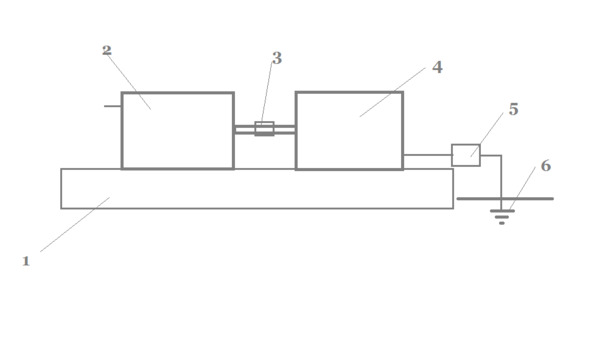
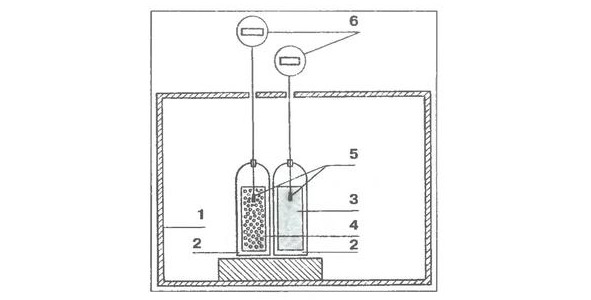
1. cabinet with thermal insulation2. Dewar vessels3. continuous medium (water)4. porous medium5. electronic thermometers (error not more than 0,02С)6. temperature sensors
Two vessels — one with a porous medium, the other — with a solid, are located in a thermally insulated cabinet. They have thermal sensors; the temperature inside is measured every 20 minutes.
It was found out that the temperature in a container with a granulated medium (wet sand, etc.) varies abruptly, with considerable amplitude. The solid medium gives a very flat temperature graph, without bursts and any periodicity.
Porous, granular, otherwise — ordered matter has the property of ordering — to collect in space and time, energy. Probably, this property manifests itself on different scales. Local heating can also occur in a handful of sand, earth, porous clay, only one or two degrees, and in large areas, in square kilometers. The temperature can increase by tens, hundreds of degrees, possibly accompanied by radioactive emissions. So the energy of a high level comes back to the world.
In a certain way ordering matter, it is possible to achieve a predictable ejection of heat (or cold), in certain areas of the created system. Covered by feedback, the system creates a “cold-heat” pulsation; from this one can obtain a steady stream of energy. The ordering can be performed on macroscopic (fractions of a millimeter) and micro-levels (the distance between the atoms of the crystal). In the latter case, it is possible to achieve not intermittent flicker, “eternal radiance”.
In the first approximation, the concentration system looks like the organization of flows of a homogeneous, initially disconnected substance to some common point, a kind of “heart” or a quantum cavity, followed by separation.
Some successes in this, perhaps even intuitively realizing the essence of the process, were achieved by American researchers Fleischman and Pons. They are known to conduct electrolysis of heavy water on palladium electrodes. Their idea — the molecules of the hydrogen isotope accumulate in the crystal lattice of the metal, as closely as possible — and interact. As a result of the “cold nuclear fusion” (NNS), an anomalous heat release occurred (four times higher than the calculated one), but, in addition, there was no neutron radiation associated with it.
In the end, experiments — although they were reproduced in other laboratories, were abandoned, they were almost forgotten. But, with a satisfactory theory: “A structured substance structures energy, creates an order around itself,” they can be revived, put on an appropriate, correct pattern. Hydrogen atoms were collected in one small volume, and therefore they were forced to radiate (relatively soft) photons from their upper energy levels. Isotopes, the synthesis of light nuclei, radiation — this can be forgotten. New reactors of Eternal Motors are loaded with any, not radioactive, but — structured substance.
Note: A structured body (massif) is a cluster of clusters (dust grains) of a substance of equal shape, composition that is some distance from each other in a semitransparent medium or a vacuum. An additional structure in time, give periodic rendezvous and separation of particles — which is like breathing or pulse.
The author reproduced the experiments of Fleischmann and Pons at home, replacing heavy water with ordinary tap water, and palladium electrodes with sand.
It turned out this article:
Electrons get tired?
“Some of the fundamental laws of physics are so simple and obvious that no one doubts their justice, and no one is involved in their verification. In particular, this applies to Ohm’s law, according to which the direct current in the circuit (in any case at its low density) is equal to the voltage divided by the resistance: I = U / R. This is followed by other rules of electrical engineering. For example, according to the Joule-Lenz law, the heat W allocated to the resistance R is directly proportional to the voltage drop across it U, the current I and the duration of its passage t, that is W = R-U-1-t. Therefore, if two identical resistances are sequentially included in a closed circuit, then the same amount of heat should be allocated to them in a unit of time. It seems quite obvious that, bypassing the first resistance, the electrons are not able to either acquire additional energy or lose it.
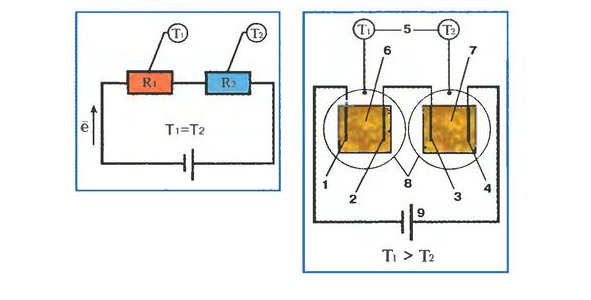
But does Ohm’s law really hold for resistances of all kinds at low current densities? Interested in this issue, I performed a series of simple experiments. Two, if possible, the same resistance, I included in the DC circuit, and next to them attached sensors sensitive thermometers. Each resistance, together with its “own” sensor, was placed in a separate thermostat.
In the first experiments, as resistance, I used incandescent lamps (calculated for a voltage of 2.5 V and a current of 0.15 A). Turning on the current (its source was a reducing stabilizing transformer and a rectifier included in a household circuit with a voltage of 220 V), I measured the temperature in thermostats for an hour; then changed the lamps in places and repeated the measurements. Five series of similar experiments showed that the metallic resistances gave off the amount of heat in full accordance with the classical laws of electrical engineering, and no matter where these resistances were located.
I did not make measurements using resistances of other types, but I performed the experiment using electrolytic cells as a resistance in which ordinary tap water was decomposed on stainless steel electrodes; the result again did not reveal any anomalies.
But if electrolysis of water was carried out in a porous, heterogeneous medium, the picture turned out to be different.
I filled the electrolytic cells with a mixture of quartz sand and tap water, acidified for better electrical conductivity by several droplets of hydrochloric acid (which, generally speaking, is not necessary). And the first experiments gave amazing results, not corresponding to the classical laws of electrical engineering.
Namely, the temperature in the thermostat located in the course of the motion of the electrons turned out to be much higher than the temperature in the next thermostat! At a voltage of a current source of 220 V and its strength of 0.5 A, the difference was 90°C, which significantly exceeded the error value of previous experiments. In total I performed 10 similar experiments and noticed that the difference in temperature between cells clearly depends on the current strength in the circuit and can reach even a few tens of degrees.
I also noticed that on the first cell the voltage drop was higher than the second one (150 and 70 V, respectively), which explains the increased heat release. But the main question remained without an answer: why is there such a noticeable asymmetry, if before and after the experiments the resistance of the cells were the same? After all, this effect should not be!
It can be assumed that in the first cell the electrons for some reason lose some of their internal energy and therefore in the second cell they are no longer able to interact with ions as intensively. But in fact the second cell too (though not style strongly) heats up. True, in the sand-water electrolytic cells there are many local and rather sharp differences in the resistance of the medium, as a result of which the electrons in it are sharply accelerated, then they are sharply slowed down. Is not this the reason for the effect that I observed?
Of course, my assumption that after passing a certain device, the electrons can seem to get tired, giving the environment some special energy, contradicts the laws of nuclear physics, according to which the electron does not have an internal structure and has only a reserve of external kinetic energy. But if I’m wrong, then let me point out the error, preferably by repeating my experiments.
1—4. electrodes made of stainless steel5. thermometer sensors6. The first sand-water cell7. The second sand-water cell8. Thermostats9. DC power supply
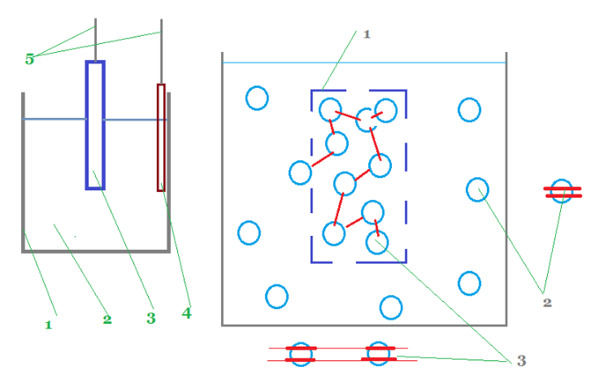
Left. Scheme of experiments by American physicists Fleischmann and Pons. 1. walls of the vessel, 2. deuterium (heavy) water, 3. cathode from palladium, 4. anode (positive electrode), 5. electric power supplyOn right. A possible explanation of the experiments of Fleischmann and Pons. 1. Schematic representation of the electrode from palladium – a porous vessel that absorbs and brings together microparticles, 2. molecules of water outside the cathode, to the right is a pictorial image of a microparticle with two active levels, 3. Water molecules that have the same energy levels enter a reaction, generate a cascade of resonant quanta. There is an anomalous heat release, without nuclear fusion. As described above, heavy water can be replaced by a conventional tap. Palladium in the simplest form is a porous (granular) medium. Another option – parallel, located at a short distance from each other mirror plates – resonators. If the circuit as a whole is correct, included in the electrical network in sequence, two Fleischmann and Pons generators will show the same picture as in experiments with capacitors filled with wet sand.
…The original idea of the experiment is an anomalous heat release in a granular medium. It turned out not quite what was supposed to be found, but still, the result is interesting. It looks as if the charge carrier, ions and electrons, interacting tightly with each other in the first cell along the current, lose some of their internal energy. Or else, this energy is allocated. And, of course, all this happens in an internally divided, more or less ordered environment.
Unfortunately, the lack of calorimeters, tools for accurate determination of the amount of heat released does not allow to receive data at a quantitative level. But the qualitative result is also a good result.
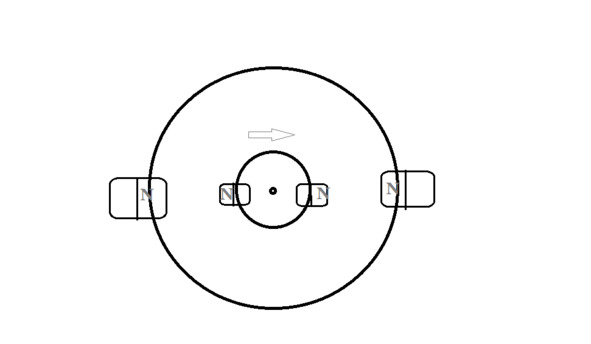
…In the first approximation, the electromagnetic energy generator can look like a slurry of magnetic microscopic balls in an external medium. According to all the above, the ordered array should periodically change its properties (and hence the magnetic flux) in time. It remains to add to it a coil with a wire to get a more or less perpetual generator.
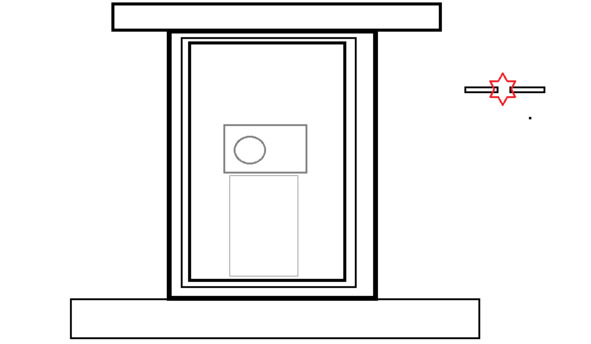
In the case of a teapot, things are as follows. Let the table on which it is left to cool — a highly ordered structure of many identical elements, in a closed volume (it can be large). The energy of boiling water is first distributed throughout the volume. Then, macroscopic temperature fluctuations will arise in the system. The period of their appearance in this or that place can be calculated or even organized. We put the cooled vessel at the right time in the right place — and it boils.
This structure can work in an open space, attracting the energy scattered in the medium, raising it to the previous high level.
To such systems, undoubtedly, one can class living beings, beginning with the simplest unicellular ones. The body consists of billions, trillions of pores, membranes opening and closing in accordance with a certain rhythm. For its life, the body attracts more energy than it consumes when digesting food, which is proved by some scientific studies. Obviously, living, ordered matter is a kind of perpetual motion machine — however, not quite perfect yet. At the very least, food is needed for metabolism, cell replacement, and the like.
High orderliness is possessed by forest massifs, crops of crops, ice cover, possibly, deserts and dried salt lakes. Here, first of all, it is necessary to look for anomalous heat releases, and even radiation.
The energy (thermal, electromagnetic) that passes through the massif of matter evenly brings order into it. A standard example is the Benard cells, hexagonal honeycombs emerging in the oil layer on the heated surface. Thus, systems reanimating energy can be created, including a melt, from a solidification, under conditions of thermal energy inhomogeneity.
Metal laser
In the 90 years of the last century, a wide resonance in the near-scientific community received experiments (that’s funny) with electromagnetic resonance. The researchers claimed that they receive “Energy from nowhere”. Here, first of all, the resonance generator AV Chernetsky (although outside of Russia, in America and Europe, this principle of obtaining additional energy is patented).
Basic meaning. The electric oscillatory circuit is made up of a capacitor, an arrester (two facing electrodes), and also loads — usually incandescent lamps. A pulsating voltage is applied to the circuit from the transformer. The electric arc is ignited. At the same time, the lamp flashes. Electricity meters show that the load is more powerful than the one that is connected to the oscillatory circuit.
The explanations of the author of the experiment, and also of the majority of forum participants devoted to alternative energy (apart from critics of energy meters) — “The electric discharge draws virtual particles from the vacuum, and therefore enhances the flow of electrons.”
Is this statement too broad, friends? Let’s try to understand the issue without attracting new and new unknown factors to it.
…If we “straighten out” the electrical circuit, we will get a piece of wire with condenser plates at the ends. All this strongly resembles the image of a classical optical laser (or, in the Soviet way, an “optical quantum generator, a laser.” The conductor in this case is a laser body, an analog of a ruby rod. The capacitor plates reflecting the electron beam are optical mirrors.
In a conventional laser, by external pumping, or in some other way, an overpopulation of the energy levels is achieved. Quanta of a certain energy cause a cascade of stimulated emission events. The light stream formed in this way resonates between the mirrors, and, at a certain moment, breaks out.
We can well assume that the metallic conductor also has a multitude of microparticles (ions, electrons) that have the same energy level. And, when an initiating burst of voltage passes through it, it is able to form an additional, respectively directed flux of electromagnetic quanta and (or) electrons.
Thus, “energy from nowhere” can arise.
But, for all that, the working body of such a metal laser must have a certain time for natural relaxation of the energy levels. In other words, with the passage of time the output of additional electricity will decrease to zero. It is this inconsistent result, perhaps, that has reduced the intensity of interest in “Eternal Motors” on the basis of resonance.
An increase in the effect is possible provided that conductors with a developed surface are created, granulated, internally separated, into zones with the possibility of maintaining the same spectrum, or alternating.
Recall that in experiments on the scheme given in the article “Electrons get tired?”, After several long experiments, the anomalous heat release in the first-in-the-way current of a container with moist sand also ceased.
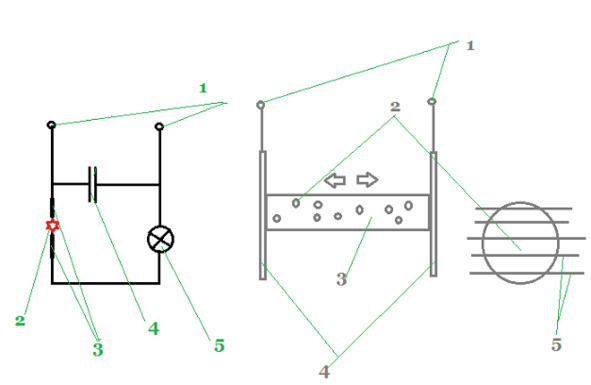
Figure on the left, the resonator of Chernetsky. 1. Power from a high voltage transformer, pulsating current. 2. Spark spark 3. Electrodes. 4. Condenser. 5. Active load, incandescent lamp. Picture on the right. A metal laser. An extended electrical circuit. 1. Nutrition. 2. Areas in the working body of the laser, lattice sites or domains having the same spectrum. 3. The conductor as the working body of a “metallic laser”. 4. Condenser plates like laser mirrors. 5. Schematic representation of the energy levels of interacting particles.
Oddities in a glass jar
An interesting long-standing experiment is the detection of an anomalous attractive force between two plane-parallel plates (in the air).
The so-called Casimir effect is known. Two metal plates, when approaching each other for a distance of thousandths of a millimeter, experience attraction. The explanation of this effect is quantum fluctuations. It turns out that virtual particles can not appear between the plates, whose wavelength does not fit a multiple of the times between the plates of such a resonator.
In this case, in the volume of torsion scales (the basis of which is a glass jar), tangible traction to each other is tested by plates made of any material — plastic, cardboard, metal, etc., the distance between the planes is about four centimeters.
Lighting, even the cold light of a gas discharge lamp, increases the force of attraction.
Earthing of the whole device does not give any result. Static charges have nothing to do with it.
Probably, this phenomenon would have been noticed much earlier, for example, in preparation for the study of the Casimir effect. Presumably, it does not appear in a vacuum. But, nevertheless, the fact that he works in the air environment is also interesting.
Let me also mention (to the point whether?) That in the rubric, something like “Household Phenomena” of the highly respected Discovery Channel, it is discussed for a long time why in the bathroom, your body stubbornly drags along, and the wet curtain sticks. A single answer was never found. Probably, the presented effect has the same nature.
Assumption 1. The air in the space between the plates abruptly cools down, or heats up. In both cases a convective gas motion will occur and, according to the known laws of hydrodynamics, the plates will approach. So, by the way, “ships” are experiencing “mutual attraction”.
But, why is there such a sudden change in temperature?
Assumption 2. Close-lying plates (even non-magnetic ones) are connected by lines of force and structure the space. More ordered air is compressed or expanded — we do not know exactly what it is, and causes the plates to move.
Assumption 3 (consistent with 1). The space between the plates is the place where the interaction between air molecules (gas mixtures) having the same spectrum is most likely. Microparticles discharge photons from orbitals due to resonant quantum induction, a temperature change occurs. The air is moving. Plates act as a primitive resonator. The last assumption is interesting because then, it turns out, any two parallel surfaces (tubes, granules) organize an almost uninterrupted vortex. Yes, friends, two parallel plates that are reduced to a comparatively small distance – this is a miniature, simple Eternal Engine.
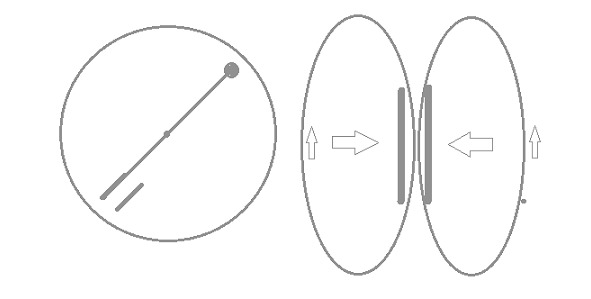
Left — torsion balance, top view. Two plates parallel to each other (below), reduced to a distance of less than 4—5 cm, begin to experience mutual attraction. On the right — two plates, a tube, any surfaces forming a narrow (yes, there is such a term) generate an uninterrupted (pulsing) vortex.
Search for order
One of the oldest, but also interesting experiments is the search for orderliness in various physical bodies or processes. According to the principle of Pauli, all matters are internally divided. For example, one atom can not have more than one electron in its composition with certain characteristics. One atom? And the molecule? A biological molecule, with an atomic weight of billions of units? Dust, already discernible to the naked eye? An object that you can weigh in your hand? This science is silent about this. In essence, intuitively representable, any body (first of all, symmetric to itself) is divided into itself into two, and more parts, so that each of these parts has its own, a particular set of energy levels.
1. One of the experiments is the transmission of an electric current through a nichrome or nickel wire. The initial assumption is that such an elongated object as a wire should spontaneously be internally divided into segments with a certain set of energy levels, and possess a pronounced periodic structure. Identify such properties can for example, by observing changes in resistance to electric current.
The course of experience. The nickel wire (from the hot plate) is straightened on the 1 meter section. To reduce the heat release to the level required in the experiment, it is possible to use lat — or simply add one more nickel coil in series. Straightened wire is stretched between two tripods.
The thermosensitive paper from the fax bends in half and is laid on the wire.
The voltage is about 140 V, the current strength is 1 — 1.5A.
After the power is turned on, the wire heats up. Thermal paper detects that the heat is uneven. Areas of stronger heat release, 4—6 cm long, alternate with approximately the same, relatively cold zones.
The current can be constant, variable or pulsating — the effect of this is not on the location of the heating zones.
2. We change the nichrome wire to the trough with acidified, for better electrical conductivity, wet sand. Will ordering appear in this environment that does not have an internal structure?
The length of the gutter is 1.2 m, the width is 4 cm, the layer of sand is 2 cm. Voltage 220 V, AC or DC.
In this case, quite obvious (the sand dries), the increased heating occurs exactly in the middle of the tank. We can say that this physical body divides this boundary into two parts.
3. Cut out a strip of galvanized sheet metal, 1 cm wide, 40 cm long. We carefully remove the oil film from its surface, all the impurities. We dispose in a burette with a solution of hydrochloric acid.
Option — wrap the strip moistened in acid with a cloth.
According to our assumptions, the process of interaction of metal (zinc) with acid should occur faster in certain places of the strip. We can not imagine all the subtleties of the process, the interaction of the energy levels of a metal and an acid, etc. A qualitative result, the periodicity, is important, at least.
…Usually, the strips are divided into three parts, two zones with increased oxidation of zinc. In some cases — in two, one central zone. A certain instability of experiments leads to confusion.
Experiments were also carried out with a galvanized strip in a transparent plastic tube, through which acid was pumped. The assumption that, precisely, the directed flow of the active liquid will form, or exhibit some special zones of corrosion on the plate, was not justified.
The variant of experiments with acid and zinc is a strip of dense tissue, 4 cm by 80 cm, impregnated in a solution of hyposulfite, and evenly spread over the gutter. In approximately 70% of cases, the strip is divided in exactly two. In one of these parts the crystals manifest themselves in full. In the other half, there are no crystals of hyposulfite at all, or they have completely different shapes and sizes.
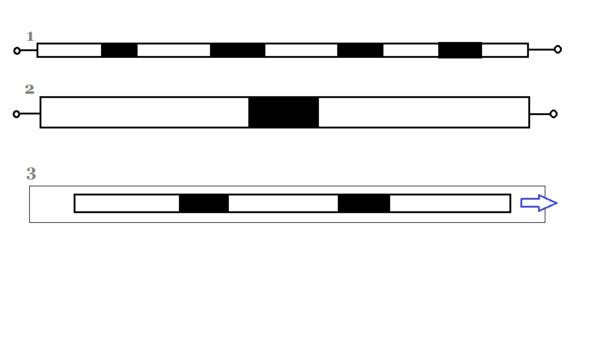
1. A nickel or nichrome spiral, when a current of 1—1.5 A passes through it, at a voltage of 140 V, reveals local heating zones. Presumably, these are areas of internal separation, inherent in any (as it is isolated from the environment) physical body. 2. Gutter with a conductive mass of wet sand. The capacity is divided in two by the central zone of increased heating. 3. The galvanized plate in a solution of hydrochloric acid is divided into segments. The presence in the acid stream (as an option) shows the zones of increased oxidation faster, but does not change the overall picture.
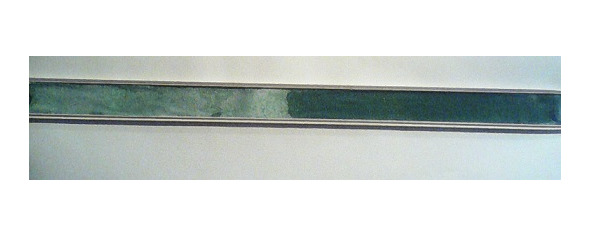
2. A strip of cloth, sown with crystals is divided in two. In one of the halves, the growth of the crystals is inhibited
…For the sake of fairness, it should be pointed out that experiments similar to the author’s experiments, with a nickel wire from an electric hot plate, and paper from a fax, were conducted by other people.
Discussions continue around the observations of VV Yavorsky, an academician of the Academy of Missile and Artillery Sciences, who revealed anomalous heat release of projectiles that fell into the target (with calorimeter). Academicians of the Russian Academy of Sciences, of course, explain the “Energy from Nowhere” incompetence of experimenters, the combustion of dispersed metal particles and other factors. However, there are also scientists who decided to test all this experimentally (and not just a compilation of texts on the Internet and physics textbooks, to the measured buzz of an air conditioner in the office). And, if possible, they want to receive such a remarkable increase in energy in some kind of peaceful conditions.
…“The metal explodes!”
Extract from the article of Dr.Sci. Tech. M.Marakhtanov, professor MSTU. NE Bauman and A. Marakhtanov, graduate student of the University of California, Berkeley (USA).
…“When an electric current of low density flows through the wire, its value remains the same over the entire length of the wire and it heats evenly. But when the current density reaches a very large value, the flow of electrons due to quantum processes in the crystal lattice turns into a wave packet. The current strength in different places of the wire becomes different, and the metal grouped into the wave by electrons is heated unevenly. The diagram shows that the “cold” areas with a temperature of 350–420°C and incandescent to 1050–1250°C are adjacent to the wire.
This unique frame of the video demonstrates a macroscopic manifestation of quantum processes — the occurrence of periodic temperature fluctuations of metal along a steel wire 0.3 mm in diameter during the flow of an electric current of 48.6 A across it. The wire is immersed in water, the length of its visible section is 25 mm. The wave deformation of the surface of the lacquer layer clearly demonstrates the redistribution of the concentration of free electrons in thin metallic films.”