The French Riviera: A Guide to Festivals, Traditions & the Art of Living Well. Discover the Côte d’Azur All Year Round
Қосымшада ыңғайлырақҚосымшаны жүктеуге арналған QRRuStore · Samsung Galaxy Store
Huawei AppGallery · Xiaomi GetApps

автордың кітабын онлайн тегін оқу  The French Riviera: A Guide to Festivals, Traditions & the Art of Living Well. Discover the Côte d’Azur All Year Round

Marina Azureva

The French Riviera: A Guide to Festivals, Traditions & the Art of Living Well

Discover the Côte d’Azur All Year Round

Fonts by «ParaType»


Contents

“..holiday… do not do any work” Bible. Book of Leviticus

The French Riviera

Known for its stunning Mediterranean coastline and vibrant cultural scene, offers a plethora of festivals and events throughout the year that captivate both locals and visitors. If you’re planning a trip to Nice and wish to immerse yourself in the region’s rich traditions without the obligation of work, timing your visit to coincide with these celebrations can be truly rewarding. Here’s a guide to some of the most notable festivities formed in “Annual holiday cycle” chapter. French traditions and the renowned “savoir-vivre” vividly manifest in their holidays. Let’s explore how joyous events and days off are distributed throughout the year.

Imagine a winter’s evening in France, where the air hums with the scent of cinnamon and pine, and village squares glow beneath constellations of golden lights. This is the season when France dons its most enchanting attire — a time when cobblestone streets echo with carols. Every home becomes a stage for centuries-old traditions.

From the snow-dusted peaks of the Alps to the sun-kissed shores of the Riviera, Christmas and New Year unfold like a storybook, blending sacred reverence with the warmth of shared joy.

Picture the marchés de Noël in Nice, their wooden stalls brimming with hand-painted santons and cooked chestnuts. Hear the laughter of children as they whisper wishes to Père Noël, and feel the anticipation of le Réveillon, where tables groan under foie gras, oysters, and the delicious bûche de Noël. In Provence, families count down to midnight Mass with Les Treize Desserts, a sweet symphony of dried fruits and nougat, while Parisian boulevards shimmer with illuminations that rival the stars.

This is a season where the past and present dance — a traditional midnight kiss under mistletoe, the pope’s blessing broadcast from Rome, and the president’s solemn address before fireworks paint the sky. France invites you to wander its festive tapestry, where every tradition is a thread connecting hearts and history. Come, step into the glow of a French winter, where magic is not merely felt — it is lived.

In the sun-drenched south of France and the Principality of Monaco, cultural and sporting events unfold weekly, ranging from intimate local gatherings to globally renowned spectacles. This guide explores the annual festive cycle of the French Riviera, highlighting world-famous celebrations in Nice and Monaco where everyone is welcome to participate.

Essential Phrases and Cultural Tips for Traveling to the French Riviera

The French Riviera, or Côte d’Azur, is a stunning destination known for its glamorous cities, beautiful beaches, and rich cultural heritage. While many locals speak English, making an effort to communicate in French can enhance your experience and help you connect with people more authentically. Here are some essential phrases, cultural tips, and etiquette guidelines to ensure a smooth and pleasant visit.

Basic French Phrases

Knowing a few key phrases will help you navigate daily interactions and show respect for the local culture:

Bonjour (bohn-zhoor) — Hello (used formally during the day)

Bonsoir (bohn-swahr) — Good evening

Merci (mehr-see) — Thank you

Merci beaucoup (mehr-see boh-koo) — Thank you very much

S’il vous plaît (seel voo pleh) — Please

Excusez-moi (ehk-skew-zay mwah) — Excuse me

Combien ça coûte? (kohm-byen sah koot?) — How much does it cost?

Parlez-vous anglais? (par-lay voo ahn-glay?) — Do you speak English?

Je ne parle pas bien français (zhuh nuh parl pah byen frahn-say) — I don’t speak French well

Comment aller au musée? (koh-mahn ah-lay oh myoo-zay?) — How do I get to the museum?

Où est l’arrêt de tramway? (oo eh lah-ray duh tram-way?) — Where is the tram stop?

L’addition, s’il vous plaît (lah-dee-syohn seel voo pleh) — The check, please /Used in restaurants to request the bill./

Où sont les toilettes? (oo sohn lay twa-let?) — Where are the restrooms?

Au revoir (oh ruh-vwahr) — Goodbye

A friendly “Bonjour” before starting a conversation is essential, as it sets the right tone and is considered polite.

Politeness and Social Etiquette

French social interactions place a strong emphasis on politeness and respect. Here are some cultural nuances to keep in mind:

Always Greet with a “Bonjour” — Whether entering a shop, restaurant, or asking for directions, always begin with a polite greeting.

Use “Vous” Instead of “Tu” in Formal Situations — The formal “vous” is used when speaking to strangers, elders, or professionals. “Tu” is reserved for friends and close acquaintances.

Soft, Indirect Communication — The French often use indirect phrasing to be polite. Instead of a direct “I want…,” it’s more polite to say “Je voudrais…” (I would like…).

Dining Etiquette — In restaurants, service is often more relaxed than in the U.S. Waiters do not check in frequently, and it is customary to ask for the bill instead of expecting it automatically.

Kissing on the Cheek (La Bise) — In social settings, the French often greet with cheek kisses. A handshake is common too, so use it if its better for you.

Understanding Local Culture

Tipping — A service charge is usually included in restaurant bills, but it is common to leave small change /50 centimes 1—2 euro/ as a gesture of appreciation.

Dress Code — The French Riviera has a chic, stylish vibe. While casual clothing is acceptable, dressing neatly and stylishly is appreciated, especially in upscale areas like Monaco or Nice.

Beachwear is acceptable on the beach and on the way to it. In cafes and restaurants, urban clothing is welcomed (sometimes strictly required). A naked torso outside the beach is prohibited and is subject to a fine of 135 euros. Swimming in clothes is prohibited. Swimming naked is only allowed on special beaches, away from the city.

Respecting Quiet Hours — The French value their siesta.

24/7 Avoid loud conversations or phone calls in public places, including transport.

By learning basic phrases, practicing politeness, and understanding cultural nuances, you’ll enhance your travel experience and make a positive impression on locals. Enjoy your trip to the breathtaking French Riviera!
Nice, France: A Glamorous Getaway on the French Riviera

Nestled along the sparkling shores of the Mediterranean, Nice is a dream destination for American travelers seeking a mix of luxury, history, and effortless European charm. As the crown jewel of the French Riviera, this coastal city offers an intoxicating blend of vibrant culture, stunning architecture, and world-class cuisine. Whether you’re looking to soak up the sun, explore centuries-old streets, or indulge in exquisite French flavors, Nice has something for every traveler.

A Stroll Through History and Beauty

Nice’s history stretches back to the ancient Greeks, who founded the city around 350 BC.

Today, echoes of its rich past are everywhere, from the winding streets of Old Town (Vieux Nice) to the grand Belle Époque mansions lining the famous Promenade des Anglais. The latter, a scenic walkway hugging the Mediterranean, is the perfect place for a leisurely stroll, rollerblading, bike or simply gazing at the deep azure sea that gives the Côte d’Azur its name.

One must-visit spot is Castle Hill (Colline du Château), which offers breathtaking panoramic views of the city and the sea. Though the castle has been destroyed.. the lush parkland and cascading waterfall provide a picturesque escape from the lively streets below.

Art, Culture, and the Riviera Lifestyle

Art lovers will find themselves in paradise in Nice. The city was a muse for great artists like Henri Matisse and Marc Chagall, both of whom have dedicated museums here. The Musée Matisse, housed in a stunning 17th-century villa, showcases a lifetime of the artist’s work, while the Musée Marc Chagall features biblical-inspired masterpieces bursting with color.

For a taste of authentic Niçois culture, wander through Cours Saleya, the lively open-air market in the heart of the Old Town. This is where locals shop for fresh produce, fragrant flowers, and artisanal cheeses. If you visit on a Monday, you’ll find a fascinating flea market filled with vintage treasures.

Savoring Niçois Cuisine

No visit to Nice is complete without indulging in its unique Mediterranean flavors. Try Socca, a delicious chickpea pancake with a crispy edge, or Salade Niçoise, a refreshing blend of tuna, eggs, olives, and fresh vegetables. For a fine dining experience, many Michelin-starred restaurants offer innovative takes on French cuisine, often featuring freshly caught seafood and fragrant herbs from the surrounding countryside.

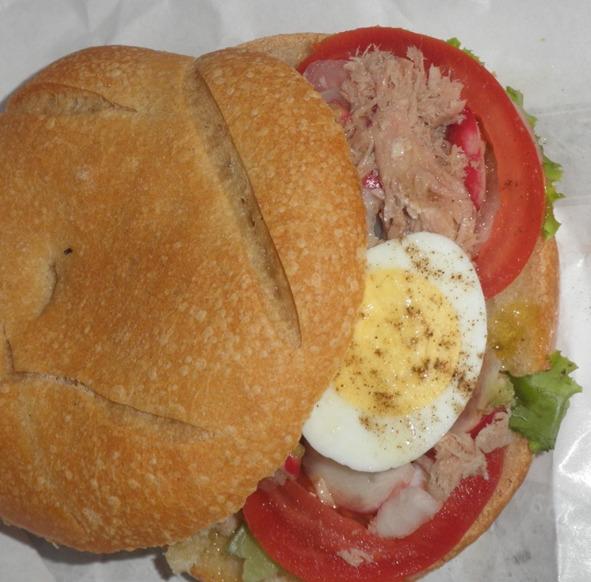
The pan bagnat (pronounced [pɑ̃ ba’ɲa]) is a sandwich that is a specialty of Nice, France

Pair your meal with a glass of local rosé wine — a staple in the Riviera lifestyle.

Day Trips and Beyond

One of the best things about Nice is its accessibility to other stunning Riviera destinations. A short train ride takes you to the glitz and glamour of Monaco, where you can visit the famous Monte Carlo Casino or stroll through the opulent gardens of the Prince’s Palace. If you prefer a more relaxed atmosphere, head to Eze, a medieval hilltop village with breathtaking views and beautiful Botanical Garden. And for those seeking artistic inspiration, Saint-Paul-de-Vence, an enchanting artists’ haven, offers quaint galleries and a timeless ambiance.

The Perfect French Escape

Nice is more than just a beautiful city — it’s a lifestyle. Whether you’re enjoying a morning espresso at a sun-drenched café, watching the sunset over the Bay of Angels, or dancing after midnight at the CAP 3000 Rooftop, Nice captures the essence of la belle vie (the beautiful life). For travelers, it’s the perfect blend of relaxation, adventure, and cultural immersion. So pack your bags, brush up on your French, and get ready to fall in love with the magic of Nice.

Glossary of French Terms

Apéritif (ah-pay-ree-teef)

A pre-dinner drink, often accompanied by light snacks. Common in social gatherings.

Bûche de Noël (boosh duh noh-el)

A traditional Yule log-shaped cake served at Christmas, typically made of rolled sponge cake filled with buttercream and decorated to resemble a log.

Chassé-croisé (sha-say kwa-zay)

Literally “crossing paths.” Refers to the chaotic travel period when vacationers depart and return simultaneously, causing nationwide traffic jams.

Crèche (kresh)

A nativity scene, often displayed during Christmas. In Provence and on Riviera, these include santons (hand-painted clay figurines).

Galette des Rois (ga-let day rwa)

A puff pastry cake eaten on Epiphany (January 6). Contains a hidden figurine (fève); whoever finds it is crowned “king” or “queen” for the day.

Juilletistes (zhwee-yeh-teest)

People who take their summer vacations in July. Contrast with aoûtiens (August vacationers).

La Bise (lah beeze)

Cheek-kissing greetings (1–4 kisses depending on the region, 2 on Riviera). Common among acquaintances/friends/family; tourists are often exempt.

Les Treize Desserts (lay trez day-ser)

“The Thirteen Desserts,” a Provençal Christmas tradition symbolizing Jesus and the 12 apostles. Includes dried fruits, nuts, and sweets like nougat.

Marché de Noël (mar-shay duh noh-el)

Christmas market, featuring stalls selling crafts, gifts, and seasonal treats like roasted chestnuts (marrons glacés).

Pétanque (pay-tonk)

A popular outdoor game similar to bocce, played with metal balls. A staple of southern French culture.

Pissaladière (pee-sa-la-dyehr)

A Niçois onion tart topped with olives and anchovies, akin to pizza.

Réveillon (ray-vay-yon)

A lavish midnight feast on Christmas Eve or New Year’s Eve, featuring dishes like oysters, foie gras, and turkey.

Santons (sahn-ton)

Hand-painted clay figurines from Provence, used in nativity scenes (crèches). Often depict villagers, artisans, and biblical figures.

Savoir-Vivre (sav-wahr veev-ruh)

The French “art of living well,” emphasizing etiquette, cultural refinement, and balance between indulgence and restraint.

Socca (soh-ka)

A thin, savory chickpea pancake, a street-food specialty of Nice and its region.

Toussaint (too-san)

All Saints’ Day (November 1), when families visit cemeteries to honor the dead. Chrysanthemums are traditional grave decorations.

Vous vs. Tu (voo / tew)

The formal (vous) and informal (tu) forms of “you.” Vous is used with strangers, elders, or in professional settings.

Timeline of Events: The Annual Festive Cycle of Riviera and Monaco

What is celebrated in Nice and in the Principality of Monaco throughout the calendar year. Here is the most interesting in my opinion, with a brief description and some photos

December 25 — Christmas (Noël)

Christmas in France is a time for family and tradition. Homes are decorated with Christmas trees and nativity scenes (crèches). On Christmas Eve, families gather for a feast known as le réveillon, featuring delicacies like roast turkey, foie gras, and the famous bûche de Noël (Yule log cake). Children wake up on Christmas morning to find gifts from Père Noël (Father Christmas) under the tree. Many also attend midnight mass on Christmas Eve to celebrate the real meaning of the season.

Noël et Nouvel An. December 25th and January 1st are public holidays. From mid-November, television channels begin festive programming, showcasing classic French comedies familiar to us, as well as American films set during the Christmas season.

On Christmas Eve and Christmas Day, two main channels broadcast live services from the Vatican conducted by the Pope, with translations and explanations of the liturgy in French.

The president delivers the New Year’s address before the evening news at 8 PM.

The gastronomic staples of the French Christmas table include smoked salmon, foie gras, turkey, and the “Bûche de Noël” cake.

...