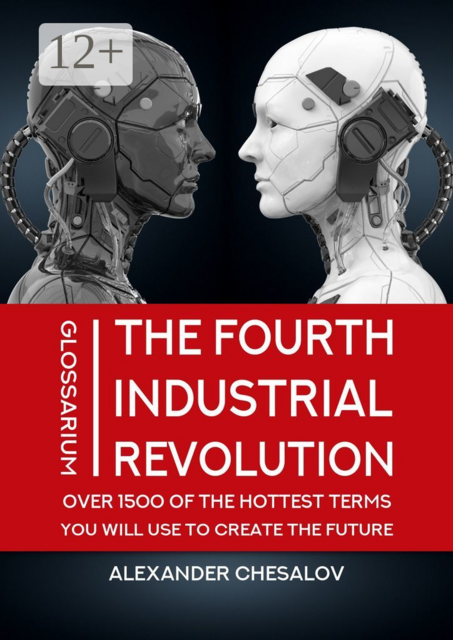



автордың кітабын онлайн тегін оқу The fourth industrial revolution glossarium: over 1500 of the hottest terms you will use to create the future. Textbook
Alexander Chesalov
The fourth industrial revolution glossarium: over 1500 of the hottest terms you will use to create the future
Textbook
Fonts by «ParaType»
Illustrator Abidal | Dreamstime
Cover designer Alexander Urievich Chesalov
Editor Khadzhimurad Akhmedovich Magomedov
Proofreader Alexandr Khafizovich Yuldashev
© Alexander Chesalov, 2024
© Abidal | Dreamstime, illustrations, 2024
© Alexander Urievich Chesalov, cover design, 2024
Dear reader!
Your attention is invited to a unique book!
This is the result of many years of experience of the author in the field of information technology. This text, among other things, contains the hottest terms not only from other books of the author: «Glossary of Artificial Intelligence and Information Technology», «Glossary of the Digital Economy», «Glossary of Digital Health» and other books of the author, but also many terms on the theme of the Fourth industrial revolution.
ISBN 978-5-0059-8626-9
Created with Ridero smart publishing system
Contents
FROM AUTHOR-CREATOR
Alexander Chesalov
Doctor of Engineering Sciences,
Corresponding member of the Russian Academy of Natural Sciences.
Specialist in the field of information technology and artificial intelligence since 1991.
Good afternoon, dear friends and colleagues!
Let me introduce you to my new book, «The Fourth Industrial Revolution Glossarium: over 1500 of the hottest terms you will use to create the future».
This is my new book, which combines the experience of the last five years in compiling concise dictionaries on the topics of the information technology, the artificial intelligence, the digital economy, the digital health, the Internet of things and, of course, my favorite topic — the fourth industrial revolution.
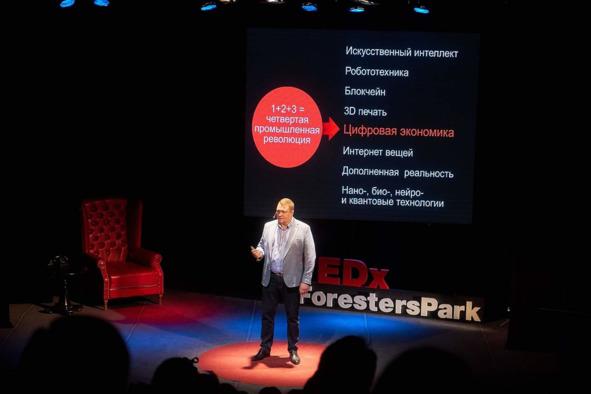
This story began in 2019, when I spoke at the world famous international conference TEDx with the report «The Fourth Industrial Revolution: through hardships to the stars».
Today, we are increasingly encountering such terms as: «fourth industrial revolution», «information society», «knowledge society», «digitalization» and «digital economy», «Internet of things» and «industrial Internet of things», «Internet of Value», «digital ecosystem», «robotics» and «artificial intelligence», and many others. And very often we do not understand what it is and cannot, for various reasons, understand the essence of modern «digital» processes that are happening to us and in the world around us.[1]
I will give a simple example.
In this book, the «global information society» or «digital society of the future» is defined as a new global knowledge society that exists and interacts, and is also closely integrated into a fundamentally and qualitatively new «digital» social, economic and cultural ecosystem in which a free exchange of information and knowledge between people, using artificial intelligence, augmented and virtual reality, which are auxiliary interfaces for the interaction of people and machines, computers, robots, wearable and mobile devices, etc.
The global information society is a society of the future also because its development is based on intellect, information and knowledge, which are a catalyst for the emergence and development of new social, economic and including information technologies, which in turn transform both the information society itself, and the reality around us on the principle of a feedback system.
One example of the globalization of the information society and its gradual transformation is the widespread use in all areas of activity around the world of the technologies of the fourth industrial revolution. Robotics and artificial intelligence, new computing technologies and big data, digital platforms and ecosystems, new nano- and biotechnologies, and so on, they all unite all people around the world and are a catalyst for the «digital transformation» of modern society.
It is important to note that in the coming decades, the technologies of the fourth industrial revolution will radically change the way we perceive the world around us. They will change approaches to the processing and analysis of information, change the way people interact, change the processes of production of products and services, and, ultimately, form our new value systems. Humanity will have an understanding not only that information and big data are a value, but there will also be an understanding that they will largely determine the development of modern society. It can be said that right now the so-called «critical mass» of knowledge and technologies is being formed, which will «blow up» the world of technology and science, and change our daily life.
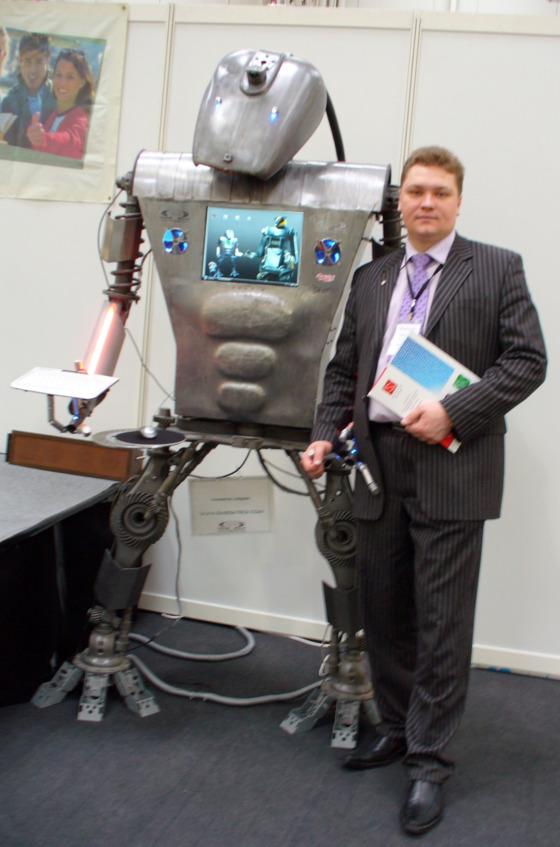
For many years I have been interested in robotics and artificial intelligence. Also, I was very interested in the direction of work — consumer robotics, or in simple terms, I was interested in the direction of creating humanoid robots that could help people, including those with disabilities, in their daily lives.
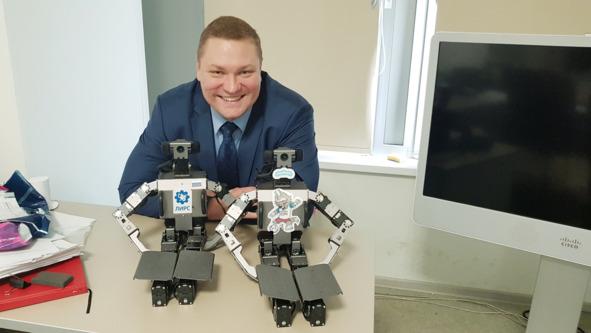
In 2007, robots were imperfect. Software for artificial intelligence systems based on machine learning was in its infancy. The intelligent assistants that we now often encounter when interacting with our smartphones have not yet been. And there is no need to talk about humanoid robots.
With the advent of the new millennium, the fourth industrial revolution changed the usual order of things.
Most of the modern terms of the fourth industrial revolution appeared in the period of the second and third industrial revolutions. I talk about this in detail in my book «Digital Transformation».
In an effort to use everything new, you and I must give ourselves an account of the fact that systems created on the basis of new technologies must first of all serve the interests of humanity, must give people more opportunities, more prospects, freedom and control over their own lives. And this is very important, because a person, sooner or later, will entrust the responsibility of managing and providing for his life to the «product» of his creativity, namely robots and artificial intelligence. And if you even look more broadly, at a number of robotic and automated systems controlled and serviced by hundreds of artificial intelligences, and not by humans.
The fourth industrial revolution is capable of generating any form of social, economic and cultural systems. And I would not like to share the opinion of Elon Musk that: «Artificial Intelligence will sooner or later kill all of us» or the opinion of the British physicist Stephen Hawking about the superiority of artificial intelligence over humanity. I share the view of our future offered by Klaus Martin Schwab in his books.
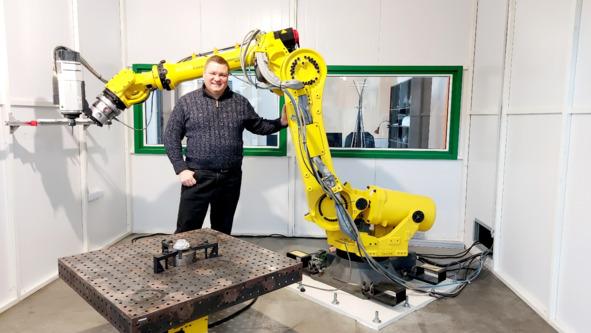
I would like to believe that you and I will be able to create such systems that will make our society more «humane», prosperous and allow us to increase the duration of our lives, open new opportunities for useful and interesting activities in a stable and harmoniously developing environment.
It is important to understand that the formation of the model of our future with you and the vital activity systems of our society, based on the use of technologies of the fourth industrial revolution, have not yet been implemented by anyone.
We are at the very beginning of the journey.
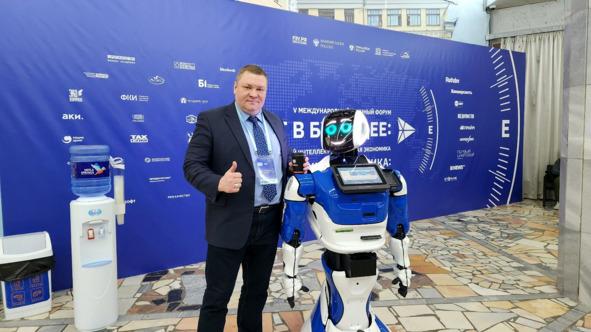
And, therefore, the question is how will our life with you change at the moment when the technologies of the fourth industrial revolution work in full force, what place will we occupy in this world, and most importantly — what role will be assigned to high technologies and results based on these technologies, depends exclusively on you and me!
What kind of book is this?
This is, first of all, an information guide that will help you or any other person, or a specialist from any industry, quickly enough to orientate yourself in the whole variety of new terms and definitions of the fourth industrial revolution.
The book is aimed not only at specialists working in the field of information technologies. The book is written for everyone who is interested in our future with you in the period of digital transformations of the fourth industrial revolution.
Why is the book called a «glossary»?
«Glossarium» in Latin means a dictionary of highly specialized terms.
My first experience in this area was in the compilation of a glossary on artificial intelligence and information technologies, which I published in December 2021. It originally contained only 400 terms. Then, already in 2022, I significantly expanded it to more than 1,000 relevant terms and definitions.[2]
In 2022, in a team with two co-authors (with whom in 2021 I worked on the development of the Program of the Artificial Intelligence Center of the Bauman Moscow State Technical University), the “Glossary of artificial intelligence: 2,500 terms” was prepared and published[3]. As it becomes clear from the title of the book, it already contains more than 2,500 terms and is defined in the direction of “artificial intelligence” in Russian and English. The first edition of this book was presented to a wide range of readers at the 35th Moscow International Book Fair in 2022.
In 2022, I completed another work and published the book “Glossary of digital economy: 1500 terms and definitions”, which helped me a lot in my daily work with the analysis of a huge amount of different information, when writing and implementing various IT projects.[4]
In 2023, the book “Glossary on digital healthcare: 2000 terms and definitions” was published in the third year.[5]
This book, as I said, combines experience from 2019 and was prepared by me for publication from 2021 to 2023. It contains terms and definitions that are widely used around the world. The book combines not only the best of the above books, but also includes terms and definitions from the topic of the Internet of Things and the fourth industrial revolution in general.
I, as the author-creator, do not claim authorship and uniqueness of the prepared text. The main goal of my work is to give you new and relevant information on the fourth industrial revolution, as well as a «tool» that will help you in your daily work.
The book is a personal project of the author and a completely free document for distribution. You are free to use this book however you like, but a link to the text in this book is required.
The book is published in electronic form, and I continue to work on improving and filling this book with new terms and definitions. I would be grateful for any feedback, suggestions and clarifications. Please send them to aleksander.chesalov@yandex.ru.
You can get to know me and my projects in the digital economy, artificial intelligence and IT systems in detail on my personal website chesalov.com.
This book is my gift to you.
Happy reading and productive work!
Yours, Alexander Chesalov.
03/15/2023. First edition. 1659 terms.
.Chesalov А. Glossary of digital healthcare: 2000 terms and definitions. -М.: Ridero. 2022.-572 p. — Text: electronic. — // Ridero.ru. URL: https://ridero.ru/books/glossarium_po_cifrovomu_zdravookhraneniyu_2000_terminov_i_opredelenii/
.Chesalov А. Digital transformation. -М.: Ridero. 2020.-352 p. // Ridero.ru. — Text: electronic. — URL:
.Chesalov А. Glossary on artificial intelligence and information technology. -М.: Ridero. 2021.-304 p. // Ridero.ru. — Text: electronic. — URL: https://ridero.ru/books/cifrovaya_transformaciya_2/ (date of request: 25.01.2023).
.Chesalov А., Vlaskin A., Bakanach M. Artificial Intelligence Glossarium: 1000 terms.-М.: Ridero. 2021.-279 p. // Ridero.ru. — Text: electronic. — URL: https://ridero.ru/books/artificial_intelligence_glossarium_1000_terms/ (date of request: 24.01.2023).
.Chesalov А. Digital Economy Glossary: 1500 terms and definitions. -М.: Ridero. 2022.-424 p. — Text: electronic. — // Ridero.ru. URL: https://ridero.ru/books/glossarium_po_cifrovoi_ekonomike_1500_terminov_i_opredelenii/
.Chesalov А. Digital transformation. -М.: Ridero. 2020.-352 p. // Ridero.ru. — Text: electronic. — URL:
.Chesalov А. Glossary on artificial intelligence and information technology. -М.: Ridero. 2021.-304 p. // Ridero.ru. — Text: electronic. — URL: https://ridero.ru/books/cifrovaya_transformaciya_2/ (date of request: 25.01.2023).
.Chesalov А., Vlaskin A., Bakanach M. Artificial Intelligence Glossarium: 1000 terms.-М.: Ridero. 2021.-279 p. // Ridero.ru. — Text: electronic. — URL: https://ridero.ru/books/artificial_intelligence_glossarium_1000_terms/ (date of request: 24.01.2023).
.Chesalov А. Digital Economy Glossary: 1500 terms and definitions. -М.: Ridero. 2022.-424 p. — Text: electronic. — // Ridero.ru. URL: https://ridero.ru/books/glossarium_po_cifrovoi_ekonomike_1500_terminov_i_opredelenii/
.Chesalov А. Glossary of digital healthcare: 2000 terms and definitions. -М.: Ridero. 2022.-572 p. — Text: electronic. — // Ridero.ru. URL: https://ridero.ru/books/glossarium_po_cifrovomu_zdravookhraneniyu_2000_terminov_i_opredelenii/
The Fourth Industrial Revolution Glossarium: over 1500 of the hotest terms you will use to create future
«A»
A/B testing — involves the testing of two variants in order to determine which one is better. For example, A/B testing can be used to find out which of two webpage options yields a better conversion rate. If it’s assumed that version A has a better conversion rate, it’s used as the basis for a new, slightly different version and then tested again to discover the better performing version[1].
Access Control — prevention of unauthorized use of a resource, including the prevention of use of a resource in an unauthorized manner[2].
Access history is a record of all activity related to an individual’s My Health Record. Every time My Health Record is accessed, changed or a user removes information from the record, an automatic audit trail is created and can be viewed[3].
Access in the context of security, is the privilege or assigned permission to use computer data or resources in some manner. For instance, a user may be allowed read access to a file, but will not be allowed to edit or delete it. Access is also the amount of admittance allowed to any given entity; or, it can simply mean the permission for admittance[4].
Access list is a list associated with an individual’s My Health Record that specifies the registered healthcare provider organizations permitted to, or blocked from, accessing an individual’s My Health Record. The access list will show the healthcare provider organizations who have previously accessed the record[5].
Access to information — the ability to obtain information and use it.
Access to information constituting a commercial secret — familiarization of certain persons with information constituting a commercial secret, with the consent of its owner or on other legal grounds, provided that this information is kept confidential.
Accessing organization — the healthcare organization that accesses the My Health Record system[6].
Accountable care organization (ACO) is an association of hospitals, healthcare providers and insurers in which all parties voluntarily assume financial and medical responsibility for medicare patients[7].
Achievement diary — developmental milestones throughout childhood, such as first words spoken or the first day of primary school, can be recorded in the achievement diary by an individual or their authorized representatives, such as a parent. Healthcare provider organizations cannot view these[8].
Active and Healthy Ageing is the process of optimizing opportunities related to health, participation and safety in order to improve quality of life[9].
Active assisted living (AAL) is concepts, products, services, and systems combining technologies and social environment with the aim of improving the quality of people’s lives[10].
Active Learning/Active Learning Strategy — a special case of Semi-Supervised Machine Learning in which a learning agent is able to interactively query an oracle (usually, a human annotator) to obtain labels at new data points. A training approach in which the algorithm chooses some of the data it learns from. Active learning is particularly valuable when labeled examples are scarce or expensive to obtain. Instead of blindly seeking a diverse range of labeled examples, an active learning algorithm selectively seeks the particular range of examples it needs for learning.
Adaptive Design is an alternative to responsive design and relies on creating a separate program design (mobile vs. desktop) for each view. Adaptive design is often referred to as dynamic serving. Responsive Design refers to the planning of an adaptive online service, in which the appearance of the service is designed to be responsive. A responsive online service uses one code from one web address to cater for the various devices a user has (desktop, tablet, smart phone, regular cell phone), but displays the content differently depending on the screen size[11],[12].
Adaptive system is a system that automatically changes the data of its functioning algorithm and (sometimes) its structure in order to maintain or achieve an optimal state when external conditions change.
Additive manufacturing (AM) or additive layer manufacturing (ALM) is the industrial production name for 3D printing, a computer-controlled process that creates three dimensional objects by depositing materials, usually in layers[13].
Additive technologies are technologies for the layer-by-layer creation of three-dimensional objects based on their digital models («twins»), which make it possible to manufacture products of complex geometric shapes and profiles.
Administration portal — an online tool used by the System Operator for administrative actions on individual My Health Records, for example when assisting an individual with an enquiry[14].
Advance care document custodian is someone who holds a copy of an individual’s advance care planning document. An individual can add their advance care document custodian’s name and contact details in their My Health Record so that doctors will be able to contact the custodian should the need arise[15].
Advance care planning documents is a document that is a type of written statement regarding a person’s wishes for their future medical or healthcare treatment and may formally appoint a substitute decision-maker. Advance care planning documents detail your future medical care preferences. It provides guidance to your family, close friends and medical professionals if you are unable to communicate due to illness or injury. Advance care planning documents (and goals of care documents) can be uploaded to and stored on your My Health Record by a healthcare provider with your consent. Also refer to Goals of Care document[16].
Advanced access controls — the access controls that enable a registered individual to set controls on the registered healthcare provider organizations and nominated representatives who may access the individual’s My Health Record or documents within it[17].
Agency for healthcare research and quality (AHRQ) is a U.S. government agency that functions as a part of the department of health & human services (HHS) to support research to help improve the quality of health care[18].
Aggregate — a total created from smaller units. For instance, the population of a county is an aggregate of the populations of the cities, rural areas, etc., that comprise the county. To total data from smaller units into a large unit[19].
Aggregate Data is data that have been aggregated. Contrast with microdata. Also, Aggregated Data — data of several individuals that have been combined to show general trends or values[20],[21].
Aggregator is a type of software that brings together various types of Web content and provides it in an easily accessible list. Feed aggregators collect things like online articles from newspapers or digital publications, blog postings, videos, podcasts, etc. A feed aggregator is also known as a news aggregator, feed reader, content aggregator or an RSS reader[22].
Agile Development is a group of methodologies used in software projects aimed at producing fit-for-purpose software faster and more reactively. Agile development can be understood as the opposite of traditional waterfall software development[23].
Agricultural Financial Platform is a center of excellence in agricultural finance in the form of a financing system for agricultural micro-enterprises, which includes practical tools for farmers, agricultural experts, financial practitioners, and knowledge and best practices for policy makers[24].
AI acceleration is acceleration of calculations encountered with AI, specialized AI hardware accelerators are allocated for this purpose (see also artificial intelligence accelerator, hardware acceleration). Also, AI acceleration is the acceleration of AI-related computations, for this purpose specialized AI hardware accelerators are used.
AI accelerator is a class of microprocessor or computer system designed as hardware acceleration for artificial intelligence applications, especially artificial neural networks, machine vision, and machine learning. Also, AI accelerator is a specialized chip that improves the speed and efficiency of training and testing neural networks. However, for semiconductor chips, including most AI accelerators, there is a theoretical minimum power consumption limit. Reducing consumption is possible only with the transition to optical neural networks and optical accelerators for them.
AI and machine learning imbues programs and machines with human-like decision-making capabilities. These capabilities become more advanced with machine learning algorithms and refined over time with exposure to larger data sets[25].
AI benchmark is an AI benchmark for evaluating the capabilities, efficiency, performance and for comparing ANNs, machine learning (ML) models, architectures and algorithms when solving various AI problems, special benchmarks are created and standardized, initial marks. For example, Benchmarking Graph Neural Networks — benchmarking (benchmarking) of graph neural networks (GNS, GNN) — usually includes installing a specific benchmark, loading initial datasets, testing ANNs, adding a new dataset and repeating iterations.
AI Building and Training Kits is applications and software development kits (SDKs) that abstract platforms, frameworks, analytics libraries, and data analysis appliances, allowing software developers to incorporate AI into new or existing applications.
AI camera — a camera with artificial intelligence, digital cameras of a new generation — allow you to analyze images by recognizing faces, their expression, object contours, textures, gradients, lighting patterns, which is taken into account when processing images; some AI cameras are capable of taking pictures on their own, without human intervention, at moments that the camera finds most interesting, etc.
AI chipset is a chipset for systems with AI, for example, AI chipset industry is an industry of chipsets for systems with AI, AI chipset market is a market for chipsets for systems with AI.
AI chipset market — chipset market for systems with artificial intelligence (AI), see also AI chipset.
AI cloud services are AI model building tools, APIs, and associated middleware that enable you to build/train, deploy, and consume machine learning models that run on a prebuilt infrastructure as cloud services. These services include automated machine learning, machine vision services, and language analysis services.
AI CPU is a central processing unit for AI tasks, synonymous with AI processor.
AI engineer is an AI systems engineer.
AI engineering — transfer of AI technologies from the level of R&D, experiments and prototypes to the engineering and technical level, with the expanded implementation of AI methods and tools in IT systems to solve real production problems of a company, organization. One of the strategic technological trends (trends) that can radically affect the state of the economy, production, finance, the state of the environment and, in general, the quality of life of a person and humanity.
AI hardware (also AI-enabled hardware) is infrastructure hardware or artificial intelligence system, AI infrastructure.
AI industry — for example, commercial AI industry — commercial AI industry, commercial sector of the AI industry.
AI industry trends are promising directions for the development of the AI industry.
AI infrastructure (also AI-defined infrastructure, AI-enabled Infrastructure) is the infrastructure of an artificial intelligence system, AI infrastructure, AI infrastructure, for example, AI infrastructure research — research in the field of AI infrastructures (see also AI, AI hardware).
AI server is a server with (based on) AI; a server that provides solving AI problems.
AI shopper is a non-human economic entity that receives goods or services in exchange for payment. Examples include virtual personal assistants, smart appliances, connected cars, and IoT-enabled factory equipment. These AIs act on behalf of a human or organization client.
AI supercomputer — a supercomputer for artificial intelligence tasks, a supercomputer for AI, characterized by a focus on working with large amounts of data (see also artificial intelligence, supercomputer).
AI term — a term from the field of AI (from terminology, AI vocabulary), for example, in AI terms — in terms of AI (in AI language) (see also AI terminology).
AI terminology is the terminology of artificial intelligence, a set of technical terms related to the field of AI.
AI TRiSM is the management of an AI model to ensure trust, fairness, efficiency, security, and data protection.
AI vendor is a supplier of AI tools (systems, solutions).
AI winter (Winter of artificial intelligence) is a period of reduced interest in the subject area, reduced research funding. The term was coined by analogy with the idea of nuclear winter. The field of artificial intelligence has gone through several cycles of hype, followed by disappointment and criticism, followed by a strong cooling off of interest, and then followed by renewed interest years or decades later[26].
AI workstation is a workstation (PC) with (based on) AI; AI RS, a specialized computer for solving technical or scientific problems, AI tasks; usually connected to a LAN with multi-user operating systems, intended primarily for the individual work of one specialist.
AI-based management system is the process of creating policies, allocating decision-making rights and ensuring organizational responsibility for risk and investment decisions for an application, as well as using artificial intelligence methods.
AI-based systems are information processing technologies that include models and algorithms that provide the ability to learn and perform cognitive tasks, with results in the form of predictive assessment and decision making in a material and virtual environment. AI systems are designed to work with some degree of autonomy through modeling and representation of knowledge, as well as the use of data and the calculation of correlations. AI-based systems can use various methodologies, in particular: machine learning, including deep learning and reinforcement learning; automated reasoning, including planning, dispatching, knowledge representation and reasoning, search and optimization. AI-based systems can be used in cyber-physical systems, including equipment control systems via the Internet, robotic equipment, social robotics and human-machine interface systems that combine the functions of control, recognition, processing of data collected by sensors, as well as the operation of actuators in the environment of functioning of AI systems[27].
AI-complete — in the field of artificial intelligence, the most difficult problems are informally known as AI-complete or AI-hard, implying that the difficulty of these computational problems is equivalent to that of solving the central artificial intelligence problem — making computers as intelligent as people, or strong AI. To call a problem AI-complete reflects an attitude that it would not be solved by a simple specific algorithm[28].
AI-enabled are tools with AI, using AI and equipped with AI (see also AI-enabled device). AI-enabled is AI-enabled hardware or software that uses AI-enabled AI, such as AI-enabled tools.
AI-enabled device is a device supported by an artificial intelligence (AI) system, such as an intelligent robot.
AI-enabled healthcare device is an AI-enabled healthcare device.
AIOps (Artificial Intelligence for IT Operations) is the use of machine learning and other AI technologies to automate many processes that are currently done manually in an organization. AIOps is similar to MLOps in that it uses machine learning and other AI technologies to automate IT processes. It is different from MLOps in that the process automation occurs within an organization’s IT operations department instead of an organization’s machine learning and AI team. AIOps is also different from MLOps because it uses AI to automate many processes, not just one or two tasks like MLOps does.
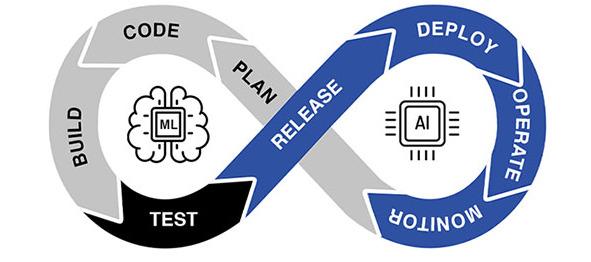
AI-optimized is one that is optimized for AI tasks or optimized using AI tools, for example, an AI-optimized chip is a chip that is optimized for AI tasks (see also artificial intelligence).
AlexNet is the name of a neural network that won the ImageNet Large Scale Visual Recognition Challenge in 2012. It is named after Alex Krizhevsky, then a computer science PhD student at Stanford University. See ImageNet.
Algorithm — an exact prescription for the execution in a certain order of a system of operations for solving any problem from some given class (set) of problems. The term «algorithm» comes from the name of the Uzbek mathematician Musa Al-Khorezmi, who in the 9th century proposed the simplest arithmetic algorithms. In mathematics and cybernetics, a class of problems of a certain type is considered solved when an algorithm is established to solve it. Finding algorithms is a natural human goal in solving various classes of problems. Algorithm is a set of instructions for solving a problem or accomplishing a task. One common example of an algorithm is a recipe, which consists of specific instructions for preparing a dish or meal. Every computerized device uses algorithms to perform its functions in the form of hardware- or software-based routines. In finance, algorithms have become important in developing automated and high-frequency trading (HFT) systems, as well as in the pricing of sophisticated financial instruments like derivatives[29].
Algorithm Economy is a term for the evolution of microservices and the functionality of algorithms to drive sophisticated application designs. The term is based on the utility of the algorithm in machine learning, artificial intelligence and other processes where software evolves beyond the limits of its original programming through the use of smart algorithm design. In the algorithm economy, companies can buy, sell or trade individual algorithms or pieces of an application. This decentralization of services is a more precise market than the market for full applications — for instance, applications that can share functional algorithms lead to more versatility for developers and more competition in markets[30].
Algorithmic Assessment is a technical evaluation that helps identify and address potential risks and unintended consequences of AI systems across your business, to engender trust and build supportive systems around AI decision making.
All.Can — initiative to identify ways to optimize the efficiency of cancer care by focusing on improving outcomes for patients and identifying inefficient practices, using technology to demonstrate how efficient care happens[31].
Allscripts is a vendor of electronic health record systems for physician practices, hospitals and healthcare systems[32].
AlphaGo (Программа AlphaGo) is the first computer program that defeated a professional player on the board game Go in October 2015. Later in October 2017, AlphaGo’s team released its new version named AlphaGo Zero which is stronger than any previous human-champion defeating versions. Go is played on 19 by 19 board which allows for 10171 possible layouts (chess 1050 configurations). It is estimated that there are 1080 atoms in the universe[33].
Ambient Computing is the evolution and combination of gesture and voice interfaces, speech recognition, cloud computing, wearable computing, IoT, augmented reality, AI and machine learning, and the quantified self[34].
Ambient intelligence (AmI) represents the future vision of intelligent computing where explicit input and output devices will not be required; instead, sensors and processors will be embedded into everyday devices and the environment will adapt to the user’s needs and desires seamlessly. AmI systems, will use the contextual information gathered through these embedded sensors and apply Artificial Intelligence (AI) techniques to interpret and anticipate the users’ needs. The technology will be designed to be human centric and easy to use[35].
Ambulatory medical record (AMR) is an electronically stored file of a patient’s outpatient medical records, which includes all surgeries and care that do not involve being admitted to a hospital[36].
American health information management association (AHIMA) is a professional organization that promotes the business and clinical uses of electronic and paper-based medical information[37].
American medical association (AMA) is a physician group that works for healthcare reform and publishes a collection of medical journals[38].
An initial coin offering (ICO) is the cryptocurrency industry’s equivalent of an initial public offering (IPO). A company seeking to raise money to create a new coin, app, or service can launch an ICO as a way to raise funds[39].
Analytics is a systematic analysis of information (data) or statistics for the discovery, communication, and interpretation of meaningful data patterns for better decision-making[40].
Anokhin’s theory of functional systems is a functional system consists of a certain number of nodal mechanisms, each of which takes its place and has a certain specific purpose. The first of these is afferent synthesis, in which four obligatory components are distinguished: dominant motivation, situational and triggering afferentation, and memory. The interaction of these components leads to the decision-making process.
Anonymization — process of removing all elements allowing the identification of an individual person (i.e., of rendering data anonymous). ISO/TS 25237:2008: process that removes the association between the identifying data set and the data subject. UK Information Commissioner’s Office: process of rendering data into a form which does not identify individuals and where identification is not likely to take place[41].
Anonymized Data — data which was identifiable when collected but which are not identifiable anymore (have been rendered anonymous). Anonymous data are no longer personal data. UK Information Commissioners Office: data in a form that does not identify individuals and where identification through its combination with other data is not likely to take place[42].
Antivirus software is a program or set of programs that are designed to prevent, search for, detect, and remove software viruses, and other malicious software like worms, trojans, adware, and more[43].
Anytime algorithm — an algorithm that can return a valid solution to a problem even if it is interrupted before it ends[44].
API economy is a business model where the use of application programming interfaces, or APIs, takes center stage. By using APIs, a company can, for instance, make their business processes or data available to others[45].
API-AS-a-service (AaaS) is an approach that combines API economy and software rental and provides application programming interfaces as a service[46].
App Economy refers to the range of economic activity surrounding mobile applications. Mobile apps created new fortunes for entrepreneurs and changed the way business is done. The app economy encompasses the sale of apps, ad revenue or public relations generated by free apps, and the hardware devices on which apps are designed to run. Apps have helped shape the leaders in mobile technology. Apple Inc., which was first out of the gate with the promotion of its App Store in 2008, gained a large chunk of market share with its iPhone. Apps were part of the iPhone’s initial draw. Android has since gained ground with its Android Market, which peddles apps for Android-based phones. Apps are also affecting a shift for online businesses, which are often accessed through an app on a mobile device, rather than over the Web. As a result, websites that get most of their revenue through online ads have had to consider what apps mean to their business model[47].
Application (application program) is a software program that runs on your computer such as Web browsers, e-mail programs, word processors, games, and utilities. The word «application» is used because each program has a specific application for the user[48].
Application Domain is a functional domain for application logic implementation[49].
Application Programming Interface (API) is a way for computers to talk to hardware or software platforms in a less complicated way. Also, Application programming interface or API is a communication channel through which two pieces of software (e.g. two digital platforms) can exchange information in a technical manner. APIs are central to the API economy and the platform economy, for instance[50],[51].
Application security is the process of making apps more secure by finding, fixing, and enhancing the security of apps. Much of this happens during the development phase, but it includes tools and methods to protect apps once they are deployed. This is becoming more important as hackers increasingly target applications with their attacks[52].
Apprenticeships — the learning model of «master and apprentice» is centuries old. Today, it is an increasingly common skills development policy employed by governments around the world. Apprenticeships involve a mixture of paid employment alongside job-specific training. Historically, apprenticeships have been concentrated in blue collar jobs, such as manufacturing. However, there are growing opportunities in professional services — such as banking, accounting, and consulting[53].
Architectural description group (Architectural view) is a representation of the system as a whole in terms of a related set of interests.
Architectural frameworks are high-level descriptions of an organization as a system; they capture the structure of its main components at varied levels, the interrelationships among these components, and the principles that guide their evolution[54].
Architecture of a computer is a conceptual structure of a computer that determines the processing of information and includes methods for converting information into data and the principles of interaction between hardware and software.
Architecture of a computing system is the configuration, composition and principles of interaction (including data exchange) of the elements of a computing system.
Architecture of a system is the fundamental organization of a system, embodied in its elements, their relationships with each other and with the environment, as well as the principles that guide its design and evolution.
Archival Information Collection (AIC) is information, the content of which is an aggregation of other packages of archival information. The digital preservation function preserves the capability to regenerate the DIPs (Dissemination Information Packages) as needed over time[55].
Archival Storage is a source for data that is not needed for an organization’s everyday operations, but may have to be accessed occasionally. By utilizing an archival storage, organizations can leverage to secondary sources, while still maintaining the protection of the data. Utilizing archival storage sources reduces primary storage costs required and allows an organization to maintain data that may be required for regulatory or other requirements[56].
Archive is a site where machine-readable materials are stored, preserved, and possibly redistributed to individuals interested in using the materials. To place or store in an archive[57].
Artifact is one of many kinds of tangible by-products produced during the development of software. Some artifacts (e.g., use cases, class diagrams, and other Unified Modeling Language (UML) models, requirements and design documents) help describe the function, architecture, and design of software. Other artifacts are concerned with the process of development itself — such as project plans, business cases, and risk assessments[58].
Artificial intelligence (AI) is a computer program that is able to perform intelligent operations independently. Artificial intelligence is difficult to define, since giving an exhaustive definition of intelligence is already challenging. Artificial intelligence (AI) refers to the simulation of human intelligence in machines that are programmed to think like humans and mimic their actions. The term may also be applied to any machine that exhibits traits associated with a human mind such as learning and problem-solving[59],[60].
Artificial intelligence (Artificial intelligence, Machine intelligence, AI) is the ability of a machine to make decisions and perform tasks that mimic human intelligence and behavior. Artificial intelligence is also called a complex of technological solutions that allows simulating human cognitive functions (including self-learning and searching for solutions without a predetermined algorithm) and obtaining results when performing specific tasks that are at least comparable to the results of human intellectual activity. The complex of technological solutions includes information and communication infrastructure, software (including those that use machine learning methods), processes and services for data processing and finding solutions.” Artificial intelligence is also given the following definition: AI is a computer system based on a set of scientific and engineering knowledge, as well as technologies for creating intelligent machines, programs, services and applications (for example, machine learning and deep learning), imitating the thought processes of a person or living beings, capable of perceiving information with a certain degree of autonomy, learning and making decisions based on the analysis of large amounts of data, the purpose of which is to help people solve their daily routine tasks. The term AI was first coined by John McCarthy in 1956[61],[62].
Artificial Intelligence Automation Platforms is platforms that enable the automation and scaling of production-ready AI. Artificial Intelligence Platforms involves the use of machines to perform the tasks that are performed by human beings. The platforms simulate the cognitive function that human minds perform such as problem-solving, learning, reasoning, social intelligence as well as general intelligence. Top Artificial Intelligence Platforms: Google AI Platform, TensorFlow, Microsoft Azure, Rainbird, Infosys Nia, Wipro HOLMES, Dialogflow, Premonition, Ayasdi, MindMeld, Meya, KAI, Vital A.I, Wit, Receptiviti, Watson Studio, Lumiata, Infrrd[63].
Artificial intelligence engine (also AI engine, AIE) is an artificial intelligence engine, a hardware and software solution for increasing the speed and efficiency of artificial intelligence system tools.
Artificial Intelligence for IT Operations (AIOps) is an emerging IT practice that applies artificial intelligence to IT operations to help organizations intelligently manage infrastructure, networks, and applications for performance, resilience, capacity, uptime, and, in some cases, security. By shifting traditional, threshold-based alerts and manual processes to systems that take advantage of AI and machine learning, AIOps enables organizations to better monitor IT assets and anticipate negative incidents and impacts before they take hold. AIOps is a term coined by Gartner in 2016 as an industry category for machine learning analytics technology that enhances IT operations analytics covering operational tasks include automation, performance monitoring and event correlations, among others. Gartner define an AIOps Platform thus: “An AIOps platform combines big data and machine learning functionality to support all primary IT operations functions through the scalable ingestion and analysis of the ever-increasing volume, variety and velocity of data generated by IT. The platform enables the concurrent use of multiple data sources, data collection methods, and analytical and presentation technologies”[64],[65],[66] .
Artificial Intelligence Markup Language (AIML) is an XML dialect for creating natural language software agents[67].
Artificial Intelligence Open Library is a set of algorithms designed to develop technological solutions based on artificial intelligence, described using programming languages and posted on the Internet.
Artificial intelligence system (AIS) is a programmed or digital mathematical model (implemented using computer computing systems) of human intellectual capabilities, the main purpose of which is to search, analyze and synthesize large amounts of data from the world around us in order to obtain new knowledge about it and solve them. basis of various vital tasks. The discipline «Artificial Intelligence Systems» includes consideration of the main issues of modern theory and practice of building intelligent systems.
Artificial intelligence technologies are technologies based on the use of artificial intelligence, including computer vision, natural language processing, speech recognition and synthesis, intelligent decision support and advanced methods of artificial intelligence.
Artificial life (Alife, A-Life) is a field of study wherein researchers examine systems related to natural life, its processes, and its evolution, through the use of simulations with computer models, robotics, and biochemistry. The discipline was named by Christopher Langton, an American theoretical biologist, in 1986. In 1987 Langton organized the first conference on the field, in Los Alamos, New Mexico. There are three main kinds of alife, named for their approaches: soft, from software; hard, from hardware; and wet, from biochemistry. Artificial life researchers study traditional biology by trying to recreate aspects of biological phenomena[68].
Artificial Narrow Intelligence (ANI) also known as weak or applied intelligence, represents most of the current artificial intelligent systems which usually focus on a specific task. Narrow AIs are mostly much better than humans at the task they were made for: for example, look at face recognition, chess computers, calculus, and translation. The definition of artificial narrow intelligence is in contrast to that of strong AI or artificial general intelligence, which aims at providing a system with consciousness or the ability to solve any problems. Virtual assistants and AlphaGo are examples of artificial narrow intelligence systems[69],[70].
Artificial Neural Network (ANN) is a computational model in machine learning, which is inspired by the biological structures and functions of the mammalian brain. Such a model consists of multiple units called artificial neurons which build connections between each other to pass information. The advantage of such a model is that it progressively «learns» the tasks from the given data without specific programing for a single task.
Artificial neural networks (ANNs) usually simply called neural networks (NNs) are computing systems inspired by the biological neural networks that constitute animal brains. An ANN is based on a collection of connected units or nodes called artificial neurons, which loosely model the neurons in a biological brain. Each connection, like the synapses in a biological brain, can transmit a signal to other neurons. An artificial neuron receives signals then processes them and can signal neurons connected to it. The «signal» at a connection is a real number, and the output of each neuron is computed by some non-linear function of the sum of its inputs. The connections are called edges. Neurons and edges typically have a weight that adjusts as learning proceeds. The weight increases or decreases the strength of the signal at a connection. Neurons may have a threshold such that a signal is sent only if the aggregate signal crosses that threshold. Typically, neurons are aggregated into layers. Different layers may perform different transformations on their inputs. Signals travel from the first layer (the input layer), to the last layer (the output layer), possibly after traversing the layers multiple times[71].
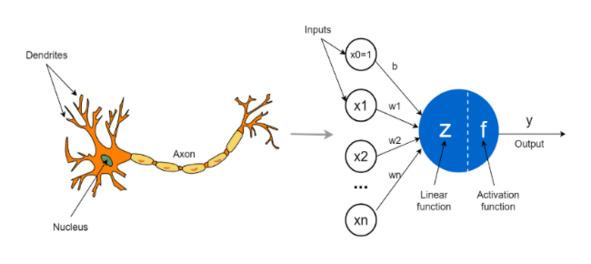
Artificial neuron is a mathematical function conceived as a model of biological neurons, a neural network. The difference between an artificial neuron and a biological neuron is shown in the figure.
Artificial neurons are the elementary units of an artificial neural network. An artificial neuron receives one or more inputs (representing excitatory postsynaptic potentials and inhibitory postsynaptic potentials on nerve dendrites) and sums them to produce an output signal (or activation, representing the action potential of the neuron that is transmitted down its axon). Typically, each input is weighted separately, and the sum is passed through a non-linear function known as an activation function or transfer function. Transfer functions are usually sigmoid, but they can also take the form of other non-linear functions, piecewise linear functions, or step functions. They are also often monotonically increasing, continuous, differentiable, and bounded[72],[73].
Artificial Superintelligence (ASI) is a term referring to the time when the capability of computers will surpass humans. «Artificial intelligence,» which has been much used since the 1970s, refers to the ability of computers to mimic human thought. Artificial superintelligence goes a step beyond and posits a world in which a computer’s cognitive ability is superior to a human.
ASCII is a character-encoding scheme used by many computers. The ASCII standard uses 7 of the 8 bits in a byte to define the codes for 128 characters. Example: In ASCII, the number «7» is treated as a character and is encoded as: 00010111. Because a byte can have a total of 256 possible values, there are an additional 128 possible characters that can be encoded into a byte, but there is no formal ASCII standard for those additional 128 characters. Most IBM-compatible personal computers do use an IBM «extended» character set that includes international characters, line and box drawing characters, Greek letters, and mathematical symbols. (ASCII stands for American Standard Code for Information Interchange)[74].
Asset are mission-critical systems, physical hardware, applications, support systems, high-impact programs, personnel, equipment, locations, and more[75].
Asset framework is a hierarchy tree depicting the high level assets, sub assets, and individual sensors at the leaf level of the tree[76].
Assist — assessment and evaluation tools for e-service deployment in health, care and ageing — is an assessment and evaluation framework and tool built by Empirica for assessing the economic sustainability of telemedicine and telehealth services. Originally developed and successfully applied for business case development in telemedicine on behalf of the European Space Agency, the ASSIST tool exists also in adaptations for use in integrated eCare and eHealth services[77].
Assisted registration — the process that enables healthcare providers to assist their patients to register for a My Health Record[78].
Assisted Registration Tool (ART) — purpose-built software to enable an HPI-O to assert a patient’s identity and then submit their details to the My Health Record system for registration[79].
Assistive intelligence is AI-based systems that help make decisions or perform actions.
Assistive technology (AT) is any item, piece of equipment, software program, or product system that is used to increase, maintain, or improve the functional capabilities of persons with disabilities[80].
Association for the Advancement of Artificial Intelligence (AAAI) — an international, nonprofit, scientific society devoted to promote research in, and responsible use of, artificial intelligence. AAAI also aims to increase public understanding of artificial intelligence (AI), improve the teaching and training of AI practitioners, and provide guidance for research planners and funders concerning the importance and potential of current AI developments and future directions.
Assumed Consent — informational consent done in the absence of any formal recorded or verbal indication of agreement or any overt action (or inaction) on the part of the data subject[81].
Assurance — activities designed to reach a measure of confidence. Assurance is different from audit, which is more concerned with compliance to formal standards or requirements[82].
Asynchronous inter-chip protocols are protocols for data exchange in low-speed devices; instead of frames, individual characters are used to control the exchange of data.
Athenahealth Inc. is a developer of cloud-based practice management, point-of-care mobile applications and electronic health record (EHR) systems for small to medium-sized (SMB) physician practices and hospitals[83].
Attack Surface refers to the system elements and interactions that are vulnerable to cyberattacks[84].
Attack Vector is a pathway by which a cybercriminal can gain access to an entity[85].
Attention mechanism is one of the key innovations in the field of neural machine translation. Attention allowed neural machine translation models to outperform classical machine translation systems based on phrase translation. The main bottleneck in sequence-to-sequence learning is that the entire content of the original sequence needs to be compressed into a vector of a fixed size. The attention mechanism facilitates this task by allowing the decoder to look back at the hidden states of the original sequence, which are then provided as a weighted average as additional input to the decoder.
Attributes (XML) (Атрибуты (XML)) XML elements can have attributes that further describe them, such as the following: <Price currency=«Euro»> 25.43 </Price> In the example above, «currency» is an attribute of «Price», and the attribute’s value is «Euro»[86].
Audit — an independent examination of an effort to determine its compliance with a set of requirements. An audit may be carried out by internal or external groups[87].
Audit Trail is a record that can be interpreted by auditors to establish that an activity has taken place. Often, a chronological record of system activities to enable the reconstruction and examination of the sequence of events and/or changes in an event. An audit trail of system resource usage may include user login, file access, and triggers that indicate whether any actual or attempted security violations occurred[88].
Auditability — property that ensures that any action of any security subject on any security object may be examined in order to establish the real operational responsibilities[89].
Augmented and virtual reality enable the creation of immersive and interactive experiences using digital simulations. In a post-pandemic world, where buying takes place at a distance, serving up products virtually has never been so crucial[90].
Augmented Intelligence is the intersection of machine learning and advanced applications, where clinical knowledge and medical data converge on a single platform. The potential benefits of Augmented Intelligence are realized when it is used in the context of workflows and systems that healthcare practitioners operate and interact with. Unlike Artificial Intelligence, which tries to replicate human intelligence, Augmented Intelligence works with and amplifies human intelligence[91].
Augmented Reality (AR) is an enhanced version of the real physical world that is achieved through the use of digital visual elements, sound, or other sensory stimuli delivered via technology. It is a growing trend among companies involved in mobile computing and business applications in particular. Also, Augmented Reality (AR) refers to an interactive experience that blends together the virtual world and the real world. For example, visuals of a product or component can be overlaid onto the real world via a mobile phone or tablet, enabling users to visualize a virtual object in a real-world space[92],[93].
Augmented reality technologies are visualization technologies based on adding information or visual effects to the physical world by overlaying graphic and/or sound content to improve user experience and interactive features.
Authentication — process of reliably identifying security subjects by securely associating an identifier and authenticator[94].
Authoring organisation — the healthcare provider organisation that created the content of a document[95].
Authorization — permission to perform certain operations or use certain methods or services[96].
Authorization link is a link that connects a healthcare provider to a healthcare provider organisation so the healthcare provider can access the My Health Record system via the National Provider Portal on behalf of their organisation[97].
Authorized employee — an employee of a registered healthcare provider organisation who has been authorized by the organisation to use the My Health Record system and access an individual’s My Health Record on behalf of the organisation[98].
Authorized representative — someone who can apply for and manage a My Health Record on behalf of another person. For the purposes of the My Health Record system someone can be an authorized representative if they: Have parental responsibility for a person under 14; or Have legal authority to act on behalf of a person who is at least 14 and who is not capable of making his or her own decisions. If there is no one with parental responsibility or legal authority, a person who is otherwise appropriate to act on behalf of the individual can be an authorized representative. An individual can have more than one authorized representative[99].
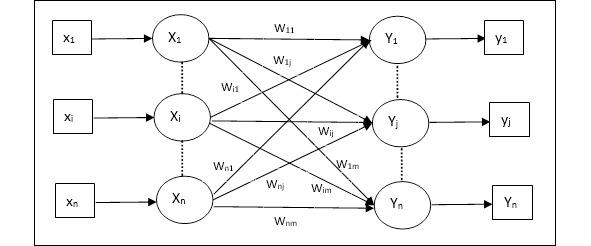
Auto Associative Memory is a single layer neural network in which the input training vector and the output target vectors are the same. The weights are determined so that the network stores a set of patterns. As shown in the following figure, the architecture of Auto Associative memory network has «n’ number of input training vectors and similar «n’ number of output target vectors[100].
Autoclave is a strong heated container used for chemical reactions and other processes using high pressures and temperatures, e.g., steam cleaning and sterilization[101].
Automata theory is the study of abstract machines and automata, as well as the computational problems that can be solved using them. It is a theory in theoretical computer science and discrete mathematics (a subject of study in both mathematics and computer science). Automata theory (part of the theory of computation) is a theoretical branch of Computer Science and Mathematics, which mainly deals with the logic of computation with respect to simple machines, referred to as automata[102],[103].
Automated control system is a set of software and hardware designed to control technological and (or) production equipment (executive devices) and the processes they produce, as well as to control such equipment and processes.
Automated is a machine that has been preprogrammed for a task, such as automated work order creation. While automated processes do not require outside control to complete the tasks for which they are programmed, automated processes do not have the ability to respond independently[104].
Automated processing of personal data — processing of personal data using computer technology.
Automated system is an organizational and technical system that guarantees the development of solutions based on the automation of information processes in various fields of activity.
Automation is a technology by which a process or procedure is performed with minimal human intervention.
Autonomic computing is the ability of a system to adaptively self-manage its own resources for high-level computing functions without user input.
Autonomous artificial intelligence is a biologically inspired system that tries to reproduce the structure of the brain, the principles of its operation with all the properties that follow from this.
Autonomous refers to a machine that 1) has the ability to self-govern or undertake actions without external control and 2) can respond independently to new information. One example is autonomous mobile robots (AMRs), which navigate without an operator, intelligently choosing the best path and avoiding obstacles[105].
Autonomous vehicle is a mode of transport based on an autonomous driving system. The control of an autonomous vehicle is fully automated and carried out without a driver using optical sensors, radar and computer algorithms.
Autonomy is an intelligent system’s ability to independently create and select different courses of action to achieve goals based on the system’s understanding and knowledge of the world and other factors[106].
Auxiliary intelligence — systems based on artificial intelligence that complement human decisions and are able to learn in the process of interacting with people and the environment.
Ayasdi is an enterprise scale machine intelligence platform that delivers the automation that is needed to gain competitive advantage from the company’s big and complex data. Ayasdi supports large numbers of business analysts, data scientists, end users, developers and operational systems across the organization, simultaneously creating, validating, using and deploying sophisticated analyses and mathematical models at scale.
«B»
B2B E-commerce refers to an online store for businesses. Normally, B2B (business-to-business) e-commerce is understood as an ordering system. The difference to a B2C online store targeting consumers is, for example, the requirement to identify the buyer through registering and the need to provide different billing options (such as invoicing)[107].
B2C (business-to-consumer) E-commerce is a form of online commerce colloquially known as online shopping. B2C e-commerce refers to an online service that provides consumers with goods to purchase[108].
B2D (business-to-developer) marketing is an operational model that aims to engage software developers directly and by doing so affect customer acquisition. B2D marketing is a method of the platform economy which typically provides APIs in as developer-friendly form as possible to enable their proactive deployment[109].
B2D marketing is an operational model that aims to engage software developers directly and by doing so affect customer acquisition. B2D marketing is a method of the platform economy which typically provides APIs in as developer-friendly form as possible to enable their proactive deployment[110].
Backhaul refers to the process of reporting event information from tagged assets related to things like movement, temperature, distress and so forth[111].
Baldwin effect is the skills acquired by organisms during their life as a result of learning, after a certain number of generations, are recorded in the genome.
Bandwidth is the difference between the upper and lower frequencies in a continuous band of frequencies. It is typically measured in hertz, and depending on context, may specifically refer to passband bandwidth or baseband bandwidth. Passband bandwidth is the difference between the upper and lower cutoff frequencies of, for example, a band-pass filter, a communication channel, or a signal spectrum. Baseband bandwidth applies to a low-pass filter or baseband signal; the bandwidth is equal to its upper cutoff frequency. Bandwidth in hertz is a central concept in many fields, including electronics, information theory, digital communications, radio communications, signal processing, and spectroscopy and is one of the determinants of the capacity of a given communication channel. A key characteristic of bandwidth is that any band of a given width can carry the same amount of information, regardless of where that band is located in the frequency spectrum. Also, Bandwidth refers to the data throughput capacity of any communication channel. As bandwidth increases, more information per unit of time can pass through the channel[112],[113],[114].
Bar coded medication administration (BCMA) is a hospital inventory control system that uses barcodes in the distribution of prescription medications with the goal of ensuring the patient is receiving the correct medication[115].
Bayesian classifier in machine learning is a family of simple probabilistic classifiers based on the use of the Bayes theorem and the “naive” assumption of the independence of the features of the objects being classified[116].
Belief-desire-intention software model (BDI) is a software model developed for programming intelligent agents. Superficially characterized by the implementation of an agent’s beliefs, desires and intentions, it actually uses these concepts to solve a particular problem in agent programming. In essence, it provides a mechanism for separating the activity of selecting a plan (from a plan library or an external planner application) from the execution of currently active plans. Consequently, BDI agents are able to balance the time spent on deliberating about plans (choosing what to do) and executing those plans (doing it). A third activity, creating the plans in the first place (planning), is not within the scope of the model, and is left to the system designer and programmer[117].
Benchmarking is a set of techniques that allow you to study the experience of competitors and implement best practices in your company.
Beta release is a term that refers to a phase in online service development in which the service is coming together functionality-wise but genuine user experiences are required before the service can be finished in a user-centered way. In online service development, the aim of the beta phase is to recognize both programming issues and usability-enhancing procedures. The beta phase is particularly often used in connection with online services and it can be either freely available (open beta) or restricted to a specific target group (closed beta)[118].
Bias is a systematic trend that causes differences between results and facts. Error exists in the numbers of the data analysis process, including the source of the data, the estimate chosen, and how the data is analyzed. Error can seriously affect the results, for example, when studying people’s shopping habits. If the sample size is not large enough, the results may not reflect the buying habits of all people. That is, there may be discrepancies between survey results and actual results.
Biased algorithm is systematic and repetitive errors in a computer system that lead to unfair results, such as one privilege persecuting groups of users over others. Also, sexist and racist algorithms.
Big Data analytics. As our world becomes digitized, vast quantities of data are generated and stored. This data holds hidden secrets that promise to revolutionize our understanding of the human condition. We need Big Data analytics to extract these insights[119].
Big Data is a term for sets of digital data whose large size, rate of increase or complexity requires significant computing power for processing and special software tools for analysis and presentation in the form of human-perceptible results. Also, Big Data refers to the collection, storage, sharing, searching, analyzing and presenting of enormous, unorganized and continuously growing masses of data with the help of statistics and information technology. As the Internet of Things and the Industrial Internet continue to spread, there is believed to be a growing demand for Big Data -related expertise. Big Data is a large amount of information about an organization (both structured and unstructured) that cannot be analyzed using traditional computing methods. Big Data in health refers to large routinely or automatically collected datasets which are electronically captured and stored. The data is reusable in the sense that it is multipurpose data. It involves the fusion and connection of existing databases for the purpose of improving health and health system performance. It does not refer to data collected for a specific study. Also, Big Data is data sets that are too large to be handled manually. Big Data must be analyzed by a computer, revealing patterns, associations between groups, or overall trends. Big Data also comes into systems in increasingly greater complexity, variety, volume, and velocity — and exponential increase over time[120],[121],[122],[123].
Binance Coin (BNB) is a utility cryptocurrency that operates as a payment method for the fees associated with trading on the Binance Exchange. It is the third-largest cryptocurrency by market capitalization.10 Those who use the token as a means of payment for the exchange can trade at a discount. Binance Coin’s blockchain is also the platform on which Binance’s decentralized exchange operates. The Binance Exchange was founded by Changpeng Zhao and is one of the most widely used exchanges in the world based on trading volumes[124].
Binance USD (BUSD) was created by the cryptocurrency exchange Binance as a stablecoin pegged to the U.S. dollar. The stablecoin was approved by the New York State Department of Financial Services; thus, it is also regulated[125].
Binary choice regression model is a regression model in which the dependent variable is dichotomous or binary. Dependent variable can take only two values and mean, for example, belonging to a particular group.
Binary format is any file format in which information is encoded in some format other than a standard character-encoding scheme. A file written in binary format contains information that is not displayable as characters. Software capable of understanding the particular binary f