LETTER FROM THE AUTHOR
The first book in the NeuroWave series was devoted to the foundations of the method — to the scientific, neuropsychological, and bodily mechanisms that make it possible to view work with the body as part of systemic psychotherapeutic and psychophysiological regulation. Its task was to introduce the method into the scientific field, define its boundaries, principles, and potential contribution to contemporary psychology.
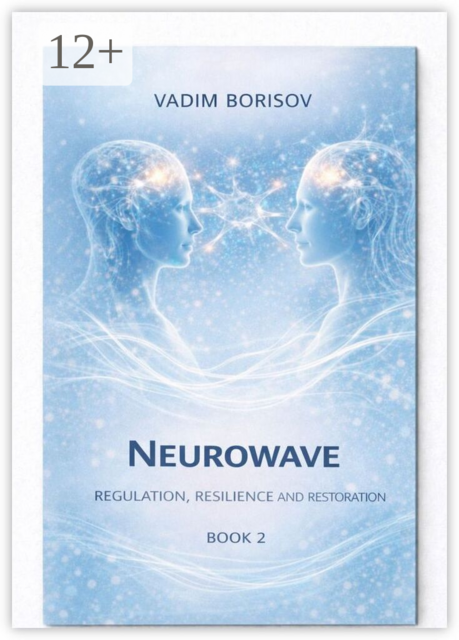
The second book logically continues this conversation, shifting the focus from the origins of psycho-emotional patterns to the processes of recovery and resilience. In clinical and practical work, it is becoming increasingly clear that working through traumatic experience alone does not guarantee stable change. It is important for a person not only to reduce the intensity of symptoms, but also to restore the nervous system’s capacity for flexible self-regulation in everyday life.
The concept of resilience has taken a central place in neuroscience, health psychology, and stress research over recent decades. It reflects the organism’s ability to adapt to load, recover after overload, and maintain functionality under conditions of uncertainty. It is precisely this level of processes that this book is devoted to.
The NeuroWave method is considered here as a tool for restoring regulatory circuits, rather than as a technique for eliminating individual states. Work with the body, breathing, attention, and sensory impulses makes it possible to influence basic regulatory mechanisms, creating conditions for stable change without coercion and without imposed interpretations.
It is important to emphasize that this book is not a practical manual in the narrow sense and does not offer universal solutions. Its task is to show how a body-oriented neuropsychological approach can be used to support recovery processes, as well as to outline the scientific framework and prospects of such an approach.
I consciously maintain a balance in the text between scientific rigor and accessibility of presentation. The NeuroWave method remains a subject of research, development, and professional dialogue. This book is an invitation to such dialogue, addressed both to specialists and to readers interested in a deep understanding of the mechanisms of regulation and recovery.
I hope that the material presented will contribute to a more holistic view of human resilience — as a result of interaction between the psyche, the body, and the nervous system, rather than as an individual effort or a personal «character trait.»
Vadim Borisov