


автордың кітабын онлайн тегін оқу Songs of Sea and Sail
Songs of Sea and Sail
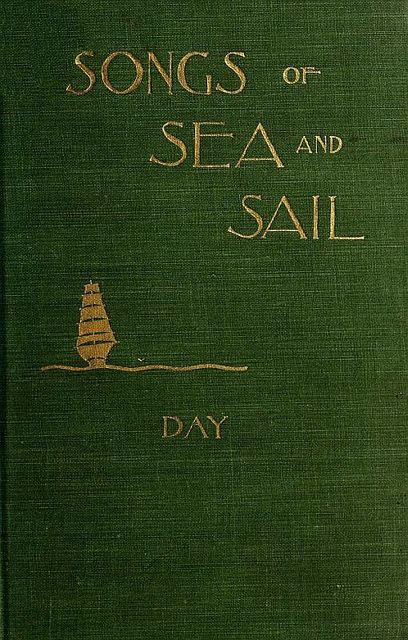
SONGS OF
SEA AND SAIL
THOMAS FLEMING DAY
NEW YORK AND LONDON
THE RUDDER PUBLISHING COMPANY
1898
Copyright 1898
By Thomas Fleming Day
All Rights Reserved
Press Of Thomson & Co. New York
TO
THOSE WHO LOVE
THE SEA
AND ITS SHIPS.
[Pg 6] [Pg 7]
CONTENTS.
- PAGE
- The Mermaid's Song 9
- Trafalgar 13
- When 18
- The Forsaken Port 19
- An Early Moonset 24
- On the Bridge 25
- Missing 30
- Making Land 31
- At Portsmouth 35
- At Anchor 39
- From the Cliff 40
- Then and Now 42
- The Ships 43
- The Man-o'-War's Man's Yarn 49
- A Foggy Morning 53
- Unknown 55
- The Coasters 57
- To-Day 62
- The Sailor of the Sail 63
- The Yacht 68
- The Trade Wind's Song 69
- Execution Rock Light 71
- The Cargo Boats 73
- Noontide Calm 77
- Old Buccaneer's Song 81
- The Belfry of the Sea 85
- Phantoms 95
- Flotsam 98
- The Lost Ship 99
- The Main Sheet Song 101
- The Landfall 103
- The Clipper 104
- The Constitution 105
- The Tartar 107
- Warning 110
- In September 111
- The Homeward Bounder's Song 113
- The Spell of the Sea 115
- Days of Oak 117
- Long, Long Ago 119
- Wind Happy Ships 122
- The Quest 123
THE MERMAID'S SONG.
Oh, what comes flowing over the sea
In the hush of the evening's cool?
It is a mermaid singing to me
As she sits in a silver pool.
As she sits in a silver pool and sings
Of the world I never shall see,
Where the dulse-weed clings,
And the star-fish rings
The red anemone;
The world which lies
Where human eyes
Are never allowed to see
The gold and gems
And fluted stems
Of the crimson coral tree—
Is that what she sings to me?
She is haunting and holding my heart with a strain,
Where joy lies asleep in the shadow of pain;
And the world that is under the sea
Is spreading its pleasures and treasures to gain
The love that lies dormant in me—
The love that I bear for the sea,
For the secret and sorrowful sea;
Is luring my feet from the gray land again
And filling my soul with the scent of the main,
The sound and the scent of the sea;
And the speech of the siren is spoken in vain,
For that mermaid is singing to me
Of the world that is under the sea;
And the love that I bear for the ocean again,
For the mournful and mutable sea,
Has taken possession of me:
My heart is enmeshed in the mystical strain
That mermaid is singing to me
Of the world that lies under the sea.
Ah, hark again! In a sadder strain
She is singing a song to me—
A song of the unseen sea;
She is singing of ships whose wrecks have lain
For ages in the sea,
In the depths of the sunless sea;
And her voice is soft with a thought of the pain
That song is giving to me.
A thought that I thought forever had lain
In the depths of the soundless sea
Is searching my soul in that mermaid's strain
And bringing a sorrow to me
From the world that is under the sea.
For I have a friend whose bones have lain
For ages in the sea,
(For so it seems to me),
And her song has opened that wound again
And brought back a sorrow to me—
From the depths of the endless sea.
A grief that is grieving my life again,
A thought that I thought, forever had lain,
And never come back to me,
Is searching my soul in that mermaid's strain
And bringing a sorrow to me
From the world that lies under the sea.
Oh, what comes flowing over the sea
In the hush of the evening's cool?
It is a mermaid singing to me
As she sits in a silver pool.
TRAFALGAR, 1805.
We hailed the morning star
Above the Spanish shore;
Our cannon's random roar
Then woke black Trafalgar.
Where our foes
Lay in the crescent bay
We watched the fog bank gray
Melt silently away
As the sun uprose.
Then rolled the deep alarm—
The foeman's call to arm;
And swiftly from our van
There pass'd from man to man,
"They will fight."
With hearts that beat to chase
We caught the growing gale,
And 'neath a press of sail
Bore up to take our place
On the right.
Nelson, our admiral then,
Greatest of all seamen,
We cheered to death again
As he pass'd;
'Round toward the land
We tacked and stood about—
The hills rang to our shout
As lifted and blew out
His last command
From the mast.
Then flash'd our full broadside,
Roaring across the tide,
As crashing side by side
We broke their line;
Thro' rolling clouds of smoke
Burst in our prows of oak;
Their tall sides bent and broke
Like pine.
As died the stagger'd blast
The sails dropt to the mast;
That broadside was their last!
One more to clip her wing!
Quick away!
Tigers our boarders spring,
Cutlass to cutlass ring,
In the fray.
We heard no quarter call:
A man stood every Gaul!
Useless, their flag must fall
That day.
The fight thus well begun,
We paused a breathing space;
Each soul leapt to a face
As Nelson in his grace
Signaled "Well done!"
Staying the tott'ring mast
We rounded to the blast,
Grappled the next that pass'd—
A huge Spaniard.
No room to lift the ports:
Black gun to gun retorts—
Lip locked to lip,
Each man a firmer grip
On his lanyard.
To save this pride of Spain
A Frenchman joined the fight;
Then roaring in our might
We smote him with our right
Twice, and again.
"Cease! Cease!" our Captain cries.
"She lies
A silent wreck!"
Three times we spared that foe,
Yet from her came the blow
That laid our hero low
On the deck.
What more for me to say,
Save thro' the fatal fray
We marked the hours that day
With cheers!
Our foes struck one by one;
Yet when the fight was done
We saw the misty sun
Set thro' our tears.
O England, strong yet free,
The crown we bear to thee,
Laurels for victory!
Weave cypress in the wreath:
For he to whom thou gave
The keeping of the wave,
Nelson, the true, the brave,
Has struck his flag to death.
Oh, men of hero race,
In what a fitting place
To set his conquering star!—
Amid the battle's roar,
Under the rolling shore
Where rises wild and hoar
Cape Trafalgar.
WHEN.
When western winds are blowing soft
Across the Island Sound;
When every sail that draws aloft
Is swollen true and round;
When yellow shores along the lee
Slope upward to the sky;
When opal bright the land and sea
In changeful contact lie;
When idle yachts at anchor swim
Above a phantom shape;
When spires of canvas dot the rim
Which curves from cape to cape;
When sea-weed strewn the ebbing tide
Pours eastward to the main;
When clumsy coasters side by side
Tack in and out again—
When such a day is mine to live,
What has the world beyond to give?
THE FORSAKEN PORT.
Thro' all this perfect summer day
The wind has blown from out the west,
And now the sunset fires invest
Where looms the mainland far away,
The old town right abreast.
The red-brown roofs and rugged spires
Uplift and pierce the sunset fires,
The old town right abreast.
The ships rise up, and sail, and sail,
Then drop beneath the distant rim—
The crimson rim.
We watch their topsails float and trail—
Like bubbles 'round a goblet's brim,
A moment there they rise and dip,
Then break against the sky's red lip.
Unhailed the ships go sailing by
The old town over there;
And yet it seems we hear a cry—
A heart-born cry
Of anguish and despair,
Of hope lost in despair.
In speechful grief the old town stands
And beckons with its outstretched hands
As the ships go sailing by.
Long years ago its port was thronged
With many a busy sail,
With rustling sail.
And many a heart has sighed and longed
For that old town's cheery hail—
Has sighed and longed for that old town's welcome hail.
Oh, where are they who left thy port
In strength of youth, in pride of love?
Side by side with a dark consort,
Calm seas below, blue skies above,
They tacked and stood across the bar:
Only the sea knows where they are—
Only the sea!
Perhaps at night the phantom ships—
Thy lost ships—come sailing in;
Their spectre crews with parted lips
That utter no sound, for the spell of death
Turns even a laugh to a grin.
Do they wait, and list for the din
Of the cheers and the bells to welcome them in—
For the cheers and the bells to welcome them in?
Do their dead hearts know hopes and fears?
Do they dream of the wives they've not seen for years?—
The wives and the sweethearts who watched them thro' tears
Sail away, sail away, when the wind was south
And the bar was blue at the harbor's mouth,
And the gulls flew low like flakes of snow,
And the summer wind bore the heave-yo-ho
Of the sailors brown
Into the town?
Are they here, the ones so dear?
Alas! the lips that their lips have known,
Alas! the hearts that once beat to their own
Are lying up on the hillside there,
And the daisies and grasses have overgrown
Their graves for many a year.
Yon sentinel pine that watches the graves
Where their wives and sweethearts are laid to rest
The wild winter wind defies and outbraves;
Its roots are sunk in some loved one's breast.
Are their souls at rest?
Sometimes, I think, they must wander down here
To watch for the ships that never will come.
In the silence of night they throng the old pier
To welcome the wanderers home;
Their lustreless eyes—
Enough of death and ghostly tales!
Oh, let the old town keep its vigil there,
Watching for those who were!
What though the dark ship with us sails—
Ah, fools, to freight our hearts with care!
To waste our breath in idle hails,
To cringe and cry.
We live for those who are, not were!—
We live to live, not die!
AN EARLY MOONSET.
Like galleon flying a picaroon,
Along the edge the ship-shap'd moon
Leadeth a star across the sea
To the cloudy harbor under her lee.
With her splendid lading of golden light
She seems to dread the pirate Night;
With puffing sails and fretful oars
She steereth and speedeth for purple shores.
She will anchor to-night beneath the fort
Whose grim guns guard the cloudy port,
Where sound and safe from picaroon
Rides many an olden and golden moon.
ON THE BRIDGE.
Eight bells ring out from the fo'c'sle head;
With a cheery good-eve the mate comes forth,
The second goes off to his welcome bed,
After giving the course as west by north.
As I stand with my chin on the dodger's ridge
And dreamily eye our plunging craft
There's a rattle of heels on the flying bridge
And a gruff report that the watch is aft.
"All right!" says the mate, with a glance below;
"Relieve the wheel and the lookout there!"
And then we begin, with our to and fro,
The walk and the talk we nightly share.
In silence at first—for our pipes are lit—
We pace and puff, and we pause and turn,
And it's up and down, for she rolls a bit
When flying light with the sea astern.
But there's a key in the hands of smoke
That fits a lock in the lazy brain,
And we spring the wards with a quiet joke
And rout out a store of yarns again.
Our voices ring with a pleasant sound,
And now and again it seems to me
As though in the roar that sweeps around
We are joined by the social sea.
And in that strange way that talk is bred—
As a few grains sown bring the wheaty stack—
So something afresh the other said
Put the roaming brain on another tack.
And we boxed about in an aimless way,
With a careless fling from sea to land,
And spoke of the world as a young man may
When he hasn't the time to understand.
We spoke of the land that gave us birth;
We spoke of the one that's home to me:
Those nations destined to shape the earth
To the single state it is to be—
Of tricks we played in our school-boy days;
The fun and frolic of being young;
How we jollied life in a hundred ways
With gibes that pleased and jests that stung.
And of those we loved—for now we knew
With half our life in the dim astern
Which lights were false and which lights were true,
And whose was the hand that bid them burn.
Of the rough hard life the sailor leads,
The pay he gets and the sharks ashore,
And what are the laws our shipping needs,
And the way things went in days of yore.
Of the sailing ship as she yet survives,
Of rigs we never shall see again,
Of inventions that save our seamen's lives
And murder the breed of sailor men.
We talk of these and of many a bout
When a crew came aft for a nasty row—
When loud comes a cry from the fore look-out
Of a light on the starboard bow.
"All right!" the response. Then we train our eyes
On the western rim thro' the closing night.
It's a steamer, sure, by the flash and size—
A liner's electric masthead light.
She rises fast, and is soon up well,
Rushing along 'neath a smoky pall,
A mass of lights like some huge hotel
Ablaze for its annual boarders' ball.
As she grows abeam—for we give her space,
For twenty knots is a right of way—
There's an answering glow on old ocean's face
And a glint on the waves in play.
And I think, as I watch her speed along,
Of the many lives she holds in trust,
And ponder what they would do, that throng,
If Fate should get in a deadly thrust.
A ship like ours or a sunken wreck—
A crash in the dark—some plates stove in—
A frightened rush for the upper deck,
And a clamorous, cowardly din!
How some would die as men should die,
How some would perish in selfish strife,
How some in that hour would dignify
By a noble close a worthless life.
How she whose vigor we oft deride—
The woman—would show her courage then,
And meet her death at her lover's side
In a way to shame the best of men.
But, Science be praised, it is seldom now
We lose a ship by a sudden crash,
For what with the lights and the whistle's row
We luckily dodge a general smash.
And that ship there, as she breasts the swell
And ghosts her side with a foamy ridge,
Has had many a shave—for logs don't tell
All the tales of a steamer's bridge.
In silence we watch her for quite a time
Until she becomes a smoky blear,
Then as ten rings out from the fo'c'sle chime
I go aft to my cheese and my beer.
MISSING.
A cloudless sky, a sleeping sea,
A cold gray reach of shore,
A gleam of sail upon the lee—
And nothing more.
My eyes saw that, my heart saw more:
A woman whose quivering lip
Moulded this sentence o'er and o'er,
"God keep that ship!"
God keep that ship! Her prayer, not mine,
Goes out across the sea
To where beyond the misty line
A face is turned from me.
God keep that ship! Her ship, not mine—
Mine never came back to me.
MAKING LAND.
The fore-royal furled, I pause and I stand,
Both feet on the yard, for a look around,
With eyes that ache for a sight of the land,
For we are homeward bound.
Like a bowl of silver the ocean lies,
Untouched by the fret of a single sail,
And over its edge the billows uprise
And slide before the gale.
I see, close beneath me, the garn's'l bulge,
And half of the tops'l swollen and round
Swells out above, where the bunts divulge
The fores'l's snowy mound.
With a fill and a flap the jibs respond,
As she rolls a-weather, then rolls a-lee,
And her bone as she leaps is thrown beyond
The next o'ertaken sea.
And the hull beneath in its foamy ring
Is narrowed in by the spread of sail,
And the waves as they wash her seem to fling
Their heads above the rail.
And I hear the roar of the passing blast,
And the hiss and gush of the parted sea
Is mixed with the groan of the straining mast,
And the parrel's, che, che, che.
Of the weather deck where the old man strides,
From the break of the poop to the after-rail,
I can catch a glimpse, but all besides
Is hid by swelling sail.
For the wake abaft is shut behind,
Except when she yaws from her helm and throws;
Then like a green lane it seems to wind
Aheap with drifted snows.
But lo! as I gaze the weather clew
Of the topsail lifts to the watch's weight,
And the helmsman comes into perfect view,
And at his side the mate.
As I swing my eyes ahead again
For that one last look ere I drop below,
They catch as she lifts a grayish stain
Athwart the orange glow.
My heart leaps up at the welcome sight,
And I grasp the pole with a firmer hand,
And shading my eyes from the glancing light
Make sure that it is land.
It seems to dance, but I catch it still
As we lift to the sweep of a longer sea—
'Tis the windy top of a far-off hill
Whose shape is known to me.
Then I send a yell to the rolling deck,
And start all hands from their work below;
As I point with a rigid arm at the speck—
The cry comes back, "Land ho!"
And the mate looks up and gives a call,
The old man stops in his clock-like walk,
The watch lets up on the top-sail fall
And takes a spell of talk.
The skipper goes aft to the binnacle, where
He shapes his hand on the compass card,
And takes with a glance the bearing there,
Eying me on the yard.
And I stand with my right arm swinging out,
With a finger true on the dancing speck,
Until on my ears falls the ringing shout:
"All right! Lay down on deck!"
AT PORTSMOUTH
The great ships in the harbour
Sit silent on the tide,
And in the sea beneath them
Their gloomy shadows ride.
There is no life, no beauty,
No grace the heart can feel,
In those irenic monsters—
Those hideous forms of steel.
It is old England's squadron,
Her constant watch and ward—
The bulwark of her freedom,
The Channel's matchless guard.
How different from the frigates
That bore the dauntless Blake;
How different from the liners
That roared in Nelson's wake!
Majestic then and lofty
They towered above the deep,
Bestowing beauty on the main
Their forms were framed to keep.
Sail over sail they offered
Their canvas to the wind,
That mimicked in its whiteness
The wake they swept behind.
No wonder kingly seamen
Were bred in ships like those;
No wonder that they made them
A terror to their foes.
For in the grace and beauty
They shed upon the sea
Man found the inspiration
That kept him brave and free.
And man and ship together
Played well that noble part,
Until their oaken sides became
A symbol for his heart.
But look! where black and formless
Those modern monsters ride
A blot upon the seascape,
A load upon the tide.
Hark! from the massive flagship
Breathes out the morning gun;
Exultant in its mission
Her ensign meets the sun.
From battle-ship and cruiser,
From merchantman and fort,
The cross of red makes glorious
The strong and ancient port.
Then with a heart that follows
I turn my eager eyes
To where at honored moorings
The grand old victor lies.
There floats the same proud bunting
She swept along the breeze
The day that France was broken
And driven from the seas.
There in prophetic splendor
It crowns her shapely spar,
The promise of a future—
The final Trafalgar.
AT ANCHOR.
Sights of sail are caught on the edge—
Black coasters waiting the flood;
Nest of spars that stroke like the sedge
Long rivers of sunset blood.
Gleam of lamps low down in the west,
Gulls crying over the bar,
Sea as still as a child at breast,
Moon following up a star.
That is to-night—and our own to twist
Round memory's finger and hold,
As guerdon for those we've lost or missed
While fretting and fighting for gold.
FROM THE CLIFF.
The wind is fresh, the wind is foul;
The clouds are long and low and gray;
The rocky headland wears a cowl,
And looks a monk who kneels to pray
And tell his beads for parting souls:
While out beyond the bar there rolls
A sullen swell, and white and high
Along the cliffs the breakers fly.
Roar, roar, O Sea! Thy stormy song
Appalls the weak, but nerves the strong.
Look! yonder bark with puffing sail
Has turned her bow to win the sea;
She fears to meet the rising gale
With reef and rockland on her lee.
And as she luffs the blast to greet,
By halyard, clew, and straining sheet,
All, all, alert her seamen stand,
And watch with anxious eye the land.
Roar, roar, O Sea! Thy stormy song
Appalls the weak, but nerves the strong.
Then tack on tack she weathers out—
Her topsails shiver in the wind;
Down goes the helm, she flies about,
And leaping off soon leaves behind
The rocky dangers, and has past
The headland, when the wrathful blast,
Bursts from the cloud and wild and grand
Hurls in the sea against the land.
Roar, roar, O Sea! Thy stormy song
Appalls the weak, but nerves the strong.
THEN AND NOW.
The wind has changed to happy south,
The tide is setting free,
As one by one, past harbor mouth,
Our ships stand out to sea.
We watch them pass, my love and I;
We shout Halloo! from shore.
Good-bye! Good-bye! the sailors cry;
Good-bye! the breakers roar.
The wind has turned to icy north,
Full bitterly it blows;
The sea is wroth, and white with froth,
And no ship comes or goes.
We watch for them, my love and I;
We linger on the shore.
The breakers cry Ho! ho! Good-bye!—
Good-bye for evermore.
THE SHIPS.
Sing the sea, sing the ships,
Sing the sea and its ships,
With the lightness and the brightness
Of the foam about their lips;
When reaching off to seaward,
When running down to leeward,
When beating up to port with the pilot at the fore;
When racing down the Trade,
Or ratching half afraid
With a lookout on the yard for the marks along the shore.
Sing them when you frame them,
Sing them when you name them,
Sing them as you sing the woman whom you love;
For the world of life they lose you,
For the home that they refuse you,
For the sea that deeps beneath them and the sky that crowns above.
Sing them when they leave you,
Sing them when they grieve you,
Going down the harbor with a smoky tug along;
With the yards braced this and that,
And the anchor at the cat,
And the bunting saying good-bye to the watching, waving throng.
Sing them when they need you,
Sing them when they speed you,
With their stems making trouble for the steep Atlantic seas;
When the channel as she rolls
Heaps the foam along the poles,
And the decks fore-and-aft are awash above your knees.
Sing them when they spring you,
Sing them when they wing you,
Rolling down the Trades with a breeze that never shifts;
When the crew they quite forget
What is meant by cold and wet,
And the feel of the braces and the sheets and the lifts.
Sing them when they mock you,
Sing them when they shock you,
Smothered under topsails with the kingly Horn abeam;
When the wind flies round about
And the watch is always out,
And all hands are wishing that they'd signed to go in steam.
Sing the sea, sing the ships,
Sing the sea and its ships,
With the molding and the folding
Of the wave about their form;
Sing them when they teach us,
Sing them when they preach us,
A lesson in the calm and a sermon in the storm.
Sing them when the dying
Wind has left them lying
With the canvas in the brails a-tremble to the rolls;
And the ocean is so still
That you wonder if it will
Give back to her who bore them those legions of lost souls.
Sing the sea, sing the ships,
Sing the sea and its ships,
With the forming and the storming
Of the wave athwart their bows;
Sing them when you clear them,
Sing them when you steer them,
For the strength that they have given
And the courage they arouse.
For the nation that forgets them,
For the nation that regrets them,
Is a nation that is dying as the nations all must die;
For there never yet was state
That met the Roman fate
While she had a ship to guard her and a sailor to stand by.
For the traffic you have won,
For the web that you have spun,
To catch the flies of commerce and the fleeting gnats of trade
Will be rent and blown away,
For the weak will never pay
Their earnings to a people who have stamped themselves afraid.
Pull down the selfish wall!
We are not cowards all!
There are some who dare to struggle with the traders of the world.
Cast off the nation's chain,
And give us back the main,
And the flag that's never absent and the sail that's never furled.
Sing the sea, sing the ships,
Sing the sea and its ships,
With the mounding and the pounding
Of the wave along their sides;
When sailing out and bounding,
When towing in and rounding,
They drop the anxious anchor and they face the swinging tides.
Sing them when you leave them
Sing them when you heave them
To a fast berth, a last berth beside the knackers quay;
For our ships are getting rotten
And our people have forgotten
The mission of the vessel and the glory of the sea.
THE MAN-O'-WAR'S-MAN'S YARN.
Down came the corvette on our weather;
Then thundered our broadsides together.
Thus thus we fought all day;
And when the sun set and evening spread
Across the East her mantle gray,
Under our lee she lay,
Her decks a mass of dead.
Yet at her splintered foremast head
Her ensign laughed,
Lifting and flapping in the draft,
Scorning our shot to bring it down.
Our Captain eyed it with a frown
To hide his admiration—
Hero himself, he heroes knew,
Tho' children of a hated nation.
Then to his weary blood-stained crew
He cried:—
"To your guns once more
And let our broadside roar!"
Then hot and close we plied
Her with shot that tore
Her fore and aft;
Yet still that crimson banner laughed—
Yet still her broken, bleeding men
Gave back our cheers again.
We would have spared them then;
As with fierce and flashing eyes,
With eyes aflame with pride,
We looked upon a foe
Who for twelve hot hours defied
A vessel twice her size.
But Fate thrust in a bloody fist
And gave our hearts a devilish twist.
A random shot that hit our rail
Came from her foremost gun,
And flying in the splinter hail
Struck down the one
Whose voice had shaped and cheered the fray
Thro' all that mad and murderous day.
He fell; and for a space we stood
As though our smoke-grimed forms had turned to wood,
The victims of some deadly spell.
Silence—save for the feverish groans of they
Who, writhing, dying lay—
Was over all; then suddenly there burst a yell
That would have shocked and staggered hell!
Ah! you who sit with me to-night
And talk of war, of might and right;
Had you been there to see that fight,
When, reeling down upon the wreck,
We boarded, leaping on her deck,
And mad with slaughter—mad and blind
With blood of ours, aye, your own kind.
We shot and cut, we slew
The remnant of that dauntless crew;
And when our pikes had struck the last
Tore down that ensign from the mast.
Had you been there, I say, to see
That horror—but, enough for me
To tell, we shuddered at the sight
When in the chill that follows fight
We gazed upon that slaughter pen
And knew those things as fellow-men.
With feverish haste we cleared the deck,
Then fired the slowly sinking wreck,
And cutting loose stood off astern,
And watched her spar and topsides burn
Till suddenly a blinding flash;
A roar. Silence. Here—there—a splash
And all was o'er. We filled our yard,
Though leaking much and laboring hard
Stood up for port, and made at last
The harbor's light. But ho! avast
With tales like this; they breed a thirst—
Another glass—my throat is curs'd
With fire. Here's to the gallant tar
Who talks of peace, yet longs for war;
Who lives to see his ship again
Dispute the glory of the main,
And man for man, and gun for gun,
Meet such another dauntless one.
A FOGGY MORNING.
Seaward driving, like a shriving
Gray monk cloaked in gray,
Thro' the crowded ship-enshrouded,
Buoy-bound reaches of the bay;
Misty moving phantoms proving
Vessels creeping slowly past.
Hark! the droning fog-horn moaning
From the steamer looming vast;
Bell-buoy telling when the swelling
Swell of ocean rocks its boat
Where the ledge's granite edges
Threaten ships that overfloat;
Canvas dripping, dew streams slipping
Down the black and swollen gear;
Helmsman peering at the steering
Compass thro' a watery blear;
Topsails dimming in the swimming
Vapor sea that floats o'erhead,
And the singing seaman swinging
Constantly the pilot lead;
Sun uprising with surprising
Mystic glory haunts the shroud,
Red and rolling thro' the shoaling
Eastward verges of the cloud;
Spars uplifting on the shifting
Billows of the fading mist
Seem suspended on extended
Rippling ropes of amethyst;
Day-star bursting, hotly thirsting,
Drains the fog with fervid lips;
Sunlight flashing shows us dashing
Past the port, the town, the ships.
UNKNOWN.
Lo! when the sun was half dropt in the west,
As wing-weary sea birds seeking their night-rest,
They drifted in upon the harbor's breast.
None knew from whence they came, or where they sailed;
No betraying pennon from their mastheads trailed;
They answered not when they were loudly hailed.
When the day into the night had died
They clustered on the ebbing tide,
Like sleeping sea swans, side by side.
The warders at the midnight hour,
Within the shadow of the tower,
Watched their lanterns rise and lower.
Ere scarce the day and earth had wed,
Their oars on either side they spread,
Shook out their sails and southward fled.
And when the sun shot up across the bay,
Naught showed where they had made their stay,
Save the broken corals where their anchors lay.
So into my heart at eventide
Ofttimes a fleet of dreams will glide,
And all night long at anchor ride.
From whence they come, or where they go,
What pain or joy their forms foreshow,
I dare not ask—I cannot know.
But when dawn breaks o'er sea and mart,
With rippling oars and yearning sails they start,
Leaving their anchor marks upon my heart.
THE COASTERS.
Overloaded, undermanned,
Trusting to a lee;
Playing I-spy with the land,
Jockeying the sea—
That's the way the Coaster goes,
Thro' calm and hurricane:
Everywhere the tide flows,
Everywhere the wind blows,
From Mexico to Maine.
O East and West! O North and South!
We ply along the shore,
From famous Fundy's foggy mouth,
From voes of Labrador;
Thro' pass and strait, on sound and sea,
From port to port we stand—
The rocks of Race fade on our lee,
We hail the Rio Grande.
Our sails are never lost to sight;
On every gulf and bay
They gleam, in winter wind-cloud white,
In summer rain-cloud gray.
We hold the coast with slippery grip;
We dare from cape to cape;
Our leaden fingers feel the dip
And trace the channel's shape.
We sail or bide as serves the tide;
Inshore we cheat its flow,
And side by side at anchor ride
When stormy head-winds blow.
We are the offspring of the shoal,
The hucksters of the sea;
From customs theft and pilot toll,
Thank God that we are free.
Legging on and off the beach,
Drifting up the strait,
Fluking down the river reach,
Towing thro' the Gate—
That's the way the Coaster goes,
Flirting with the gale:
Everywhere the tide flows,
Everywhere the wind blows,
From York to Beavertail.
Here and there to get a load,
Freighting anything;
Running off with spanker stowed,
Loafing wing-a-wing—
That's the way the Coaster goes,
Chumming with the land:
Everywhere the tide flows,
Everywhere the wind blows,
From Ray to Rio Grande.
We split the swell where rings the bell
On many a shallow's edge,
We take our flight past many a light
That guards the deadly ledge,
We greet Montauk across the foam,
We work the Vineyard Sound,
The Diamond sees us running home,
The Georges outward bound;
Absecom hears our canvas beat
When tacked off Brigantine,
We raise the Gulls with lifted sheet,
Pass wing-and-wing between.
Off Monomoy we fight the gale,
We drift off Sandy Key;
The watch of Fenwick sees our sail
Scud for Henlopen's lee.
With decks awash and canvas torn
We wallow up the Stream;
We drag dismasted, cargo borne,
And fright the ships of steam.
Death grips us with his frosty hands
In calm and hurricane;
We spill our bones on fifty sands
From Mexico to Maine.
Cargo reef in main and fore,
Manned by half a crew;
Romping up the weather shore,
Edging down the Blue—
That's the way the Coaster goes.
Scouting with the lead:
Everywhere the tide flows,
Everywhere the wind blows,
From Cruz to Quoddy Head.
TO-DAY.
The sea and the sky are in love to-day,
Their forms are the forms of one;
And ships that sit on the lip of the bay,
Coming and going the other way,
Are sparks in the sparkling sun.
The shape and shadow of yachts that slip
Embayed by the land's long sweep
Are phantoms that cover a phantom ship,
While out on the shoals the summer gulls dip—
To-day is a day asleep.
THE SAILOR OF THE SAIL.
I sing the Sailor of the Sail, breed of the oaken heart,
Who drew the world together and spread our race apart,
Whose conquests are the measure of thrice the ocean's girth,
Whose trophies are the nations that necklace half the earth.
Lord of the Bunt and Gasket and Master of the Yard,
To whom no land was distant, to whom no sea was barred:
Who battled with the current; who conquered with the wind;
Who shaped the course before him by the wake he threw behind;
Who burned in twenty climates; who froze in twenty seas;
Who crept the shore of Labrador and flash'd the Caribbees.
Who followed Drake; who fought with Blake; who broke the bar of Spain,
And who gave to timid traffic the freedom of the main.
Who woke the East; who won the West; who made the North his own;
Who weft his wake in many a fake athwart the Southern zone;
Who drew the thread of commerce through Sunda's rocky strait;
Who faced the fierce Levanter where England holds the gate;
Who saw the frozen mountains draw down the moonlike sun;
Who felt the gale tear at the sail, and ice gnaw at the run;
Who drove the lance of barter through Asia's ancient shield;
Who tore from drowsy China what China dare not yield;
Who searched with Cook and saw him unroll beneath his hand
The last, the strangest continent, the sundered Southern land;
To whom all things were barter—slaves, spices, gold, and gum;
Who gave his life for glory; who sold his soul for rum—
I sing him, and I see him, as only those can see
Who stake their lives to fathom that solveless mystery;
Who on the space of waters have fought the killing gale,
Have heard the crying of the spar, the moaning of the sail;
Who never see the ocean but that they feel its hand
Clutch like a siren at the heart to drag it from the land;
I see him in the running when seas would overwhelm
Lay breathing hard along the yard and sweating at the helm.
I see him at the earing light out the stubborn bands
When every foot of canvas is screeved with bloody hands.
I see him freezing, starving—I see him scurvy curst,
Alone, and slowly dying, locked in that hell of thirst.
I see him drunk and fighting roll through some seaboard town,
When those who own and rob him take to the street and frown.
O Sovereign of the Boundless! O Bondsman of the Wave!
Who made the world dependent, yet lived and died a slave.
In Britain's vast Valhalla, where sleep her worst and best—
Where is the grave she made you—your first and final rest—
Beneath no stone or trophy, beneath no minster tower,
Lie those who gave her Empire, who stretched her arm to power.
Below those markless pathways where commerce shapes the trail,
Unsung, unrung, forgotten, sleeps The Sailor of The Sail.
THE YACHT.
How like a queen she walks the summer sea;
Her canvas crowning well the comely mold
Light loved until it lifts a spire of gold
Outlined and inset by a tracery
Of rig and spar. Hers is a witchery
Of loveliness, that seems to draw and hold
The wind to do its bidding. Fold on fold
The seas charge in; then stricken by the free
Quick lancing of her stem recoil to break
Against the breeze; then rushing back they foam
Along the rail, and swirl into the wake,
And rave astern in many a wrinkled dome.
For thus she doth her windward way betake
Like one who lives to conquer and to roam.
THE TRADE-WIND'S SONG.
Oh, I am the wind that the seamen love—
I am steady, and strong, and true;
They follow my track by the clouds above
O'er the fathomless tropic blue.
For close by the shores of the sunny Azores
Their ships I await to convoy;
When into their sails my constant breath pours
They hail me with turbulent joy.
Oh, I bring them a rest from the tiresome toil
Of trimming the sail to the blast;
For I love to keep gear all snug in the coil
And the sheets and the braces all fast.
From the deck to the truck I pour all my force,
In spanker and jib I am strong;
For I make every course to pull like a horse
And worry the great ship along.
As I fly o'er the blue I sing to the crew,
Who answer me back with a hail;
I whistle a note as I slip by the throat
Of the buoyant and bellying sail.
I laugh when the wave leaps over the head
And the jibs thro' the spray-bow shine,
For an acre of foam is broken and spread
When she shoulders and tosses the brine.
Thro' daylight and dark I follow the bark,
I keep like a hound on her trail;
I'm strongest at noon, yet under the moon
I stiffen the bunt of her sail;
The wide ocean thro' for days I pursue,
Till slowly my forces all wane;
Then in whispers of calm I bid them adieu
And vanish in thunder and rain.
Oh, I am the wind that the seamen love—
I am steady, and strong, and true;
They follow my track by the clouds above
O'er the fathomless tropic blue.
EXECUTION ROCK LIGHT.
Out on its knoll of granite gray,
Old Execution rears its ghostly shaft,
And thro' the night and thro' the day
Speaks cheer to passing craft;
While in the sun they see it gleam
Upon the horizon, miles afar,
And in the dark its changeful beam
Flames out a guiding star.
From year to year, thro' calm and gale,
Across the Sound its warning flare is cast
It cries "All's well!" to steam and sail
And guides them safely past.
One day it hides its form in haze
And seems to sentinel some mystic strand;
The next, it glories in the blaze
Of morning's crimson brand.
And now across the stormy tide
It spires against the sandy bluff, and shows
The front of one who will abide
The shock of lusty blows.
Along its reef the surges roll,
And white with repulse rise and fling their froth
Like snow across the rocky knoll,
Then burst in foamy wrath.
And there it stands, fearless, sedate,
Like some brave knight who scorns to couch his lance
Against the churls, but with his weight
Bears back their wild advance.
THE CARGO BOATS.
I love to see them, laden deep,
Come steaming in from ports afar,
And, slipping past the light-ship, creep
With watchful steps across the bar,
Mauled by the hands of tide and time,
All grimy with their grimy coals,
Their funnels white with salty rime,
And smoky rings about their poles.
Look, now, along the Gedney lane,
With pushing bows comes slowly through
A West of England cargo wain,
With banded stack and star of blue.
There is no beauty in her form;
But when has simple beauty paid
In vessel destined to perform
As Cinderella to the trade?
Go, let her haughty sisters flaunt
Their sightly stems and graceful sheers;
But let her best, her only vaunt,
Be that she is as she appears—
A thing that men have framed to bear
Their merchandise at cheapest rates,
That's safe to pay a pound a share,
And more when there's a boom in freights;
A monster whelped of monster age—
An age that thinks but cannot feel—
Whose Bible is the balanced page,
Whose gods are gods of steam and steel.
In her I love the useful thing—
In her I hate the sailless mast;
For I am one who cares to sing
The glories of the steamless past.
I feel the spirit of the age—
The master splendor of its span—
But make no common with the rage
That lifts the thing above the man.
But useless this—we've learned to make
The word mechanic fit a song;
So let us watch that ship and take
Her picture as she jogs along.
The house-flag hoist; the ensign spread;
The tackles rove; the booms atop;
The deck-gang busy on the head;
The anchor ready for the drop.
Though from this outlook men appear
No bigger than a dancing midge,
I see the pilot standing near
The skipper on the upper bridge.
The telegraph is set "stand by";
The oldest hand is at the wheel;
And down below with watchful eye
The Chief awaits the warning peal.
The engines hiss; the 'scape-pipe roars;
The firemen spread the dusty slack,
And sternward from her funnel pours
A cloud that lingers in her track.
The Hook is past, the buoy abeam;
Then slowly to her helm she turns,
And getting confidence and steam
At full speed up the bay she churns.
Her lean hull shrinks, her spars grow short,
Her trailing flag is scarcely seen,
As slipping past the granite fort
She drops her hook off Quarantine.
And we who watch her turn away
And talk of ships and other things,
The present and the future day,
And what the world will do with wings.
How men will stir with busy hum
The upper main, by wake untraced,
And how the ocean will become
Again a sailless, shipless waste.
THE NOONTIDE CALM.
I.
The azure sky leans on the sea,
Inverting its concavity,
And in the waveless depths below
Re-forms and rolls its cloudy show;
For cloud and cloud are piled to shape
A mountain here, and there a cape,
Until the heavens seem to rest
A cheek upon the ocean's breast,
And listen, with white lips apart,
To catch the beating of its heart.
Fathoms deep, oh, fathoms deep,
Maid and merman lie asleep;
Calm above and calm below;
Sheering to the current's flow,
Vessels red and vessels brown,
Floating, cast a shadow down
On the seafolks' coral town.
II.
Slowly the shadows crawl
Along the wall
Of the sea-king's hall.
The sea-grass curtains thro'
He looks out upon the blue
Glimmering regions that bow down
To the magic of his crown.
Lord of half an ocean, he
Loves to live where rivers three,
Flowing from the windy hills,
Drinkers of a thousand rills,
Pour into the thirsty sea.
There he delights to lie,
Mirroring the lucent sky
In his wild and wondrous eye.
Far, far o'erhead he marks
The swordfish and the sharks
Darting up and floating down;
Sees the porpoise, blue and brown,
Plunge thro' the silver nebula
Of fish;—the herring in dismay
Break, scatter like a starry host
Whose path some errant sun has cross'd.
And he smiles to watch the race
When the merry dolphins chase
A dogfish from his flying prey;
Where the clumsy sea-cows stray,
Herded by the mermen strong,
Who, with lances light and long,
Keep the gaunt sea-wolves at bay.
III.
Shades of vessels that have passed
Rope and sail and yellow mast—
On the seafolks' town are cast;
And the Merking, startled by
Shadows in his crystal sky,
Calls the guard at palace gate,
Where he reigns in ancient state,
Sitting on a coral throne,
With sea-mosses overgrown—
Calls his guard to send a slave
Skyward, soaring thro' the wave,
To command the mariner
To move on. The messenger,
A dolphin bold,
With back of gold,
Swiftly cleaving, swirling, leaving
A flashing trail,
As from each scale
And finny tip
A silver spray of bubbles slip.
Higher, higher rises he,
Till from the surface of the sea
He leaps, and gloriously
Rolls his flashing coat of mail
In the splendor of the day.
Then the sailors trim the sail,
Knowing that the sprightly gale
Cometh when the dolphins play.
Haste away! Haste away!
For the breeze
Frets the seas,
And the rim of opal hue
Burns a green and flames a blue.
THE OLD BUCCANEER'S SONG.
Oh, my heart goes privateering along the Spanish Main,
And I feel the breezes blowing and see those isles again—
Those isles of peace and plenty where we loved to linger long,
To woo the black-eyed Carib maid who sang the rover's song;
Who, resting in the palm shade when the sun was fierce above,
With many a tender measure taught us what indeed is love.
Oh, my heart goes privateering along the Spanish Main,
And I hear my comrades calling me back to them again;
For 'tis where the breakers, roaring, flash in and beat the sand—
'Tis where the feathery plantain shakes its shadow on the strand;
'Neath orange and palmetto and many a flowery tree
Dwell the gallant privateersmen who drink and think of me.
Oh, my heart goes privateering along the Spanish Main—
I see our banners flying and I hear the cheers again:
When with many a reckless comrade in vessel tall and true,
Before the constant trade-wind to the south-and-west we flew,
And ere the haughty Spaniard had thought of danger near
Town and tower and galleon were spoil of buccaneer.
Oh, my heart goes privateering along the Spanish Main,
And many a pearl and red doubloon chink in my hand again.
Back, back unto the sunny isle to rest a season there—
To bind a lace of priceless gems in my sweet Carib's hair,
To feel her arms about my neck, to hear her sing again
The pleasures and the glories of our life along the main.
Oh, my heart goes privateering along the Spanish Main,
For I am weary waiting for those days to come again.
A curse upon this slothful life and this black northern land!
Oh, give to me the sapphire sea and southern strand!
Oh, let me hear but once again my comrades' ringing cheers,
And lead to spoil and victory the dashing buccaneers.
THE BELFRY OF THE SEA.
Men who bless them
And caress them—
Bells that call upon the land—
Curse and chide them,
Mock, deride them,
When they shout above a sand.
Not alone are bells thus treated,
For the story is repeated
In the world of every day;
He who flings us—
He who brings us—
Joys and pleasures all may share,
Has our blessings for his pay;
But he who warns us—
He who mourns us,
Bids us to the watch and ware—
Has our curses,
And reverses
In the moulds that mint our prayer.
O singer of the sailor's song,
Fear not to sing me broad and strong—
Fear not to sing me in the van
Of those who stand and strive for man;
And if they make the question, then
Come tell me what man does for men.
I am the Belfry of the Sea,
The rider of the swell,
The guardsman of the deadly lee,
The outer sentinel.
Man placed me here to watch this sand—
This sneaking, shifting shoal—
He shaped me with a clever hand,
So that my bell doth toll
With every move and motion
Of the changeful, changeless ocean.
Mine is a thankless task;
But no recompense I ask.
I am hated by the shoal;
I am hated by the sea;
And the very fish that bask
In the shadow of my cask
Are half afraid of me.
The land wind speaks me fair,
For it has no thought or care
With the deeds that are done
In the midnight and the gale;
And it bears me on its wing
A welcome offering
Of the shouting of the upland
And the chatter of the shale.
But most I love the weather
When the wind and sea together
Lie locked in summer slumber
And the sky sleeps overhead,
For then I ease the strain
On my anchor and my chain,
And ring a muffled service
For my shattered, scattered dead.
I am never wholly sad;
I am never wholly glad;
For my sadness is half madness
And my gladness is half sadness
For the remnants of the wrecks
That lie below me cast
A gloom upon the wave,
And my sunny days are past
Sleeping in the shadow
That is shaken from a grave.
'Twas not I who betrayed them;
'Twas not I who waylaid them;
But they died with curses for me
On their water-wasted lips.
I did my best to save them
The warning that I gave them
Is the warning that has succored
Ten thousand watchful ships.
Ah, had they used the lead!
Ah, had they tacked instead
Of standing blindly onward
Without a watch for me!
They would have heard me tolling;
They would have seen me rolling;
And have had a chance to weather
And gain the open sea.
For I mark a dreaded danger
To the coaster and the stranger,
For my friend below is silent
And shows no foamy chain.
Not like the sunken ledge;
Not like the reefs that wedge
The surges from the undergrip
And hurl them out again.
For the reef it warns the ship
By the frothing and the snowing
Of its rocky underlip;
For it shows its broken teeth,
And it bares the bone beneath,
And roars sometimes in anger,
And it cries sometimes in grief.
But this sluggish and this sucking spread of sand
It is dead to ear and eye;
And its very bounds defy
The laws that keep in order
The stout and stable land.
It changes every storm;
And I never know its form—
I who gird and guard it
With my constant clanging bell—
It scarcely gives me hold
For my anchor in its mold;
And we shift and change together
With each mighty, moving swell.
But I rob it of its prey,
For the ships have time to stay,
When the wind takes up my music
And bears it out to sea;
But when the Easters roar
And drive upon the shore
My loudest cry of warning
Is tossed and lost a-lee.
Then, then I cry in anger,
And the clanging and the clangor
Shake and shock the bars
Of my tossing, toiling cage;
And I curse the wind and sea,
And the chain that's under me
Strains its links and surges
With the transports of my rage.
For I know I cannot save them;
And the shoal that thinks to grave them—
That will feed its thousand acres
On their oaken frames and sides—
It seems to mound its spread,
It seems to lift its head,
As though to make more deadly
The tangle of its tides.
In the snow, in the fog,
When the sharpest eyes are blind;
When the ocean
Has scarce motion,
And the wind
Has forsaken;
When my power of speech is taken,
And I sit in silent pain;
When I toil and toil in vain
To force the larum note
From the muscles of my throat,
And it only breathes a toll
That dies upon the shoal;
And I strive and I writhe
With the pain of action palsied
By a force beyond control.
When I cannot see or hear them;
When I cannot warn or cheer them;
And only know that they are there
By the throbbing of my soul.
For I know that they will blame me;
For I know that they will name me
With the bitterest of curses
For the silence of my note,
And I stoop and pray the sea
To lend its aid to me;
But it mocks me with a ripple
That scarcely wets my float.
And then I hear them calling,
As slowly, slowly crawling
They come working in from seaward
With their whistles crying where?
And I try to answer back
That I'm lying in the track;
But the loudest cry I make them
Is a thread upon the air.
Swing—swing—
Ring—ring—
Roll—roll—
Toll—toll—
Just a thing
Without a soul,
Doing its duty on the shoal;
Just a bell
That sea and swell
In their fury, in their play,
Set a throbbing,
And a sobbing;
By their very madness robbing—
By their rage and rush defeating,
By their hate and hurry cheating—
Ocean of its prey.
Swing—swing—
Ring—ring—
Roll—roll—
Toll—toll.
PHANTOMS.
Like a tide that runs increasing,
Bearing ships to port again,
There's a tide that brings unceasing
Pleasures to my restless brain.
When at night I sit and swinging
Idly to a strain of thought,
Then it flows, resistless, bringing
Countless tales with pleasure fraught.
And it seems as though the olden
Stories of the mystic sea
Came like ships to bear their golden,
Precious cargoes unto me.
For I hail with deep emotion
All those gray and ghostly forms,
Phantoms of the shoreless ocean
That is swept by constant storms.
And I see from mist-enshrouded,
Ancient, half-forgotten tales
Galleons rise, and memory clouded,
Pass with faint and formless sails.
Others come, the tall and splendid
Monarchs of the oaken side,
Who, with master arms, contended
For the empire of the tide.
One by one they pass in glory—
Stately shapes that led the van—
Builders of the ocean's story,
Noblest gift of man to man.
And not less the worn and shattered,
Drifting, find my port at last.
All the stranded, stove, and battered
Victims of the wave and blast,
They are mine by right of capture:
Buccaneer and ship of plate;
And I search their holds with rapture
Till the night grows cold and late;
Till the moon, high-prowed and dipping,
Like a ship of ancient worth,
Leaves her cloudy port and slipping,
Spins her wake across the earth.
And the wind, to peace consenting,
Breathes a hymn above the land;
And the ocean, half repenting,
Kneels in prayer along the sand.
FLOTSAM.
For the tide runs in and the tide runs out,
And the women they talk and wait,
For hope has a soul that is built of doubt,
And our ships are ofttimes late.
And the tide runs up and the tide runs down,
And the drift goes floating past;
A message it bears to the waiting town
In form of a broken mast.
Look! no seaweed yellows its shattered ends!
No shell-fish whiten its girth!
'Tis a message, they cry, old Ocean sends
To those they have left on earth!
And the tide runs up and the tide runs down,
And the sea reclaims its toll;
But the hopes that live in that stricken town
Are those hopes that have no soul.
THE LOST SHIP.
Who saw the ship going down to the sea
With her topsails sheeted home, and her spanker
Swelling like a course, foam along the lee,
And the crew on the tackle of the anchor?
Who saw her running off from the land,
Wind blowing strong, steering true for the light-ship,
But went away wishing he might command
Some future day such a tall, such a tight ship?
Came she never back again to that port?
Long did they wait, watching out at eve and morn.
Last was she seen hove-to with canvas short
By an eastward bounder scudding past the Horn.
Who saw her sink that midnight in the storm?
Where does she lie, rig-tangled and hull-broken?
Sails she, perhaps, a ghostly, gliding form,
That silent sea where ships are never spoken?
THE MAIN-SHEET SONG.
Rushing along on a narrow reach,
Our rival under the lee,
The wind falls foul of the weather leach,
And the jib flaps fretfully.
The skipper casts a glance along,
And handles his wheel to meet—
Then sings in the voice of a stormy song,
"All hands get on that sheet!"
Yo ha! Yo ho! Then give her a spill,
With a rattle of blocks abaft.
Yo ha! Yo ho! Come down with a will
And bring the main-sheet aft.
Rolling the foam up over the rail
She smokes along and flings
A spurt of spray in the curving sail,
And plunges and rolls and springs;
For a wild, wet spot is the scuppers' sweep,
As we stand to our knees along—
It's a foot to make and a foot to keep
As we surge to the bullie's song.
Yo ha! Yo ho! Then give her a spill
With a rattle of blocks abaft.
Yo ha! Yo ho! Come down with a will
And bring the main-sheet aft.
Muscle and mind are a winning pair
With a lively plank below,
That whether the wind be foul or fair
Will pick up her heels and go;
For old hemp and hands are shipmates long—
There's work whenever they meet—
So here's to a pull that's steady and strong,
When all hands get on the sheet.
Yo ha! Yo ho! Then give her a spill
With a rattle of blocks abaft.
Yo ha! Yo ho! Come down with a will
And bring the main-sheet aft.
THE LANDFALL
The scent of the soil is strong on the breeze,
The gulls are many and shrill,
And over the crest of the cresting seas
Is floating a rosy hill;
And right at the base of this filmy shape,
Just clear of the weather shroud,
Say, is it ship, or is it a cape,
Or a hard spot in the cloud?
But hark! from aloft where the seaman swings,
And points with an eager hand,
Then fore and aft the glad cry rings—
Land, ho, land!
THE CLIPPER.
Her sails are strong and yellow as the sand,
Her spars are tall and supple as the pine,
And, like the bounty of a generous mine,
Sun-touched, her brasses flash on every hand.
Her sheer takes beauty from a golden band,
Which, sweeping aft, is taught to twist and twine
Into a scroll, and badge of quaint design
Hang on her quarters. Insolent and grand
She drives. Her stem rings loudly as it throws
The hissing sapphire into foamy waves,
While on her weather bends the copper glows
In burnished splendor. Rolling down she laves
Her high black sides until the scupper flows,
Then pushing out her shapely bow she braves
The next tall sea, and, leaping, onward goes.
THE CONSTITUTION.
Where Glory dwells a hundred years,
That spot becomes a shrine,
The very soil she trod appears
To bear the touch divine;
The rusted gun, the shattered blade,
Are kept with sacred hand,
And Honor bows before the shade
That fought to save the land.
Then why neglect—why give to rot
This victor of the flood?
Is she less holy than the spot
That drank a hero's blood?
Has she no plume to wing a thought—
No spark to fire a mind?
In names like her's such deeds are wrought
As glorify mankind.
And they, whose mighty banner fell
Before her lightning's blast,
Their victor rides the harbor swell
Unshorn of yard and mast;
And Glory gilds her like a sun,
When, steaming thro' the wave,
With dipping flag and rapid gun,
The brave salute the brave.
Then give ours back, the sail, the spar—
Go let her broadside roar!
A gun for every glit'ring star
Her conquering ensign bore.
To show ye have not held in vain
The heritage she kept,
Oh, let her image grace again
The sea she proudly swept!
THE TARTAR.
The wind from East to South has shifted,
The sea's gone down and the clouds are rifted,
And broad on the larboard bow are seen
A full-rigged ship and a brigantine,
With a topsail schooner in between—
All bound to London Town.
The ship with a golden freight is freighted,
The old brigantine with coal is weighted,
The schooner's a slippery privateer,
With roguish rig and a saucy sheer—
Her cargo is guns and hearts of cheer—
All bound to London Town.
A Frenchman out of old Brest is cruising,
"A chance," says he, "there's no refusing.
I will drive that privateer away;
The ship and the brig will be my prey,
For we don't meet prizes every day—
All bound to London Town."
Then, crowding sail, on the wind he hurried;
The ship and the brig they worried and scurried.
The privateer, with her canvas short,
Just showed a muzzle at every port,
For she'd a crew of the fighting sort—
When bound to London Town.
The Frenchman tacked the weather gauge after;
The privateer cut the sea abaft her;
Before she had time to ease a turn
They drove a broadside into her stern,
For fighting's a trade one's apt to learn—
When bound to London Town.
Then side by side with their guns they pounded,
Till catching a puff the schooner rounded,
And ere they had way to do the like,
She laid them aboard with blade and pike,
So what could the Brestman do but strike—
And go to London Town?
The wind from East to the South has shifted,
The sea's gone down and the clouds are rifted,
And broad on the larboard bow are seen
A privateer and a brigantine,
With a captured Frenchman in between—
All bound to London Town.
WARNING.
When the old moon hangs to the cloud's gray tail
And the stars play in and out;
When the East grows red and the West looks pale
And the wind goes knocking about;
When over the edge of the shapeless coast,
Where the horizon bites the cloud,
The rack of the rain stalks in like a ghost
And a sail blows through its shroud—
When the morn is such, of the noon beware!
For this calm's a stormy feint:
A reef in the sail is better than prayer,
For a snug ship needs no saint.
IN SEPTEMBER.
Oh, the wind, the wind,
And the white wake behind;
And the land
Of yellow sand,
Looming like a band
Of gold along the rim;
And the laughter of the sea,
And the sense of mystery,
In the dim
Stretch of lee,
Where the haze
In the blaze
Of heat seems to meet
The sky.
Oh, the happy sails that fly
To the east, to the south,
And the light-house at the mouth
Of the bay
With its gray
Granite spire
Bold against the higher
Lift o' green,
And a smoky tug-boat's trail
Flaunting like a tail
Of stormy cloud,
And a steamer in between
With her paddles whirring round.
Oh, a day upon the Sound,
With the wind, the wind,
Coming out behind,
And the feeling of content
That is lent
To the mind,
When the sailing breeze is fair,
And your only thought or care
Is to keep
The sails asleep,
And run,
Until the sun
Drops in the West—
Then rest is best.
THE HOMEWARD BOUNDER'S SONG.
There's many a ship with taller mast,
There's many of squarer yard,
There's many a one that sails as fast
And many that roll as hard;
With decks as white, with paint as bright,
With hull as staunch and sound;
But never ship that steers so light
As the ship that's homeward bound!
Then give her a spoke, and keep her west,
Hurrah, for the world is round!
And here's to the ship that steers the best—
Hurrah for the homeward bound!
There's many a port in distant land
And many a splendid sight,
Where turret slim and palace grand
Rise skyward tall and white;
Where castles rear, and far and near
Shines many a golden dome;
But never sight that's half so dear
As the dear old port at home.
Then give her a spoke, and keep her west,
Hurrah for a breeze astern!
And here's to the port we love the best—
The port where the twin-lights burn!
There's many a maid of fashion rare
In warm and palmy lands,
With sea-deep eyes and night-black hair
And brown and shapely hands;
With lips as red as ever led
The heart of a man to roam,
But never one we'd take instead
Of the girl that waits at home.
Then give her a spoke and keep her west,
Hurrah for a wake of foam!
And here's to the girl we love the best—
The girl that we leave at home.
THE SPELL OF THE SEA.
By the sea I sit and dream
Of things that have passed, and now
Are fading as fades the gleam
Of sail on the ocean's brow,
And I hear that song again
She sang to the world before
Men had crossed her glit'ring plain
To die on the further shore.
'Tis a song that, like the wind
In a stormy counterpart,
Rouses and rolls the restless mind,
Till it breaks against the heart—
Till it hurls its foam amain
On the reefs which gird that lee—
And the heart is swept again
By that yearning for the sea.
Ah, the sea it sings that song
Whenever the moon is full—
Whenever the wind is strong,
And the tides are bountiful—
And it throws a spell o'er one
That my heart cannot withstand,
So clearly do I foresee
That I shall not die on land.
DAYS OF OAK.
I.
When ship met ship in olden days,
With battle banners flaunting,
From stem to stern the cannon's blaze
A fiery challenge vaunting—
Then man fought man, as brave men should,
To keep those walls of native wood.
II.
When broadsides roaring swept the deck,
And crews were madly cheering;
When sail and spar were shot to wreck,
And ships were swiftly nearing;
Then men faced death, as brave men should,
Behind their walls of native wood.
III.
When face to face and hand to hand—
When boarders' blades were flashing;
When bloody pikes made desperate stand,
And pistol balls were crashing—
Then man fought man, as brave men should,
To keep those walls of native wood.
IV.
When valiant arms prevailed at last,
The foe for quarter crying,
The dying seaman eyed the mast,
And cheered his colors flying—
For men met death, as brave men should,
Behind their walls of native wood.
LONG, LONG AGO.
As slow our boat the water thro'
Is stealing on the breeze,
The curving sky a tender blue,
A deeper blue the seas;
We mark whereon the western edge
A band of coast is seen,
Where juts the cape and slopes the ledge,
A port is shut between.
On either side a sudden rise
Of black and broken rock
Thrusts out an arm that well defies
The frantic ocean's shock;
And from its point the sunken reef
Runs out a mile or more,
Where many a ship has come to grief
When breaking breakers roar.
Long, long ago, in sudden wrath
A storm burst on this land;
It caught a fleet within its path—
An admiral in command.
For three black days they fought the gale,
Then one by one they wore—
And reft of spar and stripped of sail
Went smashing on that shore.
Where red and rough the land-slip beach
Is touched by tiny waves—
Beyond the winter breaker's reach
They dug their shallow graves;
And with a prayer that half expressed
The sorrow that they knew,
They laid the admiral there to rest
Surrounded by his crew.
But, ah, to-day is sweet—and lo,
The ocean is at rest,
Save for a breathing low and slow
Of wind across its breast.
Far out beyond the cloudy forms
Are anchored on the edge—
It is no time to talk of storms,
Of wrecks upon the ledge.
WIND HAPPY SHIPS.
Wind happy ships, that rise and make
Across the gaping bay,
To dance like bubbles in the wake
Of westward flying day.
So quick they rise, so swift they flow,
So bright their topsails gleam,
They seem to come, and come and go
Like joy-thoughts in a dream.
Wind happy ships, in constant flight
Across the sloping main,
That thro' the dark and thro' the light
Sail on and on again.
A port ye have, I know not where—
'Tis far beyond my world—
But pray some day may find you there
With all your canvas furled.
THE QUEST.
My carrack rides the wave below,
The castle glooms above—
"Now who will sail the sea with me,
To find the man I love?"
Three pilots tall sit in the hall,
And drink my father's ale—
"Now one of three must go with me,
This ship of mine to sail."
Deep, deep they quaffed, and quaffing,
Struck the board with tankard chine—
"Now in what port, to East or West,
Dwells this true love of thine?"
"I seek no port to East or West,
But down beyond the rim,
By following far the falling star,
My ship will come to him.
"He rules a land of surfless shores,
Of deep enchanted bays;
Where time is twice as long again,
And half the nights are days;
"Where dreams are dreamt with open eyes;
Where love forbears to change;
And all that's new is old and sweet,
And all that's old is strange."
Loud, loud they laughed, and laughing,
Blew the foam from bearded lips
As blows the gale the whiter foam
From the bows of plunging ships.
Then up and spake the youngest one—
And laughter seamed his cheek—
"There is no port beyond the rim,
Such as the port you seek.
"The sea is wide, and isles may hide
Unknown to pilot's eye;
But this, methink, lies on the brink,
When glows the ev'ning sky:
"A vapory shore that fades before
The swift-advancing stars;
Where rides the moon on blue lagoon
Embayed by golden bars."
He ceased; and the boisterous laughter
Rose rumbling thro' the hall.
It swept like a gale among the mail,
And the banners shook like shivered sail,
As it rolled from wall to wall.
Then up and spake the second one:
"I fear not wind nor wave;
But this soft clime of twice-long time
Must lie beyond the grave.
"No seaman's skill, no pilot's art,
May find that port, I ween,
For God alone doth read the chart
Of that dark sea between.
"And though I serve my Lord and King
With head, and heart, and hand,
I will not make, for woman's sake,
A voyage to find that land!"
They laughed, but they laughed less lightly,
As though they felt their breath,
And cheered the jest to free the breast
From ugly thoughts of death.
The maiden stepp'd three paces back,
But nothing did she say—
She turned her eyes upon the west,
She signed the cross upon her breast,
Then bent her knee to pray.
Dear heart, but it was beautiful
To hear that maiden's prayer!
So strong of faith, so rich with love—
It seem'd as though the sun above
Slipp'd down to drink its share.
And the saint on the window painted
Looked down on her bended head,
As a father who lingers watching
Soft breathed above the dead—
Looked down from the glowing casement,
From the sun-lit crimson glass—
Then followed a murmur of whispered prayer,
And a silence descended unaware,
Like the silence of the mass.
Then up she rose like one refreshed,
Who bendeth o'er a stream
And drinketh deep, and in her eyes
There shone the light that mocks the wise
And maketh doubt a dream.
Then up she rose as one refreshed
And spake but once again:
"If you trust your heart above your art
Our search will not be vain."
Then stood and spake the oldest one:
"My eyes are true and keen,
And I have sailed for four-score years
Wherever ship hath been.
"From East to West, from North to South,
With every wind that blows,
I know no land beyond the rim
Where boundless bays repose;
"Where sleeps the sea along the strand
Of sky-like slopes that wear
So rich a light the very night
Forgets to linger there.
"It seems to me, if such there be,
No man could pass it by;
And I will make, for thy dear sake,
This voyage before I die.
"And if I fail that port to hail,
God fend my soul. Oh, pray!
The task I take for love's sweet sake
May wash some sins away."
Transcriber's note:
The original book used hyphens inconsistently. The inconsistencies have been preserved.