


автордың кітабын онлайн тегін оқу The Entail; or, The Lairds of Grippy
E-text prepared by Henry Flower
and the Online Distributed Proofreading Team
(http://www.pgdp.net)
from page images generously made available by
Internet Archive/American Libraries
(https://archive.org/details/americana)
Note:
Images of the original pages are available through Internet Archive/American Libraries. See
https://archive.org/details/entailorlairdsof1913galtOXFORD: HORACE HART
PRINTER TO THE UNIVERSITY
THE ENTAIL
OR
THE LAIRDS OF GRIPPY
BY
JOHN GALT
WITH AN INTRODUCTION BY
JOHN AYSCOUGH
HENRY FROWDE
OXFORD UNIVERSITY PRESS
LONDON, EDINBURGH, GLASGOW
NEW YORK, TORONTO, MELBOURNE & BOMBAY
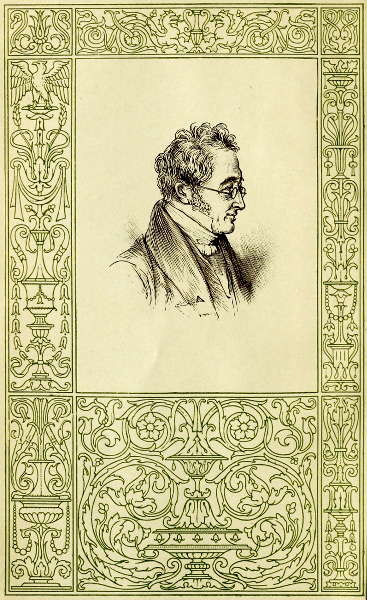
John Galt
Born, Irvine, Ayrshire
May 2, 1779
Died, Greenock
April 11, 1839
‘The Entail’ was first published in 1822. In ‘The World’s Classics’ it was first published in 1913.
INTRODUCTION
For many years I have been wondering why John Galt’s works are fallen into such neglect: that they should be almost wholly forgotten, even by readers to whom Scott and Jane Austen, Fanny Burney and Miss Edgeworth are indispensable, is what I cannot understand. If his Autobiography were not a rare book, an explanation might suggest itself. For supposing that the public, before reading The Entail, Annals of the Parish, or The Ayrshire Legatees, had been so unfortunate as to attempt the reading of the Autobiography, no one could be surprised that it made up its mind to read no more of him. A more tedious, flat, and dull book was never written by a man of genius: it is never interesting, never amusing, and always exasperating to any one who knows what he could do, and has done. To wade through it is very nearly impossible, and there is nothing to be gained by the achievement. Galt’s life was not particularly interesting in itself, but many lives less eventful have been so written as to be worth reading, and easy to read.
There is, however, little danger of Galt’s now losing possible admirers by the unlucky accident of their stumbling on his Autobiography before making his acquaintance in the right way—by reading his really excellent works of fiction: for copies of the Autobiography are not at all easy to come at. I suppose they have mostly been burned by his admirers.
There is not much to be told about him; his life does not matter to my purpose. John Galt was one of the sons of a sea-captain, in the West India trade, and was born on May 2, 1779, at Irvine in Ayrshire. When he was ten years old the family moved to Greenock, where the boy had his schooling and became a clerk in the Custom House. At five and twenty he carried himself and an epic poem to London, in quest of literary fame. The epic, on the Battle of Largs, he had printed, but it did not establish his repute as a poet, and, to judge by the specimens I have read, the indifference of the public was not a malicious affectation. Later on he produced half a dozen dramas, which deserved, and met with, as much success as the epic. Falling into bad health he made a tour through the Mediterranean and Levant, and had Byron and Hobhouse for fellow-travellers during a part of it. In the Autobiography he does not heap flattery on either ‘Orestes or Pylades’: perhaps, though he does not confess it, he extracted from his brother poet an opinion on his own muse. His experiences of travel were given to the world in Letters from the Levant, and the book was by no means a failure, and is much easier reading than the Autobiography. In 1820 appeared, in Blackwood, The Ayrshire Legatees: and in it he first showed the real power that was in him. It has been reprinted in recent years and can easily be read, and should be read by every one. The book has the rather tiresome form of letters: and the letters of the young lady and young gentleman are not always particularly entertaining: those of Dr. Pringle and his wife are invariably excellent. None better of the sort exist anywhere in fiction. It is astounding that a man of genius, whose fiction is so extraordinarily real, could, when writing of his own real life, make it inhumanly dull and artificial. In the Autobiography there is nothing quaint, and nothing witty: Dr. and Mrs. Pringle are inimitably quaint and funny. It would seem that when Galt looked at life, at men and manners, and things, through imaginary eyes he could see everything there was to be seen, and see it in a light intensely simple and vivid and real: that when he looked at anything through his own eyes he saw nothing at all. The doctor and Mrs. Pringle are indispensable to all readers who love dear oddities, and they are Galt’s very own: you shall not find them anywhere else. He borrowed them nowhere, but made them himself in a jocund humour of affectionate creation.
In 1821 The Ayrshire Legatees was followed up by the Annals of the Parish, which displayed Galt’s singular and original genius in fuller perfection. That his epic failed, and the Annals marked a literary success, is much to the credit of his contemporaries. Perhaps if Crabbe had not perversely insisted on being a poet we might have had country tales of his as worthy of immortality as the Annals of the Parish. The book is commonly said to be Galt’s masterpiece: which it is not. But it is unique and perfect. That The Entail is really Galt’s masterpiece seems to me clear: nevertheless there are weak parts in it, and the less good chapters are lamentably unequal to the best: whereas the Annals of the Parish has no weak chapters, and the balance of excellence is maintained throughout. But there is no story in the Annals; and, though it is a long gallery of perfect portraits, it has no characters that can even be compared with Watty and the Leddy o’ Grippy.
Where the Annals peculiarly excel is in the rare quality of charm: it has no hero, and the central figure is enriched with foibles that do not lean to heroism’s side: but they are quaintly attractive, and no one but Galt has given to literature any one like him. Of pathos Galt is shy in the Annals; nowhere is he at all disposed to ‘wallow’ in it: but he draws reverently near, and moves away as reverently. Nor is he boisterously funny: his wit is all his own, and it crops up at every corner, but not noisily: it cuts few capers, and has a pawky discretion. It is singularly void of malice and haughtiness, and has a Shakespearian humanity and blandness that fails to remind one of Thackeray. The Annals of the Parish prove that a great writer can make a whole book intensely amusing and extraordinarily amiable: that perfectly clear sight need not be merciless, nor wit remorselessly cruel.
The great and just success of the Annals of the Parish made Galt prolific: and in rapid sequence came Sir Andrew Wylie, The Entail, The Steamboat, The Provost, Ringan Gilhaize, The Spaewife, Rothelan, and The Omen.
Almost all of these are worth reading, and to read them is no trouble: but they are of very unequal merit: and only one of them is worthy of being grouped with The Ayrshire Legatees and the Annals. Sir Andrew Wylie is extremely good, and much of it shows Galt in his best vein. The more romantic tales, Ringan Gilhaize, The Spaewife, Rothelan, and The Omen, have the defects of their qualities, and the more Galt submits to those qualities the less we are pleased. To be romantic was, perhaps, a pardonable compliance with fashion: but Galt had little to make with romance, and idealism was his easiest road to failure. To be Ossianic may have seemed to him a literary duty, but the performance of some duties is hard on the public: as the district-visited might plead, to whom the perfecting of district-visitors appeals less than it ought. Galt had not a rich imagination; what he possessed in a rare degree was the faculty of representation. In his works of fiction we find a gallery of portraits of singular variety and perfection: of all of them he had seen the originals. When he chose to add characters invented by himself his success was not great. It must not, however, be supposed that he could only reproduce with pedestrian fidelity: there can be no doubt that from a mere hint in actual experience he could draw a vivid portrait of absolute and convincing reality.
He himself placed The Provost higher than the Annals of the Parish and The Ayrshire Legatees, but no one will agree with him. Almost the only interesting thing he tells us in the Autobiography is that the Annals, though published in 1821, the year following the appearance of The Ayrshire Legatees, were written in 1813, and laid aside and forgotten. Of The Entail he tells us little, except that the scene of the storm was introduced to admit of the description of a part of Scotland he had never seen. He speaks complacently of the praise accorded to that description, but betrays no pride in Watty or the Leddy, whom, indeed, he does not mention. He has plenty to say about Ringan Gilhaize, and evidently believes that the book was not accorded its due proportion of praise; chiefly, it would seem, because the thing he tried to do in it was difficult, and success the more meritorious. Probably Watty and the Leddy were thoroughly spontaneous, as they are inimitably real, and Galt thought the less of them on that account.
He left England for Canada in 1826, The Last of the Lairds appearing just before his departure. Three years later he came back ruined, and set to work again, his pen being as industrious as ever. Lawrie Todd was followed by Southennan, and these two novels by his Life of Lord Byron. In 1839, on April 11, he died at Greenock.
Anthony Trollope injured himself with critics of a certain class by a too frank disclosure of his methods of production: and Galt may well have done his literary reputation harm by his oft-repeated assertion that with him literature was always a secondary interest. Commerce, he would have us believe, was what came first. He never depreciates his own literary work, but he so speaks of it as to tempt others to belittle it: this was not modesty but sheer blundering. Congreve in his old age was more eager to shine in Voltaire’s eyes as a social personage than as a famous dramatist; and Galt appears to have cared more to be regarded as a statistician than as an unequalled master of fiction in his own region of it. These perversities in men of genius are not so rare as they are provoking.
The Entail was published in 1822, and, disregarded as it has long been, its merit was not ignored then. Gifford, Mackenzie, Lord Jeffrey, and Sir Walter Scott helped to spread its fame. In January, 1823, ‘Christopher North’ reviewed it at great length in Blackwood, and declared it ‘out of all sight the best thing he [Galt] has done’—The Ayrshire Legatees and the Annals of the Parish, be it remembered, having already appeared. The Professor says that he had read ‘the work on its first publication through from beginning to end in one day’, and about a fortnight afterwards devoured ‘all the prime bits’ again.
The conclusion of the whole matter, in Professor Wilson’s opinion, was that Galt had now proved himself ‘inferior only to two living writers of fictitious narratives—to him whom we need not name, and to Miss Edgeworth’.
That Galt was inferior to Scott as a romanticist is what no one would deny. As a romanticist he should not be brought in comparison with Sir Walter at all; but as a painter of genre he is not surpassed even by him whom ‘Christopher North’ would not name. That Miss Edgeworth was a romanticist of high rank does not appear: Castle Rackrent and The Absentee are unequalled, but as presentations of original, quaint, and absolutely living Irish character: Galt was not inferior to her, or a rival of her, for his realm and hers were far apart: in his presentation of certain types of Scottish character he is equally original, equally quaint, and equally true and vivid. Scottish humour and Irish wit are singularly unlike; to compare them must be a barren labour; perhaps the same reader will never fully appreciate both; but to no critic who knows and loves Scots types of character will it be easy to confess that Galt had an inferior revelation to that of the inestimable Maria: the subject-matter was different, that was all. To try and pose them as rivals is the folly. In Galt is none of the rollicking pathos that is the miracle of Castle Rackrent: Scots pathos is as different from Irish as flamboyant Irish wit is different from Scottish pawkiness. But if the daft laird of Grippy be not pathetic then I know of no pathos outside the pathos that exposes itself naked to the public to obtain recognition. If the Leddy o’ Grippy be not inimitably comic, then can there be no comedy short of screaming farce.
The reader is asked to remember that any comparison of Galt with Scott, or of Galt with Maria Edgeworth, was not initiated by the present writer, but by ‘Christopher North’.
Sir Walter Scott himself gave the best proof possible of appreciation by reading The Entail three times: and Byron had read it three times within a year of its appearance. To the Earl of Blessington he said that ‘the portraiture of Leddy Grippy was perhaps the most complete and original that had been added to the female gallery since the days of Shakespeare’.
Were this an essay on The Entail it would not suffice to quote the criticism of great writers upon the work: the essayist would need to justify his own admiration of it by quotation from the book itself. And this he has done at full length in (as Cousin Feenix said) another place. But in an Introduction there can be no occasion to detain the reader from making acquaintance on his own account with the Leddy and Watty, Claud, and the Milrookits. He will not, with the book in his hand, need to be told which scenes are inimitable. There are many which he will never be content to read but once: though I venture to think that he will not arrive at Lord Jeffrey’s conclusion that the drowning of George Walkinshaw is the most powerful single sketch in the work. Powerful all the same it is; and, since Lord Byron’s dictum concerning the Leddy has given the hint, we may be the more readily forgiven for thinking that there is, in that grim passage, something Shakespearian about the little cabin-boy.
JOHN AYSCOUGH.
THE ENTAIL
TO THE KING.
SIRE,
With the profoundest sense of your Majesty’s gracious condescension, the Author of this work has now the honour to lay it, by permission, at your Majesty’s feet.
It belongs to a series of sketches, in which he has attempted to describe characters and manners peculiar to the most ancient, and most loyal, portion of all your Majesty’s dominions;—it embraces a great part of the last century, the most prosperous period in the annals of Scotland, and singularly glorious to the administration of your Majesty’s Illustrious Family;—it has been written since the era of your Majesty’s joyous Visit to the venerable home of your Royal Ancestors;—and it is presented as a humble memorial of the feelings with which the Author, in common with all his countrymen, did homage to the King at Holyrood.
He has the happiness to be,
SIRE,
Your Majesty’s
Most dutiful and most faithful
Subject and Servant.
Edinburgh, 3d December 1822.
THE ENTAIL
CHAPTER I
Claud Walkinshaw was the sole surviving male heir of the Walkinshaws of Kittlestonheugh. His grandfather, the last Laird of the line, deluded by the golden visions that allured so many of the Scottish gentry to embark their fortunes in the Darien Expedition, sent his only son, the father of Claud, in one of the ships fitted out at Cartsdyke, and with him an adventure in which he had staked more than the whole value of his estate. But, as it is not our intention to fatigue the reader with any very circumstantial account of the state of the Laird’s family, we shall pass over, with all expedient brevity, the domestic history of Claud’s childhood. He was scarcely a year old when his father sailed, and his mother died of a broken heart, on hearing that her husband, with many of his companions, had perished of disease and famine among the swamps of the Mosquito shore. The Kittlestonheugh estate was soon after sold, and the Laird, with Claud, retired into Glasgow, where he rented the upper part of a back house, in Aird’s Close, in the Drygate. The only servant whom, in this altered state, he could afford to retain, or rather the only one that he could not get rid of, owing to her age and infirmities, was Maudge Dobbie, who, in her youth, was bairnswoman to his son. She had been upwards of forty years in the servitude of his house; and the situation she had filled to the father of Claud did not tend to diminish the kindliness with which she regarded the child, especially when, by the ruin of her master, there was none but herself to attend him.
The charms of Maudge had, even in her vernal years, been confined to her warm and affectionate feelings; and, at this period, she was twisted east and west, and hither and yont, and Time, in the shape of old age, hung so embracingly round her neck, that his weight had bent her into a hoop. Yet, thus deformed and aged, she was not without qualities that might have endeared her to a more generous boy. Her father had been schoolmaster in the village of Kittleston; and under his tuition, before she was sent, as the phrase then was, to seek her bread in the world, she had acquired a few of the elements of learning beyond those which, in that period, fell to the common lot of female domestics: and she was thus enabled, not only to teach the orphan reading and writing, but even to supply him with some knowledge of arithmetic, particularly addition and the multiplication table. She also possessed a rich stock of goblin lore and romantic stories, the recital of which had given the father of Claud the taste for adventure that induced him to embark in the ill-fated expedition. These, however, were not so congenial to the less sanguine temperament of the son, who early preferred the history of Whittington and his Cat to the achievements of Sir William Wallace; and ‘Tak your auld cloak about you,’ ever seemed to him a thousand times more sensible than ‘Chevy Chace.’ As for that doleful ditty, the ‘Flowers of the Forest,’ it was worse than the ‘Babes in the Wood’; and ‘Gil Morrice’ more wearisome than ‘Death and the Lady’.
The solitary old Laird had not been long settled in his sequestered and humble town-retreat, when a change became visible both in his appearance and manners. He had been formerly bustling, vigorous, hearty, and social; but from the first account of the death of his son, and the ruin of his fortune, he grew thoughtful and sedentary, and shunned the approach of strangers, and retired from the visits of his friends. Sometimes he sat for whole days, without speaking, and without even noticing the kitten-like gambols of his grandson; at others he would fondle over the child, and caress him with more than a grandfather’s affection; again, he would peevishly brush the boy away as he clasped his knees, and hurry out of the house with short and agitated steps. His respectable portliness disappeared; his clothes began to hang loosely upon him; his colour fled; his face withered; and his legs wasted into meagre shanks. Before the end of the first twelve months, he was either unwilling or unable to move unassisted from the old arm chair, in which he sat from morning to night, with his grey head drooping over his breast; and one evening, when Maudge went to assist him to undress, she found he had been for some time dead.
After the funeral, Maudge removed with the penniless orphan to a garret-room in the Saltmarket, where she endeavoured to earn for him and herself the humble aliment of meal and salt, by working stockings; her infirmities and figure having disqualified her from the more profitable industry of the spinning-wheel. In this condition she remained for some time, pinched with poverty, but still patient with her lot, and preserving, nevertheless, a neat and decent exterior.
It was only in the calm of the summer Sabbath evenings that she indulged in the luxury of a view of the country; and her usual walk on those occasions, with Claud in her hand, was along the brow of Whitehill, which she perhaps preferred, because it afforded her a distant view of the scenes of her happier days; and while she pointed out to Claud the hills and lands of his forefathers, she exhorted him to make it his constant endeavour to redeem them, if possible, from their new possessors, regularly concluding her admonition with some sketch or portrait of the hereditary grandeur of his ancestors.
One afternoon, while she was thus engaged, Provost Gorbals and his wife made their appearance.
The Provost was a man in flourishing circumstances, and he was then walking with his lady to choose a site for a country-house which they had long talked of building. They were a stately corpulent couple, well befitting the magisterial consequence of the husband.
Mrs. Gorbals was arrayed in a stiff and costly yellow brocade, magnificently embroidered with flowers, the least of which was peony; but the exuberance of her ruffle cuffs and flounces, the richness of her lace apron, with the vast head-dress of catgut and millinery, together with her blue satin mantle, trimmed with ermine, are items in the gorgeous paraphernalia of the Glasgow ladies of that time, to which the pencil of some abler limner can alone do justice.
The appearance of the Provost himself became his dignity, and corresponded with the affluent garniture of his lady: it was indeed such, that, even had he not worn the golden chains of his dignity, there would have been no difficulty in determining him to be some personage dressed with at least a little brief authority. Over the magisterial vestments of black velvet, he wore a new scarlet cloak, although the day had been one of the sultriest in July; and, with a lofty consequential air, and an ample display of the corporeal acquisition which he had made at his own and other well furnished tables, he moved along, swinging at every step his tall golden-headed cane with the solemnity of a mandarin.
Claud was filled with wonder and awe at the sight of such splendid examples of Glasgow pomp and prosperity, but Maudge speedily rebuked his juvenile admiration.
‘They’re no worth the looking at,’ said she; ‘had ye but seen the last Leddy Kittlestonheugh, your ain muckle respekit grandmother, and her twa sisters, in their hench-hoops, with their fans in their han’s—the three in a row would hae soopit the whole breadth o’ the Trongate—ye would hae seen something. They were nane o’ your new-made leddies, but come o’ a pedigree. Foul would hae been the gait, and drooking the shower, that would hae gart them jook their heads intil the door o’ ony sic thing as a Glasgow bailie—Na; Claudie, my lamb, thou maun lift thy een aboon the trash o’ the town, and ay keep mind that the hills are standing yet that might hae been thy ain; and so may they yet be, an thou can but master the pride o’ back and belly, and seek for something mair solid than the bravery o’ sic a Solomon in all his glory as yon Provost Gorbals.—Heh, sirs, what a kyteful o’ pride’s yon’er! and yet I would be nane surprised the morn to hear that the Nebuchadnezzar was a’ gane to pigs and whistles, and driven out wi’ the divors bill to the barren pastures of bankruptcy.’
CHAPTER II
After taking a stroll round the brow of the hill, Provost Gorbals and his lady approached the spot where Maudge and Claud were sitting. As they drew near, the old woman rose, for she recognized in Mrs. Gorbals one of the former visitors at Kittlestonheugh. The figure of Maudge herself was so remarkable, that, seen once, it was seldom forgotten, and the worthy lady, almost at the same instant, said to the Provost,—
‘Eh! Megsty, gudeman, if I dinna think yon’s auld Kittlestonheugh’s crookit bairnswoman. I won’er what’s come o’ the Laird, poor bodie, sin’ he was rookit by the Darien. Eh! what an alteration it was to Mrs. Walkinshaw, his gudedochter. She was a bonny bodie; but frae the time o’ the sore news, she croynt awa, and her life gied out like the snuff o’ a can’le. Hey, Magdalene Dobbie, come hither to me, I’m wanting to speak to thee.’
Maudge, at this shrill obstreperous summons, leading Claud by the hand, went forward to the lady, who immediately said,—
‘Ist t’ou ay in Kittlestonheugh’s service, and what’s come o’ him, sin’ his lan’ was roupit?’
Maudge replied respectfully, and with the tear in her eye, that the Laird was dead.
‘Dead!’ exclaimed Mrs. Gorbals, ‘that’s very extraordinare. I doubt he was ill off at his latter end. Whar did he die, poor man?’
‘We were obligated,’ said Maudge, somewhat comforted by the compassionate accent of the lady, ‘to come intil Glasgow, where he fell into a decay o’ nature.’ And she added, with a sigh that was almost a sob, ‘’Deed, it’s vera true, he died in a sare straitened circumstance, and left this helpless laddie upon my hands.’
The Provost, who had in the meantime been still looking about in quest of a site for his intended mansion, on hearing this, turned round, and putting his hand in his pocket, said,—
‘An’ is this Kittlestonheugh’s oe? I’m sure it’s a vera pitiful thing o’ you, lucky, to take compassion on the orphan; hae, my laddie, there’s a saxpence.’
‘Saxpence, gudeman!’ exclaimed the Provost’s lady, ‘ye’ll ne’er even your han’ wi’ a saxpence to the like of Kittlestonheugh, for sae we’re bound in nature to call him, landless though his lairdship now be; poor bairn, I’m wae for’t. Ye ken his mother was sib to mine by the father’s side, and blood’s thicker than water ony day.’
Generosity is in some degree one of the necessary qualifications of a Glasgow magistrate, and Provost Gorbals being as well endowed with it as any of his successors have been since, was not displeased with the benevolent warmth of his wife, especially when he understood that Claud was of their own kin. On the contrary, he said affectionately,—
‘Really it was vera thoughtless o’ me, Liezy, my dear; but ye ken I have na an instinct to make me acquaint wi’ the particulars of folk, before hearing about them. I’m sure no living soul can have a greater compassion than mysel’ for gentle blood come to needcessity.’
Mrs. Gorbals, however, instead of replying to this remark—indeed, what could she say, for experience had taught her that it was perfectly just—addressed herself again to Maudge.
‘And whar dost t’ou live? and what hast t’ou to live upon?’
‘I hae but the mercy of Providence,’ was the humble answer of honest Maudge, ‘and a garret-room in John Sinclair’s lan’. I ettle as weel as I can for a morsel, by working stockings; but Claud’s a rumbling laddie, and needs mair than I hae to gi’e him: a young appetite’s a growing evil in the poor’s aught.’
The Provost and his wife looked kindly at each other, and the latter added,—
‘Gudeman, ye maun do something for them. It’ll no fare the waur wi’ our basket and our store.’
And Maudge was in consequence requested to bring Claud with her that evening to the Provost’s House in the Bridgegate. ‘I think,’ added Mrs. Gorbals, ‘that our Hughoc’s auld claes will just do for him; and Maudge, keep a good heart, we’ll no let thee want. I won’er t’ou did na think of making an application to us afore.’
‘No,’ replied the old woman, ‘I could ne’er do that—I would hae been in an unco strait before I would hae begget on my own account; and how could I think o’ disgracing the family? Any help that the Lord may dispose your hearts to gi’e, I’ll accept wi’ great thankfulness, but an almous is what I hope He’ll ne’er put it upon me to seek; and though Claud be for the present a weight and burden, yet, an he’s sparet, he’ll be able belyve to do something for himsel’.’
Both the Provost and Mrs. Gorbals commended her spirit; and, from this interview, the situation of Maudge was considerably improved by their constant kindness. Doubtless, had Mr. Gorbals lived, he would have assisted Claud into business, but, dying suddenly, his circumstances were discovered to be less flourishing than the world had imagined, and his widow found herself constrained to abridge her wonted liberality.
Maudge, however, wrestled with poverty as well as she could, till Claud had attained his eleventh year, when she thought he was of a sufficient capacity to do something for himself. Accordingly, she intimated to Mrs. Gorbals that she hoped it would be in her power to help her with the loan of a guinea to set him out in the world with a pack. This the lady readily promised, but advised her to make application first to his relation, Miss Christiana Heritage.
‘She’s in a bien circumstance,’ said Mrs. Gorbals, ‘for her father, auld Windywa’s, left her weel on to five hundred pounds, and her cousin, Lord Killycrankie, ane of the fifteen that ay staid in our house when he rode the Circuit, being heir of entail to her father, alloos her the use of the house, so that she’s in a way to do muckle for the laddie, if her heart were so inclined.’
Maudge, agreeably to this suggestion, went next day to Windywalls; but we must reserve our account of the mansion and its mistress to enrich our next chapter, for Miss Christiana was, even in our day and generation, a personage of no small consequence in her own eyes: indeed, for that matter, she was no less in ours, if we may judge by the niche which she occupies in the gallery of our recollection, after the lapse of more than fifty years.
CHAPTER III
In the course of the same summer in which we commenced those grammar-school acquirements, that, in after-life, have been so deservedly celebrated, our revered relative, the late old Lady Havers, carried us in her infirm dowagerian chariot to pay her annual visit to Miss Christiana Heritage. In the admiration with which we contemplated the venerable mansion and its ancient mistress, an indistinct vision rises in our fancy of a large irregular whitewashed house, with a tall turnpike staircase; over the low and dwarfish arched door of which a huge cable was carved in stone, and dropped in a knotted festoon at each side. The traditions of the neighbourhood ascribed this carving to the Pictish sculptors, who executed the principal ornaments of the High Kirk of Glasgow.
On entering under this feudal arch we ascended a spiral stair, and were shown into a large and lofty room, on three sides of which, each far in a deep recess, was a narrow window glazed with lozens of yellow glass, that seemed scarcely more transparent than horn. The walls were hung with tapestry, from which tremendous forms, in warlike attitudes and with grim aspects, frowned in apparitional obscurity.
But of all the circumstances of a visit, which we must ever consider as a glimpse into the presence-chamber of the olden time, none made so deep and so vivid an impression upon our young remembrance as the appearance and deportment of Miss Christiana herself. She had been apprised of Lady Havers’ coming, and was seated in state to receive her, on a large settee adorned with ancestral needlework. She rose as our venerable relation entered the room. Alas! we have lived to know that we shall never again behold the ceremonial of a reception half so solemnly performed.
Miss Christiana was dressed in a courtly suit of purple Genoese velvet; her petticoat, spread by her hoop, extended almost to arms-length at each side. The ruffle cuffs which hung at her elbows loaded with lead, were coëval with the Union, having been worn by her mother when she attended her husband to that assembly of the States of Scotland, which put an end to the independence and poverty of the kingdom. But who, at this distance of time, shall presume to estimate the altitude of the Babylonian tower of toupees and lappets which adorned Miss Christiana’s brow?
It is probable that the reception which she gave to poor Maudge and Claud was not quite so ceremonious as ours; for the substantial benison of the visit was but half-a-crown. Mrs. Gorbals, on hearing this, exclaimed with a just indignation against the near-be-gawn Miss Christiana, and setting herself actively to work, soon collected, among her acquaintance, a small sum sufficient to enable Maudge to buy and furnish a pack for Claud. James Bridle the saddlemaker, who had worked for his father, gave him a present of a strap to sling it over his shoulder; and thus, with a judicious selection of godly and humorous tracts, curtain rings, sleeve buttons, together with a compendious assortment of needles and pins, thimbles, stay-laces and garters, with a bunch of ballads and excellent new songs, Claud Walkinshaw espoused his fortune.
His excursions at first were confined to the neighbouring villages, and as he was sly and gabby, he soon contrived to get in about the good-will of the farmers’ wives, and in process of time, few pedlars in all the west country were better liked, though every one complained that he was the dearest and the gairest.
His success equalled the most sanguine expectations of Maudge, but Mrs. Gorbals thought he might have recollected, somewhat better than he did, the kindness and care with which the affectionate old creature had struggled to support him in his helplessness. As often, however, as that warm-hearted lady inquired if he gave her any of his winnings, Maudge was obliged to say, ‘I hope, poor lad, he has more sense than to think o’ the like o’ me. Is na he striving to make a conquest of the lands of his forefathers? Ye ken he’s come o’ gentle blood, and I am nae better than his servan’.’
But although Maudge spoke thus generously, still sometimes, when she had afterwards become bedrid, and was left to languish and linger out the remnant of age in her solitary garret, comforted only by the occasional visits and charitable attentions of Mrs. Gorbals, the wish would now and then rise, that Claud, when he was prospering in the traffic of the Borders, would whiles think of her forlorn condition. But it was the lambent play of affection, in which anxiety to see him again before she died was stronger than any other feeling, and as often as she felt it moving her to repine at his inattention, she would turn herself to the wall, and implore the Father of Mercies to prosper his honest endeavours, and that he might ne’er be troubled in his industry with any thought about such a burden as it had pleased Heaven to make her to the world.
After having been bedrid for about the space of two years, Maudge died. Claud, in the meantime, was thriving as well as the prigging wives and higgling girls in his beat between the Nith and the Tyne would permit. Nor was there any pedlar better known at the fairs of the Border towns, or who displayed on those occasions such a rich assortment of goods. It was thought by some, that, in choosing that remote country for the scene of his itinerant trade, he was actuated by some sentiment of reverence for the former consequence of his family. But, as faithful historians, we are compelled to remind the reader, that he was too worldly-wise to indulge himself with any thing so romantic; the absolute fact being, that, after trying many other parts of the country, he found the Borders the most profitable, and that the inhabitants were also the most hospitable customers,—no small item in the arithmetical philosophy of a pedlar.
CHAPTER IV
About twenty years after the death of Maudge, Claud returned to Glasgow with five hundred pounds above the world, and settled himself as a cloth-merchant, in a shop under the piazza of a house which occupied part of the ground where the Exchange now stands. The resolution which he had early formed to redeem the inheritance of his ancestors, and which his old affectionate benefactress had perhaps inspired, as well as cherished, was grown into a habit. His carefulness, his assiduity, his parsimony, his very honesty, had no other object nor motive; it was the actuating principle of his life. Some years after he had settled in Glasgow, his savings and gathering enabled him to purchase the farm of Grippy, a part of the patrimony of his family.
The feelings of the mariner returning home, when he again beholds the rising hills of his native land, and the joys and fears of the father’s bosom, when, after a long absence, he approaches the abode of his children, are tame and calm, compared to the deep and greedy satisfaction with which the persevering pedlar received the earth and stone that gave him infeftment of that cold and sterile portion of his forefathers’ estate. In the same moment he formed a resolution worthy of the sentiment he then felt,—a sentiment which, in a less sordid breast, might have almost partaken of the pride of virtue. He resolved to marry, and beget children, and entail the property, that none of his descendants might ever have it in their power to commit the imprudence which had brought his grandfather to a morsel, and thrown himself on the world. And the same night, after maturely considering the prospects of all the heiresses within the probable scope of his ambition, he resolved that his affections should be directed towards Miss Girzy Hypel, the only daughter of Malachi Hypel, the Laird of Plealands.
They were in some degree related, and he had been led to think of her from an incident which occurred on the day he made the purchase. Her father was, at the time, in Glasgow, attending the Circuit; for, as often as the judges visited the city, he had some dispute with a neighbour or a tenant that required their interposition. Having heard of what had taken place, he called on Claud to congratulate him on the recovery of so much of his family inheritance.
‘I hear,’ said the Laird, on entering the shop, and proffering his hand across the counter, ‘that ye hae gotten a sappy bargain o’ the Grippy. It’s true some o’ the lands are but cauld; howsever, cousin, ne’er fash your thumb, Glasgow’s on the thrive, and ye hae as many een in your head, for an advantage, as ony body I ken. But now that ye hae gotten a house, wha’s to be the leddy? I’m sure ye might do waur than cast a sheep’s e’e in at our door; my dochter Girzy’s o’ your ain flesh and blood; I dinna see ony moral impossibility in her becoming, as the Psalmist says, “bone of thy bone.”’
Claud replied in his wonted couthy manner:
‘Nane o’ your jokes, Laird,—me even mysel to your dochter? Na, na, Plealands, that canna be thought o’ nowadays. But, no to make a ridicule of sic a solemn concern, it’s vera true that, had na my grandfather, when he was grown doited, sent out a’ the Kittlestonheugh in a cargo o’ playocks to the Darien, I might hae been in a state and condition to look at Miss Girzy; but, ye ken, I hae a lang clue to wind before I maun think o’ playing the ba’ wi’ Fortune, in ettling so far aboun my reach.’
‘Snuffs o’ tobacco,’ exclaimed the Laird,—‘are nae ye sib to oursels? and, if ye dinna fail by your ain blateness, our Girzy’s no surely past speaking to. Just lay your leg, my man, o’er a side o’ horse flesh, and come your ways, some Saturday, to speer her price.’
It was upon this delicate hint that Grippy was induced to think of Miss Girzy Hypel; but finding that he was deemed a fit match for her, and might get her when he would, he deferred the visit until he had cast about among the other neighbouring lairds’ families for a better, that is to say, a richer match. In this, whether he met with repulsive receptions, or found no satisfactory answers to his inquiries, is not quite certain; but, as we have said, in the same night on which he took legal possession of his purchase, he resolved to visit Plealands; and in order that the family might not be taken unawares, he sent a letter next day by the Ayr carrier to apprise the Laird of his intention, provided it was convenient to receive him for a night. To this letter, by the return of Johnny Drizen, the carrier, on the week following, he received such a cordial reply, that he was induced to send for Cornelius Luke, the tailor, a douce and respectable man, and one of the elders of the Tron Kirk.
‘Come your ways, Cornie,’ said the intending lover; ‘I want to speak to you anent what’s doing about the new kirk on the Green Know.’
‘Doing, Mr. Walkinshaw!—it’s a doing that our bairns’ bairns will ne’er hear the end o’—a rank and carnal innovation on the spirit o’ the Kirk o’ Scotland,’ replied the elder—‘It’s to be after the fashion o’ some prelatic Babel in Lon’on, and they hae christened it already by the papistical name o’ St. Andrew—a sore thing that, Mr. Walkinshaw; but the Lord has set his face against it, and the builders thereof are smitten as wi’ a confusion o’ tongues, in the lack o’ siller to fulfil their idolatrous intents—Blessed be His name for evermore! But was na Mr. Kilfuddy, wha preached for Mr. Anderson last Sabbath, most sweet and delectable on the vanities of this life, in his forenoon lecture? and did na ye think, when he spoke o’ that seventh wonder o’ the world, the temple of Diana, and enlarged wi’ sic pith and marrow on the idolaters in Ephesus, that he was looking o’er his shouther at Lowrie Dinwiddie and Provost Aiton, who are no wrang’t in being wytid wi’ the sin o’ this inordinate superstructure?—Mr. Walkinshaw, am nae prophet, as ye will ken, but I can see that the day’s no far aff, when ministers of the gospel in Glasgow will be seen chambering and wantoning to the sound o’ the kist fu’ o’ whistles, wi’ the seven-headed beast routing its choruses at every o’ercome o’ the spring.’
Which prediction was in our own day and generation to a great degree fulfilled; at the time, however, it only served to move the pawkie cloth-merchant to say,
‘Nae doubt, Cornie, the world’s like the tod’s whelp, ay the aulder the waur; but I trust we’ll hear news in the land before the like o’ that comes to pass. Howsever, in the words of truth and holiness, “sufficient for the day is the evil thereof;” and let us hope, that a regenerating spirit may go forth to the ends o’ the earth, and that all the sons of men will not be utterly cut up, root and branch.’
‘No: be thankit,’ said Cornelius, the tailor—‘even of those that shall live in the latter days, a remnant will be saved.’
‘That’s a great comfort, Mr. Luke, to us a’,’ replied Claud;—‘but, talking o’ remnants, I hae a bit blue o’ superfine; it has been lang on hand, and the moths are beginning to meddle wi’t—I won’er if ye could mak me a coat o’t?’
The remnant was then produced on the counter, and Cornelius, after inspecting it carefully, declared, that, ‘with the help of a steek or twa of darning, that would na be percep, it would do very well.’ The cloth was accordingly delivered to him, with strict injunctions to have it ready by Friday, and with all the requisite et ceteras to complete a coat, he left the shop greatly edified, as he told his wife, by the godly salutations of Mr. Walkinshaw’s spirit; ‘wherein,’ as he said, ‘there was a kithing of fruit meet for repentance; a foretaste o’ things that pertain not to this life; a receiving o’ the erls of righteousness and peace, which passeth all understanding, and endureth for evermore.’
‘I’m blithe to hear’t,’ was the worthy woman’s answer, ‘for he’s an even down Nabal—a perfect penure pig, that I ne’er could abide since he would na lend poor old Mrs. Gorbals, the provost’s widow, that, they say, set him up in the world, the sma’ soom o’ five pounds, to help her wi’ the outfit o’ her oe, when he was gaun to Virginia, a clerk to Bailie Cross.’
CHAPTER V
When Claud was duly equipped by Cornelius Luke, in the best fashion of that period, for a bien cloth-merchant of the discreet age of forty-seven, a message was sent by his shop lad, Jock Gleg, to Rob Wallace, the horse-couper in the Gallowgate, to have his beast in readiness next morning by seven o’clock, the intending lover having, several days before, bespoke it for the occasion.
Accordingly, at seven o’clock on Saturday morning, Rob was with the horse himself, at the entry to Cochran’s Land, in the Candleriggs, where Claud then lodged, and the wooer, in the sprucest cut of his tailor, with a long silver-headed whip in his hand, borrowed from his friend and customer, Bailie Murdoch, attended by Jock Gleg, carrying a stool, came to the close mouth.
‘I’m thinking, Mr. Walkinshaw,’ said Rob, the horse-couper, ‘that ye would na be the waur of a spur, an it were only on the ae heel.’
‘We maun do our best without that commodity, Rob,’ replied Claud, trying to crack his whip in a gallant style, but unfortunately cutting his own leg through the dark blue rig-and-fur gamashins; for he judiciously considered, that, for so short a journey, and that, too, on speculation, it was not worth his while to get a pair of boots.
Rob drew up the horse, and Jock having placed the stool, Claud put his right foot in the stirrup, at which Rob and some of the students of the college, who happened to be attracted to the spot, with diverse others then and there present, set up a loud shout of laughter, much to his molestation. But surely no man is expected to know by instinct the proper way of mounting a horse; and this was the first time that Claud had ever ascended the back of any quadruped.
When he had clambered into the saddle, Rob led the horse into the middle of the street, and the beast, of its own accord, walked soberly across the Trongate towards the Stockwell. The conduct of the horse, for some time, was indeed most considerate, and, in consequence, although Claud hung heavily over his neck, and held him as fast as possible with his knees, he passed the bridge, and cleared the buildings beyond, without attracting, in any particular degree, the admiration of the public towards his rider. But, in an unguarded moment, the infatuated Claud rashly thought it necessary to employ the Bailie’s whip, and the horse, so admonished, quickened his pace to a trot. ‘Heavens, ca’ they this riding?’ exclaimed Claud, and almost bit his tongue through in the utterance. However, by the time they reached Cathcart, it was quite surprising to see how well he worked in the saddle; and, notwithstanding the continued jolting, how nobly he preserved his balance. But, on entering that village, all the dogs, in the most terrifying manner, came rushing out from the cottage doors, and pursued the trotting horse with such bark and bay, that the poor animal saw no other for’t, but to trot from them faster and faster. The noise of the dogs, and of a passenger on horseback, drew forth the inhabitants, and at every door might be seen beldams with flannel caps, and mothers with babies in their arms, and clusters of children around them. It was the general opinion among all the spectators, on seeing the spruce new clothes of Claud, and his vaulting horsemanship, that he could be no less a personage than the Lord Provost of Glasgow.
Among them were a few country lads, who, perceiving how little the rider’s seat of honour was accustomed to a saddle, had the wickedness to encourage and egg on the dogs to attack the horse still more furiously; but, notwithstanding their malice, Claud still kept his seat, until all the dogs but one devil of a terrier had retired from the pursuit: nothing could equal the spirit and pertinacity with which that implacable cur hung upon the rear, and snapped at the heels of the horse. Claud, who durst not venture to look behind, lest he should lose his balance, several times damned the dog with great sincerity, and tried to lash him away with Bailie Murdoch’s silver-headed whip, but the terrier would not desist.
How long the attack might have continued, there is certainly no telling, as it was quickly determined by one of those lucky hits of fortune which are so desirable in life. The long lash of the Bailie’s whip, in one of Claud’s blind attempts, happily knotted itself round the neck of the dog. The horse, at the same moment, started forward into that pleasant speed at which the pilgrims of yore were wont to pass from London to the shrine of St. Thomas a Becket at Canterbury (which, for brevity, is in vulgar parlance called, in consequence, a canter); and Claud dragged the terrier at his whip-string end, like an angler who has hooked a salmon that he cannot raise out of the water, until he met with Johnny Drizen, the Ayr carrier, coming on his weekly journey to Glasgow.
‘Lordsake, Mr. Walkinshaw!’ exclaimed the carrier, as he drew his horse aside—‘in the name of the Lord, whare are ye gaun, and what’s that ye’re hauling ahint you?’
‘For the love of Heaven, Johnny,’ replied the distressed cloth-merchant, pale with apprehension, and perspiring at every pore,—‘for the love of Heaven, stop this desperate beast!’
The tone of terror and accent of anguish in which this invocation was uttered, had such an effect on the humanity and feelings of the Ayr carrier, that he ran towards Claud with the ardour of a philanthropist, and seized the horse by the bridle rings. Claud, in the same moment, threw down the whip, with the strangled dog at the lash; and, making an endeavour to vault out of the saddle, fell into the mire, and materially damaged the lustre and beauty of his new coat. However, he soon regained his legs, but they so shook and trembled, that he could scarcely stand, as he bent forward with his feet widely asunder, being utterly unable for some time to endure in any other position the pain of that experience of St. Sebastian’s martyrdom which he had locally suffered.
His first words to the carrier were, ‘Man, Johnny, this is the roughest brute that ever was created. Twa dyers wi’ their beetles could na hae done me mair detriment. I dinna think I’ll e’er be able to sit down again.’
This colloquy was, however, speedily put an end to, by the appearance of a covered cart, in which three ministers were returning from the synod to their respective parishes in Ayrshire; for at that time neither post-chaise nor stage-coach was numbered among the luxuries of Glasgow. One of them happened to be the identical Mr. Kilfuddy of Braehill, who had lectured so learnedly about the Temple of Diana on the preceding Sunday in the Tron Church; and he, being acquainted with Claud, said, as he looked out and bade the driver to stop,—
‘Dear me, Mr. Walkinshaw, but ye hae gotten an unco cowp. I hope nae banes are broken?’
‘No,’ replied Claud a little pawkily, ‘no; thanks be and praise—the banes, I believe, are a’ to the fore; but it’s no to be expressed what I hae suffer’t in the flesh.’
Some further conversation then ensued, and the result was most satisfactory, for Claud was invited to take a seat in the cart with the ministers, and induced to send his horse back to Rob Wallace by Johnny Drizen the carrier. Thus, without any material augmentation of his calamity, was he conveyed to the gate which led to Plealands. The Laird, who had all the morning been anxiously looking out for him, on seeing the cart approaching, left the house, and was standing ready at the yett to give him welcome.
CHAPTER VI
Plealands House stood on the bleak brow of a hill. It was not of great antiquity, having been raised by the father of Malachi; but it occupied the site of an ancient fortalice, the materials of which were employed in its construction; and as no great skill of the sculptor had been exerted to change the original form of the lintels and their ornaments, it had an air of antiquity much greater than properly belonged to its years.
About as much as the habitation had been altered from its primitive character, the master too had been modernized. But, in whatever degree he may have been supposed to have declined from the heroic bearing of his ancestors, he still inherited, in unabated vigour, the animosity of their spirit; and if the coercive influence of national improvement prevented him from being distinguished in the feud and foray, the books of sederunt, both of the Glasgow Circuit and of the Court of Session, bore ample testimony to his constancy before them in asserting supposed rights, and in vindicating supposed wrongs.
In his personal appearance, Malachi Hypel had but few pretensions to the gallant air and grace of the gentlemen of that time. He was a coarse hard-favoured fresh-coloured carl, with a few white hairs thinly scattered over a round bald head. His eyes were small and grey, quick in the glance, and sharp in the expression. He spoke thickly and hurriedly, and although his words were all very cogently strung together, there was still an unaccountable obscurity in the precise meaning of what he said. In his usual style of dress he was rude and careless, and he commonly wore a large flat-brimmed blue bonnet; but on the occasion when he came to the gate to receive Claud, he had on his Sunday suit and hat.
After the first salutations were over, he said to Claud, on seeing him walking lamely and uneasily, ‘What’s the matter, Grippy, that ye seem sae stiff and sair?’
‘I met wi’ a bit accident,’ was Claud’s reply: ‘Rob Wallace, the horse-couper, gied me sic a deevil to ride as, I believe, never man before mounted. I would na wish my sworn enemy a greater ill than a day’s journey on that beast’s back, especially an he was as little used to riding as me.’
The latter clause of the sentence was muttered inwardly, for the Laird did not hear it; otherwise he would probably have indulged his humour a little at the expense of his guest, as he had a sort of taste for caustic jocularity, which the hirpling manner of Claud was, at the moment, well calculated to provoke.
On reaching the brow of the rising ground where the house stood, the leddy, as Mrs. Hypel was emphatically called by the neighbouring cottars, with Miss Girzy, came out to be introduced to their relative.
Whether the leddy, a pale, pensive, delicate woman, had been informed by the Laird of the object of Claud’s visit, we do not thoroughly know, but she received him with a polite and friendly respectfulness. Miss Girzy certainly was in total ignorance of the whole business, and was, therefore, not embarrassed with any virgin palpitations, nor blushing anxieties; on the contrary, she met him with the ease and freedom of an old acquaintance.
It might here be naturally expected that we should describe the charms of Miss Girzy’s person, and the graces of her mind; but, in whatever degree she possessed either, she had been allowed to reach the discreet years of a Dumbarton youth in unsolicited maidenhood; indeed, with the aid of all the prospective interest of the inheritance around her, she did not make quite so tender an impression on the heart of her resolved lover as he himself could have wished. But why should we expatiate on such particulars? Let the manners and virtues of the family speak for themselves, while we proceed to relate what ensued.
CHAPTER VII
‘Girzy,’ said the Laird to his daughter, as they entered the dining-room, ‘gae to thy bed and bring a cod for Mr. Walkinshaw, for he’ll no can thole to sit down on our hard chairs.’
Miss Girzy laughed as she retired to execute the order, while her mother continued, as she had done from the first introduction, to inspect Claud from head to foot, with a curious and something of a suspicious eye; there was even an occasional flush that gleamed through the habitual paleness of her thoughtful countenance, redder and warmer than the hectic glow of mere corporeal indisposition. Her attention, however, was soon drawn to the spacious round table, in the middle of the room, by one of the maids entering with a large pewter tureen, John Drappie, the manservant, having been that morning sent on some caption and horning business of the Laird’s to Gabriel Beagle, the Kilmarnock lawyer. But, as the critics hold it indelicate to describe the details of any refectionary supply, however elegant, we must not presume to enumerate the series and succession of Scottish fare, which soon crowned the board, all served on pewter as bright as plate. Our readers must endeavour, by the aid of their own fancies, to form some idea of the various forms in which the head and harigals of the sheep, that had been put to death for the occasion, were served up, not forgetting the sonsy, savoury, sappy haggis, together with the gude fat hen, the float whey, which, in a large china punch-bowl, graced the centre of the table, and supplied the place of jellies, tarts, tartlets, and puddings.
By the time the table was burdened, Miss Girzy had returned with the pillow, which she herself placed in one of the armchairs, shaking and patting it into plumpness, as she said,—
‘Come round here, Mr. Walkinshaw,—I trow ye’ll fin’ this a saft easy seat,—well do I ken what it is to be saddle-sick mysel’. Lordsake, when I gaed in ahint my father to see the robber hanged at Ayr, I was for mair than three days just as if I had sat doun on a heckle.’
When the cloth was removed, and the ladies had retired, the Laird opened his mind by stretching his arm across the table towards his guest, and, shaking him again heartily by the hand,—
‘Weel, Grippy,’ said he, ‘but am blithe to see you here; and, if am no mistaen, Girzy will no be ill to woo.—Is na she a coothy and kind creature?—She’ll make you a capital wife.—There’s no another in the parish that kens better how to manage a house.—Man, it would do your heart gude to hear how she rants among the servan’ lasses, lazy sluts, that would like nothing better than to live at heck and manger, and bring their master to a morsel; but I trow Girzy gars them keep a trig house and a birring wheel.’
‘No doubt, Laird,’ replied Claud, ‘but it’s a comfort to hae a frugal woman for a helpmate; but ye ken nowadays it’s no the fashion for bare legs to come thegither.—The wife maun hae something to put in the pot as well as the man.—And, although Miss Girzy may na be a’thegither objectionable, yet it would still be a pleasant thing baith to hersel’ and the man that gets her, an ye would just gi’e a bit inkling o’ what she’ll hae.’
‘Is na she my only dochter? That’s a proof and test that she’ll get a’,—naebody needs to be teld mair.’
‘Vera true, Laird,’ rejoined the suitor, ‘but the leddy’s life’s in her lip, and if ony thing were happening to her, ye’re a hale man, and wha kens what would be the upshot o’ a second marriage?’
‘That’s looking far ben,’ replied the Laird, and he presently added, more briskly, ‘My wife, to be sure, is a frail woman, but she’s no the gear that ’ill traike.’
In this delicate and considerate way, the overture to a purpose of marriage was opened; and, not to dwell on particulars, it is sufficient to say, that, in the course of little more than a month thereafter, Miss Girzy was translated into the Leddy of Grippy; and in due season presented her husband with a son and heir, who was baptized by the name of Charles.
When the birth was communicated to the Laird, he rode expressly to Grippy to congratulate his son-in-law on the occasion; and, when they were sitting together, in the afternoon, according to the fashion of the age, enjoying the contents of the gardevin entire, Claud warily began to sound him on a subject that lay very near his heart.
‘Laird,’ said he, ‘ye ken the Walkinshaws of Kittlestonheugh are o’ a vera ancient blood, and but for the doited prank o’ my grandfather, in sending my father on that gouk’s errand to the Darien, the hills are green and the land broad that should this day hae been mine; and, therefore, to put it out o’ the power of posterity to play at any sic wastrie again, I mean to entail the property of the Grippy.’
‘That’s a very good conceit,’ replied the Laird, ‘and I hae mysel’ had a notion of entailing the Plealands likewise.’
‘So I hae heard you say,’ rejoined Claud, ‘and now that the bairn’s born, and a laddie too, we may make ae work o’t.’
‘Wi’ a’ my heart,’ replied the Laird, ‘nothing can be more agreeable to me; but as I wish to preserve the name of my family, than whilk there’s no a more respectit in Scotland, I’ll only covenant that when Charlie succeeds me, that he’ll take the name o’ Hypel.’
‘Ye surely, Laird, would ne’er be so unreasonable,’ replied Grippy, a little hastily; ‘ye can ne’er be sae unreasonable as to expect that the lad would gie up his father’s name, the name o’ Walkinshaw, and take only that of Hypel.’
‘’Deed would I,’ said the Laird, ‘for no haeing a son o’ my own to come after me, it’s surely very natural that I would like the Hypels to kittle again in my oe through my only dochter.’
‘The Walkinshaws, I doubt,’ replied Claud emphatically, ‘will ne’er consent to sic an eclipse as that.’
‘The lands of Plealands,’ retorted the Laird, ‘are worth something.’
‘So it was thought, or I doubt the heir o’t would nae hae been a Walkinshaw,’ replied Claud, still more pertinaciously.
‘Weel, weel,’ said the Laird, ‘dinna let us argol bargol about it; entail your own property as ye will, mine shall be on the second son; ye can ne’er object to that.’
‘Second son, and the first scarce sax days auld! I tell you what it is, an ye’ll no make the entail on the first, that is, on Charlie Walkinshaw, to be Walkinshaw, mind that, I’ll no say what may happen in the way o’ second sons.’
‘The Plealands’ my ain, and though I canna weel will it awa’, and ne’er will sell’t, yet get it wha will, he maun tak the name o’ Hypel. The thing’s sae settled, Grippy, and it’s no for you and me to cast out about it.’
Claud made several attempts to revive the subject, and to persuade the Laird to change his mind, but he was inflexible. Still, however, being resolved, as far as in him lay, to anticipate the indiscretion of his heirs, he executed a deed of entail on Charles; and for a considerable time after the Laird was not a little confirmed in his determination not to execute any deed in favour of Charles, but to reserve his lands for the second son, by the very reason that might have led another sort of person to act differently, namely, that he understood there was no prospect of any such appearing.
Towards the end, however, of the third year after the birth of Charles, Claud communicated to the Laird, that, by some unaccountable dispensation, Mrs. Walkinshaw was again in the way to be a mother, adding, ‘Noo, Laird, ye’ll hae your ain way o’t;’ and, accordingly, as soon as Walter, the second son, was born, and baptized, the lands of Plealands were entailed on him, on condition, as his grandfather intended, that he should assume the name of Hypel.
CHAPTER VIII
For several years after the birth of Walter, no event of any consequence happened in the affairs of Claud. He continued to persevere in the parsimonious system which had so far advanced his fortune. His wife was no less industrious on her part, for, in the meantime, she presented him with a daughter and another son, and had reared calves and grumphies innumerable, the profit of which, as she often said, was as good as the meal and malt o’ the family. By their united care and endeavours, Grippy thus became one of the wealthiest men of that age in Glasgow; but although different desirable opportunities presented themselves for investing his money in other and more valuable land, he kept it ever ready to redeem any portion of his ancestral estate that might be offered for sale.
The satisfaction which he enjoyed from his accumulative prospects was not, however, without a mixture of that anxiety with which the cup of human prosperity, whether really full, or only foaming, is always embittered. The Laird, his father-in-law, in the deed of entail which he executed of the Plealands, had reserved to himself a power of revocation, in the event of his wife dying before him, in the first instance, and of Walter and George, the two younger sons of Grippy, either dying under age, or refusing to take the name of Hypel, in the second. This power, both under the circumstances, and in itself, was perfectly reasonable; and perhaps it was the more vexatious to the meditations of Claud, that it happened to be so. For he often said to his wife, as they sat of an evening by the fire-side in the dark, for as the leddy was no seamstress, and he had as little taste for literature, of course, they burned no candles when by themselves, and that was almost every night,—‘I marvel, Girzy, what could gar your father put that most unsafe claw in his entail. I would na be surprised if out o’ it were to come a mean of taking the property entirely frae us. For ye see, if your mither was dead, and, poor woman, she has lang been in a feckless way, there’s no doubt but your father would marry again,—and married again, there can be as little doubt that he would hae childer,—so what then would become o’ ours—’
To this the worthy leddy of Grippy would as feelingly reply,—
‘I’m thinking, gudeman, that ye need na tak the anxieties sae muckle to heart; for, although my mither has been, past the memory o’ man, in a complaining condition, I ken nae odds o’ her this many a year; her ail’s like water to leather; it makes her life the tougher; and I would put mair confidence in the durability of her complaint than in my father’s health; so we need na fash ourselves wi’ controverting anent what may come o’ the death o’ either the t’ane or the t’ither.’
‘But then,’ replied Claud, ‘ye forget the other claw about Watty and Geordie. Supposing, noo, that they were baith dead and gone, which, when we think o’ the frush green kail-custock-like nature of bairns, is no an impossibility in the hands of their Maker. Will it no be the most hardest thing that ever was seen in the world for Charlie no to inherit the breadth o’ the blade of a cabaudge o’ a’ his father’s matrimonial conquest? But even should it please the Lord to spare Watty, is’t no an afflicting thing, to see sic a braw property as the Plealands destined to a creature that I am sure his brother Geordie, if he lives to come to years o’ discretion, will no fail to tak the law o’ for a haverel?’
‘I won’er to hear you, gudeman,’ exclaimed the leddy, ‘ay mislikening Watty at that gait. I’m sure he’s as muckle your ain as ony o’ the ither bairns; and he’s a weel-tempered laddie, lilting like a linty at the door-cheek frae morning to night, when Charlie’s rampaging about the farm, riving his claes on bush and brier a’ the summer, tormenting the birds and mawkins out o’ their vera life.’
‘Singing, Girzy, I’m really distressed to hear you,’ replied the father; ‘to ca’ yon singing; it’s nothing but lal, lal, lal, lal, wi’ a bow and a bend, backwards and forwards, as if the creature had na the gumpshion o’ the cuckoo, the whilk has a note mair in its sang, although it has but twa.’
‘It’s an innocent sang for a’ that; and I wish his brothers may ne’er do waur than sing the like o’t. But ye just hae a spite at the bairn, gudeman, ’cause my father has made him the heir to the Plealands. That’s the gospel truth o’ your being so fain to gar folk trow that my Watty’s daft.’
‘Ye’re daft, gudewife—are na we speaking here in a rational manner anent the concerns o’ our family? It would be a sair heart to me to think that Watty, or any o’ my bairns, were na like the lave o’ the warld; but ye ken there are degrees o’ capacity, Girzy, and Watty’s, poor callan, we maun alloo, between oursels, has been meted by a sma’ measure.’
‘Weel, if ever I heard the like o’ that—if the Lord has dealt the brains o’ our family in mutchkins and chapins, it’s my opinion, that Watty got his in the biggest stoup; for he’s farther on in every sort of education than Charlie, and can say his questions without missing a word, as far as “What is forbidden in the tenth commandment?” And I ne’er hae been able to get his brother beyond “What is effectual calling?” Though, I’ll no deny, he’s better at the Mother’s Carritches; but that a’ comes o’ the questions and answers being so vera short.’
‘That’s the vera thing, Girzy, that disturbs me,’ replied the father, ‘for the callan can get ony thing by heart, but, after all, he’s just like a book, for every thing he learns is dead within him, and he’s ne’er a prin’s worth the wiser o’t. But it’s some satisfaction to me, that, since your father would be so unreasonably obstinate as to make away the Plealands past Charlie, he’ll be punished in the gouk he’s chosen for heir.’
‘Gude guide us; is na that gouk your ain bairn?’ exclaimed the indignant mother. ‘Surely the man’s fey about his entails and his properties, to speak o’ the illess laddie, as if it were no better than a stirk or a stot.—Ye’ll no hae the power to wrang my wean, while the breath o’ life’s in my body; so, I redde ye, tak tent to what ye try.’
‘Girzy, t’ou has a head, and so has a nail.’
‘Gudeman, ye hae a tongue, and so has a bell.’
‘Weel, weel, but what I was saying a’ concerns the benefit and advantage o’ our family,’ said Claud, ‘and ye ken as it is our duty to live for one another, and to draw a’ thegither, it behoves us twa, as parents, to see that ilk is properly yocket, sin’ it would surely be a great misfortune, if, after a’ our frugality and gathering, the cart were cowpit in the dirt at last by ony neglek on our part.’
‘That’s ay what ye say,’ replied the lady,—‘a’s for the family, and nothing for the dividual bairns—noo that’s what I can never understand, for is na our family, Charlie, Watty, Geordie, and Meg?’—
‘My family,’ said Claud emphatically, ‘was the Walkinshaws of Kittlestonheugh, and let me tell you, Girzy Hypel, if it had na been on their account, there would ne’er hae been a Charlie nor a Watty either between you and me to plea about.’
‘I’m no denying your parentage—I ne’er said a light word about it, but I canna comprehend how it is, that ye would mak step-bairns o’ your ain blithesome childer on account o’ a wheen auld dead patriarchs that hae been rotten, for aught I ken to the contrary, since before Abraham begat Isaac.’
‘Haud thy tongue, woman, haud thy tongue. It’s a thrashing o’ the water, and a raising o’ bells, to speak to ane o’ thy capacity on things so far aboon thy understanding. Gae but the house, and see gin the supper’s ready.’
In this manner, the conversations between Grippy and his leddy were usually conducted to their natural issue, a quarrel, which ended in a rupture that was only healed by a peremptory command, which sent her on some household mission, during the performance of which the bickering was forgotten.
CHAPTER IX
In the meantime, as much friendliness and intercourse was maintained between the families of Grippy and Plealands as could reasonably be expected from the characters and dispositions of the respective inmates. Shortly, however, after the conversation related in the preceding chapter had taken place, it happened that, as Malachi was returning on horseback from Glasgow, where he had lost a law-suit, long prosecuted with the most relentless pertinacity against one of his tenants, he was overtaken on the Mairns Moor by one of those sudden squalls and showers, which the genius of the place so often raises, no doubt purposely, to conceal from the weary traveller the dreariness of the view around, and being wetted into the skin, the cold which he caught in consequence, and the irritation of his mind, brought on a fever, that terminated fatally on the fifth day.
His funeral was conducted according to the fashion of the age; but the day appointed was raw, windy, and sleety; not, however, so much so as to prevent the friends of the deceased from flocking in from every quarter. The assemblage that arrived far transcended all that can be imagined, in these economical days, of the attendance requisite on any such occasion. The gentry were shown into the dining-room, and into every room that could be fitted up with planks and deals for their reception. The barn received the tenantry, and a vast multitude—the whole clanjamphry from all the neighbouring parishes—assembled on the green in front of the house.
The Laird in his lifetime maintained a rough and free hospitality; and, as his kindred and acquaintance expected, there was neither scant nor want at his burial. The profusion of the services of seed-cake and wine to the in-door guests was in the liberalest spirit of the time; and tobacco-pipes, shortbread, and brandy, unadulterated by any immersion of the gauger’s rod, were distributed, with unmeasured abundance, to those in the barn and on the green.
Mr. Kilfuddy, the parish minister, said grace to the gentry in the dining-room; and the elders, in like manner, performed a similar part in the other rooms. We are not sure if we may venture to assert that grace was said to the company out of doors. Mr. Taws, the dominie of Bodleton, has indeed repeatedly declared, that he did himself ask a blessing; but he has never produced any other evidence that was satisfactory to us. Indeed, what with the drinking, the blast, and the sleet, it was not reasonable to expect much attention would be paid to any prayer; and therefore we shall not insist very particularly on this point.
The Braehill church-yard was at a considerable distance from Plealands-house, and hearses not being then in fashion in that part of the country, one of the Laird’s own carts was drawn out, and the coffin placed on it for conveyance, while the services were going round the company. How it happened, whether owing to the neglect of Thomas Cabinet, the wright, who acted the part of undertaker, and who had, with all his men, more to attend to than he could well manage, in supplying the multitude with refreshments; or whether John Drappie, the old servant that was to drive the cart, had, like many others, got a service overmuch, we need not pause to inquire:—it, however, so happened, that, by some unaccountable and never explained circumstance, the whole body of the assembled guests arranged themselves in funereal array as well and as steadily as the generality of them could, and proceeded towards the church-yard—those in the van believing that the cart with the coffin was behind, and their followers in the rear committing a similar mistake, by supposing that it was before them in front. Thus both parties, in ignorance of the simple fact, that the coffin and cart were still standing at the house door, proceeded, with as much gravity and decorum as possible, to the church-yard gate, where they halted. As the gentlemen in front fell back to the right and left, to open an avenue for the body to be brought up, the omission was discovered, and also that there was no other way of performing the interment but by returning, as expeditiously as possible, to the house for the body.
By this time the weather, which had been all the morning cold and blustering, was become quite tempestuous. The wind raved in the trees and hedges—the sleet was almost thickened into a blinding snow, insomuch, that, when the company reached the house, the greater number of them were so chilled that they stood in need of another service, and another was of course handed round on the green; of which the greater number liberally and freely partaking, were soon rendered as little able to wrestle against the wind as when they originally set out. However, when the procession was formed a second time, Thomas Cabinet taking care to send the cart with the coffin on before, the whole moved again towards the church-yard, it is said, with a degree of less decorum than in their former procession. Nay, there is no disguising the fact, that more than two or three of the company, finding themselves, perhaps, unable to struggle against the blast, either lay down of their own voluntary accord on the road, or were blown over by the wind.
When the procession had a second time reached the church-yard, and Thomas Cabinet, perspiring at every pore, was wiping his bald head with his coat sleeve, his men got the coffin removed from the cart, and placed on the spokes, and the relatives, according to their respective degrees of propinquity, arranged themselves to carry it. The bearers, however, either by means of the headstones and the graves over which their path lay, or by some other cause, walked so unevenly, that those on the one side pushed against their corresponding kindred on the other, in such a manner, that the coffin was borne rollingly along for some time, but without any accident, till the relations on the right side gave a tremendous lurch, in which they drew the spokes out of the hands of the mourners on the left, and the whole pageant fell with a dreadful surge to the ground.
This accident, however, was soon rectified; the neighbours, who were not bearers, assisted the fallen to rise, and Thomas Cabinet, with his men, carried the coffin to its place of rest, and having laid it on the two planks which were stretched across the grave, assembled the nearest kin around, and gave the cords into their hands, that they might lower the Laird into his last bed. The betherel and his assistant then drew out the planks, and the sudden jerk of the coffin, when they were removed, gave such a tug to those who had hold of the cords, that it pulled them down, head foremost, into the grave after it. Fortunately, however, none were buried but the body; for, by dint of the best assistance available on the spot, the living were raised, and thereby enabled to return to their respective homes, all as jocose and as happy as possible.
CHAPTER X
On examining the Laird’s papers after the funeral, Mr. Keelevin, the father of the celebrated town-clerk of Gudetoun, the lawyer present on the occasion, discovered, in reading over the deed which had been executed by the deceased, in favour of Walter, the second son of Claud, that it was, in some essential points, imperfect as a deed of entail, though in other respects valid as a testamentary conveyance. The opinion of counsel, as in all similar cases, was in consequence forthwith taken; and the suspicions of Mr. Keelevin being confirmed, Walter was admitted as heir to the estate, but found under no legal obligation to assume his grandfather’s name,—the very obligation which the old gentleman had been most solicitous to impose upon him.
How it happened that the clause respecting so important a point should have been so inaccurately framed, remains for those gentlemen of the law, who commit such inadvertencies, to explain. The discovery had the effect of inducing Claud to apply to our old master, the late Gilbert Omit, writer, to examine the entail of the Grippy, which he had himself drawn up; and it too was found defective, and easily to be set aside. Really, when one considers how much some lawyers profit by their own mistakes, one might almost be tempted to do them the injustice to suspect that they now and then have an eye to futurity, and carve out work for themselves. There have, however, been discoveries of legal errors, which have occasioned more distress than this one; for, instead of giving the old man any uneasiness, he expressed the most perfect satisfaction on being informed, in answer to a plain question on the subject, that it was still in his power to disinherit his first-born. Well do we recollect the scene, being seated at the time on the opposite side of Mr. Omit’s desk, copying a codicil which Miss Christiana Heritage, then in her ninety-second year, was adding to her will, for the purpose of devising, as heir-looms, the bedstead and blankets in which Prince Charles Edward slept, when he passed the night in her house, after having levied that contribution on the loyal and godly city of Glasgow, for which the magistrates and council were afterwards so laudably indemnified by Parliament. We were not then quite so well versed in the secrets of human nature as experience has since so mournfully taught us, and the words of Claud at the time sounded strangely and harshly in our ear, especially when he inquired, with a sharp, and as it were a greedy voice, whether it was practicable to get Walter to conjoin with him in a deed that would unite his inheritance of Plealands to the Grippy, and thereby make a property as broad and good as the ancestral estate of Kittlestonheugh?
‘Ye ken, Mr. Omit,’ said he, ‘how I was defrauded, as a bodie may say, of my patrimony, by my grandfather; and now, since it has pleased Providence to put it in my power, by joining the heritage of Plealands and Grippy, to renew my ancestry, I would fain mak a settlement with Watty to that effek.’
Mr. Omit, with all that calm and methodical manner which a long experience of those devices of the heart, to which lawyers in good practice, if at all men of observation, generally attain, replied,—
‘Nothing can be done in that way while Walter is under age. But certainly, when the lad comes to majority, if he be then so inclined, there is no legal impediment in the way of such an arrangement; the matter, however, would require to be well considered, for it would be an unco-like thing to hear of a man cutting off his first-born for no fault, but only because he could constitute a larger inheritance by giving a preference to his second.’
Whatever impression this admonitory remark made on the mind of Claud at the moment, nothing further took place at that time; but he thoughtfully gathered his papers together, and, tying them up with a string, walked away from the office, and returned to Grippy, where he was not a little surprised to see Mr. Allan Dreghorn’s wooden coach at the door; the first four-wheeled gentleman’s carriage started in Glasgow, and which, according to the praiseworthy history of Bailie Cleland, was made by Mr. Dreghorn’s own workmen, he being a timber merchant, carpenter, and joiner. It was borrowed for the day by Mr. and Mrs. Kilfuddy, who were then in Glasgow, and who, in consequence of their parochial connexion with the Plealands family, had deemed it right and proper to pay the Leddy of Grippy a visit of sympathy and condolence, on account of the loss she had sustained in her father.
CHAPTER XI
The Reverend Mr. Kilfuddy was a little, short, erect, sharp-looking, brisk-tempered personage, with a red nose, a white powdered wig, and a large cocked hat. His lady was an ample, demure, and solemn matron, who, in all her gestures, showed the most perfect consciousness of enjoying the supreme dignity of a minister’s wife in a country parish.
According to the Scottish etiquette of that period, she was dressed for the occasion in mourning; but the day being bleak and cold, she had assumed her winter mantle of green satin, lined with grey rabbit skin, and her hands ceremoniously protruded through the loop-holes, formed for that purpose, reposed in full consequentiality within the embraces of each other, in a large black satin muff of her own making, adorned with a bunch of flowers in needlework, which she had embroidered some thirty years before, as the last and most perfect specimen of all her accomplishments. But, although they were not so like the blooming progeny of Flora, as a Linwood might, perhaps, have worked, they possessed a very competent degree of resemblance to the flowers they were intended to represent, insomuch that there was really no great risk of mistaking the roses for lilies. And here we cannot refrain from ingeniously suspecting that the limner who designed those celebrated emblematic pictures of the months which adorned the drawing-room of the Craiglands, and on which the far-famed Miss Mysie Cunningham set so great a value, must have had the image of Mrs. Kilfuddy in his mind’s eye, when he delineated the matronly representative of November.
The minister, after inquiring with a proper degree of sympathetic pathos into the state of the mourner’s health, piously observed, ‘That nothing is so uncertain as the things of time. This dispensation,’ said he, ‘which has been vouchsafed, Mrs. Walkinshaw, to you and yours, is an earnest of what we have all to look for in this world. But we should not be overly cast down by the like o’t, but lippen to eternity; for the sorrows of perishable human nature are erls given to us of joys hereafter. I trust, therefore, and hope, that you will soon recover this sore shock, and in the cares of your young family, find a pleasant pastime for the loss of your worthy father, who, I am blithe to hear, has died in better circumstances than could be expected, considering the trouble he has had wi’ his lawing; leaving, as they say, the estate clear of debt, and a heavy soom of lying siller.’
‘My father, Mr. Kilfuddy,’ replied the lady, ‘was, as you well know, a most worthy character, and I’ll no say has na left a nest egg—the Lord be thankit, and we maun compose oursels to thole wi’ what He has been pleased, in his gracious ordinances, to send upon us for the advantage of our poor sinful souls. But the burial has cost the gudeman a power o’ money; for my father being the head o’ a family, we hae been obligated to put a’ the servants, baith here, at the Grippy, and at the Plealands, in full deep mourning; and to hing the front o’ the laft in the kirk, as ye’ll see next Sabbath, wi’ very handsome black cloth, the whilk cost twentypence the ell, first cost out o’ the gudeman’s ain shop; but, considering wha my father was, we could do no less in a’ decency.’
‘And I see,’ interfered the minister’s wife, ‘that ye hae gotten a bombazeen o’ the first quality; nae doubt ye had it likewise frae Mr. Walkinshaw’s own shop, which is a great thing, Mrs. Walkinshaw, for you to get.’
‘Na, Mem,’ replied the mourner, ‘ye dinna know what a misfortune I hae met wi’. I was, as ye ken, at the Plealands when my father took his departal to a better world, and sent for my mournings frae Glasgow, and frae the gudeman, as ye would naturally expek, and I had Mally Trimmings in the house ready to mak them when the box would come. But it happened to be a day o’ deluge, so that my whole commodity, on Baldy Slowgaun’s cart, was drookit through and through, and baith the crape and bombazeen were rendered as soople as pudding-skins. It was, indeed, a sight past expression, and obligated me to send an express to Kilmarnock for the things I hae on, the outlay of whilk was a clean total loss, besides being at the dear rate. But, Mr. Kilfuddy, every thing in this howling wilderness is ordered for the best; and, if the gudeman has been needcessited to pay for twa sets o’ mournings, yet, when he gets what he’ll get frae my father’s gear, he ought to be very well content that it’s nae waur.’
‘What ye say, Mrs. Walkinshaw,’ replied the minister, ‘is very judicious; for it was spoken at the funeral, that your father, Plealands, could nae hae left muckle less than three thousand pounds of lying money.’
‘No, Mr. Kilfuddy, it’s no just so muckle; but I’ll no say it’s ony waur than twa thousand.’
‘A braw soom, a braw soom,’ said the spiritual comforter:—but what further of the customary spirituality of this occasion might have ensued is matter of speculative opinion; for, at this juncture, Watty, the heir to the deceased, came rumbling into the room, crying,
‘Mither, mither, Meg Draiks winna gie me a bit of auld daddy’s burial bread, though ye brought o’er three farls wi’ the sweeties on’t, and twa whangs as big as peats o’ the fine sugar seed-cake.’
The composity of the minister and his wife were greatly tried, as Mrs. Kilfuddy herself often afterwards said, by this ‘outstrapolous intrusion;’ but quiet was soon restored by Mrs. Walkinshaw ordering in the bread and wine, of which Walter was allowed to partake. The visitors then looked significantly at each other; and Mrs. Kilfuddy, replacing her hands in her satin muff, which, during the refectionary treat from the funeral relics, had been laid on her knees, rose and said,—
‘Noo, I hope, Mrs. Walkinshaw, when ye come to see the leddy, your mither, at the Plealands, that ye’ll no neglek to gie us a ca’ at the Manse, and ye’ll be sure to bring the young Laird wi’ you, for he’s a fine spirity bairn—every body maun alloo that.’
‘He’s as he came frae the hand o’ his Maker,’ replied Mrs. Walkinshaw, looking piously towards the minister; ‘and it’s a great consolation to me to think he’s so weel provided for by my father.’
‘Then it’s true,’ said Mr. Kilfuddy, ‘that he gets a’ the Plealands property?’
‘’Deed is’t, sir, and a braw patrimony I trow it will be by the time he arrives at the years o’ discretion.’
‘That’s a lang look,’ rejoined the minister a little slyly, for Walter’s defect of capacity was more obvious than his mother imagined; but she did not perceive the point of Mr. Kilfuddy’s sarcasm, her attention at the moment being drawn to the entrance of her husband, evidently troubled in thought, and still holding the papers in his hand as he took them away from Mr. Omit’s desk.
CHAPTER XII
Experience had taught Mrs. Walkinshaw, as it does most married ladies, that when a husband is in one of his moody fits, the best way of reconciling him to the cause of his vexation is to let him alone, or, as the phrase is, to let him come again to himself. Accordingly, instead of teasing him at the moment with any inquiries about the source of his molestation, she drew Mrs. Kilfuddy aside, and retired into another room, leaving him in the hands of the worthy divine, who, sidling up to him, said,—
‘I’m weel content to observe the resigned spirit of Mrs. Walkinshaw under this heavy dispensation,—and it would be a great thing to us a’ if we would lay the chastisement rightly to heart. For wi’ a’ his faults, and no mere man is faultless, Plealands was na without a seasoning o’ good qualities, though, poor man, he had his ain tribulation in a set of thrawn-natured tenants. But he has won away, as we a’ hope, to that pleasant place where the wicked cease from troubling, and the weary rest in peace. Nae doubt, Mr. Walkinshaw, it maun hae been some sma’ disappointment to you, to find that your second son is made the heir, but it’s no an affliction past remedy, so ye should na let it fash you oure muckle.’
‘No, be thankit,’ replied Claud, ‘it’s no past remede, as Gibby Omit tells me; but I’m a thought troubled anent the means, for my auld son Charlie’s a fine callan, and I would grudge to shove him out o’ the line o’ inheritance. It’s an unco pity, Mr. Kilfuddy, that it had na pleased the Lord to mak Watty like him.’
The minister, who did not very clearly understand this, said, ‘A’ thing considered, Mr. Walkinshaw, ye’ll just hae to let the law tak its course, and though ye canna hae the lairdship in ae lump, as ye aiblins expekit, it’s nevertheless in your ain family.’
‘I’m no contesting that,’ rejoined Claud, ‘but I would fain hae the twa mailings in ae aught, for if that could be brought about, I would na doubt of making an excambio o’ the Plealands for the Divethill and Kittleston, the twa farms that wi’ the Grippy made up the heritage o’ my forefathers; for Mr. Auchincloss, the present propreeator, is frae the shire o’ Ayr, and I hae had an inklin that he would na be ill pleased to mak a swap, if there was ony possibility in law to alloo’t.’
‘I canna say,’ replied the Reverend Mr. Kilfuddy, ‘that I hae ony great knowledge o’ the laws o’ man; I should, however, think it’s no impossible; but still, Mr. Walkinshaw, ye would hae to mak a reservation for behoof of your son Walter, as heir to his grandfather. It would be putting adders in the creel wi’ the eggs if ye did na.’
‘That’s the very fasherie o’ the business, Mr. Kilfuddy, for it would be na satisfaction to me to leave a divided inheritance; and the warst o’t is, that Watty, haverel though it’s like to be, is no sae ill as to be cognos’t; and what maks the case the mair kittle, even though he were sae, his younger brother Geordie, by course o’ law and nature, would still come in for the Plealands afore Charlie. In short, I see nothing for’t, Mr. Kilfuddy, but to join the Grippy in ae settlement wi’ the Plealands, and I would do sae outright, only I dinna like on poor Charlie’s account.—Do ye think there is ony sin in a man setting aside his first-born? Ye ken Jacob was alloo’t to get the blessing and the birthright o’ his elder brother Esau.’
Mr. Kilfuddy, notwithstanding a spice of worldly-mindedness in his constitution, was, nevertheless, an honest and pious Presbyterian pastor; and the quickness of his temper at the moment stirred him to rebuke the cold-hearted speculations of this sordid father.
‘Mr. Walkinshaw,’ said he severely, ‘I can see no point o’ comparison between the case o’ your twa sons and that o’ Jacob and Esau; and what’s mair, the very jealousing that there may be sin in what ye wish to do, is a clear demonstration that it is vera sinful; for, O man! it’s a bad intent indeed that we canna excuse to oursels. But to set you right in ae point, and that ye may hae nae apology drawn from scriptural acts, for the unnatural inclination to disinherit your first-born, out o’ the prideful phantasy of leaving a large estate, I should tell you that there was a mystery of our holy religion hidden in Jacob’s mess o’ porridge, and it’s a profane thing to meddle with that which appertaineth to the Lord, for what He does, and what He permits, is past the understanding o’ man, and woe awaits on all those that would bring aught to pass contrary to the manifest course of his ordained method. For example, he taketh the breath of life away at his pleasure, but has he not commanded that no man shall commit murder?—Mr. Walkinshaw, Mr. Walkinshaw, ye maun strive against this sin of the flesh, ye maun warsle wi’ the devil, and hit him weel on the hip till ye gar him loosen the grip that he has ta’en to draw you on to sic an awful sin. Heh, man! an ye’re deluded on to do this thing, what a bonny sight it will be to see your latter end, when Belzebub, wi’ his horns, will be sitting upon your bosom, boring through the very joints and marrow o’ your poor soul wi’ the red-het gimlets o’ a guilty conscience.’
Claud shuddered at the picture, and taking the reproving minister by the hand, said, ‘We canna help the wicked thoughts that sometimes rise, we dinna ken whar frae, within us.’
‘Ye dinna ken whar frae?—I’ll tell you whar frae—frae hell; sic thoughts are the cormorants that sit on the apple-trees in the devil’s kail-yard, and the souls o’ the damned are the carcasses they mak their meat o’.’
‘For Heaven’s sake, Mr. Kilfuddy,’ exclaimed Claud, trembling in every limb; ‘be patient, and no speak that gait, ye gar my hair stand on end.’
‘Hair! O man, it would be weel for you, if your precious soul would stand on end, and no only on end, but humlet to the dust, and that ye would retire into a corner, and scrape the leprosy of sic festering sins wi’ a potsherd o’ the gospel, till ye had cleansed yourself for a repentance unto life.’
These ghostly animadversions may, perhaps, sound harsh to the polite ears of latter days, but denunciation was, at that time, an instrument of reasoning much more effectual than persuasion, and the spiritual guides of the people, in warning them of the danger of evil courses, made no scruple, on any occasion, to strengthen their admonitions with the liveliest imagery that religion and enthusiasm supplied. Yet, with all the powerful aid of such eloquence, their efforts were often unavailing, and the energy of Mr. Kilfuddy, in this instance, had, perhaps, no other effect than to make Claud for a time hesitate, although, before they parted, he expressed great contrition for having, as he said, yielded to the temptation of thinking that he was at liberty to settle his estate on whom he pleased.
CHAPTER XIII
At the death of the Laird of Plealands, the Grippy family, as we have already stated, consisted of three sons and a daughter. Charles, the eldest, was, as his father intimated to Mr. Kilfuddy, a fine, generous, open-hearted, blithe-faced boy. Towards him Claud cherished as much affection as the sterile sensibilities of his own bosom could entertain for any object; but Mrs. Walkinshaw, from some of those unaccountable antipathies with which nature occasionally perplexes philosophy, almost hated her first-born, and poured the full flow of her uncouth kindness on Walter, who, from the earliest dawnings of observation, gave the most indubitable and conclusive indications of being endowed with as little delicacy and sense as herself. The third son, George, was, at this period, too young to evince any peculiar character; but, in after life, under the appearance of a dull and inapt spirit, his indefatigable, calculating, and persevering disposition demonstrated how much he had inherited of the heart and mind of his father. The daughter was baptized Margaret, which her mother elegantly abbreviated into Meg; and, as the course of our narrative requires that we should lose sight of her for some time, we may here give a brief epitome of her character. To beauty she had no particular pretensions, nor were her accomplishments of the most refined degree; indeed, her chief merit consisted in an innate predilection for thrift and household management; and what few elements of education which she had acquired were chiefly derived from Jenny Hirple, a lameter woman, who went round among the houses of the heritors of the parish with a stilt, the sound of which, and of her feet on the floors, plainly pronounced the words one pound ten. Jenny gave lessons in reading, knitting, and needlework, and something that resembled writing; and under her tuition, Miss Meg continued till she had reached the blooming period of sixteen, when her father’s heart was so far opened, that, in consideration of the fortune he found he could then bestow with her hand, he was induced to send her for three months to Edinburgh; there, and in that time, to learn manners, ‘and be perfited,’ as her mother said, ‘wi’ a boarding-school education.’
But, to return to Charles, the first-born, to whose history it is requisite our attention should at present be directed, nothing could seem more auspicious than the spring of his youth, notwithstanding the lurking inclination of his father to set him aside in the order of succession. This was principally owing to his grandmother, who had, during the life of the Laird, her husband, languished, almost from her wedding-day, in a state of uninterested resignation of spirit, so quiet, and yet so melancholy, that it partook far more of the nature of dejection than contentment. Immediately after his death, her health and her spirits began to acquire new energy; and before he was six months in the earth, she strangely appeared as a cheerful old lady, who delighted in society, and could herself administer to its pleasures.
In the summer following she removed into Glasgow, and Charles, being then about ten years old, was sent to reside with her for the advantages of attending the schools. Considering the illiterate education of his father, and the rough-spun humours and character of his mother, this was singularly fortunate; for the old lady had, in her youth, been deemed destined for a more refined sphere than the householdry of the Laird of Plealands.
Her father was by profession an advocate in Edinburgh, and had sat in the last assembly of the States of Scotland. Having, however, to the last, opposed the Union with all the vehemence in his power, he was rejected by the Government party of the day; and in consequence, although his talents and acquirements were considered of a superior order, he was allowed to hang on about the Parliament-house, with the empty celebrity of abilities, that, with more prudence, might have secured both riches and honours.
The leisure which he was thus obliged to possess was devoted to the cultivation of his daughter’s mind, and the affection of no father was ever more tender, till about the period when she attained her twentieth year. Her charms were then in full blossom, and she was seen only to be followed and admired. But, in proportion as every manly heart was delighted with the graces and intelligence of the unfortunate girl, the solicitude of her father to see her married grew more and more earnest, till it actually became his exclusive and predominant passion, and worked upon him to such a degree, that it could no longer be regarded but as tinctured with some insane malady; insomuch, that his continual questions respecting the addresses of the gentlemen, and who or whether any of them sincerely spoke of love, embittered her life, and deprived her of all the innocent delight which the feminine heart, in the gaiety and triumph of youth, naturally enjoys from the homage of the men.
At this juncture Malachi Hypel was in Edinburgh, drinking the rounds of an advocate’s studies; for he had no intention to practise, and with students of that kind the bottle then supplied the place of reviews and magazines. He was a sturdy, rough, hard-riding and free-living fellow, entitled by his fortune and connexions almost to the best society; but qualified by his manners and inclinations to relish the lowest more joyously. Unluckily he was among the loudest and the warmest admirers of the ill-fated girl, and one night after supper, flushed with claret and brandy, he openly, before her father, made her a tender of his hand. The old man grasped it with an avaricious satisfaction, and though the heart of the poor girl was ready to burst at the idea of becoming the wife of one so coarse and rugged, she was nevertheless induced, in the space of little more than a month after, to submit to her fate.
The conduct of her father was at that time quite inexplicable, but when he soon afterwards died, unable to witness the misery to which he had consigned his beloved child, the secret came out. His circumstances were in the most ruinous condition; his little patrimony was entirely consumed, and he acknowledged on his death-bed, while he implored with anguish the pardon of his daughter, that the thought of leaving her in poverty had so overset his reason, that he could think of nothing but of securing her against the horrors of want. A disclosure so painful should have softened the harsh nature of her husband towards her, but it had quite a contrary effect. He considered himself as having been in some degree overreached, and although he had certainly not married her with any view to fortune, he yet reviled her as a party to her father’s sordid machination. This confirmed the sadness with which she had yielded to become his bride, and darkened the whole course of her wedded life with one continued and unvaried shade of melancholy.
The death of her husband was in consequence felt as a deliverance from thraldom. The event happened late in the day, but still in time enough to allow the original brightness of her mind to shine out in the evening with a serene and pleasing lustre, sufficient to show what, in happier circumstances, she might have been. The beams fell on Charles with the cherishing influence of the summer twilight on the young plant, and if the tears of memory were sometimes mingled with her instructions, they were like the gracious dews that improve the delicacy of the flower, and add freshness to its fragrance. Beneath her care, his natural sensibility was exalted and refined, and if it could not be said that he was endowed with genius, he soon appeared to feel, with all the tenderness and intelligence of a poet. In this respect his ingenuous affections served to recall the long vanished happiness of her juvenile hopes, and yielding to the sentiments which such reflections were calculated to inspire, she devoted, perhaps, too many of her exhortations in teaching him to value Love as the first of earthly blessings and of human enjoyments. ‘Love’, she often said to the wondering boy, who scarcely understood the term, ‘is like its emblem fire; it comes down from Heaven, and when once kindled in two faithful bosoms, grows brighter and stronger as it mingles its flames, ever rising and pointing towards the holy fountain-head from whence it came.’—These romantic lessons were ill calculated to fit him to perform that wary part in the world which could alone have enabled him to master the malice of his fortune, and to overcome the consequences of that disinheritance which his father had never for a moment ceased to meditate, but only waited for an appropriate opportunity to carry into effect.
CHAPTER XIV
Charles, in due time, was sent to College, and while attending the classes, formed an intimate friendship with a youth of his own age, of the name of Colin Fatherlans, the only son of Fatherlans of that Ilk. He was at this time about eighteen, and being invited by his companion to spend a few weeks at Fatherlans House in Ayrshire, he had soon occasion to feel the influence of his grandmother’s lectures on affection and fidelity.
Colin had an only sister, and Charles, from the first moment that he saw her, felt the fascinations of her extraordinary beauty, and the charms of a mind, still more lovely in its intelligence than the bloom and graces of her form. Isabella Fatherlans was tall and elegant, but withal so gentle, that she seemed, as it were, ever in need of protection; and the feeling which this diffidence of nature universally inspired, converted the homage of her admirers into a sentiment of tenderness, which, in the impassioned bosom of Charles Walkinshaw, was speedily warmed into love.
For several successive years, he had the gratification of spending some weeks in the company of Isabella; and the free intercourse permitted between them soon led to the disclosure of a mutual passion. No doubt at that time clouded the sunshine that shone along the hopes and promises in the vista of their future years. Every thing, on the contrary, was propitious. His lineage and prospects rendered him acceptable to her parents, and she was viewed by his father as a match almost beyond expectation desirable. Time alone seemed to be the only adversary to their affection; but with him Fortune was in league, and the course of true love never long runs smooth.
The father of Isabella was one of those unfortunate lairds who embarked in the Mississippian project of the Ayr Bank, the inevitable fate of which, at the very moment when the hopes of the lovers were as gay as the apple boughs with blossoms in the first fine mornings of spring, came like a nipping frost, and blighted their happiness for ever. Fatherlans was ruined, and his ruin was a sufficient reason, with the inflexible Claud, to command Charles to renounce all thoughts of that fond connexion which he had himself considered as the most enviable which his son could hope to obtain. But the altered fortunes of Isabella only served to endear her more and more to her lover; and the interdict of his father was felt as a profane interference with that hallowed enthusiasm of mingled love and sorrow with which his breast was at the moment filled.
‘It is impossible,’ said he; ‘and even were it in my power to submit to the sacrifice you require, honour, and every sentiment that makes life worthy, would forbid me. No, sir; I feel that Isabella and I are one; Heaven has made us so, and no human interposition can separate minds which God and Nature have so truly united. The very reason that you urge against the continuance of my attachment, is the strongest argument to make me cherish it with greater devotion than ever. You tell me she is poor, and must be penniless. Is not that, sir, telling me that she has claims upon my compassion as well as on my love? You say her father must be driven to the door. Gracious Heaven! and in such a time shall I shun Isabella? A common stranger, one that I had never before known, would, in such adversity and distress, be entitled to any asylum I could offer; but Isabella—in the storm that has unroofed her father’s house—shall she not claim that shelter which, by so many vows, I have sworn to extend over her through life?’
‘Weel, weel, Charlie,’ replied the old man, ‘rant awa, and tak thy tocherless bargain to thee, and see what thou’ll mak o’t. But mind my words—when Poverty comes in at the door, Love jumps out at the window.’
‘It is true,’ said the lover, a little more calmly, ‘that we cannot hope to live in such circumstances as I had so often reason to expect; but still, you will not refuse to take me into partnership, which, in the better days of her father, you so often promised?’
‘We’ll hae twa words about that,’ replied the father; ‘it’s ae thing to take in a partner young, clever, and sharp, and another to take a needful man with the prospect o’ a family. But, Charlie, I’ll no draw back in my word to you, if ye’ll just put off for a year or twa this calf-love connexion. Maybe by and by ye’ll think better o’ my counsel; at ony rate, something for a sair foot may be gathered in the meantime; and neither you nor Bell Fatherlans are sae auld but ye can afford to bide a while.’
This was said in the old man’s most reflective and sedate manner, and after some further conversation, Charles did consent to postpone for that time his marriage, on condition of being immediately admitted into partnership, with an understanding, that he should be free to marry at the end of twelve months, if he still continued so inclined. Both parties in this arrangement calculated without their host. The father thought that the necessary change in the exterior circumstances of Isabella would, in the course of the year, have a tendency to abate the ardour of her lover, and the son gave too much credit to his own self-denial, supposing, that, although the ruin of Fatherlans was declared, yet, as in similar cases, twelve months would probably elapse before the sequestration and sale of his estate would finally reduce the condition of his family. From the moment, however, that the affairs of the banking company were found irretrievable, Mr. Fatherlans zealously bestirred himself to place his daughter above the hazards of want, even while he entertained the hope that it might not be necessary. He carried her with him to Glasgow, and, before calling at Claud’s shop, secured for her an asylum in the house of Miss Mally Trimmings, a celebrated mantua-maker of that time. When he afterwards waited on the inexorable pedlar, and communicated the circumstance, the latter, with unfeigned pleasure, commended the prudence of the measure, for he anticipated that the pride of his son would recoil at the idea of connecting himself with Isabella in her altered state. What the lover himself felt on hearing the news, we shall not attempt to describe, nor shall we so far intrude beyond the veil which should ever be drawn over the anxieties and the sorrows of young affection, under darkened prospects, as to relate what passed between the lovers when they next met. The resolution, however, with which they both separated, was worthy of the purity of their mutual affections, and they agreed to pass the probationary year in a cheerful submission to their lot.
CHAPTER XV
When Charles parted from Isabella, he returned thoughtfully towards Grippy, which was situated on the south side of the Clyde, at the foot of the Cathkin hills. His road, after passing the bridge, lay across the fields as far as Rutherglen, where it diverged towards the higher ground, commanding at every winding a rich and variegated prospect.
The year was waning into autumn, and the sun setting in all that effulgence of glory, with which, in a serene evening, he commonly at that season terminates his daily course behind the distant mountains of Dumbartonshire and Argyle. A thin mist, partaking more of the lacy character of a haze than the texture of a vapour, spreading from the river, softened the nearer features of the view, while the distant were glowing in the golden blaze of the western skies, and the outlines of the city on the left appeared gilded with a brighter light, every window sparkling as if illuminated from within. The colour of the trees and hedges was beginning to change, and here and there a tuft of yellow leaves, and occasionally the berries of the mountain ash, like clusters of fiery embers, with sheaves of corn, and reapers in a few of the neighbouring fields, showed that the summer was entirely past, and the harvest time begun.
The calm diffused over the face of the landscape—the numerous images of maturity and repose everywhere around—were calculated to soothe the spirit, to inspire gentle thoughts, and to awaken pleasing recollections; and there was something in the feelings with which the lovers had separated, if not altogether in unison with the graciousness of the hour, still so much in harmony with the general benignity of nature, that Charles felt his resolution and self-denial elevated with a sentiment of devotion, mingled with the fond enthusiasm of his passion. ‘It is but a short time—a few months—and we shall be happy,’ he exclaimed to himself; ‘and our happiness will be the dearer that we shall have earned it by this sacrifice to prudence and to duty.’
But Charles and Isabella had estimated their fortitude too highly. They were both inexperienced in what the world really is; and her tender and sensitive spirit was soon found incapable of withstanding the trials and the humiliation to which she found herself subjected.
It was part of her business to carry home the dresses made up for Miss Mally’s customers; and although the Glasgow ladies of that time were perhaps not more difficult to please with the style or fashion of their gowns and millinery than those of our own day, yet some of them were less actuated by a compassionate consideration for the altered fortunes of Isabella than all our fair contemporaries would undoubtedly have been. The unfortunate girl was, in consequence, often obliged to suffer taunts and animadversions, which, though levelled against the taste or inattention of her mistress, entered not the less painfully into her young and delicate bosom. Still, however, she struggled against the harsh circumstances to which she was exposed; but her sensibilities were stronger than her courage, and her beauty betrayed what she felt, and soon began to fade.
Charles was in the practice of accompanying her in the evenings when she commonly performed her disagreeable errands, and relieved her of the burden of her band-box, joyfully counting how much of the probationary year was already past, and cheering her with the assurance that her misfortunes had only endeared her to him the more. It happened, however, that, one Saturday, being late of reaching the place of rendezvous—the foot of the staircase which led to Miss Mally’s dwelling—Isabella had gone away before he arrived, with a new dress to Mrs. Jarvie, the wife of the far-famed Bailie Nicol, the same Matty who lighted the worthy magistrate to the Tolbooth, on that memorable night when he, the son of the deacon, found his kinsman Rob Roy there.
Matty at this time was a full-blown lady; the simple, modest, bare-footed lassie, having developed into a crimson, gorgeous, high-heeled madam,—well aware of the augmented width and weight of the bailie’s purse, and jealous a little too much of her own consequence, perhaps, by recollecting the condition from which she had been exalted. The dress made up for her was a costly negligée; it not only contained several yards of the richest brocade more than any other Miss Mally Trimmings had ever made, but was adorned with cuffs and flounces in a style of such affluent magnificence, that we question if any grander has since been seen in Glasgow. Nor was it ordered for any common occasion, but to grace a formal dinner party, which Provost Anderson and his lady intended to give the magistrates and their wives at the conclusion of his eighth provostry. It was therefore not extraordinary that Mrs. Jarvie should take particular interest in this dress; but the moment she began to try it on, poor Isabella discovered that it would not fit, and stood trembling from head to heel, while the bailie’s wife, in great glee and good humour with the splendour of the dress, was loud in her praises of the cut of the ruffle-cuffs and the folds of the flounces. Having contemplated the flow of the negligée on both sides, and taken two or three stately steps across the room, to see how it would sweep behind, Mrs. Jarvie took the wings of the body in her hands, and, drawing them together, found they would not nearly meet.
Isabella, with a beating heart and a diffident hand, approached to smooth the silk, that it might expand; but all would not do. Mrs. Jarvie stood a monument of consternation, as silent as Lot’s wife, when she looked back, and thought of the charming dresses she had left behind.
‘O Chrystal!’ were the first words to which the ci-devant Matty could give utterance. ‘O Chrystal! My God, is nae this moving? Your mistress, doited devil, as I maun ca’ her, ought to be skelpit wi’ nettles for this calamity. The goun’s ruin’t—my gude silk to be clippit in this nearbegaun way—past a’ redemption. Gang out o’ the gait, ye cutty, and no finger and meddle wi’ me. This usage is enough to provoke the elect! as am a living soul, and that’s a muckle word for me to say, I’ll hae the old craighling scoot afore the Lords. The first cost was mair than five and twenty guineas. If there’s law and justice atween God and man, she shall pay for’t, or I’ll hae my satisfaction on her flesh. Hither, maiden, and help me off wi’ it. Siccan beauty as it was! Tak it wi’ you; tak it to you; out o’ the house and my presence. How durst ye dare to bring sic a disgrace to me? But let me look at it. Is’t no possible to put in a gushet or a gore, and to make an eik?’
‘I’ll take it home and try,’ said Isabella, timidly folding up the gown, which she had removed from Mrs. Jarvie.
‘Try,’ said the bailie’s wife, relapsing; ‘a pretty like story, that sic a gown should stand in the jeopardy o’ a try; but how could Miss Mally presume to send a silly thing like t’ee on this occasion? Lay down the gown this precious moment, and gae hame, and order her to come to me direkilty: it’s no to seek what I hae to say.’
The trembling and terrified girl let the unfortunate negligée fall, and hastily, in tears, quitted the room, and, flying from the house, met, in the street, her lover, who, having learnt where she was, had followed her to the house. A rapid and agitated disclosure of her feelings and situation followed. Charles, on the spot, resolved, at all hazards, rather to make her his wife at once, and to face the worst that might in consequence happen from his father’s displeasure, than allow her to remain exposed to such contumelious treatment. Accordingly, it was agreed that they should be married, and on the Monday following, the ceremony was performed, when he conducted her to a lodging which he had provided in the interval.
CHAPTER XVI
On the morning after his marriage, Charles was anxious, doubtful, and diffident. His original intention was to go at once to his father, to state what he had done, and to persuade him, if possible, to overlook a step, that, from its suddenness, might be deemed rash, but, from the source and motives from which it proceeded, could, he thought, be regarded only as praiseworthy. Still, though this was his own opinion, he, nevertheless, had some idea that the old gentleman would not view it exactly in the same light; and the feeling which this doubt awakened made him hesitate at first, and finally to seek a mediator.
He had long remarked, that ‘the leddy,’ his grandmother, sustained a part of great dignity towards his father; and he concluded, from the effect it appeared to produce, that her superiority was fully acknowledged. Under this delusion, after some consideration of the bearings and peculiarities of his case, he determined to try her interference, and, for that purpose, instead of going to Grippy, as he had originally intended, when he left Isabella, he proceeded to the house of the old lady, where he found her at home and alone.
The moment he entered her sitting-room, she perceived that his mind was laden with something which pressed heavily on his feelings; and she said,
‘What has vext you, Charlie? has your father been severe upon you for ony misdemeanour, or hae ye done any thing that ye’re afeared to tell?’
In the expression of these sentiments, she had touched the sensitive cord, that, at the moment, was fastened to his heart.
‘I’m sure,’ was his reply, ‘that I hae done no ill, and dinna ken why I should be frightened in thinking on what every bodie that can feel and reflect will approve.’
‘What is’t?’ said the leddy, thoughtfully: ‘What is’t? If it’s aught good, let me partake the solace wi’ you; and if it’s bad speak it out, that a remedy may be, as soon as possible, applied.’
‘Bell Fatherlans,’ was his answer; but he could only articulate her name.
‘Poor lassie,’ said the venerable gentlewoman, ‘her lot’s hard, and I’m wae both for your sake and hers, Charlie, that your father’s so dure as to stand against your marriage in the way he does. But he was ay a bargainer; alack! the world is made up o’ bargainers; and a heart wi’ a right affection is no an article o’ meikle repute in the common market o’ man and woman. Poor genty Bell! I wish it had been in my power to hae sweetened her lot; for I doubt and fear she’s oure thin-skinned to thole long the needles and prins o’ Miss Mally Trimmings’ short temper; and, what’s far waur, the tawpy taunts of her pridefu’ customers.’
‘She could suffer them no longer, nor would I let her,’ replied the bridegroom, encouraged by these expressions to disclose the whole extent of his imprudence.
Mrs. Hypel did not immediately return any answer, but sat for a few moments thoughtful, we might, indeed, say sorrowful—she then said,
‘Ye should na, Charlie, speak to me. I canna help you, my dear, though I hae the will. Gang to your father and tell him a’, and if he winna do what ye wish, then, my poor bairn, bravely trust to Providence, that gars the heart beat as it should beat, in spite o’ a’ the devices o’ man.’
‘I fear,’ replied Charles, with simplicity, ‘that I hae done that already, for Bell and me were married yesterday. I could na suffer to see her snooled and cast down any longer by every fat-pursed wife that would triumph and glory in a new gown.’
‘Married, Charlie!’ said the old lady with an accent of surprise, mingled with sorrow; ‘Married! weel, that’s a step that canna be untrodden, and your tribulation is proof enough to me that you are awakened to the consequence. But what’s to be done?’
‘Nothing, Mem, but only to speak a kind word for us to my father,’ was the still simple answer of the simple young husband.
‘I’ll speak for you, Charlie, I can do that, and I’ll be happy and proud to gie you a’ the countenance in my power; but your father, Charlie—the gude forgie me because he is your father—I’m darkened and dubious when I think o’ him.’
‘I hae a notion,’ replied Charles, ‘that we need be no cess on him: we’re content to live in a sma’ way; only I would like my wife to be countenanced as becomes her ain family, and mair especially because she is mine, so that, if my father will be pleased to tak her, and regard her as his gude-dochter, I’ll ask nothing for the present, but do my part, as an honest and honourable man, to the very uttermost o’ my ability.’
The kind and venerable old woman was profoundly moved by the earnest and frank spirit in which this was said; and she assured him, that so wise and so discreet a resolution could not fail to make his father look with a compassionate eye on his generous imprudence. ‘So gae your ways home to Bell,’ said she, ‘and counsel and comfort her; the day’s raw, but I’ll even now away to the Grippy to intercede for you, and by the gloaming be you here wi’ your bonny bride, and I trust, as I wish, to hae glad tidings for you baith.’
Charles, with great ardour and energy, expressed the sense which he felt of the old lady’s kindness and partiality, but still he doubted the successful result of the mission she had undertaken. Nevertheless, her words inspired hope, and hope was the charm that spread over the prospects of Isabella and of himself, the light, the verdure, and the colours which enriched and filled the distant and future scenes of their expectations with fairer and brighter promises than they were ever destined to enjoy.
CHAPTER XVII
Claud was sitting at the window when he discovered his mother-in-law coming slowly towards the house, and he said to his wife,—
‘In the name o’ gude, Girzy, what can hae brought your mother frae the town on sic a day as this?’
‘I hope,’ replied the Leddy of Grippy, ‘that nothing’s the matter wi’ Charlie, for he promised to be out on Sabbath to his dinner, and never came.’
In saying these words, she went hastily to the door to meet her mother, the appearance of whose countenance at the moment was not calculated to allay her maternal fears. Indeed, the old lady scarcely spoke to her daughter, but walking straight into the dining-room where Grippy himself was sitting, took a seat on a chair, and then threw off her cloak on the back of it, before she uttered a word.
‘What’s wrang, grannie?’ said Claud, rising from his seat at the window, and coming towards her.—‘What’s wrang, ye seem fashed?’
‘In truth, Mr. Walkinshaw, I hae cause,’ was the reply—‘poor Charlie!’—
‘What’s happen’d to him?’ exclaimed his mother.
‘Has he met wi’ ony misfortunate accident?’ inquired the father.
‘I hope it’s no a misfortune,’ said the old lady, somewhat recovering her self-possession. ‘At the same time, it’s what I jealouse, Grippy, ye’ll no be vera content to hear.’
‘What is’t?’ cried the father sharply, a little tantalized.
‘Has he broken his leg?’ said the mother.
‘Haud that clavering tongue o’ thine, Girzy,’ exclaimed the Laird peevishly; ‘wilt t’ou ne’er devaul’ wi’ sca’ding thy lips in other folks’ kail?’
‘He had amaist met wi’ far waur than a broken leg,’ interposed the grandmother. ‘His heart was amaist broken.’
‘It maun be unco brittle,’ said Claud, with a hem. ‘But what’s the need o’ this summering and wintering anent it?—Tell us what has happened?’
‘Ye’re a parent, Mr. Walkinshaw,’ replied the old lady seriously, ‘and I think ye hae a fatherly regard for Charlie; but I’ll be plain wi’ you. I doubt ye hae na a right consideration for the gentle nature of the poor lad; and it’s that which gars me doubt and fear that what I hae to say will no be agreeable.’
Claud said nothing in answer to this, but sat down in a chair on the right side of his mother-in-law, his wife having in the meantime taken a seat on the other side.—The old lady continued,—
‘At the same time, Mr. Walkinshaw, ye’re a reasonable man, and what I’m come about is a matter that maun just be endured. In short, it’s nothing less than to say, that, considering Fatherlans’ misfortunes, ye ought to hae alloo’t Charlie and Isabella to hae been married, for it’s a sad situation she was placed in—a meek and gentle creature like her was na fit to bide the flyte and flights o’ the Glasgow leddies.’
She paused, in the expectation that Claud would make some answer, but he still remained silent.—Mrs. Walkinshaw, however, spoke,—
‘’Deed, mither, that’s just what I said—for ye ken it’s an awfu’ thing to thwart a true affection. Troth is’t, gudeman; and ye should think what would hae been your ain tender feelings had my father stoppit our wedding after a’ was settled.’
‘There was some difference between the twa cases,’ said the Dowager of Plealands dryly to her daughter;—‘neither you nor Mr. Walkinshaw were so young as Charlie and Miss Fatherlans—that was something—and maybe there was a difference, too, in the character of the parties. Hows’ever, Mr. Walkinshaw, marriages are made in heaven; and it’s no in the power and faculty of man to controvert the coming to pass o’ what is ordained to be. Charlie Walkinshaw and Bell Fatherlans were a couple marrowed by their Maker, and it’s no right to stand in the way of their happiness.’
‘I’m sure,’ said Claud, now breaking silence, ‘it can ne’er be said that I’m ony bar till’t. I would only fain try a year’s probation in case it’s but calf-love.’
Mrs. Hypel shook her head as she said,—‘It’s vera prudent o’ you, but ye canna put auld heads on young shouthers. In a word, Mr. Walkinshaw, it’s no reasonable to expek that young folk, so encouraged in their mutual affection as they were, can thole so lang as ye would wish. The days o’ sic courtships as Jacob’s and Rachel’s are lang past.’
‘I but bade them bide a year,’ replied Claud.
‘A year’s an unco time to love; but to make a lang tale short, what might hae been foreseen has come to pass, the fond young things hae gotten themselves married.’
‘No possible!’ exclaimed Claud, starting from his chair, which he instantly resumed.—
‘Weel,’ said Mrs. Walkinshaw,—‘if e’er I heard the like o’ that!—Our Charlie a married man! the head o’ a family!’
The old lady took no notice of these and other interjections of the same meaning, which her daughter continued to vent, but looking askance and steadily at Claud, who seemed for a minute deeply and moodily agitated, she said,—
‘Ye say nothing, Mr. Walkinshaw.’
‘What can I say?’ was his answer.—‘I had a better hope for Charlie,—I thought the year would hae cooled him,—and am sure Miss Betty Bodle would hae been a better bargain.’
‘Miss Betty Bodle!’ exclaimed the grandmother, ‘she’s a perfect tawpy.’
‘Weel, weel,’ said Grippy, ‘it mak’s no odds noo what she is,—Charlie has ravelled the skein o’ his own fortune, and maun wind it as he can.’
‘That will be no ill to do, Mr. Walkinshaw, wi’ your helping hand. He’s your first born, and a better-hearted lad never lived.’
‘Nae doubt I maun help him,—there can be nae doubt o’ that; but he canna expek, and the world can ne’er expek, that I’ll do for him what I might hae done had he no been so rash and disobedient.’
‘Very true, Mr. Walkinshaw,’ said the gratified old lady, happy to find that the reconciliation was so easily effected; and proud to be the messenger of such glad tidings to the young couple, she soon after returned to Glasgow. But scarcely had she left the house, when Claud appeared strangely disturbed,—at one moment he ran hastily towards his scrutoire, and opened it, and greedily seized the title-deeds of his property,—the next he closed it thoughtfully, and retreating to his seat, sat down in silence.
‘What’s the matter wi’ you, gudeman? ye were na sae fashed when my mother was here,’ said his wife.
‘I’ll do nothing rashly—I’ll do nothing rashly,’ was the mysterious reply.
‘Eh, mither, mither,’ cried Walter, bolting into the room,—‘what would you think, our Charlie’s grown a wife’s gudeman like my father.’
‘Out o’ my sight, ye ranting cuif,’ exclaimed Claud, in a rapture of rage, which so intimidated Walter that he fled in terror.
‘It’s dreadfu’ to be sae tempted,—and a’ the gude to gang to sic a haverel,’ added Claud, in a low troubled accent, as he turned away and walked towards the window.
‘Nae doubt,’ said his wife, ‘it’s an awfu’ thing to hear o’ sic disobedience as Charlie in his rashness has been guilty o’.’
‘It is, it is,’ replied her husband, ‘and many a ane for far less hae disinherited their sons,—cut them off wi’ a shilling.’
‘That’s true,’ rejoined the Leddy of Grippy. ‘Did na Kilmarkeckle gie his only daughter but the legacy o’ his curse, for running away wi’ the Englisher captain, and leave a’ to his niece Betty Bodle?’
‘And a’ she has might hae been in our family but for this misfortune.—When I think o’ the loss, and how pleased her father was when I proposed Charlie for her—It’s enough to gar me tak’ some desperate step to punish the contumacious reprobate.—He’ll break my heart.’
‘Dear keep me, gudeman, but ye’re mair fashed than I could hae thought it was in the power o’ nature for you to be,’—said Mrs. Walkinshaw, surprised at his agitation.
‘The scoundrel! the scoundrel!’ said Claud, walking quickly across the room—‘To cause sic a loss!—To tak’ nae advice!—to run sic a ram-race!—I ought, I will, gar him fin’ the weight o’ my displeasure. Betty Bodle’s tocher would hae been better than the Grippy—But he shall suffer for’t—I see na why a father may na tak’ his own course as weel as a son—I’ll no be set at naught in this gait. I’ll gang in to Mr. Keelevin the morn.’
‘Dinna be oure headstrong, my dear, but compose yoursel’,’—said the lady, perplexed, and in some degree alarmed at the mention of the lawyer’s name.—
‘Compose thysel, Girzy, and no meddle wi’ me,’ was the answer, in a less confident tone than the declaration he had just made, adding,—
‘I never thought he would hae used me in this way. I’m sure I was ay indulgent to him.’
‘Overly sae,’ interrupted Mrs. Walkinshaw, ‘and often I told you that he would gie you a het heart for’t, and noo ye see my words hae come to pass.’
Claud scowled at her with a look of the fiercest aversion, for at that moment the better feelings of his nature yearned towards Charles, and almost overcame the sordid avidity with which he had resolved to cut him off from his birthright, and to entail the estate of Grippy with the Plealands on Walter,—an intention which, as we have before mentioned, he early formed, and had never abandoned, being merely deterred from carrying it into effect by a sense of shame, mingled with affection, and a slight reverence for natural justice; all which, however, were loosened from their hold in his conscience, by the warranty which the imprudence of the marriage seemed to give him in the eyes of the world, for doing what he had so long desired to do. Instead, however, of making her any reply, he walked out into the open air, and continued for about half an hour to traverse the green in front of the house, sometimes with quick short steps, at others with a slow and heavy pace. Gradually, however, his motion became more regular, and ultimately ended in a sedate and firm tread, which indicated that his mind was made up on the question which he had been debating with himself.
CHAPTER XVIII
That abysm of legal dubieties, the office of Mr. Keelevin, the writer, consisted of two obscure apartments on the ground floor of M’Gregor’s Land, in M’Whinnie’s Close, in the Gallowgate. The outer room was appropriated to the clerks, and the inner for the darker mysteries of consultation. To this place Claud repaired on the day following the interesting communication, of which we have recorded the first impressions in the foregoing chapter. He had ordered breakfast to be ready an hour earlier than usual; and as soon as he had finished it, he went to his scrutoire, and taking out his title-deeds, put them in his pocket, and without saying any thing to his wife of what he intended to do, lifted his hat and stick from their accustomed place of repose, in the corner of the dining-room, and proceeded, as we have said, to consult Mr. Keelevin.
It is not the universal opinion of mankind, that the profession of the law is favourable to the preservation of simplicity of character or of benevolence of disposition; but this, no doubt, arises from the malice of disappointed clients, who, to shield themselves from the consequences of their own unfair courses, pretend that the wrongs and injustice of which they are either found guilty, or are frustrated in the attempt to effect, are owing to the faults and roguery of their own or their adversaries’ lawyers. But why need we advocate any revision of the sentence pronounced upon the limbs of the law? for, grasping, as they do, the whole concerns and interests of the rest of the community, we think they are sufficiently armed with claws and talons to defend themselves. All, in fact, that we meant by this apologetic insinuation, was to prepare the reader for the introduction of Mr. Keelevin, on whom the corrosive sublimate of a long and thorough professional insight of all kinds of equivocation and chicanery had in no degree deteriorated from the purity of his own unsuspicious and benevolent nature. Indeed, at the very time that Claud called, he was rebuking his young men on account of the cruelty of a contrivance they had made to catch a thief that was in the nocturnal practice of opening the window of their office, to take away what small change they were so negligent as to leave on or in their desks; and they were not only defending themselves, but remonstrating with him for having rendered their contrivance abortive. For, after they had ingeniously constructed a trap within the window, namely, a footless table, over which the thief must necessarily pass to reach their desks, he had secretly placed a pillow under it, in order that, when it fell down, the robber might not hurt himself in the fall.
‘Gude morning, gude morning, Mr. Keelevin; how’re ye the day?’ said Claud, as he entered.
‘Gaily, gaily, Grippy; how’re ye yoursel, and how’s a’ at hame? Come awa ben to my room,’ was the writer’s answer, turning round and opening the door; for experience had taught him that visits from acquaintances at that hour were not out of mere civility.
Claud stepped in, and seated himself in an old armed chair which stood on the inner side of the table where Mr. Keelevin himself usually wrote; and the lawyer followed him, after saying to the clerks, ‘I redde ye, lads, tak tent to what I hae been telling you, and no encourage yourselves to the practice of evil that good may come o’t. To devise snares and stratagems is most abominable—all that ye should or ought to do, is to take such precautions that the thief may not enter; but to wile him into the trap, by leaving the window unfastened, was nothing less than to be the cause of his sin. So I admonish you no to do the like o’t again.’
In saying this he came in, and, shutting the door, took his own seat at the opposite side of the table, addressing himself to Claud, ‘And so ye hae gotten your auld son married? I hope it’s to your satisfaction.’
‘An he has brewed good yill, Mr. Keelevin, he’ll drink the better,’ was the reply; ‘but I hae come to consult you anent a bit alteration that I would fain make in my testament.’
‘That’s no a matter of great difficulty, Laird; for, sin’ we found out that the deed of entail that was made after your old son was born can never stand, a’ ye have is free to be destined as ye will, both heritable and moveable.’
‘And a lucky discovery that was;—many a troubled thought I hae had in my own breast about it; and now I’m come to confer wi’ you, Mr. Keelevin, for I would na trust the hair o’ a dog to the judgement o’ that tavert bodie, Gibby Omit, that gart me pay nine pounds seven shillings and saxpence too for the parchment; for it ne’er could be called an instrument, as it had na the pith o’ a windlestrae to bind the property; and over and aboon that, the bodie has lang had his back to the wa’, wi’ the ’poplexy; so that I maun put my trust in this affair into your hands, in the hope and confidence that ye’re able to mak something mair sicker.’
‘We’ll do our endeavour, Mr. Walkinshaw; hae ye made ony sort o’ scantling o’ what you would wish done?’
‘No, but I hae brought the teetles o’ the property in my pouch, and ye’ll just conform to them. As for the bit saving of lying money, we’ll no fash wi’ it for the present; I’m only looking to get a solid and right entail o’ the heritable.’
‘Nothing can be easier. Come as ye’re o’ an ancient family, no doubt your intent is to settle the Grippy on the male line; and, failing your sons and their heirs, then on the heirs of the body of your daughter.’
‘Just sae, just sae. I’ll make no change on my original disposition; only, as I would fain hae what cam by the gudewife made part and portion o’ the family heritage, and as her father’s settlement on Watty canna be broken without a great risk, I would like to begin the entail o’ the Grippy wi’ him.’
‘I see nothing to prevent that; ye could gie Charlie, the auld son, his liferent in’t, and as Watty, no to speak disrespectful of his capacity, may ne’er marry, it might be so managed.’
‘Oh, but that’s no what I mean, and what for may na Watty marry? Is na he o’ capacity to execute a deed, and surely that should qualify him to take a wife?’
‘But heavens preserve me, Mr. Walkinshaw, are ye sensible of the ill ye would do to that fine lad, his auld brother, that’s now a married man, and in the way to get heirs? Sic a settlement as ye speak o’ would be cutting him off a’ thegither: it would be most iniquitous!’
‘An it should be sae, the property is my own conquesting, Mr. Keelevin, and surely I may mak a kirk and a mill o’t an I like.’
‘Nobody, it’s true, Mr. Walkinshaw, has ony right to meddle wi’ how ye dispone of your own, but I was thinking ye maybe did na reflect that sic an entail as ye speak o’ would be rank injustice to poor Charlie, that I hae ay thought a most excellent lad.’
‘Excellent here, or excellent there, it was na my fault that he drew up wi’ a tocherless tawpy, when he might hae had Miss Betty Bodle.’
‘I am very sorry to hear he has displeased you; but the Fatherlans family, into whilk he has married, has ay been in great repute and estimation.’
‘Aye, afore the Ayr Bank; but the silly bodie the father was clean broken by that venture.’
‘That should be the greater reason, Mr. Walkinshaw, wi’ you to let your estate go in the natural way to Charlie.’
‘A’ that may be very true, Mr. Keelevin; I did na come here, however, to confer with you anent the like of that, but only of the law. I want you to draw the settlement, as I was saying; first, ye’ll entail it on Walter and his heirs-male, syne on Geordie and his heirs-male, and failing them, ye may gang back, to please yoursel, to the heirs-male o’ Charlie, and failing them, to Meg’s heirs-general.’
‘Mr. Walkinshaw,’ said the honest writer, after a pause of about a minute, ‘there’s no Christianity in this.’
‘But there may be law, I hope.’
‘I think, Mr. Walkinshaw, my good and worthy friend, that you should reflect well on this matter, for it is a thing by ordinare to do.’
‘But ye ken, Mr. Keelevin, when Watty dies, the Grippy and the Plealands will be a’ ae heritage, and will na that be a braw thing for my family?’
‘But what for would ye cut off poor Charlie from his rightful inheritance?’
‘Me cut him off frae his inheritance! When my grandfather brake on account o’ the Darien, then it was that he lost his inheritance. He’ll get frae me a’ that I inherited frae our forbears, and may be mair; only, I’ll no alloo he has ony heritable right on me, but what stands with my pleasure to gie him as an almous.’
‘But consider, he’s your own firstborn?’—
‘Weel, then, what o’ that?’
‘And it stands with nature surely, Mr. Walkinshaw, that he should hae a bairn’s part o’ your gear.’
‘Stands wi’ nature, Mr. Keelevin? A coat o’ feathers or a pair o’ hairy breeks is a’ the bairn’s part o’ gear that I ever heard o’ in nature, as the fowls o’ the air and the beasts o’ the field can very plainly testify.—No, no, Mr. Keelevin, we’re no now in a state o’ nature but a state o’ law, and it would be an unco thing if we did na make the best o’t. In short, ye’ll just get the settlements drawn up as soon as a possibility will alloo, for it does na do to lose time wi’ sic things, as ye ken, and I’ll come in wi’ Watty neest market day and get them implemented.’
‘Watty’s no requisite,’ said Mr. Keelevin, somewhat thoughtfully; ‘it can be done without him. I really wish ye would think better o’t before we spoil any paper.’
‘I’m no fear’t about the paper, in your hands, Mr. Keelevin,—ye’ll do every thing right wi’ sincerity,—and mind, an it should be afterwards found out that there are ony flaws in the new deed, as there were in the auld, which the doited creature Gibby Omit made out, I’ll gar you pay for’t yoursel; so tak tent, for your own sake, and see that baith Watty’s deed and mine are right and proper in every point of law.’
‘Watty’s! what do you mean by Watty’s?’
‘Have na I been telling you that it’s my wis that the Plealands and the Grippy should be made one heritage, and is na Watty concos mancos enough to be conjunct wi’ me in the like o’ that? Ye ken the flaw in his grandfather’s settlement, and that, though the land has come clear and clean to him, yet it’s no sae tethered but he may wise it awa as it likes him to do, for he’s noo past one-and-twenty. Therefore, what I want is, that ye will mak a paper for him, by the whilk he’s to ’gree that the Plealands gang the same gait, by entail, as the Grippy.’
‘As in duty bound, Mr. Walkinshaw, I maun do your will in this business,’ said Mr. Keelevin; ‘but really I ken na when I hae been more troubled about the specialities of any settlement. It’s no right o’ you to exercise your authority oure Watty; the lad’s truly no in a state to be called on to implement ony such agreement as what ye propose. He should na be meddled wi’, but just left to wear out his time in the world, as little observed as possible.’
‘I canna say, Mr. Keelevin, that I like to hear you misliken the lad sae, for did na ye yourself, with an ettling of pains that no other body could hae gane through but yoursel, prove, to the satisfaction of the Fifteen at Edinburgh, that he was a young man of a very creditable intellect, when Plealands’ will was contested by his cousin?’
‘Waes me, Mr. Walkinshaw, that ye should cast up to me the sincerity with which I did but my duty to a client. However, as ye’re bent on this business, I’ll say na mair in objection, but do my best to make a clear and tight entail, according to your instructions—trusting that I shall be accounted hereafter as having been but the innocent agent; and yet I beg you again, before it’s oure late, to reflect on the consequence to that fine lad Charlie, who is now the head of a house, and in the way of having a family—It’s an awfu’ thing ye’re doing to him.’
‘Weel, weel, Mr. Keelevin, as I was saying, dinna ye fash your thumb, but mak out the papers in a sicker manner,—and may be though ye think sae ill o’ me, it winna be the waur for Charlie after a’s come and gane.’
‘It’s in the Lord’s power certainly,’ replied the worthy lawyer piously, ‘to make it all up to him.’
‘And maybe it’s in my power too, for when this is done, I’ll hae to take another cast o’ your slight o’ hand in the way of a bit will for the moveables and lying siller, but I would just like this to be weel done first.’
‘Man, Laird, I’m blithe to hear that,—but ye ken that ye told me last year when you were clearing the wadset that was left on the Grippy, that ye had na meikle mair left—But I’m blithe to hear ye’re in a condition to act the part of a true father to a’ your bairns, though I maun say that I canna approve, as a man and a frien’, of this crotchet of entailing your estate on a haverel, to the prejudice of a braw and gallant lad like Charlie. Hows’ever, sin’ it is sae, we’ll say nae mair about it. The papers will be ready for you by Wednesday come eight days, and I’ll tak care to see they are to your wish.’
‘Na, an ye dinna do that, the cost shall be on your own risk, for the deil a plack or bawbee will I pay for them, till I hae a satisfaction that they are as they ought to be. Howsever, gude day, Mr. Keelevin, and we’ll be wi’ you on Wednesday by ten o’clock.’
In saying this, Claud, who had in the meantime risen from his seat, left the office without turning his head towards the desk where the clerks, as he walked through the outer room, were sitting, winking at one another, as he plodded past them, carrying his staff in his left hand behind him, a habit which he had acquired with his ellwand when he travelled the Borders as a pedlar.
CHAPTER XIX
On the Saturday evening after the instructions had been given to prepare the new deed of entail, Grippy was thoughtful and silent, and his wife observing how much he was troubled in mind, said,
‘I’m thinking, gudeman, though ye hae no reason to be pleased with this match Charlie has made for himsel, ye ken, as it canna be helpit noo, we maun just put up wi’t.’
To this observation, which was about one of the most sensible that ever the Leddy o’ Grippy made in her life, Claud replied, with an ill-articulated grumph, that partook more of the sound and nature of a groan than a growl, and she continued,—
‘But, poor laddie, bare legs need happing; I would fain hope ye’ll no be oure dure;—ye’ll hae to try an there be any moully pennies in the neuk o’ your coffer that can be spar’d and no miss’t.’
‘I hae thought o’ that, Girzy, my dawty,’ said he somewhat more cordially than he was in the practice of doing to his wife; ‘and we’ll gang o’er the morn and speer for Charlie. I wis he had na been so headstrong; but it’s a’ his ain fault: howsever, it would na be canny to gang toom-handed, and I hae got a bit bill for five score pounds that I’m mindit to gie him.’
‘Five score pounds, gudeman! that’s the whole tot o’ a hundred. Na, gudeman, I would hae thought the half o’t an unco almous frae you. I hope it’s no a fedam afore death. Gude preserve us! ye’re really ta’en wi’ a fit o’ the liberalities; but Charlie, or am mista’en, will hae need o’t a’, for yon Flanders baby is no for a poor man’s wife. But for a’ that, I’m blithe to think ye’re gaun to be sae kind, though I need na wonder at it, for Charlie was ay your darling chevalier, I’m sure nobody can tell what for, and ye ay lookit down on poor good-natured Watty.’
‘Haud that senseless tongue o’ thine, Girzy; Watty’s just like the mither o’t, a haverel; and if it were na more for ae thing than anither, the deil a penny would the silly gouk get frae me, aboon an aliment to keep him frae beggary. But what’s ordain’t will come to pass, and it’s no my fault that the sumph Watty was na Charlie. But it’s o’ nae use to contest about the matter; ye’ll be ready betimes the morn’s morning to gang in wi’ me to the town to see the young folks.’
Nothing more then passed, but Claud, somewhat to the surprise of his lady, proposed to make family worship that evening. ‘It’s time now, gudewife,’ said he, ‘when we’re in a way to be made ancestors, that we should be thinking o’ what’s to come o’ our sinful souls hereafter. Cry ben the servants, and I’ll read a chapter to them and you, by way o’ a change, for I kenna what’s about me, but this rash action o’ that thoughtless laddie fashes me, and yet it would na be right o’ me to do any other way than what I’m doing.’
The big ha’ Bible was accordingly removed by Mrs. Walkinshaw from the shelf where it commonly lay undisturbed from the one sacramental occasion to the other, and the dust being blown off, as on the Saturday night prior to the action sermon, she carried it to the kitchen to be more thoroughly wiped, and soon after returned with it followed by the servants. Claud, in the meantime, having drawn his elbow-chair close to the table, and placed his spectacles on his nose, was sitting, when the mistress laid the volume before him, ready to begin. As some little stir was produced by the servants taking their places, he accidentally turned up the cover, and looked at the page in which he had inserted the dates of his own marriage and the births of his children. Mrs. Walkinshaw observing him looking at the record, said,—
‘Atweel, Charlie need na been in sic a haste, he’s no auld enough yet to be the head o’ a family. How auld were ye, gudeman, when we were marriet? But he’s no blest wi’ the forethought o’ you.’
‘Will that tongue o’ thine, Girzy, ne’er be quiet? In the presence o’ thy Maker, wheest, and pay attention, while I read a chapter of His holy word.’
The accent in which this was uttered imposed at once silence and awe, and when he added, ‘Let us worship God, by reading a portion of the Scriptures of truth,’ the servants often afterwards said, ‘he spoke like a dreadfu’ divine.’
Not being, as we have intimated, much in the practice of domestic worship, Claud had avoided singing a Psalm, nor was he so well acquainted with the Bible, as to be able to fix on any particular chapter or appropriate passage from recollection. In this respect he was, indeed, much inferior to the generality of the Glasgow merchants of that age, for, although they were considerably changed from the austerity by which their fathers had incurred the vengeance of Charles the Second’s government, they were still regular in the performance of their religious domestic duties. Some excuse, however, might be made for Claud, on account of his having spent so many years on the English Borders, a region in no age or period greatly renowned for piety, though plentifully endowed, from a very ancient date, with ecclesiastical mansions for the benefit of the outlaws of the two nations. Not, however, to insist on this topic, instead of reverently waling a portion with judicious care, he opened the book with a degree of superstitious trepidation, and the first passage which caught his eye was the thirty-second verse of the twenty-seventh chapter of Genesis. He paused for a moment; and the servants and the family having also opened their Bibles, looked towards him in expectation that he would name the chapter he intended to read. But he closed the volume over upon his hand, which he had inadvertently placed on the text, and lay back on his chair, unconscious of what he had done, leaving his hand still within the book.
‘We’re a’ ready,’ said Mrs. Walkinshaw; ‘whare’s the place?’
Roused by her observation from the reverie into which he had momentarily sunk, without reflecting on what he did, he hastily opened the Bible, by raising his hand, which threw open the leaves, and again he saw and read,—
And Isaac his father said unto him, Who art thou? and he said, I am thy son,—thy first-born, Esau;
And Isaac trembled very exceedingly.
‘What’s the matter wi’ you, gudeman?’ said the Leddy; ‘are ye no weel?’ as he again threw himself back in his chair, leaving the book open before him. He, however, made no reply, but only drew his hand over his face, and slightly rubbed his forehead.
‘I’m thinking, gudeman,’ added the Leddy, ‘as ye’re no used wi’ making exercise, it may be as weel for us at the beginning to read a chapter intil oursels.’
‘I’ll chapse that place,’ said Walter, who was sitting opposite to his father, putting, at the same time, unobserved into the book a bit of stick which he happened to be sillily gnawing.
Claud heard what his wife suggested, but for about a minute made no answer: shutting the Bible, without noticing the mark which Walter had placed in it, he said,—
‘I’m thinking ye’re no far wrang, gudewife. Sirs, ye may gae but the house, and ilk read a chapter wi’ sobriety, and we’ll begin the worship the morn’s night, whilk is the Lord’s.’
The servants accordingly retired; and Walter reached across the table to lay hold of the big Bible, in order to read his chapter where he had inserted the stick; but his father angrily struck him sharply over the fingers, saying,—
‘Hast t’ou neither grace nor gumshion, that t’ou daurs to tak awa the word o’ God frae before my very face? Look to thy ain book, and mind what it tells thee, an t’ou has the capacity of an understanding to understand it.’
Walter, rebuked by the chastisement, withdrew from the table; and, taking a seat sulkily by the fireside, began to turn over the leaves of his pocket Bible, and from time to time he read mutteringly a verse here and there by the light of the grate. Mrs. Walkinshaw, with Miss Meg, having but one book between them, drew their chairs close to the table; and the mother, laying her hand on her daughter’s shoulder, overlooked the chapter which the latter had selected.
Although Claud had by this time recovered from the agitation into which he had been thrown, by the admonition he had as it were received from the divine oracle, he yet felt a profound emotion of awe as he again stretched his hand towards the sacred volume, which, when he had again opened, and again beheld the selfsame words, he trembled very exceedingly, insomuch that he made the table shake violently.
‘In the name of God, what’s that?’ cried his wife, terrified by the unusual motion, and raising her eyes from the book, with a strong expression of the fear which she then felt.
Claud was so startled, that he looked wildly behind him for a moment, with a ghastly and superstitious glare. Naturally possessing, however, a firm and steady mind, his alarm scarcely lasted a moment; but the pious business of the evening was so much disturbed, and had been to himself so particularly striking, that he suddenly quitted the table, and left the room.
CHAPTER XX
The Sabbath morning was calm and clear, and the whole face of Nature fresh and bright. Every thing was animated with glee; and the very flowers, as they looked up in the sunshine, shone like glad faces. Even the Leddy o’ Grippy partook of the gladdening spirit which glittered and frolicked around her; and as she walked a few paces in front of her husband down the footpath from the house to the highway leading to Glasgow, she remarked, as their dog ran gambolling before them, that
‘Auld Colley, wi’ his daffing, looks as he had a notion o’ the braw wissing o’ joy Charlie is to get. The brute, gudeman, ay took up wi’ him, which was a wonderfu’ thing to me; for he did nothing but weary its life wi’ garring it loup for an everlasting after sticks and chucky-stanes. Hows’ever, I fancy dogs are like men—leavened, as Mr. Kilfuddy says, wi’ the leaven of an ungrateful heart—for Colley is as doddy and crabbit to Watty as if he was its adversary, although, as ye ken, he gathers and keeps a’ the banes for’t.’
‘Wilt t’ou ne’er devaul’ wi’ thy havering tongue? I’m sure the dumb brute, in favouring Charlie, showed mair sense than his mother, poor fellow.’
‘Aye, aye, gudeman, so ye say; but every body knows your most unnatural partiality.’
‘Thy tongue, woman,’ exclaimed her husband, ‘gangs like the clatter-bane o’ a goose’s——’
‘Eh, Megsty me!’ cried the Leddy; ‘wha’s yon at the yett tirling at the pin?’
Claud, roused by her interjection, looked forward, and beheld, with some experience of astonishment, that it was Mr. Keelevin, the writer.
‘We’ll hae to turn and gang back with him,’ said Mrs. Walkinshaw, when she observed who it was.
‘I’ll be damn’d if I do ony sic thing,’ growled the old man, with a fierceness of emphasis that betrayed apprehension and alarm, while it at the same time denoted a riveted determination to persevere in the resolution he had taken; and, mending his pace briskly, he reached the gate before the worthy lawyer had given himself admittance.
‘Gude day, Mr. Keelevin!—What’s brought you so soon afield this morning?’
‘I hae just ta’en a bit canter oure to see you, and to speak anent yon thing.’
‘Hae ye got the papers made out?’
‘Surely—it can never be your serious intent—I would fain hope—nay, really, Mr. Walkinshaw, ye maunna think o’t.’
‘Hoot, toot, toot; I thought ye had mair sense, Mr. Keelevin. But I’m sorry we canna gae back wi’ you, for we’re just sae far in the road to see Charlie and his lady landless.’
‘’Deed are we,’ added Mrs. Walkinshaw; ‘and ye’ll no guess what the gudeman has in his pouch to gie them for hansel to their matrimony: the whole tot of a hundred pound, Mr. Keelevin—what think you o’ that?’
The lawyer looked first at the Leddy, and then at the Laird, and said, ‘Mr. Walkinshaw, I hae done you wrong in my thought.’
‘Say nae mair about it, but hae the papers ready by Wednesday, as I directed,’ replied Claud.
‘I hope and trust, Mr. Keelevin,’ said Mrs. Walkinshaw, ‘that he’s no about his will and testament: I redde ye, an he be, see that I’m no neglekit; and dinna let him do an injustice to the lave for the behoof of Charlie, wha is, as I say, his darling chevalier.’
Mr. Keelevin was as much perplexed as ever any member of the profession was in his life; but he answered cheerfully,
‘Ye need na be fear’t, Mrs. Walkinshaw, I’ll no wrang either you or any one of the family;’ and he added, looking towards her husband, ‘if I can help it.’
‘Na, thanks be an’ praise, as I understand the law, that’s no in your power; for I’m secured wi’ a jointure on the Grippy by my marriage articles; and my father, in his testament, ordained me to hae a hundred a year out of the barming o’ his lying money; the whilk, as I have myself counted, brings in to the gudeman, frae the wadset that he has on the Kilmarkeckle estate, full mair than a hundred and twenty-seven pounds; so I would wis both you and him to ken, that I’m no in your reverence; and likewise, too, Mr. Keelevin, that I’ll no faik a farthing o’ my right.’
Mr. Keelevin was still more perplexed at the information contained in this speech; for he knew nothing of the mortgage, or, as the Leddy called it, the wadset which Claud had on his neighbour Kilmarkeckle’s property, Mr. Omit having been employed by him in that business. Indeed, it was a regular part of Grippy’s pawkie policy, not to let his affairs be too well known, even to his most confidential legal adviser; but, in common transactions, to employ any one who could be safely trusted in matters of ordinary professional routine. Thus the fallacious impression which Claud had in some degree made on the day in which he instructed the honest lawyer respecting the entail was, in a great measure, confirmed; so that Mr. Keelevin, instead of pressing the remonstrance which he had come on purpose from Glasgow that morning to urge, marvelled exceedingly within himself at the untold wealth of his client.
In the meantime, Grippy and his Leddy continued walking towards the city, but the lawyer remounted his horse, pondering on what he had heard, and almost persuaded that Claud, whom he knew to be so close and wary in worldly matters, was acting a very prudent part. He conceived that he must surely be much richer than the world supposed; and that, seeing the natural defects of his second son, Walter, how little he was superior to an idiot, and judging he could make no good use of ready money, but might, on the contrary, become the prey of knavery, he had, perhaps, determined, very wisely, to secure to him his future fortune by the entail proposed, meaning to indemnify Charles from his lying money. The only doubt that he could not clear off entirely to his satisfaction, was the circumstance of George, the youngest son, being preferred in the limitations of the entail to his eldest brother. But even this admitted of something like a reasonable explanation; for, by the will of the grandfather, in the event of Walter dying without male issue, George was entitled to succeed to the Plealands, as heir of entail; the effect of all which, in the benevolent mind of honest Mr. Keelevin, contributed not a little to rebuild the good opinion of his client, which had suffered such a shock from the harshness of his instructions, as to induce him to pay the visit which led to the rencounter described; and in consequence he walked his horse beside the Laird and Leddy, as they continued to pick their steps along the shady side of the road.—Mrs. Walkinshaw, with her petticoats lifted half-leg high, still kept the van, and her husband followed stooping forward in his gait, with his staff in his left hand behind him—the characteristic and usual position in which, as we have already mentioned, he was wont to carry his ellwand when a pedlar.
CHAPTER XXI
The young couple were a good deal surprised at the unexpected visit of their father and mother; for although they had been led to hope, from the success of the old lady’s mission, that their pardon would be conceded, they had still, by hearing nothing further on the subject, passed the interval in so much anxiety, that it had materially impaired their happiness. Charles, who was well aware of the natural obduracy of his father’s disposition, had almost entirely given up all expectation of ever being restored to his favour; and the despondency of the apprehensions connected with this feeling underwent but little alleviation when he observed the clouded aspect, the averted eye, and the momentary glances, with which his wife was regarded, and the troubled looks from time to time thrown towards himself. Nevertheless, the visit, which was at first so embarrassing to all parties, began to assume a more cordial character; and the generosity of Charles’ nature, which led him to give a benevolent interpretation to the actions and motives of every man, soon mastered his anxieties; and he found himself, after the ice was broken, enabled to take a part in the raillery of his mother, who, in high glee and good humour, joked with her blooming and blushing daughter-in-law, with all the dexterity and delicacy of which she was so admirable a mistress.
‘Eh!’ said she, ‘but this was a galloping wedding o’ yours, Charlie. It was an unco-like thing, Bell—na, ye need na look down, for ye maunna expek me to ca’ you by your lang-nebbit baptismal name, now that ye’re my gude-dochter—for ceremony’s a cauldrife commodity amang near frien’s. But surely, Bell, it would hae been mair wiselike had ye been cried in the kirk three distink Sabbaths, as me and your gude-father was, instead o’ gallanting awa under the scog and cloud o’ night, as if ye had been fain and fey. Howsever, it’s done noo; and the gudeman means to be vastly genteel. I’m sure the post should get a hag when we hear o’ him coming wi’ hundreds o’ pounds in his pouch, to gi’e awa for deil-be-licket but a gratus gift o’ gude will, in hansel to your matrimonial. But Charlie, your gudeman, Bell, was ay his pet, and so am nane surprised at his unnatural partiality, only I ken they’ll hae clear e’en and bent brows that ’ill see him gi’eing ony sic almous to Watty.’
When the parental visitors had sat about an hour, during the great part of which the Leddy o’ Grippy continued in this strain of clishmaclaver, the Laird said to her it was time to take the road homeward. Charles pressed them to stay dinner. This, however, was decidedly refused by his father, but not in quite so gruff a manner as he commonly gave his refusals, for he added, giving Charles the bank-bill, as he moved across the room towards the door,—
‘Hae, there’s something to help to keep the banes green, but be careful, Charlie, for I doubt ye’ll hae need, noo that ye’re the head o’ a family, to look at baith sides o’ the bawbee before ye part wi’t.’
‘It’s for a whole hundred pound,’ exclaimed Lady Grippy in an exulting whisper to her daughter-in-law—while the old man, after parting with the paper, turned briskly round to his son, as if to interrupt his thankfulness, and said,—
‘Charlie, ye maun come wi’ Watty and me on Wednesday; I hae a bit alteration to make in my papers; and, as we need na cry sic things at the Cross, I’m mindit to hae you and him for the witnesses.’
Charles readily promised attendance; and the old people then made their congées and departed.
In the walk homeward Claud was still more taciturn than in the morning; he was even sullen, and occasionally peevish; but his wife was in full pipe and glee; and, as soon as they were beyond hearing, she said,—
‘Every body maun alloo that she’s a well far’t lassie yon; and, if she’s as good as she’s bonny, Charlie’s no to mean wi’ his match. But, dear me, gudeman, ye were unco scrimpit in your talk to her—I think ye might hae been a thought mair complaisant and jocose, considering it was a marriage occasion; and I wonder what came o’er mysel that I forgot to bid them come to the Grippy and tak their dinner the morn, for ye ken we hae a side o’ mutton in the house; for, since ye hae made a conciliation free gratus wi’ them, we need na be standing on stapping-stanes; no that I think the less of the het heart that Charlie has gi’en to us baith; but it was his forton, and we maun put up wi’t. Howsever, gudeman, ye’ll alloo me to make an observe to you anent the hundred pound. I think it would hae been more prudent to hae gi’en them but the half o’t, or ony smaller sum, for Charlie’s no a very gude guide;—siller wi’ him gangs like snaw aff a dyke; and as for his lilywhite-handit madam, a’ the jingling o’ her spinnit will ne’er make up for the winsome tinkle o’ Betty Bodle’s tocher purse. But I hae been thinking, gudeman, noo that Charlie’s by hand and awa, as the ballad o’ ‘Woo’t and Married and a’’ sings, could na ye persuade our Watty to mak up to Betty, and sae get her gear saved to us yet?’
This suggestion was the only wise thing, in the opinion of Claud, that ever he had heard his wife utter; it was, indeed, in harmonious accordance with the tenor of his own reflections, not only at the moment, but from the hour in which he was first informed of the marriage. For he knew, from the character of Miss Betty Bodle’s father, that the entail of the Grippy, in favour of Walter, would be deemed by him a satisfactory equivalent for any intellectual defect. The disinheritance of Charles was thus, in some degree, palliated to his conscience as an act of family policy rather than of resentment; in truth, resentment had perhaps very little to say in the feeling by which it was dictated;—for, as all he did and thought of in life was with a view to the restoration of the Walkinshaws of Kittlestonheugh, we might be justified, for the honour of human nature, to believe, that he actually contemplated the sacrifice which he was making of his first-born to the Moloch of ancestral pride, with reluctance, nay, even with sorrow.
In the meantime, as he returned towards Grippy with his wife, thus discoursing on the subject of Miss Betty Bodle and Walter, Charles and Isabella were mutually felicitating themselves on the earnest which they had so unexpectedly received of what they deemed a thorough reconciliation. There had, however, been something so heartless in the behaviour of the old man during the visit, that, notwithstanding the hopes which his gift encouraged, it left a chill and comfortless sensation in the bosom of the young lady, and her spirit felt it as the foretaste of misfortune. Averse, however, to occasion any diminution of the joy which the visit of his parents had afforded to her husband, she endeavoured to suppress the bodement, and to partake of the gladdening anticipations in which he indulged. The effort to please others never fails to reward ourselves. In the afternoon, when the old dowager called, she was delighted to find them both satisfied with the prospect, which had so suddenly opened, and so far, too, beyond her most sanguine expectations, that she also shared in their pleasure, and with her grandson inferred, from the liberal earnest he had received, that, in the papers and deeds he was invited to witness, his father intended to make some provision to enable him to support the rank in society to which Isabella had been born, and in which his own taste prompted him to move. The evening, in consequence, was spent by them with all the happiness which the children of men so often enjoy with the freest confidence, while the snares of adversity are planted around them, and the demons of sorrow and evil are hovering unseen, awaiting the signal from destiny to descend on their blind and unsuspicious victims.
CHAPTER XXII
Grippy passed the interval between the visit and the day appointed for the execution of the deeds of entail with as much comfort of mind as Heaven commonly bestows on a man conscious of an unjust intention, and unable to excuse it to himself. Charles, who, in the meantime, naturally felt some anxiety to learn the precise nature of the intended settlement, was early afoot on the morning of Wednesday, and walked from the lodgings where he resided with his wife in Glasgow to meet his father and brother, on their way to the town. Being rather before the time appointed, he went forward to the house, on the green plot in front of which the old man was standing, with his hands behind, and his head thoughtfully bent downwards.
The approach of his son roused Claud from his reverie; and he went briskly forward to meet him, shaking him heartily by the hand, and inquiring, with more kindness than the occasion required, for the health of his young wife. Such unusual cordiality tended to confirm the delusion which the gift of the bank-bill on Sunday had inspired; but the paroxysm of affection produced by the effort to disguise the sense which the old man suffered of the irreparable wrong he was so doggedly resolved to commit, soon went off; and, in the midst of his congratulations, conscience smote him with such confusion, that he was obliged to turn away, to conceal the embarrassment which betrayed the insincerity of the warmth he had so well assumed. Poor Charles, however, was prevented from observing the change in his manner and countenance, by Walter appearing at the door in his Sunday clothes, followed by his mother, with his best hat in her hand, which she was smoothing at the same time with the tail of her apron.
‘I redde ye, my bairn,’ said she to Walter, as she gave him the hat, ‘to take care o’ thysel, for ye ken they’re an unco crew ay in the Trongate on Wednesday; and mind what I hae been telling you, no to put your hand to pen and ink unless Mr. Keelevin tells you it’s to be for your advantage; for Charlie’s your father’s ain chevalier, and nae farther gane than the last Lord’s day, he gied him, as I telt you, a whole hundred pound for hansel to his tocherless matrimony.’
Charles, at this speech, reddened and walked back from the house, without speaking to his mother; but he had not advanced many steps towards the gate, when she cried,—
‘Hey, Charlie! are ye sae muckle ta’en up wi’ your bonny bride, that your mother’s already forgotten?’
He felt the reproof, and immediately turned and went back to make some apology, but she prevented him by saying,—
‘See that this is no a Jacob and Esau business, Charlie, and that ye dinna wrang poor Watty; for he’s an easy good-natured lad, and will just do what either you or his father bids him.’
Charles laughed, and replied,—
‘I think, mother, your exhortation should rather be to Watty than me; for ye ken Jacob was the youngest, and beguiled his auld brother of the birthright.’
The old man heard the remark, and felt it rush through his very soul with the anguish of a barbed and feathered arrow; and he exclaimed, with an accent of remorse as sharp and bitter as the voice of anger,—
‘Hae done wi’ your clavers, and come awa. Do ye think Mr. Keelevin has nothing mair to do than to wait for us, while ye’re talking profanity, and taigling at this gait? Come awa, Watty, ye gumshionless cuif as ever father was plagued wi’; and Charlie, my lad, let us gang thegither, the haverel will follow; for if it has na the colley-dog’s sense, it has something like its instinct.’
And so saying, he stepped on hastily towards the gate, swinging his staff in his right hand, and walking faster and more erectly than he was wont.
The two sons, seeing the pace at which their father was going forward, parted from their mother and followed him, Charles laughing and jeering at the beau which Walter had made of himself.
During the journey the old man kept aloof from them, turning occasionally round to rebuke their mirth, for there was something in the freedom and gaiety of Charles’s laugh that reproached his spirit, and the folly of Walter was never so disagreeable to him before.
When they reached the office of Mr. Keelevin, they found him with the parchments ready on the desk; but before reading them over, he requested the Laird to step in with him into his inner-chamber.
‘Noo, Mr. Walkinshaw,’ said he, when he had shut the door, ‘I hope ye have well reflected on this step, for when it is done, there’s nae power in the law o’ Scotland to undo it. I would, therefore, fain hope ye’re no doing this out of any motive or feeling of resentment for the thoughtless marriage, it may be, of your auld son.’
Claud assured him, that he was not in the slightest degree influenced by any such sentiment; adding, ‘But, Mr. Keelevin, though I employ you to do my business, I dinna think ye ought to catechize me. Ye’re, as I would say, but the pen in this matter, and the right or the wrong o’t’s a’ my ain. I would, therefore, counsel you, noo that the papers are ready, that they should be implemented, and for that purpose, I hae brought my twa sons to be the witnesses themselves to the act and deed.’
Mr. Keelevin held up his hands, and, starting back, gave a deep sigh as he said,—‘It’s no possible that Charlie can be consenting to his own disinheritance, or he’s as daft as his brother.’
‘Consenting here, or consenting there, Mr. Keelevin,’ replied the father, ‘ye’ll just bring in the papers and read them o’er to me; ye need na fash to ca’ ben the lads, for that might breed strife atween them.’
‘Na! as sure’s death, Mr. Walkinshaw,’ exclaimed the honest writer, with a warmth and simplicity rather obsolete among his professional brethren now-a-days, however much they may have been distinguished for those qualities in the innocent golden age; ‘Na! as sure’s death, Mr. Walkinshaw, this is mair than I hae the conscience to do; the lads are parties to the transaction, by their reversionary interest, and it is but right and proper they should know what they are about.’
‘Mr. Keelevin,’ cried the Laird, peevishly, ‘ye’re surely growing doited. It would be an unco-like thing if witnesses to our wills and testaments had a right to ken what we bequeathe. Please God, neither Charlie nor Watty sall be ony the wiser o’ this day’s purpose, as lang as the breath’s in my body.’
‘Weel, Mr. Walkinshaw,’ replied the lawyer, ‘ye’ll tak your own way o’t, I see that; but, as ye led me to believe, I hope an’ trust it’s in your power to make up to Charles the consequences of this very extraordinary entail; and I hope ye’ll lose no time till ye hae done sae.’
‘Mr. Keelevin, ye’ll read the papers,’ was the brief and abrupt answer which Claud made to this admonition; and the papers were accordingly brought in and read.
During the reading, Claud was frequently afflicted by the discordant cheerfulness of Charles’s voice in the outer room, joking with the clerks at the expense of his fortunate brother; but the task of aforesaids and hereafters being finished, he called them in, with a sharp and peevish accent, and signed the deeds in their presence. Charles took the pen from his father, and also at once signed as witness, while Mr. Keelevin looked the living image of amazement; but, when the pen was presented to Watty, he refused to take it.
‘What am I to get by this?’ said the natural, mindful of his mother’s advice. ‘I would like to ken that. Nobody writes papers without payment.’
‘T’ou’s a born idiot,’ said the father; ‘wilt t’ou no do as t’ou’s bidden?’
‘I’ll do ony other thing ye like, but I’ll no sign that drum-head paper, without an advantage: ye would na get Mr. Keelevin to do the like o’t without payment; and what for should ye get me? Have na I come in a’ the gait frae the Grippy to do this; and am I no to get a black bawbee for my pains?’
The Laird masked the vexation with which this idiot speech of his destined heir troubled his self-possession, while Charles sat down in one of the chairs, convulsed with laughter. Claud was not, however, to be deterred from his purpose by the absurdity of his son: on the contrary, he was afraid to make the extent of the fool’s folly too evident, lest it might afterwards be rendered instrumental to set aside the entail. He called in one of the clerks from the outer-chamber, and requested him to attest his signature. Walter loudly complained of being so treated; and said, that he expected a guinea, at the very least, for the trouble he had been put to; for so he interpreted the advantage to which his mother had alluded.
‘Weel, weel,’ said his father, ‘ha’d thy tongue, and t’ou sall get a guinea; but first sign this other paper,’ presenting to him the second deed; by which, as possessor of the Plealands’ estate, he entailed it in the same manner, and to the same line of succession, as he had himself destined the Grippy. The assurance of the guinea was effectual; Walter signed the deed, which was witnessed by Charles and the clerk; and the disinheritance was thus made complete.
CHAPTER XXIII
On leaving the office of Mr. Keelevin, Charles invited his father and brother to go home with him; but the old man abruptly turned away. Walter, however, appeared inclined to accept the invitation, and was moving off with Charles, when their father looked back, and chidingly commanded him to come along.
At any other time, this little incident would have been unnoticed by Charles, who, believing the old man had made some liberal provision for him or for his wife, was struck with the harsh contrast of such behaviour to the paternal affection by which he thought him actuated; and he paused, in consequence, thoughtfully looking after him as he walked towards the Cross, followed by Walter.
Grippy had not proceeded above twenty or thirty paces when he stopped, and turning round, called to his son, who immediately obeyed the summons.
‘Charlie,’ said he, ‘I hope t’ou’ll let nae daffing nor ploys about this marriage o’ thine tak up thy attention frae the shop; for business maun be minded; and I’m thinking t’ou had as weel be making up a bit balance-sheet, that I may see how the counts stand between us.’
This touched an irksome recollection, and recalled to mind the observation which his father had made on the occasion of Fatherlans’ ruin, with respect to the hazards of taking into partnership a man with the prospect of a family.
‘I hope,’ was his reply, ‘that it is not your intention, sir, to close accounts with me?’
‘No, Charlie, no,’ was his answer.—‘I’ll maybe mak things better for thee—t’ou’ll no be out o’ the need o’t. But atween hands mak up the balance-sheet, and come doun on Saturday wi’ thy wife to Grippy, and we’ll hae some discourse anent it.’
With these words, the old man and Walter again went on towards the Cross, leaving Charles standing perplexed, and unable to divine the source and motives of his father’s behaviour. It seemed altogether so unaccountable, that for a moment he thought of going back to Mr. Keelevin to ask him concerning the settlements; but a sense of propriety restrained him, and he thought it alike indelicate and dishonourable to pry into an affair which was so evidently concealed from him. But this restraint, and these considerations, did not in any degree tend to allay the anxiety which the mysteriousness of his father’s conduct had so keenly excited; so that, when he returned home to Isabella, he appeared absent and thoughtful, which she attributed to some disappointment in his expectations,—an idea the more natural to her, as she had, from the visit on Sunday, been haunted with an apprehension that there was something unsound in the reconciliation.
Upon being questioned as to the cause of his altered spirits, Charles could give no feasible reason for the change. He described what had passed, he mentioned what his father had said, and he communicated the invitation, in all which there was nothing that the mind could lay hold of, nor aught to justify his strange and indescribable apprehension, if that feeling might be called an apprehension, to which his imagination could attach no danger, nor conjure up any thing to be feared. On the contrary, so far from having reason to suspect that evil was meditated against him, he had received a positive assurance that his circumstances would probably receive an immediate improvement; but for all that, there had been, in the reserve of the old man’s manner, and in the vagueness of his promises, a something which sounded hollowly to his hope, and deprived him of confidence in the anticipations he had cherished.
While Isabella and he were sitting together conversing on the subject, the old Leddy Plealands came in, anxious to hear what had been done, having previously been informed of the intended settlements, but not of their nature and objects. In her character, as we have already intimated, there was a considerable vein, if not of romantic sentiment, unquestionably of morbid sensibility. She disliked her son-in-law from the first moment in which she saw him; and this dislike had made her so averse to his company, that, although their connexion was now nearly of four-and-twenty years’ standing, she had still but a very imperfect notion of his character. She regarded him as one of the most sordid of men, without being aware that avarice with him was but an agent in the pursuit of that ancestral phantom which he worshipped as the chief, almost the only, good in life; and, therefore, could neither imagine any possible ground for supposing, that, after being reconciled, he could intend his first-born any injury, nor sympathize with the anxieties which her young friends freely confessed both felt, while she could not but deplore the unsatisfactory state of their immediate situation.
In the meantime, Walter and his father were walking homeward. The old man held no communion with his son; but now and then he rebuked him for halloing at birds in the hedges, or chasing butterflies, a sport so unbecoming his years.
In their way they had occasion to pass the end of the path which led to Kilmarkeckle, where Miss Bodle, the heiress, resided with her father.
‘Watty,’ said Grippy to his son, ‘gae thy ways hame by thysel, and tell thy mither that am gaun up to the Kilmarkeckle to hae some discourse wi’ Mr. Bodle, so that she need na weary if I dinna come hame to my dinner.’
‘Ye had better come hame,’ said Watty, ‘for there’s a sheep’s head in the pat, wi’ a cuff o’ the neck like ony Glasgow bailie’s.—Ye’ll no get the like o’t at Kilmarkeckle, where the kail’s sae thin that every pile o’ barley runs roun’ the dish, bobbing and bidding gude day to its neighbour.’
Claud had turned into the footpath from the main road, but there was something in this speech which did more than provoke his displeasure; and he said aloud, and with an accent of profound dread,—‘I hope the Lord can forgi’e me for what I hae done to this fool!’
Walter was not so void of sense as to be incapable of comprehending the substance of this contrite exclamation; and instantly recollecting his mother’s admonition, and having some idea, imperfect as it was, of the peril of parchments with seals on them, he began, with obstreperous sobs and wails, to weep and cry, because, as he said, ‘My father and our Charlie had fastened on me the black bargain o’ a law plea to wrang me o’ auld daddy’s mailing.’
Grippy was petrified; it seemed to him that his son was that day smitten, in anger to him by the hand of Heaven, with a more disgusting idiocy than he had ever before exhibited, and, instigated by the aversion of the moment, he rushed towards him, and struck him so furiously with his stick, that he sent him yelling homeward as fast as he could run. The injustice and the rashness of the action were felt at once, and, overpowered for a few seconds by shame, remorse, and grief, the old man sat down on a low dry-stone wall that bounded the road on one side, and clasping his hands fervently together, confessed with bitter tears that he doubted he had committed a great sin. It was, however, but a transitory contrition, for, hearing some one approaching, he rose abruptly, and lifting his stick, which he had dropped in his agitation, walked up the footpath towards Kilmarkeckle; but he had not advanced many paces when a hand was laid on his shoulder. He looked round, and it was Walter, with his hat folded together in his hand.
‘Father,’ said the fool, ‘I hae catched a muckle bum-bee; will ye help to haud it till I take out the honey blob?’
‘I’ll go hame, Watty—I’ll go hame,’ was the only answer he made, in an accent of extreme sorrow, ‘I’ll go hame; I daur do nae mair this day,’ and he returned back with Walter to the main road, where, having again recovered his self-possession, he said, ‘I’m dafter than thee to gang on in this fool gait; go, as I bade thee, hame and tell thy mother no to look for me to dinner, for I’ll aiblins bide wi’ Kilmarkeckle.’ In saying which, he turned briskly round, and, without ever looking behind, walked with an alert step, swinging his staff courageously, and never halted till he reached Kilmarkeckle House, where he was met at the door by Mr. Bodle himself, who, seeing him approaching up the avenue, came out to meet him.
CHAPTER XXIV
Bodle of Kilmarkeckle, like all the lairds of that time, was come of an ancient family, in some degree related to the universal stock of Adam, but how much more ancient, no historian has yet undertaken to show. Like his contemporaries of the same station, he was, of course, proud of his lineage; but he valued himself more on his own accomplishments than even on the superior purity of his blood. We are, however, in doubt, whether he ought to be described as an artist or a philosopher, for he had equal claims to the honour of being both, and certainly without question, in the art of delineating hieroglyphical resemblances of birds and beasts on the walls of his parlour with snuff, he had evinced, if not talent or genius, at least considerable industry. In the course of more than twenty years, he had not only covered the walls with many a curious and grotesque form, but invented,—and therein lay the principle of his philosophy—a particular classification, as original and descriptive as that of Linnaeus.
At an early age he had acquired the habit of taking snuff, and in process of time became, as all regular snuff-takers are, acute in discriminating the shades and inflexions of flavour in the kind to which he was addicted. This was at once the cause and the principle of his science. For the nature of each of the birds and beasts which he modelled resembled, as he averred, some peculiarity in the tobacco of which the snuff that they severally represented had been made; and really, to do him justice, it was quite wonderful to hear with what ingenuity he could explain the discriminative qualities in which the resemblance of attributes and character consisted. But it must be confessed, that he sometimes fell into that bad custom remarkable among philosophers, of talking a great deal too much to every body, and on every occasion, of his favourite study. Saving this, however, the Laird of Kilmarkeckle was in other respects a harmless easy-tempered man, of a nature so kind and indulgent, that he allowed all about him to grow to rankness. The number of cats of every size and age which frisked in his parlour, or basked at the sunny side of the house, exceeded all reasonable credibility, and yet it was a common saying among the neighbours, that Kilmarkeckle’s mice kittled twice as often as his cats.
In nothing was his easy and indulgent nature more shown than in his daughter, Miss Betty, who having, at an early age, lost her mother, he had permitted to run unbridled among the servants, till the habits which she had acquired in consequence rendered every subsequent attempt to reduce her into the requisite subjection of the sex totally unavailing.
She had turned her twentieth year, and was not without beauty, but of such a sturdy and athletic kind, that, with her open ruddy countenance, laughing eyes, white well-set teeth, and free and joyous step and air, justly entitled her to the nickname of Fun, bestowed by Charles Walkinshaw. She was fond of dogs and horses, and was a better shot than the Duke of Douglas’s gamekeeper. Bold, boisterous, and frank, she made no scruple of employing her whip when rudely treated either by master or man; for she frequently laid herself open to freedoms from both, and she neither felt nor pretended to any of her sex’s gentleness nor delicacy. Still she was not without a conciliatory portion of feminine virtues, and perhaps, had she been fated to become the wife of a sportsman or a soldier, she might possibly have appeared on the turf or in the tent to considerable advantage.
Such a woman, it may be supposed, could not but look with the most thorough contempt on Walter Walkinshaw; and yet, from the accidental circumstance of being often his playmate in childhood, and making him, in the frolic of their juvenile amusements, her butt and toy, she had contracted something like an habitual affection for the creature; in so much, that, when her father, after Claud’s visit, proposed Walter for her husband, she made no serious objection to the match; on the contrary, she laughed, and amused herself with the idea of making him fetch and carry as whimsically as of old, and do her hests and biddings as implicitly as when they were children. Every thing thus seemed auspicious to a speedy and happy union of the properties of Kilmarkeckle and Grippy,—indeed, so far beyond the most sanguine expectations of Claud, that, when he saw the philosophical Laird coming next morning, with a canister of snuff in his hand, to tell him the result of his communication to Miss Betty, his mind was prepared to hear a most decided, and even a menacing refusal, for having ventured to make the proposal.
‘Come away, Kilmarkeckle,’ said he, meeting him at the door; ‘come in by—what’s the best o’ your news this morning? I hope nothing’s wrang at hame, to gar you look sae as ye were fasht?’
‘Troth,’ replied Kilmarkeckle, ‘I hae got a thing this morning that’s very vexatious. Last year, at Beltane, ye should ken, I coft frae Donald M’Sneeshen, the tobacconist aboon the Cross of Glasgow, a canister of a kind that I ca’d the Linty. It was sae brisk in the smeddum, so pleasant to the smell, garring ye trow in the sniffling that ye were sitting on a bonny green knowe in hay time, by the side of a blooming whin-bush, hearkening to the blithe wee birdies singing sangs, as it were, to pleasure the summer’s sun; and what would ye think, Mr. Walkinshaw, here is another canister of a sort that I’ll defy ony ordinary nose to tell the difference, and yet, for the life o’ me, I canna gie’t in conscience anither name than the Hippopotamus.’
‘But hae ye spoken to your dochter?’ said Grippy, interrupting him, and apprehensive of a dissertation.
‘O aye, atweel I hae done that.’
‘And what did Miss Betty say?’
‘Na, an ye had but seen and heard her, ye would just hae dee’t, Mr. Walkinshaw. I’m sure I wonder wha the lassie taks her light-hearted merriment frae, for her mother was a sober and sedate sensible woman; I never heard her jocose but ance, in a’ the time we were thegither, and that was when I expounded to her how Maccaba is like a nightingale, the whilk, as I hae seen and read in print, is a feathert fowl that has a great notion o’ roses.’
‘I was fear’t for that,’ rejoined Claud, suspecting that Miss Betty had ridiculed the proposal.
‘But to gae back to the Linty and the Hippopotamus,’ resumed Kilmarkeckle. ‘The snuff that I hae here in this canister—tak a pree o’t, Mr. Walkinshaw—it was sent me in a present frae Mr. Glassford, made out of the primest hogget in his last cargo—what think ye o’t? Noo, I would just speer gin ye could tell wherein it may be likened to a hippopotamus, the which is a creature living in the rivers of Afrikaw, and has twa ivory teeth, bigger, as I am creditably informed, than the blade o’ a scythe.’
Claud, believing that his proposal had been rejected, and not desirous of reverting to the subject, encouraged the philosopher to talk, by saying, that he could not possibly imagine how snuff could be said to resemble any such creature.
‘That’s a’ that ye ken!’ said Kilmarkeckle, chuckling with pleasure, and inhaling a pinch with the most cordial satisfaction. ‘This snuff is just as like a hippopotamus as the other sort that was sae like it was like a linty; and nothing could be plainer; for even now when I hae’t in my nostril, I think I see the creature wallowing and wantoning in some wide river in a lown sunny day, wi’ its muckle glad e’en, wamling wi’ delight in its black head, as it lies lapping in the clear caller water, wi’ its red tongue, twirling and twining round its ivory teeth, and every now and then giving another lick.’
‘But I dinna see any likeness in that to snuff, Mr. Bodle,’ said Claud.
‘That’s most extraordinary, Mr. Walkinshaw; for surely there is a likeness somewhere in every thing that brings another thing to mind; and although as yet I’ll no point out to you the vera particularity in a hippopotamus by which this snuff gars me think o’ the beast, ye must, nevertheless, allow past a’ dispute, that there is a particularity.’
Claud replied with ironical gravity, that he thought the snuff much more like a meadow, for it had the smell and flavour of new hay.
‘Ye’re no far frae the mark, Grippy; and now I’ll tell you wherein the likeness lies. The hay, ye ken, is cut down by scythes in meadows; meadows lie by water-sides: the teeth of the hippopotamus is as big as scythes; and he slumbers and sleeps in the rivers of Afrikaw; so the snuff, smelling like hay, brings a’ thae things to mind; and therefore it is like a hippopotamus.’
After enjoying a hearty laugh at this triumph of his reasoning, the philosopher alighted from his hobby, and proceeded to tell Claud that he had spoken to his daughter, and that she had made no objection to the match.
‘Heavens preserve us, Mr. Bodle!’ exclaimed Grippy; ‘what were ye havering sae about a brute beast, and had sic blithsome news to tell me?’
They then conversed somewhat circumstantially regarding the requisite settlements, Kilmarkeckle agreeing entirely with every thing that the sordid and cunning bargainer proposed, until the whole business was arranged, except the small particular of ascertaining how the appointed bridegroom stood affected. This, however, his father undertook to manage, and also that Walter should go in the evening to Kilmarkeckle, and in person make a tender of his heart and hand to the blooming, boisterous, and bouncing Miss Betty.
CHAPTER XXV
‘Watty,’ said the Laird o’ Grippy to his hopeful heir, calling him into the room, after Kilmarkeckle had retired,—
‘Watty, come ben and sit down; I want to hae some solid converse wi’ thee. Dist t’ou hearken to what I’m saying?—Kilmarkeckle has just been wi’ me—Hear’st t’ou me?—deevil an I saw the like o’ thee—what’s t’ou looking at? As I was saying, Kilmarkeckle has been here, and he was thinking that you and his dochter’—
‘Weel,’ interrupted Watty, ‘if ever I saw the like o’ that. There was a Jenny Langlegs bumming at the corner o’ the window, when down came a spider wabster as big as a puddock, and claught it in his arms; and he’s off and awa wi’ her intil his nest;—I ne’er saw the like o’t.’
‘It’s most extraordinar, Watty Walkinshaw,’ exclaimed his father peevishly, ‘that I canna get a mouthful o’ common sense out o’ thee, although I was just telling thee o’ the greatest advantage that t’ou’s ever likely to meet wi’ in this world. How would ye like Miss Betty Bodle for a wife?’
‘O father!’
‘I’m saying, would na she make a capital Leddy o’ the Plealands?’
Walter made no reply, but laughed, and chucklingly rubbed his hands, and then delightedly patted the sides of his thighs with them.
‘I’m sure ye canna fin’ ony fau’t wi’ her; there’s no a brawer nor a better tocher’d lass in the three shires.—What think’st t’ou?’
Walter suddenly suspended his ecstasy; and grasping his knees firmly, he bent forward, and, looking his father seriously in the face, said,—
‘But will she no thump me? Ye mind how she made my back baith black and blue.—I’m frightit.’
‘Haud thy tongue wi’ sic nonsense; that happened when ye were but bairns. I’m sure there’s no a blither, bonnier quean in a’ the kintra side.’
‘I’ll no deny that she has red cheeks, and e’en like blobs o’ honey-dew in a kail-blade; but father—Lord, father! she has a neive like a beer mell.’
‘But for a’ that, a sightly lad like you might put up wi’ her, Watty. I’m sure ye’ll gang far, baith east and west, before ye’ll meet wi’ her marrow; and ye should reflek on her tocher, the whilk is a wull-ease that’s no to be found at ilka dykeside.’
‘Aye, so they say; her uncle ’frauded his ain only dochter, and left her a stocking-fu’ o’ guineas for a legacy.—But will she let me go halver?’
‘Ye need na misdoubt that; na, an ye fleech her weel, I would na be surprised if she would gi’e you the whole tot; and I’m sure ye ne’er hae seen ony woman that ye can like better.’
‘Aye, but I hae though,’ replied Watty confidently.
‘Wha is’t?’ exclaimed his father, surprised and terrified.
‘My mother.’
The old man, sordid as he was, and driving thus earnestly his greedy purpose, was forced to laugh at the solemn simplicity of this answer; but he added, resuming his perseverance,—
‘True! I did na think o’ thy mother, Watty—but an t’ou was ance marriet to Betty Bodle, t’ou would soon like her far better than thy mother.’
‘The fifth command says, “Honour thy father and thy mother, that thy days may be long in the land;” and there’s no ae word about liking a wife in a’ the rest.’
‘Weel, weel, but what I hae to say is, that me and Kilmarkeckle hae made a paction for thee to marry his dochter, and t’ou maun just gang o’er the night and court Miss Betty.’
‘But I dinna ken the way o’t, father; I ne’er did sic a thing a’ my days; odd, I’m unco blate to try’t.’
‘Gude forgi’e me,’ said Claud to himself, ‘but the creature grows sillier and sillier every day—I tell thee, Watty Walkinshaw, to pluck up the spirit o’ manhood, and gang o’er this night to Kilmarkeckle, and speak to Miss Betty by yoursel about the wedding.’
‘Atweel, I can do that, and help her to buy her parapharnauls.—We will hae a prime apple-pye that night, wi’ raisins in’t.’
The old man was petrified.—It seemed to him that it was utterly impossible the marriage could ever take place, and he sat for some time stricken, as it were, with a palsy of the mind. But these intervals of feeling and emotion were not of long duration; his inflexible character, and the ardour with which his whole spirit was devoted to the attainment of one object, soon settled and silenced all doubt, contrition, and hesitation; and considering, so far as Walter was concerned, the business decided, he summoned his wife to communicate to her the news,—
‘Girzy Hypel,’ said he as she entered the room, holding by the neck a chicken, which she was assisting the maids in the kitchen to pluck for dinner, and the feathers of which were sticking thickly on the blue worsted apron which she had put on to protect her old red quilted silk petticoat.
‘Girzy Hypel, be nane surprised to hear of a purpose of marriage soon between Watty and Betty Bodle.’
‘No possible!’ exclaimed the Leddy, sitting down with vehemence in her astonishment, and flinging, at the same time, the chicken across her lap, with a certain degree of instinctive or habitual dexterity.
‘What for is’t no possible?’ said the Laird angrily through his teeth, apprehensive that she was going to raise some foolish objection.
‘Na, gudeman, an that’s to be a come-to-pass—let nobody talk o’ miracles to me. For although it’s a thing just to the nines o’ my wishes, I hae ay jealoused that Betty Bodle would na tak him, for she’s o’ a rampant nature, and he’s a sober weel-disposed lad. My word, Watty, t’ou has thy ain luck—first thy grandfather’s property o’ the Plealands, and syne’—She was going to add, ‘sic a bonny braw-tochered lass as Betty Bodle’—but her observation struck jarringly on the most discordant string in her husband’s bosom, and he interrupted her sharply, saying,—
‘Every thing that’s ordained will come to pass; and a’ that I hae for the present to observe to you, Girzy, is, to tak tent that the lad gangs over wiselike, at the gloaming, to Kilmarkeckle, in order to see Miss Betty anent the wedding.’
‘I’m sure,’ retorted the Leddy, ‘I hae no need to green for weddings in my family, for, instead o’ any pleasance to me, the deil-be-licket’s my part and portion o’ the pastime but girns and gowls. Gudeman, ye should learn to keep your temper, and be of a composed spirit, and talk wi’ me in a sedate manner, when our bairns are changing their life. Watty, my lad, mind what your mother says—“Marriage is a creel, where ye maun catch,” as the auld byword runs, “an adder or an eel.” But, as I was rehearsing, I could na hae thought that Betty Bodle would hae fa’en just at ance into your grip; for I had a notion that she was oure souple in the tail to be easily catched. But it’s the Lord’s will, Watty; and I hope ye’ll enjoy a’ manner o’ happiness wi’ her, and be a comfort to ane anither, like your father and me,—bringing up your bairns in the fear o’ God, as we hae done you, setting them, in your walk and conversation, a pattern of sobriety and honesty, till they come to years of discretion, when, if it’s ordained for them, nae doubt they’ll look, as ye hae done, for a settlement in the world, and ye maun part wi’ them, as we are obligated, by course of nature, to part with you.’
At the conclusion of which pathetic address, the old lady lifted her apron to wipe the gathered drops from her eyes, when Watty exclaimed,—
‘Eh! mother, ane o’ the hen’s feathers is playing at whirley wi’ the breath o’ your nostril!’
Thus ended the annunciation of the conjugal felicity of which Grippy was the architect.
After dinner, Walter, dressed and set off to the best advantage by the assistance of his mother, walked, accompanied by his father, to Kilmarkeckle; and we should do him injustice if we did not state, that, whatever might be his intellectual deficiencies, undoubtedly in personal appearance, saving, perhaps, some little lack of mental light in his countenance, he was cast in a mould to find favour in any lady’s eye. Perhaps he did not carry himself quite as firmly as if he had been broken in by a serjeant of dragoons, and in his air and gait we shall not undertake to affirm that there was nothing lax nor slovenly, but still, upon the whole, he was, as his mother said, looking after him as he left the house, ‘a braw bargain of manhood, get him wha would.’
CHAPTER XXVI
After Kilmarkeckle had welcomed Grippy and Walter, he began to talk of the hippopotamus, by showing them the outlines of a figure which he intended to fill up with the snuff on the wall. Claud, however, cut him short, by proposing, in a whisper, that Miss Betty should be called in, and that she and Walter should be left together, while they took a walk to discuss the merits of the hippopotamus. This was done quickly, and, accordingly, the young lady made her appearance, entering the room with a blushing giggle, perusing her Titan of a suitor from head to heel with the beam of her eye.
‘We’ll leave you to yoursels,’ said her father jocularly, ‘and, Watty, be brisk wi’ her, lad; she can thole a touzle, I’se warrant.’
This exhortation had, however, no immediate effect, for Walter, from the moment she made her appearance, looked awkward and shamefaced, swinging his hat between his legs, with his eyes fixed on the brazen head of the tongs, which were placed upright astraddle in front of the grate; but every now and then he peeped at her from the corner of his eye with a queer and luscious glance, which, while it amused, deterred her for some time from addressing him. Diffidence, however, had nothing to do with the character of Miss Betty Bodle, and a feeling of conscious superiority soon overcame the slight embarrassment which arose from the novelty of her situation.
Observing the perplexity of her lover, she suddenly started from her seat, and advancing briskly towards him, touched him on the shoulder, saying,—
‘Watty,—I say, Watty, what’s your will wi’ me?’
‘Nothing,’ was the reply, while he looked up knowingly in her face.
‘What are ye fear’t for? I ken what ye’re come about,’ said she; ‘my father has telt me.’
At these encouraging words, he leaped from his chair with an alacrity unusual to his character, and attempted to take her in his arms; but she nimbly escaped from his clasp, giving him, at the same time, a smart slap on the cheek.
‘That’s no fair, Betty Bodle,’ cried the lover, rubbing his cheek, and looking somewhat offended and afraid.
‘Then what gart you meddle wi’ me?’ replied the bouncing girl, with a laughing bravery that soon reinvigorated his love.
‘I’m sure I was na gaun to do you ony harm,’ was the reply;—‘no, as sure’s death, Betty, I would rather cut my finger than do you ony scaith, for I like you so weel—I canna tell you how weel; but, if ye’ll tak me, I’ll mak you the Leddy o’ the Plealands in a jiffy, and my mother says that my father will gie me a hundred pound to buy you parapharnauls and new plenishing.’
The young lady was probably conciliated by the manner in which this was said; for she approached towards him, and while still affecting to laugh, it was manifest even to Walter himself that she was not displeased by the alacrity with which he had come to the point. Emboldened by her freedom, he took her by the hand, looking, however, away from her, as if he was not aware of what he had done; and in this situation they stood for the space of two or three minutes without speaking. Miss Betty was the first to break silence:—
‘Weel, Watty,’ said she, ‘what are ye going to say to me?’
‘Na,’ replied he, becoming almost gallant; ‘it’s your turn to speak noo. I hae spoken my mind, Betty Bodle—Eh! this is a bonny hand; and what a sonsy arm ye hae—I could amaist bite your cheek, Betty Bodle—I could.’
‘Gude preserve me, Watty! ye’re like a wud dog.’
‘An I were sae, I would worry you,’ was his animated answer, while he turned round, and devoured her with kisses; a liberty which she instantaneously resented, by vigorously pushing him from her, and driving him down into her father’s easy chair; his arm in the fall rubbing off half a score of the old gentleman’s snuffy representatives.
But, notwithstanding this masculine effort of maiden modesty, Miss Betty really rejoiced in the ardent intrepidity of her lover, and said, merrily,
‘I redde you, Watty, keep your distance; man and wife’s man and wife; but I’m only Betty Bodle, and ye’re but Watty Walkinshaw.’
‘Od, Betty,’ replied Watty, not more than half-pleased, as he rubbed his right elbow, which was hurt in the fall, ‘ye’re desperate strong, woman; and what were ye the waur o’ a bit slaik o’ a kiss? Howsever, my bonny dawty, we’ll no cast out for a’ that; for if ye’ll just marry me, and I’m sure ye’ll no get any body that can like you half so weel, I’ll do anything ye bid me, as sure’s death I will—there’s my hand, Betty Bodle, I will; and I’ll buy you the bravest satin gown in a’ Glasgow, wi’ far bigger flowers on’t than on any ane in a’ Mrs. Bailie Nicol Jarvie’s aught. And we’ll live in the Plealands House, and do nothing frae dawn to dark but shoo ane another on a swing between the twa trees on the green; and I’ll be as kind to you, Betty Bodle, as I can be, and buy you likewise a side-saddle, and a pony to ride on; and when the winter comes, sowing the land wi’ hailstones to grow frost and snaw, we’ll sit cosily at the chumley-lug, and I’ll read you a chapter o’ the Bible, or aiblins ‘Patie and Rodger’,—as sure’s death I will, Betty Bodle.’
It would seem, indeed, that there is something exalting and inspiring in the tender passion; for the earnest and emphatic manner in which this was said gave a degree of energy to the countenance of Watty, that made him appear in the eyes of his sweetheart, to whom moral vigour was not an object of primary admiration, really a clever and effectual fellow.
‘I’ll be free wi’ you, Watty,’ was her answer; ‘I dinna objek to tak you, but,’—and she hesitated.
‘But what?’ said Watty, still exalted above his wont.
‘Ye maunna hurry the wedding oure soon.’
‘Ye’ll get your ain time, Betty Bodle, I’ll promise you that,’ was his soft answer; ‘but when a bargain’s struck, the sooner payment’s made the better; for, as the copy-line at the school says, “Delays are dangerous.”—So, if ye like, Betty, we can be bookit on Saturday, and cried, for the first time, on Sabbath, and syne, a second time next Lord’s day, and the third time on the Sunday after, and marriet on the Tuesday following.’
‘I dinna think, Watty,’ said she, laying her hand on his shoulder, ‘that we need sic a fasherie o’ crying.’
‘Then, if ye dinna like it, Betty Bodle, I’m sure neither do I, so we can be cried a’ out on ae day, and married on Monday, like my brother and Bell Fatherlans.’
What more might have passed, as the lovers had now come to a perfect understanding with each other, it is needless to conjecture, as the return of the old gentlemen interrupted their conversation; so that, not to consume the precious time of our readers with any unnecessary disquisition, we shall only say, that some objection being stated by Grippy to the first Monday as a day too early for the requisite settlements to be prepared, it was agreed that the booking should take place, as Walter had proposed, on the approaching Saturday, and that the banns should be published, once on the first Sunday, and twice on the next, and that the wedding should be held on the Tuesday following.
CHAPTER XXVII
When Charles and Isabella were informed that his brother and Betty Bodle were to be bookit on Saturday, that is, their names recorded, for the publication of the banns, in the books of the kirk-session,—something like a gleam of light seemed to be thrown on the obscurity which invested the motives of the old man’s conduct. They were perfectly aware of Walter’s true character, and concluded, as all the world did at the time, that the match was entirely of his father’s contrivance; and they expected, when Walter’s marriage settlement came to be divulged, that they would then learn what provision had been made for themselves. In the meantime, Charles made out the balance-sheet, as he had been desired, and carried it in his pocket when he went on Saturday with his wife to dine at Grippy.
The weather that day was mild for the season, but a thin grey vapour filled the whole air, and saddened every feature of the landscape. The birds sat mute and ourie, and the Clyde, increased by recent upland rains, grumbled with the hoarseness of his wintry voice. The solemnity of external nature awakened a sympathetic melancholy in the minds of the young couple, as they walked towards their father’s, and Charles once or twice said that he felt a degree of depression which he had never experienced before.
‘I wish, Isabella,’ said he, ‘that this business of ours were well settled, for I begin, on your account, to grow anxious. I am not superstitious; but I kenna what’s in’t—every now and then a thought comes over me that I am no to be a long liver—I feel, as it were, that I have na a firm grip of the world—a sma’ shock, I doubt, would easily shake me off.’
‘I must own,’ replied his wife with softness, ‘that we have both some reason to regret our rashness. I ought not to have been so weak as to feel the little hardships of my condition so acutely; but, since it is done, we must do our best to bear up against the anxiety that I really think you indulge too much. My advice is, that we should give up speaking about your father’s intents, and strive, as well as we can, to make your income, whatever it is, serve us.’
‘That’s kindly said, my dear Bell, but you know that my father’s no a man that can be persuaded to feel as we feel, and I would not be surprised were he to break up his partnership with me, and what should we then do?’
In this sort of anxious and domestic conversation, they approached towards Grippy House, where they were met on the green in front by Margaret and George, who had not seen them since their marriage. Miss Meg, as she was commonly called, being at the time on a visit in Argyleshire with a family to whom their mother was related, the Campbells of Glengrowlmaghallochan, and George was also absent on a shooting excursion with some of his acquaintance at the Plealands, the mansion-house of which happened to be then untenanted. Their reception by their brother and sister, especially by Miss Meg, was kind and sisterly, for although in many points she resembled her mother, she yet possessed much more warmth of heart.
The gratulations and welcomings being over, she gave a description of the preparations which had already commenced for Walter’s wedding.
‘Na, what would ye think,’ said she, laughing, ‘my father gied him ten pounds to gang intil Glasgow the day to buy a present for the bride, and ye’ll hardly guess what he sent her,—a cradle,—a mahogany cradle, shod wi’ roynes, that it may na waken the baby when it’s rocking.’
‘But that would na tak all the ten pounds?’ said Charles, diverted by the circumstance; ‘what has he done wi’ the rest?’
‘He could na see any other thing to please him, so he tied it in the corner of his napkin, but as he was coming home flourishing it round his head, it happened to strike the crookit tree at the water-side, and the whole tot o’ the siller, eight guineas, three half-crowns, and eighteenpence, played whir to the very middle o’ the Clyde. He has na got the grief o’ the loss greetten out yet.’
Before there was time for any observation to be made on this misfortune, the bridegroom came out to the door, seemingly in high glee, crying, ‘See what I hae gotten,’ showing another note for ten pounds, which his father had given to pacify him, before Kilmarkeckle and the bride arrived; they being also expected to dinner.
It happened that Isabella, dressed in her gayest apparel for this occasion, had brought in her hand, wrapt in paper, a pair of red morocco shoes, which, at that period, were much worn among lairds’ daughters; for the roads, being deep and sloughy, she had, according to the fashion of the age, walked in others of a coarser kind; and Walter’s eye accidentally lighting on the shoes, he went up, without preface, to his sister-in-law, and, taking the parcel gently out of her hand, opened it, and contemplating the shoes, holding one in each hand at arm’s length, said, ‘Bell Fatherlans, what will ye tak to sell thir bonny red cheeket shoon?—I would fain buy them for Betty Bodle.’
Several minutes elapsed before it was possible to return any answer; but when composure was in some degree regained, Mrs. Charles Walkinshaw said,—
‘Ye surely would never buy old shoes for your bride? I have worn them often. It would be an ill omen to give her a second-hand present, Mr. Walter; besides, I don’t think they would fit.’
This little incident had the effect of tuning the spirits of Charles and his wife into some degree of unison with the main business of the day; and the whole party entered the house bantering and laughing with Walter. But scarcely had they been seated, when their father said,—
‘Charlie, has t’ou brought the balance-sheet, as I bade thee?’
This at once silenced both his mirth and Isabella’s, and the old man expressed his satisfaction on receiving it, and also that the profits were not less than he expected.
Having read it over carefully, he then folded it slowly up, and put it into his pocket, and, rising from his seat, walked three or four times across the room, followed by the eyes of his beating-hearted son and daughter-in-law—at last he halted.
‘Weel, Charlie,’ said he, ‘I’ll no be waur than my word to thee—t’ou sall hae a’ the profit made between us since we came thegither in the shop; that will help to get some bits o’ plenishing for a house—and I’ll mak, for time coming, an eke to thy share. But, Charlie and Bell, ca’ canny; bairns will rise among you, and ye maun bear in mind that I hae baith Geordie and Meg to provide for yet.’
This was said in a fatherly manner, and the intelligence was in so many respects agreeable, that it afforded the anxious young couple great pleasure. Walter was not, however, satisfied at hearing no allusion to him, and he said,—
‘And are ye no gaun to do any thing for me, father?’
These words, like the cut of a scourge, tingled to the very soul of the old man, and he looked with a fierce and devouring eye at the idiot;—but said nothing. Walter was not, however, to be daunted; setting up a cry, something between a wail and a howl, he brought his mother flying from the kitchen, where she was busy assisting the maids in preparing dinner—to inquire what had befallen the bridegroom.
‘My father’s making a step-bairn o’ me, mother, and has gi’en Charlie a’ the outcome frae the till, and says he’s gaun to hain but for Geordie and Meg.’
‘Surely, gudeman,’ said the Leddy o’ Grippy, addressing her husband, who for a moment stood confounded at this obstreperous accusation—‘Surely ye’ll hae mair naturality than no to gi’e Watty a bairn’s part o’ gear? Has na he a right to share and share alike wi’ the rest, over and aboon what he got by my father? If there’s law, justice, or gospel in the land, ye’ll be obligated to let him hae his right, an I should sell my coat to pay the cost.’
The old man made no answer; and his children sat in wonder, for they inferred from his silence that he actually did intend to make a step-bairn of Watty.
‘Weel!’ said the Leddy emphatically, ‘but I jealoused something o’ this;—I kent there could be nae good at the bottom o’ that huggermuggering wi’ Keelevin. Howsever, I’ll see til’t, Watty, and I’ll gar him tell what he has put intil that abomination o’ a paper that ye were deluded to sign.’
Claud, at these words, started from his seat, with the dark face, and pale quivering lips of guilt and vengeance; and, giving a stamp with his foot that shook the whole house, cried,—
‘If ye daur to mak or meddle wi’ what I hae done!’
He paused for about the space of half a minute, and then he added, in his wonted calm and sober voice,—‘Watty, t’ou has been provided more—I hae done mair for thee than I can weel excuse to mysel—and I charge baith thee and thy mother never, on pain of my curse and everlasting ill-will, to speak ony sic things again.’
‘What hae ye done? canna ye tell us, and gie a bodie a satisfaction?’ exclaimed the Leddy.
But the wrath again mustered and lowered in his visage, and he said, in a voice so deep and dreadful, so hollow and so troubled, from the very innermost caverns of his spirit, that it made all present tremble,—
‘Silence, woman, silence.’
‘Eh! there’s Betty Bodle and her father,’ exclaimed Watty, casting his eyes, at that moment, towards the window, and rushing from his seat, with an extravagant flutter, to meet them, thus happily terminating a scene which threatened to banish the anticipated festivity and revels of the day.
CHAPTER XXVIII
Leddy Grippy having been, as she herself observed, ‘cheated baith o’ bridal and infare by Charlie’s moonlight marriage,’ was resolved to have all made up to her, and every jovial and auspicious rite performed at Walter’s wedding.—Accordingly, the interval between the booking and the day appointed for the ceremony was with her all bustle and business. Nor were the preparations at Kilmarkeckle to send forth the bride in proper trim, in any degree less active or liberal. Among other things, it had been agreed that each of the two families should kill a cow for the occasion, but an accident rendered this unnecessary at Grippy.
At this time, Kilmarkeckle and Grippy kept two bulls who cherished the most deadly hatred of each other, insomuch that their respective herds had the greatest trouble to prevent them from constantly fighting. And on the Thursday preceding the wedding-day, Leddy Grippy, in the multitude of her cares and concerns, having occasion to send a message to Glasgow, and, unable to spare any of the other servants, called the cow-boy from the field, and dispatched him on the errand. Bausy, as their bull was called, taking advantage of his keeper’s absence, went muttering and growling for some time round the enclosure, till at last discovering a gap in the hedge, he leapt through, and, flourishing his tail, and grumbling as hoarse as an earthquake, he ran, breathing wrath and defiance, straight on towards a field beyond where Gurl, Kilmarkeckle’s bull, was pasturing in the most conjugal manner with his sultanas.
Gurl knew the voice of his foe, and, raising his head from the grass, bellowed a hoarse and sonorous answer to the challenger, and, in the same moment, scampered to the hedge, on the outside of which Bausy was roaring his threats of vengeance and slaughter. The two adversaries glared for a moment at each other, and then galloped along the sides of the hedge in quest of an opening through which they might rush to satisfy their rage.
In the meantime, Kilmarkeckle’s herd-boy had flown to the house for assistance, and Miss Betty, heading all the servants, and armed with a flail, came, at double quick time, to the scene of action. But, before she could bring up her forces, Bausy burst headlong through the hedge, like a hurricane. Gurl, however, received him with such a thundering batter on the ribs, that he fell reeling from the shock. A repetition of the blow laid him on the ground, gasping and struggling with rage, agony, and death, so that, before the bride and her allies were able to drive Gurl from his fallen antagonist, he had gored and fractured him in almost every bone with the force and strength of the beam of a steam-engine. Thus was Leddy Grippy prevented from killing the cow which she had allotted for the wedding-feast, the carcase of Bausy being so unexpectedly substituted.
But, saving this accident, nothing went amiss in the preparations for the wedding either at Grippy or Kilmarkeckle. All the neighbours were invited, and the most joyous anticipations universally prevailed; even Claud himself seemed to be softened from the habitual austerity which had for years gradually encrusted his character, and he partook of the hilarity of his family, and joked with the Leddy in a manner so facetious, that her spirits mounted, and, as she said herself, ‘were flichtering in the very air.’
The bridegroom alone, of all those who took any interest in the proceedings, appeared thoughtful and moody; but it was impossible that any lover could be more devoted to his mistress: from morning to night he hovered round the skirts of her father’s mansion, and as often as he got a peep of her, he laughed, and then hastily retired, wistfully looking behind, as if he hoped that she would follow. Sometimes this manœuvre proved successful, and Miss Betty permitted him to encircle her waist with his arm, as they ranged the fields in amatory communion together.
This, although perfectly agreeable to their happy situation, was not at all times satisfactory to his mother; and she frequently chided Watty for neglecting the dinner hour, and ‘curdooing,’ as she said, ‘under cloud o’ night.’ However, at last every preparatory rite but the feet-washing was performed; and that it also might be accomplished according to the most mirthful observance of the ceremony at that period, Charles and George brought out from Glasgow, on the evening prior to the wedding-day, a score of their acquaintance to assist in the operation on the bridegroom; while Miss Meg, and all the maiden friends of the bride, assembled at Kilmarkeckle to officiate there. But when the hour arrived, Watty was absent. During the mixing of a large bowl of punch, at which Charles presided, he had slily escaped, and not answering to their summons, they were for some time surprised, till it was suggested that possibly he might have gone to the bride, whither they agreed to follow him.
Meanwhile the young ladies had commenced their operations with Miss Betty. The tub, the hot water, and the ring, were all in readiness; her stockings were pulled off, and loud laughter and merry scuffling, and many a freak of girlish gambol was played, as they rubbed her legs, and winded their fingers through the water to find the ring of Fortune, till a loud exulting neigh of gladness at the window at once silenced their mirth.
The bride raised her eyes; her maidens turning round from the tub, looked towards the window, where they beheld Watty standing, his white teeth and large delighted eyes glittering in the light of the room. It is impossible to describe the consternation of the ladies at this profane intrusion on their peculiar mysteries. The bride was the first that recovered her self-possession: leaping from her seat, and oversetting the tub in her fury, she bounded to the door, and, seizing Watty by the cuff of the neck, shook him as a tigress would a buffalo.
‘The deevil ride a-hunting on you, Watty Walkinshaw, I’ll gar you glower in at windows,’ was her endearing salutation, seconded by the whole vigour of her hand in a smack on the face, so impressive, that it made him yell till the very echoes yelled again. ‘Gang hame wi’ you, ye roaring bull o’ Bashen, or I’ll take a rung to your back,’ then followed; and the terrified bridegroom instantly fled coweringly, as if she actually was pursuing him with a staff.
‘I trow,’ said she, addressing herself to the young ladies who had come to the door after her, ‘I’ll learn him better manners, before he’s long in my aught.’
‘I would be none surprised were he to draw back,’ said Miss Jenny Shortridge, a soft and diffident girl, who, instead of joining in the irresistible laughter of her companions, had continued silent, and seemed almost petrified.
‘Poo!’ exclaimed the bride; ‘he draw back! Watty Walkinshaw prove false to me! He dare na, woman, for his very life; but, come, let us gang in and finish the fun.’
But the fun had suffered a material abatement by the breach which had thus been made in it. Miss Meg Walkinshaw, however, had the good luck to find the ring, a certain token that she would be the next married.
In the meantime, the chastised bridegroom, in running homeward, was met by his brothers and their companions, to whose merriment he contributed quite as much as he had subtracted from that of the ladies, by the sincerity with which he related what had happened,—declaring, that he would rather stand in the kirk than tak Betty Bodle; which determination Charles, in the heedlessness and mirth of the moment, so fortified and encouraged, that, before they had returned back to the punch-bowl, Walter was swearing that neither father nor mother would force him to marry such a dragoon. The old man seemed more disturbed than might have been expected from his knowledge of the pliancy of Walter’s disposition at hearing him in this humour, while the Leddy said, with all the solemnity suitable to her sense of the indignity which her favourite had suffered,—
‘Biting and scarting may be Scotch folks’ wooing; but if that’s the gait Betty Bodle means to use you, Watty, my dear, I would see her, and a’ the Kilmarkeckles that ever were cleckit, doon the water, or strung in a wooddie, before I would hae ony thing to say to ane come o’ their seed or breed. To lift her hands to her bridegroom!—The like o’t was never heard tell o’ in a Christian land—Na, gudeman, nane o’ your winks and glooms to me,—I will speak out. She’s a perfect drum-major,—the randy cutty—deevil-do-me-good o’ her—it’s no to seek what I’ll gie her the morn.’
‘Dinna grow angry, mother,’ interposed Walter, thawing, in some degree, from the sternness of his resentment. ‘It was na a very sair knock after a’.’
‘T’ou’s a fool and a sumph to say any thing about it, Watty,’ said Grippy himself; ‘many a brawer lad has met wi’ far waur; and, if t’ou had na been egget on by Charlie to mak a complaint, it would just hae passed like a pat for true love.’
‘Eh na, father, it was na a pat, but a scud like the clap o’ a fir deal,’ said the bridegroom.
‘Weel, weel, Watty,’ exclaimed Charlie, ‘you must just put up wi’t, ye’re no a penny the waur o’t.’ By this sort of conversation Walter was in the end pacified, and reconciled to his destiny.
CHAPTER XXIX
Never did Nature show herself better pleased on any festival than on Walter’s wedding-day. The sun shone out as if his very rays were as much made up of gladness as of light. The dew-drops twinkled as if instinct with pleasure. The birds lilted—the waters and the windows sparkled; cocks crowed as if they were themselves bridegrooms, and the sounds of laughing girls, and cackling hens, made the riant banks of the Clyde joyful for many a mile.
It was originally intended that the minister should breakfast at Kilmarkeckle, to perform the ceremony there; but this, though in accordance with newer and genteeler fashions, was overruled by the young friends of the bride and bridegroom insisting that the wedding should be celebrated with a ranting dance and supper worthy of the olden, and, as they told Leddy Grippy, better times. Hence the liberality of the preparations, as intimated in the preceding chapter.
In furtherance of this plan, the minister, and all his family, were invited, and it was arranged, that the ceremony should not take place till the evening, when the whole friends of the parties, with the bride and bridegroom at their head, should walk in procession after the ceremony from the manse to Grippy, where the barn, by the fair hands of Miss Meg and her companions, was garnished and garlanded for the ball and banquet. Accordingly, as the marriage hour drew near, and as it had been previously concerted by ‘the best men’ on both sides, a numerous assemblage of the guests took place, both at Grippy and Kilmarkeckle—and, at the time appointed, the two parties, respectively carrying with them the bride and bridegroom, headed by a piper playing ‘Hey let us a’ to the bridal,’ proceeded to the manse, where they were met by their worthy parish pastor at the door.
The Reverend Doctor Denholm was one of those old estimable stock characters of the best days of the presbytery, who, to great learning and sincere piety, evinced an inexhaustible fund of couthy jocularity. He was far advanced in life, an aged man, but withal hale and hearty, and as fond of an innocent ploy, such as a wedding or a christening, as the blithest spirit in its teens of any lad or lass in the parish. But he was not quite prepared to receive so numerous a company; nor, indeed, could any room in the manse have accommodated half the party. He, therefore, proposed to perform the ceremony under the great tree, which sheltered the house from the south-west wind in winter, and afforded shade and shelter to all the birds of summer that ventured to trust themselves beneath its hospitable boughs. To this, however, Walter, the bridegroom, seemed disposed to make some objection, alleging that it might be a very good place for field-preaching, or for a tent on sacramental occasions, ‘but it was an unco-like thing to think of marrying folk under the canopy of the heavens;’ adding, ‘that he did na think it was canny to be married under a tree.’
The Doctor soon, however, obviated this objection, by assuring him that Adam and Eve had been married under a tree.
‘Gude keep us a’ frae sic a wedding as they had,’ replied Watty; ‘where the deil was best-man? Howsever, Doctor, sin it’s no an apple-tree, I’ll mak a conformity.’ At which the pipes again struck up, and, led by the worthy Doctor bare-headed, the whole assemblage proceeded to the spot.
‘Noo, Doctor,’ said the bridegroom, as all present were composing themselves to listen to the religious part of the ceremony—‘Noo, Doctor, dinna scrimp the prayer, but tie a sicker knot; I hae nae broo o’ the carnality o’ five minute marriages, like the Glasgowers, and ye can weel afford to gie us half an hour, ’cause ye’re weel payt for the wind o’ your mouth: the hat and gloves I sent you cost me four-and-twenty shillings, clean countit out to my brother Charlie, that would na in his niggerality faik me a saxpence on a’ the liveries I bought frae him.’
This address occasioned a little delay, but order being again restored, the Reverend Doctor, folding his hands together, and lowering his eyelids, and assuming his pulpit voice, began the prayer.
It was a calm and beautiful evening, the sun at the time appeared to be resting on the flaky amber that adorned his western throne, to look back on the world, as if pleased to see the corn and the fruits gathered, with which he had assisted to fill the wide lap of the matronly earth. We happened at the time to be walking alone towards Blantyre, enjoying the universal air of contentment with which all things at the golden sunsets of autumn invite the anxious spirit of man to serenity and repose. As we approached the little gate that opened to the footpath across the glebe by which the road to the village was abridged to visitors on foot, our attention was first drawn towards the wedding party, by the kindly, pleasing, deep-toned voice of the venerable pastor, whose solemn murmurs rose softly into the balmy air, diffusing all around an odour of holiness that sweetened the very sense of life.
We paused, and uncovering, walked gently and quietly towards the spot, which we reached just as the worthy Doctor had bestowed the benediction. The bride looked blushing and expectant, but Walter, instead of saluting her in the customary manner, held her by the hand at arm’s length, and said to the Doctor, ‘Be served.’
‘Ye should kiss her, bridegroom,’ said the minister.
‘I ken that,’ replied Watty, ‘but no till my betters be served. Help yoursel, Doctor.’
Upon which the Doctor, wiping his mouth with the back of his hand, enjoyed himself as he was requested.
‘It’s the last buss,’ added Walter, ‘it’s the last buss, Betty Bodle, ye’ll e’er gie to mortal man while am your gudeman.’
‘I did na think,’ said the Reverend Doctor aside to us, ‘that the creature had sic a knowledge o’ the vows.’
The pipes at this crisis being again filled, the guests, hand in hand, following the bridegroom and bride, then marched to the ornamented barn at Grippy, to which we were invited to follow; but what then ensued deserves a new chapter.
CHAPTER XXX
Having accepted the invitation to come with the minister’s family to the wedding, we stopped and took tea at the manse with the Reverend Doctor and Mrs. Denholm,—the young ladies and their brother having joined the procession. For all our days we have been naturally of a most sedate turn of mind; and although then but in our twenty-third year, we preferred the temperate good humour of the Doctor’s conversation, and the householdry topics of his wife, to the boisterous blair of the bagpipes. As soon, however, as tea was over, with Mrs. Denholm dressed in her best, and the pastor in his newest suit, we proceeded towards Grippy.
By this time the sun was set, but the speckless topaz of the western skies diffused a golden twilight, that tinged every object with a pleasing mellow softness. Like the wedding-ring of a bashful bride, the new moon just showed her silver rim, and the evening star was kindling her lamp, as we approached the foot of the avenue which led to the house, the windows of which sparkled with festivity; while from the barn the merry yelps of two delighted fiddles, and the good-humoured grumbling of a well-pleased bass, mingling with laughter and squeaks, and the thudding of bounding feet, made every pulse in our young blood circle as briskly as the dancers in their reeling.
When we reached the door, the moment that the venerable minister made his appearance, the music stopped, and the dancing was suspended, by which we were enabled to survey the assembly for a few minutes, in its most composed and ceremonious form. At the upper end of the barn stood two arm-chairs, one of which, appropriated to the bridegroom, was empty; in the other sat the bride, panting from the vigorous efforts she had made in the reel that was interrupted by our entrance. The bridegroom himself was standing near a table close to the musicians, stirring a large punch-bowl, and filling from time to time the glasses. His father sat in a corner by himself, with his hands leaning on his staff, and his lips firmly drawn together, contemplating the scene before him with a sharp but thoughtful eye. Old Kilmarkeckle, with an ivory snuff-box, mounted with gold, in his hand, was sitting with Mr. Keelevin on the left hand of Claud, evidently explaining some remarkable property in the flavour of the snuff, to which the honest lawyer was paying the utmost attention, looking at the philosophical Laird, however, every now and then, with a countenance at once expressive of admiration, curiosity, and laughter. Leddy Grippy sat on the left of the bride, apparelled in a crimson satin gown, made for the occasion, with a stupendous fabric of gauze and catgut, adorned with vast convolutions of broad red ribbons for a head-dress, and a costly French shawl, primly pinned open, to show her embroidered stomacher. At her side sat the meek and beautiful Isabella, like a primrose within the shadow of a peony; and on Isabella’s left the aged Lady Plealands, neatly dressed in white silk, with a close cap of black lace, black silk mittens, and a rich black apron. But we must not attempt thus to describe all the guests, who, to the number of nearly a hundred, young and old, were seated in various groups around the sides of the barn; for our attention was drawn to Milrookit, the Laird of Dirdumwhamle, a hearty widower for the second time, about forty-five—he might be older—who, cozily in a corner, was engaged in serious courtship with Miss Meg.
When the formalities of respect, with which Doctor Denholm was so properly received, had been duly performed, the bridegroom bade the fiddlers again play up, and, going towards the minister, said, ‘Do ye smell ony thing gude, Sir?’
‘No doubt, bridegroom,’ replied the Doctor, ‘I canna be insensible to the pleasant savour of the supper.’
‘Come here, then,’ rejoined Watty, ‘and I’ll show you a sight would do a hungry body good—weel I wat my mother has na spared her skill and spice.’—In saying which, he lifted aside a carpet that had been drawn across the barn like a curtain behind the seats at the upper end of the ball-room, and showed him the supper table, on which about a dozen men and maid-servants were in the act of piling joints and pies that would have done credit to the Michaelmas dinner of the Glasgow magistrates—‘Is na that a gallant banquet?’ said Watty. ‘Look at yon braw pastry pie wi’ the King’s crown on’t.’
The Reverend Pastor declared that it was a very edificial structure, and he had no doubt it was as good as it looked—‘Would ye like to pree’t, Doctor? I’ll just nip off ane o’ the pearlies on the crown to let you taste how good it is. It’ll never be missed.’
The bride, who overheard part of this dialogue, started up at these words, and as Walter was in the act of stretching forth his hand to plunder the crown, she pulled him by the coat-tail, and drew him into the chair appropriated for him, sitting down, at the same time, in her own on his left, saying, in an angry whisper,—‘Are ye fou’ already, Watty Walkinshaw? If ye mudge out o’ that seat again this night, I’ll mak you as sick o’ pies and puddings as ever a dog was o’ het kail.’
Nothing more particular happened before supper; and every thing went off at the banquet as mirthfully as on any similar occasion. The dancing was then resumed, and during the bustle and whirl of the reels, the bride and bridegroom were conducted quietly to the house to be bedded.
When they were undressed, but before the stocking was thrown, we got a hint from Charles to look at the bridal chamber, and accordingly ran with him to the house, and bolting into the room, beheld the happy pair sitting up in bed, with white napkins drawn over their heads like two shrouds, and each holding one of their hands, so as to conceal entirely their modest and downcast faces. But, before we had time to say a word, the minister, followed by the two pipers, and the best-men and bridesmaids, bringing posset and cake, came in,—and while the distribution, with the customary benedictions, was going forward, dancing was recommenced in the bedroom.
How it happened, or what was the cause, we know not; but the dancing continued so long, and was kept up with so much glee, that somehow, by the crowded state of the apartment, the young pair in bed were altogether forgotten, till the bridegroom, tired with sitting so long like a mummy, lost all patience, and, in a voice of rage and thunder, ordered every man and mother’s son instantly to quit the room,—a command which he as vehemently repeated with a menace of immediate punishment,—putting, at the same time, one of his legs out of bed, and clenching his fist, in the act of rising. The bride cowered in giggling beneath the coverlet, and all the other ladies, followed by the men and the pipers, fled pell-mell, and hurly-burly, glad to make their escape.
CHAPTER XXXI
When Claud first proposed the marriage to Kilmarkeckle, it was intended that the young couple should reside at Plealands; but an opportunity had occurred, in the meantime, for Mr. Keelevin to intimate to Mr. Auchincloss, the gentleman who possessed the two farms, which, with the Grippy, constituted the ancient estate of Kittlestonheugh, that Mr. Walkinshaw would be glad to make an excambio with him, and not only give Plealands, but even a considerable inducement in money. This proposal, particularly the latter part of it, was agreeable to Mr. Auchincloss, who, at the time, stood in want of ready money to establish one of his sons in the Virginian trade; and, in consequence, the negotiation was soon speedily brought to a satisfactory termination.
But, in this affair, Grippy did not think fit to confer with any of his sons. He was averse to speak to Charles on the subject, possibly from some feeling connected with the deed of entail; and, it is unnecessary to say, that, although Walter was really principal in the business, he had no regard for what his opinion might be. The consequence of which was, that the bridegroom was not a little amazed to find, next day, on proposing to ride the Brous to his own house at Plealands, and to hold the infare there, that it was intended to be assigned to Mr. Auchincloss, and that, as soon as his family were removed thither, the house of Divethill, one of the exchanged farms, would be set in order for him in its stead.
The moment that this explanation was given to Walter, he remembered the parchments which he had signed, and the agitation of his father on the way home, and he made no scruple of loudly and bitterly declaring, with many a lusty sob, that he was cheated out of his inheritance by his father and Charles. The old man was confounded at this view which the natural plausibly enough took of the arrangement; but yet, anxious to conceal from his first-born the injustice with which he had used him in the entail, he at first attempted to silence Walter by threats, and then to cajole him with promises, but without effect; at last, so high did the conflict rise between them, that Leddy Grippy and Walter’s wife came into the room to inquire what had happened.
‘O Betty Bodle!’ exclaimed Walter, the moment he saw them; ‘what are we to do? My father has beguiled me o’ the Plealands, and I hae neither house nor ha’ to tak you to. He has gart me wise it awa to Charlie, and we’ll hae nathing as lang as Kilmarkeckle lives, but scant and want and beggary. It’s no my fau’t, Betty Bodle, that ye’ll hae to work for your daily bread, the sin o’t a’ is my father’s. But I’ll help you a’ I can, Betty, and if ye turn a washerwoman on the Green of Glasgow, I’ll carry your boynes, and water your claes, and watch them, that ye may sleep when ye’re weary’t, Betty Bodle,—for though he’s a false father, I’ll be a true gudeman.’
Betty Bodle sat down in a chair, with her back to the window, and Walter, going to her, hung over her with an air of kindness, which his simplicity rendered at once affecting and tender; while Leddy Grippy, petrified by what she heard, also sat down, and, leaning herself back in her seat, with a look of amazement, held her arms streaked down by her side, with all her fingers stretched and spread to the utmost. Claud himself was for a moment overawed, and had almost lost his wonted self-possession, at the just accusation of being a false father; but, exerting all his firmness and fortitude, he said calmly,—
‘I canna bear this at thy hand, Watty. I hae secured for thee far mair than the Plealands; and is the satisfaction that I thought to hae had this day, noo when I hae made a conquest of the lands o’ my forefathers, to be turned into sadness and bitterness o’ heart?’
‘What hae ye secur’d?’ exclaimed Leddy Grippy. ‘Is na it ordaint that Charlie, by his birthright, will get your lands? How is’t then that ye hae wrang’t Watty of his ain? the braw property that my worthy father left him both by will and testament. An he had been to the fore, ye durst na, gudeman, hae played at sic jookery-pookery; for he had a skill o’ law, and kent the kittle points in a manner that ye can never fathom; weel wat I, that your ellwand would hae been a jimp measure to the sauvendie o’ his books and Latin taliations. But, gudeman, ye’s no get a’ your ain way. I’ll put on my cloak, and, Betty Bodle, put on yours, and Watty, my ill-used bairn, get your hat. We’ll oure for Kilmarkeckle, and gang a’ to Mr. Keelevin together to make an interlocutor about this most dreadful extortioning.’
The old man absolutely shuddered; his face became yellow, and his lips white with anger and vexation at this speech.
‘Girzy Hypel,’ said he, with a troubled and broken voice, ‘were t’ou a woman o’ understanding, or had t’at haverel get o’ thine the gumtion o’ a sucking turkey, I could speak, and confound your injustice, were I no restrained by a sense of my own shame.’
‘But what’s a’ this stoor about?’ said the young wife, addressing herself to her father-in-law. ‘Surely ye’ll no objek to mak me the wiser?’
‘No, my dear,’ replied Claud, ‘I hope I can speak and be understood by thee. I hae gotten Mr. Auchincloss to mak an excambio of the Divethill for the Plealands, by the whilk the whole of the Kittlestonheugh patrimony will be redeemed to the family; and I intend and wis you and Watty to live at the Divethill, our neighbours here, and your father’s neighbours; that, my bairn, is the whole straemash.’
‘But,’ said she, ‘when ye’re dead, will we still hae the Divethill?’
‘No doubt o’ that, my dawty,’ said the old man delighted; ‘and even far mair.’
‘Then, Watty Walkinshaw, ye gaumeril,’ said she, addressing her husband, ‘what would ye be at?—Your father’s a most just man, and will do you and a’ his weans justice.’
‘But, for a’ that,’ said Leddy Grippy to her husband, somewhat bamboozled by the view which her daughter-in-law seemed to take of the subject, ‘when will we hear o’ you giving hundreds o’ pounds to Watty, as ye did to Charlie, for a matrimonial hansel?’
‘I’m sure,’ replied the Laird, ‘were the like o’ that to quiet thy unruly member, Girzy, and be any satisfaction to thee, that I hae done my full duty to Walter, a five score pound should na be wanting to stap up the gap.’
‘I’ll tell you what it is, father,’ interrupted Walter, ‘if ye’ll gie the whole soom o’ a hunder pound, I care na gin ye mak drammock o’ the Plealands.’
‘A bargain be’t,’ said Claud, happy to be relieved from their importunity; but he added, with particular emphasis, to Watty’s wife,—
‘Dinna ye tak ony care about what’s passed; the Divethill’s a good excambio for the Plealands, and it sall be bound as stiffly as law and statute can tether to you and your heirs by Walter.’
Thus so far Grippy continued to sail before the wind, and, perhaps, in the steady pursuit of his object, he met with as few serious obstacles as most adventurers. What sacrifice of internal feeling he may have made, may be known hereafter. In the meantime, the secrets and mysteries of his bosom were never divulged; but all his thoughts and anxieties as carefully hidden from the world as if the disclosure of them would have brought shame on himself. Events, however, press; and we must proceed with the current of our history.
CHAPTER XXXII
Although Claud had accomplished the great object of all his strivings, and although, from the Divethill, where the little castle of his forefathers once stood, he could contemplate the whole extent of the Kittlestonheugh estate, restored, as he said, to the Walkinshaws, and by his exertions, there was still a craving void in his bosom that yearned to be satisfied. He felt as if the circumstance of Watty having a legal interest in the property, arising from the excambio for the Plealands, made the conquest less certainly his own than it might have been, and this lessened the enjoyment of the self-gratulation with which he contemplated the really proud eminence to which he had attained.
But keener feelings and harsher recollections were also mingled with that regret; and a sentiment of sorrow, in strong affinity with remorse, embittered his meditations, when he thought of the precipitancy with which he had executed the irrevocable entail, to the exclusion of Charles; to whom, prior to that unjust transaction, he had been more attached than to any other human being. It is true that, when he adopted that novel resolution, he had, at the same time, appeased his conscience with intentions to indemnify his unfortunate first-born; but in this, he was not aware of the mysteries of the heart, nor that there was a latent spring in his breast, as vigorous and elastic in its energy, as the source of that indefatigable perseverance by which he had accomplished so much.
The constant animadversions of his wife, respecting his partiality for Charles and undisguised contempt for Watty, had the effect of first awakening the powers of that dormant engine. They galled the sense of his own injustice, and kept the memory of it so continually before him, that, in the mere wish not to give her cause to vex him for his partiality, he estranged himself from Charles in such a manner, that it was soon obvious and severely felt. Conscious that he had done him wrong,—aware that the wrong would probably soon be discovered,—and conscious, too, that this behaviour was calculated to beget suspicion, he began to dislike to see Charles, and alternately to feel, in every necessary interview, as if he was no longer treated by him with the same respect as formerly. Still, however, there was so much of the leaven of original virtue in the composition of his paternal affection, and in the general frame of his character, that this disagreeable feeling never took the decided nature of enmity. He did not hate because he had injured,—he was only apprehensive of being upbraided for having betrayed hopes which he well knew his particular affection must have necessarily inspired.
Perhaps, had he not, immediately after Walter’s marriage, been occupied with the legal arrangement consequent to an accepted proposal from Milrookit of Dirdumwhamle, to make Miss Meg his third wife, this apprehension might have hardened into animosity, and been exasperated to aversion; but the cares and affairs of that business came, as it were, in aid of the father in his nature, and while they seemingly served to excuse his gradually abridged intercourse with Charles and Isabella, they prevented such an incurable induration of his heart from taking place towards them, as the feelings at work within him had an undoubted tendency to produce. We shall not, therefore, dwell on the innumerable little incidents arising out of his estrangement, by which the happiness of that ill-fated pair was deprived of so much of its best essence,—contentment,—and their lives, with the endearing promise of a family, embittered by anxieties of which it would be as difficult to describe the importance, as to give each of them an appropriate name.
In the meantime, the marriage of Miss Meg was consummated, and we have every disposition to detail the rites and the revels, but they were all managed in a spirit so much more moderate than Walter’s wedding, that the feast would seem made up but of the cold bake-meats of the former banquet. Indeed, Mr. Milrookit, the bridegroom, being, as Leddy Grippy called him, a waster of wives, having had two before, and who knows how many more he may have contemplated to have, it would not have been reasonable to expect that he should allow such a free-handed junketing as took place on that occasion. Besides this, the dowry with Grippy’s daughter was not quite so liberal as he had expected; for when the old man was stipulating for her jointure, he gave him a gentle hint not to expect too much.
‘Two hundred pounds a-year, Mr. Milrookit,’ said Grippy, ‘is a bare eneugh sufficiency for my dochter; but I’ll no be overly extortionate, sin it’s no in my power, even noo, to gie you meikle in hand, and I would na lead you to expek any great deal hereafter, for ye ken it has cost me a world o’ pains and ettling to gather the needful to redeem the Kittlestonheugh, the whilk maun ay gang in the male line; but failing my three sons and their heirs, the entail gangs to the heirs-general o’ Meg, so that ye hae a’ to look in that airt; that, ye maun alloo, is worth something. Howsever, I dinna objek to the two hundred pounds; but I would like an ye could throw a bit fifty til’t, just as a cast o’ the hand to mak lucky measure.’
‘I would na begrudge that, Grippy,’ replied the gausey widower of Dirdumwhamle; ‘but ye ken I hae a sma’ family: the first Mrs. Milrookit brought me sax sons, and the second had four, wi’ five dochters. It’s true that the bairns o’ the last clecking are to be provided for by their mother’s uncle, the auld General wi’ the gout at Lon’on; but my first family are dependent on mysel’, for, like your Charlie, I made a calf-love marriage, and my father was na sae kind as ye hae been to him, for he put a’ past me that he could, and had he no deet amang hands in one o’ his scrieds wi’ the Lairds o’ Kilpatrick, I’m sure I canna think what would hae come o’ me and my first wife. So you see, Grippy’—
‘I wis, Dirdumwhamle,’ interrupted the old man, ‘that ye would either ca’ me by name or Kittlestonheugh, for the Grippy’s but a pendicle o’ the family property; and though, by reason o’ the castle being ta’en down when my grandfather took a wadset on’t frae the public, we are obligated to live here in this house that was on the land when I made a conquest o’t again, yet a’ gangs noo by the ancient name o’ Kittlestonheugh, and a dochter of the Walkinshaws o’ the same is a match for the best laird in the shire, though she had na ither tocher than her snood and cockernony.’
‘Weel, Kittlestonheugh,’ replied Dirdumwhamle, ‘I’ll e’en mak it better than the twa hunder and fifty—I’ll make it whole three hunder, if ye’ll get a paction o’ consent and conneevance wi’ your auld son Charles, to pay to Miss Meg, or to the offspring o’ my marriage wi’ her, a yearly soom during his liferent in the property, you yoursel’ undertaking in your lifetime to be as good. I’m sure that’s baith fair and a very great liberality on my side.’
Claud received this proposal with a convulsive gurgle of the heart’s blood. It seemed to him, that, on every occasion, the wrong which he had done Charles was to be brought in the most offensive form before him, and he sat for the space of two or three minutes without making any reply; at last he said,—
‘Mr. Milrookit, I ne’er rue’t any thing in my life but the consequence of twa-three het words that ance passed between me and my gudefather Plealands anent our properties; and I hae lived to repent my obduracy. For this cause I’ll say nae mair about an augmentation of the proposed jointure, but just get my dochter to put up wi’ the two hundred pounds, hoping that hereafter, an ye can mak it better, she’ll be none the waur of her father’s confidence in you on this occasion.’
Thus was Miss Meg disposed of, and thus did the act of injustice which was done to one child operate, through the mazy feelings of the father’s conscious spirit, to deter him, even in the midst of such sordid bargaining, not only from venturing to insist on his own terms, but even from entertaining a proposal which had for its object a much more liberal provision for his daughter than he had any reason, under all the circumstances, to expect.
CHAPTER XXXIII
Soon after the marriage of Miss Meg, George, the third son, and youngest of the family, was placed in the counting-house of one of the most eminent West Indian merchants at that period in Glasgow. This incident was in no other respect important in the history of the Lairds of Grippy, than as serving to open a career to George, that would lead him into a higher class of acquaintance than his elder brothers: for it was about this time that the general merchants of the royal city began to arrogate to themselves that aristocratic superiority over the shopkeepers, which they have since established into an oligarchy as proud and sacred, in what respects the reciprocities of society, as the famous Seignories of Venice and of Genoa.
In the character, however, of George, there was nothing ostensibly haughty, or rather his pride had not shown itself in any strong colour, when he first entered on his mercantile career. Like his father, he was firm and persevering; but he wanted something of the old man’s shrewdness; and there was more of avarice in his hopes of wealth than in the sordidness of his father, for they were not elevated by any such ambitious sentiment as that which prompted Claud to strive with such constancy for the recovery of his paternal inheritance. In fact, the young merchant, notwithstanding the superiority of his education and other advantages, we may safely venture to assert, was a more vulgar character than the old pedlar. But his peculiarities did not manifest themselves till long after the period of which we are now speaking.
In the meantime, every thing proceeded with the family much in the same manner as with most others. Claud and his wife had daily altercations about their household affairs. Charles and Isabella narrowed themselves into a small sphere, of which his grandmother, the venerable Lady Plealands, now above fourscore, was their principal associate, and their mutual affection was strengthened by the birth of a son. Walter and Betty Bodle resided at the Divethill; and they, too, had the prospect of adding, as a Malthusian would say, to the mass of suffering mankind. The philosophical Kilmarkeckle continued his abstruse researches as successfully as ever into the affinities between snuff and the natures of beasts and birds, while the Laird of Dirdumwhamle and his Leddy struggled on in the yoke together, as well as a father and step-mother, amidst fifteen children, the progeny of two prior marriages, could reasonably be expected to do, where neither party was particularly gifted with delicacy or forbearance. In a word, they all moved along with the rest of the world during the first twelve months, after the execution of the deed of entail, without experiencing any other particular change in their relative situations than those to which we have alluded.
But the epoch was now drawing near, when Mrs. Walter Walkinshaw was required to prepare herself for becoming a mother, and her husband was no less interested than herself in the event. He did nothing for several months, from morning to night, but inquire how she felt herself, and contrive, in his affectionate simplicity, a thousand insufferable annoyances to one of her disposition, for the purpose of affording her ease and pleasure; all of which were either answered by a laugh, or a slap, as the humour of the moment dictated. Sometimes, when she, regardless of her maternal state, would, in walking to Grippy or Kilmarkeckle, take short cuts across the fields, and over ditches, and through hedges, he would anxiously follow her at a distance, and when he saw her in any difficulty to pass, he would run kindly to her assistance. More than once, at her jocular suggestion, he has lain down in the dry ditches to allow her to step across on his back. Never had wife a more loving or obedient husband. She was allowed in every thing, not only to please herself, but to make him do whatever she pleased; and yet, with all her whims and caprice, she proved so true and so worthy a wife, that he grew every day more and more uxorious.
Nor was his mother less satisfied with Betty Bodle. They enjoyed together the most intimate communion of minds on all topics of household economy; but it was somewhat surprising, that, notwithstanding the care and pains which the old leddy took to instruct her daughter-in-law in all the mysteries of the churn and cheeseset, Mrs. Walter’s butter was seldom fit for market, and the hucksters of the royal city never gave her near so good a price for her cheese as Leddy Grippy regularly received for hers, although, in the process of the making, they both followed the same recipes.
The conjugal felicities of Walter afforded, however, but little pleasure to his father. The obstreperous humours of his daughter-in-law jarred with his sedate dispositions, and in her fun and freaks she so loudly showed her thorough knowledge of her husband’s defective intellects, that it for ever reminded him of the probable indignation with which the world would one day hear of the injustice he had done to Charles. The effect of this gradually led him to shun the society of his own family, and having neither from nature nor habit any inclination for general company, he became solitary and morose. He only visited Glasgow once a week, on Wednesday, and generally sat about an hour in the shop, in his old elbow-chair, in the corner; and, saving a few questions relative to the business, he abstained from conversing with his son. It would seem, however, that, under this sullen taciturnity, the love which he had once cherished for Charles still tugged at his heart; for, happening to come into the shop, on the morning after Isabella had made him a grandfather, by the birth of a boy, on being informed of that happy event, he shook his son warmly by the hand, and said, in a serious and impressive manner,—
‘An it please God, Charlie, to gie thee ony mair childer, I redde thee, wi’ the counsel o’ a father, to mak na odds among them, but remember they are a’ alike thine, and that t’ou canna prefer ane aboon anither without sin;’—and he followed this admonition with a gift of twenty pounds to buy the infant a christening frock.
But from that day he never spoke to Charles of his family; on the contrary, he became dark and more obdurate in his manner to every one around him. His only enjoyment seemed to be a sort of doating delight in contemplating, from a rude bench which he had constructed on a rising ground behind the house of Grippy, the surrounding fields of his forefathers. There he would sit for hours together alone, bending forward with his chin resting on the ivory head of his staff, which he held between his knees by both hands, and with a quick and eager glance survey the scene for a moment, and then drop his eyelids and look only on the ground.
Whatever might be the general tenor of his reflections as he sat on that spot, they were evidently not always pleasant; for one afternoon, as he was sitting there, his wife, who came upon him suddenly and unperceived, to tell him a messenger was sent to Glasgow from Divethill for the midwife, was surprised to find him agitated and almost in tears.
‘Dear me, gudeman,’ said she, ‘what’s come o’er you, that ye’re sitting here hanging your gruntel like a sow playing on a trump? Hae na ye heard that Betty Bodle’s time’s come? I’m gaun ower to the crying, and if ye like ye may walk that length wi’ me. I hope, poor thing, she’ll hae an easy time o’t, and that we’ll hae blithes-meat before the sun gangs doun.’
‘Gang the gait thysel, Girzy Hypel,’ said Claud, raising his head, ‘and no fash me with thy clishmaclavers.’
‘Heh, gudeman! but ye hae been eating sourrocks instead o’ lang-kail. But e’en’s ye like, Meg dorts, as “Patie and Rodger” says, I can gang mysel;’ and with that, whisking pettishly round, she walked away.
Claud being thus disturbed in his meditations, looked after her as she moved along the footpath down the slope, and for the space of a minute or two, appeared inclined to follow her, but relapsing into some new train of thought, before she had reached the bottom, he had again resumed his common attitude, and replaced his chin on the ivory head of his staff.
CHAPTER XXXIV
There are times in life when every man feels as if his sympathies were extinct. This arises from various causes; sometimes from vicissitudes of fortune; sometimes from the sense of ingratitude, which, like the canker in the rose, destroys the germ of all kindness and charity; often from disappointments in affairs of the heart, which leave it incapable of ever again loving; but the most common cause is the consciousness of having committed wrong, when the feelings recoil inward, and, by some curious mystery in the nature of our selfishness, instead of prompting atonement, irritate us to repeat and to persevere in our injustice.
Into one of these temporary trances Claud had fallen when his wife left him; and he continued sitting, with his eyes riveted on the ground, insensible to all the actual state of life, contemplating the circumstances and condition of his children, as if he had no interest in their fate, nor could be affected by any thing in their fortunes.
In this fit of apathy and abstraction, he was roused by the sound of some one approaching; and on looking up, and turning his eyes towards the path which led from the house to the bench where he was then sitting, he saw Walter coming.
There was something unwonted in the appearance and gestures of Walter, which soon interested the old man. At one moment he rushed forward several steps, with a strange wildness of air. He would then stop and wring his hands, gaze upward as if he wondered at some extraordinary phenomenon in the sky; but seeing nothing, he dropped his hands, and, at his ordinary pace, came slowly up the hill.
When he arrived within a few paces of the bench, he halted and looked with such an open and innocent sadness that even the heart of his father, which so shortly before was as inert to humanity as case-hardened iron, throbbed with pity, and was melted to a degree of softness and compassion, almost entirely new to its sensibilities.
‘What’s the matter wi’ thee, Watty?’ said he, with unusual kindliness. The poor natural, however, made no reply,—but continued to gaze at him with the same inexpressible simplicity of grief.
‘Hast t’ou lost ony thing, Watty?’—‘I dinna ken,’ was the answer, followed by a burst of tears.
‘Surely something dreadfu’ has befallen the lad,’ said Claud to himself, alarmed at the astonishment of sorrow with which his faculties seemed to be bound up.
‘Can t’ou no tell me what has happened, Watty?’
In about the space of half a minute, Walter moved his eyes slowly round, as if he saw and followed something which filled him with awe and dread. He then suddenly checked himself, and said, ‘It’s naething; she’s no there.’
‘Sit down beside me, Watty,’ exclaimed his father, alarmed; ‘sit down beside me, and compose thysel.’
Walter did as he was bidden, and stretching out his feet, hung forward in such a posture of extreme listlessness and helpless despondency, that all power of action appeared to be withdrawn.
Claud rose, and believing he was only under the influence of some of those silly passions to which he was occasionally subject, moved to go away, when he looked up, and said,—
‘Father, Betty Bodle’s dead!—My Betty Bodle’s dead!’
‘Dead!’ said Claud, thunderstruck.
‘Aye, father, she’s dead! My Betty Bodle’s dead!’
‘Dost t’ou ken what t’ou’s saying?’ But Walter, without attending to the question, repeated, with an accent of tenderness still more simple and touching,—
‘My Betty Bodle’s dead! She’s awa up aboon the skies, yon’er, and left me a wee wee baby;’ in saying which, he again burst into tears, and rising hastily from the bench, ran wildly back towards the Divethill House, whither he was followed by the old man, where the disastrous intelligence was confirmed, that she had died in giving birth to a daughter.
Deep and secret as Claud kept his feelings from the eyes of the world, this was a misfortune which he was ill prepared to withstand. For although in the first shock he betrayed no emotion, it was soon evident that it had shattered some of the firmest intents and purposes of his mind. That he regretted the premature death of a beautiful young woman in such interesting circumstances, was natural to him as a man; but he felt the event more as a personal disappointment, and thought it was accompanied with something so like retribution, that he inwardly trembled as if he had been chastised by some visible arm of Providence. For he could not disguise to himself that a female heir was a contingency he had not contemplated; that, by the catastrophe which had happened to the mother, the excambio of the Plealands for the Divethill would be rendered of no avail; and that, unless Walter married again, and had a son, the re-united Kittlestonheugh property must again be disjoined, as the Divethill would necessarily become the inheritance of the daughter.
The vexation of this was, however, alleviated, when he reflected on the pliancy of Walter’s character, and he comforted himself with the idea that, as soon as a reasonable sacrifice of time had been made to decorum, he would be able to induce the natural to marry again. Shall we venture to say, it also occurred in the cogitations of his sordid ambition, that, as the infant was prematurely born, and was feeble and infirm, he entertained some hope it might die, and not interfere with the entailed destination of the general estate? But if, in hazarding this harsh supposition, we do him any injustice, it is certain that he began to think there was something in the current of human affairs over which he could acquire no control, and that, although, in pursuing so steadily the single purpose of recovering his family inheritance, his endeavours had, till this period, proved eminently successful, he yet saw, with dismay, that, from the moment other interests came to be blended with those which he considered so peculiarly his own, other causes also came into operation, and turned, in spite of all his hedging and prudence, the whole issue of his labours awry. He perceived that human power was set at naught by the natural course of things, and nothing produced a more painful conviction of the wrong he had committed against his first-born, than the frustration of his wishes by the misfortune which had befallen Walter. His reflections were also embittered from another source; by his parsimony he foresaw that, in the course of a few years, he would have been able, from his own funds, to have redeemed the Divethill without having had recourse to the excambio; and that the whole of the Kittlestonheugh might thus have been his own conquest, and, as such, without violating any of the usages of society, he might have commenced the entail with Charles. In a word, the death of Walter’s wife and the birth of the daughter disturbed all his schemes, and rent from roof to foundation the castles which he had been so long and so arduously building. But it is necessary that we should return to poor Walter, on whom the loss of his beloved Betty Bodle acted with the incitement of a new impulse, and produced a change of character that rendered him a far less tractable instrument than his father expected to find.
CHAPTER XXXV
The sorrow of Walter, after he had returned home, assumed the appearance of a calm and settled melancholy. He sat beside the corpse with his hands folded and his head drooping. He made no answer to any question; but as often as he heard the infant’s cry, he looked towards the bed, and said, with an accent of indescribable sadness, ‘My Betty Bodle!’
When the coffin arrived, his mother wished him to leave the room, apprehensive, from the profound grief in which he was plunged, that he might break out into some extravagance of passion, but he refused; and, when it was brought in, he assisted with singular tranquillity in the ceremonial of the coffining. But when the lid was lifted and placed over the body, and the carpenter was preparing to fasten it down for ever, he shuddered for a moment from head to foot; and, raising it with his left hand, he took a last look of the face, removing the veil with his right, and touching the sunken cheek as if he had hoped still to feel some ember of life; but it was cold and stiff.
‘She’s clay noo,’ said he.—‘There’s nane o’ my Betty Bodle here.’
And he turned away with a careless air, as if he had no further interest in the scene. From that moment his artless affections took another direction; he immediately quitted the death-room, and, going to the nursery where the infant lay asleep in the nurse’s lap, he contemplated it for some time, and then, with a cheerful and happy look and tone, said,—‘It’s a wee Betty Bodle; and it’s my Betty Bodle noo.’ And all his time and thoughts were thenceforth devoted to this darling object, in so much that, when the hour of the funeral was near, and he was requested to dress himself to perform the husband’s customary part in the solemnity, he refused, not only to quit the child, but to have any thing to do with the burial.
‘I canna understand,’ said he, ‘what for a’ this fykerie’s about a lump o’ yird? Sho’elt intil a hole, and no fash me.’
‘It’s your wife, my lad,’ replied his mother; ‘ye’ll surely never refuse to carry her head in a gudemanlike manner to the kirk-yard.’
‘Na, na, mother, Betty Bodle’s my wife, yon clod in the black kist is but her auld bodice; and when she flang’t off, she put on this bonny wee new cleiding o’ clay,’ said he, pointing to the baby.
The Leddy, after some further remonstrance, was disconcerted by the pertinacity with which he continued to adhere to his resolution, and went to beg her husband to interfere.
‘Ye’ll hae to gang ben, gudeman,’ said she, ‘and speak to Watty.—I wis the poor thing hasna gane by itsel wi’ a broken heart. He threeps that the body is no his wife’s, and ca’s it a hateral o’ clay and stones, and says we may fling’t, Gude guide us, ayont the midden for him.—We’ll just be affrontit if he’ll no carry the head.’
Claud, who had dressed himself in the morning for the funeral, was sitting in the elbow-chair, on the right side of the chimney-place, with his cheek resting on his hand, and his eyelids dropped, but not entirely shut, and on being thus addressed, he instantly rose, and went to the nursery.
‘What’s t’ou doing there like a hussy-fellow?’ said he. ‘Rise and get on thy mournings, and behave wiselike, and leave the bairn to the women.’
‘It’s my bairn,’ replied Watty, ‘and ye hae naething, father, to do wi’t.—Will I no tak care o’ my ain baby—my bonny wee Betty Bodle?’
‘Do as I bid thee, or I’ll maybe gar thee fin’ the weight o’ my staff,’ cried the old man sharply, expecting immediate obedience to his commands, such as he always found, however positively Walter, on other occasions, at first refused; but in this instance he was disappointed; for the widower looked him steadily in the face, and said,—
‘I’m a father noo; it would be an awfu’ thing for a decent grey-headed man like you, father, to strike the head o’ a motherless family.’
Claud was so strangely affected by the look and accent with which this was expressed, that he stood for some time at a loss what to say, but soon recovering his self-possession, he replied, in a mild and persuasive manner,—
‘The frien’s expek, Watty, that ye’ll attend the burial, and carry the head, as the use and wont is in every weel-doing family.’
‘It’s a thriftless custom, father, and what care I for burial-bread and services o’ wine? They cost siller, father, and I’ll no wrang Betty Bodle for ony sic outlay on her auld yirden garment. Ye may gang, for fashion’s cause, wi’ your weepers and your mourning strings, and lay the black kist i’ the kirk-yard hole, but I’ll no mudge the ba’ o’ my muckle tae in ony sic road.’
‘T’ou’s past remede, I fear,’ replied his father thoughtfully; ‘but, Watty, I hope in this t’ou’ll oblige thy mother and me, and put on thy new black claes;—t’ou kens they’re in a braw fasson,—and come ben and receive the guests in a douce and sober manner. The minister, I’m thinking, will soon be here, and t’ou should be in the way when he comes.’
‘No,’ said Watty, ‘no, do as ye like, and come wha may, it’s a’ ane to me: I’m positeeve.’
The old man, losing all self-command at this extraordinary opposition, exclaimed,—
‘There’s a judgment in this; and, if there’s power in the law o’ Scotland, I’ll gar thee rue sic dourness. Get up, I say, and put on thy mournings, or I’ll hae thee cognost, and sent to bedlam.’
‘I’m sure I look for nae mair at your hands, father,’ replied Walter simply; ‘for my mither has often telt me, when ye hae been sitting sour and sulky in the nook, that ye would na begrudge crowns and pounds to make me compos mentis for the benefit of Charlie.’
Every pulse in the veins of Claud stood still at this stroke, and he staggered, overwhelmed with shame, remorse, and indignation, into a seat.
‘Eh!’ said the Leddy, returning into the room at this juncture, ‘what’s come o’er you, gudeman? Pity me, will he no do your bidding?’
‘Girzy Hypel,’ was the hoarse and emphatic reply, ‘Girzy Hypel, t’ou’s the curse o’ my life; the folly in thee has altered to idiotical depravity in him, and the wrong I did against my ain nature in marrying thee, I maun noo, in my auld age, reap the fruits o’ in sorrow, and shame, and sin.’
‘Here’s composity for a burial!’ exclaimed the Leddy. ‘What’s the matter, Watty Walkinshaw?’
‘My father’s in a passion.’
Claud started from his seat, and, with fury in his eyes, and his hands clenched, rushed across the room towards the spot where Walter was sitting, watching the infant in the nurse’s lap. In the same moment, the affectionate natural also sprang forward, and placed himself in an attitude to protect the child. The fierce old man was confounded, and turning round hastily, quitted the room, wringing his hands, unable any longer to master the conflicting feelings which warred so wildly in his bosom.
‘This is a pretty-like house o’ mourning,’ said the Leddy; ‘a father and a son fighting, and a dead body waiting to be ta’en to the kirk-yard. O Watty Walkinshaw! Watty Walkinshaw! many a sore heart ye hae gi’en your parents,—will ye ne’er divaul till ye hae brought our grey hairs wi’ sorrow to the grave? There’s your poor father flown demented, and a’ the comfort in his cup and mine gane like water spilt on the ground. Many a happy day we hae had, till this condumacity o’ thine grew to sic a head. But tak your ain way o’t. Do as ye like. Let strangers carry your wife to the kirk-yard, and see what ye’ll mak o’t.’
But notwithstanding all these, and many more equally persuasive and commanding arguments, Walter was not to be moved, and the funeral, in consequence, was obliged to be performed without him. Yet still, though thus tortured in his feelings, the stern old man inflexibly adhered to his purpose. The entail which he had executed was still with him held irrevocable; and, indeed, it had been so framed, that, unless he rendered himself insolvent, it could not be set aside.
CHAPTER XXXVI
For some time after the funeral of Mrs. Walter Walkinshaw, the affairs of the Grippy family ran in a straight and even current. The estrangement of the old man from his first-born suffered no describable increase, but Charles felt that it was increasing. The old Leddy, in the meanwhile, had a world of cares upon her hands in breaking up the establishment which had been formed for Walter at the house on the Divethill, and in removing him back with the infant and the nurse to Grippy. And scarcely had she accomplished these, when a letter from her daughter, Mrs. Milrookit, informed her that the preparations for an addition to the ‘sma’ family’ of Dirdumwhamle were complete, and that she hoped her mother could be present on the occasion, which was expected to come to pass in the course of a few weeks from the date.
Nothing was more congenial to the mind and habits of the Leddy, than a business of this sort, or, indeed, any epochal domestic event, such as, in her own phraseology, was entitled to the epithet of a handling. But when she mentioned the subject to her husband, he objected, saying,—
‘It’s no possible, Girzy, for ye ken Mr. and Mrs. Givan are to be here next week with their dochter, Miss Peggy, and I would fain hae them to see an ony thing could be brought to a head between her and our Geordie. He’s noo o’ a time o’ life when I would like he were settled in the world, and amang a’ our frien’s there’s no a family I would be mair content to see him connected wi’ than the Givans, who are come o’ the best blood, and are, moreover, o’ great wealth and property.’
‘Weel, if e’er there was the like o’ you, gudeman,’ replied the Leddy, delighted with the news; ‘an ye were to set your mind on a purpose o’ marriage between a goose and a grumphie, I dinna think but ye would make it a’ come to pass. For wha would hae thought o’ this plot on the Givans, who, to be sure, are a most creditable family, and Miss Peggy, their dochter, is a vera genty creature, although it’s my notion she’s no o’ a capacity to do meikle in the way o’ throughgality. Howsever, she’s a bonny playock, and noo that the stipend ye alloo’t to Watty is at an end, by reason of that heavy loss which we all met wi’ in his wife, ye’ll can weel afford to help Geordie to keep her out in a station o’ life; for times, gudeman, are no noo as when you and me cam thegither. Then a bein house, and a snod but and ben, was a’ that was lookit for; but sin genteelity came into fashion, lads and lasses hae grown leddies and gentlemen, and a Glasgow wife saullying to the kirk wi’ her muff and her mantle, looks as puckered wi’ pride as my lord’s leddy.’
Claud, who knew well that his helpmate was able to continue her desultory consultations, as long as she could keep herself awake, here endeavoured to turn the speat of her clatter into a new channel, by observing, that hitherto they had not enjoyed any great degree of comfort in the marriages of their family.
‘Watty’s,’ said he, ‘ye see, has in a manner been waur than nane; for a’ we hae gotten by’t is that weakly lassie bairn; and the sumph himsel is sae ta’en up wi’t, that he’s a perfect obdooracy to every wis o’ mine, that he would tak another wife to raise a male-heir to the family.’
‘I’m sure,’ replied the Leddy, ‘it’s just a sport to hear you, gudeman, and your male-heirs. What for can ye no be content wi’ Charlie’s son?’
The countenance of Grippy was instantaneously clouded, but in a moment the gloom passed, and he said,—
‘Girzy Hypel, t’ou kens naething about it. Will na Watty’s dochter inherit the Divethill by right o’ her father, for the Plealands, and so rive the heart again out o’ the Kittlestonheugh, and mak a’ my ettling fruitless? Noo, what I wis is, that Geordie should tak a wife to himsel as soon as a possibility will alloo, and if he has a son, by course o’ nature, it might be wised in time to marry Watty’s dochter, and so keep the property frae ganging out o’ the family.’
‘Noo, gudeman, thole wi’ me, and no be angry,’ replied the Leddy; ‘for I canna but say it’s a thing past ordinar that ye never seem to refleck, that Charlie’s laddie might just as weel be wised to marry Watty’s dochter, as ony son that Geordie’s like to get; and over and moreover, the wean’s in the world already, gudeman, but a’ Geordie’s are as trouts in the water; so I redde you to consider weel what ye’re doing, and gut nae fish till ye catch them.’
During this speech, Claud’s face was again overcast; the harsh and agonizing discord of his bosom rudely jangled through all the depths of his conscience, and reminded him how futile his wishes and devices might be rendered either by the failure of issue, or the birth of daughters. Every thing seemed arranged by Providence, to keep the afflicting sense of the wrong he had done his first-born constantly galled. But it had not before occurred to him, that even a marriage between the son of Charles and Walter’s daughter could not remedy the fault he had committed. The heirs-male of George had a preference in the entail; and such a marriage would, in no degree, tend to prevent the Kittlestonheugh from being again disjoined. In one sentence, the ambitious old man was miserable; but rather than yet consent to retrace any step he had taken, he persevered in his original course, as if the fire in his heart could be subdued by adding fresh piles of the same fuel. The match which he had formed for George was accordingly brought to what he deemed a favourable issue; for George, possessing but little innate delicacy, and only eager to become rich, had no scruple in proposing himself, at his father’s suggestion, to Miss Peggy Givan; and the young lady being entirely under the control of her mother, who regarded a union with her relations, the Grippy family, as one of the most desirable, peaceably acquiesced in the arrangement.
Prior, however, to the marriage taking place, Mr. Givan, a shrewd and worldly man, conceiving, that, as George was a younger son, his elder brother married, and Walter’s daughter standing between him and the succession to the estate,—he stipulated that the bridegroom should be settled as a principal in business. A short delay in consequence occurred between the arrangement and the solemnization; but the difficulty was overcome, by the old man advancing nearly the whole of his ready money as a proportion of the capital which was required by the house that received George into partnership. Perhaps he might have been spared this sacrifice, for as such he felt it, could he have brought himself to divulge to Mr. Givan the nature of the entail which he had executed; but the shame of that transaction had by this time sunk so deep, that he often wished and tried to consider the deed as having no existence.
Meanwhile, Mrs. Milrookit had become the mother of a son; the only occurrence which, for some time, had given Claud any unalloyed satisfaction. But it also was soon converted into a new source of vexation and of punishment; for Leddy Grippy, ever dotingly fond of Walter, determined, from the first hour in which she heard of the birth of Walkinshaw Milrookit, as the child was called, to match him with her favourite’s Betty; and the mere possibility of such an event taking place filled her husband with anxiety and fear; the expressions of which, and the peevish and bitter accents that he used in checking her loquacity on the subject, only served to make her wonderment at his prejudices the more and more tormenting.
CHAPTER XXXVII
In the meantime, Charles and Isabella had enjoyed a large share of domestic felicity, rendered the more endearingly exquisite by their parental anxiety, for it had pleased Heaven at once to bless and burden their narrow circumstances with two beautiful children, James and Mary. Their income arising from the share which the old man had assigned of the business had, during the first two or three years subsequent to their marriage, proved sufficient for the supply of their restricted wants; but their expenses began gradually to increase, and about the end of the third year Charles found that they had incurred several small debts above their means of payment. These, in the course of the fourth, rose to such a sum, that, being naturally of an apprehensive mind, he grew uneasy at the amount, and came to the resolution to borrow two hundred pounds to discharge them. This, he imagined, there could be no difficulty in procuring; for, believing that he was the heir of entail to the main part of the estate which his father had so entirely redeemed, he conceived that he might raise the money on his reversionary prospects, and, with this view, he called one morning on Mr. Keelevin to request his agency in the business.
‘I’m grieved, man,’ said the honest lawyer, ‘to hear that ye’re in such straits; but had na ye better speak to your father? It might bring on you his displeasure if he heard ye were borrowing money to be paid at his death. It’s a thing nae frien’, far less a father, would like done by himsel.’
‘In truth,’ replied Charles, ‘I am quite sensible of that; but what can I do? for my father, ever since my brother Watty’s marriage, has been so cold and reserved about his affairs to me, that every thing like confidence seems as if it were perished from between us.’
Mr. Keelevin, during this speech, raised his left arm on the elbow from the table at which he was sitting, and rested his chin on his hand. There was nothing in the habitual calm of his countenance which indicated what was passing in his heart, but his eyes once or twice glimmered with a vivid expression of pity.
‘Mr. Walkinshaw,’ said he, ‘if you dinna like to apply to your father yoursel, could na some friend mediate for you? Let me speak to him.’
‘It’s friendly of you, Mr. Keelevin, to offer to do that; but really, to speak plainly, I would far rather borrow the money from a stranger, than lay myself open to any remarks. Indeed, for myself, I don’t much care; but ye ken my father’s narrow ideas about household charges; and maybe he might take it on him to make remarks to my wife that I would na like to hear o’.’
‘But, Mr. Charles, you know that money canna be borrow’t without security.’
‘I am aware of that; and it’s on that account I want your assistance. I should think that my chance of surviving my father is worth something.’
‘But the whole estate is strictly entailed, Mr. Charles,’ replied the lawyer, with compassionate regard.
‘The income, however, is all clear, Mr. Keelevin.’
‘I dinna misdoubt that, Mr. Charles, but the entail—Do you ken how it runs?’
‘No; but I imagine much in the usual manner.’
‘No, Mr. Charles,’ said the honest writer, raising his head, and letting his hand fall on the table, with a mournful emphasis; ‘No, Mr. Charles, it does na run in the usual manner; and I hope ye’ll no put ony reliance on’t. It was na right o’ your father to let you live in ignorance so long. Maybe it has been this to-look that has led you into the debts ye want to pay.’
The manner in which this was said affected the unfortunate first-born more than the meaning; but he replied,—
‘No doubt, Mr. Keelevin, I may have been less scrupulous in my expenses than I would have been, had I not counted on the chance of my birthright.’
‘Mr. Charles, I’m sorry for you; but I would na do a frien’s part by you, were I to keep you ony langer in the dark. Your father, Mr. Charles, is an honest man; but there’s a bee in his bonnet, as we a’ ken, anent his pedigree. I need na tell you how he has warslet to get back the inheritance o’ his forefathers; but I am wae to say, that in a pursuit so meritorious, he has committed ae great fault. Really, Mr. Charles, I have na hardly the heart to tell you.’
‘What is it?’ said Charles, with emotion and apprehension.
‘He has made a deed,’ said Mr. Keelevin, ‘whereby he has cut you off frae the succession, in order that Walter, your brother, might be in a condition to make an exchange of the Plealands for the twa mailings that were wanting to make up, wi’ the Grippy property, a restoration of the auld estate of Kittlestonheugh; and I doubt it’s o’ a nature in consequence, that, even were he willing, canna be easily altered.’
To this heart-withering communication Charles made no answer. He stood for several minutes astonished; and then giving Mr. Keelevin a wild look, shuddered and quitted the office.
Instead of returning home, he rushed with rapid and unequal steps down the Gallowgate, and, turning to the left hand in reaching the end of the street, never halted till he had gained the dark firs which overhang the cathedral and skirt the Molindinar Burn, which at the time was swelled with rains, and pouring its troubled torrent almost as violently as the tide of feelings that struggled in his bosom. Unconscious of what he did, and borne along by the whirlwind of his own thoughts, he darted down the steep, and for a moment hung on the rocks at the bottom as if he meditated some frantic leap. Recoiling and trembling with the recollections of his family, he then threw himself on the ground, and for some time shut his eyes as if he wished to believe that he was agitated only by a dream.
The scene and the day were in unison with the tempest which shook his frame and shivered his mind. The sky was darkly overcast. The clouds were rolling in black and lowering masses, through which an occasional gleam of sunshine flickered for a moment on the towers and pinnacles of the cathedral, and glimmered in its rapid transit on the monuments and graves in the church-yard. A gloomy shadow succeeded; and then a white and ghastly light hovered along the ruins of the bishop’s castle, and darted with a strong and steady ray on a gibbet which stood on the rising ground beyond. The gusty wind howled like a death-dog among the firs, which waved their dark boughs like hearse plumes over him, and the voice of the raging waters encouraged his despair.
He felt as if he had been betrayed into a situation which compelled him to surrender all the honourable intents of his life, and that he must spend the comfortless remainder of his days in a conflict with poverty, a prey to all its temptations, expedients, and crimes. At one moment, he clenched his grasp, and gnashed his teeth, and smote his forehead, abandoning himself to the wild and headlong energies and instincts of a rage that was almost revenge; at another, the image of Isabella, so gentle and so defenceless, rose in a burst of tenderness and sorrow, and subdued him with inexpressible grief. But the thought of his children in the heedless days of their innocence, condemned to beggary by a fraud against nature, again scattered these subsiding feelings like the blast that brushes the waves of the ocean into spindrift.
This vehemence of feeling could not last long without producing some visible effect. When the storm had in some degree spent itself, he left the wild and solitary spot where he had given himself so entirely up to his passion, and returned towards his home; but his limbs trembled, his knees faltered, and a cold shivering vibrated through his whole frame. An intense pain was kindled in his forehead; every object reeled and shuddered to him as he passed; and, before he reached the house, he was so unwell that he immediately retired to bed. In the course of the afternoon he became delirious, and a rapid and raging fever terrified his ill-fated wife.
CHAPTER XXXVIII
Mr. Keelevin, when Charles had left him, sat for some time with his cheek resting on his hand, reflecting on what had passed; and in the afternoon, he ordered his horse, and rode over to Grippy, where he found the Laird sitting sullenly by himself in the easy-chair by the fire-side, with a white night-cap on his head, and grey worsted stockings drawn over his knees.
‘I’m wae, Mr. Walkinshaw,’ said the honest lawyer, as he entered the room, ‘to see you in sic an ailing condition; what’s the matter wi’ you, and how lang hae ye been sae indisposed?’
Claud had not observed his entrance; for, supposing the noise in opening the door had been made by the Leddy in her manifold household cares, or by some one of the servants, he never moved his head, but kept his eyes ruminatingly fixed on a peeling of soot that was ominously fluttering on one of the ribs of the grate, betokening, according to the most credible oracles of Scottish superstition, the arrival of a stranger, or the occurrence of some remarkable event. But, on hearing the voice of his legal friend, he turned briskly round.
‘Sit ye doun, Mr. Keelevin, sit ye doun forenent me. What’s brought you here the day? Man, this is sore weather for ane at your time o’ life to come so far afield,’ was the salutation with which he received him.
‘Aye,’ replied Mr. Keelevin, ‘baith you and me, Grippy, are beginning to be the waur o’ the wear; but I didna expek to find you in sic a condition as this. I hope it’s no the gout or the rheumatism.’
Claud, who had the natural horror of death as strong as most country gentlemen of a certain age, if not of all ages, did not much relish either the observation or the inquiries. He, however, said, with affected indifference,—
‘No! be thankit, it’s neither the t’ane nor the t’ither, but just a waff o’ cauld that I got twa nights ago;—a bit towt that’s no worth the talking o’.’
‘I’m extraordinar glad to hear’t; for, seeing you in sic a frail and feckless state, I was fear’t that ye were na in a way to converse on any concern o’ business. No that I hae muckle to say, but ye ken a’ sma’ things are a great fasherie to a weakly person, and I would na discompose you, Mr. Walkinshaw, unless you just felt yoursel in your right ordinar, for, at your time o’ life, ony disturbance’——
‘My time o’ life?’ interrupted the old man tartly. ‘Surely I’m no sae auld that ye need to be speaking o’ my time o’ life? But what’s your will, Mr. Keelevin, wi’ me?’
Whether all this sympathetic condolence, on the part of the lawyer, was said in sincerity, or with any ulterior view, we need not pause to discuss, for the abrupt question of the invalid brought it at once to a conclusion.
‘In truth, Laird,’ replied Mr. Keelevin, ‘I canna say that I hae ony thing o’ a particular speciality to trouble you anent, for I came hither more in the way o’ friendship than o’ business,—having had this morning a visit frae your son Charles, a fine weel-doing young man as can be.’
‘He’s weel enough,’ said the old man gruffly, and the lawyer continued,—
‘’Deed, Mr. Walkinshaw, he’s mair than weel enough. He’s by common, and it was with great concern I heard that you and him are no on sic a footing of cordiality as I had thought ye were.’
‘Has he been making a complaint o’ me?’ said Claud looking sharply, and with a grim and knotted brow as if he was, at the same time, apprehensive and indignant.
‘He has mair sense and discretion,’ replied Mr. Keelevin; ‘but he was speaking to me on a piece of business, and I was surprised he did na rather confer wi’ you; till, in course of conversation, it fell out, as it were unawares, that he did na like to speak to you anent it; the which dislike, I jealouse, could only proceed o’ some lack o’ confidence between you, mair than should ever be between a father and a well-behaved son like Mr. Charles.’
‘And what was’t?’ said Grippy drily.
‘I doubt that his income is scant to his want, Mr. Walkinshaw.’
‘He’s an extravagant fool; and ne’er had a hand to thraw a key in a lock;—when I began the world I had na’——
‘Surely,’ interrupted Mr. Keelevin, ‘ye could ne’er think the son o’ a man in your circumstances should hain and hamper as ye were necessitated to do in your younger years. But no to mak a hearing or an argument concerning the same—Mr. Charles requires a sma’ sum to get him free o’ a wee bit difficulty, for, ye ken, there are some folk, Mr. Walkinshaw, that a flea-bite molests like the lash o’ a whip.’
The old man made no answer to this; but sat for some time silent, drawing down his brows and twirling his thumbs. Mr. Keelevin waited in patience till he should digest the reply he so evidently meditated.
‘I hae ay thought Charlie honest, at least,’ said Grippy; ‘but I maun say that this fashes me, for if he’s in sic straits, there’s no telling what liberties he may be led to tak wi’ my property in the shop.’
Mr. Keelevin, who, in the first part of this reply, had bent eagerly forward, was so thunderstruck by the conclusion, that he threw himself back in his chair with his arms extended; but in a moment recovering from his consternation, he said, with fervour,—
‘Mr. Walkinshaw, I mind weel the reproof ye gave me when I remonstrated wi’ you against the injustice ye were doing the poor lad in the entail, but there’s no consideration on this earth will let me alloo you to gang on in a course of error and prejudice. Your son is an honest young man. I wish I could say his father kent his worth, or was worthy o’ him—and I’ll no see him wrangeously driven to the door, without taking his part, and letting the world ken wha’s to blame. I’ll no say ye hae defrauded him o’ his birthright, for the property was your ain—but if ye drive him forth the shop, and cast him wi’ his sma’ family on the scrimp mercy of mankind, I would be wanting to human nature in general, if I did na say it was most abominable, and that you yoursel, wi’ a’ your trumpery o’ Walkinshaws and Kittlestonheughs, ought to be scourged by the hands o’ the hangman. So do as ye like, Mr. Walkinshaw, ride to the deevil at the full gallop for aught I care, but ye’s no get out o’ this world without hearing the hue-and-cry that every Christian soul canna but raise after you.’
Claud was completely cowed both by the anger and menace of the honest lawyer, but still more by the upbraidings of his own startled conscience—and he said, in a humiliated tone, that almost provoked contempt,—
‘Ye’re oure hasty, Mr. Keelevin. I did na mint a word about driving him forth the shop. Did he tell you how muckle his defect was?’
‘Twa miserable hundred pounds,’ replied Mr. Keelevin, somewhat subsiding into his wonted equanimity.
‘Twa hundred pound o’ debt!’ exclaimed Claud.
‘Aye,’ said Mr. Keelevin, ‘and I marvel it’s no mair, when I consider the stinting and the sterile father o’ him.’
‘If I had the siller, Mr. Keelevin,’ replied Claud, ‘to convince baith you and him that I’m no the niggar ye tak me for, I would gi’e you’t wi’ hearty gude will; but the advance I made to get Geordie into his partnership has for the present rookit me o’ a’ I had at command.’
‘No possible!’ exclaimed Mr. Keelevin, subdued from his indignation; adding, ‘and heavens preserve us, Mr. Walkinshaw, an ony thing were happening on a sudden to carry you aff, ye hae made na provision for Charlie nor your dochter.’
There was something in this observation which made the old man shrink up into himself, and vibrate from head to heel. In the course, however, of less than a minute, he regained his self-possession, and said,—
‘’Deed, your observe, Mr. Keelevin, is very just, and I ought to do something to provide for what may come to pass. I maun try and get Watty to concur wi’ me in some bit settlement that may lighten the disappointment to Charlie and Meg, should it please the Lord to tak me to himsel without a reasonable warning. Can sic a paper be made out?’
‘Oh, yes,’ replied the worthy lawyer, delighted with so successful an issue to his voluntary mission; ‘ye hae twa ways o’ doing the business; either by getting Watty to agree to an aliment, or by making a bond of provision to Charles and Mrs. Milrookit.’
Claud said he would prefer the former mode; observing, with respect to the latter, that he thought it would be a cheating o’ the law to take the other course.
‘As for cheating the law,’ said the lawyer, ‘ye need gie yoursel no uneasiness about it, provided ye do honestly by your ain bairns, and the rest o’ the community.’
And it was in consequence agreed, that, in the course of a day or two, Claud should take Walter to Glasgow, to execute a deed, by which, in the event of surviving his father, he would undertake to pay a certain annuity for the behoof of Charles’s family, and that of his sister, Mrs. Milrookit.
CHAPTER XXXIX
In furtherance of the arrangement agreed upon, as we have described in the foregoing chapter, as soon as Mr. Keelevin had retired, Claud summoned Walter into the parlour. It happened, that the Leddy, during the period of the lawyer’s visit, had been so engaged in another part of the house, that she was not aware of the conference, till, by chance, she saw him riding down the avenue. We need not, therefore, say that she experienced some degree of alarm, at the idea of a lawyer having been with her husband, unknown to her; and particularly, when, so immediately after his departure, her darling was requested to attend his father.
The mother and son entered the room together. Walter came from the nursery, where he had been dandling his child, and his appearance was not of the most prepossessing kind. From the death of his wife, in whose time, under her dictation, he was brushed up into something of a gentlemanly exterior, he had become gradually more and more slovenly. He only shaved on Saturday night, and buttoned his breeches knees on Sunday morning. Nor was the dress of Leddy Grippy at all out of keeping with that of her hopeful favourite. Her time-out-of-mind red quilted silk petticoat was broken into many holes;—her thrice dyed double tabinet gown, of bottle-green, with large ruffle cuffs, was in need of another dip; for, in her various culinary inspections, it had received many stains, and the superstructure of lawn and catgut, ornamented with ribbons, dyed blae in ink, surmounting her ill-toiletted toupee, had every appearance of having been smoked into yellow, beyond all power of blanching in the bleacher’s art.
‘And so, gudeman,’ said she, on entering the room, ‘ye hae had that auld sneck-drawer, Keelevin, wi’ you? I won’er what you and him can hae to say in sic a clandestine manner, that the door maun be ay steekit when ye’re thegither at your confabbles. Surely there’s nae honesty that a man can hae, whilk his wife ought na to come in for a share of.’
‘Sit down, Girzy Hypel, and haud thy tongue,’ was the peevish command which this speech provoked.
‘What for will I haud my tongue? a fool posture that would be, and no very commodious at this time; for ye see my fingers are coomy.’
‘Woman, t’ou’s past bearing!’ exclaimed her disconcerted husband.
‘An it’s nae shame to me, gudeman; for every body kens I’m a grannie.’
The Laird smote his right thigh, and shook his left hand, with vexation; presently, however, he said,—
‘Weel, weel; but sit ye down, and Watty, tak t’ou a chair beside her; for I want to consult you anent a paper that I’m mindit to hae drawn out for a satisfaction to you a’; for nane can tell when their time may come.’
‘Ye ne’er made a mair sensible observe, gudeman, in a’ your days,’ replied the Leddy, sitting down; ‘and it’s vera right to make your will and testament; for ye ken what a straemash happened in the Glengowlmahallaghan family, by reason o’ the Laird holographing his codicil; whilk, to be sure, was a dreadfu’ omission, as my cousin, his wife, fand in her widowhood; for a’ the moveables thereby gaed wi’ the heritage to his auld son by the first wife—even the vera silver pourie that I gied her mysel wi’ my own hands, in a gift at her marriage—a’ gaed to the heir.’
‘T’ou kens,’ said Claud, interrupting her oration, ‘that I hae provided thee wi’ the liferent o’ a house o’ fifteen pounds a-year, furniture, and a jointure of a hundred and twenty over and aboon the outcoming o’ thy father’s gathering. So t’ou canna expek, Girzy, that I would wrang our bairns wi’ ony mair overlay on thy account.’
‘Ye’re grown richer, gudeman, than when we came thegither,’ replied the Leddy; ‘and ne’er a man made siller without his wife’s leave. So it would be a most hard thing, after a’ my toiling and moiling, to make me nae better o’t than the stricts o’ the law in my marriage articles and my father’s will; whilk was a gratus amous, that made me nane behauden to you.—No, an ye mean to do justice, gudeman, I’ll get my thirds o’ the conquest ye hae gotten sin the time o’ our marriage; and I’ll be content wi’ nae less.’
‘Weel, weel, Girzy, we’ll no cast out about a settlement for thee.’
‘It would be a fearful thing to hear tell o’ an we did,’ replied the Leddy: ‘Living as we hae lived, a comfort to ane anither for thirty years, and bringing up sic a braw family, wi’ so meikle credit. No, gudeman, I hae mair confidence in you than to misdoot your love and kindness, noo that ye’re drawing so near your latter end as to be seriously thinking o’ making a will. But, for a’ that, I would like to ken what I’m to hae.’
‘Very right, Girzy; very right,’ said Claud; ‘but, before we can come to a clear understanding, me and Watty maun conform in a bit paper by oursels, just that there may be nae debate hereafter about his right to the excambio we made for the Plealands.’
‘I’ll no put hand to ony drumhead paper again,’ said Watty, ‘for fear it wrang my wee Betty Bodle.’
Although this was said in a vacant heedless manner, it yet disturbed the mind of his father exceedingly, for the strange obstinacy with which the natural had persisted in his refusal to attend the funeral of his wife, had shown that there was something deeper and more intractable in his character than any one had previously imagined. But opposition had only the effect of making Claud more pertinacious, while it induced him to change his mode of operation. Perceiving, or at least being afraid that he might again call his obduracy into action, he accordingly shifted his ground, and, instead of his wonted method of treating Walter with commands and menaces, he dexterously availed himself of the Leddy’s auxiliary assistance.
‘Far be it, Watty, frae me, thy father,’ said he, ‘to think or wis wrang to thee or thine; but t’ou kens that in family settlements, where there’s a patch’t property like ours, we maun hae conjunk proceedings. Noo, as I’m fain to do something satisfactory to thy mother, t’ou’ll surely never objek to join me in the needfu’ instruments to gie effek to my intentions.’
‘I’ll do every thing to serve my mother,’ replied Walter, ‘but I’ll no sign ony papers.’
‘Surely, Watty Walkinshaw,’ exclaimed the old Leddy, surprised at this repetition of his refusal, ‘ye would na see me in want, and driven to a needcessity to gang frae door to door, wi’ a meal-pock round my neck, and an oaken rung in my hand?’
‘I would rather gie you my twa dollars, and the auld French half-a-crown, that I got long syne, on my birthday, frae grannie,’ said Watty.
‘Then what for will ye no let your father make a rightfu’ settlement?’ cried his mother.
‘I’m sure I dinna hinder him. He may mak fifty settlements for me; I’ll ne’er fin’ fau’t wi’ him.’
‘Then,’ said the Leddy, ‘ye canna objek to his reasonable request.’
‘I objek to no reasonable request; I only say, mother, that I’ll no sign ony paper whatsomever, wheresomever, howsomever, nor ever and ever—so ye need na try to fleetch me.’
‘Ye’re an outstrapolous ne’er-do-well,’ cried the Leddy, in a rage, knocking her neives smartly together, ‘to speak to thy mother in that way; t’ou sall sign the paper, an te life be in thy body.’
‘I’ll no wrang my ain bairn for father nor mother; I’ll gang to Jock Harrigals, the flesher, and pay him to hag aff my right hand, afore I put pen to law-paper again.’
‘This is a’ I get for my love and affection,’ exclaimed the Leddy, bursting into tears; while her husband, scarcely less agitated by the firmness with which his purpose was resisted, sat in a state of gloomy abstraction, seemingly unconscious of the altercation. ‘But,’ added Mrs. Walkinshaw, ‘I’m no in thy reverence, t’ou unnatural Absalom, to rebel sae against thy parents. I hae maybe a hoggar, and I ken whan I die, wha s’all get the gouden guts o’t—Wilt t’ou sign the paper?’
‘I’ll burn aff my right hand in the lowing fire, that I may ne’er be able to write the scrape o’ a pen;’ and with these emphatic words, said in a soft and simple manner, he rose from his seat, and was actually proceeding towards the fire-place, when a loud knocking at the door disturbed, and put an end to, the conversation. It was a messenger sent from old Lady Plealands, to inform her daughter of Charles’s malady, and to say that the doctor, who had been called in, was greatly alarmed at the rapid progress of the disease.
CHAPTER XL
Leddy Grippy was one of those worthy gentlewomen who, without the slightest interest or feeling in any object or purpose with which they happen to be engaged, conceive themselves bound to perform all the customary indications of the profoundest sympathy and the deepest sensibility. Accordingly, no sooner did she receive the message of her son’s melancholy condition, than she proceeded forthwith to prepare herself for going immediately to Glasgow.
‘I canna expek, gudeman,’ said she, ‘that wi’ your host ye’ll come wi’ me to Glasgow on this very sorrowful occasion; therefore I hope ye’ll tak gude care o’ yoursel, and see that the servan’ lasses get your water-gruel, wi’ a tamarind in’t, at night, if it should please Charlie’s Maker, by reason o’ the dangerous distemper, no to alloo me to come hame.’
The intelligence, however, had so troubled the old man, that he scarcely heard her observation. The indisposition of his son seemed to be somehow connected with the visit of Mr. Keelevin, which it certainly was; and while his wife busily prepared for her visit, his mind wandered in devious conjectures, without being able to reach any thing calculated either to satisfy his wonder or to appease his apprehension.
‘It’s very right, Girzy, my dear,’ said he, ‘that ye sou’d gang in and see Charlie, poor lad; I’m extraordinar sorry to hear o’ this income, and ye’ll be sure to tak care he wants for nothing. Hear’st t’ou; look into the auld pocket-book in the scrutoire neuk, t’ou’l aiblins fin’ there a five-pound note,—tak it wi’ thee—there’s no sic an extravagant commodity in ony man’s house as a delirious fever.’
‘Ah!’ replied the Leddy, looking at her darling and ungrateful Walter, ‘ye see what it is to hae a kind father; but ill ye deserve ony attention either frae father or mother, for your condumacity is ordained to break our hearts.’
‘Mother,’ said Walter, ‘dinna be in sic a hurry—I hae something that ’ill do Charlie good.’ In saying which, he rose and went to the nursery, whence he immediately returned with a pill-box.
‘There, mother! tak that wi’ you; it’s a box o’ excellent medicaments, either for the cough, or the cauld, or shortness o’ breath; to say naething amang frien’s o’ a constipation. Gie Charlie twa at bedtime and ane in the morning, and ye’ll see an effek sufficient to cure every impediment in man or woman.’
Leddy Grippy, with the utmost contempt for the pills, snatched the box out of his hand, and flung it behind the fire. She then seated herself in the chair opposite her husband, and while she at the same time tied her cloak and placed on her bonnet, she said,—
‘I’ll alloo at last, gudeman, that I hae been a’ my days in an error, for I could na hae believed that Watty was sic an idiot o’ a naturalist, had I no lived to see this day. But the will o’ Providence be done on earth as it is in heaven, and let us pray that he may be forgiven the sair heart he has gi’en to us his aged parents, as we forgive our debtors. I won’er, howsever, that my mother did na send word o’ the nature o’ this delirietness o’ Charlie, for to be surely it’s a very sudden come-to-pass, but the things o’ time are no to be lippent to, and life fleeth away like a weaver’s shuttle, and no man knoweth wheresoever it findeth rest for the sole of its foot. But, before I go, ye’ll no neglek to tell Jenny in the morning to tak the three spyniels o’ yarn to Josey Thrums, the weaver, for my Dornick towelling; and ye’ll be sure to put Tam Modiwart in mind that he’s no to harl the plough out o’er the green brae till I get my big washing out o’ hand. As for t’ee, Watty, stay till this calamity’s past, and I’ll let ee ken what it is to treat baith father and mother wi’ sae little reverence. Really, gudeman, I begin to hae a notion, that he’s, as auld Elspeth Freet, the midwife, ance said to me, a ta’enawa, and I would be nane surprised, that whoever lives to see him dee will find in the bed a benweed or a windlestrae, instead o’ a Christian corpse. But sufficient for the day is the evil thereof; and this sore news o’ our auld son should mak us walk humbly, and no repine at the mercies set before us in this our sinfu’ estate.’
The worthy Leddy might have continued her edifying exhortation for some time longer, but her husband grew impatient, and harshly interrupted her eloquence, by reminding her that the day was far advanced, and that the road to Glasgow was both deep and dreigh.
‘I would counsel you, Girzy Hypel,’ said he, ‘no to put off your time wi’ sic havers here, but gang intil the town, and send us out word in the morning, if ye dinna come hame, how Charlie may happen to be; for I canna but say that thir news are no just what I could hae wiss’d to hear at this time. As for what we hae been saying to Watty, we baith ken he’s a kind-hearted chiel, and he’ll think better or the morn o’ what we were speaking about—will na ye, Watty?’
‘I’ll think as muckle’s ye like,’ said the faithful natural; ‘but I’ll sign nae papers; that’s a fact afore divines. What for do ye ay fash me wi’ your deeds and your instruments? I’m sure baith Charlie and Geordie could write better than me, and ye ne’er troublet them. But I jealouse the cause—an my grandfather had na left me his lawful heir to the Plealands, I might hae sat at the chumley-lug whistling on my thumb. We a’ hae frien’s anew when we hae ony thing, and so I see in a’ this flyting and fleetching; but ye’ll flyte and ye’ll fleetch till puddocks grow chucky-stanes before ye’ll get me to wrang my ain bairn, my bonny wee Betty Bodle, that has na ane that cares for her, but only my leafu’ lane.’
The Leddy would have renewed her remonstratory animadversions on his obstinacy, but the Laird again reminded her of the length of the journey in such an evening before her, and after a few half advices and half reproaches, she left the house.
Indisposed as Claud had previously felt himself, or seemed to be, she had not been long away, when he rose from his easy-chair, and walked slowly across the room, with his hands behind, swinging his body heavily as he paced the floor. Walter, who still remained on his seat, appeared for some time not to notice his father’s gestures; but the old man unconsciously began to quicken his steps, and at last walked so rapidly that his son’s attention was roused.
‘Father,’ said he, ‘hae ye been taking epicacco, for that was just the way that I was telt to gang, when I was last no weel?’
‘No, no,’ exclaimed the wretched old man; ‘but I hae drank the bitterest dose o’ life. There’s nae vomit for a sick soul—nae purge for a foul conscience.’
These were, however, confessions that escaped from him unawares, like the sparks that are elicited in violent percussions,—for he soon drew himself firmly and bravely up, as if he prepared himself to defy the worst that was in store for him; but this resolution also as quickly passed away, and he returned to his easy-chair, and sat down, as if he had been abandoned of all hope, and had resigned himself into a dull and sleepy lethargy.
For about half an hour he continued in this slumbering and inaccessible state, at the end of which he called one of the servants, and bade him be ready to go to Glasgow by break of day, and bring Mr. Keelevin before breakfast. ‘Something maun be done,’ said he as the servant, accompanied by Walter, left the room; ‘the curse of God has fallen upon me, my hands are tied, a dreadfu’ chain is fastened about me; I hae cheated mysel, and there’s nae bail—no, not in the Heavens—for the man that has wilfully raffled away his own soul in the guilty game o’ pride.’
CHAPTER XLI
Meanwhile, the disease which had laid Charles prostrate was proceeding with a terrific and devastating fury. Before his mother reached the house, he had lost all sense of himself and situation, and his mind was a chaos of the wildest and most extravagant fantasies. Occasionally, however, he would sink into a momentary calm, when a feeble gleam of reason would appear amidst his ravings, like the transient glimmer of a passing light from the shore on the black waves of the stormy ocean, when the cry has arisen at midnight of a vessel on the rocks, and her crew in jeopardy. But these breathing-pauses of the fever’s rage were, perhaps, more dreadful than its violence, for they were accompanied with a return of the moral anguish which had brought on his malady; and as often as his eye caught the meek, but desponding countenance of Isabella, as she sat by his bedside, he would make a convulsive effort to raise himself, and instantly relapse into the tempestuous raptures of the delirium. In this state he passed the night.
Towards morning symptoms of a change began to show themselves,—the turbulence of his thoughts subsided,—his breathing became more regular; and both Isabella and his mother were persuaded that he was considerably better. Under this impression, the old lady, at day-break, dispatched a messenger to inform his father of the favourable change, who, in the interval, had passed a night, in a state not more calm and far less enviable, than that of his distracted son.
Whatever was the motive which induced Claud, on the preceding evening, to determine on sending for Mr. Keelevin, it would appear that it did not long maintain its influence; for, before going to bed, he countermanded the order. Indeed, his whole behaviour that night indicated a strange and unwonted degree of indecision. It was evident that he meditated some intention, which he hesitated to carry into effect; and the conflict banished sleep from his pillow. When the messenger from Glasgow arrived, he was already dressed, and, as none of the servants were stirring, he opened the door himself. The news certainly gave him pleasure, but they also produced some change in the secret workings of his mind, of no auspicious augury to the fulfilment of the parental intention which he had probably formed; but which he was as probably reluctant to realize, as it could not be carried into effect without material detriment to that one single dominant object to which his whole life, efforts, and errors, had been devoted. At least from the moment he received the agreeable intelligence that Charles was better, his agitation ceased, and he resumed his seat in the elbow-chair, by the parlour fire-side, as composedly as if nothing had occurred, in any degree, to trouble the apparently even tenor of his daily unsocial and solitary reflections. In this situation he fell asleep, from which he was roused by another messenger with still more interesting intelligence to him than even the convalescence, as it was supposed, of his favourite son.
Mrs. George Walkinshaw had, for some time, given a large promise, in her appearance, of adding to the heirs of Kittlestonheugh; but, by her residence in Glasgow, and holding little intercourse with the Grippy family (owing to her own situation, and to her dislike of the members, especially after Walter had been brought back with his child), the Laird and Leddy were less acquainted with her maternal progress than might have been expected, particularly when the anxiety of the old man, with respect to male issue, is considered. Such things, however, are of common occurrence in all families; and it so happened, that, during the course of this interesting night, Mrs. George had been delivered; and that her husband, as in duty bound, in the morning dispatched a maid-servant to inform his father and mother of the joyous event.
The messenger, Jenny Purdie, had several years before been in the servitude of the Laird’s house, from which she translated herself to that of George. Being something forward, at the same time sly and adroit, and having heard how much her old master had been disappointed that Walter’s daughter was not a son, she made no scruple of employing a little address in communicating her news. Accordingly, when the Laird, disturbed in his slumber by her entrance, roused himself, and turned round to see who it was that had come into the room, she presented herself, as she had walked from the royal city muffled up in a dingy red cloak, her dark-blue and white striped petticoat, sorely scanty, and her glowing purple legs, and well spread shoeless feet, bearing liberal proof of the speed with which she had spattered and splashed along the road.
‘I wis you meikle joy, Laird! I hae brought you blithesmeat,’ was her salutation.
‘What is’t, Jenny?’ said the old man.
‘I’ll let you guess that, unless ye promise to gi’e me half-a-crown,’ was her reply.
‘T’ou canna think I would ware less on sic errand as t’ou’s come on. Is’t a laddie?’
‘It’s far better, Laird!’ said Jenny triumphantly.
‘Is’t twins?’ exclaimed the Laird, sympathizing with her exultation.
‘A half-crown, a half-crown, Laird,’ was, however, all the satisfaction he received. ‘Down wi’ the dust.’
‘An t’ou’s sae on thy peremptors, I fancy I maun comply. There, take it, and welcome,’ said he, pulling the money from under the flap of his waistcoat pocket; while Jenny, stretching her arm, as she hoisted it from under the cloak, eagerly bent forward and took the silver out of his hand, instantaneously affecting the greatest gravity of face.
‘Laird,’ said she, ‘ye mauna be angry wi’ me, but I did na like just to dumb-foun’er you a’ at ance wi’ the news; my mistress, it’s very true, has been brought to bed, but it’s no as ye expekit.’
‘Then it’s but a dochter?’ replied the Laird discontentedly.
‘No, Sir, it’s no a dochter.—It’s twa dochters, Sir!’ exclaimed Jenny, scarcely able to repress her risibility, while she endeavoured to assume an accent of condolence.
Claud sank back in his chair, and, drooping his head, gave a deep sigh.
‘But,’ rejoined the adroit Jenny, ‘it’s a gude earnest of a braw family, so keep up your heart, Laird, aiblins the neist birds may be a’ cocks; there ne’er was a goose without a gander.’
‘Gae but the house, and fash na me wi’ thy clishmaclavers. I say gae but the house,’ cried the Laird, in a tone so deep and strong, that Jenny’s disposition to gossip was most effectually daunted, and she immediately retired.
For some time after she had left the room, Claud continued sitting in the same posture with which he had uttered the command, leaning slightly forward, and holding the arms of the easy-chair graspingly by both his hands, as if in the act of raising himself. Gradually, however, he relaxed his hold, and subsided slowly and heavily into the position in which he usually fell asleep. Shutting his eyes, he remained in that state for a considerable time, exhibiting no external indication of the rush of mortified feelings, which, like a subterranean stream of some acrid mineral, struggled through all the abysses of his bosom.
This last stroke—the birth of twin daughters—seemed to perfect the signs and omens of that displeasure with which he had for some time thought the disinheritance of his first-born was regarded; and there was undoubtedly something sublime in the fortitude with which he endured the gnawings of remorse.—It may be impossible to consider the course of his sordid ambition without indignation; but the strength of character which enabled him to contend at once with his paternal partiality, and stand firm in his injustice before what he awfully deemed the frowns and the menaces of Heaven, forms a spectacle of moral bravery that cannot be contemplated without emotions of wonder mingled with dread.
CHAPTER XLII
The fallacious symptoms in the progress of Charles’s malady, which had deceived his wife and mother, assumed, on the third day, the most alarming appearance. Mr. Keelevin, who, from the interview, had taken an uncommon interest in his situation, did not, however, hear of his illness till the doctors, from the firmest persuasion that he could not survive, had expressed some doubts of his recovery; but, from that time, the inquiries of the honest lawyer were frequent; and, notwithstanding what had passed on the former occasion, he resolved to make another attempt on the sympathies of the father. For this purpose, on the morning of the fifth day, which happened to be Sunday, he called at Charles’s house, to inquire how he was, previous to the visit which he intended to pay to Grippy. But the servant who attended the door was in tears, and told him that her master was in the last struggles of life.
Any other general acquaintance would, on receiving such intelligence, however deeply he might have felt affected, have retired; but the ardent mind and simplicity of Mr. Keelevin prompted him to act differently; and without replying to the girl, he softly slipped his feet from his shoes, and stepping gently to the sick-chamber, entered it unobserved; so much were those around the death-bed occupied with the scene before them.
Isabella was sitting at the bed-head, holding her dying husband by both the hands, and bending over him almost as insensible as himself. His mother was sitting near the foot of the bed, with a phial in one hand, and a towel, resting on her knee, in the other, looking over her left shoulder towards her son, with an eager countenance, in which curiosity, and alarm, and pity, were, in rapid succession, strangely and vacantly expressed. At the foot of the bed, the curtains of which were drawn aside, the two little children stood wondering in solemn innocence at the mournful mystery which Nature was performing with their father. Mr. Keelevin was more moved by their helpless astonishment than even by the sight of the last and lessening heavings and pantings of his dying friend; and, melted to tears, he withdrew, and wept behind the door.
In the course of three or four minutes, a rustle in the chamber roused him; and on looking round, he saw Isabella standing on the floor, and her mother-in-law, who had dropped the phial, sitting, with a look of horror, holding up her hand, which quivered with agitation. He stepped forward, and giving a momentary glance at the bed, saw that all was over; but, before he could turn round to address himself to the ladies, the children uttered a shrill piercing shriek of terror; and running to their mother, hid their little faces in her dress, and clasped her fearfully in their arms.
For some minutes he was overcome. The young, the beautiful, the defenceless widow, was the first that recovered her self-possession. A flood of tears relieved her heart; and bending down, and folding her arms round her orphans, she knelt, and said, with an upward look of supplication, ‘God will protect you.’
Mr. Keelevin was still unable to trust himself to say a word; but he approached, and gently assisting her to rise, led her, with the children, into the parlour, where old Lady Plealands was sitting alone, with a large psalm-book in her hand. Her spectacles lying on a table in the middle of the room, showed that she had been unable to read.
He then returned to bring Leddy Grippy also away from the body, but met her in the passage. We dare not venture to repeat what she said to him, for she was a mother; but the result was, a request from her that he would undertake to communicate the intelligence to her husband, and to beg him either to come to her in the course of the day, or send her some money: ‘For,’ said she, ‘this is a bare house, Mr. Keelevin; and Heaven only knows what’s to become o’ the wee orphans.’
The kind-hearted lawyer needed, however, no argument to spur him on to do all that he could in such a time, and in such circumstances, to lighten the distress and misery of a family whose necessities he so well knew. On quitting the house, he proceeded immediately towards Grippy, ruminating on the scene he had witnessed, and on the sorrows which he foresaw the desolate widow and her children were destined to suffer.
The weather, for some days before, had been unsettled and boisterous; but it was that morning uncommonly fine for the advanced state of the season. Every thing was calm and in repose, as if Nature herself had hallowed the Sabbath. Mr. Keelevin walked thoughtfully along, the grief of his reflections being gradually subdued by the benevolence of his intentions; but he was a man well stricken in years, and the agitation he had undergone made the way appear to him so long, that he felt himself tired, insomuch that when he came to the bottom of the lane which led to Kilmarkeckle, he sat down to rest himself on the old dike, where Claud himself had sat, on his return from the town, after executing the fatal entail. Absorbed in the reflections to which the event of the morning naturally gave rise, he leaned for some time pensively forward, supporting his head on his hand, insensible to every object around, till he was roused by the cooing of a pigeon in the field behind him. The softness and the affectionate sound of its tones comforted his spirits as he thought of his client’s harsh temper, and he raised his eyes and looked on the beautiful tranquillity of the landscape before him, with a sensation of freshness and pleasure, that restored him to confidence in the charity of his intentions. The waters of the river were glancing to the cloudless morning sun,—a clear bright cheerfulness dwelt on the foreheads of the distant hills,—the verdure of the nearer fields seemed to be gladdened by the presence of spring,—and a band of little schoolboys, in their Sunday clothes, playing with a large dog on the opposite bank of the river, was in unison with the general benevolence that smiled and breathed around, but was liveliest in his own heart.
CHAPTER XLIII
The benevolent lawyer found the old man in his accustomed seat by the fireside. Walter was in the room with him, dressed for church, and dandling his child. At first Mr. Keelevin felt a little embarrassment, not being exactly aware in what manner the news he had to communicate might be received; but seeing how Walter was engaged, he took occasion to commend his parental affection.
‘That’s acting like a father, Mr. Walter,’ said he; ‘for a kind parent innocently pleasuring his bairn is a sight that the very angels are proud to look on. Mak muckle o’ the poor wee thing, for nobody can tell how long she may be spared to you. I dare say, Mr. Walkinshaw,’ he added, addressing himself to Claud, ‘ye hae mony a time been happy in the same manner wi’ your own children?’
‘I had something else to tak up my mind,’ replied the old man gruffly, not altogether pleased to see the lawyer, and apprehensive of some new animadversions.
‘Nae doubt, yours has been an eydent and industrious life,’ said Mr. Keelevin, ‘and hitherto it has na been without a large share o’ comfort. Ye canna, however, expek a greater constancy in fortune and the favour o’ Providence than falls to the common lot of man; and ye maun lay your account to meet wi’ troubles and sorrows as weel as your neighbours.’
This was intended by the speaker as a prelude to the tidings he had brought, and was said in a mild and sympathetic manner; but the heart of Claud, galled and skinless by the corrosion of his own thoughts, felt it as a reproach, and he interrupted him sharply.
‘What ken ye, Mr. Keelevin, either o’ my trumps or my troubles?’ And he subjoined, in his austerest and most emphatic manner, ‘The inner man alone knows, whether, in the gifts o’ fortune, he has gotten gude, or but only gowd. Mr. Keelevin, I hae lived long eneugh to mak an observe on prosperity,—the whilk is, that the doited and heedless world is very ready to mistak the smothering growth of the ivy, on a doddered stem, for the green boughs o’ a sound and nourishing tree.’
To which Walter added singingly, as he swung his child by the arms,—
‘Near planted by a river, Which in his season yields his fruit, And his leaf fadeth never.’
‘But no to enter upon any controversy, Mr. Walkinshaw,’ said Mr. Keelevin,—‘ye’ll no hae heard the day how your son Charles is?’
‘No,’ replied Claud, with a peculiarly impressive accent; ‘but, at the latest last night, the gudewife sent word he was very ill.’
‘I’m greatly concerned about him,’ resumed the lawyer, scarcely aware of the address with which, in his simplicity, he was moving on towards the fatal communication; ‘I am greatly concerned about him, but mair for his young children—they’ll be very helpless orphans, Mr. Walkinshaw.’
‘I ken that,’ was the stern answer, uttered with such a dark and troubled look, that it quite daunted Mr. Keelevin at the moment from proceeding.
‘Ye ken that!’ cried Walter, pausing, and setting down the child on the floor, and seating himself beside it; ‘how do ye ken that, father?’
The old man eyed him for a moment with a fierce and strong aversion, and, turning to Mr. Keelevin, shook his head, but said nothing.
‘What’s done, is done, and canna be helped,’ resumed the lawyer; ‘but reparation may yet, by some sma cost and cooking, be made; and I hope Mr. Walkinshaw, considering what has happened, ye’ll do your duty.’
‘I’ll sign nae papers,’ interposed Walter; ‘I’ll do nothing to wrang my wee Betty Bodle,’—and he fondly kissed the child.
Mr. Keelevin looked compassionately at the natural, and then, turning to his father, said,—
‘I hae been this morning to see Mr. Charles.’
‘Weel, and how is he?’ exclaimed the father eagerly.
The lawyer, for about the term of a minute, made no reply, but looked at him steadily in the face, and then added solemnly,—
‘He’s no more!’
At first the news seemed to produce scarcely any effect; the iron countenance of the old man underwent no immediate change—he only remained immoveable in the position in which he had received the shock; but presently Mr. Keelevin saw that he did not fetch his breath, and that his lips began to contract asunder, and to expose his yellow teeth with the grin almost of a skull.
‘Heavens preserve us, Mr. Walkinshaw!’ cried Mr. Keelevin, rising to his assistance; but, in the same moment, the old man uttered a groan so deep and dreadful, so strange and superhuman, that Walter snatched up his child, and rushed in terror out of the room. After this earthquake-struggle, he in some degree recovered himself, and the lawyer returned to his chair, where he remained some time silent.
‘I had a fear o’t, but I was na prepar’t, Mr. Keelevin, for this,’ said the miserable father; ‘and noo I’ll kick against the pricks nae langer. Wonderful God! I bend my aged grey head at thy footstool. O lay not thy hand heavier upon me than I am able to bear. Mr. Keelevin, ye ance said the entail cou’d be broken if I were to die insolvent—mak me sae in the name of the God I have dared so long to fight against. An Charlie’s dead—murdered by my devices! Weel do I mind, when he was a playing bairn, that I first kent the blessing of what it is to hae something to be kind to;—aften and aften did his glad and bright young face thaw the frost that had bound up my heart, but ay something new o’ the world’s pride and trash cam in between, and hardent it mair and mair.—But a’s done noo, Mr. Keelevin—the fight’s done and the battle won, and the avenging God of righteousness and judgement is victorious.’
Mr. Keelevin sat in silent astonishment at this violence of sorrow. He had no previous conception of that vast abyss of sensibility which lay hidden and unknown within the impenetrable granite of the old man’s pride and avarice; and he was amazed and overawed when he beheld it burst forth, as when the fountains of the great deep were broken up, and the deluge swept away the earliest and the oldest iniquities of man.
The immediate effect, when he began to recover from his wonder, was a sentiment of profound reverence.
‘Mr. Walkinshaw,’ said he, ‘I have long done you great injustice;’ and he was proceeding to say something more as an apology, but Claud interrupted him.
‘You hae ne’er done me any manner of wrong, Mr. Keelevin; but I hae sinned greatly and lang against my ain nature, and it’s time I sou’d repent. In a few sorrowful days I maun follow the lamb I hae sacrificed on the altars o’ pride; speed a’ ye dow to mak the little way I hae to gang to the grave easy to one that travels wi’ a broken heart. I gie you nae further instructions—your skill and honest conscience will tell you what is needful to be done; and when the paper’s made out, come to me. For the present leave me, and in your way hame bid Dr. Denholm come hither in the afternoon.’
‘I think, Mr. Walkinshaw,’ replied Mr. Keelevin, falling into his professional manner on receiving these orders, ‘that it would be as weel for me to come back the morn, when ye’re more composed, to get the particulars of what ye wish done.’
‘O man!’ exclaimed the hoary penitent, ‘ye ken little o’ me. Frae the very dawn o’ life I hae done nothing but big and build an idolatrous image; and when it was finished, ye saw how I laid my first-born on its burning and brazen altar. But ye never saw what I saw—the face of an angry God looking constantly from behind a cloud that darkened a’ the world like the shadow of death to me; and ye canna feel what I feel now, when His dreadful right hand has smashed my idol into dust. I hae nae langer part, interest nor portion in the concerns of this life; but only to sign ony paper that ye can devise, to restore their rights to the twa babies that my idolatry has made fatherless.’
‘I hope, in mercy, Mr. Walkinshaw, that ye’ll be comforted,’ said the worthy lawyer, deeply affected by his vehemence.
‘I hope so too, but I see na whar at present it’s to come frae,’ replied Claud, bursting into tears, and weeping bitterly. ‘But,’ he added, ‘I would fain, Mr. Keelevin, be left to mysel—alack! alack! I hae been oure lang left to mysel. Howsever, gang away the day, and remember Dr. Denholm as ye pass;—but I’ll ne’er hae peace o’ mind till the paper’s made and signed; so, as a Christian, I beg you to make haste, for it will be a Samaritan’s act of charity.’
Mr. Keelevin perceived that it was of no use at that time to offer any further consolation, and he accordingly withdrew.
CHAPTER XLIV
During the remainder of the day, after Mr. Keelevin had left him, Claud continued to sit alone, and took no heed of any thing that occurred around him.—Dinner was placed on the table at the usual hour; but he did not join Walter.
‘I won’er, father,’ said the natural, as he was hewing at the joint, ‘that ye’re no for ony dinner the day; for ye ken if a’ the folk in the world were to die but only ae man, it would behove that man to hae his dinner.’
To this sage observation the grey-haired penitent made no reply; and Walter finished his meal without attempting to draw him again into conversation.
In the afternoon Claud left his elbow-chair, and walked slowly and heavily up the path which led to the bench he had constructed on the rising ground, where he was so often in the practice of contemplating the lands of his forefathers; and on gaining the brow of the hill, he halted, and once more surveyed the scene. For a moment it would seem that a glow of satisfaction passed over his heart; but it was only a hectical flush, instantly succeeded by the nausea of moral disgust; and he turned abruptly round, and seated himself with his back towards the view which had afforded him so much pleasure. In this situation he continued some time, resting his forehead on his ivory-headed staff, and with his eyes fixed on the ground.
In the meantime, Mr. Keelevin having called on the Reverend Dr. Denholm, according to Claud’s wish, to request he would visit him in the afternoon, the venerable minister was on his way to Grippy. On reaching the house, he was informed by one of the maid-servants, that her master had walked to his summer-seat on the hill, whither he immediately proceeded, and found the old man still rapt in his moody and mournful meditations.
Claud had looked up, as he heard him approach, and pointing to the bench, beckoned him to be seated. For some time they sat together without speaking; the minister appearing to wait in expectation that the penitent would address him first; but observing him still disposed to continue silent, he at last said,—
‘Mr. Keelevin told me, Mr. Walkinshaw, that ye wished to see me under this dispensation with which the hand o’ a righteous Providence has visited your family.’
‘I’m greatly obligated to Mr. Keelevin,’ replied Claud, thoughtfully; ‘he’s a frien’ly and a very honest man. It would hae been happy wi’ me the day, Dr. Denholm, had I put mair confidence in him; but I doobt, I doobt, I hae been a’ my life a sore hypocrite.’
‘I was ay o’ that notion,’ said the Reverend Doctor, not quite sure whether the contrition so humbly expressed was sincere or affected, but the meek look of resignation with which the desolate old man replied to the cutting sarcasm, moved the very heart of the chastiser with strong emotions of sympathy and grief; and he added, in his kindliest manner,—
‘But I hope, Mr. Walkinshaw, I may say to you, “Brother, be of good cheer;” for if this stroke, by which your first-born is cut off from the inheritance of the years that were in the promise of his winsome youth, is ta’en and borne as the admonition of the vanity of setting your heart on the things of carnal life, it will prove to you a great blessing for evermore.’
There was something in the words in which this was couched, that, still more painfully than the taunt, affected the disconsolate penitent, and he burst into tears, taking hold of the minister’s right hand graspingly with his left, saying, ‘Spare me, doctor! O spare me, an it be possible—for the worm that never dieth hath coiled itsel within my bosom, and the fire that’s never quenched is kindled around me—What an it be for ever?’
‘Ye should na, Mr. Walkinshaw,’ replied the clergyman, awed by the energy and solemnity of his manner—‘Ye should na entertain such desperate thoughts, but hope for better things; for it’s a blithe thing for your precious soul to be at last sensible o’ your own unworthiness.’
‘Aye, doctor, but, alack for me! I was ay sensible o’ that. I hae sinned wi’ my e’en open, and I thought to mak up for’t by a strict observance o’ church ordinances.’
‘’Deed, Mr. Walkinshaw, there are few shorter roads to the pit than through the kirk-door; and many a Christian has been brought nigh to the death, thinking himsel cheered and guided by the sound o’ gospel preaching, when, a’ the time, his ear was turned to the sough o’ perdition.’
‘What shall I do to be saved?’ said the old man, reverentially and timidly.
‘Ye can do naething yoursel, Mr. Walkinshaw,’ replied the minister; and he proceeded, with the fearlessness of a champion and the energy of an apostle, to make manifest to his understanding the corruption of the human heart, and its utter unworthiness in the pure eyes of Him that alone can wash away the Ethiopian hue of original sin, and eradicate the leopard spots of personal guilt.
While he spoke the bosom of Claud was convulsed—he breathed deeply and fearfully—his eyes glared—and the manner in which he held his hands, trembling and slightly raised, showed that his whole inward being was transfixed, as it were, with a horrible sense of some tremendous apocalypse.
‘I fear, I fear, Doctor Denholm,’ he exclaimed, ‘that I can hae no hope.’
The venerable pastor was struck with the despair of the expression, and, after a short pause, said, ‘Dinna let yoursel despond; tak comfort in the mercy of God; surely your life has na been blacken’t wi’ ony great crime?’
‘It has been one continued crime,’ cried the penitent—‘frae the first hour that my remembrance can look back to, down to the vera last minute, there has been no break nor interruption in the constancy of my iniquity. I sold my soul to the Evil One in my childhood, that I might recover the inheritance of my forebears. O the pride of that mystery! and a’ the time there was a voice within me that would na be pacified wi’ the vain promises I made to become another man, as soon as ever my conquest was complete.’
‘I see but in that,’ said the pious Doctor, in a kind and consoling manner, ‘I see but in a’ that, Mr. Walkinshaw, an inordinate love of the world; and noo that ye’re awakened to a sense of your danger, the Comforter will soon come. Ye hae ay been reputed an honest man, and no deficient in your moral duties, as a husband, a parent, a master, and a friend.’
Claud clasped his hands fervently together, exclaiming, ‘O God! thou hast ever seen my hypocrisy!—Dr. Denholm,’ and he took him firmly by the hand;—‘when I was but a bairn, I kent na what it was to hae the innocence o’ a young heart. I used to hide the sma’ presents of siller I got frae my frien’s, even when Maudge Dobbie, the auld kind creature that brought me up, could na earn a sufficiency for our scrimpit meals; I did na gang near her when I kent she was in poortith and bedrid, for fear my heart would relent, and gar me gie her something out o’ the gathering I was making for the redemption o’ this vile yird that is mair grateful than me, for it repays with its fruits the care o’ the tiller. I stifled the very sense o’ loving kindness within me; and in furtherance of my wicked avarice, I married a woman—Heaven may forgie the aversion I had to her; but my own nature never can.’
Dr. Denholm held up his hands, and contemplated in silence the humbled and prostrate spirit that was thus proceeding with the frightful confession of its own baseness and depravity.
‘But,’ cried the penitent, ‘I canna hope that ye’re able to thole the sight that I would lay open in the inner sepulchre of my guilty conscience—for in a’ my reprobation I had ever the right before me, when I deliberately preferred the wrang. The angel of the Lord ceased not, by night nor by day, to warsle for me; but I clung to Baal, and spurned and kicked whenever the messenger of brightness and grace tried to tak me away.’
The old man paused, and then looking towards the minister, who still continued silent, regarding him with compassionate amazement, said,—
‘Doctor, what can I expek?’
‘O! Mr. Walkinshaw, but ye hae been a doure sinner,’ was the simple and emphatic reply; ‘and I hope that this sense o’ the evil of your way is an admonition to a repentance that may lead you into the right road at last. Be ye, therefore, thankful for the warning ye hae now gotten of the power and the displeasure of God.’
‘Many a warning,’ said Claud, ‘in tokens sairer than the plagues o’ Egypt, which but grieved the flesh, hae I had in the spirit; but still my heart was harden’t till the destroying angel slew my first-born.’
‘Still I say, be thankful, Mr. Walkinshaw! ye hae received a singular manifestation of the goodness of God. Your son, we’re to hope, is removed into a better world. He’s exposed no more to the temptations of this life—a’ care wi’ him is past—a’ sorrow is taken from him. It’s no misfortune to die, but a great risk to be born; and nae Christian should sorrow, like unto those who are without hope, when Death, frae ahint the black yett, puts forth his ancient hand, and pulls in a brother or a sister by the skirts of the garment of flesh. The like o’ that, Mr. Walkinshaw, is naething; but when, by the removal of a friend, we are taught to see the error of our way, it’s a great thing for us—it’s a blithe thing; and, therefore, I say unto you again, brother, be of good cheer, for in this temporal death of your son, maybe the Lord has been pleased to bring about your own salvation.’
‘And what may be the token whereby I may venture to take comfort frae the hope?’
‘There’s nae surer sign gi’en to man than that token—when ye see this life but as a pilgrimage, then ye may set forward in your way rejoicing—when ye behold nothing in your goods and gear but trash and splendid dirt, then may ye be sure that ye hae gotten better than silver or gold—when ye see in your herds and flocks but fodder for a carnal creature like the beasts that perish, then shall ye eat of the heavenly manna—when ye thirst to do good, then shall the rock be smitten, and the waters of life, flowing forth, will follow you wheresoever you travel in the wilderness of this world.’
The venerable pastor suddenly paused, for at that moment Claud laid aside his hat, and, falling on his knees, clasped his hands together, and looking towards the skies, his long grey hair flowing over his back, he said with awful solemnity, ‘Father, thy will be done!—in the devastation of my earthly heart, I accept the erles of thy service.’
He then rose with a serene countenance, as if his rigid features had undergone some benignant transformation. At that moment a distant strain of wild and holy music, rising from a hundred voices, drew their attention towards a shaggy bank of natural birch and hazel, where, on the sloping ground in front, they saw a number of Cameronians from Glasgow, and the neighbouring villages, assembled to commemorate in worship the persecutions which their forefathers had suffered there for righteousness sake.
After listening till the psalm was finished, Claud and Dr. Denholm returned towards the house, where they found Leddy Grippy had arrived. The old man, in order to avoid any unnecessary conversation, proposed that the servants should be called in, and that the Doctor should pray—which he did accordingly, and at the conclusion retired.
CHAPTER XLV
On Monday Claud rose early, and, without waiting for breakfast, or heeding the remonstrances of his wife on the risk he ran in going afield fasting, walked to Glasgow, and went directly to the house of his mother-in-law, the aged Leddy Plealands, now considerably above fourscore. The natural delicacy of her constitution had received so great a shock from the death of Charles, that she was unable that morning to leave her room. Having, however, brought home with her the two orphans until after the funeral, their grandfather found them playing in the parlour, and perhaps he was better pleased to meet with them than had she been there herself.
Although they knew him perfectly, yet the cold and distant intercourse which arose from his estrangement towards their father, had prevented them from being on those terms of familiarity which commonly subsist between children and their grandfathers; and when they saw him enter the room, they immediately left their toys on the floor, and, retiring to a corner, stood looking at him timidly, with their hands behind.
The old man, without seeming to notice their innocent reverence, walked to a chair near the window, and sat down. His demeanour was as calm, and his features as sedate, as usual, but his eyes glittered with a slight sprinkling of tears, and twice or thrice he pressed his elbows into his sides, as if to restrain some inordinate agitation of the heart. In the course of a few minutes he became quite master of himself, and, looking for a short time compassionately at the children, he invited them to come to him. Mary, the girl, who was the youngest, obeyed at once the summons; but James, the boy, still kept back.
‘What for wilt t’ou no come to me?’ said Claud.
‘I’ll come, if ye’ll no hurt me,’ replied the child.
‘Hurt thee! what for, poor thing, should I hurt thee?’ inquired his grandfather, somewhat disturbed by the proposed condition.
‘I dinna ken,’ said the boy, still retreating,—‘but I am feart, for ye hurt papa for naething, and mamma used to greet for’t.’
Claud shuddered, and in the spasmodic effort which he made to suppress his emotion, he unconsciously squeezed the little hand of the girl so hardly, as he held her between his knees, that she shrieked with the pain, and flew towards her brother, who, equally terrified, ran to shelter himself behind a chair.
For some time the old man was so much affected, that he felt himself incapable of speaking to them. But he said to himself,—
‘It is fit that I should endure this. I sowed tares, and maunna expek wheat.’
The children, not finding themselves angrily pursued, began to recover courage, and again to look at him.
‘I did na mean to hurt thee, Mary,’ said he, after a short interval. ‘Come, and we’ll mak it up;’—and, turning to the boy, he added, ‘I’m very wae that e’er I did ony wrang to your father, my bonny laddie, but I’ll do sae nae mair.’
‘That’s ’cause ye canna help it,’ replied James boldly, ‘for he’s dead—he’s in a soun’ soun’ sleep—nobody but an angel wi’ the last trumpet at his vera lug is able to waken him—and Mary and me, and mamma—we’re a’ gaun to lie down and die too, for there’s nobody now in the world that cares for us.’
‘I care for you, my lambie, and I’ll be kind to you; I’ll be as kind as your father.’
It would appear that these words had been spoken affectionately, for the little girl, forgetful of her hurt, returned, and placed herself between his knees; but her brother still stood aloof.
‘But will ye be kind to mamma?’ said the boy, with an eager and suspicious look.
‘That I will,’ was the answer. ‘She’ll ne’er again hae to blame me—nor hae reason to be sorrowful on my account.’
‘But were nae ye ance papa’s papa?’ rejoined the child, still more suspiciously.
The old man felt the full force of all that was meant by these simple expressions, and he drew his hand hastily over his eyes to wipe away the rising tears.
‘And will ye never trust me?’ said he sorrowfully to the child, who, melted by the tone in which it was uttered, advanced two or three steps towards him.
‘Aye, if ye’ll say as sure’s death that ye’ll no hurt me.’
‘Then I do say as sure’s death,’ exclaimed Claud fervently, and held out his hand, which the child, running forward, caught in his, and was in the same moment folded to his grandfather’s bosom.
Leddy Plealands had, in the meantime, been told who was her visitor, and being anxious, for many reasons, to see him at this crisis, opened the door. Feeble, pale, and delicate, the venerable gentlewoman was startled at seeing a sight she so little expected, and stood several minutes with the door in her hand before she entered.
‘Come in,’ said Claud to her—‘come in—I hae something to say to you anent thir bairns—Something maun be done for them and their mother; and I would fain tak counsel wi’ you concerning ’t. Bell Fatherlans is o’ oure frush a heart to thole wi’ the dinging and fyke o’ our house, or I would tak them a’ hame to Grippy; but ye maun devise some method wi’ her to mak their loss as light in worldly circumstances as my means will alloo; and whatsoever you and her ’gree upon Mr. Keelevin will see executed baith by deed and paction.’
‘Is’t possible that ye’re sincere, Mr. Walkinshaw?’ replied the old lady.
Claud made no answer, but, disconsolately, shook his head.
‘This is a mercy past hope, if ye’re really sincere.’
‘I am sincere,’ said the stern old man, severely; ‘and I speak wi’ humiliation and contrition. I hae borne the rebuke of thir babies, and their suspicion has spoken sermons of reproaches to my cowed spirit and broken heart.’
‘What have ye done?’ inquired the Lady, surprised at his vehemence—‘what have ye done to make you speak in such a way, Mr. Walkinshaw?’
‘In an evil hour I was beguiled by the Moloch o’ pride and ambition to disinherit their father, and settle a’ my property on Watty, because he had the Plealands. But, from that hour, I hae never kent what comfort is, or amaist what it is to hope for heavenly mercy. But I hae lived to see my sin, and I yearn to mak atonement. When that’s done, I trust that I may be permitted to lay down my head, and close my een in peace.’
Mrs. Hypel did not well know what answer to make, the disclosure seemed to her so extraordinary, that she looked at Claud as if she distrusted what she heard, or was disposed to question the soundness of his mind.
‘I see,’ he added, ‘that, like the orphans, ye dinna believe me; but, like them, Mrs. Hypel, ye’ll maybe in time be wrought to hae compassion on a humbled and contrite heart. A’, therefore, that I can say for the present is, consult wi’ Bell, and confer wi’ Mr. Keelevin; he has full power frae me to do whatsoever he may think just and right; and what ye do, do quickly, for a heavy hand is on my shouther; and there’s one before me in the shape o’ my braw Charlie, that waves his hand, and beckons me to follow him.’
The profound despondency with which this was uttered overwhelmed the feelings of the old Lady; even the children were affected, and, disengaging themselves from his arms, retired together, and looked at him with wonder and awe.
‘Will ye go and see their mother?’—said the lady, as he rose, and was moving towards the door. He halted, and for a few seconds appeared to reflect; but suddenly looking round, he replied, with a deep and troubled voice,—
‘No. I hae been enabled to do mair than I ever thought it was in my power to do; but I canna yet,—no, not this day,—I canna yet venture there.—I will, however, by and by. It’s a penance I maun dree, and I will go through it a’.’
And with these words he quitted the house, leaving the old gentlewoman and the children equally amazed, and incapable of comprehending the depth and mystery of a grief which, mournful as the immediate cause certainly was, undoubtedly partook in some degree of religious despair.
CHAPTER XLVI
Between the interview described in the preceding chapter and the funeral, nothing remarkable appeared in the conduct of Claud. On the contrary, those habits of reserve and taciturnity into which he had fallen, from the date of the entail, were apparently renewed, and, to the common observation of the general eye, he moved and acted as if he had undergone no inward change. The domestics, however, began to notice, that, instead of the sharp and contemptuous manner which he usually employed in addressing himself to Walter, his voice was modulated with an accent of compassion,—and that, on the third day after the death of Charles, he, for the first time, caressed and fondled the affectionate natural’s darling, Betty Bodle.
It might have been thought that this simple little incident would have afforded pleasure to her father, who happened to be out of the room, when the old man took her up in his arms; but so far from this being the case, the moment that Walter returned he ran towards him, and snatched the child away.
‘What for do’st t’ou tak the bairn frae me sae frightedly, Watty?’ said Claud in a mild tone of remonstrance, entirely different from anything he had ever before addressed to him.
Walter, however, made no reply, but retiring to a distant part of the room, carefully inspected the child, and frequently inquired where she was hurt, although she was laughing and tickled with his nursery-like proceedings.
‘What gars t’ee think, Watty,’ rejoined his father, ‘that I would hurt the wean?’
‘’Cause I hae heard you wish that the Lord would tak the brat to himsel.’
‘An I did, Watty, it was nae ill wis.’
‘So I ken, or else the minister lies,’ replied Walter; ‘but I would na like, for a’ that, to hae her sent till him; and noo, as they say ye’re ta’en up wi’ Charlie’s bairns, I jealouse ye hae some end o’ your ain for rooketty-cooing wi’ my wee Betty Bodle. I canna understand this new-kythed kindness,—so, gin ye like, father, we’ll just be fair gude e’en and fair gude day, as we were wont.’
This sank deeper into the wounded heart of his father than even the distrust of the orphans; but the old man made no answer. Walter, however, observed him muttering something to himself, as he leant his head back, with his eyes shut, against the shoulder of the easy chair in which he was sitting; and rising softly with the child in his arms, walked cautiously behind the chair, and bent forward to listen. But the words were spoken so inwardly and thickly, that nothing could be overheard. While in this position, the little girl playfully stretched out her hand and seized her grandfather by the ear. Startled from his prayer or his reverie, Claud, yielding to the first impulse of the moment, turned angrily round at being so disturbed, and, under the influence of his old contemptuous regard for Watty, struck him a severe blow on the face,—but almost in the same instant, ashamed of his rashness, he shudderingly exclaimed, throbbing with remorse and vexation,—
‘Forgi’e me, Watty, for I know not what I do;’ and he added, in a wild ejaculation, ‘Lord! Lord! O lighter, lighter lay the hand o’ thy anger upon me! The reed is broken—O, if it may stand wi’ thy pleasure, let it not thus be trampled in the mire! But why should I supplicate for any favour?—Lord of justice and of judgement, let thy will be done!’
Walter was scarcely more confounded by the blow than by these impassioned exclamations; and hastily quitting the room, ran, with the child in his arms, to his mother, who happened at the time, as was her wont, to be in the kitchen on household cares intent, crying,—
‘Mother! mother! my father’s gane by himsel; he’s aff at the head; he’s daft; and ta’en to the praising o’ the Lord at this time o’ day.’
But, excepting this trivial incident, nothing, as we have already stated, occurred between the interview with Leddy Plealands and the funeral to indicate, in any degree, the fierce combustion of distracted thoughts which was raging within the unfathomable caverns of the penitent’s bosom—all without, save but for this little effusion, was calm and stable. His external appearance was as we have sometimes seen Mount Etna in the sullenness of a wintry day, when the chaos and fires of its abyss uttered no sound, and an occasional gasp of vapour was heavily breathed along the grey and gloomy sky. Everything was still and seemingly steadfast. The woods were silent in all their leaves; the convents wore an awful aspect of unsocial solemnity; and the ruins and remains of former ages appeared as if permitted to moulder in unmolested decay. The very sea, as it rolled in a noiseless swell towards the black promontories of lava, suggested strange imageries of universal death, as if it had been the pall of the former world heavily moved by the wind. But that dark and ominous tranquillity boded neither permanence nor safety—the traveller and the inhabitant alike felt it as a syncope in nature, and dreaded an eruption or a hurricane.
Such was the serenity in which Claud passed the time till Saturday, the day appointed for the funeral. On the preceding evening his wife went into Glasgow to direct the preparations, and about noon he followed her, and took his seat, to receive the guests, at the door of the principal room arranged for the company, with James, the orphan, at his knee. Nothing uncommon passed for some time; he went regularly through the ceremonial of assistant chief mourner, and in silence welcomed, by the customary shake of the hand, each of the friends of the deceased as they came in. When Dr. Denholm arrived, it was observed that his limbs trembled, and that he held him a little longer by the hand than any other; but he too was allowed to pass on to his seat. After the venerable minister, Mr. Keelevin made his appearance. His clothes were of an old-fashioned cut, such as even still may occasionally be seen at west-country funerals among those who keep a special suit of black for the purpose of attending the burials of their friends; and the sort of quick eager look of curiosity which he glanced round the room, as he lifted his small cocked hat from off his white, well-powdered, ionic curled tie-wig, which he held firm with his left forefinger, provoked a smile, in despite of the solemnity of the occasion.
Claud grasped him impatiently by the hand, and drew him into a seat beside himself. ‘Hae ye made out the instrument?’ said he.
‘It’s no just finished,’ replied Mr. Keelevin; ‘but I was mindit to ca’ on you the morn, though it’s Sabbath, to let you see, for approbation, what I have thought might be sufficient.’
‘Ye ought to hae had it done by this time,’ said Claud, somewhat chidingly.
‘’Deed should I,’ was the answer, ‘but ye ken the Lords are coming to the town next week, and I hae had to prepare for the defence of several unfortunate creatures.’
‘It’s a judgement time indeed,’ said Claud; and, after a pause of several minutes, he added, ‘I would fain no be disturbed on the Lord’s day, so ye need na come to Grippy, and on Monday morning I’ll be wi’ you betimes; I hope a’ may be finished that day, for, till I hae made atonement, I can expek no peace o’ mind.’
Nothing further was allowed at that time to pass between them, for the betherils employed to carry round the services of bread and wine came in with their trays, and Deacon Gardner, of the wrights, who had charge of the funeral, having nodded to the Reverend Dr. John Hamilton, the minister of the Inner High Church, in the district of which the house was situated, the worthy divine rose, and put an end to all further private whispering, by commencing the prayer.
When the regular in-door rites and ceremonies were performing, and the body had, in the meantime, been removed into the street, and placed on the shoulders of those who were to carry it to the grave, Claud took his grandson by the hand, and followed at the head, with a firmly knotted countenance, but with faltering steps.
In the procession to the church-yard no particular expression of feeling took place; but when the first shovelful of earth rattled hollowly on the coffin, the little boy, who still held his grandfather by the finger, gave a shriek, and ran to stop the grave-digger from covering it up. But the old man softly and composedly drew him back, telling him it was the will of God, and that the same thing must be done to every body in the world.
‘And to me too?’ said the child, inquiringly and fearfully.
‘To a’ that live,’ replied his grandfather; and the earth being, by this time, half filled in, he took off his hat, and looking at the grave for a moment, gave a profound sigh, and again covering his head, led the child home.
CHAPTER XLVII
Immediately after the funeral Claud returned home to Grippy, where he continued during the remainder of the day secluded in his bed-chamber. Next morning, being Sunday, he was up and dressed earlier than usual; and after partaking slightly of breakfast, he walked into Glasgow, and went straight to the house of his daughter-in-law.
The widow was still in her own room, and not in any state or condition to be seen; but the children were dressed for church, and when the bells began to ring, he led them out, each holding him by the hand, innocently proud of their new black clothes.
In all the way up the High Street, and down the pathway from the church-yard gate to the door of the cathedral, he never raised his eyes; and during the sermon he continued in the same apparent state of stupor. In retiring from the church, the little boy drew him gently aside from the path to show his sister the spot where their father was laid; and the old man, absorbed in his own reflections, was unconsciously on the point of stepping on the grave, when James checked him,—
‘It’s papa—dinna tramp on him.’
Aghast and recoiling, as if he had trodden upon an adder, he looked wildly around, and breathed quickly and with great difficulty, but said nothing. In an instant his countenance underwent a remarkable change—his eyes became glittering and glassy, and his lips white. His whole frame shook, and appeared under the influence of some mortal agitation. His presence of mind did not, however, desert him, and he led the children hastily home. On reaching the door, he gave them in to the servant that opened it without speaking, and went immediately to Grippy, where, the moment he had seated himself in his elbow-chair, he ordered one of the servants to go for Mr. Keelevin.
‘What ails you, father?’ said Walter, who was in the room at the time; ‘ye speak unco drumly—hae ye bitten your tongue?’ But scarcely had he uttered these words, when the astonished creature gave a wild and fearful shout, and, clasping his hands above his head, cried, ‘Help! help! something’s riving my father in pieces!’
The cry brought in the servants, who, scarcely less terrified, found the old man smitten with a universal paralysis, his mouth and eyes dreadfully distorted, and his arms powerless.
In the alarm and consternation of the moment, he was almost immediately deserted; every one ran in quest of medical aid. Walter alone remained with him, and continued gazing in his face with a strange horror, which idiocy rendered terrific.
Before any of the servants returned, the violence of the shock seemed to subside, and he appeared to be sensible of his situation. The moment that the first entered the room he made an effort to speak, and the name of Keelevin was two or three times so distinctly articulated, that even Walter understood what he meant, and immediately ran wildly to Glasgow for the lawyer. Another messenger was dispatched for the Leddy, who had, during the forenoon, gone to her daughter-in-law, with the intention of spending the day.
In the meantime a doctor was procured, but he seemed to consider the situation of the patient hopeless; he, however, as in all similar cases, applied the usual stimulants to restore energy, but without any decisive effect.
The weather, which had all day been lowering and hazy, about this time became drizzly, and the wind rose, insomuch that Leddy Grippy, who came flying to the summons, before reaching home was drenched to the skin, and was for some time, both from her agitation and fatigue, incapable of taking any part in the bustle around her husband.
Walter, who had made the utmost speed for Mr. Keelevin, returned soon after his mother; and, on appearing before his father, the old man eagerly spoke to him; but his voice was so thick, that few of his words were intelligible. It was, however, evident that he inquired for the lawyer; for he threw his eyes constantly towards the door, and several times again was able to articulate his name.
At last, Mr. Keelevin arrived on horseback, and came into the room, dressed in his trotcosey; the hood of which, over his cocked hat, was drawn so closely on his face, that but the tip of his sharp aquiline nose was visible. But, forgetful or regardless of his appearance, he stalked with long strides at once to the chair where Claud was sitting; and taking from under the skirt of the trotcosey a bond of provision for the widow and children of Charles, and for Mrs. Milrookit, he knelt down, and began to read it aloud.
‘Sir,’ said the doctor, who was standing at the other side of the patient, ‘Mr. Walkinshaw is in no condition to understand you.’
Still, however, Mr. Keelevin read on; and when he had finished, he called for pen and ink.
‘It is impossible that he can write,’ said the doctor.
‘Ye hae no business to mak ony sic observation,’ exclaimed the benevolent lawyer. ‘Ye shou’d say nothing till we try. In the name of justice and mercy, is there nobody in this house that will fetch me pen and ink?’
It was evident to all present that Claud perfectly understood what his friend said; and his eyes betokened eagerness and satisfaction; but the expression with which his features accompanied the assent in his look was horrible and appalling.
At this juncture Leddy Grippy came rushing, half dressed, into the room, her dishevelled grey hair flying loosely over her shoulders, exclaiming,—
‘What’s wrang noo?—what new judgement has befallen us?—Whatna fearfu’ image is that like a corpse out o’ a tomb, that’s making a’ this rippet for the cheatrie instruments o’ pen and ink, when a dying man is at his last gasp?’
‘Mrs. Walkinshaw, for Heaven’s sake be quiet;—your gudeman,’ replied Mr. Keelevin, opening the hood of his trotcosey, and throwing it back; taking off, at the same time, his cocked hat—‘Your gudeman kens very weel what I hae read to him. It’s a provision for Mrs. Charles and her orphans.’
‘But is there no likewise a provision in’t for me?’ cried the Leddy.
‘Oh, Mrs. Walkinshaw, we’ll speak o’ that hereafter; but let us get this executed aff-hand,’ replied Mr. Keelevin. ‘Ye see your gudeman kens what we’re saying, and looks wistfully to get it done. I say, in the name of God, get me pen and ink.’
‘Ye’s get neither pen nor ink here, Mr. Keelevin, till my rights are cognost in a record o’ sederunt and session.’
‘Hush!’ exclaimed the doctor—all was silent, and every eye turned on the patient, whose countenance was again hideously convulsed;—a troubled groan struggled and heaved for a moment in his breast, and was followed by short quivering through his whole frame.
‘It is all over!’ said the doctor. At these words the Leddy rushed towards the elbow-chair, and, with frantic cries and gestures, flew on the body, and acted an extravagance of sorrow ten times more outrageous than grief. Mr. Keelevin stood motionless, holding the paper in his hand; and, after contemplating the spectacle before him for about two or three minutes, shook his head disconsolately, and replacing his cocked hat, drew the hood of the trotcosey again over his face, and left the house.
CHAPTER XLVIII
As soon as the nature of the settlement which Claud had made of his property was known, Leddy Plealands removed Mrs. Charles and the children to her own house, and earnestly entreated her daughter the Leddy, who continued to reside at Grippy, managing the household cares there as usual, to exert her influence with Walter to make some provision for his unfortunate relations. Even George, who, engrossed by his business and his own family, cared almost as little as any man for the concerns of others, felt so ashamed of his father’s conduct, that, on the Sunday after the funeral, he went to pay a visit of condolence to his mother, and to join his exhortations to hers, in the hope that something might be done. But Walter was inexorable.
‘If my father,’ said he, ‘did sic a wicked thing to Charlie as ye a’ say, what for would ye hae me to do as ill and as wrang to my bairn? Is na wee Betty Bodle my first-born, and, by course o’ nature and law, she has a right to a’ I hae; what for then would ye hae me to mak away wi’ ony thing that pertains to her? I’ll no be guilty o’ ony sic sin.’
‘But you know, Walter,’ replied George, ‘that our father did intend to make some provision both for Mrs. Charles, her family, and our sister, and it’s really a disgrace to us all if nothing be done for them. It was but a chance that the bond of provision was na signed.’
‘Ye may say sae, Geordie, in your cracks at the Yarn Club, o’er the punch-bowl, but I think it was the will o’ Providence; for, had it been ordain’t that Bell Fatherlans and her weans were to get a part o’ father’s gear, they would hae gotten’t. But ye saw the Lord took him to Abraham’s bosom before the bond was signed, which was a clear proof and testimony to me, that it does na stand wi’ the pleasure o’ Heaven that she should get ony thing. She’ll get nothing frae me.’
‘But,’ again interposed George, ‘if you will do nothing in consideration of our father’s intention, you ought in charity to think of her distress.’
‘Charity begins at hame, Geordie, and wha kens but I may be brought to want if I dinna tak care?’
‘I’m sure,’ replied the merchant, sharply, ‘that many a one has who less deserved it.’
‘How do ye ken what I deserve?’ cried the natural, offended. ‘It’s speaking ill o’ the understanding o’ Providence, to say I dinna deserve what it has gi’en me. I’m thinking, Geordie, Providence kens my deserts muckle better than you.’
Leddy Grippy, who, during this conversation, was sitting at the table, in all the pomp of her new widow’s weeds, with the big Bible before her, in which she was trying to read that edifying chapter, the tenth of Nehemiah, here interposed.
‘Wheesht, wheesht, Watty, and dinna blaspheme,’ said she; ‘and no be overly condumacious. Ye ken your father was a good man, and nothing but the dart o’ death prevented him frae making a handsome provision for a’ his family, forbye you; and no doubt, when ye hae gotten the better o’ the sore stroke o’ the sudden removal of the golden candlestick o’ his life from among us, ye’ll do every thing in a rational and just manner.’
‘’Deed I’ll do nae sic things, mother,’ was the reply; ‘I’m mindit to haud the grip I hae gotten.’
‘But ye’re a Christian, Watty,’ resumed the Leddy, still preserving her well-put-on mourning equanimity, ‘and it behoves you to reflek, that a’ in your power is gi’en to you but as a steward.’
‘Ye need na tell me that; but wha’s steward am I? Is na the matter a trust for my bairn? I’m wee Betty Bodle’s steward, and no man shall upbraid me wi’ being unfaithfu’,’ replied Walter.
‘Aye, aye, Watty, that’s very true in a sense,’ said she, ‘but whosoever giveth to the poor lendeth to the Lord.’
‘That’s what I canna comprehend; for the Lord has no need to borrow; he can make a world o’ gold for the poor folk, if he likes, and if he keeps them in poortith, he has his ain reasons for’t.’
‘Ah, weel I wat!’ exclaimed the Leddy pathetically; ‘noo I fin’ to my cost, that my cousin, Ringan Gilhaise, the Mauchlin maltster, had the rights o’t when he plea’t my father’s will, on account of thy concos montis; and, but for auld pawky Keelevin, he would hae gotten the property that’s sae ill waur’t on thee.’
All this, however, made no impression; but George, in walking back to Glasgow, several times thought of what had fallen from his mother respecting the attempt which had been made to set aside her father’s settlement, on the score of Walter’s idiocy; and once or twice it occurred to him that the thing was still not impracticable, and that, being next heir of entail, and nearest male relative, it might be of advantage to his own family to get the management of the estate. Thus, by a conversation intended to benefit the disinherited heirs, the seed was sown of new plans and proceedings, worthy of the father’s son. From that period, George took no further interest in the affairs of his sister-in-law, but his visits became unusually frequent to Grippy, and he was generally always attended by some friend, whom he led into conversation with his brother, culated to call forth the least equivocal disclosures of the state of Walter’s mind.
But whatever were his motives for these visits, and this kind of conduct, he kept them close within his own breast. No one suspected him of any sinister design, but many applauded his filial attentions to his mother; for so his visits were construed, and they were deemed the more meritorious on account of the state of his own family, his wife, after the birth of her twin daughters, having fallen into ill health. Indeed, he was in general contemplated with sentiments of compassion and respect. Every body had heard of his anxiety, on the death of his father, to procure some provision for his deceased brother’s family, and sympathised with the regret which he expressed at finding Walter so niggardly and intractable; for not a word was breathed of his incapacity. The increased thoughtfulness and reserve of his manner which began, we may say, from the conversation quoted, was in consequence attributed to the effect of his comfortless domestic situation, and the public sympathy was considerably augmented, when, in the course of the same year in which his father died, he happened to lose one of his daughters.
There were, however, among his friends, as there are always about most men, certain shrewd and invidious characters, and some among them did not give him credit for so much sensibility as their mutual acquaintance in common parlance ascribed to him. On the contrary, they openly condemned his indelicacy, in so often exposing the fooleries of his brother; and those who had detected the well hidden sordid meanness of his disposition, wondered that he had so quietly acquiesced in Walter’s succession. But they had either forgotten, or had never heard of, the circumstance to which his mother alluded with respect to her relation, the Mauchlin maltster’s attempt to invalidate her father’s will, and, of course, were not aware of the address requisite to prove the incapacity of a man whose situation had been already investigated, and who, by a solemn adjudication, was declared in the full possession of all his faculties. Their wonderment was not, however, allowed to continue long, for an event, which took place within a little more than three months after the death of his daughter, ended all debates and controversies on the subject.
CHAPTER XLIX
Death, it is said, rarely enters a house without making himself familiar to the inmates. Walter’s daughter, a premature child, had from her birth been always infirm and delicate. In the course of the spring after her grandfather’s death, she evidently grew worse, and towards the end of summer it was the opinion of all who saw her that she could not live long. The tenderness and solicitude of her father knew no bounds. She was, indeed, the sole object that interested him in life; he doated over her with the most single and entire affection; and when she died, he would not believe, nor allow himself to think, she had expired, but sat by the bedside, preserving silence, and preventing her from being touched, lest it should awaken her from a slumber which he fondly imagined was to establish her recovery. No inducement could be contrived to draw him from his vigilant watch, nor by any persuasion could permission be obtained to dress her corpse. George, in the meanwhile, called several times at the house, and took occasion, in going there one day, to ask the Reverend Doctor Denholm to accompany him, under the pretext that perhaps he might prevail with Walter to allow the body to be removed, as it was beginning to grow offensive. But, when they reached the house, Walter was missing—he had suddenly and unobserved quitted the room where the corpse lay, and his mother, availing herself of his absence, was busily preparing for the interment.
They waited some time in expectation of his return, believing he had only walked into the fields, in consequence of the air of the chamber having become intolerable; but, after conversing upwards of an hour on general topics, some anxiety began to be expressed for his appearance, and his mother grew so alarmed, that servants were dispatched in all directions in quest of him. They had not, however, proceeded far, when he was met on the Glasgow road, coming with his niece Mary in his arms, followed by Leddy Plealands’ maid-servant, loudly remonstrating with him for carrying off the child, and every now and then making an attempt to snatch it from his arms.
‘What hae ye been about?’ cried his mother, as she saw him approaching towards the house. He, however, made no answer; but, carrying the child into the nursery, he immediately stripped it naked, and dressed her in the clothes of his own daughter, caressing and pleasing her with a thousand fond assurances—calling her his third Betty Bodle, and betraying all the artless delight and satisfaction with which a child regards a new toy.
Dr. Denholm, happening to be among those who wondered that his brother had permitted him to succeed his father unmolested, and on seeing this indisputable proof of idiocy according to the notions of society, said,—
‘I canna refrain, Mr. George, from telling you that I think it’s no right to alloo such a fine property as your father left, to be exposed to wastrie and ruination in the possession of such a haverel. It’s neither doing justice to the world nor to your ain family; and I redde you look about you—for wha kens what he may do next?’
Such an admonition, the involuntary incitement of the moment, was not lost. George had, in fact, been long fishing for something of the kind, but nothing had occurred to provoke so explicit an opinion of Walter’s obvious incapacity. He, however, replied cautiously,—
‘Some allowance, Doctor, must be made for the consternation of his sorrow; and ye should know that it’s a kittle point of law to determine when a man has or has not his sufficient senses.’
‘’Deed, Dr. Denholm,’ added Lady Grippy, who happened to be present,—‘what ye say is very true; for I can ne’er abide to think that Watty’s as he ought to be, since he refus’t to make good his honest father’s kind intents to the rest o’ the family. Here am I toiling and moiling frae morning to night for his advantage; and would ye believe me, Doctor, when I tell you, that he’ll no alloo a black bawbee for any needful outlay? and I’m obligated to tak frae my ain jointure money to pay the cost o’ every thing the house stands in need of.’
‘Not possible!’ said George, with every indication of the sincerest astonishment.
‘Whether it’s possible, or whether it’s probable, I ken best mysel,’ replied the Leddy;—‘and this I ken likewise, that what I say is the even-down truth; and nae farther gane than Mononday was eight days, I paid Deacon Paul, the Glasgow mason, thirteen shillings, a groat, and a bawbee, for the count o’ his sklater that pointed the skews o’ the house at Martinmas; and though I would supplicate, an it were on my knees, like Queen Esther, the doure Ahasuerus, that he is, has no mercy. Indeed, I’ll be nane surprised gin he leaves me to pay a’ the charge o’ his bairn’s burial, which will be a black shame if he does.’
‘This must not be endured,’ said George, gravely; ‘and I am surprised, mother, ye never spoke of such treatment before. I cannot sit patient and hear that ye’re used in such a cruel and unnatural manner.’
‘It would be a blot on your character, Mr. George,’ rejoined the minister, ‘if ye did. Your brother has been from his youth upward an evident idiot; and ever since the death of his wife, ony little wit he had has been daily growing less.’
‘What ye say, Doctor,’ resumed the Leddy, ‘is no to be controverted; for, poor lad, he certainly fell intil a sore melancholic at that time; and it’s my conceit he has ne’er rightly got the better o’t; for he was—hegh, sirs!—he was till that time the kindest o’ a’ my bairns; but, frae the day and hour that his wife took her departel in childbed, he has been a changed creature. Ye’ll mind how outstrapolous and constipated he was at her burial; and it’s wi’ a heavy heart that I maun say’t, when his kind father, soon after, wanted to mak a will and testament to keep us a’ right and comfortable, he was just like to burn the house aboon our heads wi’ his condumacity.’
‘I am well aware of the truth of much that you have said; but it’s a painful thing for a man to think of taking steps against the capacity of his brother,’ replied George. ‘For, in the event of not succeeding, he must suffer great obloquy in the opinion of the world; and you know that, with respect to Walter, the attempt was once made already.’
‘And every body said,’ cried the Leddy, ‘that, but for the devices of auld draughty Keelevin, he would hae been proven as mad as a March hare; and nae doubt, as he kens how he jookit the law afore, he might be o’ an instrumentality were the thing to gang to a revisidendo. No that I would like to see my bairn put into bedlam; at the same time, Dr. Denholm, I would na be doing a Christian and a parent’s part to the lave o’ my family, an I were to mak a mitigation against it.’
‘I do not think,’ replied George, looking inquiringly at the Reverend Doctor—‘that when a man is proved incapable of conducting his affairs, it is necessary to confine him.’
‘O, no; not at all, Mr. George,’ was the unsuspicious minister’s answer. ‘It would mak no odds to your brother; it would only oblige you to take the management of the estate.’
‘That,’ replied George, ‘would be far from convenient, for the business of the counting-house requires my whole attention. Ye can have no notion, Dr. Denholm, how much this rebellion in America has increased the anxieties of merchants. At the same time, I would be greatly wanting in duty and respect towards my mother, were I to allow her to remain any longer in such an unhappy state, to say nothing of the manifest injustice of obliging her to lay out her own proper jointure in repairs and other expenses of the house.’
Little more passed at that time on the subject; but, in the course of walking back to Glasgow, George was fortified in his intentions by the conversation of the Doctor—or, what is, perhaps, more correct, he appeared so doubtful and scrupulous, that the guileless pastor thought it necessary to argue with him against allowing his delicacy to carry him too far.
CHAPTER L
After the minister and George had left the house, the cares, we should say the enjoyments, of the Leddy were considerably increased, when she had leisure to reflect on the singular transaction by which Walter had supplied himself with another child. What with the requisite preparations for the funeral of his daughter next day, and ‘this new income’, as she called the adopted orphan, ‘that, in itself, was a handling little short o’ a birth,’ she had not, from the death of her husband, found herself half so earnestly occupied as on this sorrowful occasion. The house rang with her admonitions to the servants, and her short quick steps, in consequence of walking with old shoes down at the heel, clattered as cleverly as her tongue. But all this bustle and prodigality of anxieties suffered a sudden suspension, by the arrival of Mrs. Charles Walkinshaw, in quest of her child. The little girl, however, was by this time so delighted with the fondling and caresses of her uncle, that she was averse to return home with her mother.
‘I won’er,’ said Leddy Grippy, ‘how ane in your straitened circumstance, Bell Fatherlans, canna be thankfu’ for sic a gratus amous as this. Watty’s a kind-hearted creature, and ye may be sure that neither scaith nor scant will be alloo’t to come near the wean while it stays in this house. For my part, I think his kidnapping her has been nothing less than an instigation o’ Providence, since he would na be constrained, by any reason or understanding, to settle an aliment on you.’
‘I cannot, however, part with my child to him. You know there are many little peculiarities about Mr. Walter that do not exactly fit him for taking charge of children.’
‘But since he’s willing to bear the cost and charge o’ her,’ said the Leddy, ‘ye should mak no objek, but conform; for ye ken, I’ll hae the direction o’ her edication; and am sure ye would na wis to see her any better brought up than was our Meg, Mrs. Milrookit, who could once play seven tunes and a march on the spinet, and sewed a satin piece, at Embrough, of Adam and Eve eating the forbidden fruit under the tree of life;—the like of which had na before been seen in a’ this kintra side. In short, Bell, my dear, it’s my advice to you to let the lassie bide wi’ us; for, unless Watty is put out o’ the way, it may prove a great thing baith for her and you; for he’s a most ’conomical creature; and the siller he’ll save belyve will be just a portion.’
‘What do you mean,’ replied the young widow, eagerly, ‘about putting him out of the way?’
‘Ah! Bell Fatherlans,’ exclaimed the Leddy, in her most pathetic manner;—‘little ken ye yet what it is to hae a family. This has, indeed, been a house o’ mourning the day, even though we had na a body in it waiting for interment. The minister has been here wi’ Geordie, and it’s his solid opinion—we a’ ken what a man o’ lair and judgement Dr. Denholm is;—he thinks that Watty’s no o’ a faculty to maintain the salvation of the family property; and when your gude-brother heard how I hae been used, he said, that neither law nor justice should oblige him to let his mother live any longer in this house o’ bondage and land o’ Egypt; so that, when we get the wean put aneath the ground, there aiblins will be some terrogation as to the naturality of Watty’s capacity, which, ye may be sure, is a most sore heart to me, his mother, to hear tell o’. But if it’s the Lord’s will, I maun submit; for really, in some things, Watty’s no to be thol’t; yet, for a’ that, Bell, my dear, I would let him tak his own way wi’ your bairn, till we see what’s to be the upshot. For, and though I maun say it, who is his parent, that it canna be weel denied, that he’s a thought daft by course o’ nature; he may, nevertheless, be decreetit douce enough by course o’ law. Therefore, it’s neither for you nor me to mak or meddle in the matter; but gather the haws afore the snaws, betide whatever may betide.’
We cannot venture to say that Mrs. Charles Walkinshaw was exactly what we should call surprised at this information. She knew enough of the characters of her mother-in-law and of George, to hear even more extraordinary communications from the former unmoved. We need scarcely add, however, that the Leddy’s argument was not calculated with her to produce the effect intended; on the contrary, she said,—
‘What you tell me only serves to convince me of the impropriety I should be guilty of in leaving my child with Walter.’
But their conversation was interrupted at this juncture by the entrance of Walter, leading Mary.
‘I’m come,’ said he, ‘Bell Fatherlans, to tell you that ye’re to gang away hame, and bring Jamie here to stay wi’ us. The house is big enough to haud us a’, and it’ll be a grand ploy to my mother—for ye ken she has such a heart for a thrangerie butt and ben, that, rather than want wark, she’ll mak a baby o’ the beetle, and dance til’t, cracking her thumbs, and singing,
Dance to your deddie, my bonny leddie; Jink through the reelie; jook round and wheelie; Bob in the setting, my bonny lamb; And ye’s get a slicie o’ a dishie nicie— Red-cheekit apples and a mutton ham.
So just gang hame at ance, Bell, and bring your laddie, and we’ll a’ live thegither, and rookettycoo wi’ ane anither like doos in a doocot.’
But although Leddy Grippy certainly did like a bustle with all her heart and spirit, she had still that infirmity which ever belongs to human nature gifted with similar propensities,—namely, a throbbing apprehension at the idea of it, such as mankind in general suffer in the prospect of enjoying pleasure; and the expression of this feeling with her took commonly the form and language of repugnance and reluctance, yea sometimes it even amounted to refusal.
‘What say ye?’ cried she to Walter, under a strong impression of it at the moment,—‘are ye utterly bereav’t o’ your senses, to speak o’ bringing the lade o’ another family on my hands?’
‘I’m sure,’ was his answer, ‘if ye dinna like to tak the pleasure o’t, ye’re free to set up your jointure house, and live the life o’ dowager duchess, for me, mother. But Bell Fatherlans and her bairns are to come here,—for this is my house, ye ken—settlet on me and mine, past a’ power o’ law, by my father—and what’s my ain I’ll mak my ain.’
‘Wha would hae thought o’ sic outcoming o’ kindness as this!’ replied the Leddy. ‘I fancy, Bell, ye’ll hae to come and resident wi’ us?’
‘An she does na,’ said Walter, ‘I’ll gang away where never one kent me, and tak her wee Mary on my back in a basket, like Jenny Nettles—that’s what I will; so put the matter to your knee and straight it.’
‘I’ll mak a bargain, Mr. Walter,’ replied Mrs. Charles,—‘I’ll leave Mary to-night, and come, after the burial to-morrow, with James, and stay a few days.’
‘Ye’ll stay a’ your days,’ exclaimed Walter; ‘and as ye’re a leddy o’ mair genteelity than my mother, ye shall hae the full rule and power o’ the house, and mak jam and jelly;—a’ the cast o’ her grace and skill gangs nae farther than butter and cheese.’
His mother was confounded, and unable for some time to utter a word. At last, putting her hands firmly into her sides, she said,—
‘My word, but thou’s no blate. But it’s no worth my while to gang intil a passion for a born idiot. Your reign, my lad, ’s no ordaint to be lang, if there’s either law or gospel among the Fifteen at Embro’. To misliken his mother! to misuse me as I were nae better than an auld bachle, and, in a manner, to turn me out the house!’
‘O don’t disturb yourself,’ interposed Mrs. Charles; ‘they were but words of course. You know his humour, and need not be surprised at what he says.’
The indignant mother was not, however, soon appeased,—her wrath for some time burnt fiercely, and it required no little dexterity on the part of her daughter-in-law to allay the altercation which ensued; but in the end her endeavours proved successful, and the result was an arrangement that the child should be left for a day or two, to ascertain whether Walter’s attachment was dictated by caprice or a transfer of his affections. And in order to preserve quiet, and to prevent any extravagance that might be injurious to the little girl, it was also arranged that her mother and brother should likewise spend a few weeks at Grippy.
CHAPTER LI
The news of the arrangement, when communicated to Doctor Denholm and George, at the funeral next day, produced on them very opposite effects. The minister, who was naturally of a warm and benevolent disposition, persuaded himself that the proposal of Walter, to receive his sister-in-law and her family, was dictated by a sense of duty and of religion, and regretted that he had so hastily expressed himself so strongly respecting his incapacity. Indeed, every one who heard the story put upon it nearly the same sort of construction, and applauded the uncouth kindness of the natural as brotherly and Christian.
George, however, saw it, perhaps, more correctly; but he was exceedingly disturbed by the favourable impression which it made on the minds of his acquaintance, and hesitated to indulge his desire to obtain the management of the estate. But still he continued his visits to Grippy, and took every opportunity of drawing the attention of his friends to the imbecility of his brother. Nothing, however, occurred to further his wishes till the term of Martinmas after the incident mentioned in the foregoing chapter; when, on receiving his rents, he presented his sister-in-law with a ten-pound note, at the same time counting out, to the calculation of a halfpenny, the balance he owed his mother of her jointure, but absolutely refusing to repay her any of the money she had, in the meantime, disbursed for different little household concerns and repairs, saying, that all she had laid out was nothing in comparison to what she was due for bed and board. This was the unkindest cut of all; for she justly and truly estimated her services to him as of far more value. However, she said nothing; but next day, on the pretext of going to see her mother, who was now very infirm, and unable to quit her chamber, she went to Glasgow and called on George, to whom she made a loud and long complaint of the insults she had received, and of the total unfitness and unworthiness of his brother to continue uncontrolled in the possession of the estate.
George sympathized with her sorrows and her sufferings like a dutiful son, and comforted her with the assurance that he would lose no time in taking some steps for her relief, and the preservation of the property. And, as she consented to remain that day to dinner, it was thought, considering the disposition Walter had shown to squander his gifts on his sister-in-law, without any consideration for the rest of the family, it might be as well to consult Mr. Keelevin on the occasion. A message was, accordingly, dispatched to the honest lawyer, begging him to call after dinner; in short, every demonstration was made by George to convince his mother how much better her worth was appreciated by him than by his brother;—and she was not only consoled, but delighted with the sincerity of his attentions.
In due time Mr. Keelevin made his appearance; and the Leddy began a strong representation of all the indignities which she had endured, but her son softly and mildly interposed, saying,—
‘It is of no use, my dear mother, to trouble Mr. Keelevin with these things; he knows the infirmities of Walter as well as we do. No doubt,’ he added, turning to the lawyer, ‘you have heard of the very extraordinary manner in which my brother took Mrs. Charles and her family to Grippy.’
‘I really,’ replied the honest-hearted man, ‘had no idea that he possessed so muckle feeling and common sense, but I was very happy to hear’t. For, his own wean being no more, I’m sure he can do nothing better than make up to the disinherited orphans some portion of that which, but for your father’s sudden death, would hae been provided for them.’
George knew not what reply to make to this; but his mother, who, like the rest of her sex, had an answer for all subjects and occasions ever ready, said,—
‘It’s weel to ca’t sense and feeling, but if I were obligated to speak the truth, I would baptize it wi’ another name. It’s no to be rehearsed by the tongue o’ man, Mr. Keelevin, what I hae borne at the hands of the haverel idiot, since the death of him that’s awa—your auld friend, Mr. Keelevin;—he was a man of a capacity, and had he been spared a comfort to me, as he was, and ay sae couthy wi’ his kindness, I would na kent what it is to be a helpless widow. But surely there maun be some way o’ remeid for us a’ in thir straits? It’s no possible that Walter can be alloo’t to riot and ravage in sic a most rabiator-like manner; for I need na tell you, that he’s gane beyond all counsel and admonition. Noo, do ye think, Mr. Keelevin, by your knowledge and skill in law, that we can get him cognost, and the rents and rule o’ the property ta’en out of his hands? for, if he gangs on at the gait he’s going, I’ll be herri’t, and he’ll no leave himself ae bawbee to rub on anither.’
‘What has he done?’ inquired the lawyer, a little thoughtfully.
‘Done! what has he no done? He gied Bell Fatherlans a ten pound note, and was as dour as a smith’s vice in the grip, when I wantit him to refund me a pour o’ ready money that I was obligated to lay out for the house.’
George, who had watched the lawyer’s countenance in the meantime, said,—
‘I doubt, mother, few will agree in thinking of that in the way you do. My sister-in-law stands in need of his kindness, but your jointure is more than you require; for, after all your terrible outlays,’ and he smiled to Mr. Keelevin as he said the words, ‘you have already saved money.’
‘But what’s that to him?’ exclaimed the Leddy. ‘Is nae a just debt a just debt—was na he bound to pay what I paid for him—and is’t no like a daft man and an idiot, to say he’ll no do’t? I’m sure, Mr. Keelevin, I need na tell you that Watty was ne’er truly concos montes. How ye got him made sound in his intellectuals when the law plea was about my father’s will, ye ken best yoursel; but the straemash that was thereanent is a thing to be remembered.’
Mr. Keelevin gave a profound sigh, adding, in a sort of apologistic manner,—
‘But Walter has maybe undergone some change since that time?’
‘Yes,’ said George, ‘the grief and consternation into which he was thrown by the sudden death of his wife had undoubtedly a great effect on his mind.’
‘He was clean dementit at that time,’ cried the Leddy; ‘he would neither buff nor stye for father nor mother, friend nor foe; a’ the King’s forces would na hae gart him carry his wife’s head in a wiselike manner to the kirk-yard. I’m sure, Mr. Keelevin, for ye were at the burial, ye may mind that her father, Kilmarkeckle, had to do’t, and lost his canary snuff by a twirl o’ the wind, when he was taking a pinch, as they said, after lowering her head intil the grave; which was thought, at the time, a most unparent-like action for any man to be about at his only dochter’s burial.’
Mr. Keelevin replied, ‘I will honestly confess to you, that I do think there has of late been signs of a want about Mr. Walter. But in his kindness to his poor brother’s widow and family, there’s great proof and evidence, both of a sound mind, reason, and a right heart. Ye’ll just, Mrs. Walkinshaw, hae to fight on wi’ him as well as ye can, for in the conscience o’ me I would, knowing what I know of the family, be wae and sorry to disturb such a consolatory manifestation of brotherly love.’
‘That’s just my opinion,’ said George, ‘and I would fain persuade my mother to put up with the slights and ill usage to which she is so distressingly subjected—at the same time, I cannot say, but I have my fears, that her situation is likely to be made worse rather than better, for Walter appears disposed, not only to treat her in a very mean and unworthy manner, but to give the whole dominion of the house to Mrs. Charles.’
‘Na,’ exclaimed the Leddy, kindling at this dexterous awakening of her wrongs. ‘He did far waur, he a’maist turn’t me out o’ the house by the shouthers.’
‘Did he lay hands on you, his mother?’ inquired Mr. Keelevin with his professional accent and earnestness. But George prevented her from replying, by saying that his mother naturally felt much molested in receiving so harsh a return for the particular partiality with which she had always treated his brother—and was proceeding in his wily and insidious manner to fan the flame he seemed so anxious to smother. Mr. Keelevin, however, of a sudden, appeared to detect his drift, and gave him such a rebuking look, that he became confused and embarrassed, during which the honest lawyer rose and wished them good afternoon—saying to George, who accompanied him to the door,—
‘The deil needs baith a syde cloak and a wary step to hide his cloven foot—I’ll say nae mair, Mr. George; but dinna mak your poor brother’s bairns waur than they are—and your mother should na be egget on in her anger, when she happens, poor body, to tak the dods now and then—for the most sensible of women hae their turns o’ tantrums, and need baith rein and bridle.’
CHAPTER LII
‘I hope and trust,’ said Leddy Grippy, as George returned from conducting the lawyer to the door, ‘that ye’ll hae mair compassion for your mother than to be sway’t by the crooked counsels o’ yon quirkie bodie. I could see vera weel that he has a because o’ his ain for keeping his thumb on Watty’s unnaturality. But Geordie, he’s no surely the only lawyer in the town? I wat there are scores baith able and willing to tak the business by the hand; and if there shou’d be nane o’ a sufficient capacity in Glasgow, just tak a step in til Embro’, where, I hae often heard my honest father say, there are legions o’ a capacity to contest wi’ Belzebub himsel.’
‘I am very anxious, mother, to do every thing to promote your happiness,’ was the reply; ‘but the world will be apt to accuse me of being actuated by some sinister and selfish motive. It would be most disgraceful to me were I to fail.’
‘It will be a black burning shame to alloo a daft man any longer to rule and govern us like a tyrant wi’ a rod o’ iron, pooking and rooking me, his mother, o’ my ain lawful jointure and honest hainings, forbye skailing and scattering his inheritance in a manner as if ten pound notes were tree-leaves at Hallowe’en.’
‘I am quite sensible of the truth and justice of all you say; but you know the uncertainty of the law,’ said George, ‘and the consequences would be fatal to me were we not to succeed.’
‘And what will be the consequences if he were taking it in his head to marry again? He would mak nae scruple of sending me off frae Grippy at an hour’s warning.’
This touched the keenest nerve of her son’s anxieties; and he was immediately alarmed by a long visionary vista of unborn sons, rising between him and the succession to the estate;—but he only appeared to sympathize with his mother.
‘It’s not possible,’ said he, ‘even were he to marry again, that he could be so harsh. You have lived ever since your marriage with my father at Grippy. It’s your home, and endeared to you by many pleasing recollections. It would be extreme cruelty now, in your declining years, to force you to live in the close air, and up the dirty turnpike stairs o’ Glasgow.’
‘It would soon be the death o’ me,’ exclaimed the Leddy, with a sigh, wiping one of her eyes with the corner of her apron. ‘In short, Geordie, if ye dinna step out and get him put past the power o’ marrying, I’ll regard you as little better than art and part in his idiocety. But it’s time I were taking the road, for they’ll a’ be marvelling what keeps me. There’s, however, ae thing I would advise you, and that is, to take gude care and no mint what we hae been speaking o’ to living creature, for nobody can tell what detriment the born idiot might do to us baith, were he to get an inkling before a’s ready to put the strait waistcoat o’ the law on him; so I redde you set about it in a wary and wily manner, that he may hae nae cause to jealouse your intent.’
There was, however, no great occasion for the latter part of this speech, George being perfectly aware of all the difficulties and delicacies of the case; but he said,—
‘Did he ever attempt actually to strike you?’
‘Oh, no,’ replied his mother; ‘to do the fool thing justice, it’s kindly enough in its manner; only it will neither be governed nor guided by me as it used to be; which is a sore trial.’
‘Because,’ rejoined George, ‘had he ever dared to do so, there would then have been less trouble or scruple in instituting proceedings against him.’
‘Na; an it’s ony way to commode the business, we might soon provoke him to lift his hand; but it’s a powerful creature, and I’m fear’t. However, Geordie, ye might lay yoursel out for a bit slaik o’ its paw; so just come o’er the morn’s morning and try; for it’ll no do to stand shilly-shallying, if we hope to mak a right legality o’t.’
Cowardice is the best auxiliary to the police, and George had discretion enough not to risk the danger of rousing the sleeping lion of his brother’s Herculean sinews. But, in other respects, he took his mother’s advice; and, avoiding the guilt of causing an offence, in order that he might be able to prosecute the offender, he applied to Gabriel Pitwinnoch, the writer, from whose character he expected to encounter fewer scruples and less scrutiny than with Mr. Keelevin.
In the meantime, the Leddy, who had returned home to Grippy, preserved the most entire reserve upon the subject to all the inmates of the family, and acted her part so well, that even a much more suspicious observer than her daughter-in-law would never have suspected her of double dealing. Indeed, any change that could be perceived in her manner was calculated to lull every suspicion,—for she appeared more than usually considerate and attentive towards Walter, and even condescended to wheedle and coax him on different occasions, when it would have been more consonant to her wonted behaviour had she employed commands and reproaches.
In the course of a week after the interview with Mr. Keelevin, George went to Edinburgh, and he was accompanied in his journey by the wary Gabriel Pitwinnoch. What passed between them on the road, and who they saw, and what advice they received in the intellectual city, we need not be particular in relating; but the result was, that, about a week after their return, Gabriel came to Grippy, accompanied by a stranger, of whose consequence and rank it would appear the Leddy had some previous knowledge, as she deported herself towards him with a degree of ceremonious deference very unusual to her habits. The stranger, indeed, was no less a personage than Mr. Threeper the advocate, a gentleman of long standing and great practice in the Parliament House, and much celebrated for his shrewd perception of technical flaws, and clever discrimination of those nicer points of the law that are so often at variance with justice.
It happened, that, when this learned doctor of the Caledonian Padua arrived with his worthy associate, Mrs. Charles Walkinshaw was in the fields; but, the moment her son James saw him, he was so struck with his appearance, that he ran to tell her. Walter also followed him, under the influence of the same feeling, and said,—
‘Come in, Bell Fatherlans, and see what a warld’s won’er Pitwinnoch the writer has brought to our house. My mother says it’s a haudthecat, and that it gangs about the town o’ Embro’, walking afore the Lords, in a black gown, wi’ a wig on’ts head. I marvel what the creature’s come here for. It has a silver snuffbox, that it’s ay pat-patting; and ye would think, to hear it speak, that King Solomon, wi’ a’ his hundreds o’ wives and concubines, was but a fool to him.’
Mrs. Charles was alarmed at hearing of such a visitor; for the journey of George and Pitwinnoch to Edinburgh immediately occurred to her, and a feeling of compassion, mingled with gratitude for the kindness which Walter had lately shown to herself and her children, suggested that she ought to put him on his guard.
‘Walter,’ said she, ‘I would not advise you to go near the house while the two lawyers are there,—for who knows what they may do to you? But go as fast as ye can to Glasgow, and tell Mr. Keelevin what has happened; and say that I have some reason to fear it’s a visit that bodes you no good, and therefore ye’ll stand in need of his advice and assistance.’
The natural, who had an instinctive horror of the law, made no reply, but, with a strong expression of terror in his countenance, immediately left her, and went straight to Glasgow.
CHAPTER LIII
During the journey of George and Pitwinnoch to Edinburgh, a Brief of Chancery had been quietly obtained, directing the Sheriff of the county to summon a jury, to examine into the alleged fatuity of Walter; and the visit of the latter with Mr. Threeper, the advocate, to Grippy, was to meet George, for the purpose of determining with respect to the evidence that it might be requisite to adduce before the inquest. All this was conducted, as it was intended to appear, in a spirit of the greatest delicacy towards the unfortunate fatuus, consistent with the administration of public justice.
‘I can assure you,’ said our friend Gabriel to Mr. Threeper, as they walked towards the house—the advocate perusing the ground as he poked his way along with his cane, and occasionally taking snuff; ‘I can assure you, that nothing but the most imperious necessity could have induced Mr. George Walkinshaw to institute these proceedings; for he is a gentleman of the utmost respectability; and to my knowledge has been long and often urged in vain to get his brother cognost; but, until the idiot’s conduct became so intolerable, that his mother could no longer endure it, he was quite inexorable.’
‘Is Mr. George in affluent circumstances?’ said the advocate, dryly.
‘He is but a young man; the house, however, in which he is a partner is one of the most flourishing in Glasgow,’ was the answer.
‘He has, perhaps, a large family?’
‘O dear no; only one daughter; and his wife,’ said Gabriel, ‘is, I understand, not likely to have any more.’
‘She may, however, have sons, Pitwinnoch,’ rejoined the advocate, wittily—at the same time taking snuff. ‘But you say it is the mother that has chiefly incited Mr. Walkinshaw to this action.’
‘So he told me,’ replied the writer.
‘Her evidence will be most important; for it is not natural that a mother would urge a process of such a nature, without very strong grounds indeed, unless she has some immediate or distinct prospective interest in the result. Have you any idea that such is the case?’
‘I should think not,’ said Gabriel.
‘Do you imagine that such allowance as the Court might grant for the custody of the fatuus would have any influence with her?’ inquired Mr. Threeper, without raising his eyes from the road.
‘I have always understood,’ was the reply, ‘that she is in the possession, not only of a handsome jointure, but of a considerable provision, specially disponed to her by the will of old Plealands, her father.’
‘Ah! was she the daughter of old Plealands?’ said the advocate. ‘It was in a cause of his that I was first retained. He had the spirit of litigation in a very zealous degree.’
In this manner the two redressers of wrongs chattingly proceeded towards Grippy, by appointment, to meet George; and they arrived, as we have related in the foregoing chapter, a few minutes before he made his appearance.
In the meantime, Watty hastened with rapid steps, goaded by a mysterious apprehension of some impending danger, to the counting-house of Mr. Keelevin, whom he found at his desk.
‘Weel, Mr. Walter,’ said the honest writer, looking up from a deed he was perusing, somewhat surprised at seeing him—‘What’s the best o’ your news the day, and what’s brought you frae Grippy?’
‘Mr. Keelevin,’ replied Walter, going towards him on tiptoe, and whispering audibly in his ear, ‘I’ll tell you something, Mr. Keelevin:—twa gleds o’ the law hae lighted yonder; and ye ken, by your ain ways, that the likes o’ them dinna flee afield for naething.’
‘No possible!’ exclaimed Mr. Keelevin; and the recollection of his interview with George and the Leddy flashing upon him at the moment, he at once divined the object of their visit; and added, ‘It’s most abominable;—but ken ye what they’re seeking, Mr. Walter?’
‘No,’ said he. ‘But Bell Fatherlans bade me come and tell you; for she thought I might need your counsel.’
‘She has acted a true friend’s part; and I’m glad ye’re come,’ replied the lawyer; ‘and for her and her bairns’ sake, I hope we’ll be able to defeat their plots and devices. But I would advise you, Mr. Walter, to keep out o’ harm’s way, and no gang in the gate o’ the gleds, as ye ca’ them.’
‘Hae ye ony ark or amrie, Mr. Keelevin, where a body might den himsel till they’re out o’ the gate and away?’ cried Walter timidly, and looking anxiously round the room.
‘Ye should na speak sic havers, Mr. Walter, but conduct yourself mair like a man,’ said his legal friend grievedly. ‘Indeed, Mr. Walter, as I hae some notion that they’re come to tak down your words—may be to spy your conduct, and mak nae gude report thereon to their superiors—tak my advice, and speak as little as possible.’
‘I’ll no say ae word—I’ll be a dumbie—I’ll sit as quiet as ony ane o’ the images afore Bailie Glasford’s house at the head o’ the Stockwell. King William himsel, on his bell-metal horse at the Cross, is a popular preacher, Mr. Keelevin, compared to what I’ll be.’
The simplicity and sincerity with which this was said moved the kind-hearted lawyer at once to smile and sigh.
‘There will, I hope, Mr. Walter,’ said he, ‘be no occasion to put any restraint like that upon yoursel; only it’s my advice to you as a friend, to enter into no conversation with any one you do not well know, and to dress in your best clothes, and shave yoursel,—and in a’ things demean and deport yoursel, like the laird o’ Kittlestonheugh, and the representative of an ancient and respected family.’
‘Oh, I can easily do that,’ replied the natural; ‘and I’ll tak my father’s ivory-headed cane, with the golden virl, and the silver e’e for a tassel, frae ahint the scrutoire, where it has ay stood since his death, and walk up and down the front of the house like a Glasgow magistrate.’
‘For the love o’ Heaven, Mr. Walter,’ exclaimed the lawyer, ‘do nae sic mad-like action! The like o’ that is a’ they want.’
‘In whatna other way, then,’ said Walter helplessly, ‘can I behave like a gentleman, or a laird o’ yird and stane, wi’ the retinue o’ an ancient pedigree like my father’s Walkinshaws o’ Kittlestonheugh?’
‘’Deed,’ said Mr. Keelevin compassionately, ‘I’m wae to say’t—but I doot, I doot, it’s past the compass o’ my power to advise you.’
‘I’m sure,’ exclaimed Walter despairingly, ‘that the Maker was ill aff for a turn when he took to the creating o’ lawyers. The deils are but prentice work compared to them. I dinna ken what to do, Mr. Keelevin—I wish that I was dead, but I’m no like to dee, as Jenny says in her wally-wae about her father’s cow and auld Robin Gray.’
‘Mr. Walter,’ said his friend, after a pause of several minutes, ‘go you to Mrs. Hypel, your grandmother, for the present, and I’ll out to Grippy, and sift the meaning o’ this visitation. When I have gathered what it means, we’ll hae the better notion in what way we ought to fight with the foe.’
‘I’ll smash them like a forehammer,’ exclaimed Walter, proudly. ‘I’ll stand ahint a dike, and gie them a belter wi’ stanes, till I hae na left the souls in their bodies—that’s what I will,—if ye approve o’t, Mr. Keelevin.’
‘Weel, weel, Mr. Walter,’ was the chagrined and grieved reply, ‘we’ll see to that when I return; but it’s a terrible thing to think o’ proving a man non compos mentis for the only sensible action he ever did in all his life. Nevertheless, I will not let myself despond; and I have only for the present to exhort you to get yoursel in an order and fitness to appear as ye ought to be;—for really, Mr. Walter, ye alloo yoursel to gang sae like a divor, that I dinna wonder ye hae been ta’en notice o’. So I counsel you to mak yoursel trig, and no to play ony antics.’
Walter assured him, that his advice would in every respect be followed; and, leaving the office, he went straight to the residence of his grandmother, while Mr. Keelevin, actuated at once by his humanity and professional duty, ordered his horse, and reached Grippy just as the advocate, Mr. Pitwinnoch, and George, were on the point of coming away, after waiting in vain for the return of Walter, whom Mr. Threeper was desirous of conversing with personally.
CHAPTER LIV
The triumvirate and Leddy Grippy were disconcerted at the appearance of Mr. Keelevin—for, at that moment, the result of Mr. Threeper’s inquiries among the servants had put them all in the most agreeable and unanimous opinion with respect to the undoubted certainty of poor Watty’s fatuity.—‘We have just to walk over the course,’ the advocate was saying; when George, happening to glance his eye towards the window, beheld the benevolent lawyer coming up the avenue.
‘Good Heavens!’ said he, ‘what can that old pest, Keelevin, want here?’
‘Keelevin!’ exclaimed the Leddy,—‘that’s a miracle to me. I think, gentlemen,’ she added, ‘ye had as weel gang away by the back door—for ye would na like, maybe, to be fashed wi’ his confabbles. He’s no a man, or I’m far mista’en, that kens muckle about the prejinketties o’ the law, though he got the poor daft creature harl’t through the difficulties o’ the plea wi’ my cousin Gilhaise, the Mauchlin maltster. I’m very sure, Mr. Threeper, he’s no an acquaintance ye would like to cultivate, for he has na the talons o’ an advocate versed in the devices o’ the courts, but is a quirkie bodie, capable o’ making law no law at a’, according to the best o’ my discernment, which, to be sure, in matters o’ locutories and decreets, is but that o’ a hamely household woman, so I would advise you to eschew his company at this present time.’
Mr. Threeper, however, saw further into the lady’s bosom than she suspected; and as it is never contrary, either to the interest of advocate or agent, to avoid having causes contested, especially when there is, as was in this case, substance enough to support a long and zealous litigation, that gentleman said,—
‘Then Mr. Keelevin is the agent who was employed in the former action?’
‘Just sae,’ resumed the Leddy, ‘and ye ken he could na, wi’ ony regard to himsel, be art and part on this occasion.’
‘Ah, but, madam,’ replied the advocate, earnestly, ‘he may be agent for the fatuus. It is, therefore, highly proper we should set out with a right understanding respecting that point; for, if the allegations are to be controverted, it is impossible to foresee what obstacles may be raised, although, in my opinion, from the evidence I have heard, there is no doubt that the fatuity of your son is a fact which cannot fail to be in the end substantiated. Don’t you think, Mr. Pitwinnoch, that we had as well see Mr. Keelevin?’
‘Certainly,’ said Gabriel. ‘And, indeed, considering that, by the brief to the Sheriff, the Laird is a party, perhaps even though Mr. Keelevin should not have been employed, it would be but fair, and look well towards the world, were he instructed to take up this case on behalf of the fatuus. What say you, Mr. Walkinshaw?’
George did not well know what to say, but he replied, that, for many reasons, he was desirous the whole affair should be managed as privately as possible. ‘If, however, the forms of the procedure require that an agent should act for Walter, I have no objection; at the same time, I do not think Mr. Keelevin the fittest person.’
‘Heavens and earth!’ exclaimed the Leddy, ‘here’s a respondenting and a hearing, and the Lord Ordinary and a’ the fifteen Lords frae Embro’ come to herry us out o’ house and hall. Gentlemen, an ye’ll tak my advice, who, in my worthy father’s time, had some inkling o’ what the cost o’ law pleas are, ye’ll hae naething to do wi’ either Keelevin, Gardevine, or ony other Vines in the shape o’ pro forma agents; but settle the business wi’ the Sheriff in a douce and discreet manner.’
Mr. Threeper, looking towards Mr. Pitwinnoch and George, rapped his ivory snuff-box, rimmed and garnished with gold, and smiling, took a pinch as Mr. Keelevin was shown into the room.
‘Mr. George,’ said Mr. Keelevin, sedately, after being seated; ‘I am not come here to ask needless questions, but as Man of Business for your brother, it will be necessary to serve me with the proper notices as to what you intend.’
Mr. Threeper again had recourse to his box, and Gabriel looked inquiringly at his client—who could with difficulty conceal his confusion, while the old lady, who had much more presence of mind, said,—
‘May I be sae bold, Mr. Keelevin, as to speer wha sent you here, at this time?’
‘I came at Mr. Walter’s own particular and personal request,’ was the reply; and he turned at the same time towards the advocate, and added, ‘That does not look very like fatuity.’
‘He never could hae done that o’ his own free will. I should na wonder if the interloper, Bell Fatherlans, sent him—but I’ll soon get to the bottom o’t,’ exclaimed the Leddy, and she immediately left the room in quest of Mrs. Charles, to inquire. During her absence, Mr. Keelevin resumed,—
‘It is not to be contested, Mr. Threeper,’ for he knew the person of the advocate, ‘that the Laird is a man o’ singularities and oddities—we a’ hae our foibles; but he got a gude education, and his schoolmaster bore testimony on a former occasion to his capacity; and if it can be shown that he does not manage his estate so advantageously as he might do, surely that can never be objected against him, when we every day see so many o’ the wisest o’ our lairds, and lords, and country gentry, falling to pigs and whistles, frae even-doun inattention or prodigality. I think it will be no easy thing to prove Mr. Walter incapable o’ managing his own affairs, with his mother’s assistance.’
‘Ah! Mr. Keelevin, with his mother’s assistance!’ exclaimed the acute Mr. Threeper. ‘It’s time that he were out of leading-strings, and able to take care of himself, without his mother’s assistance—if he’s ever likely to do so.’
At this crisis, the Leddy returned into the room flushed with anger. ‘It’s just as I jealoused,’ cried she; ‘it’s a’ the wark o’ my gude-dochter—it was her that sent him; black was the day she e’er came to stay here; many a sore heart in the watches o’ the night hae I had sin syne, for my poor weak misled lad; for if he were left to the freedom o’ his own will, he would na stand on stepping stanes, but, without scrupulosity, would send me, his mother, to crack sand, or mak my leaving where I could, after wastering a’ my jointure.’
This speech made a strong impression on the minds of all the lawyers present. Mr. Keelevin treasured it up, and said nothing. Our friend Gabriel glanced the tail of his eye at the advocate, who, without affecting to have noticed the interested motive which the Leddy had betrayed, said to Mr. Keelevin,—
‘The case, sir, cannot but go before a jury; for, although the fatuus be of a capacity to repeat any injunction which he may have received, and which is not inconsistent with a high degree of fatuity—it does not therefore follow that he is able to originate such motions or volitions of the mind as are requisite to constitute what may be denominated a legal modicum of understanding, the possession of which in Mr. Walter Walkinshaw is the object of the proposed inquiry to determine.’
‘Very well, gentlemen, since such is the case,’ replied Mr. Keelevin, rising, ‘as I have undertaken the cause, it is unnecessary for us to hold any further conversation on the subject. I shall be prepared to protect my client.’
With these words he left the room, in some hope that possibly they might induce George still to stay proceedings. But the cupidity of George’s own breast, the views and arguments of his counsel, and the animosity of his mother, all co-operated to weaken their effect; so that, in the course of as short a time as the forms of the judicature permitted, a jury was empannelled before the Sheriff, according to the tenor of the special brief of Chancery which had been procured for the purpose, and evidence as to the state of poor Watty’s understanding and capacity regularly examined;—some account of which we shall proceed to lay before our readers, premising that Mr. Threeper opened the business in a speech replete with eloquence and ingenuity, and all that metaphysical refinement for which the Scottish bar was then, as at present, so justly celebrated. Nothing, indeed, could be more subtile, or less applicable to the coarse and daily tear and wear of human concerns, than his definition of what constituted ‘the minimum of understanding, or of reason, or of mental faculty in general, which the law, in its wisdom, required to be enjoyed by every individual claiming to exercise the functions that belong to man, as a subject, a citizen, a husband, a father, a master, a servant,—in one word, to enable him to execute those different essential duties, which every gentleman of the jury so well knew, and so laudably, so respectably, and so meritoriously performed.’—But we regret that our limits do not allow us to enter upon the subject; and the more so, as it could not fail to prove highly interesting to our fair readers, in whose opinion the eloquence of the Parliament House of Edinburgh, no doubt, possesses many charming touches of sentiment, and amiable pathetic graces.
CHAPTER LV
The first witness examined was Jenny Purdie, servant to Mr. George Walkinshaw. She had previously been several years in the service of his father, and is the same who, as our readers will perhaps recollect, contrived so femininely to seduce half-a-crown from the pocket of the old man, when she brought him the news of the birth of his son’s twin daughters.
‘What is your opinion of Mr. Walter Walkinshaw?’ inquired Mr. Threeper.
‘’Deed, sir,’ said Jenny, ‘I hae but a sma’ opinion o’ him—he’s a daft man, and has been sae a’ his days.’
‘But what do you mean by a daft man?’
‘I thought every body kent what a daft man is,’ replied Jenny; ‘he’s just silly, and tavert, and heedless, and o’ an inclination to swattle in the dirt like a grumphie.’
‘Well, but do you mean to say,’ interrupted the advocate, ‘that, to your knowledge, he has been daft all his days?’
‘I never kent him ony better.’
‘But you have not known him all his days—therefore, how can you say he has been daft all his days?—He might have been wise enough when you did not know him.’
‘I dinna think it,’ said Jenny;—‘I dinna think it was ever in him to be wise—he’s no o’ a nature to be wise.’
‘What do you mean by a nature?—Explain yourself.’
‘I canna explain mysel ony better,’ was the answer; ‘only I ken that a cat’s no a dog, nor o’ a nature to be,—and so the Laird could ne’er be a man o’ sense.’
‘Very ingenious, indeed,’ said Mr. Threeper; ‘and I am sure the gentlemen of the jury must be satisfied that it is not possible to give a clearer—a more distinctive impression of the deficiency of Mr. Walkinshaw’s capacity, than has been given by this simple and innocent country girl.—But, Jenny, can you tell us of any instance of his daftness?’
‘I can tell you o’ naething but the sic-like about him.’
‘Cannot you remember any thing he said or did on any particular day?’
‘O aye, atweel I wat I can do that—on the vera day when I gaed hame, frae my service at the Grippy to Mr. George’s, the sheep were sheared, and Mr. Watty said they were made sae naked, it was a shame to see them, and took one o’ his mother’s flannen polonies, to mak a hap to Mall Loup-the-Dike, the auld ewe, for decency.’
Jenny was then cross-questioned by Mr. Queerie, the able and intelligent advocate employed for the defence by Mr. Keelevin; but her evidence was none shaken, nor did it appear that her master had in any way influenced her. Before she left the box, the Sheriff said jocularly,—
‘I’m sure, from your account, Jenny, that Mr. Walkinshaw’s no a man ye would like to marry?’
‘There’s no saying,’ replied Jenny,—‘the Kittlestonheugh’s a braw estate; and mony a better born than me has been blithe to put up wi’ houses and lan’s, though wit and worth were baith wanting.’
The first witness thus came off with considerable eclat, and indeed gained the love and affections, it is said, of one of the jurors, an old bien carle, a bonnet-laird, to whom she was, in the course of a short time after, married.
The next witness was Mr. Mordecai Saxheere, preses and founder of that renowned focus of sosherie the Yarn Club, which held its periodical libations of the vintage of the colonies in the buxom Widow Sheid’s tavern, in Sour-Milk John’s Land, a stately pile that still lifts its lofty head in the Trongate. He was an elderly, trim, smooth, Quaker-faced gentleman, dressed in drab, with spacious buckram-lined skirts, that came round on his knees, giving to the general outline of his figure the appearance of a cone supported on legs in white worsted hose. He wore a highly powdered horse-hair wig, with a long queue; buckles at the knees and in his shoes, presenting, in the collective attributes of his dress and appearance, a respect-bespeaking epitome of competency, good-eating, honesty, and self-conceit. He was one of several gentlemen whom the long-forecasting George had carried with him to Grippy on those occasions when he was desirous to provide witnesses, to be available when the era should arrive that had now come to pass.
‘Well, Mr. Saxheere,’ said the Edinburgh advocate, ‘what have you to say with respect to the state of Mr. Walter Walkinshaw?’
‘Sir,’ replied the preses of the Yarn Club, giving that sort of congratulatory smack with which he was in the practice of swallowing and sending round the dram that crowned the substantials, and was herald to what were called the liquidities of the club,—‘Sir,’ said Mordecai Saxheere, ‘I have been in no terms of intromission with Mr. Walkinshaw of Grippy, ’cept and except in the way of visitation; and on those occasions I always found him of a demeanour more sportive to others than congenial.’
‘You are a merchant, I believe, Mr. Saxheere,’ said Mr. Threeper; ‘you have your shop in the High Street, near the Cross. On the market day you keep a bottle of whisky and a glass on the counter, from which, as I understand, you are in the practice of giving your customers a dram—first preeing or smelling the liquor yourself, and then handing it to them.—Now, I would ask you, if Mr. Walkinshaw were to come to your shop on the market day, would you deal with him?—would you, on your oath, smell the glass, and then hand it across the counter, to be by him drunk off?’
The advocate intended this as a display of his intimate knowledge of the local habits and usages of Glasgow, though himself but an Edinburgh man,—in order to amaze the natives by his cleverness.
‘Sir,’ replied Mr. Saxheere, again repeating his habitual congratulatory smack, ‘much would rely on the purpose for which he came to custom. If he offered me yarn for sale, there could be no opponency on my side to give him the fair price of the day; but, if he wanted to buy, I might undergo some constipation of thought before compliance.’
‘The doubtful credit of any wiser person might produce the same astringency,’ said the advocate, slyly.
‘No doubt it would,’ replied the preses of the Yarn Club; ‘but the predicament of the Laird of Grippy would na be under that denominator, but because I would have a suspection of him in the way of judgement and sensibility.’
‘Then he is not a man that you would think it safe to trade with as a customer?’ said the Sheriff, desirous of putting an end to his prosing.
‘Just so, sir,’ replied Mordecai; ‘for, though it might be safe in the way of advantage, I could not think myself, in the way of character, free from an imputation, were I to intromit with him.’
It was not deemed expedient to cross-question this witness; and another was called, a celebrated Professor of Mathematics in the University, the founder and preses of a club, called the ‘Anderson Summer Saturday’s.’ The scientific attainments and abstract genius of this distinguished person were undisputed; but his simplicity of character and absence of mind were no less remarkable. The object that George probably had in view in taking him, as an occasional visitor, to see his brother, was, perhaps, to qualify the Professor to bear testimony to the arithmetical incapacity of Walter; and certainly the Professor had always found him sufficiently incapable to have warranted him to give the most decisive evidence on that head; but a circumstance had occurred at the last visit, which came out in the course of the investigation, by which it would appear the opinion of the learned mathematician was greatly shaken.
‘I am informed, Professor, that you are acquainted with Mr. Walter Walkinshaw. Will you have the goodness to tell the Court what is your opinion of that gentleman?’ said the advocate.
‘My opinion is, that he is a very extraordinary man; for he put a question to me when I last saw him, which I have not yet been able to answer.’
The advocate thought the Professor said this in irony,—and inquired, with a simper,—
‘And, pray, what might that question be?’
‘I was trying if he could calculate the aliquot parts of a pound; and he said to me, could I tell him the reason that there were but four and twenty bawbees in a shilling?’
‘You may retire,’ said the advocate, disconcerted; and the Professor immediately withdrew; for still the counsel in behalf of Walter declined to cross-question.
‘The next witness that I shall produce,’ resumed Mr. Threeper, ‘is one whom I call with extreme reluctance. Every man must sympathize with the feelings of a mother on such an occasion as this,—and will easily comprehend, that, in the questions which my duty obliges me to put to Mrs. Walkinshaw, I am, as it were, obliged, out of that sacred respect which is due to her maternal sensibility, to address myself in more general terms than I should otherwise do.’
The Leddy was then called,—and the advocate, with a solemn voice and pauses of lengthened sadness and commiseration, said,—
‘Madam, the Court and the jury do not expect you to enter into any particular description of the state of your unfortunate son. They only desire to know if you think he is capable of conducting his affairs like other men.’
‘Him capable!’ exclaimed the Leddy. ‘He’s no o’ a capacity to be advised.’
She would have proceeded further,—but Mr. Threeper interposed, saying, ‘Madam, we shall not distress you further; the Court and the jury must be satisfied.’
Not so was Mr. Keelevin, who nodded to Mr. Queerie, the counsel for Walter; and he immediately rose.
‘I wish,’ said he, ‘just to put one question to the witness. How long is it since your son has been so incapable of acting for himself?’
‘I canna gie you day nor date,’ replied the Leddy; ‘but he has been in a state of condumacity ever since his dochter died.’
‘Indeed!’ said Mr. Queerie; ‘then he was not always incapable?’
‘O no,’ cried the Leddy; ‘he was a most tractable creature, and the kindliest son,’ she added, with a sigh; ‘but since that time he’s been neither to bind nor to haud, threatening to send me, his mother, a-garsing—garing me lay out my own lawful jointure on the house, and using me in the most horridable manner—wastring his income in the most thoughtless way.’
Mr. Threeper began to whisper to our friend Gabriel, and occasionally to look, with an afflicted glance, towards the Leddy.
Mr. Queerie resumed,—
‘Your situation, I perceive, has been for some time very unhappy—but, I suppose, were Mr. Walkinshaw to make you a reasonable compensation for the trouble you take in managing his house, you would have no objections still to continue with him.’
‘Oh! to be surely,’ said the Leddy;—‘only it would need to be something worth while; and my gude-dochter and her family would require to be obligated to gang hame.’
‘Certainly, what you say, Madam, is very reasonable,’ rejoined Mr. Queerie;—‘and I have no doubt that the Court perceives that a great part of your distress, from the idiotry of your son, arises from his having brought in the lady alluded to and her family.’
‘It has come a’ frae that,’ replied the witness, unconscious of the force of what she was saying;—‘for, ’cepting his unnaturality to me about them, his idiocety is very harmless.’
‘Perhaps not worse than formerly?’
A look from George at this crisis put her on her guard; and she instantly replied, as if eager to redeem the effects of what she had just said,—
‘’Deed, Sir, it’s no right to let him continue in the rule and power o’ the property; for nobody can tell what he may commit.’
At this juncture, Mr. Queerie, perceiving her wariness, sat down; and the Reverend Dr. Denholm being called by Mr. Threeper, stated, in answer to the usual question,—
‘I acknowledge, that I do not think Mr. Walkinshaw entirely of a sound mind; but he has glaiks and gleams o’ sense about him, that mak me very dootful if I could judicially swear, that he canna deport himsel wi’ sufficient sagacity.’
‘But,’ said the advocate, ‘did not you yourself advise Mr. George Walkinshaw to institute these proceedings.’
‘I’ll no disown that,’ replied the Doctor; ‘but Mr. Walter has since then done such a humane and a Christian duty to his brother’s widow, and her two defenceless and portionless bairns, that I canna, in my conscience, think now so lightly of him as I once did.’
Here the jury consulted together; and, after a short conference, the foreman inquired if Mr. Walkinshaw was in Court. On being answered in the negative, the Sheriff suggested an adjournment till next day, that he might be brought forward.
CHAPTER LVI
When the Leddy returned from the Court to Grippy, Walter, who had in the meantime been somehow informed of the nature of the proceedings instituted against him, said to his mother,—
‘Weel, mother, so ye hae been trying to mak me daft? but I’m just as wise as ever.’
‘Thou’s ordaint to bring disgrace on us a’,’ was her answer, dictated under a feeling of vague apprehension, arising from the uncertainty which seemed to lower upon the issue of the process by the evidence of Dr. Denholm.
‘I’m sure I hae nae hand in’t,’ said Walter; ‘an ye had na meddlet wi’ me, I would ne’er hae spoken to Keelevin, to vex you. But I suppose, mother, that you and that wily headcadab Geordie hae made naething o’ your fause witnessing.’
‘Haud thy fool tongue, and insult na me,’ exclaimed the Leddy in a rage at the simpleton’s insinuation, which was uttered without the slightest sentiment of reproach. ‘But,’ she added, ‘ye’ll see what it is to stand wi’ a het face afore the Court the morn.’
‘I’ll no gang,’ replied Walter; ‘I hae nae broo o’ Courts and law-pleas.’
‘But ye shall gang, if the life be in your body.’
‘I’ll do nothing but what Mr. Keelevin bids me.’
‘Mr. Keelevin,’ exclaimed the Leddy, ‘ought to be drum’t out o’ the town for bringing sic trebalation intil my family.—What business had he, wi’ his controversies, to gumle law and justice in the manner he has done the day?’ And while she was thus speaking, George and Mr. Pitwinnoch made their appearance.
‘Hegh man, Geordie!’ said Watty,—‘I’m thinking, instead o’ making me daft, ye hae demented my mother, poor bodie; for she’s come hame wi’ a flyte proceeding out of her mouth like a two-edged sword.’
‘If you were not worse than ye are,’ said his brother, ‘you would have compassion on your mother’s feelings.’
‘I’m sure,’ said Watty, ‘I hae every compassion for her; but there was nae need o’ her to wis to mak me daft. It’s a foul bird that files its ain nest; and really, to speak my mind, I think, Geordie, that you and her were na wise, but far left to yoursels, to put your heads intil the hangman’s halter o’ a law-plea anent my intellectuals.’
Gabriel Pitwinnoch, who began to distrust the effect of the evidence, was troubled not a little at this observation; for he thought, if Walter spoke as well to the point before the Court, the cause must be abandoned. As for George, he was scarcely in a state to think of any thing, so much was he confounded and vexed by the impression of Dr. Denholm’s evidence, the tenor of which was so decidedly at variance with all he had flattered himself it would be. He, however, said,—
‘Ye’re to be examined to-morrow, and what will you say for yourself?’
‘I hae mair modesty,’ replied Walter, ‘than to be my ain trumpeter—I’ll say naething but what Mr. Keelevin bids me.’
Gabriel smiled encouragingly to George at this, who continued,—
‘You had better tak care what ye say.’
‘Na,’ cried Watty, ‘an that’s the gait o’t, I’ll keep a calm sough—least said’s soonest mendit—I’ll haud my tongue.’
‘But you must answer every question.’
‘Is’t in the Shorter or the Larger Catechism?’ said Walter. ‘I can say till the third petition o’ the t’ane, and frae end to end o’ the t’ither.’
‘That’s quite enough,’ replied Gabriel, ‘and more than will be required of you.’
But the satisfaction which such an agreeable exposure of the innocency of the simpleton was calculated to afford to all present, was disturbed at this juncture by the entrance of Mr. Keelevin.
‘I’m glad, gentlemen,’ said he, the moment he came in, ‘that I have found you here. I think you must all be convinced that the investigation should na gang further. I’m sure Mr. Walter will be willing to grant a reasonable consideration to his mother for her care and trouble in the house, and even to assign a moitie o’ his income to you, Mr. George. Be counselled by me:—let us settle the matter in that manner quietly.’
Pitwinnoch winked to his client,—and Wattie said,—
‘What for should I gie my mother ony more? Has na she bed, board, and washing, house-room and chattels, a’ clear aboon her jointure? and I’m sure Geordie has nae lawful claim on me for ony aliment.—Od, Mr. Keelevin, it would be a terrible wastrie o’ me to do the like o’ that. They might weel mak me daft if I did sae.’
‘But it will be far decenter and better for a’ parties to enter into some agreement of that sort. Don’t you think so, Mrs. Walkinshaw, rather than to go on with this harsh business of proving your son an idiot?’
‘I’m no an idiot, Mr. Keelevin,’ exclaimed Walter—‘though it seems to me that there’s a thraw in the judgement o’ the family, or my mother and brother would ne’er hae raised this stramash about my capacity to take care o’ the property. Did na I keep the cows frae the corn a’ the last Ruglen fair-day, when Jock, the herd, got leave to gang in to try his luck and fortune at the roley-poleys?’
Honest Mr. Keelevin wrung his hands at this.
‘I’m sure, sir,’ said George, in his sleekest manner, ‘that you must yourself, Mr. Keelevin, be quite sensible that the inquiry ought to proceed to a verdict.’
‘I’m sensible o’ nae sic things, Mr. George,’ was the indignant answer. ‘Your brother is in as full possession of all his faculties as when your father executed the cursed entail, or when he was married to Kilmarkeckle’s dochter.’
‘’Deed, Mr. Keelevin,’ replied Walter, ‘ye’re mista’en there; for I hae had twa teeth tuggit out for the toothache since syne; and I hae grown deaf in the left lug.’
‘Did na I tell you,’ said the worthy man, angrily, ‘that ye were na to open your mouth?’
‘Really, Mr. Keelevin, I won’er to hear you,’ replied the natural, with great sincerity; ‘the mouth’s the only trance-door that I ken to the belly.’
‘Weel, weel,’ again exclaimed his friend; ‘mak a kirk and a mill o’t; but be ruled by me, and let us draw up a reasonable agreement.’
‘I’m thinking, Mr. Keelevin, that ye dinna ken that I hae made a paction with mysel to sign nae law-papers, for fear it be to the injury of Betty Bodle.’
‘Betty Bodle!’ said Gabriel Pitwinnoch, eagerly; ‘she has been long dead.’
‘Ah!’ said Walter, ‘that’s a’ ye ken about it. She’s baith living and life-like.’
Mr. Keelevin was startled and alarmed at this; but abstained from saying any thing. Gabriel also said nothing; but looked significantly to his client, who interposed, and put an end to the conversation.
‘Having gone so far,’ said he, ‘I could, with no respect for my own character, allow the proceedings to be now arrested. It is, therefore, unnecessary either to consider your suggestion, or to hold any further debate here on the subject.’
Mr. Keelevin made no reply to this; but said, as he had something to communicate in private to his client, he would carry him to Glasgow for that night. To so reasonable and so professional a proposal no objection was made. Walter himself also at once acquiesced, on the express condition, that he was not to be obliged to sign any law-papers.
CHAPTER LVII
Next day, when the Court again assembled, Walter was there, seated beside his agent, and dressed in his best. Every eye was directed towards him; and the simple expression of wonder, mingled with anxiety, which the scene around him occasioned, gave an air of so much intelligence to his features, which were regular, and, indeed, handsome, that he excited almost universal sympathy; even Mr. Threeper was perplexed, when he saw him, at the proper time, rise from beside his friend, and, approaching the bottom of the table, make a slow and profound bow, first to the Sheriff and then to the jury.
‘You are Mr. Walkinshaw, I believe?’ said Mr. Threeper.
‘I believe I am,’ replied Walter, timidly.
‘What are you, Mr. Walkinshaw?’
‘A man, sir.—My mother and brother want to mak me a daft ane.’
‘How do you suspect them of any such intention?’
‘Because ye see I’m here—I would na hae been here but for that.’
The countenance of honest Keelevin began to brighten, while that of George was clouded and overcast.
‘Then you do not think you are a daft man?’ said the advocate.
‘Nobody thinks himsel daft. I dare say ye think ye’re just as wise as me.’
A roar of laughter shook the Court, and Threeper blushed and was disconcerted; but he soon resumed, tartly,—
‘Upon my word, Mr. Walkinshaw, you have a good opinion of yourself. I should like to know for what reason?’
‘That’s a droll question to speer at a man,’ replied Walter. ‘A poll parrot thinks weel o’ itsel, which is but a feathered creature, and short o’ the capacity of a man by twa hands.’
Mr. Keelevin trembled and grew pale; and the advocate, recovering full possession of his assurance, proceeded,—
‘And so ye think, Mr. Walkinshaw, that the two hands make all the difference between a man and a parrot?’
‘No, no, sir,’ replied Walter, ‘I dinna think that,—for ye ken the beast has feathers.’
‘And why have not men feathers?’
‘That’s no a right question, sir, to put to the like o’ me, a weak human creature;—ye should ask their Maker,’ said Walter gravely.
The advocate was again repulsed; Pitwinnoch sat doubting the intelligence of his ears, and George shivering from head to foot: a buzz of satisfaction pervaded the whole Court.
‘Well, but not to meddle with such mysteries,’ said Mr. Threeper, assuming a jocular tone, ‘I suppose you think yourself a very clever fellow?’
‘At some things,’ replied Walter modestly; ‘but I dinna like to make a roos o’ mysel.’
‘And pray now, Mr. Walkinshaw, may I ask what do you think you do best?’
‘Man! an ye could see how I can sup curds and ream—there’s no ane in a’ the house can ding me.’
The sincerity and exultation with which this was expressed convulsed the Court, and threw the advocate completely on his beam-ends. However, he soon righted, and proceeded,—
‘I don’t doubt your ability in that way, Mr. Walkinshaw; and I dare say you can play a capital knife and fork.’
‘I’m better at the spoon,’ replied Walter laughing.
‘Well, I must confess you are a devilish clever fellow.’
‘Mair sae, I’m thinking, than ye thought, sir.—But noo, since,’ continued Walter, ‘ye hae speer’t so many questions at me, will ye answer one yoursel?’
‘Oh, I can have no possible objection to do that, Mr. Walkinshaw.’
‘Then,’ said Walter, ‘how muckle are ye to get frae my brother for this job?’
Again the Court was convulsed, and the questioner again disconcerted.
‘I suspect, brother Threeper,’ said the Sheriff, ‘that you are in the wrong box.’
‘I suspect so too,’ replied the advocate laughing; but, addressing himself again to Walter, he said,—
‘You have been married, Mr. Walkinshaw?’
‘Aye, auld Doctor Denholm married me to Betty Bodle.’
‘And pray where is she?’
‘Her mortal remains, as the headstone says, lie in the kirkyard.’
The countenance of Mr. Keelevin became pale and anxious—George and Pitwinnoch exchanged smiles of gratulation.
‘You had a daughter?’ said the advocate, looking knowingly to the jury, who sat listening with greedy ears.
‘I had,’ said Walter, and glanced anxiously towards his trembling agent.
‘And what became of your daughter?’
No answer was immediately given—Walter hung his head, and seemed troubled; he sighed deeply, and again turned his eye inquiringly to Mr. Keelevin. Almost every one present sympathized with his emotion, and ascribed it to parental sorrow.
‘I say,’ resumed the advocate, ‘what became of your daughter?’
‘I canna answer that question.’
The simple accent in which this was uttered interested all in his favour still more and more.
‘Is she dead?’ said the pertinacious Mr. Threeper.
‘Folk said sae; and what every body says maun be true.’
‘Then you don’t, of your own knowledge, know the fact?’
‘Before I can answer that, I would like to ken what a fact is?’
The counsel shifted his ground, without noticing the question; and said,—
‘But I understand, Mr. Walkinshaw, you have still a child that you call your Betty Bodle?’
‘And what business hae ye wi’ that?’ said the natural, offended. ‘I never saw sic a stock o’ impudence as ye hae in my life.’
‘I did not mean to offend you, Mr. Walkinshaw; I was only anxious, for the ends of justice, to know if you consider the child you call Betty Bodle as your daughter?’
‘I’m sure,’ replied Walter, ‘that the ends o’ justice would be meikle better served an ye would hae done wi’ your speering.’
‘It is, I must confess, strange that I cannot get a direct answer from you, Mr. Walkinshaw. Surely, as a parent, you should know your child!’ exclaimed the advocate, peevishly.
‘An I was a mother ye might say sae.’
Mr. Threeper began to feel, that, hitherto, he had made no impression; and forming an opinion of Walter’s shrewdness far beyond what he was led to expect, he stooped, and conferred a short time with Mr. Pitwinnoch. On resuming his wonted posture, he said,—
‘I do not wish, Mr. Walkinshaw, to harass your feelings; but I am not satisfied with the answer you have given respecting your child; and I beg you will be a little more explicit. Is the little girl that lives with you your daughter?’
‘I dinna like to gie you any satisfaction on that head; for Mr. Keelevin said, ye would bother me if I did.’
‘Ah!’ exclaimed the triumphant advocate, ‘have I caught you at last?’
A murmur of disappointment ran through all the Court; and Walter looked around coweringly and afraid.
‘So Mr. Keelevin has primed you, has he? He has instructed you what to say?’
‘No,’ said the poor natural; ‘he instructed me to say nothing.’
‘Then why did he tell you that I would bother you?’
‘I dinna ken, speer at himsel; there he sits.’
‘No, sir! I ask you,’ said the advocate, grandly.
‘I’m wearied, Mr. Keelevin,’ said Walter, helplessly, as he looked towards his disconsolate agent. ‘May I no come away?’
The honest lawyer gave a deep sigh; to which all the spectators sympathizingly responded.
‘Mr. Walkinshaw,’ said the Sheriff, ‘don’t be alarmed—we are all friendly disposed towards you; but it is necessary, for the satisfaction of the jury, that you should tell us what you think respecting the child that lives with you.’
Walter smiled and said, ‘I hae nae objection to converse wi’ a weel-bred gentleman like you; but that barking terrier in the wig, I can thole him no longer.’
‘Well, then,’ resumed the judge, ‘is the little girl your daughter?’
‘’Deed is she—my ain dochter.’
‘How can that be, when, as you acknowledged, every body said your dochter was dead?’
‘But I kent better mysel—my bairn and dochter, ye see, sir, was lang a weakly baby, ay bleating like a lambie that has lost its mother; and she dwin’t and dwinlet, and moan’t and grew sleepy sleepy, and then she clos’d her wee bonny een, and lay still; and I sat beside her three days and three nights, watching her a’ the time, never lifting my een frae her face, that was as sweet to look on as a gowan in a lown May morning. But I ken na how it came to pass—I thought, as I look’t at her, that she was changet, and there began to come a kirkyard smell frae the bed, that was just as if the hand o’ Nature was wising me to gae away; and then I saw, wi’ the eye o’ my heart, that my brother’s wee Mary was grown my wee Betty Bodle, and so I gaed and brought her hame in my arms, and she is noo my dochter. But my mother has gaen on like a randy at me ever sin syne, and wants me to put away my ain bairn, which I will never, never do—No, sir, I’ll stand by her, and guard her, though fifty mothers, and fifty times fifty brother Geordies, were to flyte at me frae morning to night.’
One of the jury here interposed, and asked several questions relative to the management of the estate; by the answers to which it appeared, not only that Walter had never taken any charge whatever, but that he was totally ignorant of business, and even of the most ordinary money transactions.
The jury then turned round and laid their heads together; the legal gentlemen spoke across the table, and Walter was evidently alarmed at the bustle.—In the course of two or three minutes, the foreman returned a verdict of Fatuity.
The poor Laird shuddered, and, looking at the Sheriff, said, in an accent of simplicity that melted every heart, ‘Am I found guilty?—Oh surely, sir, ye’ll no hang me, for I cou’dna help it?’
CHAPTER LVIII
The scene in the parlour of Grippy, after the inquiry, was of the most solemn and lugubrious description.—The Leddy sat in the great chair, at the fireside, in all the pomp of woe, wiping her eyes, and, ever and anon, giving vent to the deepest soughs of sorrow. Mrs. Charles, with her son leaning on her knee, occupied another chair, pensive and anxious. George and Mr. Pitwinnoch sat at the table, taking an inventory of the papers in the scrutoire, and Walter was playfully tickling his adopted daughter on the green before the window, when Mrs. Milrookit, with her husband, the Laird of Dirdumwhamle, came to sympathize and condole with their friends, and to ascertain what would be the pecuniary consequences of the decision to them.
‘Come awa, my dear,’ said the Leddy to her daughter, as she entered the room;—‘Come awa and tak a seat beside me. Your poor brother, Watty, has been weighed in the balance o’ the Sheriff, and found wanting; and his vessels o’ gold and silver, as I may say in the words o’ Scripture, are carried away into captivity; for I understand that George gets no proper right to them, as I expeckit, but is obligated to keep them in custody, in case Watty should hereafter come to years o’ discretion. Hegh Meg! but this is a sair day for us a’—and for nane mair sae than your afflicted gude-sister there and her twa bairns. She’ll be under a needcessity to gang back and live again wi’ my mother, now in her ninety-third year, and by course o’ nature drawing near to her latter end.’
‘And what’s to become of you?’ replied Mrs. Milrookit.
‘O I’ll hae to bide here, to tak care o’ every thing; and an aliment will be alloot to me for keeping poor Watty. Hegh Sirs! Wha would hae thought it, that sic a fine lad as he ance was, and preferred by his honest father as the best able to keep the property right, would thus hae been, by decreet o’ court, proven a born idiot?’
‘But,’ interrupted Mrs. Milrookit, glancing compassionately towards her sister-in-law, ‘I think, since so little change is to be made, that ye might just as weel let Bell and her bairns bide wi’ you—for my grandmother’s income is little enough for her ain wants, now that she’s in a manner bedrid.’
‘It’s easy for you, Meg, to speak,’ replied her mother;—‘but if ye had an experiment o’ the heavy handfu’ they hae been to me, ye would hae mair compassion for your mother. It’s surely a dispensation sair enough, to hae the grief and heart-breaking sight before my eyes of a demented lad, that was so long a comfort to me in my widowhood. But it’s the Lord’s will, and I maun bend the knee o’ resignation.’
‘Is’t your intent, Mr. George,’ said the Laird o’ Dirdumwhamle, ‘to mak any division o’ what lying money there may hae been saved since your father’s death?’
‘I suspect there will not be enough to defray the costs of the process,’ replied George; ‘and if any balance should remain, the house really stands so much in need of repair, that I am persuaded there will not be a farthing left.’
‘’Deed,’ said the Leddy, ‘what he says, Mr. Milrookit, is oure true; the house is in a frail condition, for it was like pu’ing the teeth out o’ the head o’ Watty to get him to do what was needful.’
‘I think,’ replied the Laird o’ Dirdumwhamle, ‘that since ye hae so soon come to the property, Mr. George, and no likelihood o’ any molestation in the possession, that ye might let us a’ share and share alike o’ the gethering, and be at the outlay o’ the repairs frae the rental.’
To this suggestion Mr. George, however, replied, ‘It will be time enough to consider that, when the law expenses are paid.’
‘They’ll be a heavy soom, Mr. Milrookit,’ said the Leddy; ‘weel do I ken frae my father’s pleas what it is to pay law expenses. The like o’ Mr. Pitwinnoch there, and Mr. Keelevin, are men o’ moderation and commonality in their charges—but yon awfu’ folk wi’ the cloaks o’ darkness and the wigs o’ wisdom frae Edinbro’—they are costly commodities.—But now that we’re a’ met here, I think it would be just as weel an we war to settle at ance what I’m to hae, as the judicious curator o’ Watty—for, by course o’ law and nature, the aliment will begin frae this day.’
‘Yes,’ replied George, ‘I think it will be just as well; and I’m glad, mother, that you have mentioned it. What is your opinion, Mr. Milrookit, as to the amount that she should have?’
‘All things considered,’ replied the Laird of Dirdumwhamle, prospectively contemplating some chance of a reversionary interest to his wife in the Leddy’s savings, ‘I think you ought not to make it less than a hundred pounds a year.’
‘A hundred pounds a year!’ exclaimed the Leddy, ‘that’ll no buy saut to his kail. I hope and expek no less than the whole half o’ the rents; and they were last year weel on to four hunder.’
‘I think,’ said George to Mr. Pitwinnoch, ‘I would not be justified to the Court were I to give any thing like that; but if you think I may, I can have no objection to comply with my mother’s expectations.’
‘Oh, Mr. Walkinshaw,’ replied Gabriel, ‘you are no at a’ aware o’ your responsibility,—you can do no such things. Your brother has been found a fatuus, and, of course, entitled but to the plainest maintenance. I think that you will hardly be permitted to allow his mother more than fifty pounds; if, indeed, so much.’
‘Fifty pounds! fifty placks,’ cried the indignant Leddy. ‘I’ll let baith you and the Sheriff ken I’m no to be frauded o’ my rights in that gait. I’ll no faik a farthing o’ a hundred and fifty.’
‘In that case, I fear,’ said Gabriel, ‘Mr. George will be obliged to seek another custodier for the fatuus, as assuredly, Mem, he’ll ne’er be sanctioned to allow you any thing like that.’
‘If ye think sae,’ interposed Mrs. Milrookit, compassionating the forlorn estate of her sister-in-law,—‘I dare say Mrs. Charles will be content to take him at a very moderate rate.’
‘Megsty me!’ exclaimed the Leddy. ‘Hae I been buying a pig in a pock like that? Is’t a possibility that he can be ta’en out o’ my hands, and no reasonable allowance made to me at a’? Surely, Mr. Pitwinnoch, surely, Geordie, this can never stand either by the laws of God or man.’
‘I can assure you, Mrs. Walkinshaw,’ replied the lawyer, ‘that fifty pounds a-year is as much as I could venture to advise Mr. George to give; and seeing it is sae, you had as well agree to it at once.’
‘I’ll never agree to ony such thing. I’ll gang intil Embro’ mysel, and hae justice done me frae the Fifteen. I’ll this very night consult Mr. Keelevin, who is a most just man, and o’ a right partiality.’
‘I hope, mother,’ said George, ‘that you and I will not cast out about this; and to end all debates, if ye like, we’ll leave the aliment to be settled by Mr. Pitwinnoch and Mr. Keelevin.’
‘Nothing can be fairer,’ observed the Laird of Dirdumwhamle, in the hope Mr. Keelevin might be so wrought on as to insist that at least a hundred should be allowed; and after some further altercation, the Leddy grudgingly assented to this proposal.
‘But,’ said Mrs. Milrookit, ‘considering now the altered state of Watty’s circumstances, I dinna discern how it is possible for my mother to uphold this house and the farm.’
The Leddy looked a little aghast at this fearful intimation, while George replied,—
‘I have reflected on that, Margaret, and I am quite of your opinion; and, indeed, it is my intention, after the requisite repairs are done to the house, to flit my family; for I am in hopes the change of air will be advantageous to my wife’s health.’
The Leddy was thunderstruck, and unable to speak; but her eyes were eloquent with indignation.
‘Perhaps, after all, it would be as well for our mother,’ continued George, ‘to take up house at once in Glasgow; and as I mean to settle an annuity of fifty pounds on Mrs. Charles, they could not do better than all live together.’
All present but his mother applauded the liberality of George. To the young widow the intelligence of such a settlement was as fresh air to the captive; but before she could express her thankfulness, Leddy Grippy started up, and gave a tremendous stamp with her foot. She then resumed her seat, and appeared all at once calm and smiling; but it was a calm betokening no tranquillity, and a smile expressive of as little pleasure. In the course of a few seconds the hurricane burst forth, and alternately, with sobs and supplications, menaces, and knocking of nieves, and drumming with her feet, the hapless Leddy Grippy divulged and expatiated on the plots and devices of George. But all was of no avail—her destiny was sealed; and long before Messrs. Keelevin and Pitwinnoch adjusted the amount of the allowance, which, after a great struggle on the part of the former, was settled at seventy-five pounds, she found herself under the painful necessity of taking a flat up a turnpike stair in Glasgow, for herself and the fatuus.
CHAPTER LIX
For some time after the decision of Walter’s fatuity, nothing important occurred in the history of the Grippy family. George pacified his own conscience, and gained the approbation of the world, by fulfilling the promise of settling fifty pounds per annum on his sister-in-law. The house was enlarged and adorned, and the whole estate, under the ancient name of Kittlestonheugh, began to partake of that general spirit of improvement which was then gradually diffusing itself over the face of the west country.
In the meantime, Mrs. Charles Walkinshaw, who had returned with her children to reside with their grandmother, found her situation comparatively comfortable; but an acute anxiety for the consequences that would ensue by the daily expected death of that gentlewoman, continued to thrill through her bosom, and chequer the sickly gleam of the uncertain sunshine that glimmered in her path. At last the old lady died, and she was reduced, as she had long foreseen, with her children, to the parsimonious annuity. As it was impossible for her to live in Glasgow, and educate her children, on so small a stipend, there, she retired to one of the neighbouring villages, where, in the family of the Reverend Mr. Eadie, the minister, she found that kind of quiet intelligent society which her feelings and her misfortunes required.
Mrs. Eadie was a Highland lady, and, according to the living chronicles of the region of clans and traditions, she was of scarcely less than illustrious birth. But for the last attempt to restore the royal line of the Stuarts, she would, in all probability, have moved in a sphere more spacious and suitable to the splendour of her pedigree than the humble and narrow orbit of a country clergyman’s wife. Nor in her appearance did it seem that Nature and Fortune were agreed about her destiny; for the former had adorned her youth with the beauty, the virtues, and the dignity, which command admiration in the palace,—endowments but little consonant to the lowly duties of the rural manse.
At the epoch of which we are now speaking she was supposed to have passed her fiftieth year; but something in her air and manner gave her the appearance of being older—a slight shade of melancholy, the pale cast of thought, lent sweetness to the benign composure of her countenance; and she was seldom seen without inspiring interest, and awakening sentiments of profound and reverential respect. She had lost her only daughter about a year before; and a son, her remaining child, a boy about ten years of age, was supposed to have inherited the malady which carried off his sister. The anxiety which Mrs. Eadie, in consequence, felt as a mother, partly occasioned that mild sadness of complexion to which we have alluded; but there was still a deeper and more affecting cause.
Before the ruin of her father’s fortune, by the part he took in the Rebellion, she was betrothed to a youth who united many of the best Lowland virtues with the gallantry and enthusiasm peculiar to the Highlanders of that period. It was believed that he had fallen in the fatal field of Culloden; and, after a long period of virgin widowhood on his account, she was induced, by the amiable manners and gentle virtues of Mr. Eadie, to consent to change her life. He was then tutor in the family of a relation, with whom, on her father’s forfeiture and death, she had found an asylum,—and when he was presented to the parish of Camrachle, they were married.
The first seven years, from the date of their union, were spent in that temperate state of enjoyment which is the nearest to perfect happiness; during the course of which their two children were born. In that time no symptom of the latent poison of the daughter’s constitution appeared; but all around them, and in their prospects, was calm, and green, and mild, and prosperous.
In the course of the summer of the eighth year, in consequence of an often repeated invitation, they went, at the meeting of the General Assembly, to which Mr. Eadie was returned a member, to spend a short time with a relation in Edinburgh, and among the strangers with whom they happened to meet at the houses of their friends were several from France, children and relations of some of those who had been out in the Forty-five.
A young gentleman belonging to these expatrioted visitors, one evening interested Mrs. Eadie, to so great a degree, that she requested to be particularly introduced to him, and, in the course of conversation, she learnt that he was the son of her former lover, and that his father was still alive, and married to a French woman, his mother. The shock which this discovery produced was so violent that she was obliged to leave the room, and falling afterwards into bad health, her singular beauty began to fade with premature decay.
Her husband, to whom she disclosed her grief, endeavoured to soften it by all the means and blandishments in his power; but it continued so long inveterate, that he yielded himself to the common weakness of our nature, and growing peevish at her sorrow, chided her melancholy till their domestic felicity was mournfully impaired.
Such was the state in which Mrs. Charles Walkinshaw found Mrs. Eadie at their first acquaintance; and the disappointments and shadows which had fallen on the hopes of her own youth, soon led to an intimate and sympathetic friendship between them, the influence of which contributed at once to alleviate their reciprocal griefs, and to have the effect of reviving, in some degree, the withered affections of the minister. The gradual and irremediable progress of the consumption which preyed on his son, soon, however, claimed from that gentle and excellent man efforts of higher fortitude than he had before exerted, and from that inward exercise, and the sympathy which he felt for his wife’s maternal solicitude, Mrs. Walkinshaw had the satisfaction, in the course of a year, to see their mutual confidence and cordiality restored. But in the same period the boy died; and though the long foreseen event deeply affected his parents, it proved a fortunate occurrence to the widow. For the minister, to withdraw his reflections from the contemplation of his childless state, undertook the education of James, and Mrs. Eadie, partly from the same motives, but chiefly to enjoy the society of her friend, proposed to unite with her in the education of Mary. ‘We cannot tell,’ said she to Mrs. Walkinshaw, ‘what her lot may be; but let us do our best to prepare her for the world, and leave her fortunes, as they ever must be, in the hands of Providence. The penury and obscurity of her present condition ought to be no objection to bestowing on her all the accomplishments we have it in our power to give. How little likely was it, in my father’s time, that I should have been in this comparative poverty, and yet, but for those acquirements, which were studied for brighter prospects, how dark and sad would often have been my residence in this sequestered village!’
CHAPTER LX
In the meantime, the fortunes of George, whom we now regard as the third Laird of Grippy, continued to flourish. The estate rose in value, and his mercantile circumstances improved; but still the infirmities of his wife’s health remained the same, and the want of a male heir was a craving void in his bosom, that no prosperity could supply.
The reflections, connected with this subject, were rendered the more afflicting, by the consideration, that, in the event of dying without a son, the estate would pass from his daughter to James, the son of his brother Charles—and the only consolation that he had to balance this was a hope that, perhaps, in time he might be able to bring to pass a marriage between them. Accordingly, after a suspension of intercourse for several years, actuated by a perspective design of this kind, he, one afternoon, made his appearance in his own carriage, with his lady and daughter, at the door of Mrs. Charles’ humble dwelling, in the village of Camrachle.
‘I am afraid,’ said he, after they were all seated in her little parlour, the window of which was curtained without with honeysuckle and jessamine—and the grate filled with flowers;—‘I am afraid, my dear sister, unless we occasionally renew our intercourse, that the intimacy will be lost between our families, which it ought to be the interest of friends to preserve. Mrs. Walkinshaw and I have, therefore, come to request that you and the children will spend a few days with us at Kittlestonheugh, and if you do not object, we shall invite our mother and Walter to join you—you would be surprised to hear how much the poor fellow still dotes on the recollection of your Mary, as Betty Bodle, and bewails, because the law, as he says, has found him guilty of being daft, that he should not be allowed to see her.’
This visit and invitation were so unexpected, that even Mrs. Charles, who was of the most gentle and confiding nature, could not avoid suspecting they were dictated by some unexplained purpose; but adversity had long taught her that she was only as a reed in the world, and must stoop as the wind blew. She, therefore, readily agreed to spend a few days at the mansion-house, and the children, who were present, eagerly expressing a desire to see their uncle Walter, of whose indulgence and good nature they retained the liveliest recollection, it was arranged that, on the Monday following, the carriage should be sent for her and them, and that the Leddy and Walter should also be at Kittlestonheugh to meet them.
In the evening after this occurrence, Mrs. Charles went to the manse, and communicated to the minister and Mrs. Eadie what had happened. They knew her story, and were partly acquainted with the history of the strange and infatuated Entail. Like her, they believed that her family had been entirely cut off from the succession, and, like her too, they respected the liberality of George, in granting her the annuity, small as it was. His character, indeed, stood fair and honourable with the world; he was a partner in one of the most eminent concerns in the royal city; his birth and the family estate placed him in the first class of her sons and daughters, that stately class who, though entirely devoted to the pursuit of lucre, still held their heads high as ancestral gentry. But after a suspension of intercourse for so long a period, so sudden a renewal of intimacy, and with a degree of cordiality never before evinced, naturally excited their wonder, and awakened their conjectures. Mrs. Eadie, superior and high-minded herself, ascribed it to the best intentions. ‘Your brother-in-law,’ said she, ‘is feeling the generous influence of prosperity, and is sensible that it must redound to his personal advantage with the world to continue towards you, on an enlarged scale, that friendship which you have already experienced.’
But the minister, who, from his humbler birth, and the necessity which it imposed on him to contemplate the movements of society from below, together with that acquired insight of the hidden workings of the heart, occasionally laid open in the confessional moments of contrition, when his assistance was required at the death-beds of his parishioners, appeared to entertain a different opinion.
‘I hope his kindness proceeds,’ said he, ‘from so good a source; but I should have been better satisfied had it run in a constant stream, and not, after such an entire occultation, burst forth so suddenly. It is either the result of considerations with respect to things already past, recently impressed upon him in some new manner, or springs from some sinister purpose that he has in view; and therefore, Mrs. Walkinshaw, though it may seem harsh in me to suggest so ill a return for such a demonstration of brotherly regard, I would advise you, on account of your children, to observe to what it tends.’
In the meantime, George, with his lady and daughter, had proceeded to his mother’s residence in Virginia Street, to invite her and Walter to join Mrs. Charles and the children.
His intercourse with her, after her domiciliation in the town had been established, was restored to the freest footing; for although, in the first instance, and in the most vehement manner, she declared, ‘He had cheated her, and deprived Walter of his lawful senses; and that she ne’er would open her lips to him again,’ he had, nevertheless, contrived to make his peace, by sending her presents, and paying her the most marked deference and respect; lamenting that the hard conditions of his situation as a trustee did not allow him to be in other respects more liberal. But still the embers of suspicion were not extinguished; and when, on this occasion, he told her where he had been, and the immediate object of his visit, she could not refrain from observing, that it was a very wonderful thing.
‘Dear keep me, Geordie!’ said she, ‘what’s in the wind noo, that ye hae been galloping awa in your new carriage to invite Bell Fatherlans and her weans to Grippy?’
George, eager to prevent her observations, interrupted her, saying,—
‘I am surprised, mother, that you still continue to call the place Grippy. You know it is properly Kittlestonheugh.’
‘To be sure,’ replied the Leddy, ‘since my time and your worthy father’s time, it has undergone a great transmogrification; what wi’ your dining-rooms, and what wi’ your drawing-rooms, and your new back jams and your wings.’
‘Why, mother, I have but as yet built only one of the wings,’ said he.
‘And enough too,’ exclaimed the Leddy. ‘Geordie, tak my word for’t, it’ill a’ flee fast enough away wi’ ae wing. Howsever, I’ll no objek to the visitation, for I hae had a sort o’ wis to see my grandchilder, which is very natural I shou’d hae. Nae doot, by this time they are grown braw bairns; and their mother was ay a genty bodie, though, in a sense, mair for ornament than use.’
Walter, who, during this conversation, was sitting in his father’s easy chair, that had, among other chattels, been removed from Grippy,—swinging backward and forwards, and occasionally throwing glances towards the visitors, said,—
‘And is my Betty Bodle to be there?’
‘O yes,’ replied George, glad to escape from his mother’s remarks; ‘and you’ll be quite delighted to see her. She is uncommonly tall for her age.’
‘I dinna like that,’ said Walter; ‘she should na hae grown ony bigger,—for I dinna like big folk.’
‘And why not?’
‘’Cause ye ken, Geordie, the law’s made only for them; and if you and me had ay been twa wee brotherly laddies, playing on the gowany brae, as we used to do, ye would ne’er hae thought o’ bringing yon Cluty’s claw frae Enbro’ to prove me guilty o’ daftness.’
‘I’m sure, Watty,’ said George, under the twinge which he suffered from the observation, ‘that I could not do otherwise. It was required from me equally by what was due to the world and to my mother.’
‘It may be sae,’ replied Walter; ‘but, as I’m daft, ye ken I dinna understand it;’ and he again resumed his oscillations.
After some further conversation on the subject of the proposed visit, in which George arranged that he should call on Monday for his mother and Walter in the carriage, and take them out to the country with him, he took his leave.
CHAPTER LXI
On the same evening on which George and his family visited Mrs. Charles at Camrachle, and while she was sitting in the manse parlour, Mrs. Eadie received a letter by the post. It was from her cousin Frazer, who, as heir-male of Frazer of Glengael, her father’s house, would, but for the forfeiture, have been his successor, and it was written to inform her, that, among other forfeited properties, the Glengael estate was to be soon publicly sold, and that he was making interest, according to the custom of the time, and the bearing in the minds of the Scottish gentry in general towards the unfortunate adherents of the Stuarts, to obtain a private preference at the sale; also begging that she would come to Edinburgh and assist him in the business, some of their mutual friends and relations having thought that, perhaps, she might herself think of concerting the means to make the purchase.
At one time, undoubtedly, the hereditary affections of Mrs. Eadie would have prompted her to have made the attempt; but the loss of her children extinguished all the desire she had ever cherished on the subject, and left her only the wish that her kinsman might succeed. Nevertheless, she was too deeply under the influence of the clannish sentiments peculiar to the Highlanders, not to feel that a compliance with Frazer’s request was a duty. Accordingly, as soon as she read the letter, she handed it to her husband, at the same time saying,—
‘I am glad that this has happened when we are about to lose for a time the society of Mrs. Walkinshaw. We shall set out for Edinburgh on Monday, the day she leaves this, and perhaps we may be able to return about the time she expects to be back. For I feel,’ she added, turning towards her, ‘that your company has become an essential ingredient to our happiness.’
Mr. Eadie was so much surprised at the decision with which his wife spoke, and the firmness with which she proposed going to Edinburgh, without reference to what he might be inclined to do, that instead of reading the letter, he looked at her anxiously for a moment, perhaps recollecting the unpleasant incident of their former visit to the metropolis, and said, ‘What has occurred?’
‘Glengael is to be sold,’ she replied, ‘and my cousin, Frazer, is using all the influence he can to prevent any one from bidding against him. Kindness towards me deters some of our mutual friends from giving him their assistance; and he wishes my presence in Edinburgh to remove their scruples, and otherwise to help him.’
‘You can do that as well by letter as in person,’ said the minister, opening the letter; ‘for, indeed, this year we cannot so well afford the expences of such a journey.’
‘The honour of my father’s house is concerned in this business,’ replied the lady, calmly but proudly; ‘and there is no immediate duty to interfere with what I owe to my family as the daughter of Glengael.’
Mrs. Walkinshaw had, from her first interview, admired the august presence and lofty sentiments of Mrs. Eadie; but nothing had before occurred to afford her even a glimpse of her dormant pride and sleeping energies, the sinews of a spirit capable of heroic and masculine effort; and she felt for a moment awed by the incidental disclosure of a power and resolution, that she had never once imagined to exist beneath the calm and equable sensibility which constituted the general tenor of her friend’s character.
When the minister had read the letter, he again expressed his opinion that it was unnecessary to go to Edinburgh; but Mrs. Eadie, without entering into any observation on his argument, said,—
‘On second thoughts, it may not be necessary for you to go—but I must. I am summoned by my kinsman; and it is not for me to question the propriety of what he asks, but only to obey. It is the cause of my father’s house.’
The minister smiled at her determination, and said, ‘I suppose there is nothing else for me but also to obey. I do not, however, recollect who this Frazer is—Was he out with your father in the Forty-five?’
‘No; but his father was,’ replied Mrs. Eadie, ‘and was likewise executed at Carlisle. He, himself, was bred to the bar, and is an advocate in Edinburgh.’ And, turning suddenly round to Mrs. Walkinshaw, she added solemnly, ‘There is something in this—There is some mysterious link between the fortunes of your family and mine. It has brought your brother-in-law here to-day, as if a new era were begun to you, and also this letter of auspicious omen to the blood of Glengael.’
Mr. Eadie laughingly remarked, ‘That he had not for a long time heard from her such a burst of Highland lore.’
But Mrs. Walkinshaw was so affected by the solemnity with which it had been expressed, that she inadvertently said, ‘I hope in Heaven it may be so.’
‘I am persuaded it is,’ rejoined Mrs. Eadie, still serious; and emphatically taking her by the hand, she said, ‘The minister dislikes what he calls my Highland freats, and believes they have their source in some dark remnants of pagan superstition; on that account, I abstain from speaking of many things that I see, the signs and forecoming shadows of events—nevertheless, my faith in them is none shaken, for the spirit has more faculties than the five senses, by which, among other things, the heart is taught to love or hate, it knows not wherefore—Mark, therefore, my words, and bear them in remembrance—for this day the fortunes of Glengael are mingled with those of your house.—The lights of both have been long set; but the time is coming, when they shall again shine in their brightness.’
‘I should be incredulous no more,’ replied the minister, ‘if you could persuade her brother-in-law, Mr. George Walkinshaw, to help Frazer with a loan towards the sum required for the purchase of Glengael.’
Perceiving, however, that he was treading too closely on a tender point, he turned the conversation, and nothing more particular occurred that evening. The interval between then and Monday was occupied by the two families in little preparations for their respective journeys; Mr. Eadie, notwithstanding the pecuniary inconvenience, having agreed to accompany his wife.
In the meantime, George, for some reason best known to himself, it would appear, had resolved to make the visit of so many connexions a festival; for, on the day after he had been at Camrachle, he wrote to his brother-in-law, the Laird of Dirdumwhamle, to join the party with Mrs. Milrookit, and to bring their son with them,—a circumstance which, when he mentioned it to his mother, only served to make her suspect that more was meant than met either the eye or ear in such extraordinary kindness; and the consequence was, that she secretly resolved to take the advice of Mr. Keelevin, as to how she ought to conduct herself; for, from the time of his warsle, as she called it, with Pitwinnoch for the aliment, he had regained her good opinion. She had also another motive for being desirous of conferring with him, no less than a laudable wish to have her will made, especially as the worthy lawyer, now far declined into the vale of years, had been for some time in ill health, and unable to give regular attendance to his clients at the office: ‘symptoms,’ as the Leddy said when she heard it ‘that he felt the cauld hand o’ Death muddling about the root o’ life, and a warning to a’ that wanted to profit by his skill, no to slumber and sleep like the foolish virgins, that aloo’t their cruises to burn out, and were wakened to desperation, when the shout got up that the bridegroom and the musickers were coming.’
But the worthy lawyer, when she called, was in no condition to attend any longer to worldly concerns,—a circumstance which she greatly deplored, as she mentioned it to her son George, who, however, was far from sympathizing with her anxiety; on the contrary, the news, perhaps, afforded him particular satisfaction. For he was desirous that the world should continue to believe his elder brother had been entirely disinherited, and Mr. Keelevin was the only person that he thought likely to set the heirs in that respect right.
CHAPTER LXII
On the day appointed, the different members of the Grippy family assembled at Kittlestonheugh. Mrs. Charles and her two children were the last that arrived; and during the drive from Camrachle, both James and Mary repeated many little instances of Walter’s kindness, so lasting are the impressions of affection received in the artless and heedless hours of childhood; and they again anticipated, from the recollection of his good nature, a long summer day with him of frolic and mirth.
But they were now several years older, and they had undergone that unconscious change, by which, though the stores of memory are unaltered, the moral being becomes another creature, and can no longer feel towards the same object as it once felt. On alighting from the carriage, they bounded with light steps and jocund hearts in quest of their uncle; but, when they saw him sitting by himself in the garden, they paused, and were disappointed.
They recognised in him the same person whom they formerly knew, but they had heard he was daft; and they beheld him stooping forward, with his hands sillily hanging between his knees; and he appeared melancholy and helpless.
‘Uncle Watty,’ said James, compassionately, ‘what for are ye sitting there alone?’
Watty looked up, and gazing at him vacantly for a few seconds, said, ‘’Cause naebody will sit wi’ me, for I’m a daft man.’ He then drooped his head, and sank into the same listless posture in which they had found him.
‘Do ye no ken me?’ said Mary.
He again raised his eyes, and alternately looked at them both, eagerly and suspiciously. Mary appeared to have outgrown his recollection, for he turned from her; but, after some time, he began to discover James; and a smile of curious wonder gradually illuminated his countenance, and developed itself into a broad grin of delight, as he said,—
‘What a heap o’ meat, Jamie Walkinshaw, ye maun hae eaten to mak you sic a muckle laddie;’ and he drew the boy towards him to caress him as he had formerly done; but the child, escaping from his hands, retired several paces backward, and eyed him with pity, mingled with disgust.
Walter appeared struck with his look and movement; and again folding his hands, dropped them between his knees, and hung his head, saying to himself,—‘But I’m daft; naebody cares for me noo; I’m a cumberer o’ the ground, and a’ my Betty Bodles are ta’en away.’
The accent in which this was expressed touched the natural tenderness of the little girl; and she went up to him, and said,—‘Uncle, I’m your wee Betty Bodle; what for will ye no speak to me?’
His attention was again roused, and he took her by the hand, and, gently stroking her head, said, ‘Ye’re a bonny flower, a lily-like leddy, and leil in the heart and kindly in the e’e; but ye’re no my Betty Bodle.’ Suddenly, however, something in the cast of her countenance reminded him so strongly of her more childish appearance, that he caught her in his arms, and attempted to dandle her; but the action was so violent that it frightened the child, and she screamed, and struggling out of his hands, ran away. James followed her; and their attention being soon drawn to other objects, poor Walter was left neglected by all during the remainder of the forenoon.
At dinner he was brought in and placed at the table, with one of the children on each side; but he paid them no attention.
‘What’s come o’er thee, Watty?’ said his mother. ‘I thought ye would hae been out o’ the body wi’ your Betty Bodle; but ye ne’er let on ye see her.’
‘’Cause she’s like a’ the rest,’ said he sorrowfully. ‘She canna abide me; for ye ken I’m daft—It’s surely an awfu’ leprosy this daftness, that it gars every body flee me; but I canna help it—It’s no my fau’t, but the Maker’s that made me, and the laws that found me guilty. But, Geordie,’ he added, turning to his brother, ‘what’s the use o’ letting me live in this world, doing nothing, and gude for naething?’
Mrs. Charles felt her heart melt within her at the despondency with which this was said, and endeavoured to console him; he, however, took no notice of her attentions, but sat seemingly absorbed in melancholy, and heedless to the endeavours which even the compassionate children made to induce him to eat.
‘No,’ said he; ‘I’ll no eat ony mair—it’s even down wastrie for sic a useless set-by thing as the like o’ me to consume the fruits o’ the earth. The cost o’ my keep would be a braw thing to Bell Fatherlans, so I hope, Geordie, ye’ll mak it o’er to her; for when I gae hame I’ll lie doun and die.’
‘Haud thy tongue, and no fright folk wi’ sic blethers,’ exclaimed his mother; ‘but eat your dinner, and gang out to the green and play wi’ the weans.’
‘An I were na a daft creature, naebody would bid me play wi’ weans—and the weans ken that I am sae, and mak a fool o’ me for’t—I dinna like to be every body’s fool. I’m sure the law, when it found me guilty, might hae alloot me a mair merciful punishment. Meg Wilcat, that stealt Provost Murdoch’s cocket-hat, and was whippit for’t at the Cross, was pitied wi’ many a watery e’e; but every body dauds and dings the daft Laird o’ Grippy.’
‘Na! as I’m to be trusted,’ exclaimed the Leddy, ‘if I dinna think, Geordie, that the creature’s coming to its senses again;’ and she added laughing, ‘and what will come o’ your braw policy, and your planting and plenishing? for ye’ll hae to gie’t back, and count in the Court to the last bawbee for a’ the rental besides.’
George was never more at a loss than for an answer to parry this thrust; but, fortunately for him, Walter rose and left the room, and, as he had taken no dinner, his mother followed to remonstrate with him against the folly of his conduct. Her exhortations and her menaces were, however, equally ineffectual; the poor natural was not to be moved; he felt his own despised and humiliated state; and the expectation which he had formed of the pleasure he was to enjoy, in again being permitted to caress and fondle his Betty Bodle, was so bitterly disappointed, that it cut him to the heart. No persuasion, no promise, could entice him to return to the dining-room; but a settled and rivetted resolution to go back to Glasgow obliged his mother to desist, and allow him to take his own way. He accordingly quitted the house, and immediately on arriving at home went to bed. Overpowered by the calls of hunger, he was next day allured to take some food; and from day to day after, for several years, he was in the same manner tempted to eat; but all power of volition, from the period of the visit, appeared to have become extinct within him. His features suffered a melancholy change, and he never spoke—nor did he seem to recognize any one; but gradually, as it were, the whole of his mind and intellect ebbed away, leaving scarcely the merest instincts of life. But the woeful form which Nature assumes in the death-bed of fatuity admonishes us to draw the curtain over the last scene of poor Watty.
CHAPTER LXIII
In the foregoing chapter we were led, by our regard for the simple affections and harmless character of the second Laird, to overstep a period of several years. We must now, in consequence, return, and resume the narrative from the time that Walter retired from the company; but, without entering too minutely into the other occurrences of the day, we may be allowed to observe, in the sage words of the Leddy, that the party enjoyed themselves with as much insipidity as is commonly found at the formal feasts of near relations.
Mrs. Charles Walkinshaw, put on her guard by the conjectures of the minister of Camrachle, soon perceived an evident partiality on the part of her brother-in-law towards her son, and that he took particular pains to make the boy attentive to Robina, as his daughter was called. Indeed, the design of George was so obvious, and the whole proceedings of the day so peculiarly marked, that even the Leddy could not but observe them.
‘I’m thinking,’ said she, ‘that the seeds of a matrimony are sown among us this day, for Geordie’s a far-before looking soothsayer, and a Chaldee excellence like his father; and a bodie does na need an e’e in the neck to discern that he’s just wising and wiling for a purpose of marriage hereafter between Jamie and Beenie. Gude speed the wark! for really we hae had but little luck among us since the spirit o’ disinheritance got the upper hand; and it would be a great comfort if a’ sores could be salved and healed in the fulness of time, when the weans can be married according to law.’
‘I do assure you, mother,’ replied her dutiful son, ‘that nothing would give me greater pleasure; and I hope, that, by the frequent renewal of these little cordial and friendly meetings, we may help forward so desirable an event.’
‘But,’ replied the old Leddy piously, ‘marriages are made in Heaven; and, unless there has been a booking among the angels above, a’ that can be done by man below, even to the crying, for the third and last time, in the kirk, will be only a thrashing the water and a raising of bells. Howsever, the prayers of the righteous availeth much; and we should a’ endeavour, by our walk and conversation, to compass a work so meet for repentance until it’s brought to a come-to-pass. So I hope, Bell Fatherlans, that ye’ll up and be doing in this good work, watching and praying, like those who stand on the tower of Siloam looking towards Lebanon.’
‘I think,’ said Mrs. Charles smiling, ‘that you are looking far forward. The children are still but mere weans, and many a day must pass over their green heads before such a project ought even to be thought of.’
‘It’s weel kent, Bell,’ replied her mother-in-law, ‘that ye were ne’er a queen of Sheba, either for wisdom or forethought; but I hae heard my friend that’s awa—your worthy father, Geordie—often say, that as the twig is bent the tree’s inclined, which is a fine sentiment, and should teach us to set about our undertakings with a knowledge of better things than of silver and gold, in order that we may be enabled to work the work o’ Providence.’
But just as the Leddy was thus expatiating away in high solemnity, a dreadful cry arose among the pre-ordained lovers. The children had quarrelled; and, notwithstanding all the admonitions which they had received to be kind to one another, Miss Robina had given James a slap on the face, which he repaid with such instantaneous energy, that, during the remainder of the visit, they were never properly reconciled.
Other causes were also in operation destined to frustrate the long-forecasting prudence of her father. Mr. and Mrs. Eadie, on their arrival at Edinburgh, took up their abode with her relation Mr. Frazer, the intending purchaser of Glengael; and they had not been many days in his house, till they came to the determination to adopt Ellen, his eldest daughter, who was then about the age of James. Accordingly, after having promoted the object of their journey, when they returned to the manse of Camrachle, they were allowed to take Ellen with them; and the intimacy which arose among the children in the progress of time ripened into love between her and James. For although his uncle, in the prosecution of his own purpose, often invited the boy to spend several days together with his cousin at Kittlestonheugh, and did everything in his power during those visits to inspire the children with a mutual affection, their distaste for each other seemed only to increase.
Robina was sly and demure, observant, quiet, and spiteful. Ellen, on the contrary, was full of buoyancy and glee, playful and generous, qualities which assimilated much more with the dispositions of James than those of his cousin, so that, long before her beauty had awakened passion, she was to him a more interesting and delightful companion.
The amusements, also, at Camrachle, were more propitious to the growth of affection than those at Kittlestonheugh, where every thing was methodized into system, and where, if the expression may be allowed, the genius of design and purpose controlled and repressed nature. The lawn was preserved in a state of neatness too trim for the gambols of childhood; and the walks were too winding for the straight-forward impulses of its freedom and joy. At Camrachle the fields were open, and their expanse unbounded. The sun, James often thought, shone brighter there than at Kittlestonheugh; the birds sang sweeter in the wild broom than in his uncle’s shrubbery, and the moonlight glittered like gladness in the burns; but on the wide water of the Clyde it was always dull and silent.
There are few situations more congenial to the diffusion of tenderness and sensibility—the elements of affection—than the sunny hills and clear waters of a rural neighbourhood, and few of all the beautiful scenes of Scotland excel the environs of Camrachle. The village stands on the slope of a gentle swelling ground, and consists of a single row of scattered thatched cottages, behind which a considerable stream carries its tributary waters to the Cart. On the east end stands the little church, in the centre of a small cemetery, and close to it the modest mansion of the minister. The house which Mrs. Walkinshaw occupied was a slated cottage near the manse. It was erected by a native of the village, who had made a moderate competency as a tradesman in Glasgow; and, both in point of external appearance and internal accommodation, it was much superior to any other of the same magnitude in the parish. A few ash-trees rose among the gardens, and several of them were tufted with the nests of magpies, the birds belonging to which had been so long in the practice of resorting there, that they were familiar to all the children of the village.
But the chief beauty in the situation of Camrachle is a picturesque and extensive bank, shaggy with hazel, along the foot of which runs the stream already mentioned. The green and gowany brow of this romantic terrace commands a wide and splendid view of all the champaign district of Renfrewshire. And it was often observed, by the oldest inhabitants, that whenever any of the natives of the clachan had been long absent, the first spot they visited on their return was the crown of this bank, where they had spent the sunny days of their childhood. Here the young Walkinshaws and Ellen Frazer also instinctively resorted, and their regard for each other was not only ever after endeared by the remembrance of their early pastimes there, but associated with delightful recollections of glorious summer sunshine, the fresh green mornings of spring, and the golden evenings of autumn.