EGYPT
In Ancient Egypt, there was a complex mythology with many gods, and the astronomical ideas of the Egyptians were closely related to it. The Egyptian priests were the wisest astronomers of the time. Even then, the so-called schematic calendar was introduced, in which the year was divided into 12 months and contained 365 days, but the Egyptians knew that the true year is 6 hours longer. Egyptian priests had to perform night services to the God RA, so in order to determine the time not only during the day, but also at night, around 1500 BC, so-called star clocks were created based on the position of the stars in the night sky.
Of course, we can not say about the pyramid of Cheops, whose faces were oriented exactly to the cardinal directions, and the four corners of the pyramid pointed to the four signs of the zodiac: Taurus, Leo, Scorpio and Aquarius. The brightest stars in these constellations — Aldebaran, Regulus, Antares, and Fomalhaut — maintain the same distance from each other and are even now used as stable landmarks. It should be noted that the Egyptian astronomers could measure with great accuracy the distance between the stars and their position in space, because the location of the pyramids of Cheops, Chephren and mycerinus in the Giza pyramid complex coincides in all respects with the location of the stars Alnitak, Alnilam and mintaka in the constellation of Orion. The ancient Egyptians divided the sky into constellations, used the gnomon*, measured the height of the Sun above the horizon, knew six planets, and were even able to divide them into groups. It would seem that the Egyptians, a settled people, did not need astronomy, because the terms of agricultural work showed them the river Nile, yet it was on the Egyptian land in Alexandria that later worked Aristarchus of Samos, Eratosthenes, Timocharis, using the works of the priests, and the schematic calendar of the Egyptians used in their calculations Ptolemy and even Copernicus. We should also remember that one hour equal to 1/24 of the length of the day was offered to the world by the ancient Egyptians.
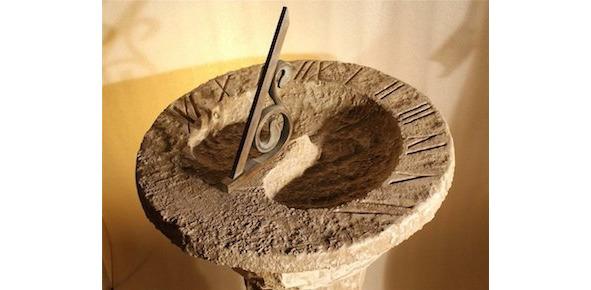
*Gnomon — the oldest astronomical instrument, which is a vertical object (obelisk, pole), allowing the length of its shadow to determine the angular height of the Sun. The gnomon is also called the part of a sundial, the shadow of which is determined by time.
EUROPE
The oldest megalithic monument in Europe associated with astronomy is considered to be Newgrange in Ireland, near Dublin. The Newgrange dates from about 3000 BC and is a mound 13.5 meters high and 85 meters in diameter. A 19-meter tunnel leads to the burial chamber, which is based on vertically placed stone monoliths weighing from 20 to 40 tons. The walls of Newgrange are painted with strange different circles and spirals, symbolizing the rings of time. The tunnel is oriented to the Southeast-exactly where the sun rises on the day of the winter solstice. Unlike the much later Stonehenge (about 1750 BC), which is 82 megaliths weighing 5 tons each, 30 stone blocks (25 tons each) and 5 huge trilithons weighing 50 tons, the functions of Newgrange included only one astronomical operation: determining the beginning of the year, which its builders associated with December 21; while Stonehenge was an ancient astronomical Observatory, in which observations of the Sun, Moon and other planets were made. However, archaeologists and astronomers still have many questions about the technology of construction of such structures and their functionality.
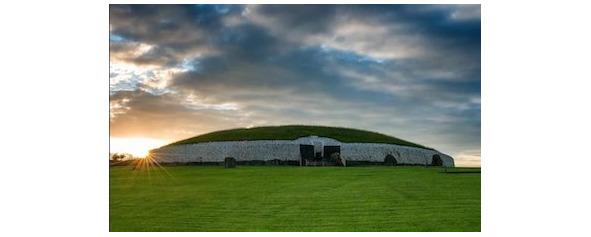
The Newgrange
NEW WORLD
On the plains of North America, a huge number of archaeological sites have been found in the form of stone circles on the tops of hills. The oldest is the circle at Mahorville in Canada, which was built around 2500 BC.
Big horn, one of the most important astronomical monuments, is located in the state of Wyoming, USA. big horn is a large group of stones, from which come “rays” about 12 meters long, at the ends of which a stone circle is drawn. At the ends of each of the six rays are heaped stone piles, and the direction of the southwest pile of stones coincides with the direction of sunrise on the day of the summer solstice. On the big horn, it was also possible to observe and study the sunrises of Sirius, Rigel, and Aldebaran.
The “star” pyramids of Ecuador are also a part of history that is very interesting for both archaeologists and astronomers. Not far from the capital of Ecuador, Quito, there is a complex of 15 truncated pyramids of various heights and squares. The estimated date of construction is 700—1200 ad, but interestingly, all ramps approach the pyramids from the northeast and are inclined at an angle of 10°, and the largest reaches 300 meters in length. It was in this direction that you could see the rising of the star Alcayde, which is located at the end of the constellation URSA Major. This star rises last of the seven stars of the constellation, but the interest of the Injuns was really connected with the harvest, because, since Algina appears at an altitude of 10°, and its sunrise falls at the end of October, for the Injuns this event meant the onset of the rainy season and the beginning of the agricultural year. This season in the tropical zone comes suddenly, threatening to catch landowners by surprise, which is why the inhabitants of Ecuador were so important astronomical methods of warning the elements.
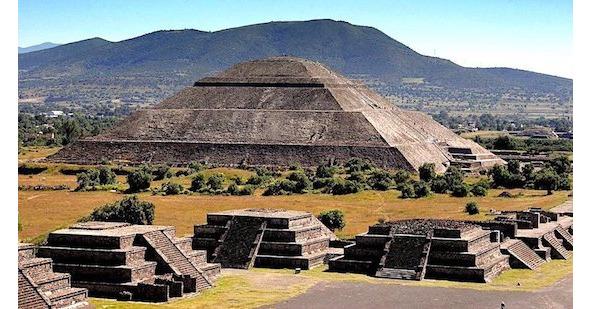
The “star” pyramids of Ecuador
THE PRIESTS-MAYAN ASTRONOMERS
The ancient Mayan Injuns are considered to be the true intellectuals of pre-Columbian America. The Maya astronomer-priests spent their entire life observing from stone observatories-Caracoles (shells), knew five planets, and only from the priests were instructions about the beginning of agricultural work. About the economic direction of astronomical science, the Mayans say that they called the months: “harvest”, “deer” (hunting season), “cloud” (rainy season). Mayan priests even knew how to calculate solar and lunar eclipses, pretending that many natural phenomena are subject to them. Astronomy in their hands was an instrument of power that kept the people in fear and obedience. The Mayan calendar consisted of a 13-day week, a 20-day month, and a 365 — or 366-day year. Incredibly, it was the most accurate calendar in existence. An extra day in comparison with the true year would run up in it only after 10 thousand years. For comparison, the calendar of Caesar for 128 years gave an error per day, and even our modern — Gregorian-calendar for 3 thousand years gives an error per day.
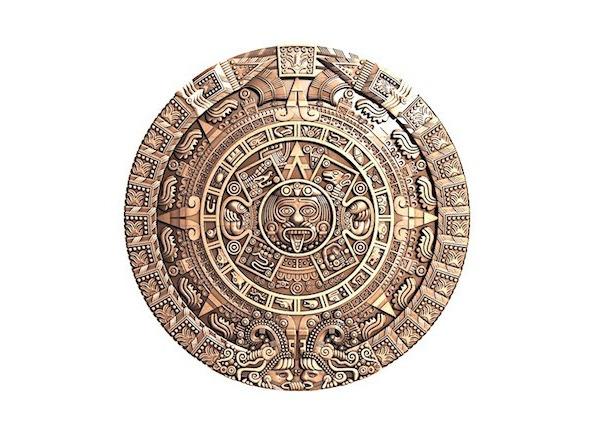
The Mayan calendar
ANCIENT ASTRONOMY
Ancient astronomy is a very important page in the history of science, because in Ancient Greece for almost two centuries that the fundamental foundations of the universe and the structure of the Universe were laid. The mathematical methods of ancient astronomers were later used by both medieval Arabs and European astronomers.
Eudoxus was an outstanding scientist of the fourth century. He was one of the most prominent mathematicians of antiquity: he developed the General theory of proportions and became the forerunner of modern integral calculus. It is very likely that Eudoxus is responsible for the proofs given by Aristotle about the spherical shape of the Earth, and even Archimedes mentions the ratio of distances to the moon and Sun calculated by Eudoxus (1:12).
It is impossible not to say about Aristotle, whose authority in the middle Ages really held back the progress of astronomy. The theory that the Earth is the center of the Universe, to which all objects tend, was very popular and accepted as an unshakable truth. But at the same time, it is in combination with this theory that Aristotle, in his book “On the sky”, proved the spherical nature of the Earth, using as arguments eclipses of the moon and observations of the stars.
Another ancient scientist who made a huge contribution to science is Eratosthenes. For the first time, he measured the length of the earth’s circumference fairly accurately, using a homemade device called a scaphis. Eratosthenes concluded that the earth’s circumference is 39,690 kilometers. If we take into account the unreliability of the initial data and the roughness of the measuring instruments, Eratosthenes actually approached the figure of 40 thousand kilometers, equal to the circumference of the Earth.
Aristarchus of Samos, who lived in the third century BC, can rightly be called the Copernicus of the ancient world, because he was the first to propose and try to prove the heliocentric model of the Solar system. He found that the Moon revolves around the Earth, and the Earth, in addition to turning around its axis, also turns around the Sun, and this movement is characteristic of all planets. Aristarchus also stated for the first time that all the stars in the night sky are mobile, and only because of their distance do we think that they are stationary. The theory of Aristarchus could not be accepted by his contemporaries, too much would have to be changed. It was impossible for scientists to believe that the Earth was also a celestial body like Mars and Venus, because then the thousand-year-old idea of the Sky would have collapsed. Rejecting heliocentrism, the scientist’s contemporaries accused him of blasphemy and banished him from Alexandr