автордың кітабын онлайн тегін оқу The Complete Works of Tacitus. Illustrated
THE COMPLETE WORKS OF PUBLIUS CORNELIUS TACITUS
THE LIFE OF AGRICOLA, GERMANIA, DIALOGUE ON ORATORY, THE HISTORIES, THE ANNALS
Illustrated
Tacitus is widely regarded as one of the greatest Roman historians by modern scholars.
The surviving portions of his two major works—the Annals and the Histories - examine the reigns of the emperors Tiberius, Claudius, Nero, and those who reigned in the Year of the Four Emperors (69 AD).
Tacitus' other writings discuss oratory, Germania and the life of his father-in-law, Agricola, the general responsible for much of the Roman conquest of Britain. Tacitus' works are a chief source next to the Bible and the works of Josephus for providing significant and independent extra-Biblical account of the life and crucifixion of Jesus of Nazareth.
THE TRANSLATIONS
THE LIFE OF AGRICOLA
Translated by John Aikin
Written circa AD 98, this biography recounts the life of Tacitus’ father-in-law Gnaeus Julius Agricola, the eminent Roman general, and also briefly spans the geography and ethnography of ancient Britain. The Agricola was published following the assassination of Domitian in AD 96, at a time when the turmoil of the regime change allowed a new-found freedom to publish such works.
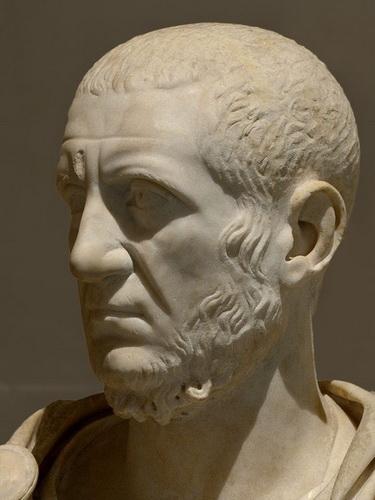
During the reign of Domitian, Agricola, a faithful imperial general, had been the most important general involved in the conquest of a large part of Britain. The proud tone of the biography recalls the style of the laudationes funebres (funeral speeches). A quick résumé of the career of Agricola prior to his mission in Britain is followed by a narration of the conquest of the island. There is a geographical and ethnological digression, taken not only from notes and memories of Agricola, but also from Caesar’s De Bello Gallico. Tacitus exalts the character of his father-in-law, by demonstrating how, as governor of Roman Britain and commander of the army, he attended to matters of state with fidelity, honesty and competence, even under the government of Domitian. Critiques of this unpopular Emperor and his regime of spying and repression come to the fore at the work’s conclusion. Agricola remained uncorrupted; in disgrace under Domitian, dying without seeking the glory of an ostentatious martyrdom. Tacitus condemns the suicide of the Stoics as of no benefit to the state. Although Tacitus makes no clear statement as to whether the death of Agricola was from natural causes or ordered by Domitian, he does state that rumours were voiced in Rome that Agricola was poisoned on the Emperor’s orders.
[This work is supposed by the commentators to have been written before the treatise on the manners of the Germans, in the third consulship of the emperor Nerva, and the second of Verginius Rufus, in the year of Rome 850, and of the Christian era 97. Brotier accedes to this opinion; but the reason which he assigns does not seem to be satisfactory. He observes that Tacitus, in the third section, mentions the emperor Nerva; but as he does not call him Divus Nerva, the deified Nerva, the learned commentator infers that Nerva was still living. This reasoning might have some weight, if we did not read, in section 44, that it was the ardent wish of Agricola that he might live to behold Trajan in the imperial seat. If Nerva was then alive, the wish to see another in his room would have been an awkward compliment to the reigning prince. It is, perhaps, for this reason that Lipsius thinks this very elegant tract was written at the same time with the Manners of the Germans, in the beginning of the emperor Trajan. The question is not very material, since conjecture alone must decide it. The piece itself is admitted to be a masterpiece in the kind. Tacitus was son-in-law to Agricola; and while filial piety breathes through his work, he never departs from the integrity of his own character. He has left an historical monument highly interesting to every Briton, who wishes to know the manners of his ancestors, and the spirit of liberty that from the earliest time distinguished the natives of Britain. “Agricola,” as Hume observes, “was the general who finally established the dominion of the Romans in this island. He governed, it in the reigns of Vespasian, Titus, and Domitian. He carried his victorious arms northward: defeated the Britons in every encounter, pierced into the forests and the mountains of Caledonia, reduced every state to subjection in the southern parts of the island, and chased before him all the men of fiercer and more intractable spirits, who deemed war and death itself less intolerable than servitude under the victors. He defeated them in a decisive action, which they fought under Galgacus; and having fixed a chain of garrisons between the friths of Clyde and Forth, he cut off the ruder and more barren parts of the island, and secured the Roman province from the incursions of the barbarous inhabitants. During these military enterprises he neglected not the arts of peace. He introduced laws and civility among the Britons; taught them to desire and raise all the conveniences of life; reconciled them to the Roman language and manners; instructed them in letters and science; and employed every expedient to render those chains, which he had forged, both easy and agreeable to them.” (Hume’s Hist. vol. i. .) In this passage Mr. Hume has given a summary of the Life of Agricola. It is extended by Tacitus in a style more open than the didactic form of the essay on the German Manners required, but still with the precision, both in sentiment and diction, peculiar to the author. In rich but subdued colors he gives a striking picture of Agricola, leaving to posterity a portion of history which it would be in vain to seek in the dry gazette style of Suetonius, or in the page of any writer of that period.]
1. The ancient custom of transmitting to posterity the actions and manners of famous men, has not been neglected even by the present age, incurious though it be about those belonging to it, whenever any exalted and noble degree of virtue has triumphed over that false estimation of merit, and that ill-will to it, by which small and great states are equally infested. In former times, however, as there was a greater propensity and freer scope for the performance of actions worthy of remembrance, so every person of distinguished abilities was induced through conscious satisfaction in the task alone, without regard to private favor or interest, to record examples of virtue. And many considered it rather as the honest confidence of integrity, than a culpable arrogance, to become their own biographers. Of this, Rutilius and Scaurus were instances; who were never yet censured on this account, nor was the fidelity of their narrative called in question; so much more candidly are virtues always estimated; in those periods which are the most favorable to their production. For myself, however, who have undertaken to be the historian of a person deceased, an apology seemed necessary; which I should not have made, had my course lain through times less cruel and hostile to virtue.
2. We read that when Arulenus Rusticus published the praises of Paetus Thrasea, and Herennius Senecio those of Priscus Helvidius, it was construed into a capital crime; and the rage of tyranny was let loose not only against the authors, but against their writings; so that those monuments of exalted genius were burnt at the place of election in the forum by triumvirs appointed for the purpose. In that fire they thought to consume the voice of the Roman people, the freedom of the senate, and the conscious emotions of all mankind; crowning the deed by the expulsion of the professors of wisdom, and the banishment of every liberal art, that nothing generous or honorable might remain. We gave, indeed, a consummate proof of our patience; and as remote ages saw the very utmost degree of liberty, so we, deprived by inquisitions of all the intercourse of conversation, experienced the utmost of slavery. With language we should have lost memory itself, had it been as much in our power to forget, as to be silent.
3. Now our spirits begin to revive. But although at the first dawning of this happy period, the emperor Nerva united two things before incompatible, monarchy and liberty; and Trajan is now daily augmenting the felicity of the empire; and the public security has not only assumed hopes and wishes, but has seen those wishes arise to confidence and stability; yet, from the nature of human infirmity, remedies are more tardy in their operation than diseases; and, as bodies slowly increase, but quickly perish, so it is more easy to suppress industry and genius, than to recall them. For indolence itself acquires a charm; and sloth, however odious at first, becomes at length engaging. During the space of fifteen years, a large portion of human life, how great a number have fallen by casual events, and, as was the fate of all the most distinguished, by the cruelty of the prince; whilst we, the few survivors, not of others alone, but, if I may be allowed the expression, of ourselves, find a void of so many years in our lives, which has silently brought us from youth to maturity, from mature age to the very verge of life! Still, however, I shall not regret having composed, though in rude and artless language, a memorial of past servitude, and a testimony of present blessings.
The present work, in the meantime, which is dedicated to the honor of my father-in-law, may be thought to merit approbation, or at least excuse, from the piety of the intention.
4. CNAEUS JULIUS AGRICOLA was born at the ancient and illustrious colony of Forumjulii. Both his grandfathers were imperial procurators, an office which confers the rank of equestrian nobility. His father, Julius Graecinus, of the senatorian order, was famous for the study of eloquence and philosophy; and by these accomplishments he drew on himself the displeasure of Caius Caesar; for, being commanded to undertake the accusation of Marcus Silanus, — on his refusal, he was put to death. His mother was Julia Procilla, a lady of exemplary chastity. Educated with tenderness in her bosom, he passed his childhood and youth in the attainment of every liberal art. He was preserved from the allurements of vice, not only by a naturally good disposition, but by being sent very early to pursue his studies at Massilia; a place where Grecian politeness and provincial frugality are happily united. I remember he was used to relate, that in his early youth he should have engaged with more ardor in philosophical speculation than was suitable to a Roman and a senator, had not the prudence of his mother restrained the warmth and vehemence of his disposition: for his lofty and upright spirit, inflamed by the charms of glory and exalted reputation, led him to the pursuit with more eagerness than discretion. Reason and riper years tempered his warmth; and from the study of wisdom, he retained what is most difficult to compass, — moderation.
5. He learned the rudiments of war in Britain, under Suetonius Paullinus, an active and prudent commander, who chose him for his tent companion, in order to form an estimate of his merit. Nor did Agricola, like many young men, who convert military service into wanton pastime, avail himself licentiously or slothfully of his tribunitial title, or his inexperience, to spend his time in pleasures and absences from duty; but he employed himself in gaining a knowledge of the country, making himself known to the army, learning from the experienced, and imitating the best; neither pressing to be employed through vainglory, nor declining it through timidity; and performing his duty with equal solicitude and spirit. At no other time in truth was Britain more agitated or in a state of greater uncertainty. Our veterans slaughtered, our colonies burnt, our armies cut off, — we were then contending for safety, afterwards for victory. During this period, although all things were transacted under the conduct and direction of another, and the stress of the whole, as well as the glory of recovering the province, fell to the general’s share, yet they imparted to the young Agricola skill, experience, and incentives; and the passion for military glory entered his soul; a passion ungrateful to the times, in which eminence was unfavorably construed, and a great reputation was no less dangerous than a bad one.
6. Departing thence to undertake the offices of magistracy in Rome, he married Domitia Decidiana, a lady of illustrious descent, from which connection he derived credit and support in his pursuit of greater things. They lived together in admirable harmony and mutual affection; each giving the preference to the other; a conduct equally laudable in both, except that a greater degree of praise is due to a good wife, in proportion as a bad one deserves the greater censure. The lot of quaestorship gave him Asia for his province, and the proconsul Salvius Titianus for his superior; by neither of which circumstances was he corrupted, although the province was wealthy and open to plunder, and the proconsul, from his rapacious disposition, would readily have agreed to a mutual concealment of guilt. His family was there increased by the birth of a daughter, who was both the support of his house, and his consolation; for he lost an elder-born son in infancy. The interval between his serving the offices of quaestor and tribune of the people, and even the year of the latter magistracy, he passed in repose and inactivity; well knowing the temper of the times under Nero, in which indolence was wisdom. He maintained the same tenor of conduct when praetor; for the judiciary part of the office did not fall to his share. In the exhibition of public games, and the idle trappings of dignity, he consulted propriety and the measure of his fortune; by no means approaching to extravagance, yet inclining rather to a popular course. When he was afterwards appointed by Galba to manage an inquest concerning the offerings which had been presented to the temples, by his strict attention and diligence he preserved the state from any further sacrilege than what it had suffered from Nero.
7. The following year inflicted a severe wound on his peace of mind, and his domestic concerns. The fleet of Otho, roving in a disorderly manner on the coast, made a hostile descent on Intemelii, a part of Liguria, in which the mother of Agricola was murdered at her own estate, her lands were ravaged, and a great part of her effects, which had invited the assassins, was carried off. As Agricola upon this event was hastening to perform the duties of filial piety, he was overtaken by the news of Vespasian’s aspiring to the empire, and immediately went over to his party. The first acts of power, and the government of the city, were entrusted to Mucianus; Domitian being at that time very young, and taking no other privilege from his father’s elevation than that of indulging his licentious tastes. Mucianus, having approved the vigor and fidelity of Agricola in the service of raising levies, gave him the command of the twentieth legion, which had appeared backward in taking the oaths, as soon as he had heard the seditious practices of his commander. This legion had been unmanageable and formidable even to the consular lieutenants; and its late commander, of praetorian rank, had not sufficient authority to keep it in obedience; though it was uncertain whether from his own disposition, or that of his soldiers. Agricola was therefore appointed as his successor and avenger; but, with an uncommon degree of moderation, he chose rather to have it appear that he had found the legion obedient, than that he had made it so.
8. Vettius Bolanus was at that time governor of Britain, and ruled with a milder sway than was suitable to so turbulent a province. Under his administration, Agricola, accustomed to obey, and taught to consult utility as well as glory, tempered his ardor, and restrained his enterprising spirit. His virtues had soon a larger field for their display, from the appointment of Petilius Cerealis, a man of consular dignity, to the government. At first he only shared the fatigues and dangers of his general; but was presently allowed to partake of his glory. Cerealis frequently entrusted him with part of his army as a trial of his abilities; and from the event sometimes enlarged his command. On these occasions, Agricola was never ostentatious in assuming to himself the merit of his exploits; but always, as a subordinate officer, gave the honor of his good fortune to his superior. Thus, by his spirit in executing orders, and his modesty in reporting his success, he avoided envy, yet did not fail of acquiring reputation.
9. On his return from commanding the legion he was raised by Vespasian to the patrician order, and then invested with the government of Aquitania, a distinguished promotion, both in respect to the office itself, and the hopes of the consulate to which it destined him. It is a common supposition that military men, habituated to the unscrupulous and summary processes of camps, where things are carried with a strong hand, are deficient in the address and subtlety of genius requisite in civil jurisdiction. Agricola, however, by his natural prudence, was enabled to act with facility and precision even among civilians. He distinguished the hours of business from those of relaxation. When the court or tribunal demanded his presence, he was grave, intent, awful, yet generally inclined to lenity. When the duties of his office were over, the man of power was instantly laid aside. Nothing of sternness, arrogance, or rapaciousness appeared; and, what was a singular felicity, his affability did not impair his authority, nor his severity render him less beloved. To mention integrity and freedom from corruption in such a man, would be an affront to his virtues. He did not even court reputation, an object to which men of worth frequently sacrifice, by ostentation or artifice: equally avoiding competition with, his colleagues, and contention with the procurators. To overcome in such a contest he thought inglorious; and to be put down, a disgrace. Somewhat less than three years were spent in this office, when he was recalled to the immediate prospect of the consulate; while at the same time a popular opinion prevailed that the government of Britain would be conferred upon him; an opinion not founded upon any suggestions of his own, but upon his being thought equal to the station. Common fame does not always err, sometimes it even directs a choice. When consul, he contracted his daughter, a lady already of the happiest promise, to myself, then a very young man; and after his office was expired I received her in marriage. He was immediately appointed governor of Britain, and the pontificate was added to his other dignities.
10. The situation and inhabitants of Britain have been described by many writers; and I shall not add to the number with the view of vying with them in accuracy and ingenuity, but because it was first thoroughly subdued in the period of the present history. Those things which, while yet unascertained, they embellished with their eloquence, shall here be related with a faithful adherence to known facts. Britain, the largest of all the islands which have come within the knowledge of the Romans, stretches on the east towards Germany, on the west towards Spain, and on the south it is even within sight of Gaul. Its northern extremity has no opposite land, but is washed by a wide and open sea. Livy, the most eloquent of ancient, and Fabius Rusticus, of modern writers, have likened the figure of Britain to an oblong target, or a two-edged axe. And this is in reality its appearance, exclusive of Caledonia; whence it has been popularly attributed to the whole island. But that tract of country, irregularly stretching out to an immense length towards the furthest shore, is gradually contracted in form of a wedge. The Roman fleet, at this period first sailing round this remotest coast, gave certain proof that Britain was an island; and at the same time discovered and subdued the Orcades, islands till then unknown. Thule was also distinctly seen, which winter and eternal snow had hitherto concealed. The sea is reported to be sluggish and laborious to the rower; and even to be scarcely agitated by winds. The cause of this stagnation I imagine to be the deficiency of land and mountains where tempests are generated; and the difficulty with which such a mighty mass of waters, in an uninterrupted main, is put in motion. It is not the business of this work to investigate the nature of the ocean and the tides; a subject which many writers have already undertaken. I shall only add one circumstance: that the dominion of the sea is nowhere more extensive; that it carries many currents in this direction and in that; and its ebbings and flowings are not confined to the shore, but it penetrates into the heart of the country, and works its way among hills and mountains, as though it were in its own domain.
11. Who were the first inhabitants of Britain, whether indigenous or immigrants, is a question involved in the obscurity usual among barbarians. Their temperament of body is various, whence deductions are formed of their different origin. Thus, the ruddy hair and large limbs of the Caledonians point out a German derivation. The swarthy complexion and curled hair of the Silures, together with their situation opposite to Spain, render it probable that a colony of the ancient Iberi possessed themselves of that territory. They who are nearest Gaul resemble the inhabitants of that country; whether from the duration of hereditary influence, or whether it be that when lands jut forward in opposite directions, climate gives the same condition of body to the inhabitants of both. On a general survey, however, it appears probable that the Gauls originally took possession of the neighboring coast. The sacred rites and superstitions of these people are discernible among the Britons. The languages of the two nations do not greatly differ. The same audacity in provoking danger, and irresolution in facing it when present, is observable in both. The Britons, however, display more ferocity, not being yet softened by a long peace: for it appears from history that the Gauls were once renowned in war, till, losing their valor with their liberty, languor and indolence entered amongst them. The same change has also taken place among those of the Britons who have been long subdued; but the rest continue such as the Gauls formerly were.
12. Their military strength consists in infantry; some nations also make use of chariots in war; in the management of which, the most honorable person guides the reins, while his dependents fight from the chariot. The Britons were formerly governed by kings, but at present they are divided in factions and parties among their chiefs; and this want of union for concerting some general plan is the most favorable circumstance to us, in our designs against so powerful a people. It is seldom that two or three communities concur in repelling the common danger; and thus, while they engage singly, they are all subdued. The sky in this country is deformed by clouds and frequent rains; but the cold is never extremely rigorous. The length of the days greatly exceeds that in our part of the world. The nights are bright, and, at the extremity of the island, so short, that the close and return of day is scarcely distinguished by a perceptible interval. It is even asserted that, when clouds do not intervene, the splendor of the sun is visible during the whole night, and that it does not appear to rise and set, but to move across. The cause of this is, that the extreme and flat parts of the earth, casting a low shadow, do not throw up the darkness, and so night falls beneath the sky and the stars. The soil, though improper for the olive, the vine, and other productions of warmer climates, is fertile, and suitable for corn. Growth is quick, but maturation slow; both from the same cause, the great humidity of the ground and the atmosphere. The earth yields gold and silver and other metals, the rewards of victory. The ocean produces pearls, but of a cloudy and livid hue; which some impute to unskilfulness in the gatherers; for in the Red Sea the fish are plucked from the rocks alive and vigorous, but in Britain they are collected as the sea throws them up. For my own part, I can more readily conceive that the defect is in the nature of the pearls, than in our avarice.
13. The Britons cheerfully submit to levies, tributes, and the other services of government, if they are not treated injuriously; but such treatment they bear with impatience, their subjection only extending to obedience, not to servitude. Accordingly Julius Caesar, the first Roman who entered Britain with an army, although he terrified the inhabitants by a successful engagement, and became master of the shore, may be considered rather to have transmitted the discovery than the possession of the country to posterity. The civil wars soon succeeded; the arms of the leaders were turned against their country; and a long neglect of Britain ensued, which continued even after the establishment of peace. This Augustus attributed to policy; and Tiberius to the injunctions of his predecessor. It is certain that Caius Caesar meditated an expedition into Britain; but his temper, precipitate in forming schemes, and unsteady in pursuing them, together with the ill success of his mighty attempts against Germany, rendered the design abortive. Claudius accomplished the undertaking, transporting his legions and auxiliaries, and associating Vespasian in the direction of affairs, which laid the foundation of his future fortune. In this expedition, nations were subdued, kings made captive, and Vespasian was held forth to the fates.
14. Aulus Plautius, the first consular governor, and his successor, Ostorius Scapula, were both eminent for military abilities. Under them, the nearest part of Britain was gradually reduced into the form of a province, and a colony of veterans was settled. Certain districts were bestowed upon king Cogidunus, a prince who continued in perfect fidelity within our own memory. This was done agreeably to the ancient and long established practice of the Romans, to make even kings the instruments of servitude. Didius Gallus, the next governor, preserved the acquisitions of his predecessors, and added a very few fortified posts in the remoter parts, for the reputation of enlarging his province. Veranius succeeded, but died within the year. Suetonius Paullinus then commanded with success for two years, subduing various nations, and establishing garrisons. In the confidence with which this inspired him, he undertook an expedition against the island Mona, which had furnished the revolters with supplies; and thereby exposed the settlements behind him to a surprise.
15. For the Britons, relieved from present dread by the absence of the governor, began to hold conferences, in which they painted the miseries of servitude, compared their several injuries, and inflamed each other with such representations as these: “That the only effects of their patience were more grievous impositions upon a people who submitted with such facility. Formerly they had one king respectively; now two were set over them, the lieutenant and the procurator, the former of whom vented his rage upon their life’s blood, the latter upon their properties; the union or discord of these governors was equally fatal to those whom they ruled, while the officers of the one, and the centurions of the other, joined in oppressing them by all kinds of violence and contumely; so that nothing was exempted from their avarice, nothing from their lust. In battle it was the bravest who took spoils; but those whom they suffered to seize their houses, force away their children, and exact levies, were, for the most part, the cowardly and effeminate; as if the only lesson of suffering of which they were ignorant was how to die for their country. Yet how inconsiderable would the number of invaders appear did the Britons but compute their own forces! From considerations like these, Germany had thrown off the yoke, though a river and not the ocean was its barrier. The welfare of their country, their wives, and their parents called them to arms, while avarice and luxury alone incited their enemies; who would withdraw as even the deified Julius had done, if the present race of Britons would emulate the valor of their ancestors, and not be dismayed at the event of the first or second engagement. Superior spirit and perseverence were always the share of the wretched; and the gods themselves now seemed to compassionate the Britons, by ordaining the absence of the general, and the detention of his army in another island. The most difficult point, assembling for the purpose of deliberation, was already accomplished; and there was always more danger from the discovery of designs like these, than from their execution.”
16. Instigated by such suggestions, they unanimously rose in arms, led by Boadicea, a woman of royal descent (for they make no distinction between the sexes in succession to the throne), and attacking the soldiers dispersed through the garrisons, stormed the fortified posts, and invaded the colony itself, as the seat of slavery. They omitted no species of cruelty with which rage and victory could inspire barbarians; and had not Paullinus, on being acquainted with the commotion of the province, marched speedily to its relief, Britain would have been lost. The fortune of a single battle, however, reduced it to its former subjection; though many still remained in arms, whom the consciousness of revolt, and particular dread of the governor, had driven to despair. Paullinus, although otherwise exemplary in his administration, having treated those who surrendered with severity, and having pursued too rigorous measures, as one who was revenging his own personal injury also, Petronius Turpilianus was sent in his stead, as a person more inclined to lenity, and one who, being unacquainted with the enemy’s delinquency, could more easily accept their penitence. After having restored things to their former quiet state, he delivered the command to Trebellius Maximus. Trebellius, indolent, and inexperienced in military affairs, maintained the tranquillity of the province by popular manners; for even the barbarians had now learned to pardon under the seductive influence of vices; and the intervention of the civil wars afforded a legitimate excuse for his inactivity. Sedition however infected the soldiers, who, instead of their usual military services, were rioting in idleness. Trebellius, after escaping the fury of his army by flight and concealment, dishonored and abased, regained a precarious authority; and a kind of tacit compact took place, of safety to the general, and licentiousness to the army. This mutiny was not attended with bloodshed. Vettius Bolanus, succeeding during the continuance of the civil wars, was unable to introduce discipline into Britain. The same inaction towards the enemy, and the same insolence in the camp, continued; except that Bolanus, unblemished in his character, and not obnoxious by any crime, in some measure substituted affection in the place of authority.
17. At length, when Vespasian received the possession of Britain together with the rest of the world, the great commanders and well-appointed armies which were sent over abated the confidence of the enemy; and Petilius Cerealis struck terror by an attack upon the Brigantes, who are reputed to compose the most populous state in the whole province. Many battles were fought, some of them attended with much bloodshed; and the greater part of the Brigantes were either brought into subjection, or involved in the ravages of war. The conduct and reputation of Cerealis were so brilliant that they might have eclipsed the splendor of a successor; yet Julius Frontinus, a truly great man, supported the arduous competition, as far as circumstances would permit. He subdued the strong and warlike nation of the Silures, in which expedition, besides the valor of the enemy, he had the difficulties of the country to struggle with.
18. Such was the state of Britain, and such had been the vicissitudes of warfare, when Agricola arrived in the middle of summer; at a time when the Roman soldiers, supposing the expeditions of the year were concluded, were thinking of enjoying themselves without care, and the natives, of seizing the opportunity thus afforded them. Not long before his arrival, the Ordovices had cut off almost an entire corps of cavalry stationed on their frontiers; and the inhabitants of the province being thrown into a state of anxious suspense by this beginning, inasmuch as war was what they wished for, either approved of the example, or waited to discover the disposition of the new governor. The season was now far advanced, the troops dispersed through the country, and possessed with the idea of being suffered to remain inactive during the rest of the year; circumstances which tended to retard and discourage any military enterprise; so that it was generally thought most advisable to be contented with defending the suspected posts: yet Agricola determined to march out and meet the approaching danger. For this purpose, he drew together the detachments from the legions, and a small body of auxiliaries; and when he perceived that the Ordovices would not venture to descend into the plain, he led an advanced party in person to the attack, in order to inspire the rest of his troops with equal ardor. The result of the action was almost the total extirpation of the Ordovices; when Agricola, sensible that renown must be followed up, and that the future events of the war would be determined by the first success, resolved to make an attempt upon the island Mona, from the occupation of which Paullinus had been summoned by the general rebellion of Britain, as before related. The usual deficiency of an unforeseen expedition appearing in the want of transport vessels, the ability and resolution of the general were exerted to supply this defect. A select body of auxiliaries, disencumbered of their baggage, who were well acquainted with the fords, and accustomed, after the manner of their country, to direct their horses and manage their arms while swimming, were ordered suddenly to plunge into the channel; by which movement, the enemy, who expected the arrival of a fleet, and a formal invasion by sea, were struck with terror and astonishment, conceiving nothing arduous or insuperable to troops who thus advanced to the attack. They were therefore induced to sue for peace, and make a surrender of the island; an event which threw lustre on the name of Agricola, who, on the very entrance upon his province, had employed in toils and dangers that time which is usually devoted to ostentatious parade, and the compliments of office. Nor was he tempted, in the pride of success, to term that an expedition or a victory; which was only bridling the vanquished; nor even to announce his success in laureate despatches. But this concealment of his glory served to augment it; since men were led to entertain a high idea of the grandeur of his future views, when such important services were passed over in silence.
19. Well acquainted with the temper of the province, and taught by the experience of former governors how little proficiency had been made by arms, when success was followed by injuries, he next undertook to eradicate the causes of war. And beginning with himself, and those next to him, he first laid restrictions upon his own household, a task no less arduous to most governors than the administration of the province. He suffered no public business to pass through the hands of his slaves or freedmen. In admitting soldiers into regular service, to attendance about his person, he was not influenced by private favor, or the recommendation or solicitation of the centurions, but considered the best men as likely to prove the most faithful. He would know everything; but was content to let some things pass unnoticed. He could pardon small faults, and use severity to great ones; yet did not always punish, but was frequently satisfied with penitence. He chose rather to confer offices and employments upon such as would not offend, than to condemn those who had offended. The augmentation of tributes and contributions he mitigated by a just and equal assessment, abolishing those private exactions which were more grievous to be borne than the taxes themselves. For the inhabitants had been compelled in mockery to sit by their own locked-up granaries, to buy corn needlessly, and to sell it again at a stated price. Long and difficult journeys had also been imposed upon them; for the several districts, instead of being allowed to supply the nearest winter quarters, were forced to carry their corn to remote and devious places; by which means, what was easy to be procured by all, was converted into an article of gain to a few.
20. By suppressing these abuses in the first year of his administration, he established a favorable idea of peace, which, through the negligence or oppression of his predecessors, had been no less dreaded than war. At the return of summer he assembled his army. On their march, he commended the regular and orderly, and restrained the stragglers; he marked out the encampments, and explored in person the estuaries and forests. At the same time he perpetually harassed the enemy by sudden incursions; and, after sufficiently alarming them, by an interval of forbearance, he held to their view the allurements of peace. By this management, many states, which till that time had asserted their independence, were now induced to lay aside their animosity, and to deliver hostages. These districts were surrounded with castles and forts, disposed with so much attention and judgment, that no part of Britain, hitherto new to the Roman arms, escaped unmolested.
21. The succeeding winter was employed in the most salutary measures. In order, by a taste of pleasures, to reclaim the natives from that rude and unsettled state which prompted them to war, and reconcile them to quiet and tranquillity, he incited them, by private instigations and public encouragements, to erect temples, courts of justice, and dwelling-houses. He bestowed commendations upon those who were prompt in complying with his intentions, and reprimanded such as were dilatory; thus promoting a spirit of emulation which had all the force of necessity. He was also attentive to provide a liberal education for the sons of their chieftains, preferring the natural genius of the Britons to the attainments of the Gauls; and his attempts were attended with such success, that they who lately disdained to make use of the Roman language, were now ambitious of becoming eloquent. Hence the Roman habit began to be held in honor, and the toga was frequently worn. At length they gradually deviated into a taste for those luxuries which stimulate to vice; porticos, and baths, and the elegancies of the table; and this, from their inexperience, they termed politeness, whilst, in reality, it constituted a part of their slavery.
22. The military expeditions of the third year discovered new nations to the Romans, and their ravages extended as far as the estuary of the Tay. The enemies were thereby struck with such terror that they did not venture to molest the army though harassed by violent tempests; so that they had sufficient opportunity for the erection of fortresses. Persons of experience remarked, that no general had ever shown greater skill in the choice of advantageous situations than Agricola; for not one of his fortified posts was either taken by storm, or surrendered by capitulation. The garrisons made frequent sallies; for they were secured against a blockade by a year’s provision in their stores. Thus the winter passed without alarm, and each garrison proved sufficient for its own defence; while the enemy, who were generally accustomed to repair the losses of the summer by the successes of the winter, now equally unfortunate in both seasons, were baffled and driven to despair. In these transactions, Agricola never attempted to arrogate to himself the glory of others; but always bore an impartial testimony to the meritorious actions of his officers, from the centurion to the commander of a legion. He was represented by some as rather harsh in reproof; as if the same disposition which made him affable to the deserving, had inclined him to austerity towards the worthless. But his anger left no relics behind; his silence and reserve were not to be dreaded; and he esteemed it more honorable to show marks of open displeasure, than to entertain secret hatred.
23. The fourth summer was spent in securing the country which had been overrun; and if the valor of the army and the glory of the Roman name had permitted it, our conquests would have found a limit within Britain itself. For the tides of the opposite seas, flowing very far up the estuaries of Clota and Bodotria, almost intersect the country; leaving only a narrow neck of land, which was then defended by a chain of forts. Thus all the territory on this side was held in subjection, and the remaining enemies were removed, as it were, into another island.
24. In the fifth campaign, Agricola, crossing over in the first ship, subdued, by frequent and successful engagements, several nations till then unknown; and stationed troops in that part of Britain which is opposite to Ireland, rather with a view to future advantage, than from any apprehension of danger from that quarter. For the possession of Ireland, situated between Britain and Spain, and lying commodiously to the Gallic sea, would have formed a very beneficial connection between the most powerful parts of the empire. This island is less than Britain, but larger than those of our sea. Its soil, climate, and the manners and dispositions of its inhabitants, are little different from those of Britain. Its ports and harbors are better known, from the concourse of merchants for the purposes of commerce. Agricola had received into his protection one of its petty kings, who had been expelled by a domestic sedition; and detained him, under the semblance of friendship, till an occasion should offer of making use of him. I have frequently heard him assert, that a single legion and a few auxiliaries would be sufficient entirely to conquer Ireland and keep it in subjection; and that such an event would also have contributed to restrain the Britons, by awing them with the prospect of the Roman arms all around them, and, as it were, banishing liberty from their sight.
25. In the summer which began the sixth year of Agricola’s administration, extending his views to the countries situated beyond Bodotria, as a general insurrection of the remoter nations was apprehended, and the enemy’s army rendered marching unsafe, he caused the harbors to be explored by his fleet, which, now first acting in aid of the land-forces gave the formidable spectacle of war at once pushed on by sea and land. The cavalry, infantry, and marines were frequently mingled in the same camp, and recounted with mutual pleasure their several exploits and adventures; comparing, in the boastful language of military men, the dark recesses of woods and mountains, with the horrors of waves and tempests; and the land and enemy subdued, with the conquered ocean. It was also discovered from the captives, that the Britons had been struck with consternation at the view of the fleet, conceiving the last refuge of the vanquished to be cut off, now the secret retreats of their seas were disclosed. The various inhabitants of Caledonia immediately took up arms, with great preparations, magnified, however, by report, as usual where the truth is unknown; and by beginning hostilities, and attacking our fortresses, they inspired terror as daring to act offensively; insomuch that some persons, disguising their timidity under the mask of prudence, were for instantly retreating on this side the firth, and relinquishing the country rather than waiting to be driven out. Agricola, in the meantime, being informed that the enemy intended to bear down in several bodies, distributed his army into three divisions, that his inferiority of numbers, and ignorance of the country, might not give them an opportunity of surrounding him.
26. When this was known to the enemy, they suddenly changed their design; and making a general attack in the night upon the ninth legion, which was the weakest, in the confusion of sleep and consternation they slaughtered the sentinels, and burst through the intrenchments. They were now fighting within the camp, when Agricola, who had received information of their march from his scouts, and followed close upon their track, gave orders for the swiftest of his horse and foot to charge the enemy’s rear. Presently the whole army raised a general shout; and the standards now glittered at the approach of day. The Britons were distracted by opposite dangers; whilst the Romans in the camp resumed their courage, and secure of safety, began to contend for glory. They now in their turns rushed forwards to the attack, and a furious engagement ensued in the gates of the camp; till by the emulous efforts of both Roman armies, one to give assistance, the other to appear not to need it, the enemy was routed: and had not the woods and marshes sheltered the fugitives, that day would have terminated the war.
27. The soldiers, inspirited by the steadfastness which characterized and the fame which attended this victory, cried out that “nothing could resist their valor; now was the time to penetrate into the heart of Caledonia, and in a continued series of engagements at length to discover the utmost limits of Britain.” Those even who had before recommended caution and prudence, were now rendered rash and boastful by success. It is the hard condition of military command, that a share in prosperous events is claimed by all, but misfortunes are imputed to one alone. The Britons meantime, attributing their defeat not to the superior bravery of their adversaries, but to chance, and the skill of the general, remitted nothing of their confidence; but proceeded to arm their youth, to send their wives and children to places of safety, and to ratify the confederacy of their several states by solemn assemblies and sacrifices. Thus the parties separated with minds mutually irritated.
28. During the same summer, a cohort of Usipii, which had been levied in Germany, and sent over into Britain, performed an extremely daring and memorable action. After murdering a centurion and some soldiers who had been incorporated with them for the purpose of instructing them in military discipline, they seized upon three light vessels, and compelled the masters to go on board with them. One of these, however, escaping to shore, they killed the other two upon suspicion; and before the affair was publicly known, they sailed away, as it were by miracle. They were presently driven at the mercy of the waves; and had frequent conflicts, with various success, with the Britons, defending their property from plunder. At length they were reduced to such extremity of distress as to be obliged to feed upon each other; the weakest being first sacrificed, and then such as were taken by lot. In this manner having sailed round the island, they lost their ships through want of skill; and, being regarded as pirates, were intercepted, first by the Suevi, then by the Frisii. Some of them, after being sold for slaves, by the change of masters were brought to the Roman side of the river, and became notorious from the relation of their extraordinary adventures.
29. In the beginning of the next summer, Agricola received a severe domestic wound in the loss of a son, about a year old. He bore this calamity, not with the ostentatious firmness which many have affected, nor yet with the tears and lamentations of feminine sorrow; and war was one of the remedies of his grief. Having sent forwards his fleet to spread its ravages through various parts of the coast, in order to excite an extensive and dubious alarm, he marched with an army equipped for expedition, to which he had joined the bravest of the Britons whose fidelity had been approved by a long allegiance, and arrived at the Grampian hills, where the enemy was already encamped. For the Britons, undismayed by the event of the former action, expecting revenge or slavery, and at length taught that the common danger was to be repelled by union alone, had assembled the strength of all their tribes by embassies and confederacies. Upwards of thirty thousand men in arms were now descried; and the youth, together with those of a hale and vigorous age, renowned in war, and bearing their several honorary decorations, were still flocking in; when Calgacus, the most distinguished for birth and valor among the chieftans, is said to have harangued the multitude, gathering round, and eager for battle, after the following manner: —
30. “When I reflect on the causes of the war, and the circumstances of our situation, I feel a strong persuasion that our united efforts on the present day will prove the beginning of universal liberty to Britain. For we are all undebased by slavery; and there is no land behind us, nor does even the sea afford a refuge, whilst the Roman fleet hovers around. Thus the use of arms, which is at all times honorable to the brave, now offers the only safety even to cowards. In all the battles which have yet been fought, with various success, against the Romans, our countrymen may be deemed to have reposed their final hopes and resources in us: for we, the noblest sons of Britain, and therefore stationed in its last recesses, far from the view of servile shores, have preserved even our eyes unpolluted by the contact of subjection. We, at the furthest limits both of land and liberty, have been defended to this day by the remoteness of our situation and of our fame. The extremity of Britain is now disclosed; and whatever is unknown becomes an object of magnitude. But there is no nation beyond us; nothing but waves and rocks, and the still more hostile Romans, whose arrogance we cannot escape by obsequiousness and submission. These plunderers of the world, after exhausting the land by their devastations, are rifling the ocean: stimulated by avarice, if their enemy be rich; by ambition, if poor; unsatiated by the East and by the West: the only people who behold wealth and indigence with equal avidity. To ravage, to slaughter, to usurp under false titles, they call empire; and where they make a desert, they call it peace.
31. “Our children and relations are by the appointment of nature the dearest of all things to us. These are torn away by levies to serve in foreign lands. Our wives and sisters, though they should escape the violation of hostile force, are polluted under names of friendship and hospitality. Our estates and possessions are consumed in tributes; our grain in contributions. Even our bodies are worn down amidst stripes and insults in clearing woods and draining marshes. Wretches born to slavery are once bought, and afterwards maintained by their masters: Britain every day buys, every day feeds, her own servitude. And as among domestic slaves every new comer serves for the scorn and derision of his fellows; so, in this ancient household of the world, we, as the newest and vilest, are sought out to destruction. For we have neither cultivated lands, nor mines, nor harbors, which can induce them to preserve us for our labors. The valor too and unsubmitting spirit of subjects only render them more obnoxious to their masters; while remoteness and secrecy of situation itself, in proportion as it conduces to security, tends to inspire suspicion. Since then all Lopes of mercy are vain, at length assume courage, both you to whom safety and you to whom glory is dear. The Trinobantes, even under a female leader, had force enough to burn a colony, to storm camps, and, if success had not damped their vigor, would have been able entirely to throw off the yoke; and shall not we, untouched, unsubdued, and struggling not for the acquisition but the security of liberty, show at the very first onset what men Caledonia has reserved for her defence?
32. “Can you imagine that the Romans are as brave in war as they are licentious in peace? Acquiring renown from our discords and dissensions, they convert the faults of their enemies to the glory of their own army; an army compounded of the most different nations, which success alone has kept together, and which misfortune will as certainly dissipate. Unless, indeed, you can suppose that Gauls, and Germans, and (I blush to say it) even Britons, who, though they expend their blood to establish a foreign dominion, have been longer its foes than its subjects, will be retained by loyalty and affection! Terror and dread alone are the weak bonds of attachment; which once broken, they who cease to fear will begin to hate. Every incitement to victory is on our side. The Romans have no wives to animate them; no parents to upbraid their flight. Most of them have either no home, or a distant one. Few in number, ignorant of the country, looking around in silent horror at woods, seas, and a heaven itself unknown to them, they are delivered by the gods, as it were imprisoned and bound, into our hands. Be not terrified with an idle show, and the glitter of silver and gold, which can neither protect nor wound. In the very ranks of the enemy we shall find our own bands. The Britons will acknowledge their own cause. The Gauls will recollect their former liberty. The rest of the Germans will desert them, as the Usipii have lately done. Nor is there anything formidable behind them: ungarrisoned forts; colonies of old men; municipal towns distempered and distracted between unjust masters and ill-obeying subjects. Here is a general; here an army. There, tributes, mines, and all the train of punishments inflicted on slaves; which whether to bear eternally, or instantly to revenge, this field must determine. March then to battle, and think of your ancestors and your posterity.”
33. They received this harangue with alacrity, and testified their applause after the barbarian manner, with songs, and yells, and dissonant shouts. And now the several divisions were in motion, the glittering of arms was beheld, while the most daring and impetuous were hurrying to the front, and the line of battle was forming; when Agricola, although his soldiers were in high spirits, and scarcely to be kept within their intrenchments, kindled additional ardor by these words: —
“It is now the eighth year, my fellow-soldiers, in which, under the high auspices of the Roman empire, by your valor and perseverance you have been conquering Britain. In so many expeditions, in so many battles, whether you have been required to exert your courage against the enemy, or your patient labors against the very nature of the country, neither have I ever been dissatisfied with my soldiers, nor you with your general. In this mutual confidence, we have proceeded beyond the limits of former commanders and former armies; and are now become acquainted with the extremity of the island, not by uncertain rumor, but by actual possession with our arms and encampments. Britain is discovered and subdued. How often on a march, when embarrassed with mountains, bogs and rivers, have I heard the bravest among you exclaim, ‘When shall we descry the enemy? when shall we be led to the field of battle?’ At length they are unharbored from their retreats; your wishes and your valor have now free scope; and every circumstance is equally propitious to the victor, and ruinous to the vanquished. For, the greater our glory in having marched over vast tracts of land, penetrated forests, and crossed arms of the sea, while advancing towards the foe, the greater will be our danger and difficulty if we should attempt a retreat. We are inferior to our enemies in knowledge of the country, and less able to command supplies of provision; but we have arms in our hands, and in these we have everything. For myself, it has long been my principle, that a retiring general or army is never safe. Hot only, then, are we to reflect that death with honor is preferable to life with ignominy, but to remember that security and glory are seated in the same place. Even to fall in this extremest verge of earth and of nature cannot be thought an inglorious fate.
34. “If unknown nations or untried troops were drawn up against you, I would exhort you from the example of other armies. At present, recollect your own honors, question your own eyes. These are they, who, the last year, attacking by surprise a single legion in the obscurity of the night, were put to flight by a shout: the greatest fugitives of all the Britons, and therefore the longest survivors. As in penetrating woods and thickets the fiercest animals boldly rush on the hunters, while the weak and timorous fly at their very noise; so the bravest of the Britons have long since fallen: the remaining number consists solely of the cowardly and spiritless; whom you see at length within your reach, not because they have stood their ground, but because they are overtaken. Torpid with fear, their bodies are fixed and chained down in yonder field, which to you will speedily be the scene of a glorious and memorable victory. Here bring your toils and services to a conclusion; close a struggle of fifty years with one great day; and convince your country-men, that to the army ought not to be imputed either the protraction of war, or the causes of rebellion.”
35. Whilst Agricola was yet speaking, the ardor of the soldiers declared itself; and as soon as he had finished, they burst forth into cheerful acclamations, and instantly flew to arms. Thus eager and impetuous, he formed them so that the centre was occupied by the auxiliary infantry, in number eight thousand, and three thousand horse were spread in the wings. The legions were stationed in the rear, before the intrenchments; a disposition which would render the victory signally glorious, if it were obtained without the expense of Roman blood; and would ensure support if the rest of the army were repulsed. The British troops, for the greater display of their numbers, and more formidable appearance, were ranged upon the rising grounds, so that the first line stood upon the plain, the rest, as if linked together, rose above one another upon the ascent. The charioteers and horsemen filled the middle of the field with their tumult and careering. Then Agricola, fearing from the superior number of the enemy lest he should be obliged to fight as well on his flanks as in front, extended his ranks; and although this rendered his line of battle less firm, and several of his officers advised him to bring up the legions, yet, filled with hope, and resolute in danger, he dismissed his horse and took his station on foot before the colors.
36. At first the action was carried on at a distance. The Britons, armed with long swords and short targets, with steadiness and dexterity avoided or struck down our missile weapons, and at the same time poured in a torrent of their own. Agricola then encouraged three Batavian and two Tungrian cohorts to fall in and come to close quarters; a method of fighting familiar to these veteran soldiers, but embarrassing to the enemy from the nature of their armor; for the enormous British swords, blunt at the point, are unfit for close grappling, and engaging in a confined space. When the Batavians; therefore, began to redouble their blows, to strike with the bosses of their shields, and mangle the faces of the enemy; and, bearing down all those who resisted them on the plain, were advancing their lines up the ascent; the other cohorts, fired with ardor and emulation, joined in the charge, and overthrew all who came in their way: and so great was their impetuosity in the pursuit of victory, that they left many of their foes half dead or unhurt behind them. In the meantime the troops of cavalry took to flight, and the armed chariots mingled in the engagement of the infantry; but although their first shock occasioned some consternation, they were soon entangled among the close ranks of the cohorts, and the inequalities of the ground. Not the least appearance was left of an engagement of cavalry; since the men, long keeping their ground with difficulty, were forced along with the bodies of the horses; and frequently, straggling chariots, and affrighted horses without their riders, flying variously as terror impelled them, rushed obliquely athwart or directly through the lines.
37. Those of the Britons who, yet disengaged from the fight, sat on the summits of the hills, and looked with careless contempt on the smallness of our numbers, now began gradually to descend; and would have fallen on the rear of the conquering troops, had not Agricola, apprehending this very event, opposed four reserved squadron of horse to their attack, which, the more furiously they had advanced, drove them back with the greater celerity. Their project was thus turned against themselves; and the squadrons were ordered to wheel from the front of the battle and fall upon the enemy’s rear. A striking and hideous spectacle now appeared on the plain: some pursuing; some striking: some making prisoners, whom they slaughtered as others came in their way. Now, as their several dispositions prompted, crowds of armed Britons fled before inferior numbers, or a few, even unarmed, rushed upon their foes, and offered themselves to a voluntary death. Arms, and carcasses, and mangled limbs, were promiscuously strewed, and the field was dyed in blood. Even among the vanquished were seen instances of rage and valor. When the fugitives approached the woods, they collected, and surrounded the foremost of the pursuers, advancing incautiously, and unacquainted with the country; and had not Agricola, who was everywhere present, caused some strong and lightly-equipped cohorts to encompass the ground, while part of the cavalry dismounted made way through the thickets, and part on horseback scoured the open woods, some disaster would have proceeded from the excess of confidence. But when the enemy saw their pursuers again formed in compact order, they renewed their flight, not in bodies as before, or waiting for their companions, but scattered and mutually avoiding each other; and thus took their way to the most distant and devious retreats. Night and satiety of slaughter put an end to the pursuit. Of the enemy ten thousand were slain: on our part three hundred and sixty fell; among whom was Aulus Atticus, the praefect of a cohort, who, by his juvenile ardor, and the fire of his horse, was borne into the midst of the enemy.
38. Success and plunder contributed to render the night joyful to the victors; whilst the Britons, wandering and forlorn, amid the promiscuous lamentations of men and women, were dragging along the wounded; calling out to the unhurt; abandoning their habitations, and in the rage of despair setting them on fire; choosing places of concealment, and then deserting them; consulting together, and then separating. Sometimes, on beholding the dear pledges of kindred and affection, they were melted into tenderness, or more frequently roused into fury; insomuch that several, according to authentic information, instigated by a savage compassion, laid violent hands upon their own wives and children. On the succeeding day, a vast silence all around, desolate hills, the distant smoke of burning houses, and not a living soul descried by the scouts, displayed more amply the face of victory. After parties had been detached to all quarters without discovering any certain tracks of the enemy’s flight, or any bodies of them still in arms, as the lateness of the season rendered it impracticable to spread the war through the country, Agricola led his army to the confines of the Horesti. Having received hostages from this people, he ordered the commander of the fleet to sail round the island; for which expedition he was furnished with sufficient force, and preceded by the terror of the Roman name. Pie himself then led back the cavalry and infantry, marching slowly, that he might impress a deeper awe on the newly conquered nations; and at length distributed his troops into their winter-quarters. The fleet, about the same time, with prosperous gales and renown, entered the Trutulensian harbor, whence, coasting all the hither shore of Britain, it returned entire to its former station.
39. The account of these transactions, although unadorned with the pomp of words in the letters of Agricola, was received by Domitian, as was customary with that prince, with outward expressions of joy, but inward anxiety. He was conscious that his late mock-triumph over Germany, in which he had exhibited purchased slaves, whose habits and hair were contrived to give them the resemblance of captives, was a subject of derision; whereas here, a real and important victory, in which so many thousands of the enemy were slain, was celebrated with universal applause. His greatest dread was that the name of a private man should be exalted above that of the prince. In vain had he silenced the eloquence of the forum, and cast a shade upon all civil honors, if military glory were still in possession of another. Other accomplishments might more easily be connived at, but the talents of a great general were truly imperial. Tortured with such anxious thoughts, and brooding over them in secret, a certain indication of some malignant intention, he judged it most prudent for the present to suspend his rancor, tilt the first burst of glory and the affections of the army should remit: for Agricola still possessed the command in Britain.
40. He therefore caused the senate to decree him triumphal ornaments, — a statue crowned with laurel, and all the other honors which are substituted for a real triumph, together with a profusion of complimentary expressions; and also directed an expectation to be raised that the province of Syria, vacant by the death of Atilius Rufus, a consular man, and usually reserved for persons of the greatest distinction, was designed for Agricola. It was commonly believed that one of the freedmen, who were employed in confidential services, was despatched with the instrument appointing Agricola to the government of Syria, with orders to deliver it if he should be still in Britain; but that this messenger, meeting Agricola in the straits, returned directly to Domitian without so much as accosting him. Whether this was really the fact, or only a fiction founded on the genius and character of the prince, is uncertain. Agricola, in the meantime, had delivered the province, in peace and security, to his successor; and lest his entry into the city should be rendered too conspicuous by the concourse and acclamations of the people, he declined the salutation of his friends by arriving in the night; and went by night, as he was commanded, to the palace. There, after being received with a slight embrace, but not a word spoken, he was mingled with the servile throng. In this situation, he endeavored to soften the glare of military reputation, which is offensive to those who themselves live in indolence, by the practice of virtues of a different cast. He resigned himself to ease and tranquillity, was modest in his garb and equipage, affable in conversation, and in public was only accompanied by one or two of his friends; insomuch that the many, who are accustomed to form their ideas of great men from their retinue and figure, when they beheld Agricola, were apt to call in question his renown: few could interpret his conduct.
41. He was frequently, during that period, accused in his absence before Domitian, and in his absence also acquitted. The source of his danger was not any criminal action, nor the complaint of any injured person; but a prince hostile to virtue, and his own high reputation, and the worst kind of enemies, eulogists. For the situation of public affairs which ensued was such as would not permit the name of Agricola to rest in silence: so many armies in Moesia, Dacia, Germany, and Pannonia lost through the temerity or cowardice of their generals; so many men of military character, with numerous cohorts, defeated and taken prisoners; whilst a dubious contest was maintained, not for the boundaries, of the empire, and the banks of the bordering rivers, but for the winter-quarters of the legions, and the possession of our territories. In this state of things, when loss succeeded loss, and every year was signalized by disasters and slaughters, the public voice loudly demanded Agricola for general: every one comparing his vigor, firmness, and experience in war, with the indolence and pusillanimity of the others. It is certain that the ears of Domitian himself were assailed by such discourses, while the best of his freedmen pressed him to the choice through motives of fidelity and affection, and the worst through envy and malignity, emotions to which he was of himself sufficiently prone. Thus Agricola, as well by his own virtues as the vices of others, was urged on precipitously to glory.
42. The year now arrived in which the proconsulate of Asia or Africa must fall by lot upon Agricola; and as Civica had lately been put to death, Agricola was not unprovided with a lesson, nor Domitian with an example. Some persons, acquainted with the secret inclinations of the emperor, came to Agricola, and inquired whether he intended to go to his province; and first, somewhat distantly, began to commend a life of leisure and tranquillity; then offered their services in procuring him to be excused from the office; and at length, throwing off all disguise, after using arguments both to persuade and intimidate him, compelled him to accompany them to Domitian. The emperor, prepared to dissemble, and assuming an air of stateliness, received his petition for excuse, and suffered himself to be formally thanked for granting it, without blushing at so invidious a favor. He did not, however, bestow on Agricola the salary usually offered to a proconsul, and which he himself had granted to others; either taking offence that it was not requested, or feeling a consciousness that it would seem a bribe for what he had in reality extorted by his authority. It is a principle of human nature to hate those whom we have injured; and Domitian was constitutionally inclined to anger, which was the more difficult to be averted, in proportion as it was the more disguised. Yet he was softened by the temper and prudence of Agricola; who did not think it necessary, by a contumacious spirit, or a vain ostentation of liberty, to challenge fame or urge his fate. Let those be apprised, who are accustomed to admire every opposition to control, that even under a bad prince men may be truly great; that submission and modesty, if accompanied with vigor and industry, will elevate a character to a height of public esteem equal to that which many, through abrupt and dangerous paths, have attained, without benefit to their country, by an ambitious death.
43. His decease was a severe affliction to his family, a grief to his friends, and a subject of regret even to foreigners, and those who had no personal knowledge of him. The common people too, and the class who little interest themselves about public concerns, were frequent in their inquiries at his house during his sickness, and made him the subject of conversation at the forum and in private circles; nor did any person either rejoice at the news of his death, or speedily forget it. Their commiseration was aggravated by a prevailing report that he was taken off by poison. I cannot venture to affirm anything certain of this matter; yet, during the whole course of his illness, the principal of the imperial freedmen and the most confidential of the physicians was sent much more frequently than was customary with a court whose visits were chiefly paid by messages; whether that was done out of real solicitude, or for the purposes of state inquisition. On the day of his decease, it is certain that accounts of his approaching dissolution were every instant transmitted to the emperor by couriers stationed for the purpose; and no one believed that the information, which so much pains was taken to accelerate, could be received with regret. He put on, however, in his countenance and demeanor, the semblance of grief: for he was now secured from an object of hatred, and could more easily conceal his joy than his fear. It was well known that on reading the will, in which he was nominated co-heir with the excellent wife and most dutiful daughter of Agricola, he expressed great satisfaction, as if it had been a voluntary testimony of honor and esteem: so blind and corrupt had his mind been rendered by continual adulation, that he was ignorant none but a bad prince could be nominated heir to a good father.
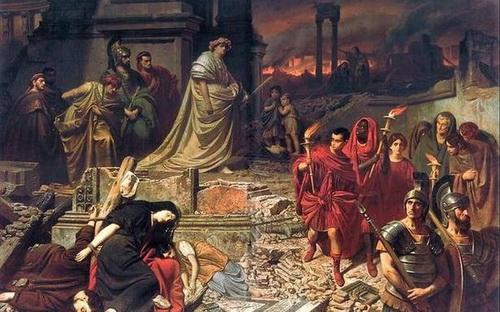
44. Agricola was born in the ides of June, during the third consulate of Caius Caesar; he died in his fifty-sixth year, on the tenth of the calends of September, when Collega and Priscus were consuls. Posterity may wish to form an idea of his person. His figure was comely rather than majestic. In his countenance there was nothing to inspire awe; its character was gracious and engaging. You would readily have believed him a good man, and willingly a great one. And indeed, although he was snatched away in the midst of a vigorous age, yet if his life be measured by his glory, it was a period of the greatest extent. For after the full enjoyment of all that is truly good, which is found in virtuous pursuits alone, decorated with consular and triumphal ornaments, what more could fortune contribute to his elevation? Immoderate wealth did not fall to his share, yet he possessed a decent affluence. His wife and daughter surviving, his dignity unimpaired, his reputation flourishing, and his kindred and friends yet in safety, it may even be thought an additional felicity that he was thus withdrawn from impending evils. For, as we have heard him express his wishes of continuing to the dawn of the present auspicious day, and beholding Trajan in the imperial seat, — wishes in which he formed a certain presage of the event; so it is a great consolation, that by his untimely end he escaped that latter period, in which Domitian, not by intervals and remissions, but by a continued, and, as it were, a single act, aimed at the destruction of the commonwealth.
45. Agricola did not behold the senate-house besieged, and the senators enclosed by a circle of arms; and in one havoc the massacre of so many consular men, the flight and banishment of so many honorable women. As yet Carus Metius was distinguished only by a single victory; the counsels of Messalinus resounded only through the Albanian citadel; and Massa Baebius was himself among the accused. Soon after, our own hands dragged Helvidius to prison; ourselves were tortured with the spectacle of Mauricus and Rusticus, and sprinkled with the innocent blood of Senecio.
Even Nero withdrew his eyes from the cruelties he commanded. Under Domitian, it was the principal part of our miseries to behold and to be beheld: when our sighs were registered; and that stern countenance, with its settled redness, his defence against shame, was employed in noting the pallid horror of so many spectators. Happy, O Agricola! not only in the splendor of your life, but in the seasonableness of your death. With resignation and cheerfulness, from the testimony of those who were present in your last moments, did you meet your fate, as if striving to the utmost of your power to make the emperor appear guiltless. But to myself and your daughter, besides the anguish of losing a parent, the aggravating affliction remains, that it was not our lot to watch over your sick-bed, to support you when languishing, and to satiate ourselves with beholding and embracing you. With what attention should we have received your last instructions, and engraven them on our hearts! This is our sorrow; this is our wound: to us you were lost four years before by a tedious absence. Everything, doubtless, O best of parents! was administered for your comfort and honor, while a most affectionate wife sat beside you; yet fewer tears were shed upon your bier, and in the last light which your eyes beheld, something was still wanting.
46. If there be any habitation for the shades of the virtuous; if, as philosophers suppose, exalted souls do not perish with the body; may you repose in peace, and call us, your household, from vain regret and feminine lamentations, to the contemplation of your virtues, which allow no place for mourning or complaining! Let us rather adorn your memory by our admiration, by our short-lived praises, and, as far as our natures will permit, by an imitation of your example. This is truly to honor the dead; this is the piety of every near relation. I would also recommend it to the wife and daughter of this great man, to show their veneration of a husband’s and a father’s memory by revolving his actions and words in their breasts, and endeavoring to retain an idea of the form and features of his mind, rather than of his person. Not that I would reject those resemblances of the human figure which are engraven in brass or marbles but as their originals are frail and perishable, so likewise are they: while the form of the mind is eternal, and not to be retained or expressed by any foreign matter, or the artist’s skill, but by the manners of the survivors. Whatever in Agricola was the object of our love, of our admiration, remains, and will remain in the minds of men, transmitted in the records of fame, through an eternity of years. For, while many great personages of antiquity will be involved in a common oblivion with the mean and inglorious, Agricola shall survive, represented and consigned to future ages.
GERMANIA
Translated by John Aikin
The Germania, an ethnographic work on the Germanic tribes outside the Roman Empire, was composed by Tacitus circa AD 98. Beginning with a description of the lands, laws and customs of the Germanic people, it then moves into descriptions of individual tribes, starting with those dwelling closest to Roman lands and ending on the uttermost shores of the Baltic, among the amber-gathering Aesti, the Fenni and the unknown tribes beyond them.
Tacitus describes the Germanic peoples as physically appearing to be a distinct nation, not an admixture of their neighbours, as nobody would desire to migrate to a climate as unpleasant as Germania. They are divided into three large branches, the Ingaevones, the Herminones and the Istaevones, deriving their ancestry from three sons of Mannus, son of Tuisto, their common forefather. Tacitus mentions that they all have common physical characteristics, blue eyes ‘sky-coloured, azure, dark blue, dark green’, reddish hair ‘red, golden-red, reddish yellow’ and large bodies, vigorous at the first onset, but not tolerant of exhausting labour, tolerant of hunger and cold, but not of heat. He goes on to describe their government and leadership as somewhat merit-based and egalitarian, with leadership by example rather than authority and that punishments are carried out by the priests. The historian also mentions that the opinions of women are given respect. In Chapter 9, Tacitus describes a form of folk assembly rather similar to the public Things recorded in later Germanic sources: in these public deliberations, the final decision rests with the men of the tribe as a whole.
Tacitus further discusses the role of women in Chapters 7 and 8, mentioning that they often accompany the men to battle and offer encouragement. He explains that the men are often highly motivated to fight for the women because of an extreme fear of losing them to captivity. The latter chapters of the books culminate with descriptions of the various Germanic tribes, their relative locations and some of their characteristics.
Ethnography had a long and distinguished heritage in classical literature, and the Germania is a fine example of the tradition established by authors from Herodotus down to Julius Caesar. Tacitus himself had already written a similar, though shorter, essay on the lands and tribes of Britannia in his Agricola. The Germania may appear moralising at times, especially when comparing the values of Germanic tribes and those of his Roman contemporaries. Nevertheless, Tacitus’ descriptions of the Germanic character are on occasion more favourable in contrast to the opinions of the Romans of his day. He holds the strict monogamy and chastity of Germanic marriage customs worthy of the highest praise, in contrast to what he saw as the vice and immorality rampant in Roman society of his day and he admires their open hospitality, their simplicity and their bravery in battle. All of these traits were highlighted perhaps due to their similarity to idealised Roman virtues.
A TREATISE ON THE SITUATION, MANNERS AND INHABITANTS OF GERMANY.
1. Germany is separated from Gaul, Rhaetia, and Pannonia, by the rivers Rhine and Danube; from Sarmatia and Dacia, by mountains and mutual dread. The rest is surrounded by an ocean, embracing broad promontories and vast insular tracts, in which our military expeditions have lately discovered various nations and kingdoms. The Rhine, issuing from the inaccessible and precipitous summit of the Rhaetic Alps, bends gently to the west, and falls into the Northern Ocean. The Danube, poured from the easy and gently raised ridge of Mount Abnoba, visits several nations in its course, till at length it bursts out by six channels into the Pontic sea; a seventh is lost in marshes.
2. The people of Germany appear to me indigenous, and free from intermixture with foreigners, either as settlers or casual visitants. For the emigrants of former ages performed their expeditions not by land, but by water; and that immense, and, if I may so call it, hostile ocean, is rarely navigated by ships from our world. Then, besides the danger of a boisterous and unknown sea, who would relinquish Asia, Africa, or Italy, for Germany, a land rude in its surface, rigorous in its climate, cheerless to every beholder and cultivator, except a native? In their ancient songs, which are their only records or annals, they celebrate the god Tuisto, sprung from the earth, and his son Mannus, as the fathers and founders of their race. To Mannus they ascribe three sons, from whose names the people bordering on the ocean are called Ingaevones; those inhabiting the central parts, Herminones; the rest, Istaevones. Some, however, assuming the licence of antiquity, affirm that there were more descendants of the god, from whom more appellations were derived; as those of the Marsi, Gambrivii, Suevi, and Vandali; and that these are the genuine and original names. That of Germany, on the other hand, they assert to be a modern addition; for that the people who first crossed the Rhine, and expelled the Gauls, and are now called Tungri, were then named Germans; which appellation of a particular tribe, not of a whole people, gradually prevailed; so that the title of Germans, first assumed by the victors in order to excite terror, was afterwards adopted by the nation in general. They have likewise the tradition of a Hercules of their country, whose praises they sing before those of all other heroes as they advance to battle.
3. A peculiar kind of verses is also current among them, by the recital of which, termed “barding,” they stimulate their courage; while the sound itself serves as an augury of the event of the impending combat. For, according to the nature of the cry proceeding from the line, terror is inspired or felt: nor does it seem so much an articulate song, as the wild chorus of valor. A harsh, piercing note, and a broken roar, are the favorite tones; which they render more full and sonorous by applying their mouths to their shields. Some conjecture that Ulysses, in the course of his long and fabulous wanderings, was driven into this ocean, and landed in Germany; and that Asciburgium, a place situated on the Rhine, and at this day inhabited, was founded by him, and named Askipurgion. They pretend that an altar was formerly discovered here, consecrated to Ulysses, with the name of his father Laertes subjoined; and that certain monuments and tombs, inscribed with Greek characters, are still extant upon the confines of Germany and Rhaetia. These allegations I shall neither attempt to confirm nor to refute: let every one believe concerning them as he is disposed.
4. I concur in opinion with those who deem the Germans never to have intermarried with other nations; but to be a race, pure, unmixed, and stamped with a distinct character. Hence a family likeness pervades the whole, though their numbers are so great: eyes stern and blue; ruddy hair; large bodies, powerful in sudden exertions, but impatient of toil and labor, least of all capable of sustaining thirst and heat. Cold and hunger they are accustomed by their climate and soil to endure.
5. The land, though varied to a considerable extent in its aspect, is yet universally shagged with forests, or deformed by marshes: moister on the side of Gaul, more bleak on the side of Norieum and Pannonia. It is productive of grain, but unkindly to fruit-trees. It abounds in flocks and herds, but in general of a small breed. Even the beeve kind are destitute of their usual stateliness and dignity of head: they are, however, numerous, and form the most esteemed, and, indeed, the only species of wealth. Silver and gold the gods, I know not whether in their favor or anger, have denied to this country. Not that I would assert that no veins of these metals are generated in Germany; for who has made the search? The possession of them is not coveted by these people as it is by us. Vessels of silver are indeed to be seen among them, which have been presented to their ambassadors and chiefs; but they are held in no higher estimation than earthenware. The borderers, however, set a value on gold and silver for the purpose of commerce, and have learned to distinguish several kinds of our coin, some of which they prefer to others: the remoter inhabitants continue the more simple and ancient usage of bartering commodities. The money preferred by the Germans is the old and well-known species, such as the Serrati and Bigati. They are also better pleased with silver than gold; not on account of any fondness for that metal, but because the smaller money is more convenient in their common and petty merchandise.
6. Even iron is not plentiful among them; as may be inferred from the nature of their weapons. Swords or broad lances are seldom used; but they generally carry a spear, (called in their language framea, ) which has an iron blade, short and narrow, but so sharp and manageable, that, as occasion requires, they employ it either in close or distant fighting. This spear and a shield are all the armor of the cavalry. The foot have, besides, missile weapons, several to each man, which they hurl to an immense distance. They are either naked, or lightly covered with a small mantle; and have no pride in equipage: their shields only are ornamented with the choicest colors. Few are provided with a coat of mail; and scarcely here and there one with a casque or helmet. Their horses are neither remarkable for beauty nor swiftness, nor are they taught the various evolutions practised with us. The cavalry either bear down straight forwards, or wheel once to the right, in so compact a body that none is left behind the rest. Their principal strength, on the whole, consists in their infantry: hence in an engagement these are intermixed with the cavalry; so Well accordant with the nature of equestrian combats is the agility of those foot soldiers, whom they select from the whole body of their youth, and place in the front of the line. Their number, too, is determined; a hundred from each canton: and they are distinguished at home by a name expressive of this circumstance; so that what at first was only an appellation of number, becomes thenceforth a title of honor. Their line of battle is disposed in wedges. To give ground, provided they rally again, is considered rather as a prudent strategem, than cowardice. They carry off their slain even while the battle remains undecided. The greatest disgrace that can befall them is to have abandoned their shields. A person branded with this ignominy is not permitted to join in their religious rites, or enter their assemblies; so that many, after escaping from battle, have put an end to their infamy by the halter.
7. In the election of kings they have regard to birth; in that of generals, to valor. Their kings have not an absolute or unlimited power; and their generals command less through the force of authority, than of example. If they are daring, adventurous, and conspicuous in action, they procure obedience from the admiration they inspire. None, however, but the priests are permitted to judge offenders, to inflict bonds or stripes; so that chastisement appears not as an act of military discipline, but as the instigation of the god whom they suppose present with warriors. They also carry with them to battle certain images and standards taken from the sacred groves. It is a principal incentive to their courage, that their squadrons and battalions are not formed by men fortuitously collected, but by the assemblage of families and clans. Their pledges also are near at hand; they have within hearing the yells of their women, and the cries of their children. These, too, are the most revered witnesses of each man’s conduct, these his most liberal applauders. To their mothers and their wives they bring their wounds for relief, nor do these dread to count or to search out the gashes. The women also administer food and encouragement to those who are fighting.
8. Tradition relates, that armies beginning to give way have been rallied by the females, through the earnestness of their supplications, the interposition of their bodies, and the pictures they have drawn of impending slavery, a calamity which these people bear with more impatience for their women than themselves; so that those states who have been obliged to give among their hostages the daughters of noble families, are the most effectually bound to fidelity. They even suppose somewhat of sanctity and prescience to be inherent in the female sex; and therefore neither despise their counsels, nor disregard their responses. We have beheld, in the reign of Vespasian, Veleda, long reverenced by many as a deity. Aurima, moreover, and several others, were formerly held in equal veneration, but not with a servile flattery, nor as though they made them goddesses.
9. Of the gods, Mercury is the principal object of their adoration; whom, on certain days, they think it lawful to propitiate even with human victims. To Hercules and Mars they offer the animals usually allotted for sacrifice. Some of the Suevi also perform sacred rites to Isis. What was the cause and origin of this foreign worship, I have not been able to discover; further than that her being represented with the symbol of a galley, seems to indicate an imported religion. They conceive it unworthy the grandeur of celestial beings to confine their deities within walls, or to represent them under a human similitude: woods and groves are their temples; and they affix names of divinity to that secret power, which they behold with the eye of adoration alone.
10. No people are more addicted to divination by omens and lots. The latter is performed in the following simple manner. They cut a twig from a fruit-tree, and divide it into small pieces, which, distinguished by certain marks, are thrown promiscuously upon a white garment. Then, the priest of the canton, if the occasion be public; if private, the master of the family; after an invocation of the gods, with his eyes lifted up to heaven, thrice takes out each piece, and, as they come up, interprets their signification according to the marks fixed upon them. If the result prove unfavorable, there is no more consultation on the same affair that day; if propitious, a confirmation by omens is still required. In common with other nations, the Germans are acquainted with the practice of auguring from the notes and flight of birds; but it is peculiar to them to derive admonitions and presages from horses also. Certain of these animals, milk-white, and untouched by earthly labor, are pastured at the public expense in the sacred woods and groves. These, yoked to a consecrated chariot, are accompanied by the priest, and king, or chief person of the community, who attentively observe their manner of neighing and snorting; and no kind of augury is more credited, not only among the populace, but among the nobles and priests. For the latter consider themselves as the ministers of the gods, and the horses, as privy to the divine will. Another kind of divination, by which they explore the event of momentous wars, is to oblige a prisoner, taken by any means whatsoever from the nation with whom they are at variance, to fight with a picked man of their own, each with his own country’s arms; and, according as the victory falls, they presage success to the one or to the other party.
11. On affairs of smaller moment, the chiefs consult; on those of greater importance, the whole community; yet with this circumstance, that what is referred to the decision of the people, is first maturely discussed by the chiefs. They assemble, unless upon some sudden emergency, on stated days, either at the new or full moon, which they account the most auspicious season for beginning any enterprise. Nor do they, in their computation of time, reckon, like us, by the number of days, but of nights. In this way they arrange their business; in this way they fix their appointments; so that, with them, the night seems to lead the day. An inconvenience produced by their liberty is, that they do not all assemble at a stated time, as if it were in obedience to a command; but two or three days are lost in the delays of convening. When they all think fit, they sit down armed. Silence is proclaimed by the priests, who have on this occasion a coercive power. Then the king, or chief, and such others as are conspicuous for age, birth, military renown, or eloquence, are heard; and gain attention rather from their ability to persuade, than their authority to command. If a proposal displease, the assembly reject it by an inarticulate murmur; if it prove agreeable, they clash their javelins; for the most honorable expression of assent among them is the sound of arms.
12. Before this council, it is likewise allowed to exhibit accusations, and to prosecute capital offences. Punishments are varied according to the nature of the crime. Traitors and deserters are hung upon trees: cowards, dastards, and those guilty of unnatural practices, are suffocated in mud under a hurdle. This difference of punishment has in view the principle, that villainy should be exposed while it is punished, but turpitude concealed. The penalties annexed to slighter offences are also proportioned to the delinquency. The convicts are fined in horses and cattle: part of the mulct goes to the king or state; part to the injured person, or his relations. In the same assemblies chiefs are also elected, to administer justice through the cantons and districts. A hundred companions, chosen from the people, attended upon each of them, to assist them as well with their advice as their authority.
13. The Germans transact no business, public or private, without being armed: but it is not customary for any person to assume arms till the state has approved his ability to use them. Then, in the midst of the assembly, either one of the chiefs, or the father, or a relation, equips the youth with a shield and javelin. These are to them the manly gown; this is the first honor conferred on youth: before this they are considered as part of a household; afterwards, of the state. The dignity of chieftain is bestowed even on mere lads, whose descent is eminently illustrious, or whose fathers have performed signal services to the public; they are associated, however, with those of mature strength, who have already been declared capable of service; nor do they blush to be seen in the rank of companions. For the state of companionship itself has its several degrees, determined by the judgment of him whom they follow; and there is a great emulation among the companions, which shall possess the highest place in the favor of their chief; and among the chiefs, which shall excel in the number and valor of his companions. It is their dignity, their strength, to be always surrounded with a large body of select youth, an ornament in peace, a bulwark in war. And not in his own country alone, but among the neighboring states, the fame and glory of each chief consists in being distinguished for the number and bravery of his companions. Such chiefs are courted by embassies; distinguished by presents; and often by their reputation alone decide a war.
14. In the field of battle, it is disgraceful for the chief to be surpassed in valor; it is disgraceful for the companions not to equal their chief; but it is reproach and infamy during a whole succeeding life to retreat from the field surviving him. To aid, to protect him; to place their own gallant actions to the account of his glory, is their first and most sacred engagement. The chiefs fight for victory; the companions for their chief. If their native country be long sunk in peace and inaction, many of the young nobles repair to some other state then engaged in war. For, besides that repose is unwelcome to their race, and toils and perils afford them a better opportunity of distinguishing themselves; they are unable, without war and violence, to maintain a large train of followers. The companion requires from the liberality of his chief, the warlike steed, the bloody and conquering spear: and in place of pay, he expects to be supplied with a table, homely indeed, but plentiful. The funds for this munificence must be found in war and rapine; nor are they so easily persuaded to cultivate the earth, and await the produce of the seasons, as to challenge the foe, and expose themselves to wounds; nay, they even think it base and spiritless to earn by sweat what they might purchase with blood.
15. During the intervals of war, they pass their time less in hunting than in a sluggish repose, divided between sleep and the table. All the bravest of the warriors, committing the care of the house, the family affairs, and the lands, to the women, old men, and weaker part of the domestics, stupefy themselves in inaction: so wonderful is the contrast presented by nature, that the same persons love indolence, and hate tranquillity! It is customary for the several states to present, by voluntary and individual contributions, cattle or grain to their chiefs; which are accepted as honorary gifts, while they serve as necessary supplies. They are peculiarly pleased with presents from neighboring nations, offered not only by individuals, but by the community at large; such as fine horses, heavy armor, rich housings, and gold chains. We have now taught them also to accept of money.
16. It is well known that none of the German nations inhabit cities; or even admit of contiguous settlements. They dwell scattered and separate, as a spring, a meadow, or a grove may chance to invite them. Their villages are laid out, not like ours in rows of adjoining buildings; but every one surrounds his house with a vacant space, either by way of security against fire, or through ignorance of the art of building. For, indeed, they are unacquainted with the use of mortar and tiles; and for every purpose employ rude unshapen timber, fashioned with no regard to pleasing the eye. They bestow more than ordinary pains in coating certain parts of their buildings with a kind of earth, so pure and shining that it gives the appearance of painting. They also dig subterraneous caves, and cover them over with a great quantity of dung. These they use as winter-retreats, and granaries; for they preserve a moderate temperature; and upon an invasion, when the open country is plundered, these recesses remain unviolated, either because the enemy is ignorant of them, or because he will not trouble himself with the search.
17. The clothing common to all is a sagum fastened by a clasp, or, in want of that, a thorn. With no other covering, they pass whole days on the hearth, before the fire. The more wealthy are distinguished by a vest, not flowing loose, like those of the Sarmatians and Parthians, but girt close, and exhibiting the shape of every limb. They also wear the skins of beasts, which the people near the borders are less curious in selecting or preparing than the more remote inhabitants, who cannot by commerce procure other clothing. These make choice of particular skins, which they variegate with spots, and strips of the furs of marine animals, the produce of the exterior ocean, and seas to us unknown. The dress of the women does not differ from that of the men; except that they more frequently wear linen, which they stain with purple; and do not lengthen their upper garment into sleeves, but leave exposed the whole arm, and part of the breast.
18. The matrimonial bond is, nevertheless, strict and severe among them; nor is there anything in their manners more commendable than this. Almost singly among the barbarians, they content themselves with one wife; a very few of them excepted, who, not through incontinence, but because their alliance is solicited on account of their rank, practise polygamy. The wife does not bring a dowry to her husband, but receives one from him. The parents and relations assemble, and pass their approbation on the presents — presents not adapted to please a female taste, or decorate the bride; but oxen, a caparisoned steed, a shield, spear, and sword. By virtue of these, the wife is espoused; and she in her turn makes a present of some arms to her husband. This they consider as the firmest bond of union; these, the sacred mysteries, the conjugal deities. That the woman may not think herself excused from exertions of fortitude, or exempt from the casualties of war, she is admonished by the very ceremonial of her marriage, that she comes to her husband as a partner in toils and dangers; to suffer and to dare equally with him, in peace and in war: this is indicated by the yoked oxen, the harnessed steed, the offered arms. Thus she is to live; thus to die. She receives what she is to return inviolate and honored to her children; what her daughters-in-law are to receive, and again transmit to her grandchildren.
19. They live, therefore, fenced around with chastity; corrupted by no seductive spectacles, no convivial incitements. Men and women are alike unacquainted with clandestine correspondence. Adultery is extremely rare among so numerous a people. Its punishment is instant, and at the pleasure of the husband. He cuts off the hair of the offender, strips her, and in presence of her relations expels her from his house, and pursues her with stripes through the whole village. Nor is any indulgence shown to a prostitute. Neither beauty, youth, nor riches can procure her a husband: for none there looks on vice with a smile, or calls mutual seduction the way of the world. Still more exemplary is the practice of those states in which none but virgins marry, and the expectations and wishes of a wife are at once brought to a period. Thus, they take one husband as one body and one life; that no thought, no desire, may extend beyond him; and he may be loved not only as their husband, but as their marriage. To limit the increase of children, or put to death any of the later progeny is accounted infamous: and good habits have there more influence than good laws elsewhere.
20. In every house the children grow up, thinly and meanly clad, to that bulk of body and limb which we behold with wonder. Every mother suckles her own children, and does not deliver them into the hands of servants and nurses. No indulgence distinguishes the young master from the slave. They lie together amidst the same cattle, upon the same ground, till age separates, and valor marks out, the free-born. The youths partake late of the pleasures of love, and hence pass the age of puberty unexhausted: nor are the virgins hurried into marriage; the same maturity, the same full growth is required: the sexes unite equally matched and robust; and the children inherit the vigor of their parents. Children are regarded with equal affection by their maternal uncles as by their fathers: some even consider this as the more sacred bond of consanguinity, and prefer it in the requisition of hostages, as if it held the mind by a firmer tie, and the family by a more extensive obligation. A person’s own children, however, are his heirs and successors; and no wills are made. If there be no children, the next in order of inheritance are brothers, paternal and maternal uncles. The more numerous are a man’s relations and kinsmen, the more comfortable is his old age; nor is it here any advantage to be childless.
21. It is an indispensable duty to adopt the enmities of a father or relation, as well as their friendships: these, however, are not irreconcilable or perpetual. Even homicide is atoned by a certain fine in cattle and sheep; and the whole family accepts the satisfaction, to the advantage of the public weal, since quarrels are most dangerous in a free state. No people are more addicted to social entertainments, or more liberal in the exercise of hospitality. To refuse any person whatever admittance under their roof, is accounted flagitious. Every one according to his ability feasts his guest: when his provisions are exhausted, he who was late the host, is now the guide and companion to another hospitable board. They enter the next house uninvited, and are received with equal cordiality. No one makes a distinction with respect to the rights of hospitality, between a stranger and an acquaintance. The departing guest is presented with whatever he may ask for; and with the same freedom a boon is desired in return. They are pleased with presents; but think no obligation incurred either when they give or receive.
22. [Their manner of living with their guest is easy and affable] As soon as they arise from sleep, which they generally protract till late in the day, they bathe, usually in warm water, as cold weather chiefly prevails there. After bathing they take their meal, each on a distinct seat, and a a separate table. Then they proceed, armed, to business, and not less frequently to convivial parties, in which it is no disgrace to pass days and nights, without intermission, in drinking. The frequent quarrels that arise amongst them, when intoxicated, seldom terminate in abusive language, but more frequently in blood. In their feasts, they generally deliberate on the reconcilement of enemies, on family alliances, on the appointment of chiefs, and finally on peace and war; conceiving that at no time the soul is more opened to sincerity, or warmed to heroism. These people, naturally void of artifice or disguise, disclose the most secret emotions of their hearts in the freedom of festivity. The minds of all being thus displayed without reserve, the subjects of their deliberation are again canvassed the next day; and each time has its advantages. They consult when unable to dissemble; they determine when not liable to mistake.
23. Their drink is a liquor prepared from barley or wheat brought by fermentation to a certain resemblance of wine. Those who border on the Rhine also purchase wine. Their food is simple; wild fruits, fresh venison, or coagulated milk. They satisfy hunger without seeking the elegances and delicacies of the table. Their thirst for liquor is not quenched with equal moderation. If their propensity to drunkenness be gratified to the extent of their wishes, intemperance proves as effectual in subduing them as the force of arms.
24. They have only one kind of public spectacle, which is exhibited in every company. Young men, who make it their diversion, dance naked amidst drawn swords and presented spears. Practice has conferred skill at this exercise; and skill has given grace; but they do not exhibit for hire or gain: the only reward of this pastime, though a hazardous one, is the pleasure of the spectators. What is extraordinary, they play at dice, when sober, as a serious business: and that with such a desperate venture of gain or loss, that, when everything else is gone, they set their liberties and persons on the last throw. The loser goes into voluntary servitude; and, though the youngest and strongest, patiently suffers himself to be bound and sold. Such is their obstinacy in a bad practice — they themselves call it honor. The slaves thus acquired are exchanged away in commerce, that the winner may get rid of the scandal of his victory.
25. The rest of their slaves have not, like ours, particular employments in the family allotted them. Each is the master of a habitation and household of his own. The lord requires from him a certain quantity of grain, cattle, or cloth, as from a tenant; and so far only the subjection of the slave extends. His domestic offices are performed by his own wife and children. It is usual to scourge a slave, or punish him with chains or hard labor. They are sometimes killed by their masters; not through severity of chastisement, but in the heat of passion, like an enemy; with this difference, that it is done with impunity. Freedmen are little superior to slaves; seldom filling any important office in the family; never in the state, except in those tribes which are under regal government. There, they rise above the free-born, and even the nobles: in the rest, the subordinate condition of the freedmen is a proof of freedom.
26. Lending money upon interest, and increasing it by usury, is unknown amongst them: and this ignorance more effectually prevents the practice than a prohibition would do. The lands are occupied by townships, in allotments proportional to the number of cultivators; and are afterwards parcelled out among the individuals of the district, in shares according to the rank and condition of each person. The wide extent of plain facilitates this partition. The arable lands are annually changed, and a part left fallow; nor do they attempt to make the most of the fertility and plenty of the soil, by their own industry in planting orchards, inclosing meadows, and watering gardens. Corn is the only product required from the earth: hence their year is not divided into so many seasons as ours; for, while they know and distinguish by name Winter, Spring, and Summer, they are unacquainted equally with the appellation and bounty of Autumn.
27. Their funerals are without parade. The only circumstance to which they attend, is to burn the bodies of eminent persons with some particular kinds of wood. Neither vestments nor perfumes are heaped upon the pile: the arms of the deceased, and sometimes his horse, are given to the flames. The tomb is a mound of turf. They contemn the elaborate and costly honours of monumental structures, as mere burthens to the dead. They soon dismiss tears and lamentations; slowly, sorrow and regret. They think it the women’s part to bewail their friends, the men’s to remember them.
28. This is the sum of what I have been able to learn concerning the origin and manners of the Germans in general. I now proceed to mention those particulars in which they differ from each other; and likewise to relate what nations have migrated from Germany into Gaul. That great writer, the deified Julius, asserts that the Gauls were formerly the superior people; whence it is probable that some Gallic colonies passed over into Germany: for how small an obstacle would a river be to prevent any nation, as it increased in strength, from occupying or changing settlements as yet lying in common, and unappropriated by the power of monarchies! Accordingly, the tract betwixt the Hercynian forest and the rivers Rhine and Mayne was possessed by the Helvetii: and that beyond, by the Boii; both Gallic tribes. The name of Boiemum still remains, a memorial of the ancient settlement, though its inhabitants are now changed. But whether the Aravisci migrated into Pannonia from the Osi, a German nation; or the Osi into Germany from the Aravisci; the language, institutions, and manners of both being still the same, is a matter of uncertainty; for, in their pristine state of equal indigence and equal liberty, the same advantages and disadvantages were common to both sides of the river. The Treveri and Nervii are ambitious of being thought of German origin; as if the reputation of this descent would distinguish them from the Gauls, whom they resemble in person and effeminacy. The Vangiones, Triboci, and Nemetes, who inhabit the bank of the Rhine, are without doubt German tribes. Nor do the Ubii, although they have been thought worthy of being made a Roman colony, and are pleased in bearing the name of Agrippinenses from their founder, blush to acknowledge their origin from Germany; from whence they formerly migrated, and for their approved fidelity were settled on the bank of the Rhine, not that they might be guarded themselves, but that they might serve as a guard against invaders.
29. Of all these people, the most famed for valor are the Batavi; whose territories comprise but a small part of the banks of the Rhine, but consist chiefly of an island within it. These were formerly a tribe of the Catti, who, on account of an intestine division, removed to their present settlements, in order to become a part of the Roman empire. They still retain this honor, together with a memorial of their ancient alliance; for they are neither insulted by taxes, nor oppressed by farmers of the revenue. Exempt from fiscal burthens and extraordinary contributions, and kept apart for military use alone, they are reserved, like a magazine of arms, for the purposes of war. The nation of the Mattiaci is under a degree of subjection of the same kind: for the greatness of the Roman people has carried a reverence for the empire beyond the Rhine and the ancient limits. The Mattiaci, therefore, though occupying a settlement and borders on the opposite side of the river, from sentiment and attachment act with us; resembling the Batavi in every respect, except that they are animated with a more vigorous spirit by the soil and air of their own country. I do not reckon among the people of Germany those who occupy the Decumate lands, although inhabiting between the Rhine and Danube. Some of the most fickle of the Gauls, rendered daring through indigence, seized upon this district of uncertain property. Afterwards, our boundary line being advanced, and a chain of fortified posts established, it became a skirt of the empire, and part of the Roman province.
30. Beyond these dwell the Catti, whose settlements, beginning from the Hercynian forest, are in a tract of country less open and marshy than those which overspread the other states of Germany; for it consists of a continued range of hills, which gradually become more scattered; and the Hercynian forest both accompanies and leaves behind, its Catti. This nation is distinguished by hardier frames, compactness of limb, fierceness of countenance, and superior vigor of mind. For Germans, they have a considerable share of understanding and sagacity; they choose able persons to command, and obey them when chosen; keep their ranks; seize opportunities; restrain impetuous motions; distribute properly the business of the day; intrench themselves against the night; account fortune dubious, and valor only certain; and, what is extremely rare, and only a consequence of discipline, depend more upon the general than the army. Their force consists entirely in infantry; who, besides their arms, are obliged to carry tools and provisions. Other nations appear to go to a battle; the Catti, to war. Excursions and casual encounters are rare amongst them. It is, indeed, peculiar to cavalry soon to obtain, and soon to yield, the victory. Speed borders upon timidity; slow movements are more akin to steady valor.
31. A custom followed among the other German nations only by a few individuals, of more daring spirit than the rest, is adopted by general consent among the Catti. From the time they arrive at years of maturity they let their hair and beard grow; and do not divest themselves of this votive badge, the promise of valor, till they have slain an enemy. Over blood and spoils they unveil the countenance, and proclaim that they have at length paid the debt of existence, and have proved themselves worthy of their country and parents. The cowardly and effeminate continue in their squalid disguise. The bravest among them wear also an iron ring (a mark of ignominy in that nation) as a kind of chain, till they have released themselves by the slaughter of a foe. Many of the Catti assume this distinction, and grow hoary under the mark, conspicuous both to foes and friends. By these, in every engagement, the attack is begun: they compose the front line, presenting a new spectacle of terror. Even in peace they do not relax the sternness of their aspect. They have no house, land, or domestic cares: they are maintained by whomsoever they visit: lavish of another’s property, regardless of their own; till the debility of age renders them unequal to such a rigid course of military virtue.
32. Next to the Catti, on the banks of the Rhine, where, now settled in its channel, it is become a sufficient boundary, dwell the Usipii and Tencteri. The latter people, in addition to the usual military reputation, are famed for the discipline of their cavalry; nor is the infantry of the Catti in higher estimation than the horse of the Tencteri. Their ancestors established it, and are imitated by posterity. Horsemanship is the sport of their children, the point of emulation of their youth, and the exercise in which they persevere to old age. Horses are bequeathed along with the domestics, the household gods, and the rights of inheritance: they do not, however, like other things, go to the eldest son, but to the bravest and most warlike.
33. Contiguous to the Tencteri were formerly the Bructeri; but report now says that the Chamavi and Angrivarii, migrating into their country, have expelled and entirely extirpated them, with the concurrence of the neighboring nations, induced either by hatred of their arrogance, love of plunder, or the favor of the gods towards the Romans. For they even gratified us with the spectacle of a battle, in which above sixty thousand Germans were slain, not by Roman arms, but, what was still grander, by mutual hostilities, as it were for our pleasure and entertainment. May the nations retain and perpetuate, if not an affection for us, at least an animosity against each other! since, while the fate of the empire is thus urgent, fortune can bestow no higher benefit upon us, than the discord of our enemies.
34. Contiguous to the Angrivarii and Chamavi backwards lie the Dulgibini, Chasauri, and other nations less known. In front, the Frisii succeed; who are distinguished by the appellations of Greater and Lesser, from their proportional power. The settlements of both stretch along the border of the Rhine to the ocean; and include, besides, vast lakes, which have been navigated by Roman fleets. We have even explored the ocean itself on that side; and fame reports that columns of Hercules are still remaining on that coast; whether it be that Hercules was ever there in reality, or that whatever great and magnificent is anywhere met with is, by common consent, ascribed to his renowned name. The attempt of Drusus Germanicus to make discoveries in these parts was sufficiently daring; but the ocean opposed any further inquiry into itself and Hercules. After a while no one renewed the attempt; and it was thought more pious and reverential to believe the actions of the gods, than to investigate them.
35. Hitherto we have traced the western side of Germany. It turns from thence with a vast sweep to the north: and first occurs the country of the Chauci, which, though it begins immediately from Frisia, and occupies part of the seashore, yet stretches so far as to border on all the nations before mentioned, till it winds round so as to meet the territories of the Catti. This immense tract is not only possessed, but filled by the Chauci; a people the noblest of the Germans, who choose to maintain their greatness by justice rather than violence. Without ambition, without ungoverned desires, quiet and retired, they provoke no wars, they are guilty of no rapine or plunder; and it is a principal proof of their power and bravery, that the superiority they possess has not been acquired by unjust means. Yet all have arms in readiness; and, if necessary, an army is soon raised: for they abound in men and horses, and maintain their military reputation even in inaction.
36. Bordering on the Chauci and Catti are the Cherusci; who, for want of an enemy, long cherished a too lasting and enfeebling peace: a state more flattering than secure; since the repose enjoyed amidst ambitious and powerful neighbors is treacherous; and when an appeal is made to the sword, moderation and probity are names appropriated by the victors. Thus, the Cherusci, who formerly bore the titles of just and upright, are now charged with cowardice and folly; and the good fortune of the Catti, who subdued them, has grown into wisdom. The ruin of the Cherusci involved that of the Fosi, a neighboring tribe, equal partakers of their adversity, although they had enjoyed an inferior share of their prosperity.
37. In the same quarter of Germany, adjacent to the ocean, dwell the Cimbri; a small state at present, but great in renown. Of their past grandeur extensive vestiges still remain, in encampments and lines on either shore, from the compass of which the strength and numbers of the nation may still be computed, and credit derived to the account of so prodigious an army. It was in the 640th year of Rome that the arms of the Cimbri were first heard of, under the consulate of Caecilius Metellus and Papirius Carbo; from which era to the second consulate of the emperor Trajan is a period of nearly 210 years. So long has Germany withstood the arms of Rome. During this long interval many mutual wounds have been inflicted. Not the Samnite, the Carthaginian, Spain, Gaul, or Parthia, have given more frequent alarms; for the liberty of the Germans is more vigorous than the monarchy of the Arsacidae. What has the East, which has itself lost Pacorus, and suffered an overthrow from Ventidius, to boast against us, but the slaughter of Crassus? But the Germans, by the defeat or capture of Carbo, Cassius, Scaurus Aurelius, Servilius Caepio, and Cneius Manlius, deprived the Roman people of five consular armies; and afterwards took from Augustus himself Varus with three legions. Nor did Caius Marius in Italy, the deified Julius in Gaul, or Drusus, Nero, or Germanicus in their own country, defeat then without loss. The subsequent mighty threats of Caligula terminated in ridicule. Then succeeded tranquillity; till, seizing the occasion of our discords and civil wars, they forced the winter-quarters of the legions, and even aimed at the possession of Gaul; and, again expelled thence, they have in latter times been rather triumphed over than vanquished.
38. We have now to speak of the Suevi; who do not compose a single state, like the Catti or Tencteri, but occupy the greatest part of Germany, and are still distributed into different names and nations, although all hearing the common appellation of Suevi. It is a characteristic of this people to turn their hair sideways, and tie it beneath the poll in a knot. By this mark the Suevi are distinguished from the rest of the Germans; and the freemen of the Suevi from the slaves. Among other nations, this mode, either on account of some relationship with the Suevi, or from the usual propensity to imitation, is sometimes adopted; but rarely, and only during the period of youth. The Suevi, even till they are hoary, continue to have their hair growing stiffly backwards, and often it is fastened on the very crown of the head. The chiefs dress it with still greater care: and in this respect they study ornament, though of an undebasing kind. For their design is not to make love, or inspire it; they decorate themselves in this manner as they proceed to war, in order to seem taller and more terrible; and dress for the eyes of their enemies.
39. The Semnones assert themselves to be the most ancient and noble of the Suevi; and their pretensions are confirmed by religion. At a stated time, all the people of the same lineage assemble by their delegates in a wood, consecrated by the auguries of their forefathers and ancient terror, and there by the public slaughter of a human victim celebrate the horrid origin of their barbarous rites. Another kind of reverence is paid to the grove. No person enters it without being bound with a chain, as an acknowledgment of his inferior nature, and the power of the deity residing there. If he accidentally fall, it is not lawful for him to be lifted or to rise up; they roll themselves out along the ground. The whole of their superstition has this import: that from this spot the nation derives its origin; that here is the residence of the Deity, the Governor of all, and that everything else is subject and subordinate to him. These opinions receive additional authority from the power of the Semnones, who inhabit a hundred cantons, and, from the great body they compose, consider themselves as the head of the Suevi.
40. The Langobardi, on the other hand, are ennobled by, the smallness of their numbers; since though surrounded by many powerful nations, they derive security, not from obsequiousness, but from their martial enterprise. The neighboring Reudigni, and the Avions, Angli, Varini, Eudoses, Suardones, and Nuithones, are defended by rivers or forests. Nothing remarkable occurs in any of these; except that they unite in the worship of Hertha, or Mother Earth; and suppose her to interfere in the affairs of men, and to visit the different nations. In an island of the ocean stands a sacred and unviolated grove, in which is a consecrated chariot, covered with a veil, which the priest alone is permitted to touch. He becomes conscious of the entrance of the goddess into this secret recess; and with profound veneration attends the vehicle, which is drawn by yoked cows. At this season, all is joy; and every place which the goddess deigns to visit is a scene of festivity. No wars are undertaken; arms are untouched; and every hostile weapon is shut up. Peace abroad and at home are then only known; then only loved; till at length the same priest reconducts the goddess, satiated with mortal intercourse, to her temple. The chariot, with its curtain, and, if we may believe it, the goddess herself, then undergo ablution in a secret lake. This office is performed by slaves, whom the same lake instantly swallows up. Hence proceeds a mysterious horror; and a holy ignorance of what that can be, which is beheld only by those who are about to perish. This part of the Suevian nation extends to the most remote recesses of Germany.
41. If we now follow the course of the Danube, as we before did that of the Rhine, we first meet with the Hermunduri; a people faithful to the Romans, and on that account the only Germans who are admitted to commerce, not on the bank alone, but within our territories, and in the flourishing colony established in the province of Rhaetia. They pass and repass at pleasure, without being attended by a guard; and while we exhibit to other nations our arms and camps alone, to these we lay open our houses and country seats, which they behold without coveting. In the country of the Hermunduri rises the Elbe; a river formerly celebrated and known among us, now only heard of by name.
42. Contiguous to the Hermunduri are the Narisci; and next to them, the Marcomanni and Quadi. Of these, the Marcomanni are the most powerful and renowned; and have even acquired the country which they inhabit, by their valor in expelling the Boii. Nor are the Narisci and Quadi inferior in bravery; and this is, as it were, the van of Germany as far as it is bordered by the Danube. Within our memory the Marcomanni and Quadi were governed by kings of their own nation, of the noble line of Maroboduus and Tudrus. They now submit even to foreigners; but all the power of their kings depends upon the authority of the Romans. We seldom assist them with our arms, but frequently with our money; nor are they the less potent on that account.
43. Behind these are the Marsigni, Gothini, Osi, and Burrii, who close the rear of the Marcomanni and Quadi. Of these, the Marsigni and Burrii in language and dress resemble the Suevi. The Gothini and Osi prove themselves not to be Germans; the first, by their use of the Gallic, the second, of the Pannonian tongue; and both, by their submitting to pay tribute: which is levied on them, as aliens, partly by the Sarmatians, partly by the Quadi. The Gothini, to their additional disgrace, work iron mines. All these people inhabit but a small proportion of champaign country; their settlements are chiefly amongst forests, and on the sides and summits of mountains; for a continued ridge of mountains separates Suevia from various remoter tribes. Of these, the Lygian is the most extensive, and diffuses its name through several communities. It will be sufficient to name the most powerful of them — the Arii, Helvecones, Manimi, Elysii, and Naharvali. In the country of the latter is a grove, consecrated to religious rites of great antiquity. A priest presides over them, dressed in woman’s apparel; but the gods worshipped there are said, according to the Roman interpretation, to be Castor and Pollux. Their attributes are the same; their name, Alcis. No images, indeed, or vestiges of foreign superstition, appear in their worship; but they are revered under the character of young men and brothers. The Arii, fierce beyond the superiority of strength they possess over the other just enumerated people, improve their natural ferocity of aspect by artificial helps. Their shields are black; their bodies painted: they choose the darkest nights for an attack; and strike terror by the funereal gloom of their sable bands — no enemy being able to sustain their singular, and, as it were, infernal appearance; since in every combat the eyes are the first part subdued. Beyond the Lygii are the Gothones, who live under a monarchy, somewhat more strict than that of the other German nations, yet not to a degree incompatible with liberty. Adjoining to these are the Rugii and Lemovii, situated on the sea-coast — all these tribes are distinguished by round shields, short swords, and submission to regal authority.
44. Next occur the communities of the Suiones, seated in the very Ocean, who, besides their strength in men and arms, also possess a naval force. The form of their vessels differs from ours in having a prow at each end, so that they are always ready to advance. They make no use of sails, nor have regular benches of oars at the sides: they row, as is practised in some rivers, without order, sometimes on one side, sometimes on the other, as occasion requires. These people honor wealth; for which reason they are subject to monarchical government, without any limitations, or precarious conditions of allegiance. Nor are arms allowed to be kept promiscuously, as among the other German nations: but are committed to the charge of a keeper, and he, too, a slave. The pretext is, that the Ocean defends them from any sudden incursions; and men unemployed, with arms in their hands, readily become licentious. In fact, it is for the king’s interest not to entrust a noble, a freeman, or even an emancipated slave, with the custody of arms.
45. Beyond the Suiones is another sea, sluggish and almost stagnant, by which the whole globe is imagined to be girt and enclosed, from this circumstance, that the last light of the setting sun continues so vivid till its rising, as to obscure the stars. Popular belief adds, that the sound of his emerging from the ocean is also heard; and the forms of deities, with the rays beaming from his head, are beheld. Only thus far, report says truly, does nature extend. On the right shore of the Suevic sea dwell the tribes of the Aestii, whose dress and customs are the same with those of the Suevi, but their language more resembles the British. They worship the mother of the gods; and as the symbol of their superstition, they carry about them the figures of wild boars. This serves them in place of armor and every other defence: it renders the votary of the goddess safe even in the midst of foes. Their weapons are chiefly clubs, iron being little used among them. They cultivate corn and other fruits of the earth with more industry than German indolence commonly exerts. They even explore the sea; and are the only people who gather amber, which by them is called Glese, and is collected among the shallows and upon the shore. With the usual indifference of barbarians, they have not inquired or ascertained from what natural object or by what means it is produced. It long lay disregarded amidst other things thrown up by the sea, till our luxury gave it a name. Useless to them, they gather it in the rough; bring it unwrought; and wonder at the price they receive. It would appear, however, to be an exudation from certain trees; since reptiles, and even winged animals, are often seen shining through it, which, entangled in it while in a liquid state, became enclosed as it hardened. I should therefore imagine that, as the luxuriant woods and groves in the secret recesses of the East exude frankincense and balsam, so there are the same in the islands and continents of the West; which, acted upon by the near rays of the sun, drop their liquid juices into the subjacent sea, whence, by the force of tempests, they are thrown out upon the opposite coasts. If the nature of amber be examined by the application of fire, it kindles like a torch, with a thick and odorous flame; and presently resolves into a glutinous matter resembling pitch or resin. The several communities of the Sitones succeed those of the Suiones; to whom they are similar in other respects, but differ in submitting to a female reign; so far have they degenerated, not only from liberty, but even from slavery. Here Suevia terminates.
46. I am in doubt whether to reckon the Peucini, Venedi, and Fenni among the Germans or Sarmatians; although the Peucini, who are by some called Bastarnae, agree with the Germans in language, apparel, and habitations. All of them live in filth and laziness. The intermarriages of their chiefs with the Sarmatians have debased them by a mixture of the manners of that people. The Venedi have drawn much from this source; for they overrun in their predatory excursions all the woody and mountainous tracts between the Peucini and Fenni. Yet even these are rather to be referred to the Germans, since they build houses, carry shields, and travel with speed on foot; in all which particulars they totally differ from the Sarmatians, who pass their time in wagons and on horseback. The Fenni live in a state of amazing savageness and squalid poverty. They are destitute of arms, horses, and settled abodes: their food is herbs; their clothing, skins; their bed, the ground. Their only dependence is on their arrows, which, for want of iron, are headed with bone; and the chase is the support of the women as well as the men; the former accompany the latter in the pursuit, and claim a share of the prey. Nor do they provide any other shelter for their infants from wild beasts and storms, than a covering of branches twisted together. This is the resort of youth; this is the receptacle of old age. Yet even this way of life is in their estimation happier than groaning over the plough; toiling in the erection of houses; subjecting their own fortunes and those of others to the agitations of alternate hope and fear. Secure against men, secure against the gods, they have attained the most difficult point, not to need even a wish.
All our further accounts are intermixed with fable; as, that the Hellusii and Oxionae have human faces, with the bodies and limbs of wild beasts. These unauthenticated reports I shall leave untouched.
DIALOGUE ON ORATORY
Translated by Arthur Murphy
This short work in dialogue form, based on the art of rhetoric, is believed to have been first published around AD 102. The dialogue is set circa AD 70, following the tradition of Cicero’s speeches on philosophical and rhetorical arguments. It commences with a speech in defence of eloquence and poetry, before introducing the theme of the decadence of oratory, for which the cause is said to be the decline of the education, both in the family and in the school, of the future orator. The author believes that education is not as accurate as it once was, as the teachers are not prepared and a useless rhetoric has replaced the general culture.
After an incomplete section, the dialogue ends with a speech delivered by Maternus, reporting what some scholars believe is Tacitus’s opinion. Maternus argues that great oratory was possible with the freedom from any power, more precisely in the anarchy that characterised the Roman Republic during the civil wars. It became anachronistic and impracticable in the quiet and ordered society that resulted from the institution of the Empire. The peace granted by the Empire should be accepted without regret for a previous age that was more favourable to the wide spread of literacy and the growth of great personality.
Some believe that at the base of all of Tacitus’s work is the acceptance of the Empire as the only power able to save the state from the chaos of the civil wars. The Empire reduced the space of the orators and of the political men, but there is no viable alternative to it. Nevertheless, Tacitus does not accept the imperial government apathetically and he shows, as in the Agricola, the remaining possibility of making choices that are dignified and useful to the state.
A DIALOGUE CONCERNING ORATORY, OR THE CAUSES OF CORRUPT ELOQUENCE.
I. You have often enquired of me, my good friend, Justus Fabius , how and from what causes it has proceeded, that while ancient times display a race of great and splendid orators, the present age, dispirited, and without any claim to the praise of eloquence, has scarcely retained the name of an orator. By that appellation we now distinguish none but those who flourished in a former period. To the eminent of the present day, we give the title of speakers, pleaders, advocates, patrons, in short, every thing but orators.
The enquiry is in its nature delicate; tending, if we are not able to contend with antiquity, to impeach our genius, and if we are not willing, to arraign our judgement. An answer to so nice a question is more than I should venture to undertake, were I to rely altogether upon myself: but it happens, that I am able to state the sentiments of men distinguished by their eloquence, such as it is in modern times; having, in the early part of my life, been present at their conversation on the very subject now before us. What I have to offer, will not be the result of my own thinking: it is the work of memory only; a mere recital of what fell from the most celebrated orators of their time: a set of men, who thought with subtilty, and expressed themselves with energy and precision; each, in his turn, assigning different but probable causes, at times insisting on the same, and, in the course of the debate, maintaining his own proper character, and the peculiar cast of his mind. What they said upon the occasion, I shall relate, as nearly as may be, in the style and manner of the several speakers, observing always the regular course and order of the controversy. For a controversy it certainly was, where the speakers of the present age did not want an advocate, who supported their cause with zeal, and, after treating antiquity with sufficient freedom, and even derision, assigned the palm of eloquence to the practisers of modern times.
II. Curiatius Maternus gave a public reading of his tragedy of Cato. On the following day a report prevailed, that the piece had given umbrage to the men in power. The author, it was said, had laboured to display his favourite character in the brightest colours; anxious for the fame of his hero, but regardless of himself. This soon became the topic of public conversation. Maternus received a visit from Marcus Aper and Julius Secundus , both men of genius, and the first ornaments of the forum. I was, at that time, a constant attendant on those eminent men. I heard them, not only in their scenes of public business, but, feeling an inclination to the same studies, I followed them with all the ardour of youthful emulation. I was admitted to their private parties; I heard their debates, and the amusement of their social hours: I treasured up their wit, and their sentiments on the various topics which they had discussed in conversation. Respected as they were, it must, however, be acknowledged that they did not escape the malignity of criticism. It was objected to Secundus, that he had no command of words, no flow of language; and to Aper, that he was indebted for his fame, not to art or literature, but to the natural powers of a vigorous understanding. The truth is, the style of the former was remarkable for its purity; concise, yet free and copious; and the latter was sufficiently versed in all branches of general erudition. It might be said of him, that he despised literature, not that he wanted it. He thought, perhaps, that, by scorning the aid of letters, and by drawing altogether from his own fund, his fame would stand on a more solid foundation.
III. We went together to pay our visit to Maternus. Upon entering his study, we found him with the tragedy, which he had read on the preceding day, lying before him. Secundus began: And are you then so little affected by the censure of malignant critics, as to persist in cherishing a tragedy which has given so much offence? Perhaps you are revising the piece, and, after retrenching certain passages, intend to send your Cato into the world, I will not say improved, but certainly less obnoxious. There lies the poem, said Maternus; you may, if you think proper, peruse it with all its imperfections on its head. If Cato has omitted any thing, Thyestes , at my next reading, shall atone for all deficiencies. I have formed the fable of a tragedy on that subject: the plan is warm in my imagination, and, that I may give my whole time to it, I now am eager to dispatch an edition of Cato. Marcus Aper interposed: And are you, indeed, so enamoured of your dramatic muse, as to renounce your oratorical character, and the honours of your profession, in order to sacrifice your time, I think it was lately to Medea, and now to Thyestes? Your friends, in the mean time, expect your patronage; the colonies invoke your aid, and the municipal cities invite you to the bar. And surely the weight of so many causes may be deemed sufficient, without this new solicitude imposed upon you by Domitius or Cato. And must you thus waste all your time, amusing yourself for ever with scenes of fictitious distress, and still labouring to add to the fables of Greece the incidents and characters of the Roman story?
IV. The sharpness of that reproof, replied Maternus, would, perhaps, have disconcerted me, if, by frequent repetition, it had not lost its sting. To differ on this subject is grown familiar to us both. Poetry, it seems, is to expect no quarter: you wage an incessant war against the followers of that pleasing art; and I, who am charged with deserting my clients, have yet every day the cause of poetry to defend. But we have now a fair opportunity, and I embrace it with pleasure, since we have a person present, of ability to decide between us; a judge, who will either lay me under an injunction to write no more verses, or, as I rather hope, encourage me, by his authority, to renounce for ever the dry employment of forensic causes (in which I have had my share of drudgery), that I may, for the future, be at leisure to cultivate the sublime and sacred eloquence of the tragic muse.
V. Secundus desired to be heard: I am aware, he said, that Aper may refuse me as an umpire. Before he states his objections, let me follow the example of all fair and upright judges, who, in particular cases, when they feel a partiality for one of the contending parties, desire to be excused from hearing the cause. The friendship and habitual intercourse, which I have ever cultivated with Saleius Bassus , that excellent man, and no less excellent poet, are well known: and let me add, if poetry is to be arraigned, I know no client that can offer such handsome bribes.
My business, replied Aper, is not with Saleius Bassus: let him, and all of his description, who, without talents for the bar, devote their time to the muses, pursue their favourite amusement without interruption. But Maternus must not think to escape in the crowd. I single him out from the rest, and since we are now before a competent judge, I call upon him to answer, how it happens, that a man of his talents, formed by nature to reach the heights of manly eloquence, can think of renouncing a profession, which not only serves to multiply friendships, but to support them with reputation: a profession, which enables us to conciliate the esteem of foreign nations, and (if we regard our own interest) lays open the road to the first honours of the state; a profession, which, besides the celebrity that it gives within the walls of Rome, spreads an illustrious name throughout this wide extent of the empire.
If it be wisdom to make the ornament and happiness of life the end and aim of our actions, what can be more advisable than to embrace an art, by which we are enabled to protect our friends; to defend the cause of strangers; and succour the distressed? Nor is this all: the eminent orator is a terror to his enemies: envy and malice tremble, while they hate him. Secure in his own strength, he knows how to ward off every danger. His own genius is his protection; a perpetual guard, that watches him; an invincible power, that shields him from his enemies.
In the calm seasons of life, the true use of oratory consists in the assistance which it affords to our fellow-citizens. We then behold the triumph of eloquence. Have we reason to be alarmed for ourselves, the sword and breast-plate are not a better defence in the heat of battle. It is at once a buckler to cover yourself and a weapon to brandish against your enemy. Armed with this, you may appear with courage before the tribunals of justice, in the senate, and even in the presence of the prince. We lately saw Eprius Marcellus arraigned before the fathers: in that moment, when the minds of the whole assembly were inflamed against him, what had he to oppose to the vehemence of his enemies, but that nervous eloquence which he possessed in so eminent a degree? Collected in himself, and looking terror to his enemies, he was more than a match for Helvidius Priscus; a man, no doubt, of consummate wisdom, but without that flow of eloquence, which springs from practice, and that skill in argument, which is necessary to manage a public debate. Such is the advantage of oratory: to enlarge upon it were superfluous. My friend Maternus will not dispute the point.
VI. I proceed to the pleasure arising from the exercise of eloquence; a pleasure which does not consist in the mere sensation of the moment, but is felt through life, repeated every day, and almost every hour. For let me ask, to a man of an ingenuous and liberal mind, who knows the relish of elegant enjoyments, what can yield such true delight, as a concourse of the most respectable characters crowding to his levee? How must it enhance his pleasure, when he reflects, that the visit is not paid to him because he is rich, and wants an heir , or is in possession of a public office, but purely as a compliment to superior talents, a mark of respect to a great and accomplished orator! The rich who have no issue, and the men in high rank and power, are his followers. Though he is still young, and probably destitute of fortune, all concur in paying their court to solicit his patronage for themselves, or to recommend their friends to his protection. In the most splendid fortune, in all the dignity and pride of power, is there any thing that can equal the heartfelt satisfaction of the able advocate, when he sees the most illustrious citizens, men respected for their years, and flourishing in the opinion of the public, yet paying their court to a rising genius, and, in the midst of wealth and grandeur, fairly owning, that they still want something superior to all their possessions? What shall be said of the attendants, that follow the young orator from the bar, and watch his motions to his own house? With what importance does he appear to the multitude! in the courts of judicature, with what veneration! When he rises to speak, the audience is hushed in mute attention; every eye is fixed on him alone; the crowd presses round him; he is master of their passions; they are swayed, impelled, directed, as he thinks proper. These are the fruits of eloquence, well known to all, and palpable to every common observer.

There are other pleasures more refined and secret, felt only by the initiated. When the orator, upon some great occasion, comes with a well-digested speech, conscious of his matter, and animated by his subject, his breast expands, and heaves with emotions unfelt before. In his joy there is a dignity suited to the weight and energy of the composition which he has prepared. Does he rise to hazard himself in a sudden debate; he is alarmed for himself, but in that very alarm there is a mingle of pleasure, which predominates, till distress itself becomes delightful. The mind exults in the prompt exertion of its powers, and even glories in its rashness. The productions of genius, and those of the field, have this resemblance: many things are sown, and brought to maturity with toil and care; yet that, which grows from the wild vigour of nature, has the most grateful flavour.
VII. As to myself, if I may allude to my own feelings, the day on which I put on the manly gown , and even the days that followed, when, as a new man at Rome, born in a city that did not favour my pretensions , I rose in succession to the offices of quæstor, tribune, and prætor; those days, I say, did not awaken in my breast such exalted rapture, as when, in the course of my profession, I was called forth, with such talents as have fallen to my share, to defend the accused; to argue a question of law before the centumviri , or, in the presence of the prince, to plead for his freedmen, and the procurators appointed by himself. Upon those occasions I towered above all places of profit, and all preferment; I looked down on the dignities of tribune, prætor, and consul; I felt within myself, what neither the favour of the great, nor the wills and codicils of the rich, can give, a vigour of mind, an inward energy, that springs from no external cause, but is altogether your own.
Look through the circle of the fine arts, survey the whole compass of the sciences, and tell me in what branch can the professors acquire a name to vie with the celebrity of a great and powerful orator. His fame does not depend on the opinion of thinking men, who attend to business and watch the administration of affairs; he is applauded by the youth of Rome, at least by such of them as are of a well-turned disposition, and hope to rise by honourable means. The eminent orator is the model which every parent recommends to his children. Even the common people stand at gaze, as he passes by; they pronounce his name with pleasure, and point at him as the object of their admiration. The provinces resound with his praise. The strangers, who arrive from all parts, have heard of his genius; they wish to behold the man, and their curiosity is never at rest, till they have seen his person, and perused his countenance.
VIII. I have already mentioned Eprius Marcellus and Crispus Vibius . I cite living examples, in preference to the names of a former day. Those two illustrious persons, I will be bold to say, are not less known in the remotest parts of the empire, than they are at Capua, or Vercellæ , where, we are told, they both were born. And to what is their extensive fame to be attributed? Not surely to their immoderate riches. Three hundred thousand sesterces cannot give the fame of genius. Their eloquence may be said to have built up their fortunes; and, indeed, such is the power, I might say the inspiration, of eloquence, that in every age we have examples of men, who by their talents raised themselves to the summit of their ambition.
But I waive all former instances. The two, whom I have mentioned, are not recorded in history, nor are we to glean an imperfect knowledge of them from tradition; they are every day before our eyes. They have risen from low beginnings; but the more abject their origin, and the more sordid the poverty, in which they set out, their success rises in proportion, and affords a striking proof of what I have advanced; since it is apparent, that, without birth or fortune, neither of them recommended by his moral character, and one of them deformed in his person, they have, notwithstanding all disadvantages, made themselves, for a series of years, the first men in the state. They began their career in the forum, and, as long as they chose to pursue that road of ambition, they flourished in the highest reputation; they are now at the head of the commonwealth, the ministers who direct and govern, and so high in favour with the prince, that the respect, with which he receives them, is little short of veneration.
The truth is, Vespasian , now in the vale of years, but always open to the voice of truth, clearly sees that the rest of his favourites derive all their lustre from the favours, which his munificence has bestowed; but with Marcellus and Crispus the case is different: they carry into the cabinet, what no prince can give, and no subject can receive. Compared with the advantages which those men possess, what are family-pictures, statues, busts, and titles of honour? They are things of a perishable nature, yet not without their value. Marcellus and Vibius know how to estimate them, as they do wealth and honours; and wealth and honours are advantages against which you will easily find men that declaim, but none that in their hearts despise them. Hence it is, that in the houses of all who have distinguished themselves in the career of eloquence, we see titles, statues, and splendid ornaments, the reward of talents, and, at all times, the decorations of the great and powerful orator.
IX. But to come to the point, from which we started: poetry, to which my friend Maternus wishes to dedicate all his time, has none of these advantages. It confers no dignity, nor does it serve any useful purpose. It is attended with some pleasure, but it is the pleasure of a moment, springing from vain applause, and bringing with it no solid advantage. What I have said, and am going to add, may probably, my good friend Maternus, be unwelcome to your ear; and yet I must take the liberty to ask you, if Agamemnon or Jason speaks in your piece with dignity of language, what useful consequence follows from it? What client has been defended? Who confesses an obligation? In that whole audience, who returns to his own house with a grateful heart? Our friend Saleius Bassus is, beyond all question, a poet of eminence, or, to use a warmer expression, he has the god within him: but who attends his levee? who seeks his patronage, or follows in his train? Should he himself, or his intimate friend, or his near relation, happen to be involved in a troublesome litigation, what course do you imagine he would take? He would, most probably, apply to his friend, Secundus; or to you, Maternus; not because you are a poet, nor yet to obtain a copy of verses from you; of those he has a sufficient stock at home, elegant, it must be owned, and exquisite in the kind. But after all his labour and waste of genius, what is his reward?
When in the course of a year, after toiling day and night, he has brought a single poem to perfection, he is obliged to solicit his friends and exert his interest, in order to bring together an audience , so obliging as to hear a recital of the piece. Nor can this be done without expence. A room must be hired, a stage or pulpit must be erected; benches must be arranged, and hand-bills distributed throughout the city. What if the reading succeeds to the height of his wishes? Pass but a day or two, and the whole harvest of praise and admiration fades away, like a flower that withers in its bloom, and never ripens into fruit. By the event, however flattering, he gains no friend, he obtains no patronage, nor does a single person go away impressed with the idea of an obligation conferred upon him. The poet has been heard with applause; he has been received with acclamations; and he has enjoyed a short-lived transport.
Bassus, it is true, has lately received from Vespasian a present of fifty thousand sesterces. Upon that occasion, we all admired the generosity of the prince. To deserve so distinguished a proof of the sovereign’s esteem is, no doubt, highly honourable; but is it not still more honourable, if your circumstances require it, to serve yourself by your talents? to cultivate your genius, for your own advantage? and to owe every thing to your own industry, indebted to the bounty of no man whatever? It must not be forgotten, that the poet, who would produce any thing truly excellent in the kind, must bid farewell to the conversation of his friends; he must renounce, not only the pleasures of Rome, but also the duties of social life; he must retire from the world; as the poets say, “to groves and grottos every muse’s son.” In other words, he must condemn himself to a sequestered life in the gloom of solitude.
X. The love of fame, it seems, is the passion that inspires the poet’s genius: but even in this respect, is he so amply paid as to rival in any degree the professors of the persuasive arts? As to the indifferent poet, men leave him to his own mediocrity: the real genius moves in a narrow circle. Let there be a reading of a poem by the ablest master of his art: will the fame of his performance reach all quarters, I will not say of the empire, but of Rome only? Among the strangers who arrive from Spain, from Asia, or from Gaul, who enquires after Saleius Bassus? Should it happen that there is one, who thinks, of him; his curiosity is soon satisfied; he passes on, content with a transient view, as if he had seen a picture or a statue.
In what I have advanced, let me not be misunderstood: I do not mean to deter such as are not blessed with the gift of oratory, from the practice of their favourite art, if it serves to fill up their time, and gain a degree of reputation. I am an admirer of eloquence ; I hold it venerable, and even sacred, in all its shapes, and every mode of composition. The pathetic of tragedy, of which you, Maternus, are so great a master; the majesty of the epic, the gaiety of the lyric muse; the wanton elegy, the keen iambic, and the pointed epigram; all have their charms; and Eloquence, whatever may be the subject which she chooses to adorn, is with me the sublimest faculty, the queen of all the arts and sciences. But this, Maternus, is no apology for you, whose conduct is so extraordinary, that, though formed by nature to reach the summit of perfection , you choose to wander into devious paths, and rest contented with an humble station in the vale beneath.
Were you a native of Greece, where to exhibit in the public games is an honourable employment; and if the gods had bestowed upon you the force and sinew of the athletic Nicostratus ; do you imagine that I could look tamely on, and see that amazing vigour waste itself away in nothing better than the frivolous art of darting the javelin, or throwing the coit? To drop the allusion, I summon you from the theatre and public recitals to the business of the forum, to the tribunals of justice, to scenes of real contention, to a conflict worthy of your abilities. You cannot decline the challenge, for you are left without an excuse. You cannot say, with a number of others, that the profession of poetry is safer than that of the public orator; since you have ventured, in a tragedy written with spirit, to display the ardour of a bold and towering genius.
And for whom have you provoked so many enemies? Not for a friend; that would have had alleviating circumstances. You undertook the cause of Cato, and for him committed yourself. You cannot plead, by way of apology, the duty of an advocate, or the sudden effusion of sentiment in the heat and hurry of an unpremeditated speech. Your plan was settled; a great historical personage was your hero, and you chose him, because what falls from so distinguished a character, falls from a height that gives it additional weight. I am aware of your answer: you will say, it was that very circumstance that ensured the success of your piece; the sentiments were received with sympathetic rapture: the room echoed with applause, and hence your fame throughout the city of Rome. Then let us hear no more of your love of quiet and a state of security: you have voluntarily courted danger. For myself, I am content with controversies of a private nature, and the incidents of the present day. If, hurried beyond the bounds of prudence, I should happen, on any occasion, to grate the ears of men in power, the zeal of an advocate, in the service of his client, will excuse the honest freedom of speech, and, perhaps, be deemed a proof of integrity.
XI. Aper went through his argument, according to his custom, with warmth and vehemence. He delivered the whole with a peremptory tone and an eager eye. As soon as he finished, I am prepared, said Maternus smiling, to exhibit a charge against the professors of oratory, which may, perhaps, counterbalance the praise so lavishly bestowed upon them by my friend. In the course of what he said, I was not surprised to see him going out of his way, to lay poor poetry prostrate at his feet. He has, indeed, shewn some kindness to such as are not blessed with oratorical talents. He has passed an act of indulgence in their favour, and they, it seems, are allowed to pursue their favourite studies. For my part, I will not say that I think myself wholly unqualified for the eloquence of the bar. It may be true, that I have some kind of talent for that profession; but the tragic muse affords superior pleasure. My first attempt was in the reign of Nero, in opposition to the extravagant claims of the prince , and in defiance of the domineering spirit of Vatinius , that pernicious favourite, by whose coarse buffoonery the muses were every day disgraced, I might say, most impiously prophaned. The portion of fame, whatever it be, that I have acquired since that time, is to be attributed, not to the speeches which I made in the forum, but to the power of dramatic composition. I have, therefore, resolved to take my leave of the bar for ever. The homage of visitors, the train of attendants, and the multitude of clients, which glitter so much in the eyes of my friend, have no attraction for me. I regard them as I do pictures, and busts, and statues of brass; things, which indeed are in my family, but they came unlooked for, without my stir, or so much as a wish on my part. In my humble station, I find that innocence is a better shield than oratory. For the last I shall have no occasion, unless I find it necessary, on some future occasion, to exert myself in the just defence of an injured friend.
XII. But woods, and groves , and solitary places, have not escaped the satyrical vein of my friend. To me they afford sensations of a pure delight. It is there I enjoy the pleasures of a poetic imagination; and among those pleasures it is not the least, that they are pursued far from the noise and bustle of the world, without a client to besiege my doors, and not a criminal to distress me with the tears of affliction. Free from those distractions, the poet retires to scenes of solitude, where peace and innocence reside. In those haunts of contemplation, he has his pleasing visions. He treads on consecrated ground. It was there that Eloquence first grew up, and there she reared her temple. In those retreats she first adorned herself with those graces, which have made mankind enamoured of her charms; and there she filled the hearts of the wise and good with joy and inspiration. Oracles first spoke in woods and sacred groves. As to the species of oratory, which practises for lucre, or with views of ambition; that sanguinary eloquence now so much in vogue: it is of modern growth, the offspring of corrupt manners, and degenerate times; or rather, as my friend Aper expressed it, it is a weapon in the hands of ill-designing men.
The early and more happy period of the world, or, as we poets call it, the golden age, was the æra of true eloquence. Crimes and orators were then unknown. Poetry spoke in harmonious numbers, not to varnish evil deeds, but to praise the virtuous, and celebrate the friends of human kind. This was the poet’s office. The inspired train enjoyed the highest honours; they held commerce with the gods; they partook of the ambrosial feast: they were at once the messengers and interpreters of the supreme command. They ranked on earth with legislators, heroes, and demigods. In that bright assembly we find no orator, no pleader of causes. We read of Orpheus , of Linus, and, if we choose to mount still higher, we can add the name of Apollo himself. This may seem a flight of fancy. Aper will treat it as mere romance, and fabulous history: but he will not deny, that the veneration paid to Homer, with the consent of posterity, is at least equal to the honours obtained by Demosthenes. He must likewise admit, that the fame of Sophocles and Euripides is not confined within narrower limits than that of Lysias or Hyperides. To come home to our own country, there are at this day more who dispute the excellence of Cicero than of Virgil. Among the orations of Asinius or Messala , is there one that can vie with the Medea of Ovid, or the Thyestes of Varius?
XIII. If we now consider the happy condition of the true poet, and that easy commerce in which he passes his time, need we fear to compare his situation with that of the boasted orator, who leads a life of anxiety, oppressed by business, and overwhelmed with care? But it is said, his contention, his toil and danger, are steps to the consulship. How much more eligible was the soft retreat in which Virgil passed his days, loved by the prince, and honoured by the people! To prove this the letters of Augustus are still extant; and the people, we know, hearing in the theatre some verses of that divine poet , when he himself was present, rose in a body, and paid him every mark of homage, with a degree of veneration nothing short of what they usually offered to the emperor.
Even in our own times, will any man say, that Secundus Pomponius , in point of dignity or extent of fame, is inferior to Domitius Afer ? But Vibius and Marcellus have been cited as bright examples: and yet, in their elevation what is there to be coveted? Is it to be deemed an advantage to those ministers, that they are feared by numbers, and live in fear themselves? They are courted for their favours, and the men, who obtain their suit, retire with ingratitude, pleased with their success, yet hating to be obliged. Can we suppose that the man is happy, who by his artifices has wriggled himself into favour, and yet is never thought by his master sufficiently pliant, nor by the people sufficiently free? And after all, what is the amount of all his boasted power? The emperor’s freedmen have enjoyed the same. But as Virgil sweetly sings, Me let the sacred muses lead to their soft retreats, their living fountains, and melodious groves, where I may dwell remote from care, master of myself, and under no necessity of doing every day what my heart condemns. Let me no more be seen at the wrangling bar, a pale and anxious candidate for precarious fame; and let neither the tumult of visitors crowding to my levee, nor the eager haste of officious freedmen, disturb my morning rest. Let me live free from solicitude, a stranger to the art of promising legacies , in order to buy the friendship of the great; and when nature shall give the signal to retire, may I possess no more than may be safely bequeathed to such friends as I shall think proper. At my funeral let no token of sorrow be seen, no pompous mockery of woe. Crown me with chaplets; strew flowers on my grave, and let my friends erect no vain memorial, to tell where my remains are lodged.
XIV. Maternus finished with an air of enthusiasm, that seemed to lift him above himself. In that moment , Vipstanius Messala entered the room. From the attention that appeared in every countenance, he concluded that some important business was the subject of debate. I am afraid, said he, that I break in upon you at an unseasonable time. You have some secret to discuss, or, perhaps, a consultation upon your hands. Far from it, replied Secundus; I wish you had come sooner. You would have had the pleasure of hearing an eloquent discourse from our friend Aper, who has been endeavouring to persuade Maternus to dedicate all his time to the business of the bar, and to give the whole man to his profession. The answer of Maternus would have entertained you: he has been defending his art, and but this moment closed an animated speech, that held more of the poetical than the oratorical character.
I should have been happy, replied Messala, to have heard both my friends. It is, however, some compensation for the loss, that I find men of their talents, instead of giving all their time to the little subtleties and knotty points of the forum, extending their views to liberal science, and those questions of taste, which enlarge the mind, and furnish it with ideas drawn from the treasures of polite erudition. Enquiries of this kind afford improvement not only to those who enter into the discussion, but to all who have the happiness of being present at the debate. It is in consequence of this refined and elegant way of thinking, that you, Secundus, have gained so much applause, by the life of Julius Asiaticus , with which you have lately obliged the world. From that specimen, we are taught to expect other productions of equal beauty from the same hand. In like manner, I see with pleasure, that our friend Aper loves to enliven his imagination with topics of controversy, and still lays out his leisure in questions of the schools , not, indeed, in imitation of the ancient orators, but in the true taste of our modern rhetoricians.
XV. I am not surprised, returned Aper, at that stroke of raillery. It is not enough for Messala, that the oratory of ancient times engrosses all his admiration; he must have his fling at the moderns. Our talents and our studies are sure to feel the sallies of his pleasantry . I have often heard you, my friend Messala, in the same humour. According to you, the present age has not a single orator to boast of, though your own eloquence, and that of your brother, are sufficient to refute the charge. But you assert roundly, and maintain your proposition with an air of confidence. You know how high you stand, and while in your general censure of the age you include yourself, the smallest tincture of malignity cannot be supposed to mingle in a decision, which denies to your own genius, what by common consent is allowed to be your undoubted right.
I have as yet, replied Messala, seen no reason to make me retract my opinion; nor do I believe, that my two friends here, or even you yourself (though you sometimes affect a different tone), can seriously maintain the opposite doctrine. The decline of eloquence is too apparent. The causes which have contributed to it, merit a serious enquiry. I shall be obliged to you, my friends, for a fair solution of the question. I have often reflected upon the subject; but what seems to others a full answer, with me serves only to increase the difficulty. What has happened at Rome, I perceive to have been the case in Greece. The modern orators of that country, such as the priest Nicetes, and others who, like him, stun the schools of Mytelene and Ephesus , are fallen to a greater distance from Æschines and Demosthenes, than Afer and Africanus , or you, my friends, from Tully or Asinius Pollio.
XVI. You have started an important question, said Secundus, and who so able to discuss it as yourself? Your talents are equal to the difficulty; your acquisitions in literature are known to be extensive, and you have considered the subject. I have no objection, replied Messala: my ideas are at your service, upon condition that, as I go on, you will assist me with the lights of your understanding. For two of us I can venture to answer, said Maternus: whatever you omit, or rather, what you leave for us to glean after you, we shall be ready to add to your observations. As to our friend Aper, you have told us, that he is apt to differ from you upon this point, and even now I see him preparing to give battle. He will not tamely bear to see us joined in a league in favour of antiquity.
Certainly not, replied Aper, nor shall the present age, unheard and undefended, be degraded by a conspiracy. But before you sound to arms, I wish to know, who are to be reckoned among the ancients? At what point of time do you fix your favourite æra? When you talk to me of antiquity, I carry my view to the first ages of the world, and see before me Ulysses and Nestor, who flourished little less than thirteen hundred years ago. Your retrospect, it seems, goes no farther back than to Demosthenes and Hyperides; men who lived in the times of Philip and Alexander, and indeed survived them both. The interval, between Demosthenes and the present age, is little more than four hundred years; a space of time, which, with a view to the duration of human life, may be called long; but, as a portion of that immense tract of time which includes the different ages of the world, it shrinks into nothing, and seems to be but yesterday. For if it be true, as Cicero says in his treatise called Hortensius, that the great and genuine year is that period in which the heavenly bodies revolve to the station from which their source began; and if this grand rotation of the whole planetary system requires no less than twelve thousand nine hundred and fifty-four years of our computation, it follows that Demosthenes, your boasted ancient, becomes a modern, and even our contemporary; nay, that he lived in the same year with ourselves; I had almost said, in the same month .
XVII. But I am in haste to pass to our Roman orators. Menenius Agrippa may fairly be deemed an ancient. I take it, however, that he is not the person, whom you mean to oppose to the professors of modern eloquence. The æra, which you have in view, is that of Cicero and Cæsar; of Cælius and Calvus; of Brutus , Asinius, and Messala. Those are the men, whom you place in the front of hour line; but for what reason they are to be classed with the ancients, and not, as I think they ought to be, with the moderns, I am still to learn. To begin with Cicero; he, according to the account of Tiro, his freedman, was put to death on the seventh of the ides of December, during the consulship of Hirtius and Pansa , who, we know, were both cut off in the course of the year, and left their office vacant for Augustus and Quintus Pedius. Count from that time six and fifty years to complete the reign of Augustus; three and twenty for that of Tiberius, four for Caligula, eight and twenty for Claudius and Nero, one for Galba, Otho, and Vitellius, and finally six from the accession of Vespasian to the present year of our felicity, we shall have from the death of Cicero a period of about one hundred and twenty years, which may be considered as the term allotted to the life of man. I myself remember to have seen in Britain a soldier far advanced in years, who averred that he carried arms in that very battle in which his countrymen sought to drive Julius Cæsar back from their coast. If this veteran, who served in the defence of his country against Cæsar’s invasion, had been brought a prisoner to Rome; or, if his own inclination, or any other accident in the course of things, had conducted him thither, he might have heard, not only Cæsar and Cicero, but even ourselves in some of our public speeches.
In the late public largess you will acknowledge that you saw several old men, who assured us that they had received more than once, the like distribution from Augustus himself. If that be so, might not those persons have heard Corvinus and Asinius? Corvinus, we all know, lived through half the reign of Augustus, and Asinius almost to the end. How then are we to ascertain the just boundaries of a century? They are not to be varied at pleasure, so as to place some orators in a remote, and others in a recent period, while people are still living, who heard them all, and may, therefore, with good reason rank them as contemporaries.
XVIII. From what I have said, I assume it as a clear position, that the glory, whatever it be, that accrued to the age in which those orators lived, is not confined to that particular period, but reaches down to the present time, and may more properly be said to belong to us, than to Servius Galba , or to Carbo , and others of the same or more ancient date. Of that whole race of orators, I may freely say, that their manner cannot now be relished. Their language is coarse, and their composition rough, uncouth, and harsh; and yet your Calvus , your Cælius, and even your favourite Cicero, condescend to follow that inelegant style. It were to be wished that they had not thought such models worthy of imitation. I mean to speak my mind with freedom; but before I proceed, it will be necessary to make a preliminary observation, and it is this: Eloquence has no settled form: at different times it puts on a new garb, and changes with the manners and the taste of the age. Thus we find, that Gracchus , compared with the elder Cato , is full and copious; but, in his turn, yields to Crassus , an orator more polished, more correct, and florid. Cicero rises superior to both; more animated, more harmonious and sublime. He is followed by Corvinus , who has all the softer graces; a sweet flexibility in his style, and a curious felicity in the choice of his words. Which was the greatest orator, is not the question.
The use I make of these examples, is to prove that eloquence does not always wear the same dress, but, even among your celebrated ancients, has its different modes of persuasion. And be it remembered, that what differs is not always the worst. Yet such is the malignity of the human mind, that what has the sanction of antiquity is always admired; what is present, is sure to be condemned. Can we doubt that there have been critics, who were better pleased with Appius Cæcus than with Cato? Cicero had his adversaries : it was objected to him, that his style was redundant, turgid, never compressed, void of precision, and destitute of Attic elegance. We all have read the letters of Calvus and Brutus to your famous orator. In the course of that correspondence, we plainly see what was Cicero’s opinion of those eminent men. The former appeared to him cold and languid; the latter , disjointed, loose, and negligent. On the other hand, we know what they thought in return: Calvus did not hesitate to say, that Cicero was diffuse luxuriant to a fault, and florid without vigour. Brutus, in express terms, says, he was weakened into length, and wanted sinew. If you ask my opinion, each of them had reason on his side. I shall hereafter examine them separately. My business at present, is not in the detail: I speak of them in general terms.
XIX. The æra of ancient oratory is, I think, extended by its admirers no farther back than the time of Cassius Severus . He, they tell us, was the first who dared to deviate from the plain and simple style of his predecessors. I admit the fact. He departed from the established forms, not through want of genius, or of learning, but guided by his own good sense and superior judgement. He saw that the public ear was formed to a new manner; and eloquence, he knew, was to find new approaches to the heart. In the early periods of the commonwealth, a rough unpolished people might well be satisfied with the tedious length of unskilful speeches, at a time when to make an harangue that took up the whole day, was the orator’s highest praise. The prolix exordium, wasting itself in feeble preparation; the circumstantial narration, the ostentatious division of the argument under different heads, and the thousand proofs and logical distinctions, with whatever else is contained in the dry precepts of Hermagoras and Apollodorus, were in that rude period received with universal applause. To finish the picture, if your ancient orator could glean a little from the common places of philosophy, and interweave a few shreds and patches with the thread of his discourse, he was extolled to the very skies. Nor can this be matter of wonder: the maxims of the schools had not been divulged; they came with an air of novelty. Even among the orators themselves, there were but few who had any tincture of philosophy. Nor had they learned the rules of art from the teachers of eloquence.
In the present age, the tenets of philosophy and the precepts of rhetoric are no longer a secret. The lowest of our popular assemblies are now, I will not say fully instructed, but certainly acquainted with the elements of literature. The orator, by consequence, finds himself obliged to seek new avenues to the heart, and new graces to embellish his discourse, that he may not offend fastidious ears, especially before a tribunal where the judge is no longer bound by precedent, but determines according to his will and pleasure; not, as formerly, observing the measure of time allowed to the advocate, but taking upon himself to prescribe the limits. Nor is this all: the judge, at present, will not condescend to wait till the orator, in his own way, opens his case; but, of his own authority, reminds him of the point in question, and, if he wanders, calls him back from his digression, not without a hint that the court wishes to dispatch.
XX. Who, at this time, would bear to hear an advocate introducing himself with a tedious preface about the infirmities of his constitution? Yet that is the threadbare exordium of Corvinus. We have five books against Verres . Who can endure that vast redundance? Who can listen to those endless arguments upon points of form, and cavilling exceptions , which we find in the orations of the same celebrated advocate for Marcus Tullius and Aulus Cæcina? Our modern judges are able to anticipate the argument. Their quickness goes before the speaker. If not struck with the vivacity of his manner, the elegance of his sentiments, and the glowing colours of his descriptions, they soon grow weary of the flat insipid discourse. Even in the lowest class of life, there is now a relish for rich and splendid ornament. Their taste requires the gay, the florid, and the brilliant. The unpolished style of antiquity would now succeed as ill at the bar, as the modern actor who should attempt to copy the deportment of Roscius , or Ambivius Turpio. Even the young men who are preparing for the career of eloquence, and, for that purpose, attend the forum and the tribunals of justice, have now a nice discriminating taste. They expect to have their imaginations pleased. They wish to carry home some bright illustration, some splendid passage, that deserves to be remembered. What has struck their fancy, they communicate to each other: and in their letters, the glittering thought, given with sententious brevity, the poetical allusion that enlivened the discourse, and the dazzling imagery, are sure to be transmitted to their respective colonies and provinces. The ornaments of poetic diction are now required, not, indeed, copied from the rude obsolete style of Accius and Pacuvius, but embellished with the graces of Horace, Virgil, and Lucan. The public judgement has raised a demand for harmonious periods, and, in compliance with the taste of the age, our orators grow every day more polished and adorned. Let it not be said that what we gain in refinement, we lose in strength. Are the temples, raised by our modern architects, of a weaker structure, because they are not formed with shapeless stones, but with the magnificence of polished marble, and decorations of the richest gilding?
XXI. Shall I fairly own to you the impression which I generally receive from the ancient orators? They make me laugh, or lull me to sleep. Nor is this the case only, when I read the orations of Canutus , Arrius, Furnius, Toranius and others of the same school, or rather, the same infirmary ; an emaciated sickly race of orators; without sinew, colour, or proportion. But what shall be said of your admired Calvus ? He, I think, has left no less than one and twenty volumes: in the whole collection, there is not more than one or two short orations, that can pretend to perfection in the kind. Upon this point there is no difference of opinion. Who now reads his declamations against Asitius or Drusus? His speeches against Vatinius are in the hands of the curious, particularly the second, which must be allowed to be a masterpiece. The language is elegant; the sentiments are striking, and the ear is satisfied with the roundness of the periods. In this specimen we see that he had an idea of just composition, but his genius was not equal to his judgement. The orations of Cælius, though upon the whole defective, are not without their beauties. Some passages are highly finished. In those we acknowledge, the nice touches of modern elegance. In general, however, the coarse expression, the halting period, and the vulgarity of the sentiments, have too much of the leaven of antiquity.
If Cælius is still admired, it is not, I believe, in any of those parts that bear the mark of a rude illiterate age. With regard to Julius Cæsar , engaged as he was in projects of vast ambition, we may forgive him the want of that perfection which might, otherwise, be expected from so sublime a genius. Brutus, in like manner, may be excused on account of his philosophical speculations. Both he and Cæsar, in their oratorical attempts, fell short of themselves. Their warmest admirers acknowledge the fact, nor is there an instance to the contrary, unless we except Cæsar’s speech for Decius the Samnite , and that of Brutus for king Dejotarus. But are those performances, and some others of the same lukewarm temper, to be received as works of genius? He who admires those productions, may be left to admire their verses also. For verses they both made, and sent them into the world, I will not say, with more success than Cicero, but certainly more to their advantage; for their poetry had the good fortune to be little known.
Asinius lived near our own times . He, seems to have studied in the old school of Menenius and Appius. He composed tragedies as well as orations, but in a style so harsh and ragged, that one would think him the disciple of Accius and Pacuvius. He mistook the nature of eloquence, which may then be said to have attained its true beauty, when the parts unite with smoothness, strength, and proportion. As in the human body the veins should not swell too high, nor the bones and sinews appear too prominent; but its form is then most graceful, when a pure and temperate blood gives animation to the whole frame; when the muscles have their proper play, and the colour of health is diffused over the several parts. I am not willing to disturb the memory of Corvinus Messala . If he did not reach the graces of modern composition, the defect does not seem to have sprung from choice. The vigour of his genius was not equal to his judgement.
XXII. I now proceed to Cicero, who, we find, had often upon his hands the very controversy, that engages us at present. It was the fashion with his contemporaries to admire the ancients, while he, on the contrary, contended for the eloquence of his own time. Were I to mention the quality that placed him at the head of his rivals I should say it was the solidity of his judgement. It was he that first shewed a taste for polished and graceful oratory. He was happy in his choice of words, and he had the art of giving weight and harmony to his composition. We find in many passages a warm imagination, and luminous sentences. In his later speeches, he has lively sallies of wit and fancy. Experience had then matured his judgement, and after long practice, he found the true oratorical style. In his earlier productions we see the rough cast of antiquity. The exordium is tedious; the narration is drawn into length; luxuriant passages are not retouched with care; he is not easily affected, and he rarely takes fire; his sentiments are not always happily expressed , nor are the periods closed with energy. There is nothing so highly finished, as to tempt you to avail yourself of a borrowed beauty. In short, his speeches are like a rude building, which is strong and durable, but wants that grace and consonance of parts which give symmetry and perfection to the whole.
In oratory, as in architecture, I require ornament as well as use. From the man of ample fortune, who undertakes to build, we expect elegance and proportion. It is not enough that his house will keep out the wind and the rain; it must strike the eye, and present a pleasing object. Nor will it suffice that the furniture may answer all domestic purposes; it should be rich, fashionable, elegant; it should have gold and gems so curiously wrought, that they will bear examination, often viewed, and always admired. The common utensils, which are either mean or sordid, should be carefully removed out of sight. In like manner, the true orator should avoid the trite and vulgar. Let him reject the antiquated phrase, and whatever is covered with the rust of time; let his sentiments be expressed with spirit, not in careless, ill-constructed, languid periods, like a dull writer of annals; let him banish low scurrility, and, in short, let him know how to diversify his style, that he may not fatigue the ear with a monotony, ending for ever with the same unvaried cadence .
XXIII. I shall say nothing of the false wit, and insipid play upon words, which we find in Cicero’s orations. His pleasant conceits about the wheel of fortune , and the arch raillery on the equivocal meaning of the word VERRES , do not merit a moment’s attention. I omit the perpetual recurrence of the phrase, esse videatur , which chimes in our ears at the close of so many sentences, sounding big, but signifying nothing. These are petty blemishes; I mention them with reluctance. I say nothing of other defects equally improper: and yet those very defects are the delight of such as affect to call themselves ancient orators. I need not single them out by name: the men are sufficiently known; it is enough to allude, in general terms, to the whole class.
We all are sensible that there is a set of critics now existing, who prefer Lucilius to Horace, and Lucretius to Virgil; who despise the eloquence of Aufidius Bassus and Servilius Nonianus, and yet admire Varro and Sisenna. By these pretenders to taste, the works of our modern rhetoricians are thrown by with neglect, and even fastidious disdain; while those of Calvus are held in the highest esteem. We see these men prosing in their ancient style before the judges; but we see them left without an audience, deserted by the people, and hardly endured by their clients. The truth is, their cold and spiritless manner has no attraction. They call it sound oratory, but it is want of vigour; like that precarious state of health which weak constitutions preserve by abstinence. What physician will pronounce that a strong habit of body, which requires constant care and anxiety of mind? To say barely, that we are not ill, is surely not enough. True health consists in vigour, a generous warmth, and a certain alacrity in the whole frame. He who is only not indisposed, is little distant from actual illness.
With you, my friends, the case is different: proceed, as you well can, and in fact, as you do, to adorn our age with all the grace and splendour of true oratory. It is with pleasure, Messala, that I see you selecting for imitation the liveliest models of the ancient school. You too, Maternus, and you, my friend, Secundus , you both possess the happy art of adding to weight of sentiment all the dignity of language. To a copious invention you unite the judgement that knows how to distinguish the specific qualities of different authors. The beauty of order is yours. When the occasion demands it, you can expand and amplify with strength and majesty; and you know when to be concise with energy. Your periods flow with ease, and your composition has every grace of style and sentiment. You command the passions with resistless sway, while in yourselves you beget a temperance so truly dignified, that, though, perhaps, envy and the malignity of the times may be unwilling to proclaim your merit, posterity will do you ample justice .
XXIV. As soon as Aper concluded, You see, said Maternus, the zeal and ardour of our friend: in the cause of the moderns, what a torrent of eloquence! against the ancients, what a fund of invective! With great spirit, and a vast compass of learning, he has employed against his masters the arts for which he is indebted to them. And yet all this vehemence must not deter you, Messala, from the performance of your promise. A formal defence of the ancients is by no means necessary. We do not presume to vie with that illustrious race. We have been praised by Aper, but we know our inferiority. He himself is aware of it, though, in imitation of the ancient manner , he has thought proper, for the sake of a philosophical debate, to take the wrong side of the question. In answer to his argument, we do not desire you to expatiate in praise of the ancients: their fame wants no addition. What we request is, an investigation of the causes which have produced so rapid a decline from the flourishing state of genuine eloquence. I call it rapid, since, according to Aper’s own chronology, the period from the death of Cicero does not exceed one hundred and twenty years .
XXV. I am willing, said Messala, to pursue the plan which you have recommended. The question, whether the men who flourished above one hundred years ago, are to be accounted ancients, has been started by my friend Aper, and, I believe, it is of the first impression. But it is a mere dispute about words. The discussion of it is of no moment, provided it be granted, whether we call them ancients, or our predecessors, or give them any other appellation, that the eloquence of those times was superior to that of the present age. When Aper tells us, that different periods of time have produced new modes of oratory, I see nothing to object; nor shall I deny, that in one and the same period the style and manners have greatly varied. But this I assume, that among the orators of Greece, Demosthenes holds the first rank, and after him Æschynes, Hyperides, Lysias, and Lycurgus, in regular succession. That age, by common consent, is allowed to be the flourishing period of Attic eloquence.
In like manner, Cicero stands at the head of our Roman orators, while Calvus, Asinius, and Cæsar, Cælius and Brutus, follow him at a distance; all of them superior, not only to every former age, but to the whole race that came after them. Nor is it material that they differ in the mode, since they all agree in the kind. Calvus is close and nervous; Asinius more open and harmonious; Cæsar is distinguished by the splendour of his diction; Cælius by a caustic severity; and gravity is the characteristic of Brutus. Cicero is more luxuriant in amplification, and he has strength and vehemence. They all, however, agree in this: their eloquence is manly, sound, and vigorous. Examine their works, and you will see the energy of congenial minds, a family-likeness in their genius, however it may take a distinct colour from the specific qualities of the men. True, they detracted from each other’s merit. In their letters, which are still extant, we find some strokes of mutual hostility. But this littleness does not impeach their eloquence: their jealousy was the infirmity of human nature. Calvus, Asinius, and Cicero, might have their fits of animosity, and, no doubt, were liable to envy, malice, and other degrading passions: they were great orators, but they were men.
Brutus is the only one of the set, who may be thought superior to petty contentions. He spoke his mind with freedom, and, I believe, without a tincture of malice. He did not envy Cæsar himself, and can it be imagined that he envied Cicero? As to Galba , Lælius, and others of a remote period, against whom we have heard Aper’s declamation, I need not undertake their defence, since I am willing to acknowledge, that in their style and manner we perceive those defects and blemishes which it is natural to expect, while art, as yet in its infancy, has made no advances towards perfection.
XXVI. After all, if the best form of eloquence must be abandoned, and some, new-fangled style must grow into fashion, give me the rapidity of Gracchus , or the more solemn manner of Crassus , with all their imperfections, rather than the effeminate delicacy of Mæcenas, or the tinkling cymbal of Gallio. The most homely dress is preferable to gawdy colours and meretricious ornaments. The style in vogue at present, is an innovation, against every thing just and natural; it is not even manly. The luxuriant phrase, the inanity of tuneful periods, and the wanton levity of the whole composition, are fit for nothing but the histrionic art, as if they were written for the stage. To the disgrace of the age (however astonishing it may appear), it is the boast, the pride, the glory of our present orators, that their periods are musical enough either for the dancer’s heel , or the warbler’s throat. Hence it is, that by a frequent, but preposterous, metaphor, the orator is said to speak in melodious cadence, and the dancer to move with expression. In this view of things, even Cassius Severus (the only modern whom Aper has ventured to name), if we compare him with the race that followed, may be fairly pronounced a legitimate orator, though it must be acknowledged, that in what remains of his compositing, he is clumsy without strength, and violent without spirit. He was the first that deviated from the great masters of his art. He despised all method and regular arrangement; indelicate in his choice of words, he paid no regard to decency; eager to attack, he left himself unguarded; he brandished his weapons without skill or address; and, to speak plainly, he wrangled, but did not argue. And yet, notwithstanding these defects, he was, as I have already said, superior to all that came after him, whether we regard the variety of his learning, the urbanity of his wit, or the vigour of his mind. I expected that Aper, after naming this orator, would have drawn up the rest of his forces in regular order. He has fallen, indeed, upon Asinius, Cælius, and Calvus; but where are his champions to enter the lists with them? I imagined that he had a phalanx in reserve, and that we should have seen them man by man giving battle to Cicero, Cæsar, and the rest in succession. He has singled out some of the ancients, but has brought none of his moderns into the field. He thought it enough to give them a good character in their absence. In this, perhaps, he acted with prudence: he was afraid, if he selected a few, that the rest of the tribe would take offence. For among the rhetoricians of the present day, is there one to be found, who does not, in his own opinion, tower above Cicero, though he has the modesty to yield to Gabinianus ?
XXVII. What Aper has omitted, I intend to perform. I shall produce his moderns by name, to the end that, by placing the example before our eyes, we may be able, more distinctly, to trace the steps by which the vigour of ancient eloquence has fallen to decay. Maternus interrupted him. I wish, he said, that you would come at once to the point: we claim your promise. The superiority of the ancients is not in question. We want no proof of it. Upon that point my opinion is decided. But the causes of our rapid decline from ancient excellence remain to be unfolded. We know that you have turned your thoughts to this subject, and we expected from you a calm disquisition, had not the violent attack which Aper made upon your favourite orators, roused your spirit, and, perhaps, given you some offence. Far from it, replied Messala; he has given me no offence; nor must you, my friends, take umbrage, if at any time a word should fall from me, not quite agreeable to your way of thinking. We are engaged in a free enquiry, and you know, that, in this kind of debate, the established law allows every man to speak his mind without reserve. That is the law, replied Maternus; you may proceed in perfect security. When you speak of the ancients, speak of them with ancient freedom, which, I fear, is at a lower ebb than even the genius of those eminent men.
XXVIII. Messala resumed his discourse: The causes of the decay of eloquence are by no means difficult to be traced. They are, I believe, well known to you, Maternus, and also to Secundus, not excepting my friend Aper. It seems, however, that I am now, at your request, to unravel the business. But there is no mystery in it. We know that eloquence, with the rest of the polite arts, has lost its former lustre: and yet, it is not a dearth of men, or a decay of talents, that has produced this fatal effect. The true causes are, the dissipation of our young men, the inattention of parents, the ignorance of those who pretend to give instruction, and the total neglect of ancient discipline. The mischief began at Rome, it has over-run all Italy, and is now, with rapid strides, spreading through the provinces. The effects, however, are more visible at home, and therefore I shall confine myself to the reigning vices of the capital; vices that wither every virtue in the bud, and continue their baleful influence through every season of life.
But before I enter on the subject, it will not be useless to look back to the system of education that prevailed in former times, and to the strict discipline of our ancestors, in a point of so much moment as the formation of youth. In the times to which I now refer, the son of every family was the legitimate offspring of a virtuous mother. The infant, as soon as born, was not consigned to the mean dwelling of a hireling nurse , but was reared and cherished in the bosom of a tender parent. To regulate all household affairs, and attend to her infant race, was, at that time, the glory of the female character. A matron, related to the family, and distinguished by the purity of her life, was chosen to watch the progress of the tender mind. In her presence not one indecent word was uttered; nothing was done against propriety and good manners. The hours of study and serious employment were settled by her direction; and not only so, but even the diversions of the children were conducted with modest reserve and sanctity of manners. Thus it was that Cornelia , the mother of the Gracchi, superintended the education of her illustrious issue. It was thus that Aurelia trained up Julius Cæsar; and thus Atia formed the mind of Augustus. The consequence of this regular discipline was, that the young mind grew up in innocence, unstained by vice, unwarped by irregular passions, and, under that culture, received the seeds of science. Whatever was the peculiar bias, whether to the military art, the study of the laws, or the profession of eloquence, that engrossed the whole attention, and the youth, thus directed, embraced the entire compass of one favourite science.
XXIX. In the present age, what is our practice? The infant is committed to a Greek chambermaid, and a slave or two, chosen for the purpose, generally the worst of the whole household train; all utter strangers to every liberal notion. In that worshipful society the youth grows up, imbibing folly and vulgar error. Throughout the house, not one servant cares what he says or does in the presence of his young master: and indeed how should it be otherwise? The parents themselves are the first to give their children the worst examples of vice and luxury. The stripling consequently loses all sense of shame, and soon forgets the respect he owes to others as well as to himself. A passion for horses, players, and gladiators , seems to be the epidemic folly of the times. The child receives it in his mother’s womb; he brings it with him into the world; and in a mind so possessed, what room for science, or any generous purpose?
In our houses, at our tables, sports and interludes are the topics of conversation. Enter the places of academical lectures, and who talks of any other subject? The preceptors themselves have caught the contagion. Nor can this be wondered at. To establish a strict and regular discipline, and to succeed by giving proofs of their genius, is not the plan of our modern rhetoricians. They pay their court to the great, and, by servile adulation, increase the number of their pupils. Need I mention the manner of conveying the first elements of school learning? No care is taken to give the student a taste for the best authors ; the page of history lies neglected; the study of men and manners is no part of their system; and every branch of useful knowledge is left uncultivated. A preceptor is called in, and education is then thought to be in a fair way. But I shall have occasion hereafter to speak more fully of that class of men, called rhetoricians. It will then be seen, at what period that profession first made its appearance at Rome, and what reception it met with from our ancestors.
XXX. Before I proceed, let us advert for a moment to the plan of ancient discipline. The unwearied diligence of the ancient orators, their habits of meditation, and their daily exercise in the whole circle of arts and sciences, are amply displayed in the books which they have transmitted to us. The treatise of Cicero, entitled Brutus , is in all our hands. In that work, after commemorating the orators of a former day, he closes the account with the particulars of his own progress in science, and the method he took in educating himself to the profession of oratory. He studied the civil law under Mucius Scævola; he was instructed in the various systems of philosophy, by Philo of the academic school, and by Diodorus the stoic; and though Rome, at that time, abounded with the best professors, he made a voyage to Greece , and thence to Asia, in order to enrich his mind with every branch of learning. Hence that store of knowledge which appears in all his writings. Geometry, music, grammar, and every useful art, were familiar to him. He embraced the whole science of logic and ethics. He studied the operations of nature. His diligence of enquiry opened to him the long chain of causes and effects, and, in short, the whole system of physiology was his own. From a mind thus replenished, it is no wonder, my good friends, that we see in the compositions of that extraordinary man that affluence of ideas, and that prodigious flow of eloquence. In fact, it is not with oratory as with the other arts, which are confined to certain objects, and circumscribed within their own peculiar limits. He alone deserves the name of an orator, who can speak in a copious style, with ease or dignity, as the subject requires; who can find language to decorate his argument; who through the passions can command the understanding; and, while he serves mankind, knows how to delight the judgement and the imagination of his audience.
XXXI. Such was, in ancient times, the idea of an orator. To form that illustrious character, it was not thought necessary to declaim in the schools of rhetoricians , or to make a vain parade in fictitious controversies, which were not only void of all reality, but even of a shadow of probability. Our ancestors pursued a different plan: they stored their minds with just ideas of moral good and evil; with the rules of right and wrong, and the fair and foul in human transactions. These, on every controverted point, are the orator’s province. In courts of law, just and unjust undergo his discussion; in political debate, between what is expedient and honourable, it is his to draw the line; and those questions are so blended in their nature, that they enter into every cause. On such important topics, who can hope to bring variety of matter, and to dignify that matter with style and sentiment, if he has not, beforehand, enlarged his mind with the knowledge of human nature? with the laws of moral obligation? the deformity of vice, the beauty of virtue, and other points which do not immediately belong to the theory of ethics?
The orator, who has enriched his mind with these materials, may be truly said to have acquired the powers of persuasion. He who knows the nature of indignation, will be able to kindle or allay that passion in the breast of the judge; and the advocate who has considered the effect of compassion, and from what secret springs it flows, will best know how to soften the mind, and melt it into tenderness. It is by these secrets of his art that the orator gains his influence. Whether he has to do with the prejudiced, the angry, the envious, the melancholy, or the timid, he can bridle their various passions, and hold the reins in his own hand. According to the disposition of his audience, he will know when to check the workings of the heart, and when to raise them to their full tumult of emotion.
Some critics are chiefly pleased with that close mode of oratory, which in a laconic manner states the facts, and forms an immediate conclusion: in that case, it is obvious how necessary it is to be a complete master of the rules of logic. Others delight in a more open, free, and copious style, where the arguments are drawn from topics of general knowledge; for this purpose, the peripatetic school will supply the orator with ample materials. The academic philosopher will inspire him with warmth and energy; Plato will give the sublime, and Xenophon that equal flow which charms us in that amiable writer. The rhetorical figure, which is called exclamation, so frequent with Epicurus and Metrodorus, will add to a discourse those sudden breaks of passion, which give motion, strength, and vehemence.
It is not for the stoic school, nor for their imaginary wise man, that I am laying down rules. I am forming an orator, whose business it is, not to adhere to one sect, but to go the round of all the arts and sciences. Accordingly we find, that the great master of ancient eloquence laid their foundation in a thorough study of the civil law, and to that fund they added grammar, music, and geometry. The fact is, in most of the causes that occur, perhaps in every cause, a due knowledge of the whole system of jurisprudence is an indispensable requisite. There are likewise many subjects of litigation, in which an acquaintance with other sciences is of the highest use.
XXXII. Am I to be told, that to gain some slight information on particular subjects, as occasion may require, will sufficiently answer the purposes of an orator? In answer to this, let it be observed, that the application of what we draw from our own fund, is very different from the use we make of what we borrow. Whether we speak from digested knowledge, or the mere suggestion of others, the effect is soon perceived. Add to this, that conflux of ideas with which the different sciences enrich the mind, gives an air of dignity to whatever we say, even in cases where that depth of knowledge is not required. Science adorns the speaker at all times, and, where it is least expected, confers a grace that charms every hearer; the man of erudition feels it, and the unlettered part of the audience acknowledge the effect without knowing the cause. A murmur of applause ensues; the speaker is allowed to have laid in a store of knowledge; he possesses all the powers of persuasion, and then is called an orator indeed.
I take the liberty to add, if we aspire to that honourable appellation, that there is no way but that which I have chalked out. No man was ever yet a complete orator, and, I affirm, never can be, unless, like the soldier marching to the field of battle, he enters the forum armed at all points with the sciences and the liberal arts. Is that the case in these our modern times? The style which we hear every day, abounds with colloquial barbarisms, and vulgar phraseology: no knowledge of the laws is heard; our municipal policy is wholly neglected, and even the decrees of the senate are treated with contempt and derision. Moral philosophy is discarded, and the maxims of ancient wisdom are unworthy of their notice. In this manner, eloquence is dethroned; she is banished from her rightful dominions, and obliged to dwell in the cold regions of antithesis, forced conceit, and pointed sentences. The consequence is, that she, who was once the sovereign mistress of the sciences, and led them as handmaids in her train, is now deprived of her attendants, reduced, impoverished, and, stripped of her usual honours (I might say of her genius), compelled to exercise a mere plebeian art.
And now, my friends, I think I have laid open the efficient cause of the decline of eloquence. Need I call witnesses to support my opinion? I name Demosthenes among the Greeks. He, we are assured, constantly attended the lectures of Plato. I name Cicero among the Romans: he tells us (I believe I can repeat his words), that if he attained any degree of excellence, he owed it, not so much to the precepts of rhetoricians, as to his meditations in the walks of the academic school. I am aware that other causes of our present degeneracy may be added; but that task I leave to my friends, since I now may flatter myself that I have performed my promise. In doing it, I fear, that, as often happens to me, I have incurred the danger of giving offence. Were a certain class of men to hear the principles which I have advanced in favour of legal knowledge and sound philosophy, I should expect to be told that I have been all the time commending my own visionary schemes.
XXXIII. You will excuse me, replied Maternus, if I take the liberty to say that you have by no means finished your part of our enquiry. You seem to have spread your canvas, and to have touched the outlines of your plan; but there are other parts that still require the colouring of so masterly a hand. The stores of knowledge, with which the ancients enlarged their minds, you have fairly explained, and, in contrast to that pleasing picture, you have given us a true draught of modern ignorance. But we now wish to know, what were the exercises, and what the discipline, by which the youth of former times prepared themselves for the honours of their profession. It will not, I believe, be contended, that theory, and systems of art, are of themselves sufficient to form a genuine orator. It is by practice, and by constant exertion, that the faculty of speech improves, till the genius of the man expands, and flourishes in its full vigour. This, I think, you will not deny, and my two friends, if I may judge by their looks, seem to give their assent. Aper and Secundus agreed without hesitation.
Messala proceeded as follows: Having, as I conceive, shewn the seed-plots of ancient eloquence, and the fountains of science, from which they drew such copious streams; it remains now to give some idea of the labour, the assiduity, and the exercises, by which they trained themselves to their profession. I need not observe, that in the pursuit of science, method and constant exercise are indispensable: for who can hope, without regular attention, to master abstract schemes of philosophy, and embrace the whole compass of the sciences? Knowledge must be grafted in the mind by frequent meditation ; to that must be added the faculty of conveying our ideas; and, to make sure of our impression, we must be able to adorn our thoughts with the colours of true eloquence. Hence it is evident that the same arts, by which the mind lays in its stock of knowledge, must be still pursued, in order to attain a clear and graceful manner of conveying that knowledge to others. This may be thought refined and too abstruse. If, however, we are still to be told that science and elocution are things in themselves distinct and unrelated; this, at least, may be assumed, that he, who, with a fund of previous knowledge, undertakes the province of oratory, will bring with him a mind well seasoned, and duly prepared for the study and exercise of real eloquence.
XXXIV. The practice of our ancestors was agreeable to this theory. The youth, who was intended for public declamation, went forth, under the care of his father, or some near relation, with all the advantages of home-discipline; his mind was expanded by the fine arts, and impregnated with science. He was conducted to the most eminent orator of the time. Under that illustrious patronage he visited the forum; he attended his patron upon all occasions; he listened with attention to his pleadings in the tribunals of justice, and his public harangues before the people; he heard him in the warmth of argument; he noted his sudden replies, and thus, in the field of battle, if I may so express myself, he learned the first rudiments of rhetorical warfare. The advantages of this method are obvious: the young candidate gained courage, and improved his judgement; he studied in open day, amidst the heat of the conflict, where nothing weak or idle could be said with impunity; where every thing absurd was instantly rebuked by the judge, exposed to ridicule by the adversary, and condemned by the whole bar.
In this manner the student was initiated in the rules of sound and manly eloquence; and, though it be true, that he placed himself under the auspices of one orator only, he heard the rest in their turn, and in that diversity of tastes which always prevails in mixed assemblies, he was enabled to distinguish what was excellent or defective in the kind. The orator in actual business was the best preceptor: the instructions which he gave, were living eloquence, the substance, and not the shadow. He was himself a real combatant, engaged with a zealous antagonist, both in earnest, and not like gladiators, in a mock contest, fighting for prizes. It was a struggle for victory, before an audience always changing, yet always full; where the speaker had his enemies as well as his admirers; and between both, what was brilliant met with applause; what was defective, was sure to be condemned. In this clash of opinions, the genuine orator flourished, and acquired that lasting fame, which, we all know, does not depend on the voice of friends only, but must rebound from the benches filled with your enemies. Extorted applause is the best suffrage.
In that school, the youth of expectation, such as I have delineated, was reared and educated by the most eminent genius of the times. In the forum, he was enlightened by the experience of others; he was instructed in the knowledge of the laws, accustomed to the eye of the judges, habituated to the looks of a numerous audience, and acquainted with the popular taste. After this preparation, he was called forth to conduct a prosecution, or to take upon himself the whole weight of the defence. The fruit of his application was then seen at once. He was equal, in his first outset, to the most arduous business. Thus it was that Crassus, at the age of nineteen , stood forth the accuser of Papirius Carbo: thus Julius Cæsar, at one and twenty, arraigned Dolabella; Asinius Pollio, about the same age, attacked Caius Cato; and Calvus, but a little older, flamed out against Vatinius. Their several speeches are still extant, and we all read them with admiration.
XXXV. In opposition to this system of education, what is our modern practice? Our young men are led to academical prolusions in the school of vain professors, who call themselves rhetoricians; a race of impostors, who made their first appearance at Rome, not long before the days of Cicero. That they were unwelcome visitors, is evident from the circumstance of their being silenced by the two censors , Crassus and Domitius. They were ordered, says Cicero, to shut up their school of impudence. Those scenes, however, are open at present, and there our young students listen to mountebank oratory. I am at a loss how to determine which is most fatal to all true genius, the place itself, the company that frequent it, or the plan of study universally adopted. Can the place impress the mind with awe and respect, where none are ever seen but the raw, the unskilful, and the ignorant? In such an assembly what advantage can arise? Boys harangue before boys, and young men exhibit before their fellows. The speaker is pleased with his declamation, and the hearer with his judgement. The very subjects on which they display their talents, tend to no useful purpose. They are of two sorts, persuasive or controversial. The first, supposed to be of the lighter kind, are usually assigned to the youngest scholars: the last are reserved for students of longer practice and riper judgement. But, gracious powers! what are the compositions produced on these occasions?
The subject is remote from truth, and even probability, unlike any thing that ever happened in human life: and no wonder if the superstructure perfectly agrees with the foundation. It is to these scenic exercises that we owe a number of frivolous topics, such as the reward due to the slayer of a tyrant; the election to be made by violated virgins; the rites and ceremonies proper to be used during a raging pestilence; the loose behaviour of married women; with other fictitious subjects, hackneyed in the schools, and seldom or never heard of in our courts of justice. These imaginary questions are treated with gaudy flourishes, and all the tumor of unnatural language. But after all this mighty parade, call these striplings from their schools of rhetoric, into the presence of the judges, and to the real business of the bar :
1. What figure will they make before that solemn judicature? Trained up in chimerical exercises, strangers to the municipal laws, unacquainted with the principles of natural justice and the rights of nations, they will bring with them that false taste which they have been for years acquiring, but nothing worthy of the public ear, nothing useful to their clients. They have succeeded in nothing but the art of making themselves ridiculous. The peculiar quality of the teacher , whatever it be, is sure to transfuse itself into the performance of the pupil. Is the master haughty, fierce, and arrogant; the scholar swells with confidence; his eye threatens prodigious things, and his harangue is an ostentatious display of the common-places of school oratory, dressed up with dazzling splendour, and thundered forth with emphasis. On the other hand, does the master value himself for the delicacy of his taste, for the foppery of glittering conceits and tinsel ornament; the youth who has been educated under him, sets out with the same artificial prettiness, the same foppery of style and manner. A simper plays on his countenance; his elocution is soft and delicate; his action pathetic; his sentences entangled in a maze of sweet perplexity; he plays off the whole of his theatrical skill, and hopes to elevate and surprise.
2. This love of finery, this ambition to shine and glitter, has destroyed all true eloquence. Oratory is not the child of hireling teachers; it springs from another source, from a love of liberty, from a mind replete with moral science, and a thorough knowledge of the laws; from a due respect for the best examples, from profound meditation , and a style formed by constant practice. While these were thought essential requisites, eloquence flourished. But the true beauties of language fell into disuse, and oratory went to ruin. The spirit evaporated; I fear, to revive no more. I wish I may prove a false prophet, but we know the progress of art in every age and country. Rude at first, it rises from low beginnings, and goes on improving, till it reaches the highest perfection in the kind. But at that point it is never stationary: it soon declines, and from the corruption of what is good, it is not in the nature of man, nor in the power of human faculties, to rise again to the same degree of excellence.
3. Messala closed with a degree of vehemence, and then turning to Maternus and Secundus , It is yours, he said, to pursue this train of argument; or if any cause of the decay of eloquence lies still deeper, you will oblige us by bringing it to light. Maternus, I presume, will find no difficulty: a poetic genius holds commerce with the gods, and to him nothing will remain a secret. As for Secundus, he has been long a shining ornament of the forum, and by his own experience knows how to distinguish genuine eloquence from the corrupt and vicious. Maternus heard this sally of his friend’s good humour with a smile. The task, he said, which you have imposed upon us, we will endeavour to execute. But though I am the interpreter of the gods, I must notwithstanding request that Secundus may take the lead. He is master of the subject, and, in questions of this kind, experience is better than inspiration.
4. Secundus complied with his friend’s request. I yield, he said, the more willingly, as I shall hazard no new opinion, but rather confirm what has been urged by Messala. It is certain, that, as painters are formed by painters, and poets by the example of poets, so the young orator must learn his art from orators only. In the schools of rhetoricians , who think themselves the fountain-head of eloquence, every thing is false and vitiated. The true principles of the persuasive art are never known to the professor, or if at any time there may be found a preceptor of superior genius, can it be expected that he shall be able to transfuse into the mind of his pupil all his own conceptions, pure, unmixed, and free from error? The sensibility of the master, since we have allowed him genius, will be an impediment: the uniformity of the same dull tedious round will give him disgust, and the student will turn from it with aversion. And yet I am inclined to think, that the decay of eloquence would not have been so rapid, if other causes, more fatal than the corruption of the schools, had not co-operated. When the worst models became the objects of imitation, and not only the young men of the age, but even the whole body of the people, admired the new way of speaking, eloquence fell at once into that state of degeneracy, from which nothing can recover it. We, who came afterwards, found ourselves in a hopeless situation: we were driven to wretched expedients, to forced conceits, and the glitter of frivolous sentences; we were obliged to hunt after wit, when we could be no longer eloquent. By what pernicious examples this was accomplished, has been explained by our friend Messala.
5. We are none of us strangers to those unhappy times, when Rome, grown weary of her vast renown in arms, began to think of striking into new paths of fame, no longer willing to depend on the glory of our ancestors. The whole power of the state was centred in a single ruler, and by the policy of the prince, men were taught to think no more of ancient honour. Invention was on the stretch for novelty, and all looked for something better than perfection; something rare, far-fetched, and exquisite. New modes of pleasure were devised. In that period of luxury and dissipation, when the rage for new inventions was grown epidemic, Seneca arose. His talents were of a peculiar sort, acute, refined and polished; but polished to a degree that made him prefer affectation and wit to truth and nature. The predominance of his genius was great, and, by consequence, he gave the mortal stab to all true eloquence . When I say this, let me not be suspected of that low malignity which would tarnish the fame of a great character. I admire the man, and the philosopher. The undaunted firmness with which he braved the tyrant’s frown, will do immortal honour to his memory. But the fact is (and why should I disguise it?), the virtues of the writer have undone his country.
6. To bring about this unhappy revolution, no man was so eminently qualified . His understanding was large and comprehensive; his genius rich and powerful; his way of thinking ingenious, elegant, and even charming. His researches in moral philosophy excited the admiration of all; and moral philosophy is never so highly praised, as when the manners are in a state of degeneracy. Seneca knew the taste of the times. He had the art to gratify the public ear. His style is neat, yet animated; concise, yet clear; familiar, yet seldom inelegant. Free from redundancy, his periods are often abrupt, but they surprise by their vivacity. He shines in pointed sentences; and that unceasing persecution of vice, which is kept up with uncommon ardour, spreads a lustre over all his writings. His brilliant style charmed by its novelty. Every page sparkles with wit, with gay allusions, and sentiments of virtue. No wonder that the graceful ease, and sometimes the dignity of his expression, made their way into the forum. What pleased universally, soon found a number of imitators. Add to this the advantages of rank and honours. He mixed in the splendour, and perhaps in the vices, of the court. The resentment of Caligula, and the acts of oppression which soon after followed, served only to adorn his name. To crown all, Nero was his pupil, and his murderer. Hence the character and genius of the man rose to the highest eminence. What was admired, was imitated, and true oratory was heard no more. The love of novelty prevailed, and for the dignified simplicity of ancient eloquence no taste remained. The art itself, and all its necessary discipline, became ridiculous. In that black period, when vice triumphed at large, and virtue had every thing to fear, the temper of the times was propitious to the corruptors of taste and liberal science. The dignity of composition was no longer of use. It had no power to stop the torrent of vice which deluged the city of Rome, and virtue found it a feeble protection. In such a conjuncture it was not safe to speak the sentiments of the heart. To be obscure, abrupt, and dark, was the best expedient. Then it was that the affected sententious brevity came into vogue. To speak concisely, and with an air of precipitation, was the general practice. To work the ruin of a person accused, a single sentence, or a splendid phrase, was sufficient. Men defended themselves in a short brilliant expression; and if that did not protect them, they died with a lively apophthegm, and their last words were wit. This was the fashion introduced by Seneca. The peculiar, but agreeable vices of his style, wrought the downfall of eloquence. The solid was exchanged for the brilliant, and they, who ceased to be orators, studied to be ingenious.
7. Of late, indeed, we have seen the dawn of better times. In the course of the last six years Vespasian has revived our hopes . The friend of regular manners, and the encourager of ancient virtue, by which Rome was raised to the highest pinnacle of glory, he has restored the public peace, and with it the blessings of liberty. Under his propitious influence, the arts and sciences begin once more to flourish, and genius has been honoured with his munificence. The example of his sons has helped to kindle a spirit of emulation. We beheld, with pleasure, the two princes adding to the dignity of their rank, and their fame in arms, all the grace and elegance of polite literature. But it is fatally true, that when the public taste is once corrupted, the mind which has been warped, seldom recovers its former tone. This difficulty was rendered still more insurmountable by the licentious spirit of our young men, and the popular applause, that encouraged the false taste of the times. I need not, in this company, call to mind the unbridled presumption, with which, as soon as genuine eloquence expired, the young men of the age took possession of the forum. Of modest worth and ancient manners nothing remained. We know that in former times the youthful candidate was introduced in the forum by a person of consular rank , and by him set forward in his road to fame. That laudable custom being at an end, all fences were thrown down: no sense of shame remained, no respect for the tribunals of justice. The aspiring genius wanted no patronage; he scorned the usual forms of a regular introduction; and, with full confidence in his own powers, he obtruded himself on the court. Neither the solemnity of the place, nor the sanctity of laws, nor the importance of the oratorical character, could restrain the impetuosity of young ambition. Unconscious of the importance of the undertaking, and less sensible of his own incapacity, the bold adventurer rushed at once into the most arduous business. Arrogance supplied the place of talents.
8. To oppose the torrent, that bore down every thing, the danger of losing all fair and honest fame was the only circumstance that could afford a ray of hope. But even that slender fence was soon removed by the arts of Largius Licinius. He was the first that opened a new road to ambition. He intrigued for fame, and filled the benches with an audience suborned to applaud his declamations. He had his circle round him, and shouts of approbation followed. It was upon that occasion that Domitius Afer emphatically said, Eloquence is now at the last gasp. It had, indeed, at that time shewn manifest symptoms of decay, but its total ruin may be dated from the introduction of a mercenary band to flatter and applaud. If we except a chosen few, whose superior genius has not as yet been seduced from truth and nature, the rest are followed by their partisans, like actors on the stage, subsisting altogether on the bought suffrages of mean and prostitute hirelings. Nor is this sordid traffic carried on with secrecy: we see the bargain made in the face of the court; the bribe is distributed with as little ceremony as if they were in a private party at the orator’s own house. Having sold their voices, this venal crew rush forward from one tribunal to another, the distributors of fame, and the sole judges of literary merit. The practice is, no doubt, disgraceful. To brand it with infamy, two new terms have been invented , one in the Greek language, importing the venders of praise, and the other in the Latin idiom, signifying the parasites who sell their applause for a supper. But sarcastic expressions have not been able to cure the mischief: the applauders by profession have taken courage, and the name, which was intended as a stroke of ridicule, is now become an honourable appellation.
9. This infamous practice rages at present with increasing violence. The party no longer consists of freeborn citizens; our very slaves are hired. Even before they arrive at full age, we see them distributing the rewards of eloquence. Without attending to what is said, and without sense enough to understand, they are sure to crowd the courts of justice, whenever a raw young man, stung with the love of fame, but without talents to deserve it, obtrudes himself in the character of an advocate. The hall resounds with acclamations, or rather with a kind of bellowing; for I know not by what term to express that savage uproar, which would disgrace a theatre.
Upon the whole, when I consider these infamous practices, which have brought so much dishonour upon a liberal profession, I am far from wondering that you, Maternus, judged it time to sound your retreat. When you could no longer attend with honour, you did well, my friend, to devote yourself entirely to the muses. And now, since you are to close the debate, permit me to request, that, besides unfolding the causes of corrupt eloquence, you will fairly tell us, whether you entertain any hopes of better times, and, if you do, by what means a reformation may be accomplished.
10. It is true , said Maternus, that seeing the forum deluged by an inundation of vices, I was glad, as my friend expressed it, to sound my retreat. I saw corruption rushing on with hasty strides, too shameful to be defended, and too powerful to be resisted. And yet, though urged by all those motives, I should hardly have renounced the business of the bar, if the bias of my nature had not inclined me to other studies. I balanced, however, for some time. It was, at first, my fixed resolution to stand to the last a poor remnant of that integrity and manly eloquence, which still lingered at the bar, and shewed some signs of life. It was my intention to emulate, not, indeed, with equal powers, but certainly with equal firmness, the bright models of ancient times, and, in that course of practice, to defend the fortunes, the dignity, and the innocence of my fellow-citizens. But the strong impulse of inclination was not to be resisted. I laid down my arms, and deserted to the safe and tranquil camp of the muses. But though a deserter, I have not quite forgot the service in which I was enlisted. I honour the professors of real eloquence, and that sentiment, I hope, will be always warm in my heart.
11. In my solitary walks, and moments of meditation, it often happens, that I fall into a train of thinking on the flourishing state of ancient eloquence, and the abject condition to which it is reduced in modern times. The result of my reflections I shall venture to unfold, not with a spirit of controversy, nor yet dogmatically to enforce my own opinion. I may differ in some points, but from a collision of sentiments it is possible that some new light may be struck out. My friend Aper will, therefore, excuse me, if I do not, with him, prefer the false glitter of the moderns to the solid vigour of ancient genius. At the same time, it is not my intention to disparage his friends. Messala too, whom you, Secundus, have closely followed, will forgive me, if I do not, in every thing, coincide with his opinion. The vices of the forum, which you have both, as becomes men of integrity, attacked with vehemence, will not have me for their apologist. But still I may be allowed to ask, have not you been too much exasperated against the rhetoricians?
I will not say in their favour, that I think them equal to the task of reviving the honours of eloquence; but I have known among them, men of unblemished morals, of regular discipline, great erudition, and talents every way fit to form the minds of youth to a just taste for science and the persuasive arts. In this number one in particular has lately shone forth with superior lustre. From his abilities, all that is in the power of man may fairly be expected. A genius like his would have been the ornament of better times. Posterity will admire and honour him. And yet I would not have Secundus amuse himself with ill-grounded hopes: neither the learning of that most excellent man, nor the industry of such as may follow him, will be able to promote the interests of Eloquence, or to establish her former glory. It is a lost cause. Before the vices, which have been so ably described, had spread a general infection, all true oratory was at an end. The revolutions in our government, and the violence of the times, began the mischief, and, in the end, gave the fatal blow.
12. Nor are we to wonder at this event. In the course of human affairs there is no stability, nothing secure or permanent. It is with our minds as with our bodies: the latter, as soon as they have attained their full growth, and seem to flourish in the vigour of health, begin, from that moment, to feel the gradual approaches of decay. Our intellectual powers proceed in the same manner; they gain strength by degrees, they arrive at maturity, and, when they can no longer improve, they languish, droop, and fade away. This is the law of nature, to which every age, and every nation, of which we have any historical records, have been obliged to submit. There is besides another general law, hard perhaps, but wonderfully ordained, and it is this: nature, whose operations are always simple and uniform, never suffers in any age or country, more than one great example of perfection in the kind . This was the case in Greece, that prolific parent of genius and of science. She had but one Homer, one Plato, one Demosthenes. The same has happened at Rome: Virgil stands at the head of his art, and Cicero is still unrivalled. During a space of seven hundred years our ancestors were struggling to reach the summit of perfection: Cicero at length arose; he thundered forth his immortal energy, and nature was satisfied with the wonder she had made. The force of genius could go no further. A new road to fame was to be found. We aimed at wit, and gay conceit, and glittering sentences. The change, indeed, was great; but it naturally followed the new form of government. Genius died with public liberty.
13. We find that the discourse of men always conforms to the temper of the times. Among savage nations language is never copious. A few words serve the purpose of barbarians, and those are always uncouth and harsh, without the artifice of connection; short, abrupt, and nervous. In a state of polished society, where a single ruler sways the sceptre, the powers of the mind take a softer tone, and language grows more refined. But affectation follows, and precision gives way to delicacy. The just and natural expression is no longer the fashion. Living in ease and luxury, men look for elegance, and hope by novelty to give a grace to adulation. In other nations, where the first principles of the civil union are maintained in vigour; where the people live under the government of laws, and not the will of man; where the spirit of liberty pervades all ranks and orders of the state; where every individual holds himself bound, at the hazard of his life, to defend the constitution framed by his ancestors; where, without being guilty of an impious crime, no man dares to violate the rights of the whole community; in such a state, the national eloquence will be prompt, bold, and animated. Should internal dissensions shake the public peace, or foreign enemies threaten to invade the land, Eloquence comes forth arrayed in terror; she wields her thunder, and commands all hearts. It is true, that upon those occasions men of ambition endeavour, for their own purposes, to spread the flame of sedition; while the good and virtuous combine their force to quell the turbulent, and repel the menaces of a foreign enemy. Liberty gains new strength by the conflict, and the true patriot has the glory of serving his country, distinguished by his valour in the field, and in debate no less terrible by his eloquence.
14. Hence it is that in free governments we see a constellation of orators. Hence Demosthenes displayed the powers of his amazing genius, and acquired immortal honour. He saw a quick and lively people, dissolved in luxury, open to the seductions of wealth, and ready to submit to a master; he saw a great and warlike monarch threatening destruction to the liberties of his country; he saw that prince at the head of powerful armies, renowned for victory, possessed of an opulent treasury, formidable in battle, and, by his secret arts, still more so in the cabinet; he saw that king, inflamed by ambition and the lust of dominion, determined to destroy the liberties of Greece. It was that alarming crisis that called forth the powers of Demosthenes. Armed with eloquence, and with eloquence only, he stood as a bulwark against a combination of enemies foreign and domestic. He roused his countrymen from their lethargy: he kindled the holy flame of liberty; he counteracted the machinations of Philip, detected his clandestine frauds, and fired the men of Athens with indignation. To effect these generous purposes, and defeat the policy of a subtle enemy, what powers of mind were necessary! how vast, how copious, how sublime! He thundered and lightened in his discourse; he faced every danger with undaunted resolution. Difficulties served only to inspire him with new ardour. The love of his country glowed in his heart; liberty roused all his powers, and Fame held forth her immortal wreath to reward his labours. These were the fine incentives that roused his genius, and no wonder that his mind expanded with vast conceptions. He thought for his country, and, by consequence, every sentiment was sublime; every expression was grand and magnificent.
XXXVI. The true spirit of genuine eloquence , like an intense fire, is kept alive by fresh materials: every new commotion gives it vigour, and in proportion as it burns, it expands and brightens to a purer flame. The same causes at Rome produced the same effect. Tempestuous times called forth the genius of our ancestors. The moderns, it is true, have taken fire, and rose above themselves, as often as a quiet, settled, and uniform government gave a fair opportunity; but eloquence, it is certain, flourishes most under a bold and turbulent democracy, where the ambitious citizen, who best can mould to his purposes a fierce and contentious multitude, is sure to be the idol of the people. In the conflict of parties, that kept our ancestors in agitation, laws were multiplied; the leading chiefs were the favourite demagogues; the magistrates were often engaged in midnight debate; eminent citizens were brought to a public trial; families were set at variance; the nobles were split into factions, and the senate waged incessant war against the people. Hence that flame of eloquence which blazed out under the republican government, and hence that constant fuel that kept the flame alive.
The state, it is true, was often thrown into convulsions: but talents were exercised, and genius opened the way to public honours. He who possessed the powers of persuasion, rose to eminence, and by the arts which gave him popularity, he was sure to eclipse his colleagues. He strengthened his interest with the leading men, and gained weight and influence not only in the senate, but in all assemblies of the people. Foreign nations courted his friendship. The magistrates, setting out for their provinces, made it their business to ingratiate themselves with the popular speaker, and, at their return, took care to renew their homage. The powerful orator had no occasion to solicit for preferment: the offices of prætor and consul stood open to receive him. He was invited to those exalted stations. Even in the rank of a private citizen he had a considerable share of power, since his authority swayed at once the senate and the people. It was in those days a settled maxim, that no man could either rise to dignities, or support himself in office, without possessing, in an eminent degree, a power of words, and dignity of language.
Nor can this be a matter of wonder, when we recollect, that persons of distinguished genius were, on various occasions, called forth by the voice of the people, and in their presence obliged to act an important part. Eloquence was the ruling passion of all. The reason is, it was not then sufficient merely to vote in the senate; it was necessary to support that vote with strength of reasoning, and a flow of language. Moreover, in all prosecutions, the party accused was expected to make his defence in person, and to examine the witnesses , who at that time were not allowed to speak in written depositions, but were obliged to give their testimony in open court. In this manner, necessity, no less than the temptation of bright rewards, conspired to make men cultivate the arts of oratory. He who was known to possess the powers of speech, was held in the highest veneration. The mute and silent character fell into contempt. The dread of shame was a motive not less powerful than the ambition that aimed at honours. To sink into the humiliating rank of a client, instead of maintaining the dignity of a patron, was a degrading thought. Men were unwilling to see the followers of their ancestors transferred to other families for protection. Above all, they dreaded the disgrace of being thought unworthy of civil honours; and, if by intrigue they attained their wishes, the fear of being despised for incapacity was a spur to quicken their ardour in the pursuit of literary fame and commanding eloquence.
XXXVII. I do not know whether you have as yet seen the historical memoirs which Mucianus has collected, and lately published, containing, in eleven volumes, the transactions of the times, and, in three more, the letters of eminent men who figured on the stage of public business. This portion of history is well authenticated by the original papers, still extant in the libraries of the curious. From this valuable collection it appears, that Pompey and Crassus owed their elevation as much to their talents as to their fame in arms; and that Lentulus , Metellus, Lucullus, Curio, and others of that class, took care to enlarge their minds, and distinguish themselves by their powers of speech. To say all in one word, no man, in those times, rose to eminence in the state, who had not given proof of his genius in the forum and the tribunals of justice.
To this it may be added, that the importance, the splendour, and magnitude of the questions discussed in that period, served to animate the public orator. The subject, beyond all doubt, lifts the mind above itself: it gives vigour to sentiment, and energy to expression. Let the topic be a paltry theft, a dry form of pleading, or a petty misdemeanor; will not the orator feel himself cramped and chilled by the meanness of the question? Give him a cause of magnitude, such as bribery in the election of magistrates, a charge for plundering the allies of Rome, or the murder of Roman citizens, how different then his emotions! how sublime each sentiment! what dignity of language! The effect, it must be admitted, springs from the disasters of society. It is true, that form of government, in which no such evils occur, must, beyond all question, be allowed to be the best; but since, in the course of human affairs, sudden convulsions must happen, my position is, that they produced, at Rome, that flame of eloquence which at this hour is so much admired. The mind of the orator grows and expands with his subject. Without ample materials no splendid oration was ever yet produced. Demosthenes, I believe, did not owe his vast reputation to the speeches which he made against his guardians ; nor was it either the oration in defence of Quinctius, or that for Archias the poet, that established the character of Cicero. It was Catiline, it was Verres, it was Milo and Mark Antony, that spread so much glory round him.
Let me not be misunderstood: I do not say, that for the sake of hearing a bright display of eloquence, it is fit that the public peace should be disturbed by the machinations of turbulent and lawless men. But, not to lose sight of the question before us, let it be remembered, that we are enquiring about an art which thrives and flourishes most in tempestuous times. It were, no doubt, better that the public should enjoy the sweets of peace, than be harassed by the calamities of war: but still it is war that produces the soldier and great commander. It is the same with Eloquence. The oftener she is obliged, if I may so express it, to take the field, the more frequent the engagement, in which she gives and receives alternate wounds, and the more formidable her adversary; the more she rises in pomp and grandeur, and returns from the warfare of the forum crowned with unfading laurels. He, who encounters danger, is ever sure to win the suffrages of mankind. For such is the nature of the human mind, that, in general, we choose a state of security for ourselves, but never fail to gaze with admiration on the man, whom we see, in the conflict of parties, facing his adversaries, and surmounting difficulties.
XXXVIII. I proceed to another advantage of the ancient forum; I mean the form of proceeding and the rules of practice observed in those days. Our modern custom is, I grant, more conducive to truth and justice; but that of former times gave to eloquence a free career, and, by consequence, greater weight and splendour. The advocate was not, as now, confined to a few hours ; he might adjourn as often as it suited his convenience; he might expatiate, as his genius prompted him: and the number of days, like that of the several patrons, was unlimited. Pompey was the first who circumscribed the genius of men within narrower limits . In his third consulship he gave a check to eloquence, and, as it were, bridled its spirit, but still left all causes to be tried according to law in the forum, and before the prætors. The importance of the business, which was decided in that court of justice, will be evident, if we compare it with the transactions before the centumvirs , who at present have cognizance of all matters whatever. We have not so much as one oration of Cicero or Cæsar, of Brutus, Cælius, or Calvus, or any other person famous for his eloquence, which was delivered before the last-mentioned jurisdiction, excepting only the speeches of Asinius Pollio for the heirs of Urbinia. But those speeches were delivered about the middle of the reign of Augustus, when, after a long peace with foreign nations, and a profound tranquillity at home, that wise and politic prince had conquered all opposition, and not only triumphed over party and faction, but subdued eloquence itself.
XXXIX. What I am going to say will appear, perhaps, too minute; it may border on the ridiculous, and excite your mirth: with all my heart; I will hazard it for that very reason. The dress now in use at the bar has an air of meanness: the speaker is confined in a close robe , and loses all the grace of action. The very courts of judicature are another objection; all causes are heard, at present, in little narrow rooms, where spirit and strenuous exertion are unnecessary. The orator, like a generous steed, requires liberty and ample space: before a scanty tribunal his spirit droops, and the dullness of the scene damps the powers of genius. Add to this, we pay no attention to style; and indeed how should we? No time is allowed for the beauties of composition: the judge calls upon you to begin, and you must obey, liable, at the same time, to frequent interruptions, while documents are read, and witnesses examined.
During all this formality, what kind of an audience has the orator to invigorate his faculties? Two or three stragglers drop in by chance, and to them the whole business seems to be transacted in solitude. But the orator requires a different scene. He delights in clamour, tumult, and bursts of applause. Eloquence must have her theatre, as was the case in ancient times, when the forum was crowded with the first men in Rome; when a numerous train of clients pressed forward with eager expectation; when the people, in their several tribes; when ambassadors from the colonies, and a great part of Italy; attended to hear the debate; in short, when all Rome was interested in the event. We know that in the cases of Cornelius, Scaurus, Milo, Bestia, and Vatinius, the concourse was so great, that those several causes were tried before the whole body of the people. A scene so vast and magnificent was enough to inflame the most languid orator. The speeches delivered upon those occasions are in every body’s hands, and, by their intrinsic excellence, we of this day estimate the genius of the respective authors.
XL. If we now consider the frequent assemblies of the people, and the right of prosecuting the most eminent men in the state; if we reflect on the glory that sprung from the declared hostility of the most illustrious characters; if we recollect, that even Scipio, Sylla, and Pompey, were not sheltered from the storms of eloquence, what a number of causes shall we see conspiring to rouse the spirit of the ancient forum! The malignity of the human heart, always adverse to superior characters, encouraged the orator to persist. The very players, by sarcastic allusions to men in power, gratified the public ear, and, by consequence, sharpened the wit and acrimony of the bold declaimer.
Need I observe to you, that in all I have said, I have not been speaking of that temperate faculty which delights in quiet times, supported by its own integrity, and the virtues of moderation? I speak of popular eloquence, the genuine offspring of that licentiousness, to which fools and ill-designing men have given the name of liberty: I speak of bold and turbulent oratory, that inflamer of the people, and constant companion of sedition; that fierce incendiary, that knows no compliance, and scorns to temporize; busy, rash, and arrogant, but, in quiet and well regulated governments, utterly unknown. Who ever heard of an orator at Crete or Lacedæmon? In those states a system of rigorous discipline was established by the first principles of the constitution. Macedonian and Persian eloquence are equally unknown. The same may be said of every country, where the plan of government was fixed and uniform.
At Rhodes, indeed, and also at Athens, orators existed without number, and the reason is, in those communities the people directed every thing; a giddy multitude governed, and, to say the truth, all things were in the power of all. In like manner, while Rome was engaged in one perpetual scene of contention; while parties, factions, and internal divisions, convulsed the state; no peace in the forum, in the senate no union of sentiment; while the tribunals of justice acted without moderation; while the magistrates knew no bounds, and no man paid respect to eminent merit; in such times it must be acknowledged that Rome produced a race of noble orators; as in the wild uncultivated field the richest vegetables will often shoot up, and flourish with uncommon vigour. And yet it is fair to ask, Could all the eloquence of the Gracchi atone for the laws which they imposed on their country? Could the fame which Cicero obtained by his eloquence, compensate for the tragic end to which it brought him ?
XLI. The forum, at present, is the last sad relic of ancient oratory. But does that epitome of former greatness give the idea of a city so well regulated, that we may rest contented with our form of government, without wishing for a reformation of abuses? If we except the man of guilt, or such as labour under the hard hand of oppression, who resorts to us for our assistance? If a municipal city applies for protection, it is, when the inhabitants, harassed by the adjacent states, or rent and torn by intestine divisions, sue for protection. The province, that addresses the senate for a redress of grievances, has been oppressed and plundered, before we hear of the complaint. It is true, we vindicate the injured, but to suffer no oppression would surely be better than to obtain relief. Find, if you can, in any part of the world a wise and happy community, where no man offends against the laws: in such a nation what can be the use of oratory? You may as well profess the healing art where ill health is never known. Let men enjoy bodily vigour, and the practice of physic will have no encouragement. In like manner, where sober manners prevail, and submission to the authority of government is the national virtue, the powers of persuasion are rendered useless. Eloquence has lost her field of glory. In the senate, what need of elaborate speeches, when all good men are already of one mind? What occasion for studied harangues before a popular assembly, where the form of government leaves nothing to the decision of a wild democracy, but the whole administration is conducted by the wisdom of a single ruler? And again; when crimes are rare, and in fact of no great moment, what avails the boasted right of individuals to commence a voluntary prosecution? What necessity for a studied defence, often composed in a style of vehemence, artfully addressed to the passions, and generally stretched beyond all bounds, when justice is executed in mercy, and the judge is of himself disposed to succour the distressed?
Believe me, my very good, and (as far as the times will admit) my eloquent friends, had it been your lot to live under the old republic, and the men whom we so much admire had been reserved for the present age; if some god had changed the period of theirs and your existence, the flame of genius had been yours, and the chiefs of antiquity would now be acting with minds subdued to the temper of the times. Upon the whole, since no man can enjoy a state of calm tranquillity, and, at the same time, raise a great and splendid reputation; to be content with the benefits of the age in which we live, without detracting from our ancestors, is the virtue that best becomes us.
XLII. Maternus concluded his discourse. There have been, said Messala, some points advanced, to which I do not entirely accede; and others, which I think require farther explanation. But the day is well nigh spent. We will, therefore, adjourn the debate. Be it as you think proper, replied Maternus; and if, in what I have said, you find any thing not sufficiently clear, we will adjust those matters in some future conference. Hereupon he rose from his seat, and embracing Aper, I am afraid, he said, that it will fare hardly with you, my good friend. I shall cite you to answer before the poets, and Messala will arraign you at the bar of the antiquarians. And I, replied Aper, shall make reprisals on you both before the school professors and the rhetoricians. This occasioned some mirth and raillery. We laughed, and parted in good humour.
END OF THE DIALOGUE.
THE HISTORIES
Translated by Clifford H. Moore