автордың кітабын онлайн тегін оқу The Mercy of Allah
Table of Contents
THE MERCY OF ALLAH

That Is:
THE
MERCY OF ALLAH
BY
HILAIRE BELLOC

D. APPLETON AND COMPANY
NEW YORK : : : : MCMXXII
COPYRIGHT, 1922, BY
D. APPLETON AND COMPANY
PRINTED IN THE UNITED STATES OF AMERICA
TO
ORIANA HUXLEY HAYNES
Transcriber's note
- Obvious printer errors have been silently corrected.
- Original spelling was kept, but variant spellings were made consistent when a predominant usage was found.
- Blank pages have been skipped.
- The following changes were made:
- Page 185: “4000” replaced by “400”.
- Page 204: “Lanknes” replaced by “Laknes”.
- Page 204: “Ismaïl” replaced by “Ishmaïl”.
- Page 310: “Masawan” replaced by “Misawan”.
- “wells of Ayn-ayoum” (p. 297) and “wells of Ayn-Ayoub” (p. 307) have been kept as distinct even though they probably denote the same location.
- The Arabic as written is not consistent in terms of voweling, some words being fully voweled, some partially, and some not at all.
CONTENTS
CHAPTER PAGE I. Al-Rafsat, or the Kick 3 II. Al-Durar, or the Pearls 25 III. Al-Tawajin, or the Pipkins 41 IV. Al-Kantara, or the Bridge 59 V. Milh, or Salt 87 VI. Al-Wukalá, or the Lawyers 113 VII. Al-Ghanamat, or the Sheep 151 VIII. Al-Bustán, or the Orchard 171 IX. Camels and Dates 203 X. Al-Hisān, or the Horse 223 XI. Al-Wali, or the Holy One 243 XII. The New Quarter of the City 259 XIII. The Money Made of Paper 293 XIV. The Peace of the Soul 321THE MERCY OF ALLAH
CHAPTER I
ENTITLED AL-RAFSAT, OR THE KICK
CHAPTER II
ENTITLED AL-DURAR, OR THE PEARLS
CHAPTER III
ENTITLED AL-TAWAJIN, OR THE PIPKINS
CHAPTER IV
ENTITLED AL-KANTARA, OR THE BRIDGE
CHAPTER V
ENTITLED MILH, OR SALT
CHAPTER VI
ENTITLED AL-WUKALÁ, OR THE LAWYERS
CHAPTER VII
ENTITLED AL-GHANAMAT, OR THE SHEEP
CHAPTER VIII
ENTITLED AL-BUSTÁN, OR THE ORCHARD
CHAPTER IX
ENTITLED AL-JAMAL WA’L-NAKHL,
OR CAMELS AND DATES
CHAPTER X
ENTITLED AL-HISĀN, OR THE HORSE
CHAPTER XI
ENTITLED AL-WALI, OR THE HOLY ONE
CHAPTER XII
ENTITLED AL-MAHALLAT AL-JADIDA,
OR THE NEW QUARTER OF THE CITY
CHAPTER XIII
ENTITLED AL-FULÚS AL-MASNÚ MIN AL-QIRTÁS,
OR THE MONEY MADE OF PAPER
CHAPTER XIV
ENTITLED ITMI’NÁN AL-NAFS,
OR THE PEACE OF THE SOUL
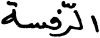
AL-RAFSAT
That is:
The Kick
THE MERCY OF ALLAH
CHAPTER I
ENTITLED AL-RAFSAT, OR THE KICK
In the days of Abd-er-Rahman, who was among the wisest and most glorious of the Commanders of the Faithful, there resided in the City of Bagdad an elderly merchant of such enormous wealth that his lightest expressions of opinion caused the markets of the Euphrates to fluctuate in the most alarming manner.
This merchant, whose name was Mahmoud, had a brother in the middle ranks of Society, a surgeon by profession, and by name El-Hakim. To this brother he had frequently expressed a fixed determination to leave him no wealth of any kind. “It is my opinion,” he would say, “that a man’s first duty is to his own children, and though I have no children myself, I must observe the general rule.” He was fond of dilating upon this subject whenever he came across his relative, and would discover from time to time new and still better reasons for the resolution he had arrived at. His brother received with great courtesy the prospect held out to him by the wealthy merchant; but one day, finding tedious the hundredth repetition of that person’s pious but somewhat wearisome resolve, said to him:
“Mahmoud, though it would be a mean and even an impious thing to expect an inheritance from you to any of my seven sons, yet perhaps you will allow these boys to receive from your lips some hint as to the manner in which you have accumulated that great wealth which you now so deservedly enjoy.”
“By all means,” said Mahmoud, who was ever ready to describe his own talents and success. “Send the little fellows round to me to-morrow about the hour the public executions take place before the Palace, for by that time I shall have breakfasted, and shall be ready to receive them.”
The Surgeon, with profuse thanks, left his brother and conveyed the good news to the seven lads, who stood in order before him with the respect for parents customary in the Orient, each placed according to his size and running in gradation from eight to sixteen years of age.
Upon the morrow, therefore, the Surgeon’s seven sons, seated gravely upon crossed legs, formed a semi-circle at the feet of their revered relative, who, when he had watched them humorously and in silence for some moments, puffing at his great pipe, opened his lips and spoke as follows:
“Your father has wondered, my dear nephews, in what way the fortune I enjoy has been acquired; for in his own honourable but far from lucrative walk of life, sums which are to me but daily trifles appear like the ransoms of kings. To you, his numerous family, it seems of especial advantage that the road to riches should be discovered. Now I will confess to you, my dear lads, that I am quite ignorant of any rule or plan whereby the perishable goods of this world may be rapidly accumulated in the hands of the Faithful. Nay, did any such rule exist, I am persuaded that by this time the knowledge of it would be so widely diffused as to embrace the whole human race. In which case,” he added, puffing meditatively at his pipe, “all would cancel out and no result would be achieved; since a great fortune, as I need not inform young people of your sagacity, is hardly to be acquired save at the expense of others.
“But though I cannot give you those rules for which your father was seeking when he sent you hither, I can detail you the steps by which my present affluence was achieved; and each of you, according to his intelligence, will appreciate what sort of accidents may make for the increase of fortune. When you are possessed of this knowledge it will serve you through life for recreation and amusement, though I very much doubt its making you any richer. For it is not the method nor even the opportunity of intelligent acquisition which lead to great riches, but two other things combined: one, the unceasing appetite to snatch and hold from all and at every season; the other, that profound mystery, the Mercy of God.
“For Allah, in his inscrutable choice, frowns on some and smiles on others. The first he condemns to contempt, anxiety, duns, bills, Courts of law, sudden changes of residence and even dungeons; the second he gratifies with luxurious vehicles, delicious sherbet and enormous houses, such as mine. His will be done.
“A dear friend of mine, one Mashé, was a receiver of stolen goods in Bosra, until God took him, now twenty years ago. He left two sons of equal intelligence and rapacity. The one, after numerous degradations, died of starvation in Armenia; the other, of no greater skill, is to-day governor of all Algeirah and rings the changes at will upon the public purse. Mektub.”
For a moment the ancient Captain of Industry paused with bent head in solemn meditation upon the designs of Heaven, then raising his features protested that he had too long delayed the story of his life, with which he would at once proceed.
* * * * *
“As a boy, my dear nephews,” began the kindly uncle, while his dutiful nephews regarded him with round eyes, “I was shy, dirty, ignorant, lazy, and wilful. My parents and teachers had but to give me an order for me to conceive at once some plan of disobeying it. All forms of activity save those connected with dissipation were abhorrent to me. So far from reciting with other boys of my age in chorus and without fault the verses of the Koran, I grew up completely ignorant of that work, the most Solemn Name in which I to this day pronounce with an aspirate from an unfamiliarity with its aspect upon the written page. Yet I am glad to say that I never neglected my religious duties, that I prayed with fervour and regularity, and that I had a singular faith in the loving kindness of my God.
“I had already reached my seventeenth year when my father, who had carefully watched the trend of my nature and the use to which I had put my faculties, addressed me as follows:
“‘Mahmoud, I wish you no ill. I have so far fed and clothed you because the Caliph (whom Allah preserve!) has caused those who neglect their younger offspring to be severely beaten upon the soles of their feet. It is now my intention to send you about your business. I propose’—and here my dear father pulled out a small purse—‘to give you the smallest sum compatible with my own interests, so that if any harm befall you, the vigilant officers of the Crown cannot ascribe your disaster to my neglect. I request that you will walk in any direction you choose so only that it be in a straight line away from my doors. If, when this your patrimony is spent, you make away with yourself I shall hold you to blame; I shall be better pleased to hear that you have sold yourself into slavery or in some other way provided for your continued sustenance. But what I should like best would be never to hear of you again.’ With those words my father (your grandfather, dear boys), seizing me by the shoulders, turned my back to his doors and thrust me forth with a hearty kick the better to emphasize his meaning.
“Thus was I launched out in the dawn of manhood to try my adventures with the world.
“I discovered in my pouch as I set out along the streets of the city the sum of 100 dinars, with which my thoughtful parent had provided me under the legal compulsion which he so feelingly described. ‘With so large a capital,’ said I to myself, ‘I can exist for several days, indulge my favourite forms of dissipation, and when they are well spent it will be time enough to think of some experiment whereby to replace them.’”
Here the eldest nephew said respectfully and with an inclination of the head: “Pray, uncle, what is a dinar?”
“My dear lad,” replied the merchant with a merry laugh, “I confess that to a man of my position a reply to your question is impossible. I could only tell you that it is a coin of considerable value to the impoverished, but to men like myself a denomination so inferior as to be indistinguishable from all other coins.”
Having so expressed himself the worthy merchant resumed the thread of his tale:
“I had, I say, started forward in high spirits to the sound of the coins jingling in my pouch, when my steps happened to take to the water-side, where I found a ship about to sail for the Persian Gulf. ‘Here,’ said I to myself, ‘is an excellent opportunity for travelling and for seeing the world.’
“The heat of the day was rising. No one was about but two watermen, who lay dozing upon the bank. I nimbly stepped aboard and hid myself behind one of the bales of goods with which the deck was packed. When the sun declined and work was resumed, the sailors tramped aboard, the sail was hoisted, and we started upon our journey.
“Befriended by the darkness of night I crept out quietly from my hiding-place and found a man watching over the prow, where he was deputed to try the depth of the water from time to time with a long pole. I affected an air of authority, and told him that the Captain had sent me forward to deliver his commands, which were that he should give me a flask of wine, some fruit, and a cake (for I guessed that like all sailors he had in his possession things both lawful and unlawful). These I told him I would take to my relative the Captain. He left me with the pole for a moment and soon returned with the provisions, with which I crept back to my hiding-place, and there heartily consumed them.
“During the whole of the next day I lay sleeping behind the bales of goods. With the fall of the second night I needed a second meal. I dared not repeat my first experiment, and lay musing till, hunger having sharpened my wits, I hit upon a plan with which surely Providence itself must have inspired a poor lonely lad thrown in his unaided weakness upon a cruel world.
“I bethought me that the watchman of either board would have some provision for the night. I remembered a sort of gangway between the high bales upon the main deck, which corridor led back far under the poop into the stern sheets. It has been so designed for the convenience of stowing and unloading, affording a passage for the workmen as they handled the cargo. I put these two things together in my mind (but to God be the glory) and formed of them a plan for immediate execution.
“I crept from my hiding-place and sauntered along the dark deck until I came upon the watchman, squatting by the rail, and contemplating the stars in the moonless sky. He had, as I had suspected, a platter the white of which I could just see glimmering against the deck beside him. I thought I also discerned a gourd of wine. I approached him as one of the crew (for they were chance strangers taken on at the wharf). We talked in low tones of the girls of Bagdad, of the police, of opportunities for theft, and of such other topics as are common to the poor, till, naturally, we came to wine. He cursed the poor quality of his own, in the gourd beside him. I, after some mystery, confided to him that I had a stock of excellent wine, and, as my friendship for him increased, I made a clean breast of it and told him it was in the stern sheets, far under the poop deck along the narrow passage between the high bales. I offered to go with him and fetch it, allowing him, in his eagerness, to go first. When he was well engaged in groping aft I turned, crept forward again silently and rapidly, picked up the loaf and cheese which I found on his platter, as also the gourd, and vanished into my hiding-hole.
“I ate my fill—though somewhat too hurriedly, and remarked how long a time my shipmate was spending at searching that empty place. As I heard him creeping back at last cursing violently in whispers, I was aware of faint dawn in the East, and determined that my cruise must end.
“We were already in the neighbourhood of the sea, as I discovered by tasting the water over the side in the darkness and discovering it to be brackish. I bethought me that my poor comrade had now an excellent reason for ferretting me out, that the Captain also would soon hear of me and that, with daylight, I should certainly be visited with a bastinado or put into chains and sold. I therefore slipped over the side (for I was an excellent swimmer) and made for the shore. There I lay on a warm beach and watched through the reeds the great sail of the ship as it slipped down-stream further and further away in the growing light.
“When the sun rose the vessel was out of sight, and looking about me I discovered a little village not far from the shore inhabited by simple fishermen, but containing several houses of some pretension, the residences of wealthy merchants who came here from Bosra in their moments of leisure to relax themselves from the catch-as-catch-can of commerce in that neighbouring city.
“My first action at the opening of the new day was to fall upon my knees and add to the ritual prayer a humble outpouring of thanks for the benefits I had already received and a fervent appeal for guidance. That appeal was heard. I rose from my knees full of a new-found plan.
“To one of those wealthier houses which stood near the village I at once proceeded and sent in a message by a slave to its owner saying that my master, a wealthy dealer in carpets, solicited the custom of his lordship, and that if the great man would but accompany me to the quay I would there show him wares well worthy of his attention.
“It so happened (and here was Providence again at work) that this merchant had a passion for a particular sort of carpet which is solely made by the inhabitants of El Kzar, for they alone possess the secret, which they very zealously guard. The slave, therefore, brought me back the message that his master would not be at the pains of accompanying me unless such wares were present for his inspection. If my carpets were those of El Kzar he would willingly inspect them, but if they were of any other brand he was indifferent.
“And let this teach you, my dear nephews, how simple are the minds of the rich.
“I was willing enough that the carpets should be carpets of El Kzar, or, indeed, of any other place under heaven, for all were at my choice.
“I hastened, therefore, to send back a further message that by a curious coincidence we had upon this occasion nothing else in stock but Kzaran carpets, and begged the slave to emphasize this important point to his master.
“His reply was to twist his right hand, palm upwards, with a strange smile. I pulled out my purse, showed him the shining dinars, and asked him whether he would rather have one now for his fee or five on the completion of the transaction? With glistening eyes—and even (as I thought) a pathetic gratitude—the slave leapt at the latter offer.
“And let this teach you, my dear nephews, how simple are the minds of the poor.
“He hastened off to deliver my message.
“Within a few moments the master of the house appeared in great haste, and all of a fever bade me lead him to the appointed spot.”
At this moment the merchant paused and with reverie and reminiscence in his eye remained silent for at least that space of time in which a dexterous pick-pocket may gingerly withdraw a purse from the sleeve of a Holy Man. The second nephew thought the opportunity arrived to suggest a doubt which had been vexing his young mind. He said with an obeisance:
“Venerable uncle, we have listened to the beginnings of your career with admiration and respect, but we are more perplexed than ever to discover how such beginnings could have led to such an end. For you appear to us as yet only to have followed that path which leads to the torturers and the bow-strings.”
“Such,” replied his uncle, with a look of singular affection, “is the general opinion entertained of all very wealthy men in the first steps of their careers; but I hope that the sequel will teach you and your clever little brothers how wrongly informed are the vulgar.”
As the Merchant Mahmoud pronounced these words the Call to Prayer was heard from a neighbouring tower, and he hurriedly concluded:
“My dear nephews, we are called to prayer. I will cease here to speak and will continue to-morrow the story of Myself and Providence.”
Upon hearing these words his seven nephews rose together, and crossed their arms; following which gesture, with three deep bows performed as they walked backwards toward the curtains of the magnificent apartment, they left their uncle’s presence.
* * * * *
“You will remember, my dear nephews,” said the Merchant Mahmoud when the lads were once more assembled in a half-circle before him with crossed legs and attentive countenances, “that you left me hurrying with the collector of Kzaran carpets towards the quay where he should enjoy the sight of the merchandise. This merchant was reputed among the people of the place to be of a singularly cunning and secretive temperament, a character which (you may think it strange!) they admired as though it were the summit of human wisdom. I confess that I found him, in the matter of Kzaran carpets at least, very different from his reputation. A more garrulous old gentleman never trod this earth. He was in a perpetual stammer of excitement, and though I was careful to lead him by the most roundabout roads that he might have time to cool his ardour, the delay did but seem to increase it.
“‘I implore you, sir,’ he said at last, as one who could no longer restrain some violent passion, ‘I implore you, pay no attention to others in this place who may have attempted to forestall me in the matter of your very valuable cargo. Your honour is, I know, sufficient in the matter.... I am confident you will give me a free market. Also, they know nothing of Kzaran carpets in these parts: they are mere buyers and sellers ... and on what a margin! Let me tell you in your ear that while many men in this place carry on the appearance of riches, most are indebted to Parsees in the capital. I alone am in an independent position and’ (here he whispered) ‘I can well reward you privately and in your own pocket for any favour you may show me.’
“Seeing him so eager, I affected a certain hesitation and embarrassment, and at last confessed that I had been approached by a local merchant whose name I was forbidden to mention and who had very kindly sent me as a present by a slave the sum of 1,000 dinars. To this he had attached no conditions, but he had also, quite independently, sent word that he had himself orders for carpets which he was bound to fulfil. His profit (he had said), if I would give him a first choice, would be so considerable that he would be very ready to offer me a handsome commission on the completion of the bargain; quite apart from the 1,000 dinars which were but a little present from one man to another. ‘This thousand dinars,’ I added, ‘now in my possession, I have accepted. A present is a graceful act and can be taken with a clean conscience. But the commission is another matter. I must consider beyond everything the interests of my master. I shall not mention the offer made to me (for with all his confidence in me he is himself a business man and might misunderstand my position), but I shall think it my duty to give him no advice save to sell to the highest bidder.’
“‘It is I!’ shouted the aged connoisseur eagerly, ‘it is I who will prove the highest bidder! Nay, my dear fellow, since such bargains are often concluded in private, would it not be better to tell your master forthwith that no possible competitor can stand against me in this place? Let him first discover the sum offered by my rival and I give you leave to suggest a sum larger by one-tenth, which shall decide his judgment. Meanwhile,’ he added, ‘two thousand dinars are but a small present for one in your position, and I shall willingly—joyfully—propose to give you that sum, not for a moment on account of the service which I am certain you design to do me, but purely as an expression of my esteem.’
“His excitement had now so risen that I fear his judgment was lost. Already he saw before him in his mind’s eye a pile of the noblest Kzaran carpets, all ready for the caravan. Already he saw a rival calmly acquiring them on the distant wharf, the witnesses placing their seals, the words of completion.
“He trembled as again he urged on me the little gift, the personal gift, the trifling gift of 2,000 dinars.
“‘Sir,’ said I in reply, a little stiffly, ‘I am not accustomed to take secret commissions under any disguise. My duty is clear: if I cannot receive a firm offer superior to that already made me, and that backed with proof that you are indeed, as you say, the most solid man in the place—then I must close with my first client. If indeed I were certain of an immediate payment in a larger sum I would accept your proposal. But how can I know anything of this place? The thousand dinars of which I spoke are coined and in a wallet; I have them safe. With all the respect due to your age, I have no information upon your credit in this town. And I confess,’ I added in another tone, ‘that I am acquainted with your rival’s position, which is perhaps more solid than you think. I confess I think it would be simpler and to the better interest of our house if I were to go straight to him now and have done with it.’
“As I spoke thus the old man lost all reason. It was piteous to see one of his age and venerable hairs dancing and spluttering with excitement. He shook his fists in the air, he called to Heaven in shrill tones, he betrayed all the frenzy of the collector. He contrasted the mercantile motives of the unknown competitor with his own passion for Pure Art. He called Heaven to witness to the reality of his wealth, and at last in a sort of fury tore from his garments the jewels which ornamented them, thrust into my hand all the cash upon his person (it was in a leather bag, and amounted altogether to no more than 500 dinars), added to this a brooch of gold, which he dragged from his scarf, and said that if this instalment were not a sufficient proof of his good faith and credit he knew not how to move me.
“I shrugged my shoulders and suggested that instead of making so violent a protestation and at such risk to his fortune he should go back soberly to his house and return with an instrument of credit and two witnesses (as the law demands), while I awaited him patiently at that spot. I, at least, was in no haste and would honourably abide his return. He was off at a speed which I should never have thought possible at his age.
“I waited until he had turned the corner of a distant hedge of prickly pears, and not until he was quite out of sight did I gather the jewels, the coins, and the precious ornaments which in his haste he had thrown at my feet, and very rapidly betake myself in the opposite direction.
“Never was the Mercy of Allah more evidently extended. The plain was naked outside the town, the river perhaps a mile distant; my plight, as it might appear, desperate. I pinned the gold brooch to my cloak, I distributed the jewels openly upon various parts of my person, and I proceeded at a smart pace over the open plain towards the river. It was with the greatest joy that I found upon its bank two fishermen about to set sail and proceed down-stream to sea. Their presence inspired me with a plan for escape.
“I chatted negligently with them (still keeping one eye upon the distant house of my aged but excitable friend). At last with a light laugh I offered one of them a piece of gold, saying that I should be pleased to try the novel experience of a little cruise. The fisherman, who was quite unacquainted with so much wealth, and seemed somewhat awestruck, gave me some grand title or other, and promised me very good sport with the fish and a novel entertainment. But even as he and his companion pushed out from shore I turned in my seat on the deck and perceived in the plain a rising dust which betrayed the approach of the merchant with his witnesses and a company of his slaves.
“Suddenly changing my expression from one of pleased though wearied expectancy to one of acute alarm, I shouted to my new companions: ‘Push away for your lives, and stretch your sail to its utmost! These are the Commissioners sent by the Caliph to re-assess and tax all fishing-boats upon a new valuation! Already had they seized three upon the beach when I left and found you here!’
“At these words the worthy fellows were inspired by a fear even greater than my own. They manfully pushed into the swiftest part of the current, and, though a smart breeze was blowing, hoisted every inch of the sail, so that the boat ran with her gunwale upon the very edge of the water and was indeed dangerously pressed. But I had the satisfaction of seeing the merchant and his retinue vainly descending the river-bank, at perhaps one-half our speed, calling down curses upon us, threatening with their fists, shouting their public titles of authority, their menaces of the law, and in every way confirming my excellent pair of fishermen in the story I had told them.
“It was a pleasant thing to loll on deck under the heat of the day, toying with the valuable ornaments I had so recently acquired and lazily watching my companions as they sweated at the halyards, or alternatively glancing along towards the shore at the little group of disappointed people which fell so rapidly behind us as we bowled down the tide. Soon their features were no longer plain, then their figures could scarcely be distinguished. The last impression conveyed to me was of some little very distant thing, stamping with impotent rage and shaking wild arms against the sky. I could not but deplore so grievous a lapse in dignity in one so venerable.
“When we were well away from the neighbourhood of the city I asked the fishermen whither they were bound; to which they answered that their business was only to cruise about outside and fish during the night, returning at dawn with their catch. ‘Would it not be better,’ I suggested, ‘seeing that these rapacious fellows will hang about for a day or so, to carry me to some town of your acquaintance along the coast where the reigning powers do not suffer from the tyranny of Bagdad? For my part I am free to travel where I will, and the prospect of a change pleases me. I shall be happy,’ said I, ‘to reward the sacrifice of your catch with fifty dinars.’
“At the prospect of much further wealth the fishermen were at once convinced: they sang in the lightness of their hearts, and for three days and three nights we sped down the Gulf, passing bleak mountains and deserted rocky promontories, until upon the fourth day we came to a town the like of which I had never seen.
“‘Shall we land here?’ said I.
“‘No,’ said the fishermen, ‘for it is in a manner within the Caliph’s dominions, and perhaps that accursed tax of which you spoke will be levied here also.’
“‘You know better than I,’ replied I thoughtfully, standing for a moment in affected perplexity. ‘Let me, however, land in your little boat. I have a passion for new places. I will come out to you again after the hour of the mid-day prayers, while you stand in the offing.’
“To this arrangement they readily consented. I rowed to the land, and when I had reached the shore I was pleased to see my fearful hosts quite three miles out upon the hot and shimmering sea. Gazing at them, I hope with charity, and certainly with interest, I pushed the little boat adrift (for I had no reason to return to those poor people) and made my way inland. I disposed of my jewelery at prices neither low nor high with local merchants. I preserved the old fellow’s golden brooch, which I imagined (for I am a trifle weak and superstitious) might bring me good fortune, and when all my transactions were accomplished I counted my total capital, and found myself in possession of no less than 1,500 dinars. The cold of the evening had come by the time my accounts were settled and the strings of my pouch were drawn. I set myself under an arbour where a delicious fountain played in the light of the setting sun, which shone over the waters of the sea, and drinking some local beverage the name of which I knew not, but the taste and effect of which were equally pleasing, I reflected upon my increase of fortune.
“‘You left home, Mahmoud,’ said I to myself, ‘with one hundred dinars, of which your excellent and careful father deprived himself rather than see you face the world unarmed, or himself receive the bastinado. You have been gone from home a week; you are perhaps some 800 miles from your native city; your capital has been multiplied fifteen-fold, and so far you may look with an eager courage towards the further adventures of your life, for very clearly the Mercy of Allah is upon you.’”
At this moment a nasal hooting from the neighbourhood turret warned the company to turn their thoughts to heaven. The boys, who had sat fascinated by their uncle’s recital, knew that the end of their entertainment had come. The third son of the Surgeon was therefore impatient to exclaim (as he hurriedly did): “But, dear uncle, though we see that a certain chance favoured you, and not only your native talents, yet we do not perceive how all this led to any main road to fortune.”
“My boy,” said the Merchant Mahmoud, pensively stroking his beard and gazing vacuously over the heads of the youngsters. “I do not pretend to unfold you any such plan. Have I not told you that did such a plan exist all would be in possession of it? I am but retailing you in my humble fashion the steps by which one merchant in this city has been raised by the Infinite Goodness of the Merciful (His named be adored!) from poverty to riches.... But the call for prayer has already been heard and we must part. Upon this same day of next week, shortly after the last of the public executions has been bungled, you shall again come and hear me recite the next chapter of my varied career.”
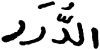
AL-DURAR
That is:
The Pearls
CHAPTER II
ENTITLED AL-DURAR, OR THE PEARLS
A week later, at the hour of Public Executions and Beheadings, the seven boys were again assembled cross-legged at the feet of their revered uncle, who, when he had refreshed them with cold water, and himself with a curious concoction of fermented barley, addressed them as follows:
“You will remember, my lads, how I was left cut off from my dear home and from all companions, in a strange country, and with no more than 1,500 dinars with which to face the world. This sum may seem to you large, but I can assure you that to the operations of commerce” (and here the merchant yawned) “it is but a drop in the ocean; and I had already so far advanced during one brief week in my character of Financier that I gloomily considered how small a sum that 1,500 was wherewith to meet the cunning, the gluttony, and the avarice of this great world. But a brief sleep (which I took under a Baobab tree to save the cost of lodging) refreshed at once my body and my intelligence, and with the next morning I was ready to meet the world.”
Here the merchant coughed slightly, and addressing his nephews said: “You have doubtless been instructed at school upon the nature of the Baobab?”
“We have,” replied his nephews, and they recited in chorus the descriptions which they had been taught by heart from the text-books of their Academy.
“I am pleased,” replied their uncle, smiling, “to discover you thus informed. You will appreciate how ample a roof this singular vegetable affords.
“Well, I proceeded under the morning sun through a pleasantly wooded and rising country, considering by what contrivance of usury or deceit I might next increase my capital, when I saw in the distance the groves and white buildings of an unwalled town, to which (since large places, especially if they are not war-like, furnish the best field for the enterprise of a Captain of Industry) I proceeded; ... and there, by the Mercy of Allah, there befell me as singular an adventure as perhaps ever has fallen to the lot of man.
“I had not taken up my place in the local caravanserai for more than an hour—I had met no likely fool, and my plans for the future were still vague in my head—when an old gentleman of great dignity, followed by an obsequious officer and no less than six Ethiopian slaves, approached me with deep reverence, and profferring me a leathern pouch, of a foreign kind, the like of which I had never seen before, asked me whether I were not the young man who had inadvertently left it upon a prayer-stone at a shrine outside the city.
“I seized the pouch with an eager air, held it up in transports of joy, and kissing it again and again said, ‘Oh! my benefactor! How can I sufficiently thank you! It is my father’s last gift to me and is all my viaticum as well!’ with which I fell to kissing and fondling it again, pressing it to my heart and so discovered it to be filled with coins—as indeed I had suspected it to be.
“Into so active an emotion had I roused myself that my eyes filled with tears, and the good old man himself was greatly affected. ‘I must warn you, young stranger,’ he said paternally, ‘against this thoughtlessness so common in youth! A great loss indeed had it been for you, if we had not had the good fortune to recover your property.’
“You may imagine my confusion, my dear nephews, at finding that I had been guilty of so intolerable a fault. I blushed with confusion; I most heartily thanked the old gentleman, not for his integrity (which it would have been insulting to mention to one of his great wealth) but for the pains he had taken to seek out a careless young man and to prevent his suffering loss.
“‘Nay,’ said that aged gentleman to me with a low and pleasant laugh, ‘you must not thank me. Perhaps had I myself come upon the treasure I might have thought it too insignificant to restore. But you must know that I am the Chief Magistrate of this city and that last evening my officer noticed from some distance a young man, apparently a stranger to this city, whom he describes as of your height and features, rise from the prayer-stone, but leave behind him some object which, in the gathering dusk, he could not distinguish. On his approach he found it was this purse of yours which some boys had already found and were quarrelling over, when he took it from them. He brought it to me with some description of your person: I thought you might well be at this caravanserai and brought it with me: I had the pleasure of hearing my officer, who now accompanies me, recognize you as we approached.’ That functionary bowed to me and I to him most ceremoniously, and as I did so I was rapidly revolving in my head what I had better do if the real owner should appear. I was torn between two plans: whether to denounce him as a thief before he could speak, or to run off at top speed.
“This preoccupation I dismissed lest the anxiety of it should appear upon my face.
“I again thanked this good old man most warmly and we entered into a familiar conversation. What was my delight at the close of it when he bade me without ceremony accept of his hospitality and come home to take a meal with him in his palace. I was eager for further adventures, and accompanied him with the greatest joy.
“Reclining at table, where there was served (as I need hardly inform my dear nephews) lamb stuffed with pistachio nuts, the old man asked me whence I had come, what was my trade, and whither I was proceeding.
“I answered (as I thought, prudently) that I had come from Aleppo, that I had been entrusted by my father with the sum in the purse he had so kindly restored to me, in order to purchase pearls, and that when the purchase was completed I had instructions to sell them in India in a market where my father was assured that pearls were rare and fetched the highest prices.
“‘This is indeed well found!’ exclaimed the old man, with enthusiasm. ‘I am myself seeking for some one to whom I may sell a magnificent collection of pearls inherited from my great-grandmother, an Indian Begum. The old woman,’ he added nonchalantly enough, ‘was a miser; she kept the drops higgledy-piggledy in an old cedarwood box, and I confess myself quite ignorant of their value. Moreover, as I have taken a liking to you, I shall let you fix your own price, for I should much like to remember when my time comes that I had helped a friendless man in his first step to fortune; only, I am a little ashamed to appear to be making money out of an heirloom!’
“While the old gentleman so spoke I was rapidly revolving in my mind what motive he could have for such an affection of indifference to wealth, when I recollected that he was the Chief Magistrate of the city, and immediately concluded that these pearls, being the property of local people, and obtained by him for nothing by way of bribes and other legal channels, he would both desire to have them sold at a distance and would let them go cheap.
“‘Nay,’ continued he, seeing that I hesitated as these thoughts occurred to me, ‘I will take no denial. For me it is but a mere riddance, and for you a most excellent bargain. Come, I trust your honest face and youthful candour. You shall take them at your own price! And I will even advise you of the city of India where you will find your best market.’
“Put thus, the offer, I will confess, attracted me; but I had already learned the wickedness of mankind (though not as yet, I am glad to say, my dear nephews, at my own expense), and I said that I would at least so far meet him as to take the jewels to a local merchant, invent some tale, as though they were my own, and see what sum might be offered for them. Only when I thus had some measure of their value could I honourably make an offer. I continued at some length in this strain, expressing a humble inability to judge, and the fear lest my capital might not be sufficient (which he pooh-poohed). I stipulated, for a reason you will soon perceive, that a slave of his should accompany me—if only as a matter of routine—for (said I) I was very jealous of my honour. He agreed, though he was good enough to call it a pure formality.
“I left the aged magistrate with many thanks and, accompanied by the slave, proceeded with the pearls to the jewel merchants’ quarter in the Bazaar. I stopped before one of the richest and most reputed booths, and spreading the pearls before the merchant told him that I was compelled to sell these under order from authority as the end of a family dispute, to pay the dowry of my sister; that I therefore was in haste to settle and would take the least price he might choose to mention within reason. I was, said I, wholly in his hands. It was urgent for me that the bargain should be quickly completed, but before I could receive his cash I must hear the lowest figure he would name.
“While I thus spoke the slave stood respectfully behind me and listened to our conversation. The jewel merchant said that no class of merchandise was more distasteful to him than pearls; there was at this moment no market for them. It was impossible to purchase them save properly set and in regular sizes; and finally it was well known that pearls were the most unlucky of gems. It was quite impossible for him to offer more than 10,000 dinars, and even so he would doubtless be the loser by the transaction.
“When I heard this I rapidly wrote upon a slip of paper the following words:
“‘My Lord,—The chief merchant in this city estimates your jewels at 10,000 dinars. I cannot, alas, provide that sum, and therefore I cannot honestly make an offer myself as I had hoped; if you desire to have them sold here I will faithfully execute your commission, but if you prefer that I should return them to you send me word. Meanwhile, I will still bargain here awaiting your reply.’
“I sent this note by the slave and begged him to give it to his master and to bring me an answer. The slave went off, and when I judged him to be well out of hearing I turned and said to the merchant, sighing: ‘Well, since you offer no more I must take what you offer; the slave whom you saw me despatch carried the news to my family; I burn when I think of how their scorn will mock my humiliation. I therefore said nothing true of the price. Indeed, I have set it down in that note as something much higher. But I submit, for, as I told you, I am pressed. Come, count me the money, and I will away.’
“The merchant, after I had handed over the pearls, counted me the money into yet another large leathern bag, which I shouldered, and with rapid steps bore out of the Bazaar and soon out of the town itself, by a gate called the Bab-el-Jaffur, that is, the gate of innocence.
“Beyond the town walls was a long roll of dusty sloping land set here and there with dusty stunted bushes and having beyond it a high range of desert hills. A track led roughly rising across it, away from the town.
“I followed this track for one hour and then sat down (for my new fortune was heavy) and rested.
“As I thought it probable that my good old friend himself would return speedily with his slave to the Bazaar, and as the complication of the affair might embroil me, I hid during the remainder of the day squeezed in a jackal’s earth beneath a bank. Before nightfall I ventured out and gazed about me, leaving my original pouch, my windfall and my big leathern bag of 10,000 dinars in the jackal’s earth while I surveyed the track.
“It was the hour I love above all others.
“The sun had just set beyond the distant ocean towards which my face was turned, and between me and which, upon the plain below—for I had come to the rise of the mountain side—lay the beautiful city I had just left. The fragrant smoke of cedarwood rose from some of its roofs as the evening fell. There was still hanging in the air the coloured dust of evening above the roads of entry, and there came faintly through the distance the cry of the Muezzin.
“I was not so entranced by the natural beauty of the scene as to neglect the duty which this sound recalled. I fell immediately upon my knees and was careful to add to the accustomed prayers of that hour my heart-felt thanks for the Guidance and the Grace which had so singularly increased my fortunes in the last few hours.
“As I rose from these devotions I heard upon my right a low wailing sound and was astonished to discover there, seated hopelessly beneath a small shrub and waving his hands in grief, a young man of much my own height and appearance: but I flatter myself that not even in my most careful assumptions of innocence have I ever worn such a booby face.
“He was swaying slowly from side to side, and as he did so moaning a ceaseless plaint, the words of which I caught and which touched me to the heart. Over and over again he recited his irreparable loss. He had but that small sum! It was his patrimony! His sole security! How should he answer for it? who should now support him? or what should he do?
“So he wailed to himself in miserable monotone till I could bear it no longer, for I saw that I had by a singular coincidence come upon that poor young man whose pouch I had been given in error by the magistrate of the city.
“I bowed before him. He noticed me listlessly enough and asked me what I would. I told him I thought I could give him comfort. Was it not he, said I, who had left a certain pouch (I carefully described it) containing sundry coins upon a prayer-stone outside the city at this very same sunset hour of the day before? His despair was succeeded by a startling eagerness. He leapt to his feet, seized my arm, rose feverishly and implored me to tell him further.
“‘Alas,’ I said, ‘what I have to tell you is but little! I fear to raise your hopes too high—but at any rate I can put you upon the track of your property.’
“‘Sir,’ said he, resuming his hopeless tone for a moment, ‘I have already done my best. I went to the Chief Magistrate of the city to claim it and was met by an officer of his who told me that the purse had already been delivered to its owner, suspected my claim and bade me return. But how shall I prove that it is mine, or how, indeed, receive it, since the abominable thief who took possession of it must by now be already far away?’
“‘You do him an injustice,’ said I. ‘It is precisely of him whom you uncharitably call a thief that I would speak to you. You think that he is far away, whereas he is really at your hand whenever you choose to act, for this is the message that I bring you. He awaits you even now, and if you will present yourself to him he will restore your property.’
“‘How can you know this?’ said the young man, gazing at me doubtfully. ‘By what coincidence have you any knowledge of the affair?’
“‘It is simple enough,’ said I. ‘This person to whom your purse was given, and I, were in the same inn. We fell to talking of our adventures along the road, for he also was a stranger, and he told me the singular tale how he had recovered from the authorities a purse which he honestly thought his own, for it was very like one which he himself possessed; but that on finding his own purse later on in his wallet he was overwhelmed with regret at the thought of the loss he had occasioned; at the same time he made me his confidant, telling me that he intended to restore it this very evening at sunset to the authorities and that any one claiming it after that hour and proving it was his could recover it at the public offices. But he warned me of one thing: the officers (he told me) were convinced (from what indication I know not, perhaps from the presence of something in the purse, or perhaps from something they had heard) that the owner dealt in pearls.’
“Here the young man interrupted me, and assured me he had never bought or sold pearls in his life, nor thought of doing so.
“I answered that no doubt this was so. But that when the authorities had a whim it was well to humour them. He would therefore do well to approach the officer who guarded the gate of the Chief Magistrate’s house, with the simple words, ‘I am the Seller of Pearls,’ on hearing which his path would be made smooth for him, and he would receive his belongings.
“The young man thanked me heartily; he even warmly embraced me for the good news I had given him, and felt, I fear, that his purse and his small fortune were already restored to him. It was a gallant sight to see him in the last of the light swinging down the mountain side with a new life in him, and I sincerely regretted from my heart the necessity under which I was to imperil his liberty and life. But you will agree with me, my dear nephews, that I could not possibly afford to have him at large.
“When he had gone and when it was fully night, there being no moon and only the stars in the warm dark sky, I rapidly took my burdens from their hiding-place and proceeded, though with some difficulty, up the mountain side, staggering under such a weight, and deviating from the track so that there should be less chance of finding myself interrupted.
“I slept for a few hours. I awoke at dawn. I counted my total fortune, and found that it was just about 12,000 dinars, the most of it in silver.
“Carefully concealing it again, I left its hiding-place and glided round the mountain until I came to a place where a new track began to appear, which led to a neighbouring village. Here I bought an ass, and returning with it to my hiding-place and setting my treasure upon it I went off at random to spend the day in travelling as rapidly as I might away from the neighbourhood by the most deserted regions.
“I came, a little before sunset, upon a hermit’s cave, where I was hospitably entertained and the tenant of which refused all reward, asking me only to pray for him, as he was certain that the prayers of youth and innocence would merit him a high place in Heaven.
“With this holy man I remained for some four or five days, passing my time at leisure in his retreat among the mountains, and feeding my donkey upon the dried grasses which I brought in by armfuls at dusk from the woodlands. Upon the fifth day of this concealment the hermit came in pensive and sad, and said to me:
“‘My son, with every day the wickedness of this world increases, and the judgment of God will surely fall upon it in a devastating fire! I have but just heard that the Chief Magistrate of our capital city, using as a dupe an innocent stranger, sold to one of the great jewellers of the place for no less than 10,000 dinars a quantity of pearls, every one of which now turns out to be false and valueless! Nay, I am told that the largest are made of nothing but wax! And, what is worse, not content with this first wickedness, the magistrate under the plea that the young stranger had disappeared confiscated the gems again and had the poor merchant most severely beaten! But—worse and worse! the poor youth having innocently returned that very night to the city, was seized by the guard and beheaded. Ya, ya,’ said the good old man, throwing up his hands, ‘the days increase, and their evil increases with them!’”
At this moment the hoarse and discordant voice of the Public Crier croaked its first note from the neighbouring turret, and the nephews, who had sat enraptured at their uncle’s tale, knew that it was time to disperse. The eldest brother therefore said:
“O uncle; before we go let me express the thanks of all of us for your enrapturing story. But let me also express our bewilderment at the absence of all plan in your singular adventures. For though we have listened minutely to all you have said, we cannot discover what art you showed in the achievement of any purpose. For instance, how could you know that the pearls were false?”
“I did not know it, my dear nephew,” replied the great Merchant with beautiful simplicity, “and the whole was the Mercy of Allah!... But come, the hour of prayer is announced, and we must, following the invariable custom of the Faithful, make yet another joint in my singular tale. Come, therefore, on this day week, shortly after the last of the public executions of the vulgar, and I will tell you of my further fortunes: for you must understand that the 12,000 dinars of which my story now leaves me possessed are”—and here the honest old man yawned again and waved his hand—“but a flea-bite to a man like me.”
His seven little nephews bowed repeatedly, and, walking backwards without a trip, disappeared through the costly tapestries of their uncle’s apartments.

AL-TAWAJIN
That is:
The Pipkins
CHAPTER III
ENTITLED AL-TAWAJIN, OR THE PIPKINS
On the appointed day of the next week, when, with the hour of public executions, the noon-day amusements of the city come to an end, and the citizens betake themselves to the early afternoon’s repose, the seven boys were once more seated in the presence of their uncle, whom they discovered in a radiant humour.
He welcomed them so warmly that they imagined for a moment he might be upon the point of offering them sherbet, sweetmeats, or even money; they were undeceived, however, when the excellent but extremely wealthy old man, drawing his purse lovingly through his fingers, ordered to have poured out for each of them by a slave a further draught of delicious cold water, put himself at his ease for a long story, and resumed his tale:
“You will remember, my delightful nephews,” he said, “how I found myself in the hermit’s hut without a friend in the world, and with a capital of no more than twelve thousand dinars which I had carried thither in a sack upon donkey-back. Indeed, it was entirely due to the Mercy of Allah that my small capital was even as large as it was: for had the merchant in the bazaar discovered the pearls to be false he would not only have offered me far less but might possibly, after having disposed of the pearls, have given me over to the police. As it was, Heaven had been kind to me, though not bountiful, and I still had to bethink me what to do next if I desired to increase my little treasure.
“Taking leave, therefore, of the good hermit, I pressed into his hand a small brass coin the superscription of which was unknown to me and which I therefore feared I might have some difficulty in passing. I assured my kind host that it was a coin of the second Caliph Omar and of value very far superior to any modern gold piece of a similar size. As the hermit, like many other saintly men, was ignorant of letters, his gratitude knew no bounds. He dismissed me with a blessing so long and complicated that I cannot but ascribe to it some part of the good fortune which next befell me.
“For you must know that when, after laying in stores at a neighbouring village, I had driven my donkey forward for nearly a week over barren and uninhabited mountains, and when I had nearly exhausted my provision of dried cakes and wine (a beverage which our religion allows us to consume when no one is by), I was delighted to come upon a fertile valley entirely closed in by high, precipitous cliffs save at one issue, where a rough track led from this enchanted region to the outer world. In this valley I discovered, to my astonishment, manners to be so primitive or intelligence so low that the whole art of money-dealing was ignored by the inhabitants and by the very Governors themselves.
“The King (who, I am glad to say, was of the Faithful) had, indeed, promulgated laws against certain forms of fraud which he imagined to be denounced in the Koran; but these were of so infantile a character that a man of judgment could very easily avoid them in any plans he might frame for the people’s betterment and his own. The population consisted entirely of soldiers and rustics, among all of whom not one could be discovered capable of calculating with justice a compound interest for ten years.
“Under these circumstances my only difficulty lay in choosing what form my first enterprise should take. After a little thought I decided that what we call in Bagdad an Amalgamation of Competing Interests would be no bad beginning.
“I began with due caution by investing a couple of thousand dinars in the merchandise of a potter who had recently died and whose widow needed ready cash to satisfy the sacred demands of the dead. She spent the money in the ornamentation of his tomb, with which unproductive expenditure the foolish woman was in no small degree concerned.”
Here the eldest of the nephews interrupted Mahmoud to ask, most respectfully, why with a capital of twelve thousand dinars he had used but two, and why he had begun his experiment upon the petty business of a poor widow.
“My son,” said his uncle affectionately, “you do well to ask these questions. They show a reasoned interest in the great art of Getting. Well then, as to the smallness of my beginning, it was, I hope, due to humility. For ostentation is hateful. But a good deed is never thrown away—and how useful I found this reserve of ten thousand dinars (which I had in my meekness kept aside) you shall soon learn.
“As to why I began operations in the kiln of this poor widow, it was because I have ever loved the little ones of this world and aided them to my best endeavour. This charitable action also turned out to be wise, as such actions often do; for I could thus proceed at first unnoticed and begin my new adventures without exciting any embarrassing attention.
“I continued to live in the same small hut I had hired on my arrival, under the floor of which I kept my modest capital; and I put it about, as modesty demanded, that I was almost destitute.
“As it was indifferent to me for the moment whether I obtained a return upon this paltry investment or no, I was able to sell my wares at very much the same sum as they had cost me, and as I had bought the whole stock cheap, that sum was less than the cost of manufacture. There was a considerable store of pipkins in the old sheds, and while I sold them off at charitable rates (very disconcerting to other merchants), I had time to consider my next step.
“Upon this next step I soon determined. When, with due delay, my original stock of pipkins had been sold, I purchased a small consignment of clay, I relit the fires in the kiln, I hired a couple of starving potters, and I began to manufacture.
“The fame of my very cheap pipkins had spread, as was but natural, and secured me an increasing number of customers for my newly made wares. But I thought it wrong to debauch the peasants by selling them their pots under cost price any longer. I was constrained by the plainest rule of duty to raise my prices to the cost of manufacture—though no more, keeping Justice as my guiding star. For, depend upon it, my dear nephews, in business as in every other walk of life an exact rectitude alone can lead us to the most dazzling rewards.
“This price of mine was still lower than that of all the other pipkin-makers, who had been accustomed from immemorial time to the base idea of profit, and were in a perpetual surmise what secret powers I had to permit me such quotations. But I made no mystery of the affair. I allowed all my friends to visit my simple factory and I explained to their satisfaction how organization and a close attention to costings were sufficient to account for my prosperity.
“Still, as my sales continued to grow, new doubts arose, and with them, I am glad to say, new respect for my skill in affairs.
“The simple folk wondered by what art I had contrived so difficult a financial operation, but as it was traditional among them that one who sold goods cheap was a benefactor to the community, my action was lauded, my fame spread, and the number of my customers continually increased.
“You will not be slow to perceive, my dear boys, that my competitors in the bazaar, being compelled, to compete with my ruinous prices, were all embarrassed, and that the less attentive or privileged soon began to fall into financial difficulties, the first of course being those who were the most renowned among these simpletons for their cunning, their silence, their lying, and their commercial skill in general. These, as they were perpetually trying new combinations to discover or to defeat my supposed schemes, were an easy prey. Even the straightforward fellows who knew of no art more subtle than the charging of ten per cent. above cost price, and who did not play into my hands by any wearisome financial strategy, began to be roped into my net as the area of my operations spread. For when I had acquired, at a calculated loss, a good half of the pottery business in this sequestered paradise, I could, by what is known as the Fluctuation of the Market (but I will not confuse you with technical terms), put my remaining competitors into alternate fevers of panic and expectation very destructive to a Sound Business Judgment.
“Upon one day I would declare that a large consignment of pottery being about to reach me, I could sell pipkins at half the usual price. Pipkins fell heavily, and I bought through my agent every pipkin I could lay hold of. The supposed consignment, I would then put about, had been broken to atoms by an avalanche which had overwhelmed the caravan at the very boundaries of the State. Price leapt upward, and as I was the author of the rumour I was also the first to take advantage of the rise in price. But the very moment, my dear nephews, that my sluggish competitors attempted to follow suit the market would, oddly enough, fluctuate again in a downward direction.
“Upon a certain morning when one Abdullah (who was my boon companion and the next merchant in importance to myself) decided to mark his best pipkins at ten dinars the dozen I happened most prudently to have offered my own at eight and a half dinars to my favourite customers.
“And all this while I lived upon my hidden hoard.
“Poor Abdullah came to me in a sweat, very early the next morning, and after some meaningless compliments and many pauses, asked me to go into partnership. ‘For’ (said he) ‘though he admitted he had not my capacities, yet he had a long experience in the trade, a large connection and many influential friends in the allied lines of Pipkin brokerage, Pipkin insurance, Pipkin discount, Pipkin remainders, and—a most important branch—the buying and selling of Imaginary Pipkins.’
“He could—he anxiously assured me—be of great service as an ally, but he was free to confess that if he continued as he was he would be ruined; for, to tell the truth, he had already come to the end of his resources and had not a dinar in the house.
“I heard him out with a grave and sympathetic countenance, heaving deep sighs when he touched upon his fears, nodding and smiling when he spoke of his advantages, patting him affectionately when he professed his devotion to myself, and assuming a look of anguish when he spoke of his approaching ruin.
“But when he had concluded—almost in tears—I told him in tones somewhat slower and graver than my ordinary, that I had one fixed principle in life, bequeathed me by my dear father, now in Paradise, never to enter into partnership; no, not with my nearest and dearest, but ever to remain alone in my transactions. I frankly admitted that this made me a poor man and would keep me poor. It would be greatly to my advantage, in the despicable goods of this world, to have at my disposal Abdullah’s marvellous experience, his great array of family and business connections (to which my wretched birth could make no claim), and above all his genius for following the market. But the goods of this world were perishable—especially earthenware—and the sacred pledge given to my sainted parent counted more with me than all the baked mud in the world.
“As I thus spoke Abdullah’s breast heaved with tempestuous sobs, provoked by the affecting example of my filial piety, but also, I fear, by the black prospect of his own future.
“I could not bear to witness his distress. I hastened to relieve it. Though my vow (I said) forbade me solemnly to enter into partnership, yet I could be of service to him in another manner. I would lend him money at a low rate of interest to the value of half his stock upon the security of the whole. Times would change. The present ruinous price of pipkins (by which I myself suffered severely) could not long endure. He would lift his head again and could repay me at his leisure.
“He thanked me profusely, kissed my hand again and again, and gave me an appointment next day to view his merchandise and draw up the contract.
“I visited him at the hour agreed. The public notaries drew up an inventory of his whole stock, including his house and furniture, his prayer beads (which I was interested in, for they were of a costly Persian make), his dead wife’s jewels, all his clothes, his bed, and his pet cat—an animal of no recorded pedigree but reputed to be of the pure Kashmir breed. I carefully noted all flaws, however slight, in each pipkin of his warehouse and set all such damaged goods aside as a makeweight. The sound pipkins I made no bones of but accepted frankly at their market value, and when the whole was added up the valuation came to no less than 20,000 dinars. Yet so hide-bound in routine were the inhabitants of the place that Abdullah—if you will believe me!—had actually set his business stock down in his old books at four-fold that amount!
“As I had had to carry on, I had not now left by me my full hoard of 10,000 dinars. I had but 8,000 left. Yet I was in no difficulty. Half 20,000 is 10,000—but there would be deductions!
“The costs of all this inventory and mortgage were, of course, set down against my valued friend Abdullah, but since he had not the ready cash wherewith to pay the notaries, their clerks, the demurrage fees, the stamps, the royal licence, the enregistration, the triplicates, the broker’s commission, the ...”
“Pray, uncle,” cried the youngest of the nephews, “what are all these?”
“You must not interrupt me, my boy,” answered the great merchant, a little testily, “they are the necessary accompaniments of such transactions.... Well, as I was saying, the broker’s commission, the porter’s wages, the gratuities to the notaries’ servants, the cleaning up of the warehouse after all was over, and a hundred other petty items, I generously allowed them to be deducted from the loan; for our Prophet has said, ‘Blessed is he that shall grant delay to his debtor.’ That very evening, with every phrase of goodwill and expressed hopes for his speedy recovery of fortune, I counted out to my dear friend Abdullah the full balance of 16,325 dinars and one half dinar, and left him overjoyed at the possession of so much immediate wealth.
“But, alas! no man can forecast the morrow, and all things were written at the beginning to be as they shall be. So far from pipkins rising, the price fell slowly and regularly for three months, during which time I was careful to restrict my own production somewhat, though my poor dear friend, in his necessity, produced more feverishly than ever, and thereby did but lower still further the now really infamous price of pipkins.
“At last he came to a dead stop, and could produce no more. I gladly allowed the first, the second and even the third arrears of interest to be added to the principal at a most moderate compound rate, but there was some fatality upon him, and I was inexpressibly shocked to hear one morning that Abdullah had drowned himself over night in a beautiful little lake which his long dead wife had designed for him in his once charming pleasure grounds.”
“Oh! Poor man!” cried all the nephews in chorus.
“Poor man! Poor man indeed!” echoed their benevolent uncle, “I was a stranger in that country. He was the closest tie I had to it, and, indeed, in my loneliness, the nearest companion I had in the whole world.” And here the good old man paused to breathe a prayer for the departed companion of his long-past youth. He then sighed deeply and continued:
“I used what had now become my considerable influence with the government to provide him a costly funeral at the public expense—for he had left no effects, nor even children to follow him. I walked behind the coffin as chief mourner, and though I attempted to control my grief, all the vast crowd assembled were moved by my manly sorrow, and several spoke to me upon it at the conclusion of the sad rites.
“I allowed the decent interval of three days to elapse and then did what I had no choice but to do. I took over Abdullah’s factory on foreclosure and added it to my own.
“In this way the valuable kilns and stores of clay and wheels and vehicles, etc., all became my property. I had them valued, and was pleasurably surprised to discover that they were worth at least 25,000 dinars.
“A full two years had now passed since my first coming to this happy and secluded valley where Allah had poured out upon me His blessings in so marvellous a fashion. I was lonely, as you may imagine, but I manfully faced my duty. I continued to supervise and extend my manufactory of pipkins which now provided these articles for more than half the households of the State. I therefore could and did put the price of these useful articles upon a basis which, if it was somewhat higher than that to which people had grown accustomed during my earlier manipulations, had the priceless advantage of security, so that the housewife could always know exactly what she had to disburse—and I what I should receive. As I manufactured upon so large a scale my overhead charges....”
“What are overhead ...” began the eldest nephew, when his uncle, visibly perturbed, shouted “Silence!... You have made me forget what I was going to say!”
There was an awkward pause, during which the old man restored his ruffled temper and proceeded:
“I was able to buy clay more cheaply and better than the private pipkin-makers (for so they were now called, with well merited contempt) who still vainly attempted to compete with me, and my business automatically grew as the poor remnant of theirs declined.
“Not only did I continually increase in wealth by these somewhat obvious methods, but also in the power of controlling property; for when some fresh fool among my fellow pipkin-makers found himself in difficulties, it was my practice to seek him secretly, to condole with him upon what I had heard was his approaching misfortune, and to save him from ruin by taking over the whole of his stock. Nay! I would do more. I would rescue him from the sad necessity of attempting some new unknown trade by taking him into my own employment at a generous salary (but upon a monthly agreement); with a pretty concession to sentiment I would even leave him to manage his own dear old booth in the bazaar to which so many years had now accustomed him. I look back with pleasure upon the tears of gratitude which stood in the eyes of those to whom I extended such favours.
“So things went on for one more year, and another, and another, till the fifth year of my sojourn among these simple people was completed.
“I was in complete control of the pipkin trade, making all the pipkins that the nation needed, and free from any rival. The house which I had built for myself was the finest in the place, but covered, I humbly add, with many a sacred text. Above its vast horseshoe gate, ablaze with azure tiles, was inscribed in gold the sentence, ‘Wealth is of God alone.’
“I was popularly known as ‘Melek-al-Tawajin,’ or the Pipkin King, but officially decorated with the local title of ‘Warzan Dahur,’ which was the highest they knew and signifies ‘Leader in battle.’ I was entitled to wear a sword with a silver hilt in a jewelled scabbard, an ornament of which I was justly proud, but the blade of which I very sensibly kept blunt lest my servant should cut himself when he polished it, or even I should inadvertently do myself a mischief when I pulled it out with a flourish to display it to my guests, or saluted with it on parade. I had become a most intimate companion of the Court and was the most trusted counsellor of the King, to whose wives also I often lent small sums of money; nor did I ask to be repaid.
“In such a situation I mused upon my condition, and felt within me strange promptings for a new and larger life. I was now well advanced in manhood, I was filled with desires for action and device which the narrow field of that happy but restricted place could not fulfil. I longed for adventurous action in a larger world.
“The output and consumption of pipkins was at an exact unchangeable level; the revenue a fixed amount. The profit of the trade I held came to some 20,000 dinars in the year, the full purchase of which should be, say, 200,000 dinars.
“I prayed earnestly for guidance, and one night as I so prayed an idea was revealed to me by the Most High.
“I approached the King and told him how, all my life, I had nourished the secret belief that a trade necessary to the whole community should not, in justice, be controlled by a private individual, but should rather be the full property of the State, of which His Majesty was the sole guardian.
“The King listened to me with rapt attention as I unfolded with an inspired eloquence my faith that no one man should intercept profits which were due to the work of all. ‘It is your majesty,’ I cried, ‘who alone should have control over what concerns the body corporate of your people.’ He and he alone should superintend the purchase of pipkins, should regulate their sales, should receive all sums paid for them, and should use that revenue as he might think best for himself and the commonwealth. ‘While I was struggling in the dust and confusion of commercial life,’ I concluded, ‘I had no leisure to work out my scheme in its entirety, nor even to appreciate its serene equity—but now ... now, I see, I understand, I know!’
“Carried away by the fire of my conviction, my Royal Master could no longer brook delay. He bade me put the idea in its main lines before him at once, and assured me it should at once be put into execution.
“I thereupon pulled out a paper showing that since I was fully agreeable to take no more than the cash value of the trade plus goodwill and plus certain probable gains which I might reasonably expect in the future, I would be amply compensated if I were to hand all over to the Commonwealth for the merely nominal sum of half a million dinars—500,000. ‘A sum which,’ I continued, ‘is of little moment to your Majesty; especially as it will be met by the taxation of your willing and loyal subjects.’
“The matter was at once concluded. My great act of renunciation was everywhere acclaimed with transports of public joy. Every honour was heaped upon me. The King himself pronounced my panegyric at the farewell banquet given in my honour, and an inscription was ordered to be encrusted in the most gorgeous tiles on the chief gate of the city: ‘On the tenth day of the month Shaaban in the three hundred and third year from the Flight of the Prophet, by the act of Mahmoud the Magnificent all citizens became in the matter of Pipkins his common heirs.’”
The Merchant had been so moved by these old memories that he had difficulty in proceeding. He was silent for a few moments, and then ended in a more subdued tone.
“The sum of 500,000 dinars, well packed, will load without discomfort some dozen camels. These and their drivers were provided me by a grateful nation. I passed out of the town at sunrise, attended by a vast concourse of the populace who pressed round me in a delirium of grateful cries, and so took my way eastward across the mountains and left this happy vale forever.”
At that moment the detestable falsetto of the Muezzin was heard from the neighbouring minaret, and the boys, all dazed at the recital of such triumphs, left the presence of their uncle as though it had been that of a God.
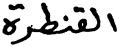
AL-KANTARA
That is:
The Bridge