



автордың кітабын онлайн тегін оқу The Complete Works of St. Ambrose. Illustrated
The Complete Works of St. Ambrose
Illustrated
On the Christian Faith, On the Holy Spirit, On the Mysteries, Letters and others
Saint Ambrose, also known as Aurelius Ambrosius, is one of the four original doctors of the Church. He was the Bishop of Milan and became one of the most important theological figure of the 4th century.
He is considered a saint by the Catholic Church, Eastern Orthodox Church, Anglican Communion, and various Lutheran denominations, and venerated as the patron saint of Milan.
Ambrose's intense episcopal consciousness furthered the growing doctrine of the Church and its sacerdotal ministry, while the prevalent asceticism of the day, continuing the Stoic and Ciceronian training of his youth, enabled him to promulgate a lofty standard of Christian ethics. Thus we have the De officiis ministrorum, De viduis, De virginitate and De paenitentia.
In De Officiis, the most influential of his surviving works, and one of the most important texts of patristic literature, he reveals his views connecting justice and generosity by asserting these practices are of mutual benefit to the participants.
Exposition of the Christian Faith
On the Holy Spirit
On the Mysteries
Concerning Repentance
On the Duties of the Clergy
Concerning Virginity
Concerning Widows
On the Death of Satyrus
The Memorial
Letters
Introduction
Saint Ambrose was born in France to wealthy Roman parents in 340 AD. When he was mature, and his father had passed away, he moved to Rome, where he finished his education, and became a governor. While still a catechumen (an unbaptized Christian), the bishop of Milan died, and he was chosen for the position. At the order of the emperor he was baptized and appointed as the new bishop, the office he would hold until his death.
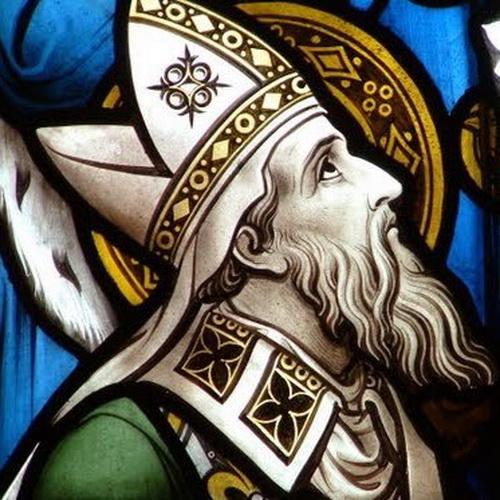
Once he became a bishop, he gave away all his wealth and property for church use and to help the poor. He then took on a strict ascetic life and devoted himself to his work.
St. Ambrose's preaching quickly became famous and he attracted many people to his church. He is well-known for his writings in which he both explains and defends the true character of the Christian faith. He also wrote on the moral and education requirements of priests.
Exposition of the Christian Faith.
Preface.
On the eve of setting out for the East, to aid his uncle Valens in repelling a Gothic invasion, Gratian, the Emperor of the West, requested St. Ambrose to write him a treatise in proof of the Divinity of Jesus Christ. Gratian's object in making this request was to secure some sort of preservative against the corrupting influence of Arianism, which at that time (a.d. 378) had gained the upper hand of Orthodoxy in the Eastern provinces of the Empire, owing to its establishment at the Imperial Court. In compliance with Gratian's wish, the Bishop of Milan composed a treatise, which now forms the first two Books of the De Fide. With this work the Emperor was so much pleased that on his return from the East, after the death of Valens at Hadrianople, he wrote to St. Ambrose, begging for a fresh copy of the treatise, and further, for its enlargement by the addition of a discourse on the Divinity of the Holy Spirit. The original treatise was, indeed, enlarged by St. Ambrose in 379, but the additional Books dealt, not with the Divinity of the Holy Spirit, but rather with new objections raised by the Arian teachers, and points which had either been passed over or not fully discussed already. In this way St. Ambrose's Exposition was brought into its present form.
The object of the Exposition is, as has already been indicated, to prove the Divinity of Jesus Christ, and His co-eternity, co-equality, and consubstantiality, as God the Son, with God the Father. This the author does by constant appeal to the Scriptures, both of the Old and of the New Testament, which the Arians had in many cases forced into the mould of false interpretation to make them fit their doctrine.
Besides the title of De Fide , that of De Trinitate was one by which this treatise was largely known in after ages; it is certain, though, that the former was that assigned by St. Ambrose himself.
Book I.
Prologue.
The author praises Gratian's zeal for instruction in the Faith, and speaks lowly of his own merits. Taught of God Himself, the Emperor stands in no need of human instruction; yet this his devoutness prepares the way to victory. The task appointed to the author is difficult: in the accomplishment whereof he will be guided not so much by reason and argument as by authority, especially that of the Nicene Council.
1. The Queen of the South, as we read in the Book of the Kings, came to hear the wisdom of Solomon. [ 1 Kings 10:1 ] Likewise King Hiram sent to Solomon that he might prove him. [ 1 Kings 5:1 ] So also your sacred Majesty, following these examples of old time, has decreed to hear my confession of faith. But I am no Solomon, that you should wonder at my wisdom, and your Majesty is not the sovereign of a single people; it is the Augustus, ruler of the whole world, that has commanded the setting forth of the Faith in a book, not for your instruction, but for your approval.
2. For why, august Emperor, should your Majesty learn that Faith which, from your earliest childhood, you have ever devoutly and lovingly kept? Before I formed you in your mother's belly I knew you, says the Scripture, and before you came forth out of the womb I sanctified you. Sanctification, therefore, comes not of tradition, but of inspiration; therefore keep watch over the gifts of God. For that which no man has taught you, God has surely given and inspired.
3. Your sacred Majesty, being about to go forth to war, requires of me a book, expounding the Faith, since your Majesty knows that victories are gained more by faith in the commander, than by valour in the soldiers. For Abraham led into battle three hundred and eighteen men, and brought home the spoils of countless foes; and having, by the power of that which was the sign of our Lord's Cross and Name, overcome the might of five kings and conquering hosts, he both avenged his neighbour and gained victory and the ransom of his brother's son. So also Joshua the son of Nun, when he could not prevail against the enemy with the might of all his army, [ Joshua 6:6 ] overcame by sound of seven sacred trumpets, in the place where he saw and knew the Captain of the heavenly host. For victory, then, your Majesty makes ready, being Christ's loyal servant and defender of the Faith, which you would have me set forth in writing.
4. Truly, I would rather take upon me the duty of exhortation to keep the Faith, than that of disputing thereon; for the former means devout confession, whereas the latter is liable to rash presumption. Howbeit, forasmuch as your Majesty has no need of exhortation, while I may not pray to be excused from the duty of loyalty, I will take in hand a bold enterprise, yet modestly withal, not so much reasoning and disputing concerning the Faith as gathering together a multitude of witness.
5. Of the Acts of Councils, I shall let that one be my chief guide which three hundred and eighteen priests, appointed, as it were, after the judgment of Abraham, made (so to speak) a trophy raised to proclaim their victory over the infidel throughout the world, prevailing by that courage of the Faith, wherein all agreed. Verily, as it seems to me, one may herein see the hand of God, forasmuch as the same number is our authority in the Councils of the Faith, and an example of loyalty in the records of old.
Chapter 1.
The author distinguishes the faith from the errors of Pagans, Jews, and Heretics, and after explaining the significance of the names God and Lord, shows clearly the difference of Persons in Unity of Essence. In dividing the Essence, the Arians not only bring in the doctrine of three Gods, but even overthrow the dominion of the Trinity.
6. Now this is the declaration of our Faith, that we say that God is One, neither dividing His Son from Him, as do the heathen, nor denying, with the Jews, that He was begotten of the Father before all worlds, and afterwards born of the Virgin; nor yet, like Sabellius, confounding the Father with the Word, and so maintaining that Father and Son are one and the same Person; nor again, as does Photinus, holding that the Son first came into existence in the Virgin's womb: nor believing, with Arius, in a number of diverse Powers, and so, like the benighted heathen, making out more than one God. For it is written: Hear, O Israel: the Lord your God is one God.
7. For God and Lord is a name of majesty, a name of power, even as God Himself says: The Lord is My name, [ Exodus 3:15 ] and as in another place the prophet declares: The Lord Almighty is His name. God is He, therefore, and Lord, either because His rule is over all, or because He beholds all things, and is feared by all, without difference.
8. If, then, God is One, one is the name, one is the power, of the Trinity. Christ Himself, indeed, says: Go, baptize the nations in the name of the Father, and of the Son, and of the Holy Spirit. [ Matthew 28:19 ] In the name , mark you, not in the names.
9. Moreover, Christ Himself says: I and the Father are One. [ John 10:30 ] One, said He, that there be no separation of power and nature; but again, We are , that you may recognize Father and Son, forasmuch as the perfect Father is believed to have begotten the perfect Son, [ Matthew 5:48 ] and the Father and the Son are One, not by confusion of Person, but by unity of nature.
10. We say, then, that there is one God, not two or three Gods, this being the error into which the impious heresy of the Arians does run with its blasphemies. For it says that there are three Gods, in that it divides the Godhead of the Trinity; whereas the Lord, in saying, Go, baptize the nations in the name of the Father and of the Son and of the Holy Spirit, has shown that the Trinity is of one power. We confess Father, Son, and Spirit, understanding in a perfect Trinity both fullness of Divinity and unity of power.
11. Every kingdom divided against itself shall quickly be overthrown, says the Lord. Now the kingdom of the Trinity is not divided. If, therefore, it is not divided, it is one; for that which is not one is divided. The Arians, however, would have the kingdom of the Trinity to be such as may easily be overthrown, by division against itself. But truly, seeing that it cannot be overthrown, it is plainly undivided. For no unity is divided or rent asunder, and therefore neither age nor corruption has any power over it.