автордың кітабын онлайн тегін оқу Notes on Democracy. Illustrated
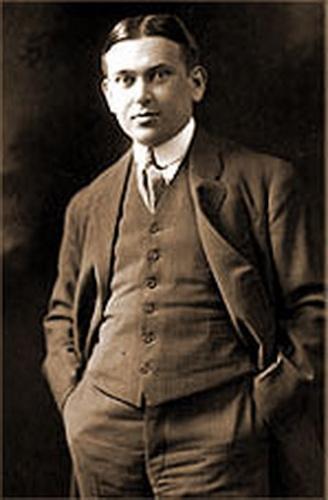
H.L. Mencken
Notes on Democracy
Illustrated
Notes on Democracy is a critique of democracy. The book places political leaders into two categories: the demagogue, who "preaches doctrines he knows to be untrue to men he knows to be idiots" and the demaslave, "who listens to what these idiots have to say and then pretends that he believes it himself." Mencken depicts politicians as "men who have sold their honor for their jobs."
Henry Louis "H.L." Mencken became one of the most influential and prolific journalists in America in the 1920s and '30s, writing about all the shams and con artists in the world. He attacked chiropractors and the Ku Klux Klan, politicians and other journalists. Most of all, he attacked Puritan morality. He called Puritanism, "the haunting fear that someone, somewhere, may be happy."
DEMOCRATIC MAN
1. His Appearance in the World
Democracy came into the Western World to the tune of sweet, soft music. There was, at the start, no harsh bawling from below; there was only a dulcet twittering from above. Democratic man thus began as an ideal being, full of ineffable virtues and romantic wrongs—in brief, as Rousseau's noble savage in smock and jerkin, brought out of the tropical wilds to shame the lords and masters of the civilized lands. The fact continues to have important consequences to this day. It remains impossible, as it was in the Eighteenth Century, to separate the democratic idea from the theory that there is a mystical merit, an esoteric and ineradicable rectitude, in the man at the bottom of the scale—that inferiority, by some strange magic, becomes a sort of superiority—nay, the superiority of superiorities. Everywhere on earth, save where the enlightenment of the modern age is confessedly in transient eclipse, the movement is toward the completer and more enamoured enfranchisement of the lower orders. Down there, one hears, lies a deep, illimitable reservoir of righteousness and wisdom, unpolluted by the corruption of privilege. What baffles statesmen is to be solved by the people, instantly and by a sort of seraphic intuition. Their yearnings are pure; they alone are capable of a perfect patriotism; in them is the only hope of peace and happiness on this lugubrious ball. The cure for the evils of democracy is more democracy!
This notion, as I hint, originated in the poetic fancy of gentlemen on the upper levels—sentimentalists who, observing to their distress that the ass was over-laden, proposed to reform transport by putting him into the cart. A stale Christian bilge ran through their veins, though many of them, as it happened, toyed with what is now called Modernism. They were the direct ancestors of the more saccharine Liberals of to-day, who yet mouth their tattered phrases and dream their preposterous dreams. I can find no record that these phrases, in the beginning, made much impression upon the actual objects of their rhetoric. Early democratic man seems to have given little thought to the democratic ideal, and less veneration. What he wanted was something concrete and highly materialistic—more to eat, less work, higher wages, lower taxes. He had no apparent belief in the acroamatic virtue of his own class, and certainly none in its capacity to rule. His aim was not to exterminate the baron, but simply to bring the baron back to a proper discharge of baronial business. When, by the wild shooting that naturally accompanies all mob movements, the former end was accidentally accomplished, and men out of the mob began to take on baronial airs, the mob itself quickly showed its opinion of them by butchering them deliberately and in earnest. Once the pikes were out, indeed, it was a great deal more dangerous to be a tribune of the people than to be an ornament of the old order. The more copiously the blood gushed, the nearer that old order came to resurrection. The Paris proletariat, having been misled into killing its King in 1793, devoted the next two years to killing those who had misled it, and by the middle of 1796 it had another King in fact, and in three years more he was King de jure, with an attendant herd of barons, counts, marquises and dukes, some of them new but most of them old, to guard, symbolize and execute his sovereignty. And he and they were immensely popular—so popular that half France leaped to suicide that their glory might blind the world.
Meanwhile, of course, there had been a certain seeping down of democratic theory from the metaphysicians to the mob—obscured by the uproar, but still going on. Rhetoric, like a stealthy plague, was doing its immemorial work. Where men were confronted by the harsh, exigent realities of battle and pillage, as they were everywhere on the Continent, it got into their veins only slowly, but where they had time to listen to oratory, as in England and, above all, in America, it fetched them more quickly. Eventually, as the world grew exhausted and the wars passed, it began to make its effects felt everywhere. Democratic man, contemplating himself, was suddenly warmed by the spectacle. His condition had plainly improved. Once a slave, he was now only a serf. Once condemned to silence, he was now free to criticize his masters, and even to flout them, and the ordinances of God with them. As he gained skill and fluency at that sombre and fascinating art, he began to heave in wonder at his own merit. He was not only, it appeared, free to praise and damn, challenge and remonstrate; he was also gifted with a peculiar rectitude of thought and will, and a high talent for ideas, particularly on the political plane. So his wishes, in his mind, began to take on the dignity of legal rights, and after a while, of intrinsic and natural rights, and by the same token the wishes of his masters sank to the level of mere ignominious lusts. By 1828 in America and by 1848 in Europe the doctrine had arisen that all moral excellence, and with it all pure and unfettered sagacity, resided in the inferior four-fifths of mankind. In 1867 a philosopher out of the gutter pushed that doctrine to its logical conclusion. He taught that the superior minority had no virtues at all, and hence no rights at all—that the world belonged exclusively and absolutely to those who hewed its wood and drew its water. In less than half a century he had more followers in the world, open and covert, than any other sophist since the age of the Apostles.
Since then, to be sure, there has been a considerable recession from that extreme position. The dictatorship of the proletariat, tried here and there, has turned out to be—if I may venture a prejudiced judgment—somewhat impracticable. Even the most advanced Liberals, observing the thing in being, have been moved to cough sadly behind their hands. But it would certainly be going beyond the facts to say that the underlying democratic dogma has been abandoned, or even appreciably overhauled. To the contrary, it is now more prosperous than ever before. The late war was fought in its name, and it was embraced with loud hosannas by all the defeated nations. Everywhere in Christendom it is now official, save in a few benighted lands where God is temporarily asleep. Everywhere its fundamental axioms are accepted: (a) that the great masses of men have an inalienable right, born of the very nature of things, to govern themselves, and (b) that they are competent to do it. Are they occasionally detected in gross and lamentable imbecilities? Then it is only because they are misinformed by those who would exploit them: the remedy is more education. Are they, at times, seen to be a trifle naughty, even swinish? Then it is only a natural reaction against the oppressions they suffer: the remedy is to deliver them. The central aim of all the Christian governments of to-day, in theory if not in fact, is to further their liberation, to augment their power, to drive ever larger and larger pipes into the great reservoir of their natural wisdom. That government is called good which responds most quickly and accurately to their desires and ideas. That is called bad which conditions their omnipotence and puts a question mark after their omniscience.
2. Varieties of Homo Sapiens
So much for the theory. It seems to me, and I shall here contend, that all the known facts lie flatly against it—that there is actually no more evidence for the wisdom of the inferior man, nor for his virtue, than there is for the notion that Friday is an unlucky day. There was, perhaps, some excuse for believing in these phantasms in the days when they were first heard of in the world, for it was then difficult to put them to the test, and what cannot be tried and disproved has always had a lascivious lure for illogical man. But now we know a great deal more about the content and character of the human mind than we used to know, both on high levels and on low levels, and what we have learned has pretty well disposed of the old belief in its congenital intuitions and inherent benevolences. It is, we discover, a function, at least mainly, of purely physical and chemical phenomena, and its development and operation are subject to precisely the same natural laws which govern the development and operation, say, of the human nose or lungs. There are minds which start out with a superior equipment, and proceed to high and arduous deeds; there are minds which never get any further than a sort of insensate sweating, like that of a kidney. We not only observe such differences; we also begin to chart them with more or less accuracy. Of one mind we may say with some confidence that it shows an extraordinary capacity for function and development—that its possessor, exposed to a suitable process of training, may be trusted to acquire the largest body of knowledge and the highest skill at ratiocination to which Homo sapiens is adapted. Of another we may say with the same confidence that its abilities are sharply limited—that no conceivable training can move it beyond a certain point. In other words, men differ inside their heads as they differ outside. There are men who are naturally intelligent and can learn, and there are men who are naturally stupid and cannot.
Here, of course, I flirt with the so-called intelligence tests, and so bring down upon my head that acrid bile which they have set to flowing. My plea in avoidance is that I have surely done my share of damning them: they aroused, when they were first heard of, my most brutish passions, for pedagogues had them in hand. But I can only say that time and experience have won me to them, for the evidence in favor of them slowly piles up, pedagogues or no pedagogues. In other words, they actually work. What they teach is borne out by immense accumulations of empiric corroboration. It is safe, nine times out of ten, to give them credence, and so it seems to me to be safe to generalize from them. Is it only a coincidence that their most frantic critics are the Liberals, which is to say, the only surviving honest believers in democracy? I think not. These Liberals, whatever their defects otherwise, are themselves capable of learning, and so they quickly mastered the fact that MM. Simon and Binet offered the most dangerous menace to their vapourings ever heard of since the collapse of the Holy Alliance. Their dudgeon followed. In two ways the tests give aid and comfort to their enemies. First, they provide a more or less scientific means of demonstrating the difference in natural intelligence between man and man—a difference noted ages ago by common observation, and held to be real by all men save democrats, at all times and everywhere. Second, they provide a rational scale for measuring it and a rational explanation of it. Intelligence is reduced to levels, and so given a reasonable precision of meaning. An intelligent man is one who is capable of taking in knowledge until the natural limits of the species are reached. A stupid man is one whose progress is arrested at some specific time and place before then. There thus appears in psychology—and the next instant in politics—the concept of the unteachable. Some men can learn almost indefinitely; their capacity goes on increasing until their bodies begin to wear out. Others stop in childhood, even in infancy. They reach, say, the mental age of ten or twelve, and then they develop no more. Physically, they become men, and sprout beards, political delusions, and the desire to propagate their kind. But mentally they remain on the level of schoolboys.

The fact here is challenged sharply by the democrats aforesaid, but certainly not with evidence. Their objection to it is rather of a metaphysical character, and involves gratuitous, transcendental assumptions as to what ought and what ought not to be true. They echo also, of course, the caveats of other and less romantic critics, some of them very ingenious; but always, when hard pressed, they fall back pathetically upon the argument that believing such things would be in contempt of the dignity of man, made in God's image. Is this argument sound? Is it, indeed, new? I seem to have heard it long ago, from the gentlemen of the sacred faculty. Don't they defend the rubbish of Genesis on the theory that rejecting it would leave the rabble without faith, and that without faith it would be one with the brutes, and very unhappy, and, what is worse, immoral? I leave such contentions to the frequenters of Little Bethel, and pause only to observe that if the progress of the human race had depended upon them we'd all believe in witches, ectoplasms and madstones to-day. Democracy, alas, is also a form of theology, and shows all the immemorial stigmata. Confronted by uncomfortable facts, it invariably tries to dispose of them by appeals to the highest sentiments of the human heart. An anti-democrat is not merely mistaken; he is also wicked, and the more plausible he is the more wicked he becomes. As I have said, the earliest of modern democrats were full of Christian juices. Their successors never get very far from Genesis I, 27. They are Fundamentalists by instinct, however much they may pretend to a mellow scepticism.
One undoubted fact gives them a certain left-handed support, though they are far too discreet to make use of it. I allude to the fact that man on the lower levels, though he quickly reaches the limit of his capacity for taking in actual knowledge, remains capable for a long time thereafter of absorbing delusions. What is true daunts him, but what is not true finds lodgment in his cranium with so little resistance that there is only a trifling emission of heat. I shall go back to this singular and beautiful phenomenon later on. It lies at the heart of what is called religion, and at the heart of all democratic politics no less. The thinking of what Charles Richet calls Homo stultus is almost entirely in terms of palpable nonsense. He has a dreadful capacity for embracing and cherishing impostures. His history since the first records is a history of successive victimizations—by priests, by politicians, by all sorts and conditions of quacks. His heroes are always frauds. In all ages he has hated bitterly the men who were labouring most honestly and effectively for the progress of the race. What such men teach is beyond his grasp. He believes in consequence that it is unsound, immoral and of the devil.
3. The New Psychology
The concept of arrested development has caused an upheaval in psychology, and reduced the arduous introspections of the old-time psychologists to a series of ingenious but unimportant fancies. Men are not alike, and very little can be learned about the mental processes of a congressman, an ice-wagon driver or a cinema actor by studying the mental processes of a genuinely superior man. The difference is not only qualitative; it is also, in important ways, quantitative. One thus sees the world as a vast field of greased poles, flying gaudy and seductive flags. Up each a human soul goes shinning, painfully and with many a slip. Some climb eventually to the high levels; a few scale the dizziest heights. But the great majority never get very far from the ground. There they struggle for a while, and then give it up. The effort is too much for them; it doesn't seem to be worth its agonies. Golf is easier; so is joining Rotary; so is Fundamentalism; so is osteopathy; so is Americanism.
In an aristocratic society government is a function of those who have got relatively far up the poles, either by their own prowess or by starting from the shoulders of their fathers—which is to say, either by God's grace or by God's grace. In a democratic society it is the function of all, and hence mainly of those who have got only a few spans from the ground. Their eyes, to be sure, are still thrown toward the stars. They contemplate, now bitterly, now admiringly, the backsides of those who are above them. They are bitter when they sense anything rationally describable as actual superiority; they admire when what they see is fraud. Bitterness and admiration, interacting, form a complex of prejudices which tends to cast itself into more or less stable forms. Fresh delusions, of course, enter into it from time to time, usually on waves of frantic emotion, but it keeps its main outlines. This complex of prejudices is what is known, under democracy, as public opinion. It is the glory of democratic states.
Its content is best studied by a process of analysis—that is, by turning from the complex whole to the simpler parts. What does the mob think? It thinks, obviously, what its individual members think. And what is that? It is, in brief, what somewhat sharp-nosed and unpleasant children think. The mob, being composed, in the overwhelming main, of men and women who have not got beyond the ideas and emotions of childhood, hovers, in mental age, around the time of puberty, and chiefly below it. If we would get at its thoughts and feelings we must look for light to the thoughts and feelings of adolescents. The old-time introspective psychology offered little help here. It concerned itself almost exclusively with the mental processes of the more reflective, and hence the superior sort of adults; it fell into the disastrous fallacy of viewing a child as simply a little man. Just as modern medicine, by rejecting a similar fallacy on the physical plane, has set up the science and art of pediatrics, so the new behaviourist psychology has given a new dignity and autonomy to the study of the child mind. The first steps were very difficult. The behaviourists not only had to invent an entirely new technique, like the pediatricians before them; they also had to meet the furious opposition of the orthodox psychologists, whose moony speculations they laughed at and whose authority they derided. But they persisted, and the problems before them turned out, in the end, to be relatively simple, and by no means difficult to solve. By observing attentively what was before everyone's nose they quickly developed facts which left the orthodox psychologists in an untenable and absurd position. One by one, the old psychological categories went overboard, and with them a vast mass of vague and meaningless psychological terminology.
On the cleared ground remained a massive discovery: that the earliest and most profound of human emotions is fear. Man comes into the world weak and naked, and almost as devoid of intelligence as an oyster, but he brings with him a highly complex and sensitive susceptibility to fear. He can tremble and cry out in the first hours of his life—nay, in the first minute. Make a loud noise behind an infant just born, and it will shake like a Sunday-school superintendent taken in adultery. Take away its support—that is, make it believe that it is falling—and it will send up such a whoop as comes from yokels when the travelling tooth-puller has at them. These fears, by their character, suggest that they have a phylogenic origin—that is, that they represent inherited race experience, out of the deep darkness and abysm of time. Dr. John B. Watson, the head of the behaviourist school, relates them to the daily hazards of arboreal man—the dangers presented by breaking tree branches. The ape-man learned to fear the su