автордың кітабын онлайн тегін оқу Burlesque Plays and Poems
Note:
Table of Contents added by Transcriber.
THE RIME OF SIR THOPAS
THE KNIGHT OF THE BURNING PESTLE
THE_REHEARSAL
THE_SPLENDID_SHILLING
TWO ODES
NAMBY PAMBY
A WORD UPON PUDDING.
THE TRAGEDY OF TRAGEDIES: OR, THE LIFE AND DEATH OF TOM THUMB THE GREAT
CHRONONHOTONTHOLOGOS
THE ROVERS
BOMBASTES FURIOSO.
REJECTED ADDRESSES.
LOYAL EFFUSION.
THE BABY'S DEBUT.
AN ADDRESS WITHOUT A PHOENIX.
CUI BONO?
TO THE SECRETARY OF THE MANAGING COMMITTEE OF DRURY LANE PLAYHOUSE.
IN THE CHARACTER OF A HAMPSHIRE FARMER.
THE LIVING LUSTRES.
THE REBUILDING.
DRURY'S DIRGE.
A TALE OF DRURY LANE.
JOHNSON'S GHOST.
THE BEAUTIFUL INCENDIARY.
FIRE AND ALE.
PLAYHOUSE MUSINGS.
DRURY LANE HUSTINGS.
ARCHITECTURAL ATOMS.
THEATRICAL ALARM BELL.
THE THEATRE.
THE THEATRE.
TO THE MANAGING COMMITTEE OF THE NEW DRURY LANE THEATRE.
CASE NO. I.
CASE NO. II.
CASE NO. III.
PUNCH'S APOTHEOSIS.
ODES AND ADDRESSES TO GREAT PEOPLE.
ODE TO MR. GRAHAM.
ODE TO MR. M'ADAM.
ODE TO THE GREAT UNKNOWN.
TO SYLVANUS URBAN, ESQUIRE,
AN ADDRESS TO THE STEAM WASHING COMPANY.
LETTER OF REMONSTRANCE
ODE TO R. W. ELLISTON, ESQUIRE,
ODE TO RICHARD MARTIN, ESQUIRE,
ODE TO W. KITCHENER, M.D.
ROUTLEDGE'S EXCELSIOR SERIES
Fifteen Volumes in an Oak Bookcase.
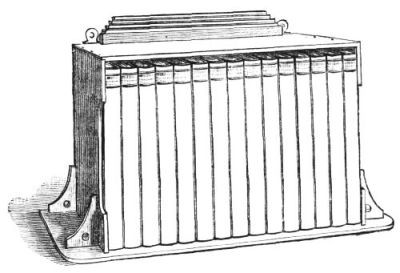
Price One Guinea.
"Marvels of clear type and general neatness."—Daily Telegraph.

In Monthly Volumes, ONE SHILLING Each.
READY ON THE 25th OF EACH MONTH.

Ballantyne Press
BALLANTYNE, HANSON AND CO., EDINBURGH
CHANDOS STREET, LONDON
BURLESQUE PLAYS AND POEMS
CHAUCER'S
HENRY CAREY'S
RIME OF THOPAS.
NAMBY PAMBY and CHRONONHOTONTHOLOGOS.
BEAUMONT & FLETCHER'S
KNIGHT OF THE BURNING PESTLE.
CANNING, FRERE & ELLIS'S
ROVERS.
GEORGE VILLIERS,
Duke of Buckingham's REHEARSAL.
W. B. RHODES'S
BOMBASTES FURIOSO.
JOHN PHILIPS'S
HORACE & JAMES SMITH'S
SPLENDID SHILLING.
REJECTED ADDRESSES.
and some ofFIELDING'S
THOMAS HOOD'S
TOM THUMB THE GREAT.
ODES AND ADDRESSES TO GREAT PEOPLE.
WITH AN INTRODUCTION BY HENRY MORLEY
LL.D., PROFESSOR OF ENGLISH LITERATURE AT
UNIVERSITY COLLEGE, LONDON
LONDON
GEORGE ROUTLEDGE AND SONS
BROADWAY, LUDGATE HILL
NEW YORK: 9 LAFAYETTE PLACE
1885
MORLEY'S UNIVERSAL LIBRARY.
——♦——
VOLUMES ALREADY PUBLISHED.
SHERIDAN'S PLAYS.
PLAYS FROM MOLIÈRE. By English Dramatists.
MARLOWE'S FAUSTUS & GOETHE'S FAUST.
CHRONICLE OF THE CID.
RABELAIS' GARGANTUA and the HEROIC DEEDS OF PANTAGRUEL.
THE PRINCE. By Machiavelli.
BACON'S ESSAYS.
DEFOE'S JOURNAL OF THE PLAGUE YEAR.
LOCKE ON CIVIL GOVERNMENT & FILMER'S "PATRIARCHA."
SCOTT'S DEMONOLOGY and WITCHCRAFT.
DRYDEN'S VIRGIL.
BUTLER'S ANALOGY OF RELIGION.
HERRICK'S HESPERIDES.
COLERIDGE'S TABLE-TALK.
BOCCACCIO'S DECAMERON.
STERNE'S TRISTRAM SHANDY.
CHAPMAN'S HOMER'S ILIAD.
MEDIÆVAL TALES.
VOLTAIRE'S CANDIDE & JOHNSON'S RASSELAS.
PLAYS and POEMS by BEN JONSON.
LEVIATHAN. By Thomas Hobbes.
HUDIBRAS. By Samuel Butler.
IDEAL COMMONWEALTHS.
CAVENDISH'S LIFE OF WOLSEY.
DON QUIXOTE. In Two Volumes.
BURLESQUE PLAYS and POEMS.
"Marvels of clear type and general neatness."
Daily Telegraph.
INTRODUCTION.
——♦——
The word Burlesque came to us through the French from the Italian "burlesco"; "burla" being mockery or raillery, and implying always an object. Burlesque must, burlarsi di uno, mock at somebody or something, and when intended to give pleasure it is nothing if not good-natured. One etymologist associates the word with the old English "bourd," a jest; the Gaelic "burd," he says, means mockery, and "buirleadh," is language of ridicule. Yes, and "burrail" is the loud romping of children, and "burrall" is weeping and wailing in a deep-toned howl. Another etymologist takes the Italian "burla," waggery or banter, as diminutive from the Latin "burra," which means a rough hair, but is used by Ausonius in the sense of a jest. That etymology no doubt fits burlesque to a hair, but, like Launce's sweetheart, it may have more hair than wit.
The first burlesque in this volume—Chaucer's "Rime of Sir Thopas," written towards the close of the fourteenth century—is a jest upon long-winded story-tellers, who expatiate on insignificant detail; for in his day there were many metrical romances written by the ancestors of Mrs. Nickleby. Riding to Canterbury with the other pilgrims, Chaucer good-humouredly takes to himself the part of the companion who jogs along with even flow of words, luxuriating in all trivial detail until he brings Sir Thopas face to face with an adventure, for he meets a giant with three heads. But even then there is the adventure to be waited for. The story-teller finds that he must trot his knight back home to fetch his armour, and when he "is comen again to toune," it takes so many words to get him his supper, get his armour on, and trot him out again, that the inevitable end comes, with rude intrusion of some faint-hearted lording who has not courage to listen until the point of the story can be descried from afar. So the best of the old story-tellers, in a book full of examples of tales told as they should be, burlesqued misuse of his art, and the "Rime of Sir Thopas" became a warning buoy over the shallows. "I cannot," said Sir Thomas Wyatt, in Henry VIII.'s reign,
"say that Pan
Passeth Apollo in music manyfold;
Praisé Sir Thopas for a noble tale,
And scorn the story that the Knighté told."
The second burlesque in this volume, Beaumont and Fletcher's "Knight of the Burning Pestle," written in eight days, appeared in 1611, six years after the publication of the First Part, and four years earlier than the Second Part, of Don Quixote. The first English translation of Don Quixote (Shelton's) appeared in 1612. The Knight of the Burning Pestle is, like Don Quixote, a burlesque upon the tasteless affectations of the tales of chivalry. Francis Beaumont and John Fletcher worked together as playwrights in the reign of James I. All their plays were produced during that reign. Beaumont died in the same year as Shakespeare, having written thirteen plays in fellowship with Fletcher. Forty more were written by Fletcher alone, but the name of Beaumont is, by tradition of a loving fellowship, associated with them all. "The Knight of the Burning Pestle" is all the merrier for being the work of men who were themselves true poets. It should be remembered that this play was written for a theatre without scenery, in which gentlemen were allowed to hire stools on the stage itself for a nearer view of the actors; and it is among this select part of the audience that the citizen intrudes and the citizen's wife is lifted up, when she cries, "Husband, shall I come up, husband?" "Ay, cony; Ralph, help your mistress up this way; pray, gentlemen, make her a little room; I pray you, sir, lend me your hand to help up my wife.... Boy, let my wife and I have a couple of stools, and then begin."
The next burlesque in our collection is "The Rehearsal," which was produced in 1671 to ridicule the extravagance of the "heroic" plays of the Restoration. The founder of this school in England was Sir William Davenant who was living and was Poet Laureate—and wearer of the bays, therefore, was Bayes—when the jest was begun by George Villiers, Duke of Buckingham, and other wits of the day. The jest was so long in hand that, in 1668, when Davenant died, and Dryden succeeded him as Laureate, the character of Bayes passed on to him. The plaster on the nose pointed at Davenant, who had lost great part of his nose. The manner of speaking, and the "hum and buzz," pointed at Dryden, who was also in 1671 the great master of what was called heroic drama. Bold rhodomontade was, on the stage, preferred to good sense at a time when the new French criticism was enforcing above all things "good sense" upon poets, as a reaction against the strained ingenuities that had come in under Italian influence. Let us leave to Italy her paste brilliants, said Boileau, in his Art Poétique, produced at the same time as "The Rehearsal," all should tend to good sense. But Dryden in his plays (not in his other poems) boldly translated Horace's serbit humi tutus, into
"He who servilely creeps after sense
Is safe, but ne'er will reach an excellence."
The particular excellence attained by flying out of sight of sense is burlesqued in the Duke of Buckingham's "Rehearsal."
John Philips, the delicate and gentle son of a vicar of Bampton, read Milton with delight from his boyhood and knew Virgil almost by heart. At college he wrote, for the edification of a comrade who did not know how to keep a shilling in his pocket, "The Splendid Shilling," a poem first published in 1705—which set forth, in Miltonic style applied to humblest images, the comfort of possessing such a coin. The Miltonic grandeur of tone John Philips happily caught from a long and loving study of the English poet whom he reverenced above others, and "The Splendid Shilling" has a special charm as a burlesque in which nobody is ridiculed.
The burlesque poem called "Namby Pamby," of which the title has been added to the English vocabulary, was written by Henry Carey, in ridicule of the little rhymes inscribed to certain babies of distinguished persons by Ambrose Philips, or, as he is translated into nursery language, "Namby Pamby Pilli-pis." Ambrose Philips was a friend and companion of Addison's, and a gentleman who prospered fairly in Whig government circles. Pope's annoyance at the praise given to Ambrose Philips's pastorals which appeared in the same Miscellany with his own, and Addison's praise in the Spectator of his friend's translation of Racine's Andromache as "The Distrest Mother," have caused Ambrose Philips to be better remembered in the history of literature than might otherwise have been necessary. When he wrote no longer of
"Mammy
Andromache and her lammy
Hanging panging at the breast
Of a matron most distrest."
and took to nursery lyrics, he gave Henry Carey an opportunity of putting a last touch to his monument for the instruction of posterity. The two specimens here given of the original poems that suggested "Namby Pamby" are addressed severally to two babes in the nursery of Daniel Pulteney, Esq. Another of the babies who inspired him was an infant Carteret, whose name Carey translated into "Tartaretta Tartaree." Some lines here and there, seven in all, which are not the wittier for being coarse, have been left out of "Namby Pamby." This burlesque was first published in 1725 or 1726; my copy is of the fifth edition, dated 1726, and was appended to "A Learned Dissertation on Dumpling; its Dignity, Antiquity, and Excellence, with a Word upon Pudding, and many other Useful Discoveries of great Benefit to the Publick. To which is added, Namby Pamby, A Panegyric on the new Versification address'd to A—— P——, Esq."
Henry Fielding produced his "Tom Thumb" in 1730, and added the notes of Scriblerus Secundus in 1731, following the example set by the Dunciad as published in April 1729, with the "Prolegomena of Scriblerus and Notes Variorum." Paul Whitehead added notes of a Scriblerus Tertius to his "Gymnasiad" in 1744. Fielding was twenty-four years old when he added to his "Tom Thumb" the notes that transmit to us lively examples of the stilted language of the stage by which, as a gentleman's son left to his own resources, he was then endeavouring to live. This was four years before his marriage, and ten years before he revealed his transcendent powers as a novelist.
Henry Carey's "Chrononhotonthologos," three years later, in 1734, carried on the war against pretentious dulness on the stage. The manner of the great actors was, like the plays of their generation, pompous and rhetorical, full of measured sound and fury signifying nothing. Garrick, who made his first appearance as an actor in 1741, put an end to this. "If the young fellow is right," said Quin, "We are all in the wrong;" little suspecting that they really were all in the wrong. Henry Carey, a musician by profession, played in the orchestra and also supplied the stage with ballad and burlesque farces and operas. But also he wrote "Namby Pamby." It was said of him that "he led a life free from reproach, and hanged himself October 4th, 1743."
"The Rovers, or the Double Arrangement," was a contribution to "The Anti-Jacobin," by George Canning, and his friends George Ellis and John Hookham Frere. Canning had established "The Anti-Jacobin," of which the first number was published on the 20th of November, 1797. Its poetry, generally levelled through witty burlesque at the false sentiment of the day, was collected in 1801 into a handsome quarto. This includes "The Rovers," which is a lively caricature of the sentimental German drama. Goethe's "Stella," as read in the translation used by the caricaturists, is not less comical than the caricature. I have a copy of the "Poetry of the Anti-Jacobin," in which one of the original writers has, for the friend to whom he gave the book, marked with his pen and ink details of authorship. From this it appears that the description of the dramatis personæ in "The Rovers" was by Frere, the Prologue by Canning and Ellis, the opening scene by Frere as far as Rogero's famous song, which was by Canning and Ellis. All that follows to the beginning of the fourth act was by Canning, except that Frere wrote the scene in the second act on the delivery of a newspaper to Beefington and Puddingfield. The fourth act and the final stage directions were by Frere, except the Recitative and Chorus of Conspirators. These were by George Ellis.
"Bombastes Furioso," first produced in 1810, was by William Barnes Rhodes, who had published a translation of Juvenal in 1801 and "Epigrams" in 1803. He formed a considerable dramatic library, of which there was a catalogue printed in 1825.
Next comes in this collection the series of burlesques of the styles of poets famous and popular in 1812, published in that year as "Rejected Addresses," by Horace and James Smith. Of these brothers, sons of an attorney, one was an attorney, the other a stockbroker, one aged thirty-seven, the other thirty-three, when the book appeared which made them famous, and of which the first edition is reprinted in this volume. The book went through twenty-four editions. James Smith wrote no more, but Horace to the last amused himself with literature. "Is it not odd," Leigh Hunt wrote of him to Shelley, "that the only truly generous person I ever knew, who had money to be generous with, was a stockbroker! And he writes poetry too; he writes poetry, and pastoral dramas, and yet knows how to make money, and does make it, and is still generous." The Fitzgerald who is subject of the first burlesque used to recite his laudatory poems at the annual dinners of the Literary Fund, and is the same who was referred to in the opening lines of Byron's "English Bards and Scotch Reviewers:"
"Still must I hear?—shall hoarse Fitzgerald bawl
His creaking couplets in a tavern hall,
And I not sing."
This Miscellany closes with some of the "Odes and Addresses to Great People," with which Thomas Hood, at the age of twenty-six, first made his mark as a wit. The little book from which these pieces are taken was the joint work of himself and John Hamilton Reynolds, whose sister he had married. It marks the rise of the pun in burlesque writing through Thomas Hood, who, when dying of consumption, suggested for his epitaph, "Here lies one who spat more blood and made more puns than any other man."
H. M.
June, 1885.
Burlesque Plays and Poems.
——♦——
The Rime of Sir Thopas.
PROLOGUE TO SIR THOPAS.
When said was this mirácle, every man
As sober was, that wonder was to see,
Till that our host to japen he began,
And then at erst he lookéd upon me,
And saidé thus: "What man art thou?" quod he.
Thou lookest, as thou wouldest find an hare,
For ever upon the ground I see thee stare.
"Approché near, and look up merrily.
Now ware you, sirs, and let this man have place.
He in the waist is shapen as well as I:
This were a popet in an arm to embrace
For any woman, small and fair of face.
He seemeth elvish by his countenance,
For unto no wight doth he dalliance.
"Say now somewhat, sin other folk han said;
Tell us a tale of mirth, and that anon."
"Hosté," quod I, "ne be not evil apaid,
For other talé certes, can I none,
But of a Rime I learnéd yore agone."
"Yea, that is good," quod he, "we shullen hear
Some dainty thing, me thinketh by thy cheere."
THE RIME OF SIR THOPAS.
Listeneth, lordings, in good entent,
And I wol tell you verament
Of mirth and of solás,
All of a knight was fair and gent
In battle and in tournamént,
His name was Sir Thopás.
Yborn he was in far countree,
In Flanders, all beyond the sea,
At Popering in the place,
His father was a man full free,
And lord he was of that countree,
As it was Goddés grace.
Sir Thopas was a doughty swain,
White was his face as paindemaine
His lippés red as rose.
His rudde is like scarlét in grain,
And I you tell in good certain
He had a seemly nose.
His hair, his beard, was like saffroun,
That to his girdle raught adown,
His shoon of cordewaine;
Of Bruges were his hosen brown;
His robé was of ciclatoun,
That costé many a jane.
He could hunt at the wildé dere,
And ride on hawking for the rivere
With grey goshawk on hand:
Thereto he was a good archere,
Of wrestling was there none his peer,
Where any ram should stand.
Full many a maiden bright in bower
They mournéd for him par amour,
When them were bet to slepe;
But he was chaste and no lechóur,
And sweet as is the bramble flower,
That beareth the red hepe.
And so it fell upon a day,
Forsooth, as I you tellen may,
Sir Thopas would out ride;
He worth upon his stedé gray,
And in his hand a launcegay,
A long sword by his side.
He pricketh through a fair forést,
Therein is many a wildé beast,
Yea bothé buck and hare,
And as he prickéd North and Est,
I tell it you, him had almest
Betid a sorry care.
There springen herbés great and smale,
The liquorice and the setewale,
And many a clove gilofre,
And nutémeg to put in ale,
Whether it be moist or stale,
Or for to lain in cofre.
The birdés singen, it is no nay,
The sparhawk and the popingay,
That joy it was to hear,
The throstel cock made eke his lay,
The wodé dove upon the spray
He sang full loud and clear.
Sir Thopas fell in love-longíng
All when he heard the throstel sing,
And pricked as he were wood;
His fairé steed in his prícking
So swatté, that men might him wring,
His sidés were all blood.
Sir Thopas eke so weary was
For pricking on the softé gras,
So fierce was his couráge,
That down he laid him in that place
To maken his stedé som solace,
And gave him good foráge.
Ah, Seinte Mary, benedicite,
What aileth this love at me
To bindé me so sore?
Me dreaméd all this night pardé,
An elf-queen shal my leman be,
And sleep under my gore.
An elf-queen will I love ywis,
For in this world no wóman is
Worthy to be my make
In town,—
All other women I forsake,
And to an elf-queen I me take
By dale and eke by down.
Into his saddle he clomb anon,
And prickéd over stile and stone
An elf-queen for to espie,
Till he so long had ridden and gone,
That he found in a privee wone
The contree of Faerié.
Wherein he soughté North and South,
And oft he spiéd with his mouth
In many a forest wild,
For in that contree n'as ther non,
That to him durst ride or gon,
Neither wife ne child.
Till that there came a great geaunt,
His namé was Sir Oliphaunt,
A perilous man of deed,
He saidé, Childe by Termagaunt,
But if thou prick out of mine haunt,
Anon I slay thy stede
With mace.
Here is the Queen of Faerie,
With harp, and pipe, and symphonie,
Dwelling in this place.
The Childe said, All so mote I thee,
To morrow wol I meten thee,
When I have min armóur,
And yet I hopé par ma fay,
That thou shalt with this launcegay
Abien it full soure;
Thy mawe
Shal I perce, if I may,
Or it be fully prime of the day,
For here thou shalt be slawe.
Sir Thopas drew aback full fast;
This geaunt at him stonés cast
Out of a fell staff sling:
But faire escapéd Childe Thopás,
And all it was through Goddes grace,
And through his fair bearíng.
Yet listeneth, lordings, to my tale,
Merrier than the nightingale,
For now I will you roune,
How Sir Thopás with sidés smale,
Pricking over hill and dale,
Is comen again to toune.
His merry men commandeth he,
To maken him bothe game and glee,
For needés must he fight,
With a geaunt with heades three,
For paramour and jolitee
Of one that shone full bright.
Do come, he said, my minestrales
And gestours for to tellen tales
Anon in mine armíng,
Of romauncés that ben reáles,
Of popés and of cardináles,
And eke of love-longíng.
They fet him first the sweté wine,
And mead eke in a maseline,
And regal spicerie,
Of ginger-bread that was full fine,
And liquorice and eke cummine,
With sugar that is trie.
He diddé next his whité lere
Of cloth of laké fine and clere
A breche and eke a sherte,
And next his shert an haketon,
And over that an habergeon,
For piercing of his herte.
And over that a fine hauberk,
Was all ywrought of Jewes werk,
Full strong it was of plate,
And over that his cote-armoure,
As white as is the lily floure,
In which he would debate.
His shield was all of gold so red,
And therein was a boarés hed,
A carbuncle beside;
And there he swore on ale and bread
How that the geaunt shuld be dead,
Betide what so betide.
His jambeux were of cuirbouly,
His swordés sheth of ivory,
His helm of latoun bright,
His saddle was of rewel bone,
His bridle as the sonné shone,
Or as the moné light.
His speré was of fin cypréss,
That bodeth war, and nothing peace,
The head full sharp yground.
His stedé was all dapple gray,
It goeth an amble in the way
Full softély and round
In londe—
Lo, Lordes mine, here is a fytte;
If ye wol ony more of it,
To tell it wol I fond.
Now hold your mouth pour charité,
Bothé knight and lady free,
And herkeneth to my spell,
Of bataille and of chivalrie,
Of ladies love and druerie,
Anon I wol you tell.
Men speken of romauncés of pris,
Of Hornchild, and of Ipotis,
Of Bevis, and Sir Guy,
Of Sir Libeux, and Pleindamour,
But Sir Thopás, he bears the flour
Of reál chivalrie.
His goodé steed he all bestrode,
And forth upon his way he glode,
As sparkle out of brond;
Upon his crest he bare a tower,
And therein sticked a lily flower,
God shield his corps fro shond.
And for he was a knight auntrous,
He n'olde slepen in none house,
But liggen in his hood,
His brighté helm was his wangér,
And by him baited his destrér
Of herbés fine and good.
Himself drank water of the well,
As did the knight Sir Percivell
So worthy under weede,
Till on a day —— ——
"No more of this for Goddés dignitee,"
Quod ouré hosté, "for thou makest me
So weary of thy veray lewédnesse,
That all so wisly God my soulé blesse,
Min erés aken of thy drafty speche.
Now swiche a rime the devil I beteche;
This may wel be rime dogérel," quod he.
"Why so?" quod I, "why wolt thou letten me
More of my talé than an other man,
Sin that it is the besté rime I can?"
"Thou dost nought ellés but dispendest time.
Sir, at one word, thou shalt no longer rime."
THE
Knight of the Burning Pestle.
——♦——
DRAMATIS PERSONÆ.
- The Prologue.
- Then a Citizen.
- The Citizen's Wife, and Ralph, her man, sitting below amidst the spectators.
- A rich Merchant.
- Jasper, his apprentice.
- Master Humphrey, a friend to the Merchant.
- Luce, the Merchant's daughter.
- Mistress Merry-thought, Jasper's mother.
- Michael, a second son of Mistress Merry-thought.
- Old Mr. Merry-thought.
- A Squire.
- A Dwarf.
- A Tapster.
- A Boy that danceth and singeth.
- An Host.
- A Barber.
- Two Knights.
- A Captain.
- A Sergeant.
- Soldiers.
Enter Prologue.
From all that's near the court, from all that's great
Within the compass of the city walls,
We now have brought our scene.
Enter Citizen.
Cit. Hold your peace, good-man boy.
Pro. What do you mean, sir?
Cit. That you have no good meaning: these seven years there hath been plays at this house, I have observed it, you have still girds at citizens; and now you call your play "The London Merchant." Down with your title, boy, down with your title.
Pro. Are you a member of the noble city?
Cit. I am.
Pro. And a freeman?
Cit. Yea, and a grocer.
Pro. So, grocer, then by your sweet favour, we intend no abuse to the city.
Cit. No, sir, yes, sir, if you were not resolved to play the jacks, what need you study for new subjects, purposely to abuse your betters? Why could not you be contented, as well as others, with the legend of Whittington, or the Life and Death of Sir Thomas Gresham? with the building of the Royal Exchange? or the story of Queen Eleanor, with the rearing of London Bridge upon woolsacks?
Pro. You seem to be an understanding man; what would you have us do, sir?
Cit. Why, present something notably in honour of the commons of the city.
Pro. Why, what do you say to the Life and Death of fat Drake, or the repairing of Fleet privies?
Cit. I do not like that; but I will have a citizen, and he shall be of my own trade.
Pro. Oh, you should have told us your mind a month since, our play is ready to begin now.
Cit. 'Tis all one for that, I will have a grocer, and he shall do admirable things.
Pro. What will you have him do?
Cit. Marry I will have him——
Wife. Husband, husband! [Wife below.
Ralph. Peace, mistress. [Ralph below.
Wife. Hold thy peace, Ralph, I know what I do, I warrant ye. Husband, husband!
Cit. What sayest thou, cony?
Wife. Let him kill a lion with a pestle, husband; let him kill a lion with a pestle.
Cit. So he shall, I'll have him kill a lion with a pestle.
Wife. Husband, shall I come up, husband?
Cit. Ay, cony. Ralph, help your mistress up this way: pray, gentlemen, make her a little room; I pray you, sir, lend me your hand to help up my wife; I thank you, sir, so.
Wife. By your leave, gentlemen all, I'm something troublesome, I'm a stranger here, I was ne'er at one of these plays, as they say, before; but I should have seen "Jane Shore" once; and my husband hath promised me anytime this twelvemonth, to carry me to the "Bold Beauchamps," but in truth he did not; I pray you bear with me.
Cit. Boy, let my wife and I have a couple of stools, and then begin, and let the grocer do rare things.
Pro. But, sir, we have never a boy to play him, every one hath a part already.
Wife. Husband, husband, for God's sake let Ralph play him; beshrew me if I do not think he will go beyond them all.
Cit. Well remembered wife; come up, Ralph; I'll tell you, gentlemen, let them but lend him a suit of reparrel, and necessaries, and by Gad, if any of them all blow wind in the tail on him, I'll be hanged.
Wife. I pray you, youth, let him have a suit of reparrel: I'll be sworn, gentlemen, my husband tells you true, he will act you sometimes at our house, that all the neighbours cry out on him: he will fetch you up a couraging part so in the garret, that we are all as feared I warrant you, that we quake again. We fear our children with him, if they be never so unruly, do but cry "Ralph comes, Ralph comes" to them, and they'll be as quiet as lambs. Hold up thy head, Ralph, show the gentlemen what thou canst do; speak a huffing part, I warrant you the gentlemen will accept of it.
Cit. Do, Ralph, do.
Ralph. By heaven (methinks) it were an easy leap
To pluck bright honour from the pale-faced moon,
Or dive into the bottom of the sea,
Where never fathom line touched any ground,
And pluck drowned honour from the lake of hell.
Cit. How say you, gentlemen, is it not as I told you?
Wife. Nay, gentlemen, he hath played before, my husband says, "Musidorus," before the wardens of our company.
Cit. Ay, and he should have played "Jeronimo" with a shoemaker for a wager.
Pro. He shall have a suit of apparel, if he will go in.
Cit. In, Ralph, in, Ralph, and set out the grocers in their kind, if thou lovest me.
Wife. I warrant our Ralph will look finely when he's dressed.
Pro. But what will you have it called?
Cit. "The Grocer's Honour."
Pro. Methinks "The Knight of the Burning Pestle" were better.
Wife. I'll be sworn, husband, that's as good a name as can be.
Cit. Let it be so, begin, begin; my wife and I will sit down.
Pro. I pray you do.
Cit. What stately music have you? Have you shawns?
Pro. Shawns? No.
Cit. No? I'm a thief if my mind did not give me so. Ralph plays a stately part, and he must needs have shawns: I'll be at the charge of them myself rather than we'll be without them.
Pro. So you are like to be.
Cit. Why and so I will be, there's two shillings, let's have the waits of Southwark, they are as rare fellows as any are in England; and that will fetch them all o'er the water with a vengeance, as if they were mad.
Pro. You shall have them; will you sit down, then?
Cit. Ay, come, wife.
Wife. Sit you, merry all gentlemen, I'm bold to sit amongst you for my ease.
Pro. From all that's near the Court, from all that's great
Within the compass of the city walls,
We now have brought our scene. Fly far from hence
All private taxes, all immodest phrases,
Whatever may but show like vicious,
For wicked mirth never true pleasure brings,
But honest minds are pleased with honest things.
Thus much for that we do. But for Ralph's part you must answer for't yourself.
Cit. Take you no care for Ralph, he'll discharge himself, I warrant you.
Wife. I'faith, gentlemen, I'll give my word for Ralph.
ACT I.—Scene I.
Enter Merchant and Jasper his man.
Merch. Sirrah, I'll make you know you are my prentice,
And whom my charitable love redeem'd
Even from the fall of fortune; gave thee heat
And growth, to be what now thou art; new cast thee,
Adding the trust of all I have at home,
In foreign staples, or upon the sea,
To thy direction; tied the good opinions
Both of myself and friends to thy endeavours,—
So fair were thy beginnings. But with these,
As I remember, you had never charge
To love your master's daughter, and even then,
When I had found a wealthy husband for her,
I take it, sir, you had not; but, however,
I'll break the neck of that commission,
And make you know you're but a merchant's factor.
Jasp. Sir, I do lib'rally confess I'm yours,
Bound both by love and duty to your service:
In which my labour hath been all my profit.
I have not lost in bargain, nor delighted
To wear your honest gains upon my back,
Nor have I giv'n a pension to my blood,
Or lavishly in play consum'd your stock.
These, and the miseries that do attend them,
I dare with innocence proclaim are strangers
To all my temperate actions; for your daughter,
If there be any love to my deservings
Borne by her virtuous self, I cannot stop it:
Nor am I able to refrain her wishes.
She's private to herself, and best of knowledge
Whom she will make so happy as to sigh for.
Besides, I cannot think you mean to match her
Unto a fellow of so lame a presence,
One that hath little left of nature in him.
Merch. 'Tis very well, sir, I can tell your wisdom
How all this shall be cured.
Jasp. Your care becomes you.
Merch. And thus it shall be, sir; I here discharge you
My house and service. Take your liberty,
And when I want a son I'll send for you. [Exit.
Jasp. These be the fair rewards of them that love,
Oh you that live in freedom never prove
The travail of a mind led by desire.
Enter Luce.
Luce. Why how now, friend, struck with my father's thunder?
Jasp. Struck, and struck dead, unless the remedy
Be full of speed and virtue; I am now,
What I expected long, no more your father's.
Luce. But mine.
Jasp. But yours, and only yours I am,
That's all I have to keep me from the statute;
You dare be constant still?
Luce. O fear me not.
In this I dare be better than a woman.
Nor shall his anger nor his offers move me,
Were they both equal to a prince's power.
Jasp. You know my rival?
Luce. Yes, and love him dearly,
E'en as I love an ague, or foul weather;
I prithee, Jasper, fear him not.
Jasp. Oh no,
I do not mean to do him so much kindness.
But to our own desires: you know the plot
We both agreed on.
Luce. Yes, and will perform
My part exactly.
Jasp. I desire no more,
Farewell, and keep my heart, 'tis yours.
Luce. I take it,
He must do miracles, makes me forsake it. [Exeunt.
Cit. Fie upon 'em, little infidels, what a matter's here now?
Well, I'll be hang'd for a half-penny, if there be not some abomination knavery in this play; well, let 'em look to it, Ralph must come, and if there be any tricks a-brewing——
Wife. Let 'em brew and bake too, husband, a God's name. Ralph will find all out I warrant you, and they were older than they are. I pray, my pretty youth, is Ralph ready?
Boy. He will be presently.
Wife. Now I pray you make my commendations unto him, and withal, carry him this stick of liquorice; tell him his mistress sent it him, and bid him bite a piece, 'twill open his pipes the better, say.
Enter Merchant and Master Humphrey.
Merch. Come, sir, she's yours, upon my faith she's yours,
You have my hand; for other idle lets,
Between your hopes and her, thus with a wind
They're scattered, and no more. My wanton prentice,
That like a bladder blew himself with love,
I have let out, and sent him to discover
New masters yet unknown.
Hum. I thank you, sir,
Indeed I thank you, sir; and ere I stir,
It shall be known, however you do deem,
I am of gentle blood, and gentle seem.
Merch. Oh, sir, I know it certain.
Hum. Sir, my friend,
Although, as writers say, all things have end,
And that we call a pudding, hath his two,
Oh let it not seem strange, I pray to you,
If in this bloody simile, I put
My love, more endless than frail things or gut.
Wife. Husband, I prithee, sweet lamb, tell me one thing, but tell me truly. Stay, youths, I beseech you, till I question my husband.
Cit. What is it, mouse?
Wife. Sirrah, didst thou ever see a prettier child? how it behaves itself, I warrant you: and speaks and looks, and perts up the head? I pray you brother, with your favour, were you never one of Mr. Muncaster's scholars?
Cit. Chicken, I prithee heartily contain thyself, the childer are pretty childer, but when Ralph comes, lamb!
Wife. Ay, when Ralph comes, cony! Well, my youth, you may proceed.
Merch. Well, sir, you know my love, and rest, I hope,
Assured of my consent; get but my daughter's,
And wed her when you please; you must be bold,
And clap in close unto her; come, I know
You've language good enough to win a wench.
Wife. A toity tyrant, hath been an old stringer in his days,
I warrant him.
Hum. I take your gentle offer, and withal
Yield love again for love reciprocal.
Mar. What, Luce, within there?
Enter Luce.
Luce. .mleft10 Called you, sir?
Merch. I did;
Give entertainment to this gentleman;
And see you be not froward: to her, sir, [Exit.
My presence will but be an eyesore to you.
Hum. Fair mistress Luce, how do you, are you well?
Give me your hand, and then I pray you tell,
How doth your little sister, and your brother,
And whether you love me or any other?
Luce. Sir, these are quickly answered.
Hum. So they are,
Where women are not cruel; but how far
Is it now distant from the place we are in,
Unto that blessed place, your father's warren.
Luce. What makes you think of that, sir?
Hum. E'en that face,
For stealing rabbits whilome in that place,
God Cupid, or the keeper, I know not whether,
Unto my cost and charges brought you thither,
And there began——
Luce. Your game, sir.
Hum. Let no game,
Or anything that tendeth to the same,
Be evermore remembered, thou fair killer,
For whom I sate me down and brake my tiller.
Wife. There's a kind gentleman, I warrant you. When will you do as much for me, George?
Luce. Beshrew me, sir, I'm sorry for your losses,
But as the proverb says, I cannot cry;
I would you had not seen me.
Hum. So would I,
Unless you had more maw to do me good.
Luce. Why, cannot this strange passion be withstood?
Send for a constable, and raise the town.
Hum. Oh no, my valiant love will batter down
Millions of constables, and put to flight
E'en that great watch of Midsummer Day at night.
Luce. Beshrew me, sir, 'twere good I yielded then,
Weak women cannot hope, where valiant men
Have no resistance.
Hum. Yield then, I am full
Of pity, though I say it, and can pull
Out of my pocket thus a pair of gloves.
Look, Luce, look, the dog's tooth, nor the doves
Are not so white as these; and sweet they be,
And whipt about with silk, as you may see.
If you desire the price, shoot from your eye
A beam to this place, and you shall espy
F. S., which is to say, my sweetest honey,
They cost me three-and-twopence, and no money.
Luce. Well, sir, I take them kindly, and I thank you; what
What would you more?
Hum. Nothing.
Luce. Why then, farewell.
Hum. Nor so, nor so, for, lady, I must tell,
Before we part, for what we met together,
God grant me time, and patience, and fair weather.
Luce. Speak and declare your mind in terms so brief.
Hum. I shall; then first and foremost, for relief
I call to you, if that you can afford it,
I care not at what price, for on my word it
Shall be repaid again, although it cost me
More than I'll speak of now, for love hath tost me
In furious blanket like a tennis-ball,
And now I rise aloft, and now I fall.
Luce. Alas, good gentleman, alas the day.
Hum. I thank you heartily, and as I say,
Thus do I still continue without rest,
I' th' morning like a man, at night a beast,
Roaring and bellowing mine own disquiet,
That much I fear, forsaking of my diet,
Will bring me presently to that quandary,
I shall bid all adieu.
Luce. Now, by St. Mary
That were great pity.
Hum. So it were, beshrew me,
Then ease me, lusty Luce, and pity shew me.
Luce. Why, sir, you know my will is nothing worth
Without my father's grant; get his consent,
And then you may with full assurance try me.
Hum. The worshipful your sire will not deny me,
For I have ask'd him, and he hath replied,
Sweet Master Humphrey, Luce shall be thy bride.
Luce. Sweet Master Humphrey, then I am content.
Hum. And so am I, in truth.
Luce. Yet take me with you.
There is another clause must be annext,
And this it is I swore, and will perform it,
No man shall ever joy me as his wife,
But he that stole me hence. If you dare venture,
I'm yours; you need not fear, my father loves you,
If not, farewell, for ever.
Hum. Stay, nymph, stay,
I have a double gelding, coloured bay,
Sprung by his father from Barbarian kind,
Another for myself, though somewhat blind,
Yet true as trusty tree.
Luce. I'm satisfied,
And so I give my hand; our course must lie
Through Waltham Forest, where I have a friend
Will entertain us; so farewell, Sir Humphrey, [Exit Luce.
And think upon your business.
Hum. Though I die,
I am resolv'd to venture life and limb, [Exit Hum.
For one so young, so fair, so kind, so trim.
Wife. By my faith and troth, George, and as I am virtuous, it is e'en the kindest young man that ever trod on shoe-leather; well, go thy ways, if thou hast her not, 'tis not thy fault i'faith.
Cit. I prithee, mouse, be patient, a shall have her, or I'll make some of 'em smoke for't.
Wife. That's my good lamb, George; fie, this stinking tobacco kills me, would there were none in England. Now I pray, gentlemen, what good does this stinking tobacco do you? nothing; I warrant you make chimnies o' your faces. Oh, husband, husband, now, now there's Ralph, there's Ralph!
Enter Ralph, like a grocer in his shop, with two prentices, reading "Palmerin of England."
Cit. Peace, fool, let Ralph alone; hark you, Ralph, do not strain yourself too much at the first. Peace, begin, Ralph.
Ralph. Then Palmerin and Trineus, snatching their lances from their dwarfs, and clasping their helmets, galloped amain after the giant, and Palmerin having gotten a sight of him, came posting amain, saying, "Stay, traitorous thief, for thou mayst not so carry away her that is worth the greatest lord in the world;" and, with these words, gave him a blow on the shoulder, that he struck him beside his elephant; and Trineus coming to the knight that had Agricola behind him, set him soon beside his horse, with his neck broken in the fall, so that the princess, getting out of the throng, between joy and grief said, "All happy knight, the mirror of all such as follow arms, now may I be well assured of the love thou bearest me." I wonder why the kings do not raise an army of fourteen or fifteen hundred thousand men, as big as the army that the Prince of Portigo brought against Rosicler, and destroy these giants; they do much hurt to wandering damsels that go in quest of their knights.
Wife. Faith, husband, and Ralph says true, for they say the King of Portugal cannot sit at his meat but the giants and the ettins will come and snatch it from him.
Cit. Hold thy tongue; on, Ralph.
Ralph. And certainly those knights are much to be commended who, neglecting their possessions, wander with a squire and a dwarf through the deserts to relieve poor ladies.
Wife. Ay, by my faith are they, Ralph, let 'em say what they will, they are indeed; our knights neglect their possessions well enough, but they do not the rest.
Ralph. There are no such courteous and fair well-spoken knights in this age; they will call one the son of a sea-cook that Palmerin of England would have called fair sir; and one that Rosicler would have called right beautiful damsel they will call old witch.
Wife. I'll be sworn will they, Ralph; they have called me so an hundred times about a scurvy pipe of tobacco.
Ralph. But what brave spirit could be content to sit in his shop, with a flapet of wood, and a blue apron before him, selling Methridatam and Dragons' Water to visited houses, that might pursue feats of arms, and through his noble achievements procure such a famous history to be written of his heroic prowess?
Cit. Well said, Ralph; some more of those words, Ralph.
Wife. They go finely, by my troth.
Ralph. Why should I not then pursue this course, both for the credit of myself and our company? for amongst all the worthy books of achievements, I do not call to mind that I yet read of a grocer errant: I will be the said knight. Have you heard of any that hath wandered unfurnished of his squire and dwarf? My elder prentice Tim shall be my trusty squire, and little George my dwarf. Hence, my blue apron! Yet, in remembrance of my former trade, upon my shield shall be portrayed a burning pestle, and I will be called the Knight of the Burning Pestle.
Wife. Nay, I dare swear thou wilt not forget thy old trade, thou wert ever meek. Ralph! Tim!
Tim. Anon.
Ralph. My beloved squire, and George my dwarf, I charge you that from henceforth you never call me by any other name but the Right courteous and valiant Knight of the Burning Pestle; and that you never call any female by the name of a woman or wench, but fair lady, if she have her desires; if not, distressed damsel; that you call all forests and heaths, deserts; and all horses, palfreys.
Wife. This is very fine: faith, do the gentlemen like Ralph, think you, husband?
Cit. Ay, I warrant thee, the players would give all the shoes in their shop for him.
Ralph. My beloved Squire Tim, stand out. Admit this were a desert, and over it a knight errant pricking, and I should bid you inquire of his intents, what would you say?
Tim. Sir, my master sent me to know whither you are riding?
Ralph. No, thus: Fair sir, the Right courteous and valiant Knight of the Burning Pestle, commanded me to inquire upon what adventure you are bound, whether to relieve some distressed damsel or otherwise.
Cit. Dunder blockhead cannot remember.
Wife. I'faith, and Ralph told him on't before; all the gentlemen heard him; did he not, gentlemen, did not Ralph tell him on't?
George. Right courteous and valiant Knight of the Burning Pestle, here is a distressed damsel to have a halfpenny-worth of pepper.
Wife. That's a good boy, see, the little boy can hit it; by my troth it's a fine child.
Ralph. Relieve her with all courteous language; now shut up shop: no more my prentice, but my trusty squire and dwarf, I must bespeak my shield, and arming pestle.
Cit. Go thy ways, Ralph, as I am a true man, thou art the best on 'em all.
Wife. Ralph! Ralph!
Ralph. What say you, mistress?
Wife. I prithee come again quickly, sweet Ralph.
Ralph. By-and-by. [Exit Ralph.
Enter Jasper and his mother Mistress Merry-thought.
Mist. Mer. Give thee my blessing? No, I'll never give thee my blessing, I'll see thee hang'd first; it shall ne'er be said I gave thee my blessing. Thou art thy father's own son, of the blood of the Merry-thoughts; I may curse the time that e'er I knew thy father, he hath spent all his own, and mine too, and when I tell him of it, he laughs and dances and sings, and cries "A merry heart lives long-a." And thou art a wast-thrift, and art run away from thy master, that lov'd thee well, and art come to me, and I have laid up a little for my younger son Michael, and thou thinkest to bezle that, but thou shalt never be able to do it. Come hither, Michael, come Michael, down on thy knees, thou shalt have my blessing.
Enter Michael.
Mich. I pray you, mother, pray to God to bless me.
Mist. Mer. God bless thee; but Jasper shall never have my blessing, he shall be hang'd first, shall he not, Michael? how sayest thou?
Mich. Yes forsooth, mother, and grace of God.
Mist. Mer. That's a good boy.
Wife. I'faith, it's a fine spoken child.
Jasp. Mother, though you forget a parent's love,
I must preserve the duty of a child.
I ran not from my master, nor return
To have your stock maintain my idleness.
Wife. Ungracious child I warrant him, hark how he chops logic with his mother; thou hadst best tell her she lies, do, tell her she lies.
Cit. If he were my son, I would hang him up by the heels, and flea him, and salt him, humpty halter-sack.
Jasp. My coming only is to beg your love,
Which I must ever, though I never gain it;
And howsoever you esteem of me,
There is no drop of blood hid in these veins,
But I remember well belongs to you,
That brought me forth, and would be glad for you
To rip them all again, and let it out.
Mist. Mer. I'faith I had sorrow enough for thee, God knows; but I'll hamper thee well enough: get thee in, thou vagabond, get thee in, and learn of thy brother Michael.
Old Mer. [within.] "Nose, nose, jolly red nose,
And who gave thee this jolly red nose?"
Mist. Mer. Hark, my husband he's singing and hoiting,
And I'm fain to cark and care, and all little enough.
Husband, Charles, Charles Merry-thought!
Enter Old Merry-thought.
Old Mer. "Nutmegs and ginger, cinnamon and cloves,
And they gave me this jolly red nose."
Mist. Mer. If you would consider your estate, you would have little list to sing, I wis.
Old Mer. It should never be considered, while it were an estate, if I thought it would spoil my singing.
Mist. Mer. But how wilt thou do, Charles? Thou art an old man, and thou canst not work, and thou hast not forty shillings left, and thou eatest good meat, and drinkest good drink, and laughest?
Old Mer. And will do.
Mist. Mer. But how wilt thou come by it, Charles?
Old Mer. How? Why how have I done hitherto these forty years? I never came into my dining-room, but at eleven and six o'clock I found excellent meat and drink o' th' table. My clothes were never worn out, but next morning a tailor brought me a new suit, and without question it will be so ever! Use makes perfectness; if all should fail, it is but a little straining myself extraordinary, and laugh myself to death.
Wife. It's a foolish old man this: is not he, George?
Cit. Yes, honey.
Wife. Give me a penny i' th' purse while I live, George.
Cit. Ay, by'r lady, honey hold thee there.
Mist. Mer. Well, Charles, you promised to provide for Jasper, and I have laid up for Michael. I pray you pay Jasper his portion, he's come home, and he shall not consume Michael's stock; he says his master turned him away, but I promise you truly, I think he ran away.
Wife. No indeed, Mistress Merry-thought, though he be a notable gallows, yet I'll assure you his master did turn him away, even in this place, 'twas i'faith within this half-hour, about his daughter; my husband was by.
Cit. Hang him, rogue, he served him well enough: love his master's daughter! By my troth, honey, if there were a thousand boys, thou wouldst spoil them all, with taking their parts; let his mother alone with him.
Wife. Ay, George, but yet truth is truth.
Old Mer. Where is Jasper? He's welcome, however, call him in, he shall have his portion; is he merry?
Mist. Mer. Ay, foul chive him, he is too merry. Jasper! Michael!
Enter Jasper and Michael.
Old Mer. Welcome, Jasper, though thou runn'st away, welcome! God bless thee! It is thy mother's mind thou should'st receive thy portion; thou hast been abroad, and I hope hast learnt experience enough to govern it. Thou art of sufficient years. Hold thy hand: one, two, three, four, five, six, seven, eight, nine, there is ten shillings for thee; thrust thyself into the world with that, and take some settled course. If fortune cross thee, thou hast a retiring place; come home to me, I have twenty shillings left. Be a good husband, that is, wear ordinary clothes, eat the best meat, and drink the best drink; be merry, and give to the poor, and believe me, thou hast no end of thy goods.
Jasp. Long may you live free from all thought of ill,
And long have cause to be thus merry still.
But, father?
Old Mer. No more words, Jasper, get thee gone, thou hast my blessing, thy father's spirit upon thee. Farewell, Jasper.
"But yet, or e'er you part (oh cruel),
Kiss me, kiss me, sweeting,
Mine own dear jewel."
So, now begone, no words. [Exit Jasper.
Mist. Mer. So, Michael, now get thee gone too.
Mich. Yes forsooth, mother, but I'll have my father's blessing first.
Mist. Mer. No, Michael, 'tis no matter for his blessing; thou hast my blessing. Begone; I'll fetch my money and jewels and follow thee: I'll stay no longer with him I warrant thee. Truly, Charles, I'll be gone too.
Old Mer. What? You will not.
Mist. Mer. Yes indeed will I.
Old Mer. "Heyho, farewell, Nan,
I'll never trust wench more again, if I can."
Mist. Mer. You shall not think (when all your own is gone) to spend that I have been scraping up for Michael.
Old Mer. Farewell, good wife, I expect it not, all I have to do in this world is to be merry; which I shall, if the ground be not taken from me; and if it be,
"When earth and seas from me are reft,
The skies aloft for me are left." [Exeunt.
[Boy dances. Music.
Finis Actus Primi.
Wife. I'll be sworn he's a merry old gentleman for all that. Hark, hark, husband, hark, fiddles, fiddles; now surely they go finely. They say 'tis present death for these fiddlers to tune their rebecks before the great Turk's grace, is't not, George? But look, look, here's a youth dances; now, good youth, do a turn o' the toe. Sweetheart, i'faith I'll have Ralph come and do some of his gambols: he'll ride the wild mare, gentlemen, 'twould do your hearts good to see him: I thank you, kind youth, pray bid Ralph come.
Cit. Peace, conie. Sirrah, you scurvy boy, bid the players send Ralph, or an' they do not I'll tear some of their periwigs beside their heads; this is all riff-raff.
ACT II.—Scene I.
Enter Merchant and Humphrey.
Merch. And how faith? how goes it now, son Humphrey?
Hum. Right worshipful and my beloved friend,
And father dear, this matter's at an end.
Merch. 'Tis well, it should be so, I'm glad the girl
Is found so tractable.
Hum. Nay, she must whirl
From hence (and you must wink: for so I say,
The story tells), to-morrow before day.
Wife. George, dost thou think in thy conscience now 'twill be a match? tell me but what thou thinkest, sweet rogue, thou seest the poor gentleman (dear heart) how it labours and throbs I warrant you, to be at rest: I'll go move the father for't.
Cit. No, no, I prithee sit still, honeysuckle, thou'lt spoil all; if he deny him, I'll bring half a dozen good fellows myself, and in the shutting of an evening knock it up, and there's an end.
Wife. I'll buss thee for that i'faith, boy; well, George, well, you have been a wag in your days I warrant you; but God forgive you, and I do with all my heart.
Merch. How was it, son? you told me that to-morrow before daybreak, you must convey her hence.
Hum. I must, I must, and thus it is agreed,
Your daughter rides upon a brown bay steed,
I on a sorrel, which I bought of Brian,
The honest host of the Red Roaring Lion,
In Waltham situate: then if you may,
Consent in seemly sort, lest by delay,
The fatal sisters come, and do the office,
And then you'll sing another song.
Merch. Alas,
Why should you be thus full of grief to me,
That do as willing as yourself agree
To anything, so it be good and fair?
Then steal her when you will, if such a pleasure
Content you both, I'll sleep and never see it,
To make your joys more full: but tell me why
You may not here perform your marriage?
Wife. God's blessing o' thy soul, old man, i'faith thou art loath to part true hearts: I see a has her, George, and I'm glad on't; well, go thy ways, Humphrey, for a fair-spoken man. I believe thou hast not a fellow within the walls of London; an' I should say the suburbs too, I should not lie. Why dost not thou rejoice with me, George?
Cit. If I could but see Ralph again, I were as merry as mine host i'faith.
Hum. The cause you seem to ask, I thus declare;
Help me, O Muses nine: your daughter sware
A foolish oath, the more it was the pity:
Yet no one but myself within this city
Shall dare to say so, but a bold defiance
Shall meet him, were he of the noble science.
And yet she sware, and yet why did she swear?
Truly I cannot tell, unless it were
For her own ease; for sure sometimes an oath,
Being sworn thereafter, is like cordial broth:
And this it was she swore, never to marry,
But such a one whose mighty arm could carry
(As meaning me, for I am such a one)
Her bodily away through stick and stone,
Till both of us arrive, at her request,
Some ten miles off in the wide Waltham Forést.
Merch. If this be all, you shall not need to fear
Any denial in your love; proceed,
I'll neither follow nor repent the deed.
Hum. Good night, twenty good nights, and twenty more,
And twenty more good nights: that makes threescore. [Exeunt.
Enter Mistress Merry-thought and her son Michael.
Mist. Mer. Come, Michael, art thou not weary, boy?
Mich. No, forsooth, mother, not I.
Mist. Mer. Where be we now, child?
Mich. Indeed forsooth, mother, I cannot tell, unless we be at Mile End. Is not all the world Mile End, mother?
Mist. Mer. No, Michael, not all the world, boy; but I can assure thee, Michael, Mile End is a goodly matter. There has been a pitched field, my child, between the naughty Spaniels and the Englishmen; and the Spaniels ran away, Michael, and the Englishmen followed. My neighbour Coxstone was there, boy, and killed them all with a birding-piece.
Mich. Mother, forsooth.
Mist. Mer. What says my white boy?
Mich. Shall not my father go with us too?
Mist. Mer. No, Michael, let thy father go snick-up, he shall never come between a pair of sheets with me again while he lives: let him stay at home and sing for his supper, boy. Come, child, sit down, and I'll show my boy fine knacks indeed; look here, Michael, here's a ring, and here's a brooch, and here's a bracelet, and here's two rings more, and here's money, and gold by th' eye, my boy.
Mich. Shall I have all this, mother?
Mist. Mer. Ay, Michael, thou shalt have all, Michael.
Cit. How lik'st thou this, wench?
Wife. I cannot tell, I would have Ralph, George; I'll see no more else indeed la: and I pray you let the youths understand so much by word of mouth, for I will tell you truly, I'm afraid o' my boy. Come, come, George, let's be merry and wise, the child's a fatherless child, and say they should put him into a strait pair of gaskins, 'twere worse than knot-grass, he would never grow after it.
Enter Ralph, Squire, and Dwarf.
Cit. Here's Ralph, here's Ralph.
Wife. How do you, Ralph? You are welcome, Ralph, as I may say, it's a good boy, hold up thy head, and be not afraid, we are thy friends, Ralph. The gentlemen will praise thee, Ralph, if thou play'st thy part with audacity; begin, Ralph a God's name.
Ralph. My trusty squire, unlace my helm, give me my hat; where are we, or what desert might this be?
Dwarf. Mirror of knighthood, this is, as I take it, the perilous Waltham down, in whose bottom stands the enchanted valley.
Mist. Mer. Oh, Michael, we are betrayed, we are betrayed, here be giants; fly, boy; fly, boy; fly!
[Exeunt Mother and Michael.
Ralph. Lace on my helm again; what noise is this?
A gentle lady flying the embrace
Of some uncourteous knight: I will relieve her.
Go, squire, and say, the knight that wears this pestle
In honour of all ladies, swears revenge
Upon that recreant coward that pursues her;
Go, comfort her, and that same gentle squire
That bears her company.
Squire. I go, brave knight.
Ralph. My trusty dwarf and friend, reach me my shield,
And hold it while I swear, first by my knighthood,
Then by the soul of Amadis de Gaul,
My famous ancestor, then by my sword,
The beauteous Brionella girt about me,
By this bright burning pestle, of mine honour
The living trophy, and by all respect
Due to distressed damsels, here I vow
Never to end the quest of this fair lady,
And that forsaken squire, till by my valour
I gain their liberty.
Dwarf. Heaven bless the knight
That thus relieves poor errant gentlewomen. [Exit.
Wife. Ay marry, Ralph, this has some savour in it, I would see the proudest of them all offer to carry his books after him. But, George, I will not have him go away so soon, I shall be sick if he go away, that I shall; call Ralph again, George, call Ralph again: I prithee, sweetheart, let him come fight before me, and let's have some drums and trumpets, and let him kill all that comes near him, an' thou lov'st me, George.
Cit. Peace a little, bird, he shall kill them all, an' they were twenty more on 'em than there are.
Enter Jasper.
Jasp. Now, Fortune (if thou be'st not only ill),
Show me thy better face, and bring about
Thy desperate wheel, that I may climb at length
And stand; this is our place of meeting,
If love have any constancy. Oh age
Where only wealthy men are counted happy:
How shall I please thee? how deserve thy smiles,
When I am only rich in misery?
My father's blessing, and this little coin
Is my inheritance. A strong revenue!
From earth thou art, and unto earth I give thee.
There grow and multiply, whilst fresher air
Breeds me a fresher fortune. How, illusion! [Spies the casket.
What, hath the devil coined himself before me?
'Tis metal good, it rings well, I am waking,
And taking too I hope; now God's dear blessing
Upon his heart that left it here, 'tis mine;
These pearls, I take it, were not left for swine. [Exit.
Wife. I do not like this unthrifty youth should embezzle away the money; the poor gentlewoman his mother will have a heavy heart for it, God knows.
Cit. And reason good, sweetheart.
Wife. But let him go, I'll tell Ralph a tale in's ear, shall fetch him again with a wanion, I warrant him, if he be above ground; and besides, George, here be a number of sufficient gentlemen can witness, and myself, and yourself, and the musicians, if we be called in question; but here comes Ralph, George; thou shalt hear him speak, as he were an Emperal.
Enter Ralph and Dwarf.
Ralph. Comes not Sir Squire again?
Dwarf. Right courteous knight,
Your squire doth come, and with him comes the lady
Fair, and the squire of damsels, as I take it.
Enter Mistress Merry-thought, Michael, and Squire.
Ralph. Madam, if any service or devoir
Of a poor errant knight may right your wrongs,
Command it. I am prest to give you succour,
For to that holy end I bear my armour.
Mist. Mer. Alas, sir, I am a poor gentlewoman, and I have lost my money in this forest.
Ralph. Desert, you would say, lady, and not lost
Whilst I have sword and lance; dry up your tears,
Which ill befit the beauty of that face,
And tell the story, if I may request it,
Of your disastrous fortune.
Mist. Mer. Out alas, I left a thousand pound, a thousand pound, e'en all the money I had laid up for this youth, upon the sight of your mastership. You looked so grim, and as I may say it, saving your presence, more like a giant than a mortal man.
Ralph. I am as you are, lady, so are they
All mortal; but why weeps this gentle squire?
Mist. Mer. Has he not cause to weep do you think,
when he has lost his inheritance?
Ralph. Young hope of valour, weep not, I am here
That will confound thy foe, and pay it dear
Upon his coward head, that dare deny
Distresséd squires and ladies equity.
I have but one horse, upon which shall ride
This lady fair behind me, and before
This courteous squire, fortune will give us more
Upon our next adventure; fairly speed
Beside us squire and dwarf, to do us need. [Exeunt.
Cit. Did not I tell you, Nell, what your man would do? by the faith of my body, wench, for clean action and good delivery, they may all cast their caps at him.
Wife. And so they may i'faith, for I dare speak it boldly, the twelve companies of London cannot match him, timber for timber. Well, George, an' he be not inveigled by some of these paltry players, I ha' much marvel; but, George, we ha' done our parts, if the boy have any grace to be thankful.
Cit. Yes, I warrant you, duckling.
Enter Humphrey and Luce.
Hum. Good Mistress Luce, however I in fault am
For your lame horse, you're welcome unto Waltham!
But which way now to go, or what to say
I know not truly, till it be broad day.
Luce. O fear not, Master Humphrey, I am guide
For this place good enough.
Hum. Then up and ride,
Or if it please you, walk for your repose,
Or sit, or if you will, go pluck a rose:
Either of which shall be indifferent
To your good friend and Humphrey, whose consent
Is so entangled ever to your will,
As the poor harmless horse is to the mill.
Luce. Faith and you say the word, we'll e'en sit down,
And take a nap.
Hum. 'Tis better in the town,
Where we may nap together; for believe me,
To sleep without a match would mickle grieve me.
Luce. You're merry, Master Humphrey.
Hum. So I am,
And have been ever merry from my dam.
Luce. Your nurse had the less labour.
Hum. Faith it may be,
Unless it were by chance I did bewray me.
Enter Jasper.
Jasp. Luce, dear friend Luce.
Luce. Here, Jasper.
Jasp. You are mine.
Hum. If it be so, my friend, you use me fine:
What do you think I am?
Jasp. An arrant noddy.
Hum. A word of obloquy; now by my body,
I'll tell thy master, for I know thee well.
Jasp. Nay, an' you be so forward for to tell,
Take that, and that, and tell him, sir, I gave it: [Beats him.
And say I paid you well.
Hum. O, sir, I have it,
And do confess the payment, pray be quiet.
Jasp. Go, get you to your night-cap and the diet,
To cure your beaten bones.
Luce. Alas, poor Humphrey,
Get thee some wholesome broth with sage and cumfry:
A little oil of roses, and a feather
To 'noint thy back withal.
Hum. When I came hither,
Would I had gone to Paris with John Dory.
Luce. Farewell, my pretty numps, I'm very sorry
I cannot bear thee company.
Hum. Farewell,
The devil's dam was ne'er so bang'd in hell. [Exeunt.
Manet Humphrey.
Wife. This young Jasper will prove me another things, a my conscience, and he may be suffered; George, dost not see, George, how a swaggers, and flies at the very heads a folks as he were a dragon; well, if I do not do his lesson for wronging the poor gentleman, I am no true woman; his friends that brought him up might have been better occupied, I wis, than have taught him these fegaries: he's e'en in the highway to the gallows, God bless him.
Cit. You're too bitter, cony, the young man may do well enough for all this.
Wife. Come hither, Master Humphrey, has he hurt you? Now beshrew his fingers for't; here, sweetheart, here's some green ginger for thee, now beshrew my heart, but a has peppernel in's head, as big as a pullet's egg; alas, sweet lamb, how thy temples beat; take the peace on him, sweetheart, take the peace on him.
Enter a Boy.
Cit. No, no, you talk like a foolish woman; I'll ha' Ralph fight with him, and swinge him up well-favour'dly. Sirrah boy, come hither, let Ralph come in and fight with Jasper.
Wife. Ay, and beat him well, he's an unhappy boy.
Boy. Sir, you must pardon us, the plot of our play lies contrary, and 'twill hazard the spoiling of our play.
Cit. Plot me no plots, I'll ha' Ralph come out; I'll make your house too hot for you else.
Boy. Why, sir, he shall; but if anything fall out of order, the gentlemen must pardon us.
Cit. Go your ways, goodman boy, I'll hold him a penny he shall have his belly full of fighting now. Ho, here comes Ralph; no more.
Enter Ralph, Mistress Merry-thought, Michael, Squire, and Dwarf.
Ralph. What knight is that, squire? Ask him if he keep
The passage bound by love of lady fair,
Or else but prickant.
Hum. Sir, I am no knight,
But a poor gentleman, that this same night,
Had stolen from me, upon yonder green,
My lovely wife, and suffered (to be seen
Yet extant on my shoulders) such a greeting,
That whilst I live, I shall think of that meeting.
Wife. Ay, Ralph, he beat him unmercifully, Ralph, an' thou spar'st him, Ralph, I would thou wert hang'd.
Cit. No more, wife, no more.
Ralph. Where is the caitiff wretch hath done this deed?
Lady, your pardon, that I may proceed
Upon the quest of this injurious knight.
And thou, fair squire, repute me not the worse,
In leaving the great 'venture of the purse
And the rich casket, till some better leisure.
Enter Jasper and Luce.
Hum. Here comes the broker hath purloined my treasure.
Ralph. Go, squire, and tell him I am here,
An errant knight at arms, to crave delivery
Of that fair lady to her own knight's arms.
If he deny, bid him take choice of ground,
And so defy him.
Squire. From the knight that bears
The golden pestle, I defy thee, knight,
Unless thou make fair restitution
Of that bright lady.
Jasp. Tell the knight that sent thee
He is an ass, and I will keep the wench,
And knock his head-piece.
Ralph. Knight, thou art but dead,
If thou recall not thy uncourteous terms.
Wife. Break his pate, Ralph; break his pate, Ralph, soundly.
Jasp. Come, knight, I'm ready for you, now your pestle
[Snatches away his pestle.
Shall try what temper, sir, your mortar's of;
With that he stood upright in his stirrups,
And gave the knight of the calves-skin such a knock,
That he forsook his horse, and down he fell,
And then he leaped upon him, and plucking off his helmet——
Hum. Nay, an' my noble knight be down so soon,
Though I can scarcely go, I needs must run——
[Exit Humphrey and Ralph.
Wife. Run, Ralph; run, Ralph; run for thy life, boy; Jasper comes, Jasper comes!
Jasp. Come, Luce, we must have other arms for you.
Humphrey and Golden Pestle, both adieu. [Exeunt.
Wife. Sure the devil, God bless us, is in this springald; why, George, didst ever see such a fire-drake? I am afraid my boy's miscarried; if he be, though he were Master Merry-thought's son a thousand times, if there be any law in England, I'll make some of them smart for't.
Cit. No, no, I have found out the matter, sweetheart. Jasper is enchanted as sure as we are here, he is enchanted; he could no more have stood in Ralph's hands than I can stand in my Lord Mayor's; I'll have a ring to discover all enchantments, and Ralph shall beat him yet. Be no more vexed, for it shall be so.
Enter Ralph, Squire, Dwarf, Mistress Merry-thought, and Michael.
Wife. Oh, husband, here's Ralph again; stay, Ralph, let me speak with thee; how dost thou, Ralph? Art thou not shrewdly hurt? The foul great lunges laid unmercifully on thee! There's some sugar-candy for thee; proceed, thou shalt have another bout with him.
Cit. If Ralph had him at the fencing-school, if he did not make a puppy of him, and drive him up and down the school, he should ne'er come in my shop more.
Mist. Mer. Truly, Master Knight of the Burning Pestle, I am weary.
Mich. Indeed la mother, and I'm very hungry.
Ralph. Take comfort, gentle dame, and your fair squire.
For in this desert there must needs be placed
Many strong castles, held by courteous knights,
And till I bring you safe to one of those
I swear by this my order ne'er to leave you.
Wife. Well said, Ralph: George, Ralph was ever comfortable, was he not?
Cit. Yes, duck.
Wife. I shall ne'er forget him. When we had lost our child, you know it was strayed almost alone to Puddle Wharf, and the criers were abroad for it, and there it had drowned itself but for a sculler, Ralph was the most comfortablest to me: "Peace mistress," says he, "let it go, I'll get you another as good." Did he not, George? Did he not say so?
Cit. Yes indeed did he, mouse.
Dwarf. I would we had a mess of pottage and a pot of drink, squire, and were going to bed.
Squire. Why, we are at Waltham town's end, and that's the Bell Inn.
Dwarf. Take courage, valiant knight, damsel, and squire,
I have discovered, not a stone's cast off,
An ancient castle held by the old knight
Of the most holy order of the Bell,
Who gives to all knights errant entertain;
There plenty is of food, and all prepar'd
By the white hands of his own lady dear.
He hath three squires that welcome all his guests:
The first, high Chamberlino, who will see
Our beds prepared, and bring us snowy sheets;
The second hight Tapstero, who will see
Our pots full filléd, and no froth therein;
The third, a gentle squire Ostlero hight,
Who will our palfries slick with wisps of straw,
And in the manger put them oats enough,
And never grease their teeth with candle-snuff.
Wife. That same dwarf's a pretty boy, but the squire's a grout-nold.
Ralph. Knock at the gates, my squire, with stately lance.
Enter Tapster.
Tap. Who's there, you're welcome, gentlemen; will you see a room?
Dwarf. Right courteous and valiant Knight of the Burning Pestle, this is the squire Tapstero.
Ralph. Fair squire Tapstero, I a wandering knight,
Hight of the Burning Pestle, in the quest
Of this fair lady's casket and wrought purse,
Losing myself in this vast wilderness,
Am to this castle well by fortune brought,
Where hearing of the goodly entertain
Your knight of holy order of the Bell,
Gives to all damsels, and all errant knights,
I thought to knock, and now am bold to enter.
Tapst. An't please you see a chamber, you are very welcome. [Exeunt.
Wife. George, I would have something done, and I cannot tell what it is.
Cit. What is it, Nell?
Wife. Why, George, shall Ralph beat nobody again? Prithee, sweetheart, let him.
Cit. So he shall, Nell, and if I join with him, we'll knock them all.
Enter Humphrey and Merchant.
Wife. O George, here's Master Humphrey again now, that lost Mistress Luce, and Mistress Luce's father. Master Humphrey will do somebody's errand I warrant him.
Hum. Father, it's true in arms I ne'er shall clasp her,
For she is stol'n away by your man Jasper.
Wife. I thought he would tell him.
Mer. Unhappy that I am to lose my child:
Now I begin to think on Jasper's words,
Who oft hath urg'd to me thy foolishness;
Why didst thou let her go? thou lov'st her not,
That wouldst bring home thy life, and not bring her.
Hum. Father, forgive me, I shall tell you true,
Look on my shoulders, they are black and blue,
Whilst to and fro fair Luce and I were winding,
He came and basted me with a hedge binding.
Mer. Get men and horses straight, we will be there
Within this hour; you know the place again?
Hum. I know the place where he my loins did swaddle,
I'll get six horses, and to each a saddle.
Mer. Mean time I will go talk with Jasper's father. [Exeunt.
Wife. George, what wilt thou lay with me now, that Master Humphrey has not Mistress Luce yet; speak, George, what wilt thou lay with me?
Cit. No, Nell, I warrant thee, Jasper is at Puckeridge with her by this.
Wife. Nay, George, you must consider Mistress Luce's feet are tender, and besides, 'tis dark, and I promise you truly, I do not see how he should get out of Waltham Forest with her yet.
Cit. Nay, honey, what wilt thou lay with me that Ralph has her not yet?
Wife. I will not lay against Ralph, honny, because I have not spoken with him: but look, George, peace, here comes the merry old gentleman again.
Enter Old Merry-thought.
Old Mer. "When it was grown to dark midnight,
And all were fast asleep,
In came Margaret's grimly ghost,
And stood at William's feet."
I have money, and meat, and drink beforehand, till to-morrow at noon, why should I be sad? Methinks I have half a dozen jovial spirits within me, "I am three merry men, and three merry men." To what end should any man be sad in this world? Give me a man that when he goes to hanging cries "Troul the black bowl to me;" and a woman that will sing a catch in her travail. I have seen a man come by my door with a serious face, in a black cloak, without a hatband, carrying his head as if he look'd for pins in the street. I have look'd out of my window half a year after, and have spied that man's head upon London Bridge. 'Tis vile! Never trust a tailor that does not sing at his work, his mind is of nothing but filching.
Wife. Mark this, George, 'tis worth noting: Godfrey, my tailor, you know, never sings, and he had fourteen yards to make this gown: and I'll be sworn, Mistress Penistone, the draper's wife, had one made with twelve.
Old Mer. "'Tis mirth that fills the veins with blood,
More than wine, or sleep, or food,
Let each man keep his heart at ease,
No man dies of that disease!
He that would his body keep
From diseases, must not weep,
But whoever laughs and sings,
Never he his body brings
Into fevers, gouts, or rhumes,
Or lingringly his lungs consumes;
Or meets with achés in the bone,
Or catarrhs, or griping stone:
But contented lives by aye,
The more he laughs, the more he may."
Wife. Look, George. How say'st thou by this, George? Is't not a fine old man? Now God's blessing a thy sweet lips. When wilt thou be so merry, George? Faith, thou art the frowningst little thing, when thou art angry, in a country.
Enter Merchant.
Cit. Peace, coney; thou shalt see him took down too, I warrant thee. Here's Luce's father come now.
Old Mer. "As you came from Walsingham,
From the Holy Land,
There met you not with my true love
By the way as you came?"
Merch. Oh, Master Merry-thought! my daughter's gone!
This mirth becomes you not, my daughter's gone!
Old Mer. "Why an' if she be, what care I?
Or let her come, or go, or tarry."
Merch. Mock not my misery, it is your son
(Whom I have made my own, when all forsook him),
Has stol'n my only joy, my child, away.
Old Mer. "He set her on a milk-white steed,
And himself upon a gray,
He never turned his face again,
But he bore her quite away."
Merch. Unworthy of the kindness I have shown
To thee and thine; too late, I well perceive
Thou art consenting to my daughter's loss.
Old Mer. Your daughter? what a stir's here wi' y'r daughter?
Let her go, think no more on her, but sing loud. If both my
sons were on the gallows I would sing,
"Down, down, down: they fall
Down, and arise they never shall."
Merch. Oh, might but I behold her once again,
And she once more embrace her aged sire.
Old Mer. Fie, how scurvily this goes:
"And she once more embrace her aged sire?"
You'll make a dog on her, will ye; she cares much for her aged
sire, I warrant you.
"She cares not for her daddy, nor
She cares not for her mammy,
For she is, she is, she is my
Lord of Low-gaves lassie."
Merch. For this thy scorn I will pursue
That son of thine to death.
Old Merch. Do, and when you ha' killed him,
"Give him flowers enow, Palmer, give him flowers enow,
Give him red and white, blue, green, and yellow."
Merch. I'll fetch my daughter.
Old Mer. I'll hear no more o' your daughter, it spoils my mirth.
Merch. I say I'll fetch my daughter.
Old Mer. "Was never man for lady's sake, down, down,
Tormented as I, Sir Guy? de derry down,
For Lucy's sake, that lady bright, down, down,
As ever man beheld with eye? de derry down."
Merch. I'll be revenged, by heaven! [Exeunt.
Finis Actus Secundi. [Music.
Wife. How dost thou like this, George?
Cit. Why this is well, dovey; but if Ralph were hot once, thou shouldst see more.
Wife. The fiddlers go again, husband.
Cit. Ay, Nell, but this is scurvy music; I gave the young gallows money, and I think he has not got me the waits of Southwark. If I hear 'em not anon, I'll twing him by the ears. You musicians, play Baloo.
Wife. No, good George, let's have Lachrymæ.
Cit. Why this is it, bird.
Wife. Is't? All the better, George; now, sweet lamb, what story is that painted upon the cloth? the Confutation of Saint Paul?
Cit. No, lamb, that's Ralph and Lucrece.
Wife. Ralph and Lucrece? Which Ralph? our Ralph?
Cit. No, mouse, that was a Tartarian.
Wife. A Tartarian? well, I would the fiddlers had done, that we might see our Ralph again.
ACT III.—Scene I.
Enter Jasper and Luce.
Jasp. Come, my dear dear, though we have lost our way
We have not lost ourselves. Are you not weary
With this night's wand'ring, broken from your rest?
And frighted with the terror that attends
The darkness of this wild unpeopled place?
Luce. No, my best friend, I cannot either fear
Or entertain a weary thought, whilst you
(The end of all my full desires) stand by me.
Let them that lose their hopes, and live to languish
Amongst the number of forsaken lovers,
Tell the long weary steps and number Time,
Start at a shadow, and shrink up their blood,
Whilst I (possessed with all content and quiet)
Thus take my pretty love, and thus embrace him.
Jasp. You've caught me, Luce, so fast, that whilst I live
I shall become your faithful prisoner,
And wear these chains for ever. Come, sit down,
And rest your body, too too delicate
For these disturbances; so, will you sleep?
Come, do not be more able than you are,
I know you are not skilful in these watches,
For women are no soldiers; be not nice,
But take it, sleep, I say.
Luce. I cannot sleep,
Indeed I cannot, friend.
Jasp. Why then we'll sing,
And try how that will work upon our senses.
Luce. I'll sing, or say, or anything but sleep.
Jasp. Come, little mermaid, rob me of my heart
With that enchanting voice.
Luce. You mock me, Jasper.
Song.
Jasp. Tell me, dearest, what is love?
Luce. 'Tis a lightning from above,
'Tis an arrow, 'tis a fire,
'Tis a boy they call Desire.
'Tis a smile
Doth beguile
Jasp. The poor hearts of men that prove.
Tell me more, are women true?
Luce. Some love change, and so do you.
Jasp. Are they fair, and never kind?
Luce. Yes, when men turn with the wind.
Jasp. Are they froward?
Luce. Ever toward
Those that love, to love anew.
Jasp. Dissemble it no more, I see the god
Of heavy sleep, lays on his heavy mace
Upon your eyelids.
Luce. I am very heavy.
Jasp. Sleep, sleep, and quiet rest crown thy sweet thoughts:
Keep from her fair blood all distempers, startings,
Horrors and fearful shapes: let all her dreams
Be joys and chaste delights, embraces, wishes,
And such new pleasures as the ravish'd soul
Gives to the senses. So, my charms have took.
Keep her, ye Powers Divine, whilst I contemplate
Upon the wealth and beauty of her mind.
She's only fair, and constant, only kind,
And only to thee, Jasper. O my joys!
Whither will you transport me? let not fulness
Of my poor buried hopes come up together,
And over-charge my spirits; I am weak.
Some say (however ill) the sea and women
Are govern'd by the moon, both ebb and flow,
Both full of changes: yet to them that know,
And truly judge, these but opinions are,
And heresies to bring on pleasing war
Between our tempers, that without these were
Both void of after-love, and present fear;
Which are the best of Cupid. O thou child!
Bred from despair, I dare not entertain thee,
Having a love without the faults of women,
And greater in her perfect goods than men;
Which to make good, and please myself the stronger,
Though certainly I'm certain of her love,
I'll try her, that the world and memory
May sing to after-times her constancy.
Luce, Luce, awake!
Luce. Why do you fright me, friend,
With those distempered looks? what makes your sword
Drawn in your hand? who hath offended you?
I prithee, Jasper, sleep, thou'rt wild with watching.
Jasp. Come, make your way to Heav'n, and bid the world,
With all the villanies that stick upon it,
Farewell; you're for another life.
Luce. Oh, Jasper,
How have my tender years committed evil,
Especially against the man I love,
Thus to be cropt untimely?
Jasp. Foolish girl,
Canst thou imagine I could love his daughter
That flung me from my fortune into nothing?
Dischargéd me his service, shut the doors
Upon my poverty, and scorn'd my prayers,
Sending me, like a boat without a mast,
To sink or swim? Come, by this hand you die,
I must have life and blood, to satisfy
Your father's wrongs.
Wife. Away, George, away, raise the watch at Ludgate, and bring a mittimus from the justice for this desperate villain. Now, I charge you, gentlemen, see the King's peace kept. O my heart, what a varlet's this, to offer manslaughter upon the harmless gentlewoman?
Cit. I warrant thee, sweetheart, we'll have him hampered.
Luce. Oh, Jasper! be not cruel,
If thou wilt kill me, smile, and do it quickly,
And let not many deaths appear before me.
I am a woman made of fear and love,
A weak, weak woman, kill not with thy eyes,
They shoot me through and through. Strike, I am ready,
And dying, still I love thee.
Enter Merchant, Humphrey, and his Men.
Merch. Where abouts?
Jasp. No more of this, now to myself again.
Hum. There, there he stands with sword, like martial knight,
Drawn in his hand, therefore beware the fight
You that are wise; for were I good Sir Bevis,
I would not stay his coming, by your leaves.
Merch. Sirrah, restore my daughter.
Jasp. Sirrah, no.
Merch. Upon him then.
Wife. So, down with him, down with him, down with him!
Cut him i'the leg, boys, cut him i'the leg!
Merch. Come your ways, minion, I'll provide a cage for you,
you're grown so tame. Horse her away.
Hum. Truly I am glad your forces have the day. [Exeunt.
Manet Jasper.
Jasp. They're gone, and I am hurt; my love is lost,
Never to get again. Oh, me unhappy!
Bleed, bleed and die——I cannot; oh, my folly!
Thou hast betrayed me; hope, where art thou fled?
Tell me, if thou be'st anywhere remaining.
Shall I but see my love again? Oh, no!
She will not deign to look upon her butcher,
Nor is it fit she should; yet I must venture.
Oh chance, or fortune, or whate'er thou art
That men adore for powerful, hear my cry,
And let me loving live, or losing die. [Exit.
Wife. Is he gone, George?
Cit. Ay, coney.
Wife. Marry, and let him go, sweetheart, by the faith a my body, a has put me into such a fright, that I tremble (as they say) as 'twere an aspin leaf. Look a my little finger, George, how it shakes: now, in truth, every member of my body is the worse for't.
Cit. Come, hug in mine arms, sweet mouse, he shall not fright thee any more; alas, mine own dear heart, how it quivers.
Enter Mistress Merry-thought, Ralph, Michael, Squire, Dwarf, Host, and a Tapster.
Wife. O Ralph, how dost thou, Ralph? How hast thou slept to-night? Has the knight used thee well?
Cit. Peace, Nell, let Ralph alone.
Tap. Master, the reckoning is not paid.
Ralph. Right courteous Knight, who for the orders' sake
Which thou hast ta'en, hang'st out the holy Bell,
As I this flaming pestle bear about,
We render thanks to your puissant self,
Your beauteous lady, and your gentle squires,
For thus refreshing of our wearied limbs,
Stiffened with hard achievements in wild desert.
Tap. Sir, there is twelve shillings to pay.
Ralph. Thou merry squire Tapstero, thanks to thee
For comforting our souls with double jug,
And if adventurous fortune prick thee forth,
Thou jovial squire, to follow feats of arms,
Take heed thou tender ev'ry lady's cause,
Ev'ry true knight, and ev'ry damsel fair,
But spill the blood of treacherous Saracens,
And false enchanters, that with magic spells
Have done to death full many a noble knight.
Host. Thou valiant Knight of the Burning Pestle, give ear to me: there is twelve shillings to pay, and as I am a true knight, I will not bate a penny.
Wife. George, I prithee tell me, must Ralph pay twelve shillings now?
Cit. No, Nell, no, nothing; but the old knight is merry with Ralph.
Wife. O, is't nothing else? Ralph will be as merry as he.
Ralph. Sir Knight, this mirth of yours becomes you well,
But to requite this liberal courtesy,
If any of your squires will follow arms,
He shall receive from my heroic hand
A knighthood, by the virtue of this pestle.
Host. Fair knight, I thank you for your noble offer; therefore, gentle knight, twelve shillings you must pay, or I must cap you.
Wife. Look, George, did not I tell thee as much? The knight of the Bell is in earnest. Ralph shall not be beholding to him; give him his money, George, and let him go snick-up.
Cit. Cap Ralph? No; hold your hand, Sir Knight of the Bell, there's your money. Have you anything to say to Ralph now? Cap Ralph?
Wife. I would you should know it, Ralph has friends that will not suffer him to be capt for ten times so much, and ten times to the end of that. Now take thy course, Ralph.
Mist. Mer. Come, Michael, thou and I will go home to thy father, he hath enough left to keep us a day or two, and we'll set fellows abroad to cry our purse and casket. Shall we, Michael?
Mich. Ay, I pray mother, in truth my feet are full of chilblains with travelling.
Wife. Faith and those chilblains are a foul trouble. Mistress Merry-thought, when your youth comes home let him rub all the soles of his feet and his heels and his ankles with a mouse-skin; or if none of you can catch a mouse, when he goes to bed let him roll his feet in the warm embers, and I warrant you he shall be well, and you may make him put his fingers between his toes and smell to them, it's very sovereign for his head if he be costive.
Mist. Mer. Master Knight of the Burning Pestle, my son Michael and I bid you farewell; I thank your worship heartily for your kindness.
Ralph. Farewell, fair lady, and your tender squire.
If pricking through these deserts, I do hear
Of any trait'rous knight, who, through his guile
Hath light upon your casket and your purse,
I will despoil him of them and restore them.
Mist. Mer. I thank your worship.
[Exit with Michael.
Ralph. Dwarf, bear my shield; squire, elevate my lance,
And now farewell, you knight of holy Bell.
Cit. Ay, ay, Ralph, all is paid.
Ralph. But yet before I go, speak, worthy knight,
If aught you do of sad adventures know,
Where errant knight may through his prowess win
Eternal fame, and free some gentle souls
From endless bonds of steel and lingring pain.
Host. Sirrah, go to Nick the Barber, and bid him prepare
himself, as I told you before, quickly.
Tap. I am gone, sir. [Exit Tapster.
Host. Sir Knight, this wilderness affordeth none
But the great venture, where full many a knight
Hath tried his prowess, and come off with shame,
And where I would not have you lose your life,
Against no man, but furious fiend of hell.
Ralph. Speak on, Sir Knight, tell what he is, and where:
For here I vow upon my blazing badge,
Never to lose a day in quietness;
But bread and water will I only eat,
And the green herb and rock shall be my couch,
Till I have quell'd that man, or beast, or fiend,
That works such damage to all errant knights.
Host. Not far from hence, near to a craggy cliff
At the north end of this distresséd town,
There doth stand a lowly house
Ruggedly builded, and in it a cave,
In which an ugly giant now doth dwell,
Yclepéd Barbaroso: in his hand
He shakes a naked lance of purest steel,
With sleeves turned up, and he before him wears
A motley garment, to preserve his clothes
From blood of those knights which he massacres,
And ladies gent: without his door doth hang
A copper bason, on a prickant spear;
At which, no sooner gentle knights can knock,
But the shrill sound fierce Barbaroso hears,
And rushing forth, brings in the errant knight,
And sets him down in an enchanted chair:
Then with an engine, which he hath prepar'd
With forty teeth, he claws his courtly crown,
Next makes him wink, and underneath his chin
He plants a brazen piece of mighty bore,
And knocks his bullets round about his cheeks,
Whilst with his fingers, and an instrument
With which he snaps his hair off, he doth fill
The wretch's ears with a most hideous noise.
Thus every knight adventurer he doth trim,
And now no creature dares encounter him.
Ralph. In God's name, I will fight with him, kind sir.
Go but before me to this dismal cave
Where this huge giant Barbaroso dwells,
And by that virtue that brave Rosiclere,
That wicked brood of ugly giants slew,
And Palmerin Frannarco overthrew:
I doubt not but to curb this traitor foul,
And to the devil send his guilty soul.
Host. Brave sprighted knight, thus far I will perform
This your request, I'll bring you within sight
Of this most loathsome place, inhabited
By a more loathsome man: but dare not stay,
For his main force swoops all he sees away.
Ralph. Saint George! set on, before march squire and page. [Exeunt.
Wife. George, dost think Ralph will confound the giant?
Cit. I hold my cap to a farthing he does. Why, Nell, I saw him wrestle with the great Dutchman, and hurl him.
Wife. Faith and that Dutchman was a goodly man, if all things were answerable to his bigness. And yet they say there was a Scottishman higher than he, and that they two on a night met, and saw one another for nothing.
Cit. Nay, by your leave, Nell, Ninivie was better.
Wife. Ninivie, O that was the story of Joan and the Wall, was it not, George?
Cit. Yes, lamb.
Enter Mistress Merry-thought.
Wife. Look, George, here comes Mistress Merry-thought again, and I would have Ralph come and fight with the giant. I tell you true, I long to see't.
Cit. Good Mistress Merry-thought, be gone, I pray you for my sake; I pray you forbear a little, you shall have audience presently: I have a little business.
Wife. Mistress Merry-thought, if it please you to refrain your passion a little, till Ralph have dispatched the giant out of the way, we shall think ourselves much bound to thank you. I thank you, good Mistress Merry-thought. [Exit Mistress Merry-thought.
Enter a Boy.
Cit. Boy, come hither, send away Ralph and this master giant quickly.
Boy. In good faith, sir, we cannot; you'll utterly spoil our play, and make it to be hissed, and it cost money; you will not suffer us to go on with our plots. I pray, gentlemen, rule him.
Cit. Let him come now and dispatch this, and I'll trouble you no more.
Boy. Will you give me your hand of that?
Wife. Give him thy hand, George, do, and I'll kiss him; I warrant thee the youth means plainly.
Boy. I'll send him to you presently. [Exit Boy.
Wife. I thank you, little youth; faith the child hath a sweet breath. George, but I think it be troubled with the worms; Carduus Benedictus and mare's milk were the only thing in the world for it. Oh, Ralph's here, George! God send thee good luck, Ralph!
Enter Ralph, Host, Squire and Dwarf.
Host. Puissant knight, yonder his mansion is,
Lo, where the spear and copper bason are,
Behold the string on which hangs many a tooth,
Drawn from the gentle jaw of wandering knights;
I dare not stay to sound, he will appear. [Exit Host.
Ralph. O faint not, heart: Susan, my lady dear,
The cobbler's maid in Milk Street, for whose sake
I take these arms, O let the thought of thee
Carry thy knight through all adventurous deed,
And in the honour of thy beauteous self,
May I destroy this monster Barbaroso.
Knock, squire, upon the bason till it break
With the shrill strokes, or till the giant speak.
Enter Barbaroso.
Wife. O George, the giant, the giant! Now, Ralph, for thy life!
Bar. What fond unknowing wight is this, that dares
So rudely knock at Barbaroso's cell,
Where no man comes, but leaves his fleece behind?
Ralph. I, traitorous caitiff, who am sent by fate
To punish all the sad enormities
Thou hast committed against ladies gent,
And errant knights, traitor to God and men.
Prepare thyself, this is the dismal hour
Appointed for thee to give strict account
Of all thy beastly treacherous villanies.
Bar. Foolhardy knight, full soon thou shalt aby
This fond reproach, thy body will I bang, [He takes down his pole.
And lo, upon that string thy teeth shall hang;
Prepare thyself, for dead soon shalt thou be.
Ralph. Saint George for me! [They fight.
Bar. Gargantua for me!
Wife. To him, Ralph, to him: hold up the giant, set out thy leg before, Ralph!
Cit. Falsify a blow, Ralph, falsify a blow; the giant lies open on the left side.
Wife. Bear't off, bear't off still; there, boy. Oh, Ralph's almost down, Ralph's almost down!
Ralph. Susan, inspire me, now have up again.
Wife. Up, up, up, up, up, so, Ralph; down with him, down with him, Ralph!
Cit. Fetch him over the hip, boy.
Wife. There, boy; kill, kill, kill, kill, kill, Ralph!
Cit. No, Ralph, get all out of him first.
Ralph. Presumptuous man, see to what desperate end
Thy treachery hath brought thee; the just gods,
Who never prosper those that do despise them,
For all the villanies which thou hast done
To knights and ladies, now have paid thee home
By my stiff arm, a knight adventurous.
But say, vile wretch, before I send thy soul
To sad Avernus, whither it must go,
What captives hold'st thou in thy sable cave?
Bar. Go in and free them all, thou hast the day.
Ralph. Go, squire and dwarf, search in this dreadful cave,
And free the wretched prisoners from their bonds.
[Exeunt Squire and Dwarf.
Bar. I crave for mercy as thou art a knight,
And scorn'st to spill the blood of those that beg.
Ralph. Thou showest no mercy, nor shalt thou have any;
Prepare thyself, for thou shalt surely die.
Enter Squire, leading one winking, with a bason under his chin.
Squire. Behold, brave knight, here is one prisoner,
Whom this wild man hath used as you see.
Wife. This is the wisest word I hear the squire speak.
Ralph. Speak what thou art, and how thou hast been us'd,
That I may give him condign punishment.
1st Knight. I am a knight that took my journey post
Northward from London, and in courteous wise,
This giant train'd me to his loathsome den,
Under pretence of killing of the itch,
And all my body with a powder strew'd,
That smarts and stings; and cut away my beard,
And my curl'd locks wherein were ribands ty'd,
And with a water washt my tender eyes
(Whilst up and down about me still he skipt),
Whose virtue is, that till my eyes be wip'd
With a dry cloth, for this my foul disgrace,
I shall not dare to look a dog i' th' face.
Wife. Alas, poor knight. Relieve him, Ralph; relieve poor knights whilst you live.
Ralph. My trusty squire, convey him to the town,
Where he may find relief; adieu, fair knight. [Exit Knight.
Enter Dwarf, leading one with a patch over his nose.
Dwarf. Puissant Knight of the Burning Pestle hight,
See here another wretch, whom this foul beast
Hath scotch'd and scor'd in this inhuman wise.
Ralph. Speak me thy name, and eke thy place of birth,
And what hath been thy usage in this cave.
2nd Knight. I am a knight, Sir Partle is my name,
And by my birth I am a Londoner,
Free by my copy, but my ancestors
Were Frenchmen all; and riding hard this way,
Upon a trotting horse, my bones did ache,
And I, faint knight, to ease my weary limbs,
Light at this cave, when straight this furious fiend,
With sharpest instrument of purest steel,
Did cut the gristle of my nose away,
And in the place this velvet plaster stands.
Relieve me, gentle knight, out of his hands.
Wife. Good Ralph, relieve Sir Partle, and send him away, for in truth his breath stinks.
Ralph. Convey him straight after the other knight. Sir Partle, fare you well.
3rd Knight. Kind sir, good night. [Exit.
[Cries within.
Man. Deliver us!
Wom. Deliver us!
Wife. Hark, George, what a woful cry there is. I think some one is ill there.
Man. Deliver us!
Wom. Deliver us!
Ralph. What ghastly noise is this? Speak, Barbaroso,
Or by this blazing steel thy head goes off.
Bar. Prisoners of mine, whom I in diet keep.
Send lower down into the cave,
And in a tub that's heated smoking hot,
There may they find them, and deliver them.
Ralph. Run, squire and dwarf, deliver them with speed.
[Exeunt Squire and Dwarf.
Wife. But will not Ralph kill this giant? Surely I am afraid if he let him go he will do as much hurt as ever he did.
Cit. Not so, mouse, neither, if he could convert him.
Wife. Ay, George, if he could convert him; but a giant is not so soon converted as one of us ordinary people. There's a pretty tale of a witch, that had the devil's mark about her, God bless us, that had a giant to her son, that was call'd Lob-lie-by-the-fire. Didst never hear it, George?
Enter Squire leading a man with a glass of lotion in his hand, and the Dwarf leading a woman, with diet bread and drink.
Cit. Peace, Nell, here come the prisoners.
Dwarf. Here be these pined wretches, manful knight,
That for these six weeks have not seen a wight.
Ralph. Deliver what you are, and how you came
To this sad cave, and what your usage was?
Man. I am an errant knight that followed arms,
With spear and shield, and in my tender years
I strucken was with Cupid's fiery shaft,
And fell in love with this my lady dear,
And stole her from her friends in Turnball Street,
And bore her up and down from town to town,
Where we did eat and drink, and music hear;
Till at the length at this unhappy town
We did arrive, and coming to this cave,
This beast us caught, and put us in a tub,
Where we this two months sweat, and should have done
Another month if you had not relieved us.
Wom. This bread and water hath our diet been,
Together with a rib cut from a neck
Of burned mutton; hard hath been our fare.
Release us from this ugly giant's snare.
Man. This hath been all the food we have receiv'd;
But only twice a day, for novelty,
He gave a spoonful of this hearty broth [Pulls out a syringe.
To each of us, through this same slender quill.
Ralph. From this infernal monster you shall go,
That useth knights and gentle ladies so.
Convey them hence. [Exeunt Man and Woman.
Cit. Mouse, I can tell thee, the gentlemen like Ralph.
Wife. Ay, George, I see it well enough. Gentlemen, I thank you all heartily for gracing my man Ralph, and I promise you, you shall see him oftener.
Bar. Mercy, great knight, I do recant my ill,
And henceforth never gentle blood will spill.
Ralph. I give thee mercy, but yet thou shalt swear
Upon my burning pestle to perform
Thy promise utter'd.
Bar. I swear and kiss.
Ralph. Depart then, and amend.
Come, squire and dwarf, the sun grows towards his set,
And we have many more adventures yet. [Exeunt.
Cit. Now Ralph is in this humour, I know he would ha' beaten all the boys in the house, if they had been set on him.
Wife. Ay, George, but it is well as it is. I warrant you the gentlemen do consider what it is to overthrow a giant. But look, George, here comes Mistress Merry-thought, and her son Michael. Now you are welcome, Mistress Merry-thought; now Ralph has done, you may go on.
Enter Mistress Merry-thought and Michael.
Mist. Mer. Mick, my boy.
Mick. Ay forsooth, mother.
Mist. Mer. Be merry, Mick, we are at home now, where I warrant you, you shall find the house flung out of the windows. Hark! hey dogs, hey, this is the old world i'faith with my husband. I'll get in among them, I'll play them such lesson, that they shall have little list to come scraping hither again. Why, Master Merry-thought, husband, Charles Merry-thought!
Old Mer. [within.] "If you will sing and dance and laugh,
And holloa, and laugh again;
And then cry, there boys, there; why then,
One, two, three, and four,
We shall be merry within this hour."
Mist. Mer. Why, Charles, do you not know your own natural wife? I say, open the door, and turn me out those mangy companions; 'tis more than time that they were fellow like with you. You are a gentleman, Charles, and an old man, and father of two children; and I myself, though I say it, by my mother's side, niece to a worshipful gentleman, and a conductor; he has been three times in his Majesty's service at Chester, and is now the fourth time, God bless him, and his charge upon his journey.
Old Mer. "Go from my window, love, go;
Go from my window, my dear,
The wind and the rain will drive you back again,
You cannot be lodgéd here."
Hark you, Mistress Merry-thought, you that walk upon adventures, and forsake your husband because he sings with never a penny in his purse; what, shall I think myself the worse? Faith no, I'll be merry. You come not here, here's none but lads of mettle, lives of a hundred years and upwards; care never drunk their bloods, nor want made them warble,
"Heigh-ho, my heart is heavy."
Mist. Mer. Why, Master Merry-thought, what am I that you should laugh me to scorn thus abruptly? Am I not your fellow-feeler, as we may say, in all our miseries? your comforter in health and sickness? Have I not brought you children? Are they not like you, Charles? Look upon thine own image, hard-hearted man; and yet for all this——
Old Mer. [within.] "Begone, begone, my juggy, my puggy,
Begone, my love, my dear;
The weather is warm,
'Twill do thee no harm,
Thou canst not be lodged here."
Be merry, boys, some light music, and more wine.
Wife. He's not in earnest, I hope, George, is he?
Cit. What if he be, sweetheart?
Wife. Marry if he be, George, I'll make bold to tell him he's an ingrant old man to use his wife so scurvily.
Cit. What, how does he use her, honey?
Wife. Marry come up, Sir Sauce-box; I think you'll take his part, will you not? Lord, how hot are you grown; you are a fine man, an' you had a fine dog, it becomes you sweetly.
Cit. Nay, prithee Nell, chide not; for as I am an honest man, and a true Christian grocer, I do not like his doings.
Wife. I cry you mercy then, George; you know we are all frail, and full of infirmities. D'ye hear, Master Merry-thought, may I crave a word with you?
Old Mer. [within.] Strike up lively, lads.
Wife. I had not thought in truth, Master Merry-thought, that a man of your age and discretion, as I may say, being a gentleman, and therefore known by your gentle conditions, could have used so little respect to the weakness of his wife; for your wife is your own flesh, the staff of your age, your yoke-fellow, with whose help you draw through the mire of this transitory world. Nay, she is your own rib. And again——
Old Mer. "I come not hither for thee to teach,
I have no pulpit for thee to preach,
As thou art a lady gay."
Wife. Marry with a vengeance! I am heartily sorry for the poor gentlewoman; but if I were thy wife, i'faith, gray beard, i'faith——
Cit. I prithee, sweet honeysuckle, be content.
Wife. Give me such words that am a gentlewoman born, hang him, hoary rascal! Get me some drink, George, I am almost molten with fretting. Now beshrew his knave's heart for it.
Old Mer. Play me a light lavalto. Come, be frolic, fill the good fellows wine.
Mist. Mer. Why, Master Merry-thought, are you disposed to make me wait here. You'll open, I hope; I'll fetch them that shall open else.
Old Mer. Good woman, if you will sing, I'll give you something, if not——
Song.
You are no love for me, Marget,
I am no love for you.
Come aloft, boys, aloft.
Mist. Mer. Now a churl's fist in your teeth, sir. Come, Mick, we'll not trouble him, a shall not ding us i' th' teeth with his bread and his broth, that he shall not. Come, boy, I'll provide for thee, I warrant thee. We'll go to Master Venterwels the merchant; I'll get his letter to mine host of the Bell in Waltham, there I'll place thee with the tapster; will not that do well for thee, Mick? And let me alone for that old rascally knave, your father; I'll use him in his kind, I warrant ye.
Wife. Come, George, where's the beer?
Cit. Here, love.
Wife. This old fumigating fellow will not out of my mind yet. Gentlemen, I'll begin to you all, I desire more of your acquaintance, with all my heart. Fill the gentlemen some beer, George.
ACT IV.—Scene I.
Boy danceth.
Wife. Look, George, the little boy's come again; methinks he looks something like the Prince of Orange, in his long stocking, if he had a little harness about his neck. George, I will have him dance Fading; Fading is a fine jig, I'll assure you, gentlemen. Begin, brother; now a capers, sweetheart; now a turn a th' toe, and then tumble. Cannot you tumble, youth?
Boy. No, indeed, forsooth.
Wife. Nor eat fire?
Boy. Neither.
Wife. Why, then I thank you heartily; there's two pence to buy you points withal.
Enter Jasper and Boy.
Jasp. There, boy, deliver this. But do it well.
Hast thou provided me four lusty fellows,
Able to carry me? And art thou perfect
In all thy business?
Boy. Sir, you need not fear,
I have my lesson here, and cannot miss it:
The men are ready for you, and what else
Pertains to this employment.
Jasp. There, my boy,
Take it, but buy no land.
Boy. Faith, sir, 'twere rare
To see so young a purchaser. I fly,
And on my wings carry your destiny. [Exit.
Jasp. Go, and be happy. Now my latest hope
Forsake me not, but fling thy anchor out,
And let it hold. Stand fixt, thou rolling stone,
Till I possess my dearest. Hear me, all
You Powers, that rule in men, celestial. [Exit.
Wife. Go thy ways, thou art as crooked a sprig as ever grew in London. I warrant him he'll come to some naughty end or other; for his looks say no less. Besides, his father (you know, George) is none of the best; you heard him take me up like a gill flirt, and sing bad songs upon me. But i'faith, if I live, George——
Cit. Let me alone, sweetheart, I have a trick in my head shall lodge him in the Arches for one year, and make him sing Peccavi, ere I leave him, and yet he shall never know who hurt him neither.
Wife. Do, my good George, do.
Cit. What shall we have Ralph do now, boy?
Boy. You shall have what you will, sir.
Cit. Why so, sir, go and fetch me him then, and let the Sophy of Persia come and christen him a child.
Boy. Believe me, sir, that will not do so well; 'tis stale, it has been had before at the Red Bull.
Wife. George, let Ralph travel over great hills, and let him be weary, and come to the King of Cracovia's house, covered with black velvet, and there let the king's daughter stand in her window all in beaten gold, combing her golden locks with a comb of ivory, and let her spy Ralph, and fall in love with him, and come down to him, and carry him into her father's house, and then let Ralph talk with her.
Cit. Well said, Nell, it shall be so. Boy, let's ha't done quickly.
Boy. Sir, if you will imagine all this to be done already, you shall hear them talk together. But we cannot present a house covered with black velvet, and a lady in beaten gold.
Cit. Sir Boy, let's ha't as you can then.
Boy. Besides, it will show ill-favouredly to have a grocer's prentice to court a king's daughter.
Cit. Will it so, sir? You are well read in histories: I pray you what was Sir Dagonet? Was not he prentice to a grocer in London? Read the play of the "Four Prentices of London," where they toss their pikes so. I pray you fetch him in, sir; fetch him in.
Boy. It shall be done, it is not our fault, gentlemen. [Exit.
Wife. Now we shall see fine doings, I warrant thee, George. Oh, here they come; how prettily the King of Cracovia's daughter is drest.
Enter Ralph and the Lady, Squire and Dwarf.
Cit. Ay, Nell, it is the fashion of that country, I warrant thee.
Lady. Welcome, Sir Knight, unto my father's court,
King of Moldavia, unto me Pompiona,
His daughter dear. But sure you do not like
Your entertainment, that will stay with us
No longer but a night.
Ralph. Damsel right fair,
I am on many sad adventures bound,
That call me forth into the wilderness.
Besides, my horse's back is something gall'd,
Which will enforce me ride a sober pace.
But many thanks, fair lady, be to you,
For using errant knight with courtesy.
Lady. But say, brave knight, what is your name and birth?
Ralph. My name is Ralph. I am an Englishman,
As true as steel, a hearty Englishman,
And prentice to a grocer in the Strand,
By deed indent, of which I have one part:
But fortune calling me to follow arms,
On me this holy order I did take,
Of Burning Pestle, which in all men's eyes
I bear, confounding ladies' enemies.
Lady. Oft have I heard of your brave countrymen,
And fertile soil, and store of wholesome food;
My father oft will tell me of a drink
In England found, and Nipitato call'd,
Which driveth all the sorrow from your hearts.
Ralph. Lady, 'tis true, you need not lay your lips
To better Nipitato than there is.
Lady. And of a wildfowl he will often speak,
Which powdered beef and mustard called is:
For there have been great wars 'twixt us and you;
But truly, Ralph, it was not long of me.
Tell me then, Ralph, could you contented be
To wear a lady's favour in your shield?
Ralph. I am a knight of a religious order,
And will not wear a favour of a lady
That trusts in Antichrist, and false traditions.
Cit. Well said, Ralph, convert her if thou canst.
Ralph. Besides, I have a lady of my own
In merry England; for whose virtuous sake
I took these arms, and Susan is her name,
A cobbler's maid in Milk Street, whom I vow
Ne'er to forsake, whilst life and pestle last.
Lady. Happy that cobbling dame, whoe'er she be,
That for her own (dear Ralph) hath gotten thee.
Unhappy I, that ne'er shall see the day
To see thee more, that bear'st my heart away.
Ralph. Lady, farewell; I must needs take my leave.
Lady. Hard-hearted Ralph, that ladies dost deceive.
Cit. Hark thee, Ralph, there's money for thee; give something in the King of Cracovia's house; be not beholding to him.
Ralph. Lady, before I go, I must remember
Your father's officers, who, truth to tell,
Have been about me very diligent:
Hold up thy snowy hand, thou princely maid.
There's twelve pence for your father's chamberlain,
And there's another shilling for his cook,
For, by my troth, the goose was roasted well.
And twelve pence for your father's horse-keeper,
For 'nointing my horse back; and for his butter,
There is another shilling; to the maid
That wash'd my boot-hose, there's an English groat,
And two pence to the boy that wip'd my boots.
And last, fair lady, there is for your self
Three pence to buy you pins at Bumbo Fair.
Lady. Full many thanks, and I will keep them safe
Till all the heads be off, for thy sake, Ralph.
Ralph. Advance, my squire and dwarf, I cannot stay.
Lady. Thou kill'st my heart in parting thus away. [Exeunt.
Wife. I commend Ralph yet, that he will not stoop to a Cracovian; there's properer women in London than any are there, I wis. But here comes Master Humphrey and his love again; now, George.
Cit. Ay, bird, peace.
Enter Merchant, Humphrey, Luce, and Boy.
Merch. Go, get you up, I will not be entreated.
And, gossip mine, I'll keep you sure hereafter
From gadding out again with boys and unthrifts;
Come, they are women's tears, I know your fashion.
Go, sirrah, lock her in, and keep the key [Exeunt Luce and Boy.
Safe as your life. Now, my son Humphrey,
You may both rest assuréd of my love
In this, and reap your own desire.
Humph. I see this love you speak of, through your daughter,
Although the hole be little, and hereafter
Will yield the like in all I may or can,
Fitting a Christian and a gentleman.
Merch. I do believe you, my good son, and thank you,
For 'twere an impudence to think you flattered.
Humph. It were indeed, but shall I tell you why,
I have been beaten twice about the lie.
Merch. Well, son, no more of compliment; my daughter
Is yours again: appoint the time and take her.
We'll have no stealing for it, I myself
And some few of our friends will see you married.
Humph. I would you would i'faith, for be it known
I ever was afraid to lie alone.
Merch. Some three days hence, then.
Humph. Three days, let me see,
'Tis somewhat of the most, yet I agree,
Because I mean against the 'pointed day,
To visit all my friends in new array.
Enter Servant.
Serv. Sir, there's a gentlewoman without would speak with your worship.
Merch. What is she?
Serv. Sir, I asked her not.
Merch. Bid her come in.
Enter Mistress Merry-thought and Michael.
Mist. Mer. Peace be to your worship, I come as a poor suitor to you, sir, in the behalf of this child.
Merch. Are you not wife to Merry-thought?
Mist. Mer. Yes truly, would I had ne'er seen his eyes, he has undone me and himself, and his children, and there he lives at home and sings and hoits, and revels among his drunken companions; but I warrant you, where to get a penny to put bread in his mouth, he knows not. And therefore if it like your worship, I would entreat your letter to the honest host of the Bell in Waltham, that I may place my child under the protection of his tapster, in some settled course of life.
Merch. I'm glad the Heav'ns have heard my prayers. Thy husband,
When I was ripe in sorrows, laughed at me;
Thy son, like an unthankful wretch, I having
Redeem'd him from his fall, and made him mine,
To show his love again, first stole my daughter:
Then wrong'd this gentleman, and last of all
Gave me that grief, had almost brought me down
Unto my grave, had not a stronger hand
Reliev'd my sorrows. Go, and weep as I did,
And be unpitied, for here I profess
An everlasting hate to all thy name.
Mist. Mer. Will you so, sir, how say you by that? Come, Mick, let him keep his wind to cool his pottage; we'll go to thy nurse's, Mick, she knits silk stockings, boy; and we'll knit too, boy, and be beholding to none of them all.
[Exeunt Michael and Mother.
Enter a Boy with a letter.
Boy. Sir, I take it you are the master of this house.
Merch. How then, boy?
Boy. Then to yourself, sir, comes this letter.
Merch. From whom, my pretty boy?
Boy. From him that was your servant, but no more
Shall that name ever be, for he is dead.
Grief of your purchas'd anger broke his heart;
I saw him die, and from his hand receiv'd
This paper, with a charge to bring it hither;
Read it, and satisfy yourself in all.
Letter.
Merch. Sir, that I have wronged your love I must confess, in which I have purchas'd to myself, besides mine own undoing, the ill opinion of my friends; let not your anger, good sir, outlive me, but suffer me to rest in peace with your forgiveness; let my body (if a dying man may so much prevail with you) be brought to your daughter, that she may know my hot flames are now buried, and withal receive a testimony of the zeal I bore her virtue. Farewell for ever, and be ever happy.—Jasper.
God's hand is great in this. I do forgive him,
Yet am I glad he's quiet, where I hope
He will not bite again. Boy, bring the body,
And let him have his will, if that be all.
Boy. 'Tis here without, sir.
Merch. So, sir, if you please
You may conduct it in, I do not fear it.
Humph. I'll be your usher, boy, for though I say it,
He ow'd me something once, and well did pay it. [Exeunt.
Enter Luce alone.
Luce. If there be any punishment inflicted
Upon the miserable, more than yet I feel,
Let it together seize me, and at once
Press down my soul; I cannot bear the pain
Of these delaying tortures. Thou that art
The end of all, and the sweet rest of all,
Come, come, O Death, and bring me to thy peace,
And blot out all the memory I nourish
Both of my father and my cruel friend.
O wretched maid, still living to be wretched,
To be a say to Fortune in her changes,
And grow to number times and woes together.
How happy had I been, if being born
My grave had been my cradle?
Enter Servant.
Serv. By your leave,
Young mistress, here's a boy hath brought a coffin,
What a would say I know not; but your father
Charg'd me to give you notice. Here they come.
Enter two bearing a coffin, Jasper in it.
Luce. For me I hope 'tis come, and 'tis most welcome.
Boy. Fair mistress, let me not add greater grief
To that great store you have already; Jasper
(That whilst he liv'd was yours, now's dead,
And here inclos'd) commanded me to bring
His body hither, and to crave a tear
From those fair eyes, though he deserv'd not pity,
To deck his funeral, for so he bid me
Tell her for whom he died.
Luce. He shall have many. [Exeunt Coffin-Carrier and Boy.
Good friends, depart a little, whilst I take
My leave of this dead man, that once I lov'd:
Hold, yet a little, life, and then I give thee
To thy first Heav'nly Being. O my friend!
Hast thou deceiv'd me thus, and got before me?
I shall not long be after, but believe me,
Thou wert too cruel, Jasper, 'gainst thyself,
In punishing the fault I could have pardon'd,
With so untimely death; thou didst not wrong me,
But ever wert most kind, most true, most loving:
And I the most unkind, most false, most cruel.
Didst thou but ask a tear? I'll give thee all,
Even all my eyes can pour down, all my sighs,
And all myself, before thou goest from me.
These are but sparing rites; but if thy soul
Be yet about this place, and can behold
And see what I prepare to deck thee with,
It shall go up, borne on the wings of peace,
And satisfied. First will I sing thy dirge,
Then kiss thy pale lips, and then die, myself,
And fill one coffin, and one grave together.
Song.
Come you whose loves are dead,
And whilst I sing,
Weep and wring
Every hand, and every head
Bind with cypress and sad yew;
Ribbons black and candles blue,
For him that was of men most true.
Come with heavy moaning,
And on his grave
Let him have
Sacrifice of sighs and groaning;
Let him have fair flowers enow,
White and purple, green and yellow,
For him that was of men most true.
Thou sable cloth, sad cover of my joys,
I lift thee up, and thus I meet with death.
Jasp. And thus you meet the living.
Luce. Save me, Heav'n!
Jasp. Nay, do not fly me, fair, I am no spirit;
Look better on me, do you know me yet?
Luce. O thou dear shadow of my friend!
Jasp. Dear substance,
I swear I am no shadow; feel my hand,
It is the same it was: I am your Jasper,
Your Jasper that's yet living, and yet loving;
Pardon my rash attempt, my foolish proof
I put in practice of your constancy.
For sooner should my sword have drunk my blood,
And set my soul at liberty, than drawn
The least drop from that body, for which boldness
Doom me to anything; if death, I take it
And willingly.
Luce. This death I'll give you for it:
So, now I'm satisfied; you are no spirit;
But my own truest, truest, truest friend,
Why do you come thus to me?
Jasp. First, to see you,
Then to convey you hence.
Luce. It cannot be,
For I am lock'd up here, and watch'd at all hours,
That 'tis impossible for me to 'scape.
Jasp. Nothing more possible: within this coffin
Do you convey yourself; let me alone,
I have the wits of twenty men about me,
Only I crave the shelter of your closet
A little, and then fear me not; creep in
That they may presently convey you hence.
Fear nothing, dearest love, I'll be your second;
Lie close, so, all goes well yet. Boy!
Boy. At hand, sir.
Jasp. Convey away the coffin, and be wary.
Boy. 'Tis done already.
Jasp. Now must I go conjure. [Exit.
Enter Merchant.
Merch. Boy, boy!
Boy. Your servant, sir.
Merch. Do me this kindness, boy; hold, here's a crown: before thou bury the body of this fellow, carry it to his old merry father, and salute him from me, and bid him sing: he hath cause.
Boy. I will, sir.
Merch. And then bring me word what tune he is in,
And have another crown; but do it truly.
I've fitted him a bargain, now, will vex him.
Boy. God bless your worship's health, sir.
Merch. Farewell, boy. [Exeunt.
Enter Master Merry-thought.
Wife. Ah, Old Merry-thought, art thou there again? Let's hear some of thy songs.
Old Mer. "Who can sing a merrier note
Than he that cannot change a groat?"
Not a denier left, and yet my heart leaps; I do wonder yet, as old as I am, that any man will follow a trade, or serve, that may sing and laugh, and walk the streets. My wife and both my sons are I know not where; I have nothing left, nor know I how to come by meat to supper, yet am I merry still; for I know I shall find it upon the table at six o'clock; therefore, hang thought.
"I would not be a serving-man
To carry the cloak-bag still,
Nor would I be a falconer
The greedy hawks to fill;
But I would be in a good house,
And have a good master too;
But I would eat and drink of the best,
And no work would I do."
This is it that keeps life and soul together, mirth. This is the philosopher's stone that they write so much on, that keeps a man ever young.
Enter a Boy.
Boy. Sir, they say they know all your money is gone, and they will trust you for no more drink.
Old Mer. Will they not? Let 'em choose. The best is, I have mirth at home, and need not send abroad for that. Let them keep their drink to themselves.
"For Jillian of Berry, she dwells on a hill,
And she hath good beer and ale to sell,
And of good fellows she thinks no ill,
And thither will we go now, now, now, and
thither will we go now.
And when you have made a little stay,
You need not know what is to pay,
But kiss your hostess and go your way.
And thither, &c."
Enter another Boy.
2nd Boy. Sir, I can get no bread for supper.
Old Mer. Hang bread and supper, let's preserve our mirth,
and we shall never feel hunger, I'll warrant you; let's have a
catch. Boy, follow me; come sing this catch:
"Ho, ho, nobody at home,
Meat, nor drink, nor money ha' we none;
Fill the pot, Eedy,
Never more need I."
So, boys, enough, follow me; let's change our place, and we
shall laugh afresh. [Exeunt.
Wife. Let him go, George, a shall not have any countenance from us, not a good word from any i' th' company, if I may strike stroke in't.
Cit. No more a sha'not, love; but, Nell, I will have Ralph do a very notable matter now, to the eternal honour and glory of all grocers. Sirrah, you there, boy, can none of you hear?
Boy. Sir, your pleasure.
Cit. Let Ralph come out on May-day in the morning, and speak upon a conduit with all his scarfs about him, and his feathers, and his rings, and his knacks.
Boy. Why, sir, you do not think of our plot, what will become of that, then?
Cit. Why, sir, I care not what become on't. I'll have him come out, or I'll fetch him out myself, I'll have something done in honour of the city; besides, he hath been long enough upon adventures. Bring him out quickly, for I come amongst you——
Boy. Well, sir, he shall come out; but if our play miscarry, sir, you are like to pay for't.
[Exit.
Cit. Bring him away, then.
Wife. This will be brave, i'faith. George, shall not he dance the morrice, too, for the credit of the Strand?
Cit. No, sweetheart, it will be too much for the boy. Oh, there he is, Nell; he's reasonable well in reparel, but he has not rings enough.
Enter Ralph.
Ralph. "London, to thee I do present the merry month of May",
Let each true subject be content to hear me what I say:
For from the top of conduit head, as plainly may appear,
I will both tell my name to you, and wherefore I came here.
My name is Ralph, by due descent, though not ignoble I,
Yet far inferior to the flock of gracious grocery.
And by the common counsel of my fellows in the Strand,
With gilded staff, and crossed scarf, the May lord here I stand.
Rejoice, O English hearts, rejoice; rejoice, O lovers dear;
Rejoice, O city, town, and country; rejoice eke every shire;
For now the fragrant flowers do spring and sprout in seemly sort,
The little birds do sit and sing, the lambs do make fine sport;
And now the birchin tree doth bud that makes the schoolboy cry,
The morrice rings while hobby-horse doth foot it featuously:
The lords and ladies now abroad, for their disport and play,
Do kiss sometimes upon the grass, and sometimes in the hay.
Now butter with a leaf of sage is good to purge the blood,
Fly Venus and Phlebotomy, for they are neither good.
Now little fish on tender stone begin to cast their bellies,
And sluggish snail, that erst were mew'd, do creep out of their shellies.
The rumbling rivers now do warm, for little boys to paddle,
The sturdy steed now goes to grass, and up they hang his saddle.
The heavy hart, the blowing buck, the rascal and the pricket,
Are now among the yeoman's pease, and leave the fearful thicket.
And be like them, O you, I say, of this same noble town,
And lift aloft your velvet heads, and slipping of your gown,
With bells on legs, and napkins clean unto your shoulders ty'd,
With scarfs and garters as you please, and Hey for our town! cry'd.
March out and show your willing minds, by twenty and by twenty,
To Hogsdon, or to Newington, where ale and cakes are plenty.
And let it ne'er be said for shame, that we the youths of London,
Lay thrumming of our caps at home, and left our custom undone.
Up then I say, both young and old, both man and maid a-maying,
With drums and guns that bounce aloud, and merry tabor playing.
Which to prolong, God save our king, and send his country peace,
And root out treason from the land; and so, my friends, I cease.
ACT V.—Scene I.
Enter Merchant, solus.
Merch. I will have no great store of company at the wedding: a couple of neighbours and their wives; and we will have a capon in stewed broth, with marrow, and a good piece of beef, stuck with rosemary.
Enter Jasper, with his face mealed.
Jasp. Forbear thy pains, fond man, it is too late.
Merch. Heav'n bless me! Jasper!
Jasp. Ay, I am his ghost,
Whom thou hast injur'd for his constant love:
Fond worldly wretch, who dost not understand
In death that true hearts cannot parted be.
First know, thy daughter is quite borne away
On wings of angels, through the liquid air
Too far out of thy reach, and never more
Shalt thou behold her face: but she and I
Will in another world enjoy our loves,
Where neither father's anger, poverty,
Nor any cross that troubles earthly men,
Shall make us sever our united hearts.
And never shalt thou sit, or be alone
In any place, but I will visit thee
With ghastly looks, and put into thy mind
The great offences which thou didst to me.
When thou art at thy table with thy friends,
Merry in heart, and fill'd with swelling wine,
I'll come in midst of all thy pride and mirth,
Invisible to all men but thyself,
And whisper such a sad tale in thine ear,
Shall make thee let the cup fall from thy hand,
And stand as mute and pale as death itself.
Merch. Forgive me, Jasper! Oh! what might I do,
Tell me, to satisfy thy troubled ghost?
Jasp. There is no means, too late thou think'st on this.
Merch. But tell me what were best for me to do?
Jasp. Repent thy deed, and satisfy my father,
And beat fond Humphrey out of thy doors. [Exit Jasper.
Enter Humphrey.
Wife. Look, George, his very ghost would have folks beaten.
Humph. Father, my bride is gone, fair Mistress Luce.
My soul's the font of vengeance, mischief's sluice.
Merch. Hence, fool, out of my sight, with thy fond passion
Thou hast undone me.
Humph. Hold, my father dear,
For Luce thy daughter's sake, that had no peer.
Merch. Thy father, fool? There's some blows more, begone. [Beats him.
Jasper, I hope thy ghost be well appeased
To see thy will perform'd; now will I go
To satisfy thy father for thy wrongs. [Exit.
Humph. What shall I do? I have been beaten twice,
And Mistress Luce is gone. Help me, device:
Since my true love is gone, I never more,
Whilst I do live, upon the sky will pore;
But in the dark will wear out my shoe-soles
In passion, in Saint Faith's Church under Paul's. [Exit.
Wife. George, call Ralph hither; if you love me, call Ralph hither. I have the bravest thing for him to do, George; prithee call him quickly.
Cit. Ralph, why Ralph, boy!
Enter Ralph.
Ralph. Here, sir.
Cit. Come hither, Ralph, come to thy mistress, boy.
Wife. Ralph, I would have thee call all the youths together in battle-ray, with drums, and guns, and flags, and march to Mile End in pompous fashion, and there exhort your soldiers to be merry and wise, and to keep their beards from burning, Ralph; and then skirmish, and let your flags fly, and cry, Kill, kill, kill! My husband shall lend you his jerkin, Ralph, and there's a scarf; for the rest, the house shall furnish you, and we'll pay for't: do it bravely, Ralph, and think before whom you perform, and what person you represent.
Ralph. I warrant you, mistress, if I do it not, for the honour of the city, and the credit of my master, let me never hope for freedom.
Wife. 'Tis well spoken i'faith; go thy ways, thou art a spark indeed.
Cit. Ralph, double your files bravely, Ralph.
Ralph. I warrant you, sir. [Exit Ralph.
Cit. Let him look narrowly to his service, I shall take him else; I was there myself a pike-man once, in the hottest of the day, wench; had my feather shot sheer away, the fringe of my pike burnt off with powder, my pate broken with a scouring-stick, and yet I thank God I am here. [Drum within.
Wife. Hark, George, the drums!
Cit. Ran, tan, tan, tan, ran tan. Oh, wench, an' thou hadst but seen little Ned of Aldgate, drum Ned, how he made it roar again, and laid on like a tyrant, and then struck softly till the Ward came up, and then thundered again, and together we go: "Sa, sa, sa," bounce quoth the guns; "Courage, my hearts," quoth the captains; "Saint George," quoth the pike-men; and withal here they lay, and there they lay; and yet for all this I am here, wench.
Wife. Be thankful for it, George, for indeed 'tis wonderful.
Enter Ralph and his Company, with drums and colours.
Ralph. March fair, my hearts; lieutenant, beat the rear up; ancient, let your colours fly; but have a great care of the butchers' hooks at Whitechapel, they have been the death of many a fair ancient. Open your files, that I may take a view both of your persons and munition. Sergeant, call a muster.
Serg. A stand. William Hamerton, pewterer.
Ham. Here, Captain.
Ralph. A croslet and a Spanish pike; 'tis well, can you shake it with a terror?
Ham. I hope so, captain.
Ralph. Charge upon me—'tis with the weakest. Put more strength, William Hamerton, more strength. As you were again; proceed, sergeant.
Serg. George Green-goose, poulterer.
Green. Here.
Ralph. Let me see your piece, neighbour Green-goose. When was she shot in?
Green. An' like you, master captain, I made a shot even now, partly to scour her, and partly for audacity.
Ralph. It should seem so, certainly, for her breath is yet inflamed; besides, there is a main fault in the touch-hole, it stinketh. And I tell you, moreover, and believe it, ten such touch-holes would poison the army; get you a feather, neighbour, get you a feather, sweet oil and paper, and your piece may do well enough yet. Where's your powder?
Green. Here.
Ralph. What, in a paper? As I am a soldier and a gentleman, it craves a martial court: you ought to die for't. Where's your horn? Answer me to that.
Green. An't like you, sir, I was oblivious.
Ralph. It likes me not it should be so; 'tis a shame for you, and a scandal to all our neighbours, being a man of worth and estimation, to leave your horn behind you: I am afraid 'twill breed example. But let me tell you no more on't; stand till I view you all. What's become o' th' nose of your flask?
1st Sold. Indeed, la' captain, 'twas blown away with powder.
Ralph. Put on a new one at the city's charge. Where's the flint of this piece?
2nd Sold. The drummer took it out to light tobacco.
Ralph. 'Tis a fault, my friend; put it in again. You want a nose, and you a flint; sergeant, take a note on't, for I mean to stop it in their pay. Remove and march; soft and fair, gentlemen, soft and fair: double your files; as you were; faces about. Now you with the sodden face, keep in there: look to your match, sirrah, it will be in your fellow's flask anon. So make a crescent now, advance your pikes, stand and give ear. Gentlemen, countrymen, friends, and my fellow-soldiers, I have brought you this day from the shop of security and the counters of content, to measure out in these furious fields honour by the ell and prowess by the pound. Let it not, O let it not, I say, be told hereafter, the noble issue of this city fainted; but bear yourselves in this fair action like men, valiant men, and free men. Fear not the face of the enemy, nor the noise of the guns; for believe me, brethren, the rude rumbling of a brewer's car is more terrible, of which you have a daily experience: neither let the stink of powder offend you, since a more valiant stink is always with you. To a resolved mind his home is everywhere. I speak not this to take away the hope of your return; for you shall see (I do not doubt it), and that very shortly, your loving wives again, and your sweet children, whose care doth bear you company in baskets. Remember, then, whose cause you have in hand, and like a sort of true-born scavengers, scour me this famous realm of enemies. I have no more to say but this: Stand to your tacklings, lads, and show to the world you can as well brandish a sword as shake an apron. Saint George, and on, my hearts!
Omnes. Saint George, Saint George! [Exeunt.
Wife. 'Twas well done, Ralph; I'll send thee a cold capon a field, and a bottle of March beer; and, it may be, come myself to see thee.
Cit. Nell, the boy hath deceived me much; I did not think it had been in him. He has perform'd such a matter, wench, that, if I live, next year I'll have him Captain of the Gallifoist, or I'll want my will.
Enter Old Merry-thought.
Old Mer. Yet, I thank God, I break not a wrinkle more than I had; not a stoop, boys. Care, live with cats, I defy thee! My heart is as sound as an oak; and tho' I want drink to wet my whistle, I can sing,
"Come no more there, boys; come no more there:
For we shall never, whilst we live, come any more there."
Enter a Boy with a coffin.
Boy. God save you, sir.
Old Mer. It's a brave boy. Canst thou sing?
Boy. Yes, sir, I can sing, but 'tis not so necessary at this time.
Old Mer. "Sing we, and chaunt it,
Whilst love doth grant it."
Boy. Sir, sir, if you knew what I have brought you, you would have little list to sing.
Old Mer. "Oh, the Mimon round,
Full long I have thee sought,
And now I have thee found,
And what hast thou here brought?"
Boy. A coffin, sir, and your dead son Jasper in it.
Old Mer. Dead!
"Why farewell he:
Thou wast a bonny boy,
And I did love thee."
Enter Jasper.
Jasp. Then I pray you, sir, do so still.
Old Mer. Jasper's ghost!
"Thou art welcome from Stygian-lake so soon,
Declare to me what wondrous things
In Pluto's Court are done."
Jasp. By my troth, sir, I ne'er came there, 'tis too hot for me, sir.
Old Mer. A merry ghost, a very merry ghost.
"And where is your true love? Oh, where is yours?"
Jasp. Marry look you, sir. [Heaves up the coffin.
Old Mer. Ah ha! Art thou good at that i'faith?
"With hey trixie terlerie-whiskin,
The world it runs on wheels;
When the young man's frisking
Up goes the maiden's heels."
Mistress Merry-thought and Michael within.
Mist. Mer. What, Mr. Merry-thought, will you not let's in?
What do you think shall become of us?
Old Mer. What voice is that that calleth at our door?
Mist. Mer. You know me well enough, I am sure I have not been such a stranger to you.
Old Mer. "And some they whistled, and some they sung,
Hey down, down:
And some did loudly say,
Ever as the Lord Barnet's horn blew,
Away, Musgrave, away."
Mist. Mer. You will not have us starve here, will you, Master
Merry-thought?
Jasp. Nay, good sir, be persuaded, she is my mother. If her offences have been great against you, let your own love remember she is yours, and so forgive her.
Luce. Good Master Merry-thought, let me entreat you, I will not be denied.
Mist. Mer. Why, Master Merry-thought, will you be a vext thing still?
Old Mer. Woman, I take you to my love again, but you shall sing before you enter; therefore despatch your song, and so come in.
Mist. Mer. Well, you must have your will when all's done. Michael, what song canst thou sing, boy?
Mich. I can sing none forsooth but "A Lady's Daughter of Paris," properly.
Mist. Mer. [song.] "It was a lady's daughter," &c.
Old Mer. Come, you're welcome home again.
"If such danger be in playing,
And jest must to earnest turn,
You shall go no more a-maying"——
Merch. [within.] Are you within, Sir Master Merry-thought?
Jasp. It is my master's voice, good sir; go hold him in talk whilst we convey ourselves into some inward room.
Old Mer. What are you? Are you merry? You must be very merry if you enter.
Merch. I am, sir.
Old Mer. Sing, then.
Merch. Nay, good sir, open to me.
Old Mer. Sing, I say, or by the merry heart you come not in.
Merch. Well, sir, I'll sing.
"Fortune my foe," &c.
Old Mer. You are welcome, sir, you are welcome: you see your entertainment, pray you be merry.
Merch. Oh, Master Merry-thought, I'm come to ask you
Forgiveness for the wrongs I offered you,
And your most virtuous son; they're infinite,
Yet my contrition shall be more than they.
I do confess my hardness broke his heart,
For which just Heav'n hath given me punishment
More than my age can carry; his wand'ring sprite,
Not yet at rest, pursues me everywhere,
Crying, I'll haunt thee for thy cruelty.
My daughter she is gone, I know not how.
Taken invisible, and whether living,
Or in grave, 'tis yet uncertain to me.
Oh, Master Merry-thought, these are the weights
Will sink me to my grave. Forgive me, sir.
Old Mer. Why, sir, I do forgive you, and be merry.
And if the wag in's lifetime play'd the knave,
Can you forgive him too?
Merch. With all my heart, sir.
Old Mer. Speak it again, and heartily.
Merch. I do, sir.
Now by my soul I do.
Old Mer. "With that came out his paramour,
She was as white as the lily flower,
Hey troul, troly loly.
With that came out her own dear knight,
He was as true as ever did fight," &c.
Enter Luce and Jasper.
Sir, if you will forgive 'em, clap their hands together, there's no more to be said i' th' matter.
Merch. I do, I do!
Cit. I do not like this. Peace, boys, hear me one of you, everybody's part is come to an end but Ralph's, and he's left out.
Boy. 'Tis long of yourself, sir, we have nothing to do with his part.
Cit. Ralph, come away, make on him as you have done of the rest, boys, come.
Wife. Now, good husband, let him come out and die.
Cit. He shall, Nell; Ralph, come away quickly and die, boy.
Boy. 'Twill be very unfit he should die, sir, upon no occasion, and in a comedy too.
Cit. Take you no care for that, Sir Boy; is not his part at an end, think you, when he's dead? Come away, Ralph.
Enter Ralph with a forked arrow through his head.
Ralph. When I was mortal, this my costive corps
Did lap up figs and raisins in the Strand,
Where sitting, I espy'd a lovely dame,
Whose master wrought with lingel and with awl,
And underground he vampéd many a boot.
Straight did her love prick forth me, tender sprig,
To follow feats of arms in warlike wise,
Through Waltham Desert; where I did perform
Many achievements, and did lay on ground
Huge Barbaroso, that insulting giant,
And all his captives soon set at liberty.
Then honour prick'd me from my native soil
Into Moldavia, where I gain'd the love
Of Pompiana, his beloved daughter;
But yet prov'd constant to the black-thumbed maid
Susan, and scornéd Pompiana's love.
Yet liberal I was, and gave her pins,
And money for her father's officers.
I then returnéd home, and thrust myself
In action, and by all men chosen was
The Lord of May, where I did flourish it,
With scarfs and rings, and posie in my hand.
After this action I preferréd was,
And chosen City Captain at Mile End,
With hat and feather, and with leading staff,
And train'd my men, and brought them all off clean,
Save one man that berayed him with the noise.
But all these things I, Ralph, did undertake,
Only for my belovéd Susan's sake.
Then coming home, and sitting in my shop
With apron blue, Death came unto my stall
To cheapen aquavitæ, but ere I
Could take the bottle down, and fill a taste,
Death caught a pound of pepper in his hand,
And sprinkled all my face and body o'er,
And in an instant vanishéd away.
Cit. 'Tis a pretty fiction, i'faith.
Ralph. Then took I up my bow and shaft in hand,
And walkéd in Moorfields to cool myself,
But there grim cruel Death met me again,
And shot his forkéd arrow through my head.
And now I faint; therefore be warn'd by me,
My fellows every one, of forkéd heads.
Farewell, all you good boys in merry London,
Ne'er shall we more upon Shrove Tuesday meet,
And pluck down houses of iniquity.
My pain increaseth: I shall never more
When clubs are cried be brisk upon my legs,
Nor daub a satin gown with rotten eggs.
Set up a stake, oh never more I shall;
I die! Fly, fly, my soul, to Grocers Hall! Oh, oh, oh, &c.
Wife. Well said, Ralph, do your obeisance to the gentlemen, and go your ways. Well said, Ralph. [Exit Ralph.
Old Mer. Methinks all we, thus kindly and unexpectedly reconciled, should not part without a song.
Merch. A good motion.
Old Mer. Strike up, then.
Song.
Better music ne'er was known,
Than a quire of hearts in one.
Let each other, that hath been
Troubled with the gall or spleen,
Learn of us to keep his brow
Smooth and plain, as yours are now.
Sing though before the hour of dying,
He shall rise, and then be crying
Heyho, 'tis nought but mirth
That keeps the body from the earth. [Exeunt omnes.
EPILOGUS.
Cit. Come, Nell, shall we go? The play's done.
Wife. Nay, by my faith, George, I have more manners than so, I'll speak to these gentlemen first. I thank you all, gentlemen, for your patience and countenance to Ralph, a poor fatherless child, and if I may see you at my house, it should go hard but I would have a pottle of wine, and a pipe of tobacco for you, for truly I hope you like the youth, but I would be glad to know the truth. I refer it to your own discretions, whether you will applaud him or no, for I will wink, and whilst, you shall do what you will.—I thank you with all my heart: God give you good night. Come, George.
The Rehearsal.
——♦——
DRAMATIS PERSONÆ.
- Bayes.
- Johnson.
- Smith.
- Two Kings of Brentford.
- Prince Prettyman.
- Prince Volscius.
- Gentleman-Usher.
- Physician.
- Drawcansir.
- General.
- Lieutenant-General.
- Cordelio.
- Tom Thimble.
- Fisherman.
- Sun.
- Thunder.
- Players.
- Soldiers.
- Two Heralds.
-
}
- Four Cardinals. {
- Mayor. { Mutes
- Judges {
- Serjeant-at-Arms.{
- Amaryllis.
- Cloris.
- Parthenope.
- Pallas.
- Lightning.
- Moon.
- Earth.
- Attendants of Men and Women.
SCENE.—Brentford.
PROLOGUE.
We might well call this short mock-play of ours,
A posy made of weeds instead of flowers;
Yet such have been presented to your noses,
And there are such, I fear, who thought 'em roses.
Would some of 'em were here, to see, this night,
What stuff it is in which they took delight.
Here brisk insipid rogues, for wit, let fall
Sometimes dull sense; but oft'ner none at all.
There, strutting heroes, with a grim-fac'd train,
Shall brave the gods, in King Cambyses' vein.
For (changing rules, of late, as if man writ
In spite of reason, nature, art and wit)
Our poets make us laugh at tragedy,
And with their comedies they make us cry.
Now critics, do your worst, that here are met;
For, like a rook, I have hedg'd in my bet.
If you approve, I shall assume the state
Of those high-flyers whom I imitate:
And justly too, for I will teach you more
Than ever they would let you know before.
I will not only show the feats they do,
But give you all their reasons for 'em too.
Some honour may to me from hence arise;
But if, by my endeavours you grow wise,
And what you once so prais'd, shall now despise;
Then I'll cry out, swell'd with poetic rage,
'Tis I, John Lacy, have reform'd your stage.
ACT I.—Scene I.
Johnson and Smith.
Johns. Honest Frank! I am glad to see thee with all my heart: how long hast thou been in town?
Smith. Faith, not above an hour: and, if I had not met you here, I had gone to look you out; for I long to talk with you freely of all the strange new things we have heard in the country.
Johns. And, by my troth, I have long'd as much to laugh with you at all the impertinent, dull, fantastical things, we are tired out with here.
Smith. Dull and fantastical! that's an excellent composition. Pray, what are our men of business doing?
Johns. I ne'er inquire after 'em. Thou knowest my humour lies another way. I love to please myself as much, and to trouble others as little as I can; and therefore do naturally avoid the company of those solemn fops, who, being incapable of reason, and insensible of wit and pleasure, are always looking grave, and troubling one another, in hopes to be thought men of business.
Smith. Indeed, I have ever observed, that your grave lookers are the dullest of men.
Johns. Ay, and of birds and beasts too: your gravest bird is an owl, and your gravest beast is an ass.
Smith. Well: but how dost thou pass thy time?
Johns. Why, as I used to do; eat, drink as well as I can, have a friend to chat with in the afternoon, and sometimes see a play; where there are such things, Frank, such hideous, monstrous things, that it has almost made me forswear the stage, and resolve to apply myself to the solid nonsense of your men of business, as the more ingenious pastime.
Smith. I have heard, indeed, you have had lately many new plays; and our country wits commend 'em.
Johns. Ay, so do some of our city wits too; but they are of the new kind of wits.
Smith. New kind! what kind is that?
Johns. Why, your virtuousi; your civil persons, your drolls; fellows that scorn to imitate nature; but are given altogether to elevate and surprise.
Smith. Elevate and surprise! prithee, make me understand the meaning of that.
Johns. Nay, by my troth, that's a hard matter: I don't understand that myself. 'Tis a phrase they have got among them, to express their no-meaning by. I'll tell you, as near as I can, what it is. Let me see; 'tis fighting, loving, sleeping, rhyming, dying, dancing, singing, crying; and everything, but thinking and sense.
Mr. Bayes passes over the stage.
Bayes. Your most obsequious, and most observant, very servant, sir.
Johns. Odso, this is an author. I'll go fetch him to you.
Smith. No, prithee let him alone.
Johns. Nay, by the Lord, I'll have him.
[Goes after him.
Here he is; I have caught him. Pray, sir, now for my sake, will you do a favour to this friend of mine?
Bayes. Sir, it is not within my small capacity to do favours, but receive 'em; especially from a person that does wear the honourable title you are pleased to impose, sir, upon this—sweet sir, your servant.
Smith. Your humble servant, sir.
Johns. But wilt thou do me a favour, now?
Bayes. Ay, sir, what is't?
Johns. Why, to tell him the meaning of thy last play.
Bayes. How, sir, the meaning? Do you mean the plot?
Johns. Ay, ay; anything.
Bayes. Faith, sir, the intrigo's now quite out of my head; but I have a new one in my pocket that I may say is a virgin; it has never yet been blown upon. I must tell you one thing: 'tis all new wit, and, though I say it, a better than my last; and you know well enough how that took. In fine, it shall read, and write, and act, and plot, and show, ay, and pit, box, and gallery, egad, with any play in Europe.[1] This morning is its last rehearsal, in their habits, and all that, as it is to be acted; and if you and your friend will do it but the honour to see it in its virgin attire; though, perhaps, it may blush, I shall not be ashamed to discover its nakedness unto you. I think it is in this pocket. [Puts his hand in his pocket.
Johns. Sir, I confess I am not able to answer you in this new way; but if you please to lead, I shall be glad to follow you, and I hope my friend will do so too.
Smith. Sir, I have no business so considerable as should keep me from your company.
Bayes. Yes, here it is. No, cry you mercy: this is my book of Drama Commonplaces, the mother of many other plays.
Johns. Drama Commonplaces! pray what's that?
Bayes. Why, sir, some certain helps that we men of art have found it convenient to make use of.
Smith. How, sir, helps for wit?
Bayes. Ay, sir, that's my position. And I do here aver that no man yet the sun e'er shone upon has parts sufficient to furnish out a stage, except it were by the help of these my rules.[2]
Johns. What are those rules, I pray?
Bayes. Why, sir, my first rule is the rule of transversion, or Regula Duplex; changing verse into prose, or prose into verse, alternativè as you please.
Smith. Well; but how is this done by a rule, sir?
Bayes. Why thus, sir; nothing so easy when understood. I take a book in my hand, either at home or elsewhere, for that's all one; if there be any wit in't, as there is no book but has some, I transverse it; that is, if it be prose, put it into verse (but that takes up some time), and if it be verse, put it into prose.
Johns. Methinks, Mr. Bayes, that putting verse into prose should be called transprosing.
Bayes. By my troth, sir, 'tis a very good notion; and hereafter it shall be so.
Smith. Well, sir, and what d'ye do with it then?
Bayes. Make it my own. 'Tis so changed that no man can know it. My next rule is the rule of record, by way of table-book. Pray observe.
Johns. We hear you, sir; go on.
Bayes. As thus. I come into a coffee-house, or some other place where witty men resort, I make as if I minded nothing; do you mark? but as soon as any one speaks, pop I slap it down, and make that too my own.
Johns. But, Mr. Bayes, are you not sometimes in danger of their making you restore, by force, what you have gotten thus by art?
Bayes. No, sir; the world's unmindful: they never take notice of these things.
Smith. But pray, Mr. Bayes, among all your other rules, have you no one rule for invention?
Bayes. Yes, sir, that's my third rule that I have here in my pocket.
Smith. What rule can that be, I wonder?
Bayes. Why, sir, when I have anything to invent, I never trouble my head about it, as other men do; but presently turn over this book, and there I have, at one view, all that Persius, Montaigne, Seneca's Tragedies, Horace, Juvenal, Claudian, Pliny, Plutarch's Lives, and the rest, have ever thought upon this subject: and so, in a trice, by leaving out a few words, or putting in others of my own, the business is done.
Johns. Indeed, Mr. Bayes, this is as sure and compendious a way of wit as ever I heard of.
Bayes. Sir, if you make the least scruples of the efficacy of these my rules, do but come to the playhouse, and you shall judge of 'em by the effects.
Smith. We'll follow you, sir. [Exeunt.
Enter three Players on the stage.
1st Play. Have you your part perfect?
2nd Play. Yes, I have it without book; but I don't understand how it is to be spoken.
3rd Play. And mine is such a one, as I can't guess for my life what humour I'm to be in; whether angry, melancholy, merry, or in love. I don't know what to make on't.
1st Play. Phoo! the author will be here presently, and he'll tell us all. You must know, this is the new way of writing, and these hard things please forty times better than the old plain way. For, look you, sir, the grand design upon the stage is to keep the auditors in suspense; for to guess presently at the plot, and the sense, tires them before the end of the first act: now here, every line surprises you, and brings in new matter. And then, for scenes, clothes, and dances, we put quite down all that ever went before us; and those are the things, you know, that are essential to a play.
2nd Play. Well, I am not of thy mind; but, so it gets us money, 'tis no great matter.
Enter Bayes, Johnson, and Smith.
Bayes. Come, come in, gentlemen. You're very welcome, Mr.—a—. Ha' you your part ready?
1st Play. Yes, sir.
Bayes. But do you understand the true humour of it?
1st Play. Ay, sir, pretty well.
Bayes. And Amaryllis, how does she do? does not her armour become her?
3rd Play. Oh, admirably!
Bayes. I'll tell you now a pretty conceit. What do you think I'll make 'em call her anon, in this play?
Smith. What, I pray?
Bayes. Why, I make 'em call her Armaryllis, because of her armour: ha, ha, ha!
Johns. That will be very well indeed.
Bayes. Ay, 'tis a pretty little rogue; but—a—come, let's sit down. Look you, sirs, the chief hinge of this play, upon which the whole plot moves and turns, and that causes the variety of all the several accidents, which, you know, are the things in nature that make up the grand refinement of a play, is, that I suppose two kings of the same place; as for example, at Brentford, for I love to write familiarly. Now the people having the same relations to 'em both, the same affections, the same duty, the same obedience, and all that, are divided among themselves in point of devoir and interest, how to behave themselves equally between 'em: these kings differing sometimes in particular; though, in the main, they agree. (I know not whether I make myself well understood.)
Johns. I did not observe you, sir: pray say that again.
Bayes. Why, look you, sir (nay, I beseech you be a little curious in taking notice of this, or else you'll never understand my notion of the thing), the people being embarrass'd by their equal ties to both, and the sovereigns concern'd in a reciprocal regard, as well to their own interest, as the good of the people, make a certain kind of a—you understand me—upon which, there do arise several disputes, turmoils, heart-burnings, and all that—in fine, you'll apprehend it better when you see it.
[Exit, to call the Players.
Smith. I find the author will be very much obliged to the players, if they can make any sense out of this.
Enter Bayes.
Bayes. Now, gentlemen, I would fain ask your opinion of one thing. I have made a prologue and an epilogue, which may both serve for either; that is, the prologue for the epilogue, or the epilogue for the prologue;[3] (do you mark?) nay, they may both serve too, egad, for any other play as well as this.
Smith. Very well; that's indeed artificial.
Bayes. And I would fain ask your judgments, now, which of them would do best for the prologue? for, you must know there is, in nature, but two ways of making very good prologues: the one is by civility, by insinuation, good language, and all that, to—a—in a manner, steal your plaudit from the courtesy of the auditors: the other, by making use of some certain personal things, which may keep a hank upon such censuring persons, as cannot otherways, egad, in nature, be hindered from being too free with their tongues. To which end, my first prologue is, that I come out in a long black veil, and a great huge hangman behind me, with a furr'd cap, and his sword drawn; and there tell 'em plainly, that if out of good-nature, they will not like my play, egad, I'll e'en kneel down, and he shall cut my head off. Whereupon they all clapping—a—
Smith. Ay, but suppose they don't.
Bayes. Suppose! sir, you may suppose what you please; I have nothing to do with your suppose, sir; nor am at all mortified at it; not at all, sir; egad, not one jot, sir. Suppose, quoth-a!—ha, ha, ha! [Walks away.
Johns. Phoo! prithee, Bayes, don't mind what he says; he is a fellow newly come out of the country, he knows nothing of what's the relish, here, of the town.
Bayes. If I writ, sir, to please the country, I should have follow'd the old plain way; but I write for some persons of quality, and peculiar friends of mine, that understand what flame and power in writing is; and they do me the right, sir, to approve of what I do.
Johns. Ay, ay, they will clap, I warrant you; never fear it.
Bayes. I'm sure the design's good; that cannot be denied. And then, for language, egad, I defy 'em all, in nature, to mend it. Besides, sir, I have printed above a hundred sheets of paper to insinuate the plot into the boxes;[4] and, withal, have appointed two or three dozen of my friends to be ready in the pit, who, I'm sure, will clap, and so the rest, you know, must follow; and then, pray, sir, what becomes of your suppose? Ha, ha, ha!
Johns. Nay, if the business be so well laid, it cannot miss.
Bayes. I think so, sir; and therefore would choose this to be the prologue. For, if I could engage 'em to clap, before they see the play, you know it would be so much the better; because then they were engag'd; for let a man write ever so well, there are, now-a-days, a sort of persons they call critics, that, egad, have no more wit in them than so many hobby-horses; but they'll laugh at you, sir, and find fault, and censure things that, egad, I'm sure, they are not able to do themselves. A sort of envious persons that emulate the glories of persons of parts, and think to build their fame by calumniating of persons[5] that, egad, to my knowledge, of all persons in the world, are, in nature, the persons that do as much despise all that as—a— In fine, I'll say no more of 'em.
Johns. Nay, you have said enough of 'em, in all conscience; I'm sure more than they'll e'er be able to answer.
Bayes. Why, I'll tell you, sir, sincerely and bonâ fide, were it not for the sake of some ingenious persons and choice female spirits, that have a value for me, I would see 'em all hang'd, egad, before I would e'er more set pen to paper, but let 'em live in ignorance like ingrates.
Johns. Ay, marry! that were a way to be reveng'd of 'em indeed; and, if I were in your place, now, I would do so.
Bayes. No, sir; there are certain ties upon me that I cannot be disengag'd from;[6] otherwise, I would. But pray, sir, how do you like my hangman?
Smith. By my troth, sir, I should like him very well.
Bayes. By how do you like it, sir? (for, I see, you can judge) would you have it for a prologue, or the epilogue?
Johns. Faith, sir, 'tis so good, let it e'en serve for both.
Bayes. No, no; that won't do. Besides, I have made another.
Johns. What other, sir?
Bayes. Why, sir, my other is Thunder and Lightning.
Johns. That's greater; I'd rather stick to that.
Bayes. Do you think so? I'll tell you then; tho' there have been many witty prologues written of late, yet, I think, you'll say this is a non pareillo: I'm sure nobody has hit upon it yet. For here, sir, I make my prologue to be a dialogue; and as, in my first, you see, I strive to oblige the auditors by civility, by good nature, good language, and all that; so, in this, by the other way, in terrorem, I choose for the persons Thunder and Lightning. Do you apprehend the conceit?
Johns. Phoo, phoo! then you have it cock-sure. They'll be hang'd before they'll dare affront an author that has 'em at that lock.
Bayes. I have made, too, one of the most delicate dainty similes in the whole world, egad, if I knew but how to apply it.
Smith. Let's hear it, I pray you.
Bayes. 'Tis an allusion to love.
[7]"So boar and sow, when any storm is nigh,
Snuff up, and smell it gath'ring in the sky;
Boar beckons sow to trot in chestnut-groves,
And there consummate their unfinish'd loves:
Pensive in mud they wallow all alone,
And snore and gruntle to each other's moan."
How do you like it now, ha?
Johns. Faith, 'tis extraordinary fine; and very applicable to Thunder and Lightning, methinks, because it speaks of a storm.
Bayes. Egad, and so it does, now I think on't: Mr. Johnson, I thank you; and I'll put it in profecto. Come out, Thunder and Lightning.
Enter Thunder and Lightning.
Thun. I am the bold Thunder.
Bayes. Mr. Cartwright, prithee speak that a little louder, and with a hoarse voice. I am the bold Thunder: pshaw! speak it me in a voice that thunders it out indeed: I am the bold Thunder.
Thun. I am the bold Thunder.[8]
Light. The brisk Lightning, I.
Bayes. Nay, you must be quick and nimble.
The brisk Lightning, I. That's my meaning.
Thun. I am the bravest Hector of the sky.
Light. And I fair Helen, that made Hector die.
Thun. I strike men down.
Light. I fire the town.
Thun. Let critics take heed how they grumble,
For then begin I for to rumble.
Light. Let the ladies allow us their graces,
Or I'll blast all the paint on their faces,
And dry up their petre to soot.
Thun. Let the critics look to't.
Light. Let the ladies look to't.[9]
Thun. For Thunder will do't.
Light. For Lightning will shoot.
Thun. I'll give you dash for dash.
Light. I'll give you flash for flash.
Gallants, I'll singe your feather.
Thun. I'll thunder you together.
Both. Look to't, look to't; we'll do't, we'll do't. Look to't,
we'll do't. [Twice or thrice repeated.
[Exeunt ambo.
Bayes. There's no more. 'Tis but a flash of a prologue: a droll.
Smith. Yes, 'tis short indeed; but very terrible.
Bayes. Ay, when the simile's in, it will do to a miracle, egad.
Come, come, begin the play.
Enter First Player.
1st Play. Sir, Mr. Ivory is not come yet; but he'll be here presently, he's but two doors off.[10]
Bayes. Come then, gentlemen, let's go out and take a pipe of tobacco. [Exeunt.
ACT II.—Scene I.
Bayes, Johnson, and Smith.
Bayes. Now, sir, because I'll do nothing here that ever was done before, instead of beginning with a scene that discovers something of the plot, I begin this play with a whisper.[11]
Smith. Umph! very new indeed.
Bayes. Come, take your seats. Begin, sirs.
Enter Gentleman-Usher and Physician.
Phys. Sir, by your habit, I should guess you to be the Gentleman-usher of this sumptuous place.
Ush. And by your gait and fashion, I should almost suspect you rule the healths of both our noble kings, under the notion of Physician.
Phys. You hit my function right.
Ush. And you mine.
Phys. Then let's embrace.
Ush. Come.
Phys. Come.
Johns. Pray, sir, who are those so very civil persons?
Bayes. Why, sir, the gentleman-usher and physician of the two kings of Brentford.
Johns. But, pray then, how comes it to pass, that they know one another no better?
Bayes. Phoo! that's for the better carrying on of the plot.
Johns. Very well.
Phys. Sir, to conclude.
Smith. What, before he begins?
Bayes. No, sir, you must know they had been talking of this a pretty while without.
Smith. Where? in the tyring-room?
Bayes. Why, ay, sir. He's so dull! come, speak again.
Phys. Sir, to conclude, the place you fill has more than amply exacted the talents of a wary pilot; and all these threat'ning storms, which, like impregnate clouds, hover o'er our heads, will (when they once are grasped but by the eye of reason) melt into fruitful showers of blessings on the people.
Bayes. Pray mark that allegory. Is not that good?
Johns. Yes, that grasping of a storm with the eye is admirable.
Phys. But yet some rumours great are stirring; and if Lorenzo should prove false (which none but the great gods can tell), you then perhaps would find that——
[Whispers.
Bayes. Now he whispers.
Ush. Alone do you say?
Phys. No, attended with the noble—— [Whispers.
Bayes. Again.
Ush. Who, he in grey?
Phys. Yes, and at the head of—— [Whispers.
Bayes. Pray mark.
Ush. Then, sir, most certain 'twill in time appear,
These are the reasons that have mov'd him to't;
First, he—— [Whispers.
Bayes. Now the other whispers.
Ush. Secondly, they—— [Whispers.
Bayes. At it still.
Ush. Thirdly, and lastly, both he and they—— [Whispers.
Bayes. Now they both whisper. [Exeunt whispering.
Now, gentlemen, pray tell me true, and without flattery, is not this a very odd beginning of a play?
Johns. In troth, I think it is, sir. But why two kings of the same place?
Bayes. Why, because it's new, and that's it I aim at. I despise your Jonson and Beaumont, that borrowed all they writ from nature: I am for fetching it purely out of my own fancy, I.
Smith. But what think you of Sir John Suckling?
Bayes. By gad, I am a better poet than he.
Smith. Well, sir, but pray why all this whispering?
Bayes. Why, sir (besides that it is new, as I told you before), because they are supposed to be politicians, and matters of state ought not to be divulg'd.
Smith. But then, sir, why——
Bayes. Sir, if you'll but respite your curiosity till the end of the fifth act, you'll find it a piece of patience not ill recompensed. [Goes to the door.
Johns. How dost thou like this, Frank? Is it not just as I told thee?
Smith. Why, I never did before this see anything in nature, and all that (as Mr. Bayes says) so foolish, but I could give some guess at what moved the fop to do it; but this, I confess, does go beyond my reach.
Johns. It is all alike; Mr. Wintershull[12] has informed me of this play already. And I'll tell thee, Frank, thou shalt not see one scene here worth one farthing, or like anything thou canst imagine has ever been the practice of the world. And then, when he comes to what he calls good language, it is, as I told thee, very fantastical, most abominably dull, and not one word to the purpose.
Smith. It does surprise me, I'm sure, very much.
Johns. Ay, but it won't do so long: by that time thou hast seen a play or two, that I'll show thee, thou wilt be pretty well acquainted with this new kind of foppery.
Smith. Plague on't, but there's no pleasure in him: he's too gross a fool to be laugh'd at.
Enter Bayes.
Johns. I'll swear, Mr. Bayes, you have done this scene most admirably; tho' I must tell you, sir, it is a very difficult matter to pen a whisper well.
Bayes. Ay, gentlemen, when you come to write yourselves, on my word, you'll find it so.
Johns. Have a care of what you say, Mr. Bayes; for Mr. Smith there, I assure you, has written a great many fine things already.
Bayes. Has he, i'fackins? why then pray, sir, how do you do when you write?
Smith. Faith, sir, for the most part, I am in pretty good health.
Bayes. Ay, but I mean, what do you do when you write?
Smith. I take pen, ink, and paper, and sit down.
Bayes. Now I write standing; that's one thing; and then another thing is, with what do you prepare yourself?
Smith. Prepare myself! what the devil does the fool mean?
Bayes. Why, I'll tell you, now, what I do. If I am to write familiar things, as sonnets to Armida, and the like, I make use of stew'd prunes only: but, when I have a grand design in hand, I ever take physic, and let blood; for, when you would have pure swiftness of thought, and fiery flights of fancy, you must have a care of the pensive part. In fine, you must purge the stomach.
Smith. By my troth, sir, this is a most admirable receipt for writing.
Bayes. Ay, 'tis my secret; and, in good earnest, I think one of the best I have.
Smith. In good faith, sir, and that may very well be.
Bayes. May be, sir? Egad, I'm sure on't: Experto crede Roberto. But I must give you this caution by the way, be sure you never take snuff,[13] when you write.
Smith. Why so, sir?
Bayes. Why, it spoil'd me once, egad, one of the sparkishest plays in all England. But a friend of mine, at Gresham College, has promised to help me to some spirit of brains, and, egad, that shall do my business.
Scene II.
Enter the two Kings, hand in hand.
Bayes. Oh, these are now the two kings of Brentford; take notice of their style, 'twas never yet upon the stage: but if you like it, I could make a shift perhaps to show you a whole play, writ all just so.
1st King. Did you observe their whispers, brother king?
2nd King. I did, and heard, besides, a grave bird sing,
That they intend, sweetheart, to play us pranks.
Bayes. This is now familiar, because they are both persons of the same quality.
Smith. S'death, this would make a man sick.
1st King. If that design appears,
I'll lug them by the ears,
Until I make 'em crack.
2nd King. And so will I, i'fack.
1st King. You must begin, Ma foy.
2nd King. Sweet sir, Pardonnez moy.
Bayes. Mark that; I make 'em both speak French, to show their breeding.
Johns. Oh, 'tis extraordinary fine!
2nd King. Then spite of fate, we'll thus combined stand,
And, like two brothers, walk still hand in hand. [Exeunt Reges.
Johns. This is a majestic scene indeed.
Bayes. Ay, 'tis a crust, a lasting crust for your rogue-critics, egad: I would fain see the proudest of 'em all but dare to nibble at this; egad, if they do, this shall rub their gums for 'em, I promise you. It was I, you must know, that have written a whole play just in this very same style; it was never acted yet.
Johns. How so?
Bayes. Egad, I can hardly tell you for laughing: ha, ha, ha! it is so pleasant a story: ha, ha, ha!
Smith. What is't?
Bayes. Egad, the players refuse to act it. Ha, ha, ha!
Smith. That's impossible!
Bayes. Egad, they did it, sir; point-blank refus'd it, egad, ha, ha, ha!
Johns. Fie, that was rude.
Bayes. Rude! ay, egad, they are the rudest, uncivillest persons, and all that, in the whole world, egad. Egad, there's no living with 'em. I have written, Mr. Johnson, I do verily believe, a whole cartload of things, every whit as good as this; and yet, I vow to gad, these insolent rascals have turn'd 'em all back upon my hands again.
Johns. Strange fellows indeed!
Smith. But pray, Mr. Bayes, how came these two kings to know of this whisper? for, as I remember, they were not present at it.
Bayes. No, but that's the actors' fault, and not mine; for the two kings should (a plague take 'em) have popp'd both their heads in at the door, just as the other went off.
Smith. That indeed would have done it.
Bayes. Done it! ay, egad, these fellows are able to spoil the best things in Christendom. I'll tell you, Mr. Johnson, I vow to gad, I have been so highly disoblig'd by the peremptoriness of these fellows, that I'm resolved hereafter to bend my thoughts wholly for the service of the nursery, and mump your proud players, egad. So, now Prince Prettyman comes in, and falls asleep, making love to his mistress; which you know was a grand intrigue in a late play, written by a very honest gentleman, a knight.[14]
Scene III.
Enter Prince Prettyman.
Pret. How strange a captive am I grown of late!
Shall I accuse my love, or blame my fate!
My love, I cannot; that is too divine:
And against fate what mortal dares repine?[15]
Enter Chloris.
But here she comes.
Sure 'tis some blazing comet! is it not! [Lies down.
Bayes. Blazing comet! mark that, egad, very fine!
Pret. But I am so surpris'd with sleep, I cannot speak the rest. [Sleeps.
Bayes. Does not that, now, surprise you, to fall asleep in the nick? his spirits exhale with the heat of his passion, and all that, and swop he falls asleep, as you see. Now here she must make a simile.
Smith. Where's the necessity of that, Mr. Bayes?
Bayes. Because she's surpris'd. That's a general rule; you must ever make a simile when you are surpris'd; 'tis the new way of writing.
Cloris.[16] As some tall pine, which we on Ætna find
T' have stood the rage of many a boist'rous wind,
Feeling without that flames within do play,
Which would consume his root and sap away;
He spreads his worsted arms unto the skies,
Silently grieves, all pale, repines and dies:
So shrouded up, your bright eye disappears.
Break forth, bright scorching sun, and dry my tears. [Exit.
Johns. Mr. Bayes, methinks this simile wants a little application too.
Bayes. No, faith; for it alludes to passion, to consuming, to dying, and all that; which, you know, are the natural effects of an amour. But I'm afraid this scene has made you sad; for, I must confess, when I writ it, I wept myself.
Smith. No truly, sir, my spirits are almost exhal'd too, and I am likelier to fall asleep.
Prince Prettyman starts up, and says—
Pret. It is resolved! [Exit.
Bayes. That's all.
Smith. Mr. Bayes, may one be so bold as to ask you one question, now, and you not be angry?
Bayes. O Lord, sir, you may ask me anything; what you please; I vow to gad, you do me a great deal of honour: you do not know me, if you say that, sir.
Smith. Then pray, sir, what is it that this prince here has resolved in his sleep?
Bayes. Why, I must confess, that question is well enough asked, for one that is not acquainted with this new way of writing. But you must know, sir, that to outdo all my fellow-writers, whereas they keep their intrigo secret, till the very last scene before the dance; I now, sir (do you mark me?)—a—
Smith. Begin the play, and end it, without ever opening the plot at all?
Bayes. I do so, that's the very plain truth on't: ha, ha, ha! I do, egad. If they cannot find it out themselves, e'en let 'em alone for Bayes, I warrant you. But here, now, is a scene of business: pray observe it; for I dare say you'll think it no unwise discourse this, nor ill argued. To tell you true, 'tis a discourse I overheard once betwixt two grand, sober, governing persons.
Scene IV.
[1] The usual language of the Honourable Edward Howard, Esq., at the rehearsal of his plays.
[2]
He who writ this, not without pain and thought,
From French and English theatres has brought
Th' exactest rules, by which a play is wrought.
The unity of action, place, and time;
The scenes unbroken; and a mingled chime,
Of Johnson's humour, with Corneille's rhyme.
Prologue to the Maiden Queen.
[3] See the two prologues to the "Maiden Queen."
[4] There were printed papers given the audience before the acting the "Indian Emperor;" telling them that it was the sequel of the "Indian Queen," part of which play was written by Mr. Bayes, &c.
[5] "Persons, egad, I vow to Gad, and all that," is the constant style of Failer in the "Wild Gallant:" for which, take this short speech, instead of many:
[6] He contracted with the King's company of actors, in the year 1668, for a whole share, to write them four plays a year.
[7] In ridicule of this:
[8] "I am the evening dark as night."—"Slighted Maid," p. 49.
[9]
"Let the men 'ware the ditches.
Maids look to their breeches,
We'll scratch them with briars and thistles."—"Slighted Maid," p. 49.
[10] Abraham Ivory had formerly been a considerable actor of women's parts; but afterwards stupefied himself so far, with drinking strong waters, that, before the first acting of this farce, he was fit for nothing but to go of errands; for which, and mere charity, the company allowed him a weekly salary.
[11]
Drake, Sen. "Draw up our men;
And in low whispers give our orders out."
"Play House to be Let," p. 100.
See the "Amorous Prince," pp. 20, 22, 39, 69, where all the chief commands, and directions, are given in whispers.
[12] Mr. William Wintershull was a most excellent, judicious actor; and the best instructor of others; he died in July, 1679.
[13] He was a great taker of snuff; and made most of it himself.
[14] "The Lost Lady," by Sir Robert Stapleton.
[15] Compare this with Prince Leonidas in "Marriage A-la-mode."
[16] In imitation of this passage:—
Enter Gentleman-Usher and Physician.
Ush. Come, sir; let's state the matter of fact, and lay our heads together.
Phys. Right; lay our heads together. I love to be merry sometimes; but when a knotty point comes, I lay my head close to it, with a snuff-box in my hand; and then I fegue it away, i'faith.
Bayes. I do just so, egad, always.
Ush. The grand question is, whether they heard us whisper? which I divide thus.
Phys. Yes, it must be divided so indeed.
Smith. That's very complaisant, I swear, Mr. Bayes, to be of another man's opinion, before he knows what it is.
Bayes. Nay, I bring in none here but well-bred persons, I assure you.
Ush. I divide the question into when they heard, what they heard, and whether they heard or no.
Johns. Most admirably divided, I swear!
Ush. As to the when; you say, just now: so that is answer'd. Then, as for what; why, that answers itself; for what could they hear, but what we talk'd of? so that, naturally, and of necessity, we come to the last question, videlicet, whether they heard or no.
Smith. This is a very wise scene, Mr. Bayes.
Bayes. Ay, you have it right; they are both politicians.
Ush. Pray, then, to proceed in method, let me ask you that question.
Phys. No, you'll answer better; pray let me ask it you.
Ush. Your will must be a law.
Phys. Come, then, what is't I must ask?
Smith. This politician, I perceive, Mr. Bayes, has somewhat a short memory.
Bayes. Why, sir, you must know, that t'other is the main politician, and this is but his pupil.
Ush. You must ask me whether they heard us whisper.
Phys. Well, I do so.
Ush. Say it then.
Smith. Heyday! here's the bravest work that ever I saw.
Johns. This is mighty methodical.
Bayes. Ay, sir; that's the way; 'tis the way of art; there is no other way, egad, in business.
Phys. Did they hear us whisper?
Ush. Why, truly, I can't tell; there's much to be said upon the word whisper: to whisper in Latin is susurrare, which is as much as to say, to speak softly; now, if they heard us speak softly, they heard us whisper; but then comes in the quomodo, the how; how did they hear us whisper? why as to that, there are two ways: the one, by chance or accident; the other, on purpose; that is, with design to hear us whisper.
Phys. Nay, if they heard us that way, I'll never give them physic more.
Ush. Nor I e'er more will walk abroad before 'em.
Bayes. Pray mark this, for a great deal depends upon it, towards the latter end of the play.
Smith. I suppose that's the reason why you brought in this scene, Mr. Bayes.
Bayes. Partly, it was, sir; but I confess I was not unwilling, besides, to show the world a pattern, here, how men should talk of business.
Johns. You have done it exceeding well indeed.
Bayes. Yes, I think this will do.
Phys. Well, if they heard us whisper, they will turn us out, and nobody else will take us.
Smith. Not for politicians, I dare answer for it.
Phys. Let's then no more ourselves in vain bemoan:
We are not safe until we them unthrone.
Ush. 'Tis right:
And, since occasion now seems debonair,
I'll seize on this, and you shall take that chair.
[They draw their swords, and sit in the two great chairs upon the stage.
Bayes. There's now an odd surprise; the whole state's turned quite topsy-turvy, without any pother or stir in the whole world, egad.[17]
Johns. A very silent change of government, truly, as ever I heard of.
Bayes. It is so. And yet you shall see me bring 'em in again, by-and-by, in as odd a way every jot.
[The Usurpers march out, flourishing their swords.
Enter Shirly.
Shir. Heyho! heyho! what a change is here! heyday, heyday!
I know not what to do, nor what to say.[18] [Exit.
Johns. Mr. Bayes, in my opinion, now, that gentleman might have said a little more upon this occasion.
Bayes. No, sir, not at all; for I underwrit his part on purpose to set off the rest.
Johns. Cry you mercy, sir.
Smith. But pray, sir, how came they to depose the kings so easily?
Bayes. Why, sir, you must know, they long had a design to do it before; but never could put it in practice till now: and to tell you true, that's one reason why I made 'em whisper so at first.
Smith. Oh, very well; now I'm fully satisfied.
Bayes. And then to show you, sir, it was not done so very easily neither, in the next scene you shall see some fighting.
Smith. Oh, oh; so then you make the struggle to be after the business is done?
Bayes. Ay.
Smith. Oh, I conceive you: that, I swear, is very natural.
Scene V.
Enter four Men at one door, and four at another, with their swords drawn.
1st Sold. Stand. Who goes there?
2nd Sold. A friend.
1st Sold. What friend?
2nd Sold. A friend to the house.
1st Sold. Fall on! [They all kill one another.
[Music strikes.
Bayes. Hold, hold. [To the music. It ceases.
Now, here's an odd surprise: all these dead men you shall see
rise up presently, at a certain note that I have, in effaut flat,
and fall a-dancing. Do you hear, dead men? remember your
note in effaut flat.
Play on. [To the music.
Now, now, now! [The music plays his note, and the dead men
rise; but cannot get in order.
O Lord! O Lord! Out, out, out! did ever men spoil a good
thing so! no figure, no ear, no time, nothing. Udzookers, you
dance worse than the angels in "Harry the Eighth," or the fat
spirits in the "Tempest," egad.
1st Sold. Why, sir, 'tis impossible to do anything in time, to this tune.
Bayes. O Lord, O Lord! impossible! Why, gentlemen, if there be any faith in a person that's a Christian, I sat up two whole nights in composing this air, and apting it for the business; for, if you observe, there are two several designs in this tune: it begins swift, and ends slow. You talk of time, and time; you shall see me do it. Look you, now: here I am dead.
[Lies down flat upon his face.
Now mark my note effaut flat. Strike up, music.
Now. [As he rises up hastily, he falls down again.
Ah, gadzookers! I have broke my nose.
Johns. By my troth, Mr. Bayes, this is a very unfortunate note of yours, in effaut.
Bayes. A plague on this old stage, with your nails, and your tenter-hooks, that a gentleman can't come to teach you to act, but he must break his nose, and his face, and the devil and all. Pray, sir, can you help me to a wet piece of brown paper?
Smith. No, indeed, sir, I don't usually carry any about me.
2nd Sold. Sir, I'll go get you some within presently.
Bayes. Go, go, then; I follow you. Pray dance out the dance, and I'll be with you in a moment. Remember you dance like horse-men. [Exit Bayes.
Smith. Like horse-men! what a plague can that be?
They dance the dance, but can make nothing of it.
1st Sold. A devil! let's try this no longer. Play my dance
that Mr. Bayes found fault with so. [Dance, and Exeunt.
Smith. What can this fool be doing all this while about his
nose?
Johns. Prithee let's go see. [Exeunt.
ACT III.—Scene I.
Bayes with a paper on his nose, and the two Gentlemen.
Bayes. Now, sirs, this I do, because my fancy, in this play, is, to end every act with a dance.
Smith. Faith, that fancy is very good; but I should hardly have broke my nose for it, tho'.
Johns. That fancy I suppose is new too.
Bayes. Sir, all my fancies are so. I tread upon no man's heels; but make my flight upon my own wings, I assure you. Now, here comes in a scene of sheer wit, without any mixture in the whole world, egad! between Prince Prettyman and his tailor: it might properly enough be call'd a prize of wit; for you shall see them come in one upon another snip-snap, hit for hit, as fast as can be. First, one speaks, then presently t'other's upon him, slap, with a repartee; then he at him again, dash with a new conceit; and so eternally, eternally, egad, till they go quite off the stage.
[Goes to call the Players.
Smith. What a plague does this fop mean, by his snip snap, hit for hit, and dash!
Johns. Mean! why, he never meant anything in's life; what dost talk of meaning for?
Enter Bayes.
Bayes. Why don't you come in?
Enter Prince Prettyman and Tom Thimble.[19]
This scene will make you die with laughing, if it be well acted, for 'tis as full of drollery as ever it can hold. 'Tis like an orange stuff'd with cloves, as for conceit.
Pret. But prithee, Tom Thimble, why wilt thou needs marry? if nine tailors make but one man, what work art thou cutting out here for thyself, trow?
Bayes. Good.
Thim. Why, an't please your highness, if I can't make up all the work I cut out, I shan't want journeymen enow to help me, I warrant you.
Bayes. Good again.
Pret. I am afraid thy journeymen, tho', Tom, won't work by the day.
Bayes. Good still.
Thim. However, if my wife sits but as I do, there will be no great danger: not half so much as when I trusted you, sir, for your coronation-suit.
Bayes. Very good, i'faith.
Pret. Why the times then liv'd upon trust; it was the fashion. You would not be out of time, at such a time as that, sure: a tailor, you know, must never be out of fashion.
Bayes. Right.
Thim. I'm sure, sir, I made your clothes in the court-fashion, for you never paid me yet.
Bayes. There's a bob for the court.[20]
Pret. Why, Tom, thou art a sharp rogue when thou art angry, I see: thou pay'st me now, methinks.
Bayes. There's pay upon pay! as good as ever was written, egad!
Thim. Ay, sir, in your own coin; you give me nothing but words.[21]
Bayes. Admirable!
Pret. Well, Tom, I hope shortly I shall have another coin for thee; for now the wars are coming on, I shall grow to be a man of metal.
Bayes. Oh, you did not do that half enough.
Johns. Methinks he does it admirably.
Bayes. Ay, pretty well; but he does not hit me in't: he does not top his part.[22]
Thim. That's the way to be stamp'd yourself, sir. I shall see you come home, like an angel for the king's evil, with a hole bor'd thro' you. [Exeunt.
Bayes. Ha, there he has hit it up to the hilts, egad! How do you like it now, gentlemen? is not this pure wit?
Smith. 'Tis snip-snap, sir, as you say; but methinks not pleasant, nor to the purpose; for the play does not go on.
Bayes. Play does not go on! I don't know what you mean: why, is not this part of the play?
Smith. Yes; but the plot stands still.
Bayes. Plot stand still! why, what a devil is the plot good for, but to bring in fine things?
Smith. Oh, I did not know that before.
Bayes. No, I think you did not, nor many things more, that I am master of. Now, sir, egad, this is the bane of all us writers; let us soar but never so little above the common pitch, egad, all's spoil'd, for the vulgar never understand it; they can never conceive you, sir, the excellency of these things.
Johns. 'Tis a sad fate, I must confess; but you write on still for all that!
Bayes. Write on? Ay, egad, I warrant you. 'Tis not their talk shall stop me; if they catch me at that lock, I'll give them leave to hang me. As long as I know my things are good, what care I what they say? What, are they gone without singing my last new song? 'sbud would it were in their bellies. I'll tell you, Mr. Johnson, if I have any skill in these matters, I vow to gad this song is peremptorily the very best that ever yet was written: you must know it was made by Tom Thimble's first wife after she was dead.
Smith. How, sir, after she was dead?
Bayes. Ay, sir, after she was dead. Why, what have you to say to that?
Johns. Say? why nothing. He were a devil that had anything to say to that.
Bayes. Right.
Smith. How did she come to die, pray, sir?
Bayes. Phoo! that's no matter; by a fall: but here's the conceit, that upon his knowing she was kill'd by an accident, he supposes, with a sigh, that she died for love of him.
Johns. Ay, ay, that's well enough; let's hear it, Mr. Bayes.
Bayes. 'Tis to the tune of "Farewell, fair Armida;" on seas, and in battles, in bullets, and all that.
Song.[23]
In swords, pikes, and bullets, 'tis safer to be,
Than in a strong castle, remoted from thee:
My death's bruise pray think you gave me, tho' a fall
Did give it me more from the top of a wall:
For then if the moat on her mud would first lay,
And after before you my body convey:
The blue on my breast when you happen to see,
You'll say with a sigh, there's a true blue for me.
Ha, rogues! when I am merry, I write these things as fast as hops, egad; for, you must know, I am as pleasant a cavalier as ever you saw; I am, i'faith.
Smith. But, Mr. Bayes, how comes this song in here? for methinks there is no great occasion for it.
Bayes. Alack, sir, you know nothing; you must ever interlard your plays with songs, ghosts, and dances, if you mean to—a—
Johns. Pit, box, and gallery,[24] Mr. Bayes.
Bayes. Egad, and you have nick'd it. Hark you, Mr. Johnson, you know I don't flatter; egad, you have a great deal of wit.
Johns. O Lord, sir, you do me too much honour.
Bayes. Nay, nay, come, come, Mr. Johnson, i'faith this must not be said amongst us that have it. I know you have wit, by the judgment you make of this play; for that's the measure we go by: my play is my touchstone. When a man tells me such a one is a person of parts: is he so? say I; what do I do, but bring him presently to see this play: if he likes it, I know what to think of him; if not, your most humble servant, sir; I'll no more of him, upon my word, I thank you. I am Clara voyant, egad. Now here we go on to our business.
Scene II.
Enter the two Usurpers,[25] hand in hand.
Ush. But what's become of Volscius the Great;
His presence has not grac'd our court of late.
Phys. I fear some ill, from emulation sprung,
Has from us that illustrious hero wrung.
Bayes. Is not that majestical?
Smith. Yes, but who the devil is that Volscius?
Bayes. Why, that's a prince I make in love with Parthenope.
Smith. I thank you, sir.
Enter Cordelio.
Cor. My lieges, news from Volscius the prince.
Ush. His news is welcome, whatsoe'er it be.[26]
Smith. How, sir, do you mean whether it be good or bad?
Bayes. Nay, pray, sir, have a little patience: gadzookers, you'll spoil all my play. Why, sir, 'tis impossible to answer every impertinent question you ask.
Smith. Cry you mercy, sir.
Cor. His highness, sirs, commanded me to tell you,
That the fair person whom you both do know,
Despairing of forgiveness for her fault,
In a deep sorrow, twice she did attempt
Upon her precious life; but, by the care
Of standers-by, prevented was.
Smith. Why, what stuff's here?
Cor. At last,
Volscius the Great this dire resolve embrac'd:
His servants he into the country sent,
And he himself to Piccadilly went;
Where he's inform'd by letters that she's dead.
Ush. Dead! is that possible? dead!
Phys. O ye gods! [Exeunt.
Bayes. There's a smart expression of a passion: O ye gods! that's one of my bold strokes, egad.
Smith. Yes; but who's the fair person that's dead?
Bayes. That you shall know anon, sir.
Smith. Nay, if we know at all, 'tis well enough.
Bayes. Perhaps you may find, too, by-and-by, for all this, that she's not dead neither.
Smith. Marry, that's good news indeed. I am glad of that with all my heart.
Bayes. Now here's the man brought in that is supposed to have kill'd her. [A great shout within.
Scene III.
Enter Amaryllis, with a book in her hand, and attendants.
Ama. What shout triumphant's that?
Enter a Soldier.
Sold. Shy maid, upon the river brink, near Twic'nam town, the false assassinate is ta'en.
Ama. Thanks to the powers above for this deliverance. I hope,
Its slow beginning will portend
A forward exit to all future end.
Bayes. Pish! there you are out; to all future end! no, no; to all future END! You must lay the accent upon "end," or else you lose the conceit.
Smith. I see you are very perfect in these matters.
Bayes. Ay, sir, I have been long enough at it, one would think, to know something.
Enter Soldiers, dragging in an old Fisherman.
Ama. Villain, what monster did corrupt thy mind
T' attack the noblest soul of human kind?
Tell me who set thee on.
Fish. Prince Prettyman.
Ama. To kill whom?
Fish. Prince Prettyman.
Ama. What! did Prince Prettyman hire you to kill Prince Prettyman?
Fish. No; Prince Volscius.
Ama. To kill whom?
Fish. Prince Volscius.
Ama. What! did Prince Volscius hire you to kill Prince Volscius?
Fish. No, Prince Prettyman.
Ama. So drag him hence,
Till torture of the rack produce his sense. [Exeunt.
Bayes. Mark how I make the horror of his guilt confound his intellects; for he's out at one and t'other: and that's the design of this scene.
Smith. I see, sir, you have a several design for every scene.
Bayes. Ay, that's my way of writing; and so, sir, I can dispatch you a whole play, before another man, egad, can make an end of his plot.
Scene IV.
So now enter Prince Prettyman in a rage. Where the devil is he? why, Prettyman? why, where I say? O fie, fie, fie, fie! all's marr'd, I vow to gad, quite marr'd.
Enter Prettyman.
Phoo, phoo! you are come too late, sir; now you may go out again, if you please. I vow to gad, Mr.—a—I would not give a button for my play, now you have done this.
Pret. What, sir?
Bayes. What, sir! why, sir, you should have come out in choler, rouse upon the stage, just as the other went off. Must a man be eternally telling you of these things?
Johns. Sure this must be some very notable matter that he's so angry at.
Smith. I am not of your opinion.
Bayes. Pish! come let's hear your part, sir.
Pret.[27]Bring in my father: why d'ye keep him from me?
Altho' a fisherman, he is my father:
Was ever son yet brought to this distress,
To be, for being a son, made fatherless!
Ah! you just gods, rob me not of a father:
The being of a son take from me rather. [Exit.
Smith. Well, Ned, what think you now?
Johns. A devil, this is worst of all: Mr. Bayes, pray what's the meaning of this scene?
Bayes. O cry you mercy, sir: I protest I had forgot to tell you. Why, sir, you must know, that long before the beginning of this play, this prince was taken by a fisherman.
Smith. How, sir, taken prisoner?
Bayes. Taken prisoner! O Lord, what a question's there! did ever any man ask such a questions? Plague on him, he has put the plot quite out of my head with this—this—question! what was I going to say?
Johns. Nay, Heaven knows: I cannot imagine.
Bayes. Stay, let me see: taken! O 'tis true. Why, sir, as I was going to say, his highness here, the prince, was taken in a cradle by a fisherman, and brought up as his child!
Smith. Indeed!
Bayes. Nay, prithee, hold thy peace. And so, sir, this murder being committed by the river-side, the fisherman, upon suspicion, was seiz'd, and thereupon the prince grew angry.
Smith. So, so; now 'tis very plain.
Johns. But, Mr. Bayes, is not this some disparagement to a prince, to pass for a fisherman's son? Have a care of that, I pray.
Bayes. No, no, not at all; for 'tis but for a while: I shall fetch him off again presently, you shall see.
Enter Prettyman and Thimble.
Pret. By all the gods, I'll set the world on fire,
Rather than let 'em ravish hence my sire.
Thim. Brave Prettyman, it is at length reveal'd,
That he is not thy sire who thee conceal'd.
Bayes. Lo, you now; there, he's off again.
Johns. Admirably done, i'faith!
Bayes. Ay, now the plot thickens very much upon us.
Pret. What oracle this darkness can evince!
Sometimes a fisher's son, sometimes a prince.
It is a secret, great as is the world;
In which I, like the soul, am toss'd and hurl'd,
The blackest ink of Fate sure was my lot,
And when she writ my name, she made a blot. [Exit.
Bayes. There's a blustering verse for you now.
Smith. Yes, sir; but why is he so mightily troubled to find he is not a fisherman's son?
Bayes. Phoo! that is not because he has a mind to be his son, but for fear he should be thought to be nobody's son at all.
Smith. Nay, that would trouble a man, indeed.
Bayes. So, let me see.
Scene V.
Enter Prince Volscius, going out of town.
Smith. I thought he had been gone to Piccadilly.
Bayes. Yes, he gave it out so; but that was only to cover his design.
Johns. What design?
Bayes. Why, to head the army that lies conceal'd for him at Knightsbridge.
Johns. I see here's a great deal of plot, Mr. Bayes.
Bayes. Yes, now it begins to break: but we shall have a world of more business anon.
Enter Prince Volscius, Cloris, Amaryllis, and Harry, with a riding-cloak and boots.
Ama. Sir, you are cruel thus to leave the town,
And to retire to country solitude.
Clo. We hop'd this summer that we should at least
Have held the honour of your company.
Bayes. Held the honour of your company; prettily express'd: held the honour of your company! gadzookers, these fellows will never take notice of anything.
Johns. I assure you, sir, I admire it extremely; I don't know what he does.
Bayes. Ay, ay, he's a little envious; but 'tis no great matter. Come.
Ama. Pray let us two this single boon obtain!
That you will here, with poor us, still remain!
Before your horses come, pronounce our fate,
For then, alas, I fear 'twill be too late.
Bayes. Sad!
Harry, my boots; for I'll go range among!
Vols. My blades encamp'd, and quit this urban throng.[28]
Smith. But pray, Mr. Bayes, is not this a little difficult, that you were saying e'en now, to keep an army thus conceal'd in Knightsbridge?
Bayes. In Knightsbridge? stay.
Johns. No, not if the inn-keepers be his friends.
Bayes. His friends! ay, sir, his intimate acquaintance; or else indeed I grant it could not be.
Smith. Yes, faith, so it might be very easy.
Bayes. Nay, if I do not make all things easy, egad, I'll give you leave to hang me. Now you would think that he's going out of town: but you shall see how prettily I have contriv'd to stop him presently.
Smith. By my troth, sir, you have so amaz'd me, that I know not what to think.
Enter Parthenope.
Vols. Bless me! how frail are all my best resolves!
How, in a moment, is my purpose chang'd!
Too soon I thought myself secure from love.
Fair madam, give me leave to ask her name,[29]
Who does so gently rob me of my fame:
For I should meet the army out of town,
And if I fail, must hazard my renown.
Par. My mother, sir, sells ale by the town-walls;
And me her dear Parthenope she calls.
Bayes. Now that's the Parthenope I told you of.
Johns. Ay, ay, egad, you are very right.
Vols. Can vulgar vestments high-born beauty shroud?
Thou bring'st the morning pictur'd in a cloud.[30]
Bayes. The morning pictur'd in a cloud! ah, gadzookers, what a conceit is there!
Par. Give you good even, sir. [Exit.
Vols. O inauspicious stars! that I was born
To sudden love, and to more sudden scorn!
Ama. } How! Prince Volscius in love? ha, ha, ha![31]
Clo. } [Exeunt laughing.
Smith. Sure, Mr. Bayes, we have lost some jest here, that they laugh at so.
Bayes. Why, did you not observe? he first resolves to go out of town, and then as he's pulling on his boots, falls in love with her; ha, ha, ha!
Smith. Well, and where lies the jest of that?
Bayes. Ha? [Turns to Johns.
Johns. Why, in the boots: where should the jest lie?
Bayes. Egad, you are in the right: it does lie in the boots—— [Turns to Smith. Your friend and I know where a good jest lies, though you don't, sir.
Smith. Much good do't you, sir.
Bayes. Here now, Mr. Johnson, you shall see a combat betwixt love and honour. An ancient author has made a whole play on't;[32] but I have dispatch'd it all in this scene.
Volscius sits down to pull on his boots: Bayes stands by, and over-acts the part as he speaks it.
Vols. How has my passion made me Cupid's scoff!
This hasty boot is on, the other off,
And sullen lies, with amorous design,
To quit loud fame, and make that beauty mine.
Smith. Prithee, mark what pains Mr. Bayes takes to act this speech himself!
Johns. Yes, the fool, I see, is mightily transported with it.
Vols. My legs the emblem of my various thought
Show to what sad distraction I am brought.
Sometimes with stubborn honour, like this boot,
My mind is guarded, and resolv'd to do't:
Sometimes again, that very mind, by love
Disarméd, like this other leg does prove.
Shall I to honour or to love give way?
Go on, cries honour;[33] tender love says, nay;
Honour aloud commands, pluck both boots on;
But softer love does whisper, put on none.
What shall I do! what conduct shall I find,
To lead me thro' this twilight of my mind?
For as bright day, with black approach of night
Contending, makes a doubtful puzzling light;
So does my honour and my love together
Puzzle me so, I can resolve for neither.
[Goes out hopping, with one boot on, and t'other off.
Johns. By my troth, sir, this is as difficult a combat as ever I saw, and as equal; for 'tis determin'd on neither side.
Bayes. Ay, is't not now egad, ha? for to go off hip-hop, hip-hop, upon this occasion, is a thousand times better than any conclusion in the world, egad.
Johns. Indeed, Mr. Bayes, that hip-hop, in this place, as you say, does a very great deal.
Bayes. Oh, all in all, sir! they are these little things that mar, or set you off a play; as I remember once in a play of mine, I set off a scene, egad, beyond expectation, only with a petticoat, and the gripes.[34]
Smith. Pray how was that, sir?
Bayes. Why, sir, I contriv'd a petticoat to be brought in upon a chair (nobody knew how) into a prince's chamber, whose father was not to see it, that came in by chance.
Johns. By-my-life, that was a notable contrivance indeed.
Smith. Ay, but Mr. Bayes, how could you contrive the stomach-ache?
Bayes. The easiest i' th' world, egad: I'll tell you how. I made the prince sit down upon the petticoat, no more than so, and pretended to his father that he had just then got the gripes: whereupon his father went out to call a physician, and his man ran away with the petticoat.
Smith. Well, and what follow'd upon that?
Bayes. Nothing, no earthly thing, I vow to gad.
Johns. On my word, Mr. Bayes, there you hit it.
Bayes. Yes, it gave a world of content. And then I paid 'em away besides; for it made them all talk beastly: ha, ha, ha, beastly! downright beastly upon the stage, egad, ha, ha, ha! but with an infinite deal of wit, that I must say.
Johns. That, ay, that, we know well enough, can never fail you.
Bayes. No, egad, can't it. Come, bring in the dance. [Exit to call the Players.
Smith. Now, the plague take thee for a silly, confident, unnatural, fulsome rogue.
Enter Bayes and Players.
Bayes. Pray dance well before these gentlemen; you are commonly so lazy, but you should be light and easy, tah, tah, tah.
[All the while they dance, Bayes puts them out with teaching them.
Well, gentlemen, you'll see this dance, if I am not deceiv'd, take very well upon the stage, when they are perfect in their motions, and all that.
Smith. I don't know how 'twill take, sir; but I am sure you sweat hard for't.
Bayes. Ay, sir, it costs me more pains and trouble to do these things than almost the things are worth.
Smith. By my troth, I think so, sir.
Bayes. Not for the things themselves; for I could write you, sir, forty of 'em in a day: but, egad, these players are such dull persons, that if a man be not by 'em upon every point, and at every turn, egad, they'll mistake you, sir, and spoil all.
Enter a Player.
What, is the funeral ready?
Play. Yes, sir.
Bayes. And is the lance fill'd with wine?
Play. Sir, 'tis just now a-doing.
Bayes. Stay, then, I'll do it myself.
Smith. Come, let's go with him.
Bayes. A match. But, Mr. Johnson, egad, I am not like other persons; they care not what becomes of their things, so they can but get money for 'em: now, egad, when I write, if it be not just as it should be in every circumstance, to every particular, egad, I am no more able to endure it, I am not myself, I'm out of my wits, and all that; I'm the strangest person in the whole world: for what care I for money? I write for reputation. [Exeunt.
ACT IV.—Scene I.
[17] Such easy turns of state are frequent in our modern plays; where we see princes dethroned, and governments changed, by very feeble means, and on slight occasions: particularly in "Marriage A-la-mode;" a play writ since the first publication of this farce. Where (to pass by the dulness of the state-part, the obscurity of the comic, the near resemblance Leonidas bears to our Prince Prettyman, being sometimes a king's son, sometimes a shepherd's; and not to question how Amalthea comes to be a princess, her brother, the king's great favourite, being but a lord) it is worth our while to observe, how easily the fierce and jealous usurper is deposed, and the right heir placed on the throne; and it is thus related by the said imaginary princess:—
[18]
"I know not what to say, or what to think!
I know not when I sleep, or when I wake!"—
"Love and Friendship," p. 46.
"My doubts and fears my reason do dismay:
I know not what to do, or what to say."—"Pandora," p. 46.
[19] Prince Prettyman and Tom Thimble; Failer, and Bibber his tailor, in the "Wild Gallant," pp. 5, 6.
[20] "Nay, if that be all, there's no such haste. The courtiers are not so forward to pay their debts."—"Wild Gallant," p. 9.
[21]
"Take a little Bibber,
And throw him in the river;
And if he will trust never,
Then there let him lie ever.
Bibber. Then say I,
Take a little Failer,
And throw him to the jailer,
And there let him lie
Till he has paid his tailor."—"Wild Gallant," p. 12.
[22] A great word with Mr. Edward Howard.
[23] In imitation of this:—
[24] Mr. Edward Howard's words.
[25] See the two kings in "The Conquest of Granada."
[26]
"Albert. Curtius. I've something to deliver to your ear.
Cur. Anything from Alberto is welcome."—"Amorous Prince," p. 39.
[27] See the Prince in "Marriage A-la-mode."
[28] "Let my horses be brought ready to the door, for I'll go out of town this evening.
[29] "And what's this maid's name?"—"English Monsieur," p. 40.
[30] "I bring the morning pictur'd in a cloud."—"Siege of Rhodes," part i. p. 10.
[31] "Mr. Comely in love."—"English Monsieur," p. 49.
[32] Sir William D'Avenant's play of "Love and Honour."
[33] "But honours says not so."—"Siege of Rhodes," part i. p. 19.
[34] "Love in a Nunnery," p. 34.
Bayes, and the two Gentlemen.
Bayes. Gentlemen, because I would not have any two things alike in this play, the last act beginning with a witty scene of mirth, I make this to begin with a funeral.
Smith. And is that all your reason for it, Mr. Bayes?
Bayes. No, sir, I have a precedent for it besides. A person of honour, and a scholar, brought in his funeral just so;[35] and he was one, let me tell you, that knew as well what belong'd to a funeral as any man in England, egad.
Johns. Nay, if that be so, you are safe.
Bayes. Egad, but I have another device, a frolic, which I think yet better than all this; not for the plot or characters (for, in my heroic plays, I make no difference as to those matters), but for another contrivance.
Smith. What is that, I pray?
Bayes. Why, I have design'd a conquest that cannot possibly, egad, be acted in less than a whole week; and I'll speak a bold word, it shall drum, trumpet, shout, and battle, egad, with any the most warlike tragedy we have, either ancient or modern.[36]
Johns. Ay, marry, sir, there you say something.
Smith. And pray, sir, how have you order'd this same frolic of yours?
Bayes. Faith, sir, by the rule of romance; for example, they divide their things into three, four, five, six, seven, eight, or as many tomes as they please. Now I would very fain know what should hinder me from doing the same with my things, if I please?
Johns. Nay, if you should not be master of your own works, 'tis very hard.
Bayes. That is my sense. And then, sir, this contrivance of mine has something of the reason of a play in it too; for as every one makes you five acts to one play, what do I, but make five plays to one plot: by which means the auditors have every day a new thing.
Johns. Most admirably good, i'faith! and must certainly take, because it is not tedious.
Bayes. Ay, sir, I know that; there's the main point. And then upon Saturday to make a close of all (for I ever begin upon a Monday), I make you, sir, a sixth play that sums up the whole matter to 'em, and all that, for fear they should have forgot it.
Johns. That consideration, Mr. Bayes, indeed I think will be very necessary.
Smith. And when comes in your share, pray, sir?
Bayes. The third week.
Johns. I vow you'll get a world of money.
Bayes. Why, faith, a man must live; and if you don't thus pitch upon some new device, egad, you'll never do't; for this age (take it o' my word) is somewhat hard to please. But there is one pretty odd passage in the last of these plays, which may be executed two several ways, wherein I'd have your opinion, gentlemen.
Johns. What is't, sir.
Bayes. Why, sir, I make a male person to be in love with a female.
Smith. Do you mean that, Mr. Bayes, for a new thing?
Bayes. Yes, sir, as I have order'd it. You shall hear: he having passionately lov'd her through my five whole plays, finding at last that she consents to his love, just after that his mother had appear'd to him like a ghost, he kills himself: that's one way. The other is, that she coming at last to love him, with as violent a passion as he lov'd her, she kills herself. Now my question is, which of these two persons should suffer upon this occasion?
Johns. By my troth, it is a very hard case to decide.
Bayes. The hardest in the world, egad, and has puzzled this pate very much. What say you, Mr. Smith?
Smith. Why truly, Mr. Bayes, if it might stand with your justice now, I would spare 'em both.
Bayes. Egad, and I think—ha—why then, I'll make him hinder her from killing herself. Ay, it shall be so. Come, come, bring in the funeral.
Enter a Funeral, with the two Usurpers and Attendants.
Lay it down there; no, no, here, sir. So now speak.
K. Ush. Set down the funeral pile, and let our grief
Receive from its embraces some relief.
K. Phys. Was't not unjust to ravish hence her breath,
And in life's stead, to leave us nought but death?
The world discovers now its emptiness,
And by her loss demonstrates we have less.
Bayes. Is not this good language now? is not that elevate? 'tis my non ultra, egad; you must know they were both in love with her.
Smith. With her! with whom?
Bayes. Why, this is Lardella's funeral.
Smith. Lardella! ay, who is she?
Bayes. Why, sir, the sister of Drawcansir; a lady that was drown'd at sea, and had a wave for her winding-sheet.[37]
K. Ush. Lardella, O Lardella, from above
Behold the tragic issues of our love:
Pity us, sinking under grief and pain,
For thy being cast away upon the main.
Bayes. Look you now, you see I told you true.
Smith. Ay, sir, and I thank you for it very kindly.
Bayes. Ay, egad, but you will not have patience; honest Mr.—a—you will not have patience.
Johns. Pray, Mr. Bayes, who is that Drawcansir?
Bayes. Why, sir, a fierce hero, that frights his mistress, snubs up kings, baffles armies, and does what he will, without regard to numbers, good manners, or justice.[38]
Johns. A very pretty character!
Smith. But, Mr. Bayes, I thought your heroes had ever been men of great humanity and justice.
Bayes. Yes, they have been so; but for my part, I prefer that one quality of singly beating of whole armies, above all your moral virtues put together, egad. You shall see him come in presently. Zookers, why don't you read the paper? [To the Players.
K. Phys. O, cry you mercy. [Goes to take the paper.
Bayes. Pish! nay you are such a fumbler. Come, I'll read it myself.
[Takes the paper from off the coffin.
Stay, it's an ill hand, I must use my spectacles. This now is a copy of verses, which I make Lardella compose just as she is dying, with design to have it pinn'd upon her coffin, and so read by one of the usurpers, who is her cousin.
Smith. A very shrewd design that, upon my word, Mr. Bayes.
Bayes. And what do you think now, I fancy her to make love like, here, in this paper?
Smith. Like a woman: what should she make love like?
Bayes. O' my word you are out tho', sir; egad you are.
Smith. What then, like a man?
Bayes. No, sir; like a humble-bee.
Smith. I confess, that I should not have fancy'd.
Bayes. It may be so, sir; but it is tho', in order to the opinion of some of our ancient philosophers, who held the transmigration of the soul.
Smith. Very fine.
Bayes. I'll read the title: "To my dear Couz, King Physician."
Smith. That's a little too familiar with a king, tho', sir, by your favour, for a humble-bee.
Bayes. Mr. Smith, in other things, I grant your knowledge may be above me; but as for poetry, give me leave to say I understand that better: it has been longer my practice; it has indeed, sir.
Smith. Your servant, sir.
Bayes. Pray mark it. [Reads.
"Since death my earthly part will thus remove,
I'll come a humble-bee to your chaste love:
With silent wings I'll follow you, dear couz;
Or else, before you, in the sunbeams, buz.
And when to melancholy groves you come,
An airy ghost, you'll know me by my hum;
For sound, being air, a ghost does well become."[39]
Smith (after a pause). Admirable!
Bayes. "At night, into your bosom I will creep,
And buz but softly if you chance to sleep:
Yet in your dreams, I will pass sweeping by,
And then both hum and buz before your eye."
Johns. By my troth, that's a very great promise.
Smith. Yes, and a most extraordinary comfort to boot.
Bayes. "Your bed of love from dangers I will free;
But most from love of any future bee.
And when with pity your heart-strings shall crack,
With empty arms I'll bear you on my back."
Smith. A pick-a-pack, a pick-a-pack.
Bayes. Ay, egad, but is not that tuant now, ha? is it not
tuant? Here's the end.
"Then at your birth of immortality,
Like any wingéd archer hence I'll fly,
And teach you your first fluttering in the sky."
Johns. Oh, rare! this is the most natural, refined fancy that ever I heard, I'll swear.
Bayes. Yes, I think, for a dead person, it is a good way enough of making love; for, being divested of her terrestrial part, and all that, she is only capable of these little, pretty, amorous designs that are innocent, and yet passionate. Come, draw your swords.
K. Phys. Come, sword, come sheath thyself within this breast,
Which only in Lardella's tomb can rest.
K. Ush. Come, dagger, come and penetrate this heart,
Which cannot from Lardella's love depart.
Enter Pallas.
Pal. Hold, stop your murd'ring hands
At Pallas's commands:
For the supposéd dead, O kings,
Forbear to act such deadly things.
Lardella lives; I did but try
If princes for their loves could die.
Such celestial constancy
Shall, by the gods, rewarded be:
And from these funeral obsequies,
A nuptial banquet shall arise.
[The coffin opens, and a banquet is discovered.
Bayes. So, take away the coffin. Now 'tis out. This is the very funeral of the fair person which Volscius sent word was dead; and Pallas, you see, has turned it into a banquet.
Smith. Well, but where is this banquet?
Bayes. Nay, look you, sir; we must first have a dance, for joy that Lardella is not dead. Pray, sir, give me leave to bring in my things properly at least.
Smith. That, indeed, I had forgot; I ask your pardon.
Bayes. Oh, d'ye so, sir? I am glad you will confess yourself once in an error, Mr. Smith.
[Dance.]
K. Ush. Resplendent Pallas, we in thee do find
The fiercest beauty, and a fiercer mind:
And since to thee Lardella's life we owe,
We'll supple statues in thy temple grow.
K. Phys. Well, since alive Lardella's found,
Let in full bowls her health go round.
[The two Usurpers take each of them a bowl in their hands.
K. Ush. But where's the wine?
Pal. That shall be mine.
Lo, from this conquering lance
Does flow the purest wine of France: [Fills the bowls out of her lance.
And to appease your hunger, I
Have in my helmet brought a pie:
Lastly, to bear a part with these,
Behold a buckler made of cheese.[40] [Vanish Pallas.
Bayes. That's the banquet. Are you satisfied now, sir?
Johns. By my troth now, that is new, and more than I expected.
Bayes. Yes, I knew this would please you; for the chief art in poetry is to elevate your expectation, and then bring you off some extraordinary way.
Enter Drawcansir.
K. Phys. What man is this that dares disturb our feast?
Draw. He that dares drink, and for that drink dares die;
And knowing this, dares yet drink on, am I.[41]
Johns. That is, Mr. Bayes, as much as to say, that though he would rather die than not drink, yet he would fain drink for all that too.
Bayes. Right; that's the conceit on't.
Johns. 'Tis a marvellous good one, I swear.
Bayes. Now, there are some critics that have advis'd me to put out the second dare, and print must in the place on't;[42] but, egad, I think 'tis better thus a great deal.
Johns. Whoo! a thousand times.
Bayes. Go on then.
K. Ush. Sir, if you please, we should be glad to know,
How long you here will stay, how soon you'll go?
Bayes. Is not that now like a well-bred person, egad? so modest, so gent!
Smith. O very like.
Draw. You shall not know how long I here will stay;
But you shall know I'll take your bowls away.[43]
[Snatches the bowls out of the kings' hands and drinks them off.
Smith. But, Mr. Bayes, is that, too, modest and gent?
Bayes. No, egad, sir, but 'tis great.
K. Ush. Tho', brother, this grum stranger be a clown,
He'll leave us sure a little to gulp down.
Draw. Whoe'er to gulp one drop of this dare think,
I'll stare away his very power to drink,[44]
[The two Kings sneak off the stage with their attendants.
I drink, I huff, I strut, look big and stare;
And all this I can do because I dare.[45] [Exit.
Smith. I suppose, Mr. Bayes, this is the fierce hero you spoke of?
Bayes. Yes; but this is nothing. You shall see him in the last act win above a dozen battles, one after another, egad, as fast as they can possibly come upon the stage.
Johns. That will be a fight worth the seeing, indeed.
Smith. But pray, Mr. Bayes, why do you make the kings let him use them so scurvily?
Bayes. Phoo! that's to raise the character of Drawcansir.
Johns. O' my word, that was well thought on.
Bayes. Now, sirs, I'll show you a scene indeed; or rather, indeed, the scene of scenes. 'Tis an heroic scene.
Smith. And pray, what's your design in this scene?
Bayes. Why, sir, my design is gilded truncheons, forc'd conceit, smooth verse and a rant; in fine, if this scene don't take, egad, I'll write no more. Come, come in, Mr.—a—nay, come in as many as you can. Gentlemen, I must desire you to remove a little, for I must fill the stage.
Smith. Why fill the stage?
Bayes. Oh, sir, because your heroic verse never sounds well but when the stage is full.
SCENE II.
Enter Prince Prettyman and Prince Volscius.
Nay, hold, hold; pray by your leave a little. Look you, sir, the drift of this scene is somewhat more than ordinary; for I make 'em both fall out because they are not in love with the same woman.
Smith. Not in love? You mean, I suppose, because they are in love, Mr. Bayes?
Bayes. No, sir; I say not in love; there's a new conceit for you. Now speak.
Pret. Since fate, Prince Volscius, now has found the way
For our so long'd-for meeting here this day,
Lend thy attention to my grand concern.
Vols. I gladly would that story from thee learn;
But thou to love dost, Prettyman, incline;
Yet love in thy breast is not love in mine.
Bayes. Antithesis! thine and mine.
Pret. Since love itself's the same, why should it be
Diff'ring in you from what it is in me?
Bayes. Reasoning! egad, I love reasoning in verse.
Vols. Love takes, caméleon-like, a various dye
From every plant on which itself doth lie.
Bayes. Simile!
Pret. Let not thy love the course of nature fright:
Nature does most in harmony delight.
Vols. How weak a deity would nature prove,
Contending with the powerful god of love!
Bayes. There's a great verse!
Vols. If incense thou wilt offer at the shrine
Of mighty Love, burn it to none but mine.
Her rosy lips eternal sweets exhale;
And her bright flames make all flames else look pale.
Bayes. Egad, that is right.
Pret. Perhaps dull incense may thy love suffice;
But mine must be ador'd with sacrifice.
All hearts turn ashes, which her eyes control:
The body they consume, as well as soul.
Vols. My love has yet a power more divine;
Victims her altars burn not, but refine;
Amidst the flames they ne'er give up the ghost,
But, with her looks, revive still as they roast.
In spite of pain and death they're kept alive;
Her fiery eyes make 'em in fire survive.
Bayes. That is as well, egad, as I can do.
Vols. Let my Parthenope at length prevail.
Bayes. Civil, egad.
Pret. I'll sooner have a passion for a whale;
In whose vast bulk, tho' store of oil doth lie,
We find more shape, more beauty in a fly.
Smith. That's uncivil, egad.
Bayes. Yes; but as far-fetched a fancy, tho', egad, as e'er you saw.
Vols. Soft, Prettyman, let not thy vain pretence
Of perfect love defame love's excellence:
Parthenope is, sure, as far above
All other loves, as above all is Love.
Bayes. Ah! egad, that strikes me.
Pret. To blame my Cloris, gods would not pretend—
Bayes. Now mark—
Vols. Were all gods join'd, they could not hope to mend
My better choice: for fair Parthenope
Gods would themselves un-god themselves to see.[46]
Bayes. Now the rant's a-coming.
Pret. Durst any of the gods be so uncivil,
I'd make that god subscribe himself a devil.[47]
Bayes. Ay, gadzookers, that's well writ!
[Scratching his head, his peruke falls off.
Vols. Could'st thou that god from heaven to earth translate,
He could not fear to want a heav'nly state;
Parthenope, on earth, can heav'n create.
Pret. Cloris does heav'n itself so far excel,
She can transcend the joys of heav'n in hell.
Bayes. There's a bold flight for you now! 'sdeath, I have lost my peruke. Well, gentlemen, this is what I never yet saw any one could write, but myself. Here's true spirit and flame all through, egad. So, so, pray clear the stage. [He puts 'em off the stage.
Johns. I wonder how the coxcomb has got the knack of writing smooth verse thus.
Smith. Why, there's no need of brain for this: 'tis but scanning the labours on the finger; but where's the sense of it?
Johns. Oh! for that he desires to be excus'd: he is too proud a man to creep servilely after sense, I assure you.[48] But pray, Mr. Bayes, why is this scene all in verse? Bayes. Oh, sir, the subject is too great for prose.
Smith. Well said, i'faith; I'll give thee a pot of ale for that answer; 'tis well worth it.
Bayes. Come, with all my heart.
I'll make that god subscribe himself a devil;
That single line, egad, is worth all that my brother poets ever writ.
Let down the curtain. [Exeunt.
ACT. V.—Scene I.
Bayes, and the two Gentlemen.
Bayes. Now, gentlemen, I will be bold to say, I'll show you the greatest scene that ever England saw: I mean not for words, for those I don't value; but for state, show and magnificence. In fine, I'll justify it to be as grand to the eye every whit, egad, as that great scene in "Harry the Eighth," and grander too, egad; for instead of two bishops, I bring in here four cardinals.
[The curtain is drawn up, the two usurping Kings appear in state with the four Cardinals, Prince Prettyman, Prince Volscius, Amaryllis, Cloris, Parthenope. &c., before them, Heralds and Sergeants-at-arms, with maces.
Smith. Mr. Bayes, pray what is the reason that two of the cardinals are in hats, and the other in caps?
Bayes. Why, sir, because—— By gad I won't tell you. Your country friend, sir, grows so troublesome—
K. Ush. Now, sir, to the business of the day.
K. Phys. Speak, Volscius.
Vols. Dread sovereign lords, my zeal to you must not invade my duty to your son; let me entreat that great Prince Prettyman first to speak; whose high pre-eminence in all things, that do bear the name of good, may justly claim that privilege.
Bayes. Here it begins to unfold; you may perceive, now, that he is his son.
Johns. Yes, sir, and we are very much beholden to you for that discovery.
Pret. Royal father, upon my knees I beg,
That the illustrious Volscius first be heard.
Vols. That preference is only due to Amaryllis, sir.
Bayes. I'll make her speak very well, by-and-by, you shall see.
Ama. Invincible sovereigns—— [Soft music.
K. Ush. But stay, what sound is this invades our ears?[49]
K. Phys. Sure 'tis the music of the moving spheres.
Pret. Behold, with wonder, yonder comes from far
A god-like cloud, and a triumphant car;
In which our two right kings sit one by one,
With virgins' vests, and laurel garlands on.
K. Ush. Then, brother Phys., 'tis time we should be gone.
[The two Usurpers steal out of the throne, and go away.
Bayes. Look you now, did not I tell you, that this would be as easy a change as the other?
Smith. Yes, faith, you did so; tho' I confess I could not believe you: but you have brought it about, I see.
[The two right kings of Brentford descend in the clouds, singing, in white garments; and three fiddlers sitting before them, in green.
Bayes. Now, because the two right kings descend from above,
I make 'em sing to the tune and style of our modern spirits.
1st King. Haste, brother king, we are sent from above.
2nd King. Let us move, let us move;
Move to remove the fate
Of Brentford's long united state.[50]
1st King. Tarra, ran, tarra, full east and by south.
2nd King. We sail with thunder in our mouth,
In scorching noon-day, whilst the traveller stays;
Busy, busy, busy, busy, we bustle along,
Mounted upon warm Phœbus's rays,
Through the heavenly throng,
Hasting to those
Who will feast us at night with a pig's petty-toes.
1st King. And we'll fall with our plate
In an ollio of hate.
2nd King. But now supper's done, the servitors try,
Like soldiers, to storm a whole half-moon pie.
1st King. They gather, they gather hot custards in spoons:
But alas, I must leave these half-moons,
And repair to my trusty dragoons.
2nd King. Oh, stay, for you need not as yet go astray:
The tide, like a friend, has brought ships in our way,
And on their high ropes we will play
Like maggots in filberts we'll snug in our shell,
We'll frisk in our shell,
We'll frisk in our shell,
And farewell.
1st King. But the ladies have all inclination to dance,
And the green frogs croak out a coranto of France.
Bayes. Is not that pretty, now? The fiddlers are all in green.
Smith. Ay, but they play no coranto.
Johns. No, but they play a tune that's a great deal better.
Bayes. No coranto, quoth-a! that's a good one, with all my heart. Come, sing on.
2nd King. Now mortals that hear
How we tilt and career,
With wonder will fear
The event of such things as shall never appear.
1st King. Stay you to fulfil what the gods have decreed.
2nd King. Then call me to help you, if there shall be need.
1st King. So firmly resolv'd is a true Brentford king,
To save the distress'd, and help to 'em to bring,
That ere a full pot of good ale you can swallow,
He's here with a whoop, and gone with a holla.
[Bayes fillips his finger, and sings after them.
Bayes. "He's here with a whoop, and gone with a holla." This, sir, you must know, I thought once to have brought in with a conjuror.[51]
Johns. Ay, that would have been better.
Bayes. No, faith, not when you consider it; for thus it is more compendious, and does the thing every whit as well.
Smith. Thing! what thing?
Bayes. Why, bring 'em down again into the throne, sir. What thing would you have?
Smith. Well, but methinks the sense of this song is not very plain!
Bayes. Plain! why, did you ever hear any people in clouds speak plain? They must be all for flight of fancy at its full range, without the least check or control upon it. When once you tie up spirits and people in clouds, to speak plain, you spoil all.
Smith. Bless me, what a monster's this!
[The two Kings light out of the clouds, and step into the throne.
1st King. Come, now to serious counsel we'll advance.
2nd King. I do agree; but first, let's have a dance.
Bayes. Right. You did that very well, Mr. Cartwright. But first, let's have a dance. Pray remember that; be sure you do it always just so: for it must be done as if it were the effect of thought and premeditation. But first, let's have a dance; pray remember that.
Smith. Well, I can hold no longer, I must gag this rogue, there's no enduring of him.
Johns. No, prithee make use of thy patience a little longer, let's see the end of him now. [Dance a grand dance.
Bayes. This, now, is an ancient dance, of right belonging to the Kings of Brentford; but since derived, with a little alteration, to the Inns of Court.
An Alarm. Enter two Heralds.
1st King. What saucy groom molests our privacies?
1st Her. The army's at the door, and in disguise,
Desires a word with both your majesties.
2nd Her. Having from Knightsbridge hither marched by stealth.
2nd King. Bid 'em attend awhile, and drink our health.
Smith. How, Mr. Bayes, the army in disguise!
Bayes. Ay, sir, for fear the usurpers might discover them, that went out but just now.
Smith. Why, what if they had discover'd them?
Bayes. Why, then they had broke the design.
1st King. Here take five guineas for those warlike men.
2nd King. And here's five more, that makes the sum just ten.
1st Her. We have not seen so much, the Lord knows when. [Exeunt Heralds.
1st King. Speak on, brave Amaryllis.
Ama. Invincible sovereigns, blame not my modesty, if at this
grand conjuncture—— [Drum beats behind the stage.
1st King. What dreadful noise is this that comes and goes?
Enter a Soldier with his sword drawn.
Sold. Haste hence, great sirs, your royal persons save,
For the event of war no mortal knows:[52]
The army, wrangling for the gold you gave,
First fell to words, and then to handy-blows. [Exit.
Bayes. Is not that now a pretty kind of a stanza, and a handsome come-off?
2nd King. O dangerous estate of sovereign power!
Obnoxious to the change of every hour.
1st King. Let us for shelter in our cabinet stay;
Perhaps these threatning storms may pass away. [Exeunt.
Johns. But, Mr. Bayes, did not you promise us just now, to make Amaryllis speak very well?
Bayes. Ay, and so she would have done, but that they hinder'd her.
Smith. How, sir, whether you would or no?
Bayes. Ay, sir, the plot lay so, that I vow to gad, it was not to be avoided.
Smith. Marry, that was hard.
Johns. But, pray, who hinder'd her?
Bayes. Why, the battle, sir, that's just coming in at the door: and I'll tell you now a strange thing; tho' I don't pretend to do more than other men, egad, I'll give you both a whole week to guess how I'll represent this battle.
Smith. I had rather be bound to fight your battle, I assure you, sir.
Bayes. Whoo! there's it now: fight a battle! there's the common error. I knew presently where I should have you. Why, pray, sir, do but tell me this one thing: can you think it a decent thing, in a battle before ladies, to have men run their swords thro' one another, and all that?
Johns. No, faith, 'tis not civil.
Bayes. Right; on the other side, to have a long relation of squadrons here, and squadrons there: what is it, but dull prolixity?
Johns. Excellently reason'd, by my troth!
Bayes. Wherefore, sir, to avoid both those indecorums, I sum up the whole battle in the representation of two persons only, no more: and yet so lively, that, I vow to gad, you would swear ten thousand men were at it really engag'd. Do you mark me?
Smith. Yes, sir: but I think I should hardly swear tho', for all that.
Bayes. By my troth, sir, but you would tho', when you see it: for I make 'em both come out in armour cap-a-pie, with their swords drawn, and hung with a scarlet ribbon at their wrist; which, you know, represents fighting enough.
Johns. Ay, ay; so much, that if I were in your place, I would make 'em go out again, without ever speaking one word.
Bayes. No, there you are out; for I make each of 'em hold a lute in his hand.
Smith. How, sir, instead of a buckler?
Bayes. O Lord, O Lord! instead of a buckler? pray, sir, do you ask no more questions. I make 'em, sirs, play the battle in recitativo. And here's the conceit just at the very same instant that one sings, the other, sir, recovers you his sword, and puts himself into a warlike posture: so that you have at once your ear entertain'd with music and good language, and your eye satisfied with the garb and accoutrements of war.
Smith. I confess, sir, you stupefy me.
Bayes. You shall see.
Johns. But, Mr. Bayes, might not we have a little fighting? for I love those plays where they cut and slash one another upon the stage for a whole hour together.
Bayes. Why, then, to tell you true, I have contriv'd it both ways: but you shall have my recitativo first.
Johns. Ay, now you are right: there is nothing that can be objected against it.
Bayes. True: and so, egad, I'll make it too a tragedy in a trice.[53]
Enter at several doors the General and Lieutenant-General, arm'd cap-a-pie, with each of them a lute in his hand, and a sword drawn, and hung with a scarlet ribbon at his wrist.[54]
[35] Col. Henry Howard, son of Thomas, Earl of Berkshire, made a play called the "United Kingdoms," which began with a funeral; and had also two kings in it. This gave the duke a just occasion to set up two kings in Brentford, as it is generally believed; tho' others are of opinion, that his grace had our two brothers, King Charles and the Duke of York, in his thoughts. It was acted at the Cockpit, in Drury Lane, soon after the Restoration; but miscarrying on the stage, the author had the modesty not to print it; and therefore, the reader cannot reasonably expect any particular passages of it. Others say, that they are Boabdelin and Abdalla, the two contending kings of Granada; and Mr. Dryden has, in most of his serious plays, two contending kings of the same place.
[36] "Conquest of Granada," in two parts.
[37]
"On seas I bore thee, and on seas I died,
I died: and for a winding-sheet, a wave
I had; and all the ocean for my grave."
"Conquest of Granada," part ii. p. 113.
[38] Almanzor in the "Conquest of Granada."
[39] In ridicule of this:—
[40] See the scene in the "Villain." Where the host furnishes his guests with a collation out of his clothes; a capon from his helmet, a tansey out of the lining of his cap, cream out of his scabbard, &c.
[41] In ridicule of this:—
[42] It was at first, "dares die."—Ibid.
[43]
"Alman. I would not now, if thou wouldst beg me, stay;
But I will take my Almahide away."—"Conquest of Granada," p. 32.
[44] In ridicule of this:—
[45]
"Spite of myself, I'll stay, fight, love, despair;
And all this I can do, because I dare."—"Tyrannic Love," part ii. p. 89.
[46] In ridicule of this:—
[47]
"Some god now, if he dare relate what pass'd;
Say, but he's dead, that god shall mortal be."—Ibid. p. 7.
"Provoke my rage no farther, lest I be
Reveng'd at once upon the gods, and thee."—Ibid. p. 8.
"What had the gods to do with me, or mine."—Ibid. p. 57.
[48]
"Poets, like lovers, should be bold, and dare;
They spoil their business with an over-care:
And he, who servilely creeps after sense,
Is safe; but ne'er can reach to excellence."—
"Prologue to Tyrannic Love."
[49]
"What various noises do my ears invade;
And have a concert of confusion made?"—"Siege of Rhodes," p. 4.
[50] In ridicule of this:—
[51] See "Tyrannic Love," act iv. sc. 1.
[52] In ridicule of this:—
[53] "Aglaura," and the "Vestal Virgin," are so contrived by a little alteration towards the latter end of them, that they have been acted both ways, either as tragedies or comedies.
[54] There needs nothing more to explain the meaning of this battle, than the perusal of the first part of the "Siege of Rhodes," which was performed in recitative music, by seven persons only: and the passage out of the "Playhouse to be Let."
Lieut.-Gen. Villain, thou liest!
Gen. Arm, arm, Gonsalvo,[55] arm, what, ho!
The lie no flesh can brook, I trow.
Lieut.-Gen. Advance from Acton with the musqueteers.
Gen. Draw down the Chelsea cuirassiers.[56]
Lieut.-Gen. The band you boast of Chelsea cuirassiers,
Shall, in my Putney pikes, now meet their peers.[57]
Gen. Chiswickians, aged and renown'd in fight,
Join with the Hammersmith brigade.
Lieut.-Gen. You'll find my Mortlake boys will do them right,
Unless by Fulham numbers over-laid.
Gen. Let the left wing of Twick'nam foot advance,
And line that eastern hedge.
Lieut.-Gen. The horse I rais'd in Petty-France
Shall try their chance,
And scour the meadows, overgrown with sedge.
Gen. Stand: give the word.
Lieut.-Gen. Bright sword.
Gen. That may be thine.
But 'tis not mine.
Lieut.-Gen. Give fire, give fire, at once give fire,
And let those recreant troops perceive mine ire.[58]
Gen. Pursue, pursue; they fly
That first did give the lie. [Exeunt.
Bayes. This now is not improper, I think; because the spectators know all these towns, and may easily conceive them to be within the dominions of the two Kings of Brentford.
Johns. Most exceeding well design'd!
Bayes. How do you think I have contriv'd to give a stop to this battle?
Smith. How?
Bayes. By an eclipse; which, let me tell you, is a kind of fancy that was yet never so much as thought of, but by myself, and one person more, that shall be nameless.
Enter Lieutenant-General.
Lieut.-Gen. What midnight darkness does invade the day,
And snatch the victor from his conquer'd prey?
Is the sun weary of this bloody fight,
And winks upon us with the eye of light!
'Tis an eclipse! this was unkind, O moon,
To clap between me and the sun so soon.
Foolish eclipse! thou this in vain hast done;
My brighter honour had eclips'd the sun:
But now behold eclipses two in one. [Exit.
Johns. This is an admirable representation of a battle as ever I saw.
Bayes. Ay, sir; but how would you fancy now to represent an eclipse?
Smith. Why, that's to be suppos'd.
Bayes. Suppos'd! ay, you are ever at your suppose: ha, ha, ha! why, you may as well suppose the whole play. No, it must come in upon the stage, that's certain; but in some odd way, that may delight, amuse, and all that. I have a conceit for't, that I am sure is new, and I believe to the purpose.
Johns. How's that?
Bayes. Why, the truth is, I took the first hint of this out of a dialogue between Phœbus and Aurora, in the "Slighted Maid," which, by my troth, was very pretty; but I think you'd confess this is a little better.
Johns. No doubt on't, Mr. Bayes, a great deal better.
[Bayes hugs Johnson, then turns to Smith.
Bayes. Ah, dear rogue! But—a—sir, you have heard, I suppose, that your eclipse of the moon is nothing else but an interposition of the earth between the sun and moon; as likewise your eclipse of the sun is caus'd by an interlocation of the moon betwixt the earth and the sun.
Smith. I have heard some such thing indeed.
Bayes. Well, sir, then what do I but make the earth, sun, and moon come out upon the stage, and dance the hey. Hum! and of necessity, by the very nature of this dance, the earth must be sometimes between the sun and the moon, and the moon between the earth and sun: and there you have both eclipses by demonstration.
Johns. That must needs be very fine, truly.
Bayes. Yes, it has fancy in't. And then, sir, that there may be something in't, too, of a joke, I bring 'em in all singing; and make the moon sell the earth a bargain. Come, come out, eclipse, to the tune of "Tom Tyler."
Enter Luna.
Luna. Orbis, O Orbis!
Come to me, thou little rogue, Orbis.
Enter the Earth.
Orb. Who calls Terra-firma, pray?[59]
Luna. Luna, that ne'er shines by day.
Orb. What means Luna in a veil?
Luna. Luna means to show her tail.
Bayes. There's the bargain.
Enter Sol, to the tune of "Robin Hood."
Sol. Fie, sister, fie; thou makest me muse,
Derry down, derry down,
To see thee Orb abuse.
Luna. I hope his anger 'twill not move;
Since I show'd it out of love.
Hey down, derry down.
Orb. Where shall I thy true love know,
Thou pretty, pretty moon?
Luna. To-morrow soon, ere it be noon,
On Mount Vesuvio.[60]
Sol. Then I will shine [To the tune of "Trenchmore." Bis.
Orb. And I will be fine.
Luna. And I will drink nothing but Lippara wine.[61]
Omnes. And we, &c. [As they dance the hey, Bayes speaks.
Bayes. Now the earth's before the moon: now the moon's before the sun: there's the eclipse again.
Smith. He's mightily taken with this, I see.
Johns. Ay, 'tis so extraordinary, how can he choose?
Bayes. So, now, vanish eclipse, and enter t'other battle, and fight. Here now, if I am not mistaken, you will see fighting enough.
[A battle is fought between foot and great hobby-horses. At last, Drawcansir comes in and kills them all on both sides. All the while the battle is fighting, Bayes is telling them when to shout, and shouts with 'em.
Draw. Others may boast a single man to kill;
But I the blood of thousands daily spill.
Let petty kings the names of parties know:
Where'er I come, I slay both friend and foe.
The swiftest horse-men my swift rage controls,
And from their bodies drives their trembling souls.
If they had wings, and to the gods could fly,
I would pursue and beat 'em through the sky;
And make proud Jove, with all his thunder, see
This single arm more dreadful is than he. [Exit.
Bayes. There's a brave fellow for you now, sirs. You may talk of your Hectors, and Achilles's, and I know not who; but I defy all your histories, and your romances too, to show me one such conqueror, as this Drawcansir.
Johns. I swear, I think you may.
Smith. But, Mr. Bayes, how shall all these dead men go off? for I see none alive to help 'em.
Bayes. Go off! why, as they came on, upon their legs: how should they go off? Why, do you think the people here don't know they are not dead? he is mighty ignorant, poor man: your friend here is very silly, Mr. Johnson; egad, he is. Ha, ha, ha! Come, sir, I'll show you how they shall go off. Rise, rise, sirs, and go about your business.[62] There's go off for you now; ha, ha, ha! Mr. Ivory, a word. Gentlemen, I'll be with you presently. [Exit.
Johns. Will you so? Then we'll be gone.
Smith. Ay, prithee let's go, that we may preserve our hearing.
One battle more will take mine quite away. [Exeunt.
Enter Bayes and Players.
Bayes. Where are the gentlemen?
1st Play. They are gone, sir.
Bayes. Gone! 'sdeath, this act is best of all. I'll go fetch 'em again. [Exit.
1st Play. What shall we do, now he is gone away?
2nd Play. Why, so much the better; then let's go to dinner.
3rd Play. Stay, here's a foul piece of paper. Let's see what 'tis.
3rd or 4th Play. Ay, ay, come, let's hear it. [Reads. The argument of the fifth act.
3rd Play. "Cloris, at length, being sensible of Prince Prettyman's passion, consents to marry him; but just as they are going to church, Prince Prettyman meeting, by chance, with old Joan, the chandler's widow, and remembering it was she that first brought him acquainted with Cloris; out of a high point of honour, breaks off his match with Cloris, and marries old Joan. Upon which, Cloris, in despair, drowns herself; and Prince Prettyman, discontentedly, walks by the river-side."——This will never do: 'tis just like the rest. Come, let's be gone.
Most of the Players. Ay, plague on't, let's go away. [Exeunt.
Enter Bayes.
Bayes. A plague on 'em both for me! they have made me sweat, to run after 'em. A couple of senseless rascals, that had rather go to dinner, than see this play out, with a plague to 'em. What comfort has a man to write for such dull rogues! Come, Mr.—a—where are you, sir? Come away, quick, quick.
Enter Stage-keeper.
Stage-keep. Sir: they are gone to dinner.
Bayes. Yes, I know the gentlemen are gone; but I ask for the players.
Stage-keep. Why, an't please your worship, sir, the players are gone to dinner too.
Bayes. How! are the players gone to dinner? 'tis impossible: the players gone to dinner! egad, if they are, I'll make 'em know what it is to injure a person that does them the honour to write for 'em, and all that. A company of proud, conceited, humorous, cross-grain'd persons, and all that. Egad, I'll make 'em the most contemptible, despicable, inconsiderable persons, and all that, in the whole world, for this trick. Egad, I'll be revenged on 'em; I'll sell this play to the other house.
Stage-keep. Nay, good sir, don't take away the book; you'll disappoint the company that comes to see it acted here this afternoon.
Bayes. That's all one, I must reserve this comfort to myself, my play and I shall go together; we will not part, indeed, sir.
Stage-keep. But what will the town say, sir?
Bayes. The town! why, what care I for the town? Egad, the town has us'd me as scurvily as the players have done: but I'll be reveng'd on them too; for I'll lampoon 'em all. And since they will not admit of my plays, they shall know what a satirist I am. And so farewell to this stage, egad, for ever. [Exit Bayes.
Enter Players.
1st Play. Come, then, let's set up bills for another play.
2nd Play. Ay, ay; we shall lose nothing by this, I warrant you.
1st Play. I am of your opinion. But before we go, let's see Haynes and Shirley practise the last dance; for that may serve us another time.
2nd Play. I'll call 'em in: I think they are but in the tyring-room. [The dance done.]
1st Play. Come, come; let's go away to dinner. [Exeunt omnes.
EPILOGUE.
The play is at an end, but where's the plot?
That circumstance our poet Bayes forgot.
And we can boast, tho' 'tis a plotting age,
No place is freer from it than the stage.
The ancients plotted, tho', and strove to please
With sense that might be understood with ease;
They every scene with so much wit did store,
That who brought any in, went out with more.
But this new way of wit does so surprise,
Men lose their wits in wond'ring where it lies.
If it be true, that monstrous births presage
The following mischiefs that afflict the age,
And sad disasters to the state proclaim;
Plays without head or tail may do the same.
Wherefore for ours, and for the kingdom's peace,
May this prodigious way of writing cease.
Let's have at least, once in our lives, a time
When we may hear some reason, not all rhyme.
We have this ten years felt its influence;
Pray let this prove a year of prose and sense.
The Splendid Shilling.
——♦——
"Sing, heavenly Muse,
Things unattempted yet, in prose or rhyme,
A shilling, breeches, and chimeras dire."
Happy the man, who void of cares and strife,
In silken, or in leathern purse retains
A Splendid Shilling. He nor hears with pain
New oysters cry'd, nor sighs for cheerful ale;
But with his friends when nightly mists arise,
To Juniper's Magpye, or Town Hall[63] repairs:
Where, mindful of the nymph, whose wanton eye
Transfix'd his soul, and kindled amorous flames,
Cloe, or Philips, he each circling glass
Wisheth her health, and joy, and equal love.
Meanwhile, he smokes, and laughs at merry tale,
Or pun ambiguous, or conundrum quaint.
But I, whom griping penury surrounds,
And hunger, sure attendant upon want,
With scanty offals, and small acid tiff,
Wretched repast! my meagre corps sustain:
Then solitary walk, or doze at home
In garret vile, and with a warming puff
Regale chill'd fingers; or from tube as black
As winter-chimney, or well polish'd jet,
Exhale Mundungus, ill perfuming scent:
Not blacker tube, nor of a shorter size
Smokes Cambro-Briton, vers'd in pedigree,
Sprung from Cadwalador and Arthur, kings
Full famous in romantic tale, when he
O'er many a craggy hill and barren cliff,
Upon a cargo of fam'd Cestrian cheese,
High over-shadowing rides, with a design
To vend his wares, or at th' Arvonian mart,
Or Maridunum, or the ancient town
Ycleped Brechinia, or where Vaga's stream
Encircles Ariconium, fruitful soil!
Whence flows nectareous wine, that well may vie
With Massic, Setin, or renown'd Falern.
Thus, while my joyless minutes tedious flow
With looks demure, and silent pace, a Dun,
Horrible monster! hated by gods and men,
To my aërial citadel ascends.
With vocal heel, thrice thund'ring at my gate,
With hideous accent thrice he calls; I know
The voice ill-boding, and the solemn sound.
What should I do? or whither turn? Amaz'd,
Confounded to the dark recess I fly
Of woodhole; straight my bristling hairs erect
Thro' sudden fear; a chilly sweat bedews
My shudd'ring limbs, and, wonderful to tell!
My tongue forgets her faculty of speech;
So horrible he seems! his faded brow
Entrench'd with many a frown, and conic beard,
And spreading band, admir'd by modern saints,
Disastrous acts forebode. In his right hand
Long scrolls of paper solemnly he waves,
With characters and figures dire inscrib'd,
Grievous to mortal eyes; ye gods avert
Such plagues from righteous men! Behind him stalks
Another monster not unlike himself,
Sullen of aspect, by the vulgar call'd
A Catchpole, whose polluted hands the gods
With force incredible and magic charms
First have endu'd: if he his ample palm
Should haply on ill-fated shoulder lay
Of debtor, straight his body, to the touch
Obsequious as whilom knights were wont,
To some enchanted castle is convey'd,
Where gates impregnable, and coercive chains
In durance strict detain him till, in form
Of money, Pallas sets the captive free.
Beware, ye debtors, when ye walk, beware!
Be circumspect; oft with insidious ken
This caitiff eyes your steps aloof, and oft
Lies perdue in a nook or gloomy cave,
Prompt to enchant some inadvertent wretch
With his unhallow'd touch. So, poets sing,
Grimalkin to domestic vermin sworn
An everlasting foe, with watchful eye
Lies nightly brooding o'er a chinky gap,
Protending her fell claws, to thoughtless mice
Sure ruin. So her disembowell'd web
Arachne in a hall, or kitchen, spreads,
Obvious to vagrant flies: she secret stands
Within her woven cell; the humming prey,
Regardless of their fate, rush on the toils
Inextricable, nor will aught avail
Their arts, or arms, or shapes of lovely hue;
The wasp insidious, and the buzzing drone,
And butterfly proud of expanded wings
Distinct with gold, entangled in her snares,
Useless resistance make: with eager strides,
She tow'ring flies to her expected spoils;
Then, with envenom'd jaws the vital blood
Drinks of reluctant foes, and to her cave
Their bulky carcasses triumphant drags.
So pass my days. But when nocturnal shades
This world envelop, and th' inclement air
Persuades men to repel benumbing frosts
With pleasant wines, and crackling blaze of wood;
Me, lonely sitting, nor the glimmering light
Of make-weight candle, nor the joyous talk
Of loving friend delights; distress'd, forlorn,
Amidst the horrors of the tedious night,
Darkling I sigh, and feed with dismal thoughts
My anxious mind, or sometimes mournful verse
Indite, and sing of groves and myrtle shades,
Or desp'rate lady near a purling stream,
Or lover pendant on a willow-tree.
Meanwhile I labour with eternal drought,
And restless wish, and rave, my parchéd throat
Finds no relief, nor heavy eyes repose:
But if a slumber haply does invade
My weary limbs, my fancy's still awake,
Thoughtful of drink, and eager, in a dream,
Tipples imaginary pots of ale,
In vain; awake I find the settled thirst
Still gnawing, and the pleasant phantom curse.
Thus do I live, from pleasure quite debarr'd,
Nor taste the fruits that the sun's genial rays
Mature, John Apple, nor the downy Peach,
Nor Walnut in rough-furrow'd coat secure,
Nor Medlar fruit delicious in decay:
Afflictions great! yet greater still remains.
My Galligaskins that have long withstood
The winter's fury, and encroaching frosts,
By time subdu'd, what will not time subdue!
An horrid chasm disclos'd with orifice
Wide, discontinuous; at which the winds
Eurus and Auster, and the dreadful force
Of Boreas, that congeals the Cronian waves,
Tumultuous enter with dire chilling blasts,
Portending agues. Thus a well-fraught ship,
Long sail'd secure, or thro' th' Ægean deep,
Or the Ionian, till cruising near
The Lilybean shore, with hideous crush
On Scylla, or Charybdis, dang'rous rocks!
She strikes rebounding, whence the shatter'd oak,
So fierce a shock unable to withstand,
Admits the sea; in at the gaping side
The crowding waves gush with impetuous rage,
Resistless, overwhelming; horrors seize
The mariners, death in their eyes appears,
They stare, they lave, they pump, they swear, they pray;
Vain efforts! still the batt'ring waves rush in,
Implacable, till delug'd by the foam,
The ship sinks found'ring in the vast abyss.
Two "Odes."
By AMBROSE PHILIPS, Esq.,
From among those which suggested the next following Burlesque.
——♦——
To Miss Margaret Pulteney, Daughter of Daniel Pulteney, Esq., in the Nursery.
April 27, 1727.
Dimply damsel, sweetly smiling,
All caressing, none beguiling,
Bud of beauty, fairly blowing,
Every charm to nature owing,
This and that new thing admiring,
Much of this and that enquiring,
Knowledge by degrees attaining,
Day by day some virtue gaining,
Ten years hence, when I leave chiming,
Beardless poets, fondly rhyming
(Fescu'd now, perhaps, in spelling),
On thy riper beauties dwelling,
Shall accuse each killing feature
Of the cruel, charming creature,
Whom I knew complying, willing,
Tender, and averse to killing.
To Miss Charlotte Pulteney, in her Mother's Arms.
May 1, 1724.
Timely blossom, infant fair,
Fondling of a happy pair,
Every morn, and every night,
Their solicitous delight,
Sleeping, waking, still at ease,
Pleasing, without skill to please,
Little gossip, blithe and hale,
Tatling many a broken tale,
Singing many a tuneless song,
Lavish of a heedless tongue,
Simple maiden, void of art,
Babbling out the very heart,
Yet abandon'd to thy will,
Yet imagining no ill,
Yet too innocent to blush,
Like the linlet in the bush,
To the mother-linnet's note
Moduling her slender throat,
Chirping forth thy petty joys,
Wanton in the change of toys,
Like the linnet green, in May,
Flitting to each bloomy spray,
Wearied then, and glad of rest,
Like the linlet in the nest.
This thy present happy lot,
This, in time, will be forgot.
Other pleasures, other cares,
Ever-busy time prepares;
And thou shalt in thy daughter see,
This picture, once, resembled thee.
NAMBY PAMBY:
OR, A PANEGYRIC ON THE NEW VERSIFICATION ADDRESSED TO A—— P——, ESQ.
"Nauty Pauty Jack-a-dandy
Stole a piece of sugar-candy
From the Grocer's shoppy-shop,
And away did hoppy-hop."
All ye poets of the age,
All ye witlings of the stage,
Learn your jingles to reform:
Crop your numbers, and conform:
Let your little verses flow
Gently, sweetly, row by row.
Let the verse the subject fit,
Little subject, little wit.
Namby Pamby is your guide,
Albion's joy, Hibernia's pride.
Namby Pamby Pilli-pis,
Rhimy pim'd on missy-mis;
Tartaretta Tartaree
From the navel to the knee;
That her father's gracy-grace
Might give him a placy-place.
He no longer writes of mammy
Andromache and her lammy,
Hanging panging at the breast
Of a matron most distrest.
Now the venal poet sings
Baby clouts, and baby things,
Baby dolls and baby houses,
Little misses, little spouses;
Little playthings, little toys,
Little girls, and little boys.
As an actor does his part,
So the nurses get by heart
Namby Pamby's little rhymes,
Little jingle, little chimes.
Namby Pamby ne'er will die
While the nurse sings lullaby.
Namby Pamby's doubly mild,
Once a man, and twice a child;
To his hanging-sleeves restor'd,
Now he foots it like a lord;
Now he pumps his little wits,
All by little tiny bits.
Now methinks I hear him say,
Boys and girls, come out to play,
Moon does shine as bright as day.
Now my Namby Pamby's found
Sitting on the Friar's ground,
Picking silver, picking gold,
Namby Pamby's never old.
Bally-cally they begin,
Namby Pamby still keeps in.
Namby Pamby is no clown,
London Bridge is broken down:
Now he courts the gay ladee,
Dancing o'er the Lady-lee:
Now he sings of lick-spit liar
Burning in the brimstone fire;
Liar, liar, lick-spit, lick,
Turn about the candle-stick.
Now he sings of Jacky Horner
Sitting in the chimney corner,
Eating of a Christmas pie,
Putting in his thumb, oh, fie!
Putting in, oh, fie! his thumb,
Pulling out, oh, strange! a plum.
Now he acts the Grenadier,
Calling for a pot of beer.
Where's his money? he's forgot,
Get him gone, a drunken sot.
Now on cock-horse does he ride;
And anon on timber stride,
See-and-saw and Sacch'ry down,
London is a gallant town.
Now he gathers riches in
Thicker, faster, pin by pin.
Pins apiece to see his show,
Boys and girls flock row by row;
From their clothes the pins they take,
Risk a whipping for his sake;
From their frocks the pins they pull,
To fill Namby's cushion full.
So much wit at such an age,
Does a genius great presage.
Second childhood gone and past,
Should he prove a man at last,
What must second manhood be,
In a child so bright as he!
Guard him, ye poetic powers,
Watch his minutes, watch his hours:
Let your tuneful Nine inspire him,
Let poetic fury fire him:
Let the poets one and all
To his genius victims fall.
A WORD UPON PUDDING.
From "A Learned Dissertation upon Dumpling,"
to which the preceding Poem was appended.
What is a tart, a pie, or a pasty, but meat or fruit enclos'd in a wall or covering of pudding? What is a cake, but a bak'd pudding; or a Christmas pie, but a minc'd-meat pudding? As for cheese-cakes, custards, tansies, &c., they are manifest puddings, and all of Sir John's own contrivance; custard being as old, if not older, than Magna Charta. In short, pudding is of the greatest dignity and antiquity; bread itself, which is the very staff of life, being, properly speaking, a bak'd wheat pudding.
To the satchel, which is the pudding-bag of ingenuity, we are indebted for the greatest men in church and state. All arts and sciences owe their original to pudding or dumpling. What is a bagpipe, the mother of all music, but a pudding of harmony? Or what is music itself, but a palatable cookery of sounds? To little puddings or bladders of colours we owe all the choice originals of the greatest painters. And indeed, what is painting, but a well-spread pudding, or cookery of colours?
The head of man is like a pudding. And whence have all rhymes, poems, plots, and inventions sprang, but from that same pudding? What is poetry, but a pudding of words? The physicians, tho' they cry out so much against cooks and cookery, yet are but cooks themselves; with this difference only, the cooks' pudding lengthens life, the physicians' shortens it. So that we live and die by pudding. For what is a clyster, but a bag-pudding? a pill, but a dumpling? or a bolus, but a tansy, tho' not altogether so toothsome? In a word: physic is only a puddingizing or cookery of drugs. The law is but a cookery of quibbles and contentions,[64] * * * * * * * * * * * * * * * * is but a pudding of * * * * * * * * * * * * * * * Some swallow everything whole and unmix'd; so that it may rather be call'd a heap than a pudding. Others are so squeamish, the greatest mastership in cookery is requir'd to make the pudding palatable. The suet which others gape and swallow by gobs, must for these puny stomachs be minced to atoms; the plums must be pick'd with the utmost care, and every ingredient proportion'd to the greatest nicety, or it will never go down.
The universe itself is but a pudding of elements. Empires, kingdoms, states and republics, are but puddings of people differently made up. The celestial and terrestrial orbs are decipher'd to us by a pair of globes or mathematical puddings.
The success of war and fate of monarchies are entirely dependent on puddings and dumplings. For what else are cannonballs but military puddings? or bullets, but dumplings; with this difference only, they do not sit so well on the stomach as a good marrow pudding or bread pudding.
In short, there is nothing valuable in art or nature, but what, more or less, has an allusion to pudding or dumpling. Why, then, should they be held in disesteem? Why should dumpling-eating be ridiculed, or dumpling-eaters derided? Is it not pleasant and profitable? Is it not ancient and honourable? Kings, princes, and potentates have in all ages been lovers of pudding. Is it not, therefore, of royal authority? Popes, cardinals, bishops, priests and deacons, have, time out of mind, been great pudding-eaters. Is it not, therefore, a holy and religious institution? Philosophers, poets, and learned men in all faculties, judges, privy councillors, and members of both houses, have, by their great regard to pudding, given a sanction to it that nothing can efface. Is it not, therefore, ancient, honourable, and commendable?
Quare itaque fremuerunt Auctores?
Why do, therefore, the enemies of good eating, the starveling authors of Grub Street, employ their impotent pens against pudding and pudding-headed, alias honest men? Why do they inveigh against dumpling-eating, which is the life and soul of good-fellowship; and dumpling-eaters, who are the ornaments of civil society?
But, alas! their malice is their own punishment. The hireling author of a late scandalous libel, intituled, "The Dumpling-Eaters Downfall," may, if he has any eyes, now see his error, in attacking so numerous, so august, a body of people. His books remain unsold, unread, unregarded; while this treatise of mine shall be bought by all who love pudding or dumpling; to my bookseller's great joy, and my no small consolation. How shall I triumph, and how will that mercenary scribbler be mortified, when I have sold more editions of my books than he has copies of his? I, therefore, exhort all people, gentle and simple, men, women, and children, to buy, to read, to extol these labours of mine, for the honour of dumpling-eating. Let them not fear to defend every article; for I will bear them harmless. I have arguments good store, and can easily confute, either logically, theologically, or metaphysically, all those who dare oppose me.
Let not Englishmen, therefore, be ashamed of the name of Pudding-eaters; but, on the contrary, let it be their glory. For let foreigners cry out ne'er so much against good eating, they come easily into it when they have been a little while in our land of Canaan; and there are very few foreigners among us who have not learn'd to make as great a hole in a good pudding, or sirloin of beef, as the best Englishman of us all.
Why should we then be laughed out of pudding and dumpling? or why ridicul'd out of good living? Plots and politics may hurt us, but pudding cannot. Let us, therefore, adhere to pudding, and keep ourselves out of harm's way; according to the golden rule laid down by a celebrated dumpling-eater now defunct:
"Be of your patron's mind, whate'er he says:
Sleep very much; think little, and talk less:
Mind neither good nor bad, nor right nor wrong;
But eat your pudding, fool, and hold your tongue."—Prior.
THE TRAGEDY OF TRAGEDIES: OR, THE LIFE AND DEATH OF
Tom Thumb the Great.
WITH THE ANNOTATIONS OF H. SCRIBLERUS SECUNDUS.
FIRST ACTED IN 1730, AND ALTERED IN 1731.
——♦——
H. SCRIBLERUS SECUNDUS, HIS PREFACE.
The town hath seldom been more divided in its opinion than concerning the merit of the following scenes. Whilst some publicly affirm that no author could produce so fine a piece but Mr. P——, others have with as much vehemence insisted that no one could write anything so bad but Mr. F——.
Nor can we wonder at this dissension about its merit, when the learned world have not unanimously decided even the very nature of this tragedy. For though most of the universities in Europe have honoured it with the name of "Egregium et maximi pretii opus, tragœdiis tam antiquis quàm novis longè anteponendum;" nay, Dr. B—— hath pronounced, "Citiùs Mævii Æneadem quàm Scribleri istius tragœdiam hanc crediderim, cujus autorem Senecam ipsum tradidisse haud dubitârim:" and the great Professor Burman hath styled Tom Thumb "Heroum omnium tragicorum facilè principem;" nay, though it hath, among other languages, been translated into Dutch, and celebrated with great applause at Amsterdam (where burlesque never came) by the title of Mynheer Vander Thumb, the burgomasters received it with that reverent and silent attention which becometh an audience at a deep tragedy. Notwithstanding all this, there have not been wanting some who have represented these scenes in a ludicrous light; and Mr. D—— hath been heard to say, with some concern, that he wondered a tragical and Christian nation would permit a representation on its theatre so visibly designed to ridicule and extirpate everything that is great and solemn among us.
This learned critic and his followers were led into so great an error by that surreptitious and piratical copy which stole last year into the world; with what injustice and prejudice to our author will be acknowledged, I hope, by every one who shall happily peruse this genuine and original copy. Nor can I help remarking, to the great praise of our author, that, however imperfect the former was, even that faint resemblance of the true Tom Thumb contained sufficient beauties to give it a run of upwards of forty nights to the politest audiences. But, notwithstanding that applause which it received from all the best judges, it was as severely censured by some few bad ones, and, I believe rather maliciously than ignorantly, reported to have been intended a burlesque on the loftiest parts of tragedy, and designed to banish what we generally call fine things from the stage.
Now, if I can set my country right in an affair of this importance, I shall lightly esteem any labour which it may cost. And this I the rather undertake, first, as it is indeed in some measure incumbent on me to vindicate myself from that surreptitious copy before mentioned, published by some ill-meaning people under my name; secondly, as knowing myself more capable of doing justice to our author than any other man, as I have given myself more pains to arrive at a thorough understanding of this little piece, having for ten years together read nothing else; in which time, I think, I may modestly presume, with the help of my English dictionary, to comprehend all the meanings of every word in it.
But should any error of my pen awaken Clariss. Bentleium to enlighten the world with his annotations on our author, I shall not think that the least reward or happiness arising to me from these my endeavours.
I shall waive at present what hath caused such feuds in the learned world, whether this piece was originally written by Shakespeare, though certainly that, were it true, must add a considerable share to its merit, especially with such who are so generous as to buy and commend what they never read, from an implicit faith in the author only: a faith which our age abounds in as much as it can be called deficient in any other.
Let it suffice, that "The Tragedy of Tragedies; or, The Life and Death of Tom Thumb," was written in the reign of Queen Elizabeth. Nor can the objection made by Mr. D——, that the tragedy must then have been antecedent to the history, have any weight, when we consider that, though "The History of Tom Thumb" printed by and for Edward M—r, at the Looking-glass on London Bridge, be of a later date, still must we suppose this history to have been transcribed from some other, unless we suppose the writer thereof to be inspired: a gift very faintly contended for by the writers of our age. As to this history's not bearing the stamp of second, third, or fourth edition, I see but little in that objection; editions being very uncertain lights to judge of books by: and perhaps Mr. M—r may have joined twenty editions in one, as Mr. C—l hath ere now divided one into twenty.
Nor doth the other argument, drawn from the little care our author hath taken to keep up to the letter of this history, carry any greater force. Are there not instances of plays wherein the history is so perverted, that we can know the heroes whom they celebrate by no other marks than their names? nay, do we not find the same character placed by different poets in such different lights, that we can discover not the least sameness, or even likeness, in the features? The Sophonisba of Mairet and of Lee is a tender, passionate, amorous mistress of Massinissa: Corneille and Mr. Thomson give her no other passion but the love of her country, and make her as cool in her affection to Massinissa as to Syphax. In the two latter she resembles the character of Queen Elizabeth; in the two former she is the picture of Mary Queen of Scotland. In short, the one Sophonisba is as different from the other as the Brutus of Voltaire is from the Marius, jun., of Otway, or as the Minerva is from the Venus of the ancients.
Let us now proceed to a regular examination of the tragedy before us, in which I shall treat separately of the Fable, the Moral, the Characters, the Sentiments, and the Diction. And first of the Fable; which I take to be the most simple imaginable; and, to use the words of an eminent author, "one, regular, and uniform, not charged with a multiplicity of incidents, and yet affording several revolutions of fortune, by which the passions may be excited, varied, and driven to their full tumult of emotion." Nor is the action of this tragedy less great than uniform. The spring of all is the love of Tom Thumb for Huncamunca; which caused the quarrel between their majesties in the first act; the passion of Lord Grizzle in the second; the rebellion, fall of Lord Grizzle and Glumdalca, devouring of Tom Thumb by the cow, and that bloody catastrophe, in the third.
Nor is the Moral of this excellent tragedy less noble than the Fable; it teaches these two instructive lessons, viz., that human happiness is exceeding transient, and that death is the certain end of all men: the former whereof is inculcated by the fatal end of Tom Thumb; the latter, by that of all the other personages.
The Characters are, I think, sufficiently described in the dramatis personæ; and I believe we shall find few plays where greater care is taken to maintain them throughout, and to preserve in every speech that characteristical mark which distinguishes them from each other. "But," says Mr. D——, "how well doth the character of Tom Thumb (whom we must call the hero of this tragedy, if it hath any hero) agree with the precepts of Aristotle, who defineth, 'tragedy to be the imitation of a short but perfect action, containing a just greatness in itself?' &c. What greatness can be in a fellow whom history related to have been no higher than a span?" This gentleman seemeth to think, with Serjeant Kite, that the greatness of a man's soul is in proportion to that of his body, the contrary of which is affirmed by our English physiognominical writers. Besides, if I understand Aristotle right, he speaketh only of the greatness of the action, and not of the person.
As for the Sentiments and the Diction, which now only remain to be spoken to, I thought I could afford them no stronger justification than by producing parallel passages out of the best of our English writers. Whether this sameness of thought and expression which I have quoted from them proceeded from an agreement in their way of thinking, or whether they have borrowed from our author, I leave the reader to determine. I shall adventure to affirm this of the Sentiments of our author, that they are generally the most familiar which I have ever met with, and at the same time delivered with the highest dignity of phrase; which brings me to speak of his diction. Here I shall only beg one postulatum, viz., that the greatest perfection of the language of a tragedy is, that it is not to be understood; which granted (as I think it must be), it will necessarily follow that the only way to avoid this is by being too high or too low for the understanding, which will comprehend everything within its reach. Those two extremities of style Mr. Dryden illustrates by the familiar image of two inns, which I shall term the aërial and the subterrestrial.
Horace goes further, and showeth when it is proper to call at one of these inns, and when at the other:—
[55] The "Siege of Rhodes" begins thus:—
[56] The third entry thus:—
[57]
"More pikes! more pikes! to reinforce
That squadron, and repulse the horse."—"Playhouse to be Let," p. 72.
[58]
"Point all the cannon, and play fast;
Their fury is too hot to last.
That rampire shakes; they fly into the town.
Pyr. March up with those reserves to that redoubt;
Faint slaves, the Janizaries reel!
They bend! they bend! and seem to feel
The terrors of a rout.
Must. Old Zanger halts, and reinforcement lacks.
Pyr. March on!
Must. Advance those pikes, and charge their backs."—"Siege of Rhodes."
[59] In ridicule of this:—
[60] "The burning mount Vesuvio."—"Slighted Maid," p. 81.
[61] "Drink, drink wine, Lippara wine."—Ibid.
[62] Valeria, daughter to Maximin, having killed herself for the love of Porphyrius; when she was to be carried off by the bearers, strikes one of them a box on the ear, and speaks to him thus:—
[63] Two noted alehouses in Oxford, 1700.
[64] The cat ran away with this part of the copy, on which the Author had unfortunately laid some of Mother Crump's sausages.