



автордың кітабын онлайн тегін оқу The Poetical Works of William Wordsworth — Volume 6 (of 8)
THE POETICAL WORKS
OF
WILLIAM WORDSWORTH
VOL. VI
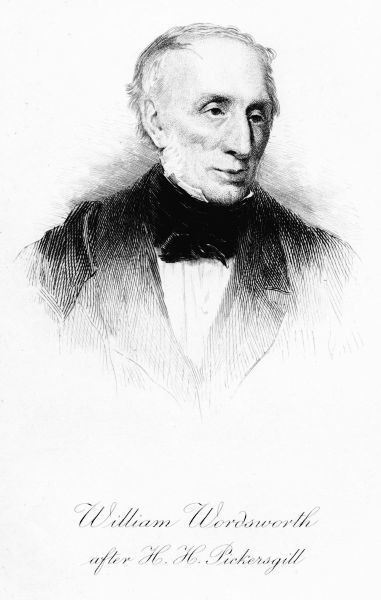
THE POETICAL WORKS
OF
WILLIAM WORDSWORTH
EDITED BY
WILLIAM KNIGHT
VOL. VI
London
MACMILLAN AND CO., Ltd.
NEW YORK: MACMILLAN & CO.
1896
CONTENTS
1814
PAGE
Laodamia
1Memorials of a Tour in Scotland—
The Brownie's Cell 16 Composed at Cora Linn, in sight of Wallace's Tower 26 Effusion, in the Pleasure-Ground on the Banks of the Bran, near Dunkeld 28 "From the dark chambers of dejection freed" 33 Yarrow Visited 35Lines written on a blank leaf in a copy of the author's poem
The Excursion, upon hearing of the death of the late Vicar of Kendal 401815
PAGE
Dedication to the White Doe of Rylstone
42Artegal and Elidure
45To B.R. Haydon
61November 1
63September, 1815
64"The fairest, brightest, hues of ether fade"
65"Weak is the will of Man, his judgment blind"
67"Hail, Twilight, sovereign of one peaceful hour!"
67"The Shepherd, looking eastward, softly said"
68"Even as a dragon's eye that feels the stress"
69"Mark the concentred hazels that enclose"
71"Surprised by joy—impatient as the Wind"
721816
PAGE
Ode. The Morning of the Day appointed for a General Thanksgiving.
January 18, 1816 74Ode
88Invocation to the Earth
95Ode
96Ode
104The French Army in Russia, 1812-13
107On the Same Occasion
109Siege of Vienna raised by John Sobieski
110Occasioned by the Battle of Waterloo
111Occasioned by the Battle of Waterloo
112"Emperors and Kings, how oft have temples rung"
113Feelings of a French Royalist, on the Disinterment of the
Remains of the Duke D'Enghien 114Dion
116A Fact, and an Imagination; or, Canute and Alfred, on the
Sea-shore 130"A little onward lend thy guiding hand"
132To ——-, on her first Ascent to the Summit of Helvellyn
1351817
PAGE
Vernal Ode
138Ode to Lycoris
145To the Same
149The Longest Day
153Hint from the Mountains, for certain Political Pretenders
156The Pass of Kirkstone
158Lament of Mary Queen of Scots
1621818
PAGE
The Pilgrim's Dream; or, the Star and the Glow-worm
167Inscriptions supposed to be found in and near a Hermit's Cell
170Composed upon an Evening of Extraordinary Splendour and Beauty
1761819
PAGE
This, and the two following, were suggested by Mr. W. Westall's Views
of the Caves, etc., in Yorkshire 183Malham Cove
184Gordale
185Composed during a Storm
187"Aerial Rock—whose solitary brow"
187The Wild Duck's Nest
189Written upon a blank leaf in "The Complete Angler"
190Captivity—Mary Queen of Scots
191To a Snow-Drop
191"When haughty expectations prostrate lie"
192To the River Derwent
193Composed in one of the Valleys of Westmoreland, on Easter Sunday
194"Grief, thou hast lost an ever ready friend"
195"I watch, and long have watched, with calm regret"
197"I heard (alas! 'twas only in a dream)"
198The Haunted Tree
199September, 1819
201Upon the Same Occasion
2021820
PAGE
Composed on the Banks of a Rocky Stream
208On the Death of His Majesty (George the Third)
209"The stars are mansions built by Nature's hand"
210To the Lady Mary Lowther
211On the Detraction which followed the Publication of a certain Poem
212Oxford, May 30, 1820
213Oxford, May 30, 1820
214June, 1820
214The Germans on the Heights of Hock Heim
216A Parsonage in Oxfordshire
217To Enterprise
218The River Duddon—
To the Rev. Dr. Wordsworth 227 "Not envying Latian shades—if yet they throw" 230 "Child of the clouds! remote from every taint" 231 "How shall I paint thee?—Be this naked stone" 232 "Take, cradled Nursling of the mountain, take" 233 "Sole listener, Duddon! to the breeze that played" 234 Flowers 235 "Change me, some God, into that breathing rose!" 237 "What aspect bore the Man who roved or fled" 237 The Stepping-Stones 239 The Same Subject 240 The Faëry Chasm 241 Hints for the Fancy 242 Open Prospect 243 "O mountain Stream! the Shepherd and his Cot" 245 "From this deep chasm, where quivering sunbeams play" 245 American Tradition 246 Return 248 Seathwaite Chapel 249 Tributary Stream 250 The Plain of Donnerdale 251 "Whence that low voice?—A whisper from the heart" 252 Tradition 253 Sheep-Washing 253 The Resting-Place 254 "Methinks 'twere no unprecedented feat" 255 "Return, Content! for fondly I pursued" 255 "Fallen, and diffused into a shapeless heap" 256 Journey Renewed 257 "No record tells of lance opposed to lance" 258 "Who swerves from innocence, who makes divorce" 260 "The Kirk of Ulpha to the pilgrim's eye" 260 "Not hurled precipitous from steep to steep" 261 Conclusion 262 After-Thought 263 Postscript 264 Note to Sonnets XVII. and XVIII. 267 Memoir of the Rev. Robert Walker 270Memorials of a Tour on the Continent—
Dedication 285 Fish-women—on Landing at Calais 286 Brugès 288 Brugès 290 After visiting the Field of Waterloo 292 Between Namur and Liege 293 Aix-la-Chapelle 295 In the Cathedral at Cologne 297 In a Carriage, upon the Banks of the Rhine 299 Hymn, for the Boatmen, as they approach the Rapids under the Castle of Heidelberg 301 The Source of the Danube 303 On approaching the Staubbach, Lauterbrunnen 306 The Fall of the Aar—Handec 308 Memorial, near the Outlet of the Lake of Thun 310 Composed in one of the Catholic Cantons 312 After-Thought 315 Scene on the Lake of Brientz 315 Engelberg, the Hill of Angels 316 Our Lady of the Snow 318 Effusion, in Presence of the Painted Tower of Tell, at Altorf 321 The Town of Schwytz 324 On hearing the "Ranz des Vaches" on the Top of the Pass of St. Gothard 326 Fort Fuentes 328 The Church of San Salvador, seen from the Lake of Lugano 332 The Italian Itinerant, and the Swiss Goatherd 338 The Last Supper, by Leonardo da Vinci, in the Refectory of the Convent of Maria della Grazia—Milan 343 The Eclipse of the Sun, 1820 345 The Three Cottage Girls 351 The Column intended by Buonaparte for a Triumphal Edifice in Milan, now lying by the wayside in the Simplon Pass 356 Stanzas composed in the Simplon Pass 357 Echo, upon the Gemmi 360 Processions. Suggested on a Sabbath Morning in the Vale of Chamouny 363 Elegiac Stanzas 371 Sky-Prospect—From the Plain of France 377 On being Stranded near the Harbour of Boulogne 378 After Landing—the Valley of Dover, Nov. 1820 380 At Dover 381 Desultory Stanzas, upon receiving the preceding Sheets from the Press 382 Appendix—
Note A 387 Note B 389 Addendum 396WORDSWORTH'S POETICAL WORKS
1814
The Excursion—to which the fifth volume of this edition is devoted—has been assigned to the year 1814; since it was finished, and first published, in that year,—although commenced in 1795. During the earlier stages of its composition, this poem was known, in the Wordsworth household, as "The Pedlar"; and Dorothy Wordsworth tells us in one of her letters to the Beaumonts, preserved amongst the Coleorton MSS., that "The Pedlar" was finished at Christmas 1804. See also the Memoirs of Wordsworth, by his nephew (vol. i. p. 304, etc.), and Dorothy's Grasmere Journal, passim. But The Excursion, as we have it now, was finished for press in 1814. The poems more immediately belonging to that year are Laodamia, the Memorials of a Tour in Scotland, Dion, and two Sonnets.—Ed.
LAODAMIA
Composed 1814.—Published 1815.
[Written at Rydal Mount. The incident of the trees growing and withering put the subject into my thoughts, and I wrote with the hope of giving it a loftier tone than, so far as I know, has been given to it by any of the Ancients who have treated of it. It cost me more trouble than almost anything of equal length I have ever written.—I.F.]
In 1815 and 1820 this poem was one of those "founded on the Affections"; afterwards it was classed among the "Poems of the Imagination."—Ed.
"With sacrifice before the rising morn
Vows have I made by fruitless hope inspired;
And from the infernal Gods, 'mid shades forlorn
Of night, my slaughtered Lord have I required:[1]
5
Celestial pity I again implore;—
Restore him to my sight—great Jove, restore!"
So speaking, and by fervent love endowed
With faith, the Suppliant heaven-ward lifts her hands;
While, like the sun emerging from a cloud,
10
Her countenance brightens—and her eye expands;
Her bosom heaves and spreads, her stature grows;
And she expects the issue in repose.
O terror! what hath she perceived?—O joy!
What doth she look on?—whom doth she behold?
15
Her Hero slain upon the beach of Troy?
His vital presence? his corporeal mould?
It is—if sense deceive her not—'tis He!
And a God leads him, wingèd Mercury!
Mild Hermes spake—and touched her with his wand
20
That calms all fear; "Such grace hath crowned thy prayer,
Laodamía! that at Jove's command
Thy Husband walks the paths of upper air:
He comes to tarry with thee three hours' space;
Accept the gift, behold him face to face!"
Forth sprang the impassioned Queen her Lord to clasp;
26
Again that consummation she essayed;
But unsubstantial Form eludes her grasp
As often as that eager grasp was made.
The Phantom parts—but parts to re-unite,
30
And re-assume his place before her sight.
"Protesiláus, lo! thy guide is gone!
Confirm, I pray, the vision with thy voice:
This is our palace,—yonder is thy throne;
Speak, and the floor thou tread'st on will rejoice.
35
Not to appal me have the gods bestowed
This precious boon; and blest a sad abode."
"Great Jove, Laodamía! doth not leave
His gifts imperfect:—Spectre though I be,
I am not sent to scare thee or deceive;
40
But in reward of thy fidelity.
And something also did my worth obtain;
For fearless virtue bringeth boundless gain.
"Thou knowest, the Delphic oracle foretold
That the first Greek who touched the Trojan strand
Should die; but me the threat could[2] not withhold:
46
A generous cause a victim did demand;
And forth I leapt upon the sandy plain;
A self-devoted chief—by Hector slain."
"Supreme of Heroes—bravest, noblest, best!
50
Thy matchless courage I bewail no more,
Which[3] then, when tens of thousands were deprest
By doubt, propelled thee to the fatal shore;
Thou found'st—and I forgive thee—here thou art—
A nobler counsellor than my poor heart.
55
"But thou, though capable of sternest deed,
Wert kind as resolute, and good as brave;
And he, whose power restores thee, hath decreed
Thou should'st elude[4] the malice of the grave:
Redundant are thy locks, thy lips as fair
60
As when their breath enriched Thessalian air.
"No Spectre greets me,—no vain Shadow this;
Come, blooming Hero, place thee by my side!
Give, on this well known couch, one nuptial kiss
To me, this day, a second time thy bride!"
Jove frowned in heaven: the conscious Parcæ threw
66
Upon those roseate lips a Stygian hue.
"This visage tells thee that my doom is past:
Nor should the change be mourned, even if the joys[5]
Of sense were able to return as fast
70
And surely as they vanish. Earth destroys
Those raptures duly—Erebus disdains:
Calm pleasures there abide—majestic pains.
"Be taught, O faithful Consort, to control
Rebellious passion: for the Gods approve
75
The depth, and not the tumult, of the soul;
A fervent, not ungovernable, love.[6]
Thy transports moderate; and meekly mourn
When I depart, for brief is my sojourn—"
"Ah, wherefore?—Did not Hercules by force
80
Wrest from the guardian Monster of the tomb
Alcestis, a reanimated corse,
Given back to dwell on earth in vernal bloom?[7]
Medea's spells dispersed the weight of years,
And Æson stood a youth 'mid youthful peers.
85
"The Gods to us are merciful—and they
Yet further may relent: for mightier far
Than strength of nerve and sinew, or the sway
Of magic potent over sun and star,
89
Is love, though oft to agony distrest,
And though his favourite seat be feeble woman's breast.
"But if thou goest, I follow—" "Peace!" he said,—
She looked upon him and was calmed and cheered;
The ghastly colour from his lips had fled;
In his deportment, shape, and mien, appeared
95
Elysian beauty, melancholy grace,
Brought from a pensive though a happy place.
He spake of love, such love as Spirits feel
In worlds whose course is equable and pure;
No fears to beat away—no strife to heal—
100
The past unsighed for, and the future sure;
Spake of heroic arts in graver mood
Revived, with finer harmony pursued;[8]
Of all that is most beauteous—imaged there
In happier beauty; more pellucid streams,
105
An ampler ether, a diviner air,
And fields invested with purpureal gleams;
Climes which the sun, who sheds the brightest day
Earth knows, is all unworthy to survey.
Yet there the Soul shall enter which hath earned
110
That privilege by virtue.—"Ill," said he,
"The end of man's existence I discerned,
Who from ignoble games and revelry
Could draw, when we had parted, vain delight,
While tears were thy best pastime, day and night;
115
"And while my youthful peers before my eyes
(Each hero following his peculiar bent)
Prepared themselves for glorious enterprise
By martial sports,—or, seated in the tent,
Chieftains and kings in council were detained;
120
What time the fleet at Aulis lay enchained.[A]
"The wished-for wind was given:—I then revolved
The oracle, upon the silent sea;[9]
And, if no worthier led the way, resolved
That, of a thousand vessels, mine should be
125
The foremost prow in pressing to the strand,—
Mine the first blood that tinged the Trojan sand.
"Yet bitter, oft-times bitter, was the pang
When of thy loss I thought, belovèd Wife!
On thee too fondly did my memory hang,
130
And on the joys we shared in mortal life,—
The paths which we had trod—these fountains, flowers;
My new-planned cities, and unfinished towers.
"But should suspense permit the Foe to cry,
'Behold they tremble!—haughty their array,
135
Yet of their number no one dares to die?'
In soul I swept the indignity away:
Old frailties then recurred:—but lofty thought,
In act embodied, my deliverance wrought.
"And Thou, though strong in love, art all too weak
140
In reason, in self-government, too slow;
I counsel thee by fortitude to seek
Our blest re-union in the shades below.
The invisible world with thee hath sympathised;
Be thy affections raised and solemnised.
145
"Learn, by a mortal yearning, to ascend
Seeking[10] a higher object. Love was given,
Encouraged, sanctioned, chiefly for that[11] end;
For this the passion to excess was driven—
That self might be annulled; her bondage prove
150
The fetters of a dream, opposed to love."—
Aloud she shrieked! for Hermes re-appears!
Round the dear Shade she would have clung—'tis vain:
The hours are past—too brief had they been years;
And him no mortal effort can detain:
155
Swift, toward the realms that know not earthly day,
He through the portal takes his silent way,
And on the palace-floor a lifeless corse She lay.
Thus, all in vain exhorted and reproved,
She perished; and, as for a wilful crime,
160
By the just Gods whom no weak pity moved,
Was doomed to wear out her appointed time,
Apart from happy Ghosts, that gather flowers[12]
Of blissful quiet 'mid unfading bowers.
—Yet tears to human suffering are due;
165
And mortal hopes defeated and o'erthrown
Are mourned by man, and not by man alone,
As fondly he believes.—Upon the side
Of Hellespont (such faith was entertained)
A knot of spiry trees for ages grew
170
From out the tomb of him for whom she died;
And ever, when such stature they had gained
That Ilium's walls were subject to their view,
The trees' tall summits withered at the sight;
A constant interchange of growth and blight![C]
After meeting the Wordsworths at Charles Lamb's, on the 9th May 1815, Henry Crabb Robinson wrote in his Diary: "It is the mere power which he is conscious of exerting in which he delights, not the production of a work in which men rejoice on account of the sympathies and sensibilities it excites in them. Hence, he does not much esteem his Laodamia, as it belongs to the inferior class of poems founded on the affections." (See Diary, Reminiscences, and Correspondence, vol. i. p. 482.)
Wordsworth wrote thus to Walter Savage Landor, from Rydal Mount, on the 21st of January 1824:—
"You have condescended to minute criticism upon the Laodamia.[D] I concur with you in the first stanza, and had several times attempted to alter it upon your grounds. I cannot, however, accede to your objection to the 'second birth,' merely because the expression has been degraded by Conventiclers.[E] I certainly meant nothing more by it than the eadem cura, and the largior æther, etc., of Virgil's Sixth Æneid. All religions owe their origin or acceptation to the wish of the human heart to supply in another state of existence the deficiencies of this, and to carry still nearer to perfection what we admire in our present condition, so that there must be many modes of expression arising out of this coincidence, or rather identity of feeling common to all Mythologies; and under this observation I should shelter the phrase from your censure—but I may be wrong in the particular case, though certainly not in the general principle. This leads to a remark in your last—'that you are disgusted with all books that treat of religion.' I am afraid it is a bad sign in me, that I have little relish for any other. Even in poetry it is the imaginative only, viz., that which is conversant with or turns upon Infinity, that powerfully affects me. Perhaps I ought to explain: I mean to say that except in those passages, where things are lost in each other, and limits vanish, and aspirations are raised, I read with something too like indifference; but all great Poets are in this view powerful Religionists."
In 1815 Charles Lamb wrote to Wordsworth, "Laodamia is a very original poem; I mean original with reference to your own manner. You have nothing like it. I should have seen it in a strange place, and greatly admired it, but not suspected its derivation." (The Letters of Charles Lamb, edited by Alfred Ainger, vol. i. p. 284.)
Mr. Hazlitt wrote of Laodamia: "It breathes the pure spirit of the finest fragments of antiquity—the sweetness, the gravity, the strength, the beauty, and the languor of Death. Its glossy brilliancy arises from the perfection of the finishing, like that of careful sculpture, not from gaudy colouring—the texture of the thoughts has the smoothness and solidity of marble. It is a poem that might be read aloud in Elysium, and the spirits of departed heroes and sages would gather round to listen to it."
I am indebted to the Headmaster of Fettes College, Edinburgh, the Rev. W. A. Heard, for the following illustrative notes on Laodamia:—
"This poem illustrates more completely than any other the sympathy of the poet with the spirit of antiquity in its purest and most exalted forms. The idea that underlies the poem is the same conception of 'pietas' which Virgil has embodied in the Æneid, and with which he has associated, especially in the sixth book, which Wordsworth in many passages recalls, great ethical and religious conceptions, derived in the main from the philosophy of Plato. 'Pietas' embraces all the duties of life that are based upon the affections—love of home and parents and children, love of the Gods of our Fathers, and a reverence for that great order of things in which man finds himself a part. The pious man believes in a destiny, or order transcending his own will: to exalt any passion, however innocent, above this, is a rebellion; to intensify any passion, so as to disturb the appropriate calm of resignation, is to act irreverently against the gods. Lesser duties must give way to greater: love of wife must give way to love of country, and the sorrow of bereavement must not obscure the larger issues of life. Thus, not only did Laodamia's yearning for the restoration of her husband to life show a failure to recognise the fixity of eternal laws, but her death was 'ὑπὲρ μόρον' and in reason's spite; it was, after all, self-will, and could not win the favour of heaven.
Blending with this notion of 'pietas,' we find the Platonic repudiation of sensuous and material life. This life is only a discipline under imperfect conditions, and to be set free from the passion and fretfulness of existence is the choice and longing of the wise.
The poem is thus notable, not so much for the assimilation of details, as for natural affinity to the spirituality of antiquity, of which Virgil is the purest exponent. Virgil's seriousness, his tenderness, his conception of the inevitable, and yet moral, order of the world, his desire for purification, his sadness, and yet complete freedom from unmanliness, his love of nature and belief in the sympathy of nature with man—all these are points of contact between the ancient and modern poet.
WORDSWORTH'S POETICAL WORKS
1814
[In this tour, my wife and her sister Sara were my companions. The account of the "Brownie's Cell" and the Brownies was given me by a man we met with on the banks of Loch Lomond, a little above Tarbert, and in front of a huge mass of rock, by the side of which, we were told, preachings were often held in the open air. The place is quite a solitude, and the surrounding scenery very striking. How much is it to be regretted that, instead of writing such Poems as the Holy Fair and others, in which the religious observances of his country are treated with so much levity and too often with indecency, Burns had not employed his genius in describing religion under the serious and affecting aspects it must so frequently take.[F]—I.F.]
105
Vain pleasures of luxurious life,
For ever with yourselves at strife;
Through town and country both deranged
By affectations interchanged,
And all the perishable gauds
110
That heaven-deserted man applauds;
When will your hapless patrons learn
To watch and ponder—to discern
The freshness, the everlasting youth,[32]
Of admiration sprung from truth;
115
From beauty infinitely growing
Upon a mind with love o'erflowing—
To sound the depths of every Art
That seeks its wisdom through the heart?
I am indebted to Miss Margaret Gillies—the artist referred to in the Fenwick note—for information in reference to her cousin, the subject of this sonnet. Robert Pearce Gillies was a man of unquestionable talent, but eccentric and extravagant. He inherited a considerable fortune, some £1500 a year, from his father, which he lost. He was editor of the Foreign Quarterly Review, was very intimate with De Quincey, and knew Sir Walter Scott, Wordsworth, and Quillinan well. He translated several German poems and novels, of which Scott thought highly. He was the author of Memoirs of a Literary Veteran (1851), in which (vol. ii. pp. 137-173) there is a sketch of Wordsworth, and several letters from him. He was also an accomplished musician, playing the violin admirably. He lived near Hawthornden.
Compare Yarrow Unvisited, vol. ii. p. 411; also Yarrow Revisited, composed in 1831; and Principal Shairp's Essay entitled "The Three Yarrows," in his Aspects of Poetry. "I meant to mention Yarrow Visited, with that stanza, 'But thou, that didst appear so fair'; than which I think no lovelier stanza can be found in the wide world of poetry;—yet the poem, on the whole, seems condemned to leave behind it a melancholy of imperfect satisfaction, as if you had wronged the feeling with which, in what preceded it, you had resolved never to visit it, and as if the Muse had determined, in the most delicate manner, to make you, and scarce make you, feel it. Else, it is far superior to the other,[R] which has but one exquisite verse in it, the last but one, or the last two: this is all fine, except perhaps that that of 'studious ease, and generous cares,' has a little tinge of the less romantic about it." Charles Lamb to Wordsworth, in 1815. (See The Letters of Charles Lamb, edited by Alfred Ainger, vol. i. p. 286.)—Ed.
1815
If firm command and mild persuasion failed
To change the temper of an adverse mind,
With such by other engines he prevailed,
Threatening to fling their bodies to the wind
From the dread summit of the lonely block,
That castle-crested Rock,
Alclwyd then, but now Dunbarton named,
A memorable crag through spacious Albion famed.
Haydon replied to Wordsworth, December 29 (see his Correspondence, vol. ii. pp. 20-23): "I must say that I have felt melancholy ever since receiving your sonnets, as if I was elevated so exceedingly, with such a drunken humming in my brain, that my nature took refuge in quiet humbleness and gratitude to God."
How clear, how keen, how marvellously bright
The effluence from yon distant mountain's head,
Which, strewn with snow smooth as the sky can shed,[70]
Shines like another sun—on mortal sight
5
Uprisen, as if to check approaching Night,
And all her twinkling stars. Who now would tread,
If so he might, yon mountain's glittering head—
Terrestrial, but a surface, by the flight
Of sad mortality's earth-sullying wing,
10
Unswept, unstained? Nor shall the aërial Powers
Dissolve that beauty, destined to endure,
White, radiant, spotless, exquisitely pure,
Through all vicissitudes, till genial Spring
Has[71] filled the laughing vales with welcome flowers.
Hail, Twilight, sovereign of one peaceful hour!
Not dull art Thou as undiscerning Night;
But studious only to remove from sight
Day's mutable distinctions.—Ancient Power!
5
Thus did the waters gleam, the mountains lower,
To the rude Briton, when, in wolf-skin vest
Here roving wild, he laid him down to rest
On the bare rock, or through a leafy bower
Looked ere his eyes were closed. By him was seen
10
The self-same Vision which we now behold,
At thy meek bidding, shadowy Power! brought forth;
These mighty barriers, and the gulf between;
The flood,[75] the stars,—a spectacle as old
As the beginning of the heavens and earth!
the sky,
Muffled in clouds, affords no company
To mitigate and cheer its loneliness.
Yet, round the body of that joyless Thing
Which sends so far its melancholy light,
Perhaps are seated, etc. etc.
Mark the concentred hazels that enclose
Yon old grey Stone, protected from the ray
Of noontide suns:—and even the beams that play
And glance, while wantonly the rough wind blows,
5
Are seldom free to touch the moss that grows
Upon that roof, amid embowering gloom,
The very image framing of a Tomb,
In which some ancient Chieftain finds repose
Among the lonely mountains.—Live, ye trees!
10
And thou, grey Stone, the pensive likeness keep
Of a dark chamber where the Mighty sleep:
For more than Fancy to the influence bends
When solitary Nature condescends
To mimic Time's forlorn humanities.
1816
Replying to some criticism on this Ode by Southey, Wordsworth wrote to his friend as follows:—"I am much of your mind in respect to my Ode. Had it been a hymn, uttering the sentiments of a multitude, a stanza would have been indispensable. But though I have called it a 'Thanksgiving Ode,' strictly speaking it is not so, but a poem, composed, or supposed to be composed, on the morning of the thanksgiving, uttering the sentiments of an individual upon that occasion. It is a dramatised ejaculation; and this, if anything can, must excuse the irregular frame of the metre. In respect to a stanza for a grand subject designed to be treated comprehensively, there are great objections. If the stanza be short, it will scarcely allow of fervour and importunity, unless so short, as that the sense is run perpetually from one stanza to another, as in Horace's Alcaics; and if it be long, it will be as apt to generate diffuseness as to check it. Of this we have innumerable instances in Spenser and the Italian poets. The sense required cannot be included in one given stanza, so that another whole stanza is added, not infrequently, for the sake of matter which would naturally include itself in a very few lines.
And ye, Pierian Sisters,[BS] sprung from Jove
And sage Mnemosyne,—full long debarred[149]
From your first mansions, exiled all too long[150]
From many a hallowed stream and grove,[151]
115
Dear native regions[BT] where ye wont to rove,
Chanting for patriot heroes the reward
Of never-dying song!
Now (for, though Truth descending from above
The Olympian summit hath destroyed for aye
120
Your kindred Deities, Ye live and move,[BU]
Spared for obeisance from perpetual love
For privilege redeemed of god-like sway)
Now,[152] on the margin of some spotless fountain,
Or top serene of unmolested mountain,
125
Strike audibly the noblest of your lyres,
And for a moment meet the soul's desires![153]
That I, or some more favoured Bard, may hear
What ye, celestial Maids! have often sung
Of Britain's acts,—may catch it with rapt ear,
130
And give the treasure to our British tongue!
So shall the characters of that proud page
Support their mighty theme from age to age;
And, in the desert places of the earth,
When they to future empires have given birth,
135
So shall the people gather and believe
The bold report, transferred to every clime;
And the whole world, not envious but admiring,
And to the like aspiring,
Own—that the progeny of this fair Isle
140
Had power as lofty actions to achieve
As were performed in man's heroic prime;
Nor wanted, when their fortitude had held
Its even tenor, and the foe was quelled,
A corresponding virtue to beguile
145
The hostile purpose of wide-wasting Time—
That not in vain they laboured to secure,
For their great deeds, perpetual memory,
And fame as largely spread as land and sea,
By Works of spirit high and passion pure!
But Thou, supreme Disposer! may'st[159] not speed
The course of things, and change the creed
Which hath been held aloft before men's sight
Since the first framing of societies,
65
Whether, as bards have told in ancient song,
Built up by soft seducing harmonies;
Or prest together by the appetite,
And by the power, of wrong.
Fleet the Tartar's reinless steed,
But fleeter far the pinions of the Wind,
Which from Siberian caves the Monarch freed,
And sent him forth, with squadrons of his kind,
30
And bade the Snow their ample backs bestride,
And to the battle ride.
No pitying voice commands a halt,
No courage can repel the dire assault;
Distracted, spiritless, benumbed, and blind,
35
Whole legions sink—and, in one instant, find
Burial and death: look for them—and descry,
When morn returns, beneath the clear blue sky,
A soundless waste, a trackless vacancy!
Intrepid sons of Albion! not by you
Is life despised; ah no, the spacious earth
Ne'er saw a race who held, by right of birth,
So many objects to which love is due:
5
Ye slight not life—to God and Nature true;
But death, becoming death, is dearer far,
When duty bids you bleed in open war:
Hence hath your prowess quelled that impious crew.
Heroes!—for instant sacrifice prepared;
10
Yet filled with ardour and on triumph bent
'Mid direst shocks of mortal accident—
To you who fell, and you whom slaughter spared
To guard the fallen, and consummate the event,
Your Country rears this sacred Monument!
The Bard—whose soul is meek as dawning day,
Yet trained to judgments righteously severe,
Fervid, yet conversànt with holy fear,
As recognising one Almighty sway:
5
He—whose experienced eye can pierce the array
Of past events; to whom, in vision clear,
The aspiring heads of future things appear,
Like mountain-tops whose[168] mists have rolled away—
Assoiled from all encumbrance of our time,[BX]
10
He only, if such breathe, in strains devout
Shall comprehend this victory sublime;
Shall[169] worthily rehearse the hideous rout,
The triumph hail, which from their peaceful clime
Angels might welcome with a choral shout![170]
Emperors and Kings, how oft have temples rung
With impious thanksgiving, the Almighty's scorn!
How oft above their altars have been hung
Trophies that led the good and wise to mourn
5
Triumphant wrong, battle of battle born,
And sorrow that to fruitless sorrow clung!
Now, from Heaven-sanctioned victory, Peace is sprung;[BY]
In this firm hour Salvation lifts her horn.
Glory to arms! But, conscious that the nerve
10
Of popular reason, long mistrusted, freed
Your thrones, ye Powers, from duty fear to swerve![171]
Be just, be grateful; nor, the oppressor's creed
Reviving, heavier chastisement deserve
Than ever forced unpitied hearts to bleed.
30
"My faithful followers, lo! the tide is spent
That rose, and steadily advanced to fill
The shores and channels, working Nature's will
Among the mazy streams that backward went,
34
And in the sluggish pools where ships are pent:
And now, his[207] task performed, the flood stands still,
At the green base of many an inland hill,[CC]
In placid beauty and sublime content![208]
Such the repose that sage and hero find;
Such measured rest the sedulous and good
40
Of humbler name; whose souls do, like the flood
Of Ocean, press right on; or gently wind,
Neither to be diverted nor withstood,
Until they reach the bounds by Heaven assigned."
And yet more gladly thee would I conduct
Through woods and spacious forests,—to behold
35
There, how the Original of human art,
Heaven-prompted Nature, measures and erects
Her temples, fearless for the stately work,
Though waves, to every breeze,[211] its high-arched roof,
And storms the pillars rock. But we such schools
40
Of reverential awe will chiefly seek
In the still summer noon, while beams of light,
Reposing here, and in the aisles beyond
Traceably gliding through the dusk, recal
To mind the living presences of nuns;
45
A gentle, pensive, white-robed sisterhood,
Whose saintly radiance mitigates the gloom
Of those terrestrial fabrics, where they serve,
To Christ, the Sun of righteousness, espoused.
Now also shall the page of classic lore,
50
To these glad eyes from bondage freed, again
Lie open; and the book of Holy Writ,
Again unfolded, passage clear shall yield
To heights more glorious still, and into shades
More awful, where, advancing hand in hand,
55
We may be taught, O Darling of my care!
To calm the affections, elevate the soul,
And consecrate our lives to truth and love.[212]
1817
Forsake me not, Urania, but when Ev'n
Fades into night, resume the enraptur'd song
That shadowed forth the immensity of Heav'n
In music—uttered surely without wrong
(For 'twas thy work) though here the Listener lay
Couch'd on green herbage 'mid the warmth of May
—A parting promise makes a bright farewell:
Empow'r'd to wait for thy return
Voice of the Heav'ns I will not mourn;
Content that holy peace and mute remembrance dwell
Within the bosom of the chorded shell
Tuned 'mid those seats of love and joy, concealed
By day, by night imperfectly revealed;
Thy native mansions that endure
Beyond their present seeming—pure
From taint of dissolution or decay.
—No blights, no wintry desolations,
Affect those blissful habitations,
Built such as hope might gather from the hue
Profound of the celestial blue,
And from the aspect of each radiant orb,
Some fix'd, some wandering, with no timid curb,
Yet both permitted to proclaim
Their Maker's glory with unaltered frame. Ed.
65
Duty, like a strict[266] preceptor,
Sometimes frowns, or seems to frown;
Choose her thistle for thy sceptre,
While youth's roses are thy crown.[267]
My[285] Soul was grateful for delight
That wore a threatening brow;
A veil is lifted—can she slight
The scene that opens now?
65
Though habitation none appear,[CY]
The greenness tells, man must be there;[286]
The shelter—that the pérspective
Is of the clime[287] in which we live;
Where Toil pursues his daily round;
70
Where Pity sheds sweet tears[288]—and Love,
In woodbine bower or birchen grove,
Inflicts his tender wound.
—Who comes not hither ne'er shall know
How beautiful the world below;
75
Nor can he guess how lightly leaps
The brook adown the rocky steeps,[CZ]
Farewell, thou desolate Domain!
Hope, pointing to the cultured plain,
Carols like a shepherd-boy;
80
And who is she?—Can that be Joy![DA]
Who, with a sunbeam for her guide,
Smoothly skims the meadows wide;
While Faith, from yonder opening cloud,
To hill and vale proclaims aloud,
85
"Whate'er the weak may dread, the wicked dare,
Thy lot, O Man, is good, thy portion fair!"[289]
1818
When this in modest guise was said,
50
Across the welkin seemed to spread
A boding sound—for aught but sleep unfit!
Hills quaked, the rivers backward ran;
That Star, so proud of late, looked wan;
And reeled with visionary stir
55
In the blue depth, like Lucifer
Cast headlong to the pit!
Cast headlong to the pit!
Not seldom, clad in radiant vest,
Deceitfully goes forth the Morn;
Not seldom Evening in the west
Sinks smilingly forsworn.
1819
This, and the two following sonnets, were first published in Blackwood's Magazine, vol. iv., January 1819, p. 471. They were reprinted in The Poetical Album, edited by Alaric Watts, in 1829 (Second Series, vol. i. pp. 332, 333) under the title, "The Caves of Yorkshire." The same volume of the Album contains (p. 43) the sonnet beginning—
Was the aim frustrated by force or guile,
When giants scooped from out the rocky ground,
Tier under tier, this semicirque profound?
(Giants—the same who built in Erin's isle
5
That Causeway with incomparable toil!)—
O, had this vast theatric structure wound[349][DL]
With finished sweep into a perfect round,
No mightier work had gained the plausive smile
Of all-beholding Phœbus! But, alas,
10
Vain earth! false world! Foundations must be laid
In Heaven; for, 'mid the wreck of IS and WAS,
Things incomplete and purposes betrayed
Make sadder transits o'er thought's optic glass[350]
Than noblest objects utterly decayed.[DM]
Lone Flower, hemmed in with snows and white as they
But hardier far, once more I see thee bend
Thy forehead, as if fearful to offend,
Like an unbidden guest. Though day by day,[376]
5
Storms, sallying from the mountain-tops, way-lay
The rising sun, and on the plains descend;
Yet art thou welcome, welcome as a friend[377]
Whose zeal outruns his promise! Blue-eyed May
Shall soon behold this border thickly set
10
With bright jonquils, their odours lavishing
On the soft west-wind and his frolic peers;
Nor will I then thy modest grace forget,[378]
Chaste Snow-drop, venturous harbinger of Spring,
And pensive monitor of fleeting years!
When haughty expectations prostrate lie,[DN]
And grandeur crouches like a guilty thing,
Oft shall the lowly weak, till nature bring
Mature release, in fair society
5
Survive, and Fortune's utmost anger try;
Like these frail snow-drops that together cling,
And nod their helmets, smitten by the wing
Of many a furious whirl-blast sweeping by.
Observe the faithful flowers![DO] if small to great
May lead the thoughts, thus struggling used to stand
11
The Emathian phalanx,[DP] nobly obstinate;
And so the bright immortal Theban band,[DQ]
Whom onset, fiercely urged at Jove's command,
Might overwhelm, but could not separate!
Among the mountains were we nursed, loved Stream!
Thou near the eagle's nest—within brief sail,
I, of his bold wing floating on the gale,
Where thy deep voice could lull me! Faint the beam
5
Of human life when first allowed to gleam
On mortal notice.—Glory of the vale,
Such thy meek outset, with a crown, though frail,
Kept in perpetual verdure by the steam
Of thy soft breath!—Less vivid wreath[379] entwined
10
Nemæan victor's brow; less bright was worn,
Meed of some Roman chief—in triumph borne
With captives chained; and shedding from his car
The sunset splendours of a finished war
Upon the proud enslavers of mankind!
With each recurrence of this glorious morn
That saw the Saviour in his human frame
Rise from the dead, erewhile the Cottage-dame
Put on fresh raiment—till that hour unworn:
5
Domestic[381] hands the home-bred wool had shorn,
And she who span it culled[382] the daintiest fleece,
In thoughtful reverence to the Prince of Peace,
Whose temples bled beneath the platted thorn.
A blest estate when piety sublime
These humble props disdained not! O green dales!
11
Sad may I be who heard your sabbath chime
When Art's abused inventions were unknown;
Kind Nature's various wealth was all your own;
And benefits were weighed in Reason's scales!
Socrates to Simmias.—"Will you not allow that I have as much of the spirit of prophecy in me as the swans? For they, when they perceive that they must die, having sung all their life long, do then sing more than ever, rejoicing in the thought that they are about to go away to the God, whose ministers they are. But men, because they are themselves afraid of death, slanderously affirm of the swans, that they sing a lament at the last, not considering that no bird sings when cold, or hungry, or in pain, not even the nightingale, nor the swallow, nor yet the hoopoe, which are said indeed to tune a lay of sorrow, although I do not believe this to be true of them any more than of the swans. But because they are sacred to Apollo, they have the gift of prophecy, and anticipate the good things of another world; wherefore they sing and rejoice in that day more than ever they did before. And I too, believing myself to be the consecrated servant of the same God, and the fellow-servant of the swans, and thinking that I have received from my master gifts of prophecy which are not inferior to theirs, would not go out of life less merrily than the swans." Phædo, 85 (Jowett's translation, vol. i. p. 462).—Ed.
Those silver clouds collected round the sun
His mid-day warmth abate not, seeming less
To overshade than multiply his beams
4
By soft reflection—grateful to the sky,
To rocks, fields, woods. Nor doth our human sense
Ask, for its pleasure, screen or canopy
More ample than the[388] time-dismantled Oak
Spreads o'er this tuft of heath, which now, attired
In the whole fulness of its bloom, affords
10
Couch beautiful as e'er for earthly use[389]
Was fashioned; whether by the hand of Art,
That eastern Sultan, amid flowers enwrought
On silken tissue, might diffuse his limbs
In languor; or, by Nature, for repose
15
Of panting Wood-nymph, wearied with the chase.[390]
O Lady! fairer in thy Poet's sight
Than fairest spiritual creature of the groves,
Approach;—and, thus invited, crown with rest
The noontide hour: though truly some there are
20
Whose footsteps superstitiously avoid
This venerable Tree; for, when the wind
Blows keenly, it sends forth a creaking sound
(Above the general roar of woods and crags)
Distinctly heard from far—a doleful note!
25
As if (so Grecian shepherds would have deemed)
The Hamadryad, pent within, bewailed
Some bitter wrong.[DW] Nor is it unbelieved,
By ruder fancy, that a troubled ghost
Haunts the old trunk;[391] lamenting deeds of which
30
The flowery ground is conscious. But no wind
Sweeps now along this elevated ridge;
Not even a zephyr stirs;—the obnoxious Tree
Is mute: and, in his silence, would look down,
O lovely Wanderer of the trackless hills,
35
On thy[392] reclining form with more delight
Than his coevals in the sheltered vale
Seem to participate, the while they view[393]
Their own far-stretching arms and leafy heads
Vividly pictured in some glassy pool,
40
That, for a brief space, checks the hurrying stream!
For that from turbulence and heat
Proceeds, from some uneasy seat
15
In nature's struggling frame,
Some region of impatient life:
And jealousy, and quivering strife,
Therein a portion claim.
1820
The following poems may be assigned to the year 1820. The River Duddon, a series of Sonnets, the Ode To Enterprise, some of the Memorials of a Tour on the Continent, and a number of Miscellaneous Sonnets. Several of the Duddon Sonnets were composed in previous years, and one of them was published as early as 1807; but, as the volume containing the entire series was published in 1820—and the dedication was written on Christmas Eve of that year—the whole has been assigned to 1820. In localising the allusions in these sonnets, I have been greatly indebted to Mr. Herbert Rix, whose paper contributed to the "Transactions of the Wordsworth Society" was only the first of a Series of admirable studies of the Duddon. I have also been greatly indebted to Canon Rawnsley. Most of the "Memorials" of the Continental Tour were written during the journey; and, although they were not finished till 1822—the year of publication—I think their chronological place should be in the year 1820. In connection with these poems, I have had the advantage of perusing the two singularly interesting Journals of the Tour, written by Mrs. Wordsworth, and by the poet's sister Dorothy. Both of these were written, in the form of notes or "memoranda," during the journey. Miss Wordsworth's was expanded from these earlier jottings, two months after her return to Rydal Mount; and added to, as late as December 1821. In the case of each poem, illustrative extracts are given from these two Journals; and it will be seen that they cast much light on the incidents which gave rise to the Memorial Verses, and the circumstances under which they were composed. The poet's wish that these journals should be published, at least in part, is expressed in the Fenwick note, which precedes the sonnet beginning, "What lovelier home could gentle Fancy choose?" p. 294; and Mrs. Wordsworth, in a letter to Mr. John Kenyon—dated 28th December 1821—after referring to her husband's being "busily engaged upon subjects connected with our Continental Journey," says, "Miss W. is going on with her Journal, which will be ready to go to press interspersed with her brother's Poems I hope before your return." She adds, however, "I do not say this seriously, but we sometimes jestingly talk of raising a fund by such means, for a second and a farther trip into Italy." The diary and correspondence of Henry Crabb Robinson is also of use in determining some points connected with this Continental Journey, in which he accompanied the Wordsworths.—Ed.
A book was writ of late called Tetrachordon,
And woven close, both matter, form, and style;
The subject new: it walked the town a while,
Numbering good intellects; now seldom pored on.
Cries the stall-reader, "Bless us! what a word on
A title-page is this!"; and some in file
Stand spelling false, while one might walk to Mile-
End Green. Why, is it harder, sirs, than Gordon,
Colkitto, or Macdonnel, or Galasp?
Those rugged names to our like mouths grow sleek,
That would have made Quintilian stare and gasp.
Thy age, like ours, O soul of Sir John Cheek,
Hated not learning worse than toad or asp,
When thou taught'st Cambridge and King Edward Greek.
Ed.
The River Duddon rises upon Wrynose Fell, on the confines of Westmoreland, Cumberland, and Lancashire; and, having served[427] as a boundary to the two last[428] counties for the space of about twenty-five miles, enters the Irish Sea, between the Isle of Walney and the Lordship of Millum.—W. W. 1820.[EQ]
Hence, while the imperial City's din
Beats frequent on thy satiate ear,
75
A pleased attention I may win
To agitations less severe,
That neither overwhelm nor cloy,
But fill the hollow vale with joy![EU]
Not envying Latian shades—if yet they throw
A grateful coolness round that crystal Spring,
Blandusia, prattling—as when long ago
The Sabine Bard was moved her praise to sing;[431][EV]
5
Careless of flowers that in perennial blow
Round the moist marge of Persian fountains cling;
Heedless of Alpine torrents thundering
Through ice-built arches[432] radiant as heaven's bow;
I seek the birth-place of a native Stream.—[EW]
10
All hail, ye mountains! hail, thou morning light!
Better to breathe at large on this clear height
Than toil[433] in needless sleep from dream to dream:
Pure flow the verse, pure, vigorous, free, and bright,
For Duddon, long-loved Duddon, is my theme!
Child of the clouds! remote from every taint
Of sordid industry thy lot is cast;
Thine are the honours of the lofty waste;[EX]
Not seldom, when with heat the valleys faint,
5
Thy handmaid Frost with spangled tissue quaint
Thy cradle decks;—to chant thy birth, thou hast
No meaner Poet than the whistling Blast,
And Desolation is thy Patron-saint![EXa]
She guards thee, ruthless Power! who would not spare
10
Those mighty forests, once the bison's screen,
Where stalked the huge deer to his shaggy lair[EY]
Through paths and alleys roofed with darkest[434] green
Thousands of years before the silent air
Was pierced by whizzing shaft of hunter keen!
Take, cradled Nursling of the mountain, take
This parting glance, no negligent adieu![FA]
A Protean change seems wrought while I pursue
The curves, a loosely-scattered chain doth make;
5
Or rather thou appear'st[436] a glittering snake,
Silent, and to the gazer's eye untrue,
Thridding with sinuous lapse the rushes, through
Dwarf willows gliding, and by ferny brake.
Starts from a dizzy steep the undaunted Rill
10
Robed instantly in garb of[437] snow-white foam;
And laughing dares the Adventurer, who hath clomb
So high, a rival purpose to fulfil;
Else let the dastard backward wend, and roam,
Seeking less bold achievement, where he will![FB]
Sole listener, Duddon! to the breeze that played
With thy clear voice, I caught the fitful sound
Wafted o'er sullen moss and craggy mound—
Unfruitful solitudes, that seemed to upbraid
5
The sun in heaven!—but now, to form a shade
For Thee, green alders have together wound
Their foliage; ashes flung their arms around;
And birch-trees risen in silver colonnade.
And thou hast also tempted here to rise,
10
'Mid sheltering pines, this Cottage rude and grey;
Whose ruddy children, by the mother's eyes
Carelessly watched, sport through the summer day,
Thy pleased associates:—light as endless May
On infant bosoms lonely Nature lies.[FC]
Not so that Pair whose youthful spirits dance
With prompt emotion, urging them to pass;
A sweet confusion checks the Shepherd-lass;
Blushing she eyes the dizzy flood askance;
5
To stop ashamed—too timid to advance;
She ventures once again—another pause!
His outstretched hand He tauntingly withdraws—
She sues for help with piteous utterance!
Chidden she chides again; the thrilling touch
10
Both feel, when he renews the wished-for aid:
Ah! if their fluttering hearts should stir too much,
Should beat too strongly, both may be betrayed.
The frolic Loves, who, from yon high rock, see
The struggle, clap their wings for victory!
No fiction was it of the antique age:
A sky-blue stone, within this sunless cleft,
Is of the very foot-marks unbereft
Which tiny Elves impressed;—on that smooth stage
5
Dancing with all their brilliant equipage
In secret revels—haply after theft
Of some sweet Babe—Flower stolen, and coarse Weed left
For the distracted Mother to assuage
Her grief with, as she might!—But, where, oh! where
10
Is traceable a vestige of the notes
That ruled those dances wild in character?—
Deep underground? Or in the upper air,
On the shrill wind of midnight? or where floats
O'er twilight fields the autumnal gossamer?
On, loitering Muse—the swift Stream chides us—on!
Albeit his deep-worn channel doth immure
Objects immense portrayed in miniature,
Wild shapes for many a strange comparison!
5
Niagaras, Alpine passes, and anon
Abodes of Naiads, calm abysses pure,
Bright liquid mansions, fashioned to endure
When the broad oak drops, a leafless skeleton,
And the solidities of mortal pride,
10
Palace and tower, are crumbled into dust!—
The Bard who walks with Duddon for his guide,
Shall find such toys of fancy thickly set:
Turn from the sight, enamoured Muse—we must;
And, if thou canst, leave them without regret![443]
From this deep chasm, where quivering sunbeams play
Upon its loftiest crags, mine eyes behold
A gloomy NICHE, capacious, blank, and cold;[FO]
A concave free from shrubs and mosses grey;
5
In semblance fresh, as if, with dire affray,
Some Statue, placed amid these regions old
For tutelary service, thence had rolled,
Startling the flight of timid Yesterday!
Was it by mortals sculptured?—weary slaves
10
Of slow endeavour! or abruptly cast
Into rude shape by fire, with roaring blast
Tempestuously let loose from central caves?
Or fashioned by the turbulence of waves,
Then, when o'er highest hills the Deluge pass'd?
[GA] "The pool under Ulpha Bridge has for many generations been used for sheep-washing. The sheep from Birks Farm are now (1894) washed there every year. If we suppose the poet, in one of his frequent journeys down the valley, to have paused upon the bridge to witness this pastoral sight, the local order of the Sonnets is maintained." (Herbert Rix.)
Mid-noon is past;—upon the sultry mead
No zephyr breathes, no cloud its shadow throws:
If we advance unstrengthened by repose,
Farewell the solace of the vagrant reed!
5
This Nook[GB]—with woodbine hung and straggling weed,
Tempting recess as ever pilgrim chose,
Half grot, half arbour—proffers to enclose
Body and mind, from molestation freed,
In narrow compass—narrow as itself:
10
Or if the Fancy, too industrious Elf,
Be loth that we should breathe awhile exempt
From new incitements friendly to our task,
Here[456] wants not stealthy prospect, that may tempt
Loose Idless to forego her wily mask.
Return, Content! for fondly I pursued,
Even when a child, the Streams[GC]—unheard, unseen;
Through tangled woods, impending rocks between;
Or, free as air, with flying inquest viewed
5
The sullen reservoirs whence their bold brood—
Pure as the morning, fretful, boisterous, keen,
Green as the[458] salt-sea billows, white and green—
Poured down the hills, a choral multitude!
Nor have I tracked their course for scanty gains;
10
They taught me random cares and truant joys,
That shield from mischief and preserve from stains
Vague minds, while men are growing out of boys;
Maturer Fancy owes to their rough noise
Impetuous thoughts that brook not servile reins.
Fallen, and diffused into a shapeless heap,
Or quietly self-buried in earth's mould,
Is that embattled House, whose massy Keep
Flung from yon cliff[459] a shadow large and cold.
5
There dwelt the gay, the bountiful, the bold;
Till nightly lamentations, like the sweep
Of winds—though[460] winds were silent—struck a deep
And lasting terror through that ancient Hold.
Its line of Warriors fled;—they shrunk when tried[461]
10
By ghostly power:—but Time's unsparing hand
Hath plucked such foes, like weeds, from out the land;
And now, if men with men in peace abide,
All other strength the weakest may withstand,
All worse assaults may safely be defied.[GD]
I rose while yet the cattle, heat-opprest,
Crowded together under rustling trees
Brushed by the current of the water-breeze;
And for their sakes, and love of all that rest,
5
On Duddon's margin, in the sheltering nest;
For all the startled scaly tribes that slink
Into his coverts, and each fearless link
Of dancing insects forged upon his breast;
For these, and hopes and recollections worn
10
Close to the vital seat of human clay;
Glad meetings, tender partings, that upstay
The drooping mind of absence, by vows sworn
In his pure presence near the trysting thorn—
I thanked the Leader of my onward way.
The Kirk of Ulpha to the pilgrim's eye
Is welcome as a star, that doth present
Its shining forehead through the peaceful rent
Of a black cloud diffused o'er half the sky:[GH]
5
Or as a fruitful palm-tree towering high
O'er the parched waste beside an Arab's tent;
Or the Indian tree whose branches, downward bent,
Take root again, a boundless canopy.
How sweet were leisure! could it yield no more
10
Than 'mid that wave-washed Church-yard to recline,
From pastoral graves extracting thoughts divine;
Or there to pace, and mark the summits hoar
Of distant moon-lit mountains faintly shine,
Soothed by the unseen River's gentle roar.
Not hurled precipitous from steep to steep;
Lingering no more 'mid flower-enamelled lands
And blooming thickets; nor by rocky bands
Held; but in radiant progress toward the Deep
5
Where mightiest rivers into powerless sleep
Sink, and forget their nature—now expands
Majestic Duddon, over smooth flat sands[GI]
Gliding in silence with unfettered sweep!
Beneath an ampler sky a region wide
Is opened round him:—hamlets, towers, and towns,
11
And blue-topped hills, behold him from afar;
In stately mien to sovereign Thames allied
Spreading his bosom under Kentish downs,
With commerce freighted, or triumphant war.[GJ]
But here no cannon thunders to the gale;
Upon the wave no haughty pendants cast
A crimson splendour: lowly is the mast
That rises here, and humbly spread, the sail;
5
While, less disturbed than in the narrow Vale
Through which with strange vicissitudes he passed,
The Wanderer seeks that receptacle vast
Where all his unambitious functions fail.
And may thy Poet, cloud-born Stream! be free—
10
The sweets of earth contentedly resigned,
And each tumultuous working left behind
At seemly distance—to advance like Thee;
Prepared, in peace of heart, in calm of mind
And soul, to mingle with Eternity![GK]
I thought of Thee, my partner and my guide,
As being past away.—Vain sympathies!
For, backward, Duddon! as I cast my eyes,
I see what was, and is, and will abide;
5
Still glides the Stream, and shall for ever glide;[465][GL]
The Form remains, the Function never dies;
While we, the brave, the mighty, and the wise,
We Men, who in our morn of youth defied
The elements, must vanish;—be it so!
10
Enough, if something from our hands have power
To live, and act, and serve the future hour;
And if, as toward the silent tomb we go,
Through love, through hope, and faith's transcendent dower,
We feel that we are greater than we know.[GM]
"Buried, June 28th, the Rev. Robert Walker. He was curate of Seathwaite sixty-six years. He was a man singular for his temperance, industry, and integrity."
Dear Fellow-travellers![GZ] think not that the Muse,
To You presenting these memorial Lays,
Can hope the general eye thereon would gaze,[468]
As on a mirror that gives back the hues
5
Of living Nature; no—though free to choose
The greenest bowers, the most inviting ways,
The fairest landscapes and the brightest days—
Her skill she tried with less ambitious views.[469]
For You she wrought: Ye only can supply
10
The life, the truth, the beauty: she confides
In that enjoyment which with You abides,
Trusts to your love and vivid memory;
Thus far contented, that for You her verse
Shall lack not power the "meeting soul to pierce!"[HA]
W. Wordsworth.
From Mrs. Wordsworth's Journal:—"Thursday, 13th July....—Bruges. What a place. D. and I walked out as soon as we could after our arrival.... Went into the old church. The nuns, the different worshippers, the pictures, the place, the quiet stately streets, grand buildings, graceful nun-like women in their long cloaks, treading with swan-like motions those silent avenues of majestic architecture, I must leave to D. to describe. My own mind was uplifted by a sort of devotional elevation as if striving to fit itself to become worthy of what these temples would lead to."
A wingèd Goddess—clothed in vesture wrought
Of rainbow colours; One whose port was bold,
Whose overburthened hand could scarcely hold
The glittering crowns and garlands which it brought—
5
Hovered in air above the far-famed Spot.
She vanished; leaving prospect blank and cold
Of wind-swept corn that wide around us rolled
In dreary billows, wood, and meagre cot,
And monuments that soon must disappear:
10
Yet a dread local recompense we found;
While glory seemed betrayed, while patriot-zeal
Sank in our hearts, we felt as men should feel[481]
With such vast hoards of hidden carnage near,
And horror breathing from the silent ground!
"July 18. Departure from Namur, road out of the town beautiful, wide, disk-like valley, gardens, groves, town standing upon its two rivers. Ramparts towering above, very impressive to cast the eyes back upon. Market people flocking in in groups, variety of dresses, of all gay colours. Flowers seem to be the delight of the peasantry. They are worn in their hats, upon their breasts, carried in the mouth when their hands are at work sometimes, or stuck behind the ear. Road excellent all the way down the Meuse. Villages in all situations,—among the rocks, now one peeps out of a recess, again another upon a knoll with its spire rising from among trees. More and more beautiful as you proceed down the river—rocks on the banks of the most fantastic forms, something like those on the Wye. Sometimes the valley reminded us of the trough of the Clyde. Huy. Church handsome, the high tower struck by lightning fourteen years ago; new fortifications, most picturesque and romantic situation. Crossed the Meuse here, charming view from the bridge.... Road very delightful, rocks, woods, chateau, convent, vineyards, hanging gardens, orchards with profusion of fruit, shrubs, and flowers, and corn lands, all in the most luxuriant state. So beautiful a day's journey I never before travelled."
"Thursday, 20th July.—... Descend towards the town of Aix-la-Chapelle, a chapel on the opposite side of the vale upon a high knoll, overlooking the spires and towers.... Wm., T. M., and myself walked to the chapel we had seen on the heights, said to be built by Charlemagne: a very interesting view of the town, and over a large space of the country beyond, and into the country looking the other way. Wm. went higher to a monument recording that Buonaparte visited the spot with one attendant. We were too late to be satisfied here, the darkness only allowing us to form a notion of the outline, and to catch here and there a spire or a tower in the distance. The chapel here alluded to was not larger in appearance than the tiny rocky edifice at Buttermere. A Christ under the branches of a spreading oak, brought to my mind by contrast, a gay image of a brightly painted fox, on a sign board, among the branches of a flowing chestnut tree, which William and I saw gleaming in the setting sun, when walking through the village of Souldren." (From Mrs. Wordsworth's Journal.)
"Friday, 21st July. Cologne.—I cannot attempt to describe the Cathedral; nor indeed could any skill of mine do justice to that august pile, even if I might have lingered half a day among its walls. At our entrance, the evening sunshine rested upon portions of some of the hundred massy columns; while the shade and gloom, spread through the edifice, were deepened by those brilliant touches of golden light. Some of the painted windows were beautified by the melting together and the intermingling of colours, reflected upon the stone-work, colours and shapes, to the eye as unsubstantial as light itself, and visionary as the rainbow. The choir is hung with tapestry, designed by Rubens. It does, I think, to an unlearned eye somewhat resemble Henry the Seventh's chapel at Westminster, but is much loftier and larger. The long lancet-shaped painted windows are beautiful. The pillars and arches through the aisles of this Cathedral are of grey stone, sober, solemn, of great size, yet exquisitely proportioned; and no paltry images or tinselled altars disturb the one impression of awful magnificence, an impression received at once, and not to be overcome by regrets, that only the Choir and side aisles are finished. The nave, at half its destined height, is covered with a ceiling of boards. The exterior of this stupendous edifice is of massy, though most beautiful, architecture. Some of the lighter wreaths of stone-work (if great things may be compared with small) made me think of the Chapel of Roslin in its sequestered dell, where the adder's tongue and fern are mingled with green-grown flowers, and leaves of stone that neither fall nor fade. Flowers and bushes here grow out of the gigantic ruins—yet ruins they are not; for as the Builder's hand left the unfinished work, so it appears to have remained in firmness and strength unshakable, while Nature has made her own of ornaments framed in imitation of her works, having overspread them with her colouring, and blended them with the treasures of her lonely places." (From Dorothy Wordsworth's Journal, vol. i.)—Ed.
"Saturday, 22nd July. Cologne.—For some miles, the traveller goes through the magnificent plain, which from its great width appears almost circular. Though unseen the river Rhine, we never can forget that it is there! When the vale becomes narrower, one of the most interesting and beautiful of prospects opens on the view from a gentle rising in the road. On an island stands a large grey convent, sadly pensive among its garden walls and embowering wood. The musket and cannon have spared that sanctuary, and we were told that, though the establishment is dissolved, a few of the nuns still remain there, attached to the spot; or probably having neither friends or other home to repair to. On the right bank of the river, opposite to us, is a bold precipice, bearing on its summit a ruined fortress which looks down upon the convent; and the warlike and religious Edifices are connected together by a chivalrous story of slighted or luckless love, which caused the withdrawing of a fair Damsel to the Island, where she founded the monastery. Another bold ruin stands upon an eminence adjoining, and all these monuments of former times combine with villages and churches, and dells (between the steeps) green or corn-clad, and with the majestic River (here spread out like a lake) to compose a most affectingly beautiful scene, whether viewed in prospect or in retrospect. Still we rolled along (ah! far too swiftly! and often did I wish that I were a youthful traveller on foot), still we rolled along, meeting the flowing River, smooth as glass, yet so rapid that the stream of motion is always perceptible, even from a great distance. The riches of this region are not easily fancied,—the pretty paths, the gardens among plots of vineyard and corn, cottages peeping from the shade, villages and spires, in never-ending variety." (From Dorothy Wordsworth's Journal, vol. i.)—Ed.
"But I seem to have forgotten the source of the Danube, which truly was 'another'[HL] Danube after we had seen it; or, more properly speaking, after we had seen the moor-land country surrounding the Town of Doneschingen, where we knew we should meet with the source of that famous river; and it is not only there (in that Hollow wild without grandeur), but actually within the walls of the Duke's courts adjoining the trim flower garden. The bountiful spring is received by a large square stone basin, and thence flows through the gardens in a narrow stream like a vigorous mill-race. Had an active boy been by our side he would have over-leapt it. That streamlet, after the course of a few hundred yards, falls into the bed of the united rivers the P—— and the P—— which take their rise in the moorish hills seen on the right in the road from Villingen, and which we looked upon from the gardens at the same time that we saw the new-born streamlet (called the source of the Danube) gush into their channel. I suppose it must be the remarkable strength of the spring which has caused it to be dignified with its title; for certainly those other two streams (united a little above the gardens) are the primary sources (of this branch at least) of the Danube." (From Dorothy Wordsworth's Journal, vol. i.)
"Thursday, 10th Aug....—Walked to the Staubbach, the thin veil-like mist-besprinkled waterfall, that slips over the edge of an immensely high perpendicular rock—which, when we saw it by the morning light, was accompanied by a beautiful rainbow; spanning, like the arch of a bridge, the vapour at the base of the rock. Singing Girls. But I must not neglect to speak of the beauty of the early morning, in the magnificent pass between Interlachen and Lauterbrunnen. The river from Jungfrau bounding down with great force, bringing a very cold air from the snowy regions. Cottages with their green summer plots climbing up in all directions, to the very skirts of these icy regions. Two that looked so beautiful in the sunshine. Women and children busy with their little lot of hay. Men mowing." (Mrs. Wordsworth's Journal.)
"Saturday, 12th August. Meyringen.—Crossed the stream, and re-crossed it, and from a stony hollow, uninhabited, came into the gloom of a pine forest, which led us, by a steep ascent, to the rocks surrounding the Fall of the Aar. Long before our approach, we heard the roaring, while that sound was deadened by the intermediate rocks and trees; but when standing on a bank, in front of the cataract, I could have believed at the first moment, that it was louder even than that of the Rhine at Schaffhausen. This impression, no doubt, was owing chiefly to its being confined within a narrow space. The pine-clad precipices, especially on the opposite side, are very lofty, rising from the rocks of the Pass, kept bare by continual wetting. The gloom of the forest-mountains, in harmony with the sombrous hue of the water, would, of itself, make this first view of this cataract much more impressive than that of the Reichenbach; but again we looked in vain—not for delicate passages in the stream;—those could not be thought of;—but for some of those minute graces, and those overgrowings that detain us in admiration beside our own pellucid waterfalls.[HN] There is a grey furnace-like smoke of water, and a desperate motion and ferment, that make the head dizzy and stun the ears." ... "We clambered upon other rocks; and, at leisure, noticed the variety of shrubby plants and flowers, which here (being higher than the stream) grew securely, nursed by perpetual dews. Luxuriant tufts of a very large sedum were lodged on the ledges, or hung from dark crevices; those tufts, in form and motion, as they waved and fluttered in the breeze of the cataract, resembling the plumes of a hearse, were an ornament well suited to the pine-clad steeps, and the heavenly beauty of the rainbow." (From Dorothy Wordsworth's Journal, vol. i.)—Ed.
"What know we of the Blest above
But that they sing and that they love?"[HR]
Yet, if they ever did inspire
A mortal hymn, or shaped the choir,
5
Now, where those harvest Damsels float
Home-ward in their rugged Boat,
(While all the ruffling winds are fled—
Each slumbering on some mountain's head)
Now, surely, hath that gracious aid
10
Been felt, that influence is displayed.
Pupils of Heaven, in order stand
The rustic Maidens, every hand
Upon a Sister's shoulder laid,—
To chant, as glides the boat along,
15
A simple, but a touching, song;
To chant, as Angels do above,
The melodies of Peace in love!
"Saturday, 19th August. Top of Rigi.—With hearts not less joyous than those of the young men with whom we had just parted, we began our journey. How delicious was the descent over the velvet turf, towards the Chapel of Our Lady of the Snow! seen below within a narrow steep glen. The air still fresh and cool, we gradually find ourselves enclosed by the declivities of the glen, those rugged steeps are hung with pine trees, narrow cataracts come down the clefts in unbroken white lines—or over the facings of rock, in drops and stages. Side by side with the central rivulet, we go on still descending, though with far slower pace, and come to the Village of Rigi, and our Lady's Chapel cradled in the slip of the dell, and, at this tranquil time, lulled by the voices of the streams. The interior of the Chapel is hung with hundreds of offerings—staffs, crutches, etc. etc., and pictures representing marvellous escapes, with written records of vows performed—and dangers averted through the gracious protection of Our Lady of the Snow. Near the Chapel is a small religious House, where a few Monks reside, probably in attendance upon the chapel, which continues to draw together numerous worshippers from the distant Vales on days of penitence or of festival." (From Dorothy Wordsworth's Journal, vol. i.)—Ed.
"Monday, 20th August. Altorf.—We found our own comfortable Inn, The Ox, near the fountain of William Tell. The buildings here are fortunately disposed with a pleasing irregularity. Opposite to our Inn stands the Tower of the Arsenal, built upon the spot where grew the Linden-tree to which Tell's son is reported to have been bound when the arrow was shot. This Tower was spared by the fire which consumed an adjoining building, happily spared, if only for the sake of the rude paintings on its walls. I studied them with infinite satisfaction, especially the face of the innocent little Boy with the apple on his head. After dinner we walked up the valley to the reputed birthplace of Tell: it is a small village at the foot of a glen, rich, yet very wild. A rude unroofed modern bridge crosses the boisterous river, and, beside the bridge is a fantastic mill-race, constructed in the same rustic style—uncramped by apprehensions of committing waste upon the woods. At the top of a steep rising directly from the river, stands a square tower of grey stone, partly covered with ivy, in itself rather a striking object from the bridge, even if not pointed out for notice as being built on the site of the dwelling where William Tell was born. Near it, upon the same eminence, stands the white church, and a small chapel called by Tell's name, where we again found rough paintings of his exploits, mixed with symbols of the Roman Catholic faith. Our walk from Altorf to this romantic spot had been stifling; along a narrow road between old stone walls—nothing to be seen above them but the tops of fruit trees, and the imprisoning hills. No doubt when those walls were built, the lands belonged to the churches and monasteries. Happy were we when we came to the glen and rushing river, and still happier when, having clomb the eminence, we sate beside the churchyard, where kindly breezes visited us—the warm breezes of Italy! We had here a Volunteer guide, a ragged child, voluble with his story, trimmed up for the stranger. He could tell the history of the Hero of Uri, and declare the import of each memorial;—while (not neglecting the saints) he proudly pointed out to our notice (what indeed could not have escaped it) a gigantic daubing of the figure of St. Christopher on the wall of the church steeple. But our smart young maiden was to introduce us to the interior of the ivied Tower, so romantic in its situation above the roaring stream, at the mouth of the glen, which, behind, is buried beneath overhanging woods. We ascended to the upper rooms by a blind staircase, that might have belonged to a turret of one of our ancient castles, which conducted us into a gothic room, where we found neither the ghost nor the armour of William Tell; but an artist at work with the pencil; with two or three young men, his pupils, from Altorf—no better introduction to the favour of one of those young men was required than that of our sprightly female attendant. From this little academy of the arts, drawings are dispersed, probably, to every country of the continent of Europe." (From Dorothy Wordsworth's Journal, vol. ii.)—Ed.
"Our way was down the Vale, toward the Lake Waldstädte,[HY] nearly at right angles to that by which we had come to Schwytz. We asked who were the owners of a handsome large house, on our right hand, and were told a Family of the name of Reding. There was no one to tell us whether it was the Birth-place, or had been the residence of Aloys Reding; but have since had the satisfaction of learning from my Friend, Mr. Rogers, that it was, and that he had seen him there: but I will copy Mr. R.'s own words from a letter written by him to me some years ago.[HZ]
"Thursday, 23rd August. Hopital.—I found Mary sitting on the lowest of a long flight of steps. She had lost her companions (my Brother and a young Swiss who had joined us on the road). We mounted the steps, and, from within, their voices answered our call. Went along a dark, stone, banditti passage, into a small chamber little less gloomy, where we found them seated with food before them, bread and cheese, with sour red wine—no milk. Hunger satisfied, Mary and I hastened to warm ourselves in the sunshine; for the house was as cold as a dungeon. We straightway greeted with joy the infant Ticino which has its sources in the pools above. The gentlemen joined us, and we placed ourselves on a sunny bank, looking towards Italy; and the Swiss took out his flute, and played, and afterwards sang, the Ranz des Vaches, and other airs of his country. We, and especially our sociable friend R. (with his inexhaustible stock of kindness, and his German tongue) found him a pleasant companion. He was from the University of Heidelberg, and bound for Rome, on a visit to a Brother, in the holidays; and, our mode of travelling, for a short way, being the same, it was agreed we should go on together: but before we reached Airola he left us, and we saw no more of him." (From Dorothy Wordsworth's Journal, vol. ii.)—Ed.
"I said to Mary when we were climbing up among the rocks and bushes in that wild and lonely place, 'What, you have no fear of trusting yourself to a pair of Italian Banditti?' I knew not their occupation, but an accurate description of their persons would have fitted a novel-writer with ready-made attendants for a tribe of robbers—good-natured and kind, however they were, nay, even polite in their rustic way as others tutored to city civility. Cultivated vines grew upon the top of the hill; and they took pains to pluck for us the ripest grapes. We now had a complete view up the great vale of the Adda, to which, the road that we had left conducts the Traveller. Below us, on the other side, lay a wide green marshy plain, between the hill of Fuentes and the shores of the lake; which plain, spreading upwards, divides the lake; the upper small reach being called Chiavenna. The path which my Brother had travelled, when bewildered in the night thirty years ago, was traceable through some parts of the forest on the opposite side:—and the very passage through which he had gone down to the shore of the lake—then most dismal with thunder, lightning, and rain. I hardly can conceive a place of more solitary aspect than the lake of Chiavenna: and the whole of the prospect on that direction is characterized by melancholy sublimity. We rejoiced, after our toil, at being favoured with a distinct view of those sublime heights, not, it is true, steeped in celestial hues of sunny glory, yet in communion with clouds, floating or stationary:—scatterings from heaven. The Ruin itself is very interesting, both in the mass and in detail—an inscription is lying on the ground which records that the Castle was built by the Count of Fuentes in the year 1600, and the Chapel about twenty years after by one of his descendants. Some of the gateways are yet standing with their marble pillars, and a considerable part of the walls of the Chapel. A smooth green turf has taken the place of the pavement; and we could see no trace of altar or sacred image, but everywhere something to remind one of former grandeur and of destruction and tumult, while there was, in contrast with the imaginations so excited, a melancholy pleasure in contemplating the wild quietness of the present day. The vines, near the ruin, though ill tended, grow willingly, and rock, turf, and fragments of the stately pile are alike covered or adorned with a variety of flowers, among which the rose-coloured pink was in great beauty. In our descent we found a fair white cherub, uninjured by the explosion which had driven it a great way down the hill. It lay bedded like an infant in its cradle among low green bushes.—W. said to us, 'Could we but carry this pretty Image to our moss summer-house at Rydal Mount!' yet it seemed as if it would have been a pity that any one should remove it from its couch in the wilderness, which may be its own for hundreds of years." (From Dorothy Wordsworth's Journal, vol. ii.)
"But I have yet only looked beyond the mount. There is a house beside the Chapel, probably in former times inhabited by persons devoted to religious services—or it might be only destined for the same use for which it serves at present, a shelter for them who flock from the vallies to the yearly Festival. Repairs are going on in the Chapel, which was struck by lightning a few years ago, and all but the altar and its holy things, with the image of the patron saint, destroyed. Their preservation is an established miracle, and the surrounding peasantry consider the memorials as sanctified anew by that visitation from heaven." (From Dorothy Wordsworth's Journal, vol. ii.) See note to stanzas Composed in one of the Catholic Cantons, p. 313.—Ed.
"Sunday, 2nd September. Milan.—Went also to the convent of Maria della Grazia to view that most famous picture of the Last Supper by Leonardo da Vinci, painted on the wall at one end of the refectory, a very large hall, hung along the sides with smaller pictures, and, at the other end, that painting of the crucifixion of which we had seen a copy at Lugano. This Refectory was used, in the days of Buonaparte, as a military store-house, and the mark of a musket ball, fired in wantonness by a French Soldier, is to be seen in one part of the painting of Leonardo da Vinci. Fortunately the ball hit where the injury was as small as it could have been; and it is only marvellous that this fine work was not wholly defaced during those times of military misrule and utter disregard of all sacred things.[II] Little conversant in pictures, I cannot take upon me to describe this, which impressed my feelings and imagination more than any picture I ever saw, though some of the figures are so injured by damp that they are only just traceable. The most important are, however, happily the least injured; and that of our Saviour has only suffered from a general fading in the colours, yet, alas! the fading and vanishing must go on year after year till, at length, the whole group must pass away. Through the cloisters of the monastery, which are shattered and defaced, pictures are found in all parts, and there are some curious monuments." (From Dorothy Wordsworth's Journal, vol. ii.)—Ed.
"Sunday, 9th September. Domo d'Ossola.—At a considerable height from the river's bed an immense column of granite lies by the wayside, as if its course had been stopped there by tidings of Napoleon's overthrow. It was intended by him for his unfinished triumphal arch at Milan; and I wish it may remain prostrate on the mountain for ages to come. His bitterest foe could scarcely contrive a more impressive record of disappointed vanity and ambition. The sledge upon which it has been dragged from the quarry is rotted beneath it, while the pillar remains as fresh and sparkling as if hewn but yesterday. W., who came after us, said he had named it the 'weary stone,' in memory of that immense stone in the wilds of Peru, so called by the Indians because after 20,000 of them had dragged it over heights and hollows, it tumbled down a precipice, and rested immovable at the bottom, where it must forever remain. Ere long we come to the first passage through the rocks, near the River's bed, and 'Road and River'[IO] for some time fill the bottom of the valley. We miss the bright torrents that stream down the hills bordering the Tesino; but here is no want of variety. We are in closer neighbourhood with the crags; hence their shapes are continually changing, and their appearance is the more commanding; and, wherever an old building is seen, it is overspread with the hues of the natural crags, and is in form of accordant irregularity. The very road itself, however boldly it may bestride the hills or pierce the rocks, is yet the slave of nature, its windings often being governed as imperiously as those of the Vedra within the chasm of the glen." (Dorothy Wordsworth's Journal.)
Wordsworth and his friends did not visit any of the places mentioned in the first two stanzas, but recrossed the Alps by the Simplon route after their brief visit to the Italian Lakes. Mrs. Wordsworth writes thus of their walk from Domo d'Ossola to the Simplon Hospice:—"Sunday, Sept. 20.—... We had great pleasure in discovering traces of a more difficult ascent (in one instance, with the remains of an oratory), down which William and Jones came thirty years ago. William pointed out to us an ancient, high, many windowed edifice, by the roadside, as the Hospital where they had lodged; a wild and solemn harbour! On the opposite side of the road, a neat little church, as clean as any English chapel, standing in its tiny enclosure of burial ground; below, the Tusa; but its murmur, or rather raving, could not be heard for the riotous din of a torrent, tumbling from the stupendous mountain above, a tumultuous sound, distinctly remembered by William, an unchangeable object! Bonaparte's words, 'Be thou fettered,' would have been of no avail here.... As we advance, Pines climbing up to the skies, in some places clothing the very pinnacles of the highest rocks. The road cut and carried through masses of the solid rock.... Symptoms of desolation as we advance. Mountains crumbling gradually, or brought down by force of waters. Blasted pines standing or torn up, and lying in a decaying state, in the torrent's bed. In the midst of such scenes to come in view of one of those lovely green Prairies is an enlivening sight, with its little cottage.... Watching as we did all the way snatches of the old road, we traced it as we thought across the river and up the ascent on the other side; and afterwards Wm. told us that there was the very point where he and Jones had committed the same mistake, had taken that road (as recorded in his poem) and had to retrace their steps—and bend downwards with the stream, under a sort of depression from the feeling that 'he had crossed the Alps.'..."
"Wednesday, 12th September. Baths of Leuk.—The total absence of all sound of living creature was very striking: silent moths in abundance flew about in the sunshine, and the muddy Lake weltered below us; the only sound when we checked our voices to listen. Hence we continued to journey over rocky and barren ground till we suddenly looked down into a warm, green nook, into which we must descend. Twelve cattle were there enclosed by the crags, as in a field of their own choosing. We passed among them, giving no disturbance, and again came upon a tract as barren as before. After about two leagues from the top of the Gemmi crags, the summer Chalet, our promised resting-place, was seen facing us, reared against the stony mountain, and overlooking a desolate round hollow. Winding along the side of the hill (that deep hollow beneath us to the right) a long half-mile brought us to the platform before the door of the hut. It was a scene of wild gaiety. Half-a-score of youthful travellers (military students from the College of Thun) were there regaling themselves. Mr. Robinson became sociable; and we, while the party stood round us talking with him, had our repast spread upon the same table where they had finished theirs. They departed; and we saw them winding away towards the Gemmi on the side of the precipice above the dreary hollow—a long procession, not less interesting than the group at our approach. But every object connected with animated nature (and human life especially) is interesting on such a road as this; we meet no one with a stranger's heart! I cannot forget with what pleasure, soon after leaving the hut, we greeted two young matrons, one with a child in her arms, the other with hers, a lusty babe, ruddy with mountain air, asleep in its wicker cradle on her back. Thus laden they were to descend the Gemmi Rocks, and seemed to think it no hardship, returning us chearful looks while we noticed the happy burthens which they carried. Those peasant travellers out of sight, we go on over the same rocky ground, snowy pikes and craggy eminences still bounding the prospect. But ere long we approach the neighbourhood of trees, and overlooking a long smooth level covered with poor yellowish grass, saw at a distance, in the centre of the level, a group of Travellers of a different kind—a party of gentry, male and female, on mules. On meeting I spoke to the two Ladies in English, by way of trying their nation, and was pleased at being answered in the same tongue. The lawn here was prettily embayed, like a lake, among little eminences covered with dwarf trees, aged or blighted; thence, onward to another open space, where was an encampment of cattle sheds, the large plain spotted with heaps of stones at irregular distances.... The turf was very poor, yet so lavishly overspread with close-growing flowers it reminded us of a Persian Carpet. The silver thistle, as we then named it, had a singularly beautiful effect; a glistering star lying on the ground, as if enwrought upon it. An avalanche had covered the surface with stones many years ago, and many more will it require for nature, aided by the mountaineers' industry, to restore the soil to its former fertility. On approaching the destined termination of our descent, we were led among thickets of Alpine Shrubs, a rich covering of berry-bearing plants over-spreading the ground. We followed the ridge of this wildly beautiful tract, and it brought us to the brink of a precipice. On our right, when we looked into the savage valley of Gastron—upwards toward its head, and downwards to the point where the Gastron joins the Kandor, their united streams thence continuing a tumultuous course to the Lake of Thun. The head of the Kandor Thal was concealed from us, to our left, by the ridge of the hill on which we stood. By going about a mile further along the ridge to the brow of its northern extremity, we might have seen the junction of the two rivers, but were fearful of being overtaken by darkness in descending the Gemmi, and were, indeed, satisfied with the prospect already gained. The river Gastron winds in tumult over a stony channel, through the apparently level area of a grassless Vale, buried beneath stupendous mountains—not a house or hut to be seen. A roaring sound ascended to us on the eminence so high above the Vale. How awful the tumult when the River carries along with it the spring tide of melted snow! We had long viewed in our journey a snow-covered pike, in stateliness and height surpassing all the other eminences. The whole mass of the mountain now appeared before us, on the same side of the Gastron vale on which we were. It seemed very near to us, and as if a part of its base rose from that vale. We could hardly believe our Guide when he told us that pike was one of the summits of the Jungfrau, took out maps and books, and found it could be no other mountain. I never before had a conception of the space covered by the bases of these enormous piles. After lingering as long as time would allow, we began to remeasure our steps, thankful for the privilege of again feeling ourselves in the neighbourhood of the Jungfrau, and of looking upon those heights that border the Lake of Thun, at the feet of which we had first entered among the inner windings of Switzerland. Our journey back to the Chalet was not less pleasant than in the earlier part of the day. The Guide, hurrying on before us, roused the large house-dog to give us a welcoming bark, which echoed round the mountains like the tunable voices of a full pack of hounds—a heart-stirring concert in that silent place where no waters were heard at that time—no tinkling of cattle-bells; indeed, the barren soil offers small temptation for wandering cattle to linger there. In a few weeks our rugged path would be closed up with snow, the hut untenanted for the winter, and not a living creature left to rouse the echoes—echoes which our Bard would not suffer to die with us." (From Dorothy Wordsworth's Journal, vol. ii.)—Ed.
The following account of the festival of the Virgin, which occurred during the Wordsworths' visit to Engelberg, may further illustrate this poem:—"Knots of peasants going to and returning from church, all in holiday trim. We had learned the day to be a grand Festival—the Feast of the Virgin. After breakfast, the procession streamed out of church, a beautiful spectacle, as they begirt that and the monastery. Men, women, and children, Abbot, Monks, Priests, and Choristers, a thousand persons or upwards; the women as gay as glitter and colours could make them. Flat white hats, with ribbons and flowers, embroidered stomachers, red girdles, and their short black petticoats, embroidered with red ribbon, large shining pins in their hair, and lockets suspended from their necks. The men too, mostly, had some ornament upon their hats: the young generally a coloured ribbon, the elders black ones, tied with a bow: all well and curiously dressed; it was a festive scene, and the most important fête in the year. Seventeen monks belong to the convent of Engelberg, and the whole valley contains about 1700 inhabitants," etc. (Mrs. Wordsworth's Journal.)—ED.
"Saturday, 29th September. Fontainbleau.—In the very heart of the Alps, I never saw a more wild and lonely spot, yet curious in the extreme, and even beautiful. Thousands of white bleached rocks, mostly in appearance not much larger than sheep, lay on the steep declivities of the dell among bushes and low trees, heather, bilberries, and other forest plants. The effect of loneliness and desert wildness was indescribably increased by the remembrance of the Palace we had left not an hour before. The spot on which we stood is said to have been frequented by Henry the IVth. when he wished to retire from his court and attendants. A few steps more brought us in view of fresh ranges of the forest, hills, plains, and distant lonely dells. The sunset was brilliant—light clouds in the west, and overhead a spotless blue dome. As we wind along the top of the Steep, the views are still changing—the plain expands eastward, and again appear the white buildings of Fontainbleau, with something of romantic brightness in the fading light; for we had tarried till a star or two reminded us it was time to move away. In descending, we followed one of the long straight tracks that intersect the forest in all directions. Bewildered among those tracks, we were set right by a party of wood-cutters, going home from their labour." (From Dorothy Wordsworth's Journal, vol. ii.)—Ed.
"On the day fixed for our departure from Boulogne, the weather being boisterous and wind contrary, the Packet could not sail, and we trusted ourselves to a small vessel, with only one effective sailor on board. Even Mary was daunted by the Breakers outside the Harbour, and I descended into the vessel as unwillingly as a criminal might go to execution, and hid myself in bed. Presently our little ship moved; and before ten minutes were gone she struck upon the sands. I felt that something disastrous had happened; but knew not what till poor Mary appeared in the cabin, having been thrown down from the top of the steps. There was again a frightful beating and grating of the bottom of the vessel, water rushing in very fast. A young man, an Italian, who had risen from a bed beside mine, as pale as ashes, groaned in agony, kneeling at his prayers. My condition was not much better than his; but I was more quiet. Never shall I forget the kindness of a little Irish woman who, though she herself, as she afterwards said, was much frightened, assured me even chearfully that there was no danger. I cannot say that her words, as assurances of safety, had much effect upon me; but the example of her courage made me become more collected; and I felt her human kindness even at the moment when I believed that we might be all going to the bottom of the sea together; and the agonizing thoughts of the distress at home were rushing on my mind." (From Dorothy Wordsworth's Journal, vol. ii.)—Ed.
From the Pier's head, musing, and with increase
Of wonder, I have watched[568] this sea-side Town,
Under the white cliff's battlemented crown,
Hushed to a depth of more than Sabbath peace:
5
The streets and quays are thronged, but why disown
Their natural utterance:[569] whence this strange release
From social noise—silence elsewhere unknown?—
A Spirit whispered, "Let all wonder cease;
Ocean's o'erpowering murmurs have set free
10
Thy sense from pressure of life's common din;
As the[570] dread Voice that speaks from out the sea
Of God's eternal Word, the Voice of Time
Doth deaden, shocks of tumult,[571] shrieks of crime,
The shouts of folly, and the groans of sin."
"And so," my journal says, "I concluded my tour in excellent health and spirits, having travelled farther, and seen a greater number and a greater variety of sublime and beautiful objects, and in company better calculated to make me feel the worth of these objects, than any it has been my good fortune to enjoy."
[1] 1827.
[2] 1820.
[3] 1820.
[4] 1845.
[5] 1836.
[6] 1820.
[7] 1827.
[8] 1827.
[A] Wordsworth mentioned in a letter to De Quincey (February 8, 1815) that this stanza was added while the poem was passing through the press.—Ed.
[9] 1820.
[10] 1836.
[11] 1827.
[12] 1845.
[C] For the account of these long-lived trees, see Pliny's Natural History, lib. xvi. cap. 44; and for the features in the character of Protesilaus see the Iphigenia in Aulis of Euripides. Virgil places the Shade of Laodamia in a mournful region, among unhappy Lovers:—
[D] Compare Imaginary Conversations, third series: "Southey and Porson."—Ed.
[E] He practically admitted its force, however, in the edition of 1827.—Ed.
With sacrifice before the rising morn.
Offerings were made to the infernal deities in the interval between midnight and sunrise. See Virgil's Æneid, vi. 242-258. Sil. Ital., xiii. 405.
mactare repostis
Mos umbris, inquit, consueta piacula nigras
Sub lucem pecudes.
It is men's wont to offer to the buried shades the proper expiations of black sheep on the verge of dawn.
Her bosom heaves and spreads, her stature grows.
Non voltus, non color unus,
Non comptae mansere comae; sed pectus anhelum,
Et rabie fera corda tument; majorque videri,
Nec mortale sonans.Æneid vi. 47.
Neither face nor hue remained unchanged, nor braided the locks of her hair: but the bosom heaves and the heart swells wild with frenzy, and she is more majestic to behold, and her voice has no mortal sound.
. . . . wingèd Mercury.
Ἑρμῆς ψυχαγωγός or ψυχοπομπός, the conductor of souls.
. . . . with his wand.
Tum virgam capit: hac animas ille evocat Orco,
Pallentes, alias sub Tartara tristia mittit,
Dat somnos adimitque.Æneid iv. 242.
Then he takes the wand: with this he summons pale ghosts from Orcus, others he sends to gloomy Tartarus below: with this he gives and takes away sleep.
But unsubstantial Form eludes her grasp.
Ter conatus ibi collo dare bracchia circum,
Ter frustra comprensa manus effugit imago,
Par levibus ventis volucrique simillima somno.
Æneid vi. 700.
Thrice thereon he tried to cast his arms around his neck: thrice was the phantom grasped in vain and escaped the embrace, unsubstantial as the fleeting winds and shadowy like as winged sleep.
But in reward of thy fidelity.
And something also did my worth obtain.
'Vicit iter durum pietas,' is realised by these lines. 'Fidelity has prevailed to traverse the awful path.'
Thou knowest, the Delphic oracle foretold.
Sors quoque nescio quem fato designat iniquo,
Qui primus Danaum Troada tangat humum.
Ovid, Heroides, xiii. 93.
An oracle, moreover, destines some one or other for a cruel doom, who first of the Greeks sets foot on Trojan soil.
A nobler counsellor than my poor heart.
See Laodamia's words, Ovid, Heroides, xiii. 95.
Infelix quae prima virum lugebit ademptum;
Di faciant ne tu strenuus esse velis.
Hoc quoque praemoneo: de nave novissimus exi,
Non est quo properes terra paterna tibi.
Unhappy wife who shall be the first to lament a husband slain: God grant you may not choose the forward part: this warning too I give, be last to disembark: 'tis no fatherland to hasten to, no fatherland for you.
Give, on this well known couch, one nuptial kiss.
This is probably an adaptation of Ovid, Heroides, xiii. 117.
Quando erit ut lecto mecum bene junctus in uno
Militiae referas splendida facta tuae.
When will the time be that you will share the couch, and lovingly at my side recount the glorious deeds of your warfare?
Be taught, O faithful Consort, to control
Rebellious passion: for the Gods approve
The depth, and not the tumult, of the soul, etc.
Cf. Euripides, Iphigeneia in Aulide, 547:
γαλανείᾳ χρησάμενοι
μαινομένων οἴστρων.
Stilling to calmness the frenzied passions of love.
And again:
εἴη δέ μοι μετρία μὲν
χάρις πόθοι δ' ὅσιοι.
Mine be 'moderate transports' and holy yearnings.
. . . Did not Hercules by force.
This refers to the struggle between Hercules and Θάνατος.
Medea's spells dispersed the weight of years.
The story is found in Ovid, Metamorphoses, vii. 159-293.
Elysian beauty, melancholy grace,
Brought from a pensive though a happy place.
This is a perfect rendering of the tone of the Sixth Æneid.
Spake of heroic arts in graver mood
Revived, with finer harmony pursued.
Quae gratia currum
Armorumque fuit vivis, quae cura nitentes
Pascere equos, eadem sequitur tellure repostos.
Æneid vi. 653.
The charm of chariot and armour that they had in life, and the same care to pasture their glossy steeds, follow them deep buried under earth.
An ampler ether, a diviner air.
Largior hic campos aether et lumine vestit
Purpureo, solemque suum, sua sidera norunt.
Here an 'ampler ether' spreads around the plains, and clothes them in purple light, and they recognise a sun of their own, their own constellations.—Æneid vi. 640.
Yet bitter, oft-times bitter, was the pang.
Cf. Agamemnon's words, Iphigeneia in Aulide, 451-468.
My new-planned cities, and unfinished towers.
Cf. Homer, Iliad, ii. 700.
τοῦ δὲ καὶ ἀμφιδρυφὴς ἄλοχος Φυλάκῃ ἐλέλειπτο
καὶ δόμος ἡμιτελής.
But his wife too had been left at Phylace, her cheeks all marred with grief, and his palace half-finished.
In soul I swept the indignity away.
καὶ γὰρ οὐδέ τοί τι λίαν ἐμὲ φιλοψυχεῖν χρεών.
For neither of a surety ought I to cling to life too fondly.—Iphigeneia in Aulide, 1385.
It is from the character of Iphigeneia that Wordsworth derives these traits.
By the just Gods whom no weak pity moved.
We think of Virgil's tender line in the similar passage about Orpheus and Eurydice. Georg. iv. 488.
Quum subita incautum dementia cepit amantem,
Ignoscenda quidem, scirent si ignoscere Manes.
Pardonable indeed, were pardon known in the world of death.
Was doomed to wear out her appointed time.
Virg. Æn. vi. 445—
His Phaedram Procrimque locis maestamque Eriphylen
Crudelis nati monstrantem volnera cernit,
Evadnenque et Pasiphaën:
His Laodamia
It comes.
Those who died of love dwelt in the 'Lugentes Campi,' in the outer regions of Orcus.
A knot of spiry trees ...
The passage in Pliny is—
Sunt hodie ex adverso Iliensium urbis juxta Hellespontum in Protesilai sepulcro arbores, quae omnibus aevis cum in tantum accrevere ut Ilium aspiciant, inarescunt rursusque adolescunt.—Hist. Nat. 16, 44 (88).
Opposite to Ilium and close to the Hellespont there are to this day trees growing on Protesilaus' tomb, which, in every generation, as soon as they have grown high enough to see Ilium, wither away and again shoot up.
Cf. Anthologia Graeca Pal. vii. 141.
σᾶμα δέ τοι πτελέῃσι συηρεφὲς ἀμφικομεῦσι
Νύμφαι ἀπεχθομένης Ἰλίου ἀντιπέρας,
δένδρεα δυσμήνιτα, καὶ ἤν ποτε τεῖχος ἴδωσι
Τρώϊον αὐαλέην φυλλοχοεῦντι κόμην.
But right opposite hated Ilium the nymphs shroud thy tomb with a roof of elms; trees blighting with a lasting wrath, and if ever they see the walls of Troy, they shed their withering leaves.
And again, vii. 385—
καρφοῦται πετάλων κόσμον ἀναινόμενα.
They wither, disowning the glory of leaves.
For a legend showing a similar sympathy between nature and man, see Æneid, iii. 22."
As Wordsworth tells us in the Fenwick note to Laodamia, that "it cost him more trouble than almost anything of equal length he had ever written," and as there are many incomplete passages and suppressed readings among his MSS., the two following stanzas—intended at first to follow the second stanza in the poem as it now stands—may be given in a supplementary note.—Ed.
That rapture failing, the distracted Queen
Knelt, and embraced the Statue of the God:
"Mighty the boon I ask, but Earth has seen
Effects as awful from thy gracious nod;
All-ruling Jove, unbind the mortal chain,
Nor let the force of prayer be spent in vain!"
Round the high-seated Temple a soft breeze
Along the columns sighed—all else was still—
Mute, vacant as the face of summer seas,
No sign accorded of a favouring will.
Dejected she withdraws—her palace-gate
Enters—and, traversing a room of state,
O terror! etc. etc.
VARIANTS:
[1] 1827.
. . . before the rising morn
Performed, my slaughtered Lord have I required;
And in thick darkness, amid shades forlorn,
1815.
Him of the infernal Gods have I desired:
[2] 1820.
1815.
. . . did . . .
[3] 1820.
1815.
That . . . did . . .
[4] 1845.
1815.
That thou should'st cheat . . .
[5] 1836.
1815.
Know, virtue were not virtue if the joys
[6] 1820.
1815.
The fervor—not the impotence of love.
[7] 1827.
1815.
Towards . . . in beauty's bloom?
[8] 1827.
Spake, as a witness, of a second birth
1815.
For all that is most perfect upon earth;
[9] 1820.
1815.
Our future course, upon the silent sea;[B]
[10] 1836.
1815.
Towards . . .
[11] 1827.
1815.
. . . this . . .
[12] 1845.
Ah, judge her gently who so deeply loved!
Her, who, in reason's spite, yet without crime,
Was in a trance of passion thus removed;
Delivered from the galling yoke of time
1815.
And these frail elements—to gather flowers
By no weak pity might the Gods be moved;
She who thus perished not without the crime
Of Lovers that in Reason's spite have loved,
Was doomed to wander in a grosser clime,
1827.
Apart from happy Ghosts—that gather flowers
Was doomed to wear out her appointed time,
1832.
Apart from happy Ghosts—
She—who, though warned, exhorted, and reproved,
Thus died, from passion desperate to a crime—
By the just Gods, whom no weak pity moved,
1840.
Was doomed to wear out.
She perished thus, admonished and reproved
In vain; and even as for a wilful crime
c.
By the just Gods,
Thus, though forewarned, exhorted, and reproved,
c.
She perished; and even as for a wilful crime,
FOOTNOTES:
[A] Wordsworth mentioned in a letter to De Quincey (February 8, 1815) that this stanza was added while the poem was passing through the press.—Ed.
[B] The original MS. of Laodamia, however, contained the finally adopted reading "The oracle." Wordsworth explained to De Quincey (February 8, 1815) that he substituted the phrase "our future course," in case the words should seem to allude to the other answer of the oracle which commanded the sacrifice of Iphigenia.—Ed.
[C] For the account of these long-lived trees, see Pliny's Natural History, lib. xvi. cap. 44; and for the features in the character of Protesilaus see the Iphigenia in Aulis of Euripides. Virgil places the Shade of Laodamia in a mournful region, among unhappy Lovers:—
His Laodamia
It comes. W. W. 1827.
To his nephew, John Wordsworth, the poet wrote in 1831, explaining the alterations he had made in the last stanza of Laodamia: "As at first written, the heroine was dismissed to happiness in Elysium. To what purpose then the mission of Protesilaus? He exhorts her to moderate her passions; the exhortation is fruitless, and no punishment follows. So it stood: at present she is placed among unhappy ghosts for disregard of the exhortation. Virgil also places her there, but compare the two passages, and give me your opinion." (William Wordsworth, by Elizabeth Wordsworth, p. 131.)
With the last two lines of the poem, compare Hart-Leap Well, part ii. stanza 4 (vol. ii. p. 133)—
The trees were grey, with neither arms nor head;
Half wasted the square mound of tawny green, etc.Ed.
[D] Compare Imaginary Conversations, third series: "Southey and Porson."—Ed.
[E] He practically admitted its force, however, in the edition of 1827.—Ed.
MEMORIALS OF A TOUR IN SCOTLAND
1814
On the 18th July 1814, Wordsworth left Rydal, on a second visit to Scotland, accompanied by his wife, and her sister, Sarah Hutchinson.—Ed.
[In this tour, my wife and her sister Sara were my companions. The account of the "Brownie's Cell" and the Brownies was given me by a man we met with on the banks of Loch Lomond, a little above Tarbert, and in front of a huge mass of rock, by the side of which, we were told, preachings were often held in the open air. The place is quite a solitude, and the surrounding scenery very striking. How much is it to be regretted that, instead of writing such Poems as the Holy Fair and others, in which the religious observances of his country are treated with so much levity and too often with indecency, Burns had not employed his genius in describing religion under the serious and affecting aspects it must so frequently take.[F]—I.F.]
The poems of this series were collected under their common title in the edition of 1827.—Ed.
I
SUGGESTED BY A BEAUTIFUL RUIN UPON ONE OF THE ISLANDS OF LOCH LOMOND, A PLACE CHOSEN FOR THE RETREAT OF A SOLITARY INDIVIDUAL,[13] FROM WHOM THIS HABITATION ACQUIRED THE NAME OF
THE BROWNIE'S CELL
Composed 1814.—Published 1820
I
To barren heath, bleak moor, and quaking fen,[14]
Or depth of[15] labyrinthine glen;
Or into trackless forest set
With trees, whose lofty umbrage met;
5
World-wearied Men withdrew of yore;
(Penance their trust, and prayer their store;)
And in the wilderness were bound
To such apartments as they found;
Or with a new ambition raised;
10
That God might suitably be praised.
II
High lodged the Warrior,[16] like a bird of prey;
Or where broad waters round him lay:
But this wild Ruin is no ghost
Of his devices—buried, lost!
15
Within this little lonely isle
There stood a consecrated Pile;
Where tapers burned, and mass was sung,
For them whose timid Spirits clung
To mortal succour, though the tomb
20
Had fixed, for ever fixed, their doom!
III
Upon[17] those servants of another world
When madding Power[18] her bolts had hurled,
Their habitation shook;—it fell,
And perished, save one narrow cell;
25
Whither, at length, a Wretch retired
Who neither grovelled nor aspired:
He, struggling in the net of pride,
The future scorned, the past defied;
Still tempering, from the unguilty forge
30
Of vain conceit, an iron scourge!
IV
Proud Remnant was he of a fearless Race,[19]
Who stood and flourished face to face
With their perennial hills;—but Crime,
Hastening the stern decrees of Time,
35
Brought low a Power, which from its home
Burst, when repose grew wearisome;
And, taking impulse from the sword,
And, mocking its own plighted word,
Had found, in ravage widely dealt,
40
Its warfare's bourn, its travel's belt![20]
V
All, all were dispossessed, save him whose smile
Shot lightning through this lonely Isle!
No right had he but what he made
To this small[21] spot, his leafy shade;
45
But the ground lay within that ring
To which he only dared to cling;
Renouncing here,[22] as worse than dead,
The craven few who bowed the head
Beneath the change; who heard a claim
50
How loud! yet lived in peace with shame.
VI
From year to year[23] this shaggy Mortal went
(So seemed it) down a strange descent:
Till they, who saw his outward frame,
Fixed on him an unhallowed name;
55
Him, free from all malicious taint,
And guiding, like the Patmos Saint,
A pen unwearied—to indite,
In his lone Isle,[24] the dreams of night;
Impassioned dreams, that strove to span
60
The faded glories of his Clan!
VII
Suns that through blood their western harbour sought,
And stars that in their courses fought;
Towers rent, winds combating with woods,
Lands deluged by unbridled floods;
65
And beast and bird that from the spell
Of sleep took import terrible;—
These types mysterious (if the show
Of battle and the routed foe
Had failed) would furnish an array
70
Of matter for the dawning day!
VIII
How disappeared He?—ask the newt and toad,
Inheritors of his abode;
The otter crouching undisturbed,
In her dank cleft;—but be thou curbed,
75
O froward Fancy! 'mid a scene
Of aspect winning and serene;
For those offensive creatures shun
The inquisition of the sun!
And in this region flowers delight,
80
And all is lovely to the sight.
IX
Spring finds not here a melancholy breast,
When she applies her annual test
To dead and living; when her breath
Quickens, as now, the withered heath;—
85
Nor flaunting[25] Summer—when he throws
His soul into the briar-rose;
Or calls the lily from her sleep
Prolonged beneath the bordering deep;
Nor Autumn, when the viewless wren
90
Is warbling near the Brownie's Den.
X
Wild Relique! beauteous as the chosen spot
In Nysa's isle, the embellished grot;[G]
Whither, by care of Libyan Jove,
(High Servant of paternal Love)
95
Young Bacchus was conveyed—to lie
Safe from his step-dame Rhea's eye;
Where bud, and bloom, and fruitage, glowed,
Close-crowding round the infant-god;
All colours,—and the liveliest streak
100
A foil to his celestial cheek!
The text of this poem was unaltered in the successive editions with a single exception, occurring in the first line. It was suggested by, and was a reminiscence of the tour in Scotland of 1814; but in 1803 Wordsworth visited the same spot alluded to in the Fenwick note, accompanied by his sister, who thus describes it: "The most remarkable object we saw was a huge single stone, I believe three or four times the size of Bowder Stone. The top of it, which on one side was sloping like the roof of a house, was covered with heather.... The ferryman told us that a preaching was held there once in three months by a certain minister—I think of Arrochar—who engages, as a part of his office, to perform the service. The interesting feelings we had connected with the Highland Sabbath and Highland worship returned here with double force. The rock, though on one side a high perpendicular wall, in no place overhung so as to form a shelter, in no place could it be more than a screen from the elements. Why then had it been selected for such a purpose? Was it merely from being a central situation and a conspicuous object? Or did there belong to it some inheritance of superstition from old times? It is impossible to look at the stone without asking, How came it hither? Had then that obscurity and unaccountableness, that mystery of power which is about it, any influence over the first persons who resorted hither for worship? Or have they now on those who continue to frequent it? The lake is in front of the perpendicular wall, and behind, at some distance, and totally detached from it, is the continuation of the ridge of mountain which forms the Vale of Loch Lomond—a magnificent temple, of which this spot is a noble Sanctum Sanctorum." (Recollections of a Tour made in Scotland, A.D. 1803, pp. 225-6.) The late Rev. William Macintosh of Buchanan supplied me with the following information in reference to the Brownie's Cell and the Pulpit Rock:—"I have little doubt that the Brownie's Cell is the name given by Wordsworth to a small vault, itself a ruin among the ruins of an old stronghold of the Macfarlanes in Eilan Vhow, an islet about three miles from the head of the Loch. The name of the islet is spelt in different ways; sometimes as I have given it, sometimes Eilan Vow, or Eilan-a Vhu; no one whom I consulted could tell me the right spelling. In the early part of this century, the vault was the headquarters of a pedlar of the name of Macfarlane. He may have been the Hermit; and there is a story of his having been frightened by the sudden apparition of a negro, (probably the first he had ever seen), who had been ordered by his master—an English officer—to swim across for that purpose: and it is said that he never again visited the cell.
The Pulpit Rock, also called by a Gaelic name meaning the Bull Stone, is a very large boulder, or detached rock, which is likely to 'stand' as long as Ben Lomond. In the face of it, there is an artificial doorway and recess, which at one time the Parish Minister used to occupy as a Pulpit for occasional services. The audience sat on turf seats ranged round the foot of the Rock. The pulpit was reached by a few steps cut out, I suppose, in the Rock: but it has never been used for the last twenty years. The 'occasional' services are now held in a neighbouring schoolroom."
Mr. Malcolm M'Farlane, a very intelligent sheep farmer in Buchanan parish, supplies the following additional information about the Cell and the Rock:—"The 'Pulpit Rock' is a cell in the face of a large stone, blasted out with gunpowder. The proper appellation is, in Gaelic, 'Clach-nan-Tairbh,' literally translated the 'Stone of the Bulls.' It was formed about 50 or 60 years ago, the then minister of Arrochar, Mr. Proudfoot, had promised to preach in that part of his parish, on several occasions during the year, provided they would get up a place for his reception.... It was capable of containing three or four persons inside, was done up with wood work, an outer and inner door, with stone steps leading to the recess. They were not formed out of the rock, but other stones got up for the purpose, and turf seats laid out for the hearers, who were all exposed to the weather, except so far as they might be sheltered by the rock. The service has been discontinued at the rock for about twenty-five years, and is now held at a schoolhouse. The doors are gone, and no portion of the wood work remains. The cell is now used only as a nightly retreat for mendicants, tinkers," etc. Wordsworth's reference, in the Fenwick note, to Burns's Holy Fair induces me to quote what follows in Mr. M'Farlane's letter:—"Open air preaching was then very general in the Highlands: the people came long distances, travelled over hills, even in inclement weather, to attend them. An individual who kept a small inn, on the loch side opposite Inversnaid, used regularly to attend the meetings with a supply of whisky; but he remained behind the 'rock' till the services were over, when the people partook of his refreshments. Also, on the north side of Loch Katrine, the minister of Callander used to conduct services in the open air, on several occasions during the year, in that distant part of his parish. An old man, who lived near the Trossachs, whom I remember very well, regularly attended with a supply of whisky. Dr. Robertson, who was then minister, after concluding the sermon, had gone to an adjoining farm house. The people had indulged too freely, so that a fight commenced (the same thing had happened on several occasions before). The Doctor had to leave his dinner in order to get them separated, and to put an end to the battle, but he never allowed any more whisky to be brought to the place afterwards.... These may be irrelevant matters, but they might illustrate a chapter in Lecky's History of Morals, as there is more decorum now observed. Since writing the above, I have thought that if the pulpit-rock is mentioned in Miss Wordsworth's Tour, Mr. M'Nicol, my informant, must have made a mistake in stating the time it was made, as about 50 or 60 years ago; but it cannot have been much more than 80 years, as it is not very long since some of the people who were engaged in the operation died.
"Regarding the island near the head of Loch Lomond which is termed 'Eilan (Island) Vow' in Black's Guide, and somewhat differently spelt in others, in the original Gaelic it is 'Eilan a Bhūth.' Būth is a Gaelic name for a shop, so that it is 'the island of the shop.' The English Vow has no connection whatever with the Gaelic, and is perfectly unintelligible. It is part of undoubted traditional history that the chiefs of the Clan M'Farlane, who owned a considerable portion of the adjoining lands, had their residence here. In these turbulent times islands were considered more secure, as surrounded with water. They kept a 'shop' in the island, from which they supplied the little wants of the surrounding population, so that it is perfectly clear how the Island derived its name. A good portion of the stronghold is still in good preservation. A part of the wall is about thirty feet high. It is a very old building. Mr. M'Nicol states that he had learned from his grandfather, by the tradition in the family, that it was erected between the eleventh and the twelfth century. The late Sir James Colquhoun, about twelve years ago, laid out some money for keeping the walls in preservation. At the bottom of the Fort, and below the level of the floor, is the 'Brownie's Cell,' several steps leading down to it, and it is partly underground. It is about twelve feet wide, and sixteen feet long, with an arched roof, the mason work being still in good repair. There is some glimmering light emitted by two small apertures formed in the walls at each end. I have been unable to obtain any specific information what purpose it served in connection with the other building. Some said that it must have been a prison, and others a store for the shop. It might have been a prison at first, and afterwards, in more pacific times, used as a store.
"About the beginning of this century, the Island was occupied by a very eccentric individual, who led the life of a hermit, and took up his abode in this recess. He made frequent excursions out of it, but always returned to his Island-home before the end of the week. It was not then planted with wood, so that he cultivated a part of the ground, raised some crops, kept some poultry. He trained the poultry to fly on the approach of any stranger, so that they could not be got hold of, or taken away in his absence from the Island. He also kept a curious diary, in which local events, his own doings and opinions, were recorded in great detail, expressed in very quaint language. It was by the age of the moon, and not by the days of the month, that events were entered in the diary. He also cultivated astrology, and believed in the evil influence of some of the stars. He had a firm belief in ghosts; but he never was so frightened as when the Black Man (that is the negro), who he thought belonged to the invisible world, swam to the island. Of that adventure I have not been able to obtain a more detailed account, but his landing there very nearly put him out of his wits. The grandfather of the present Duke of Montrose had, on one occasion, visited the Island; and, when landing, the Hermit addressed him, 'James Graham, the Duke of Montrose, you are welcome to come and see my Island.'..."
There is no evidence that the ruin was once "a consecrated Pile," as stated in the poem. Wordsworth had evidently heard of the Hermit's writings, as mentioned by Mr. M'Farlane. See stanza vi., "guiding a pen unwearied."
In the Diary, Reminiscences, and Correspondence of Henry Crabb Robinson, there is an entry, dated January 2, 1820:—"Went to Lamb's, where I found Mr. and Mrs. Wordsworth.... Not much was said about his (W.'s) new volume of Poems. He himself spoke of The Brownie's Cell as his favourite" (vol. ii. p. 162). In the following year Mr. Crabb Robinson himself visited Scotland, and wrote thus on the 16th September:—"Being on the western side of Loch Lomond, opposite the Mill at Inversnaid, some women kindled a fire, the smoke of which was to be a signal for a ferryboat. No ferryman came; and a feeble old man offering himself as a boatman, I intrusted myself to him. I asked the women who he was. They said, 'That's old Andrew.' According to their account he lived a hermit's life in a lone island on the lake; the poor peasantry giving him meal, and what he wanted, and he picking up pence. On my asking him whether he would take me across the lake, he said, 'I wull, if you'll gi'e me saxpence.' So I consented. But before I was half over I repented of my rashness, for I feared the oars would fall out of his hands. A breath of wind would have rendered half the voyage too much for him. There was some cunning mixed up with the fellow's seeming imbecility, for when his strength was failing he rested, and entered into talk, manifestly to amuse me. He said he could see things before they happened. He saw the Radicals before they came, etc. He had picked up a few words of Spanish and German, which he uttered ridiculously, and laughed. But when I put troublesome questions he affected not to understand me; and was quite astonished, as well as delighted, when I gave him two sixpences instead of the one he had bargained for. The simple-minded women, who affected to look down on him, seemed, however, to stand in awe of him, and no wonder. On my telling Wordsworth this history, he exclaimed, 'That's my "Brownie!"' His Brownie's Cell is by no means one of my favourite poems. My sight of old Andrew showed me the stuff out of which a poetical mind can weave such a web" (vol. ii. pp. 212, 213).
Compare the sequel to this poem, The Brownie, in the "Yarrow Revisited and other Poems," of the Tour made in Scotland in the autumn of 1831.—Ed.
VARIANTS:
Of night, my slaughtered Lord have I required:[1]
Should die; but me the threat could[2] not withhold:
Which[3] then, when tens of thousands were deprest
Thou should'st elude[4] the malice of the grave:
Nor should the change be mourned, even if the joys[5]
A fervent, not ungovernable, love.[6]
Given back to dwell on earth in vernal bloom?[7]
Revived, with finer harmony pursued;[8]
The oracle, upon the silent sea;[9]
[B] The original MS. of Laodamia, however, contained the finally adopted reading "The oracle." Wordsworth explained to De Quincey (February 8, 1815) that he substituted the phrase "our future course," in case the words should seem to allude to the other answer of the oracle which commanded the sacrifice of Iphigenia.—Ed.
Seeking[10] a higher object. Love was given,
Encouraged, sanctioned, chiefly for that[11] end;
Apart from happy Ghosts, that gather flowers[12]
What time the fleet at Aulis lay enchained.[A]
Our future course, upon the silent sea;[B]
A constant interchange of growth and blight![C]
"You have condescended to minute criticism upon the Laodamia.[D] I concur with you in the first stanza, and had several times attempted to alter it upon your grounds. I cannot, however, accede to your objection to the 'second birth,' merely because the expression has been degraded by Conventiclers.[E] I certainly meant nothing more by it than the eadem cura, and the largior æther, etc., of Virgil's Sixth Æneid. All religions owe their origin or acceptation to the wish of the human heart to supply in another state of existence the deficiencies of this, and to carry still nearer to perfection what we admire in our present condition, so that there must be many modes of expression arising out of this coincidence, or rather identity of feeling common to all Mythologies; and under this observation I should shelter the phrase from your censure—but I may be wrong in the particular case, though certainly not in the general principle. This leads to a remark in your last—'that you are disgusted with all books that treat of religion.' I am afraid it is a bad sign in me, that I have little relish for any other. Even in poetry it is the imaginative only, viz., that which is conversant with or turns upon Infinity, that powerfully affects me. Perhaps I ought to explain: I mean to say that except in those passages, where things are lost in each other, and limits vanish, and aspirations are raised, I read with something too like indifference; but all great Poets are in this view powerful Religionists."
"You have condescended to minute criticism upon the Laodamia.[D] I concur with you in the first stanza, and had several times attempted to alter it upon your grounds. I cannot, however, accede to your objection to the 'second birth,' merely because the expression has been degraded by Conventiclers.[E] I certainly meant nothing more by it than the eadem cura, and the largior æther, etc., of Virgil's Sixth Æneid. All religions owe their origin or acceptation to the wish of the human heart to supply in another state of existence the deficiencies of this, and to carry still nearer to perfection what we admire in our present condition, so that there must be many modes of expression arising out of this coincidence, or rather identity of feeling common to all Mythologies; and under this observation I should shelter the phrase from your censure—but I may be wrong in the particular case, though certainly not in the general principle. This leads to a remark in your last—'that you are disgusted with all books that treat of religion.' I am afraid it is a bad sign in me, that I have little relish for any other. Even in poetry it is the imaginative only, viz., that which is conversant with or turns upon Infinity, that powerfully affects me. Perhaps I ought to explain: I mean to say that except in those passages, where things are lost in each other, and limits vanish, and aspirations are raised, I read with something too like indifference; but all great Poets are in this view powerful Religionists."
[F] Compare Wordsworth's Letter to a Friend of Burns (passim).—Ed.
[13] 1820.
[14] 1837.
[15] 1820.
[16] Italics were first used in 1827.
[17] 1820.
[18] 1820.
[19] 1820.
[20] 1820.
[21] 1820.
[22] 1820.
[23] 1820.
[24] 1820.
[25] 1820.
[G] Diodorus mentions this tradition (see his History, book iii. chap. 4), that the infant Bacchus was carried by Ammon, the Libyan Jupiter, to a cave on an island near Mount Nysa, from fear of Rhea, and that he was handed over to the care and the tuition of Nysa, the daughter of Aristæus. From this mountain the young Bacchus was supposed to have derived his name, Dionysus.—Ed.
[13] 1820.
ms.
individual, a sketch of whose character is given in the Poem,
[14] 1837.
1820.
To barren heath, and quaking fen,
ms.
To {swampy} heath, and quaking fen,
{sandy }
[15] 1820.
ms.
Dark moor and . . .
[16] Italics were first used in 1827.
[17] 1820.
ms.
When on . . .
[18] 1820.
ms.
Distempered Power . . .
[19] 1820.
Last of an else extinguished Highland clan,
Last glimmering spark, was this rude man;
ms.
Sole remnant of a haughty race,
[20] 1820.
With their perennial hills; but Time
Brought low a power that could not climb,
Though, from its well-defended Home,
When, sword in hand, it chose to roam,
Its warfare's bourne, its travel's belt,
ms.
Was devastation widely dealt.
With their perennial hills; but Crime,
That hastens the decrees of time,
Brought low a Power, which, when it chose
To spurn confinement and repose,
Made devastation widely dealt,
ms.
Its warfare's bourne, its travel's belt.
[21] 1820.
ms.
. . . lone . . .
[22] 1820.
ms.
For he renounc'd . . .
ms.
For less than exiled, . . .
[23] 1820.
ms.
Here lodged and fed . . .
ms.
In Being's scale . . .
[24] 1820.
. . . . . . descent;
Till he—half dreaded, half disdained,
The title of a Brownie gained:
{He who} to no malicious taint
{But he}
Was subject—like the Patmos Saint;
His ruling case, his chief delight,
ms.
To pen by day
[25] 1820.
ms.
Nor wanton . . .
FOOTNOTES:
[F] Compare Wordsworth's Letter to a Friend of Burns (passim).—Ed.
[G] Diodorus mentions this tradition (see his History, book iii. chap. 4), that the infant Bacchus was carried by Ammon, the Libyan Jupiter, to a cave on an island near Mount Nysa, from fear of Rhea, and that he was handed over to the care and the tuition of Nysa, the daughter of Aristæus. From this mountain the young Bacchus was supposed to have derived his name, Dionysus.—Ed.
II
COMPOSED AT CORA LINN,
In sight of Wallace's Tower
—How Wallace fought for Scotland, left the name
Of Wallace to be found, like a wild flower,
All over his dear Country; left the deeds
Of Wallace, like a family of ghosts,
To people the steep rocks and river banks,
Her natural sanctuaries, with a local soul
Of independence and stern liberty. ms.[H]
Composed 1814.—Published 1820
[I had seen this celebrated Waterfall twice before; but the feelings to which it had given birth were not expressed till they recurred in presence of the object on this occasion.—I.F.]
Lord of the vale! astounding Flood;
The dullest leaf in this thick wood
Quakes—conscious of thy power;
The caves reply with hollow moan;
5
And vibrates, to its central stone,
Yon time-cemented Tower![I]
And yet how fair the rural scene!
For thou, O Clyde, hast ever been
Beneficent as strong;
10
Pleased in refreshing dews to steep
The little trembling flowers that peep
Thy shelving rocks among.
Hence all who love their country, love
To look on thee—delight to rove
15
Where they thy voice can hear;
And, to the patriot-warrior's Shade,
Lord of the vale! to Heroes laid
In dust, that voice is dear!
Along thy banks, at dead of night
20
Sweeps visibly the Wallace Wight;
Or stands, in warlike vest,
Aloft, beneath the moon's pale beam,
A Champion worthy of the stream,
Yon grey tower's living crest!
25
But clouds and envious darkness hide
A Form not doubtfully descried:—
Their transient mission o'er,
O say to what blind region flee
These Shapes of awful phantasy?
30
To what untrodden shore?
Less than divine command they spurn;
But this we from the mountains learn,
And this the valleys show;
That never will they deign to hold
35
Communion where the heart is cold
To human weal and woe.
The man of abject soul in vain
Shall walk the Marathonian plain;
Or thrid the shadowy gloom,
40
That still invests the guardian Pass,
Where stood, sublime, Leonidas
Devoted to the tomb.[J]
And let no Slave his head incline,
Or kneel, before the votive shrine
45
By Uri's lake, where Tell
Leapt, from his storm-vext boat, to land,[K]
Heaven's Instrument, for by his hand
That day the Tyrant fell.[26]
VARIANT:
[26] 1845.
Nor deem that it can aught avail
For such to glide with oar or sail
Beneath the piny wood,
Where Tell once drew, by Uri's lake,
His vengeful shafts—prepared to slake
1820.
Their thirst in Tyrants' blood!
FOOTNOTES:
[H] Compare The Prelude (vol. iii. p. 139), to which may be added the following Wallace Memorials:—"The barrel, or cave, in Bothwell parish; caves in Lasswade, Torphichen, and Lesmahagow parishes; chair at Bonniton, near Lanark; cradle on hill, two miles south by west of Linlithgow; house at Elderslie, in Renfrewshire; larder at Ardrossan; leap in Roseneath parish; monument on Abbey Craig, near Stirling; oaks at Elderslie and at Torwood; seats in Biggar, Kilbarchan, and Dumbarton parishes; statues at Lanark, and adjacent to the Tweed, near Dryburgh; stone in Polmont parish; towers in Ayr town, Roxburgh parish, Auchterhouse parish, and Kirkmichael parish, Dumfriesshire; trench in Kincardine-in-Monteith parish; and well in Biggar parish."—Wilson's Gazetteer of Scotland, 1882 (article, "Wallace Memorials").—Ed.
[I] The "time-cemented Tower" of the old castle of Cora still overlooks the waterfall. Compare the Address to Kilchurn Castle in the "Memorials of a Tour in Scotland," 1803 (vol. ii. p. 400); and, with
The dullest leaf in this thick wood
Quakes—conscious of thy power,
compare the Lines written in Early Spring (vol. i. p. 268).—Ed.
[J] Leonidas, king of Sparta, killed in the heroic defence of the pass of Thermopylæ, B.C. 480.—Ed.
[K] On the western side of the bay of Uri, in the lake of Lucerne, is Tell's Platte, where on a ledge of rock stands the chapel—rebuilt in 1880, but said to have been originally built in 1388—on the spot where the Swiss Patriot leapt out of Gessler's boat, and shot the tyrant.—Ed.
III
EFFUSION,
In the Pleasure-Ground on the Banks of the Bran, near Dunkeld
Composed 1814.—Published 1827
[I am not aware that this condemnatory effusion was ever seen by the owner of the place. He might be disposed to pay little attention to it; but were it to prove otherwise I should be glad, for the whole exhibition is distressingly puerile.—I.F.]
"The waterfall, by a loud roaring, warned us when we must expect it. We were first, however, conducted into a small apartment, where the Gardener desired us to look at a picture of Ossian, which, while he was telling the history of the young Artist who executed the work, disappeared, parting in the middle—flying asunder as by the touch of magic—and lo! we are at the entrance of a splendid apartment, which was almost dizzy and alive with waterfalls, that tumbled in all directions; the great cascade, opposite the window, which faced us, being reflected in innumerable mirrors upon the ceiling and against the walls."—Extract from the Journal of my Fellow-Traveller.[L]
What He—who, mid the kindred throng
Of Heroes that inspired his song,
Doth yet frequent the hill of storms,
The stars dim-twinkling through their forms!
5
What! Ossian here—a painted Thrall,
Mute fixture on a stuccoed wall;
To serve—an unsuspected screen
For show that must not yet be seen;
And, when the moment comes, to part
10
And vanish by mysterious art;
Head, harp, and body, split asunder,
For ingress to a world of wonder;
A gay saloon, with waters dancing
Upon the sight wherever glancing;
15
One loud cascade in front, and lo!
A thousand like it, white as snow—
Streams on the walls, and torrent-foam
As active round the hollow dome,
Illusive cataracts! of their terrors
20
Not stripped, nor voiceless in the mirrors,
That catch the pageant from the flood
Thundering adown a rocky wood.
What pains to dazzle and confound!
What strife of colour, shape and sound
25
In this quaint medley, that might seem
Devised out of a sick man's dream![27]
Strange scene, fantastic and uneasy
As ever made a maniac dizzy,
When disenchanted from the mood
30
That loves on sullen thoughts to brood!
O Nature—in thy changeful visions,
Through all thy most abrupt transitions[28]
Smooth, graceful, tender, or sublime—
Ever averse to pantomime,
35
Thee neither do they know nor us
Thy servants, who can trifle thus;
Else verily[29] the sober powers
Of rock that frowns, and stream that roars,
Exalted by congenial sway
40
Of Spirits, and the undying Lay,
And Names that moulder not away,
Had wakened[30] some redeeming thought
More worthy of this favoured Spot;
Recalled some feeling—to set free
45
The Bard from such indignity!
[M]The Effigies of a valiant Wight
I once beheld, a Templar Knight;
Not prostrate, not like those that rest
On tombs, with palms together prest,
50
But sculptured out of living stone,
And standing upright and alone,
Both hands with rival energy
Employed in setting his sword free
From its dull sheath—stern sentinel
55
Intent to guard St. Robert's cell;[N]
As if with memory of the affray
Far distant, when, as legends say,
The Monks of Fountain's[O] thronged to force
From its dear home the Hermit's corse,
60
That in their keeping it might lie,
To crown their abbey's sanctity.
So had they rushed into the grot
Of sense despised, a world forgot,
And torn him from his loved retreat,
65
Where altar-stone and rock-hewn seat
Still hint that quiet best is found,
Even by the Living, under ground;
But a bold Knight, the selfish aim
Defeating, put the Monks to shame,
70
There where you see his Image stand
Bare to the sky, with threatening bran
Which lingering Nid is proud to show
Reflected in the pool below.
Thus, like the men of earliest days,
75
Our sires set forth their grateful praise:
Uncouth the workmanship, and rude!
But, nursed in mountain solitude,
Might some aspiring artist dare
To seize whate'er, through misty air,
80
A ghost, by glimpses, may present
Of imitable lineament,
And give the phantom an array
That less[31] should scorn the abandoned clay;
Then let him hew with patient stroke
85
An Ossian out of mural rock,
And leave the figurative Man—
Upon thy margin, roaring Bran!—
Fixed, like the Templar of the steep,
An everlasting watch to keep;
90
With local sanctities in trust,
More precious than a hermit's dust;
And virtues through the mass infused,
Which old idolatry abused.
What though the Granite would deny
95
All fervour to the sightless eye;
And touch from rising suns in vain
Solicit a Memnonian strain;[P]
Yet, in some fit of anger sharp,
The wind might force the deep-grooved harp
100
To utter melancholy moans
Not unconnected with the tones
Of soul-sick flesh and weary bones;
While grove and river notes would lend,
Less deeply sad, with these to blend!
105
Vain pleasures of luxurious life,
For ever with yourselves at strife;
Through town and country both deranged
By affectations interchanged,
And all the perishable gauds
110
That heaven-deserted man applauds;
When will your hapless patrons learn
To watch and ponder—to discern
The freshness, the everlasting youth,[32]
Of admiration sprung from truth;
115
From beauty infinitely growing
Upon a mind with love o'erflowing—
To sound the depths of every Art
That seeks its wisdom through the heart?
Thus (where the intrusive Pile, ill-graced
120
With baubles of theatric taste,
O'erlooks the torrent breathing showers
On motley bands of alien flowers
In stiff confusion set or sown,
Till Nature cannot find her own,
125
Or keep a remnant of the sod
Which Caledonian Heroes trod)
I mused; and, thirsting for redress,
Recoiled into the wilderness.
VARIANTS:
[27] The preceding four lines were added in the edition of 1837.
[28] 1827.
c.
Through all thy numberless transitions
c.
Throughout thy infinite transitions
[29] 1832.
1827.
Else surely had . . .
[30] 1832.
1827.
Awakened . . .
[31] 1837.
. . . such array
1827.
As less . . .
And so inspired in shape display
c.
That less . . .
[32] 1837.
1827.
. . . the eternal youth,
FOOTNOTES:
[L] See the Recollections of a Tour made in Scotland, 1803, by Dorothy Wordsworth, p. 210.—Ed.
[M] On the banks of the River Nid, near Knaresborough.—W. W. 1827.
[N] "The cliffs overhanging the Nid have been hollowed out into numerous cavities, some of which serve as dwellings, walled in front, and some having chimneys carried out at the tops; sometimes with windows and doors let into the rock itself. The most remarkable of these is St. Robert's Chapel, scooped out, and inhabited (it is said) by the same St. Robert, whose cave is farther down the river. An altar has been cut out of the rock, and one or two rude figures carved within this so-called chapel. The figure of an armed man with his sword in his hand is sculptured outside, as if guarding the entrance."—Murray's Yorkshire, p. 240 (edition 1867).—Ed.
[O] Fountains Abbey, near Studley Royal, in Yorkshire.—Ed.
[P] The statue of Amenophis in the vicinity of Thebes—called by the Greeks the statue of Memnon—was fabled to give forth a musical strain, when touched by the first ray of sunrise.—Ed.
"FROM THE DARK CHAMBERS OF DEJECTION FREED"
Composed 1814.—Published 1815
[Composed in Edinburgh, during my Scotch tour with Mrs. Wordsworth and my sister, Miss Hutchinson, in the year 1814. Poor Gillies never rose above that course of extravagance in which he was at that time living, and which soon reduced him to poverty and all its degrading shifts, mendicity being far from the worst. I grieve whenever I think of him, for he was far from being without genius, and had a generous heart, not always to be found in men given up to profusion. He was nephew of Lord Gillies, the Scotch judge, and also of the historian of Greece. He was cousin to Miss Margaret Gillies, who painted so many portraits with success in our house.—I.F.]
Classed among the "Miscellaneous Sonnets." In 1815 the sonnet was headed To ——.—Ed.
From the dark chambers of dejection freed,
Spurning the unprofitable yoke of care,
Rise, Gillies, rise:[33] the gales of youth shall bear
Thy genius forward like a wingèd steed.
5
Though bold Bellerophon (so Jove decreed
In wrath) fell headlong from the fields of air,
Yet a rich[34] guerdon waits on minds that dare,
If aught be in them of immortal seed,
And reason govern that audacious flight
Which heaven-ward they direct.—Then droop not thou,
11
Erroneously renewing a sad vow
In the low dell 'mid Roslin's faded grove:[35]
A cheerful life is what the Muses love,
A soaring spirit is their prime delight.
I am indebted to Miss Margaret Gillies—the artist referred to in the Fenwick note—for information in reference to her cousin, the subject of this sonnet. Robert Pearce Gillies was a man of unquestionable talent, but eccentric and extravagant. He inherited a considerable fortune, some £1500 a year, from his father, which he lost. He was editor of the Foreign Quarterly Review, was very intimate with De Quincey, and knew Sir Walter Scott, Wordsworth, and Quillinan well. He translated several German poems and novels, of which Scott thought highly. He was the author of Memoirs of a Literary Veteran (1851), in which (vol. ii. pp. 137-173) there is a sketch of Wordsworth, and several letters from him. He was also an accomplished musician, playing the violin admirably. He lived near Hawthornden.
The expression "faded" or "fading grove," which Wordsworth applies to Roslin, may refer merely to the season of the year, viz. September.—Ed.
A sonnet written by Gillies, and addressed to Wordsworth, may be quoted in this note. It was transcribed by Mrs. Wordsworth into a copy of the 4to edition of The Excursion (1814), which was presented by the Poet to his grandson.
To the Author of The Excursion
Though feebly in my harassed mind the light
Of fancy burn, yet thy inspiring strain
Wordsworth! has power to lull the sense of pain,
And bring long lost illusions to my sight.
Methinks the autumnal fields,—the mist-wreaths white,—
The woods,—the distant waters of the main
Their wonted hues of wild enchantment gain,
And, for a space, my cares are put to flight.
Then, how much more shall this immortal Lay
For the "free Soul" celestial sweets disclose!—
But, thine it is, oh Bard! with magic sway
To charm each meaner passion to repose;—
To guide the faltering pilgrim on his way,
And energise the weak, and soothe the mourner's woes.
R. P. Gillies.
VARIANTS:
[33] 1820.
1815.
Rise, * * * rise: . . .
[34] 1827.
1815.
. . . high . . .
[35] 1827.
1815.
. . . fading grove:
IV
YARROW VISITED
September, 1814
Composed 1814.—Published 1815
[As mentioned in my verses on the death of the Ettrick Shepherd, my first visit to Yarrow was in his company. We had lodged the night before at Traquair, where Hogg had joined us, and also Dr. Anderson, the Editor of the British Poets, who was on a visit at the Manse. Dr. A. walked with us till we came in view of the Vale of Yarrow, and, being advanced in life, he then turned back. The old man was passionately fond of poetry, though with not much of a discriminating judgment, as the Volumes he edited sufficiently shew. But I was much pleased to meet with him, and to acknowledge my obligation to his collection, which had been my brother John's companion in more than one voyage to India, and which he gave me before his departure from Grasmere, never to return. Through these Volumes I became first familiar with Chaucer, and so little money had I then to spare for books, that, in all probability, but for this same work, I should have known little of Drayton, Daniel, and other distinguished poets of the Elizabethan age, and their immediate successors, till a much later period of my life. I am glad to record this, not from any importance of its own, but, as a tribute of gratitude to this simple-hearted old man, whom I never again had the pleasure of meeting. I seldom read or think of this poem without regretting that my dear Sister was not of the party, as she would have had so much delight in recalling the time, when, travelling together in Scotland, we declined going in search of this celebrated stream, not altogether, I will frankly confess, for the reasons assigned in the poem on the occasion.—I.F.]
In 1815 and 1820 this was one of the "Poems of the Imagination." In 1827 it became one of the "Memorials of a Tour in Scotland" of 1814.
The MS. readings to this poem are taken from a copy in a letter by Dorothy Wordsworth to Mrs. Clarkson, dated November 11, 1814.—Ed.
And is this—Yarrow?—This the Stream
Of which my fancy cherished,
So faithfully, a waking dream?[36]
An image that hath perished!
5
O that some Minstrel's harp were near,
To utter notes[37] of gladness,
And chase this silence from the air,
That fills my heart with sadness!
Yet why?—a silvery current flows
10
With uncontrolled meanderings;
Nor have these eyes by greener hills
Been soothed, in all my wanderings.
And, through her depths,[38] Saint Mary's Lake
Is visibly delighted;
15
For not a feature of those hills
Is in the mirror slighted.
A blue sky bends o'er Yarrow vale,
Save where that pearly whiteness
Is round the rising sun diffused,
20
A tender hazy brightness;
Mild dawn of promise! that excludes
All profitless dejection;
Though not unwilling here to admit
A pensive recollection.
25
Where was it that the famous Flower
Of Yarrow Vale lay bleeding?
His bed perchance was yon smooth mound
On which the herd is feeding:
And haply from this crystal pool,
30
Now peaceful as the morning,
The Water-wraith ascended thrice—
And gave his doleful warning.
Delicious is the Lay that sings
The haunts of happy Lovers,
35
The path that leads them to the grove,
The leafy grove that covers:
And Pity sanctifies the Verse
That paints, by strength of sorrow,
The unconquerable strength of love;
40
Bear witness, rueful Yarrow!
But thou, that didst appear so fair
To fond imagination,
Dost rival in the light of day
Her delicate creation:
45
Meek loveliness is round thee spread,
A softness still and holy;
The grace of forest charms decayed,
And pastoral melancholy.
That region left, the vale unfolds
50
Rich groves of lofty stature,
With Yarrow winding through the pomp
Of cultivated nature;
And, rising from those lofty groves,
Behold a Ruin hoary!
55
The shattered front of Newark's Towers,
Renowned in Border story.[Q]
Fair scenes for childhood's opening bloom,
For sportive youth to stray in;
For manhood to enjoy his strength;
60
And age to wear away in!
Yon cottage seems a bower of bliss,
A covert for protection
Of tender thoughts, that nestle there—
The brood of chaste affection.[38a]
65
How sweet, on this autumnal day,
The wild-wood[39] fruits to gather,
And on my True-love's forehead plant
A crest of blooming heather!
And what if I enwreathed my own!
70
'Twere no offence to reason;
The sober Hills thus deck their brows
To meet the wintry season.
I see—but not by sight alone,
Loved Yarrow, have I won thee;
75
A ray of fancy still survives—
Her sunshine plays upon thee!
Thy ever-youthful waters keep
A course of lively pleasure;
And gladsome notes my lips can breathe,
80
Accordant to the measure.
The vapours linger round the Heights,
They melt, and soon must vanish;
One hour is theirs, nor more is mine—
Sad thought, which I would banish,
85
But that I know, where'er I go,
Thy genuine image, Yarrow!
Will dwell with me—to heighten joy,
And cheer my mind in sorrow.
Compare Yarrow Unvisited, vol. ii. p. 411; also Yarrow Revisited, composed in 1831; and Principal Shairp's Essay entitled "The Three Yarrows," in his Aspects of Poetry. "I meant to mention Yarrow Visited, with that stanza, 'But thou, that didst appear so fair'; than which I think no lovelier stanza can be found in the wide world of poetry;—yet the poem, on the whole, seems condemned to leave behind it a melancholy of imperfect satisfaction, as if you had wronged the feeling with which, in what preceded it, you had resolved never to visit it, and as if the Muse had determined, in the most delicate manner, to make you, and scarce make you, feel it. Else, it is far superior to the other,[R] which has but one exquisite verse in it, the last but one, or the last two: this is all fine, except perhaps that that of 'studious ease, and generous cares,' has a little tinge of the less romantic about it." Charles Lamb to Wordsworth, in 1815. (See The Letters of Charles Lamb, edited by Alfred Ainger, vol. i. p. 286.)—Ed.
VARIANTS:
SUGGESTED BY A BEAUTIFUL RUIN UPON ONE OF THE ISLANDS OF LOCH LOMOND, A PLACE CHOSEN FOR THE RETREAT OF A SOLITARY INDIVIDUAL,[13] FROM WHOM THIS HABITATION ACQUIRED THE NAME OF
To barren heath, bleak moor, and quaking fen,[14]
Or depth of[15] labyrinthine glen;
High lodged the Warrior,[16] like a bird of prey;
Upon[17] those servants of another world
When madding Power[18] her bolts had hurled,
Proud Remnant was he of a fearless Race,[19]
Its warfare's bourn, its travel's belt![20]
To this small[21] spot, his leafy shade;
Renouncing here,[22] as worse than dead,
From year to year[23] this shaggy Mortal went
In his lone Isle,[24] the dreams of night;
Nor flaunting[25] Summer—when he throws
[In this tour, my wife and her sister Sara were my companions. The account of the "Brownie's Cell" and the Brownies was given me by a man we met with on the banks of Loch Lomond, a little above Tarbert, and in front of a huge mass of rock, by the side of which, we were told, preachings were often held in the open air. The place is quite a solitude, and the surrounding scenery very striking. How much is it to be regretted that, instead of writing such Poems as the Holy Fair and others, in which the religious observances of his country are treated with so much levity and too often with indecency, Burns had not employed his genius in describing religion under the serious and affecting aspects it must so frequently take.[F]—I.F.]
In Nysa's isle, the embellished grot;[G]
[H] Compare The Prelude (vol. iii. p. 139), to which may be added the following Wallace Memorials:—"The barrel, or cave, in Bothwell parish; caves in Lasswade, Torphichen, and Lesmahagow parishes; chair at Bonniton, near Lanark; cradle on hill, two miles south by west of Linlithgow; house at Elderslie, in Renfrewshire; larder at Ardrossan; leap in Roseneath parish; monument on Abbey Craig, near Stirling; oaks at Elderslie and at Torwood; seats in Biggar, Kilbarchan, and Dumbarton parishes; statues at Lanark, and adjacent to the Tweed, near Dryburgh; stone in Polmont parish; towers in Ayr town, Roxburgh parish, Auchterhouse parish, and Kirkmichael parish, Dumfriesshire; trench in Kincardine-in-Monteith parish; and well in Biggar parish."—Wilson's Gazetteer of Scotland, 1882 (article, "Wallace Memorials").—Ed.
[I] The "time-cemented Tower" of the old castle of Cora still overlooks the waterfall. Compare the Address to Kilchurn Castle in the "Memorials of a Tour in Scotland," 1803 (vol. ii. p. 400); and, with
[J] Leonidas, king of Sparta, killed in the heroic defence of the pass of Thermopylæ, B.C. 480.—Ed.
[K] On the western side of the bay of Uri, in the lake of Lucerne, is Tell's Platte, where on a ledge of rock stands the chapel—rebuilt in 1880, but said to have been originally built in 1388—on the spot where the Swiss Patriot leapt out of Gessler's boat, and shot the tyrant.—Ed.
[26] 1845.
That day the Tyrant fell.[26]
ms.[H]
Yon time-cemented Tower![I]
Devoted to the tomb.[J]
Leapt, from his storm-vext boat, to land,[K]
[L] See the Recollections of a Tour made in Scotland, 1803, by Dorothy Wordsworth, p. 210.—Ed.
[27] The preceding four lines were added in the edition of 1837.
[28] 1827.
[29] 1832.
[30] 1832.
[M] On the banks of the River Nid, near Knaresborough.—W. W. 1827.
[N] "The cliffs overhanging the Nid have been hollowed out into numerous cavities, some of which serve as dwellings, walled in front, and some having chimneys carried out at the tops; sometimes with windows and doors let into the rock itself. The most remarkable of these is St. Robert's Chapel, scooped out, and inhabited (it is said) by the same St. Robert, whose cave is farther down the river. An altar has been cut out of the rock, and one or two rude figures carved within this so-called chapel. The figure of an armed man with his sword in his hand is sculptured outside, as if guarding the entrance."—Murray's Yorkshire, p. 240 (edition 1867).—Ed.
[O] Fountains Abbey, near Studley Royal, in Yorkshire.—Ed.
[31] 1837.
[P] The statue of Amenophis in the vicinity of Thebes—called by the Greeks the statue of Memnon—was fabled to give forth a musical strain, when touched by the first ray of sunrise.—Ed.
[32] 1837.
Devised out of a sick man's dream![27]
Through all thy most abrupt transitions[28]
Else verily[29] the sober powers
Had wakened[30] some redeeming thought
That less[31] should scorn the abandoned clay;
The freshness, the everlasting youth,[32]
"The waterfall, by a loud roaring, warned us when we must expect it. We were first, however, conducted into a small apartment, where the Gardener desired us to look at a picture of Ossian, which, while he was telling the history of the young Artist who executed the work, disappeared, parting in the middle—flying asunder as by the touch of magic—and lo! we are at the entrance of a splendid apartment, which was almost dizzy and alive with waterfalls, that tumbled in all directions; the great cascade, opposite the window, which faced us, being reflected in innumerable mirrors upon the ceiling and against the walls."—Extract from the Journal of my Fellow-Traveller.[L]
[M]The Effigies of a valiant Wight
Intent to guard St. Robert's cell;[N]
The Monks of Fountain's[O] thronged to force
Solicit a Memnonian strain;[P]
[33] 1820.
[34] 1827.
[35] 1827.
Rise, Gillies, rise:[33] the gales of youth shall bear
Yet a rich[34] guerdon waits on minds that dare,
In the low dell 'mid Roslin's faded grove:[35]
[36] 1815.
[37] 1815.
[38] 1815.
[Q] Newark Castle, a "large, square, roofless, ancient castle, scene of Sir Walter Scott's Lay of the Last Minstrel, four miles west by north of Selkirk." (Wilson's Gazetteer of Scotland.)—Ed.
[38a] 1827.
[39] 1827.
[R] i.e. Yarrow Unvisited.—Ed.
[36] 1815.
Of which so long I cherished,
ms. 1814.
A Fancy dear to waking thought.
[37] 1815.
ms. 1814.
. . . words . . .
[38] 1815.
ms. 1814.
With her own depths . . .
[38a] 1827.
It promises protection
To studious ease, and generous cares,
1815.
And every chaste affection.
To all the nestling brood of thoughts
1820.
Sustained by chaste affection!
[39] 1827.
1815.
The wild wood's . . .
FOOTNOTES:
[Q] Newark Castle, a "large, square, roofless, ancient castle, scene of Sir Walter Scott's Lay of the Last Minstrel, four miles west by north of Selkirk." (Wilson's Gazetteer of Scotland.)—Ed.
[R] i.e. Yarrow Unvisited.—Ed.
LINES
Written[40] on a blank leaf in a copy of the author's poem "The Excursion," upon hearing of the death of the late Vicar of Kendal.
Composed 1814.—Published 1815
One of the "Epitaphs and Elegiac Pieces."—Ed.
To public notice, with reluctance strong,
Did I deliver this unfinished Song;
Yet for one happy issue;—and I look
With self-congratulation on the Book
5
Which pious, learned, Murfitt saw and read;—
Upon my thoughts his saintly Spirit fed;
He conned the new-born Lay with grateful heart—
Foreboding not how soon he must depart;
Unweeting that to him the joy was given
10
Which good men take with them from earth to heaven.
The Annals of Kendal—an octavo volume containing information on all subjects of historical or antiquarian interest connected with the town—contains no reference to Mr. Murfitt, except a copy of the inscription on his monument. He was instituted vicar of Kendal in 1806, and died on the 7th November 1814. The following is a copy of the inscription.
To the Memory of
The Reverend Matthew Murfitt, A.M.
Vicar of Kendal
And formerly Fellow of Trinity College
Cambridge,
Who died Nov. 7, 1814, aged 50 years.
He was a pious, learned, and eloquent Divine,
A sincere Friend, a kind husband
And in every relation of Life
A most worthy man.
The monument is erected against the north wall of the Parish Church of Kendal.
The phrase in the second line of the sonnet, "this unfinished Song," refers to The Excursion being only part of a longer unfinished poem, The Recluse. (See the preface to the edition of 1814.)—Ed.
VARIANT:
[40] 1845.
1815.
Written, November 13, 1814, . . .
1815
In 1815 few poems were written, with the exception of the Dedication to The White Doe of Rylstone, one or two sonnets, and Artegal and Elidure. If we were to trust entirely to the Fenwick note to Laodamia, Artegal and Elidure would require to be transferred, along with it and Dion, to 1814. When Wordsworth, in 1845, separated the Ode, beginning
Imagination—ne'er before content
from the Ode, the morning of the Day appointed for a General Thanksgiving, January 18, 1816, he gave to the former the date 1815; and it is possible that it was composed towards the close of that year. But it was originally published in 1816 as part of the Thanksgiving Ode; and, although (in conformity with the plan of adopting the Author's latest view of his own text) it is printed by itself,—as finally approved by him,—it is not placed in the year 1815, but in 1816. The chief reason for this is, that it is kindred in theme, structure, and tendency with the other Odes belonging to that year; and it seems better—when there is a doubt as to the date—to bring together those poems that are kindred in character. It does not follow, however, that part of the Thanksgiving Ode itself may not have been written in 1815. Wordsworth, writing to Southey in 1816, said:—"It is a poem composed, or supposed to be composed, on the morning of the thanksgiving." Those belonging to the year 1815 are, therefore, few in number.—Ed.
DEDICATION TO THE WHITE DOE OF RYLSTONE
In trellised shed, with clustering roses gay, etc.
Although this Dedication was only written in April 1815, it has, for obvious reasons, been already published—along with the poem itself—in its chronological place (1807) (see vol. iv. p. 100); but as I have seen a MS. copy of this Dedication, which differs considerably from the final text, and was probably the first draft of the poem, it may be printed here. In the MS. I refer to, it is called Epistle Dedicatory.—Ed.
EPISTLE DEDICATORY
When years of wedded life were as a day
Whose current answers to the heart's desire,
Oft in some bowers, with clustering roses gay,
Or haply by the blazing winter fire,
5
Did we together read in Spenser's Lay
How Una, sad of soul, in sad attire,
The gentle Una, born of heavenly birth,
To seek her knight went wandering o'er the earth.
Ah, then, Belovèd, pleasing was the smart,
10
And the tear precious in compassion shed
For Her, who, pierced by sorrow's thrilling dart,
Did meekly bear the pang unmerited;
Meek as that Emblem of her lowly heart
The milk-white Lamb, which in a line she led,
15
And faithful, loyal in her innocence,
Like the brave Lion slain in her defence.
Notes could we hear as of a faery shell
Attuned to words with sacred wisdom fraught;
Free fancy prized each specious miracle,
20
And all its finer inspiration caught
Mid the green bower, and in our rustic Cell;
Till we by lamentable change were taught
That bliss with mortal man may not abide,
How nearly joy and sorrow are allied![S]
25
For us the stream of fiction ceased to flow,
For us the voice of melody was mute:
But as soft gales dissolve the dreary snow,
And give the timid herbage leave to shoot,
Heaven's breathing spirit failed not to bestow
30
Its timely influence—promising fair fruit
Of pensive pleasure and serene content,
From blossoms wild of fancies innocent.
It soothed us—it beguiled us—then, to hear
Once more of troubles wrought by magic spell,
35
And griefs whose aery motion comes not near
The pangs that tempt the spirit to rebel;
Then, with mild Una in her sober cheer,
High over hill and low adown the dell
Again we wandered, willing to partake
40
All that she suffered for her dear Lord's sake.
* * * * * * *
Then, too, this Song of mine once more could please,
Where anguish, strange as dreams of restless sleep,
Is tempered and allayed by sympathies
Aloft ascending, and descending deep,
45
Even to the inferior Kinds; whom forest-trees
Protect from beating sunbeams, and the sweep
Of the sharp winds;—fair Creatures!—to whom Heaven
A calm and sinless life, with love, hath given.
* * * * * * *
This tragic story cheered us, for it speaks
50
Of female patience winning firm repose,
And of the high reward which conscience seeks
A bright encouraging example shows;
Needful when o'er wide realms the tempest breaks,
Needful amid life's ordinary woes;—
55
A tale which now, dear helpmate, I present
To thee and to the world with pure intent.[T]
He serves the Muses erringly and ill,
Whose aim is pleasure light and fugitive:
O, that my mind were equal to fulfil
60
The comprehensive mandate which they give—
Vain aspiration of an earnest will!
Yet in this moral Strain a power may live,
Belovèd Wife! such solace to impart,
As it hath yielded to thy tender heart.
FOOTNOTES:
[S] Another version of this stanza follows:—
But like a wreath, composed of bud and bell,
Spring's flowery garland, in a whirlwind caught,
Or like the warblings of a sea-nymph's shell
When the distempered air with storms is fraught;
Those pleasures vanished from our rustic cell,
And we by lamentable change were taught
That bliss with mortal man may not abide,
How nearly joy and sorrow are allied!Ed.
[T] Two variations of the last couplet follow in the MS.:—
And therefore not unfitted to impress
On happier hours a holier happiness.
Hence, not for those unfitted who would bless
A happy hour with holier happiness.Ed.
ARTEGAL AND ELIDURE
(SEE THE CHRONICLE OF GEOFFREY OF MONMOUTH AND MILTON'S HISTORY OF ENGLAND)
Composed 1815.—Published 1820
[This was written at Rydal Mount, as a token of affectionate respect for the memory of Milton. "I have determined," says he, in his preface to his History of England, "to bestow the telling over even of these reputed tales, be it for nothing else but in favour of our English Poets and Rhetoricians, who by their wit will know how to use them judiciously."—I.F.]
One of the "Poems founded on the Affections."
The extract given in the Fenwick note is not from the "preface," but from the first book of Milton's History of England.—Ed.
Where be the temples which,[41] in Britain's Isle,
For his paternal Gods, the Trojan raised?[U]
Gone like a morning dream, or like a pile
Of clouds that in cerulean ether blazed!
5
Ere Julius landed on her white-cliffed shore,[V]
They sank, delivered o'er
To fatal dissolution; and, I ween,
No vestige then was left that such had ever been.
Nathless, a British record (long concealed
10
In old Armorica, whose secret springs
No Gothic conqueror ever drank) revealed
The marvellous[42] current of forgotten things;[W]
How Brutus came, by oracles impelled,
And Albion's giants quelled,[X]
15
A brood whom no civility could melt,
"Who never tasted grace, and goodness ne'er had felt."
By brave Corineus aided, he subdued,[Y]
And rooted out the intolerable kind;
And this too-long-polluted land[43] imbued
20
With goodly[44] arts and usages refined;
Whence golden harvests, cities, warlike towers,
And pleasure's sumptuous[45] bowers;
Whence all the fixed[46] delights of house and home,
Friendships[47] that will not break, and love that cannot roam.[Z]
25
O, happy Britain! region all too fair
For self-delighting fancy[48] to endure
That silence only should inhabit there,
Wild beasts, or uncouth savages impure!
But, intermingled with the generous seed,
30
Grew[49] many a poisonous weed;
Thus fares it still with all that takes its birth
From human care, or grows upon the breast of earth.
Hence, and how soon! that war of vengeance waged
By Guendolen against her faithless lord;[AA]
35
Till she, in jealous fury unassuaged
Had slain his paramour with ruthless sword:
Then, into Severn hideously defiled,
She flung her[50] blameless child,
39
Sabrina,—vowing that the stream should bear
That name through every age, her hatred to declare.[AB]
So speaks the Chronicle, and tells of Lear
By his ungrateful daughters turned adrift.
Ye lightnings, hear his voice!—they cannot hear,
Nor can the winds restore his simple gift.
45
But One there is, a Child of nature meek,
Who comes her Sire to seek;
And he, recovering sense, upon her breast
Leans smilingly, and sinks into a perfect rest.[AC]
There too we read of Spenser's fairy themes,
50
And those that Milton loved in youthful years;
The sage enchanter Merlin's subtle schemes;
The feats of Arthur and his knightly peers;[AD]
Of Arthur,—who, to upper light restored,
With that terrific sword[AE]
55
Which yet he brandishes for future war,[51]
Shall lift his country's fame above the polar star!
What wonder, then, if in such[52] ample field
Of old tradition, one particular flower
Doth seemingly in vain its fragrance yield,
60
And bloom unnoticed even to this late hour?
Now, gentle Muses, your assistance grant,
While I this flower transplant
Into a garden stored with Poesy;[53]
Where flowers and herbs unite, and haply some weeds be,[54]
That, wanting not wild grace, are from all mischief free![55]
66
A King more worthy of respect and love
Than wise Gorbonian ruled not in his day;[AF]
And grateful Britain prospered far above
All neighbouring countries through his righteous sway;
70
He poured rewards and honours on the good;
The oppressor he withstood;
And while he served the Gods with reverence due,
Fields smiled, and temples rose, and towns and cities grew.
He died, whom Artegal succeeds—his son;
75
But how unworthy of that sire[56] was he!
A hopeful reign, auspiciously begun,
Was darkened soon by foul iniquity.
From crime to crime he mounted, till at length
The nobles leagued their strength
80
With a vexed people, and the tyrant chased;
And, on the vacant throne, his worthier Brother placed.
From realm to realm the humbled Exile went,
Suppliant for aid his kingdom to regain;
In many a court, and many a warrior's tent,
85
He urged his persevering suit in vain.
Him, in whose wretched heart ambition failed,
Dire poverty assailed;
And, tired with slights his pride no more could brook,
He towards his native country cast a longing look.[57]
90
Fair blew the wished-for wind—the voyage sped;
He landed; and, by many dangers scared,
"Poorly provided, poorly followèd,"
To Calaterium's forest he repaired.
How changed from him who, born to highest place,
95
Had swayed the royal mace,
Flattered and feared, despised yet deified,
In Troynovant, his seat by silver Thames's side![AG]
From that wild region where the crownless King
Lay in concealment with his scanty train,
100
Supporting life by water from the spring,
And such chance food as outlaws can obtain,
Unto the few whom he esteems his friends
A messenger he sends;
And from their secret loyalty requires
105
Shelter and daily bread,—the sum[58] of his desires.
While he the issue waits, at early morn
Wandering by stealth abroad, he chanced to hear
A startling outcry made by hound and horn,
From which the tusky wild boar flies in fear;[59]
110
And, scouring toward[60] him o'er the grassy plain,
Behold the hunter train!
He bids his little company advance
With seeming unconcern and steady countenance.
The royal Elidure, who leads the chase,
115
Hath checked his foaming courser:—can it be!
Methinks that I should recognise that face,
Though much disguised by long adversity!
He gazed rejoicing, and again he gazed,
Confounded and amazed—
120
"It is the king, my brother!" and, by sound
Of his own voice confirmed, he leaps upon the ground.
Long, strict, and tender was the embrace he gave,
Feebly returned by daunted Artegal;
Whose natural affection doubts enslave,
125
And apprehensions dark and criminal.
Loth to restrain the moving interview,
The attendant lords withdrew;
And, while they stood upon the plain apart,
Thus Elidure, by words, relieved his struggling heart.
125
"By heavenly Powers conducted, we have met;
—O Brother! to my knowledge lost so long,
But neither lost to love, nor to regret,
Nor to my wishes lost;—forgive the wrong,
(Such it may seem) if I thy crown have borne,
135
Thy royal mantle worn:
I was their natural guardian; and 'tis just
That now I should restore what hath been held in trust."
A while the astonished Artegal stood mute,
Then thus exclaimed: "To me, of titles shorn,
140
And stripped of power! me, feeble, destitute,
To me a kingdom! spare the bitter scorn:
If justice ruled the breast[61] of foreign kings,
Then, on the wide-spread wings
Of war, had I returned to claim my right;
145
This will I here avow, not dreading thy despite."
"I do not blame thee," Elidure replied;
"But, if my looks did with my words agree,
I should at once be trusted, not defied,
And thou from all disquietude be free.
150
May the unsullied Goddess of the chase,[62][AH]
Who to this blessed place
At this blest moment led me, if I speak
With insincere intent, on me her vengeance wreak!
"Were this same spear, which in my hand I grasp,
155
The British sceptre, here would I to thee
The symbol yield; and would undo this clasp,
If it confined the robe of sovereignty.
Odious to me the pomp of regal court,
And joyless sylvan sport,
160
While thou art roving, wretched and forlorn,
Thy couch the dewy earth, thy roof the forest thorn!"
Then Artegal thus spake: "I only sought,
Within this realm a place of safe retreat;
Beware of rousing an ambitious thought;
165
Beware of kindling hopes, for me unmeet!
Thou art reputed wise, but in my mind
Art pitiably blind:
Full soon this generous purpose thou may'st rue,
When that which has been done[63] no wishes can undo.
170
"Who, when a crown is fixed upon his head,
Would balance claim with claim, and right with right?
But thou—I know not how inspired, how led—
Wouldst change the course of things in all men's sight!
And this for one who cannot imitate
175
Thy virtue, who may hate:
For, if, by such strange sacrifice restored,
He reign, thou still must be his king, and sovereign lord;
"Lifted in magnanimity above
Aught that my feeble nature could perform,
180
Or even conceive; surpassing me in love
Far as in power the eagle doth the worm:
I, Brother! only should be king in name,
And govern to my shame;
A shadow in a hated land, while all
185
Of glad or willing service to thy share would fall."
"Believe it not," said Elidure; "respect
Awaits on virtuous life, and ever most
Attends on goodness with dominion decked,
Which stands the universal empire's boast;
190
This can thy own experience testify:
Nor shall thy foes deny
That, in the gracious opening of thy reign,
Our father's spirit seemed in thee to breathe again.
"And what if o'er that bright unbosoming
195
Clouds of disgrace and envious fortune past!
Have we not seen the glories of the spring
By veil of noontide darkness overcast?
The frith[64] that glittered like a warrior's shield,
The sky, the gay green field,
200
Are vanished; gladness ceases in the groves,
And trepidation strikes the blackened mountain-coves.
"But is that gloom dissolved? how passing clear
Seems the wide world, far brighter than before!
Even so thy latent worth will re-appear,
205
Gladdening the people's heart[65] from shore to shore;
For youthful faults ripe virtues shall atone;
Re-seated on thy throne,
Proof shalt thou furnish that misfortune, pain,
And sorrow, have confirmed thy native[66] right to reign.
210
"But, not to overlook what thou may'st know,
Thy enemies are neither weak nor few;
And circumspect must be our course, and slow,
Or from my purpose ruin may ensue.
Dismiss thy followers;—let them calmly wait
215
Such change in thy estate
As I already have in thought devised;
And which, with caution due, may soon be realised."
The Story tells what courses were pursued,
Until king Elidure, with full consent
220
Of all his peers, before the multitude,
Rose,—and, to consummate this just intent,
Did place upon his brother's head the crown,
Relinquished by his own;
Then to his[67] people cried, "Receive your lord,
Gorbonian's first-born son, your rightful king restored!"
226
The people answered with a loud acclaim:
Yet more;—heart-smitten by the heroic deed,
The reinstated Artegal became
Earth's noblest penitent;[68] from bondage freed
230
Of vice—thenceforth unable[69] to subvert
Or shake his high desert.
Long did he reign; and, when he died, the tear
Of universal grief bedewed his honoured bier.
Thus was a Brother by a Brother saved;[AI]
235
With whom a crown (temptation that hath set
Discord in hearts of men till they have braved
Their nearest kin with deadly purpose met)
'Gainst duty weighed, and faithful love, did seem
A thing of no esteem;
240
And, from this triumph of affection pure,
He bore the lasting name of "pious Elidure!"[AJ]
VARIANTS:
[41] 1820
ms.
. . . that, . . .
[42] 1836.
1820 and ms.
The wonderous . . .
[43] 1820.
ms.
. . . soil . . .
[44] 1820.
ms.
. . . gentle . . .
[45] 1820.
ms.
. . . fragrant . . .
[46] 1820.
ms.
. . . mild . . .
[47] 1820.
ms.
Friendship . . .
So faithfully, a waking dream?[36]
To utter notes[37] of gladness,
And, through her depths,[38] Saint Mary's Lake
The brood of chaste affection.[38a]
The wild-wood[39] fruits to gather,
Renowned in Border story.[Q]
Compare Yarrow Unvisited, vol. ii. p. 411; also Yarrow Revisited, composed in 1831; and Principal Shairp's Essay entitled "The Three Yarrows," in his Aspects of Poetry. "I meant to mention Yarrow Visited, with that stanza, 'But thou, that didst appear so fair'; than which I think no lovelier stanza can be found in the wide world of poetry;—yet the poem, on the whole, seems condemned to leave behind it a melancholy of imperfect satisfaction, as if you had wronged the feeling with which, in what preceded it, you had resolved never to visit it, and as if the Muse had determined, in the most delicate manner, to make you, and scarce make you, feel it. Else, it is far superior to the other,[R] which has but one exquisite verse in it, the last but one, or the last two: this is all fine, except perhaps that that of 'studious ease, and generous cares,' has a little tinge of the less romantic about it." Charles Lamb to Wordsworth, in 1815. (See The Letters of Charles Lamb, edited by Alfred Ainger, vol. i. p. 286.)—Ed.
[40] 1845.
Written[40] on a blank leaf in a copy of the author's poem "The Excursion," upon hearing of the death of the late Vicar of Kendal.
[S] Another version of this stanza follows:—
[T] Two variations of the last couplet follow in the MS.:—
How nearly joy and sorrow are allied![S]
To thee and to the world with pure intent.[T]
[41] 1820
[U] Brutus, reputed great-grandson of Æneas the Trojan Prince, the legendary founder of the British race—according to the story in Geoffrey of Monmouth's Chronicle—after a somewhat chequered career in Greece, consulted Diana where he should go and settle. To whom Diana in a vision replied:—
[V] Julius Caesar landed for the first time in Britain, 55 B.C.—Ed.
[42] 1836.
[W] Compare The Solitary Reaper, II. 18-20 (vol. ii. p. 398):—
[X] See note A on the previous page.—Ed.
[Y] Corineus, according to the old legend, was the chief of a Trojan race who came with Brutus into Aquitania, and afterwards into Britain. Cornwall fell to Corineus by lot, in the portioning out of the new territory, "the rather by him liked," says Milton, "for that the hugest Giants in Rocks and Caves were said to lurk still there; which kind of Monsters to deal with was his old exercise." (Milton's History of England, book i.)—Ed.
[43] 1820.
[44] 1820.
[45] 1820.
[46] 1820.
[47] 1820.
[Z] Compare To a Skylark (1825)—
[48] 1820.
[49] 1820.
[AA] Locrine, Brutus' son, was engaged to marry Corineus' daughter, Guendolen. But, after defeating Humber, King of the Huns, and finding Estrildis, daughter of a German king, amongst the spoil, he took her captive. He married Guendolen, but loved Estrildis, and on the death of Corineus, he divorced Guendolen, and married Estrildis. The rest may be told in Milton's words: "Guendolen all in rage departs into Cornwal;... And gathering an army of her Father's Friends and Subjects, gives Battail to her Husband by the River Sture; wherein Locrine, shot with an arrow, ends his life. But not so ends the fury of Guendolen; for Estrildis, and her daughter Sabra, she throws into a River: and to leave a Monument of Revenge, proclaims that the Stream be henceforth called after the Damsel's name; which by length of time is changed now to Sabrina or Severn." (History of England, book i.)—Ed.
[50] 1820.
[AB] See note on the previous page.—Ed.
[AC] "Leir who next Reigned, had only three Daughters, and no Male Issue: governed laudably, and built Caer-Leir, now Leicester, on the bank of Sora. But at last, failing through Age, he determines to bestow his Daughters, and so among them to divide his Kingdom. Yet first to try which of them loved him best, (a Trial that might have made him, had he known as wisely how to try, as he seemed to know how much the trying behooved him) he resolves a simple resolution, to ask them solemnly in order; and which of them should profess largest, her to beleev. Gonorill the Eldest, apprehending too well her Father's weakness, makes answer invoking Heaven, That she loved him above her Soul. Therefore, quoth the old man, overjoyed, since thou so honourst my declined Age, to thee and the Husband whom thou shalt choose, I give the third part of my Realm. So fair a speeding for a few words soon uttered, was to Regan the second, ample instruction what to say. She on the same demand spares no protesting, and the Gods must witness that otherwise to express her thoughts she knew not, but that she loved him above all Creatures; and so receavs an equal reward with her Sister. But Cordeilla, the youngest, though hitherto best beloved, and now before her Eyes the rich and present hire of a little easie soothing, the danger also, and the loss likely to betide plain dealing, yet moves not from the solid purpose of a sincere and vertuous answer. Father, saith she, my love towards you, is as my duty bids; what should a Father seek, what can a Child promise more? they who pretend beyond this, flatter. When the old man, sorry to hear this, and wishing her to recall those words, persisted asking, with a loiall sadness at her Father's infirmity, but something on the sudden, harsh, and glancing, rather at her Sisters, then speaking her own mind, Two waies only, saith she, I have to answer what you require mee; the former, Your command is, I should recant; accept then this other which is left me; look how much you have, so much is your value, and so much I love you. Then hear thou, quoth Leir now all in passion, what thy ingratitude hath gained thee; because thou hast not reverenced thy aged father equall to thy Sisters, part in my Kingdom, or what else is mine reck'n to have none. And without delay gives in marriage his other Daughters, Gonorill to Maglannus Duke of Albana, Regan to Henninus Duke of Cornwal; with them in present half his Kingdom; the rest to follow at his Death. In the mean while Fame was not sparing to divulge the wisdom, and other Graces of Cordeilla, insomuch that Aganippus a great King in Gaul (however he came by his Greek name) seeks her to Wife, and nothing alter'd at the loss of her Dowry, receavs her gladly in such manner as she was sent him. After this King Leir, more and more drooping with years, became an easy prey to his Daughters and thir Husbands; who now by dayly encroachment had seis'd the whole Kingdom into thir hands: and the old King is put to sojorn with his Eldest Daughter, attended only by three score Knights. But they in a short while grudged at, as too numerous and disorderly for continuall guests, are reduced to thirty. Not brooking that affront, the old King betakes him to his second Daughter; but there also discord soon arising between the Servants of differing Masters in one Family, five only are suffer'd to attend him. Then back again he returns to the other; hoping that she his Eldest could not but have more pity on his Gray Hairs: but she now refuses to admitt him, unless he be content with one only of his followers. At last the remembrance of his youngest Cordeilla comes to his thoughts; and now acknowledging how true her words had bin, though with little hope from whom he had so injur'd, be it but to pay her the last recompence she can have from him, his confession of her wise forewarning, that so perhaps his misery, the prooff and experiment of her Wisdom, might somthing soft'n her, he takes his Journey into France. Now might be seen a difference between the silent, or downright spok'n affection of som Children to thir Parents, and the talkative obsequiousness of others: while the hope of Inheritance over-acts them, and on the Tongue's end enlarges thir duty. Cordeilla out of meer love, without the suspicion of expected reward, at the message only of her Father in distress, pours forth true filial tears. And not enduring either that her own, or any other Eye should see him in such forlorn condition as his Messenger declar'd, discreetly appoints one of her trusted Servants, first to convay him privately toward som good Sea Town, there to array him, bathe him, cherish him, furnish him with such Attendance and State, as beseem'd his Dignity. That then, as from his first Landing, he might send word of his Arrival to her Husband Aganippus. Which don with all mature and requisite contrivance, Cordeilla with the King her Husband, and all the Barony of his Realm, who then first had news of his passing the Sea, goe out to meet him; and after all honourable and joyfull entertainment, Aganippus, as to his Wives Father, and his Royall Guest, surrenders him, during his abode there, the power, and disposal of his whole Dominion; permitting his Wife Cordeilla to go with an Army, and set her Father upon his Throne. Wherein her piety so prospered, as that she vanquished her impious Sisters with those Dukes, and Leir again, as saith the story, three years obtained the Crown. To whom dying, Cordeilla with all regal Solemnities gave Burial in the Town of Leicester. And then as right Heir succeeding, and her Husband dead, rul'd the land five years in peace." (Milton, History of England, book i.)—Ed.
[AD] See Milton's History of England, book iii.—Ed.
[AE] The sword Excalibur, given to King Arthur by the Lady of the Lake. Compare Tennyson's Morte d'Arthur.—Ed.
[51] 1836.
[52] 1820.
[53] 1820.
[54] 1820.
[55] 1820.
[AF] The following is Milton's account of Gorbonian, Archigallo, and Elidure:—"Gorbonian the Eldest of his five Sons, then whom a juster man liv'd not in his Age, was a great builder of Temples, and gave to all what was thir due; to his Gods devout Worship, to men of desert honour and preferment; to the Commons encouragement in thir Labours, and Trades, defence and protection from injuries and oppressions, so that the Land florish'd above her Neighbours, Violence and Wrong seldom was heard of; his Death was a general loss; he was buried in Trinovant.
[56] 1836.
[57] 1836.
[AG] The legendary story tells that Brutus, the founder of the British race, having come from Troy (see note [U] to p. 45), "in a chosen place builds Troia nova, changed in time to Trinovantum, now London."—Ed.
[58] 1836.
[59] 1845.
[60] 1832.
[61] 1820.
[62] 1827.
[AH] It may not be too insignificant to note that it was Diana, the "Goddess of the chase," whom Brutus, according to the legend, consulted as to where he should settle, and who directed him to the land "to the West, in th' Ocean wide." (See note [U] p. 45.)—Ed.
[63] 1820.
[64] 1820.
[65] 1820.
[66] 1820.
[67] 1820.
[68] 1820.
[69] 1827.
[AI] See Milton's History of England, quoted in footnote, p. 51.—Ed.
[AJ] The various (tentative) versions of Artegal and Elidure—especially of some of the stanzas—are more numerous than in the case of any other poem I have seen in MS., and several of them may be preserved.
Where be the temples which,[41] in Britain's Isle,
The marvellous[42] current of forgotten things;[W]
And this too-long-polluted land[43] imbued
With goodly[44] arts and usages refined;
And pleasure's sumptuous[45] bowers;
Whence all the fixed[46] delights of house and home,
Friendships[47] that will not break, and love that cannot roam.[Z]
[48] 1820.
ms.
For fondly favouring Nature . . .
[49] 1820.
ms.
Lurked . . .
[50] 1820.
ms.
She flung their . . .
ms.
Cast this, her . . .
[51] 1836.
1820.
Which yet he wields in subterranean war,
ms.
Which yet he wields in subterraneous war,
Which yet he graspeth, meditating war,
ms.
To lift
[52] 1820.
ms.
. . . this . . .
[53] 1820.
ms.
Into a Garden of pure Poesy;
ms.
. . . stocked with Poesy;
[54] 1820.
ms.
. . . some be weeds,
[55] 1820.
. . . Poesy
ms.
Which hath been tended long with all humility.
[56] 1836.
1820 and ms.
. . . of such sire . . .
[57] 1836.
And, tired with slights which he no more could brook,
1820 and ms.
Towards his native soil he cast a longing look.
[58] 1836.
1820 and ms.
. . . the amount . . .
[59] 1845.
1820 and ms.
. . . tusky boar hath fled in fear;
[60] 1832.
1820 and ms.
. . . tow'rds . . .
[61] 1820.
ms.
. . . in breasts . . .
[62] 1827.
1820.
May spotless Dian, Goddess of the chace,
[63] 1820.
ms.
When that which thou hast done . . .
[64] 1820.
ms.
The Lake . . .
[65] 1820.
ms.
. . . hearts . . .
[66] 1820.
ms.
. . . inborn . . .
[67] 1820.
ms.
. . . the . . .
[68] 1820.
ms.
A thorough penitent; . . .
[69] 1827.
1820.
Of vice,—of vice unable . . .
ms.
Of vice—henceforth unable . . .
FOOTNOTES:
[U] Brutus, reputed great-grandson of Æneas the Trojan Prince, the legendary founder of the British race—according to the story in Geoffrey of Monmouth's Chronicle—after a somewhat chequered career in Greece, consulted Diana where he should go and settle. To whom Diana in a vision replied:—
Brutus, far to the West, in th' Ocean wide,
Beyond the realm of Gaul, a land there lies,
Sea-girt it lies, where Giants dwelt of old,
Now void, it fits thy people; thither bend
Thy course, there shalt thou find a lasting seat,
There to thy sons another Troy shall rise,
And kings be born of thee....
"Brutus guided now," says Milton (following Monmouth), "by Divine conduct, speeds him towards the West."... After some adventures in the Adriatic and in Gaul, "with an easy course, arriving at Totness, in Devonshire, quickly perceives here to be the promised end of his labours.
"The island, not yet Britain but Albion, was in a manner desert, and inhospitable; kept only by a remnant of Giants; whose excessive Force and Tyrannie had consumed the rest. Them Brutus destroies, and to his people divides the Land, which with som reference to his own name, he henceforth calls Britain." (Milton's History of England, book i.)—Ed.
[V] Julius Caesar landed for the first time in Britain, 55 B.C.—Ed.
[W] Compare The Solitary Reaper, II. 18-20 (vol. ii. p. 398):—
Perhaps the plaintive numbers flow
For old, unhappy, far-off things,
And battles long ago.Ed.
[X] See note A on the previous page.—Ed.
[Y] Corineus, according to the old legend, was the chief of a Trojan race who came with Brutus into Aquitania, and afterwards into Britain. Cornwall fell to Corineus by lot, in the portioning out of the new territory, "the rather by him liked," says Milton, "for that the hugest Giants in Rocks and Caves were said to lurk still there; which kind of Monsters to deal with was his old exercise." (Milton's History of England, book i.)—Ed.
[Z] Compare To a Skylark (1825)—
Type of the wise who soar, but never roam;
True to the kindred points of Heaven and Home.Ed.
[AA] Locrine, Brutus' son, was engaged to marry Corineus' daughter, Guendolen. But, after defeating Humber, King of the Huns, and finding Estrildis, daughter of a German king, amongst the spoil, he took her captive. He married Guendolen, but loved Estrildis, and on the death of Corineus, he divorced Guendolen, and married Estrildis. The rest may be told in Milton's words: "Guendolen all in rage departs into Cornwal;... And gathering an army of her Father's Friends and Subjects, gives Battail to her Husband by the River Sture; wherein Locrine, shot with an arrow, ends his life. But not so ends the fury of Guendolen; for Estrildis, and her daughter Sabra, she throws into a River: and to leave a Monument of Revenge, proclaims that the Stream be henceforth called after the Damsel's name; which by length of time is changed now to Sabrina or Severn." (History of England, book i.)—Ed.
[AB] See note on the previous page.—Ed.
[AC] "Leir who next Reigned, had only three Daughters, and no Male Issue: governed laudably, and built Caer-Leir, now Leicester, on the bank of Sora. But at last, failing through Age, he determines to bestow his Daughters, and so among them to divide his Kingdom. Yet first to try which of them loved him best, (a Trial that might have made him, had he known as wisely how to try, as he seemed to know how much the trying behooved him) he resolves a simple resolution, to ask them solemnly in order; and which of them should profess largest, her to beleev. Gonorill the Eldest, apprehending too well her Father's weakness, makes answer invoking Heaven, That she loved him above her Soul. Therefore, quoth the old man, overjoyed, since thou so honourst my declined Age, to thee and the Husband whom thou shalt choose, I give the third part of my Realm. So fair a speeding for a few words soon uttered, was to Regan the second, ample instruction what to say. She on the same demand spares no protesting, and the Gods must witness that otherwise to express her thoughts she knew not, but that she loved him above all Creatures; and so receavs an equal reward with her Sister. But Cordeilla, the youngest, though hitherto best beloved, and now before her Eyes the rich and present hire of a little easie soothing, the danger also, and the loss likely to betide plain dealing, yet moves not from the solid purpose of a sincere and vertuous answer. Father, saith she, my love towards you, is as my duty bids; what should a Father seek, what can a Child promise more? they who pretend beyond this, flatter. When the old man, sorry to hear this, and wishing her to recall those words, persisted asking, with a loiall sadness at her Father's infirmity, but something on the sudden, harsh, and glancing, rather at her Sisters, then speaking her own mind, Two waies only, saith she, I have to answer what you require mee; the former, Your command is, I should recant; accept then this other which is left me; look how much you have, so much is your value, and so much I love you. Then hear thou, quoth Leir now all in passion, what thy ingratitude hath gained thee; because thou hast not reverenced thy aged father equall to thy Sisters, part in my Kingdom, or what else is mine reck'n to have none. And without delay gives in marriage his other Daughters, Gonorill to Maglannus Duke of Albana, Regan to Henninus Duke of Cornwal; with them in present half his Kingdom; the rest to follow at his Death. In the mean while Fame was not sparing to divulge the wisdom, and other Graces of Cordeilla, insomuch that Aganippus a great King in Gaul (however he came by his Greek name) seeks her to Wife, and nothing alter'd at the loss of her Dowry, receavs her gladly in such manner as she was sent him. After this King Leir, more and more drooping with years, became an easy prey to his Daughters and thir Husbands; who now by dayly encroachment had seis'd the whole Kingdom into thir hands: and the old King is put to sojorn with his Eldest Daughter, attended only by three score Knights. But they in a short while grudged at, as too numerous and disorderly for continuall guests, are reduced to thirty. Not brooking that affront, the old King betakes him to his second Daughter; but there also discord soon arising between the Servants of differing Masters in one Family, five only are suffer'd to attend him. Then back again he returns to the other; hoping that she his Eldest could not but have more pity on his Gray Hairs: but she now refuses to admitt him, unless he be content with one only of his followers. At last the remembrance of his youngest Cordeilla comes to his thoughts; and now acknowledging how true her words had bin, though with little hope from whom he had so injur'd, be it but to pay her the last recompence she can have from him, his confession of her wise forewarning, that so perhaps his misery, the prooff and experiment of her Wisdom, might somthing soft'n her, he takes his Journey into France. Now might be seen a difference between the silent, or downright spok'n affection of som Children to thir Parents, and the talkative obsequiousness of others: while the hope of Inheritance over-acts them, and on the Tongue's end enlarges thir duty. Cordeilla out of meer love, without the suspicion of expected reward, at the message only of her Father in distress, pours forth true filial tears. And not enduring either that her own, or any other Eye should see him in such forlorn condition as his Messenger declar'd, discreetly appoints one of her trusted Servants, first to convay him privately toward som good Sea Town, there to array him, bathe him, cherish him, furnish him with such Attendance and State, as beseem'd his Dignity. That then, as from his first Landing, he might send word of his Arrival to her Husband Aganippus. Which don with all mature and requisite contrivance, Cordeilla with the King her Husband, and all the Barony of his Realm, who then first had news of his passing the Sea, goe out to meet him; and after all honourable and joyfull entertainment, Aganippus, as to his Wives Father, and his Royall Guest, surrenders him, during his abode there, the power, and disposal of his whole Dominion; permitting his Wife Cordeilla to go with an Army, and set her Father upon his Throne. Wherein her piety so prospered, as that she vanquished her impious Sisters with those Dukes, and Leir again, as saith the story, three years obtained the Crown. To whom dying, Cordeilla with all regal Solemnities gave Burial in the Town of Leicester. And then as right Heir succeeding, and her Husband dead, rul'd the land five years in peace." (Milton, History of England, book i.)—Ed.
[AD] See Milton's History of England, book iii.—Ed.
[AE] The sword Excalibur, given to King Arthur by the Lady of the Lake. Compare Tennyson's Morte d'Arthur.—Ed.
[AF] The following is Milton's account of Gorbonian, Archigallo, and Elidure:—"Gorbonian the Eldest of his five Sons, then whom a juster man liv'd not in his Age, was a great builder of Temples, and gave to all what was thir due; to his Gods devout Worship, to men of desert honour and preferment; to the Commons encouragement in thir Labours, and Trades, defence and protection from injuries and oppressions, so that the Land florish'd above her Neighbours, Violence and Wrong seldom was heard of; his Death was a general loss; he was buried in Trinovant.
"Archigallo the second Brother followed not his Example; but depress'd the ancient Nobility, and by peeling the wealthier sort, stuff'd his Treasury, and took the right way to be depos'd.
"Elidure the next Brother, surnamed the Pious, was set up in his place; a mind so noble, and so moderat, as almost is incredible to have bin ever found. For having held the Scepter five years, hunting one day in the Forest of Calater, he chanc'd to meet his deposed Brother, wandering in mean condition; who had bin long in vain beyond the Seas, importuning Foren aides to his Restorement: and was now in a poor Habit, with only ten followers, privatly return'd to find subsistence among his secret friends. At the unexpected sight of him, Elidure himself also then but thinly accompanied, runs to him with open Arms; and after many dear and sincere welcomings, convaies him to the Citty Alclud; there hides him in his own Bed-Chamber. Afterwards faining himself sick, summons all his Peers as about greatest affairs; where admitting them one by one, as if his weakness endur'd not the disturbance of more at once, causes them, willing or unwilling, once more to swear Allegiance to Archigallo. Whom after reconciliation made on all sides, he leads to York: and from his own Head, places the Crown on the Head of his Brother, who thenceforth, Vice itself dissolving in him, and forgetting her firmest hold with the admiration of a deed so Heroic, became a true converted man: rul'd worthily 10 years; dy'd and was Buried in Caer-Leir. Thus was a Brother saved by a Brother, to whom love of a Crown, the thing that so often dazles, and vitiates mortal man, for which thousands of neerest blood have destroy'd each other, was in respect of Brotherly dearness, a contemptible thing." (Milton, History of England, book i.)—Ed.
[AG] The legendary story tells that Brutus, the founder of the British race, having come from Troy (see note [U] to p. 45), "in a chosen place builds Troia nova, changed in time to Trinovantum, now London."—Ed.
[AH] It may not be too insignificant to note that it was Diana, the "Goddess of the chase," whom Brutus, according to the legend, consulted as to where he should settle, and who directed him to the land "to the West, in th' Ocean wide." (See note [U] p. 45.)—Ed.
[AI] See Milton's History of England, quoted in footnote, p. 51.—Ed.
[AJ] The various (tentative) versions of Artegal and Elidure—especially of some of the stanzas—are more numerous than in the case of any other poem I have seen in MS., and several of them may be preserved.
Stanza 1
Where be the Temples which in Albion's Isle,
As stories tell, the Trojan Brutus reared?
The form and substance of each stately pile
Were gone, the very dust had disappeared;
Ere Julius reached the white-cliffed shore,
They sank, delivered o'er
To utter dissolution, whence I ween
A general doubt prevails, if such have ever been.
Sunk are the Temples which, as stories tell,
In Britain's Isle the Trojan Brutus reared,
For his transplanted Gods therein to dwell?
Ere Julius landed on the white-cliffed shore,
The sacred structures were delivered o'er
To utter desolation, whence I ween
A general doubt prevails if such have ever been.
Where be the Temples which in Britain's Isle,
As legends tell, the Trojan Founder reared?
Gone like a dream of morning, or a pile
{ Of glittering clouds that in the East appeared. }
{ Of gorgeous clouds that in the west appeared. }
Ere Julius landed on her white-cliffed shore,
They sank, delivered o'er
To fatal dissolution, and I ween
No vestige there was left that such had ever been.
Stanza 2
Yet in unvanquished Cambria lay concealed
'Mid Snowdon's forests, or by Vaga's springs,
A Book whose leaves to later times revealed
The {mighty|wondrous} course of these forgotten things,
How Brutus sailed, by oracles impelled,
And hideous giants quelled,
A Brood whom no civility could melt,
Who never tasted grace, and goodness ne'er had felt.
Yet in the wilds of Cambria lay concealed
By Snowdon's forests or by Vaga's springs,
A Book whose leaves to later time revealed
The wondrous course of {those|long} forgotten things;
How Brutus came, etc.
A British record that had lain concealed
In old Armorica (whose sacred springs
No Gothic conqueror ever drank) revealed
The wondrous course of those forgotten things;
How Brutus came, etc.
Stanza 3
By brave Corineus aided, he subdued
And rooted out the intolerable kind,
And this too long-polluted soil imbued
With {gentle|goodly} arts, and usages refined;
Whence golden harvests, cities, warlike towers,
{ And for soft pleasures, bowers,}
{ And pleasure's {fragrant|leafy} bowers, }
Whence all the fixed delights of house and home,
Friendship that will not break, and love that cannot roam.
Stanza 4
O happy Britain! region all too fair
For fondly-favouring Nature to endure
* * * * * *
* * * * * *
Lurked many a poisonous weed;
Stanza 6
Who has not wept the wrongs of aged Lear
By his ungrateful daughter turned adrift?
Hear him, ye elements!—they cannot hear,
Nor can the winds restore his simple gift,
But One there is, a child of nature meek,
Who comes her sire to seek;
And he, recovering sense, upon her breast
Leans smilingly, and sinks into a { happy/passing} rest.
Stanza 7
{Honoured, for ever honoured be the page, }
{Prized be the Book, and honoured the Page,}
When England's Darling found a basis laid
To those dread scenes which on the tragic stage
To trembling multitudes his art displayed;
And to {that chronicle/the same for this} be praise decreed
That there men first did read
Of Merlin's insight into future years,
And all the mighty feats of Arthur and his peers.
Stanza 8
What wonder, then, if 'mid the vast domain
Of that rich Volume, one particular Flower
Hath breathed its fragrance seemingly in vain
And bloomed unnoticed even to this late hour,
Ye gentle Muses, your assistance grant,
While I this flower transplant
Into a garden pure of poesy,
Small garden which I tend in all humility.
The following (suppressed) Stanza followed No. 10
The winds and waves have aided him to reach
That coast, the object of his heart's desire,
But, while the crownless sovereign trod the beach,
His eyeballs kindle with resentful ire,
As if incensed with all that he beholds,
Dark fields, and naked wolds,
And these few Followers, a helpless band
That to his fortunes cleave, and wait on his command.
Stanza 12
{"Bear with me, Friends," said Artegal ashamed,}
{"Forgive this passion," Artegal exclaimed, }
And, as he spake, they dive into a wood,
And from its shady boughs protection claimed,
For light he fears, and open neighbourhood.
How changed from him who born to highest place
Stanza 13
Oft by imaginary terrors scared,
And sometimes into real dangers brought,
To Calaterium's forest he repaired,
And in its depth secure a refuge sought,
Thence to a few whom he esteems his friends
A messenger he sends,
Stanza 14
With his attendants here at break of morn,
Wandering by stealth abroad he chanced to hear
A startling outcry made by hound and horn,
From which the tusky Boar hath fled in fear,
And, etc.
Stanza 16
Feebly returned by {wandering/trembling} Artegal,
Stanza 17
{Heir of Gorbonian! Brother gladly met, }
{Gorbonian's heir, my brother gladly met,}
Stanza 25
And what if o'er this bright unbosoming
A cloud of time, and envious fortune past!
Have we not seen the glories of the spring
By noontide darkness veiled and overcast?
The lakes that glittered like a sunbright shield,
The sky, the gay green field,
All vanish in a moment, as if night
Were sister to the sun, and darkness born of light.
Stanza 26
But should the sun victorious glimmer forth,
Far brighter seems the wide world than before:
Such power is latent in thy native worth,
To spread delight and joy from shore to shore:
For past misdeeds how grateful to atone,
Re-seated on thy throne,
Give proof that long adversity, and pain,
And sorrow have confirmed thy inborn right to reign.
From Stanza 28 to end
The story tells that Artegal away
Was by his brother privily conveyed
To a far distant city (at that day
Alclwyd named), whose fortress undismayed
By the hostility of mortals stood
In sight of field and flood,
Obnoxious only on the lofty Rock
To the careering storm, and perilous lightning stroke.
When this impregnable retreat was gained,
In prudent furtherance of his just intent,
King Elidure a mortal illness feigned,
And to his mightiest Lords a summons sent
Softly, and one by one into the gloom,
(As suits a sick man's room),
The attendants introduced each potent peer,
There, singly and alone, his sovereign will to hear.
Said Elidure, Behold our rightful King,
The banished Artegal, before thee stands:
Kneel, and renew to him the offering
Of thy allegiance; justice this demands,
Immortal justice, speaking through my voice,
Accept him, and rejoice.
. . . . he will prove
Worthier than I have been of reverence and love.
If firm command and mild persuasion failed
To change the temper of an adverse mind,
With such by other engines he prevailed,
Threatening to fling their bodies to the wind
From the dread summit of the lonely block,
That castle-crested Rock,
Alclwyd then, but now Dunbarton named,
A memorable crag through spacious Albion famed.
Departing thence, to York their way they bent,
While the glad people flowers before them strewed,
And then King Elidure with full consent
Of all his peers, before the multitude
Upon his brother's head he placed the crown,
Relinquished by his own;
Triumph of justice, and affection pure,
Whence he the title gained of "pious Elidure."
The people answered with a loud acclaim,
Through admiration of the heroic deed.
The reinstated Artegal became
Earth's noblest penitent; from bondage freed
Of vice, henceforth unable to control
The motions of his soul.
{And when he died, the worthy and the brave }
{Shed tears of fond regret upon his honoured grave. }
{Long did he reign: and, when he died, the tear }
{Of fond regret was shed upon his honoured bier. }
Thus was a Brother by a Brother saved.
With whom a crown (temptation that hath set
Discord in hearts of men till they have braved
Their nearest kin in deadly battle met),
With duty weighed, and faithful love did seem
A thing of no esteem;
And from this triumph of affection pure,
He won the lasting name of "pious Elidure."
TO B. R. HAYDON
Composed December 1815.—Published March 31, 1816.
One of the "Miscellaneous Sonnets." The title "Esq." was appended to the name in the editions of 1820 to 1832.—Ed.
High is our calling, Friend!—Creative Art
(Whether the instrument of words she use,
Or pencil pregnant with ethereal hues)
Demands the service of a mind and heart,
5
Though sensitive, yet, in their weakest part,
Heroically fashioned—to infuse
Faith in the whispers of the lonely Muse,
While the whole world seems adverse to desert.
And, oh! when Nature sinks, as oft she may
10
Through long-lived pressure of obscure distress,
Still to be strenuous for the bright reward,
And in the soul admit of no decay,
Brook no continuance of weak-mindedness—
Great is the glory, for the strife is hard!
This sonnet was first published in The Examiner (March 31, 1816). It was composed in December 1815. On November 27, Haydon wrote to Wordsworth: "I have benefited, and have been supported in the troubles of life by your poetry. I will bear want, pain, misery, and blindness, but I will never yield one step I have gained on the road I am determined to travel over." (See his Correspondence and Table Talk, vol. ii. pp. 19, 20.) To this Wordsworth replied in the following letter which is explanatory of the above sonnet, and of the two sonnets that follow it.
"Rydal Mount, near Ambleside,
December 21st, 1815.
* * * * * *
"Now for the poems, which are sonnets: one composed the evening I received your letter; the other the next day; and the third the day following. I shall not transcribe them in the order in which they were written, but inversely.
"The last you will find was occasioned, I might say inspired, by your last letter, if there be any inspiration in it; the second records a feeling excited in me by the object it describes in the month of October last; and the first by a still earlier sensation, which the revolution of the year impressed me with last autumn."
(Then follow the three sonnets transcribed in the following order—
"While not a leaf seems faded; while the fields."
"How clear, how keen, how marvellously bright."
"High is our calling, Friend!—Creative Art.")
* * * * * *
"With high respect, I am, my dear sir, most faithfully yours.
"William Wordsworth."
(See the Autobiography of B. R. Haydon, vol. i. chap. xvi. p. 325.)
Haydon replied to Wordsworth, December 29 (see his Correspondence, vol. ii. pp. 20-23): "I must say that I have felt melancholy ever since receiving your sonnets, as if I was elevated so exceedingly, with such a drunken humming in my brain, that my nature took refuge in quiet humbleness and gratitude to God."
It will be observed that in his letter of December 21, Wordsworth mentions the order in which these three sonnets were composed in three consecutive days. In his subsequent arrangement of the sonnets he altered this order, assigning "While not a leaf seems faded" to "September," and "How clear, how keen," to "November 1" (another instance of the inaccuracy of his dates). The detailed statement in this letter to Haydon must be trusted, however, in preference to the "afterthought" of the editions of 1820 and 1827. It may not be superfluous to note the dates of the first publication of this trilogy of sonnets, all of which Wordsworth sent to The Examiner.
For self-delighting fancy[48] to endure
Grew[49] many a poisonous weed;
She flung her[50] blameless child,
Which yet he brandishes for future war,[51]
What wonder, then, if in such[52] ample field
Into a garden stored with Poesy;[53]
Where flowers and herbs unite, and haply some weeds be,[54]
That, wanting not wild grace, are from all mischief free![55]
But how unworthy of that sire[56] was he!
He towards his native country cast a longing look.[57]
Shelter and daily bread,—the sum[58] of his desires.
From which the tusky wild boar flies in fear;[59]
And, scouring toward[60] him o'er the grassy plain,
If justice ruled the breast[61] of foreign kings,
May the unsullied Goddess of the chase,[62][AH]
When that which has been done[63] no wishes can undo.
The frith[64] that glittered like a warrior's shield,
Gladdening the people's heart[65] from shore to shore;
And sorrow, have confirmed thy native[66] right to reign.
Then to his[67] people cried, "Receive your lord,
Earth's noblest penitent;[68] from bondage freed
Of vice—thenceforth unable[69] to subvert
For his paternal Gods, the Trojan raised?[U]
Ere Julius landed on her white-cliffed shore,[V]
The marvellous[42] current of forgotten things;[W]
And Albion's giants quelled,[X]
By brave Corineus aided, he subdued,[Y]
Friendships[47] that will not break, and love that cannot roam.[Z]
By Guendolen against her faithless lord;[AA]
That name through every age, her hatred to declare.[AB]
Leans smilingly, and sinks into a perfect rest.[AC]
The feats of Arthur and his knightly peers;[AD]
With that terrific sword[AE]
Than wise Gorbonian ruled not in his day;[AF]
In Troynovant, his seat by silver Thames's side![AG]
May the unsullied Goddess of the chase,[62][AH]
Thus was a Brother by a Brother saved;[AI]
He bore the lasting name of "pious Elidure!"[AJ]
"How clear, how keen," etc.Jan. 28th. }
"While not a leaf," etc. Feb. 11th. } 1816.
"High is our calling," etc. March 31st. }
Ed.
NOVEMBER 1
Composed October 1815.—Published January 28, 1816
[Suggested on the banks of the Brathay by the sight of Langdale Pikes. It is delightful to remember these moments of far-distant days, which probably would have been forgotten if the impression had not been transferred to verse. The same observation applies to the next.[AK]—I. F.]
One of the "Miscellaneous Sonnets." In the editions of 1816 and 1820 the title was November 1, 1815.—Ed.
How clear, how keen, how marvellously bright
The effluence from yon distant mountain's head,
Which, strewn with snow smooth as the sky can shed,[70]
Shines like another sun—on mortal sight
5
Uprisen, as if to check approaching Night,
And all her twinkling stars. Who now would tread,
If so he might, yon mountain's glittering head—
Terrestrial, but a surface, by the flight
Of sad mortality's earth-sullying wing,
10
Unswept, unstained? Nor shall the aërial Powers
Dissolve that beauty, destined to endure,
White, radiant, spotless, exquisitely pure,
Through all vicissitudes, till genial Spring
Has[71] filled the laughing vales with welcome flowers.
This sonnet originally appeared in The Examiner, January 28, 1816. It is rare indeed, if ever, that the Langdale Pikes retain the first snows of November till spring; although, as described in another poem, the cove on Helvellyn, in which Red Tarn lies—sheltered from the sun, and high up on the mountain—may
Keep till June December's snow.
See Fidelity (vol. iii. p. 44), and the note to the sonnet addressed to Haydon, p. 62 of this vol.—Ed.
VARIANTS:
[70] 1837.
1816.
. . . as smooth as Heaven can shed,
1832.
. . . smooth as the heaven can shed,
[71] 1838.
1816.
Have . . .
FOOTNOTES:
[AK] i.e. the sonnet entitled Composed during a Storm, which followed November 1 in the edition in which the Fenwick notes first appeared.
SEPTEMBER, 1815
Composed October 1815.—Published February 11, 1816
["For me, who under kindlier laws." This conclusion has more than once, to my great regret, excited painfully sad feelings in the hearts of young persons fond of poetry and poetic composition, by contrast of their feeble and declining health with that state of robust constitution which prompted me to rejoice in a season of frost and snow as more favourable to the Muses than summer itself.—I. F.]
One of the "Miscellaneous Sonnets."—Ed.
While not a leaf seems faded; while the fields,
With ripening harvest[72] prodigally fair,
In brightest sunshine bask; this nipping air,
Sent from some distant clime where Winter wields
5
His icy scimitar, a foretaste yields
Of bitter change, and bids the flowers beware;
And whispers to the silent birds, "Prepare
Against the threatening foe your trustiest shields."
For me, who under kindlier laws belong
10
To Nature's tuneful quire, this rustling dry
Through leaves yet green,[73] and yon crystalline sky,
Announce a season potent to renew,
'Mid frost and snow, the instinctive joys of song,
And nobler cares than listless summer knew.
This sonnet was first published in The Examiner, February 11, 1816. See the note to the sonnet addressed to Haydon, p. 62.—Ed.
"THE FAIREST, BRIGHTEST, HUES OF
ETHER FADE"
Published 1815
[Suggested at Hackett, which is on the craggy ridge that rises between the two Langdales, and looks towards Windermere. The Cottage of Hackett was often visited by us, and at the time when this Sonnet was written, and long after, was occupied by the husband and wife described in The Excursion, where it is mentioned that she was in the habit of walking in the front of the dwelling with a light to guide her husband home at night. The same cottage is alluded to in the Epistle to Sir George Beaumont, as that from which the female peasant hailed us on our morning journey. The musician mentioned in the sonnet was the Rev. Samuel Tillbrook of Peter-house, Cambridge, who remodelled the Ivy Cottage at Rydal after he had purchased it.—I. F.]
One of the "Miscellaneous Sonnets."—Ed.
The fairest, brightest, hues of ether fade;
The sweetest notes must terminate and die;
O Friend! thy flute has breathed a harmony
Softly resounded through this rocky glade;
5
Such strains of rapture as[AL] the Genius played
In his still haunt on Bagdad's summit high;
He who stood visible to Mirza's eye,
Never before to human sight betrayed.
Lo, in the vale, the mists of evening spread!
10
The visionary Arches are not there,
Nor the green Islands, nor the shining Seas;
Yet sacred is to me this Mountain's head,
Whence I have risen, uplifted[74] on the breeze
Of harmony, above all earthly care.
The following reference to Mr. Tillbrook, referred to in the Fenwick note, is from the Diary, Correspondence, etc., of Henry Crabb Robinson, September 5, 1816:—"An evening was spent at Wordsworth's. Mr. Tillbrook, of Cambridge, formerly Thomas Clarkson's tutor, was there.... Mr. Walter sang some airs to Mr. Tillbrook's flute."—Ed.
VARIANTS:
[72] 1820.
1816.
With ripening harvests . . .
[73] 1827.
1816.
Through the green leaves, . . .
[74] 1837.
1815.
From which I have been lifted . . .
FOOTNOTE:
[AL] See the vision of Mirza in the Spectator.—W. W. 1815.
"WEAK IS THE WILL OF MAN, HIS JUDGMENT BLIND"
Published 1815
One of the "Miscellaneous Sonnets."—Ed.
"Weak is the will of Man, his judgment blind;
Remembrance persecutes, and Hope betrays;
Heavy is woe;—and joy, for human-kind,
A mournful thing, so transient is the blaze!"
5
Thus might he paint our lot of mortal days
Who wants the glorious faculty assigned
To elevate the more-than-reasoning Mind,
And colour life's dark cloud with orient rays.
Imagination is that sacred power,[AM]
10
Imagination lofty and refined:
'Tis hers to pluck the amaranthine flower
Of Faith, and round the Sufferer's temples bind
Wreaths that endure affliction's heaviest shower,
And do not shrink from sorrow's keenest wind.
FOOTNOTES:
[AM] Compare the distinction Wordsworth draws between Fancy and Imagination in his "Preface" to the Poems published in 1815, and his definition of the function of the Imagination in that essay.—Ed.
"HAIL, TWILIGHT, SOVEREIGN OF ONE
PEACEFUL HOUR"
Published 1815
One of the "Miscellaneous Sonnets."—Ed.
Hail, Twilight, sovereign of one peaceful hour!
Not dull art Thou as undiscerning Night;
But studious only to remove from sight
Day's mutable distinctions.—Ancient Power!
5
Thus did the waters gleam, the mountains lower,
To the rude Briton, when, in wolf-skin vest
Here roving wild, he laid him down to rest
On the bare rock, or through a leafy bower
Looked ere his eyes were closed. By him was seen
10
The self-same Vision which we now behold,
At thy meek bidding, shadowy Power! brought forth;
These mighty barriers, and the gulf between;
The flood,[75] the stars,—a spectacle as old
As the beginning of the heavens and earth!
VARIANTS:
[75] 1837.
1815.
The floods,— . . .
"THE SHEPHERD, LOOKING EASTWARD,
SOFTLY SAID"
Published 1815
One of the "Miscellaneous Sonnets."—Ed.
The Shepherd, looking eastward, softly said,
"Bright is thy veil, O Moon, as thou art bright!"
Forthwith, that little cloud, in ether spread
And penetrated all with tender light,
5
She cast away, and showed her fulgent head
Uncovered; dazzling the Beholder's sight
As if to vindicate her beauty's right,
Her beauty thoughtlessly disparagèd.
Meanwhile that veil, removed or thrown aside,
10
Went floating from her, darkening as it went;
And a huge mass, to bury or to hide,
Approached this glory of the firmament;
Who meekly yields, and is obscured—content
With one calm triumph of a modest pride.
"EVEN AS A DRAGON'S EYE THAT FEELS THE STRESS"
Published 1815
One of the "Miscellaneous Sonnets."—Ed.
Even as a dragon's eye that feels the stress
Of a bedimming sleep, or as a lamp
Suddenly[76] glaring through sepulchral damp,
So burns yon Taper 'mid a[77] black recess
5
Of mountains, silent, dreary, motionless:
The lake below reflects it not; the sky
Muffled in clouds, affords no company
To mitigate and cheer its loneliness.
Yet, round the body of that joyless Thing
10
Which sends so far its melancholy light,
Perhaps are seated in domestic ring
A gay society with faces bright,
Conversing, reading, laughing;—or they sing,
While hearts and voices in the song unite.
The light of the "Taper" referred to shone from Allan Bank; the "black recess of mountains" described the heights of Silver Howe, and Easdale, round to Helm Crag; the "lake below," which "reflected it not" (because of the distance of Allan Bank from the side of the mere), was, of course, Grasmere. Wordsworth is looking at this "lamp suddenly glaring through sepulchral damp," however, from the eastern side of the lake, perhaps from the neighbourhood of "The Wishing Gate." I am indebted to the Rev. W. A. Harrison, Vicar of St. Anne's, Lambeth, for the following note to this sonnet:—
'In the Sonnet No. xxiv., 'Poems of the Imagination,' [i.e. 'Miscellaneous Sonnets'] these lines occur:—
Even as a dragon's eye that feels the stress
Of a bedimming sleep, or as a lamp
Suddenly glaring through sepulchral damp,
So burns yon Taper 'mid a black recess
Of mountains, silent, dreary, motionless:
etc. etc. etc.
"In line 3, all the later editions read 'Suddenly glaring.' But why 'suddenly'? There is nothing in the imagery of the poem which is at all suggestive of suddenness or unexpectedness in the appearance of the burning taper. The idea is alien from the spirit of the context. The dragon is drowsy and overborne with sleep. The taper is 'dreary' and 'motionless.' Everything is suggestive of 'sluggish stillness,' not of rapid, flashing movement.
"Yet I find the reading 'suddenly' in the one vol. ed. of 1828, which is said to be a reprint of the edition of 1827 in 5 vols.; in that of 1836-7; in that of 1840; and in all the later editions.
"In the edition of 1815, however, the reading given is one that is in strict keeping with the rest of the imagery, namely—
'Sullenly glaring.'
"Is it likely that 'sullenly' was deliberately altered by Wordsworth to 'suddenly,' or is 'suddenly' a misprint that has been perpetuated through successive editions?
"The sonnet in question is not dated, but it was probably written after 1807 and before 1815.
"Now, in a well-known and often-quoted passage in Wordsworth's letter in answer to Mathetes (Friend, vol. iii. 35, etc.), he speaks of the 'sullen light' which survives the extinguished flame of the candle that the schoolboy has blown out. 'It continues,' he says, 'to shine with an endurance which in its apparent weakness is a mystery; it protracts its existence so long ... that the observer who had lain down in his bed so easy-minded, becomes sad and melancholy,' etc. etc. etc.
"In the sonnet the same ideas occur, only the 'melancholy' is here predicated figuratively of the 'light' itself:—
the sky,
Muffled in clouds, affords no company
To mitigate and cheer its loneliness.
Yet, round the body of that joyless Thing
Which sends so far its melancholy light,
Perhaps are seated, etc. etc.
"This paper in The Friend was written in 1810; and it is possible that the sonnet was written at about the same time.—W. A. Harrison."—Ed.
VARIANTS:
[76] 1827.
1815.
Sullenly . . .
[77] 1827.
1815.
. . . 'mid its . . .
"MARK THE CONCENTRED HAZELS THAT ENCLOSE"
Published 1815
[Suggested in the wild hazel wood at the foot of Helm-crag, where the stone still lies, with others of like form and character, though much of the wood that veiled it from the glare of day has been felled. This beautiful ground was lately purchased by our friend Mrs. Fletcher; the ancient owners, most respected persons, being obliged to part with it in consequence of the imprudence of a son. It is gratifying to mention that, instead of murmuring and repining at this change of fortune, they offered their services to Mrs. Fletcher, the husband as an outdoor labourer, and the wife as a domestic servant. I have witnessed the pride and pleasure with which the man worked at improvements of the ground round the house. Indeed he expressed those feelings to me himself, and the countenance and manner of his wife always denoted feelings of the same character. I believe a similar disposition to contentment under change of fortune is common among the class to which these good people belong. Yet, in proof that to part with their patrimony is most painful to them, I may refer to those stanzas entitled Repentance, no inconsiderable part of which was taken verbatim from the language of the speaker herself.—I. F.]
One of the "Miscellaneous Sonnets."—Ed.
Mark the concentred hazels that enclose
Yon old grey Stone, protected from the ray
Of noontide suns:—and even the beams that play
And glance, while wantonly the rough wind blows,
5
Are seldom free to touch the moss that grows
Upon that roof, amid embowering gloom,
The very image framing of a Tomb,
In which some ancient Chieftain finds repose
Among the lonely mountains.—Live, ye trees!
10
And thou, grey Stone, the pensive likeness keep
Of a dark chamber where the Mighty sleep:
For more than Fancy to the influence bends
When solitary Nature condescends
To mimic Time's forlorn humanities.
This "old grey Stone" is a prominent feature in the Lancrigg Terrace-Walk. It is still moss-grown, and embowered by the hazel underwood. Not far from it, the path opens to the spot where the most of The Prelude was composed; first hummed aloud—as the poet walked to and fro along the terrace—and then dictated to his wife or sister. See Lady Richardson's account of this, in her article in Sharpe's London Magazine, in 1851, and in the Autobiography of Mrs. Fletcher (her mother), p. 244; also her contributions to the Memoirs of Wordsworth, vol. ii. p. 438, etc.—Ed.
"SURPRISED BY JOY—IMPATIENT AS THE WIND"
Published 1815
[This was in fact suggested by my daughter Catherine long after her death.[AN]—I. F.]
One of the "Miscellaneous Sonnets."—Ed.
Surprised by joy—impatient as the Wind
I turned[78] to share the transport—Oh! with whom
But Thee, deep buried [79] in the silent tomb,
That spot which no vicissitude can find?
5
Love, faithful love, recalled thee to my mind—
But how could I forget thee? Through what power,
Even for the least division of an hour,
Have I been so beguiled as to be blind
To my most grievous loss?—That thought's return
10
Was the worst pang that sorrow ever bore,
Save one, one only, when I stood forlorn,
Knowing my heart's best treasure was no more;
That neither present time, nor years unborn
Could to my sight that heavenly face restore.
Compare the poem entitled Characteristics of a Child three years old (vol. iv. p. 252), written in 1811, and which referred, like this one, to the poet's daughter Catherine, who died the year after. Compare also The Excursion, book iii. ll. 636-649, and the sonnet beginning, "Desponding Father! mark this altered bough," 1835.—Ed.
VARIANTS:
[78] 1820.
1815.
I wished . . .
[79] 1820.
1815.
. . . long buried . . .
FOOTNOTES:
[AN] Wordsworth's daughter, Catherine, was born on the 6th September 1808, and died 4th June 1812.—Ed.
1816
Most of the poems belonging to 1816 were suggested by the stirring political events of that year on the Continent of Europe. Four odes, and a number of sonnets,—referring to the Fall of Napoleon, the French army in Russia, the battle of Waterloo, etc.,—a translation of part of Virgil's Æneid, and one or two smaller fragments, make up the series. Wordsworth had not been so much inspired by the political events of his time, since the years 1809 and 1810—when he wrote the Tyrolese Sonnets, and others, "Dedicated to Liberty," etc.—but, both before and during the year 1816, he spent some time in preparing his eldest son for the University. He read the Latin poets with him; and very probably it was this that led him to translate into English verse, the three first books of the Æneid, which he did at this time. Some fragments of his Translations will be found in the Appendix to vol. viii.—Ed.
ODE
The Morning of the Day appointed for a General Thanksgiving. January 18, 1816
Composed 1816.—Published 1816.
[The first stanza of this Ode was composed almost extempore, in front of Rydal Mount, before church-time, and on such a morning and precisely with such objects before my eyes as are here described. The view taken of Napoleon's character and proceedings is little in accordance with that taken by some historians and critical philosophers. I am glad and proud of the difference, and trust that this series of poems, infinitely below the subject as they are, will survive to counteract, in unsophisticated minds, the pernicious and degrading tendency of those views and doctrines that lead to the idolatry of power, as power, and, in that false splendour, to lose sight of its real nature and constitution as it often acts for the gratification of its possessor without reference to a beneficial end—an infirmity that has characterised men of all ages, classes, and employments, since Nimrod became a mighty hunter before the Lord.—I. F.]
"It is not to bespeak favour or indulgence, but to guard against misapprehension, that the author presumes to state that the present publication owes its existence to a patriotism, anxious to exert itself in commemorating that course of action, by which Great Britain has, for some time past, distinguished herself above all other countries.
"Wholly unworthy of touching upon so momentous a subject would that Poet be, before whose eyes the present distresses under which this kingdom labours, could interpose a veil sufficiently thick to hide, or even to obscure, the splendour of this great moral triumph. If the author has given way to exultation, unchecked by these distresses, it might be sufficient to protect him from a charge of insensibility, should he state his own belief that these sufferings will be transitory. On the wisdom of a very large majority of the British nation, rested that generosity which poured out the treasures of this country for the deliverance of Europe: and in the same national wisdom, presiding in time of peace over an energy not inferior to that which has been displayed in war, they confide, who encourage a firm hope, that the cup of our wealth will be gradually replenished. There will, doubtless, be no few ready to indulge in regrets and repinings; and to feed a morbid satisfaction, by aggravating these burthens in imagination, in order that calamity so confidently prophesied, as it has not taken the shape which their sagacity allotted to it, may appear as grievous as possible under another. But the body of the nation will not quarrel with the gain, because it might have been purchased at a less price: and acknowledging in these sufferings, which they feel to have been in a great degree unavoidable, a consecration of their noble efforts, they will vigorously apply themselves to remedy the evil.
"Nor is it at the expense of rational patriotism, or in disregard of sound philosophy, that the author hath given vent to feelings tending to encourage a martial spirit in the bosoms of his countrymen, at a time when there is a general outcry against the prevalence of these dispositions. The British army, both by its skill and valour in the field, and by the discipline which has rendered it much less formidable than the armies of other powers, to the inhabitants of the several countries where its operations were carried on, has performed services for humanity too important and too obvious to allow any one to recommend, that the language of gratitude and admiration be suppressed, or restrained (whatever be the temper of the public mind), through a scrupulous dread, lest the tribute due to the past, should prove an injurious incentive for the future. Every man, deserving the name of Briton, adds his voice to the chorus which extols the exploits of his countrymen, with a consciousness, at times overpowering the effort, that they transcend all praise. But this particular sentiment, thus irresistibly excited, is not sufficient. The nation would err grievously, if she suffered the abuse which other states have made of military power, to prevent her from perceiving that no people ever was, or can be, independent, free, or secure, much less great, in any sane application of the word, without martial propensities, and an assiduous cultivation of military virtues[AO]. Nor let it be overlooked, that the benefits derivable from these sources, are placed within the reach of Great Britain, under conditions peculiarly favourable. The same insular position which, by rendering territorial incorporation impossible, utterly precludes the desire of conquest under the most seductive shape it can assume, enables her to rely, for her defence against foreign foes, chiefly upon a species of armed force from which her own liberties have nothing to fear. Such are the blessed privileges of her situation; and, by permitting, they invite her to give way to the courageous instincts of human nature, and to strengthen and to refine them by culture.
"But some have more than insinuated, that a design exists to subvert the civil character of the English people by unconstitutional applications and unnecessary increase of military power. The advisers and abettors of such a design, were it possible that it should exist, would be guilty of the most heinous crime, which, upon this planet, can be committed. The author, trusting that this apprehension arises from the delusive influences of an honourable jealousy, hopes that the martial qualities, which he venerates, will be fostered by adhering to those good old usages which experience has sanctioned; and by availing ourselves of new means of indisputable promise; particularly by applying, in its utmost possible extent, that system of tuition, of which the master-spring is a habit of gradually enlightened subordination; by imparting knowledge, civil, moral, and religious, in such measure that the mind, among all classes of the community, may love, admire, and be prepared and accomplished to defend that country, under whose protection its faculties have been unfolded, and its riches acquired; by just dealing towards all orders of the state, so that no members of it being trampled upon, courage may everywhere continue to rest immoveably upon its ancient English foundation, personal self-respect; by adequate rewards, and permanent honours, conferred upon the deserving; by encouraging athletic exercises and manly sports among the peasantry of the country; and by especial care to provide and support sufficient institutions, in which, during a time of peace, a reasonable proportion of the youth of the country may be instructed in military science.
"Bent upon instant savings, a member of the House of Commons lately recommended that the Military College should be suppressed as an unnecessary expense; for, said he, 'our best officers have been formed in the field.' More unwise advice has rarely been given! Admirable officers, indeed, have been formed in the field, but at how deplorable an expense of the lives of their surrounding brethren in arms, a history of the military operations in Spain, and particularly of the sieges, composed with thorough knowledge, and published without reserve, would irresistibly demonstrate.[AP]
"The author has only to add that he should feel little satisfaction in giving to the world these limited attempts to celebrate the virtues of his country, if he did not encourage a hope that a subject, which it has fallen within his province to treat only in the mass, will by other poets be illustrated in that detail which its importance calls for, and which will allow opportunities to give the merited applause to persons as well as to things."W. Wordsworth.
"Rydal Mount, March 18, 1816."[AQ]
This Ode was originally published—along with the three that follow it, and some sonnets—in 1816, under the title, Thanksgiving Ode, January 18, 1816, with other short pieces, chiefly referring to recent public events, and with the prefatory announcement: "This Publication may be considered as a sequel to the Author's 'Sonnets dedicated to Liberty.'" To the whole there was prefixed an "Advertisement," beginning as at p. 75, "It is not," etc., and continuing to "W. Wordsworth," p. 77.—Ed.
I
Hail, orient Conqueror of gloomy Night![80]
Thou that canst shed the bliss of gratitude
On hearts howe'er insensible or rude;
Whether thy punctual[81] visitations smite
5
The haughty towers where monarchs dwell;
Or thou, impartial Sun, with presence bright
Cheer'st the low threshold of the peasant's cell!
Not unrejoiced I see thee climb the sky
In naked splendour, clear from mist or haze,
10
Or cloud approaching to divert the rays,
Which even in deepest winter testify
Thy power and majesty,
Dazzling the vision that presumes to gaze.
—Well does thine aspect usher in this Day;
15
As aptly suits therewith that modest pace
Submitted to the chains[82]
That bind thee to the path which God ordains
That thou shall trace,
Till, with the heavens and earth, thou pass away!
20
Nor less, the stillness of these frosty plains,
Their utter stillness, and the silent grace
Of yon ethereal summits white with snow,[AR]
(Whose tranquil pomp and spotless purity
Report of storms gone by
25
To us who tread below)
Do with the service of this Day accord.
—Divinest Object which the uplifted eye
Of mortal man is suffered to behold;
Thou, who upon those[83] snow-clad Heights hast poured
30
Meek lustre,[84] nor forget'st the humble Vale;
Thou who dost warm Earth's universal mould,
And for thy bounty wert not unadored
By pious men of old;
Once more, heart-cheering Sun, I bid thee hail!
Bright be thy course to-day, let not this promise fail!
II
36
'Mid the deep quiet of this morning hour,
All nature seems to hear me while I speak,
By feelings urged that do not vainly seek
Apt language, ready as the tuneful notes
40
That stream in blithe succession from the throats
Of birds, in leafy bower,
Warbling a farewell to a vernal shower.
—There is a radiant though[85] a short-lived flame,
That burns for Poets in the dawning east;
45
And oft my soul hath kindled at the same,
When the captivity of sleep had ceased;
But He who fixed immoveably the frame
Of the round world, and built, by laws as strong,
A solid refuge for distress—
50
The towers of righteousness;
He knows that from a holier altar came
The quickening spark of this day's sacrifice;
Knows that the source is nobler whence doth rise
The current of this matin song;
55
That deeper far it lies
Than aught dependent on the fickle skies.
III
[AK] i.e. the sonnet entitled Composed during a Storm, which followed November 1 in the edition in which the Fenwick notes first appeared.
[70] 1837.
[71] 1838.
Which, strewn with snow smooth as the sky can shed,[70]
Has[71] filled the laughing vales with welcome flowers.
[Suggested on the banks of the Brathay by the sight of Langdale Pikes. It is delightful to remember these moments of far-distant days, which probably would have been forgotten if the impression had not been transferred to verse. The same observation applies to the next.[AK]—I. F.]
[72] 1820.
[73] 1827.
[AL] See the vision of Mirza in the Spectator.—W. W. 1815.
[74] 1837.
With ripening harvest[72] prodigally fair,
Through leaves yet green,[73] and yon crystalline sky,
Whence I have risen, uplifted[74] on the breeze
Such strains of rapture as[AL] the Genius played
[AM] Compare the distinction Wordsworth draws between Fancy and Imagination in his "Preface" to the Poems published in 1815, and his definition of the function of the Imagination in that essay.—Ed.
Imagination is that sacred power,[AM]
[75] 1837.
The flood,[75] the stars,—a spectacle as old
[76] 1827.
[77] 1827.
Suddenly[76] glaring through sepulchral damp,
So burns yon Taper 'mid a[77] black recess
[AN] Wordsworth's daughter, Catherine, was born on the 6th September 1808, and died 4th June 1812.—Ed.
[78] 1820.
[79] 1820.
I turned[78] to share the transport—Oh! with whom
But Thee, deep buried [79] in the silent tomb,
[This was in fact suggested by my daughter Catherine long after her death.[AN]—I. F.]
[AO] "Without a cultivation of military virtues."—W. W. 1845.
[AP] In all editions subsequent to that of 1816, this paragraph was omitted.—Ed.
[AQ] This "Advertisement" was prefixed to the poem, in all editions from 1816 to 1843. In 1845, when part of the Ode, beginning
[80] 1837.
[81] 1837.
[82] 1837.
[AR] The heights of Wansfell and Loughrigg.—Ed.
[83] 1850.
[84] 1837.
[85] 1837.
Have we not conquered?—by the vengeful sword?
Ah no, by dint of Magnanimity;
That curbed the baser passions, and left free
60
A loyal band to follow their liege Lord,
Clear-sighted Honour, and his staid Compeers,
Along a track of most unnatural years;[AS]
In execution of heroic deeds
Whose memory, spotless as the crystal beads
65
Of morning dew upon the untrodden meads,
Shall live enrolled above the starry spheres.
He, who in concert with an earthly string[86]
Of Britain's acts would sing,
He with enraptured voice will tell
70
Of One whose spirit no reverse could quell;
Of One that 'mid the failing never failed[AT]—
Who paints how Britain struggled and prevailed
Shall represent her labouring with an eye
Of circumspect humanity;
75
Shall show her clothed with strength and skill,
All martial duties to fulfil;
Firm as a rock in stationary fight;
In motion rapid as the lightning's gleam;
Fierce as a flood-gate bursting at mid night[87]
80
To rouse the wicked from their giddy dream—
Woe, woe to all that face her in the field!
Appalled she may not be, and cannot yield.
IV
And thus is missed[88] the sole true glory
That can belong to human story!
85
At which they[89] only shall arrive
Who through the abyss of weakness dive.
The very humblest are too proud of heart;
And one brief day is rightly set apart
For Him[90] who lifteth up and layeth low;
90
For that Almighty God to whom we owe,
Say not that we have vanquished—but that we survive.
V
How dreadful the dominion of the impure!
Why should the Song be tardy to proclaim
That less than power unbounded[91] could not tame
95
That soul of Evil—which, from hell let loose,
Had filled the astonished world with such abuse
As boundless patience only could endure?
—Wide-wasted regions—cities wrapt in flame—
Who sees,[92] may lift a streaming eye
To Heaven;—who never saw, may heave a sigh;
101
But the foundation of our nature shakes,
And with an infinite pain the spirit aches,
When desolated countries, towns on fire,
Are but the avowed attire
105
Of warfare waged with desperate mind
Against the life of virtue in mankind;[AU]
Assaulting without ruth
The citadels of truth;
While the fair gardens of civility,
110
By ignorance defaced,
By violence laid waste,
Perish without reprieve for flower or tree![93]
VI
A crouching purpose—a distracted will—
Opposed to hopes that battened upon scorn,
115
And to desires whose ever-waxing horn
Not all the light of earthly power could fill;
Opposed to dark, deep plots of patient skill,
And to[94] celerities of lawless force;
Which, spurning God, had flung away remorse—
120
What could they gain but shadows of redress?
—So bad proceeded propagating worse;
And discipline was passion's dire excess.[AV]
Widens the fatal web, its lines extend,
And deadlier poisons in the chalice blend.
125
When will your trials teach you to be wise?
—O prostrate Lands, consult your agonies!
VII
No more—the guilt is banish'd,
And, with the guilt, the shame is fled;
And, with the guilt and shame, the Woe hath vanish'd,
130
Shaking the dust and ashes from her head!
—No more—these lingerings of distress
Sully the limpid stream of thankfulness.
What robe can Gratitude employ
So seemly as the radiant vest of Joy?
135
What steps so suitable as those that move
In prompt obedience to spontaneous measures
Of glory, and felicity, and love,
Surrendering the whole heart to sacred pleasures?
VIII
O Britain! dearer far than life is dear,[AW]
140
If one there be
Of all thy progeny[95]
Who can forget thy prowess, never more
Be that[96] ungrateful Son allowed to hear
Thy green leaves rustle or thy torrents roar.
145
As springs the lion from his den,
As from a forest-brake
Upstarts a glistering snake,
The bold Arch-despot re-appeared;[97][AX]—again
Wide Europe heaves, impatient to be cast,
150
With all her armèd Powers,
On that offensive soil, like waves upon a thousand shores.[98]
The trumpet blew a universal blast![AY]
But Thou art foremost in the field:[AZ]—there stand:
Receive the triumph destined to thy hand!
155
All States have glorified themselves;—their claims
Are weighed by Providence, in balance even;
And now, in preference to the mightiest names,
To Thee the exterminating sword[99] is given.
Dread mark of approbation, justly gained!
160
Exalted office, worthily sustained!
IX
Preserve, O Lord! within our hearts
The memory of thy favour,
That else insensibly departs,
And loses its sweet savour!
165
Lodge it within us!—as the power of light
Lives inexhaustibly in precious gems,
Fixed on the front of Eastern diadems,
So shine our thankfulness for ever bright!
What offering, what transcendent monument
170
Shall our sincerity to Thee present?
—Not work of hands; but trophies that may reach
To highest Heaven—the labour of the Soul;
That builds, as thy unerring precepts teach,
Upon the internal conquests made by each,[100]
175
Her hope of lasting glory for the whole.
Yet will not heaven disown nor earth gainsay[101]
The outward service of this day;
Whether the worshippers entreat
Forgiveness from God's mercy-seat;
180
Or thanks and praises to His throne ascend
That He has[102] brought our warfare to an end,
And that we need no second[103] victory!—[BA]
Ha! what a ghastly sight for man to see;
And to the heavenly saints in peace who dwell,
185
For a brief moment, terrible;
But, to thy sovereign penetration, fair,
Before whom all things are, that were,
All judgments that have been, or e'er shall be;
Links in the chain of thy tranquillity!
190
Along the bosom of this favoured Nation,
Breathe Thou, this day, a vital undulation!
Let all who do this land inherit
Be conscious of thy moving spirit!
Oh, 'tis a goodly Ordinance,—the sight,
195
Though sprung from bleeding war, is one of pure delight;
Bless Thou the hour, or ere the hour arrive,
When a whole people shall kneel down in prayer,
And, at one moment, in one rapture,[104] strive
With lip and heart to tell their gratitude
200
For thy protecting care,
Their solemn joy—praising the Eternal Lord
For tyranny subdued,
And for the sway of equity renewed,
204
For liberty confirmed, and peace restored!
X
But hark—the summons!—down the placid lake
Floats the soft cadence of the church-tower bells;[BB]
Bright shines the Sun, as if his beams would wake[105]
The tender insects sleeping in their cells;
Bright shines the Sun—and not a breeze to shake
210
The drops that tip[106] the melting icicles.
O, enter now his temple gate!
Inviting words—perchance already flung
(As the crowd press devoutly down the aisle
Of some old Minster's venerable pile)
215
From voices into zealous passion stung,
While the tubed engine feels the inspiring blast,
And has begun—its clouds of sound to cast
Forth towards[107] empyreal Heaven,
As if the fretted roof were riven.
220
Us, humbler ceremonies now await;
But in the bosom, with devout respect
The banner of our joy we will erect,
And strength of love our souls shall elevate:
For to a few collected in his name,
225
Their heavenly Father will incline an ear
Gracious to service hallowed by its aim;—[108]
Awake! the majesty of God revere!
Go—and with foreheads meekly bowed
Present your prayers—go—and rejoice aloud—
230
The Holy One will hear!
And what, 'mid silence deep, with faith sincere,
Ye, in your low and undisturbed estate,
Shall simply feel and purely meditate—
Of warnings—from the unprecedented might,
235
Which, in our time, the impious have disclosed;
And of more arduous duties thence imposed
Upon the future advocates of right;
Of mysteries revealed,
And judgments unrepealed,
240
Of earthly revolution,
And final retribution,—
To his omniscience will appear
An offering not unworthy to find place,
On this high Day of Thanks, before the Throne of Grace!
Replying to some criticism on this Ode by Southey, Wordsworth wrote to his friend as follows:—"I am much of your mind in respect to my Ode. Had it been a hymn, uttering the sentiments of a multitude, a stanza would have been indispensable. But though I have called it a 'Thanksgiving Ode,' strictly speaking it is not so, but a poem, composed, or supposed to be composed, on the morning of the thanksgiving, uttering the sentiments of an individual upon that occasion. It is a dramatised ejaculation; and this, if anything can, must excuse the irregular frame of the metre. In respect to a stanza for a grand subject designed to be treated comprehensively, there are great objections. If the stanza be short, it will scarcely allow of fervour and importunity, unless so short, as that the sense is run perpetually from one stanza to another, as in Horace's Alcaics; and if it be long, it will be as apt to generate diffuseness as to check it. Of this we have innumerable instances in Spenser and the Italian poets. The sense required cannot be included in one given stanza, so that another whole stanza is added, not infrequently, for the sake of matter which would naturally include itself in a very few lines.
"If Gray's plan be adopted, there is not time to become acquainted with the arrangement, and to recognise with pleasure the recurrence of the movement.
"Be so good as let me know where you found most difficulty in following me. The passage which I most suspect of being misunderstood is
And thus is missed the sole true glory;
and the passage where I doubt most about the reasonableness of expecting that the reader should follow me in the luxuriance of the imagery and the language, is the one that describes, under so many metaphors, the spreading of the news of the Waterloo victory over the globe."
The last reference in this letter is to the lines in that part of the Ode, which follows—
Joyful annunciation!—it went forth—
It pierced the caverns of the sluggish North, etc."
Ed.
VARIANTS:
[80] 1837.
1816.
Hail, universal Source of pure delight!
[81] 1837.
1816.
Whether thy orient . . .
[82] 1837.
. . . that timid pace,
1816.
Framed in subjection to the chains
. . . that timid pace
1827.
Submitted to the chains
[83] 1850.
1816.
. . . yon . . .
[84] 1837.
1816.
. . . splendour, . . .
[85] 1837.
1816.
. . . but . . .
[86] 1837.
1816.
—Who to the murmurs of an earthly string
[87] 1837.
1816.
. . . in the night
[88] "Missed" italicised in 1837 and subsequent editions.
[89] "They" italicised in the editions from 1816 to 1832.
[90] 1837.
1816.
To Him. . .
[91] 1816.
c.
. . . power eternal . . .
[92] 1837.
1816.
Who sees, and feels,. . .
[93] 1837.
While the old forest of civility
1816.
Is doomed to perish, to the last fair tree.
While the whole forest of civility
1827.
Is doomed to perish, to the last fair tree!
c.
Perish without reprieve for herb, or flower, or tree.
[94] 1827.
1816.
And the. . .
[95] 1816.
c.
From shore to shore
[96] 1845.
Land of our fathers! precious unto me
Since the first joys of thinking infancy;
When of thy gallant chivalry I read,
And hugged the volume on my sleepless bed!
O England!—dearer far than life is dear,
If I forget thy prowess, never more
1816.
Be thy . . .
Land of our fathers! loved by me
Since the first joys of thinking infancy;
Loved with a passion since I caught thy praise
A Listener, at or on some patient knee,
With an ear fastened to rude ballad lays—
Or of thy gallant chivalry I read,
And hugged the volume on a sleepless bed!
1837.
O England!—dearer far, etc.
[97] 1816
c.
. . . reappears . . .
[98] 1845.
. . . . . . . torrents roar!
But how can He be faithless to the past,
Whose soul, intolerant of base decline,
Saw in thy virtue a celestial sign,
That bade him hope, and to his hope cleave fast!
The nations strove with puissance;—at length
Wide Europe heaved, impatient to be cast,
With all her living strength,
With all her armed powers,
1816.
Upon the offensive shores.
[99] The words "exterminating sword" were italicised in 1816 only. In Lord Coleridge's copy the MS. reading "vindicating sword" is given.
[100] 1845.
1816.
Upon the inward victories of each,
[101] 1816.
c.
Yet no one shall gainsay
[102] 1820.
1816.
That Thou hast . . .
[103] 1820.
1816.
. . . further . . .
[104] 1827.
1816.
. . . spirit, . . .
[105] 1837.
1816.
. . . might wake
[106] 1827.
1816.
. . . point . . .
[107] 1837.
1816.
Towards the . . .
[108] 1827.
. . . incline his ear,
1816.
Hallowing himself the service which they frame;—
FOOTNOTES:
[AO] "Without a cultivation of military virtues."—W. W. 1845.
[AP] In all editions subsequent to that of 1816, this paragraph was omitted.—Ed.
[AQ] This "Advertisement" was prefixed to the poem, in all editions from 1816 to 1843. In 1845, when part of the Ode, beginning
Imagination—ne'er before content
was detached from the rest, and turned into a separate Ode, with the date 1815 appended, the "Advertisement" was thrown into a "note" at the end of the volume, and it retained this place in subsequent editions. In Lord Coleridge's copy of the edition of 1836-37—before the stanzas which were afterwards separated to form the second Ode—"Waterloo" is written.—Ed.
[AR] The heights of Wansfell and Loughrigg.—Ed.
[AS] The whole period of the Peninsular and Continental wars with Napoleon.—Ed.
[AT] Wellington.—Ed.
[AU] The outcome of Napoleonic ambition.—Ed.
[AV] "A discipline the rule whereof is passion" (Lord Brooke).—W. W. 1816.
[AW] Compare the lines beginning
O dearer far than light and life are dear,
addressed to Mrs. Wordsworth in 1824.—Ed.
[AX] Napoleon escaped from Elba in February 1815.—Ed.
[AY] The Allied Sovereigns declared against Napoleon, March 1815.—Ed.
[AZ] Wellington took the command in April 1815.—Ed.
[BA] Napoleon's power being finally broken at Waterloo.—Ed.
[BB] From Grasmere Church, over Rydal Mere.—Ed.
ODE
Composed 1816.—Published 1816
The first and the fourth stanzas of this Ode formed stanzas ix. and xii. of the Thanksgiving Ode from 1816 to 1842. In 1845 it was printed as number XLV. of the "Poems of the Imagination."—Ed.
I
Imagination—ne'er before content,
But aye ascending, restless in her pride
From all that martial feats could yield
To her desires, or to her hopes present—
5
Stooped to the Victory, on that Belgic field
Achieved, this closing deed magnificent,[109]
And with the embrace was satisfied.[110]
—Fly, ministers of Fame,
With every help that ye from earth and heaven may claim![111]
10
Bear through the world these tidings of delight!
—Hours, Days, and Months, have borne them in the sight
Of mortals, hurrying like a sudden shower[112]
That land-ward stretches from the sea,
The morning's splendours to devour;
15
But this swift travel scorns the company
Of irksome change, or threats from saddening power.[113]
—The shock is given—the Adversaries bleed—
Lo, Justice triumphs! Earth is freed!
Joyful annunciation!—it went forth—[114]
20
It pierced the caverns of the sluggish North—[BC]
It found no barrier on the ridge
Of Andes—frozen gulphs became its bridge—
The vast Pacific gladdens with the freight—
Upon the Lakes of Asia 'tis bestowed—
25
The Arabian desert shapes a willing road
Across her burning breast,
For this refreshing incense from the West!—[BD]
—Where snakes and lions breed,
Where towns and cities thick as stars appear,
30
Wherever fruits are gathered, and where'er
The upturned soil receives the hopeful seed—
While the Sun rules, and cross the shades of night—
The unwearied arrow hath pursued its flight!
The eyes of good men thankfully give heed,
35
And in its sparkling progress read
Of virtue crowned with glory's deathless meed:[115]
Tyrants exult to hear of kingdoms won,
And slaves are pleased to learn that mighty feats are done;
Even the proud Realm, from whose distracted borders
40
This messenger of good was launched in air,
France, humbled[116] France, amid her wild disorders,
Feels, and hereafter shall the truth declare,
That she too lacks not reason to rejoice,
And utter England's name with sadly-plausive voice.
II
[AS] The whole period of the Peninsular and Continental wars with Napoleon.—Ed.
[86] 1837.
[AT] Wellington.—Ed.
[87] 1837.
[88] "Missed" italicised in 1837 and subsequent editions.
[89] "They" italicised in the editions from 1816 to 1832.
[90] 1837.
[91] 1816.
[92] 1837.
[AU] The outcome of Napoleonic ambition.—Ed.
[93] 1837.
[94] 1827.
[AV] "A discipline the rule whereof is passion" (Lord Brooke).—W. W. 1816.
[AW] Compare the lines beginning
[95] 1816.
[96] 1845.
[97] 1816
[AX] Napoleon escaped from Elba in February 1815.—Ed.
[98] 1845.
[AY] The Allied Sovereigns declared against Napoleon, March 1815.—Ed.
[AZ] Wellington took the command in April 1815.—Ed.
[99] The words "exterminating sword" were italicised in 1816 only. In Lord Coleridge's copy the MS. reading "vindicating sword" is given.
[100] 1845.
[101] 1816.
[102] 1820.
[103] 1820.
[BA] Napoleon's power being finally broken at Waterloo.—Ed.
[104] 1827.
[BB] From Grasmere Church, over Rydal Mere.—Ed.
[105] 1837.
[106] 1827.
[107] 1837.
[108] 1827.
Hail, orient Conqueror of gloomy Night![80]
Whether thy punctual[81] visitations smite
Submitted to the chains[82]
Thou, who upon those[83] snow-clad Heights hast poured
Meek lustre,[84] nor forget'st the humble Vale;
—There is a radiant though[85] a short-lived flame,
He, who in concert with an earthly string[86]
Fierce as a flood-gate bursting at mid night[87]
And thus is missed[88] the sole true glory
At which they[89] only shall arrive
For Him[90] who lifteth up and layeth low;
That less than power unbounded[91] could not tame
Who sees,[92] may lift a streaming eye
Perish without reprieve for flower or tree![93]
And to[94] celerities of lawless force;
Of all thy progeny[95]
Be that[96] ungrateful Son allowed to hear
The bold Arch-despot re-appeared;[97][AX]—again
On that offensive soil, like waves upon a thousand shores.[98]
To Thee the exterminating sword[99] is given.
Upon the internal conquests made by each,[100]
Yet will not heaven disown nor earth gainsay[101]
That He has[102] brought our warfare to an end,
And that we need no second[103] victory!—[BA]
And, at one moment, in one rapture,[104] strive
Bright shines the Sun, as if his beams would wake[105]
The drops that tip[106] the melting icicles.
Forth towards[107] empyreal Heaven,
Gracious to service hallowed by its aim;—[108]
"Nor is it at the expense of rational patriotism, or in disregard of sound philosophy, that the author hath given vent to feelings tending to encourage a martial spirit in the bosoms of his countrymen, at a time when there is a general outcry against the prevalence of these dispositions. The British army, both by its skill and valour in the field, and by the discipline which has rendered it much less formidable than the armies of other powers, to the inhabitants of the several countries where its operations were carried on, has performed services for humanity too important and too obvious to allow any one to recommend, that the language of gratitude and admiration be suppressed, or restrained (whatever be the temper of the public mind), through a scrupulous dread, lest the tribute due to the past, should prove an injurious incentive for the future. Every man, deserving the name of Briton, adds his voice to the chorus which extols the exploits of his countrymen, with a consciousness, at times overpowering the effort, that they transcend all praise. But this particular sentiment, thus irresistibly excited, is not sufficient. The nation would err grievously, if she suffered the abuse which other states have made of military power, to prevent her from perceiving that no people ever was, or can be, independent, free, or secure, much less great, in any sane application of the word, without martial propensities, and an assiduous cultivation of military virtues[AO]. Nor let it be overlooked, that the benefits derivable from these sources, are placed within the reach of Great Britain, under conditions peculiarly favourable. The same insular position which, by rendering territorial incorporation impossible, utterly precludes the desire of conquest under the most seductive shape it can assume, enables her to rely, for her defence against foreign foes, chiefly upon a species of armed force from which her own liberties have nothing to fear. Such are the blessed privileges of her situation; and, by permitting, they invite her to give way to the courageous instincts of human nature, and to strengthen and to refine them by culture.
"Bent upon instant savings, a member of the House of Commons lately recommended that the Military College should be suppressed as an unnecessary expense; for, said he, 'our best officers have been formed in the field.' More unwise advice has rarely been given! Admirable officers, indeed, have been formed in the field, but at how deplorable an expense of the lives of their surrounding brethren in arms, a history of the military operations in Spain, and particularly of the sieges, composed with thorough knowledge, and published without reserve, would irresistibly demonstrate.[AP]
"The author has only to add that he should feel little satisfaction in giving to the world these limited attempts to celebrate the virtues of his country, if he did not encourage a hope that a subject, which it has fallen within his province to treat only in the mass, will by other poets be illustrated in that detail which its importance calls for, and which will allow opportunities to give the merited applause to persons as well as to things."W. Wordsworth.
"Rydal Mount, March 18, 1816."[AQ]
Of yon ethereal summits white with snow,[AR]
Along a track of most unnatural years;[AS]
Of One that 'mid the failing never failed[AT]—
Against the life of virtue in mankind;[AU]
And discipline was passion's dire excess.[AV]
O Britain! dearer far than life is dear,[AW]
The bold Arch-despot re-appeared;[97][AX]—again
The trumpet blew a universal blast![AY]
But Thou art foremost in the field:[AZ]—there stand:
And that we need no second[103] victory!—[BA]
Floats the soft cadence of the church-tower bells;[BB]
[109] 1845.
[110] 1845.
[111] 1845.
[112] 1837.
[113] 1845.
[114] 1837.
[BC] Compare this description of the news of Waterloo spreading over the nations with the effect of the lady's laugh in To Joanna. See "Poems on the Naming of Places" (vol. ii. p. 159).—Ed.
[BD] See note A on preceding page.—Ed.
[115] 1837.
[116] 1845.
45
O genuine glory, pure renown!
And well might it beseem that mighty Town[BE]
Into whose bosom earth's best treasures flow,[117]
To whom all persecuted men retreat;
If a new Temple lift her[118] votive brow
50
High on[119] the shore of silver Thames—to greet
The peaceful guest advancing from afar.
Bright be the Fabric,[120] as a star
Fresh risen, and beautiful within!—there meet
Dependence infinite, proportion just;
55
A Pile that Grace approves, and Time can trust
With his most sacred wealth, heroic dust.[121]
III
But if the valiant of this land
In reverential modesty demand,
That all observance, due to them, be paid
60
Where their serene progenitors are laid;
Kings, warriors, high-souled poets, saint-like sages,
England's illustrious sons of long, long ages;
Be it not unordained that solemn rites,
Within the circuit of those Gothic walls,[BF]
65
Shall be performed at pregnant intervals;
Commemoration holy that unites
The living generations with the dead;
By the deep soul-moving sense
Of religious eloquence,—
70
By visual pomp, and by the tie
Of sweet and threatening harmony;
Soft notes, awful as the omen
Of destructive tempests coming,
And escaping from that sadness
75
Into elevated gladness;
While the white-rob'd choir attendant,
Under mouldering banners pendant,
Provoke all potent symphonies to raise
Songs of victory and praise,
80
For them who bravely stood unhurt, or bled
With medicable wounds, or found their graves
Upon the battle field, or under ocean's waves;
Or were conducted home in single state,
And long procession—there to lie,
85
Where their sons' sons, and all posterity,
Unheard by them, their deeds shall celebrate!
IV
Nor will the God of peace and love
Such martial service disapprove.
He guides the Pestilence—the cloud
90
Of locusts travels on his breath;
The region that in hope was ploughed
His drought consumes, his mildew taints with death;
He springs the hushed Volcano's mine,
He puts the Earthquake on her still design,[BG]
95
Darkens the sun, hath bade the forest sink,
And, drinking towns and cities, still can drink
Cities and towns—'tis Thou—the work is Thine!—
The fierce Tornado sleeps within thy courts—
He hears the word—he flies—
100
And navies perish in their ports;
For Thou art angry with thine enemies!
For these, and mourning for our errors,[122]
And sins, that point their terrors,
We bow our heads before Thee, and we laud
105
And magnify thy name, Almighty God!
But Man is thy most awful instrument,
In working out a pure intent;[123]
Thou cloth'st the wicked in their dazzling mail,
And for thy righteous purpose[124] they prevail;
110
Thine arm from peril guards the coasts
Of them who in thy laws delight:
Thy presence turns the scale of doubtful fight,
Tremendous God of battles, Lord of Hosts![BH]
V
Forbear:—to Thee—
115
Father and Judge of all, with fervent tongue
But in a gentler strain[125]
Of contemplation, by no sense of wrong
(Too quick and keen) incited to disdain
Of pity pleading from the heart in vain—[126]
120
To Thee—To Thee
Just God of christianised Humanity
Shall praises be poured forth, and thanks ascend,[127]
That thou hast brought our warfare to an end,
And that we need no second[128] victory!
125
Blest, above measure blest,
If on thy love our Land her hopes shall rest,
And all the Nations labour to fulfil
Thy law, and live henceforth in peace, in pure good will.[129]
In an early MS. copy of this Ode, it concludes thus, after the line "And that we need no further victory!"
Ha! what a ghastly sight for man to see;
And to the heavenly saints in peace who dwell,
For a brief moment, terrible;
But to thy sovereign penetration fair,
Before whom all things are that were,
All judgments that have been, or e'er shall be,
Links in the chain of thy tranquillity!
Along the bosom of this favoured nation,
Breathe thou, this day, a vital undulation!
Let all who do this land inherit
Be conscious of Thy moving spirit!
Oh, 'tis a goodly Ordinance,—the sight,
Though sprung from bleeding war, is one of pure delight;
Bless thou the hour, or ere the hour arrive,
When a whole people shall kneel down in prayer,
And, at one moment, in one spirit, strive
With lip and heart to tell their gratitude
For thy protecting care,
Their solemn joy—praising the Eternal Lord
For tyranny subdued,
And for the sway of equity renewed,
For liberty confirmed, and peace restored!
VARIANTS:
[109] 1845.
From all that man's performance could present,
1816.
Stoops to that closing deed magnificent,
[110] 1845.
1816.
. . . is satisfied.
[111] 1845.
1816.
Whate'er your means, whatever help ye claim,
[112] 1837.
1816.
. . . travelling faster than the shower,
[113] 1845.
. . . to devour;
But this appearance scattered extacy,—
1816.
And heart-sick Europe blessed the healing power.
. . . to devour,
In summer's loveliest hour;
But this assurance travelled fraught with glee,
1837.
And heart-sick Europe blessed its healing power.
. . . to devour,
But this assurance travelled fraught with glee,
1841.
And heart-sick Europe blessed its healing power.
[114] 1837.
1816.
Such glad assurance suddenly went forth—
[115] 1837.
1816.
How virtue triumphs, from her bondage freed!
[116] 1845.
1816.
. . . conquered . . .
[117] 1845.
—Yet might it well become that City now,
1816.
Into whose breast the tides of grandeur flow,
[118] 1820.
1816.
. . . its . . .
[119] 1837.
1819.
Upon . . .
[120] 1850.
1816.
Bright be the distant fabric, . . .
1845.
Bright be the peaceful Fabric, . . .
[121] 1827.
1816.
. . . and time can trust.
The next line was omitted in 1816.
[122] 1845.
1816.
. . . and for our errors,
[123] 1845.
But thy most dreaded instrument,
In working out a pure intent,
Is Man—arrayed for mutual slaughter,—
1816.
Yea, Carnage is thy daughter!
1837.
But thy most awful instrument
[124] 1837.
1816.
And by thy just permission . . .
[125] 1845.
. . . to Thee—
1837.
With fervent thoughts, but in a gentler strain
[126] The above six lines were added in 1837.
[127] 1845.
. . . to Thee—
1816.
On this appointed Day shall thanks ascend,
. . . Humanity,
1837.
On this appointed day shall thanks ascend,
[128] 1845.
1816.
. . . further . . .
[129] The last four lines were added in 1845, but another version of the last two lines was written by Wordsworth in MS. on his edition of 1837—
And all the nations labouring to fulfil
Thy law shall live henceforth in peace and brotherly goodwill.
FOOTNOTES:
[BC] Compare this description of the news of Waterloo spreading over the nations with the effect of the lady's laugh in To Joanna. See "Poems on the Naming of Places" (vol. ii. p. 159).—Ed.
[BD] See note A on preceding page.—Ed.
[BE] London.—Ed.
[BF] In Westminster Abbey.—Ed.
[BG] Compare the Psalter, civ. 32.—Ed.
[BH] Compare the Psalter, passim, e.g. xlvi., lxvi., cvi., and Shakespeare, Henry V. act IV. scene i.: "If these men have defeated the law and outrun native punishment, though they can outstrip men, they have no wings to fly from God: war is his beadle, war is his vengeance."—Ed.
INVOCATION TO THE EARTH[BI]
FEBRUARY, 1816
Composed 1816.—Published 1816
[Composed immediately after the Thanksgiving Ode, to which it may be considered as a second part.—I. F.]
One of the "Epitaphs and Elegiac Pieces."—Ed.
I
"Rest, rest, perturbèd Earth![BJ]
O rest, thou doleful Mother of Mankind!"
A Spirit sang in tones more plaintive than the wind:
"From regions where no evil thing has birth
5
I come—thy stains to wash away,
Thy cherished fetters to unbind,
And open[130] thy sad eyes upon a milder day.
The Heavens are thronged with martyrs that have risen
From out thy noisome prison;
10
The penal caverns groan
With tens of thousands rent from off the tree
Of hopeful life,[BK]—by battle's whirlwind blown
Into the deserts of Eternity.
Unpitied havoc! Victims unlamented!
15
But not on high, where madness is resented,
And murder causes some sad tears to flow,
Though, from the widely-sweeping blow,
The choirs of Angels spread, triumphantly augmented.
II
"False Parent of Mankind!
20
Obdurate, proud, and blind,
I sprinkle thee with soft celestial dews,
Thy lost, maternal heart to re-infuse!
Scattering this far-fetched moisture from my wings,
Upon the act a blessing I implore,
25
Of which the rivers in their secret springs,
The rivers stained so oft with human gore,
Are conscious;—may the like return no more!
May Discord—for a Seraph's care
Shall be attended with a bolder prayer—
30
May she, who once disturbed the seats of bliss
These mortal spheres above,
Be chained for ever to the black abyss!
And thou, O rescued Earth, by peace and love,
And merciful desires, thy sanctity approve!"
35
The Spirit ended his mysterious rite,
And the pure vision closed in darkness infinite."
VARIANTS:
[130] 1837.
1816.
To open . . .
FOOTNOTES:
[BI] The title which this Invocation to the Earth bore when first published in the Thanksgiving Ode, with other short pieces chiefly referring to recent public events, in 1816, was "Elegiac Verses, February 1816."—Ed.
[BJ] Compare Hamlet, act I. scene V., l. 183—
Rest, rest, perturbed spirit! Ed.
[BK] "The loss of human life, on the French side alone, in the wars consequent on the Revolution, was estimated (in 1815) to have been 4,556,000." (Blair's Chronological Tables, p. 724.)—Ed.
ODE[BL]
Composed January 1816.—Published 1816
Carmina possumus
Donare, et pretium dicere muneri.
Non incisa notis marmora publicis,
Per quæ spiritus et vita redit bonis
Post mortem ducibus
clarius indicant
Laudes, quam——Pierides; neque,
Si chartæ sileant quod bene feceris,
Mercedem tuleris. Hor. Car. 8, lib. 4.[BM]
This was one of the "Poems of the Imagination," in 1820. In 1827 it was placed among the "Sonnets dedicated to Liberty."—Ed.
I
When the soft hand of sleep had closed the latch
On the tired household of corporeal sense,
And Fancy, keeping unreluctant watch,
Was free her choicest favours to dispense;[131]
5
I saw, in wondrous pérspective displayed,
A landscape more august than happiest skill[132]
Of pencil ever clothed with light and shade;
An intermingled pomp of vale and hill,
City, and naval stream, suburban grove,[133]
10
And stately forest where the wild deer rove;
Nor wanted lurking hamlet, dusky towns,
And scattered rural farms of aspect bright;
And, here and there, between the pastoral downs,
The azure sea upswelled upon the sight.
15
Fair prospect, such as Britain only shows!
But not a living creature could be seen
Through its wide circuit, that, in deep repose,
And, even to sadness, lonely and serene,
Lay hushed; till—through a portal in the sky
20
Brighter than brightest loop-hole, in a storm,
Opening before the sun's triumphant eye—
Issued, to sudden view, a glorious Form![134]
Earthward it glided with a swift descent:
Saint George himself this Visitant must be;[135]
25
And, ere a thought could ask on what intent
He sought the regions of humanity,
A thrilling voice was heard, that vivified
City and field and flood;—aloud it cried—
"Though from my celestial home,
30
Like a Champion, armed I come;
On my helm the dragon crest,
And the red cross on my breast;
I, the Guardian of this Land,[136]
Speak not now of toilsome duty;
35
Well obeyed was that command—
Whence bright days of festive beauty;[137]
Haste, Virgins, haste!—the flowers which summer gave
Have perished in the field;
But the green thickets plenteously shall yield[138]
40
Fit garlands for the brave,
That will be welcome, if by you entwined;
Haste, Virgins, haste; and you, ye Matrons grave,
Go forth with rival youthfulness of mind,
And gather what ye find
45
Of hardy laurel and wild holly boughs—
To deck your stern Defenders' modest brows!
Such simple gifts prepare,
Though they have gained a worthier meed;
And in due time shall share
50
Those palms and amaranthine wreaths
Unto their martyred Countrymen decreed,
In realms where everlasting freshness breathes!"
II
And lo! with crimson banners proudly streaming,
And upright weapons innocently gleaming,
55
Along the surface of a spacious plain
Advance in order the redoubted Bands,
And there receive green chaplets from the hands
Of a fair female train—
Maids and Matrons, dight
60
In robes of dazzling white;[139]
While from the crowd bursts[140] forth a rapturous noise
By the cloud-capt hills retorted;
And a throng of rosy boys
In loose fashion tell their joys;[141]
65
And grey-haired sires, on staffs supported,
Look[142] round, and by their smiling seem[143] to say,
Thus strives a grateful Country to display
The mighty debt which nothing can repay!
III
Anon before my sight a palace rose
70
Built of all precious substances,—so pure
And exquisite, that sleep alone bestows
Ability like splendour to endure:
Entered, with streaming thousands, through the gate,
I saw the banquet spread beneath a Dome of state,
75
A lofty Dome, that dared to emulate
The heaven of sable night
With starry lustre; yet had power to throw
Solemn effulgence, clear as solar light,
Upon a princely company below,
80
While the vault rang with choral harmony,
Like some Nymph-haunted grot beneath the roaring sea,
—No sooner ceased that peal, than on the verge
Of exultation hung a dirge[144]
Breathed from a soft and lonely instrument,
85
That kindled recollections
Of agonised affections;[BN]
And, though some tears the strain attended,
The mournful passion ended
In peace of spirit, and sublime content!
IV
90
But garlands wither; festal shows depart,
Like dreams themselves; and sweetest sound—
(Albeit of effect profound)
It was—and it is gone!
Victorious England! bid the silent Art
95
Reflect, in glowing hues that shall not fade,
Those[145] high achievements;[BO] even as she arrayed
With second life the deed of Marathon
Upon Athenian walls;[BP]
So may she labour for thy civic halls:
100
And be the guardian spaces
Of consecrated places,
As nobly graced by Sculpture's patient toil;
And let imperishable Columns rise[146]
Fixed in the depths of this courageous soil;[BQ]
105
Expressive signals[147] of a glorious strife,
And competent to shed a spark divine
Into the torpid breast of daily life;—
Records on which, for pleasure of all eyes,
The morning sun may shine[148]
110
With gratulation thoroughly benign![BR]
V
And ye, Pierian Sisters,[BS] sprung from Jove
And sage Mnemosyne,—full long debarred[149]
From your first mansions, exiled all too long[150]
From many a hallowed stream and grove,[151]
115
Dear native regions[BT] where ye wont to rove,
Chanting for patriot heroes the reward
Of never-dying song!
Now (for, though Truth descending from above
The Olympian summit hath destroyed for aye
120
Your kindred Deities, Ye live and move,[BU]
Spared for obeisance from perpetual love
For privilege redeemed of god-like sway)
Now,[152] on the margin of some spotless fountain,
Or top serene of unmolested mountain,
125
Strike audibly the noblest of your lyres,
And for a moment meet the soul's desires![153]
That I, or some more favoured Bard, may hear
What ye, celestial Maids! have often sung
Of Britain's acts,—may catch it with rapt ear,
130
And give the treasure to our British tongue!
So shall the characters of that proud page
Support their mighty theme from age to age;
And, in the desert places of the earth,
When they to future empires have given birth,
135
So shall the people gather and believe
The bold report, transferred to every clime;
And the whole world, not envious but admiring,
And to the like aspiring,
Own—that the progeny of this fair Isle
140
Had power as lofty actions to achieve
As were performed in man's heroic prime;
Nor wanted, when their fortitude had held
Its even tenor, and the foe was quelled,
A corresponding virtue to beguile
145
The hostile purpose of wide-wasting Time—
That not in vain they laboured to secure,
For their great deeds, perpetual memory,
And fame as largely spread as land and sea,
By Works of spirit high and passion pure!
VARIANTS:
[BE] London.—Ed.
[117] 1845.
[118] 1820.
[119] 1837.
[120] 1850.
[121] 1827.
[BF] In Westminster Abbey.—Ed.
[BG] Compare the Psalter, civ. 32.—Ed.
[122] 1845.
[123] 1845.
[124] 1837.
[BH] Compare the Psalter, passim, e.g. xlvi., lxvi., cvi., and Shakespeare, Henry V. act IV. scene i.: "If these men have defeated the law and outrun native punishment, though they can outstrip men, they have no wings to fly from God: war is his beadle, war is his vengeance."—Ed.
[125] 1845.
[126] The above six lines were added in 1837.
[127] 1845.
[128] 1845.
[129] The last four lines were added in 1845, but another version of the last two lines was written by Wordsworth in MS. on his edition of 1837—
Achieved, this closing deed magnificent,[109]
And with the embrace was satisfied.[110]
With every help that ye from earth and heaven may claim![111]
Of mortals, hurrying like a sudden shower[112]
Of irksome change, or threats from saddening power.[113]
Joyful annunciation!—it went forth—[114]
Of virtue crowned with glory's deathless meed:[115]
France, humbled[116] France, amid her wild disorders,
Into whose bosom earth's best treasures flow,[117]
If a new Temple lift her[118] votive brow
High on[119] the shore of silver Thames—to greet
Bright be the Fabric,[120] as a star
With his most sacred wealth, heroic dust.[121]
For these, and mourning for our errors,[122]
In working out a pure intent;[123]
And for thy righteous purpose[124] they prevail;
But in a gentler strain[125]
Of pity pleading from the heart in vain—[126]
Shall praises be poured forth, and thanks ascend,[127]
And that we need no second[128] victory!
Thy law, and live henceforth in peace, in pure good will.[129]
It pierced the caverns of the sluggish North—[BC]
For this refreshing incense from the West!—[BD]
And well might it beseem that mighty Town[BE]
Within the circuit of those Gothic walls,[BF]
He puts the Earthquake on her still design,[BG]
Tremendous God of battles, Lord of Hosts![BH]
[BI] The title which this Invocation to the Earth bore when first published in the Thanksgiving Ode, with other short pieces chiefly referring to recent public events, in 1816, was "Elegiac Verses, February 1816."—Ed.
[BJ] Compare Hamlet, act I. scene V., l. 183—
[130] 1837.
[BK] "The loss of human life, on the French side alone, in the wars consequent on the Revolution, was estimated (in 1815) to have been 4,556,000." (Blair's Chronological Tables, p. 724.)—Ed.
And open[130] thy sad eyes upon a milder day.
INVOCATION TO THE EARTH[BI]
"Rest, rest, perturbèd Earth![BJ]
Of hopeful life,[BK]—by battle's whirlwind blown
[BL] The title of this Ode, when first published along with the Thanksgiving Ode, was Ode, composed in January 1816. In 1845 the date 1814 was given; but there seems no reason to distrust the earlier one.—Ed.
[BM] These lines were first inserted in the edition of 1827.—Ed.
[131] 1827.
[132] 1827.
[133] 1827.
[134] 1832.
[135] 1845
[136] 1827
[137] 1837.
[138] 1820.
[139] 1827.
[140] 1827.
[141] 1827.
[142] 1827.
[143] 1827.
[144] 1837.
[BN] Compare Ode, Intimations of Immortality, etc., stanza ix.—
[145] 1837.
[BO] Haydon painted Wellington on the field of Waterloo. Compare the sonnet which Wordsworth wrote on that picture, in 1840, beginning—
[BP] The allusion is to the picture of the battle of Marathon, on the walls of the Stoa Poecile, in Athens. Compare the Effusion, in presence of Tell's Tower, in the "Memorials of a Tour on the Continent" (1820), st. i. and note.—Ed.
[146] 1845.
[BQ] In many places throughout Britain this was carried out. Statues to the memory of Wellington were erected in many towns, and buildings were named after him.—Ed.
[147] 1827.
[148] 1845.
[BR] In many places throughout Britain this was carried out. Statues to the memory of Wellington were erected in many towns, and buildings were named after him.—Ed.
[BS] The nine Muses, called the Pierides, from Pieria, near Olympus, where they were said to have been born, or first worshipped by the Thracians.—Ed.
[149] 1816.
[150] 1816.
[151] 1827.
[BT] Compare the first line of the Extract from the conclusion of a poem, composed in anticipation of leaving school (vol. i. p. 2)—
[BU] Compare Schiller's Piccolomini, in S. T. Coleridge's version (act II. scene 4)—
[152] 1845.
[153] 1837.
[131] 1827.
And Fancy in her airy bower kept watch,
Free to exert some kindly influence;
I saw—but little boots it that my verse
A shadowy visitation should rehearse,
For to our Shores such glory hath been brought,
1816.
That dreams no brighter are than waking thought—
1820.
Free to exert her kindliest influence;
[132] 1827.
1816.
A landscape richer than the happiest skill
[133] 1827.
1816.
Tower, town, and city—and suburban grove,
[134] 1832.
. . . wild deer rove;
And, in a clouded quarter of the sky,
Through such a portal as with chearful eye
The traveller greets in time of threatened storm,
1816.
Issued, to sudden view, a radiant Form!
Nor wanted lurking hamlet, dusky towns,
And scattered rural farms of aspect bright,
And, here and there, between the pastoral downs,
The azure sea upswelled upon the sight.
Fair prospect, such as Britain only shows!
But not a living creature could be seen
Through its wide circuit, hushed in deep repose,
Yea, even to sadness, quiet and serene!
Amid this solitude of earth and sky,
Through portal clear as loop-hole in a storm
Opening before the sun's triumphant eye,
1827.
Issued, to sudden view, a radiant form!
[135] 1845
1816.
. . . may be;
[136] 1827
A thrilling voice was heard, that vivified
My patriotic heart;—aloud it cried,
1816.
"I, the Guardian of this Land,
[137] 1837.
1816.
"Days are come of festive beauty;
1827.
Hence bright days of festive beauty;
[138] 1820.
1816.
. . . . . . will yield
[139] 1827.
1816.
. . . of purest white,—
[140] 1827.
1816.
. . . burst . . .
[141] 1827.
1816.
. . . told their joys,—
[142] 1827.
1816.
Looked . . .
[143] 1827.
1816.
. . . seemed . . .
[144] 1837.
Anon, I saw, beneath a dome of state,
The feast dealt forth with bounty unconfined;
And while the vaulted roof did emulate
The starry heavens through splendour of the show,
It rang with music,—and methought the wind
Scattered the tuneful largess far and near,
That they who asked not might partake the cheer,
Who listened not could hear,
Where'er the wild winds were allowed to blow!
—That work reposing, on the verge
1816.
Of busiest exultation hung a dirge,
1827.
. . . and had power to throw
The edition of 1827 is otherwise identical with that of 1837.
[145] 1837.
1816.
These . . .
[146] 1845.
Graced with such gifts as Sculpture can bestow,
When inspiration guides her patient toil;
1816.
And let imperishable trophies grow
As nobly graced by Sculpture's patient toil;
1827.
And let imperishable structures grow
[147] 1827.
1816.
. . . records . . .
[148] 1845.
Trophies on which the morning sun may shine,
1816.
As changeful ages flow,
Records on which the morning sun may shine,
1827.
As changeful ages flow,
[149] 1816.
c.
. . . Ye muses long debarred
[150] 1816.
. . . As mythic lore
c.
For not unwise belief proclaimed of yore
[151] 1827.
1816.
. . . consecrated stream and grove,
[152] 1845.
. . . . . . and move,
And exercise unblamed a generous sway,)
1816.
Now, . . . . . .
1837.
And exercise unblamed a god-like sway)
[153] 1837.
1816.
. . . my soul's desires!
FOOTNOTES:
[BL] The title of this Ode, when first published along with the Thanksgiving Ode, was Ode, composed in January 1816. In 1845 the date 1814 was given; but there seems no reason to distrust the earlier one.—Ed.
[BM] These lines were first inserted in the edition of 1827.—Ed.
[BN] Compare Ode, Intimations of Immortality, etc., stanza ix.—
But for those first affections,
Ed.
Those shadowy recollections.
[BO] Haydon painted Wellington on the field of Waterloo. Compare the sonnet which Wordsworth wrote on that picture, in 1840, beginning—
Ed.
By Art's hold privilege Warrior and War-horse stand.
[BP] The allusion is to the picture of the battle of Marathon, on the walls of the Stoa Poecile, in Athens. Compare the Effusion, in presence of Tell's Tower, in the "Memorials of a Tour on the Continent" (1820), st. i. and note.—Ed.
[BQ] In many places throughout Britain this was carried out. Statues to the memory of Wellington were erected in many towns, and buildings were named after him.—Ed.
[BR] In many places throughout Britain this was carried out. Statues to the memory of Wellington were erected in many towns, and buildings were named after him.—Ed.
[BS] The nine Muses, called the Pierides, from Pieria, near Olympus, where they were said to have been born, or first worshipped by the Thracians.—Ed.
[BT] Compare the first line of the Extract from the conclusion of a poem, composed in anticipation of leaving school (vol. i. p. 2)—
. Ed.
Dear native regions, I foretell>
[BU] Compare Schiller's Piccolomini, in S. T. Coleridge's version (act II. scene 4)—
The intelligible forms of ancient poets,
The fair humanities of old religion,
The power, the beauty, and the majesty,
That had their haunts in dale, or piny mountain,
Or forest by slow stream, or pebbly spring,
Or chasms and wat'ry depths; all these have vanished.
They live no longer in the faith of reason!
But still the heart doth need a language, still
Doth the old instinct bring back the old names,
And to yon starry world they now are gone,
Spirits or gods, that used to share this earth
With man as with their friend; and to the lover
Yonder they move, from yonder visible sky
Shoot influence down: and even at this day
'Tis Jupiter who brings whate'er is great,
Ed.
And Venus who brings everything that's fair!
ODE
Composed 1816.—Published 1816
Included in 1820 among the "Poems of the Imagination," afterwards placed among the "Sonnets dedicated to Liberty."—Ed.
I
Who rises on the banks of Seine,
And binds her temples with the civic wreath?
What joy to read the promise of her mien!
How sweet to rest her wide-spread wings beneath!
5
But they are ever playing,
And twinkling in the light,
And, if a breeze be straying,
That breeze she will invite;
And stands on tiptoe, conscious she is fair,
10
And calls a look of love into her face,
And spreads her arms, as if the general air
Alone could satisfy her wide embrace.
—Melt, Principalities, before her melt!
Her love ye hailed—her wrath have felt!
15
But She through many a change of form hath gone,
And stands amidst you now an armèd creature,
Whose panoply is not a thing put on,
But the live scales of a portentous nature;
19
That, having forced[154] its way from birth to birth,
Stalks round-abhorred by Heaven, a terror to the Earth!
II
I marked the breathings of her dragon crest;
My Soul, a sorrowful interpreter,
In many a midnight vision bowed
Before the ominous aspect of her spear;[155]
25
Whether the mighty beam, in scorn upheld,
Threatened her foes,—or, pompously at rest,
Seemed to bisect her orbèd shield,
As stretches a blue bar of solid cloud[156]
Across the setting sun and all the fiery west.[157]
III
30
So did she daunt the Earth, and God defy!
And, wheresoe'er she spread her sovereignty,
Pollution tainted all that was most pure.
—Have we not known—and live we not to tell—
That Justice seemed to hear her final knell?
35
Faith buried deeper in her own deep breast
Her stores, and sighed to find them insecure!
And Hope was maddened by the drops that fell
From shades, her chosen place of short-lived rest.[158]
Shame followed shame, and woe supplanted woe—
40
Is this the only change that time can show?
How long shall vengeance sleep? Ye patient Heavens, how long?
—Infirm ejaculation! from the tongue
Of Nations wanting virtue to be strong
Up to the measure of accorded might,
45
And daring not to feel the majesty of right!
IV
Weak Spirits are there—who would ask,
Upon the pressure of a painful thing,
The lion's sinews, or the eagle's wing;
Or let their wishes loose, in forest-glade,
50
Among the lurking powers
Of herbs and lowly flowers,
Or seek, from saints above, miraculous aid—
That Man may be accomplished for a task
Which his own nature hath enjoined;—and why?
55
If, when that interference hath relieved him,
He must sink down to languish
In worse than former helplessness—and lie
Till the caves roar,—and, imbecility
Again engendering anguish,
60
The same weak wish returns, that had before deceived him.
V
But Thou, supreme Disposer! may'st[159] not speed
The course of things, and change the creed
Which hath been held aloft before men's sight
Since the first framing of societies,
65
Whether, as bards have told in ancient song,
Built up by soft seducing harmonies;
Or prest together by the appetite,
And by the power, of wrong.
The date of the composition of this Ode is uncertain. Wordsworth himself gives no clue: but it seems to refer to the rise of the French Republic, with its illusive promises of Liberty: the freedom of the many being sacrificed to the despotism of one. The Republic passed "through many a change of form." It became both tyrannous and aggressive. The "Principalities" of Europe "melted" before it. It stood forth "an armèd creature," and "a terror to the Earth." It in turn put down "Justice," "Faith," and "Hope" throughout Europe; and the writer of the Ode says,
How long shall vengeance sleep? Ye patient Heavens, how long?
The allusions in stanza iv. suggest that this Ode was written before Waterloo, and the final overthrow of the power of Napoleon, but it is difficult, if not impossible, to determine the point with exactness from internal evidence.
The reference in the last stanza may be to the legend of Amphion moving stones, and building up the walls of Thebes, by the sound of his lyre; the stones advancing to their places, and being fitted together, as he played his instrument. Compare Tennyson's Amphion.—Ed.
VARIANTS:
[154] 1845.
1816.
That, having wrought . . .
[155] 1827.
My soul in many a midnight vision bowed
1816.
Before the meanings which her spear expressed;
[156] 1827.
Seemed to bisect the orbit of her shield,
1816.
Like to a long blue bar of solid cloud
[157] 1845.
1816.
At evening stretched across the fiery West.
1827.
Across the setting sun, and through the fiery west.
1837.
Across the setting sun—and through all the fiery west.
[158] 1827.
. . . short-lived rest,
1816.
Which, when they first received her, she had blest:
[159] 1827.
1816.
. . . . . might'st . . .
THE FRENCH ARMY IN RUSSIA, 1812-13[160]
Composed 1816.—Published 1816
This was first published in 1816 in the "Miscellaneous Pieces, referring chiefly to recent public Events," in the volume entitled Thanksgiving Ode, January 18, 1816, with other short pieces, etc. In 1820 it was placed among the "Sonnets dedicated to Liberty, Part II."—Ed.
Humanity, delighting to behold
A fond reflection of her own decay,
Hath painted Winter like a traveller old,
Propped on a staff, and, through the sullen day,
5
In hooded mantle, limping o'er the plain,[161]
As though his weakness were disturbed by pain:
Or, if a juster fancy should allow
An undisputed symbol of command,
The chosen sceptre is a withered bough,
10
Infirmly grasped within a palsied hand.
These emblems suit the helpless and forlorn;
But mighty Winter the device shall scorn.
For he it was—dread Winter! who beset,
Flinging round van and rear his ghastly net,
15
That host, when from the regions of the Pole
They shrunk, insane ambition's barren goal—
That host, as huge and strong as e'er defied
Their God, and placed their trust in human pride!
As fathers persecute rebellious sons,
20
He smote the blossoms of their warrior youth;
He called on Frost's inexorable tooth
Life to consume in Manhood's firmest hold;
Nor spared the reverend blood that feebly runs;
For why—unless for liberty enrolled
25
And sacred home—ah! why should hoary Age be bold?
Fleet the Tartar's reinless steed,
But fleeter far the pinions of the Wind,
Which from Siberian caves the Monarch freed,
And sent him forth, with squadrons of his kind,
30
And bade the Snow their ample backs bestride,
And to the battle ride.
No pitying voice commands a halt,
No courage can repel the dire assault;
Distracted, spiritless, benumbed, and blind,
35
Whole legions sink—and, in one instant, find
Burial and death: look for them—and descry,
When morn returns, beneath the clear blue sky,
A soundless waste, a trackless vacancy!
The French "retreat from Moscow was perhaps the most disastrous on record since the days of Xerxes.... On the night of 6th November, the temperature suddenly fell to that of the most rigorous winter. In that dreadful night thousands of men perished, and nearly all the horses, which compelled the abandonment of the greater part of the convoys. From this point the road began to be strewn with corpses, presenting the aspect of one continuous battlefield.... At Smolensk the cold was at 20 degrees of Réaumur." (Dyer's History of Modern Europe, vol. iv. pp. 518, 519.)—Ed.
VARIANTS:
[160] 1827.
The original title was Composed in Recollection of the Expedition of the French into Russia.
1816. February 1816.
[161] 1820.
Hath painted Winter like a shrunken, old,
And close-wrapt Traveller—through the weary day—
1816.
Propped on a staff, and limping o'er the Plain,
ON THE SAME OCCASION[162]
Composed 1816.—Published 1816
One of the "Sonnets dedicated to Liberty."—Ed.
Ye Storms, resound the praises of your King!
And ye mild Seasons—in a sunny clime,
Midway on some high hill, while father Time
Looks on delighted—meet in festal ring,
5
And loud and long of Winter's triumph sing!
Sing ye, with blossoms crowned, and fruits, and flowers,
Of Winter's breath surcharged with sleety showers,
And the dire flapping of his hoary wing!
Knit the blithe dance upon the soft green grass;
10
With feet, hands, eyes, looks, lips, report your gain;
Whisper it to the billows of the main,
And to the aërial zephyrs as they pass,
That old decrepit Winter—He hath slain
That Host, which rendered all your bounties vain!
VARIANTS:
[162] 1820.
The title in 1816 was
Sonnet on the same occasion. February 1816.
SIEGE OF VIENNA RAISED BY JOHN
SOBIESKI[BV]
February, 1816
Composed February 4, 1816.—Published 1816
One of the "Sonnets dedicated to Liberty."—Ed.
O, for a kindling touch from that pure flame
Which ministered, erewhile, to a sacrifice
Of gratitude, beneath Italian skies,
In words like these: "Up, Voice of Song! proclaim
5
Thy saintly rapture with celestial aim:
For lo! the Imperial City stands released[163]
From bondage threatened by the embattled East,
And Christendom respires;[164] from guilt and shame
Redeemed, from miserable fear set free
10
By one day's feat, one mighty victory.
—Chant the Deliverer's praise in every tongue!
The cross shall spread, the crescent hath waxed dim;
He conquering, as in joyful Heaven is sung,[165]
He conquering through God, and God by him." [BW]
VARIANTS:
[BV] 1816.
The title at first was February 1816.—Ed.
[163] 1837.
. . . touch of that pure flame
Which taught the offering of song to rise
From thy lone bower, beneath Italian skies,
Great Filicaia!—With celestial aim
It rose,—thy saintly rapture to proclaim,
1816.
Then, when the imperial city stood released
[164] 1837.
1816.
. . . respired; . . .
[165] 1837.
1816.
. . . —as in Earth and Heaven was sung—
FOOTNOTES:
Ond' è ch' Io grido e griderò: giugnesti,
Guerregiasti, e vincesti;
Si, si, vincesti, o Campion forte e pio,
Per Dio vincesti, e per te vinse Iddio.
See Filicaia's Canzone, addressed to (Sir) John Sobieski, king of Poland, upon his raising the siege of Vienna. This, and his other poems on the same occasion, are superior perhaps to any lyrical pieces that contemporary events have ever given birth to, those of the Hebrew Scriptures only excepted.—W. W. (1816 and 1820.)
Vienna, besieged in 1683 by Mahomet IV., was relieved by John Sobieski. The following is Dyer's account of it in his Modern Europe (vol. iii. p. 109):—"At one time Vienna seemed beyond the reach of human aid. The Turks sat down before it on 14th July, and such were their numbers that their encampment is said to have contained more than 100,000 tents. It was the middle of August before John Sobieski could leave Cracow with 25,000 men, and by the end of that month the situation of Vienna had become extremely critical. Provisions and ammunition began to fail; the garrison had lost 6000 men, and numbers died every day by pestilence, or at the hands of the enemy. It was not till 9th September that Sobieski and his Poles formed a junction on the plain of Tuln with the Austrian forces under the Duke of Lorraine, and the other German contingents. On 11th September, the allies reached the heights of Kahlenberg, within sight of Vienna, and announced their arrival to the beleaguered citizens by means of rockets. On the following day the Turks were attacked, and, after a few hours' resistance, completely routed.... The Turkish camp, with vast treasures in money, jewels, horses, arms, and ammunition, became the spoil of the victors."
The Italian poet Filicaia referred to by Wordsworth (Filicaja, Vincenzo), wrote six odes on the deliverance of Vienna by Sobieski. They were published in Florence in the following year, 1684, and established the writer's fame. Queen Christina of Sweden was much struck by them; and, being a generous patroness and admirer of letters, she enabled Filicaja to devote himself to poetry exclusively as his life-work. He wrote numerous patriotic sonnets and heroic odes, in Italian and in Latin.—Ed.
OCCASIONED BY THE BATTLE
OF WATERLOO[166]
(The last six lines intended for an Inscription.)
February, 1816
Composed February 4, 1816.—Published 1816
One of the "Sonnets dedicated to Liberty."—Ed.
Was free her choicest favours to dispense;[131]
A landscape more august than happiest skill[132]
City, and naval stream, suburban grove,[133]
Issued, to sudden view, a glorious Form![134]
Saint George himself this Visitant must be;[135]
I, the Guardian of this Land,[136]
Whence bright days of festive beauty;[137]
But the green thickets plenteously shall yield[138]
In robes of dazzling white;[139]
While from the crowd bursts[140] forth a rapturous noise
In loose fashion tell their joys;[141]
Look[142] round, and by their smiling seem[143] to say,
Look[142] round, and by their smiling seem[143] to say,
Of exultation hung a dirge[144]
Those[145] high achievements;[BO] even as she arrayed
And let imperishable Columns rise[146]
Expressive signals[147] of a glorious strife,
The morning sun may shine[148]
And sage Mnemosyne,—full long debarred[149]
From your first mansions, exiled all too long[150]
From many a hallowed stream and grove,[151]
Now,[152] on the margin of some spotless fountain,
And for a moment meet the soul's desires![153]
ODE[BL]
Hor. Car. 8, lib. 4.[BM]
Of agonised affections;[BN]
Those[145] high achievements;[BO] even as she arrayed
Upon Athenian walls;[BP]
Fixed in the depths of this courageous soil;[BQ]
With gratulation thoroughly benign![BR]
And ye, Pierian Sisters,[BS] sprung from Jove
Dear native regions[BT] where ye wont to rove,
Your kindred Deities, Ye live and move,[BU]
[154] 1845.
[155] 1827.
[156] 1827.
[157] 1845.
[158] 1827.
[159] 1827.
That, having forced[154] its way from birth to birth,
Before the ominous aspect of her spear;[155]
As stretches a blue bar of solid cloud[156]
Across the setting sun and all the fiery west.[157]
From shades, her chosen place of short-lived rest.[158]
But Thou, supreme Disposer! may'st[159] not speed
[160] 1827.
[161] 1820.
THE FRENCH ARMY IN RUSSIA, 1812-13[160]
In hooded mantle, limping o'er the plain,[161]
[162] 1820.
ON THE SAME OCCASION[162]
[BV] 1816.
[163] 1837.
[164] 1837.
[165] 1837.
[BW]
Ond' è ch' Io grido e griderò: giugnesti,
Guerregiasti, e vincesti;
Si, si, vincesti, o Campion forte e pio,
Per Dio vincesti, e per te vinse Iddio.
See Filicaia's Canzone, addressed to (Sir) John Sobieski, king of Poland, upon his raising the siege of Vienna. This, and his other poems on the same occasion, are superior perhaps to any lyrical pieces that contemporary events have ever given birth to, those of the Hebrew Scriptures only excepted.—W. W. (1816 and 1820.)
Vienna, besieged in 1683 by Mahomet IV., was relieved by John Sobieski. The following is Dyer's account of it in his Modern Europe (vol. iii. p. 109):—"At one time Vienna seemed beyond the reach of human aid. The Turks sat down before it on 14th July, and such were their numbers that their encampment is said to have contained more than 100,000 tents. It was the middle of August before John Sobieski could leave Cracow with 25,000 men, and by the end of that month the situation of Vienna had become extremely critical. Provisions and ammunition began to fail; the garrison had lost 6000 men, and numbers died every day by pestilence, or at the hands of the enemy. It was not till 9th September that Sobieski and his Poles formed a junction on the plain of Tuln with the Austrian forces under the Duke of Lorraine, and the other German contingents. On 11th September, the allies reached the heights of Kahlenberg, within sight of Vienna, and announced their arrival to the beleaguered citizens by means of rockets. On the following day the Turks were attacked, and, after a few hours' resistance, completely routed.... The Turkish camp, with vast treasures in money, jewels, horses, arms, and ammunition, became the spoil of the victors."
The Italian poet Filicaia referred to by Wordsworth (Filicaja, Vincenzo), wrote six odes on the deliverance of Vienna by Sobieski. They were published in Florence in the following year, 1684, and established the writer's fame. Queen Christina of Sweden was much struck by them; and, being a generous patroness and admirer of letters, she enabled Filicaja to devote himself to poetry exclusively as his life-work. He wrote numerous patriotic sonnets and heroic odes, in Italian and in Latin.—Ed.
SIEGE OF VIENNA RAISED BY JOHN
SOBIESKI[BV]
For lo! the Imperial City stands released[163]
And Christendom respires;[164] from guilt and shame
He conquering, as in joyful Heaven is sung,[165]
He conquering through God, and God by him." [BW]
[166] 1820.


