автордың кітабын онлайн тегін оқу Life and Travels of Mungo Park in Central Africa
Travels into
the Interior
of Africa
MUNGO PARK
With afterwords by Anthony Sattin
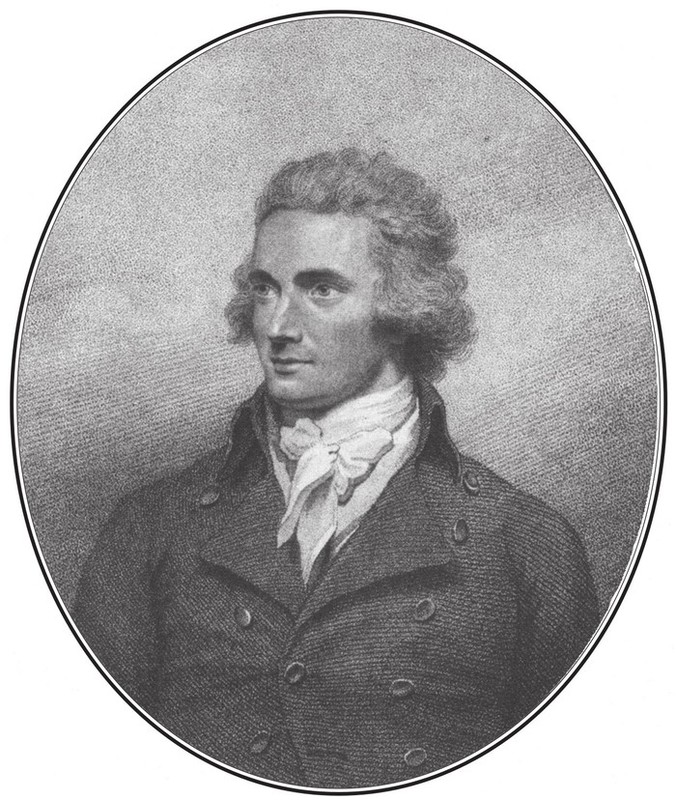
MUNGO PARK
From an engraving after the portrait by Henry Ederidge reproduced as the frontispiece to the Travels
Author’s Preface
THE FOLLOWING JOURNAL, drawn up from original minutes and notices made at the proper moment, and preserved with great difficulty, is now offered to the Public by the direction of my noble and honourable employers, the Members of the African Association. I regret that it is so little commensurate to the patronage I have received. As a composition, it has nothing to recommend it but truth. It is a plain unvarnished tale, without pretensions of any kind, except that it claims to enlarge, in some degree, the circle of African geography. For this purpose my services were offered, and accepted by the Association; and, I trust, I have not laboured altogether in vain. The work, however, must speak for itself; and I should not have thought any preliminary observations necessary, if I did not consider myself called upon, both by justice and gratitude, to offer those which follow.
Immediately after my return from Africa, the Acting Committee of the Association, taking notice of the time it would require to prepare an account in detail, as it now appears, and being desirous of gratifying, as speedily as possible, the curiosity which many of the Members were pleased to express concerning my discoveries, determined that an epitome, or abridgment of my travels, should be forthwith prepared from such materials and oral communications as I could furnish, and printed for the use of the Association, and also that an engraved map of my route should accompany it. A memoir, thus supplied and improved, was accordingly drawn up in two parts, by members of the Association, and distributed among the Society; the first consisting of a narrative, in abstract, of my travels, by Bryan Edwards, Esq; the second, of Geographical Illustrations of my progress, by Major James Rennell, FRS. Major Rennell was pleased also to add a map of my route, constructed in conformity to my own observations and sketches, freed from those errors which the Major’s superior knowledge, and distinguished accuracy in geographical researches, enabled him to discover and correct.
Availing myself, therefore, on the present occasion, of assistance like this, it is impossible that I can present myself before the public, without expressing how deeply and gratefully sensible I am of the honour and advantage which I derive from the labours of those gentlemen; for Mr Edwards has kindly permitted me to incorporate, as occasion offered, the whole of his narrative into different parts of my work; and Major Rennell, with equal goodwill, allows me to embellish and elucidate my Travels with the map before mentioned.
Thus aided and encouraged, I should deliver this volume to the world with that confidence of a favourable reception, which no merits of my own could authorise me to claim, were I not apprehensive that expectations have been formed by some of my subscribers, of discoveries to be unfolded which I have not made, and of wonders to be related of which I am utterly ignorant. There is danger that those who feel a disappointment of this nature, finding less to astonish and amuse in my book than they had promised to themselves beforehand, will not even allow me the little merit which I really possess. Painful as this circumstance may prove to my feelings, I shall console myself under it, if the distinguished persons, under whose auspices I entered on my mission, shall allow that I have executed the duties of it to their satisfaction; and that they consider the Journal, which I have now the honour to present to them, to be, what I have endeavoured to make it, an honest and faithful report of my proceedings and observations in their service, from the outset of my journey to its termination.
M. P.
The following African words recurring very frequently in the course of the narrative, it is thought necessary to prefix an explanation of them for the reader’s convenience.
AlkaidThe head magistrate of a town or province, whose office is commonly hereditary
BaloonA room in which strangers are commonly lodged
BarNominal money: a single bar is equal in value to two shillings sterling or hereabouts
BentangA sort of stage, erected in every town, answering the purpose of a town-hall
BushreenA Mussulman
CalabashA species of gourd, of which the Negroes make bowls and dishes
Coffle or CafilaA caravan of slaves, or a company of people travelling with any kind of merchandise
CowriesSmall shells, which pass for money in the interior
Dooty
Another name for the chief magistrate of a town or province; this word is used only in the interior countries
KafirA Pagan native; an unbeliever
Korree
A watering place where shepherds keep their cattle
KouskousA dish prepared from boiled corn
MansaA king or chief governor
MinkalliA quantity of gold, nearly equal in value to ten shillings sterling
PaddleA sort of hoe used in husbandry
PalaverA court of justice; a public meeting of any kind
SaphieAn amulet or charm
Shea tou-louVegetable butter
Slatees
Free black merchants, who trade chiefly in slaves
SoofrooA skin for containing water
SonakeeAnother term for an unconverted native; it signifies one who drinks strong liquors, and is used by way of reproach
BOOK ONE
THE FIRST JOURNEY
Travels in the interior districts of Africa performed under the direction and patronage of the African association in the years 1795, 1796, and 1797
by Mungo Park, SURGEON
Chapter 1
The Author’s motives for undertaking the voyage – His instructions and departure – Arrives at Jillifree, on the Gambia River – Proceeds to Vintain – Some account of the Feloops – Proceeds up the river for Jonkakonda – Arrives at Dr Laidley’s – Some account of Pisania, and the British factory established at that place – The Author’s employment during his stay at Pisania – His sickness and recovery – The country described – Prepares to set out for the interior.
SOON AFTER MY RETURN from the East Indies in 1793, having learnt that the noblemen and gentlemen, associated for the purpose of prosecuting discoveries in the interior of Africa, were desirous of engaging a person to explore that continent by the way of the Gambia River, I took occasion, through means of the President of the Royal Society, to whom I had the honour to be known, of offering myself for that service. I had been informed, that a gentleman of the name of Houghton, a captain in the army, and formerly fort-major at Goree, had already sailed to the Gambia, under the direction of the Association, and that there was reason to apprehend he had fallen a sacrifice to the climate, or perished in some contest with the natives; but this intelligence, instead of deterring me from my purpose, animated me to persist in the offer of my services with the greater solicitude. I had a passionate desire to examine into the productions of a country so little known, and to become experimentally acquainted with the modes of life and character of the natives. I knew that I was able to bear fatigue; and I relied on my youth and the strength of my constitution to preserve me from the effects of the climate. The salary which the Committee allowed was sufficiently large, and I made no stipulation for future reward. If I should perish in my journey, I was willing that my hopes and expectations should perish with me; and if I should succeed in rendering the geography of Africa more familiar to my countrymen, and in opening to their ambition and industry new sources of wealth, and new channels of commerce, I knew that I was in the hands of men of honour, who would not fail to bestow that remuneration which my successful services should appear to them to merit. The Committee of the Association, having made such enquiries as they thought necessary, declared themselves satisfied with the qualifications that I possessed, and accepted me for the service; and with that liberality which on all occasions distinguishes their conduct, gave me every encouragement which it was in their power to grant, or which I could with propriety ask.
It was at first proposed that I should accompany Mr James Willis, who was then recently appointed Consul at Senegambia, and whose countenance in that capacity it was thought might have served and protected me; but Government afterwards rescinded his appointment, and I lost that advantage. The kindness of the Committee, however, supplied all that was necessary. Being favoured by the Secretary of the Association, the late Henry Beaufoy, Esq., with a recommendation to Dr John Laidley (a gentleman who had resided many years at an English factory on the banks of the Gambia), and furnished with a letter of credit on him for £200, I took my passage in the brig Endeavour, a small vessel trading to the Gambia for bees-wax and ivory, commanded by Captain Richard Wyatt, and I became impatient for my departure.
My instructions were very plain and concise. I was directed, on my arrival in Africa, ‘to pass on to the river Niger, either by the way of Bambouk, or by such other route as should be found most convenient. That I should ascertain the course, and, if possible, the rise and termination of that river. That I should use my utmost exertions to visit the principal towns or cities in its neighbourhood, particularly Timbuctoo and Houssa; and that I should be afterwards at liberty to return to Europe, either by the way of the Gambia, or by such other route, as, under all the then existing circumstances of my situation and prospects, should appear to me to be most advisable.’
We sailed from Portsmouth on the 22nd day of May 1795. On the 4th of June we saw the mountains over Mogadore, on the coast of Africa; and on the 21st of the same month, after a pleasant voyage of thirty days, we anchored at Jillifree, a town on the northern bank of the river Gambia, opposite to James’s Island, where the English had formerly a small port.
The kingdom of Barra, in which the town of Jillifree is situated, produces great plenty of the necessaries of life; but the chief trade of the inhabitants is in salt; which commodity they carry up the river in canoes as high as Barraconda, and bring down in return Indian corn, cotton cloths, elephants’ teeth, small quantities of gold dust, etc The number of canoes and people constantly employed in this trade, make the King of Barra more formidable to Europeans than any other chieftain on the river; and this circumstance probably encouraged him to establish those exorbitant duties which traders of all nations are obliged to pay at entry, amounting to nearly £20 on every vessel, great and small. These duties or customs are generally collected in person by the Alkaid, or governor of Jillifree, and he is attended on these occasions by a numerous train of dependants, among whom are found many who, by their frequent intercourse with the English, have acquired a smattering of our language; but they are commonly very noisy and very troublesome – begging for every thing they fancy with such earnestness and importunity, that traders, in order to get quit of them, are frequently obliged to grant their requests.
On the 23rd we departed from Jillifree, and proceeded to Vintain, a town situated about two miles up a creek on the southern side of the river. This is much resorted to by Europeans, on account of the great quantities of bees-wax which are brought hither for sale. The wax is collected in the woods by the Feloops, a wild and unsociable race of people; their country, which is of considerable extent, abounds in rice; and the natives supply the traders, both on the Gambia and Cassamansa rivers, with that article, and also with goats and poultry, on very reasonable terms. The honey which they collect is chiefly used by themselves in making a strong intoxicating liquor, much the same as the mead which is produced from honey in Great Britain.
In their traffic with Europeans, the Feloops generally employ a factor or agent, of the Mandingo nation, who speaks a little English, and is acquainted with the trade of the river. This broker makes the bargain; and, with the connivance of the European, receives a certain part only of the payment, which he gives to his employer as the whole; the remainder (which is very truly called the cheating money) he receives when the Feloop is gone, and appropriates to himself, as a reward for his trouble.
The language of the Feloops is appropriate and peculiar; and as their trade is chiefly conducted, as has been observed, by Mandingoes, the Europeans have no inducement to learn it. The numerals are as follow: One, Enory; Two, Sickaba or Cookaba; Three, Sisajee; Four, Sibakeer; Five, Footuck; Six, Footuck-Enory; Seven, Footuck-Cookaba; Eight, Footuck-Sisajee; Nine, Footuck-Sibakeer; Ten, Sibankonyen.
On the 26th we left Vintain, and continued our course up the river, anchoring whenever the tide failed us, and frequently towing the vessel with the boat. The river is deep and muddy, the banks are covered with impenetrable thickets of mangrove, and the whole of the adjacent country appears to be flat and swampy.
The Gambia abounds with fish, some species of which are excellent food; but none of them that I recollect are known in Europe. At the entrance from the sea, sharks are found in great abundance; and higher up, alligators and the hippopotamus (or river horse) are very numerous. The latter might with more propriety be called the river-elephant, being of enormous and unwieldy bulk, and its teeth furnish good ivory. This animal is amphibious, with short and thick legs, and cloven hoofs: it feeds on grass, and such shrubs as the banks of the river afford, boughs of trees, etc, seldom venturing far from the water, in which it seeks refuge on hearing the approach of man. I have seen many, and always found them of a timid and inoffensive disposition.
In six days after leaving Vintain, we reached Jonkakonda, a place of considerable trade, where our vessel was to take in part of her lading. The next morning, the several European traders came from their different factories to receive their letters, and learn the nature and amount of the cargo; and the captain despatched a messenger to Dr Laidley to inform him of my arrival. He came to Jonkakonda the morning following, when I delivered him Mr Beaufoy’s letter, and he gave me a kind invitation to spend my time at his house until an opportunity should offer of prosecuting my journey. This invitation was too acceptable to be refused; and being furnished by the Doctor with a horse and guide, I set out from Jonkakonda at daybreak on the 5th of July, and at eleven o’clock arrived at Pisania, where I was accommodated with a room and other conveniences in the Doctor’s house.
Pisania is a small village in the king of Yany’s dominions, established by British subjects as a factory for trade, and inhabited solely by them and their black servants. It is situated on the banks of the Gambia, sixteen miles above Jonkakonda. The white residents, at the time of my arrival there, consisted only of Dr Laidley, and two gentlemen who were brothers, of the name of Ainslie, but their domestics were numerous. They enjoyed perfect security under the king’s protection; and being highly esteemed and respected by the natives at large, wanted no accommodation or comfort which the country could supply; and the greatest part of the trade in slaves, ivory, and gold, was in their hands.
Being now settled for some time at my ease, my first object was to learn the Mandingo tongue, being the language in almost general use throughout this part of Africa; and without which I was fully convinced that I never could acquire an extensive knowledge of the country or its inhabitants. In this pursuit I was greatly assisted by Dr Laidley, who, by a long residence in the country, and constant intercourse with the natives, had made himself completely master of it. Next to the language, my great object was to collect information concerning the countries I intended to visit. On this occasion I was referred to certain traders called Slatees. These are free black merchants, of great consideration in this part of Africa, who come down from the interior countries chiefly with enslaved Negroes for sale; but I soon discovered that very little dependence could be placed on the accounts they gave; for they contradicted each other in the most important particulars, and all of them seemed extremely unwilling that I should prosecute my journey. These circumstances increased my anxiety to ascertain the truth from my own personal observations.
In researches of this kind, and in observing the manners and customs of the natives, in a country so little known to the nations of Europe, and furnished with so many striking and uncommon objects of nature, my time passed not unpleasantly; and I began to flatter myself that I had escaped the fever, or seasoning, to which Europeans, on their first arrival in hot climates, are generally subject. But, on the 31st of July, I imprudently exposed myself to the night dew, in observing an eclipse of the moon, with a view to determine the longitude of the place; the next day I found myself attacked with a smart fever and delirium; and such an illness followed, as confined me to the house during the greatest part of August. My recovery was very slow; but I embraced every short interval of convalescence to walk out, and make myself acquainted with the productions of the country. In one of those excursions, having rambled farther than usual in a hot day, I brought on a return of my fever, and on the 10th of September I was again confined to my bed. The fever, however, was not so violent as before; and in the course of three weeks I was able, when the weather would permit, to renew my botanical excursions; and when it rained, I amused myself with drawing plants, etc, in my chamber. The care and attention of Dr Laidley contributed greatly to alleviate my sufferings; his company and conversation beguiled the tedious hours during that gloomy season, when the rain falls in torrents; when suffocating heats oppress by day, and when the night is spent by the terrified traveller in listening to the croaking of frogs (of which the numbers are beyond imagination), the shrill cry of the jackal, and the deep howling of the hyena; a dismal concert, interrupted only by the roar of such tremendous thunder as no person can form a conception of but those who have heard it.
The country itself, being an immense level, and very generally covered with woods, presents a tiresome and gloomy uniformity to the eye; but although nature has denied to the inhabitants the beauties of romantic landscapes, she has bestowed on them, with a liberal hand, the more important blessings of fertility and abundance. A little attention to cultivation procures a sufficiency of corn; the fields afford a rich pasturage for cattle; and the natives are plentifully supplied with excellent fish, both from the Gambia river and the Walli creek.
The grains which are chiefly cultivated are Indian corn (zea mays); two kinds of holcus spicatus, called by the natives soono and sanio; holcus niger, and holcus bicolor; the former of which they have named bassi woolima, and the latter bassiqui. These, together with rice, are raised in considerable quantities; besides which the inhabitants in the vicinity of the towns and villages have gardens which produce onions, calavances, yams, cassavi, ground-nuts, pompions, gourds, water melons, and some other esculent plants.
I observed, likewise, near the towns, small patches of cotton and indigo. The former of these articles supplies them with clothing, and with the latter they dye their cloth of an excellent blue colour, in a manner that will hereafter be described.
In preparing their corn for food, the natives use a large wooden mortar called a paloon, in which they bruise the seed until it parts with the outer covering, or husk, which is then separated from the clean corn by exposing it to the wind; nearly in the same manner as wheat is cleared from the chaff in England. The corn thus freed from the husk is returned to the mortar, and beaten into meal, which is dressed variously in different countries; but the most common preparation of it among the nations of the Gambia, is a sort of pudding, which they call kouskous. It is made by first moistening the flour with water, and then stirring and shaking it about in a large calabash or gourd, till it adheres together in small granules, resembling sago. It is then put into an earthen pot, whose bottom is perforated with a number of small holes; and this pot being placed upon another, the two vessels are luted together, either with a paste of meal and water, or with cows’ dung, and placed upon the fire. In the lower vessel is commonly some animal food and water, the steam or vapour of which ascends through the perforations in the bottom of the upper vessel, and softens and prepares the kouskous, which is very much esteemed throughout all the countries that I visited. I am informed that the same manner of preparing flour is very generally used on the Barbary coast, and that the dish so prepared is there called by the same name. It is therefore probable that the Negroes borrowed the practice from the Moors.
For gratifying a taste for variety, another sort of pudding called nealing is sometimes prepared from the meal of corn; and they have also adopted two or three different modes of dressing their rice. Of vegetable food, therefore, the natives have no want; and although the common class of people are but sparingly supplied with animal food, yet this article is not wholly withheld from them.
Their domestic animals are nearly the same as in Europe. Swine are found in the woods, but their flesh is not esteemed; probably the marked abhorrence in which this animal is held by the votaries of Mahomet has spread itself among the pagans. Poultry of all kinds (the turkey excepted) is everywhere to be had. The Guinea fowl and red partridge abound in the fields; and the woods furnish a small species of antelope, of which the venison is highly and deservedly prized.
Of the other wild animals in the Mandingo countries, the most common are the hyena, the panther, and the elephant. Considering the use that is made of the latter in the East Indies, it may be thought extraordinary that the natives of Africa have not, in any part of this immense continent, acquired the skill of taming this powerful and docile creature, and applying his strength and faculties to the service of man. When I told some of the natives that this was actually done in the countries of the East, my auditors laughed me to scorn, and exclaimed, Tobaubo fonnio (a white man’s lie)! The Negroes frequently find means to destroy the elephant by firearms; they hunt it principally for the sake of the teeth, which they transfer in barter to those who sell them again to the Europeans. The flesh they eat, and consider it as a great delicacy.
The usual beast of burden in all the Negro territories is the ass. The application of animal labour to the purposes of agriculture is nowhere adopted; the plough, therefore, is wholly unknown. The chief implement used in husbandry is the hoe, which varies in form in different districts; and the labour is universally performed by slaves.
On the 6th of October the waters of the Gambia were at the greatest height, being fifteen feet above the high-water mark of the tide; after which they began to subside – at first slowly, but afterwards very rapidly, sometimes sinking more than a foot in twenty-four hours; by the beginning of November the river had sunk to its former level, and the tide ebbed and flowed as usual. When the river had subsided, and the atmosphere grew dry, I recovered apace, and began to think of my departure – for this is reckoned the most proper season for travelling: the natives had completed their harvest, and provisions were everywhere cheap and plentiful.
Dr Laidley was at this time employed in a trading voyage at Jonkakonda. I wrote to him to desire that he would use his interest with the Slatees, or slave-merchants, to procure me the company and protection of the first coffle (or caravan) that might leave Gambia for the interior country; and in the meantime I requested him to purchase for me a horse and two asses. A few days afterwards the Doctor returned to Pisania, and informed me that a coffle would certainly go for the interior in the course of the dry season; but that as many of the merchants belonging to it had not yet completed their assortment of goods, he could not say at what time they would set out.
As the characters and dispositions of the Slatees, and people that composed the caravan, were entirely unknown to me, and as they seemed rather averse to my purpose, and unwilling to enter into any positive engagements on my account; and the time of their departure being withal very uncertain, I resolved, on further deliberation, to avail myself of the dry season, and proceed without them.
Dr Laidley approved my determination, and promised me every assistance in his power to enable me to prosecute my journey with comfort and safety.
This resolution having been formed, I made preparations accordingly. And now, being about to take leave of my hospitable friend (whose kindness and solicitude continued to the moment of my departure),*and to quit, for many months, the countries bordering on the Gambia, it seems proper, before I proceed with my narrative, that I should, in this place, give some account of the several Negro nations which inhabit the banks of this celebrated river, and the commercial intercourse that subsists between them and such of the nations of Europe as find their advantage in trading to this part of Africa. The observations which have occurred to me on both these subjects will be found in the following chapter.
*Dr Laidley, to my infinite regret, has since paid the debt of nature. He left Africa in the latter end of 1797, intending to return to Great Britain by way of the West Indies; and died soon after his arrival at Barbadoes.
*Dr Laidley, to my infinite regret, has since paid the debt of nature. He left Africa in the latter end of 1797, intending to return to Great Britain by way of the West Indies; and died soon after his arrival at Barbadoes.
Chapter 2
Description of the Feloops, the Jaloffs, the Foulahs, and Mandingoes – Some account of the trade between the nations of Europe and the natives of Africa, by the way of the Gambia, and between the native inhabitants of the coast, and the nations of the interior countries – Their mode of selling and buying, etc
THE NATIVES OF THE COUNTRIES bordering on the Gambia, though distributed into a great many distinct governments, may, I think, be divided into four great classes; the Feloops, the Jaloffs, the Foulahs, and the Mandingoes. Among all these nations, the religion of Mahomet has made, and continues to make, considerable progress; but in most of them, the body of the people, both free and enslaved, persevere in maintaining the blind but harmless superstitions of their ancestors, and are called by the Mohammedans kafirs, or infidels.
Of the Feloops, I have little to add to what has been observed concerning them in the former chapter. They are of a gloomy disposition, and are supposed never to forgive an injury. They are even said to transmit their quarrels as deadly feuds to their posterity; insomuch that a son considers it as incumbent on him, from a just sense of filial obligation, to become the avenger of his deceased father’s wrongs. If a man loses his life in one of those sudden quarrels, which perpetually occur at their feasts, when the whole party is intoxicated with mead, his son, or the eldest of his sons (if he has more than one), endeavours to procure his father’s sandals, which he wears once a year, on the anniversary of his father’s death, until a fit opportunity offers of avenging his fate, when the object of his resentment seldom escapes his pursuit. This fierce and unrelenting disposition is, however, counterbalanced by many good qualities; they display the utmost gratitude and affection towards their benefactors; and the fidelity with which they preserve whatever is entrusted to them is remarkable. During the present war they have more than once taken up arms to defend our merchant vessels from French privateers; and English property, of considerable value, has frequently been left at Vintain, for a long time, entirely under the care of the Feloops, who have uniformly manifested on such occasions the strictest honesty and punctuality. How greatly is it to be wished that the minds of a people, so determined and faithful, could be softened and civilised by the mild and benevolent spirit of Christianity!
The Jaloffs (or Yaloffs) are an active, powerful, and warlike race, inhabiting great part of that tract which lies between the river Senegal and the Mandingo states on the Gambia; yet they differ from the Mandingoes, not only in language, but likewise in complexion and features. The noses of the Jaloffs are not so much depressed, nor the lips so protuberant, as among the generality of Africans; and although their skin is of the deepest black, they are considered by the white traders as the most sightly Negroes in this part of the continent.
They are divided into several independent states or kingdoms, which are frequently at war either with their neighbours, or with each other. In their manners, superstitions, and government, however, they have a greater resemblance to the Mandingoes than to any other nation; but excel them in the manufacture of cotton cloth – spinning the wool to a finer thread, weaving it in a broader loom, and dyeing it of a better colour.
Their language is said to be copious and significant, and is often learnt by Europeans trading to Senegal.
The Foulahs (or Pholeys), such of them at least as reside near the Gambia, are chiefly of a tawny complexion, with soft silky hair and pleasing features. They are much attached to a pastoral life, and have introduced themselves into all the kingdoms on the windward coast as herdsmen and husbandmen, paying a tribute to the sovereign of the country for the lands which they hold.
The Mandingoes constitute in truth the bulk of the inhabitants in all those districts of Africa which I visited; and their language, with a few exceptions, is universally understood, and very generally spoken, in that part of the continent.
They are called Mandingoes, I conceive, as having originally migrated from the interior state of Manding, of which some account will hereafter be given; but, contrary to the present constitution of their parent country, which is republican, it appeared to me that the government in all the Mandingo states, near the Gambia, is monarchical. The power of the sovereign is, however, by no means unlimited. In all affairs of importance, the king calls an assembly of the principal men, or elders, by whose councils he is directed, and without whose advice he can neither declare war, nor conclude peace.
In every considerable town there is a chief magistrate, called the Alkaid, whose office is hereditary, and whose business it is to preserve order, to levy duties on travellers, and to preside at all conferences in the exercise of local jurisdiction and the administration of justice. These courts are composed of the elders of the town (of free condition), and are termed palavers; and their proceedings are conducted in the open air with sufficient solemnity. Both sides of a question are freely canvassed, witnesses are publicly examined, and the decisions which follow generally meet with the approbation of the surrounding audience.
As the Negroes have no written language of their own, the general rule of decision is an appeal to ancient custom; but since the system of Mahomet has made so great progress among them, the converts to that faith have gradually introduced, with the religious tenets, many of the civil institutions of the Prophet; and where the Koran is not found sufficiently explicit, recourse is had to a commentary called Al Sharra, containing, as I was told, a complete exposition or digest of the Mohammedan laws, both civil and criminal, properly arranged and illustrated.
This frequency of appeal to written laws, with which the pagan natives are necessarily unacquainted, has given rise in their palavers to (what I little expected to find in Africa) professional advocates, or expounders of the law, who are allowed to appear and to plead for plaintiff or defendant, much in the same manner as counsel in the law courts of Great Britain. They are Mohammedan Negroes who have made, or affect to have made, the laws of the Prophet their peculiar study; and if I may judge from their harangues, which I frequently attended, I believe that in the forensic qualifications of procrastination and cavil, and the arts of confounding and perplexing a cause, they are not always surpassed by the ablest pleaders in Europe. While I was at Pisania a cause was heard which furnished the Mohammedan lawyers with an admirable opportunity of displaying their professional dexterity. The case was this: An ass belonging to a Serawoolli Negro (a native of an interior country near the river Senegal) had broke into a field of corn belonging to one of the Mandingo inhabitants, and destroyed great part of it. The Mandingo having caught the animal in his field, immediately drew his knife and cut its throat. The Serawoolli thereupon called a palaver (or in European terms, brought an action) to recover damages for the loss of his beast, on which he set a high value. The defendant confessed he had killed the ass, but pleaded a set off, insisting that the loss he had sustained, by the ravage in his corn, was equal to the sum demanded for the animal. To ascertain this fact was the point at issue, and the learned advocates contrived to puzzle the cause in such a manner, that after a hearing of three days, the court broke up without coming to any determination upon it; and a second palaver was, I suppose, thought necessary.
The Mandingoes, generally speaking, are of a mild, sociable, and obliging disposition. The men are commonly above the middle size, well shaped, strong, and capable of enduring great labour; the women are good-natured, sprightly and agreeable. The dress of both sexes is composed of cotton cloth, of their own manufacture; that of the men is a loose frock, not unlike a surplice, with drawers which reach halfway down the leg; and they wear sandals on their feet, and white cotton caps on their heads. The women’s dress consists of two pieces of cloth, each of which they wrap round the waist, which, hanging down to the ankles, answers the purpose of a petticoat; the other is thrown negligently over the bosom and shoulders.
This account of their clothing is indeed nearly applicable to the natives of all the different countries in this part of Africa; a peculiar national mode is observable only in the head-dresses of the women.
Thus, in the countries of the Gambia, the females wear a sort of bandage, which they call Jalla. It is a narrow stripe of cotton cloth, wrapped many times round, immediately over the forehead. In Bondou the head is encircled with strings of white beads, and a small plate of gold is worn in the middle of the forehead. In Kasson, the ladies decorate their heads, in a very tasteful and elegant manner, with white sea shells. In Kaarta and Ludamar, the women raise their hair to a great height by the addition of a pad (as the ladies did formerly in Great Britain), which they decorate with a species of coral, brought from the Red Sea by pilgrims returning from Mecca, and sold at a great price.
In the construction of their dwelling-houses, the Mandingoes also conform to the general practice of the African nations on this part of the continent, contenting themselves with small and incommodious hovels. A circular mud wall about four feet high, upon which is placed a conical roof, composed of the bamboo cane, and thatched with grass, forms alike the palace of the king, and the hovel of the slave. Their household furniture is equally simple. A hurdle of canes placed upon upright stakes about two feet from the ground, upon which is spread a mat or bullock’s hide, answers the purpose of a bed; a water jar, some earthen pots for dressing their food, a few wooden bowls and calabashes, and one or two low stools, compose the rest.
As every man of free condition has a plurality of wives, it is found necessary (to prevent, I suppose, matrimonial dispute) that each of the ladies should be accommodated with a hut to herself; and all the huts belonging to the same family are surrounded by a fence, constructed of bamboo canes split and formed into a sort of wickerwork. The whole enclosure is called a sirk, or surk. A number of these enclosures, with narrow passages between them, form what is called a town; but the huts are generally placed without any regularity, according to the caprice of the owner. The only rule that seems to be attended to, is placing the door towards the south-west, in order to admit the sea-breeze.
In each town is a large stage called the Bentang, which answers the purpose of a public hall or town-house; it is composed of interwoven canes, and is generally sheltered from the sun by being erected in the shade of some large tree. It is here that all public affairs are transacted, and trials conducted; and here the lazy and indolent meet to smoke their pipes and hear the news of the day. In most of the towns the Mohammedans have also a missura, or mosque, in which they assemble and offer up their daily prayers, according to the rules of the Koran.
In the account which I have thus given of the natives, the reader must bear in mind that my observations apply chiefly to persons of free condition, who constitute, I suppose, not more than one-fourth part of the inhabitants at large; the other three-fourths are in a state of hopeless and hereditary slavery, and are employed in cultivating the land, in the care of cattle, and in servile offices of all kinds, much in the same manner as the slaves in the West Indies. I was told, however, that the Mandingo master can neither deprive his slave of life, nor sell him to a stranger, without first calling a palaver on his conduct, or, in other words, bringing him to a public trial; but this degree of protection is extended only to the native or domestic slave. Captives taken in war, and those unfortunate victims who are condemned to slavery for crimes or insolvency, and, in short, all those unhappy people who are brought down from the interior countries for sale, have no security whatever, but may be treated and disposed of in all respects as the owner thinks proper. It sometimes happens, indeed, when no ships are on the coast, that a humane and considerate master incorporates his purchased slaves among his domestics; and their offspring at least, if not the parents, become entitled to all the privileges of the native class.
The preceding remarks concerning the several nations that inhabit the banks of the Gambia, are all that I recollect as necessary to be made in this place, at the outset of my journey. With regard to the Mandingoes, however, many particulars are yet to be related, some of which are necessarily interwoven into the narrative of my progress, and others will be given in a summary at the end of my work, together with all such observations as I have collected on the country and climate, which I could not with propriety insert in the regular detail of occurrences. What remains of the present chapter will therefore relate solely to the trade which the nations of Christendom have found means to establish with the natives of Africa by the channel of the Gambia, and the inland traffic which has arisen in consequence of it between the inhabitants of the coast and the nations of the interior countries.
The earliest European establishment on this celebrated river was a factory of the Portuguese, and to this must be ascribed the introduction of the numerous words of that language which are still in use among the Negroes. The Dutch, French, and English afterwards successively possessed themselves of settlements on the coast; but the trade of the Gambia became, and continued for many years, a sort of monopoly in the hands of the English. In the travels of Francis Moore is preserved an account of the Royal African Company’s establishments in this river in the year 1730, at which time James’s factory alone consisted of a governor, deputy-governor, and two other principal officers; eight factors, thirteen writers, twenty inferior attendants and tradesmen; a company of soldiers, and thirty-two Negro servants, besides sloops, shallops, and boats, with their crews; and there were no less than eight subordinate factories in other parts of the river.
The trade with Europe, by being afterwards laid open, was almost annihilated; the share which the subjects of England at this time hold in it, supports not more than two or three annual ships, and I am informed that the gross value of British exports is under £20,000. The French and Danes still maintain a small share, and the Americans have lately sent a few vessels to the Gambia by way of experiment.
The commodities exported to the Gambia from Europe consist chiefly of firearms and ammunition, ironware, spirituous liquors, tobacco, cotton caps, a small quantity of broad cloth, and a few articles of the manufacture of Manchester; a small assortment of India goods, with some glass beads, amber, and other trifles, for which are taken in exchange, slaves, gold dust, ivory, bees-wax, and hides. Slaves are the chief article, but the whole number which at this time are annually exported from the Gambia by all nations, is supposed to be under one thousand.
Most of these unfortunate victims are brought to the coast in periodical caravans, many of them from very remote inland countries, for the language which they speak is not understood by the inhabitants of the maritime districts. In a subsequent part of my work I shall give the best information I have been able to collect concerning the manner in which they are obtained. On their arrival at the coast, if no immediate opportunity offers of selling them to advantage, they are distributed among the neighbouring villages until a slave ship arrives, or until they can be sold to black traders, who sometimes purchase on speculation. In the meanwhile, the poor wretches are kept constantly fettered, two and two of them being chained together, and employed in the labours of the field; and I am sorry to add, are very scantily fed, as well as harshly treated. The price of a slave varies according to the number of purchasers from Europe and the arrival of caravans from the interior; but in general I reckon that a young and healthy male, from sixteen to twenty-five years of age, may be estimated on the spot from £18 to £20 sterling.
The Negro slave merchants, as I have observed in the former chapter, are called Slatees; who, besides slaves and the merchandise which they bring for sale to the whites, supply the inhabitants of the maritime districts with native iron, sweet-smelling gums and frankincense, and a commodity called shea-toulou, which, literally translated, signifies tree butter. This commodity is extracted, by means of boiling water, from the kernel of a nut, as will be more particularly described hereafter; it has the consistence and appearance of butter; and is in truth an admirable substitute for it. It forms an important article in the food of the natives, and serves also for every domestic purpose in which oil would otherwise be used. The demand for it is therefore very great.
In payment of these articles, the maritime states supply the interior countries with salt, a scarce and valuable commodity, as I frequently and painfully experienced in the course of my journey. Considerable quantities of this article, however, are also supplied to the inland natives by the Moors, who obtain it from the salt pits in the Great Desert, and receive in return corn, cotton cloth, and slaves.
In thus bartering one commodity for another, many inconveniences must necessarily have arisen at first from the want of coined money, or some other visible and determinate medium to settle the balance, or difference of value between different articles, to remedy which the natives of the interior make use of small shells called cowries, as will be shown hereafter. On the coast, the inhabitants have adopted a practice which I believe is peculiar to themselves.
In their early intercourse with Europeans, the article that attracted most notice was iron. Its utility, in forming the instruments of war and husbandry, made it preferable to all others; and iron soon became the measure by which the value of all other commodities was ascertained. Thus, a certain quantity of goods, of whatever denomination, appearing to be equal in value to a bar of iron, constituted, in the trader’s phraseology, a bar of that particular merchandise. Twenty leaves of tobacco, for instance, were considered as a bar of tobacco; and a gallon of spirits (or rather half spirits and half water), as a bar of rum; a bar of one commodity being reckoned equal in value to a bar of another commodity.
As, however, it must unavoidably happen, that according to the plenty or scarcity of goods at market in proportion to the demand, the relative value would be subject to continual fluctuation, greater precision has been found necessary; and at this time the current value of a single bar of any kind is fixed by the whites at two shillings sterling. Thus a slave, whose price is £15, is said to be worth 150 bars.
In transactions of this nature, it is obvious that the white trader has infinitely the advantage over the African, whom, therefore, it is difficult to satisfy; for, conscious of his own ignorance, he naturally becomes exceedingly suspicious and wavering; and indeed, so very unsettled and jealous are the Negroes in their dealings with the whites, that a bargain is never considered by the European as concluded, until the purchase money is paid, and the party has taken leave.
Having now brought together such general observations on the country and its inhabitants, as occurred to me during my residence in the vicinage of the Gambia, I shall detain the reader no longer with introductory matter, but proceed, in the next chapter, to a regular detail of the incidents which happened, and the reflections which arose in my mind, in the course of my painful and perilous journey, from its commencement, until my return to the Gambia.
Chapter 3
The Author sets out from Pisania – His attendants – Reaches Jindey – Story related by a Mandingo Negro – Proceeds to Medina, the capital of Woolli – Interview with the king – Saphies or charms – Proceeds to Koler – Description of Mumbo Jumbo – Arrives at Koojar – Wrestling match – Crosses the wilderness, and arrives at Tallika, in the kingdom of Bondou.
ON THE 2ND OF DECEMBER 1795, I took my departure from the hospitable mansion of Dr Laidley. I was fortunately provided with a Negro servant, who spoke both the English and Mandingo tongues. His name was Johnson. He was a native of this part of Africa; and having in his youth been conveyed to Jamaica as a slave, he had been made free, and taken to England by his master, where he had resided many years; and at length found his way back to his native country. As he was known to Dr Laidley, the Doctor recommended him to me, and I hired him as my interpreter, at the rate of ten bars monthly, to be paid to himself, and five bars a month to be paid to his wife during his absence. Dr Laidley furthermore provided me with a Negro boy of his own, named Demba; a sprightly youth, who besides Mandingo, spoke the language of the Serawoollies, an inland people (of whom mention will hereafter be made), residing on the banks of the Senegal; and to induce him to behave well, the Doctor promised him his freedom on his return, in case I should report favourably of his fidelity and services. I was furnished with a horse for myself (a small, but very hardy and spirited beast, which cost me to the value of £7, 10s.), and two asses for my interpreter and servant. My baggage was light, consisting chiefly of provisions for two days; a small assortment of beads, amber and tobacco, for the purchase of a fresh supply, as I proceeded; a few changes of linen, and other necessary apparel, an umbrella, a pocket sextant, a magnetic compass, and a thermometer; together with two fowling-pieces, two pairs of pistols, and some other small articles.
A freeman (a Bushreen or Mohammedan), named Madiboo, who was travelling to the kingdom of Bambarra, and two Slatees, or slave merchants of the Serawoolli nation, and of the same sect, who were going to Bondou, offered their services as far as they intended respectively to proceed; as did likewise a Negro named Tami (also a Mohammedan), a native of Kasson, who had been employed some years by Dr Laidley as a blacksmith, and was returning to his native country with the savings of his labours. All these men travelled on foot, driving their asses before them.
Thus I had no less than six attendants, all of whom had been taught to regard me with great respect, and to consider that their safe return hereafter, to the countries on the Gambia, would depend on my preservation.
Dr Laidley himself, and Messrs Ainsley, with a number of their domestics, kindly determined to accompany me the two first days; and, I believe, they secretly thought they should never see me afterwards.
We reached Jindey the same day, having crossed the Walli creek, a branch of the Gambia, and rested at the house of a black woman, who had formerly been the chère amie of a white trader named Hewett; and who, in consequence thereof, was called, by way of distinction, Seniora. In the evening we walked out to see an adjoining village, belonging to a Slatee named Jemaffoo Mamadoo, the richest of all the Gambia traders. We found him at home; and he thought so highly of the honour done him by this visit, that he presented us with a fine bullock, which was immediately killed, and part of it dressed for our evening’s repast.
The Negroes do not go to supper till late, and in order to amuse ourselves while our beef was preparing, a Mandingo was desired to relate some diverting stories; in listening to which, and smoking tobacco, we spent three hours. These stories bear some resemblance to those in the Arabian Nights’ Entertainments; but, in general, are of a more ludicrous cast. I shall here abridge one of them for the reader’s amusement.
‘Many years ago (said the relater), the people of Doomasansa (a town on the Gambia), were much annoyed by a lion, that came every night, and took away some of their cattle. By continuing his depredations, the people were at length so much enraged, that a party of them resolved to go and hunt the monster. They accordingly proceeded in search of the common enemy, which they found concealed in a thicket; and immediately firing at him, were lucky enough to wound him in such a manner, that, in springing from the thicket towards the people, he fell down among the grass, and was unable to rise. The animal, however, manifested such appearance of vigour, that nobody cared to approach him singly; and a consultation was held concerning the properest means of taking him alive; a circumstance, it was said, which, while it furnished undeniable proof of their prowess, would turn out to great advantage, it being resolved to convey him to the coast, and sell him to the Europeans. While some persons proposed one plan, and some another, an old man offered a scheme. This was, to strip the roof of a house of its thatch, and to carry the bamboo frame (the pieces of which are well secured together by thongs), and throw it over the lion. If, in approaching him, he should attempt to spring upon them, they had nothing to do but to let down the roof upon themselves, and fire at the lion through the rafters.
‘This proposition was approved and adopted. The thatch was taken from the roof of a hut, and the lion-hunters, supporting the fabric, marched courageously to the field of battle; each person carrying a gun in one hand, and bearing his share of the roof on the opposite shoulder. In this manner they approached the enemy; but the beast had by this time recovered his strength; and such was the fierceness of his countenance, that the hunters, instead of proceeding any further, thought it prudent to provide for their own safety, by covering themselves with the roof. Unfortunately, the lion was too nimble for them; for, making a spring while the roof was setting down, both the beast and his pursuers were caught in the same cage, and the lion devoured them at his leisure, to the great astonishment and mortification of the people of Doomasansa; at which place it is dangerous even at this day to tell the story, for it is become the subject of laughter and derision in the neighbouring countries, and nothing will enrage an inhabitant of that town so much as desiring him to catch a lion alive.’
About one o’clock in the afternoon of the 3rd of December, I took my leave of Dr Laidley and Messrs Ainsley, and rode slowly into the woods. I had now before me a boundless forest, and a country, the inhabitants of which were strangers to civilised life, and to most of whom a white man was the object of curiosity or plunder. I reflected that I had parted from the last European I might probably behold, and perhaps quitted for ever the comforts of Christian society. Thoughts like these would necessarily cast a gloom over the mind, and I rode musing along for about three miles, when I was awakened from my reverie by a body of people, who came running up and stopped the asses, giving me to understand that I must go with them to Peckaba, to present myself to the king of Walli, or pay customs to them. I endeavoured to make them comprehend that the object of my journey not being traffic, I ought not to be subjected to a tax like the Slatees and other merchants who travel for gain; but I reasoned to no purpose. They said it was usual for travellers of all descriptions to make a present to the king of Walli, and without doing so I could not be permitted to proceed. As they were more numerous than my attendants, and withal very noisy, I thought it prudent to comply with their demand, and having presented them with four bars of tobacco, for the king’s use, I was permitted to continue my journey, and at sunset reached a village near Kootacunda, where we rested for the night.
In the morning of December 4th, I passed Kootacunda, the last town of Walli, and stopped about an hour at a small adjoining village to pay customs to an officer of the king of Woolli. We rested the ensuing night at a village called Tabajang, and at noon the next day (December 5th) we reached Medina, the capital of the king of Woolli’s dominions.
The kingdom of Woolli is bounded by Walli on the west, by the Gambia on the south, by the small river Walli on the north-west, by Bondou on the north-east, and on the east by the Simbani wilderness.
The country everywhere rises into gentle acclivities, which are generally covered with extensive woods, and the towns are situated in the intermediate valleys. Each town is surrounded by a tract of cultivated land, the produce of which, I presume, is found sufficient to supply the wants of the inhabitants; for the soil appeared to me to be everywhere fertile, except near the tops of the ridges, where the red ironstone and stunted shrubs sufficiently marked the boundaries between fertility and barrenness. The chief productions are cotton, tobacco, and esculent vegetables; all which are raised in the valleys, the rising grounds being appropriated to different sorts of corn.
The inhabitants are Mandingoes; and, like most of the Mandingo nations, are divided into two great sects, the Mohammedans, who are called Bushreens, and the Pagans, who are called indiscriminately, Kafirs (unbelievers) and Sonakies (i.e. men who drink strong liquors). The Pagan natives are by far the most numerous, and the government of the country is in their hands, for though the most respectable among the Bushreens are frequently consulted in affairs of importance, yet they are never permitted to take any share in the executive government, which rests solely in the hands of the Mansa, or sovereign, and great officers of the state. Of these, the first in point of rank is the presumptive heir of the crown, who is called the Farbanna; next to him are the Alkaids, or provincial governors, who are more frequently called Keamos. Then follow the two grand divisions of freemen and slaves;* of the former, the Slatees, so frequently mentioned in the preceding pages, are considered as the principal; but in all classes great respect is paid to the authority of aged men.
On the death of the reigning monarch, his eldest son (if he has attained the age of manhood) succeeds to the regal authority. If there is no son, or if the son is under the age of discretion, a meeting of the great men is held, and the late monarch’s nearest relation (commonly his brother) is called to the government, not as regent, or guardian to the infant son, but in full right, and to the exclusion of the minor. The charges of the government are defrayed by occasional tributes from the people, and by duties on goods transported across the country. Travellers, on going from the Gambia towards the interior, pay customs in European merchandise. On returning they pay in iron and sheatoulou; these taxes are paid at every town.
Medina,* the capital of the kingdom, at which I was now arrived, is a place of considerable extent; and may contain from eight hundred to one thousand houses. It is fortified in the common African manner, by a surrounding high wall built of clay, and an outward fence of pointed stakes and prickly bushes; but the walls are neglected, and the outward fence has suffered considerably from the active hands of busy house-wives, who pluck up the stakes for firewood. I obtained a lodging at one of the king’s near relations, who apprised me, that at my introduction to the king, I must not presume to shake hands with him. It was not usual, he said, to allow this liberty to strangers. Thus instructed, I went in the afternoon to pay my respects to the sovereign; and ask permission to pass through his territories to Bondou. The king’s name was Jatta. He was the same venerable old man of whom so favourable an account was transmitted by Major Houghton. I found him seated upon a mat before the door of his hut; a number of men and women were arranged on each side, who were singing and clapping their hands. I saluted him respectfully, and informed him of the purport of my visit. The king graciously replied, that he not only gave me leave to pass through his country, but would offer up his prayers for my safety. On this, one of my attendants, seemingly in return for the king’s condescension, began to sing, or rather to roar, an Arabic song; at every pause of which, the king himself, and all the people present, struck their hands against their foreheads, and exclaimed, with devout and affecting solemnity, Amen, Amen!† The king told me, furthermore, that I should have a guide the day following, who would conduct me safely to the frontier of his kingdom. I then took my leave, and in the evening sent the king an order upon Dr Laidley for three gallons of rum, and received in return great store of provisions.
December 6th – Early in the morning, I went to the king a second time, to learn if the guide was ready. I found his majesty sitting upon a bullock’s hide, warming himself before a large fire; for the Africans are sensible of the smallest variation in the temperature of the air, and frequently complain of cold when a European is oppressed with heat. He received me with a benevolent countenance, and tenderly entreated me to desist from my purpose of travelling into the interior, telling me that Major Houghton had been killed in his route, and that, if I followed his footsteps, I should probably meet with his fate. He said that I must not judge of the people of the eastern country by those of Woolli; that the latter were acquainted with white men, and respected them; whereas the people of the east had never seen a white man, and would certainly destroy me. I thanked the king for his affectionate solicitude, but told him that I had considered the matter, and was determined, notwithstanding all dangers, to proceed. The king shook his head, but desisted from further persuasion, and told me the guide should be ready in the afternoon.
About two o’clock, the guide appearing, I went and took my last farewell of the good old king, and in three hours reached Konjour, a small village, where we determined to rest for the night. Here I purchased a fine sheep for some beads, and my Serawoolli attendants killed it with all the ceremonies prescribed by their religion; part of it was dressed for supper, after which a dispute arose between one of the Serawoolli Negroes and Johnson, my interpreter, about the sheep’s horns. The former claimed the horns as his perquisite, for having acted the part of our butcher, and Johnson contested the claim. I settled the matter by giving a horn to each of them. This trifling incident is mentioned as introductory to what follows; for it appeared on enquiry that these horns were highly valued, as being easily convertible into portable sheaths, or cases, for containing and keeping secure certain charms or amulets called saphies, which the Negroes constantly wear about them. These saphies are prayers, or rather sentences from the Koran, which the Mohammedan priests write on scraps of paper, and sell to the simple natives, who consider them to possess very extraordinary virtues. Some of the Negroes wear them to guard themselves against the bite of snakes or alligators, and on this occasion the saphie is commonly enclosed in a snake’s or alligator’s skin, and tied round the ankle. Others have recourse to them in time of war, to protect their persons against hostile weapons; but the common use to which these amulets are applied is to prevent or cure bodily diseases, to preserve from hunger and thirst, and generally to conciliate the favour of superior powers under all the circumstances and occurrences of life.*
In this case it is impossible not to admire the wonderful contagion of superstition; for, notwithstanding that the majority of the Negroes are pagans, and absolutely reject the doctrines of Mahomet, I did not meet with a man, whether a Bushreen or Kafir, who was not fully persuaded of the powerful efficacy of these amulets. The truth is, that all the natives of this part of Africa consider the art of writing as bordering on magic; and it is not in the doctrines of the Prophet, but in the arts of the magician that their confidence is placed. It will hereafter be seen that I was myself lucky enough, in circumstances of distress, to turn the popular credulity in this respect to good account.
On the 7th I departed from Konjour, and slept at a village called Malla (or Mallaing); and on the 8th, about noon, I arrived at Kolor, a considerable town, near the entrance into which I observed, hanging upon a tree, a sort of masquerade habit, made of the bark of trees, which I was told on enquiry belonged to MUMBO JUMBO. This is a strange bugbear, common to all the Mandingo towns, and much employed by the Pagan natives in keeping their women in subjection; for as the Kafirs are not restricted in the number of their wives, every one marries as many as he can conveniently maintain; and as it frequently happens that the ladies disagree among themselves, family quarrels sometimes rise to such a height that the authority of the husband can no longer preserve peace in his household. In such cases, the interposition of Mumbo Jumbo is called in, and is always decisive.
This strange minister of justice (who is supposed to be either the husband himself, or some person instructed by him), disguised in the dress that has been mentioned, and armed with the rod of public authority, announces his coming (whenever his services are required) by loud and dismal screams in the woods near the town. He begins the pantomime at the approach of night; and as soon as it is dark he enters the town, and proceeds to the Bentang, at which all the inhabitants immediately assemble.
It may easily be supposed that this exhibition is not much relished by the women; for as the person in disguise is entirely unknown to them, every married female suspects that the visit may possibly be intended for herself; but they dare not refuse to appear when they are summoned; and the ceremony commences with songs and dances, which continue till midnight, about which time Mumbo fixes on the offender. This unfortunate victim being thereupon immediately seized, is stripped naked, tied to a post, and severely scourged with Mumbo’s rod, amidst the shouts and derision of the whole assembly; and it is remarkable, that the rest of the women are the loudest in their exclamations on this occasion against their unhappy sister. Daylight puts an end to this indecent and unmanly revel.
December 9th – As there was no water to be procured on the road, we travelled with great expedition until we reached Tambacunda; and departing from thence early the next morning, the 10th, we reached, in the evening, Kooniakary, a town of nearly the same magnitude as Kolor. About noon on the 11th we arrived at Koojar, the frontier town of Woolli, towards Bondou, from which it is separated by an intervening wilderness of two days’ journey.
The guide appointed by the king of Woolli being now to return, I presented him with some amber for his trouble; and having been informed that it was not possible at all times to procure water in the wilderness, I made enquiry for men who would serve both as guides and water-bearers during my journey across it. Three Negroes, elephant-hunters, offered their services for these purposes, which I accepted, and paid them three bars each in advance, and the day being far spent, I determined to pass the night in my present quarters.
The inhabitants of Koojar, though not wholly unaccustomed to the sight of Europeans (most of them having occasionally visited the countries on the Gambia) beheld me with a mixture of curiosity and reverence, and in the evening invited me to see a neobering, or wrestling match, at the Bentang. This is an exhibition very common in all the Mandingo countries. The spectators arranged themselves in a circle, leaving the intermediate space for the wrestlers, who were strong active young men, full of emulation, and accustomed, I suppose, from their infancy to this sort of exertion. Being stripped of their clothing, except a short pair of drawers, and having their skin anointed with oil, or shea butter, the combatants approached each other on all fours, parrying with and occasionally extending a hand for some time, till at length one of them sprang forward, and caught his rival by the knee. Great dexterity and judgment were now displayed; but the contest was decided by superior strength; and I think that few Europeans would have been able to cope with the conqueror. It must not be unobserved that the combatants were animated by the music of a drum, by which their actions were in some measure regulated.
The wrestling was succeeded by a dance, in which many performers assisted, all of whom were provided with little bells, which were fastened to their legs and arms; and here, too, the drum regulated their motions. It was beaten with a crooked stick, which the drummer held in his right hand, occasionally using his left to deaden the sound, and thus vary the music. The drum is likewise applied on these occasions to keep order among the spectators, by imitating the sound of certain Mandingo sentences: for example, when the wrestling match is about to begin, the drummer strikes what is understood to signify ali boe see – sit all down; upon which the spectators immediately seat themselves; and when the combatants are to begin, he strikes amuta amuta – take hold, take hold.
In the course of the evening I was presented, by way of refreshment, with a liquor which tasted so much like the strong beer of my native country (and very good beer, too), as to induce me to enquire into its composition; and I learnt, with some degree of surprise, that it was actually made from corn which had been previously malted, much in the same manner as barley is malted in Great Britain. A root yielding a grateful bitter was used in lieu of hops, the name of which I have forgot; but the corn which yields the wort is the holcus spicatus of botanists.
Early in the morning (the 12th), I found that one of the elephant-hunters had absconded with the money he had received from me in part of wages; and in order to prevent the other two from following his example, I made them instantly fill their calabashes (or gourds) with water, and as the sun rose I entered the wilderness that separates the kingdoms of Woolli and Bondou.
We had not travelled more than a mile before my attendants insisted on stopping, that they might prepare a saphie or charm, to insure us a safe journey. This was done by muttering a few sentences, and spitting upon a stone, which was thrown before us on the road. The same ceremony was repeated three times, after which the Negroes proceeded with the greatest confidence; every one being firmly persuaded that the stone (like the scapegoat) had carried with it everything that could induce superior powers to visit us with misfortune.
We continued our journey without stopping any more till noon, when we came to a large tree, called by the natives Neema Taba. It had a very singular appearance, being decorated with innumerable rags or scraps of cloth, which persons travelling across the wilderness had at different times tied to the branches; probably, at first, to inform the traveller that water was to be found near it; but the custom has been so greatly sanctioned by time, that nobody now presumes to pass without hanging up something. I followed the example, and suspended a handsome piece of cloth on one of the boughs; and being told that either a well, or pool of water, was at no great distance, I ordered the Negroes to unload the asses that we might give them corn, and regale ourselves with the provisions we had brought. In the meantime I sent one of the elephant-hunters to look for the well, intending, if water was to be obtained, to rest here for the night. A pool was found, but the water was thick and muddy, and the Negro discovered near it the remains of a fire recently extinguished, and the fragments of provisions; which afforded a proof that it had been lately visited either by travellers or banditti. The fears of my attendants supposed the latter; and believing that robbers lurked near us, I was persuaded to change my resolution of resting here all night, and proceed to another watering-place, which, I was assured, we might reach early in the evening.
We departed accordingly, but it was eight o’clock at night before we came to the watering-place; and being now sufficiently fatigued with so long a day’s journey, we kindled a large fire, and lay down, surrounded by our cattle on the bare ground, more than a gunshot from any bush – the Negroes agreeing to keep watch by turns to prevent surprise.
I know not indeed that any danger was justly to be dreaded, but the Negroes were unaccountably apprehensive of banditti during the whole of the journey. As soon therefore as daylight appeared, we filled our soofroos (skins) and calabashes at the pool, and set out for Tallika, the first town in Bondou, which we reached about eleven o’clock in the forenoon (the 13th of December). I cannot, however, take leave of Woolli, without observing that I was everywhere well received by the natives; and that the fatigues of the day were generally alleviated by a hearty welcome at night; and although the African mode of living was at first unpleasant to me, yet I found at length that custom surmounted trifling inconveniences, and made everything palatable and easy.
* The term which signifies a man of free condition, is Horia; that of a slave, Jong.
*Medina, in the Arabic, signifies a city. The name is not uncommon among the Negroes, and has probably been borrowed from the Mahomedans.
† It may seem from hence that the king was a Mahomedan; but I was assured to the contrary. He joined in prayer on this occasion probably from the mere dictates of his benevolent mind; considering perhaps that prayers to the Almighty, offered up with true devotion and sincerity, were equally acceptable whether from Bushreen or Pagan.
*I believe that similar charms or amulets, under the names of domini, grigri, fetich, etc, etc, are common in all parts of Africa.
* The term which signifies a man of free condition, is Horia; that of a slave, Jong.
*Medina, in the Arabic, signifies a city. The name is not uncommon among the Negroes, and has probably been borrowed from the Mahomedans.
† It may seem from hence that the king was a Mahomedan; but I was assured to the contrary. He joined in prayer on this occasion probably from the mere dictates of his benevolent mind; considering perhaps that prayers to the Almighty, offered up with true devotion and sincerity, were equally acceptable whether from Bushreen or Pagan.
*I believe that similar charms or amulets, under the names of domini, grigri, fetich, etc, etc, are common in all parts of Africa.
Chapter 4
Some account of the inhabitants of Tallika – The Author proceeds for Fatteconda – Incidents on the road – Crosses the Neriko – Arrives at Koorkarany – Reaches the river Falemé – Fishery on that river – Proceeds along its bank to Naye or Nayemow – Crosses the Falemé, and arrives at Fatteconda – Has an interview with Almami, the sovereign of Bondou – Description of the king’s dwelling – Has a second interview with the king, who begs the Author’s coat – Author visits the king’s wives – Is permitted to depart on friendly terms – Journey by night – Arrives at Joag – Some account of Bondou and its inhabitants, the Foulahs.
TALLIKA, THE FRONTIER TOWN of Bondou towards Woolli, is inhabited chiefly by Foulahs of the Mohammedan religion, who live in considerable affluence, partly by furnishing provisions to the coffles, or caravans, that pass through the town, and partly by the sale of ivory, obtained by hunting elephants; in which employment the young men are generally very successful. Here, an officer belonging to the king of Bondou constantly resides, whose business it is to give timely information of the arrival of the caravans, which are taxed according to the number of loaded asses that arrive at Tallika.
I took up my residence at this officer’s house, and agreed with him to accompany me to Fatteconda, the residence of the king, for which he was to receive five bars; and before my departure I wrote a few lines to Dr Laidley, and gave my letter to the master of a caravan bound for the Gambia. This caravan consisted of nine or ten people with five asses loaded with ivory. The large teeth are conveyed in nets, two on each side of the ass; the small ones are wrapped up in skins, and secured with ropes.
December 14th – We left Tallika, and rode on very peaceably for about two miles, when a violent quarrel arose between two of my fellow-travellers, one of whom was the blacksmith, in the course of which they bestowed some opprobrious terms upon each other; and it is worthy of remark, that an African will sooner forgive a blow than a term of reproach applied to his ancestors – ‘Strike me, but do not curse my mother’, is a common expression even among the slaves. This sort of abuse, therefore, so enraged one of the disputants, that he drew his cutlass upon the blacksmith, and would certainly have ended the dispute in a very serious manner, if the others had not laid hold of him, and wrested the cutlass from him. I was obliged to interfere, and put an end to this disagreeable business, by desiring the blacksmith to be silent, and telling the other, who I thought was in the wrong, that if he attempted in future to draw his cutlass, or molest any of my attendants, I should look upon him as a robber, and shoot him without further ceremony. This threat had the desired effect, and we marched sullenly along till the afternoon, when we arrived at a number of small villages scattered over an open and fertile plain. At one of these, called Ganado, we took up our residence for the night. Here an exchange of presents and a good supper terminated all animosities among my attendants; and the night was far advanced before any of us thought of going to sleep. We were amused by an itinerant singing man,* who told a number of diverting stories, and played some sweet airs, by blowing his breath upon a bowstring, and striking it at the same time with a stick.
December 15th – At daybreak, my fellow-travellers, the Serawoollies, took leave of me, with many prayers for my safety. About a mile from Ganado, we crossed a considerable branch of the Gambia, called Neriko. The banks were steep, and covered with mimosas; and I observed in the mud a number of large mussels, but the natives do not eat them. About noon, the sun being exceedingly hot, we rested two hours in the shade of a tree, and purchased some milk and pounded corn from some Foulah herdsmen, and at sunset reached a town called Koorkarany, where the blacksmith had some relations; and here we rested two days.
Koorkarany is a Mohammedan town, surrounded by a high wall, and is provided with a mosque. Here I was shown a number of Arabic manuscripts, particularly a copy of the book before mentioned, called Al Shara. The Maraboo or priest, in whose possession it was, read and explained to me in Mandingo, many of the most remarkable passages; and in return, I showed him Richardson’s Arabic grammar, which he very much admired.
On the evening of the second day (December 17th) we departed from Koorkarany. We were joined by a young man who was travelling to Fatteconda for salt; and as night set in we reached Dooggii, a small village about three miles from Koorkarany.
Provisions were here so cheap that I purchased a bullock for six small stones of amber; for I found my company increase or diminish according to the good fare they met with.
December 18th – Early in the morning we departed from Dooggii, and being joined by a number of Foulahs and other people, made a formidable appearance, and were under no apprehension of being plundered in the woods. About eleven o’clock, one of the asses proving very refractory, the Negroes took a curious method to make him tractable. They cut a forked stick, and putting the forked part into the ass’s mouth, like the bit of a bridle, tied the two smaller parts together above his head, leaving the lower part of the stick of sufficient length to strike against the ground if the ass should attempt to put his head down. After this, the ass walked along quietly and gravely enough, taking care, after some practice, to hold his head sufficiently high to prevent the stones or roots of trees from striking against the end of the stick, which experience had taught him would give a severe shock to his teeth. This contrivance produced a ludicrous appearance, but my fellow-travellers told me it was constantly adopted by the Slatees, and always proved effectual.
In the evening we arrived at a few scattered villages, surrounded with extensive cultivation; at one of which, called Buggil, we passed the night in a miserable hut, having no other bed than a bundle of corn stalks, and no provisions but what we brought with us. The wells here are dug with great ingenuity, and are very deep. I measured one of the bucket-ropes, and found the depth of the well to be twenty-eight fathoms.
December 19th – We departed from Buggil, and travelled along a dry, stony height, covered with mimosas, till midday, when the land sloped towards the east, and we descended into a deep valley, in which I observed abundance of whin-stone and white quartz. Pursuing our course to the eastward, along this valley, in the bed of an exhausted river course, we came to a large village, where we intended to lodge. We found many of the natives dressed in a thin French gauze, which they called byqui; this being a light airy dress, and well calculated to display the shape of their persons, is much esteemed by the ladies. The manners of these females, however, did not correspond with their dress, for they were rude and troublesome in the highest degree; they surrounded me in numbers, begging for amber, beads, etc, and were so vehement in their solicitations, that I found it impossible to resist them. They tore my cloak, cut the buttons from my boy’s clothes, and were proceeding to other outrages, when I mounted my horse and rode off, followed for half a mile by a body of these harpies.
In the evening we reached Soobrudooka, and as my company was numerous (being fourteen), I purchased a sheep, and abundance of corn for supper; after which we lay down by the bundles, and passed an uncomfortable night in a heavy dew.
December 20th – We departed from Soobrudooka, and at two o’clock reached a large village situated on the banks of the Falemé river, which is here rapid and rocky. The natives were employed in fishing in various ways. The large fish were taken in long baskets made of split cane and placed in a strong current, which was created by walls of stone built across the stream, certain open places being left, through which the water rushed with great force. Some of these baskets were more than twenty feet long, and when once the fish had entered one of them, the force of the stream prevented it from returning. The small fish were taken in great numbers in hand-nets, which the natives weave of cotton, and use with great dexterity. The fish last mentioned are about the size of sprats, and are prepared for sale in different ways; the most common is by pounding them entire as they come from the stream in a wooden mortar, and exposing them to dry in the sun, in large lumps like sugar loaves. It may be supposed that the smell is not very agreeable; but in the Moorish countries to the north of the Senegal, where fish is scarcely known, this preparation is esteemed as a luxury, and sold to considerable advantage. The manner of using it by the natives is, by dissolving a piece of this black loaf in boiling water, and mixing it with their kouskous.
I thought it very singular, at this season of the year, to find the banks of the Falemé everywhere covered with large and beautiful fields of corn, but on examination I found it was not the same species of grain as is commonly cultivated on the Gambia; it is called by the natives Manio, and grows in the dry season; is very prolific, and is reaped in the month of January. It is the same which, from the depending position of the ear, is called by botanical writers holcus cernuus.
On returning to the village, after an excursion to the river side to inspect the fishery, an old Moorish shereef came to bestow his blessing upon me, and beg some paper to write saphies upon. This man had seen Major Houghton in the kingdom of Kaarta, and told me that he died in the country of the Moors. I gave him a few sheets of paper, and he levied a similar tribute from the blacksmith; for it is customary for young Mussulmans to make presents to the old ones in order to obtain their blessing, which is pronounced in Arabic, and received with great humility.
About three in the afternoon we continued our course along the bank of the river, to the northward, till eight o’clock, when we reached Nayemow; here the hospitable master of the town received us kindly, and presented us with a bullock. In return, I gave him some amber and beads.
December 21st – In the morning, having agreed for a canoe to carry over my bundles, I crossed the river, which came up to my knees as I sat on my horse; but the water is so clear that from the high bank the bottom is visible all the way over.
About noon we entered Fatteconda, the capital of Bondou; and in a little time received an invitation to the house of a respectable Slatee; for, as there are no public-houses in Africa, it is customary for strangers to stand at the Bentang, or some other place of public resort, till they are invited to a lodging by some of the inhabitants. We accepted the offer, and in an hour afterwards a person came and told me that he was sent on purpose to conduct me to the king, who was very desirous of seeing me immediately, if I was not too much fatigued.
I took my interpreter with me, and followed the messenger till we got quite out of the town, and crossed some cornfields: when, suspecting some trick, I stopped, and asked the guide whither he was going. Upon which he pointed to a man sitting under a tree at some little distance, and told me that the king frequently gave audience in that retired manner, in order to avoid a crowd of people; and that nobody but myself and my interpreter must approach him. When I advanced, the king desired me to come and sit by him upon the mat; and after hearing my story, on which he made no observation, he asked if I wished to purchase any slaves, or gold: being answered in the negative, he seemed rather surprised, but desired me to come to him in the evening, and he would give me some provisions.
This monarch was called Almami, a Moorish name, though I was told that he was not a Mohammedan, but a Kafir, or Pagan. I had heard that he had acted towards Major Houghton with great unkindness, and caused him to be plundered. His behaviour, therefore, towards myself at this interview, though much more civil than I expected, was far from freeing me from uneasiness. I still apprehended some double dealing; and as I was now entirely in his power, I thought it best to smooth the way by a present; accordingly I took with me in the evening one canister of gunpowder, some amber, tobacco, and my umbrella; and, as I considered that my bundles would inevitably be searched, I concealed some few articles in the roof of the hut where I lodged, and I put on my new blue coat, in order to preserve it.
All the houses belonging to the king and his family are surrounded by a lofty mud wall, which converts the whole into a kind of citadel. The interior is subdivided into different courts. At the first place of entrance I observed a man standing with a musket on his shoulder; and I found the way to the presence very intricate, leading through many passages, with sentinels placed at the different doors. When we came to the entrance of the court in which the king resides, both my guide and interpreter, according to custom, took off their sandals; and the former pronounced the king’s name aloud, repeating it till he was answered from within. We found the monarch sitting upon a mat, and two attendants with him. I repeated what I had before told him concerning the object of my journey, and my reasons for passing through his country. He seemed, however, but half satisfied. The notion of travelling for curiosity was quite new to him. He thought it impossible, he said, that any man in his senses would undertake so dangerous a journey, merely to look at the country and its inhabitants; however, when I offered to show him the contents of my portmanteau, and everything belonging to me, he was convinced; and it was evident that his suspicion had arisen from a belief that every white man must of necessity be a trader. When I had delivered my presents, he seemed well pleased, and was particularly delighted with the umbrella, which he repeatedly furled and unfurled, to the great admiration of himself and his two attendants, who could not for some time comprehend the use of this wonderful machine. After this I was about to take my leave, when the king, desiring me to stop awhile, began a long preamble in favour of the whites, extolling their immense wealth and good dispositions. He next proceeded to an eulogium on my blue coat, of which the yellow buttons seemed particularly to catch his fancy: and he concluded by entreating me to present him with it; assuring me, for my consolation under the loss of it, that he would wear it on all public occasions, and inform every one who saw it of my great liberality towards him. The request of an African prince, in his own dominions, particularly when made to a stranger, comes little short of a command. It is only a way of obtaining by gentle means what he can, if he pleases, take by force; and, as it was against my interest to offend him by a refusal, I very quietly took off my coat, the only good one in my possession, and laid it at his feet.
In return for my compliance, he presented me with great plenty of provisions, and desired to see me again in the morning. I accordingly attended, and found him sitting upon his bed. He told me he was sick, and wished to have a little blood taken from him; but I had no sooner tied up his arm, and displayed the lancet, than his courage failed, and he begged me to postpone the operation till the afternoon, as he felt himself, he said, much better than he had been, and thanked me kindly for my readiness to serve him. He then observed that his women were very desirous to see me, and requested that I would favour them with a visit. An attendant was ordered to conduct me, and I had no sooner entered the court appropriated to the ladies, than the whole seraglio surrounded me, some begging for physic, some for amber, and all of them desirous of trying that great African specific, blood-letting. They were ten or twelve in number, most of them young and handsome, and wearing on their heads ornaments of gold, and beads of amber.
They rallied me with a good deal of gaiety on different subjects, particularly upon the whiteness of my skin, and the prominency of my nose. They insisted that both were artificial. The first, they said, was produced when I was an infant, by dipping me in milk; and they insisted that my nose had been pinched every day till it had acquired its present unsightly and unnatural conformation. On my part, without disputing my own deformity, I paid them many compliments on African beauty. I praised the glossy jet of their skins, and the lovely depression of their noses; but they said that flattery, or (as they emphatically termed it) honey mouth, was not esteemed in Bondou. In return, however, for my company or my compliments (to which, by the way, they seemed not so insensible as they affected to be), they presented me with a jar of honey and some fish, which were sent to my lodging, and I was desired to come again to the king a little before sunset.
I carried with me some beads and writing paper, it being usual to present some small offering on taking leave, in return for which the king gave me five drachms of gold, observing that it was but a trifle, and given out of pure friendship, but would be of use to me in travelling for the purchase of provision. He seconded this act of kindness by one still greater, politely telling me, that though it was customary to examine the baggage of every traveller passing through his country, yet, in the present instance, he would dispense with that ceremony; adding, I was at liberty to depart when I pleased.
Accordingly, on the morning of the 23rd, we left Fatteconda, and about eleven o’clock came to a small village, where we determined to stop for the rest of the day.
In the afternoon my fellow-travellers informed me, that as this was the boundary between Bondou and Kajaaga, and dangerous for travellers, it would be necessary to continue our journey by night, until we should reach a more hospitable part of the country. I agreed to the proposal, and hired two people for guides through the woods; and as soon as the people of the village were gone to sleep (the moon shining bright), we set out. The stillness of the air, the howling of the wild beasts, and the deep solitude of the forest, made the scene solemn and impressive. Not a word was uttered by any of us but in a whisper; all were attentive and every one anxious to show his sagacity, by pointing out to me the wolves and hyenas as they glided like shadows from one thicket to another. Towards morning we arrived at a village called Kimmoo, where our guides awakened one of their acquaintances, and we stopped to give the asses some corn, and roast a few ground-nuts for ourselves. At daylight we resumed our journey, and in the afternoon arrived at Joag in the kingdom of Kajaaga.
Being now in a country and among a people differing in many respects from those that have as yet fallen under our observation, I shall, before I proceed further, give some account of Bondou (the territory we have left), and its inhabitants, the Foulahs, the description of whom I purposely reserved for this part of my work.
Bondou is bounded on the east by Bambouk; on the south-east and south by Tenda, and the Simbani Wilderness; on the south-west by Woolli; on the west by Foota Torra; and on the north by Kajaaga.
The country, like that of Woolli, is very generally covered with woods, but the land is more elevated, and towards the Falemé river, rises into considerable hills. In native fertility the soil is not surpassed, I believe, by any part of Africa.
From the central situation of Bondou, between the Gambia and Senegal rivers, it is become a place of great resort; both for the Slatees, who generally pass through it, in going from the coast to the interior countries; and for occasional traders who frequently come hither from the inland countries, to purchase salt.
These different branches of commerce are conducted principally by Mandingoes and Serawoollies, who have settled in the country. These merchants likewise carry on a considerable trade with Gedumah, and other Moorish countries, bartering corn and blue cotton cloths for salt, which they again barter in Dentilla and other districts, for iron, shea butter, and small quantities of gold-dust. They likewise sell a variety of sweet-smelling gums packed up in small bags, containing each about a pound. These gums, being thrown on hot embers, produce a very pleasant odour, and are used by the Mandingoes for perfuming their huts and clothes.
The customs, or duties on travellers, are very heavy: in almost every town an ass-load pays a bar of European merchandise; and at Fatteconda, the residence of the king, one Indian baft, or a musket, and six bottles of gunpowder, are exacted as a common tribute. By means of these duties, the king of Bondou is well supplied with arms and ammunition; a circumstance which makes him formidable to the neighbouring states.
The inhabitants differ in their complexions and national manners from the Mandingoes and Serawoollies, with whom they are frequently at war. Some years ago the king of Bondou crossed the Falemé river with a numerous army, and after a short and bloody campaign totally defeated the forces of Samboo, king of Bambouk, who was obliged to sue for peace, and surrender to him all the towns along the eastern bank of the Falemé.
The Foulahs in general (as has been observed in a former chapter) are of a tawny complexion, with small features, and soft silky hair; next to the Mandingoes they are undoubtedly the most considerable of all the nations in this part of Africa. Their original country is said to be Fooladoo, which signifies the country of the Foulahs; but they possess at present many other kingdoms at a great distance from each other; their complexion, however, is not exactly the same in the different districts; in Bondou and the other kingdoms which are situated in the vicinity of the Moorish territories, they are of a more yellow complexion than in the southern states.
The Foulahs of Bondou are naturally of a mild and gentle disposition, but the uncharitable maxims of the Koran have made them less hospitable to strangers, and more reserved in their behaviour than the Mandingoes. They evidently consider all the Negro natives as their inferiors; and when talking of different nations, always rank themselves among the white people.
Their government differs from that of the Mandingoes chiefly in this, that they are more immediately under the influence of the Mohammedan laws: for all the chief men (the king excepted) and a large majority of the inhabitants of Bondou, are Mussulmans, and the authority and laws of the Prophet are everywhere looked upon as sacred and decisive. In the exercise of their faith, however, they are not very intolerant towards such of their countrymen as still retain their ancient superstitions. Religious persecution is not known among them, nor is it necessary; for the system of Mahomet is made to extend itself by means abundantly more efficacious. By establishing small schools in the different towns, where many of the Pagan as well as Mohammedan children are taught to read the Koran, and instructed in the tenets of the Prophet, the Mohammedan priests fix a bias on the minds, and form the character of their young disciples, which no accidents of life can ever afterwards remove or alter. Many of these little schools I visited in my progress through the country, and observed with pleasure the great docility and submissive deportment of the children, and heartily wished they had had better instructors and a purer religion.
With the Mohammedan faith is also introduced the Arabic language, with which most of the Foulahs have a slight acquaintance. The native tongue abounds very much in liquids, but there is something unpleasant in the manner of pronouncing it. A stranger on hearing the common conversation of two Foulahs, would imagine that they were scolding each other.
The industry of the Foulahs, in the occupations of pasturage and agriculture, is everywhere remarkable. Even on the banks of the Gambia, the greater part of the corn is raised by them; and their herds and flocks are more numerous and in better condition than those of the Mandingoes; but in Bondou they are opulent in a high degree, and enjoy all the necessaries of life in the greatest profusion. They display great skill in the management of their cattle, making them extremely gentle by kindness and familiarity. On the approach of night, they are collected from the woods, and secured in folds, called korrees, which are constructed in the neighbourhood of the different villages. In the middle of each korree is erected a small hut, wherein one or two of the herdsmen keep watch during the night, to prevent the cattle from being stolen, and to keep up the fires which are kindled round the korree to frighten away the wild beasts.
The cattle are milked in the mornings and evenings: the milk is excellent; but the quantity obtained from any one cow is by no means so great as in Europe. The Foulahs use the milk chiefly as an article of diet, and that not until it is quite sour. The cream which it affords is very thick, and is converted into butter by stirring it violently in a large calabash. This butter, when melted over a gentle fire, and freed from impurities, is preserved in small earthen pots, and forms a part in most of their dishes; it serves likewise to anoint their heads, and is bestowed very liberally on their faces and arms.
But although milk is plentiful, it is somewhat remarkable that the Foulahs, and indeed all the inhabitants of this part of Africa, are totally unacquainted with the art of making cheese. A firm attachment to the customs of their ancestors, makes them view with an eye of prejudice everything that looks like innovation. The heat of the climate and the great scarcity of salt, are held forth as unanswerable objections; and the whole process appears to them too long and troublesome, to be attended with any solid advantage.
Besides the cattle, which constitute the chief wealth of the Foulahs, they possess some excellent horses, the breed of which seems to be a mixture of the Arabian with the original African.
* These are a sort of travelling bards and musicians, who sing extempore songs in praise of those who employ them. A fuller account of them will be given hereafter.
* These are a sort of travelling bards and musicians, who sing extempore songs in praise of those who employ them. A fuller account of them will be given hereafter.
Chapter 5
Account of Kajaaga – Serawoollies – Their manners and language – Account of Joag – The Author is ill-treated, and robbed of half of his effects, by order of Batcheri, the king – Charity of a female slave – The Author is visited by Demba Sego, nephew of the king of Kasson, who offers to conduct him in safety to that kingdom – Offer accepted – The Author and his protector, with a numerous retinue, set out and reach Samee, on the banks of the Senegal – Proceed to Kayee, and, crossing the Senegal, arrive in the kingdom of Kasson.
THE KINGDOM OF KAJAAGA, in which I was now arrived, is called by the French Gallam; but the name that I have adopted is universally used by the natives. This country is bounded on the south-east and south by Bambouk; on the west by Bondou and Foota Torra; and on the north by the river Senegal.
The air and climate are, I believe, more pure and salubrious than at any of the settlements towards the coast; the face of the country is everywhere interspersed with a pleasing variety of hills and valleys; and the windings of the Senegal river, which descends from the rocky hills of the interior, make the scenery on its banks very picturesque and beautiful.
The inhabitants are called Serawoollies, or (as the French write it) Seracolets. Their complexion is a jet black; they are not to be distinguished in this respect from the Jaloffs.
The government is monarchical; and the regal authority, from what I experienced of it, seems to be sufficiently formidable. The people themselves, however, complain of no oppression, and seemed all very anxious to support the king, in a contest he was going to enter into with the sovereign of Kasson. The Serawoollies are habitually a trading people; they formerly carried on a great commerce with the French in gold and slaves, and still maintain some traffic in slaves with the British factories on the Gambia. They are reckoned tolerably fair and just in their dealings, but are indefatigable in their exertions to acquire wealth, and they derive considerable profits by the sale of salt and cotton cloth in distant countries. When a Serawoolli merchant returns home from a trading expedition, the neighbours immediately assemble to congratulate him upon his arrival. On these occasions the traveller displays his wealth and liberality, by making a few presents to his friends; but if he has been unsuccessful, his levee is soon over, and every one looks upon him as a man of no understanding, who could perform a long journey, and (as they express it) bring back nothing but the hair upon his head.
Their language abounds much in gutturals, and is not so harmonious as that spoken by the Foulahs; it is, however, well worth acquiring by those who travel through this part of the African continent; it being very generally understood in the kingdoms of Kasson, Kaarta, Ludamar, and the northern parts of Bambarra. In all these countries the Serawoollies are the chief traders.
We arrived at Joag, the frontier town of this kingdom, on the 24th of December, and took up our residence at the house of the chief man, who is here no longer known by the title of Alkaid, but is called the Dooty. He was a rigid Mohammedan, but distinguished for his hospitality. This town may be supposed, on a gross computation, to contain two thousand inhabitants. It is surrounded by a high wall, in which are a number of port holes, for musketry to fire through, in case of an attack. Every man’s possession is likewise surrounded by a wall – the whole forming so many distinct citadels; and amongst a people unacquainted with the use of artillery, these walls answer all the purposes of stronger fortifications. To the westward of the town is a small river on the banks of which the natives raise great plenty of tobacco and onions.
The same evening Madiboo the Bushreen, who had accompanied me from Pisania, went to pay a visit to his father and mother, who dwelt at a neighbouring town called Dramanet. He was joined by my other attendant the blacksmith; and as soon as it was dark, I was invited to see the sports of the inhabitants, it being their custom, on the arrival of strangers, to welcome them by diversions of different kinds. I found a great crowd surrounding a party who were dancing by the light of some large fires, to the music of four drums, which were beat with great exactness and uniformity. The dances, however, consisted more in wanton gestures than in muscular exertion or graceful attitudes. The ladies vied with each other in displaying the most voluptuous movements imaginable.
December 25th – About two o’clock in the morning a number of horsemen came into the town, and having awakened my landlord, talked to him for some time in the Serawoolli tongue, after which they dismounted and came to the Bentang, on which I had made my bed. One of them, thinking that I was asleep, attempted to steal the musket that lay by me on the mat; but finding that he could not effect his purpose undiscovered, he desisted, and the strangers sat down by me till daylight.
I could now easily perceive, by the countenance of my interpreter Johnson, that something very unpleasant was in agitation. I was likewise surprised to see Madiboo and the blacksmith so soon returned. On enquiring the reason, Madiboo informed me, that as they were dancing at Dramanet, ten horsemen belonging to Batcheri, king of the country, with his second son at their head, had arrived there, enquiring if the white man had passed, and on being told that I was at Joag, they rode off without stopping. Madiboo added, that on hearing this, he and the blacksmith hastened back to give me notice of their coming. Whilst I was listening to this narrative, the ten horsemen mentioned by Madiboo arrived; and coming to the Bentang, dismounted and seated themselves with those who had come before, the whole being about twenty in number, forming a circle round me, and each man holding his musket in his hand. I took this opportunity to observe to my landlord, that as I did not understand the Serawoolli tongue, I hoped, whatever the men had to say, they would speak in Mandingo. To this they agreed; and a short man, loaded with a remarkable number of saphies, opened the business in a very long harangue, informing me that I had entered the king’s town without having first paid the duties, or given any present to the king, and that, according to the laws of the country, my people, cattle, and baggage were forfeited. He added, that they had received orders from the king to conduct me to Maana,*the place of his residence, and if I refused to come with them, their orders were to bring me by force; upon his saying which, all of them rose up and asked me if I was ready. It would have been equally vain and imprudent in me to have resisted or irritated such a body of men. I therefore affected to comply with their commands, and begged them only to stop a little until I had given my horse a feed of corn, and settled matters with my landlord. The poor blacksmith, who was a native of Kasson, mistook this feigned compliance for a real intention, and taking me away from the company, told me that he had always behaved towards me as if I had been his father and master, and he hoped I would not entirely ruin him by going to Maana; adding, that as there was every reason to believe a war would soon take place between Kasson and Kajaaga, he should not only lose his little property, the savings of four years’ industry, but should certainly be detained and sold as a slave, unless his friends had an opportunity of paying two slaves for his redemption. I saw this reasoning in its full force, and determined to do my utmost to preserve the blacksmith from so dreadful a fate. I therefore told the king’s son that I was ready to go with him, upon condition that the blacksmith, who was an inhabitant of a distant kingdom, and entirely unconnected with me, should be allowed to stay at Joag till my return. To this they all objected, and insisted that, as we had all acted contrary to the laws, we were all equally answerable for our conduct.
I now took my landlord aside, and giving him a small present of gunpowder, asked his advice in so critical a situation. He was decidedly of opinion that I ought not to go to the king. He was fully convinced, he said, that if the king should discover anything valuable in my possession, he would not be over scrupulous about the means of obtaining it. This made me the more solicitous to conciliate matters with the king’s people; and I began by observing, that what I had done did not proceed from any want of respect towards the king, nor from any wish to violate his laws, but wholly from my own inexperience and ignorance, being a stranger, totally unacquainted with the laws and customs of their country. I had indeed entered the king’s frontier without knowing that I was to pay the duties beforehand, but I was ready to pay them now, which I thought was all they could reasonably demand. I then tendered them, as a present to the king, the five drachms of gold which the king of Bondou had given me; this they accepted, but insisted on examining my baggage, which I opposed in vain. The bundles were opened, but the men were much disappointed in not finding in them so much gold and amber as they expected. They made up the deficiency, however, by taking whatever things they fancied; and after wrangling and debating with me till sunset, they departed, having first robbed me of half my goods. These proceedings dispirited my people, and our fortitude was not strengthened by a very indifferent supper after a long fast. Madiboo begged me to turn back; Johnson laughed at the thoughts of proceeding without money, and the blacksmith was afraid to be seen, or even to speak, lest any one should discover him to be a native of Kasson. In this disposition we passed the night by the side of a dim fire, and our situation the next day was very perplexing. It was impossible to procure provisions without money, and I knew that if I produced any beads or amber, the king would immediately hear of it, and I should probably lose the few effects I had concealed. We therefore resolved to combat hunger for the day, and wait some favourable opportunity of purchasing or begging provisions.
Towards evening, as I was sitting upon the Bentang, chewing straws, an old female slave passing by with a basket upon her head, asked me if I had got my dinner. As I thought she only laughed at me, I gave her no answer; but my boy, who was sitting close by, answered for me, and told her that the king’s people had robbed me of all my money. On hearing this, the good old woman, with a look of unaffected benevolence, immediately took the basket from her head, and showing me that it contained ground-nuts, asked me if I could eat them; being answered in the affirmative, she presented me with a few handfuls, and walked away before I had time to thank her for this seasonable supply. This trifling circumstance gave me peculiar satisfaction. I reflected with pleasure on the conduct of this poor untutored slave, who, without examining into my character or circumstances listened implicitly to the dictates of her own heart. Experience had taught her that hunger was painful, and her own distresses made her commiserate those of others.
The old woman had scarcely left me, when I received information that a nephew of Demba Sego Jalla, the Mandingo king of Kasson, was coming to pay me a visit. He had been sent on an embassy to Batcheri, king of Kajaaga, to endeavour to settle the disputes which had arisen between his uncle and the latter; but after debating the matter four days without success, he was now on his return; and hearing that a white man was at Joag, on his way to Kasson, curiosity brought him to see me. I represented to him my situation and distresses, when he frankly offered me his protection, and said he would be my guide to Kasson (provided I would set out the next morning), and be answerable for my safety. I readily and gratefully accepted his offer, and was ready, with my attendants, by daylight on the morning of the 27th of December.
My protector, whose name was Demba Sego, probably after his uncle, had a numerous retinue. Our company at leaving Joag consisted of thirty persons and six loaded asses; and we rode on cheerfully enough for some hours, without any remarkable occurrence, until we came to a species of tree, for which my interpreter Johnson had made frequent enquiry. On finding it, he desired us to stop; and producing a white chicken, which he had purchased at Joag for the purpose, he tied it by the leg to one of the branches, and then told us we might now safely proceed, for that our journey would be prosperous. This circumstance is mentioned merely to illustrate the disposition of the Negroes, and to show the power of superstition over their minds; for although this man had resided seven years in England, it was evident that he still retained the prejudices and notions he had imbibed in his youth. He meant this ceremony, he told me, as an offering or sacrifice to the spirits of the wood, who were, he said, a powerful race of beings of a white colour, with long flowing hair. I laughed at his folly, but could not condemn the piety of his motives.
At noon we had reached Gungadi, a large town, where we stopped about an hour, until some of the asses that had fallen behind came up. Here I observed a number of date trees, and a mosque built of clay, with six turrets, on the pinnacles of which were placed six ostrich eggs. A little before sunset we arrived at the town of Samee, on the banks of the Senegal, which is here a beautiful, but shallow river, moving slowly over a bed of sand and gravel. The banks are high and covered with verdure; the country is open and cultivated, and the rocky hills of Felow and Bambouk add much to the beauty of the landscape.
December 28th – We departed from Samee, and arrived in the afternoon at Kayee, a large village, part of which is situated on the north, and part on the south side of the river. A little above this place is a considerable cataract, where the river flows over a ledge of whinstone rock, with great force; below this, the river is remarkably black and deep; and here it was proposed to make our cattle swim over. After hallowing and firing some muskets, the people on the Kasson side observed us, and brought over a canoe to carry our baggage. I did not, however, think it possible to get the cattle down the bank, which is here more than forty feet above the water; but the Negroes seized the horses, and launched them, one at a time, down a sort of trench or gully that was almost perpendicular, and seemed to have been worn smooth by this sort of use. After the terrified cattle had been plunged in this manner to the water’s edge, every man got down as well as he could. The ferryman then taking hold of the most steady of the horses by a rope, led him into the water, and paddled the canoe a little from the brink; upon which a general attack commenced upon the other horses, who finding themselves pelted and kicked on all sides, unanimously plunged into the river, and followed their companion. A few boys swam in after them, and by laving water upon them when they attempted to return, urged them onwards, and we had the satisfaction, in about fifteen minutes, to see them all safe on the other side. It was a matter of greater difficulty to manage the asses; their natural stubbornness of disposition made them endure a great deal of pelting and shoving before they would venture into the water; and when they had reached the middle of the stream four of them turned back, in spite of every exertion to get them forwards. Two hours were spent in getting the whole of them over; an hour more was employed in transporting the baggage; and it was near sunset before the canoe returned, when Demba Sego and myself embarked in this dangerous passage-boat, which the least motion was like to overset. The king’s nephew thought this a proper time to have a peep into a tin box of mine that stood in the forepart of the canoe; and in stretching out his hand for it, he unfortunately destroyed the equilibrium, and overset the canoe. Luckily we were not far advanced, and got back to the shore without much difficulty; from whence, after wringing the water from our clothes, we took a fresh departure, and were soon afterwards safely landed in Kasson.
* Maana is within a short distance of the ruins of Fort St Joseph, on the Senegal river, formerly a French factory.
* Maana is within a short distance of the ruins of Fort St Joseph, on the Senegal river, formerly a French factory.
Chapter 6
Arrival at Teesee – Interview with Tiggity Sego, the king’s brother – The Author’s detention at Teesee – Some account of that place and its inhabitants – Incidents which occurred there – Rapacious conduct of Tiggity Sego toward the Author on his departure – Sets out for Kooniakary, the capital of the kingdom – Incidents on the road, and arrival at Kooniakary.
WE NO SOONER FOUND OURSELVES SAFE in Kasson, than Demba Sego told me that we were now in his uncle’s dominions, and he hoped I would consider, being now out of danger, the obligation I owed to him, and make him a suitable return for the trouble he had taken on my account, by a handsome present. This, as he knew how much had been pilfered from me at Joag, was rather an unexpected proposition; and I began to fear that I had not much improved my condition by crossing the water; but as it would have been folly to complain, I made no observation upon his conduct, and gave him seven bars of amber, and some tobacco, with which he seemed to be content.
After a long day’s journey, in the course of which I observed a number of large loose nodules of white granite, we arrived at Teesee on the evening of December 29, and were accommodated in Demba Sego’s hut. The next morning he introduced me to his father, Tiggity Sego, brother to the king of Kasson, chief of Teesee. The old man viewed me with great earnestness, having never, he said, beheld but one white man before, whom by his description I immediately knew to be Major Houghton. I related to him, in answer to his enquiries, the motives that induced me to explore the country. But he seemed to doubt the truth of what I asserted, thinking, I believe, that I secretly meditated some project which I was afraid to avow. He told me it would be necessary I should go to Kooniakary, the residence of the king, to pay my respects to that prince, but desired me to come to him again before I left Teesee.
In the afternoon one of his slaves eloped; and a general alarm being given, every person that had a horse rode into the woods in the hopes of apprehending him; and Demba Sego begged the use of my horse for the same purpose. I readily consented; and in about an hour they all returned with the slave, who was severely flogged, and afterwards put in irons. On the day following (December 31), Demba Sego was ordered to go, with twenty horsemen, to a town in Gedumah, to adjust some dispute with the Moors, a party of whom were supposed to have stolen three horses from Teesee. Demba begged, a second time, the use of my horse; adding, that the sight of my bridle and saddle would give him consequence among the Moors. This request also I readily granted, and he promised to return at the end of three days. During his absence I amused myself with walking about the town, and conversing with the natives, who attended me everywhere with great kindness and curiosity, and supplied me with milk, eggs, and what other provisions I wanted, on very easy terms.
Teesee is a large unwalled town, having no security against the attack of an enemy, except a sort of citadel, in which Tiggity and his family constantly reside. This town, according to the report of the natives, was formerly inhabited only by a few Foulah shepherds, who lived in considerable affluence by means of the excellent meadows in the neighbourhood, in which they reared great herds of cattle. But their prosperity attracting the envy of some Mandingoes, the latter drove out the shepherds, and took possession of their lands.
The present inhabitants, though they possess both cattle and corn in abundance, are not over nice in articles of diet; rats, moles squirrels, snakes, locusts, etc, are eaten without scruple by the highest and lowest. My people were one evening invited to a feast given by some of the townsmen, where, after making a hearty meal of what they thought fish and kouskous, one of them found a piece of hard skin in the dish, and brought it along with him, to show me what sort of fish they had been eating. On examining the skin, I found they had been feasting on a large snake. Another custom still more extraordinary is, that no woman is allowed to eat an egg. This prohibition, whether arising from ancient superstition, or from the craftiness of some old Bushreen who loved eggs himself, is rigidly adhered to, and nothing will more affront a woman of Teesee than to offer her an egg. The custom is the more singular, as the men eat eggs without scruple in the presence of their wives, and I never observed the same prohibition in any other of the Mandingo countries.
The third day after his son’s departure, Tiggity Sego held a palaver on a very extraordinary occasion, which I attended; and the debates on both sides of the question displayed much ingenuity. The case was this: A young man, a Kafir, of considerable affluence, who had recently married a young and handsome wife, applied to a very devout Bushreen, or Mussulman priest of his acquaintance, to procure him saphies for his protection during the approaching war. The Bushreen complied with the request; and in order, as he pretended, to render the saphies more efficacious, enjoined the young man to avoid any nuptial intercourse with his bride for the space of six weeks. Severe as the injunction was, the Kafir strictly obeyed; and without telling his wife the real cause, absented himself from her company. In the meantime it began to be whispered at Teesee, that the Bushreen, who always performed his evening devotions at the door of the Kafir’s hut, was more intimate with the young wife than he ought to be. At first, the good husband was unwilling to suspect the honour of his sanctified friend, and one whole month elapsed before any jealousy rose in his mind; but hearing the charge repeated, he at last interrogated his wife on the subject, who frankly confessed that the Bushreen had seduced her. Hereupon the Kafir put her into confinement, and called a palaver upon the Bushreen’s conduct. The fact was clearly proved against him; and he was sentenced to be sold into slavery, or to find two slaves for his redemption, according to the pleasure of the complainant. The injured husband, however, was unwilling to proceed against his friend to such extremity, and desired rather to have him publicly flogged before Tiggity Sego’s gate. This was agreed to, and the sentence was immediately executed. The culprit was tied by the hands to a strong stake; and a long black rod being brought forth, the executioner, after flourishing it round his head for some time, applied it with such force and dexterity to the Bushreen’s back, as to make him roar until the woods resounded with his screams. The surrounding multitude, by their hooting and laughing, manifested how much they enjoyed the punishment of this old gallant; and it is worthy of remark, that the number of stripes was precisely the same as are enjoined by the Mosaic law, forty, save one.
As there appeared great probability that Teesee, from its being a frontier town, would be much exposed, during the war, to the predatory excursions of the Moors of Gadumah, Tiggity Sego had, before my arrival, sent round to the neighbouring villages, to beg or to purchase as much provisions as would afford subsistence to the inhabitants for one whole year, independently of the crop on the ground, which the Moors might destroy. This project was well received by the country people, and they fixed a day on which to bring all the provisions they could spare to Teesee; and as my horse was not yet returned, I went in the afternoon of January 4th, 1796, to meet the escort with the provisions.
It was composed of about four hundred men, marching in good order, with corn and ground-nuts in large calabashes upon their heads. They were preceded by a strong guard of bowmen, and followed by eight musicians or singing men. As soon as they approached the town, the latter began a song, every verse of which was answered by the company, and succeeded by a few strokes on the large drums. In this manner they proceeded, amidst the acclamations of the populace, till they reached the house of Tiggity Sego, where the loads were deposited; and in the evening they all assembled under the Bentang tree, and spent the night in dancing and merriment. Many of these strangers remained at Teesee for three days, during which time I was constantly attended by as many of them as could conveniently see me; one party giving way to another, as soon as curiosity was gratified.
On the 5th of January an embassy of ten people belonging to Almami Abdulkader, king of Foota Torra, a country to the west of Bondou, arrived at Teesee; and desiring Tiggity Sego to call an assembly of the inhabitants, announced publicly their king’s determination to this effect: – ‘That unless all the people of Kasson would embrace the Mohammedan religion, and evince their conversion by saying eleven public prayers, he (the king of Foota Torra) could not possibly stand neuter in the present contest, but would certainly join his arms to those of Kajaaga.’ A message of this nature, from so powerful a prince, could not fail to create great alarm; and the inhabitants of Teesee, after a long consultation, agreed to conform to his good pleasure, humiliating as it was to them. Accordingly, one and all publicly offered up eleven prayers, which were considered a sufficient testimony of their having renounced paganism, and embraced the doctrines of the Prophet.
It was the 8th of January before Demba Sego returned with my horse; and being quite wearied out with the delay, I went immediately to inform his father that I should set out for Kooniakary early the next day. The old man made many frivolous objections; and at length gave me to understand, that I must not think of departing without first paying him the same duties he was entitled to receive from all travellers; besides which he expected, he said, some acknowledgment for his kindness towards me. Accordingly, on the morning of the 9th, my friend Demba, with a number of people, came to me, and said that they were sent by Tiggity Sego for my present, and wished to see what goods I had appropriated for that purpose. I knew that resistance was hopeless, and complaint unavailing; and being in some measure prepared by the intimation I had received the night before, I quietly offered him seven bars of amber and five of tobacco. After surveying these articles for some time very coolly, Demba laid them down, and told me this was not a present for a man of Tiggity Sego’s consequence, who had it in his own power to take whatever he pleased from me. He added, that if I did not consent to make him a larger offering, he would carry all my baggage to his father, and let him choose for himself. I had not time for reply, for Demba and his attendants immediately began to open my bundles, and spread the different articles upon the floor, where they underwent a more strict examination than they had done at Joag. Everything that pleased them, they took without scruple; and amongst other things, Demba seized the tin box which had so much attracted his attention in crossing the river. Upon collecting the scattered remains of my little fortune after these people had left me, I found that, as at Joag, I had been plundered of half; so here, without even the shadow of accusation, I was deprived of half the remainder. The blacksmith himself, though a native of Kasson, had also been compelled to open his bundles, and take an oath that the different articles they contained were his own exclusive property. There was, however, no remedy; and having been under some obligation to Demba Sego for his attention towards me in the journey from Joag, I did not reproach him for his rapacity, but determined to quit Teesee at all events the next morning. In the meanwhile, in order to raise the drooping spirits of my attendants, I purchased a fat sheep, and had it dressed for our dinner.
Early in the morning of January 10th, therefore, I left Teesee, and about midday ascended a ridge, from whence we had a distant view of the hills round Kooniakary. In the evening we reached a small village, where we slept, and departing from thence the next morning, crossed in a few hours a narrow but deep stream called Krieko, a branch of the Senegal. About two miles farther to the eastward, we passed a large town called Madina; and at two o’clock came in sight of Jumbo, the blacksmith’s native town, from whence he had been absent more than four years. Soon after this his brother, who had by some means been apprised of his coming, came out to meet him, accompanied by a singing man; he brought a horse for the blacksmith, that he might enter his native town in a dignified manner; and he desired each of us to put a good charge of powder into our guns. The singing man now led the way, followed by the two brothers; and we were presently joined by a number of people from the town, all of whom demonstrated great joy at seeing their old acquaintance, the blacksmith, by the most extravagant jumping and singing. On entering the town, the singing man began an extempore song in praise of the blacksmith, extolling his courage in having overcome so many difficulties; and concluding with a strict injunction to his friends to dress him plenty of victuals.
When we arrived at the blacksmith’s place of residence, we dismounted and fired our muskets. The meeting between him and his relations was very tender; for these rude children of nature, free from restraint, display their emotions in the strongest and most expressive manner. Amidst these transports, the blacksmith’s aged mother was led forth, leaning upon a staff. Every one made way for her; and she stretched out her hand to bid her son welcome. Being totally blind, she stroked his hands, arms, and face with great care, and seemed highly delighted that her latter days were blessed by his return, and that her ears once more heard the music of his voice. From this interview I was fully convinced, that whatever difference there is between the Negro and European in the conformation of the nose and the colour of the skin, there is none in the genuine sympathies and characteristic feelings of our common nature.
During the tumult of these congratulations, I had seated myself apart, by the side of one of the huts, being unwilling to interrupt the flow of filial and parental tenderness; and the attention of the company was so entirely taken up with the blacksmith, that I believe none of his friends had observed me. When all the people present had seated themselves, the blacksmith was desired by his father to give them some account of his adventures; and silence being commanded, he began; and after repeatedly thanking God for the success that had attended him, related every material occurrence that had happened to him from his leaving Kasson to his arrival at the Gambia, his employment and success in those parts, and the dangers he had escaped in returning to his native country. In the latter part of his narration, he had frequently occasion to mention me; and after many strong expressions concerning my kindness to him, he pointed to the place where I sat, and exclaimed, Affille ibi siring, ‘see him sitting there.’ In a moment all eyes were turned upon me; I appeared like a being dropped from the clouds; every one was surprised that they had not observed me before; and a few women and children expressed great uneasiness at being so near a man of such an uncommon appearance. By degrees, however, their apprehensions subsided; and when the blacksmith assured them that I was perfectly inoffensive, and would hurt nobody, some of them ventured so far as to examine the texture of my clothes, but many of them were still very suspicious; and when by accident I happened to move myself, or look at the young children, their mothers would scamper off with them with the greatest precipitation. In a few hours, however, they all became reconciled to me.
With these worthy people I spent the remainder of that, and the whole of the ensuing day, in feasting and merriment; and the blacksmith declared he would not quit me during my stay at Kooniakary, for which place we set out early on the morning of the 14th of January, and arrived about the middle of the day at Soolo, a small village three miles to the south of it.
As this place was somewhat out of the direct road, it is necessary to observe that I went thither to visit a Slatee, or Gambia trader, of great note and reputation, named Salim Daucari. He was well known to Dr Laidley, who had trusted him with effects to the value of five slaves, and had given me an order for the whole of the debt. We luckily found him at home, and he received me with great kindness and attention.
It is remarkable, however, that the king of Kasson was by some means immediately apprised of my motions; for I had been at Soolo but a few hours, before Sambo Sego, his second son, came thither with a party of horse, to enquire what had prevented me from proceeding to Kooniakary, and waiting immediately upon the king, who, he said, was impatient to see me. Salim Daucari made my apology, and promised to accompany me to Kooniakary the same evening; we accordingly departed from Soolo at sunset, and in about an hour entered Kooniakary. But as the king had gone to sleep, we deferred the interview till next morning, and slept at the hut of Sambo Sego.
My interview with the king, and the incidents which occurred to me in the kingdoms of Kasson and Kaarta, will be the subject of the ensuing chapter.