


автордың кітабын онлайн тегін оқу Kremlin bride
Valeriy Zhiglov
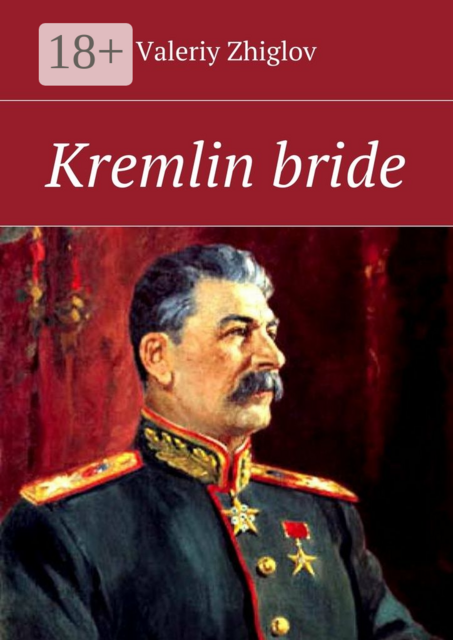
Kremlin bride
Fonts by «ParaType»
© Valeriy Zhiglov, 2017
The book comprises novels: “Kremlin Bride”, “White Sun of the Desert”, “Three Vertebrae of Fish”, “My Caucasus Holidays”, “A Crocodile with Swan Wings”, and other funny and sorrowful life stories, which happened with the author and other people he knew. The book also discloses details about Lazar Kaganovich’s sister, a participant of Joseph Stalin poisoning.
ISBN 978-5-4483-0285-5
Created with Ridero smart publishing system
Contents
- Kremlin bride
- Süsse Milch
- Three Vertebrae of Fish
- White Sun of the Desert
- Kudai Berse
- Jewish joke
- My Caucasus Holidays
- A Crocodile with Swan Wings
- Kremlin Bride
- Afterword
I would like to present some of my novels for the pleasure of readers. The novels are based on real events from my memory, the events that impressed me.
Many people ask: “Why do we live this life? Under certain circumstances, we might feel as if we were spiritual entities, missing any material body”.
— Apparently, we live to gain life experience, to improve our soul even further. This very experience may be obtained by personal example, or by our co-involvement in it with other people.
A few words from the author
Süsse Milch
Dedicated to all emigrants
Prayers and sorrow are for the eyes of your soul,
My sickness, my fear, the cry of my conscience,
Everything at the end, and everything at the beginning
Are for the eyes of your soul.
Igor Severianin
After graduating from a university, I got some free time and I decided to spend it on vacations high in the mountains, by the lake Issyk Kul. It was early morning, when I and other tourists took a long trip in a bus across mountain saddles. The city Almaty and the mountain lake Issyk Kul may be separated by 50 km only; yet it took around 10 hours in the bus to pass Tien Shan mountain passage in between, which serpentines in a manner that goes far beyond one’s wildest expectations. On our way, there were several short stopovers, and tonight, we finally arrived to the destination point, a tourist camp Tamga, located on the southern shore of the lake. Tired after such a long journey, we had supper and went to bed.
The weather was cool during our holidays. Those were sunny days, and one could even get sunburns, yet water in the lake was pretty cold. Therefore, the second day of my vacations was marked with some weakness, and tonight I already had full-scale fever heat. I did not have any medicine against fever with me; therefore, I had no choice but to try to get some in a local medical station.
Having entered the station, I saw a young and nice lady, approximately 18 years old, full of optimism. Her whites emphasized her good body, and the white headscarf did not fully hide her golden hair. Her blue eyes, opened wide, on her face full of sunspots, really impressed with their innocent look of a child. I remembered I saw her earlier, not in her white uniform, but wearing some dress full of colors, and she looked different to other relaxed tourists.
We exchanged glances, and I told her about my fever and asked for some remedy against it. I took the pills she kindly offered, but for some reason did not hurry to leave. We spoke a little, and soon I knew she had her practice of a nurse after her first year of studying medicine in a university, at this tourist camp.
Her name was Maria; she also told me a little later that her close relatives called her Süße Milch, apparently, because she liked that sweet milk drink when she was a child. I also started calling her Süße Milch, or “sweet milk”, if translated from German. There were many German families living on those lands, after they were moved to Central Asia during the Second World War. Almost all of them were known as people that work hard and are very accurate in their work.
Very soon we became friends, then even more. We often walked together with Maria across beautiful surroundings of the nice lake, enjoying watching blue water of the lake framed by a stone ring of white mountain peaks, and talked about various things.
Sometime I was reading for her the poems of my favorite poets of the Silver Age, like Merezhkovsky, Ldov, Apukhtin, Mirra Lokhvitskaya, Taeffi, Golenischev-Kutuzov, Soloviev, Severianin, Nadson, Schepkina-Kupernik, Balmont, Bunin and many others.
She carefully listed to the lines of the poems that I was reading for her by memory:
“The Moon column disappeared in water,
The water surface is getting bluer.
Where are you, where…”
After I finished reading yet another poem, she asked for more poems. So, I started to read poems again:
“Moon strings,
Made of silver,
Poetic,
Tender
...