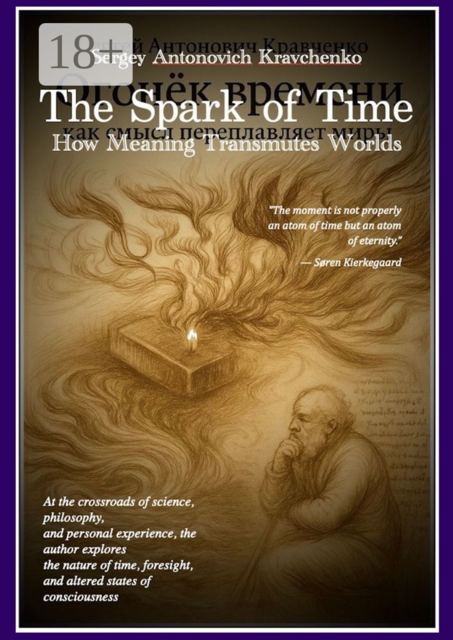
All my life, time has been for me not only a theoretical question — it has come as an experience. More than twenty years ago, in a half-dream, I received a vision that has since become the axis of my reflections and practices. I saw not a line of clocks and calendars, but a fold of space where two worlds coexisted: the material world — with things, events, bodies — and the world of images — ideal, Platonic, composed of meaning and archetypes. Between them glimmered a small spark, like the light of a candle. This was not merely a symbol: within it an exchange occurred — ideas were transmuted into material entities, and matter, as in a forge, generated images and concepts. This process was continuous, akin to metabolism in a living organism; every movement of meaning resonated in the world of events, and every event bore within itself the seed of an image.
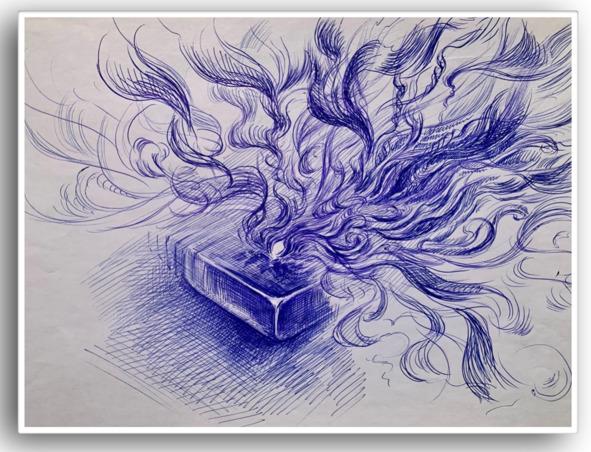
Two worlds: the material world and the world of images, consisting of meaning and archetypes. Between them, a small flame glowed, like from a candle.
Later, again in a half-dream, another simple yet important distinction opened to me: in our experience, there are two senses of time — the measurable (what clocks and instruments register) and the immeasurable (what we live as duration, meaning, kairos). They coexist within each of us and at times come into conflict: one gives us planning, agreement, and order; the other — depth, intuition, and the possibility of seeing the world not only as a sequence of events but as a fabric of meanings. On the border of these modes, special states emerge — thresholds where the sense of time alters its nature.
In my clinical practice, and in working with people who came to me for help, I encountered yet a third form — timelessness. This is the experience when the usual supports of past and future vanish; not Platonic eternity, not an ordered «forever,» but a state in which meanings blur and the personality temporarily loses its foothold. Patients described such experiences as «falling out» of time, and for some it became traumatic — they lost orientation, shielded themselves with rituals, or enclosed themselves within dogmas. Understanding timelessness, its nature, and safe ways of leading people out of it became an important part of my therapy: from this arose methods of support and integration — including mask therapy, which helps restore the boundaries of the «I» during intense ASC experiences.
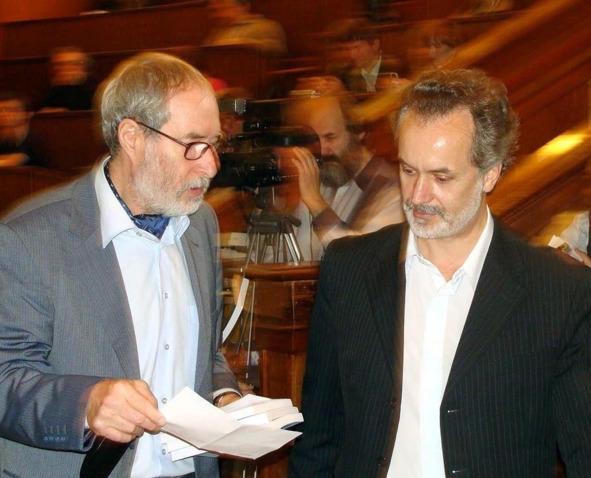
My years of practice — autogenic training since the age of twenty, long psychotherapeutic work, seminars and clinical cases — went hand in hand with scientific and organizational efforts. I collaborated with the Institute for the Study of the Nature of Time under the direction of Alexander Petrovich Levich and was the initiator of the International «Center for Anticipation» (2008–2018). There we built databases, discussed methods for testing foresight, and sought a balance between empiricism and cautious interpretation. All of this — diaries, ASC records, collective discussions — became material for this book.
In the present work I attempt to summarize many years of experience and knowledge and to move further: together with the tools of artificial intelligence I formulate a working hypothesis that I call the temporal crystallization condensate (TCC). TCC is both an image and an experimental idea: a local phase of ordering, when structures of meaning and neurophysiological coherence create conditions in which an image may acquire a connection with a probable future. I do not claim a final formula; I propose a hypothesis, describe a methodology for testing it — recording protocols, verification criteria, neurophysiological metrics — and invite colleagues in science and practice to collaborate.
In this book I weave together several layers: personal experience and the observations of a therapist; philosophical reflections on time (from Plato to contemporary thinkers); scientific data on the perception of time, brain rhythms, and altered states of consciousness; and methodology — how to record, how to test, how to work ethically with information about the future. I address both the general reader and the specialist: the one who wishes to understand what is happening within him in a state of inspiration or anxiety, and the one who studies time in the laboratory, writes papers in cognitive science, or develops technologies related to quantum systems and AI.
Let me briefly outline the key concepts and themes that will frequently appear in this book:
— Measurable time — metric, instrumentally defined;
— Immeasurable time — duration, meaning, subjective flow;
— Conversion point — threshold/platform where meaning becomes a potential signal of an event;
— Temporal crystallization condensate (TCC) — a working hypothesis of a local phase of meaning-ordering and neurophysiological coordination;
— Altered states of consciousness (ASCs) — practices and states granting access to the immeasurable;
— Timelessness — a state of falling out of habitual temporal supports;
— Mask therapy and integrative practices — clinical methods for safe entry into and exit from ASCs.
Where and how is this applicable? On the personal level — in therapeutic work: understanding temporal modes helps restore grounding, distinguish anxiety from insight, and carefully integrate experience. In social and collective life — in decision-making, strategic planning, crisis management: if foresight becomes a disciplined instrument, it may strengthen the resilience of communities; at the same time, it requires ethics and regulation. In science and philosophy — TCC offers a bridge between the phenomenology of meaning and formal models of time; in technology — ideas of temporal phases and informational coherence may provide new approaches to data analysis and interaction with AI.
I write directly and honestly: in this field there are many delicate boundaries. I pose questions, but I also preserve the sense of experience — that which cannot be reduced to graphs and formulas, but which manifests in lived reality. My request to you, reader: approach this material with curiosity and with criticism at once. Record your dreams and note your moments, apply the proposed protocols with care, and help us together to turn the spark of time into a clear instrument of understanding — not for dominion over the future, but for a more truthful and careful relationship with it.
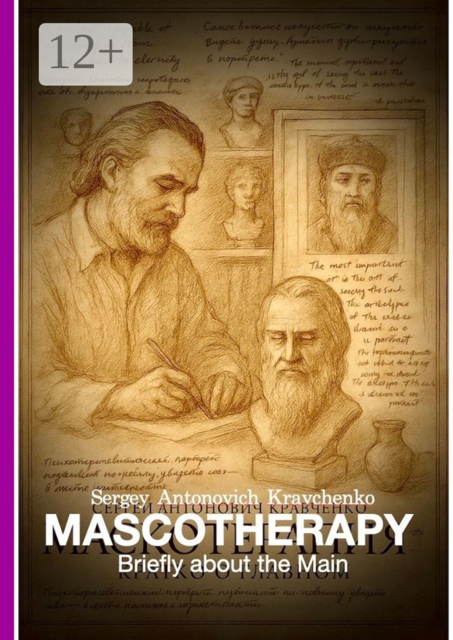
S. A. Kravchenko
August 2025