автордың кітабын онлайн тегін оқу 50+ Self-Help Classics Collection. Ilustrated
50+ Self-Help Classics Collection:
Think and Grow Rich, The Richest Man in Babylon, Self-reliance, The Master Key System, The Way to Wealth,The Art of War, As a Man Thinketh, The Meditations and others.
Illustrated
From creative inspiration to financial success to healthy living — you name it, somebody's shared the secret to understanding it.
With the perfect self-help collection at hand, you can become your own life coach and the master of your own growth.
Napoleon Hill. Think and Grow Rich (The text is reproduced from the original publications of 1937)
Napoleon Hill. The Law of Success. Lesson One. The Master Mind
Napoleon Hill. The Law of Success. Lesson Two. A Definite Chief Aim
Napoleon Hill. The Law of Success. Lesson Three. Self-Confidence
Napoleon Hill. The Law of Success. Lesson Four. The Habit of Saving
Napoleon Hill. The Law of Success. Lesson Five. Initiative and Leadership
Napoleon Hill. The Law of Success. Lesson. Six Imagination
Napoleon Hill. The Law of Success. Lesson Seven. Enthusiasm
Napoleon Hill. The Law of Success. Lesson Eight .Self-Control
Napoleon Hill. The Law of Success. Lesson Nine. Habit of Doing More Than Paid For
Napoleon Hill. The Law of Success. Lesson Ten. Pleasing Personality
Napoleon Hill. The Law of Success. Lesson Eleven. Accurate Thought
Napoleon Hill. The Law of Success. Lesson Twelve. Concentration
Napoleon Hill. The Law of Success. Lesson Thirteen. Cooperation
Napoleon Hill. The Law of Success. Lesson Fourteen. Failure
Napoleon Hill. The Law of Success. Lesson Fifteen. Tolerance
Napoleon Hill. The Law of Success. Lesson Sixteen. The Golden Rule
George Samuel Clason. The Richest Man In Babylon (The text is reproduced from the original publications of 1920-1924)
James Allen. As a Man Thinketh
James Allen. Out from the Heart
Kahlil Gibran. The Prophet
Sun Tzu. The Art of War
Lao Tzu. The Tao Te Ching
Confucius. Analects
Benjamin Franklin. The Way to Wealth
Benjamin Franklin. The Autobiography
Marcus Aurelius Antoninus. The Meditations of the Emperor
Russell H. Conwell. Every Man His Own University
Ralph Waldo Emerson. Self-reliance
Ralph Waldo Emerson. History
Ralph Waldo Emerson. Compensation
Ralph Waldo Emerson. Spiritual Laws
Ralph Waldo Emerson. Love
Ralph Waldo Emerson. Friendship
Ralph Waldo Emerson. Prudence
Ralph Waldo Emerson. Heroism
Ralph Waldo Emerson. The Over-Soul
Ralph Waldo Emerson. Circles
Ralph Waldo Emerson. Intellect
Ralph Waldo Emerson. Art
Florence Scovel Shinn. The Game of Life and How to Play It
Charles F. Haanel. The Master Key System
W. D. Wattles. The Science of Getting Rich
Wallace D. Wattles. How to Get What You Want
Wallace D. Wattles. The Science of Being Well
Wallace D. Wattles. The Science of Being Great
Orison Swett Marden. An Iron Will
Orison Swett Marden. He Can Who Thinks He Can
Russell H. Conwell. Acres of Diamonds
William Walker Atkinson. Thought Vibration: Or the Law of Attraction in the Thought World
P. T. Barnum. Art of Money Getting or, Golden Rules for Making Money
G.K. Chesterton. Orthodoxy
Leo Tolstoy. A Confession
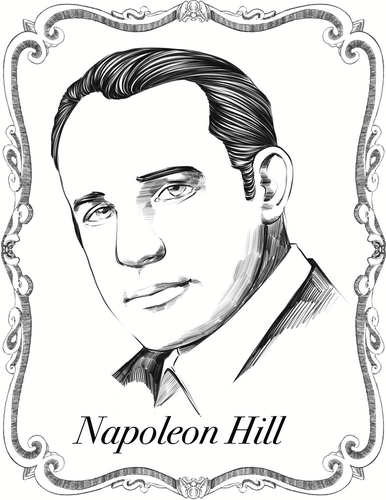
Napoleon Hill
Think and Grow Rich
TEACHING, FOR THE FIRST TIME, THE FAMOUS ANDREW CARNEGIE FORMULA FOR MONEY-MAKING, BASED UPON THE THIRTEEN PROVEN STEPS TO RICHES.
ORGANIZED THROUGH 25 YEARS OF RESEARCH, IN COLLABORATION WITH MORE THAN 500 DISTINGUISHED MEN OF GREAT WEALTH, WHO PROVED BY THEIR OWN ACHIEVEMENTS THAT THIS PHILOSOPHY IS PRACTICAL.
BY
NAPOLEON HILL
Author's Preface
IN EVERY chapter of this book, mention has been made of the money-making secret which has made fortunes for more than five hundred exceedingly wealthy men whom I have carefully analyzed over a long period of years.
The secret was brought to my attention by Andrew Carnegie, more than a quarter of a century ago. The canny, lovable old Scotsman carelessly tossed it into my mind, when I was but a boy. Then he sat back in his chair, with a merry twinkle in his eyes, and watched carefully to see if I had brains enough to understand the full significance of what he had said to me.
When he saw that I had grasped the idea, he asked if I would be willing to spend twenty years or more, preparing myself to take it to the world, to men and women who, without the secret, might go through life as failures. I said I would, and with Mr. Carnegie's cooperation, I have kept my promise.
This book contains the secret, after having been put to a practical test by thousands of people, in almost every walk of life. It was Mr. Carnegie's idea that the magic formula, which gave him a stupendous fortune, ought to be placed within reach of people who do not have time to investigate how men make money, and it was his hope that I might test and demonstrate the soundness of the formula through the experience of men and women in every calling. He believed the formula should be taught in all public schools and colleges, and expressed the opinion that if it were properly taught it would so revolutionize the entire educational system that the time spent in school could be reduced to less than half.
His experience with Charles M. Schwab, and other young men of Mr. Schwab's type, convinced Mr. Carnegie that much of that which is taught in the schools is of no value whatsoever in connection with the business of earning a living or accumulating riches. He had arrived at this decision, because he had taken into his business one young man after another, many of them with but little schooling, and by coaching them in the use of this formula, developed in them rare leadership. Moreover, his coaching made fortunes for everyone of them who followed his instructions.
In the chapter on Faith, you will read the astounding story of the organization of the giant United States Steel Corporation, as it was conceived and carried out by one of the young men through whom Mr. Carnegie proved that his formula will work for all who are ready for it. This single application of the secret, by that young man-Charles M. Schwab-made him a huge fortune in both money and OPPORTUNITY. Roughly speaking, this particular application of the formula was worth six hundred million dollars.
These facts-and they are facts well known to almost everyone who knew Mr. Carnegie-give you a fair idea of what the reading of this book may bring to you, provided you KNOW WHAT IT IS THAT YOU WANT.
Even before it had undergone twenty years of practical testing, the secret was passed on to more than one hundred thousand men and women who have used it for their personal benefit, as Mr. Carnegie planned that they should. Some have made fortunes with it. Others have used it successfully in creating harmony in their homes. A clergyman used it so effectively that it brought him an income of upwards of $75,000.00 a year.
Arthur Nash, a Cincinnati tailor, used his near-bankrupt business as a “guinea pig” on which to test the formula. The business came to life and made a fortune for its owners. It is still thriving, although Mr. Nash has gone. The experiment was so unique that newspapers and magazines, gave it more than a million dollars' worth of laudatory publicity.
The secret was passed on to Stuart Austin Wier, of Dallas, Texas. He was ready for it-so ready that he gave up his profession and studied law. Did he succeed? That story is told too.
I gave the secret to Jennings Randolph, the day he graduated from College, and he has used it so successfully that he is now serving his third term as a Member of Congress, with an excellent opportunity to keep on using it until it carries him to the White House.
While serving as Advertising Manager of the LaSalle Extension University, when it was little more than a name, I had the privilege of seeing J. G. Chapline, President of the University, use the formula so effectively that he has since made the LaSalle one of the great extension schools of the country.
The secret to which I refer has been mentioned no fewer than a hundred times, throughout this book. It has not been directly named, for it seems to work more successfully when it is merely uncovered and left in sight, where THOSE WHO ARE READY, and SEARCHING FOR IT, may pick it up. That is why Mr. Carnegie tossed it to me so quietly, without giving me its specific name.
If you are READY to put it to use, you will recognize this secret at least once in every chapter. I wish I might feel privileged to tell you how you will know if you are ready, but that would deprive you of much of the benefit you will receive when you make the discovery in your own way.
While this book was being written, my own son, who was then finishing the last year of his college work, picked up the manuscript of chapter two, read it, and discovered the secret for himself. He used the information so effectively that he went directly into a responsible position at a beginning salary greater than the average man ever earns. His story has been briefly described in chapter two. When you read it, perhaps you will dismiss any feeling you may have had, at the beginning of the book, that it promised too much. And, too, if you have ever been discouraged, if you have had difficulties to surmount which took the very soul out of you, if you have tried and failed, if you were ever handicapped by illness or physical affliction, this story of my son's discovery and use of the Carnegie formula may prove to be the oasis in the Desert of Lost Hope, for which you have been searching.
This secret was extensively used by President Woodrow Wilson, during the World War. It was passed on to every soldier who fought in the war, carefully wrapped in the training received before going to the front. President Wilson told me it was a strong factor in raising the funds needed for the war.
More than twenty years ago, Hon. Manuel L. Quezon (then Resident Commissioner of the Philippine Islands), was inspired by the secret to gain freedom for his people. He has gained freedom for the Philippines, and is the first President of the free state.
A peculiar thing about this secret is that those who once acquire it and use it, find themselves literally swept on to success, with but little effort, and they never again submit to failure! If you doubt this, study the names of those who have used it, wherever they have been mentioned, check their records for yourself, and be convinced.
There is no such thing as SOMETHING FOR NOTHING!
The secret to which I refer cannot be had without a price, although the price is far less than its value. It cannot be had at any price by those who are not intentionally searching for it. It cannot be given away, it cannot be purchased for money, for the reason that it comes in two parts. One part is already in possession of those who are ready for it.
The secret serves equally well, all who are ready for it. Education has nothing to do with it. Long before I was born, the secret had found its way into the possession of Thomas A. Edison, and he used it so intelligently that he became the world's leading inventor, although he had but three months of schooling.
The secret was passed on to a business associate of Mr. Edison. He used it so effectively that, although he was then making only $12,000 a year, he accumulated a great fortune, and retired from active business while still a young man. You will find his story at the beginning of the first chapter. It should convince you that riches are not beyond your reach, that you can still be what you wish to be, that money, fame, recognition and happiness can be had by all who are ready and determined to have these blessings.
How do I know these things? You should have the answer before you finish this book. You may find it in the very first chapter, or on the last page.
While I was performing the twenty year task of research, which I had undertaken at Mr. Carnegie's request, I analyzed hundreds of well known men, many of whom admitted that they had accumulated their vast fortunes through the aid of the Carnegie secret; among these men were:-
HENRY FORD
WILLIAM WRIGLEY JR.
JOHN WANAMAKER
JAMES J. HILL
GEORGE S. PARKER
E. M. STATLER
HENRY L. DOHERTY
CYRUS H. K. CURTIS
GEORGE EASTMAN
THEODORE ROOSEVELT
JOHN W. DAVIS
ELBERT HUBBARD
WILBUR WRIGHT
WILLIAM JENNINGS BRYAN
DR. DAVID STARR JORDAN
J. ODGEN ARMOUR
CHARLES M. SCHWAB
HARRIS F. WILLIAMS
DR. FRANK GUNSAULUS
DANIEL WILLARD
KING GILLETTE
RALPH A. WEEKS
JUDGE DANIEL T. WRIGHT
JOHN D. ROCKEFELLER
THOMAS A. EDISON
FRANK A. VANDERLIP
F. W. WOOLWORTH
COL. ROBERT A. DOLLAR
EDWARD A. FILENE
EDWIN C. BARNES
ARTHUR BRISBANE
WOODROW WILSON
WM. HOWARD TAFT
LUTHER BURBANK
EDWARD W. BOK
FRANK A. MUNSEY
ELBERT H. GARY
DR. ALEXANDER GRAHAM BELL
JOHN H. PATTERSON
JULIUS ROSENWALD
STUART AUSTIN WIER
DR. FRANK CRANE
GEORGE M. ALEXANDER
J. G. CHAPLINE
HON. JENNINGS RANDOLPH
ARTHUR NASH
CLARENCE DARROW
These names represent but a small fraction of the hundreds of well known Americans whose achievements, financially and otherwise, prove that those who understand and apply the Carnegie secret, reach high stations in life. I have never known anyone who was inspired to use the secret, who did not achieve noteworthy success in his chosen calling. I have never known any person to distinguish himself, or to accumulate riches of any consequence, without possession of the secret. From these two facts I draw the conclusion that the secret is more important, as a part of the knowledge essential for self-determination, than any which one receives through what is popularly known as “education.” What is EDUCATION, anyway? This has been answered in full detail.
As far as schooling is concerned, many of these men had very little. John Wanamaker once told me that what little schooling he had, he acquired in very much the same manner as a modern locomotive takes on water, by “scooping it up as it runs.” Henry Ford never reached high school, let alone college. I am not attempting to minimize the value of schooling, but I am trying to express my earnest belief that those who master and apply the secret will reach high stations, accumulate riches, and bargain with life on their own terms, even if their schooling has been meager.
Somewhere, as you read, the secret to which I refer will jump from the page and stand boldly before you, IF YOU ARE READY FOR IT! When it appears, you will recognize it. Whether you receive the sign in the first or the last chapter, stop for a moment when it presents itself, and turn down a glass, for that occasion will mark the most important turning-point of your life.
We pass now, to Chapter One, and to the story of my very dear friend, who has generously acknowledged having seen the mystic sign, and whose business achievements are evidence enough that he turned down a glass. As you read his story, and the others, remember that they deal with the important problems of life, such as all men experience. The problems arising from one's endeavor to earn a living, to find hope, courage, contentment and peace of mind; to accumulate riches and to enjoy freedom of body and spirit.
Remember, too, as you go through the book, that it deals with facts and not with fiction, its purpose being to convey a great universal truth through which all who are READY may learn, not only WHAT TO DO, BUT ALSO HOW TO DO IT! and receive, as well, THE NEEDED STIMULUS TO MAKE A START.
As a final word of preparation, before you begin the first chapter, may I offer one brief suggestion which may provide a clue by which the Carnegie secret may be recognized? It is this-ALL ACHIEVEMENT, ALL EARNED RICHES, HAVE THEIR BEGINNING IN AN IDEA! If you are ready for the secret, you already possess one half of it, therefore, you will readily recognize the other half the moment it reaches your mind.
THE AUTHOR
Chapter 1. Introduction
THE MAN WHO “THOUGHT” HIS WAY INTO PARTNERSHIP WITH THOMAS A. EDISON
TRULY, “thoughts are things,” and powerful things at that, when they are mixed with definiteness of purpose, persistence, and a BURNING DESIRE for their translation into riches, or other material objects.
A little more than thirty years ago, Edwin C. Barnes discovered how true it is that men really do THINK AND GROW RICH. His discovery did not come about at one sitting. It came little by little, beginning with a BURNING DESIRE to become a business associate of the great Edison.
One of the chief characteristics of Barnes' Desire was that it was definite. He wanted to work with Edison, not for him. Observe, carefully, the description of how he went about translating his DESIRE into reality, and you will have a better understanding of the thirteen principles which lead to riches.
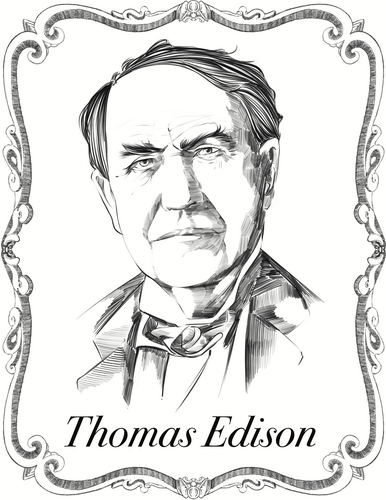
When this DESIRE, or impulse of thought, first flashed into his mind he was in no position to act upon it. Two difficulties stood in his way. He did not know Mr. Edison, and he did not have enough money to pay his railroad fare to Orange, New Jersey.
These difficulties were sufficient to have discouraged the majority of men from making any attempt to carry out the desire. But his was no ordinary desire! He was so determined to find a way to carry out his desire that he finally decided to travel by “blind baggage,” rather than be defeated. (To the uninitiated, this means that he went to East Orange on a freight train).
He presented himself at Mr. Edison's laboratory, and announced he had come to go into business with the inventor. In speaking of the first meeting between Barnes and Edison, years later, Mr. Edison said, “He stood there before me, looking like an ordinary tramp, but there was something in the expression of his face which conveyed the impression that he was determined to get what he had come after. I had learned, from years of experience with men, that when a man really DESIRES a thing so deeply that he is willing to stake his entire future on a single turn of the wheel in order to get it, he is sure to win. I gave him the opportunity he asked for, because I saw he had made up his mind to stand by until he succeeded. Subsequent events proved that no mistake was made.”
Just what young Barnes said to Mr. Edison on that occasion was far less important than that which he thought. Edison, himself, said so! It could not have been the young man's appearance which got him his start in the Edison office, for that was definitely against him. It was what he THOUGHT that counted.
If the significance of this statement could be conveyed to every person who reads it, there would be no need for the remainder of this book.
Barnes did not get his partnership with Edison on his first interview. He did get a chance to work in the Edison offices, at a very nominal wage, doing work that was unimportant to Edison, but most important to Barnes, because it gave him an opportunity to display his “merchandise” where his intended “partner” could see it.
Months went by. Apparently nothing happened to bring the coveted goal which Barnes had set up in his mind as his DEFINITE MAJOR PURPOSE. But something important was happening in Barnes' mind. He was constantly intensifying his DESIRE to become the business associate of Edison.
Psychologists have correctly said that “when one is truly ready for a thing, it puts in its appearance.” Barnes was ready for a business association with Edison, moreover, he was DETERMINED TO REMAIN READY UNTIL HE GOT THAT WHICH HE WAS SEEKING.
He did not say to himself, “Ah well, what's the use? I guess I'll change my mind and try for a salesman's job.” But, he did say, “I came here to go into business with Edison, and I'll accomplish this end if it takes the remainder of my life.” He meant it! What a different story men would have to tell if only they would adopt a DEFINITE PURPOSE, and stand by that purpose until it had time to become an all-consuming obsession!
Maybe young Barnes did not know it at the time, but his bulldog determination, his persistence in standing back of a single DESIRE, was destined to mow down all opposition, and bring him the opportunity he was seeking.
When the opportunity came, it appeared in a different form, and from a different direction than Barnes had expected. That is one of the tricks of opportunity. It has a sly habit of slipping in by the back door, and often it comes disguised in the form of misfortune, or temporary defeat. Perhaps this is why so many fail to recognize opportunity.
Mr. Edison had just perfected a new office device, known at that time, as the Edison Dictating Machine (now the Ediphone). His salesmen were not enthusiastic over the machine. They did not believe it could be sold without great effort. Barnes saw his opportunity. It had crawled in quietly, hidden in a queer looking machine which interested no one but Barnes and the inventor.
Barnes knew he could sell the Edison Dictating Machine. He suggested this to Edison, and promptly got his chance. He did sell the machine. In fact, he sold it so successfully that Edison gave him a contract to distribute and market it all over the nation. Out of that business association grew the slogan, “Made by Edison and installed by Barnes.”
The business alliance has been in operation for more than thirty years. Out of it Barnes has made himself rich in money, but he has done something infinitely greater, he has proved that one really may “Think and Grow Rich.”
How much actual cash that original DESIRE of Barnes' has been worth to him, I have no way of knowing. Perhaps it has brought him two or three million dollars, but the amount, whatever it is, becomes insignificant when compared with the greater asset he acquired in the form of definite knowledge that an intangible impulse of thought can be transmuted into its physical counterpart by the application of known principles.
Barnes literally thought himself into a partnership with the great Edison! He thought himself into a fortune. He had nothing to start with, except the capacity to KNOW WHAT HE WANTED, AND THE DETERMINATION TO STAND BY THAT DESIRE UNTIL HE REALIZED IT.
He had no money to begin with. He had but little education. He had no influence. But he did have initiative, faith, and the will to win. With these intangible forces he made himself number one man with the greatest inventor who ever lived.
Now, let us look at a different situation, and study a man who had plenty of tangible evidence of riches, but lost it, because he stopped three feet short of the goal he was seeking.
THREE FEET FROM GOLD
One of the most common causes of failure is the habit of quitting when one is overtaken by temporary defeat. Every person is guilty of this mistake at one time or another.
An uncle of R. U. Darby was caught by the “gold fever” in the gold-rush days, and went west to DIG AND GROW RICH. He had never heard that more gold has been mined from the brains of men than has ever been taken from the earth. He staked a claim and went to work with pick and shovel. The going was hard, but his lust for gold was definite.
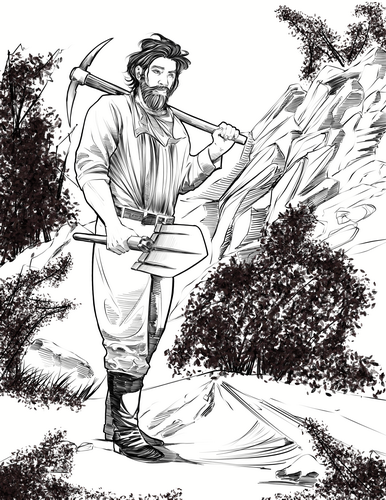
After weeks of labor, he was rewarded by the discovery of the shining ore. He needed machinery to bring the ore to the surface. Quietly, he covered up the mine, retraced his footsteps to his home in Williamsburg, Maryland, told his relatives and a few neighbors of the “strike.” They got together money for the needed machinery, had it shipped. The uncle and Darby went back to work the mine.
The first car of ore was mined, and shipped to a smelter. The returns proved they had one of the richest mines in Colorado! A few more cars of that ore would clear the debts. Then would come the big killing in profits.
Down went the drills! Up went the hopes of Darby and Uncle! Then something happened! The vein of gold ore disappeared! They had come to the end of the rainbow, and the pot of gold was no longer there! They drilled on, desperately trying to pick up the vein again-all to no avail.
Finally, they decided to QUIT.
They sold the machinery to a junk man for a few hundred dollars, and took the train back home. Some “junk” men are dumb, but not this one! He called in a mining engineer to look at the mine and do a little calculating. The engineer advised that the project had failed, because the owners were not familiar with “fault lines.” His calculations showed that the vein would be found JUST THREE FEET FROM WHERE THE DARBYS HAD STOPPED DRILLING! That is exactly where it was found!
The “Junk” man took millions of dollars in ore from the mine, because he knew enough to seek expert counsel before giving up.
Most of the money which went into the machinery was procured through the efforts of R. U. Darby, who was then a very young man. The money came from his relatives and neighbors, because of their faith in him. He paid back every dollar of it, although he was years in doing so.
Long afterward, Mr. Darby recouped his loss many times over, when he made the discovery that DESIRE can be transmuted into gold. The discovery came after he went into the business of selling life insurance.
Remembering that he lost a huge fortune, because he STOPPED three feet from gold, Darby profited by the experience in his chosen work, by the simple method of saying to himself, “I stopped three feet from gold, but I will never stop because men say 'no' when I ask them to buy insurance.”
Darby is one of a small group of fewer than fifty men who sell more than a million dollars in life insurance annually. He owes his “stickability” to the lesson he learned from his “quitability” in the gold mining business.
Before success comes in any man's life, he is sure to meet with much temporary defeat, and, perhaps, some failure. When defeat overtakes a man, the easiest and most logical thing to do is to QUIT. That is exactly what the majority of men do.
More than five hundred of the most successful men this country has ever known, told the author their greatest success came just one step beyond the point at which defeat had overtaken them. Failure is a trickster with a keen sense of irony and cunning. It takes great delight in tripping one when success is almost within reach.
A FIFTY CENT LESSON IN PERSISTENCE
Shortly after Mr. Darby received his degree from the “University of Hard Knocks,” and had decided to profit by his experience in the gold mining business, he had the good fortune to be present on an occasion that proved to him that “No” does not necessarily mean no.
One afternoon he was helping his uncle grind wheat in an old fashioned mill. The uncle operated a large farm on which a number of colored sharecrop farmers lived. Quietly, the door was opened, and a small colored child, the daughter of a tenant, walked in and took her place near the door.
The uncle looked up, saw the child, and barked at her roughly, “what do you want?”
Meekly, the child replied, “My mammy say send her fifty cents.”
“I'll not do it,” the uncle retorted, “Now you run on home.”
“Yas sah,” the child replied. But she did not move.
The uncle went ahead with his work, so busily engaged that he did not pay enough attention to the child to observe that she did not leave. When he looked up and saw her still standing there, he yelled at her, “I told you to go on home! Now go, or I'll take a switch to you.”
The little girl said “yas sah,” but she did not budge an inch.
The uncle dropped a sack of grain he was about to pour into the mill hopper, picked up a barrel stave, and started toward the child with an expression on his face that indicated trouble.
Darby held his breath. He was certain he was about to witness a murder. He knew his uncle had a fierce temper. He knew that colored children were not supposed to defy white people in that part of the country.
When the uncle reached the spot where the child was standing, she quickly stepped forward one step, looked up into his eyes, and screamed at the top of her shrill voice, “MY MAMMY'S GOTTA HAVE THAT FIFTY CENTS!”
The uncle stopped, looked at her for a minute, then slowly laid the barrel stave on the floor, put his hand in his pocket, took out half a dollar, and gave it to her.
The child took the money and slowly backed toward the door, never taking her eyes off the man whom she had just conquered. After she had gone, the uncle sat down on a box and looked out the window into space for more than ten minutes. He was pondering, with awe, over the whipping he had just taken.
Mr. Darby, too, was doing some thinking. That was the first time in all his experience that he had seen a colored child deliberately master an adult white person. How did she do it. What happened to his uncle that caused him to lose his fierceness and become as docile as a lamb? What strange power did this child use that made her master over her superior? These and other similar questions flashed into Darby's mind, but he did not find the answer until years later, when he told me the story.
Strangely, the story of this unusual experience was told to the author in the old mill, on the very spot where the uncle took his whipping. Strangely, too, I had devoted nearly a quarter of a century to the study of the power which enabled an ignorant, illiterate colored child to conquer an intelligent man.
As we stood there in that musty old mill, Mr. Darby repeated the story of the unusual conquest, and finished by asking, “What can you make of it? What strange power did that child use, that so completely whipped my uncle?”
The answer to his question will be found in the principles described in this book. The answer is full and complete. It contains details and instructions sufficient to enable anyone to understand, and apply the same force which the little child accidentally stumbled upon.
Keep your mind alert, and you will observe exactly what strange power came to the rescue of the child, you will catch a glimpse of this power in the next chapter. Somewhere in the book you will find an idea that will quicken your receptive powers, and place at your command, for your own benefit, this same irresistible power. The awareness of this power may come to you in the first chapter, or it may flash into your mind in some subsequent chapter. It may come in the form of a single idea. Or, it may come in the nature of a plan, or a purpose. Again, it may cause you to go back into your past experiences of failure or defeat, and bring to the surface some lesson by which you can regain all that you lost through defeat.
After I had described to Mr. Darby the power unwittingly used by the little colored child, he quickly retraced his thirty years of experience as a life insurance salesman, and frankly acknowledged that his success in that field was due, in no small degree, to the lesson he had learned from the child.
Mr. Darby pointed out: “every time a prospect tried to bow me out, without buying, I saw that child standing there in the old mill, her big eyes glaring in defiance, and I said to myself, 'I've gotta make this sale.' The better portion of all sales I have made, were made after people had said 'NO'.”
He recalled, too, his mistake in having stopped only three feet from gold, “but,” he said, “that experience was a blessing in disguise. It taught me to keep on keeping on, no matter how hard the going may be, a lesson I needed to learn before I could succeed in anything.”
This story of Mr. Darby and his uncle, the colored child and the gold mine, doubtless will be read by hundreds of men who make their living by selling life insurance, and to all of these, the author wishes to offer the suggestion that Darby owes to these two experiences his ability to sell more than a million dollars of life insurance every year.
Life is strange, and often imponderable! Both the successes and the failures have their roots in simple experiences. Mr. Darby's experiences were common-place and simple enough, yet they held the answer to his destiny in life, therefore they were as important (to him) as life itself. He profited by these two dramatic experiences, because he analyzed them, and found the lesson they taught. But what of the man who has neither the time, nor the inclination to study failure in search of knowledge that may lead to success? Where, and how is he to learn the art of converting defeat into stepping stones to opportunity?
In answer to these questions, this book was written.
The answer called for a description of thirteen principles, but remember, as you read, the answer you may be seeking, to the questions which have caused you to ponder over the strangeness of life, may be found in your own mind, through some idea, plan, or purpose which may spring into your mind as you read.
One sound idea is all that one needs to achieve success. The principles described in this book, contain the best, and the most practical of all that is known, concerning ways and means of creating useful ideas.
Before we go any further in our approach to the description of these principles, we believe you are entitled to receive this important suggestion… WHEN RICHES BEGIN TO COME THEY COME SO QUICKLY, IN SUCH GREAT ABUNDANCE, THAT ONE WONDERS WHERE THEY HAVE BEEN HIDING DURING ALL THOSE LEAN YEARS. This is an astounding statement, and all the more so, when we take into consideration the popular belief, that riches come only to those who work hard and long.
When you begin to THINK AND GROW RICH, you will observe that riches begin with a state of mind, with definiteness of purpose, with little or no hard work. You, and every other person, ought to be interested in knowing how to acquire that state of mind which will attract riches. I spent twenty-five years in research, analyzing more than 25,000 people, because I, too, wanted to know “how wealthy men become that way.”
Without that research, this book could not have been written.
Here take notice of a very significant truth, viz: The business depression started in 1929, and continued on to an all time record of destruction, until sometime after President Roosevelt entered office. Then the depression began to fade into nothingness. Just as an electrician in a theatre raises the lights so gradually that darkness is transmuted into light before you realize it, so did the spell of fear in the minds of the people gradually fade away and become faith.
Observe very closely, as soon as you master the principles of this philosophy, and begin to follow the instructions for applying those principles, your financial status will begin to improve, and everything you touch will begin to transmute itself into an asset for your benefit. Impossible? Not at all!
One of the main weaknesses of mankind is the average man's familiarity with the word “impossible.” He knows all the rules which will NOT work. He knows all the things which CANNOT be done. This book was written for those who seek the rules which have made others successful, and are willing to stake everything on those rules.
A great many years ago I purchased a fine dictionary. The first thing I did with it was to turn to the word “impossible,” and neatly clip it out of the book. That would not be an unwise thing for you to do.
Success comes to those who become SUCCESS CONSCIOUS.
Failure comes to those who indifferently allow themselves to become FAILURE CONSCIOUS.
The object of this book is to help all who seek it, to learn the art of changing their minds from FAILURE CONSCIOUSNESS to SUCCESS CONSCIOUSNESS.
Another weakness found in altogether too many people, is the habit of measuring everything, and everyone, by their own impressions and beliefs. Some who will read this, will believe that no one can THINK AND GROW RICH. They cannot think in terms of riches, because their thought habits have been steeped in poverty, want, misery, failure, and defeat.
These unfortunate people remind me of a prominent Chinese, who came to America to be educated in American ways. He attended the University of Chicago. One day President Harper met this young Oriental on the campus, stopped to chat with him for a few minutes, and asked what had impressed him as being the most noticeable characteristic of the American people.
“Why,” the Chinaman exclaimed, “the queer slant of your eyes. Your eyes are off slant!”
What do we say about the Chinese?
We refuse to believe that which we do not understand. We foolishly believe that our own limitations are the proper measure of limitations. Sure, the other fellow's eyes are “off slant,” BECAUSE THEY ARE NOT THE SAME AS OUR OWN.

Millions of people look at the achievements of Henry Ford, after he has arrived, and envy him, because of his good fortune, or luck, or genius, or whatever it is that they credit for Ford's fortune. Perhaps one person in every hundred thousand knows the secret of Ford's success, and those who do know are too modest, or too reluctant, to speak of it, because of its simplicity. A single transaction will illustrate the “secret” perfectly.
A few years back, Ford decided to produce his now famous V-8 motor. He chose to build an engine with the entire eight cylinders cast in one block, and instructed his engineers to produce a design for the engine. The design was placed on paper, but the engineers agreed, to a man, that it was simply impossible to cast an eight cylinder gas engine block in one piece.
Ford said, “Produce it anyway.”
“But,” they replied, “it's impossible!”
“Go ahead,” Ford commanded, “and stay on the job until you succeed no matter how much time is required.”
The engineers went ahead. There was nothing else for them to do, if they were to remain on the Ford staff. Six months went by, nothing happened. Another six months passed, and still nothing happened. The engineers tried every conceivable plan to carry out the orders, but the thing seemed out of the question; “impossible!”
At the end of the year Ford checked with his engineers, and again they informed him they had found no way to carry out his orders.
“Go right ahead,” said Ford, “I want it, and I'll have it.”
They went ahead, and then, as if by a stroke of magic, the secret was discovered.
The Ford DETERMINATION had won once more!
This story may not be described with minute accuracy, but the sum and substance of it is correct. Deduce from it, you who wish to THINK AND GROW RICH, the secret of the Ford millions, if you can. You'll not have to look very far.
Henry Ford is a success, because he understands, and applies the principles of success. One of these is DESIRE: knowing what one wants. Remember this Ford story as you read, and pick out the lines in which the secret of his stupendous achievement have been described. If you can do this, if you can lay your finger on the particular group of principles which made Henry Ford rich, you can equal his achievements in almost any calling for which you are suited.
YOU ARE “THE MASTER OF YOUR FATE, THE CAPTAIN OF YOUR SOUL,” BECAUSE…
When Henley wrote the prophetic lines, “I am the Master of my Fate, I am the Captain of my Soul,” he should have informed us that we are the Masters of our Fate, the Captains of our Souls, because we have the power to control our thoughts.
He should have told us that the ether in which this little earth floats, in which we move and have our being, is a form of energy moving at an inconceivably high rate of vibration, and that the ether is filled with a form of universal power which ADAPTS itself to the nature of the thoughts we hold in our minds; and INFLUENCES us, in natural ways, to transmute our thoughts into their physical equivalent.
If the poet had told us of this great truth, we would know WHY IT IS that we are the Masters of our Fate, the Captains of our Souls. He should have told us, with great emphasis, that this power makes no attempt to discriminate between destructive thoughts and constructive thoughts, that it will urge us to translate into physical reality thoughts of poverty, just as quickly as it will influence us to act upon thoughts of riches.
He should have told us, too, that our brains become magnetized with the dominating thoughts which we hold in our minds, and, by means with which no man is familiar, these “magnets” attract to us the forces, the people, the circumstances of life which harmonize with the nature of our dominating thoughts.
He should have told us, that before we can accumulate riches in great abundance, we must magnetize our minds with intense DESIRE for riches, that we must become “money conscious” until the DESIRE for money drives us to create definite plans for acquiring it.
But, being a poet, and not a philosopher, Henley contented himself by stating a great truth in poetic form, leaving those who followed him to interpret the philosophical meaning of his lines. Little by little, the truth has unfolded itself, until it now appears certain that the principles described in this book, hold the secret of mastery over our economic fate.
We are now ready to examine the first of these principles. Maintain a spirit of open-mindedness, and remember as you read, they are the invention of no one man. The principles were gathered from the life experiences of more than 500 men who actually accumulated riches in huge amounts; men who began in poverty, with but little education, without influence. The principles worked for these men. You can put them to work for your own enduring benefit. You will find it easy, not hard, to do. Before you read the next chapter, I want you to know that it conveys factual information which might easily change your entire financial destiny, as it has so definitely brought changes of stupendous proportions to two people described.
I want you to know, also, that the relationship between these two men and myself, is such that I could have taken no liberties with the facts, even if I had wished to do so. One of them has been my closest personal friend for almost twenty-five years, the other is my own son. The unusual success of these two men, success which they generously accredit to the principle described in the next chapter, more than justifies this personal reference as a means of emphasizing the far-flung power of this principle.
Almost fifteen years ago, I delivered the Commencement Address at Salem College, Salem, West Virginia. I emphasized the principle described in the next chapter, with so much intensity that one of the members of the graduating class definitely appropriated it, and made it a part of his own philosophy. The young man is now a Member of Congress, and an important factor in the present administration. Just before this book went to the publisher, he wrote me a letter in which he so clearly stated his opinion of the principle outlined in the next chapter, that I have chosen to publish his letter as an introduction to that chapter.
It gives you an idea of the rewards to come.
“My dear Napoleon:
“My service as a Member of Congress having given me an insight into the problems of men and women, I am writing to offer a suggestion which may become helpful to thousands of worthy people.
“With apologies, I must state that the suggestion, if acted upon, will mean several years of labor and responsibility for you, but I am en-heartened to make the suggestion, because I know your great love for rendering useful service.
“In 1922, you delivered the Commencement address at Salem College, when I was a member of the graduating class. In that address, you planted in my mind an idea which has been responsible for the opportunity I now have to serve the people of my State, and will be responsible, in a very large measure, for whatever success I may have in the future.
“The suggestion I have in mind is, that you put into a book the sum and substance of the address you delivered at Salem College, and in that way give the people of America an opportunity to profit by your many years of experience and association with the men who, by their greatness, have made America the richest nation on earth.
“I recall, as though it were yesterday, the marvelous description you gave of the method by which Henry Ford, with but little schooling, without a dollar, with no influential friends, rose to great heights. I made up my mind then, even before you had finished your speech, that I would make a place for myself, no matter how many difficulties I had to surmount.
“Thousands of young people will finish their schooling this year, and within the next few years. Every one of them will be seeking just such a message of practical encouragement as the one I received from you. They will want to know where to turn, what to do, to get started in life. You can tell them, because you have helped to solve the problems of so many, many people.
“If there is any possible way that you can afford to render so great a service, may I offer the suggestion that you include with every book, one of your Personal Analysis Charts, in order that the purchaser of the book may have the benefit of a complete self-inventory, indicating, as you indicated to me years ago, exactly what is standing in the way of success.
“Such a service as this, providing the readers of your book with a complete, unbiased picture of their faults and their virtues, would mean to them the difference between success and failure. The service would be priceless.
“Millions of people are now facing the problem of staging a come-back, because of the depression, and I speak from personal experience when I say, I know these earnest people would welcome the opportunity to tell you their problems, and to receive your suggestions for the solution.
“You know the problems of those who face the necessity of beginning all over again. There are thousands of people in America today who would like to know how they can convert ideas into money, people who must start at scratch, without finances, and recoup their losses. If anyone can help them, you can.
“If you publish the book, I would like to own the first copy that comes from the press, personally autographed by you.
“With best wishes, believe me,
“Cordially yours,
“JENNINGS RANDOLPH”
Chapter 2. Desire
THE STARTING POINT OF ALL ACHIEVEMENT
The First Step toward Riches
WHEN Edwin C. Barnes climbed down from the freight train in Orange, N. J., more than thirty years ago, he may have resembled a tramp, but his thoughts were those of a king!
As he made his way from the railroad tracks to Thomas A. Edison's office, his mind was at work. He saw himself standing in Edison's presence. He heard himself asking Mr. Edison for an opportunity to carry out the one CONSUMING OBSESSION OF HIS LIFE, a BURNING DESIRE to become the business associate of the great inventor.
Barnes' desire was not a hope! It was not a wish! It was a keen, pulsating DESIRE, which transcended everything else. It was DEFINITE.
The desire was not new when he approached Edison. It had been Barnes' dominating desire for a long time. In the beginning, when the desire first appeared in his mind, it may have been, probably was, only a wish, but it was no mere wish when he appeared before Edison with it.
A few years later, Edwin C. Barnes again stood before Edison, in the same office where he first met the inventor. This time his DESIRE had been translated into reality. He was in business with Edison. The dominating DREAM OF HIS LIFE had become a reality. Today, people who know Barnes envy him, because of the “break” life yielded him. They see him in the days of his triumph, without taking the trouble to investigate the cause of his success.
Barnes succeeded because he chose a definite goal, placed all his energy, all his will power, all his effort, everything back of that goal. He did not become the partner of Edison the day he arrived. He was content to start in the most menial work, as long as it provided an opportunity to take even one step toward his cherished goal.
Five years passed before the chance he had been seeking made its appearance. During all those years not one ray of hope, not one promise of attainment of his DESIRE had been held out to him. To everyone, except himself, he appeared only another cog in the Edison business wheel, but in his own mind, HE WAS THE PARTNER OF EDISON EVERY MINUTE OF THE TIME, from the very day that he first went to work there.
It is a remarkable illustration of the power of a DEFINITE DESIRE. Barnes won his goal, because he wanted to be a business associate of Mr. Edison, more than he wanted anything else. He created a plan by which to attain that purpose. But he BURNED ALL BRIDGES BEHIND HIM. He stood by his DESIRE until it became the dominating obsession of his life-and-finally, a fact.
When he went to Orange, he did not say to himself, “I will try to induce Edison to give me a job of some sort.” He said, “I will see Edison, and put him on notice that I have come to go into business with him.”
He did not say, “I will work there for a few months, and if I get no encouragement, I will quit and get a job somewhere else.” He did say, “I will start anywhere. I will do anything Edison tells me to do, but before I am through, I will be his associate.”
He did not say, “I will keep my eyes open for another opportunity, in case I fail to get what I want in the Edison organization.” He said, “There is but ONE thing in this world that I am determined to have, and that is a business association with Thomas A. Edison. I will burn all bridges behind me, and stake my ENTIRE FUTURE on my ability to get what I want.”
He left himself no possible way of retreat. He had to win or perish!
That is all there is to the Barnes story of success!
A long while ago, a great warrior faced a situation which made it necessary for him to make a decision which insured his success on the battlefield. He was about to send his armies against a powerful foe, whose men outnumbered his own. He loaded his soldiers into boats, sailed to the enemy's country, unloaded soldiers and equipment, then gave the order to burn the ships that had carried them. Addressing his men before the first battle, he said, “You see the boats going up in smoke. That means that we cannot leave these shores alive unless we win! We now have no choice-we win-or we perish! They won.

Every person who wins in any undertaking must be willing to burn his ships and cut all sources of retreat. Only by so doing can one be sure of maintaining that state of mind known as a BURNING DESIRE TO WIN, essential to success.
The morning after the great Chicago fire, a group of merchants stood on State Street, looking at the smoking remains of what had been their stores. They went into a conference to decide if they would try to rebuild, or leave Chicago and start over in a more promising section of the country. They reached a decision-all except one-to leave Chicago.
The merchant who decided to stay and rebuild pointed a finger at the remains of his store, and said, “Gentlemen, on that very spot I will build the world's greatest store, no matter how many times it may burn down.”
That was more than fifty years ago. The store was built. It stands there today, a towering monument to the power of that state of mind known as a BURNING DESIRE. The easy thing for Marshal Field to have done, would have been exactly what his fellow merchants did. When the going was hard, and the future looked dismal, they pulled up and went where the going seemed easier.
Mark well this difference between Marshal Field and the other merchants, because it is the same difference which distinguishes Edwin C. Barnes from thousands of other young men who have worked in the Edison organization. It is the same difference which distinguishes practically all who succeed from those who fail.
Every human being who reaches the age of understanding of the purpose of money, wishes for it. Wishing will not bring riches. But desiring riches with a state of mind that becomes an obsession, then planning definite ways and means to acquire riches, and backing those plans with persistence which does not recognize failure, will bring riches.
The method by which DESIRE for riches can be transmuted into its financial equivalent, consists of six definite, practical steps, viz:
First. Fix in your mind the exact amount of money you desire. It is not sufficient merely to say “I want plenty of money.” Be definite as to the amount. (There is a psychological reason for definiteness which will be described in a subsequent chapter).
Second. Determine exactly what you intend to give in return for the money you desire. (There is no such reality as “something for nothing.)
Third. Establish a definite date when you intend to possess the money you desire.
Fourth. Create a definite plan for carrying out your desire, and begin at once, whether you are ready or not, to put this plan into action.
Fifth. Write out a clear, concise statement of the amount of money you intend to acquire, name the time limit for its acquisition, state what you intend to give in return for the money, and describe clearly the plan through which you intend to accumulate it.
Sixth. Read your written statement aloud, twice daily, once just before retiring at night, and once after arising in the morning. AS YOU READ-SEE AND FEEL AND BELIEVE YOURSELF ALREADY IN POSSESSION OF THE MONEY
It is important that you follow the instructions described in these six steps. It is especially important that you observe, and follow the instructions in the sixth paragraph. You may complain that it is impossible for you to “see yourself in possession of money” before you actually have it. Here is where a BURNING DESIRE will come to your aid. If you truly DESIRE money so keenly that your desire is an obsession, you will have no difficulty in convincing yourself that you will acquire it. The object is to want money, and to become so determined to have it that you CONVINCE yourself you will have it.
Only those who become “money conscious” ever accumulate great riches. “Money consciousness” means that the mind has become so thoroughly saturated with the DESIRE for money, that one can see one's self already in possession of it.
To the uninitiated, who has not been schooled in the working principles of the human mind, these instructions may appear impractical. It may be helpful, to all who fail to recognize the soundness of the six steps, to know that the information they convey, was received from Andrew Carnegie, who began as an ordinary laborer in the steel mills, but managed, despite his humble beginning, to make these principles yield him a fortune of considerably more than one hundred million dollars.
It may be of further help to know that the six steps here recommended were carefully scrutinized by the late Thomas A. Edison, who placed his stamp of approval upon them as being, not only the steps essential for the accumulation of money, but necessary for the attainment of any definite goal.
The steps call for no “hard labor.” They call for no sacrifice. They do not require one to become ridiculous, or credulous. To apply them calls for no great amount of education. But the successful application of these six steps does call for sufficient imagination to enable one to see, and to understand, that accumulation of money cannot be left to chance, good fortune, and luck. One must realize that all who have accumulated great fortunes, first did a certain amount of dreaming, hoping, wishing, DESIRING, and PLANNING before they acquired money.
You may as well know, right here, that you can never have riches in great quantities, UNLESS you can work yourself into a white heat of DESIRE for money, and actually BELIEVE you will possess it.
You may as well know, also that every great leader, from the dawn of civilization down to the present, was a dreamer. Christianity is the greatest potential power in the world today, because its founder was an intense dreamer who had the vision and the imagination to see realities in their mental and spiritual form before they had been transmuted into physical form.
If you do not see great riches in your imagination, you will never see them in your bank balance.
Never, in the history of America has there been so great an opportunity for practical dreamers as now exists. The six year economic collapse has reduced all men, substantially, to the same level. A new race is about to be run. The stakes represent huge fortunes which will be accumulated within the next ten years. The rules of the race have changed, because we now live in a CHANGED WORLD that definitely favors the masses, those who had but little or no opportunity to win under the conditions existing during the depression, when fear paralyzed growth and development.
We who are in this race for riches, should be encouraged to know that this changed world in which we live is demanding new ideas, new ways of doing things, new leaders, new inventions, new methods of teaching, new methods of marketing, new books, new literature, new features for the radio, new ideas for moving pictures. Back of all this demand for new and better things, there is one quality which one must possess to win, and that is DEFINITENESS OF PURPOSE, the knowledge of what one wants, and a burning DESIRE to possess it.
The business depression marked the death of one age, and the birth of another. This changed world requires practical dreamers who can, and will put their dreams into action. The practical dreamers have always been, and always will be the pattern-makers of civilization.
We who desire to accumulate riches, should remember the real leaders of the world always have been men who harnessed, and put into practical use, the intangible, unseen forces of unborn opportunity, and have converted those forces, (or impulses of thought), into sky-scrapers, cities, factories, airplanes, automobiles, and every form of convenience that makes life more pleasant.
Tolerance, and an open mind are practical necessities of the dreamer of today. Those who are afraid of new ideas are doomed before they start. Never has there been a time more favorable to pioneers than the present. True, there is no wild and woolly west to be conquered, as in the days of the Covered Wagon; but there is a vast business, financial, and industrial world to be remoulded and redirected along new and better lines.
In planning to acquire your share of the riches, let no one influence you to scorn the dreamer. To win the big stakes in this changed world, you must catch the spirit of the great pioneers of the past, whose dreams have given to civilization all that it has of value, the spirit which serves as the life-blood of our own country-your opportunity and mine, to develop and market our talents.
Let us not forget, Columbus dreamed of an Unknown world, staked his life on the existence of such a world, and discovered it!
Copernicus, the great astronomer, dreamed of a multiplicity of worlds, and revealed them! No one denounced him as “impractical” after he had triumphed. Instead, the world worshipped at his shrine, thus proving once more that “SUCCESS REQUIRES NO APOLOGIES, FAILURE PERMITS NO ALIBIS.”
If the thing you wish to do is right, and you believe in it, go ahead and do it! Put your dream across, and never mind what “they” say if you meet with temporary defeat, for “they,” perhaps, do not know that EVERY FAILURE BRINGS WITH IT THE SEED OF AN EQUIVALENT SUCCESS.
Henry Ford, poor and uneducated, dreamed of a horseless carriage, went to work with what tools he possessed, without waiting for opportunity to favor him, and now evidence of his dream belts the entire earth. He has put more wheels into operation than any man who ever lived, because he was not afraid to back his dreams.
Thomas Edison dreamed of a lamp that could be operated by electricity, began where he stood to put his dream into action, and despite more than ten thousand failures, he stood by that dream until he made it a physical reality. Practical dreamers DO NOT QUIT!
Whelan dreamed of a chain of cigar stores, transformed his dream into action, and now the United Cigar Stores occupy the best corners in America.
Lincoln dreamed of freedom for the black slaves, put his dream into action, and barely missed living to see a united North and South translate his dream into reality.
The Wright brothers dreamed of a machine that would fly through the air. Now one may see evidence all over the world, that they dreamed soundly.
Marconi dreamed of a system for harnessing the intangible forces of the ether. Evidence that he did not dream in vain, may be found in every wireless and radio in the world. Moreover, Marconi's dream brought the humblest cabin, and the most stately manor house side by side. It made the people of every nation on earth back-door neighbors. It gave the President of the United States a medium by which he may talk to all the people of America at one time, and on short notice. It may interest you to know that Marconi's “friends” had him taken into custody, and examined in a psychopathic hospital, when he announced he had discovered a principle through which he could send messages through the air, without the aid of wires, or other direct physical means of communication. The dreamers of today fare better.
The world has become accustomed to new discoveries. Nay, it has shown a willingness to reward the dreamer who gives the world a new idea.
“The greatest achievement was, at first, and for a time, but a dream.”
“The oak sleeps in the acorn. The bird waits in the egg, and in the highest vision of the soul, a waking angel stirs. DREAMS ARE THE SEEDLINGS OF REALITY.”
Awake, arise, and assert yourself, you dreamers of the world. Your star is now in the ascendency. The world depression brought the opportunity you have been waiting for. It taught people humility, tolerance, and open-mindedness.
The world is filled with an abundance of OPPORTUNITY which the dreamers of the past never knew.
A BURNING DESIRE TO BE, AND TO DO is the starting point from which the dreamer must take off. Dreams are not born of indifference, laziness, or lack of ambition.
The world no longer scoffs at the dreamer, nor calls him impractical. If you think it does, take a trip to Tennessee, and witness what a dreamer President has done in the way of harnessing, and using the great water power of America. A score of years ago, such a dream would have seemed like madness.
You have been disappointed, you have undergone defeat during the depression, you have felt the great heart within you crushed until it bled. Take courage, for these experiences have tempered the spiritual metal of which you are made-they are assets of incomparable value.
Remember, too, that all who succeed in life get off to a bad start, and pass through many heartbreaking struggles before they “arrive.” The turning point in the lives of those who succeed, usually comes at the moment of some crisis, through which they are introduced to their “other selves.”
John Bunyan wrote the Pilgrim's Progress, which is among the finest of all English literature, after he had been confined in prison and sorely punished, because of his views on the subject of religion.
O. Henry discovered the genius which slept within his brain, after he had met with great misfortune, and was confined in a prison cell, in Columbus, Ohio. Being FORCED, through misfortune, to become acquainted with his “other self,” and to use his IMAGINATION, he discovered himself to be a great author instead of a miserable criminal and outcast. Strange and varied are the ways of life, and stranger still are the ways of Infinite Intelligence, through which men are sometimes forced to undergo all sorts of punishment before discovering their own brains, and their own capacity to create useful ideas through imagination.
Edison, the world's greatest inventor and scientist, was a “tramp” telegraph operator, he failed innumerable times before he was driven, finally, to the discovery of the genius which slept within his brain.
Charles Dickens began by pasting labels on blacking pots. The tragedy of his first love penetrated the depths of his soul, and converted him into one of the world's truly great authors. That tragedy produced, first, David Copperfield, then a succession of other works that made this a richer and better world for all who read his books. Disappointment over love affairs, generally has the effect of driving men to drink, and women to ruin; and this, because most people never learn the art of transmuting their strongest emotions into dreams of a constructive nature.
Helen Keller became deaf, dumb, and blind shortly after birth. Despite her greatest misfortune, she has written her name indelibly in the pages of the history of the great. Her entire life has served as evidence that no one ever is defeated until defeat has been accepted as a reality.
Robert Burns was an illiterate country lad, he was cursed by poverty, and grew up to be a drunkard in the bargain. The world was made better for his having lived, because he clothed beautiful thoughts in poetry, and thereby plucked a thorn and planted a rose in its place.
Booker T. Washington was born in slavery, handicapped by race and color. Because he was tolerant, had an open mind at all times, on all subjects, and was a DREAMER, he left his impress for good on an entire race.
Beethoven was deaf, Milton was blind, but their names will last as long as time endures, because they dreamed and translated their dreams into organized thought.
Before passing to the next chapter, kindle anew in your mind the fire of hope, faith, courage, and tolerance. If you have these states of mind, and a working knowledge of the principles described, all else that you need will come to you, when you are READY for it. Let Emerson state the thought in these words, “Every proverb, every book, every byword that belongs to thee for aid and comfort shall surely come home through open or winding passages. Every friend whom not thy fantastic will, but the great and tender soul in thee craveth, shall lock thee in his embrace.”
There is a difference between WISHING for a thing and being READY to receive it. No one is ready for a thing, until he believes he can acquire it. The state of mind must be BELIEF, not mere hope or wish. Open-mindedness is essential for belief. Closed minds do not inspire faith, courage, and belief.
Remember, no more effort is required to aim high in life, to demand abundance and prosperity, than is required to accept misery and poverty. A great poet has correctly stated this universal truth through these lines:
“I bargained with Life for a penny,
And Life would pay no more,
However I begged at evening
When I counted my scanty store.
“For Life is a just employer,
He gives you what you ask,
But once you have set the wages,
Why, you must bear the task.
“I worked for a menial's hire,
Only to learn, dismayed,
That any wage I had asked of Life,
Life would have willingly paid.”
DESIRE OUTWITS MOTHER NATURE
As a fitting climax to this chapter, I wish to introduce one of the most unusual persons I have ever known. I first saw him twenty-four years ago, a few minutes after he was born. He came into the world without any physical sign of ears, and the doctor admitted, when pressed for an opinion, that the child might be deaf, and mute for life.
I challenged the doctor's opinion. I had the right to do so, I was the child's father. I, too, reached a decision, and rendered an opinion, but I expressed the opinion silently, in the secrecy of my own heart. I decided that my son would hear and speak. Nature could send me a child without ears, but Nature could not induce me to accept the reality of the affliction.
In my own mind I knew that my son would hear and speak. How? I was sure there must be a way, and I knew I would find it. I thought of the words of the immortal Emerson, “The whole course of things goes to teach us faith. We need only obey. There is guidance for each of us, and by lowly listening, we shall hear the right word.”
The right word? DESIRE! More than anything else, I DESIRED that my son should not be a deaf mute. From that desire I never receded, not for a second.
Many years previously, I had written, “Our only limitations are those we set up in our own minds.” For the first time, I wondered if that statement were true. Lying on the bed in front of me was a newly born child, without the natural equipment of hearing. Even though he might hear and speak, he was obviously disfigured for life. Surely, this was a limitation which that child had not set up in his own mind.
What could I do about it? Somehow I would find a way to transplant into that child's mind my own BURNING DESIRE for ways and means of conveying sound to his brain without the aid of ears.
As soon as the child was old enough to cooperate, I would fill his mind so completely with a BURNING DESIRE to hear, that Nature would, by methods of her own, translate it into physical reality.
All this thinking took place in my own mind, but I spoke of it to no one. Every day I renewed the pledge I had made to myself, not to accept a deaf mute for a son.
As he grew older, and began to take notice of things around him, we observed that he had a slight degree of hearing. When he reached the age when children usually begin talking, he made no attempt to speak, but we could tell by his actions that he could hear certain sounds slightly. That was all I wanted to know! I was convinced that if he could hear, even slightly, he might develop still greater hearing capacity. Then something happened which gave me hope. It came from an entirely unexpected source.
We bought a victrola. When the child heard the music for the first time, he went into ecstasies, and promptly appropriated the machine. He soon showed a preference for certain records, among them, “It's a Long Way to Tipperary.” On one occasion, he played that piece over and over, for almost two hours, standing in front of the victrola, with his teeth clamped on the edge of the case. The significance of this self-formed habit of his did not become clear to us until years afterward, for we had never heard of the principle of “bone conduction” of sound at that time.
Shortly after he appropriated the victrola, I discovered that he could hear me quite clearly when I spoke with my lips touching his mastoid bone, or at the base of the brain. These discoveries placed in my possession the necessary media by which I began to translate into reality my Burning Desire to help my son develop hearing and speech. By that time he was making stabs at speaking certain words. The outlook was far from encouraging, but DESIRE BACKED BY FAITH knows no such word as impossible.
Having determined that he could hear the sound of my voice plainly, I began, immediately, to transfer to his mind the desire to hear and speak. I soon discovered that the child enjoyed bedtime stories, so I went to work, creating stories designed to develop in him self-reliance, imagination, and a keen desire to hear and to be normal.
There was one story in particular, which I emphasized by giving it some new and dramatic coloring each time it was told. It was designed to plant in his mind the thought that his affliction was not a liability, but an asset of great value. Despite the fact that all the philosophy I had examined clearly indicated that EVERY ADVERSITY BRINGS WITH IT THE SEED OF AN EQUIVALENT ADVANTAGE, I must confess that I had not the slightest idea how this affliction could ever become an asset. However, I continued my practice of wrapping that philosophy in bedtime stories, hoping the time would come when he would find some plan by which his handicap could be made to serve some useful purpose.
Reason told me plainly, that there was no adequate compensation for the lack of ears and natural hearing equipment. DESIRE backed by FAITH, pushed reason aside, and inspired me to carry on.
As I analyze the experience in retrospect, I can see now, that my son's faith in me had much to do with the astounding results. He did not question anything I told him. I sold him the idea that he had a distinct advantage over his older brother, and that this advantage would reflect itself in many ways. For example, the teachers in school would observe that he had no ears, and, because of this, they would show him special attention and treat him with extraordinary kindness. They always did. His mother saw to that, by visiting the teachers and arranging with them to give the child the extra attention necessary. I sold him the idea, too, that when he became old enough to sell newspapers, (his older brother had already become a newspaper merchant), he would have a big advantage over his brother, for the reason that people would pay him extra money for his wares, because they could see that he was a bright, industrious boy, despite the fact he had no ears.
We could notice that, gradually, the child's hearing was improving. Moreover, he had not the slightest tendency to be self-conscious, because of his affliction. When he was about seven, he showed the first evidence that our method of servicing his mind was bearing fruit. For several months he begged for the privilege of selling newspapers, but his mother would not give her consent. She was afraid that his deafness made it unsafe for him to go on the street alone.
Finally, he took matters in his own hands. One afternoon, when he was left at home with the servants, he climbed through the kitchen window, shinnied to the ground, and set out on his own. He borrowed six cents in capital from the neighborhood shoemaker, invested it in papers, sold out, reinvested, and kept repeating until late in the evening. After balancing his accounts, and paying back the six cents he had borrowed from his banker, he had a net profit of forty-two cents. When we got home that night, we found him in bed asleep, with the money tightly clenched in his hand.
His mother opened his hand, removed the coins, and cried. Of all things! Crying over her son's first victory seemed so inappropriate. My reaction was the reverse. I laughed heartily, for I knew that my endeavor to plant in the child's mind an attitude of faith in himself had been successful.
His mother saw, in his first business venture, a little deaf boy who had gone out in the streets and risked his life to earn money. I saw a brave, ambitious, self-reliant little business man whose stock in himself had been increased a hundred percent, because he had gone into business on his own initiative, and had won. The transaction pleased me, because I knew that he had given evidence of a trait of resourcefulness that would go with him all through life. Later events proved this to be true. When his older brother wanted something, he would lie down on the floor, kick his feet in the air, cry for it-and get it. When the “little deaf boy” wanted something, he would plan a way to earn the money, then buy it for himself. He still follows that plan!
Truly, my own son has taught me that handicaps can be converted into stepping stones on which one may climb toward some worthy goal, unless they are accepted as obstacles, and used as alibis.
The little deaf boy went through the grades, high school, and college without being able to hear his teachers, excepting when they shouted loudly, at close range. He did not go to a school for the deaf. WE WOULD NOT PERMIT HIM TO LEARN THE SIGN LANGUAGE. We were determined that he should live a normal life, and associate with normal children, and we stood by that decision, although it cost us many heated debates with school officials.
While he was in high school, he tried an electrical hearing aid, but it was of no value to him; due, we believed, to a condition that was disclosed when the child was six, by Dr. J. Gordon Wilson, of Chicago, when he operated on one side of the boy's head, and discovered that there was no sign of natural hearing equipment.
During his last week in college, (eighteen years after the operation), something happened which marked the most important turning-point of his life. Through what seemed to be mere chance, he came into possession of another electrical hearing device, which was sent to him on trial. He was slow about testing it, due to his disappointment with a similar device. Finally he picked the instrument up, and more or less carelessly, placed it on his head, hooked up the battery, and lo! as if by a stroke of magic, his lifelong DESIRE FOR NORMAL HEARING BECAME A REALITY! For the first time in his life he heard practically as well as any person with normal hearing. “God moves in mysterious ways, His wonders to perform.”
Overjoyed because of the Changed World which had been brought to him through his hearing device, he rushed to the telephone, called his mother, and heard her voice perfectly. The next day he plainly heard the voices of his professors in class, for the first time in his life! Previously he could hear them only when they shouted, at short range. He heard the radio. He heard the talking pictures. For the first time in his life, he could converse freely with other people, without the necessity of their having to speak loudly. Truly, he had come into possession of a Changed World. We had refused to accept Nature's error, and, by PERSISTENT DESIRE, we had induced Nature to correct that error, through the only practical means available.
DESIRE had commenced to pay dividends, but the victory was not yet complete. The boy still had to find a definite and practical way to convert his handicap into an equivalent asset.
Hardly realizing the significance of what had already been accomplished, but intoxicated with the joy of his newly discovered world of sound, he wrote a letter to the manufacturer of the hearing-aid, enthusiastically describing his experience. Something in his letter; something, perhaps which was not written on the lines, but back of them; caused the company to invite him to New York. When he arrived, he was escorted through the factory, and while talking with the Chief Engineer, telling him about his changed world, a hunch, an idea, or an inspiration-call it what you wish-flashed into his mind. It was this impulse of thought which converted his affliction into an asset, destined to pay dividends in both money and happiness to thousands for all time to come.
The sum and substance of that impulse of thought was this: It occurred to him that he might be of help to the millions of deafened people who go through life without the benefit of hearing devices, if he could find a way to tell them the story of his Changed World. Then and there, he reached a decision to devote the remainder of his life to rendering useful service to the hard of hearing.
For an entire month, he carried on an intensive research, during which he analyzed the entire marketing system of the manufacturer of the hearing device, and created ways and means of communicating with the hard of hearing all over the world for the purpose of sharing with them his newly discovered “Changed World.” When this was done, he put in writing a two-year plan, based upon his findings. When he presented the plan to the company, he was instantly given a position, for the purpose of carrying out his ambition. Little did he dream, when he went to work, that he was destined to bring hope and practical relief to thousands of deafened people who, without his help, would have been doomed forever to deaf mutism.
Shortly after he became associated with the manufacturer of his hearing aid, he invited me to attend a class conducted by his company, for the purpose of teaching deaf mutes to hear, and to speak. I had never heard of such a form of education, therefore I visited the class, skeptical but hopeful that my time would not be entirely wasted. Here I saw a demonstration which gave me a greatly enlarged vision of what I had done to arouse and keep alive in my son's mind the DESIRE for normal hearing. I saw deaf mutes actually being taught to hear and to speak, through application of the self-same principle I had used, more than twenty years previously, in saving my son from deaf mutism. Thus, through some strange turn of the Wheel of Fate, my son, Blair, and I have been destined to aid in correcting deaf mutism for those as yet unborn, because we are the only living human beings, as far as I know, who have established definitely the fact that deaf mutism can be corrected to the extent of restoring to normal life those who suffer with this affliction. It has been done for one; it will be done for others.
There is no doubt in my mind that Blair would have been a deaf mute all his life, if his mother and I had not managed to shape his mind as we did. The doctor who attended at his birth told us, confidentially, the child might never hear or speak. A few weeks ago, Dr. Irving Voorhees, a noted specialist on such cases, examined Blair very thoroughly. He was astounded when he learned how well my son now hears, and speaks, and said his examination indicated that “theoretically, the boy should not be able to hear at all.” But the lad does hear, despite the fact that X-ray pictures show there is no opening in the skull, whatsoever, from where his ears should be to the brain.
When I planted in his mind the DESIRE to hear and talk, and live as a normal person, there went with that impulse some strange influence which caused Nature to become bridge-builder, and span the gulf of silence between his brain and the outer world, by some means which the keenest medical specialists have not been able to interpret. It would be sacrilege for me to even conjecture as to how Nature performed this miracle. It would be unforgivable if I neglected to tell the world as much as I know of the humble part I assumed in the strange experience. It is my duty, and a privilege to say I believe, and not without reason, that nothing is impossible to the person who backs DESIRE with enduring FAITH.
Verily, a BURNING DESIRE has devious ways of transmuting itself into its physical equivalent. Blair DESIRED normal hearing; now he has it! He was born with a handicap which might easily have sent one with a less defined DESIRE to the street with a bundle of pencils and a tin cup. That handicap now promises to serve as the medium by which he will render useful service to many millions of hard of hearing, also, to give him useful employment at adequate financial compensation the remainder of his life.
The little “white lies” I planted in his mind when he was a child, by leading him to BELIEVE his affliction would become a great asset, which he could capitalize, has justified itself. Verily, there is nothing, right or wrong, which BELIEF, plus BURNING DESIRE, cannot make real. These qualities are free to everyone.
In all my experience in dealing with men and women who had personal problems, I never handled a single case which more definitely demonstrates the power of DESIRE. Authors sometimes make the mistake of writing of subjects of which they have but superficial, or very elementary knowledge. It has been my good fortune to have had the privilege of testing the soundness of the POWER OF DESIRE, through the affliction of my own son. Perhaps it was providential that the experience came as it did, for surely no one is better prepared than he, to serve as an example of what happens when DESIRE is put to the test. If Mother Nature bends to the will of desire, is it logical that mere men can defeat a burning desire?
Strange and imponderable is the power of the human mind! We do not understand the method by which it uses every circumstance, every individual, every physical thing within its reach, as a means of transmuting DESIRE into its physical counterpart. Perhaps science will uncover this secret.
I planted in my son's mind the DESIRE to hear and to speak as any normal person hears and speaks. That DESIRE has now become a reality. I planted in his mind the DESIRE to convert his greatest handicap into his greatest asset. That DESIRE has been realized. The modus operandi by which this astounding result was achieved is not hard to describe. It consisted of three very definite facts; first, I MIXED FAITH with the DESIRE for normal hearing, which I passed on to my son. Second, I communicated my desire to him in every conceivable way available, through persistent, continuous effort, over a period of years. Third, HE BELIEVED ME!
As this chapter was being completed, news came of the death of Mme. Schuman-Heink. One short paragraph in the news dispatch gives the clue to this unusual woman's stupendous success as a singer. I quote the paragraph, because the clue it contains is none other than DESIRE.
Early in her career, Mme. Schuman-Heink visited the director of the Vienna Court Opera, to have him test her voice. But, he did not test it. After taking one look at the awkward and poorly dressed girl, he exclaimed, none too gently, “With such a face, and with no personality at all, how can you ever expect to succeed in opera? My good child, give up the idea. Buy a sewing machine, and go to work. YOU CAN NEVER BE A SINGER.”
Never is a long time! The director of the Vienna Court Opera knew much about the technique of singing. He knew little about the power of desire, when it assumes the proportion of an obsession. If he had known more of that power, he would not have made the mistake of condemning genius without giving it an opportunity.
Several years ago, one of my business associates became ill. He became worse as time went on, and finally was taken to the hospital for an operation. Just before he was wheeled into the operating room, I took a look at him, and wondered how anyone as thin and emaciated as he, could possibly go through a major operation successfully. The doctor warned me that there was little if any chance of my ever seeing him alive again. But that was the DOCTOR'S OPINION. It was not the opinion of the patient. Just before he was wheeled away, he whispered feebly, “Do not be disturbed, Chief, I will be out of here in a few days.” The attending nurse looked at me with pity. But the patient did come through safely. After it was all over, his physician said, “Nothing but his own desire to live saved him. He never would have pulled through if he had not refused to accept the possibility of death.”
I believe in the power of DESIRE backed by FAITH, because I have seen this power lift men from lowly beginnings to places of power and wealth; I have seen it rob the grave of its victims; I have seen it serve as the medium by which men staged a comeback after having been defeated in a hundred different ways; I have seen it provide my own son with a normal, happy, successful life, despite Nature's having sent him into the world without ears.
How can one harness and use the power of DESIRE? This has been answered through this, and the subsequent chapters of this book. This message is going out to the world at the end of the longest, and perhaps, the most devastating depression America has ever known. It is reasonable to presume that the message may come to the attention of many who have been wounded by the depression, those who have lost their fortunes, others who have lost their positions, and great numbers who must reorganize their plans and stage a comeback. To all these I wish to convey the thought that all achievement, no matter what may be its nature, or its purpose, must begin with an intense, BURNING DESIRE for something definite.
Through some strange and powerful principle of “mental chemistry” which she has never divulged, Nature wraps up in the impulse of STRONG DESIRE “that something” which recognizes no such word as impossible, and accepts no such reality as failure.
Chapter 3. Faith
VISUALIZATION OF, AND BELIEF IN ATTAINMENT OF DESIRE
The Second Step toward Riches
FAITH is the head chemist of the mind. When FAITH is blended with the vibration of thought, the subconscious mind instantly picks up the vibration, translates it into its spiritual equivalent, and transmits it to Infinite Intelligence, as in the case of prayer.
The emotions of FAITH, LOVE, and SEX are the most powerful of all the major positive emotions. When the three are blended, they have the effect of “coloring” the vibration of thought in such a way that it instantly reaches the subconscious mind, where it is changed into its spiritual equivalent, the only form that induces a response from Infinite Intelligence.
Love and faith are psychic; related to the spiritual side of man. Sex is purely biological, and related only to the physical. The mixing, or blending, of these three emotions has the effect of opening a direct line of communication between the finite, thinking mind of man, and Infinite Intelligence.
HOW TO DEVELOP FAITH
There comes, now, a statement which will give a better understanding of the importance the principle of auto-suggestion assumes in the transmutation of desire into its physical, or monetary equivalent; namely: FAITH is a state of mind which may be induced, or created, by affirmation or repeated instructions to the subconscious mind, through the principle of auto-suggestion.
As an illustration, consider the purpose for which you are, presumably, reading this book. The object is, naturally, to acquire the ability to transmute the intangible thought impulse of DESIRE into its physical counterpart, money. By following the instructions laid down in the chapters on auto-suggestion, and the subconscious mind, as summarized in the chapter on auto-suggestion, you may CONVINCE the subconscious mind that you believe you will receive that for which you ask, and it will act upon that belief, which your subconscious mind passes back to you in the form of “FAITH,” followed by definite plans for procuring that which you desire.
The method by which one develops FAITH, where it does not already exist, is extremely difficult to describe, almost as difficult, in fact, as it would be to describe the color of red to a blind man who has never seen color, and has nothing with which to compare what you describe to him. Faith is a state of mind which you may develop at will, after you have mastered the thirteen principles, because it is a state of mind which develops voluntarily, through application and use of these principles.
Repetition of affirmation of orders to your subconscious mind is the only known method of voluntary development of the emotion of faith.
Perhaps the meaning may be made clearer through the following explanation as to the way men sometimes become criminals. Stated in the words of a famous criminologist, “When men first come into contact with crime, they abhor it. If they remain in contact with crime for a time, they become accustomed to it, and endure it. If they remain in contact with it long enough, they finally embrace it, and become influenced by it.”
This is the equivalent of saying that any impulse of thought which is repeatedly passed on to the subconscious mind is, finally, accepted and acted upon by the subconscious mind, which proceeds to translate that impulse into its physical equivalent, by the most practical procedure available.
In connection with this, consider again the statement, ALL THOUGHTS WHICH HAVE BEEN EMOTIONALIZED, (given feeling) AND MIXED WITH FAITH, begin immediately to translate themselves into their physical equivalent or counterpart.
The emotions, or the “feeling” portion of thoughts, are the factors which give thoughts vitality, life, and action. The emotions of Faith, Love, and Sex, when mixed with any thought impulse, give it greater action than any of these emotions can do singly.
Not only thought impulses which have been mixed with FAITH, but those which have been mixed with any of the positive emotions, or any of the negative emotions, may reach, and influence the subconscious mind.
From this statement, you will understand that the subconscious mind will translate into its physical equivalent, a thought impulse of a negative or destructive nature, just as readily as it will act upon thought impulses of a positive or constructive nature. This accounts for the strange phenomenon which so many millions of people experience, referred to as “misfortune,” or “bad luck.”
There are millions of people who BELIEVE themselves “doomed” to poverty and failure, because of some strange force over which they BELIEVE they have no control. They are the creators of their own “misfortunes,” because of this negative BELIEF, which is picked up by the subconscious mind, and translated into its physical equivalent.
This is an appropriate place at which to suggest again that you may benefit, by passing on to your subconscious mind, any DESIRE which you wish translated into its physical, or monetary equivalent, in a state of expectancy or BELIEF that the transmutation will actually take place. Your BELIEF, or FAITH, is the element which determines the action of your subconscious mind. There is nothing to hinder you from “deceiving” your subconscious mind when giving it instructions through autosuggestion, as I deceived my son's subconscious mind.
To make this “deceit” more realistic, conduct yourself just as you would, if you were ALREADY IN POSSESSION OF THE MATERIAL THING WHICH YOU ARE DEMANDING, when you call upon your subconscious mind.
The subconscious mind will transmute into its physical equivalent, by the most direct and practical media available, any order which is given to it in a state of BELIEF, or FAITH that the order will be carried out.
Surely, enough has been stated to give a starting point from which one may, through experiment and practice, acquire the ability to mix FAITH with any order given to the subconscious mind. Perfection will come through practice. It cannot come by merely reading instructions.
If it be true that one may become a criminal by association with crime, (and this is a known fact), it is equally true that one may develop faith by voluntarily suggesting to the subconscious mind that one has faith. The mind comes, finally, to take on the nature of the influences which dominate it. Understand this truth, and you will know why it is essential for you to encourage the positive emotions as dominating forces of your mind, and discourage-and eliminate negative emotions.
A mind dominated by positive emotions, becomes a favorable abode for the state of mind known as faith. A mind so dominated may, at will, give the subconscious mind instructions, which it will accept and act upon immediately.
FAITH IS A STATE OF MIND WHICH MAY BE INDUCED BY AUTO-SUGGESTION
All down the ages, the religionists have admonished struggling humanity to “have faith” in this, that, and the other dogma or creed, but they have failed to tell people HOW to have faith. They have not stated that “faith is a state of mind, and that it may be induced by self-suggestion.”
In language which any normal human being can understand, we will describe all that is known about the principle through which FAITH may be developed, where it does not already exist.
Have Faith in yourself; Faith in the Infinite. Before we begin, you should be reminded again that:
FAITH is the “eternal elixir” which gives life, power, and action to the impulse of thought!
The foregoing sentence is worth reading a second time, and a third, and a fourth. It is worth reading aloud!
FAITH is the starting point of all accumulation of riches!
FAITH is the basis of all “miracles,” and all mysteries which cannot be analyzed by the rules of science!
FAITH is the only known antidote for FAILURE!
FAITH is the element, the “chemical” which, when mixed with prayer, gives one direct communication with Infinite Intelligence.
FAITH is the element which transforms the ordinary vibration of thought, created by the finite mind of man, into the spiritual equivalent.
FAITH is the only agency through which the cosmic force of Infinite Intelligence can be harnessed and used by man.
EVERY ONE OF THE FOREGOING STATEMENTS IS CAPABLE OF PROOF!
The proof is simple and easily demonstrated. It is wrapped up in the principle of auto-suggestion. Let us center our attention, therefore, upon the subject of self-suggestion, and find out what it is, and what it is capable of achieving.
It is a well known fact that one comes, finally, to BELIEVE whatever one repeats to one's self, whether the statement be true or false. If a man repeats a lie over and over, he will eventually accept the lie as truth. Moreover, he will BELIEVE it to be the truth. Every man is what he is, because of the DOMINATING THOUGHTS which he permits to occupy his mind. Thoughts which a man deliberately places in his own mind, and encourages with sympathy, and with which he mixes any one or more of the emotions, constitute the motivating forces, which direct and control his every movement, act, and deed!
Comes, now, a very significant statement of truth:
THOUGHTS WHICH ARE MIXED WITH ANY OF THE FEELINGS OF EMOTIONS, CONSTITUTE A “MAGNETIC” FORCE WHICH ATTRACTS, FROM THE VIBRATIONS OF THE ETHER, OTHER SIMILAR, OR RELATED THOUGHTS. A thought thus “magnetized” with emotion may be compared to a seed which, when planted in fertile soil, germinates, grows, and multiplies itself over and over again, until that which was originally one small seed, becomes countless millions of seeds of the SAME BRAND!
The ether is a great cosmic mass of eternal forces of vibration. It is made up of both destructive vibrations and constructive vibrations. It carries, at all times, vibrations of fear, poverty, disease, failure, misery; and vibrations of prosperity, health, success, and happiness, just as surely as it carries the sound of hundreds of orchestrations of music, and hundreds of human voices, all of which maintain their own individuality, and means of identification, through the medium of radio.
From the great storehouse of the ether, the human mind is constantly attracting vibrations which harmonize with that which DOMINATES the human mind. Any thought, idea, plan, or purpose which one holds in one's mind attracts, from the vibrations of the ether, a host of its relatives, adds these “relatives” to its own force, and grows until it becomes the dominating, MOTIVATING MASTER of the individual in whose mind it has been housed.
Now, let us go back to the starting point, and become informed as to how the original seed of an idea, plan, or purpose may be planted in the mind. The information is easily conveyed: any idea, plan, or purpose may be placed in the mind through repetition of thought. This is why you are asked to write out a statement of your major purpose, or Definite Chief Aim, commit it to memory, and repeat it, in audible words, day after day, until these vibrations of sound have reached your subconscious mind.
We are what we are, because of the vibrations of thought which we pick up and register, through the stimuli of our daily environment.
Resolve to throw off the influences of any unfortunate environment, and to build your own life to ORDER. Taking inventory of mental assets and liabilities, you will discover that your greatest weakness is lack of self-confidence. This handicap can be surmounted, and timidity translated into courage, through the aid of the principle of autosuggestion. The application of this principle may be made through a simple arrangement of positive thought impulses stated in writing, memorized, and repeated, until they become a part of the working equipment of the subconscious faculty of your mind.
SELF-CONFIDENCE FORMULA
First. I know that I have the ability to achieve the object of my Definite Purpose in life, therefore, I DEMAND of myself persistent, continuous action toward its attainment, and I here and now promise to render such action.
Second. I realize the dominating thoughts of my mind will eventually reproduce themselves in outward, physical action, and gradually transform themselves into physical reality, therefore, I will concentrate my thoughts for thirty minutes daily, upon the task of thinking of the person I intend to become, thereby creating in my mind a clear mental picture of that person.
Third. I know through the principle of auto-suggestion, any desire that I persistently hold in my mind will eventually seek expression through some practical means of attaining the object back of it, therefore, I will devote ten minutes daily to demanding of myself the development of SELF-CONFIDENCE.
Fourth. I have clearly written down a description of my DEFINITE CHIEF AIM in life, and I will never stop trying, until I shall have developed sufficient self-confidence for its attainment.
Fifth. I fully realize that no wealth or position can long endure, unless built upon truth and justice, therefore, I will engage in no transaction which does not benefit all whom it affects. I will succeed by attracting to myself the forces I wish to use, and the cooperation of other people. I will induce others to serve me, because of my willingness to serve others. I will eliminate hatred, envy, jealousy, selfishness, and cynicism, by developing love for all humanity, because I know that a negative attitude toward others can never bring me success. I will cause others to believe in me, because I will believe in them, and in myself.
I will sign my name to this formula, commit it to memory, and repeat it aloud once a day, with full FAITH that it will gradually influence my THOUGHTS and ACTIONS so that I will become a self-reliant, and successful person.
Back of this formula is a law of Nature which no man has yet been able to explain. It has baffled the scientists of all ages. The psychologists have named this law “auto-suggestion,” and let it go at that.
The name by which one calls this law is of little importance. The important fact about it is-it WORKS for the glory and success of mankind, IF it is used constructively. On the other hand, if used destructively, it will destroy just as readily. In this statement may be found a very significant truth, namely; that those who go down in defeat, and end their lives in poverty, misery, and distress, do so because of negative application of the principle of auto-suggestion. The cause may be found in the fact that ALL IMPULSES OF THOUGHT HAVE A TENDENCY TO CLOTHE THEMSELVES IN THEIR PHYSICAL EQUIVALENT.
The subconscious mind, (the chemical laboratory in which all thought impulses are combined, and made ready for translation into physical reality), makes no distinction between constructive and destructive thought impulses. It works with the material we feed it, through our thought impulses. The subconscious mind will translate into reality a thought driven by FEAR just as readily as it will translate into reality a thought driven by COURAGE, or FAITH.
The pages of medical history are rich with illustrations of cases of “suggestive suicide.” A man may commit suicide through negative suggestion, just as effectively as by any other means. In a midwestern city, a man by the name of Joseph Grant, a bank official, “borrowed” a large sum of the bank's money, without the consent of the directors. He lost the money through gambling. One afternoon, the Bank Examiner came and began to check the accounts. Grant left the bank, took a room in a local hotel, and when they found him, three days later, he was lying in bed, wailing and moaning, repeating over and over these words, “My God, this will kill me! I cannot stand the disgrace.” In a short time he was dead. The doctors pronounced the case one of “mental suicide.”
Just as electricity will turn the wheels of industry, and render useful service if used constructively; or snuff out life if wrongly used, so will the law of auto-suggestion lead you to peace and prosperity, or down into the valley of misery, failure, and death, according to your degree of understanding and application of it.
If you fill your mind with FEAR, doubt and unbelief in your ability to connect with, and use the forces of Infinite Intelligence, the law of auto-suggestion will take this spirit of unbelief and use it as a pattern by which your subconscious mind will translate it into its physical equivalent.
THIS STATEMENT IS AS TRUE AS THE STATEMENT THAT TWO AND TWO ARE FOUR!
Like the wind which carries one ship East, and another West, the law of auto-suggestion will lift you up or pull you down, according to the way you set your sails of THOUGHT.
The law of auto-suggestion, through which any person may rise to altitudes of achievement which stagger the imagination, is well described in the following verse:
“If you think you are beaten, you are,
If you think you dare not, you don't
If you like to win, but you think you can't,
It is almost certain you won't.
“If you think you'll lose, you're lost
For out of the world we find,
Success begins with a fellow's will —
It's all in the state of mind.
“If you think you are outclassed, you are,
You've got to think high to rise,
You've got to be sure of yourself before
You can ever win a prize.
“Life's battles don't always go
To the stronger or faster man,
But soon or late the man who wins
Is the man WHO THINKS HE CAN!”
Observe the words which have been emphasized, and you will catch the deep meaning which the poet had in mind.
Somewhere in your make-up (perhaps in the cells of your brain) there lies sleeping, the seed of achievement which, if aroused and put into action, would carry you to heights, such as you may never have hoped to attain.
Just as a master musician may cause the most beautiful strains of music to pour forth from the strings of a violin, so may you arouse the genius which lies asleep in your brain, and cause it to drive you upward to whatever goal you may wish to achieve.
Abraham Lincoln was a failure at everything he tried, until he was well past the age of forty. He was a Mr. Nobody from Nowhere, until a great experience came into his life, aroused the sleeping genius within his heart and brain, and gave the world one of its really great men. That “experience” was mixed with the emotions of sorrow and LOVE. It came to him through Anne Rutledge, the only woman whom he ever truly loved.
It is a known fact that the emotion of LOVE is closely akin to the state of mind known as FAITH, and this for the reason that Love comes very near to translating one's thought impulses into their spiritual equivalent. During his work of research, the author discovered, from the analysis of the lifework and achievements of hundreds of men of outstanding accomplishment, that there was the influence of a woman's love back of nearly EVERY ONE OF THEM. The emotion of love, in the human heart and brain, creates a favorable field of magnetic attraction, which causes an influx of the higher and finer vibrations which are afloat in the ether.
If you wish evidence of the power of FAITH, study the achievements of men and women who have employed it. At the head of the list comes the Nazarene. Christianity is the greatest single force which influences the minds of men. The basis of Christianity is FAITH, no matter how many people may have perverted, or misinterpreted the meaning of this great force, and no matter how many dogmas and creeds have been created in its name, which do not reflect its tenets.
The sum and substance of the teachings and the achievements of Christ, which may have been interpreted as “miracles,” were nothing more nor less than FAITH. If there are any such phenomena as “miracles” they are produced only through the state of mind known as FAITH! Some teachers of religion, and many who call themselves Christians, neither understand nor practice FAITH.
Let us consider the power of FAITH, as it is now being demonstrated, by a man who is well known to all of civilization, Mahatma Gandhi, of India. In this man the world has one of the most astounding examples known to civilization, of the possibilities of FAITH. Gandhi wields more potential power than any man living at this time, and this, despite the fact that he has none of the orthodox tools of power, such as money, battle ships, soldiers, and materials of warfare. Gandhi has no money, he has no home, he does not own a suit of clothes, but HE DOES HAVE POWER. How does he come by that power?

HE CREATED IT OUT OF HIS UNDERSTANDING OF THE PRINCIPLE OF FAITH, AND THROUGH HIS ABILITY TO TRANSPLANT THAT FAITH INTO THE MINDS OF TWO HUNDRED MILLION PEOPLE.
Gandhi has accomplished, through the influence of FAITH, that which the strongest military power on earth could not, and never will accomplish through soldiers and military equipment. He has accomplished the astounding feat of INFLUENCING two hundred million minds to COALESCE AND MOVE IN UNISON, AS A SINGLE MIND.
What other force on earth, except FAITH could do as much?
There will come a day when employees as well as employers will discover the possibilities of FAITH. That day is dawning. The whole world has had ample opportunity, during the recent business depression, to witness what the LACK OF FAITH will do to business.
Surely, civilization has produced a sufficient number of intelligent human beings to make use of this great lesson which the depression has taught the world. During this depression, the world had evidence in abundance that widespread FEAR will paralyze the wheels of industry and business. Out of this experience will arise leaders in business and industry who will profit by the example which Gandhi has set for the world, and they will apply to business the same tactics which he has used in building the greatest following known in the history of the world. These leaders will come from the rank and file of the unknown men, who now labor in the steel plants, the coal mines, the automobile factories, and in the small towns and cities of America.
Business is due for a reform, make no mistake about this! The methods of the past, based upon economic combinations of FORCE and FEAR, will be supplanted by the better principles of FAITH and cooperation. Men who labor will receive more than daily wages; they will receive dividends from the business, the same as those who supply the capital for business; but, first they must GIVE MORE TO THEIR EMPLOYERS, and stop this bickering and bargaining by force, at the expense of the public. They must earn, the right to dividends!
Moreover, and this is the most important thing of all-THEY WILL BE LED BY LEADERS WHO WILL UNDERSTAND AND APPLY THE PRINCIPLES EMPLOYED BY MAHATMA GANDHI. Only in this way may leaders get from their followers the spirit of FULL cooperation which constitutes power in its highest and most enduring form.
This stupendous machine age in which we live, and from which we are just emerging, has taken the soul out of men. Its leaders have driven men as though they were pieces of cold machinery; they were forced to do so by the employees who have bargained, at the expense of all concerned, to get and not to give. The watchword of the future will be HUMAN HAPPINESS AND CONTENTMENT, and when this state of mind shall have been attained, the production will take care of itself, more effectively than anything that has ever been accomplished where men did not, and could not mix FAITH and individual interest with their labor.
Because of the need for faith and cooperation in operating business and industry, it will be both interesting and profitable to analyze an event which provides an excellent understanding of the method by which industrialists and business men accumulate great fortunes, by giving before they try to get.
The event chosen for this illustration dates back to 1900, when the United States Steel Corporation was being formed. As you read the story, keep in mind these fundamental facts and you will understand how IDEAS have been converted into huge fortunes.
First, the huge United States Steel Corporation was born in the mind of Charles M. Schwab, in the form of an IDEA he created through his IMAGINATION! Second, he mixed FAITH with his IDEA. Third, he formulated a PLAN for the transformation of his IDEA into physical and financial reality. Fourth, he put his plan into action with his famous speech at the University Club. Fifth, he applied, and followed-through on his PLAN with PERSISTENCE, and backed it with firm DECISION until it had been fully carried out. Sixth, he prepared the way for success by a BURNING DESIRE for success.
If you are one of those who have often wondered how great fortunes are accumulated, this story of the creation of the United States Steel Corporation will be enlightening. If you have any doubt that men can THINK AND GROW RICH, this story should dispel that doubt, because you can plainly see in the story of the United States Steel, the application of a major portion of the thirteen principles described in this book.
This astounding description of the power of an IDEA was dramatically told by John Lowell, in the New York World-Telegram, with whose courtesy it is here reprinted.
“A PRETTY AFTER-DINNER SPEECH FOR A BILLION DOLLARS
“When, on the evening of December 12, 1900, some eighty of the nation's financial nobility gathered in the banquet hall of the University Club on Fifth Avenue to do honor to a young man from out of the West, not half a dozen of the guests realized they were to witness the most significant episode in American industrial history.
“J. Edward Simmons and Charles Stewart Smith, their hearts full of gratitude for the lavish hospitality bestowed on them by Charles M. Schwab during a recent visit to Pittsburgh, had arranged the dinner to introduce the thirty-eight-year-old steel man to eastern banking society. But they didn't expect him to stampede the convention. They warned him, in fact, that the bosoms within New York's stuffed shirts would not be responsive to oratory, and that, if he didn't want to bore the Stilimans and Harrimans and Vanderbilts, he had better limit himself to fifteen or twenty minutes of polite vaporings and let it go at that.
“Even John Pierpont Morgan, sitting on the right hand of Schwab as became his imperial dignity, intended to grace the banquet table with his presence only briefly. And so far as the press and public were concerned, the whole affair was of so little moment that no mention of it found its way into print the next day.
“So the two hosts and their distinguished guests ate their way through the usual seven or eight courses. There was little conversation and what there was of it was restrained. Few of the bankers and brokers had met Schwab, whose career had flowered along the banks of the Monongahela, and none knew him well. But before the evening was over, they-and with them Money Master Morgan-were to be swept off their feet, and a billion-dollar baby, the United States Steel Corporation, was to be conceived.
“It is perhaps unfortunate, for the sake of history, that no record of Charlie Schwab's speech at the dinner ever was made. He repeated some parts of it at a later date during a similar meeting of Chicago bankers. And still later, when the Government brought suit to dissolve the Steel Trust, he gave his own version, from the witness stand, of the remarks that stimulated Morgan into a frenzy of financial activity.
“It is probable, however, that it was a 'homely' speech, somewhat ungrammatical (for the niceties of language never bothered Schwab), full of epigram and threaded with wit. But aside from that it had a galvanic force and effect upon the five billions of estimated capital that was represented by the diners. After it was over and the gathering was still under its spell, although Schwab had talked for ninety minutes, Morgan led the orator to a recessed window where, dangling their legs from the high, uncomfortable seat, they talked for an hour more.
“The magic of the Schwab personality had been turned on, full force, but what was more important and lasting was the full-fledged, clear-cut program he laid down for the aggrandizement of Steel. Many other men had tried to interest Morgan in slapping together a steel trust after the pattern of the biscuit, wire and hoop, sugar, rubber, whisky, oil or chewing gum combinations. John W. Gates, the gambler, had urged it, but Morgan distrusted him. The Moore boys, Bill and Jim, Chicago stock jobbers who had glued together a match trust and a cracker corporation, had urged it and failed. Elbert H. Gary, the sanctimonious country lawyer, wanted to foster it, but he wasn't big enough to be impressive. Until Schwab's eloquence took J. P. Morgan to the heights from which he could visualize the solid results of the most daring financial undertaking ever conceived, the project was regarded as a delirious dream of easy-money crackpots.
“The financial magnetism that began, a generation ago, to attract thousands of small and sometimes inefficiently managed companies into large and competition-crushing combinations, had become operative in the steel world through the devices of that jovial business pirate, John W. Gates. Gates already had formed the American Steel and Wire Company out of a chain of small concerns, and together with Morgan had created the Federal Steel Company. The National Tube and American Bridge companies were two more Morgan concerns, and the Moore Brothers had forsaken the match and cookie business to form the 'American' group-Tin Plate, Steel Hoop, Sheet Steel-and the National Steel Company.
“But by the side of Andrew Carnegie's gigantic vertical trust, a trust owned and operated by fifty-three partners, those other combinations were picayune. They might combine to their heart's content but the whole lot of them couldn't make a dent in the Carnegie organization, and Morgan knew it.
“The eccentric old Scot knew it, too. From the magnificent heights of Skibo Castle he had viewed, first with amusement and then with resentment, the attempts of Morgan's smaller companies to cut into his business. When the attempts became too bold, Carnegie's temper was translated into anger and retaliation. He decided to duplicate every mill owned by his rivals. Hitherto, he hadn't been interested in wire, pipe, hoops, or sheet. Instead, he was content to sell such companies the raw steel and let them work it into whatever shape they wanted. Now, with Schwab as his chief and able lieutenant, he planned to drive his enemies to the wall.
“So it was that in the speech of Charles M. Schwab, Morgan saw the answer to his problem of combination. A trust without Carnegie-giant of them all-would be no trust at all, a plum pudding, as one writer said, without the plums.
“Schwab's speech on the night of December 12, 1900, undoubtedly carried the inference, though not the pledge, that the vast Carnegie enterprise could be brought under the Morgan tent. He talked of the world future for steel, of reorganization for efficiency, of specialization, of the scrapping of unsuccessful mills and concentration of effort on the flourishing properties, of economies in the ore traffic, of economies in overhead and administrative departments, of capturing foreign markets.
“More than that, he told the buccaneers among them wherein lay the errors of their customary piracy. Their purposes, he inferred, had been to create monopolies, raise prices, and pay themselves fat dividends out of privilege. Schwab condemned the system in his heartiest manner. The shortsightedness of such a policy, he told his hearers, lay in the fact that it restricted the market in an era when everything cried for expansion. By cheapening the cost of steel, he argued, an ever-expanding market would be created; more uses for steel would be devised, and a goodly portion of the world trade could be captured. Actually, though he did not know it, Schwab was an apostle of modern mass production.
“So the dinner at the University Club came to an end. Morgan went home, to think about Schwab's rosy predictions. Schwab went back to Pittsburgh to run the steel business for 'Wee Andra Carnegie,' while Gary and the rest went back to their stock tickers, to fiddle around in anticipation of the next move.
“It was not long coming. It took Morgan about one week to digest the feast of reason Schwab had placed before him. When he had assured himself that no financial indigestion was to result, he sent for Schwab-and found that young man rather coy. Mr. Carnegie, Schwab indicated, might not like it if he found his trusted company president had been flirting with the Emperor of Wall Street, the Street upon which Carnegie was resolved never to tread. Then it was suggested by John W. Gates the go-between, that if Schwab 'happened' to be in the Bellevue Hotel in Philadelphia, J. P. Morgan might also 'happen' to be there. When Schwab arrived, however, Morgan was inconveniently ill at his New York home, and so, on the elder man's pressing invitation, Schwab went to New York and presented himself at the door of the financier's library.
“Now certain economic historians have professed the belief that from the beginning to the end of the drama, the stage was set by Andrew Carnegie-that the dinner to Schwab, the famous speech, the Sunday night conference between Schwab and the Money King, were events arranged by the canny Scot. The truth is exactly the opposite. When Schwab was called in to consummate the deal, he didn't even know whether 'the little boss,' as Andrew was called, would so much as listen to an offer to sell, particularly to a group of men whom Andrew regarded as being endowed with something less than holiness. But Schwab did take into the conference with him, in his own handwriting, six sheets of copper-plate figures, representing to his mind the physical worth and the potential earning capacity of every steel company he regarded as an essential star in the new metal firmament.
“Four men pondered over these figures all night. The chief, of course, was Morgan, steadfast in his belief in the Divine Right of Money. With him was his aristocratic partner, Robert Bacon, a scholar and a gentleman. The third was John W. Gates whom Morgan scorned as a gambler and used as a tool. The fourth was Schwab, who knew more about the processes of making and selling steel than any whole group of men then living. Throughout that conference, the Pittsburgher's figures were never questioned. If he said a company was worth so much, then it was worth that much and no more. He was insistent, too, upon including in the combination only those concerns he nominated. He had conceived a corporation in which there would be no duplication, not even to satisfy the greed of friends who wanted to unload their companies upon the broad Morgan shoulders. Thus he left out, by design, a number of the larger concerns upon which the Walruses and Carpenters of Wall Street had cast hungry eyes.
“When dawn came, Morgan rose and straightened his back. Only one question remained.
“'Do you think you can persuade Andrew Carnegie to sell?' he asked.
“'I can try,' said Schwab.
“'If you can get him to sell, I will undertake the matter,' said Morgan.
“So far so good. But would Carnegie sell? How much would he demand? (Schwab thought about $320,000,000). What would he take payment in? Common or preferred stocks? Bonds? Cash? Nobody could raise a third of a billion dollars in cash.
“There was a golf game in January on the frost-cracking heath of the St. Andrews links in Westchester, with Andrew bundled up in sweaters against the cold, and Charlie talking volubly, as usual, to keep his spirits up. But no word of business was mentioned until the pair sat down in the cozy warmth of the Carnegie cottage hard by. Then, with the same persuasiveness that had hypnotized eighty millionaires at the University Club, Schwab poured out the glittering promises of retirement in comfort, of untold millions to satisfy the old man's social caprices. Carnegie capitulated, wrote a figure on a slip of paper, handed it to Schwab and said, 'all right, that's what we'll sell for.'
“The figure was approximately $400,000,000, and was reached by taking the $320,000,000 mentioned by Schwab as a basic figure, and adding to it $80,000,000 to represent the increased capital value over the previous two years.
“Later, on the deck of a trans-Atlantic liner, the Scotsman said ruefully to Morgan, 'I wish I had asked you for $100,000,000 more.'
“'If you had asked for it, you'd have gotten it,' Morgan told him cheerfully.
* * * * * * *
“There was an uproar, of course. A British correspondent cabled that the foreign steel world was 'appalled' by the gigantic combination. President Hadley, of Yale, declared that unless trusts were regulated the country might expect 'an emperor in Washington within the next twenty-five years.' But that able stock manipulator, Keene, went at his work of shoving the new stock at the public so vigorously that all the excess water-estimated by some at nearly $600,000,000-was absorbed in a twinkling. So Carnegie had his millions, and the Morgan syndicate had $62,000,000 for all its 'trouble,' and all the 'boys,' from Gates to Gary, had their millions.
* * * * * * *
“The thirty-eight-year-old Schwab had his reward. He was made president of the new corporation and remained in control until 1930.”
The dramatic story of “Big Business” which you have just finished, was included in this book, because it is a perfect illustration of the method by which DESIRE CAN BE TRANSMUTED INTO ITS PHYSICAL EQUIVALENT!
I imagine some readers will question the statement that a mere, intangible DESIRE can be converted into its physical equivalent. Doubtless some will say, “You cannot convert NOTHING into SOMETHING!” The answer is in the story of United States Steel.
That giant organization was created in the mind of one man. The plan by which the organization was provided with the steel mills that gave it financial stability was created in the mind of the same man. His FAITH, his DESIRE, his IMAGINATION, his PERSISTENCE were the real ingredients that went into United States Steel. The steel mills and mechanical equipment acquired by the corporation, AFTER IT HAD BEEN BROUGHT INTO LEGAL EXISTENCE, were incidental, but careful analysis will disclose the fact that the appraised value of the properties acquired by the corporation increased in value by an estimated SIX HUNDRED MILLION DOLLARS, by the mere transaction which consolidated them under one management.
In other words, Charles M. Schwab's IDEA, plus the FAITH with which he conveyed it to the minds of J. P. Morgan and the others, was marketed for a profit of approximately $600,000,000. Not an insignificant sum for a single IDEA!
What happened to some of the men who took their share of the millions of dollars of profit made by this transaction, is a matter with which we are not now concerned. The important feature of the astounding achievement is that it serves as unquestionable evidence of the soundness of the philosophy described in this book, because this philosophy was the warp and the woof of the entire transaction. Moreover, the practicability of the philosophy has been established by the fact that the United States Steel Corporation prospered, and became one of the richest and most powerful corporations in America, employing thousands of people, developing new uses for steel, and opening new markets; thus proving that the $600,000,000 in profit which the Schwab IDEA produced was earned. RICHES begin in the form of THOUGHT!
The amount is limited only by the person in whose mind the THOUGHT is put into motion. FAITH removes limitations! Remember this when you are ready to bargain with Life for whatever it is that you ask as your price for having passed this way.
Remember, also, that the man who created the United States Steel Corporation was practically unknown at the time. He was merely Andrew Carnegie's “Man Friday” until he gave birth to his famous IDEA. After that he quickly rose to a position of power, fame, and riches.