



автордың кітабын онлайн тегін оқу The Poetical Works of William Wordsworth — Volume 8 (of 8)
THE POETICAL WORKS
OF
WILLIAM WORDSWORTH
VOL. VIII
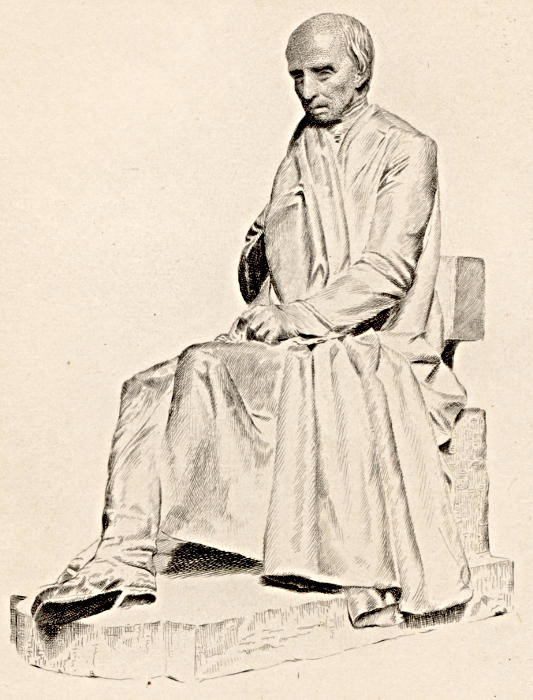
William Wordsworth
after Thomas Woolner
Printed by Ch Wittmann Paris
THE POETICAL WORKS
OF
WILLIAM WORDSWORTH
EDITED BY
WILLIAM KNIGHT
VOL. VIII
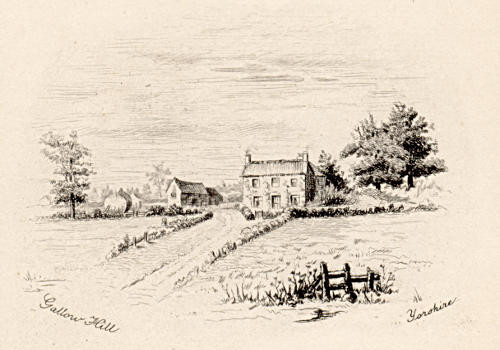
Gallow Hill
Yorkshire
London
MACMILLAN AND CO., Ltd.
New York: Macmillan & Co.
1896
All rights reserved.
CONTENTS
PAGE
1834Lines suggested by a Portrait from the Pencil of F. Stone
1The foregoing Subject resumed
6To a Child
7Lines written in the Album of the Countess of Lonsdale, Nov. 5, 1834
8 1835“Why art thou silent? Is thy love a plant”
12To the Moon
13To the Moon
15Written after the Death of Charles Lamb
17Extempore Effusion upon the Death of James Hogg
24Upon seeing a Coloured Drawing of the Bird of Paradise in an Album
29“Desponding Father! mark this altered bough”
31“Four fiery steeds impatient of the rein”
31To ——
32Roman Antiquities discovered at Bishopstone, Herefordshire
33St. Catherine of Ledbury
34“By a blest Husband guided, Mary came”
35“Oh what a Wreck! how changed in mien and speech!”
36 1836November 1836
37To a Redbreast—(In Sickness)
38 1837“Six months to six years added he remained”
39Memorials of a Tour in Italy, 1837—To Henry Crabb Robinson
41 I.Musings near Aquapendente, April, 1837
42 II.The Pine of Monte Mario at Rome
58 III.At Rome
59 IV.At Rome—Regrets—in Allusion to Niebuhr and other Modern Historians
60 V.Continued
61 VI.Plea for the Historian
61 VII.At Rome
62 VIII.Near Rome, in Sight of St. Peter’s
63 IX.At Albano
64 X.“Near Anio’s stream, I spied a gentle Dove”
65 XI.From the Alban Hills, looking towards Rome
65 XII.Near the Lake of Thrasymene
66 XIII.Near the same Lake
67 XIV.The Cuckoo at Laverna
67 XV.At the Convent of Camaldoli
72
XVI.Continued
73 XVII.At the Eremite or Upper Convent of Camaldoli
74 XVIII.At Vallombrosa
75 XIX.At Florence
78 XX.Before the Picture of the Baptist, by Raphael, in the Gallery at Florence
79 XXI.At Florence—From Michael Angelo
80 XXII.At Florence—From Michael Angelo
81 XXIII.Among the Ruins of a Convent in the Apennines
82 XXIV.In Lombardy
83 XXV.After leaving Italy
84 XXVI.Continued
85At Bologna, in Remembrance of the late Insurrections, 1837.—
I. 86 II.Continued
86 III.Concluded
87“What if our numbers barely could defy”
87A Night Thought
88The Widow on Windermere Side
89 1838To the Planet Venus
92“Hark! ’tis the Thrush, undaunted, undeprest”
93“’Tis He whose yester-evening’s high disdain”
94Composed at Rydal on May Morning, 1838
94Composed on a May Morning, 1838
97A Plea for Authors, May 1838
99“Blest Statesman He, whose Mind’s unselfish will”
101Valedictory Sonnet
102 1839Sonnets upon the Punishment of Death—
I.Suggested by the View of Lancaster Castle (on the Road from the South)
103 II.“Tenderly do we feel by Nature’s law”
104 III.“The Roman Consul doomed his sons to die”
105 IV.“Is
Death, when evil against good has fought”
106 V.“Not to the object specially designed”
106 VI.“Ye brood of conscience—Spectres! that frequent”
107 VII.“Before the world had past her time of youth”
107 VIII.“Fit retribution, by the moral code”
108 IX.“Though to give timely warning and deter”
109 X.“Our bodily life, some plead, that life the shrine”
109 XI.“Ah, think how one compelled for life to abide”
110 XII.“See the Condemned alone within his cell”
110 XIII.Conclusion
111 XIV.Apology
112“Men of the Western World! in Fate’s dark book”
112 1840To a Painter
114On the same Subject
115Poor Robin
116On a Portrait of the Duke of Wellington upon the Field of Waterloo, by Haydon
118 1841Epitaph in the Chapel-Yard of Langdale, Westmoreland
120 1842“Intent on gathering wool from hedge and brake”
122Prelude, prefixed to the Volume entitled “Poems chiefly of Early and Late Years”
123Floating Island
125“The Crescent-moon, the Star of Love”
127“
A Poet!—He hath put his heart to school”
127“The most alluring clouds that mount the sky”
128“Feel for the wrongs to universal ken”
129In Allusion to various Recent Histories and Notices of the French Revolution
130Continued
131Concluded
131“Lo! where she stands fixed in a saint-like trance”
132The Norman Boy
132The Poet’s Dream
135Suggested by a Picture of the Bird of Paradise
140To the Clouds
142Airey-Force Valley
146“Lyre! though such power do in thy magic live”
147Love lies Bleeding
148“They call it Love lies bleeding! rather say”
150Companion to the Foregoing
150The Cuckoo-Clock
151“Wansfell! this Household has a favoured lot”
153“Though the bold wings of Poesy affect”
154“Glad sight wherever new with old”
154 1843“While beams of orient light shoot wide and high”
156Inscription for a Monument in Crosthwaite Church, in the Vale of Keswick
157To the Rev. Christopher Wordsworth, D.D., Master of Harrow School
162 1844“So fair, so sweet, withal so sensitive”
164On the projected Kendal and Windermere Railway
166“Proud were ye, Mountains, when, in times of old”
167At Furness Abbey
168 1845“Forth from a jutting ridge, around whose base”
170The Westmoreland Girl
172At Furness Abbey
176“Yes! thou art fair, yet be not moved”
176“What heavenly smiles! O Lady mine”
177To a Lady
177To the Pennsylvanians
179“Young England—what is then become of Old”
180 1846Sonnet
181“Where lies the truth? has Man, in wisdom’s creed”
182To Lucca Giordano
183“Who but is pleased to watch the moon on high”
184Illustrated Books and Newspapers
184Sonnet. To an Octogenarian
185“I know an aged Man constrained to dwell”
186“The unremitting voice of nightly streams”
187“How beautiful the Queen of Night, on high”
188On the Banks of a Rocky Stream
188Ode. Intimations of Immortality from Recollections of Early Childhood
189POEMS BY WILLIAM WORDSWORTH AND BY DOROTHY WORDSWORTH
NOT INCLUDED IN THE EDITION OF 1849-50
1787Sonnet, on seeing Miss Helen Maria Williams weep at a Tale of Distress
209Lines written by William Wordsworth as a School Exercise at Hawkshead, Anno Ætatis 14
211 1792 (or earlier)“Sweet was the walk along the narrow lane”
214“When Love was born of heavenly line”
215The Convict
217 1798“The snow-tracks of my friends I see”
219The Old Cumberland Beggar (MS. Variants, not inserted in Vol. I.)
220 1800Andrew Jones
221“There is a shapeless crowd of unhewn stones”
223 1802“Among all lovely things my Love had been”
231“Along the mazes of this song I go”
233“The rains at length have ceas’d, the winds are still’d”
233“Witness thou”
234Wild-Fowl
234Written in a Grotto
234Home at Grasmere
235“Shall he who gives his days to low pursuits”
257 1803“I find it written of Simonides”
258 1804“No whimsey of the purse is here”
258 1805“Peaceful our valley, fair and green”
259“Ah! if I were a lady gay”
262 1806To the Evening Star over Grasmere Water, July 1806
263Michael Angelo in Reply to the Passage upon his Statue of Night sleeping
263“Come, gentle Sleep, Death’s image tho’ thou art”
264“Brook, that hast been my solace days and week”
265Translation from Michael Angelo
265 1808George and Sarah Green
266 1818“The Scottish Broom on Bird-nest brae”
270Placard for a Poll bearing an old Shirt
271“Critics, right honourable Bard, decree”
271 1819“Through Cumbrian wilds, in many a mountain cove”
272“My Son! behold the tide already spent”
273 1820Author’s Voyage down the Rhine
273 1822“These vales were saddened with no common gloom”
275Translation of Part of the First Book of the
Æneid 276 1823“Arms and the Man I sing, the first who bore”
281 1826Lines addressed to Joanna H. from Gwerndwffnant in June 1826
282Holiday at Gwerndwffnant, May 1826
284Composed when a Probability existed of our being obliged to quit Rydal Mount as a Residence
289“I, whose pretty Voice you hear”
295 1827To my Niece Dora
297 1829“My Lord and Lady Darlington”
298 1833To the Utilitarians
299 1835“Throned in the Sun’s descending car”
300“And oh! dear soother of the pensive breast”
301 1836“Said red-ribboned Evans”
301 1837On an Event in Col. Evans’s Redoubted Performances in Spain
303 1838“Wouldst thou be gathered to Christ’s chosen flock”
303Protest against the Ballot, 1838
304“Said Secrecy to Cowardice and Fraud”
304A Poet to his Grandchild
305 1840On a Portrait of I.F., painted by Margaret Gillies
306To I.F.
307“Oh Bounty without measure, while the Grace”
308 1842The Eagle and the Dove
309Grace Darling
310“When Severn’s sweeping flood had overthrown”
314The Pillar of Trajan
314 1846“Deign, Sovereign Mistress! to accept a lay”
319 1847Ode, performed in the Senate-House, Cambridge, on the 6th of July 1847, at the First Commencement after the Installation of His Royal Highness the Prince Albert, Chancellor of the University
320To Miss Sellon
325“The worship of this Sabbath morn”
325 Bibliographies— I. Great Britain 329 II. America 380 III. France 421 Errata and Addenda List 431 Index to the Poems 433 Index to the First Lines 451PREFATORY NOTE
The American Bibliography is almost entirely the work of Mrs. St. John of Ithaca, and is the result of laborious and careful critical research on her part. The French Bibliography is not so full. I have been assisted in it mainly by M. Legouis at Lyons, and by workers at the British Museum. I have also collected a German Bibliography, but it is in too incomplete a state for publication in its present form.
The English Bibliography is fuller than any of its predecessors; but there is no such thing as finality in such work, especially when an addition to the literature of the subject is made nearly every week. Many kind friends, and coadjutors, have assisted me in it, amongst whom I may mention Dr. Garnett of the British Museum, and very specially Mr. Tutin, of Hull, and also Mr. John J. Smith, St. Andrews, and Mr. Maclauchlan, Dundee. If I omit, either here or elsewhere, to record the assistance which I have received from any one, in my efforts to make this edition of Wordsworth as perfect as is possible at this stage of literary criticism and editorship, I sincerely regret it; but many of my correspondents have specially requested that no mention should be made of their names or their services.
In the Preface to the first volume of this edition there was an unfortunate omission. In returning the final proofs to press, I accidentally transmitted an uncorrected one, in which two names did not appear. They were those of Mr. Thomas Hutchinson, Dublin, and Mr. S. C. Hill, of Hughli College, Bengal. The former kindly revised most of the sheets of Volumes I. and II., and corrected errors, besides making other valuable suggestions and additions. When his own Clarendon Press edition of Wordsworth was being prepared for press, Mr. Hutchinson asked permission to incorporate in it materials which were not afterwards inserted. This I granted cordially, as a similar permission had been given to Professor Dowden for his Aldine edition. The unfortunate omission of Mr. Hutchinson’s name was not discovered by me till after the issue of volumes I. and II. (which appeared simultaneously), and it was first brought under my notice by Mr. Hutchinson’s own letters to the newspapers. My debt to Mr. Hutchinson is great; and, although I have already thanked him for the services which he has rendered to the world in connection with Wordsworthian literature, I may perhaps be allowed to repeat the acknowledgment now. The revised sheets of Vols. I. and II. of this edition were, however, submitted to others at the same time that they were sent to Mr. Hutchinson; more especially to the late Mr. Dykes Campbell, and on his death to Mr. Belinfante, and then to the late Mr. Kinghorn, all of whom were engaged by my publishers to assist in the work entrusted to me. They “turned on the microscope” on my own work, and Mr. Hutchinson’s; and to them I have been indebted in many ways.
Mr. Hill’s services, in tracing the sources of numerous quotations from other poets which occur in Wordsworth’s text, have been great. He sent me his discoveries, unsolicited, and I wish to express very cordially my indebtedness to him. To discover some of these quotations—there are several hundreds of them—cost me much labour, before I had the pleasure of hearing from, or knowing, Mr. Hill; and his assistance in this matter has been greater than that of any other person. It will be seen that I have failed—after much study and extensive correspondence—to discover them all.
In addition to actual quotations—indicated by Wordsworth by inverted commas in his poems—to trace parallel passages from other poets, or phrases which may have suggested to him what he recast and glorified, has seemed to me work not unworthy of accomplishment. At the same time, and in the same connection, to discover the somewhat similar debts of later poets to Wordsworth, and to indicate this here and there in footnotes, may not be wholly useless to posterity.
My obligations to my friend, Mr. Dykes Campbell, are greater than I can adequately express. He supplied me with much material, drawn from many quarters; and, although he did not always mention his sources, I had implicit confidence in him, both as a literary man and a friend. After his death, through the kindness of Mrs. Campbell, I examined some MS. volumes of Wordsworthiana written by him, which were of much use to me.
Some of these were from unknown sources, which I should perhaps have traced out before making use of them, but, in all my Wordsworth work, I have acted from first to last on the legal opinion of a distinguished Judge, that the heir of the writer of literary work could alone authorise its subsequent publication; and, since the heirs of the Poet had kindly given me permission to collect and publish his works, I did so, with a view to the benefit of posterity.
Some of Mr. Campbell’s material was derived from MSS. now in the possession of Mr. T. Norton Longman, and I have to express my sincere regret that in the earlier volumes I copied from Mr. Campbell’s transcripts of these MSS.—which were lent to him on the condition that no public use should be made of them without Mr. Longman’s permission—some variations of the text, without mentioning the source whence they were derived.
I was unaware that these MSS. were lent to Mr. Campbell with the condition attached, and regret very much that I am unable to trust my memory to indicate now what variations of text I have quoted from them. But I may add that Mr. Longman is about to publish a work which will enable Wordsworth students to become practically acquainted with the contents of his MSS.
In reference to the poems not published by Wordsworth or his sister during their lifetime, I have included in this volume not only fugitive pieces printed in Magazines and elsewhere, but also those which have been since recovered from numerous manuscript sources. They are of varying merit. It would be interesting to know, and to record in every instance, where these manuscripts now are; but this is impossible. In many cases the manuscripts have recently changed ownership. I have obtained a sight of many of them, and have been granted permission to transcribe them, from the fortunate possessors of large autograph collections, and also from dealers in autographs; but, after the sale of manuscripts at public auction-rooms, it is, as a rule, impossible to trace them.
In many cases the MS. variants which have been published in previous volumes occur in copies of the poems, transcribed by the Wordsworth household in private letters to friends. I have occasionally indicated this in footnotes; but, to have done so always would have disfigured the pages, and frequently the notes would have been longer than the text. To trace the present possessors of the MSS. would be well-nigh impossible. It is perhaps worth mentioning that in several cases Wordsworth entered as “misprints” in future editions, what some of his editors have considered “new readings.” E.g. in The Excursion, book ix. l. 679, “wild” demeanour, instead of “mild” demeanour.
On Nov. 4, 1893, Mr. Aubrey de Vere wrote to me—
1834
So spake the mild Jeronymite, his griefs
Melting away within him like a dream
Ere he had ceased to gaze, perhaps to speak: 120
And I, grown old, but in a happier land,
Domestic Portrait! have to verse consigned
In thy calm presence those heart-moving words:
Words that can soothe, more than they agitate;
Whose spirit, like the angel that went down 125
Into Bethesda’s pool, with healing virtue
Informs the fountain in the human breast
Which[5] by the visitation was disturbed.
——But why this stealing tear? Companion mute,
On thee I look, not sorrowing; fare thee well, 130
My Song’s Inspirer, once again farewell![6]
Among a grave fraternity of Monks,
For One, but surely not for One alone,
Triumphs, in that great work, the Painter’s skill,
Humbling the body, to exalt the soul;
Yet representing, amid wreck and wrong 5
And dissolution and decay, the warm
And breathing life of flesh, as if already
Clothed with impassive majesty, and graced
With no mean earnest of a heritage
Assigned to it in future worlds. Thou, too, 10
With thy memorial flower, meek Portraiture!
From whose serene companionship I passed
Pursued by thoughts that haunt me still; thou also—
Though but a simple object, into light
Called forth by those affections that endear 15
The private hearth; though keeping thy sole seat
In singleness, and little tried by time,
Creation, as it were, of yesterday—
With a congenial function art endued
For each and all of us, together joined 20
In course of nature under a low roof
By charities and duties that proceed
Out of the bosom of a wiser vow.
To a like salutary sense of awe
Or sacred wonder, growing with the power 25
Of meditation that attempts to weigh,
In faithful scales, things and their opposites,
Can thy enduring quiet gently raise
A household small and sensitive,—whose love,
Dependent as in part its blessings are 30
Upon frail ties dissolving or dissolved
On earth, will be revived, we trust, in heaven.[7]
1835
Why art thou silent? Is thy love a plant
Of such weak fibre that the treacherous air
Of absence withers what was once so fair?
Is there no debt to pay, no boon to grant?
Yet have my thoughts for thee been vigilant— 5
Bound to thy service with unceasing care,[17]
The mind’s least generous wish a mendicant
For nought but what thy happiness could spare.
Speak—though this soft warm heart, once free to hold
A thousand tender pleasures, thine and mine, 10
Be left more desolate, more dreary cold
Than a forsaken bird’s-nest filled with snow
’Mid its own bush of leafless eglantine—
Speak, that my torturing doubts their end may know!
Yes, lovely Moon! if thou so mildly bright 40
Dost rouse, yet surely in thy own despite,
To fiercer mood the phrenzy-stricken brain,
Let me a compensating faith maintain;
That there’s a sensitive, a tender, part
Which thou canst touch in every human heart, 45
For healing and composure.—But, as least
And mightiest billows ever have confessed
Thy domination; as the whole vast Sea
Feels through her lowest depths thy sovereignty;
So shines that countenance with especial grace 50
On them who urge the keel her plains to trace
Furrowing its way right onward. The most rude,
Cut off from home and country, may have stood—
Even till long gazing hath bedimmed his eye,
Or the mute rapture ended in a sigh— 55
Touched by accordance of thy placid cheer,
With some internal lights to memory dear,
Or fancies stealing forth to soothe the breast
Tired with its daily share of earth’s unrest,—
Gentle awakenings, visitations meek; 60
A kindly influence whereof few will speak,
Though it can wet with tears the hardiest cheek.
O still belov’d (for thine, meek Power, are charms
That fascinate the very Babe in arms,
While he, uplifted towards thee, laughs outright,
Spreading his little palms in his glad Mother’s sight) 20
O still belov’d, once worshipped! Time, that frowns
In his destructive flight on earthly crowns,
Spares thy mild splendour; still those far-shot beams
Tremble on dancing waves and rippling streams
With stainless touch, as chaste as when thy praise 25
Was sung by Virgin-choirs in festal lays;
And through dark trials still dost thou explore
Thy way for increase punctual as of yore,
When teeming Matrons—yielding to rude faith
In mysteries of birth and life and death 30
And painful struggle and deliverance—prayed
Of thee to visit them with lenient aid.
What though the rites be swept away, the fanes
Extinct that echoed to the votive strains;
Yet thy mild aspect does not, cannot, cease 35
Love to promote and purity and peace;
And Fancy, unreproved, even yet may trace
Faint types of suffering in thy beamless face.
O gift divine of quiet sequestration!
The hermit, exercised in prayer and praise,
And feeding daily on the hope of heaven,
Is happy in his vow, and fondly cleaves
To life-long singleness; but happier far 125
Was to your souls, and, to the thoughts of others,
A thousand times more beautiful appeared,
Your dual loneliness. The sacred tie
Is broken; yet why grieve? for Time but holds
His moiety in trust, till Joy shall lead 130
To the blest world where parting is unknown.[35]
“Wait, prithee, wait!” this answer Lesbia[51] threw
Forth to her Dove, and took no further heed.
Her eye was busy, while her fingers flew
Across the harp, with soul-engrossing speed;
But from that bondage when her thoughts were freed 5
She rose, and toward the close-shut casement drew,
Whence the poor unregarded Favourite, true
To old affections, had been heard to plead
With flapping wing for entrance. What a shriek
Forced from that voice so lately tuned to a strain 10
Of harmony!——a shriek of terror, pain,
And self-reproach! for, from aloft, a Kite
Pounced,——and the Dove, which from its ruthless beak
She could not rescue, perished in her sight!
While poring Antiquarians search the ground
Upturned with curious pains, the Bard, a Seer,
Takes fire:——The men that have been reappear;
Romans for travel girt, for business gowned;
And some recline on couches, myrtle-crowned, 5
In festal glee: why not? For fresh and clear,
As if its hues were of the passing year,
Dawns this time-buried pavement. From that mound
Hoards may come forth of Trajans, Maximins,
Shrunk into coins with all their warlike toil: 10
Or a fierce impress issues with its foil
Of tenderness—the Wolf, whose suckling Twins
The unlettered ploughboy pities when he wins
The casual treasure from the furrowed soil.
1836
1837
I saw far off the dark top of a Pine
Look like a cloud—a slender stem the tie
That bound it to its native earth—poised high
’Mid evening hues, along the horizon line,
Striving in peace each other to outshine. 5
But when I learned the Tree was living there,
Saved from the sordid axe by Beaumont’s care,[104]
Oh, what a gush of tenderness was mine!
The rescued Pine-tree, with its sky so bright
And cloud-like beauty, rich in thoughts of home, 10
Death-parted friends, and days too swift in flight,
Supplanted the whole majesty of Rome
(Then first apparent from the Pincian Height)[105]
Crowned with St. Peter’s everlasting dome.[106]
Is this, ye Gods, the Capitolian Hill?
Yon petty Steep in truth the fearful Rock,
Tarpeian named of yore,[107] and keeping still
That name, a local Phantom proud to mock
The Traveller’s expectation?—Could our Will
Destroy the ideal Power within, ’twere done
Thro’ what men see and touch,—slaves wandering on,
Impelled by thirst of all but Heaven-taught skill.
Full oft, our wish obtained, deeply we sigh;
Yet not unrecompensed are they who learn, 10
From that depression raised, to mount on high
With stronger wing, more clearly to discern
Eternal things; and, if need be, defy
Change, with a brow not insolent, though stern.
Forbear to deem the Chronicler unwise,
Ungentle, or untouched by seemly ruth,
Who, gathering up all that Time’s envious tooth
Has spared of sound and grave realities,
Firmly rejects those dazzling flatteries, 5
Dear as they are to unsuspecting Youth,
That might have drawn down Clio from the skies
To vindicate the majesty of truth.
Such was her office while she walked with men,[109]
A Muse, who,[110] not unmindful of her Sire 10
All-ruling Jove, whate’er the[111] theme might be
Revered her Mother, sage Mnemosyne,
And taught her faithful servants how the lyre
Should[112] animate, but not mislead, the pen.[113]
They—who have seen the noble Roman’s scorn
Break forth at thought of laying down his head,
When the blank day is over, garreted
In his ancestral palace, where, from morn
To night, the desecrated floors are worn 5
By feet of purse-proud strangers; they—who have read
In one meek smile, beneath a peasant’s shed,
How patiently the weight of wrong is borne;
They—who have heard some learned Patriot treat[114]
Of freedom, with mind grasping the whole theme 10
From ancient Rome, downwards through that bright dream
Of Commonwealths, each city a starlike seat
Of rival glory; they—fallen Italy—
Nor must, nor will, nor can, despair of Thee!
Forgive, illustrious Country! these deep sighs,
Heaved less for thy bright plains and hills bestrown
With monuments decayed or overthrown,
For all that tottering stands or prostrate lies,
Than for like scenes in moral vision shown, 5
Ruin perceived for keener sympathies;
Faith crushed, yet proud of weeds, her gaudy crown
Virtues laid low, and mouldering energies.
Yet why prolong this mournful strain?—Fallen Power,
Thy fortunes, twice exalted,[122] might provoke 10
Verse to glad notes prophetic of the hour
When thou, uprisen, shalt break thy double yoke,
And enter, with prompt aid from the Most High,
On the third stage of thy great destiny.[123]
When here with Carthage Rome to conflict came,[124]
An earthquake, mingling with the battle’s shock,
Checked not its rage;[125] unfelt the ground did rock,
Sword dropped not, javelin kept its deadly aim.—
Now all is sun-bright peace. Of that day’s shame, 5
Or glory, not a vestige seems to endure,
Save in this Rill that took from blood the name[126]
Which yet it bears, sweet Stream! as crystal pure.
So may all trace and sign of deeds aloof
From the true guidance of humanity, 10
Thro’ Time and Nature’s influence, purify
Their spirit; or, unless they for reproof
Or warning serve, thus let them all, on ground
That gave them being, vanish to a sound.
Grieve for the Man who hither came bereft,
And seeking consolation from above;
Nor grieve the less that skill to him was left
To paint this picture of his lady-love:
Can she, a blessed saint, the work approve? 5
And O, good Brethren of the cowl, a thing
So fair, to which with peril he must cling,
Destroy in pity, or with care remove.
That bloom—those eyes—can they assist to bind
Thoughts that would stray from Heaven? The dream must cease 10
To be; by Faith, not sight, his soul must live;
Else will the enamoured Monk too surely find
How wide a space can part from inward peace
The most profound repose his cell can give.
The world forsaken, all its busy cares
And stirring interests shunned with desperate flight,
All trust abandoned in the healing might
Of virtuous action; all that courage dares,
Labour accomplishes, or patience bears— 5
Those helps rejected, they, whose minds perceive
How subtly works man’s weakness, sighs may heave
For such a One beset with cloistral snares.
Father of Mercy! rectify his view,
If with his vows this object ill agree; 10
Shed over it thy grace, and thus subdue[142]
Imperious passion in a heart set free:—
That earthly love may to herself be true,
Give him a soul that cleaveth unto thee.
What aim had they, the Pair of Monks, in size[143]
Enormous, dragged, while side by side they sate,
By panting steers up to this convent gate?
How, with empurpled cheeks and pampered eyes,
Dare they confront the lean austerities 5
Of Brethren, who, here fixed, on Jesu wait
In sackcloth, and God’s anger deprecate
Through all that humbles flesh and mortifies?
Strange contrast!—verily the world of dreams,
Where mingle, as for mockery combined, 10
Things in their very essences at strife,
Shows not a sight incongruous as the extremes
That everywhere, before the thoughtful mind,
Meet on the solid ground of waking life.[144]
Vallombrosa! of thee I first heard in the page 25
Of that holiest of Bards, and the name for my mind
Had a musical charm, which the winter of age
And the changes it brings had no power to unbind.
And now, ye Miltonian shades! under you
I repose, nor am forced from sweet fancy to part, 30
While your leaves I behold and the brooks they will strew,
And the realised vision is clasped to my heart.
Under the shadow of a stately Pile,
The dome of Florence, pensive and alone,
Nor giving heed to aught that passed the while,
I stood, and gazed upon a marble stone,
The laurelled Dante’s favourite seat.[154] A throne, 5
In just esteem, it rivals; though no style
Be there of decoration to beguile
The mind, depressed by thought of greatness flown.
As a true man, who long had served the lyre,
I gazed with earnestness, and dared no more. 10
But in his breast the mighty Poet bore
A Patriot’s heart, warm with undying fire.
Bold with the thought, in reverence I sate down,
And, for a moment, filled that empty Throne.
[It was very hot weather during the week we stayed at Florence; and, never having been there before, I went through much hard service, and am not therefore ashamed to confess I fell asleep before this picture and sitting with my back towards the Venus de Medicis. Buonaparte—in answer to one who had spoken of his being in a sound sleep up to the moment when one of his great battles was to be fought, as a proof of the calmness of his mind and command over anxious thoughts—said frankly, that he slept because from bodily exhaustion he could not help it. In like manner it is noticed that criminals on the night previous to their execution seldom awake before they are called, a proof that the body is the master of us far more than we need be willing to allow. Should this note by any possible chance be seen by any of my countrymen who might have been in the gallery at the time (and several persons were there) and witnessed such an indecorum, I hope he will give up the opinion which he might naturally have formed to my prejudice.—I.F.]
[However at first these two sonnets from Michael Angelo may seem in their spirit somewhat inconsistent with each other, I have not scrupled to place them side by side as characteristic of their great author, and others with whom he lived. I feel, nevertheless, a wish to know at what periods of his life they were respectively composed.[156] The latter, as it expresses, was written in his advanced years, when it was natural that the Platonism that pervades the one should give way to the Christian feeling that inspired the other: between both there is more than poetic affinity.—I.F.]
Eternal Lord! eased of a cumbrous load,
And loosened from the world, I turn to Thee;
Shun, like a shattered bark, the storm, and flee
To thy protection for a safe abode.
The crown of thorns, hands pierced upon the tree, 5
The meek, benign, and lacerated face,
To a sincere repentance promise grace,
To the sad soul give hope of pardon free.
With justice mark not Thou, O Light divine,
My fault, nor hear it with thy sacred ear; 10
Neither put forth that way thy arm severe;
Wash with thy blood my sins; thereto incline
More readily the more my years require
Help, and forgiveness speedy and entire.
Ye Trees! whose slender roots entwine
Altars that piety neglects;
Whose infant arms enclasp the shrine
Which no devotion now respects;
If not a straggler from the herd 5
Here ruminate, nor shrouded bird,
Chanting her low-voiced hymn, take pride
In aught that ye would grace or hide—
How sadly is your love misplaced,
Fair Trees, your bounty run to waste! 10
What if our numbers barely could defy
The arithmetic of babes, must foreign hordes,
Slaves, vile as ever were befooled by words,
Striking through English breasts the anarchy
Of Terror, bear us to the ground, and tie 5
Our hands behind our backs with felon cords?
Yields every thing to discipline of swords?
Is man as good as man, none low, none high?—
Nor discipline nor valour can withstand
The shock, nor quell[163] the inevitable rout, 10
When in some great extremity breaks out
A people, on their own beloved Land
Risen, like one man, to combat in the sight
Of a just God for liberty and right.
Lo! where the Moon along the sky
Sails with her happy destiny;[164]
Oft is she hid from mortal eye
Or dimly seen,
But when the clouds asunder fly 5
How bright her mien![165]
1838
What strong allurement draws, what spirit guides,
Thee, Vesper! brightening still, as if the nearer
Thou com’st to man’s abode the spot grew dearer
Night after night? True is it Nature hides
Her treasures less and less.—Man now presides 5
In power, where once he trembled in his weakness;
Science[171] advances with gigantic strides;
But are we aught enriched in love and meekness?[172]
Aught dost thou see, bright Star! of pure and wise
More than in humbler times graced human story; 10
That makes our hearts more apt to sympathise
With heaven, our souls more fit for future glory,
When earth shall vanish from our closing eyes,
Ere we lie down in our last dormitory?[173]
1839
This Spot—at once unfolding sight so fair
Of sea and land, with yon grey towers that still
Rise up as if to lord it over air—
Might soothe in human breasts the sense of ill,
Or charm it out of memory; yea, might fill 5
The heart with joy and gratitude to God
For all his bounties upon man bestowed:
Why bears it then the name of “Weeping Hill”?[197]
Thousands, as toward yon old Lancastrian Towers,
A prison’s crown, along this way they past 10
For lingering durance or quick death with shame,
From this bare eminence thereon have cast
Their first look—blinded as tears fell in showers
Shed on their chains; and hence that doleful name.
Tenderly do we feel by Nature’s law
For worst offenders: though the heart will heave
With indignation, deeply moved we grieve,
In after thought, for Him who stood in awe
Neither of God nor man, and only saw, 5
Lost wretch, a horrible device enthroned
On proud temptations, till the victim groaned
Under the steel his hand had dared to draw.
But O, restrain compassion, if its course,
As oft befalls, prevent or turn aside 10
Judgments and aims and acts whose higher source
Is sympathy with the unforewarned, who died[199]
Blameless—with them that shuddered o’er his grave,
And all who from the law firm safety crave.
Not to the object specially designed,
Howe’er momentous in itself it be,
Good to promote or curb depravity,
Is the wise Legislator’s view confined.
His Spirit, when most severe, is oft most kind; 5
As all Authority in earth depends
On Love and Fear, their several powers he blends,
Copying with awe the one Paternal mind.
Uncaught by processes in show humane,
He feels how far the act would derogate 10
From even the humblest functions of the State;
If she, self-shorn of Majesty, ordain
That never more shall hang upon her breath
The last alternative of Life or Death.
Before the world had past her time of youth
While polity and discipline were weak,
The precept eye for eye, and tooth for tooth,
Came forth—a light, though but as of day-break,
Strong as could then be borne. A Master meek 5
Proscribed the spirit fostered by that rule,
Patience his law, long-suffering his school,
And love the end, which all through peace must seek.
But lamentably do they err who strain
His mandates, given rash impulse to controul 10
And keep vindictive thirstings from the soul,
So far that, if consistent in their scheme,
They must forbid the State to inflict a pain,
Making of social order a mere dream.
Our bodily life, some plead, that life the shrine
Of an immortal spirit, is a gift
So sacred, so informed with light divine,
That no tribunal, though most wise to sift
Deed and intent, should turn the Being adrift 5
Into that world where penitential tear
May not avail, nor prayer have for God’s ear
A voice—that world whose veil no hand can lift
For earthly sight. “Eternity and Time”
They urge, “have interwoven claims and rights 10
Not to be jeopardised through foulest crime:
The sentence rule by mercy’s heaven-born lights.”
Even so; but measuring not by finite sense
Infinite Power, perfect Intelligence.
See the Condemned alone within his cell
And prostrate at some moment when remorse
Stings to the quick, and, with resistless force,
Assaults the pride she strove in vain to quell.
Then mark him, him who could so long rebel, 5
The crime confessed, a kneeling Penitent
Before the Altar, where the Sacrament
Softens his heart, till from his eyes outwell
Tears of salvation. Welcome death! while Heaven
Does in this change exceedingly rejoice; 10
While yet the solemn heed the State hath given
Helps him to meet the last Tribunal’s voice
In faith, which fresh offences, were he cast
On old temptations, might for ever blast.
1840
All praise the Likeness by thy skill portrayed;[211]
But ’tis a fruitless task to paint for me,
Who, yielding not to changes Time has made,
By the habitual light of memory see
Eyes unbedimmed, see bloom that cannot fade, 5
And smiles that from their birth-place ne’er shall flee
Into the land where ghosts and phantoms be;
And, seeing this, own nothing in its stead.
Couldst thou go back into far-distant years,
Or share with me, fond thought! that inward eye,[212] 10
Then, and then only, Painter! could thy Art
The visual powers of Nature satisfy,
Which hold, whate’er to common sight appears,
Their sovereign empire in a faithful heart.
1841
1842
Southey, in an unpublished letter to Sir George Beaumont (10th July 1824), thus describes the Island at Derwentwater: “You will have seen by the papers that the Floating Island has made its appearance. It sank again last week, when some heavy rains had raised the lake four feet. By good fortune Professor Sedgewick happened to be in Keswick, and examined it in time. Where he probed it a thin layer of mud lies upon a bed of peat, which is six feet thick, and this rests upon a stratum of fine white clay,—the same I believe which Miss Barker found in Borrowdale when building her unlucky house. Where the gas is generated remains yet to be discovered, but when the peat is filled with this gas, it separates from the clay and becomes buoyant. There must have been a considerable convulsion when this took place, for a rent was made in the bottom of the lake, several feet in depth, and not less than fifty yards long, on each side of which the bottom rose and floated. It was a pretty sight to see the small fry exploring this new made strait and darting at the bubbles which rose as the Professor was probing the bank. The discharge of air was considerable here, when a pole was thrust down. But at some distance where the rent did not extend, the bottom had been heaved up in a slight convexity, sloping equally in an inclined plane all round: and there, when the pole was introduced, a rush like a jet followed, as it was withdrawn. The thing is the more curious, because as yet no example of it is known to have been observed in any other place.”
[I was impelled to write this Sonnet by the disgusting frequency with which the word artistical, imported with other impertinences from the Germans, is employed by writers of the present day: for artistical let them substitute artificial, and the poetry written on this system, both at home and abroad, will be for the most part much better characterised.—I.F.]
The most alluring clouds that mount the sky
Owe to a troubled element their forms,
Their hues to sunset. If with raptured eye
We watch their splendour, shall we covet storms,
And wish the Lord of day his slow decline 5
Would hasten, that such pomp may float on high?
Behold, already they forget to shine,
Dissolve—and leave to him who gazed a sigh.
Not loth to thank each moment for its boon
Of pure delight, come whensoe’er[223] it may, 10
Peace let us seek,—to stedfast things attune
Calm expectations, leaving to the gay
And volatile their love of transient bowers,
The house that cannot pass away be ours.[224]
Feel for the wrongs to universal ken
Daily exposed, woe that unshrouded lies;
And seek the Sufferer in his darkest den,
Whether conducted to the spot by sighs
And moanings, or he dwells (as if the wren 5
Taught him concealment) hidden from all eyes
In silence and the awful modesties
Of sorrow;—feel for all, as brother Men!
Rest not in hope want’s icy chain to thaw
By casual boons and formal charities;[225] 10
Learn to be just, just through impartial law;
Far as ye may, erect and equalise;
And, what ye cannot reach by statute, draw
Each from his fountain of self-sacrifice!
Long-favoured England! be not thou misled
By monstrous theories of alien growth,
Lest alien frenzy seize thee, waxing wroth,
Self-smitten till thy garments reek dyed red
With thy own blood, which tears in torrents shed 5
Fail to wash out, tears flowing ere thy troth
Be plighted, not to ease but sullen sloth,
Or wan despair—the ghost of false hope fled
Into a shameful grave. Among thy youth,
My Country! if such warning be held dear, 10
Then shall a Veteran’s heart be thrilled with joy,
One who would gather from eternal truth,
For time and season, rules that work to cheer—
Not scourge, to save the People—not destroy.
The Boy no answer made by words, but, so earnest was his look,
Sleep fled, and with it fled the dream—recorded in this book, 70
Lest all that passed should melt away in silence from my mind,
As visions still more bright have done, and left no trace behind.
A sense of seemingly presumptuous wrong
Gave the first impulse to the Poet’s song;
But, of his scorn repenting soon, he drew
A juster judgment from a calmer view; 30
And, with a spirit freed from discontent,
Thankfully took an effort that was meant
Not with God’s bounty, Nature’s love, to vie,
Or made with hope to please that inward eye
Which ever strives in vain itself to satisfy, 35
But to recal the truth by some faint trace
Of power ethereal and celestial grace,
That in the living Creature find on earth a place.
Nor less the joy with many a glance 25
Cast up the Stream or down at her beseeching,
To mark its eddying foam-balls prettily distrest
By ever-changing shape and want of rest;
Or watch, with mutual teaching,
The current as it plays 30
In flashing leaps and stealthy creeps
Adown a rocky maze;
Or note (translucent summer’s happiest chance!)
In the slope-channel floored with pebbles bright,
Stones of all hues, gem emulous of gem, 35
So vivid that they take from keenest sight
The liquid veil that seeks not to hide them.[254]
Never enlivened with the liveliest ray
That fosters growth or checks or cheers decay,
Nor by the heaviest rain-drops more deprest,
This Flower, that first appeared as summer’s guest,
Preserves her beauty ’mid autumnal leaves 5
And to her mournful habits fondly cleaves.
And know—that, even for him who shuns the day
And nightly tosses on a bed of pain;
Whose joys, from all but memory swept away, 25
Must come unhoped for, if they come again;
Know—that, for him whose waking thoughts, severe
As his distress is sharp, would scorn my theme,
The mimic notes, striking upon his ear
In sleep, and intermingling with his dream, 30
Could from sad regions send him to a dear
Delightful land of verdure, shower and gleam,
To mock the wandering Voice[257] beside some haunted stream.[258]
1843
While beams of orient light shoot wide and high,
Deep in the vale a little rural Town[266]
Breathes forth a cloud-like creature of its own,
That mounts not toward the radiant morning sky,
But, with a less ambitious sympathy, 5
Hangs o’er its Parent waking to the cares
Troubles and toils that every day prepares.
So Fancy, to the musing Poet’s eye,
Endears that Lingerer. And how blest her sway[267]
(Like influence never may my soul reject)[268] 10
If the calm Heaven, now to its zenith decked[269]
With glorious forms in numberless array,
To the lone shepherd on the hills disclose
Gleams from[270] a world in which the saints repose.
Ye torrents, foaming down the rocky steeps,
Ye lakes, wherein the spirit of water sleeps,
Ye vales and hills, whose beauty hither drew
The Poet’s steps and fixed him here, on you
His eyes have closed! and ye, loved books, no more
Shall Southey feed upon your precious lore,
To works that ne’er shall forfeit their renown
Adding immortal labours of his own—
Whether he traced historic truth, with zeal
For the State’s guidance or the Church’s weal,
Or Fancy, disciplined by studious art,
Informed his pen, or wisdom of the heart,
Or judgments sanctioned in the Patriot’s mind
By reverence for the rights of all mankind.
Wide were his aims, yet in no human breast
Could private feelings find a holier nest.
His joys, his griefs, have vanished like a cloud
From Skiddaw’s top; but he to Heaven was vowed
Through a long life, and calmed by Christian faith,
In his pure soul, the fear of change and death.
1844
Is then no nook of English ground secure
From rash assault?[278] Schemes of retirement sown
In youth, and ’mid the busy world kept pure
As when their earliest flowers of hope were blown,
Must perish;—how can they this blight endure? 5
And must he too the ruthless change bemoan
Who scorns a false utilitarian lure
’Mid his paternal fields at random thrown?
Baffle the threat, bright Scene, from Orrest-head[279]
Given to the pausing traveller’s rapturous glance: 10
Plead for thy peace, thou beautiful romance
Of nature; and, if human hearts be dead,
Speak, passing winds; ye torrents, with your strong
And constant voice, protest against the wrong.
1845
Yes! thou art fair, yet be not moved
To scorn the declaration,
That sometimes I in thee have loved
My fancy’s own creation.
Still as we look with nicer care,
Some new resemblance we may trace:
A Heart’s-ease will perhaps be there,
A Speedwell may not want its place. 20
And so may we, with charmèd mind
Beholding what your skill has wrought,
Another Star-of-Bethlehem find,
A new[298] Forget-me-not.
Days undefiled by luxury or sloth,
Firm self-denial, manners grave and staid,
Rights equal, laws with cheerfulness obeyed,
Words that require no sanction from an oath,
And simple honesty a common growth— 5
This high repute, with bounteous Nature’s aid,
Won confidence, now ruthlessly betrayed
At will, your power the measure of your troth!—
All who revere the memory of Penn
Grieve for the land on whose wild woods his name[299] 10
Was fondly grafted with a virtuous aim,
Renounced, abandoned by degenerate Men
For state-dishonour black as ever came
To upper air from Mammon’s loathsome den.[300]
1846
Why should we weep or mourn, Angelic boy,
For such thou wert ere from our sight removed,
Holy, and ever dutiful—beloved
From day to day with never-ceasing joy,
And hopes as dear as could the heart employ 5
In aught to earth pertaining? Death has proved
His might, nor less his mercy, as behoved—
Death conscious that he only could destroy
The bodily frame. That beauty is laid low
To moulder in a far-off field of Rome; 10
But Heaven is now, blest Child, thy Spirit’s home:
When such divine communion, which we know,
Is felt, thy Roman-burial place will be
Surely a sweet remembrancer of Thee.
Discourse was deemed Man’s noblest attribute,
And written words the glory of his hand;
Then followed Printing with enlarged command
For thought—dominion vast and absolute
For spreading truth, and making love expand. 5
Now prose and verse sunk into disrepute
Must lacquey a dumb Art that best can suit
The taste of this once-intellectual Land.
A backward movement surely have we here,[306]
From manhood—back to childhood; for the age— 10
Back towards caverned life’s first rude career.
Avaunt this vile abuse of pictured page!
Must eyes be all in all, the tongue and ear
Nothing? Heaven keep us from a lower stage!
Thus in the chosen spot a tie so strong
Was formed between the solitary pair,
That when his fate had housed him ’mid a throng
The Captive shunned all converse proffered there.
1787
When Superstition left the golden light
And fled indignant to the shades of night; 30
When pure Religion rear’d the peaceful breast
And lull’d the warring passions into rest,
Drove far away the savage thoughts that roll
In the dark mansions of the bigot’s soul,
Enlivening Hope display’d her cheerful ray, 35
And beam’d on Britain’s sons a brighter day,
So when on Ocean’s face the storm subsides,
Hush’d are the winds and silent are the tides;
The God of day, in all the pomp of light,
Moves through the vault of heaven, and dissipates the night; 40
Wide o’er the main a trembling lustre plays,
The glittering waves reflect the dazzling blaze;
Science with joy saw Superstition fly
Before the lustre of Religion’s eye;
With rapture she beheld Britannia smile, 45
Clapp’d her strong wings, and sought the cheerful isle.
The shades of night no more the soul involve,
She sheds her beam, and, lo! the shades dissolve;
No jarring monks, to gloomy cell confined,
With mazy rules perplex the weary mind; 50
No shadowy forms entice the soul aside,
Secure she walks, Philosophy her guide.
Britain, who long her warriors had adored,
And deemed all merit centred in the sword;
Britain, who thought to stain the field was fame, 55
Now honour’d Edward’s less than Bacon’s name.
Her sons no more in listed fields advance
To ride the ring, or toss the beamy lance;
No longer steel their indurated hearts
To the mild influence of the finer arts; 60
Quick to the secret grotto they retire
To court majestic truth, or wake the golden lyre;
By generous Emulation taught to rise,
The seats of learning brave the distant skies.
Then noble Sandys, inspir’d with great design, 65
Rear’d Hawkshead’s happy roof, and call’d it mine;
There have I loved to show the tender age
The golden precepts of the classic page;
To lead the mind to those Elysian plains
Where, throned in gold, immortal Science reigns; 70
Fair to the view is sacred Truth display’d,
In all the majesty of light array’d,
To teach, on rapid wings, the curious soul
To roam from heaven to heaven, from pole to pole,
From thence to search the mystic cause of things 75
And follow Nature to her secret springs;
Nor less to guide the fluctuating youth
Firm in the sacred paths of moral truth,
To regulate the mind’s disorder’d frame,
And quench the passions kindling into flame; 80
The glimmering fires of Virtue to enlarge,
And purge from Vice’s dross my tender charge.
Oft have I said, the paths of Fame pursue,
And all that virtue dictates, dare to do;
Go to the world, peruse the book of man, 85
And learn from thence thy own defects to scan;
Severely honest, break no plighted trust,
But coldly rest not here—be more than just;
Join to the rigours of the sires of Rome
The gentler manners of the private dome; 90
When Virtue weeps in agony of woe,
Teach from the heart the tender tear to flow;
If Pleasure’s soothing song thy soul entice,
Or all the gaudy pomp of splendid Vice,
Arise superior to the Siren’s power, 95
The wretch, the short-lived vision of an hour;
Soon fades her cheek, her blushing beauties fly,
As fades the chequer’d bow that paints the sky,
So shall thy sire, whilst hope his breast inspires,
And wakes anew life’s glimmering trembling fires, 100
Hear Britain’s sons rehearse thy praise with joy,
Look up to heaven, and bless his darling boy.
If e’er these precepts quell’d the passions’ strife,
If e’er they smooth’d the rugged walks of life,
If e’er they pointed forth the blissful way 105
That guides the spirit to eternal day,
Do thou, if gratitude inspire thy breast,
Spurn the soft fetters of lethargic rest.
Awake, awake! and snatch the slumbering lyre,
Let this bright morn and Sandys the song inspire. 110
’Tis said Enjoyment (who averr’d
The charge belong’d to her alone)
Jealous that Hope had been preferr’d 30
Laid snares to make the babe her own.
1798
But now he half-raises his deep-sunken eye,
And the motion unsettles a tear;
The silence of sorrow it seems to supply,
And asks of me why I am here.
Why do I watch those running deer?
And wherefore, wherefore come they here? 10
And wherefore do I seem to love
The things that live, the things that move?
Why do I look upon the sky?
I do not live for what I see.
Why open thus mine eyes? To die 15
Is all that now is left for me,
If I could smother up my heart
My life would then at once depart.
My friends, you live, and yet you seem
To me the people of a dream; 20
A dream in which there is no love,
And yet, my friends, you live and move.
1800
(l. 24) He travels on, a solitary man.
His age has no companion. He is weak,
So helpless in appearance that, for him
The sauntering horseman-traveller does not throw
With careless hand his pence upon the ground
But stops that he may lodge the coin
Safe in the old man’s hat: nor quits him so,
But as he goes towards him turns a look
Sidelong and half-reverted.…
1802
No doubt if you in terms direct had asked
Whether he loved the mountains, true it is
That with blunt repetition of your words
He might have stared at you, and said that they
Were frightful to behold, but had you then
Discoursed with him …
Of his own business, and the goings on
Of earth and sky, then truly had you seen
That in his thoughts there were obscurities,
Wonder, and admiration, things that wrought
Not less than a religion in his heart.
And if it was his fortune to converse
With any who could talk of common things
In an unusual way, and give to them
Unusual aspects, or by questions apt
Wake sudden recognitions, that were like
Creations in the mind (and were indeed
Creations often), then when he discoursed
Of mountain sights, this untaught shepherd stood
Before the man with whom he so conversed
And looked at him as with a poet’s eye.
But speaking of the vale in which he dwelt,
And those bare rocks, if you had asked if he
For other pastures would exchange the same
And dwell elsewhere, …
… you then had seen
At once what spirit of love was in his heart.
…
I have related that this Shepherd loved
The fields and mountains, not alone for this
That from his very childhood he had lived
Among them, with a body hale and stout,
And with a vigorous mind …
… But exclude
Such reasons, and he had less cause to love
His native vale and patrimonial fields
Than others have, for Michael had liv’d on
Childless, until the time when he began
To look towards the shutting in of life.
I cannot affirm, with any certainty, that these lines were written by Wordsworth; but I agree with Mr. Ernest Coleridge in thinking that they were. He showed them to his relative—the late Chief Justice—who said that he did not know who else could have written them, at that time. Lord Coleridge said the same to myself.—Ed.
1803
1804
1805
Writing to Sir George Beaumont, on Christmas Day, 1804, Wordsworth said: “We have lately built in our little rocky orchard a circular hut, lined with moss, like a wren’s nest, and coated on the outside with heath, that stands most charmingly, with several views from the different sides of it, of the Lake, the Valley, and the Church.… I will copy a dwarf inscription which I wrote for it” (i.e. the circular hut, in his Orchard-Garden) “the other day before the building was entirely finished, which indeed it is not yet.”[376]—Ed.
Beneath that rock my course I stay’d
And, looking to its summit high, 70
“Thou wear’st,” said I, “a splendid garb,
Here winter keeps his revelry.
1806
In the first volume of a copy of the edition of 1836,—long kept by Wordsworth at Rydal Mount, and afterwards the property of the late Lord Coleridge—which has been referred to in the Preface to Vol. 1., and very often in the footnotes to all the volumes, signed C.—Wordsworth wrote in MS. two translations of a fragment of Michael Angelo’s on Sleep, and a translation of some Latin verses by Thomas Warton on the same subject. These fragments were never included in any edition of his published works, and it is impossible to say to what year they belong. From their close relation to other translations from Michael Angelo, made by Wordsworth in 1806, I assign them, conjecturally, to the same year. The title is from Wordsworth’s own MS.—Ed.
1808
Rid of a vexing and a heavy load,
Eternal Lord! and from the world set free,
Like a frail Bark, weary I turn to Thee,—
From frightful storms into a quiet road.
On much repentance Grace will be bestow’d. 5
The nails, the thorns, and thy two hands, thy face
Benign, meek, …, offers grace
To sinners whom their sins oppress and goad.
Let not thy justice view, O Light Divine,
My fault, and keep it from thy sacred ear. 10
…
Cleanse with thy blood my sins, to this incline
More readily, the more my years require
Prompt aid, forgiveness speedy and entire.
1818
But from the Castle turret blew
A chill forbidding blast,
Which the poor Broom no sooner felt
Than she shrank up so fast; 20
Her wished-for yellow she forswore,
And since that time has cast
Fond looks on colours three or four
And put forth Blue at last.
And now, my lads, the Election comes 25
In June’s sunshining hours,
When every field and bank and brae
Is clad with yellow flowers.
While faction Blue from shops and booths
Tricks out her blustering powers, 30
Lo! smiling Nature’s lavish hand
Has furnished wreaths for ours.
1819
1820
1822
There are also numerous allusions in Mrs. Wordsworth’s Journal to this early tour; e.g. under date August 13. “We left Meyringen; soon reached a sort of Hotel, which Wm. pointed out to us with great interest, as being the only spot where he and his friend Jones were ill used, during the course of their adventurous journey—a wild looking building, a little removed from the road, where the vale of Hasli ends.” Again, in describing the sunset from the woody hill Colline de Gibet, overlooking the two lakes of Brienz and Thun, at Interlaken, “with the loveliest of green vallies between us and Jungfrau,” “Surely William must have had this Paradise in his thoughts when he began his Descriptive Sketches—
These vales were saddened with no common gloom
When good Jemima perished in her bloom;
When, such the awful will of heaven, she died
By flames breathed on her from her own fireside.
On earth we dimly see, and but in part 5
We know, yet faith sustains the sorrowing heart;
And she, the pure, the patient and the meek,
Might have fit epitaph could feelings speak;
If words could tell and monuments record,
How Treasures lost are inwardly deplored, 10
No name by grief’s fond eloquence adorned
More than Jemima’s would be praised and mourned.
The tender virtues of her blameless life,
Bright in the daughter, brighter in the wife,
And in the cheerful mother brightest shone,— 15
That light hath past away—the will of God[394] be done.
1823
Graced with redundant hair, Iopas sings
The lore of Atlas, to resounding strings,
The labours of the Sun, the lunar wanderings;
Whence human kind, and brute; what natural powers
Engender lightning, whence are falling showers. 125
He haunts Arcturus,—that fraternal twain
The glittering Bears,—the Pleiads fraught with rain;
—Why suns in winter, shunning heaven’s steep heights
Post seaward,—what impedes the tardy nights.
The learned song from Tyrian hearers draws 130
Loud shouts,—the Trojans echo the applause.
—But, lengthening out the night with converse new,
Large draughts of love unhappy Dido drew;
Of Priam ask’d, of Hector—o’er and o’er—
What arms the son of bright Aurora wore;— 135
What steeds the car of Diomed could boast;
Among the leaders of the Grecian host
How look’d Achilles, their dread paramount—
“But nay—the fatal wiles, O guest, recount,
Retrace the Grecian cunning from its source, 140
Your own grief and your friends’—your wandering course;
For now, till this seventh summer have ye rang’d
The sea, or trod the earth, to peace estrang’d.”
1826
Now thou art gone—belike ’tis best—
And I remain a passing guest, 50
Yet for thy sake, beloved Friend,
When from this spot my way shall tend,
And every day of festival
Gratefully shall ye then recal,
Less for their own sakes than for this,
That each shall be a resting-place
For memory, and divide the race 160
Of childhood’s smooth and happy years,
Thus lengthening out that term of life
Which governed by your parents’ care
Is free from sorrow and from strife.
The doubt to which a wavering hope had clung
Is fled; we must depart, willing or not;
Sky-piercing Hills! must bid farewell to you
And all that ye look down upon with pride,
With tenderness, embosom; to your paths, 5
And pleasant dwellings, to familiar trees
And wild-flowers known as well as if our hands
Had tended them: and O pellucid Spring!
Unheard of, save in one small hamlet, here
Not undistinguished, for of wells that ooze 10
Or founts that gurgle from yon craggy steep,
Their common sire, thou only bear’st his name.
Insensibly the foretaste of this parting
Hath ruled my steps, and seals me to thy side,
Mindful that thou (ah! wherefore by my Muse 15
So long unthanked) hast cheered a simple board
With beverage pure as ever fixed the choice
Of hermit, dubious where to scoop his cell;
Which Persian kings might envy; and thy meek
And gentle aspect oft has ministered 20
To finer uses. They for me must cease;
Days will pass on, the year, if years be given,
Fade,—and the moralising mind derive
No lessons from the presence of a Power
By the inconstant nature we inherit 25
Unmatched in delicate beneficence;
For neither unremitting rains avail
To swell thee into voice; nor longest drought
Thy bounty stints, nor can thy beauty mar,
Beauty not therefore wanting change to stir 30
The fancy pleased by spectacles unlooked for.
Nor yet, perchance, translucent Spring, had tolled
The Norman curfew bell when human hands
First offered help that the deficient rock
Might overarch thee, from pernicious heat 35
Defended, and appropriate to man’s need.
Such ties will not be severed: but, when we
Are gone, what summer loiterer will regard,
Inquisitive, thy countenance, will peruse,
Pleased to detect the dimpling stir of life, 40
The breathing faculty with which thou yield’st
(Tho’ a mere goblet to the careless eye)
Boons inexhaustible? Who, hurrying on
With a step quickened by November’s cold,
Shall pause, the skill admiring that can work 45
Upon thy chance-defilements—withered twigs
That, lodged within thy crystal depths, seem bright,
As if they from a silver tree had fallen—
And oaken leaves that, driven by whirling blasts,
Sunk down, and lay immersed in dead repose 50
For Time’s invisible tooth to prey upon
Unsightly objects and uncoveted,
Till thou with crystal bead-drops didst encrust
Their skeletons, turned to brilliant ornaments.
But, from thy bosom, should some venturous[396] hand 55
Abstract those gleaming relics, and uplift them,
However gently, toward the vulgar air,
At once their tender brightness disappears,
Leaving the intermeddler to upbraid
His folly. Thus (I feel it while I speak), 60
Thus, with the fibres of these thoughts it fares;
And oh! how much, of all that love creates
Or beautifies, like changes undergo,
Suffers like loss when drawn out of the soul,
Its silent laboratory! Words should say 65
(Could they depict the marvels of thy cell)
How often I have marked a plumy fern
From the live rock with grace inimitable
Bending its apex toward a paler self
Reflected all in perfect lineaments— 70
Shadow and substance kissing point to point
In mutual stillness; or, if some faint breeze
Entering the cell gave restlessness to one,
The other, glassed in thy unruffled breast,
Partook of every motion, met, retired, 75
And met again. Such playful sympathy,
Such delicate caress as in the shape
Of this green plant had aptly recompensed
For baffled lips and disappointed arms
And hopeless pangs, the spirit of that youth, 80
The fair Narcissus by some pitying God
Changed to a crimson flower; when he, whose pride
Provoked a retribution too severe,
Had pined; upon his watery duplicate
Wasting that love the nymphs implored in vain. 85
Thus while my Fancy wanders, thou, clear Spring,
Moved (shall I say?) like a dear friend who meets
A parting moment with her loveliest look,
And seemingly her happiest, look so fair
It frustrates its own purpose, and recalls 90
The grieved one whom it meant to send away—
Dost tempt me by disclosures exquisite
To linger, bending over thee: for now,
What witchcraft, mild enchantress, may with thee
Compare! thy earthly bed a moment past 95
Palpable to sight as the dry ground,
Eludes perception, not by rippling air
Concealed, nor through effect of some impure
Upstirring; but, abstracted by a charm
Of my own cunning, earth mysteriously 100
From under thee hath vanished, and slant beams
The silent inquest of a western sun,
Assisting, lucid well-spring! Thou revealest
Communion without check of herbs and flowers,
And the vault’s hoary sides to which they cling, 105
Imaged in downward show; the flower, the Herbs,[397]
These not of earthly texture, and the vault
Not there diminutive, but through a scale
Of vision less and less distinct, descending
To gloom imperishable. So (if truths 110
The highest condescend to be set forth
By processes minute), even so—when thought
Wins help from something greater than herself—
Is the firm basis of habitual sense
Supplanted, not for treacherous vacancy 115
And blank dissociation from a world
We love, but that the residues of flesh,
Mirrored, yet not too strictly, may refine
To Spirit; for the idealising Soul
Time wears the features of Eternity; 120
And Nature deepens into Nature’s God.
Millions of kneeling Hindoos at this day
Bow to the watery element, adored
In their vast stream, and if an age hath been
(As books and haply votive altars vouch) 125
When British floods were worshipped, some faint trace
Of that idolatry, through monkish rites
Transmitted far as living memory,
Might wait on thee, a silent monitor,
On thee, bright Spring, a bashful little one, 130
Yet to the measure of thy promises
True, as the mightiest; upon thee, sequestered
For meditation, nor inopportune
For social interest such as I have shared.
Peace to the sober matron who shall dip 135
Her pitcher here at early dawn, by me
No longer greeted—to the tottering sire,
For whom like service, now and then his choice,
Relieves the tedious holiday of age—
Thoughts raised above the Earth while here he sits 140
Feeding on sunshine—to the blushing girl
Who here forgets her errand, nothing loth
To be waylaid by her betrothed, peace
And pleasure sobered down to happiness!
But should these hills be ranged by one whose soul 145
Scorning love-whispers shrinks from love itself
As Fancy’s snare for female vanity,
Here may the aspirant find a trysting-place
For loftier intercourse. The Muses crowned
With wreaths that have not faded to this hour 150
Sprung from high Jove, of sage Mnemosyne
Enamoured, so the fable runs; but they
Certes were self-taught damsels, scattered births
Of many a Grecian vale, who sought not praise,
And, heedless even of listeners, warbled out 155
Their own emotions given to mountain air
In notes which mountain echoes would take up
Boldly and bear away to softer life;
Hence deified as sisters they were bound
Together in a never-dying choir; 160
Who with their Hippocrene and grottoed fount
Of Castaly, attest that Woman’s heart
Was in the limpid age of this stained world
The most assured seat of [ ]
And new-born waters, deemed the happiest source 165
Of inspiration for the conscious lyre.
Lured by the crystal element in times
Stormy and fierce, the Maid of Arc withdrew
From human converse to frequent alone
The Fountain of the Fairies. What to her, 170
Smooth summer dreams, old favours of the place.
Pageant and revels of blithe elves—to her
Whose country groan’d under a foreign scourge?
She pondered murmurs that attuned her ear
For the reception of far other sounds 175
Than their too happy minstrelsy,—a Voice
Reached her with supernatural mandate charged
More awful than the chambers of dark earth
Have virtue to send forth. Upon the marge
Of the benignant fountain, while she stood 180
Gazing intensely, the translucent lymph
Darkened beneath the shadow of her thoughts
As if swift clouds swept o’er it, or caught
War’s tincture, ’mid the forest green and still,
Turned into blood before her heart-sick eye. 185
Erelong, forsaking all her natural haunts,
All her accustomed offices and cares
Relinquishing, but treasuring every law
And grace of feminine humanity,
The chosen Rustic urged a warlike steed 190
Toward the beleaguered city, in the might
Of prophecy, accoutred to fulfil,
At the sword’s point, visions conceived in love.
The cloud of rooks descending thro’ mid air
Softens its evening uproar towards a close[398] 195
Near and more near; for this protracted strain
A warning not unwelcome. Fare thee well!
Emblem of equanimity and truth,
Farewell!—if thy composure be not ours,
Yet as thou still, when we are gone, wilt keep 200
Thy living chaplet of fresh flowers and fern,
Cherished in shade tho’ peeped at[399] by the sun;
So shall our bosoms feel a covert growth
Of grateful recollections, tribute due
To thy obscure and modest attributes 205
To thee, dear Spring,[400] and all-sustaining Heaven!
1827
1829
1833
My Lord and Lady Darlington,
I would not speak in snarling-tone;
Nor, to you, good Lady Vane,
Would I give one moment’s pain;
Nor Miss Taylor, Captain Stamp, 5
Would I your flights of memory cramp.
Yet, having spent a summer’s day
On the green margin of Loch Tay,
And doubled (prospect ever bettering)
The mazy reaches of Loch Katerine, 10
And more than once been free at Luss,
Loch Lomond’s beauties to discuss,
And wished, at least, to hear the blarney
Of the sly boatmen of Killarney,
And dipped my hand in dancing wave 15
Of Eau de Zurich, Lac Genève,
And bowed to many a major domo
On stately terraces of Como,
And seen the Simplon’s forehead hoary,
Reclined on Lago Maggiore 20
At breathless eventide at rest
On the broad water’s placid breast,
I, not insensible, Heaven knows,
To all the charms this Station shows,
Must tell you, Captain, Lord, and Ladies— 25
For honest worth one poet’s trade is—
That your praise appears to me
Folly’s own hyperbole.
1835
Thy shades, thy silence, now be mine
Thy charms my only theme; 10
1836
1837
1838
Said Secrecy to Cowardice and Fraud,
Falsehood and Treachery, in close council met,
Deep under ground, in Pluto’s cabinet,
“The frost of England’s pride will soon be thawed;
Hooded the open brow that overawed 5
Our schemes; the faith and honour, never yet
By us with hope encountered, be upset;—
For once I burst my bands, and cry, applaud!”
Then whispered she, “The Bill is carrying out!”
They heard, and, starting up, the Brood of Night 10
Clapped hands, and shook with glee their matted locks;
All Powers and Places that abhor the light
Joined in the transport, echoed back their shout,
Hurrah for ——, hugging his Ballot-box![406]
1840
We gaze—nor grieve to think that we must die,
But that the precious love this friend hath sown
Within our hearts, the love whose flower hath blown
Bright as if heaven were ever in its eye,
Will pass so soon from human memory; 5
And not by strangers to our blood alone,
But by our best descendants be unknown,
Unthought of—this may surely claim a sigh.
Yet, blessèd Art, we yield not to dejection:
Thou against Time so feelingly dost strive; 10
Where’er, preserved in this most true reflection,
An image of her soul is kept alive,
Some lingering fragrance of the pure affection,
Whose flower with us will vanish, must survive.
William Wordsworth.
Rydal Mount, New Year’s Day, 1840.
The star which comes at close of day to shine
More heavenly bright than when it leads the morn,
Is friendship’s emblem,[412] whether the forlorn
She visiteth, or, shedding light benign
Through shades that solemnize Life’s calm decline, 5
Doth make the happy happier. This have we
Learnt, Isabel, from thy society,
Which now we too unwillingly resign
Though for brief absence. But farewell! the page
Glimmers before my sight through thankful tears, 10
Such as start forth, not seldom, to approve
Our truth, when we, old yet unchill’d by age,
Call thee, though known but for a few fleet years,
The heart-affianced sister of our love!
William Wordsworth.
Rydal Mount, Feb. 1840.
1842
1846
1847
And now, by duty urged, I lay this Book
Before thy Majesty, in humble trust
That on its simplest pages thou wilt look
With a benign indulgence more than just. 20
[430] Frederic the Wise, Elector of Saxony (1847).
INDEX TO FIRST LINES
“I earnestly hope that, in your ‘monumental edition,’ you will restore the Ode, Intimations of Immortality, to the place which Wordsworth always assigned to it, that of the High Altar of his poetic Cathedral; remitting Quillinan’s laureate Ode on an unworthy, because ‘occasional,’ subject to an Appendix, as a work that at the time of publication was attributed to Wordsworth, but was written by another, though it probably was seen by him, and had a line or two of his in it, and corrections by him.
“This is certainly the truth; and I should think that he probably himself told all that truth to the officials, when transmitting the Ode; but that they concealed the circumstance; and that Wordsworth, then profoundly depressed in spirits, gave no more thought to the subject, and soon forgot all about it.…
“Yours very sincerely,
“Aubrey de Vere.”
It was in compliance with Mr. Aubrey de Vere’s request that, in this edition, I departed, in a single instance, from the chronological arrangement of the poems.
It may not be too trivial a detail to mention that I gladly gave permission to other editors of Wordsworth to make use of any of the material which I discovered, and brought together, in former editions; e.g. to Mr. George, in Boston, for his edition of The Prelude (in which, if the reader, or critic, compares my original edition with his notes, he will see what Mr. George has done); and to Professor Dowden, Trinity College, Dublin, for his most admirable Aldine edition. For the latter—which will always hold a high place in Wordsworth literature—I placed everything asked from me at the disposal of Mr. Dowden.
While these sheets are passing through the press, Dr. Garnett, of the British Museum—one of the kindest and ablest of bibliographers—has forwarded to me a contribution, previously sent by him to The Academy, and printed in its issue of January 2, 1897.
I have no means of knowing—or of ultimately discovering—whether that sonnet, printed as Wordsworth’s, is really his. Dr. Garnett says, in his letter to me, “The verses were undoubtedly in Wordsworth’s hand”; and, he adds, “I think they should be preserved, because they are Wordsworth’s, and as an additional proof of his regard for Camoens, whom he enumerates elsewhere among great sonnet-writers. I have added a version of the quatrains, that the piece may be complete. From the character of the handwriting, the lines would seem to have been written down in old age; and I am not quite certain of the word which I have transcribed as ‘Austral.’”
Vasco, whose bold and happy mainyard spread
Sunward thy sails where dawning glory dyed
Heaven’s Orient gate; whose westering prow the tide
Clove, where the day star bows him to his bed:
Not sterner toil than thine, or strife more dread,
Or nobler laud to nobler lyre allied,
His, who did baffled Polypheme deride;
Or his, whose scaring shaft the Harpy fled.
Camoens, he the accomplished and the good,
Gave to thy fame a more illustrious flight
Than that brave vessel, though she sailed so far.
Through him her course along the Austral flood
Is known to all beneath the polar star,
Through him the Antipodes in thy name delight.
William Knight.
WORDSWORTH’S POETICAL WORKS
1834
LINES
Suggested by a Portrait from the Pencil of F. Stone
Composed 1834.—Published 1835
[This Portrait has hung for many years in our principal sitting-room, and represents J. Q.[1] as she was when a girl. The picture, though it is somewhat thinly painted, has much merit in tone and general effect: it is chiefly valuable, however, from the sentiment that pervades it. The anecdote of the saying of the monk in sight of Titian’s picture was told in this house by Mr. Wilkie, and was, I believe, first communicated to the public in this poem, the former portion of which I was composing at the time. Southey heard the story from Miss Hutchinson, and transferred it to the Doctor; but it is not easy to explain how my friend Mr. Rogers, in a note subsequently added to his Italy, was led to speak of the same remarkable words having many years before been spoken in his hearing by a monk or priest in front of a picture of the Last Supper, placed over a Refectory-table in a convent at Padua.—I.F.]
One of the “Poems of Sentiment and Reflection.”—Ed.
Beguiled into forgetfulness of care
Due to the day’s unfinished task; of pen
Or book regardless, and of that fair scene
In Nature’s prodigality displayed
Before my window, oftentimes and long 5
I gaze upon a Portrait whose mild gleam
Of beauty never ceases to enrich
The common light; whose stillness charms the air,
Or seems to charm it, into like repose;
Whose silence, for the pleasure of the ear, 10
Surpasses sweetest music. There she sits
With emblematic purity attired
In a white vest, white as her marble neck
Is, and the pillar of the throat would be
But for the shadow by the drooping chin 15
Cast into that recess—the tender shade,
The shade and light, both there and every where,
And through the very atmosphere she breathes,
Broad, clear, and toned harmoniously, with skill
That might from nature have been learnt in the hour 20
When the lone shepherd sees the morning spread
Upon the mountains. Look at her, whoe’er
Thou be that, kindling with a poet’s soul,
Hast loved the painter’s true Promethean craft
Intensely—from Imagination take 25
The treasure,—what mine eyes behold see thou,
Even though the Atlantic ocean roll between.
A silver line, that runs from brow to crown
And in the middle parts the braided hair,
Just serves to show how delicate a soil 30
The golden harvest grows in; and those eyes,
Soft and capacious as a cloudless sky
Whose azure depth their colour emulates,
Must needs be conversant with upward looks,
Prayer’s voiceless service; but now, seeking nought 35
And shunning nought, their own peculiar life
Of motion they renounce, and with the head
Partake its inclination towards earth
In humble grace, and quiet pensiveness
Caught at the point where it stops short of sadness. 40
Offspring of soul-bewitching Art, make me
Thy confidant! say, whence derived that air
Of calm abstraction? Can the ruling thought
Be with some lover far away, or one
Crossed by misfortune, or of doubted faith? 45
Inapt conjecture! Childhood here, a moon
Crescent in simple loveliness serene,
Has but approached the gates of womanhood,
Not entered them; her heart is yet unpierced
By the blind Archer-god; her fancy free: 50
The fount of feeling, if unsought elsewhere,
Will not be found.
Her right hand, as it lies
Across the slender wrist of the left arm
Upon her lap reposing, holds—but mark
How slackly, for the absent mind permits 55
No firmer grasp—a little wild-flower, joined
As in a posy, with a few pale ears
Of yellowing corn, the same that overtopped
And in their common birthplace sheltered it
’Till they were plucked together; a blue flower 60
Called by the thrifty husbandman a weed;
But Ceres, in her garland, might have worn
That ornament, unblamed. The floweret, held
In scarcely conscious fingers, was, she knows,
(Her Father told her so) in youth’s gay dawn 65
Her Mother’s favourite; and the orphan Girl,
In her own dawn—a dawn less gay and bright,
Loves it, while there in solitary peace
She sits, for that departed Mother’s sake.
—Not from a source less sacred is derived 70
(Surely I do not err) that pensive air
Of calm abstraction through the face diffused
And the whole person.
Words have something told
More than the pencil can, and verily
More than is needed, but the precious Art 75
Forgives their interference—Art divine,
That both creates and fixes, in despite
Of Death and Time, the marvels it hath wrought.
Strange contrasts have we in this world of ours!
That posture, and the look of filial love 80
Thinking of past and gone, with what is left
Dearly united, might be swept away
From this fair Portrait’s fleshly Archetype,
Even by an innocent fancy’s slightest freak
Banished, nor ever, haply, be restored 85
To their lost place, or meet in harmony
So exquisite; but here do they abide,
Enshrined for ages. Is not then the Art
Godlike, a humble branch of the divine,
In visible quest of immortality, 90
Stretched forth with trembling hope?—In every realm,
From high Gibraltar to Siberian plains,
Thousands, in each variety of tongue
That Europe knows, would echo this appeal;
One above all, a Monk who waits on God 95
In the magnific Convent built of yore
To sanctify the Escurial palace. He—
Guiding, from cell to cell and room to room,
A British Painter (eminent for truth
In character,[2] and depth of feeling, shown 100
By labours that have touched the hearts of kings,
And are endeared to simple cottagers)—
Came, in that service, to a glorious work,[3]
Our Lord’s Last Supper, beautiful as when first
The appropriate Picture, fresh from Titian’s hand, 105
Graced the Refectory: and there, while both
Stood with eyes fixed upon that masterpiece,
The hoary Father in the Stranger’s ear
Breathed out these words:—“Here daily do we sit,
Thanks given to God for daily bread, and here 110
Pondering the mischiefs of these restless times,
And thinking of my Brethren, dead, dispersed,
Or changed and changing, I not seldom gaze
Upon this solemn Company unmoved
By shock of circumstance, or lapse of years, 115
Until I cannot but believe that they—
They are in truth the Substance, we
the Shadows.”[4]
So spake the mild Jeronymite, his griefs
Melting away within him like a dream
Ere he had ceased to gaze, perhaps to speak: 120
And I, grown old, but in a happier land,
Domestic Portrait! have to verse consigned
In thy calm presence those heart-moving words:
Words that can soothe, more than they agitate;
Whose spirit, like the angel that went down 125
Into Bethesda’s pool, with healing virtue
Informs the fountain in the human breast
Which[5] by the visitation was disturbed.
——But why this stealing tear? Companion mute,
On thee I look, not sorrowing; fare thee well, 130
My Song’s Inspirer, once again farewell![6]
[1] Jemima Quillinan, the eldest daughter of Edward Quillinan, Wordsworth’s future son-in-law. The portrait was taken when she was a school-girl, and while her father resided at Oporto.—Ed.
[2] Wilkie. See the Fenwick note.—Ed.
[3] 1837.
Left not unvisited a glorious work,
1835.
[4] “When Wilkie was in the Escurial, looking at Titian’s famous picture of the Last Supper, in the Refectory there, an old Jeronymite said to him: ‘I have sate daily in sight of that picture for now nearly three score years; during that time my companions have dropt off, one after another—all who were my seniors, all who were my contemporaries, and many, or most of those who were younger than myself; more than one generation has passed away, and there the figures in the picture have remained unchanged! I look at them till I sometimes think that they are the realities, and we but shadows!’
I wish I could record the name of the monk by whom that natural feeling was so feelingly and strikingly expressed.
The shows of things are better than themselves,
says the author of the tragedy of Nero, whose name also I could wish had been forthcoming; and the classical reader will remember the lines of Sophocles:
ὁρῶ γὰρ ἡμᾶς οὐδὲν ὄντας ἄλλο, πλὴν
εἴδωλ’, ὅσοιπερ ζῶμεν, ὴ κούφην σκιάν.
These are reflections which should make us think
Of that same time when no more change shall be
But steadfast rest of all things, firmly stayd
Upon the pillars of Eternity,
That is contrain to mutability;
For all that moveth doth in change delight:
But henceforth all shall rest eternally
With Him that is the God of Sabaoth hight,
O that great Sabaoth God grant me that Sabbath’s sight.
Spenser.”
(Southey, The Doctor, vol. iii. p. 235.)—Ed.
[5] 1837.
That …
1835.
[6] The pile of buildings, composing the palace and convent of San Lorenzo, has, in common usage, lost its proper name in that of the Escurial, a village at the foot of the hill upon which the splendid edifice, built by Philip the Second, stands. It need scarcely be added, that Wilkie is the painter alluded to.—W.W. 1835.
THE FOREGOING SUBJECT RESUMED
Composed 1834.—Published 1835.
One of the “Poems of Sentiment and Reflection.”—Ed.
Among a grave fraternity of Monks,
For One, but surely not for One alone,
Triumphs, in that great work, the Painter’s skill,
Humbling the body, to exalt the soul;
Yet representing, amid wreck and wrong 5
And dissolution and decay, the warm
And breathing life of flesh, as if already
Clothed with impassive majesty, and graced
With no mean earnest of a heritage
Assigned to it in future worlds. Thou, too, 10
With thy memorial flower, meek Portraiture!
From whose serene companionship I passed
Pursued by thoughts that haunt me still; thou also—
Though but a simple object, into light
Called forth by those affections that endear 15
The private hearth; though keeping thy sole seat
In singleness, and little tried by time,
Creation, as it were, of yesterday—
With a congenial function art endued
For each and all of us, together joined 20
In course of nature under a low roof
By charities and duties that proceed
Out of the bosom of a wiser vow.
To a like salutary sense of awe
Or sacred wonder, growing with the power 25
Of meditation that attempts to weigh,
In faithful scales, things and their opposites,
Can thy enduring quiet gently raise
A household small and sensitive,—whose love,
Dependent as in part its blessings are 30
Upon frail ties dissolving or dissolved
On earth, will be revived, we trust, in heaven.[7]
[7] In the class entitled “Musings,” in Mr. Southey’s Minor Poems, is one upon his own miniature picture, taken in childhood, and another upon a landscape painted by Gaspar Poussin. It is possible that every word of the above verses, though similar in subject, might have been written had the author been unacquainted with those beautiful effusions of poetic sentiment. But, for his own satisfaction, he must be allowed thus publicly to acknowledge the pleasure those two poems of his Friend have given him, and the grateful influence they have upon his mind as often as he reads them, or thinks of them.—W.W. 1835.
TO A CHILD
Written in her Album[8]
Composed 1834.—Published 1835
[This quatrain was extempore on observing this image, as I had often done, on the lawn of Rydal Mount. It was first written down in the Album of my God-daughter, Rotha Quillinan.—I.F.]
In 1837 this was one of the “Inscriptions.” In 1845 it was transferred to the “Miscellaneous Poems.”—Ed.
Small service is true service while it lasts:
Of humblest Friends, bright Creature! scorn not one![9]
The Daisy, by the shadow that it casts,
Protects the lingering dew-drop from the Sun.[10]
[8] The original title (1835) was “Written in an Album.” In 1837 it was “Written in the Album of a Child.” In 1845 the title was reconstructed as above.
[9] 1845.
Of Friends, however humble, scorn not one:
1835.
[10] Compare the lines, written in 1845, beginning—
So fair, so sweet, withal so sensitive.
Ed.
LINES
Written in the Album of the Countess of Lonsdale,[11] Nov. 5, 1834
Composed 1834.—Published 1835
[This is a faithful picture of that amiable Lady, as she then was. The youthfulness of figure and demeanour and habits, which she retained in almost unprecedented degree, departed a very few years after, and she died without violent disease by gradual decay before she reached the period of old age.—I.F.]
This was placed, in 1845, among the “Miscellaneous Poems.”—Ed.
Lady! a Pen (perhaps with thy regard,
Among the Favoured, favoured not the least)
Left, ’mid the Records of this Book inscribed,
Deliberate traces, registers of thought
And feeling, suited to the place and time 5
That gave them birth:—months passed, and still this hand,
That had not been too timid to imprint
Words which the virtues of thy Lord inspired,
Was yet not bold enough to write of Thee.
And why that scrupulous reserve? In sooth 10
The blameless cause lay in the Theme itself.
Flowers are there many that delight to strive
With the sharp wind, and seem to court the shower,
Yet are by nature careless of the sun
Whether he shine on them or not; and some, 15
Where’er he moves along the unclouded sky,
Turn a broad front full on his flattering beams:
Others do rather from their notice shrink,
Loving the dewy shade,—a humble band,
Modest and sweet, a progeny of earth, 20
Congenial with thy mind and character,
High-born Augusta!
Witness Towers, and Groves!
And Thou, wild Stream, that giv’st the honoured name[12]
Of Lowther to this ancient Line, bear witness[13]
From thy most secret haunts; and ye Parterres, 25
Which She is pleased and proud to call her own,
Witness how oft upon my noble Friend
Mute offerings, tribute from an inward sense
Of admiration and respectful love,
Have waited—till the affections could no more 30
Endure that silence, and broke out in song,
Snatches of music taken up and dropt
Like those self-solacing, those under, notes
Trilled by the redbreast, when autumnal leaves
Are thin upon the bough. Mine, only mine, 35
The pleasure was, and no one heard the praise,
Checked, in the moment of its issue, checked
And reprehended, by a fancied blush
From the pure qualities that called it forth.
Thus Virtue lives debarred from Virtue’s meed; 40
Thus, Lady, is retiredness a veil
That, while it only spreads a softening charm
O’er features looked at by discerning eyes,
Hides half their beauty from the common gaze;
And thus,[14] even on the exposed and breezy hill 45
Of lofty station, female goodness walks,
When side by side with lunar gentleness,
As in a cloister. Yet the grateful Poor
(Such the immunities of low estate,
Plain Nature’s enviable privilege, 50
Her sacred recompense for many wants)
Open their hearts before Thee, pouring out
All that they think and feel, with tears of joy;
And benedictions not unheard in heaven:
And friend in the ear of friend, where speech is free 55
To follow truth, is eloquent as they.
Then let the Book receive in these prompt lines
A just memorial; and thine eyes consent
To read that they, who mark thy course, behold
A life declining with the golden light 60
Of summer, in the season of sere leaves;[15]
See cheerfulness undamped by stealing Time;
See studied kindness flow with easy stream,
Illustrated with inborn courtesy;
And an habitual disregard of self 65
Balanced by vigilance for others’ weal.
And shall the Verse not tell of lighter gifts
With these ennobling attributes conjoined
And blended, in peculiar harmony,
By Youth’s surviving spirit? What agile grace! 70
A nymph-like liberty, in nymph-like form,
Beheld with wonder; whether floor or path
Thou tread; or sweep—borne on the managed steed—[16]
Fleet as the shadows, over down or field,
Driven by strong winds at play among the clouds. 75
Yet one word more—one farewell word—a wish
Which came, but it has passed into a prayer—
That, as thy sun in brightness is declining,
So—at an hour yet distant for their sakes
Whose tender love, here faltering on the way 80
Of a diviner love, will be forgiven—
So may it set in peace, to rise again
For everlasting glory won by faith.
[11] 1837.
Countess of ——
1835.
[12] The Lowther stream passes the Castle, and joins the Eamont below Brougham Hall, near Penrith.—Ed.
[13] 1837.
Towers, and stately Groves,
Bear witness for me; thou, too, Mountain-stream!
1835.
When hence …
C.
[15] Compare September, 1819, and Upon the Same Occasion, vol. vi. pp. 201, 202, especially the lines in the latter—
Me, conscious that my leaf is sere,
And yellow on the bough, etc.
Ed.
[16] 1837.
Thou tread, or on the managed steed art borne,
1835.
1835
Two Evening Voluntaries, two Elegies (on the deaths of Charles Lamb and James Hogg), the lines on the Bird of Paradise, and a few sonnets, make up the poems belonging to the year 1835.—Ed.
“WHY ART THOU SILENT? IS THY LOVE A PLANT”
Composed 1835 (or earlier).—Published 1835
[In the month of January,—when Dora and I were walking from Town-end, Grasmere, across the Vale, snow being on the ground, she espied, in the thick though leafless hedge, a bird’s nest half-filled with snow. Out of this comfortless appearance arose this Sonnet, which was, in fact, written without the least reference to any individual object, but merely to prove to myself that I could, if I thought fit, write in a strain that Poets have been fond of. On the 14th of February in the same year, my daughter, in a sportive mood, sent it as a Valentine, under a fictitious name, to her cousin C.W.—I.F.]
One of the “Miscellaneous Sonnets.”—Ed.
Why art thou silent? Is thy love a plant
Of such weak fibre that the treacherous air
Of absence withers what was once so fair?
Is there no debt to pay, no boon to grant?
Yet have my thoughts for thee been vigilant— 5
Bound to thy service with unceasing care,[17]
The mind’s least generous wish a mendicant
For nought but what thy happiness could spare.
Speak—though this soft warm heart, once free to hold
A thousand tender pleasures, thine and mine, 10
Be left more desolate, more dreary cold
Than a forsaken bird’s-nest filled with snow
’Mid its own bush of leafless eglantine—
Speak, that my torturing doubts their end may know!
[17] 1845.
… with incessant care,
C.
(As would my deeds have been) with hourly care,
1835.
TO THE MOON
(COMPOSED BY THE SEA-SIDE,—ON THE COAST OF CUMBERLAND)
Composed 1835.—Published 1837
One of the “Evening Voluntaries.”—Ed.
Wanderer! that stoop’st so low, and com’st so near
To human life’s unsettled atmosphere;
Who lov’st with Night and Silence to partake,
So might it seem, the cares of them that wake;
And, through the cottage-lattice softly peeping, 5
Dost shield from harm the humblest of the sleeping;
What pleasure once encompassed those sweet names
Which yet in thy behalf the Poet claims,
An idolizing dreamer as of yore!—
I slight them all; and, on this sea-beat shore 10
Sole-sitting, only can to thoughts attend
That bid me hail thee as the Sailor’s Friend;
So call thee for heaven’s grace through thee made known
By confidence supplied and mercy shown,
When not a twinkling star or beacon’s light 15
Abates the perils of a stormy night;
And for less obvious benefits, that find
Their way, with thy pure help, to heart and mind;
Both for the adventurer starting in life’s prime;
And veteran ranging round from clime to clime, 20
Long-baffled hope’s slow fever in his veins,
And wounds and weakness oft his labour’s sole remains.
The aspiring Mountains and the winding Streams,
Empress of Night! are gladdened by thy beams;
A look of thine the wilderness pervades, 25
And penetrates the forest’s inmost shades;
Thou, chequering peaceably the minster’s gloom,
Guid’st the pale Mourner to the lost one’s tomb;
Canst reach the Prisoner—to his grated cell
Welcome, though silent and intangible!— 30
And lives there one, of all that come and go
On the great waters toiling to and fro,
One, who has watched thee at some quiet hour
Enthroned aloft in undisputed power,
Or crossed by vapoury streaks and clouds that move 35
Catching the lustre they in part reprove—
Nor sometimes felt a fitness in thy sway
To call up thoughts that shun the glare of day,
And make the serious happier than the gay?
Yes, lovely Moon! if thou so mildly bright 40
Dost rouse, yet surely in thy own despite,
To fiercer mood the phrenzy-stricken brain,
Let me a compensating faith maintain;
That there’s a sensitive, a tender, part
Which thou canst touch in every human heart, 45
For healing and composure.—But, as least
And mightiest billows ever have confessed
Thy domination; as the whole vast Sea
Feels through her lowest depths thy sovereignty;
So shines that countenance with especial grace 50
On them who urge the keel her plains to trace
Furrowing its way right onward. The most rude,
Cut off from home and country, may have stood—
Even till long gazing hath bedimmed his eye,
Or the mute rapture ended in a sigh— 55
Touched by accordance of thy placid cheer,
With some internal lights to memory dear,
Or fancies stealing forth to soothe the breast
Tired with its daily share of earth’s unrest,—
Gentle awakenings, visitations meek; 60
A kindly influence whereof few will speak,
Though it can wet with tears the hardiest cheek.
And when thy beauty in the shadowy cave
Is hidden, buried in its monthly grave;[18]
Then, while the Sailor, ’mid an open sea 65
Swept by a favouring wind that leaves thought free,
Paces the deck—no star perhaps in sight,
And nothing save the moving ship’s own light
To cheer the long dark hours of vacant night—
Oft with his musings does thy image blend, 70
In his mind’s eye thy crescent horns ascend,
And thou art still, O Moon, that Sailor’s Friend!
[1] Jemima Quillinan, the eldest daughter of Edward Quillinan, Wordsworth’s future son-in-law. The portrait was taken when she was a school-girl, and while her father resided at Oporto.—Ed.
[2] Wilkie. See the Fenwick note.—Ed.
[3] 1837.
[4] “When Wilkie was in the Escurial, looking at Titian’s famous picture of the Last Supper, in the Refectory there, an old Jeronymite said to him: ‘I have sate daily in sight of that picture for now nearly three score years; during that time my companions have dropt off, one after another—all who were my seniors, all who were my contemporaries, and many, or most of those who were younger than myself; more than one generation has passed away, and there the figures in the picture have remained unchanged! I look at them till I sometimes think that they are the realities, and we but shadows!’
[5] 1837.
[6] The pile of buildings, composing the palace and convent of San Lorenzo, has, in common usage, lost its proper name in that of the Escurial, a village at the foot of the hill upon which the splendid edifice, built by Philip the Second, stands. It need scarcely be added, that Wilkie is the painter alluded to.—W.W. 1835.
[This Portrait has hung for many years in our principal sitting-room, and represents J. Q.[1] as she was when a girl. The picture, though it is somewhat thinly painted, has much merit in tone and general effect: it is chiefly valuable, however, from the sentiment that pervades it. The anecdote of the saying of the monk in sight of Titian’s picture was told in this house by Mr. Wilkie, and was, I believe, first communicated to the public in this poem, the former portion of which I was composing at the time. Southey heard the story from Miss Hutchinson, and transferred it to the Doctor; but it is not easy to explain how my friend Mr. Rogers, in a note subsequently added to his Italy, was led to speak of the same remarkable words having many years before been spoken in his hearing by a monk or priest in front of a picture of the Last Supper, placed over a Refectory-table in a convent at Padua.—I.F.]
In character,[2] and depth of feeling, shown 100
Came, in that service, to a glorious work,[3]
the Shadows.”[4]
Which[5] by the visitation was disturbed.
My Song’s Inspirer, once again farewell![6]
[7] In the class entitled “Musings,” in Mr. Southey’s Minor Poems, is one upon his own miniature picture, taken in childhood, and another upon a landscape painted by Gaspar Poussin. It is possible that every word of the above verses, though similar in subject, might have been written had the author been unacquainted with those beautiful effusions of poetic sentiment. But, for his own satisfaction, he must be allowed thus publicly to acknowledge the pleasure those two poems of his Friend have given him, and the grateful influence they have upon his mind as often as he reads them, or thinks of them.—W.W. 1835.
On earth, will be revived, we trust, in heaven.[7]
[8] The original title (1835) was “Written in an Album.” In 1837 it was “Written in the Album of a Child.” In 1845 the title was reconstructed as above.
[9] 1845.
[10] Compare the lines, written in 1845, beginning—
TO A CHILD
Written in her Album[8]
Of humblest Friends, bright Creature! scorn not one![9]
Protects the lingering dew-drop from the Sun.[10]
[11] 1837.
[12] The Lowther stream passes the Castle, and joins the Eamont below Brougham Hall, near Penrith.—Ed.
[13] 1837.
[14]
When hence …
C.
[15] Compare September, 1819, and Upon the Same Occasion, vol. vi. pp. 201, 202, especially the lines in the latter—
[16] 1837.
Written in the Album of the Countess of Lonsdale,[11] Nov. 5, 1834
And Thou, wild Stream, that giv’st the honoured name[12]
Of Lowther to this ancient Line, bear witness[13]
And thus,[14] even on the exposed and breezy hill 45
Of summer, in the season of sere leaves;[15]
Thou tread; or sweep—borne on the managed steed—[16]
[17] 1845.
Bound to thy service with unceasing care,[17]
[18] Compare—
[18] Compare—
When thou wert hidden in thy monthly grave,
in the lines Written in a Grotto, p. 235.—Ed.
TO THE MOON
(RYDAL)
Composed 1835.—Published 1837
One of the “Evening Voluntaries.”—Ed.
Queen of the stars!—so gentle, so benign,
That ancient Fable did to thee assign,
When darkness creeping o’er thy silver brow
Warned thee these upper regions to forego,
Alternate empire in the shades below— 5
A Bard, who, lately near the wide-spread sea
Traversed by gleaming ships, looked up to thee
With grateful thoughts, doth now thy rising hail
From the close confines of a shadowy vale.
Glory of night, conspicuous yet serene, 10
Nor less attractive when by glimpses seen
Through cloudy umbrage,[19] well might that fair face,
And all those attributes of modest grace,
In days when Fancy wrought unchecked by fear,
Down to the green earth fetch thee from thy sphere, 15
To sit in leafy woods by fountains clear!
O still belov’d (for thine, meek Power, are charms
That fascinate the very Babe in arms,
While he, uplifted towards thee, laughs outright,
Spreading his little palms in his glad Mother’s sight) 20
O still belov’d, once worshipped! Time, that frowns
In his destructive flight on earthly crowns,
Spares thy mild splendour; still those far-shot beams
Tremble on dancing waves and rippling streams
With stainless touch, as chaste as when thy praise 25
Was sung by Virgin-choirs in festal lays;
And through dark trials still dost thou explore
Thy way for increase punctual as of yore,
When teeming Matrons—yielding to rude faith
In mysteries of birth and life and death 30
And painful struggle and deliverance—prayed
Of thee to visit them with lenient aid.
What though the rites be swept away, the fanes
Extinct that echoed to the votive strains;
Yet thy mild aspect does not, cannot, cease 35
Love to promote and purity and peace;
And Fancy, unreproved, even yet may trace
Faint types of suffering in thy beamless face.
Then, silent Monitress! let us—not blind
To worlds unthought of till the searching mind 40
Of Science laid them open to mankind—
Told, also, how the voiceless heavens declare
God’s glory; and acknowledging thy share
In that blest charge; let us—without offence
To aught of highest, holiest, influence— 45
Receive whatever good ’tis given thee to dispense.
May sage and simple, catching with one eye
The moral intimations of the sky,
Learn from thy course, where’er their own be taken,
“To look on tempests, and be never shaken”;[20] 50
To keep with faithful step the appointed way
Eclipsing or eclipsed, by night or day,
And from example of thy monthly range
Gently to brook decline and fatal change;
Meek, patient, stedfast, and with loftier scope, 55
Than thy revival yields, for gladsome hope![21]
[19] Compare The Triad, vol. vii. p. 181.—Ed.
[20] Compare l. 6 of Shakespeare’s sonnet, beginning—
Let me not to the marriage of true minds.
Ed.
[21] See a fragment of ten lines, which was written by Wordsworth in MS. after the above, in a copy of his poems. They are printed in the Appendix to this volume.—Ed.
WRITTEN AFTER THE DEATH OF CHARLES LAMB
[Light will be thrown upon the tragic circumstance alluded to in this poem when, after the death of Charles Lamb’s Sister, his biographer, Mr. Sergeant Talfourd, shall be at liberty to relate particulars which could not, at the time his Memoir was written, be given to the public. Mary Lamb was ten years older than her brother, and has survived him as long a time. Were I to give way to my own feelings, I should dwell not only on her genius and intellectual powers, but upon the delicacy and refinement of manner which she maintained inviolable under most trying circumstances. She was loved and honoured by all her brother’s friends; and others, some of them strange characters, whom his philanthropic peculiarities induced him to countenance. The death of C. Lamb himself was doubtless hastened by his sorrow for that of Coleridge, to whom he had been attached from the time of their being school-fellows at Christ’s Hospital. Lamb was a good Latin scholar, and probably would have gone to college upon one of the school foundations but for the impediment in his speech. Had such been his lot, he would most likely have been preserved from the indulgences of social humours and fancies which were often injurious to himself, and causes of severe regret to his friends, without really benefiting the object of his misapplied kindness.—I.F.]
In the edition of 1837, these lines had no title. They were printed privately,—before their first appearance in that edition,—as a small pamphlet of seven pages without title or heading. A copy will be found in the fifth volume of the collection of pamphlets, forming part of the library bequeathed by the late Mr. John Forster to the South Kensington Museum. There are several readings to be found only in this privately-printed edition. The poem was placed among the “Epitaphs and Elegiac Pieces.”—Ed.
Composed November 19, 1835.—Published 1837
To a good Man of most dear memory[22]
This Stone is sacred.[23] Here he lies apart
From the great city where he first drew breath,
Was reared and taught; and humbly earned his bread,
To the strict labours of the merchant’s desk 5
By duty chained. Not seldom did those tasks
Tease, and the thought of time so spent depress,
His spirit, but the recompense was high;
Firm Independence, Bounty’s rightful sire;
Affections, warm as sunshine, free as air; 10
And when the precious hours of leisure came,
Knowledge and wisdom, gained from converse sweet
With books, or while he ranged the crowded streets
With a keen eye, and overflowing heart:
So genius triumphed over seeming wrong, 15
And poured out truth in works by thoughtful love
Inspired—works potent over smiles and tears.
And as round mountain-tops the lightning plays,
Thus innocently sported, breaking forth
As from a cloud of some grave sympathy, 20
Humour and wild instinctive wit, and all
The vivid flashes of his spoken words.
From the most gentle creature nursed in fields[24]
Had been derived the name he bore—a name,
Wherever christian altars have been raised, 25
Hallowed to meekness and to innocence;
And if in him meekness at times gave way,
Provoked out of herself by troubles strange,
Many and strange, that hung about his life;[25]
Still, at the centre of his being, lodged 30
A soul by resignation sanctified:
And if too often, self-reproached, he felt
That innocence belongs not to our kind,
A power that never ceased to abide in him,
Charity, ’mid the multitude of sins[26] 35
That she can cover, left not his exposed
To an unforgiving judgment from just Heaven.
O, he was good, if e’er a good Man lived!
From a reflecting mind and sorrowing heart
Those simple lines flowed with an earnest wish, 40
Though but a doubting hope, that they might serve
Fitly to guard the precious dust of him
Whose virtues called them forth. That aim is missed;
For much that truth most urgently required
Had from a faltering pen been asked in vain: 45
Yet, haply, on the printed page received,
The imperfect record, there, may stand unblamed
As long as verse of mine shall breathe the air
Of memory, or see the light of love.[27]
Thou wert a scorner of the fields, my Friend, 50
But more in show than truth;[28] and from the fields,
And from the mountains, to thy rural grave
Transported, my soothed spirit hovers o’er
Its green untrodden turf, and blowing flowers;
And taking up a voice shall speak (tho’ still 55
Awed by the theme’s peculiar sanctity
Which words less free presumed not even to touch)
Of that fraternal love, whose heaven-lit lamp
From infancy, through manhood, to the last
Of threescore years, and to thy latest hour, 60
Burnt on with ever-strengthening light, enshrined[29]
Within thy bosom.
“Wonderful” hath been
The love established between man and man,
“Passing the love of women;” and between
Man and his help-mate in fast wedlock joined 65
Through God,[30] is raised a spirit and soul of love
Without whose blissful influence Paradise
Had been no Paradise; and earth were now
A waste where creatures bearing human form,
Direst of savage beasts, would roam in fear, 70
Joyless and comfortless. Our days glide on;[31]
And let him grieve who cannot choose but grieve
That he hath been an Elm without his Vine,
And her bright dower of clustering charities,
That, round his trunk and branches, might have clung 75
Enriching and adorning. Unto thee,
Not so enriched, not so adorned, to thee
Was given (say rather thou of later birth
Wert given to her) a Sister—’tis a word
Timidly uttered, for she lives, the meek, 80
The self-restraining, and the ever-kind;
In whom thy reason and intelligent heart
Found—for all interests, hopes, and tender cares,
All softening, humanising, hallowing powers,
Whether withheld, or for her sake unsought— 85
More than sufficient recompense!
Her love
(What weakness prompts the voice to tell it here?)
Was as the love of mothers; and when years,
Lifting the boy to man’s estate, had called
The long-protected to assume the part 90
Of a protector, the first filial tie
Was undissolved; and, in or out of sight,
Remained imperishably interwoven
With life itself. Thus, ’mid a shifting world,
Did they together testify of time[32] 95
And season’s difference—a double tree
With two collateral stems sprung from one root;
Such were they—such thro’ life they might have been
In union, in partition only such;
Otherwise wrought the will of the Most High; 100
Yet, thro’ all visitations and all trials,
Still they were faithful; like two vessels launched
From the same beach one ocean to explore[33]
With mutual help, and sailing—to their league
True, as inexorable winds, or bars 105
Floating or fixed of polar ice, allow.[34]
But turn we rather, let my spirit turn
With thine, O silent and invisible Friend!
To those dear intervals, nor rare nor brief,
When reunited, and by choice withdrawn 110
From miscellaneous converse, ye were taught
That the remembrance of foregone distress,
And the worse fear of future ill (which oft
Doth hang around it, as a sickly child
Upon its mother) may be both alike 115
Disarmed of power to unsettle present good
So prized, and things inward and outward held
In such an even balance, that the heart
Acknowledges God’s grace, his mercy feels,
And in its depth of gratitude is still. 120
O gift divine of quiet sequestration!
The hermit, exercised in prayer and praise,
And feeding daily on the hope of heaven,
Is happy in his vow, and fondly cleaves
To life-long singleness; but happier far 125
Was to your souls, and, to the thoughts of others,
A thousand times more beautiful appeared,
Your dual loneliness. The sacred tie
Is broken; yet why grieve? for Time but holds
His moiety in trust, till Joy shall lead 130
To the blest world where parting is unknown.[35]
[22] 1837.
To the dear memory of a frail good Man
In privately printed edition.
[23] Charles Lamb died December 27, 1834, and was buried in Edmonton Churchyard, in a spot selected by himself.—Ed.
[24] This way of indicating the name of my lamented friend has been found fault with, perhaps rightly so; but I may say in justification of the double sense of the word, that similar allusions are not uncommon in epitaphs. One of the best in our language in verse, I ever read, was upon a person who bore the name of Palmer†; and the course of the thought, throughout, turned upon the Life of the Departed, considered as a pilgrimage. Nor can I think that the objection in the present case will have much force with any one who remembers Charles Lamb’s beautiful sonnet addressed to his own name, and ending—
No deed of mine shall shame thee, gentle name!
W. W. 1837.
† 1840. Pilgrim; 1837.
Professor Henry Reed, in his edition of 1837, added the following note to Wordsworth’s. “In Hierologus, a Church Tour through England and Wales, I have met with an epitaph which is probably the one alluded to above … a Kentish epitaph on one Palmer:
Palmers all our fathers were;
I, a Palmer lived here,
And traveyled sore, till worn with age,
I ended this world’s pilgrimage,
On the blest Ascension Day
In the cheerful month of May.”
The above is Professor Reed’s note. The following is an exact copy of the epitaph:—
Palmers all our faders were;
I, a Palmer livyd here
And travyld still till worne wyth age,
I endyd this world’s pylgramage,
On the blyst assention day
In the cherful month of May;
A thowsand wyth fowre hundryd seven,
And took my jorney hense to heven.
(Printed by Weever.)
Ed.
[25] Compare Talfourd’s Final Memorials of Charles Lamb, passim.—Ed.
[26] 1837.
He had a constant friend—in Charity;
Her who, among a multitude of sins,
In privately printed edition.
[27] 1837.
From a reflecting mind and sorrowing heart
This tribute flow’d, with hope that it might guard
The dust of him whose virtues call’d it forth;
But ’tis a little space of earth that man,
Stretch’d out in death, is doom’d to occupy;
Still smaller space doth modest custom yield,
On sculptured tomb or tablet, to the claims
Of the deceased, or rights of the bereft.
’Tis well; and tho’, the record overstepped
Those narrow bounds, yet on the printed page
Received, there may it stand, I trust, unblamed
As long as verse of mine shall steal from tears
Their bitterness, or live to shed a gleam
Of solace over one dejected thought.
In privately printed edition.
Professor Dowden quotes, from “a slip of MS. in the poet’s hand-writing,” the following variation of these lines—
’Tis well, and if the Record in the strength
And earnestness of feeling, overpass’d
Those narrow limits and so miss’d its aim,
Yet will I trust that on the printed page
Received, it there may keep a place unblamed.
Ed.
[28] Lamb’s indifference to the country “was a sort of ‘mock apparel,’ in which it was his humour at times to invest himself.” (H. N. Coleridge, Supplement to the Biographia Literaria, p. 333.)—Ed.
[29] 1837.
Burned, and with ever-strengthening light, enshrined
In privately printed edition.
[30] 1837.
By God, …
In privately printed edition.
[31] 1837.
… Our days pass on;
In privately printed edition.
[32] 1837.
Together stood they witnessing of time
In privately printed edition.
[33] 1837.
Yet, in all visitations, through all trials
Still they were faithful, like two goodly ships
Launch’d from the beach, …
In privately printed edition.
[34] Compare the testimony borne to Mary Lamb by Mr. Procter (Barry Cornwall), and by Henry Crabb Robinson.—Ed.
[35] 1837.
… The sacred tie
Is broken, to become more sacred still.
In privately printed edition.
Wordsworth originally meant to write an epitaph on Charles Lamb, but his verse grew into an elegy of some length. A reference to the circumstance of its “composition” will be found in one of his letters, in a later volume.—Ed.
EXTEMPORE EFFUSION UPON THE DEATH OF JAMES HOGG
Composed 1835.—Published 1835
[These verses were written extempore, immediately after reading a notice of the Ettrick Shepherd’s death, in the Newcastle paper, to the Editor of which I sent a copy for publication. The persons lamented in these verses were all either of my friends or acquaintance. In Lockhart’s Life of Sir Walter Scott, an account is given of my first meeting with him in 1803. How the Ettrick Shepherd and I became known to each other has already been mentioned in these notes. He was undoubtedly a man of original genius, but of coarse manners and low and offensive opinions. Of Coleridge and Lamb I need not speak here. Crabbe I have met in London at Mr. Rogers’s, but more frequently and favourably at Mr. Hoare’s upon Hampstead Heath. Every spring he used to pay that family a visit of some length, and was upon terms of intimate friendship with Mrs. Hoare, and still more with her daughter-in-law, who has a large collection of his letters addressed to herself. After the Poet’s decease, application was made to her to give up these letters to his biographer, that they, or at least part of them, might be given to the public. She hesitated to comply, and asked my opinion on the subject. “By no means,” was my answer, grounded not upon any objection there might be to publishing a selection from these letters, but from an aversion I have always felt to meet idle curiosity by calling back the recently departed to become the object of trivial and familiar gossip. Crabbe obviously for the most part preferred the company of women to that of men, for this among other reasons, that he did not like to be put upon the stretch in general conversation: accordingly in miscellaneous society his talk was so much below what might have been expected from a man so deservedly celebrated, that to me it seemed trifling. It must upon other occasions have been of a different character, as I found in our rambles together on Hampstead Heath, and not so much from a readiness to communicate his knowledge of life and manners as of natural history in all its branches. His mind was inquisitive, and he seems to have taken refuge from the remembrance of the distresses he had gone through, in these studies and the employments to which they led. Moreover, such contemplations might tend profitably to counterbalance the painful truths which he had collected from his intercourse with mankind. Had I been more intimate with him, I should have ventured to touch upon his office as a minister of the Gospel, and how far his heart and soul were in it so as to make him a zealous and diligent labourer: in poetry, though he wrote much as we all know, he assuredly was not so. I happened once to speak of pains as necessary to produce merit of a certain kind which I highly valued: his observation was—“It is not worth while.” You are quite right, thought I, if the labour encroaches upon the time due to teach truth as a steward of the mysteries of God: if there be cause to fear that, write less: but, if poetry is to be produced at all, make what you do produce as good as you can. Mr. Rogers once told me that he expressed his regret to Crabbe that he wrote in his later works so much less correctly than in his earlier. “Yes,” replied he, “but then I had a reputation to make; now I can afford to relax.” Whether it was from a modest estimate of his own qualifications, or from causes less creditable, his motives for writing verse and his hopes and aims were not so high as is to be desired. After being silent for more than twenty years, he again applied himself to poetry, upon the spur of applause he received from the periodical publications of the day, as he himself tells us in one of his prefaces. Is it not to be lamented that a man who was so conversant with permanent truth, and whose writings are so valuable an acquisition to our country’s literature, should have required an impulse from such a quarter? Mrs. Hemans was unfortunate as a poetess in being obliged by circumstances to write for money, and that so frequently and so much, that she was compelled to look out for subjects wherever she could find them, and to write as expeditiously as possible. As a woman, she was to a considerable degree a spoilt child of the world. She had been early in life distinguished for talent, and poems of hers were published while she was a girl. She had also been handsome in her youth, but her education had been most unfortunate. She was totally ignorant of housewifery, and could as easily have managed the spear of Minerva as her needle. It was from observing these deficiencies, that, one day while she was under my roof, I purposely directed her attention to household economy, and told her I had purchased Scales which I intended to present to a young lady as a wedding present; pointed out their utility (for her especial benefit) and said that no ménage ought to be without them. Mrs. Hemans, not in the least suspecting my drift, reported this saying, in a letter to a friend at the time, as a proof of my simplicity. Being disposed to make large allowances for the faults of her education and the circumstances in which she was placed, I felt most kindly disposed towards her, and took her part upon all occasions, and I was not a little affected by learning that after she withdrew to Ireland, a long and severe sickness raised her spirit as it depressed her body. This I heard from her most intimate friends, and there is striking evidence of it in a poem written and published not long before her death. These notices of Mrs. Hemans would be very unsatisfactory to her intimate friends, as indeed they are to myself, not so much for what is said, but what for brevity’s sake is left unsaid. Let it suffice to add, there was much sympathy between us, and, if opportunity had been allowed me to see more of her, I should have loved and valued her accordingly; as it is, I remember her with true affection for her amiable qualities, and, above all, for her delicate and irreproachable conduct during her long separation from an unfeeling husband, whom she had been led to marry from the romantic notions of inexperienced youth. Upon this husband I never heard her cast the least reproach, nor did I ever hear her even name him, though she did not wholly forbear to touch upon her domestic position; but never so that any fault could be found with her manner of adverting to it. —I.F.]
This first appeared in The Athenæum, December 12, 1835, and in the edition of 1837 it was included among the “Epitaphs and Elegiac Pieces.”—Ed.
When first, descending from the moorlands,
I saw the Stream of Yarrow glide
Along a bare and open valley,
The Ettrick Shepherd was my guide.[36]
When last along its banks I wandered, 5
Through groves that had begun to shed
Their golden leaves upon the pathways,
My steps the Border-minstrel led.
The mighty Minstrel breathes no longer,[37]
’Mid mouldering ruins low he lies;[38] 10
And death upon the braes of Yarrow,
Has closed the Shepherd-poet’s eyes:[39]
Nor has the rolling year twice measured,
From sign to sign, its stedfast course,
Since every mortal power of Coleridge 15
Was frozen at its marvellous source;[40]
The rapt One, of the godlike forehead,[41]
The heaven-eyed creature sleeps in earth:
And Lamb, the frolic and the gentle,
Has vanished from his lonely hearth.[42] 20
Like clouds that rake the mountain-summits,[43]
Or waves that own no curbing hand,
How fast has brother followed brother,
From sunshine to the sunless land!
Yet I, whose lids from infant slumber[44] 25
Were earlier raised, remain to hear
A timid voice, that asks in whispers,
“Who next will drop and disappear?”
Our haughty life is crowned with darkness,
Like London with its own black wreath, 30
On which with thee, O Crabbe! forth-looking,
I gazed from Hampstead’s breezy heath.
As if but yesterday departed,
Thou too art gone before;[45] but why,
O’er ripe fruit, seasonably gathered, 35
Should frail survivors heave a sigh?
Mourn rather for that holy Spirit,
Sweet as the spring, as ocean deep;
For Her who, ere her summer faded,
Has sunk into a breathless sleep.[46] 40
No more of old romantic sorrows,
For slaughtered Youth or love-lorn Maid!
With sharper grief is Yarrow smitten,
And Ettrick mourns with her their Poet dead.[47]
[36] Compare Yarrow Visited (September, 1814), vol. vi. p. 35.—Ed.
[37] Compare Yarrow Revisited (1831), vol. vii. p. 278.—Ed.
[38] Scott died at Abbotsford, on the 21st September 1832, and was buried in Dryburgh Abbey.—Ed.
[39] Hogg died at Altrive, on the 21st November 1835.—Ed.
[40] Coleridge died at Highgate, on the 25th July 1834.—Ed.
[41] Compare the Stanzas written in my Pocket Copy of Thomson’s “Castle of Indolence” (vol. ii. p. 307)—
Profound his forehead was, though not severe.
Ed.
[42] Lamb died in London, on the 27th December 1834.—Ed.
[43] “This expression is borrowed from a sonnet by Mr. G. Bell, the author of a small volume of poems lately printed at Penrith. Speaking of Skiddaw he says—
Yon dark cloud ‘rakes,’ and shrouds its noble brow.”
(Henry Reed, 1837.)—Ed.
Is hidden, buried in its monthly grave;[18]
[19] Compare The Triad, vol. vii. p. 181.—Ed.
[20] Compare l. 6 of Shakespeare’s sonnet, beginning—
[21] See a fragment of ten lines, which was written by Wordsworth in MS. after the above, in a copy of his poems. They are printed in the Appendix to this volume.—Ed.
Through cloudy umbrage,[19] well might that fair face,
“To look on tempests, and be never shaken”;[20] 50
Than thy revival yields, for gladsome hope![21]
[22] 1837.
[23] Charles Lamb died December 27, 1834, and was buried in Edmonton Churchyard, in a spot selected by himself.—Ed.
[24] This way of indicating the name of my lamented friend has been found fault with, perhaps rightly so; but I may say in justification of the double sense of the word, that similar allusions are not uncommon in epitaphs. One of the best in our language in verse, I ever read, was upon a person who bore the name of Palmer†; and the course of the thought, throughout, turned upon the Life of the Departed, considered as a pilgrimage. Nor can I think that the objection in the present case will have much force with any one who remembers Charles Lamb’s beautiful sonnet addressed to his own name, and ending—
[25] Compare Talfourd’s Final Memorials of Charles Lamb, passim.—Ed.
[26] 1837.
[27] 1837.
[28] Lamb’s indifference to the country “was a sort of ‘mock apparel,’ in which it was his humour at times to invest himself.” (H. N. Coleridge, Supplement to the Biographia Literaria, p. 333.)—Ed.
[29] 1837.
[30] 1837.
[31] 1837.
[32] 1837.
[33] 1837.
[34] Compare the testimony borne to Mary Lamb by Mr. Procter (Barry Cornwall), and by Henry Crabb Robinson.—Ed.
[35] 1837.
To a good Man of most dear memory[22]
This Stone is sacred.[23] Here he lies apart
From the most gentle creature nursed in fields[24]
Many and strange, that hung about his life;[25]
Charity, ’mid the multitude of sins[26] 35
Of memory, or see the light of love.[27]
But more in show than truth;[28] and from the fields,
Burnt on with ever-strengthening light, enshrined[29]
Through God,[30] is raised a spirit and soul of love
Joyless and comfortless. Our days glide on;[31]
Did they together testify of time[32] 95
From the same beach one ocean to explore[33]
Floating or fixed of polar ice, allow.[34]
To the blest world where parting is unknown.[35]
[36] Compare Yarrow Visited (September, 1814), vol. vi. p. 35.—Ed.
[37] Compare Yarrow Revisited (1831), vol. vii. p. 278.—Ed.
[38] Scott died at Abbotsford, on the 21st September 1832, and was buried in Dryburgh Abbey.—Ed.
[39] Hogg died at Altrive, on the 21st November 1835.—Ed.
[40] Coleridge died at Highgate, on the 25th July 1834.—Ed.
[41] Compare the Stanzas written in my Pocket Copy of Thomson’s “Castle of Indolence” (vol. ii. p. 307)—
[42] Lamb died in London, on the 27th December 1834.—Ed.
[43] “This expression is borrowed from a sonnet by Mr. G. Bell, the author of a small volume of poems lately printed at Penrith. Speaking of Skiddaw he says—
[44] 1845.
[45] George Crabbe died at Trowbridge, Wiltshire, on the 3rd of February 1832.—Ed.
[46] Felicia Hemans died 16th May 1835.—Ed.
[47]
Grieve rather for that holy Spirit
Pure as the sky, as ocean deep;
For her who ere the summer faded
Has sunk into a breathless sleep.
No more of old romantic sorrows
For slaughtered Youth or love-lorn Maid!
With sharper grief is Yarrow smitten,
And Ettrick mourns her Shepherd Poet dead.
C.
The Ettrick Shepherd was my guide.[36]
The mighty Minstrel breathes no longer,[37]
’Mid mouldering ruins low he lies;[38] 10
Has closed the Shepherd-poet’s eyes:[39]
Was frozen at its marvellous source;[40]
The rapt One, of the godlike forehead,[41]
Has vanished from his lonely hearth.[42] 20
Like clouds that rake the mountain-summits,[43]
[44] 1845.
… slumbers
1837.
[45] George Crabbe died at Trowbridge, Wiltshire, on the 3rd of February 1832.—Ed.
[46] Felicia Hemans died 16th May 1835.—Ed.
Grieve rather for that holy Spirit
Pure as the sky, as ocean deep;
For her who ere the summer faded
Has sunk into a breathless sleep.
No more of old romantic sorrows
For slaughtered Youth or love-lorn Maid!
With sharper grief is Yarrow smitten,
And Ettrick mourns her Shepherd Poet dead.
C.
UPON SEEING A COLOURED DRAWING OF THE BIRD OF PARADISE IN AN ALBUM
Composed 1835.—Published 1836
[I cannot forbear to record that the last seven lines of this Poem were composed in bed during the night of the day on which my sister Sara Hutchinson died about 6 P.M., and it was the thought of her innocent and beautiful life that, through faith, prompted the words——
On wings that fear no glance of God’s pure sight,
No tempest from his breath.
The reader will find two poems on pictures of this bird among my Poems. I will here observe that in a far greater number of instances than have been mentioned in these notes one poem has, as in this case, grown out of another, either because I felt the subject had been inadequately treated, or that the thoughts and images suggested in course of composition have been such as I found interfered with the unity indispensable to every work of art, however humble in character.—I.F.]
One of the “Poems of Sentiment and Reflection.”—Ed.
Who rashly strove thy Image to portray?
Thou buoyant minion of the tropic air;
How could he think of the live creature——gay
With a divinity of colours, drest
In all her brightness, from the dancing crest 5
Far as the last gleam of the filmy train
Extended and extending to sustain
The motions that it graces——and forbear
To drop his pencil! Flowers of every clime
Depicted on these pages smile at time; 10
And gorgeous insects copied with nice care
Are here, and likenesses of many a shell
Tossed ashore by restless waves,
Or in the diver’s grasp fetched up from caves
Where sea-nymphs might be proud to dwell: 15
But whose rash hand (again I ask) could dare,
’Mid casual tokens and promiscuous shows,
To circumscribe this Shape in fixed repose;
Could imitate for indolent survey,
Perhaps for touch profane, 20
Plumes that might catch, but cannot keep, a stain;
And, with cloud-streaks lightest and loftiest, share
The sun’s first greeting, his last farewell ray!
Resplendent Wanderer! followed with glad eyes
Where’er her course; mysterious Bird! 25
To whom, by wondering Fancy stirred,
Eastern Islanders have given
A holy name——the Bird of Heaven!
And even a title higher still,
The Bird of God![48] whose blessed will 30
She seems performing as she flies
Over the earth and through the skies
In never-wearied search of Paradise——
Region that crowns her beauty with the name
She bears for us——for us how blest, 35
How happy at all seasons, could like aim
Uphold our Spirits urged to kindred flight
On wings that fear no glance of God’s pure sight,
No tempest from his breath, their promised rest
Seeking with indefatigable quest 40
Above a world that deems itself most wise
When most enslaved by gross realities!
[48] Compare, in Robert Browning’s poem on Guercino’s picture of The Guardian-Angel at Fano——
Thou bird of God.
Ed.
“DESPONDING FATHER! MARK THIS ALTERED BOUGH”
Composed 1835.—Published 1835
One of the “Miscellaneous Sonnets.”—Ed.
Desponding Father! mark this altered bough,[49]
So beautiful of late, with sunshine warmed,
Or moist with dews; what more unsightly now,
Its blossoms shrivelled, and its fruit, if formed,
Invisible? yet Spring her genial brow 5
Knits not o’er that discolouring and decay
As false to expectation. Nor fret thou
At like unlovely process in the May
Of human life: a Stripling’s graces blow,
Fade and are shed, that from their timely fall 10
(Misdeem it not a cankerous change) may grow
Rich mellow bearings, that for thanks shall call:
In all men, sinful is it to be slow
To hope——in Parents, sinful above all.
[49] Compare The Excursion (book iii. l. 649), and the sonnet (vol. vi. p. 72) beginning——
Surprised by joy——impatient as the Wind.
Ed.
“FOUR FIERY STEEDS IMPATIENT OF THE REIN”
Composed 1835.—Published 1835
[Suggested on the road between Preston and Lancaster where it first gives a view of the Lake country, and composed on the same day, on the roof of the coach.—I.F.]
One of the “Miscellaneous Sonnets.”—Ed.
Four fiery steeds impatient of the rein
Whirled us o’er sunless ground beneath a sky
As void of sunshine, when, from that wide plain,
Clear tops of far-off mountains we descry,
Like a Sierra of cerulean Spain, 5
All light and lustre. Did no heart reply?
Yes, there was One;—for One, asunder fly
The thousand links of that ethereal chain;
And green vales open out, with grove and field,
And the fair front of many a happy Home; 10
Such tempting spots as into vision come
While Soldiers, weary of the arms they wield
And sick at heart[50] of strifeful Christendom,
Gaze on the moon by parting clouds revealed.
[50] 1837.
While Soldiers, of the weapons that they wield
Weary, and sick of strifeful …
1835.
TO ——
Composed 1835.—Published 1835
[The fate of this poor Dove, as described, was told to me at Brinsop Court, by the young lady to whom I have given the name of Lesbia.—I.F.]
[Miss not the occasion: by the forelock take
That subtle Power, the never-halting Time,
Lest a mere moment’s putting-off should make
Mischance almost as heavy as a crime.]
One of the “Miscellaneous Sonnets.”—Ed.
“Wait, prithee, wait!” this answer Lesbia[51] threw
Forth to her Dove, and took no further heed.
Her eye was busy, while her fingers flew
Across the harp, with soul-engrossing speed;
But from that bondage when her thoughts were freed 5
She rose, and toward the close-shut casement drew,
Whence the poor unregarded Favourite, true
To old affections, had been heard to plead
With flapping wing for entrance. What a shriek
Forced from that voice so lately tuned to a strain 10
Of harmony!——a shriek of terror, pain,
And self-reproach! for, from aloft, a Kite
Pounced,——and the Dove, which from its ruthless beak
She could not rescue, perished in her sight!
[51] Miss Loveday Walker, daughter of the Rector of Brinsop. See the Fenwick note to the next sonnet.—Ed.
ROMAN ANTIQUITIES DISCOVERED AT BISHOPSTONE, HEREFORDSHIRE
Composed 1835.—Published 1835
[My attention to these antiquities was directed by Mr. Walker, son to the itinerant Eidouranian Philosopher. The beautiful pavement was discovered within a few yards of the front door of his parsonage, and appeared from the site (in full view of several hills upon which there had formerly been Roman encampments) as if it might have been the villa of the commander of the forces, at least such was Mr. Walker’s conjecture.—I.F.]
One of the “Miscellaneous Sonnets.”—Ed.
While poring Antiquarians search the ground
Upturned with curious pains, the Bard, a Seer,
Takes fire:——The men that have been reappear;
Romans for travel girt, for business gowned;
And some recline on couches, myrtle-crowned, 5
In festal glee: why not? For fresh and clear,
As if its hues were of the passing year,
Dawns this time-buried pavement. From that mound
Hoards may come forth of Trajans, Maximins,
Shrunk into coins with all their warlike toil: 10
Or a fierce impress issues with its foil
Of tenderness—the Wolf, whose suckling Twins
The unlettered ploughboy pities when he wins
The casual treasure from the furrowed soil.
ST. CATHERINE OF LEDBURY
Composed 1835.—Published 1835
[Written on a journey from Brinsop Court, Herefordshire.—I.F.]
One of the “Miscellaneous Sonnets.”—Ed.
When human touch (as monkish books attest)
Nor was applied nor could be, Ledbury bells
Broke forth in concert flung adown the dells,
And upward, high as Malvern’s cloudy crest;[52]
Sweet tones, and caught by a noble Lady blest 5
To rapture! Mabel listened at the side
Of her loved mistress: soon the music died,
And Catherine said, Here I set up my rest.
Warned in a dream, the Wanderer long had sought
A home that by such miracle of sound 10
Must be revealed:—she heard it now, or felt
The deep, deep joy of a confiding thought;
And there, a saintly Anchoress, she dwelt
Till she exchanged for heaven that happy ground.
[52] The Ledbury bells are easily audible on the Malvern hills.—Ed.
“BY A BLEST HUSBAND GUIDED, MARY CAME”[53]
Published 1835
[This lady was named Carleton; she, along with a sister, was brought up in the neighbourhood of Ambleside. The epitaph, a part of it at least, is in the church at Bromsgrove, where she resided after her marriage.—I.F.]
One of the “Epitaphs and Elegiac Pieces.”—Ed.
By a blest Husband guided, Mary came
From nearest kindred, Vernon[54] her new name;
She came, though meek of soul, in seemly pride
Of happiness and hope, a youthful Bride.
O dread reverse! if aught be so, which proves 5
That God will chasten whom he dearly loves.
Faith bore her up through pains in mercy given,
And troubles that were each a step to Heaven:
Two Babes were laid in earth before she died;
A third now slumbers at the Mother’s side; 10
Its Sister-twin survives, whose smiles afford
A trembling solace to her widowed Lord.
Reader! if to thy bosom cling the pain
Of recent sorrow combated in vain;
Or if thy cherished grief have failed to thwart 15
Time still intent on his insidious part,
Lulling the mourner’s best good thoughts asleep,
Pilfering regrets we would, but cannot, keep;
Bear with Him—judge Him gently who makes known
His bitter loss by this memorial Stone; 20
And pray that in his faithful breast the grace
Of resignation find a hallowed place.
[53] 1837.
In the edition of 1835 the title was “Epitaph.”
[54] 1837.
From nearest kindred, …
1835.
“OH WHAT A WRECK! HOW CHANGED IN MIEN AND SPEECH!”
Composed 1835.—Published 1838
[The sad condition of poor Mrs. Southey[55] put me upon writing this. It has afforded comfort to many persons whose friends have been similarly affected.—I.F.]
One of the “Miscellaneous Sonnets.”—Ed.
Oh what a Wreck! how changed in mien and speech!
Yet—though dread Powers, that work in mystery, spin
Entanglings of[56] the brain; though shadows stretch
O’er the chilled heart—reflect; far, far within
Hers is a holy Being, freed from Sin. 5
She is not what she seems, a forlorn wretch,
But delegated Spirits comfort fetch
To Her from heights that Reason may not win.
Like Children, She is privileged to hold
Divine communion;[57] both do live and move, 10
Whate’er to shallow Faith their ways unfold,
Inly illumined by Heaven’s pitying love;
Love pitying innocence not long to last,
In them—in Her our sins and sorrows past.
[55] Mrs. Southey died 16th November 1837. She had long been an invalid. See Southey’s Life and Correspondence, vol. vi. p. 347.—Ed.
[56] 1842.
… for …
1838.
[57] Compare a remark of Wordsworth’s that he never saw those with mind unhinged, but he thought of the words, “Life hid in God.” It is a curious oriental belief that idiots are in closer communion with the Infinite than the sane are.—Ed.
1836
So far as can be ascertained, only one sonnet was written by Wordsworth in 1836. The verses To a Redbreast, by his sister-in-law, Sarah Hutchinson, may however be placed alongside of the sonnet addressed to her.—Ed.
NOVEMBER 1836
Composed 1836.—Published 1837.
One of the “Miscellaneous Sonnets.”—Ed.
Even so for me a Vision sanctified
The sway of Death; long ere mine eyes had seen
Thy countenance—the still rapture of thy mien—
When thou, dear Sister![58] wert become Death’s Bride:
No trace of pain or languor could abide 5
That change:—age on thy brow was smoothed—thy cold
Wan cheek at once was privileged to unfold
A loveliness to living youth denied.
Oh! if within me hope should e’er decline,
The lamp of faith, lost Friend! too faintly burn; 10
Then may that heaven-revealing smile of thine,
The bright assurance, visibly return:
And let my spirit in that power divine
Rejoice, as, through that power, it ceased to mourn.
[58] Sarah Hutchinson—Mrs. Wordsworth’s sister—died at Rydal on the 23rd June 1836. It was after her that the poet named one of the two “heath-clad rocks” referred to in the “Poems on the naming of Places,” and which he called respectively “Mary-Point” and “Sarah-Point.” In 1827 he inscribed to her the sonnet beginning—
Excuse is needless when with love sincere,
and the lines she wrote To a Redbreast, beginning—
Stay, little cheerful Robin! stay,
were published among Wordsworth’s own poems.
The sonnet written in 1806, beginning—
Methought I saw the footsteps of a throne,
was, Wordsworth tells us, a great favourite with S. H. He adds, “When I saw her lying in death I could not resist the impulse to compose the sonnet that follows it.” (See vol. iv. p. 46.)
In a letter to Southey (unpublished), Wordsworth refers to her death, and adds: “I saw her within an hour after her decease, in the silence and peace of death, with as heavenly an expression on her countenance as ever human creature had. Surely there is food for faith in these appearances: for myself, I can say that I have passed a wakeful night, more in joy than in sorrow, with that blessed face before my eyes perpetually as I lay in bed.”
TO A REDBREAST—(IN SICKNESS)
Published 1842
[Almost the only verses by our lamented sister Sara Hutchinson.—I.F.]
One of the “Miscellaneous Poems.”—Ed.
Stay, little cheerful Robin! stay,
And at my casement sing,
Though it should prove a farewell lay
And this our parting spring.
Though I, alas! may ne’er enjoy 5
The promise in thy song;
A charm, that thought can not destroy,
Doth to thy strain belong.
Methinks that in my dying hour
Thy song would still be dear, 10
And with a more than earthly power
My passing Spirit cheer.
Then, little Bird, this boon confer,
Come, and my requiem sing,
Nor fail to be the harbinger 15
Of everlasting Spring.
S.H.
1837
The poems belonging to the year 1837 include the “Memorials of a Tour in Italy” with Henry Crabb Robinson in that year, and one or two additional sonnets.—Ed.
“SIX MONTHS TO SIX YEARS ADDED HE REMAINED”
Published 1837
One of the “Epitaphs and Elegiac Pieces.”—Ed.
Six months to six years added he remained
Upon this sinful earth, by sin unstained:
O blessed Lord! whose mercy then removed
A Child whom every eye that looked on loved;
Support us, teach us calmly to resign 5
What we possessed, and now is wholly thine![59]
[59] This refers to the poet’s son Thomas, who died December 1, 1812. He was buried in Grasmere churchyard, beside his sister Catherine; and Wordsworth placed these lines upon his tombstone. They may have been written much earlier than 1836, probably in 1813, but it is impossible to ascertain the date, and they were not published till 1837.—Ed.
MEMORIALS OF A TOUR IN ITALY 1837
Composed 1837.—Published 1842
[During my whole life I had felt a strong desire to visit Rome and the other celebrated cities and regions of Italy, but did not think myself justified in incurring the necessary expense till I received from Mr. Moxon, the publisher of a large edition of my poems, a sum sufficient to enable me to gratify my wish without encroaching upon what I considered due to my family. My excellent friend H.C. Robinson readily consented to accompany me, and in March 1837, we set off from London, to which we returned in August, earlier than my companion wished or I should myself have desired had I been, like him, a bachelor. These Memorials of that tour touch upon but a very few of the places and objects that interested me, and, in what they do advert to, are for the most part much slighter than I could wish. More particularly do I regret that there is no notice in them of the South of France, nor of the Roman antiquities abounding in that district, especially of the Pont de Degard, which, together with its situation, impressed me full as much as any remains of Roman architecture to be found in Italy. Then there was Vaucluse, with its Fountain, its Petrarch, its rocks of all seasons, its small plots of lawn in their first vernal freshness, and the blossoms of the peach and other trees embellishing the scene on every side. The beauty of the stream also called forcibly for the expression of sympathy from one who, from his childhood, had studied the brooks and torrents of his native mountains. Between two and three hours did I run about climbing the steep and rugged crags from whose base the water of Vaucluse breaks forth. “Has Laura’s Lover,” often said I to myself, “ever sat down upon this stone? or has his foot ever pressed that turf?” Some, especially of the female sex, would have felt sure of it: my answer was (impute it to my years) “I fear, not.” Is it not in fact obvious that many of his love verses must have flowed, I do not say from a wish to display his own talent, but from a habit of exercising his intellect in that way rather than from an impulse of his heart? It is otherwise with his Lyrical poems, and particularly with the one upon the degradation of his country: there he pours out his reproaches, lamentations, and aspirations like an ardent and sincere patriot. But enough: it is time to turn to my own effusions such as they are.—I.F.]
TO HENRY CRABB ROBINSON[60]
Companion! by whose buoyant Spirit cheered,
In[61] whose experience trusting, day by day
Treasures I gained with zeal that neither feared
The toils nor felt the crosses of the way,
These records take, and happy should I be 5
Were but the Gift a meet Return to thee
For kindnesses that never ceased to flow,
And prompt self-sacrifice to which I owe
Far more than any heart but mine can know.
W. Wordsworth.
Rydal Mount, Feb. 14th, 1842.
[60] The following is the Itinerary of the Italian Tour of 1837, supplied by Mr. Henry Crabb Robinson. (See Memoirs of Wordsworth, vol. ii. pp. 316, 317.) The spelling of the names of places is Robinson’s.
- March, 1837.
- 19. By steam to Calais.
- 20. Posting to Samer.
- 21. Posting to Granvilliers.
- 22. Through Beauvais to Paris.
- 26. To Fontainbleau.
- 27. Through Nemours to Cosne.
- 28. To Moulins.
- 29. To Tarare.
- 30. To Lyons.
- 31. Through Vienne to Tain.
- April.
- 1. Through Valence to Orange.
- 2. To Avignon; to Vaucluse and back.
- 3, 4. By Pont du Gard to Nismes.
- 5, 6. By St. Remi to Marseilles.
- 7. To Toulon.
- 8. To Luc.
- 9. By Frejus to Cannes.
- 10, 11. To Nice.
- 12. Through Mentone to St. Remo.
- 13. Through Finale to Savone.
- 14-16. To Genoa.
- 17. To Chiaveri.
- 18. To Spezia.
- 19. By Carrara to Massa.
- 20. To Lucca.
- 21. To Pisa.
- 22. To Volterra.
- 23. By Castiglonacco and Sienna.
- 24. To Radicofani.
- 25. By Aquapendente to Viterbo.
- 26. To Rome.
- May.
- 13. Excursion to Tivoli with Dr. Carlyle.
- 17-21. Excursion to Albano, etc., etc., with Miss Mackenzie.
- 23. To Terni.
- 24. After seeing the Falls, to Spoleto.
- 25. To Cortona and Perugia.
- 26. To Arezzo.
- 27. To Bibiena and Laverna.
- 28. To Camaldoli.
- 29. From Muselea to Ponte Sieve.
- 30. From Ponte Sieve to Val Ombrosa and Florence.
- June.
- 6, 7. To Bologna.
- 8. Parma.
- 9. Through Piacenza to Milan.
- 11. To the Certosa and back.
- 12. To the Lake of Como and back.
- 13. To Bergamo.
- 14. To Pallazuola and Isco.
- 15. Excursion to Riveri and back.
- 16. To Brescia and Desinzano.
- 17. On Lake of Garda to Riva.
- 19. To Verona.
- 20. Vicenza.
- 21. Padua.
- 22. Venice.
- 28. To Logerone.
- 29. To Sillian.
- 30. Spittal (in Carinthia).
- July.
- 1. Over Kazenberg to Tweng.
- 2. Through Werfen to Hallein.
- 3. Excursion to Konigsee.
- 4, 5. To Saltzburg.
- 6. To Ischl. A week’s stay in the Salzkammer Gut, viz.—
- 8. Gmund.
- 9. Travenfalls and back.
- 10. Aussee.
- 11. Excursion to lakes, then to Hallstadt.
- 13. Through Ischl to St. Gilgin.
- 14. Through Salzburg to Trauenstein.
- 15. To Miesbach.
- 16. To Tegernsee and Holzkirken.
- 17. To Munich.
- 21. To Augsburg.
- 22. To Ulm.
- 23. To Stuttgard.
- 24. To Besigham.
- 25. To Heidelberg.
- 28. Through Worms to Mayence.
- 29. To Coblenz.
- 30. To Bonn.
- 31. Through Cologne to Aix-la-Chapelle.
- August.
- 1. To Louvain
- 2. To Brussels.
- 3. To Antwerp.
- 4. To Liege.
- 5. Through Lille to Cassell.
- 6. Calais.
- 7. London.
[61] 1845.
To …
1842.
The Tour of which the following Poems are very inadequate remembrances was shortened by report, too well founded, of the prevalence of Cholera at Naples. To make some amends for what was reluctantly left unseen in the South of Italy, we visited the Tuscan Sanctuaries among the Apennines, and the principal Italian Lakes among the Alps. Neither of those lakes, nor of Venice, is there any notice in these Poems, chiefly because I have touched upon them elsewhere. See, in particular, Descriptive Sketches, “Memorials of a Tour on the Continent in 1820,” and a Sonnet upon the extinction of the Venetian Republic.—W.W.
I
MUSINGS NEAR AQUAPENDENTE
April, 1837
[Not the less
Had his sunk eye kindled at those dear words
That spake of bards and minstrels.
His, Sir Walter Scott’s, eye, did in fact kindle at them, for the lines, “Places forsaken now” and the two that follow, were adopted from a poem of mine which nearly forty years ago was in part read to him, and he never forgot them.
Old Helvellyn’s brow
Where once together, in his day of strength,
We stood rejoicing.
Sir Humphry Davy was with us at the time. We had ascended from Patterdale, and I could not but admire the vigour with which Scott scrambled along that horn of the mountain called “Striding Edge.” Our progress was necessarily slow, and was beguiled by Scott’s telling many stories and amusing anecdotes, as was his custom. Sir H. Davy would have probably been better pleased if other topics had occasionally been interspersed, and some discussion entered upon: at all events he did not remain with us long at the top of the mountain, but left us to find our way down its steep side together into the Vale of Grasmere, where, at my cottage, Mrs. Scott was to meet us at dinner.
With faint smile
…
He said, “When I am there, although ’tis fair,
’Twill be another Yarrow.”
See among these notes the one on Yarrow Revisited.
A few short steps (painful they were) apart
From Tasso’s Convent-haven, and retired grave.
This, though introduced here, I did not know till it was told me at Rome by Miss Mackenzie of Seaforth, a lady whose friendly attentions during my residence at Rome I have gratefully acknowledged with expressions of sincere regret that she is no more. Miss M. told me that she accompanied Sir Walter to the Janicular Mount, and, after showing him the grave of Tasso in the church upon the top, and a mural monument, there erected to his memory, they left the church and stood together on the brow of the hill overlooking the City of Rome: his daughter Anne was with them, and she, naturally desirous, for the sake of Miss Mackenzie especially, to have some expression of pleasure from her father, half reproached him for showing nothing of that kind either by his looks or voice: “How can I,” replied he, “having only one leg to stand upon, and that in extreme pain!” so that the prophecy was more than fulfilled.
Over waves rough and deep.
We took boat near the lighthouse at the point of the right horn of the bay which makes a sort of natural port for Genoa; but the wind was high, and the waves long and rough, so that I did not feel quite recompensed by the view of the city, splendid as it was, for the danger apparently incurred. The boatman (I had only one) encouraged me saying we were quite safe, but I was not a little glad when we gained the shore, though Shelley and Byron—one of them at least, who seemed to have courted agitation from any quarter—would have probably rejoiced in such a situation: more than once I believe were they both in extreme danger even on the lake of Geneva. Every man, however, has his fears of some kind or other; and no doubt they had theirs: of all men whom I have ever known, Coleridge had the most of passive courage in bodily peril, but no one was so easily cowed when moral firmness was required in miscellaneous conversation or in the daily intercourse of social life.
How lovely robed in forenoon light and shade,
Each ministering to each, didst thou appear,
Savona.
There is not a single bay along this beautiful coast that might not raise in a traveller a wish to take up his abode there, each as it succeeds seems more inviting than the other; but the desolated convent on the cliff in the bay of Savona struck my fancy most; and had I, for the sake of my own health or that of a dear friend, or any other cause, been desirous of a residence abroad, I should have let my thoughts loose upon a scheme of turning some part of this building into a habitation provided as far as might be with English comforts. There is close by it a row or avenue, I forget which, of tall cypresses. I could not forbear saying to myself—“What a sweet family walk, or one for lonely musings, would be found under the shade!” but there, probably, the trees remained little noticed and seldom enjoyed.
Yet I, whose lids from infant slumber[44] 25
Thou too art gone before;[45] but why,
Has sunk into a breathless sleep.[46] 40
And Ettrick mourns with her their Poet dead.[47]
[48] Compare, in Robert Browning’s poem on Guercino’s picture of The Guardian-Angel at Fano——
The Bird of God![48] whose blessed will 30
[49] Compare The Excursion (book iii. l. 649), and the sonnet (vol. vi. p. 72) beginning——
Desponding Father! mark this altered bough,[49]
[50] 1837.
And sick at heart[50] of strifeful Christendom,
[51] Miss Loveday Walker, daughter of the Rector of Brinsop. See the Fenwick note to the next sonnet.—Ed.
“Wait, prithee, wait!” this answer Lesbia[51] threw
[52] The Ledbury bells are easily audible on the Malvern hills.—Ed.
And upward, high as Malvern’s cloudy crest;[52]
[53] 1837.
[54] 1837.
“BY A BLEST HUSBAND GUIDED, MARY CAME”[53]
From nearest kindred, Vernon[54] her new name;
[55] Mrs. Southey died 16th November 1837. She had long been an invalid. See Southey’s Life and Correspondence, vol. vi. p. 347.—Ed.
[56] 1842.
[57] Compare a remark of Wordsworth’s that he never saw those with mind unhinged, but he thought of the words, “Life hid in God.” It is a curious oriental belief that idiots are in closer communion with the Infinite than the sane are.—Ed.
[The sad condition of poor Mrs. Southey[55] put me upon writing this. It has afforded comfort to many persons whose friends have been similarly affected.—I.F.]
Entanglings of[56] the brain; though shadows stretch
Divine communion;[57] both do live and move, 10
[58] Sarah Hutchinson—Mrs. Wordsworth’s sister—died at Rydal on the 23rd June 1836. It was after her that the poet named one of the two “heath-clad rocks” referred to in the “Poems on the naming of Places,” and which he called respectively “Mary-Point” and “Sarah-Point.” In 1827 he inscribed to her the sonnet beginning—
When thou, dear Sister![58] wert become Death’s Bride:
[59] This refers to the poet’s son Thomas, who died December 1, 1812. He was buried in Grasmere churchyard, beside his sister Catherine; and Wordsworth placed these lines upon his tombstone. They may have been written much earlier than 1836, probably in 1813, but it is impossible to ascertain the date, and they were not published till 1837.—Ed.
What we possessed, and now is wholly thine![59]
[60] The following is the Itinerary of the Italian Tour of 1837, supplied by Mr. Henry Crabb Robinson. (See Memoirs of Wordsworth, vol. ii. pp. 316, 317.) The spelling of the names of places is Robinson’s.
[61] 1845.
TO HENRY CRABB ROBINSON[60]
In[61] whose experience trusting, day by day
This flowering broom’s dear neighbourhood.
The broom is a great ornament through the months of March and April to the vales and hills of the Apennines, in the wild parts of which it blows in the utmost profusion, and of course successively at different elevations as the season advances. It surpasses ours in beauty and fragrance,[62] but, speaking from my own limited observations only, I cannot affirm the same of several of their wild spring flowers, the primroses in particular, which I saw not unfrequently but thinly scattered and languishing compared to ours.
The note at the end of this poem, upon the Oxford movement, was entrusted to my friend, Mr. Frederick Faber.[63] I told him what I wished to be said, and begged that, as he was intimately acquainted with several of the Leaders of it, he would express my thought in the way least likely to be taken amiss by them. Much of the work they are undertaking was grievously wanted, and God grant their endeavours may continue to prosper as they have done.—I.F.]
Ye Apennines! with all your fertile vales
Deeply embosomed, and your winding shores
Of either sea, an Islander by birth,
A Mountaineer by habit, would resound
Your praise, in meet accordance with your claims 5
Bestowed by Nature, or from man’s great deeds
Inherited:—presumptuous thought!—it fled
Like vapour, like a towering cloud, dissolved.
Not, therefore, shall my mind give way to sadness;—
Yon snow-white torrent-fall, plumb down it drops 10
Yet ever hangs or seems to hang in air,
Lulling the leisure of that high perched town,
Aquapendente, in her lofty site
Its neighbour and its namesake—town, and flood
Forth flashing out of its own gloomy chasm 15
Bright sunbeams—the fresh verdure of this lawn
Strewn with grey rocks, and on the horizon’s verge,
O’er intervenient waste, through glimmering haze,
Unquestionably kenned, that cone-shaped hill
With fractured summit,[64] no indifferent sight 20
To travellers, from such comforts as are thine,
Bleak Radicofani![65] escaped with joy—
These are before me; and the varied scene
May well suffice, till noon-tide’s sultry heat
Relax, to fix and satisfy the mind 25
Passive yet pleased. What! with this Broom in flower
Close at my side! She bids me fly to greet
Her sisters, soon like her to be attired
With golden blossoms opening at the feet
Of my own Fairfield.[66] The glad greeting given, 30
Given with a voice and by a look returned
Of old companionship, Time counts not minutes
Ere, from accustomed paths, familiar fields,
The local Genius hurries me aloft,
Transported over that cloud-wooing hill, 35
Seat Sandal, a fond suitor of the clouds,[67]
With dream-like smoothness, to Helvellyn’s top,[68]
There to alight upon crisp moss and range,
Obtaining ampler boon, at every step,
Of visual sovereignty—hills multitudinous, 40
(Not Apennine can boast of fairer) hills
Pride of two nations, wood and lake and plains,
And prospect right below of deep coves shaped[69]
By skeleton arms, that, from the mountain’s trunk
Extended, clasp the winds, with mutual moan 45
Struggling for liberty, while undismayed
The shepherd struggles with them. Onward thence
And downward by the skirt of Greenside fell,[70]
And by Glenridding-screes,[71] and low Glencoign,[72]
Places forsaken now, though[73] loving still 50
The muses, as they loved them in the days
Of the old minstrels and the border bards.—
But here am I fast bound; and let it pass,
The simple rapture;—who that travels far
To feed his mind with watchful eyes could share 55
Or wish to share it?—One there surely was,
“The Wizard of the North,” with anxious hope
Brought to this genial climate, when disease
Preyed upon body and mind—yet not the less
Had his sunk eye kindled at those dear words 60
That spake of bards and minstrels; and his spirit
Had flown with mine to old Helvellyn’s brow,
Where once together, in his day of strength,
We stood rejoicing,[74] as if earth were free
From sorrow, like the sky above our heads. 65
Years followed years, and when, upon the eve
Of his last going from Tweed-side, thought turned,
Or by another’s sympathy was led,
To this bright land, Hope was for him no friend,
Knowledge no help; Imagination shaped 70
No promise. Still, in more than ear-deep seats,
Survives for me, and cannot but survive
The tone of voice which wedded borrowed words
To sadness not their own, when, with faint smile
Forced by intent to take from speech its edge, 75
He said, “When I am there, although ’tis fair,
’Twill be another Yarrow.”[75] Prophecy
More than fulfilled, as gay Campania’s shores
Soon witnessed, and the city of seven hills,
Her sparkling fountains, and her mouldering tombs; 80
And more than all, that Eminence[76] which showed
Her splendours, seen, not felt, the while he stood
A few short steps (painful they were) apart
From Tasso’s Convent-haven, and retired grave.[77]
Peace to their Spirits! why should Poesy 85
Yield to the lure of vain regret, and hover
In gloom on wings with confidence outspread
To move in sunshine?—Utter thanks, my Soul!
Tempered with awe, and sweetened by compassion
For them who in the shades of sorrow dwell, 90
That I—so near the term to human life
Appointed by man’s common heritage,[78]
Frail as the frailest, one withal (if that
Deserve a thought) but little known to fame—
Am free to rove where Nature’s loveliest looks, 95
Art’s noblest relics, history’s rich bequests,
Failed to reanimate and but feebly cheered
The whole world’s Darling—free to rove at will
O’er high and low, and if requiring rest,
Rest from enjoyment only.
Thanks poured forth 100
For what thus far hath blessed my wanderings, thanks
Fervent but humble as the lips can breathe
Where gladness seems a duty—let me guard
Those seeds of expectation which the fruit
Already gathered in this favoured Land 105
Enfolds within its core. The faith be mine,
That He who guides and governs all, approves
When gratitude, though disciplined to look
Beyond these transient spheres, doth wear a crown
Of earthly hope put on with trembling hand; 110
Nor is least pleased, we trust, when golden beams,
Reflected through the mists of age, from hours
Of innocent delight, remote or recent,
Shoot but a little way—’tis all they can—
Into the doubtful future. Who would keep 115
Power must resolve to cleave to it through life,
Else it deserts him, surely as he lives.
Saints would not grieve nor guardian angels frown
If one—while tossed, as was my lot to be,
In a frail bark urged by two slender oars 120
Over waves rough and deep,[79] that, when they broke,
Dashed their white foam against the palace walls
Of Genoa the superb—should there be led
To meditate upon his own appointed tasks,
However humble in themselves, with thoughts 125
Raised and sustained by memory of Him
Who oftentimes within those narrow bounds
Rocked on the surge, there tried his spirit’s strength
And grasp of purpose, long ere sailed his ship
To lay a new world open.
Nor less prized 130
Be those impressions which incline the heart
To mild, to lowly, and to seeming weak,
Bend that way her desires. The dew, the storm—
The dew whose moisture fell in gentle drops
On the small hyssop destined to become, 135
By Hebrew ordinance devoutly kept,
A purifying instrument—the storm
That shook on Lebanon the cedar’s top,
And as it shook, enabling the blind roots
Further to force their way, endowed its trunk 140
With magnitude and strength fit to uphold
The glorious temple—did alike proceed
From the same gracious will, were both an offspring
Of bounty infinite.
Between Powers that aim
Higher to lift their lofty heads, impelled 145
By no profane ambition, Powers that thrive
By conflict, and their opposites, that trust
In lowliness—a mid-way tract there lies
Of thoughtful sentiment for every mind
Pregnant with good. Young, Middle-aged, and Old, 150
From century on to century, must have known
The emotion—nay, more fitly were it said—
The blest tranquillity that sunk so deep
Into my spirit, when I paced, enclosed
In Pisa’s Campo Santo,[80] the smooth floor 155
Of its Arcades paved with sepulchral slabs,[81]
And through each window’s open fret-work looked
O’er the blank Area of sacred earth
Fetched from Mount Calvary,[82] or haply delved
In precincts nearer to the Saviour’s tomb, 160
By hands of men, humble as brave, who fought
For its deliverance—a capacious field
That to descendants of the dead it holds
And to all living mute memento breathes,
More touching far than aught which on the walls 165
Is pictured, or their epitaphs can speak,
Of the changed City’s long-departed power,
Glory, and wealth, which, perilous as they are,
Here did not kill, but nourished, Piety.
And, high above that length of cloistral roof, 170
Peering in air and backed by azure sky,
To kindred contemplations ministers
The Baptistery’s dome,[83] and that which swells
From the Cathedral pile;[84] and with the twain
Conjoined in prospect mutable or fixed 175
(As hurry on in eagerness the feet,
Or pause) the summit of the Leaning-tower.[85]
Nor[86] less remuneration waits on him
Who having left the Cemetery stands
In the Tower’s shadow, of decline and fall 180
Admonished not without some sense of fear,
Fear that soon vanishes before the sight
Of splendour unextinguished, pomp unscathed,
And beauty unimpaired. Grand in itself,
And for itself, the assemblage, grand and fair 185
To view, and for the mind’s consenting eye
A type of age in man, upon its front
Bearing the world-acknowledged evidence
Of past exploits, nor fondly after more
Struggling against the stream of destiny, 190
But with its peaceful majesty content.
—Oh what a spectacle at every turn
The Place unfolds, from pavement skinned with moss,
Or grass-grown spaces, where the heaviest foot
Provokes no echoes, but must softly tread; 195
Where Solitude with Silence paired stops short
Of Desolation, and to Ruin’s scythe
Decay submits not.
But where’er my steps
Shall wander, chiefly let me cull with care
Those images of genial beauty, oft 200
Too lovely to be pensive in themselves
But by reflection made so, which do best
And fitliest serve to crown with fragrant wreaths
Life’s cup when almost filled with years, like mine.
—How lovely robed in forenoon light and shade, 205
Each ministering to each, didst thou appear
Savona,[87] Queen of territory fair
As aught that marvellous coast thro’ all its length
Yields to the Stranger’s eye. Remembrance holds
As a selected treasure thy one cliff, 210
That, while it wore for melancholy crest
A shattered Convent, yet rose proud to have
Clinging to its steep sides a thousand herbs
And shrubs, whose pleasant looks gave proof how kind
The breath of air can be where earth had else 215
Seemed churlish. And behold, both far and near,
Garden and field all decked with orange bloom,
And peach and citron, in Spring’s mildest breeze
Expanding; and, along the smooth shore curved
Into a natural port, a tideless sea, 220
To that mild breeze with motion and with voice
Softly responsive; and, attuned to all
Those vernal charms of sight and sound, appeared
Smooth space of turf which from the guardian fort
Sloped seaward, turf whose tender April green, 225
In coolest climes too fugitive, might even here
Plead with the sovereign Sun for longer stay
Than his unmitigated beams allow,
Nor plead in vain, if beauty could preserve,
From mortal change, aught that is born on earth 230
Or doth on time depend.
While on the brink
Of that high Convent-crested cliff I stood,
Modest Savona! over all did brood
A pure poetic Spirit—as the breeze,
Mild—as the verdure, fresh—the sunshine, bright— 235
Thy gentle Chiabrera![88]—not a stone,
Mural or level with the trodden floor,
In Church or Chapel, if my curious quest
Missed not the truth, retains a single name
Of young or old, warrior, or saint, or sage, 240
To whose dear memories his sepulchral verse[89]
Paid simple tribute, such as might have flowed
From the clear spring of a plain English heart,
Say rather, one in native fellowship
With all who want not skill to couple grief 245
With praise, as genuine admiration prompts.
The grief, the praise, are severed from their dust,
Yet in his page the records of that worth
Survive, uninjured;—glory then to words,
Honour to word-preserving Arts, and hail 250
Ye kindred local influences that still,
If Hope’s familiar whispers merit faith,
Await my steps when they the breezy height
Shall range of philosophic Tusculum;[90]
Or Sabine vales[91] explored inspire a wish 255
To meet the shade of Horace by the side
Of his Bandusian fount;[92]—or I invoke
His presence to point out the spot where once
He sate, and eulogized with earnest pen
Peace, leisure, freedom, moderate desires; 260
And all the immunities of rural life
Extolled, behind Vacuna’s crumbling fane.[93]
Or let me loiter, soothed with what is given
Nor asking more, on that delicious Bay,[94]
Parthenope’s Domain—Virgilian haunt, 265
Illustrated with never-dying verse,[95]
And, by the Poet’s laurel-shaded tomb,[96]
Age after age to Pilgrims from all lands
Endeared.
And who—if not a man as cold
In heart as dull in brain—while pacing ground 270
Chosen by Rome’s legendary Bards, high minds
Out of her early struggles well inspired
To localize heroic acts—could look
Upon the spots with undelighted eye,
Though even to their last syllable the Lays 275
And very names of those who gave them birth
Have perished?—Verily, to her utmost depth,
Imagination feels what Reason fears not
To recognize, the lasting virtue lodged
In those bold fictions that, by deeds assigned 280
To the Valerian, Fabian, Curian Race,
And others like in fame, created Powers
With attributes from History derived,
By Poesy irradiate, and yet graced,
Through marvellous felicity of skill, 285
With something more propitious to high aims
Than either, pent within her separate sphere,
Can oft with justice claim.
And not disdaining
Union with those primeval energies
To virtue consecrate, stoop ye from your height 290
Christian Traditions! at my Spirit’s call
Descend, and, on the brow of ancient Rome
As she survives in ruin, manifest
Your glories mingled with the brightest hues
Of her memorial halo, fading, fading, 295
But never to be extinct while Earth endures.
O come, if undishonoured by the prayer,
From all her Sanctuaries!—Open for my feet
Ye Catacombs, give to mine eyes a glimpse
Of the Devout, as, ’mid your glooms convened 300
For safety, they of yore enclasped the Cross[97]
On knees that ceased from trembling, or intoned
Their orisons with voices half-suppressed,
But sometimes heard, or fancied to be heard,
Even at this hour.
And thou Mamertine prison,[98] 305
Into that vault receive me from whose depth
Issues, revealed in no presumptuous vision,
Albeit lifting human to divine,
A saint, the Church’s Rock, the mystic Keys
Grasped in his hand;[99] and lo! with upright sword 310
Prefiguring his own impendent doom,
The Apostle of the Gentiles; both prepared
To suffer pains with heathen scorn and hate
Inflicted;—blessed Men, for so to Heaven
They follow their dear Lord!
Time flows—nor winds, 315
Nor stagnates, nor precipitates his course,
But many a benefit borne upon his breast
For human-kind sinks out of sight, is gone,
No one knows how; nor seldom is put forth
An angry arm that snatches good away, 320
Never perhaps to reappear. The Stream
Has to our generation brought and brings
Innumerable gains; yet we, who now
Walk in the light of day, pertain full surely
To a chilled age, most pitiably shut out 325
From that which is and actuates, by forms,
Abstractions, and by lifeless fact to fact
Minutely linked with diligence uninspired,
Unrectified, unguided, unsustained,
By godlike insight. To this fate is doomed 330
Science, wide-spread and spreading still as be
Her conquests, in the world of sense made known.
So with the internal mind it fares; and so
With morals, trusting, in contempt or fear
Of vital principle’s controlling law, 335
To her purblind guide Expediency; and so
Suffers religious faith. Elate with view
Of what is won, we overlook or scorn
The best that should keep pace with it, and must,
Else more and more the general mind will droop, 340
Even as if bent on perishing. There lives
No faculty within us which the Soul
Can spare,[100] and humblest earthly Weal demands,
For dignity not placed beyond her reach,
Zealous co-operation of all means 345
Given or acquired, to raise us from the mire,
And liberate our hearts from low pursuits.
By gross Utilities enslaved we need
More of ennobling impulse from the past,
If to the future aught of good must come 350
Sounder and therefore holier than the ends
Which, in the giddiness of self-applause,
We covet as supreme. O grant the crown
That Wisdom wears, or take his treacherous staff
From Knowledge!—If the Muse, whom I have served 355
This day, be mistress of a single pearl
Fit to be placed in that pure diadem;
Then, not in vain, under these chesnut boughs
Reclined, shall I have yielded up my soul
To transports from the secondary founts 360
Flowing of time and place, and paid to both
Due homage; nor shall fruitlessly have striven,
By love of beauty moved, to enshrine in verse
Accordant meditations, which in times
Vexed and disordered, as our own, may shed 365
Influence, at least among a scattered few,
To soberness of mind and peace of heart
Friendly; as here to my repose hath been
This flowering broom’s dear neighbourhood,[101] the light
And murmur issuing from yon pendent flood, 370
And all the varied landscape. Let us now
Rise, and to-morrow greet magnificent Rome.[102]
[62] Wordsworth himself, his nephew tells us, had no sense of smell (see the Memoirs, by his nephew Christopher, vol. ii. p. 322).—Ed.
[63] Afterwards Father Faber, priest of the Oratory of St. Philip Neri.—Ed.
[64] Monte Amiata,—Ed.
[65] On the old high road from Siena to Rome.—Ed.
[66] The mountain between Rydal Head and Helvellyn.—Ed.
[67] Seat Sandal is the mountain between Tongue Ghyll and Grisedale Tarn on the south and east, and the Dunmail Raise road on the west.—Ed.
[68] Compare The Eclipse of the Sun, l. 78, in “Memorials of a Tour on the Continent in 1820” (vol. vi. p. 345).—Ed.
[69] Keppelcove, Nethermost cove, and the cove in which Red Tarn lies bounded by the “skeleton arms” of Striding Edge and Swirrel Edge. Compare Fidelity, l. 17, vol. iii. p. 45—
It was a cove, a huge recess,
That keeps, till June, December’s snow.
Ed.
[70] Descending to Ullswater from Helvellyn, Greenside Fell and Mines are passed.—Ed.
[71] The Glenridding Screes are bold rocks on the left as you descend Helvellyn to Patterdale.—Ed.
[72] Glencoign is an offshoot of the Patterdale valley between Glenridding and Goldbarrow.—Ed.
[73] 1845.
… but …
1842.
[74] See the Fenwick note.—Ed.
[75] These words were quoted to me from Yarrow Unvisited, by Sir Walter Scott, when I visited him at Abbotsford, a day or two before his departure for Italy: and the affecting condition in which he was when he looked upon Rome from the Janicular Mount, was reported to me by a lady who had the honour of conducting him thither.—W.W. 1842. See also the Fenwick note to this poem, and compare Lockhart’s Memoirs of the Life of Sir Walter Scott (chapter lxxx. vol. x. p. 104).—Ed.
[76] The Janicular Mount.—Ed.
[77] See the Fenwick note prefixed to this poem.—Ed.
[78] He was then sixty-seven years of age.—Ed.
[79] See the Fenwick note.—Ed.
[80] The Campo Santo, or Burial Ground, founded by Archbishop Ubaldo (1188-1200).—Ed.
[81] “There are forty-three flat arcades, resting on forty-four pilasters.… In the interior there is a spacious hall, the open round-arched windows of which, with their beautiful tracery, sixty-two in number, look out upon a green quadrangle.… The walls are covered with frescoes by the Tuscan School of the fourteenth and fifteenth centuries, below which is a collection of Roman, Etruscan, and mediaeval sculptures.… The tombstones of persons interred here form the pavement.” (Baedeker’s Northern Italy, p. 324.)—Ed.
[82] Ubaldo conveyed hither fifty-three ship-loads of earth from Mount Calvary, in the Holy Land, in order that the dead might repose in holy ground.—Ed.
[83] The Baptistery in Pisa was begun in 1153 by Diotisalvi, and completed in 1278. It is a circular structure, covered by a conical dome, 190 feet high.—Ed.
[84] The Cathedral of Pisa is a basilica, built in 1063, in the Tuscan style, and has an elliptical dome.—Ed.
[85] The Campanile, or Clock-Tower, rises in eight stories to the height of 179 feet, and (from its oblique position) is known as the Leaning-Tower.—Ed.
[86] 1845.
Not …
1842.
[87] See the Fenwick note to this poem. Savona is a town on the Gulf of Genoa, capital of the Montenotte Department under Napoleon.—Ed.
[88] The theatre in Savona is dedicated to Chiabrera, who was a native of the place.—Ed.
[62] Wordsworth himself, his nephew tells us, had no sense of smell (see the Memoirs, by his nephew Christopher, vol. ii. p. 322).—Ed.
[63] Afterwards Father Faber, priest of the Oratory of St. Philip Neri.—Ed.
[64] Monte Amiata,—Ed.
[65] On the old high road from Siena to Rome.—Ed.
[66] The mountain between Rydal Head and Helvellyn.—Ed.
[67] Seat Sandal is the mountain between Tongue Ghyll and Grisedale Tarn on the south and east, and the Dunmail Raise road on the west.—Ed.
[68] Compare The Eclipse of the Sun, l. 78, in “Memorials of a Tour on the Continent in 1820” (vol. vi. p. 345).—Ed.
[69] Keppelcove, Nethermost cove, and the cove in which Red Tarn lies bounded by the “skeleton arms” of Striding Edge and Swirrel Edge. Compare Fidelity, l. 17, vol. iii. p. 45—
[70] Descending to Ullswater from Helvellyn, Greenside Fell and Mines are passed.—Ed.
[71] The Glenridding Screes are bold rocks on the left as you descend Helvellyn to Patterdale.—Ed.
[72] Glencoign is an offshoot of the Patterdale valley between Glenridding and Goldbarrow.—Ed.
[73] 1845.
[74] See the Fenwick note.—Ed.
[75] These words were quoted to me from Yarrow Unvisited, by Sir Walter Scott, when I visited him at Abbotsford, a day or two before his departure for Italy: and the affecting condition in which he was when he looked upon Rome from the Janicular Mount, was reported to me by a lady who had the honour of conducting him thither.—W.W. 1842. See also the Fenwick note to this poem, and compare Lockhart’s Memoirs of the Life of Sir Walter Scott (chapter lxxx. vol. x. p. 104).—Ed.
[76] The Janicular Mount.—Ed.
[77] See the Fenwick note prefixed to this poem.—Ed.
[78] He was then sixty-seven years of age.—Ed.
[79] See the Fenwick note.—Ed.
[80] The Campo Santo, or Burial Ground, founded by Archbishop Ubaldo (1188-1200).—Ed.
[81] “There are forty-three flat arcades, resting on forty-four pilasters.… In the interior there is a spacious hall, the open round-arched windows of which, with their beautiful tracery, sixty-two in number, look out upon a green quadrangle.… The walls are covered with frescoes by the Tuscan School of the fourteenth and fifteenth centuries, below which is a collection of Roman, Etruscan, and mediaeval sculptures.… The tombstones of persons interred here form the pavement.” (Baedeker’s Northern Italy, p. 324.)—Ed.
[82] Ubaldo conveyed hither fifty-three ship-loads of earth from Mount Calvary, in the Holy Land, in order that the dead might repose in holy ground.—Ed.
[83] The Baptistery in Pisa was begun in 1153 by Diotisalvi, and completed in 1278. It is a circular structure, covered by a conical dome, 190 feet high.—Ed.
[84] The Cathedral of Pisa is a basilica, built in 1063, in the Tuscan style, and has an elliptical dome.—Ed.
[85] The Campanile, or Clock-Tower, rises in eight stories to the height of 179 feet, and (from its oblique position) is known as the Leaning-Tower.—Ed.
[86] 1845.
[87] See the Fenwick note to this poem. Savona is a town on the Gulf of Genoa, capital of the Montenotte Department under Napoleon.—Ed.
[88] The theatre in Savona is dedicated to Chiabrera, who was a native of the place.—Ed.
[89] If any English reader should be desirous of knowing how far I am justified in thus describing the epitaphs of Chiabrera, he will find translated specimens of them in this Volume, under the head of “Epitaphs and Elegiac Pieces.”—W.W. 1842.
[90] Tusculum was the birthplace of the elder Cato, and the residence of Cicero.—Ed.
[91] “Satis beatus unicis Sabinis.” Odes, ii. 18, 14.—Ed.
[92] See Horace, Odes, iii. 13.—Ed.
[93] See Horace, Epistles, i. 10, 49—
[94] The Bay of Naples. Neapolis (the new city) received its ancient name of Parthenope from one of the Sirens, whose body was said to have been washed ashore in that bay. Sil. 12, 33.—Ed.
[95] See Georgics, iv. 564.—Ed.
[96] Virgil died at Brundusium, but his remains were carried to his favourite residence, Naples, and were buried by the side of the road leading to Puteoli—the Via Puteolana. His tomb is still pointed out near Posilipo,—close to the sea, and about half way from Naples to Puteoli, the Scuola di Virgilio.
[97] The catacombs were subterranean chambers and passages, usually cut out of the solid rock, and used as places of burial, or of refuge. The early Christians made use of the catacombs in the Appian Way for worship, as well as for sepulture.—Ed.
[98] The Carcer Mamertinus,—one of the most ancient Roman structures,—overhung the Forum, as Livy tells us, “imminens foro,” underneath the Capitoline hill. It still exists, and is entered from the sacristy of the church of S. Giuseppe de Falagnami, to the left of the arch of Severus. It was originally a well (the Tullianum of Livy), and afterwards a prison, in which Jugurtha was starved to death, and Catiline’s accomplices perished. There are two chambers in the prison, one beneath the other; the lower-most containing, in its rock floor, a spring, which rises nearly to the surface. For the legend connected with it see the next note.—Ed.
[99] According to the legend, St. Peter, who was imprisoned in the Carcer Mamertinus under Nero, caused this spring to flow miraculously in order to baptize his jailors. Hence the building is called S. Pietro in Carcere.—Ed.
[100] Compare “Despondency Corrected,” The Excursion, book iv. l. 1058—
[101] See the Fenwick note.—Ed.
[102] It would be ungenerous not to advert to the religious movement that, since the composition of these verses in 1837, has made itself felt, more or less strongly, throughout the English Church;—a movement that takes, for its first principle, a devout deference to the voice of Christian antiquity. It is not my office to pass judgment on questions of theological detail; but my own repugnance to the spirit and system of Romanism has been so repeatedly and, I trust, feelingly expressed, that I shall not be suspected of a leaning that way, if I do not join in the grave charge, thrown out, perhaps in the heat of controversy, against the learned and pious men to whose labours I allude. I speak apart from controversy; but, with strong faith in the moral temper which would elevate the present by doing reverence to the past, I would draw cheerful auguries for the English Church from this movement, as likely to restore among us a tone of piety more earnest and real than that produced by the mere formalities of the understanding, refusing, in a degree, which I cannot but lament, that its own temper and judgment shall be controlled by those of antiquity.—W.W. 1842.
The broom is a great ornament through the months of March and April to the vales and hills of the Apennines, in the wild parts of which it blows in the utmost profusion, and of course successively at different elevations as the season advances. It surpasses ours in beauty and fragrance,[62] but, speaking from my own limited observations only, I cannot affirm the same of several of their wild spring flowers, the primroses in particular, which I saw not unfrequently but thinly scattered and languishing compared to ours.
The note at the end of this poem, upon the Oxford movement, was entrusted to my friend, Mr. Frederick Faber.[63] I told him what I wished to be said, and begged that, as he was intimately acquainted with several of the Leaders of it, he would express my thought in the way least likely to be taken amiss by them. Much of the work they are undertaking was grievously wanted, and God grant their endeavours may continue to prosper as they have done.—I.F.]
With fractured summit,[64] no indifferent sight 20
Bleak Radicofani![65] escaped with joy—
Of my own Fairfield.[66] The glad greeting given, 30
Seat Sandal, a fond suitor of the clouds,[67]
With dream-like smoothness, to Helvellyn’s top,[68]
And prospect right below of deep coves shaped[69]
And downward by the skirt of Greenside fell,[70]
And by Glenridding-screes,[71] and low Glencoign,[72]
And by Glenridding-screes,[71] and low Glencoign,[72]
Places forsaken now, though[73] loving still 50
We stood rejoicing,[74] as if earth were free
’Twill be another Yarrow.”[75] Prophecy
And more than all, that Eminence[76] which showed
From Tasso’s Convent-haven, and retired grave.[77]
Appointed by man’s common heritage,[78]
Over waves rough and deep,[79] that, when they broke,
In Pisa’s Campo Santo,[80] the smooth floor 155
Of its Arcades paved with sepulchral slabs,[81]
Fetched from Mount Calvary,[82] or haply delved
The Baptistery’s dome,[83] and that which swells
From the Cathedral pile;[84] and with the twain
Or pause) the summit of the Leaning-tower.[85]
Nor[86] less remuneration waits on him
Savona,[87] Queen of territory fair
Thy gentle Chiabrera![88]—not a stone,
[89] If any English reader should be desirous of knowing how far I am justified in thus describing the epitaphs of Chiabrera, he will find translated specimens of them in this Volume, under the head of “Epitaphs and Elegiac Pieces.”—W.W. 1842.
[90] Tusculum was the birthplace of the elder Cato, and the residence of Cicero.—Ed.
[91] “Satis beatus unicis Sabinis.” Odes, ii. 18, 14.—Ed.
[92] See Horace, Odes, iii. 13.—Ed.
[93] See Horace, Epistles, i. 10, 49—
Haec tibi dictabam post fanum putre Vacunae.
Vacuna was a Sabine divinity. She had a sanctuary near Horace’s Villa. (Compare Pliny, Nat. Hist. iii. 42, 47.) A traveller in Italy writes: “Following a path along the brink of the torrent Digentia, we passed a towering rock, on which once stood Vacuna’s shrine.” See also Ovid, Fasti, vi. 307.—Ed.
[94] The Bay of Naples. Neapolis (the new city) received its ancient name of Parthenope from one of the Sirens, whose body was said to have been washed ashore in that bay. Sil. 12, 33.—Ed.
[95] See Georgics, iv. 564.—Ed.
[96] Virgil died at Brundusium, but his remains were carried to his favourite residence, Naples, and were buried by the side of the road leading to Puteoli—the Via Puteolana. His tomb is still pointed out near Posilipo,—close to the sea, and about half way from Naples to Puteoli, the Scuola di Virgilio.
“The monument, now called the tomb of Virgil, is not on the road which passes through the tunnel of Posilipo; but if the Via Puteolana ascended the hill of Posilipo, as it may have done, the situation of the monument would agree very well with the description of Donatus.” (George Long, in Smith’s Dictionary of Greek and Roman Biography.)
The inscription said to have been placed on the tomb was as follows:—
Mantua me genuit, Calabri rapuere, tenet nunc
Parthenope. Cecini pascua, rura, duces.
Ed.
[97] The catacombs were subterranean chambers and passages, usually cut out of the solid rock, and used as places of burial, or of refuge. The early Christians made use of the catacombs in the Appian Way for worship, as well as for sepulture.—Ed.
[98] The Carcer Mamertinus,—one of the most ancient Roman structures,—overhung the Forum, as Livy tells us, “imminens foro,” underneath the Capitoline hill. It still exists, and is entered from the sacristy of the church of S. Giuseppe de Falagnami, to the left of the arch of Severus. It was originally a well (the Tullianum of Livy), and afterwards a prison, in which Jugurtha was starved to death, and Catiline’s accomplices perished. There are two chambers in the prison, one beneath the other; the lower-most containing, in its rock floor, a spring, which rises nearly to the surface. For the legend connected with it see the next note.—Ed.
[99] According to the legend, St. Peter, who was imprisoned in the Carcer Mamertinus under Nero, caused this spring to flow miraculously in order to baptize his jailors. Hence the building is called S. Pietro in Carcere.—Ed.
[100] Compare “Despondency Corrected,” The Excursion, book iv. l. 1058—
Within the soul a faculty abides, etc.
Ed.
[101] See the Fenwick note.—Ed.
[102] It would be ungenerous not to advert to the religious movement that, since the composition of these verses in 1837, has made itself felt, more or less strongly, throughout the English Church;—a movement that takes, for its first principle, a devout deference to the voice of Christian antiquity. It is not my office to pass judgment on questions of theological detail; but my own repugnance to the spirit and system of Romanism has been so repeatedly and, I trust, feelingly expressed, that I shall not be suspected of a leaning that way, if I do not join in the grave charge, thrown out, perhaps in the heat of controversy, against the learned and pious men to whose labours I allude. I speak apart from controversy; but, with strong faith in the moral temper which would elevate the present by doing reverence to the past, I would draw cheerful auguries for the English Church from this movement, as likely to restore among us a tone of piety more earnest and real than that produced by the mere formalities of the understanding, refusing, in a degree, which I cannot but lament, that its own temper and judgment shall be controlled by those of antiquity.—W.W. 1842.
II
THE PINE OF MONTE MARIO[103] AT ROME
[Sir George Beaumont told me that, when he first visited Italy, pine-trees of this species abounded, but that on his return thither, which was more than thirty years after, they had disappeared from many places where he had been accustomed to admire them, and had become rare all over the country, especially in and about Rome. Several Roman villas have within these few years passed into the hands of foreigners, who, I observed with pleasure, have taken care to plant this tree, which in course of years will become a great ornament to the city and to the general landscape. May I venture to add here, that having ascended the Monte Mario, I could not resist embracing the trunk of this interesting monument of my departed friend’s feelings for the beauties of nature, and the power of that art which he loved so much, and in the practice of which he was so distinguished?—I.F.]
I saw far off the dark top of a Pine
Look like a cloud—a slender stem the tie
That bound it to its native earth—poised high
’Mid evening hues, along the horizon line,
Striving in peace each other to outshine. 5
But when I learned the Tree was living there,
Saved from the sordid axe by Beaumont’s care,[104]
Oh, what a gush of tenderness was mine!
The rescued Pine-tree, with its sky so bright
And cloud-like beauty, rich in thoughts of home, 10
Death-parted friends, and days too swift in flight,
Supplanted the whole majesty of Rome
(Then first apparent from the Pincian Height)[105]
Crowned with St. Peter’s everlasting dome.[106]
[103] The Monte Mario is to the north-west of Rome, beyond the Janiculus and the Vatican. The view from the summit embraces Rome, the Campagna, and the sea. It is capped by the villa Millini, in which the “magnificent solitary pine-tree” of this sonnet still stands, amidst its cypress plantations.—Ed.
[104] “It was Mr. Theed, the sculptor, who informed us of the pine-tree being the gift of Sir George Beaumont.” H.C. Robinson. (See Memoirs of Wordsworth, by his nephew, vol. ii. p. 330.)—Ed.
[105] From the Mons Pincius, “collis hortorum,” where were the gardens of Lucullus, there is a remarkable view of modern Rome.—Ed.
[106] Within a couple of hours of my arrival at Rome, I saw from Monte Pincio, the Pine tree as described in the sonnet; and, while expressing admiration at the beauty of its appearance, I was told by an acquaintance of my fellow-traveller, who happened to join us at the moment, that a price had been paid for it by the late Sir G. Beaumont, upon condition that the proprietor should not act upon his known intention of cutting it down.—W.W. 1842.
III
AT ROME
[Sight is at first sight a sad enemy to imagination and to those pleasures belonging to old times with which some exertions of that power will always mingle: nothing perhaps brings this truth home to the feelings more than the city of Rome; not so much in respect to the impression made at the moment when it is first seen and looked at as a whole, for then the imagination may be invigorated and the mind’s eye quickened; but when particular spots or objects are sought out, disappointment is I believe invariably felt. Ability to recover from this disappointment will exist in proportion to knowledge, and the power of the mind to reconstruct out of fragments and parts, and to make details in the present subservient to more adequate comprehension of the past.—I.F.]
Is this, ye Gods, the Capitolian Hill?
Yon petty Steep in truth the fearful Rock,
Tarpeian named of yore,[107] and keeping still
That name, a local Phantom proud to mock
The Traveller’s expectation?—Could our Will
Destroy the ideal Power within, ’twere done
Thro’ what men see and touch,—slaves wandering on,
Impelled by thirst of all but Heaven-taught skill.
Full oft, our wish obtained, deeply we sigh;
Yet not unrecompensed are they who learn, 10
From that depression raised, to mount on high
With stronger wing, more clearly to discern
Eternal things; and, if need be, defy
Change, with a brow not insolent, though stern.
[107] The Tarpeian rock, from which those condemned to death were hurled, is not now precipitous, as it used to be: the ground having been much raised by successive heaps of ruin.—Ed.
IV
AT ROME—REGRETS—IN ALLUSION TO NIEBUHR AND OTHER MODERN HISTORIANS
Those old credulities, to nature dear,
Shall they no longer bloom upon the stock
Of History, stript naked as a rock
’Mid a dry desert? What is it we hear?
The glory of Infant Rome must disappear,[108] 5
Her morning splendours vanish, and their place
Know them no more. If Truth, who veiled her face
With those bright beams yet hid it not, must steer
Henceforth a humbler course perplexed and slow;
One solace yet remains for us who came 10
Into this world in days when story lacked
Severe research, that in our hearts we know
How, for exciting youth’s heroic flame,
Assent is power, belief the soul of fact.
[108] Niebuhr, in his Lectures on Roman History (1826-29), was one of the first to point out the legendary character of much of the earlier history, and its “historical impossibility.” He explained the way in which much of it had originated in family and national vanity, etc.—Ed.
V
CONTINUED
Complacent Fictions were they, yet the same
Involved a history of no doubtful sense,
History that proves by inward evidence
From what a precious source of truth it came.
Ne’er could the boldest Eulogist have dared 5
Such deeds to paint, such characters to frame,
But for coeval sympathy prepared
To greet with instant faith their loftiest claim.
None but a noble people could have loved
Flattery in Ancient Rome’s pure-minded style: 10
Not in like sort the Runic Scald was moved;
He, nursed ’mid savage passions that defile
Humanity, sang feats that well might call
For the blood-thirsty mead of Odin’s riotous Hall.
VI
PLEA FOR THE HISTORIAN
Forbear to deem the Chronicler unwise,
Ungentle, or untouched by seemly ruth,
Who, gathering up all that Time’s envious tooth
Has spared of sound and grave realities,
Firmly rejects those dazzling flatteries, 5
Dear as they are to unsuspecting Youth,
That might have drawn down Clio from the skies
To vindicate the majesty of truth.
Such was her office while she walked with men,[109]
A Muse, who,[110] not unmindful of her Sire 10
All-ruling Jove, whate’er the[111] theme might be
Revered her Mother, sage Mnemosyne,
And taught her faithful servants how the lyre
Should[112] animate, but not mislead, the pen.[113]
[109] Clio, daughter of Zeus and Mnemosyne, the first-born of the Muses, presided over History. It was her office to record the actions of illustrious heroes.—Ed.
[110] 1845.
Her rights to claim, and vindicate the truth.
Her faithful Servants while she walked with men
Were they who, …
1842.
[111] 1845.
… their …
1842.
[112] 1845.
And, at the Muse’s will, invoked the lyre
To animate, …
1842.
Quem virum—lyra—
—sumes celebrare Clio?
W. W. 1842.
VII
AT ROME
[I have a private interest in this Sonnet, for I doubt whether it would ever have been written but for the lively picture given me by Anna Ricketts of what she had witnessed of the indignation and sorrow expressed by some Italian noblemen of their acquaintance upon the surrender, which circumstances had obliged them to make, of the best portion of their family mansions to strangers.—I.F.]
They—who have seen the noble Roman’s scorn
Break forth at thought of laying down his head,
When the blank day is over, garreted
In his ancestral palace, where, from morn
To night, the desecrated floors are worn 5
By feet of purse-proud strangers; they—who have read
In one meek smile, beneath a peasant’s shed,
How patiently the weight of wrong is borne;
They—who have heard some learned Patriot treat[114]
Of freedom, with mind grasping the whole theme 10
From ancient Rome, downwards through that bright dream
Of Commonwealths, each city a starlike seat
Of rival glory; they—fallen Italy—
Nor must, nor will, nor can, despair of Thee!
VIII
NEAR ROME, IN SIGHT OF ST. PETER’S
Long has the dew been dried on tree and lawn;
O’er man and beast a not unwelcome boon
Is shed, the languor of approaching noon;
To shady rest withdrawing or withdrawn
Mute are all creatures, as this couchant fawn, 5
Save insect-swarms that hum in air afloat,
Save that the Cock is crowing, a shrill note,
Startling and shrill as that which roused the dawn.
—Heard in that hour, or when, as now, the nerve
Shrinks from the note[115] as from a mis-timed thing, 10
Oft for a holy warning may it serve,
Charged with remembrance of his sudden sting,
His bitter tears, whose name the Papal Chair
And yon resplendent Church are proud to bear.
[114] 1845.
They—who have heard thy lettered sages treat
1842.
[115] 1845.
… voice …
1842.
IX
AT ALBANO[116]
[This Sonnet is founded on simple fact, and was written to enlarge, if possible, the views of those who can see nothing but evil in the intercessions countenanced by the Church of Rome. That they are in many respects lamentably pernicious must be acknowledged; but, on the other hand, they who reflect, while they see and observe, cannot but be struck with instances which will prove that it is a great error to condemn in all cases such mediation as purely idolatrous. This remark bears with especial force upon addresses to the Virgin.—I.F.]
Days passed—and Monte Calvo would not clear
His head from mist; and, as the wind sobbed through
Albano’s dripping Ilex avenue,[117]
My dull forebodings in a Peasant’s ear
Found casual vent. She said, “Be of good cheer; 5
Our yesterday’s procession did not sue
In vain; the sky will change to sunny blue,
Thanks to our Lady’s grace.” I smiled to hear,
But not in scorn:—the Matron’s Faith may lack
The heavenly sanction needed to ensure 10
Fulfilment; but, we trust, her upward track[118]
Stops not at this low point, nor wants the lure
Of flowers the Virgin without fear may own,
For by her Son’s blest hand the seed was sown.
[116] Albano, 10 miles south-east of Rome, is a small town and episcopal residence, a favourite autumnal resort of Roman citizens. It is on the site of the ruins of the villa of Pompey. Monte Carlo (the Monte Calvo of this sonnet) is the ancient Mons Latialis, 3127 feet high. At its summit a convent of Passionist Monks occupies the site of the ancient temple of Jupiter.—Ed.
[117] The ilex-grove of the Villa Doria is one of the most marked features of Albano.—Ed.
[118] 1845.
Its own fulfilment; but her upward track
1842.
X
“NEAR ANIO’S STREAM, I SPIED A GENTLE DOVE”
Near Anio’s stream,[119] I spied a gentle Dove
Perched on an olive branch, and heard her cooing
’Mid new-born blossoms that soft airs were wooing,
While all things present told of joy and love.
But restless Fancy left that olive grove 5
To hail the exploratory Bird renewing
Hope for the few, who, at the world’s undoing,
On the great flood were spared to live and move.
O bounteous Heaven! signs true as dove and bough
Brought to the ark are coming evermore, 10
Given though we seek them not, but, while we plough[120]
This sea of life without a visible shore,
Do neither promise ask nor grace implore
In what alone is ours, the living Now.[121]
[119] The Anio joins the Tiber north of Rome, flowing from the north-east past Tivoli.—Ed.
[120] 1845.
Even though men seek them not, but, while they plough
1842.
[121] 1845.
… the vouchsafed Now.
1842.
XI
FROM THE ALBAN HILLS, LOOKING TOWARDS ROME
Forgive, illustrious Country! these deep sighs,
Heaved less for thy bright plains and hills bestrown
With monuments decayed or overthrown,
For all that tottering stands or prostrate lies,
Than for like scenes in moral vision shown, 5
Ruin perceived for keener sympathies;
Faith crushed, yet proud of weeds, her gaudy crown
Virtues laid low, and mouldering energies.
Yet why prolong this mournful strain?—Fallen Power,
Thy fortunes, twice exalted,[122] might provoke 10
Verse to glad notes prophetic of the hour
When thou, uprisen, shalt break thy double yoke,
And enter, with prompt aid from the Most High,
On the third stage of thy great destiny.[123]
[122] The ancient Classic period, and that of the Renaissance.—Ed.
[123] This period seems to have been already entered. Compare Mrs. Browning’s “Poems before Congress,” passim.—Ed.
XII
NEAR THE LAKE OF THRASYMENE
When here with Carthage Rome to conflict came,[124]
An earthquake, mingling with the battle’s shock,
Checked not its rage;[125] unfelt the ground did rock,
Sword dropped not, javelin kept its deadly aim.—
Now all is sun-bright peace. Of that day’s shame, 5
Or glory, not a vestige seems to endure,
Save in this Rill that took from blood the name[126]
Which yet it bears, sweet Stream! as crystal pure.
So may all trace and sign of deeds aloof
From the true guidance of humanity, 10
Thro’ Time and Nature’s influence, purify
Their spirit; or, unless they for reproof
Or warning serve, thus let them all, on ground
That gave them being, vanish to a sound.
[124] The Carthaginian general Hannibal defeated the Roman Consul C. Flaminius, near the lacus Trasimenus, 217 B.C., with a loss of 15,000 men. (See Livy, book xxii. 4, etc.)—Ed.
[125] Compare Hannibal, A Historical Drama, by the late Professor John Nichol, act II. scene vi. p. 107—
Here shall shepherds tell
To passing travellers, when we are dust,
How, by the shores of reedy Thrasymene,
We fought and conquered, while the earthquake shook
The walls of Rome.
Ed.
[126] Sanguinetto.—W.W. 1845.
XIII
NEAR THE SAME LAKE
For action born, existing to be tried,
Powers manifold we have that intervene
To stir the heart that would too closely screen
Her peace from images to pain allied.
What wonder if at midnight, by the side 5
Of Sanguinetto or broad Thrasymene,[127]
The clang of arms is heard, and phantoms glide,
Unhappy ghosts in troops by moonlight seen;
And singly thine, O vanquished Chief![128] whose corse,
Unburied, lay hid under heaps of slain: 10
But who is He?—the Conqueror. Would he force
His way to Rome? Ah, no,—round hill and plain
Wandering, he haunts, at fancy’s strong command,
This spot—his shadowy death-cup in his hand.[129]
[127] Lake Thrasymene is the largest of the Etrurian lakes, being ten miles in length and three in breadth.—Ed.
[128] C. Flaminius.—Ed.
[129] After the battle of Lake Thrasymene, Hannibal did not push on to Rome, but turned through the Apennines to Apulia, just as subsequently after the battle of Cannas he remained inactive.—Ed.
XIV
THE CUCKOO AT LAVERNA[130]
May 25th 1837
[Among a thousand delightful feelings connected in my mind with the voice of the cuckoo, there is a personal one which is rather melancholy. I was first convinced that age had rather dulled my hearing, by not being able to catch the sound at the same distance as the younger companions of my walks; and of this failure I had a proof upon the occasion that suggested these verses. I did not hear the sound till Mr. Robinson had twice or thrice directed my attention to it.]
List—’twas the Cuckoo.—O with what delight
Heard I that voice! and catch it now, though faint,[131]
Far off and faint, and melting into air,
Yet not to be mistaken. Hark again!
Those louder cries give notice that the Bird, 5
Although invisible as Echo’s self,[132]
Is wheeling hitherward. Thanks, happy Creature,
For this unthought-of greeting!
While allured
From vale to hill, from hill to vale led on,
We have pursued, through various lands, a long 10
And pleasant course; flower after flower has blown,
Embellishing the ground that gave them birth
With aspects novel to my sight; but still
Most fair, most welcome, when they drank the dew
In a sweet fellowship with kinds beloved, 15
For old remembrance sake. And oft—where Spring
Display’d her richest blossoms among files
Of orange-trees bedecked with glowing fruit
Ripe for the hand, or under a thick shade
Of Ilex, or, if better suited to the hour, 20
The lightsome Olive’s twinkling canopy—[133]
Oft have I heard the Nightingale and Thrush
Blending as in a common English grove
Their love-songs; but, where’er my feet might roam,
Whate’er assemblages of new and old, 25
Strange and familiar, might beguile the way,
A gratulation from that vagrant Voice
Was wanting;—and most happily till now.
For see, Laverna! mark the far-famed Pile,
High on the brink of that precipitous rock,[134] 30
Implanted like a Fortress, as in truth
It is, a Christian Fortress, garrisoned
In faith and hope, and dutiful obedience,
By a few Monks, a stern society,
Dead to the world and scorning earth-born joys. 35
Nay—though the hopes that drew, the fears that drove,
St. Francis, far from Man’s resort, to abide
Among these sterile heights of Apennine, [135]
Bound him, nor, since he raised yon House, have ceased
To bind his spiritual Progeny, with rules 40
Stringent as flesh can tolerate and live;[136]
His milder Genius (thanks to the good God
That made us) over those severe restraints
Of mind, that dread heart-freezing discipline,
Doth sometimes here predominate, and works 45
By unsought means for gracious purposes;
For earth through heaven, for heaven, by changeful earth,
Illustrated, and mutually endeared.
Rapt though He were above the power of sense,
Familiarly, yet out of the cleansed heart 50
Of that once sinful Being overflowed
On sun, moon, stars, the nether elements,
And every shape of creature they sustain,
Divine affections; and with beast and bird
(Stilled from afar—such marvel story tells— 55
By casual outbreak of his passionate words,
And from their own pursuits in field or grove
Drawn to his side by look or act of love
Humane, and virtue of his innocent life)
He wont to hold companionship so free, 60
So pure, so fraught with knowledge and delight,
As to be likened in his Followers’ minds
To that which our first Parents, ere the fall
From their high state darkened the Earth with fear,
Held with all Kinds in Eden’s blissful bowers. 65
Then question not that, ’mid the austere Band,
Who breathe the air he breathed, tread where he trod,
Some true Partakers of his loving spirit
Do still survive,[137] and, with those gentle hearts
Consorted, Others, in the power, the faith, 70
Of a baptized imagination, prompt
To catch from Nature’s humblest monitors
Whate’er they bring of impulses sublime.
Thus sensitive must be the Monk, though pale
With fasts, with vigils worn, depressed by years, 75
Whom in a sunny glade I chanced to see,
Upon a pine-tree’s storm-uprooted trunk,
Seated alone, with forehead sky-ward raised,
Hands clasped above the crucifix he wore
Appended to his bosom, and lips closed 80
By the joint pressure of his musing mood
And habit of his vow. That ancient Man—
Nor haply less the Brother whom I marked,
As we approached the Convent gate, aloft
Looking far forth from his aerial cell, 85
A young Ascetic—Poet, Hero, Sage,
He might have been, Lover belike he was—
If they received into a conscious ear
The notes whose first faint greeting startled me,
Whose sedulous iteration thrilled with joy 90
My heart—may have been moved like me to think,
Ah! not like me who walk in the world’s ways,
On the great Prophet, styled the Voice of One
Crying amid the wilderness, and given,
Now that their snows must melt, their herbs and flowers 95
Revive, their obstinate winter pass away,
That awful name to Thee, thee, simple Cuckoo,
Wandering in solitude, and evermore
Foretelling and proclaiming, ere thou leave
This thy last haunt beneath Italian skies 100
To carry thy glad tidings over heights
Still loftier, and to climes more near the Pole.
Voice of the Desert, fare-thee-well; sweet Bird!
If that substantial title please thee more,
Farewell!—but go thy way, no need hast thou 105
Of a good wish sent after thee; from bower
To bower as green, from sky to sky as clear,
Thee gentle breezes waft—or airs that meet
Thy course and sport around thee softly fan—
Till Night, descending upon hill and vale, 110
Grants to thy mission a brief term of silence,
And folds thy pinions up in blest repose.
To whose dear memories his sepulchral verse[89]
Shall range of philosophic Tusculum;[90]
Or Sabine vales[91] explored inspire a wish 255
Of his Bandusian fount;[92]—or I invoke
Extolled, behind Vacuna’s crumbling fane.[93]
Nor asking more, on that delicious Bay,[94]
Illustrated with never-dying verse,[95]
And, by the Poet’s laurel-shaded tomb,[96]
For safety, they of yore enclasped the Cross[97]
And thou Mamertine prison,[98] 305
Grasped in his hand;[99] and lo! with upright sword 310
Can spare,[100] and humblest earthly Weal demands,
This flowering broom’s dear neighbourhood,[101] the light
Rise, and to-morrow greet magnificent Rome.[102]
[103] The Monte Mario is to the north-west of Rome, beyond the Janiculus and the Vatican. The view from the summit embraces Rome, the Campagna, and the sea. It is capped by the villa Millini, in which the “magnificent solitary pine-tree” of this sonnet still stands, amidst its cypress plantations.—Ed.
[104] “It was Mr. Theed, the sculptor, who informed us of the pine-tree being the gift of Sir George Beaumont.” H.C. Robinson. (See Memoirs of Wordsworth, by his nephew, vol. ii. p. 330.)—Ed.
[105] From the Mons Pincius, “collis hortorum,” where were the gardens of Lucullus, there is a remarkable view of modern Rome.—Ed.
[106] Within a couple of hours of my arrival at Rome, I saw from Monte Pincio, the Pine tree as described in the sonnet; and, while expressing admiration at the beauty of its appearance, I was told by an acquaintance of my fellow-traveller, who happened to join us at the moment, that a price had been paid for it by the late Sir G. Beaumont, upon condition that the proprietor should not act upon his known intention of cutting it down.—W.W. 1842.
II
THE PINE OF MONTE MARIO[103] AT ROME
Saved from the sordid axe by Beaumont’s care,[104]
(Then first apparent from the Pincian Height)[105]
Crowned with St. Peter’s everlasting dome.[106]
[107] The Tarpeian rock, from which those condemned to death were hurled, is not now precipitous, as it used to be: the ground having been much raised by successive heaps of ruin.—Ed.
Tarpeian named of yore,[107] and keeping still
[108] Niebuhr, in his Lectures on Roman History (1826-29), was one of the first to point out the legendary character of much of the earlier history, and its “historical impossibility.” He explained the way in which much of it had originated in family and national vanity, etc.—Ed.
The glory of Infant Rome must disappear,[108] 5
[109] Clio, daughter of Zeus and Mnemosyne, the first-born of the Muses, presided over History. It was her office to record the actions of illustrious heroes.—Ed.
[110] 1845.
[111] 1845.
[112] 1845.
[113]
Quem virum—lyra—
—sumes celebrare Clio?
W. W. 1842.
Such was her office while she walked with men,[109]
A Muse, who,[110] not unmindful of her Sire 10
All-ruling Jove, whate’er the[111] theme might be
Should[112] animate, but not mislead, the pen.[113]
Should[112] animate, but not mislead, the pen.[113]
[114] 1845.
[115] 1845.
They—who have heard some learned Patriot treat[114]
Shrinks from the note[115] as from a mis-timed thing, 10
[116] Albano, 10 miles south-east of Rome, is a small town and episcopal residence, a favourite autumnal resort of Roman citizens. It is on the site of the ruins of the villa of Pompey. Monte Carlo (the Monte Calvo of this sonnet) is the ancient Mons Latialis, 3127 feet high. At its summit a convent of Passionist Monks occupies the site of the ancient temple of Jupiter.—Ed.
[117] The ilex-grove of the Villa Doria is one of the most marked features of Albano.—Ed.
[118] 1845.
IX
AT ALBANO[116]
Albano’s dripping Ilex avenue,[117]
Fulfilment; but, we trust, her upward track[118]
[119] The Anio joins the Tiber north of Rome, flowing from the north-east past Tivoli.—Ed.
[120] 1845.
[121] 1845.
Near Anio’s stream,[119] I spied a gentle Dove
Given though we seek them not, but, while we plough[120]
In what alone is ours, the living Now.[121]
[122] The ancient Classic period, and that of the Renaissance.—Ed.
[123] This period seems to have been already entered. Compare Mrs. Browning’s “Poems before Congress,” passim.—Ed.
Thy fortunes, twice exalted,[122] might provoke 10
On the third stage of thy great destiny.[123]
[124] The Carthaginian general Hannibal defeated the Roman Consul C. Flaminius, near the lacus Trasimenus, 217 B.C., with a loss of 15,000 men. (See Livy, book xxii. 4, etc.)—Ed.
[125] Compare Hannibal, A Historical Drama, by the late Professor John Nichol, act II. scene vi. p. 107—
[126] Sanguinetto.—W.W. 1845.
When here with Carthage Rome to conflict came,[124]
Checked not its rage;[125] unfelt the ground did rock,
Save in this Rill that took from blood the name[126]
[127] Lake Thrasymene is the largest of the Etrurian lakes, being ten miles in length and three in breadth.—Ed.
[128] C. Flaminius.—Ed.
[129] After the battle of Lake Thrasymene, Hannibal did not push on to Rome, but turned through the Apennines to Apulia, just as subsequently after the battle of Cannas he remained inactive.—Ed.
Of Sanguinetto or broad Thrasymene,[127]
And singly thine, O vanquished Chief![128] whose corse,
This spot—his shadowy death-cup in his hand.[129]
[130] Laverna is a corruption of Alverna (now called Alverniac). It is about five or six hours’ walk from Camaldoli, on a height of the Apennines, not far from the sources of the Anio. To reach it, “the southern height of the Monte Valterona is ascended as far as the chapel of St. Romaiald; then a descent is made to Moggiona, beyond which the path turns to the left, traversing a long and fatiguing succession of gorges and slopes; the path at the base of the mountain is therefore preferable. The market town of Soci in the valley of the Archiano is first reached, then the profound valley of the Corsaline; beyond it rises a blunted cone, on which the path ascends in windings to a stony plain with marshy meadows. Above this rises the abrupt sandstone mass of the Vernia, to the height of 850 feet. On its S.W. slope, one-third of the way up, and 3906 feet above the sea-level, is seen a wall with small windows, the oldest part of the monastery, built in 1218 by St. Francis of Assisi. The church dates from 1284.… One of the grandest points is the Penna della Vernia (4796 feet), the ridge of the Vernia, also known as l’Apennino, the ‘rugged rock between the sources of the Tiber and Anio,’ as it is called by Dante (Paradiso, ii. 106).… Near the monastery are the Luoghi Santi, a number of grottos and rock-hewn chambers in which St. Francis once lived.” (See Baedeker’s Northern Italy, 1886, p. 463.)
[131] Compare To the Cuckoo, II. 3, 4 (vol. ii. p. 289)—
[132] Compare To the Cuckoo, l. 15 (vol. ii. p. 290)—
[133] From the difference in the colour of each side of the leaf, a grove of olives when wind-tossed is pre-eminently a “twinkling canopy.”—Ed.
[134] See note, p. 67.—Ed.
[135] St. Francis of Assisi, founder of the order of Friars Minors, after establishing numerous monasteries in Italy, Spain, and France, resigned his office and retired to this, one of the highest of the Apennine heights. See note, p. 67. He was canonised in 1230. Henry Crabb Robinson tells us, “It was at Laverna that he” [W.W.] “led me to expect that he had found a subject on which he could write, and that was the love which birds bore to St. Francis. He repeated to me a short time afterwards a few lines, which I do not recollect amongst those he has written on St. Francis in this poem. On the journey, one night only I heard him in bed composing verses, and on the following day I offered to be his amanuensis; but I was not patient enough, I fear, and he did not employ me a second time. He made inquiries for St. Francis’s biography, as if he would dub him his Leibheiliger (body-saint), as Goethe (saying that every one must have one) declared St. Philip Neri to be his.” (See the Memoirs of William Wordsworth, by his nephew, vol. ii. p. 331)—Ed.
[136] The characteristic feature of the Franciscan order was its vow of Poverty, and Francis desired that it should be taken in the most rigorous sense, viz. that no individual member of the fraternity, nor the fraternity itself, should be allowed to possess any property whatsoever, even in things necessary to human use.—Ed.
[137] The members of the Franciscan order were the Stoics of Christendom. The order has been powerful, and of great service to the Roman Church—alike in literature, and in practical action and enterprise.—Ed.
[130] Laverna is a corruption of Alverna (now called Alverniac). It is about five or six hours’ walk from Camaldoli, on a height of the Apennines, not far from the sources of the Anio. To reach it, “the southern height of the Monte Valterona is ascended as far as the chapel of St. Romaiald; then a descent is made to Moggiona, beyond which the path turns to the left, traversing a long and fatiguing succession of gorges and slopes; the path at the base of the mountain is therefore preferable. The market town of Soci in the valley of the Archiano is first reached, then the profound valley of the Corsaline; beyond it rises a blunted cone, on which the path ascends in windings to a stony plain with marshy meadows. Above this rises the abrupt sandstone mass of the Vernia, to the height of 850 feet. On its S.W. slope, one-third of the way up, and 3906 feet above the sea-level, is seen a wall with small windows, the oldest part of the monastery, built in 1218 by St. Francis of Assisi. The church dates from 1284.… One of the grandest points is the Penna della Vernia (4796 feet), the ridge of the Vernia, also known as l’Apennino, the ‘rugged rock between the sources of the Tiber and Anio,’ as it is called by Dante (Paradiso, ii. 106).… Near the monastery are the Luoghi Santi, a number of grottos and rock-hewn chambers in which St. Francis once lived.” (See Baedeker’s Northern Italy, 1886, p. 463.)
“The Monte Alverno, or Monte della Verni is situated on the border of Tuscany, near the sources of the Tiber and Anio, not far from the Castle of Chiusi, where Orlando lived.” (Mrs. Oliphant’s Francis of Assisi, chap. xvi. p. 248.)
See also Herzog’s Real-Encyklopädie für protestantische Theologie und Kirche, vol. iv. p. 655.—Ed.
[131] Compare To the Cuckoo, II. 3, 4 (vol. ii. p. 289)—
… Bird,
Or but a wandering Voice?
Ed.
[132] Compare To the Cuckoo, l. 15 (vol. ii. p. 290)—
No bird, but an invisible thing.
Ed.
[133] From the difference in the colour of each side of the leaf, a grove of olives when wind-tossed is pre-eminently a “twinkling canopy.”—Ed.
[134] See note, p. 67.—Ed.
[135] St. Francis of Assisi, founder of the order of Friars Minors, after establishing numerous monasteries in Italy, Spain, and France, resigned his office and retired to this, one of the highest of the Apennine heights. See note, p. 67. He was canonised in 1230. Henry Crabb Robinson tells us, “It was at Laverna that he” [W.W.] “led me to expect that he had found a subject on which he could write, and that was the love which birds bore to St. Francis. He repeated to me a short time afterwards a few lines, which I do not recollect amongst those he has written on St. Francis in this poem. On the journey, one night only I heard him in bed composing verses, and on the following day I offered to be his amanuensis; but I was not patient enough, I fear, and he did not employ me a second time. He made inquiries for St. Francis’s biography, as if he would dub him his Leibheiliger (body-saint), as Goethe (saying that every one must have one) declared St. Philip Neri to be his.” (See the Memoirs of William Wordsworth, by his nephew, vol. ii. p. 331)—Ed.
[136] The characteristic feature of the Franciscan order was its vow of Poverty, and Francis desired that it should be taken in the most rigorous sense, viz. that no individual member of the fraternity, nor the fraternity itself, should be allowed to possess any property whatsoever, even in things necessary to human use.—Ed.
[137] The members of the Franciscan order were the Stoics of Christendom. The order has been powerful, and of great service to the Roman Church—alike in literature, and in practical action and enterprise.—Ed.
XV
AT THE CONVENT OF CAMALDOLI
This famous sanctuary was the original establishment of Saint Romualdo (or Rumwald, as our ancestors saxonised the name) in the 11th century, the ground (campo) being given by a Count Maldo. The Camaldolensi, however, have spread wide as a branch of Benedictines, and may therefore be classed among the gentlemen of the monastic orders. The society comprehends two orders, monks and hermits; symbolised by their arms, two doves drinking out of the same cup. The monastery in which the monks here reside is beautifully situated, but a large unattractive edifice, not unlike a factory. The hermitage is placed in a loftier and wilder region of the forest. It comprehends between 20 and 30 distinct residences, each including for its single hermit an inclosed piece of ground and three very small apartments. There are days of indulgence when the hermit may quit his cell, and when old age arrives, he descends from the mountain and takes his abode among the monks.
My companion had, in the year 1831, fallen in with the monk, the subject of these two sonnets, who showed him his abode among the hermits. It is from him that I received the following[138] particulars. He was then about 40 years of age, but his appearance was that of an older man. He had been a painter by profession, but on taking orders changed his name from Santi to Raffaello, perhaps with an unconscious reference as well to the great Sanzio d’Urbino as to the archangel. He assured my friend that he had been 13 years in the hermitage and had never known melancholy or ennui. In the little recess for study and prayer, there was a small collection of books. “I read only,” said he, “books of asceticism and mystical theology.” On being asked the names of the most famous[139] mystics, he enumerated Scaramelli, San Giovanni della Croce, St. Dionysius the Areopagite (supposing the work which bears his name to be really his),[140] and with peculiar emphasis Ricardo di San Vittori. The works of Saint Theresa are also in high repute among ascetics.[141] These names may interest some of my readers.
We heard that Raffaello was then living in the convent; my friend sought in vain to renew his acquaintance with him. It was probably a day of seclusion. The reader will perceive that these sonnets were supposed to be written when he was a young man.—W.W. 1842.
The monastery of Camaldoli is on the highest point of the hills near Naples (1476 feet), and commands one of the finest views in Italy.—Ed.
Grieve for the Man who hither came bereft,
And seeking consolation from above;
Nor grieve the less that skill to him was left
To paint this picture of his lady-love:
Can she, a blessed saint, the work approve? 5
And O, good Brethren of the cowl, a thing
So fair, to which with peril he must cling,
Destroy in pity, or with care remove.
That bloom—those eyes—can they assist to bind
Thoughts that would stray from Heaven? The dream must cease 10
To be; by Faith, not sight, his soul must live;
Else will the enamoured Monk too surely find
How wide a space can part from inward peace
The most profound repose his cell can give.
[138] 1845.
received these particulars.
1842.
[139] 1845.
famous Italian mystics,
1842.
[140] 1845.
San Dionysia, Areopagitica, and with
1842.
[141] 1845.
are among ascetics in high repute, but she was a Spaniard.
1842.
XVI
CONTINUED
The world forsaken, all its busy cares
And stirring interests shunned with desperate flight,
All trust abandoned in the healing might
Of virtuous action; all that courage dares,
Labour accomplishes, or patience bears— 5
Those helps rejected, they, whose minds perceive
How subtly works man’s weakness, sighs may heave
For such a One beset with cloistral snares.
Father of Mercy! rectify his view,
If with his vows this object ill agree; 10
Shed over it thy grace, and thus subdue[142]
Imperious passion in a heart set free:—
That earthly love may to herself be true,
Give him a soul that cleaveth unto thee.
[142] 1845.
… and so subdue
1842.
XVII
AT THE EREMITE OR UPPER CONVENT OF CAMALDOLI
What aim had they, the Pair of Monks, in size[143]
Enormous, dragged, while side by side they sate,
By panting steers up to this convent gate?
How, with empurpled cheeks and pampered eyes,
Dare they confront the lean austerities 5
Of Brethren, who, here fixed, on Jesu wait
In sackcloth, and God’s anger deprecate
Through all that humbles flesh and mortifies?
Strange contrast!—verily the world of dreams,
Where mingle, as for mockery combined, 10
Things in their very essences at strife,
Shows not a sight incongruous as the extremes
That everywhere, before the thoughtful mind,
Meet on the solid ground of waking life.[144]
[143] In justice to the Benedictines of Camaldoli, by whom strangers are so hospitably entertained, I feel obliged to notice, that I saw among them no other figures at all resembling, in size and complexion, the two Monks described in this Sonnet. What was their office, or the motive which brought them to this place of mortification, which they could not have approached without being carried in this or some other way, a feeling of delicacy prevented me from inquiring. An account has before been given of the hermitage they were about to enter. It was visited by us towards the end of the month of May; yet snow was lying thick under the pine-trees, within a few yards of the gate.—W.W. 1842.
[144] See note, pp. 72, 73.—Ed.
XVIII
AT VALLOMBROSA[145]
[I must confess, though of course I did not acknowledge it in the few lines I wrote in the Strangers’ book kept at the convent, that I was somewhat disappointed at Vallombrosa. I had expected, as the name implies, a deep and narrow valley overshadowed by enclosing hills; but the spot where the convent stands is in fact not a valley at all, but a cove or crescent open to an extensive prospect. In the book before mentioned, I read the notice in the English language that if anyone would ascend the steep ground above the convent, and wander over it, he would be abundantly rewarded by magnificent views. I had not time to act upon this recommendation, and only went with my young guide to a point, nearly on a level with the site of the convent, that overlooks the Vale of Arno for some leagues. To praise great and good men has ever been deemed one of the worthiest employments of poetry, but the objects of admiration vary so much with time and circumstances, and the noblest of mankind have been found, when intimately known, to be of characters so imperfect, that no eulogist can find a subject which he will venture upon with the animation necessary to create sympathy, unless he confines himself to a particular part or he takes something of a one-sided view of the person he is disposed to celebrate. This is a melancholy truth, and affords a strong reason for the poetic mind being chiefly exercised in works of fiction: the poet can then follow wherever the spirit of admiration leads him, unchecked by such suggestions as will be too apt to cross his way if all that he is prompted to utter is to be tested by fact. Something in this spirit I have written in the note attached to the Sonnet on the King of Sweden; and many will think that in this poem and elsewhere I have spoken of the author of Paradise Lost in a strain of panegyric scarcely justifiable by the tenor of some of his opinions, whether theological or political, and by the temper he carried into public affairs, in which, unfortunately for his genius, he was so much concerned.—I.F.]
Thick as autumnal leaves that strew the brooks
In Vallombrosa, where Etrurian shades
High over-arch’d embower.
Paradise Lost.[146]
“Vallombrosa—I longed in thy shadiest wood
To slumber, reclined on the moss-covered floor!”[147]
Fond wish that was granted at last, and the Flood,
That lulled me asleep, bids me listen once more.
Its murmur how soft! as it falls down the steep, 5
Near that Cell—yon sequestered Retreat high in air—[148]
Where our Milton was wont lonely vigils to keep
For converse with God, sought through study and prayer.
The Monks still repeat the tradition with pride,
And its truth who shall doubt? for his Spirit is here;[149] 10
In the cloud-piercing rocks doth her grandeur abide,
In the pines pointing heavenward her beauty austere;
In the flower-besprent meadows his genius we trace
Turned to humbler delights, in which youth might confide,
That would yield him fit help while prefiguring that Place 15
Where, if Sin had not entered, Love never had died.
When with life lengthened out came a desolate time,
And darkness and danger had compassed him round,
With a thought he would[150] flee to these haunts of his prime,
And here once again a kind shelter be found. 20
And let me believe that when nightly the Muse
Did[151] waft him to Sion, the glorified hill,[152]
Here also, on some favoured height, he[153] would choose
To wander, and drink inspiration at will.
Vallombrosa! of thee I first heard in the page 25
Of that holiest of Bards, and the name for my mind
Had a musical charm, which the winter of age
And the changes it brings had no power to unbind.
And now, ye Miltonian shades! under you
I repose, nor am forced from sweet fancy to part, 30
While your leaves I behold and the brooks they will strew,
And the realised vision is clasped to my heart.
Even so, and unblamed, we rejoice as we may
In Forms that must perish, frail objects of sense;
Unblamed—if the Soul be intent on the day 35
When the Being of Beings shall summon her hence.
For he and he only with wisdom is blest
Who, gathering true pleasures wherever they grow,
Looks up in all places, for joy or for rest,
To the Fountain whence Time and Eternity flow. 40
[145] The name of Milton is pleasingly connected with Vallombrosa in many ways. The pride with which the Monk, without any previous question from me, pointed out his residence, I shall not readily forget. It may be proper here to defend the Poet from a charge which has been brought against him, in respect to the passage in Paradise Lost, where this place is mentioned. It is said, that he has erred in speaking of the trees there being deciduous, whereas they are, in fact, pines. The fault-finders are themselves mistaken; the natural woods of the region of Vallombrosa are deciduous, and spread to a great extent; those near the convent are, indeed, mostly pines; but they are avenues of trees planted within a few steps of each other, and thus composing large tracts of wood; plots of which are periodically cut down. The appearance of those narrow avenues, upon steep slopes open to the sky, on account of the height which the trees attain by being forced to grow upwards, is often very impressive. My guide, a boy of about fourteen years old, pointed this out to me in several places.—W.W. 1842.
[146] Compare Paradise Lost, book i. l. 302. Vallombrosa—the shady valley—is 18 miles distant from Florence. Wordsworth’s quotation from Milton was from memory. It is not quite accurate.—Ed.
[147] See for the two first lines, Stanzas composed in the Simplon Pass.—W.W. 1842. (See vol. vi. p. 357.)—Ed.
[148] The monastery of Vallombrosa was founded about 1050, by S. Giovanni Gnalberto. It was suppressed in 1869, and is now converted into the R. Instituto Forestale, or forest school. The “cell,” the “sequestered retreat” referred to by Wordsworth, is doubtless Il Paradisino, or Le Celle, a small hermitage 266 feet above the monastery, which is itself 2980 feet above the sea.—Ed.
[149] Compare Milton’s letter to Benedetto Bonmattei of Florence, written during his stay in the city, September 10, 1638.—Ed.
[150] 1845.
… might …
1842.
[151] 1845.
Would …
1842.
[152] Compare Paradise Lost, book iii. l. 29—
… but chief
Thee, Sion, and the flourie Brooks beneath,
That wash thy hallowed feet, and warbling flow,
Nightly I visit.
Ed.
[153] 1845.
… they …
1842.
XIX
AT FLORENCE
[Upon what evidence the belief rests that this stone was a favourite seat of Dante, I do not know; but a man would little consult his own interest as a traveller, if he should busy himself with doubts as to the fact. The readiness with which traditions of this character are received, and the fidelity with which they are preserved from generation to generation, are an evidence of feelings honourable to our nature. I remember how, during one of my rambles in the course of a college vacation, I was pleased on being shown a seat near a kind of rocky cell at the source of the river, on which it was said that Congreve wrote his Old Bachelor. One can scarcely hit on any performance less in harmony with the scene; but it was a local tribute paid to intellect by those who had not troubled themselves to estimate the moral worth of that author’s comedies; and why should they? He was a man distinguished in his day; and the sequestered neighbourhood in which he often resided was perhaps as proud of him as Florence of her Dante: it is the same feeling, though proceeding from persons one cannot bring together in this way without offering some apology to the Shade of the great Visionary.—I.F.]
Under the shadow of a stately Pile,
The dome of Florence, pensive and alone,
Nor giving heed to aught that passed the while,
I stood, and gazed upon a marble stone,
The laurelled Dante’s favourite seat.[154] A throne, 5
In just esteem, it rivals; though no style
Be there of decoration to beguile
The mind, depressed by thought of greatness flown.
As a true man, who long had served the lyre,
I gazed with earnestness, and dared no more. 10
But in his breast the mighty Poet bore
A Patriot’s heart, warm with undying fire.
Bold with the thought, in reverence I sate down,
And, for a moment, filled that empty Throne.
[154] The Sasso di Dante is built into the wall of the house, No. 29 Casa dei Canonici, close to the Duomo.—Ed.
XX
BEFORE THE PICTURE OF THE BAPTIST, BY RAPHAEL, IN THE GALLERY AT FLORENCE[155]
[It was very hot weather during the week we stayed at Florence; and, never having been there before, I went through much hard service, and am not therefore ashamed to confess I fell asleep before this picture and sitting with my back towards the Venus de Medicis. Buonaparte—in answer to one who had spoken of his being in a sound sleep up to the moment when one of his great battles was to be fought, as a proof of the calmness of his mind and command over anxious thoughts—said frankly, that he slept because from bodily exhaustion he could not help it. In like manner it is noticed that criminals on the night previous to their execution seldom awake before they are called, a proof that the body is the master of us far more than we need be willing to allow. Should this note by any possible chance be seen by any of my countrymen who might have been in the gallery at the time (and several persons were there) and witnessed such an indecorum, I hope he will give up the opinion which he might naturally have formed to my prejudice.—I.F.]
The Baptist might have been ordain’d to cry
Forth from the towers of that huge Pile, wherein
His Father served Jehovah; but how win
Due audience, how for aught but scorn defy
The obstinate pride and wanton revelry 5
Of the Jerusalem below, her sin
And folly, if they with united din
Drown not at once mandate and prophecy?
Therefore the Voice spake from the Desert, thence
To Her, as to her opposite in peace, 10
Silence, and holiness, and innocence,
To Her and to all Lands its warning sent,
Crying with earnestness that might not cease,
“Make straight a highway for the Lord—repent!”
[155] This sonnet refers to the picture of the young St. John the Baptist, now in the Tribuna, Florence, designed about the same time as the Madonna di San Sisto, for Cardinal Colonna, who is said to have presented it to his doctor, Jacopo da Carpi. It has been much admired, and often copied; but it is inferior, both in drawing and in colouring, to the great works of Raphael. How much of it was actually from his hand is uncertain; and Baptist is painted rather like a Bacchus than a Saint.—Ed.
XXI
AT FLORENCE—FROM MICHAEL ANGELO
[However at first these two sonnets from Michael Angelo may seem in their spirit somewhat inconsistent with each other, I have not scrupled to place them side by side as characteristic of their great author, and others with whom he lived. I feel, nevertheless, a wish to know at what periods of his life they were respectively composed.[156] The latter, as it expresses, was written in his advanced years, when it was natural that the Platonism that pervades the one should give way to the Christian feeling that inspired the other: between both there is more than poetic affinity.—I.F.]
Rapt above earth by power of one fair face,
Hers in whose sway alone my heart delights,
I mingle with the blest on those pure heights
Where Man, yet mortal, rarely finds a place.
With Him who made the Work that Work accords 5
So well, that by its help and through his grace
I raise my thoughts, inform my deeds and words,
Clasping her beauty in my soul’s embrace.
Thus, if from two fair eyes mine cannot turn,
I feel how in their presence doth abide 10
Light which to God is both the way and guide;
And, kindling at their lustre, if I burn,
My noble fire emits the joyful ray
That through the realms of glory shines for aye.
[156] The second of the two sonnets translated by Wordsworth is No. lxxiii. in Signor Cesare Guastî’s edition of Michael Angelo (1863).
At the Foot of the Cross.
Scaro d’un’ importuna.
It was evidently written in old age. The following is Mr. John Addington Symond’s translation of the same sonnet.
Freed from a burden sore and grievous band,
Dear Lord, and from this wearying world untied,
Like a frail bark I turn me to Thy side,
As from a fierce storm to a tranquil land.
Thy thorns, Thy nails, and either bleeding hand,
With Thy mild gentle piteous face, provide
Promise of help and mercies multiplied,
And hope that yet my soul secure may stand.
Let not Thy holy eyes be just to see
My evil part, Thy chastened ears to hear,
And stretch the arm of judgment to my crime:
Let Thy blood only love and succour me,
Yielding more perfect pardon, better cheer,
As older still I grow with lengthening time.
The Sonnets of Michael Angelo Buonarroti and Tomaso Campanella, by John Addington Symonds, p. 110.
Compare Wordsworth’s translation of other three sonnets by Michael Angelo (vol. iii. pp. 380-384).—Ed.
XXII
AT FLORENCE—FROM M. ANGELO
Eternal Lord! eased of a cumbrous load,
And loosened from the world, I turn to Thee;
Shun, like a shattered bark, the storm, and flee
To thy protection for a safe abode.
The crown of thorns, hands pierced upon the tree, 5
The meek, benign, and lacerated face,
To a sincere repentance promise grace,
To the sad soul give hope of pardon free.
With justice mark not Thou, O Light divine,
My fault, nor hear it with thy sacred ear; 10
Neither put forth that way thy arm severe;
Wash with thy blood my sins; thereto incline
More readily the more my years require
Help, and forgiveness speedy and entire.
XXIII
AMONG THE RUINS OF A CONVENT IN THE APENNINES
[The political revolutions of our time have multiplied, on the Continent, objects that unavoidably call forth reflections such as are expressed in these verses, but the Ruins in those countries are too recent to exhibit, in anything like an equal degree, the beauty with which time and nature have invested the remains of our Convents and Abbeys. These verses, it will be observed, take up the beauty long before it is matured, as one cannot but wish it may be among some of the desolations of Italy, France, and Germany.—I.F.]
Ye Trees! whose slender roots entwine
Altars that piety neglects;
Whose infant arms enclasp the shrine
Which no devotion now respects;
If not a straggler from the herd 5
Here ruminate, nor shrouded bird,
Chanting her low-voiced hymn, take pride
In aught that ye would grace or hide—
How sadly is your love misplaced,
Fair Trees, your bounty run to waste! 10
Ye, too,[157] wild Flowers! that no one heeds,
And ye—full often spurned as weeds—
In beauty clothed, or breathing sweetness
From fractured arch and mouldering wall—
Do but more touchingly recal 15
Man’s headstrong violence and Time’s fleetness,
Making[158] the precincts ye adorn
Appear to sight still more forlorn.
[157] 1845.
And ye, …
1842.
[158] 1845.
And make …
1842.
XXIV
IN LOMBARDY
See, where his difficult way that Old Man wins
Bent by a load of Mulberry leaves!—most hard
Appears his lot, to the small Worm’s compared,
For whom his toil with early day begins.
Acknowledging no task-master, at will 5
(As if her labour and her ease were twins)
She seems to work, at pleasure to lie still;—
And softly sleeps within the thread she spins.
So fare they—the Man serving as her Slave.
Ere long their fates do each to each conform: 10
Both pass into new being,—but the Worm,
Transfigured, sinks into a hopeless grave;
His volant Spirit will, he trusts, ascend
To bliss unbounded, glory without end.
XXV
AFTER LEAVING ITALY
[I had proof in several instances that the Carbonari, if I may still call them so, and their favourers, are opening their eyes to the necessity of patience, and are intent upon spreading knowledge actively but quietly as they can. May they have resolution to continue in this course! for it is the only one by which they can truly benefit their country. We left Italy by the way which is called the “Nuova Strada de Allmagna,” to the east of the high passes of the Alps, which take you at once from Italy into Switzerland. This road leads across several smaller heights, and winds down different vales in succession, so that it was only by the accidental sound of a few German words that I was aware we had quitted Italy, and hence the unwelcome shock alluded to in the two or three last lines of the latter sonnet.—I.F.]
Fair Land! Thee all men greet with joy; how few,
Whose souls take pride in freedom, virtue, fame,
Part from thee without pity dyed in shame:
I could not—while from Venice we withdrew,
Led on till an Alpine strait confined our view[159] 5
Within its depths, and to the shore we came
Of Lago Morto, dreary sight and name,
Which o’er sad thoughts a sadder colouring threw.
Italia! on the surface of thy spirit,
(Too aptly emblemed by that torpid lake) 10
Shall a few partial breezes only creep?—
Be its depths quickened; what thou dost inherit
Of the world’s hopes, dare to fulfil; awake,
Mother of Heroes, from thy death-like sleep!
XIV
THE CUCKOO AT LAVERNA[130]
Heard I that voice! and catch it now, though faint,[131]
Although invisible as Echo’s self,[132]
The lightsome Olive’s twinkling canopy—[133]
High on the brink of that precipitous rock,[134] 30
Among these sterile heights of Apennine, [135]
Stringent as flesh can tolerate and live;[136]
Do still survive,[137] and, with those gentle hearts
[138] 1845.
[139] 1845.
[140] 1845.
[141] 1845.
My companion had, in the year 1831, fallen in with the monk, the subject of these two sonnets, who showed him his abode among the hermits. It is from him that I received the following[138] particulars. He was then about 40 years of age, but his appearance was that of an older man. He had been a painter by profession, but on taking orders changed his name from Santi to Raffaello, perhaps with an unconscious reference as well to the great Sanzio d’Urbino as to the archangel. He assured my friend that he had been 13 years in the hermitage and had never known melancholy or ennui. In the little recess for study and prayer, there was a small collection of books. “I read only,” said he, “books of asceticism and mystical theology.” On being asked the names of the most famous[139] mystics, he enumerated Scaramelli, San Giovanni della Croce, St. Dionysius the Areopagite (supposing the work which bears his name to be really his),[140] and with peculiar emphasis Ricardo di San Vittori. The works of Saint Theresa are also in high repute among ascetics.[141] These names may interest some of my readers.
My companion had, in the year 1831, fallen in with the monk, the subject of these two sonnets, who showed him his abode among the hermits. It is from him that I received the following[138] particulars. He was then about 40 years of age, but his appearance was that of an older man. He had been a painter by profession, but on taking orders changed his name from Santi to Raffaello, perhaps with an unconscious reference as well to the great Sanzio d’Urbino as to the archangel. He assured my friend that he had been 13 years in the hermitage and had never known melancholy or ennui. In the little recess for study and prayer, there was a small collection of books. “I read only,” said he, “books of asceticism and mystical theology.” On being asked the names of the most famous[139] mystics, he enumerated Scaramelli, San Giovanni della Croce, St. Dionysius the Areopagite (supposing the work which bears his name to be really his),[140] and with peculiar emphasis Ricardo di San Vittori. The works of Saint Theresa are also in high repute among ascetics.[141] These names may interest some of my readers.
My companion had, in the year 1831, fallen in with the monk, the subject of these two sonnets, who showed him his abode among the hermits. It is from him that I received the following[138] particulars. He was then about 40 years of age, but his appearance was that of an older man. He had been a painter by profession, but on taking orders changed his name from Santi to Raffaello, perhaps with an unconscious reference as well to the great Sanzio d’Urbino as to the archangel. He assured my friend that he had been 13 years in the hermitage and had never known melancholy or ennui. In the little recess for study and prayer, there was a small collection of books. “I read only,” said he, “books of asceticism and mystical theology.” On being asked the names of the most famous[139] mystics, he enumerated Scaramelli, San Giovanni della Croce, St. Dionysius the Areopagite (supposing the work which bears his name to be really his),[140] and with peculiar emphasis Ricardo di San Vittori. The works of Saint Theresa are also in high repute among ascetics.[141] These names may interest some of my readers.
My companion had, in the year 1831, fallen in with the monk, the subject of these two sonnets, who showed him his abode among the hermits. It is from him that I received the following[138] particulars. He was then about 40 years of age, but his appearance was that of an older man. He had been a painter by profession, but on taking orders changed his name from Santi to Raffaello, perhaps with an unconscious reference as well to the great Sanzio d’Urbino as to the archangel. He assured my friend that he had been 13 years in the hermitage and had never known melancholy or ennui. In the little recess for study and prayer, there was a small collection of books. “I read only,” said he, “books of asceticism and mystical theology.” On being asked the names of the most famous[139] mystics, he enumerated Scaramelli, San Giovanni della Croce, St. Dionysius the Areopagite (supposing the work which bears his name to be really his),[140] and with peculiar emphasis Ricardo di San Vittori. The works of Saint Theresa are also in high repute among ascetics.[141] These names may interest some of my readers.
[142] 1845.
Shed over it thy grace, and thus subdue[142]
[143] In justice to the Benedictines of Camaldoli, by whom strangers are so hospitably entertained, I feel obliged to notice, that I saw among them no other figures at all resembling, in size and complexion, the two Monks described in this Sonnet. What was their office, or the motive which brought them to this place of mortification, which they could not have approached without being carried in this or some other way, a feeling of delicacy prevented me from inquiring. An account has before been given of the hermitage they were about to enter. It was visited by us towards the end of the month of May; yet snow was lying thick under the pine-trees, within a few yards of the gate.—W.W. 1842.
[144] See note, pp. 72, 73.—Ed.
What aim had they, the Pair of Monks, in size[143]
Meet on the solid ground of waking life.[144]
[145] The name of Milton is pleasingly connected with Vallombrosa in many ways. The pride with which the Monk, without any previous question from me, pointed out his residence, I shall not readily forget. It may be proper here to defend the Poet from a charge which has been brought against him, in respect to the passage in Paradise Lost, where this place is mentioned. It is said, that he has erred in speaking of the trees there being deciduous, whereas they are, in fact, pines. The fault-finders are themselves mistaken; the natural woods of the region of Vallombrosa are deciduous, and spread to a great extent; those near the convent are, indeed, mostly pines; but they are avenues of trees planted within a few steps of each other, and thus composing large tracts of wood; plots of which are periodically cut down. The appearance of those narrow avenues, upon steep slopes open to the sky, on account of the height which the trees attain by being forced to grow upwards, is often very impressive. My guide, a boy of about fourteen years old, pointed this out to me in several places.—W.W. 1842.
[146] Compare Paradise Lost, book i. l. 302. Vallombrosa—the shady valley—is 18 miles distant from Florence. Wordsworth’s quotation from Milton was from memory. It is not quite accurate.—Ed.
[147] See for the two first lines, Stanzas composed in the Simplon Pass.—W.W. 1842. (See vol. vi. p. 357.)—Ed.
[148] The monastery of Vallombrosa was founded about 1050, by S. Giovanni Gnalberto. It was suppressed in 1869, and is now converted into the R. Instituto Forestale, or forest school. The “cell,” the “sequestered retreat” referred to by Wordsworth, is doubtless Il Paradisino, or Le Celle, a small hermitage 266 feet above the monastery, which is itself 2980 feet above the sea.—Ed.
[149] Compare Milton’s letter to Benedetto Bonmattei of Florence, written during his stay in the city, September 10, 1638.—Ed.
[150] 1845.
[151] 1845.
[152] Compare Paradise Lost, book iii. l. 29—
[153] 1845.
XVIII
AT VALLOMBROSA[145]
Paradise Lost.[146]
To slumber, reclined on the moss-covered floor!”[147]
Near that Cell—yon sequestered Retreat high in air—[148]
And its truth who shall doubt? for his Spirit is here;[149] 10
With a thought he would[150] flee to these haunts of his prime,
Did[151] waft him to Sion, the glorified hill,[152]
Did[151] waft him to Sion, the glorified hill,[152]
Here also, on some favoured height, he[153] would choose
[154] The Sasso di Dante is built into the wall of the house, No. 29 Casa dei Canonici, close to the Duomo.—Ed.
The laurelled Dante’s favourite seat.[154] A throne, 5
[155] This sonnet refers to the picture of the young St. John the Baptist, now in the Tribuna, Florence, designed about the same time as the Madonna di San Sisto, for Cardinal Colonna, who is said to have presented it to his doctor, Jacopo da Carpi. It has been much admired, and often copied; but it is inferior, both in drawing and in colouring, to the great works of Raphael. How much of it was actually from his hand is uncertain; and Baptist is painted rather like a Bacchus than a Saint.—Ed.
XX
BEFORE THE PICTURE OF THE BAPTIST, BY RAPHAEL, IN THE GALLERY AT FLORENCE[155]
[156] The second of the two sonnets translated by Wordsworth is No. lxxiii. in Signor Cesare Guastî’s edition of Michael Angelo (1863).
[However at first these two sonnets from Michael Angelo may seem in their spirit somewhat inconsistent with each other, I have not scrupled to place them side by side as characteristic of their great author, and others with whom he lived. I feel, nevertheless, a wish to know at what periods of his life they were respectively composed.[156] The latter, as it expresses, was written in his advanced years, when it was natural that the Platonism that pervades the one should give way to the Christian feeling that inspired the other: between both there is more than poetic affinity.—I.F.]
[157] 1845.
[158] 1845.
Ye, too,[157] wild Flowers! that no one heeds,
Making[158] the precincts ye adorn
[159] They left Venice by the Nuova Strada de Allmagna, resting at Logerone, Sillian, Spittal (in Carinthia), and thence on to Salzburg.—Ed.
[159] They left Venice by the Nuova Strada de Allmagna, resting at Logerone, Sillian, Spittal (in Carinthia), and thence on to Salzburg.—Ed.
XXVI
CONTINUED
As indignation mastered grief, my tongue
Spake bitter words; words that did ill agree
With those rich stores of Nature’s imagery,
And divine Art, that fast to memory clung—
Thy gifts, magnificent Region, ever young 5
In the sun’s eye, and in his sister’s sight
How beautiful! how worthy to be sung
In strains of rapture, or subdued delight!
I feign not; witness that unwelcome shock
That followed the first sound of German speech, 10
Caught the far-winding barrier Alps among.
In that announcement, greeting seemed to mock[160]
Parting; the casual word had power to reach
My heart, and filled that heart with conflict strong.
[160] See the Fenwick note to the last sonnet.—Ed.
AT BOLOGNA, IN REMEMBRANCE OF THE LATE INSURRECTIONS, 1837[161][162]
Composed 1837.—Published 1842
This was originally (1842) included in the “Memorials of a Tour in Italy,” but, in 1845, it was transferred, along with the two which follow it, to the “Sonnets dedicated to Liberty and Order.”—Ed.
I
Ah why deceive ourselves! by no mere fit
Of sudden passion roused shall men attain
True freedom where for ages they have lain
Bound in a dark abominable pit,
With life’s best sinews more and more unknit. 5
Here, there, a banded few who loathe the chain
May rise to break it: effort worse than vain
For thee, O great Italian nation, split
Into those jarring fractions.—Let thy scope
Be one fixed mind for all; thy rights approve 10
To thy own conscience gradually renewed;
Learn to make Time the father of wise Hope;
Then trust thy cause to the arm of Fortitude,
The light of Knowledge, and the warmth of Love.
II
CONTINUED
Composed 1837.—Published 1842
Hard task! exclaim the undisciplined, to lean
On Patience coupled with such slow endeavour,
That long-lived servitude must last for ever.
Perish the grovelling few, who, prest between
Wrongs and the terror of redress, would wean 5
Millions from glorious aims. Our chains to sever
Let us break forth in tempest now or never!—
What, is there then no space for golden mean
And gradual progress?—Twilight leads to day,
And, even within the burning zones of earth, 10
The hastiest sunrise yields a temperate ray;
The softest breeze to fairest flowers gives birth:
Think not that Prudence dwells in dark abodes,
She scans the future with the eye of gods.
III
CONCLUDED
Composed 1837.—Published 1842
As leaves are to the tree whereon they grow
And wither, every human generation
Is to the Being of a mighty nation,
Locked in our world’s embrace through weal and woe;
Thought that should teach the zealot to forego 5
Rash schemes, to abjure all selfish agitation,
And seek through noiseless pains and moderation
The unblemished good they only can bestow.
Alas! with most, who weigh futurity
Against time present, passion holds the scales: 10
Hence equal ignorance of both prevails,
And nations sink; or, struggling to be free,
Are doomed to flounder on, like wounded whales
Tossed on the bosom of a stormy sea.
[161] This date was omitted in the edition of 1842.
[162] The three sonnets, At Bologna, in remembrance of the late Insurrections, 1837, are printed as a sequel to the Italian Tour of that year.—Ed.
“WHAT IF OUR NUMBERS BARELY COULD DEFY”
Composed 1837.—Published 1837
One of the “Poems dedicated to National Independence and Liberty.”—Ed.
What if our numbers barely could defy
The arithmetic of babes, must foreign hordes,
Slaves, vile as ever were befooled by words,
Striking through English breasts the anarchy
Of Terror, bear us to the ground, and tie 5
Our hands behind our backs with felon cords?
Yields every thing to discipline of swords?
Is man as good as man, none low, none high?—
Nor discipline nor valour can withstand
The shock, nor quell[163] the inevitable rout, 10
When in some great extremity breaks out
A people, on their own beloved Land
Risen, like one man, to combat in the sight
Of a just God for liberty and right.
[163] 1837.
… nor stem …
C.
A NIGHT THOUGHT
Composed 1837.—Published 1837
[These verses were thrown off extempore upon leaving Mrs. Luff’s house at Fox Ghyll one evening. The good woman is not disposed to look at the bright side of things, and there happened to be present certain ladies who had reached the point of life where youth is ended, and who seemed to contend with each other in expressing their dislike of the country and climate. One of them had been heard to say she could not endure a country where there was “neither sunshine nor cavaliers.”—I.F.]
This poem was first published in The Tribute, a Collection of Miscellaneous unpublished Poems by various Authors, edited by Lord Northampton, in 1837, “for the benefit of the widow and family of the Rev. Edward Smedley.” (The same volume contained a poem by Southey on Brough Bells.) It next found a place in “Poems chiefly of Early and Late Years” (1842). A stanza given in The Tribute, No. 2 (see below), was omitted afterwards.—Ed.
Lo! where the Moon along the sky
Sails with her happy destiny;[164]
Oft is she hid from mortal eye
Or dimly seen,
But when the clouds asunder fly 5
How bright her mien![165]
Far different we—a froward race,[166]
Thousands though rich in Fortune’s grace
With cherished sullenness of pace
Their way pursue, 10
Ingrates who wear a smileless face
The whole year through.
If kindred humours e’er would make[167]
My spirit droop for drooping’s sake,
From Fancy following in thy wake, 15
Bright ship of heaven!
A counter impulse let me take
And be forgiven.[168]
[164] 1842.
The moon that sails along the sky
Moves with a happy destiny,
1837.
[165] 1837.
Not flagging when the winds all sleep,
Not hurried onward, when they sweep
The bosom of th’ ethereal deep,
Not turned aside,
She knows an even course to keep,
In the text of 1837 only.
[166] 1842.
Perverse are we—a froward race;
1837.
[167] 1842.
If kindred humour e’er should make
1837.
[168] Compare the poem To the Daisy (1802), beginning—
Bright Flower! whose home is everywhere.
Ed.
THE WIDOW ON WINDERMERE SIDE
Published 1842
[The facts recorded in this Poem were given me, and the character of the person described, by my friend the Rev. R. P. Graves,[169] who has long officiated as curate at Bowness, to the great benefit of the parish and neighbourhood. The individual was well known to him. She died before these verses were composed. It is scarcely worth while to notice that the stanzas are written in the sonnet form, which was adopted when I thought the matter might be included in twenty-eight lines.—I.F.]
One of the “Poems founded on the Affections.”—Ed.
I
How beautiful when up a lofty height
Honour ascends among the humblest poor,
And feeling sinks as deep! See there the door
Of One, a Widow, left beneath a weight
Of blameless debt. On evil Fortune’s spite 5
She wasted no complaint, but strove to make
A just repayment, both for conscience-sake
And that herself and hers should stand upright
In the world’s eye. Her work when daylight failed
Paused not, and through the depth of night she kept 10
Such earnest vigils, that belief prevailed
With some, the noble Creature never slept;
But, one by one, the hand of death assailed
Her children from her inmost heart bewept.
II
The Mother mourned, nor ceased her tears to flow, 15
Till a winter’s noon-day placed her buried Son
Before her eyes, last child of many gone—
His raiment of angelic white, and lo!
His very feet bright as the dazzling snow
Which they are touching; yea far brighter, even 20
As that which comes, or seems to come, from heaven,
Surpasses aught these elements can show.
Much she rejoiced, trusting that from that hour
Whate’er befel she could not grieve or pine;
But the Transfigured, in and out of season, 25
Appeared, and spiritual presence gained a power
Over material forms that mastered reason.
Oh, gracious Heaven, in pity make her thine!
III
But why that prayer? as if to her could come
No good but by the way that leads to bliss 30
Through Death,—so judging we should judge amiss.
Since reason failed want is her threatened doom,
Yet frequent transports mitigate the gloom:
Nor of those maniacs is she one that kiss
The air or laugh upon a precipice; 35
No, passing through strange sufferings toward the tomb,
She smiles as if a martyr’s crown were won:
Oft, when light breaks through clouds or waving trees,
With outspread arms and fallen upon her knees
The Mother hails in her descending Son 40
An Angel, and in earthly ecstasies
Her own angelic glory seems begun.
[169] The late Archdeacon of Dublin, author of Life of Sir William Rowan Hamilton, etc. He gives the date of the composition of the poem as 1837.—Ed.
1838
In 1838 Wordsworth wrote ten sonnets. These were published (along with the one suggested by Mrs. Southey) for the first time in the volume of collected Sonnets, several being inserted out of their intended place, while the book was passing through the press.
The Protest against the Ballot, which appeared in 1838, was never republished.—Ed.
TO THE PLANET VENUS
Upon its Approximation (as an Evening Star) to the Earth, January 1838
Composed 1838.—Published 1838[170]
One of the “Miscellaneous Sonnets.”—Ed.
What strong allurement draws, what spirit guides,
Thee, Vesper! brightening still, as if the nearer
Thou com’st to man’s abode the spot grew dearer
Night after night? True is it Nature hides
Her treasures less and less.—Man now presides 5
In power, where once he trembled in his weakness;
Science[171] advances with gigantic strides;
But are we aught enriched in love and meekness?[172]
Aught dost thou see, bright Star! of pure and wise
More than in humbler times graced human story; 10
That makes our hearts more apt to sympathise
With heaven, our souls more fit for future glory,
When earth shall vanish from our closing eyes,
Ere we lie down in our last dormitory?[173]
[170] It was afterwards printed in the Saturday Magazine, Oct. 24, 1840.—Ed.
[171] 1845.
Knowledge
1838.
[172] Compare Tennyson’s In Memoriam, stanza cxx.—
Let Science prove we are, and then
What matters Science unto men, etc.
Ed.
[173] Compare the poem in vol. vii. p. 299, To the Planet Venus, an Evening Star.—Ed.
“HARK! ’TIS THE THRUSH, UNDAUNTED, UNDEPREST”
Composed 1838.—Published 1838
One of the “Miscellaneous Sonnets.”—Ed.
Hark! ’tis the Thrush, undaunted, undeprest,
By twilight premature of cloud and rain;
Nor does that roaring wind deaden his strain[174]
Who carols thinking of his Love and nest,
And seems, as more incited, still more blest. 5
Thanks; thou hast snapped a fire-side Prisoner’s chain,
Exulting Warbler! eased a fretted brain,
And in a moment charmed my cares to rest.
Yes, I will forth, bold Bird! and front the blast,
That we may sing together, if thou wilt, 10
So loud, so clear, my Partner through life’s day,
Mute in her nest love-chosen, if not love-built
Like thine, shall gladden, as in seasons past,
Thrilled by loose snatches of the social Lay.
Rydal Mount, 1838.
[174] 1838.
… undaunted, unopprest,
Struggling with twilight premature and rain.
Loud roars the wind, but smothers not his strain
MS.
“’TIS HE WHOSE YESTER-EVENING’S HIGH DISDAIN”
Composed 1838.—Published 1838
One of the “Miscellaneous Sonnets.”—Ed.
’Tis He whose yester-evening’s high disdain
Beat back the roaring storm—but how subdued
His day-break note, a sad vicissitude!
Does the hour’s drowsy weight his glee restrain?
Or, like the nightingale, her joyous vein 5
Pleased to renounce, does this dear Thrush attune
His voice to suit the temper of yon Moon
Doubly depressed, setting, and in her wane?
Rise, tardy Sun! and let the Songster prove
(The balance trembling between night and morn 10
No longer) with what ecstasy upborne
He can pour forth his spirit. In heaven above,
And earth below, they best can serve true gladness
Who meet most feelingly the calls of sadness.
COMPOSED AT RYDAL ON MAY MORNING, 1838[175]
Composed 1st May 1838.—Published 1838
[This and the following sonnet were composed on what we call the “Far Terrace” at Rydal Mount, where I have murmured out many thousands of verses.—I.F.]
This sonnet was first published in the Volume of Collected Sonnets in 1838. In 1842 it was classed among the “Miscellaneous Sonnets”; but in 1845 it was transferred to the “Memorials of a Tour in Italy, 1837.”—Ed.
If with old love of you, dear Hills! I share
New love of many a rival image brought
From far, forgive the wanderings of my thought:
Nor art thou wronged, sweet May! when I compare[176]
Thy present birth-morn with thy last,[177][178] so fair, 5
So rich to me in favours. For my lot
Then was, within the famed Egerian Grot
To sit and muse, fanned by its dewy air
Mingling with thy soft breath! That morning too,
Warblers I heard their joy unbosoming 10
Amid the sunny, shadowy, Coliseum;[179]
Heard them, unchecked by aught of saddening hue,[180]
For victories there won by flower-crowned Spring,[181]
Chant in full choir their innocent Te Deum.
[175] 1845.
The title in 1838 was “Composed on May-Morning, 1838”; and “Rydal Mount” was written at the foot of the sonnet.
[176] 1838.
May, if from these thy northern haunts I share
Fond looks of mind for images remote
Fetched out of milder climates, blame me not,
Nor that, upris’n thus early, I compare
MS.
Let those who will or can, dear May, forbear
To rise and hail thy coming, I could not.
The vivid images of scenes remote
Rushing on memory urge me to compare
MS.
Dear native Hills, the love of you I share
With …
MS.
Dear fields and native mountains, if I share
My love of youth with love of objects brought
{From far, by faithful memory, blame me not. }
{Fetched from a milder climate, blame me not.}
{From a distant land by memory, blame me not.}
{Nor that, upris’n thus early, }
{Nor be displeased, sweet May, if} I compare
{May,}
{Thy } present …
MS.
[177] 1838.
… past,
MS.
[178] On May morning, 1837, Wordsworth was in Rome with Henry Crabb Robinson.—Ed.
[179] The Flavian Amphitheatre, begun by Vespasian, A.D. 72, and continued by his son Titus, one of the noblest structures in Rome, now a ruin. —Ed.
[180] 1845.
… of sombre hue,
1838.
… by thoughts of sombre hue,
MS.
[181] 1838.
… too,
How my heart swelled when in the mighty ring,
The mouldering, shadowy, sunny Collosseum,
I heard with some sad thoughts of local hue
Warblers there lodged, for victories won by spring
MS.
… too,
Here did I a deathless joy embosoming,
{Mid } the shadowy Collosseum,
{Within}
Hear not without sad thoughts of local hue
MS.
… too,
Heard I, a deathless joy embosoming,
Tho’ not without sad thoughts of local hue,
Amid the shadowy, sunny, Collosseum,
Warblers there lodged, for victories won by Spring
MS.
COMPOSED ON A MAY MORNING, 1838[182]
Composed 1838.—Published 1838[183]
This was one of the “Miscellaneous Sonnets.”—Ed.
Life with yon Lambs, like day, is just begun,
Yet Nature seems to them a heavenly guide.[184]
Does joy approach? they meet the coming tide;
And sullenness avoid, as now they shun[185]
Pale twilight’s lingering glooms,—and in the sun 5
Couch near their dams, with quiet satisfied;[186]
Or gambol—each with his shadow at his side,[187]
Varying its shape wherever he may run.
As they from turf yet hoar with sleepy dew
All turn, and court the shining and the green, 10
Where herbs look up, and opening flowers are seen;
Why to God’s goodness cannot We be true,
And so, His[188] gifts and promises between,
Feed to the last on pleasures ever new?
[182] 1845.
The title, in 1838, was “Composed on the Same Morning”; referring to the previous sonnet in that edition, beginning—
If with old love of you, dear Hills! I share.
[183] There were so many tentative efforts in the construction of this sonnet, and the one which follows it, that I feel justified in printing them from MS. sources.—Ed.
[184] 1838.
Life with yon mountain lambs is just begun,
MS.
Yon mountain Lambs whose life is just begun
Some guidance know to Man’s grave years denied.
MS.
Your lives, ye mountain lambs, tho’ just begun
A guidance know to our best years denied.
MS. sent to Mr. Clarkson.
[185] 1838.
O that by Nature we were prompt the tide
Of joy to meet, as {they} are who {now } shun
{ye } {there}
MS. sent to Mr. Clarkson.
[186] 1838.
The lingering glooms of twilight, in the sun
To couch, with sober quiet satisfied.
MS. sent to Mr. Clarkson.
… shun
Hollows unbrightened by the {rising} sun
{morning}
On slopes to couch with quiet satisfied.
MS.
To couch on slopes where he his beams has tried,
Sporting and running wheresoe’er ye run.
MS.
[187] 1838.
Couch near their dams; or frisk in sportive pride
Each with his playful shadow at his side,
MS.
[188] 1838.
As they from turf hoary with unsunned dew
Turn and do one and all prefer the green
To chilly nooks, knolls cheered with glistening sheen,
Why may not we a kindred course pursue
And so, God’s …
MS.
… shun
Hollows {enlivened } by the rising sun
{unbrightened}
On slopes to couch with quiet satisfied,
Or gambol each, his shadow at his side,
Running in sport wherever he may run.
As from dull turf hoary with unsunned dew
They turn, and one and all prefer the green
To chilly nooks, knolls {warmed} with glistening sheen,
{cheered}
Why may not we a kindred course pursue
And so, Heaven’s …
MS.
… shun
The lingering gloom of twilight in the sun,
To couch with sober quiet satisfied,
Or gambol each, his shadow at his side,
Varying its shape wherever he may run.
MS.
As they from turf with thick and sleepy dew
{{Yet} whitened o’er, turn and}
{{All} } prefer the green
{Turn, and do one and all }
To chilly nooks, {slopes} warm with glistening sheen,
{knolls}
Why may not we thro’ life such course pursue
And so, God’s …
MS.
As they from turf with thick and sleepy dew
Yet whitened o’er, turn and prefer the green;
To chilly nooks, slopes warm with glistering sheen,
Why may not we such course through life pursue,
And so, God’s gifts and promises between,
Feed …
MS.
A PLEA FOR AUTHORS, MAY 1838
Led on till an Alpine strait confined our view[159] 5
[160] See the Fenwick note to the last sonnet.—Ed.
In that announcement, greeting seemed to mock[160]
[161] This date was omitted in the edition of 1842.
[162] The three sonnets, At Bologna, in remembrance of the late Insurrections, 1837, are printed as a sequel to the Italian Tour of that year.—Ed.
AT BOLOGNA, IN REMEMBRANCE OF THE LATE INSURRECTIONS, 1837[161][162]
AT BOLOGNA, IN REMEMBRANCE OF THE LATE INSURRECTIONS, 1837[161][162]
[163] 1837.
The shock, nor quell[163] the inevitable rout, 10
[164] 1842.
[165] 1837.
[166] 1842.
[167] 1842.
[168] Compare the poem To the Daisy (1802), beginning—
Sails with her happy destiny;[164]
How bright her mien![165]
Far different we—a froward race,[166]
If kindred humours e’er would make[167]
And be forgiven.[168]
[169] The late Archdeacon of Dublin, author of Life of Sir William Rowan Hamilton, etc. He gives the date of the composition of the poem as 1837.—Ed.
[The facts recorded in this Poem were given me, and the character of the person described, by my friend the Rev. R. P. Graves,[169] who has long officiated as curate at Bowness, to the great benefit of the parish and neighbourhood. The individual was well known to him. She died before these verses were composed. It is scarcely worth while to notice that the stanzas are written in the sonnet form, which was adopted when I thought the matter might be included in twenty-eight lines.—I.F.]
[170] It was afterwards printed in the Saturday Magazine, Oct. 24, 1840.—Ed.
[171] 1845.
[172] Compare Tennyson’s In Memoriam, stanza cxx.—
[173] Compare the poem in vol. vii. p. 299, To the Planet Venus, an Evening Star.—Ed.
Composed 1838.—Published 1838[170]
Science[171] advances with gigantic strides;
But are we aught enriched in love and meekness?[172]
Ere we lie down in our last dormitory?[173]
[174] 1838.
Nor does that roaring wind deaden his strain[174]
[175] 1845.
[176] 1838.
[177] 1838.
[178] On May morning, 1837, Wordsworth was in Rome with Henry Crabb Robinson.—Ed.
[179] The Flavian Amphitheatre, begun by Vespasian, A.D. 72, and continued by his son Titus, one of the noblest structures in Rome, now a ruin. —Ed.
[180] 1845.
[181] 1838.
COMPOSED AT RYDAL ON MAY MORNING, 1838[175]
Nor art thou wronged, sweet May! when I compare[176]
Thy present birth-morn with thy last,[177][178] so fair, 5
Thy present birth-morn with thy last,[177][178] so fair, 5
Amid the sunny, shadowy, Coliseum;[179]
Heard them, unchecked by aught of saddening hue,[180]
For victories there won by flower-crowned Spring,[181]
[182] 1845.
[183] There were so many tentative efforts in the construction of this sonnet, and the one which follows it, that I feel justified in printing them from MS. sources.—Ed.
[184] 1838.
[185] 1838.
[186] 1838.
[187] 1838.
[188] 1838.
COMPOSED ON A MAY MORNING, 1838[182]
Composed 1838.—Published 1838[183]
Yet Nature seems to them a heavenly guide.[184]
And sullenness avoid, as now they shun[185]
Couch near their dams, with quiet satisfied;[186]
Or gambol—each with his shadow at his side,[187]
And so, His[188] gifts and promises between,
Failing impartial measure to dispense
To every suitor, Equity is lame;
And social Justice, stript of reverence
For natural rights, a mockery and a shame;
Law but a servile dupe of false pretence, 5
If, guarding grossest things from common claim
Now and for ever, She, to works that came[189]
From mind and spirit, grudge a short-lived fence.
“What! lengthened privilege, a lineal tie,
For Books!” Yes, heartless Ones, or be it proved 10
That ’tis a fault in Us to have lived and loved
Like others, with like temporal hopes to die;
No public harm that Genius from her course
Be turned; and streams of truth dried up, even at their source![190]
[189] 1838.
{If} failing one strict measure to dispense
{When}
To all her suitors Equity is lame,
And social justice by fit reverence
Of natural right unswayed is but a name,
MS.
{Law but} the servile dupe of false pretence,
{And Law}
MS.
{When} guarding grossest things from common claim
{If}
Now, and for ever, She for work that came
MS.
… lame,
Justice unswayed, unmoved by reverence
For natural right {what is she but a name?}
{is but an empty name, }
MS.
[190] 1838.
… from its course
Be turned, and streams of truth dried at their source.
MS.
From mind and spirit grudge a short-lived fence.
But no—{our} sages join in banded force
{the}
{That} books by right or wrong {may} glad the isle
{With} {to}
Say, {would} this serve the {future should our} course
{can } {people if the }
{Of pure domestic hopes be checked the while}
{Of prejudice be less opposed the while }
{Should} toil-worn Genius want a cheering smile
{If }
And streams of truth be dried up at their source?
MS.
Out of the mind grudges a short-lived fence.
{But no—the Sages join in banded force }
{And how preposterous Sages is your course}
Who cry give books free passage thro’ the isle.
{Say can this serve the people of our isle, }
{By right or wrong, for better or for worse,}
Friends to the people, what care ye the while
Tho’ toil-worn genius want a cheering smile
And far-fetched truth be dried up at her source?
MS.
“BLEST STATESMAN HE, WHOSE MIND’S UNSELFISH WILL”
Composed 1838.—Published 1838
One of the “Sonnets dedicated to Liberty and Order.”—Ed.
Blest Statesman He, whose Mind’s unselfish will
Leaves him[191] at ease among grand thoughts: whose eye
Sees that, apart from magnanimity,
Wisdom exists not; nor the humbler skill
Of Prudence, disentangling good and ill 5
With patient care. What tho’[192] assaults run high,
They daunt not him who holds his ministry,
Resolute, at all hazards, to fulfil
Its[193] duties;—prompt to move, but firm to wait,—
Knowing, things rashly sought are rarely found; 10
That, for[194] the functions of an ancient State—
Strong by her charters, free because imbound,
Servant of Providence, not slave of Fate—
Perilous is sweeping change, all chance unsound.[195]
[191] 1842.
… her
C. and 1838.
[192] 1838.
… if
C.
[193] 1838.
His
C.
[194] 1838.
… in
C.
All change is perilous, and all chance unsound.
Spenser.—W.W. 1838.
The passage will be found in The Faërie Queene, book v. canto xii. stanza 36.—Ed.
VALEDICTORY SONNET[196]
Composed 1838.—Published 1838
One of the “Miscellaneous Sonnets.”—Ed.
Serving no haughty Muse, my hands have here
Disposed some cultured Flowerets (drawn from spots
Where they bloomed singly, or in scattered knots),
Each kind in several beds of one parterre;
Both to allure the casual Loiterer, 5
And that, so placed, my Nurslings may requite
Studious regard with opportune delight,
Nor be unthanked, unless I fondly err.
But metaphor dismissed, and thanks apart,
Reader, farewell! My last words let them be— 10
If in this book Fancy and Truth agree;
If simple Nature trained by careful Art
Through It have won a passage to thy heart;
Grant me thy love, I crave no other fee!
[196] This closed the volume of sonnets published in 1838.—Ed.
1839
The fourteen “Sonnets upon the Punishment of Death” were originally published in the Quarterly Review (in December 1841), in an article on the “Sonnets of William Wordsworth” by the late Sir Henry Taylor, author of Philip van Artevelde, and other poems. Towards the close of this article (of 1841), after reviewing the volume of Sonnets published in 1838, Sir Henry adds, “There is a short series written two years ago, which we have been favoured with permission to present to the public for the first time. It was suggested by the recent discussions in Parliament, and elsewhere, on the subject of the ‘Punishment of Death.’”
When republishing this and other critical Essays on Poetry, in the collected edition of his works in 1878, Sir Henry omitted the paragraphs relating to these particular sonnets. Wordsworth published the sonnets in his volume of “Poems chiefly of Early and Late Years,” in 1842.—Ed.
SONNETS UPON THE PUNISHMENT OF DEATH
IN SERIES
Composed 1839.—Published 1841
“In the session of 1836, a report by the Commissioners on Criminal Law—of which the second part was on this subject (the Punishment of Death)—was laid before Parliament. In the ensuing session this was followed by papers presented to Parliament by her Majesty’s command, and consisting of a correspondence between the Commissioners, Lord John Russell, and Lord Denman. Upon the foundation afforded by these documents, the bills of the 17th July 1837—(7th Gul. IV. and 1st Vict. cap. 84 to 89 and 91)—were brought in and passed. These acts removed the punishment of death from about 200 offences, and left it applicable to high treason,—murder and attempts at murder—rape—arson with danger to life—and to piracies, burglaries, and robberies, when aggravated by cruelty and violence.” (Sir Henry Taylor, Quarterly Review, Dec. 1841, p. 39.) Some members of the House of Commons—Mr. Fitzroy Kelly, Mr. Ewart, and others—desired a further limitation of the punishment of death to the crimes of murder and treason only: and the question of the entire abolition of capital punishment being virtually before the country, Wordsworth dealt with it in the following series of sonnets.—Ed.
I
SUGGESTED BY THE VIEW OF LANCASTER CASTLE (ON THE ROAD FROM THE SOUTH)
This Spot—at once unfolding sight so fair
Of sea and land, with yon grey towers that still
Rise up as if to lord it over air—
Might soothe in human breasts the sense of ill,
Or charm it out of memory; yea, might fill 5
The heart with joy and gratitude to God
For all his bounties upon man bestowed:
Why bears it then the name of “Weeping Hill”?[197]
Thousands, as toward yon old Lancastrian Towers,
A prison’s crown, along this way they past 10
For lingering durance or quick death with shame,
From this bare eminence thereon have cast
Their first look—blinded as tears fell in showers
Shed on their chains; and hence that doleful name.
[197] The name given to the spot from which criminals on their way to the Castle of Lancaster first see it.—Ed.
II[198]
“TENDERLY DO WE FEEL BY NATURE’S LAW”
Tenderly do we feel by Nature’s law
For worst offenders: though the heart will heave
With indignation, deeply moved we grieve,
In after thought, for Him who stood in awe
Neither of God nor man, and only saw, 5
Lost wretch, a horrible device enthroned
On proud temptations, till the victim groaned
Under the steel his hand had dared to draw.
But O, restrain compassion, if its course,
As oft befalls, prevent or turn aside 10
Judgments and aims and acts whose higher source
Is sympathy with the unforewarned, who died[199]
Blameless—with them that shuddered o’er his grave,
And all who from the law firm safety crave.
[198] “The first sonnet prepares the reader to sympathise with the sufferings of the culprits. The next cautions him as to the limits within which his sympathies are to be restrained.” (Sir Henry Taylor.)—Ed.
[199] 1842.
… that died
1841.
III[200]
“THE ROMAN CONSUL DOOMED HIS SONS TO DIE”
The Roman Consul doomed his sons to die
Who had betrayed their country.[201] The stern word
Afforded (may it through all time afford)
A theme for praise and admiration high.
Upon the surface of humanity 5
He rested not; its depths his mind explored;
He felt; but his parental bosom’s lord
Was Duty,—Duty calmed his agony.
And some, we know, when they by wilful act
A single human life have wrongly taken, 10
Pass sentence on themselves, confess the fact,
And, to atone for it, with soul unshaken
Kneel at the feet of Justice, and, for faith
Broken with all mankind, solicit death.
[200] “In the third and fourth sonnets the reader is prepared to regard as low and effeminate the views which would estimate life and death as the most important of all sublunary conditions.” (Sir Henry Taylor.)—Ed.
[201] Lucius Junius Brutus, who condemned his sons to die for the part they took in the conspiracy to restore the Tarquins. (See Livy, book ii.)—Ed.
IV
“IS DEATH, WHEN EVIL AGAINST GOOD HAS FOUGHT”
Is Death, when evil against good has fought
With such fell mastery that a man may dare
By deeds the blackest purpose to lay bare?
Is Death, for one to that condition brought,
For him, or any one, the thing that ought 5
To be most dreaded? Lawgivers, beware,
Lest, capital pains remitting till ye spare
The murderer, ye, by sanction to that thought
Seemingly given, debase the general mind;
Tempt the vague will tried standards to disown, 10
Nor only palpable restraints unbind,
But upon Honour’s head disturb the crown,
Whose absolute rule permits not to withstand
In the weak love of life his least command.
V
“NOT TO THE OBJECT SPECIALLY DESIGNED”
Not to the object specially designed,
Howe’er momentous in itself it be,
Good to promote or curb depravity,
Is the wise Legislator’s view confined.
His Spirit, when most severe, is oft most kind; 5
As all Authority in earth depends
On Love and Fear, their several powers he blends,
Copying with awe the one Paternal mind.
Uncaught by processes in show humane,
He feels how far the act would derogate 10
From even the humblest functions of the State;
If she, self-shorn of Majesty, ordain
That never more shall hang upon her breath
The last alternative of Life or Death.
VI[202]
“YE BROOD OF CONSCIENCE—SPECTRES! THAT FREQUENT”
Ye brood of conscience—Spectres! that frequent
The bad man’s restless walk, and haunt his bed—
Fiends in your aspect, yet beneficent
In act, as hovering Angels when they spread
Their wings to guard the unconscious Innocent— 5
Slow be the Statutes of the land to share
A laxity that could not but impair
Your power to punish crime, and so prevent.
And ye, Beliefs! coiled serpent-like about
The adage on all tongues, “Murder will out,”[203] 10
How shall your ancient warnings work for good
In the full might they hitherto have shown,
If for deliberate shedder of man’s blood
Survive not Judgment that requires his own?
[202] “The sixth sonnet adverts to the effect of the law in preventing the crime of murder, not merely by fear, but by horror, by investing the crime itself with the colouring of dark and terrible imaginations.” (Sir Henry Taylor.)—Ed.
[203] See Chaucer, The Nonnes Priestes Tale, l. 232.—Ed.
VII
“BEFORE THE WORLD HAD PAST HER TIME OF YOUTH”
Before the world had past her time of youth
While polity and discipline were weak,
The precept eye for eye, and tooth for tooth,
Came forth—a light, though but as of day-break,
Strong as could then be borne. A Master meek 5
Proscribed the spirit fostered by that rule,
Patience his law, long-suffering his school,
And love the end, which all through peace must seek.
But lamentably do they err who strain
His mandates, given rash impulse to controul 10
And keep vindictive thirstings from the soul,
So far that, if consistent in their scheme,
They must forbid the State to inflict a pain,
Making of social order a mere dream.
VIII[204]
“FIT RETRIBUTION, BY THE MORAL CODE”
Fit retribution, by the moral code
Determined, lies beyond the State’s embrace,
Yet, as she may, for each peculiar case
She plants well-measured terrors in the road
Of wrongful acts. Downward it is and broad, 5
And, the main fear once doomed to banishment,
Far oftener then, bad ushering worse event,
Blood would be spilt that in his dark abode
Crime might lie better hid. And, should the change
Take from the horror due to a foul deed, 10
Pursuit and evidence so far must fail,
And, guilt escaping, passion then might plead
In angry spirits for her old free range,
And the “wild justice of revenge”[205] prevail.
[204] “In the eighth sonnet the doctrine, which would strive to measure out the punishments awarded by the law in proportion to the degrees of moral turpitude, is disavowed.” (Sir Henry Taylor.)—Ed.
[205] See Bacon’s Essay Of Revenge, beginning, “Revenge is a sort of wild justice.”—Ed.
IX
“THOUGH TO GIVE TIMELY WARNING AND DETER”
Though to give timely warning and deter
Is one great aim of penalty, extend
Thy mental vision further and ascend
Far higher, else full surely shalt thou err.[206]
What is a State? The wise behold in her 5
A creature born of time, that keeps one eye
Fixed on the statutes of Eternity,
To which her judgments reverently defer.
Speaking through Law’s dispassionate voice the State
Endues her conscience with external life 10
And being, to preclude or quell the strife
Of individual will, to elevate
The grovelling mind, the erring to recal,
And fortify the moral sense of all.
[206] 1845.
… thou shalt err.
1842.
X
“OUR BODILY LIFE, SOME PLEAD, THAT LIFE THE SHRINE”
Our bodily life, some plead, that life the shrine
Of an immortal spirit, is a gift
So sacred, so informed with light divine,
That no tribunal, though most wise to sift
Deed and intent, should turn the Being adrift 5
Into that world where penitential tear
May not avail, nor prayer have for God’s ear
A voice—that world whose veil no hand can lift
For earthly sight. “Eternity and Time”
They urge, “have interwoven claims and rights 10
Not to be jeopardised through foulest crime:
The sentence rule by mercy’s heaven-born lights.”
Even so; but measuring not by finite sense
Infinite Power, perfect Intelligence.
XI[207]
“AH, THINK HOW ONE COMPELLED FOR LIFE TO ABIDE”
Ah, think how one compelled for life to abide
Locked in a dungeon needs must eat the heart
Out of his own humanity, and part
With every hope that mutual cares provide;
And, should a less unnatural doom confide 5
In life-long exile on a savage coast,
Soon the relapsing penitent may boast
Of yet more heinous guilt, with fiercer pride.
Hence thoughtful Mercy, Mercy sage and pure,
Sanctions the forfeiture that Law demands, 10
Leaving the final issue in His hands
Whose goodness knows no change, whose love is sure,
Who sees, foresees; who cannot judge amiss,
And wafts at will the contrite soul to bliss.
[207] “In the eleventh and twelfth sonnets the alternatives of secondary punishment,—solitary imprisonment, and transportation,—are adverted to.” (Sir Henry Taylor.)—Ed.
XII
“SEE THE CONDEMNED ALONE WITHIN HIS CELL”
See the Condemned alone within his cell
And prostrate at some moment when remorse
Stings to the quick, and, with resistless force,
Assaults the pride she strove in vain to quell.
Then mark him, him who could so long rebel, 5
The crime confessed, a kneeling Penitent
Before the Altar, where the Sacrament
Softens his heart, till from his eyes outwell
Tears of salvation. Welcome death! while Heaven
Does in this change exceedingly rejoice; 10
While yet the solemn heed the State hath given
Helps him to meet the last Tribunal’s voice
In faith, which fresh offences, were he cast
On old temptations, might for ever blast.
XIII[208]
CONCLUSION
Yes, though He well may tremble at the sound
Of his own voice, who from the judgment-seat
Sends the pale Convict to his last retreat
In death; though Listeners shudder all around,
They know the dread requital’s source profound; 5
Nor is, they feel, its wisdom obsolete—
(Would that it were!) the sacrifice unmeet
For Christian Faith. But hopeful signs abound;
The social rights of man breathe purer air;
Religion deepens her preventive care; 10
Then, moved by needless fear of past abuse,
Strike not from Law’s firm hand that awful rod,
But leave it thence to drop for lack of use:
Oh, speed the blessed hour, Almighty God!
[208] “In the thirteenth sonnet he anticipates that a time may come when the punishment of death will be needed no longer; but he wishes that the disuse of it should grow out of the absence of the need, not be imposed by legislation.” (Sir Henry Taylor.)—Ed.
XIV
APOLOGY
The formal World relaxes her cold chain
For One who speaks in numbers; ampler scope
His utterance finds; and, conscious of the gain,
Imagination works with bolder hope
The cause of grateful reason to sustain; 5
And, serving Truth, the heart more strongly beats
Against all barriers which his labour meets
In lofty place, or humble Life’s domain.
Enough;—before us lay a painful road,
And guidance have I sought in duteous love 10
From Wisdom’s heavenly Father. Hence hath flowed
Patience, with trust that, whatsoe’er the way
Each takes in this high matter, all may move
Cheered with the prospect of a brighter day.
1840.[209]
[209] In the editions of 1842, 1845, and 1850 the date “1840” follows this poem. It may have been written in that year.—Ed.
“MEN OF THE WESTERN WORLD! IN FATE’S DARK BOOK”
Published 1842
One of the “Sonnets dedicated to Liberty and Order.”—Ed.
Men of the Western World! in Fate’s dark book
Whence these opprobrious leaves of dire portent?
Think ye your British Ancestors forsook
Their native Land, for outrage provident;
From unsubmissive necks the bridle shook 5
To give, in their Descendants, freer vent
And wider range to passions turbulent,
To mutual tyranny a deadlier look?
Nay, said a voice, soft as the south wind’s breath,
Dive through the stormy surface of the flood 10
To the great current flowing underneath;
Explore the countless springs of silent good;
So shall the truth be better understood,
And thy grieved Spirit brighten strong in faith.[210]
[210] These lines were written several years ago, when reports prevailed of cruelties committed in many parts of America, by men making a law of their own passions. A far more formidable, as being a more deliberate mischief, has appeared among those States, which have lately broken faith with the public creditor in a manner so infamous. I cannot, however, but look at both evils under a similar relation to inherent good, and hope that the time is not distant when our brethren of the West will wipe off this stain from their name and nation.
Additional Note.
I am happy to add that this anticipation is already partly realised; and that the reproach addressed to the Pennsylvanians is no longer applicable to them. I trust that those other states to which it may yet apply will soon follow the example now set them by Philadelphia, and redeem their credit with the world.—W.W. 1850.
“This editorial note is on a fly-leaf at the end of the fifth volume of the edition, which was completed only a short time before the Poet’s death. It contains probably the last sentences composed by him for the press. It was promptly added by him in consequence of a suggestion from me, that the sonnet addressed “To Pennsylvanians” was no longer just—a fact which is mentioned to shew that the fine sense of truth and justice which distinguish his writings was active to the last.” (Note to Professor Reed’s American Edition of 1851.)—Ed.
1840
Only four poems, viz. Poor Robin, two sonnets referring to Miss Gillies, and one on Haydon’s portrait of the Duke of Wellington, belong to 1840.—Ed.
TO A PAINTER
Composed 1840.—Published 1842
[The picture which gave occasion to this and the following sonnet was from the pencil of Miss M. Gillies, who resided for several weeks under our roof at Rydal Mount.—I.F.]
One of the “Miscellaneous Sonnets.”—Ed.
All praise the Likeness by thy skill portrayed;[211]
But ’tis a fruitless task to paint for me,
Who, yielding not to changes Time has made,
By the habitual light of memory see
Eyes unbedimmed, see bloom that cannot fade, 5
And smiles that from their birth-place ne’er shall flee
Into the land where ghosts and phantoms be;
And, seeing this, own nothing in its stead.
Couldst thou go back into far-distant years,
Or share with me, fond thought! that inward eye,[212] 10
Then, and then only, Painter! could thy Art
The visual powers of Nature satisfy,
Which hold, whate’er to common sight appears,
Their sovereign empire in a faithful heart.
[211] Miss Gillies told me that she visited Rydal Mount in 1841, at the invitation of the Wordsworths, to make a miniature portrait of the poet on ivory, which had been commissioned by Mr. Moon, the publisher, for the purpose of engraving. An engraving of this portrait was published on the 6th of August 1841. The original is now in America. I think she must have been wrong in her memory of the year, which was 1840. Miss Gillies also told me that the Wordsworths were so pleased with what she had done for Mr. Moon that they wished a replica for themselves, with Mrs. Wordsworth added. She painted this; and a copy of it, subsequently taken for Miss Quillinan, was long in her possession at Loughrigg Holme. It now belongs to Mr. Gordon Wordsworth. It is to the portrait of Mrs. Wordsworth that this sonnet and the next refer.—Ed.
[189] 1838.
[190] 1838.
Now and for ever, She, to works that came[189]
Be turned; and streams of truth dried up, even at their source![190]
[191] 1842.
[192] 1838.
[193] 1838.
[194] 1838.
[195]
All change is perilous, and all chance unsound.
Spenser.—W.W. 1838.
The passage will be found in The Faërie Queene, book v. canto xii. stanza 36.—Ed.
Leaves him[191] at ease among grand thoughts: whose eye
With patient care. What tho’[192] assaults run high,
Its[193] duties;—prompt to move, but firm to wait,—
That, for[194] the functions of an ancient State—
Perilous is sweeping change, all chance unsound.[195]
[196] This closed the volume of sonnets published in 1838.—Ed.
VALEDICTORY SONNET[196]
[197] The name given to the spot from which criminals on their way to the Castle of Lancaster first see it.—Ed.
Why bears it then the name of “Weeping Hill”?[197]
[198] “The first sonnet prepares the reader to sympathise with the sufferings of the culprits. The next cautions him as to the limits within which his sympathies are to be restrained.” (Sir Henry Taylor.)—Ed.
[199] 1842.
II[198]
“TENDERLY DO WE FEEL BY NATURE’S LAW”
Is sympathy with the unforewarned, who died[199]
[200] “In the third and fourth sonnets the reader is prepared to regard as low and effeminate the views which would estimate life and death as the most important of all sublunary conditions.” (Sir Henry Taylor.)—Ed.
[201] Lucius Junius Brutus, who condemned his sons to die for the part they took in the conspiracy to restore the Tarquins. (See Livy, book ii.)—Ed.
III[200]
“THE ROMAN CONSUL DOOMED HIS SONS TO DIE”
Who had betrayed their country.[201] The stern word
[202] “The sixth sonnet adverts to the effect of the law in preventing the crime of murder, not merely by fear, but by horror, by investing the crime itself with the colouring of dark and terrible imaginations.” (Sir Henry Taylor.)—Ed.
[203] See Chaucer, The Nonnes Priestes Tale, l. 232.—Ed.
VI[202]
“YE BROOD OF CONSCIENCE—SPECTRES! THAT FREQUENT”
The adage on all tongues, “Murder will out,”[203] 10
[204] “In the eighth sonnet the doctrine, which would strive to measure out the punishments awarded by the law in proportion to the degrees of moral turpitude, is disavowed.” (Sir Henry Taylor.)—Ed.
[205] See Bacon’s Essay Of Revenge, beginning, “Revenge is a sort of wild justice.”—Ed.
VIII[204]
“FIT RETRIBUTION, BY THE MORAL CODE”
And the “wild justice of revenge”[205] prevail.
[206] 1845.
Far higher, else full surely shalt thou err.[206]
[207] “In the eleventh and twelfth sonnets the alternatives of secondary punishment,—solitary imprisonment, and transportation,—are adverted to.” (Sir Henry Taylor.)—Ed.
XI[207]
“AH, THINK HOW ONE COMPELLED FOR LIFE TO ABIDE”
[208] “In the thirteenth sonnet he anticipates that a time may come when the punishment of death will be needed no longer; but he wishes that the disuse of it should grow out of the absence of the need, not be imposed by legislation.” (Sir Henry Taylor.)—Ed.
XIII[208]
CONCLUSION
[209] In the editions of 1842, 1845, and 1850 the date “1840” follows this poem. It may have been written in that year.—Ed.
1840.[209]
[210] These lines were written several years ago, when reports prevailed of cruelties committed in many parts of America, by men making a law of their own passions. A far more formidable, as being a more deliberate mischief, has appeared among those States, which have lately broken faith with the public creditor in a manner so infamous. I cannot, however, but look at both evils under a similar relation to inherent good, and hope that the time is not distant when our brethren of the West will wipe off this stain from their name and nation.
And thy grieved Spirit brighten strong in faith.[210]
[211] Miss Gillies told me that she visited Rydal Mount in 1841, at the invitation of the Wordsworths, to make a miniature portrait of the poet on ivory, which had been commissioned by Mr. Moon, the publisher, for the purpose of engraving. An engraving of this portrait was published on the 6th of August 1841. The original is now in America. I think she must have been wrong in her memory of the year, which was 1840. Miss Gillies also told me that the Wordsworths were so pleased with what she had done for Mr. Moon that they wished a replica for themselves, with Mrs. Wordsworth added. She painted this; and a copy of it, subsequently taken for Miss Quillinan, was long in her possession at Loughrigg Holme. It now belongs to Mr. Gordon Wordsworth. It is to the portrait of Mrs. Wordsworth that this sonnet and the next refer.—Ed.
[212] Compare the lines in vol. iii. p. 5—
All praise the Likeness by thy skill portrayed;[211]


