Treasure Map
Let us look at the African continent, then move our eyes eastward to the island of Madagascar. From there, measure roughly 1,600 kilometres to the northeast. Those tiny dots scattered across the ocean are the Seychelles Archipelago.
It consists of 115 islands, conventionally grouped into four clusters: the Granitic Islands, the Amirantes, Aldabra, and Farquhar.
The total land area is 455 km², while the exclusive economic zone stretches across 1.3 million km² of the ocean.
The highest point is Morne Seychellois (905 metres) on the island of Mahé.
The capital, Victoria, is home to approximately 30,000 residents.
From a geological perspective, the islands are divided into granitic and coral, while geographically they are classified as Inner and Outer Islands.
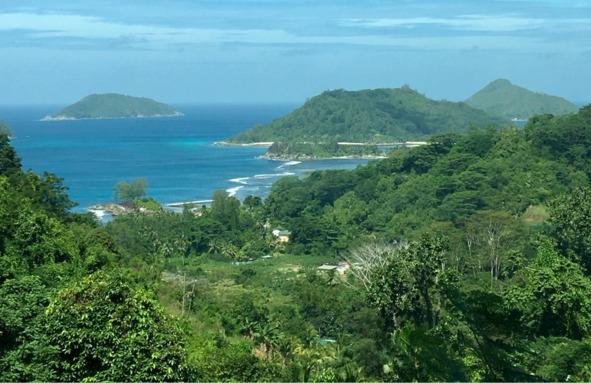
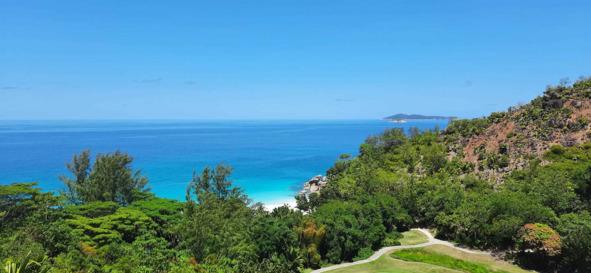
The largest islands rise above the ocean like fairy-tale gardens. Formed of granite and covered in lush tropical vegetation, they include Mahé (the main island of the archipelago), Praslin, La Digue, Silhouette, and several others located within 50–70 kilometres of Mahé. This is also where most of the population is concentrated.
The coral islands, by contrast, are atolls rising only 4–8 metres above sea level.
The climate allows for travel throughout the year. There is no exhausting heat and no abrupt temperature fluctuations — variations usually remain within 2–4 degrees at most.
The Seychelles experience two seasons: a warmer and a relatively cooler one. From December to May, average air temperatures range between 29–31°C, while during the cooler period they stay around 26–28°C.
While working on this book, I often asked people close to me — friends and travellers with very different backgrounds — what they would most like to read about Seychelles. What interested them first and foremost?
One of the most frequently raised questions concerned transport.
When we think of islands, questions naturally arise about land transport and the ways of moving between them. The Seychelles have no railway system, but all other forms of transport are represented in considerable variety.
On the main islands, such as Mahé and Praslin, visitors can rent a car. This option is best suited to those who feel confident driving on narrow mountain roads and are comfortable with left-hand traffic. Road conditions are generally very good.
A car with a driver can be an excellent choice for those who prefer to relax and not think about driving at all.
Taxis, on the other hand, are the most expensive option.
Public buses on Mahé and Praslin operate on a fixed schedule and remain the most budget-friendly means of transport. It is possible to travel around most of the island this way, although some locations are not covered by bus routes and require access by car or on foot.
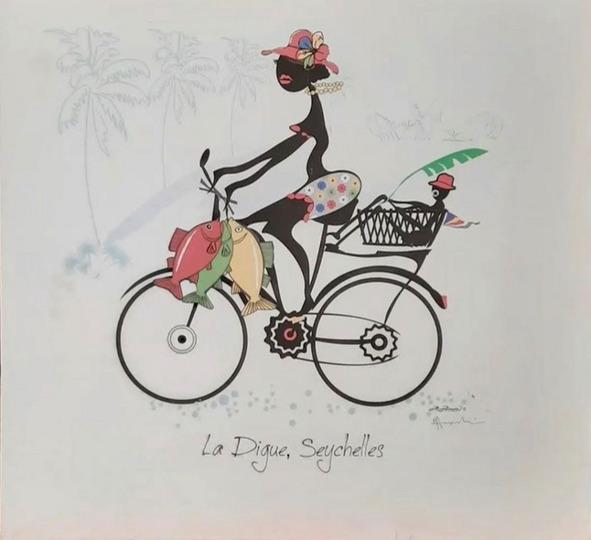
La Digue is a paradise for cyclists — bicycles remain the main mode of transport on this charming island.
La Digue
Inter-island travel is available by scheduled and charter flights, ferries, speedboats, yachts, catamarans, and even helicopters.
The transport infrastructure of the Seychelles has its own particularities, which are important to consider when planning a trip.
The good news is that travel between the most popular islands does not require significant expense. Visiting more remote atolls will cost more, but remains accessible and certainly does not cost “like a Boeing wing.”
Another recurring question from future readers concerned the beaches:
Which ones should be visited? Which are the most beautiful?
The Seychelles are home to countless stunning beaches, small beaches, coves, and bays — each suited to different moods, purposes, and routes. To list and describe every single one in detail would require another book — perhaps more than one. I will therefore focus on the key locations, although I resisted the idea of compressing each beach into just a few paragraphs for quite some time.
All beaches in the Seychelles are public. This means that even if you are not staying at a particular hotel, you always have the right to access its beach, as well as any other.
Sun loungers are a separate matter: some hotels allow their use, while others may charge a fee or reserve them exclusively for guests.
Beau Vallon
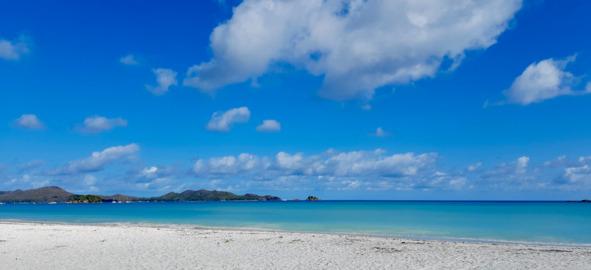
Located in the northern part of Mahé, Beau Vallon is the island’s most popular beach and one of the best for swimming. It is given a dedicated chapter in this book.
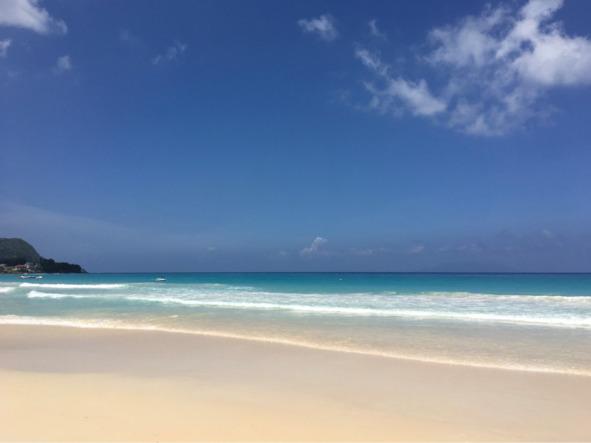
Strictly speaking, Beau Vallon is a wide stretch of white sand extending over three kilometres, equipped to a very high standard. Here, everything is possible: morning jogs, sunbathing, swimming, water sports, relaxed dining, socialising — and admiring some of the most beautiful sunsets on the island.
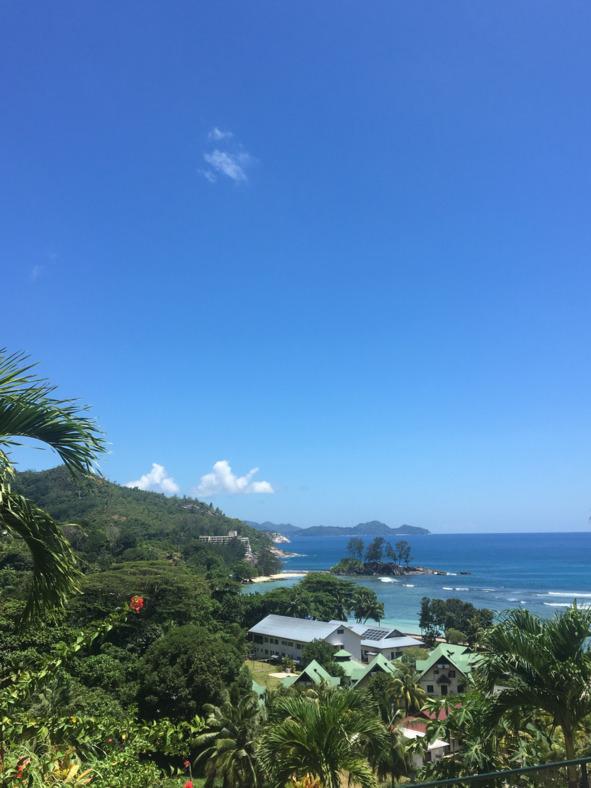
Midday at Beau Vallon
Anse Intendance
Perhaps Beau Vallon’s main rival in the south of Mahé.
Anse Intendance is often described as the most beautiful beach on the island and one of the most impressive across the entire archipelago.
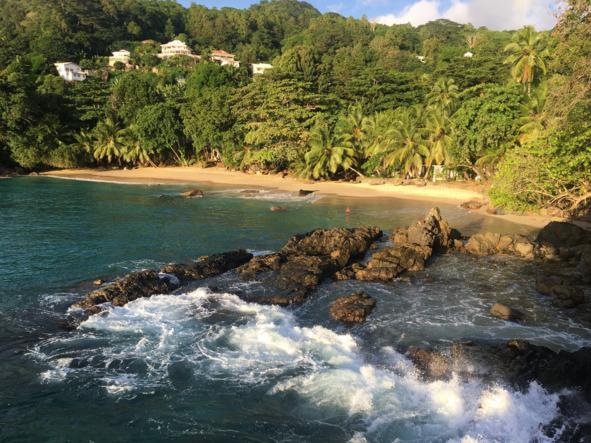
The beach curves in a 700-metre-long arc of white and emerald tones, framed by coconut palms. There is no coral reef here, which allows for large waves — a feature particularly appreciated by surfers. At times, waves can reach up to four metres in height.
Anse Intendance is known for its changing moods. Its energy and beauty are striking, but strong currents make swimming dangerous from May to September.
Be sure to include a picnic here — or at least a visit for photographs.
Sunset Beach
Situated on the north-western coast of Mahé, Sunset Beach is one of the most “postcard-perfect” beaches in the most literal sense.
The beautiful bay is ideal for swimming, snorkelling, and stunning photography. Children should be supervised, as the depth increases quite quickly.
The name speaks for itself: sunsets here are truly spectacular. Every evening, the sky puts on a vivid performance, changing colours one after another.
Sunset over Sunset Beach
Port Launay
A bay located within a marine reserve, Port Launay is one of the best beaches on Mahé for swimming — especially with small children. The beach is protected by granite rocks on both sides, making it an ideal choice for those who dislike waves altogether.
Anse Royale
Anse Royale is the longest beach on the south-eastern coast of Mahé and one of the most popular.
It is well protected by a coral reef, shielding it from strong currents and waves. From here, you can enjoy views of the small island Île Souris — and even swim out to it. The area is perfectly suited for snorkelling.
Nearby facilities include restaurants, small shops, a bank, fuel stations, and a market selling fresh fish.
Anse Major
This unique beach can only be reached on foot. The round trip takes about three hours, which is why most visitors choose to organise a picnic and spend at least half a day here — if not longer. Leaving is rarely easy.
Located on the north-eastern coast of Mahé, Anse Major is a beautiful and safe beach for swimming. The panoramic views along the hiking trail are breathtaking. For those who prefer not to walk, boat trips are also available.
Côte d’Or (Praslin)
Located on the northern coast of Praslin, the name translates from French as “Golden Shore.”
This is the island’s main beach, home to hotels, guesthouses, bars, restaurants, diving centres, shops, and more. It can be loosely compared to Beau Vallon, though here the water is calm and shallow near the shore.
A little further out, near St. Pierre Islet, conditions are ideal for snorkelling.
Anse Georgette
Often described as the most beautiful beach on Praslin and one of the finest in the Seychelles. Soft white sand, bright turquoise water, and excellent swimming conditions make it unforgettable.
The bay lies within the grounds of the Lemuria Resort, but access is possible even for those not staying at the hotel.
Anse Lazio
The most famous beach on Praslin and a consistent feature in global rankings of the world’s best beaches. Surrounded by granite rocks, with dazzling white sand and exceptionally clear water, it leaves a lasting impression.
Anse La Farine
“La Farine” translates from French as “flour” — an apt name, as the sand here truly resembles powdered sugar.
A beautiful lagoon on Praslin, accessible only by water.
Anse Source d’Argent
One of the most photographed beaches in the world.
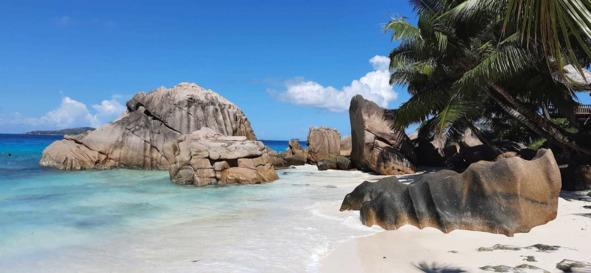
The magic of La Digue lies in a sequence of small coves ranging from 10 to 200 metres in length. Granite boulders appear to rise directly from the sand and water.
In the early morning light, the rocks take on a soft pink hue; by evening, they glow deep red. Visitors come here not only to swim, but also to photograph and snorkel.
White sand, granite formations, and warm transparent waters create ideal conditions for complete relaxation.
Anse Patates
A particularly picturesque beach in the north of La Digue, known for its white sand and intimate atmosphere.
And here, for now, we must pause our journey through the beaches — although once begun, it is very difficult to stop.