автордың кітабын онлайн тегін оқу The Poems of Petrarca. Illustrated edition
The Poems of Petrarca
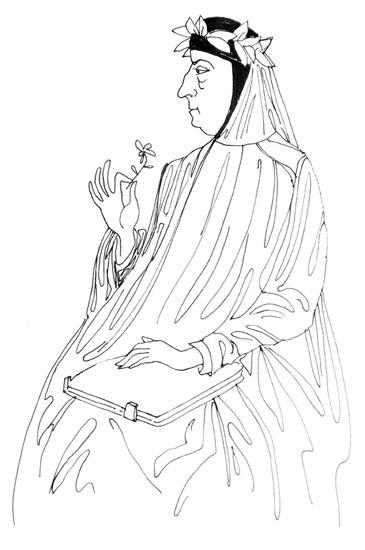
Francesco Petrarca (Italian pronunciation: [franˈtʃesko peˈtrarka], 1304–1374), commonly anglicized as Petrarch (pi: trɑ:rk, ˈpɛtrɑ:rk), was an Italian scholar and poet in Renaissance Italy, who was one of the earliest humanists.
His creation back from his time was possible because he straddled two worlds — the classical and his own modern day.
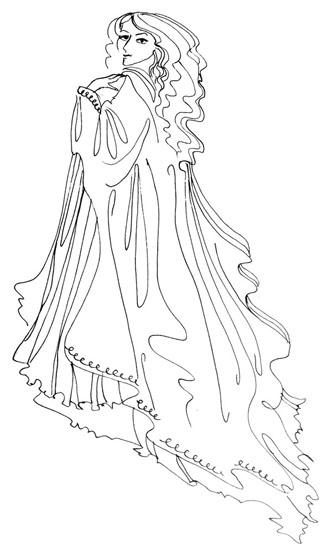
Pretty illustrations by Elena Odarych provide you with new impressions from reading these legendary poems.
TO LAURA IN LIFE
SONNET I
Voi, ch' ascoltate in rime sparse il suono.
HE CONFESSES THE VANITY OF HIS PASSION
Ye who in rhymes dispersed the echoes hear
Of those sad sighs with which my heart I fed
When early youth my mazy wanderings led,
Fondly diverse from what I now appear,
Fluttering 'twixt frantic hope and frantic fear,
From those by whom my various style is read,
I hope, if e'er their hearts for love have bled,
Not only pardon, but perhaps a tear.
But now I clearly see that of mankind
Long time I was the tale: whence bitter thought
And self-reproach with frequent blushes teem;
While of my frenzy, shame the fruit I find,
And sad repentance, and the proof, dear-bought,
That the world's joy is but a flitting dream.
O ye, who list in scatter'd verse the sound
Of all those sighs with which my heart I fed,
When I, by youthful error first misled,
Unlike my present self in heart was found;
Who list the plaints, the reasonings that abound
Throughout my song, by hopes, and vain griefs bred;
If e'er true love its influence o'er ye shed,
Oh! let your pity be with pardon crown'd.
But now full well I see how to the crowd
For length of time I proved a public jest:
E'en by myself my folly is allow'd:
And of my vanity the fruit is shame,
Repentance, and a knowledge strong imprest,
That worldly pleasure is a passing dream.
Ye, who may listen to each idle strain
Bearing those sighs, on which my heart was fed
In life's first morn, by youthful error led,
(Far other then from what I now remain!)
That thus in varying numbers I complain,
Numbers of sorrow vain and vain hope bred,
If any in love's lore be practisèd,
His pardon, — e'en his pity I may obtain:
But now aware that to mankind my name
Too long has been a bye-word and a scorn,
I blush before my own severer thought;
Of my past wanderings the sole fruit is shame,
And deep repentance, of the knowledge born
That all we value in this world is naught.
SONNET II
Per far una leggiadra sua vendetta.
HOW HE BECAME THE VICTIM OF LOVE.
For many a crime at once to make me smart,
And a delicious vengeance to obtain,
Love secretly took up his bow again,
As one who acts the cunning coward's part;
My courage had retired within my heart,
There to defend the pass bright eyes might gain;
When his dread archery was pour'd amain
Where blunted erst had fallen every dart.
Scared at the sudden brisk attack, I found
Nor time, nor vigour to repel the foe
With weapons suited to the direful need;
No kind protection of rough rising ground,
Where from defeat I might securely speed,
Which fain I would e'en now, but ah, no method know!
One sweet and signal vengeance to obtain
To punish in a day my life's long crime,
As one who, bent on harm, waits place and time,
Love craftily took up his bow again.
My virtue had retired to watch my heart,
Thence of weak eyes the danger to repell,
When momently a mortal blow there fell
Where blunted hitherto dropt every dart.
And thus, o'erpower'd in that first attack,
She had nor vigour left enough, nor room
Even to arm her for my pressing need,
Nor to the steep and painful mountain back
To draw me, safe and scathless from that doom,
Whence, though alas! too weak, she fain had freed.
SONNET III
Era 'l giorno ch' al sol si scoloraro.
HE BLAMES LOVE FOR WOUNDING HIM ON A HOLY DAY (GOOD FRIDAY).
'Twas on the morn, when heaven its blessed ray
In pity to its suffering master veil'd,
First did I, Lady, to your beauty yield,
Of your victorious eyes th' unguarded prey.
Ah! little reck'd I that, on such a day,
Needed against Love's arrows any shield;
And trod, securely trod, the fatal field:
Whence, with the world's, began my heart's dismay.
On every side Love found his victim bare,
And through mine eyes transfix'd my throbbing heart;
Those eyes, which now with constant sorrows flow:
But poor the triumph of his boasted art,
Who thus could pierce a naked youth, nor dare
To you in armour mail'd even to display his bow!
'Twas on the blessed morning when the sun
In pity to our Maker hid his light,
That, unawares, the captive I was won,
Lady, of your bright eyes which chain'd me quite;
That seem'd to me no time against the blows
Of love to make defence, to frame relief:
Secure and unsuspecting, thus my woes
Date their commencement from the common grief.
Love found me feeble then and fenceless all,
Open the way and easy to my heart
Through eyes, where since my sorrows ebb and flow:
But therein was, methinks, his triumph small,
On me, in that weak state, to strike his dart,
Yet hide from you so strong his very bow.
SONNET IV
Quel ch' infinita providenza ed arte.
HE CELEBRATES THE BIRTHPLACE OF LAURA.
He that with wisdom, goodness, power divine,
Did ample Nature's perfect book design,
Adorn'd this beauteous world, and those above,
Kindled fierce Mars, and soften'd milder Jove:
When seen on earth the shadows to fulfill
Of the less volume which conceal'd his will,
Took John and Peter from their homely care,
And made them pillars of his temple fair.
Nor in imperial Rome would He be born,
Whom servile Judah yet received with scorn:
E'en Bethlehem could her infant King disown,
And the rude manger was his early throne.
Victorious sufferings did his pomp display,
Nor other chariot or triumphal way.
At once by Heaven's example and decree,
Such honour waits on such humility.
The High Eternal, in whose works supreme
The Master's vast creative power hath spoke:
At whose command each circling sphere awoke,
Jove mildly rose, and Mars with fiercer beam:
To earth He came, to ratify the scheme
Reveal'd to us through prophecy's dark cloak,
To sound redemption, speak man's fallen yoke:
He chose the humblest for that heavenly theme.
But He conferr'd not on imperial Rome
His birth's renown; He chose a lowlier sky,-
To stand, through Him, the proudest spot on earth!
And now doth shine within its humble home
A star, that doth each other so outvie,
That grateful nature hails its lovely birth.
Who show'd such infinite providence and skill
In his eternal government divine,
Who launch'd the spheres, gave sun and moon to shine,
And brightest wonders the dark void to fill;
On earth who came the Scriptures to maintain,
Which for long years the truth had buried yet,
Took John and Peter from the fisher's net
And gave to each his part in the heavenly reign.
He for his birth fair Rome preferr'd not then,
But lowly Bethlehem; thus o'er proudest state
He ever loves humility to raise.
Now rises from small spot like sun again,
Whom Nature hails, the place grows bright and great
Which birth so heavenly to our earth displays.
SONNET V
Quand' io movo i sospiri a chiamar voi.
HE PLAYS UPON THE NAME LAURETA OR LAURA.
In sighs when I outbreathe your cherish'd name,
That name which love has writ upon my heart,
LAUd instantly upon my doting tongue,
At the first thought of its sweet sound, is heard;
Your REgal state, which I encounter next,
Doubles my valour in that high emprize:
But TAcit ends the word; your praise to tell
Is fitting load for better backs than mine.
Thus all who call you, by the name itself,
Are taught at once to LAUd and to REvere,
O worthy of all reverence and esteem!
Save that perchance Apollo may disdain
That mortal tongue of his immortal boughs
Should ever so presume as e'en to speak.
SONNET VI
Sì traviato è 'l folle mio desio.
OF HIS FOOLISH PASSION FOR LAURA.
So wayward now my will, and so unwise,
To follow her who turns from me in flight,
And, from love's fetters free herself and light,
Before my slow and shackled motion flies,
That less it lists, the more my sighs and cries
Would point where passes the safe path and right,
Nor aught avails to check or to excite,
For Love's own nature curb and spur defies.
Thus, when perforce the bridle he has won,
And helpless at his mercy I remain,
Against my will he speeds me to mine end
'Neath yon cold laurel, whose false boughs upon
Hangs the harsh fruit, which, tasted, spreads the pain
I sought to stay, and mars where it should mend.
My tameless will doth recklessly pursue
Her, who, unshackled by love's heavy chain,
Flies swiftly from its chase, whilst I in vain
My fetter'd journey pantingly renew;
The safer track I offer to its view,
But hopeless is my power to restrain,
It rides regardless of the spur or rein;
Love makes it scorn the hand that would subdue.
The triumph won, the bridle all its own,
Without one curb I stand within its power,
And my destruction helplessly presage:
It guides me to that laurel, ever known,
To all who seek the healing of its flower,
To aggravate the wound it should assuage.