



автордың кітабын онлайн тегін оқу The Poetical Works of William Wordsworth — Volume 7 (of 8)
The cover image was created by the transcriber and is placed in the public domain.
THE POETICAL WORKS OF WILLIAM WORDSWORTH
VOL. VII
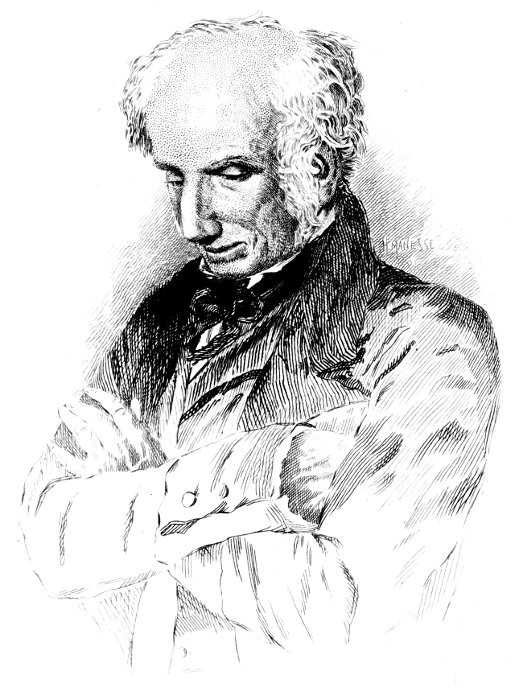
William Wordsworth
after B. R. Haydon
THE POETICAL WORKS
OF
WILLIAM WORDSWORTH
EDITED BY
WILLIAM KNIGHT
VOL. VII
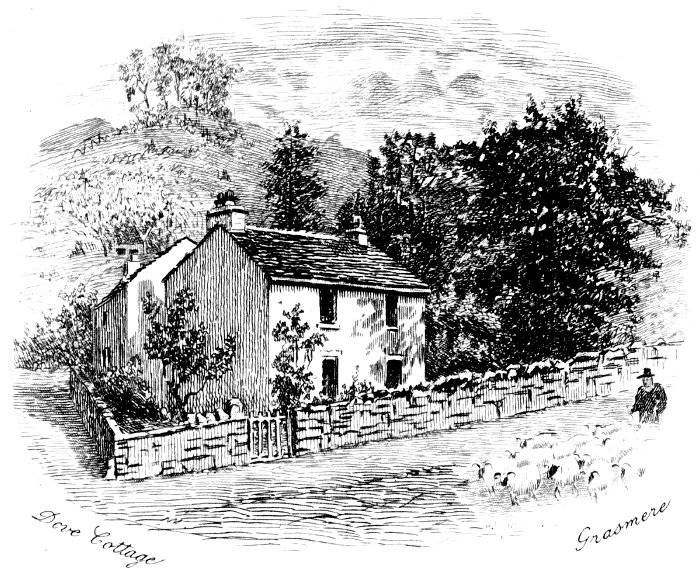
Dove Cottage Grasmere
London MACMILLAN AND CO., Ltd.
NEW YORK: MACMILLAN & CO.
1896
All rights reserved
[Pg 0b] [Pg 0c] [Pg v]
CONTENTS
1821-2
PAGE
Ecclesiastical Sonnets. In Series—
Part I.—From the Introduction of Christianity into Britain, to the Consummation of the Papal Dominion—
I.
Introduction
4II.
Conjectures
5III.
Trepidation of the Druids
6IV.
Druidical Excommunication
7V.
Uncertainty
7VI.
Persecution
8VII.
Recovery
9VIII.
Temptations from Roman Refinements
10IX.
Dissensions
10X.
Struggle of the Britons against the Barbarians
11XI.
Saxon Conquest
12XII.
Monastery of Old Bangor
13XIII.
Casual Incitement
14XIV.
Glad Tidings
15XV.
Paulinus
15XVI.
Persuasion
16XVII.
Conversion
17XVIII.
Apology
18XIX.
Primitive Saxon Clergy
19XX.
Other Influences
19XXI.
Seclusion
20XXII.
Continued
21XXIII.
Reproof
21XXIV.
Saxon Monasteries, and Lights and Shades of the Religion
22XXV.
Missions and Travels
23XXVI.
Alfred
24XXVII.
His Descendants
25XXVIII.
Influence Abused
26XXIX.
Danish Conquests
27XXX.
Canute
27XXXI.
The Norman Conquest
28XXXII.
"Coldly we spake. The Saxons, overpowered"
29XXXIII.
The Council of Clermont
30XXXIV.
Crusades
31XXXV.
Richard I
31XXXVI.
An Interdict
32XXXVII.
Papal Abuses
33XXXVIII.
Scene in Venice
34XXXIX.
Papal Dominion
34Part II.—To the Close of the Troubles in the Reign of Charles I—
I.
"How soon—alas! did Man, created pure"
33II.
"From false assumption rose, and fondly hail'd"
36III.
Cistertian Monastery
37IV.
"Deplorable his lot who tills the ground"
38V.
Monks and Schoolmen
39VI.
Other Benefits
40VII.
Continued
40VIII.
Crusaders
41IX.
"As faith thus sanctified the warrior's crest"
42X.
"Where long and deeply hath been fixed the root"
43XI.
Transubstantiation
44XII.
The Vaudois
44XIII.
"Praised be the Rivers, from their mountain springs"
45XIV.
Waldenses
46XV.
Archbishop Chichely to Henry V.
47XVI.
Wars of York and Lancaster
48XVII.
Wicliffe
49XVIII.
Corruptions of the Higher Clergy
49XIX.
Abuse of Monastic Power
50XX.
Monastic Voluptuousness
51XXI.
Dissolution of the Monasteries
52XXII.
The Same Subject
52XXIII.
Continued
53XXIV.
Saints
54XXV.
The Virgin
54XXVI.
Apology
55XXVII.
Imaginative Regrets
56XXVIII.
Reflections
57XXIX.
Translation of the Bible
58XXX.
The Point at Issue
58XXXI.
Edward VI
59XXXII.
Edward signing the Warrant for the Execution of Joan of Kent
60XXXIII.
Revival of Popery
61XXXIV.
Latimer and Ridley
61XXXV.
Cranmer
62XXXVI.
General View of the Troubles of the Reformation
64XXXVII.
English Reformers in Exile
64XXXVIII.
Elizabeth
65XXXIX.
Eminent Reformers
66XL.
The Same
67XLI.
Distractions
68XLII.
Gunpowder Plot
69XLIII.
Illustration. The Jung-frau and the Fall of the Rhine near Schaffhausen
70XLIV.
Troubles of Charles the First
71XLV.
Laud
71XLVI.
Afflictions of England
72Part III.—From the Restoration to the Present Times—
I.
"I saw the figure of a lovely Maid"
74II.
Patriotic Sympathies
74III.
Charles the Second
75IV.
Latitudinarianism
76V.
Walton's Book of Lives
77VI.
Clerical Integrity
78VII.
Persecution of the Scottish Covenanters
79VIII.
Acquittal of the Bishops
79IX.
William the Third
80X.
Obligations of Civil to Religious Liberty
81XI.
Sacheverel
82XII.
"Down a swift Stream, thus far, a bold design"
83XIII.
Aspects of Christianity in America.—1. The Pilgrim Fathers
84XIV.
2. Continued
85XV.
3. Concluded.—American Episcopacy
85XVI.
"Bishops and Priests, blessèd are ye, if deep"
86XVII.
Places of Worship
87XVIII.
Pastoral Character
87XIX.
The Liturgy
88XX.
Baptism
89XXI.
Sponsors
90XXII.
Catechising
91XXIII.
Confirmation
92XXIV.
Confirmation Continued
92XXV.
Sacrament
93XXVI.
The Marriage Ceremony
94XXVII.
Thanksgiving after Childbirth
95XXVIII.
Visitation of the Sick
96XXIX.
The Commination Service
96XXX.
Forms of Prayer at Sea
97XXXI.
Funeral Service
97XXXII.
Rural Ceremony
98XXXIII.
Regrets
99XXXIV.
Mutability
100XXXV.
Old Abbeys
100XXXVI.
Emigrant French Clergy
101XXXVII.
Congratulation
102XXXVIII.
New Churches
102XXIX.
Church to be erected
103XL.
Continued
104XLI.
New Churchyard
104XLII.
Cathedrals, etc.
105XLIII.
Inside of King's College Chapel, Cambridge
106XLIV.
The Same
106XLV.
Continued
107XLVI.
Ejaculation
107XLVII.
Conclusion
108To the Lady Fleming, on seeing the Foundation preparing for the Erection of Rydal Chapel, Westmoreland
109On the Same Occasion
1141823
Memory
117"Not Love, not War, nor the tumultuous swell"
118"A volant Tribe of Bards on earth are found"
1191824
To ——
121To ——
122"How rich that forehead's calm expanse!"
123To ——
124A Flower Garden, at Coleorton Hall, Leicestershire
125To the Lady E. B. and the Hon. Miss P.
128To the Torrent at the Devil's Bridge, North Wales, 1824
129Composed among the Ruins of a Castle in North Wales
131Elegiac Stanzas
132Cenotaph
1351825
The Pillar of Trajan
137The Contrast: The Parrot and the Wren
141To a Skylark
1431826
"Ere with cold beads of midnight dew"
145Ode composed on May Morning
146To May
148"Once I could hail (howe'er serene the sky)"
152"The massy Ways, carried across these heights"
154Farewell Lines
1551827
On seeing a Needlecase in the Form of a Harp
157Miscellaneous Sonnets—
Dedication
159To ——
159"Her only pilot the soft breeze, the boat"
160"Why, Minstrel, these untuneful murmurings"
161To S. H.
162Decay of Piety
163"Scorn not the Sonnet; Critic, you have frowned"
163"Fair Prime of life! were it enough to gild"
164Retirement
165"There is a pleasure in poetic pains"
166Recollection of the Portrait of King Henry Eighth, Trinity Lodge, Cambridge
166"When Philoctetes in the Lemnian isle"
167"While Anna's peers and early playmates tread"
168To the Cuckoo
169The Infant M—— M——
170To Rotha Q——
171To ——, in her Seventieth Year
172"In my mind's eye a Temple, like a cloud"
173"Go back to antique ages, if thine eyes"
174"If thou indeed derive thy light from Heaven"
174In the Woods of Rydal
176Conclusion. To ——
1771828
A Morning Exercise
178The Triad
181The Wishing-Gate
189The Wishing-Gate Destroyed
192A Jewish Family
195Incident at Brugès
198A Grave-Stone upon the Floor in the Cloisters of Worcester Cathedral
201The Gleaner
202On the Power of Sound
2031829
Gold and Silver Fishes in a Vase
214Liberty. (Sequel to the above)
216Humanity
222"This Lawn, a carpet all alive"
227Thoughts on the Seasons
229A Tradition of Oker Hill in Darley Dale, Derbyshire
230Filial Piety
2311830
The Armenian Lady's Love
232The Russian Fugitive
239The Egyptian Maid; or, The Romance of the Water Lily
252The Poet and the Caged Turtledove
265Presentiments
266"In these fair vales hath many a Tree"
269Elegiac Musings
269"Chatsworth! thy stately mansion, and the pride"
2721831
The Primrose of the Rock
274To B. R. Haydon, on seeing his Picture of Napoleon Bonaparte on the Island of St. Helena
276Yarrow Revisited, and Other Poems—
I.
"The gallant Youth, who may have gained"
280II.
On the Departure of Sir Walter Scott from Abbotsford, for Naples
284III.
A Place of Burial in the South of Scotland
285IV.
On the Sight of a Manse in the South of Scotland
286V.
Composed in Roslin Chapel, during a Storm
287VI.
The Trosachs
288VII.
"The pibroch's note, discountenanced or mute"
290VIII.
Composed after reading a Newspaper of the Day
290IX.
Composed in the Glen of Loch Etive
291X.
Eagles
292XI.
In the Sound of Mull
293XII.
Suggested at Tyndrum in a Storm
294XIII.
The Earl of Breadalbane's Ruined Mansion, and Family Burial-Place, near Killin
295XIV.
"Rest and be Thankful!"
295XV.
Highland Hut
296XVI.
The Brownie
297XVII.
To the Planet Venus, an Evening Star
299XVIII.
Bothwell Castle
299XIX.
Picture of Daniel in the Lions' Den, at Hamilton Palace
301XX.
The Avon
303XXI.
Suggested by a View from an Eminence in Inglewood Forest
304XXII.
Hart's-Horn Tree, near Penrith
305XXIII.
Fancy and Tradition
306XXIV.
Countess' Pillar
307XXV.
Roman Antiquities
308XXVI.
Apology for the Foregoing Poems
309XXVII.
The Highland Broach
3101832
Devotional Incitements
314"Calm is the fragrant air, and loth to lose"
317To the Author's Portrait
318Rural Illusions
319Loving and Liking
320Upon the late General Fast
3231833
A Wren's Nest
325To ——, upon the Birth of her First-born Child, March 1833
328The Warning. A Sequel to the Foregoing
330"If this great world of joy and pain"
336On a High Part of the Coast of Cumberland
337(By the Sea-Side)
338Composed by the Sea-Shore
340Poems, composed or suggested during a Tour in the Summer of 1833—
I.
"Adieu, Rydalian Laurels! that have grown"
342II.
"Why should the Enthusiast, journeying through this Isle"
343III.
"They called Thee Merry England, in old time"
343IV.
To the River Greta, near Keswick
344V.
To the River Derwent
345VI.
In Sight of the Town of Cockermouth
346VII.
Address from the Spirit of Cockermouth Castle
347VIII.
Nun's Well, Brigham
347IX.
To a Friend
348X.
Mary Queen of Scots
349XI.
Stanzas suggested in a Steam-Boat off Saint Bees' Heads, on the Coast of Cumberland
351XII.
In the Channel, between the Coast of Cumberland and the Isle of Man
358XIII.
At Sea off the Isle of Man
359XIV.
"Desire we past illusions to recal?"
360XV.
On entering Douglas Bay, Isle of Man
360XVI.
By the Sea-Shore, Isle of Man
361XVII.
Isle of Man
362XVIII.
Isle of Man
363XIX.
By a Retired Mariner
364XX.
At Bala-Sala, Isle of Man
365XXI.
Tynwald Hill
366XXII.
"Despond who will—
Iheard a Voice exclaim"
368XXIII.
In the Frith of Clyde, Ailsa Crag, during an Eclipse of the Sun, July 17
369XXIV.
On the Frith of Clyde
370XXV.
On revisiting Dunolly Castle
371XXVI.
The Dunolly Eagle
372XXVII.
Written in a Blank Leaf of Macpherson's Ossian
373XXVIII.
Cave of Staffa
376XXIX.
Cave of Staffa. (After the Crowd had departed)
377XXX.
Cave of Staffa
377XXXI.
Flowers on the Top of the Pillars at the Entrance of the Cave
378XXXII.
Iona
379XXXIII.
Iona. (Upon Landing)
380XXXIV.
The Black Stones of Iona
381XXXV.
"Homeward we turn. Isle of Columba's Cell"
382XXXVI.
Greenock
383XXXVII.
"'There!' said a Stripling, pointing with meet pride"
383XXXVIII.
The River Eden, Cumberland
385XXXIX.
Monument of Mrs. Howard, in Wetheral Church, near Corby, on the Banks of the Eden
386XL.
Suggested by the Foregoing
387XLI.
Nunnery
388XLII.
Steamboats, Viaducts, and Railways
389XLIII.
The Monument, commonly called Long Meg and her Daughters, near the River Eden
390XLIV.
Lowther
391XLV.
To the Earl of Lonsdale
392XLVI.
The Somnambulist
393XLVII.
To Cordelia M——
400XLVIII.
"Most sweet it is with unuplifted eyes"
4011834
"Not in the lucid intervals of life"
402By the Side of Rydal Mere
403"Soft as a cloud is yon blue Ridge—the Mere"
405"The leaves that rustled on this oak-crowned hill"
406The Labourer's Noon-Day Hymn
408The Redbreast
410 Addenda 415Before I conclude my notice of these Sonnets, let me observe that the opinion I pronounced in favour of Laud (long before the Oxford Tract Movement) and which had brought censure upon me from several quarters, is not in the least changed. Omitting here to examine into his conduct in respect to the persecuting spirit with which he has been charged, I am persuaded that most of his aims to restore ritual practices which had been abandoned were good and wise, whatever errors he might commit in the manner he sometimes attempted to enforce them. I further believe that, had not he, and others who shared his opinions and felt as he did, stood up in opposition to the reformers of that period, it is questionable whether the Church would ever have recovered its lost ground and become the blessing it now is, and will, I trust, become in a still greater degree, both to those of its communion and to those who unfortunately are separated from it.—I. F.]
I, who accompanied with faithful pace[5] Cerulean Duddon from its[6] cloud-fed spring,[7] And loved with spirit ruled by his to sing Of mountain-quiet and boon nature's grace;[8] I, who essayed the nobler Stream to trace 5 Of Liberty,[9] and smote the plausive string Till the checked torrent, proudly triumphing, Won for herself a lasting resting-place;[10] Now seek upon the heights of Time the source Of a Holy River,[11]on whose banks are found 10 Sweet pastoral flowers, and laurels that have crowned Full oft the unworthy brow of lawless force; And,[12] for delight of him who tracks its course,[13] Immortal amaranth and palms abound.
If there be prophets on whose spirits rest Past things, revealed like future, they can tell What Powers, presiding o'er the sacred well Of Christian Faith, this savage Island blessed With its first bounty. Wandering through the west, Did holy Paul[14] a while in Britain dwell, 6 And call the Fountain forth by miracle, And with dread signs the nascent Stream invest? Or He, whose bonds dropped off, whose prison doors Flew open, by an Angel's voice unbarred?[15] 10 Or some of humbler name, to these wild shores Storm-driven; who, having seen the cup of woe Pass from their Master, sojourned here to guard The precious Current they had taught to flow?
Darkness surrounds us: seeking, we are lost On Snowdon's wilds, amid Brigantian coves,[20] Or where the solitary shepherd roves Along the plain of Sarum, by the ghost Of Time and shadows of Tradition, crost;[21] 5
Lament! for Diocletian's fiery sword Works busy as the lightning; but instinct With malice ne'er to deadliest weapon linked, Which God's ethereal store-houses afford: Against the Followers of the incarnate Lord 5 It rages;—some are smitten in the field— Some pierced to the heart through the ineffectual shield[25] Of sacred home;—with pomp are others gored And dreadful respite. Thus was Alban tried,[26]
That heresies should strike (if truth be scanned Presumptuously) their roots both wide and deep, Is natural as dreams to feverish sleep. Lo! Discord at the altar dares to stand[28] Uplifting toward[29] high Heaven her fiery brand, 5 A cherished Priestess of the new-baptized! But chastisement shall follow peace despised. The Pictish cloud darkens the enervate land By Rome abandoned; vain are suppliant cries, And prayers that would undo her forced farewell; 10 For she returns not.—Awed by her own knell, She casts the Britons upon strange Allies, Soon to become more dreaded enemies Than heartless misery called them to repel.
But, to remote Northumbria's royal Hall, Where thoughtful Edwin, tutored in the school Of sorrow, still maintains a heathen rule, Who comes with functions apostolical? Mark him,[48] of shoulders curved, and stature tall, 5 Black hair, and vivid eye, and meagre cheek, His prominent feature like an eagle's beak; A Man whose aspect doth at once appal And strike with reverence. The Monarch leans Toward the pure truths[49] this Delegate propounds, 10 Repeatedly his own deep mind he sounds With careful hesitation,—then convenes A synod of his Councillors:—give ear, And what a pensive Sage doth utter, hear![50]
"Man's life is like a Sparrow,[51] mighty King! "That—while at banquet with your Chiefs you sit "Housed near a blazing fire—is seen to flit "Safe from the wintry tempest. Fluttering,[52] "Here did it enter; there, on hasty wing, 5 "Flies out, and passes on from cold to cold; "But whence it came we know not, nor behold "Whither it goes. Even such, that transient Thing, "The human Soul; not utterly unknown "While in the Body lodged, her warm abode; 10 "But from what world She came, what woe or weal "On her departure waits, no tongue hath shown; "This mystery if the Stranger can reveal, "His be a welcome cordially bestowed!"
Prompt transformation works the novel Lore; The Council closed, the Priest in full career Rides forth, an armèd man, and hurls a spear To desecrate the Fane which heretofore He served in folly. Woden falls, and Thor 5 Is overturned: the mace, in battle heaved (So might they dream) till victory was achieved, Drops, and the God himself is seen no more. Temple and Altar sink, to hide their shame Amid oblivious weeds, "O come to me, 10 Ye heavy laden!" such the inviting voice Heard near fresh streams;[54] and thousands, who rejoice In the new Rite—the pledge of sanctity, Shall, by regenerate life, the promise claim.
Ah, when the Body,[58] round which in love we clung, Is chilled by death, does mutual service fail? Is tender pity then of no avail? Are intercessions of the fervent tongue A waste of hope?—From this sad source have sprung Rites that console the Spirit, under grief 6 Which ill can brook more rational relief: Hence, prayers are shaped amiss, and dirges sung For Souls[59] whose doom is fixed! The way is smooth For Power that travels with the human heart: 10 Confession ministers the pang to soothe In him who at the ghost of guilt doth start. Ye holy Men, so earnest in your care, Of your own mighty instruments beware!
But what if One, through grove or flowery meed, Indulging thus at will the creeping feet Of a voluptuous indolence, should meet Thy hovering Shade, O[66] venerable Bede! The saint, the scholar, from a circle freed 5 Of toil stupendous, in a hallowed seat Of learning, where thou heard'st[67] the billows beat On a wild coast, rough monitors to feed Perpetual industry.[68] Sublime Recluse! The recreant soul, that dares to shun the debt 10 Imposed on human kind, must first forget Thy diligence, thy unrelaxing use Of a long life; and, in the hour of death, The last dear service of thy passing breath![69]
By such examples moved to unbought pains, The people work like congregated bees;[70] Eager to build the quiet Fortresses Where Piety, as they believe, obtains From Heaven a general blessing; timely rains 5 Or needful sunshine; prosperous enterprise, Justice and peace:—bold faith! yet also rise The sacred Structures for less doubtful gains.[71] The Sensual think with reverence of the palms Which the chaste Votaries seek, beyond the grave; If penance be redeemable, thence alms 11 Flow to the poor, and freedom to the slave; And if full oft the Sanctuary save Lives black with guilt, ferocity it calms.
Behold a pupil of the monkish gown, The pious Alfred, King to Justice dear! Lord of the harp and liberating spear;[73] Mirror of Princes![74] Indigent Renown Might range the starry ether for a crown 5 Equal to his deserts, who, like the year, Pours forth his bounty, like the day doth cheer, And awes like night with mercy-tempered frown. Ease from this noble miser of his time No moment steals; pain narrows not his cares.[75] 10 Though small his kingdom as a spark or gem, Of Alfred boasts remote Jerusalem,[76] And Christian India, through her wide-spread clime, In sacred converse gifts with Alfred shares.[77][78]
When thy great soul was freed from mortal chains, Darling of England! many a bitter shower Fell on thy tomb; but emulative power Flowed in thy line through undegenerate veins.[79] The Race of Alfred covet[80] glorious pains[81] 5 When dangers threaten, dangers ever new! Black tempests bursting, blacker still in view! But manly sovereignty its hold retains; The root sincere, the branches bold to strive With the fierce tempest, while,[82] within the round 10 Of their protection, gentle virtues thrive; As oft, 'mid some green plot of open ground, Wide as the oak extends its dewy gloom, The fostered hyacinths spread their purple bloom.[83]
A pleasant music floats along the Mere, From Monks in Ely chanting service high, While-as Canùte the King is rowing by: "My Oarsmen," quoth the mighty King, "draw near, "That we the sweet song of the Monks may hear!"[90] He listens (all past conquests and all schemes 6 Of future vanishing like empty dreams) Heart-touched, and haply not without a tear. The Royal Minstrel, ere the choir is still,[91] While his free Barge skims the smooth flood along, Gives to that rapture an accordant Rhyme.[92][93] 11 O suffering Earth! be thankful; sternest clime And rudest age are subject to the thrill Of heaven-descended Piety and Song.
The woman-hearted Confessor prepares[94] The evanescence of the Saxon line. Hark! 'tis the tolling Curfew!—the stars shine;[95] But of the lights that cherish household cares And festive gladness, burns not one that dares 5 To twinkle after that dull stroke of thine, Emblem and instrument, from Thames to Tyne, Of force that daunts, and cunning that ensnares! Yet as the terrors of the lordly bell, That quench, from hut to palace, lamps and fires,[96] 10 Touch not the tapers of the sacred quires; Even so a thraldom, studious to expel Old laws, and ancient customs to derange, To Creed or Ritual brings no fatal change.[97]
Coldly we spake. The Saxons, overpowered By wrong triumphant through its own excess, From fields laid waste, from house and home devoured By flames, look up to heaven and crave redress From God's eternal justice. Pitiless 5 Though men be, there are angels that can feel For wounds that death alone has power to heal, For penitent guilt, and innocent distress. And has a Champion risen in arms to try His Country's virtue, fought, and breathes no more; 10 Him in their hearts the people canonize; And far above the mine's most precious ore The least small pittance of bare mould they prize Scooped from the sacred earth where his dear relics lie.
Redoubted King, of courage leonine, I mark thee, Richard! urgent to equip Thy warlike person with the staff and scrip; I watch thee sailing o'er the midland brine; In conquered Cyprus see thy Bride decline 5 Her blushing cheek, love-vows[104] upon her lip, And see love-emblems streaming from thy ship, As thence she holds her way to Palestine.[105] My Song, a fearless homager, would attend Thy thundering battle-axe as it cleaves the press 10 Of war, but duty summons her away To tell—how, finding in the rash distress Of those Enthusiasts a subservient friend, To[106] giddier heights hath clomb the Papal sway.
Realms quake by turns: proud Arbitress of grace, The Church, by mandate shadowing forth the power She arrogates o'er heaven's eternal door, Closes the gates of every sacred place. Straight from the sun and tainted air's embrace 5 All sacred things are covered: cheerful morn Grows sad as night—no seemly garb is worn, Nor is a face allowed to meet a face With natural smiles[108] of greeting. Bells are dumb; Ditches are graves—funereal rites denied; 10 And in the church-yard he must take his bride Who dares be wedded! Fancies thickly come Into the pensive heart ill fortified, And comfortless despairs the soul benumb.
As with the Stream our voyage we pursue, The gross materials of this world present A marvellous study of wild accident;[109] Uncouth proximities of old and new; And bold transfigurations, more untrue 5 (As might be deemed) to disciplined intent Than aught the sky's fantastic element, When most fantastic, offers to the view. Saw we not Henry scourged at Becket's shrine?[110] Lo! John self-stripped of his insignia:—crown, 10 Sceptre and mantle, sword and ring, laid down At a proud Legate's feet![111] The spears that line Baronial halls, the opprobrious insult feel; And angry Ocean roars a vain appeal.
How soon—alas! did Man, created pure— By Angels guarded, deviate from the line Prescribed to duty:—woeful forfeiture[116] He made by wilful breach of law divine. With like perverseness did the Church abjure 5 Obedience to her Lord, and haste to twine,[117] 'Mid Heaven-born flowers that shall for aye endure, Weeds on whose front the world had fixed her sign. O Man,—if with thy trials thus it fares, If good can smooth the way to evil choice, 10 From all rash censure be the mind kept free; He only judges right who weighs, compares, And, in the sternest sentence which his voice Pronounces, ne'er abandons Charity.[118]
From false assumption rose, and fondly hail'd By superstition, spread the Papal power; Yet do not deem the Autocracy prevail'd Thus only, even in error's darkest hour. She daunts, forth-thundering from her spiritual tower Brute rapine, or with gentle lure she tames. 6 Justice and Peace through Her uphold their claims; And Chastity finds many a sheltering bower. Realm there is none that if controul'd or sway'd By her commands partakes not, in degree, 10 Of good, o'er manners arts and arms, diffused: Yes, to thy domination, Roman See, Tho' miserably, oft monstrously, abused By blind ambition, be this tribute paid.[119]
"Here Man more purely lives, less oft doth fall, More promptly rises, walks with stricter heed,[121] More safely rests, dies happier, is freed Earlier from cleansing fires, and gains withal A brighter crown."[122]—On yon Cistertian wall 5 That confident assurance may be read; And, to like shelter, from the world have fled Increasing multitudes. The potent call Doubtless shall cheat full oft the heart's desires:[123] Yet, while the rugged Age on pliant knee 10 Vows to rapt Fancy humble fealty, A gentler life spreads round the holy spires; Where'er they rise, the sylvan waste retires, And aëry harvests crown the fertile lea.
Deplorable his lot who tills the ground, His whole life long tills it, with heartless toil Of villain-service, passing with the soil To each new Master, like a steer or hound, Or like a rooted tree, or stone earth-bound; 5 But mark how gladly, through their own domains, The Monks relax or break these iron chains; While Mercy, uttering, through their voice, a sound Echoed in Heaven, cries out, "Ye Chiefs, abate These legalized oppressions! Man—whose name 10 And nature God disdained not; Man—whose soul Christ died for—cannot forfeit his high claim To live and move exempt from all controul Which fellow-feeling doth not mitigate!"
And what melodious sounds at times prevail! And, ever and anon, how bright a gleam Pours on the surface of the turbid Stream! What heartfelt fragrance mingles with the gale That swells the bosom of our passing sail! 5 For where, but on this River's margin, blow Those flowers of chivalry, to bind the brow Of hardihood with wreaths that shall not fail?— Fair Court of Edward! wonder of the world![131] I see a matchless blazonry unfurled 10 Of wisdom, magnanimity, and love; And meekness tempering honourable pride; The lamb is couching by the lion's side, And near the flame-eyed eagle sits the dove.
Furl we the sails, and pass with tardy oars Through these bright regions, casting many a glance Upon the dream-like issues—the romance[132] Of many-coloured life that[133] Fortune pours Round the Crusaders, till on distant shores 5 Their labours end; or they return to lie, The vow performed, in cross-legged effigy, Devoutly stretched upon their chancel floors. Am I deceived? Or is their requiem chanted By voices never mute when Heaven unties 10 Her inmost, softest, tenderest harmonies; Requiem which Earth takes up with voice undaunted, When she would tell how Brave, and Good, and Wise,[134] For their high guerdon not in vain have panted!
But whence came they who for the Saviour Lord Have long borne witness as the Scriptures teach?— Ages ere Valdo raised his voice to preach In Gallic ears the unadulterate Word, Their fugitive Progenitors explored 5 Subalpine vales, in quest of safe retreats Where that pure Church survives, though summer heats Open a passage to the Romish sword, Far as it dares to follow. Herbs self-sown, And fruitage gathered from the chesnut wood, 10 Nourish the sufferers then; and mists, that brood O'er chasms with new-fallen obstacles bestrown, Protect them; and the eternal snow that daunts Aliens, is God's good winter for their haunts.
Praised be the Rivers, from their mountain springs Shouting to Freedom, "Plant thy banners here!"[143] To harassed Piety, "Dismiss thy fear, "And in our caverns smooth thy ruffled wings!" Nor be unthanked their final lingerings— 5 Silent, but not to high-souled Passion's ear— 'Mid reedy fens wide-spread and marshes drear, Their own creation. Such glad welcomings As Po was heard to give where Venice rose Hailed from aloft those Heirs of truth divine[144] 10 Who near his fountains sought obscure repose, Yet came[145] prepared as glorious lights to shine, Should that be needed for their sacred Charge; Blest Prisoners They, whose spirits were[146] at large!
Those had given[148] earliest notice, as the lark Springs from the ground the morn to gratulate; Or[149] rather rose the day to antedate, By striking out a solitary spark, 4 When all the world with midnight gloom was dark.— Then followed the Waldensian bands, whom Hate[150] In vain endeavours[151] to exterminate, Whom[152] Obloquy pursues with hideous bark:[153] But they desist not;—and the sacred fire,[154] Rekindled thus, from dens and savage woods 10 Moves, handed on with never-ceasing care, Through courts, through camps, o'er limitary floods; Nor lacks this sea-girt Isle a timely share Of the new Flame, not suffered to expire.
"What beast in wilderness or cultured field "The lively beauty of the leopard shows? "What flower in meadow-ground or garden grows "That to the towering lily doth not yield? "Let both meet only on thy royal shield! 5 "Go forth, great King! claim what thy birth bestows; "Conquer the Gallic lily which thy foes "Dare to usurp;—thou hast a sword to wield, "And Heaven will crown the right."—The mitred Sire Thus spake—and lo! a Fleet, for Gaul addrest, 10 Ploughs her bold course across the wondering seas;[155] For, sooth to say, ambition, in the breast Of youthful heroes, is no sullen fire, But one that leaps to meet the fanning breeze.
"Woe to you, Prelates! rioting in ease "And cumbrous wealth—the shame of your estate; "You, on whose progress dazzling trains await "Of pompous horses; whom vain titles please; "Who will be served by others on their knees, 5 "Yet will yourselves to God no service pay; "Pastors who neither take nor point the way "To Heaven; for, either lost in vanities "Ye have no skill to teach, or if ye know "And speak the word ——" Alas! of fearful things 'Tis the most fearful when the people's eye 11 Abuse hath cleared from vain imaginings; And taught the general voice to prophesy Of Justice armed, and Pride to be laid low.
And what is Penance with her knotted thong; Mortification with the shirt of hair, Wan cheek, and knees indúrated with prayer, Vigils, and fastings rigorous as long; If cloistered Avarice scruple not to wrong 5 The pious, humble, useful Secular,[160] And rob[161] the people of his daily care, Scorning that world whose blindness makes her strong? Inversion strange! that, unto One who lives[162] For self, and struggles with himself alone, 10 The amplest share of heavenly favour gives; That to a Monk allots, both in the esteem Of God and man, place higher than to him[163] Who on the good of others builds his own!
The lovely Nun (submissive, but more meek Through saintly habit than from effort due To unrelenting mandates that pursue With equal wrath the steps of strong and weak) Goes forth—unveiling timidly a cheek[169] 5 Suffused with blushes of celestial hue, While through the Convent's[170] gate to open view Softly she glides, another home to seek. Not Iris, issuing from her cloudy shrine, An Apparition more divinely bright! 10 Not more attractive to the dazzled sight Those watery glories, on the stormy brine Poured forth, while summer suns at distance shine, And the green vales lie hushed in sober light!
Mother! whose virgin bosom was uncrost With the least shade of thought to sin allied; Woman! above all women glorified, Our tainted nature's solitary boast; Purer than foam on central ocean tost; 5 Brighter than eastern skies at daybreak strewn With fancied roses, than the unblemished moon Before her wane begins on heaven's blue coast; Thy Image falls to earth. Yet some, I ween, Not unforgiven the suppliant knee might bend, 10 As to a visible Power, in which did blend All that was mixed and reconciled in Thee Of mother's love with maiden purity, Of high with low, celestial with terrene![176]
Not utterly unworthy to endure Was the supremacy of crafty Rome;[177] Age after age to the arch of Christendom Aërial keystone haughtily secure; Supremacy from Heaven transmitted pure, 5 As many hold; and, therefore, to the tomb Pass, some through fire—and by the scaffold some— Like saintly Fisher,[178] and unbending More.[179] "Lightly for both the bosom's lord did sit Upon his throne;"[180] unsoftened, undismayed 10 By aught that mingled with the tragic scene Of pity or fear; and More's gay genius played With the inoffensive sword of native wit, Than the bare axe more luminous and keen.
Deep is the lamentation! Not alone From Sages justly honoured by mankind; But from the ghostly tenants of the wind, Demons and Spirits, many a dolorous groan Issues for that dominion overthrown: 5 Proud Tiber grieves, and far-off Ganges, blind As his own worshippers: and Nile, reclined Upon his monstrous urn, the farewell moan Renews.[181] Through every forest, cave, and den, Where frauds were hatched of old, hath sorrow past— Hangs o'er the Arabian Prophet's native Waste,[182] 11 Where once his airy helpers[183] schemed and planned 'Mid spectral[184] lakes bemocking thirsty men,[185] And stalking pillars built of fiery sand.[186]
For what contend the wise?—for nothing less Than that the Soul, freed from the bonds of Sense, And to her God restored by evidence[191] Of things not seen, drawn forth from their recess, Root there, and not in forms, her holiness;— 5 For[192] Faith, which to the Patriarchs did dispense Sure guidance, ere a ceremonial fence Was needful round men thirsting to transgress;— For[193] Faith, more perfect still, with which the Lord Of all, himself a Spirit, in the youth 10 Of Christian aspiration, deigned to fill The temples of their hearts who, with his word Informed, were resolute to do his will, And worship him in spirit and in truth.
"Sweet is the holiness of Youth"—so felt Time-honoured Chaucer speaking through that Lay[194] By which the Prioress beguiled the way,[195] And many a Pilgrim's rugged heart did melt. Hadst thou, loved Bard! whose spirit often dwelt 5 In the clear land of vision, but foreseen King, child, and seraph,[196] blended in the mien Of pious Edward kneeling as he knelt In meek and simple infancy, what joy For universal Christendom had thrilled 10 Thy heart! what hopes inspired thy genius, skilled (O great Precursor, genuine morning Star) The lucid shafts of reason to employ, Piercing the Papal darkness from afar!
How fast the Marian death-list is unrolled! See Latimer and Ridley in the might Of Faith stand coupled for a common flight![202] One (like those prophets whom God sent of old) Transfigured,[203] from this kindling hath foretold 5 A torch of inextinguishable light; The Other gains a confidence as bold; And thus they foil their enemy's despite. The penal instruments, the shows of crime, Are glorified while this once-mitred pair 10 Of saintly Friends the "murtherer's chain partake, Corded, and burning at the social stake:" Earth never witnessed object more sublime In constancy, in fellowship more fair!
Scattering, like birds escaped the fowler's net, Some seek with timely flight a foreign strand; Most happy, re-assembled in a land By dauntless Luther freed, could they forget Their Country's woes. But scarcely have they met, 5 Partners in faith, and brothers in distress, Free to pour forth their common thankfulness, Ere hope declines:—their union is beset With speculative notions[211] rashly sown, 9 Whence thickly-sprouting growth of poisonous weeds; Their forms are broken staves; their passions, steeds That master them. How enviably blest Is he who can, by help of grace, enthrone The peace of God within his single breast!
Hail, Virgin Queen! o'er many an envious bar Triumphant, snatched from many a treacherous wile! All hail, sage Lady, whom a grateful Isle Hath blest, respiring from that dismal war Stilled by thy voice! But quickly from afar 5 Defiance breathes with more malignant aim; And alien storms with home-bred ferments claim Portentous fellowship.[212] Her silver car, By sleepless prudence[213] ruled, glides slowly on; Unhurt by violence, from menaced taint 10 Emerging pure, and seemingly more bright: Ah! wherefore yields it to a foul constraint[214] Black as the clouds its beams dispersed, while shone, By men and angels blest, the glorious light?[215]
Methinks that I could trip o'er heaviest soil, Light as a buoyant bark from wave to wave, Were mine the trusty staff that Jewel gave To youthful Hooker, in familiar style The gift exalting, and with playful smile:[216] 5 For thus equipped, and bearing on his head The Donor's farewell blessing, can[217] he dread Tempest, or length of way, or weight of toil?— More sweet than odours caught by him who sails Near spicy shores of Araby the blest, 10 A thousand times more exquisitely sweet, The freight of holy feeling which we meet, In thoughtful moments, wafted by the gales From fields where good men walk, or bowers wherein they rest.
Holy and heavenly Spirits as they are, Spotless in life, and eloquent as wise, With what entire affection do they prize[219] Their Church reformed![220] labouring with earnest care To baffle all that may[221] her strength impair; 5 That Church, the unperverted Gospel's seat; In their afflictions a divine retreat; Source of their liveliest hope, and tenderest prayer!— The truth exploring with an equal mind, In doctrine and communion they have sought[222] 10 Firmly between the two extremes to steer; But theirs the wise man's ordinary lot, To trace right courses for the stubborn blind, And prophesy to ears that will not hear.
Men, who have ceased to reverence, soon defy Their forefathers; lo! sects are formed, and split With morbid restlessness;[223]—the ecstatic fit Spreads wide; though special mysteries multiply, The Saints must govern is their common cry; 5 And so they labour, deeming Holy Writ Disgraced by aught that seems content to sit Beneath the roof of settled Modesty. The Romanist exults; fresh hope he draws From the confusion, craftily incites 10 The overweening, personates the mad—[224] To heap disgust upon the worthier Cause: Totters the Throne;[225] the new-born Church[226] is sad For every wave against her peace unites.
Prejudged by foes determined not to spare,[234] An old weak Man for vengeance thrown aside, Laud,[235] "in the painful art of dying" tried, (Like a poor bird entangled in a snare Whose heart still flutters, though his wings forbear 5 To stir in useless struggle) hath relied On hope that conscious innocence supplied,[236] And in his prison breathes[237] celestial air. Why tarries then thy chariot?[238] Wherefore stay, O Death! the ensanguined yet triumphant wheels, 10 Which thou prepar'st, full often, to convey (What time a State with madding faction reels) The Saint or Patriot to the world that heals All wounds, all perturbations doth allay?
Last night, without a voice, that Vision spake Fear to my Soul, and sadness which might seem[243] Wholly[244] dissevered from our present theme; Yet, my belovèd Country! I partake[245] Of kindred agitations for thy sake; 5 Thou, too, dost visit oft[246] my midnight dream; Thy[247] glory meets me with the earliest beam Of light, which tells that Morning is awake. If aught impair thy[248] beauty or destroy, Or but forebode destruction, I deplore 10 With filial love the sad vicissitude; If thou hast[249] fallen, and righteous Heaven restore The prostrate, then my spring-time is renewed, And sorrow bartered for exceeding joy.
Who comes—with rapture greeted, and caress'd With frantic love—his kingdom to regain?[250] Him Virtue's Nurse, Adversity, in vain Received, and fostered in her iron breast: For all she taught of hardiest and of best, 5 Or would have taught, by discipline of pain And long privation, now dissolves amain, Or is remembered only to give zest To wantonness—Away, Circean revels![251] But for what gain? if England soon must sink 10 Into a gulf which all distinction levels— That bigotry may swallow the good name,[252][253] And, with that draught, the life-blood: misery, shame, By Poets loathed; from which Historians shrink!
Yet Truth is keenly sought for, and the wind Charged with rich words poured out in thought's defence; Whether the Church inspire that eloquence,[254] Or a Platonic Piety confined To the sole temple of the inward mind;[255] 5 And One there is who builds immortal lays, Though doomed to tread in solitary ways,[256] Darkness before and danger's voice behind; Yet not alone, nor helpless to repel Sad thoughts; for from above the starry sphere 10 Come secrets, whispered nightly to his ear; And the pure spirit of celestial light Shines through his soul—"that he may see and tell Of things invisible to mortal sight."[257]
There are no colours in the fairest sky So fair as these. The feather, whence the pen Was shaped that traced the lives of these good men, Dropped from an Angel's wing.[259] With moistened eye We read of faith and purest charity 5 In Statesman, Priest, and humble Citizen: O could we copy their mild virtues, then What joy to live, what blessedness to die! Methinks their very names shine still and bright; Apart—like glow-worms on a summer night; 10 Or lonely tapers when from far they fling A guiding ray;[260] or seen—like stars on high, Satellites burning in a lucid ring Around meek Walton's heavenly memory.
A voice, from long-expecting[266] thousands sent, Shatters the air, and troubles tower and spire; For Justice hath absolved the innocent, And Tyranny is balked of her desire: Up, down, the busy Thames—rapid as fire 5 Coursing a train of gunpowder—it went, And transport finds in every street a vent, Till the whole City rings like one vast quire. The Fathers urge the People to be still, 9 With outstretched hands and earnest speech[267]—in vain! Yea, many, haply wont to entertain Small reverence for the mitre's offices, And to Religion's self no friendly will, A Prelate's blessing ask on bended knees.
Calm as an under-current, strong to draw Millions of waves into itself, and run, From sea to sea, impervious to the sun And ploughing storm, the spirit of Nassau[268] (Swerves not, how blest if by religious awe[269] 5 Swayed, and thereby enabled to contend With the wide world's commotions) from its end Swerves not—diverted by a casual law. Had mortal action e'er a nobler scope? The Hero comes to liberate, not defy; 10 And, while he marches on with stedfast hope,[270] Conqueror beloved! expected anxiously! The vacillating Bondman of the Pope[271] Shrinks from the verdict of his stedfast eye.
Ungrateful Country, if thou e'er forget The sons who for thy civil rights have bled! How, like a Roman, Sidney bowed his head,[272] And Russell's milder blood the scaffold wet;[273] But these had fallen for profitless regret 5 Had not thy holy Church her champions bred, And claims from other worlds inspirited The star of Liberty to rise. Nor yet (Grave this within thy heart!) if spiritual things Be lost, through apathy, or scorn, or fear, 10 Shalt thou thy humbler franchises support, However hardly won or justly dear: What came from heaven to heaven by nature clings, And, if dissevered thence, its course is short.
Patriots informed with Apostolic light Were they, who, when their Country had been freed, Bowing with reverence to the ancient creed, Fixed on the frame of England's Church their sight,[282] And strove in filial love to reunite 5 What force had severed. Thence they fetched the seed Of Christian unity, and won a meed Of praise from Heaven. To Thee, O saintly White,[283] Patriarch of a wide-spreading family, Remotest lands and unborn times shall turn, 10 Whether they would restore or build—to Thee, As one who rightly taught how zeal should burn, As one who drew from out Faith's holiest urn The purest stream of patient Energy.
A genial hearth, a hospitable board, And a refined rusticity, belong[285] To the neat mansion, where, his flock among, The learned Pastor dwells, their watchful Lord.[286] Though meek and patient as a sheathèd sword; 5 Though pride's least lurking thought appear a wrong To human kind; though peace be on his tongue, Gentleness in his heart—can earth afford Such genuine state, pre-eminence so free, As when, arrayed in Christ's authority, 10 He from the pulpit lifts his awful hand; Conjures, implores, and labours all he can For re-subjecting to divine command The stubborn spirit of rebellious man?
Yes, if the intensities of hope and fear Attract us still, and passionate exercise Of lofty thoughts, the way before us lies Distinct with signs, through which in set career,[287] As through a zodiac, moves the ritual year[288] 5 Of England's Church; stupendous mysteries! Which whoso travels in her bosom eyes, As he approaches them, with solemn cheer. Upon that circle traced from sacred story We only dare to cast a transient glance, 10 Trusting in hope that Others may advance With mind intent upon the King of Glory,[289] From his mild advent till his countenance Shall dissipate the seas and mountains hoary.[290]
Dear[291] be the Church, that, watching o'er the needs Of Infancy, provides a timely shower Whose virtue changes to a Christian Flower A Growth from sinful Nature's bed of weeds!—[292] Fitliest beneath the sacred roof proceeds 5 The ministration; while parental Love Looks on, and Grace descendeth from above As the high service pledges now, now pleads. There, should vain thoughts outspread their wings and fly To meet the coming hours of festal mirth, 10 The tombs—which hear and answer that brief cry, The Infant's notice of his second birth— Recal the wandering Soul to sympathy With what man hopes from Heaven, yet fears from Earth.
Father! to God himself we cannot give A holier name! then lightly do not bear Both names conjoined, but of thy spiritual care Be duly mindful: still more sensitive Do Thou, in truth a second Mother, strive[293] 5 Against disheartening custom, that by Thee Watched, and with love and pious industry[294] Tended at need, the adopted Plant may thrive For everlasting bloom. Benign and pure[295] This Ordinance, whether loss it would supply, 10 Prevent omission, help deficiency, Or seek to make assurance doubly sure.[296][297] Shame if the consecrated Vow be found An idle form, the Word an empty sound![298][299]
From Little down to Least, in due degree, Around the Pastor, each in new-wrought vest, Each with a vernal posy at his breast, We stood, a trembling, earnest Company! With low soft murmur, like a distant bee, 5 Some spake, by thought-perplexing fears betrayed; And some a bold unerring answer made: How fluttered then thy anxious heart for me, Belovèd Mother! Thou whose happy hand Had bound the flowers I wore, with faithful tie:[300] 10 Sweet flowers! at whose inaudible command Her countenance, phantom-like, doth re-appear: O lost too early for the frequent tear, And ill requited by this heartfelt sigh!
By chain yet stronger must the Soul be tied: One duty more, last stage of[303] this ascent, Brings to thy food, mysterious[304] Sacrament! The Offspring, haply at the Parent's side; But not till They, with all that do abide 5 In Heaven, have lifted up their hearts to laud And magnify the glorious name of God, Fountain of Grace, whose Son for sinners died. Ye, who have duly weighed the summons, pause No longer; ye,[305] whom to the saving rite 10 The Altar calls; come early under laws That can secure for you a path of light Through gloomiest shade; put on (nor dread its weight) Armour divine, and conquer in your cause!
The Vested Priest before the Altar stands; Approach, come gladly, ye prepared, in sight Of God and chosen friends, your troth to plight With the symbolic ring, and willing hands[307] Solemnly joined. Now sanctify the bands, 5 O Father!—to the Espoused thy blessing give, That mutually assisted they may live Obedient, as here taught, to thy commands. So prays the Church, to consecrate a Vow "The which would endless matrimony make";[308] 10 Union that shadows forth and doth partake A mystery potent human love to endow With heavenly, each more prized for the other's sake; Weep not, meek Bride! uplift thy timid brow.
Shun not this rite, neglected, yea abhorred, By some of unreflecting mind, as calling Man to curse man, (thought monstrous and appalling.) Go thou and hear the threatenings of the Lord;[309] Listening within his Temple see his sword 5 Unsheathed in wrath to strike the offender's head, Thy own, if sorrow for thy sin be dead, Guilt unrepented, pardon unimplored. Two aspects bears Truth needful for salvation; Who knows not that?—yet would this delicate age 10 Look only on the Gospel's brighter page: Let light and dark duly our thoughts employ; So shall the fearful words of Commination Yield timely fruit of peace and love and joy.
Closing the sacred Book[311] which long has fed Our meditations,[312] give we to a day Of annual[313] joy one tributary lay; This[314] day, when, forth by rustic music led, The village Children, while the sky is red 5 With evening lights, advance in long array Through the still church-yard, each with garland gay, That, carried sceptre-like, o'ertops the head Of the proud Bearer. To the wide church-door, Charged with these offerings which their fathers bore 10 For decoration in the Papal time, The innocent Procession softly moves:— The spirit of Laud is pleased in heaven's pure clime, And Hooker's voice the spectacle approves!
Monastic Domes! following my downward way, Untouched by due regret I marked your fall! Now, ruin, beauty, ancient stillness, all Dispose to judgments temperate as we lay On our past selves in life's declining day: 5 For as, by discipline of Time made wise, We learn to tolerate the infirmities And faults of others—gently as he may,[318] So with[319] our own the mild Instructor deals Teaching us to forget them or forgive.[320] 10 Perversely curious, then, for hidden ill Why should we break Time's charitable seals? Once ye were holy, ye are holy still; Your spirit freely let me drink, and live!
But liberty, and triumphs on the Main, And laurelled armies, not to be withstood— What serve they? if, on transitory good Intent, and sedulous of abject gain, The State (ah, surely not preserved in vain!) 5 Forbear to shape due channels which the Flood Of sacred truth may enter—till it brood O'er the wide realm, as o'er the Egyptian plain The all-sustaining Nile. No more—the time Is conscious of her want; through England's bounds, In rival haste, the wished-for Temples rise![324] 11 I hear their sabbath bells' harmonious chime Float on the breeze—the heavenliest of all sounds That vale or hill[325] prolongs or multiplies!
The encircling ground, in native turf arrayed, Is now by solemn consecration given To social interests, and to favouring Heaven, And where the rugged colts their gambols played, And wild deer bounded through the forest glade, 5 Unchecked as when by merry Outlaw driven, Shall hymns of praise resound at morn and even; And soon, full soon, the lonely Sexton's spade Shall wound the tender sod. Encincture small, But infinite its grasp of weal and woe![331] 10 Hopes, fears, in never-ending ebb and flow;— The spousal trembling, and the "dust to dust," The prayers, the contrite struggle, and the trust That to the Almighty Father looks through all.
What awful pérspective! while from our sight With gradual stealth the lateral windows hide Their Portraitures, their stone-work glimmers, dyed In[335] the soft chequerings of a sleepy light. Martyr, or King, or sainted Eremite, 5 Whoe'er ye be, that thus, yourselves unseen, Imbue your prison-bars with solemn sheen, Shine on, until ye fade with coming Night!— But, from the arms of silence—list! O list! The music bursteth into second life; 5 The notes luxuriate, every stone is kissed By sound, or ghost of sound, in mazy strife; Heart-thrilling strains, that cast, before the eye Of the devout, a veil of ecstasy!
Glory to God! and to the Power who came In filial duty, clothed with love divine, That made his human tabernacle shine Like Ocean burning with purpureal flame; Or like the Alpine Mount, that takes its name 5 From roseate hues,[338] far kenned at morn and even, In hours of peace, or when the storm is driven Along the nether region's rugged frame! Earth prompts—Heaven urges; let us seek the light, Studious of that pure intercourse begun 10 When first our infant brows their lustre won; So, like the Mountain, may we grow more bright From unimpeded commerce with the Sun, At the approach of all-involving night.
But turn we from these "bold bad" men;[359] The way, mild Lady! that hath led Down to their "dark opprobrious den,"[360] Is all too rough for Thee to tread. Softly as morning vapours glide 85 Down Rydal-cove from Fairfield's side,[361] Should move the tenor of his song Who means to charity no wrong; Whose offering gladly would accord With this day's work, in thought and word. 90
As aptly, also, might be given 5 A Pencil to her hand; That, softening objects, sometimes even Outstrips the heart's demand;
Not Love, not[366] War, nor the tumultuous swell Of civil conflict, nor the wrecks of change, Nor[367] Duty struggling with afflictions strange— Not these alone inspire the tuneful shell; But where untroubled peace and concord dwell, 5 There also is the Muse not loth to range, Watching the twilight smoke of cot or grange,[368] Skyward ascending from a woody dell.[369][370] Meek aspirations please her, lone endeavour, And sage content, and placid melancholy; 10 She loves to gaze upon a crystal river— Diaphanous because it travels slowly;[371] Soft is the music that would charm for ever;[372] The flower of sweetest smell is shy and lowly.
Heed not tho' none should call thee fair;[378] 5 So, Mary, let it be If nought in loveliness compare With what thou art to me.
That sigh of thine,[380] not meant for human ear, Tells[381] that these words thy humbleness offend; 10 Yet bear me up[382]—else faltering in the rear Of a steep march: support[383] me to the end.
But hand and voice alike are still; No sound here sweeps away the will That gave it birth: in service meek One upright arm sustains the cheek, And one across the bosom lies— 15 That rose, and now forgets to rise, Subdued by breathless harmonies Of meditative feeling; Mute strains from worlds beyond the skies, Through the pure light of female eyes, 20 Their sanctity revealing!
If human Life do pass away, Perishing yet more swiftly than the flower, If we are creatures of a winter's day;[386] What space hath Virgin's beauty to disclose 10 Her sweets, and triumph o'er the breathing rose? Not even an hour!
[In this Vale of Meditation my friend Jones resided, having been allowed by his diocesan to fix himself there without resigning his Living in Oxfordshire. He was with my wife and daughter and me when we visited these celebrated ladies who had retired, as one may say, into notice in this vale. Their cottage lay directly in the road between London and Dublin, and they were of course visited by their Irish friends as well as innumerable strangers. They took much delight in passing jokes on our friend Jones's plumpness, ruddy cheeks and smiling countenance, as little suited to a hermit living in the Vale of Meditation. We all thought there was ample room for retort on his part, so curious was the appearance of these ladies, so elaborately sentimental about themselves and their Caro Albergo as they named it in an inscription on a tree that stood opposite, the endearing epithet being preceded by the word Ecco! calling upon the saunterer to look about him. So oddly was one of these ladies attired that we took her, at a little distance, for a Roman Catholic priest, with a crucifix and relics hung at his neck. They were without caps, their hair bushy and white as snow, which contributed to the mistake.—I. F.]
"We are all much moved by the manner in which Miss Willes has received the verses,—particularly Wm., who feels himself more than rewarded for the labour I cannot call it of the composition—for the tribute was poured forth with a deep stream of fervour that was something beyond labour, and it has required very little correction. In one instance a single word in the 'Address to Sir George' is changed since we sent the copy, viz.: 'graciously' for 'courteously,' as being a word of more dignity."
Trajan's Column was set up by the Senate and people of Rome, in honour of the Emperor, about A.D. 114. It is one of the most remarkable pillars in the world; and still stands, little injured by time, in the centre of the Forum Trajanum (now a ruin); its height—132 feet—marking the height of the earth removed when the Forum was made. On the pedestal bas-reliefs were carved in series showing the arms and armour of the Romans; and round the shaft of the column similar reliefs, exhibiting pictorially the whole story of the Decian campaign of the Emperor. These are of great value as illustrating the history of the period, the costume of the Roman soldiers and the barbarians. A colossal statue of Trajan crowned the column; and, when it fell, Pope Sixtus V. replaced it by a figure of St. Peter. It is referred to by Pausanias (v. 12. 6), and by all the ancient topographers. See a minute account of it, with excellent illustrations, in Hertzberg's Geschichte des Römischen Kaiserreiches, pp. 330-345 (Berlin: 1880); also Müller's Denkmäler der alten Kunst, p. 51. The book, however, from which Wordsworth gained his information of this pillar was evidently Joseph Forsyth's Remarks on Antiquities, Arts, and Letters, during an Excursion in Italy in 1802-3 (London: 1813). It is thus that Dean Merivale speaks of it:—
Immoveable by generous sighs, 5 She glories in a train Who drag, beneath our native skies, An oriental chain.
Cloud-piercing peak, and trackless heath, Instinctive homage pay; Nor wants the dim-lit cave a wreath 35 To honour thee, sweet May! Where cities fanned by thy brisk airs Behold a smokeless sky, Their puniest flower-pot-nursling dares To open a bright eye. 40
Season of fancy and of hope, Permit not for one hour, 90 A blossom from thy crown to drop, Nor add to it a flower! Keep, lovely May, as if by touch Of self-restraining art, This modest charm of not too much, 95 Part seen, imagined part!
The massy Ways, carried across these heights[430] By Roman perseverance,[431] are destroyed, Or hidden under ground, like sleeping worms. How venture then to hope that Time will spare[432] This humble Walk? Yet on the mountain's side 5 A Poet's hand first shaped it; and the steps Of that same Bard—repeated to and fro At morn, at noon,[433] and under moonlight skies Through the vicissitudes of many a year— Forbade the weeds to creep o'er its grey line. 10 No longer, scattering to the heedless winds The vocal raptures of fresh poesy, Shall he frequent these precincts; locked no more In earnest converse with beloved Friends, Here will he gather stores of ready bliss, 15 As from the beds and borders of a garden Choice flowers are gathered! But, if Power may spring Out of a farewell yearning—favoured more Than kindred wishes mated suitably With vain regrets—the Exile would consign 20 This Walk, his loved possession, to the care Of those pure Minds that reverence the Muse.[434]
Whence strains to love-sick maiden dear, While in her lonely bower she tries To cheat the thought she cannot cheer, 35 By fanciful embroideries.
Happy the feeling from the bosom thrown In perfect shape (whose beauty Time shall spare Though a breath made it) like a bubble blown For summer pastime into wanton air; Happy the thought best likened to a stone 5 Of the sea-beach, when, polished with nice care, Veins it discovers exquisite and rare, Which for the loss of that moist gleam atone That tempted first to gather it. That here, O chief of Friends![445] such feelings I present, 10 To thy regard, with thoughts so fortunate, Were a vain notion; but the hope is dear,[446] That thou, if not with partial joy elate, Wilt smile upon this gift with[447] more than mild content![448]
Her only pilot the soft breeze, the boat Lingers, but Fancy is well satisfied; With keen-eyed Hope, with Memory, at her side, And the glad Muse at liberty to note All that to each is precious, as we float 5 Gently along; regardless who shall chide If the heavens smile, and leave us free to glide, Happy Associates breathing air remote From trivial cares. But, Fancy and the Muse, Why have I crowded this small bark with you 10 And others of your kind, ideal crew! While here sits One whose brightness owes its hues To flesh and blood; no Goddess from above, No fleeting Spirit, but my own true Love?[449]
[Suggested by observation of the way in which a young friend, whom I do not choose to name, misspent his time and misapplied his talents. He took afterwards a better course, and became a useful member of society, respected, I believe, wherever he has been known.—I. F.]
If the whole weight of what we think and feel, Save only far as thought and feeling blend With action, were as nothing, patriot Friend! From thy remonstrance would be no appeal; But to promote and fortify the weal 5 Of our own Being is her paramount end; A truth which they alone shall comprehend Who shun the mischief which they cannot heal. Peace in these feverish times is sovereign bliss: Here, with no thirst but what the stream can slake, 10 And startled only by the rustling brake, Cool air I breathe; while the unincumbered Mind, By some weak aims at services assigned To gentle Natures, thanks not Heaven amiss.
The imperial Stature, the colossal stride, Are yet before me; yet do I behold The broad full visage, chest of amplest mould, The vestments 'broidered with barbaric pride: And lo! a poniard, at the Monarch's side, 5 Hangs ready to be grasped in sympathy With the keen threatenings of that fulgent eye, Below the white-rimmed bonnet, far-descried. Who trembles now at thy capricious mood? 'Mid those surrounding Worthies, haughty King, 10 We rather think, with grateful mind sedate, How Providence educeth, from the spring Of lawless will, unlooked-for streams of good, Which neither force shall check nor time abate!
When Philoctetes in the Lemnian isle[473] Like a Form sculptured on a monument Lay couched; on him or his dread bow unbent[474] Some wild Bird oft might settle and beguile The rigid features of a transient smile, 5 Disperse the tear, or to the sigh give vent, Slackening the pains of ruthless banishment From his lov'd home, and from heroic toil. And trust[475] that spiritual Creatures round us move, Griefs to allay which[476] Reason cannot heal; 10 Yea, veriest[477] reptiles have sufficed to prove To fettered wretchedness, that no Bastile[478] Is deep enough to exclude the light of love, Though man for brother man has ceased to feel.
[This is taken from the account given by Miss Jewsbu̇ry of the pleasure she derived, when long confined to her bed by sickness, from the inanimate object on which this sonnet turns.—I.F.]
Not the whole warbling grove in concert heard When sunshine follows shower, the breast can thrill Like the first summons, Cuckoo! of thy bill, With its twin notes inseparably paired.[483] The captive 'mid damp vaults unsunned, unaired, 5 Measuring the periods of his lonely doom, That cry can reach; and to the sick man's room Sends gladness, by no languid smile declared. The lordly eagle-race through hostile search May perish; time may come when never more 10 The wilderness shall hear the lion roar; But, long as cock shall crow from household perch To rouse the dawn, soft gales shall speed thy wing, And thy erratic voice[484] be faithful to the Spring!
Unquiet Childhood here by special grace Forgets her nature, opening like a flower That neither feeds nor wastes its vital power In painful struggles. Months each other chase, And nought untunes that Infant's voice; no trace[486] 5 Of fretful temper sullies her pure cheek;[487] Prompt, lively, self-sufficing, yet so meek That one enrapt with gazing on her face (Which even the placid innocence of death Could scarcely make more placid, heaven more bright) Might learn to picture, for the eye of faith, 11 The Virgin, as she shone with kindred light; A nursling couched upon her mother's knee, Beneath some shady palm of Galilee.
Rotha, my Spiritual Child! this head was grey When at the sacred font for thee I stood; Pledged till thou reach the verge of womanhood, And shalt become thy own sufficient stay: Too late, I feel, sweet Orphan, was the day 5 For stedfast hope the contract to fulfil; Yet shall my blessing hover o'er thee still, Embodied in the music of this Lay, Breathed forth beside the peaceful mountain Stream[488] Whose murmur soothed thy languid Mother's ear 10 After her throes, this Stream of name more dear Since thou dost bear it,—a memorial theme[489] For others; for thy future self, a spell To summon fancies out of Time's dark cell.[490]
Such age how beautiful! O Lady bright, Whose mortal lineaments seem all refined By favouring Nature and a saintly Mind To something purer and more exquisite Than flesh and blood; whene'er thou meet'st my sight, When I behold thy blanched unwithered cheek, 6 Thy temples fringed with locks of gleaming white, And head that droops because the soul is meek, Thee with the welcome Snowdrop I compare; That child of winter, prompting thoughts that climb 10 From desolation toward[492] the genial prime; Or with the Moon conquering earth's misty air, And filling more and more with crystal light As pensive Evening deepens into night.[493]
Wild Redbreast![501] hadst them at Jemima's lip[502] Pecked, as at mine, thus boldly, Love might say[503] A half-blown rose had tempted thee to sip Its glistening dews: but hallowed is the clay Which the Muse warms; and I, whose head is grey,[504] 5 Am not unworthy of thy fellowship; Nor could I let one thought—one motion—slip That might thy sylvan confidence betray. For are we not all His without whose care Vouchsafed no sparrow falleth to the ground?[505] 10 Who gives his Angels wings to speed through air, And rolls the planets through the blue profound; Then peck or perch, fond Flutterer! nor forbear To trust a Poet in still musings bound.[506]
Her brow hath opened on me—see it there, Brightening the umbrage of her hair; So gleams the crescent moon, that loves To be descried through shady groves. 190 Tenderest bloom is on her cheek; Wish not for a richer streak; Nor dread the depth of meditative eye; But let thy love, upon that azure field Of thoughtfulness and beauty, yield 195 Its homage offered up in purity. What would'st thou more? In sunny glade, Or under leaves of thickest shade, Was such a stillness e'er diffused Since earth grew calm while angels mused? 200 Softly she treads, as if her foot were loth To crush the mountain dew-drops—soon to melt On the flower's breast; as if she felt That flowers themselves, whate'er their hue, With all their fragrance, all their glistening, 205 Call to the heart for inward listening— And though for bridal wreaths and tokens true Welcomed wisely; though a growth Which the careless shepherd sleeps on, As fitly spring from turf the mourner weeps on— And without wrong are cropped the marble tomb to strew. 211 The Charm is over;[545] the mute Phantoms gone, Nor will return—but droop not, favoured Youth; The apparition that before thee shone Obeyed a summons covetous of truth. 215 From these wild rocks thy footsteps I will guide To bowers in which thy fortune may be tried, And one of the bright Three become thy happy Bride.
And not in vain, when thoughts are cast Upon the irrevocable past, 50 Some Penitent sincere May for a worthier future sigh, While trickles from his downcast eye No unavailing tear.
The title given to this poem by Dorothy Wordsworth, in the letter to Lady Beaumont in which the different MS. readings occur, is "A Jewish Family, met with in a Dingle near the Rhine." During the Continental Tour of 1820,—in which Wordsworth was accompanied by his wife and sister and other friends,—they went up the Rhine (see the notes to the poems recording that Tour). An extract from Mrs. Wordsworth's Journal, referring to the road from St. Goar to Bingen, may illustrate this poem, written in 1828. "From St. Goar to Bingen, castles commanding innumerable small fortified villages. Nothing could exceed the delightful variety, and at first the postilions whisked us too fast through these scenes; and afterwards, the same variety so often repeated, we became quite exhausted, at least D. and I were; and, beautiful as the road continued to be, we could scarcely keep our eyes open; but, on my being roused from one of these slumbers, no eye wide-awake ever beheld such celestial pictures as gleamed before mine, like visions belonging to dreams. The castles seemed now almost stationary, a continued succession always in sight, rarely without two or three before us at once. There they rose from the craggy cliffs, out of the centre of the stately river, from a green island, or a craggy rock, etc., etc."
What mortal form, what earthly face Inspired the pencil, lines to trace, And mingle colours, that should breed Such rapture, nor want power to feed; 20 For had thy charge been idle flowers, Fair Damsel! o'er my captive mind, To truth and sober reason blind, 'Mid that soft air, those long-lost bowers, The sweet illusion might have hung, for hours. 25
A Voice to Light gave Being;[593] To Time, and Man his earth-born chronicler; 210 A Voice shall finish doubt and dim foreseeing, And sweep away life's visionary stir; The trumpet (we, intoxicate with pride, Arm at its blast for deadly wars) To archangelic lips applied, 215 The grave shall open, quench the stars.[594] O Silence! are Man's noisy years No more than moments of thy life?[595] Is Harmony, blest queen of smiles and tears, With her smooth tones and discords just, 220 Tempered into rapturous strife, Thy destined bond-slave? No! though earth be dust And vanish, though the heavens dissolve, her stay Is in the Word, that shall not pass away.[596]
Fays, Genii of gigantic size! And now, in twilight dim, Clustering like constellated eyes, 35 In wings of Cherubim, When the fierce orbs abate their glare;—[599] Whate'er your forms express, Whate'er ye seem, whate'er ye are— All leads to gentleness. 40
Thus, gifted Friend, but with the placid brow That woman ne'er should forfeit, keep thy vow; With modest scorn reject whate'er would blind 135 The ethereal eyesight, cramp the wingèd mind! Then, with a blessing granted from above To every act, word, thought, and look of love, Life's book for Thee may lie unclosed, till age Shall with a thankful tear bedrop its latest page.[616] 140
Then, for the pastimes of this delicate age, 95 And all the heavy or light vassalage Which for their sakes we fasten, as may suit Our varying moods, on human kind or brute, 'Twere well in little, as in great, to pause, Lest Fancy trifle with eternal laws. 100 Not from his fellows only man may learn Rights to compare and duties to discern! All creatures and all objects, in degree, Are friends and patrons of humanity. There are to whom the[636] garden, grove, and field, 105 Perpetual lessons of forbearance yield; Who would not lightly violate the grace The lowliest flower possesses in its place; Nor shorten the sweet life, too fugitive, 109 Which nothing less than Infinite Power could give.[637]
Yet, spite of all this eager strife, This ceaseless play, the genuine life That serves the stedfast hours, 15 Is in the grass beneath, that grows Unheeded, and the mute repose Of sweetly-breathing flowers.
Mute memento of that union In a Saxon church survives, Where a cross-legged Knight lies sculptured As between two wedded Wives— Figures with armorial signs of race and birth, 155 And the vain rank the pilgrims bore while yet on earth.
But Angels round her pillow Kept watch, a viewless band; 380 And, billow favouring billow, She reached the destined strand.
I rather think, the gentle Dove Is murmuring a reproof, 10 Displeased that I from lays of love Have dared to keep aloof; That I, a Bard of hill and dale, Have carolled, fancy free,[674] As if nor dove nor nightingale, 15 Had heart or voice for me.
God, who instructs the brutes to scent All changes of the element, Whose wisdom fixed the scale 75 Of natures, for our wants provides By higher, sometimes humbler, guides, When lights of reason fail.
With copious eulogy in prose or rhyme[679] Graven on the tomb we struggle against Time, Alas, how feebly! but our feelings rise And still we struggle when a good man dies: Such offering Beaumont dreaded and forbade, 5 A spirit meek in self-abasement clad. Yet here at least, though few have numbered days That shunned so modestly the light of praise, His graceful manners, and the temperate ray Of that arch fancy which would round him play, 10 Brightening a converse never known to swerve From courtesy and delicate reserve; That sense, the bland philosophy of life, Which checked discussion ere it warmed to strife; Those rare accomplishments,[680] and varied powers, 15 Might have their record among sylvan bowers. Oh, fled for ever! vanished like a blast That shook the leaves in myriads as it passed;— Gone from this world of earth, air, sea, and sky, From all its spirit-moving imagery, 20 Intensely studied with a painter's eye, A poet's heart; and, for congenial view, Portrayed with happiest pencil, not untrue To common recognitions while the line Flowed in a course of sympathy divine;— 25 Oh! severed, too abruptly, from delights That all the seasons shared with equal rights;— Rapt in the grace of undismantled age, From soul-felt music, and the treasured page Lit by that evening lamp which loved to shed 30 Its mellow lustre round thy honoured head; While Friends beheld thee give with eye, voice, mien, More than theatric force to Shakspeare's scene;—[681] If thou hast heard me—if thy Spirit know 34 Aught of these powers and whence their pleasures flow; If things in our remembrance held so dear, And thoughts and projects fondly cherished here, To thy exalted nature only seem Time's vanities, light fragments of earth's dream— Rebuke us not![682]—The mandate is obeyed 40 That said, "Let praise be mute where I am laid;" The holier deprecation, given in trust To the cold marble, waits upon thy dust; Yet have we found how slowly genuine grief From silent admiration wins relief. 45 Too long abashed thy Name is like a rose That doth "within itself its sweetness close;"[683] A drooping daisy changed into a cup In which her bright-eyed beauty is shut up. Within these groves, where still are flitting by 50 Shades of the Past, oft noticed with a sigh, Shall stand a votive Tablet,[684] haply free, When towers and temples fall, to speak of Thee! If sculptured emblems of our mortal doom Recal not there the wisdom of the Tomb, 55 Green ivy risen from out the cheerful earth, Will[685] fringe the lettered stone; and herbs spring forth, Whose fragrance, by soft dews and rain unbound, Shall penetrate the heart without a wound; While truth and love their purposes fulfil, 60 Commemorating genius, talent, skill, That could not lie concealed where Thou wert known; Thy virtues He must judge, and He alone, The God upon whose mercy they are thrown.
Chatsworth! thy stately mansion, and the pride Of thy domain, strange contrast do present To house and home in many a craggy rent Of the wild Peak; where new-born waters glide Through fields whose thrifty occupants abide 5 As in a dear and chosen banishment, With every semblance of entire content; So kind is simple Nature, fairly tried! Yet He whose heart in childhood gave her troth To pastoral dales, thin-set with modest farms, 10 May learn, if judgment strengthen with his growth, That, not for Fancy only, pomp hath charms; And, strenuous to protect from lawless harms The extremes of favoured life, may honour both.
I sang—Let myriads of bright flowers, Like Thee, in field and grove Revive unenvied;—mightier far, Than tremblings that reprove Our vernal tendencies to hope, 35 Is[688] God's redeeming love;
[In the autumn of 1831, my daughter and I set off from Rydal to visit Sir Walter Scott before his departure for Italy. This journey had been delayed by an inflammation in my eyes till we found that the time appointed for his leaving home would be too near for him to receive us without considerable inconvenience. Nevertheless we proceeded and reached Abbotsford on Monday. I was then scarcely able to lift up my eyes to the light. How sadly changed did I find him from the man I had seen so healthy, gay, and hopeful, a few years before, when he said at the inn at Paterdale, in my presence, his daughter Anne also being there, with Mr. Lockhart, my own wife and daughter, and Mr. Quillinan,—"I mean to live till I am eighty, and I shall write as long as I live." But to return to Abbotsford: the inmates and guests we found there were Sir Walter, Major Scott, Anne Scott, and Mr. and Mrs. Lockhart, Mr. Liddell, his Lady and Brother, and Mr. Allan the painter, and Mr. Laidlaw, a very old friend of Sir Walter's. One of Burns's sons, an officer in the Indian service, had left the house a day or two before, and had kindly expressed his regret that he could not wait my arrival, a regret that I may truly say was mutual. In the evening, Mr. and Mrs. Liddell sang, and Mrs. Lockhart chanted old ballads to her harp; and Mr. Allan, hanging over the back of a chair, told and acted old stories in a humorous way. With this exhibition and his daughter's singing, Sir Walter was much amused, as indeed were we all as far as circumstances would allow. But what is most worthy of mention is the admirable demeanour of Major Scott during the following evening when the Liddells were gone and only ourselves and Mr. Allan were present. He had much to suffer from the sight of his father's infirmities and from the great change that was about to take place at the residence he had built, and where he had long lived in so much prosperity and happiness. But what struck me most was the patient kindness with which he supported himself under the many fretful expressions that his sister Anne addressed to him or uttered in his hearing. She, poor thing, as mistress of that house, had been subject, after her mother's death, to a heavier load of care and responsibility and greater sacrifices of time than one of such a constitution of body and mind was able to bear. Of this, Dora and I were made so sensible, that, as soon as we had crossed the Tweed on our departure, we gave vent at the same moment to our apprehensions that her brain would fail and she would go out of her mind, or that she would sink under the trials she had passed and those which awaited her. On Tuesday morning Sir Walter Scott accompanied us and most of the party to Newark Castle on the Yarrow. When we alighted from the carriages he walked pretty stoutly, and had great pleasure in revisiting those his favourite haunts. Of that excursion the verses Yarrow Revisited are a memorial. Notwithstanding the romance that pervades Sir Walter's works and attaches to many of his habits, there is too much pressure of fact for these verses to harmonise as much as I could wish with other poems. On our return in the afternoon we had to cross the Tweed directly opposite Abbotsford. The wheels of our carriage grated upon the pebbles in the bed of the stream that there flows somewhat rapidly: a rich but sad light of rather a purple than a golden hue was spread over the Eildon Hills at that moment; and, thinking it probable that it might be the last time Sir Walter would cross the stream, I was not a little moved, and expressed some of my feelings in the Sonnet beginning—"A trouble, not of clouds, or weeping rain." At noon on Thursday we left Abbotsford, and in the morning of that day Sir Walter and I had a serious conversation tête-à-tête, when he spoke with gratitude of the happy life which upon the whole he had led. He had written in my daughter's Album, before he came into the breakfast-room that morning, a few stanzas addressed to her, and, while putting the book into her hand, in his own study, standing by his desk, he said to her in my presence—"I should not have done anything of this kind but for your father's sake: they are probably the last verses I shall ever write." They show how much his mind was impaired, not by the strain of thought but by the execution, some of the lines being imperfect, and one stanza wanting corresponding rhymes: one letter, the initial S, had been omitted in the spelling of his own name. In this interview also it was that, upon my expressing a hope of his health being benefited by the climate of the country to which he was going, and by the interest he would take in the classic remembrances of Italy, he made use of the quotation from Yarrow Unvisited as recorded by me in the Musings of Aquapendente six years afterwards. Mr. Lockhart has mentioned in his life of him what I heard from several quarters while abroad, both at Rome and elsewhere, that little seemed to interest him but what he could collect or hear of the fugitive Stuarts and their adherents who had followed them into exile. Both the Yarrow Revisited and the "Sonnet" were sent him before his departure from England. Some further particulars of the conversations which occurred during this visit I should have set down had they not been already accurately recorded by Mr. Lockhart. I first became acquainted with this great and amiable man—Sir Walter Scott—in the year 1803, when my sister and I, making a tour in Scotland, were hospitably received by him in Lasswade upon the banks of the Esk, where he was then living. We saw a good deal of him in the course of the following week; the particulars are given in my sister's Journal of that tour.—I.F.]
Nor deem that localised Romance Plays false with our affections; 90 Unsanctifies our tears—made sport For fanciful dejections: Ah, no! the visions of the past Sustain the heart in feeling Life as she is—our changeful Life, 95 With friends and kindred dealing.
A trouble, not of clouds, or weeping rain, Nor of the setting sun's pathetic light Engendered, hangs o'er Eildon's triple height: Spirits of Power, assembled there, complain For kindred Power departing from their sight; 5 While Tweed, best pleased in chanting a blithe strain, Saddens his voice again, and yet again. Lift up your hearts, ye Mourners! for the might Of the whole world's good wishes with him goes; Blessings and prayers in nobler retinue 10 Than sceptred king or laurelled conqueror knows, Follow this wondrous Potentate. Be true, Ye winds of ocean, and the midland sea, Wafting your Charge to soft Parthenope!
[Similar places for burial are not unfrequent in Scotland. The one that suggested this sonnet lies on the banks of a small stream called the Wauchope that flows into the Esk near Langholme. Mickle, who, as it appears from his poem on Sir Martin, was not without genuine poetic feelings, was born and passed his boyhood in this neighbourhood, under his father who was a minister of the Scotch Kirk. The Esk, both above and below Langholme, flows through a beautiful country, and the two streams of the Wauchope and the Ewes, which join it near that place, are such as a pastoral poet would delight in.—I.F.]
[The Manses in Scotland and the gardens and grounds about them have seldom that attractive appearance which is common about our English parsonages, even when the clergyman's income falls below the average of the Scotch minister's. This is not merely owing to the one country being poor in comparison with the other, but arises rather out of the equality of their benefices, so that no one has enough to spare for decorations that might serve as an example for others; whereas, with us, the taste of the richer incumbent extends its influence more or less to the poorest. After all, in these observations the surface only of the matter is touched. I once heard a conversation in which the Roman Catholic Religion was decried on account of its abuses. "You cannot deny, however," said a lady of the party, repeating an expression used by Charles II., "that it is the religion of a gentleman." It may be left to the Scotch themselves to determine how far this observation applies to their Kirk, while it cannot be denied, if it is wanting in that characteristic quality, the aspect of common life, so far as concerns its beauty, must suffer. Sincere christian piety may be thought not to stand in need of refinement or studied ornament; but assuredly it is ever ready to adopt them, when they fall within its notice, as means allow; and this observation applies not only to manners, but to everything a christian (truly so in spirit) cultivates and gathers round him, however humble his social condition.—I.F.]
[We were detained by incessant rain and storm at the small inn near Roslin Chapel, and I passed a great part of the day pacing to and fro in this beautiful structure, which, though not used for public service, is not allowed to go to ruin. Here, this sonnet was composed. If it has at all done justice to the feeling which the place and the storm raging without inspired, I was as a prisoner. A painter delineating the interior of the chapel and its minute features under such circumstances would have, no doubt, found his time agreeably shortened. But the movements of the mind must be more free while dealing with words than with lines and colours; such at least was then and has been on many other occasions my belief, and, as it is allotted to few to follow both arts with success, I am grateful to my own calling for this and a thousand other recommendations which are denied to that of the painter.—I. F.]
"People! your chains are severing link by link; Soon shall the Rich be levelled down—the Poor Meet them half-way." Vain boast! for These, the more They thus would rise, must low and lower sink Till, by repentance stung, they fear to think; 5 While all lie prostrate, save the tyrant few Bent in quick turns each other to undo, And mix the poison they themselves must drink. Mistrust thyself, vain Country! cease to cry, "Knowledge will save me from the threatened woe." For, if than other rash ones more thou know, 11 Yet on presumptuous wing as far would fly Above thy knowledge as they dared to go, Thou wilt provoke a heavier penalty.
"This Land of Rainbows spanning glens whose walls, Rock-built, are hung with rainbow-coloured mists— Of far-stretched Meres whose salt flood never rests— Of tuneful Caves and playful Waterfalls— Of Mountains varying momently their crests— 5 Proud be this Land! whose poorest huts are halls Where Fancy entertains becoming guests; While native song the heroic Past recals." Thus, in the net of her own wishes caught, The Muse exclaimed; but Story now must hide 10 Her trophies, Fancy crouch; the course of pride Has been diverted, other lessons taught, That make the Patriot-spirit bow her head Where the all-conquering Roman feared to tread.
Dishonoured Rock and Ruin! that, by law Tyrannic, keep the Bird of Jove embarred Like a lone criminal whose life is spared. Vexed is he, and screams loud. The last I saw Was on the wing; stooping, he struck with awe 5 Man, bird, and beast; then, with a consort paired,[704] From a bold headland, their loved aery's guard, Flew high[705] above Atlantic waves, to draw Light from the fountain of the setting sun. Such was this Prisoner once; and, when his plumes The sea-blast ruffles as the storm comes on, 11 Then, for a moment, he, in spirit, resumes[706] His rank 'mong freeborn creatures that live free, His power, his beauty, and his majesty.
Tradition, be thou mute! Oblivion, throw Thy veil in mercy o'er the records, hung Round strath and mountain, stamped by the ancient tongue On rock and ruin darkening as we go,— Spots where a word, ghost-like, survives to show 5 What crimes from hate, or desperate love, have sprung; From honour misconceived, or fancied wrong, What feuds, not quenched but fed by mutual woe. Yet, though a wild vindictive Race, untamed By civil arts and labours of the pen, 10 Could gentleness be scorned by those[707] fierce Men, Who, to spread wide the reverence they claimed[708] For patriarchal occupations, named Yon towering Peaks, "Shepherds of Etive Glen?"[709]
Doubling and doubling with laborious walk, Who, that has gained at length the wished-for Height, This brief this simple way-side Call can slight, And rests not thankful? Whether cheered by talk With some loved friend, or by the unseen hawk 5 Whistling to clouds and sky-born streams, that shine At the sun's outbreak, as with light divine, Ere they descend to nourish root and stalk Of valley flowers. Nor, while the limbs repose, Will we forget that, as the fowl can keep 10 Absolute stillness, poised aloft in air, And fishes front, unmoved, the torrent's sweep,— So may the Soul, through powers that Faith bestows, Win rest, and ease, and peace, with bliss that Angels share.
"How disappeared he?" Ask the newt and toad; Ask of his fellow men, and they will tell How he was found, cold as an icicle, Under an arch of that forlorn abode; Where he, unpropp'd, and by the gathering flood 5 Of years hemm'd round, had dwelt, prepared to try Privation's worst extremities, and die With no one near save the omnipresent God. Verily so to live was an awful choice— A choice that wears the aspect of a doom; 10 But in the mould of mercy all is cast For Souls familiar with the eternal Voice; And this forgotten Taper to the last Drove from itself, we trust, all frightful gloom.
This famous picture, after having been in the possession of the Duke of Hamilton, was sold—in 1882—to Mr. Denison, Yorkshire. The following is from the catalogue of the Hamilton Palace sale:—
The forest huge of ancient Caledon Is but a name, no[724] more is Inglewood, That swept from hill to hill, from flood to flood: On her last thorn the nightly moon has shone; Yet still, though unappropriate Wild be none, 5 Fair parks spread wide where Adam Bell might deign With Clym o' the Clough, were they alive again, To kill for merry feast their venison. Nor wants the holy Abbot's gliding Shade His church with monumental wreck bestrown; 10 The feudal Warrior-chief, a Ghost unlaid, Hath still his castle, though a skeleton, That he may watch by night, and lessons con Of power that perishes, and rights that fade.
[Pg 306]
[Pg 307]
While the Poor gather round, till the end of time May this bright flower of Charity display Its bloom, unfolding at the appointed day; Flower than the loveliest of the vernal prime Lovelier—transplanted from heaven's purest clime! 5 "Charity never faileth:" on that creed, More than on written testament or deed, The pious Lady built with hope sublime. Alms on this stone to be dealt out, for ever! "Laus Deo." Many a Stranger passing by 10 Has with that Parting mixed a filial sigh, Blest its humane Memorial's fond endeavour; And, fastening on those lines an eye tear-glazed, Has ended, though no Clerk, with "God be praised!"
I am indebted to Dr. Taylor of Penrith for the following note in reference to these "Roman Antiquities" at Old Penrith:—"I have great pleasure in giving you what information I can, concerning the Roman Station of Old Penrith. It is called 'Petriana' by Camden, but most archaeologists now allocate it in the '2nd Iter,' as the Station 'Voreda'—on the road between York and Carlisle. This road passes over Stanemoor, by Bowes, Brough, Kirkbythore, Brougham, and Plumpton Wall (or Voreda), to Lugovallum or Carlisle. The Roman Camps are visible at all these places, and the old Roman road is recognisable in many parts. This Old Penrith, Plumpton Wall, or Voreda, is a camp of the third class. At a time, probably about the period which Wordsworth alludes to, several Roman stones and altars were dug up at Voreda, and are now deposited in Lowther Castle. Wordsworth had relations living in Penrith, whom he used to visit occasionally, and it is probable that after a visit to Voreda, which is about six miles from here, he wrote the Sonnet alluded to. The 'Hart-horn Tree' referred to in the 'Legend of the Hunt of the Stag' stood in the park of Whinfell, in the parish of Brougham, but has disappeared for many years."—Ed.
No more: the end is sudden and abrupt, Abrupt—as without preconceived design Was the beginning; yet the several Lays Have moved in order, to each other bound By a continuous and acknowledged tie 5 Though unapparent—like those Shapes distinct That yet survive ensculptured on the walls Of palaces, or temples,[737] 'mid the wreck Of famed Persepolis;[738] each following each, As might beseem a stately embassy, In set array; these bearing in their hands Ensign of civil power, weapon of war, Or gift to be presented at the throne Of the Great King; and others, as they go In priestly vest, with holy offerings charged, 15 Or leading victims drest for sacrifice. Nor will the Power we serve, that sacred Power, The Spirit of humanity, disdain A[739] ministration humble but sincere, That from a threshold loved by every Muse 20 Its impulse took—that sorrow-stricken door, Whence, as a current from its fountain-head, Our thoughts have issued, and our feelings flowed, Receiving, willingly or not, fresh strength From kindred sources; while around us sighed 25 (Life's three first seasons having passed away) Leaf-scattering winds; and hoar-frost sprinklings fell (Foretaste of winter) on the moorland heights; And every day brought with it tidings new Of rash change, ominous for the public weal. 30 Hence, if dejection has[740] too oft encroached Upon that sweet and tender melancholy Which may itself be cherished and caressed More than enough; a fault so natural (Even with the young, the hopeful, or the gay) 35 For prompt forgiveness will not sue in vain.
Mount from the earth; aspire! aspire! So pleads the town's cathedral quire, In strains that from their solemn height Sink, to attain a loftier flight; While incense from the altar breathes 30 Rich fragrance in embodied wreaths; Or, flung from swinging censer, shrouds The taper-lights, and curls in clouds Around angelic Forms, the still Creation of the painter's skill, 35 That on the service wait concealed One moment, and the next revealed. —Cast off your bonds, awake, arise, And for no transient ecstasies! What else can mean the visual plea 40 Of still or moving imagery— The iterated summons loud, Not wasted on the attendant crowd, Nor wholly lost upon the throng Hurrying the busy streets along? 45 Alas! the sanctities combined By art to unsensualise the mind, Decay and languish; or, as creeds And humours change, are spurned like weeds: The priests are from their altars thrust; 50 Temples are levelled with the dust; And solemn rites and awful forms Founder amid fanatic storms.[744][745] Yet evermore, through years renewed In undisturbed vicissitude 55 Of seasons balancing their flight On the swift wings of day and night, Kind Nature keeps a heavenly door Wide open for the scattered Poor. Where flower-breathed incense to the skies 60 Is wafted in mute harmonies; And ground fresh-cloven by the plough Is fragrant with a humbler vow; Where birds and brooks from leafy dells Chime forth unwearied canticles, 65 And vapours magnify and spread The glory of the sun's bright head— Still constant in her worship, still Conforming to the eternal Will,[746] Whether men sow or reap the fields, 70 Divine monition[747] Nature yields, That not by bread alone we live, Or what a hand of flesh can give; That every day should leave some part Free for a sabbath of the heart: 75 So shall the seventh be truly blest, From morn to eve, with hallowed rest.
Calm is the fragrant air, and loth to lose Day's grateful warmth, tho' moist with falling dews. Look for the stars, you'll say that there are none; Look up a second time, and, one by one, You mark them twinkling out with silvery light, 5 And wonder how they could elude the sight! The birds, of late so noisy in their bowers, Warbled a while with faint and fainter powers, But now are silent as the dim-seen flowers: Nor does the village Church-clock's iron tone 10 The time's and season's influence disown; Nine beats distinctly to each other bound In drowsy sequence—how unlike the sound That, in rough winter, oft inflicts a fear On fireside listeners, doubting what they hear! 15 The shepherd, bent on rising with the sun, Had closed his door before the day was done, And now with thankful heart to bed doth creep, And joins[748] his little children in their sleep. The bat, lured forth where trees the lane o'ershade, 20 Flits and reflits along the close arcade; The busy[749] dor-hawk chases the white moth With burring note, which Industry and Sloth Might both be pleased with, for it suits them both. A stream is heard—I see it not, but know 25 By its soft music whence the waters flow: Wheels[750] and the tread of hoofs are heard no more; One boat there was, but it will touch the shore With the next dipping of its slackened oar; Faint sound, that, for the gayest of the gay, 30 Might give to serious thought a moment's sway, As a last token of man's toilsome day!
Go, faithful Portrait! and where long hath knelt Margaret, the saintly Foundress, take thy place; And, if Time spare the colours[751] for the grace Which to the work surpassing skill hath dealt, Thou, on thy rock reclined, though kingdoms melt 5 And states be torn up by the roots,[752] wilt seem To breathe in rural peace, to hear the stream,[753] And[754] think and feel as once the Poet felt. Whate'er thy fate, those features have not grown Unrecognised through many a household tear[755] 10 More prompt, more glad, to fall than drops of dew By morning shed around a flower half-blown; Tears of delight, that testified how true To life thou art, and, in thy truth, how dear!
Maternal Flora! show thy face, And let thy hand be seen, Thy hand here sprinkling tiny flowers,[756] 15 That, as they touch the green, Take root (so seems it) and look up In honour of their Queen. Yet, sooth, those little starry specks, That not in vain aspired 20 To be confounded with live growths, Most dainty, most admired, Were only blossoms dropped from twigs Of their own offspring tired.
I would not circumscribe your love: It may soar with the eagle and brood with the dove, 50 May pierce the earth with the patient mole, Or track the hedgehog to his hole. Loving and liking are the solace of life, Rock the cradle of joy, smooth the death-bed of strife.[761] You love your father and your mother, 55 Your grown-up and your baby-brother; You love your sister, and your friends, And countless blessings which God sends: And while these right affections play, You live each moment of your day; 60 They lead you on to full content, And likings fresh and innocent, That store the mind, the memory feed, And prompt to many a gentle deed: But likings come, and pass away; 65 'Tis love that remains till our latest day: Our heavenward guide is holy love, And will[762] be our bliss with saints above.
Rest, Mother-bird! and when thy young 65 Take flight, and thou art free to roam, When withered is the guardian Flower, And empty thy late home,
And, sweet Mother! under warrant 45 Of the universal Parent, Who repays in season due Them who have, like thee, been true To the filial chain let down From his everlasting throne,[769] 50 Angels hovering round thy couch, With their softest whispers vouch, That—whatever griefs may fret, Cares entangle, sins beset, This thy First-born, and with tears 55 Stain her cheek in future years— Heavenly succour, not denied To the babe, whate'er betide, Will to the woman be supplied!
Lost people, trained to theoretic feud! Lost above all, ye labouring multitude! Bewildered whether ye, by slanderous tongues Deceived, mistake calamities for wrongs; And over fancied usurpations brood, 115 Oft snapping at revenge in sullen mood; Or, from long stress of real injuries fly To desperation for a remedy; In bursts of outrage spread your judgments wide, And to your wrath cry out, "Be thou our guide;" 120 Or, bound by oaths, come forth to tread earth's floor In marshalled thousands, darkening street and moor With the worst shape mock-patience ever wore; Or, to the giddy top of self-esteem By Flatterers carried, mount into a dream 125 Of boundless suffrage, at whose sage behest Justice shall rule, disorder be supprest, And every man sit down as Plenty's Guest! —O for a bridle bitted with remorse To stop your Loaders in their headstrong course![784] 130 Oh may the Almighty scatter with his grace These mists, and lead you to a safer place, By paths no human wisdom can foretrace! May He pour round you, from worlds far above Man's feverish passions, his pure light of love, 135 That quietly restores the natural mien To hope, and makes truth willing to be seen! Else shall your blood-stained hands in frenzy reap Fields gaily sown when promises were cheap.— Why is the Past belied with wicked art, 140 The Future made to play so false a part, Among a people famed for strength of mind, Foremost in freedom, noblest of mankind? We act as if we joyed in the sad tune Storms make in rising, valued in the moon 145 Nought but her changes. Thus, ungrateful Nation! If thou persist, and, scorning moderation, Spread for thyself the snares of tribulation, Whom, then, shall meekness guard? What saving skill Lie in forbearance, strength in standing still? 150 —Soon shall the widow (for the speed of Time Nought equals when the hours are winged with crime) Widow, or wife, implore on tremulous knee, From him who judged her lord, a like decree; The skies will weep o'er old men desolate: 155 Ye little-ones! Earth shudders at your fate, Outcasts and homeless orphans——
The Sun, that seemed so mildly to retire, Flung back from distant climes a streaming fire, Whose blaze is now subdued to tender gleams, Prelude of night's approach with soothing dreams. Look round;—of all the clouds not one is moving; 5 'Tis the still hour of thinking, feeling, loving. Silent, and stedfast as the vaulted sky, The boundless plain of waters seems to lie:— Comes that low sound from breezes rustling o'er The grass-crowned headland that conceals the shore? No; 'tis the earth-voice of the mighty sea, 11 Whispering how meek and gentle he can be![786]
Having been prevented by the lateness of the season, in 1831, from visiting Staffa and Iona, the author made these the principal objects of a short tour in the summer of 1833, of which the following series of poems is a Memorial. The course pursued was down the Cumberland river Derwent, and to Whitehaven; thence (by the Isle of Man, where a few days were passed) up the Frith of Clyde to Greenock, then to Oban, Staffa, Iona; and back towards England by Loch Awe, Inverary, Loch Goilhead, Greenock, and through parts of Renfrewshire, Ayrshire, and Dumfries-shire to Carlisle, and thence up the river Eden, and homewards by Ullswater.—W. W.
They called Thee Merry England, in old time; A happy people won for thee that name With envy heard in many a distant clime; And, spite of change, for me thou keep'st the same Endearing title, a responsive chime 5 To the heart's fond belief; though some there are Whose sterner judgments deem that world a snare For inattentive Fancy, like the lime Which foolish birds are caught with. Can, I ask, This face of rural beauty be a mask 10 For discontent, and poverty, and crime; These spreading towns a cloak for lawless will? Forbid it, Heaven!-and[796] Merry England still Shall[797] be thy rightful name, in prose and rhyme!
Greta, what fearful listening! when huge stones Rumble along thy bed, block after block: Or, whirling with reiterated shock, Combat, while darkness aggravates the groans: But if thou (like Cocytus from the moans[798] 5 Heard on his rueful margin[799]) thence wert named The Mourner, thy true nature was defamed, And the habitual murmur that atones For thy worst rage, forgotten. Oft as Spring Decks, on thy sinuous banks, her thousand thrones, 10 Seats of glad instinct and love's carolling, The concert, for the happy, then may vie With liveliest peals of birth-day harmony: To a grieved heart, the notes are benisons.
Among the mountains were we nursed, loved Stream! Thou near the eagle's nest[801]—within brief sail, I, of his bold wing floating on the gale, Where thy deep voice could lull me! Faint the beam Of human life when first allowed to gleam 5 On mortal notice.—Glory of the vale, Such thy meek outset, with a crown, though frail, Kept in perpetual verdure by the steam Of thy soft breath!—Less vivid wreath entwined Nemæan victor's brow;[802] less bright was worn, 10 Meed of some Roman chief—in triumph borne With captives chained; and shedding from his car The sunset splendours of a finished war Upon the proud enslavers of mankind!
A point of life between my Parents' dust, And yours, my buried Little-ones![803] am I; And to those graves looking habitually In kindred quiet I repose my trust. Death to the innocent is more than just, 5 And, to the sinner, mercifully bent; So may I hope, if truly I repent And meekly bear the ills which bear I must: And You, my Offspring! that do still remain, Yet may outstrip me in the appointed race, 10 If e'er, through fault of mine, in mutual pain We breathed together for a moment's space, The wrong, by love provoked, let love arraign, And only love keep in your hearts a place.
[So named from the religious House that stood close by. I have rather an odd anecdote to relate of the Nun's Well. One day the landlady of a public-house, a field's length from the well, on the roadside, said to me—"You have been to see the Nun's Well, Sir?" "The Nun's Well! what is that?" said the Postman, who in his royal livery stopt his mail-car at the door. The landlady and I explained to him what the name meant, and what sort of people the nuns were. A countryman who was standing by, rather tipsy, stammered out—"Aye, those nuns were good people; they are gone; but we shall soon have them back again." The Reform mania was just then at its height.—I.F.]
Alas! the Genius of our age, from Schools Less humble, draws her lessons, aims, and rules. 153 To Prowess guided by her insight keen Matter and Spirit are as one Machine; Boastful Idolatress of formal skill She in her own would merge the eternal will:[836] Better,[837] if Reason's triumphs match with these, 160 Her flight before the bold credulities That furthered the first teaching of St. Bees.[838]
Ranging the heights of Scawfell or Black-Comb,[843] In his lone course the Shepherd oft will pause, And strive to fathom the mysterious laws By which the clouds, arrayed in light or gloom, On Mona settle, and the shapes assume 5 Of all her peaks and ridges.[844] What he draws From sense, faith, reason, fancy, of the cause, He will take with him to the silent tomb. Or, by his fire, a child upon his knee, Haply the untaught Philosopher may speak 10 Of the strange sight, nor hide his theory That satisfies the simple and the meek, Blest in their pious ignorance, though weak To cope with Sages undevoutly free.
The feudal Keep, the bastions of Cohorn,[848] Even when they rose to check or to repel Tides of aggressive war, oft served as well Greedy ambition, armed to treat with scorn Just limits; but yon Tower, whose smiles adorn 5 This perilous bay, stands clear of all offence; Blest work it is of love and innocence, A Tower of refuge built for the else forlorn.[849] Spare it, ye waves, and lift the mariner, Struggling for life, into its saving arms! 10 Spare, too, the human helpers! Do they stir 'Mid your fierce shock like men afraid to die? No; their dread service nerves the heart it warms, And they are led by noble Hillary.[850]
Why stand we gazing on the sparkling Brine, With wonder smit by its transparency, And all-enraptured with its purity?— Because the unstained, the clear, the crystalline, Have ever in them something of benign; 5 Whether in gem, in water, or in sky, A sleeping infant's brow, or wakeful eye Of a young maiden, only not divine. Scarcely the hand forbears to dip its palm For beverage drawn as from a mountain-well. 10 Temptation centres in the liquid Calm; Our daily raiment seems no obstacle To instantaneous plunging in, deep Sea! And revelling[851] in long embrace with thee.[852]
A youth too certain of his power to wade On the smooth bottom of this clear bright sea,[854] To sight so shallow, with a bather's glee, Leapt from this rock, and but for timely aid He, by the alluring element betrayed, 5 Had perished. Then might Sea-nymphs (and with sighs Of self-reproach) have chanted elegies[855] Bewailing his sad fate, when he was laid[856] In peaceful earth: for, doubtless, he was frank, Utterly in himself devoid of guile; 10 Knew not the double-dealing of a smile; Nor aught that makes men's promises a blank, Or deadly snare: and He survives to bless The Power that saved him in his strange distress.
Did[858] pangs of grief for lenient time too keen, Grief that devouring waves had caused—or guilt[859] Which they had witnessed, sway[860] the man who built This Homestead, placed where nothing could be seen, Nought heard, of ocean troubled or serene? 5 A tired Ship-soldier[861] on paternal land, That o'er the channel holds august command, The dwelling raised,—a veteran Marine![862] He, in disgust, turned from the neighbouring sea[863] To shun the memory of a listless life 10 That hung between two callings. May no strife More hurtful here beset him, doomed though free, Self-doomed, to worse inaction, till his eye Shrink from the daily sight of earth and sky!
From early youth I ploughed the restless Main, My mind as restless and as apt to change; Through every clime and ocean did I range, In hope at length a competence to gain; For poor to Sea I went, and poor I still remain. 5 Year after year I strove, but strove in vain, And hardships manifold did I endure, For Fortune on me never deign'd to smile; Yet I at last a resting-place have found, With just enough life's comforts to procure, 10 In a snug Cove on this our favoured Isle, A peaceful spot where Nature's gifts abound; Then sure I have no reason to complain, Though poor to Sea I went, and poor I still remain.
Broken in fortune, but in mind entire And sound in principle, I seek repose Where ancient trees this convent-pile enclose,[867] In ruin beautiful. When vain desire Intrudes on peace, I pray the eternal Sire 5 To cast a soul-subduing shade on me, A grey-haired, pensive, thankful Refugee; A shade—but with some sparks of heavenly fire Once to these cells vouchsafed.[868] And when I note The old Tower's brow yellowed as with the beams 10 Of sunset ever there,[869] albeit streams[870] Of stormy weather-stains that semblance wrought, I thank the silent Monitor, and say "Shine so, my aged brow, at all hours of the day!"
[The morning of the eclipse was exquisitely beautiful while we passed the Crag as described in the Sonnet. On the deck of the steam-boat were several persons of the poor and labouring class, and I could not but be struck by their cheerful talk with each other, while not one of them seemed to notice the magnificent objects with which we were surrounded; and even the phenomenon of the eclipse attracted but little of their attention. Was it right not to regret this? They appeared to me, however, so much alive in their own minds to their own concerns that I could not look upon it as a misfortune that they had little perception for such pleasures as cannot be cultivated without ease and leisure. Yet, if one surveys life in all its duties and relations, such ease and leisure will not be found so enviable a privilege as it may at first appear. Natural Philosophy, Painting, and Poetry, and refined taste are no doubt great acquisitions to society; but among those who dedicate themselves to such pursuits, it is to be feared that few are as happy, and as consistent in the management of their lives, as the class of persons who at that time led me into this course of reflection. I do not mean by this to be understood to derogate from intellectual pursuits, for that would be monstrous: I say it in deep gratitude for this compensation to those whose cares are limited to the necessities of daily life. Among them, self-tormentors, so numerous in the higher classes of society, are rare.—I. F.]
Arran! a single-crested Teneriffe, A St. Helena next—in shape and hue, Varying her crowded peaks and ridges blue; Who but must covet a cloud-seat, or skiff Built for the air, or winged Hippogriff? 5 That he might fly, where no one could pursue, From this dull Monster and her sooty crew; And, as[885] a God, light on thy topmost cliff. Impotent wish! which reason would despise If the mind knew no union of extremes, 10 No natural bond between the boldest schemes Ambition frames, and heart-humilities.[886] Beneath stern mountains many a soft vale lies, And lofty springs give birth to lowly streams.
The captive Bird was gone;—to cliff or moor Perchance had flown, delivered by the storm; Or he had pined, and sunk to feed the worm: Him found we not: but, climbing a tall tower, There saw, impaved with rude fidelity 5 Of art mosaic, in a roofless floor,[887] An Eagle with stretched wings, but beamless eye— An Eagle that could neither wail nor soar. Effigy[888] of the Vanished[889]—(shall I dare To call thee so?) or symbol of fierce deeds 10 And of the towering courage which past times Rejoiced in—take, whate'er thou be, a share,[890] Not undeserved, of the memorial rhymes That animate my way where'er it leads!
Not to the clouds, not to the cliff, he flew; But when a storm, on sea or mountain bred, Came and delivered him, alone he sped Into the castle-dungeon's darkest mew. Now, near his master's house in open view 5 He dwells, and hears indignant tempests howl, Kennelled and chained. Ye tame domestic fowl,[891] Beware of him! Thou, saucy cockatoo, Look to thy plumage and thy life!—The roe, Fleet as the west wind, is for him no quarry; 10 Balanced in ether he will never tarry, Eyeing the sea's blue depths. Poor Bird! even so Doth man of brother man a creature make That clings to slavery for its own sad sake.
Brothers in soul! though distant times Produced you nursed in various climes, Ye, when the orb of life had waned, 65 A plenitude of love retained: Hence, while in you each sad regret By corresponding hope was met, Ye lingered among human kind, Sweet voices for the passing wind; 70 Departing sunbeams, loth to stop, Though smiling on the last hill top![898] Such to the tender-hearted maid Even ere her joys begin to fade; Such, haply, to the rugged chief 75 By fortune crushed, or tamed by grief; Appears, on Morven's lonely shore, Dim-gleaming through imperfect lore, The Son of Fingal; such was blind Mæonides of ampler mind;[899] 80 Such Milton, to the fountain head Of glory by Urania led!
Ye shadowy Beings, that have rights and claims In every cell of Fingal's mystic Grot, Where are ye? Driven or venturing to the spot, Our fathers glimpses caught of your thin Frames, And, by your mien and bearing, knew your names; 5 And they could hear his ghostly song who trod Earth, till the flesh lay on him like a load, While he struck his desolate harp without hopes or aims. Vanished ye are, but subject to recal; Why keep we else the instincts whose dread law 10 Ruled here of yore, till what men felt they saw, Not by black arts but magic natural! If eyes be still sworn vassals of belief, Yon light shapes forth a Bard, that shade a Chief.
Hope smiled when your nativity was cast, Children of Summer![907] Ye fresh Flowers that brave What Summer here escapes not, the fierce wave, And whole artillery of the western blast, Battering the Temple's front, its long-drawn nave 5 Smiting, as if each moment were their last. But ye, bright Flowers, on frieze and architrave Survive,[908] and once again the Pile stands fast; Calm as the Universe, from specular towers Of heaven contemplated by Spirits pure 10 With mute astonishment, it stands sustained Through every part in symmetry, to endure,[909] Unhurt, the assault of Time with all his hours, As the supreme Artificer ordained.[910]
Eden! till now thy beauty had I viewed By glimpses only, and confess with shame That verse of mine, whate'er its varying mood, Repeats but once the sound of thy sweet name:[934] Yet fetched from Paradise[935] that honour came, 5 Rightfully borne; for Nature gives thee flowers That have no rivals among British bowers; And thy bold rocks are worthy of their fame.[936] Measuring thy course, fair Stream! at length I pay[937] To my life's neighbour dues of neighbourhood; 10 But I have traced thee on thy winding way[938] With pleasure sometimes by this thought restrained For things far off we toil, while many a good[939] Not sought, because too near, is never gained.[940]
[Before this monument was put up in the Church at Wetheral, I saw it in the sculptor's studio. Nollekens, who, by-the-bye, was a strange and grotesque figure that interfered much with one's admiration of his works, showed me at the same time the various models in clay which he had made, one after another, of the Mother and her Infant: the improvement on each was surprising; and how so much grace, beauty, and tenderness had come out of such a head I was sadly puzzled to conceive. Upon a window-seat in his parlour lay two casts of faces, one of the Duchess of Devonshire, so noted in her day; and the other of Mr. Pitt, taken after his death, a ghastly resemblance, as these things always are, even when taken from the living subject, and more ghastly in this instance from the peculiarity of the features. The heedless and apparently neglectful manner in which the faces of these two persons were left—the one so distinguished in London society, and the other upon whose counsels and public conduct, during a most momentous period, depended the fate of this great Empire and perhaps of all Europe—afforded a lesson to which the dullest of casual visitors could scarcely be insensible. It touched me the more because I had so often seen Mr. Pitt upon his own ground at Cambridge and upon the floor of the House of Commons.—I. F.]
The floods are roused, and will not soon be weary; Down from the Pennine Alps[947] how fiercely sweeps Croglin, the stately Eden's tributary![948] He raves, or through some moody passage creeps Plotting new mischief—out again he leaps 5 Into broad light, and sends, through regions airy,[949] That voice which soothed the Nuns while on the steeps They knelt in prayer, or sang to blissful Mary.[950] That union ceased: then, cleaving easy walks Through crags, and smoothing paths beset with danger, Came studious Taste; and many a pensive stranger 11 Dreams on the banks, and to the river talks. What change shall happen next to Nunnery Dell?[951] Canal, and Viaduct, and Railway, tell![952]
Motions and Means, on land and sea[954] at war With old poetic feeling, not for this, Shall ye, by Poets even, be judged amiss! Nor shall your presence, howsoe'er it mar The loveliness of Nature, prove a bar 5 To the Mind's gaining that prophetic sense Of future change, that point of vision, whence May be discovered what in soul ye are. In spite of all that beauty may disown In your harsh features, Nature doth embrace 10 Her lawful offspring in Man's art; and Time, Pleased with your triumphs o'er his brother Space, Accepts from your bold hands the proffered crown Of hope, and smiles on you with cheer sublime.[955]
A weight of awe, not easy to be borne, Fell suddenly upon my Spirit—cast From the dread bosom of the unknown past, When first I saw that family forlorn.[957] Speak Thou, whose massy strength and stature scorn[958] The power of years—pre-eminent, and placed 6 Apart, to overlook the circle vast— Speak, Giant-mother! tell it to the Morn While she dispels the cumbrous shades of Night; Let the Moon hear, emerging from a cloud; 10 At whose behest uprose on British ground That Sisterhood, in hieroglyphic round Forth-shadowing, some have deemed, the infinite The inviolable God, that tames the proud![959][960]
Lonsdale! it were unworthy of a Guest, Whose heart with gratitude to thee inclines, If he should speak, by fancy touched, of signs On thy Abode harmoniously imprest, Yet be unmoved with wishes to attest 5 How in thy mind and moral frame agree Fortitude, and that Christian Charity Which, filling, consecrates the human breast. And if the Motto on thy 'scutcheon teach With truth, "The Magistracy shows the Man;" That searching test thy public course has stood;[967] 11 As will be owned alike by bad and good, Soon as the measuring of life's little span Shall place thy virtues out of Envy's reach.[968]
Wild stream of Aira, hold thy course, Nor fear memorial lays, 155 Where clouds that spread in solemn shade, Are edged with golden rays! Dear art thou to the light of heaven, Though minister of sorrow; Sweet is thy voice at pensive even; 160 And thou, in lovers' hearts forgiven, Shalt take thy place with Yarrow!
Wanderer by spring with gradual progress led, For sway profoundly felt as widely spread; To king, to peasant, to rough sailor, dear, And to the soldier's trumpet-wearied ear; 30 How welcome wouldst thou be to this green Vale Fairer than Tempe![998] Yet, sweet Nightingale! From the warm breeze that bears thee on, alight At will, and stay thy migratory flight; Build, at thy choice, or sing, by pool or fount, 35 Who shall complain, or call thee to account? The wisest, happiest, of our kind are they That ever walk content with Nature's way, God's goodness—measuring bounty as it may; For whom the gravest thought of what they miss, 40 Chastening the fulness of a present bliss, Is with that wholesome office satisfied, While unrepining sadness is allied In thankful bosoms to a modest pride.
Grave Creature!—whether, while the moon shines bright On thy wings opened wide for smoothest flight, 15 Thou art discovered in a roofless tower, Rising from what may once have been a lady's bower; Or spied where thou sitt'st moping in thy mew At the dim centre of a churchyard yew; Or, from a rifted crag or ivy tod 20 Deep in a forest, thy secure abode, Thou giv'st, for pastime's sake, by shriek or shout, A puzzling notice of thy whereabout— May the night never come, nor[1001] day be seen, When I shall scorn thy voice or mock thy mien! 25
Look up to Heaven! the industrious Sun Already half his race hath run; He cannot halt nor go astray, But our immortal Spirits may.
[Pg 415]
[Pg xviii]
[Pg 1]
WORDSWORTH'S POETICAL WORKS
1821-2
The only poems belonging to the years 1821-2 were the "Ecclesiastical Sonnets," originally called "Ecclesiastical Sketches." These were written at intervals, from 1821 onwards, but the great majority belong to 1821. They were first published in 1822, in three parts; 102 Sonnets in all. Ten were added in the edition of 1827, several others in the years 1835 and 1836, and fourteen in 1845,—the final edition of 1850 containing 132.
After Wordsworth's return from the Continent in 1820, he visited the Beaumonts at Coleorton, and as Sir George was then about to build a new Church on his property, conversation turned frequently to ecclesiastical topics, and gave rise to the idea of embodying the History of the Church of England in a series of "Ecclesiastical Sketches" in verse. The Sonnets Nos. XXXIX., XL., and XLI., in the third series, entitled, Church to be erected, and New Churchyard, are probably those to which Wordsworth refers as written first, in memory of his morning walk with Sir George Beaumont to fix the site of the Church: but it was the discussions which were being carried on in the British Parliament and elsewhere, in 1821, on the subject of Catholic Disabilities, that led him to enlarge his idea, and project a series of Sonnets dealing with the whole course of the Ecclesiastical History of his country. His brother Christopher—while Dean and Rector of Bocking, and domestic chaplain to the Archbishop of Canterbury—had published, in 1809, six volumes of Ecclesiastical Biography; or, the Lives of Eminent Men connected with the History of Religion in England. Southey's Book of the Church,—to which Wordsworth refers in the Fenwick note prefixed to his Sonnets—was not published till 1823; and Wordsworth says, in a note to the edition of 1822, that his own work was far advanced before he was aware that Southey had taken up the subject. As several of the Sonnets, however, are well illustrated by passages in Southey's book, I have given a number of extracts from the latter work in the editorial notes.
Southey, writing to C. H. Townshend, on 6th May 1821, says: "Wordsworth was with me lately. His thoughts and mine have for some time unconsciously been travelling in the same direction; for while I have been sketching a brief history of the English Church, and the systems which it has subdued or struggled with, he has been pursuing precisely the same subject in a series of sonnets, to which my volume will serve for a commentary, as completely as if it had been written with that intent." (See Life and Correspondence of R. Southey, vol. v. p. 65.)
Wordsworth's own notes appended to the Sonnets, and others which are added, will show his indebtedness to such writers as Bede, Strype, Foxe, Walton, Whitaker, and Sharon Turner. The subjects of the sonnets on the "Aspects of Christianity in America" were suggested to him by Bishop Doane and Professor Henry Reed; and others in the series, dealing with offices of the English Liturgy, were also suggested by Mr. Reed.—Ed.
ECCLESIASTICAL SONNETS[1]
IN SERIES
Composed 1821.—Published 1822
[My purpose in writing this Series was, as much as possible, to confine my view to the introduction, progress, and operation of the Church in England, both previous and subsequent to the Reformation. The Sonnets were written long before ecclesiastical history and points of doctrine had excited the interest with which they have been recently enquired into and discussed. The former particular is mentioned as an excuse for my having fallen into error in respect to an incident which had been selected as setting forth the height to which the power of the Popedom over temporal sovereignty had attained, and the arrogance with which it was displayed. I allude to the last Sonnet but one in the first series, where Pope Alexander the Third at Venice is described as setting his foot on the neck of the Emperor Barbarossa. Though this is related as a fact in history, I am told it is a mere legend of no authority. Substitute for it an undeniable truth not less fitted for my purpose, namely the penance inflicted by Gregory the Seventh upon the Emperor Henry the Fourth.
Before I conclude my notice of these Sonnets, let me observe that the opinion I pronounced in favour of Laud (long before the Oxford Tract Movement) and which had brought censure upon me from several quarters, is not in the least changed. Omitting here to examine into his conduct in respect to the persecuting spirit with which he has been charged, I am persuaded that most of his aims to restore ritual practices which had been abandoned were good and wise, whatever errors he might commit in the manner he sometimes attempted to enforce them. I further believe that, had not he, and others who shared his opinions and felt as he did, stood up in opposition to the reformers of that period, it is questionable whether the Church would ever have recovered its lost ground and become the blessing it now is, and will, I trust, become in a still greater degree, both to those of its communion and to those who unfortunately are separated from it.—I. F.]
FOOTNOTES:
[1] During the month of December, 1820, I accompanied a much-beloved and honoured Friend[2] in a walk through different parts of his estate, with a view to fix upon the site of a new Church which he intended to erect. It was one of the most beautiful mornings of a mild season,—our feelings were in harmony with the cherishing[3] influences of the scene; and such being our purpose, we were naturally led to look back upon past events with wonder and gratitude, and on the future with hope. Not long afterwards, some of the Sonnets which will be found towards the close of this series were produced as a private memorial of that morning's occupation.
The Catholic Question, which was agitated in Parliament about that time, kept my thoughts in the same course; and it struck me that certain points in the Ecclesiastical History of our Country might advantageously be presented to view in verse. Accordingly, I took up the subject, and what I now offer to the reader was the result.
When this work was far advanced, I was agreeably surprised to find that my friend, Mr. Southey, had been engaged with similar views in writing a concise History of the Church in England. If our Productions, thus unintentionally coinciding, shall be found to illustrate each other, it will prove a high gratification to me, which I am sure my friend will participate.
W. Wordsworth.
Rydal Mount, January 24, 1822.
For the convenience of passing from one point of the subject to another without shocks of abruptness, this work has taken the shape of a series of Sonnets: but the Reader, it is to be hoped, will find that the pictures are often so closely connected as to have jointly the effect of passages of a poem in a form of stanza to which there is no objection but one that bears upon the Poet only—its difficulty.—W. W. 1822.
[2] Sir George Beaumont.—Ed.
[3] This occurs in all the editions. It maybe a misprint for "cheering."—Ed.
PART I
FROM THE INTRODUCTION OF CHRISTIANITY INTO BRITAIN, TO THE CONSUMMATION OF THE PAPAL DOMINION
A verse may catch a wandering Soul, that flies Profounder Tracts, and by a blest surprise Convert delight into a Sacrifice.[4]
FOOTNOTES:
[4] Compare, in George Herbert's "The Temple," The Church Porch, i. 1—
A verse may find him, who a Sermon flies, And turn delight into a Sacrifice.—Ed.
I
INTRODUCTION
I, who accompanied with faithful pace[5] Cerulean Duddon from its[6] cloud-fed spring,[7] And loved with spirit ruled by his to sing Of mountain-quiet and boon nature's grace;[8] I, who essayed the nobler Stream to trace 5 Of Liberty,[9] and smote the plausive string Till the checked torrent, proudly triumphing, Won for herself a lasting resting-place;[10] Now seek upon the heights of Time the source Of a Holy River,[11]on whose banks are found 10 Sweet pastoral flowers, and laurels that have crowned Full oft the unworthy brow of lawless force; And,[12] for delight of him who tracks its course,[13] Immortal amaranth and palms abound.
FOOTNOTES:
[5] 1827.
I, who descended with glad step to chase 1822.
[6] 1850.
... his ... 1822.
The text of 1857 (edited by Mr. Carter) returned to that of 1822.
[7] See "The River Duddon, a Series of Sonnets" (vol. vi. p. 225).—Ed.
[8] 1827.
And of my wild Companion dared to sing, In verse that moved with strictly-measured pace; 1822.
[9] See the series of "Poems dedicated to National Independence and Liberty."—Ed.
[10] 1827.
... Torrent, fiercely combating, In victory found her natural resting-place; 1822.
[11] Compare the last sonnet of this Series (Part III. XLVII., p. 108).—Ed.
[12] 1837.
Where, ... 1822.
[13] It may not be unworthy of note that in the first edition of this sonnet Wordsworth made the stream of the Duddon masculine, that of Liberty feminine, and that of the Church neuter.—Ed.
II
CONJECTURES
If there be prophets on whose spirits rest Past things, revealed like future, they can tell What Powers, presiding o'er the sacred well Of Christian Faith, this savage Island blessed With its first bounty. Wandering through the west, Did holy Paul[14] a while in Britain dwell, 6 And call the Fountain forth by miracle, And with dread signs the nascent Stream invest? Or He, whose bonds dropped off, whose prison doors Flew open, by an Angel's voice unbarred?[15] 10 Or some of humbler name, to these wild shores Storm-driven; who, having seen the cup of woe Pass from their Master, sojourned here to guard The precious Current they had taught to flow?
FOOTNOTES:
[14] Stillingfleet adduces many arguments in support of this opinion, but they are unconvincing. The latter part of this Sonnet refers to a favourite notion of Roman Catholic writers, that Joseph of Arimathea and his companions brought Christianity into Britain, and built a rude church at Glastonbury; alluded to hereafter, in a passage upon the dissolution of monasteries.—W. W. 1822.
[15] St. Peter.—Ed.
III
TREPIDATION OF THE DRUIDS
Screams round the Arch-druid's brow the seamew[16]—white As Menai's foam; and toward the mystic ring Where Augurs stand, the Future questioning, Slowly the cormorant aims her heavy flight, Portending ruin to each baleful rite, 5 That, in the lapse, of ages,[17] hath crept o'er Diluvian truths, and patriarchal lore. Haughty the Bard: can these meek doctrines blight His transports? wither his heroic strains? But all shall be fulfilled;—the Julian spear 10 A way first opened;[18] and, with Roman chains, The tidings come of Jesus crucified; They come—they spread—the weak, the suffering, hear; Receive the faith, and in the hope abide.
FOOTNOTES:
[16] This water-fowl was, among the Druids, an emblem of those traditions connected with the deluge that made an important part of their mysteries. The Cormorant was a bird of bad omen.—W. W. 1822.
[17] 1827.
... seasons ... 1822.
[18] The reference is to the conquest of Britain by Julius Cæsar.—Ed.
IV
DRUIDICAL EXCOMMUNICATION
Mercy and Love have met thee on thy road, Thou wretched Outcast, from the gift of fire And food cut off by sacerdotal ire, From every sympathy that Man bestowed! Yet shall it claim our reverence, that to God, 5 Ancient of days! that to the eternal Sire, These jealous Ministers of law aspire, As to the one sole fount whence wisdom flowed, Justice, and order. Tremblingly escaped, As if with prescience of the coming storm, 10 That intimation when the stars were shaped; And still, 'mid yon thick woods, the primal truth Glimmers through many a superstitious form[19] That fills the Soul with unavailing ruth.
FOOTNOTES:
[19] 1827.
And yon thick woods maintain the primal truth, Debased by many a superstitious form, 1822.
V
UNCERTAINTY
Darkness surrounds us: seeking, we are lost On Snowdon's wilds, amid Brigantian coves,[20] Or where the solitary shepherd roves Along the plain of Sarum, by the ghost Of Time and shadows of Tradition, crost;[21] 5
And where the boatman of the Western Isles Slackens his course—to mark those holy piles Which yet survive on bleak Iona's coast.[22] Nor these, nor monuments of eldest name,[23] Nor Taliesin's unforgotten lays,[24] 10 Nor characters of Greek or Roman fame, To an unquestionable Source have led; Enough—if eyes, that sought the fountain-head In vain, upon the growing Rill may gaze.
FOOTNOTES:
[20] The reference is to Yorkshire. The Brigantes inhabited England from sea to sea, from Cumberland to Durham, but more especially Yorkshire. See Tacitus, Annals, book xii. 32; Ptolemy, Geographia, 27, 1; Camden, Britannia, 556-648.—Ed.
[21] 1827.
Of silently departed ages crossed; 1822.
[22] Compare the four sonnets on Iona, in the "Poems composed or suggested during a Tour in the Summer of 1833."—Ed.
[23] 1841.
... fame, 1822.
[24] See note [40], p. 13.—Ed.
VI
PERSECUTION
Lament! for Diocletian's fiery sword Works busy as the lightning; but instinct With malice ne'er to deadliest weapon linked, Which God's ethereal store-houses afford: Against the Followers of the incarnate Lord 5 It rages;—some are smitten in the field— Some pierced to the heart through the ineffectual shield[25] Of sacred home;—with pomp are others gored And dreadful respite. Thus was Alban tried,[26]
England's first Martyr, whom no threats could shake; Self-offered victim, for his friend he died, 11 And for the faith; nor shall his name forsake That Hill, whose flowery platform seems to rise By Nature decked for holiest sacrifice.[27]
FOOTNOTES:
[25] 1840.
Some pierced beneath the unavailing shield 1822. ... ineffectual 1827.
[26] "The first man who laid down his life in Britain for the Christian faith was Saint Alban.... During the tenth, and most rigorous of the persecutions, a Christian priest, flying from his persecutors, came to the City of Verulamium, and took shelter in Alban's house: he, not being of the faith himself, concealed him for pure compassion; but when he observed the devotion of his guest, how fervent it was, and how firm, his heart was touched.... When the persecutors came to search the house, Alban, putting on the hair-cassock of his teacher, delivered himself into their hands, as if he had been the fugitive, and was carried before the heathen governor.... Because he refused to betray his guest or offer sacrifices to the Roman gods, he was scourged, and then led to execution upon the spot where the abbey now stands, which in after times was erected to his memory, and still bears his name. That spot was then a beautiful meadow upon a little rising ground, 'seeming,' says the venerable Bede, 'a fit theatre for the martyr's triumph.'" (Southey's Book of the Church, vol. i.—pp. 13-14.)—Ed.
[27] This hill at St. Albans must have been an object of great interest to the imagination of the venerable Bede, who thus describes it, with a delicate feeling, delightful to meet with in that rude age, traces of which are frequent in his works:—"Variis herbarum floribus depictus imo usquequaque vestitus, in quo nihil repente arduum, nihil præceps, nihil abruptum, quem lateribus longe lateque deductum in modum æquoris natura complanat, dignum videlicet eum pro insita sibi specie venustatis jam olim reddens, qui beati martyris cruore dicaretur."—W. W. 1822.
VII
RECOVERY
As, when a storm hath ceased, the birds regain Their cheerfulness, and busily retrim Their nests, or chant a gratulating hymn To the blue ether and bespangled plain; Even so, in many a re-constructed fane, 5 Have the survivors of this Storm renewed Their holy rites with vocal gratitude: And solemn ceremonials they ordain To celebrate their great deliverance; Most feelingly instructed 'mid their fear— 10 That persecution, blind with rage extreme, May not the less, through Heaven's mild countenance, Even in her own despite, both feed and cheer; For all things are less dreadful than they seem.
VIII
TEMPTATIONS FROM ROMAN REFINEMENTS
Watch, and be firm! for, soul-subduing vice, Heart-killing luxury, on your steps await. Fair houses, baths, and banquets delicate, And temples flashing, bright as polar ice, Their radiance through the woods—may yet suffice 5 To sap your hardy virtue, and abate Your love of Him upon whose forehead sate The crown of thorns; whose life-blood flowed, the price Of your redemption. Shun the insidious arts That Rome provides, less dreading from her frown 10 Than from her wily praise, her peaceful gown, Language, and letters;—these, though fondly viewed As humanising graces, are but parts And instruments of deadliest servitude!
IX
DISSENSIONS
That heresies should strike (if truth be scanned Presumptuously) their roots both wide and deep, Is natural as dreams to feverish sleep. Lo! Discord at the altar dares to stand[28] Uplifting toward[29] high Heaven her fiery brand, 5 A cherished Priestess of the new-baptized! But chastisement shall follow peace despised. The Pictish cloud darkens the enervate land By Rome abandoned; vain are suppliant cries, And prayers that would undo her forced farewell; 10 For she returns not.—Awed by her own knell, She casts the Britons upon strange Allies, Soon to become more dreaded enemies Than heartless misery called them to repel.
FOOTNOTES:
[28] Arianism had spread into Britain, and British Bishops were summoned to councils held concerning it, at Sardica, A.D. 347, and at Ariminum, A.D. 360. See Fuller's Church History, p. 25; and Churton's Early English Church, p. 9.—Ed.
[29] 1827.
Lifting towards ... 1822.
X
STRUGGLE OF THE BRITONS AGAINST THE BARBARIANS
Rise!—they have risen: of brave Aneurin ask[30] How they have scourged old foes, perfidious friends: The Spirit of Caractacus descends Upon the Patriots, animates their task;[31] Amazement runs before the towering casque 5 Of Arthur, bearing through the stormy field The Virgin sculptured on his Christian shield:— Stretched in the sunny light of victory bask The Host that followed Urien[32] as he strode O'er heaps of slain;—from Cambrian wood and moss 10 Druids descend, auxiliars of the Cross; Bards, nursed on blue Plinlimmon's still abode,[33] Rush on the fight, to harps preferring swords, And everlasting deeds to burning words!
FOOTNOTES:
[30] Aneurin was the bard who—in the poem named the Gododin—celebrated the struggle between the Cymri and the Teutons in the middle of the sixth century, which ended in the great battle of Catterick, or Cattreath, in Yorkshire. Aneurin was himself chieftain as well as bard.—Ed.
[31] 1837.
The spirit of Caractacus defends The Patriots, animates their glorious task;— 1822.
[32] Urien was chief of the Cymri, and led them in the great conflict of the sixth century against the Angles.—Ed.
[33] Such as Aneurin, Taliesin, Llywarch Hen, and Merlin.—Ed.
XI
SAXON CONQUEST
Nor wants the cause the panic-striking aid Of hallelujahs[34] tost from hill to hill— For instant victory. But Heaven's high will Permits a second and a darker shade Of Pagan night. Afflicted and dismayed, 5 The Relics of the sword flee to the mountains: O wretched Land! whose tears have flowed like fountains; Whose arts and honours in the dust are laid By men yet scarcely conscious of a care For other monuments than those of Earth;[35] 10 Who, as the fields[36] and woods have given them birth, Will[37] build their savage fortunes only there; Content, if foss, and barrow, and the girth Of long-drawn rampart, witness what they were.[38]
FOOTNOTES:
[34] Alluding to the victory gained under Germanus. See Bede.—W. W. 1822.
The Saxons and Picts threatening the Britons, the latter asked the assistance of Germanus. The following is Bede's account:—"Germanus bearing in his hands the standard, instructed his men all in a loud voice to repeat his words, and the enemy advancing securely, as thinking to take them by surprise, the priests three times cried Hallelujah. A universal shout of the same word followed, and the hills resounding the echo on all sides, the enemy was struck with dread.... They fled in disorder, casting away their arms." (Bede, Ecclesiastica Historia gentis Anglorum, book i. chap. xx.)—Ed.
[35] The last six lines of this Sonnet are chiefly from the prose of Daniel; and here I will state (though to the Readers whom this Poem will chiefly interest it is unnecessary) that my obligations to other prose writers are frequent,—obligations which, even if I had not a pleasure in courting, it would have been presumptuous to shun, in treating an historical subject. I must, however, particularise Fuller, to whom I am indebted in the Sonnet upon Wicliffe and in other instances. And upon the acquittal of the Seven Bishops I have done little more than versify a lively description of that event in the MS. Memoirs of the first Lord Lonsdale.—W. W. 1822.
[36] 1827.
Intent, as fields ... 1822.
[37] 1827.
To ... 1822.
[38] 1827.
Witness the foss, the barrow, and the girth Of many a long-drawn rampart, green and bare! 1822.
XII
MONASTERY OF OLD BANGOR[39]
[1] During the month of December, 1820, I accompanied a much-beloved and honoured Friend[2] in a walk through different parts of his estate, with a view to fix upon the site of a new Church which he intended to erect. It was one of the most beautiful mornings of a mild season,—our feelings were in harmony with the cherishing[3] influences of the scene; and such being our purpose, we were naturally led to look back upon past events with wonder and gratitude, and on the future with hope. Not long afterwards, some of the Sonnets which will be found towards the close of this series were produced as a private memorial of that morning's occupation.
ECCLESIASTICAL SONNETS[1]
IN SERIES
[2] Sir George Beaumont.—Ed.
[3] This occurs in all the editions. It maybe a misprint for "cheering."—Ed.
[1] During the month of December, 1820, I accompanied a much-beloved and honoured Friend[2] in a walk through different parts of his estate, with a view to fix upon the site of a new Church which he intended to erect. It was one of the most beautiful mornings of a mild season,—our feelings were in harmony with the cherishing[3] influences of the scene; and such being our purpose, we were naturally led to look back upon past events with wonder and gratitude, and on the future with hope. Not long afterwards, some of the Sonnets which will be found towards the close of this series were produced as a private memorial of that morning's occupation.
[1] During the month of December, 1820, I accompanied a much-beloved and honoured Friend[2] in a walk through different parts of his estate, with a view to fix upon the site of a new Church which he intended to erect. It was one of the most beautiful mornings of a mild season,—our feelings were in harmony with the cherishing[3] influences of the scene; and such being our purpose, we were naturally led to look back upon past events with wonder and gratitude, and on the future with hope. Not long afterwards, some of the Sonnets which will be found towards the close of this series were produced as a private memorial of that morning's occupation.
[4] Compare, in George Herbert's "The Temple," The Church Porch, i. 1—
Convert delight into a Sacrifice.[4]
[5] 1827.
[6] 1850.
[7] See "The River Duddon, a Series of Sonnets" (vol. vi. p. 225).—Ed.
[8] 1827.
[9] See the series of "Poems dedicated to National Independence and Liberty."—Ed.
[10] 1827.
[11] Compare the last sonnet of this Series (Part III. XLVII., p. 108).—Ed.
[12] 1837.
[13] It may not be unworthy of note that in the first edition of this sonnet Wordsworth made the stream of the Duddon masculine, that of Liberty feminine, and that of the Church neuter.—Ed.
I, who accompanied with faithful pace[5]
Cerulean Duddon from its[6] cloud-fed spring,[7]
Cerulean Duddon from its[6] cloud-fed spring,[7]
Of mountain-quiet and boon nature's grace;[8]
Of Liberty,[9] and smote the plausive string
Won for herself a lasting resting-place;[10]
Of a Holy River,[11]on whose banks are found 10
Glory to God! and to the Power who came In filial duty, clothed with love divine, That made his human tabernacle shine Like Ocean burning with purpureal flame; Or like the Alpine Mount, that takes its name 5 From roseate hues,[338] far kenned at morn and even, In hours of peace, or when the storm is driven Along the nether region's rugged frame! Earth prompts—Heaven urges; let us seek the light, Studious of that pure intercourse begun 10 When first our infant brows their lustre won; So, like the Mountain, may we grow more bright From unimpeded commerce with the Sun, At the approach of all-involving night.
And,[12] for delight of him who tracks its course,[13]
And,[12] for delight of him who tracks its course,[13]
[14] Stillingfleet adduces many arguments in support of this opinion, but they are unconvincing. The latter part of this Sonnet refers to a favourite notion of Roman Catholic writers, that Joseph of Arimathea and his companions brought Christianity into Britain, and built a rude church at Glastonbury; alluded to hereafter, in a passage upon the dissolution of monasteries.—W. W. 1822.
[15] St. Peter.—Ed.
Did holy Paul[14] a while in Britain dwell, 6
Flew open, by an Angel's voice unbarred?[15] 10
[16] This water-fowl was, among the Druids, an emblem of those traditions connected with the deluge that made an important part of their mysteries. The Cormorant was a bird of bad omen.—W. W. 1822.
[17] 1827.
[18] The reference is to the conquest of Britain by Julius Cæsar.—Ed.
Screams round the Arch-druid's brow the seamew[16]—white
That, in the lapse, of ages,[17] hath crept o'er
A way first opened;[18] and, with Roman chains,
[19] 1827.
Glimmers through many a superstitious form[19]
[20] The reference is to Yorkshire. The Brigantes inhabited England from sea to sea, from Cumberland to Durham, but more especially Yorkshire. See Tacitus, Annals, book xii. 32; Ptolemy, Geographia, 27, 1; Camden, Britannia, 556-648.—Ed.
[21] 1827.
[22] Compare the four sonnets on Iona, in the "Poems composed or suggested during a Tour in the Summer of 1833."—Ed.
[23] 1841.
[24] See note [40], p. 13.—Ed.
On Snowdon's wilds, amid Brigantian coves,[20]
Of Time and shadows of Tradition, crost;[21] 5
Which yet survive on bleak Iona's coast.[22]
Nor these, nor monuments of eldest name,[23]
Nor Taliesin's unforgotten lays,[24] 10
[40] Taliesin was present at the battle which preceded this desolation.—W. W. 1822.
[25] 1840.
[26] "The first man who laid down his life in Britain for the Christian faith was Saint Alban.... During the tenth, and most rigorous of the persecutions, a Christian priest, flying from his persecutors, came to the City of Verulamium, and took shelter in Alban's house: he, not being of the faith himself, concealed him for pure compassion; but when he observed the devotion of his guest, how fervent it was, and how firm, his heart was touched.... When the persecutors came to search the house, Alban, putting on the hair-cassock of his teacher, delivered himself into their hands, as if he had been the fugitive, and was carried before the heathen governor.... Because he refused to betray his guest or offer sacrifices to the Roman gods, he was scourged, and then led to execution upon the spot where the abbey now stands, which in after times was erected to his memory, and still bears his name. That spot was then a beautiful meadow upon a little rising ground, 'seeming,' says the venerable Bede, 'a fit theatre for the martyr's triumph.'" (Southey's Book of the Church, vol. i.—pp. 13-14.)—Ed.
[27] This hill at St. Albans must have been an object of great interest to the imagination of the venerable Bede, who thus describes it, with a delicate feeling, delightful to meet with in that rude age, traces of which are frequent in his works:—"Variis herbarum floribus depictus imo usquequaque vestitus, in quo nihil repente arduum, nihil præceps, nihil abruptum, quem lateribus longe lateque deductum in modum æquoris natura complanat, dignum videlicet eum pro insita sibi specie venustatis jam olim reddens, qui beati martyris cruore dicaretur."—W. W. 1822.
Some pierced to the heart through the ineffectual shield[25]
And dreadful respite. Thus was Alban tried,[26]
By Nature decked for holiest sacrifice.[27]
[28] Arianism had spread into Britain, and British Bishops were summoned to councils held concerning it, at Sardica, A.D. 347, and at Ariminum, A.D. 360. See Fuller's Church History, p. 25; and Churton's Early English Church, p. 9.—Ed.
[29] 1827.
Lo! Discord at the altar dares to stand[28]
Uplifting toward[29] high Heaven her fiery brand, 5
[30] Aneurin was the bard who—in the poem named the Gododin—celebrated the struggle between the Cymri and the Teutons in the middle of the sixth century, which ended in the great battle of Catterick, or Cattreath, in Yorkshire. Aneurin was himself chieftain as well as bard.—Ed.
[31] 1837.
[32] Urien was chief of the Cymri, and led them in the great conflict of the sixth century against the Angles.—Ed.
[33] Such as Aneurin, Taliesin, Llywarch Hen, and Merlin.—Ed.
Rise!—they have risen: of brave Aneurin ask[30]
Upon the Patriots, animates their task;[31]
The Host that followed Urien[32] as he strode
Bards, nursed on blue Plinlimmon's still abode,[33]
[34] Alluding to the victory gained under Germanus. See Bede.—W. W. 1822.
[35] The last six lines of this Sonnet are chiefly from the prose of Daniel; and here I will state (though to the Readers whom this Poem will chiefly interest it is unnecessary) that my obligations to other prose writers are frequent,—obligations which, even if I had not a pleasure in courting, it would have been presumptuous to shun, in treating an historical subject. I must, however, particularise Fuller, to whom I am indebted in the Sonnet upon Wicliffe and in other instances. And upon the acquittal of the Seven Bishops I have done little more than versify a lively description of that event in the MS. Memoirs of the first Lord Lonsdale.—W. W. 1822.
[36] 1827.
[37] 1827.
[38] 1827.
Of hallelujahs[34] tost from hill to hill—
For other monuments than those of Earth;[35] 10
Who, as the fields[36] and woods have given them birth,
Will[37] build their savage fortunes only there;
Of long-drawn rampart, witness what they were.[38]
[39] "Ethelforth reached the convent of Bangor, he perceived the Monks, twelve hundred in number, offering prayers for the success of their countrymen: 'If they are praying against us,' he exclaimed, 'they are fighting against us'; and he ordered them to be first attacked: they were destroyed; and, appalled by their fate, the courage of Brocmail wavered, and he fled from the field in dismay. Thus abandoned by their leader, his army soon gave way, and Ethelforth obtained a decisive conquest. Ancient Bangor itself soon fell into his hands, and was demolished; the noble monastery was levelled to the ground; its library, which is mentioned as a large one, the collection of ages, the repository of the most precious monuments of the ancient Britons, was consumed; half ruined walls, gates, and rubbish were all that remained of the magnificent edifice." (See Turner's valuable history of the Anglo-Saxons.)
The oppression of the tumult—wrath and scorn— The tribulation—and the gleaming blades— Such is the impetuous spirit that pervades The song of Taliesin;[40]—Ours shall mourn The unarmed Host who by their prayers would turn 5 The sword from Bangor's walls, and guard the store Of Aboriginal and Roman lore, And Christian monuments, that now must burn To senseless ashes. Mark! how all things swerve From their known course, or vanish like a dream;[41] 10 Another language spreads from coast to coast; Only perchance some melancholy Stream[42] And some indignant Hills old names preserve,[43] When laws, and creeds, and people all are lost!
FOOTNOTES:
[39] "Ethelforth reached the convent of Bangor, he perceived the Monks, twelve hundred in number, offering prayers for the success of their countrymen: 'If they are praying against us,' he exclaimed, 'they are fighting against us'; and he ordered them to be first attacked: they were destroyed; and, appalled by their fate, the courage of Brocmail wavered, and he fled from the field in dismay. Thus abandoned by their leader, his army soon gave way, and Ethelforth obtained a decisive conquest. Ancient Bangor itself soon fell into his hands, and was demolished; the noble monastery was levelled to the ground; its library, which is mentioned as a large one, the collection of ages, the repository of the most precious monuments of the ancient Britons, was consumed; half ruined walls, gates, and rubbish were all that remained of the magnificent edifice." (See Turner's valuable history of the Anglo-Saxons.)
The account Bede gives of this remarkable event, suggests a most striking warning against National and Religious prejudices.—W. W. 1822. Appendix note.
[40] Taliesin was present at the battle which preceded this desolation.—W. W. 1822.
Taliesin was chief bard and retainer in the Hall of Urien, the great North England Cymric chief. He sang of Urien's and his son Owain's victories, in the middle of the sixth century. See Pitseus, Relationes Historicae de rebus Anglicis, 1619, vol. i. p. 95, De Thelesino. See also Sharon Turner's History of the Anglo-Saxons (vol. i. book iii. chap, iv.).—Ed.
[41] 1827.
... or pass away like steam; 1822.
[42] e.g. in the Lake District, the Greta, Derwent, etc.—Ed.
[43] e.g. in the Lake District, Stone Arthur, Blencathara, and Catbells.—Ed.
XIII
CASUAL INCITEMENT
A bright-haired company of youthful slaves, Beautiful strangers, stand within the pale Of a sad market, ranged for public sale, Where Tiber's stream the immortal[44] City laves: Angli by name; and not an Angel waves 5 His wing who could seem lovelier to man's eye[45] Than they appear to holy Gregory; Who, having learnt that name, salvation craves For Them, and for their Land. The earnest Sire, His questions urging, feels, in slender ties 10 Of chiming sound, commanding sympathies; De-irians—he would save them from God's Ire; Subjects of Saxon Ælla—they shall sing Glad Halle-lujahs to the eternal King![46]
FOOTNOTES:
[44] 1827.
... glorious ... 1822.
[45] 1837.
His wing who seemeth lovelier in Heaven's eye 1822.
[46] The story is told of Gregory who was afterwards Pope, and is known as Gregory the Great, that "he was one day led into the market-place at Rome to look at a large importation from, abroad. Among other things there were some boys exposed for sale like cattle. He was struck by the appearance of the boys, their fine clear skins, their flaxen or golden hair, and their ingenuous countenances; so that he asked from what country they came; and when he was told from the island of Britain, ... and were Angles, he played upon the word and said, 'Well may they be so called, for they are like Angels.' ... Then demanding from what province they were brought, the answer was 'from Deira'; and in the same humour he observed that rightly might this also be said, for de Dei ira, from the wrath of God were they to be delivered. And when he was told that their King was Ælla, he replied that Hallelujahs ought to be sung in his dominions. This trifling sprung from serious thought. From that day the conversion of the Anglo-Saxons became a favourite object with Gregory." (Southey's Book of the Church, vol. i. pp. 22, 23.)—Ed.
XIV
GLAD TIDINGS
For ever hallowed be this morning fair, Blest be the unconscious shore on which ye tread, And blest the silver Cross, which ye, instead Of martial banner, in procession bear; The Cross preceding Him who floats in air, 5 The pictured Saviour!—By Augustin led, They come—and onward travel without dread, Chanting in barbarous ears a tuneful prayer— Sung for themselves, and those whom they would free! Rich conquest waits them:—the tempestuous sea 10 Of Ignorance, that ran so rough and high And heeded not the voice of clashing swords, These good men humble by a few bare words, And calm with fear of God's divinity.[47]
FOOTNOTES:
[47] Augustin was prior of St. Gregory's Monastery, dedicated to St. Andrew in Rome, and was sent by Gregory in the year 597 with several other monks into Britain. Ethelbert was then king of Kent, and, as they landed on the Isle of Thanet, he ordered them to stay there. According to Bede, "Some days after, the king came into the island and ordered Augustin and his companions to be brought into his presence.... They came ... bearing a silver cross for their banner, and an image of our Lord and Saviour painted on a board; and singing the litany they offered up their prayers to the Lord for the eternal salvation both of themselves and of those to whom they were come." (Ecclesiastica Historia gentis Anglorum, book i. chap, xxv.)—Ed.
XV
PAULINUS
But, to remote Northumbria's royal Hall, Where thoughtful Edwin, tutored in the school Of sorrow, still maintains a heathen rule, Who comes with functions apostolical? Mark him,[48] of shoulders curved, and stature tall, 5 Black hair, and vivid eye, and meagre cheek, His prominent feature like an eagle's beak; A Man whose aspect doth at once appal And strike with reverence. The Monarch leans Toward the pure truths[49] this Delegate propounds, 10 Repeatedly his own deep mind he sounds With careful hesitation,—then convenes A synod of his Councillors:—give ear, And what a pensive Sage doth utter, hear![50]
FOOTNOTES:
[48] The person of Paulinus is thus described by Bede, from the memory of an eye-witness:—"Longæ staturæ, paululum incurvus, nigro capillo, facie macilenta, naso adunco, pertenui, venerabilis simul et terribilis aspectu."—W. W. 1822.
[49] 1832.
Towards the Truths.... 1822.
[50] Paulinus won over Edwin, king of the Northumbrians, to the Christian faith, and baptized him "with his people," A.D. 627. (See The Anglo-Saxon Chronicle.)—Ed.
XVI
PERSUASION
"Man's life is like a Sparrow,[51] mighty King! "That—while at banquet with your Chiefs you sit "Housed near a blazing fire—is seen to flit "Safe from the wintry tempest. Fluttering,[52] "Here did it enter; there, on hasty wing, 5 "Flies out, and passes on from cold to cold; "But whence it came we know not, nor behold "Whither it goes. Even such, that transient Thing, "The human Soul; not utterly unknown "While in the Body lodged, her warm abode; 10 "But from what world She came, what woe or weal "On her departure waits, no tongue hath shown; "This mystery if the Stranger can reveal, "His be a welcome cordially bestowed!"
FOOTNOTES:
[51] See the original of this speech in Bede.—The Conversion of Edwin, as related by him, is highly interesting—and the breaking up of this Council accompanied with an event so striking and characteristic, that I am tempted to give it at length in a translation. "Who, exclaimed the King, when the Council was ended, shall first desecrate the altars and the temples? I, answered the Chief Priest: for who more fit than myself, through the wisdom which the true God hath given me, to destroy, for the good example of others, what in foolishness I worshipped? Immediately, casting away vain superstition, he besought the King to grant him what the laws did not allow to a priest, arms and a courser (equum emissarium); which mounting, and furnished with a sword and lance, he proceeded to destroy the Idols. The crowd, seeing this, thought him mad—he however, halted not, but, approaching, he profaned the temple, casting it against the lance which he had held in his hand, and, exulting in acknowledgement of the worship of the true God, he ordered his companions to pull down the temple, with all its enclosures. The place is shown where those idols formerly stood, not far from York, at the source of the river Derwent, and is at this day called Gormund Gaham [W. W. 1822], ubi pontifex ille, inspirante Deo vero, polluit ac destruxit eas, quas ipse sacraverat aras." The last expression is a pleasing proof that the venerable monk of Wearmouth was familiar with the poetry of Virgil.—W. W. 1832.
The following is Bede's account of the speech of "another of the king's chief men":—"The present life of man, O king, seems to me in comparison of that time which is unknown to us, like to the swift flight of a sparrow through the room wherein you sit, at supper in winter, with your commanders and ministers, and a good fire in the midst, whilst the storms of rain and snow prevail abroad. The sparrow, I say—flying in at one door, and immediately out at another—whilst he is within, is safe from the misty storm; but, after a short space of fair weather, he immediately vanishes out of your sight into the dark winter from which he had emerged. So this life of man appears for a short space, but of what went before, and of what is to follow, we are utterly ignorant. If therefore this new doctrine contains something more certain, it seems justly to deserve to be followed."—Ed.
[52] 1837.
"That, stealing in while by the fire you sit "Housed with rejoicing Friends, is seen to flit "Safe from the storm, in comfort tarrying." 1822.
XVII
CONVERSION[53]
Prompt transformation works the novel Lore; The Council closed, the Priest in full career Rides forth, an armèd man, and hurls a spear To desecrate the Fane which heretofore He served in folly. Woden falls, and Thor 5 Is overturned: the mace, in battle heaved (So might they dream) till victory was achieved, Drops, and the God himself is seen no more. Temple and Altar sink, to hide their shame Amid oblivious weeds, "O come to me, 10 Ye heavy laden!" such the inviting voice Heard near fresh streams;[54] and thousands, who rejoice In the new Rite—the pledge of sanctity, Shall, by regenerate life, the promise claim.
FOOTNOTES:
[53] See Wordsworth's note to Sonnet XVI.—Ed.
[54] The early propagators of Christianity were accustomed to preach near rivers, for the convenience of baptism.—W. W. 1822.
XVIII
APOLOGY
Nor scorn the aid which Fancy oft doth lend The Soul's eternal interests to promote: Death, darkness, danger, are our natural lot; And evil Spirits may our walk attend For aught the wisest know or comprehend; 5 Then be good Spirits free[55] to breathe a note Of elevation; let their odours float Around these Converts; and their glories blend, The midnight stars outshining,[56] or the blaze Of the noon-day. Nor doubt that golden cords 10 Of good works, mingling with the visions, raise The Soul to purer worlds: and who the line Shall draw, the limits of the power define, That even imperfect faith to man affords?
FOOTNOTES:
[55] 1827.
Then let the good be free ... 1822.
[56] 1837.
Outshining nightly tapers, ... 1822.
XIX
PRIMITIVE SAXON CLERGY[57]
How beautiful your presence, how benign, Servants of God! who not a thought will share With the vain world; who, outwardly as bare As winter trees, yield no fallacious sign That the firm soul is clothed with fruit divine! 5 Such Priest, when service worthy of his care Has called him forth to breathe the common air, Might seem a saintly Image from its shrine Descended:—happy are the eyes that meet The Apparition; evil thoughts are stayed 10 At his approach, and low-bowed necks entreat A benediction from his voice or hand; Whence grace, through which the heart can understand, And vows, that bind the will, in silence made.
XX
OTHER INFLUENCES
Ah, when the Body,[58] round which in love we clung, Is chilled by death, does mutual service fail? Is tender pity then of no avail? Are intercessions of the fervent tongue A waste of hope?—From this sad source have sprung Rites that console the Spirit, under grief 6 Which ill can brook more rational relief: Hence, prayers are shaped amiss, and dirges sung For Souls[59] whose doom is fixed! The way is smooth For Power that travels with the human heart: 10 Confession ministers the pang to soothe In him who at the ghost of guilt doth start. Ye holy Men, so earnest in your care, Of your own mighty instruments beware!
FOOTNOTES:
[57] Having spoken of the zeal, disinterestedness, and temperance of the clergy of those times, Bede thus proceeds:—"Unde et in magna erat veneratione tempore illo religionis habitus, ita ut ubicunque clericus aliquis aut monachus adveniret, gaudenter ab omnibus tanquam Dei famulus exciperetur. Etiam si in itinere pergens inveniretur, accurrebant, et flexa cervice, vel manu signari, vel ore illius se benedici, gaudebant. Verbis quoque horum exhortatonis diligenter auditum praebebant" (Lib. iii. cap. 26.)—W. W. 1822.
[58] 1837.
... Frame,.... 1822
[59] 1832.
For those ... 1822.
XXI[60]
SECLUSION
Lance, shield, and sword relinquished—at his side A bead-roll, in his hand a claspèd book, Or staff more harmless than a shepherd's crook, The war-worn Chieftain quits the world—to hide His thin autumnal locks where Monks abide 5 In cloistered privacy. But not to dwell In soft repose he comes. Within his cell, Round the decaying trunk of human pride, At morn, and eve, and midnight's silent hour, Do penitential cogitations cling; 10 Like ivy, round some ancient elm, they twine In grisly folds and strictures serpentine;[61] Yet, while they strangle, a fair growth they bring,[62] For recompense—their own perennial bower.
FOOTNOTES:
[60] This, and the two following sonnets, were published in Time's Telescope, July 2, 1823.—Ed.
[61] The "ancient elm," with ivy twisting round it "in grisly folds and strictures serpentine," which suggested these lines, grew in Rydal Park, near the path to the upper waterfall.—Ed.
[62] 1837.
... strangle without mercy, bring 1822.
XXII
CONTINUED
Methinks that to some vacant hermitage My feet would rather turn—to some dry nook Scooped out of living rock, and near a brook Hurled down a mountain-cove from stage to stage, Yet tempering, for my sight, its bustling rage 5 In the soft heaven of a translucent pool; Thence creeping under sylvan[63] arches cool, Fit haunt of shapes whose glorious equipage Would elevate[64] my dreams.[65] A beechen bowl, A maple dish, my furniture should be; 10 Crisp, yellow leaves my bed; the hooting owl My night-watch: nor should e'er the crested fowl From thorp or vill his matins sound for me, Tired of the world and all its industry.
FOOTNOTES:
[63] 1837.
... forest ... 1822.
[64] 1827.
Perchance would throng ... 1822.
[65] There are several natural "hermitages," such as this, near the Rydal beck.—Ed.
XXIII
REPROOF
But what if One, through grove or flowery meed, Indulging thus at will the creeping feet Of a voluptuous indolence, should meet Thy hovering Shade, O[66] venerable Bede! The saint, the scholar, from a circle freed 5 Of toil stupendous, in a hallowed seat Of learning, where thou heard'st[67] the billows beat On a wild coast, rough monitors to feed Perpetual industry.[68] Sublime Recluse! The recreant soul, that dares to shun the debt 10 Imposed on human kind, must first forget Thy diligence, thy unrelaxing use Of a long life; and, in the hour of death, The last dear service of thy passing breath![69]
FOOTNOTES:
[66] 1827.
The hovering Shade of ... 1822.
[67] 1827.
... he heard ... 1822.
[68] Bede spent the most of his life in the seclusion of the monastery of Jarrow, near the mouth of the Tyne; the wild coast referred to in the Sonnet being the coast of Northumberland.—Ed.
[69] He expired in the act of concluding a translation of St. John's Gospel.—W. W. 1822.
He expired dictating the last words of a translation of St. John's Gospel.—W. W. 1827.
XXIV
SAXON MONASTERIES, AND LIGHTS AND SHADES OF THE RELIGION
By such examples moved to unbought pains, The people work like congregated bees;[70] Eager to build the quiet Fortresses Where Piety, as they believe, obtains From Heaven a general blessing; timely rains 5 Or needful sunshine; prosperous enterprise, Justice and peace:—bold faith! yet also rise The sacred Structures for less doubtful gains.[71] The Sensual think with reverence of the palms Which the chaste Votaries seek, beyond the grave; If penance be redeemable, thence alms 11 Flow to the poor, and freedom to the slave; And if full oft the Sanctuary save Lives black with guilt, ferocity it calms.
FOOTNOTES:
[70] See, in Turner's History, vol. iii. p. 528, the account of the erection of Ramsey Monastery. Penances were removable by the performance of acts of charity and benevolence.—W. W. 1822.
"Wherever monasteries were founded, marshes were drained, or woods cleared, and wastes brought into cultivation; the means of subsistence were increased by improved agriculture, and by improved horticulture new comforts were added to life. The humblest as well as the highest pursuits were followed in these great and most beneficial establishments. While part of the members were studying the most inscrutable points of theology, ... others were employed in teaching babes and children the rudiments of useful knowledge; others as copyists, limners, carvers, workers in wood, and in stone, and in metal, and in trades and manufactures of every kind which the community required." (Southey's Book of the Church, vol. i. chap. iv. pp. 61, 62.)—Ed.
[71] 1832.
And peace, and equity.—Bold faith! yet rise The sacred Towers for universal gains. 1822. And peace, and equity.—Bold faith! yet rise The sacred Structures for less doubtful gains. 1827.
XXV
MISSIONS AND TRAVELS
Not sedentary all: there are who roam To scatter seeds of life on barbarous shores; Or quit with zealous step their knee-worn floors To seek the general mart of Christendom; Whence they, like richly-laden merchants, come 5 To their belovèd cells:—or shall we say That, like the Red-cross Knight, they urge their way, To lead in memorable triumph home Truth, their immortal Una? Babylon, Learned and wise, hath perished utterly, 10 Nor leaves her Speech one word to aid the sigh[72] That would lament her;—Memphis, Tyre, are gone With all their Arts,—but classic lore glides on By these Religious saved for all posterity.
FOOTNOTES:
[72] 1827.
... speech wherewith to clothe a sigh 1822.
XXVI
ALFRED
Behold a pupil of the monkish gown, The pious Alfred, King to Justice dear! Lord of the harp and liberating spear;[73] Mirror of Princes![74] Indigent Renown Might range the starry ether for a crown 5 Equal to his deserts, who, like the year, Pours forth his bounty, like the day doth cheer, And awes like night with mercy-tempered frown. Ease from this noble miser of his time No moment steals; pain narrows not his cares.[75] 10 Though small his kingdom as a spark or gem, Of Alfred boasts remote Jerusalem,[76] And Christian India, through her wide-spread clime, In sacred converse gifts with Alfred shares.[77][78]
FOOTNOTES:
[73] "The memory of the life and doings of the noblest of English rulers has come down to us living and distinct through the mist of exaggeration and legend that gathered round it.... He lived solely for the good of his people. He is the first instance in the history of Christendom of the Christian king, of a ruler who put aside every personal aim or ambition to devote himself to the welfare of those whom he ruled. So long as he lived he strove 'to live worthily'; but in his mouth a life of worthiness meant a life of justice, temperance, and self-sacrifice. Ardent warrior as he was, with a disorganised England before him, he set aside at thirty-one the dream of conquest to leave behind him the memory, not of victories, but of 'good works,' of daily toils by which he secured peace, good government, education for his people.... The spirit of adventure that made him in youth the first huntsman of his day took later and graver form in an activity that found time amidst the cares of state for the daily duties of religion, for converse with strangers, for study and translation, for learning poems by heart, for planning buildings and instructing craftsmen in gold work, for teaching even falconers and dog-keepers their business.... He himself superintended a school for the young nobles of the court." (Green's Short History of the English People, chap. i. sec. 5.)—Ed.
[74] Compare Voltaire, Essai sur les Mœurs, chap. xxvi.; and Herder's Ideen zur Philosophie der Geschichte der Menschheit. Werke (1820), vol. vi. p. 153.—Ed.
[75] Through the whole of his life, Alfred was subject to grievous maladies.—W. W. 1822.
"Although disease succeeded disease, and haunted him with tormenting agony, nothing could suppress his unwearied and inextinguishable genius." (Sharon Turner's History of the Anglo-Saxons, vol. i. book iv. chap. v. p. 503.)—Ed.
[76] "His mind was far from being prisoned within his own island. He sent a Norwegian shipmaster to explore the White Sea.... Envoys bore his presents to the Christians of India and Jerusalem, and an annual mission carried Peter's-pence to Rome." (Green's Short History of the English People, i. 5.)—Ed.
[77] 1827.
And Christian India gifts with Alfred shares By sacred converse link'd with India's clime. 1822
[78] "With Alfred" is in all the editions. The late Bishop of St. Andrews, Charles Wordsworth, suggested that "of Alfred" or "from Alfred" would be a better reading.—Ed.
XXVII
HIS DESCENDANTS
[40] Taliesin was present at the battle which preceded this desolation.—W. W. 1822.
[41] 1827.
[42] e.g. in the Lake District, the Greta, Derwent, etc.—Ed.
[43] e.g. in the Lake District, Stone Arthur, Blencathara, and Catbells.—Ed.
XII
MONASTERY OF OLD BANGOR[39]
The song of Taliesin;[40]—Ours shall mourn
From their known course, or vanish like a dream;[41] 10
Only perchance some melancholy Stream[42]
And some indignant Hills old names preserve,[43]
[44] 1827.
[45] 1837.
[46] The story is told of Gregory who was afterwards Pope, and is known as Gregory the Great, that "he was one day led into the market-place at Rome to look at a large importation from, abroad. Among other things there were some boys exposed for sale like cattle. He was struck by the appearance of the boys, their fine clear skins, their flaxen or golden hair, and their ingenuous countenances; so that he asked from what country they came; and when he was told from the island of Britain, ... and were Angles, he played upon the word and said, 'Well may they be so called, for they are like Angels.' ... Then demanding from what province they were brought, the answer was 'from Deira'; and in the same humour he observed that rightly might this also be said, for de Dei ira, from the wrath of God were they to be delivered. And when he was told that their King was Ælla, he replied that Hallelujahs ought to be sung in his dominions. This trifling sprung from serious thought. From that day the conversion of the Anglo-Saxons became a favourite object with Gregory." (Southey's Book of the Church, vol. i. pp. 22, 23.)—Ed.
Where Tiber's stream the immortal[44] City laves:
His wing who could seem lovelier to man's eye[45]
Glad Halle-lujahs to the eternal King![46]
[47] Augustin was prior of St. Gregory's Monastery, dedicated to St. Andrew in Rome, and was sent by Gregory in the year 597 with several other monks into Britain. Ethelbert was then king of Kent, and, as they landed on the Isle of Thanet, he ordered them to stay there. According to Bede, "Some days after, the king came into the island and ordered Augustin and his companions to be brought into his presence.... They came ... bearing a silver cross for their banner, and an image of our Lord and Saviour painted on a board; and singing the litany they offered up their prayers to the Lord for the eternal salvation both of themselves and of those to whom they were come." (Ecclesiastica Historia gentis Anglorum, book i. chap, xxv.)—Ed.
And calm with fear of God's divinity.[47]
[48] The person of Paulinus is thus described by Bede, from the memory of an eye-witness:—"Longæ staturæ, paululum incurvus, nigro capillo, facie macilenta, naso adunco, pertenui, venerabilis simul et terribilis aspectu."—W. W. 1822.
[49] 1832.
[50] Paulinus won over Edwin, king of the Northumbrians, to the Christian faith, and baptized him "with his people," A.D. 627. (See The Anglo-Saxon Chronicle.)—Ed.
Mark him,[48] of shoulders curved, and stature tall, 5
Toward the pure truths[49] this Delegate propounds, 10
And what a pensive Sage doth utter, hear![50]
[51] See the original of this speech in Bede.—The Conversion of Edwin, as related by him, is highly interesting—and the breaking up of this Council accompanied with an event so striking and characteristic, that I am tempted to give it at length in a translation. "Who, exclaimed the King, when the Council was ended, shall first desecrate the altars and the temples? I, answered the Chief Priest: for who more fit than myself, through the wisdom which the true God hath given me, to destroy, for the good example of others, what in foolishness I worshipped? Immediately, casting away vain superstition, he besought the King to grant him what the laws did not allow to a priest, arms and a courser (equum emissarium); which mounting, and furnished with a sword and lance, he proceeded to destroy the Idols. The crowd, seeing this, thought him mad—he however, halted not, but, approaching, he profaned the temple, casting it against the lance which he had held in his hand, and, exulting in acknowledgement of the worship of the true God, he ordered his companions to pull down the temple, with all its enclosures. The place is shown where those idols formerly stood, not far from York, at the source of the river Derwent, and is at this day called Gormund Gaham [W. W. 1822], ubi pontifex ille, inspirante Deo vero, polluit ac destruxit eas, quas ipse sacraverat aras." The last expression is a pleasing proof that the venerable monk of Wearmouth was familiar with the poetry of Virgil.—W. W. 1832.
[52] 1837.
"Man's life is like a Sparrow,[51] mighty King!
"Safe from the wintry tempest. Fluttering,[52]
[53] See Wordsworth's note to Sonnet XVI.—Ed.
[54] The early propagators of Christianity were accustomed to preach near rivers, for the convenience of baptism.—W. W. 1822.
XVII
CONVERSION[53]
Heard near fresh streams;[54] and thousands, who rejoice
[55] 1827.
[56] 1837.
Then be good Spirits free[55] to breathe a note
The midnight stars outshining,[56] or the blaze
[57] Having spoken of the zeal, disinterestedness, and temperance of the clergy of those times, Bede thus proceeds:—"Unde et in magna erat veneratione tempore illo religionis habitus, ita ut ubicunque clericus aliquis aut monachus adveniret, gaudenter ab omnibus tanquam Dei famulus exciperetur. Etiam si in itinere pergens inveniretur, accurrebant, et flexa cervice, vel manu signari, vel ore illius se benedici, gaudebant. Verbis quoque horum exhortatonis diligenter auditum praebebant" (Lib. iii. cap. 26.)—W. W. 1822.
[58] 1837.
[59] 1832.
XIX
PRIMITIVE SAXON CLERGY[57]
Ah, when the Body,[58] round which in love we clung,
For Souls[59] whose doom is fixed! The way is smooth
[60] This, and the two following sonnets, were published in Time's Telescope, July 2, 1823.—Ed.
[61] The "ancient elm," with ivy twisting round it "in grisly folds and strictures serpentine," which suggested these lines, grew in Rydal Park, near the path to the upper waterfall.—Ed.
[62] 1837.
XXI[60]
SECLUSION
In grisly folds and strictures serpentine;[61]
Yet, while they strangle, a fair growth they bring,[62]
[63] 1837.
[64] 1827.
[65] There are several natural "hermitages," such as this, near the Rydal beck.—Ed.
Thence creeping under sylvan[63] arches cool,
Would elevate[64] my dreams.[65] A beechen bowl,
Would elevate[64] my dreams.[65] A beechen bowl,
[66] 1827.
[67] 1827.
[68] Bede spent the most of his life in the seclusion of the monastery of Jarrow, near the mouth of the Tyne; the wild coast referred to in the Sonnet being the coast of Northumberland.—Ed.
[69] He expired in the act of concluding a translation of St. John's Gospel.—W. W. 1822.
Thy hovering Shade, O[66] venerable Bede!
Of learning, where thou heard'st[67] the billows beat
Perpetual industry.[68] Sublime Recluse!
The last dear service of thy passing breath![69]
[70] See, in Turner's History, vol. iii. p. 528, the account of the erection of Ramsey Monastery. Penances were removable by the performance of acts of charity and benevolence.—W. W. 1822.
[71] 1832.
The people work like congregated bees;[70]
The sacred Structures for less doubtful gains.[71]
[72] 1827.
Nor leaves her Speech one word to aid the sigh[72]
[73] "The memory of the life and doings of the noblest of English rulers has come down to us living and distinct through the mist of exaggeration and legend that gathered round it.... He lived solely for the good of his people. He is the first instance in the history of Christendom of the Christian king, of a ruler who put aside every personal aim or ambition to devote himself to the welfare of those whom he ruled. So long as he lived he strove 'to live worthily'; but in his mouth a life of worthiness meant a life of justice, temperance, and self-sacrifice. Ardent warrior as he was, with a disorganised England before him, he set aside at thirty-one the dream of conquest to leave behind him the memory, not of victories, but of 'good works,' of daily toils by which he secured peace, good government, education for his people.... The spirit of adventure that made him in youth the first huntsman of his day took later and graver form in an activity that found time amidst the cares of state for the daily duties of religion, for converse with strangers, for study and translation, for learning poems by heart, for planning buildings and instructing craftsmen in gold work, for teaching even falconers and dog-keepers their business.... He himself superintended a school for the young nobles of the court." (Green's Short History of the English People, chap. i. sec. 5.)—Ed.
[74] Compare Voltaire, Essai sur les Mœurs, chap. xxvi.; and Herder's Ideen zur Philosophie der Geschichte der Menschheit. Werke (1820), vol. vi. p. 153.—Ed.
[75] Through the whole of his life, Alfred was subject to grievous maladies.—W. W. 1822.
[76] "His mind was far from being prisoned within his own island. He sent a Norwegian shipmaster to explore the White Sea.... Envoys bore his presents to the Christians of India and Jerusalem, and an annual mission carried Peter's-pence to Rome." (Green's Short History of the English People, i. 5.)—Ed.
[77] 1827.
[78] "With Alfred" is in all the editions. The late Bishop of St. Andrews, Charles Wordsworth, suggested that "of Alfred" or "from Alfred" would be a better reading.—Ed.
Lord of the harp and liberating spear;[73]
Mirror of Princes![74] Indigent Renown
No moment steals; pain narrows not his cares.[75] 10
Of Alfred boasts remote Jerusalem,[76]
In sacred converse gifts with Alfred shares.[77][78]
In sacred converse gifts with Alfred shares.[77][78]
When thy great soul was freed from mortal chains, Darling of England! many a bitter shower Fell on thy tomb; but emulative power Flowed in thy line through undegenerate veins.[79] The Race of Alfred covet[80] glorious pains[81] 5 When dangers threaten, dangers ever new! Black tempests bursting, blacker still in view! But manly sovereignty its hold retains; The root sincere, the branches bold to strive With the fierce tempest, while,[82] within the round 10 Of their protection, gentle virtues thrive; As oft, 'mid some green plot of open ground, Wide as the oak extends its dewy gloom, The fostered hyacinths spread their purple bloom.[83]
FOOTNOTES:
[79] 1837.
Can aught survive to linger in the veins Of kindred bodies—an essential power That may not vanish in one fatal hour, And wholly cast away terrestrial chains? 1822.
[80] 1832.
... covets ... 1822.
[81] In Eadward the elder, his son; Eadmund I., his grandson; Eadward (the Martyr), grandson of Eadmund I.; and Eadward (the Confessor), nephew to the Martyr.—Ed.
[82] 1827.
... to thrive With the fierce storm; meanwhile, ... 1822.
[83] As, pre-eminently, in the wood by the road, half-way from Rydal to Ambleside.—Ed.
XXVIII
INFLUENCE ABUSED
Urged by Ambition, who with subtlest skill Changes her means, the Enthusiast as a dupe Shall soar, and as a hypocrite can stoop, And turn the instruments of good to ill, Moulding the credulous people to his will. 5 Such Dunstan:—from its Benedictine coop Issues the master Mind,[84] at whose fell swoop The chaste affections tremble to fulfil Their purposes. Behold, pre-signified, The Might of spiritual sway! his thoughts, his dreams, Do in the supernatural world abide: 11 So vaunt a throng of Followers, filled with pride In what they see of virtues pushed to extremes,[85] And sorceries of talent misapplied.
FOOTNOTES:
[84] Dunstan was made Abbot of Glastonbury by Eadmund, and there he introduced the Benedictine rule, being the first Benedictine Abbot in England. His aim was a remodelling of the Anglo-Saxon Church, "for which," says Southey, "he was qualified by his rank, his connections, his influence at court, his great and versatile talents, and more than all, it must be added, by his daring ambition, which scrupled at nothing for the furtherance of its purpose." (Book of the Church, i. 6.) "Dunstan stands first in the line of ecclesiastical statesmen, who counted among them Lanfranc and Wolsey, and ended in Laud." "Raised to the See of Canterbury, he wielded for sixteen years, as the minister of Eadgar, the secular and ecclesiastical powers of the realm." (Green, i. 6.) In the effort to retain the ascendency he had won, he lent himself, however, to superstition and to fraud, to craft and mean device. He was a type of the ecclesiastical sorcerer.—Ed.
[85] 1837.
In shows of virtue pushed to its extremes, 1822.
XXIX
DANISH CONQUESTS
Woe to the Crown that doth the Cowl obey![86] Dissension, checking[87] arms that would restrain The incessant Rovers of the northern main,[88] Helps to restore and spread a Pagan sway:[89] But Gospel-truth is potent to allay 5 Fierceness and rage; and soon the cruel Dane Feels, through the influence of her gentle reign, His native superstitions melt away. Thus, often, when thick gloom the east o'ershrouds, The full-orbed Moon, slow-climbing, doth appear 10 Silently to consume the heavy clouds; How no one can resolve; but every eye Around her sees, while air is hushed, a clear And widening circuit of ethereal sky.
FOOTNOTES:
[86] The violent measures carried on under the influence of Dunstan, for strengthening the Benedictine Order, were a leading cause of the second series of Danish invasions. See Turner.—W. W. 1822.
[87] 1837.
Dissention checks the ... 1822.
[88] e.g. Anlaef, Haco, Svein. (See Turner's History of the Anglo-Saxons, book ii. chaps. iii., viii., ix.)—Ed.
[89] 1837.
And widely spreads once more a Pagan sway; 1822.
XXX
CANUTE
A pleasant music floats along the Mere, From Monks in Ely chanting service high, While-as Canùte the King is rowing by: "My Oarsmen," quoth the mighty King, "draw near, "That we the sweet song of the Monks may hear!"[90] He listens (all past conquests and all schemes 6 Of future vanishing like empty dreams) Heart-touched, and haply not without a tear. The Royal Minstrel, ere the choir is still,[91] While his free Barge skims the smooth flood along, Gives to that rapture an accordant Rhyme.[92][93] 11 O suffering Earth! be thankful; sternest clime And rudest age are subject to the thrill Of heaven-descended Piety and Song.
FOOTNOTES:
[90] A monk of Ely, who wrote a History of the Church (circa 1166), records a fragment of song, said to have been composed by Canute when on his way to a church festival. He told his rowers to proceed slowly, and near the shore, that he might hear the chanting of the Psalter by the monks, and he then composed a song himself.
Merie sangen the Muneches binnen Ely, Tha Cnut ching reu therby: Roweth cnites ner the land And here ye thes Muneches sang.—Ed.
[91] 1827.
... was still, 1822.
[92] 1827.
... a memorial Rhyme. 1822.
[93] Which is still extant.—W. W. 1822. See last note.—Ed.
XXXI
THE NORMAN CONQUEST
The woman-hearted Confessor prepares[94] The evanescence of the Saxon line. Hark! 'tis the tolling Curfew!—the stars shine;[95] But of the lights that cherish household cares And festive gladness, burns not one that dares 5 To twinkle after that dull stroke of thine, Emblem and instrument, from Thames to Tyne, Of force that daunts, and cunning that ensnares! Yet as the terrors of the lordly bell, That quench, from hut to palace, lamps and fires,[96] 10 Touch not the tapers of the sacred quires; Even so a thraldom, studious to expel Old laws, and ancient customs to derange, To Creed or Ritual brings no fatal change.[97]
FOOTNOTES:
[94] Edward the Confessor (1042-1066).—"There was something shadowlike in the thin form, the delicate complexion, the transparent womanly hands, that contrasted with the blue eyes and golden hair of his race; and it is almost as a shadow that he glides over the political stage. The work of government was done by sterner hands." (Green's Short History of the English People, chap. ii. sec. 2.)—Ed.
XXXII
"COLDLY WE SPAKE. THE SAXONS, OVERPOWERED"
Published 1837
Coldly we spake. The Saxons, overpowered By wrong triumphant through its own excess, From fields laid waste, from house and home devoured By flames, look up to heaven and crave redress From God's eternal justice. Pitiless 5 Though men be, there are angels that can feel For wounds that death alone has power to heal, For penitent guilt, and innocent distress. And has a Champion risen in arms to try His Country's virtue, fought, and breathes no more; 10 Him in their hearts the people canonize; And far above the mine's most precious ore The least small pittance of bare mould they prize Scooped from the sacred earth where his dear relics lie.
FOOTNOTES:
[95] 1827.
Hark! 'tis the Curfew's knell! the stars may shine; 1822.
[96] The introduction of the curfew-bell (couvre-feu, cover fire) into England is ascribed to the Conqueror, but the custom was common in Europe long before his time.—Ed.
[97] 1837.
Brings to Religion no injurious change. 1822.
XXXIII
THE COUNCIL OF CLERMONT
"And shall," the Pontiff asks, "profaneness flow From Nazareth—source of Christian piety, From Bethlehem, from the Mounts of Agony And glorified Ascension? Warriors, go, With prayers and blessings we your path will sow; 5 Like Moses hold our hands erect, till ye Have chased far off by righteous victory These sons of Amalek, or laid them low!"— "God willeth it," the whole assembly cry; Shout which the enraptured multitude astounds![98] 10 The Council-roof and Clermont's towers reply;— "God willeth it," from hill to hill rebounds, And, in awe-stricken[99] Countries far and nigh, Through "Nature's hollow arch"[100] that voice resounds.[101][102]
FOOTNOTES:
[98] 1827.
... astounded. 1822.
[99] 1827.
... rebounded; Sacred resolve, in ... 1822.
[100] Compare Fuller's Holy War, I. 8.—Ed.
[101] 1837.
... that night, resounded! 1822. ... the voice resounds. 1827.
[102] The decision of this Council was believed to be instantly known in remote parts of Europe.—W. W. 1822.
There were several Councils of Clermont, the chief of them being that of 1095, at which the Crusade was definitely planned. Pope Urban II. addressed the Council in such a way that at the close the whole multitude exclaimed simultaneously Deus Vult; and this phrase became the war-cry of the Crusade.—Ed.
XXXIV
CRUSADES
The turbaned Race are poured in thickening swarms Along the west; though driven from Aquitaine, The Crescent glitters on the towers of Spain; And soft Italia feels renewed alarms; The scimitar, that yields not to the charms 5 Of ease, the narrow Bosphorus will disdain; Nor long (that crossed) would Grecian hills detain Their tents, and check the current of their arms. Then blame not those who, by the mightiest lever Known to the moral world, Imagination, 10 Upheave, so seems it, from her natural station All Christendom:—they sweep along (was never So huge a host!)[103]—to tear from the Unbeliever The precious Tomb, their haven of salvation.
FOOTNOTES:
[103] Ten successive armies, amounting to nearly 950,000 men, took part in the first Crusade. "The most distant islands and savage countries," says William of Malmesbury, "were inspired with this ardent passion"—Ed.
XXXV
RICHARD I
Redoubted King, of courage leonine, I mark thee, Richard! urgent to equip Thy warlike person with the staff and scrip; I watch thee sailing o'er the midland brine; In conquered Cyprus see thy Bride decline 5 Her blushing cheek, love-vows[104] upon her lip, And see love-emblems streaming from thy ship, As thence she holds her way to Palestine.[105] My Song, a fearless homager, would attend Thy thundering battle-axe as it cleaves the press 10 Of war, but duty summons her away To tell—how, finding in the rash distress Of those Enthusiasts a subservient friend, To[106] giddier heights hath clomb the Papal sway.
FOOTNOTES:
[104] 1827.
... Love's vow ... 1822.
[105] Richard I. (Cœur de Lion), one of the two leaders in the third Crusade, after conquering Cyprus—on his way to Palestine—while in that island married Berengaria, daughter of Sanchez, King of Navarre.—Ed.
[106] 1837.
Of those enthusiast powers a constant Friend, Through ... 1822.
XXXVI
AN INTERDICT[107]
Realms quake by turns: proud Arbitress of grace, The Church, by mandate shadowing forth the power She arrogates o'er heaven's eternal door, Closes the gates of every sacred place. Straight from the sun and tainted air's embrace 5 All sacred things are covered: cheerful morn Grows sad as night—no seemly garb is worn, Nor is a face allowed to meet a face With natural smiles[108] of greeting. Bells are dumb; Ditches are graves—funereal rites denied; 10 And in the church-yard he must take his bride Who dares be wedded! Fancies thickly come Into the pensive heart ill fortified, And comfortless despairs the soul benumb.
FOOTNOTES:
[107] At the command of Pope Innocent III., the Bishops of London, Ely, and Worcester were charged to lay England under an interdict. They did so, in defiance of King John, and left England. Southey's description of the result maybe compared with this sonnet. "All the rites of a Church whose policy it was to blend its institutions with the whole business of private life were suddenly suspended: no bell heard, no taper lighted, no service performed, no church open; only baptism was permitted, and confession and sacrament for the dying. The dead were either interred in unhallowed ground, without the presence of a priest, or any religious ceremony, ... or they were kept unburied.... Some little mitigation was allowed, lest human nature should have rebelled against so intolerable a tyranny. The people, therefore, were called to prayers and sermon on the Sunday, in the churchyards, and marriages were performed at the church door." (Southey's Book of the Church, vol. i. chap. ix. pp. 261, 262.)—Ed.
[108] 1845.
... smile ... 1822.
XXXVII
PAPAL ABUSES
As with the Stream our voyage we pursue, The gross materials of this world present A marvellous study of wild accident;[109] Uncouth proximities of old and new; And bold transfigurations, more untrue 5 (As might be deemed) to disciplined intent Than aught the sky's fantastic element, When most fantastic, offers to the view. Saw we not Henry scourged at Becket's shrine?[110] Lo! John self-stripped of his insignia:—crown, 10 Sceptre and mantle, sword and ring, laid down At a proud Legate's feet![111] The spears that line Baronial halls, the opprobrious insult feel; And angry Ocean roars a vain appeal.
FOOTNOTES:
[109] Compare Aubrey de Vere's Thomas à Becket.—Ed.
[110] After Becket's murder and canonisation Henry II., from political motives, did penance publicly at his shrine. Clad in a coarse garment, he walked three miles barefoot to Canterbury, and at the shrine submitted to the discipline of the Church. Four bishops, abbots, and eighty clergy were present, each with a knotted cord, and inflicted 380 lashes. Bleeding he threw sackcloth over his shoulders, and continued till midnight kneeling at prayer, then visited all the altars, and returned fainting to Becket's shrine, where he remained till morning.—Ed.
[111] On the festival of the Ascension, John "laid his crown at Pandulph's feet, and signed an instrument by which, for the remission of his sins, and those of his family, he surrendered the kingdoms of England and Ireland to the Pope, to hold them thenceforth under him, and the Roman see." Pandulph "kept the crown five days before he restored it to John." (Southey, Book of the Church, vol. i. p. 218.)—Ed.
XXXVIII
SCENE IN VENICE
Black Demons hovering o'er his mitred head, To Cæsar's Successor the Pontiff spake;[112] "Ere I absolve thee, stoop! that on thy neck Levelled with earth this foot of mine may tread." Then he, who to the altar had been led, 5 He, whose strong arm the Orient could not check, He, who had held the Soldan[113] at his beck, Stooped, of all glory disinherited, And even the common dignity of man!— Amazement strikes the crowd: while many turn 10 Their eyes away in sorrow, others burn With scorn, invoking a vindictive ban From outraged Nature; but the sense of most In abject sympathy with power is lost.
FOOTNOTES:
[112] The reference is to the legend of Pope Alexander III. and Frederick Barbarossa. See the Fenwick note prefixed to these sonnets.—Ed.
[113] Soldan, or Sultan, "Soldanus quasi solus dominus."—Ed.
XXXIX
PAPAL DOMINION
Unless to Peter's Chair the viewless wind[114] Must come and ask permission when to blow, What further empire would it have? for now A ghostly Domination, unconfined As that by dreaming Bards to Love assigned, 5 Sits there in sober truth—to raise the low, Perplex the wise, the strong to overthrow; Through earth and heaven to bind and to unbind!— Resist—the thunder quails thee!—crouch—rebuff Shall be thy recompense! from land to land 10 The ancient thrones of Christendom are stuff For occupation of a magic wand, And 'tis the Pope that wields it:—whether rough Or smooth his front, our world is in his hand![115]
FOOTNOTES:
[114] Compare Measure for Measure, act III. scene i. l. 124.—Ed.
[115] According to the canons of the Church, the Pope was above all kings, "He was king of kings and lord of lords, although he subscribed himself the servant of servants." He might dethrone kings, and tax nations, or destroy empires, as he pleased. All power had been committed to him, and any secular law that was opposed to a papal decree was, ipso facto, null and void.—Ed.
PART II
TO THE CLOSE OF THE TROUBLES IN THE REIGN OF CHARLES I.
I
"HOW SOON—ALAS! DID MAN, CREATED PURE"
Published 1845
How soon—alas! did Man, created pure— By Angels guarded, deviate from the line Prescribed to duty:—woeful forfeiture[116] He made by wilful breach of law divine. With like perverseness did the Church abjure 5 Obedience to her Lord, and haste to twine,[117] 'Mid Heaven-born flowers that shall for aye endure, Weeds on whose front the world had fixed her sign. O Man,—if with thy trials thus it fares, If good can smooth the way to evil choice, 10 From all rash censure be the mind kept free; He only judges right who weighs, compares, And, in the sternest sentence which his voice Pronounces, ne'er abandons Charity.[118]
FOOTNOTES:
[116] 1845.
Even when the state of man seems most secure And tempted least to deviate from the line Of simple duty, woeful forfeiture C. How difficult for man to keep the line Prescribed by duty! Happy once and pure C.
[117] 1845.
Though Angels watched lest man should from the line Of duty sever, blest though he was, and pure In thought and deed, a woeful forfeiture He made by wilful breach of law divine, The church of Christ how prompt was she to abjure Allegiance to her Lord how prone to twine C.
[118] 1845.
{The visible church how prone was she to abjure} {Allegiance to Christ's Kingdom and entwine} With glorious flowers that shall for aye endure Weeds on whose front the world had fixed her sign. False man—if with thy trials thus it fared— If good can smooth the way to evil choice, From hasty answer be our minds kept free; He only judges right who weighs, compares, And, in the sternest sentence that his voice May utter, ne'er abandons charity. C.
II
"FROM FALSE ASSUMPTION ROSE, AND FONDLY HAIL'D"
Published 1845
[79] 1837.
[80] 1832.
[81] In Eadward the elder, his son; Eadmund I., his grandson; Eadward (the Martyr), grandson of Eadmund I.; and Eadward (the Confessor), nephew to the Martyr.—Ed.
[82] 1827.
[83] As, pre-eminently, in the wood by the road, half-way from Rydal to Ambleside.—Ed.
Flowed in thy line through undegenerate veins.[79]
The Race of Alfred covet[80] glorious pains[81] 5
The Race of Alfred covet[80] glorious pains[81] 5
With the fierce tempest, while,[82] within the round 10
The fostered hyacinths spread their purple bloom.[83]
[84] Dunstan was made Abbot of Glastonbury by Eadmund, and there he introduced the Benedictine rule, being the first Benedictine Abbot in England. His aim was a remodelling of the Anglo-Saxon Church, "for which," says Southey, "he was qualified by his rank, his connections, his influence at court, his great and versatile talents, and more than all, it must be added, by his daring ambition, which scrupled at nothing for the furtherance of its purpose." (Book of the Church, i. 6.) "Dunstan stands first in the line of ecclesiastical statesmen, who counted among them Lanfranc and Wolsey, and ended in Laud." "Raised to the See of Canterbury, he wielded for sixteen years, as the minister of Eadgar, the secular and ecclesiastical powers of the realm." (Green, i. 6.) In the effort to retain the ascendency he had won, he lent himself, however, to superstition and to fraud, to craft and mean device. He was a type of the ecclesiastical sorcerer.—Ed.
[85] 1837.
Issues the master Mind,[84] at whose fell swoop
In what they see of virtues pushed to extremes,[85]
[86] The violent measures carried on under the influence of Dunstan, for strengthening the Benedictine Order, were a leading cause of the second series of Danish invasions. See Turner.—W. W. 1822.
[87] 1837.
[88] e.g. Anlaef, Haco, Svein. (See Turner's History of the Anglo-Saxons, book ii. chaps. iii., viii., ix.)—Ed.
[89] 1837.
Woe to the Crown that doth the Cowl obey![86]
Dissension, checking[87] arms that would restrain
The incessant Rovers of the northern main,[88]
Helps to restore and spread a Pagan sway:[89]
[90] A monk of Ely, who wrote a History of the Church (circa 1166), records a fragment of song, said to have been composed by Canute when on his way to a church festival. He told his rowers to proceed slowly, and near the shore, that he might hear the chanting of the Psalter by the monks, and he then composed a song himself.
[91] 1827.
[92] 1827.
[93] Which is still extant.—W. W. 1822. See last note.—Ed.
"That we the sweet song of the Monks may hear!"[90]
The Royal Minstrel, ere the choir is still,[91]
Gives to that rapture an accordant Rhyme.[92][93] 11
Gives to that rapture an accordant Rhyme.[92][93] 11
[94] Edward the Confessor (1042-1066).—"There was something shadowlike in the thin form, the delicate complexion, the transparent womanly hands, that contrasted with the blue eyes and golden hair of his race; and it is almost as a shadow that he glides over the political stage. The work of government was done by sterner hands." (Green's Short History of the English People, chap. ii. sec. 2.)—Ed.
[95] 1827.
[96] The introduction of the curfew-bell (couvre-feu, cover fire) into England is ascribed to the Conqueror, but the custom was common in Europe long before his time.—Ed.
[97] 1837.
The woman-hearted Confessor prepares[94]
Hark! 'tis the tolling Curfew!—the stars shine;[95]
That quench, from hut to palace, lamps and fires,[96] 10
To Creed or Ritual brings no fatal change.[97]
[98] 1827.
[99] 1827.
[100] Compare Fuller's Holy War, I. 8.—Ed.
[101] 1837.
[102] The decision of this Council was believed to be instantly known in remote parts of Europe.—W. W. 1822.
Shout which the enraptured multitude astounds![98] 10
And, in awe-stricken[99] Countries far and nigh,
Through "Nature's hollow arch"[100] that voice resounds.[101][102]
Through "Nature's hollow arch"[100] that voice resounds.[101][102]
Through "Nature's hollow arch"[100] that voice resounds.[101][102]
[103] Ten successive armies, amounting to nearly 950,000 men, took part in the first Crusade. "The most distant islands and savage countries," says William of Malmesbury, "were inspired with this ardent passion"—Ed.
So huge a host!)[103]—to tear from the Unbeliever
[104] 1827.
[105] Richard I. (Cœur de Lion), one of the two leaders in the third Crusade, after conquering Cyprus—on his way to Palestine—while in that island married Berengaria, daughter of Sanchez, King of Navarre.—Ed.
[106] 1837.
Her blushing cheek, love-vows[104] upon her lip,
As thence she holds her way to Palestine.[105]
To[106] giddier heights hath clomb the Papal sway.
[107] At the command of Pope Innocent III., the Bishops of London, Ely, and Worcester were charged to lay England under an interdict. They did so, in defiance of King John, and left England. Southey's description of the result maybe compared with this sonnet. "All the rites of a Church whose policy it was to blend its institutions with the whole business of private life were suddenly suspended: no bell heard, no taper lighted, no service performed, no church open; only baptism was permitted, and confession and sacrament for the dying. The dead were either interred in unhallowed ground, without the presence of a priest, or any religious ceremony, ... or they were kept unburied.... Some little mitigation was allowed, lest human nature should have rebelled against so intolerable a tyranny. The people, therefore, were called to prayers and sermon on the Sunday, in the churchyards, and marriages were performed at the church door." (Southey's Book of the Church, vol. i. chap. ix. pp. 261, 262.)—Ed.
[108] 1845.
XXXVI
AN INTERDICT[107]
With natural smiles[108] of greeting. Bells are dumb;
[109] Compare Aubrey de Vere's Thomas à Becket.—Ed.
[110] After Becket's murder and canonisation Henry II., from political motives, did penance publicly at his shrine. Clad in a coarse garment, he walked three miles barefoot to Canterbury, and at the shrine submitted to the discipline of the Church. Four bishops, abbots, and eighty clergy were present, each with a knotted cord, and inflicted 380 lashes. Bleeding he threw sackcloth over his shoulders, and continued till midnight kneeling at prayer, then visited all the altars, and returned fainting to Becket's shrine, where he remained till morning.—Ed.
[111] On the festival of the Ascension, John "laid his crown at Pandulph's feet, and signed an instrument by which, for the remission of his sins, and those of his family, he surrendered the kingdoms of England and Ireland to the Pope, to hold them thenceforth under him, and the Roman see." Pandulph "kept the crown five days before he restored it to John." (Southey, Book of the Church, vol. i. p. 218.)—Ed.
A marvellous study of wild accident;[109]
Saw we not Henry scourged at Becket's shrine?[110]
At a proud Legate's feet![111] The spears that line
[112] The reference is to the legend of Pope Alexander III. and Frederick Barbarossa. See the Fenwick note prefixed to these sonnets.—Ed.
[113] Soldan, or Sultan, "Soldanus quasi solus dominus."—Ed.
To Cæsar's Successor the Pontiff spake;[112]
He, who had held the Soldan[113] at his beck,
[114] Compare Measure for Measure, act III. scene i. l. 124.—Ed.
[115] According to the canons of the Church, the Pope was above all kings, "He was king of kings and lord of lords, although he subscribed himself the servant of servants." He might dethrone kings, and tax nations, or destroy empires, as he pleased. All power had been committed to him, and any secular law that was opposed to a papal decree was, ipso facto, null and void.—Ed.
Unless to Peter's Chair the viewless wind[114]
Or smooth his front, our world is in his hand![115]
[116] 1845.
[117] 1845.
[118] 1845.
Prescribed to duty:—woeful forfeiture[116]
Obedience to her Lord, and haste to twine,[117]
Pronounces, ne'er abandons Charity.[118]
From false assumption rose, and fondly hail'd By superstition, spread the Papal power; Yet do not deem the Autocracy prevail'd Thus only, even in error's darkest hour. She daunts, forth-thundering from her spiritual tower Brute rapine, or with gentle lure she tames. 6 Justice and Peace through Her uphold their claims; And Chastity finds many a sheltering bower. Realm there is none that if controul'd or sway'd By her commands partakes not, in degree, 10 Of good, o'er manners arts and arms, diffused: Yes, to thy domination, Roman See, Tho' miserably, oft monstrously, abused By blind ambition, be this tribute paid.[119]
FOOTNOTES:
[119] The following version of this sonnet is from a MS. copy of it in Wordsworth's own handwriting.—Ed.
On false assumption, though the Papal Power Rests, and spreads wide, beduped, by ignorance hailed, A darker empire must have else prevailed, For deeds of mischief strengthening every hour. Behold how thundering from her spiritual tower She daunts brute rapine, cruelty she tames. Justice and charity through her assert their claims, And chastity finds many a sheltering bower. Realm is there none that, if controlled or swayed By her commands, partakes not in degree Of good, on manners arts and arms diffused: To mock thy exaltation, Roman See, And to the Autocracy, howe'er abused Through blind ambition, be this tribute paid.
III
CISTERTIAN MONASTERY[120]
"Here Man more purely lives, less oft doth fall, More promptly rises, walks with stricter heed,[121] More safely rests, dies happier, is freed Earlier from cleansing fires, and gains withal A brighter crown."[122]—On yon Cistertian wall 5 That confident assurance may be read; And, to like shelter, from the world have fled Increasing multitudes. The potent call Doubtless shall cheat full oft the heart's desires:[123] Yet, while the rugged Age on pliant knee 10 Vows to rapt Fancy humble fealty, A gentler life spreads round the holy spires; Where'er they rise, the sylvan waste retires, And aëry harvests crown the fertile lea.
FOOTNOTES:
[120] The Cistertian order was named after the monastery of Citéaux or Cistercium, near Dijon, founded in 1098 by the Benedictine abbot, Robert of Molême.—Ed.
[121] 1837.
... with nicer heed, 1822.
[122] "Bonum est nos hic esse, quia homo vivit purius, cadit rarius, surgit velocius, incedit cautius, quiescit securius, moritur felicius, purgatur citius, praemiatur copiosius."—Bernard. "This sentence," says Dr. Whitaker, "is usually inscribed on some conspicuous part of the Cistertian houses."—W. W. 1822.
[123] 1827.
... desire; 1822.
IV[124]
"DEPLORABLE HIS LOT WHO TILLS THE GROUND"
Published 1835
Deplorable his lot who tills the ground, His whole life long tills it, with heartless toil Of villain-service, passing with the soil To each new Master, like a steer or hound, Or like a rooted tree, or stone earth-bound; 5 But mark how gladly, through their own domains, The Monks relax or break these iron chains; While Mercy, uttering, through their voice, a sound Echoed in Heaven, cries out, "Ye Chiefs, abate These legalized oppressions! Man—whose name 10 And nature God disdained not; Man—whose soul Christ died for—cannot forfeit his high claim To live and move exempt from all controul Which fellow-feeling doth not mitigate!"
FOOTNOTES:
[124] The following note, referring to Sonnets IV., XII., and XIII., appears in the volume of 1835—entitled Yarrow Revisited, and other Poems—immediately after the poem St. Bees—
"The three following Sonnets are an intended addition to the 'Ecclesiastical Sketches,' the first to stand second; and the two that succeed, seventh and eighth, in the second part of the Series. (See the Author's Poems.) They are placed here as having some connection with the foregoing Poem."—Ed.
V
MONKS AND SCHOOLMEN
Record we too, with just and faithful pen, That many hooded Cenobites[125] there are, Who in their private cells have yet a care Of public quiet; unambitious Men, Counsellors for the world, of piercing ken; 5 Whose fervent exhortations from afar Move Princes to their duty, peace or war;[126] And oft-times in the most forbidding den Of solitude, with love of science strong, How patiently the yoke of thought they bear! 10 How subtly glide its finest threads along! Spirits that crowd the intellectual sphere[127] With mazy boundaries, as the astronomer With orb and cycle girds the starry throng.
FOOTNOTES:
[125] Cenobites ([Greek: koinobioi]κοινόβιοι), monks who live in common, as distinguished from hermits or anchorites, who live alone.—Ed.
[126] "Counts, kings, bishops," says F.D. Maurice, "in the fulness of their wealth and barbaric splendour, may be bowing before a monk, who writes them letters from a cell in which he is living upon vegetables and water." (Moral and Metaphysical Philosophy (Edition 1873), vol. i., Mediæval Philosophy, chap. iv. p. 534.)—Ed.
[127] e.g. Anselm (1033-1109); Albertus Magnus (1193-1280); Thomas Aquinas (1226-1274); Duns Scotus (1265-1308).—Ed.
VI
OTHER BENEFITS
And, not in vain embodied to the sight, Religion finds even in the stern retreat Of feudal sway her own appropriate seat;[128] From the collegiate pomps on Windsor's height Down to the humbler[129] altar, which the Knight 5 And his Retainers of the embattled hall Seek in domestic oratory small, For prayer in stillness, or the chanted rite; Then chiefly dear, when foes are planted round, Who teach the intrepid guardians of the place— 10 Hourly exposed to death, with famine worn, And suffering under many a perilous wound—[130] How sad would be their durance, if forlorn Of offices dispensing heavenly grace!
FOOTNOTES:
[128] St. George's Chapel, Windsor, begun by Henry III. and finished by Edward III., rebuilt by Henry VII., and enlarged by Cardinal Wolsey.—Ed.
[129] 1837.
... humble ... 1822.
[130] 1827.
... doubtful wound, 1822.
VII
CONTINUED
And what melodious sounds at times prevail! And, ever and anon, how bright a gleam Pours on the surface of the turbid Stream! What heartfelt fragrance mingles with the gale That swells the bosom of our passing sail! 5 For where, but on this River's margin, blow Those flowers of chivalry, to bind the brow Of hardihood with wreaths that shall not fail?— Fair Court of Edward! wonder of the world![131] I see a matchless blazonry unfurled 10 Of wisdom, magnanimity, and love; And meekness tempering honourable pride; The lamb is couching by the lion's side, And near the flame-eyed eagle sits the dove.
FOOTNOTES:
[131] Edward the Third (1336-1360). See The Wonderful Deeds of Edward the Third, by Robert of Avesbury; and Longman's History of Edward the Third.—Ed.
VIII
CRUSADERS
Furl we the sails, and pass with tardy oars Through these bright regions, casting many a glance Upon the dream-like issues—the romance[132] Of many-coloured life that[133] Fortune pours Round the Crusaders, till on distant shores 5 Their labours end; or they return to lie, The vow performed, in cross-legged effigy, Devoutly stretched upon their chancel floors. Am I deceived? Or is their requiem chanted By voices never mute when Heaven unties 10 Her inmost, softest, tenderest harmonies; Requiem which Earth takes up with voice undaunted, When she would tell how Brave, and Good, and Wise,[134] For their high guerdon not in vain have panted!
FOOTNOTES:
[132] 1845.
Nor can Imagination quit the shores Of these bright scenes without a farewell glance Given to those dream-like Issues—that Romance 1822. Given to the dream-like Issues—that Romance 1837.
[133] 1837.
... which ... 1822.
[134] 1837.
... Good, and Brave, and Wise, 1822
IX
"AS FAITH THUS SANCTIFIED THE WARRIOR'S CREST"
Composed 1842.—Published 1845
As faith thus sanctified the warrior's crest While from the Papal Unity there came, What feebler means had fail'd to give, one aim Diffused thro' all the regions of the West; So does her Unity its power attest 5 By works of Art, that shed, on the outward frame Of worship, glory and grace, which who shall blame That ever looked to heaven for final rest? Hail countless Temples! that so well befit Your ministry; that, as ye rise and take 10 Form spirit and character from holy writ, Give to devotion, wheresoe'er awake, Pinions of high and higher sweep, and make The unconverted soul with awe submit.[135]
FOOTNOTES:
[135] In a letter to Professor Henry Reed, Philadelphia, September 4, 1842, Wordsworth writes: "To the second part of the Series" (the "Ecclesiastical Sonnets") "I have also added two, in order to do more justice to the Papal Church for the services which she did actually render to Christianity and humanity in the Middle Ages."—Ed.
X
"WHERE LONG AND DEEPLY HATH BEEN FIXED THE ROOT"
Composed 1842.—Published 1845
Where long and deeply hath been fixed the root In the blest soil of gospel truth, the Tree, (Blighted or scathed tho' many branches be, Put forth to wither, many a hopeful shoot) Can never cease to bear celestial fruit. 5 Witness the Church that oft-times, with effect Dear to the saints, strives earnestly to eject[136] Her bane, her vital energies recruit. Lamenting, do not hopelessly repine When such good work is doomed to be undone,[137] 10 The conquests lost that were so hardly won:— All promises vouchsafed by Heaven will shine[138] In light confirmed while years their course shall run, Confirmed alike in[139] progress and decline.
FOOTNOTES:
[136] 1845.
Blighted and scathed tho' many branches be, Can never cease to bear and ripen fruit Worthy of Heaven. This law is absolute. Behold the Church that often with effect Dear to the Saints doth labouring to eject C.
[137] 1845.
{The Church not seldom surely with effect} {Dear to the Saints doth labour to eject} Her bane, her vital energy recruit. So Providence ordains and why repine If this good work is doomed to be undone, C.
[138] 1845.
Trust that the promises vouchsafed will shine C.
[139] 1845.
... thro' ... C.
XI
TRANSUBSTANTIATION
Enough! for see, with dim association The tapers burn; the odorous incense feeds A greedy flame; the pompous mass proceeds; The Priest bestows the appointed consecration; And, while the Host is raised, its elevation 5 An awe and supernatural horror breeds; And all the people bow their heads, like reeds To a soft breeze, in lowly adoration. This Valdo brooks[140] not.[141] On the banks of Rhone He taught, till persecution chased him thence, 10 To adore the Invisible, and Him alone. Nor are[142] his Followers loth to seek defence, 'Mid woods and wilds, on Nature's craggy throne, From rites that trample upon soul and sense.
FOOTNOTES:
[140] 1837.
... brook'd ... 1822.
[141] Peter Waldo (or Valdo), a rich merchant of Lyons (1160 or 1170), becoming religious, dedicated himself to poverty and almsgiving. Disciples gathered round him; and they were called the poor men of Lyons—a modest, frugal, and industrious order. They were reformers before the Reformation. Peter Waldo exposed the corruption of the clergy, had the four gospels translated for the people, and maintained the rights of the laity to read them to the masses. He was condemned by the Lateran Council in 1179.—Ed.
[142] 1837.
... were ... 1822.
XII
THE VAUDOIS
Published 1835
But whence came they who for the Saviour Lord Have long borne witness as the Scriptures teach?— Ages ere Valdo raised his voice to preach In Gallic ears the unadulterate Word, Their fugitive Progenitors explored 5 Subalpine vales, in quest of safe retreats Where that pure Church survives, though summer heats Open a passage to the Romish sword, Far as it dares to follow. Herbs self-sown, And fruitage gathered from the chesnut wood, 10 Nourish the sufferers then; and mists, that brood O'er chasms with new-fallen obstacles bestrown, Protect them; and the eternal snow that daunts Aliens, is God's good winter for their haunts.
XIII
"PRAISED BE THE RIVERS, FROM THEIR MOUNTAIN SPRINGS"
Published 1835
Praised be the Rivers, from their mountain springs Shouting to Freedom, "Plant thy banners here!"[143] To harassed Piety, "Dismiss thy fear, "And in our caverns smooth thy ruffled wings!" Nor be unthanked their final lingerings— 5 Silent, but not to high-souled Passion's ear— 'Mid reedy fens wide-spread and marshes drear, Their own creation. Such glad welcomings As Po was heard to give where Venice rose Hailed from aloft those Heirs of truth divine[144] 10 Who near his fountains sought obscure repose, Yet came[145] prepared as glorious lights to shine, Should that be needed for their sacred Charge; Blest Prisoners They, whose spirits were[146] at large!
FOOTNOTES:
[143] See the story of the rebuilding of Rome after its plunder by the Gauls.—Ed.
[144] 1837.
... their tardiest lingerings 'Mid reedy fens wide-spread and marshes drear, Their own creation, till their long career End in the sea engulphed. Such welcomings As came from mighty Po when Venice rose, Greeted those simple Heirs of truth divine 1835.
[145] 1837.
Yet were ... 1835.
[146] 1840.
... are ... 1835.
XIV
WALDENSES[147]
Those had given[148] earliest notice, as the lark Springs from the ground the morn to gratulate; Or[149] rather rose the day to antedate, By striking out a solitary spark, 4 When all the world with midnight gloom was dark.— Then followed the Waldensian bands, whom Hate[150] In vain endeavours[151] to exterminate, Whom[152] Obloquy pursues with hideous bark:[153] But they desist not;—and the sacred fire,[154] Rekindled thus, from dens and savage woods 10 Moves, handed on with never-ceasing care, Through courts, through camps, o'er limitary floods; Nor lacks this sea-girt Isle a timely share Of the new Flame, not suffered to expire.
FOOTNOTES:
[147] The followers of Peter Waldo afterwards became a separate community, and multiplied in the valleys of Dauphiné and Piedmont. They suffered persecutions in 1332, 1400, and 1478, but these only drove them into fresh districts in Europe. Francis I. of France ordered them to be extirpated from Piedmont in 1541, and many were massacred. In 1560 the Duke of Savoy renewed the persecution at the instance of the Papal See. Charles Emmanuel II., in 1655, continued it.—Ed.
[148] 1845.
These who gave ... 1822. These had given ... 1840.
[149] 1840.
Who ... 1822.
[150] 1845.
These Harbingers of good, whom bitter hate 1822. At length come those Waldensian bands, whom Hate 1840.
[151] 1840.
... endeavoured ... 1822
[152] 1840.
Fell ... 1822
[153] The list of foul names bestowed upon those poor creatures is long and curious:—and, as is, alas! too natural, most of the opprobrious appellations are drawn from circumstances into which they were forced by their persecutors, who even consolidated their miseries into one reproachful term, calling them Patarenians, or Paturins, from pati, to suffer.
Dwellers with wolves, she names them, for the pine And green oak are their covert; as the gloom Of night oft foils their enemy's design, She calls them Riders on the flying broom; Sorcerers, whose frame and aspect have become One and the same through practices malign.—W. W. 1822.
[154] 1827.
Meanwhile the unextinguishable fire, 1822
XV
ARCHBISHOP CHICHELY TO HENRY V.
"What beast in wilderness or cultured field "The lively beauty of the leopard shows? "What flower in meadow-ground or garden grows "That to the towering lily doth not yield? "Let both meet only on thy royal shield! 5 "Go forth, great King! claim what thy birth bestows; "Conquer the Gallic lily which thy foes "Dare to usurp;—thou hast a sword to wield, "And Heaven will crown the right."—The mitred Sire Thus spake—and lo! a Fleet, for Gaul addrest, 10 Ploughs her bold course across the wondering seas;[155] For, sooth to say, ambition, in the breast Of youthful heroes, is no sullen fire, But one that leaps to meet the fanning breeze.
FOOTNOTES:
[155] Henry Chichele, Archbishop of Canterbury in 1414, persuaded Henry V. to carry on war with France, and helped to raise money for the purpose. Henry crossed to Harfleur, Chichele accompanying him, with an army of 30,000, and won the battle of Agincourt.—Ed.
XVI
WARS OF YORK AND LANCASTER
Thus is the storm abated by the craft Of a shrewd Counsellor, eager to protect The Church, whose power hath recently been checked, Whose monstrous riches threatened. So the shaft Of victory mounts high, and blood is quaffed 5 In fields that rival Cressy and Poictiers—[156] Pride to be washed away by bitter tears! For deep as Hell itself, the avenging draught[157] Of civil slaughter. Yet, while temporal power Is by these shocks exhausted, spiritual truth 10 Maintains the else endangered gift of life; Proceeds from infancy to lusty youth; And, under cover of this[158] woeful strife, Gathers unblighted strength from hour to hour.
FOOTNOTES:
[156] e.g. the battles of St. Albans, Wakefield, Mortimer's Cross, Towton, Barnet, Tewkesbury, Bosworth.—Ed.
[157] 1827.
But mark the dire effect in coming years! Deep, deep as hell itself, the future draught 1822.
[158] 1827.
... that ... 1822.
XVII
WICLIFFE
[119] The following version of this sonnet is from a MS. copy of it in Wordsworth's own handwriting.—Ed.
By blind ambition, be this tribute paid.[119]
[120] The Cistertian order was named after the monastery of Citéaux or Cistercium, near Dijon, founded in 1098 by the Benedictine abbot, Robert of Molême.—Ed.
[121] 1837.
[122] "Bonum est nos hic esse, quia homo vivit purius, cadit rarius, surgit velocius, incedit cautius, quiescit securius, moritur felicius, purgatur citius, praemiatur copiosius."—Bernard. "This sentence," says Dr. Whitaker, "is usually inscribed on some conspicuous part of the Cistertian houses."—W. W. 1822.
[123] 1827.
III
CISTERTIAN MONASTERY[120]
More promptly rises, walks with stricter heed,[121]
A brighter crown."[122]—On yon Cistertian wall 5
Doubtless shall cheat full oft the heart's desires:[123]
[124] The following note, referring to Sonnets IV., XII., and XIII., appears in the volume of 1835—entitled Yarrow Revisited, and other Poems—immediately after the poem St. Bees—
IV[124]
"DEPLORABLE HIS LOT WHO TILLS THE GROUND"
[125] Cenobites ([Greek: koinobioi]κοινόβιοι), monks who live in common, as distinguished from hermits or anchorites, who live alone.—Ed.
[126] "Counts, kings, bishops," says F.D. Maurice, "in the fulness of their wealth and barbaric splendour, may be bowing before a monk, who writes them letters from a cell in which he is living upon vegetables and water." (Moral and Metaphysical Philosophy (Edition 1873), vol. i., Mediæval Philosophy, chap. iv. p. 534.)—Ed.
[127] e.g. Anselm (1033-1109); Albertus Magnus (1193-1280); Thomas Aquinas (1226-1274); Duns Scotus (1265-1308).—Ed.
That many hooded Cenobites[125] there are,
Move Princes to their duty, peace or war;[126]
Spirits that crowd the intellectual sphere[127]
[128] St. George's Chapel, Windsor, begun by Henry III. and finished by Edward III., rebuilt by Henry VII., and enlarged by Cardinal Wolsey.—Ed.
[129] 1837.
[130] 1827.
Of feudal sway her own appropriate seat;[128]
Down to the humbler[129] altar, which the Knight 5
And suffering under many a perilous wound—[130]
[131] Edward the Third (1336-1360). See The Wonderful Deeds of Edward the Third, by Robert of Avesbury; and Longman's History of Edward the Third.—Ed.
Fair Court of Edward! wonder of the world![131]
[132] 1845.
[133] 1837.
[134] 1837.
Upon the dream-like issues—the romance[132]
Of many-coloured life that[133] Fortune pours
When she would tell how Brave, and Good, and Wise,[134]
[135] In a letter to Professor Henry Reed, Philadelphia, September 4, 1842, Wordsworth writes: "To the second part of the Series" (the "Ecclesiastical Sonnets") "I have also added two, in order to do more justice to the Papal Church for the services which she did actually render to Christianity and humanity in the Middle Ages."—Ed.
The unconverted soul with awe submit.[135]
[136] 1845.
[137] 1845.
[138] 1845.
[139] 1845.
Dear to the saints, strives earnestly to eject[136]
When such good work is doomed to be undone,[137] 10
All promises vouchsafed by Heaven will shine[138]
Confirmed alike in[139] progress and decline.
[140] 1837.
[141] Peter Waldo (or Valdo), a rich merchant of Lyons (1160 or 1170), becoming religious, dedicated himself to poverty and almsgiving. Disciples gathered round him; and they were called the poor men of Lyons—a modest, frugal, and industrious order. They were reformers before the Reformation. Peter Waldo exposed the corruption of the clergy, had the four gospels translated for the people, and maintained the rights of the laity to read them to the masses. He was condemned by the Lateran Council in 1179.—Ed.
[142] 1837.
This Valdo brooks[140] not.[141] On the banks of Rhone
This Valdo brooks[140] not.[141] On the banks of Rhone
Nor are[142] his Followers loth to seek defence,
[143] See the story of the rebuilding of Rome after its plunder by the Gauls.—Ed.
[144] 1837.
[145] 1837.
[146] 1840.
Shouting to Freedom, "Plant thy banners here!"[143]
Hailed from aloft those Heirs of truth divine[144] 10
Yet came[145] prepared as glorious lights to shine,
Blest Prisoners They, whose spirits were[146] at large!
[147] The followers of Peter Waldo afterwards became a separate community, and multiplied in the valleys of Dauphiné and Piedmont. They suffered persecutions in 1332, 1400, and 1478, but these only drove them into fresh districts in Europe. Francis I. of France ordered them to be extirpated from Piedmont in 1541, and many were massacred. In 1560 the Duke of Savoy renewed the persecution at the instance of the Papal See. Charles Emmanuel II., in 1655, continued it.—Ed.
[148] 1845.
[149] 1840.
[150] 1845.
[151] 1840.
[152] 1840.
[153] The list of foul names bestowed upon those poor creatures is long and curious:—and, as is, alas! too natural, most of the opprobrious appellations are drawn from circumstances into which they were forced by their persecutors, who even consolidated their miseries into one reproachful term, calling them Patarenians, or Paturins, from pati, to suffer.
[154] 1827.
XIV
WALDENSES[147]
Those had given[148] earliest notice, as the lark
Or[149] rather rose the day to antedate,
Then followed the Waldensian bands, whom Hate[150]
In vain endeavours[151] to exterminate,
Whom[152] Obloquy pursues with hideous bark:[153]
Whom[152] Obloquy pursues with hideous bark:[153]
But they desist not;—and the sacred fire,[154]
[155] Henry Chichele, Archbishop of Canterbury in 1414, persuaded Henry V. to carry on war with France, and helped to raise money for the purpose. Henry crossed to Harfleur, Chichele accompanying him, with an army of 30,000, and won the battle of Agincourt.—Ed.
Ploughs her bold course across the wondering seas;[155]
[156] e.g. the battles of St. Albans, Wakefield, Mortimer's Cross, Towton, Barnet, Tewkesbury, Bosworth.—Ed.
[157] 1827.
[158] 1827.
In fields that rival Cressy and Poictiers—[156]
For deep as Hell itself, the avenging draught[157]
And, under cover of this[158] woeful strife,
Once more the Church is seized with sudden fear, And at her call is Wicliffe disinhumed: Yea, his dry bones to ashes are consumed And flung into the brook that travels near; 4 Forthwith, that ancient Voice which Streams can hear Thus speaks (that Voice which walks upon the wind, Though seldom heard by busy human kind)— "As thou these ashes, little Brook! wilt bear "Into the Avon, Avon to the tide "Of Severn, Severn to the narrow seas, 10 "Into main Ocean they, this deed accurst "An emblem yields to friends and enemies "How the bold Teacher's Doctrine, sanctified "By truth, shall spread, throughout the world dispersed."[159]
FOOTNOTES:
[159] The Council of Constance condemned Wicliffe as a heretic, and issued an order that his remains should be exhumed, and burnt. "Accordingly, by order of the Bishop of Lincoln, as Diocesan of Lutterworth, his grave, which was in the chancel of the church, was opened, forty years after his death; the bones were taken out and burnt to ashes, and the ashes thrown into a neighbouring brook called the Swift." (Southey's Book of the Church, vol. i. p. 384.) "Thus this brook," says Fuller, "hath conveyed his ashes into Avon, Avon into Severn, Severn into the narrow seas, they into the main ocean; and thus the ashes of Wicliffe are the emblem of his doctrine, which now is dispersed all the world over." (The Church History of Britain from the Birth of Christ until the year MDCXLVIII. endeavoured, book iv. p. 424.) In the note to the 11th Sonnet of Part I., Wordsworth acknowledges his obligations to Fuller in connection with this Sonnet on Wicliffe.
See Charles Lamb's comment on this passage of Fuller's, Prose Works (1876), vol. iv. p. 277.—Ed.
XVIII
CORRUPTIONS OF THE HIGHER CLERGY
"Woe to you, Prelates! rioting in ease "And cumbrous wealth—the shame of your estate; "You, on whose progress dazzling trains await "Of pompous horses; whom vain titles please; "Who will be served by others on their knees, 5 "Yet will yourselves to God no service pay; "Pastors who neither take nor point the way "To Heaven; for, either lost in vanities "Ye have no skill to teach, or if ye know "And speak the word ——" Alas! of fearful things 'Tis the most fearful when the people's eye 11 Abuse hath cleared from vain imaginings; And taught the general voice to prophesy Of Justice armed, and Pride to be laid low.
XIX
ABUSE OF MONASTIC POWER
And what is Penance with her knotted thong; Mortification with the shirt of hair, Wan cheek, and knees indúrated with prayer, Vigils, and fastings rigorous as long; If cloistered Avarice scruple not to wrong 5 The pious, humble, useful Secular,[160] And rob[161] the people of his daily care, Scorning that world whose blindness makes her strong? Inversion strange! that, unto One who lives[162] For self, and struggles with himself alone, 10 The amplest share of heavenly favour gives; That to a Monk allots, both in the esteem Of God and man, place higher than to him[163] Who on the good of others builds his own!
FOOTNOTES:
[160] The secular clergy are the priests of the Roman church, who belong to no special religious order, but have the charge of parishes, and so live in the world (seculum). The regular clergy are the monks belonging to one or other of the monastic orders, and are subject to its rules (regulæ).—Ed.
[161] 1827.
And robs ... 1822.
[162] 1827.
Scorning their wants because her arm is strong? Inversion strange! that to a Monk, who lives 1822.
[163] 1845.
And hath allotted, in the world's esteem, To such a higher station than to him 1822. That to a Monk allots, in the esteem Of God and Man, place higher than to him 1827.
XX
MONASTIC VOLUPTUOUSNESS
Yet more,—round many a Convent's blazing fire Unhallowed threads of revelry are spun; There Venus sits disguisèd like a Nun,— While Bacchus, clothed in semblance of a Friar, Pours out his choicest beverage high and higher 5 Sparkling, until it cannot choose but run Over the bowl, whose silver lip hath won An instant kiss of masterful desire— To stay the precious waste. Through every brain The domination of the sprightly juice 10 Spreads high conceits to madding Fancy dear,[164] Till the arched roof, with resolute abuse Of its grave echoes, swells a choral strain, Whose votive burthen is—"Our kingdom 's here!"[165]
FOOTNOTES:
[164] 1832.
In every brain Spreads the dominion of the sprightly juice, Through the wide world to madding Fancy dear, 1822.
[165] See Wordsworth's note to the next Sonnet.—Ed.
XXI
DISSOLUTION OF THE MONASTERIES
Threats come which no submission may assuage, No sacrifice avert, no power dispute; The tapers shall be quenched, the belfries mute, And,'mid their choirs unroofed by selfish rage, The warbling wren shall find a leafy cage; 5 The gadding bramble hang her purple fruit; And the green lizard and the gilded newt Lead unmolested lives, and die of age.[166] The owl of evening and the woodland fox For their abode the shrines of Waltham choose:[167] 10 Proud Glastonbury can no more refuse To stoop her head before these desperate shocks— She whose high pomp displaced, as story tells, Arimathean Joseph's wattled cells.[168]
FOOTNOTES:
[166] These two lines are adopted from a MS., written about the year 1770, which accidentally fell into my possession. The close of the preceding Sonnet on monastic voluptuousness is taken from the same source, as is the verse, "Where Venus sits," etc. [W. W. 1822], and the line, "Once ye were holy, ye are holy still," in a subsequent Sonnet.—W. W. 1837.
[167] Waltham Abbey is in Essex, on the Lea.—Ed.
[168] Alluding to the Roman legend that Joseph of Arimathea brought Christianity into Britain, and built Glastonbury Church. See Part I. Sonnet II. (p. 5) and note [14].—Ed.
XXII
THE SAME SUBJECT
The lovely Nun (submissive, but more meek Through saintly habit than from effort due To unrelenting mandates that pursue With equal wrath the steps of strong and weak) Goes forth—unveiling timidly a cheek[169] 5 Suffused with blushes of celestial hue, While through the Convent's[170] gate to open view Softly she glides, another home to seek. Not Iris, issuing from her cloudy shrine, An Apparition more divinely bright! 10 Not more attractive to the dazzled sight Those watery glories, on the stormy brine Poured forth, while summer suns at distance shine, And the green vales lie hushed in sober light!
FOOTNOTES:
[169] 1837.
... her cheek 1822.
[170] 1837.
... Convent ... 1822.
XXIII
CONTINUED
Yet many a Novice of the cloistral shade, And many chained by vows, with eager glee[171] The warrant hail, exulting to be free; Like ships before whose keels, full long embayed In polar ice, propitious winds have made 5 Unlooked-for outlet to an open sea, Their liquid world, for bold discovery, In all her quarters temptingly displayed! Hope guides the young; but when the old must pass The threshold, whither shall they turn to find 10 The hospitality—the alms (alas! Alms may be needed) which that House bestowed? Can they, in faith and worship, train the mind To keep this new and questionable road?
FOOTNOTES:
[171] 1840.
Yet some, Noviciates of the cloistral shade, Or chained by vows, with undissembled glee 1822.
XXIV
SAINTS
Ye, too, must fly before a chasing hand, Angels and Saints, in every hamlet mourned! Ah! if the old idolatry be spurned, Let not your radiant Shapes desert the Land: Her adoration was not your demand, 5 The fond heart proffered it—the servile heart; And therefore are ye summoned to depart, Michael, and thou, St. George, whose flaming brand[172] The Dragon quelled; and valiant Margaret[173] Whose rival sword a like Opponent slew: 10 And rapt Cecilia, seraph-haunted Queen[174] Of harmony; and weeping Magdalene, Who in the penitential desert met Gales sweet as those that over Eden blew!
FOOTNOTES:
[172] St. George, patron Saint of England, supposed to have suffered A.D. 284. The Greek Church honours him as "the great martyr."—Ed.
[173] St. Margaret, supposed to have suffered martyrdom at Antioch, A.D. 275.—Ed.
[174] St. Cecilia, patron Saint of Music, has been enrolled as a martyr by the Latin Church from the fifth century.—Ed.
XXV
THE VIRGIN[175]
Mother! whose virgin bosom was uncrost With the least shade of thought to sin allied; Woman! above all women glorified, Our tainted nature's solitary boast; Purer than foam on central ocean tost; 5 Brighter than eastern skies at daybreak strewn With fancied roses, than the unblemished moon Before her wane begins on heaven's blue coast; Thy Image falls to earth. Yet some, I ween, Not unforgiven the suppliant knee might bend, 10 As to a visible Power, in which did blend All that was mixed and reconciled in Thee Of mother's love with maiden purity, Of high with low, celestial with terrene![176]
FOOTNOTES:
[175] Compare the Stanzas suggested in a Steam-boat off Saint Bees' Head, (l. 114); also the following sonnet by the late John Nichol, Professor of English Literature in the University of Glasgow. (See The Death of Themistocles, and other Poems, p. 189.)
AVE MARIA
Ave Maria! on a thousand thrones Raised by the weary hearts that beat to thee, As 'neath the softer light the throbbing sea, Thy name a spell of peace, in lingering tones Is whispered through the world: thy truth condones The feebler faith of worshippers that flee, Lost in the sovereign awe, to bend the knee By pictured holiness or breathing stones. Mother of Christ! whom ages old adorn, And hundred climes, by gentle thought and deed, Forgive the sacrilege, the brandished scorn Of the grim guardians of a narrow creed, Who fence their folds from Love's serener law, And "grate on scrannel pipes of wretched straw."—Ed.
[176] This sonnet was published in Time's Telescope, July 2, 1823, p. 136.—Ed.
XXVI
APOLOGY
Not utterly unworthy to endure Was the supremacy of crafty Rome;[177] Age after age to the arch of Christendom Aërial keystone haughtily secure; Supremacy from Heaven transmitted pure, 5 As many hold; and, therefore, to the tomb Pass, some through fire—and by the scaffold some— Like saintly Fisher,[178] and unbending More.[179] "Lightly for both the bosom's lord did sit Upon his throne;"[180] unsoftened, undismayed 10 By aught that mingled with the tragic scene Of pity or fear; and More's gay genius played With the inoffensive sword of native wit, Than the bare axe more luminous and keen.
FOOTNOTES:
[177] "To the second part of the same series" (the "Ecclesiastical Sonnets") "I have added two, in order to do more justice to the Papal Church for the services which she did actually render to Christianity and Humanity in the Middle Ages."—W. W. (in a letter to Professor Reed, Sept. 4, 1842).—Ed.
[178] John Fisher, born in 1469, became Bishop of Rochester in 1504, was one of the first in England to write against Luther, opposed the divorce of Henry VIII., was sent to the Tower in 1534, and his see declared void, was made a Cardinal by the Pope while in prison, and beheaded on Tower Hill, 1535.—Ed.
[179] Sir Thomas More, the author of Utopia, born in 1478, was Speaker of the House of Commons in 1523, and succeeded Wolsey as Lord Chancellor in 1529. Disapproving of the king's divorce, he resigned office, was committed to the Tower for refusing to take the oath of supremacy, found guilty of treason, and beheaded in 1535.—Ed.
[180] See Romeo and Juliet, act V. scene i. l. 3—
My bosom's lord sits lightly on his throne.—Ed.
XXVII
IMAGINATIVE REGRETS
Deep is the lamentation! Not alone From Sages justly honoured by mankind; But from the ghostly tenants of the wind, Demons and Spirits, many a dolorous groan Issues for that dominion overthrown: 5 Proud Tiber grieves, and far-off Ganges, blind As his own worshippers: and Nile, reclined Upon his monstrous urn, the farewell moan Renews.[181] Through every forest, cave, and den, Where frauds were hatched of old, hath sorrow past— Hangs o'er the Arabian Prophet's native Waste,[182] 11 Where once his airy helpers[183] schemed and planned 'Mid spectral[184] lakes bemocking thirsty men,[185] And stalking pillars built of fiery sand.[186]
FOOTNOTES:
[181] Compare the echo of the Lady's voice in the lines To Joanna, in the "Poems on the Naming of Places" (vol. ii. p. 157).—Ed.
[182] The desert around Mecca.—Ed.
[183] Mahomet affirmed that he had constant visits from angels; and that the angel Gabriel dictated to him the Koran.—Ed.
[184] 1837.
'Mid phantom ... 1822.
[185] The mirage.—Ed.
[186] Pillars of sand raised by whirlwinds in the desert, which correspond to waterspouts at sea.—Ed.
XXVIII
REFLECTIONS
Grant, that by this unsparing hurricane Green leaves with yellow mixed are torn away, And goodly fruitage with the mother spray; 'Twere madness—wished we, therefore, to detain, With hands stretched forth in[187] mollified disdain, 5 The "trumpery" that ascends in bare display— Bulls, pardons, relics, cowls black, white, and grey—[188] Upwhirled, and flying o'er the ethereal plain Fast bound for Limbo Lake.[189] And yet not choice But habit rules the unreflecting herd, 10 And airy bonds are hardest to disown; Hence, with the spiritual sovereignty transferred Unto itself, the Crown assumes a voice Of reckless mastery, hitherto unknown.
FOOTNOTES:
[187] 1827.
With farewell sighs of 1822.
[188] See Paradise Lost, book iii. ll. 474, 475—
Eremites and Friars, White, black, and grey, with all their trumperie.—Ed.
[189] Hades.—Ed.
XXIX
TRANSLATION OF THE BIBLE
But, to outweigh all harm, the sacred Book, In dusty sequestration wrapt too long, Assumes the accents of our native tongue; And he who guides the plough, or wields the crook, With understanding spirit now may look 5 Upon her records, listen to her song, And sift her laws—much wondering that the wrong, Which Faith has suffered, Heaven could calmly brook Transcendent Boon! noblest that earthly King Ever bestowed to equalize and bless 10 Under the weight of mortal wretchedness! But passions spread like plagues, and thousands wild With bigotry shall tread the Offering Beneath their feet, detested and defiled.[190]
FOOTNOTES:
[190] As was the case during the French Revolution.—Ed.
XXX
THE POINT AT ISSUE
Published 1827
For what contend the wise?—for nothing less Than that the Soul, freed from the bonds of Sense, And to her God restored by evidence[191] Of things not seen, drawn forth from their recess, Root there, and not in forms, her holiness;— 5 For[192] Faith, which to the Patriarchs did dispense Sure guidance, ere a ceremonial fence Was needful round men thirsting to transgress;— For[193] Faith, more perfect still, with which the Lord Of all, himself a Spirit, in the youth 10 Of Christian aspiration, deigned to fill The temples of their hearts who, with his word Informed, were resolute to do his will, And worship him in spirit and in truth.
FOOTNOTES:
[191] 1832.
Than that pure Faith dissolve the bonds of Sense; The Soul restored to God by evidence 1827.
[192] 1832.
That ... 1827.
[193] 1832.
That ... 1827.
XXXI
EDWARD VI
"Sweet is the holiness of Youth"—so felt Time-honoured Chaucer speaking through that Lay[194] By which the Prioress beguiled the way,[195] And many a Pilgrim's rugged heart did melt. Hadst thou, loved Bard! whose spirit often dwelt 5 In the clear land of vision, but foreseen King, child, and seraph,[196] blended in the mien Of pious Edward kneeling as he knelt In meek and simple infancy, what joy For universal Christendom had thrilled 10 Thy heart! what hopes inspired thy genius, skilled (O great Precursor, genuine morning Star) The lucid shafts of reason to employ, Piercing the Papal darkness from afar!
FOOTNOTES:
[194] 1845.
... Chaucer when he framed the lay 1822. ... Chaucer when he framed that Lay 1837.
[195] The quotation is not from The Prioress's Tale of Chaucer, but from Wordsworth's own Selections from Chaucer modernized, stanza ix. Wordsworth adds an idea, not found in the original, and to make room for it, he extends the stanza from seven to eight lines.—Ed.
[196] King Edward VI. ascended the throne in 1547, at the age of ten, and reigned for six years.—Ed.
XXXII
EDWARD SIGNING THE WARRANT FOR THE EXECUTION OF JOAN OF KENT
The tears of man in various measure gush From various sources; gently overflow From blissful transport some—from clefts of woe Some with ungovernable impulse rush; And some, coëval with the earliest blush 5 Of infant passion, scarcely dare to show Their pearly lustre—coming but to go; And some break forth when others' sorrows crush The sympathising heart. Nor these, nor yet The noblest drops to admiration known, 10 To gratitude, to injuries forgiven— Claim Heaven's regard like waters that have wet The innocent eyes of youthful Monarchs driven To pen the mandates, nature doth disown.[197]
[159] The Council of Constance condemned Wicliffe as a heretic, and issued an order that his remains should be exhumed, and burnt. "Accordingly, by order of the Bishop of Lincoln, as Diocesan of Lutterworth, his grave, which was in the chancel of the church, was opened, forty years after his death; the bones were taken out and burnt to ashes, and the ashes thrown into a neighbouring brook called the Swift." (Southey's Book of the Church, vol. i. p. 384.) "Thus this brook," says Fuller, "hath conveyed his ashes into Avon, Avon into Severn, Severn into the narrow seas, they into the main ocean; and thus the ashes of Wicliffe are the emblem of his doctrine, which now is dispersed all the world over." (The Church History of Britain from the Birth of Christ until the year MDCXLVIII. endeavoured, book iv. p. 424.) In the note to the 11th Sonnet of Part I., Wordsworth acknowledges his obligations to Fuller in connection with this Sonnet on Wicliffe.
"By truth, shall spread, throughout the world dispersed."[159]
[160] The secular clergy are the priests of the Roman church, who belong to no special religious order, but have the charge of parishes, and so live in the world (seculum). The regular clergy are the monks belonging to one or other of the monastic orders, and are subject to its rules (regulæ).—Ed.
[161] 1827.
[162] 1827.
[163] 1845.
The pious, humble, useful Secular,[160]
And rob[161] the people of his daily care,
Inversion strange! that, unto One who lives[162]
Of God and man, place higher than to him[163]
[164] 1832.
[165] See Wordsworth's note to the next Sonnet.—Ed.
Spreads high conceits to madding Fancy dear,[164]
Whose votive burthen is—"Our kingdom 's here!"[165]
[166] These two lines are adopted from a MS., written about the year 1770, which accidentally fell into my possession. The close of the preceding Sonnet on monastic voluptuousness is taken from the same source, as is the verse, "Where Venus sits," etc. [W. W. 1822], and the line, "Once ye were holy, ye are holy still," in a subsequent Sonnet.—W. W. 1837.
[167] Waltham Abbey is in Essex, on the Lea.—Ed.
[168] Alluding to the Roman legend that Joseph of Arimathea brought Christianity into Britain, and built Glastonbury Church. See Part I. Sonnet II. (p. 5) and note [14].—Ed.
Lead unmolested lives, and die of age.[166]
For their abode the shrines of Waltham choose:[167] 10
Arimathean Joseph's wattled cells.[168]
I, who accompanied with faithful pace[5] Cerulean Duddon from its[6] cloud-fed spring,[7] And loved with spirit ruled by his to sing Of mountain-quiet and boon nature's grace;[8] I, who essayed the nobler Stream to trace 5 Of Liberty,[9] and smote the plausive string Till the checked torrent, proudly triumphing, Won for herself a lasting resting-place;[10] Now seek upon the heights of Time the source Of a Holy River,[11]on whose banks are found 10 Sweet pastoral flowers, and laurels that have crowned Full oft the unworthy brow of lawless force; And,[12] for delight of him who tracks its course,[13] Immortal amaranth and palms abound.
[14] Stillingfleet adduces many arguments in support of this opinion, but they are unconvincing. The latter part of this Sonnet refers to a favourite notion of Roman Catholic writers, that Joseph of Arimathea and his companions brought Christianity into Britain, and built a rude church at Glastonbury; alluded to hereafter, in a passage upon the dissolution of monasteries.—W. W. 1822.
[169] 1837.
[170] 1837.
Goes forth—unveiling timidly a cheek[169] 5
While through the Convent's[170] gate to open view
[171] 1840.
And many chained by vows, with eager glee[171]
[172] St. George, patron Saint of England, supposed to have suffered A.D. 284. The Greek Church honours him as "the great martyr."—Ed.
[173] St. Margaret, supposed to have suffered martyrdom at Antioch, A.D. 275.—Ed.
[174] St. Cecilia, patron Saint of Music, has been enrolled as a martyr by the Latin Church from the fifth century.—Ed.
Michael, and thou, St. George, whose flaming brand[172]
The Dragon quelled; and valiant Margaret[173]
And rapt Cecilia, seraph-haunted Queen[174]
[175] Compare the Stanzas suggested in a Steam-boat off Saint Bees' Head, (l. 114); also the following sonnet by the late John Nichol, Professor of English Literature in the University of Glasgow. (See The Death of Themistocles, and other Poems, p. 189.)
[176] This sonnet was published in Time's Telescope, July 2, 1823, p. 136.—Ed.
XXV
THE VIRGIN[175]
Her brow hath opened on me—see it there, Brightening the umbrage of her hair; So gleams the crescent moon, that loves To be descried through shady groves. 190 Tenderest bloom is on her cheek; Wish not for a richer streak; Nor dread the depth of meditative eye; But let thy love, upon that azure field Of thoughtfulness and beauty, yield 195 Its homage offered up in purity. What would'st thou more? In sunny glade, Or under leaves of thickest shade, Was such a stillness e'er diffused Since earth grew calm while angels mused? 200 Softly she treads, as if her foot were loth To crush the mountain dew-drops—soon to melt On the flower's breast; as if she felt That flowers themselves, whate'er their hue, With all their fragrance, all their glistening, 205 Call to the heart for inward listening— And though for bridal wreaths and tokens true Welcomed wisely; though a growth Which the careless shepherd sleeps on, As fitly spring from turf the mourner weeps on— And without wrong are cropped the marble tomb to strew. 211 The Charm is over;[545] the mute Phantoms gone, Nor will return—but droop not, favoured Youth; The apparition that before thee shone Obeyed a summons covetous of truth. 215 From these wild rocks thy footsteps I will guide To bowers in which thy fortune may be tried, And one of the bright Three become thy happy Bride.
Of high with low, celestial with terrene![176]
[177] "To the second part of the same series" (the "Ecclesiastical Sonnets") "I have added two, in order to do more justice to the Papal Church for the services which she did actually render to Christianity and Humanity in the Middle Ages."—W. W. (in a letter to Professor Reed, Sept. 4, 1842).—Ed.
[178] John Fisher, born in 1469, became Bishop of Rochester in 1504, was one of the first in England to write against Luther, opposed the divorce of Henry VIII., was sent to the Tower in 1534, and his see declared void, was made a Cardinal by the Pope while in prison, and beheaded on Tower Hill, 1535.—Ed.
[179] Sir Thomas More, the author of Utopia, born in 1478, was Speaker of the House of Commons in 1523, and succeeded Wolsey as Lord Chancellor in 1529. Disapproving of the king's divorce, he resigned office, was committed to the Tower for refusing to take the oath of supremacy, found guilty of treason, and beheaded in 1535.—Ed.
[180] See Romeo and Juliet, act V. scene i. l. 3—
Was the supremacy of crafty Rome;[177]
Like saintly Fisher,[178] and unbending More.[179]
Like saintly Fisher,[178] and unbending More.[179]
Upon his throne;"[180] unsoftened, undismayed 10
[181] Compare the echo of the Lady's voice in the lines To Joanna, in the "Poems on the Naming of Places" (vol. ii. p. 157).—Ed.
[182] The desert around Mecca.—Ed.
[183] Mahomet affirmed that he had constant visits from angels; and that the angel Gabriel dictated to him the Koran.—Ed.
[184] 1837.
[185] The mirage.—Ed.
[186] Pillars of sand raised by whirlwinds in the desert, which correspond to waterspouts at sea.—Ed.
Renews.[181] Through every forest, cave, and den,
Hangs o'er the Arabian Prophet's native Waste,[182] 11
Where once his airy helpers[183] schemed and planned
'Mid spectral[184] lakes bemocking thirsty men,[185]
'Mid spectral[184] lakes bemocking thirsty men,[185]
And stalking pillars built of fiery sand.[186]
[187] 1827.
[188] See Paradise Lost, book iii. ll. 474, 475—
[189] Hades.—Ed.
With hands stretched forth in[187] mollified disdain, 5
Bulls, pardons, relics, cowls black, white, and grey—[188]
Fast bound for Limbo Lake.[189] And yet not choice
[190] As was the case during the French Revolution.—Ed.
Beneath their feet, detested and defiled.[190]
[191] 1832.
[192] 1832.
[193] 1832.
And to her God restored by evidence[191]
For[192] Faith, which to the Patriarchs did dispense
For[193] Faith, more perfect still, with which the Lord
[194] 1845.
[195] The quotation is not from The Prioress's Tale of Chaucer, but from Wordsworth's own Selections from Chaucer modernized, stanza ix. Wordsworth adds an idea, not found in the original, and to make room for it, he extends the stanza from seven to eight lines.—Ed.
[196] King Edward VI. ascended the throne in 1547, at the age of ten, and reigned for six years.—Ed.
Time-honoured Chaucer speaking through that Lay[194]
By which the Prioress beguiled the way,[195]
King, child, and seraph,[196] blended in the mien
[197] Joan Bocher, of Kent, a woman of good birth, friend of Ann Askew at Court, was accused, and condemned to die for maintaining that Christ was human only in appearance. Cranmer, by order of the Council, obtained from Edward a warrant for her execution. Edward, who was then in his thirteenth year, signed it, telling Cranmer that he must be answerable for the deed.—Ed.
FOOTNOTES:
[197] Joan Bocher, of Kent, a woman of good birth, friend of Ann Askew at Court, was accused, and condemned to die for maintaining that Christ was human only in appearance. Cranmer, by order of the Council, obtained from Edward a warrant for her execution. Edward, who was then in his thirteenth year, signed it, telling Cranmer that he must be answerable for the deed.—Ed.
XXXIII
REVIVAL OF POPERY
Published 1827
The saintly Youth has ceased to rule, discrowned[198] By unrelenting Death.[199] O People keen For change, to whom the new looks always green! Rejoicing did they cast upon the ground[200] Their Gods of wood and stone; and, at the sound 5 Of counter-proclamation, now are seen, (Proud triumph is it for a sullen Queen!) Lifting them up, the worship to confound Of the Most High. Again do they invoke The Creature, to the Creature glory give; 10 Again with frankincense the altars smoke Like those the Heathen served; and mass is sung; And prayer, man's rational prerogative, Runs through blind channels of an unknown tongue.[201]
FOOTNOTES:
[198] 1832.
Melts into silent shades the Youth, discrowned 1827.
[199] Edward died in 1553, aged sixteen.—Ed.
[200] 1832.
They cast, they cast with joy upon the ground 1827.
[201] On the death of Edward and the accession of Mary Tudor, the Roman Catholic worship was restored, all the statutes of Edward VI. with regard to religion being repealed by Parliament.—Ed.
XXXIV
LATIMER AND RIDLEY
Published 1827
How fast the Marian death-list is unrolled! See Latimer and Ridley in the might Of Faith stand coupled for a common flight![202] One (like those prophets whom God sent of old) Transfigured,[203] from this kindling hath foretold 5 A torch of inextinguishable light; The Other gains a confidence as bold; And thus they foil their enemy's despite. The penal instruments, the shows of crime, Are glorified while this once-mitred pair 10 Of saintly Friends the "murtherer's chain partake, Corded, and burning at the social stake:" Earth never witnessed object more sublime In constancy, in fellowship more fair!
FOOTNOTES:
[202] Hugh Latimer, Bishop of Worcester, and Nicholas Ridley, Bishop of Winchester, were sent to the Tower, and subsequently burnt together at Oxford in the front of Balliol College, October 16, 1555.—Ed.
[203] M. Latimer suffered his keeper very quietly to pull off his hose, and his other array, which to looke unto was very simple: and being stripped into his shrowd, he seemed as comely a person to them that were present, as one should lightly see: and whereas in his clothes hee appeared a withered and crooked sillie (weak) olde man, he now stood bolt upright, as comely a father as one might lightly behold.... Then they brought a faggotte, kindled with fire, and laid the same downe at doctor Ridley's feete. To whome M. Latimer spake in this manner, "Bee of good comfort, master Ridley, and play the man: wee shall this day light such a candle by God's grace in England, as I trust shall never bee put out." (Fox's Acts, etc.)
Similar alterations in the outward figure and deportment of persons brought to like trial were not uncommon. See note to the above passage in Dr. Wordsworth's Ecclesiastical Biography, for an example in an humble Welsh fisherman.—W. W. 1827. (Ecclesiastical Biography, vol. iii. pp. 287, 288.)—Ed.
XXXV
CRANMER[204]
Outstretching flame-ward his upbraided hand[205] (O God of mercy, may no earthly Seat Of judgment such presumptuous doom repeat!) Amid the shuddering throng doth Cranmer stand; Firm as the stake to which with iron band 5 His frame is tied; firm from the naked feet To the bare head. The victory is complete;[206] The shrouded Body to the Soul's command Answers[207] with more than Indian fortitude, Through all her nerves with finer sense endued, 10 Till breath departs in blissful aspiration: Then, 'mid the ghastly ruins of the fire, Behold the unalterable heart entire, Emblem of faith untouched, miraculous attestation![208][209]
FOOTNOTES:
[204] Cranmer, Archbishop of Canterbury, and leader in the ecclesiastical affairs of England during the latter part of Henry VIII. and Edward VI.'s reign, was, on the accession of Mary Tudor, committed to the Tower, tried on charges of heresy, and condemned. He recanted his opinions, but was nevertheless condemned to die. He then recanted his recantation. "They brought him to the spot where Latimer and Ridley had suffered. After a short prayer, he put off his clothes with a cheerful countenance and a willing mind. His feet were bare; his head appeared perfectly bald. Called to abide by his recantation, he stretched forth his right arm, and replied, 'This is the hand that wrote it, and therefore it shall suffer punishment first.' Firm to his purpose, as soon as the flame rose, he held his hand out to meet it, and retained it there steadfastly, so that all the people saw it sensibly burning before the fire reached any other part of his body; and after he repeated with a loud and firm voice, 'This hand hath offended, this unworthy right hand.' Never did martyr endure the fire with more invincible resolution; no cry was heard from him, save the exclamation of the protomartyr Stephen, 'Lord Jesus, receive my spirit!' The fire did its work soon—and his heart was found unconsumed amid the ashes." (Southey's Book of the Church, vol. ii. pp. 240, 241.)—Ed.
[205] 1827.
... upbraiding ... 1822.
[206] 1837.
... head, the victory complete; 1822.
[207] 1837.
Answering ... 1822.
[208] 1827.
Now wrapt in flames—and now in smoke embowered— 'Till self-reproach and panting aspirations Are, with the heart that held them, all devoured; The Spirit set free, and crown'd with joyful acclamations! 1822.
[209] For the belief in this fact, see the contemporary Historians.—W. W. 1827.
XXXVI
GENERAL VIEW OF THE TROUBLES OF THE REFORMATION
Aid, glorious Martyrs, from your fields of light, Our mortal ken! Inspire a perfect trust (While we look round) that Heaven's decrees are just: Which few can hold committed to a fight That shows, ev'n on its better side, the might 5 Of proud Self-will, Rapacity, and Lust, 'Mid clouds enveloped of polemic dust, Which showers of blood seem rather to incite Than to allay. Anathemas are hurled From both sides; veteran thunders (the brute test 10 Of truth) are met by fulminations new— Tartarean flags are caught at, and unfurled— Friends strike at friends—the flying shall pursue— And Victory sickens, ignorant where to rest!
XXXVII
ENGLISH REFORMERS IN EXILE[210]
Scattering, like birds escaped the fowler's net, Some seek with timely flight a foreign strand; Most happy, re-assembled in a land By dauntless Luther freed, could they forget Their Country's woes. But scarcely have they met, 5 Partners in faith, and brothers in distress, Free to pour forth their common thankfulness, Ere hope declines:—their union is beset With speculative notions[211] rashly sown, 9 Whence thickly-sprouting growth of poisonous weeds; Their forms are broken staves; their passions, steeds That master them. How enviably blest Is he who can, by help of grace, enthrone The peace of God within his single breast!
FOOTNOTES:
[210] During Mary's reign, fully 800 of the English clergy and laity sought refuge on the Continent, and they were hospitably received in Switzerland, the Low Countries, and along the Rhine. Some of the best known were Coverdale, Sandys, Jewel, Knox, Whittingham, and Foxe. They lived in Basle, Zurich, Geneva, Strasburg, Worms, and Frankfort; and it was in the latter town that the dissensions prevailed, referred to in the sonnet. These were unfolded in a Tract entitled The Troubles of Frankfort. The chief point in dispute was the use of the English Book of Common Prayer. Knox and Whittingham, under the guidance of Calvin, wished a modification of this book. The dispute ended in the Frankfort magistrates requesting Knox to leave the city. He retired to Geneva. On the accession of Elizabeth, the Frankfort exiles returned to England.—Ed.
[211] 1827.
With prurient speculations ... 1822.
XXXVIII
ELIZABETH
Hail, Virgin Queen! o'er many an envious bar Triumphant, snatched from many a treacherous wile! All hail, sage Lady, whom a grateful Isle Hath blest, respiring from that dismal war Stilled by thy voice! But quickly from afar 5 Defiance breathes with more malignant aim; And alien storms with home-bred ferments claim Portentous fellowship.[212] Her silver car, By sleepless prudence[213] ruled, glides slowly on; Unhurt by violence, from menaced taint 10 Emerging pure, and seemingly more bright: Ah! wherefore yields it to a foul constraint[214] Black as the clouds its beams dispersed, while shone, By men and angels blest, the glorious light?[215]
FOOTNOTES:
[212] Alluding doubtless to the foreign conspiracies against Elizabeth, the intrigues of Mary Queen of Scots, the Pope's excommunication, and conspiracies in the North of England, etc. See The White Doe of Rylstone.—Ed.
[213] 1827.
Meanwhile, by prudence ... 1822.
[214] An allusion probably to the Court of High Commission, and perhaps also to the execution of the Scottish Queen.—Ed.
[215] 1845.
For, wheresoe'er she moves, the clouds anon Disperse; or—under a Divine constraint— Reflect some portion of her glorious light! 1822.
XXXIX
EMINENT REFORMERS
Methinks that I could trip o'er heaviest soil, Light as a buoyant bark from wave to wave, Were mine the trusty staff that Jewel gave To youthful Hooker, in familiar style The gift exalting, and with playful smile:[216] 5 For thus equipped, and bearing on his head The Donor's farewell blessing, can[217] he dread Tempest, or length of way, or weight of toil?— More sweet than odours caught by him who sails Near spicy shores of Araby the blest, 10 A thousand times more exquisitely sweet, The freight of holy feeling which we meet, In thoughtful moments, wafted by the gales From fields where good men walk, or bowers wherein they rest.
FOOTNOTES:
[216] "On foot they[218] went, and took Salisbury in their way, purposely to see the good Bishop, who made Mr. Hooker sit at his own table; which Mr. Hooker boasted of with much joy and gratitude when he saw his mother and friends; and at the Bishop's parting with him, the Bishop gave him good counsel and his benediction, but forgot to give him money; which when the Bishop had considered, he sent a servant in all haste to call Richard back to him, and at Richard's return, the Bishop said to him, 'Richard, I sent for you back to lend you a horse which hath carried me many a mile, and I thank God with much ease,' and presently delivered into his hand a walking-staff, with which he professed he had travelled through many parts of Germany; and he said, 'Richard, I do not give, but lend you my horse; be sure you be honest, and bring my horse back to me, at your return this way to Oxford. And I do now give you ten groats to bear your charges to Exeter; and here is ten groats more, which I charge you to deliver to your mother, and tell her I send her a Bishop's benediction with it, and beg the continuance of her prayers for me. And if you bring my horse back to me, I will give you ten groats more to carry you on foot to the college; and so God bless you, good Richard.'" (See Walton's Life of Richard Hooker.)—W. W. 1822.
[217] 1827.
... could ... 1822.
[218] i.e. Richard Hooker and a College companion.—Ed.
XL
THE SAME
Holy and heavenly Spirits as they are, Spotless in life, and eloquent as wise, With what entire affection do they prize[219] Their Church reformed![220] labouring with earnest care To baffle all that may[221] her strength impair; 5 That Church, the unperverted Gospel's seat; In their afflictions a divine retreat; Source of their liveliest hope, and tenderest prayer!— The truth exploring with an equal mind, In doctrine and communion they have sought[222] 10 Firmly between the two extremes to steer; But theirs the wise man's ordinary lot, To trace right courses for the stubborn blind, And prophesy to ears that will not hear.
FOOTNOTES:
[219] The reading, "Their new-born Church," printed in all editions of the poems from 1822 till 1842, had been objected to by several correspondents; and out of deference to their suggestions it was altered to "Their Church reformed": but Wordsworth wrote to his nephew and biographer, November 12, 1846, "I don't like the term reformed; if taken in its literal sense as a transformation, it is very objectionable" (see Memoirs, vol. ii. p. 113), and in the "postscript" to Yarrow Revisited, etc., he says, "The great Religious Reformation of the sixteenth century did not profess to be a new construction, but a restoration of something fallen into decay, or put out of sight."—Ed.
[220] 1845.
... did they prize Their new-born Church!... 1822. ... do they prize Their new-born Church!... 1827.
[221] 1827.
... might ... 1822.
[222] 1827.
In polity and discipline they sought 1822.
XLI
DISTRACTIONS
Men, who have ceased to reverence, soon defy Their forefathers; lo! sects are formed, and split With morbid restlessness;[223]—the ecstatic fit Spreads wide; though special mysteries multiply, The Saints must govern is their common cry; 5 And so they labour, deeming Holy Writ Disgraced by aught that seems content to sit Beneath the roof of settled Modesty. The Romanist exults; fresh hope he draws From the confusion, craftily incites 10 The overweening, personates the mad—[224] To heap disgust upon the worthier Cause: Totters the Throne;[225] the new-born Church[226] is sad For every wave against her peace unites.
FOOTNOTES:
[223] The first nonconforming sect in England originated in 1556. It broke off from the Church, on a question of vestments. The chief divisions of English Nonconformity in the latter half of the sixteenth century were (1) the Brunists, or Barronists. The disciples of Brun quarrelled and divided amongst themselves. (2) The Familists, an offshoot of the Dutch Anabaptists, a mystic sect which quarrelled with the Puritans. (3) The Anabaptists, who were not only religious sectaries, but who differed with the Church on sundry social and civil matters. "They denied the sanctity of an oath, the binding power of laws, the right of the magistrate to punish, and the rights of property." (Perry's History of the English Church, p. 315.) See also Hooker's Preface to his Ecclesiastical Polity, c. viii. 6-12; and the "Life of Sir Matthew Hale," Eccl. Biog. iv. 533, on the "indigested enthusiastical scheme called The Kingdom of Christ, or of his Saints."—Ed.
[224] A common device in religious and political conflicts. See Strype, in support of this instance.—W. W. 1822.
Probably the reference is to the case of Cussin, a Dominican Friar. He pretended to be a Puritan minister; and, in his devotions, assumed the airs of madness. See in Strype's The Life and Acts of Matthew Parker, Archbishop of Canterbury, vol. i. chaps, xiii. and xvi.—Ed.
[225] 1827.
The Throne is plagued; ... 1822.
[226] See the note to the previous sonnet, No. XL.—Ed.
XLII
GUNPOWDER PLOT[227]
Fear hath a hundred eyes that all agree To plague her beating heart; and there is one (Nor idlest that!) which holds communion With things that were not, yet were meant to be. Aghast within its gloomy cavity 5 That eye (which sees as if fulfilled and done Crimes that might stop the motion of the sun) Beholds the horrible catastrophe Of an assembled Senate unredeemed From subterraneous Treason's darkling power: 10 Merciless act of sorrow infinite! Worse than the product of that dismal night, When gushing, copious as a thunder-shower, The blood of Huguenots through Paris streamed.[228]
FOOTNOTES:
[227] Originated by Robert Catesby, the intention being to destroy King, Lords, and Commons, by an explosion at Westminster, when James I. went in person to open Parliament on the 5th November 1605.—Ed.
[228] The massacre of St. Bartholomew, which occurred on August 24, 1572.—Ed.
XLIII
ILLUSTRATION
The Jung-frau and the Fall of the Rhine near Schaffhausen
The Virgin Mountain,[229] wearing like a Queen A brilliant crown of everlasting snow, Sheds ruin from her sides; and men below Wonder that aught of aspect so serene Can link with desolation. Smooth and green, And seeming, at a little distance, slow, The waters of the Rhine; but on they go Fretting and whitening, keener and more keen; Till madness seizes on the whole wide Flood, Turned to a fearful Thing whose nostrils breathe 10 Blasts of tempestuous smoke—wherewith he tries To hide himself, but only magnifies; And doth in more conspicuous torment writhe, Deafening the region in his ireful mood.[230]
FOOTNOTES:
[229] The Jung-frau.—W. W. 1822.
[230] This Sonnet was included among the "Memorials of a Tour on the Continent" (1822), and the following note was added:—"This Sonnet belongs to another publication, but from its fitness for this place is inserted here also, 'Voilà un énfer d'eau,' cried out a German Friend of Ramond, falling on his knees on the scaffold in front of this Waterfall. See Ramond's Translation of Coxe."—W. W.
The following extracts from Mrs. Wordsworth's Journal of the Continental Tour in 1820 illustrate it. "Aug. 9.—I am seated before Jung-frau, in the green vale of Interlaken, 'green to the very door,' with rich shade of walnut trees, the river behind the house.... Mountains and that majestic Virgin closing up all.... By looking across into a nook at the entrance of the Vale of Lauterbrunnen, Jung-frau presses forward and seems to preside over and give a character to the whole of the vale that belongs only to this one spot," ... "Aug. 10th.— ... Reached Grindelwald, by the pass close to Jung-frau (at least separated from it by a deep cleft only), which sent forth its avalanches,—one grand beyond all description. It was an awful and a solemn sound." ... "Aug. 1st.— ... Nothing could exceed my delight when, through an opening between buildings at the skirts of the town, we unexpectedly hailed our old and side-by-side companion, the Rhine, now roaring like a lion, along his rocky channel. Never beheld so soft, so lovely a green, as is here given to the waters of this lordly river; and then, how they glittered and heaved to meet the sunshine."—Ed.
XLIV
TROUBLES OF CHARLES THE FIRST
Even such the contrast that, where'er we move,[231] To the mind's eye[232] Religion doth present; Now with her own deep quietness content; Then, like the mountain, thundering from above Against the ancient pine-trees of the grove 5 And the Land's humblest comforts. Now her mood Recals the transformation of the flood, Whose rage the gentle skies in vain reprove, Earth cannot check. O terrible excess Of headstrong will! Can this be Piety? 10 No—some fierce Maniac hath usurped her name; And scourges England struggling to be free: Her peace destroyed! her hopes a wilderness! Her blessings cursed—her glory turned to shame!
FOOTNOTES:
[231] 1832.
Such contrast, in whatever track we move, 1822. Such is the contrast, which, where'er we move, 1827.
[232] Compare Hamlet, act I. scene i. l. 112.—Ed.
XLV
LAUD[233]
Prejudged by foes determined not to spare,[234] An old weak Man for vengeance thrown aside, Laud,[235] "in the painful art of dying" tried, (Like a poor bird entangled in a snare Whose heart still flutters, though his wings forbear 5 To stir in useless struggle) hath relied On hope that conscious innocence supplied,[236] And in his prison breathes[237] celestial air. Why tarries then thy chariot?[238] Wherefore stay, O Death! the ensanguined yet triumphant wheels, 10 Which thou prepar'st, full often, to convey (What time a State with madding faction reels) The Saint or Patriot to the world that heals All wounds, all perturbations doth allay?
FOOTNOTES:
[233] See the Fenwick note preceding the Series.—Ed.
In this age a word cannot be said in praise of Laud, or even in compassion for his fate, without incurring a charge of bigotry; but fearless of such imputation, I concur with Hume, "that it is sufficient for his vindication to observe that his errors were the most excusable of all those which prevailed during that zealous period." A key to the right understanding of those parts of his conduct that brought the most odium upon him in his own time, may be found in the following passage of his speech before the bar of the House of Peers:—"Ever since I came in place, I have laboured nothing more than that the external publick worship of God, so much slighted in divers parts of this kingdom, might be preserved, and that with as much decency and uniformity as might be. For I evidently saw that the public neglect of God's service in the outward face of it, and the nasty lying of many places dedicated to that service, had almost cast a damp upon the true and inward worship of God, which while we live in the body, needs external helps, and all little enough to keep it in any vigour."—W. W. 1827.
[234] 1827.
Pursued by Hate, debarred from friendly care; 1822.
[235] 1827.
Long ... 1822.
[236] 1827.
... Laud relied Upon the strength which Innocence supplied, 1822.
[237] 1827.
... breathed ... 1822.
[238] In his address, before his execution, Archbishop Laud said, "I am not in love with this passage through the Red Sea, and I have prayed ut transiret calix iste, but if not, God's will be done."—Ed.
XLVI
AFFLICTIONS OF ENGLAND
To pen the mandates, nature doth disown.[197]
[198] 1832.
[199] Edward died in 1553, aged sixteen.—Ed.
[200] 1832.
[201] On the death of Edward and the accession of Mary Tudor, the Roman Catholic worship was restored, all the statutes of Edward VI. with regard to religion being repealed by Parliament.—Ed.
The saintly Youth has ceased to rule, discrowned[198]
By unrelenting Death.[199] O People keen
Rejoicing did they cast upon the ground[200]
Runs through blind channels of an unknown tongue.[201]
[202] Hugh Latimer, Bishop of Worcester, and Nicholas Ridley, Bishop of Winchester, were sent to the Tower, and subsequently burnt together at Oxford in the front of Balliol College, October 16, 1555.—Ed.
[203] M. Latimer suffered his keeper very quietly to pull off his hose, and his other array, which to looke unto was very simple: and being stripped into his shrowd, he seemed as comely a person to them that were present, as one should lightly see: and whereas in his clothes hee appeared a withered and crooked sillie (weak) olde man, he now stood bolt upright, as comely a father as one might lightly behold.... Then they brought a faggotte, kindled with fire, and laid the same downe at doctor Ridley's feete. To whome M. Latimer spake in this manner, "Bee of good comfort, master Ridley, and play the man: wee shall this day light such a candle by God's grace in England, as I trust shall never bee put out." (Fox's Acts, etc.)
Of Faith stand coupled for a common flight![202]
Transfigured,[203] from this kindling hath foretold 5
[204] Cranmer, Archbishop of Canterbury, and leader in the ecclesiastical affairs of England during the latter part of Henry VIII. and Edward VI.'s reign, was, on the accession of Mary Tudor, committed to the Tower, tried on charges of heresy, and condemned. He recanted his opinions, but was nevertheless condemned to die. He then recanted his recantation. "They brought him to the spot where Latimer and Ridley had suffered. After a short prayer, he put off his clothes with a cheerful countenance and a willing mind. His feet were bare; his head appeared perfectly bald. Called to abide by his recantation, he stretched forth his right arm, and replied, 'This is the hand that wrote it, and therefore it shall suffer punishment first.' Firm to his purpose, as soon as the flame rose, he held his hand out to meet it, and retained it there steadfastly, so that all the people saw it sensibly burning before the fire reached any other part of his body; and after he repeated with a loud and firm voice, 'This hand hath offended, this unworthy right hand.' Never did martyr endure the fire with more invincible resolution; no cry was heard from him, save the exclamation of the protomartyr Stephen, 'Lord Jesus, receive my spirit!' The fire did its work soon—and his heart was found unconsumed amid the ashes." (Southey's Book of the Church, vol. ii. pp. 240, 241.)—Ed.
[205] 1827.
[206] 1837.
[207] 1837.
[208] 1827.
[209] For the belief in this fact, see the contemporary Historians.—W. W. 1827.
XXXV
CRANMER[204]
Outstretching flame-ward his upbraided hand[205]
To the bare head. The victory is complete;[206]
Answers[207] with more than Indian fortitude,
Emblem of faith untouched, miraculous attestation![208][209]
Emblem of faith untouched, miraculous attestation![208][209]
[210] During Mary's reign, fully 800 of the English clergy and laity sought refuge on the Continent, and they were hospitably received in Switzerland, the Low Countries, and along the Rhine. Some of the best known were Coverdale, Sandys, Jewel, Knox, Whittingham, and Foxe. They lived in Basle, Zurich, Geneva, Strasburg, Worms, and Frankfort; and it was in the latter town that the dissensions prevailed, referred to in the sonnet. These were unfolded in a Tract entitled The Troubles of Frankfort. The chief point in dispute was the use of the English Book of Common Prayer. Knox and Whittingham, under the guidance of Calvin, wished a modification of this book. The dispute ended in the Frankfort magistrates requesting Knox to leave the city. He retired to Geneva. On the accession of Elizabeth, the Frankfort exiles returned to England.—Ed.
[211] 1827.
XXXVII
ENGLISH REFORMERS IN EXILE[210]
With speculative notions[211] rashly sown, 9
[212] Alluding doubtless to the foreign conspiracies against Elizabeth, the intrigues of Mary Queen of Scots, the Pope's excommunication, and conspiracies in the North of England, etc. See The White Doe of Rylstone.—Ed.
[213] 1827.
[214] An allusion probably to the Court of High Commission, and perhaps also to the execution of the Scottish Queen.—Ed.
[215] 1845.
Portentous fellowship.[212] Her silver car,
By sleepless prudence[213] ruled, glides slowly on;
Ah! wherefore yields it to a foul constraint[214]
By men and angels blest, the glorious light?[215]
[216] "On foot they[218] went, and took Salisbury in their way, purposely to see the good Bishop, who made Mr. Hooker sit at his own table; which Mr. Hooker boasted of with much joy and gratitude when he saw his mother and friends; and at the Bishop's parting with him, the Bishop gave him good counsel and his benediction, but forgot to give him money; which when the Bishop had considered, he sent a servant in all haste to call Richard back to him, and at Richard's return, the Bishop said to him, 'Richard, I sent for you back to lend you a horse which hath carried me many a mile, and I thank God with much ease,' and presently delivered into his hand a walking-staff, with which he professed he had travelled through many parts of Germany; and he said, 'Richard, I do not give, but lend you my horse; be sure you be honest, and bring my horse back to me, at your return this way to Oxford. And I do now give you ten groats to bear your charges to Exeter; and here is ten groats more, which I charge you to deliver to your mother, and tell her I send her a Bishop's benediction with it, and beg the continuance of her prayers for me. And if you bring my horse back to me, I will give you ten groats more to carry you on foot to the college; and so God bless you, good Richard.'" (See Walton's Life of Richard Hooker.)—W. W. 1822.
[217] 1827.
The gift exalting, and with playful smile:[216] 5
[218] i.e. Richard Hooker and a College companion.—Ed.
The Donor's farewell blessing, can[217] he dread
[216] "On foot they[218] went, and took Salisbury in their way, purposely to see the good Bishop, who made Mr. Hooker sit at his own table; which Mr. Hooker boasted of with much joy and gratitude when he saw his mother and friends; and at the Bishop's parting with him, the Bishop gave him good counsel and his benediction, but forgot to give him money; which when the Bishop had considered, he sent a servant in all haste to call Richard back to him, and at Richard's return, the Bishop said to him, 'Richard, I sent for you back to lend you a horse which hath carried me many a mile, and I thank God with much ease,' and presently delivered into his hand a walking-staff, with which he professed he had travelled through many parts of Germany; and he said, 'Richard, I do not give, but lend you my horse; be sure you be honest, and bring my horse back to me, at your return this way to Oxford. And I do now give you ten groats to bear your charges to Exeter; and here is ten groats more, which I charge you to deliver to your mother, and tell her I send her a Bishop's benediction with it, and beg the continuance of her prayers for me. And if you bring my horse back to me, I will give you ten groats more to carry you on foot to the college; and so God bless you, good Richard.'" (See Walton's Life of Richard Hooker.)—W. W. 1822.
[219] The reading, "Their new-born Church," printed in all editions of the poems from 1822 till 1842, had been objected to by several correspondents; and out of deference to their suggestions it was altered to "Their Church reformed": but Wordsworth wrote to his nephew and biographer, November 12, 1846, "I don't like the term reformed; if taken in its literal sense as a transformation, it is very objectionable" (see Memoirs, vol. ii. p. 113), and in the "postscript" to Yarrow Revisited, etc., he says, "The great Religious Reformation of the sixteenth century did not profess to be a new construction, but a restoration of something fallen into decay, or put out of sight."—Ed.
[220] 1845.
[221] 1827.
[222] 1827.
With what entire affection do they prize[219]
Their Church reformed![220] labouring with earnest care
To baffle all that may[221] her strength impair; 5
In doctrine and communion they have sought[222] 10
[223] The first nonconforming sect in England originated in 1556. It broke off from the Church, on a question of vestments. The chief divisions of English Nonconformity in the latter half of the sixteenth century were (1) the Brunists, or Barronists. The disciples of Brun quarrelled and divided amongst themselves. (2) The Familists, an offshoot of the Dutch Anabaptists, a mystic sect which quarrelled with the Puritans. (3) The Anabaptists, who were not only religious sectaries, but who differed with the Church on sundry social and civil matters. "They denied the sanctity of an oath, the binding power of laws, the right of the magistrate to punish, and the rights of property." (Perry's History of the English Church, p. 315.) See also Hooker's Preface to his Ecclesiastical Polity, c. viii. 6-12; and the "Life of Sir Matthew Hale," Eccl. Biog. iv. 533, on the "indigested enthusiastical scheme called The Kingdom of Christ, or of his Saints."—Ed.
[224] A common device in religious and political conflicts. See Strype, in support of this instance.—W. W. 1822.
[225] 1827.
[226] See the note to the previous sonnet, No. XL.—Ed.
With morbid restlessness;[223]—the ecstatic fit
The overweening, personates the mad—[224]
Totters the Throne;[225] the new-born Church[226] is sad
Totters the Throne;[225] the new-born Church[226] is sad
[227] Originated by Robert Catesby, the intention being to destroy King, Lords, and Commons, by an explosion at Westminster, when James I. went in person to open Parliament on the 5th November 1605.—Ed.
[228] The massacre of St. Bartholomew, which occurred on August 24, 1572.—Ed.
XLII
GUNPOWDER PLOT[227]
The blood of Huguenots through Paris streamed.[228]
[229] The Jung-frau.—W. W. 1822.
[230] This Sonnet was included among the "Memorials of a Tour on the Continent" (1822), and the following note was added:—"This Sonnet belongs to another publication, but from its fitness for this place is inserted here also, 'Voilà un énfer d'eau,' cried out a German Friend of Ramond, falling on his knees on the scaffold in front of this Waterfall. See Ramond's Translation of Coxe."—W. W.
The Virgin Mountain,[229] wearing like a Queen
Deafening the region in his ireful mood.[230]
[231] 1832.
[232] Compare Hamlet, act I. scene i. l. 112.—Ed.
Even such the contrast that, where'er we move,[231]
To the mind's eye[232] Religion doth present;
[233] See the Fenwick note preceding the Series.—Ed.
[234] 1827.
[235] 1827.
[236] 1827.
[237] 1827.
[238] In his address, before his execution, Archbishop Laud said, "I am not in love with this passage through the Red Sea, and I have prayed ut transiret calix iste, but if not, God's will be done."—Ed.
XLV
LAUD[233]
Prejudged by foes determined not to spare,[234]
Laud,[235] "in the painful art of dying" tried,
On hope that conscious innocence supplied,[236]
And in his prison breathes[237] celestial air.
Why tarries then thy chariot?[238] Wherefore stay,
Harp! could'st thou venture, on thy boldest string, The faintest note to echo which the blast Caught from the hand of Moses as it pass'd O'er Sinai's top, or from the Shepherd-king, Early awake, by Siloa's brook, to sing 5 Of dread Jehovah; then, should wood and waste Hear also of that name, and mercy cast Off to the mountains, like a covering Of which the Lord was weary. Weep, oh! weep, Weep with the good,[239] beholding King and Priest 10 Despised by that stern God to whom they raise Their suppliant hands; but holy is the feast He keepeth; like the firmament his ways: His statutes like the chambers of the deep.[240]
FOOTNOTES:
[239] 1827.
As good men wept, ... 1822.
[240] See Psalm xxxvi. 5, 6.—Ed.
PART III
FROM THE RESTORATION TO THE PRESENT TIMES
[When I came to this part of the series I had the dream described in this Sonnet.[241] The figure was that of my daughter, and the whole passed exactly as here represented. The Sonnet was composed on the middle road leading from Grasmere to Ambleside: it was begun as I left the last house of the vale, and finished, word for word as it now stands, before I came in view of Rydal. I wish I could say the same of the five or six hundred I have written: most of them were frequently retouched in the course of composition, and, not a few, laboriously.
I have only further to observe that the intended Church which prompted these Sonnets was erected on Coleorton Moor towards the centre of a very populous parish between three and four miles from Ashby-de-la-Zouch, on the road to Loughborough, and has proved, I believe, a great benefit to the neighbourhood.—I.F.]
FOOTNOTES:
[241] The first of Part III. p. 74.—Ed.
I
"I SAW THE FIGURE OF A LOVELY MAID"
I saw the figure of a lovely Maid Seated alone beneath a darksome tree, Whose fondly-overhanging canopy Set off her brightness with a pleasing shade. No Spirit was she; that[242] my heart betrayed, 5 For she was one I loved exceedingly; But while I gazed in tender reverie (Or was it sleep that with my Fancy played?) The bright corporeal presence—form and face— Remaining still distinct grew thin and rare, 10 Like sunny mist;—at length the golden hair, Shape, limbs, and heavenly features, keeping pace Each with the other in a lingering race Of dissolution, melted into air.
FOOTNOTES:
[242] 1837.
Substance she seem'd (and that ... 1822.
II
PATRIOTIC SYMPATHIES
Last night, without a voice, that Vision spake Fear to my Soul, and sadness which might seem[243] Wholly[244] dissevered from our present theme; Yet, my belovèd Country! I partake[245] Of kindred agitations for thy sake; 5 Thou, too, dost visit oft[246] my midnight dream; Thy[247] glory meets me with the earliest beam Of light, which tells that Morning is awake. If aught impair thy[248] beauty or destroy, Or but forebode destruction, I deplore 10 With filial love the sad vicissitude; If thou hast[249] fallen, and righteous Heaven restore The prostrate, then my spring-time is renewed, And sorrow bartered for exceeding joy.
FOOTNOTES:
[243] 1845.
... this Vision spake Fear to my Spirit—passion that might seem 1822. ... this Vision spake Fear to my Soul, and sadness that might seem 1837.
[244] 1827.
To lie ... 1822.
[245] 1832.
Yet do I love my Country—and partake 1822.
[246] 1832.
... for her sake; She visits oftentimes ... 1822.
[247] 1832.
Her ... 1822.
[248] 1832.
... her ... 1822.
[249] 1832.
If she hath ... 1822.
III
CHARLES THE SECOND
Who comes—with rapture greeted, and caress'd With frantic love—his kingdom to regain?[250] Him Virtue's Nurse, Adversity, in vain Received, and fostered in her iron breast: For all she taught of hardiest and of best, 5 Or would have taught, by discipline of pain And long privation, now dissolves amain, Or is remembered only to give zest To wantonness—Away, Circean revels![251] But for what gain? if England soon must sink 10 Into a gulf which all distinction levels— That bigotry may swallow the good name,[252][253] And, with that draught, the life-blood: misery, shame, By Poets loathed; from which Historians shrink!
FOOTNOTES:
[250] "No event ever marked a deeper or a more lasting change in the temper of the English people, than the entry of Charles the Second into Whitehall. With it modern England begins." (Green's Short History of the English People, chap. ix. sec. 1.)—Ed.
[251] "The Restoration brought Charles to Whitehall; and in an instant the whole face of England was changed. All that was noblest and best in Puritanism was whirled away." (Green, chap. ix. sec. I.) The excesses of every kind that came in with the Restoration were notorious.—Ed.
[252] 1837.
Already stands our Country on the brink Of bigot rage, that all distinction levels Of truth and falsehood, swallowing the good name, 1822.
[253] In 1672 the Duke of York was publicly received into the Church of Rome.—Ed.
IV
LATITUDINARIANISM
Yet Truth is keenly sought for, and the wind Charged with rich words poured out in thought's defence; Whether the Church inspire that eloquence,[254] Or a Platonic Piety confined To the sole temple of the inward mind;[255] 5 And One there is who builds immortal lays, Though doomed to tread in solitary ways,[256] Darkness before and danger's voice behind; Yet not alone, nor helpless to repel Sad thoughts; for from above the starry sphere 10 Come secrets, whispered nightly to his ear; And the pure spirit of celestial light Shines through his soul—"that he may see and tell Of things invisible to mortal sight."[257]
FOOTNOTES:
[254] As in the case of John Hales of Eton, William Chillingworth, who wrote The Religion of Protestants, and Jeremy Taylor, author of The Liberty of Prophesying.—Ed.
[255] The Cambridge Platonists, Ralph Cudworth, John Smith, and Henry More, are referred to.—Ed.
[256] Milton.—Ed.
[257] Compare Paradise Lost, book iii. ll. 54, 55.—Ed.
V
WALTON'S BOOK OF LIVES[258]
There are no colours in the fairest sky So fair as these. The feather, whence the pen Was shaped that traced the lives of these good men, Dropped from an Angel's wing.[259] With moistened eye We read of faith and purest charity 5 In Statesman, Priest, and humble Citizen: O could we copy their mild virtues, then What joy to live, what blessedness to die! Methinks their very names shine still and bright; Apart—like glow-worms on a summer night; 10 Or lonely tapers when from far they fling A guiding ray;[260] or seen—like stars on high, Satellites burning in a lucid ring Around meek Walton's heavenly memory.
FOOTNOTES:
[258] Izaak Walton, author of The Complete Angler, wrote also The Lives of John Donne, Sir Henry Wotton, Richard Hooker, George Herbert, and Robert Sanderson.—Ed.
[259] With those lines of Wordsworth compare the following: a Sonnet addressed "to the King of Scots," in Henry Constable's Diana, published in 1594—
The pen wherewith thou dost so heavenly singe, Made of a quill pluck't from an Angell's winge.
A sonnet by Dorothy Berry, prefixed to Diana Primrose's Chain of Pearl, a memorial of the peerless graces, etc., of Queen Elizabeth, London, 1639—
Whose noble praise Deserves a quill pluck't from an angel's wing.
Also John Evelyn, in his Life of Mrs. Godolphin, "It would become the pen of an angel's wing to describe the life of a saint," etc.—Ed.
[260] 1827.
... glow-worms in the woods of spring, Or lonely tapers shooting far a light That guides and cheers,— ... 1822.
VI
CLERICAL INTEGRITY
Nor shall the eternal roll of praise reject Those Unconforming; whom one rigorous day Drives from their Cures, a voluntary prey To poverty, and grief, and disrespect,[261] And some to want—as if by tempests wrecked[262] 5 On a wild coast; how destitute! did They Feel not that Conscience never can betray, That peace of mind is Virtue's sure effect. Their altars they forego, their homes they quit, Fields which they love, and paths they daily trod, 10 And cast the future upon Providence; As men the dictate of whose inward sense Outweighs the world; whom self-deceiving wit Lures not from what they deem the cause of God.
FOOTNOTES:
[261] By the Act of Uniformity (1662), nearly 2000 Presbyterian and Independent Ministers, who had been admitted to benefices in the Church of England during the Puritan Ascendency, were ejected from their livings.—Ed.
[262] 1827.
... tempest wreck'd 1822.
VII
PERSECUTION OF THE SCOTTISH COVENANTERS
Published 1827
When Alpine Vales threw forth a suppliant cry, The majesty of England interposed[263] And the sword stopped; the bleeding wounds were closed; And Faith preserved her ancient purity. How little boots that precedent of good, 5 Scorned or forgotten, Thou canst testify, For England's shame, O Sister Realm! from wood, Mountain, and moor, and crowded street, where lie[264] The headless martyrs of the Covenant, Slain by Compatriot-protestants that draw 10 From councils senseless as intolerant Their warrant. Bodies fall by wild sword-law; But who would force the Soul, tilts with a straw Against a Champion cased in adamant.
FOOTNOTES:
[263] See Milton's Sonnet XVIII., On the late Massacre in Piedmont, beginning—
Avenge, O Lord, thy slaughtered saints, ...
This was in 1655. In the following year Cromwell, to whom the persecuted Vaudois subjects of the Duke of Savoy had appealed, interposed in their behalf. Nearly £40,000 were collected in England for their relief.—Ed.
[264] Compare The Excursion, book i. 11. 175, 176.—Ed.
VIII
ACQUITTAL OF THE BISHOPS[265]
A voice, from long-expecting[266] thousands sent, Shatters the air, and troubles tower and spire; For Justice hath absolved the innocent, And Tyranny is balked of her desire: Up, down, the busy Thames—rapid as fire 5 Coursing a train of gunpowder—it went, And transport finds in every street a vent, Till the whole City rings like one vast quire. The Fathers urge the People to be still, 9 With outstretched hands and earnest speech[267]—in vain! Yea, many, haply wont to entertain Small reverence for the mitre's offices, And to Religion's self no friendly will, A Prelate's blessing ask on bended knees.
FOOTNOTES:
[265] The Bishops who protested against James II.'s Declaration of Indulgence and refused to read it. He ordered the Ecclesiastical Commissioners, to deprive them of their Sees, and the Bishops were sent to the Tower. "They passed to their prison amidst the shouts of a great multitude, the sentinels knelt for their blessing as they entered the gates, and the soldiers of the garrison drank their healths.... The Bishops appeared as criminals at the bar of the King's Bench. The jury had been packed, the judges were mere tools of the Crown, but judges and jury were alike overawed by the indignation of the people at large. No sooner had the foreman of the jury uttered the words 'Not guilty,' than a roar of applause burst from the crowd, and horsemen spurred along every road to carry over the country the news of the acquittal." (Green.) See Wordsworth's note to the eleventh sonnet in Part I. (p. 12.)—Ed.
[266] 1827.
... long-expectant ... 1822.
[267] 1827.
... voice ... 1822.
IX
WILLIAM THE THIRD
Calm as an under-current, strong to draw Millions of waves into itself, and run, From sea to sea, impervious to the sun And ploughing storm, the spirit of Nassau[268] (Swerves not, how blest if by religious awe[269] 5 Swayed, and thereby enabled to contend With the wide world's commotions) from its end Swerves not—diverted by a casual law. Had mortal action e'er a nobler scope? The Hero comes to liberate, not defy; 10 And, while he marches on with stedfast hope,[270] Conqueror beloved! expected anxiously! The vacillating Bondman of the Pope[271] Shrinks from the verdict of his stedfast eye.
FOOTNOTES:
[268] William III. of Nassau, Prince of Orange, was invited over to England by the nobles and commons who were disaffected towards James II., and landed at Torbay in November 1688.—Ed.
[269] 1845.
(By constant impulse of religious awe 1822.
[270] 1845.
... righteous hope, 1822.
[271] King James II., who fled to France in December 1688.—Ed.
X
OBLIGATIONS OF CIVIL TO RELIGIOUS LIBERTY
Ungrateful Country, if thou e'er forget The sons who for thy civil rights have bled! How, like a Roman, Sidney bowed his head,[272] And Russell's milder blood the scaffold wet;[273] But these had fallen for profitless regret 5 Had not thy holy Church her champions bred, And claims from other worlds inspirited The star of Liberty to rise. Nor yet (Grave this within thy heart!) if spiritual things Be lost, through apathy, or scorn, or fear, 10 Shalt thou thy humbler franchises support, However hardly won or justly dear: What came from heaven to heaven by nature clings, And, if dissevered thence, its course is short.
FOOTNOTES:
[272] Algernon Sidney, second son of the Earl of Leicester, equally opposed to the tyranny of Charles and of Cromwell, was implicated in the Rye House Plot, arraigned before the chief-justice Jeffries, condemned illegally, and executed at Tower Hill in December 1683.—Ed.
[273] Lord William Russell, third son of the Duke of Bedford, member of the House of Commons like Sidney, and like him implicated in the Rye House Plot, condemned at the Old Bailey, and beheaded at Lincoln's-Inn-Fields in July 1683.—Ed.
XI
SACHEVEREL[274]
Published 1827
A sudden conflict rises from the swell Of a proud slavery met by tenets strained In Liberty's behalf. Fears, true or feigned, Spread through all ranks; and lo! the Sentinel Who loudest rang his pulpit 'larum bell 5 Stands at the Bar, absolved by female eyes Mingling their glances with grave flatteries[275] Lavished on Him—that England may rebel Against her ancient virtue. High and Low, Watch-words of Party, on all tongues are rife; 10 As if a Church, though sprung from heaven, must owe To opposites and fierce extremes her life,— Not to the golden mean, and quiet flow Of truths that soften hatred, temper strife.
FOOTNOTES:
[274] Henry Sacheverel, a high-church clergyman, preached two sermons in 1709, one at Derby, and the other in St. Paul's, London, in which he attacked the principles of the Revolution Settlement, taught the doctrine of non-resistance, and decried the Act of Toleration. He was impeached by the Commons, and tried before the House of Lords in 1710, was found guilty, and suspended from office for three years. This made him for the time the most popular man in England; and the general election which followed was fatal to the Government which condemned him. He was a weak and a vain man, who attained to notoriety without fame.—Ed.
[275] 1832.
... Light with graver flatteries, 1827.
XII[276]
"DOWN A SWIFT STREAM, THUS FAR, A BOLD DESIGN"
Published 1827
Down a swift Stream, thus far, a bold design Have we pursued, with livelier stir of heart Than his who sees, borne forward by the Rhine, The living landscapes greet him, and depart; Sees spires fast sinking—up again to start! 5 And strives the towers to number, that recline O'er the dark steeps, or on the horizon line Striding with shattered crests his[277] eye athwart. So have we hurried on with troubled pleasure: Henceforth, as on the bosom of a stream 10 That slackens, and spreads wide a watery gleam, We, nothing loth a lingering course to measure, May gather up our thoughts, and mark at leisure How widely spread the interests of our theme.[278]
FOOTNOTES:
[276] Compare the extracts from Mary and Dorothy Wordsworth's Journals in the "Memorials of a Tour on the Continent" (vol. vi. p. 300).—Ed.
[277] 1845.
... the ... 1827.
[278] 1845.
Features that else had vanished like a dream. 1827. ... sound at leisure The depths, and mark the compass of our theme. C.
XIII
ASPECTS OF CHRISTIANITY IN AMERICA[279]
I. The Pilgrim Fathers[280]
Published 1845
Well worthy to be magnified are they Who, with sad hearts, of friends and country took A last farewell, their loved abodes forsook, And hallowed ground in which their fathers lay; Then to the new-found World explored their way, 5 That so a Church, unforced, uncalled to brook Ritual restraints, within some sheltering nook Her Lord might worship and his word obey In freedom. Men they were who could not bend; Blest Pilgrims, surely, as they took for guide 10 A will by sovereign Conscience sanctified; Blest while their Spirits from the woods ascend Along a Galaxy that knows no end, But in His glory who for Sinners died.
FOOTNOTES:
[279] In a letter to Professor Henry Reed, dated March 1, 1842, Wordsworth wrote:—"I have sent you three sonnets upon certain 'Aspects of Christianity in America,' having, as you will see, a reference to the subject upon which you wished me to write. I wish they had been more worthy of the subject: I hope, however, you will not disapprove of the connection which I have thought myself warranted in tracing between the Puritan fugitives and Episcopacy."—Ed.
[280] American episcopacy, in union with the church in England, strictly belongs to the general subject; and I here make my acknowledgments to my American friends, Bishop Doane, and Mr. Henry Reed of Philadelphia, for having suggested to me the propriety of adverting to it, and pointed out the virtues and intellectual qualities of Bishop White, which so eminently fitted him for the great work he undertook. Bishop White was consecrated at Lambeth, Feb. 4, 1787, by Archbishop Moore; and before his long life was closed, twenty-six bishops had been consecrated in America, by himself. For his character and opinions, see his own numerous Works, and a "Sermon in commemoration of him, by George Washington Doane, Bishop of New Jersey."—W. W. 1845.
XIV
II. Continued
Published 1845
[239] 1827.
[240] See Psalm xxxvi. 5, 6.—Ed.
Weep with the good,[239] beholding King and Priest 10
His statutes like the chambers of the deep.[240]
[241] The first of Part III. p. 74.—Ed.
[When I came to this part of the series I had the dream described in this Sonnet.[241] The figure was that of my daughter, and the whole passed exactly as here represented. The Sonnet was composed on the middle road leading from Grasmere to Ambleside: it was begun as I left the last house of the vale, and finished, word for word as it now stands, before I came in view of Rydal. I wish I could say the same of the five or six hundred I have written: most of them were frequently retouched in the course of composition, and, not a few, laboriously.
[242] 1837.
No Spirit was she; that[242] my heart betrayed, 5
[243] 1845.
[244] 1827.
[245] 1832.
[246] 1832.
[247] 1832.
[248] 1832.
[249] 1832.
Fear to my Soul, and sadness which might seem[243]
Wholly[244] dissevered from our present theme;
Yet, my belovèd Country! I partake[245]
Thou, too, dost visit oft[246] my midnight dream;
Thy[247] glory meets me with the earliest beam
If aught impair thy[248] beauty or destroy,
If thou hast[249] fallen, and righteous Heaven restore
[250] "No event ever marked a deeper or a more lasting change in the temper of the English people, than the entry of Charles the Second into Whitehall. With it modern England begins." (Green's Short History of the English People, chap. ix. sec. 1.)—Ed.
[251] "The Restoration brought Charles to Whitehall; and in an instant the whole face of England was changed. All that was noblest and best in Puritanism was whirled away." (Green, chap. ix. sec. I.) The excesses of every kind that came in with the Restoration were notorious.—Ed.
[252] 1837.
[253] In 1672 the Duke of York was publicly received into the Church of Rome.—Ed.
With frantic love—his kingdom to regain?[250]
To wantonness—Away, Circean revels![251]
That bigotry may swallow the good name,[252][253]
That bigotry may swallow the good name,[252][253]
[254] As in the case of John Hales of Eton, William Chillingworth, who wrote The Religion of Protestants, and Jeremy Taylor, author of The Liberty of Prophesying.—Ed.
[255] The Cambridge Platonists, Ralph Cudworth, John Smith, and Henry More, are referred to.—Ed.
[256] Milton.—Ed.
[257] Compare Paradise Lost, book iii. ll. 54, 55.—Ed.
Whether the Church inspire that eloquence,[254]
To the sole temple of the inward mind;[255] 5
Though doomed to tread in solitary ways,[256]
Of things invisible to mortal sight."[257]
[258] Izaak Walton, author of The Complete Angler, wrote also The Lives of John Donne, Sir Henry Wotton, Richard Hooker, George Herbert, and Robert Sanderson.—Ed.
[259] With those lines of Wordsworth compare the following: a Sonnet addressed "to the King of Scots," in Henry Constable's Diana, published in 1594—
[260] 1827.
V
WALTON'S BOOK OF LIVES[258]
Dropped from an Angel's wing.[259] With moistened eye
A guiding ray;[260] or seen—like stars on high,
[261] By the Act of Uniformity (1662), nearly 2000 Presbyterian and Independent Ministers, who had been admitted to benefices in the Church of England during the Puritan Ascendency, were ejected from their livings.—Ed.
[262] 1827.
To poverty, and grief, and disrespect,[261]
And some to want—as if by tempests wrecked[262] 5
[263] See Milton's Sonnet XVIII., On the late Massacre in Piedmont, beginning—
[264] Compare The Excursion, book i. 11. 175, 176.—Ed.
The majesty of England interposed[263]
Mountain, and moor, and crowded street, where lie[264]
[265] The Bishops who protested against James II.'s Declaration of Indulgence and refused to read it. He ordered the Ecclesiastical Commissioners, to deprive them of their Sees, and the Bishops were sent to the Tower. "They passed to their prison amidst the shouts of a great multitude, the sentinels knelt for their blessing as they entered the gates, and the soldiers of the garrison drank their healths.... The Bishops appeared as criminals at the bar of the King's Bench. The jury had been packed, the judges were mere tools of the Crown, but judges and jury were alike overawed by the indignation of the people at large. No sooner had the foreman of the jury uttered the words 'Not guilty,' than a roar of applause burst from the crowd, and horsemen spurred along every road to carry over the country the news of the acquittal." (Green.) See Wordsworth's note to the eleventh sonnet in Part I. (p. 12.)—Ed.
[266] 1827.
[267] 1827.
VIII
ACQUITTAL OF THE BISHOPS[265]
A voice, from long-expecting[266] thousands sent,
With outstretched hands and earnest speech[267]—in vain!
[268] William III. of Nassau, Prince of Orange, was invited over to England by the nobles and commons who were disaffected towards James II., and landed at Torbay in November 1688.—Ed.
[269] 1845.
[270] 1845.
[271] King James II., who fled to France in December 1688.—Ed.
And ploughing storm, the spirit of Nassau[268]
(Swerves not, how blest if by religious awe[269] 5
And, while he marches on with stedfast hope,[270]
The vacillating Bondman of the Pope[271]
[272] Algernon Sidney, second son of the Earl of Leicester, equally opposed to the tyranny of Charles and of Cromwell, was implicated in the Rye House Plot, arraigned before the chief-justice Jeffries, condemned illegally, and executed at Tower Hill in December 1683.—Ed.
[273] Lord William Russell, third son of the Duke of Bedford, member of the House of Commons like Sidney, and like him implicated in the Rye House Plot, condemned at the Old Bailey, and beheaded at Lincoln's-Inn-Fields in July 1683.—Ed.
How, like a Roman, Sidney bowed his head,[272]
And Russell's milder blood the scaffold wet;[273]
[274] Henry Sacheverel, a high-church clergyman, preached two sermons in 1709, one at Derby, and the other in St. Paul's, London, in which he attacked the principles of the Revolution Settlement, taught the doctrine of non-resistance, and decried the Act of Toleration. He was impeached by the Commons, and tried before the House of Lords in 1710, was found guilty, and suspended from office for three years. This made him for the time the most popular man in England; and the general election which followed was fatal to the Government which condemned him. He was a weak and a vain man, who attained to notoriety without fame.—Ed.
[275] 1832.
XI
SACHEVEREL[274]
Mingling their glances with grave flatteries[275]
[276] Compare the extracts from Mary and Dorothy Wordsworth's Journals in the "Memorials of a Tour on the Continent" (vol. vi. p. 300).—Ed.
[277] 1845.
[278] 1845.
XII[276]
"DOWN A SWIFT STREAM, THUS FAR, A BOLD DESIGN"
Striding with shattered crests his[277] eye athwart.
How widely spread the interests of our theme.[278]
[279] In a letter to Professor Henry Reed, dated March 1, 1842, Wordsworth wrote:—"I have sent you three sonnets upon certain 'Aspects of Christianity in America,' having, as you will see, a reference to the subject upon which you wished me to write. I wish they had been more worthy of the subject: I hope, however, you will not disapprove of the connection which I have thought myself warranted in tracing between the Puritan fugitives and Episcopacy."—Ed.
[280] American episcopacy, in union with the church in England, strictly belongs to the general subject; and I here make my acknowledgments to my American friends, Bishop Doane, and Mr. Henry Reed of Philadelphia, for having suggested to me the propriety of adverting to it, and pointed out the virtues and intellectual qualities of Bishop White, which so eminently fitted him for the great work he undertook. Bishop White was consecrated at Lambeth, Feb. 4, 1787, by Archbishop Moore; and before his long life was closed, twenty-six bishops had been consecrated in America, by himself. For his character and opinions, see his own numerous Works, and a "Sermon in commemoration of him, by George Washington Doane, Bishop of New Jersey."—W. W. 1845.
XIII
ASPECTS OF CHRISTIANITY IN AMERICA[279]
I. The Pilgrim Fathers[280]
XIII
ASPECTS OF CHRISTIANITY IN AMERICA[279]
I. The Pilgrim Fathers[280]
From Rite and Ordinance abused they fled To Wilds where both were utterly unknown; But not to them had Providence foreshown What benefits are missed, what evils bred, In worship neither raised nor limited 5 Save by Self-will. Lo! from that distant shore, For Rite and Ordinance, Piety is led Back to the Land those Pilgrims left of yore, Led by her own free choice.[281] So Truth and Love By Conscience governed do their steps retrace.— 10 Fathers! your Virtues, such the power of grace, Their spirit, in your Children, thus approve. Transcendent over time, unbound by place, Concord and Charity in circles move.
FOOTNOTES:
[281] The Book of Common Prayer of the American Episcopal Church was avowedly derived from that of England, and substantially agrees with it.—Ed.
XV
III. Concluded.—American Episcopacy
Published 1845
Patriots informed with Apostolic light Were they, who, when their Country had been freed, Bowing with reverence to the ancient creed, Fixed on the frame of England's Church their sight,[282] And strove in filial love to reunite 5 What force had severed. Thence they fetched the seed Of Christian unity, and won a meed Of praise from Heaven. To Thee, O saintly White,[283] Patriarch of a wide-spreading family, Remotest lands and unborn times shall turn, 10 Whether they would restore or build—to Thee, As one who rightly taught how zeal should burn, As one who drew from out Faith's holiest urn The purest stream of patient Energy.
FOOTNOTES:
[282] "I hope you will not disapprove of the connection which I have thought myself warranted in tracing between the Puritan fugitives and Episcopacy." (Wordsworth to Henry Reed, March 1, 1842.)—Ed.
[283] Dr. Seabury was consecrated Bishop of Connecticut by Scottish Bishops at Aberdeen, in November 1784. Dr. White was consecrated Bishop of Pennsylvania, and Dr. Provoost, Bishop of New York, at Lambeth, in February 1787. It was Wordsworth's intention, in 1841, to add a sonnet to his "Ecclesiastical Series" "On the union of the two Episcopal Churches of England and America."—Ed.
XVI
"BISHOPS AND PRIESTS, BLESSÈD ARE YE, IF DEEP"
Published 1845
Bishops and Priests, blessèd are ye, if deep (As yours above all offices is high) Deep in your hearts the sense of duty lie; Charged as ye are by Christ to feed and keep From wolves your portion of his chosen sheep: Labouring as ever in your Master's sight, Making your hardest task your best delight, What perfect glory ye in Heaven shall reap!— But, in the solemn Office which ye sought And undertook premonished, if unsound 10 Your practice prove, faithless though but in thought, Bishops and Priests, think what a gulf profound Awaits you then, if they were rightly taught Who framed the Ordinance by your lives disowned!
XVII
PLACES OF WORSHIP
As star that shines dependent upon star Is to the sky while we look up in love; As to the deep fair ships which though they move Seem fixed, to eyes that watch them from afar; As to the sandy desert fountains are, 5 With palm-groves shaded at wide intervals, Whose fruit around the sun-burnt Native falls Of roving tired or desultory war— Such to this British Isle her christian Fanes, Each linked to each for kindred services; 10 Her Spires, her Steeple-towers with glittering vanes[284] Far-kenned, her Chapels lurking among trees, Where a few villagers on bended knees Find solace which a busy world disdains.
FOOTNOTES:
[284] Compare The Excursion, book vi. ll. 17-29 (vol. v. p. 236).—Ed.
XVIII
PASTORAL CHARACTER
A genial hearth, a hospitable board, And a refined rusticity, belong[285] To the neat mansion, where, his flock among, The learned Pastor dwells, their watchful Lord.[286] Though meek and patient as a sheathèd sword; 5 Though pride's least lurking thought appear a wrong To human kind; though peace be on his tongue, Gentleness in his heart—can earth afford Such genuine state, pre-eminence so free, As when, arrayed in Christ's authority, 10 He from the pulpit lifts his awful hand; Conjures, implores, and labours all he can For re-subjecting to divine command The stubborn spirit of rebellious man?
FOOTNOTES:
[285] Among the benefits arising, as Mr. Coleridge has well observed, from a Church establishment of endowments corresponding with the wealth of the country to which it belongs, may be reckoned as eminently important, the examples of civility and refinement which the Clergy stationed at intervals, afford to the whole people. The established clergy in many parts of England have long been, as they continue to be, the principal bulwark against barbarism, and the link which unites the sequestered peasantry with the intellectual advancement of the age. Nor is it below the dignity of the subject to observe, that their taste, as acting upon rural residences and scenery, often furnishes models which country gentlemen, who are more at liberty to follow the caprices of fashion, might profit by. The precincts of an old residence must be treated by ecclesiastics with respect, both from prudence and necessity. I remember being much pleased, some years ago, at Rose Castle, the rural seat of the See of Carlisle, with a style of garden and architecture which, if the place had belonged to a wealthy layman, would no doubt have been swept away. A parsonage-house generally stands not far from the church; this proximity imposes favourable restraints, and sometimes suggests an affecting union of the accommodations and elegancies of life with the outward signs of piety and mortality. With pleasure I recall to mind a happy instance of this in the residence of an old and much-valued Friend in Oxfordshire. The house and church stand parallel to each other, at a small distance; a circular lawn or rather grass-plot, spreads between them; shrubs and trees curve from each side of the dwelling, veiling, but not hiding, the church. From the front of this dwelling, no part of the burial-ground is seen; but as you wind by the side of the shrubs towards the steeple-end of the church, the eye catches a single, small, low, monumental headstone, moss-grown, sinking into, and gently inclining towards the earth. Advance, and the churchyard, populous and gay with glittering tombstones, opens upon the view. This humble, and beautiful parsonage called forth a tribute which will not be out of its place here.—W. W. 1822.
He then quotes the seventh of the "Miscellaneous Sonnets," Part III. (see vol. vi. p. 217).—Ed.
[286] Compare the sonnet, On the sight of a Manse in the South of Scotland, belonging to the Tour in the year 1831.—Ed.
XIX
THE LITURGY
Yes, if the intensities of hope and fear Attract us still, and passionate exercise Of lofty thoughts, the way before us lies Distinct with signs, through which in set career,[287] As through a zodiac, moves the ritual year[288] 5 Of England's Church; stupendous mysteries! Which whoso travels in her bosom eyes, As he approaches them, with solemn cheer. Upon that circle traced from sacred story We only dare to cast a transient glance, 10 Trusting in hope that Others may advance With mind intent upon the King of Glory,[289] From his mild advent till his countenance Shall dissipate the seas and mountains hoary.[290]
FOOTNOTES:
[287] 1837
... fixed career, 1822.
[288] Compare The Christian Year, by Keble, passim.—Ed.
[289] 1845.
Enough for us to cast a transient glance The circle through; relinquishing its story For those whom Heaven hath fitted to advance And, harp in hand, rehearse the King of Glory— 1822. Enough for us to cast no careless glance Upon that circle, leaving Christian story To those ... has ... C.
(Or)
Here let us cast a more than Transient glance, And harp in hand endeavour to advance, With mind intent ... C.
[290] See The Revelation of St. John, chapter xx. v. II.—Ed.
XX
BAPTISM
Published 1827
Dear[291] be the Church, that, watching o'er the needs Of Infancy, provides a timely shower Whose virtue changes to a Christian Flower A Growth from sinful Nature's bed of weeds!—[292] Fitliest beneath the sacred roof proceeds 5 The ministration; while parental Love Looks on, and Grace descendeth from above As the high service pledges now, now pleads. There, should vain thoughts outspread their wings and fly To meet the coming hours of festal mirth, 10 The tombs—which hear and answer that brief cry, The Infant's notice of his second birth— Recal the wandering Soul to sympathy With what man hopes from Heaven, yet fears from Earth.
FOOTNOTES:
[291] 1845.
Blest ... 1827.
[292] 1832.
The sinful product of a bed of Weeds! 1827.
XXI
SPONSORS
Published 1832
Father! to God himself we cannot give A holier name! then lightly do not bear Both names conjoined, but of thy spiritual care Be duly mindful: still more sensitive Do Thou, in truth a second Mother, strive[293] 5 Against disheartening custom, that by Thee Watched, and with love and pious industry[294] Tended at need, the adopted Plant may thrive For everlasting bloom. Benign and pure[295] This Ordinance, whether loss it would supply, 10 Prevent omission, help deficiency, Or seek to make assurance doubly sure.[296][297] Shame if the consecrated Vow be found An idle form, the Word an empty sound![298][299]
FOOTNOTES:
[293] 1832.
... yet more sensitive, More faithful, thou, a second Mother, MS.
W. W., Dec. 7, 1827.
[294] 1832.
Watched at all seasons, and with industry MS.
W. W., Dec. 7, 1827.
[295] 1832.
... Benign must be. MS.
W. W., Dec. 7, 1827.
[296] Compare Macbeth, act IV. scene i. l. 83.—Ed.
[297] 1832.
... "Assurance doubly sure." MS.
W. W., Dec. 7, 1827.
[298] 1832.
... the Name an empty sound. MS.
W. W., Dec. 7, 1827.
[299] This Sonnet was sent by Wordsworth in holograph MS. to Orton Hall in the form indicated in the footnotes, dated Dec. 7, 1827.—Ed.
XXII
CATECHISING
From Little down to Least, in due degree, Around the Pastor, each in new-wrought vest, Each with a vernal posy at his breast, We stood, a trembling, earnest Company! With low soft murmur, like a distant bee, 5 Some spake, by thought-perplexing fears betrayed; And some a bold unerring answer made: How fluttered then thy anxious heart for me, Belovèd Mother! Thou whose happy hand Had bound the flowers I wore, with faithful tie:[300] 10 Sweet flowers! at whose inaudible command Her countenance, phantom-like, doth re-appear: O lost too early for the frequent tear, And ill requited by this heartfelt sigh!
FOOTNOTES:
[300] See Wordsworth's reference to his Mother in his Autobiographical Memoranda.—Ed.
XXIII
CONFIRMATION
Published 1827
The Young-ones gathered in from hill and dale, With holiday delight on every brow: 'Tis passed away; far other thoughts prevail; For they are taking the baptismal Vow Upon their conscious selves; their own lips speak 5 The solemn promise. Strongest sinews fail, And many a blooming, many a lovely, cheek Under the holy fear of God turns pale; While on each head his lawn-robed servant lays An apostolic hand, and with prayer seals 10 The Covenant. The Omnipotent will raise Their feeble Souls; and bear with his regrets, Who, looking round the fair assemblage, feels That ere the Sun goes down their childhood sets.
XXIV
CONFIRMATION CONTINUED
I saw a Mother's eye intensely bent Upon a Maiden trembling as she knelt; In and for whom the pious Mother felt Things that we judge of by a light too faint: Tell, if ye may, some star-crowned Muse, or Saint! 5 Tell what rushed in, from what she was relieved— Then, when her Child the hallowing touch received, And such vibration through[301] the Mother went That tears burst forth amain. Did gleams appear? Opened a vision of that blissful place 10 Where dwells a Sister-child? And was power given Part of her lost One's glory back to trace Even to this Rite? For thus She knelt, and, ere The summer-leaf had faded, passed to Heaven.[302]
FOOTNOTES:
[301] 1837.
... to ... 1827.
[302] Compare the tribute to a Daughter, who died within the year after her confirmation, in A Presbyterian Clergyman looking for the Church, by the Rev. Flavel S. Mines, p. 95.—Ed.
XXV
SACRAMENT
Published 1827
By chain yet stronger must the Soul be tied: One duty more, last stage of[303] this ascent, Brings to thy food, mysterious[304] Sacrament! The Offspring, haply at the Parent's side; But not till They, with all that do abide 5 In Heaven, have lifted up their hearts to laud And magnify the glorious name of God, Fountain of Grace, whose Son for sinners died. Ye, who have duly weighed the summons, pause No longer; ye,[305] whom to the saving rite 10 The Altar calls; come early under laws That can secure for you a path of light Through gloomiest shade; put on (nor dread its weight) Armour divine, and conquer in your cause!
FOOTNOTES:
[303] 1827.
... to ... Coleorton MS.
[304] 1845.
... memorial ... 1827.
[305] 1845.
Here must my Song in timid reverence pause: But shrink not ye ... 1827.
XXVI
THE MARRIAGE CEREMONY[306]
Composed 1842.—Published 1845
The Vested Priest before the Altar stands; Approach, come gladly, ye prepared, in sight Of God and chosen friends, your troth to plight With the symbolic ring, and willing hands[307] Solemnly joined. Now sanctify the bands, 5 O Father!—to the Espoused thy blessing give, That mutually assisted they may live Obedient, as here taught, to thy commands. So prays the Church, to consecrate a Vow "The which would endless matrimony make";[308] 10 Union that shadows forth and doth partake A mystery potent human love to endow With heavenly, each more prized for the other's sake; Weep not, meek Bride! uplift thy timid brow.
FOOTNOTES:
[306] In a letter to Professor Henry Reed, dated "Rydal Mount, Sept. 4, 1842," Wordsworth says: "A few days ago, after a very long interval, I returned to poetical composition; and my first employment was to write a couple of Sonnets upon subjects recommended by you to take place in the Ecclesiastical Series. They are upon the Marriage Ceremony and the Funeral Service. I have, about the same time, added two others, both upon subjects taken from the Services of our Liturgy."—Ed.
[307] 1842.
Together they kneel down who come in sight Of God and chosen friends their troth to plight. This have they done, by words, and prayers, and hands c.
XXVII
THANKSGIVING AFTER CHILDBIRTH
Composed 1842.—Published 1845
Woman! the Power who left his throne on high, And deigned to wear the robe of flesh we wear, The Power that thro' the straits of Infancy Did pass dependent on maternal care, His own humanity with Thee will share, 5 Pleased with the thanks that in his People's eye Thou offerest up for safe Delivery From Childbirth's perilous throes. And should the Heir Of thy fond hopes hereafter walk inclined To courses fit to make a mother rue 10 That ever he was born, a glance of mind Cast upon this observance may renew A better will; and, in the imagined view Of thee thus kneeling, safety he may find.
FOOTNOTES:
[308] Compare Spenser's Epithalamion, stanza xl. ll. 216, 217—
The sacred ceremonies these partake, The which do endlesse matrimony make;
Also, Southey's All for Love, or a sinner well saved, Part IV. stanza 46—
While they the sacred rites partake Which endless matrimony make.—Ed.
XXVIII
VISITATION OF THE SICK
Composed 1842.—Published 1845
The Sabbath bells renew the inviting peal; Glad music! yet there be that, worn with pain And sickness, listen where they long have lain, In sadness listen. With maternal zeal Inspired, the Church sends ministers to kneel 5 Beside the afflicted; to sustain with prayer, And soothe the heart confession hath laid bare— That pardon, from God's throne, may set its seal On a true Penitent. When breath departs From one disburthened so, so comforted, 10 His Spirit Angels greet; and ours be hope That, if the Sufferer rise from his sick-bed, Hence he will gain a firmer mind, to cope With a bad world, and foil the Tempter's arts.
XXIX
THE COMMINATION SERVICE
Published 1845
Shun not this rite, neglected, yea abhorred, By some of unreflecting mind, as calling Man to curse man, (thought monstrous and appalling.) Go thou and hear the threatenings of the Lord;[309] Listening within his Temple see his sword 5 Unsheathed in wrath to strike the offender's head, Thy own, if sorrow for thy sin be dead, Guilt unrepented, pardon unimplored. Two aspects bears Truth needful for salvation; Who knows not that?—yet would this delicate age 10 Look only on the Gospel's brighter page: Let light and dark duly our thoughts employ; So shall the fearful words of Commination Yield timely fruit of peace and love and joy.
FOOTNOTES:
[309] 1845.
... as dealing With human curses, banish the false feeling. Go thou ... terrors ... C.
XXX
FORMS OF PRAYER AT SEA
Published 1845
To kneeling Worshippers no earthly floor Gives holier invitation than the deck Of a storm-shattered Vessel saved from Wreck (When all that Man could do avail'd no more) By him who raised the Tempest and restrains: 5 Happy the crew who this have felt, and pour Forth for his mercy, as the Church ordains, Solemn thanksgiving. Nor will they implore In vain who, for a rightful cause, give breath To words the Church prescribes aiding the lip 10 For the heart's sake, ere ship with hostile ship Encounters, armed for work of pain and death. Suppliants! the God to whom your cause ye trust Will listen, and ye know that He is just.
XXXI
FUNERAL SERVICE
Composed 1842.—Published 1845
From the Baptismal hour, thro' weal and woe, The Church extends her care to thought and deed; Nor quits the Body when the Soul is freed, The mortal weight cast off to be laid low. Blest Rite for him who hears in faith, "I know 5 That my Redeemer liveth,"—hears each word That follows—striking on some kindred chord Deep in the thankful heart;—yet tears will flow. Man is as grass that springeth up at morn, Grows green, and is cut down and withereth 10 Ere nightfall—truth that well may claim a sigh, Its natural echo; but hope comes reborn At JESU'S bidding. We rejoice: "O Death Where is thy Sting?—O Grave where is thy Victory?"
XXXII
RURAL CEREMONY[310]
Closing the sacred Book[311] which long has fed Our meditations,[312] give we to a day Of annual[313] joy one tributary lay; This[314] day, when, forth by rustic music led, The village Children, while the sky is red 5 With evening lights, advance in long array Through the still church-yard, each with garland gay, That, carried sceptre-like, o'ertops the head Of the proud Bearer. To the wide church-door, Charged with these offerings which their fathers bore 10 For decoration in the Papal time, The innocent Procession softly moves:— The spirit of Laud is pleased in heaven's pure clime, And Hooker's voice the spectacle approves!
[281] The Book of Common Prayer of the American Episcopal Church was avowedly derived from that of England, and substantially agrees with it.—Ed.
Led by her own free choice.[281] So Truth and Love
[282] "I hope you will not disapprove of the connection which I have thought myself warranted in tracing between the Puritan fugitives and Episcopacy." (Wordsworth to Henry Reed, March 1, 1842.)—Ed.
[283] Dr. Seabury was consecrated Bishop of Connecticut by Scottish Bishops at Aberdeen, in November 1784. Dr. White was consecrated Bishop of Pennsylvania, and Dr. Provoost, Bishop of New York, at Lambeth, in February 1787. It was Wordsworth's intention, in 1841, to add a sonnet to his "Ecclesiastical Series" "On the union of the two Episcopal Churches of England and America."—Ed.
Fixed on the frame of England's Church their sight,[282]
Of praise from Heaven. To Thee, O saintly White,[283]
[284] Compare The Excursion, book vi. ll. 17-29 (vol. v. p. 236).—Ed.
Her Spires, her Steeple-towers with glittering vanes[284]
[285] Among the benefits arising, as Mr. Coleridge has well observed, from a Church establishment of endowments corresponding with the wealth of the country to which it belongs, may be reckoned as eminently important, the examples of civility and refinement which the Clergy stationed at intervals, afford to the whole people. The established clergy in many parts of England have long been, as they continue to be, the principal bulwark against barbarism, and the link which unites the sequestered peasantry with the intellectual advancement of the age. Nor is it below the dignity of the subject to observe, that their taste, as acting upon rural residences and scenery, often furnishes models which country gentlemen, who are more at liberty to follow the caprices of fashion, might profit by. The precincts of an old residence must be treated by ecclesiastics with respect, both from prudence and necessity. I remember being much pleased, some years ago, at Rose Castle, the rural seat of the See of Carlisle, with a style of garden and architecture which, if the place had belonged to a wealthy layman, would no doubt have been swept away. A parsonage-house generally stands not far from the church; this proximity imposes favourable restraints, and sometimes suggests an affecting union of the accommodations and elegancies of life with the outward signs of piety and mortality. With pleasure I recall to mind a happy instance of this in the residence of an old and much-valued Friend in Oxfordshire. The house and church stand parallel to each other, at a small distance; a circular lawn or rather grass-plot, spreads between them; shrubs and trees curve from each side of the dwelling, veiling, but not hiding, the church. From the front of this dwelling, no part of the burial-ground is seen; but as you wind by the side of the shrubs towards the steeple-end of the church, the eye catches a single, small, low, monumental headstone, moss-grown, sinking into, and gently inclining towards the earth. Advance, and the churchyard, populous and gay with glittering tombstones, opens upon the view. This humble, and beautiful parsonage called forth a tribute which will not be out of its place here.—W. W. 1822.
[286] Compare the sonnet, On the sight of a Manse in the South of Scotland, belonging to the Tour in the year 1831.—Ed.
And a refined rusticity, belong[285]
The learned Pastor dwells, their watchful Lord.[286]
[287] 1837
[288] Compare The Christian Year, by Keble, passim.—Ed.
[289] 1845.
[290] See The Revelation of St. John, chapter xx. v. II.—Ed.
Distinct with signs, through which in set career,[287]
As through a zodiac, moves the ritual year[288] 5
With mind intent upon the King of Glory,[289]
Shall dissipate the seas and mountains hoary.[290]
[291] 1845.
[292] 1832.
Dear[291] be the Church, that, watching o'er the needs
A Growth from sinful Nature's bed of weeds!—[292]
[293] 1832.
[294] 1832.
[295] 1832.
[296] Compare Macbeth, act IV. scene i. l. 83.—Ed.
[297] 1832.
[298] 1832.
[299] This Sonnet was sent by Wordsworth in holograph MS. to Orton Hall in the form indicated in the footnotes, dated Dec. 7, 1827.—Ed.
Do Thou, in truth a second Mother, strive[293] 5
Watched, and with love and pious industry[294]
For everlasting bloom. Benign and pure[295]
Or seek to make assurance doubly sure.[296][297]
Or seek to make assurance doubly sure.[296][297]
An idle form, the Word an empty sound![298][299]
An idle form, the Word an empty sound![298][299]
[300] See Wordsworth's reference to his Mother in his Autobiographical Memoranda.—Ed.
Had bound the flowers I wore, with faithful tie:[300] 10
[301] 1837.
[302] Compare the tribute to a Daughter, who died within the year after her confirmation, in A Presbyterian Clergyman looking for the Church, by the Rev. Flavel S. Mines, p. 95.—Ed.
And such vibration through[301] the Mother went
The summer-leaf had faded, passed to Heaven.[302]
[303] 1827.
[304] 1845.
[305] 1845.
One duty more, last stage of[303] this ascent,
Brings to thy food, mysterious[304] Sacrament!
No longer; ye,[305] whom to the saving rite 10
[306] In a letter to Professor Henry Reed, dated "Rydal Mount, Sept. 4, 1842," Wordsworth says: "A few days ago, after a very long interval, I returned to poetical composition; and my first employment was to write a couple of Sonnets upon subjects recommended by you to take place in the Ecclesiastical Series. They are upon the Marriage Ceremony and the Funeral Service. I have, about the same time, added two others, both upon subjects taken from the Services of our Liturgy."—Ed.
[307] 1842.
[308] Compare Spenser's Epithalamion, stanza xl. ll. 216, 217—
XXVI
THE MARRIAGE CEREMONY[306]
With the symbolic ring, and willing hands[307]
"The which would endless matrimony make";[308] 10
[309] 1845.
Go thou and hear the threatenings of the Lord;[309]
[310] This is still continued in many churches in Westmoreland. It takes place in the month of July, when the floor of the stalls is strewn with fresh rushes; and hence it is called the "Rush-bearing."—W. W. 1822.
[311] 1822.
[312] 1845.
[313] 1827.
[314] 1827.


