автордың кітабын онлайн тегін оқу Complete Works of Sophocles
The Complete Works of Sophocles
(497/6-406/5 BC)
Sophocles is one of three ancient Greek tragedians (also Aeschylus and Euripides) whose plays have survived. His characters spoke in a way that was more natural to them and more expressive of their individual character feelings. The most famous tragedies of Sophocles feature Oedipus and Antigone: they are generally known as the Theban plays.
The Translations
1. AJAX
2. ANTIGONE
3. THE WOMEN OF TRACHIS
4. OEDIPUS THE KING
5. PHILOCTETES
6. ELECTRA
7. OEDIPUS AT COLONUS
8. FRAGMENTS
9. MINOR FRAGMENTS
The Greek Texts
1. Αίας — AJAX
2. Τραχινίαι — THE WOMEN OF TRACHIS
3. Οιδίπους Τύραννος — OEDIPUS THE KING
4. Φιλοκτήτης — PHILOCTETES
5. Οιδίπους επί Κολωνώ — OEDIPUS AT COLONUS
6. FRAGMENTS
The Biographies
INTRODUCTION TO SOPHOCLES
SOPHOCLES
The Translations

Kolonos, a northern district of Athens — Sophocles’ birthplace
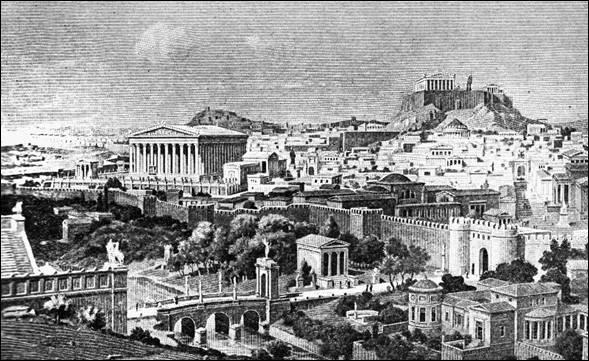
A reconstruction of ancient Athens
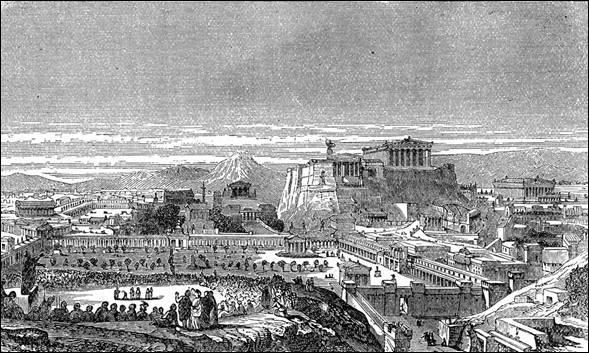
Another reconstruction of the ancient city, as seen from the Pnyx
AJAX
Translated by Lewis Campbell
Regarded by most scholars as an early work, from 450–430 BC, this tragedy chronicles the fate of the warrior Ajax after the events of Homer’s Iliad, but before the end of the Trojan War. At the onset of the play, Ajax is enraged when Achilles’ armour was awarded to Odysseus instead of to him and so he vows to kill the Greek leaders that have disgraced him. Before he can enact his revenge, he is deceived by the goddess Athena into believing that the sheep and cattle that were taken by the Achaeans as spoil are the Greek leaders. He slaughters some of them and takes the others back to his home to torture, including a ram which he believes to be his main rival, Odysseus.
When Ajax realises what he has done, he suffers great agony over his actions, believing the other Greek warriors are laughing at him and so contemplates ending his life due to his shame. His concubine, Tecmessa, pleads for him not to leave her and her child unprotected. Ajax then gives his son, Eurysakes, his shield. He leaves the house saying that he is going out to purify himself and bury the sword given to him by Hector. Teukros, Ajax’s brother, arrives in the Greek camp and is taunted by his fellow soldiers. Kalchas warns that Ajax should not be allowed to leave his tent until the end of the day or he will die. Teukros sends a messenger to Ajax’s campsite with word of Kalchas’ prophesy. Tecmessa and soldiers try to track him down, but are too late. Ajax had indeed buried the sword, but has left the blade sticking out of the ground and has impaled himself upon it.
The last part of the drama revolves around the dispute over what to do with Ajax’s body. Ajax’s half brother Teukros intends on burying him despite the demands of Menelaus and Agamemnon that the corpse is not to be buried. Odysseus, although previously Ajax’s enemy, steps in and persuades them to allow Ajax a proper funeral by pointing out that even one’s enemies deserve respect in death, if they were noble.
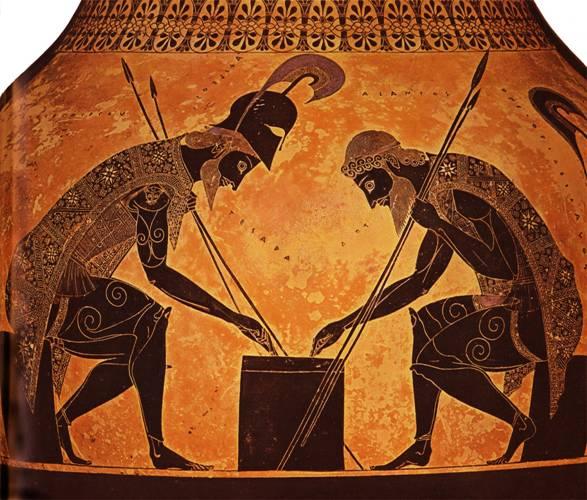
An Athenian vase depicting Odysseus and Ajax
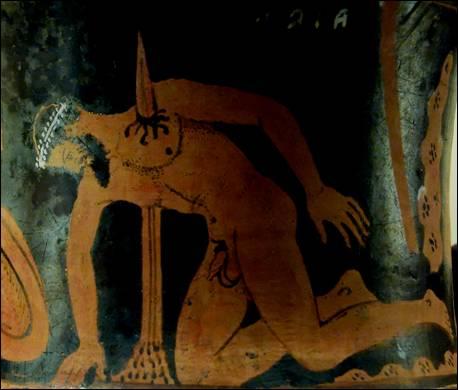
An ancient depiction of the suicide of Ajax
DRAMATIS PERSONAE
ATHENA.
ODYSSEUS.
AIAS, the son of Telamon.
CHORUS of Salaminian Mariners.
TECMESSA.
A Messenger.
TEUCER, half brother of Aias.
MENELAUS.
AGAMEMNON.
EURYSAKÈS, the child of Aias and Tecmessa, appears, but does not speak.
SCENE. Before the encampment of Aias on the shore of the Troad. Afterwards a lonely place beyond Rhoeteum.
Time, towards the end of the Trojan War.
ARGUMENT
‘A wounded spirit who can bear?’
After the death of Achilles, the armour made for him by Hephaestus was to be given to the worthiest of the surviving Greeks. Although Aias was the most valiant, the judges made the award to Odysseus, because he was the wisest.
Aias in his rage attempts to kill the generals; but Athena sends madness upon him, and he makes a raid upon the flocks and herds of the army, imagining the bulls and rams to be the Argive chiefs. On awakening from his delusion, he finds that he has fallen irrecoverably from honour and from the favour of the Greeks. He also imagines that the anger of Athena is unappeasable. Under this impression he eludes the loving eyes of his captive-bride Tecmessa, and of his Salaminian comrades, and falls on his sword. (‘The soul and body rive not more in parting Than greatness going off.’)
But it is revealed through the prophet Calchas, that the wrath of Athena will last only for a day; and on the return of Teucer, Aias receives an honoured funeral, the tyrannical reclamations of the two sons of Atreus being overcome by the firm fidelity of Teucer and the magnanimity of Odysseus, who has been inspired for this purpose by Athena.
ATHENA (above). ODYSSEUS.
ATHENA.
Oft have I seen thee, Laërtiades,
Intent on some surprisal of thy foes;
As now I find thee by the seaward camp,
Where Aias holds the last place in your line,
Lingering in quest, and scanning the fresh print
Of his late footsteps, to be certified
If he keep house or no. Right well thy sense
Hath led thee forth, like some keen hound of Sparta!
The man is even but now come home, his head
And slaughterous hands reeking with ardent toil.
Thou, then, no longer strain thy gaze within
Yon gateway, but declare what eager chase
Thou followest, that a god may give thee light.
ODYSSEUS.
Athena, ’tis thy voice! Dearest in heaven,
How well discerned and welcome to my soul
From that dim distance doth thine utterance fly
In tones as of Tyrrhenian trumpet clang!
Rightly hast thou divined mine errand here,
Beating this ground for Aias of the shield,
The lion-quarry whom I track to day.
For he hath wrought on us to night a deed
Past thought — if he be doer of this thing;
We drift in ignorant doubt, unsatisfied —
And I unbidden have bound me to this toil.
Brief time hath flown since suddenly we knew
That all our gathered spoil was reaved and slaughtered,
Flocks, herds, and herdmen, by some human hand,
All tongues, then, lay this deed at Aias’ door.
And one, a scout who had marked him, all alone,
With new-fleshed weapon bounding o’er the plain,
Gave me to know it, when immediately
I darted on the trail, and here in part
I find some trace to guide me, but in part
I halt, amazed, and know not where to look.
Thou com’st full timely. For my venturous course,
Past or to come, is governed by thy will.
ATH.
I knew thy doubts, Odysseus, and came forth
Zealous to guard thy perilous hunting-path.
OD.
Dear Queen! and am I labouring to an end?
ATH.
Thou schem’st not idly. This is Aias’ deed.
OD.
What can have roused him to a work so wild?
ATH.
His grievous anger for Achilles’ arms.
OD.
But wherefore on the flock this violent raid?
ATH.
He thought to imbrue his hands with your heart’s blood.
OD.
What? Was this planned against the Argives, then?
ATH.
Planned, and performed, had I kept careless guard.
OD.
What daring spirit, what hardihood, was here!
ATH.
Alone by night in craft he sought your tents.
OD.
How? Came he near them? Won he to his goal?
ATH.
He stood in darkness at the generals’ gates.
OD.
What then restrained his eager hand from murder?
ATH.
I turned him backward from his baleful joy,
And overswayed him with blind phantasies,
To swerve against the flocks and well-watched herd
Not yet divided from the public booty.
There plunging in he hewed the horned throng,
And with him Havoc ranged: while now he thought
To kill the Atreidae with hot hand, now this
Now that commander, as the fancy grew.
I, joining with the tumult of his mind,
Flung the wild victim on the fatal net.
Anon, this toil being overpast, he draws
The living oxen and the panting sheep
With cords to his home, not as a hornèd prey,
But as in triumph marshalling his foes:
Whom now he tortures in their bonds within.
Come, thou shalt see this madness in clear day,
And tell to the Argives all I show thee here
Only stand firm and shrink not, I will turn
His eyes askance, not to distinguish thee,
Fear nought — Ho! thou that bindest to thy will
The limbs of those thy captives, come thou forth!
Aias! advance before thy palace gate!
OD.
My Queen! what dost thou? Never call him forth.
ATH.
Hush, hush! Be not so timorous, but endure.
OD.
Nay, nay! Enough. He is there, and let him bide.
ATH.
What fear you? Dates his valour from to day?
OD.
He was and is my valiant enemy.
ATH.
Then is not laughter sweetest o’er a foe?
OD.
No more! I care not he should pass abroad.
ATH.
You flinch from seeing the madman in full view.
OD.
When sane, I ne’er had flinched before his face.
ATH.
Well, but even now he shall not know thee near.
OD.
How, if his eyes be not transformed or lost?
ATH.
I will confound his sense although he see.
OD.
Well, nothing is too hard for Deity.
ATH.
Stand still and keep thy place without a word.
OD.
I must. Would I were far away from here!
ATH.
Aias! Again I summon thee. Why pay
So scanty heed to her who fights for thee?
Enter AIAS with a bloody scourge.
AIAS.
Hail, offspring of the Highest! Pallas, hail!
Well hast thou stood by me. Triumphal gold
Shall crown thy temple for this lordly prey.
ATH.
A fair intention! But resolve me this:
Hast dyed thy falchion deep in Argive blood?
AI. There is my boast; that charge I’ll ne’er deny.
ATH.
Have Atreus’ sons felt thy victorious might?
AI. They have. No more they’ll make a scorn of me!
ATH.
I take it, then, they are dead.
AI.
Ay, now they are dead,
Let them arise and rob me of mine arms!
ATH.
Good. Next inform us of Laërtes’ son;
How stands his fortune? Hast thou let him go?
AI.
The accursed fox! Dost thou inquire of him?
ATH.
Ay, of Odysseus, thy late adversary.
AI.
He sits within, dear lady, to my joy,
Bound; for I mean him not just yet to die.
ATH.
What fine advantage wouldst thou first achieve?
AI.
First, tie him to a pillar of my hall —
ATH.
Poor wretch! What torment wilt thou wreak on him?
AI.
Then stain his back with scourging till he die.
ATH.
Nay, ’tis too much. Poor caitiff! Not the scourge!
AI.
Pallas, in all things else have thou thy will,
But none shall wrest Odysseus from this doom.
ATH.
Well, since thou art determined on the deed,
Spare nought of thine intent: indulge thy hand!
AI. (waving the bloody scourge.)
I go! But thou, I charge thee, let thine aid
Be evermore like valiant as to-day.[Exit
ATH.
The gods are strong, Odysseus. Dost thou see?
What man than Aias was more provident,
Or who for timeliest action more approved?
OD.
I know of none. But, though he hates me sore,
I pity him, poor mortal, thus chained fast
To a wild and cruel fate, — weighing not so much
His fortune as mine own. For now I feel
All we who live are but an empty show
And idle pageant of a shadowy dream.
ATH.
Then, warned by what thou seest, be thou not rash
To vaunt high words toward Heaven, nor swell thy port
Too proudly, if in puissance of thy hand
Thou passest others, or in mines of wealth.
Since Time abases and uplifts again
All that is human, and the modest heart
Is loved by Heaven, who hates the intemperate will.
[Exeunt.
CHORUS (entering).
Telamonian child, whose hand
Guards our wave-encircled land,
Salamis that breasts the sea,
Good of thine is joy to me;
But if One who reigns above
Smite thee, or if murmurs move
From fierce Danaäns in their hate
Full of threatening to thy state,
All my heart for fear doth sigh,
Shrinking like a dove’s soft eye.
Hardly had the darkness waned,[Half-Chorus I.
When our ears were filled and pained
With huge scandal on thy fame.
Telling, thine the arm that came
To the cattle-browsèd mead,
Wild with prancing of the steed,
And that ravaged there and slew
With a sword of fiery hue
All the spoils that yet remain,
By the sweat of spearmen ta’en.
Such report against thy life,[Half-Chorus II.
Whispered words with falsehood rife,
Wise Odysseus bringing near
Shrewdly gaineth many an ear:
Since invention against thee
Findeth hearing speedily,
Tallying with the moment’s birth;
And with loudly waxing mirth
Heaping insult on thy grief,
Each who hears it glories more
Than the tongue that told before.
Every slander wins belief
Aimed at souls whose worth is chief:
Shot at me, or one so small,
Such a bolt might harmless fall.
Ever toward the great and high
Creepeth climbing jealousy
Yet the low without the tall
Make at need a tottering wall
Let the strong the feeble save
And the mean support the brave.
CHORUS.
Ah! ‘twere vain to tune such song
‘Mid the nought discerning throng
Who are clamouring now ‘gainst thee
Long and loud, and strengthless we,
Mighty chieftain, thou away,
To withstand the gathering fray
Flocking fowl with carping cry
Seem they, lurking from thine eye,
Till the royal eagle’s poise
Overawe the paltry noise
Till before thy presence hushed
Sudden sink they, mute and crushed.
Did bull slaying Artemis, Zeus’ cruel daughterI 1
(Ah, fearful rumour, fountain of my shame!)
Prompt thy fond heart to this disastrous slaughter
Of the full herd stored in our army’s name!
Say, had her blood stained temple missed the kindness
Of some vow promised fruit of victory,
Foiled of some glorious armour through thy blindness,
Or fell some stag ungraced by gift from thee?
Or did stern Ares venge his thankless spear
Through this night foray that hath cost thee dear!
For never, if thy heart were not distractedI 2
By stings from Heaven, O child of Telamon,
Wouldst thou have bounded leftward, to have acted
Thus wildly, spoiling all our host hath won!
Madness might fall some heavenly power forfend it
But if Odysseus and the tyrant lords
Suggest a forged tale, O rise to end it,
Nor fan the fierce flame of their withering words!
Forth from thy tent, and let thine eye confound
The brood of Sisyphus that would thee wound!
Too long hast thou been fixed in grim repose,III
Heightening the haughty malice of thy foes,
That, while thou porest by the sullen sea,
Through breezy glades advanceth fearlessly,
A mounting blaze with crackling laughter fed
From myriad throats; whence pain and sorrow bred
Within my bosom are establishèd.
Enter TECMESSA.
TECMESSA.
Helpers of Aias’ vessel’s speed,
Erechtheus’ earth-derivèd seed,
Sorrows are ours who truly care
For the house of Telamon afar.
The dread, the grand, the rugged form
Of him we know,
Is stricken with a troublous storm;
Our Aias’ glory droopeth low.
CHORUS.
What burden through the darkness fell
Where still at eventide ’twas well?
Phrygian Teleutas’ daughter, say;
Since Aias, foremost in the fray,
Disdaining not the spear-won bride,
Still holds thee nearest at his side,
And thou may’st solve our doubts aright.
TEC.
How shall I speak the dreadful word?
How shall ye live when ye have heard?
Madness hath seized our lord by night
And blasted him with hopeless blight.
Such horrid victims mightst thou see
Huddled beneath yon canopy,
Torn by red hands and dyed in blood,
Dread offerings to his direful mood.
CH.
What news of our fierce lord thy story showeth,1
Sharp to endure, impossible to fly!
News that on tongues of Danaäns hourly groweth,
Which Rumour’s myriad voices multiply!
Alas! the approaching doom awakes my terror.
The man will die, disgraced in open day,
Whose dark dyed steel hath dared through mad brained error
The mounted herdmen with their herds to slay.
TEC.
O horror! Then ’twas there he found
The flock he brought as captives tied,
And some he slew upon the ground,
And some, side smiting, sundered wide
Two white foot rams he backward drew,
And bound. Of one he shore and threw
The tipmost tongue and head away,
The other to an upright stay
He tied, and with a harness thong
Doubled in hand, gave whizzing blows,
Echoing his lashes with a song
More dire than mortal fury knows.
CH.
Ah! then ’tis time, our heads in mantles hiding,2
Our feet on some stol’n pathway now to ply,
Or with swift oarage o’er the billows gliding,
With ordered stroke to make the good ship fly
Such threats the Atridae, armed with two fold power,
Launch to assail us. Oh, I sadly fear
Stones from fierce hands on us and him will shower,
Whose heavy plight no comfort may come near.
TEC.
’Tis changed, his rage, like sudden blast,
Without the lightning gleam is past
And now that Reason’s light returns,
New sorrow in his spirit burns.
For when we look on self made woe,
In which no hand but ours had part,
Thought of such griefs and whence they flow
Brings aching misery to the heart.
CH.
If he hath ceased to rave, he should do well
The account of evil lessens when ’tis past.
TEC.
If choice were given you, would you rather choose
Hurting your friends, yourself to feel delight,
Or share with them in one commingled pain?
CH.
The two fold trouble is more terrible.
TEC.
Then comes our torment now the fit is o’er.
CH.
How mean’st thou by that word? I fail to see.
TEC.
He in his rage had rapture of delight
And knew not how he grieved us who stood near
And saw the madding tempest ruining him.
But now ’tis over and he breathes anew,
The counterblast of sorrow shakes his soul,
Whilst our affliction vexeth as before,
Have we not double for our single woe?
CH.
I feel thy reasoning move me, and I fear
Some heavenly stroke hath fallen. How else, when the end
Of stormy sickness brings no cheering ray?
TEC.
Our state is certain. Dream not but ’tis so.
CH.
How first began the assault of misery?
Tell us the trouble, for we share the pain.
TEC.
It toucheth you indeed, and ye shall hear
All from the first. ’Twas midnight, and the lamp
Of eve had died, when, seizing his sharp blade,
He sought on some vain errand to creep forth.
I broke in with my word: ‘Aias, what now?
Why thus uncalled for salliest thou? No voice
Of herald summoned thee. No trumpet blew.
What wouldst thou when the camp is hushed in sleep?’
He with few words well known to women’s ears
Checked me: ‘The silent partner is the best.’
I saw how ’twas and ceased. Forth then he fared
Alone — What horror passed upon the plain
This night, I know not. But he drags within,
Tied in a throng, bulls, shepherd dogs, and spoil
Of cattle and sheep. Anon he butchers them,
Felling or piercing, hacking or tearing wide,
Ribs from breast, limb from limb. Others in rage
He seized and bound and tortured, brutes for men.
Last, out he rushed before the doors, and there
Whirled forth wild language to some shadowy form,
Flouting the generals and Laërtes’ son
With torrent laughter and loud triumphing
What in his raid he had wreaked to their despite.
Then diving back within — the fitful storm
Slowly assuaging left his spirit clear.
And when his eye had lightened through the room
Cumbered with ruin, smiting on his brow
He roared; and, tumbling down amid the wreck
Of woolly carnage he himself had made,
Sate with clenched hand tight twisted in his hair.
Long stayed he so in silence. Then flashed forth
Those frightful words of threatening vehemence,
That bade me show him all the night’s mishap,
And whither he was fallen I, dear my friends,
Prevailed on through my fear, told all I knew.
And all at once he raised a bitter cry,
Which heretofore I ne’er had heard, for still
He made us think such doleful utterance
Betokened the dull craven spirit, and still
Dumb to shrill wailings, he would only moan
With half heard muttering, like an angry bull.
But now, by such dark fortune overpowered,
Foodless and dry, amid the quivering heap
His steel hath quelled, all quietly he broods;
And out of doubt his mind intends some harm:
Such words, such groans, burst from him. O my friends. —
Therefore I hastened, — enter and give aid
If aught ye can! Men thus forgone will oft
Grow milder through the counsel of a friend.
CH.
Teleutas’ child! we shudder at thy tale
That fatal frenzy wastes our hero’s soul.
AIAS (within).
Woe’s me, me, me!
TEC.
More cause anon! Hear ye not Aias there,
How sharp the cry that shrills from him?
AI.
Woe! Woe!
CH.
Madly it sounds — Or springs it of deep grief
For proofs of madness harrowing to his eye?
AI.
Boy, boy!
TEC.
What means he? Oh, Eurysakes!
He cries on thee. Where art thou? O my heart!
AI.
Teucer I call! Where ‘s Teucer? Will he ne’er
Come from the chase, but leave me to my doom?
CH.
Not madness now. Disclose him. Let us look.
Haply the sight of us may calm his soul.
TEC.
There, then; I open to your view the form
Of Aias, and his fortunes as they are.[AIAS is discovered
AI.
Dear comrades of the deep, whose truth and loveI 1
Stand forth alone unbroken in my woe,
Behold what gory sea
Of storm-lashed agony
Doth round and round me flow!
CH. (to TEC.).
Too true thy witness: for the fact cries out
Wild thoughts were here and Reason’s lamp extinct.
AI.
Strong helpers of sea-speed, whose nimble handI 2
Plied hither the salt oar with circling stroke,
No shepherd there was found
To give the avenging wound.
Come, lay me with the flock!
CH.
Speak no rash word! nor curing ill with ill
Augment the plague of this calamity.
AI.
Mark ye the brave and bold,II 1
Whom none could turn of old,
When once he set his face to the fierce fight?
Now beasts that thought no harm
Have felt this puissant arm.
O laughter of my foes! O mockery of my might!
TEC.
Aias, my lord! I entreat thee, speak not so!
AI.
Thou here! Away! begone, and trouble me not!
O! O!
CH.
Be softened! bear a steadier mind!
AI.
O heaven-accursèd hand
That let the ruffians go,
But falling ‘midst the horn’d and bleating band,
Made darkling blood-streams flow!
CH.
Why vex thy heart with what is over and done?
Do what we may, this ne’er will alter now.
AI.
Child of Laërtes old,II 2
Thou that dost still behold
And still contrive all shapes of monstrous ill,
Winding in foulest ways
Through the army’s sinful maze, —
Now even for pleasure thou may’st laugh thy fill.
CH.
Laughter and tears are in the gift of God.
AI.
Ay, might I see him, though thus broken, — ay me!
Even yet —
CH.
Nay, vaunt not. Look where thou art fallen.
AI.
Source where my life-blood springs,
O Zeus, might I but slay
That crafty plague, with those twin-sceptred kings,
Then breathe my life away!
TEC.
Pray thus, and pray that I too be no more!
If thou wert gone, what were my life to me?
AI.
Darkness! my only light!III 1
O nether gloom, to me
Brighter than morning to the wakeful eye!
Take me to dwell with thee.
Take me! What help? Zeus’ daughter with fell might
Torments me sore. I may not look on high,
Nor to the tribe of momentary men. —
Oh, whither, then,
Should it avail to fly?
Ah! whither should I go and stay?
All here is ruin. This mad prey
Shames me for evermore:
Vengeance is at the door;
Yea, all the Achaean host, with armèd hand,
Is ready at command
To slay me o’er and o’er.
TEC.
Woe ‘s me! to hear from one so good and true
Words he had scorned to utter in past days.
AI.
Grey firths of foaming brine,III 2
And ye, deep groves, that crown
The sea-caves and long cliffs upon the shore,
Too long did ye confine
My life about the walls of Troia’s town:
But no more now! a breathing man, no more!
The wise in heart may duly learn that lore.
Let Xanthus know,
Whose waters neighbouring flow,
And minister to Argive men:
One man he ne’er shall see again;
One, I will vaunt it forth!
Highest in warlike worth
Of all Greek forms that Troia’s towers have eyed:
Now, shorn of all that pride,
I lie thus low.
CH.
I know not how to let thee speak, nor how
To silence thee. Such evils close thee round.
AI.
Ay me!
Could human thought have prophesied
My name would thus give echo to mine ill?
‘Ai’ now for Aias, doubly, trebly said,
Sorts all too well to mark my misery;
Whose father from this land of Troy, as noblest
Of all the host, carrying the fairest prize,
Came girt about with glory to his home.
But I his son, not less of might than he,
Nor poorer in the achievements of my hand,
To this same region following in my prime,
Am scouted by the Achaeans and destroyed.
Yet know I one thing well. Had Peleus’ child,
Living, adjudged his armour as a meed
Of well-tried bravery, no grasp save mine
Had clutched it. But the Atridae with mean craft
Conveyed his heirloom to a wit-proud knave,
Whilst Aias’ peerless prowess was despised.
And had not this mine eye and mind distraught
Glanced from my purpose, ne’er again had they
Perverted judgement. But the invincible
Stern daughter of the Highest, with baneful eye,
Even as mine arm descended, baffled me,
And hurled upon my soul a frenzied plague,
To stain my hand with these dumb victims’ blood.
And those mine enemies exult in safety, —
Not with my will; but where a God misguides,
Strong arms are thwarted and the weakling lives.
Now, what remains? Heaven hates me, ’tis too clear:
The Grecian host abhor me: Troy, with all
This country round our camp, is my sworn foe.
Shall I, across the Aegean sailing home,
Leave these Atridae and their fleet forlorn?
How shall I dare to front my father’s eye?
How will he once endure to look on me,
Denuded of the prize of high renown,
Whose coronal stood sparkling on his brow?
No! ‘twere too dreadful. Then shall I advance
Before the Trojan battlements, and there
In single conflict doing valiantly
Last die upon their spears? Nay, for by this
I might perchance make Atreus’ offspring glad.
That may not be imagined. I must find
Some act to let my grey-haired father feel
No heartless recreant once called him sire.
Shame on the wight who when beset with ill
Cares to live on in misery unrelieved.
Can hour outlasting hour make less or more
Of death? Whereby then can it furnish joy?
That mortal weighs for nothing-worth with me,
Whom Hope can comfort with her fruitless fire.
Honour in life or honour in the grave
Befits the noble heart. You hear my will.
CH.
From thine own spirit, Aias, all may tell,
That utterance came, and none have prompted thee.
Yet stay thy hurrying thought, and by thy friends
Be ruled to loose this burden from thy mind.
TEC.
O my great master! heaviest of all woe
Is theirs whose life is crushed beyond recall.
I, born of one the mightiest of the free
And wealthiest in the Phrygian land, am now
A captive. So Heaven willed, and thy strong arm
Determined. Therefore, since the hour that made
My being one with thine, I breathe for thee;
And I beseech thee by the sacred fire
Of home, and by the sweetness of the night
When from thy captive I became thy bride,
Leave me not guardless to the unworthy touch
And cruel taunting of thine enemies’
For, shouldst thou die and leave us, then shall I
Borne off by Argive violence with thy boy
Eat from that day the bread of slavery.
And some one of our lords shall smite me there
With galling speech: Behold the concubine
Of Aias, first of all the Greeks for might,
How envied once, worn with what service now!
So will they speak; and while my quailing heart
Shall sink beneath its burden, clouds of shame
Will dim thy glory and degrade thy race.
Oh! think but of thy father, left to pine
In doleful age, and let thy mother’s grief —
Who, long bowed down with many a careful year,
Prays oftentimes thou may’st return alive —
O’er awe thee. Yea, and pity thine own son,
Unsheltered in his boyhood, lorn of thee,
With bitter foes to tend his orphanhood,
Think, O my lord, what sorrow in thy death
Thou send’st on him and me. For I have nought
To lean to but thy life. My fatherland
Thy spear hath ruined. Fate — not thou — hath sent
My sire and mother to the home of death
What wealth have I to comfort me for thee?
What land of refuge? Thou art all my stay
Oh, of me too take thought! Shall men have joy,
And not remember? Or shall kindness fade?
Say, can the mind be noble, where the stream
Of gratitude is withered from the spring?
CH.
Aias, I would thy heart were touched like mine
With pity; then her words would win thy praise.
AI.
My praise she shall not miss, if she perform
My bidding with firm heart, and fail not here.
TEC.
Dear Aias, I will fail in nought thou bidst me.
AI.
Bring me my boy, that I may see his face.
TEC.
Oh, in my terror I conveyed him hence!
AI.
Clear of this mischief, mean’st thou? or for what?
TEC.
Lest he might run to thee, poor child, and die.
AI.
That issue had been worthy of my fate!
TEC.
But I kept watch to fence his life from harm.
AI.
’Twas wisely done. I praise thy foresight there.
TEC.
Well, since ’tis so, how can I help thee now?
AI.
Give me to speak to him and see him near.
TEC.
He stands close by with servants tending him.
AI.
Then why doth he not come, but still delay?
TEC.
Thy father calls thee, child. Come, lead him hither,
Whichever of you holds him by the hand.
AI.
Moves he? or do thine accents idly fall?
TEC.
See, where thy people bring him to thine eye.
AI.
Lift him to me: lift him! He will not fear
At sight of this fresh havoc of the sword,
If rightly he be fathered of my blood.
Like some young colt he must be trained and taught
To run fierce courses with his warrior sire.
Be luckier than thy father, boy! but else
Be like him, and thy life will not be low.
One thing even now I envy thee, that none
Of all this misery pierces to thy mind.
For life is sweetest in the void of sense,
Ere thou know joy or sorrow. But when this
Hath found thee, make thy father’s enemies
Feel the great parent in the valiant child.
Meantime grow on in tender youthfulness,
Nursed by light breezes, gladdening this thy mother.
No Greek shall trample thee with brutal harm,
That I know well, though I shall not be near —
So stout a warder to protect thy life
I leave in Teucer. He’ll not fail, though now
He follow far the chase upon his foes.
My trusty warriors, people of the sea,
Be this your charge, no less, — and bear to him
My clear commandment, that he take this boy
Home to my fatherland, and make him known
To Telamon, and Eriboea too,
My mother. Let him tend them in their age.
And, for mine armour, let not that be made
The award of Grecian umpires or of him
Who ruined me. But thou, named of the shield,
Eurysakes, hold mine, the unpierceable
Seven-hided buckler, and by the well stitched thong
Grasp firm and wield it mightily. — The rest
Shall lie where I am buried. — Take him now,
Quickly, and close the door. No tears! What! weep
Before the tent? How women crave for pity!
Make fast, I say. No wise physician dreams
With droning charms to salve a desperate sore.
CH.
There sounds a vehement ardour in thy words
That likes me not. I fear thy sharpened tongue.
TEC.
Aias, my lord, what act is in thy mind?
AI.
Inquire not, question not; be wise, thou’rt best.
TEC.
How my heart sinks! Oh, by thy child, by Heaven,
I pray thee on my knees, forsake us not!
AI.
Thou troublest me. What! know’st thou not that Heaven
Hath ceased to be my debtor from to-day?
TEC.
Hush! Speak not so.
AI.
Speak thou to those that hear.
TEC.
Will you not hear me?
AI.
Canst thou not be still?
TEC.
My fears, my fears!
AI. (to the Attendants).
Come, shut me in, I say.
TEC.
Oh, yet be softened!
AI.
’Tis a foolish hope,
If thou deem’st now to mould me to thy will.
[Aias is withdrawn. Exit Tecmessa]
CHORUS.
Island of glory! whom the glowing eyesI 1
Of all the wondering world immortalize,
Thou, Salamis, art planted evermore,
Happy amid the wandering billows’ roar;
While I — ah, woe the while! — this weary time,
By the green wold where flocks from Ida stray,
Lie worn with fruitless hours of wasted prime,
Hoping — ah, cheerless hope! — to win my way
Where Hades’ horrid gloom shall hide me from the day.
Aias is with me, yea, but crouching low,I 2
Where Heaven-sent madness haunts his overthrow,
Beyond my cure or tendance: woful plight!
Whom thou, erewhile, to head the impetuous fight,
Sent’st forth, thy conquering champion. Now he feeds
His spirit on lone paths, and on us brings
Deep sorrow; and all his former peerless deeds
Of prowess fall like unremembered things
From Atreus’ loveless brood, this caitiff brace of kings.
Ah! when his mother, full of days and bowedII 1
With hoary eld, shall hear his ruined mind,
How will she mourn aloud!
Not like the warbler of the dale,
The bird of piteous wail,
But in shrill strains far borne upon the wind,
While on the withered breast and thin white hair
Falls the resounding blow, the rending of despair.
Best hid in death were he whom madness drivesII 2
Remediless; if, through his father’s race
Born to the noblest place
Among the war-worn Greeks, he lives
By his own light no more,
Self-aliened from the self he knew before.
Oh, hapless sire, what woe thine ear shall wound!
One that of all thy line no life save this hath found.
Enter Aias with a bright sword, and Tecmessa, severally.
AI.
What change will never-terminable Time
Not heave to light, what hide not from the day?
What chance shall win men’s marvel? Mightiest oaths
Fall frustrate, and the steely-tempered will.
Ay, and even mine, that stood so diamond-keen
Like iron lately dipped, droops now dis-edged
And weakened by this woman, whom to leave
A widow with her orphan to my foes,
Dulls me with pity. I will go to the baths
And meadows near the cliff, and purging there
My dark pollution, I will screen my soul
From reach of Pallas’ grievous wrath. I will find
Same place untrodden, and digging of the soil
Where none shall see, will bury this my sword,
Weapon of hate! for Death and Night to hold
Evermore underground. For, since my hand
Had this from Hector mine arch-enemy,
No kindness have I known from Argive men.
So true that saying of the bygone world,
‘A foe’s gift is no gift, and brings no good.’
Well, we will learn of Time. Henceforth I’ll bow
To heavenly ordinance and give homage due
To Atreus’ sons. Who rules, must be obeyed.
Since nought so fierce and terrible but yields
Place to Authority. Wild Winter’s snows
Make way for bounteous Summer’s flowery tread,
And Night’s sad orb retires for lightsome Day
With his white steeds to illumine the glad sky.
The furious storm-blast leaves the groaning sea
Gently to rest. Yea, the all-subduer Sleep
Frees whom he binds, nor holds enchained for aye.
And shall not men be taught the temperate will?
Yea, for I now know surely that my foe
Must be so hated, as being like enough
To prove a friend hereafter, and my friend
So far shall have mine aid, as one whose love
Will not continue ever. Men have found
But treacherous harbour in companionship.
Our ending, then, is peaceful. Thou, my girl,
Go in and pray the Gods my heart’s desire
Be all fulfilled. My comrades, join her here,
Honouring my wishes; and if Teucer come,
Bid him toward us be mindful, kind toward you.
I must go — whither I must go. Do ye
But keep my word, and ye may learn, though now
Be my dark hour, that all with me is well.
[Exit towards the country. Tecmessa retires]
CHORUS.
A shudder of love thrills through me. Joy! I soar1
O Pan, wild Pan![They dance
Come from Cyllenè hoar —
Come from the snow drift, the rock-ridge, the glen!
Leaving the mountain bare
Fleet through the salt sea-air,
Mover of dances to Gods and to men.
Whirl me in Cnossian ways — thrid me the Nysian maze!
Come, while the joy of the dance is my care!
Thou too, Apollo, come
Bright from thy Delian home,
Bringer of day,
Fly o’er the southward main
Here in our hearts to reign,
Loved to repose there and kindly to stay.
Horror is past. Our eyes have rest from pain.2
O Lord of Heaven!
[They dance]
Now blithesome day again
Purely may smile on our swift-sailing fleet,
Since, all his woe forgot,
Aias now faileth not
Aught that of prayer and Heaven-worship is meet.
Time bringeth mighty aid — nought but in time doth fade:
Nothing shall move me as strange to my thought.
Aias our lord hath now
Cleared his wrath-burdened brow
Long our despair,
Ceased from his angry feud
And with mild heart renewed
Peace and goodwill to the high-sceptred pair.
Enter Messenger.
MESSENGER.
Friends, my first news is Teucer’s presence here,
Fresh from the Mysian heights; who, as he came
Right toward the generals’ quarter, was assailed
With outcry from the Argives in a throng:
For when they knew his motion from afar
They swarmed around him, and with shouts of blame
From each side one and all assaulted him
As brother to the man who had gone mad
And plotted ‘gainst the host, — threatening aloud,
Spite of his strength, he should be stoned, and die.
— So far strife ran, that swords unscabbarded
Crossed blades, till as it mounted to the height
Age interposed with counsel, and it fell.
But where is Aias to receive my word?
Tidings are best told to the rightful ear.
CH.
Not in the hut, but just gone forth, preparing
New plans to suit his newly altered mind.
MESS.
Alas!
Too tardy then was he who sped me hither;
Or I have proved too slow a messenger.
CH.
What point is lacking for thine errand’s speed?
MESS.
Teucer was resolute the man should bide
Close held within-doors till himself should come.
CH.
Why, sure his going took the happiest turn
And wisest, to propitiate Heaven’s high wrath.
MESS.
The height of folly lives in such discourse,
If Calchas have the wisdom of a seer.
CH.
What knowest thou of our state? What saith he? Tell.
MESS.
I can tell only what I heard and saw.
Whilst all the chieftains and the Atridae twain
Were seated in a ring, Calchas alone
Rose up and left them, and in Teucer’s palm
Laid his right hand full friendly; then out-spake
With strict injunction by all means i’ the world
To keep beneath yon covert this one day
Your hero, and not suffer him to rove,
If he would see him any more alive.
For through this present light — and ne’er again —
Holy Athena, so he said, will drive him
Before her anger. Such calamitous woe
Strikes down the unprofitable growth that mounts
Beyond his measure and provokes the sky.
‘Thus ever,’ said the prophet, ‘must he fall
Who in man’s mould hath thoughts beyond a man.
And Aias, ere he left his father’s door,
Made foolish answer to his prudent sire.
‘My son,’ said Telamon, ‘choose victory
Always, but victory with an aid from Heaven.’
How loftily, how madly, he replied!
‘Father, with heavenly help men nothing worth
May win success. But I am confident
Without the Gods to pluck this glory down.’
So huge the boast he vaunted! And again
When holy Pallas urged him with her voice
To hurl his deadly spear against the foe,
He turned on her with speech of awful sound:
‘Goddess, by other Greeks take thou thy stand;
Where I keep rank, the battle ne’er shall break.’
Such words of pride beyond the mortal scope
Have won him Pallas’ wrath, unlovely meed.
But yet, perchance, so be it he live to-day,
We, with Heaven’s succour, may restore his peace.’ —
Thus far the prophet, when immediately
Teucer dispatched me, ere the assembly rose,
Bearing to thee this missive to be kept
With all thy care. But if my speed be lost,
And Calchas’ word have power, the man is dead.
CH.
O trouble-tost Tecmessa, born to woe,
Come forth and see what messenger is here!
This news bites near the bone, a death to joy.
Enter TECMESSA.
TEC.
Wherefore again, when sorrow’s cruel storm
Was just abating, break ye my repose?
CH. (pointing to the Messenger).
Hear what he saith, and how he comes to bring
News of our Aias that hath torn my heart.
TEC.
Oh me! what is it, man? Am I undone?
MESS.
Thy case I know not; but of Aias this,
That if he roam abroad, ’tis dangerous.
TEC.
He is, indeed, abroad. Oh! tell me quickly!
MESS.
’Tis Teucer’s strong command to keep him close
Beneath this roof, nor let him range alone.
TEC.
But where is Teucer? and what means his word?
MESS.
Even now at hand, and eager to make known
That Aias, if he thus go forth, must fall.
TEC.
Alas! my misery! Whence learned he this?
MESS.
From Thestor’s prophet-offspring, who to-day
Holds forth to Aias choice of life or death.
TEC.
Woe’s me! O friends, this desolating blow
Is falling! Oh, stand forward to prevent!
And some bring Teucer with more haste, while some
Explore the western bays and others search
Eastward to find your hero’s fatal path!
For well I see I am cheated and cast forth
From the old favour. Child, what shall I do?
[Looking at EURYSAKES
We must not stay. I too will fare along,
go far as I have power. Come, let us go.
Bestir ye! ’Tis no moment to sit still,
If we would save him who now speeds to die.
CH.
I am ready. Come! Fidelity of foot,
And swift performance, shall approve me true.
[Exeunt omnes
The scene changes to a lonely wooded spot.
AIAS (discovered alone).
The sacrificer stands prepared, — and when
More keen? Let me take time for thinking, too!
This gift of Hector, whom of stranger men
I hated most with heart and eyes, is set
In hostile Trojan soil, with grinding hone
Fresh-pointed, and here planted by my care
Thus firm, to give me swift and friendly death.
Fine instrument, so much for thee! Then, first,
Thou, for ’tis meet, great Father, lend thine aid.
For no great gift I sue thee. Let some voice
Bear Teucer the ill news, that none but he
May lift my body, newly fallen in death
About my bleeding sword, ere I be spied
By some of those who hate me, and be flung
To dogs and vultures for an outcast prey.
So far I entreat thee, Lord of Heaven. And thou,
Hermes, conductor of the shadowy dead,
Speed me to rest, and when with this sharp steel
I have cleft a sudden passage to my heart,
At one swift bound waft me to painless slumber!
But most be ye my helpers, awful Powers,
Who know no blandishments, but still perceive
All wicked deeds i’ the world — strong, swift, and sure,
Avenging Furies, understand my wrong,
See how my life is ruined, and by whom.
Come, ravin on Achaean flesh — spare none;
Rage through the camp! — Last, thou that driv’st thy course
Up yon steep Heaven, thou Sun, when thou behold’st
My fatherland, checking thy golden rein,
Report my fall, and this my fatal end,
To my old sire, and the poor soul who tends him.
Ah, hapless one! when she shall hear this word,
How she will make the city ring with woe!
‘Twere from the business idly to condole.
To work, then, and dispatch. O Death! O Death!
Now come, and welcome! Yet with thee, hereafter,
I shall find close communion where I go.
But unto thee, fresh beam of shining Day,
And thee, thou travelling Sun-god, I may speak
Now, and no more for ever. O fair light!
O sacred fields of Salamis my home!
Thou, firm set natal hearth: Athens renowned,
And ye her people whom I love; O rivers,
Brooks, fountains here — yea, even the Trojan plain
I now invoke! — kind fosterers, farewell!
This one last word from Aias peals to you:
Henceforth my speech will be with souls unseen[Falls on his sword
CHORUS (re-entering severally).
CH. A.
Toil upon toil brings toil,
And what save trouble have I?
Which path have I not tried?
And never a place arrests me with its tale.
Hark! lo, again a sound!
CH. B.
’Tis we, the comrades of your good ship’s crew.
CH. A.
Well, sirs?
CH. B.
We have trodden all the westward arm o’ the bay.
CH. A.
Well, have ye found?
CH. B.
Troubles enow, but nought to inform our sight.
CH. A.
Nor yet along the road that fronts the dawn
Is any sign of Aias to be seen.
CH.
Who then will tell me, who? What hard sea-liver,1
What toiling fisher in his sleepless quest,
What Mysian nymph, what oozy Thracian river,
Hath seen our wanderer of the tameless breast?
Where? tell me where!
’Tis hard that I, far-toiling voyager,
Crossed by some evil wind,
Cannot the haven find,
Nor catch his form that flies me, where? ah! where?
TEC. (behind).
Oh, woe is me! woe, woe!
CH. A.
Who cries there from the covert of the grove?
TEC.
O boundless misery!
CH. B.
Steeped in this audible sorrow I behold
Tecmessa, poor fate-burdened bride of war.
TEC.
Friends, I am spoiled, lost, ruined, overthrown!
CH. A.
What ails thee now?
TEC.
See where our Aias lies, but newly slain,
Fallen on his sword concealed within the ground,
CH.
Woe for my hopes of home!
Aias, my lord, thou hast slain
Thy ship-companion on the salt sea foam.
Alas for us, and thee,
Child of calamity!
TEC.
So lies our fortune. Well may’st thou complain.
CH. A.
Whose hand employed he for the deed of blood?
TEC.
His own, ’tis manifest. This planted steel,
Fixed by his hand, gives verdict from his breast.
CH.
Woe for my fault, my loss!
Thou hast fallen in blood alone,
And not a friend to cross
Or guard thee. I, deaf, senseless as a stone,
Left all undone. Oh, where, then, lies the stern
Aias, of saddest name, whose purpose none might turn?
TEC.
No eye shall see him. I will veil him round
With this all covering mantle; since no heart
That loved him could endure to view him there,
With ghastly expiration spouting forth
From mouth and nostrils, and the deadly wound,
The gore of his self slaughter. Ah, my lord!
What shall I do? What friend will carry thee?
Oh, where is Teucer! Timely were his hand,
Might he come now to smooth his brother’s corse.
O thou most noble, here ignobly laid,
Even enemies methinks must mourn thy fate!
CH.
Ah! ’twas too clear thy firm knit thoughts would fashion,2
Early or late, an end of boundless woe!
Such heaving groans, such bursts of heart-bruised passion,
Midnight and morn, bewrayed the fire below.
‘The Atridae might beware!’
A plenteous fount of pain was opened there,
What time the strife was set,
Wherein the noblest met,
Grappling the golden prize that kindled thy despair!
TEC.
Woe, woe is me!
CH.
Deep sorrow wrings thy soul, I know it well.
TEC.
O woe, woe, woe!
CH.
Thou may’st prolong thy moan, and be believed,
Thou that hast lately lost so true a friend.
TEC.
Thou may’st imagine; ’tis for me to know.
CH.
Ay, ay, ’tis true.
TEC.
Alas, my child! what slavish tasks and hard
We are drifting to! What eyes control our will!
CH.
Ay me! Through thy complaint
I hear the wordless blow
Of two high-throned, who rule without restraint
Of Pity. Heaven forfend
What evil they intend!
TEC.
The work of Heaven hath brought our life thus low.
CH.
’Tis a sore burden to be laid on men.
TEC.
Yet such the mischief Zeus’ resistless maid,
Pallas, hath planned to make Odysseus glad.
CH.
O’er that dark-featured soul
What waves of pride shall roll,
What floods of laughter flow,
Rudely to greet this madness-prompted woe,
Alas! from him who all things dares endure,
And from that lordly pair, who hear, and seat them sure!
TEC.
Ay, let them laugh and revel o’er his fall!
Perchance, albeit in life they missed him not,
Dead, they will cry for him in straits of war.
For dullards know not goodness in their hand,
Nor prize the jewel till ’tis cast away.
To me more bitter than to them ’twas sweet,
His death to him was gladsome, for he found
The lot he longed for, his self-chosen doom.
What cause have they to laugh? Heaven, not their crew,
Hath glory by his death. Then let Odysseus
Insult with empty pride. To him and his
Aias is nothing; but to me, to me,
He leaves distress and sorrow in his room!
TEUCER (within).
Alas, undone!
LEADER OF CH.
Hush! that was Teucer’s cry. Methought I heard
His voice salute this object of dire woe.
Enter TEUCER.
TEU.
Aias, dear brother, comfort of mine eye,
Hast thou then done even as the rumour holds?
CH.
Be sure of that, Teucer. He lives no more.
TEU.
Oh, then how heavy is the lot I bear!
CH.
Yes, thou hast cause —
TEU.
O rash assault of woe! —
CH.
To mourn full loud.
TEU.
Ay me! and where, oh where
On Trojan earth, tell me, is this man’s child?
CH.
Beside the huts, untended.
TEU. (to TEC).
Oh, with haste
Go bring him hither, lest some enemy’s hand
Snatch him, as from the lion’s widowed mate
The lion-whelp is taken. Spare not speed.
All soon combine in mockery o’er the dead.
[Exit TECMESSA.
CH.
Even such commands he left thee ere he died.
As thou fulfillest by this timely care.
TEU.
O sorest spectacle mine eyes e’er saw!
Woe for my journey hither, of all ways
Most grievous to my heart, since I was ware,
Dear Aias, of thy doom, and sadly tracked
Thy footsteps. For there darted through the host,
As from some God, a swift report of thee
That thou wert lost in death. I, hapless, heard,
And mourned even then for that whose presence kills me.
Ay me! But come,
Unveil. Let me behold my misery.
[The corpse of AIAS is uncovered
O sight unbearable! Cruelly brave!
Dying, what store of griefs thou sow’st for me!
Where, amongst whom of mortals, can I go,
That stood not near thee in thy troublous hour?
Will Telamon, my sire and thine, receive me
With radiant countenance and favouring brow
Returning without thee? Most like! being one
Who smiles no more, yield Fortune what she may.
Will he hide aught or soften any word,
Rating the bastard of his spear-won thrall,
Whose cowardice and dastardy betrayed
Thy life, dear Aias, — or my murderous guile,
To rob thee of thy lordship and thy home?
Such greeting waits me from the man of wrath,
Whose testy age even without cause would storm.
Last, I shall leave my land a castaway,
Thrust forth an exile, and proclaimed a slave;
So should I fare at home. And here in Troy
My foes are many and my comforts few.
All these things are my portion through thy death.
Woe’s me, my heart! how shall I bear to draw thee,
O thou ill-starr’d! from this discoloured blade,
Thy self-shown slayer? Didst thou then perceive
Dead Hector was at length to be thine end? —
I pray you all, consider these two men.
Hector, whose gift from Aias was a girdle,
Tight-braced therewith to the car’s rim, was dragged
And scarified till he breathed forth his life.
And Aias with this present from his foe
Finds through such means his death-fall and his doom.
Say then what cruel workman forged the gifts,
But Fury this sharp sword, Hell that bright band?
In this, and all things human, I maintain,
Gods are the artificers. My thought is said.
And if there be who cares not for my thought,
Let him hold fast his faith and leave me mine.
CH.
Spare longer speech, and think how to secure
Thy brother’s burial, and what plea will serve;
Since one comes here hath no good will to us
And like a villain haply comes in scorn.
TEU.
What man of all the host hath caught thine eye?
CH.
The cause for whom we sailed, the Spartan King.
TEU.
Yes; I discern him, now he moves more near.
Enter MENELAUS.
MENELAUS.
Fellow, give o’er. Cease tending yon dead man!
Obey my voice, and leave him where he lies.
TEU.
Thy potent cause for spending so much breath?
MEN.
My will, and his whose word is sovereign here.
TEU.
May we not know the reasons of your will?
MEN.
Because he, whom we trusted to have brought
To lend us loyal help with heart and hand,
Proved in the trial a worse than Phrygian foe;
Who lay in wait for all the host by night,
And sallied forth in arms to shed our blood;
That, had not one in Heaven foiled this attempt,
Our lot had been to lie as he doth here
Dead and undone for ever, while he lived
And flourished. Heaven hath turned this turbulence
To fall instead upon the harmless flock.
Wherefore no strength of man shall once avail
To encase his body with a seemly tomb,
But outcast on the wide and watery sand,
He’ll feed the birds that batten on the shore.
Nor let thy towering spirit therefore rise
In threatening wrath. Wilt thou or not, our hand
Shall rule him dead, howe’er he braved us living,
And that by force; for never would he yield,
Even while he lived, to words from me. And yet
It shows base metal when the subject-wight
Deigns not to hearken to the chief in power.
Since without settled awe, neither in states
Can laws have rightful sway, nor can a host
Be governed with due wisdom, if no fear
Or wholesome shame be there to shield its safety.
And though a man wax great in thews and bulk,
Let him be warned: a trifling harm may ruin him.
Whoever knows respect and honour both
Stands free from risk of dark vicissitude.
But whereso pride and licence have their fling,
Be sure that state will one day lose her course
And founder in the abysm. Let fear have place
Still where it ought, say I, nor let men think
To do their pleasure and not bide the pain.
That wheel comes surely round. Once Aias flamed
With insolent fierceness. Now I mount in pride,
And loudly bid thee bury him not, lest burying
Thy brother thou be burrowing thine own grave.
CH.
Menelaüs, make not thy philosophy
A platform whence to insult the valiant dead.
TEU.
I nevermore will marvel, sirs, when one
Of humblest parentage is prone to sin,
Since those reputed men of noble strain
Stoop to such phrase of prating frowardness.
Come, tell it o’er again, — said you ye brought
My brother bound to aid you with his power?
Sailed he not forth of his own sovereign will?
Where is thy voucher of command o’er him?
Where of thy right o’er those that followed him?
Sparta, not we, shall buckle to thy sway.
’Twas written nowhere in the bond of rule
That thou shouldst check him rather than he thee.
Thou sailedst under orders, not in charge
Of all, much less of Aias. Then pursue
Thy limited direction, and chastise,
In haughty phrase, the men who fear thy nod.
But I will bury Aias, whether thou
Or the other general give consent or no.
’Tis not for me to tremble at your word.
Not to reclaim thy wife, like those poor souls
Thou flll’st with labour, issued this man forth,
But caring for his oath, and not for thee,
Or any other nobody. Then come
With heralds all arow, and bring the man
Called king of men with thee! For thy sole noise
I budge not, wert thou twenty times thy name.
CH.
The sufferer should not bear a bitter tongue.
Hard words, how just soe’er, will leave their sting.
MEN.
Our bowman carries no small pride, I see.
TEU.
No mere mechanic’s menial craft is mine.
MEN.
How wouldst thou vaunt it hadst thou but a shield!
TEU.
Unarmed I fear not thee in panoply.
MEN.
Redoubted is the wrath lives on thy tongue.
TEU.
Whose cause is just hath licence to be proud.
MEN.
Just, that my murderer have a peaceful end?
TEU.
Thy murderer? Strange, to have been slain and live!
MEN.
Yea, through Heaven’s mercy. By his will, I am dead.
TEU.
If Heaven have saved thee, give the Gods their due.
MEN.
Am I the man to spurn at Heaven’s command?
TEU.
Thou dost, to come and frustrate burial.
MEN.
Honour forbids to yield my foe a tomb.
TEU.
And Aias was thy foeman? Where and when?
MEN.
Hate lived between us; that thou know’st full well.
TEU.
For thy proved knavery, coining votes i’ the court
MEN.
The judges voted. He ne’er lost through me.
TEU.
Guilt hiding guile wears often fairest front.
MEN.
I know whom pain shall harass for that word.
TEU.
Not without giving equal pain, ’tis clear.
MEN.
No more, but this. No burial for this man!
TEU.
Yea, this much more. He shall have instant burial.
MEN.
I have seen ere now a man of doughty tongue
Urge sailors in foul weather to unmoor,
Who, caught in the sea-misery by and by,
Lay voiceless, muffled in his cloak, and suffered
Who would of the sailors over trample him
Even so methinks thy truculent mouth ere long
Shall quench its outcry, when this little cloud
Breaks forth on thee with the full tempest’s might.
TEU.
I too have seen a man whose windy pride
Poured forth loud insults o’er a neighbour’s fall,
Till one whose cause and temper showed like mine
Spake to him in my hearing this plain word:
‘Man, do the dead no wrong; but, if thou dost,
Be sure thou shalt have sorrow.’ Thus he warned
The infatuate one: ay, one whom I behold,
For all may read my riddle — thou art he.
MEN.
I will be gone. ‘Twere shame to me, if known,
To chide when I have power to crush by force.
TEU.
Off with you, then! ‘Twere triple shame in me
To list the vain talk of a blustering fool.
[Exit MENELAUS.
LEADER OF CHORUS.
High the quarrel rears his head!
Haste thee, Teucer, trebly haste,
Grave-room for the valiant dead
Furnish with what speed thou mayst,
Hollowed deep within the ground,
Where beneath his mouldering mound
Aias aye shall be renowned.
Re-enter TECMESSA with EURYSAKES.
TEU.
Lo! where the hero’s housemate and his child,
Hitting the moment’s need, appear at hand,
To tend the burial of the ill fated dead.
Come, child, take thou thy station close beside:
Kneel and embrace the author of thy life,
In solemn suppliant fashion holding forth
This lock of thine own hair, and hers, and mine
With threefold consecration, that if one
Of the army force thee from thy father’s corse,
My curse may banish him from holy ground,
Far from his home, unburied, and cut off
From all his race, even as I cut this curl.
There, hold him, child, and guard him; let no hand
Stir thee, but lean to the calm breast and cling.
(To CHORUS) And ye, be not like women in this scene,
Nor let your manhoods falter; stand true men
To this defence, till I return prepared,
Though all cry No, to give him burial.[Exit
CHORUS.
When shall the tale of wandering years be done?I 1
When shall arise our exile’s latest sun?
Oh, where shall end the incessant woe
Of troublous spear-encounter with the foe,
Through this vast Trojan plain,
Of Grecian arms the lamentable stain?
Would he had gone to inhabit the wide sky,I 2
Or that dark home of death where millions lie,
Who taught our Grecian world the way
To use vile swords and knit the dense array!
His toil gave birth to toil
In endless line. He made mankind his spoil.
His tyrant will hath forced me to forgoII 1
The garland, and the goblet’s bounteous flow:
Yea, and the flute’s dear noise,
And night’s more tranquil joys;
Ay me! nor only these,
The fruits of golden ease,
But Love, but Love — O crowning sorrow! —
Hath ceased for me. I may not borrow
Sweet thoughts from him to smooth my dreary bed,
Where dank night-dews fall ever on my head,
Lest once I might forget the sadness of the morrow.
Even here in Troy, Aias was erst my rock,II 2
From darkling fears and ‘mid the battle-shock
To screen me with huge might:
Now he is lost in night
And horror. Where again
Shall gladness heal my pain?
O were I where the waters hoary,
Round Sunium’s pine-clad promontory,
Plash underneath the flowery upland height.
Then holiest Athens soon would come in sight,
And to Athena’s self I might declare my story.
Enter TEUCER.
TEU.
My steps were hastened, brethren, when I saw
Great Agamemnon hitherward afoot.
He means to talk perversely, I can tell.
Enter AGAMEMNON.
AG.
And so I hear thou’lt stretch thy mouth agape
With big bold words against us undismayed —
Thou, the she-captive’s offspring! High would scale
Thy voice, and pert would be thy strutting gait,
Were but thy mother noble; since, being naught,
So stiff thou stand’st for him who is nothing now,
And swear’st we came not as commanders here
Of all the Achaean navy, nor of thee;
But Aias sailed, thou say’st, with absolute right.
Must we endure detraction from a slave?
What was the man thou noisest here so proudly?
Have I not set my foot as firm and far?
Or stood his valour unaccompanied
In all this host? High cause have we to rue
That prize-encounter for Pelides’ arms,
Seeing Teucer’s sentence stamps our knavery
For all to know it; and nought will serve but ye,
Being vanquished, kick at the award that passed
By voice of the majority in the court,
And either pelt us with rude calumnies,
Or stab at us, ye laggards! with base guile.
Howbeit, these ways will never help to build
The wholesome order of established law,
If men shall hustle victors from their right,
And mix the hindmost rabble with the van.
That craves repression. Not by bulky size,
Or shoulders’ breadth, the perfect man is known;
But wisdom gives chief power in all the world.
The ox hath a huge broadside, yet is held
Right in the furrow by a slender goad;
Which remedy, I perceive, will pass ere long
To visit thee, unless thy wisdom grow;
Who hast uttered forth such daring insolence
For the pale shadow of a vanished man.
Learn modestly to know thy place and birth,
And bring with thee some freeborn advocate
To plead thy cause before us in thy room.
I understand not in the barbarous tongue,
And all thy talk sounds nonsense to mine ear.
CH.
Would ye might both have sense to curb your ire!
No better hope for either can I frame.
TEU.
Fie! How doth gratitude when men are dead
Prove renegade and swiftly pass away!
This Agamemnon hath no slightest word
Of kind remembrance any more for thee,
Aias, who oftentimes for his behoof
Hast jeoparded thy life in labour of war.
Now all is clean forgotten and out of mind.
Thou who hast multiplied words void of sense,
Hast thou no faintest memory of the time
When who but Aias came and rescued you
Already locked within the toils, — all lost,
The rout began: when close abaft the ships
The torches flared, and o’er the bootless trench
Hector was bounding high to board our fleet?
Who stayed that onset? Was not Aias he?
Whom thou deny’st to have once set foot by thine.
Find ye no merit there? And once again
When he met Hector singly, man to man,
Not by your bidding, but the lottery’s choice,
His lot, that skulked not low adown i’ the heap,
A moist earth-clod, but sure to spring in air,
And first to clear the plumy helmet’s brim.
Yes, Aias was the man, and I too there
Kept rank, the ‘barbarous mother’s servile son.’
I pity thee the blindness of that word.
Who was thy father’s father? A barbarian,
Pelops, the Phrygian, if you trace him far!
And what was Atreus, thine own father? One
Who served his brother with the abominable
Dire feast of his own flesh. And thou thyself
Cam’st from a Cretan mother, whom her sire
Caught with a man who had no right in her
And gave dumb fishes the polluted prey.
Such was thy race. What is the race thou spurnest?
My father, Telamon, of all the host
Being foremost proved in valour, took as prize
My mother for his mate: a princess she,
Born of Laomedon; Alcmena’s son
Gave her to grace him — a triumphant meed.
Thus royally descended and thus brave,
Shall I renounce the brother of my blood,
Or suffer thee to thrust him in his woes
Far from all burial, shameless that thou art?
Be sure that, if ye cast him forth, ye’ll cast
Three bodies more beside him in one spot;
For nobler should I find it here to die
In open quarrel for my kinsman’s weal,
Than for thy wife — or Menelaüs’, was ‘t?
Consider then, not my case, but your own.
For if you harm me you will wish some day
To have been a coward rather than dare me.
CH.
Hail, Lord Odysseus! thou art come in time
Not to begin, but help to end, a fray.
Enter ODYSSEUS.
OD.
What quarrel, sirs? I well perceived from far
The kings high-voicing o’er the valiant dead.
AG.
Yea, Lord Odysseus, for our ears are full
Of this man’s violent heart-offending talk.
OD.
What words have passed? I cannot blame the man
Who meets foul speech with bitterness of tongue.
AG.
My speech was bitter, for his deeds were foul.
OD.
What deed of his could harm thy sovereign head?
AG.
He boldly says this corse shall not be left
Unburied, but he’ll bury it in our spite.
OD.
May I then speak true counsel to my friend,
And pull with thee in policy as of yore?
AG.
Speak. I were else a madman; for no friend
Of all the Argeians do I count thy peer.
OD.
Then hear me in Heaven’s name! Be not so hard
Thus without ruth tombless to cast him forth;
Nor be so vanquished by a vehement will,
That to thy hate even Justice’ self must bow.
I, too, had him for my worst enemy,
Since I gained mastery o’er Pelides’ arms.
But though he used me so, I ne’er will grudge
For his proud scorn to yield him thus much honour,
That, save Achilles’ self, I have not seen
So noble an Argive on the fields of Troy.
Then ‘twere not just in thee to slight him now;
Nor would thy treatment wound him, but confound
The laws of Heaven. No hatred should have scope
To offend the noble spirits of the dead.
AG.
Wilt thou thus fight against me on his side?
OD.
Yea, though I hated him, while hate was comely.
AG.
Why, thou shouldst trample him the more, being dead.
OD.
Rejoice not, King, in feats that soil thy fame!
AG.
’Tis hard for power to observe each pious rule.
OD.
Not hard to grace the good words of a friend.
AG.
The ‘noble spirit’ should hearken to command.
OD.
No more! ’Tis conquest to be ruled by love.
AG.
Remember what he was thou gracest so.
OD.
A noisome enemy; but his life was great.
AG.
And wilt thou honour such a pestilent corse?
OD.
Hatred gives way to magnanimity.
AG.
With addle-pated fools.
OD.
Full many are found
Friends for an hour, yet bitter in the end.
AG.
And wouldst thou have us gentle to such friends?
OD.
I would not praise ungentleness in aught.
AG.
We shall be known for weaklings through thy counsel.
OD.
Not so, but righteous in all Grecian eyes.
AG.
Thou bidst me then let bury this dead man?
OD.
I urge thee to the course myself shall follow.
AG.
Ay, every man for his own line! That holds.
OD.
Why not for my own line? What else were natural?
AG.
‘Twill be thy doing then, ne’er owned by me.
OD.
Own it or not, the kindness is the same.
AG.
Well, for thy sake I’d grant a greater boon;
Then why not this? However, rest assured
That in the grave or out of it, Aias still
Shall have my hatred. Do thou what thou wilt.
[Exit.
CH.
Whoso would sneer at thy philosophy,
While such thy ways, Odysseus, were a fool.
OD.
And now let Teucer know that from this hour
I am more his friend than I was once his foe,
And fain would help him in this burial-rite
And service to his brother, nor would fail
In aught that mortals owe their noblest dead.
TEU.
Odysseus, best of men, thine every word
Hath my heart’s praise, and my worst thought of thee
Is foiled by thy staunch kindness to the man
Who was thy rancorous foe. Thou wast not keen
To insult in present of his corse, like these,
The insensate general and his brother-king,
Who came with proud intent to cast him forth
Foully debarred from lawful obsequy.
Wherefore may he who rules in yon wide heaven,
And the unforgetting Fury-spirit, and she,
Justice, who crowns the right, so ruin them
With cruellest destruction, even as they
Thought ruthlessly to rob him of his tomb!
For thee, revered Laërtes’ lineal seed,
I fear to admit thy hand unto this rite,
Lest we offend the spirit that is gone.
But for the rest, I hail thy proffered aid;
And bring whom else thou wilt, I’ll ne’er resent it.
This work shall be my single care; but thou,
Be sure I love thee for thy generous heart.
OD.
I had gladly done it; but, since thou declinest,
I bow to thy decision, and depart.
[Exit.
TEU.
Speed we, for the hour grows late:
Some to scoop his earthy cell,
Others by the cauldron wait,
Plenished from the purest well.
Hoist it, comrades, here at hand,
High upon the three-foot stand!
Let the cleansing waters flow;
Brightly flame the fire below!
Others in a stalwart throng
From his chamber bear along
All the arms he wont to wield
Save alone the mantling shield.
Thou with me thy strength employ,
Lifting this thy father, boy;
Hold his frame with tender heed —
Still the gashed veins darkly bleed.
Who professes here to love him?
Ply your busy cares above him,
Come and labour for the man,
Nobler none since time began,
Aias, while his life-blood ran.
LEADER OF CH.
Oft we know not till we see.
Weak is human prophecy.
Judge not, till the hour have taught thee
What the destinies have brought thee.
ANTIGONE
Translated by F. Storr
Though chronologically it is the last of Sophocles’ three Theban plays, Antigone was written first, before 441 BC, and the narrative picks up where Aeschylus’ Seven Against Thebes ends. Before the beginning of the play, two brothers leading opposite sides in Thebes’ civil war died fighting each other for the throne. Creon, the new ruler of Thebes, has decided that Eteocles will be honoured and Polyneices will held be in public shame. The rebel brother’s body will not be sanctified by holy rites and will lie unburied on the battlefield, as prey for carrion animals like worms and vultures, generally considered the harshest punishment at the time.
At the opening of the play, Antigone and Ismene, the sisters of the dead Polyneices and Eteocles, meet secretly outside the palace gates late at night. Antigone wants to bury Polyneices’ body, in defiance of Creon’s edict. Ismene refuses to help her, fearing the death penalty, but she is unable to stop Antigone from going to bury her brother herself, causing Antigone to disown her.
Creon enters, along with the Chorus of Theban Elders. He seeks their support in the days to come, and in particular wants them to back his edict regarding the disposal of Polyneices’ body. The Chorus of Elders pledges their support. A Sentry enters, fearfully reporting that the body has been buried. A furious Creon orders the Sentry to find the culprit or face death himself. The Sentry leaves and the Chorus sings about honouring the gods, but after a short absence he returns, bringing Antigone with him. The Sentry explains that the watchmen exhumed Polyneices’ body and they caught Antigone as she buried him again. Creon questions her after sending the Sentry off, and she does not deny what she has done. She argues unflinchingly with Creon about the morality of the edict and the morality of her actions. Creon becomes furious, and, thinking Ismene must have known of Antigone’s plan, seeing her upset, summons the girl. Ismene tries to confess falsely to the crime, wishing to die alongside her sister, but Antigone will not have it. Creon orders that the two women be temporarily imprisoned.
Haemon, Creon's son, enters to pledge allegiance to his father, even though he is engaged to Antigone. He initially seems willing to forsake Antigone, but when Haemon gently tries to persuade his father to spare Antigone, claiming that 'under cover of darkness the city mourns for the girl', the discussion deteriorates and the two men are soon bitterly insulting each other. Haemon leaves, vowing never to see Creon again.
Creon decides to spare Ismene and to bury Antigone alive in a cave. She is brought out of the house, and she bewails her fate and defends her actions one last time. She is taken away to her living tomb, with the Chorus expressing great sorrow for what is going to happen to her. Tiresias, the blind prophet, enters. He warns Creon that Polyneices should now be urgently buried because the gods are displeased, refusing to accept any sacrifices or prayers from Thebes. Creon accuses Tiresias of being corrupt. Tiresias responds that because of Creon's mistakes, he will lose „a son of [his] own loins“[2] for the crimes of leaving Polyneices unburied and putting Antigone into the earth (he does not say that Antigone should not be condemned to death, only that it is improper to keep a living body underneath the earth). All of Greece will despise him, and the sacrificial offerings of Thebes will not be accepted by the gods. The Chorus, terrified, asks Creon to take their advice. He assents, and they tell him that he should free Antigone and bury Polyneices. Creon, shaken, agrees to do it. He leaves with a retinue of men to help him right his previous mistakes. The Chorus delivers a choral ode to the god Dionysus (god of wine and of the theatre; this part is the offering to their patron god), and then a Messenger enters to tell them that Haemon has killed himself. Eurydice, Creon's wife and Haemon's mother, enters and asks the Messenger to tell her everything. The Messenger reports that Haemon and Antigone have both taken their own lives, Antigone by hanging herself, and Haemon by stabbing himself after finding the body, just after Polyneices was buried. Eurydice disappears into the palace.
Creon enters, carrying Haemon's body. He understands that his own actions have caused these events. A Second Messenger arrives to tell Creon and the Chorus that Eurydice has killed herself. With her last breath, she cursed her husband. Creon blames himself for everything that has happened, and, a broken man, he asks his servants to help him inside. The order he valued so much has been protected, and he is still the king, but he has acted against the gods and lost his child and his wife as a result. The Chorus closes by saying that although the gods punish the proud, punishment brings wisdom.
Antigone was written at a time of national fervour. In 441 BC, shortly after the play was released, Sophocles was appointed as one of the ten generals to lead a military expedition against Samos. It is notable that a prominent play in a time of such imperialism contains little political propaganda, no impassioned apostrophe, and few references to Athens. Rather than become distracted with the issues of the time, Antigone remains focused on the characters and themes within the play. It does, however, expose the dangers of the absolute ruler, or tyrant, in the person of Creon, a king to whom few will speak freely and openly their true opinions, and who therefore makes the grievous error of condemning Antigone, an act which he pitifully regrets in the play’s final lines. Athenians, proud of their democratic tradition, would have identified his error in the many lines of dialog which emphasize that the people of Thebes believe he is wrong, but have no voice to tell him so. Athenians would identify the folly of tyranny.
The chorus in Antigone departs significantly from the chorus in Aeschylus’ Seven Against Thebes, the play of which Antigone is a continuation. The chorus in Aeschylus’ play is largely supportive of Antigone’s decision to bury her brother. Here, the chorus is composed of old men who are largely unwilling to see civil disobedience in a positive light. The chorus also represents a typical difference in Sophocles’ plays from those of both Aeschylus and Euripides. A chorus of Aeschylus almost always continues or intensifies the moral nature of the play, while one of Euripides frequently strays far from the main moral theme. The chorus in Antigone lies somewhere in between; it remains within the general moral and the immediate scene, but allows itself to be carried away from the occasion or the initial reason for speaking.
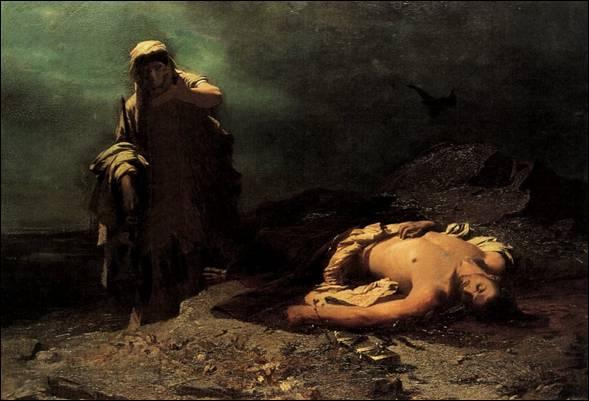
‘Antigone in front of the dead Polyneices’ by Nikiforos Lytras

Bust of Sophocles now in the Farnese Collection in the Pushkin Museum
ARGUMENT
Antigone, daughter of Oedipus, the late king of Thebes, in defiance of Creon who rules in his stead, resolves to bury her brother Polyneices, slain in his attack on Thebes. She is caught in the act by Creon’s watchmen and brought before the king. She justifies her action, asserting that she was bound to obey the eternal laws of right and wrong in spite of any human ordinance. Creon, unrelenting, condemns her to be immured in a rock-hewn chamber. His son Haemon, to whom Antigone is betrothed, pleads in vain for her life and threatens to die with her. Warned by the seer Teiresias Creon repents him and hurries to release Antigone from her rocky prison. But he is too late: he finds lying side by side Antigone who had hanged herself and Haemon who also has perished by his own hand. Returning to the palace he sees within the dead body of his queen who on learning of her son’s death has stabbed herself to the heart.
DRAMATIS PERSONAE
ANTIGONE and ISMENE — daughters of Oedipus and sisters of Polyneices and Eteocles.
CREON, King of Thebes.
HAEMON, Son of Creon, betrothed to Antigone.
EURYDICE, wife of Creon.
TEIRESIAS, the prophet.
CHORUS, of Theban elders.
A WATCHMAN
A MESSENGER
A SECOND MESSENGER
ANTIGONE and ISMENE before the Palace gates.
ANTIGONE
Ismene, sister of my blood and heart,
See’st thou how Zeus would in our lives fulfill
The weird of Oedipus, a world of woes!
For what of pain, affliction, outrage, shame,
Is lacking in our fortunes, thine and mine?
And now this proclamation of today
Made by our Captain-General to the State,
What can its purport be? Didst hear and heed,
Or art thou deaf when friends are banned as foes?
ISMENE
To me, Antigone, no word of friends
Has come, or glad or grievous, since we twain
Were reft of our two brethren in one day
By double fratricide; and since i’ the night
Our Argive leaguers fled, no later news
Has reached me, to inspirit or deject.
ANTIGONE
I know ’twas so, and therefore summoned thee
Beyond the gates to breathe it in thine ear.
ISMENE
What is it? Some dark secret stirs thy breast.
ANTIGONE
What but the thought of our two brothers dead,
The one by Creon graced with funeral rites,
The other disappointed? Eteocles
He hath consigned to earth (as fame reports)
With obsequies that use and wont ordain,
So gracing him among the dead below.
But Polyneices, a dishonored corse,
(So by report the royal edict runs)
No man may bury him or make lament —
Must leave him tombless and unwept, a feast
For kites to scent afar and swoop upon.
Such is the edict (if report speak true)
Of Creon, our most noble Creon, aimed
At thee and me, aye me too; and anon
He will be here to promulgate, for such
As have not heard, his mandate; ’tis in sooth
No passing humor, for the edict says
Whoe’er transgresses shall be stoned to death.
So stands it with us; now ’tis thine to show
If thou art worthy of thy blood or base.
ISMENE
But how, my rash, fond sister, in such case
Can I do anything to make or mar?
ANTIGONE
Say, wilt thou aid me and abet? Decide.
ISMENE
In what bold venture? What is in thy thought?
ANTIGONE
Lend me a hand to bear the corpse away.
ISMENE
What, bury him despite the interdict?
ANTIGONE
My brother, and, though thou deny him, thine
No man shall say that I betrayed a brother.
ISMENE
Wilt thou persist, though Creon has forbid?
ANTIGONE
What right has he to keep me from my own?
ISMENE
Bethink thee, sister, of our father’s fate,
Abhorred, dishonored, self-convinced of sin,
Blinded, himself his executioner.
Think of his mother-wife (ill sorted names)
Done by a noose herself had twined to death
And last, our hapless brethren in one day,
Both in a mutual destiny involved,
Self-slaughtered, both the slayer and the slain.
Bethink thee, sister, we are left alone;
Shall we not perish wretchedest of all,
If in defiance of the law we cross
A monarch’s will? — weak women, think of that,
Not framed by nature to contend with men.
Remember this too that the stronger rules;
We must obey his orders, these or worse.
Therefore I plead compulsion and entreat
The dead to pardon. I perforce obey
The powers that be. ’Tis foolishness, I ween,
To overstep in aught the golden mean.
ANTIGONE
I urge no more; nay, wert thou willing still,
I would not welcome such a fellowship.
Go thine own way; myself will bury him.
How sweet to die in such employ, to rest, —
Sister and brother linked in love’s embrace —
A sinless sinner, banned awhile on earth,
But by the dead commended; and with them
I shall abide for ever. As for thee,
Scorn, if thou wilt, the eternal laws of Heaven.
ISMENE
I scorn them not, but to defy the State
Or break her ordinance I have no skill.
ANTIGONE
A specious pretext. I will go alone
To lap my dearest brother in the grave.
ISMENE
My poor, fond sister, how I fear for thee!
ANTIGONE
O waste no fears on me; look to thyself.
ISMENE
At least let no man know of thine intent,
But keep it close and secret, as will I.
ANTIGONE
O tell it, sister; I shall hate thee more
If thou proclaim it not to all the town.
ISMENE
Thou hast a fiery soul for numbing work.
ANTIGONE
I pleasure those whom I would liefest please.
ISMENE
If thou succeed; but thou art doomed to fail.
ANTIGONE
When strength shall fail me, yes, but not before.
ISMENE
But, if the venture’s hopeless, why essay?
ANTIGONE
Sister, forbear, or I shall hate thee soon,
And the dead man will hate thee too, with cause.
Say I am mad and give my madness rein
To wreck itself; the worst that can befall
Is but to die an honorable death.
ISMENE
Have thine own way then; ’tis a mad endeavor,
Yet to thy lovers thou art dear as ever.
[Exeunt]
CHORUS
(Str. 1)
Sunbeam, of all that ever dawn upon
Our seven-gated Thebes the brightest ray,
O eye of golden day,
How fair thy light o’er Dirce’s fountain shone,
Speeding upon their headlong homeward course,
Far quicker than they came, the Argive force;
Putting to flight
The argent shields, the host with scutcheons white.
Against our land the proud invader came
To vindicate fell Polyneices’ claim.
Like to an eagle swooping low,
On pinions white as new fall’n snow.
With clanging scream, a horsetail plume his crest,
The aspiring lord of Argos onward pressed.
(Ant. 1)
Hovering around our city walls he waits,
His spearmen raven at our seven gates.
But ere a torch our crown of towers could burn,
Ere they had tasted of our blood, they turn
Forced by the Dragon; in their rear
The din of Ares panic-struck they hear.
For Zeus who hates the braggart’s boast
Beheld that gold-bespangled host;
As at the goal the paean they upraise,
He struck them with his forked lightning blaze.
(Str. 2)
To earthy from earth rebounding, down he crashed;
The fire-brand from his impious hand was dashed,
As like a Bacchic reveler on he came,
Outbreathing hate and flame,
And tottered. Elsewhere in the field,
Here, there, great Area like a war-horse wheeled;
Beneath his car down thrust
Our foemen bit the dust.
Seven captains at our seven gates
Thundered; for each a champion waits,
Each left behind his armor bright,
Trophy for Zeus who turns the fight;
Save two alone, that ill-starred pair
One mother to one father bare,
Who lance in rest, one ‘gainst the other
Drave, and both perished, brother slain by brother.
(Ant. 2)
Now Victory to Thebes returns again
And smiles upon her chariot-circled plain.
Now let feast and festal should
Memories of war blot out.
Let us to the temples throng,
Dance and sing the live night long.
God of Thebes, lead thou the round.
Bacchus, shaker of the ground!
Let us end our revels here;
Lo! Creon our new lord draws near,
Crowned by this strange chance, our king.
What, I marvel, pondering?
Why this summons? Wherefore call
Us, his elders, one and all,
Bidding us with him debate,
On some grave concern of State?
[Enter CREON]
CREON
Elders, the gods have righted one again
Our storm-tossed ship of state, now safe in port.
But you by special summons I convened
As my most trusted councilors; first, because
I knew you loyal to Laius of old;
Again, when Oedipus restored our State,
Both while he ruled and when his rule was o’er,
Ye still were constant to the royal line.
Now that his two sons perished in one day,
Brother by brother murderously slain,
By right of kinship to the Princes dead,
I claim and hold the throne and sovereignty.
Yet ’tis no easy matter to discern
The temper of a man, his mind and will,
Till he be proved by exercise of power;
And in my case, if one who reigns supreme
Swerve from the highest policy, tongue-tied
By fear of consequence, that man I hold,
And ever held, the basest of the base.
And I contemn the man who sets his friend
Before his country. For myself, I call
To witness Zeus, whose eyes are everywhere,
If I perceive some mischievous design
To sap the State, I will not hold my tongue;
Nor would I reckon as my private friend
A public foe, well knowing that the State
Is the good ship that holds our fortunes all:
Farewell to friendship, if she suffers wreck.
Such is the policy by which I seek
To serve the Commons and conformably
I have proclaimed an edict as concerns
The sons of Oedipus; Eteocles
Who in his country’s battle fought and fell,
The foremost champion — duly bury him
With all observances and ceremonies
That are the guerdon of the heroic dead.
But for the miscreant exile who returned
Minded in flames and ashes to blot out
His father’s city and his father’s gods,
And glut his vengeance with his kinsmen’s blood,
Or drag them captive at his chariot wheels —
For Polyneices ’tis ordained that none
Shall give him burial or make mourn for him,
But leave his corpse unburied, to be meat
For dogs and carrion crows, a ghastly sight.
So am I purposed; never by my will
Shall miscreants take precedence of true men,
But all good patriots, alive or dead,
Shall be by me preferred and honored.
CHORUS
Son of Menoeceus, thus thou will’st to deal
With him who loathed and him who loved our State.
Thy word is law; thou canst dispose of us
The living, as thou will’st, as of the dead.
CREON
See then ye execute what I ordain.
CHORUS
On younger shoulders lay this grievous charge.
CREON
Fear not, I’ve posted guards to watch the corpse.
CHORUS
What further duty would’st thou lay on us?
CREON
Not to connive at disobedience.
CHORUS
No man is mad enough to court his death.
CREON
The penalty is death: yet hope of gain
Hath lured men to their ruin oftentimes.
[Enter GUARD]
GUARD
My lord, I will not make pretense to pant
And puff as some light-footed messenger.
In sooth my soul beneath its pack of thought
Made many a halt and turned and turned again;
For conscience plied her spur and curb by turns.
“Why hurry headlong to thy fate, poor fool?”
She whispered. Then again, “If Creon learn
This from another, thou wilt rue it worse.”
Thus leisurely I hastened on my road;
Much thought extends a furlong to a league.
But in the end the forward voice prevailed,
To face thee. I will speak though I say nothing.
For plucking courage from despair methought,
‘Let the worst hap, thou canst but meet thy fate.’
CREON
What is thy news? Why this despondency?
GUARD
Let me premise a word about myself?
I neither did the deed nor saw it done,
Nor were it just that I should come to harm.
CREON
Thou