



автордың кітабын онлайн тегін оқу Life and Lillian Gish
LIFE AND LILLIAN GISH
THE MACMILLAN COMPANY
NEW YORK · BOSTON · CHICAGO · DALLAS
ATLANTA · SAN FRANCISCO
MACMILLAN & CO., Limited
LONDON · BOMBAY · CALCUTTA
MELBOURNE
THE MACMILLAN COMPANY
OF CANADA, Limited
TORONTO
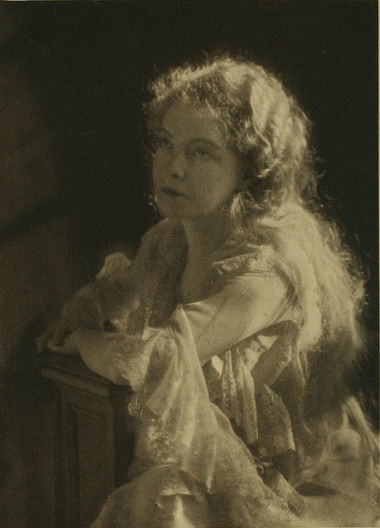
“HELENA”
LIFE AND LILLIAN GISH
ALBERT BIGELOW PAINE
New York
THE MACMILLAN COMPANY
1932
Copyright, 1932,
By THE MACMILLAN COMPANY.
All rights reserved—no part of this book may be reproduced in
any form without permission in writing from the publisher,
except by a reviewer who wishes to quote brief
passages in connection with a review written
for inclusion in magazine or newspaper.
Set up and printed. Published October, 1932.
Printed, in the United States of America by
J. J. LITTLE AND IVES COMPANY, NEW YORK
“Tranquilly, Lillian Gish sits, dressed in white organdie, her ash blond hair down her back, relaxed on the window seat, looking out for hours into the depths of the California night.
“‘What are you looking at, Lillian?’ Mrs. Gish has asked for years.
“‘Nothing, Mother, just looking.’”
Allene Talmey.
“She is an extraordinarily difficult person to know, and if I hadn’t gone to live with her ... and been with her through some of the most trying times of her life, I doubt whether our casual contacts at the studio would have brought me any intimate knowledge of her. There seems to be a wall of reserve between her and the outside world, and very few people ever get through that wall.
“The little things of life simply don’t worry her at all. Gales of temperament can rage around her—she remains undisturbed.... I have seen her at a time when anyone else would have been distraught with anxiety, come quietly in from the set, eat her luncheon calmly and collectedly (for first of all, Lillian believes in keeping fit for her work), then pick up some little book of philosophy and read it steadily until they sent for her.
“She refuses to believe that there are people in the world who are jealous of her and want to harm her. I remember someone once remarking that a certain person was jealous of her and hated her, and I can still see the look of utter surprise on Lillian’s face. But it never made any difference in her treatment of that person. In fact, I doubt whether she remembered it when she met her again.
“She is intensely loyal to those who have helped her along the path of success. She likes to be alone. She has an inexhaustible fund of patience, and a quiet sense of humor.”
Phyllis Moir
(secretary to Lillian, 1925-27)
CONTENTS
PART I
I.
A Girl Child, Born with a CaulII.
Life and a Little GirlIII.
On Nat Goodwin’s ShoulderIV.
“Theatre People”V.
A Little TrouperVI.
Adventures of DorothyVII.
Mary Pickford in the SceneVIII.
“Down the Line”IX.
“Her First False Step”X.
Dorothy’s TreeXI.
“Supporting Bernhardt”XII.
Massillon DaysXIII.
Where the “Road” Ends. NellXIV.
A Convent School. TyphoidXV.
ShawneeXVI.
It Sounds Like HeavenPART II
I.
“Mr. Biograph”II.
Griffith’s Group of PlayersIII.
Belasco Delivers a VerdictIV.
A Studio on Pico StreetV.
The Path to StardomVI.
“Home Sweet Home”VII.
“The Birth of a Nation”VIII.
“Intolerance”IX.
There Were No Love AffairsX.
The Nightmare of WarXI.
Under FireXII.
FranceXIII.
“Hearts of the World”XIV.
“Broken Blossoms”XV.
“I Work Such Long Hours”XVI.
Director LillianXVII.
“Way Down East”XVIII.
Sad, Unprofitable DaysXIX.
Picturing the Reign of TerrorPART III
I.
ItalyII.
“The White Sister”III.
“Romola”IV.
Also, the IntelligentsiaV.
“La Bohême”VI.
“The Scarlet Letter”VII.
“The First Lady of the Screen”VIII.
“Wind”IX.
Good-bye CaliforniaX.
ReinhardtXI.
The Shadow SpeaksXII.
On the Flying CarpetXIII.
“One Romantic Night”PART IV
I.
“Uncle Vanya”II.
“Helena” in New YorkIII.
“The Penalty of Greatness”IV.
Working with LillianV.
“Uncle Vanya” Takes the RoadVI.
Reliving The YearsVII.
A Few NotesVIII.
L’EnvoiILLUSTRATIONS
“Helena” A Scene from “Her First False Step” Lillian and Dorothy Gish David Wark Griffith Lillian and Dorothy, During the Griffith Period Lillian as Elsie Stoneman, in “The Birth of a Nation” Mrs. Gish and “Her Girls,” Mary Pickford, Mildred Harris, Dorothy and Lillian Lillian Gish and Richard Barthelmess in “Broken Blossoms” “Anna Moore” The River Scene in “Way Down East” “The White Sister” “Romola” Mimi at the Pawnshop ... “La Bohême” Miss Gish as Hester Prynne, in “The Scarlet Letter” “Wind.” Letty, Burying the Man She Had Killed “The First Lady of the Screen” “Camille”PROLOGUE
(Scene: Chekhov’s “Uncle Vanya”—end of second act. Lillian Gish as Helena)
First Woman in Front of Me: “They say she’s been playing over twenty-five years.”
Second Woman in Front of Me: “Goodness! How old is she?”
“The piece I read said about thirty or so....”
“Oh, began as a child; is Gish her real name?”
“I believe so; the piece said....”
“Do you like these Russian plays?”
“I like her, in anything. I loved her in ‘Broken Blossoms,’ though it nearly killed me.”
“I wonder why she left the movies.”
“Oh, lots of ’em do; the piece said....”
“Do you suppose that is all her own hair?”
“Oh, I think so; the piece said....”
LIFE AND LILLIAN GISH
PART ONE
I
A GIRL CHILD, BORN WITH A CAUL
When Lillian was six, she found herself with a company (one night stands, mostly), “trouping” through the Middle West— ... the golden-haired child actress who supplied the beauty and pathos in a melodrama variously known as “The Red Schoolhouse” and “In Convict Stripes.” All of which had come about reasonably enough—as reasonably as anything is likely to happen, in a world where nothing seems at all reasonable until we begin taking it to pieces.
On an evening in October—the 14th, to be exact, 1896—in a very modest dwelling, in Springfield, Ohio, May Gish—Mary Robinson Gish (born McConnell)—waited for her first child. She was barely twenty, and it was hardly more than a year earlier that James Gish, a travelling salesman—young, handsome, winning—had found her at Urbana, and after a whirlwind wooing, had carried her off, a bride, to Springfield.
No one knew very much of Gish. From that mysterious “Dutch” region of Pennsylvania, he had drifted into Springfield, made friends easily, and found work there, with a wholesale grocery. He might be Dutch himself; “Gish” could easily have been “Gisch”; or French—a legend has it that the name had once been “Guise” or “de Guise” ... all rather indefinite, today.
On the other hand, everybody in Urbana knew about pretty May McConnell, whose Grandfather Robinson had been in the State Senate; who had a President, Zachary Taylor, and a poetess, Emily Ward, somewhere in her family; whose father was a very respectable dealer in saddlery and harness, with a spirited dapple-grey horse in his big show window.
Oh, well, it is all so “accidental” ... even though some of us do not believe in accidents, and talk knowingly of a Great Law ... of a Weaver who sits at the Loom of Circumstance....
Still, it was natural enough that now, within a year from her marriage, pretty May Gish should be looking up from her window at the thronging stars, wondering how a baby soul could find its way among them to her tiny room.
A girl child, born with a caul ... supposed to mean good fortune, even occult power. Mary Gish did not much concern herself with this superstition; she had been rather strictly raised; when she gave her daughter the name of Lillian, and added Diana—Lillian because she was so fair, and Diana because a big moon looked into her window—she thought it a happy combination and hoped well for it—no more than that.
II
LIFE AND A LITTLE GIRL
The little household did not remain in Springfield. At the time of his marriage, or soon after, James Gish gave up his position as a salesman, and opened a small confectionery. Candy-making may have been his trade; at all events, he worked at it now, sometimes leaving “Maysie,” as he called her, to tend shop while he went to nearby fairs and celebrations. Had he persevered, he might have done well enough. As it was, when Lillian was about a year old, he gave up Springfield for Dayton, to which prosperous town Father McConnell had already taken his saddlery and harness business, including the smart dapple-grey horse for the show window. Dorothy Gish, who was born in Dayton, still remembers the impressive horse in Grandfather’s window. Lillian, a fair, sedate little lass, was delighted when Dorothy arrived—fat, rosy, red-haired—full of fun and mischief, almost from the beginning.
So different, these two. Lillian had been a pensive baby—one to lie quietly, looking at nothing, as one thinking long thoughts—possibly of a pleasanter land, so recently left behind. Dorothy’s arms and legs were perpetually in action ... impossible to keep the covers on her. When she could creep about, then walk, it was necessary to grab quickly for one’s possessions.
Lillian had a doll, probably a tidy rag-doll, or a very small china one, and a little rocker, which she sometimes sat in, holding her doll and singing to it. She never really cared for dolls. Ruddy-haired Dorothy was lovelier than any doll. When Lillian held her, as she did, often, they made a dainty picture: one doll rocking another.
A tragic thing happened. Lillian sat in her chair alone, one day, when a terrible object looked in the window. It was a workman, who had put on a false face, to frighten her. He succeeded. The terrified child screamed and went into spasms. Always, after that, she was subject to nightmares, from which she awoke, screaming. In later years they came during periods of prolonged rehearsal. Usually they took one of two forms: She was in a wood, at evening ... the trees became sinister, drew their roots from the ground and pursued her.... Or in a field, where there were many red poppies ... large ones ... the California kind. They became very tall, and threatening, like the trees.... They came up and slapped her in the face.
In summer time Mrs. Gish took her little girls to visit her sister Emily, who had married and lived at Massillon, in the eastern part of the state. It was a happy place for children. There was a green dooryard, with chickens, a cat asleep on the porch, a dog—a kindly dog who would not hurt a little girl and her baby sister.
And in the house was a wonderful cupboard, where a number of interesting things were kept, including a bottle of Castoria. Lillian was not meddlesome, but she had a complex for Castoria. She would even dose herself with it surreptitiously. Her aunt put the bottle on an upper shelf, but Lillian with a chair, a high-chair if necessary, would manage to reach it. It became a kind of game. Her aunt took a Castoria bottle and secretly half filled it with cod liver oil, which certainly was not playing the game fairly. There it stood, in plain view; even a low chair would reach it. A good swallow—saints above! What an explosion, what a spitting, what a grabbing at the poor punished tongue! Lillian was naturally very honest. Castoria had been the one temptation she could not resist. Her character was now perfect.
But she did love baked beans. She could almost never get enough of them. One day—this was in Dayton—her father took her for a walk. The drinking-saloons of Dayton, like those everywhere, had swinging doors, with free lunch inside, spread at the end of the high bar. Gish pushed open a pair of these swinging doors, perched the little girl on the high counter, close to a great platter of beans. A man wearing a white apron handed her a plate and a spoon: “Help yourself,” he said. Lillian did not know what became of her father, but by and by Grandfather McConnell appeared, rather frantic, and shocked, and took her away.
One other thing she loved—ice cream—her taste for it amounted to a passion. Her father did not sell it, but there was a place just down the street that did. When in funds, Lillian haunted the ice-cream counter. But one was so liable to be bankrupt. Reflecting on these things, she had a startling idea. One did not need money to buy things! More than once in her father’s shop she had seen a customer pick up a package, and with the magic words, “Charge it, please,” walk out. Why, of course—she could do that, too. Ten minutes later she was finishing her second dish of vanilla and chocolate mixed.
“Charge it, please.”
The young man regarded the slender little vision, who had just stowed away two saucers of his stock in trade.
“You’re Mr. Gish’s little girl, aren’t you?”
“Yes, thank you,” said Lillian, who was nothing if not polite.
“Oh, all right.”
Such a nice man, to know who she was.
On the way home, she noticed a little green cap in a window—just what she had wanted.... She stood on tiptoe, to look over the counter, at the grisly man who sold things.
“I want to buy that little green cap in the window—and charge it, please.”
“Oh—why, you’re Jim Gish’s little girl, ain’t you?”
“Yes, thank you.”
He held her up to the glass, the tiny cap a green jewel on her crown of gold. And presently at home she was explaining all the wonder of her system to Mama, who also did some explaining, very gently, which put the system in a new light. Lillian was then about three.
III
ON NAT GOODWIN’S SHOULDER
In the case and circumstance of James Gish, there is an element of mystery. He had the gift of friendship, of popularity, even of prosperity ... without material increase. It may be that the swinging doors were too handy to his confectionery ... a spoiled child ... and heredity is always to be reckoned with. It may be that he was not quite a reality ... a good many of us are like that.... He closed his business in Dayton and removed his family to Baltimore, where he arranged some sort of partnership with a man named Meixner. Did he put up his experience against Meixner’s capital? Grandfather McConnell probably helped.
The firm of Gish and Meixner must have prospered, in the beginning. Mary Gish allied herself with the church of her faith, the Episcopal, in which both she and her children had been baptized. Gentle and lovely, she made friends. The children, neatly dressed, went to Sunday School. Mary Gish was one of God’s fine souls. She had a beautiful spirit, and she had exquisite taste. Whatever her circumstances—and the time was coming when they would be hard enough—she would manage, through some sacrifice, to get a scrap of dainty material, a bit of real lace, for her children’s clothing. Lillian and Dorothy were much noticed—she must not fail them. In her husband’s shop, by day and often in the evening, she nevertheless made every garment with her own hands—those tiny, marvelous hands that could draw and embroider, could put up bonbons, and gift packages, as no one else could do it—mended and laundered and ironed when the others were long abed.
The Gish children found their Sunday School an interesting place. Sometimes there were entertainments, “exhibitions” they called them, and there was an Empty Stocking Club that filled stockings for the less fortunate, at Christmas time. Lillian’s first public appearance, at one of the exhibitions, was not an entire success.
She had been chosen to speak a piece, some verses of welcome, which daily she faithfully rehearsed at home, going over them time and again, just as in later years she would prepare for her rôles. Little Dorothy, playing about the room, apparently gave slight attention, perhaps not realizing herself how the lines were being drilled into her brain.
The afternoon of the performance came, and Lillian, all white and gold, rose and spoke the lines faultlessly. There was applause, of course—and something more. Dorothy, shining like a jewel, jumped up and waved her hand to the superintendent:
“May I speak a piece, please—may I speak a piece, too?”
“Why, of course, my dear, you may; come right along.”
And Dorothy, fair and undismayed, marched to the platform, and repeated Lillian’s poem of welcome, word for word.
Poor Lillian! The audience, at first puzzled, broke into applause. Her heart was broken. She thought she had failed—recited badly. She struggled a little, and found relief in a welter of tears. Which meant grief for Dorothy, who adored Lillian—set her up as a kind of queen.
The Empty Stocking distribution was quite another matter—a real event. It was held at Ford’s Theatre, where Nat Goodwin and Maxine Elliot were playing that week, on an afternoon when there was no matinée. The big tree was set up in the center of the stage, and the stars were invited to take part. Maxine Elliot offered to fill stockings; Nat Goodwin agreed to be Santa Claus. When a particularly angelic child was needed, to perch on Nat Goodwin’s shoulder and distribute the stockings, Lillian Gish was chosen, and so made her first stage appearance—rode into the drama—on the shoulder of one of the best-known actors of the day.
Dorothy and Lillian were near enough together to be playmates. Lillian was not so good at play as Dorothy. Long afterwards she wrote:
“I envy this dear, darling Dorothy with all my heart, for she is the side of me that God left out....
“All my life I have wanted to play happily, as she does, only to find myself bad at playing. As a little girl, I was not much good at playing, and I find that, try as I will, I don’t play very convincingly today.”
They were good little girls—Lillian especially so. They had been taught to say their prayers, and would as soon have omitted their little nightgowns as their prayers. If Dorothy made a scramble of hers, while Lillian offered her petition to the last word and syllable, and overborne by some ancient melancholy prayed regularly that she might wake up in Heaven, it was only as Nature had intended them to be from the beginning.
Different as they were, then and always, they had one great interest in common: their mother. They thought her the best and most beautiful person in the world. Dorothy loved to think that she looked like her, and cried when told that Lillian “looked more like Mama” than she did.
From the beginning, almost, Lillian was inclined to be orderly, tidy. Dorothy—well, Dorothy was different. Even in that early day, when Lillian was no more than five, she carefully removed her clothes and laid them neatly together. Dorothy did not remove hers. She dropped, or flung, them off, and where they fell they remained. It was said—this was much later—that you could at any time find Dorothy by following her clothes.
By day, Lillian was inclined to sit in her little chair and reflect, while Dorothy tore about the house, escaping to the street if not watched, and perpetually had her knees bruised and scratched, from falls. She also liked to sample any food or liquids that were in handy reach, and once went on a genuine debauch. Lillian had come down with an attack of croup, her medicine being a tasty toddy, which, upon experiment, Dorothy found that she liked. Lillian was dozing, and she continued her experiment. Then she laid aside the spoon and picked up the glass. Her mother found her, staggering down the hall, “making whoopee.” Mary Gish got a whiff of her breath, and sent for the doctor. Next day Dorothy went through the tortures that go with a bandaged head, and usually come later in life.
IV
“THEATRE PEOPLE”
The world was not kind to James Gish. Perhaps those wise ones who know all about the world, and human nature, and the free-will to choose, will say that he was not kind to himself. One must admire those people; they know things with such a deadly certainty. I never in my life knew a thing so certainly as a man who once told me that I could always do the right thing, if I only wanted to. Apparently I didn’t want to.
Nor, as it seemed, did James Gish. When, after less than two years in Baltimore, he sold out to Meixner, he had very little left. Part of that little he gave to his wife; with the rest, he went to New York, where he would find employment and send remittances.
For a time the remittances came; then they dwindled, skipped, ceased. Mrs. Gish worked, but the money she earned was not enough for the little family. Meixner lent her small sums, then advised her to join her husband, advancing money for her fare and for immediate needs on arrival. Meixner appears to have been a good soul.
In New York, Mary Gish took an apartment—small, but large enough to accommodate two boarders. It faced West 39th Street, up one or two flights of stairs. She needed more furniture and bought it on installments. She also took a job—demonstrating, in a Brooklyn department store. She was twenty-five, handsome, capable, determined to make her way. Up at five, she set her house in order, got breakfast for her family and the two boarders—theatrical women, who had their luncheons outside. Leaving the children in the hands of a colored girl, she was off for the day. Back at night, she got the supper; then worked at the making and mending and laundering of the family clothing.
Gish was there, and may have been employed at times, but his help was negligible. Less than that. As she saved from her modest pay, she gave him sums, trusting soul, to pay on her furniture. But then, one day, when she came home from her job in distant Brooklyn, more distant then than now, the dealers who had sold it to her had come and taken it away. Her husband appears to have vanished about the same time. Later, she sought and obtained legal separation.
Kind-hearted, weak—James Gish was only one of thousands. That he loved his family is certain. When a year or two later, Mary Gish and little Dorothy were on a theatrical circuit, he was likely to turn up any time, appearing mysteriously in distant places. Hungry for the sight of them, he must have watched them enter and leave the theatre—perhaps went in to see the play. Sometimes he confronted them on a street in a far-off town. Always in Mary Gish’s heart was the dread that he would take one or both of her children from her. She knew he was a Freemason, and in her lack of knowledge, thought he might in some way invoke that secret agency. He seems never to have attempted anything of the sort, and if he secretly followed Lillian, she did not know it. Probably it was Mary Gish herself that he most wanted to see. Those wise ones who know all about the world will not fail to explain that he deserved his tragedy....
Night and day the Loom of Circumstance weaves its inevitable pattern. The filaments proceed from a million sources, stretching backward through eternity. Incredibly they unite, and once united the gods themselves cannot change the design.
Mary Gish’s fortunes were at low ebb. Her unfurnished room would presently be on her hands. The two actresses, who owed her money, were willing to bunk on the floor, but the theatrical season would open shortly, and what then? Such jewelry as she owned was pawned, even to the last piece—even to her wedding ring. The actresses had likewise parted with their valuables. One of them, who called herself Dolores Lorne, had taken a great fancy to little Dorothy. There came a momentous afternoon. Mary Gish, arriving from Brooklyn, was met by a startling proposal:
“I can get a good part in Rebecca Warren’s ‘East Lynne’ Company,” Dolores Lorne excitedly announced, “if I can get a child to play ‘Little Willie.’ Dorothy would do it, exactly. They will pay her fifteen dollars a week, and we’d have a week’s salary in advance. I could pay you; and I know a woman who can get a part for Lillian, too. A lovely woman, Alice Niles, in a ‘Convict Stripes’ Company.”
Mary Gish stared at her, dazed, staggered. She could not grasp it. Her little girls ... going away ... motherless.... Poor little Dot, hardly more than a baby ... and Lillian, barely six ... on the road with theatre people ... what would the folks at home say?
Theatre people! She had not even dared to confess that she had them in her house. Dolores was a good soul ... but little Dot ... and Alice Niles—who was Alice Niles? A stranger! And Lillian, so frail ... on the road ... with a stranger!!! James Gish’s wife, who had borne up in the face of everything, gave way, wept as if her heart would break.
Dolores Lorne comforted her ... later, Alice Niles. She believed them good women, both of them. They promised to take a mother’s care of her little girls. They painted life on the circuit as happy—just a long pleasure trip. If they forgot the broken nights on wretched trains, the scanty, stale food, the dragging weariness of delays ... oh, well, they were human. Lillian and Dorothy became excited. They had never been to a theatre, except to the Christmas-tree performance in Baltimore. That had been beautiful. Especially Maxine Elliot. Now, they were going to be beautiful, like Maxine. Tearfully Mary Gish began to assemble two little wardrobes—scanty little wardrobes, of a size to go into two cheap little telescope bags.
Also, there were the rehearsals. Mary Gish taught her children their brief lines, which they rehearsed at the theatre. Lillian went at her task in her obedient, thorough way, and became a favorite. Dorothy, who perhaps had ideas of her own, was invited to repeat, and repeat, until both Mr. William Dean, the kindly manager of her company, and herself, were a trifle worn and critical. Finally, when Mr. Dean became really quite fierce, and peremptory, Dorothy, aged four, whispered, her lips trembling a little:
“Please, Mr. Dean, if you let me alone for a few minutes, I know I’ll be able to do it.”
Mrs. Gish, meantime, had a new and quite definite plan. She would herself become an actress! Very likely her people would cast her out, but never mind. Acting could not be worse than the long hours in Brooklyn. She would equip herself to be with one or both of her children. Alice Niles introduced her at a theatrical agency, and Mary Gish—determined woman that she was—was rehearsing for a small part at Proctor’s almost as soon as the two real actresses of the family had said their heartbreaking good-byes.
V
A LITTLE TROUPER
Stage children of that day took whatever name was offered them, usually the name of the woman in whose charge they traveled. Dorothy readily learned to say “Aunt Dolores” and accepted the name of Lorne. Alice Niles became “Aunt Alice” to Lillian, and she herself “Florence Niles.”
It is not certain where Dorothy’s company opened, but “In Convict Stripes,” with “Little Florence Niles, the loveliest and most gifted child actress on the American stage,” opened at Risingsun, Ohio, in a barn. Barns and upstairs halls were often used by the one-night-stand companies, though a larger town sometimes had an “opera house,” with real seats, not just boards for benches.
Risingsun was accounted a very good town of the barn-and-board-seat variety. It had a stage with side slips, and something in the nature of scenic effects. After a long night ride on the train—a night when one did not undress and go properly to bed, but slept part of the time on a seat, part of the time leaning against Aunt Alice—a journey which was not altogether a pleasure trip—the “Convict Stripes” Company arrived at Risingsun in time for a rehearsal before the performance.
There was a stone quarry in the play, and some papier-maché rocks, probably carried by the company. At the climax of the third act, the villain—there was always a villain—places the child at the bottom of the stone quarry, then lights a fuse to explode a charge of dynamite which will hurl rocks, and the poor innocent child, into the air. Is the child killed? Dear, no! In the nick of time, the hero swings out upon a rope, swoops down into the pit, seizes the child and swings himself and his precious charge to safety, just as the dynamite explodes.
Inasmuch as a delicate, real flesh-and-blood, child might not stand the wear of being handled in that reckless way, a neatly made dummy-duplicate of Lillian was placed in the pit for the hero to grab. Lillian had been carefully taught to creep to safe hiding behind some of the papier-mâché rocks before the explosion, and knew just how to do it. They practiced now on the barn stage, and it went off perfectly. They forgot one thing, however: They forgot to tell the “lovely and gifted Florence Niles” that the explosion would make a sudden and very big noise. In the rehearsals, somebody had merely said “BOOM,” which wasn’t at all the same thing.
Evening came, and the big barn was filled with farmers and townspeople, a breathless audience. Florence Niles, aged six, lay safely behind a stout papier-mâché rock, waiting for somebody to say “Boom!” But then, just at the instant when the villain or somebody should have said “Boom!” something else, something very terrific and awful, happened: a real BOOM in fact—one that fairly shook the barn, and made the audience jump and say something. The gifted Florence Niles did not stop to see what became of her double, but with a shriek, shot out from behind the rock and across the stage as fast as her legs could carry her, while the audience shouted for joy.
Never again would the climax go off as well as that. When the curtain fell, and Lillian—that is to say, Florence Niles—on the hero’s shoulder, passed in the procession before it, they received a great ovation.
And this was not so far from that modest house in Springfield, Ohio, where just six years earlier Mary Gish had waited for her first-born.
I do not know what the next stop was, and it does not matter, any more. The family likeness among one-night-stands was strong. The child actress presently did not mind the explosion—not so much—she only stopped her ears for it, and always she took the curtain call on the shoulder of the big hero, who adored her, and would have swung, regardless of explosions, into any quarry, any time, night or day, to save her.
How kind they were, all of them! Aunt Alice especially. She had a round, smiling face, and a round, soft, motherly body. Just right for the character part she played ... just right for a little girl to snuggle up to, those nights on the train when there was no empty seat where one could really stretch out and sleep. Any of the company would gladly have given a shoulder to that golden head, and did, in turn, but no one except Aunt Alice had such a nice, soft shoulder, with such a good smell—no tobacco or anything—just Aunt Alice.
But the nights were quite hard, sometimes:—hard ... and strange. Even when she got a seat all to herself and was covered by somebody’s coat, and sound asleep, it did not last. At any station a crowd of noisy people might come in, and a fat woman, or a thin woman with a baby, or somebody, would need the seat; and struggling to get her eyes open, and almost dead, Lillian would shrink back into her corner, and start at the rest of the company, huddled into the unusual attitudes of sleep.
The train did queer things to people. Such remarkable people ... when one was awake to notice. Men—women, too—with funny faces. Country-jakes and their girls. Boys who stared at her, and if she turned on them suddenly, acted so crazily ... babies—that mostly cried ... fat people ... thin people ... dirty people ... even clean and pretty ones.
Sometimes faces and people were there very uncertainly—perhaps not really there at all—just a part of some dream. One dreamed and dreamed, especially if one was not very well. Sometimes she woke with a dry, feverish mouth, and staggered down the aisle for a drink. Sometimes she was awakened by being bumped and jerked, this way and that, switching, with engine bells that swept by with a watery sound.
Faces ... faces—one could even invent faces, especially just as one was going to sleep ... or they just came of themselves ... like the train boy, who brought a strong smell of oranges. Sometimes Aunt Alice would let her buy one, and a lemon stick to push into it. That was heaven. One could suck the lemon stick and dig into one’s corner and go to sleep. Or press one’s cheek against the glass and watch the snow or rain or solid dark go by, with sometimes a light ... far off, or perhaps quite near. Somebody would be where the light was—somebody lived there. On clear nights there were stars—even a moon that made the snow fields very white, and traveled with the train, no matter how fast or far it went.
So much snow: fields of snow, hills of snow; villages with snow on the roofs, and in the dooryards, looking white and deserted in the moonlight. And tunnels—long, terrible, gasping tunnels; and big towns where the train slowed down with a great clackety-clack of wheels, and there was confusion—shouting, and rumbling baggage trucks, and where probably one had to change and sit in a station, or work one’s way through the iron arms that divided up the seats, so one could stretch out, and really sleep a little, at last. Not long, of course, for the other train would soon come shrieking in, and Aunt Alice or the hero, or Corinne, the soubrette, or somebody, would drag her through the iron divisions, and maybe carry her onto it, and if she didn’t remember that she had gone to bed before, she was apt to say her “Now I lay me” over again, and “God bless Mama and Dorothy, and keep them safe and well, and please, God, let me wake up in Heaven,” which she always added. And then, if there were no more changes that night, almost right away it was morning, with coal-dust, and cinders, and gray outside at first ... with perhaps a streaky sky ... or dull and drowned with rain ... or caught up in a whirl of snow; and the train boy came through and sold her a sandwich for breakfast; or maybe they had reached the next show-town, and she went scurrying down the platform, holding Aunt Alice’s hand and lugging the little telescope bag, to a lunch counter where there might be something warm.... Not really a “pleasure excursion,” but long afterwards she did not regret it—she even found something “rather beautiful” in it.
They did not really “put up” at hotels. They merely “put in,” at a cheap one, for the day. Aunt Alice would get a room for fifty cents, until theatre time. Then the two soubrettes—good-hearted, even if rather tough, girls—would come to “call,” to share the room, each paying ten or fifteen cents. All stretched out on the bed, the sofa, anywhere, to catch up with their sleep. They only got up to eat—something they brought in, or at a restaurant, a cheap one (oh, worse in that day than now!)—or for a matinée.
If they were awake and there was nothing else to do, Aunt Alice taught her charge from a little book, and told her about a number of useful things. For one thing, it was quite wrong. Aunt Alice said, to kill animals, and not really healthy to eat their flesh. Vegetables, bread, milk and eggs had in them all that was good for human beings. Aunt Alice was a vegetarian, and advised Lillian to become one. Lillian liked the sound and size of the word, and could not bear the thought of killing anything—animals especially. Besides, at the places they ate, one could get more vegetables than meat for one’s money. One could get quite a lot of potatoes for a nickel, or a dime; other things, too—baked beans, which she still loved, and rice. They were not always good—sometimes greasy and tasteless, but they filled up. Often the butter was bad, especially. Still, if one could have a piece of pie at the end ... or a plate of ice cream—a five cent plate ... she became a vegetarian.
All the actors paid their own expenses, except train fares. Unlike Dorothy, Lillian received only ten dollars a week, but by close economy could send more than half of it to her mother. Perhaps the economy was too close, the physical foundation she was laying too slender.
And there was more than the need of food and sleep. A child—the wistful, heart-hungry child that she was—needed more than even the kind-hearted care of Aunt Alice: ... Companions, play ... the comfort of a mother’s arms.... Darkness gathering in a lonely hotel room—a little figure crouching at the window, staring into the night.
“What are you looking at, dear?”
“Nothing, Aunt Alice—just looking.”
Always her reply would be the same—always the same heart-hunger behind it. A dozen, twenty years later, a slender, white figure on a window seat, staring into the depths of the California night.
“What are you looking at, Lillian?” her mother asks.
“Nothing, Mother; just looking.”
Sometimes when the town was quite large and they played more than one night, she got to sleep in a real bed, could take off her clothes and have a bath—how splendid! Sometimes the paper in such a town had a piece in it about the play, even once or twice with her picture. The others thought this very fine, especially where their names were mentioned. They bought a lot of the papers, and cut out the pieces. Lillian did not value the notices very highly; what the paper said was not always true. The picture was of the same sad-faced little girl she saw every morning in the glass when Aunt Alice combed her hair. When one of the company gave her a clipping for herself, she politely said “Thank you,” and put it away in her little telescope, but she seldom looked at it.
One performance was like another; but then came one which brought her a special and rather wide publicity. In the play was a prison scene, where a guard, a lame guard, Cliff Dean, carried a rifle, loaded with a blank cartridge. During the performance at Fort Wayne, Indiana, the unfortunate guard dropped his gun, and it went off. Lillian, close by, received the charge in her leg, and was badly powder-burned. No burn hurts worse than that. She screamed and ran off the stage. The leading man, the hero, was going down some steps that led to the dressing-rooms. He picked her up and carried her down, soothing and comforting her. Others not in the scene gathered to help. The wounded leg was bathed and bandaged. The play upstairs did not stop. The audience may have thought the incident just a part of it.
The next act was the last one, and Lillian’s share in it important. She was suffering terribly, but she said she would go on, and did. Few, if any, of the spectators knew what had happened. When, after the show, the facts were known, they crowded the lobby of the hotel and watched the doctor pick the powder grains out of the tender flesh. It was torture, but Florence Niles, the child actress, refused to cry. Some of the powder had to stay under the skin and remain there permanently, like tattoo.
Alice Niles did not write to Mary Gish of the accident, but of course it got into the Western papers. Grandfather McConnell, in Dayton, saw it, and sent her a clipping. Certain of the family may have regarded it as a kind of retribution for permitting one of her own to follow such a calling. The biblical-minded can always identify punishment, even when it falls on the innocent child, or flocks, of the transgressor. The fact that her children and herself had become play-actors was for years not mentioned by Mary Gish’s family to their friends—nor discussed among themselves.
The company did not perform on Sundays—nor always travel—but stayed in a hotel room; shabby, but how luxurious! Aunt Alice mended their clothes—washed them. Florence Niles, the child actress, helped. All the others were doing the same. Sometimes they dropped in, to visit. Among them they taught her to read. The patter of the stage and much general information she picked up unconsciously. Nothing that was evil—certainly nothing that she recognized as such—neither then nor ever. More than twenty years later she wrote:
Stage children are in most cases more sheltered than those who go to school. They constantly associate with older people who are, as a rule, most careful what they say in front of them.
In after years, she remembered that once a stage hand had knocked another one down because he swore in front of her. Some of the company may have been a bit dissipated, even dissolute; if so, it was outside of her knowledge. There would come a day when she would realize that the soubrettes probably had been as “tough” off as on the stage—that some of the others were not saints. But to her, then, they were, and in her memory would always remain, the best people in the world.
And talented; they said so themselves. All, including Lillian, looked forward to playing New York. The others because it might mean a Broadway engagement where their talents would be appreciated. Lillian, because New York would mean her mother ... better meals ... a bed to sleep in at night. Considerately, she did not mention these things, but looked out of the window, thinking long thoughts. And this picture I am trying to present is not only of that first year, but of the years that followed it, one so nearly like another—except for the parts she took and the rapidly increasing length of her slim legs—that in later years she found it by no means easy to distinguish them.
Two events remembered from that first far-off engagement were particularly tragic, both connected with running for trains. Always they seemed to have been running for trains. Every night after the performance there was the same scramble, even though they had to wait for hours in a station that was too hot or too cold, with only those divided benches to sleep on, or the telegraph desk, when the station agent took pity on a tired little theatre-girl.
And often it seemed to be raining, or snowing, when they started for the train, and there were single-board-crossings over the ditches, where you could not hold to Aunt Alice’s hand and stay under her umbrella, and where it was not easy for someone to pick you up, because all the talented company carried their baggage, every fellow for himself.
So it happened that on one of those rainy nights, when she was running behind Aunt Alice, across a narrow foot-bridge, lugging her little telescope bag—there, right in the middle of the bridge—the treacherous strap gave way, and all her possessions—her little nightgown, her little extra stockings and underwears, her press-clippings, everything—disappeared in the black, rushing torrent below. She did not stop—no time for that, and no use, anyway—but raced on after Aunt Alice, holding fast to the useless little strap of the telescope, and crying—oh, crying. No money to send home that week—so many things to buy.
The other event, scarcely less tragic, was also of the night and rain. She was wearing the little white furs that once an uncle had bought for her, and that she so dearly loved. All about were mud puddles, and by some misstep she plunged into one, and the precious furs could never be the same again. Rain! Rain! Once in the South, on the Seaboard Air Line, it fairly poured, and the rickety old day-coach leaked. The whole company had to sit holding umbrellas, to keep from getting soaked. Lillian always remembered that, as something different.
Christmas that year she remembered, too. A little present had come from Mother—very precious—but there was still more to this Christmas than that—a good deal more. All day they were on a freight train, a train that lumbered and bumped along, and stopped for what seemed hours in the towns, and ran up and down, pulling and pushing all kinds of freight cars, in and out and around, sometimes slamming them into your part of the train, until it seemed your head must certainly come off. You had to ride in the caboose, not at all a nice place—just long, dirty benches on the side, and grimy train men coming in, leaving the doors open, to let in the cold.
But then came a stop at quite a big town, where there was certain to be a lot of switching and backing, which would take a good while. A good many of the company “went ashore,” and when by and by they came back they brought, of all things, a Christmas Tree! A little, green tree that they set up right in the old, dingy caboose; and then they opened packages and hung balls and candy canes on the little tree, and even presents. And all the rest of that day, the gay little tree rode and rode, and the old caboose wasn’t dingy any more, and one’s heart could almost break with happiness over a thing like that. Surely in all the world there was never such another Christmas Tree!
...


