


автордың кітабын онлайн тегін оқу History of Woman Suffrage, Volume III
Transcriber's Note
Every effort has been made to replicate this text as faithfully as possible, including obsolete and variant spellings and other inconsistencies. Text that has been changed to correct an obvious error is noted at the end of this ebook.
Also, many occurrences of mismatched single and double quotes remain as they were in the original.
This book contains links to individual volumes of "History of Woman Suffrage" contained in the Project Gutenberg collection. Although we verify the correctness of these links at the time of posting, these links may not work, for various reasons, for various people, at various times.
HISTORY
of
Woman Suffrage.
EDITED BY
ELIZABETH CADY STANTON,
SUSAN B. ANTHONY, AND
MATILDA JOSLYN GAGE.
ILLUSTRATED WITH STEEL ENGRAVINGS.
IN THREE VOLUMES.
VOL. III.
1876-1885.
"WOMEN ARE CITIZENS OF THE UNITED STATES, ENTITLED TO ALL THE RIGHTS, PRIVILEGES AND IMMUNITIES GUARANTEED TO CITIZENS BY THE NATIONAL CONSTITUTION."
SUSAN B. ANTHONY.
17 Madison St., Rochester, N. Y.
Copyright, 1886, by Susan B. Anthony.
PREFACE.
The labors of those who have edited these volumes are not only finished as far as this work extends, but if three-score years and ten be the usual limit of human life, all our earthly endeavors must end in the near future. After faithfully collecting material for several years, and making the best selections our judgment has dictated, we are painfully conscious of many imperfections the critical reader will perceive. But since stereotype plates will not reflect our growing sense of perfection, the lavish praise of friends as to the merits of these pages will have its antidote in the defects we ourselves discover. We may however without egotism express the belief that this volume will prove specially interesting in having a large number of contributors from England, France, Canada and the United States, giving personal experiences and the progress of legislation in their respective localities.
Into younger hands we must soon resign our work; but as long as health and vigor remain, we hope to publish a pamphlet report at the close of each congressional term, containing whatever may be accomplished by State and National legislation, which can be readily bound in volumes similar to these, thus keeping a full record of the prolonged battle until the final victory shall be achieved. To what extent these publications may be multiplied depends on when the day of woman's emancipation shall dawn.
For the completion of this work we are indebted to Eliza Jackson Eddy, the worthy daughter of that noble philanthropist, Francis Jackson. He and Charles F. Hovey are the only men who have ever left a generous bequest to the woman suffrage movement. To Mrs. Eddy, who bequeathed to our cause two-thirds of her large fortune, belong all honor and praise as the first woman who has given alike her sympathy and her wealth to this momentous and far-reaching reform. This heralds a turn in the tide of benevolence, when, instead of building churches and monuments to great men, and endowing colleges for boys, women will make the education and enfranchisement of their own sex the chief object of their lives.
The three volumes now completed we leave as a precious heritage to coming generations; precious, because they so clearly illustrate—in her ability to reason, her deeds of heroism and her sublime self-sacrifice—that woman preeminently possesses the three essential elements of sovereignty as defined by Blackstone: "wisdom, goodness and power." This has been to us a work of love, written without recompense and given without price to a large circle of friends. A thousand copies have thus far been distributed among our coadjutors in the old world and the new. Another thousand have found an honored place in the leading libraries, colleges and universities of Europe and America, from which we have received numerous testimonies of their value as a standard work of reference for those who are investigating this question. Extracts from these pages are being translated into every living language, and, like so many missionaries, are bearing the glad gospel of woman's emancipation to all civilized nations.
Since the inauguration of this reform, propositions to extend the right of suffrage to women have been submitted to the popular vote in Kansas, Michigan, Colorado, Nebraska and Oregon, and lost by large majorities in all; while, by a simple act of legislature, Wyoming, Utah and Washington territories have enfranchised their women without going through the slow process of a constitutional amendment. In New York, the State that has led this movement, and in which there has been a more continued agitation than in any other, we are now pressing on the legislature the consideration that it has the same power to extend the right of suffrage to women that it has so often exercised in enfranchising different classes of men.
Eminent publicists have long conceded this power to State legislatures as well as to congress, declaring that women as citizens of the United States have the right to vote, and that a simple enabling act is all that is needed. The constitutionality of such an act was never questioned until the legislative power was invoked for the enfranchisement of women. We who have studied our republican institutions and understand the limits of the executive, judicial and legislative branches of the government, are aware that the legislature, directly representing the people, is the primary source of power, above all courts and constitutions. Research into the early history of this country shows that in line with English precedent, women did vote in the old colonial days and in the original thirteen States of the Union. Hence we are fully awake to the fact that our struggle is not for the attainment of a new right, but for the restitution of one our fore-mothers possessed and exercised.
All thoughtful readers must close these volumes with a deeper sense of the superior dignity, self-reliance and independence that belong by nature to woman, enabling her to rise above such multifarious persecutions as she has encountered, and with persistent self-assertion to maintain her rights. In the history of the race there has been no struggle for liberty like this. Whenever the interest of the ruling classes has induced them to confer new rights on a subject class, it has been done with no effort on the part of the latter. Neither the American slave nor the English laborer demanded the right of suffrage. It was given in both cases to strengthen the liberal party. The philanthropy of the few may have entered into those reforms, but political expediency carried both measures. Women, on the contrary, have fought their own battles; and in their rebellion against existing conditions have inaugurated the most fundamental revolution the world has ever witnessed. The magnitude and multiplicity of the changes involved make the obstacles in the way of success seem almost insurmountable.
The narrow self-interest of all classes is opposed to the sovereignty of woman. The rulers in the State are not willing to share their power with a class equal if not superior to themselves, over which they could never hope for absolute control, and whose methods of government might in many respects differ from their own. The annointed leaders in the Church are equally hostile to freedom for a sex supposed for wise purposes to have been subordinated by divine decree. The capitalist in the world of work holds the key to the trades and professions, and undermines the power of labor unions in their struggles for shorter hours and fairer wages, by substituting the cheap labor of a disfranchised class, that cannot organize its forces, thus making wife and sister rivals of husband and brother in the industries, to the detriment of both classes. Of the autocrat in the home, John Stuart Mill has well said: "No ordinary man is willing to find at his own fireside an equal in the person he calls wife." Thus society is based on this fourfold bondage of woman, making liberty and equality for her antagonistic to every organized institution. Where, then, can we rest the lever with which to lift one-half of humanity from these depths of degradation but on "that columbiad of our political life—the ballot—which makes every citizen who holds it a full-armed monitor"?
LIST OF ENGRAVINGS.
Vol. III.
Phœbe W. Couzins
Frontispiece.Marilla M. Ricker
page
112Frances E. Willard
129Jane H. Spofford
192Harriet H. Robinson
273Phebe A. Hanaford
337Armenia S. White
369Lillie Devereux Blake
417Rachel G. Foster
465Cornelia C. Hussey
481May Wright Sewall
545Elizabeth Boynton Harbert
592Sarah Burger Stearns
656Clara Bewick Colby
689Helen M. Gougar
704Laura DeForce Gordon
753Abigail Scott Duniway
769Caroline E. Merrick
801Mary B. Clay
817Mentia Taylor
833Priscilla Bright McLaren
864George Sand
896CONTENTS.
CHAPTER XXVII.page
THE CENTENNIAL YEAR—1876.
The Dawn of the New Century—Washington Convention—Congressional Hearing—Woman's Protest—May Anniversary—Centennial Parlors in Philadelphia—Letters and Delegates to Presidential Conventions—50,000 Documents sent out—The Centennial Autograph Book—The Fourth of July—Independence Square—Susan B. Anthony reads the Declaration of Rights—Convention in Dr. Furness' Church, Lucretia Mott, Presiding—The Hutchinson Family, John and Asa—The Twenty-eighth Anniversary, July 19, Edward M. Davis, Presiding—Letters, Ernestine L. Rose, Clarina I. H. Nichols—The Ballot-Box—Retrospect—The Woman's Pavilion1
CHAPTER XXVIII.
NATIONAL CONVENTIONS, HEARINGS AND REPORTS.
1877-1878-1879.
Renewed Appeal for a Sixteenth Amendment—Mrs. Gage Petitions for a Removal of Political Disabilities—Ninth Washington Convention, 1877—Jane Grey Swisshelm—Letters, Robert Purvis, Wendell Phillips, Francis E. Abbott—10,000 Petitions Referred to the Committee on Privileges and Elections by Special Request of the Chairman, Hon. O. P. Morton, of Indiana—May Anniversary in New York—Tenth Washington Convention, 1878—Frances E. Willard and 30,000 Temperance Women Petition Congress—40,000 Petition for a Sixteenth Amendment—Hearing before the Committee on Privileges and Elections—Madam Dahlgren's Protest—Mrs. Hooker's Hearing on Washington's Birthday—Mary Clemmer's Letter to Senator Wadleigh—His Adverse Report—Thirtieth Anniversary, Unitarian Church, Rochester, N. Y., July 19, 1878—The Last Convention Attended by Lucretia Mott—Letters, William Lloyd Garrison, Wendell Phillips—Church Resolution Criticised by Rev. Dr. Strong—International Women's Congress in Paris—Washington Convention, 1879—Favorable Minority Report by Senator Hoar—U. S. Supreme Court Opened to Women—May Anniversary at St. Louis—Address of Welcome by Phoebe Couzins—Women in Council Alone—Letter from Josephine Butler, of England—Mrs. Stanton's Letter to The National Citizen and Ballot-Box57
CHAPTER XXIX.
CONGRESSIONAL REPORTS AND CONVENTIONS.
1880-1881.
Why we Hold Conventions in Washington—Lincoln Hall Demonstration—Sixty-six Thousand Appeals—Petitions Presented in Congress—Hon. T. W. Ferry of Michigan in the Senate—Hon. Geo. B. Loring of Massachusetts in the House—Hon. J. J. Davis of North Carolina Objected—Twelfth Washington Convention—Hearings before the Judiciary Committee of both Houses, 1880—May Anniversary at Indianapolis—Series of Western Conventions—Presidential Nominating Conventions—Delegates and Addresses to each—Mass-Meeting at Chicago—Washington Convention, 1881—Memorial Service to Lucretia Mott—Mrs. Stanton's Eulogy—Discussion in the Senate on a Standing Committee—Senator McDonald of Indiana Champions the Measure—May Anniversary in Boston—Conventions in the chief cities of New England150
CHAPTER XXX.
CONGRESSIONAL DEBATES AND CONVENTIONS.
1882-1883.
Prolonged Discussions in the Senate on a Special Committee to Look After the Rights of Women, Messrs. Bayard, Morgan and Vest in Opposition—Mr. Hoar Champions the Measure in the Senate, Mr. Reed in the House—Washington Convention—Representative Orth and Senator Saunders on the Woman Suffrage Platform—Hearings Before Select Committees of Senate and House—Reception Given by Mrs. Spofford at the Riggs House—Philadelphia Convention—Mrs. Hannah Whitehall Smith's Dinner—Congratulations from the Central Committee of Great Britain—Majority and Minority Reports in the Senate—E. G. Lapham, J. Z. George—Nebraska Campaign—Conventions in Omaha—Joint Resolution Introduced by Hon. John D. White of Kentucky, Referred to the Select Committee—Washington Convention, January 24, 25, 26, 1883—Majority Report in the House.198
CHAPTER XXXI.
MASSACHUSETTS.
The Woman's Hour—Lydia Maria Child Petitions Congress—First New England Convention—The New England, American and Massachusetts Associations—Woman's Journal—Bishop Gilbert Haven—The Centennial Tea-Party—County Societies—Concord Convention—Thirtieth Anniversary of the Worcester Convention—School Suffrage Association—Legislative Hearing—First Petitions—The Remonstrants Appear—Women in Politics—Campaign of 1872—Great Meeting in Tremont Temple—Women at the Polls—Provisions of Former State Constitutions—Petitions, 1853—School-Committee Suffrage, 1879,—Women Threatened with Arrest—Changes in the Laws—Woman Now Owns her own Clothing—Harvard Annex—Woman in the Professions—Samuel E. Sewall and William I. Bowditch—Supreme-Court Decisions—Sarah E. Wall—Francis Jackson—Julia Ward Howe—Mary E. Stevens—Lucia M. Peabody—Lelia Josephine Robinson—Eliza (Jackson) Eddy's Will 256
CHAPTER XXXII.
CONNECTICUT.
Prudence Crandall—Eloquent Reformers—Petitions for Suffrage—The Committee's Report—Frances Ellen Burr—Isabella Beecher Hooker's Reminiscences—Anna Dickinson in the Republican Campaign—State Society Formed October 28, 29, 1869—Enthusiastic Convention in Hartford—Governor Marshall Jewell—He recommends More Liberal Laws for Women—Society Formed in New Haven, 1871—Governor Hubbard's Inaugural, 1877—Samuel Bowles of the Springfield Republican—Rev. Phebe A. Hanaford, Chaplain, 1870—John Hooker, Esq., Champions the Suffrage Movement—The Smith Sisters—Mary Hall—Chief-Justice Park—Frances Ellen Burr—Hartford Equal Rights Club316
CHAPTER XXXIII.
RHODE ISLAND.
Senator Anthony in North American Review—Convention in Providence—State Association organized, Paulina Wright Davis, President—Report of Elizabeth B. Chase—Women on School Boards—Women's Board of Visitors to the Penal and Correctional Institutions—Dr. Wm. F. Channing—Miss Ida Lewis—Letter of Frederick A. Hinckley—Last Words of Senator Anthony339
CHAPTER XXXIV.
MAINE.
Women on School Committees—Elvira C. Thorndyke—First Suffrage Society organized, 1868, Rockland—Portland Meeting, 1870—John Neal—Judge Goddard—Colby University Open to Girls, August 12, 1871—Mrs. Clara Hapgood Nash Admitted to the Bar, October 26, 1872—Tax-Payers Protest—Ann F. Greeley, 1872—March, 1872, Bill for Woman Suffrage Lost in the House, Passed in the Senate by Seven Votes—Miss Frank Charles, Register of Deeds—Judge Reddington—Mr. Randall's Motion—Moral Eminence of Maine—Convention in Granite Hall, Augusta, January, 1873, Hon. Joshua Nye, President—Delia A. Curtis—Opinions of the Supreme Court in Regard to Women Holding Offices—Governor Dingley's Message, 1875—Convention, Representatives Hall, Portland, Judge Kingsbury, President, Feb. 12, '76—The two Snow Families—Hon. T. B. Reed351
CHAPTER XXXV.
NEW HAMPSHIRE.
Nathaniel P. Rogers—Parker Pillsbury—Galen Foster—The Hutchinson Family—First Organized Action, 1868—Concord Convention—William Lloyd Garrison's Letter—Rev. S. L. Blake Opposed—Rev. Mr. Sanborn in Favor—Concord Monitor—Armenia S. White—A Bill to Protect the Rights of Married Men—Minority and Majority Reports—Women too Ignorant to Vote—Republican State Convention—Women on School Committees, 1870—Voting at School District Meetings, 1878—Mrs. White's Address—Mrs. Ricker on Prison Reform—Judicial Decision in Regard to Married Women, 1882—Letter from Senator Blair367
CHAPTER XXXVI.
VERMONT.
Clarina Howard Nichols—Council of Censors—Amending the Constitution—St. Andrew's Letter—Mr. Reed's Report—Convention Called—H. B. Blackwell on the Vermont Watchman—Mary A. Livermore in the Woman's Journal—Sarah A. Gibbs' Reply to Rev. Mr. Holmes—School Suffrage, 1880383
CHAPTER XXXVII.
NEW YORK—1860-1885.
Saratoga Convention, July 13, 14, 1869—State Society Formed, Martha C. Wright, President—The Revolution Established, 1868—Educational Movement—New York City Society, 1870, Charlotte B. Wilbour, President—Presidential Campaign, 1872—Hearings at Albany, 1873—Constitutional Commission—An Effort to Open Columbia College, President Barnard in Favor—Centennial Celebration, 1876—School Officers—Senator Emerson of Monroe, 1877—Governor Robinson's Veto—School Suffrage, 1880—Governor Cornell Recommended it in his Message—Stewart's Home for Working Women—Women as Police—An Act to Prohibit Disfranchisement—Attorney-General Russell's Adverse Opinion—The Power of the Legislature to Extend Suffrage—Great Demonstration in Chickering Hall, March 7, 1884—Hearing at Albany, 1885—Mrs. Blake, Mrs. Stanton, Mrs. Rogers, Mrs. Howell, Gov. Hoyt of Wyoming395
CHAPTER XXXVIII.
PENNSYLVANIA.
Carrie Burnham—The Canon and Civil Law the Source of Woman's Degradation—Women Sold with Cattle in 1768—Women Arrested in Pittsburg—Mrs. McManus—Opposition to Women in Colleges and Hospitals; John W. Forney Vindicates their Rights—Ann Preston—Women in Dentistry—James Truman's Letter—Swarthmore College—Suffrage Association Formed in 1866, in Philadelphia—John K. Wildman's Letter—Judge William S. Pierce—The Citizens' Suffrage Association, 333 Walnut Street, Edward M. Davis, President—Petitions to the Legislature—Constitutional Convention, 1873—Bishop Simpson, Mary Grew, Sarah C. Hallowell, Matilda Hindman, Mrs. Stanton, Address the Convention—Messrs. Broomall and Campbell Debate with the Opposition—Amendment Making Women Eligible to School Offices—Two Women Elected to Philadelphia School Board, 1874—The Wages of Married Women Protected—J. Edgar Thomson's Will—Literary Women as Editors—The Rev. Knox Little—Anne E. McDowell—Women as Physicians in Insane Asylums—The Fourteenth Amendment Resolution, 1881—Ex-Gov. Hoyt's Lecture on Wyoming444
CHAPTER XXXIX.
NEW JERSEY.
Women Voted in the Early Days—Deprived of the Right by Legislative Enactment in 1807—Women Demand the Restoration of Their Rights in 1868—At the Polls in Vineland and Roseville Park—Lucy Stone Agitates the Question—State Suffrage Society Organized in 1867—Conventions—A Memorial to the Legislature—Mary F. Davis—Rev. Phebe A. Hanaford—Political Science Club— Mrs. Cornelia C. Hussey—Orange Club, 1870—Mrs. Devereux Blake gives the Oration, July 4, 1884—Dr. Elizabeth Blackwell's Letter—The Laws of New Jersey in Regard to Property and Divorce—Constitutional Commission, 1873—Trial of Rev. Isaac M. See—Women Preaching in his Pulpit—The Case Appealed—Mrs. Jones, Jailoress—Legislative Hearings476
CHAPTER XL.
OHIO.
The First Soldiers' Aid Society—Mrs. Mendenhall—Cincinnati Equal Rights Association, 1868—Homeopathic Medical College and Hospital—Hon. J. M. Ashley—State Society, 1869—Murat Halstead's Letter—Dayton Convention, 1870—Women Protest Against Enfranchisement—Sarah Knowles Bolton—Statistics on Coëducation by Thomas Wentworth Higginson—Woman's Crusade, 1874—Miriam M. Cole—Ladies' Health Association—Professor Curtis—Hospital for Women and Children, 1879—Letter from J. D. Buck, M. D.—March, 1881, Degrees Conferred on Women—Toledo Association, 1869—Sarah Langdon Williams—The Sunday Journal—The Ballot-Box—Constitutional Convention—Judge Waite—Amendment Making Women Eligible to Office—Mr. Voris, Chairman Special Committee on Woman Suffrage—State Convention, 1873—Rev. Robert McCune—Centennial Celebration—Women Decline to Take Part—Correspondence—Newbury Association—Women Voting, 1871—Sophia Ober Allen—Annual Meeting, Painesville, 1885—State Society, Mrs. Frances M. Casement, President—Adelbert College 491
CHAPTER XLI.
MICHIGAN.
Women's Literary Clubs and Libraries—Mrs. Lucinda H. Stone—Classes of Girls in Europe—Ernestine L. Rose—Legislative Action, 1849-1885—State Woman Suffrage Society, 1870—Annual Conventions—Northwestern Association—Wendell Phillips' Letter—Nannette Gardner votes—Catharine A. F. Stebbins Refused—Legislative Action—Amendments Submitted—An Active Canvas of the State by Women—Election Day—The Amendment Lost, 40,000 Men Voted in Favor—University at Ann Arbor Opened to Girls, 1869—Kalamazoo Institute—J. A. B. Stone—Miss Madeline Stockwell and Miss Sarah Burger Applied for Admission to the University in 1857—Episcopal Church Bill—Local Societies—Quincy—Lansing—St. Johns—Manistee—Grand Rapids—Sojourner Truth—Laura C. Haviland—Sybil Lawrence513
CHAPTER XLII.
INDIANA.
The First Woman Suffrage Convention After the War, 1869—Amanda M. Way—Annual Meetings, 1870-85, in the Larger Cities—Indianapolis Equal Suffrage Society, 1878—A Course of Lectures—In May, 1880, National Convention in Indianapolis—Zerelda G. Wallace—Social Entertainment—Governor Albert G. Porter—Susan B. Anthony's Birthday—Schuyler Colfax—Legislative Hearings—Temperance Women of Indiana—Helen M. Gougar—General Assembly—Delegates to Political Conventions—Women Address Political Meetings—Important Changes in the Laws for Women, from 1860 to 1884—Colleges Open to Women—Demia Butler—Professors—Lawyers—Doctors—Ministers—Miss Catharine Merrill—Miss Elizabeth Eaglesfield—Rev. Prudence Le Clerc—Dr. Mary F. Thomas—Prominent Men and Women—George W. Julian—The Journals—Gertrude Garrison533
CHAPTER XLIII.
ILLINOIS.
Chicago a Great Commercial Centre—First Woman Suffrage Agitation, 1855—A. J. Grover—Society at Earlville—Prudence Crandall—Sanitary Movement—Woman in Journalism—Myra Bradwell—Excitement in Elmwood Church, 1868—Mrs. Huldah Joy—Pulpit Utterances—Convention, 1869, Library Hall, Chicago—Anna Dickinson, Robert Laird Collier Debate—Manhood Suffrage Denounced by Mrs. Stanton and Miss Anthony—Judge Charles B. Waite on the Constitutional Convention—Hearing before the Legislature—Western Suffrage Convention, Mrs. Livermore, President—Annual Meeting at Bloomington—Women Eligible to School Offices—Evanston College—Miss Alta Hulett Medical Association—Dr. Sarah Hackett Stevenson—"Woman's Kingdom" in the Inter-Ocean—Mrs. Harbert—Centennial Celebration at Evanston—Temperance Petition, 180,000—Frances E. Willard—Social Science Association—Art Union—Jane Graham Jones at International Congress in Paris—Moline Association559
CHAPTER XLIV.
MISSOURI.
Missouri the first State to Open Colleges of Law and Medicine to Woman—Liberal Legislation—Harriet Hosmer—Wayman Crow—Dr. Joseph N. McDowell—Works of Art—Women in the War—Adeline Couzins—Virginia L. Minor—Petitions—Woman Suffrage Association, May 8, 1867—First Woman Suffrage Convention, Oct. 6, 1869—Able Resolutions by Francis Minor—Action Asked for in the Methodist Church—Constitutional Convention—Mrs. Hazard's Report—National Suffrage Association, 1879—Virginia L. Minor Before the Committee on Constitutional Amendments—Mrs. Minor Tries to Vote—Her Case in the Supreme Court—Mrs. Annie R. Irvine—"Oregon Woman's Union"—Miss Phœbe Couzins Graduates From the Law School, 1871—Reception by Members of the Bar—Speeches—Dr. Walker—Judge Krum—Hon. Albert Todd—Ex-Governor E. O. Stanard—Ex-Senator Henderson—Judge Reber—George M. Stewart—Mrs. Minor—Miss Couzins594
CHAPTER XLV.
IOWA.
Beautiful Scenery—Liberal in Politics and Reforms—Legislation for Women—No Right yet to Joint Earnings—Early Agitation—Frances Dana Gage, 1854—Mrs. Amelia Bloomer Lectures in Council Bluffs, 1856—Mrs. Martha H. Brinkerhoff—Mrs. Annie Savery, 1868—County Associations Formed in 1869—State Society Organized at Mt. Pleasant, 1870, Henry O'Connor, President—Mrs. Cutler Answers Judge Palmer—First Annual Meeting, Des Moines—Letter from Bishop Simpson—The State Register Complimentary—Mass-Meeting at the Capitol—Mrs. Savery and Mrs. Harbert—Legislative Action—Methodist and Universalist Churches Indorse Woman Suffrage—Republican Plank, 1874—Governor Carpenter's Message, 1876—Annual Meeting, 1882, Many Clergymen Present—Five Hundred Editors Interviewed—Miss Hindman and Mrs. Campbell—Mrs. Callanan Interviews Governor Sherman, 1884—Lawyers—Governor Kirkwood Appoints Women to Office—County Superintendents—Elizabeth S. Cook—Journalism—Literature— Medicine—Ministry—Inventions—President of a National Bank— The Heroic Kate Shelly—Temperance—Improvement in the Laws612
CHAPTER XLVI.
WISCONSIN.
Progressive Legislation—The Rights of Married Women—The Constitution Shows Four Classes Having the Right to Vote—Woman Suffrage Agitation—C. L. Sholes' Minority Report, 1856—Judge David Noggle and J. T. Mills' Minority Report, 1859—State Association Formed, 1869—Milwaukee Convention—Dr. Laura Ross—Hearing Before the Legislature—Convention in Janesville, 1870—State University—Elizabeth R. Wentworth—Suffrage Amendment, 1880, '81, '82—Rev. Olympia Brown, Racine, 1877—Madam Anneké—Judge Ryan—Three Days' Convention at Racine, 1883—Eveleen L. Mason—Dr. Sarah Munro—Rev. Dr. Corwin—Lavinia Godell, Lawyer—Angie King—Kate Kane638
CHAPTER XLVII.
MINNESOTA.
Girls in State University—Sarah Burger Stearns—Harriet E. Bishop, the First Teacher in St. Paul—Mary J. Colburn Won the Prize—Mrs. Jane Grey Swisshelm, St. Cloud—Fourth of July Oration, 1866—First Legislative Hearing, 1867—Governor Austin's Veto—First Society at Rochester—Kasson—Almira W. Anthony—Mary P. Wheeler—Harriet M. White—The W. C. T. U.—Harriet A. Hobart—Literary and Art Clubs—School Suffrage, 1876—Charlotte O. Van Cleve and Mrs. C. S. Winchell Elected to School Board—Mrs. Governor Pillsbury—Temperance Vote, 1877—Property Rights of Married Women—Women as Officers, Teachers, Editors, Ministers, Doctors, Lawyers649
CHAPTER XLVIII.
DAKOTA.
Influences of Climate and Scenery—Legislative Action, 1872—Mrs. Marietta Bones—In February, 1879, School Suffrage Granted Women—Constitutional Convention, 1883—Matilda Joslyn Gage Addressed a Letter to the Convention and an Appeal to the Women of the State—Mrs. Bones Addressed the Convention in Person—The Effort to get the Word "Male" out of the Constitution Failed—Legislature of 1885—Major Pickler Presents the Bill—Carried Through Both Houses—Governor Pierce's Veto—Major Pickler's Letter662
CHAPTER XLIX.
NEBRASKA.
Clara Bewick Colby—Nebraska Came into the Possession of the United States, 1803—The Home of the Dakotas—Organized as a Territory, 1854—Territorial Legislature—Mrs. Amelia Bloomer Addresses the House—Gen. Wm. Larimer, 1856—A Bill to Confer Suffrage on Women—Passed the House—Lost in the Senate—Constitution Harmonized with the Fourteenth Amendment—Admitted as a State March 1, 1867—Mrs. Stanton, Miss Anthony Lecture in the State, 1867—Mrs. Tracy Cutler, 1870—Mrs. Esther L. Warner's Letter—Constitutional Convention, 1871—Woman Suffrage Amendment Submitted—Lost by 12,676 against, 3,502 for—Prolonged Discussion—Constitutional Convention, 1875—Grasshoppers Devastate the Country—Inter-Ocean, Mrs. Harbert—Omaha Republican, 1876—Woman's Column Edited by Mrs. Harriet S. Brooks—"Woman's Kingdom"—State Society Formed, January 19, 1881, Mrs. Brooks President—Mrs. Dinsmoor, Mrs. Colby, Mrs. Brooks, before the Legislature—Amendment again Submitted—Active Canvass of the State, 1882—First Convention of the State Association—Charles F. Manderson—Unreliable Politicians—An Unfair Count of Votes for Woman Suffrage—Amendment Defeated—Conventions in Omaha—Notable Women in the State—Conventions—Woman's Tribune Established in 1883 670
CHAPTER L.
KANSAS.
Effect of the Popular Vote on Woman Suffrage—Anna C. Wait—Hannah Wilson—Miss Kate Stephens, Professor of Greek in State University—Lincoln Centre Society, 1879—The Press—The Lincoln Beacon—Election, 1880—Sarah A. Brown, Democratic Candidate—Fourth of July Celebration—Women Voting on the School Question—State Society, 1884—Helen M. Gougar—Clara Bewick Colby—Bertha H. Ellsworth—Radical Reform Association—Mrs. A. G. Lord—Prudence Crandall—Clarina Howard Nichols—Laws—Women in the Professions—Schools—Political Parties—Petitions to the Legislature—Col. F. G. Adams' Letter696
CHAPTER LI.
COLORADO.
The Committee on Privileges and Elections, to whom was referred the Resolution (S. Res. 12) proposing an Amendment to the Constitution of the United States, and certain Petitions for and Remonstrances against the same, make the following Report:
This proposed amendment forbids the United States, or any State to deny or abridge the right to vote on account of sex. If adopted, it will make several millions of female voters, totally inexperienced in political affairs, quite generally dependent upon the other sex, all incapable of performing military duty and without the power to enforce the laws which their numerical strength may enable them to make, and comparatively very few of whom wish to assume the irksome and responsible political duties which this measure thrusts upon them. An experiment so novel, a change so great, should only be made slowly and in response to a general public demand, of the existence of which there is no evidence before your committee.
Petitions from various parts of the country, containing by estimate about 30,000 names, have been presented to congress asking for this legislation. They were procured through the efforts of woman suffrage societies, thoroughly organized, with active and zealous managers. The ease with which signatures may be procured to any petition is well known. The small number of petitioners, when compared with that of the intelligent women in the country, is striking evidence that there exists among them no general desire to take up the heavy burden of governing, which so many men seek to evade. It would be unjust, unwise and impolitic to impose that burden on the great mass of women throughout the country who do not wish for it, to gratify the comparatively few who do.
It has been strongly urged that without the right of suffrage, women are, and will be, subjected to great oppression and injustice.
But every one who has examined the subject at all knows that, without female suffrage, legislation for years has improved and is still improving the condition of woman. The disabilities imposed upon her by the common law have, one by one, been swept away, until in most of the States she has the full right to her property and all, or nearly all, the rights which can be granted without impairing or destroying the marriage relation. These changes have been wrought by the spirit of the age, and are not, generally at least, the result of any agitation by women in their own behalf.
Nor can women justly complain of any partiality in the administration of justice. They have the sympathy of judges and particularly of juries to an extent which would warrant loud complaint on the part of their adversaries of the sterner sex. Their appeals to legislatures against injustice are never unheeded, and there is no doubt that when any considerable part of the women of any State really wish for the right to vote, it will be granted without the intervention of congress.
Any State may grant the right of suffrage to women. Some of them have done so to a limited extent, and perhaps with good results. It is evident that in some States public opinion is much more strongly in favor of it than it is in others. Your committee regard it as unwise and inexpedient to enable three-fourths in number of the States, through an amendment to the national constitution, to force woman suffrage upon the other fourth in which the public opinion of both sexes may be strongly adverse to such a change.
For these reasons, your committee report back said resolution with a recommendation that it be indefinitely postponed.
Among the many anniversaries in Boston the last week in May, one of the most enthusiastic was that of the National Woman Suffrage Association, held in Tremont Temple. The weather was cool and fair and the audience fine throughout, and never was there a better array of speakers at one time on any platform. The number of thoughtful, cultured young women appearing in these conventions, is one of the hopeful features for the success of this movement. The selection of speakers for this occasion had been made at the Washington convention in January, and different topics assigned to each that the same phases of the question might not be treated over and over again.
Mrs. Harriet Hansom Robinson (wife of "Warrington," so long the able correspondent of the Springfield Republican), who with her daughter made the arrangements for our reception, gave the address of welcome, to which the president, Mrs. Stanton, replied. Rev. Frederic Hinckley of Providence, spoke on "Unity of Principle in Variety of Method," and showed that while differing on minor points the various woman suffrage associations were all working to one grand end. Anna Garlin Spencer made a few remarks on "The Character of Reformers." Rev. Olympia Brown gave an exceptionally brilliant speech a full hour in length on "Universal Suffrage"; Harriette Robinson Shattuck's theme was "Believing and Doing"; Lillie Devereux Blake's, "Demand for Liberty"; Matilda Joslyn Gage's, "Centralization"; Belva A. Lockwood's, "Woman and the Law". Mary F. Eastman followed showing that woman's path was blocked at every turn, in the professions as well as the trades and the whole world of work; Isabella Beecher Hooker gave an able argument on the "Constitutional Right of Women to Vote"; Martha McLellan Brown spoke equally well on the "Ethics of Sex"; Mrs. Elizabeth Avery Meriwether of Tennessee, gave a most amusing commentary on the spirit of the old common law, cuffing Blackstone and Coke with merciless sarcasm. Mrs. Elizabeth L. Saxon of Louisiana spoke with great effect on "Woman's Intellectual Powers as Developed by the Ballot." These two Southern ladies are alike able, witty and pathetic in their appeals for justice to woman. Mrs. May Wright Sewall's essay on "Domestic Legislation," showing how large a share of the bills passed every year directly effect home life, was very suggestive to those who in answer to our demand for political power, say "Woman's sphere is home," as if the home were beyond the control and influence of the State. Beside all these thoroughly prepared addresses, Susan B Anthony, Dr. Clemence Lozier, Dr. Caroline Winslow, ex-Secretary Lee of Wyoming, spoke briefly on various points suggested by the several speakers.
The white-haired and venerable philosopher, A. Bronson Alcott, was very cordially received, after being presented in complimentary terms by the president. Mr. Alcott paid a glowing tribute to the intellectual worth of woman, spoke of the divinity of her character, and termed her the inspiration font from which his own philosophical ideas had been drawn. Not until the women of our nation have been granted every privilege would the liberty of our republic be assured.[79] The well-known Francis W. Bird of Walpole, who has long wielded in the politics of the Bay State, the same power Thurlow Weed did for forty years in New York, being invited to the platform, expressed his entire sympathy with the demand for suffrage, notwithstanding the common opinion held by the leading men of Massachusetts, that the women themselves did not ask it. He recommended State rather than national action.
Rev. Ada C. Bowles of Cambridge, and Rev. Olympia Brown, of Racine, Wis., opened the various sessions with prayer—striking evidence of the growing self-assertion of the sex, and the rapid progress of events towards the full recognition of the fact that woman's hour has come. Touching deeper and tenderer chords in the human soul than words could reach, the inspiring strains of the celebrated organist, Mr. Ryder, rose ever and anon, now soft and plaintive, now full and commanding, mingled in stirring harmony with prayer and speech. And as loving friends had covered the platform with rare and fragrant flowers, the æsthetic taste of the most fastidious artist might have found abundant gratification in the grouping and whole effect of the assemblage in that grand temple. Thus through six prolonged sessions the interest was not only kept up but intensified from day to day.
The National Association was received right royally in Boston. On arriving they found invitations waiting to visit Governor Long at the State House, Mayor Prince at the City Hall, the great establishment of Jordan, Marsh & Co., and the Reformatory Prison for Women at Sherborn. Invitations to take part were extended to woman suffrage speakers in many of the conventions of that anniversary week. Among those who spoke from other platforms, were Matilda Joslyn Gage, Ellen H. Sheldon, Caroline B. Winslow, M. D., editor of The Alpha, and Rev. Olympia Brown. The president of the association, Mrs. Elizabeth Cady Stanton, received many invitations to speak at various points, but had time only for the "Moral Education," "Heredity," and "Free Religious" associations. Her engagement at Parker Memorial Hall, prevented her from accepting the governor's invitation, but Isabella Beecher Hooker and Susan B Anthony led the way to the State house and introduced the delegates from the East, the West, the North and the South, to the honored executive head of the State, who had declared himself, publicly, in favor of woman suffrage. The ceremony of hand-shaking over, and some hundred women being ranged in a double circle about the desk, Mrs. Hooker stepped forward, saying:
Speak a word to us, Governor Long, we need help. Stand here, please, face to face with these earnest women and tell us where help is to come from.
The Governor responded, and then introduced his secretary, who conducted the ladies through the building.
Mrs. Hooker said: Permit me, sir, to thank you for this unlooked-for and unusual courtesy in the name of our president who should be here to speak for herself and for us, and in the name of these loyal women who ask only that the right of the people to govern themselves shall be maintained. In this great courtesy extended us by good old Massachusetts as citizens of this republic unitedly protesting against being taxed without representation, and governed without our consent, we see the beginning of the end—the end of our wearisome warfare—a warfare which though bloodless, has cost more than blood, by as much as soul-suffering exceeds that of mere flesh. I see as did Stephen of old, a celestial form close to that of the Son of Man, and her name is Liberty—always a woman—and she bids us go on—go on—even unto the end.
Miss Anthony standing close to the governor, said in low, pathetic tones:
Yes, we are tired. Sir, we are weary with our work. For forty years some of us have carried this burden, and now, if we might lay it down at the feet of honorable men, such as you, how happy we should be.
The next day Mayor Prince, though suffering from a late severe attack of rheumatism, cordially welcomed the delegates in his room at the City Hall, and chatting familiarly with those who had been at the Cincinnati convention and witnessed his great courtesy, some one remarked that from that time Miss Anthony had proclaimed him the prince among men, and Mrs. Stanton immediately suggested that if the party with which he was identified were wise in their day and generation they would accept his leadership, even to the acknowledgement of the full citizenship of this republic, and thus secure not only their gratitude but their enthusiastic support in the next presidential election. Having compassion upon his Honor because of his manifest physical disability, the ladies soon withdrew and went directly to the house of Jordan, Marsh & Co., where were assembled in a large hall at the top of the building such a crowd of handsome, happy, young girls as one seldom sees in this work-a-day world; that well-known Boston firm within the last six months having fitted up a large recreation room for the use of their employés at the noon hour. Half a hundred girls were merrily dancing to the music of a piano, but ceased in order to listen to words of cheer from Mrs. Lockwood, Mrs. Hooker and Mrs. Sewall. At the close of their remarks Mr. Jordan brought forward a reluctant young girl who could give us, if she would, a charming recitation from "That Lass o' Lowrie's," in return for our kindness in coming to them. And after saying in a whisper to one who kindly urged compliance to this unexpected call, that this had been such a busy day she feared her dress was not all right, her face became unconscious of self in a moment, and with true dramatic instinct, she gave page after page of that wonderful story of the descent into the mine and the recognition there of one whom she loved, precisely as you would desire to hear it were the scene put upon the stage with all the accessories of scenery and companion actors.
From Jordan, Marsh & Co.'s a large delegation proceeded to visit the Reformatory Prison at Sherborn which was established three or four years ago. The board of directors, consisting of three women and two men, has charge of all the prisons of the State. Mrs. Johnson, one of the directors, a noble, benevolent woman, interested in the great charities of Boston, was designated by Governor Long—through whose desire the Association visited the prison—to do the honors and accompany the party from Boston. The officers, matron and physician of the Sherborn prison, are all women. Dr. Mosher, the superintendent, formerly the physician, is a fair, noble-looking woman about thirty-five years of age. She has her own separate house connected with the building. The present physician, a delicate, cultured woman, with sympathy for her suffering charges, is a recent graduate of Ann Arbor.
The entire work is done by the women sent there for restraint, and the prison is nearly self-supporting; it is expected that within another year it will be entirely so. Laundry work is done for the city of Boston, shirts are manufactured, mittens knit, etc. The manufacturing machinery will be increased the coming year. The graded system of reward has been found successful in the development of better traits. It has four divisions, and through it the inmates are enabled to work up by good behavior toward more pleasant surroundings, better clothes and food and greater liberty. From the last grade they reach the freedom of being bound out; of seventy-eight thus bound during the past year but seven were returned. The whole prison, chapel, school-room, dining-room, etc., possesses a sweet, clean, pure atmosphere. The rooms are light, well-ventilated, vines trailing in the windows from which glimpses of green trees and blue sky can be seen.
Added to all the other courtesies, there came the invitation to a few of the representatives of the movement to dine with the Bird Club at the Parker House, in the same cozy room where these astute politicians have held their councils for so many years, and whose walls have echoed to the brave words of many of New England's greatest sons. The only woman who had ever been thus honored before was Mrs. Stanton, who, "escorted by Warrington," dined with these honorable gentlemen in 1871. On this occasion Susan B. Anthony and Harriet H. Robinson accompanied her. Around the table sat several well-known reformers and distinguished members of the press and bar. There was Elizur Wright whose name is a household word in many homes as translator of La Fontaine's fables for the children. Beside him sat the well-known Parker Pillsbury and his nephew, a promising young lawyer in Boston. At one end of the table sat Mr. Bird with Mrs. Stanton on his right and Miss Anthony on his left. At the other end sat Frank Sanborn with Mrs. Robinson (wife of "Warrington") on his right. On either side sat Judge Adam Thayer of Worcester, Charles Field, Williard Phillips of Salem, Colonel Henry Walker of Boston, Mr. Ernst of the Boston Advertiser, and Judge Henry Fox of Taunton. The condition of Russia and the Conkling imbroglio in New York; the new version of the Testament and the reason why German Liberals, transplanted to this soil, immediately become conservative and exclusive, were all considered. Carl Schurz, with his narrow ideas of woman's sphere and education, was mentioned by way of example. In reply to the question how the Suffrage Association felt in regard to Conkling's reëlection. Mrs. Robinson said:
That the leaders, who are students of politics were unitedly against him. Their only hope is in the destruction of the Republican party, which is too old and corrupt to take up any new reform.
Frank Sanborn, fresh from the perusal of the New Testament, asked if women could find any special consolation in the Revised Version regarding everlasting punishment. Mrs. Stanton replied:
Certainly, as we are supposed to have brought "original sin" into the world with its fearful forebodings of eternal punishment, any modification of Hades in fact or name, for the men of the race, the innocent victims of our disobedience, fills us with satisfaction.
From the club the ladies hastened to the beautiful residence of Mrs. Fenno Tudor, fronting Boston Common, where hundreds of friends had already gathered to do honor to the noble woman so ready to identify herself with the unpopular reforms of her day. Among the many beautiful works of art, a chief attraction was the picture of the grand-mother of Parnell, the Irish agitator, by Gilbert Stuart. The house was fragrant with flowers, and the unassuming manners of Mrs. Tudor, as she moved about among her guests, reflected the glory of our American institutions in giving the world a generation of common-sense women who do not plume themselves on any adventitous circumstances of wealth or position, but bow in respect to morality and intelligence wherever they find it. At the close of the evening Mrs. Stanton presented Mrs. Tudor with the "History of Woman Suffrage" which she received with evident pleasure and returned her sincere thanks.
Hartford, September 17, 1885.
My Dear Miss Anthony: I have received your letter of inquiry. As to that petition in 1867, I was one of the signers, and, probably had something to do with getting the other signatures, though I have nothing but my memory to depend on as to that; but I was pretty much alone here in those days, on the woman suffrage question. Who the other signers were I made an attempt to find out in the secretary of state's office the other day, but found that it would take days, instead of the few hours I had at my command. I find in my journal a reference to Lucy Stone and Mr. Blackwell addressing the committee in the House of Representatives, and that was the committee that made the report afterwards published in The Revolution. Mr. Croffut made the opening address on the day of the hearing. He was always ready to aid us in whatever way he could, and I felt grateful to him, for a helping hand was doubly appreciated in those days. I find by the journal of the House for that year that the vote on the question was 93 yeas to 111 nays. The name of Miss Susie Hutchinson heads one petition, with 70 others. How many other petitions there were that year I do not know, but I believe there have been several every year since, besides a number of individual petitions. Since that time the House has voted favorably on the question twice, at least, but I believe we have never had a majority in the Senate.
You ask when I first wrote or spoke for the ballot. My first venture in that line was in 1853. I was then at the age of twenty-two, living with my sister in Cleveland, O., and had never given any attention to the subject of woman suffrage, and cared nothing about it any further than the spirit of rebellion—born with me—against everything unjust, might be said to have made me a radical by nature. In the fall of that year a woman's rights convention met in Cleveland, and I attended it alone, none of the rest of the family caring to go. In my old journal I find this entry:
October 7, 1853. Attended a woman's rights convention which has met here. Never saw anything of the kind before. A Mr. Barker spent most of the morning trying to prove that woman's rights and the Bible cannot agree. The Rev. Antoinette L. Brown replied in the afternoon in defense of the Bible. She says the Bible favors woman's rights. Miss Brown is the best-looking woman in the convention. They appear to have a number of original and pleasing characters upon their platform, among them Miss Lucy Stone—hair short and rolled under like a man's; a tight-fitting velvet waist and linen collar at the throat; bombazine skirt just reaching the knees, and trousers of the same. She is independent in manner and advocates woman's rights in the strongest terms:—scorns the idea of woman asking rights of man, but says she must boldly assert her own rights, and take them in her own strength. Mrs. Ernestine L. Rose, a Polish lady with black eyes and curls, and rosy cheeks, manifests the independent spirit also. She is graceful and witty, and is ready with sharp replies on all occasions. Mrs. Lucretia Mott, a Philadelphia Quaker, is meek in dress but not in spirit. She gets up and hammers away at woman's rights, politics and the Bible, with much vigor, then quietly resumes her knitting, to which she industriously applies herself when not speaking to the audience. She wears the plain Quaker dress and close-fitting white cap. Mrs. Frances D. Gage, the president, is a woman of sound sense and a good writer of prose and poetry. Mrs. Caroline Severance has an easy, pleasing way of speaking. Mr. Charles Burleigh, a Quaker, appears to be an original character. He has long hair, parted in the middle like a woman's, and hanging down his back. He and Miss Stone seem to reverse the usual order of things.
My first speech in public, I find by my old journal—which serves me better than I thought it would—was given in Music Hall in this city in November, 1870. This meeting was held under the auspices of the State association, and was presided over by the Rev. Olympia Brown. I find that in the winter of 1871 I made addresses in various parts of the State. The journal also tells of a good deal of trotting about to get signatures to petitions, for I had more time to do that thing then than I have now.
The first woman suffrage meeting ever held in Hartford, and the first, probably, in Connecticut, was the one you and Mrs. Stanton held in Allyn Hall in December, 1867. Our State Suffrage Association was organized in October, 1869. The signers[168] to the call for that convention were quite influential persons.
In my hunt through the journals of the two legislative houses I found in the House journal for 1878 that Mr. Pratt of Meriden had presented the petition of Mr. and Mrs. Isaac C. Lewis. Mr. Clark of Enfield, presented the petition of Lucy A. Allen; Mr. Gallagher of New Haven presented several petitions that year, one of them being headed by Mr. Henry A. Stillman of Wethersfield, followed by 532 names, and another by Mrs. D. F. Connor, M. D. Mr. Broadhead of Glastonbury presented the petition of the Smith sisters. This unique petition Miss Mary Hall, who was with me in the secretary's office, chanced to light upon, and she copied it. It is a document well worth handing down on the page of history, and runs as follows:
The Petition of Julia E. Smith and Abby H. Smith, of Glastonbury, to the Senate of the State of Connecticut:
This is the first time we have petitioned your honorable body, having twice come before the House of Assembly, which the last time gave a majority that we should vote in town affairs; but it was negatived in the Senate.
We now pray the highest court in our native State that we may be relieved from the stigma of birth. For forty years since the death of our father have we suffered intensely for being born women. We cannot even stand up for the principles of our forefathers (who fought and bled for them) without having our property seized and sold at the sign-post, which we have suffered four times; and have also seen eleven acres of our meadow-land sold to an ugly neighbor for a tax of fifty dollars—land worth more than $2,000. And a threat is given out that our house shall be ransacked and despoiled of articles most dear to us, the work of lamented members of our family who have gone before us, and all this is done without the least excuse of right or justice. We are told that it is the law of the land made by the legislature and done to us, two defenceless women, who have never broken these laws, made by not half the citizens of this State. And it was said in our Declaration of Independence that "Governments derive their just powers from the consent of the governed."
For being born women we are obliged to help support those who have earned nothing, and who, by gambling, drinking, and the like, have come to poverty, and these same can vote away what we have earned with our own hands. And when men meet to take off the dollar poll-tax, the bill for the dinner comes in for the women to pay. Neither have we husband, or brother, or son, or even nephew, or cousin, to help us. All men will acknowledge that it is as wrong to take a woman's property without her consent as to take a man's without his consent; and such wrong we suffer wholly for being born women, which we are in no wise to blame for. To be sure, for our consolation, we are upheld by the learned, the wise and the good, from all parts of the country, having received communications from thirty-two of our States, as well as from over the seas, that we are in the right, and from many of the best men in our own State. But they have no power to help us. We therefore now pray your honorable body, who have power, with the House of Assembly, to relieve us of this stigma of birth, and grant that we may have the same privileges before the law as though we were born men. And this, as in duty bound, we will ever pray.
Julia and Abby Smith.
Glastonbury, Conn., January 29, 1878.
The story of the Smith sisters, from 1873 and on, will be handed down as one of the most original and unique chapters in the history of woman suffrage. Abby Smith, with my friend Mrs. Buckingham, attended with me the first meeting of the Woman's Congress, in New York, in October, 1873. While there, she said she should, on her return, address her town's people on woman suffrage and taxation, as they had not been treated fairly in the matter of their taxes. She did so on the fifth of November, addressing the Glastonbury town meeting in the little red-brick town-house of that place—a building that will always hereafter be connected with the names of Abby and Julia Smith. Several years after, wishing to address them again, she was refused entrance there, so she and Julia addressed the people from an ox-cart that stood in front. This was after their continued warfare against "taxation without representation" had aroused the opposition of their townsmen, but that first speech in 1873 was the beginning of their fame. Abby sent it to me for publication in the Times of this city, but the editor not having room for it sent it to the Courant, which gave it a place in its columns, thus (unwittingly) setting a ball in motion that ran all round the country, and even over the ocean. The simplicity and uniqueness of the story of "Abby Smith and her cows," gave a boom to the cause of woman suffrage as welcome as it was unexpected. The Glastonbury mails were more heavily laden than ever before in the history of this hitherto unknown town, for letters came pouring in from all quarters to the sisters. The fame did not rest entirely on Abby and her cows; Julia and her Bible came in for an important share, and the newspaper articles in regard to them were a remarkable blending of cows and Biblical lore, dairy products and Greek and Hebrew. Many of the articles were wide of the facts, being written with a view to make a bright and readable column. For instance, a Chicago paper got up a highly colored article in which it said that Abby Smith's mother—Hannah Hickok—was such an intense student that her father had a glass cage made for her to study in. The only vestage of truth in this story was that, lacking our modern facilities for heating, Mr. Hickok had an extra amount of glass put into the south side of his daughter's room that the sun might give it a little more heat in cold weather. Hannah Hickok seems to have had a mental equipment much above that of the average woman of that day; she had a taste for literature, and was something of a linguist, and wrote, moreover, at different times, quite an amount of readable verse. She had a taste for mathematics, and also for astronomy, and made for her own use an almanac, for these were not so plenty then as now; she could, on awakening, tell any hour of the night by the position of the stars. Evidently Hannah Hickok Smith was not an ordinary woman; and it is quite as evident that her daughters were equally original, though in a different direction. Women who have translated the Bible are not to be met with every day—nor men either, for that matter, but Julia Smith not only did this, but translated it five times,—twice from the Hebrew, twice from the Greek, and once from the Latin; and thirty years later, or after the age of eighty, published the translation; and then, to crown the list of marvels, married at the age of eighty-five.
One point more, and the one nearest my heart. You ask me about my "dear friend Mrs. Buckingham." I can give no details of her suffrage work, but her heart was in it, and her name should be handed down in your History. She was at one time chairman of the executive committee of our State association, and she would, if she had thought it necessary, have spent of her little income to the last cent to help along the cause. She made public addresses and wrote many suffrage articles and letters that were published in different papers, but she made no noise about it; her work was all done with her own characteristic gentleness. Generous to a fault, winning and beautiful as the flowers she scattered on the pathway of her friends, she passed on her way; and one memorable Easter morning she left us so gently that none knew when the sleep of life passed into the sleep of death; we only knew that the glorious light of her eyes—a light like that which "never shone on sea or land"—had gone out forever.
"She died in beauty like the dew Of flowers dissolved away; She died in beauty like a star Lost on the brow of day."
The Hartford Equal Rights Club[169] was organized in March, 1885, and holds semi-monthly meetings. Its membership is not large, but what it lacks in numbers it makes up in earnestness. Its proceedings are reported pretty fully and published in the Hartford Times, which has a large circulation, thus gaining an audience of many thousands and making its proceedings much more important than they would otherwise be. It is managed as simply as possible, and is not encumbered with a long list of officers. There are simply a president, Mrs. Emily P. Collins;[170] a vice-president, Miss Mary Hall; and a secretary, Frances Ellen Burr, who is also the treasurer. Debate is free to all, the platform being perfectly independent, as far as a platform can be independent within the limits of reason. Essays are read and debated, and many interesting off-hand speeches are made. It is an entirely separate organization from the Connecticut State Suffrage Association, founded in 1869. But its membership is not confined to the city; it invites people throughout the State, or in other States, to become members—people of all classes and of all beliefs. Opponents of woman suffrage are always welcome, for these furnish the spice of debate. Among the topics discussed has been that of woman and the church, and upon this subject Mrs. Stanton has written the club several letters.
Last spring (1885) a number of the members of the club were given hearings before the Committee on Woman Suffrage in the legislature in reference to a bill then under consideration, which was exceedingly limited in its provisions. The House of Representatives improved it and then passed it, but it was afterwards defeated in the Senate. Some of the meetings of the club have been held in Hartford's handsome capitol, a room having been allowed for its use, and a number of members of the House of Representatives have taken part in the discussions. Mrs. Collins, president of the club, is always to be depended upon for good work, and Miss Hall, its vice-president, is active and efficient. She is in herself an illustration of what women can become if they only have sufficient confidence and force of will. She is a practicing lawyer, and a successful one.
Boston, December 21, 1868.
Dear Mrs. White: I must lose the gratification of being present at the Woman Suffrage Convention at Concord and substitute an epistolary testimony for a speech from the platform.
The two conventions recently held in furtherance of the movement for universal and impartial suffrage—one in Boston, the other in Providence—were eminently successful in respect to numbers, intellectual ability, moral strength and unity of action; and their proceedings such as to challenge attention and elicit wide-spread commendation. I have no doubt that the convention in Concord will exhibit the same features, be animated by the same hopeful spirit and produce as cheering results.
The only criticism seemingly of a disparaging tone, I have seen, of the speeches made at the conventions alluded to, is, that there was nothing new advanced on the occasion; as though novelty were the main thing, and the reiteration of time-honored truths, with their latest application to the duties of the hour, were simply tedious! For one, I ask no more light upon the subject; nor am I so vain as to assume to be capable of throwing any additional light upon it. One drop of water is very like another, but it is the perpetual dropping that wears away the stone. The importunate widow had nothing fresh or new to present to the unjust judge, but by her persistent coming she wearied him into compliance with her petition. The end of the constant assertion of a right withheld is restitution and victory. The whole anti-slavery controversy was expressed and included in the Golden Rule, morally, and in the Declaration of Independence, politically; nor could anything new be added to these by the wisest, the most ingenious, or the most eloquent. "Line upon line, precept upon precept, here a little and there a little"; that is the essential method of reform. If there is nothing new to be said in favor of suffrage for women, is there anything new to be urged against it? But though the objections are exceedingly trite and shallow, it is still necessary to examine and refute them by arguments and illustrations none the less forcible because exhausted at an earlier period.
The first objection is positively one of the most urgent reasons for granting suffrage to women; for it is predicated on the concession of the superiority of woman over man in purity of purpose and excellence of character. Hence the cry is, that it will not only be descending, but degrading for her to appear at the polls. But, if government is absolutely necessary, and voting not wrong in practice, it is surely desirable that the admittedly purest and best in the nation should find no obstacle to their reaching the ballot-box. Nay, the way should be opened at once, by every consideration pertaining to the public welfare, the justice of legislation, the preservation of popular liberty. It is impossible for a portion of the people, to be wiser and more trustworthy than the whole people, or better qualified to decide what shall be the laws for the government of all. The more minds consulted, the more souls included, the more interests at stake, in determining the form and administration of government, the more of justice and humanity, of security and repose, will be the result. The exclusion of half the population from the polls, is not merely a gross injustice, but an immense loss of brain and conscience, in making up the public judgment. As a nation we have discarded absolutism, monarchy, and hereditary aristocracy; but we have not fully attained even to manhood suffrage. Men are proscribed on account of their complexion, women because of their sex. The entire body politic suffers from this proscription.
The second objection refutes the first; it is based on the alleged natural inferiority of woman to man, and the transition is thus quickly made for her, from a semi-angelic state, to that of a menial, having no rights that men are bound to respect beyond what they choose to allow. In the scale of political power, therefore, one male voter, however ignorant or depraved, outweighs all the women in America! For, no matter how intelligent, cultured, refined, wealthy, intellectually vigorous, or morally great, any of their number may be,—no matter what rank in literature, art, science, or medical knowledge and skill they may reach,—they are political non-entities, unrepresented, discarded, and left to such protection under the laws, as brute force and absolute usurpation may graciously condescend to give. Yet they are as freely taxed and held amendable to penal law as strictly as though they had their full share of representation in the legislative hall, on the bench, in the jury-box, and at the polls. This cry of inferiority is not peculiar in the case of woman. It was the subterfuge and defiance of negro slavery. It has been raised in all ages by tyrants and usurpers against the toiling, over-burdened millions, seeking redress for their wrongs, and protection for their rights. It always indicates intense self-conceit, and supreme selfishness. It is at war with reason and common-sense, and is a bold denial of the oneness of the human race.
The third objection is, that women do not wish to vote. If this were true, it would not follow that they should not be enfranchised, and left free to determine the matter for themselves. It was confidently declared that the slaves at the south neither wished to be free, nor would they take their liberty if offered them by their masters. Had that assertion been true, it would have furnished no justification whatever, for making man the property of his fellow-man, or for leaving the slaves in their fetters. But it was not true. Nor is it true that women do not wish to vote. Tens of thousands are ready to go to the polls and assume their share of political responsibility, as soon as they shall be legally permitted to do so; and they are not the ignorant and degraded of their sex, but women remarkable for their intelligence and moral worth. The great mass will, ere long, be sufficiently enlightened to claim what belongs to them of right. I hope to be permitted to live to see the day when neither complexion nor sex shall be made a badge of degradation, but men and women shall enjoy the same rights and privileges, and possess the same means for their protection and defense.
Wm. Lloyd Garrison.
Very faithfully yours,
Mrs. A. S. White.
While Lucy Stone resided in New Jersey, she held several series of meetings in the chief towns and cities before the formation of the State Society.[276] The agitation that began in 1867 was probably due to her, more than to any other one person in that State. The State society was organized in the autumn of 1867, and from year to year its annual meetings have been held in Vineland, Newark, Trenton, and other cities. On its list of officers[277] are some of the best men and women in the State. Several distinguished names from other States are among the speakers[278] who have taken part in their conventions. County and local societies too have been extensively organized. These associations have circulated tracts and appeals, memorialized the legislature, and had various hearings before that body. At the annual meeting held in Newark February 15, 1871, the following memorial to the legislature, prepared by Mary F. Davis, was unanimously adopted:
To the Honorable the Senate and General Assembly of the State of New Jersey:
Section 2, Article 1, of the constitution of the State of New Jersey, expressly declares that "All political power is inherent in the people. Government is instituted for the protection, security, and benefit of the people, and they have the right at all times to alter or reform the same, whenever the public good may require it." Throughout the entire article the words "people" and "person" are used, as if to apply to all the inhabitants of the State. In direct contradiction to this broad and just affirmation, section 1, article 2, begins with the restrictive and unjust sentence: "Every white male citizen of the United States, at the age of twenty-one years * * * shall be entitled to vote," etc., and the section ends with the specification that "no pauper, idiot, insane person, or person convicted of a crime * * * shall enjoy the right of an elector."
Of the word "white" in this article your memorialists need not speak, as it is made a dead letter by the limitations of the fifteenth amendment to the United States constitution. To the second restriction, indicated by the word "male" we beg leave to call the attention of the legislature, as we deem it unjust and arbitrary, as well as contradictory to the spirit of the constitution, as expressed in the first article. It is also contrary to the precedent established by the founders of political liberty in New Jersey. On the second of July, 1776, the provincial congress of New Jersey, at Burlington, adopted a constitution which remained in force until 1844; in which section 4 specified as voters, "all the inhabitants of this Colony, of full age," etc. In 1790, a committee of the legislature reported a bill regulating elections, in which the words "he and she" are applied to voters, thus giving legislative endorsement to the alleged meaning of the constitution.
The legislature of 1807 departed from this wise and just precedent, and passed an arbitrary act, in direct violation of the constitutional provision, restricting the suffrage to white male adult citizens, and this despotic ordinance was deliberately endorsed by the framers of the State constitution which was adopted in 1844. This was plainly an act of usurpation and injustice, as thereby a large proportion of the law-abiding citizens of the State were disfranchised, without so much as the privilege of signifying their acceptance or rejection of the barbarous fiat which was to rob them of the sacred right of self-protection by means of a voice in the government, and to reduce them to the political level of the "pauper, idiot, insane person, or person convicted of crime."
If this flagrant wrong, which was inflicted by one-half the citizens of a free commonwealth on the other half, had been aimed at any other than a non-aggressive and self-sacrificing class, there would have been fierce resistance, as in the case of the United Colonies under the British yoke. It has long been borne in silence. "The right of voting for representatives," says Paine, "is the primary right, by which other rights are protected. To take away this right is to reduce man to a state of slavery, for slavery consists in being subject to the will of another, and he that has not a vote in the electing of representatives is in this condition." Benjamin Franklin wrote: "They who have no voice nor vote in the electing of representatives do not enjoy liberty, but are absolutely enslaved to those who have votes and to their representatives; for to be enslaved is to have governors whom other men have set over us, and be subject to laws made by the representatives of others, without having had representatives of our own to give consent in our behalf." This is the condition of the women of New Jersey. It is evident to every reasonable mind that these unjustly disfranchised citizens should be reïnstated in the right of suffrage. Therefore, we, your memorialists, ask the legislature at its present session to submit to the people of New Jersey an amendment to the constitution, striking out the word "male" from article 2, section 1, in order that the political liberty which our forefathers so nobly bestowed on men and women alike, may be restored to "all inhabitants" of the populous and prosperous State into which their brave young colony has grown.
With but a slight change of officers and arguments, these conventions were similar from year to year. There were on all occasions a certain number of the clergy in opposition. At one of these meetings the Rev. Mr. McMurdy condemned the ordination of women for the ministry. But woman's fitness[279] for that profession was successfully vindicated by Lucretia Mott and Phebe A. Hanaford. Mrs. Portia Gage writes, December 12, 1873:
There was an election held by the order of the township committee of Landis, to vote on the subject of bonding the town to build shoe and other factories. The call issued was for all legal voters. I went with some ten or twelve other women, all taxpayers. We offered our votes, claiming that we were citizens of the United States, and of the State of New Jersey, also property-holders in and residents of Landis township, and wished to express our opinion on the subject of having our property bonded. Of course our votes were not accepted, whilst every tatterdemalion in town, either black or white, who owned no property, stepped up and very pompously said what he would like to have done with his property. For the first time our claim to vote seemed to most of the voters to be a just one. They gathered together in groups and got quite excited over the injustice of refusing our vote and accepting those of men who paid no taxes.
In 1879, the Woman's Political Science Club[280] was formed in Vineland, which held its meetings semi-monthly, and discussed a wide range of subjects. Among the noble women in New Jersey who have stood for many years steadfast representatives of the suffrage movement, Cornelia Collins Hussey of Orange is worthy of mention. A long line of radical and brave ancestors[281] made it comparatively easy for her to advocate an unpopular cause. Her father, Stacy B. Collins, identified with the anti-slavery movement, was also an advocate of woman's right to do whatever she could even to the exercise of the suffrage. He maintained that the tax-payer should vote regardless of sex, and as years passed on he saw clearly that not alone the tax-payer, but every citizen of the United States governed and punished by its laws, had a just and natural right to the ballot in a country claiming to be republican. The following beautiful tribute to his memory, by Dr. Elizabeth Blackwell, is found in a letter to his daughter:
London, July 27, 1873.
My last letter from America brought me the sad intelligence of your dear father's departure from amongst you; and I cannot refrain from at once writing and begging you to accept the sincere sympathy and inevitable regret which I feel for your loss. The disappearance of an old friend brings up the long past times vividly to my remembrance—the time when, impelled by irresistible spiritual necessity, I strove to lead a useful but unusual life, and was able to face, with the energy of youth, both social prejudice and the hindrance of poverty. I have to recall those early days to show how precious your father's sympathy and support were to me in that difficult time; and how highly I respected his moral courage in steadily, for so many years, encouraging the singular woman doctor, at whom everybody looked askance, and in passing whom so many women held their clothes aside, lest they should touch her. I know in how many good and noble things your father took part; but, to me, this brave advocacy of woman as physician, in that early time, seems the noblest of his actions.
Speaking of the general activity of the women of Orange, Mrs. Hussey says:
The Women's Club of Orange was started in 1871. It is a social and literary club, and at present (1885) numbers about eighty members. Meetings are held in the rooms of the New England Society once in two weeks, and a reception, with refreshments, given at the house of some member once a year. Some matter of interest is discussed at each regular meeting. This is not an equal suffrage club, yet a steady growth in that direction is very evident. Very good work has been done by this club. An evening school for girls was started by it, and taught by the members for awhile, until adopted by the board of education, a boys' evening school being already in operation. Under the arrangements of the club, a course of lectures on physiology, by women, was recently given in Orange, and well attended. At the house of one of the members a discussion was held on this subject: "Does the Private Character of the Actor Concern the Public?" Although the subject was a general one, the discussion was really upon the proper course in regard to M'lle Sarah Bernhardt, who had recently arrived in the country. Reporters from the New York Sun attended the meeting, so that the views of the club of Orange gained quite a wide celebrity.
Of Mrs. Hussey's remarks, the Newark Journal said:
The sentiments of the first speaker, Mrs. Cornelia C. Hussey, were generally approved, and therefore are herewith given in full: "I have so often maintained in argument that one has no right to honor those whose lives are a dishonor to virtue or principle, that I cannot see any other side to our question than the affirmative. That the stage wields a potent influence cannot be doubted. Let the plays be immoral, and its influence must be disastrous to virtue. Let the known character of the actor be what we cannot respect, the glamour which his genius or talent throws around that bad character will tend to diminish our discrimination between virtue and vice, and our distaste for the latter. Some one says: 'Let me write the songs of a nation, and I care not who makes the laws.' The poetry that Byron wrote, together with his well-known contempt for a virtuous life, is said to have had a very pernicious influence on the young men of his time, and probably, too, blinded the eyes of the young women. I recall being quite startled by reading the essay of Whittier on Byron, which showed him as he was, and not with the halo of his great genius thrown around his vices. It seemed to me that our national government dethroned virtue when it sent a homicide, if not a murderer, to represent us at a foreign court; and again when it sent as minister to another court on the continent a man whose private character was well known to be thoroughly immoral. Even to trifle with virtue, or to be a coward in the cause of principle, is a fearful thing; but when, a person comes before the public, saying by his life that he prefers the pleasures of sin to the paths of virtue, it seems to me that the way is plain—to withhold our patronage as a matter of public policy."
On the Fourth of July, 1874, Mrs. Lillie Devereux Blake was invited to make the usual address in East Orange, which she did before a large audience in the public hall. Says the Journal: "Mrs. Blake's speech was characterized by simplicity of style and appropriateness of sentiment." She made mention of Molly Pitcher, Mrs. Borden and Mrs. Hall of New Jersey, and of noted women of other States, who did good service in Revolutionary times, when the country needed the help of her daughters as well as her sons.
In the summer of 1876 a noteworthy meeting was held in Orange in the interest of women. A number of ladies and gentlemen met in my parlor to listen to statements in relation to what is called the "social evil," to be made by the Rev. J. P. Gledstone and Mr. Henry J. Wilson, delegates from the "British, Continental and General Federation for the Abolition of Government Regulation of Prostitution." It is due to the English gentlemen to say that they gave some very strong reasons for bringing the disagreeable subject before the meeting, and that they handled it with becoming delicacy, though with great plainness.
"Ann A. Horton, who died in June, 1875, at the Old Ladies' Home, Newark, bequeathed $2,000 to Princeton College, to found a scholarship to be called by her name." Would not the endowment of a "free bed" in Mrs. Horton's true alma-mater, the Old Ladies' Home, have been a far wiser bequest than the foundation of a scholarship in Princeton—a college which, while fattening on enormous dole received from women, offers them nothing in return?
In relation to the law giving the mothers of New Jersey some legal claim to their children, Mrs. Hussey writes:
I have often heard it said that Kansas is the only State where the married mother has any legal ownership in her children; but the women of New Jersey have enjoyed this privilege since 1871, when it was gained for them by the efforts of Mrs. Ann H. Connelly of Rahway. She was an American woman, the mother of one daughter, and unhappily married. She desired to be divorced from her husband, but she knew that in such case he might legally take her child from her. Such a risk could not be thought of for a moment; so she applied to the legislature for a change of the law. She was assisted by many influential citizens, both men and women; petitions largely signed were presented, and the result was the amendment of the law making the mother and father equal in the ownership of their children. When a copy of the new law appeared in our papers I wrote to Mrs. Connelly, inclosing a resolution of thanks from the Essex County Woman Suffrage Society, of which I was then secretary. In her reply she said: "This unexpected and distinguishing recognition of my imperfect, but earnest, efforts for justice is inexpressibly gratifying." Several years after, I went with my daughter to Rahway to see Mrs. Connelly. She seemed to be well known and much respected. She was teaching in one of the public schools, but seemed quite feeble in health. In 1881 I saw the notice of her death. She was a woman of much intelligence, and strongly interested in suffrage, and should certainly be held in grateful remembrance by the mothers of New Jersey, to whom she restored the right which nature gave them, but which men had taken away by mistaken legislation.
This law of February 21, 1871, composed of several acts purporting to give fathers and mothers equal rights in cases of separation and divorce, is not so liberal as it seems in considering this provision:
Upon a decree of divorce the court may make such further decree as may be deemed expedient concerning the custody and maintenance of minor children, and determine with which of the parents the children shall remain.
This act, though declaring that the mother and father are equal, soon shows by its specifications that the courts can dispose of all woman's interests and affections as they may see fit. What avails a decree of divorce or separation for woman, if the court can give the children to the father at its pleasure? Here is the strong cord by which woman is held in bondage, and the courts, all composed of men, know this, and act on it in their decisions.
A petition was addressed to the constitutional commission of 1873, requesting an amendment restoring to the women of New Jersey their original right to vote, which that body decided would be "inexpedient." A bill introduced in the legislature by Senator Cutler, of Morris county, making women eligible to the office of school-trustee, became a law March 25, 1873:
Be it enacted, That hereafter no person shall be eligible to the office of school-trustee, unless he or she can read and write; and women who are residents in the district and over twenty years of age, shall also be eligible to the office of school-trustee, and may hold such office and perform the duties of the same, when duly elected by ten votes of the district.—[Chap. 386.
February 26, 1874, a law for the better protection of the property of married women was passed:
1. Be it enacted by the Senate and General Assembly of the State of New Jersey, That any married woman who now is, or may hereafter become, entitled, by gift, devise or bequest, to any contingent estate, or any interest in any real or personal property or estate, may, with the concurrence of her husband, compound and receipt for, assign and convey the same, in all cases where she lawfully might, if a feme sole; and every release, receipt, assignment, discharge, agreement, covenant, or contract, thereupon entered into by her in regard to the same and to the said property, shall be as valid and binding in every respect, upon her, her heirs, executors, administrators, and assigns, and any and all persons claiming under her, them or either of them, as if she were at the time of entering into the same, a feme sole, and when duly executed and acknowledged in the manner provided by law for conveyance of real estate, may be recorded in the surrogate's office, and whenever it relates to real estate in the clerk's or recorder's office, of the proper county or counties, in the same manner and with like effect as other receipts and discharges may now be recorded therein. 2. And be it enacted. That this act shall take effect immediately.
A most remarkable trial, lately held in Newark, New Jersey, which involved the question whether it was contrary to Scripture, and a violation of the rules of the Presbyterian Church, to admit women to the pulpit, is well reported by the New York World, January 1, 1877:
Since the time that the Rev. Theodore Cuyler was obliged by the Presbytery of Long Island to apologize for inviting Miss Sarah Smiley, the Quaker preacher, to occupy the pulpit of the Lafayette Avenue Church in Brooklyn, the question of the right of women to preach in Presbyterian churches, has come up in various parts of the country, but has never been brought judicially before any ecclesiastical body until yesterday, when it occupied the attention of the Newark Presbytery, under the following circumstances. October 29, 1876, Mrs. L. S. Robinson and Mrs. C. S. Whiting, two ladies who were much interested in the temperance movement, asked and received permission of the Rev. Isaac M. See, of the Wickliffe Presbyterian Church at Newark, to occupy his pulpit, morning and evening of that day. They accordingly addressed the congregation on the subject of temperance. To this the Rev. E. R. Craven, of the Third Presbyterian Church, of Newark, objected, and brought before the Newark Presbytery the following charge:
"The undersigned charges the Rev. Isaac M. See, pastor of the Wickliffe Church, of Newark, N. J., a member of your body, with disobedience to the divinely enacted ordinance in reference to the public speaking and teaching of women in churches, as recorded in I. Corinthians, xiv., 33 to 37, and I. Timothy, ii., 13, in that: First specification—On Sunday, October 29, 1876, in the Wickliffe Church of the city of Newark, N. J., he did, in the pulpit of the said church, and before the congregation there assembled for public worship at the usual hour of the morning service, viz., 10:30 a.m., introduce a woman, whom he permitted and encouraged then and there publicly to preach and teach." The second specification is couched in similar language, except that it charges Mr. See with introducing another woman at the evening service upon the same day. The charge was presented at the regular meeting of the Presbytery, a short time ago, and the hearing of the case was adjourned until yesterday. The meeting was held in the lecture room of the Second Presbyterian Church in Washington street. Rev. John L. Wells, pastor of the Bethany Mission Chapel, presided, and there was a fair attendance of the members of the body. Of the audience at least nine-tenths were women.[282] Dr. Craven, the prosecutor, sat on the front row of seats, near to the clerk's table, while Dr. See, who is very stout, with a double chin, and the picture of good-nature, sat in the rear of the members of the Presbytery, and among the front rows of spectators. Dr. McIllvaine introduced the following resolution:
Resolved, That this charge, by common consent of the parties, be dismissed at this stage of the proceedings, with affectionate council to the Rev. Dr. See not to go contrary to the usages of the Presbyterian Church for the future.
This brought Brother See to his feet. He could not, he said, assent to Brother McIllvaine's resolution. He had not consented that the charge should be dismissed, as in the resolution. Brother McIllvaine expressed himself as sure that Brother See had consented, but Brother See was again equally sure that he had not. Some member here suggested that Dr. Craven should first have been asked if he consented to dismiss the charge, and this brought that gentleman to his feet. A more complete antithesis to Dr. See cannot be imagined. He is tall, gaunt, with full beard and mustache, short, bristling hair, that stands upright in a row from the centre of his forehead to the crown of his head. He said that at the request of Dr. McIllvaine and another respected member of the Presbytery he had said that if the party charged would give full and free consent to the resolution, he would also assent; "and," he added, "such is now my position." Dr. McIllvaine then gave at length his reasons for desiring to arrest the case where it was. No good could come of its discussion, and the result could not but be productive of discord. The Moderator reminded Dr. See that they waited for an answer from him.
Dr. See—May we have a season of prayer, sir? The Moderator said there was no objection. Dr. See explained that the matter at issue was not a personal one; it was a question as to the meaning of the Scriptures upon a certain point, and he was there simply to know what the Presbytery would do. Rev. Drs. Brinsmayd and Fewsmith then prayed, but Dr. See's frame of mind was not in the least changed. He still insisted that his was the passive part, to sit and see what they would do with his case. Rev. Dr. Wilson thought that if Brother See did not desire to do anything contrary to the usages of the church, he might say so. Brother See said it was a question of whether God Almighty had said certain things or not, and that he could not answer. In his formal answer to the charge the accused then said: "I believe myself to be not guilty of the charge, but I admit the specifications." Dr. Craven, in his speech, said it was in no spirit of animosity that he had brought the charge. He believed that the law of God had been broken in this case; not designedly, perhaps, but really. A custom had found lodgment in a Presbyterian church that would impair its efficiency and would also injure woman in the sphere which she was called upon by God to fill. No judicial decision had been arrived at upon this question. The case of Dr. Cuyler was the first that had come before a Presbytery, and that was hardly a trial of the question. "Why should I," he continued, "bring this charge? Because I have felt it to be wrong, and feeling thus, resolved to take the duty upon myself, painful and agonizing as the task may be. I deem it my duty to God to do so." Dr. See (sotto voce)—"And the Lord will bless you for it."
Dr. Craven, continuing, read the passages of Scripture referred to in this charge. He did not, he said, affirm that woman had no work in the church. She had a great and glorious sphere; she had no right to teach and speak in public meetings, but she could teach children and ignorant men in private. He would not affirm that some women could not preach as well as, or better than some men, and he did not know but that in the future she might occupy the platform on an equality with men; but at present she could not, and it was expressly forbidden in the passages which he had read. "You may run to hear another man's wife preach, or another man's daughter," said he, "but who would have his own wife stand upon the platform, or his own daughter face the mob? Woman is the heart of man, but man is the head. Let woman go upon the platform, and she loses that shrinking modesty that gives her such power over children. What child would wish to have a public-speaking mother? I trust this evil will not creep in upon the church. I felt bound to resist it at the outset, and unless I am convinced of my error shall withstand it to the death." * * * *
January 2, 1877, Rev. Dr. See continued his defense of himself for letting a woman into his pulpit. Then the roll was called for the views of the Presbytery. Dr. McIllvaine said that the two sources of light, as he understood it, were the teachings of the Lord and his disciples. The Lord didn't select women for his twelve, and vacancies were not filled by women. It wasn't a woman who was chosen to do Paul's work. He was the chosen teacher of the church in that and all succeeding ages, and he had said, "I suffer not women to teach, or to usurp authority in the church." Dr. Brinsmade, who was the pastor of the Wickliffe Church before Dr. See was called there, admitted that women could preach well, but thought the Presbytery had better stick by the divine command. Dr. Canfield also agreed with Paul. He loved women and loved their work, but it seemed from the experience of the world that God intended that the pulpit should be the place for men. Such, at any rate, had been the principle and the practice of the Presbyterian Church; and if Brother See could not conform to its rules, he would say to him, "Go, brother; there are other churches in which you can find a place." Dr. Canfield was called to order for that addendum. Dr. Hutchings, of Orange, referred to the ancient justification of slavery from the Bible, and in view of honest differences of construction accepted by the church, thought the question should be left to the discretion of pastors and church-sessions. Rev. Jonathan F. Stearns, pastor of the First Church, demurred to this and stood by the Scripture text. Nine-tenths of the ladies of the church, he said, would vote against preaching by women.
Rev. James E. Wilson, pastor of the South Park Church, said that in churches where women had been permitted to preach, they had lost ground. "I have never heard a Quaker woman," said he, "preach a sermon worth three cents (laughter), and yet I have heard the spirit move them to get up and speak at most improper times and on most inopportune occasions, and have heard them say most improper and impertinent things." In the Methodist Church he did not believe that there were over twenty-five women preachers, so the women were losing ground, and not gaining. Even the woman suffragists, who made so much noise a few years ago, had subsided, and he did not believe there were a hundred agitators in the whole country now. "See," he said, "where Brother See's argument would carry him. Any woman that has the spirit upon her may speak, and so, by and by, two or three women may walk up into Brother See's pulpit and say,'Come down; it's our turn now, we are moved by the spirit.' (Laughter). A woman's voice was against her preaching; a man's voice came out with a 'thud,' but a woman spoke soft and pleasing; however, here were the plain words of the text, and any man that could throw it overboard could throw over the doctrine of the atonement. If a mother should teach her son from the pulpit by preaching to him, thus disobeying the plain words of the apostle, she must not be surprised if her son went contrary to some other teaching of the apostle. But the fact was, the women did not desire to preach; otherwise they would have preached long ago. He rejoiced when that convention of temperance women assembled in Newark, but he could not help pitying their husbands and families away out in Chicago and elsewhere. (Laughter).
Rev. Ferd. Smith, the pastor of the Second Church, said the president of the Woman's Temperance Union had asked him if they could have the use of the church, and he had said "yes"; "and," said Dr. Smith, "I am glad that I did it, and I am sorry that I was not there to hear the address; and now, brethren, I am going to confess that I have sinned a little in this matter of women preaching. Two or three years ago I went and heard Miss Smiley preach. I had heard in the morning—I won't mention his name—one of the most distinguished men of the country preach a very able sermon—a very long one, too. [Laughter.] I had heard in the afternoon a doctor of divinity; I don't see him here now, but I have seen him, and I won't mention his name; and I heard Miss Smiley in the evening. It may be heresy to say it, but I do think I was more fed that evening than I had been by both the others; but I do not on that account say that it is good for women to go, as a regular thing, into the pulpit. If I had heard her a dozen times, I should not have been so much moved. Woman-preaching may do for a little time, but it won't do for a permanency. I heard at Old Orchard, at a temperance convention, the most beautiful argument I ever listened to, delivered with grace and modesty and power. The words fell like dew upon the heart, enriching it, and the speaker was Miss Willard; but for all this, brethren, I do not approve of women preaching. [Great laughter.] We must not, for the sake of a little good, sacrifice a great principle." Dr. Pollock of Lyons Farms wanted to shelter women, to prevent them from being talked about as ministers are and criticised as ministers are; it was for this that he would keep them out of the pulpit. Rev. Drs. Findley and Prentiss de Neuve were in favor of sustaining the charge. Rev. Dr. Haley contended that Brother See ought not to be condemned, because he had not offended against any law of the church. Drs. Seibert, Ballantine and Hopwood spoke in favor of sustaining the charge. A vote of 16 to 12 found Rev. Dr. See guilty of violating the Scriptures by allowing women to preach, and the case was appealed to the General Assembly.
The General Assembly adopted the following report on this case:
The Rev. Isaac W. See, pastor of the Wickliffe Church, Newark, N. J., was charged by Rev. Elijah R. Craven, D. D., with disobedience to the divinely enacted ordinance in reference to the public speaking and teaching of women in the churches as recorded in I Corinthians, xiv., 33-37, and in I Timothy, ii., 11-13, in that twice on a specified Sabbath, in the pulpit of his said church, at the usual time of public service, he did introduce a woman, whom he permitted and encouraged then and there publicly to preach and teach.
The Presbytery of Newark sustained the charge, and from its decision Mr. See appealed to the synod of New Jersey, which refused by a decided vote to sustain the appeal, expressing its judgment in a minute of which the following is a part:
In sustaining the Presbytery of Newark as against the appeal of the Rev. I. M. See, the synod holds that the passages of scripture referred to in the action of the Presbytery, do prohibit the fulfilling by women of the offices of public preachers in the regular assemblies of the church.
From this decision Mr. See has further appealed to the General Assembly, which, having thereupon proceeded to issue the appeal, and having fully heard the original parties and members of the inferior judicatory, decided that the said appeal from the synod of New Jersey be not sustained by the following vote: To sustain, 85. To sustain in part, 71. Not to sustain, 201.
From the following description by Mrs. Devereux Blake, we have conclusive evidence of woman's capacity to govern under most trying circumstances:
A certain little woman living in Jersey City has, from time to time, occupied a portion of public consideration; this is Mrs. Ericka C. Jones, for four years and a half warden of the Hudson county jail, probably the only woman in the world who holds such a position. Her history is briefly this: Some seven years ago her husband obtained the appointment of jailor at this institution, and moved to it with his bride. From the time of their incoming a marked improvement in the administration of the jail became apparent, which continued, when, after two years, Mr. Jones was stricken down with softening of the brain, which reduced him to a condition of idiocy for six months before his death. When at last this occurred, by unanimous vote of the board of freeholders the woman who had really performed the duties of jailor was appointed warden of Hudson county jail. All this has been a matter of report in the papers, as well as the attempt to oust her from the position, which was made last fall, when certain male politicians wanted the place for some friend and voter, and appealed to Attorney-General Vanetta, who gave an opinion adverse to the lady's claims. Resolutions on the subject were passed by various woman suffrage societies, and anxious to see the subject of so much dispute, and hear her story from her own lips, a party of ladies was made up to call upon her.
Hudson-county jail stands in the same inclosure with the court-house, a small, neatly-kept park, well shaded by fine trees, and being on very high ground commands a view over the North River and New York Bay. The building is a substantial one of stone, with nothing of the repulsive aspect of a jail about it. Asking for Mrs. Jones, we were at once shown into the office. We had expected to see a woman of middle age and somewhat stern aspect. Instead, we beheld a pretty, young person, apparently not more than twenty-five years old, with bright, black eyes, waving brown hair, good features and plump figure. She was very neatly dressed and pleasant in manner, making us cordially welcome. We were conducted into the parlor and at once begged her to tell us all about her case, which she did very clearly and concisely. When she was left a widow with two little children she had no idea that this place would be given her, but it was tendered to her by unanimous vote of the board of freeholders. At that time there were in jail three desperate criminals, Proctor, Demsing and Foley, bank robbers, and some persons feared that a woman could not hold them, but they were safely transferred at the proper time from the jail to the state-prison. "And," she added, with a bright smile, "I never have lost a prisoner, which is more than many men-jailors can say. Some of them tried to escape last fall, but I had warning in time, sent for the police, and the attempt was prevented."
"And do you think there is any danger of your being turned out?" "I don't know. I intend to remain in the place until the end of my term, if possible, since as long as the effort to dismiss me is based solely on the ground of my sex and not of my incompetency, it ought justly to be resisted." "But Attorney-General Vanetta gave an adverse opinion as to the legality of your appointment?" "Yes, but ex-Attorney-General Robert Gilchrist, a very able lawyer, has given an opinion in my favor, while Mr. Lippincott, counsel of the board when I was appointed, also held that I was eligible for the place."
She then went on to tell us some of the petty persecutions and indirect measures Which have been resorted to in order to induce her to resign, as her term of office will not expire for two years. When her husband was given the position, the allowance consisted of 40 cents a day for each prisoner, 50 cents for each sick person, 25 cents for every committal, and 12½ cents for every discharge. The daily allowance has been cut down from 40 to 25 cents, and all the other allowances have been entirely done away with. She is, therefore, at this moment running that jail on 25 cents a day for each prisoner. Out of this sum she must pay for all food, all salaries of assistant jailors, etc., all wages of servants, and even the furniture of the place. She is supplied with fuel and gas, but no stores of any description. She has also had other annoyances. The payment of money justly due has been opposed or delayed; and whereas her husband was required to give bond for only $5,000, she has been forced to give one for $10,000. She has also been troubled by the visits of persons representing themselves to be reporters of papers, who have wished to borrow money of her, and failing in this, have printed disagreeable articles about her. She has, of course, no salary whatever. "However, I do as well as I can with the money I receive," she said, with that pleasant smile. "And now would you like to see the jail?" * * * *
Ex-Attorney Gilchrist's opinion on her case is an able indorsement of her position. He says, in the first place, that as Attorney-General Vanetta's adverse view was not given officially, it is not binding on the Board of Freeholders, and then goes on to cite precedents. "Alice Stubbs, in 1787, was appointed overseer of the poor in the county of Stafford, England, and the Court of King's Bench sustained her in the office. A woman was appointed governor of the work-house at Chelmsford, England, and the court held it to be a good appointment. Lady Brangleton was appointed keeper of the Gate-House jail in London. Lady Russell was appointed keeper of the Castle of Dunnington. All these cases are reported in Stranges R., as clearly establishing the right and duty of woman to hold office. The case of Ann, Countess of Pembroke, Dorsett and Montgomery, who was sheriff of Westmoreland, is very well known." The opinion winds up by saying: "The argument that a woman is incompetent to perform the duties of such an office is doubly answered—first, by the array of cases in which it is held that she is competent; second, by the resolution of the board when Mrs. Jones was appointed, that she had for a long time prior thereto actually kept the jail while her husband was jailor." How this whole matter would be simplified if women could vote and hold office, so that merit and not sex should be the only qualification for any place.—New York Record, 1876.
The following incident shows not only what physical training will do in giving a girl self-reliance in emergencies, but it shows the nice sense of humor that grows out of conscious power with which a girl can always take a presuming youth at disadvantage. No doubt Miss McCosh, as a student in Princeton, could as easily distance her compeers in science, philosophy and the languages, as she did the dude on the highway. Why not open the doors of that institution and let her make the experiment?
The distinguished president of Princeton College, Dr. McCosh, has two daughters who are great walkers. They are in the habit of going to Trenton and back, a distance of about twenty miles, where they do their shopping. One day a dude accosted Miss Bridget on the road, and said, in the usual manner: "Beg pardon, but may I walk with you?" She replied, "Certainly," and quickened her pace a little. After the first half-mile the masher began to gasp, and then, as she passed on with a smile, he sat down panting on a mile-stone, and mopped the perspiration from his brow.
At the sixteenth national convention, held in Washington, March, 1884, the State was well represented;[283] Mrs. Hanaford gave an address on "New Jersey as a Leader." In her letter to the convention, Mrs. Hussey wrote:
An old gentleman, Aaron Burr Harrison, a resident of East Orange, has just passed on to his long home, full of years—eighty-eight—and with a good record. He told me about his sister's voting in New jersey, when he was a child—probably about 1807. The last time I took a petition for woman suffrage to him, he signed it willingly, and his daughter also.
February 12, 1884, a special committee of the New Jersey Assembly granted a hearing[284] on the petition of Mrs. Celia B. Whitehead, and 220 other citizens of Bloomfield, asking the restoration of woman's right to vote; fully one-half of the members of the Assembly were present. Mrs. Seagrove handed the committee an ancient printed copy of the original constitution of New Jersey, dated July 2, 1776. The name of James Seagrove, her husband's grandfather, is endorsed upon it in his own hand-writing. In the suffrage clause of this document the words "all inhabitants" were substituted for those of "male freeholders" in the provincial charter. Hence the constitution of 1776 gave suffrage to women and men of color. Mrs. Seagrove made an appeal on behalf of the women of the State. Mr. Blackwell gave a résumé of the unconstitutional action of the legislature in its depriving women of their right to vote. Mrs. Hanaford, in answer to a question of the committee, claimed the right for women not only to vote but to hold office; and instanced from her own observation the need of women as police officers, and especially as matrons in the police stations. The result of these appeals may be seen in a paragraph from the Boston Commonwealth, a paper in hearty sympathy:
In the lower House of the New Jersey legislature a Democratic member recently moved that the word "male" be stricken from the constitution of the State. After some positive discussion a non-partisan vote of 27 to 24 defeated the motion. This occurrence, it is to be observed, is chronicled of one of the most conservative States in the Union. The arguments used on both sides were not new or remarkable. But the vote was very close. If such a measure could in so conservative a State be nearly carried, we can have reasonable hope of its favorable reception, in more radical sections. In New Jersey we did not expect success for the resolution proposed. The favorable votes really surprised us. We do not mistake the omen. Gradually the point of woman's responsibility is being conceded. The arbitrary lines now drawn politically and socially are without reason. Indeed, one of the members of the New Jersey Assembly called attention to the fact that to grant suffrage now would not be the conferring of a new gift on women, but only a restoration of rights exercised in colonial times.
The advocates of suffrage in Minnesota were so few in the early days,[432] and their homes so remote from each other, that there was little chance for coöperation, hence the history of the movement in this State consists more of personal efforts than of conventions, legislative hearings and judicial decisions. The first name worthy of note is that of Harriet E. Bishop. She was invited by Rev. Thomas Williamson, M. D., a missionary among the Dakotas, to come to his mission home and share in his labors in 1847, where she was introduced to the leading citizens of St. Paul. She was the first teacher of a public school in that settlement. She lectured on temperance, wrote for the daily papers, and preached as a regular pastor in a Baptist pulpit. She published several books, was one of the organizers of the State Suffrage Association in 1881, and in 1883 rested from her labors on earth.
The first lecture in the State on the "Rights and Wrongs of Woman," was by Mrs. Mary J. Colburn, in the village of Champlin, in 1858, the same year that Minnesota was admitted to the Union. In 1864, the State officers promised two prizes for the first and second best essays on "Minnesota as a Home for Emigrants," reserving to the examining committee the right to reject all manuscripts offered if found unworthy. The first prize was accorded to Mrs. Colburn. Most of the other competitors were men, some of them members of the learned professions. Mrs. Colburn says, in writing to a friend, "I am doing but little now on the suffrage question, for I will not stoop longer to ask of any congress or legislature for that which I know to be mine by the divine law of nature."
In 1857, Mrs. Jane Grey Swisshelm settled at St. Cloud, where she lived until 1863, editing the St. Cloud Democrat, the organ of the Republican party, and making a heroic fight for freedom and equality. In 1860 she spoke in the Hall of Representatives, on Anti-slavery; in 1862 she was invited to speak before the Senate on woman's rights, and was listened to with great respect.[433]
In 1866, at a Fourth of July celebration, Mrs. Stearns accepted an invitation to respond to the sentiment, "Our young and growing State; may she ever be an honor to her citizens." This offered her an opportunity for an off-hand woman suffrage speech, which elicited hearty cheers, and gave, as an old gentleman present said, "something fresh to think of and act upon." About this time the friends of equality began petitioning the legislature for an amendment to the constitution, striking out the word "male." Through the efforts of Mr. A. G. Spaulding—the editor of the Anoka Star—and others, these petitions were referred to a special committee which granted a hearing to Mrs. Colburn and Mrs. Stearns in 1867. Mrs. Colburn read a carefully prepared argument, and Mrs. Stearns sent a letter, both of which were ordered to be printed. In 1868 a bill was introduced proposing to submit the desired amendment, but when brought to a vote it was defeated by a majority of one.
In March, 1869, The Revolution copied from the Martin County Atlas the following:
Show us the man who from the bottom of his heart, laying aside his prejudices and speaking the unbiased truth, will not say that women should have the same rights that he himself enjoys, and we will show you a narrow-minded sycophant, a cruel, selfish tyrant, or one that has not the moral courage to battle for a principle he knows to be just. Equal rights before the law is justice to all, and the more education we give our children and ourselves, as a people, the sooner shall we have equal rights. May the glorious cause speed on.
In 1869, a suffrage society was organized in the city of Rochester, with fifty members, and another at Champlin; the homes of Mrs. Stearns and Mrs. Colburn. Petitions were again circulated and presented to the legislature early in the session of 1870. It had not then been demonstrated by Kansas, Michigan, Colorado, Nebraska and Oregon, that the votes of the ignorant classes on this question would greatly outnumber those of the intelligent. The legislature granted the prayer of the petitioners and passed a bill for the submission of an amendment, providing that the women of the State, possessing the requisite qualifications, should also be allowed to vote upon the proposition, and that their votes should be counted as legal. The governor, Hon. Horace Austin, vetoed the bill, saying it was not passed in good faith, and that the submission of the question at that time would be premature. In a private letter to Mrs. Stearns, the governor said: "Had the bill provided for the voting of the women, simply to get an expression of their wishes upon the question, without requiring their votes to be counted as legal in the adoption or rejection of it, the act would not have been vetoed, notwithstanding my second objection that it was premature."
In 1871, petitions to congress were circulated in Minnesota, asking a declaratory act to protect the women of the nation in the exercise of "the citizen's right to vote" under the new guarantees of the fourteenth and fifteenth amendments. During that year the National Woman Suffrage Association appointed Mrs. Addie Ballou its vice-president for Minnesota.
In 1872 a suffrage club was formed at Kasson. Its three originators[434] entered into a solemn compact with each other that while they lived in that city there should always be an active suffrage society until the ballot for women should be obtained. Their secretary, Mrs. H. M. White, writes:
Although our club was at first called a ladies' literary society, the suspicion that its members wished to vote was soon whispered about. Our working members were for some years few in number, and our meetings far between. But our zeal never abating, we tried in later years many plans for making a weekly meeting interesting. The most successful was, that every one should bring something that had come to her notice during the week, which she should read aloud, thus furnishing topics of conversation in which all could join. This never failed to make an interesting and profitable meeting. And still later we invited speakers from other States. In our various courses of lectures, Kasson audiences have enjoyed the brave utterances of Anna Dickinson, Julia Ward Howe, Susan B. Anthony, and others. The pulpit of Kasson we have found about evenly balanced for and against us; but those claiming to be friendly generally maintained a "masterly inactivity." Our editors have always shown us much kindness by gratuitously advertising our meetings and publishing our articles. Our members were all at the first meeting after school suffrage was granted to women, and one lady was elected director for a term of three years. The next year another lady was elected. While they were members of the board, a new and beautiful school house was erected, though some men said, "nothing in the line of building could be safely done until after the women's term of office had expired." Our co-workers have always treated us with great courtesy. In this respect our labors were as pleasant as in any church work.
At a temperance convention in 1874, a woman suffrage resolution was ably defended by Mrs. Julia Ballard Nelson and Mrs. Harriet A. Hobart; Mrs. Asa Hutchinson, of beloved memory, also spoke at this meeting.
As the women in several of the States voted on educational matters, the legislature of 1875 wished to confer the same privilege upon the women of Minnesota. But instead of doing so by direct legislation, as the other States had done, they passed a resolution submitting a proposition for an amendment to the constitution to the electors of the State, as follows:
An amendment to the State constitution giving the legislature power to provide by law that any woman of the age of twenty-one years and upwards, may vote at any election held for the purpose of choosing any officers of schools; or upon any measure relating to schools; and also that any such woman shall be eligible to hold any office pertaining solely to the management of schools.
No effort was made to agitate the question, lest more should be effected in rousing the opposition than in educating the masses in the few months intervening between the passage of the bill and the election in November. Mrs. Stearns, however, as the day for the decision of the question approached, wishing to make sure of the votes of the intelligent men of the State, wrote to the editor of the Pioneer Press, the leading paper of Minnesota, begging him to urge his readers to do all in their power to secure the adoption of the amendment. The request was complied with, and the editor in a private letter, thanking Mrs. Stearns, said he "had quite forgotten such an amendment had been proposed."
At this last moment the question was, what could be done to secure the largest favorable vote. Finding that it would be legal, the friends throughout the State appealed to the committees of both political parties to have "For the amendment of Article VII. relating to electors—Yes," printed upon all their tickets. This was very generally done, and thereby the most ignorant men were led to vote as they should, with the intelligent, in favor of giving women a voice in the education of the children of the State, while all who were really opposed could scratch the "yes," and substitute a "no." When election day came, November 5, 1875, the amendment was carried by a vote of 24,340 for, to 19,468 against. The following legislature passed the necessary law, and at the spring election of 1876, the women of Minnesota voted for school officers, and in several cases women were elected as directors.
I have given these details because the great wonder has been how the combined forces of ignorance and vice failed to vote down this amendment, as they always have done every other proposition for the extension of suffrage to women in this and every other State where the question has been submitted to a popular vote. I believe our success was largely, if not wholly, attributable to our studied failure to agitate the question, and the affirmative wording of all the tickets of both parties, by which our bitterest opponents forgot the question was to be voted upon, and the ignorant classes who could not, or did not read their ballots, voted unthinkingly for the measure.
In the cities the school officers are elected at the regular municipal elections usually held in the spring, while in the rural districts and smaller villages they are chosen at school meetings in the autumn. In East Minneapolis, Hon. Richard Chute, chairman of the Republican nominating convention, having, without their knowledge, secured the nomination of Mrs. Charlotte O. VanCleve[435] and Mrs. Charlotte S. Winchell[436] as school directors, called a meeting of the women of the city to aid in their election. It was a large and enthusiastic gathering. Mrs. Mary C. Peckham presided, Mrs. Stearns of Duluth, and Mrs. Pillsbury, wife of the governor, made stirring speeches, after which the candidates were called upon, and responded most acceptably. When election day came, the names of Mrs. VanCleve and Mrs. Winchell received a handsome majority of the votes of their districts. A correspondent in the Ballot-Box said:
The women of Minnesota are rejoicing in the measure of justice vouchsafed them,—the right to vote and hold office in school matters. Two hundred and seventy women voted in Minneapolis, the governor's wife among others. Although it rained all day they went to the polls in great numbers.
Including both East and West Minneapolis, fully 1,000 women voted; and while the numbers in other cities and villages were not so great, they were composed of the more intelligent. In St. Charles, where Dr. Adaline Williams was elected to the school-board, some of the gentlemen requested her to resign, on the ground that she had not been properly elected. Her reply was, "If I have not been elected, I have no need to resign; and if I have been elected, I do not choose to resign." But to satisfy those who doubted, she proposed that another election should be held, which resulted in an overwhelming majority for the Doctor.
As the law says women are "eligible to any office pertaining solely to the management of schools," one might be elected as State superintendent of public instruction. There have been many women elected to the office of county superintendent, and in several counties they have been twice reëlected,[437] and wherever women have held school offices, they have been reported as doing efficient service. Although the law provided that women might "vote at any election for the purpose of choosing any officers of schools," the attorney-general gave an opinion that it did not entitle them to vote for county superintendent; hence "an act to entitle women to vote for county superintendent of schools," was passed by the legislature of 1885.
The ladies' city school committee. Miss A. M. Henderson, chairman, secured the appointment of a committee of seven women in Minneapolis, to meet with a like number of men from each of the political parties, to select such members of the school-board as all could agree upon. Having thus aided in the nominations, women were interested in their election. In 1881 Mrs. Merrill and Miss Henderson stood at the polls all day and electioneered for their candidates. It was said that their efforts not only decided the choice of school officers, but elected a temperance alderman. In many cities of the State the temperance women exert a great influence at the polls in persuading men to vote for the best town-officers. At the special election held in Duluth for choosing school officers, one of the judges of election, and the clerks at each of the polling places have for the last two years been women who were teachers in our public schools.
The early homestead law of Minnesota illustrates how easily men forget to bestow the same rights upon women that they carefully secure to themselves. In 1869, the "protectors of women" enacted a law which exempted a homestead from being sold for the payment of debts so long as the man who held it might live, while it allowed his widow and children to be turned out penniless and homeless. It was not until 1875 that this law was so amended that the exemption extended to the widow and fatherless children.
In 1877, a law was passed which gave the widow an absolute title—or the same title her husband had—to one-third of all the real estate, exclusive of the homestead, and of that, it gave her the use, during her lifetime. So that now the widow has the absolute ownership, instead of the life use of one-third of whatever she and her husband may have together earned and saved. That is, should there be any real estate left, over and above the homestead, after paying all the husband's debts, she now has, not merely the difference, as heretofore, between the amount of the tax and the income on one-third, but she may avoid the tax and other costs of keeping it, by selling her third, if she prefers, and putting the money at interest. The law still puts whatever may be left of the other two-thirds, after payment of debts, into the hands of the probate judge and others, and the interest thereof, or even the principal, may go to reward them for their services, or, if falling into honest hands, it may be left for the support and education of the children.
The legislature of 1877 submitted a constitutional amendment giving women a vote on the temperance question. This seemed likely to be carried by default of agitation, as was that of school suffrage, until within a few weeks of the election, when the liquor interest combined all its forces of men and money and defeated it by a large majority. The next year the temperance people made a strong effort to get the proposition re-submitted, but to no purpose.
In 1879, acting upon the plan proposed to all the States by the National Association, we petitioned for the adoption of a joint resolution asking congress to submit to the several State legislatures an amendment to the National constitution, prohibiting the disfranchisement of woman. Mrs. Stearns and others followed up the petitions with letters to the most influential members, in which they argued that the legislatures of the States, not the rank and file of the electors, ought to decide this question; and further, that the same congress that had granted woman the privilege of pleading a case before the Supreme Court of the United States would doubtless pass a resolution submitting to the legislatures the decision of the question of her right to have her opinion on all questions counted at the ballot-box. The result was a majority of six in the Senate in favor of the resolution, while in the House there was a majority of five against it.
Since 1879, our legislature has met biënnially. In 1881 the temperance women of the State again petitioned for the right to vote on the question of licensing the sale of liquor. Failing to get that, or a prohibitory law, they became more than ever convinced of the necessity of full suffrage. The annual meetings of the State Union[438] have ever since been spoken of by the press as "suffrage conventions," because they always pass resolutions making the demand.
Mr. L. Bixby, editor of the State Temperance Review, gives several columns to the temperance and suffrage societies. Mrs. Helen E. Gallinger, the editor of these departments, is a lady of great ability and earnestness. Mr. Charles H. Dubois, editor of The Spectator, gives ample space in his columns to notes of women. Miss Mary C. Le Duc is connected with The Spectator. Other journals have aided our cause, though not in so pronounced a way. Mrs. C. F. Bancroft, editor of the Mantorville Express, and Mrs. Bella French, of a county paper at Spring Valley, Mrs. Annie Mitchell, the wife of one editor and the mother of another, for many years their business associate, have all given valuable services to our cause, while pecuniarily benefiting themselves. The necessity of finding a voice when something needed to be said, and of using a pen when something needed to be written, has developed considerable talent for public speaking and writing among the women of this State.[439]
All our State institutions are favorable to coëducation, and give equal privileges to all. The Minnesota University has been open to women since its foundation, and from 1875 to 1885 fifty-six young women were graduated with high honor to themselves and their sex.[440] Miss Maria L. Sanford has been professor of rhetoric and elocution for many years. The faculties of the State Normal Schools are largely composed of women. Hamline University and Carlton College are conducted on principles of true equality. At Carlton Miss Margaret Evans is preceptress and teacher of modern languages. Of the Rochester High School, Miss Josephine Hegeman is principal; of Wasioga, Miss C. T. Atwood; of Eyota Union School, Miss Adell M'Kinley.[441]
For many years Mrs. M. R. Smith was employed as State Librarian. Mrs. H. J. M'Caine for the past ten years has been librarian at St. Paul, with Miss Grace A. Spaulding as assistant. Among the engrossing and enrolling clerks of our legislature, Miss Alice Weber is the only lady's name we find, though the men holding those offices usually employ a half dozen women to assist them in copying, allowing each two-thirds of the price paid by the State, or ten cents per folio.
In this State the suffrage cause has had the sympathy of not a few noble women in the successful practice of the healing art; thus lending their influence for the political emancipation of their sex, while blessing the community with their medical skill. To Doctors Hood and Whetstone is due the credit of establishing the Northwestern Hospital for Women and Children, and training school for nurses, of which they are now the attending physicians; and Dr. Hood also attends the Bethany Home, founded by the sisterhood of Bethany, for the benefit of friendless girls and women. In the town of Detroit may be seen a drug store neatly fitted up, with "Ogden's Pharmacy" over the door, and upon it, in gilt letters, "Emma K. Ogden, M. D." While the doctor practices her profession, she employs a young woman as prescription clerk. The Minnesota State Medical Society has admitted nine women to membership.[442]
Conspicuous among evangelists in this State are Mrs. Mary C. Nind, Minneapolis, Mrs. Mary A. Shepardson, Wasioga, Mrs. Ruth Cogswell Rowell, Winona, and Rev. Eliza Tupper Wilkes, Rochester.
Thus far this chapter has been given mainly to individuals in the State, and to the home influences that have aided in creating sentiment in favor of full suffrage for woman. United with these have been other influences coming like the rays of the morning sun directly from the East where so many noble women are at work for the freedom of their sex. Among them are some of the most popular lecturers in the country.[443]
In September, 1881, representative women from various localities met at Hastings and organized a State Woman Suffrage Association[444] auxiliary to the National. During the first year one hundred and twenty-four members were enrolled. During the second the membership more than doubled. In October, 1882, the association held its first annual meeting. The audiences were large, and the speakers[445] most heartily applauded. Mrs. Nelson presided. In her letter of greeting to this meeting, from which ill-health obliged her to be absent, the president urged the association to firmly adhere to the principles of the National Association. Let us not ask for an amendment to the State constitution, and thus put it in the power of ignorance and prejudice to deny the boon we seek; while we are auxiliary to the National let us work according to its plans. Mrs. Stearns was unanimously reëlected president, and her views heartily endorsed.
In the spring of '83, at the request of the State society, and with the generous consent of Mr. Bixby, the editor of the State Temperance Review, Mrs. Helen E. Gallinger commenced editing a woman suffrage column in that paper. This has been a very convenient medium of communication between the State society and the local auxiliaries which have since been organized by Mrs. L. May Wheeler, who was employed as lecturer and organizer,[446] in the summer and fall of 1883. Auxiliary societies had previously been organized by Mrs. Stearns, in St. Paul and Minneapolis. The Kasson society, formed in 1872, also became auxiliary to the State.
During the Northwestern Industrial Exhibition, held in Minneapolis August, 1883, a woman suffrage headquarters was fitted up on the fair-grounds, in a fine large tent, made attractive by flags, banners and mottoes. The State and local societies were represented, officers and members being there to receive all who were in sympathy, to talk suffrage to opposers, to pass out good leaflets, and to exhibit copies of the Woman Suffrage History. At the annual convention this year we were honored by the presence of Julia Ward Howe and Mrs. Marianna Folsom of Iowa, and many of the clergymen[447] of Minneapolis. Rev. E. S. Williams gave the address of welcome, and paid a beautiful tribute to the self-sacrificing leaders in this holy crusade. Mrs. Howe not only encouraged us with her able words of cheer, but she presided at the piano while her Battle Hymn of the Republic was sung, and seemed to give it new inspiration. In the course of her remarks the president said:
Should congress finally adopt that long-pending amendment in the winter of 1883-4 enfranchising women, we should still have work to do in 1885 to secure the ratification of this amendment by our State legislature. But should congress still refuse, let us be thankful that the way is opening for women to secure their freedom by the power of the legislature independent of all constitutional amendments, as there is nothing in ordinary State constitutions to prevent legislators from extending suffrage to women by legislative enactment. The constitution of the State of Minnesota simply enfranchises men, and does not even mention women; we have clearly nothing to do but to convince our legislators that they are free to give educated women full suffrage.
With this view the society adopted the following resolution:
Resolved, That we accept with joy the argument that comes to us from the east and from the west declaring suffrage amendments to State constitutions unnecessary, because the word "male," occurring as it does in most State constitutions, in no wise restrains legislatures from extending full suffrage to women, should they feel inclined to do so. Be it also
Resolved, That it therefore becomes our duty to talk with all men and women who are friendly to our cause, and ask them to examine the argument, and if it commends itself to their judgment, to give us the benefit of their convictions.
Though passing the above resolutions at that time, the State Association of course waits to see what may be done, in view of this new idea, by older and stronger States whose constitutions are similar to ours. Although failing health induced Mrs. Stearns, in the fall of 1883, to resign her suffrage work into other hands, and ask to be excused from any office whatever, she has, with improving health lately accepted the presidency of an Equal Rights League in Duluth. Dr. Ripley was not present herself at the convention[448] which chose her for president for the ensuing year, being then at the East, but immediately after returning, she entered upon her new duties with enthusiasm. As there was to be no legislature in 1884, there could be no petitioning, except to continue the work commenced as long ago as 1871, of petitioning congress for a sixteenth amendment. The work was carried on with vigor, and many hundreds of names obtained in a short time. Early in 1884 Mrs. L. May Wheeler continued to lecture in the interests of the suffrage cause. While so engaged she issued her "Collection of Temperance and Suffrage Melodies."
In 1884 a woman suffrage headquarters was again fitted up in Newspaper Row, on the grounds of the Northwestern Industrial Exhibition. The large tent was shared by the State W. C. T. U., and appropriately decked within and without to represent both of the State organizations and their auxiliaries. A large amount of suffrage and temperance literature was distributed among the many who were attracted by the novelty of the sight and sentiments displayed on banners and flags.
As Minneapolis had already become headquarters for the suffrage work of the State, it was thought best to again hold the annual meeting in that city. This was in October, continuing two days, and was both interesting and encouraging. Dr. Martha G. Ripley presided. Many interesting letters were read, and cheering telegrams received.[449] Miss Marion Lowell recited "The Legend," by Mary Agnes Ticknor, and "Was he Henpecked?" by Phebe Cary, Mrs. A. M. Tyng of Austin, made a good speech, also recited a poem entitled "Jane Conquest." Mr. Lars Oure of Norway, spoke well upon the "Claims of Woman." Dr. L. W. Denton of Minneapolis, gave a very good address. Dr. Martha G. Ripley spoke on suffrage as a natural right, and in support of this view read extracts from a pamphlet entitled, "Woman Suffrage a Right, and not a Privilege," by Wm. I. Bowditch; Eliza Burt Gamble of St. Paul, read a very able paper on "Woman and the Church"; Mrs. Stearns spoke upon the new era to be inaugurated when women have the ballot. Miss Emma Harriman read a bright and entertaining paper. The fine address of the occasion was given by Rev. W. W. Satterlee, showing the nation's need of woman's vote. Judge and Mrs. Hemiup, of Minneapolis, just returned from a visit to Wyoming Territory, were present. The judge made several speeches, and was enthusiastic in his praise of the workings of woman suffrage there. He and his wife are now active members of the State and city (Minneapolis) suffrage societies. The judge is also a member of the State executive committee.
Wishing to give honor to whom honor is due, we would mention the brave young women who have formed the Christian Temperance Unions, the leading spirits[450] in this grand movement in Minneapolis, St. Paul, Winona and St. Cloud. Their names will be usually found as delegates to the annual meetings of all the State Unions. The small army of noble girls who have helped to make the Good Templars' lodges attractive and worthy resorts for their brothers and friends, have done an inestimable work in elevating the moral tone of the community all over the State. They have also done their full share in petitioning congress for a sixteenth amendment, in which they have received most untiring help from the young men of the lodges. In 1884 Miss Frances Willard again visited the State, advocating the ballot as well as the Bible as an aid to temperance work. Her eloquent voice here as elsewhere woke many to serious thought on the danger of this national vice to the safety and stability of our republican institutions. It was through Miss Willard's influence, no doubt, that the friends of temperance established a department of franchise for the State, and made Mrs. E. L. Crockett its superintendent.
The women of Minnesota seem thus far to have no special calling to the legal profession. Mrs. Martha Angle Dorsett is the only woman as yet admitted to the bar. She was graduated from the law school at Des Moines, and admitted to practice before the Supreme Court of Iowa in June, 1876. She was refused admission at first in Minnesota, whereupon she appealed to the legislature, which in 1877 enacted a law securing the right to women by a vote of 63 to 30 in the House, and 26 to 6 in the Senate.
In some of the larger cities and towns the literary, musical and dramatic taste of our women[451] is evidenced by societies and clubs for mutual improvement. Many are attending classes for the study of natural history, classic literature, social science, etc. There is an art club in Minneapolis, composed wholly of artists, both ladies and gentlemen, which meets every week, the members making sketches from life. Miss Julie C. Gauthier had on exhibition at the New Orleans Exposition, a full-length portrait, true to life, of a colored man, "Pony," a veteran wood-sawer of St. Paul, which received very complimentary notices from art critics of that city, as well as from the press generally.
In the Business Colleges of Mr. Curtis at St. Paul and Minneapolis, many women are teachers, and many more are educated as shorthand reporters, telegraphers, and book-keepers. These have no difficulty in finding places after completing their college course. Nearly fifty young women are employed in the principal towns of the State as telegraphers alone. Miss Mary M. Cary has been employed for seven years as operator and station agent at Wayzata, for the St. Paul, Minneapolis & Manitoba R. R. Her services are highly valued, as well they may be, for during her absence from the station two men are required to do her work. By her talents and industry she has acquired a thorough education for herself, besides educating her two younger sisters. Mrs. Anna B. Underwood of Lake City, has for many years been secretary of a firm conducting a large nursery of fruit trees, plants and flowers. Her husband being one of the partners, she has taken a large share of the general management. The orchard yields a profit of over $1,000 a year.
From the list of names to be found in the Appendix, we see that Minnesota is remarkable for its galaxy of superior women actively engaged as speakers and writers[452] in many reforms, as well as in the trades and professions, and in varied employments. One of the great advantages of pioneer life is the necessity to man of woman's help in all the emergencies of these new conditions in which their forces and capacities are called into requisition. She thus acquires a degree of self-reliance, courage and independence, that would never be called out in older civilizations, and commands a degree of respect from the men at her side that can only be learned in their mutual dependence.
I watched with intense interest from my home in Ohio, the progress of the woman suffrage idea in Kansas in the campaign of 1867, and although temporary defeat was the result, yet the moral grandeur displayed by the people in seeking to make their constitution an embodiment of the principle of American liberty, decided me to become a citizen of that young and beautiful State. Gov. Harvey's message was at that time attracting much attention and varied comments by the press. For the benefit of those who have not studied the whole history of the cause, we give the following extracts from his message, published February 9, 1871:
The tendency of this age is towards a civil policy wherein political rights will not be affected by social or ethnological distinctions; and from the moral nature of mankind and the experience of States, we may infer that restrictions merely arbitrary and conventional, like those based upon color and sex, cannot last much longer than they are desired, and cannot be removed much sooner than they should be. This consideration should give patience to the reformer, and resignation to the conservative.
Let us have a true republic—a "government of the people, by the people, for the people," and we shall hear no more the oligarchical cry of croaking conservatism calling for a "white man's government"—appealing by this, and like slogans of class and caste to the lowest and meanest principles of human nature, dangerous alike to real republicanism and true democracy. Expediency, that great pretext for the infringement of human rights, no longer justifies us in the retention of a monopoly of political power in our own favored class of "white male citizens."
In the summer of 1871, Mr. Wait and myself removed to Salina, where Mrs. Hannah Wilson resided. She was the only person in this section of Kansas I ever heard of doing any suffrage work between the years of 1867 and 1877. She was a woman of great force of character, and a strong advocate of suffrage. She was born in Hamilton county, Ohio, and came to Salina in 1870. After Miss Anthony lectured in that city in 1877, Mrs. Wilson circulated petitions to the legislature and to congress. She was also active and aggressive in the temperance cause. When she learned of the Lincoln Beacon, and its advocacy of woman suffrage, she wrote an article for the paper, and accompanied it with a kind letter and the price of a year's subscription. Mrs. Wilson was a Quaker, and in her dress and address strictly adhered to the peculiarites of that sect.
Miss Kate Stephens, professor of Greek in the Kansas State University, writes that she has made diligent search during the past summer among the libraries of Topeka and Lawrence for record of suffrage work since the campaign of 1867, and finds absolutely nothing, so that I am reduced to the necessity of writing, principally, of our little efforts here in central Kansas. In the intensely interesting letters of Mesdames Helen Ekin Starrett, Susan E. Wattles, Dr. R. S. Tenney and Hon. J. P. Root, in Vol. II., all written since 1880, I find no mention of any woman suffrage organizations. Mrs. Wattles, of Mound City, says: "My work has been very limited. I have only been able to circulate tracts and papers"; and she enumerates all the woman suffrage papers ever published in America, which she had taken and given away. A quiet, unobtrusive method of work, but one of the most effective; and doubtless to the sentiment created and fostered by this sowing of suffrage literature by Mrs. Wattles, is largely due the wonderful revival which has swept like one of our own prairie fires over south-eastern Kansas during the past year; a sentiment so strong as to need but "a live coal from off the altar" to kindle into a blaze of enthusiasm. This it received in the earnest eloquence of Mrs. Helen M. Gougar, who has twice visited that portion of the State. All these writers express their faith in a growing interest in the suffrage cause, and, some of them, the belief that if the question were again submitted to a vote of the people, it would carry.
In our State suffrage convention, June, 1884, among the demands which we resolved to make of our incoming legislature, was the submission of an amendment striking out the word "male" from the State constitution. For myself, I entertained no hope that it would succeed further than as a means of agitation and education. On reflection, I hope it will not be done. The women of Kansas have once been subjected to the humiliation of having their political disabilities perpetuated by the vote of the "rank and file" of our populace. While I believe the growth of popular opinion in favor of equality of rights for women has nowhere been more rapid than in Kansas, yet I do not lose sight of the fact that thousands of foreigners are each year added to the voting population, whose ballots in the aggregate defeat the will of our enlightened, American-born citizens. Besides, it is a too convenient way for a legislature to shirk its own responsibility. If the demand is made, I hope it may be done in connection with that for municipal and presidential suffrage.
The history of the woman suffrage organizations in Kansas since 1867, may be briefly told. The first owes its existence to one copy of the National Citizen and Ballot-Box subscribed for by my husband, W. S. Wait, who by the merest chance heard Miss Anthony deliver her famous lecture, "Woman wants Bread, not the Ballot," in Salina, in November, 1877. The paper was religiously read by Mrs. Emily J. Biggs and myself; although we did not need conversion, both being radical in our ideas on this question, we had long felt the need of something being done which would fix public attention and provoke discussion. This was all we felt ourselves competent to do, and the knowledge that nobody else in our section of the country would do it, coupled with the inspiration of the National Citizen, culminated, in November 1879, in sending to the Saline Valley Register, George W. Anderson, editor and proprietor, a notice for a meeting of women for the purpose of organizing a suffrage society. In response to the call, Mrs. Emily J. Biggs, Mrs. Sarah E. Lutes, and Mrs. Wait, met November 11, 1879, at the house of A. T. Biggs, and organized the Lincoln Auxiliary of the National Association. We elected a full corps of officers from among ladies whom we believed to be favorable, interviewed them for their approval, and sent a full report of the meeting to be published as a matter of news in the Register, which had given our call without comment. The editor had a few weeks previously bought the paper, and we were totally ignorant in regard to his position upon the question. We were not long left in doubt, for the fact that we had actually organized in a way which showed that we understood ourselves, and meant business, had the effect to elicit from his pen a scurrilous article, in which he called us "the three noble-hearted women," classed us with "free-lovers," called us "monstrosities, neither men nor women," and more of the same sort. Of course, the effect of this upon the community was to array all true friends of the cause on our side, to bring the opposition, made bold by the championship of such a gallant leader, to the front, and cause the faint-hearted to take to the fence. And here we had the discussion opened up in a manner which, had we foreseen, I fear our courage would have been inadequate to the demand. But not for one moment did we entertain a thought of retreating. Knowing that if we maintained silence, the enemy would consider us vanquished, I wrote an article for his paper, quoting largely from Walker's American Law, which he published; and Mrs. Biggs also furnished him an article in which she showed him up in a manner so ludicrous and sarcastic that he got rid of printing it by setting it up full of mistakes which he manufactured himself, and sending her the proof with the information that if he published it at all, it would be in that form. It appeared the following week, however, in the first number of The Argus, a Democratic paper, Ira C. Lutes, editor and proprietor, in which we at once secured a column for the use of our society. About a dozen ladies attended our second meeting, at which the following resolutions were unanimously adopted, all the ladies present being allowed to vote:
Whereas, The local newspaper is adjudged, by common consent, to be the exponent of the intelligence, refinement, and culture of a community, and, in a large degree, the educator of the rising generation; and
Whereas, In one issue of the Lincoln Register there appears no fewer than forty-seven misspelled words, with numerous errors in grammatical construction and punctuation; also a scurrilous article headed "Woman vs. Man," in which the editor not only grossly misrepresents us, but assails the characters of all advocates of suffrage everywhere in a manner which shocks the moral sense of every true lady and gentleman in this community; therefore
Resolved, That this association present the editor of the Register with a copy of some standard English spelling-book, and English Language Lessons, for his especial use.
Resolved, That as he has been so kind as to offer his advice to us, unsolicited, we reciprocate the favor by admonishing him to confine himself to facts in future, and to remember that the people of Lincoln are capable of appreciating truth and common decency.
Resolved, That a copy of these resolutions be furnished the editor of the Lincoln Register, with the books above named.
This was promptly done, and so enraged him that the following week he published a tirade of abuse consisting of brazen falsehoods, whereupon a gentleman called a halt, by faithfully promising to chastise him if he did not desist, which had the desired effect so far as his paper was concerned.
W. S. Wait bought the Argus at the end of four months, changed its politics to Republican, and its name to the Lincoln Beacon, in which I established a woman suffrage department, under the head of "Woman as a Citizen," with one of Lucretia Mott's favorite mottoes, "Truth for Authority, and not Authority for Truth"; and weekly, for six years, it has gone to a constantly increasing circle of readers, and contributed its share to whatever strength and influence the cause has gained in this portion of the State. In the summer of 1880, G. W. Anderson announced himself a candidate for the legislature. He had just before made himself especially obnoxious by shockingly indecent remarks about the ladies who had participated in the exercises of the Fourth of July celebration. At a meeting of the suffrage society, held August 6, the following resolution, suggested by Mrs. S. E. Lutes, were unanimously adopted:
Whereas, We, as responsible members of society, and guardians of the purity of our families and community, are actuated by a sense of duty and our accountability to God for the faithful performance of it; and
Whereas, George W. Anderson, editor and proprietor of the Lincoln Register, during his few months' residence in our county has, by constant calumny and scurrility, both verbal and through the columns of his paper, sought to injure the reputation of the honorable women who compose the Lincoln suffrage and temperance associations, and of all women everywhere who sympathize with the aims and purposes which these societies represent; and
Whereas, His utterances through the columns of the Lincoln Register are often unfit to be read by any child, or aloud in any family, because of their indecency, we are unanimously of the opinion that his course is calculated to defeat the aims and purposes of Christianity, temperance and morality; therefore
Resolved, That whenever George W. Anderson aspires to any position of honor, trust or emolument in the gift of the voters of Lincoln county, we will use all honorable means in our power to defeat him; and we further urge upon every woman who has the welfare of our county at heart, the duty and necessity of coöperating with us to accomplish this end.
The above preamble and resolution appeared in the woman's column of the Lincoln Beacon the following week, and 250 copies were printed in the form of hand-bills and distributed to the twenty-three post-offices in Lincoln county. It did not prevent his election, and we did not expect it would, but we believed it our duty to enter our protest against the perpetration of this outrage upon the moral sense of those who knew him best. We ignored him in the legislature, sending our petitions asking that body to recommend to congress the adoption of the sixteenth amendment, to Hon. S. C. Millington of Crawford, who had come to our notice that winter by offering a woman suffrage resolution in the House. In 1882 Anderson sought a second indorsement as a candidate for the legislature, but that portion of the community which he really represented had become disgusted with him; he struggled against fate with constantly waning patronage for another year, when he succumbed to the inevitable and sought a new field, a wiser if a sadder man. His mantle has fallen upon E. S. Bower, whose capacity and style were graphically portrayed in caustic rhyme by Mrs. Ellsworth, making him the target for the wit of the women long after.
I have given more space and prominence to these two editors than they merit, but the influence of a local newspaper is not to be despised, however despicable the editor and his paper may be; and it takes no small degree of courage to face such an influence as that exerted in this county by the one in question, which, I am happy to say, has gradually dwindled, until to-day it is too trifling, both in extent and character, to deserve recognition.
Six years ago I do not believe there was a paper in the State of Kansas which contained a woman suffrage department, and we rarely saw any reference whatever to the subject; now, within a radius of fifty miles of Lincoln Centre, fully two-thirds of all newspapers published have a column devoted to suffrage or temperance, or both, edited by women. The reason this is not true of the press of the entire State is because our indefatigable corresponding secretary, Mrs. Bertha H. Ellsworth, has not yet had sufficient time to personally present the matter; but there has been such a growth on the subject that by the press generally it seems to be accepted as one of the living issues of the day. A very efficient agency in bringing about this desirable result was the printed column, entitled "Concerning Women," sent out gratis every week during the year 1882, by Mrs. Lucy Stone, from the office of The Woman's Journal, to all newspapers that would publish it. Many Kansas editors availed themselves of this generous offer, greatly to the advantage of their patrons and themselves.
But to return to the Lincoln Woman Suffrage Association. The first year our membership increased to twenty-seven; the second, to forty, including six gentlemen. We did not invite gentlemen to join the first year; owing to the character and attitude of the opposition, we preferred to demonstrate our ability to conduct the affairs of the society without masculine assistance. During our six years' existence we have enrolled eighty members, eighteen of whom are gentlemen. Of this number, forty-five women and fourteen men still reside in Lincoln county. We have held, on an average, one parlor meeting a month and ten public meetings.
In 1880, Mesdames Emily J. Biggs, Mary Crawford, Bertha H. Ellsworth and myself were assigned places on the programme for the Fourth of July celebration, after solicitation by a committee from our society. To me was assigned the reading of the Declaration of Independence, and I embraced the opportunity of interspersing a few remarks not found in that honored document, to the delight of our friends and the disgust of our foes. The other ladies all made original, excellent and well-timed addresses. In 1881 we got up the Fourth of July celebration[475] ourselves, and gave the men half the programme without their asking for it. In 1883 we had a "Foremothers' Day" celebration, and confined the programme to our own society. In September, 1882, the society sent the writer as delegate to the annual meeting of the National Woman Suffrage Association, held at Omaha, Nebraska; and in March, 1884, we sent Bertha H. Ellsworth to the Washington convention in the same capacity. Our society has taken an active part in the annual school district elections in Lincoln Centre. In the last five elections we have been twice defeated and three times successful. Our defeats we claimed as victories, inasmuch as we forced our opponents to bring out all their friends to outvote us. Fifty per cent. of all the votes cast at the last three elections were by women. Only twelve women in the town failed to vote in 1884. This increase is general all over the State; and, although we have only once tried in Lincoln Centre to elect a woman, and then failed, yet very many of the country districts have one, some two women on the school-board, and at one time all three members in one district were women. That they are honest, capable and efficient is the verdict in every case.
In the spring of 1881, Mrs. Emily J. Biggs organized the Stanton Suffrage Society, eight miles from Lincoln Centre, with a membership of over twenty, more than half of whom were gentlemen. Mesdames Mary Baldwin, N. Good, T. Faulkner, M. Biggs, Mrs. Swank and others were the leading spirits. All their meetings are public, and are held in the school-house. Through this society that portion of the county has become well leavened with suffrage sentiment. Failing health alone has prevented Mrs. Biggs from carrying this school district organization to all parts of the county and beyond its limits, as she has been urgently invited to do. "Instant in season and out of season" with a word for the cause, she has, individually, reached more people with the subject than any other half-dozen women in the society. Her pen, too, has done good service. Over the nom de plume of "Nancy," in the Beacon, she has dealt telling blows to our ancient adversary, the Register. In October, 1882, the writer went by invitation to Ellsworth and organized a society[476] auxiliary to the National, composed of excellent material, but too timid to do more than hold its own until the summer of 1884, when Mrs. Gougar, and later, Mrs. Colby, lectured there, soon after which Mrs. Ellsworth canvassed the town with literature and a petition for municipal suffrage, which was signed by eighty of the eighty-five women to whom it was presented, showing that there was either a great deal of original suffrage sentiment there, or that the society had exerted a large amount of "silent influence." In October, 1883, Mrs. Helen M. Gougar came to fill some lecture engagements in the southeastern part of the State. During this visit she organized several clubs.[477]
In June, 1884, Mrs. Gougar again visited Kansas, lecturing for a month in different parts of the State. She drew large audiences and made many converts. A suffrage society was organized at Emporia, Miss M. J. Watson, president. The active friends availed themselves of her assistance to call a State Suffrage Convention, which met in the Senate chamber in Topeka, June 25, 26, and organized a State Association.[478] Mrs. Gougar, by the unanimous vote of the convention, presided, and dispatched business with her characteristic ability. In view of all the circumstances, this convention and its results were highly satisfactory. The attendance was not large, but the fact that the call was issued from Topeka to the press of the State but eight days before the convention met, and probably did not reach half the papers in time for one insertion, accounts for the absence of a crowd. Some even in Topeka learned that the convention was in progress barely in time to reach its last session. Reporters for the Topeka Capital, the Topeka Commonwealth and Kansas City Journal attended all the day sessions of the convention, and gave full and fair reports of the proceedings. After the adjournment of the State convention, the women of Topeka formed a city society. The corresponding secretary, Mrs. Ellsworth, with Mrs. Clara B. Colby, made an extensive circuit, lecturing and organizing societies. They were everywhere cordially welcomed.[479]
Kansas has a flourishing Women's Christian Temperance Union which at its last annual meeting adopted a strong woman suffrage resolution; Miss O. P. Bray of Topeka is its superintendent of franchise. Mrs. Emma Molloy of Washington, both upon the rostrum and through her paper, the official organ of the State Union, ably and fearlessly advocates woman suffrage as well as prohibition, and makes as many converts to the former as to the latter.
Mrs. A. G. Lord did a work worthy of mention in the formation of the Radical Reform Christian Association, for young men and boys, taking their pledge to neither swear, use tobacco nor drink intoxicating liquors. A friend says of Mrs. Lord:
Like all true reformers she has met even more than the usual share of opposition and persecution, and mostly because she is a woman and a licensed preacher of the Methodist church in Kansas. She was a preacher for three years, but refuses to be any longer because, she says, under the discipline as it now is, the church has no right to license a woman to preach. Trying to do her work inside the church in which she was born and reared, she has had to combat not only the powers of darkness outside the church, but also the most contemptible opposition, amounting in several instances to bitter persecutions, from the ministers of her own denomination with whom she has been associated in her work as a preacher; and through it all she has toiled on, manifesting only the most patient, forgiving spirit, and the broadest, most Christ-like charity.
The R. R. C. A. has been in existence two and a half years, and has already many hundreds of members in this and adjoining counties, through the indefatigable zeal of its founder. Mitchell county has the honor of numbering among its many enterprising women the only woman who is a mail contractor in the United States, Mrs. Myra Peterson, a native of New Hampshire. The Woman's Tribune of November, 1884, contains the following brief sketch of a grand historic character:
Marianna T. Folsom is lecturing in Kansas on woman suffrage. She gives an interesting account of a visit to Mrs. Prudence Crandall Philleo. Miss Crandall over fifty years ago allowed a girl with colored blood in her veins to attend her young ladies' school in Connecticut. On account of the social disturbance because of this, she dismissed the white girls and made her school one for colored pupils. Protests were followed by indictments, and these by mobbings, until she was obliged to give up her school. For her fortitude, the Anti-Slavery Society had her portrait painted. It became the property of Rev. Samuel J. May, who donated it to Cornell University when opened to women. Miss Crandall married, but has now been a widow many years. She is in her eighty-third year, and is vigorous in mind and body, having been able to deliver the last Fourth of July oration at Elk Falls, Kan., where she now lives and advocates woman suffrage and temperance.
In the introduction to Chapter VII., Vol. I., of this history, appears this sentence: "To Clarina Howard Nichols[480] the women of Kansas are indebted for many civil rights which they have as yet been too apathetic to exercise." Uncomplimentary as this statement is, I must admit its truthfulness as applied to a large majority of our women of culture and leisure, those who should have availed themselves of the privileges already theirs and labored for what the devotion of Mrs. Nichols made attainable. They have neither done this, nor tried to enlighten their less favored sisters throughout the State, the great mass of whom are obliged to exert every energy of body and mind to furnish food, clothes and shelter for themselves and children. Probably fully four-fifths of the women of Kansas never have heard of Clarina Howard Nichols; while a much larger number do know that our laws favor women more than those of other States, and largely avail themselves of the school ballot. The readiness with which the rank and file of our women assent to the truth when it is presented to them, indicates that their inaction results not so much from apathy and indifference as from a lack of means and opportunity. Among all the members of all the woman suffrage societies in Central Kansas, I know of but just one woman of leisure—one who is not obliged to make a personal sacrifice of some kind each time she attends a meeting or pays a dollar into the treasury. Section 6, Article XV., of the constitution of Kansas reads:
The legislature shall provide for the protection of the rights of women, in acquiring and possessing property, real, personal, and mixed, separate and apart from her husband; and shall also provide for their equal rights in the possession of their children. In accordance with the true spirit of this section, our statute provides that the law of descents and distributions as regards the property of either husband or wife is the same; and the interests of one in the property of the other are the same with each; and that the common-law principles of estates of dower, and by courtesy are abolished.[481]
The rights of husband and wife in the control of their respective properties, both real and personal, are identical, as provided for in sections 1, 2, 3, and 4. Chapter 62, page 539, compiled laws of Kansas, 1878:
Section 1. The property, real and personal, which any woman in this State may own at the time of her marriage, and the rents, issues, profits, and proceeds thereof, and any real, personal, or mixed property which shall come to her by descent, devise, or bequest, or the gift of any person except her husband, shall remain her sole and separate property, notwithstanding her marriage, and not be subject to the disposal of her husband, or liable for his debts.
Sec. 2. A married woman, while the marriage relation subsists, may bargain, sell and convey her real and personal property, and enter into any contract with reference to the same, in the same manner, to the same extent, and with like effect as a married man may in relation to his real and personal property.
Sec. 3. A woman may, while married, sue and be sued, in the same manner as if unmarried.
Sec. 4. Any married woman may carry on any trade or business, and perform any labor or services, on her sole and separate account, and the earnings of any married woman from her trade, business, labor or services, shall be her sole and separate property, and may be used and invested by her in her own name.
It is a fact worthy of note that the above legislation, also the passage of the law of descents and distributions, immediately followed the woman suffrage campaign of 1867.
In 1880, the Democrats of Kansas, in their State convention at Topeka, nominated Miss Sarah A. Brown of Douglas county, for superintendent of public instruction, the first instance on record of a woman receiving a nomination from one of the leading political parties for a State office. The following is Miss Brown's letter of acceptance:
Office of Superintendent of Public Instruction, Douglas Co., Kansas, }
Lawrence, Kansas, Sept. 30, 1880. }
To Hon. John Martin, Topeka, Kansas, Chairman of the State Democratic Central Committee:
Sir:—I am in receipt of your communication of August 30, advising me of the action of the Democratic convention of August 26, in nominating me as their candidate for State superintendent of public instruction.
In making this nomination the Democratic party of Kansas has, with a liberal and enlightened spirit, and with a generous purpose, yielded to the tendency of the times, which demand equal rights and equal opportunities for all the people, and it has thus shown itself to be a party of progress. It has placed itself squarely and unequivocally before the people upon this great and vital question of giving to woman the right to work in any field for which she may be fitted, thus placing our young and glorious State in the foremost rank on this, as on the other questions of reform.
Furthermore, in nominating one who has no vote, and for this reason cannot be considered in politics, and in doing this of its own free will, without any solicitation on my part, the Democratic party of this State has shown that it is in full accord with the Jeffersonian doctrine that the office should seek the man and not the man the office; and also that it fully appreciates the fact which is conceded by all persons who have thought much on educational matters, that the best interests of our schools demand that the office of superintendent, both of the State and county, should be as far as possible disconnected from politics, and it has done what it could to rescue the office from the vortex of mere partisan strife. For this reason I accept the nomination, thanking the party for the honor it has conferred upon me.
Sarah A. Brown.
Respectfully,
Miss Brown was defeated. The vote of the State showed the average Democrat unable to overcome his time-rusted prejudices sufficiently to vote for a woman to fill the highest educational office in the gift of the people, so that Miss Brown's minority was smaller even than that of the regular Democratic ticket.
January 21, 1881, Hon. S. C. Millington of Crawford county introduced in the House a joint resolution providing for the submission to the legal voters of the State of Kansas of a proposition to amend the constitution so as to admit of female suffrage. The vote on the adoption of the resolution stood 51 ayes and 31 noes in the House, and a tie in the Senate. Later in the same session, Hon. A. C. Pierce of Davis county introduced in the House a joint resolution proposing an amendment to the constitution which should confer the right of suffrage on any one over 21 years of age who had resided in the State six months. Mr. Hackney of Cowley county, introduced a like resolution in the Senate.
In December, 1881, Governor St. John appointed Mrs. Cora M. Downs one of the regents of the State University at Lawrence. In 1873, Mrs. Rice was elected to the office of county clerk of Harper county, and Miss Alice Junken to the office of recorder of deeds, in Davis county. In 1885 Miss Junken was reëlected by a majority of 500 over her competitor, Mrs. Fleming, while Trego county gave a unanimous vote for Miss Ada Clift as register of deeds.
In proportion to her population Kansas has as many women in the professions as any of the older States. We have lawyers, physicians, preachers and editors, and the number is constantly increasing. In Topeka there are eight practicing physicians, holding diplomas from medical colleges, and two or three who are not graduates. In the Woman's Medical College of Chicago, Kansas now has four representatives—Mrs. Sallie A. Goff of Lincoln, Miss Thomas of Olathe, Miss Cunningham of Garnett, and Miss Gilman of Pittsburg.
All female persons over the age of twenty-one years are entitled to vote at any school-district meeting on the same terms as men.
The right of a woman to hold any office, State (except member of the legislature), county, township or school-district, in the State of Kansas, is the same as that of a man. In 1882, six counties, viz., Chase, Cherokee, Greenwood, Labette, Pawnee, and Woodson, elected women as superintendents of public instruction.
Section 23, Article II., Constitution of Kansas, reads: "The legislature, in providing for the formation and regulation of schools, shall make no distinction between males and females."
Under the legislation based upon this clause of our constitution, males and females have equal privileges in all schools controlled by the State. The latest report of the State superintendent of public instruction shows that over one-half of the pupils of the Normal school, about two-fifths in the University, and nearly one-third in the Agricultural College, are females.
In the private institutions of learning, including both denominational and unsectarian, over one-half of the students are females who study in the same classes as the males, except in Washburn college which has a separate course for ladies.
Most of these institutions have one woman, or more, in their faculties. One-half of the faculty of the State University is composed of women. In the last report of the State superintendent is the following:
The ratio of female teachers is greater than ever before, some 69 per cent. of the entire number employed. It is, indeed, a matter of congratulation that the work of the schools, especially the primary teaching, is falling more and more to the care of women.
The Republican State convention of 1882, by an overwhelming majority endorsed woman suffrage, which action the Lincoln W. S. A. promptly recognized as follows:
Whereas, The Republican party of the State of Kansas, by and through its chosen representatives in the Republican State convention at Topeka, August 9, 1882, did, by an overwhelming majority, pledge itself to the support of the principle of woman suffrage by the following:
Resolved, That we request the next legislature to submit such an amendment to the constitution of the State as will secure to woman the right of suffrage. And,
Whereas, By this action the Republican party of Kansas has placed itself in line with the advanced thought of the times in a manner worthy a great political party of the last quarter of the nineteenth century, thereby proving itself worthy the respect and confidence of the women of the State; therefore,
Resolved, That the Lincoln Woman Suffrage Association, in behalf of the women of Kansas, does hereby express thanks to the Republican party for this recognition of the political rights of the women of the State, and especially to the Hon. J. C. Root of Wyandotte, Hon. Hackney of Winfield, Col. Graves of Montgomery, and Gen. Kelly, for their able and fearless support of the measure, and to each and every member of the convention who voted for it.
In 1883. Senator Hackney introduced a bill of which we find the following in the Topeka Capital of that date:
Senate bill No. 46, being Senator Hackney's, an act to provide for the submission of the question of female suffrage to the women of Kansas, was taken up, the reading thereof being greeted with applause. It provides that at the general election in 1883 the women of the State shall decide, by ballot, whether they want suffrage or not. Senator Hackney made an address to the Senate upon the bill, saying he believed in giving women the same rights as men had. The last Republican platform declared in favor of woman suffrage, and those Republicans who opposed the platform said they believed the women of the State should have their say about it; the Democratic platform said the same as the dissenters from the Republican. Several humorous amendments were made to the bill. Senator Kelley favored the bill because there were a great many women in the State who wanted to vote. He hoped the Senate would not be so ungallant as to vote the bill down. Senator Sluss moved the recommendation be made that the bill be rejected. Carried.
The Republican State convention of 1884 ignored the woman suffrage question. The Anti-monopoly (Greenback) party State convention, of August 1884, placed in its platform the following:
That we believe the advancing civilization of the past quarter of the nineteenth century demands that woman should have equal pay for equal work, and equal laws with man to secure her equal rights, and that she is justly entitled to the ballot.
Miss Fanny Randolph of Emporia, was nominated by acclamation for State superintendent of public instruction, by this convention. The Prohibition State convention, in session in Lawrence, September 2, 1884, placed the following plank in its platform:
We believe that women have the same right to vote as men, and in the language of the Republican State platform of two years ago, we request the next legislature to submit such an amendment to the constitution of the State as will secure to woman the right of suffrage.
This year we sent from Lincoln a petition with 175 names asking for a resolution recommending to congress the adoption of the sixteenth amendment. The results of the election of 1884, showed quite a gain for women in county offices. There are now eleven superintendents of public instruction, several registers of deeds, and county clerks. The number of lawyers,[482] physicians, notaries public, principals of schools, members of school-boards in cities and school districts, is rapidly increasing, as is also the number of women who vote in school-district elections. Miss Jessie Patterson, who ran as an independent candidate for register of deeds in Davis county, beat the regular Republican nominee 286 votes, and the Democratic candidate 299 votes.
The work of organizing suffrage societies has also progressed, though not as rapidly as it should, for want of speakers and means to carry it on. Through the efforts of Mrs. Laura M. Johns of Salina, vice-president of the State society, several new and flourishing clubs have been formed this summer in Saline county, so that it is probably now the banner county in Kansas. The Lincoln society is preparing to hold a fair in September, for the benefit of the State association, which will hold its next annual convention in October. Suffrage columns in newspapers are multiplying and much stress is placed upon this branch of work. On July 18, a convention was held to organize the Prohibition party in Lincoln county. A cordial invitation was extended to women to attend. Eight were present, and many more would have been had they known of it. I was chosen secretary of the convention, and Mesdames Ellsworth and Goff were appointed upon the platform committee, and several of the central committee are women. The position of the new party upon the question may be inferred from the following clauses in its platform:
Resolved, By the Prohibition party of Lincoln county, Kansas, in convention assembled, that the three vital issues before the people to-day are prohibition, anti-monopoly, and woman suffrage.
Resolved, That we believe in the political equality of the sexes, and we call on the legislature to submit such an amendment to the people for adoption or rejection, to the constitution of the State as will secure to women equal political rights.
Later the convention nominated me for register of deeds, and Dr. Sallie A. Goff for coroner. I immediately engaged Miss Jennie Newby of Tonganoxie, member of the executive committee and State organizer of the Prohibition party of Kansas, to make a canvass of the county with me in the interest of the party and the county ticket. We held ten meetings and at all points visited made converts to both prohibition and woman suffrage, though nothing was said about the latter. There were two men on the ticket; one of them received more votes than Dr. Goff and I did, and the other fewer. Emma Faris ran independently for register of deeds in Ellsworth county and received a handsome vote. It is no longer a matter of much comment for a woman to run for an office in Kansas.
Mrs. Gougar came again to Kansas in June to attend the third annual meeting of the Radical Reform Christian Association, and spent a month lecturing on woman suffrage and temperance.
January 15, 16, 1885, the annual meeting of the State society was held at Topeka. Large and enthusiastic audiences greeted Mrs. Gougar on this, her third visit to Kansas. She remained at the capital for several days, and largely through her efforts with members of the legislature special committees were voted for in both Houses to consider the interests of women. The measure was carried in the House by a vote of 75 to 45.[483] In the Senate it was a tie, 19 to 19. The new committee[484] through its chairman, George Morgan of Clay, reported in favor of a bill for municipal suffrage. It was so low on the calendar that there was no hope of its being reached, but a motion was made to take it out of its regular course, which was lost by 65 to 52.
The second annual meeting of the State society was held at Salina, October 28, 29, 1885. Mrs. Laura M. Johns gave the address of welcome, to which Mrs. Anna C. Wait, the president, responded. "Mother Bickerdyke,"[485] who followed Sherman's army in its march to the sea, was present and cheered all with her stirring words of the work of women in the war.[486] Her introduction was followed with applause and the earnest attention to her remarks showed in what high esteem she is held. She said that half the work of the war was done by women, but she made no complaint, indeed no mention, of the fact that these women had never been pensioned.
As it may add force to some facts already stated to have them repeated by one in authority, we give the following letter from the secretary of the Kansas Historical Society:
Kansas Historical Society Topeka, Nov. 26, 1885
Miss Susan B. Anthony, Rochester, N. Y.:
My Dear Friend:—In answer to your request for information upon certain points bearing upon the subject of woman suffrage in Kansas, I give the following:
The women avail themselves quite generally of their privilege of voting at the annual and special school district meetings, at which district officers are elected, and all questions of taxes and expenditures are voted on and settled. Women are, in many instances, elected members of the board of school directors, and thus are charged with the duty of employing teachers, with the supervision of the schools, and with the general management of the affairs of the district. Women vote on the question of the issue of school district bonds, and thus they take part in deciding whether new school houses shall be built and the property of the districts be pledged for the future payment of the cost of the same.
In the chartered cities women do not generally vote for school officers although, under the constitution, it is believed they have the right to do so, and in one or more instances I am informed they have done so, without the right being contested. In cities, school officers are elected at general elections for other city officers, for which women are not permitted to vote, and as they cannot vote for all they generally do not choose to vote for any. Women do not vote for either city, county, or State superintendents, and it is not considered that under our constitution they have the right to do so.
In 1884, there were 4,915 women teaching in the State, and 1,936 men. The average monthly wages of women was $32.85, and of men, $40.70. There are at present twelve women holding the office of county superintendent of public schools in the State. In 72 counties the office is filled by men. Thus, of the 84 organized counties of the State, one-seventh of the school superintendents are women, who generally prove to be competent and efficient, and the number elected is increasing.
In one county, Harper, a woman holds the office of county clerk. A young woman was recently elected to the office of register of deeds, in Davis county. It is conceded that these two offices can very appropriately be filled by women; and now that the movement has begun, no doubt the number of those elected will increase at recurring elections. Already, in numerous instances, women are employed as deputies and assistants in these and other public offices.
The participation of women in school elections and their election to membership of school district boards, are resulting in a steady growth of sentiment in favor of woman suffrage, generally. It is seen that in the decision of questions involving the proper maintenance of schools, and the supplying of school apparatus, women usually vote for liberal and judicious expenditures, and make faithful school officers. Their failures are not those of omission, as is so frequently the case with men holding these offices. If they err in judgment, it is from a lack of that business information and experience which women as non-voters have had little opportunity to acquire, but which, under our Kansas system is now rapidly being supplied.
Among the influences tending to increase the suffrage sentiment in Kansas, may be mentioned those growing out of the active part women are taking in the discussion of political, economical, moral and social questions, through their participation in the proceedings of the Woman's Christian Temperance Union, the State Temperance Union, the Woman's Social Science Association, the Kansas Academy of Science, the Grange, the State and local Teachers' Associations, and many other organizations in which women have come to perform so prominent a part. In these organizations, and in the part they take in discussions, they show their capacity to grapple with the political, social, and scientific problems of the day, in such a manner as to demonstrate their ability to perform the highest duties of citizenship. Still the chief influence which is bringing about a growth of opinion in favor of woman suffrage in Kansas, comes from what has now become the actual, and I may say, the popular and salutary practice of woman suffrage at school district meetings. It is seen that the reasons which make it right and expedient for women to vote on questions pertaining to the education of their children, bear with little, if any, less force upon the propriety of their voting upon all questions affecting the public welfare.
I think I may truly say to you that the tendencies in Kansas are to the steady growth of sentiment in favor of woman suffrage. This is so apparent that few of those even who do not believe in its propriety or expediency now doubt that it will eventually be adopted, and the political consequences fully brought to the test of experience.
F. G. Adams.
Yours sincerely,
The greatest obstacle to our speedy success in this State, as elsewhere, is the ignorance and indifference of the women themselves. But the earnestness and enthusiasm of the few, in their efforts from year to year, cannot be wholly lost—the fires kindled by that memorable campaign of 1867 are not dead, only slumbering, to burst forth with renewed brilliancy in the dawn of the day that brings liberty, justice, and equality for woman.
I was born in Pleasant Grove, Tazewell county, Illinois, October 22, 1834, of the traditional "poor but respectable parentage" which has honored the advent of many a more illustrious worker than myself. Brought up on a farm and familiar from my earliest years with the avocations of rural life, spending the early spring-times in the maple-sugar camp, the later weeks in gardening and gathering stove-wood, the summers in picking and spinning wool, and the autumns in drying apples, I found little opportunity, and that only in winter, for books or play. My father was a generous-hearted, impulsive, talented, but uneducated man; my mother was a conscientious, self-sacrificing, intelligent, but uneducated woman. Both were devotedly religious, and both believed implicitly that self-abnegation was the crowing glory of womanhood. Before I was seventeen I was employed as a district school teacher, received a first-class certificate and taught with success, though how I became possessed of the necessary qualifications I to this day know not. I never did, could, or would study when at school.
In the spring of 1852 my father decided to emigrate to Oregon. My invalid mother expostulated in vain; she and nine of us children were stowed away in ox-wagons, where for six months we made our home, cooking food and washing dishes around camp-fires, sleeping at night in the wagons, and crossing many streams upon wagon-beds, rigged as ferryboats. When our weary line of march had reached the Black Hills of Wyoming my mother became a victim to the dreadful epidemic, cholera, that devastated the emigrant trains in that never-to-be-forgotten year, and after a few hours' illness her weary spirit was called to the skies. We made her a grave in the solitudes of the eternal hills, and again took up our line of march, "too sad to talk, too dumb to pray." But ten weeks after, our Willie, the baby, was buried in the sands of the Burnt River mountains. Reaching Oregon in the fall with our broken household, consisting of my father and eight motherless children, I engaged in school-teaching till the following August, when I allowed the name of "Scott" to become "Duniway." Then for twenty years I devoted myself, soul and body, to the cares, toils, loves and hopes of a conscientious wife and mother. Five sons and one daughter have been born to us, all of whom are living and at home, engaged with their parents in harmonious efforts for the enfranchisement of women.
The first woman suffrage society ever formed in Oregon, was organized in Salem, the capital of the State, in the autumn of 1870, and consisted of about a dozen members. Col. C. A. Reed was chosen president and G. W. Lawson, secretary. This little society which maintained a quiescent existence for a year or more and then disbanded without ceremony, was, in part, the basis of all subsequent work of its character in Oregon. In the winter of 1871 this society honored me with credentials to a seat in the woman suffrage convention which was to meet in San Francisco the following May. My business called me to the Golden City before the time for the convention, and a telegraphic summons compelled me to return to Oregon without meeting with the California Association in an official way, as I had hoped. But my credentials introduced me to the San Francisco leaders, among whom Emily Pitts Stevens occupied a prominent position as editor and publisher of the The Pioneer, the first woman suffrage paper that appeared on the Pacific coast. Before returning to Oregon I resolved to purchase an outfit and begin the publication of a newspaper myself, as I felt that the time had come for vigorous work in my own State, and we had no journal in which the demands of women for added rights were treated with respectful consideration.
Soon after reaching my home in Albany I sold my millinery store and removed to Portland, where, on May 5, 1871, the New Northwest made its appearance, and a siege of the citadels of a one-sexed government began, which at this writing is going on with unabated persistency. The first issue of this journal was greeted by storms of ridicule. Everybody prophesied its early death, and my personal friends regarded the enterprise with sincere pity, believing it would speedily end in financial disaster. But the paper, in spite of opposition and burlesque, has grown and prospered.
In August, 1871, Susan B. Anthony favored Oregon and Washington territory with a visit. The fame of this veteran leader had preceded her, and she commanded a wide hearing. We traveled together over the country, visiting inland villages as well as larger towns, holding woman suffrage meetings and getting many subscribers for the New Northwest. During these journeyings I became quite thoroughly initiated into the movement and made my first efforts at public speaking. After a six weeks' campaign in Oregon, we went to Olympia, the capital of Washington territory, where the legislature was in session, and where, through a motion of Hon. Elwood Evans, we were invited to address the Assembly in advocacy of equal rights for all the people. From Olympia we proceeded to Victoria, a border city belonging to a woman's government, where we found that the idea of the ballot for woman was even more unpopular than in the United States, though all, by strange inconsistency, were intensely loyal to their queen. After an interesting and profitable experience in the British possessions we returned to Puget Sound, stopping over on our route at the different milling towns that teem with busy life upon the evergreen shores of this Mediterranean of the Pacific. At Seättle we organized an association[507] in which many of the leading ladies and gentlemen took a prominent part; after which we returned to Olympia, where a territorial organization was effected.[508]
Returning to Portland, we called a convention, and organized the Oregon State Woman Suffrage Association, with Harriet W. Williams, a venerated octogenarian, president. This estimable woman had been one of the earliest leaders of the woman suffrage movement in the State of New York, and her presence at the head of our meetings in Oregon was a source of genuine satisfaction to the friends of the cause in the new State of her adoption. Subsequently, Mrs. Williams was compelled to resign on account of increasing infirmities, but her wise counsels are still cherished by her successors, whom she regards with motherly solicitude as she serenely awaits the final summons of the unseen messenger. Many of those who early distinguished themselves in this connection deserve special mention because of their long-continued zeal in the work.[509] If others failed us, these were always ready to work the hardest when the fight was hottest. And whatever might be our differences of opinion personally, we have always presented an unbroken phalanx to the foe. The original society at Salem having disbanded, its members joined the new State Association organized at Portland, which has ever since been regarded as the nucleus of all our activities.
In September of 1872, I visited the Oregon legislature, where I went clothed by our association with discretionary power to do what I could to secure special legislation for the women of the State, who, with few exceptions, were at that time entirely under the dominion of the old common law. The exceptions were those fortunate women who, having come to Oregon as early as 1850 and '52, had, by virtue of a United States law, known as the Oregon Donation Land Act, become possessed of "claims," as they were called, on equal shares with their husbands, their half, or halves, of the original ground being set apart as their separate property in realty and fee simple. This Donation Land Act deserves especial mention, it being the first law enacted in the United States which recognized the individual personality of a married woman. It became a temporary law of congress in 1850, mainly through the efforts of Hon. Samuel R. Thurston, delegate from Oregon territory (which at that time included the whole of Washington territory), aided by the eminent Dr. Linn of Missouri, from whom one of the principal counties of the State of Oregon derives its name.
My first experience in the capitol was particularly trying. I spent two days among my acquaintances in Salem in a vain attempt to find a woman who was ready or willing to accompany me to the state-house. All were anxious that I should go, but each was afraid to offend her husband, or make herself conspicuous, by going herself. Finally, when I had despaired of securing company, and had nerved myself to go alone, Mary P. Sawtelle, who afterwards became a physician, and now resides in San Francisco where she has a lucrative practice, volunteered to stand by me, and together we entered the dominion hitherto considered sacred to the aristocracy of sex, and took seats in the lobby, our hearts beating audibly. Hon. Joseph Engle, perceiving the innovation and knowing me personally, at once arose, and, after a complimentary speech in which he was pleased to recognize my position as a journalist, moved that I be invited to a seat within the bar and provided with table and stationery as were other members of the profession. The motion carried, with only two or three dissenting votes; and the way was open from that time forward for women to compete with men on equal terms for all minor positions in both branches of the legislature—a privilege they have not been slow to avail themselves of, scores of them thronging the capitol in these later years, and holding valuable clerkships, many of them sneering the while at the efforts of those who opened the way for them to be there at all.
Hon. Samuel Corwin introduced a woman suffrage bill in the House of Representatives early in the session; and while it was pending, I was invited to make an appeal in its behalf, of which I remember very little, so frightened and astonished was I, except that once I inadvertently alluded to a gentleman by his name instead of his county, whereupon, being called to order, I blushed and begged pardon, but put myself at ease by informing the gentlemen that in all the bygone years while they had been studying parliamentary rules, I had been rocking the cradle.
One member who had made a vehement speech against the bill, in which he had declared that no respectable woman in his county desired the elective franchise, became particularly incensed, as was natural, upon my exhibiting a woman suffrage petition signed by the women he had misrepresented, and headed, mirabile dictu, by the name of his own wife! The so-called representative of women lost his temper, and gave vent to some inelegant expletives, for which he was promptly reprimanded by the chair. This offender has since been many times a candidate for office, but the ladies of his district have always secured his defeat. The woman suffrage bill received an unexpectedly large vote at this session, and was favored in 1874 by a still larger one, when it was ably championed by Hon. C. A. Reed, the before named ex-president of the first woman suffrage society in the State.
In 1872 the Senate, the House concurring, passed a Married Woman's Sole Trader bill, under the able leadership of Hon. J. N. Dolph, who has since distinguished himself as our champion in the Senate of the United States. This bill has ever since enabled any woman engaged in business on her own account to register the fact in the office of the county clerk, and thereby secure her tools, furniture, or stock in trade against the liability of seizure by her husband's creditors.
Perhaps I cannot better illustrate the general feeling of opposition to women having a place in public affairs at that time, than by describing the scenes in the State Temperance Alliance in February of that year, when somebody placed my name in nomination as chairman of an important committee. The presiding officer was seized with a sudden deafness when the nomination was made, and the Alliance was convulsed with merriment. Ladies on all sides buzzed about me, and urged me to resent the insult in the name of womanhood. And, as none of them were at that time public speakers, I felt obliged to rise and speak for myself.
"Mr. President," I exclaimed, "by what right do you refuse to recognize women when their names are called? Are men the only lawful members of this Alliance? And if so, is it not better for the women delegates to go home?"
"Mr. President: The committees are now full!" shouted an excited voter. Somebody, doubtless in ridicule, then nominated me as vice-president-at-large, which was carried amid uproarious merriment. I took my seat, half frightened and wholly indignant; and the deliberations of the sovereign voters were undisturbed for several hours thereafter by word or sign from women. At last they got to discussing a bill for a prohibitory liquor law, and the heat of debate ran high. During the excitement somebody carried a note to the presiding officer, who read it, smiled, colored, and rising, said: "We are hearing nothing from the ladies, and yet they constitute a large majority of this Alliance. Mrs. Duniway, will you not favor us with a speech?"
I was taken wholly by surprise, but sprang to my feet and said: "Mr. President: I have always wondered what it was that consumed so much time in men's conventions. I hope gentlemen will pardon the criticism, but you talk too much, and too many of you try to talk at once. My head is aching from the roar and din of your noisy orators. Gentlemen, what does it all amount to? You are talking about prohibition, but you overestimate your political strength. Disastrous failures attend upon all your endeavors to conquer existing evils by the votes of men alone. Give women the legal power to combat intemperance, and they will soon be able to prove that they do not like drunken husbands any better than men like drunken wives. Make women free. Give them the power the ballot gives to you, and the control of their own earnings which rightfully belong to them, and every woman will be able to settle this prohibition business in her own home and on her own account. Men will not tolerate drunkenness in their wives; and women will not tolerate it in husbands unless compelled to."
A prominent clergyman arose, and said: "Mr. President: I charge the sins of the world upon the mothers of men. There are twenty thousand fallen women in New York—two millions of them in America. We cannot afford to let this element vote." Before I was aware of what I was doing I was on my feet again. Shaking my finger at the clergymen, I exclaimed: "How dare you make such charges against the mothers of men? You tell us of two millions of fallen women who, you say, would vote for drunkenness; but what say you, sir, to the twenty millions of fallen men—all voters—whose patronage alone enables fallen women to live? Would you disfranchise them, sir? I pronounce your charge a libel upon womanhood, and I know that if we were voters you would not dare to utter it."
A gentleman from Michigan—Mr. Curtis—called me to order, saying my remarks were personal. "You, sir, sat still and didn't call this man to order while he stood up and insulted all womanhood!" I exclaimed, vehemently. "Prohibition is the question before the house," said the gentleman, "and the lady should confine herself to the resolution." "That is what I am doing, sir. I am talking about prohibition, and the only way possible to make it succeed."
The chair sustained me amid cries of "good!" "good!" but I had become too thoroughly self-conscious by this time to be able to say anything further, and, with a bow to the chairman whom I had before forgotten to address, I tremblingly took my seat.
A resolution was passed, after a long and stormy debate, declaring it the duty of the legislature to empower women to vote on all questions connected with the liquor traffic; and I, as its author, was chosen a committee to present the same for consideration at the coming legislative session. Woman suffrage gained a new impetus all over the Northwest through this victory. Everybody congratulated its advocates, and the good minister who had unwittingly caused the commotion seized the first opportunity to explain that he had always been an advocate of the cause. I was by this time so thoroughly advertised by the abuse of the press that I had no difficulty in securing large audiences in all parts of the Pacific Northwest.
I was chosen in April, 1872, as delegate to the annual meeting of the National Association, held in New York the following month. Horace Greeley received the nomination for the presidency at the Cincinnati Liberal Republican Convention while I was on the way; and when I reached New York I at first threw what influence I had in the Association in favor of the great editor. But Miss Anthony, who knew Mr. Greeley better than I did, caused me to be appointed chairman of a committee to interview the reputed statesman and officially report the result at the evening session. Miss Anthony and Mrs. Jane Graham Jones of Chicago were the other members of this committee. We obtained the desired interview, of which it only needs to be said that it became my humiliating duty to ask pardon in the evening for the speech in advocacy of the illustrious candidate which in my ignorance I had made in the morning. That Mr. Greeley owed his defeat in part to the opposition of women in that memorable campaign, I have never doubted. But he builded better than he knew in earlier years, for he planted many a tree of liberty that shall live through the ages to come, overshadowing in a measure his failure to recognize the divine right of political equality for woman in his later days.
The first annual convention of the Oregon State Association met in Portland, February 9, 1873. Many ladies and several gentlemen[510] of more or less local prominence assisted at this convention, but we were able to prevail upon but one gentleman, Col. C. A. Reed of Salem, to occupy the platform with us. This convention received favorable notice from the respectable press of the State, and was largely attended by the best elements of the city and country. Delegates were chosen to attend the forthcoming State Temperance Alliance which held its second annual meeting February 20, and to which a dozen of us went bearing credentials. It was evident from the first that trouble was brewing. The enemy had had a whole year to prepare an ambuscade of which our party had no suspicion. A Committee on Credentials was appointed with instructions to rule the woman suffrage delegation out of the Alliance as a "disturbing element." Hon J. Quinn Thornton was chairman of that committee. In his report he declared all delegations to be satisfactory (including those from the penitentiary) except the women whom he styled "setting hens," "belligerent females," etc., after which he subsided with pompous gravity. All eyes were turned upon me, and I felt as I fancy a general must when the success or failure of an army in battle depends upon his word. "Mr. President," I exclaimed, as soon as I could get the floor, "I move to so amend the report of the committee as to admit the suffrage delegation." The motion was seconded by a half-dozen voices. Then followed a scene which beggars description. It was pandemonium broken loose. When I arose again to address the chair that worthy ordered my arrest by the sergeant-at-arms, saying: "Take that crazy woman out of the house and take care of her." The officer came forward in discharge of his duty, but he quailed before my uplifted pencil, and several gentlemen stepped into the aisle and began drawing off their coats to defend me, among them a veteran minister of the gospel. I smiled and bowed my thanks, and as nobody could hear a word amid the uproar I complacently took my seat while the officer skulked away, crestfallen. All that day and evening, and until one o'clock the next afternoon, a noisy rabble of self-styled temperance men sought to prevent bringing the question to a square and honorable vote. Major George Williams, a brave man who had lost a limb in fighting for his country, at last succeeded in wearying the chairman into a semblance of duty. The result was a triumph for the advocates of suffrage. A recess was then taken, during which my hand was so often and enthusiastically shaken that my shoulder was severely lamed. The first thing in order after resuming business was my report as Legislative Committee. I advanced to the platform amid deafening cheers and, as soon as I could make myself heard, said, in substance, that the legislature had decided that it was an insult to womanhood to grant women the right to vote on intemperance and debar them from voting on all honorable questions. I then offered a fair and unequivocal woman suffrage resolution, which was triumphantly carried. The disappointed minority seceded from the Alliance and set up a "Union" for themselves; but their confederacy did not live long, and its few followers finally returned to their alma mater and gave us no further trouble.
Woman suffrage associations were formed in several counties during the year 1874. Our strength was now much increased by the able assistance of Mrs. H. A. Loughary, who suddenly took her place in the front rank as a platform speaker. The editorial work of the New Northwest received a valuable auxiliary in June of this year in the person of Catharine A. Coburn, a lady of rare journalistic ability, who held her position five years, when my sons, W. S., H. R. and W. C. Duniway, having completed their school duties and attained their majority, were admitted to partnership in the business. Mrs. Coburn now holds a situation on the editorial staff of the Daily Oregonian.
In the autumn of 1876 I was absent at the Centennial Exposition, whither I had gone in the summer in response to an invitation from the National Woman Suffrage Association to "Come over into Macedonia and help." The work for equal rights made favorable headway in the legislature of Oregon that year through the influence of a convention held at Salem under the able leadership of Mrs. H. A. Loughary and Dr. Mary A. Thompson.
In June, 1878, a convention met in Walla Walla, Washington territory, for the purpose of forming a constitution for the proposed new State of Washington, and in compliance with the invitation of many prominent women of the territory I visited the convention and was permitted to present a memorial in person, praying that the word "male" be omitted from the fundamental law of the incubating State. But my plea (like that of Abigail Adams a century before) failed of success, through a close vote however—it stood 8 to 7—and men went on as before, saying, as they did in the beginning: "Women do not wish to vote. If they desire the ballot let them ask for it." In September of that year I was again at my post in the Oregon legislature circulating the New Northwest among the law-makers, and doing what else I could to keep the cause before them in a manner to enlist their confidence and command their respect. An opportunity was given me at this session to make an extended argument upon constitutional liberty before a joint convention of the two Houses, which occupied an hour in delivery and was accorded profound attention. I was much opposed to the growing desire of the legislature to shirk its responsibility upon the voters at large by submitting a proposed constitutional amendment to them when the constitution nowhere prohibits women from voting, and I labored to show that all we need is a declaratory act extending to us the franchise under the existing fundamental law. Dr. Mary A. Thompson followed in a brief speech and was courteously received. The Married Woman's Property bill, passed in 1874, received some necessary amendments at this session, and an act entitling women to vote upon school questions and making them eligible to school offices, was passed by a triumphant majority.
I went to Southern Oregon in 1879, and while sojourning in Jacksonville was assailed with a shower of eggs (since known in that section as "Jacksonville arguments") and was also burned in effigy on a principal street after the sun went down. Jacksonville is an old mining town, beautifully situated in the heart of the Southern Oregon mountains, and has no connection with the outside world except through the daily stagecoaches. Its would-be leading men are old miners or refugees from the bushwhacking district whence they were driven by the civil war. The taint of slavery is yet upon them and the methods of border-ruffians are their hearts' delight. It is true that there are many good people among them, but they are often over-awed by the lawless crowd whose very instincts lead them to oppose a republican form of government. But that raid of the outlaws proved a good thing for the woman suffrage movement. It aroused the better classes, and finally shamed the border ruffians by its own reäction. When I returned to Portland a perfect ovation awaited me. Hundreds of men and women who had not before allied themselves with the movement made haste to do so. The newspapers were filled with severe denunciations of the mob, and "Jackson-villains," as the perpetrators of the outrage were styled, grew heartily disgusted over their questionable glory.
When the legislature met in the autumn of 1880 it was decided by the Woman Suffrage Association that we could "raise the blockade" and encourage agitation in the work by consenting to an attempt to amend the State constitution. Pursuant to this decision a resolution was offered in the Senate by Hon. W. C. Fulton of Clatsop, and in the House by Hon. Lee Laughlin, which, after considerable discussion pro and con in which I was graciously invited to participate on the floor of both Houses, was passed by the requisite two-thirds majority. The result was considered a triumph for the cause. A grand ratification jubilee was held in the opera-house in honor of the event, and resolutions of thanks to the lawmakers were passed, accompanied by many expressions of faith in the legislation of the future.
In the meantime the work was going steadily on in Washington territory, my own labors being distributed about equally between the two sections of the Pacific Northwest that had formerly been united under one territorial government. In the autumn of 1881 the legislature of Washington met one afternoon in joint convention to listen to arguments from Hon. William H. White and myself, on which occasion I held the floor for nearly three hours, in the midst of an auditory that was itself an inspiration. Mr. White, a Democrat of the old school, and now (1885) holding the office of United States marshal in the territory, under commission from President Cleveland, based his plea for woman suffrage upon the enfranchisement of the colored men, urging it strongly as a means of Democratic retaliation. The suffrage bill passed in the House on the following day by a majority of two, but was defeated in the Council by a majority of two, showing that the vote would have been a tie if taken under the joint-ballot rule.
Returning to Oregon I renewed the contest, and in the autumn of 1882 we were all gratified by the passage of the pending constitutional amendment by a very nearly unanimous vote of each House. Then the Oregon campaign began in earnest. The question had assumed formidable proportions and was no longer an ignored issue. The work went on with accelerated speed, and as far as could be ascertained there was little or no opposition to it. The meetings were largely attended and affirmative speakers were ready to assist at all times, the help of this kind representing all grades of the professions, led by the best and most influential men of the State everywhere.
Another year went by, and the time for assembling the Washington territory legislature was again at hand. Immediately upon arriving at Olympia I learned that a coterie of politicians, finding open hostility no longer effectual, had combined to crush the woman suffrage bill, which had passed the House triumphantly, by lobbying a "substitute" through the Council. In pursuance of this seemingly plausible idea they talked with the ladies of Olympia and succeeded in convincing a few of them that all women, and especially all leaders of the movement, must be kept away from the capitol or the bill would certainly be defeated. Several women who ought to have have known better were deceived by these specious pleaders, and but for some years of experience in legislative assemblies that had brought me to comprehend the "ways that are dark and tricks that are vain," for which the average politician is "peculiar," the ruse would have succeeded. I remained at headquarters, enduring alike the open attacks of the venal press and the more covert opposition of the saloons and brothels, and, as vigilantly as I could, watched all legislative movements, taking much pains to keep the public mind excited through the columns of the Daily Oregonian and the weekly issues of the New Northwest. The bill, which had been prepared by Professor William H. Roberts, passed the House early in the session; but it tarried long in the Council, and those most interested were well-nigh worn out with work and watching before the measure reached a vote. It came up for final passage November 15, 1883, when only three or four women were present. The Council had been thoroughly canvassed before-hand and no member offered to make a speech for or against it. The deathly stillness of the chamber was broken only by the clerk's call of the names and the firm responses of the "ayes" and "noes." I kept the tally with a nervous hand, and my heart fairly stood still as the fateful moment came that gave us the majority. Then I arose and without exchanging words with any one left the state-house and rushed toward the telegraph-office, half a mile distant, my feet seeming to tread the air. Judge J. W. Range of Cheney, president of a local woman suffrage society, overtook me on the way, bound on the same errand. He spoke, and I felt as if called back to earth with a painful reminder that I was yet mortal. A few minutes more and my message was on the way to the New Northwest. It was publication-day and the paper had gone to press, but my jubilant and faithful sons opened the forms and inserted the news, and in less than half an hour the newsboys were crying the fact through the streets of Portland, making the New Northwest, which had fought the fight and led the work to the point where legislation could give a victory, the very first paper in the nation to herald the news to the world. The rejoicing in Oregon, as well as in Washington territory, was most inspiriting. A bloodless battle had been fought and won, and the enemy, asleep in carnal security, had been surrendered unawares. The women of Oregon thanked God and took courage.
After passing the Council the bill passed leisurely, and some of us feared perilously, through the various stages of clerical progress till November 22, when it received the signature of Governor William A. Newell, who used a gold pen presented him for the purpose by women whom his act made free. And when at a given signal the church bells rang in glad acclaim, and the loud boom of minute-guns reverberated from the forest-clothed hills that border Puget Sound and lost itself at last in the faint echoes of the far-off hights, the scroll of the dead century unrolled before my inner vision and I beheld in spirit another scene on the further verge of the continent, when men in designing to ring the bell at Independence Hall in professed honor of the triumph of liberty, although not a woman in the land was free, had sought in vain to force the loyal metal into glad responses; for the old bell quivered in every nerve and broke its heart rather than tell a lie!
An immense ratification jubilee was held in the evening of the same day at the city hall in Olympia, with many distinguished speakers.[511] Similar meetings were subsequently held in all the principal towns of the Pacific Northwest. The freed women of Washington thankfully accepted their new prerogatives. They were appointed as jurors in many localities, and have ever since performed their duties with eminent satisfaction to judges, lawyers and all clients who are seeking to obey the laws. But their jurisdiction soon became decidedly uncomfortable for the law-breaking elements, which speedily escaped to Oregon, where, as the sequel proved, they began a secret and effective war upon the pending constitutional amendment. We all knew we had a formidable foe to fight at the ballot-box. Our own hands were tied and our own guns spiked, while our foe was armed to the teeth with ballots, backed by money and controlled by vice, bigotry and tyranny. But the leading men of the State had long been known to favor the amendment; the respectable press had become mildly, and in a few cases earnestly acquiescent; no opposition could be raised at any of our public meetings, and we felt measurably sure of a victory until near election time, when we discovered to our dismay that most of the leading politicians upon whom we had relied for aid had suddenly been seized with an alarming reticence. They ceased to attend the public meetings and in every possible way ignored the amendment, lest by openly allying themselves with it they might lose votes; and as all of them were posing in some way for office, for themselves or friends, and women had no votes with which to repay their allegiance, it was not strange that they should thus desert us.
Our Republican senator in congress, Hon. J. N. Dolph, favored the Woman Suffrage Association with an able and comprehensive letter, which was widely circulated, urging the adoption of the amendment as a measure of justice and right, and appealing to the voters to make Oregon the banner State of the great reform. Leading clergymen, especially of Portland, preached in favor of woman suffrage, prominent among them being Rev. T. L. Eliot, pastor of the Unitarian church; Chaplain R. S. Stubbs of the Church of Sea and Land, and Rev. Frederic R. Marvin of the First Congregational society. Appeals to voters were widely circulated from the pens and speeches of many able gentlemen.[512] Not one influential man made audible objection anywhere.
We had carefully districted and organized the State, sparing neither labor nor money in providing "Yes" tickets for all parties and all candidates and putting them everywhere in the hands of friends for use at the polls. But the polls were no sooner open than it began to appear that the battle was one of great odds. Masked batteries were opened in almost every precinct, and multitudes of legal voters who are rarely seen in daylight except at a general election, many of whom were refugees from Washington territory, crowded forth from their hiding-places to strike the manacled women down. They accused the earnest ladies who had dared to ask for simple justice of every crime in the social catalogue. Railroad gangs were driven to the polls like sheep and voted against us in battalions. But, in spite of all this, nearly one-third of the vote was thrown in our favor, requiring a change of only about one-fourth of the opposing vote to have given us a victory, and proving to the amazement of our enemies that the strength of our cause was already formidable.[513] We were repulsed but not conquered. Before the smoke of the battle had cleared away we had called immense meetings and passed vigorous resolutions, thanking the lovers of liberty who had favored us with their suffrages, and pledging ourselves anew to the conflict.
We at once decided that we would never again permit the legislature to remand us to the rabble in a vain appeal for justice. We had demonstrated the impossibility of receiving a fair, impartial vote at the hands of the ignorant, lawless and unthinking multitude whose ballots outweigh all reason and overpower all sense. In pursuance of this purpose I went to the legislature of 1885 and found no difficulty in securing the aid of friendly members of both Houses who kindly championed the following bill:
Be it enacted by the Legislative Assembly of Oregon:
That the elective franchise shall not hereafter be denied to any person in this State on account of sex.
This act to be in force from and after its approval by the governor.
After much parliamentary fillibustering the vote of both Houses was recorded upon this bill and stood conjointly 34 to 54. This vote, coming so soon after our defeat at the polls, is regarded as the greatest victory we have yet won. The ablest lawyers of the State and of Washington territory are preparing elaborate opinions showing the constitutionality of our present plan, and these are to be published in the form of a standard work, with appropriate references for convenient use. The movement exhibits a healthy, steady and encouraging growth, and is much accelerated by its success in Washington territory.
On the Fourth of July of this year a grand celebration was held at Vancouver, on Washington soil, the women of Oregon having resolved in large numbers that they would never again unite in celebrating men's independence-day in a State where they are denied their liberty. The celebration was a success from first to last. Boys and girls in equal numbers rode in the liberty-car and represented the age of the government. The military post at Vancouver joined heartily in the festivities, headed by the gallant soldier, General Nelson A. Miles, commander-in-chief of the department of the Columbia. The fine Fourteenth Infantry Band furnished the instrumental music, and a local choir rendered spirited choruses. The New Declaration of Independence was read by Josie De Vore Johnson, the oration was delivered by Mattie A. Bridge, and Louise Lester, the famous prima donna, electrified the delighted crowd by her triumphant rendition of the "Star-Spangled Banner." The exercises closed with the announcement by the writer, who had officiated as president of the day, that the Executive Committee of the Oregon Woman Suffrage Association had, during the noon recess, adopted the following resolutions:
Resolved, That our thanks are due to General Nelson A. Miles of the department of the Columbia for his valuable coöperation in the exercises and entertainments of this historic day.
Resolved, That we thank the citizens of Clarke County, and especially of Vancouver, for their hospitality and kindness, so graciously bestowed upon their less fortunate Oregon neighbors, who have not yet achieved their full independence, and we shall ever cherish their fraternal recognition in grateful remembrance.
Resolved, That while we deplore the injustice that still deprives the women of Oregon of the liberty to exercise their right to the elective franchise, we rejoice in the record the women of Washington are making as citizens, as voters and as jurors. We congratulate them upon their newly-acquired liberties, and especially upon the intelligent and conscientious manner in which they are discharging the important public duties that in no wise interfere with their home affairs. And we are further
Resolved, That if our own fathers, husbands, sons and brothers do not at the next session of the Oregon legislature bestow upon us the same electoral privileges which the women of Washington already enjoy, we will prepare to cross the Columbia River and take up our permanent abode in this "land of the free and home of the brave."
The resolutions evoked cheers that waked the echoes, and the celebration, reported by the Oregon press, contributed largely to the growth of the equal-rights sentiment among the people of the State. Two stanzas of a spirited poem are subjoined, written for the Woman Suffrage Association just after our defeat at the polls, by a young man from Southern Oregon who has withheld his own name but included the names of all the counties in his glorious prophecy:
From Clatsop and from Clackamas, from Linn and Tillamook; From Grant, Multnomah, Lane and Coos, and Benton, Lake and Crook; From Josephine, Columbia, and loyal Washington, And Union, Baker and Yamhill, and proud old Marion; From where the Cascade mountain-streams their foaming waters pour, We're coming, mothers, sisters, dear, "ten times ten thousand more."
From Klamath's lakes and Wasco's plains, and Jackson's rolling hills; From Douglas with her mines of gold, and Curry with her mills; From Umatilla's burdened fields, and hills and dales of Polk, We're coming with our votes and songs to break the tyrant's yoke, And in the ears of Liberty this song of joy we'll pour, We're coming, mothers, sisters, dear, "ten times ten thousand more."
Great American Desert—Organized as a Territory, February 28, 1860—Gov. McCook's Message Recommending Woman Suffrage, 1870—Adverse Legislation—Hon. Amos Steck—Admitted to the Union, 1876—Constitutional Convention—Efforts to Strike Out the Word "Male"—Convention to Discuss Woman Suffrage—School Suffrage Accorded—State Association Formed, Alida C. Avery, President—Proposition for Full Suffrage Submitted to the Popular Vote—A Vigorous Campaign—Mrs. Campbell and Mrs. Patterson of Denver—Opposition by the Clergy—Their Arguments Ably Answered—D. M. Richards—The Amendment Lost—The Rocky Mountain News712
CHAPTER LII.
WYOMING.
The Dawn of the New Day, December, 1869—The Goal Reached in England and America—Territory Organized, May, 1869—Legislative Action—Bill for Woman Suffrage—William H. Bright—Gov. Campbell Signs the Bill—Appoints Esther Morris, Justice of the Peace, March, 1870—Women on the Jury, Chief-Justice Howe, Presiding—J. W. Kingman, Associate-Justice, Addresses the Jury—Women Promptly Take Their Places—Sunday Laws Enforced—Comments of the Press—Judge Howe's Letter—Laramie Sentinel—J. H. Hayford—Women Voting, 1870—Grandma Swain the First to Cast her Ballot—Effort to Repeal the Law, 1871—Gov. Campbell's Veto—Mr. Corlett—Rapid Growth of Public Opinion in Favor of Woman Suffrage726
CHAPTER LIII.
CALIFORNIA.
Liberal Provisions in the Constitution—Elizabeth T. Schenck—Eliza W. Farnham—Mrs. Mills' Seminary, now a State Institution—Jeannie Carr, State Superintendent of Schools—First Awakening—The Revolution—Anna Dickinson—Mrs. Gordon Addresses the Legislature, 1868—Mrs. Pitts Stevens Edits The Pioneer—First Suffrage Society on the Pacific Coast, 1869—State Convention, January 26, 1870, Mrs. Wallis, President—State Association Formed, Mrs. Haskell of Petaluma, President—Mrs. Gordon Nominated for Senator—In 1871, Mrs. Stanton and Miss Anthony Visit California—Hon. A. A. Sargent Speaks in Favor of Suffrage for Women—Ellen Clark Sargent Active in the Movement—Legislation Making Women Eligible to Hold School Offices, 1873—July 10, 1873, State Society Incorporated, Sarah Wallis, President—Mrs. Clara Foltz—A Bill Giving Women the Right to Practice Law—The Bill Passed and Signed by the Governor—Contest Over Admitting Women into the Law Department of the University—Supreme Court Decision Favorable—Hon. A. A. Sargent on the Constitution and Laws—Journalists and Printers Silk Culture—Legislative Appropriation—Mrs. Knox Goodrich Celebrates July 4, 1876—Imposing Demonstration—Ladies in the Procession749
CHAPTER LIV.
THE PACIFIC NORTHWEST.
The Long Marches Westward—Abigail Scott Duniway—Mary Olney Brown—The First Steps in Oregon—Col. C. A. Reed—Judge G. W. Lawson—1870—The New Northwest, 1871—Campaign, Mrs. Duniway and Miss Anthony—They Address the Legislature in Washington Territory—Hon. Elwood Evans—Suffrage Societies Organized at Olympia and Portland—Before the Oregon Legislature—Donation Land Act—Hon. Samuel Corwin's Suffrage Bill—Married Woman's Sole Traders' Bill—Temperance Alliance—Women Rejected—Major Williams Fights Their Battles and Triumphs—Mrs. H. A. Loughary—Progressive Legislation, 1874—Mob-Law in Jacksonville, 1879—Dr. Mary A. Thompson—Constitutional Convention, 1878—Woman Suffrage Bill, 1880—Hon. W. C. Fulton—Women Enfranchised in Washington Territory, Nov. 15, 1883—Great Rejoicing, Bonfires, Ratification Meetings—Constitutional Amendment Submitted in Oregon and Lost, June, 1884—Suffrage by Legislative Enactment Lost—Fourth of July Celebrated at Vancouvers—Benjamin and Mary Olney Brown—Washington Territory—Legislation in 1867-68 Favorable to Women—Mrs. Brown Attempts to Vote and is Refused—Charlotte Olney French—Women Vote at Grand Mound and Black River Precincts, 1870—Retrogressive Legislation, 1871—Abby H. Stuart in Land-Office—Hon. William H. White—Idaho and Montana767
CHAPTER LV.
LOUISIANA—TEXAS—ARKANSAS—MISSISSIPPI.
St. Anna's Asylum, Managed by Women—Constitutional Convention, 1879—Women Petition—Clara Merrick Guthrie—Petition Referred to Committee on Suffrage—A Hearing Granted—Mrs. Keating—Mrs. Saxon—Mrs. Merrick—Col. John M. Sandige—Efforts of the Women all in Vain—Action in 1885—Gov. McEnery—The Daily Picayune—Women as Members of the School Board—Physiology in the Schools—Miss Eliza Rudolph—Mrs. E. J. Nicholson—Judge Merrick's Digest of Laws—Texas—Arkansas—Mississippi—Sarah A. Dorsey789
CHAPTER LV. (Continued).
DISTRICT OF COLUMBIA—MARYLAND—DELAWARE—KENTUCKY—TENNESSEE—VIRGINIA—WEST VIRGINIA—NORTH CAROLINA—SOUTH CAROLINA—FLORIDA—ALABAMA—GEORGIA.
Secretary Chase—Women in the Government Departments—Myrtilla Miner—Mrs. O'Connor's Tribute—District of Columbia Suffrage Bill—The Universal Franchise Association, 1867—Bill for a Prohibitory Law Presented by Hon. S. C. Pomeroy, 1869—A Bill for Equal Wages for the Women in the Departments, Introduced by Hon. S. M. Arnell, 1870—In 1871 Congress Passed the Organic Act for the District Confining the Right of Suffrage to Males—In 1875 it Withdrew all Legislative Power from the People—Women in Law, Medicine, Journalism and the Charities—Dental College Opened to Women—Mary A. Stewart—The Clay Sisters—The School of Pharmacy—Elizabeth Avery Meriwether—Judge Underwood—Mary Bayard Clarke—Dr. Susan Dimock—Governor Chamberlain—Coffee-Growing—Priscilla Holmes Drake—Alexander H. Stephens808
CHAPTER LV. (Concluded).
CANADA.
Miss Phelps of St. Catharines—The Revolt of the Thirteen Colonies—First Parliament—Property Rights of Married Women—School Suffrage Thirty Years—Municipal Suffrage, 1882, 1884—Women Voting in Toronto, 1886—Mrs. Curzon—Dr. Emily H. Stone—Woman's Literary Club of Toronto—Nova Scotia—New Brunswick—Miss Harriet Stewart831
CHAPTER LVI.
GREAT BRITAIN.
Women Send Members to Parliament—Sidney Smith, Sir Robert Peel, Richard Cobden—The Ladies of Oldham—Jeremy Bentham—Anne Knight—Northern Reform Society, 1858—Mrs. Matilda Biggs—Unmarried Women and Widows Petition Parliament—Associations Formed in London, Manchester, Edinburgh, 1867—John Stuart Mill in Parliament—Seventy-three Votes for his Bill—John Bright's Vote—Women Register and Vote—Lord-Chief-Justice of England Declares their Constitutional Right—The Courts Give Adverse Decisions—Jacob Bright Secures the Municipal Franchise—First Public Meeting—Division on Jacob Bright's Bill to Remove Political Disabilities—Mr. Gladstone's Speech—Work of 1871-72—Fourth Vote on the Suffrage Bill—Jacob Bright Fails of Reëlection—Efforts of Mr. Forsyth—Memorial of the National Society—Some Account of the Workers—Vote of the New Parliament, 1875—Organized Opposition—Diminished Adverse Vote of 1878—Mr. Courtney's Resolution—Letters—Great Demonstrations at Manchester—London—Bristol —Nottingham—Birmingham—Sheffield—Glasgow—Victory in the Isle of Man—Passage of the Municipal Franchise Bill for Scotland—Mr. Mason's Resolution—Reduction of Adverse Majority to 16—Liberal Conference at Leeds—Mr. Woodall's Amendment to Reform Bill of 1884—Meeting at Edinburgh—Other Meetings—Estimated Number of Women Householders—Circulars to Members of Parliament—Debate on the Amendment—Resolutions of the Society—Further Debate—Defeat of the Amendment—Meeting at St. James Hall—Conclusion833
CHAPTER LVII.
CONTINENTAL EUROPE.
The Woman Question in the Back-ground—In France the Agitation Dates from the Upheaval of 1789;—International Women's Rights Convention in Paris, 1878—Mlle. Hubertine Auclert Leads the Demand for Suffrage—Agitation Began in Italy with the Kingdom—Concepcion Arenal in Spain—Coëducation in Portugal—Germany: Leipsic and Berlin—Austria in Advance of Germany Caroline Svetlá of Bohemia—Austria Unsurpassed in Contradictions—Marriage Emancipates from Tutelage in Hungary—Dr. Henrietta Jacobs of Holland—Dr. Isala Van Diest of Belgium—In Switzerland the Catholic Cantons Lag Behind—Marie Gœgg, the Leader—Sweden Stands First—Universities Open to Women in Norway—Associations in Denmark—Liberality of Russia toward Women—Poland—The Orient—Turkey—Jewish Wives—The Greek Woman in Turkey—The Greek Woman in Greece—An Unique Episode—Woman's Rights in the American Sense not Known895
CHAPTER LVIII.
REMINISCENCES.
BY E. C. S.922
Appendix955
INDEX985
CHAPTER XXVII.
THE CENTENNIAL YEAR—1876.
The Dawn of the New Century—Washington Convention—Congressional Hearing—Woman's Protest—May Anniversary—Centennial Parlors in Philadelphia—Letters and Delegates to Presidential Conventions—50,000 Documents sent out—The Centennial Autograph Book—The Fourth of July—Independence Square—Susan B. Anthony reads the Declaration of Rights—Convention in Dr. Furness' Church, Lucretia Mott, Presiding—The Hutchinson Family, John and Asa—The Twenty-eighth Anniversary, July 19, Edward M. Davis, Presiding—Letters, Ernestine L. Rose, Clarina I. H. Nichols—The Ballot-Box—Retrospect—The Woman's Pavilion.
During the sessions of 1871-72 congress enacted laws providing for the celebration of the one-hundredth anniversary of American independence, to be held July 4, 1876, in Philadelphia, the historic city from whence was issued the famous declaration of 1776.
The first act provided for the appointment by the president of a "Centennial Commission," consisting of two members from each State and territory in the Union; the second incorporated the Centennial Board of Finance and provided for the issue of stock to the amount of $10,000,000, in 1,000,000 shares of $10 each. It was at first proposed to distribute the stock among the people of the different States and territories according to the ratio of their population, but subscriptions were afterward received without regard to States. The stockholders organized a board of directors, April 1, 1873. The design of the exhibition was to make it a comprehensive display of the industrial, intellectual and moral progress of the nation during the first century of its existence; but by the earnest invitation of our government foreign nations so generally participated that it was truly, as its name implied, an "International and World's Exposition."
The centennial year opened amid the wildest rejoicing. In honor of the nation's birthday extensive preparations were made for the great event. Crowds of people eager to participate in the celebration, everywhere flocked from the adjacent country to the nearest village or city, filling the streets and adding to the general gala look, all through the day and evening of December 31, 1875. From early gas-light upon every side the blowing of horns, throwing of torpedos, explosion of fire-crackers, gave premonition of more enthusiastic exultation. As the clock struck twelve every house suddenly blossomed with red, white and blue; public and private buildings burst into a blaze of light that rivaled the noon-day sun, while screaming whistles, booming cannon, pealing bells, joyous music and brilliant fire-works made the midnight which ushered in the centennial 1876, a never-to-be-forgotten hour.
Portraits of the presidents from Washington and Lincoln laurel-crowned, to Grant, sword in hand, met the eye on every side. Stars in flames of fire lighted the foreign flags of welcome to other nations. Every window, door and roof-top was filled with gay and joyous people. Carriages laden with men, women and children in holiday attire enthusiastically waving the national flag and singing its songs of freedom. Battalions of soldiers marched through the streets; Roman candles, whizzing rockets, and gaily-colored balloons shot upward, filling the sky with trails of fire and adding to the brilliancy of the scene, while all minor sounds were drowned in the martial music. Thus did the old world and the new commemorate the birth of a nation founded on the principle of self-government.
The prolonged preparations for the centennial celebration naturally roused the women of the nation to new thought as to their status as citizens of a republic, as well as to their rightful share in the progress of the century. The oft-repeated declarations of the fathers had a deeper significance for those who realized the degradation of disfranchisement, and they queried with each other as to what part, with becoming self-respect, they could take in the coming festivities.[1] Woman's achievements in art, science and industry would necessarily be recognized in the Exposition; but with the dawn of a new era, after a hundred years of education in a republic, she asked more than a simple recognition of the products of her hand and brain; with her growing intelligence, virtue and patriotism, she demanded the higher ideal of womanhood that should welcome her as an equal factor in government, with all the rights and honors of citizenship fully accorded. During the entire century, women who understood the genius of free institutions had ever and anon made their indignant protests in both public and private before State legislatures, congressional committees and statesmen at their own firesides; and now, after discussing the right of self-government so exhaustively in the late anti-slavery conflict, it seemed to them that the time had come to make some application of these principles to the women of the nation. Hence it was with a deeper sense of injustice than ever before that the National Suffrage Association issued the call for the annual Washington Convention of 1876:
Call for the Eighth Annual Washington Convention.—The National Woman Suffrage Association will hold its Eighth Annual Convention in Tallmadge Hall, Washington, D. C., January 27, 28, 1876. In this one-hundredth year of the Republic, the women of the United States will once more assemble under the shadow of the national capitol to press their claims to self-government.
That property has its rights, was acknowledged in England long before the revolutionary war, and this recognized right made "no taxation without representation" the most effective battle-cry of that period. But the question of property representation fades from view beside the greater question of the right of each individual, millionaire or pauper, to personal representation. In the progress of the war our fathers grew in wisdom, and the Declaration of Independence was the first national assertion of the right of individual representation. That "governments derive their just powers from the consent of the governed," thenceforward became the watchword of the world. Our flag, which beckons the emigrant from every foreign shore, means to him self-government.
But while in theory our government recognizes the rights of all people, in practice it is far behind the Declaration of Independence and the national constitution. On what just ground is discrimination made between men and women? Why should women, more than men, be governed without their own consent? Why should women, more than men, be denied trial by a jury of their peers? On what authority are women taxed while unrepresented? By what right do men declare themselves invested with power to legislate for women? For the discussion of these vital questions friends are invited to take part in the convention.
Matilda Joslyn Gage, President, Fayetteville, N. Y.
Susan B. Anthony, Ch'n Ex. Com., Rochester, N. Y.
At the opening session of this convention the president, Matilda Joslyn Gage, said:
I would remind you, fellow-citizens, that this is our first convention in the dawn of the new century. In 1776 we inaugurated our experiment of self-government. Unbelief in man's capacity to govern himself was freely expressed by every European monarchy except France. When John Adams was Minister to England, the newspapers of that country were filled with prophecies that the new-born republic would soon gladly return to British allegiance. But these hundred years have taught them the worth of liberty; the Declaration of Independence has become the alphabet of nations; Europe, Asia, Africa, South America and the isles of the sea, will unite this year to do our nation honor. Our flag is everywhere on sea and land. It has searched the North Pole, explored every desert, upheld religious liberty of every faith and protected political refugees from every nation, but it has not yet secured equal rights to women.
This year is to be one of general discussion upon the science of government; its origin, its powers, its history. If our present declaration cannot be so interpreted as to cover the rights of women, we must issue one that will. I have received letters from many of the Western States and from this District, urging us to prepare a woman's declaration, and to celebrate the coming Fourth of July with our own chosen orators and in our own way. I notice a general awakening among women at this time. But a day or two since the women of this District demanded suffrage for themselves in a petition of 25,000 names. The men are quiet under their disfranchisement, making no attempt for their rights—fit slaves of a powerful ring.
The following protest was presented by Mrs. Gage, adopted by the convention, printed and extensively circulated:
To the Political Sovereigns of the United States in Independence Hall assembled:
We, the undersigned women of the United States, asserting our faith in the principles of the Declaration of Independence and in the constitution of the United States, proclaiming it as the best form of government in the world, declare ourselves a part of the people of the nation unjustly deprived of the guaranteed and reserved rights belonging to citizens of the United States; because we have never given our consent to this government; because we have never delegated our rights to others; because this government is false to its underlying principles; because it has refused to one-half its citizens the only means of self-government—the ballot; because it has been deaf to our appeals, our petitions and our prayers;
Therefore, in presence of the assembled nations of all the world, we protest against this government of the United States as an oligarchy of sex, and not a true republic; and we protest against calling this a centennial celebration of the independence of the people of the United States.
Letters[2] were read and a series of resolutions were discussed and adopted:
Resolved, That the demand for woman suffrage is but the next step in the great movement which began with Magna Charta, and which has ever since tended toward vesting government in the whole body of the people.
Resolved, That we demand of the forty-fourth congress, in order that it may adequately celebrate the centennial year, the admission to the polls of the women of all the territories, and a submission to the legislatures of the several States of an amendment securing to women the elective franchise.
Resolved, That the enfranchisement of women means wiser and truer wedlock, purer and happier homes, healthier and better children, and strikes, as nothing else does, at the very roots of pauperism and crime.
Resolved, That if Colorado would come into the Union in a befitting manner for the celebration of the centennial of the Declaration of Independence, she should give the ballot to brothers and sisters, husbands and wives, and thus present to the nation a truly free State.
Resolved, That the right of suffrage being vested in the women of Utah by their constitutional and lawful enfranchisement, and by six years of use, we denounce the proposition about to be again presented to congress for the disfranchisement of the women in that territory, as an outrage on the freedom of thousands of legal voters and a gross innovation of vested rights; we demand the abolition of the system of numbering the ballots, in order that the women may be thoroughly free to vote as they choose, without supervision or dictation, and that the chair appoint a committee of three persons, with power to add to their number, to memorialize congress, and otherwise to watch over the rights of the women of Utah in this regard during the next twelve months.
Belva A. Lockwood presented the annual report: The question of woman suffrage is to be submitted to the people of Iowa during the present centennial year, if this legislature ratifies the action of the previous one. Colorado has not embodied the word "male" in her constitution, and a vigorous effort is being made to introduce woman suffrage there. In Minnesota women are allowed to vote on school questions and to hold office by a recent constitutional amendment. In Michigan, in 1874, the vote for woman suffrage was 40,000, about 1,000 more votes than were polled for the new constitution. The Connecticut legislature, during the past year appointed a committee to consider and report the expediency of making women eligible to the position of electors for president and vice-president. The committee made a unanimous report in its favor, and secured for its passage 82 votes, while 101 votes were cast against it. In Massachusetts, Governor Rice, in his inaugural address, recommended to the legislature to secure to women the right to vote for presidential electors. An address to the legislature of New York by Mesdames Gage, Blake and Lozier upon this question, was favorably received and extensively quoted by the press. At an agricultural fair in Illinois the Hon. James R. Doolittle advocated household suffrage. In the Senate of the thirteenth legislature of the State of Texas, Senator Dohoney, Chairman of the Judiciary Committee, made a report strongly advocating woman suffrage; and in 1875, when a member of the Constitutional Convention, he advocated the same doctrine, and was ably assisted by Hon. W. G. L. Weaver. The governor of that State, in his message, recommended that women school teachers should receive equal pay for equal work. The word "male" does not occur in the new constitution. In the territories of Wyoming and Utah, woman suffrage still continues after five years' experiment, and we have not learned that households have been broken up or that babies have ceased to be rocked.
Women physicians, women journalists and women editors have come to be a feature of our institutions. Laura De Force Gordon, a member of our association, is editing a popular daily—the Leader—in Sacramento, Cal. Women are now admitted to the bar in Kansas, Illinois, Wisconsin, Iowa, Missouri, Utah, Wyoming and the District of Columbia. They are eligible and are serving as school superintendents in Kansas, Nebraska, Illinois, Iowa and Wisconsin. Illinois allows them to be notaries public. As postmasters they have proved competent, and one woman, Miss Ada Sweet, is pension agent at Chicago. Julia K. Sutherland has been appointed commissioner of deeds for the State of California. In England women vote on the same terms as men on municipal, parochial and educational matters. In Holland, Austria and Sweden, women vote on a property qualification. The Peruvian Minister of Justice has declared that Peru places women on the same footing as men. Thus all over the world is the idea of human rights taking root and cropping out in a healthful rather than a spasmodic outgrowth.
The grand-daughter of Paley, true to her ancestral blood, has excelled all the young men in Cambridge in moral science. Julia J. Thomas, of Cornell University, daughter of Dr. Mary F. Thomas, of Indiana, in the recent inter-collegiate contest, took the first prize of $300, over eight male competitors, in Greek. The recent decision in the United States Supreme Court, of Minor vs. Happersett, will have as much force in suppressing the individuality and self-assertion of women as had the opinion of Judge Taney, in the Dred-Scott case, in suppressing the emancipation of slavery. The day has come when precedents are made rather than blindly followed. The refusal of the Superior Court of Philadelphia to allow Carrie S. Burnham to practice law, because there was no precedent, was a weak evasion of common law and common sense. One hundred years ago there was no precedent for a man practicing law in the State of Pennsylvania, and yet we have not learned that there was any difficulty in establishing a precedent. I do not now remember any precedent for the Declaration of Independence of the United Colonies, and yet during a century it has not been overturned. The rebellion of the South had no precedent, and yet, if I remember, there was an issue joined, and the United States found that she had jurisdiction of the case.
The admission of women to Cornell University; their reception on equal footing in Syracuse University, receiving in both equal honorary degrees; the establishment of Wellesley College, with full professorships and capable women to fill them; the agitation of the question in Washington of the establishment of a university for women, all show a mental awakening in the popular mind not hitherto known. A new era is opening in the history of the world. The seed sown twenty-five years ago by Mrs. Stanton and other brave women is bearing fruit.
Sara Andrews Spencer said it was interesting to pair off the objections and let them answer each other like paradoxes. Women will be influenced by their husbands and will vote for bad men to please them. Women have too much influence now, and if we give them any more latitude they will make men all vote their way. Owing to the composition and structure of the female brain, women are incapable of understanding political affairs. If women are allowed to vote they will crowd all the men out of office, and men will be obliged to stay at home and take care of the children. That is, owing to the composition and structure of the female brain, women are so exactly adapted to political affairs that men wouldn't stand any chance if women were allowed to enter into competition with them. Women don't want it. Women shouldn't have it, for they don't know how to use it. Grace Greenwood (who was one of the seventy-two women who tried to vote) said men were like the stingy boy at school with a cake. "Now," said he, "all you that don't ask for it don't want it, and all you that do ask for it sha'n't have it."
Rev. Olympia Brown, pastor of the Universalist church in Bridgeport, Conn., gave her views on the rights of women under the constitution, and believed that they were entitled to the ballot as an inalienable right. In this country, under existing rulings of the courts as to the meaning of the constitution, no one appeared likely to enjoy the ballot for all time except the colored men, unless the clause, "previous condition of servitude," as a congressman expressed it, referred to widows. That being true, the constitution paid a premium only on colored men, and widows. If the constitution did not guarantee suffrage, and congress did not bestow it, then the republic was of no account and its boast devoid of significance and meaning. Its life had been in vain—dead to the interests for which it was created. She wanted congress to pass a sixteenth amendment, declaring all its citizens enfranchised, or a declaratory act setting forth that the constitution already guaranteed to them that right.
Hon. Frederick Douglass said he was not quite in accord with all the sentiments that had been uttered during the afternoon, yet he was willing that the largest latitude should be taken by the advocates of the cause. He was not afraid that at some distant period the blacks of the South would rise and disfranchise the whites. While he was not willing to be addressed as the ignorant, besotted creature that the negro is sometimes called, he was willing to be a part of the bridge over which women should march to the full enjoyment of their rights.
Miss Phœbe Couzins of St. Louis reviewed in an able manner the decision of the Supreme Court in the case of Virginia L. Minor.
Mrs. Devereux Blake spoke on the rights and duties of citizenship. She cited a number of authorities, including a recent decision of the Supreme Court, to prove that women are citizens, although deprived of the privileges of citizenship. Taking up the three duties of citizenship—paying taxes, serving on jury, and military service—she said woman had done her share of the first for a hundred years; that the women of the country now contributed, directly and indirectly, one-third of its revenues, and that the House of Representatives had just robbed them of $500,000 to pay for a centennial celebration in which they had no part. As for serving on jury, they did not claim that as a privilege, as it was usually regarded as a most disagreeable duty; but they did claim the right of women, when arraigned in court, to be tried by a jury of their peers, which was not accorded when the jury was composed wholly of men. Lastly, as to serving their country in time of war, it was a fact that women had actually enlisted and fought in our late war, until their sex was discovered, when they were summarily dismissed without being paid for their services.
Hon. Aaron A. Sargent, of California, in the United States Senate, and Hon. Samuel S. Cox, of New York, in the House of Representatives, presented the memorial asking the enfranchisement of the women of the District of Columbia, as follows:
In the Senate, Tuesday, January 25, 1876.
Mr. Sargent: I present a memorial asking for the establishment of a government in the District of Columbia which shall secure to its women the right to vote. This petition is signed by many eminent ladies of the country: Mrs. Matilda Joslyn Gage, President of the National Woman Suffrage Association, and the following officers of that society: Lucretia Mott, Elizabeth Cady Stanton, Susan B. Anthony, Henrietta Payne Westbrook, Isabella Beecher Hooker, Mathilde F. Wendt, Ellen Clark Sargent; also by Mary F. Foster, President of the District of Columbia Woman's Franchise Association; Susan A. Edson, M. D.; Mrs. E. D. E. N. Southworth, the distinguished authoress; Mrs. Dr. Caroline B. Winslow; Belva A. Lockwood, a practicing lawyer in this District; Sara Andrews Spencer, and Mrs. A. E. Wood.
These intelligent ladies set forth their petition in language and with facts and arguments which I think should meet the ear of the Senate, and I ask that it be read by the secretary in order that their desires may be known.
The President pro tempore: Is there objection? The chair hears none, and the secretary will report the petition. The secretary read:
To the Senate and House of Representatives of the United States in Congress assembled:
Whereas the Supreme Court of the United States has affirmed the decision of the Supreme Court of the District of Columbia in the cases of Spencer vs. The Board of Registration, and Webster vs. The Judges of Election, and has decided that "by the operation of the first section of the fourteenth amendment to the Constitution of the United States, women have been advanced to full citizenship and clothed with the capacity to become voters; and further, that this first section of the fourteenth amendment does not execute itself, but requires the supervision of legislative power in the exercise of legislative discretion to give it effect"; and whereas the congress of the United States is the legislative body having exclusive jurisdiction over the District of Columbia, and in enfranchising the colored men and refusing to enfranchise women, white or colored, made an unjust discrimination against sex, and did not give the intelligence and moral power of the citizens of said District a fair opportunity for expression at the polls; and whereas woman suffrage is not an experiment, but has had a fair trial in Wyoming, where women hold office, where they vote, where they have the most orderly society of any of the territories, where the experiment is approved by the executive officers of the United States, by their courts, by their press and by the people generally, and where it has "rescued that territory from a state of comparative lawlessness" and rendered it "one of the most orderly in the Union"; and whereas upon the woman suffrage amendment to Senate bill number 44 of the second session of the forty-third congress, votes were recorded in favor of woman suffrage by the two senators from Indiana, the two from Florida, the two from Michigan, the two from Rhode Island, one from Kansas, one from Louisiana, one from Massachusetts, one from Minnesota, one from Nebraska, one from Nevada, one from Oregon, one from South Carolina, one from Texas, and one from Wisconsin; and whereas a fair trial of equal suffrage for men and women in the District of Columbia, under the immediate supervision of congress, would demonstrate to the people of the whole country that justice to women is policy for men; and whereas the women of the United States are governed without their own consent, are denied trial by a jury of their peers, are taxed without representation, and are subject to manifold wrongs resulting from unjust and arbitrary exercise of power over an unrepresented class; and whereas in this centennial year of the republic the spirit of 1776 is breathing its influence upon the people, melting away prejudices and animosities and infusing into our national councils a finer sense of justice and a clearer perception of individual rights; therefore,
We pray your honorable body to establish a government for the District of Columbia which shall secure to its women the right to vote.
Mr. Sargeant: Even if this document were not accompanied by the signatures of eminent ladies known throughout the land for their virtues, intelligence and high character, the considerations which it presents would be worthy of the attention of the senate. I have no doubt that the great movement of which this is a part will prevail. It is working its progress day by day throughout the country. It is making itself felt both in social and political life. The petitioners here well say that there has been a successful experiment of the exercise of female suffrage in one of our territories; that a territory has been redeemed from lawlessness; that the judges, the press, the people generally of Wyoming approve the results of this great experiment. I know of no better place than the capital of a nation where a more decisive trial can be made, if such is needed, to establish the expediency of woman suffrage. As to its justice, who shall deny it? I ask, for the purpose of due consideration, that this petition be referred to the Committee on the District of Columbia, so that in preparing any scheme for the government of the District which is likely to come before this congress, due weight may be given to the considerations presented.
The President pro tempore: The petition will be referred to the Committee on the District of Columbia.
In the House of Representatives, Friday, March 31, 1876.
Mr. Cox: Mr. Speaker, I am requested to present a memorial, asking for a form of government in the District of Columbia which shall secure to its women the right to vote; and I ask the grace and favor to have this memorial printed in the Record.
Mr. Banks: Mr. Speaker, I beg the privilege of saying a few words in favor of the request made by the gentleman from New York who presents this memorial. It is a hundred years this day since Mrs. Abigail Adams, of Massachusetts, wrote to her husband, John Adams, then a member of the continental convention, entreating him to give to women the power to protect their own rights and predicting a general revolution if justice was denied them. Mrs. Adams was one of the noblest women of that period, distinguished by heroism and patriotism never surpassed in any age. She was wife of the second and mother of the sixth president of the United States, and her beneficent influence was felt in political as well as in social circles. It was perhaps the first demand for the recognition of the rights of her sex made in this country, and is one of the centennial incidents that should be remembered. It came from a good quarter. This memorial represents half a million of American women. They ask for the organization of a government in the District of Columbia that will recognize their political rights. I voted some years ago to give women the right to vote in this District, and recalling the course of its government I think it would have done no harm if they had enjoyed political rights.
Mr. Kasson: I suggest that the memorial be printed without the names.
Mr. Cox: There are no names appended except those of the officers of the National Woman Suffrage Association; and I hope they will be printed with the memorial.
Mr. Hendee: I trust the gentleman will allow this petition to be referred to the committee of which I am a member: the Committee for the District of Columbia. There being no objection, the memorial was read and referred to the Committee for the District of Columbia, and ordered to be printed in the Record.
At the close of the convention a hearing was granted to the ladies before the committees of the Senate and House of Representatives on the District of Columbia.
Matilda Joslyn Gage, of New York, said: Mr. Chairman and Gentlemen of the Committee: On behalf of the National Association, which has its officers in every State and territory of the Union, and which numbers many thousands of members, and on behalf of the Woman's Franchise Association of the District of Columbia, we appear before you, asking that the right of suffrage be secured equally to the men and women of this District. Art. 1, sec. 8, clauses 17, 18 of the Constitution of the United States reads:
Congress shall have power to exercise exclusive legislation in all cases whatsoever over such district as may become the seat of government of the United States, * * * * * to make all laws which shall be necessary and proper for carrying into execution the foregoing powers.
Congress is therefore constitutionally the special guardian of the rights of the people of the District of Columbia. It possesses peculiar rights, peculiar duties, peculiar powers in regard to this District. At the present time the men and women are alike disfranchised. Our memorial asks that in forming a new government they may be alike enfranchised. It is often said as an argument against granting suffrage to women that they do not wish to vote; do not ask for the ballot. This association, numbering thousands in the United States, through its representatives, now asks you, in this memorial, for suffrage in this District. Petitions from every State in the Union have been sent to your honorable body. One of these, signed by thirty-five thousand women, was sent to congress in one large roll; but what is the value of a petition signed by even a million of an unrepresented class?
The city papers of the national capital, once bitterly opposed to all effort in this direction, now fully recognize the dignity of the demand, and have ceased to oppose it. One of these said, editorially, to-day, that the vast audiences assembling at our conventions, the large majority being women, and evidently in sympathy with the movement, were proof of the great interest women take in this subject, though many are too timid to openly make the demand. The woman's temperance movement began two years ago as a crusade of prayer and song, and the women engaged therein have now resolved themselves into a national organization, whose second convention, held in October last, numbering delegates from twenty-two States, almost unanimously passed a resolution demanding the ballot to aid them in their temperance work. We who make our constant demand for suffrage, knew that these women were in process of education, and would soon be forced to ask for the key to all reform.
The ballot says yes or no to all questions. Without it women are prohibited from practically expressing their opinions. The very fact that the women of this District make this demand of you more urgently than men proves that they desire it more and see its uses better. The men of this District who quietly remain disfranchised have the spirit of slaves, and if asking for the ballot is any proof of fitness for its use, then the women who do ask for it here prove themselves in this respect superior to men, more alive to the interests of this District, and better fitted to administer the government. Women who are not interested in questions of reform would soon become so if they possessed the ballot. They are now in the condition we were when we heard of the famine in Persia two years ago. Our sympathies were aroused for a brief while, but Persia was far away, we could render it no certain aid, and the sufferings of the people soon passed from our minds.
Our approaching centennial celebration is to commemorate the Declaration of Independence, which was based on individual rights. For ages it was a question where the governing power rightfully belonged; patriarch, priest, and monarch each claimed it by divine right. Our country declared it vested in the individual. Not only was this clearly stated in the Declaration of Independence, but the same ground was maintained in the secret proceedings upon framing the constitution. The old confederation was abandoned because it did not secure the independence and safety of the people. It has recently been asked in congressional debates, "What is the grand idea of the centennial?" The answer was, "It is the illustration in spirit and truth of the principles of the Declaration of Independence and of the constitution."
These principles are:
First—The natural rights of each individual.
Second—The exact equality of these rights.
Third—That rights not delegated are retained by the individual.
Fourth—That no person shall exercise the rights of others without delegated authority.
Fifth—That non-use of rights does not destroy them.
Rights did not come new-born into the world with the revolution. Our fathers were men of middle age before they understood their own rights, but when they did they compelled the recognition of the world, and now the nations of the earth are this year invited to join you in the celebration of these principles of free government.
We have special reasons for asking you to secure suffrage to the women of the District of Columbia. Woman Suffrage has been tried in Wyoming, and ample testimony of its beneficial results has been furnished, but it is a far distant territory, and those not especially interested will not examine the evidence. It has been tried in Utah, but with great opposition on account of the peculiar religious belief and customs of the people. But the District of Columbia is directly under the eye of congress. It is the capital of the nation, and three-fifths of the property of the District belongs to the United States. The people of the whole country would therefore be interested in observing the practical workings of this system on national soil. With 7,316 more women than men in this District, we call your special attention to the inconsistency and injustice of granting suffrage to a minority and withholding it from a majority, as you have done in the past. If the District is your special ward, then women, being in the majority here, have peculiar claims upon you for a consideration of their rights. The freedom of this country is only half won. The women of to-day have less freedom than our fathers of the revolution, for they were permitted local self-government, while women have no share in local, State, or general government.
Our memorial calls your attention to the Pembina debate in 1874, when senators from eighteen States recognized the right of self-government as inhering in women. One senator said: "I believe women never will enjoy equality with men in taking care of themselves until they have the right to vote." Another, "that the question was being considered by a large portion of the people of the United States." When the discussion was concluded and the vote taken, twenty-two senators recorded their votes for woman suffrage in that distant territory. During the debate several senators publicly declared their intention of voting for woman suffrage in the District of Columbia whenever the opportunity was presented. These senators recognize the fact that the ballot is not only a right, but that it is opportunity for woman; that it is the one means of helping her to help herself. In asking you to secure the ballot to the women of the District we do not ask you to create a right. That is beyond your power. We ask you to protect them in the exercise of a right.
Mrs. Sara Andrews Spencer, Secretary of the District of Columbia Woman's Franchise Association, said: For no legal or political right I have ever claimed in the District of Columbia do I ask a stronger, clearer charter than the Declaration of Independence, and the constitution of the United States as it stood before the fourteenth amendment had entered the minds of men. A judicial decision, rendered by nine men, upon the rights of ten millions of women of this republic, need not, does not, change the convictions of one woman in regard to her own heaven-endowed rights, duties, and responsibilities.
We have resorted to all the measures dictated by those who rule over us for securing the freedom to exercise rights which are sacredly our own, rights which are ours by Divine inheritance, and which men can neither confer nor take away. We are not only daughters of our Father in heaven, and joint heirs with you there; but we are daughters of this republic, and joint heirs with you here. Every act of legislation which has been placed as a bar in our way as citizens has been an act of injustice, and every expedient to which we have resorted for securing recognition of citizenship has been with protest against the existence of these acts of unauthorized power.
When any man expresses doubt to me as to the use that I or any other woman might make of the ballot if we had it, my answer is, What is that to you? If you have for years defrauded me of my rightful inheritance, and then, as a stroke of policy, or from late conviction, concluded to restore to me my own domain, must I ask you whether I may make of it a garden of flowers, or a field of wheat, or a pasture for kine? If I choose I may counsel with you. If experience has given you wisdom, even of this world, in managing your property and mine, I should be wise to learn from you. But injustice is not wont to yield wisdom; grapes do not grow of thorns, nor figs of thistles.
Born of the unjust and cruel subjection of woman to man, we have in these United States a harvest of 116,000 paupers, 36,000 criminals, and such a mighty host of blind, deaf and dumb, idiotic, insane, feeble-minded, and children with tendencies to crime, as almost to lead one to hope for the extinction of the human race rather than for its perpetuation after its own kind. The wisdom of man licenses the dram-shop, and then rears station-houses, jails, and gibbets to provide for the victims. In this District we have 135 teachers of public schools and 238 police officers, and the last report shows that public safety demands a police force of 900. We have 31,671 children of school age; 31,671 reasons why I want to vote. We have here 7,000 more children of school age than there are seats in all the public schools, and from the swarm of poor, ignorant, and vagrant children, the lists of criminals and paupers are constantly supplied. To provide for these evils there is an annual expenditure of $350,000, not including expenses of courts, while for education the annual expenditure is $280,000.
Will you say that the wives and the mothers, the house and homekeepers of this small territory, have no interest in all these things? If dram-shops are licensed and brothels protected, are not our sons, our brothers, tempted and ruined, our daughters lured from their homes, and lost to earth and heaven? Long and patiently women have borne wrongs too deep to be put into words; wrongs for which men have provided no redress and have found no remedy. When five years ago, with our social atmosphere poisoned with vices which as women we had no power to remove, men in authority began a series of attempts to fasten upon us by law the huge typical vice of all the ages—the social evil—in a form so degrading to all womanhood that no man, though he were the prince of profligates, would submit to its regulations for a day; then we cried out so that the world heard us. We know the plague is only stayed for a brief while. The hydra-headed monster every now and then lifts a new front, and must be smitten again. Four times in four successive years a little company of women of the District have appeared before committees and compelled the discussion and defeat of bills designed to fasten these measures upon the community under the guise of security for public health and morality. The last annual report of the board of health speaks tenderly of the need of protecting vicious men by these regulations, and says:
The legalization of houses of ill-fame for so humane a purpose, startling as it may be to the moral sense, has many powerful advocates among the thoughtful, wise, and philanthropic of communities.
The report quotes approvingly Dr. Gross, of Philadelphia, who says in behalf of laws to license the social evil:
The prejudices which surround the subject must be swept away, and men must march to the front and discharge their duty, however much they may be reproached and abused by the ignorant and foolish.
Aside from the higher ground of our inherent right to self-government, we declare here and now that the women of this District are not safe without the ballot. Our firesides, our liberties are in constant peril, while men who have no concern for our welfare may legislate against our dearest interests. If we would inaugurate any measure of protection for our own sex, we are bound hand and foot by man. The law is his, the treasury is his, the power is his, and he need not even hear our cry, except at his good will and pleasure.
If man had legislated justly and wisely for the interests of this District, if its financial condition was sound, its social and moral atmosphere pure, and all was well, there would be some show of reason in your refusing to hazard a new experiment, even though we could demonstrate it to be founded upon eternal justice. But the history of the successive forms of government in the District of Columbia is a history of failures. So will it continue to be until you adopt a plan founded upon truly republican principles. When, a few years ago, you put the ballot into the hands of the swarming masses of freedmen who had gathered here with the ignorance and vices of slaves, and refused to enfranchise women, white or colored, you gave this District no fair trial of a republican form of government. You did not even protect the interests of the colored race. You admitted that the colored man was not really free until he held the ballot in his hand, and therefore you enfranchised him and left the woman twice his slave. I know colored women in Washington far the superiors, intellectually and morally, of the masses of men, who declare that they now endure wrongs and abuses unknown in slavery.
There is not an interest in this District that is not as vital to me as to any man in Washington—that is not more vital to me than it can be to any member of this honorable body. As a citizen, seeking the welfare of this community, as a wife and mother desiring the safety of my children, which of you can claim a deeper interest than I in questions of markets, taxes, finance, banks, railroads, highways, the public debt and interest thereon, boards of health, sanitary and police regulations, station-houses (wherein I find many a wreck of womanhood, ruined in her youth and beauty), schools, asylums, and charities? Why deny me a voice in any or all of these? Do you doubt that I would use the ballot in the interests of order, retrenchment, and reform? Do you deny a right of mine, which you will admit I know how to prize, because there are women who do not appreciate its value, do not demand it, possibly might not (any better than men) know how to use it? What a mockery of justice! What a flagrant violation of individual rights! I would cry out against it if no other woman in the land felt the wrong. But among the 10,000,000 of mothers of 14,000,000 of children in this country, vast numbers of thoughtful, philanthropic, and pure women have come to see this truth, and desire to express their mother love and home love at the ballot-box!
Frederick Douglass once said: "Whole nations have been bathed in blood to establish the simplest possible propositions. For instance, that a man's head is his head; his body is his body; his feet are his feet, and if he chooses to run away with them it is nobody's business"; and all honor to him, he added, "Now, these propositions have been established for the colored man. Why does not man establish them for woman, his wife, his mother?"
Determined to surround the colored man with every possible guarantee of protection in the possession of his freedom, congress stopped the wheels of legislation, and made the whole country wait, while day after day and night after night his friends fought inch by inch the ground for the civil rights bill. During that debate Senator Frelinghuysen said:
When I took the oath as senator, I took the oath to support the Constitution of the United States, which declares equality for all: and in advocating this bill I am doing my sworn duty in endeavoring to secure equal rights for every citizen of the United States.
But where slept his "sworn duty" when he recorded his vote in the Senate against woman suffrage? With marvelous inconsistency, as a reason for opposing woman suffrage, during the Pembina debate, May 27, 1874, Senator Merrimon said of the relation of women to the Constitution of the United States:
They have sustained it under all circumstances with their love, their hands, and their hearts; with their smiles and their tears they have educated their children to live for it, and to die for it.
Therefore the honorable gentleman denies them the right to vote.
Upon the civil rights bill, Senator Howe said:
I do not know but what the passage of this bill will break up the common schools. I admit that I have some fear on that point. Every step of this terrible march has been met with a threat; but let justice be done although the common schools and the heavens do fall.
In reply to the point made by Mr. Stockton that the people of the United States would not accept this bill, Mr. Howe said:
I would not turn back if I knew that of the forty million people of the United States not one million would sustain it. If this generation does not accept it there is a generation to come that will accept it. What does this provide? Not that the black man should be helped on his way; not at all; but only that, as he staggers along, he shall not be retarded, shall not be tripped up and made to fall.
Brave and tender words these for our black brother; but see how prone men are to invert truth, justice, and mercy in dealing with women. During the Pembina debate, Senator Merrimon said:
I know there are a few women in the country who complain; but those who complain, compared with those who do not complain, are as one to a million.
As a literal fact, the women who have complained, have petitioned, sued, reasoned, plead, have knocked at the doors of your legislatures and courts, are as one to fifty in this country, as we who watch the record know; and even that is a small proportion of those who would, but dare not; who are bound hand and foot, and will be bound until you make them free. But if no others feel the wrong but those who have dared to complain; if the poor, the ignorant, the betrayed, the ruined do not understand the question, and the well-fed and comfortable "have all the rights they want," do you give that for answer to our just demand? What do we ask? Not that poor woman "shall be helped on her way"—not at all; but only that, "as she staggers along, she shall not be retarded, shall not be tripped up, shall not be made to fall."
And here on this national soil, for the women of this District of Columbia—your peculiar wards—I ask you to try the experiment of exact, even-handed justice; to give us a voice in the laws under which we must live, by which we are tried, judged and condemned. I ask it for myself, that I may the better help other women. I ask it for other women, that they may the better help themselves. As you hope for justice and mercy in your hour of need, may you hear and answer.
Rev. Olympia Brown, of Connecticut; Belva A. Lockwood, of Washington; and Phoebe Couzins, of St. Louis, also addressed the committees; enforcing their arguments with wit, humor, pathos and eloquence.
On her way home from Washington, Mrs. Gage stopped in Philadelphia to secure rooms for the National Association during the centennial summer, and decided upon Carpenter Hall, in case it could be obtained. This hall belongs to the Carpenter Company of Philadelphia, perhaps the oldest existing association of that city, it having maintained an uninterrupted organization from the year 1724, about forty years after the establishment of the colonial government by William Penn, and was much in use during the early days of the revolution. The doors of the State House, where the continental congress intended to meet, were found closed against it; but the Carpenter Company, numbering many eminent patriots, offered its hall for their use; and here met the first continental congress, September 5, 1774. John Adams, describing its opening ceremonies, said:
Here was a scene worthy of the painter's art. Washington was kneeling there, and Randolph, Rutledge, Lee and Jay; and by their side there stood, bowed in reverence, the Puritan patriots of New England, who at that moment had reason to believe that an armed soldiery was wasting their humble households. It was believed that Boston had been bombarded and destroyed.[3] They prayed fervently for America, for the congress, for the province of Massachusetts Bay, and especially for the town of Boston. Who can realize the emotions with which in that hour of danger they turned imploringly to heaven for Divine interposition. It was enough to melt a heart of stone. I saw the tears gush into the eyes of old, gray, pacific Quakers of Philadelphia.
The action of this congress, which sat but seven weeks, was momentous in the history of the world. "From the moment of their first debate," said De Tocqueville, "Europe was moved." The convention which in 1781 framed the constitution of the United States, also met in Carpenter Hall in secret session for four months before agreeing upon its provisions. This hall seemed the most appropriate place for establishing the centennial rooms of the National Woman Suffrage Association, but the effort to obtain it proved unavailing[4] as will be seen by the following correspondence:
To the President and Officers of the Carpenter Company of Philadelphia:
The National Woman Suffrage Association will hold its headquarters in Philadelphia the centennial season of 1876, and desires to secure your historic hall for that purpose. We know your habit and custom of denying its use to all societies, yet we make our request because our objects are in accord with the principles which emanated from within its walls a hundred years ago, and we shall use it in carrying out those principles of liberty and equality upon which our government is based.
We design to advertise our headquarters to the world, and old Carpenter Hall, if used by us, would become more widely celebrated as the birth-place of liberty. Our work in it would cause it to be more than ever held in reverence by future ages, and pilgrimages by men and women would be made to it as to another Mecca shrine.
We propose to place a person in charge, with pamphlets, speeches, tracts, etc., and to hold public meetings for the enunciation of our principles and the furtherance of our demands. Hoping you will grant this request,
Matilda Joslyn Gage
President of the National Woman Suffrage Association.
I am respectfully yours,
Two months afterward, the following reply was received:
Hall, Carpenter Court, 322 Chestnut St., }
Philadelphia, April 24, 1876. }
Matilda Joslyn Gage, President of the Woman Suffrage Association:
Your communication asking permission to occupy Carpenter Hall for your convention was duly received, and presented to the company at a stated meeting held the 16th instant, when on motion it was unanimously resolved to postpone the subject indefinitely.
George Watson, Secretary.
[Extract of minutes].
It was a matter of no moment to those men that women were soon to assemble in Philadelphia, whose love of liberty was as deep, whose patriotism was as pure as that of the fathers who met within its walls in 1774, and whose deliberations had given that hall its historic interest.
In the midst of these preparations the usual May anniversary was held:
Call for the May Anniversary, 1876.—The National Woman Suffrage Association will hold its Ninth Annual Convention in Masonic Hall, New York, corner of Sixth avenue and Twenty-third street, May 10, 11, 1876.
This convention occuring in the centennial year of the republic, will be a most important one. The underlying principles of government will this year be discussed as never before; both foreigners and citizens will query as to how closely this country has lived up to its own principles. The long-debated question as to the source of the governing power was answered a century ago by the famous Declaration of Independence which shook to the foundation all recognized power and proclaimed the right of the individual as above all forms of government; but while thus declaring itself, it has held the women of the nation accountable to laws they have had no share in making, and taught as their one duty, that doctrine of tyrants, unquestioning obedience. Liberty to-day is, therefore, but the heritage of one-half the people, and the centennial will be but the celebration of the independence of one-half the nation. The men alone of this country live in a republic, the women enter the second hundred years of national life as political slaves.
That no structure is stronger than its weakest point is a law of mechanics that will apply equally to government. In so far as this government has denied justice to woman, it is weak, and preparing for its own downfall. All the insurrections, rebellions, and martyrdoms of history have grown out of the desire for liberty, and in woman's heart this desire is as strong as in man's. At every vital time in the nation's life, men and women have worked together; everywhere has woman stood by the side of father, brother, husband, son in defense of liberty; without her aid the republic could never have been established; and yet women are still suffering under all the oppressions complained of in 1776; which can only be remedied by securing impartial suffrage to all citizens without distinction of sex.
All persons who believe republican principles should be carried out in spirit and in truth, are invited to be present at the May convention.
Matilda Joslyn Gage, President.
Susan B. Anthony, Chairman Executive Committee.
This May anniversary, commencing on the same day with the opening of the centennial exhibition, was marked with more than usual earnestness. As popular thought naturally turned with increasing interest at such an hour to the underlying principles of government, woman's demand for political equality received a new impulse. The famous Smith sisters, of Glastonbury, Connecticut, attended this convention, and were most cordially welcomed. The officers[5] for the centennial year were chosen and a campaign[6] and congressional[7] committee appointed to take charge of affairs at Philadelphia and Washington. The resolutions show the general drift of the discussions:[8]
Whereas, The right of self-government inheres in the individual before governments are founded, constitutions framed, or courts created; and
Whereas, Governments exist to protect the people in the enjoyment of their natural rights, and when any government becomes destructive of this end, it is the right of the people to resist and abolish it; and
Whereas, The women of the United States, for one hundred years, have been denied the exercise of their natural right of self-government and self-protection; therefore,
Resolved, That it is the natural right and most sacred duty of the women of these United States to rebel against the injustice, usurpation and tyranny of our present government.
Whereas, The men of 1776 rebelled against a government which did not claim to be of the people, but, on the contrary, upheld the "divine right of kings"; and
Whereas, The women of this nation to-day, under a government which claims to be based upon individual rights, to be "of the people, by the people, and for the people," in an infinitely greater degree are suffering all the wrongs which led to the war of the revolution; and Whereas, The oppression is all the more keenly felt because our masters, instead of dwelling in a foreign land, are our husbands, our fathers, our brothers and our sons; therefore,
Resolved, That the women of this nation, in 1876, have greater cause for discontent, rebellion and revolution, than the men of 1776.
Resolved, That with Abigail Adams, in 1776, we believe that "the passion for liberty cannot be strong in the breasts of those who are accustomed to deprive their fellow-creatures of liberty"; that, as Abigail Adams predicted, "We are determined to foment a rebellion, and will not hold ourselves bound by laws in which we have no voice or representation."
Whereas, We believe in the principles of the Declaration of Independence and of the Constitution of the United States, and believe a true republic is the best form of government in the world; and
Whereas, This government is false to its underlying principles in denying to women the only means of self-government, the ballot; and
Whereas, One-half of the citizens of this nation, after a century of boasted liberty, are still political slaves; therefore,
Resolved, That we protest against calling the present centennial celebration a celebration of the independence of the people of the United States.
Resolved, That we meet in our respective towns and districts on the Fourth of July, 1876, and declare ourselves no longer bound to obey laws in whose making we have had no voice, and, in presence of the assembled nations of the world gathered on this soil to celebrate our nation's centennial, demand justice for the women of this land.
Whereas, The men of this nation have established for men of all nations, races and color, on this soil, at the cost of countless lives, the proposition (in the language of Frederick Douglass) "that a man's head is his head, his body is his body, his feet are his feet"; therefore,
Resolved, That justice, equity and chivalry demand that man at once establish for his wife and mother the corresponding proposition, that a woman's head is her head, her body is her body, her feet are her feet, and that all ownership and mastery over her person, property, conscience, and liberty of speech and action, are in violation of the supreme law of the land.
Resolved, That we rejoice in the resistance of Julia and Abby Smith, Abby Kelly Foster, Sarah E. Wall and many more resolute women in various parts of the country, to taxation without representation.
Resolved, That the thanks of the National Woman Suffrage Association are hereby tendered to Hon. A. A. Sargent, of California, for his earnest words in behalf of woman suffrage on the floor of the United States Senate, Jan. 25, 1876; and to Hon. N. P. Banks, of Massachusetts, for his appeal in behalf of the centennial woman suffrage memorial in the United States House of Representatives, March 31, 1876.
Resolved, That the repeated attempts to license the social evil are a practical confession of the weakness, profligacy and general unfitness of men to legislate for women, and should be regarded with alarm as a proof that their firesides and liberties are in constant peril while men alone make and execute the laws of this country.
Whereas, There are 7,000 more women than men in the District of Columbia, and no form of government for said District has allowed women any voice in making the laws under which they live; therefore,
Resolved, That in this centennial year the congress of the United States having exclusive jurisdiction over that territory should establish a truly republican form of government by granting equal suffrage to the men and women of the District of Columbia.
[1] Some suggested that the women in their various towns and cities, draped in black, should march in solemn procession, bells slowly tolling, bearing banners with the inscriptions: "Taxation without representation is tyranny," "No just government can be formed without the consent of the governed," "They who have no voice in the laws and rulers are in a condition of slavery."
[2] Letters were read from the Hon. Alexander H. Stephens, of Georgia; William J. Fowler, of Rochester, N. Y.; Isabella Beecher Hooker, of Connecticut, and Susan B. Anthony.
[3] News of the cannonade of Boston had been received the day previous.
[4] Though thus discourteously refused to an association to secure equality of rights for women, it was subsequently rented to "The International Peace Association."
[5] President—Elizabeth Cady Stanton, Tenafly, New Jersey.
[6] 1876 Campaign Committee—Susan B. Anthony, N. Y.; Matilda Joslyn Gage, N. Y.; Phoebe W. Couzins, Mo.; Rev. Olympia Brown, Conn.; Jane Graham Jones, Ill.; Abigail Scott Duniway, Oregon; Laura De Force Gordon, Cal.; Annie C. Savery, Iowa.
[7] Resident Congressional Committee—Sara Andrews Spencer, Ellen Clark Sargent, Ruth Carr Denison, Belva A. Lockwood, Mrs. E. D. E. N. Southworth.
[8] Among those who took part in the discussions were Dr. Clemence Lozier, Susan B. Anthony, Helen M. Slocum, Sarah Goodyear, Helen M. Cook, Abby and Julia Smith, Sara Andrews Spencer, Miss Charlotte Ray, Lillie Devereux Blake and Matilda Joslyn Gage.
Immediately at the close of the May convention Mrs. Gage again went to Philadelphia to complete the arrangements in regard to the centennial headquarters. Large and convenient rooms were soon found upon Arch street, terms agreed upon and a lease drawn, when it transpired that a husband's consent and signature must be obtained, although the property was owned by a woman, as by the laws of Pennsylvania a married woman's property is under her husband's control. Although arrangements for this room had been made with the real owner, the terms being perfectly satisfactory to her, the husband refused his ratification, tearing up the lease, with abuse of the women who claimed control of their own property, and a general defiance of all women who dared work for the enfranchisement of their sex. Thus again were women refused rooms in Philadelphia in which to enter their protest against the tyranny of this republic, and for the same reason—they were slaves. Had the patriots of the revolutionary period asked rooms of King George, in which to foster their treason to his government, the refusal could have been no more positive than in these cases.
The quarters finally obtained were very desirable; fine large parlors on the first floor, on Chestnut street, at the fashionable west end, directly opposite the Young Men's Christian Association. The other members of the committee being married ladies, Miss Anthony, as a feme sole, was alone held capable of making a contract, and was therefore obliged to assume the pecuniary responsibility of the rooms. Thus it is ever the married women who are more especially classed with lunatics, idiots and criminals, and held incapable of managing their own business. It has always been part of the code of slavery, that the slave had no right to property; all his earnings and gifts belonging by law, to the master. Married women come under this same civil code. The following letter was extensively circulated and published in all the leading journals:
National Woman Suffrage Parlors, }
1,431 Chestnut Street, Philadelphia, Pa. }
The National Woman Suffrage Association has established its centennial headquarters in Philadelphia, at 1,431 Chestnut street. The parlors, in charge of the officers of the association, are devoted to the special work of the year, pertaining to the centennial celebration and the political party conventions; also to calls, receptions, conversazioni, etc. On the table a centennial autograph book receives the names of visitors. Friends at a distance, both men and women, who cannot call, are invited to send their names, with date and residence, accompanied by a short expressive sentiment and a contribution toward expenses. In the rooms are books, papers, reports and decisions, speeches, tracts, and photographs of distinguished women; also mottoes and pictures expressive of woman's condition. In addition to the parlor gatherings, meetings and conventions will be held during the season in various halls and churches throughout the city.
On July Fourth, while the men of this nation and the world are rejoicing that "All men are free and equal" in the United States, a declaration of rights for women will be issued from these headquarters, and a protest against calling this centennial a celebration of the independence of the people, while one-half are still political slaves.
Let the women of the whole land, on that day, in meetings, in parlors, in kitchens, wherever they may be, unite with us in this declaration and protest. And, immediately thereafter, send full reports, in manuscript or print, of their resolutions, speeches and action, for record in our centennial book, that the world may see that the women of 1876 know and feel their political degradation no less than did the men of 1776.
The first woman's rights convention the world ever knew, called by Lucretia Mott and Elizabeth Cady Stanton, met at Seneca Falls, N. Y., July 19, 20, 1848. In commemoration of the twenty-eighth anniversary of that event, the National Woman Suffrage Association will hold in —— hall, Philadelphia, July 19, 20, of the present year, a grand mass convention, in which eminent reformers from the new and old world will take part. Friends are especially invited to be present on this historic occasion.
Matilda Joslyn Gage, Chairman Executive Committee.
Susan B. Anthony, Corresponding Secretary.
From these headquarters numberless documents were issued during the month of June. As the presidential nominating conventions were soon to meet, letters were addressed to both the Republican and Democratic parties, urging them to recognize the political rights of women in their platforms. Thousands of copies of these letters were scattered throughout the nation:
To the President and Members of the National Republican Convention, Cincinnati, O., June 14, 1876.
Gentlemen: The National Woman Suffrage Association asks you to place in your platform the following plank:
Resolved, That the right to the use of the ballot inheres in every citizen of the United States; and we pledge ourselves to secure the exercise of this right to all citizens, irrespective of sex.
In asking the insertion of this plank, we propose no change of fundamental principles. Our question is as old as the nation. Our government was framed on the political basis of the consent of the governed. And from July 4, 1776, until the present year, 1876, the nation has constantly advanced toward a fuller practice of our fundamental theory, that the governed are the source of all power. Your nominating convention, occurring in this centennial year of the republic, presents a good opportunity for the complete recognition of these first principles. Our government has not yet answered the end for which it was framed, while one-half the people of the United States are deprived of the right of self-government. Before the Revolution, Great Britain claimed the right to legislate for the colonies in all cases whatsoever; the men of this nation now as unjustly claim the right to legislate for women in all cases whatsoever.
The call for your nominating convention invites the coöperation of "all voters who desire to inaugurate and enforce the rights of every citizen, including the full and free exercise of the right of suffrage." Women are citizens; declared to be by the highest legislative and judicial authorities; but they are citizens deprived of "the full and free exercise of the right of suffrage." Your platform of 1872 declared "the Republican party mindful of its obligations to the loyal women of the nation for their noble devotion to the cause of freedom." Devotion to freedom is no new thing for the women of this nation. From the earliest history of our country, woman has shown herself as patriotic as man in every great emergency in the nation's life. From the Revolution to the present hour, woman has stood by the side of father, husband, son and brother in defense of liberty. The heroic and self-sacrificing deeds of the women of this republic, both in peace and war, must not be forgotten. Together men and women have made this country what it is. And to-day, in this one-hundredth year of our existence, the women—as members of the nation—as citizens of the United States—ask national recognition of their right of suffrage.
The Declaration of Independence struck a blow at every existent form of government, by declaring the individual the source of all power. Upon this one newly proclaimed truth our nation arose. But if States may deny suffrage to any class of citizens, or confer it at will upon any class—as according to the Minor-Happersett decision of the Supreme Court—a decision rendered under the auspices of the Republican party against suffrage as a constituent element of United States citizenship—we then possess no true national life. If States can deny suffrage to citizens of the United States, then States possess more power than the United States, and are more truly national in the character of their governments. National supremacy does not chiefly mean power "to levy war, conclude peace, contract alliances, establish commerce"; it means national protection and security in the exercise of the right of self-government, which comes alone, by and through the use of the ballot.
Even granting the premise of the Supreme-Court decision that "the Constitution of the United States does not confer suffrage on any one"; our national life does not date from that instrument. The constitution is not the original declaration of rights. It was not framed until eleven years after our existence as a nation, nor fully ratified until nearly fourteen years after the commencement of our national life. This centennial celebration of our nation's birth does not date from the constitution, but from the Declaration of Independence. The declared purpose of the civil war was the settlement of the question of supremacy between the States and the United States. The documents sent out by the Republican party in this present campaign, warn the people that the Democrats intend another battle for State sovereignty, to be fought this year at the ballot-box.
The National Woman Suffrage Association calls your attention to the fact that the Republican party has itself reopened this battle, and now holds the anomalous position of having settled the question of State sovereignty in the case of black men, and again opened it, through the Minor-Happersett decision, not only in the case of women citizens, but also in the case of men citizens, for all other causes save those specified in the fifteenth amendment. Your party has yet one opportunity to retrieve its position. The political power of this country has always shown itself superior to the judicial power—the latter ever shaping and basing its decisions on the policy of the dominant party. A pledge, therefore, by your convention to secure national protection in the enjoyment of perfect equality of rights, civil and political, to all citizens, will so define the policy of the Republican party as to open the way to a full and final adjustment of this question on the basis of United States supremacy.
Aside from the higher motive of justice, we suggest your adoption of this principle of equal rights to women, as a means of securing your own future existence. The party of reform in this country is the party that lives. The party that ceases to represent the vital principles of truth and justice dies. If you would save the life of the Republican party you should now take broad national ground on this question of suffrage.
By this act you will do most to promote the general welfare, secure the blessings of liberty to yourselves and your posterity, and establish on this continent a genuine republic that shall know no class, caste, race, or sex—where all the people are citizens, and all citizens are equal before the law.
Matilda Joslyn Gage, Chairman Executive Committee.
Susan B. Anthony, Corresponding Secretary.
Centennial Headquarters, 1,431 Chestnut street, Philadelphia, June 10, 1876.
To the President and Members of the National Democratic Convention assembled at St. Louis, June 27, 1876:
Gentlemen: In reading the call for your convention, the National Woman Suffrage Association was gratified to find that your invitation was not limited to voters, but cordially extended to all citizens of the United States. We accordingly send delegates from our association, asking for them a voice in your proceedings, and also a plank in your platform declaring the political rights of women.
Women are the only class of citizens still wholly unrepresented in the government, and yet we possess every qualification requisite for voters in the several States. Women possess property and education; we take out naturalization papers and passports; we preëmpt lands, pay taxes, and suffer for our own violation of the laws. We are neither idiots, lunatics, nor criminals; and, according to your State constitutions, lack but one qualification for voters, namely, sex, which is an insurmountable qualification, and therefore equivalent to a bill of attainder against one-half the people; a power no State nor congress can legally exercise, being forbidden in article 1, sections 9, 10, of our constitution. Our rulers may have the right to regulate the suffrage, but they can not abolish it altogether for any class of citizens, as has been done in the case of the women of this republic, without a direct violation of the fundamental law of the land.
As you hold the constitution of the fathers to be a sacred legacy to us and our children forever, we ask you to so interpret that Magna Charta of human rights as to secure justice and equality to all United States citizens irrespective of sex. We desire to call your attention to the violation of the essential principle of self-government in the disfranchisement of the women of the several States, and we appeal to you, not only because as a minority you are in a position to consider principles, but because you were the party first to extend suffrage by removing the property qualification from all white men, and thus making the political status of the richest and poorest citizen the same. That act of justice to the laboring masses insured your power, with but few interruptions, until the war.
When the District of Columbia suffrage bill was under discussion in 1866, it was a Democratic senator (Mr. Cowan, of Pennsylvania) who proposed an amendment to strike out the word "male," and thus extend the right of suffrage to the women, as well as the black men of the District. That amendment gave us a splendid discussion on woman suffrage that lasted three days in the Senate of the United States. It was a Democratic legislature that secured the right of suffrage to the women of Wyoming, and we now ask you in national convention to pledge the Democratic party to extend this act of justice to the women throughout the nation, and thus call to your side a new political force that will restore and perpetuate your power for years to come.
The Republican party gave us a plank in their platform in 1872, pledging themselves to a "respectful consideration" of our demands. But by their constitutional interpretations, legislative enactments, and judicial decisions, so far from redeeming their pledge, they have buried our petitions and appeals under laws in direct opposition to their high-sounding promises and professions. And now (1876) they give us another plank in their platform, approving the "substantial advance made toward the establishment of equal rights for women"; cunningly reminding us that the privileges and immunities we now enjoy are all due to Republican legislation—although, under a Republican dynasty, inspectors of election have been arrested and imprisoned for taking the votes of women; temperance women arrested and imprisoned for praying in the streets; houses, lands, bonds, and stock of women seized and sold for their refusal to pay unjust taxation—and, more than all, we have this singular spectacle: a Republican woman, who had spoken for the Republican party throughout the last presidential campaign, arrested by Republican officers for voting the Republican ticket, denied the right of trial by jury by a Republican judge, convicted and sentenced to a fine of one hundred dollars and costs of prosecution; and all this for asserting at the polls the most sacred of all the rights of American citizenship—the right of suffrage—specifically secured by recent Republican amendments to the federal constitution.
Again, the Supreme Court of the United States, by its recent decision in the Minor-Happersett case, has stultified its own interpretation of constitutional law. A negro, by virtue of his United States citizenship, is declared under recent amendments a voter in every State in the Union; but when a woman, by virtue of her United States citizenship, applies to the Supreme Court for protection in the exercise of this same right, she is remanded to the State by the unanimous decision of the nine judges on the bench, that "the Constitution of the United States does not confer the right of suffrage upon any one."
All concessions of privileges or redress of grievances are but mockery for any class that has no voice in the laws and lawmakers. Hence we demand the ballot—that scepter of power—in our own hands, as the only sure protection for our rights of person and property under all conditions. If the few may grant or withhold rights at their own pleasure, the many cannot be said to enjoy the blessings of self-government. Jefferson said, "The God who gave us life gave us liberty at the same time. The hand of force may destroy, but cannot disjoin them." While the first and highest motive we would urge on you is the recognition in all your action of the great principles of justice and equality that underlie our form of government, it is not unworthy to remind you that the party that takes this onward step will reap its just reward.
Had you heeded our appeals made to you in Tammany Hall, New York, in 1868, and again in Baltimore, in 1872, your party might now have been in power, as you would have had, what neither party can boast to-day, a live issue on which to rouse the enthusiasm of the people. Reform is the watchword of the hour; but how can we hope for honor and honesty in either party in minor matters, so long as both consent to rob one-half the people—their own mothers, sisters, wives and daughters—of their most sacred rights? As a party you defended the right of self-government in Louisiana ably and eloquently during the last session of congress. Are the rights of women in all the Southern States, whose slaves are now their rulers, less sacred than those of the men of Louisiana? "The whole art of government," says Jefferson, "consists in being honest."
It needs but little observation to see that the tide of progress, in all countries, is setting toward the emancipation and enfranchisement of women; and this step in civilization is to be taken in our day and generation. Whether the Democratic party will take the initiative in this reform, and reap the glory of crowning fifteen million women with the rights of American citizenship, and thereby vindicate our theory of self-government, is the momentous question we ask you to decide in this eventful hour, as we round out the first century of our national life.
Elizabeth Cady Stanton, President.
Matilda Joslyn Gage, Chairman Executive Committee.
Susan B. Anthony, Corresponding Secretary.
Centennial Headquarters, 1,431 Chestnut street, Philadelphia, June 20, 1876.
In addition to these letters delegates were sent to both the Republican and Democratic conventions. Sara Andrews Spencer and Elizabeth Boynton Harbert were present at the Republican convention at Cincinnati; both addressed the committee on platform and resolutions, and Mrs. Spencer, on motion of Hon. George F. Hoar, was permitted to address the convention. Mrs. Virginia L. Minor and Miss Phoebe W. Couzins were the delegates to the Democratic convention at St. Louis, and the latter addressed that vast assembly.[9]
For a long time there had been a growing demand for a woman's declaration to be issued on July Fourth, 1876. "Let us then protest against the falsehood of the nation"; "If the old Declaration does not include women, let us have one that will"; "Let our rulers be arraigned"; "A declaration of independence for women must be issued on the Fourth of July, 1876," were demands that came from all parts of the country. The officers of the association had long had such action in view, having, at the Washington convention, early in 1875, announced their intention of working in Philadelphia during the centennial season, and were strengthened in their determination by the hearty indorsement they received. At the May convention in New York, Matilda Joslyn Gage, in her opening speech, announced that a declaration of independence for women would be issued on the Fourth of July, 1876. In response to this general feeling, the officers of the National Association prepared a declaration of rights of the women of the United States, and articles of impeachment against the government.
Application was made by the secretary, Miss Anthony, to General Hawley, president of the centennial commission, for seats for fifty officers of the association. General Hawley replied that "only officials were invited"—that even his own wife had no place—that merely representatives and officers of the government had seats assigned them. "Then" said she, "as women have no share in the government, they are to have no seats on the platform," to which General Hawley assented; adding, however, that Mrs. Gillespie, of the woman's centennial commission, had fifty seats placed at her disposal, thus showing it to be in his power to grant places to women whenever he so chose to do. Miss Anthony said: "I ask seats for the officers of the National Woman Suffrage Association; we represent one-half the people, and why should we be denied all part in this centennial celebration?" Miss Anthony, however, secured a reporter's ticket by virtue of representing her brother's paper, The Leavenworth Times, and, ultimately, cards of invitation were sent to four others,[10] representing the 20,000,000 disfranchised citizens of the nation.
Mrs. Stanton, as president of the association, wrote General Hawley, asking the opportunity to present the woman's protest and bill of rights at the close of the reading of the Declaration of Independence. Just its simple presentation and nothing more. She wrote:
We do not ask to read our declaration, only to present it to the president of the United States, that it may become an historical part of the proceedings.
Mrs. Spencer, bearer of this letter, in presenting it to General Hawley, said:
The women of the United States make a slight request on the occasion of the centennial celebration of the birth of the nation; we only ask that we may silently present our declaration of rights.
General Hawley replied: It seems a very slight request, but our programme is published, our speakers engaged, our arrangements for the day decided upon, and we can not make even so slight a change as that you ask.
Mrs. Spencer replied: We are aware that your programme is published, your speakers engaged, your entire arrangements decided upon, without consulting with the women of the United States; for that very reason we desire to enter our protest. We are aware that this government has been conducted for one hundred years without consulting the women of the United States; for this reason we desire to enter our protest.
General Hawley replied: Undoubtedly we have not lived up to our own original Declaration of Independence in many respects. I express no opinion upon your question. It is a proper subject of discussion at the Cincinnati convention, at the St. Louis convention,, in the Senate of the United States, in the State legislatures, in the courts, wherever you can obtain a hearing. But to-morrow we propose to celebrate what we have done the last hundred years; not what we have failed to do. We have much to do in the future. I understand the full significance of your very slight request. If granted, it would be the event of the day—the topic of discussion to the exclusion of all others. I am sorry to refuse so slight a demand; we cannot grant it.
General Hawley also addressed a letter to Mrs. Stanton:
Dear Madam: I regret to say it is impossible for us to make any change in our programme, or make any addition to it at this late hour.
Yours very respectfully,
Jos. R. Hawley, President U. S. C. C.
As General Grant was not to attend the celebration, the acting vice-president, Thomas W. Ferry, representing the government, was to officiate in his place, and he, too, was addressed by note, and courteously requested to make time for the reception of this declaration. As Mr. Ferry was a well-known sympathizer with the demands of woman for political rights, it was presumable that he would render his aid. Yet he was forgetful that in his position that day he represented, not the exposition, but the government of a hundred years, and he too refused; thus this simple request of woman for a half moment's recognition on the nation's centennial birthday was denied by all in authority.[11] ] While the women of the nation were thus absolutely forbidden the right of public protest, lavish preparations were made for the reception and entertainment of foreign potentates and the myrmidons of monarchial institutions. Dom Pedro, emperor of Brazil, a representative of that form of government against which the United States is a perpetual defiance and protest, was welcomed with fulsome adulation, and given a seat of honor near the officers of the day; Prince Oscar of Sweden, a stripling of sixteen, on whose shoulder rests the promise of a future kingship, was seated near. Count Rochambeau of France, the Japanese commissioners, high officials from Russia and Prussia, from Austria, Spain, England, Turkey, representing the barbarism and semi-civilization of the day, found no difficulty in securing recognition and places of honor upon that platform, where representative womanhood was denied.
Though refused by their own countrymen a place and part in the centennial celebration, the women who had taken this presentation in hand were not to be conquered. They had respectfully asked for recognition; now that it had been denied, they determined to seize upon the moment when the reading of the Declaration of Independence closed, to proclaim to the world the tyranny and injustice of the nation toward one-half its people. Five officers of the National Woman Suffrage Association, with that heroic spirit which has ever animated lovers of liberty in resistance to tyranny, determined, whatever the result, to present the woman's declaration of rights at the chosen hour. They would not, they dared not sacrifice the golden opportunity to which they had so long looked forward; their work was not for themselves alone, nor for the present generation, but for all women of all time. The hopes of posterity were in their hands and they determined to place on record for the daughters of 1976, the fact that their mothers of 1876 had asserted their equality of rights, and impeached the government of that day for its injustice toward woman. Thus, in taking a grander step toward freedom than ever before, they would leave one bright remembrance for the women of the next centennial.
That historic Fourth of July dawned at last, one of the most oppressive days of that terribly heated season. Susan B. Anthony, Matilda Joslyn Gage, Sara Andrews Spencer, Lillie Devereux Blake and Phoebe W. Couzins made their way through the crowds under the broiling sun to Independence Square, carrying the Woman's Declaration of Rights. This declaration had been handsomely engrossed by one of their number, and signed by the oldest and most prominent advocates of woman's enfranchisement. Their tickets of admission proved open sesame through the military and all other barriers, and a few moments before the opening of the ceremonies, these women found themselves within the precincts from which most of their sex were excluded.
The declaration of 1776 was read by Richard Henry Lee, of Virginia, about whose family clusters so much of historic fame. The close of his reading was deemed the appropriate moment for the presentation of the woman's declaration. Not quite sure how their approach might be met—not quite certain if at this final moment they would be permitted to reach the presiding officer—those ladies arose and made their way down the aisle. The bustle of preparation for the Brazilian hymn covered their advance. The foreign guests, the military and civil officers who filled the space directly in front of the speaker's stand, courteously made way, while Miss Anthony in fitting words presented the declaration. Mr. Ferry's face paled, as bowing low, with no word, he received the declaration, which thus became part of the day's proceedings; the ladies turned, scattering printed copies, as they deliberately walked down the platform. On every side eager hands were stretched; men stood on seats and asked for them, while General Hawley, thus defied and beaten in his audacious denial to women the right to present their declaration, shouted, "Order, order!"
Passing out, these ladies made their way to a platform erected for the musicians in front of Independence Hall. Here on this old historic ground, under the shadow of Washington's statue, back of them the old bell that proclaimed "liberty to all the land, and all the inhabitants thereof," they took their places, and to a listening, applauding crowd, Miss Anthony read[12] the Declaration of Rights for Women by the National Woman Suffrage Association, July 4, 1876:
While the nation is buoyant with patriotism, and all hearts are attuned to praise, it is with sorrow we come to strike the one discordant note, on this one-hundredth anniversary of our country's birth. When subjects of kings, emperors, and czars, from the old world join in our national jubilee, shall the women of the republic refuse to lay their hands with benedictions on the nation's head? Surveying America's exposition, surpassing in magnificence those of London, Paris, and Vienna, shall we not rejoice at the success of the youngest rival among the nations of the earth? May not our hearts, in unison with all, swell with pride at our great achievements as a people; our free speech, free press, free schools, free church, and the rapid progress we have made in material wealth, trade, commerce and the inventive arts? And we do rejoice in the success, thus far, of our experiment of self-government. Our faith is firm and unwavering in the broad principles of human rights proclaimed in 1776, not only as abstract truths, but as the corner stones of a republic. Yet we cannot forget, even in this glad hour, that while all men of every race, and clime, and condition, have been invested with the full rights of citizenship under our hospitable flag, all women still suffer the degradation of disfranchisement.
The history of our country the past hundred years has been a series of assumptions and usurpations of power over woman, in direct opposition to the principles of just government, acknowledged by the United States as its foundation, which are:
First—The natural rights of each individual.
Second—The equality of these rights.
Third—That rights not delegated are retained by the individual.
Fourth—That no person can exercise the rights of others without delegated authority.
Fifth—That the non-use of rights does not destroy them.
And for the violation of these fundamental principles of our government, we arraign our rulers on this Fourth day of July, 1876,—and these are our articles of impeachment:
Bills of attainder have been passed by the introduction of the word "male" into all the State constitutions, denying to women the right of suffrage, and thereby making sex a crime—an exercise of power clearly forbidden in article I, sections 9, 10, of the United States constitution.
The writ of habeas corpus, the only protection against lettres de cachet and all forms of unjust imprisonment, which the constitution declares "shall not be suspended, except when in cases of rebellion or invasion the public safety demands it," is held inoperative in every State of the Union, in case of a married woman against her husband—the marital rights of the husband being in all cases primary, and the rights of the wife secondary.
The right of trial by a jury of one's peers was so jealously guarded that States refused to ratify the original constitution until it was guaranteed by the sixth amendment. And yet the women of this nation have never been allowed a jury of their peers—being tried in all cases by men, native and foreign, educated and ignorant, virtuous and vicious. Young girls have been arraigned in our courts for the crime of infanticide; tried, convicted, hanged—victims, perchance, of judge, jurors, advocates—while no woman's voice could be heard in their defense. And not only are women denied a jury of their peers, but in some cases, jury trial altogether. During the war, a woman was tried and hanged by military law, in defiance of the fifth amendment, which specifically declares: "No person shall be held to answer for a capital or otherwise infamous crime, unless on a presentment or indictment of a grand jury, except in cases ... of persons in actual service in time of war." During the last presidential campaign, a woman, arrested for voting, was denied the protection of a jury, tried, convicted, and sentenced to a fine and costs of prosecution, by the absolute power of a judge of the Supreme Court of the United States.
Taxation without representation, the immediate cause of the rebellion of the colonies against Great Britain, is one of the grievous wrongs the women of this country have suffered during the century. Deploring war, with all the demoralization that follows in its train, we have been taxed to support standing armies, with their waste of life and wealth. Believing in temperance, we have been taxed to support the vice, crime and pauperism of the liquor traffic. While we suffer its wrongs and abuses infinitely more than man, we have no power to protect our sons against this giant evil. During the temperance crusade, mothers were arrested, fined, imprisoned, for even praying and singing in the streets, while men blockade the sidewalks with impunity, even on Sunday, with their military parades and political processions. Believing in honesty, we are taxed to support a dangerous army of civilians, buying and selling the offices of government and sacrificing the best interests of the people. And, moreover, we are taxed to support the very legislators and judges who make laws, and render decisions adverse to woman. And for refusing to pay such unjust taxation, the houses, lands, bonds, and stock of women have been seized and sold within the present year, thus proving Lord Coke's assertion, that "The very act of taxing a man's property without his consent is, in effect, disfranchising him of every civil right."
Unequal codes for men and women. Held by law a perpetual minor, deemed incapable of self-protection, even in the industries of the world, woman is denied equality of rights. The fact of sex, not the quantity or quality of work, in most cases, decides the pay and position; and because of this injustice thousands of fatherless girls are compelled to choose between a life of shame and starvation. Laws catering to man's vices have created two codes of morals in which penalties are graded according to the political status of the offender. Under such laws, women are fined and imprisoned if found alone in the streets, or in public places of resort, at certain hours. Under the pretense of regulating public morals, police officers seizing the occupants of disreputable houses, march the women in platoons to prison, while the men, partners in their guilt, go free. While making a show of virtue in forbidding the importation of Chinese women on the Pacific coast for immoral purposes, our rulers, in many States, and even under the shadow of the national capitol, are now proposing to legalize the sale of American womanhood for the same vile purposes.
Special legislation for woman has placed us in a most anomalous position. Women invested with the rights of citizens in one section—voters, jurors, office-holders—crossing an imaginary line, are subjects in the next. In some States, a married woman may hold property and transact business in her own name; in others, her earnings belong to her husband. In some States, a woman may testify against her husband, sue and be sued in the courts; in others, she has no redress in case of damage to person, property, or character. In case of divorce on account of adultery in the husband, the innocent wife is held to possess no right to children or property, unless by special decree of the court. But in no State of the Union has the wife the right to her own person, or to any part of the joint earnings of the co-partnership during the life of her husband. In some States women may enter the law schools and practice in the courts; in others they are forbidden. In some universities girls enjoy equal educational advantages with boys, while many of the proudest institutions in the land deny them admittance, though the sons of China, Japan and Africa are welcomed there. But the privileges already granted in the several States are by no means secure. The right of suffrage once exercised by women in certain States and territories has been denied by subsequent legislation. A bill is now pending in congress to disfranchise the women of Utah, thus interfering to deprive United States citizens of the same rights which the Supreme Court has declared the national government powerless to protect anywhere. Laws passed after years of untiring effort, guaranteeing married women certain rights of property, and mothers the custody of their children, have been repealed in States where we supposed all was safe. Thus have our most sacred rights been made the football of legislative caprice, proving that a power which grants as a privilege what by nature is a right, may withhold the same as a penalty when deeming it necessary for its own perpetuation.
Representation of woman has had no place in the nation's thought. Since the incorporation of the thirteen original States, twenty-four have been admitted to the Union, not one of which has recognized woman's right of self-government. On this birthday of our national liberties, July Fourth, 1876, Colorado, like all her elder sisters, comes into the Union with the invidious word "male" in her constitution.
Universal manhood suffrage, by establishing an aristocracy of sex, imposes upon the women of this nation a more absolute and cruel depotism than monarchy; in that, woman finds a political master in her father, husband, brother, son. The aristocracies of the old world are based upon birth, wealth, refinement, education, nobility, brave deeds of chivalry; in this nation, on sex alone; exalting brute force above moral power, vice above virtue, ignorance above education, and the son above the mother who bore him.
The judiciary above the nation has proved itself but the echo of the party in power, by upholding and enforcing laws that are opposed to the spirit and letter of the constitution. When the slave power was dominant, the Supreme Court decided that a black man was not a citizen, because he had not the right to vote; and when the constitution was so amended as to make all persons citizens, the same high tribunal decided that a woman, though a citizen, had not the right to vote. Such vacillating interpretations of constitutional law unsettle our faith in judicial authority, and undermine the liberties of the whole people.
These articles of impeachment against our rulers we now submit to the impartial judgment of the people. To all these wrongs and oppressions woman has not submitted in silence and resignation. From the beginning of the century, when Abigail Adams, the wife of one president and mother of another, said, "We will not hold ourselves bound to obey laws in which we have no voice or representation," until now, woman's discontent has been steadily increasing, culminating nearly thirty years ago in a simultaneous movement among the women of the nation, demanding the right of suffrage. In making our just demands, a higher motive than the pride of sex inspires us; we feel that national safety and stability depend on the complete recognition of the broad principles of our government. Woman's degraded, helpless position is the weak point in our institutions to-day; a disturbing force everywhere, severing family ties, filling our asylums with the deaf, the dumb, the blind; our prisons with criminals, our cities with drunkenness and prostitution; our homes with disease and death. It was the boast of the founders of the republic, that the rights for which they contended were the rights of human nature. If these rights are ignored in the case of one-half the people, the nation is surely preparing for its downfall. Governments try themselves. The recognition of a governing and a governed class is incompatible with the first principles of freedom. Woman has not been a heedless spectator of the events of this century, nor a dull listener to the grand arguments for the equal rights of humanity. From the earliest history of our country woman has shown equal devotion with man to the cause of freedom, and has stood firmly by his side in its defense. Together, they have made this country what it is. Woman's wealth, thought and labor have cemented the stones of every monument man has reared to liberty.
And now, at the close of a hundred years, as the hour-hand of the great clock that marks the centuries points to 1876, we declare our faith in the principles of self-government; our full equality with man in natural rights; that woman was made first for her own happiness, with the absolute right to herself—to all the opportunities and advantages life affords for her complete development; and we deny that dogma of the centuries, incorporated in the codes of all nations—that woman was made for man—her best interests, in all cases, to be sacrificed to his will. We ask of our rulers, at this hour, no special favors, no special privileges, no special legislation. We ask justice, we ask equality, we ask that all the civil and political rights that belong to citizens of the United States, be guaranteed to us and our daughters forever.[13]
The declaration was warmly applauded at many points, and after scattering another large number of printed copies, the delegation hastened to the convention of the National Association. A meeting had been appointed for twelve, in the old historic First Unitarian church, where Rev. Wm. H. Furness preached for fifty years, but whose pulpit was then filled by Joseph May, a son of Rev. Samuel J. May. To this place the ladies made their way to find the church crowded with an expectant audience, which greeted them with thanks for what they had just done; the first act of this historic day taking place on the old centennial platform in Independence Square, the last in a church so long devoted to equality and justice. The venerable Lucretia Mott, then in her eighty-fourth year, presided. Elizabeth Cady Stanton read the Declaration of Rights. Its reception by the listening audience proclaimed its need and its justice. The reading was followed by speeches upon the various points of the declaration.
Belva A. Lockwood took up the judiciary, showing the way that body lends itself to party politics. Matilda Joslyn Gage spoke upon the writ of habeas corpus, showing what a mockery to married women was that constitutional guarantee. Lucretia Mott reviewed the progress of the reform from the first convention. Sara Andrews Spencer illustrated the evils arising from two codes of morality. Mrs. Devereux Blake spoke upon trial by jury; Susan B. Anthony upon taxation without representation, illustrating her remarks by incidents of unjust taxation of women during the present year. Elizabeth Cady Stanton spoke upon the aristocracy of sex, and the evils arising from manhood suffrage. Judge Esther Morris, of Wyoming, said a few words in regard to suffrage in that territory. Mrs. Margaret Parker, president of the woman suffrage club of Dundee, Scotland, and of the newly-formed Christian Woman's International Temperance Union, said she had seen nothing like this in Great Britain—it was worth the journey across the Atlantic. Mr. J. H. Raper, of Manchester, England, characterized it as the historic meeting of the day, and said the patriot of a hundred years hence would seek for every incident connected with it, and the next centennial would be adorned by the portraits of the women who sat upon that platform.
The Hutchinsons, themselves of historic fame, were present. They were in their happiest vein, interspersing the speeches with appropriate and felicitous songs. Lucretia Mott did not confine herself to a single speech, but, in Quaker style, whenever the spirit moved made many happy points. When she first arose to speak, a call came from the audience for her to ascend the pulpit in order that she might be seen. As she complied with this request, ascending the long winding staircase into the old-fashioned octagon pulpit, she said, "I am somewhat like Zaccheus of old who climbed the sycamore tree his Lord to see; I climb this pulpit, not because I am of lofty mind, but because I am short of stature that you may see me." As her sweet and placid countenance appeared above the pulpit, the Hutchinsons, by happy inspiration, burst into "Nearer, my God, to Thee." The effect was marvelous; the audience at once arose, and spontaneously joined in the hymn.
Phoebe W. Couzins, with great pathos, referred to woman's work in the war, and the parade of the Grand Army of the Republic the preceding evening; she said:
In such an hour as this, with my soul stirred to its deepest depths, I feel unequal to the task of uttering words befitting the occasion, and to follow the dear saint who has just spoken; how can I? I am but a beginner, and to-day I feel that to sit at the feet of these dear women who have borne the heat and burden of this contest, and to learn of them is the attitude I should assume. It is not the time for argument or rhetoric. It is the time for introspection and prayer. We have come from Independence Square, where the nation is celebrating its centennial birthday of a masculine freedom. You have just heard from Mrs. Stanton the reading of Woman's Declaration of Rights; that document has already been presented in engrossed form, tied with the symbolic red, white and blue, to the presiding officer of the day, Senator Thomas W. Ferry, on their platform in yonder square; and the John Hampden of our cause, the immortal Susan B. Anthony, rendered it historic, by reading it from the steps of Independence Hall, to an immense audience there gathered, that could not gain access to the square or platform. [Great applause.] I cannot express to you in fitting language the thoughts and feelings which stirred me as I sat on the platform, awaiting the presentation of that document.
We were about to commit an overt act. Gen. Hawley, president of the centennial commission and manager of the programme, had peremptorily forbidden its presentation. Yet in the face of this—in the face of the assembled nation and representatives from the crowned heads of Europe, a handful of women actuated by the same high principles as our fathers, stirred by the same desire for freedom, moved by the same impulse for liberty, were to again proclaim the right of self-government; were again to impeach the spirit of King George manifested in our rulers, and declare that taxation without representation is tyranny, that the divine right of one-half of the people to rule the other half is also despotism. As I followed the reading of Richard Henry Lee, and marked the wild enthusiasm of its reception, and remembered that at its close, a document, as noble, as divine, as grand, as historic as that, was to be presented in silence; an act, as heroic, as worthy, as sublime, was to be performed in the face of the contemptuous amazement of the assembled world, I trembled with suppressed emotion. When Susan Anthony arose, with a look of intense pain, yet heroic determination in her face, I silently committed her to the Great Father who seëth not in part, to strengthen and comfort her heroic heart, and then she was lost to view in the sudden uprising caused by the burst of applause instituted by General Hawley in behalf of the Brazilian emperor. And thus at the close of the reading of a document which repudiated kings and declared the right of every person to life, to liberty and the pursuit of individual happiness, the American people, applauding a crowned monarch, received in silence the immortal document and protest of its discrowned queens!
Shall I recount the emotion that swayed me, as I thought of all that woman had done to build up this country; to sustain its unity, to perpetuate its principles; of its self-denying and heroic Pilgrim and revolutionary mothers; of the work of woman in the anti-slavery cause; the agony and death of her travail in its second birth for freedom; sustaining the nation by prayers, by self-sacrificing contributions, by patriotic endeavors, by encouraging words; and, reviewing the programme, and all the attendant pageants, remembered that in these grand centennial celebrations, when the nation rounded out its first century, not a tribute, not a recognition in any shape, form or manner was paid to woman; that upon the platform, as honored guests, sat those who had been false in the hour of our country's peril; that upon this historic soil, stood the now freeman, once a slave, whose liberty and life were given him at the hands of woman; that the inhabitants of the far off isles of the sea, India, Asia, Africa, Europe, were gladly welcomed as free citizens, while woman, a suppliant beggar, pleaded of one man, invested with autocratic power, for the simple boon of presenting a protest in silence, against her degradation, and was denied!
I stood yesterday on the corner of Broad and Chestnut streets, watching the march of the Grand Army of the Republic. As the torn and tattered battle flags came by, all the terrors of that war tragedy suddenly rushed over me, and I sat down and wept. Looking again, I saw the car of wounded, soldiers; as in thought I was suddenly transported to the banks of the Mississippi I felt the air full of the horrors of the battle of Shiloh, and saw two young girls waiting the landing of a steamer that had been dispatched to succor the wounded on that terrible field. They were watching for "mother"—who for the first time had left her home charge, and hushing her own heart's pleadings, heard only her country's call, and gone down to that field of carnage to tenderly care for the soldier. As they boarded the steamer; what a sight met their eyes! Maimed, bleeding, dying soldiers by the hundreds, were on cots on deck, on boxes filled with amputated limbs, and the dead were awaiting the last sad rites. Like ministering angels walked two women, their mother and the now sainted Margaret Breckenridge of Kentucky, amid these rows of sufferers, with strong nerve and steady arm, comforting the soldier boy, so far from friends and home; binding up the ghastly wound, bathing the feverish brow, smoothing the dying pillow, and with tender mother's prayer and tear, closing the eyes of the dead. The first revelation of war; how it burned our youthful brain! How it moved us to divine compassion, how it stirred us to even give up our mother to the work for years, as we heard the piteous pleading, "Don't leave us, mother"—"Oh, mother, we can never forget." But alas they did forget! This scene repeated again, and again, during that long conflict, with hundreds of women offering a like service in camp and floating hospital, leaving sweet homes, without money, price or thought of emolument, going to these battle-fields and tenderly nursing the army of the republic to life again; while back of them were tens of thousands other women of the great sanitary army, who, in self-sacrifice at home, were sending lint, bandages, clothing, delicacies of food and raiment of all kinds, by car-load and ship-load, to comfort and ameliorate the sufferings of the grand army of the republic, and yet as I watched its march in this centennial year, its gala day—not a tribute marked its gratitude to her who had proved its savior and friend, in the hour of peril.
Again, came the colored man in rank and file—and in thought I saw the fifteenth-amendment jubilee, which proclaimed his emancipation. As banner after banner passed me, with the name of Garrison, of Phillips, of Douglass, I looked in vain for the name of Harriet Beecher Stowe, whose one book, "Uncle Tom's Cabin"—did more to arouse the whole world to the horrors of slavery, than did the words or works of any ten men. I searched for a tribute to Lucretia Mott and other women of that conflict, but none appeared. And so to-day, standing here with heart and brain convulsed with all these memories and scenes, can you wonder that we are stirred to profoundest depths, as we review the base ingratitude of this nation to its women? It has taxed its women, and asked the women, in whose veins flows the blood of their Pilgrim and Revolutionary mothers, to assist by money, individual effort and presence, to make it a year of jubilee for the proclamation of a ransomed male nationality. Zenobia, in gilded chains it may be, but chains nevertheless, marches through the streets of Philadelphia to-day, an appendage of the chariot wheels which proclaim the coming of her king, her lord, her master, whether he be white or black, native or foreign-born, virtuous or vile, lettered or unlettered. As the state-house bell, with its inscription, "Proclaim liberty—throughout the land, unto all the inhabitants thereof," pealed forth its jubilant reiteration,—the daughters of Jefferson, of Hancock, of Adams, and Patrick Henry, who have been politically outlawed and ostracized by their own countrymen, here had no liberty proclaimed for them; they are not inhabitants, only sojourners in the land of their fathers, and as the slaves in meek subjection to the will of the master placed the crown of sovereignty on the alien from Europe, Asia, Africa, she is asked to sing in dulcet strains: "The king is dead—long live the king!"
And thus to-day we round out the first century of a professed republic,—with woman figuratively representing freedom—and yet all free, save woman.
For five long hours of that hot mid-summer's day, that crowded audience listened earnestly to woman's demand for equality of rights before the law. When the convention at last adjourned, the Hutchinsons singing, "A Hundred Years Hence,"[14] it was slowly and reluctantly that the great audience left the house. Judged by its immediate influence, it was a wonderful meeting. No elaborate preparations had been made, for not until late on Friday evening had it been decided upon, hoping still, as we did, for a recognition in the general celebration on Independence Square. Speakers were not prepared, hardly a moment of thought had been given as to what should be said, but words fitting for the hour came to lips rendered eloquent by the pressure of intense emotion.
Day after day visitors to the woman suffrage parlors referred to this meeting in glowing terms. Ladies from distant States, in Philadelphia to visit the exposition, said that meeting was worth the whole expense of the journey. Young women with all the attractions of the day and the exposition enticing them, yet said, "The best of all I have seen in Philadelphia was that meeting." Women to whom a dollar was of great value, said, "As much as I need money, I would not have missed that meeting for a hundred dollars"; while in the midst of conversation visitors would burst forth, "Was there ever such a meeting as that in Dr. Furness' church?" and thus was Woman's Declaration of Rights joyously received.
The day was also celebrated by women in convocations of their own all over the country.[15]
An interesting feature of the centennial parlors was an immense autograph book, in which the names of friends to the movement were registered by the thousands, some penned on that historic day and sent from the old world and the new, and others written on the spot during these eventful months. From the tidings of all these enthusiastic assemblies and immense number of letters[16] received in Philadelphia, unitedly demanding an extension of their rights, it was evident that the thinking women of the nation were hopefully waiting in the dawn of the new century for greater liberties to themselves.
From "Aunt Lottie's Centennial Letters to her Nieces and Nephews," we give the one describing this occasion:
My Dears: I suppose I had best tell you in this letter about the Fourth of July celebration at the centennial city—at least that portion of it that I know about, and which I would not have missed for the exhibition itself, and which I would not have you miss for all the rest of my letters. I cannot expect you to be as much interested in it as was I, but it is time you were becoming interested in the subject; and, if you live a half century from this time (in less than that, I hope,) you will see that what I am about to relate was, as General Hawley admitted it would be, "the event of the occasion."
At the commencement of the exhibition, Miss Susan B. Anthony and Mrs. Matilda Joslyn Gage came to Philadelphia and procured the parlors of 1,431 Chestnut street for the accommodation of the National Woman Suffrage Association. These rooms were open to the friends of the association, and public receptions were held and well attended every Tuesday and Friday evening. During these months these two ladies—assisted the latter part of the time by Mrs. Elizabeth Cady Stanton—were engaged in preparing a history of the suffrage movement and a declaration of rights to be presented at the great centennial celebration of the Fourth of July, 1876. This document is in form like the first declaration of a hundred years ago, handsomely engrossed by Mrs. Sara Andrews Spencer, of Washington—a lady delegate to the Cincinnati Republican convention, June 12.
The celebration was held in Independence Square, just back of the old state-house where the first declaration was signed. There was a great crowd of people collected; a poem was read by Bayard Taylor and a speech delivered by William M. Evarts. But I knew it was useless to go there expecting to hear any portion of either; so I waited until twelve o'clock and then rode down in the cars to Dr. Furness' church, corner of Broad and Locust streets, where these ladies were to hold their meeting. The church was full, and the exercises were opened by Mrs. Mott—the venerable and venerated president—a Quaker lady of slight form, attired in a plain, light-silk gown, white muslin neckerchief and cap, after that exquisitely neat and quaint fashion. Then the Hutchinsons sang a hymn, in which all were requested to join. Afterward Mrs. Stanton came to the front of the pulpit, the house was hushed, to a reverential stillness, and I never yet heard anything so solemn and impressive as her reading of the Declaration of Rights of the Women of the United States.
A printed copy had been given me the day before, when between the sessions of the New England American Association in the Academy of Music, where were Lucy Stone, Julia Ward Howe, Rev. Antoinette Brown Blackwell, Elizabeth K. Churchill and other pleasant-faced, sweet-voiced ladies, I had called at the rooms on Chestnut street and folded declarations, for half an hour with Mrs. Stanton, which they were distributing by post and in every way all over the land. When I read it at home that night I realized its importance, but as the next day (the Fourth) was excessively warm, I very nearly gave up going, and then I should have missed the impressiveness of her reading. When she first commenced, her voice seemed choked with emotion. She must have realized what she was doing, as we all knew it was the grandest thing that had been done in a hundred years. Thrill after thrill went through my veins, and the whole scene formed a picture that will yet be the subject of artists' pencils and poets' pens. I should have been contented to have had the meeting closed then with that best song of the Hutchinsons upon the progress of reform, where the young gentleman was so much applauded for his solo, "When Women Shall be Free." Still we were all interested in Mrs. Spencer's account of her interview with General Hawley, and his refusal to permit the silent handing-in of the declaration, which, after her persistence, assuring him "it would not take three minutes," he was obliged to confess was because he was "very well aware it would be the event of the occasion." "Immediately," said Mrs. Spencer, "you cannot imagine what an inspiration we all had to do it; for," added the slight, fair-haired, fluent lady, in a humorous manner that called forth laughter and applause, "I never yet was forbidden by a man to do a thing, but that I resolved to do it."
We were also pleased to hear from that earnest woman, Susan B. Anthony, inspired by the immutable abstract truths of justice and equity. Reports say that she has the air of a Catholic devotee. She said that in defiance of "the powers that be" she took a place on that platform in Independence square, and at the proper time delivered the engrossed copy of the declaration to the Hon. T. W. Ferry, who received it with a courteous bow; and afterward on the steps of Independence Hall she read it to an assembled multitude. She had done her centennial day's work for all time; and small wonder that mind and body craved rest after such tension. She is yet under a hundred dollars fine for voting at Rochester, and although from her lectures the last six years she has paid $10,000 indebtedness on The Revolution, she said she never would have paid that fine had she been imprisoned till now.
Mrs. Lucretia Mott, whom the younger Hutchinson[17] assisted into the pulpit—a beautiful sight to see cultured youth supporting refined old age—stated that she went up there, "not because she was higher-minded than the rest, but so that her enfeebled voice might be better heard." The dear old soul is so much stronger than her body, that it would seem that she must have greatly overtasked herself; though an inspired soul has wonderful recuperative forces at command for the temple it inhabits. A goodly number of gentlemen were present at this meeting and that of the day before—three or four of them making short speeches. A Mr. Raper of England, strongly interested in the temperance and woman suffrage cause, told us that in his country "all women tax-payers voted for guardians of the poor, upon all educational matters, and also upon all municipal affairs. In that respect she was in advance of this professed republic. In England there is an hereditary aristocracy, here, an aristocracy of sex"; or, as the spirited Lillie Devereux Blake who was present once amusingly termed it, of "the bifurcated garment." And now perhaps some materially-minded person will ask, "What are you going to do about it? You can't fight!" forgetting that we are now fighting the greatest of all battles, and that the weapons of woman's warfare, like her nature at its best development, are moral and spiritual.
Lewise Oliver.
Philadelphia, July 13, 1876.
The press of the country commented extensively upon the action of the women:
At noon to-day, in the First Unitarian church, corner Tenth and South, the National Woman Suffrage Association will present the Woman's Declaration of Rights. The association will hold a convention at the same time and place, at which Lucretia Mott is announced to preside, and several ladies to make speeches. Most of the ladies are known as women of ability and earnest apostles of the creed they have espoused for the political enfranchisement of women. Their declaration of rights, we do not doubt, will be strongly enforced. These ladies, or some of them, have been assigned places upon the platform at the grand celebration ceremonies to take place in Independence Square to-day; and they have requested leave to present their declaration of rights in form on that occasion. They do not ask to have it read, we believe, but simply that the statement of their case shall go on file with the general archives of the day, so that the women of 1976 may see that their predecessors of 1876 did not let the centennial year of independence pass without protest.—[Philadelphia Ledger, July 4.
There was yet another incident of the Fourth, in Independence Square. Immediately after the Declaration of Independence had been read by Richard Henry Lee, and while the strains of the "Greeting from Brazil" were rising upon the air, two ladies pushed their way vigorously through the crowd and appeared upon the speaker's platform. They were Susan B. Anthony and Matilda Joslyn Gage. Hustling generals aside, elbowing governors, and almost upsetting Dom Pedro in their charge, they reached Vice-President Ferry, and handed him a scroll about three feet long, tied with ribbons of various colors. He was seen to bow and look bewildered; but they had retreated in the same vigorous manner before the explanation was whispered about. It appears that they demanded a change of programme for the sake of reading their address; but if so, this was probably a mere form intended for future effect. More than six months ago some of the advocates of female suffrage began in this city their crusade against celebrating the centennial anniversary of a nation wherein women are not permitted to vote. The demand of Miss Anthony and Mrs. Gage to be allowed to take part in a commemoration which many of their associates discouraged and denounced, would have been a cool proceeding had it been made in advance. Made, as it was, through a very discourteous interruption, it pre-figures new forms of violence and disregard of order which may accompany the participation of women in active partisan politics.—[New York Tribune.
The letter of a correspondent, printed in another column, describing the presentation of a woman's bill of rights, in Independence Square on the Fourth of July, will interest all readers, whether or not they think with the correspondent, that this little affair was the most important of the day's proceedings. We have not a doubt that the persons who were concerned in the affair enjoyed it heartily. Those of them who made speeches naturally regarded their eloquence as a thing to stir the nation. All persons who make speeches do. The day was a warm one, and imagination, like the fire-cracker, was on fire. In the heat of the occasion, of course, the women who want to vote and who desire the protection of the writ of habeas corpus against the tyranny of actual or possible husbands, felt that they were making great folios of history; but the sagacity of the press agents and reporters was not at fault. The gatherers of news know very well what they are about; and when they decided to omit this part of the proceedings from their reports, they simply obeyed that instinct upon which their livelihood depends—the instinct, namely, to write only of matters in which the public is interested.
The good women who wrote and published this declaration, fancying that they were throwing a bombshell into the gathered crowds of American (male) citizens, are very much in earnest, doubtless, and are entitled—we have platform authority for saying it—to "respectful consideration"; but their movement scarcely rises, as yet at least, to the dignity of a great historical event. There is a prevailing indifference to their cause which is against it. The public is not aroused to a fever heat of indignation over the wrongs which women are everywhere suffering at the hands of the tyrants called husbands. The popular mind is not yet awake to the fact that men usually imprison their wives in back parlors and maltreat them shamefully. The witnesses, wives to wit, refuse to bear testimony to this effect, and the public placidly accepts appearance for reality and believes that the gentlewomen who ride about in their carriages or haunt the shops of our cities in gay apparel are reasonably well contented with their lot in life. In a word, it is not hostility so much as calm indifference with which the advocates of woman suffrage have to contend, and unluckily for them the indifference is very largely feminine.—[New York Evening Post.
There is something awful in the thought that should the woman suffragists be continually refused a voice in the affairs of the nation they might at last in a fit of desperation, do what our fathers did, and frame a declaration of independence, No, 2. Just think of an army of crinolines willing to take arms against the tyrant man, and sacrifice their lives, if need be, to carry out their principles! It is easier to ridicule the woman suffrage movement than to answer the arguments advanced by some of the leading advocates of that question. It is only the innate mildness of the position of women in general that has prevented a revolution on this same subject long ago. One hundred thousand such fire-eaters as Susan B. Anthony or Elizabeth Cady Stanton in the land, could raise a rumpus which would cause the late unpleasantness to pale into insignificance. Armed and equipped, what a sight would be presented by an army of strong-minded women! There would be no considering the question of whether the cavalry should ride side-saddle, or a la clothes-pin. Such detail would be of too small importance to receive the slightest attention; the more vital questions would be, "How can we slaughter the most men?" "How can we soonest convince the demons that we have rights which must be respected?" The fact is, that if these down-trodden women would take a firm stand in any thing like respectable numbers, and assert their claims to suffrage at the point of the bayonet, they would be allowed everything they asked for. There is not a man in the land who would dare to take up arms against a woman. Such a dernier resort on the part of the women would be truly laughable, but the matter would cease to be a joke, if General Susan B. Anthony, in command of a bloomer regiment, should march into the halls of congress, armed cap-a-pie, and demand the passage of a law in behalf of woman suffrage, or the alternative of the general cleaning out of the whole body. There is no immediate prospect of such an event, but "hell hath no furies like a woman scorned." Long and loud have been the appeals of the fair sex for recognition at the ballot-box. With that faithful zeal so truly characteristic of her sex, she has each time, for many years in the history of this country, presented herself before the curious gaze of our national conventions, asking, with no little stress of argument, for a woman's plank in the platforms. If she has been heard at all in the framed resolutions of the parties, the feeling prevailing in the conventions has been rather to pacify and put her off, than to grant her request through motives of political policy. If perseverance is to be awarded, the agitators of the woman question will yet carry off the prize they seek. Death alone can silence such women as Susan B. Anthony and Cady Stanton, and their teachings will live after them and unite others of their sex into strong bands of sisterhood in a common cause. It is safe to say, if events march on in the same direction they have since the calling of the first National Woman's Convention, another centennial will see woman in the halls of legislation throughout the land, and so far as we are concerned we have no objection, so long as she behaves herself.—[St. Louis Dispatch, July 13.
It is a curious anomaly that the movement for national woman suffrage in our country is most obstructed by women, and that even where the men have doubts, their natural admiration for the gentler sex almost converts them into champions. Certain it is that the Declaration of Rights of the Women of the United States that the National Woman Suffrage Association presented to the vice-president, Mr. Ferry, while he was surrounded by foreign princes and potentates and by the governors of most of the States of the union, faced at the same time by a countless mass of American and foreign visitors—certain it is, we repeat, that when this altogether unique paper was presented by Miss Susan B. Anthony and her sisters, it became a record in the minds and memory of all who witnessed the strange proceeding. And it is a very well written statement, and no doubt one hundred years hence it will be read with an interest not less ecstatic than the enthusiasm of its present pioneers; for, in the interval, these advanced women may have won for their withholding sisters the entire list of male prerogatives. What adds to the force of the present woman suffrage party is the dignity, intelligence and purity of its participants. The venerable Lucretia Mott; the honest, straightforward Susan B. Anthony; the cultivated Ellen Clark Sargent (wife of the California senator); the beloved Elizabeth Cady Stanton, and indeed all the names attached to the declaration command our respect. Whatever we may think of the points of the declaration itself, with all our sincere admiration of these gentlewomen, increased by the knowledge everywhere that they are ardent republicans, we fear that their weakness, to employ a paradox, consists in their strength, or, in other words, that it is difficult to induce even the most benevolent and sympathetic observer to believe that they are really as much persecuted and oppressed as they claim to be. When the colored man demanded his rights they were given to him because these rights in republican constitutions were regarded as inherent, and also because he had reciprocal duties to discharge, and heavy burdens to carry, and when the Southern confederate demanded restitution of his rights, he rested his claim upon the double basis that he had earned forgiveness by his bravery, and that political disfranchisement did not belong to a republican example. Fortunately or unfortunately, it is very different with the ladies; and so when they come forward insisting upon rights heretofore accorded to men alone, they must encounter all the differences created by the delicacy of their own sisters and the reverence and love of the men, and the hard fact that these two influences have made it heretofore impossible for women to descend to the arena of politics. Having said this much, we present a few of the cardinal points of the woman's declaration of rights laid before the august memorial centennial celebration last Tuesday, July 4, 1876.—[Philadelphia Press, July 15.
[9] Letters were written to these conventions from different States. Mrs. Elizabeth L. Saxon, New Orleans, La.; Elizabeth A. Meriwether, Memphis, Tenn.; Mrs. Margaret V. Longley, Cincinnati, O., all making eloquent appeals for some consideration of the political rights of women.
[10] Mrs. Mott, Mrs. Stanton, Mrs. Gage, and Mrs. Spencer.
[11] On the receipt of these letters a prolonged council was held by the officers of the association at their headquarters, as to what action they should take on the Fourth of July. Mrs. Mott and Mrs. Stanton decided for themselves that after these rebuffs they would not even sit on the platform, but at the appointed time go to the church they had engaged for a meeting, and open their convention. Others more brave and determined insisted that women had an equal right to the glory of the day and the freedom of the platform, and decided to take the risk of a public insult in order to present the woman's declaration and thus make it an historic document.—[E.C.S.
[12] During the reading of the declaration to an immense concourse of people, Mrs. Gage stood beside Miss Anthony, and held an umbrella over her head, to shelter her friend from the intense heat of the noonday sun; and thus in the same hour, on opposite sides of old Independence Hall, did the men and women express their opinions on the great principles proclaimed on the natal day of the republic. The declaration was handsomely framed and now hangs in the vice-president's room in the capitol at Washington.
[13] This document was signed by Lucretia Mott, Elizabeth Cady Stanton, Paulina Wright Davis, Ernestine L. Rose, Clarina I. H. Nichols, Mary Ann McClintock, Mathilde Franceska Anneke, Sarah Pugh, Amy Post, Catharine A. F. Stebbins, Susan B. Anthony, Matilda Joslyn Gage, Clemence S. Lozier, Olympia Brown, Mathilde F. Wendt, Adleline Thomson, Ellen Clark Sargent, Virginia L. Minor, Catherine V. Waite, Elizabeth B. Schenck, Phoebe W. Couzins, Elizabeth Boynton Harbert, Laura De Force Gordon, Sara Andrews Spencer, Lillie Devereux Blake, Jane Graham Jones, Abigail Scott Duniway, Belva A. Lockwood, Isabella Beecher Hooker, Sarah L. Williams, Abby P. Ela.
[14]
One hundred years hence, what a change will be made, In politics, morals, religion and trade, In statesmen who wrangle or ride on the fence, These things will be altered a hundred years hence.
Our laws then will be uncompulsory rules, Our prisons converted to national schools. The pleasure of sinning 'tis all a pretense, And the people will find it so, a hundred years hence.
Lying, cheating and fraud will be laid on the shelf, Men will neither get drunk, nor be bound up in self, But all live together, good neighbors and friends, Just as Christian folks ought to, a hundred years hence.
Then woman, man's partner, man's equal shall stand, While beauty and harmony govern the land, To think for oneself will be no offense, The world will be thinking a hundred years hence.
Oppression and war will be heard of no more, Nor the blood of a slave leave his print on our shore, Conventions will then be a useless expense, For we'll all go free-suffrage a hundred years hence.
Instead of speech-making to satisfy wrong, All will join the glad chorus to sing Freedom's song; And if the Millenium is not a pretense, We'll all be good brothers a hundred years hence.
This song was written in 1852, at Cleveland, Ohio, by Frances Dana Gage, expressly for John W. Hutchinson. Several of the friends were staying with Mrs. Caroline M. Severance, on their way to the Akron convention, where it was first sung.
[15] Protests and declarations were read by Mrs. Elizabeth Boynton Harbert, in Evanston, Ill.; Sarah L. Knox, California; Mrs. Rosa L. Segur, Toledo, Ohio; Mrs. Mary Olney Brown, Olympia, Washington territory; Mrs. Henrietta Paine Westbrook, New York city. In Maquoketa, Iowa; Mrs. Nancy R. Allen read the declaration at the regular county celebration. Madam Anneke, Wis.; Elizabeth Avery Meriwether, Tenn.; Lucinda B. Chandler, N. J.; Jane E. Telker, Iowa; S. P. Abeel, D. C.; Mrs. J. A. Johns, Oregon; Elizabeth Lisle Saxon, La.; Mrs. Elsie Stewart, Kan.; and many others impossible to name, sent in protests and declarations.
[16] See Appendix.
[17] Henry Hutchinson, the son of John.
On July 19, the Citizens' Suffrage Association, of Philadelphia, joined with the National Association in commemorating the first woman's rights convention called by Lucretia Mott and Elizabeth Cady Stanton, at Seneca Falls, N. Y., July 19, 1848—thus celebrating the twenty-eighth anniversary of that historic event. The meeting was presided over by Edward M. Davis, president of the association, son-in-law of Lucretia Mott, and one of the most untiring workers in the cause. The venerable Lucretia Mott addressed the meeting, and Miss Anthony read letters from several of the earliest and most valued pioneers of the movement:
Tenafly, New Jersey, July 19, 1876.
Lucretia Mott—Esteemed Friend: It is twenty-eight years ago to-day since the first woman's rights convention ever held assembled in the Wesleyan chapel at Seneca Falls, N. Y. Could we have foreseen, when we called that convention, the ridicule, persecution, and misrepresentation that the demand for woman's political, religious and social equality would involve; the long, weary years of waiting and hoping without success; I fear we should not have had the courage and conscience to begin such a protracted struggle, nor the faith and hope to continue the work. Fortunately for all reforms, the leaders, not seeing the obstacles which block the way, start with the hope of a speedy success. Our demands at the first seemed so rational that I thought the mere statement of woman's wrongs would bring immediate redress. I thought an appeal to the reason and conscience of men against the unjust and unequal laws for women that disgraced our statute books, must settle the question. But I soon found, while no attempt was made to answer our arguments, that an opposition, bitter, malignant, and persevering, rooted in custom and prejudice, grew stronger with every new demand made, with every new privilege granted.
How well I remember that July day when the leading ladies and gentlemen of the busy town crowded into the little church; lawyers loaded with books, to expound to us the laws; ladies with their essays, and we who had called the convention, with our declaration of rights, speeches, and resolutions. With what dignity James Mott, your sainted husband, tall and stately, in Quaker costume, presided over our novel proceedings. And your noble sister, Martha C. Wright, was there. Her wit and wisdom contributed much to the interest of our proceedings, and her counsel in a large measure to what success we claimed for our first convention. While so many of those early friends fell off through indifference, fear of ridicule and growing conservatism, she remained through these long years of trial steadfast to the close of a brave, true life. She has been present at nearly every convention, with her encouraging words and generous contributions, and being well versed in Cushing's Manual, has been one of our chief presiding officers. And my heart is filled with gratitude, even at this late day, as I recall the earnestness and eloquence with which Frederick Douglass advocated our cause, though at that time he had no rights himself that any white man was bound to respect. I marvel now, that in our inexperience the interest was so well sustained through two entire days, and that when the meeting adjourned everybody signed the declaration and went home feeling that a new era had dawned for woman. What had been done and said seemed so preëminently wise and proper that none of us thought of being ridiculed, ostracised, or suspected of evil. But what was our surprise and chagrin to find ourselves, in a few days, the target for the press of the nation; the New York Tribune being our only strong arm of defense.
Looking over these twenty-eight years, I feel that what we have achieved, as yet, bears no proportion to what we have suffered in the daily humiliation of spirit from the cruel distinctions based on sex. Though our State laws have been essentially changed, and positions in the schools, professions, and world of work secured to woman, unthought of thirty years ago, yet the undercurrent of popular thought, as seen in our social habits, theological dogmas, and political theories, still reflects the same customs, creeds, and codes that degrade women in the effete civilizations of the old world. Educated in the best schools to logical reasoning, trained to liberal thought in politics, religion and social ethics under republican institutions, American women cannot brook the discriminations in regard to sex that were patiently accepted by the ignorant in barbarous ages as divine law. And yet subjects of emperors in the old world, with their narrow ideas of individual rights, their contempt of all womankind, come here to teach the mothers of this republic their true work and sphere. Such men as Carl Schurz, breathing for the first time the free air of our free land, object to what we consider the higher education of women, fitting them for the trades and professions, for the sciences and arts, and self-complacently point Lucretia Mott, Maria Mitchell, Harriet Beecher Stowe, Susan B. Anthony, to their appropriate sphere, as housekeepers with a string of keys, like Madam Bismark, dangling around their waists.
The Rev. J. G. Holland, the Tupper of our American literature, thanks his Creator that woman has no specialty. She was called into being for man's happiness and interest—his helpmeet—to wait and watch his movements, to second his endeavors, to fight the hard battle of life behind him whose brain may be dizzy with excess, whose limbs may be paralyzed, or if sound in body, may be without aim or ambition, without plans or projects, destitute of executive ability or good judgment in the business affairs of life. And such sentimentalists, after demoralizing women with their twaddle, discourage our demand for the right of suffrage by pointing us to the fact that the majority of women are indifferent to this movement in their behalf. Suppose they are; have not the masses of all oppressed classes been apathetic and indifferent until partial success crowned the enthusiasm of the few? Carl Schurz would not have been exiled from his native land could he have roused the majority of his countrymen to the same love of liberty which burned in his own soul. Were his dreams of freedom less real because the stolid masses were not awake to their significance? Shall a soul that accepts martyrdom for a principle be told he is sacrificing himself to a shadow because the multitude can neither see nor appreciate the idea?
I do not feel like rejoicing over any privileges already granted to my sex, until all our rights are conceded and secured and the principle of equality recognized and proclaimed, for every step that brings us to a more equal plane with man but makes us more keenly feel the loss of those rights we are still denied—more susceptible to the insults of his assumptions and usurpations of power. As I sum up the indignities toward women, as illustrated by recent judicial decisions—denied the right to vote, denied the right to practice in the Supreme Court, denied jury trial—I feel the degradation of sex more bitterly than I did on that July 19, 1848, and never more than in listening to your speech in Philadelphia on the Fourth of July, our nation's centennial birthday, remembering that neither years nor wisdom, brave words nor noble deeds, could secure political honor or call forth national homage for women. Let it be remembered by our daughters in future generations that Lucretia Mott, in the eighty-fourth year of her age, asked permission, as the representative woman of this great movement for the enfranchisement of her sex, to present at the centennial celebration of our national liberties, Woman's Declaration of Rights, and was refused! This was the "respectful consideration" vouchsafed American women at the close of the first century of our national life.
May we now safely prophesy justice, liberty, equality for our daughters ere another centennial birthday shall dawn upon us!
Elizabeth Cady Stanton.
Sincerely yours,
Detroit, July 17, 1876.
To Lucretia Mott, Elizabeth Cady Stanton, Mary Ann McClintock and daughters, Amy Post, and all associated with them and myself in the first Woman's Rights Convention, held in Seneca Falls, N. Y., July 19, 1848, as well as to our later and present associates, Greeting:
Not able to be with you in your celebration of the nineteenth, I will yet give evidence that I prize your remembrance of our first assemblage and of our earliest work. That is, and will ever be as the present is a memorable year; and may this be memorable too for the same reason, a brave step in advance for human freedom. I would that it could be a conclusive step in legislation for the political freedom of the women of the nation. For it is only in harmony with reason and experience to predict that the men as well as the women of the near future will rejoice if this centennial year is thus marked and glorified by so grand a deed.
We may well congratulate each other and have satisfaction in knowing that we have changed the public sentiment and the laws of many States by our advocacy and labors. We also know that while helping the growth of our own souls, we have set many women thinking and reading on this vital question, who in turn have discussed it in private and public, and thus inspired others. So that at this present time few who have examined can deny our claim. But we are grateful to remember many women who needed no arguments, whose clear insight and reason, pronounced in the outset that a woman's soul was as well worth saving as a man's; that her independence and free choice are as necessary and as valuable to the public virtue and welfare; who saw and still see in both, equal children of a Father who loves and protects all.
Men do not need to be convinced of the righteousness of entire freedom for us; they have long been convinced of its justice; they confess that it is only expediency which makes them withhold that which they profess is precious to them. We await only an awakened conscience and an enlarged statesmanship.
I bid you and the women of the republic God-speed, and close in the language of one who went before us, Mary Wollstonecraft, who did so much in a thoughtless age to bring both men and women back to virtue and religion. She says: "Contending for the rights of woman, my main argument is built on this simple principle, that if she be not prepared by education to become the companion of man, she will stop the progress of knowledge and virtue; for truth must be common to all or it will be inefficacious with respect to its influence in general practice. And how can woman be expected to coöperate unless she know why she ought to be virtuous; unless freedom strengthen her reason till she comprehends her duty and sees in what manner it is connected with her real good? If children are to be educated to understand the true principle of patriotism, their mother must be a patriot; and the love of mankind from which an orderly train of virtues spring, can only be produced by considering the moral and civil interests of mankind; but the education and situation of woman at present, shuts her out from such investigations."
With the greatest possible interest in your celebration and deliberations, and assuring you that I shall be with you in thought and spirit, I am most earnestly and cordially yours,
Catharine A. F. Stebbins.
Rochester, N. Y., June 27, 1876.
My Dear Susan Anthony: I thank thee most deeply for the assurance of a welcome to your deliberative councils in our country's centennial year, to reannounce our oft-repeated protest against bondage to tyrant law. Most holy cause! Woman's equality, why so long denied?... I was ready at the first tap of the drum that sounded from that hub of our country, Seneca Falls, in 1848, calling for an assembly of men and women to set forth and remonstrate against the legal usurpation of our rights.... I cannot think of anything that would give me as much pleasure as to be able to meet with you at this time. I am exceedingly glad that you appreciate the blessings of frequent visits and wise counsel from our beloved and venerated pioneer, Lucretia Mott. I hope her health and strength will enable her to see and enjoy the triumphant victory of this work, and I wish you all the blessings of happiness that belong to all good workers, and my love to them all as if named.
Amy Post.
Pomo, Mendocino Co., California, June 26, 1876.
July 4, 1776, our revolutionary fathers—in convention assembled—declared their independence of the mother country; solemnly asserted the divine right of self-government and its relation to constituted authority. With liberty their shibboleth, the colonies triumphed in their long and fierce struggle with the mother country, and established an independent government. They adopted a "bill of rights" embodying their ideal of a free government.
With singular inconsistency almost their first act, while it secured to one-half the people of the body politic the right to tax and govern themselves, subjected the other half to the very oppression which had culminated in the rebellion of the colonies, "taxation without representation," and the inflictions of an authority to which they had not given their consent. The constitutional provision which enfranchised the male population of the new State and secured to it self-governing rights, disfranchised its women, and eventuated in a tyrannical use of power, which, exercised by husbands, fathers, and brothers, is infinitely more intolerable than the despotic acts of a foreign ruler.
As if left ignobly to illustrate the truths of their noble declarations, no sooner did the enfranchised class enter upon the exercise of their usurped powers than they proceeded to alienate from the mothers of humanity rights declared to be inseparable from humanity itself! Had they thrust the British yoke from the necks of their wives and daughters as indignantly as they thrust it from their own, the legal subjection of the women of to-day would not stand out as it now does—the reproach of our republican government. As if sons did not follow the condition of the mothers—as if daughters had no claim to the birthright of the fathers—they established for disfranchised woman a "dead line," by retaining the English common law of marriage, which, unlike that of less liberal European governments, converts the marriage altar into an executioner's block and recognizes woman as a wife only when so denuded of personal rights that in legal phrase she is said to be—"dead in law"!
More considerate in the matter of forms than the highwayman who kills that he may rob the unresisting dead, our gallant fathers executed women who must need cross the line of human happiness—legally; and administered their estate; and decreed the disposition of their defunct personalities in legislative halls; only omitting to provide for the matrimonial crypt the fitting epitaph: "Here lies the relict of American freedom—taxed to pauperism, loved to death!"
With all the modification of the last quarter, of a century, our English law of marriage still invests the husband with a sovereignty almost despotic over his wife. It secures to him her personal service and savings, and the control and custody of her person as against herself. Having thus reduced the wife to a dead pauper owing service to her husband, our shrewd forefathers, to secure the bond, confiscated her natural obligations as a child and a mother. Whether married or single, only inability excuses a son from the legal support of indigent and infirm parents. The married daughter, in the discharge of her wifely duties, may tenderly care and toil for her husband's infirm parents, or his children and grandchildren by a prior marriage, while her own parents, or children by a prior marriage—legally divested of any claim on her or the husband who absorbs her personal services and earnings—are sent to the poor-house, or pine in bitter privation; except with consent of her husband, she can give neither her personal care nor the avails of her industry, for their benefit. So, to be a wife, woman ceases, in law, to be anything else—yields up the ghost of a legal existence! That she escapes the extreme penalty of her legal bonds in any case is due to the fact that the majority of men, married or single, are notably better than their laws.
Our fathers taught the quality and initiated the form of free government. But it was left to their posterity to learn from the discipline of experience, that truths, old as the eternities, are forever revealing new phases to render possible more perfect interpretations; and to accumulate unanswerable reasons for their extended application. That the sorest trials and most appreciable failures of the government our fathers bequeathed, to us, have been the direct and inevitable results of their departures from the principles they enunciated, is so patent to all Christendom, that free government itself has won from our mistakes material to revolutionize the world—lessons that compel depotisms to change their base and constitutional monarchies to make broader the phylacteries of popular rights.
Is it not meet then, that on this one-hundredth anniversary of American independence the daughters of revolutionary sires should appeal to the sons to fulfill what the fathers promised but failed to perform—should appeal to them as the constituted executors of the father's will, to give full practical effect to the self-evident truths, that "taxation without representation is tyranny"—that "governments derive their just powers from the consent of the governed"? With an evident common interest in all the affairs of which government properly or improperly takes cognizance, we claim enfranchisement on the broad ground of human right, having proved the justice of our claim by the injustice which has resulted to us and ours through our disfranchisement.
We ask enfranchisement in the abiding faith that with our coöperative efforts free government would attain to higher averages of intelligence and virtue; with an innate conviction, that the sequestration of rights in the homes of the republic makes them baneful nurseries of the monopolies, rings, and fraudulent practices that are threatening the national integrity; and that so long as the fathers sequester the rights of the mothers and train their sons to exercise, and the daughters to submit to the exactions of usurped powers, our government offices will be dens of thieves and the national honor trail in the dust; and honest men come out from the fiery ordeals of faithful service, denuded of the confidence and respect justly their due. Give us liberty! We are mothers, wives, and daughters of freemen.
C. I. H. Nichols.
London, Eng., July 4, 1876.
My Dear Susan: I sincerely thank you for your kind letter. Many times I have thought of writing to you, but I knew your time was too much taken up with the good cause to have any to spare for private correspondence. Occasionally I am pleased to see a good account of you and your doings in the Boston Investigator. Oh, how I wish I could be with you on this more than ordinarily interesting and important occasion; or that I could at least send my sentiments and views on human rights, which I have advocated for over forty years, to the convention.
This being the centenary day of the proclamation of American independence, I must write a few lines, if but to let the friends know that though absent in body I am with you in the cause for which, in common with you, I have labored so long, and I hope not labored in vain.
The glorious day upon which human equality was first proclaimed ought to be commemorated, not only every hundred years, or every year, but it ought to be constantly held before the public mind until its grand principles are carried into practice. The declaration that "All men [which means all human beings irrespective of sex] have an equal right to life, liberty, and the pursuit of happiness," is enough for woman as for man. We need no other; but we must reassert in 1876 what 1776 so gloriously proclaimed, and call upon the law-makers and the law-breakers to carry that declaration to its logical consistency by giving woman the right of representation in the government which she helps to maintain; a voice in the laws by which she is governed, and all the rights and privileges society can bestow, the same as to man, or disprove its validity. We need no other declaration. All we ask is to have the laws based on the same foundation upon which that declaration rests, viz.: upon equal justice, and not upon sex. Whenever the rights of man are claimed, moral consistency points to the equal rights of woman.
I hope these few lines will fill a little space in the convention at Philadelphia, where my voice has so often been raised in behalf of the principles of humanity. I am glad to see my name among the vice-presidents of the National Association. Keep a warm place for me with the American people. I hope some day to be there yet. Give my love to Mrs. Mott and Sarah Pugh. With kind regards from Mr. Rose,
Ernestine L. Rose.
Yours affectionately,
A new paper, The Ballot-Box, was started in the centennial year at Toledo, Ohio, owned and published by Mrs. Sarah Langdon Williams. The following editorial on the natal day of the republic is from her pen:
The Retrospect.—Since our last issue the great centennial anniversary of American independence has come and gone; it has been greeted with rejoicing throughout the land; its events have passed into history. The day in which the great principles embodied in the Declaration of Independence were announced by the revolutionary fathers to the world has been celebrated through all this vast heritage, with pomp and popular glorification, and the nation's finest orators have signalized the event in "thoughts that breathe and words that burn." Everywhere has the country been arrayed in its holiday attire—the gay insignia which, old as the century, puts on fresh youth and brilliancy each time its colors are unfurled. The successes which the country has achieved have been portrayed with glowing eloquence, the people's sovereignty has been the theme of congratulation and the glorious principles of freedom and equal rights have been enthusiastically proclaimed. In the magnificent oration of Mr. Evarts delivered in Independence Square, the spot made sacred by the signing of the Declaration of Independence which announced that "Governments derive their just powers from the consent of the governed," these words occur:
The chief concern in this regard, to us and the rest of the world is, whether the proud trust, the profound radicalism, the wide benevolence which spoke in the declaration and were infused into the constitution at the first, have been in good-faith adhered to by the people, and whether now the living principles supply the living forces which sustain and direct government and society. He who doubts needs but to look around to find all things full of the original spirit and testifying to its wisdom and strength.
Yet that very day in that very city was a large assemblage of women convened to protest against the gross wrongs of their sex—the representatives of twenty millions of citizens of the United States, composing one-half of the population being governed without their consent by the other half, who, by virtue of their superior strength, held the reins of power and tyrannically denied them all representation. At that very meeting at which that polished falsehood was uttered had the women, but shortly before, been denied the privilege of silently presenting their declaration of rights. More forcibly is this mortifying disregard of the claims of women thrust in their faces from the fact that, amid all this magnificent triumph with which the growth of the century was commemorated, amid the protestations of platforms all over the country of the grand success of the principle of equal rights for all, the possibility of the future according equal rights to women as well as to men was, with the exception of one or two praiseworthy instances, as far as reports have reached us, utterly ignored. The women have no country—their rights are disregarded, their appeals ignored, their protests scorned, they are treated as children who do not comprehend their own wants, and as slaves whose crowning duty is obedience.
Whether, on this great day of national triumph and national aspiration, the possibilities of a better future for women were forgotten; whether, from carelessness, willfulness, or wickedness, their grand services and weary struggles in the past and hopes and aspirations for the future were left entirely out of the account, certain it is that our orators were too much absorbed in the good done by men and for men, to once recur to the valuable aid, self-denying patriotism and lofty virtues of the nation's unrepresented women. There were a few exceptions: Col. Wm. M. Ferry, of Ottawa county, Michigan, in his historical address delivered in that county, July Fourth, took pains to make favorable mention of the daughter of one of the pioneers, as follows:
Louisa Constant, or "Lisette," as she was called, became her father's clerk when twelve years old, and was as well known for wonderful faculties for business as she was for her personal attractions. In 1828, when Lisette was seventeen years old, her father died. She closed up his business with the British Company, engaged with the American Fur Company, at Mackinaw, receiving from them a large supply of merchandise, and for six years conducted the most successful trading establishment in the northwest.
Think of it, ye who disparage the ability of woman! This little tribute we record with gratification. Colonel Ferry remembered woman. Henry Ward Beecher, in his oration, delivered at Peekskill, is reported, to have said:
And now there is but one step more—there is but one step more. We permit the lame, the halt and the blind to go to the ballot-box; we permit the foreigner and the black man, the slave and the freeman, to partake of the suffrage; there is but one thing left out, and that is the mother that taught us, and the wife that is thought worthy to walk side by side with us. It is woman that is put lower than the slave, lower than the ignorant foreigner. She is put among the paupers whom the law won't allow to vote; among the insane whom the law won't allow to vote. But the days are numbered in which this can take place, and she too will vote.
But these words are followed by others somewhat problematical, at least in the respect rendered to women:
As in a hundred years suffrage has extended its bounds till it now includes the whole population, in another hundred years everything will vote, unless it be the power of the loom, and the locomotive, and the watch, and I sometimes think, looking at these machines and their performances, that they too ought to vote.
But Mr. Evarts approached the close of his oration with these words—and may they not be prophetic—may not the orator have spoken with a deeper meaning than he knew?
With these proud possessions of the past, with powers matured, with principles settled, with habits formed, the nation passes as it were from preparatory growth to responsible development of character and the steady performance of duty. What labors await it, what trials shall attend it, what triumphs for human nature, what glory for itself, are prepared for this people in the coming century, we may not assume to foretell.
Whether the wise (?) legislators see it or not—whether the undercurrent that is beating to the shore speaks with an utterance that is comprehensible to their heavy apprehensions or not, the coming century has in preparation for the country a truer humanity, a better justice of which the protest and declaration of the fathers pouring its vital current down through the departed century, and surging on into the future, is, to the seeing eye, the sure forerunner, the seed-time, of which the approaching harvest will bring a better fruition for women—and they who scoff now will be compelled to rejoice hereafter. But as Mr. Evarts remarked in his allusions to future centennials:
By the mere circumstance of this periodicity our generation will be in the minds, in the hearts, on the lips of our countrymen at the next centennial commemoration in comparison with their own character and condition and with the great founders of the nation. What shall they say of us? How shall they estimate the part we bear in the unbroken line of the nation's progress? And so on, in the long reach of time, forever and forever, our place in the secular roll of the ages must always bring us into observation and criticism.
Shall it then be recorded of us that the demand and the protest of the women were not made in vain? Shall it be told to future generations that the cry for justice, the effort to sunder the shackles with which woman has been oppressed from the dim ages of the past, was heeded? Or, shall it be told of us, in the beginning of this second centennial, that justice has been ignored, that only liberty to men entered at this stage of progress, into the American idea of self-government? Freedom to men and women alike is but a question of time—is America now equal to the great occasion? Has her development expanded to that degree where her legislators can say in very truth, as of the colored man, "Let the oppressed go free"?
The woman's pavilion upon the centennial grounds was an after-thought, as theologians claim woman herself to have been.[18] The women of the country after having contributed nearly $100,000 to the centennial stock, found there had been no provision made for the separate exhibition of their work. The centennial board, Mrs. Gillespie, president, then decided to raise funds for the erection of a separate building to be known as the Woman's Pavilion. It covered an acre of ground and was erected at an expense of $30,000, a small sum in comparison with the money which had been raised by women and expended on the other buildings, not to speak of State and national appropriations which the taxes levied on them had largely helped to swell.
The pavilion was no true exhibit of woman's work. First, few women are as yet owners of business which their industry largely makes remunerative. Cotton factories in which thousands of women work, are owned by men. The shoe business, in some branches of which women are doing more than half, is under the ownership of men. Rich embroideries from India, rugs of downy softness from Turkey, the muslin of Dacca, anciently known as "The Woven Wind," the pottery and majolica ware of P. Pipsen's widow, the cartridges and envelopes of Uncle Sam, Waltham watches whose finest mechanical work is done by women, and ten thousand other industries found no place in the pavilion. Said United States Commissioner Meeker,[19] of Colorado, "Woman's work comprises three-fourths of the exposition; it is scattered through every building; take it away and there would be no exposition."
But this pavilion rendered one good service to woman in showing her capabilities as an engineer. The boiler which furnished the force for running its work was under the management of a young Canadian girl, Miss Alison, who from a child loved machinery, spending much time in the large saw and grist mills of her father, run by engines of two- and three-hundred horse-power, which she sometimes managed for amusement. When her name was proposed for running the pavilion machinery it brought much opposition. It was said the committee would some day find the pavilion blown to atoms; that the woman engineer would spend her time reading novels, instead of watching the steam gauge; that the idea was impracticable and should not be thought of. But Miss Alison soon proved her own capabilities and the falseness of these prophecies by taking her place in the engine-room and managing its workings with the ease that a child spins a top. Six power looms on which women wove carpets, webbing, silks, etc., were run by this engine. At a later period the printing of The New Century for Women, a paper published by the centennial commission in the woman's building, was also done by its means. Miss Alison declared the work to be more cleanly, more pleasant, and infinitely less fatiguing than cooking over a kitchen stove. "Since I have been compelled to earn my own livelihood," she said, "I have never been engaged in work I liked so well. Teaching school is much harder, and one is not paid as well." She expressed confidence in her ability to manage the engine of an ocean steamer, and said there were thousands of small engines in use in various parts of the country, and no reason existed why women should not be employed to manage them—following the profession of engineer as a regular business—an engine requiring far less attention than is given by a nurse-maid or mother to a child.
But to have made the woman's pavilion grandly historic, upon its walls should have been hung the yearly protest of Harriet K. Hunt against taxation without representation; the legal papers served upon the Smith sisters when their Alderny cows were seized and sold for their refusal to pay taxes while unrepresented; the papers held by the city of Worcester for the forced sale of the house and lands of Abby Kelly Foster, the veteran abolitionist, because she refused to pay taxes, giving the same reason our ancestors gave when they resisted taxation; a model of Bunker Hill monument, its foundation laid by Lafayette in 1825, but which remained unfinished nearly twenty years until the famous French danseuse Fanny Ellsler, gave the proceeds of an exhibition for that purpose. With these should have been exhibited framed copies of all the laws bearing unjustly upon woman—those which rob her of her name, her earnings, her property, her children, her person; also, the legal papers in the case of Susan B. Anthony, who was tried and fined for seeking to give consent to the laws which governed her; and the decision of Mr. Justice Miller (Chief-Justice Chase dissenting) in the case of Myra Bradwell, denying national protection for woman's civil rights; and the later decision of Chief-Justice Waite of the Supreme Court against Virginia L. Minor, denying to women national protection for their political rights, decisions in favor of state-rights which imperil the liberties not only of all women, but of every white man in the nation.
Woman's most fitting contributions to the centennial exposition would have been these protests, laws and decisions which show her political slavery. But all this was left for rooms outside of the centennial grounds, upon Chestnut street, where the National Woman Suffrage Association hoisted its flag, made its protests, and wrote the Declaration of Rights of the Women of the United States.
To many thoughtful people it seemed captious and unreasonable for women to complain of injustice in this free land, amidst such universal rejoicings. When the majority of women are seemingly happy, it is natural to suppose that the discontent of the minority is the result of their unfortunate individual idiosyncrasies, and not of adverse influences in their established conditions.
But the history of the world shows that the vast majority in every generation passively accept the conditions into which they are born, while those who demand larger liberties are ever a small, ostracised minority whose claims are ridiculed and ignored. From our stand-point we honor the Chinese women who claim the right to their feet and powers of locomotion, the Hindoo widows who refuse to ascend the funeral pyre of their husbands, the Turkish women who throw off their masks and veils and leave the harem, the Mormon women who abjure their faith and demand monogamic relations; why not equally honor the intelligent minority of American women who protest against the artificial disabilities by which their freedom is limited and their development arrested? That only a few under any circumstances protest against the injustice of long established laws and customs does not disprove the fact of the oppressions, while the satisfaction of the many, if real, only proves their apathy and deeper degradation. That a majority of the women of the United States accept without protest the disabilities that grow out of their disfranchisement, is simply an evidence of their ignorance and cowardice, while the minority who demand a higher political status clearly prove their superior intelligence and wisdom.
FOOTNOTES:
[1] Some suggested that the women in their various towns and cities, draped in black, should march in solemn procession, bells slowly tolling, bearing banners with the inscriptions: "Taxation without representation is tyranny," "No just government can be formed without the consent of the governed," "They who have no voice in the laws and rulers are in a condition of slavery."
Others suggested that instead of women wearing crape during the centennial glorification, the men should sit down in sackcloth and ashes, in humiliation of spirit, as those who repented in olden times were wont to do. The best centennial celebration, said they, for the men of the United States, the one to cover them with glory, would be to extend to the women of the nation all the rights, privileges and immunities that they themselves enjoy.
Others proposed that women should monopolize the day, have their own celebrations, read their own declarations and protests demanding justice, liberty and equality. The latter suggestion was extensively adopted, and the Fourth of July, 1876, was remarkable for the large number of women who were "the orators of the day" in their respective localities.
[2] Letters were read from the Hon. Alexander H. Stephens, of Georgia; William J. Fowler, of Rochester, N. Y.; Isabella Beecher Hooker, of Connecticut, and Susan B. Anthony.
[3] News of the cannonade of Boston had been received the day previous.
[4] Though thus discourteously refused to an association to secure equality of rights for women, it was subsequently rented to "The International Peace Association."
[5] President—Elizabeth Cady Stanton, Tenafly, New Jersey.
Vice-Presidents—Lucretia Mott, Pa.; Ernestine L. Rose, England; Paulina Wright Davis, R. I.; Clarina I. H. Nichols, Cal.; Amelia Bloomer, Iowa; Mathilde Franceska Anneke, Wis.; Virginia L. Minor, Mo.; Catharine A. F. Stebbins, Mich.; Julia and Abby Smith, Conn.; Abby P. Ela, N. H.; Mrs. W. H. H. Murray, Mass.; Ann T. Greely, Me.; Eliza D. Stewart, Ohio; Mary Hamilton Williams, Ind.; Elizabeth Boynton Harbert, Ill.; Sarah Burger Stearns, Minn.; Ada W. Lucas, Neb.; Helen E. Starrett, Kan.; Ann L. Quinby, Ky.; Elizabeth Avery Meriwether, Tenn.; Mrs. L. C. Locke, Texas; Emily P. Collins, La.; Mary J. Spaulding, Ga.; Mrs. P. Holmes, Drake, Ala.; Flora M. Wright, Fla.; Frances Annie Pillsbury, S. C.; Cynthia Anthony, N. C.; Carrie F. Putnam, Va.; Anna Ella Carroll, Md.; Abigail Scott Duniway, Oregon; Hannah H. Clapp, Nevada; Dr. Alida C. Avery, Col.; Mary Olney Brown, Wash. Ter.; Esther A. Morris, Wyoming Ter.; Annie Godbe, Utah.
Advisory Committee—Sarah Pugh, Pa.; Isabella Beecher Hooker, Conn.; Charlotte B. Wilbour, N. Y.; Mary J. Channing, R. I.; Elizabeth B. Schenck, Cal.; Judith Ellen Foster, Iowa; Lavinia Goodell, Wis.; Annie R. Irvine, Mo.; Marian Bliss, Mich.; Mary B. Moses, N. H.; Sarah A. Vibbart, Mass.; Lucy A. Snowe, Me.; Marilla M. Ricker, N. H.; Mary Madden, Ohio; Emma Molloy, Ind.; Cynthia A. Leonard, Ill.; Mrs. Dr. Stewart, Minn.; Julia Brown Bemis, Neb.; Mrs. N. H. Cramer, Tenn.; Mrs. W. V. Tunstall, Tex.; Mrs. A. Millspaugh, La.; Hannah M. Rogers, Fla.; Sally Holly, Va.; Sallie W. Hardcastle, Md.; Mary P. Sautelle, Oregon; Mary F. Shields, Col.; Amelia Giddings, Wash. Ter.; Amalia B. Post, Wyoming Ter.
Corresponding Secretaries—Susan B. Anthony, Rochester, N. Y.; Laura Curtis Bullard, New York; Jane Graham Jones, Chicago, Ill.
Recording Secretary—Lillie Devereux Blake, New York.
Treasurer—Ellen Clark Sargent, Washington, D. C.
Executive Committee—Matilda Joslyn Gage, Fayetteville, N. Y.; Clemence S. Lozier, M. D., Elizabeth B. Phelps, Mathilde F. Wendt, Phebe H. Jones, New York; Rev. Olympia Brown, Connecticut; Sarah R. L. Williams, Ohio; M. Adeline Thomson, Pennsylvania; Henrietta Payne Westbrook, Pennsylvania; Nancy R. Allen, Iowa.
[6] 1876 Campaign Committee—Susan B. Anthony, N. Y.; Matilda Joslyn Gage, N. Y.; Phoebe W. Couzins, Mo.; Rev. Olympia Brown, Conn.; Jane Graham Jones, Ill.; Abigail Scott Duniway, Oregon; Laura De Force Gordon, Cal.; Annie C. Savery, Iowa.
[7] Resident Congressional Committee—Sara Andrews Spencer, Ellen Clark Sargent, Ruth Carr Denison, Belva A. Lockwood, Mrs. E. D. E. N. Southworth.
[8] Among those who took part in the discussions were Dr. Clemence Lozier, Susan B. Anthony, Helen M. Slocum, Sarah Goodyear, Helen M. Cook, Abby and Julia Smith, Sara Andrews Spencer, Miss Charlotte Ray, Lillie Devereux Blake and Matilda Joslyn Gage.
[9] Letters were written to these conventions from different States. Mrs. Elizabeth L. Saxon, New Orleans, La.; Elizabeth A. Meriwether, Memphis, Tenn.; Mrs. Margaret V. Longley, Cincinnati, O., all making eloquent appeals for some consideration of the political rights of women.
[10] Mrs. Mott, Mrs. Stanton, Mrs. Gage, and Mrs. Spencer.
[11] On the receipt of these letters a prolonged council was held by the officers of the association at their headquarters, as to what action they should take on the Fourth of July. Mrs. Mott and Mrs. Stanton decided for themselves that after these rebuffs they would not even sit on the platform, but at the appointed time go to the church they had engaged for a meeting, and open their convention. Others more brave and determined insisted that women had an equal right to the glory of the day and the freedom of the platform, and decided to take the risk of a public insult in order to present the woman's declaration and thus make it an historic document.—[E.C.S.
[12] During the reading of the declaration to an immense concourse of people, Mrs. Gage stood beside Miss Anthony, and held an umbrella over her head, to shelter her friend from the intense heat of the noonday sun; and thus in the same hour, on opposite sides of old Independence Hall, did the men and women express their opinions on the great principles proclaimed on the natal day of the republic. The declaration was handsomely framed and now hangs in the vice-president's room in the capitol at Washington.
[13] This document was signed by Lucretia Mott, Elizabeth Cady Stanton, Paulina Wright Davis, Ernestine L. Rose, Clarina I. H. Nichols, Mary Ann McClintock, Mathilde Franceska Anneke, Sarah Pugh, Amy Post, Catharine A. F. Stebbins, Susan B. Anthony, Matilda Joslyn Gage, Clemence S. Lozier, Olympia Brown, Mathilde F. Wendt, Adleline Thomson, Ellen Clark Sargent, Virginia L. Minor, Catherine V. Waite, Elizabeth B. Schenck, Phoebe W. Couzins, Elizabeth Boynton Harbert, Laura De Force Gordon, Sara Andrews Spencer, Lillie Devereux Blake, Jane Graham Jones, Abigail Scott Duniway, Belva A. Lockwood, Isabella Beecher Hooker, Sarah L. Williams, Abby P. Ela.
One hundred years hence, what a change will be made, In politics, morals, religion and trade, In statesmen who wrangle or ride on the fence, These things will be altered a hundred years hence.
Our laws then will be uncompulsory rules, Our prisons converted to national schools. The pleasure of sinning 'tis all a pretense, And the people will find it so, a hundred years hence.
Lying, cheating and fraud will be laid on the shelf, Men will neither get drunk, nor be bound up in self, But all live together, good neighbors and friends, Just as Christian folks ought to, a hundred years hence.
Then woman, man's partner, man's equal shall stand, While beauty and harmony govern the land, To think for oneself will be no offense, The world will be thinking a hundred years hence.
Oppression and war will be heard of no more, Nor the blood of a slave leave his print on our shore, Conventions will then be a useless expense, For we'll all go free-suffrage a hundred years hence.
Instead of speech-making to satisfy wrong, All will join the glad chorus to sing Freedom's song; And if the Millenium is not a pretense, We'll all be good brothers a hundred years hence.
This song was written in 1852, at Cleveland, Ohio, by Frances Dana Gage, expressly for John W. Hutchinson. Several of the friends were staying with Mrs. Caroline M. Severance, on their way to the Akron convention, where it was first sung.
[15] Protests and declarations were read by Mrs. Elizabeth Boynton Harbert, in Evanston, Ill.; Sarah L. Knox, California; Mrs. Rosa L. Segur, Toledo, Ohio; Mrs. Mary Olney Brown, Olympia, Washington territory; Mrs. Henrietta Paine Westbrook, New York city. In Maquoketa, Iowa; Mrs. Nancy R. Allen read the declaration at the regular county celebration. Madam Anneke, Wis.; Elizabeth Avery Meriwether, Tenn.; Lucinda B. Chandler, N. J.; Jane E. Telker, Iowa; S. P. Abeel, D. C.; Mrs. J. A. Johns, Oregon; Elizabeth Lisle Saxon, La.; Mrs. Elsie Stewart, Kan.; and many others impossible to name, sent in protests and declarations.
[16] See Appendix.
[17] Henry Hutchinson, the son of John.
[18] A German legend says, God first made a mouse, but seeing he had made a mistake he made the cat as an afterthought, therefore if woman is God's afterthought, man must be a mistake.
[19] Afterwards killed by the Indians in Colorado.
CHAPTER XXVIII.
NATIONAL CONVENTIONS, HEARINGS AND REPORTS.
1877-1878-1879.
[18] A German legend says, God first made a mouse, but seeing he had made a mistake he made the cat as an afterthought, therefore if woman is God's afterthought, man must be a mistake.
[19] Afterwards killed by the Indians in Colorado.
The prolonged preparations for the centennial celebration naturally roused the women of the nation to new thought as to their status as citizens of a republic, as well as to their rightful share in the progress of the century. The oft-repeated declarations of the fathers had a deeper significance for those who realized the degradation of disfranchisement, and they queried with each other as to what part, with becoming self-respect, they could take in the coming festivities.[1] Woman's achievements in art, science and industry would necessarily be recognized in the Exposition; but with the dawn of a new era, after a hundred years of education in a republic, she asked more than a simple recognition of the products of her hand and brain; with her growing intelligence, virtue and patriotism, she demanded the higher ideal of womanhood that should welcome her as an equal factor in government, with all the rights and honors of citizenship fully accorded. During the entire century, women who understood the genius of free institutions had ever and anon made their indignant protests in both public and private before State legislatures, congressional committees and statesmen at their own firesides; and now, after discussing the right of self-government so exhaustively in the late anti-slavery conflict, it seemed to them that the time had come to make some application of these principles to the women of the nation. Hence it was with a deeper sense of injustice than ever before that the National Suffrage Association issued the call for the annual Washington Convention of 1876:
Letters[2] were read and a series of resolutions were discussed and adopted:
Here was a scene worthy of the painter's art. Washington was kneeling there, and Randolph, Rutledge, Lee and Jay; and by their side there stood, bowed in reverence, the Puritan patriots of New England, who at that moment had reason to believe that an armed soldiery was wasting their humble households. It was believed that Boston had been bombarded and destroyed.[3] They prayed fervently for America, for the congress, for the province of Massachusetts Bay, and especially for the town of Boston. Who can realize the emotions with which in that hour of danger they turned imploringly to heaven for Divine interposition. It was enough to melt a heart of stone. I saw the tears gush into the eyes of old, gray, pacific Quakers of Philadelphia.
The action of this congress, which sat but seven weeks, was momentous in the history of the world. "From the moment of their first debate," said De Tocqueville, "Europe was moved." The convention which in 1781 framed the constitution of the United States, also met in Carpenter Hall in secret session for four months before agreeing upon its provisions. This hall seemed the most appropriate place for establishing the centennial rooms of the National Woman Suffrage Association, but the effort to obtain it proved unavailing[4] as will be seen by the following correspondence:
This May anniversary, commencing on the same day with the opening of the centennial exhibition, was marked with more than usual earnestness. As popular thought naturally turned with increasing interest at such an hour to the underlying principles of government, woman's demand for political equality received a new impulse. The famous Smith sisters, of Glastonbury, Connecticut, attended this convention, and were most cordially welcomed. The officers[5] for the centennial year were chosen and a campaign[6] and congressional[7] committee appointed to take charge of affairs at Philadelphia and Washington. The resolutions show the general drift of the discussions:[8]
This May anniversary, commencing on the same day with the opening of the centennial exhibition, was marked with more than usual earnestness. As popular thought naturally turned with increasing interest at such an hour to the underlying principles of government, woman's demand for political equality received a new impulse. The famous Smith sisters, of Glastonbury, Connecticut, attended this convention, and were most cordially welcomed. The officers[5] for the centennial year were chosen and a campaign[6] and congressional[7] committee appointed to take charge of affairs at Philadelphia and Washington. The resolutions show the general drift of the discussions:[8]
This May anniversary, commencing on the same day with the opening of the centennial exhibition, was marked with more than usual earnestness. As popular thought naturally turned with increasing interest at such an hour to the underlying principles of government, woman's demand for political equality received a new impulse. The famous Smith sisters, of Glastonbury, Connecticut, attended this convention, and were most cordially welcomed. The officers[5] for the centennial year were chosen and a campaign[6] and congressional[7] committee appointed to take charge of affairs at Philadelphia and Washington. The resolutions show the general drift of the discussions:[8]
This May anniversary, commencing on the same day with the opening of the centennial exhibition, was marked with more than usual earnestness. As popular thought naturally turned with increasing interest at such an hour to the underlying principles of government, woman's demand for political equality received a new impulse. The famous Smith sisters, of Glastonbury, Connecticut, attended this convention, and were most cordially welcomed. The officers[5] for the centennial year were chosen and a campaign[6] and congressional[7] committee appointed to take charge of affairs at Philadelphia and Washington. The resolutions show the general drift of the discussions:[8]
In addition to these letters delegates were sent to both the Republican and Democratic conventions. Sara Andrews Spencer and Elizabeth Boynton Harbert were present at the Republican convention at Cincinnati; both addressed the committee on platform and resolutions, and Mrs. Spencer, on motion of Hon. George F. Hoar, was permitted to address the convention. Mrs. Virginia L. Minor and Miss Phoebe W. Couzins were the delegates to the Democratic convention at St. Louis, and the latter addressed that vast assembly.[9]
Application was made by the secretary, Miss Anthony, to General Hawley, president of the centennial commission, for seats for fifty officers of the association. General Hawley replied that "only officials were invited"—that even his own wife had no place—that merely representatives and officers of the government had seats assigned them. "Then" said she, "as women have no share in the government, they are to have no seats on the platform," to which General Hawley assented; adding, however, that Mrs. Gillespie, of the woman's centennial commission, had fifty seats placed at her disposal, thus showing it to be in his power to grant places to women whenever he so chose to do. Miss Anthony said: "I ask seats for the officers of the National Woman Suffrage Association; we represent one-half the people, and why should we be denied all part in this centennial celebration?" Miss Anthony, however, secured a reporter's ticket by virtue of representing her brother's paper, The Leavenworth Times, and, ultimately, cards of invitation were sent to four others,[10] representing the 20,000,000 disfranchised citizens of the nation.
As General Grant was not to attend the celebration, the acting vice-president, Thomas W. Ferry, representing the government, was to officiate in his place, and he, too, was addressed by note, and courteously requested to make time for the reception of this declaration. As Mr. Ferry was a well-known sympathizer with the demands of woman for political rights, it was presumable that he would render his aid. Yet he was forgetful that in his position that day he represented, not the exposition, but the government of a hundred years, and he too refused; thus this simple request of woman for a half moment's recognition on the nation's centennial birthday was denied by all in authority.[11] ] While the women of the nation were thus absolutely forbidden the right of public protest, lavish preparations were made for the reception and entertainment of foreign potentates and the myrmidons of monarchial institutions. Dom Pedro, emperor of Brazil, a representative of that form of government against which the United States is a perpetual defiance and protest, was welcomed with fulsome adulation, and given a seat of honor near the officers of the day; Prince Oscar of Sweden, a stripling of sixteen, on whose shoulder rests the promise of a future kingship, was seated near. Count Rochambeau of France, the Japanese commissioners, high officials from Russia and Prussia, from Austria, Spain, England, Turkey, representing the barbarism and semi-civilization of the day, found no difficulty in securing recognition and places of honor upon that platform, where representative womanhood was denied.
Passing out, these ladies made their way to a platform erected for the musicians in front of Independence Hall. Here on this old historic ground, under the shadow of Washington's statue, back of them the old bell that proclaimed "liberty to all the land, and all the inhabitants thereof," they took their places, and to a listening, applauding crowd, Miss Anthony read[12] the Declaration of Rights for Women by the National Woman Suffrage Association, July 4, 1876:
And now, at the close of a hundred years, as the hour-hand of the great clock that marks the centuries points to 1876, we declare our faith in the principles of self-government; our full equality with man in natural rights; that woman was made first for her own happiness, with the absolute right to herself—to all the opportunities and advantages life affords for her complete development; and we deny that dogma of the centuries, incorporated in the codes of all nations—that woman was made for man—her best interests, in all cases, to be sacrificed to his will. We ask of our rulers, at this hour, no special favors, no special privileges, no special legislation. We ask justice, we ask equality, we ask that all the civil and political rights that belong to citizens of the United States, be guaranteed to us and our daughters forever.[13]
For five long hours of that hot mid-summer's day, that crowded audience listened earnestly to woman's demand for equality of rights before the law. When the convention at last adjourned, the Hutchinsons singing, "A Hundred Years Hence,"[14] it was slowly and reluctantly that the great audience left the house. Judged by its immediate influence, it was a wonderful meeting. No elaborate preparations had been made, for not until late on Friday evening had it been decided upon, hoping still, as we did, for a recognition in the general celebration on Independence Square. Speakers were not prepared, hardly a moment of thought had been given as to what should be said, but words fitting for the hour came to lips rendered eloquent by the pressure of intense emotion.
The day was also celebrated by women in convocations of their own all over the country.[15]
An interesting feature of the centennial parlors was an immense autograph book, in which the names of friends to the movement were registered by the thousands, some penned on that historic day and sent from the old world and the new, and others written on the spot during these eventful months. From the tidings of all these enthusiastic assemblies and immense number of letters[16] received in Philadelphia, unitedly demanding an extension of their rights, it was evident that the thinking women of the nation were hopefully waiting in the dawn of the new century for greater liberties to themselves.
Mrs. Lucretia Mott, whom the younger Hutchinson[17] assisted into the pulpit—a beautiful sight to see cultured youth supporting refined old age—stated that she went up there, "not because she was higher-minded than the rest, but so that her enfeebled voice might be better heard." The dear old soul is so much stronger than her body, that it would seem that she must have greatly overtasked herself; though an inspired soul has wonderful recuperative forces at command for the temple it inhabits. A goodly number of gentlemen were present at this meeting and that of the day before—three or four of them making short speeches. A Mr. Raper of England, strongly interested in the temperance and woman suffrage cause, told us that in his country "all women tax-payers voted for guardians of the poor, upon all educational matters, and also upon all municipal affairs. In that respect she was in advance of this professed republic. In England there is an hereditary aristocracy, here, an aristocracy of sex"; or, as the spirited Lillie Devereux Blake who was present once amusingly termed it, of "the bifurcated garment." And now perhaps some materially-minded person will ask, "What are you going to do about it? You can't fight!" forgetting that we are now fighting the greatest of all battles, and that the weapons of woman's warfare, like her nature at its best development, are moral and spiritual.
The woman's pavilion upon the centennial grounds was an after-thought, as theologians claim woman herself to have been.[18] The women of the country after having contributed nearly $100,000 to the centennial stock, found there had been no provision made for the separate exhibition of their work. The centennial board, Mrs. Gillespie, president, then decided to raise funds for the erection of a separate building to be known as the Woman's Pavilion. It covered an acre of ground and was erected at an expense of $30,000, a small sum in comparison with the money which had been raised by women and expended on the other buildings, not to speak of State and national appropriations which the taxes levied on them had largely helped to swell.
The pavilion was no true exhibit of woman's work. First, few women are as yet owners of business which their industry largely makes remunerative. Cotton factories in which thousands of women work, are owned by men. The shoe business, in some branches of which women are doing more than half, is under the ownership of men. Rich embroideries from India, rugs of downy softness from Turkey, the muslin of Dacca, anciently known as "The Woven Wind," the pottery and majolica ware of P. Pipsen's widow, the cartridges and envelopes of Uncle Sam, Waltham watches whose finest mechanical work is done by women, and ten thousand other industries found no place in the pavilion. Said United States Commissioner Meeker,[19] of Colorado, "Woman's work comprises three-fourths of the exposition; it is scattered through every building; take it away and there would be no exposition."
Renewed Appeal for a Sixteenth Amendment—Mrs. Gage Petitions for Removal of Political Disabilities—Ninth Washington Convention, 1877—Jane Grey Swisshelm—Letters, Robert Purvis, Wendell Phillips, Francis E. Abbott—10,000 Petitions Referred to the Committee on Privileges and Elections by Special Request of the Chairman, Hon. O. P. Morton, of Indiana—May Anniversary in New York—Tenth Washington Convention, 1878—Frances E. Willard and 30,000 Temperance Women Petition Congress—40,000 Petition for a Sixteenth Amendment—Hearing before the Committee on Privileges and Elections—Madam Dahlgren's Protest—Mrs. Hooker's Hearing on Washington's Birthday—Mary Clemmer's Letter to Senator Wadleigh—His Adverse Report—Favorable Minority Report by Senator Hoar—Thirtieth Anniversary, Unitarian Church, Rochester, N. Y., July 19, 1878—The Last Convention Attended by Lucretia Mott—Letters, William Lloyd Garrison, Wendell Phillips—Church Resolution Criticised by Rev. Dr. Strong—International Women's Congress in Paris—Washington Convention, 1879—U.S. Supreme Court Opened to Women—May Anniversary at St. Louis—Address of Welcome by Phoebe Couzins—Women in Council Alone—Letter from Josephine Butler, of England—Mrs. Stanton's Letter to The National Citizen and Ballot-Box.
With the close of the centennial year the new departure under the fourteenth amendment ended. Though defeated at the polls, in the courts, in the national celebration, in securing a plank in the platforms of the Republican and Democratic parties, and in our own conventions—so far as the few were able to rouse the many to simultaneous action—nevertheless a wide-spread agitation had been secured by the presentation of this phase of the question.
Although the unanswerable arguments of statesmen and lawyers in the halls of congress and the Supreme Court of the United States, had alike proved unavailing in establishing the civil and political rights of women on a national basis, their efforts had not been in vain. The trials had brought the question before a new order of minds, and secured able constitutional arguments which were reviewed in many law journals. The equally able congressional debates, reported verbatim, read by a large constituency in every State of the Union, did an educational work on the question of woman's enfranchisement that cannot be overestimated.
But when the final decision of the Supreme Court in the case of Virginia L. Minor made all agitation in that direction hopeless, the National Association returned to its former policy, demanding a sixteenth amendment. The women generally came to the conclusion that if in truth there was no protection for them in the original constitution nor the late amendments, the time had come for some clearly-defined recognition of their citizenship by a sixteenth amendment.
The following appeal and petition were extensively circulated:
To the Women of the United States:
Having celebrated our centennial birthday with a national jubilee, let us now dedicate the dawn of the second century to securing justice to women. For this purpose we ask you to circulate a petition to congress, just issued by the National Association, asking an amendment to the United States Constitution, that shall prohibit the several States from disfranchising citizens on account of sex. We have already sent this petition throughout the country for the signatures of those men and women who believe in the citizen's right to vote.
To see how large a petition each State rolls up, and to do the work as expeditiously as possible, it is necessary that some person in each county should take the matter in charge, urging upon all, thoroughness and haste. * * * The petitions should be returned before January 16, 17, 1877, when we shall hold our Eighth Annual Convention at the capital, and ask a hearing before congress.
Having petitioned our law-makers, State and national, for years, many from weariness have vowed to appeal no more; for our petitions, say they, by the tens of thousands, are piled up in the national archives, unheeded and ignored. Yet it is possible to roll up such a mammoth petition, borne into congress on the shoulders of stalwart men, that we can no longer be neglected or forgotten. Statesmen and politicians alike are conquered by majorities. We urge the women of this country to make now the same united effort for their own rights that they did for the slaves at the South when the thirteenth amendment was pending. Then a petition of over 300,000 was rolled up by the leaders of the suffrage movement, and presented in the Senate by the Hon. Charles Sumner. But the statesmen who welcomed woman's untiring efforts to secure the black man's freedom, frowned down the same demands when made for herself. Is not liberty as sweet to her as to him? Are not the political disabilities of sex as grievous as those of color? Is not a civil-rights bill that shall open to woman the college doors, the trades and professions—that shall secure her personal and property rights, as necessary for her protection as for that of the colored man? And yet the highest judicial authorities have decided that the spirit and letter of our national constitution are not broad enough to protect woman in her political rights; and for the redress of her wrongs they remand her to the State. If our Magna Charta of human rights can be thus narrowed by judicial interpretations in favor of class legislation, then must we demand an amendment that, in clear, unmistakable language, shall declare the equality of all citizens before the law.
Women are citizens, first of the United States, and second of the State wherein they reside; hence, if robbed by State authorities of any right founded in nature or secured by law, they have the same right to national protection against the State, as against the infringements of any foreign power. If the United States government can punish a woman for voting in one State, why has it not the same power to protect her in the exercise of that right in every State? The constitution declares it the duty of congress to guarantee to every State a republican form of government, to every citizen, equality of rights. This is not done in States where women, thoroughly qualified, are denied admission into colleges which their property is taxed to build and endow; where they are denied the right to practice law and are thus debarred from one of the most lucrative professions; where they are denied a voice in the government, and thus, while suffering all the ills that grow out of the giant evils of intemperance, prostitution, war, heavy taxation and political corruption, stand powerless to effect any reform. Prayers, tears, psalm-singing and expostulation are light in the balance compared with that power at the ballot-box that coins opinions into law. If women who are laboring for peace, temperance, social purity and the rights of labor, would take the speediest way to accomplish what they propose, let them demand the ballot in their own hands, that they may have a direct power in the government. Thus only can they improve the conditions of the outside world and purify the home. As political equality is the door to civil, religious and social liberty, here must our work begin.
Constituting, as we do, one-half the people, bearing the burdens of one-half the national debt, equally responsible with man for the education, religion and morals of the rising generation, let us with united voice send forth a protest against the present political status of woman, that shall echo and reëcho through the land. In view of the numbers and character of those making the demand, this should be the largest petition ever yet rolled up in the old world or the new; a petition that shall settle forever the popular objection that "women do not want to vote."
Elizabeth Cady Stanton, President.
Matilda Joslyn Gage, Chairman Executive Committee.
Susan B. Anthony, Corresponding Secretary.
Tenafly, N. J., November 10, 1876.
To the Senate and House of Representatives in Congress assembled:
The undersigned citizens of the United States, residents of the State of ——, earnestly pray your honorable bodies to adopt measures for so amending the constitution as to prohibit the several States from disfranchising United States citizens on account of sex.
In addition to the general petition asking for a sixteenth amendment, Matilda Joslyn Gage, this year (1877) sent an individual petition, similar in form to those offered by disfranchised male citizens, asking to be relieved from her political disabilities. This petition was presented by Hon. Elias W. Leavenworth, of the House of Representatives, member from the thirty-third New York congressional district. It read as follows:
To the Senate and House of Representatives of the United States in Congress assembled:
Matilda Joslyn Gage, a native born citizen of the United States, and of the State of New York, wherein she resides, most earnestly petitions your honorable body for the removal of her political disabilities and that she may be declared invested with full power to exercise her right of self government at the ballot-box, all State constitutions, or statute laws to the contrary notwithstanding.
The above petition was presented January 24, and the following bill introduced February 5:
An Act to relieve the political disabilities of Matilda Joslyn Gage:
Be it enacted by the Senate and House of Representatives of the United States of America in congress assembled, that all political disabilities heretofore existing in reference to Matilda Joslyn Gage, of Fayetteville, Onondaga county, State of New York, be removed and she be declared a citizen of the United States, clothed with all the political rights and powers of citizenship, namely: the right to vote and to hold office to the same extent and in the same degree that male citizens enjoy these rights. This act to take effect immediately.
The following year a large number of similar petitions were sent from different parts of the country, the National Association distributing printed forms to its members in the various States. The power of congress to thus enfranchise women upon their individual petitions is as undoubted as the power to grant individual amnesty, to remove the political disabilities of men disfranchised for crime against United States laws, or to clothe foreigners, honorably discharged from the army, with the ballot.
The first convention[20] after the all-engrossing events of the centennial celebration assembled in Lincoln Hall, Washington, January 16, with a good array of speakers, Mrs. Stanton presiding. After an inspiring song by the Hutchinsons and reports from the various States, Sara Andrews Spencer, chairman of the congressional committee, gave some encouraging facts in regard to the large number of petitions being presented to congress daily, and read many interesting letters from those who had been active in their circulation. Over 10,000 were presented during this last session of the forty-fourth congress. At the special request of the chairman, Senator Morton of Indiana, they were referred to the Committee on Privileges and Elections; heretofore they had always been placed in the hands of the Judiciary Committee in both Senate and House. A list of committees[21] was reported by Mrs. Gage which was adopted. Mrs. Swisshelm of Pennsylvania, was introduced. She said:
In 1846 she inherited an estate from her parents, and then she learned the injustice of the husband holding the wife's property. In 1848, however, she got a law passed giving equal rights to both men and women, and everybody decried her for the injury she had done to all homes by thus throwing the apple of discord into families. So in Pennsylvania women now hold property absolutely, and can sell without the consent of the husband. But actually no woman is free. As in the days of slavery the master owned the services, not the body of his slaves, so it is with the wife. The husband owns the services and all that can be earned by his wife. It is quite possible, as things now stand, to legislate a woman out of her home, and yet she cooks, and bakes, and works, and saves, but it all belongs to the man, and if she dies the second wife gets it all, for she always manages him. The extravagance of dress is due alone to-day to the fact that from what woman saves in her own expenses and those of her house she gets no benefit at all, nor do her children, for it goes to the second wife, who, perhaps, turns the children out of doors.
The resolutions called out a prolonged discussion, especially the one on compulsory education, and that finally passed with a few dissenting voices:
Whereas one-half of the citizens of the republic being disfranchised are everywhere subjects of legislative caprice, and may be anywhere robbed of their most sacred rights; therefore,
Resolved, That it is the duty of the Congress of the United States to submit a proposition for a sixteenth amendment to the national constitution prohibiting the several States from disfranchising citizens on account of sex.
Whereas a monarchial government lives only through the ignorance of the masses, and a republican government can live only through the intelligence of the people; therefore,
Resolved, That it is the duty of Congress to submit to the State legislatures propositions to so amend the Constitution of the United States as to make education compulsory, and to make intelligence a qualification for citizenship and suffrage in the United States; said amendments to take effect January 1, 1880, when all citizens of legal age, without distinction of sex, who can read and write the English language, may be admitted to citizenship.
Whereas a century of experience has proven that the safety and stability of free institutions and the protection of all United States citizens in the exercise of their inalienable rights and the proper expression of the will of the whole people, are not guaranteed by the present form of the Constitution of the United States; therefore,
Resolved, That it is the duty of the several States to call a national convention to revise the Constitution of the United States, which, notwithstanding its fifteen amendments, does not establish justice, insure domestic tranquility, promote the general welfare, nor secure the blessings of liberty to us and to our posterity.
Resolved, That the thanks of the women of this nation are due to the Rev. Isaac M. See, of the Presbytery of Newark, for his noble stand in behalf of woman's right to preach.
Resolved, That the action of the Presbytery of Newark in condemning the Rev. I. M. See for his liberal course is an indication of the tyranny of the clergy over the consciences of women, and a determination to fetter the spirit of freedom.
Among the many letters to the convention we give the following:
Boston, 16th January, 1877.
Dear Friend: These lines will not reach you in time to be of use. I am sorry. But absence and cares must apologize for me. I think you are on the right track—the best method to agitate the question; and I am with you. I mean always to help everywhere and every one.
Wendell Phillips.
Miss Anthony.
Manchester, Eng., January 3, 1877.
My Dear Miss Anthony: It is with great pleasure that I write a word of sympathy and encouragement, on the occasion of your Ninth Annual Convention of the National Woman Suffrage Association.
Beyond wishing you a successful gathering, I will say nothing about the movement in the United States. Women of either country can do nothing directly in promoting the movement in the other; and if they attempt to do so, there is danger that they may hinder and embarrass those who are bearing the burden and heat of the day. The only way in which mutual help can be given is through the women of each nation working to gain ground in their own country. Then, every step so gained, every actual advance of the boundaries of civil and political rights for women is a gain, not only to the country which has secured it, but to the cause of human freedom all over the world.
This year marks the decennial of the movement in the United Kingdom. In the current number of our journal, there is a sketch of the political history of the movement here, which I commend to the attention of your convention, and which I need not repeat. The record will be seen to be one of great and rapid advance in the political rights of women, but there has been an equally marked change in other directions; women's interests in education, and women's questions generally, are treated now with much more respectful consideration than they were ten years ago. We are gratified in believing that much of this consideration is due to the attention roused by our energetic and persistent demand for the suffrage, and in believing that infinitely greater benefits of the same kind will accrue when women shall be in possession of the franchise. Beyond the material gains in legislation, we find a general improvement in the tone of feeling and thought toward women—an approach, indeed, to the sentiment recently expressed by Victor Hugo, that as man was the problem of the eighteenth century, woman is the problem of the nineteenth century. May our efforts to solve this problem lead to a happy issue.
Lydia E. Becker.
Yours truly,
Boston, Mass., January 10, 1877.
Dear Mrs. Stanton: It is with some little pain, I confess, that I accept your very courteous invitation to write a letter for your Washington convention on the 19th instant; for what I must say, if I say anything at all, is what I know will be very unacceptable—I fear very displeasing—to the majority of those to whom you will read it. If you conclude that my letter will obstruct, and not facilitate the advancement of the cause you have so faithfully labored for these many years, you have my most cheerful consent to deliver it over to that general asylum of profitless productions—the waste-basket.
Running this risk, however, I have this brief message to send to those who now meet on behalf of woman's full recognition as politically the equal of man, namely: that every woman suffragist who upholds Christianity, tears down with one hand what she seeks to build up with the other—that the Bible sanctions the slavery principle itself, and applies it to woman as the divinely ordained subordinate of man—and that by making herself the great support and mainstay of instituted Christianity, woman rivets the chain of superstition on her own soul and on man's soul alike, and justifies him in obeying this religion by keeping her in subjection to himself. If Christianity and the Bible are true, woman is man's servant, and ought to be. The Bible gave to negro-slavery its most terrible power—that of summoning the consciences of the Christians to its defense; and the Bible gives to woman-slavery the same terrible power. So plain is this to me that I take it as a mere matter of course, when all the eloquence of the woman-suffrage platform fails to arouse the Christian women of this country to a proper assertion of their rights. What else could one expect? Women will remain contented subjects and subordinates just so long as they remain devoted believers in Christianity; and no amount of argument, or appeal, or agitation can change this fact. If you cannot educate women as a whole out of Christianity, you cannot educate them as a whole into the demand for equal rights.
The reason of this is short: Christianity teaches the rights of God, not the rights of man or woman. You may search the Bible from Genesis to Revelations, and not find one clear, strong, bold affirmation of human rights as such; yet it is on human rights as such—on the equality of all individuals, man or woman, with respect to natural rights—that the demand for woman suffrage must ultimately rest. I know I stand nearly alone in this, but I believe from my soul that the woman movement is fundamentally anti-Christian, and can find no deep justification but in the ideas, the spirit, and the faith of free religion. Until women come to see this too, and to give their united influence to this latter faith, political power in their hands would destroy even that measure of liberty which free-thinkers of both sexes have painfully established by the sacrifices of many generations. Yet I should vote for woman suffrage all the same, because it is woman's right.
Francis E. Abbot.
Yours very cordially,
Washington, D. C., January 16, 1877
My Dear Friends: I thank you for your generous recognition of me as an humble co-worker in the cause of equal rights, and regret deeply my inability to be present at this anniversary of your association. I tender to you, however, my hearty congratulations on the marked progress of our cause. Wherever I have been, and with whomsoever I have talked, making equal rights invariably the subject, I find no opposing feeling to the simple and just demands we make for our cause. The chief difficulty in the way is the indifference of the people; they need an awakening. Some Stephen S. Foster or Anna Dickinson should come forward, and with their thunder and lightning, arouse the people from their deadly apathy. I am glad to know that you are to have with you our valued friend, E. M. Davis, of Philadelphia. We are indebted to him more than all besides for whatever of life is found in the movement in Pennsylvania. He has spared neither time, money, nor personal efforts. Hoping you will have abundant success, I am, dear friends, with you and the cause for which you have so nobly labored, a humble and sincere worker.
Robert Purvis.
Oakland, Cal., January 9, 1877.
To the National Suffrage Convention, Washington, D. C.:
Our incorporated State society has deputed Mrs. Ellen Clark Sargent, the wife of Hon. A. A. Sargent, our fearless champion in the United States Senate, to represent the women of California in your National Convention, and with one so faithful and earnest, we know our cause will be well represented; but there are many among us who would gladly have journeyed to Washington to participate in your councils. Many and radical changes have taken place in the past year favorable to our sex, not the least of which was the nomination and election of several women to the office of county superintendent of common schools, by both the Democratic and Republican parties, in which, however, the Democrats led. Important changes in the civil code favorable to the control of property by married women, have been made by the legislatures during the last four years, through the untiring efforts of Mrs. Sarah Wallis, Mrs. Knox and Mrs. Watson, of Santa Clara county. In our schools and colleges, in every avenue of industry, and in the general liberalization of public opinion there has been marked improvement.
Laura DeForce Gordon,
Pres. California W. S. S. (Incorporated).
Yours very truly,
Mrs. Stanton's letter to The Ballot-Box briefly sums up the proceedings of the convention:
Tenafly, N. J., January 24, 1877.
Dear Editor: If the little Ballot-Box is not already stuffed to repletion with reports from Washington, I crave a little space to tell your readers that the convention was in all points successful. Lincoln Hall, which seats about fifteen hundred people, was crowded every session. The speaking was good, order reigned, no heart-burnings behind the scenes, and the press vouchsafed "respectful consideration."
The resolutions you will find more interesting and suggestive than that kind of literature usually is, and I ask especial attention to the one for a national convention to revise the constitution, which, with all its amendments, is like a kite with a tail of infinite length still to be lengthened. It is evident a century of experience has so liberalized the minds of the American people, that they have outgrown the constitution adapted to the men of 1776. It is a monarchial document with republican ideas engrafted in it, full of compromises between antagonistic principles. An American statesman remarked that "The civil war was fought to expound the constitution on the question of slavery." Expensive expounding! Instead of further amending and expounding, the real work at the dawn of our second century is to make a new one. Again, I ask the attention of our women to the educational resolution. After much thought it seems to me we should have education compulsory in every State of the Union, and make it the basis of suffrage, a national law, requiring that those who vote after 1880 must be able to read and write the English language. This would prevent ignorant foreigners voting in six months after landing on our shores, and stimulate our native population to higher intelligence. It would dignify and purify the ballot-box and add safety and stability to our free institutions. Mrs. Jane Grey Swisshelm, who had just returned from Europe, attended the convention, and spoke on this subject.
Belva A. Lockwood, who had recently been denied admission to the Supreme Court of the United States, although a lawyer in good practice for three years in the Supreme Court of the District, made a very scathing speech, reviewing the decision of the Court. It may seem to your disfranchised readers quite presumptuous for one of their number to make those nine wise men on the bench, constituting the highest judicial authority in the United States, subjects for ridicule before an audience of the sovereign people; but, when they learn the decision in Mrs. Lockwood's case, they will be reassured as to woman's capacity to cope with their wisdom. "To arrive at the same conclusion, with these judges, it is not necessary," said Mrs. Lockwood, "to understand constitutional law, nor the history of English jurisprudence, nor the inductive or deductive modes of reasoning, as no such profound learning or processes of thought were involved in that decision, which was simply this: 'There is no precedent for admitting a woman to practice in the Supreme Court of the United States, hence Mrs. Lockwood's application cannot be considered.'"
On this point Mrs. Lockwood showed that it was the glory of each generation to make its own precedents. As there was none for Eve in the garden of Eden, she argued there need be none for her daughters on entering the college, the church, or the courts. Blackstone—of whose works she inferred the judges were ignorant—gives several precedents for women in the English courts. As Mrs. Lockwood—tall, well-proportioned, with dark hair and eyes, regular features, in velvet dress and train, with becoming indignation at such injustice—marched up and down the platform and rounded out her glowing periods, she might have fairly represented the Italian Portia at the bar of Venice. No more effective speech was ever made on our platform.
Matilda Joslyn Gage, whose speeches are always replete with historical research, reviewed the action of the Republican party toward woman from the introduction of the word "male" into the fourteenth amendment of the constitution down to the celebration of our national birthday in Philadelphia, when the declaration of the mothers was received in contemptuous silence, while Dom Pedro and other foreign dignitaries looked calmly on. Mrs. Gage makes as dark a chapter for the Republicans as Mrs. Lockwood for the judiciary, or Mrs. Blake for the church. Mrs. B. had been an attentive listener during the trial of the Rev. Isaac See before the presbytery of Newark, N. J., hence she felt moved to give the convention a chapter of ecclesiastical history, showing the struggles through which the church was passing with the irrepressible woman in the pulpit. Mrs. Blake's biblical interpretations and expositions proved conclusively that Scott's and Clark's commentaries would at no distant day be superceded by standard works from woman's standpoint. It is not to be supposed that women ever can have fair play as long as men only write and interpret the Scriptures and make and expound the laws. Why would it not be a good idea for women to leave these conservative gentlemen alone in the churches? How sombre they would look with the flowers, feathers, bright ribbons and shawls all gone—black coats only kneeling and standing—and with the deep-toned organ swelling up, the solemn bass voice heard only in awful solitude; not one soprano note to rise above the low, dull wail to fill the arched roof with triumphant melody! One such experiment from Maine to California would bring these bigoted presbyteries to their senses.
Miss Phoebe Couzins, too, was at the convention, and gave her new lecture, "A Woman without a Country," in which she shows all that woman has done—from fitting out ships for Columbus, to sharing the toils of the great exposition—without a place of honor in the republic for the living, or a statue to the memory of the dead. Hon. A. G. Riddle and Francis Miller spoke ably and eloquently as usual; the former on the sixteenth amendment and the presidential aspect, modestly suggesting that if twenty million women had voted, they might have been able to find out for whom the majority had cast their ballots. Mr. Miller recommended State action, advising us to concentrate our forces in Colorado as a shorter way to success than constitutional amendments.
His speech aroused Susan B. Anthony to the boiling point; for, if there is anything that exasperates her, it is to be remanded, as she says, to John Morrissey's constituency for her rights. She contends that if the United States authority could punish her for voting in the State of New York, it has the same power to protect her there in the exercise of that right. Moreover, she said, we have two wings to our movement. The American Association is trying the popular-vote method. The National Association is trying the constitutional method, which has emancipated and enfranchised the African and secured to that race all their civil rights. To-day by this method they are in the courts, the colleges, and the halls of legislation in every State in the Union, while we have puttered with State rights for thirty years without a foothold anywhere, except in the territories, and it is now proposed to rob the women of their rights in those localities. As the two methods do not conflict, and what is done in the several States tells on the nation, and what is done by congress reacts again on the States, it must be a good thing to keep up both kinds of agitation.
In the middle of November the National Association sent out thousands of petitions and appeals for the sixteenth amendment, which were published and commented on extensively by the press in every State in the Union. Early in January they began to pour into Washington at the rate of a thousand a day, coming from twenty-six different States. It does not require much wisdom to see that when these petitions were placed in the hands of the representatives of their States, a great educational work was accomplished at Washington, and public sentiment there has its legitimate effect throughout the country, as well as that already accomplished in the rural districts by the slower process of circulating and signing the petitions. The present uncertain position of men and parties, has made politicians more ready to listen to the demands of their constituents, and never has woman suffrage been treated with more courtesy in Washington.
To Sara Andrews Spencer we are indebted, for the great labor of receiving, assorting, counting, rolling-up and planning the presentation of the petitions. It was by a well considered coup d'etat that, with her brave coadjutors, she appeared on the floor of the House at the moment of adjournment, and there, without circumlocution, gave each member a petition from his own State. Even Miss Anthony, always calm in the hour of danger, on finding herself suddenly whisked into those sacred enclosures, amid a crowd of stalwart men, spittoons, and scrap-baskets, when brought vis-a-vis with our champion, Mr. Hoar, hastily apologized for the intrusion, to which the honorable gentleman promptly replied, "I hope, Madam, yet to see you on this floor, in your own right, and in business hours too." Then and there the work of the next day was agreed on, the members gladly accepting the petitions. As you have already seen, Mr. Hoar made the motion for the special order, which was carried and the petitions presented. Your readers will be glad to know, that Mr. Hoar has just been chosen, by Massachusetts, as her next senator—that gives us another champion in the Senate. As there are many petitions still in circulation, urge your readers to keep sending them until the close of the session, as we want to know how many women are in earnest on this question. It is constantly said, "Women do not want to vote." Ten thousand told our representatives at Washington in a single day that they did! What answer?
Elizabeth Cady Stanton
Yours sincerely,
The press commented as follows:
Sixteenth Amendment.—The woman suffragists, who had a benefit in the House of Representatives, on Friday, when their petitions were presented, transferred their affections to the Senate on Saturday to witness the presentation of a large number of petitions in that body. It is impossible to tell whether the results desired by the women will follow this concerted action, but it is certain that they have their forces better organized this year than they ever had before, and they have gone to work on a more systematic plan.—[National Republican.
Sixteenth Amendment in the Senate—the Ten Thousand Petitioners Royally Treated.—That women will, by voting, lose nothing of man's courteous, chivalric attention and respect is admirably proven by the manner in which both houses of congress, in the midst of the most anxious and perplexing presidential conflict in our history, received their appeals from twenty-three States for a sixteenth amendment protecting the rights of women.
In both houses, by unanimous consent, the petitions were presented and read in open session. The speaker of the House gallantly prepared the way yesterday, and the most prominent senators to-day improved the occasion by impressing upon the Senate the importance of the question. Mr. Sargent reminded the senators that there were forty thousand more votes for woman suffrage in Michigan than for the new State constitution, and Mr. Dawes said, upon presenting the petition from Massachusetts, that the question was attracting the attention of both political parties in that State, and he commended it to the early and earnest consideration of the Senate. Mr. Cockrell of Missouri, merrily declared that his petitioners were the most beautiful and accomplished daughters of the State, which of course he felt compelled to do when Miss Couzins' bright eyes were watching the proceedings from the gallery. Mr. Cameron of Pennsylvania, suggested that it would have been better to put them all together and not consume the time of the Senate with so many presentations.
The officers of the National Woman Suffrage Association held a caucus after the adjournment of the Senate, and decided to thank Mr. Cameron for his suggestion, and while they had no anxiety lest senators should consume too much time attending to the interests of women whom they claim to represent, and might reasonably anticipate that ten millions of disfranchised citizens would trouble them considerably with petitions while this injustice continued, yet they would promptly adopt the senator's counsel and roll up such a mammoth petition as the Senate had not yet seen from the thousands of women who had no opportunity to sign these. Accordingly they immediately prepared the announcement for the friends of woman suffrage to send on their names to the chairman of the congressional committee. They naturally feel greatly encouraged by the evident interest of both parties in the proposed sixteenth amendment, and will work with renewed strength to secure the coöperation of the women of the country.—[Washington Star.
The time has evidently arrived when demands for a recognition of the personal, civil and political rights of one-half—unquestionably the better half—of the people cannot be laughed down or sneered down, and recent indications are that they cannot much longer be voted down. It was quite clear on Friday and Saturday, when petitions from the best citizens of twenty-three States were presented in House and Senate, that the leaders of the two political parties vied with each other in doing honor to the grave subject proposed for their consideration. The speaker of the House set a commendable example of courtesy to women by proposing that the petitions be delivered in open House, to which there was no objection. The early advocates of equal rights for women—Hoar, Kelley, Banks, Kasson, Lawrence, and Lapham—were, if possible, surpassed in courtesy by those who are not committed, but are beginning to see that a finer element in the body politic would clear the vision, purify the atmosphere and help to settle many vexed questions on the basis of exact and equal justice.
In the Senate the unprecedented courtesy was extended to women of half an hour's time on the floor for the presentation of petitions, exactly alike in form, from twenty-one States, and while this kind of business this session has usually been transacted with an attendance of from seven to ten senators, it was observed that only two out of twenty-three senators who had sixteenth amendment petitions to present were out of their seats. Senator Sargent said the presence of women at the polls would purify elections and give us a better class of public officials, and the State would thus be greatly benefited. The subject was receiving serious consideration in this country and in England. Senator Dawes, in presenting the petition from Massachusetts, said the subject was commanding the attention of both political parties in his own State.
The officers of the National Association, who had been able to give only a few days' time to securing the coöperation of the women of the several States in their present effort, held a caucus after the adjournment of the Senate, and decided to immediately issue a new appeal for a mammoth petition, which would even more decidedly impress the two houses with the importance of protecting the rights of women by a constitutional amendment. Considering the many long days and weeks consumed in both houses in discussing the political rights of the colored male citizens, there is an obvious propriety in giving full and fair consideration to the protection of the rights of wives, mothers and daughters.—[The National Republican, January 22, 1877.
The National Association held its anniversary in Masonic Temple, New York, May 24, 1877. Isabella Beecher Hooker, vice-president for Connecticut, called the meeting to order and invited Rev. Olympia Brown to lead in prayer. Mrs. Gage made the annual report of the executive committee. Dr. Clemence S. Lozier of New York was elected president for the coming year. Pledges were made to roll up petitions with renewed energy; and resolutions were duly discussed[22] and adopted:
Whereas, Such minor matters as declaring peace and war, the coining of money, the imposition of tariff, and the control of the postal service, are forbidden the respective States; and whereas, upon the framing of the constitution, it was wisely held that these property rights would be unsafe under the control of thirteen varying deliberative bodies; and whereas, by a curious anomaly, power over suffrage, the basis and corner-stone of the nation, is held to be under control of the respective States; and
Whereas, the experience of a century has shown that the personal right of self-government inhering in each individual, is wholly insecure under the control of thirty-eight varying deliberative bodies; and
Whereas, the right of self-government by the use of the ballot inheres in the citizen of the United States; therefore,
Resolved, That it is the immediate and most important duty of the government to secure this right on a national basis to all citizens, independent of sex.
Resolved, That the right of suffrage underlies all other rights, and that in working to secure it women are doing the best temperance, moral reform, educational, and religious work of the age.
Resolved, That we solemnly protest against the recent memorial to congress, from Utah, asking the disfranchisement of the women of that territory, and that we ask of congress that this request, made in violation of the spirit of our institutions, be not granted.
Resolved, That the thanks of the National Woman Suffrage Association are hereby tendered to the late speaker of the House of Representatives, Hon. Samuel J. Randall, Pa.; and to Representatives Banks, Mass.; Blair, N. H.: Bland, Mo.; Brown, Kan.; Cox, N. Y.; Eames, R. I.; Fenn, Col.; Hale, Me.; Hamilton, N. J.; Hendee, Vt.; Hoar, Mass.; Holman, Ind.; Jones, N. H.; Kasson, Iowa; Kelley, Pa. Knott, Ky.; Lane, Oregon; Lapham, N. Y.; Lawrence, O.; Luttrel, Cal.; Lynde, Wis.; McCrary, Iowa; Morgan, Mo.; O'Neill, Pa.; Springer, Ill.; Strait, Minn.; Waldron, Mich.; Warren, Conn.; Wm. B. Williams, Mich.; and Senators Allison, Iowa; Bogy, Mo.; Burnside, R. I. (for Conn. and R. I.); Cameron, Pa.; Cameron, Wis.; Chaffee, Col.; Christiancy, Mich.; Cockrell, Mo.; Conkling, N. Y.; Cragin, N. H.; Dawes, Mass.; Dorsey, Ark. (a petition from Me.); Edmunds, Vt.; Frelinghuysen, N. J.; Hamlin, Me.; Kernan, N. Y.; McCreery, Ky.; Mitchell, Oregon; Morrill, Vt.; Morton, Ind.; Oglesby, Ill.; Sargent, Cal.; Sherman, Ohio; Spencer, Ala. (a petition from the District); Thurman, Ohio (a petition from Kansas); Wadleigh, N. H.; Wallace, Pa.; Windom, Minn.; Wright, Iowa, for representing the women of the United States in the presentation of the sixteenth amendment petitions from ten thousand citizens, in open House and Senate, at the last session of congress.
Resolved, That while we recognize with gratitude the opening of many new avenues of labor and usefulness to women, and the amelioration of their condition before the law in many States, we still declare there can be no fair play for women in the world of business until they stand on the same plane of citizenship with their masculine competitors.
Resolved, That in entering the professions and other departments of business heretofore occupied largely by men, the women of to-day should desire to accept the same conditions and tests of excellence with their brothers, and should demand the same standard for men and women in business, art, education, and morals.
Resolved, That the thanks of this association are hereby tendered to the Hon. Geo. F. Hoar of Massachusetts, for rising in his place in the Cincinnati presidential convention, and asking in behalf of the disfranchised women of the United States that the convention grant a hearing to Mrs. Spencer, of Washington, the accredited delegate of the National Woman Suffrage Association.
Great unanimity was reached in these sentiments and the enthusiasm manifested gave promise of earnest labor and more hopeful results. It was felt that there was reason to thank God and take courage.
The day before the opening of the Tenth Washington Convention a caucus was held in the ladies' reception-room[23] in the Senate wing of the capitol. A roll-call of the delegates developed the fact that every State in the Union would be represented by women now here and en route, or by letter. Mrs. Spencer said she had made a request in the proper quarter, that the delegates should be allowed to go on the floor when the Senate was actually in session, and present their case to the senators. She had been met with the statement that such a proceeding was without precedent. Mrs. Hooker suggested that inasmuch as there was a precedent for such a course in the House, the delegates should meet the following Thursday to canvass for votes in the House of Representatives. Another delegate recalled the fact that Mrs. General Sherman and Mrs. Admiral Dahlgren had been admitted upon the floor of the Senate while it was in session, to canvass for votes against woman suffrage.
This agitation resulted in a resolution introduced by Hon. A. A. Sargent, January 10:
Whereas, Thousands of women of the United States have petitioned congress for an amendment to the constitution allowing women the right of suffrage; and whereas, many of the representative women of the country favoring such amendment are present in the city and have requested to be heard before the Senate in advocacy of said amendment,
Resolved, That at a session of the Senate, to be held on ——, said representative women, or such of them as may be designated for that purpose, may be heard before the Senate; but for one hour only.
Mr. Edmunds demanded the regular order.
Mr. Sargent advocated the resolution, and urged immediate action, as delay would detain the women in the city at considerable expense to them. He thought the question not so intricate that senators require time for consideration whether or not the women should be heard.
Mr. Edmunds said there was a rule of long standing that forbids any person appearing before the Senate. There was much to be said in favor of the petitions, but it was against the logic of the resolution that the petitioners required more than was accorded any others. He, therefore, insisted on his demand for the regular order.
Mr. Sargent gave notice that he would call up his resolution to-morrow, and reminded the senators that no rule was so sacred that it could not be set aside by unanimous consent.
On the next day there was a lively discussion, Senators Edmunds, Thurman and Conkling insisting there was no precedent; Mr. Sargent, assisted by Senators Burnside, Anthony and Dawes, reminding them of several occasions when the Senate had extended similar courtesies. The resolution was voted down—31 to 13.[24]
Hon. Wm. D. Kelly, of Pennsylvania, performed like service in the House:
Mr. Kelly asked leave to offer a resolution, reciting that petitions were about to be presented to the House of Representatives from citizens of thirty-five States of the Union, asking for the adoption of an amendment to the constitution to prohibit the disfranchisement of any citizen of any State; and that there be a session of the House on Saturday, January 12, at which time the advocates of the constitutional amendment may be heard at the bar. These petitions ask the House to originate a movement which it cannot consumate, but which it can only submit to the States for their action. The resolution only asks that the House will hear a limited number of the advocates of this amendment, who are now in the city, and on a day when there is not likely to be a session for business. They only ask the privilege of stating the grounds of their belief why the constitution should be amended in the direction they indicate. Many of these ladies who petition are tax-payers, and they believe their rights have been infringed upon.
Mr. Crittenden of Missouri, objected, and the resolution was not entertained.
This refusal to women pleading for their own freedom was the more noticeable, as not only had Mesdames Sherman and Dahlgren been heard upon the floor of the Senate in opposition, but the floor of the House was shortly after granted to Charles Stewart Parnell, M. P., that he might plead the cause of oppressed Ireland. The Washington Union of January 11, 1878, largely sustained by federal patronage, commented as follows:
To allow the advocates of woman suffrage to plead their cause on the floor of the Senate, as proposed yesterday by Mr. Sargent, would be a decided innovation upon the established usages of parliamentary bodies. If the privilege were granted in this case it would next be claimed by the friends and the enemies of the silver bill, by the supporters and opponents of resumption, by hard money men and soft money men, by protectionists and free-traders, by labor-reformers, prohibitionists and the Lord knows whom besides. In fact, the admission of the ladies to speak on the floor of the Senate would be the beginning of lively times in that body.
The convention was held in Lincoln Hall, January, 8, 9, 1878. The house was filled to overflowing at the first session. A large number of representative women occupied the platform.[25] In opening the meeting the president, Dr. Clemence Lozier, gave a résumé of the progress of the cause. Mrs. Stanton made an argument on "National Protection for National Citizens."[26] Mrs. Lockwood presented the following resolutions, which called out an amusing debate on the "man idea"—that he can best represent the home, the church, the State, the industries, etc., etc.:
Resolved, That the president of this convention appoint a committee to select three intelligent women who shall be paid commissioners to the Paris exposition; and also six other women who shall be volunteer commissioners to said exposition to represent the industries of American women.
Resolved, That to further this object the committee be instructed to confer with the President, the Secretary of State, and Commissioner McCormick.
A committee was appointed[27] and at once repaired to the white-house, where they were pleasantly received by President Hayes. After learning the object of their visit, the president named the different classes of industries for which no commissioners had been appointed, asked the ladies to nominate their candidates, and assured them he would favor a representation by women.
Miss Julia Smith of Glastonbury, Conn., the veteran defender of the maxim of our fathers, "no taxation without representation," narrated the experience of herself and her sister Abby with the tax-gatherers. They attended the town-meeting and protested against unjust taxation, but finally their cows went into the treasury to satisfy the tax-collector.
Elizabeth Boynton Harbert of the Chicago Inter-Ocean, spoke on the temperance work being done in Chicago, in connection with the advocacy of the sixteenth amendment.
Lillie Devereux Blake reviewed the work in New York in getting the bill through the legislature to appoint women on school boards, which was finally vetoed by Governor Robinson.
Dr. Mary Thompson of Oregon, and Mrs. Cromwell of Arkansas, gave interesting reports from their States, relating many laughable encounters with the opposition.
Robert Purvis of Philadelphia, read a letter from the suffragists of Pennsylvania, in which congratulations were extended to the convention.
Mary A. S. Carey, a worthy representative of the District of Columbia, the first colored woman that ever edited a newspaper in the United States, and who had been a worker in the cause for twenty years, expressed her views on the question, and said the colored women would support whatever party would allow them their rights, be it Republican or Democratic.
Rev. Olympia Brown believed that a proper interpretation of the fourteenth and fifteenth amendments did confer suffrage on women. But men don't so understand it, and as a consequence when Mahomet would not come to the mountain the mountain must go to Mahomet. She said the day was coming, and rapidly, too, when women would be given suffrage. There were very few now who did not acknowledge the justice of it.
Isabella Beecher Hooker gave her idea on "A Reconstructed Police," showing how she would rule a police force if in her control. Commencing with the location of the office, she proceeded with her list of feminine and masculine officers, the chief being herself. She would have a superintendent as aid, with coördinate powers, and, besides the police force proper, which she would form of men and women in equal proportions; she would have matrons in charge of all station-houses. Her treatment of vagrants would be to wash, feed, and clothe them, make them stitch, wash and iron, take their history down for future reference, and finally turn them out as skilled laborers. The care of vagrant children would form an item in her system.
Mrs. Lawrence of Massachusetts, said the country is in danger, and like other republics, unless taken care of, will perish by its own vices. She said twelve hundred thousand men and women of this country now stand with nothing to do, because their legislators of wealth were working not for the many, but the few, drunkenness and vice being superinduced by such a state of things. She insisted that women were to blame for much of the evil of the world—for bringing into life children who grow up in vice from their inborn tendencies.
Dr. Caroline B. Winslow of Washington, referred to the speech of Mrs. Lawrence, saying she hoped God would bless her for having the courage to speak as she did. There is no greater reform than for man and woman to be true to the marital relations.
Belva A. Lockwood said the only way for women to get their rights is to take them. If necessary let there be a domestic insurrection. Let young women refuse to marry, and married women refuse to sew on buttons, cook, and rock the cradle until their liege-lords acknowledge the rights they are entitled to. There were more ways than one to conquer a man; and women, like the strikers in the railroad riots, should carry their demands all along the line. She dwelt at length upon the refusal of the courts in allowing Lavinia Dundore to become a constable, and asked why she should not be appointed.
The Rev. Olympia Brown said that if they wanted wisdom and prosperity in the nation, health and happiness in the home, they must give woman the power to purify her surroundings; the right to make the outside world fit for her children to live in. Who are more interested than mothers in the sanitary condition of our schools and streets, and in the moral atmosphere of our towns and cities?
Marshal Frederick Douglass said his reluctance to come forward was not due to any lack of interest in the subject under discussion. For thirty years he had believed in human rights to all men and women. Nothing that has ever been proposed involved such vital interests as the subject which now invites attention. When the negro was freed the question was asked if he was capable of voting intelligently. It was answered in this way: that if a sober negro knows as much as a drunken white man he is capable of exercising the elective franchise.
Lavinia C. Dundore, introduced as the lady who had made application for an appointment as a constable and been refused, made a pithy address, in which she alluded to her recent disappointment.
Matilda Joslyn Gage spoke of the influence of the church on woman's liberties, and then referred to a large number of law books—ancient and modern, ecclesiastical and lay—in which the liberties of woman were more or less abridged; the equality of sexes which obtained in Rome before the Christian era, and the gradual discrimination in favor of men which crept in with the growth of the church.
Mrs. Devereux Blake said there is no aspect of this question that strikes us so forcibly as the total ignoring of women by public men. However polite they may be in private life, when they come to public affairs they seem to forget that women exist. The men who framed the last amendment to the constitution seemed to have wholly forgotten that women existed or had rights.... Huxley said in reply to an inquiry as to woman suffrage, "Of course I'm in favor of it. Does it become us to lay additional burdens on those who are already overweighted?" It is always the little men who oppose us; the big-hearted men help us along. All in this audience are of the broad-shouldered type, and I hope all will go out prepared to advocate our principles. In reply to the objection that women do not need the right to vote because men represent them so well, she asked if any man in the audience ever asked his wife how he should vote, and told him to stand up if there was such a one. [Here a young man in the back part of the hall stood up amidst loud applause.]
The various resolutions were discussed at great length and adopted, though much difference of opinion was expressed on the last, which demands that intelligence shall be made the basis of suffrage:
Resolved, That the National Constitution should be so amended as to secure to United States citizens at home the same protection for their individual rights against State tyranny, as is now guaranteed everywhere against foreign aggressions.
Resolved, That the civil and political rights of the educated tax-paying women of this nation should take precedence of all propositions and debates in the present congress as to the future status of the Chinese and Indians under the flag of the United States.
Whereas, The essential elements of justice are already recognized in the constitution; and, whereas, our fathers proposed to establish a purely secular government in which all forms of religion should be equally protected, therefore,
Resolved, That it is preëminently unjust to tax the property of widows and spinsters to its full value, while the clergy are made a privileged class by exempting from taxation $1,500 of their property in some States, while in all States parsonages and other church property, amounting to millions of dollars, are exempted, which, if fairly taxed, would greatly lighten the national debt, and thereby the burdens of the laboring masses.
Resolved, That thus to exempt one class of citizens, one kind of property, from taxation, at the expense of all others, is a great national evil, in a moral as well as a financial point of view. It is an assumption that the church is a more important institution than the family; that the influence of the clergy is of more vital consequence in the progress of civilization than that of the women of this republic; from which we emphatically dissent.
Resolved, That universal education is the true basis of universal suffrage; hence the several States should so amend their constitutions as to make education compulsory, and, as a stimulus to the rising generation, declare that after 1885 all who exercise the right of suffrage must be able to read and write the English language. For, while the national government should secure the equal right of suffrage to all citizens, the State should regulate its exercise by proper attainable qualifications.
On January 10, 1878, our champion in the Senate, Hon. A. A. Sargent, of California, by unanimous consent, presented the following joint resolution, which was read twice and referred to the Committee on Privileges and Elections:
Joint Resolution proposing an Amendment to the Constitution of the United States.—
Resolved by the Senate and House of Representatives of the United States of America in congress assembled, two-thirds of each House concurring therein, That the following article be proposed to the legislatures of the several States as an amendment to the Constitution of the United States, which, when ratified by three-fourths of the said legislatures, shall be valid as part of the said constitution, namely:
Article 16, Sec. 1.—The right of citizens of the United States to vote shall not be denied or abridged by the United States or by any State on account of sex.
Sec. 2.—Congress shall have power to enforce this article by appropriate legislation.
The Committee on Privileges and Elections granted hearings to the National Association on January 11, 12, when the delegates,[28] representing the several States, made their respective arguments and appeals. Clemence S. Lozier, M. D., president of the association, first addressed the committee and read the following extract from a recent letter from Victor Hugo:
[20] The annual convention of the National Woman Suffrage Association will be held in Lincoln Hall, Washington, D. C., January 16, 17, 1877.
[21] Committees: Finance—Sara A. Spencer, Ellen Clark Sargent, Lillie Devereux Blake. Resolutions—Matilda Joslyn Gage, Susan B. Anthony. Belva A. Lockwood, Edward M. Davis, C. B. Purvis, M. D., Jane G. Swisshelm. Business—John Hutchinson. Mary F. Foster, Rosina M. Parnell, Mary A. S. Carey, Ellen H. Sheldon, S. J. Messer, Susan A. Edson, M. D.
[22] The speakers at this May anniversary were Mrs. Devereux Blake, Rev. Olympia Brown, Clara Neyman, Helen Cooke, Helen M. Slocum, Mrs. Hooker, Mrs. Gage and Acting-Governor Lee of Wyoming territory.
[23] This reception-room, a great convenience to the ladies visiting the Capitol, has since been removed; and a small, dark, inaccessible room on the basement floor set aside for their use.
[24] Yeas—Anthony, Bruce, Burnside, Cameron of Wis., Dawes, Ferry, Hoar, Matthews, Mitchell, Rollins, Sargent, Saunders, Teller—13.
[25] Grace Greenwood, Clara Barton, Abby Hutchinson Patton, Mrs. Juan Lewis, Mrs. Morgan of Mississippi, Dr. Mary A. Thompson of Oregon, Marilla M. Ricker, Julia E. Smith, Rev. Olympia Brown, Mrs. Blake, Mrs. Lockwood, Mrs. Spencer, Mrs. Gage, Mrs. Stanton, Dr. Lozier and others.
[26] This argument was subsequently given before the Committee on Privileges and Elections and will be found on page 80.
[27] The members of the committee were Belva A. Lockwood, Matilda Joslyn Gage, Mary A. Thompson, M. D., Marilla M. Ricker, Elizabeth Boynton Harbert.
[28] At this hearing the speakers were Clemence S. Lozier, M. D., New York; Julia E. Smith, Connecticut; Elizabeth Cady Stanton, New Jersey; Elizabeth Boynton Harbert, Illinois; Matilda Joslyn Gage, New York; Priscilla Rand Lawrence, Massachusetts; Rev. Olympia Brown, Connecticut; Mary A. Thompson, M. D., Oregon; Mary Powers Filley, New Hampshire; Lillie Devereux Blake, New York; Sara Andrews Spencer, District of Columbia; Isabella Beecher Hooker, Connecticut; Mary A. Stewart, Delaware.
Our ill-balanced society seems as if it would take from woman all that nature had endowed her with. In our codes there is something to recast. It is what I call the woman-law. Man has had his law; he has made it for himself. Woman has only the law of man. She by this law is civilly a minor and morally a slave. Her education is embued with this twofold character of inferiority. Hence many sufferings to her which man must justly share. There must be reform here, and it will be to the benefit of civilization, truth, and light.
In concluding, Dr. Lozier said: I have now the honor to introduce Miss Julia E. Smith, of Glastonbury, Conn., who will speak to you concerning the resistance of her sister and herself to the payment of taxes in her native town, on the ground that they are unrepresented in all town meetings, and therefore have no voice in the expenditure of the taxes which they are compelled to pay.
Miss Smith said: Gentlemen of the Committee—This is the first time in my life that I have trod these halls, and what has brought me here? I say, oppression—oppression of women by men. Under the law they have taken from us $2,000 worth of meadow-land, and sold it for taxes of less than $50, and we were obliged to redeem it, for we could not lose the most valuable part of our farm. They have come into our house and said, "You must pay so much; we must execute the laws"; and we are not allowed to have a voice in the matter, or to modify laws that are odious.
I have come to Washington, as men cannot address you for us. We have no power at all; we are totally defenseless. [Miss Smith then read two short letters written by her sister Abby to the Springfield Republican.] These tell our brief story, and may I not ask, gentlemen, that they shall so plead with you that you will report to the Senate unanimously in favor of the sixteenth amendment, which we ask in order that the women of these United States who shall come after us may be saved the desecration of their homes which we have suffered, and our country may be relieved from the disgrace of refusing representation to that half of its people that men call the better half, because it includes their wives and daughters and mothers?
Elizabeth Boynton Harbert, vice-president for Illinois: Gentlemen of the Committee—We recognize your duty as men intrusted with the control and guidance of the government to carefully weigh every phase of this momentous question. Has the time arrived when it will be safe and expedient to make a practical application of these great principles of our government to one-half of the governed, one-half of the citizens of the United States? The favorite argument of the opposition has been that women are represented by men, hence have no cause for complaint. Any careful student of the progress of liberty must admit that the only possible method for securing justice to the represented is for their representatives to be made entirely responsible to their constituents, and promptly removable by them. We are only secure in delegating power when we can dictate its use, limit the same, or revoke it. How many of your honorable committee would vote to make the presidency an office for life, said office to descend to the heirs in a male line forever, with no reserved power of impeachment? Yet you would be more fairly represented than are American women, since they have never elected their representatives. So far as women are concerned you are self-constituted rulers. We cannot hope for complete representation while we are powerless to recall, impeach, or punish our representatives. We meet with a case in point in the history of Virginia. Bancroft gives us the following quotation from the official records:
The freedom of elections was further impaired by "frequent false returns," made by the sheriffs. Against these the people had no sufficient redress, for the sheriffs were responsible neither to them nor to officers of their appointment. And how could a more pregnant cause of discontent exist in a country where the elective franchise was cherished as the dearest civil privilege?—If land is to be taxed, none but landholders should elect the legislature.—The other freemen, who are the more in number, may refuse to be bound by those laws in which they have no representation, and we are so well acquainted with the temper of the people that we have reason to believe they had rather pay their taxes than lose that privilege.
Would those statesmen have dared to tax those landholders and yet deny them the privilege of choosing their representatives? And if, forsooth, they had, would not each one of you have declared such act unconstitutional and unjust? We are the daughters of those liberty-loving patriots. Their blood flows in our veins, and in view of the recognized physiological fact that special characteristics are transmitted from fathers to daughters, do you wonder that we tax-paying, American-born citizens of these United States are here to protest in the name of liberty and justice? We recognize, however, that you are not responsible for the present political condition of women, and that the question confronting you, as statesmen called to administer justice under existing conditions, is, "What are the capacities of this great class for self-government?" You have cautiously summoned us to adduce proof that the ballot in the hands of women would prove a help, not a hindrance; would bring wings, not weights.
First, then, we ask you in the significant name of history to read the record of woman as a ruler from the time when Deborah judged Israel, and the land had rest and peace forty years, even down to this present when Victoria Regina, the Empress Queen, rules her vast kingdom so ably that we sometimes hear American men talk about a return "to the good old ways of limited monarchy," with woman for a ruler. John Stuart Mill, after studious research, testifies as follows:
When to queens and emperors we add regents and viceroys of provinces, the list of women who have been eminent rulers of mankind swells to a great length. The fact is so undeniable that some one long ago tried to retort the argument by saying that queens are better than kings, because under kings women govern, but under queens, men. Especially is her wonderful talent for governing evinced in Asia. If a Hindoo principality is strongly, vigilantly, and economically governed; if order is preserved without oppression; if cultivation is extending, and the people prosperous, in three cases out of four that principality is under a woman's rule. This fact, to me an entirely unexpected one, I have collected from a long official knowledge of Hindoo governments. There are many such instances; for though by Hindoo institutions a woman cannot reign, she is the legal regent of a kingdom during the minority of the heir—and minorities are frequent, the lives of the male rulers being so often prematurely terminated through their inactivity and excesses. When we consider that these princesses have never been seen in public, have never conversed with any man not of their own family, except from behind a curtain; that they do not read, and if they did, there is no book in their languages which can give them the smallest instruction on political affairs, the example they afford of the natural capacity of women for government is very striking.
In view of these facts, does it not appear that if there is any one distinctively feminine characteristic, it is the mother-instinct for government? But now with clearer vision we reread the record of the past. True, we find no Raphael or Beethoven, no Phidias or Michael Angelo among women. No woman has painted the greatest picture, carved the finest statue, composed the noblest oratorio or opera. Not many women's names appear after Joan of Arc's in the long list of warriors; but, as a ruler, woman stands to-day the peer of man.
While man has rendered such royal service in the realm of art, woman has not been idle. Infinite wisdom has intrusted to her the living, breathing marble or canvas, and with smiles and tears, prayers and songs has she patiently wrought developing the latent possibilities of the divine Christ-child, the infant Washington, the baby Lincoln. Ah! since God and men have intrusted to woman the weightiest responsibility known to earth, the development and education of the human soul, need you fear to intrust her with citizenship? Is the ballot more precious than the soul of your child? If it is safe in the home, in the school-room, the Sunday-school, to place in woman's hands the education of your children, is it not safe to allow that mother to express her choice in regard to which one of these sons, her boys whom she has taught and nursed, shall make laws for her guidance?
Just here, in imagination, is heard the question, "How much help could we expect from women on financial questions?" We accept the masculine idea of woman's mathematical deficiencies. We have had slight opportunity for discovering the best proportions of a silver dollar, owing to the fact that the family specimens have been zealously guarded by the male members; and yet, we may have some latent possibilities in that direction, since already the "brethren" in our debt-burdened churches wail out from the depths of masculine indebtedness and interest-tables, "Our sisters, we pray you come over and help us!" And, in view of the fact of the present condition of finances, in view of the fact of the enormous taxes you impose upon us, can you look us calmly in the face and assert that matters might, would, should, or could have been worse, even though Julia Ward Howe, Mary A. Livermore, or Elizabeth Cady Stanton, had voted on the silver bill?
A moment since I referred to the great responsibilities of motherhood, and doubtless your mental comment was, "Yes, that is woman's peculiar sphere; there she should be content to remain." It is our sphere—beautiful, glorious, almost infinite in its possibilities. We accept the work; we only ask for opportunity to perform it. The sphere has enlarged, that is all. There has been a new revelation. That historic "first gun" proclaimed a wonderful message to the daughters of America; for, when the smoke of the cannonading had lifted, the entire horizon of woman was broadened, illuminated, glorified. On that April morn, when a nation of citizens suddenly sprang into an army of warriors, with a patriotism as intense, a consecration as true, American women quietly assumed their vacated places and became citizens. New boundaries were defined. A Mary Somerville or Maria Mitchell seized the telescope and alone with God and the stars, cast a new horoscope for woman. And the new truth, electrifying, glorifying American womanhood to-day, is the discovery that the State is but the larger family, the nation the old homestead, and that in this national home there is a room and a corner and a duty for "mother." A duty recognized by such a statesman as John Adams, who wrote to his wife in regard to her mother:
Your mother had a clear and penetrating understanding and a profound judgment, as well as an honest, a friendly and charitable heart. There is one thing, however, which you will forgive me if I hint to you. Let me ask you rather if you are not of my opinion. Were not her talents and virtues too much confined to private, social and domestic life? My opinion of the duties of religion and morality comprehends a very extensive connection with society at large and the great interests of the public. Does not natural morality and, much more, Christian benevolence make it our indispensable duty to endeavor to serve our fellow-creatures to the utmost of our power in promoting and supporting those great political systems and general regulations upon which the happiness of multitudes depends? The benevolence, charity, capacity and industry which exerted in private life would make a family, a parish or a town happy, employed upon a larger scale and in support of the great principles of virtue and freedom of political regulations, might secure whole nations and generations from misery, want and contempt.
Intense domestic life is selfish. The home evidently needs fathers as much as mothers. Tender, wise fatherhood is beautiful as motherhood, but there are orphaned children to be cared for. These duties to the State and nation as mothers, true to the highest needs of our children, we dare not ignore; and the nation cannot much longer afford to have us ignore them.
As statesmen, walking on the shore piled high with the "drift-wood of kings," the wrecks of nations and governments, you have discovered the one word emblazoned as an epitaph on each and every one, "Luxury, luxury, luxury!" You have hitherto placed a premium upon woman's idleness, helplessness, dependence. The children of most of our fashionable women are being educated by foreign nurses. How can you expect them to develop into patriotic American statesmen? For the sake of country I plead—for the sake of a responsible, exalted womanhood; for the sake of a purer womanhood; for home and truth, and native land. As a daughter, with holiest, tenderest, most grateful memories clinging to the almost sacred name of father; as a wife, receiving constant encouragement, support, and coöperation from one who has revealed to her the genuine nobility of true manhood; as a mother, whose heart still thrills at the first greeting from her little son; and as a sister, watching with intense interest the entrance of a brother into the great world of work, I could not be half so loyal to woman's cause were it not a synonym for the equal rights of humanity—a diviner justice for all!
With one practical question I rest my case. The world objected to woman's entrance into literature, the pulpit, the lyceum, the college, the school. What has she wrought? Our wisest thinkers and historians assert that literature has been purified. Poets and judges at international collegiate contests award to woman's thought the highest prize. Miss Lucia Peabody received upon the occasion of her second election to the Boston school board the highest vote ever polled for any candidate. Since woman has proved faithful over a few things, need you fear to summon her to your side to assist you in executing the will of the nation? And now, yielding to none in intense love of womanhood; standing here beneath the very dome of the national capitol overshadowed by the old flag; with the blood of the revolutionary patriots coursing through my veins; as a native-born, tax-paying American citizen, I ask equality before the law.
Elizabeth Cady Stanton said: Gentlemen of the Committee: In appearing before you to ask for a sixteenth amendment to the United States Constitution, permit me to say that with the Hon. Charles Sumner, we believe that our constitution, fairly interpreted, already secures to the humblest individual all the rights, privileges and immunities of American citizens. But as statesmen differ in their interpretations of constitutional law as widely as they differ in their organizations, the rights of every class of citizens must be clearly defined in concise, unmistakable language. All the great principles of liberty declared by the fathers gave no protection to the black man of the republic for a century, and when, with higher light and knowledge his emancipation and enfranchisement were proclaimed, it was said that the great truths set forth in the prolonged debates of thirty years on the individual rights of the black man, culminating in the fourteenth and fifteenth amendments to the constitution, had no significance for woman. Hence we ask that this anomalous class of beings, not recognized by the supreme powers as either "persons" or "citizens" may be defined and their rights declared in the constitution.
In the adjustment of the question of suffrage now before the people of this country for settlement, it is of the highest importance that the organic law of the land should be so framed and construed as to work injustice to none, but secure as far as possible perfect political equality among all classes of citizens. In determining your right and power to legislate on this question, consider what has been done already.
As the national constitution declares that "all persons born or naturalized in the United States, and subject to the jurisdiction thereof, are citizens of the United States, and of the State wherein they reside," it is evident: First—That the immunities and privileges of American citizenship, however defined, are national in character, and paramount to all State authority. Second—That while the constitution leaves the qualification of electors to the several States, it nowhere gives them the right to deprive any citizen of the elective franchise; the State may regulate but not abolish the right of suffrage for any class. Third—As the Constitution of the United States expressly declares that no State shall make or enforce any law that shall abridge the privileges or immunities of citizens of the United States, those provisions of the several State constitutions that exclude citizens from the franchise on account of sex, alike violate the spirit and letter of the Federal constitution. Fourth—As the question of naturalization is expressly withheld from the States, and as the States would clearly have no right to deprive of the franchise naturalized citizens, among whom women are expressly included, still more clearly have they no right to deprive native-born women-citizens of the right.
Let me give you a few extracts from the national constitution upon which these propositions are based:
Preamble: We, the people of the United States, in order to form a more perfect union, establish justice, insure domestic tranquillity, provide for the common defense, promote the general welfare, and secure the blessings of liberty to ourselves and our posterity, do ordain and establish this constitution.
This is declared to be a government "of the people." All power, it is said, centers in the people. Our State constitutions also open with the words, "We, the people." Does any one pretend to say that men alone constitute races and peoples? When we say parents, do we not mean mothers as well as fathers? When we say children, do we not mean girls as well as boys? When we say people, do we not mean women as well as men? When the race shall spring, Minerva-like, from the brains of their fathers, it will be time enough thus to ignore the fact that one-half the human family are women. Individual rights, individual conscience and judgment are our great American ideas, the fundamental principles of our political and religious faith. Men may as well attempt to do our repenting, confessing, and believing, as our voting—as well represent us at the throne of grace as at the ballot-box.
Article 1, Sec. 9.—No bill of attainder, or ex post facto law shall be passed; no title of nobility shall be granted by the United States.
Sec. 10.—No State shall pass any bill of attainder, ex post facto law, or law impairing the obligation of contracts, or grant any title of nobility.
Notwithstanding these provisions of the constitution, bills of attainder have been passed by the introduction of the word "male" into all the State constitutions denying to woman the right of suffrage, and thereby making sex a crime. A citizen disfranchised in a republic is a citizen attainted. When we place in the hands of one class of citizens the right to make, interpret and execute the law for another class wholly unrepresented in the government, we have made an order of nobility.
Article 4, Sec. 2.—The citizens of each State shall be entitled to all the privileges and immunities of citizens in the several States.
The elective franchise is one of the privileges secured by this section approved in Dunham vs. Lamphere (3 Gray Mass. Rep., 276), and Bennett vs. Boggs (Baldwin's Rep., p. 72, Circuit Court U. S.).
Article 4, Sec. 4.—The United States shall guarantee to every State in the Union a republican form of government.
How can that form of government be called republican in which one-half the people are forever deprived of all participation in its affairs?
Article 6.—This Constitution, and the laws of the United States which shall be made in pursuance thereof, ... shall be the supreme law of the land; and the judges in every State shall be bound thereby, anything in the Constitution or laws of any State to the contrary notwithstanding.
Article 14, Sec. 1.—All persons born or naturalized in the United States, and subject to the jurisdiction thereof, are citizens of the United States.... No State shall make or enforce any law which shall abridge the privileges and immunities of citizens of the United States.
In the discussion of the enfranchisement of woman, suffrage is now claimed by one class of thinkers as a privilege based upon citizenship and secured by the Constitution of the United States, as by lexicographers as well as by the constitution itself, the definition of citizen includes women as well as men. No State can rightfully deprive a woman-citizen of the United States of any fundamental right which is hers in common with all other citizens. The States have the right to regulate, but not to prohibit the elective franchise to citizens of the United States. Thus the States may determine the qualifications of electors. They may require the elector to be of a certain age—to have had a fixed residence—to be of sane mind and unconvicted of crime,—because these are qualifications or conditions that all citizens, sooner or later, may attain. But to go beyond this, and say to one-half the citizens of the State, notwithstanding you possess all of these qualifications, you shall never vote, is of the very essence of despotism. It is a bill of attainder of the most odious character.
A further investigation of the subject will show that the constitutions of all the States, with the exception of Virginia and Massachusetts, read substantially alike. "White male citizens" shall be entitled to vote, and this is supposed to exclude all other citizens. There is no direct exclusion except in the two States above named. Now the error lies in supposing that an enabling clause is necessary at all. The right of the people of a State to participate in a government of their own creation requires no enabling clause, neither can it be taken from them by implication. To hold otherwise would be to interpolate in the constitution a prohibition that does not exist.
In framing a constitution, the people are assembled in their sovereign capacity, and being possessed of all rights and powers, what is not surrendered is retained. Nothing short of a direct prohibition can work a deprivation of rights that are fundamental. In the language of John Jay to the people of New York, urging the adoption of the constitution of the United States: "Silence and blank paper neither give nor take away anything." And Alexander Hamilton says (Federalist, No. 83):
Every man of discernment must at once perceive the wide difference between silence and abolition. The mode and manner in which the people shall take part in the government of their creation may be prescribed by the constitution, but the right itself is antecedent to all constitutions. It is inalienable, and can neither be bought nor sold nor given away.
But even if it should be held that this view is untenable, and that women are disfranchised by the several State constitutions, directly or by implication, then I say that such prohibitions are clearly in conflict with the Constitution of the United States and yield thereto.
Another class of thinkers, equally interested in woman's enfranchisement, maintain that there is, as yet, no power in the United States Constitution to protect the rights of all United States citizens, in all latitudes and longitudes, and in all conditions whatever. When the constitution was adopted, the fathers thought they had secured national unity. This was the opinion of Southern as well as Northern statesmen. It was supposed that the question of State rights was then forever settled. Hon. Charles Sumner, speaking on this point in the United States Senate, March 7, 1866, said the object of the constitution was to ordain, under the authority of the people, a national government possessing unity and power. The confederation had been merely an agreement "between the States," styled, "a league of firm friendship." Found to be feeble and inoperative through the pretension of State rights, it gave way to the constitution which, instead of a "league," created a "union," in the name of the people of the United States. Beginning with these inspiring and enacting words, "We, the people," it was popular and national. Here was no concession to State rights, but a recognition of the power of the people, from whom the constitution proceeded. The States are acknowledged; but they are all treated as component parts of the Union in which they are absorbed under the constitution, which is the supreme law. There is but one sovereignty, and that is the sovereignty of the United States. On this very account the adoption of the constitution was opposed by Patrick Henry and George Mason. The first exclaimed, "That this is a consolidated government is demonstrably clear; the question turns on that poor little thing, 'We, the people,' instead of the States." The second exclaimed, "Whether the constitution is good or bad, it is a national government, and no longer a confederation." But against this powerful opposition the constitution was adopted in the name of the people of the United States. Throughout the discussions, State rights was treated with little favor. Madison said: "The States are only political societies, and never possessed the right of sovereignty." Gerry said: "The States have only corporate rights." Wilson, the philanthropic member from Pennsylvania, afterward a learned Judge of the Supreme Court of the United States and author of the "Lectures on Law," said: "Will a regard to State rights justify the sacrifice of the rights of men? If we proceed on any other foundation than the last, our building will neither be solid nor lasting."
Those of us who understand the dignity, power and protection of the ballot, have steadily petitioned congress for the last ten years to secure to the women of the republic the exercise of their right to the elective franchise. We began by asking a sixteenth amendment to the national constitution. March 15, 1869, the Hon. George W. Julian submitted a joint resolution to congress, to enfranchise the women of the republic, by proposing a sixteenth amendment:
Article 16.—The right of suffrage in the United States shall be based on citizenship, and shall be regulated by Congress, and all citizens of the United States, whether native or naturalized, shall enjoy this right equally, without any distinction or discrimination whatever founded on sex.
While the discussion was pending for the emancipation and enfranchisement of the slaves of the South, and popular thought led back to the consideration of the fundamental principles of our government, it was clearly seen that all the arguments for the civil and political rights of the African race applied to women also. Seeing this, some Republicans stood ready to carry these principles to their logical results. Democrats, too, saw the drift of the argument, and though not in favor of extending suffrage to either black men, or women, yet, to embarrass Republican legislation, it was said, they proposed amendments for woman suffrage to all bills brought forward for enfranchising the negroes.
And thus, during the passage of the thirteenth, fourteenth and fifteenth amendments, and the District suffrage bill, the question of woman suffrage was often and ably discussed in the Senate and House, and received both Republican and Democratic votes in its favor. Many able lawyers and judges gave it as their opinion that women as well as Africans were enfranchised by the fourteenth and fifteenth Amendments. Accordingly, we abandoned, for the time being, our demand for a sixteenth amendment, and pleaded our right of suffrage, as already secured by the fourteenth amendment—the argument lying in a nut-shell. For if, as therein asserted, all persons born or naturalized in the United States are citizens of the United States; and if a citizen, according to the best authorities, is one possessed of all the rights and privileges of citizenship, namely, the right to make laws and choose lawmakers, women, being persons, must be citizens, and therefore entitled to the rights of citizenship, the chief of which is the right to vote.
Accordingly, women tested their right, registered and voted—the inspectors of election accepting the argument, for which inspectors and women alike were arrested, tried and punished; the courts deciding that although by the fourteenth amendment they were citizens, still, citizenship did not carry with it the right to vote. But granting the premise of the Supreme Court decision, "that the constitution does not confer suffrage on any one," then it inhered with the citizen before the constitution was framed. Our national life does not date from that instrument. The constitution is not the original declaration of rights. It was not framed until eleven years after our existence as a nation, nor fully ratified until nearly fourteen years after the inauguration of our national independence.
But however the letter and spirit of the constitution may be interpreted by the people, the judiciary of the nation has uniformly proved itself the echo of the party in power. When the slave power was dominant the Supreme Court decided that a black man was not a citizen, because he had not the right to vote; and when the constitution was so amended as to make all persons citizens, the same high tribunal decided that a woman, though a citizen, had not the right to vote. An African, by virtue of his United States citizenship, is declared, under recent amendments, a voter in every State of the Union; but when a woman, by virtue of her United States citizenship, applies to the Supreme Court for protection in the exercise of this same right, she is remanded to the State, by the unanimous decision of the nine judges on the bench, that "the Constitution of the United States does not confer the right of suffrage upon any one." Such vacillating interpretations of constitutional law must unsettle our faith in judicial authority, and undermine the liberties of the whole people. Seeing by these decisions of the courts that the theory of our government, the Declaration of Independence, and recent constitutional amendments, have no significance for woman, that all the grand principles of equality are glittering generalities for her, we must fall back once more to our former demand of a sixteenth amendment to the federal constitution, that, in clear, unmistakable language, shall declare the status of woman in this republic.
The Declaration of Independence struck a blow at every existent form of government by making the individual the source of all power. This is the sun, and the one central truth around which all genuine republics must keep their course or perish. National supremacy means something more than power to levy war, conclude peace, contract alliances, establish commerce. It means national protection and security in the exercise of the right of self-government, which comes alone by and through the use of the ballot. Women are the only class of citizens still wholly unrepresented in the government, and yet we possess every requisite qualification for voters in the United States. Women possess property and education; we take out naturalization-papers and passports and register ships. We preëmpt lands, pay taxes (women sometimes work out the road-tax with their own hands) and suffer for our own violation of laws. We are neither idiots, lunatics, nor criminals, and according to our State constitution lack but one qualification for voters, namely, sex, which is an insurmountable qualification, and therefore equivalent to a bill of attainder against one-half the people, a power neither the States nor the United States can legally exercise, being forbidden in article 1, sections 9, 10, of the constitution. Our rulers have the right to regulate the suffrage, but they cannot abolish it for any class of citizens, as has been done in the case of the women of this republic, without a direct violation of the fundamental law of the land. All concessions of privileges or redress of grievances are mockery for any class that have no voice in the laws, and law-makers; hence we demand the ballot, that scepter of power in our own hands, as the only sure protection for our rights of person and property under all conditions. If the few may grant and withhold rights at their pleasure, the many cannot be said to enjoy the blessings of self-government.
William H. Seward said in his great speech on "Freedom and Union," in the United States Senate, February 29, 1860:
Mankind have a natural right, a natural instinct, and a natural capacity for self-government; and when, as here, they are sufficiently ripened by culture, they will and must have self-government, and no other.
Jefferson said:
The God who gave us life, gave us liberty at the same time; the hand of freedom may destroy, but cannot disjoin them.
Few people comprehend the length and breadth of the principle we are advocating to-day, and how closely it is allied to everything vital in our system of government. Our personal grievances, such as being robbed of property and children by unjust husbands; denied admission into the colleges, the trades and professions; compelled to work at starving prices, by no means round out this whole question. In asking for a sixteenth amendment to the United States Constitution, and the protection of congress against the injustice of State law, we are fighting the same battle as Jefferson and Hamilton fought in 1776, as Calhoun and Clay in 1828, as Abraham Lincoln and Jefferson Davis in 1860, namely, the limit of State rights and federal power. The enfranchisement of woman involves the same vital principle of our government that is dividing and distracting the two great political parties at this hour.
There is nothing a foreigner coming here finds it so difficult to understand as the wheel within a wheel in our national and State governments, and the possibility of carrying them on without friction; and this is the difficulty and danger we are fast finding out. The recent amendments are steps in the right direction toward national unity, securing equal rights to all citizens, in every latitude and longitude. But our congressional debates, judicial decisions, and the utterances of campaign orators, continually falling back to the old ground, are bundles of contradictions on this vital question. Inasmuch as we are, first, citizens of the United States, and second, of the State wherein we reside, the primal rights of all citizens should be regulated by the national government, and complete equality in civil and political rights everywhere secured. When women are denied the right to enter institutions of learning, and practice in the professions, unjust discriminations made against sex even more degrading and humiliating than were ever made against color, surely woman, too, should be protected by a civil-rights bill and a sixteenth amendment that should make her political status equal with all other citizens of the republic.
The right of suffrage, like the currency of the post-office department, demands national regulation. We can all remember the losses sustained by citizens in traveling from one State to another under the old system of State banks. We can imagine the confusion if each State regulated its post-offices, and the transit of the mails across its borders. The benefits we find in uniformity and unity in these great interests would pervade all others where equal conditions were secured. Some citizens are asking for a national bankrupt law, that a person released from his debts in one State may be free in every other. Some are for a religious freedom amendment that shall forever separate church and State; forbidding a religious test as a condition of suffrage or a qualification for office; forbidding the reading of the Bible in the schools and the exempting of church property and sectarian institutions of learning or charity from taxation. Some are demanding a national marriage law, that a man legally married in one State may not be a bigamist in another. Some are asking a national prohibitory law, that a reformed drunkard who is shielded from temptation in one State may not be environed with dangers in another. And thus many individual interests point to a growing feeling among the people in favor of homogeneous legislation. As several of the States are beginning to legislate on the woman suffrage question, it is of vital moment that there should be some national action.
As the laws now are, a woman who can vote, hold office, be tried by a jury of her own peers—yea, and sit on the bench as justice of the peace in the territory of Wyoming, may be reduced to a political pariah in the State of New York. A woman who can vote and hold office on the school board, and act as county superintendent in Kansas and Minnesota, is denied these rights in passing into Pennsylvania. A woman who can be a member of the school board in Maine, Wisconsin, Iowa, and California, loses all these privileges in New Jersey, Maryland, and Delaware. When representatives from the territories are sent to congress by the votes of women, it is time to have some national recognition of this class of citizens.
This demand of national protection for national citizens is fated to grow stronger every day. The government of the United States, as the constitution is now interpreted, is powerless to give a just equivalent for the supreme allegiance it claims. One sound democratic principle fully recognized and carried to its logical results in our government, declaring all citizens equal before the law, would soon chase away the metaphysical mists and fogs that cloud our political views in so many directions. When congress is asked to put the name of God in the constitution, and thereby pledge the nation to some theological faith in which some United States citizens may not believe and thus subject a certain class to political ostracism and social persecution, it is asked not to protect but to oppress the citizens of the several States in their most sacred rights—to think, reason, and decide all questions of religion and conscience for themselves, without fear or favor from the government. Popular sentiment and church persecution is all that an advanced thinker in science and religion should be called on to combat. The State should rather throw its shield of protection around those uttering liberal, progressive ideas; for the nation has the same interest in every new thought as it has in the invention of new machinery to lighten labor, in the discovery of wells of oil, or mines of coal, copper, iron, silver or gold. As in the laboratory of nature new forms of beauty are forever revealing themselves, so in the world of thought a higher outlook gives a clearer vision of the heights man in freedom shall yet attain. The day is past for persecuting the philosophers of the physical sciences. But what a holocaust of martyrs bigotry is still making of those bearing the richest treasures of thought, in religion and social ethics, in their efforts to roll off the mountains of superstition that have so long darkened the human mind!
The numerous demands by the people for national protection in many rights not specified in the constitution, prove that the people have outgrown the compact that satisfied the fathers, and the more it is expounded and understood the more clearly its monarchical features can be traced to its English origin. And it is not at all surprising that, with no chart or compass for a republic, our fathers, with all their educational prejudices in favor of the mother country, with her literature and systems of jurisprudence, should have also adopted her ideas of government, and in drawing up their national compact engrafted the new republic on the old constitutional monarchy, a union whose incompatibility has involved their sons in continued discussion as to the true meaning of the instrument. A recent writer says:
The Constitution of the United States is the result of a fourfold compromise: First—Of unity with individual interests; of national sovereignty with the so-called sovereignty of States; Second—Of the republic with monarchy; Third—Of freedom with slavery; Fourth—Of democracy with aristocracy.
It is founded, therefore, on the fourfold combination of principles perfectly incompatible and eternally excluding each other; founded for the purpose of equally preserving these principles in spite of their incompatibility, and of carrying out their practical results—in other words, for the purpose of making an impossible thing possible. And a century of discussion has not yet made the constitution understood. It has no settled interpretation. Being a series of compromises, it can be expounded in favor of many directly opposite principles.
A distinguished American statesman remarked that the war of the rebellion was waged "to expound the constitution." It is a pertinent question now, shall all other contradictory principles be retained in the constitution until they, too, are expounded by civil war? On what theory is it less dangerous to defraud twenty million women of their inalienable rights than four million negroes? Is not the same principle involved in both cases? We ask congress to pass a sixteenth amendment, not only for woman's protection, but for the safety of the nation. Our people are filled with unrest to-day because there is no fair understanding of the basis of individual rights, nor the legitimate power of the national government. The Republican party took the ground during the war that congress had the right to establish a national currency in every State; that it had the right to emancipate and enfranchise the slaves; to change their political status in one-half the States of the union; to pass a civil rights bill, securing to the freedman a place in the schools, colleges, trades, professions, hotels, and all public conveyances for travel. And they maintained their right to do all these as the best measures for peace, though compelled by war.
And now, when congress is asked to extend the same protection to the women of the nation, we are told they have not the power, and we are remanded to the States. They say the emancipation of the slave was a war measure, a military necessity; that his enfranchisement was a political necessity. We might with propriety ask if the present condition of the nation, with its political outlook, its election frauds daily reported, the corrupt action of men in official position, governors, judges, and boards of canvassers, has not brought us to a moral necessity where some new element is needed in government. But, alas! when women appeal to congress for the protection of their natural rights of person and property, they send us for redress to the courts, and the courts remand us to the States. You did not trust the Southern freedman to the arbitrary will of courts and States! Why send your mothers, wives and daughters to the unwashed, unlettered, unthinking masses that carry popular elections?
We are told by one class of philosophers that the growing tendency to increase national power and authority is leading to a dangerous centralization; that the safety of the republic rests in local self-government. Says the editor of the Boston Index:
What is local self-government? Briefly, that without any interference from without, every citizen should manage his own personal affairs in his own way, according to his own pleasure; that every town should manage its own town affairs in the same manner and under the same restriction; every county its own county affairs, every State its own State affairs. But the independent exercise of this autonomy, by personal and corporate individuals, has one fundamental condition, viz.: the maintenance of all these individualities intact, each in its own sphere of action, with its rights uninfringed and its freedom uncurtailed in that sphere, yet each also preserving its just relation to all the rest in an all comprehensive social organization. Every citizen would thus stand, as it were, in the center of several concentric and enlarging circles of relationship to his kind; he would have duties and rights in each relation, not only as an individual but also as a member of town, county, State and national organization. His local self-government will be at his highest possible point of realization, when in each of these relations his individual duties are discharged and his rights maintained.
On the other hand, what is centralization?
It is such a disorganization of this well-balanced, harmonious and natural system as shall result in the absorption of all substantial power by a central authority, to the destruction of the autonomy of the various individualities above mentioned; such as was produced, for instance, when the municipia of the Roman empire lost their corporate independence and melted into the vast imperial despotism which prepared the way for the collapse of society under the blows of Northern barbarism. Such a centralization must inevitably be produced by decay of that stubborn stickling for rights, out of which local self-government has always grown. That is, if individual rights in the citizen, the town, the county, the State, shall not be vindicated as beyond all price, and defended with the utmost jealousy, at whatever cost, the spirit of liberty must have already died out, and the dreary process of centralization be already far advanced. It will thus be evident that the preservation of individual rights is the only possible preventative of centralization, and that free society has no interest to be compared for an instant in importance with that of preserving these individual rights. No nation is free in which this is not the paramount concern. Woe to America when her sons and her daughters begin to sneer at rights! Just so long as the citizens are protected individually in their rights, the towns and counties and States cannot be stripped; but if the former lose all love for their own liberties as equal units of society, the latter will become the empty shells of creatures long perished. The nation as such, therefore, if it would be itself free and non-centralized, must find its own supreme interest in the protection of its individual citizens in the fullest possible enjoyment of their equal rights and liberties.
As this question of woman's enfranchisement is one of national safety, we ask you to remember that we are citizens of the United States, and, as such, claim the protection of the national flag in the exercise of our national rights, in every latitude and longitude, on sea, land, at home as well as abroad; against the tyranny of States, as well as against foreign aggressions. Local authorities may regulate the exercise of these rights; they may settle all minor questions of property, but the inalienable personal rights of citizenship should be declared by the constitution, interpreted by the Supreme Court, protected by congress and enforced by the arm of the executive. It is nonsense to talk of State rights until the graver question of personal liberties is first understood and adjusted. President Hayes, in reply to an address of welcome at Charlottesville, Va., September 25, 1877, said:
Equality under the laws for all citizens is the corner-stone of the structure of the restored harmony from which the ancient friendship is to rise. In this pathway I am going, the pathway where your illustrious men led—your Jefferson, your Madison, your Monroe, your Washington.
If, in this statement, President Hayes is thoroughly sincere, then he will not hesitate to approve emphatically the principle of national protection for national citizens. He will see that the protection of all the national citizens in all their rights, civil, political, and religious—not by the muskets of United States troops, but by the peaceable authority of United States courts—is not a principle that applies to a single section of the country, but to all sections alike; he will see that the incorporation of such a principle in the constitution cannot be regarded as a measure of force imposed upon the vanquished, since it would be law alike to the vanquished and the victor. In short, he will see that there is no other sufficient guarantee of that equality of all citizens, which he well declares to be the "corner-stone of the structure of restored harmony." The Boston Journal of July 19, said:
There are cases where it seems as if the constitution should empower the federal government to step in and protect the citizen in the State, when the local authorities are in league with the assassins; but, as it now reads, no such provision exists.
That the constitution does not make such provision is not the fault of the president; it must be attributed to the leading Republicans who had it in their power once to change the constitution so as to give the most ample powers to the general government. When Attorney-General Devens was charged last May with negligence in not prosecuting the parties accused of the Mountain Meadow massacre, his defense was, that this horrible crime was not against the United States, but against the territory of Utah. Yet, it was a great company of industrious, honest, unoffending United States citizens who were foully and brutally murdered in cold blood. When Chief-Justice Waite gave his charge to the jury in the Ellentown conspiracy cases, at Charleston, S. C., June 1, 1877, he said:
That a number of citizens of the United States have been killed, there can be no question; but that is not enough to enable the government of the United States to interfere for their protection. Under the constitution that duty belongs to the State alone. But when an unlawful combination is made to interfere with any of the rights of natural citizenship secured to citizens of the United States by the national constitution, then an offense is committed against the laws of the United States, and it is not only the right but the absolute duty of the national government to interfere and afford the citizens that protection which every good government is bound to give.
General Hawley, in an address before a college last spring, said:
Why, it is asked, does our government permit outrages in a State which it would exert all its authority to redress, even at the risk of war, if they were perpetrated under a foreign government? Are the rights of American citizens more sacred on the soil of Great Britain or France than on the soil of one of our own States? Not at all. But the government of the United States is clothed with power to act with imperial sovereignty in the one case, while in the other its authority is limited to the degree of utter impotency, in certain circumstances. The State sovereignty excludes the Federal over most matters of dealing between man and man, and if the State laws are properly enforced there is not likely to be any ground of complaint, but if they are not, the federal government, if not specially called on according to the terms of the constitution, is helpless. Citizen A.B., grievously wronged, beaten, robbed, lynched within a hair's breadth of death, may apply in vain to any and all prosecuting officers of the State. The forms of law that might give him redress are all there; the prosecuting officers, judges, and sheriffs, that might act, are there; but, under an oppressive and tyrannical public sentiment, they refuse to move. In such an exigency the government of the United States can do no more than the government of any neighboring State; that is, unless the State concerned calls for aid, or unless the offense rises to the dignity of insurrection or rebellion. The reason is, that the framers of our governmental system left to the several States the sole guardianship of the personal and relative private rights of the people.
Such is the imperfect development of our own nationality in this respect that we have really no right as yet to call ourselves a nation in the true sense of the word, nor shall we have while this state of things continues. Thousands have begun to feel this keenly, of which a few illustrations may suffice. A communication to the New York Tribune, June 9, signed "Merchant," said:
Before getting into a quarrel and perhaps war with Mexico about the treatment of our flag and citizens, would it not be as well, think you, for the government to try and make the flag a protection to the citizens on our own soil?
That is what it has never been since the foundation of our government in a large portion of our common country. The kind of government the people of this country expect and intend to have—State rights or no State rights, no matter how much blood and treasure it may cost—is a government to protect the humblest citizen in the exercise of all his rights.
When the rebellion of the South against the government began, one of the most noted secessionists of Baltimore asked one of the regular army officers what the government expected to gain by making war on the South. "Well," the officer replied, laying his hand on the cannon by which he was standing, "we intend to use these until it is as safe for a Northern man to express his political opinions in the South, as it is for a Southern man to express his in the North." Senator Blaine, at a banquet in Trenton, N. J., July 2, declared that a "government which did not offer protection to every citizen in every State had no right to demand allegiance." Ex-Senator Wade, of Ohio, in a letter to the Washington National Republican of July 16, said of the president's policy:
I greatly fear this policy, under cover of what is called local self-government, is but an ignominious surrender of the principles of nationality for which our armies fought and for which thousands upon thousands of our brave men died, and without which the war was a failure and our boasted government a myth.
Behind the slavery of the colored race was the principle of State rights. Their emancipation and enfranchisement were important, not only as a vindication of our great republican idea of individual rights, but as the first blow in favor of national unity—of a consistent, homogeneous government. As all our difficulties, State and national, are finally referred to the constitution, it is of vital importance that that instrument should not be susceptible of a different interpretation from every possible standpoint. It is folly to spend another century in expounding the equivocal language of the constitution. If under that instrument, supposed to be the Magna Charta of American liberties, all United States citizens do not stand equal before the law, it should without further delay be so amended as in plain, unmistakable language to declare what are the rights, privileges, and immunities that belong to citizens of a republic.
There is no reason why the people of to-day should be governed by the laws and constitutions of men long since dead and buried. Surely those who understand the vital issues of this hour are better able to legislate for the living present than those who governed a hundred years ago. If the nineteenth century is to be governed by the opinions of the eighteenth, and the twentieth by the nineteenth, the world will always be governed by dead men....
The cry of centralization could have little significance if the constitution were so amended as to protect all United States citizens in their inalienable rights. That national supremacy that holds individual freedom and equality more sacred than State rights and secures representation to all classes of people, is a very different form of centralization from that in which all the forces of society are centered in a single arm. But the recognition of the principle of national supremacy, as declared in the fourteenth and fifteenth amendments, has been practically nullified and the results of the war surrendered, by remanding woman to the States for the protection of her civil and political rights. The Supreme Court decisions and the congressional reports on this point are in direct conflict with the idea of national unity, and the principle of States rights involved in this discussion must in time remand all United States citizens alike to State authority for the protection of those rights declared to inhere in the people at the foundation of the government.
You may listen to our demands, gentlemen, with dull ears, and smile incredulously at the idea of danger to our institutions from continued violation of the civil and political rights of women, but the question of what citizens shall enjoy the rights of suffrage involves our national existence; for, if the constitutional rights of the humblest citizen may be invaded with impunity, laws interpreted on the side of injustice, judicial decisions based not on reason, sound argument, nor the spirit and letter of our declarations and theories of government, but on the customs of society and what dead men are supposed to have thought, not what they said—what will the rights of the ruling powers even be in the future with a people educated into such modes of thought and action? The treatment of every individual in a community—in our courts, prisons, asylums, of every class of petitioners before congress—strengthens or undermines the foundations of that temple of liberty whose corner-stones were laid one century ago with bleeding hands and anxious hearts, with the hardships, privations, and sacrifices of a seven years' war. He who is able from the conflicts of the present to forecast the future events, cannot but contemplate with anxiety the fate of this republic, unless our constitution be at once subjected to a thorough emendation, making it more comprehensively democratic.
A review of the history of our nation during the century will show the American people that all the obstacles that have impeded their political, moral and material progress from the dominion of slavery down to the present epidemic of political corruptions, are directly and indirectly traceable to the federal constitution as their source and support. Hence the necessity of prompt and appropriate amendments. Nothing that is incorrect in principle can ever be productive of beneficial results, and no custom or authority is able to alter or overrule this inviolate law of development. The catch-phrases of politicians, such as "organic development," "the logic of events," and "things will regulate themselves," have deceived the thoughtless long enough. There is just one road to safety, and that is to understand the law governing the situation and to bring the nation in line with it. Grave political problems are solved in two ways—by a wise forethought, and reformation; or by general dissatisfaction, resistance, and revolution.
In closing, let me remind you, gentlemen, that woman has not been a heedless spectator of all the great events of the century, nor a dull listener to the grand debates on human freedom and equality. She has learned the lesson of self-sacrifice, self-discipline, and self-government in the same school with the heroes of American liberty.[29]
Matilda Joslyn Gage, of New York, corresponding secretary of the association, said: Mr. Chairman and Gentlemen of the Committee—You have heard the general argument for woman from Mrs. Stanton, but there are women here from all parts of the Union, and each one feels that she must say a word to show how united we stand. It is because we have respect for law that we come before you to-day. We recognize the fact that in good law lies the security of all our rights, but as woman has been denied the constructive rights of the declaration and constitution, she is obliged to ask for a direct recognition in the adoption of a sixteenth amendment.
The first principle of liberty is division of power. In the country of the czar or the sultan there is no liberty of thought or action. In limited monarchies power is somewhat divided, and we find larger liberty and a broader civilization. Coming to the United States we find a still greater division of power, a still more extended liberty—civil, religious, political. No nation in the world is as respected as our own; no title so proud as that of American citizen; it carries with it abroad a protection as large as did that of Rome two thousand years ago. But as proud as is this name of American citizen, it brings with it only shame and humiliation to one-half of the nation. Woman has no part nor lot in the matter. The pride of citizenship is not for her, for woman is still a political slave. While the form of our government seems to include the whole people, one-half of them are denied a right to participate in its benefits, are denied the right of self-government. Woman equally with man has natural rights; woman equally with man is a responsible being.
It is said women are not fit for freedom. Well, then, secure us freedom and make us fit for it. Macaulay said many politicians of his time were in the habit of laying it down as a self-evident proposition that no people were fit to be free till they were in a condition to use their freedom; "but," said Macaulay, "this maxim is worthy of the fool in the old story, who resolved not to go into the water till he had learned to swim. If men [or women] are to wait for liberty till they become good and wise in slavery, they may indeed wait forever."
There has been much talk about precedent. Many women in this country vote upon school questions, and in England at all municipal elections. I wish to call your attention a little further back, to the time that the Saxons first established free government in England. Women, as well as men, took part in the Witenagemote, the great national council of our Saxon ancestors in England. When Whightred, king of Kent, in the seventh century, assembled the national legislature at Baghamstead to enact a new code of laws, the queen, abbesses, and many ladies of quality signed the decrees. Also, at Beaconsfield, the abbesses took part in the council. In the reign of Henry III. four women took seats in parliament, and in the reign of Edward I. ten ladies were called to parliament and helped to govern Great Britain. Also, in 1252, Henry left his Queen Elinor as keeper of the great seal, or lord chancellor, while he went abroad. She sat in the Aula Regia, the highest court of the kingdom, holding the highest judicial power in great Britain. Not only among our forefathers in Britain do we find that women took part in government, but, going back to the Roman Empire, we find the Emperor Heliogabalus introducing his mother into the senate, and giving her a seat near the consuls. He also established a senate of women, which met on the Collis Quirinalis. When Aurelian was emperor he favored the representation of women, and determined to revive this senate, which in lapse of time had fallen to decay. Plutarch mentions that women sat and deliberated in councils, and on questions of peace and war. Hence we have precedents extending very far back into history.
It is sometimes said that women do not desire freedom. But I tell you the desire for freedom lives in every heart. It may be hidden as the water of the never-freezing, rapid-flowing river Neva is hidden. In the winter the ice from Lake Lagoda floats down till it is met by the ice setting up from the sea, when they unite and form a compact mass over it. Men stand upon it, sledges run over it, splendid palaces are built upon it; but beneath all the Neva still rapidly flows, itself unfrozen. The presence of these women before you shows their desire for freedom. They have come from the North, from the South, from the East, from the West, and from the far Pacific slope, demanding freedom for themselves and for all women.
Our demands are often met by the most intolerable tyranny. The Albany Law Journal, one of the most influential legal journals of the great State of New York, had the assurance a few years ago to tell Miss Anthony and myself if we were not suited with "our laws" we could leave the country. What laws did they mean? Men's laws. If we were not suited with these men's laws, made by them to protect themselves, we could leave the country. We were advised to expatriate ourselves, to banish ourselves. But we shall not do it. It is our country, and we shall stay here and change the laws. We shall secure their amendment, so that under them there shall be exact and permanent political equality between men and women. Change is not only a law of life; it is an essential proof of the existence of life. This country has attained its greatness by ever enlarging the bounds of freedom.
In our hearts we feel that there is a word sweeter than mother, home, or heaven. That word is liberty. We ask it of you now. We say to you, secure to us this liberty—the same liberty you have yourselves. In doing this you will not render yourselves poor, but will make us rich indeed.
Mrs. Stewart of Delaware, in illustrating the folly of adverse arguments based on woman's ignorance of political affairs, gave an amusing account of her colored man servant the first time he voted. He had been full of bright anticipations of the coming election day, and when it dawned at last, he asked if he could be spared from his work an hour or so, to vote. "Certainly, Jo," said she, "by all means; go to the polls and do your duty as a citizen." Elated with his new-found dignity, Jo ran down the road, and with a light heart and shining face deposited his vote. On his return Mrs. Stewart questioned him as to his success at the polls. "Well," said he, "first one man nabbed me and gave me the tickets he said I ought to vote, and then another man did the same. I said yes to both and put the tickets in my pocket. I had no use for those Republican or Democratic bits of paper." "Well, Jo," said Mrs. Stewart, "what did you do?" "Why I took that piece of paper that I paid $2.50 for and put it in the box. I knew that was worth something." "Alas! Jo," said his mistress, "you voted your tax receipt, so your first vote has counted nothing." Do you think, gentlemen, said Mrs. Stewart, that such women as attend our conventions, and speak from our platform, could make so ludicrous a blunder? I think not.
The Rev. Olympia Brown, a delegate from Connecticut, addressed the committee as follows: Gentlemen of the Committee—I would not intrude upon your time and exhaust your patience by any further hearing upon this subject if it were not that men are continually saying to us that we do not want the ballot; that it is only a handful of women that have ever asked for it; and I think by our coming up from these different States, from Delaware, from Oregon, from Missouri, from Connecticut, from New Hampshire, and giving our testimony, we shall convince you that it is not a few merely, but that it is a general demand from the women in all the different States of the Union; and if we come here with stammering tongues, causing you to laugh by the very absurdity of the manner in which we advocate our opinions, it will only convince you that it is not a few "gifted" women, but the rank and file of the women of our country unaccustomed to such proceedings as these, who come here to tell you that we all desire the right of suffrage. Nor shall our mistakes and inability to advocate our cause in an effective manner be an argument against us, because it is not the province of voters to conduct meetings in Washington. It is rather their province to stay at home and quietly read the proceeding of members of congress, and if they find these proceedings correct, to vote to return them another year. So that our very mistakes shall argue for us and not against us.
In the ages past the right of citizenship meant the right to enjoy or possess or attain all those civil and political rights that are enjoyed by any other citizen. But here we have a class who can bear the burdens and punishments of citizens, but cannot enjoy their privileges and rights. But even the meanest may petition, and so we come with our thousands of petitions, asking you to protect us against the unjust discriminations imposed by State laws. Nor do we find that there is any conflict between the duties of the national government and the functions of the State. The United States government has to do with general interests, but everything that is special, has to do with sectional interests, belongs to the State. Said Charles Sumner:
The State exercises its proper functions when it makes local laws, promotes local charities, and by its local knowledge brings the guardianship of government to the homes of its citizens; but the State transcends its proper functions when in any manner it interferes with those equal rights recorded in the Declaration of Independence.
The State is local, the United States is universal. And, says Charles Sumner, "What can be more universal than the rights of man?" I would add, "What can be more universal than the rights of woman?" extending further than the rights of man, because woman is the heaven-appointed guardian of the home; because woman by her influence and in her office as an educator makes the character of man; because women are to be found wherever men are to be found, as their mothers bringing them into the world, watching them, teaching them, guiding them into manhood. Wherever there is a home, wherever there is a human interest, there is to be felt the interest of women, and so this cause is the most universal of any cause under the sun; and, therefore, it has a claim upon the general government. Therefore we come petitioning that you will protect us in our rights, by aiding us in the passage of the sixteenth amendment, which will make the constitution plain in our favor, or by such actions as will enable us to cast our ballots at the polls without being interfered with by State authorities. And we hope you will do this at no distant day. I hope you will not send my sister, the honorable lady from Delaware, to the boy, Jo, to ask him to define her position in the republic. I hope you will not bid any of these women at home to ask ignorant men whether they may be allowed to discharge their obligations as citizens in the matter of suffrage. I hope you will not put your wives and mothers in the power of men who have never given a half hour's consideration to the subject of government, and who are wholly unfit to exercise their judgment as to whether women should have the right of suffrage.
I will not insult your common sense by bringing up the old arguments as to whether we have the right to vote. I believe every man of you knows we have that right—that our right to vote is based upon the same authority as yours. I believe every man understands that, according to the declaration and the constitution, women should be allowed to exercise the right of suffrage, and therefore it is not necessary for me to do more than bear my testimony from the State of Connecticut, and tell you that the women from the rank and file, the law-abiding women, desire the ballot; not only that they desire it, but they mean to have it. And to accomplish this result I need not remind you that they will work year in and year out, that they will besiege members of congress everywhere, and that they will come here year after year asking you to protect them in their rights and to see that justice is done in the republic. Therefore, for your own peace, we hope you will not keep us waiting a long time. The fact that some States have made, temporarily, some good laws, does not weaken our demand upon you for the protection which the ballot gives to every citizen. Our interests are still uncared for, and we do not wish to be thus sent from pillar to post to get our rights. We wish to take our stand as citizens of the United States, as we have been declared to be by the Supreme Court, and we wish to be protected in the rights of citizenship. We hope the day is at hand when our prayers will be heard by you. Let us have at an early day in the Congressional Record, a report of the proceedings of this committee, and the action of the Senate in favor of woman's right to vote.
Brief remarks were also made by Mrs. Lawrence of Massachusetts, Mary A. Thompson, M. D., of Oregon, Mary Powers Filley of New Hampshire, Mrs. Blake of New York, Mrs. Hooker of Connecticut, and Sara Andrews Spencer of Washington.
At the close of these two day's hearings before the Committee on Privileges and Elections,[30] Senator Hoar of Massachusetts, offered, and the committee adopted the following complimentary resolution:
Resolved, That the arguments upon the very important questions discussed before the committee have been presented with propriety, dignity and ability, and that the committee will consider the same on Tuesday next, at 10 a.m.
The Washington Evening Star of January 11, 1876, said:
The woman suffrage question will be a great political issue some day. A movement in the direction of alleged rights by a body of American citizens cannot be forever checked, even though its progress may for many years be very gradual. Now that the advocates of suffrage for woman have become convinced that the thirteenth, fourteenth and fifteenth amendments are not sufficiently explicit to make woman's right to vote unquestioned, and that a sixteenth amendment is necessary to effect the practical exercise of the right, the millennial period that they look for is to all intents and purposes indefinitely postponed, for constitutional amendments are not passed in a day. But there are so many sound arguments to be advanced in favor of woman suffrage that it cannot fail in time to be weighed as a matter of policy, after it shall have been overwhelmingly conceded as a matter of right. And it is noticeable that the arguments of the opponents are coming more and more to be based on expediency, and hardly attempt to answer the claim that as American citizens women are entitled to the right. If the whole body of American women desired the practical exercise of this right, it is hard to see what valid opposition to their claims could be made. All this however does not amend the constitution. Woman suffrage must become a matter of policy for a political party before it can be realized. Congress does not pass revolutionary measures on abstract considerations of right. This question is of a nature to become a living political issue after it has been sufficiently ridiculed.
On Saturday evening, January 12, a reception was given to the delegates to the convention by Hon. Alexander H. Stephens of Georgia, at the National Hotel. The suite of rooms so long occupied by this liberal representative of the South, was thus opened to unwonted guests—women asking for the same rights gained at the point of the sword by his former slaves! Seated in his wheel-chair, from which he had so often been carried by a faithful attendant to his place in the House of Representatives, he cordially welcomed the ladies as they gathered about him, assuring them of his interest in this question and promising his aid.
For the first time Miss Julia Smith of anti-tax fame, of Glastonbury, Connecticut, was present at a Washington convention. She was the recipient of much social attention. A reception was tendered her by Mrs. Spofford of the Riggs House, giving people an opportunity to meet this heroic woman of eighty-three, who, with her younger sister Abby, had year after year suffered the sale of their fine Jersey cows and beautiful meadow lands, rather than pay taxes while unrepresented. Many women, notable in art, science and literature, and men high in political station were present on this occasion. All crowded about Miss Smith, as, supported by Mrs. Hooker, in response to a call for a speech, particularly in regard to the Gladstonbury cows, as famous as herself, she said:
There are but two of our cows left at present, Taxey and Votey. It is something a little peculiar that Taxey is very obtrusive; why, I can scarcely step out of doors without being confronted by her, while Votey is quiet and shy, but she is growing more docile and domesticated every day, and it is my opinion that in a very short time, wherever you find Taxey there Votey will be also.
[29] In the whole course of our struggle for equal rights I never felt more exasperated than on this occasion, standing before a committee of men many years my juniors, all comfortably seated in armchairs, I pleading for rights they all enjoyed though in no respect my superiors, denied me on the shallow grounds of sex. But this humiliation I had often felt before. The peculiarly aggravating feature of the present occasion was the studied inattention and contempt of the chairman, Senator Wadleigh of New Hampshire. Having prepared my argument with care, I naturally desired the attention of every member of the committee, all of which, with the exception of Senator Wadleigh, I seemingly had. He however took special pains to show that he did not intend to listen. He alternately looked over some manuscripts and newspapers before him, then jumped up to open or close a door or window. He stretched, yawned, gazed at the ceiling, cut his nails, sharpened his pencil, changing his occupation and position every two minutes, effectually preventing the establishment of the faintest magnetic current between the speakers and the committee. It was with difficulty I restrained the impulse more than once to hurl my manuscript at his head.—[E. C. S.
[30] The first hearing was held in the committee room, but that not being large enough to accommodate the crowds that wished to hear the arguments, the use of the Senate reception room was granted for the second, which although very much larger, was packed, with the corridors leading to it, long before the committee took their places.
At the close of Miss Smith's remarks, Abby Hutchinson Patton sang "Auld Lang Syne" in a very effective manner; one or two readings followed, a few modern ballads were sung, and thus closed the first of the many delightful receptions given by Mr. and Mrs. Spofford to the officers and members of the National Association.
Mrs. Hooker spent several weeks at the Riggs House, holding frequent woman suffrage conversazioni in its elegant parlors; also speaking upon the question at receptions given in her honor by the wives of members of congress, or residents of Washington.[31]
During the week of the convention, public attention was called to a scarcely known Anti-Woman Suffrage Society, formed in 1871, of which Mrs. General Sherman, Mrs. Admiral Dahlgren and Mrs. Almira Lincoln Phelps were officers, by the publication of an undelivered letter from Mrs. Phelps to Mrs. Hooker:
To the Editor of the Post:
The following was written nearly seven years since, but was never sent to Mrs. Hooker. The letter chanced to appear among old papers, and as there is a meeting of women suffragists, with Mrs. Hooker present, and, moreover, as they have mentioned the names of Mrs. Dahlgren and Mrs. General Sherman, opposers, I am willing to bear my share of the opposition, as I acted as corresponding secretary to the Anti-Suffrage Society, which was formed under the auspices of these ladies.
Mrs. Dahlgren.
Eutaw Place, Baltimore, January, 30, 1871.
To Mrs. Beecher Hooker:
Dear Madam—Hoping you will receive kindly what I am about to write, I will proceed without apologies. I have confidence in your nobleness of soul, and that you know enough of me to believe in my devotion to the best interests of woman. I can scarcely realize that you are giving your name and influence to a cause, which, with some good but, as I think, misguided women, numbers among its advocates others with loose morals. * * * We are, my dear madam, as I suppose, related through our common ancester Thomas Hooker. * * * Your husband, I believe, stands in the same relation to that good and noble man. Perhaps he may think with you on this woman suffrage question, but it does seem to me that a wife honoring her husband would not wish to join in such a crusade as is now going on to put woman on an equality with the rabble at the "hustings." If we could with propriety petition the Almighty to change the condition of the sexes and let men take a turn in bearing children and in suffering the physical ailments peculiar to women, which render them unfit for certain positions and business, why, in this case, if we really wish to be men, and thought God would change the established order, we might make our petition; but why ask congress to make us men? Circumstances drew me from the quiet of domestic life while I was yet young; but success in labors which involved publicity, and which may have been of advantage to society, was never considered as an equivalent to my own heart for the loss of such retirement. In the name of my sainted sister, Emma Willard, and of my friend Lydia Sigourney, and I think I might say in the name of the women of the past generation, who have been prominent as writers and educators (the exception may be made of Mary Wollstonecraft, Frances Wright, and a few licentious French writers) in our own country and in Europe, let me urge the high-souled and honorable of our sex to turn their energies into that channel which will enable them to act for the true interests of their sex.
Almira Lincoln Phelps.
Yours respectfully,
To which Mrs. Hooker, through The Post, replied:
Washington, January 15, 1878.
Mrs. Dahlgren—Dear Madam: Permit me to thank you for the opportunity to exonerate myself and the women of the suffrage movement all over the United States from the charge of favoring immorality in any form. I did not know before that Mrs. Phelps, whom I have always held in highest esteem as an educator and as one of the most advanced thinkers of her day, had so misconceived the drift of our movement; and you will pardon me, dear madam, for saying that it is hardly possible that Mrs. Sherman and yourself, in your opposition to it, can have been influenced by any apprehension that the women suffragists of the United States would, if entrusted with legislative power, proceed to use it for the desecration of their own sex, and the pollution of the souls of their husbands, brothers and sons. But having been publicly accused through your instrumentality of sympathy with the licentious practices of men, I shall take the liberty to send you a dozen copies of a little book entitled, "Womanhood; its Sanctities and Fidelities," which I published in 1874 for the specific purpose of bringing to the notice of American women the wonderful work being done across the water in the suppression of "State Patronage of Vice." * * * It is with a deep sense of gratitude to God that I am able to say that, according to my knowledge and belief, every woman in our movement, whether officer or private, is in sympathy with the spirit of this little book. I know of no inharmony here, however we may differ upon minor points of expediency as to the best methods of working for the political advancement of woman. And further, it is the deep conviction of us all that the chief stumbling-block in the way of our obtaining the use of the ballot, is the apprehension among men of low degree that they will surely be limited in their base and brutal and sensual indulgencies when women are armed with equal political power.
As to my husband, to whose ancestry Mrs. Phelps so kindly alludes, permit me to say that he is not only descended from Thomas Hooker, the beloved first pastor of the old Centre Church in Hartford, and founder of the State of Connecticut, but further back his lineage takes root in one of England's most honored names, Richard Hooker, surnamed "The Judicious"; and I have been accustomed to say that, however it may be as to learning and position, the characteristic of judiciousness has not departed from the American stock. I will only add that Mr. Hooker is treasurer of our State suffrage association, and has spoken on the platform with me as president, whenever his professional duties would permit, and that he is the author of a tract on "The Bible and Woman Suffrage." Our society has printed several thousand copies of this tract, and the London National Women's Suffrage Society has reprinted it with words of high commendation for distribution in Great Britain. * * * And now, dear madam, thanking you once more for this most unexpected and most grateful opportunity for correcting misapprehensions that others may have entertained as well as Mrs. Phelps in regard to the design and tendencies of our movement, may I not ask that you will kindly read and consider the papers I shall take the liberty to send you, and hand them to your co-workers at your convenience?
That we all, as women who love our country and our kind, may be led to honor each other in our personal relations, while we work each in her respective way for that higher order of manhood and womanhood that alone can exalt our nation to the ideal of the fathers and mothers of the early republic, and preserve us an honored place among the peoples of the earth, is the prayer of
Isabella Beecher Hooker.
Yours sincerely,
Evidently left without even the name of Mrs. Sherman or the Anti-Suffrage Society to sustain her, Mrs. Dahlgren memorialized the Senate Committee on Privileges and Elections against the submission of the sixteenth amendment:
To the Honorable Committee on Privileges and Elections:
Gentlemen—Allow me, in courtesy, as a petitioner, to present one or two considerations regarding a sixteenth amendment, by which it is proposed to confer the right of suffrage upon the women of the United States. I ask this favor also in the interests of the masses of silent women, whose silence does not give consent, but who, in most modest earnestness, deprecate having the political life forced upon them.
This grave question is not one of simple expediency or the reverse; it might properly be held, were this the case, as a legitimate subject for agitation. Our reasons of dissent to this dangerous inroad upon all precedent, lie deeper and strike higher. They are based upon that which in all Christian nations must be recognized as the higher law, the fundamental law upon which Christian society in its very construction must rest; and that law, as defined by the Almighty, is immutable. Through it the women of this Christian land, as mothers, wives, sisters, daughters, have distinct duties to perform of the most complex order, yet of the very highest and most sacred nature.
If in addition to all these responsibilities, others, appertaining to the domain assigned to men, are allotted to us, we shall be made the victims of an oppression not intended by a kind and wise Providence, and from which the refining influences of Christian civilization have emancipated us. We have but to look at the condition of our Indian sister, upon whose bended back the heavy pack is laid by her lord and master; who treads in subjection the beaten pathway of equal rights, and compare her situation with our own, to thank the God of Christian nations who has placed us above that plane, where right is might, and might is tyranny. We cannot without prayer and protest see our cherished privileges endangered, and have granted us only in exchange the so-called equal rights. We need more, and we claim, through our physical weakness and your courtesy as Christian gentlemen, that protection which we need for the proper discharge of those sacred and inalienable functions and rights conferred upon us by God. To these the vote, which is not a natural right (otherwise why not confer it upon idiots, lunatics, and adult boys) would be adverse.
When women ask for a distinct political life, a separate vote, they forget or they willfully ignore the higher law, whose logic may be thus condensed: Marriage is a sacred unity. The family, through it, is the foundation of the State. Each family is represented by its head, just as the State ultimately finds the same unity, through a series of representations. Out of this come peace, concord, proper representation, and adjustment—union.
The new doctrine, which is illusive, may be thus defined: Marriage is a mere compact, and means diversity. Each family, therefore, must have a separate individual representation, out of which arises diversity or division, and discord is the corner-stone of the State.
Gentlemen, we cannot displace the corner-stone without destruction to the edifice itself! The subject is so vast, has so many side issues, that a volume might as readily be laid before your honorable committee as these few words hastily written with an aching woman's heart. Personally, if any woman in this vast land has a grievance by not having a vote, I may claim that grievance to be mine. With father, brother, husband, son, taken away by death, I stand utterly alone, with minor children to educate and considerable property interests to guard. But I would deem it unpatriotic to ask for a general law which must prove disastrous to my country, in order to meet that exceptional position in which, by the adorable will of God, I am placed. I prefer, indeed, to trust to that moral influence over men which intelligence never fails to exercise, and which is really more potent in the management of business affairs than the direct vote. In this I am doubtless as old-fashioned as were our grandmothers, who assisted to mold this vast republic. They knew that the greatest good for the greatest number was the only safe legislative law, and that to it all exceptional cases must submit.
Gentlemen, in conclusion, a sophism in legislation is not a mere abstraction; it must speedily bear fruit in material results of the most disastrous nature, and I implore your honorable committee, in behalf of our common country, not to open a Pandora's box by way of experiment from whence so much evil must issue, and which once opened may never again be closed.
Madeleine Vinton Dahlgren.
Very respectfully,
Mrs. Dahlgren was ably reviewed by Virginia L. Minor of St. Louis, and the Toledo Woman Suffrage Association. Mrs. Minor said:
In assuming to speak for the "silent masses" of women, Mrs. Dahlgren declares that silence does not give consent; very inconsequently forgetting, that if it does not on one side of the question, it may not on the other, and that she may no more represent them than do we.
The Toledo society, through its president Mrs. Rose L. Segur, said:
We agree with you that this grave question is not one of expediency. It is simply one of right and justice, and therefore a most legitimate subject for agitation. As a moral force woman must have a voice in the government, or partial and unjust legislation is the result from which arise the evils consequent upon a government based upon the enslavement of half its citizens.
To this Mrs. Dahlgren replied briefly, charging the ladies with incapacity to comprehend her.
The week following the convention a hearing was granted by the House Judiciary Committee to Dr. Mary Walker of Washington, Mary A. Tillotson of New Jersey and Mrs. N. Cromwell of Arkansas, urging a report in favor of woman's enfranchisement. On January 28, the House sub-committee on territories granted a hearing to Dr. Mary Walker and Sara Andrews Spencer, in opposition to the bill proposing the disfranchisement of the women of Utah as a means of suppressing polygamy.
On January 30 the House Judiciary Committee granted Mrs. Hooker a hearing. Of the eleven members of the committee nearly all were present.[32] The room and all the corridors leading to it were crowded with men and women eager to hear Mrs. Hooker's speech. At the close of the two hours occupied in its delivery, Chairman Knott thanked her in the name of the committee for her able argument.
Immediately after this hearing Mr. Frye of Maine, in presenting in the House of Representatives the petitions of 30,000 persons asking the right of women to vote upon the question of temperance, referred in a very complimentary manner to Mrs. Hooker's argument, to which he had just listened. Upon this prayer a hearing was granted to the president and ex-president of the Woman's Christian Temperance Union, Frances E. Willard and Annie E. Wittenmyer.
Hon. George F. Hoar of Massachusetts, February 4, presented in the Senate the 120 petitions with their 6,261 signatures, which, by special request of its officers, had been returned to the headquarters of the American Association, in Boston. In her appeal to the friends to circulate the petitions, both State and national, Lucy Stone, chairman of its executive committee, said:
The American Suffrage Association has always recommended petitions to congress for a sixteenth amendment. But it recognizes the far greater importance of petitioning the State legislatures. First—Because suffrage is a subject referred by the constitution to the voters of each State. Second—Because we cannot expect a congress composed solely of representatives of States which deny suffrage to women, to submit an amendment which their own States have not yet approved. Just so it would have been impossible to secure the submission of negro suffrage by a congress composed solely of representatives from States which restricted suffrage to white men. While therefore we advise our friends to circulate both petitions together for signature, we urge them to give special prominence to those which apply to their own State legislatures, and to see that these are presented and urged by competent speakers next winter.
By request of a large number of the senators,[33] the Committee on Privileges and Elections granted a special hearing to Mrs. Hooker on Washington's birthday—February 22, 1878. It being understood that the wives of the senators were bringing all the forces of fashionable society to bear in aid of Mrs. Dahlgren's protest against the pending sixteenth amendment, the officers of the National Association issued cards of invitation asking their presence at this hearing. We copy from the Washington Post:
The conflicting rumors as to who would be admitted to hear Mrs. Hooker's argument before the Senate Committee on Privileges and Elections, led to the assembling of large numbers of women in various places about the capitol yesterday morning. At 11 o'clock the doors were opened and the committee-room at once filled.[34] Mrs. Hooker, with the fervor and eloquence of her family, reviewed all the popular arguments against woman suffrage. She said she once believed that twenty years was little time enough for a foreigner to live in this country before he could cast a ballot. She understands the spirit of our institutions better now. If disfranchisement meant annihilation, there might be safety in disfranchising the poor, the ignorant, the vicious. But it does not. It means danger to everything we hold dear.
The corner-stone of this republic is God's own doctrine of liberty and responsibility. Liberty is the steam, responsibility the brakes, and election-day, the safety-valve. The foreigner comes to this country expecting to find it a paradise. He finds, indeed, a ladder reaching to the skies, but resting upon the earth, and he is at the bottom round. But on one day in the year he is as good as the richest man in the land. He can make the banker stand in the line behind him until he votes, and if he has wrongs he learns how to right them. If he has mistaken ideas of liberty, he is instructed what freedom means.
Wire-pulling politicians may well fear to have women enfranchised. There are too many of them, and they have had too much experience in looking after the details of their households to be easily duped by the tricks of politicians. You can't keep women away from primary meetings as you do intelligent men. Women know that every corner in the house must be inspected if the house is to be clean. Fathers and brothers want women to vote so that they can have a decent place for a primary meeting, a decent place to vote in and a decent man to vote for.
The Indian question would have been peacefully and righteously settled long ago without any standing army, if Lucretia Mott could have led in the councils of the nation, and the millions spent in fighting the Indians might have been used in kindergartens for the poor, to some lasting benefit. Down with the army, down with appropriation bills to repair the consequences of wrong-doing, when women vote. Millions more of women would ask for this if it were not for the cruelty and abuse men have heaped upon the advocates of woman suffrage. Men have made it a terrible martyrdom for women even to ask for their rights, and then say to us, "convert the women." No, no, men have put up the bars. They must take them down. Mrs. Hooker reviewed the Chinese question, the labor question, the subjects of compulsory education, reformation, police regulations, the social evil, and many other topics upon which men vainly attempt to legislate without the loving wisdom of mothers, sisters and daughters. The senators most interested in the argument were observed to be those previously most unfriendly to woman suffrage.
It was during this winter that Marilla M. Ricker of New Hampshire, then studying criminal law in Washington and already having quite an extensive practice, applied to the commissioners of the District of Columbia for an appointment as notary public. The question of the eligibility of woman to the office was referred to the district-attorney, Hon. Albert G. Riddle, formerly a member of congress from Ohio, and at that time one of the most prominent criminal and civil lawyers before the bar. Mr. Riddle's reply was an able and exhaustive argument, clearly showing there was no law to prevent women from holding the office. But notwithstanding this opinion from their own attorney, the commissioners rejected Mrs. Ricker's application.[35]
Bills to prohibit the Supreme Court from denying the admission of lawyers on the ground of sex had been introduced at each session of congress during the past four years. The House bill No. 1,077, entitled "A bill to relieve certain disabilities of women," was this year championed by Hon. John M. Glover of Missouri, and passed by a vote of 169 ayes to 87 nays. In the Senate, Hon. George F. Edmunds of Vermont, chairman of the Judiciary Committee reported adversely. While the question was pending, Mrs. Lockwood addressed a brief to the Senate, ably refuting the assertion of the Court that it was contrary to English precedent:
To the Honorable, the Senate of the United States:
The provisions of this bill are so stringent, that to the ordinary mind it would seem that the conditions are hard enough for the applicant to have well earned the honor of the preferment, without making sex a disability. The fourteenth amendment to the constitution declares that:
All persons born or naturalized in the United States and subject to the jurisdiction thereof, are citizens of the United States and of the State wherein they reside. No State shall make or enforce any law which shall abridge the privileges or immunities of citizens of the United States. Nor shall any State deprive any person of life, liberty or property without due process of law, nor deny to any person within its jurisdiction the equal protection of the laws.
To deny the right asked in this bill would be to deny to women citizens the rights guaranteed in the Declaration of Independence to be self-evident and inalienable, "life, liberty and the pursuit of happiness"; a denial of one of the fundamental rights of a portion of the citizens of the commonwealth to acquire property in the most honorable profession of the law, thereby perpetuating an invidious distinction between male and female citizens equally amenable to the law, and having an equal interest in all of the institutions created and perpetuated by this government. The articles of confederation declare that:
The free inhabitants of each of these States—paupers and fugitives from justice excepted—shall be entitled to all privileges and immunities of free citizens in the several States.
Article 4 of the constitution says:
Full faith and credit shall be given in each State to the public acts, records, and judicial proceedings of every other State.
Illinois, Michigan, Minnesota, Missouri, North Carolina, Wyoming, Utah, and the District of Columbia admit women to the bar. What then? Shall the second coördinate branch of the government, the judiciary, refuse to grant what it will not permit the States to deny, the privileges and immunities of citizens, and say to women-attorneys when they have followed their cases through the State courts to that tribunal beyond which there is no appeal, "You cannot come in here we are too holy," or in the words of the learned chancellor declare that:
By the uniform practice of the court from its organization to the present time, and by a fair construction of its rules, none but men are admitted to practice before it as attorneys and counselors. This is in accordance with immemorial usage in England, and the law and practice in all the States until within a recent period, and the court does not feel called upon to make a change until such a change is required by statute, or a more extended practice in the highest courts of the States.
With all due respect for this opinion, we beg leave to quote the rule for admission to the bar of that court as laid down in the rule book:
Rule No. 2.—Attorneys: It shall be requisite to the admission of attorneys or counselors to practice in this court, that they shall have been such for three years past in the Supreme Courts of the States to which they respectively belong, and that their private and professional character shall appear to be fair.
There is nothing in this rule or in the oath which follows it, either express or implied, which confines the membership of the bar of the United States Supreme Court to the male sex. Had any such term been included therein it would virtually be nullified by the first paragraph of the United States Revised Statutes, ratified by the forty-third congress, June 20, 1875, in which occur the following words:
In determining the meaning of the Revised Statutes, or of any act or resolution of congress passed subsequent to February 25, 1871, words importing the singular number may extend and be applied to several persons or things; words importing the masculine gender may be applied to females, etc., etc.
Now, as to "immemorial usage in England." The executive branch of that government has been vested in an honored and honorable woman for the past forty years. Is it to be supposed if this distinguished lady or any one of her accomplished daughters should ask to be heard at the bar of the Court of the Queen's Bench, the practice of which the United States Supreme Court has set up as its model, that she would be refused?
Blackstone recounts that Ann, Countess of Pembroke, held the office of sheriff of Westmoreland and exercised its duties in person. At the assizes at Appleby she sat with the judges on the bench. (See Coke on Lit., p. 326.) The Scotch sheriff is properly a judge, and by the statute 20, Geo., ii, c. 43, he must be a lawyer of three years standing.
Eleanor, Queen of Henry III. of England, in the year 1253, was appointed lady-keeper of the great seal, or the supreme chancellor of England, and sat in the Aula Regia, or King's Court. She in turn appointed Kilkenny, arch-deacon of Coventry, as the sealer of writs and common-law instruments, but the more important matters she executed in person.
Queen Elizabeth held the great seal at three several times during her remarkable reign. After the death of Lord-keeper Bacon she presided for two months in the Aula Regia.
It is claimed that "admission to the bar constitutes an office." Every woman postmaster, pension agent and notary public throughout the land is a bonded officer of the government. The Western States have elected women as school superintendents and appointed them as enrolling and engrossing clerks in their several legislatures, and as State librarians. Of what use are our seminaries and colleges for women if after they have passed through the curriculum of the schools there is for them no preferment, and no emolument; no application of the knowledge of the arts and sciences acquired, and no recognition of the excellence attained?
But this country, now in the second year of the second century of her history, is no longer in her leading strings, that she should look to Mother England for a precedent to do justice to the daughters of the land. She had to make a precedent when the first male lawyer was admitted to the bar of the United States Supreme Court. Ah! this country is one that has not hesitated when the necessity has arisen to make precedents and write them in blood. There was no precedent for this free republican government and the war of the rebellion; no precedent for the emancipation of the slave; no precedent for the labor strikes of last summer. The more extended practice, and the more extended public opinion referred to by the learned chancellor have already been accomplished. Ah! that very opinion, telegraphed throughout the land by the associated press, brought back the response of the people as on the wings of the wind asking you for that special act now so nearly consummated, which shall open this professional door to women.
Belva A. Lockwood, Attorney and Solicitor.
Washington, D. C., March 7, 1878.
Mrs. Lockwood's bill, with Senator Edmond's adverse report, was reached on the Senate calendar April 22, 1878, and provoked a spirited discussion. Hon. A. A. Sargent, made a gallant fight in favor of the bill, introducing the following amendment:
No person shall be excluded from practicing as an attorney and counselor at law in any court of the United States on account of sex.
Mr. Sargent: Mr. President, the best evidence that members of the legal profession have no jealousy against the admission of women to the bar who have the proper learning, is shown by this document which I hold in my hand, signed by one hundred and fifty-five lawyers of the District of Columbia, embracing the most eminent men in the ranks of that profession. That there is no jealousy or consideration of impropriety on the part of the various States is shown by the fact that the legislatures of many of the States have recently admitted women to the bar; and my own State, California, has passed such a law within the last week or two; Illinois has done the same thing; so have Michigan, Minnesota, Missouri and North Carolina; and Wyoming, Utah and the District of Columbia among the territories have also done it. There is no reason in principle why women should not be admitted to this profession or the profession of medicine, provided they have the learning to enable them to be useful in those professions, and useful to themselves. Where is the propriety in opening our colleges, our higher institutions of learning, or any institutions of learning, to women, and then when they have acquired in the race with men the cultivation for higher employment, to shut them out? There certainly is none. We should either restrict the laws allowing the liberal education of women, or, we should allow them to exercise the talents which are cultivated at the public expense in such departments of enterprise and knowledge as will be useful to society and will enable them to gain a living. The tendency is in this direction. I believe the time has passed to consider it a ridiculous thing for women to appear upon the lecture platform or in the pulpit, for women to attend to the treatment of diseases as physicians and nurses, to engage in any literary employment, or appear at the bar. Some excellent women in the United States are now practicing at the bar, acceptably received before courts and juries; and when they have conducted their cases to a successful issue or an unsuccessful one in any court below, why should the United States courts to which an appeal may be taken and where their adversaries of the male sex may follow the case up, why should these courts be closed to these women? * * *
Mr. Garland: I should like to ask the senator from California if the courts of the United States cannot admit them upon their own motion anyhow?
Mr. Sargent: I think there is nothing in the law prohibiting it, but the Supreme Court of the United States recently in passing upon the question of the admission of a certain lady, said that until some legislation took place they did not like to depart from the precedent set in England, or until there was more general practice among the States. The learned chief-justice, perhaps, did not sufficiently reflect when he stated that there were no English precedents. The fact is that Elizabeth herself sat in the Aula Regia and administered the law, and in both Scotland and England women have fulfilled the function of judges. The instances are not numerous but they are well established in history. I myself have had my attention called to the fact that in the various States the women are now admitted by special legislation to the bar. I do not think there is anything in the law, properly considered, that would debar a woman from coming into this profession. I think the Supreme Court should not have required further legislation, but it seems to have done so, and that makes the necessity for the amendment which I have now offered.
The chairman of the committee in reporting this bill back from the Judiciary Committee said that the bill as it passed the House of Representatives gave privileges to women which men did not enjoy; that is to say, the Supreme Court can by a change of rule require further qualification of men, whereas in regard to women, if this provision were put into the statute, the Supreme Court could not rule them out even though it may be necessary in its judgment to get a higher standard of qualifications than its present rules prescribe. Although I observe that my time is up, I ask indulgence for a moment or two longer. As this is a question of some interest and women cannot appear here to speak for themselves, I hope I may be allowed to speak for them a moment. Now, there is something in the objection stated by the chairman of the Committee on the Judiciary—that is to say, the bill would take the rule of the Supreme Court and put it in the statute and apply it to women, thereby conferring exceptional privileges; but that is not my intention at all, and therefore I have proposed that women shall not be excluded from practicing law, if they are otherwise qualified, on account of sex, and that is the provision which I want to send back to the Judiciary Committee.
Mr. Garland: I wish to ask one question of the senator from California. Suppose the court should exclude women, but not on account of sex, then what is their remedy?
Mr. Sargent: I do not see any pretense that the court could exclude them on except on account of sex.
Mr. Garland: If I recollect the rule of the Supreme Court in regard to the admission of practitioners (and I had to appear there twice to present my claim before I could carry on my profession in that court), I do not think any legislation is necessary to aid them by giving them any more access to that court than they have at present under the rules of the Supreme Court.
Mr. Sargent: I believe if the laws now existing were properly construed (of course I speak with all deference to the Supreme Court, but I express the opinion) they would be admitted, but unfortunately the court does not take that view of it, and it will wait for legislation. I purpose that the legislation shall follow. If there is anything in principle why this privilege should not be granted to women who are otherwise qualified, then let the bill be defeated on that ground; but I say there is no difference in principle whatever, not the slightest. There is no reason because a citizen of the United States is a woman that she should be deprived of her rights as a citizen, and these are rights of a citizen. She has the same right to life, liberty and the pursuit of happiness and employment, commensurate with her capacities, as a man has; and, as to the question of capacity, the history of the world shows from Queen Elizabeth and Queen Isabella down to Madame Dudevant and Mrs. Stowe, that capacity is not a question of sex.
Mr. McDonald: I have simply to say, Mr. President, that a number of States and territories have authorized the admission of women to the legal profession, and they have become members of the bar of the highest courts of judicature. It may very frequently occur, and has in some instances I believe really occurred, that cases in which they have been thus employed have been brought to the Supreme Court of the United States. To have the door closed against them when the cause is brought here, not by them, or when in the prosecution of the suits of their clients they find it necessary to come here, seems to me entirely unjust. I therefore favor the bill with the amendment. The proposed amendment is perhaps better because it does away with any tendency to discrimination in regard to the admissibility of women to practice in the Supreme Court.
The Presiding Officer: The senator from California moves that the bill be recommitted to the Committee on Judiciary.
Mr. Sargent: I have the promise of the chairman of the committee that the bill will soon be reported back, and therefore I am willing that it go to the committee, and I make the motion that it be recommitted. [The motion was agreed to.]
Mr. Sargent: I ask that the amendment which I propose be printed.
The Presiding Officer: The order to print will be made.
Mary Clemmer, the gifted correspondent of the New York Independent, learning that Senator Wadleigh was about to report adversely upon the sixteenth amendment, wrote the following private letter, which, as a record of her own sentiments on the question, she gave to Miss Anthony for publication in this history:
Hon. Bainbridge Wadleigh—Dear Sir: The more I think of it the more I regret that, as chairman of the Committee on Privileges and Elections, you regard with less favor the enfranchisement of women than did your distinguished predecessor, Senator Morton. At this moment, when your committee is discussing that subject, I sigh for the large outlook, the just mind, the unselfish decision of that great legislator. You were his friend, you respected his intellect, you believed in his integrity, you sit in his seat. You are to prepare the report that he would prepare were he still upon the earth. May I ask you to bring to that labor as fair a spirit, as unprejudiced an outlook, as just a decision as he would have done?
I ask this not as a partisan of woman's rights, but as a lover of the human race. In this faint dawn of woman's day, I discern not woman's development of freedom merely, but the promise of that higher, finer, purer civilization which is to redeem the world, the lack of which makes men tyrants and women slaves. You cannot be unconscious of the fact that a new race of women is born into the world, who, while they lack no womanly attribute, are the peers of any man in intellect and aspiration. It will be impossible long to deny to such women that equality before the law granted to the lowest creature that crawls, if he happens to be a man; denied to the highest creature that asks it, if she happens to be a woman.
On what authority, save that of the gross regality of physical strength, do you deny to a thoughtful, educated, tax-paying person the common rights of citizenship because she is a woman? I am a property-owner, the head of a household. By what right do you assume to define and curtail for me my prerogatives as a citizen, while as a tax-payer you make not the slightest distinction between me and a man? Leave to my own perception what is proper for me as a lady, to my own discretion what is wise for me as a woman, to my own conscience what is my duty to my race and to my God. Leave to unerring nature to protect the subtle boundaries which define the distinctive life and action of the sexes, while you as a legislator do everything in your power to secure to every creature of God an equal chance to make the best and most of himself.
If American men could say as Huxley says, "I scorn to lay a single obstacle in the way of those whom nature from the beginning has so heavily burdened," the sexes would cease to war, men and women would reign together, the equal companions, friends, helpers, and lovers that nature intended they should be. But what is love, tenderness, protection, even, unless rooted in justice? Tyranny and servitude, that is all. Brute supremacy, spiritual slavery. By what authority do you say that the country is not prepared for a more enlightened franchise, for political equality, if six women citizens, earnest, eloquent, long-suffering, come to you and demand both? No words can express my regret if to the minority report I see appended only the honored name of George F. Hoar of Massachusetts.
Mary Clemmer.
Your friend,
In response to all these arguments, appeals and petitions, Senator Wadleigh, from the Committee on Privileges and Elections, presented the following adverse report, June 14, 1878:
The Committee on Privileges and Elections, to whom was referred the Resolution (S. Res. 12) proposing an Amendment to the Constitution of the United States, and certain Petitions for and Remonstrances against the same, make the following Report:
This proposed amendment forbids the United States, or any State to deny or abridge the right to vote on account of sex. If adopted, it will make several millions of female voters, totally inexperienced in political affairs, quite generally dependent upon the other sex, all incapable of performing military duty and without the power to enforce the laws which their numerical strength may enable them to make, and comparatively very few of whom wish to assume the irksome and responsible political duties which this measure thrusts upon them. An experiment so novel, a change so great, should only be made slowly and in response to a general public demand, of the existence of which there is no evidence before your committee.
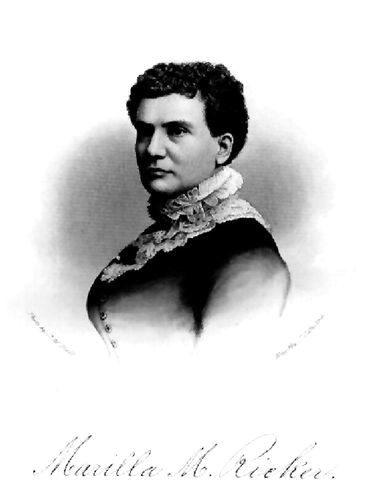
Petitions from various parts of the country, containing by estimate about 30,000 names, have been presented to congress asking for this legislation. They were procured through the efforts of woman suffrage societies, thoroughly organized, with active and zealous managers. The ease with which signatures may be procured to any petition is well known. The small number of petitioners, when compared with that of the intelligent women in the country, is striking evidence that there exists among them no general desire to take up the heavy burden of governing, which so many men seek to evade. It would be unjust, unwise and impolitic to impose that burden on the great mass of women throughout the country who do not wish for it, to gratify the comparatively few who do.
It has been strongly urged that without the right of suffrage, women are, and will be, subjected to great oppression and injustice.
But every one who has examined the subject at all knows that, without female suffrage, legislation for years has improved and is still improving the condition of woman. The disabilities imposed upon her by the common law have, one by one, been swept away, until in most of the States she has the full right to her property and all, or nearly all, the rights which can be granted without impairing or destroying the marriage relation. These changes have been wrought by the spirit of the age, and are not, generally at least, the result of any agitation by women in their own behalf.
Nor can women justly complain of any partiality in the administration of justice. They have the sympathy of judges and particularly of juries to an extent which would warrant loud complaint on the part of their adversaries of the sterner sex. Their appeals to legislatures against injustice are never unheeded, and there is no doubt that when any considerable part of the women of any State really wish for the right to vote, it will be granted without the intervention of congress.
Any State may grant the right of suffrage to women. Some of them have done so to a limited extent, and perhaps with good results. It is evident that in some States public opinion is much more strongly in favor of it than it is in others. Your committee regard it as unwise and inexpedient to enable three-fourths in number of the States, through an amendment to the national constitution, to force woman suffrage upon the other fourth in which the public opinion of both sexes may be strongly adverse to such a change.
For these reasons, your committee report back said resolution with a recommendation that it be indefinitely postponed.
This adverse report was all the more disappointing because Mr. Wadleigh, as Mrs. Clemmer's letter states, filled the place of Hon. Oliver P. Morton of Indiana, one of the most steadfast friends of woman suffrage, who, at the last session of congress, had asked as a special favor the reference of our petitions to the Committee on Privileges and Elections, of which he was chairman, that they might receive proper attention and that he might report favorably upon them. In the discussion on the Pembina bill in 1874, Senator Morton made an earnest speech in favor of woman's enfranchisement. In his premature death our cause lost one of its bravest champions.
Senator Wadleigh's report called forth severe criticism; notably from the New Northwest of Oregon, the Woman's Journal of Boston, the Inter-Ocean of Chicago, the Evening Telegram and the National Citizen of New York. We quote from the latter:
The report is not a statesman-like answer based upon fundamental principles, but a mere politician's dodge—a species of dust-throwing quite in vogue in Washington. "Several millions of voters totally inexperienced in political affairs"! They would have about as much experience as the fathers in 1776, as the negroes in 1870, as the Irish, English, Italians, Norwegians, Danes, French, Germans, Portuguese, Scotch, Russians, Turks, Mexicans, Hungarians, Swedes and Indians, who form a good part of the voting population of this country. Did Mr. Wadleigh never hear of Agnes C. Jencks—the woman who has stirred up politics to its deepest depth; who has shaken the seat of President Hayes; who has set in motion the whole machinery of government, and who, when brought to the witness stand has for hours successfully baffled such wily politicians as Ben Butler and McMahon;—a woman who thwarts alike Republican and Democrat, and at her own will puts the brakes on all this turmoil of her own raising? Does Senator Wadleigh know nothing of that woman's "experience in politics"?
"Quite dependent upon the other sex." It used to be said the negroes were "quite dependent" upon their masters, that it would really be an abuse of the poor things to set them free, but when free and controlling the results of their own labor, it was found the masters had been the ones "quite dependent," and thousands of them who before the war rolled in luxury, have since been in the depths of poverty—some of them even dependent upon the bounty of their former slaves. When men cease to rob women of their earnings they will find them generally, as thousands now are, capable of self-care.[36]
"Military duty." When women hold the ballot there will not be quite as much military duty to be done. They will then have a voice and a vote in the matter, and the men will no longer be able to throw the country into a war to gratify spite or ambition, tearing from woman's arms her nearest and dearest. All men do not like "military duty." "The key to that horrible enigma, German socialism, is antagonism to the military system," and nations are shaken with fear because of it. But when there is necessity for military duty, women will be found in line. The person who planned the Tennessee campaign, in which the Northern armies secured their first victories, was a woman, Anna Ella Carroll. Gen. Grant acted upon her plan, and was successful. She was endorsed by President Lincoln, Seward, Stanton, Wade, Scott, and all the nation's leaders in its hour of peril, and yet congress has not granted her the pension which for ten years her friends have demanded. Mr. Wadleigh holds his seat in the United States Senate to-day, because of the "military duty" done by this woman.
"About 30,000 names," to petitions. There have been 70,000 sent in during the present session of congress, for a sixteenth amendment, besides hundreds of individual petitions from women asking for the removal of their own political disabilities. Men in this country are occasionally disfranchised for crime, and sometimes pray for the removal of their political disabilities. Nine such disfranchised men had the right of voting restored to them during the last session of congress. But not a single one of the five hundred women who individually asked to have their political disabilities removed, was even so much as noticed by an adverse report, Mr. Wadleigh knows it would make no difference if 300,000 women petitioned. But whether women ask for the ballot or not has nothing to do with the question. Self-government is the natural right of every individual, and because woman possesses this natural right, she should be secured in its exercise.
Mr. Wadleigh says, "nor can woman justly complain of any partiality in the administration of justice." Let us examine: A few years ago a married man in Washington, in official position, forced a confession from his wife at the mouth of a pistol, and shot his rival dead. Upon trial he was triumphantly acquitted and afterwards sent abroad as foreign minister. A few months ago a married woman in Georgia, who had been taunted by her rival with boasts of having gained her husband's love, found this rival dancing with him. She drew a knife and killed the woman on the spot. She was tried, convicted, and, although nursing one infant, and again about to become a mother, was sentenced to be hanged by the neck till she was 'dead, dead, dead.' There is Mr. Wadleigh's equal administration of justice between man and woman! There is "the sympathy of judges and juries." There is the "extent which would warrant loud complaint on the part of their adversaries of the sterner sex." And this woman escaped the gallows not because of "the sympathy of the judge" or "jury," but because her own sex took the matter up, and from every part of the country sent petitions by the hundreds to Governor Colquitt of Georgia, asking her pardon. That pardon came in the shape of ten years' imprisonment;—ten years in a cell for a woman, the mother of a nursing and an unborn infant, while for General Sickles the mission to Madrid with high honors and a fat salary.
Messrs. Wadleigh of New Hampshire, McMillan of Minnesota, Ingalls of Kansas, Saulsbury of Delaware, Merrimon of North Carolina and Hill of Georgia, all senators of the United States, are the committee that report it "inexpedient" to secure equal rights to the women of the United States. But we are not discouraged; we are not disheartened; all the Wadleighs in the Senate, all the committees of both Houses, the whole congress of the United States against us, would not lessen our faith, nor our efforts. We know we are right; we know we shall be successful; we know the day is not far distant, when this government and the world will acknowledge the exact and permanent political equality of man and woman, and we know that until that hour comes woman will be oppressed, degraded; a slave, without a single right that man feels himself bound to respect. Work then, women, for your own freedom. Let the early morning see you busy, and dusky evening find you planning how you may become free.
But the most severe judgment upon Mr. Wadleigh's action came from his own constituents, who, at the close of the forty-fifth congress excused his further presence in the United States Senate, sending in his stead the Hon. Henry W. Blair, a valiant champion of national protection for national citizens.[37]
In April, 1878, Mrs. Williams transferred the Ballot-Box to Mrs. Gage, who removed it to Syracuse, New York, and changed its name to the National Citizen. In her prospectus Mrs. Gage said:
The National Citizen will advocate the principle that suffrage is the citizen's right, and should be protected by national law, and that, while States may regulate the suffrage, they should have no power to abolish it. Its especial object will be to secure national protection to women in the exercise of their right to vote; it will oppose class legislation of whatever form. It will support no political party until one arises which is based upon the exact equality of man and woman.
As the first step towards becoming well is to know you are ill, one of the principal aims of the National Citizen will be to make those women discontented who are now content; to waken them to self-respect and a desire to use the talents they possess; to educate their consciences aright; to quicken their sense of duty; to destroy morbid beliefs, and fit them for their high responsibilities as citizens of a republic. The National Citizen has no faith in that old theory that "a woman once lost is lost forever," neither does it believe in the assertion that "a woman who sins, sinks to depths of wickedness lower than man can reach." On the contrary it believes there is a future for the most abandoned, if only the kindly hand of love and sympathy be extended to rescue them from the degradation into which they have fallen. The National Citizen will endeavor to keep its readers informed of the progress of women in foreign countries, and will, as far as possible, revolutionize this country, striving to make it live up to its own fundamental principles and become in reality what it is but in name—a genuine republic.
Instead of holding its usual May anniversary in New York city, the National Association decided to meet in Rochester to celebrate the close of the third decade of organized agitation in the United States, and issued the following call:
The National Association will hold a convention in Rochester, N. Y., July 19, 1878. This will be the thirtieth anniversary of the first woman's rights convention, held July 19, 1848, in the Wesleyan church at Seneca Falls, N. Y., and adjourned to meet, August 2, in Rochester. Some who took part in that convention have passed away, but many others, including both Mrs. Mott and Mrs. Stanton, are still living. This convention will take the place of the usual May anniversary, and will be largely devoted to reminiscences. Friends are cordially invited to be present.
Clemence S. Lozier, M. D., President.
Susan B. Anthony, Chairman Executive Committee.
The meeting was held in the Unitarian church on Fitzhugh street, occupied by the same society that had opened its doors in 1848; and Amy Post, one of the leading spirits of the first convention, still living in Rochester and in her seventy-seventh year, assisted in the arrangements. Rochester, known as "The Flower City," contributed of its beauty to the adornment of the church. It was crowded at the first session. Representatives from a large number of States were present,[38] and there was a pleasant interchange of greetings between those whose homes were far apart, but who were friends and co-workers in this great reform. The reunion was more like the meeting of near and dear relatives than of strangers whose only bond was work in a common cause. Such are the compensations which help to sustain reformers while they battle ignorance and prejudice in order to secure justice. In the absence of the president, Dr. Clemence S. Lozier, Mrs. Stanton took the chair and said:
We are here to celebrate the third decade of woman's struggle in this country for liberty. Thirty years have passed since many of us now present met in this place to discuss the true position of woman as a citizen of a republic. The reports of our first conventions show that those who inaugurated this movement understood the significance of the term "citizens." At the very start we claimed full equality with man. Our meetings were hastily called and somewhat crudely conducted; but we intuitively recognized the fact that we were defrauded of our natural rights, conceded in the national constitution. And thus the greatest movement of the century was inaugurated. I say greatest, because through the elevation of woman all humanity is lifted to a higher plane. To contrast our position thirty years ago, under the old common law of England, with that we occupy under the advanced legislation of to-day, is enough to assure us that we have passed the boundary line—from slavery to freedom. We already see the mile-stones of a new civilization on every highway.
Look at the department of education, the doors of many colleges and universities thrown wide open to women; girls contending for, yea, and winning prizes over their brothers. In the working world they are rapidly filling places and climbing heights unknown to them before, realizing, in fact, the dreams, the hopes, the prophesies of the inspired women of by-gone centuries. In many departments of learning woman stands the peer of man, and when by higher education and profitable labor she becomes self-reliant and independent, then she must and will be free. The moment an individual or a class is strong enough to stand alone, bondage is impossible. Jefferson Davis, in a recent speech, says: "A Cæsar could not subject a people fit to be free, nor could a Brutus save them if they were fit for subjugation."
Looking back over the past thirty years, how long ago seems that July morning when we gathered round the altar in the old Wesleyan church in Seneca Falls! It taxes and wearies the memory to think of all the conventions we have held, the legislatures we have besieged, the petitions and tracts we have circulated, the speeches, the calls, the resolutions we have penned, the never-ending debates we have kept up in public and private, and yet to each and all our theme is as fresh and absorbing as it was the day we started. Calm, benignant, subdued as we look on this platform, if any man should dare to rise in our presence and controvert a single position we have taken, there is not a woman here that would not in an instant, with flushed face and flashing eye, bristle all over with sharp, pointed arguments that would soon annihilate the most skilled logician, the most profound philosopher.
To those of you on this platform who for these thirty years have been the steadfast representatives of woman's cause, my friends and co-laborers, let me say our work has not been in vain. True, we have not yet secured the suffrage, but we have aroused public thought to the many disabilities of our sex, and our countrywomen to higher self-respect and worthier ambition, and in this struggle for justice we have deepened and broadened our own lives and extended the horizon of our vision. Ridiculed, persecuted, ostracised, we have learned to place a just estimate on popular opinion, and to feel a just confidence in ourselves. As the representatives of principles which it was necessary to explain and defend, we have been compelled to study constitutions and laws, and in thus seeking to redress the wrongs and vindicate the rights of the many, we have secured a higher development for ourselves. Nor is this all. The full fruition of these years of seed-sowing shall yet be realized, though it may not be by those who have led in the reform, for many of our number have already fallen asleep. Another decade and not one of us may be here, but we have smoothed the rough paths for those who come after us. The lives of multitudes will be gladdened by the sacrifices we have made, and the truths we have uttered can never die.
Standing near the gateway of the unknown land and looking back through the vista of the past, memory recalls many duties in life's varied relations we would had been better done. The past to all of us is filled with regrets. We can recall, perchance, social ambitions disappointed, fond hopes wrecked, ideals in wealth, power, position, unattained—much that would be considered success in life unrealized. But I think we should all agree that the time, the thought, the energy we have devoted to the freedom of our countrywomen, that the past, in so far as our lives have represented this great movement, brings us only unalloyed satisfaction. The rights already obtained, the full promise of the rising generation of women more than repay us for the hopes so long deferred, the rights yet denied, the humiliation of spirit we still suffer.
And for those of you who have been mere spectators of the long, hard battle we have fought, and are still fighting, I have a word. Whatever your attitude has been, whether as cold, indifferent observers—whether you have hurled at us the shafts of ridicule or of denunciation, we ask you now to lay aside your old educational prejudices and give this question your earnest consideration, substituting reason for ridicule, sympathy for sneers. I urge the young women especially to prepare themselves to take up the work so soon to fall from our hands. You have had opportunities for education such as we had not. You hold to-day the vantage-ground we have won by argument. Show now your gratitude to us by making the uttermost of yourselves, and by your earnest, exalted lives secure to those who come after you a higher outlook, a broader culture, a larger freedom than have yet been vouchsafed to woman in our own happy land.
Congratulatory letters[39] and telegrams were received from all portions of the United States and from the old world. Space admits the publication of but a few, yet all breathed the same hopeful spirit and confidence in future success. Abigail Bush, who presided over the first Rochester convention, said:
No one knows what I passed through upon that occasion. I was born and baptized in the old Scotch Presbyterian church. At that time its sacred teachings were, "if a woman would know anything let her ask her husband at home." * * * I well remember the incidents of that meeting and the thoughts awakened by it. * * * Say to your convention my full heart is with them in all their deliberations and counsels, and I trust great good to women will come of their efforts.
Ernestine L. Rose, a native of Poland, and, next to Frances Wright, the earliest advocate of woman's enfranchisement in America, wrote from England:
How I should like to be with you at the anniversary—it reminds me of the delightful convention we had at Rochester, long, long ago—and speak of the wonderful change that has taken place in regard to woman. Compare her present position in society with the one she occupied forty years ago, when I undertook to emancipate her from not only barbarous laws, but from what was even worse, a barbarous public opinion. No one can appreciate the wonderful change in the social and moral condition of woman, except by looking back and comparing the past with the present. * * * Say to the friends, Go on, go on, halt not and rest not. Remember that "eternal vigilance is the price of liberty" and of right. Much has been achieved; but the main, the vital thing, has yet to come. The suffrage is the magic key to the statute—the insignia of citizenship in a republic.
Caroline Ashurst Biggs, editor of the Englishwoman's Review, London, wrote:
I have read with great interest in the National Citizen and the Woman's Journal the announcement of the forthcoming convention in Rochester. * * * I cannot refrain from sending you a cordial English congratulation upon the great advance in the social and legal position of women in America, which has been the result of your labor. The next few years will see still greater progress. As soon as the suffrage is granted to women, a concession which will not be many years in coming either in England or America, every one of our questions will advance with double force, and meanwhile our efforts in that direction are simultaneously helping forward other social, legal, educational and moral reforms. Our organization in England does not date back so far as yours. There were only a few isolated thinkers when Mrs. John Stuart Mill wrote her essay on the enfranchisement of women in 1851. For twenty years, however, it has progressed with few drawbacks. In some particulars the English laws in respect of women are in advance of yours, but the connection between England and America is so close that a gain to one is a gain to the other.
Lydia E. Becker, editor of the Women's Suffrage Journal, Manchester, England, wrote:
* * * I beg to offer to the venerable pioneers of the movement, more especially to Lucretia Mott, a tribute of respectful admiration and gratitude for the services they have rendered in the cause of enfranchisement. * * * As regards the United kingdom, the movement in a practical form is but twelve years old, and in that period, although we have not obtained the parliamentary franchise, we have seen it supported by at least one-third of the House of Commons, and our claim admitted as one which must be dealt with in future measures of parliamentary reform. We have obtained the municipal franchise and the school-board franchise. Women have secured the right to enter the medical profession and to take degrees in the University of London, besides considerable amendment of the law regarding married women, though much remains to be done.
Senator Sargent, since minister to Berlin, wrote:
I regret that the necessity to proceed at once to California will deprive me of the pleasure of attending your convention of July 19, the anniversary of the spirited declaration of rights put forth thirty years ago by some of the noblest and most enlightened women of America. Women's rights have made vast strides since that day, in juster legislation, in widened spheres of employment, and in the gradual but certain recognition by large numbers of citizens of the justice and policy of extending the elective franchise to women. It is now very generally conceded that the time is rapidly approaching when women will vote. The friends of the movement have faith in the result; its enemies grudgingly admit it. Courage and work will hasten the day. The worst difficulties have already been overcome. The movement has passed the stage of ridicule, and even that of abuse, and has entered that of intelligent discussion, its worst adversaries treating it with respect. You are so familiar with all the arguments in favor of this great reform that I will not attempt to state them; but I wish to say that as an observer of public events, it is my deliberate judgment that your triumph is near at hand. There are vastly more men and women in the United States now who believe that women should have the right to vote than there were in 1848 who believed the slave should be freed. This is a government of opinions and the growing opinion will be irresistible.
A. A. Sargent.
Respectfully yours,
The following letters from the great leaders of the anti-slavery movement were gratefully received. As Mr. Garrison soon after finished his eventful life, this proved to be his last message to our association:
Boston, June 30, 1878.
My Dear Miss Anthony—Your urgent and welcome letter, inviting me to the thirtieth anniversary of the woman's rights movement at Rochester, came yesterday. Most earnestly do I wish I could be present to help mark this epoch in our movement, and join in congratulating the friends on the marvelous results of their labors. No reform has gathered more devoted and self-sacrificing friends. No one has had lives more generously given to its service; and you who have borne such heavy burdens may well rejoice in the large harvest; for no reform has, I think, had such rapid success. You who remember the indifference which almost discouraged us in 1848, and who have so bravely faced ungenerous opposition and insult since, must look back on the result with unmixed astonishment and delight. Temperance, and finance—which is but another name for the labor movement—and woman's rights, are three radical questions which overtop all others in value and importance. Woman's claim for the ballot-box has had a much wider influence than merely to protect woman. Universal suffrage is itself in danger. Scholars dread it; social science and journalists attack it. The discussion of woman's claim has done much to reveal this danger, and rally patriotic and thoughtful men in defense. In many ways the agitation has educated the people. Its success shows that the masses are sound and healthy; and if we gain, in the coming fifteen years, half as much as we have in the last thirty, woman will hold spear and shield in her own hands. If I might presume to advise, I should say close up the ranks and write on our flag only one claim—the ballot. Everything helps us, and if we are united, success cannot long be delayed.
Wendell Phillips.
Very cordially yours,
Boston, July 16, 1878.
My Dear Friend—The thirtieth anniversary of the first woman's rights convention ever held with special reference to demanding the elective franchise irrespective of sex well deserves to be commemorated in the manner set forth in the call for the same, at Rochester, on the 19th instant. As a substitute for my personal attendance, I can only send a brief but warm congratulatory epistle on the cheering progress which the movement has made within the period named. For how widely different are the circumstances under which that convention was held, and those which attend the celebration of its third decade! Then, the assertion of civil and political equality, alike for men and women, excited widespread disgust and astonishment, as though it were a proposition to repeal the laws of nature, and literally to "turn the world upside down"; and it was ridiculed and caricatured as little short of lunacy. Now, it is a subject of increasing interest and grave consideration, from the Atlantic to the Pacific, and what at first appeared to be so foolish in pretension is admitted by all reflecting and candid minds to be deserving of the most respectful treatment. Then, its avowed friends, were indeed "few and far between," even among those disfranchised as the penalty of their womanhood. Now, they can be counted by tens of thousands, and their number is augmenting—foremost in intelligence, in weight of character, in strength of understanding, in manly and womanly development, and in all that goes to make up enlightened citizenship. Then, with rare exceptions, women were everywhere remanded to poverty and servile dependence, being precluded from following those avocations and engaging in those pursuits which make competency and independence not a difficult achievement. Now, there is scarcely any situation or profession, in the arrangements of society, to which they may not and do not aspire, and in which many of them are not usefully engaged; whether in new and varied industrial employment, in the arts and sciences, in the highest range of literature, in philosophic and mathematical investigations, in the professions of law, medicine, and divinity, in high scholarship, in educational training and supervision, in rhetoric and oratory, in the lyceum, or in discharging the official duties connected with the various departments of the State and national governments.
Almost all barriers are down except that which prevents women from going to the polls to help decide who shall be the law-makers and what shall be the laws, so that the general welfare may be impartially consulted, and the blessings of freedom and equal rights be enjoyed by all. That barrier, too, must give way wherever erected, as sure as time outlasts and baffles every device of wrong-doing, and truth is stronger than falsehood, and the law of eternal justice is as reliable as the law of gravitation. Yes! the grand fundamental truths of the Declaration of Independence shall yet be reduced to practice in our land—that the human race are created free and equal; that government derives its just powers from the consent of the governed, and that taxation without representation is tyranny. And I confidently predict that this will be witnessed before the expiration of another decade.
Yours, to abate nothing of heart or hope,
William Lloyd Garrison.
Mrs. Mott never seemed more hopeful for the triumph of our principles than on this occasion. She expressed great satisfaction in the number of young women who for the first time that day graced our platform.[40] Though in her eighty-sixth year, her enthusiasm in the cause for which she had so long labored seemed still unabated, and her eye sparkled with humor as of yore while giving some amusing reminiscences of encounters with opponents in the early days. Always apt in biblical quotations she had proved herself a worthy antagonist of the clergy on our platform. She had slain many Abimelechs with short texts of Scripture, whose defeat was the more humiliating because received at the hand of a woman. As she recounted in her happiest vein the triumphs of her coadjutors she was received with the heartiest manifestations of delight by her auditors. She took a lively interest in the discussion of the resolutions that had been presented by the chairman of the committee, Matilda Joslyn Gage:
Resolved, That a government of the people, by the people and for the people is yet to be realized; for that which is formed, administered and controlled only by men, is practically nothing more than an enlarged oligarchy, whose assumptions of natural superiority and of the right to rule are as baseless as those enforced by the aristocratic powers of the old world.
Resolved, That in celebrating our third decade we have reason to congratulate ourselves on the marked change in woman's position—in her enlarged opportunities for education and labor, her greater freedom under improved social customs and civil laws, and the promise of her speedy enfranchisement in the minor political rights she has already secured.
Resolved, That the International Congress[41] called in Paris, July 20, to discuss the rights of woman—the eminent Victor Hugo, its presiding officer—is one of the most encouraging events of the century, in that statesmen and scholars from all parts of the world, amid the excitement of the French Exposition, propose to give five days to deliberations upon this question.
Resolved, That the majority report of the chairman of the Committee on Privileges and Elections, Senator Wadleigh of New Hampshire, against a sixteenth amendment to secure the political rights of woman in its weakness, shows the strength of our reform.
Resolved, That the national effort to force citizenship on the Indians, the decision of Judge Sawyer in the United States Circuit Court of California against the naturalization of the Chinese, and the refusal of congress to secure the right of suffrage to women, are class legislation, dangerous to the stability of our institutions.
Whereas, Woman's rights and duties in all matters of legislation are the same as those of man.
Resolved, That the problems of labor, finance, suffrage, international rights, internal improvements, and other great questions, can never be satisfactorily adjusted without the enlightened thought of woman, and her voice in the councils of the nation.
Resolved, That the question of capital and labor is one of special interest to us. Man, standing to woman in the position of capitalist, has robbed her through the ages of the results of her toil. No just settlement of this question can be attained until the right of woman to the proceeds of her labor in the family and elsewhere is recognized, and she is welcomed into every industry on the basis of equal pay for equal work.
Resolved, That as the first duty of every individual is self-development, the lessons of self-sacrifice and obedience taught woman by the Christian church have been fatal, not only to her own vital interests, but through her, to those of the race.
Resolved, That the great principle of the Protestant Reformation, the right of individual conscience and judgment heretofore exercised by man alone, should now be claimed by woman; that, in the interpretation of Scripture, she should be guided by her own reason, and not by the authority of the church.
Resolved, That it is through the perversion of the religious element in woman—playing upon her hopes and fears of the future, holding this life with all its high duties in abeyance to that which is to come—that she and the children she has trained have been so completely subjugated by priestcraft and superstition.
[31] Mr. and Mrs. Holt, of 1,339 L street, entertained their friends and a numerous company of distinguished guests on Friday evening, in honor of Mrs. Beecher Hooker. She delivered one of her ablest speeches on the woman suffrage question. She was listened to with breathless silence by eminent men and women, who confessed, at the termination of her speech, that they were "almost persuaded" to join her ranks—the highest tribute to her eloquent defense of her position. Mrs. Hooker's intellect is not her only charm. Her beautiful face and attractive manners all help to make converts. Mrs. Julia N. Holmes, the poet, one of the most admired ladies present, and Mrs. Southworth, the novelist, wore black velvet and diamonds. Mrs. Hodson Burnett, that "Lass o' Lowrie," in colored and rose silk with princess scarf, looked charmingly. Mrs. Senator Sargent, Mrs. Charles Nordhoff and her friends, the elegant Miss Thurman, of Cincinnati, and Miss Joseph, a brilliant brunette with scarlet roses and jet ornaments, of Washington, were much observed. Mrs. Dr. Wallace, of the New York Herald, wore cuir colored gros-grain with guipure lace trimmings, flowers and diamonds. Miss Coyle was richly attired. Mrs. Ingersoll, wife of the exceptional orator, was the center of observation with Mrs. Hooker; she wore black velvet, roses, and diamonds—has a noble presence and Grecian face. General Forney, of Alabama, Hon. John F. Wait, M. C., Captain Dutton and Colonel Mallory, of U. S. Army, Judge Tabor (Fourth Auditor), Dr. Cowes, Col. Ingersol, Mrs. Hoffman, of New York, a prominent lady of the Woman's Congress, lately assembled in this city, wore a distinguished toilette. Mrs. Spofford, of the Riggs House, was among the most noticeable ladies present, elegant and delightful in style and manner. Dr. Josephs and Col. G. W. Rice, of Boston, were of the most conspicuous gentlemen present, who retired much edified with the entertainment of the evening.
[32] The members of the committee present were Hon. Proctor Knott (the chairman), General Benjamin F. Butler, Messrs. Lynde, Frye, Conger, Lapham, Culberson, McMahon. Among the ladies were Mesdames Knott, Conger, Lynde, Frye.
[33] Mrs. Hooker has won, just as we predicted she would. Senators Howe, Ferry, Coke, Randolph, Jones, Blaine, Beck, Booth, Allison, Wallace, Eaton, Johnston, Burnside, Saulsbury, Merrimon, and Presiding-officer Wheeler, together with nineteen other senators, have formally invited her to address the Committee on Privileges and Elections on February 22, an invitation which she has enthusiastically accepted. Nobody but congressmen will be admitted to hear the distinguished advocate of woman suffrage.—[Washington Post.
[34] Among those present were Mrs. Senator Beck, Mrs. Stanley Matthews, Mrs. Sargent, Mrs. Spofford, Mrs. Holmes, Mrs. Snead, Mrs. Baldwin, Miss Blodgett of New York; Mrs. Baldwin, Mrs. Spencer, Mrs. Juan Lewis of Philadelphia; Mrs. Morgan of Mississippi, Mrs. Brooks, Mrs. Olcott, Mrs. Bartlett, Miss Sweet, Mrs. Myers, Mrs. Gibson, Miss Jenners, Mrs. Levison, Mrs. Hereford, Mrs. Folsom, Mrs. Mitchell, Mrs. Lynde, Mrs. Eldridge, Miss Snowe, Mrs. Curtis, Mrs. Hutchinson Patton, Mrs. Boucher and many others. Of the committee and Senate there were Senators Wadleigh, Cameron of Wisconsin; Merrimon, Mitchell, Hoar, Vice-president Wheeler, Senators Jones, Bruce, Beck and others. Several representatives and their wives also were there, and seemed deeply interested.—[Washington Post.
[35] Mrs. Ricker makes a specialty of looking after the occupants of the jail—so freely is her purse opened to the poor and unfortunate that she is known as the prisoners' friend. Many an alleged criminal owes the dawning of a new life, and the determination to make it a worthy one, to the efforts of this noble woman. And Mrs. Ricker's special object in seeking this office was that prisoners might make depositions before her and thus be saved the expense of employing notaries from the city.
[36] The Selfish Rats—A Fable by Lillie Devereux Blake.—Once some gray old rats built a ship of State to save themselves from drowning. It carried them safely for awhile until they grew eager for more passengers, and so took on board all manner of rats that had run away from all sorts of places—Irish rats and German rats, and French rats, and even black rats and dirty sewer rats.
[37] Senator Blair has just been elected (June, 1885) to a second term, thus insuring his services to our cause in the Senate for another six years.
[38] Delegates to the Thirtieth Anniversary.—Alabama, Priscilla Holmes Drake; California, Ellen Clark Sargent; District of Columbia, Frederick Douglass, Belva A. Lockwood, Sara Andrews Spencer, Caroline B. Winslow, M. D.; Indiana, Margaret C. Conklin, Mary B. Naylor, May Wright Thompson; Massachusetts, Harriet H. Robinson, Harriette R. Shattuck; Maryland, Lavinia C. Dundore; Michigan, Catherine A. F. Stebbins, Frances Titus, Sojourner Truth; Missouri, Phoebe W. Couzins; New Hampshire, Parker Pillsbury; North Carolina, Elizabeth Oakes Smith; New Jersey, Elizabeth Cady Stanton, Sarah M. Hurn; New York, Albany county, Arethusa L. Forbes; Dutchess, Helen M. Loder; Lewis, Mrs. E. M. Wilcox; Madison, Helen Raymond Jarvis; Monroe, Susan B. Anthony, Amy Post, Sarah H. Willis, Mary H. Hallowell, Mary S. Anthony, Lewia C. Smith and many others; Orleans, Mrs. Plumb, Mrs. Clark; Onondaga, Lucy N. Coleman, Dr. Amelia F. Raymond, Matilda Joslyn Gage; Ontario, Elizabeth C. Atwell, Catherine H. Sands, Elizabeth Smith Miller, Helen M. Pitts; Queens, Mary A. Pell; Wayne, Sarah K. Rathbone, Rebecca B. Thomas; Wyoming, Charlotte A. Cleveland; Genesee, the Misses Morton; New York, Clemence S. Lozier, M. D., Helen M. Slocum, Sara A. Barret, M. D., Hamilton Wilcox; Ohio, Mrs. Ellen Sully Fray; Pennsylvania, Lucretia Mott, Sarah Pugh, Adeline Thomson, Maria C. Arter, M. D., Mrs. Watson; South Carolina, Martha Schofield; Wisconsin, Mrs. C. L. Morgan.
[39] From Wendell Phillips, William Lloyd Garrison, Lucy Stone, Caroline H. Dall, Boston; Hon. A. A. Sargent, Washington; Clara Barton, Mathilde F. Wendt, Abby Hutchinson Patton, Aaron M. Powell, Father Benson, Margaret Holley, Mary L. Booth, Sarah Hallock, Priscilla R. Lawrence, Lillie Devereux Blake, New York; Samuel May, Elizabeth Powell Bond, John W. Hutchinson, Lucinda B. Chandler, Sarah E. Wall, Massachusetts; Caroline M. Spear, Robert Purvis, Edward M. Davis, Philadelphia; Isabella Beecher Hooker, Julia E. Smith, Lavinia Goodell, Connecticut; Lucy A. Snowe, Ann T. Greeley, Maine; Caroline F. Barr, Bessie Bisbee Hunt, Mary A. Powers Filley, New Hampshire; Catherine Cornell Knowles, Rhode Island; Antoinette Brown Blackwell, New Jersey; Annie Laura Quinby, Joseph B. Quinby, Sarah R. L. Williams, Rosa L. Segur, Ohio; Sarah C. Owen, Michigan; Laura Ross Wolcott, M. D., Mary King, Angie King, Wisconsin; Frances E. Williard, Clara Lyons Peters, Elizabeth Boynton Harbert, Illinois; Rachel Lockwood Child, Janet Strong, Nancy R. Allen, Amelia Bloomer, Iowa; Sarah Burger Stearns, Hattie M. White, Minnesota; Mary F. Thomas, M. D., Emma Molloy, Indiana; Matilda Hindman, Sarah L. Miller, Pennsylvania; Anna K. Irvine, Virginia L. Minor, Missouri; Elizabeth H. Duvall, Kentucky; Mrs. G.W. Church, Tennessee; Mrs. Augusta Williams, Elsie Stuart, Kansas; Ada W. Lucas, Nebraska; Emeline B. Wells, Annie Godbe, Utah; Mary F. Shields, Alida C. Avery, M. D., Colorado; Harriet Loughary, Mrs. L. F. Proebstel, Mrs. Coburn, Abigail Scott Duniway, Oregon; Clarina I. H. Nichols, Elizabeth B. Schenck, Sarah J. Wallis, Abigail Bush, Laura de Force Gordon, California; Mrs. A.H.H. Stuart, Washington Territory; Helen M. Martin, Arkansas; Helen R. Holmes, District of Columbia; Caroline V. Putnam, Virginia; Elizabeth Avery Meriwether, Tennessee; Elizabeth L. Saxon, Louisiana; Martha Goodwin Tunstall, Texas; Priscilla Holmes Drake, Buell D. M'Clung, Alabama; Ellen Sully Fray, Ontario; Theodore Stanton, France; Ernestine L. Rose, Caroline Ashurst Biggs, Lydia E. Becker, England.
[40] While May Wright Thompson was speaking she turned to Mrs. Stanton and said. "How thankful I am for these bright young women now ready to fill our soon-to-be vacant places. I want to shake hands with them all before I go, and give them a few words of encouragement. I do hope they will not be spoiled with too much praise."
[41] For account of this International Congress, see chapter on Continental Europe in this volume.
This was the last convention ever attended by Lucretia Mott. Her family had specially requested that she should not be urged to go; but on seeing the call, she quietly announced her intention to be at the meeting, and, with the ever faithful Sarah Pugh as her companion, she made the journey from Philadelphia in the intense heat of those July days. Mrs. Mott was the guest of her husband's nephew, Dr. E.M. Moore, who, fearing that his aunt would be utterly exhausted, called for her while she was in the midst of her closing remarks. As she descended the platform, she continued speaking while she slowly moved down the aisle, shaking hands upon either side. The audience simultaneously rose, and on behalf of all, Frederick Douglass ejaculated, "Good-by, dear Lucretia!"
The last three resolutions called out a prolonged discussion[42] not only in the convention but from the pulpit and press of the State.
One amusing encounter in the course of the debate is worthy of note. Perhaps it was due to the intense heat that Mr. Douglass, usually clear on questions of principle, was misled into opposing the resolutions. He spoke with great feeling and religious sentiment of the beautiful Christian doctrine of self-sacrifice. When he finished, Mrs. Lucy Coleman, always keen in pricking bubbles, arose and said: "Well, Mr. Douglass, all you say may be true; but allow me to ask you why you did not remain a slave in Maryland, and sacrifice yourself, like a Christian, to your master, instead of running off to Canada to secure your liberty, like a man? We shall judge your faith, Frederick, by your deeds."
An immense audience assembled at Corinthian Hall in the evening to listen to the closing speeches[43] of the convention. Mrs. Robinson of Boston gave an exhaustive review of the work in Massachusetts, and her daughter, Mrs. Shattuck, gave many amusing experiences as her father's[44] clerk in the legislature of that State.
The resolutions provoked many attacks from the clergy throughout the State, led by Rev. A.H. Strong, D.D., president of the Baptist Theological Seminary in Rochester, Of his sermon the National Citizen said:
None too soon have we issued our resolutions, proclaiming woman's right to self-development—to interpret Scripture for herself, to use her own faculties. In speaking of what Christianity has done for woman, Dr. Strong stultifies his own assertions by referring to Switzerland and Germany "where you may see any day hundreds of women wheeling earth for railroad embankments." Does he not remember that Switzerland and Germany are Christian countries and that it is part of their civilization that while women do this work, some man takes the pay and puts it in his own pocket quite in heathen fashion? The reverend doctor in the usual style of opposition to woman—which is to quote something or other having no bearing upon the question—refers to Cornelia's "jewels," forgetting to say that Cornelia delivered public lectures upon philosophy in Rome, and that Cicero paid the very highest tribute to her learning and genius.
Dr. Strong advocates the old theory that woman and man are not two classes standing upon the same level, but that the two are one—that one on the time-worn theory of common law, the husband; and talks of the "dignity and delicacy of woman" being due to the fact of her not having been in public life, and that this "dignity and delicacy" would all evaporate if once she were allowed to vote, which reminds one of the story of Baron Munchausen's horn, into which a certain coach-driver blew all manner of wicked tunes. The weather being very cold, these tunes remained frozen in the horn. When hung by the fire, the horn began to thaw out, and these wicked tunes came pealing forth to the great amazement of the by-standers. The reverend gentlemen seems to think women are full of frozen wickedness, which if they enter public life will be thawed out to the utter demolition of their "dignity and delicacy" and the disgust of society. He deems it "too hazardous" to allow women to vote. "Bad women would vote." Well, what of it? Have they not equal right with bad men, to self-government? Bad is a relative term. It strikes us that the very reverend Dr. Strong is a "bad" man—a man who does not understand true Christianity—who is not just—who would strike those who are down—who would keep woman in slavery—who quotes the Bible as his authority: thus fettering woman's conscience, binding her will, and playing upon her hopes and fears to keep her in subjection.
From Augustine, down, theologians have tried to compel people to accept their special interpretation of the Scripture, and the tortures of the inquisition, the rack, the thumb-screw, the stake, the persecutions of witchcraft, the whipping of naked women through the streets of Boston, banishment, trials for heresy, the halter about Garrison's neck, Lovejoy's death, the branding of Captain Walker, shouts of infidel and atheist, have all been for this purpose.
We know the ignorance that exists upon these points. Few have yet begun to comprehend the influence that ecclesiasticism has had upon law. Wharton, a recognized authority upon criminal law, issued his seventh edition before he ascertained the vast bearing canon law had had upon the civil code, and we advise readers to consult the array of authorities, English, Latin, German, to which he, in his preface, refers. We hope to arouse attention and compel investigation of this subject by lawyers and theologians as well as by women themselves.
Francis E. Abbot, editor of The Index, the organ of the Free Religious Association, spoke grandly in favor of the resolutions. He said:
These resolutions we have read with astonishment, admiration and delight. We should not have believed it possible that the convention could have been induced to adopt them. They will make forever memorable in the history of the organized woman movement, this thirtieth anniversary of its birth. They put the National Woman Suffrage Association in an inconceivably higher and nobler position than that occupied by any similar society. They go to the very root of the matter. They are a bold, dignified, and magnificent utterance. We congratulate the convention on a record so splendid in the eyes of all true liberals. From this day forth the whole woman movement must obey the inspiration of a higher courage and a grander spirit than have been known to its past. Opposition must be encountered, tenfold more bitter than was ever yet experienced. But truth is on the side of these brave women; the ringing words they have spoken at Rochester will thrill many a doubting heart and be echoed far down the long avenue of the years.
During the same week of the Rochester convention, the Paris International Congress opened it sessions, sending us a telegram of greeting to which we responded with two hundred and fifty francs as a tangible evidence of our best wishes. The two remarkable features of that congress were the promise of so distinguished a man as Victor Hugo to preside over its deliberations, though at last prevented by illness; and the fact that the Italian government sent Mlle. Mozzoni as an official delegate to the congress to study the civil position of woman in various countries, in order that an ameliorating change of its code, in respect to woman, could be wisely made.
The newspapers of the French capital in general treated the congress with respect. The Rappel, Victor Hugo's organ, spoke of it in a most complimentary manner. Theodore Stanton, in a letter to the National Citizen, said:
In one important respect this congress differed entirely from an American convention of like character—it made no demand for suffrage. The word was never mentioned except by the American delegates. In continental Europe the idea of demanding for woman a share in the government, is never considered. This is the more remarkable in France, as this claim was made at the time of the revolution. But every imaginable side of the question was discussed, except the side that comprehends all the others. To an American, therefore, European woman's rights is rather tame; it is like the play of Hamlet with Hamlet left out. But Europe is moving, and the next international congress will, undoubtedly, give more attention to suffrage and less to hygiene.
The Eleventh Washington Convention was held January 9, 10, 1879. The resolutions give an idea of the status of the question, and the wide range of discussion covered by the speakers:[45]
Resolved, That the forty-fifth congress, in ignoring the individual petitions of more than three hundred women of high social standing and culture, asking for the removal of their political disabilities, while promptly enacting special legislation for the removal of the political disabilities of every man who petitioned, furnishes an illustration of the indifference of this congress to the rights of citizens deprived of political power.
Whereas, Senator Blaine says, it is the very essence of tyranny to count any citizens in the basis of representation who are denied a voice in their laws and a choice in their rulers; therefore,
Resolved, That counting women in the basis of representation, while denying them the right of suffrage, is compelling them to swell the number of their tyrants and is an unwarrantable usurpation of power over one-half the citizens of this republic.
Whereas, In President Hayes' last message, he makes a truly paternal review of the interests of this republic, both great and small, from the army, the navy, and our foreign relations, to the ten little Indians in Hampton, Va., our timber on the western mountains, and the switches of the Washington railroads; from the Paris Exposition, the postal service, the abundant harvests, and the possible bull-dozing of some colored men in various southern districts, to cruelty to live animals, and the crowded condition of the mummies, dead ducks and fishes in the Smithsonian Institute—yet forgets to mention twenty million women robbed of their social, civil and political rights; therefore,
Resolved, That a committee of three be appointed from this convention to wait upon the president and remind him of the existence of one-half of the American people whom he has accidentally overlooked, and of whom it would be wise for him to make some mention in his future messages.
Whereas, All of the vital principles involved in the thirteenth, fourteenth and fifteenth constitutional amendments have been denied in their application to women by courts, legislatures and political parties; therefore,
Resolved, That it is logical that these amendments should fail to protect even the male African for whom said courts, legislatures and parties declare they were expressly designed and enacted.
Resolved, That the judges of the Supreme Court of the United States in denying Belva A. Lockwood admission to its bar, while she was entitled under the law and under its rules to that right, violated their oath of office.
Resolved, That the Senate Judiciary Committee, Mr. Edmonds chairman, in its report on the bill to allow women to practice law in the courts of the United States in which it declares that "further legislation is not necessary," evaded the plain question at issue before it in a manner unworthy of judges learned in the honorable profession of the law, and thereby sanctioned an injustice to the women of the whole country.
Whereas, The general government has refused to exercise federal power to protect women in their right to vote in the various States and territories; therefore,
Resolved, That it should forbear to exercise federal power to disfranchise the women of Utah, who have had a more just and liberal spirit shown them by Mormon men than Gentile women in the States have yet perceived in their rulers.
Whereas, The proposed legislation for the Chinese women on the Pacific slope and for outcast women in our cities, and the opinion of the press that no respectable woman should be seen in the streets after dark, are all based upon the presumption that woman's freedom must be forever sacrificed to man's licence; therefore,
Resolved, That the ballot in woman's hand is the only power by which she can restrain the liberty of those men who make our streets and highways dangerous to her, and secure the freedom that belongs to her by day and by night.
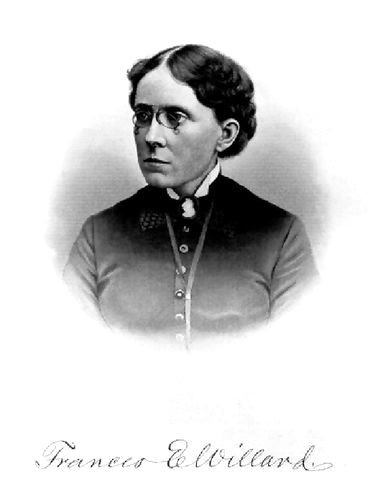
At the close of the convention it was decided at a meeting of the executive committee to present an address to the president and both houses of congress, and that a printed copy of the resolutions should be laid on the desk of every member. The president having granted a hearing,[46] the following address was presented:
To his Excellency, the President of the United States:
Whereas, Representatives of associations of women waited upon your excellency before the delivery of your first and second annual messages, asking that in those documents you would remember the disfranchised millions of citizens of the United States; and,
Whereas, Upon careful examination of those messages, we find therein specifically enumerated, the interests, great and small, of all classes of men, and recommendations of needful legislation to protect their civil and political rights, but find no mention made of any need of legislation to protect the political, civil, or social rights of one-half of the people of this republic, and,
Whereas, There is pending in the Senate a constitutional amendment to prohibit the several States from disfranchising United States citizens on account of sex, and a similar amendment is pending upon a tie vote in the House Judiciary Committee; and as petitions to so amend the constitution have been presented to both houses of congress from more than 40,000 well-known citizens of thirty-five States and five territories,
Therefore, we respectfully ask your excellency, in your next annual message, to make mention of the disfranchised millions of wives, mothers and daughters of this republic, and to recommend to congress that women equally with men be protected in the exercise of their civil and political rights.
On behalf of the National Woman Suffrage Association.
Elizabeth Cady Stanton, President.
Matilda Joslyn Gage, Corresponding Secretary.
Susan B. Anthony, Chairman Executive Committee.
The delegates from the territory of Utah were also received by the president. They called his attention to the effect of the enforcement of the law of 1862 upon 50,000 Mormon women, to render them outcasts and their children nameless, asking the chief executive of the nation to give some time to the consideration of the bill pending under different headings in both houses. The president asked them to set forth the facts in writing, that he might carefully weigh so important a matter. A memorial was also presented to congress by these ladies, closing thus:
We further pray that in any future legislation concerning the marriage relation in any territory under your jurisdiction you will consider the rights and the consciences of the women to be affected by such legislation, and that you will consider the permanent care and welfare of children as the sure foundation of the State.
And your petitioners will ever pray.
Emmeline B. Wells.
Zina Young Williams.
Mr. Cannon of Utah moved that the memorial be referred to the Committee on the Judiciary with leave to report at any time. It was so referred. The Judiciary Committee of the Senate brought in a bill legitimatizing the offspring of plural marriages to a certain date; also authorizing the president to grant amnesty for past offenses against the law of 1862.
The Congressional Record of January 24, under the head of petitions and memorials, said:
The vice-president, Mr. Wheeler of New York, presented the petition of Elizabeth Cady Stanton, Matilda Joslyn Gage and Susan B. Anthony, officers of the National Association, praying for the passage of Senate joint resolution No. 12, providing for an amendment to the Constitution of the United States, protecting the rights of women, and also that the House Judiciary Committee be relieved from the further consideration of a similar resolution.
Mr. Ferry—If there be no objection I ask that the petition be read at length.
The Vice-president—The Chair hears no objection, and it will be reported by the secretary.
The petition was read and referred to the Committee on Privileges and Elections, as follows:
To the Senate and House of Representatives of the United States, in Congress assembled:
Whereas, More than 40,000 men and women, citizens of thirty-five States and five territories, have petitioned the forty-fifth congress asking for an amendment to the federal constitution prohibiting the several States from disfranchising United States citizens on account of sex; and
Whereas, A resolution providing for such constitutional amendment is upon the calendar (Senate resolution No. 12, second session forty-fifth congress), and a similar resolution is pending upon a tie vote in the Judiciary Committee of the House of Representatives; and
Whereas, The women of the United States constitute one-half of the people of this republic and have an inalienable right to an equal voice with men in the nation's councils; and
Whereas, Women being denied the right to have their opinions counted at the ballot-box, are compelled to hold all other rights subject to the favors and caprices of men; and
Whereas, In answer to the appeals of so large a number of honorable petitioners, it is courteous that the forty-fifth congress should express its opinion upon this grave question of human rights; therefore,
We pray your honorable body to take from the calendar and pass Senate resolution No. 12, providing for an amendment to the constitution protecting the rights of women; and
We further pray you to relieve the House Judiciary Committee from the further consideration of the woman suffrage resolution brought to a tie vote in that committee, February 5, 1878, that it may be submitted to the House of Representatives for immediate action.
And your petitioners will ever pray.
Elizabeth Cady Stanton, President.
Matilda Joslyn Gage, Corresponding Secretary.
Susan B. Anthony, Chairman Executive Committee.
At the opening of the last session of the forty-fifth congress most earnest appeals (copies of which were sent to every member of congress) came from all directions for the presentation of a minority report from the Committee on Privileges and Elections. The response from our representatives was prompt and most encouraging. The first favorable report our question had ever received in the Senate of the United States was presented by the Hon. George F. Hoar, February 1, 1879:
The undersigned, a minority of the Committee on Privileges and Elections, to whom were referred the resolution proposing an amendment to the constitution prohibiting discrimination in the right of suffrage on account of sex, and certain petitions in aid of the same, submit the following minority report:
The undersigned dissent from the report of the majority of the committee. The demand for the extension of the right of suffrage to women is not new. It has been supported by many persons in this country, in England and on the continent, famous in public life, in literature and in philosophy. But no single argument of its advocates seems to us to carry so great a persuasive force as the difficulty which its ablest opponents encounter in making a plausible statement of their objections. We trust we do not fail in deference to our esteemed associates on the committee when we avow our opinion that their report is no exception to this rule.
The people of the United States and of the several States have founded their political institutions upon the principle that all men have an equal right to a share in the government. The doctrine is expressed in various forms. The Declaration of Independence asserts that "all men are created equal" and that "governments derive their just powers from the consent of the governed." The Virginia bill of rights, the work of Jefferson and George Mason, affirms that "no man or set of men are entitled to exclusive or separate emoluments or privileges from the rest of the community but in consideration of public services." The Massachusetts bill of rights, the work of John Adams, besides reaffirming these axioms, declares that "all the inhabitants of this commonwealth, having such qualifications as they shall establish by their frame of government, have an equal right to elect officers, and to be elected for public employment." These principles, after full and profound discussion by a generation of statesmen whose authority upon these subjects is greater than that of any other that ever lived, have been accepted by substantially the whole American people as the dictates alike of practical wisdom and of natural justice. The experience of a hundred years has strengthened their hold upon the popular conviction. Our fathers failed in three particulars to carry these principles to their logical result. They required a property qualification for the right to vote and to hold office. They kept the negro in slavery. They excluded women from a share in the government. The first two of these inconsistencies have been remedied. The property test no longer exists. The fifteenth amendment provides that race, color, or previous servitude shall no longer be a disqualification. There are certain qualifications of age, of residence, and, in some instances of education, demanded; but these are such as all sane men may easily attain.
This report is not the place to discuss or vindicate the correctness of this theory. In so far as the opponents of woman suffrage are driven to deny it, for the purpose of an argument addressed to the American people, they are driven to confess that they are in the wrong. This people are committed to the doctrine of universal suffrage by their constitutions, their history and their opinions. They must stand by it or fall by it. The poorest, humblest, feeblest of sane men has the ballot in his hand, and no other man can show a better title to it. Those things wherein men are unequal—intelligence, ability, integrity, experience, title to public confidence by reason of previous public service—have their natural and legitimate influence under a government wherein each man's vote is counted, to quite as great a degree as under any other form of government that ever existed.
We believe that the principle of universal suffrage stands to-day stronger than ever in the judgment of mankind. Some eminent and accomplished scholars, alarmed by the corruption and recklessness manifested in our great cities, deceived by exaggerated representations of the misgovernment of the Southern States by a race just emerging from slavery, disgusted by the extent to which great numbers of our fellow-citizens have gone astray in the metaphysical subtleties of financial discussion, have uttered their eloquent warnings of the danger of the failure of universal suffrage. Such utterances from such sources have been frequent. They were never more abundant than in the early part of the present century. They are, when made in a serious and patriotic spirit, to be received with the gratitude due to that greatest of public benefactors—he who points out to the people their dangers and their faults.
But popular suffrage is to be tried not by comparison with ideal standards of excellence, but by comparison with other forms of government. We are willing to submit our century of it to this test. The crimes that have stained our history have come chiefly from its denial, not from its establishment. The misgovernment and corruption of our great cities have been largely due to men whose birth and training have been under other systems. The abuses attributed by political hostility to negro governments at the South—governments from which the intelligence and education of the State held themselves sulkily aloof—do not equal those which existed under the English or French aristocracy within the memory of living men. There have been crimes, blunders, corruptions, follies in the history of our republic. Aristides has been banished from public employment, while Cleon has been followed by admiring throngs. But few of these things have been due to the extension of the suffrage. Strike out of our history the crimes of slavery, strike out the crimes, unparalleled for ferocity and brutality, committed by an oligarchy in its attempt to overthrow universal suffrage, and we may safely challenge for our national and State governments comparison with monarchy or aristocracy in their best and purest periods.
Either the doctrines of the Declaration of Independence and the bills of rights are true, or government must rest on no principle of right whatever, but its powers may be lawfully taken by force and held by force by any person or class who have strength to do it, and who persuade themselves that their rule is for the public interest. Either these doctrines are true, or you can give no reason for your own possession of the suffrage except that you have got it. If this doctrine be sound, it follows that no class of persons can rightfully be excluded from their equal share in the government, unless they can be proved to lack some quality essential to the proper exercise of political power.
A person who votes helps, first, to determine the measures of government; second, to elect persons to be intrusted with public administration. He should therefore possess, first, an honest desire for the public welfare; second, sufficient intelligence to determine what measure or policy is best; third, the capacity to judge of the character of persons proposed for office; and, fourth, freedom from undue influence, so that the vote he casts is his own, and not another's. That person or class casting his or their own vote, with an honest desire for the public welfare, and with sufficient intelligence to judge what measure is advisable and what person may be trusted, fulfill every condition that the State can rightfully impose.
We are not now dealing with the considerations which should affect the admission of citizens of other countries to acquire the right to take part in our government. All nations claim the right to impose restrictions on the admission of foreigners trained in attachment to other countries or forms of rule, and to indifference to their own, whatever they deem the safety of the State requires. We take it for granted that no person will deny that the women of America are inspired with a love of country equal to that which animates their brothers and sons. A capacity to judge of character, so sure and rapid as to be termed intuitive, is an especial attribute of woman. One of the greatest orators of modern times has declared:
I concede away nothing which I ought to assert for our sex when I say that the collective womanhood of a people like our own seizes with matchless facility and certainty on the moral and personal peculiarities and character of marked and conspicuous men, and that we may very wisely address ourselves to such a body to learn if a competitor for the highest honors has revealed that truly noble nature that entitled him to a place in the hearts of a nation.
We believe that in that determining of public policies by the collective judgment of the State which constitutes self-government, the contribution of woman will be of great importance and value. To all questions into the determination of which considerations of justice or injustice enter, she will bring a more refined moral sense than that of man. The most important public function of the State is the provision for the education of youths. In those States in which the public school system has reached its highest excellence, more than ninety per cent. of the teachers are women. Certainly the vote of the women of the State should be counted in determining the policy that shall regulate the school system which they are called to administer.
It is seldom that particular measures of government are decided by direct popular vote. They are more often discussed before the people after they have taken effect, when the party responsible for them is called to account. The great measures which go to make up the history of nations are determined not by the voters, but by their rulers, whether those rulers be hereditary or elected. The plans of great campaigns are conceived by men of great military genius and executed by great generals. Great systems of finance come from the brain of statesmen who have made finance a special study. The mass of the voters decide to which party they will intrust power. They do not determine particulars. But they give to parties their general tone and direction, and hold them to their accountability. We believe that woman will give to the political parties of the country a moral temperament which will have a most beneficent and ennobling effect on politics.
Woman, also, is specially fitted for the performance of that function of legislative and executive government which, with the growth of civilization, becomes yearly more and more important—the wise and practical economic adjustment of the details of public expenditures. It may be considered that it would not be for the public interest to clothe with the suffrage any class of persons who are so dependent that they will, as a general rule, be governed by others in its exercise. But we do not admit that this is true of women. We see no reason to believe that women will not be as likely to retain their independence of political judgment, as they now retain their independence of opinion in regard to the questions which divide religious sects from one another. These questions deeply excite the feelings of mankind, yet experience shows that the influence of the wife is at least as great as that of the husband in determining the religious opinion of the household. The natural influence exerted by members of the same family upon each other would doubtless operate to bring about similarity of opinion on political questions as on others. So far as this tends to increase the influence of the family in the State, as compared with that of unmarried men, we deem it an advantage. Upon all questions which touch public morals, public education, all which concern the interest of the household, such a united exertion of political influence cannot be otherwise than beneficial.
Our conclusion, then, is that the American people must extend the right of suffrage to woman or abandon the idea that suffrage is a birthright. The claim that universal suffrage will work mischief in practice is simply a claim that justice will work mischief in practice. Many honest and excellent persons, while admitting the force of the arguments above stated, fear that taking part in politics will destroy those feminine traits which are the charm of woman, and are the chief comfort and delight of the household. If we thought so we should agree with the majority of the committee in withholding assent to the prayer of the petitioners. This fear is the result of treating the abuses of the political function as essential to its exercise. The study of political questions, the forming an estimate of the character of public men or public measures, the casting a vote, which is the result of that study and estimate, certainly have in themselves nothing to degrade the most delicate and refined nature. The violence, the fraud, the crime, the chicanery, which, so far as they have attended masculine struggles for political power, tend to prove, if they prove anything, the unfitness of men for the suffrage, are not the result of the act of voting, but are the expressions of course, criminal and evil natures, excited by the desire for victory. The admission to the polls of delicate and tender women would, without injury to them, tend to refine and elevate the politics in which they took a part. When, in former times, women were excluded from social banquets, such assemblies were scenes of ribaldry and excess. The presence of women has substituted for them the festival of the Christian home.
The majority of the committee state the following as their reasons for the conclusion to which they come:
First—If the petitioners' prayer be granted it will make several millions of female voters.
Second—These voters will be inexperienced in public affairs.
Third—They are quite generally dependent on the other sex.
Fourth—They are incapable of military duty.
Fifth—They are without the power to enforce the laws which their numerical strength may enable them to make.
Sixth—Very few of them wish to assume the irksome and responsible duties which this measure thrusts upon them.
Seventh—Such a change should only be made slowly and in obedience to a general public demand.
Eighth—There are but thirty thousand petitioners.
Ninth—It would be unjust to impose "the heavy burden of governing, which so many men seek to evade, on the great mass of women who do not wish for it, to gratify the few who do."
Tenth—Women now have the sympathy of judges and juries "to an extent which would warrant loud complaint on the part of their adversaries of the sterner sex."
Eleventh—Such a change should be made, if at all, by the States. Three-fourths of the States should not force it on the others. In any State in which "any considerable part of the women wish for the right to vote, it will be granted without the intervention of congress."
The first objection of the committee is to the large increase of the number of the voting population. We believe on the other hand, that to double the numbers of the constituent body, and to compose one-half that body of women, would tend to elevate the standard of the representative both for ability and manly character. Macaulay in one of his speeches on the Reform bill refers to the quality of the men who had for half a century been members for the five most numerous constituencies in England—Westminster, Southwark, Liverpool, Bristol and Norwich. Among them were Burke, Fox, Sheridan, Romilly, Windham, Tierney, Canning, Huskisson. Eight of the nine greatest men who had sat in parliament for forty years sat for the five largest represented towns. To increase the numbers of constituencies diminishes the opportunity for corruption. Size is itself a conservative force in a republic. As a permanent general rule the people will desire their own best interest. Disturbing forces, evil and selfish passions, personal ambitions, are necessarily restricted in their operation. The larger the field of operation, the more likely are such influences to neutralize each other.
The objection of inexperience in public affairs applies, of course, alike to every voter when he first votes. If it be valid, it would have prevented any extension of the suffrage, and would exclude from the franchise a very large number of masculine voters of all ages.
That women are quite generally dependent on the other sex is true. So it is true that men are quite generally dependent on the other sex. It is impossible so to measure this dependence as to declare that man is more dependent on woman or woman upon man. It is by no means true that the dependence of either on the other affects the right to the suffrage.
Capacity for military duty has no connection with capacity for suffrage. The former is wholly physical. It will scarcely be proposed to disfranchise men who are unfit to be soldiers by reason of age or bodily infirmity. The suggestion that the country may be plunged into wars by a majority of women who are secure from military dangers is not founded in experience. Men of the military profession, and men of the military age are commonly quite as eager for war as non-combatants, and will hereafter be quite as indifferent to its risks and hardships as their mothers and wives.
The argument that women are without the power to enforce the laws which their numerical strength may enable them to make, proceeds from the supposition that it is probable that all the women will range themselves upon one side in politics and all the men on the other. Such supposition flatly contradicts the other arguments drawn from the dependence of women and from their alleged unwillingness to assume political burdens. So men over fifty years of age are without the power to enforce obedience to laws against which the remainder of the voters forcibly rebel. It is not physical power alone, but power aided by the respect for law of the people, on which laws depend for their enforcement.
The sixth, eighth and ninth reasons of the committee are the same proposition differently stated. It is that a share in the government of the country is a burden, and one which, in the judgment of a majority of the women of the country, they ought not to be required to assume. If any citizen deem the exercise of this franchise a burden and not a privilege, such person is under no constraint to exercise it. But if it be a birthright, then it is obvious that no other power than that of the individual concerned can rightfully restrain its exercise. The committee concede that women ought to be clothed with the ballot in any State where any considerable part of the women desire it. This is a pretty serious confession. On the vital, fundamental question whether the institutions of this country shall be so far changed that the number of persons in it who take a part in the government shall be doubled, the judgment of women is to be and ought to be decisive. If woman may fitly determine this question, for what question of public policy is she unfit? What question of equal importance will ever be submitted to her decision? What has become of the argument that women are unfit to vote because they are dependent on men, or because they are unfit for military duty, or because they are inexperienced, or because they are without power to enforce obedience to their laws?
The next argument is that by the present arrangement the administration of justice is so far perverted that one-half the citizens of the country have an advantage from the sympathies of juries and judges which "would warrant loud complaint" on the part of the other half. If this be true, it is doubtless due to an instinctive feeling on the part of juries and judges that existing laws and institutions are unjust to women, or to the fact that juries composed wholly of men are led to do injustice by their susceptibility to the attractions of women. But certainly it is a grave defect in any system of government that it does not administer justice impartially, and the existence of such a defect is a strong reason for preferring an arrangement which would remove the feeling that women do not have fair play, or for so composing juries that, drawn from both sexes, they would be impartial between the two.
The final objection of the committee is that "such a change should be made, if at all, by the States. Three-fourths of the States should not force it upon the others. Whenever any considerable part of the women in any State wish for the right to vote, it will be granted without the intervention of congress." Who can doubt that when two-thirds of congress and three-fourths of the States have voted for the change, a considerable number of women in the other States will be found to desire it, so that, according to the committee's own belief, it can never be forced by a majority on unwilling communities? The prevention of unjust discrimination by States against large classes of people in respect to suffrage is even admitted to be a matter of national concern and an important function of the national constitution and laws. It is the duty of congress to propose amendments to the constitution whenever two-thirds of both houses deem them necessary. Certainly an amendment will be deemed necessary, if it can be shown to be required by the principles on which the constitution is based, and to remove an unjust disfranchisement from one-half the citizens of the country. The constitutional evidence of general public demand is to be found not in petitions, but in the assent of three-fourths of the States through their legislatures or conventions.
The lessons of experience favor the conclusion that woman is fit for a share in government. It may be true that in certain departments of intellectual effort the greatest achievements of women have as yet never equaled the greatest achievements of men. But it is equally true that in those same departments women have exhibited an intellectual ability very far beyond that of the average of men and very far beyond that of most men who have shown very great political capacity. But let the comparison be made in regard to the very thing with which we have to deal. Of men who have swayed chief executive power, a very considerable proportion have attained it by usurpation or by election, processes which imply extraordinary capacity on their part as compared with other men. The women who have held such power have come to it as sovereigns by inheritance, or as regents by the accident of bearing a particular relation to the lawful sovereign when he was under some incapacity. Yet it is an undisputed fact that the number of able and successful female sovereigns bears a vastly greater proportion to the whole number of such sovereigns, than does the number of able and successful male sovereigns to the whole number of men who have reigned. An able, energetic, virtuous king or emperor is the exception and not the rule in the history of modern Europe. With hardly an exception the female sovereigns or regents have been wise and popular. Mr. Mill, who makes this point, says:
We know how small a number of reigning queens history presents in comparison with that of kings. Of this small number a far larger proportion have shown talents for rule, though many of them have occupied the throne in difficult periods. When to queens and empresses we add regents and viceroys of provinces, the list of women who have been eminent rulers of mankind swells to a great length.... Especially is this true if we take into consideration Asia as well as Europe. If a Hindoo principality is strongly, vigilantly and economically governed; if order is preserved without oppression; if cultivation is extending and the people prosperous, in three cases out of four that principality is under a woman's rule. This fact, to me an entirely unexpected one, I have collected from a long official knowledge of Hindoo governments.
Certainly history gives no warning that should deter the American people from carrying out the principles upon which their government rests to this most just and legitimate conclusion. Those persons who think that free government has anywhere failed, can only claim that this tends to prove, not the failure of universal suffrage, but the failure of masculine suffrage. Like failure has attended the operation of every other great human institution, the family, the school, the church, whenever woman has not been permitted to contribute to it her full share. As to the best example of the perfect family, the perfect school, the perfect church, the love, the purity, the truth of woman are essential, so they are equally essential to the perfect example of the self-governing State.
Geo. F. Hoar,
John H. Mitchell,
Angus Cameron.
Thousands of copies of this report were published and franked to every part of the country. On February 7, just one week after the presentation of the able minority report, the bill allowing women to practice before the Supreme Court passed the Senate[47][Pg 139] and received the signature of President Hayes. Senators McDonald, Hoar and Sargent made the principal speeches. We give Mr. Hoar's speech in full because of its terse and vigorous presentation of the fact that congress is a body superior to the Supreme Court of the United States. Mr. Hoar said:
Mr. President—I understand the brief statement which was made, I think, during this last session by the majority of the Judiciary Committee in support of their opposition to this bill, did not disclose that the majority of that committee were opposed to permitting women to engage in the practice of law or to be admitted to practice it in the Supreme Court of the United States, but the point they made, was that the legislation of the United States left to the Supreme Court the power of determining by rule who should be admitted to practice before that tribunal, and that we ought not by legislation to undertake to interfere with its rules. Now, with the greatest respect for that tribunal, I conceive that the law-making and not the law-expounding power in this government ought to determine the question what class of citizens shall be clothed with the office of the advocate. I believe that leaving to the Supreme Court by rule to determine the qualifications or disqualifications of attorneys and counselors in that court is an exception to the nearly uniform policy of the States of the Union. Would it be tolerated if the Supreme Court undertook by rule to establish any other disqualification, any of those disqualifications which have existed in regard to holding any other office in the country? Suppose the court were of the opinion we had been too fast in relieving persons who took part in the late rebellion from their disabilities, and that it would not admit persons who had so taken part to practice before the Supreme Court; is there any doubt that congress would at once interfere? Suppose the Supreme Court were of opinion that the people of the United States had erred in the amendment which had removed the disqualification from colored persons and declined to admit such persons to practice in that court; is there any doubt that congress would interfere and would deem it a fit occasion for the exercise of the law-making power?
Now, Mr. President, this bill is not a bill merely to admit women to the privilege of engaging in a particular profession; it is a bill to secure to the citizen of the United States the right to select his counsel, and that is all. At present a case is tried and decided in the State courts of any State of this Union which may be removed to the Supreme Court of the United States. In the courts of the State, women are permitted to practice as advocates, and a woman has been the advocate under whose direction and care and advocacy the case has been won in the court below. Is it tolerable that the counsel who has attended the case from its commencement to its successful termination in the highest court of the State should not be permitted to attend upon and defend the rights of that client when the case is transferred to the Supreme Court of the United States? Everybody knows, at least every lawyer of experience knows, the impossibility of transferring with justice to the interests of a client, a cause from one counsel to another. A suit is instituted under the advice of a counsel on a certain theory, a certain remedy is selected, a certain theory of the cause is the one on which it is staked. Now that must be attended to and defended by the counsel under whose advice the suit has taken its shape; the pleadings have been shaped in the courts below.
Under the present system, a citizen of any State in the Union having selected a counsel of good moral character who has practiced three years, who possesses all-sufficient professional and personal qualifications, and having had a cause brought to a successful result in the State court, is denied by the present existing and unjust rule having counsel of his choice argue the cause in the Supreme Court of the United States.
The greatest master of human manners, who read the human heart and who understood better than any man who ever lived the varieties of human character, when he desired to solve just what had puzzled the lawyers and doctors, placed a woman upon the judgment seat; and yet, under the present existing law, if Portia herself were alive, she could not defend the opinion she had given, before the Supreme Court of the United States.
The press commented favorably upon this new point gained for women. We give a few extracts:
The senators who voted to-day against the bill "to relieve certain legal disabilities of women" are marked men and have reason to fear the result of their action.—[Telegraph to the New York Tribune, February 7.
The women get into the Supreme Court in spite of the determination of the justices. They gained a decided advantage to-day in the passage by the Senate of a bill providing that any woman who shall have been a member of the highest court in any State or territory, or of the Supreme Court of the District of Columbia, for three years, may be admitted to the Supreme Court. The bill was called up by Senator McDonald, in antagonism to Mr. Edmunds' amendment to the constitution which was the pending order. Mr. Edmunds objected to the consideration of the bill and voted against it. There was not much discussion, the main speeches being by Mr. Sargent and Mr. Hoar.—[Special dispatch to the New York World, February 7.
A Woman's Rights Victory in the Senate.—The Lockwood bill, giving women authority to practice before the Supreme Court of the United States, passed the Senate yesterday by a vote of two to one, and now it only requires the approval of Mr. Hayes to become a law. The powerful effect of persistent and industrious lobbying is manifested in the success of this bill. When it was first introduced, it is doubtful if one-fourth the members of congress would have voted for it. Some of the strong-minded women, who were interested in the bill, stuck to it, held the fort from day to day, and talked members and senators into believing it a just measure. Senator McDonald gave Mr. Edmunds a rebuff yesterday that he will not soon forget. The latter attempted to administer a rebuke to the Indiana senator for calling up a bill during the absence of the senator who had reported it. Mr. McDonald retorted that he knew the objection of the senator from Vermont was made for the purpose of defeating the bill and not, as pretended, to give an absent senator opportunity to speak upon it.—[Washington Post, February 8.
The credit for this victory belongs to Mrs. Belva Lockwood, of this city, who, having been refused admission to the bar of the United States Supreme Court, appealed to congress, and by dint of hard work has finally succeeded in having her bill passed by both houses. She called on Mrs. Hayes last evening, who complimented her upon her achievement, and informed her that she had sent a bouquet to Senator Hoar, in token of his efforts in behalf of the bill.—[Washington Star, February 8.
The bill was carried through merely by the energetic advocacy of Senators McDonald, Sargent and Hoar, whose oratorical efforts were reënforced by the presence of Mrs. Lockwood. After the struggle was over, all the senators who advocated the bill were made the recipients of bouquets, while the three senators whose names we have given received large baskets of flowers. This is a pleasing omen of that purification of legal business which it is hoped will flow from the introduction of women to the courts. It was not flowers that used to be distributed at Washington and Albany in the old corrupt times, among legislators, in testimony of gratitude for their votes. Let us hope that venal legislation at Washington will be extirpated by the rise of this beautiful custom.—[New York Nation.
It was noticeable that all the presidential candidates dodged the issue except Senator Blaine, who voted for the bill.—[Chicago Inter-Ocean.
How humiliated poor old Judge Magruder must feel, since the congress of the United States paid the woman whom he forbade to open her mouth in his august presence, in his little court, so much consideration as to pass an act opening to her the doors of the Supreme Court of the United States. All honor to the brave woman, who by her own unaided efforts thus achieved honor, fortune and fame—the just rewards of her own true worth.—[Havre Republican, Havre de Grace, Maryland.
Enter Portia.—An act of congress was not necessary to authorize women to be lawyers, if their legal acquirements fitted them for that vocation; nor was it necessary to state, as an expression of opinion by the national legislature, that some women are so fully qualified for the legal profession that no barriers should be permitted to stand in their way. It was needed simply as a key whereby the hitherto locked door of the Supreme Court of the United States may be opened if a woman lawyer, with the usual credentials, should knock thereon. That is all; and there is no new question opened for profitless debate. The ability of some women to be lawyers is like the ability of others to make bread—it rests upon the facts. There is no room for elaborate argument to prove either their fitness or unfitness for legal studies, so long as in Missouri, Wisconsin, Michigan, the District of Columbia, Iowa and North Carolina there are women in more or less successful practice and repute. * * * Nowhere are these great attributes of civilization and regulated liberty—law, conservatism, justice, equity and mercy in the administration of human affairs put in broader light or truer, than they are by the words that Shakespeare puts in the mouth of this woman jurist.—[Public Ledger, Philadelphia, February 12.
When congress recently passed a law allowing women to practice in the Supreme Court, it was not a subject of any special or eager comment. A woman who is a lawyer sent flowers to the desks of the members who voted for the bill, and before they had faded, comment was at an end. The home was still safe and the country was not in peril. It was one of the questions which had settled itself and was a foregone conclusion. * * * United States Senator Edmunds of Vermont, has fallen into disfavor with the ladies for voting against the above bill.—[From John W. Forney's Progress, February 22.
On March 3, by motion of Hon. A. G. Riddle, Mrs. Lockwood was admitted to the bar of the United States Supreme Court,[48][Pg 142] taking the official oath and receiving the classic sheep-skin; and the following week she was admitted to practice before the Court of Claims. The forty-sixth congress contained an unusually large proportion of new representatives, fresh from the people, ready for the discussion of new issues, and manifesting a chivalric spirit toward the consideration of woman's claims as a citizen. On Tuesday, April 29, the following resolution was submitted to the Committee on Rules in the House of Representatives:
Resolved, That a select committee of nine members be appointed by the speaker, to be called a Committee on the Rights of Women, whose duty it shall be to consider and report upon all petitions, memorials, resolutions and bills that may be presented in the House relating to the rights of women.
Admitting the justice of a fair consideration of a question involving every human right of one-half of the population of this country, Alex. H. Stephens of Georgia, James A. Garfield of Ohio, Wm. P. Frye of Maine, immediately declared themselves in favor of the appointment of said committee, and Speaker Randall, the chairman, ordered it reported to the House. A similar resolution was introduced in the Senate, before the adjournment of the special session. This showed a clearer perception of the magnitude of the question, and the need of its early and earnest consideration, than at any time during the previous thirty years of argument, heroic struggle and sacrifice on the altar of woman's freedom.
The anniversary of 1879 was held in St. Louis, Missouri, May 7, 8, 9. Mrs. Virginia L. Minor and Miss Phœbe W. Couzins made all possible arrangements for the success of the meeting and the comfort of the delegates.[49] Mrs. Minor briefly stated the object of the convention and announced that, as the president of the association had not arrived, Mrs. Joslyn Gage would take the chair. Miss Couzins gave the address of welcome:
Mrs. President and Members of the National Woman Suffrage Association:
It becomes my pleasant duty to welcome you to the hospitalities of my native city. To extend to you who for the first time meet beyond the Mississippi, a greeting—not only in behalf of the friends of woman suffrage, but for those of our citizens who, while not in full sympathy with your views, have a desire to hear you in deliberative council and to cordially tender you the same courtesies offered other conventions which have chosen St. Louis as their place of annual gathering.
And I am the more happy to do this because of the opportunity it affords me to disabuse your minds of certain impressions which have gone abroad concerning our slowness of action in the line of advanced ideas. Certainly in some phases of that reformation to which you and your co-laborers have pledged your lives, your fortunes—the cause of woman—St. Louis is the leader.
When, eighteen or twenty years since, Harriet Hosmer desired to study anatomy, to perfect herself in her art, not a college in New England would open its doors to her; she traveled West, and through the generous patronage of Wayman Crow of this city, she became a pupil of the dean of the St. Louis Medical college.
When other cities had refused equality of wages and position, St. Louis placed Miss Brackett at the head of our normal school, giving her—a heretofore exclusively male prerogative—the highest wages, added to the highest educational rank.
And here in St. Louis began the advance march which has finally broken down the walls of the highest judicial fortress, the Supreme Court of the United States. Washington University, in response to my request, unhesitatingly opened its doors, and for the first time in the history of America, woman was accorded the right to a legal course of training with man, and, at its close, after successful examination, I was freely accorded the degree of Bachelor of Laws! A city or a State that could perpetrate the anomaly of a female bachelor, is certainly not far behind the radicalism of the age.
Again, as I turn to its record on suffrage, I find as early as 1866 the Hon. B. Gratz Brown of Missouri made a glowing speech for woman's enfranchisement, in the United States Senate, on Mr. Cowan's motion to strike out "male" from the District of Columbia suffrage bill, which resulted in an organization in 1867, through the efforts of Mrs. Virginia L. Minor, its first president. And again, I remember when that hydra-headed evil arose in our midst, degrading all women and violating all the sweet and sacred sanctities of life—a blow at our homes and a lasting stigma on our civilization—the people of this community, led by the chancellor of Washington University, at the ballot-box but recently laid that monster away in a tomb, never, I trust, to be resurrected.
And now, Mrs. President, let me add, in words which but faintly express the emotion of my heart, the gratitude we feel towards the noble women who have borne the burden and heat of the day. They who have been ridiculed, villified, maligned, but through it all maintained an unswerving allegiance to truth. In the name of all true womanhood I welcome this association in our midst as worthy of the highest honor.
We have lived to see the enlargement of woman's thought in all directions. From our laboratories, libraries, observatories, schools of medicine and law, universities of science, art and literature, she is advancing to the examination of the problems of life, with an eye single only to the glory of truth. Like the Spartan of old she has thrown her spear into the thickest of the fray, and will fight gloriously in the midst thereof till she regains her own. No specious sophistry or vain delusion—no time-honored tradition or untenable doctrine can evade her searching investigation.
Mrs. Gage responded to this address in a few earnest, appropriate words.
Of the many letters[50] read in the convention none was received with greater joy than the few lines, written with trembling hand, from Lucretia Mott, then in the eighty-seventh year of her age:
Roadside, Fourth Month, 26, 1879.
My Dear Susan Anthony—It would need no urgent appeal to draw me to St. Louis had I the strength for the journey. You will have no need of my worn-out powers. Our cause itself has become sufficiently attractive. Edward M. Davis has a joint letter on hand for my signature, so this is enough, with my mite toward expenses. And to all assembled in St. Louis best wishes for—yes, full faith in your success. I have signed Edward's letter, so it is hardly necessary for me to say,
Lucretia Mott.
The distinguishing feature of this convention was an afternoon session of ladies alone, prompted by an attempt to reënact a law for the license of prostitution, which had been enforced in St. Louis a few years before and repealed through the united efforts of the best men and women of the city. Mrs. Joslyn Gage opened the meeting by reading extracts from the Woman's Declaration of Rights presented at the centennial celebration, and drew especial attention to the clause referring to two separate codes of morals for men and women, arising from woman's inferior political position:
There are two points which may be considered open for discussion during the afternoon—one, the fact that there are existing in all forms of society, barbaric, semi-civilized, civilized or enlightened, two separate codes of morals; the strict code to which women are held accountable, and the lax code which governs the conduct of men.
The other question which can very properly be discussed at the present time is, "Why in this country, and in all civilized nations, do one-half of the population die under five years of age, and in some countries a very large proportion under one year?"
A letter was read from Mrs. Josephine E. Butler. As the experiment of licensing prostitution had been extensively tried in England, and she had watched the effects of the system not only in her own country but on the continent, her opinions on this question are worthy of consideration:
To the Annual Meeting of the National Suffrage Association in St. Louis:
Dear Friends—As I am unable to be present at your convention on May 7, 8, 9, and as you ask for a communication from me, I gladly write you on some of the later phases of our struggle against legalized prostitution. A brave battle has been fought in St. Louis against that iniquity, and we have regarded it with sympathy and admiration; but you are not yet safe against the devices of those who uphold this white slavery, nor are we safe, although we know that in the end we shall be conquerors. You tell me that "England is held up as an example of the beneficial working of the legalizing of vice." England holds a peculiar position in regard to the question. She was the last to adopt this system of slavery and she adopted it in that thorough manner which characterizes the Anglo-Saxon race. In no other country has prostitution been regulated by law. It has been understood by the Latin races, even when morally enervated, that the law could not without risk of losing its majesty violate justice. In England alone the regulations are law. Their promoters, by their hardihood in asking parliament to decree injustice, have brought on unconsciously to themselves, the beginning of the end of the whole system. The Englishman is a powerful agent for evil as for good. In the best times of our history my countrymen possessed preëminently vigorous minds in vigorous bodies. But when the animal nature has outgrown the moral, the appetites burst their proper restraints, and man has no other notion of enjoyment save bodily pleasure; he passes by a quick and easy transition into a powerful brute. And this is what the upper-class Englishman has to a deplorable extent become. There is no creature in the world so ready as he to domineer, to enslave, to destroy. But together with this development towards evil, there has been in our country a counter development. Moral faith is still strong among us. There are powerful women, as well as strong, pure, and self-governed men, of the real old Anglo-Saxon type. It was in England then, which adopted last the hideous slavery, that there arose first a strong national protest in opposition. English people rose up against the wicked law before it had been in operation three months. English men and women determined to carry abolition not at home only, but abroad, and they promptly carried their standard to every country on the continent of Europe. In all these countries men and women came forward at the first appeal, and said, "We are ready, we only waited for you, Anglo-Saxons, to take the lead; we have groaned under the oppression, but there was not force enough among us to take the initiative step."
We have recently had a visit from Monsieur Aimi Humbert of Switzerland, our able general secretary for the continent. Much encouragement was derived from the reports which reached us from France, Holland, Denmark, Sweden and even Spain, where a noble lady, Donna Concepcion Arenal of Madrid, and several gentlemen have warmly espoused our cause. The progress is truly encouraging; yet, on the other hand, it is obvious that the partisans of this legislation have recently been smitten with a kind of rage for extending the system everywhere, and are on the watch to introduce it wherever we are off our guard. In almost all British colonies they are very busy. At the Cape of Good Hope, where the Cape parliament had repealed the law, the governor, Sir Bartle Frere, has been induced by certain specialists and immoral men, to reïntroduce it. But since he could not count on the parliament at Cape Town for doing this, he has reintroduced the miserable system by means of a proclamation or edict, without the sanction and probably, to a great extent, without the knowledge of parliament. The same game is being played in other colonies. These facts seem to point to a more decided and bitter struggle on the question than we have yet seen. An energetic member of our executive committee, M. Pierson of Zetten, in Holland, says:
I look upon legalized prostitution as the system in which the immorality of our age is crystalized, and that in attacking it we attack in reality the great enemies which are hiding themselves behind its ramparts. But if we do not soon overthrow these ramparts we must not think our work is fruitless. A great work is already achieved; sin is once more called sin instead of necessary evil, and the true standard of morality—equal for men and women, for rich and poor—is once more raised in the face of all the nations.
This legalization of vice which recognized the "necessity" of impurity for man and the institution of slavery for woman, is the most open denial which modern times have seen of the principle of the sacredness of the individual human being. It is the embodiment of socialism in its worst form. An English high-class journal confessed this, when it dared to demand that women who are unchaste shall henceforth be dealt with "not as human beings, but as foul sewers," or some such "material nuisance" without souls, without rights and without responsibilities. When the leaders of public opinion in a country have arrived at such a point of combined depotism as to recommend such a manner of dealing with human beings, there is no crime which that country may not legalize. Were it possible to secure the absolute physical health of a whole province, or an entire continent by the destruction of one, only one poor and sinful woman, woe to that nation which should dare, by that single act of destruction, to purchase this advantage to the many! It will do it at its peril.
We entreat our friends in America to renew their alliance with us in the sacred conflict. Union will be strength. The women of England are beginning to understand their responsibilities. Like yourselves, we are laboring to obtain the suffrage. The wrong which has fallen upon us in this legalizing of vice has taught us the need of power in legislation. Meanwhile, the crusade against immorality is educating women for the right use of suffrage when they obtain it. The two movements must go hand in hand.
Altogether this was an impressive occasion in which women met heart to heart in discussing the deepest humiliations of their sex. After eloquent speeches by Mrs. Meriwether, Mrs. Spencer, Mrs. Leonard, Mrs. Thompson and Rev. Olympia Brown, the audience slowly dispersed.
The closing scenes of the evening were artistic and interesting. The platform was tastefully decked with flags and flowers, and the immense audience that had assembled at an early hour—hundreds unable to gain admission—made this the crowning session of the convention. Miss Couzins announced the receipt of an invitation from Mr. John Wahl, inviting the convention to visit the Merchants' Exchange, "with assurances of high regard." The announcement was heard with considerable merriment by those who remembered her criticisms on Mr. Wahl for his failure to deliver the address of welcome at the opening of the convention. She also announced the receipt of an invitation from Secretary Kalb to visit the fair-grounds, and moved that the convention first visit the Exchange and then proceed to the fair-grounds in carriages, the members of the Merchants' Exchange, of course paying the bill. The motion was carried amidst applause. An invitation was also received from Dr. Eliot, chancellor of Washington University, to attend the art lecture of Miss Schoonmaker at the Mary Institute, Monday evening. In a letter to the editor of the National Citizen, Mrs. Stanton thus describes the incident of the evening:
The delegates from the different States, through May Wright Thompson of Indianapolis, presented Miss Anthony with two baskets of exquisite flowers. She referred in the most happy way to Miss Anthony's untiring devotion to all the unpopular reforms through years of pitiless persecution, and thanked her in behalf of the young womanhood of the nation, that their path had been made smoother by her brave life. Miss Anthony was so overcome with the delicate compliments and the fragrant flowers at her feet, that for a few moments she could find no words to express her appreciation of the unexpected acknowledgement of what all American women owe her. As she stood before that hushed audience, her silence was more eloquent than words, for her emotion was shared by all. With an effort she at last said:
Friends, I have no words to express my gratitude for this marked attention. I have so long been the target for criticism and ridicule, I am so unused to praise, that I stand before you surprised and disarmed. If any one had come to this platform and abused all womankind, called me hard names, ridiculed our arguments or denied the justice of our demands, I could with readiness and confidence have rushed to the defence, but I cannot make any appropriate reply for this offering of eloquent words and flowers, and I shall not attempt it.
Being advertised as the speaker of the evening, she at once began her address, and as she stood there and made an argument worthy a senator of the United States, I recalled the infinite patience with which, for upwards of thirty years, she had labored for temperance, anti-slavery and woman suffrage, with a faithfulness worthy the martyrs in the early days of the Christian church, and said to myself, verily the world now as ever crucifies its saviors.
Thanks to the untiring industry of Mrs. Minor and Miss Couzins, the convention was in every way a success, morally, financially, in crowded audiences, and in the fair, respectful and complimentary tone of the press. Looking over the proceedings and resolutions, the thought struck me that the National Association is the only organization that has steadily maintained the doctrine of federal power against State rights. The great truths set forth in the fourteenth and fifteenth amendments of United States supremacy, so clearly seen by us, seem to be vague and dim to our leading statesmen and lawyers if we may judge by their speeches and decisions. Your superb speech on State rights should be published in tract form and scattered over this entire nation. How can we ever have a homogeneous government so long as universal principles are bounded by State lines.
The delegates remaining in the city went on Change in a body at 12 o'clock Saturday, on invitation of the president, John Wahl. They were courteously received and speeches were made by Mesdames Couzins, Stanton, Anthony, Meriwether and Thompson. Mrs. Meriwether's speech was immediately telegraphed in full to Memphis. All wore badges of silk on which in gold letters appeared "N. W. S. A., May 10, 1879, Merchants' Exchange." From the Exchange the ladies proceeded in carriages to the fair-grounds, and Zoölogical Gardens where they took refreshments.
[42] Mrs. Mott, Mrs. Gage, Mrs. Stanton, Mrs. Coleman, Mr. Wilcox, Mrs. Slocum, Mrs. Dundore, Mrs. Stebbins, Mrs. Sands, Mrs. Amy Post, and Mrs. Elizabeth Oakes-Smith, who having resided in North Carolina had not been on our platform for many years, were among the speakers.
[43] By Miss Couzins, Mr. Douglass, Mrs. Spencer.
[44] Mr. Robinson, as "Warrington," was well known as one of the best writers on the Springfield Republican.
[45] Ellen Clark Sargent, California; Elizabeth Oakes Smith, North Carolina; Elizabeth Cady Stanton, New Jersey; Mrs. Devereux Blake, Mrs. Joslyn Gage, Helen M. Slocum, Helen Cooke, Susan B. Anthony, New York; Julia Brown Dunham, Iowa; Marilla M. Ricker, New Hampshire; Lavinia C. Dundore, Maryland; Robert Purvis, Julia and Rachel Foster, Pennsylvania; Emeline B. Wells, Zina Young Williams, Utah; Ellen H. Sheldon, Dr. Caroline Winslow, Sara Andrews Spencer, Belva A. Lockwood, Frederick Douglass, Julia A. Wilbur, Dr. Cora M. Bland, Washington.
[46] The president invited the ladies into the library, that they might be secure from interruption, and gave them throughout a most respectful and courteous hearing, asking questions and showing evident interest in the subject, and at the close promising sincere consideration of the question.
[47] At its final action, the bill was called up by Hon. J. E. McDonald of Indiana. After some discussion it was passed without amendment—40 to 20. Yeas—Allison, Anthony, Barnum, Beck, Blaine, Booth, Burnside, Cameron (Pennsylvania), Cameron (Wisconsin), Dawes, Dorsey, Ferry, Garland, Gordon, Hamlin, Hoar, Howe, Ingalls, Jones (Florida), Jones (Nevada), Kellogg, Kirkwood, McCreery, McDonald, McMillan, McPherson, Matthews, Mitchell, Oglesby, Ransom, Rollins, Sargent, Teller, Voorhees, Wadleigh, Windom, Withers. Nays—Baily, Chaffee, Coke, Davis (Illinois), Davis (West Virginia), Eaton, Edmunds, Eustis, Grover, Harris, Hereford, Hill, Kernan, Maxey, Merrimon, Morgan, Randolph, Saulsbury, Wallace, White.
[48] Conspicuous in the large and distinguished audience present were Senator M'Donald, Attorney-general Williams, Hon. Jeremiah Wilson, Judge Shellabarger, Hon. George W. Julian, who with many others extended hearty congratulations to Mrs. Lockwood.
[49] Washington, D. C.—Sara A. Spencer. Illinois—Clara Lyon Peters, Watseka; Mrs. G. P. Graham, Martha L. Mathews, Amanda E. and Matilda S. Frazer, Aledo; Hannah J. Coffee, Abby B. Trego, Orion; Mrs. Senator Hanna, Fairfield; Sarah F. Nourse, Moline; Mrs. E. P. Reynolds, Rock Island; Cynthia Leonard, Chicago. Missouri—Virginia L. Minor, Mrs. M. A. Peoquine, Mrs. P. W. Thomas, Eliza J. Patrick, Mrs. E. M. Dan, Eliza A. Robbins, Phœbe W. Couzins, Alex. Robbins, St. Louis; James L. Allen, Oregon; Miss A. J. Sparks, Warrensburg. Wisconsin—Rev. Olympia Brown, Racine. New York—Susan B. Anthony, Matilda Joslyn Gage, Mary R. Pell, Florence Pell. Indiana—Helen Austin, Richmond; May Wright Thompson, Amy E. Dunn, Gertrude Garrison, Mary E. Haggart, Indianapolis. Tennessee—Elizabeth Avery Meriwether, Minor Lee Meriwether, Memphis, Kentucky—Mary B. Clay, Richmond. Louisiana—Emily P. Collins, Ponchatoula. Ohio—Eva L. Pinney, South Newbury. Pennsylvania—Mrs. L. P. Danforth, Julia and Rachel Foster, Philadelphia.
[50] Letters sympathizing with the purposes of the convention were received from Lucretia Mott, Pa.; Clarina I. H. Nichols, Cal.; Lucinda B. Chandler, N. J.; Annie Laura Quinby, Ky.; Mrs. N. R. Allen, Ia.; Isabella B. Hooker, Ct.; Emeline B. Wells, Utah; Sarah Burger Stearns, Minn.; Mary A. Livermore, Mass.; Elizabeth Oakes Smith, N. Y.; Hannah Tracy Cutler, M. D., Ill.; Mrs. S. F. Proebstell, Ore.; Mrs. C. C. Knowles, R. I.; Dr. Clemence S. Lozier, Lillie Devereux Blake, N. Y. (with a fable, "Nothing New"); Lavinia Goodell, Wis.; Elizabeth H. Duvall, Ky.; Alida C. Avery, M. D., Col.; Hattie M. Crumb, Mo.; Mrs. J. H. Pattee, Ill.; Caroline B. Winslow, M. D., Washington; Miss Kate Trimble, Ky.; Mrs. M. M'Clellan Brown, Pa.; Alice Black, Mo.; Margaret M. Baker, Mo.; Mrs. Elsie Stewart, Kan.; Edward M. Davis, Pa.; Mrs. Scott Saxton, Louisville; Kate Gannett Wells, Boston; Anna R. Irvine, Mo.; Sarah M. Kimball, Salt Lake; Lelia E. Partridge, Pa.; Ellen H. Sheldon, D. C.; Rev. W. C. Gannett, Minn.; Elizabeth L. Saxon, New Orleans; Mrs. J. Swain, Ill.; Geo. M. Jackson, John Finn, A Practical Woman, St. Louis; Maria Harkner, Mrs. J. Martin, Kate B. Ross, Ill.; Emma Molloy, Ind.; Maria J. Johnston, Mo.; Zenas Brockett, N.Y.; Kate N. Doggett, president of the Association for the Advancement of Women; Rebecca N. Hazard, president of the American Woman Suffrage Society; Madam Anneke, for the Wisconsin Suffrage Association; The Hutchinson Family ("Tribe of John"); South Newbury Ohio Woman Suffrage Society. Foreign letters were also received from Jessie Morrison Wellstood, Edinburgh; Lydia E. Becker, Manchester, England, editor Woman's Suffrage Journal.
On Saturday evening Miss Couzins gave a delightful reception. Her parlors were crowded until a late hour, where the friends of woman suffrage had an opportunity to use their influence socially in converting many distinguished guests. On Sunday night Mrs. Stanton was invited by the Rev. Ross C. Houghton to occupy his pulpit in the Union Methodist church, the largest in the city of that denomination. She preached from the text in Genesis i., 27, 28. The sermon was published in the St. Louis Globe the next morning.[51] Mrs. Thompson was also invited to occupy a Presbyterian pulpit, but imperative duties compelled her to leave the city.
The enthusiasm aroused by the convention in woman's enfranchisement was encouraging to those who had so long and earnestly labored in this cause.[52] This was indeed a week of profitable work. With arguments and appeals to man's reason and sense of justice on the platform, to his religious emotions and conscience in the pulpit, to his honor and courtesy in the parlor, all the varied influences of public and private life were exerted with marked effect; while the press on the wings of the wind carried the glad tidings of a new gospel for woman to every town and hamlet in the State.
FOOTNOTES:
[20] The annual convention of the National Woman Suffrage Association will be held in Lincoln Hall, Washington, D. C., January 16, 17, 1877.
As by repeated judicial decisions, woman's right to vote under the fourteenth amendment has been denied, we must now unitedly demand a sixteenth amendment to the United States Constitution, that shall secure this right to the women of the nation. In certain States and territories where women had already voted, they have been denied the right by legislative action. Hence it must be clear to every thinking mind that this fundamental right of citizenship must not be left to the ignorant majorities in the several States; for unless it is secured everywhere, it is safe nowhere.
We urge all suffrage associations and friends of woman's enfranchisement throughout the country to send delegates to this convention, freighted with mammoth petitions for a sixteenth amendment. Let all other proposed amendments be held in abeyance to the sacred rights of the women of this nation. The most reverent recognition of God in the constitution would be justice and equality for woman.
On behalf of the National Woman Suffrage Association,
Elizabeth Cady Stanton, President.
Matilda Joslyn Gage, Chairman Ex. Committee.
Susan B. Anthony, Corresponding Secretary.
Tenafly, N. J., November 10, 1876.
[21] Committees: Finance—Sara A. Spencer, Ellen Clark Sargent, Lillie Devereux Blake. Resolutions—Matilda Joslyn Gage, Susan B. Anthony. Belva A. Lockwood, Edward M. Davis, C. B. Purvis, M. D., Jane G. Swisshelm. Business—John Hutchinson. Mary F. Foster, Rosina M. Parnell, Mary A. S. Carey, Ellen H. Sheldon, S. J. Messer, Susan A. Edson, M. D.
[22] The speakers at this May anniversary were Mrs. Devereux Blake, Rev. Olympia Brown, Clara Neyman, Helen Cooke, Helen M. Slocum, Mrs. Hooker, Mrs. Gage and Acting-Governor Lee of Wyoming territory.
[23] This reception-room, a great convenience to the ladies visiting the Capitol, has since been removed; and a small, dark, inaccessible room on the basement floor set aside for their use.
[24] Yeas—Anthony, Bruce, Burnside, Cameron of Wis., Dawes, Ferry, Hoar, Matthews, Mitchell, Rollins, Sargent, Saunders, Teller—13.
Nays—Bailey, Bayard, Beck, Booth, Butler, Christiancy, Cockrell, Coke, Conkling, Davis of W. Va., Eaton, Edmunds, Eustis, Grover, Hamlin, Harris, Hereford, Hill, Howe, Kernan, Kirkwood, Lamar, McDonald, McMillan, McPherson, Morgan, Plumb, Randolph, Saulsbury, Thurman, Wadleigh—31.
[25] Grace Greenwood, Clara Barton, Abby Hutchinson Patton, Mrs. Juan Lewis, Mrs. Morgan of Mississippi, Dr. Mary A. Thompson of Oregon, Marilla M. Ricker, Julia E. Smith, Rev. Olympia Brown, Mrs. Blake, Mrs. Lockwood, Mrs. Spencer, Mrs. Gage, Mrs. Stanton, Dr. Lozier and others.
[26] This argument was subsequently given before the Committee on Privileges and Elections and will be found on page 80.
[27] The members of the committee were Belva A. Lockwood, Matilda Joslyn Gage, Mary A. Thompson, M. D., Marilla M. Ricker, Elizabeth Boynton Harbert.
[28] At this hearing the speakers were Clemence S. Lozier, M. D., New York; Julia E. Smith, Connecticut; Elizabeth Cady Stanton, New Jersey; Elizabeth Boynton Harbert, Illinois; Matilda Joslyn Gage, New York; Priscilla Rand Lawrence, Massachusetts; Rev. Olympia Brown, Connecticut; Mary A. Thompson, M. D., Oregon; Mary Powers Filley, New Hampshire; Lillie Devereux Blake, New York; Sara Andrews Spencer, District of Columbia; Isabella Beecher Hooker, Connecticut; Mary A. Stewart, Delaware.
[29] In the whole course of our struggle for equal rights I never felt more exasperated than on this occasion, standing before a committee of men many years my juniors, all comfortably seated in armchairs, I pleading for rights they all enjoyed though in no respect my superiors, denied me on the shallow grounds of sex. But this humiliation I had often felt before. The peculiarly aggravating feature of the present occasion was the studied inattention and contempt of the chairman, Senator Wadleigh of New Hampshire. Having prepared my argument with care, I naturally desired the attention of every member of the committee, all of which, with the exception of Senator Wadleigh, I seemingly had. He however took special pains to show that he did not intend to listen. He alternately looked over some manuscripts and newspapers before him, then jumped up to open or close a door or window. He stretched, yawned, gazed at the ceiling, cut his nails, sharpened his pencil, changing his occupation and position every two minutes, effectually preventing the establishment of the faintest magnetic current between the speakers and the committee. It was with difficulty I restrained the impulse more than once to hurl my manuscript at his head.—[E. C. S.
[30] The first hearing was held in the committee room, but that not being large enough to accommodate the crowds that wished to hear the arguments, the use of the Senate reception room was granted for the second, which although very much larger, was packed, with the corridors leading to it, long before the committee took their places.
[31] Mr. and Mrs. Holt, of 1,339 L street, entertained their friends and a numerous company of distinguished guests on Friday evening, in honor of Mrs. Beecher Hooker. She delivered one of her ablest speeches on the woman suffrage question. She was listened to with breathless silence by eminent men and women, who confessed, at the termination of her speech, that they were "almost persuaded" to join her ranks—the highest tribute to her eloquent defense of her position. Mrs. Hooker's intellect is not her only charm. Her beautiful face and attractive manners all help to make converts. Mrs. Julia N. Holmes, the poet, one of the most admired ladies present, and Mrs. Southworth, the novelist, wore black velvet and diamonds. Mrs. Hodson Burnett, that "Lass o' Lowrie," in colored and rose silk with princess scarf, looked charmingly. Mrs. Senator Sargent, Mrs. Charles Nordhoff and her friends, the elegant Miss Thurman, of Cincinnati, and Miss Joseph, a brilliant brunette with scarlet roses and jet ornaments, of Washington, were much observed. Mrs. Dr. Wallace, of the New York Herald, wore cuir colored gros-grain with guipure lace trimmings, flowers and diamonds. Miss Coyle was richly attired. Mrs. Ingersoll, wife of the exceptional orator, was the center of observation with Mrs. Hooker; she wore black velvet, roses, and diamonds—has a noble presence and Grecian face. General Forney, of Alabama, Hon. John F. Wait, M. C., Captain Dutton and Colonel Mallory, of U. S. Army, Judge Tabor (Fourth Auditor), Dr. Cowes, Col. Ingersol, Mrs. Hoffman, of New York, a prominent lady of the Woman's Congress, lately assembled in this city, wore a distinguished toilette. Mrs. Spofford, of the Riggs House, was among the most noticeable ladies present, elegant and delightful in style and manner. Dr. Josephs and Col. G. W. Rice, of Boston, were of the most conspicuous gentlemen present, who retired much edified with the entertainment of the evening.
H. Louise Gates.
Society was divided Saturday evening between the literary club which met at Willard's under the auspices of Mrs. Morrell, and the reception given at the residence of Senator Rollins, on Capitol Hill, to Mrs. Beecher Hooker, who spoke on the question of woman suffrage. It was said of Theodore Parker, if all his hearers stood on the same lofty plane that he did, his theology would be all right for them, and so in this matter of woman's rights. If all the advocates were as cultivated, refined, and convincing as Mrs. Hooker, one might almost be tempted to surrender. She certainly possesses that rare magnetic influence which seems to say, "Lend me your ears and I shall take your heart." Among her listeners we noticed Mrs. Joseph Ames, Grace Greenwood, Senator and Mrs. Rollins, Senator and Mrs. Wadleigh, Miss Rollins, Mrs. Solomon Bundy, Mrs. J. M. Holmes, Mrs. Brainerd, Mr. and Mrs. Doolittle, Dr. Patton and son, Prof. Thomas Taylor, Miss Robena Taylor, Mrs. Spofford, of the Riggs House, Prof. G. B. Stebbins, Mrs. Captain Platt, and Mr. and Mrs. Holt.—[Washington Post.
[32] The members of the committee present were Hon. Proctor Knott (the chairman), General Benjamin F. Butler, Messrs. Lynde, Frye, Conger, Lapham, Culberson, McMahon. Among the ladies were Mesdames Knott, Conger, Lynde, Frye.
[33] Mrs. Hooker has won, just as we predicted she would. Senators Howe, Ferry, Coke, Randolph, Jones, Blaine, Beck, Booth, Allison, Wallace, Eaton, Johnston, Burnside, Saulsbury, Merrimon, and Presiding-officer Wheeler, together with nineteen other senators, have formally invited her to address the Committee on Privileges and Elections on February 22, an invitation which she has enthusiastically accepted. Nobody but congressmen will be admitted to hear the distinguished advocate of woman suffrage.—[Washington Post.
[34] Among those present were Mrs. Senator Beck, Mrs. Stanley Matthews, Mrs. Sargent, Mrs. Spofford, Mrs. Holmes, Mrs. Snead, Mrs. Baldwin, Miss Blodgett of New York; Mrs. Baldwin, Mrs. Spencer, Mrs. Juan Lewis of Philadelphia; Mrs. Morgan of Mississippi, Mrs. Brooks, Mrs. Olcott, Mrs. Bartlett, Miss Sweet, Mrs. Myers, Mrs. Gibson, Miss Jenners, Mrs. Levison, Mrs. Hereford, Mrs. Folsom, Mrs. Mitchell, Mrs. Lynde, Mrs. Eldridge, Miss Snowe, Mrs. Curtis, Mrs. Hutchinson Patton, Mrs. Boucher and many others. Of the committee and Senate there were Senators Wadleigh, Cameron of Wisconsin; Merrimon, Mitchell, Hoar, Vice-president Wheeler, Senators Jones, Bruce, Beck and others. Several representatives and their wives also were there, and seemed deeply interested.—[Washington Post.
[35] Mrs. Ricker makes a specialty of looking after the occupants of the jail—so freely is her purse opened to the poor and unfortunate that she is known as the prisoners' friend. Many an alleged criminal owes the dawning of a new life, and the determination to make it a worthy one, to the efforts of this noble woman. And Mrs. Ricker's special object in seeking this office was that prisoners might make depositions before her and thus be saved the expense of employing notaries from the city.
[36] The Selfish Rats—A Fable by Lillie Devereux Blake.—Once some gray old rats built a ship of State to save themselves from drowning. It carried them safely for awhile until they grew eager for more passengers, and so took on board all manner of rats that had run away from all sorts of places—Irish rats and German rats, and French rats, and even black rats and dirty sewer rats.
Now there were many lady mice who had followed the rats, and the rats therefore thought them very nice, but in spite of that would not let them have any place on the ship, so that they were forced to cling to a few planks and were every now and then overwhelmed by the waves. But when the mice begged to be taken on board saying, "Save us also, we beg you!" The rats only replied, "We are too crowded already; we love you very much, and we know you are very uncomfortable, but it is not expedient to make room for you." So the rats sailed on safely and saw the poor little mice buffeted about without doing the least thing to save them.
Moral: Woe to the weaker.
[37] Senator Blair has just been elected (June, 1885) to a second term, thus insuring his services to our cause in the Senate for another six years.
[38] Delegates to the Thirtieth Anniversary.—Alabama, Priscilla Holmes Drake; California, Ellen Clark Sargent; District of Columbia, Frederick Douglass, Belva A. Lockwood, Sara Andrews Spencer, Caroline B. Winslow, M. D.; Indiana, Margaret C. Conklin, Mary B. Naylor, May Wright Thompson; Massachusetts, Harriet H. Robinson, Harriette R. Shattuck; Maryland, Lavinia C. Dundore; Michigan, Catherine A. F. Stebbins, Frances Titus, Sojourner Truth; Missouri, Phoebe W. Couzins; New Hampshire, Parker Pillsbury; North Carolina, Elizabeth Oakes Smith; New Jersey, Elizabeth Cady Stanton, Sarah M. Hurn; New York, Albany county, Arethusa L. Forbes; Dutchess, Helen M. Loder; Lewis, Mrs. E. M. Wilcox; Madison, Helen Raymond Jarvis; Monroe, Susan B. Anthony, Amy Post, Sarah H. Willis, Mary H. Hallowell, Mary S. Anthony, Lewia C. Smith and many others; Orleans, Mrs. Plumb, Mrs. Clark; Onondaga, Lucy N. Coleman, Dr. Amelia F. Raymond, Matilda Joslyn Gage; Ontario, Elizabeth C. Atwell, Catherine H. Sands, Elizabeth Smith Miller, Helen M. Pitts; Queens, Mary A. Pell; Wayne, Sarah K. Rathbone, Rebecca B. Thomas; Wyoming, Charlotte A. Cleveland; Genesee, the Misses Morton; New York, Clemence S. Lozier, M. D., Helen M. Slocum, Sara A. Barret, M. D., Hamilton Wilcox; Ohio, Mrs. Ellen Sully Fray; Pennsylvania, Lucretia Mott, Sarah Pugh, Adeline Thomson, Maria C. Arter, M. D., Mrs. Watson; South Carolina, Martha Schofield; Wisconsin, Mrs. C. L. Morgan.
[39] From Wendell Phillips, William Lloyd Garrison, Lucy Stone, Caroline H. Dall, Boston; Hon. A. A. Sargent, Washington; Clara Barton, Mathilde F. Wendt, Abby Hutchinson Patton, Aaron M. Powell, Father Benson, Margaret Holley, Mary L. Booth, Sarah Hallock, Priscilla R. Lawrence, Lillie Devereux Blake, New York; Samuel May, Elizabeth Powell Bond, John W. Hutchinson, Lucinda B. Chandler, Sarah E. Wall, Massachusetts; Caroline M. Spear, Robert Purvis, Edward M. Davis, Philadelphia; Isabella Beecher Hooker, Julia E. Smith, Lavinia Goodell, Connecticut; Lucy A. Snowe, Ann T. Greeley, Maine; Caroline F. Barr, Bessie Bisbee Hunt, Mary A. Powers Filley, New Hampshire; Catherine Cornell Knowles, Rhode Island; Antoinette Brown Blackwell, New Jersey; Annie Laura Quinby, Joseph B. Quinby, Sarah R. L. Williams, Rosa L. Segur, Ohio; Sarah C. Owen, Michigan; Laura Ross Wolcott, M. D., Mary King, Angie King, Wisconsin; Frances E. Williard, Clara Lyons Peters, Elizabeth Boynton Harbert, Illinois; Rachel Lockwood Child, Janet Strong, Nancy R. Allen, Amelia Bloomer, Iowa; Sarah Burger Stearns, Hattie M. White, Minnesota; Mary F. Thomas, M. D., Emma Molloy, Indiana; Matilda Hindman, Sarah L. Miller, Pennsylvania; Anna K. Irvine, Virginia L. Minor, Missouri; Elizabeth H. Duvall, Kentucky; Mrs. G.W. Church, Tennessee; Mrs. Augusta Williams, Elsie Stuart, Kansas; Ada W. Lucas, Nebraska; Emeline B. Wells, Annie Godbe, Utah; Mary F. Shields, Alida C. Avery, M. D., Colorado; Harriet Loughary, Mrs. L. F. Proebstel, Mrs. Coburn, Abigail Scott Duniway, Oregon; Clarina I. H. Nichols, Elizabeth B. Schenck, Sarah J. Wallis, Abigail Bush, Laura de Force Gordon, California; Mrs. A.H.H. Stuart, Washington Territory; Helen M. Martin, Arkansas; Helen R. Holmes, District of Columbia; Caroline V. Putnam, Virginia; Elizabeth Avery Meriwether, Tennessee; Elizabeth L. Saxon, Louisiana; Martha Goodwin Tunstall, Texas; Priscilla Holmes Drake, Buell D. M'Clung, Alabama; Ellen Sully Fray, Ontario; Theodore Stanton, France; Ernestine L. Rose, Caroline Ashurst Biggs, Lydia E. Becker, England.
[40] While May Wright Thompson was speaking she turned to Mrs. Stanton and said. "How thankful I am for these bright young women now ready to fill our soon-to-be vacant places. I want to shake hands with them all before I go, and give them a few words of encouragement. I do hope they will not be spoiled with too much praise."
[41] For account of this International Congress, see chapter on Continental Europe in this volume.
[42] Mrs. Mott, Mrs. Gage, Mrs. Stanton, Mrs. Coleman, Mr. Wilcox, Mrs. Slocum, Mrs. Dundore, Mrs. Stebbins, Mrs. Sands, Mrs. Amy Post, and Mrs. Elizabeth Oakes-Smith, who having resided in North Carolina had not been on our platform for many years, were among the speakers.
[43] By Miss Couzins, Mr. Douglass, Mrs. Spencer.
[44] Mr. Robinson, as "Warrington," was well known as one of the best writers on the Springfield Republican.
[45] Ellen Clark Sargent, California; Elizabeth Oakes Smith, North Carolina; Elizabeth Cady Stanton, New Jersey; Mrs. Devereux Blake, Mrs. Joslyn Gage, Helen M. Slocum, Helen Cooke, Susan B. Anthony, New York; Julia Brown Dunham, Iowa; Marilla M. Ricker, New Hampshire; Lavinia C. Dundore, Maryland; Robert Purvis, Julia and Rachel Foster, Pennsylvania; Emeline B. Wells, Zina Young Williams, Utah; Ellen H. Sheldon, Dr. Caroline Winslow, Sara Andrews Spencer, Belva A. Lockwood, Frederick Douglass, Julia A. Wilbur, Dr. Cora M. Bland, Washington.
[46] The president invited the ladies into the library, that they might be secure from interruption, and gave them throughout a most respectful and courteous hearing, asking questions and showing evident interest in the subject, and at the close promising sincere consideration of the question.
[47] At its final action, the bill was called up by Hon. J. E. McDonald of Indiana. After some discussion it was passed without amendment—40 to 20. Yeas—Allison, Anthony, Barnum, Beck, Blaine, Booth, Burnside, Cameron (Pennsylvania), Cameron (Wisconsin), Dawes, Dorsey, Ferry, Garland, Gordon, Hamlin, Hoar, Howe, Ingalls, Jones (Florida), Jones (Nevada), Kellogg, Kirkwood, McCreery, McDonald, McMillan, McPherson, Matthews, Mitchell, Oglesby, Ransom, Rollins, Sargent, Teller, Voorhees, Wadleigh, Windom, Withers. Nays—Baily, Chaffee, Coke, Davis (Illinois), Davis (West Virginia), Eaton, Edmunds, Eustis, Grover, Harris, Hereford, Hill, Kernan, Maxey, Merrimon, Morgan, Randolph, Saulsbury, Wallace, White.
[48] Conspicuous in the large and distinguished audience present were Senator M'Donald, Attorney-general Williams, Hon. Jeremiah Wilson, Judge Shellabarger, Hon. George W. Julian, who with many others extended hearty congratulations to Mrs. Lockwood.
[49] Washington, D. C.—Sara A. Spencer. Illinois—Clara Lyon Peters, Watseka; Mrs. G. P. Graham, Martha L. Mathews, Amanda E. and Matilda S. Frazer, Aledo; Hannah J. Coffee, Abby B. Trego, Orion; Mrs. Senator Hanna, Fairfield; Sarah F. Nourse, Moline; Mrs. E. P. Reynolds, Rock Island; Cynthia Leonard, Chicago. Missouri—Virginia L. Minor, Mrs. M. A. Peoquine, Mrs. P. W. Thomas, Eliza J. Patrick, Mrs. E. M. Dan, Eliza A. Robbins, Phœbe W. Couzins, Alex. Robbins, St. Louis; James L. Allen, Oregon; Miss A. J. Sparks, Warrensburg. Wisconsin—Rev. Olympia Brown, Racine. New York—Susan B. Anthony, Matilda Joslyn Gage, Mary R. Pell, Florence Pell. Indiana—Helen Austin, Richmond; May Wright Thompson, Amy E. Dunn, Gertrude Garrison, Mary E. Haggart, Indianapolis. Tennessee—Elizabeth Avery Meriwether, Minor Lee Meriwether, Memphis, Kentucky—Mary B. Clay, Richmond. Louisiana—Emily P. Collins, Ponchatoula. Ohio—Eva L. Pinney, South Newbury. Pennsylvania—Mrs. L. P. Danforth, Julia and Rachel Foster, Philadelphia.
[50] Letters sympathizing with the purposes of the convention were received from Lucretia Mott, Pa.; Clarina I. H. Nichols, Cal.; Lucinda B. Chandler, N. J.; Annie Laura Quinby, Ky.; Mrs. N. R. Allen, Ia.; Isabella B. Hooker, Ct.; Emeline B. Wells, Utah; Sarah Burger Stearns, Minn.; Mary A. Livermore, Mass.; Elizabeth Oakes Smith, N. Y.; Hannah Tracy Cutler, M. D., Ill.; Mrs. S. F. Proebstell, Ore.; Mrs. C. C. Knowles, R. I.; Dr. Clemence S. Lozier, Lillie Devereux Blake, N. Y. (with a fable, "Nothing New"); Lavinia Goodell, Wis.; Elizabeth H. Duvall, Ky.; Alida C. Avery, M. D., Col.; Hattie M. Crumb, Mo.; Mrs. J. H. Pattee, Ill.; Caroline B. Winslow, M. D., Washington; Miss Kate Trimble, Ky.; Mrs. M. M'Clellan Brown, Pa.; Alice Black, Mo.; Margaret M. Baker, Mo.; Mrs. Elsie Stewart, Kan.; Edward M. Davis, Pa.; Mrs. Scott Saxton, Louisville; Kate Gannett Wells, Boston; Anna R. Irvine, Mo.; Sarah M. Kimball, Salt Lake; Lelia E. Partridge, Pa.; Ellen H. Sheldon, D. C.; Rev. W. C. Gannett, Minn.; Elizabeth L. Saxon, New Orleans; Mrs. J. Swain, Ill.; Geo. M. Jackson, John Finn, A Practical Woman, St. Louis; Maria Harkner, Mrs. J. Martin, Kate B. Ross, Ill.; Emma Molloy, Ind.; Maria J. Johnston, Mo.; Zenas Brockett, N.Y.; Kate N. Doggett, president of the Association for the Advancement of Women; Rebecca N. Hazard, president of the American Woman Suffrage Society; Madam Anneke, for the Wisconsin Suffrage Association; The Hutchinson Family ("Tribe of John"); South Newbury Ohio Woman Suffrage Society. Foreign letters were also received from Jessie Morrison Wellstood, Edinburgh; Lydia E. Becker, Manchester, England, editor Woman's Suffrage Journal.
[51] Though an extra edition was struck off not a paper was to be had by 10 o'clock in the morning. Gov. Stannard and other prominent members of the suffrage association bought and mailed every copy they could obtain.
[52] On the Tuesday following the convention a large number of St. Louis people met and formed a woman suffrage society, auxiliary to the National. Miss Anthony who had remained over, called the meeting to order; Mrs. E. C. Johnson made an effective speech; Mrs. Minor was chosen president. Over fifty persons enrolled as members. The second meeting held a fortnight after, was also crowded—twenty-five new members were obtained.
CHAPTER XXIX.
CONGRESSIONAL REPORTS AND CONVENTIONS.
1880-1881.
Why we Hold Conventions in Washington—Lincoln Hall Demonstration—Sixty-six Thousand Appeals—Petitions Presented in Congress—Hon. T. W. Ferry of Michigan in the Senate—Hon. George B. Loring of Massachusetts in the House—Hon. J. J. Davis of North Carolina Objected—Twelfth Washington Convention—Hearings before the Judiciary Committees of both Houses—1880—May Anniversary at Indianapolis—Series of Western Conventions—Presidential Nominating Conventions—Delegates and Addresses to each—Mass-meeting at Chicago—Washington Convention, 1881—Memorial Service to Lucretia Mott—Mrs. Stanton's Eulogy—Discussion in the Senate on a Standing Committee—Senator McDonald of Indiana Championed the Measure—May Anniversary in Boston—Conventions in the Chief Cities of New England.
The custom of holding conventions at the seat of government in mid-winter has many advantages. Congress is then in session, the Supreme Court sitting, and society, that mystic, headless, power, at the height of its glory. Being the season for official receptions, where one meets foreign diplomats from every civilized nation, it is the time chosen by strangers to visit our beautiful capital. Washington is the modern Rome to which all roads lead, the bright cynosure of all eyes, and is alike the hope and fear of worn-out politicians and aspiring pilgrims. From this great center varied influences radiate to the vast circumference of our land. Supreme-court decisions, congressional debates, presidential messages and popular opinions on all questions of fashion, etiquette and reform are heralded far and near, awakening new thought in every State in our nation and, through their representatives, in the aristocracies of the old world. Hence to hold a suffrage convention in Washington is to speak to the women of every civilized nation.
The Twelfth Annual Convention of the National Association assembled in Lincoln Hall, January 21, 1880. Many distinguished ladies and gentlemen occupied the platform, which was tastefully decorated with flags and flowers, and around the walls hung familiar mottoes,[53] significant of the demands of the hour. On taking the chair Susan B. Anthony made some appropriate remarks as to the importance of the work of the association during the presidential campaign. Mrs. Spencer called the roll, and delegates[54] from sixteen States responded.
Mrs. Gage read the call:
The National Association will hold its twelfth annual convention in Lincoln Hall, Washington, D. C., January 21, 22, 1880.
The question as to whether we are a nation, or simply a confederacy of States, that has agitated the country from the inauguration of the government, was supposed to have been settled by the war and confirmed by the amendments, making United States citizenship and suffrage practically synonymous. Not, however, having been pressed to its logical results, the question as to the limits of State rights and national power is still under discussion, and is the fundamental principle that now divides the great national parties. As the final settlement of this principle involves the enfranchisement of woman, our question is one of national politics, and the real issue of the hour. If it is the duty of the general government to protect the freedmen of South Carolina and Louisiana in the exercise of their rights as United States citizens, the government owes the same protection to the women in Massachusetts and New York. This year will again witness an exciting presidential election, and this question of momentous importance to woman will be the issue then presented. Upon its final decision depends not only woman's speedy enfranchisement, but the existence of the republic.
A sixteenth amendment to the national constitution, prohibiting the States from disfranchising United States citizens on the ground of sex, will be urged upon the forty-sixth congress by petitions, arguments and appeals. The earnest, intelligent and far-seeing women of every State should assemble at the coming convention, and show by their wise counsels that they are worthy to be citizens of a free republic. All associations in the United States which believe it is the duty of congress to submit an amendment protecting woman in the exercise of the right of suffrage, are cordially invited to send delegates. Those who cannot attend the convention, are urged to address letters to their representatives in congress, asking them to give as careful attention to the proposed amendment and to the petitions and arguments urged in its behalf, as though the rights of men, only, were involved. A delegate from each section of the country will be heard before the committees of the House and Senate, to whom our petitions will be referred.[55]
Mrs. Spencer presented a series of resolutions which were ably discussed by the speakers and adopted:
Resolved, That we are a nation and not a mere confederacy, and that the right of citizens of the United States to self-government through the ballot should be guaranteed by the national constitution and protected everywhere under the national flag.
Resolved, That while States may have the right to regulate the time, place and manner of elections, and the qualifications of voters upon terms equally applicable to all citizens, they should be forbidden under heavy penalties to deprive any citizen of the right to self-government on account of sex.
Resolved, That it is the duty of the forty-sixth congress to immediately submit to the several States the amendment to the national constitution recently proposed by Senator Ferry and Representative Loring, and approved by the National Suffrage Association.
Resolved, That it is the duty of the House of Representatives to pass immediately the resolution recommended by the Committee on Rules directing the speaker to appoint a committee on the rights of women.
Resolved, That the giant labor reform of this age lies in securing to woman, the great unpaid and unrecognized laborer and producer of the whole earth, the fruits of her toil.
Resolved, That the theory of a masculine head to rule the family, the church, or the State, is contrary to republican principles, and the fruitful source of rebellion and corruption.
Resolved, That the assumption of the clergy, that woman has no right to participate in the ministry and offices of the church is unauthorized theocratic tyranny, placing a masculine mediator between woman and her God, which finds no authority in reason, and should be resisted by all women as an odious form of religious persecution.
Resolved, That it is the duty of the congress of the United States to provide a reform school for girls and a home for the children whom no man owns or protects, and who are left to die upon the streets of the nation's capital, or to grow up in ignorance, vice and crime.
Resolved, That since man has everywhere committed to woman the custody and ownership of the child born out of wedlock, and has required it to bear its mother's name, he should recognize woman's right as a mother to the custody of the child born in marriage, and permit it to bear her name.
Resolved, That the National Association will send a delegate and an alternate to each presidential nominating convention to demand the rights of woman, and to submit to each party the following plank for presidential platform: Resolved, That the right to use the ballot inheres in the citizen of the United States, and we pledge ourselves to secure protection in the exercise of this right to all citizens irrespective of sex.
Resolved, That one-half of the number of the supervisors of the tenth census, and one-half of the collectors of said census, should be educated, intelligent women, who can be safely entrusted to enumerate women and children, their occupations, ages, diseases and deaths, and who would not be likely to overlook ten millions of housekeepers.
Resolved, That Ulysses S. Grant won his first victories through the military plans and rare genius of a woman, Anna Ella Carroll, of Maryland, and while he has been rewarded with the presidential office through two terms, and a royal voyage around the world, crowned with glory and honor, Miss Carroll has for fifteen years been suffering in poverty unrecognized and unrewarded.
Resolved, That the thanks of this association are hereby tendered to Governor Chas. B. Andrews, of Connecticut, for remembering in each annual message to ask for justice to women.
The comments of the press[56] were very complimentary, and their daily reports of the convention full and fair. Among the many letters[57] to the convention, the following from a Southern lady is both novel and amusing:
Memphis, Tenn., December 11, 1889.
Dear Mrs. Spencer: You want petitions. Well I have two which I got up some time ago, but did not send on because I thought the names too few to count much. The one is of white women 130 in number. The other contains 110 names of black women. This last is a curiosity, and was gotten up under the following circumstances:
Some ladies were dining with me and we each promised to get what names we could to petitions for woman suffrage. My servant who waited on table was a coal-black woman. She became interested and after the ladies went away asked me to explain the matter to her, which I did. She then said if I would give her a paper she could get a thousand names among the black women, that many of them felt that they were as much slaves to their husbands as ever they had been to their white masters. I gave her a petition, and said to her, "Tell the women this is to have a law passed that will not allow the men to whip their wives, and will put down drinking saloons." "Every black woman will go for that law!" She took the paper and procured these 110 signatures against the strong opposition of black men who in some cases threatened to whip their wives if they signed. At length the opposition was so great my servant had not courage to face it. She feared some bodily harm would be done her by the black men. You can see this is a genuine negro petition from the odd way the names are written, sometimes the capital letter in the middle of the name, sometimes at the end.
Elizabeth Avery Meriwether.
Yours,
In response to 66,000 documents containing appeals to women, issued by the National Association, 250 petitions, signed by over 12,000, arrived in Washington in time for presentation to congress before the assembling of the convention, and were read on the floor of the Senate, with the leading names, January 14, 16, 20, 21, by forty-seven senators.
In the House of Representatives this courtesy (reading petitions and names), requires unanimous consent, and one man, Hon. J. J. Davis of North Carolina, who had no petition from the women of his State, objected. Sixty-five representatives presented the petitions at the clerk's desk, under the rule, January 14, 15, 16. In answer to these appeals to both Houses, on Monday, January 19, Hon. T. W. Ferry, of Michigan, introduced in the Senate a joint resolution for a sixteenth amendment, which with all the petitions was referred to the Committee on the Judiciary. Tuesday, January 20, Hon. George B. Loring, of Massachusetts, introduced the same resolution in the House of Representatives, and it was referred, with all the petitions, to the Committee on the Judiciary. There were also during this congress presented over 300 petitions from law-abiding, tax-paying women, praying for the removal of their political disabilities.
On Friday and Saturday, January 23, 24, these committees granted hearings of two hours each to delegates from ten States who had been in attendance at the convention. Thoughtful attention was given to arguments upon every phase of the question, and senators and representatives expressed a strong determination to bring the subject fairly before the people.
The committees especially requested that only the delegates should be present, wishing, as they said, to give their sole attention to the arguments undisturbed by the crowds who usually seek admittance. Even the press was shut out. These private sessions with most of the members present, and the close attention they gave to each speaker, were strong proof of the growth of our reform, as but a few years before representatives sought excuses for absence on all such occasions.
The Committee on the Judiciary, U. S. Senate, }
Friday, Jan. 23, 1880. }
The committee assembled at half-past 10 o'clock a.m. Present, Mr. Thurman, chairman, Mr. McDonald, Mr. Bayard, Mr. Davis of Illinois, Mr. Edmunds.
The Chairman: Several members of the committee are unable to be here. Mr. Lamar is detained at his home in Mississippi by sickness; Mr. Carpenter is confined to his room by sickness; Mr. Conkling has been unwell; I do not know how he is this morning; and Mr. Garland is chairman of the Committee on Territories, which has a meeting this morning that he could not fail to attend. I do not think we are likely to have any more members of the committee than are here now, and we will hear you, ladies.
Mrs. Zerelda G. Wallace of Indiana said: Mr. Chairman, and Gentlemen of the Committee: It is scarcely necessary to say that there is not an effect without a cause. Therefore it would be well for the statesmen of this nation to ask themselves the question, What has brought the women from all parts of this nation to the capital at this time? What has been the strong motive that has taken us away from the quiet and comfort of our own homes and brought us before you to-day? As an answer to that question I will read an extract from a speech made by one of Indiana's statesmen. He found out by experience and gave us the benefit of it:
You can go to meetings; you can vote resolutions; you can attend great demonstrations in the street; but, after all, the only occasion where the American citizen expresses his acts, his opinions, and his power is at the ballot-box; and that little ballot that he drops in there is the written sentiment of the times, and it is the power that he has as a citizen of this great republic.
That is the reason why we are here; the reason why we want to vote. We are not seditious women, clamoring for any peculiar rights; it is not the woman question that brings us before you to-day; it is the human question underlying this movement. We love and appreciate our country; we value its institutions. We realize that we owe great obligations to the men of this nation for what they have done. To their strength we owe the subjugation of all the material forces of the universe which give us comfort and luxury in our homes. To their brains we owe the machinery that gives us leisure for intellectual culture and achievement. To their education we owe the opening of our colleges and the establishment of our public schools, which give us these great and glorious privileges. This movement is the legitimate result of this development, and of the suffering that woman has undergone in the ages past.
A short time ago I went before the legislature of Indiana with a petition signed by 25,000 of the best women in the State. I appeal to the memory of Judge McDonald to substantiate the truth of what I say. Judge McDonald knows that I am a home-loving, law-abiding, tax-paying woman of Indiana, and have been for fifty years. When I went before our legislature and found that one hundred of the vilest men in our State, merely by the possession of the ballot, had more influence with our lawmakers than the wives and mothers it was a startling revelation.
You must admit that in popular government the ballot is the most potent means for all moral and social reforms. As members of society, we are deeply interested in all the social problems with which you have grappled so long unsuccessfully. We do not intend to depreciate your efforts, but you have attempted to do an impossible thing; to represent the whole by one-half, and because we are the other half we ask you to recognize our rights as citizens of this republic.
Julia Smith Parker of Glastonbury, Conn., said: Gentlemen: You may be surprised to see a woman of over four-score years appear before you at this time. She came into the world and reached years of discretion before any person in this room was born. She now comes before you to plead that she can vote and have all the privileges that men have. She has suffered so much individually that she thought when she was young she had no right to speak before the men; but still she had courage to get an education equal to that of any man at the college, and she had to suffer a great deal on that account. She went to New Haven to school, and it was noised around that she had studied the languages. It was such an astonishing thing for girls at that time to have the advantages of education, that I had actually to go to cotillon parties to let people see that I had common sense. [Laughter.]
She has had to pay $200 a year in taxes without knowing what becomes of it. She does not know but that it goes to support grog-shops. She knows nothing about it. She has had to suffer her cows to be sold at the sign-post six times. She suffered her meadow land, worth $2,000, to be sold for a tax less than $50. If she could vote as the men do she would not have suffered this insult; and so much would not have been said against her as has been said if men did not have the whole power. I was told that they had the power to take anything that I owned if I would not exert myself to pay the money. I felt that I ought to have some little voice in determining what should be done with what I paid. I felt that I ought to own my own property; that it ought not to be in these men's hands; and I now come to plead that I may have the same privileges before the law that men have. I have seen what a difference there is, when I have had my cows sold, by having a voter to take my part.
I have come from an obscure town on the banks of the Connecticut, where I was born. I was brought up on a farm. I never had an idea that I should come all the way to Washington to speak before those who had not come into existence when I was born. Now, I plead that there may be a sixteenth amendment, and that women may be allowed the privilege of owning their own property. I have suffered so much myself that I felt it might have some effect to plead before this honorable committee. I thank you, gentlemen, for hearing me so kindly.
Elizabeth L. Saxon of Louisiana, said: Gentlemen: I feel that after Mrs. Wallace's plea there is no necessity for me to say anything. I come from the extreme South, she from the West. People have asked me why I came. I care nothing for suffrage merely to stand beside men, or rush to the polls, or to take any privilege outside of my home, only, as Mrs. Wallace says, for humanity. I never realized the importance of this cause, until we were beaten back on every side in the work of reform. If we attempted to put women in charge of prisons, believing that wherever woman sins and suffers women should be there to teach, help and guide, every place was in the hands of men. If we made an effort to get women on the school-boards we were combated and could do nothing.
In the State of Texas, I had a niece living whose father was an inmate of a lunatic asylum. She exerted as wide an influence as any woman in that State; I allude to Miss Mollie Moore, who was the ward of Mr. Cushing. I give this illustration as a reason why Southern women are taking part in this movement. Mr. Wallace had charge of that lunatic asylum for years. He was a good, honorable, able man. Every one was endeared to him; the State appreciated him as superintendent of this asylum. When a political change was made and Gov. Robinson came in, Dr. Wallace was ousted for political purposes. It almost broke the hearts of some of the women who had sons, daughters or husbands there. They determined at once to try and have him reinstated. It was impossible, he was out, and what could they do?
A gentleman said to me a few days ago, "These women ought to marry." I am married; I am a mother; and in our home the sons and brothers are all standing like a wall of steel at my back. I have cast aside the prejudices of the past. They lie like rotted hulks behind me.
After the fever of 1878, when our constitutional convention was about to convene, I suppressed the agony and grief of my own heart (for one of my children had died) and took part in the suffrage movement in Louisiana with the wife of Chief-Justice Merrick, Mrs. Sarah A. Dorsey, and Mrs. Harriet Keating of New York, the niece of Dr. Lozier. These three ladies aided me faithfully and ably. I went to Lieutenant-Governor Wiltz, and asked him if he would present or consider a petition which I wished to bring before the convention. He read the petition. One clause of our State law is that no woman can sign a will. Some ladies donated property to an asylum. They wrote the will and signed it themselves, and it was null and void, because they were women. That clause, perhaps, will be wiped out. Many gentlemen signed the petition on that account. Governor Wiltz, then lieutenant-governor, told me he would present the petition. He was elected president of the convention. I presented my first petition, signed by the best names in the city of New Orleans and in the State. I had the names of seven of the most prominent physicians. Three prominent ministers signed it for moral purposes alone. When Mrs. Dorsey was on her dying bed the last time she ever signed her name was to a letter to go before that convention. Mrs. Merrick and myself addressed the convention. We made the petition then that we make here; that we, the mothers of the land, should not be barred on every side in the cause of reform. I pledged my father on his dying bed that I would never cease work until woman stood with man equal before the law.
I beg of you, gentlemen, to consider this question seriously. We stand precisely in the position of the colonies when they plead, and, in the words of Patrick Henry, were "spurned with contempt from the foot of the throne." We have been jeered and laughed at; but the question has passed out of the region of ridicule. This clamor for woman suffrage, for woman's rights, for equal representation, is extending all over the land.
I plead because my work has been combated in the cause of reform everywhere that I have tried to accomplish anything. The children that fill the houses of prostitution are not of foreign blood and race. They come from sweet American homes, and for every woman that went down some mother's heart broke. I plead by the power of the ballot to be allowed to help reform women and benefit mankind.
Mary A. Stewart of Delaware said: The negroes are a race inferior, you must admit, to your daughters, and yet that race has the ballot, and why? It is said they earned it and paid for it with their blood. Whose blood paid for yours? The blood of your forefathers and our forefathers. Does a man earn a hundred thousand dollars and lie down and die, saying, "It is all my boys'"? Not a bit of it. He dies saying, "Let my children, be they cripples, be they idiots, be they boys, or be they girls, inherit all my property alike." Then let us inherit the sweet boon of the ballot alike. When our fathers were driving the great ship of State we were willing to sail as deck or cabin passengers, just as we felt disposed; we had nothing to say; but to-day the boys are about to run the ship aground, and it is high time that the mothers should be asking, "What do you mean to do?" In our own little State the laws have been very much modified in regard to women. My father was the first man to blot out the old English law allowing the eldest son the right of inheritance to the real-estate. He took the first step, and like all those who take first steps in reform he received a mountain of curses from the oldest male heirs.
Since 1868 I have, by my own individual efforts, by the use of hard-earned money, gone to our legislature time after time and have had this law and that law passed for the benefit of women; and the same little ship of State has sailed on. To-day our men are just as well satisfied with the laws in force in our State for the benefit of women as they were years ago. A woman now has a right to make a will. She can hold bonds and mortgages of her own. She has a right to her own property. She cannot sell it though, if it is real-estate, simply because the moment she marries, her husband has his right of courtesy. The woman does not grumble at that; but still when he dies owning real-estate, she gets only the rental value of one-third, which is called the widow's dower. Now I think the man ought to have the rental value of one-third of the woman's maiden property or real-estate, and it ought to be called the widower's dower. It would be just as fair for one as for the other. All that I want is equality.
The women of our State, as I said before, are taxed without representation. The tax-gatherer comes every year and demands taxes. For twenty years I have paid tax under protest, and if I live twenty years longer I shall pay it under protest every time. The tax-gatherer came to my place not long since. "Well," said I, "good morning, sir." Said he, "Good morning." He smiled and said, "I have come bothering you." Said I, "I know your face well. You have come to get a right nice little woman's tongue-lashing." Said he, "I suppose so, but if you will just pay your tax I will leave." I paid the tax, "But," said I, "remember I pay it under protest, and if I ever pay another tax I intend to have the protest written and make the tax-gatherer sign it before I pay the tax, and if he will not sign that protest then I shall not pay, and there will be a fight at once," Said he, "Why do you keep all the time protesting against paying this small tax?" Said I, "Why do you pay your tax?" "Well," said he, "I would not pay it if I did not vote." Said I, "That is the very reason why I do not want to pay it. I cannot vote." Who stay at home from the election? The women, and the black and white men who have been to the whipping-post. Nice company to put your wives and daughters in.
It is said that the women do not want to vote. Every woman sitting here wants to vote, and must we be debarred the privilege of voting because some luxurious woman, rolling around in her carriage in her little downy nest that some good, benevolent man has provided for her, does not want to vote? There was a society that existed up in the State of New York called the Covenanters that never voted. Were all you men disfranchised because that class or sect up in New York would not vote? Did you all pay your taxes and stay at home and refrain from voting because the Covenanters did not vote? Not a bit of it. You went to the election and told them to stay at home if they wanted to, but that you, as citizens, were going to take care of yourselves. That was right. We, as citizens, want to take care of ourselves.
One more thought, and I will be through. The fourteenth and fifteenth amendments, in my opinion, and in the opinion of a great many smart men in the country, and smart women, too, give the right to women to vote without any "if's" or "and's" about it, and the United States protects us in it; but there are a few who construe the law to suit themselves, and say that those amendments do not mean that, because the congress which passed the fourteenth and fifteenth amendments had no such intention. Well, if that congress overlooked us, let the wiser congress of to-day take the eighth chapter and the fourth verse of the Psalms, which says, "What is man that Thou art mindful of him?" and amend it by adding, "What is woman, that they never thought of her?"
Nancy R. Allen of Iowa said: Mr. Chairman, and Gentlemen of the Judiciary Committee: I am a representative of a large class of women of Iowa, who are heavy taxpayers. There is now a petition being circulated throughout our State, to be presented to the legislature, praying that women be exempted from taxation until they have some voice in the management of the affairs of the State. You may ask, "Do not your husbands protect you? Are not all the men protecting you?" We answer that our husbands are grand, noble men, who are willing to do all they can for us, but there are many who have no husbands and who own a great deal of property in the State of Iowa. Particularly in great moral reforms the women there feel the need of the ballot. By presenting long petitions to the legislature they have succeeded in having better temperance laws enacted, but the men have failed to elect the officials who will enforce those laws. Consequently they have become as dead letters upon the statute books.
To refer again to taxes. I have a list showing that in my city three women pay more taxes than all the city officials together. They are good temperance women. Our city council is composed almost entirely of saloon-keepers, brewers and men who patronize them. There are some good men, but they are in the minority, and the voices of these women are but little regarded. All these officials are paid, and we have to help support them. As Sumner said, "Equality of rights is the first of rights." If we can only be equal with man under the law, it is all that we ask. We do not propose to relinquish our domestic life, but we do ask that we may be represented.
Remarks were also made by Mrs. Chandler, Mrs. Archibald and Mrs. Spencer. The time having expired, the committee voted to give another hour to Miss Anthony to state the reasons why we ask congress to submit a proposition to the several legislatures for a sixteenth amendment, instead of asking the States to submit the question to the popular vote of their electors.[58] When Miss Anthony had finished, the chairman, Senator Thurman of Ohio, said:
[51] Though an extra edition was struck off not a paper was to be had by 10 o'clock in the morning. Gov. Stannard and other prominent members of the suffrage association bought and mailed every copy they could obtain.
[52] On the Tuesday following the convention a large number of St. Louis people met and formed a woman suffrage society, auxiliary to the National. Miss Anthony who had remained over, called the meeting to order; Mrs. E. C. Johnson made an effective speech; Mrs. Minor was chosen president. Over fifty persons enrolled as members. The second meeting held a fortnight after, was also crowded—twenty-five new members were obtained.
The first convention[20] after the all-engrossing events of the centennial celebration assembled in Lincoln Hall, Washington, January 16, with a good array of speakers, Mrs. Stanton presiding. After an inspiring song by the Hutchinsons and reports from the various States, Sara Andrews Spencer, chairman of the congressional committee, gave some encouraging facts in regard to the large number of petitions being presented to congress daily, and read many interesting letters from those who had been active in their circulation. Over 10,000 were presented during this last session of the forty-fourth congress. At the special request of the chairman, Senator Morton of Indiana, they were referred to the Committee on Privileges and Elections; heretofore they had always been placed in the hands of the Judiciary Committee in both Senate and House. A list of committees[21] was reported by Mrs. Gage which was adopted. Mrs. Swisshelm of Pennsylvania, was introduced. She said:
The first convention[20] after the all-engrossing events of the centennial celebration assembled in Lincoln Hall, Washington, January 16, with a good array of speakers, Mrs. Stanton presiding. After an inspiring song by the Hutchinsons and reports from the various States, Sara Andrews Spencer, chairman of the congressional committee, gave some encouraging facts in regard to the large number of petitions being presented to congress daily, and read many interesting letters from those who had been active in their circulation. Over 10,000 were presented during this last session of the forty-fourth congress. At the special request of the chairman, Senator Morton of Indiana, they were referred to the Committee on Privileges and Elections; heretofore they had always been placed in the hands of the Judiciary Committee in both Senate and House. A list of committees[21] was reported by Mrs. Gage which was adopted. Mrs. Swisshelm of Pennsylvania, was introduced. She said:
The National Association held its anniversary in Masonic Temple, New York, May 24, 1877. Isabella Beecher Hooker, vice-president for Connecticut, called the meeting to order and invited Rev. Olympia Brown to lead in prayer. Mrs. Gage made the annual report of the executive committee. Dr. Clemence S. Lozier of New York was elected president for the coming year. Pledges were made to roll up petitions with renewed energy; and resolutions were duly discussed[22] and adopted:
The day before the opening of the Tenth Washington Convention a caucus was held in the ladies' reception-room[23] in the Senate wing of the capitol. A roll-call of the delegates developed the fact that every State in the Union would be represented by women now here and en route, or by letter. Mrs. Spencer said she had made a request in the proper quarter, that the delegates should be allowed to go on the floor when the Senate was actually in session, and present their case to the senators. She had been met with the statement that such a proceeding was without precedent. Mrs. Hooker suggested that inasmuch as there was a precedent for such a course in the House, the delegates should meet the following Thursday to canvass for votes in the House of Representatives. Another delegate recalled the fact that Mrs. General Sherman and Mrs. Admiral Dahlgren had been admitted upon the floor of the Senate while it was in session, to canvass for votes against woman suffrage.
On the next day there was a lively discussion, Senators Edmunds, Thurman and Conkling insisting there was no precedent; Mr. Sargent, assisted by Senators Burnside, Anthony and Dawes, reminding them of several occasions when the Senate had extended similar courtesies. The resolution was voted down—31 to 13.[24]
The convention was held in Lincoln Hall, January, 8, 9, 1878. The house was filled to overflowing at the first session. A large number of representative women occupied the platform.[25] In opening the meeting the president, Dr. Clemence Lozier, gave a résumé of the progress of the cause. Mrs. Stanton made an argument on "National Protection for National Citizens."[26] Mrs. Lockwood presented the following resolutions, which called out an amusing debate on the "man idea"—that he can best represent the home, the church, the State, the industries, etc., etc.:
The convention was held in Lincoln Hall, January, 8, 9, 1878. The house was filled to overflowing at the first session. A large number of representative women occupied the platform.[25] In opening the meeting the president, Dr. Clemence Lozier, gave a résumé of the progress of the cause. Mrs. Stanton made an argument on "National Protection for National Citizens."[26] Mrs. Lockwood presented the following resolutions, which called out an amusing debate on the "man idea"—that he can best represent the home, the church, the State, the industries, etc., etc.:
A committee was appointed[27] and at once repaired to the white-house, where they were pleasantly received by President Hayes. After learning the object of their visit, the president named the different classes of industries for which no commissioners had been appointed, asked the ladies to nominate their candidates, and assured them he would favor a representation by women.
The Committee on Privileges and Elections granted hearings to the National Association on January 11, 12, when the delegates,[28] representing the several States, made their respective arguments and appeals. Clemence S. Lozier, M. D., president of the association, first addressed the committee and read the following extract from a recent letter from Victor Hugo:
In closing, let me remind you, gentlemen, that woman has not been a heedless spectator of all the great events of the century, nor a dull listener to the grand debates on human freedom and equality. She has learned the lesson of self-sacrifice, self-discipline, and self-government in the same school with the heroes of American liberty.[29]
At the close of these two day's hearings before the Committee on Privileges and Elections,[30] Senator Hoar of Massachusetts, offered, and the committee adopted the following complimentary resolution:
Mrs. Hooker spent several weeks at the Riggs House, holding frequent woman suffrage conversazioni in its elegant parlors; also speaking upon the question at receptions given in her honor by the wives of members of congress, or residents of Washington.[31]
On January 30 the House Judiciary Committee granted Mrs. Hooker a hearing. Of the eleven members of the committee nearly all were present.[32] The room and all the corridors leading to it were crowded with men and women eager to hear Mrs. Hooker's speech. At the close of the two hours occupied in its delivery, Chairman Knott thanked her in the name of the committee for her able argument.
By request of a large number of the senators,[33] the Committee on Privileges and Elections granted a special hearing to Mrs. Hooker on Washington's birthday—February 22, 1878. It being understood that the wives of the senators were bringing all the forces of fashionable society to bear in aid of Mrs. Dahlgren's protest against the pending sixteenth amendment, the officers of the National Association issued cards of invitation asking their presence at this hearing. We copy from the Washington Post:
The conflicting rumors as to who would be admitted to hear Mrs. Hooker's argument before the Senate Committee on Privileges and Elections, led to the assembling of large numbers of women in various places about the capitol yesterday morning. At 11 o'clock the doors were opened and the committee-room at once filled.[34] Mrs. Hooker, with the fervor and eloquence of her family, reviewed all the popular arguments against woman suffrage. She said she once believed that twenty years was little time enough for a foreigner to live in this country before he could cast a ballot. She understands the spirit of our institutions better now. If disfranchisement meant annihilation, there might be safety in disfranchising the poor, the ignorant, the vicious. But it does not. It means danger to everything we hold dear.
It was during this winter that Marilla M. Ricker of New Hampshire, then studying criminal law in Washington and already having quite an extensive practice, applied to the commissioners of the District of Columbia for an appointment as notary public. The question of the eligibility of woman to the office was referred to the district-attorney, Hon. Albert G. Riddle, formerly a member of congress from Ohio, and at that time one of the most prominent criminal and civil lawyers before the bar. Mr. Riddle's reply was an able and exhaustive argument, clearly showing there was no law to prevent women from holding the office. But notwithstanding this opinion from their own attorney, the commissioners rejected Mrs. Ricker's application.[35]
"Quite dependent upon the other sex." It used to be said the negroes were "quite dependent" upon their masters, that it would really be an abuse of the poor things to set them free, but when free and controlling the results of their own labor, it was found the masters had been the ones "quite dependent," and thousands of them who before the war rolled in luxury, have since been in the depths of poverty—some of them even dependent upon the bounty of their former slaves. When men cease to rob women of their earnings they will find them generally, as thousands now are, capable of self-care.[36]
But the most severe judgment upon Mr. Wadleigh's action came from his own constituents, who, at the close of the forty-fifth congress excused his further presence in the United States Senate, sending in his stead the Hon. Henry W. Blair, a valiant champion of national protection for national citizens.[37]
The meeting was held in the Unitarian church on Fitzhugh street, occupied by the same society that had opened its doors in 1848; and Amy Post, one of the leading spirits of the first convention, still living in Rochester and in her seventy-seventh year, assisted in the arrangements. Rochester, known as "The Flower City," contributed of its beauty to the adornment of the church. It was crowded at the first session. Representatives from a large number of States were present,[38] and there was a pleasant interchange of greetings between those whose homes were far apart, but who were friends and co-workers in this great reform. The reunion was more like the meeting of near and dear relatives than of strangers whose only bond was work in a common cause. Such are the compensations which help to sustain reformers while they battle ignorance and prejudice in order to secure justice. In the absence of the president, Dr. Clemence S. Lozier, Mrs. Stanton took the chair and said:
Congratulatory letters[39] and telegrams were received from all portions of the United States and from the old world. Space admits the publication of but a few, yet all breathed the same hopeful spirit and confidence in future success. Abigail Bush, who presided over the first Rochester convention, said:
Mrs. Mott never seemed more hopeful for the triumph of our principles than on this occasion. She expressed great satisfaction in the number of young women who for the first time that day graced our platform.[40] Though in her eighty-sixth year, her enthusiasm in the cause for which she had so long labored seemed still unabated, and her eye sparkled with humor as of yore while giving some amusing reminiscences of encounters with opponents in the early days. Always apt in biblical quotations she had proved herself a worthy antagonist of the clergy on our platform. She had slain many Abimelechs with short texts of Scripture, whose defeat was the more humiliating because received at the hand of a woman. As she recounted in her happiest vein the triumphs of her coadjutors she was received with the heartiest manifestations of delight by her auditors. She took a lively interest in the discussion of the resolutions that had been presented by the chairman of the committee, Matilda Joslyn Gage:
Resolved, That the International Congress[41] called in Paris, July 20, to discuss the rights of woman—the eminent Victor Hugo, its presiding officer—is one of the most encouraging events of the century, in that statesmen and scholars from all parts of the world, amid the excitement of the French Exposition, propose to give five days to deliberations upon this question.
The last three resolutions called out a prolonged discussion[42] not only in the convention but from the pulpit and press of the State.
An immense audience assembled at Corinthian Hall in the evening to listen to the closing speeches[43] of the convention. Mrs. Robinson of Boston gave an exhaustive review of the work in Massachusetts, and her daughter, Mrs. Shattuck, gave many amusing experiences as her father's[44] clerk in the legislature of that State.
An immense audience assembled at Corinthian Hall in the evening to listen to the closing speeches[43] of the convention. Mrs. Robinson of Boston gave an exhaustive review of the work in Massachusetts, and her daughter, Mrs. Shattuck, gave many amusing experiences as her father's[44] clerk in the legislature of that State.
The Eleventh Washington Convention was held January 9, 10, 1879. The resolutions give an idea of the status of the question, and the wide range of discussion covered by the speakers:[45]
At the close of the convention it was decided at a meeting of the executive committee to present an address to the president and both houses of congress, and that a printed copy of the resolutions should be laid on the desk of every member. The president having granted a hearing,[46] the following address was presented:
Thousands of copies of this report were published and franked to every part of the country. On February 7, just one week after the presentation of the able minority report, the bill allowing women to practice before the Supreme Court passed the Senate[47][Pg 139] and received the signature of President Hayes. Senators McDonald, Hoar and Sargent made the principal speeches. We give Mr. Hoar's speech in full because of its terse and vigorous presentation of the fact that congress is a body superior to the Supreme Court of the United States. Mr. Hoar said:
On March 3, by motion of Hon. A. G. Riddle, Mrs. Lockwood was admitted to the bar of the United States Supreme Court,[48][Pg 142] taking the official oath and receiving the classic sheep-skin; and the following week she was admitted to practice before the Court of Claims. The forty-sixth congress contained an unusually large proportion of new representatives, fresh from the people, ready for the discussion of new issues, and manifesting a chivalric spirit toward the consideration of woman's claims as a citizen. On Tuesday, April 29, the following resolution was submitted to the Committee on Rules in the House of Representatives:
The anniversary of 1879 was held in St. Louis, Missouri, May 7, 8, 9. Mrs. Virginia L. Minor and Miss Phœbe W. Couzins made all possible arrangements for the success of the meeting and the comfort of the delegates.[49] Mrs. Minor briefly stated the object of the convention and announced that, as the president of the association had not arrived, Mrs. Joslyn Gage would take the chair. Miss Couzins gave the address of welcome:
Of the many letters[50] read in the convention none was received with greater joy than the few lines, written with trembling hand, from Lucretia Mott, then in the eighty-seventh year of her age:
On Saturday evening Miss Couzins gave a delightful reception. Her parlors were crowded until a late hour, where the friends of woman suffrage had an opportunity to use their influence socially in converting many distinguished guests. On Sunday night Mrs. Stanton was invited by the Rev. Ross C. Houghton to occupy his pulpit in the Union Methodist church, the largest in the city of that denomination. She preached from the text in Genesis i., 27, 28. The sermon was published in the St. Louis Globe the next morning.[51] Mrs. Thompson was also invited to occupy a Presbyterian pulpit, but imperative duties compelled her to leave the city.
The enthusiasm aroused by the convention in woman's enfranchisement was encouraging to those who had so long and earnestly labored in this cause.[52] This was indeed a week of profitable work. With arguments and appeals to man's reason and sense of justice on the platform, to his religious emotions and conscience in the pulpit, to his honor and courtesy in the parlor, all the varied influences of public and private life were exerted with marked effect; while the press on the wings of the wind carried the glad tidings of a new gospel for woman to every town and hamlet in the State.
[53] "True labor reform: the ballot for woman, the unpaid laborer of the whole earth."
[54] California, Jane B. Archibald; Connecticut, Julia E. Smith (Parker), E. C. Champion; Delaware, Mary A. Stuart; District of Columbia, Sara Andrews Spencer, Jane H. Spofford, Ellen H. Sheldon, Sara J. Messer, Amanda M. Best, Belva A. Lockwood, Mary A. S. Carey, Rosina M. Parnell, Mary L. Wooster, Helen Rand Tindall, Lura McNall Orme; Illinois, Miss Jessie Waite, daughter of Caroline V. and Judge Waite; Indiana, Zerelda G. Wallace, Emma Mont McRae; Flora M. Hardin; Iowa, Nancy R. Allen; Kansas, Della Ross; Louisiana, Elizabeth L. Saxon, Maine, Sophronia C. Snow; Maryland, Lavinia Dundore; Michigan, Catherine A. F. Stebbins; Missouri, Phœbe W. Couzins; New Hampshire, Marilla M. Ricker; New Jersey, Lucinda B. Chandler; New York, Susan B. Anthony, Matilda Joslyn Gage, Lillie Devereux Blake, Dr. A. W. Lozier, Jennie de M. Lozier, M. D., Helen M. Slocum; Pennsylvania, Rachel G. Foster, Julia T. Foster; South Carolina, Mary R. Pell.
[55] Signed by Matilda Joslyn Gage, Chairman Executive Committee: Susan B. Anthony, Vice-president-at-large; Sara Andrews Spencer, Corresponding Secretary: Jane H. Spofford, Treasurer.
[56] This week has been devoted almost exclusively to the women, who as temperance leaders, female suffragists and general reformers, have become a power in the land which can no longer be ridiculed or ignored. Yesterday Lincoln Hall was packed to its utmost capacity with such an audience as no other entertainment or amusement has ever before gathered in this city. Women of refinement and cultivation, of thought and purpose, women of standing and position in society, mothers of families, wives of clergymen, were there by the hundreds, to listen to the words of wisdom and eloquence that fell from the lips of that assembly, the most carefully organized, thoroughly governed, harmoniously acting association in this great country. Members of congress, professors of colleges, judges and gentlemen of leisure, sat or stood in admiration of the progress of the women, who are so earnestly striving to regenerate our beloved republic, over which the shadow of anarchy and dissolution is hovering with outspread wings. These women are no longer trembling suppliants, feeling their way cautiously and feebly amid an overpowering mass of obstructions; they are now strong in their might, in their unity, and in the righteousness of their cause. Men will do wisely if they attract this power instead of repelling it; if they permit women to work in concert with them, instead of compelling them to be arrayed against them. The fate of Governor Robinson and Senator Ecelstine of New York, indicates what they can do, and what they will do, if obliged to assume the attitude of aggressors. Congress has heard no such eloquence upon its floors this week as we have listened to from the lips of these noble women.—[Washington correspondent of the Portland (Me.) Transcript, Jan. 23, 1880.
[57] Letters were read from Mary Powers Filley, N. H.; Martha G. Tunstall, Texas; M. A. Darling, Mich.; May Wright Thompson, Ind.; Sarah Burger Stearns, Minn.; Miss Martin, Ill.; W. G. Myers, O.; Annie L. Quinby, Ky.; Zina Young Williams, Utah; Barbara J. Thompson, Neb.; Mira L. Sturgis, Me.; Orra Langhorne, Va.; Emily P. Collins, La.; Charles P. Wellman, esq., Ga.
[58] Judge Edmunds meeting Miss Anthony afterwards, complimented her on having made an argument instead of what is usually given before committees, platform oratory. He said her logic was sound, her points unanswerable. Nor were the delegates familiar with that line of argument less impressed by it, given as it was without notes and amid many interruptions. It was one of those occasions rarely reached, in which the speaker showed the full height to which she was capable of rising. We have not space for the whole argument, and the train of reasoning is too close to be broken.—[M. J. G.
I have to say, ladies, that you will admit that we have listened to you with great attention, and I can certainly say, with great interest; your appeals will be duly and earnestly considered by the committee.
Mrs. Wallace: I wish to make just one remark in reference to what Senator Thurman said as to the popular vote being against woman suffrage. The popular vote is against it, but not the popular voice. Owing to the temperance agitation in the last six years, the growth of the suffrage sentiment among the wives and mothers of this nation has largely increased.
House of Representatives, Washington, D. C., Jan. 24, 1880.
The Chairman pro tem. (Mr. Harris of Virginia): The order of business for the present session of the committee is the delivery of arguments by delegates of the Woman Suffrage Convention now holding its sessions in Washington. I am informed that the delegates are in attendance upon the committee. We will be pleased to hear them. A list of the names, of the ladies proposing to speak, with a memorandum of the limit of time allotted to each, has been handed to me for my guidance; and, in the absence of the chairman [Mr. Knott] it will be my duty to confine the speakers to the number of minutes apportioned to them respectively upon the paper before me. As an additional consideration for adhering to the regulation, I will mention that members of the committee have informed me that, having made engagements to be at the departments and elsewhere on business appointments, they will be compelled to leave the committee-room upon the expiration of the time assigned. The first name upon the list is that of Mrs. Emma Mont. McRae of Indiana, to whom five minutes are allowed.
Mrs. McRae said: Mr. Chairman, and Gentlemen of the Judiciary Committee: In Indiana the cause of woman has made marked advancement. At the same time we realize that we need the right to vote in order that we may have protection. We need the ballot because through the medium of its power alone we can hope to wield that influence in the making of laws affecting our own and our children's interests.
Some recent occurences in Indiana, one in particular in the section of the State from which I come, have impressed us more sensibly than ever before with the necessity of this right. The particular incident to which I refer was this: In the town of Muncie, where I reside, a young girl, who for the past five years had been employed as a clerk in the post-office, and upon whom a widowed mother was dependent for support, was told on the first of January that she was no longer needed in the office. She had filled her place well; no complaint had been made against her. She very modestly asked the postmaster the cause of her discharge, and he replied: "We have a man who has done work for the party and we must give that man a place; I haven't room for both of you." Now, there you have at once the reason why we want the ballot; we want to be able to do something for the party in a substantial way, so that men may not tell us they have no room for us because we do nothing for the party. When they have the ballot women will work for "the party" as a means of enabling them to hold places in which they may get bread for their mothers and for their children if necessity requires.
Miss Jessie T. Waite of Illinois said: Mr. Chairman, and Gentlemen of the Judiciary Committee: In the State of Illinois we have attained to almost every right except that of the ballot. We have been admitted to all the schools and colleges; we have become accustomed to parliamentary usages; to voting in literary societies and in all matters connected with the interests of the colleges and schools; we are considered members in good standing of the associations, and, in some cases, the young ladies in the institutes have been told they hold the balance of power. The same reason for woman suffrage that has been given by the delegate from Indiana [Mrs. McRae] holds good with reference to the State of Illinois. Women must have the ballot that they may have protection in getting bread for themselves and their families, by giving to the party that looks for their support some substantial evidence of their strength. Experience has demonstrated, especially in the temperance movement, how fruitless are all their efforts while the ballot is withheld from their hands. They have prayed; they have petitioned; they have talked; they have lectured; they have done all they could do, except to vote; and yet all avails them nothing. Miss Frances Williard presented to the legislature of Illinois a petition of such length that it would have reached around this room. It contained over 180,000 signatures. The purpose of the petition was to have the legislature give the women of the State the right to vote upon the question of license or no license in their respective districts.
In some of the counties of our State we have ladies as superintendents of schools and professors in colleges. One of the professors in the Industrial University at Champaign is a lady. Throughout the State you may find ladies who excel in every branch of study and in every trade. It was a lady who took the prize at "the Exposition" for the most beautiful piece of cabinet-work. This is said to have been a marvel of beauty and extraordinary as a specimen of fine art. She was a foreigner; a Scandinavian, I believe. Another lady is a teacher of wood-carving. We have physicians, and there are two attorneys, Perry and Martin, now practicing in the city of Chicago. Representatives of our sex are also to be found among real-estate agents and journalists, while, in one or two instances as preachers they have been recognized in the churches.
Catherine A. Stebbins of Michigan said: "Better fifty years of Europe than a cycle of Cathay!" So said the poet; and I say, Better a week with these inspired women in conference than years of an indifferent, conventional society! Their presence has been a blessing to the people of this District, and will prove in the future a blessing to our government. These women from all sections of our country, with a moral and spiritual enthusiasm which seeks to lift the burdens of our government, come to you, telling of the obstacles that have beset their path. They have tried to heal the stricken in vice and ignorance; to save our land from disintegration. One has sought to reform the drunkard, to save the moderate drinker, to convert the liquor-seller; another, to shelter the homeless; another, to lift and save the abandoned woman. "Abandoned?" once asked a prophet-like man of our time, who added, "There never was an abandoned woman without an abandoned man!" Abandoned of whom? let us ask. Surely not by the merciful Father. No; neither man nor woman is ever abandoned by him, and he sends his instruments in the persons of some of these great-hearted women, to appeal to you to restore their God-given freedom of action, that "the least of these" may be remembered.
But in our councils no one has dwelt upon one of the great evils of our civilization, the scourge of war; though it has been said that women will fight. It is true there are instances in which they have considered it a duty; there were such in the rebellion. But the majority of women would not declare war, would not enlist soldiers and would not vote supplies and equipments, because many of the most thoughtful believe there is a better way, and that women can bring a moral power to bear that shall make war needless.
Let us take one picture representative of the general features of the war—we say nothing of our convictions in regard to the conflict. Ulysses S. Grant or Anna Ella Carroll makes plans and maps for the campaign; McClellan and Meade are commanded to collect the columbiads, muskets and ammunition, and move their men to the attack. At the same time the saintly Clara Barton collects her cordials, medicines and delicacies, her lint and bandages, and, putting them in the ambulance assigned, joins the same moving train. McClellan's men meet the enemy, and men—brothers—on both sides fall by the death-dealing missiles. Miss Barton and her aids bear off the sufferers, staunch their bleeding wounds, soothe the reeling brain, bandage the crippled limbs, pour in the oil and wine, and make as easy as may be the soldier's bed. What a solemn and heartrending farce is here enacted! And yet in our present development men and women seek to reconcile it with the requirements of religion and the necessities of our conflicting lives. So few recognize the absolute truth!
Mrs. Devereux Blake said: Mr. Chairman, and Gentlemen of the Committee: I come here with your own laws in my hands—and the volume is quite a heavy one, too—to ask you whether women are citizens of this nation? I find in this book, under the heading of the chapter on "Citizenship," the following:
Sec. 1,992. All persons born in the United States and not subject to any foreign power, excluding Indians not taxed, are declared to be citizens of the United States.
I suppose you will admit that women are, in the language of the section, "persons," and that we cannot reasonably be included in the class spoken of as "Indians not taxed." Therefore I claim that we are "citizens." The same chapter also contains the following:
Sec. 1,994. Any woman who is now or may hereafter be married to a citizen of the United States, and who might herself be lawfully naturalized, shall be deemed a citizen.
Under this section also we are citizens. I am myself, as indeed are most of the ladies present, married to a citizen of the United States; so that we are citizens under this count if we were not citizens before. Then, further, in the legislation known as "The Civil Rights Bill," I find this language:
All persons within the jurisdiction of the United States shall have the same right, in every State and territory, to make and enforce contracts, to sue, be parties, give evidence, and to the full and equal benefit of all laws and proceedings for the security of persons and property as is enjoyed by white citizens, and shall be subject to like punishments, pains, penalties, etc.
One would think the logical conclusion from that which I have last read would be that all citizens are entitled to equal protection everywhere. It appears to mean that. Then I turn to another piece of legislation—that which is known as "The Enforcement Act"—one which some of you, gentlemen, did not like very much when it was enacted—and there I find another declaration on the same question. The act is entitled "An Act to Enforce the Right of Citizens of the United States to Vote in the Several States of this Union, and for other purposes." The right of "citizens" to vote appears to be conceded by this act. In the second section it says:
It shall be the duty of every such person and officer to give to all citizens of the United States the same and equal opportunity to perform such prerequisite, and to become qualified to vote, without distinction of race, color or previous condition of servitude.
I ask you, gentlemen of the committee, as lawyers, whether you do not think that, after we have been declared to be citizens, we have the right to claim the protection of this enforcement act? When you gentlemen from the North rise in your places in the halls of congress and make these walls ring with your eloquence, you are prone to talk a great deal about the right of every United States citizen to the ballot, and the necessity of protecting every such citizen in its exercise. What do you mean by it?
It occurs to me here to call your attention to a matter of recent occurrence. As you know, there has been a little unpleasantness in Maine—a State which is not without a representative among the members of the Judiciary Committee—and certain gentlemen there, especially Mr. Blaine, have been greatly exercised in their minds because, as they allege, the people of Maine have not been permitted to express their will at the polls. Why, gentlemen, I assert that a majority of the people of Maine have never been permitted to express their will at the polls. A majority of the people of Maine are women, and from the foundation of this government have never exercised any of the inalienable rights of citizens. Mr. Blaine made a speech a day or two ago in Augusta. He began by reciting the condition of affairs, owing to the effort, as he states, "to substitute a false count for an honest ballot," and congratulated his audience upon the instrumentalities by which they had triumphed—
Without firing a gun, without shedding a drop of blood, without striking a single blow, without one disorderly assemblage. The people have regained their own right through the might and majesty of their own laws.
He goes on in this vein to speak of those whom he calls "the people of Maine." Well, gentlemen, I do not think you will deny that women are people. It appears to me that what Mr. Blaine said in that connection was nonsense, unless indeed he forgot that there were any others than men among the people of the State of Maine. I don't suppose that you, gentlemen, are often so forgetful. Mr. Blaine said further:
The Republicans of Maine and throughout the land felt that they were not merely fighting the battle of a single year, but for all the future of the State; not merely fighting the battle of our own State alone, but for all the States that are attempting the great problem of State government throughout the world. The corruption or destruction of the ballot is a crime against free government, and when successful is a subversion of free government.
Does that mean the ballot for men only or the ballot for the people, men and women too? If it is to be received as meaning anything, it ought to mean not for one sex alone, but for both. Mr. Lincoln declared, in one of his noblest utterances, that no man was good enough to govern another man without that man's consent. Of course he meant it in its broadest terms; he meant that no man or woman was good enough to govern another man or woman without that other man's or woman's consent.
Mr. Blaine, on another occasion, in connection with the same subject-matter, had much to say of the enormity of the oppression practiced by his political opponents in depriving the town of Portland of the right of representation in view of its paying such heavy taxes as it does pay. He expressed the greatest indignation at the attempt, forgetting utterly that great body of women who pay taxes but are deprived of the right of representation. In this connection it may be pertinent for me to express the hope, by way of a suggestion, that hereafter, when making your speeches, you will not use the term "citizens" in a broad sense, unless you mean to include women as well as men, and that when you do not mean to include women you will speak of male citizens as a separate class, because the term, in its general application, is illogical and its meaning obscure if not self-contradictory.
President Hayes was so pleased with one of the sentences in his message of a year ago that in his message of this year he has reiterated it. It reads thus:
That no temporary or administrative interests of government will ever displace the zeal of our people in defense of the primary rights of citizenship, and that the power of public opinion will override all political prejudices and all sectional and State attachments in demanding that all over our wide territory the name and character of citizen of the United States shall mean one and the same thing and carry with them unchallenged security and respect.
Let me suggest what he ought to have said unless he intended to include women, although I am afraid that Mr. Hayes, when he wrote this, forgot that there were women in the United States, notwithstanding that his excellent wife, perhaps, stood by his side. He ought to have said:
An act having been passed to enforce the rights of male citizens to vote, the true vigor of half the population is thus expressed, and no interests of government will ever displace the zeal of half of our people in defense of the primary rights of our male citizens. The prosperity of the States depends upon the protection afforded to our male citizens; and the name and character of male citizens of the United States shall mean one and the same thing and carry with them unchallenged security and respect.
If Mr. Hayes had thus expressed himself, he would have made a perfectly logical and clear statement. Gentlemen, I hope that hereafter, when speaking or voting in behalf of the citizens of the United States, you will bear this in mind and will remember that women are citizens as well as men, and that they claim the same rights.
This question of woman suffrage cannot much longer be ignored. In the State from which I come, although we have not a right to vote, we are confident that the influence which women brought to bear in determining the result of the election last fall had something to do with sending into retirement a Democratic governor who was opposed to our reform, and electing a Republican who was in favor of it. Recollect, gentlemen, that the expenditure of time and money which has been made in this cause will not be without its effect. The time is coming when the demand of an immense number of the women of this country cannot be ignored. When you see these representatives coming from all the States of the Union to ask for this right, can you doubt that, some day, they will succeed in their mission? We do not stand before you to plead as beggars; we ask for that which is our right. We ask it as due to the memory of our ancestors, who fought for the freedom of this country just as bravely as did yours. We ask it on many considerations. Why, gentlemen, the very furniture here, the carpet on this floor, was paid for with our money. We are taxed equally with the men to defray the expenses of this congress, and we have a right equally with them to participate in the government.
In closing, I have only to ask, is there no man here present who appreciates the emergencies of this hour? Is there no one among you who will rise on the floor of congress as the champion of this unrepresented half of the people of the United States? The time is not far distant when we shall have our liberties, and the politician who can now understand the importance of our cause, the statesman who can now see, and will now appreciate the justice of it, that man, if true to himself, will write his name high on the scroll of fame beside those of the men who have been the saviors of the country. Gentlemen I entreat you not to let this hearing go by without giving due weight to all that we have said. You can no more stay the onward current of this reform than you can fight against the stars in their courses.
Mr. Willits of Michigan: Mr. Chairman: I would like to make a suggestion here. The regulation amendment, as it has heretofore been submitted, provided that the right of citizens of the United States to vote should not be abridged on account of sex. I notice that the amendment which the ladies here now propose has prefixed to it this phrase: "The right of suffrage in the United States shall be based on citizenship." I call attention to this because I would like to have them explain as fully as they may why they incorporate the phrase, "shall be based on citizenship." Is the meaning this, that all citizens shall have the right to vote, or simply that citizenship shall be the basis of suffrage? The words, "or for any reason not applicable to all citizens of the United States," also seem to require explanation. The proposition in the form in which it is now submitted, I understand, covers a little more than has been covered by the amendment submitted in previous years.
Sara A. Spencer of Washington, D. C.: If the committee will permit me, I will say that the amendment in its present form is the concentrated wish of the women of the United States. The women of the country sent to congress petitions asking for three different forms of constitutional amendment, and when preparing the one now before the committee these three were concentrated in the one now before you (identical with that of the resolution offered in the House by Hon. George B. Loring and by Hon. T. W. Ferry in the Senate), omitting, at the request of each of the three classes of petitioners, all phrases which were regarded by any of them as objectionable. The amendment as now presented is therefore the combined wish of the women of the country, viz., that citizenship in the United States shall mean suffrage, and that no one shall be deprived of the right to vote for reasons not equally applicable to all citizens.
Matilda Joslyn Gage said: It is necessary to refer to a remarkable decision of the Supreme Court. The case of Virginia L. Minor, claiming the right to vote under the fourteenth amendment, was argued before the Supreme Court of the United States, October term, 1874; decision rendered adversely by Chief-Justice Waite, March, 1875, upon the ground that "the United States had no voters in the States of its own creation." This was a most amazing decision to emanate from the highest judicial authority of the nation, and is but another proof how fully that body is under the influence of the dominant political party.
Contrary to this decision, I unhesitatingly affirm that the United States has possessed voters in States of its own creation from the very date of the constitution. In Article I, Sec. 2, the constitution provides that
The House of Representatives shall be composed of members chosen every second year by the people of the several States, and the electors in each State shall have the qualifications requisite for electors of the most numerous branch of the State legislature.
The persons so designated are voters under State laws; but by this section of the national constitution they are made United States voters. It is directed under what conditions of State qualification they may cast votes in their respective States for members of the lower house of congress. The constitution here created a class of United States voters by adoption of an already voting class. Did but this single instance exist, it would be sufficient to nullify Chief-Justice Waite's decision, as Article VI, Sec. 2, declares
The constitution and the laws of the United States which shall be made in pursuance thereof * * * shall be the supreme law of the land.
This supreme law at its very inception created a class of United States voters. If in the Minor case alone, the premises of the Supreme Court and Chief-Justice Waite were wrong, the decision possesses no legal value; but in addition to this class, the United States, by special laws and amendments has from time to time created other classes of United States voters.
Under the naturalization laws citizenship is recognized as the basis of suffrage. No State can admit a foreigner to the right of the ballot, even under United States laws, unless he is already a citizen, or has formally declared his intention of becoming a citizen of the United States. The creation of the right here is national; its regulation, local.
Men who commit crimes against the civil laws of the United States forfeit their rights of citizenship. State law cannot re-habilitate them, but within the last five years 2,500 such men have been pardoned by congressional enactment, and thus again been made voters in States by United States law. Is it not strange that with a knowledge of these facts before him Chief-Justice Waite could base his decision against the right of a woman to the ballot, on the ground that the United States had no voters in the States of its own creation?
Criminals against the military law of the United States, who receive pardon, are still another class of voters thus created. A very large body of men, several hundred thousand, forfeited their rights of citizenship, their ballot, by participation in the rebellion; they were political criminals. When general amnesty was proclaimed they again secured the ballot. They had been deprived of the suffrage by United States law and it was restored to them by the same law.
It may be replied that the rebellious States had been reduced to the condition of territories, over whose suffrage the general government had control. But let me ask why, then, a large class of men remained disfranchised after these States again took up local government? A large class of men were especially exempted from general amnesty and for the restoration of their political rights were obliged to individually petition congress for the removal of their political disabilities, and these men then became "voters in States," by action of the United States. Here, again, the United States recognized citizenship and suffrage as synonymous. If the United States has no voters of its own creation in the States, what are these men? A few, the leaders in the rebellion, are yet disfranchised, and no State has power to change this condition. Only the United States can again make them voters in States.
Under the fourteenth and fifteenth amendments the colored men of the South, who never had possessed the ballot, and those colored men of the North over whom some special disqualification hung, were alike made voters by United States law. It required no action of Delaware, Indiana, New York, or any of those States in which the colored man was not upon voting equality with the white men, to change their constitutions or statutes in order to do away with such disqualifications. The fourteenth amendment created another class of United States voters in States, to the number of a million or more. The fourteenth amendment, and the act of congress to enforce it, were at once recognized to be superior to State law—abrogating and repealing State constitutions and State laws contradictory to its provisions.
By an act of congress March 3, and a presidential proclamation of March 11, 1865, all deserters who failed to report themselves to a provost marshall within sixty days, forfeited their rights of citizenship as an additional penalty for the crime of desertion, thus losing their ballot without possibility of its restoration except by an act of congress. Whenever this may be done collectively or individually, these men will become State voters by and through the United States law.
As proving the sophistry used by legal minds in order to hide from themselves and the world the fact that the United States has power over the ballot in States, mention may be made of a case which, in 1866, came before Justice Strong, then a member of the Supreme Court of Pennsylvania, but since a justice of the Supreme Court of the United States. For sophistical reasoning it is a curiosity in legal decisions. One point made by Judge Strong was, that congress may deprive a citizen of the opportunity to enjoy a right belonging to him as a citizen of a State even the right of voting, but cannot deprive him of the right itself. This is on a par with saying that congress may deprive a citizen of the opportunity to enjoy a right belonging to him as an individual, even the right of life, but cannot deprive him of life itself.
A still more remarkable class of United States voters than any yet mentioned, exists. Soon after the close of the war congress enacted a law that foreigners having served in the civil war and been honorably discharged from the army, should be allowed to vote. And this, too, without the announcement of their intention of becoming citizens of the republic. A class of United States voters were thus created out of a class of non-citizens.
I have mentioned eight classes of United States voters, and yet not one of the States has been deprived of the powers necessary to local self-government. To States belong all matters of strictly local interest, such as the incorporation of towns and cities, the settlement of county and other boundaries; laws of marriage, divorce, protection of life and property, etc. It has been said, the ordaining and establishment of a constitution for the government of a State is always the act of a State in its highest sovereign capacity, but if any question as to nationality ever existed, it was settled by the war. Even State constitutions were found unable to stand when in conflict with a law of the United States or an amendment to its constitution. All are bound by the authority of the nation.
This theory of State sovereignty must have a word. When the Union was formed several of the States did not even frame a constitution. It was in 1818 that Connecticut adopted her first State constitution. Rhode Island had no constitution until 1842. Prior to these years the government of these States was administered under the authority of royal charters brought out from England.
Where was their State sovereignty? The rights even of suffrage enjoyed by citizens of these States during these respective periods of forty-two and sixty-six years, were either secured them by monarchial England or republican United States. If by the latter all voters in these two States during these years were United States voters. It is a historical fact that no State save Texas was ever for an hour sovereign or independent. The experience of the country proves there is but one real sovereignty. It has been said, with truth,
There is but one sovereign State on the American continent known to international or constitutional law, and that is the republic itself. This forms the United States and should be so called.
I ask for a sixteenth amendment because this republic is a nation and not a confederacy of States. I ask it because the United States not only possesses inherent power to protect its citizens but also because of its national duty to secure to all its citizens the exercise of their rights of self-government. I ask it because having created classes of voters in numberless instances, it is most flagrant injustice to deny this protection to woman. I ask it because the Nation and not the State is supreme.
Phœbe W. Couzins of Missouri, to whom had been assigned the next thirty minutes, said: Mr. Chairman, and Gentlemen of the Judiciary Committee: I am invited to speak of the dangers which beset us at this hour in the decision of the Supreme Court of the United States in Mrs. Minor's case, which not only stultifies its previous interpretation of the recent constitutional amendments and makes them a dead letter, but will rank, in the coming ages, in the history of the judiciary, with the Dred Scott decision. The law, as explained in the Dred Scott case, was an infamous one, which trampled upon the most solemn rights of the loyal citizens of the government, and declared the constitution to mean anything or nothing, as the case might be. Yet the decision in that case had a saving clause, for it was not the unanimous voice of a Democratic judiciary. Dissenting opinions were nobly uttered from the bench. In the more recent case, under the rule of a Republican judiciary created by a party professing to be one of justice, the rights of one-half of the people were deliberately abrogated without a dissenting voice. This violation of the fundamental principles of our government called forth no protest. In all of the decisions against woman in the Republican court, there has not been found one Lord Mansfield, who, rising to the supreme height of an unbiased judgment, would give the immortal decree that shall crown with regal dignity the mother of the race: "I care not for the dictates of judges, however eminent, if they be contrary to principle. If the parties will have judgment, let justice be done, though the heavens fall."
The Dred Scott decision declared as the law of citizenship, "to be a citizen is to have actual possession and enjoyment, or the perfect right to the acquisition and enjoyment of an entire equality of privileges, civil and political." But the slave-power was then dominant and the court decided that a black man was not a citizen because he had not the right to vote. But when the constitution was so amended as to make "all persons born or naturalized in the United States citizens thereof," a negro, by virtue of his United States citizenship, was declared, under the amendments, a voter in every State in the Union. And the Supreme Court reaffirmed this right in the celebrated slaughter-house cases (16 Wallace, 71). It said, "The negro, having by the fourteenth amendment, been declared to be a citizen of the United States, is thus made a voter in every State in the Union."
But when the loyal women of Missouri, apprehending that "all persons beneath the flag were made citizens and voters by the fourteenth amendment," through Mrs. Minor, applied to the Supreme Court for protection in the exercise of that same right, this high tribunal, reversing all its former decisions, proclaims State sovereignty superior to national authority. This it does in this strange language: "Being born in the United States, a woman is a person and therefore a citizen"—we are much obliged to them for that definition of our identity as persons—"but the constitution of the United States does not confer the right of suffrage upon any one." And then, in the face of its previous decisions, the court declared: "The United States has no voters in the States of its own creation", that the elective officers of the United States are all elected, directly or indirectly by State voters. It remands woman to the States for her protection, thus giving to the State the supreme authority and overthrowing the entire results of the war, which was fought to maintain national supremacy over any and all subjects in which the rights and privileges of the citizens of the United States are involved.
No supreme allegiance, gentlemen of the committee, can be claimed for or by a government, if it has no citizens of its own creation, and constitutional amendments cannot confer authority over matters which have no existence in the constitution. Thus, our supreme law-givers hold themselves up for obloquy and ridicule in their interpretation of the most solemn rights of loyal citizens, and make our constitutional law to mean anything or nothing as the case may be. You will see, gentlemen, that the very point which the South contended for as the true one is here acknowledged to be the true one by the Supreme Court—that of State rights superior to national authority. The whole of the recent contest hinged upon this. The appeal to arms and the constitutional amendments were to establish the subordination of the State to national supremacy, to maintain the national authority over any and all subjects in which the rights and privileges of the citizens of the United States were involved; but this decision in Mrs. Minor's case completely nullifies the supreme authority of the government, and gives the States more than has hitherto been claimed for them by the advocates of State rights. The subject of the franchise is thus wholly withdrawn from federal supervision and control. If "the United States has no citizens of its own creation," of course no supreme allegiance can be claimed over the various citizens of the States.
The constitutional amendments cannot confer authority over a matter which has no existence in the constitution. If it has no voters, it can have nothing whatever to do with the elections and voting in the States; yet the United States invaded the State of New York, sent its officers there to try, convict, and sentence Miss Anthony for exercising a right in her own State which they declared the United States had no jurisdiction over. They send United States troops into the South to protect the negro in his right to vote, and then declare they have no jurisdiction over his voting. Then, mark the grave results which may and can follow this decision and legislation. I do not imagine that the Supreme Court, in its cowardly dodging of woman's right to all the rights and privileges which citizenship involves, designed to completely abrogate the principles established by the recent contest, or to nullify the ensuing legislation on the subject. But it certainly has done all this; for it must logically follow that if the United States has no citizens, it cannot legislate upon the rights of citizens, and the recent amendments are devoid of authority. It has well been suggested by Mr. Minor, in his criticism of the decision, that if members of the House of Representatives are elected by State voters, as the Supreme Court has declared, there is no reason why States may not refuse to elect them as in 1860, and thus deprive congress of its power. And if a sufficient number could be united to recall at their pleasure these representatives, what authority has the federal government, under this decision, for coërcing them into subjection or refusing them a separation, if all these voters in the States desired an independent existence? None whatever. Mr. Garfield, in the House, in his speech last March, calls attention to this subject, but does not allude to the fact that the Supreme Court has already opened the door. He says:
There are several ways in which our government may be annihilated without the firing of a gun. For example, suppose the people of the United States should say, we will elect no representatives to congress. Of course this is a violent supposition; but suppose that they do not. Is there any remedy? Does our constitution provide any remedy whatever? In two years there would be no House of Representatives; of course, no support of the government and no government. Suppose, again, the States should say, through their legislatures, we will elect no senators. Such abstention alone would absolutely destroy this government; and our system provides no process of compulsion to prevent it. Again, suppose the two houses were to assemble in their usual order, and a majority of one in this body or in the Senate should firmly band themselves together and say, we will vote to adjourn the moment the hour of meeting arrives, and continue so to vote at every session during our two years of existence—the government would perish, and there is no provision of the constitution to prevent it.
The States may inform their representatives that they can do this; and, under this position, they have the power and the right so to do.
Gentlemen, we are now on the verge of one of the most important presidential campaigns. The party in power holds its reins by a very uncertain tenure. If the decision shall favor the one which has been on the anxious bench for lo! these twenty years, and in probation until hope has well-nigh departed, what may be its action if invested again with the control of the destinies of this nation? The next party in power may inquire, and answer, by what right and how far the Southern States are bound by the legislation in which they had no part or consent. And if the Supreme Court of a Republican judiciary now declares, after the war, after the constitutional amendments, that federal suffrage does not exist and never had an existence in the constitution, it follows that the South has the right to regulate and control all of the questions arising upon suffrage in the several States without any interference on the part of an authority which declares it has no jurisdiction. An able writer has said:
All injustice at last works out a loss. The great ledger of nations does not report a good balance for injustice. It has always met fearful losses. The irrepealable law of justice will, sooner or later, grind a nation to powder if it fail to establish that equilibrium of allegiance and protection which is the essential end of all government. Woe to that nation which thinks lightly of the duties it owes to its citizens and imagines that governments are not bound by moral laws.
It was the tax on tea—woman's drink prerogative—which precipitated the rebellion of 1776. To allay the irritation of the colonies, all taxes were rescinded save that on tea, which was left to indicate King George's dominion. But our revolutionary fathers and mothers said, "No; the tax is paltry, but the principle is great"; and Eve, as usual, pointed the moral for Adam's benefit. A most suggestive picture, one which aroused the intensest patriotism of the colonies, was that of a woman pinioned by her arms to the ground by a British peer, with a British red-coat holding her with one hand and with the other forcibly thrusting down her throat the contents of a tea-pot, which she heroically spewed back in his face; while the figure of Justice, in the distance, wept over this prostrate Liberty. Now, gentlemen, we might well adopt a similar representation. Here is Miss Smith of Glastonbury, Conn., whose cows have been sold every year by the government, contending for the same principle as our forefathers—that of resistance to taxation without representation. We might have a picture of a cow, with an American tax-collector at the horns, a foreign-born assessor at the heels, forcibly selling the birthright of an American citizen, while Julia and Abby Smith, in the background, with veiled faces, weep over the degeneracy of Republican leadership.
But there are those in authority in the government who do not believe in this decision by the Supreme Court of the United States. The attorney-general, in his instructions to the United States marshals and their deputies or assistants in the Southern States, when speaking of the countenance and support of all good citizens of the United States in the respective districts of the marshals, remarks:
It is not necessary to say that it is upon such countenance and support that the United States mainly rely in their endeavor to enforce the right to vote which they have given or have secured.
You notice the phraseology. Again, he says:
The laws of the United States are supreme, and so, consequently, is the action of officials of the United States in enforcing them.
Secretary Sherman said in his speech at Steubenville, July 6:
The negroes are free and are citizens and voters. That, at least, is a part of the constitution and cannot be changed.
And President Hayes in his two last messages, as Mrs. Blake recited to you, has declared that—
United States citizenship shall mean one and the same thing and carry with it all over our wide territory unchallenged security and respect.
And that is what we ask for women.
In conclusion, gentlemen, I say to you that a sense of justice is the sovereign power of the human mind, the most unyielding of any; it rewards with a higher sanction, it punishes with a deeper agony than any earthly tribunal. It never slumbers, never dies. It constantly utters and demands justice by the eternal rule of right, truth and equity. And on these eternal foundation-stones we stand.
Crowning the dome of this great building there stands the majestic figure of a woman representing Liberty. It was no idealistic thought or accident of vision which gave us Liberty prefigured by a woman. It is the great soul of the universe pointing the final revelation yet to come to humanity, the prophecy of the ages—the last to be first.[59]
When the proposition to print these speeches came before the House a prolonged debate against it showed the readiness of the opposition to avail themselves of every legal technicality to deprive women of equal rights and privileges. But the measure finally passed and the documents were printed. To the Hon. Elbridge G. Lapham of New York we were largely indebted for the success of this measure.
The Washington Republican of February 6, 1880, describes a novel event that took place at that time:
In the Supreme Court of the United States, on Monday, on motion of Mrs. Belva Lockwood, Samuel R. Lowry of Alabama was admitted to practice. Mr. Lowry is president of the Huntsville, Ala., industrial school, and a gentleman of high attainments. It was quite fitting that the first woman admitted to practice before this court should move the admission of the first Southern colored man. Both will doubtless make good records as representatives of their respective classes. This scene was characterized by George W. Julian as one of the most impressive he ever witnessed—a fitting subject for an historical painting.
In 1880, women were for the first time appointed census enumerators. Gen. Francis Walker, head of that department, said there was no legal obstacle to the appointment of women as enumerators, and he would gladly confirm the nomination of suitable candidates. Very different was the action of the head of the post-office department, who refused, on the ground of sex, the application of 500 women for appointment as letter-carriers.
In view of the important work to be done in a presidential campaign, the National Association decided to issue an appeal to the women of the country to appoint delegates from each State and territory, and prepare an address to each of the presidential nominating conventions. In Washington a move was made for an act of incorporation in order that the Association might legally receive bequests. Tracts containing a general statement of the status of the movement were mailed to all members of congress and officers of the government.
At a meeting of the Committee on Rules, Mr. Randall, a Democratic member of Pennsylvania, and Mr. Garfield, a Republican member of Ohio, reminded Mr. Frye of Maine that he had been instructed by that committee, nearly a year before, to present to the House a resolution on the rights of women. The Congressional Record of March 27 contains the following:
Mr. Frye: I am instructed by the Committee on Rules to report a resolution providing for the appointment of a special committee on the political rights of women, and to move that it be placed on the House calendar.
Mr. Conger: Let it be read.
The clerk read the resolution as follows:
Resolved by the House of Representatives, That the speaker appoint a special committee of nine members, to whom shall be referred all memorials, petitions, bills and resolutions relating to the rights of the women of the United States, with power to hear the same and report thereon by bill or otherwise. The resolution was referred to the House calendar.
This was a proof of the advancing status of our question that both Republican and Democratic leaders regarded the "rights of women" worthy the consideration of a special committee.
In the spring of 1880, the National Association held a series of mass meetings in the States of Indiana, Illinois, Wisconsin and Michigan, commencing with the May anniversary in Indianapolis, at which sixteen States were represented.[60] The convention was held in Park Theatre, Miss Anthony presiding. The arrangements devolved chiefly on Mrs. May Wright Thompson, who discharged her responsibilities in a most praiseworthy manner, providing entertainment for the speakers, and paying all the expenses from the treasury of the local association. A series of resolutions was presented, discussed by a large number of the delegates, and adopted.
In accordance with the plan decided upon in Washington of attending all the nominating conventions, the next meeting was held in Chicago, beginning on the same day with the Republican convention. Farwell Hall was filled at an early hour; Miss Anthony in the chair. A large number of delegates[61] were present from every part of the Union, among whom were many of the most distinguished advocates of woman suffrage. Mrs. Harbert gave an eloquent address of welcome.
Committees were appointed to visit the delegates from the different States to the Republican convention, to secure seats for the members of the National Association, and to ask that a plank recommending a sixteenth amendment be incorporated in the platform adopted by the Republican party. The proprietor of the Palmer House gave the use of a large parlor to the Association for business meetings and the reception of Republican delegates, many of whom were in favor of a woman's plank in their platform, and of giving the ladies seats in the convention. Strenuous efforts had been made to this end. One hundred and eighteen senators and representatives addressed a letter to the chairman of the National Republican committee—Don Cameron—asking that seventy-six seats should be given in the convention to the representatives of the National Woman Suffrage Association. It would naturally be deemed that a request, proceeding from such a source, would be heeded. The men who made it were holding the highest positions in the body politic; but the party managers presumed to disregard this request, and also the vote of the committee. The question of furnishing seats for our delegates was brought up before the close of their deliberations by Mr. Finnell, of Kentucky, who said:
A committee of women have been here and they ask for seventy-six seats in this convention. I move that they be furnished.
Mr. Cary of Wyoming, made some remarks showing that woman suffrage in his territory had been to the advantage of the Republican party, and seconded the motion of Mr. Finnell, which was adopted. The following resolution of the Arkansas delegation to the National Republican convention was read and received with enthusiasm:
Resolved, That we pledge ourselves to secure to women the exercise of their right to vote.
It is here to be noted that not only were the Arkansas delegation of Republicans favorable to the recognition of woman suffrage in the platform of that party, but that the Southern delegates were largely united in that demand. Mr. New told the ladies that the Grant men had voted as a unit in favor of the women, while the Blaine and Sherman men unanimously voted against them.
But the ladies, well knowing the uncertainty of politicians, were soon upon the way to the committee-room, to secure positive assurance from the lips of the chairman himself—Don Cameron of Pennsylvania—that such tickets should be forthcoming, when they were stopped by a messenger hurrying after them to announce the presence of the secretary of the committee, Hon. John New, at their headquarters, in the grand parlor of the Palmer House, with a communication in regard to the tickets. He said the seventy-six seats voted by the committee had been reduced to ten by its chairman, and these ten were not offered to the Association in its official capacity, but as complimentary or "guest tickets," for a seat on the platform back of the presiding officers.
The Committee on Resolutions, popularly known as the platform committee, held a meeting in the Palmer House, June 2, to which Belva A. Lockwood obtained admission. On motion of Mr. Fredley of Indiana, Mrs. Lockwood was given permission to present the memorial of the National Woman Suffrage Association to the Republican party.
To the Republican Party in Convention assembled, Chicago, June 2, 1880:
Seventy-six delegates from local, State and National suffrage associations, representing every section of the United States, are here to-day to ask you to place the following plank in your platform:
Resolved, That we pledge ourselves to secure to women the exercise of their right to vote.
We ask you to pledge yourselves to protect the rights of one-half of the American people, and to thus carry your own principles to their logical results. The thirteenth amendment of 1865, abolishing slavery, the fourteenth of 1867, defining citizenship, and the fifteenth of 1870, securing United States citizens in their right to vote, and your prolonged and powerful debates on all the great issues involved in our civil conflict, stand as enduring monuments to the honor of the Republican party. Impelled by the ever growing demand among women for a voice in the laws they are required to obey, for their rightful share in the government of this republic, various State legislatures have conceded partial suffrage. But the great duty remains of securing to woman her right to have her opinions on all questions counted at the ballot-box.
You cannot live on the noble words and deeds of those who inaugurated the Republican party. You should vie with those men in great achievements. Progress is the law of national life. You must have a new, vital issue to rouse once more the enthusiasm of the people. Our question of human rights answers this demand. The two great political parties are alike divided upon finance, free-trade, labor reform and general questions of political economy. The essential point in which you differ from the Democratic party is national supremacy, and it is on this very issue we make our demand, and ask that our rights as United States citizens be secured by an amendment to the national constitution. To carry this measure is not only your privilege but your duty. Your pledge to enfranchise ten millions of women will rouse an enthusiasm which must count in the coming closely contested election. But above expediency is right, and to do justice is ever the highest political wisdom.
The committee then adjourned to meet at the Sherman-house club room, where they reässembled at 8 o'clock. Soon after the calling to order of our own convention in Farwell Hall, word came that a hearing had been accorded before the platform committee. This proved to be a sub-committee. Ten minutes were given Miss Anthony to plead the cause of 10,000,000—yes, 20,000,000 citizens of this republic(?), while, watch in hand, Mr. Pierrepont sat to strike the gavel when this time expired. Ten minutes!! Twice has the great Republican party, in the plentitude of its power, allowed woman ten minutes to plead her cause before it. Ten minutes twice in the past eight years, while all the remainder of the time it has been fighting for power and place and continued life, heedless of the wrongs and injustice it was constantly perpetrating towards one-half the people. Ten minutes! What a period in the history of time. Small hope remained of a committee, with such a chairman, introducing a plank for woman suffrage.
The whole Arkansas delegation had expressed itself in favor; most of the Kentucky delegation were known to be so, while New York not only had friends to woman suffrage among its number, but even an officer of the State association was a delegate to the Republican convention. These men were called upon, a form of plank placed in their hands and they were asked to offer it as an amendment when the committee reported, but that plan was blocked by a motion that all resolutions should be referred to the committee for action.
Senator Farr of Michigan, a colored man, was the only member of the platform committee who suggested the insertion of a woman suffrage plank, the Michigan delegation to a man, favoring such action. The delegates were ready in case opportunity offered, to present the address to the convention. But no such moment arrived.
The mass convention had been called for June 2, but the crowds in the city gave promise of such extended interest that Farwell Hall was engaged for June 1, and before the second day's proceedings closed, funds were voluntarily raised by the audience to continue the meeting the third day. So vast was the number of letters and postals addressed to the convention from all parts of the country from women who desired to vote, that the whole time of each session could have been spent in reading them—one day's mail alone bringing letters and postals from twenty-three States and three territories. Some of these letters contained hundreds of names, others represented town, county, and State societies. Many were addressed to the different nominating conventions, Republican, Greenback, Democratic, while the reasons given for desiring to vote, ranged from the simple demand, through all the scale of reasons connected with good government and morality. So highly important a contribution to history did the Chicago Historical Society[62] deem these expressions of woman's desire to vote, that it made a formal request to be put in possession of all letters and postals, with a promise that they should be carefully guarded in a fire-proof safe.
After the eloquent speeches[63] of the closing session, Miss Alice S. Mitchell sang Julia Ward Howe's "Battle Hymn of the Republic," Mrs. Harbert playing the accompaniment, and the immense audience of 3,000 people joining in the chorus. This convention held three sessions each day, and at all except the last an admission fee was charged, and yet the hall was densely crowded throughout. For enthusiasm, nothing ever surpassed these meetings in the history of the suffrage movement. A platform and resolution were adopted as the voice of the convention.
The special object of the National Woman Suffrage Association is to secure national protection for women in the exercise of their right of suffrage. It recognizes the fact that our government was formed on the political basis of the consent of the governed, and that the Declaration of Independence struck a blow at every existing form by declaring the individual to be the source of all power. The members of this association, outside of our great question, have diverse political affiliations, but for the purpose of gaining this great right to the ballot, its members hold their party predilections in abeyance; therefore,
Resolved, That in this year of presidential nominations and political campaigns, we announce our determination to support no party by whatever name called, unless such party shall, in its platform, first emphatically endorse our demand for a recognition of the exact and permanent political equality of all citizens.
A delegation[64] went to the Greenback convention and presented the following memorial:
When a new political party is formed it should be based upon the principles of justice to all classes hitherto unrecognized. The finance question, as broad as it is, does not reach down to the deepest wrong in the nation. Beneath this question lies that of the denial of the right of self-government to one-half the people. It is impossible to secure the property rights of the people without first recognizing their personal rights. More than any class of men, woman represents the great unpaid laborer of the world—a slave, who, as wife and daughter, absolutely works for her board and clothes. The question of finance deeply interests woman, but her opinions upon it are valueless while deprived of the right of enforcing them at the ballot box. You are here in convention assembled, not alone to nominate a candidate for president, but also to promulgate your platform of principles to the world. Now is your golden opportunity. The Republican party presents no vital issue to the country; its platform is a repetition of the platitudes of the past twenty years. It has ceased to be a party of principles. It lives on the past. The deeds of dead men hold it together. Its disregard of principles has thrown opportunity into your hands. Will you make yourselves the party of the future? Will you recognize woman's right of self-government? Will you make woman suffrage an underlying principle in your platform? If you will make these pledges, the National Association will work for the triumph of your party in the approaching closely contested campaign.
The ladies were accorded hearings by several delegations previous to the assembling of the convention. A resolution committee of one from each State was appointed, and each member allowed two minutes to present either by speech or writing such principles as it requested incorporated in the platform. Lucinda B. Chandler, being a Greenbacker on principle, was a regularly elected delegate and by courtesy was added to a sub-committee on resolutions. The one prepared by the National Association was placed in her hands, but, as she was forbidden to speak upon it, her support could only be given by vote, and a meaningless substitute took its place. The courtesy of placing Mrs. Chandler upon the committee was like much of man's boasted chivalry to woman, a seeming favor at the expense of right.
After trying in vain for recognition as a political factor from the Republican and Greenback nominating conventions the delegates went to Cincinnati.[65]
Committees were at once appointed to visit the different delegations. Women were better treated by the Democrats at Cincinnati than by the Republicans at Chicago. A committee-room in Music Hall was at once placed at their disposal, placards pointing to their headquarters were printed by the local committee at its own expense, and sixteen seats given to the ladies upon the floor of the house, just back of the regular delegates. A hearing[66] before the platform committee was granted with no limit as to time. At the close a delegate approached the table, saying, "I favor giving woman a plank," "So do I," replied Mr. Watterson, chairman of the committee. Many delegates in conversation, favored the recognition of woman's political rights, and a large number of the platform committee favored the introduction of the following plank:
That the Democratic party, recognizing the rapid growth of the woman suffrage question, suggests a consideration of this important subject by the people in anticipation of the time, near at hand, when it must become a political issue.
But although the platform committee sat until 2 a.m., no such result was reached, in consequence, it was said, of the objection of the extreme Southern element which feared the political recognition of negro women of the South.
The delegations from Maine, Kansas and New York were favorable, and offered the Association the use of their committee-rooms at the Burnett House and the Grand Hotel whenever desired. Mayor Prince of Boston not only offered a committee-room but secured seats for the delegates on the floor of the house. Mr. Henry Watterson, of the Louisville Courier-Journal, as chairman of the Platform Committee, extended every courtesy within his power. Mayor Harrison of Chicago did his best to secure to the delegates a hearing before the convention. He offered to escort Miss Anthony to the platform that she might at least present the address. "You may be prevented," suggested one. "I'd like to see them do it," he replied. "Have I not just brought about a reconciliation between Tammany and the rest of New York?" Taking Miss Anthony upon his arm and telling her not to flinch, he made his way to the platform, when the chairman, Hon. Wade Hampton of South Carolina, politely offered her a seat, and ordered the clerk to read the address:
To the Democratic Party in Nominating Convention Assembled, Cincinnati, June 22, 1880:
On behalf of the women of the country we appear before you, asking the recognition of woman's political rights as one-half the people. We ask no special privileges, no special legislation. We simply ask that you live up to the principles enunciated by the Democratic party from the time of Jefferson. By what principle of democracy do men assume to legislate for women? Women are part of the people; your very name signifies government by the people. When you deny political rights to women you are false to your own principles.
The Declaration of Independence recognized human rights as its basis. Constitutions should also be general in character. But in opposition to this principle the party in power for the last twenty years has perverted the Constitution of the United States by the introduction of the word "male" three times, thereby limiting the application of its guarantees to a special class. It should be your pride and your duty to restore the constitution to its original basis by the adoption of a sixteenth amendment, securing to women the right of suffrage; and thus establish the equality of all United States citizens before the law.
Not for the first time do we make of you these demands. At your nominating convention in New York, in 1868, Susan B. Anthony appeared before you, asking recognition of woman's inherent natural rights. At your convention of 1872, in Baltimore, Isabella Beecher Hooker and Susan B. Anthony made a similar appeal. In 1876, at St. Louis, Phœbe W. Couzins and Virginia L. Minor presented our claims. Now, in 1880, our delegates are present here from the Middle States, from the West and from the South. The women of the South are rapidly uniting in their demand for political recognition, as they have been the most deeply humiliated by a recognition of the political rights of their former slaves.
To secure to 20,000,000 of women the rights of citizenship is to base your party on the eternal principles of justice; it is to make yourselves the party of the future; it is to do away with a more extended slavery than that of 4,000,000 of blacks; it is to secure political freedom to half the nation; it is to establish on this continent the democratic theory of the equal rights of the people.
In furtherance of this demand we ask you to adopt the following resolution:
Whereas, Believing in the self-evident truth that all persons are created with certain inalienable rights, and that for the protection of these rights governments are instituted, deriving their just powers from the consent of the governed; therefore,
Resolved, That the Democratic party pledges itself to use all its powers to secure to the women of the nation protection in the exercise of their right of suffrage.
On behalf of the National Woman Suffrage Association.
Matilda Joslyn Gage, Chairman Executive Committee.
That the women however, in the campaign of 1880, received the best treatment at the hands of the National Prohibition party is shown by the following invitation received at the Bloomington convention:
To the National Woman Suffrage Association of the United States:
The woman suffragists are respectfully invited to meet with and participate in the proceedings of the National Prohibition Convention to be held at Cleveland, Ohio, June, 1880.
James Black, Chairman of National Committee.
Per J. W. Haggard.
A letter was received from Mr. Black urging the acceptance of the invitation. Accordingly Miss Phœbe Couzins was sent as a delegate from the association. The Prohibition party in its eleventh plank said:
We also demand that women having privileges as citizens in other respects, shall be clothed with the ballot for their own protection, and as a rightful means for a proper settlement of the liquor question.
After attending all these nominating conventions, some of the delegates[67] went to Wisconsin where the State and National Associations held a joint convention, in the Opera House at Milwaukee, June 4, 5. Madam Anneke gave the address of welcome.[68] Fresh from the exciting scenes of the presidential conventions, the speakers were unusually earnest and aggressive. The resolutions discussed at the Indianapolis convention were considered and adopted. Carl Doerflinger read a greeting in behalf of the German Radicals of the city. Letters were read from prominent persons, expressing their interest in the movement.[69] Dr. Laura Ross Wolcott made all the arrangements and contributed largely to the expenses of the convention. The roll of delegates shows that the State, at least, was well represented.[70]
Thus through the terrible heat of June this band of earnest women held successive conventions in Bloomington, Ill., Grand Rapids, Mich., Lafayette and Terre Haute, Ind. They were most hospitably entertained, and immense audiences greeted them at every point. Mrs. Cordelia Briggs took the entire responsibility of the social and financial interests of the convention at Grand Rapids, which continued for three days with increasing enthusiasm to the close. Mrs. Helen M. Gougar made the arrangements for Lafayette which were in every way successful.
After the holding of these conventions, delegations from the National Association called on the nominees of the two great parties to ascertain their opinions and proposed action, if any, on the question of woman suffrage. Mrs. Blake, and other ladies representing the New York city society, called on General Hancock at his residence and were most courteously received. In the course of a long conversation in which it was evident that he had given some thought to the question, he said he would not veto a District of Columbia Woman Suffrage bill, provided such a bill should pass congress, thereby putting himself upon better record than Horace Greely the year of his candidacy, who not only expressed himself as opposed to woman suffrage, but also declared that, if elected, he would veto such a bill provided it passed congress.
Miss Anthony visited James A. Garfield at his home in Mentor, Ohio. He was very cordial, and listened with respect to her presentation of the question. Although from time to time in congress he had uniformly voted with our friends, yet he expressed serious doubts as to the wisdom of pressing this measure during the pending presidential campaign.
As it was deemed desirable to get some expression on paper from the candidates the following letter, written on official paper, was addressed to the Republican and Democratic nominees:
Rochester, N. Y., August 17, 1880.
Hon. James A. Garfield: Dear Sir: As vice-president-at-large of the National Woman Suffrage Association, I am instructed to ask you, if, in the event of your election, you, as President of the United States, would recommend to congress, in your message to that body, the submission to the several legislatures of a sixteenth amendment to the national constitution, prohibiting the disfranchisement of United States citizens on account of sex. What we wish to ascertain is whether you, as president, would use your official influence to secure to the women of the several States a national guarantee of their right to a voice in the government on the same terms with men. Neither platform makes any pledge to secure political equality to women—hence we are waiting and hoping that one candidate or the other, or both, will declare favorably, and thereby make it possible for women, with self-respect, to work for the success of one or the other or both nominees. Hoping for a prompt and explicit statement, I am, sir, very respectfully yours,
Susan B. Anthony.
To this General Hancock vouchsafed no reply, while General Garfield responded as follows:
Mentor, O., August 25, 1880.
Dear Miss Anthony: Your letter of the 17th inst. came duly to hand. I take the liberty of asking your personal advice before I answer your official letter. I assume that all the traditions and impulses of your life lead you to believe that the Republican party has been and is more nearly in the line of liberty than its antagonist the Democratic party; and I know you desire to advance the cause of woman. Now, in view of the fact that the Republican convention has not discussed your question, do you not think it would be a violation of the trust they have reposed in me, to speak, "as their nominee"—and add to the present contest an issue that they have not authorized? Again, if I answer your question on the ground of my own private opinion, I shall be compelled to say, that while I am open to the freest discussion and fairest consideration of your question, I have not yet reached the conclusion that it would be best for woman and for the country that she should have the suffrage. I may reach it; but whatever time may do to me, that fruit is not yet ripe on my tree. I ask you, therefore, for the sake of your own question, do you think it wise to pick my apples now? Please answer me in the frankness of personal friendship. With kind regards, I am very truly yours,
James A. Garfield.
Miss Susan B. Anthony, Rochester, N. Y.
Rochester, N. Y., September 9, 1880.
Hon. James A. Garfield: Dear Sir: Yours of the 25th ult. has waited all these days that I might consider and carefully reply.
First. The Republican party did run well for a season in the "line of liberty"; but since 1870, its congressional enactments, majority reports, Supreme Court decisions, and now its presidential platform, show a retrograde movement—not only for women, but for colored men—limiting the power of the national government in the protection of United States citizens against the injustice of the States, until what we gained by the sword is lost by political surrenders. And we need nothing but a Democratic administration to demonstrate to all Israel and the sun the fact, the sad fact, that all is lost by the Republican party, and not to be lost by the Democratic party. I mean, of course, the one vital point of national supremacy in the protection of United States citizens in the enjoyment of their right to vote, and the punishment of States or individuals thereof, for depriving citizens of the exercise of that right. The first and fatal mistake was in ceding to the States the right to "abridge or deny" the suffrage to foreign-born men in Rhode Island, and all women throughout the nation, in direct violation of the principle of national supremacy. And from that time, inch by inch, point by point has been surrendered, until it is only in name that the Republican party is the party of national supremacy. Grant did not protect the negro's ballot in 1876—Hayes cannot in 1880—nor could Garfield in 1884—for the "sceptre has departed from Judah."
Second. For the candidate of a party to add to the discussions of the contest an issue unauthorized or unnoted in its platform, when that issue was one vital to its very life, would, it seems to me, be the grandest act imaginable. And, for doing that very thing, with regard to the protection of the negroes of the South, you are to-day receiving more praise from the best men of the party, than for any and all of your utterances inside the line of the platform. And I know, if you had in your letter of acceptance, or in your New York speech, declared yourself in favor of "perfect equality of rights for women, civil and political," you would have touched an electric spark that would have fired the heart of the women of the entire nation, and made the triumph of the Republican party more grand and glorious than any it has ever seen.
Third. As to picking fruit before it is ripe! Allow me to remind you that very much fruit is never picked; some gets nipped in the blossom; some gets worm-eaten and falls to the ground; some rots on the trees before it ripens; some, too slow in ripening, gets bitten by the early frosts of autumn; while some rich, rare, ripe apples hang unpicked, frozen and worthless on the leafless trees of winter! Really, Mr. Garfield, if, after passing through the war of the rebellion and sixteen years in congress;—if, after seeing, and hearing, and repeating, that no class ever got justice and equality of chances from any government except it had the power—the ballot—to clutch them for itself;—if, after all your opportunities for growth and development, you cannot yet see the truth of the great principle of individual self-government;—if you have only reached the idea of class-government, and that, too, of the most hateful and cruel form—bounded by sex—there must be some radical defect in the ethics of the party of which you are the chosen leader.
No matter which party administers the government, women will continue to get only subordinate positions and half-pay, not because of the party's or the president's lack of chivalric regard for woman, but because, in the nature of things, it is impossible for any government to protect a disfranchised class in equality of chances. Women, to get justice, must have political freedom. But pardon this long trespass upon your time and patience, and please bear in mind that it is not for the many good things the Republican party and its nominee have done in extending the area of liberty, that I criticise them, but because they have failed to place the women of the nation on the plane of political equality with men. I do not ask you to go beyond your convictions, but I do most earnestly beg you to look at this question from the stand-point of woman—alone, without father, brother, husband, son—battling for bread! It is to help the millions of these unfortunate ones that I plead for the ballot in the hands of all women. With great respect for your frank and candid talk with one of the disfranchised, I am very sincerely yours,
Susan B. Anthony.
[59] Speeches were also made by Mrs. Saxon, Mrs. Spencer and Miss Anthony.
[60] Alabama, Mrs. P. Holmes Drake, Huntsville. Connecticut, Elizabeth C. Champion, Bridgeport. District of Columbia, Belva A. Lockwood, Eveleen L. Mason, Jerusha G. Joy, Ellen H. Sheldon, Sara Andrews Spencer, Jane H. Spofford. Illinois, Elizabeth Boynton Harbert, vice-president of the National Association and editor of the "Woman's Kingdom" in the Chicago Inter-Ocean, Evanston; Dr. Ann M. Porter, Danville. Indiana, Mary E. Haggart, vice-president; Martha Grimes, Zerelda G. Wallace, May Wright Thompson, A. P. Stanton, Indianapolis; Salome McCain, Frances Joslin, Crawfordsville; Mrs. Helen M. Gougar, editor of the "Bric-a-brac department" of the Lafayette Courier, Lafayette; Thomas Atkinson, Oxford; Mrs. Dr. Rogers, Greencastle; Florence M. Hardin, Pendelton. Iowa, Mrs. J. C. M'Kinney, Mrs. Weiser, Decorah. Kentucky, Mary B. Clay, Richmond; Mrs. Carr, Mrs. E. T. Housh, Louisville. Louisiana, Elizabeth L. Saxon, New Orleans, Maryland; Mary A. Butler, Baltimore. Michigan, Catherine A. F. Stebbins, Detroit. Missouri, Mrs. Virginia L. Minor, Mrs. Eliza J. Patrick, Mrs. Annie T. Anderson, Mrs. Caroline Johnson Todd, Mrs. Endie J. Polk, Miss Phœbe Couzins, Miss M. A. Baumgarten, Miss Emma Neave, Miss Eliza B. Buckley, St. Louis; Mrs. Frances Montgomery, Oregon. New Hampshire, Parker Pillsbury, Concord. New Jersey, Lucinda B. Chandler. New York, Mrs. Blake, Mrs. Gage, Miss Anthony. Ohio, Mrs. Amanda B. Merrian, Mrs. Cordelia A. Plimpton, Cincinnati; Sophia L. O. Allen, Eva L. Pinney, South Newberry; Mrs. N. L. Braffet, New Paris. Pennsylvania, Rachel Foster, Julia T. Foster, Philadelphia. South Carolina, Mary R. Pell, Cowden P. O.
[61] Colorado, Florence M. Haynes, Greely. Connecticut, Elizabeth C. Champion, Bridgeport. District of Columbia; Belva A. Lockwood, Sara Andrews Spencer, Jane H. Spofford, Ellen H. Sheldon, Eveleen L. Mason, Jersuha G. Joy, Helen Rand Tindall, Amanda M. Best, Washington. Illinois, Elizabeth Boynton Harbert, Sarah Hackett Stephenson, Kate Newell Doggett, Catherine V. Waite, Elizabeth J. Loomis, Alma Van Winkle, Chicago; Dr. Ann Porter, Danville; Mrs. F. Lillebridge, Rockford; Ann L. Barnett, Lockport; Mrs. F. A. Ross, Mrs. I. R. Lewison, Mansfield; Amanda Smith, Prophetstown. Indiana, Helen M. Gougar, Lafayette; Dr. Rachel B. Swain, Gertrude Garrison, Indianapolis. Iowa, Nancy R. Allen, Maquoketa; Jane C. M'Kinney, Mrs. Weiser, Decorah; Virginia Cornish, Hamburg; Ellen J. Foster, Clinton; Clara F. Harkness, Humboldt. Kansas, Amanda B. Way, Elizabeth M'Kinney, Kenneth. Kentucky, Mary B. Clay, Sallie Clay Bennett, Richmond. Louisiana, Elizabeth L. Saxon, New Orleans. Maryland, Mary A. Butler, Baltimore. Massachusetts, Addie N. Ayres, Boston. Minnesota, A. H. Street, Albert Lee. Michigan, Catherine A. F. Stebbins, Detroit; Eliza Burt Gamble, Miss Mattie Smedly, East Saginaw; P. Engle Travis, Hartford; Dr. Elizabeth Miller, South Frankford. Missouri, Virginia L. Minor, Phœbe W. Couzins, Annie T. Anderson, Caroline J. Todd, St. Louis; Dr. Augusta Smith, Springfield. New Hampshire, Parker Pillsbury, Concord. Nebraska, Harriet S. Brooks, Omaha; Dr. Amy R. Post, Hastings. New Jersey, Margaret H. Ravenhill. New York, Susan B. Anthony, Rochester; Matilda Joslyn Gage, Fayetteville; Lillie Devereux Blake, New York city. Ohio, Eva L. Pinney, South Newbury; Julia B. Cole. Oregon, Mrs. A. J. Duniway (as substitute), Portland. Pennsylvania, Rachel Foster, Julia T. Foster, Lucinda B. Chandler, Philadelphia; Cornelia H. Scarborough, New Hope. South Carolina, Mary R. Pell, Cowden P. O. Tennessee, Elizabeth Avery Meriwether, Memphis. Wisconsin, Rev. Olympia Brown, Racine; Almedia B. Gray, Schofield Mills. Wyoming Territory, Amelia B. Post.
[62]
Historical Society Rooms, 140-42 Dearborn Ave., Chicago, May 19, 1880.
Mrs. E. C. Stanton, President National Woman Suffrage Association, 476 West Lake street:
Dear Madam: I write you in behalf of the Chicago Historical Society, and with the hope that you will obligingly secure for and present to this society a full manuscript record of the mass-meeting to be held in Farwell Hall in this city, June 2, 1880, duly signed by its officers. We hope too you will do the society the great favor to deposit in its archives all the letters and postals which you may receive in response to your invitations to attend that meeting.
This meeting may be an important one and long to be remembered. It is hard to measure the possibilities of 1880. I hope this meeting will mark an epoch in American history equal to the convention held in Independence Hall in 1776. How valuable would be the attested manuscript record of that convention and the correspondence connected therewith! The records of the Farwell-hall meeting may be equally valuable one hundred years hence. Please let the records be kept in the city in which the convention or mass-meeting is held.
I am a Republican. I hope the party to which I belong will be consistent. On the highest stripe of its banner is inscribed "Freedom and Equal Rights." I hope the party will not be so inconsistent as to refuse to the "better half" of the people of the United States the rights enjoyed by the liberated slaves at the South.
The leaders should not be content to suffer it to be so, but should work with a will to make it so. I have but little confidence in the sincerity of the man who will shout himself hoarse about "shot guns" and "intimidation" at the South, when ridicule and sneers come from his "shot gun" pointed at those who advocate the doctrine that our mothers, wives and sisters are as well qualified to vote and hold official position as the average Senegambian of Mississippi.
We should be glad to have you and your friends call at these rooms, which are open and free for all.
A. D. Hager, Librarian.
Very Respectfully,
[63] By Mrs. Saxon of New Orleans, La.; Mrs. Meriwether of Memphis, Mrs. Sallie Clay Bennett, daughter of Cassius M. Clay of Richmond Ky.; and others. Mrs. Bennett related a little home incident. She said: A few days ago she was in her front yard planting with her own hands some roses, when "our ex-governor," passing by, exclaimed: "Mrs. Bennett, I admire that in you; whatever one wants well done he must do himself." She immediately answered: "That is true Governor, and that is why we women suffragists have determined to do our own voting hereafter." She then informed him that she wanted to speak to him on that great question. He was rather anxious to avoid the argument, and expressed his surprise and "was sorry to see a woman like her, surrounded by so many blessings, with a kind husband, numerous friends and loving children, advocating woman suffrage! She ought to be contented with these. She was not like Miss Anthony—" "Stop, Governor," I exclaimed, "Don't think of comparing me to that lady, for I feel that I am not worthy to touch the hem of her garments." She was, she said, indeed the mother of five dear children, but she [Miss Anthony] is the mother of a nation of women. She thought the women feared God rather than man, and it was only this which encouraged them to speak on this subject, so dear to their hearts, in public. One lady gave as a reason why she wanted to vote, that it was because "the men did not want them to," which evoked considerable merriment. This induced the chair to remind the audience of Napoleon's rule: "Go, see what your enemy does not want you to do and do it." Of the audience the Inter-Ocean said: "The speakers of all the sessions were listened to with rapt attention by the audience, and the points made were heartily applauded. It would be difficult to gather so large an audience of our sex whose appearance would be more suggestive of refinement and intelligence."
[64] Miss Anthony, Mrs. Gage, Mrs. Chandler, Mrs. Spencer and Mrs. Haggart.
[65] Twenty delegates from eleven different States, who had been in attendance at Chicago, went to Cincinnati.
[66] Before which Mrs. Gage, Mrs. Meriwether, Miss Anthony, Mrs. Spencer and Mrs. Blake spoke.
[67] Miss Anthony, Mrs. Gage, Mrs. Blake, Mrs. Meriwether, Mrs. Saxon, Miss. Couzins, Rev. Olympia Brown, Misses Rachel and Julia Foster.
[68] This was the last time this noble German woman honored our platform, as her eventful life closed a few years after.
[69] Among others, from Assemblyman Lord, State-Superintendent-of-Public-Instruction Whitford, J. M. Bingham and Superintendent MacAlister.
[70] The delegates were Olympia Brown, Racine; L. C. Galt, M. M. Frazier, Mukwonago; E. A. Brown, Berlin; E. M. Cooley, Eureka; E. L. Woolcott, Ripon; O. M. Patton, M. D., Appleton; H. Suhm, E. Hohgrave, Sauk City; M. W. Mabbs, C. M. Stowers, Manitowoc; S. C. Guernsey, Janesville; H. T. Patchin, New London; Jennie Pomeroy, Grand Rapids; Mrs. H. W. Rice, Oconomowoc; Amy Winship, Racine; Almedia B. Gray, Matilda Graves, Jessie Gray, Scholfield Mills; Mrs. Mary Collins, Mukwonago; Mrs. Jere Witter, Grand Rapids; Mrs. Lucina E. DeWolff, Whitewater. The Milwaukee delegates were: Dr. Laura R. Wolcott, Mme. Mathilde Franceske Anneke, Mrs. A. M. Bolds, Mrs. A. Flagge, Agnes B. Campbell, Mary A. Rhienart, Matilda Pietsch, N. J. Comstock, Sarah R. Munro, M. D., Juliet H. Severance, M. D., Mrs. Emily Firega, Carl Doerflinger. Maximillian Grossman and Carl Herman Boppe.


