Russian Empire, life in full. The first Russian revolution. Great War. The overthrow of the monarchy. October coup. Civil confrontation. The formation of the communist system. World War II. The development of the socialist camp. New time.
Contents
Revolutionary
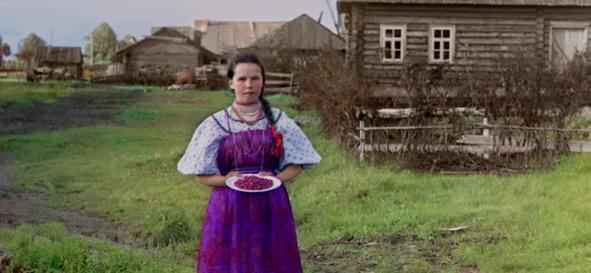
Pre-revolutionary Russia in color. Presented are photographs of Sergei Mikhailovich Prokudin-Gorsky, a Russian chemist, a student of Dmitry Mendeleev, an inventor and an innovator and photographer. Of the three black and white images drawn through the image filter, one is assembled, colorfully displaying the reality of the picture. This book presents reference images and text for which we, dear reader, are restoring a voluminous History. The undated photo shows a girl from a village in Central Russia. All in color. Help yourself to the berries. Presumably 1903
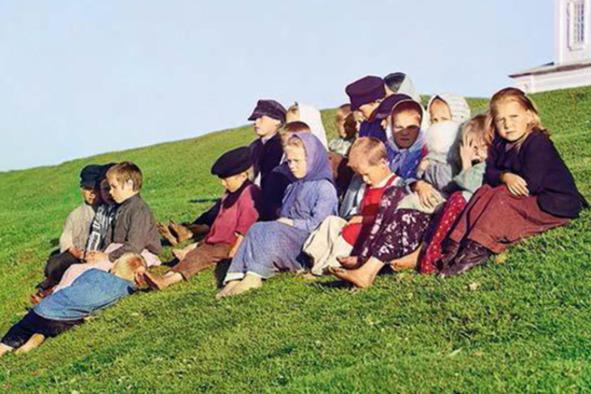
Peasant children on a hill in front of a snow-white temple. If the theory of reincarnation is correct, maybe they are you and me. Tver Province, 1909
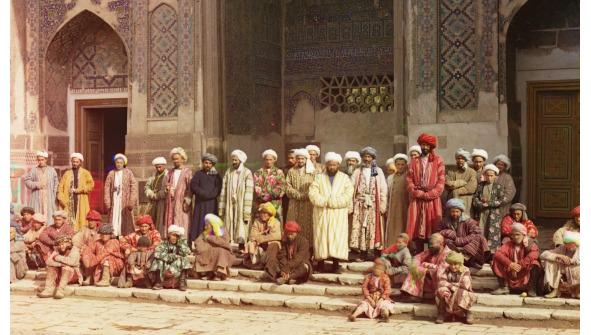
Part of the Russian Empire, Uzbekistan. The beginning of the twentieth century. From the second half of the nineteenth century, Asian peoples, very poorly adapted to European life, constitute 40% of the population of Russia. They are certainly good, but other people
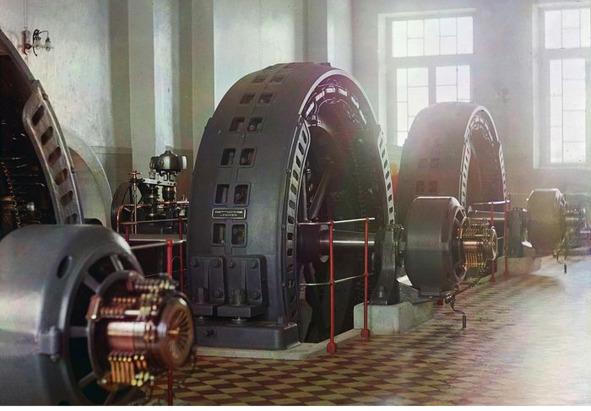
The Hinduкush Hydroelectric Power Station (present-day Turkmenistan), 1911. The hydroelectric power station was commissioned in the distant 1909, many years before the Bolsheviks declared it their own invention of the “electrification plan of Russia”. The machine room still looks impressive, like a shot from a science fiction film. The capacity of the power plant operating to date (2019) is 1.2 MW.
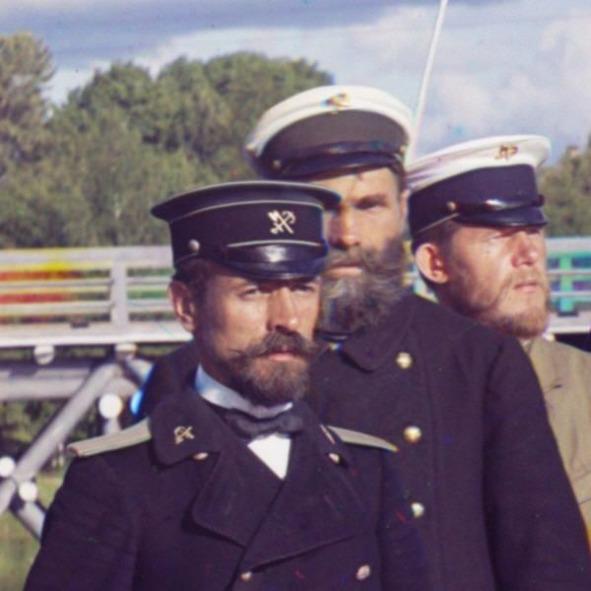
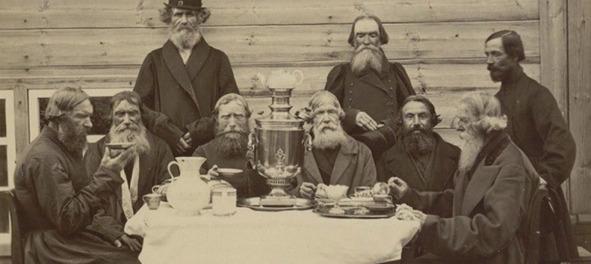
Employees of one of the river shipping companies of pre-revolutionary Russia. In the photo (1904) the phenotype, and even the imprint of the soul of the Russian person of the given time, is fairly fully represented. We see the conqueror, the suppressor of the proud and the leading philosopher of them. In less than 15 years, this ethnic group will be mowed out by another passionate, biblical nation. The main idea of the Russians is unity for the sake of something indefinitely great. In fact, the centralization of power, without feedback from the people entails many unpleasant excesses. These include, for example, the occupation of state command posts by representatives of alien nationality. Now Russian nobles are alien in Russia. These people communicate with each other in French, go to church as if for a colorful theatrical production, and consider 90% of the population a “mob”
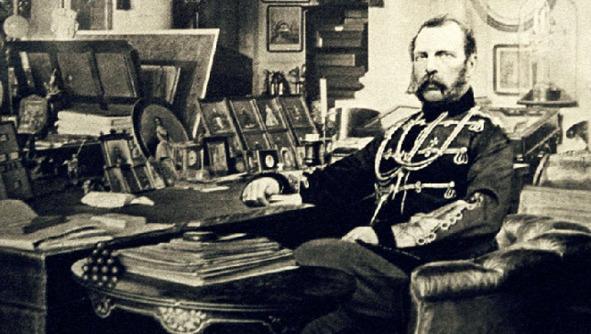
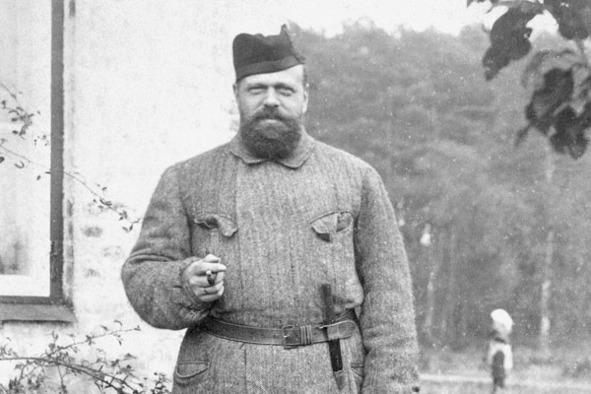
Photo — Emperor Alexander II (1818—1881) on vacation. The Tsar is known for the conclusion of the Parisian Peace that is beneficial for Russia (1856) as a result of the Crimean War, the liquidation of military settlements from the gendarme count Arakcheev, reforms in the field of self-government, the judicial system and education. The most famous actions — the liberation of the peasants from serfdom (1961) and the sale of Alaska. The Asian territories were annexed, the Polish uprising was suppressed (1863), the Caucasian War was completed (1867). The war with Turkey (1877–1878) brings freedom to the Christian peoples of the Balkans, but does not benefit Russia itself (at least as a moral satisfaction from gratitude). Alexander the Second dies in 1881, from a bomb by a terrorist of the Earth and Will organization. The tragic death causes catharsis in Russian society. The moral cleansing, the general rejection of terrorism, and not the “tightening the screws” by Alexander the Third, ensures a subsequent long peace. Alexander the Second points out that the need for the abolition of serfdom has matured, and “it is much better for this to happen from above rather than from below.” The emperor is offered a solution. Two thirds of the landowner’s possessions are pledged under the security of loans taken from the state. It is necessary to pay a small difference in order to buy them, to transfer the peasants attached to the estates of the state, and then release them altogether. But, such a brilliant plan of the state property manager official V. Kiselev, the tsar and nobility is rejected. It would be too much for ordinary people to be magical and clear. Get freedom in one moment, and even the estates of former feudalists to boot? Yes, so you can avoid a revolution, and the physical elimination of the nobility. The answer is no. The Manifesto of the 17 Acts “On the Most Gracious Gift of the Rights of the Condition of Free Rural Citizens to the Serf People”, which is difficult to understand, was made public on March 5, 1861 in Moscow. The main provisions: the peasants are freed, they are transferred their movable property, personal homes and buildings. From this point on, the master does not have the right to sell people, to relocate them, to force them to perform marriages at his own discretion. The landowner allocates field allotment to the rural society of the world (a kind of Soviet collective economy). The council of the community distributes land among the peasants at its discretion. Next, carefully. A person does not have the right to refuse a site taken within nine years, even if he could fully redeem it immediately. As long as the drawn up deed of sale has not occurred, the farmer is obliged to work off the serfdom or pay the rent. He is in a temporary state. For arrears, a house, movable property, but not a means of production — land and cattle — can be taken away. The peasant has the right to immediately give up the right to purchase the land. Then he gets a quarter of the established minimum put on and becomes free, even if without means of subsistence. If after nine years the head of the family refuses the land (5 dessiatinas for a peasant’s soul), he is released from obligations to the landowner and the state. When (no less than nine years later) the peasant feels ready to bear an increased financial burden, and wants to leave the plot, he turns to a government agency that pays the landowner a ransom. Down payment — 20% directly to the owner of the land. Since then, a person, on the one hand, has been tearing up legal relations with a landowner, buying himself and his family, on the other, he is in debt bondage. The borrowed amount has to be paid for 49 years, from 6% per annum. Have you understood anything here, dear reader? The general meaning is that the peasants give two and a half times the market price for their native land. Note: “official tithe” is a rectangle with sides approximately 160 by 60 meters, with an area of a little more than a hectare. Payments stretch until 1905, the time of the only up to now positive Russian revolution.
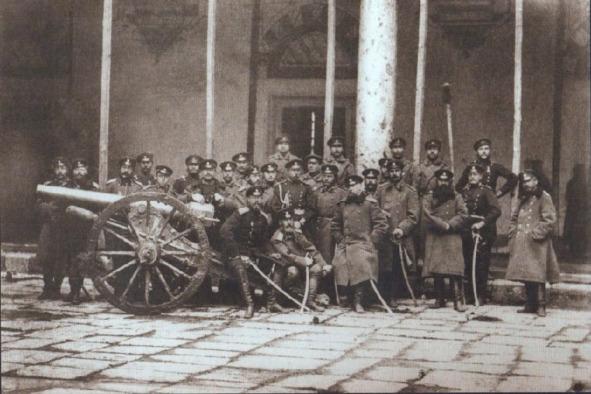
The photograph of the first Russian military correspondent A. Ivanov is the Guards Artillery Brigade of the period of the Russian-Turkish war of 1877–78. One of the officers seems strangely familiar to you. Is reincarnation a reality? … In this sharp confrontation Russia loses 45 thousand fighters, Turkey 100 thousand. The territorial acquisitions of the Russian Empire proper are minimal (part of Southern Bessarabia, Karsk region, part of present-day Armenia). At the end of the war, the battles of recent allies — Russia and Romania — will almost never take place. Alexander II, an ethnic German by the way, leads rather sluggish negotiations at the Berlin Congress (1878). As a result, huge chunks of the Asia Minor Empire are inherited, not directly related to this military conflict, by Austria-Hungary.
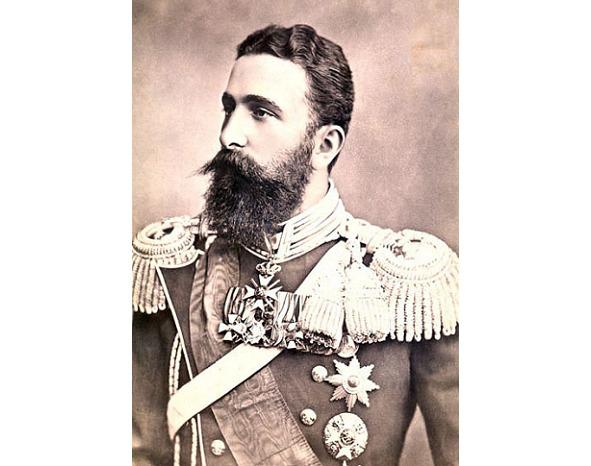
Photography — Alexander the First Bulgarian. The prince of the German dynasty Battenberg, and the general of the Russian army, with the suggestion of Alexander the Second, became the ruler of Bulgaria in 1879. In November 1885, under the new Russian emperor, Serbia, instigated by Austria-Hungary, declared war on Bulgaria. Two weeks later, Serbia is defeated. All this time in the territory of the Balkan Slavic countries liberated from the Ottomans, the special services have been fighting. The idea of Alexander the Third — of course, the inclusion of Bulgaria into the composition of his own Empire. The interests of the Bulgarian people themselves are not in the first place. Theoretically, the material release fee can be included in some open “payroll”. But this is done unpleasantly in secret, indirectly, without disclosing intentions. Of course, direct financial contributions in favor of the Russian wounded and the families of the soldiers-liberators could have been accepted by the Bulgarians. But, ascended to the throne, Alexander the Third seeks to entangle the entire national Bank of a sovereign country with enslaving conditions. The king makes the Bulgarians perform status, as now say the projects. This is not a completely effective railway to Russia, and all that. In August 1886, a group of pro-Russian (or, more precisely, it was Russian) officers organized the overthrow of Alexander Bulgarian. Further action is a mixture of terrorist, nationalist, and even openly criminal speeches. All movements of the Russian monarch can be seen through. They cause quite appropriate national reaction. After everything passed under Turkey, the Bulgarians want to take a sip of at least some real freedom. In the end, Alexander the Third, and at the same time, and, alas, Russia, is losing credibility in the once so friendly Bulgaria. The monarch’s mania leads, a quarter of a century later, to the fact that Bulgaria without any hesitation takes the side of the Fourth Union in the war against Russia
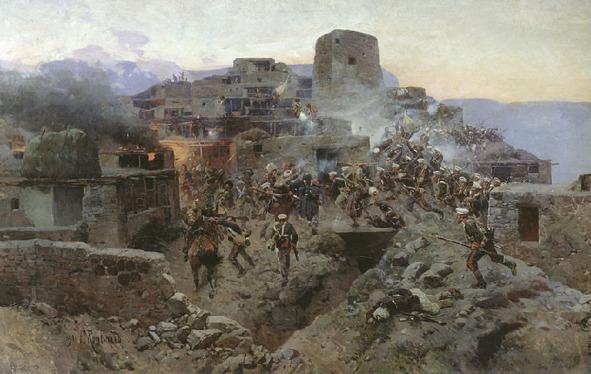
An expressive picture is the assault of the Dagestan aul Gimry by Russian troops during the Caucasian War. Winning this, lasting almost a hundred (or even two hundred) years of confrontation, succeeds only in settling out several hundred thousand incorrigible enemies of Russia from the Black Sea coast to the Ottoman Empire. Almost all wars with Turkey lead to the fact that Russia receives only hostile to it (and indeed, nevertheless, striving for the coziness of civilization, the Ottomans) the territories of the Caucasus and Transcaucasia populated by militant highlanders
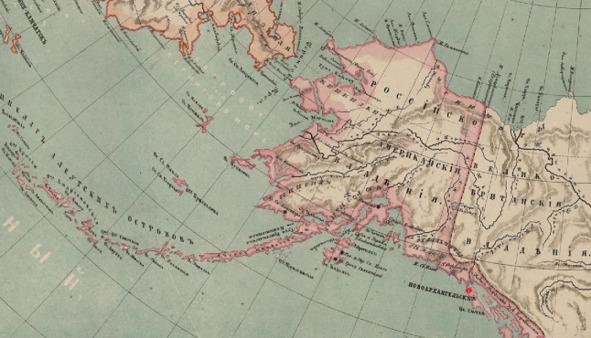
Sale of Alaska, a territory in North America, an area of half a million square meters. km., will be held October 18, 1867 issue price — 7.2 million dollars, the cost of a capital three-story building. The path of the proceeds in this way is determined by three equivalent versions. The first is that funds are received for the development of Russian railways. The second is that dollars migrate to the personal use of the king’s relatives. And third, the money goes to the bottom with the Orkney barge carrying it.
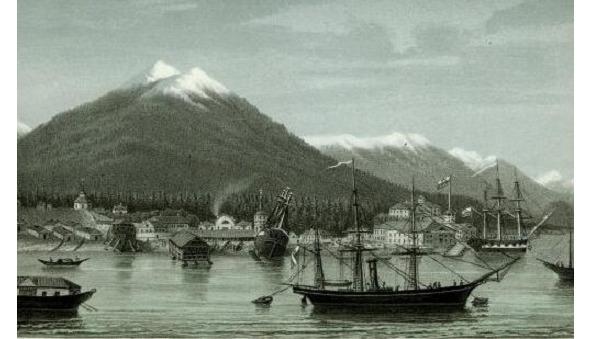
Novoarkhangelsk, the capital of Russian Alaska, lithograph of 1963. In these new territories, there was originally no classical serfdom or even police. Undoubtedly, Alaska could become for Russia the same as for Europe — a free colony, a mirror isolated from a stagnant metropolis field of democratic experiments. It has been argued that because of these overseas territories, a war between Russia and the United States could have flared up. However, firstly, Alaska and the United States are divided by a fairly large Canada. Secondly, the same could be indicated regarding any other areas bordering one or another Eurasian countries.
Well-developed sobriety Societies have appeared in Russia since 1958. These are amateur organizations of peasants, to some extent supported by the Orthodox Church. The main problem — the people of the “lower classes”, initially serfs, literally attributed to a particular pub. A person is simply obliged to drink a certain amount of alcohol to bring income to the state, local police and officials. The quality of alcohol and food (if there is the last in the tavern at all) is determined only by the conscience of the owner. Together to deal with this dependence is somewhat easier. In the end, the authorities who sent 11 thousand sobrials to exile understand that repression does not give the proper result. In 1963, Alexander II reformed the system of selling alcohol in such a way as to exclude the element of coercion from it. The quality of alcohol produced by all is increased. The revenues of the state controlling taxes and the composition of the bread wine also increase
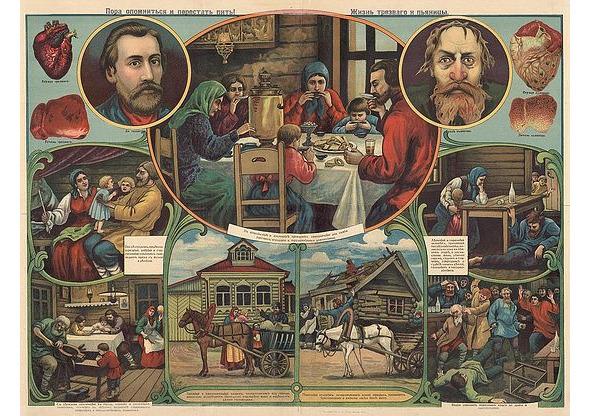
Since the 1880s, Russian sobriety societies have found a second wind. Such instructive comics spread among the peasants. Attitudes towards Societies of the authorities are ambivalent. On the one hand, a sober peasant is, in general, good. On the other hand, people in their own sanity, in addition to state circulars, who gather for self-education, music-making, reading, tea drinking, are suspicious as potential revolutionaries. Since ancient times, what the Russian people are doing independently and well, arouses in the central authorities a zealous desire to “keep and not let go.” In addition, a non-drinker has moral superiority over others. The idea of this state of affairs is simply unbearable for the representatives of the ruling class.
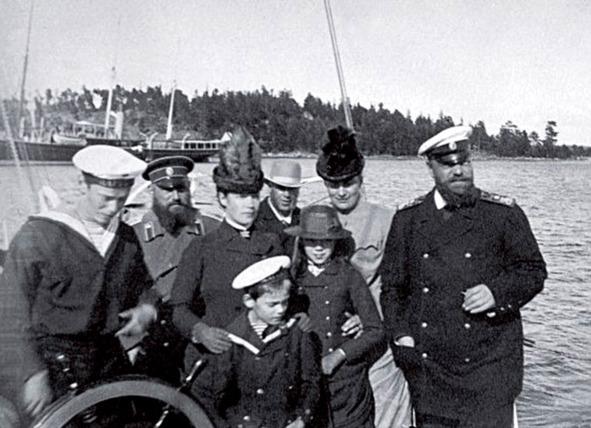
Alexander the Third’s family is on holiday in Finland. Finland is part of Imperial Russia, and at the same time virtually independent of any country. Revolutionary terrorists invariably receive here a reliable shelter and considerable financial injections. Despite all the privileges, and even a separate currency — the Finnish ruble, the northern state entity dreams of complete independence. At a critical time for Russia, Finland becomes the outpost of anti-government forces. Somewhat later, this country will show itself as a miniature fascist Germany
Alexander the Third — 99% German by blood. This state of affairs in Russia has been established since Peter the Third (1728–1762). At the same time, according to all the canonical rules, the Romanov dynasty should have been called the Holstein-Gottorp (the house of the Romanovs). Somehow this, not quite pleasant status quo, in the masses can be ignored. Inside Russia there are no brides for monarchs. The last Russian empress, Evdokia Lopukhina (1669–1731), was sent by her husband, Peter the Great, to the monastery (after which he would marry the completely un-born Lithuanian Martha Skavronskaya). The wife of Alexander the Third is Maria Fedorovna (patronymic, after the adoption of Orthodoxy in honor of the family icon), the daughter of the King of Denmark. Be that as it may, the monarch introduces high protective duties for foreign industrial goods, which contributes to the development of domestic industry. Another innovation of the emperor levels the first. This is the “Circular on the reduction of gymnasium education” (1887). The document instructs the principals of educational institutions (above the one-year village school) not to accept children from “ignoble strata of the population”: in this way “the gymnasiums and gymnasiums will be freed from the enrollment of children of coachmen, footmen, cooks, laundresses, small shopkeepers and similar people whose children, with the exception of those who are gifted with genius abilities, one should not at all strive for secondary and higher education.” In part, this idea comes from the chief procurator of the Holy Synod, the overseer of the church, Konstantin Pobedonostsev. The main idea is that students-raznochintsy are more than anyone inclined to revolutionary activity. Later, these office reflections are completely dispelled by noble students, such as V. Ulyanov, his elder brother, and the like. At the same time, Russia is deprived of social elevators, a multitude of loyal citizens, from the lower ranks, as well as enough qualified for high-tech wars of the future soldiers. Another circular of Alexander the Third encourages duels. The participants of fights, even serial killers, Breters, are exempt from punishment. According to the rule introduced by the tsar “On the trial of quarrels that occur in the officer corps” (1894), a person who refuses to accept the challenge is officially affected by his rights (he is obliged to resign immediately). Top commanders, in essence — the state apparatus, have the right to force subordinates, who may already be reconciled, to fight. Similar provisions are projected on nobles who are not military men. Speaking inner thoughts on society becomes a deadly affair. Whatever you say or do, there is always someone who does not like it. Nobles replicate the idea that Roman law is not important and stormy, leading to clarification of the truth of the debate. The one who shoots faster and more accurately is right
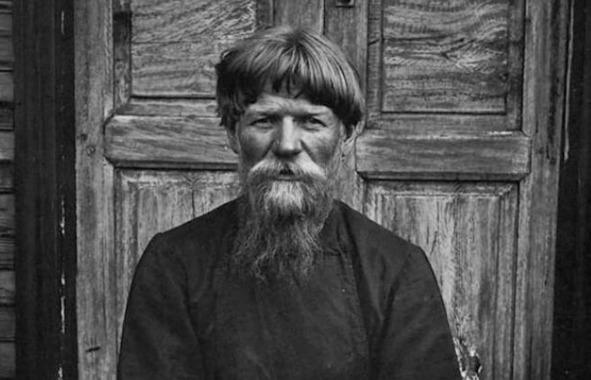
Nizhny Novgorod province 1982. The abbot of the Old Believers. Before us is a real Russian person. As is known, the Old Believers from far 1667, after the reform of ritualism and the cruel persecution for the faith of their ancestors, find themselves outside the bosom of the state church. On the one hand, the parishioners are free to choose the abbot of the temple, and are not dependent on the sovereign’s whims (like the one recognized by the blasphemer Peter the Great). This brings them closer to European Protestants, although Russian Old Believers hardly even suspect the existence of these. On the other hand, a hierarchy implying the conciliarity of parishes, perhaps a certain connection with the state, is important and useful. Full independence from society is fraught with the development of heresy. At this time, the Old Believers make up 8—10% of the population of Russia.
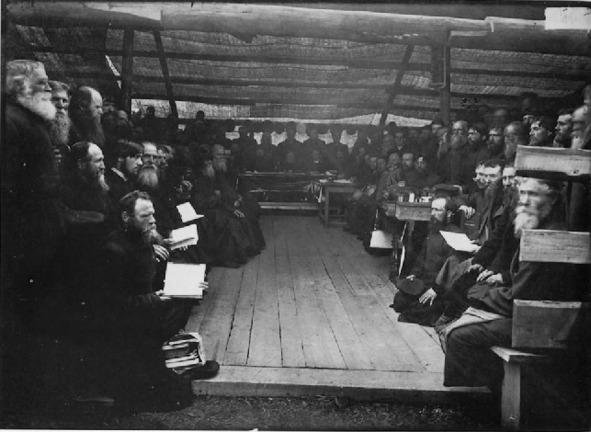
Ancient societies constitute communities, commonly referred to as “Concord” and “Talk”. On the foundation of the ancient faith are based similarities of the European monastic orders. Such, for example, are the Runners, they are Skrytniki or Podpolniki. The main idea is to break ties with a state hostile to them, the refusal to have a passport, pay taxes, etc. Alas, under Napoleon, in 1812 the old rite community shows itself as a community of collaborators. Subsequently, the Old Believers (of whom more than 90% among Russian millionaires), for a number of reasons, will quite actively manifest themselves in the preparation of revolutions. Photography — Old Believers study the holy scripture in one of their houses of prayer. The construction of full-fledged temples (with own money) is prohibited by the state. We see that in this case the content exceeds the form
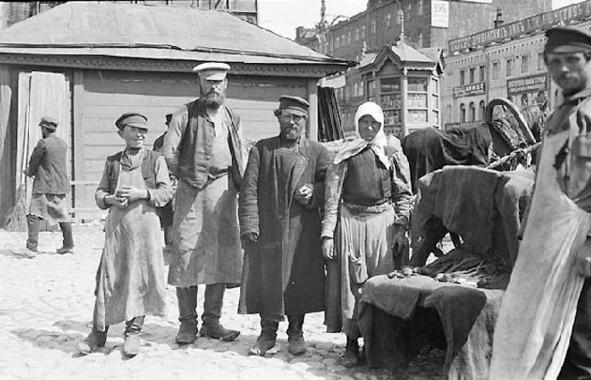
Moscow — 1909. Once upon a time, we lived, ate, drank… Yes, I recognize this funny boy in a long apron
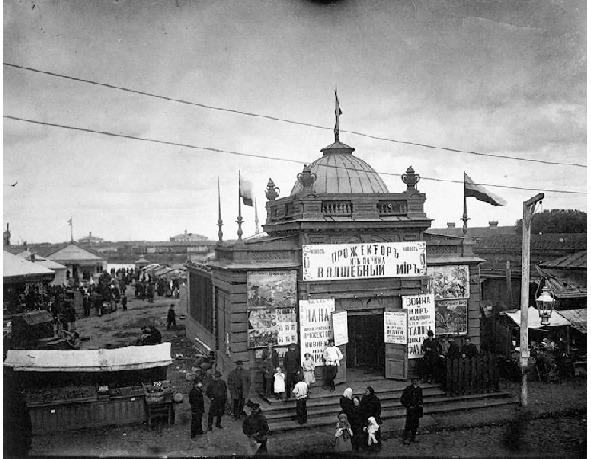
Now, 1896. Here is the cinema, it is the “Magic World”, in one of the cities of Russia. New entertainment for people from all classes. On a white canvas with a dazzling beam of light, pictures of another life are projected. Let’s try to feel the colorful time, to be embodied in the past, go inside, meet someone, and get tickets for a session… Already this night
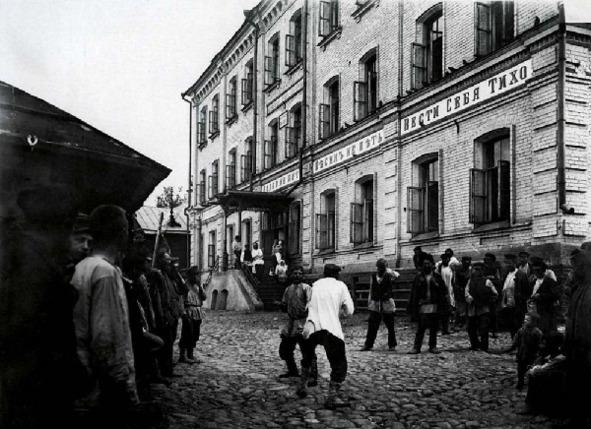
Nizhny Novgorod, presumably 1909. A scene from the life, a fistfight in front of the windows of a doss house. Behaving quietly turns out not always with us. By and large, there is no other kind of entertainment among the people, besides the cinema mentioned above — “The Magic World”. Society constrained caste system. Merchants, aristocracy, industrialists are not available even for the simplest of communication. If you try to say something, say hello, you will get a cold answer like a dog’s nose. Learn to be embodied in the past, friends — please tell everything in detail. It is very difficult to invent something, to open a business, to get rich — what is usually fun in Europe and America, for the “common man”. Among other things, even the word “rich” in Russia still has a clear negative connotation. The song, which you will surely hear from the fighters who have made peace under the windows of the hotel, on a deaf night — “There were happy days” (in our time — “Golden Ring”, listen) …Бывали дни веселые, Золотое кольцо, слушать
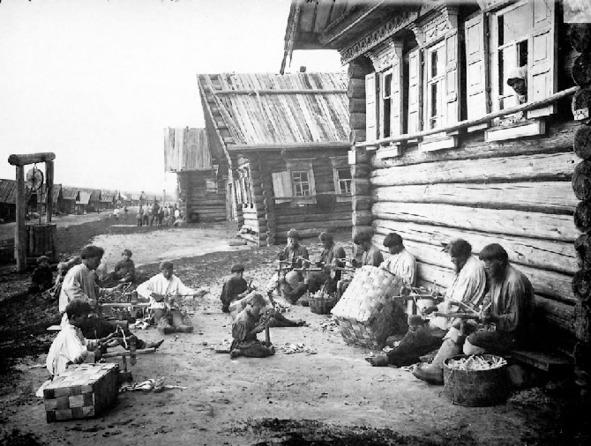
One of the villages of the Novgorod province of Tsarist Russia. The peasants organized a wooden spoons production association. Open-air production is a place for easy communication and creation of folklore works (songs, fairy tales, ditties). Hut, at least sometimes sagging, seem to be sturdy and roomy. Go beyond the ordinary mind. What if you go around the corner of the house? Songs that are sung here in the evenings, if you wish, you will now find them by keywords and hear them. “According to the wild steppes of Transbaikalia” (known since the 1890s), let the performer in our case be Jeanne Bichevskaya. She will perform for us “My dear little one” (1911). “The Glorious Sea — Sacred Baikal” (from the 1850s), the choir of trade unions in the city of Oryol, “A cook merchant rode from the fair” (1859). …“По диким степям Забайкалья”, “Миленький ты мой”, Жанна Бичевская, “Когда б имел златые горы”, Надежда Кадышева …слушать
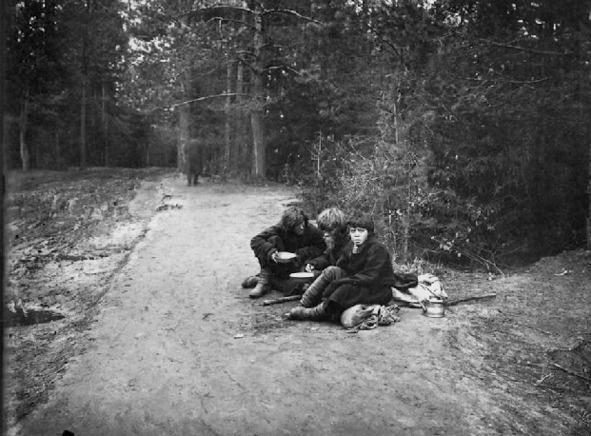
Vagrancy alone or in groups, from one eminent church to another, in search of a miracle, interesting conversations and food — an integral part of the pre-revolutionary Russia. Quite a few Russian writers of the new century, such as Maxim Gorky (Peshkov), have passed this way. Sometimes the church is a bottomless world that reveals your secrets. More often the temple is just such a building.
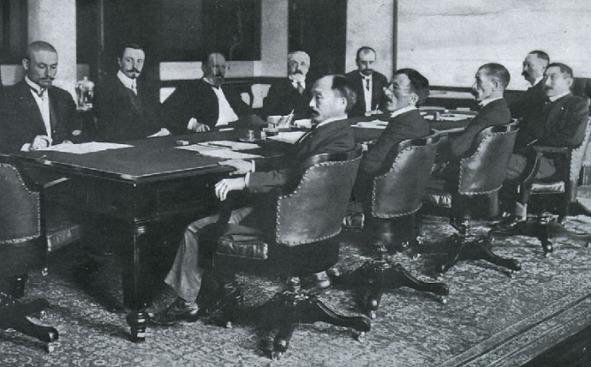
The Minister of Finance under Alexander the Third and Nicholas II — Sergey Yulievich Vitte. In a photograph taken in 1905, during negotiations with the Japanese delegation, he is third right in a row of representatives of the Russian Empire. Witte’s main idea is an economic “big leap” by any means. In 1897, Russian industrialists and merchants were deprived of protectionism by the state. Moreover, at the suggestion of the Dutchman Witte, it is foreign owners who now enjoy the benefits of doing business. The country is flooded with foreign capital. As a result, 90% of the country’s industrial enterprises are transferred into the hands of foreign owners. In the eyes of the original inhabitants of Russia, the state loses as much as the image of the majestic patriarchal family formed by Alexander the Third.
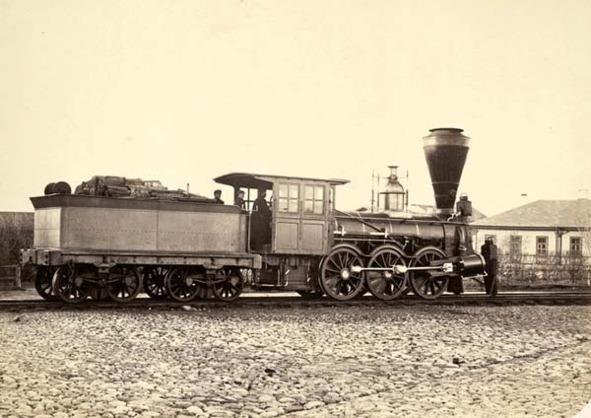
However, the industrialization of the country really has a place to be. The symbol of industrial growth (first place in the world in terms of development rates) is the railways. In a year, across the country, exactly where it is necessary, 2 thousand kilometers of railways are laid. The maximum achievement of the communist period, in the early 1950s, is one and a half thousand kilometers. Useless tracks like Salekhard-Igarka highway does not count. And, in the first case, the construction is carried out by the forces of self-confident, civilian workers, without false slogans, executions and torture. The photograph shows the locomotive “G”, which was produced for the Petersburg-Moscow railway in 1845—1849. abroad In 1860, this machine is upgraded. Since 1901, Russia begins to produce its own, quite high-quality steam locomotives.
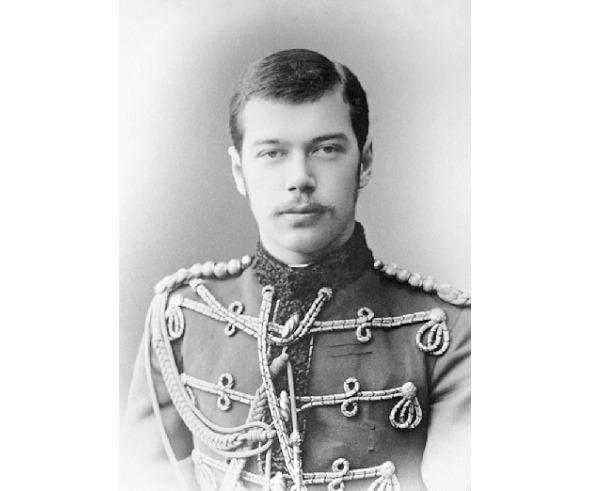
Nikolay Romanov, at the age of twenty, the future emperor of the Russian land. His favorite occupation is quite up to, probably a mature age — playing hide and seek with royal relatives. According to the characteristics of S. Witte “An insignificant, and therefore insensitive emperor. Loud phrases, honesty and generosity exist only for show, so to speak, for the royal exits, and within the soul is petty cunning, childish cunning, fearful deceit.” General Wrangel, the last head of the White Army: “The king had neither precisely defined vices, nor clearly defined qualities. He was indifferent. He did not love anyone or anyone.” The post of the leader of a nation, the emperor, the tsar is not so much a central element of the organization as an example for general imitation. Consciously, or unconsciously, society adopts the subtlest features of the image of a ruler. Russia at the beginning of the twentieth century is a fairly well-established technical state. But there is an acute lack of living water of love and understanding in it. When the level of this life-giving fluid reaches a critical lower point, people no longer sympathize with each other. The fire of war of all against all breaks out
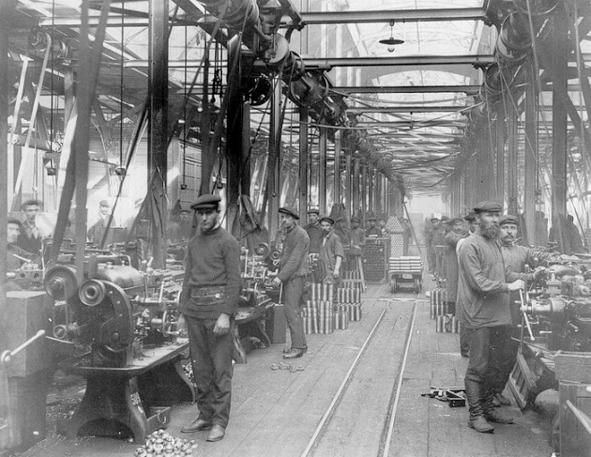
Putilov defense plant, St. Petersburg, the beginning of the twentieth century. Employees of defense enterprises earn up to 160 rubles a month, with an average salary in the country of 27 rubles. The length of the working day at state-owned enterprises is 12 hours, for a private trader, depending on his ideas about humanism, 12—16 hours. The pay of librarians, primary school teachers is 20 rubles, qualified mechanics, turners 50, doctors 80, officers, depending on rank, 80—500, governors 1,000 rubles. Military spending, reaching 30% of the budget, exsanguinates the country. They also become a source of a real internal threat. The price for renting a modest room is 3—5 rubles per month. Lunch, pancakes with caviar in a tavern, to the dump — 1 ruble, 0.5 liters of vodka 15—17 kopecks, potatoes 5 kopecks. kg., loaf of bread 4 kopecks., beef 25 kopecks, cheese 70 kopecks, black caviar 3 rubles 20 kopecks per kilogram. You can live. A cow, a horse, depending on the success of bargaining 40—80 rubles. Further, a shirt is 3 rubles, men’s boots are 7 rubles, a short fur coat is 15 rubles. If you want to attract beautiful women and live luxuriously: the accordion 7.50 p., Gramophone 20—40, a car without bells and whistles 2000 rubles. A chic Russian “Russo-Balt” series K (1909, see photos on the web) will cost the reader traveling by time with the power of thought 5,500 rubles. However, even a very well-to-do young worker, no matter what songs he sang, the chance to win favor with a noblewoman tends to zero
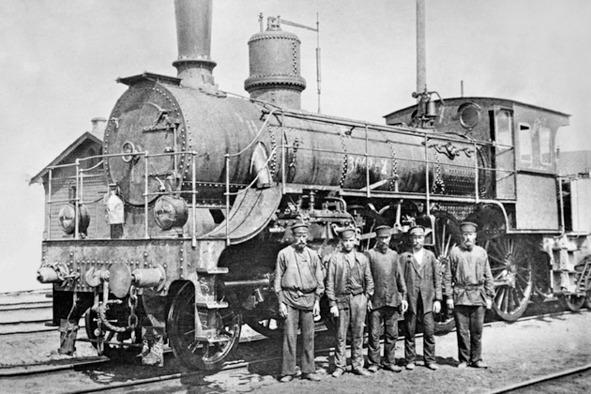
Be that as it may, the Russian Empire produces its steam locomotives, various railway equipment, warships, transport ships, airplanes, automobiles, artillery and rifle systems, electrical wires, pipes, … eventually, gramophones and gramophones, as well as all the necessary to the population hardware. The quality of goods is at a high European level. Railway workers (in the photo) are the elite of the working class. In subsequent revolutions, highly qualified, cohesive corporate ethics, secured “white collars” are reluctant to participate.
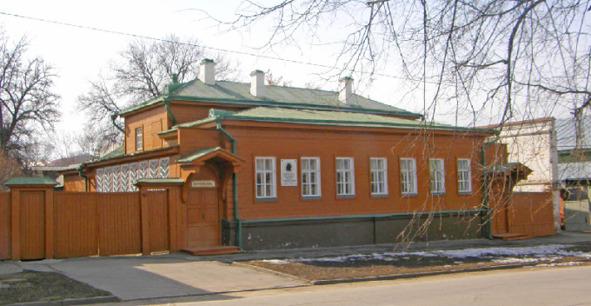
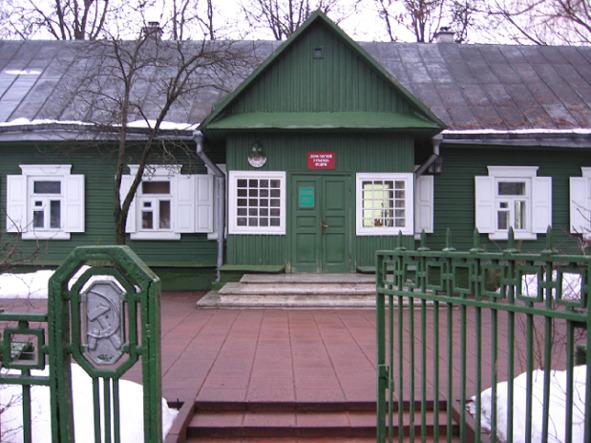
Vladimir Ilyich (or even Ivanovich) Ulyanov, later known as “Lenin”, was born in 1870. Hometown — Simbirsk, since 1924 — “Ulyanovsk”. According to the official history, Vladimir is the son of a serf peasant son in the village of Androsovo, Nizhny Novgorod province, and the daughter of a baptized Kalmyk. As is customary in such cases, the versions of the origin of any famous person are seriously different. The official Soviet historian, Marietta Shaginyan, claims that the maternal revolutionary grandfather is a Ukrainian. What is the “Ukrainian” in the Russian Empire? Other researchers put forward versions of the Russified German or the Jew — Alexander Blanca. The true parent of the number two Ilyich may be the home doctor Ulyanov, abandoned by all, and blind by the end of his life, Ivan Pokrovsky. Be that as it may, Ilya Ulyanov, the nominal father of Lenin, moves up the career ladder, and is seeking the rank of state councilor (major general). This status allows you to grant hereditary nobility to all family members. Photography is the house-museum of Ulyanovs. What is it like to imagine Lenin, to pull the door handle towards yourself? To adjust, see the photos of the interior. You have this opportunity. The revolution is understandable. But what could revolutionaries present as the final result of activity? Futuristic utopias in Russian literature — the cat cried. Is, Chernyshevsky’s novel “What to do?”. Volodya Ulyanov read. The fourth dream of Vera Pavlovna: “… But now, the work is over, everyone goes to the building. “We will enter the hall again, let’s see how they will have lunch,” says the older sister. They enter the largest of the huge halls. Half of it is occupied by tables, — tables are already laid, — how many are there! How many diners will there be? Yes, a thousand or more people: “This is not all; to anyone, they dine especially at their place”; Those old women, old people, children who did not go out to the field prepared all this: “to prepare food, do housework, tidy up the rooms is too easy work for other hands,” says the older sister, “it should be done by those who have not yet can or cannot do anything else.” Great table setting. All aluminum and crystal; in the middle lane of the wide tables are arranged vases of flowers; the dishes were already on the table, the workers came in, everyone sat down for dinner, and they, and those who prepared dinner. “And who will serve?” — “When? during the table? what for? After all, only five or six dishes: those that should be hot, put on such a place that does not cool down; you see, in the hollows there are boxes of boiling water, “says the older sister. “You live well, you love a good table, do you often have such a lunch?” — “Several times a year.” — “They have this ordinary: anyone, he has a better, whatever, but then a special calculation; and who does not demand for himself much against what is being done for all, so there is no calculation. And so it is: that everything can be done according to the means of his company, for which there are no calculations; for each particular thing or whim — the calculation. “This is all instructive reading. There is a future planet. Eat together. With aluminum cookware. Work together. Conflicts over partners, money, and who does not have to take out the trash. There are no unusual desires. There are no risky projects. There is no war. Populated by robots
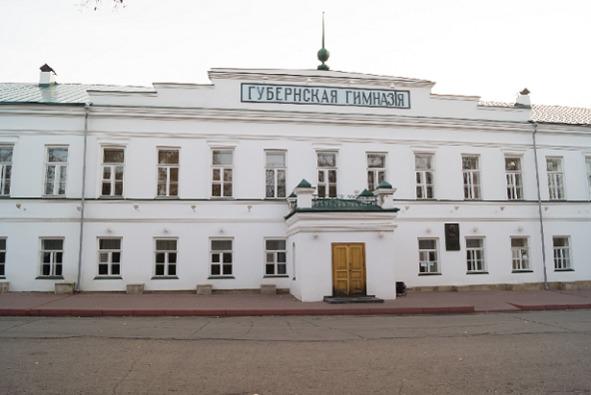
In 1879–1887, the future Lenin studied at the Simbirsk gymnasium presented in the photograph. He ends his studies with a gold medal. Then Vladimir Ulyanov enters the law faculty of Kazan University. It should be noted that training in gymnasiums and universities of Tsarist Russia is conducted in order to select all free time and energy. Ancient Greek, Latin, two foreign languages, and much, much more are being studied. Ulyanov shows extraordinary successes, as he literally quotes Cicero’s speech against Catiline. Practical knowledge is taught on a residual basis. Students are deprived of the opportunity to frolic, communicate with girls, enjoy life and be somehow grateful for this happiness to the state. At the age of 17, including, under the impression of the execution of his brother, a romantic and essentially non-existent terrorist, Vladimir leaves Christianity. Then he enters the organization “Earth and will.” This group is headed by a certain Lazar Germanovich Bogoraz (from a rabbinical family, nominally a “cross”). There is no relief information about the personality of this extraordinary person, the spiritual father of the “leader of the proletariat”. Christianity becomes for Vladimir only at best, the subject of scientific study. In the last years of his life, Nathan Bogoraz headed the Museum of the History of Religions in Leningrad. It is interesting that after the death of a revolutionary — a potential killer of the monarch, Lenin’s mother is paid a state pension for her deceased husband — 100 rubles. Moreover, Vladimir Ulyanov externally enters the law faculty of the Imperial St. Petersburg University. Such a state of affairs is unthinkable in the country of the victorious Revolution — where the relatives of the repressed are subject to destruction, or at least are affected in their rights. The photograph shows the building of the educational institution where V. Ulyanov studied in 1879–1887.
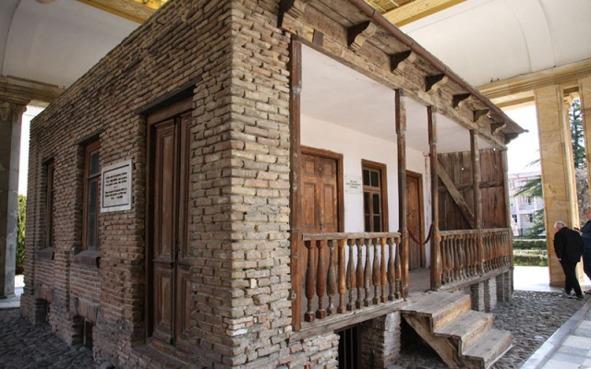
The house of Joseph Vissarionovich Dzhugashivili, preserved in the Stalin Museum, Gori, Georgia. Modern photography. Birth — December 21 or 18, 1978, Gori, Tiflis Province of the Russian Empire. Father — Vissarion (Beso) Dzhugashvili, a shoemaker by profession. A certain national group is engaged in this craft in Georgia. The surname “Dzhugashvili” literally means “the son of a Jew.” The term “juga” means the essence of “iron sold by a Jew”, or simply “Gorsky Jew”. The name “Joseph” is also definitely running Semitic. Rumors are widespread that Stalin’s parent number two is a researcher from Eastern countries, a Russian officer, Nikolai Przhevalsky. But, an insightful reader need only look at the photo of Vissarion to see the family affinity. The photo of Vissarion-Beso is not given in the book due to its negative effect. The mother of the future leader of nations is Yekaterina Georgievna… a laundress, an embroideress, house attendants. Actually, since Catherine (Keke) is not Jewish, then, according to the provisions of the Torah, her son cannot be considered a full-fledged Jew. Some time Dzhugashvili Jr. suffers from beatings in the family, is found with the company of hooligans. Then the teenager is sent to the Gori religious school. After graduating from it, a potential priest passes exams at Tiflis seminary. Song of Time — “Suliko” in Georgian (listen) …“Сулико” на грузинском, слушать
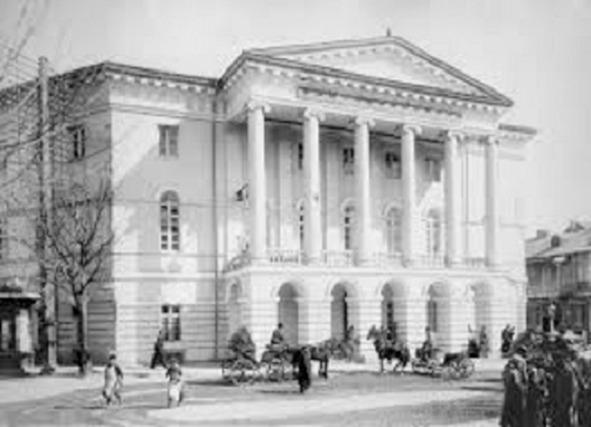
Tiflis (Tbilisi) Theological Seminary, the beginning of the twentieth century. Now it is a museum of art history. Much later, Joseph Stalin himself testifies in an interview with the German writer Emil Ludwig: “Out of protest against the mocking regime and the Jesuit methods that were in the seminary, I was ready to become and really became a revolutionary, a supporter of Marxism…” Institutions were so bad, or is it the slander of a supporter of Karl Marx? Let us recall in memory the Essays on Bursa, the Russian realist writer Nikolai Pomyalovsky. What happens in a school that prepares spiritual “… A party of about twenty people is going to, and they sneak through the courtyard into the class of parish pupils on November evening. … The parishioner, also sitting in the vestibule, didn’t expect anything., scatter the lean and skorimnye, skits and cuffs. Who beats? For what beats? God knows them and the devil wears them!.. Cry, cry, beating babies! On the desks and under the desks destroyed unhappy young parishioners. It hurts her. In these wild beatings of wickedness committed in the dark, there was, on the one hand, some kind of ridiculous prowess: “Get rid of your shoulder, swing your fist!”, And on the other hand, “Tremble, come, and submit!”. We see something similar in other works by Russian writers, such as the beginning of the “Viy” by N. Gogol (Kiev Seminary) … In the end, despite the desire to see her son as an Orthodox priest, Ekaterina Georgievna takes her son from school
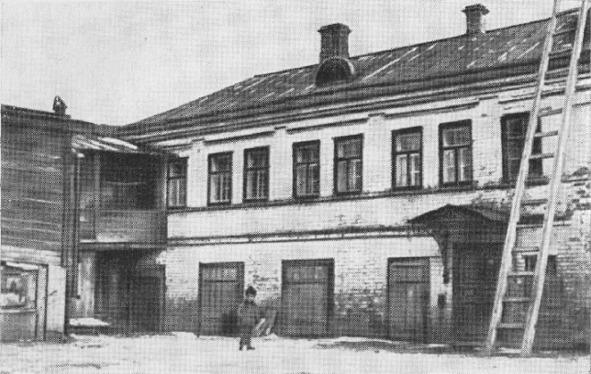
Jacob Sverdlov, also known as Eshua Solomon Movshevich, was born in Nizhny Novgorod on June 3 or 4, 1885. It is interesting that since 1902 the elder brother of Sverdlov became the adopted son of the famous Russian writer Maxim Gorky (Peshkov). Since 1916, for a number of good reasons, Zinovy becomes a French officer, says goodbye to Russia, builds a career, and about his first family, literally: “… he does not want to know anything.” The second brother of Sverdlov, Veniamin, a party functionary, was shot in 1938 by the verdict of the Military Collegium of the USSR Supreme Court as a Trotskyite. Jacob himself, the future “demon of the revolution” ends four classes of the gymnasium, is learning pharmacy business. In 1903, he became a professional revolutionary, a Bolshevik. The photo shows the birthplace of the Sverdlov family, the beginning of the twentieth century.
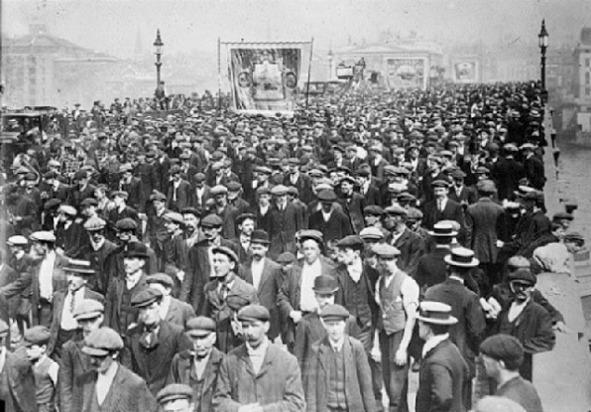
The workers of sunny Australia hold together rallies and, by a distant bright day, on April 21, 1856, seek to reduce the working day from 12 to 8 hours. Wages remain the same. It turns out, by the way, that the country’s economy is a state of affairs in which people spend more money on a cultural and pleasant pastime, is only good. In 1886, the example of overseas colleagues followed by American workers. Called by the Knights of the Order of Labor, one of the workers’ parties, organized according to the principle of the Masonic Lodge, 40,000 protesters take to the streets of Chicago. Police disperse the crowd. Unrest resumes with a new force after the dismissal of thousands of protesters. Police open fire and kill six people. The next day, on the evening of May 4, a bomb flies from the crowd to constables. According to some, this is a police provocation, with the aim of veiling the case of the previous shooting of the protesters. One cop dies. Guards of the order shoot indiscriminately at everything that moves, and kill about forty demonstrators. As a result of the “friend fire”, or including the protesters ‘shots, six policemen are killed. A person with an explosive device can not be established. However, four people are sentenced to death. Such rigidity in relation to people who are not the direct killers of the policeman makes a deep, dual impression on society. By and large, simple American workers win. Most of their requirements, rather sooner than later, are met. However, such overtly extremist appeals as “Destroy the animals in human form, calling themselves authorities! A merciless death to them!”, Representatives of workers’ organizations no longer spread. In 1889, the First Paris Congress of the Second International decided to hold demonstrations on May 1 of each year. The Day of International Solidarity of Workers is celebrated annually in 142 countries of the world. Photography — manifestation on Haymarket Square, Chicago, early May 1886
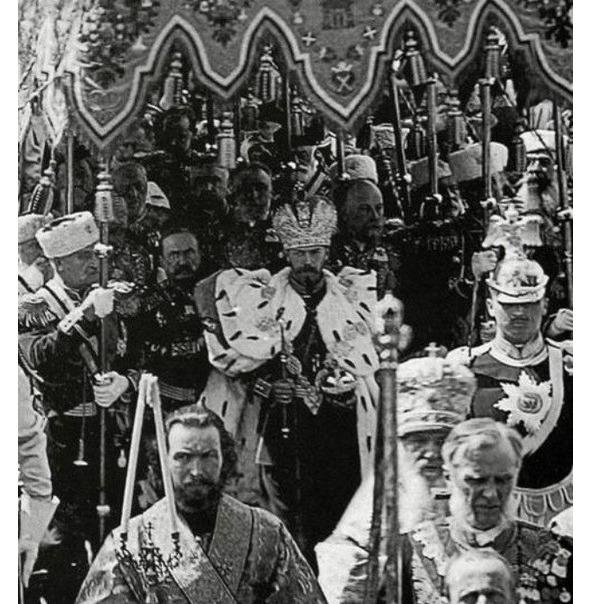
The coronation of Nicholas II Alexandrovich and his wife, Alexandra Feodorovna, will be held on May 26, 1896 in the Assumption Cathedral of the Moscow Kremlin. Before the beginning of the ceremony, Nikolai sits on the throne of Tsar Mikhail Feodorovich (first in the Romanov dynasty), the empress-mother Maria Fedorovna — on the throne of Alexei Mikhailovich Tishayshy (father of Peter the Great), Alexander Fedorovna — on the throne of Grand Duke Ivan the Third (Great). Photography is a solemn procession near the walls of the Assumption Cathedral. A total of 100 million rubles are spent on the coronation of the seemingly immense and indestructible Empire.The new emperor is married to Victoria Alice Elena Louise Beatrice of Hesse-Darmstadt, daughter of the Grand Duke of Hesse (German Empire) Ludwig the Fourth and Duchess Alice, daughter of the English Queen Victoria. Wedding and honeymoon occur less than a month after the death of Alexander the Third, November 26, in an atmosphere of mourning and memorial services. Spouses have children – four daughters and, a patient with hemophilia, son Alex. Alexandra’s relationship with the imperial court does not add up. The Empress considers herself infallible, and intolerant to the opinions of others. A born Danish woman, popular in the light of Alexander the Third’s widow, does not like the Germans (who at one time brought a lot of suffering to her historic homeland). This feeling extends to the sister-in-law. At one time, he did not approve of the fascination with the German and the emperor-father. Nicholas insisted on choosing, threatening to abdicate the throne and accept the monastic rank. Nevertheless, having become a monarch, and not a monk, the young emperor points out about the “inadmissibility of senseless dreams of the fate of representatives of zemstvos in the affairs of internal administration.” Speech “anointed” is accompanied by applause. But this performance becomes the benchmark for the rise of general discontent.
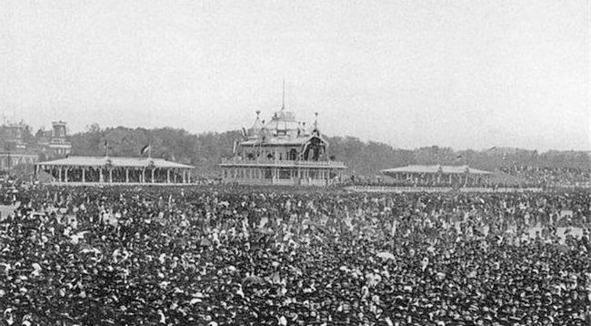
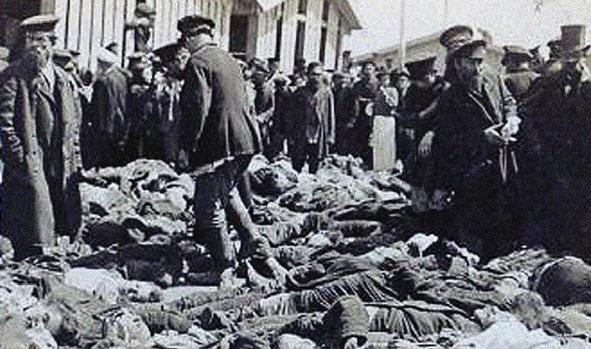
На фотографии — Ходынское поле перед началом празднованияAfter 4 days, May 30, solemn events are organized on the Khodynka field. For the people prepared gifts. Gingerbread cookies, a pound bun, sweets, 200 g of sausage, nuts, raisins, prunes and a porcelain cup are wrapped in a calico scarf. At five o’clock in the morning on the field of one square kilometer from 500 thousand to 1 000 000 people gather. A rumor is rolling that the bartenders are handing out gifts to “only their own.” The people rush to the wooden buildings, 1,800 police officers are unable to contain them. The direction of flow is along the ravine and pits left over from the dismantled pavilions. People fall into the hollows, all new human waves roll over them. The death toll, according to official data — 1383 people, according to unofficial — 4000. In addition, about one and a half thousand are injured and mutilated. By noon, the crash site is cleared of traces of drama. At two o’clock Nicholas II arrives, he is met by new crowds and sounds of the orchestra. In the evening, the festivities continue in the Kremlin Palace. Then the crowned spouses dance at the ball of the French ambassador. For reasons of the king, although the Khodyn catastrophe is the greatest misfortune, it should not darken the bright celebration of the coronation. Entry in the diary of Nicholas II; “I found out about this at 10 1/2 am before the Vannovsky report; disgusting impression left of this news. … Going around the tables, we left for the Kremlin. … Let’s go to the ball to Montebello. It was very nicely arranged, but the heat was unbearable.” On the photo — Khodynskoe field before the start of the celebration
The imperial family donates 90,000 rubles to the victims and 1000 left after all the banquets, bottles of Madeira. The principle of building a relationship of the royal family with the people will be presented from the correspondence of Alexandra Feodorovna with her grandmother, the British Queen Victoria. Victoria: “I rule for more than 50 years, and, nevertheless, I have to think every single day about what I need to do in order to preserve the love of my subjects and make it stronger… Your main duty is to win their love and respect.” Alexandra Alice: “You’re mistaken, dear grandmother. Russia is not England. Here we have nothing to do to deserve the people’s love. The Russian people worship their king as a divine creation. “Photography — victims of the crush on Khodynka. To the beat of time — on the search bar the hymn “God Save the Tsar” (listen) …“Боже царя храни”, слушать
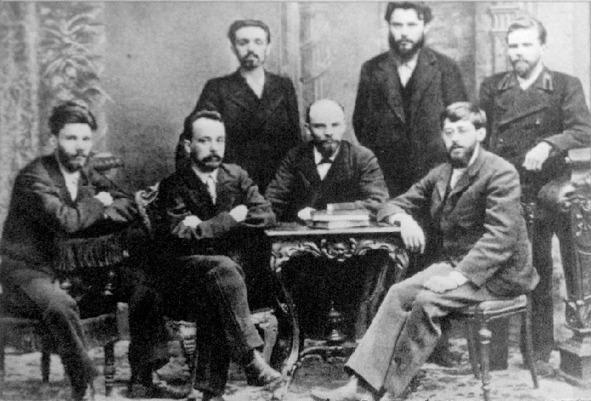
The first congress of the future RSDLP — the Russian Social-Democratic Labor Party will be held in 1898, in Minsk, in the safe house of one of the railway employees. There are 9 delegates from the “Unions of struggle for the liberation of the working class” of several large cities of the Empire, as well as the “General Jewish Workers’ Union in Lithuania, Poland and Russia” (Bund). The congress was initiated by Peter Berngardovich Struve, son of the Astrakhan governor, philosopher and Marxist. If it is interesting to you, in 1918, with the beginning of the Red Terror P. Struve leaves Russia across the Finnish border. In emigration, he censured the tsarist government with foaming at the mouth for the gentleness he showed towards revolutionaries. Lower row, from left to right: V. Starkov, the future trade representative of the USSR in Berlin, G. Krzhizhanovsky, compiler of the Electrification Plan of Russia (GOERLO), Deputy Commissar of Education, V. Ulyanov and Y. Martov (Tsederbaum). The latter, since 1918, has sharply criticized the Bolshevik leadership for its lack of democracy and cruelty, and condemns the shooting of the royal family. Tribesmen to criticism did not react. In 1920, terminally ill with tuberculosis, Julius Martov moved to Germany
Photography is the home of Pavel Rumyantsev, a railway worker who sympathizes with the revolutionaries. This one, presumably, a fairly well-off worker, does not participate in the meetings. Meetings are held under the guise of celebrating the birthday of his wife Rumyantsev, Olga. The establishment of the RSDLP is already celebrated with a festive dinner — with libations, toasts and songs. The manifesto of the new party says: “Both the movement and the socialist direction, the Russian Social-Democratic Party continues the work and traditions of the entire preceding revolutionary movement in Russia; setting the most important of the immediate tasks of the party in its whole — the conquest of political freedom, social democracy goes to the goal, clearly outlined by the glorious leaders of the old “People’s Will”. But the means and ways that social democracy chooses are different. Their choice is determined by the fact that it consciously wants to be and remains a class movement of organized working masses. She is firmly convinced that “the emancipation of the working class can only be his own business,” and will consistently align all his actions with this basic principle of international social democracy. Long live the Russian, long live the international social democracy! “Comrades, to tune in to the wave of time — the Internationale (listen). I ask everyone to stand up. … Another couple of glasses and, suppose, the host of the house, Pavel Rumyantsev, timidly approaches the festive table. “Tell me, honestly, for whom are you doing all this? Do you really love us, the workers? Can I sit next to you?”
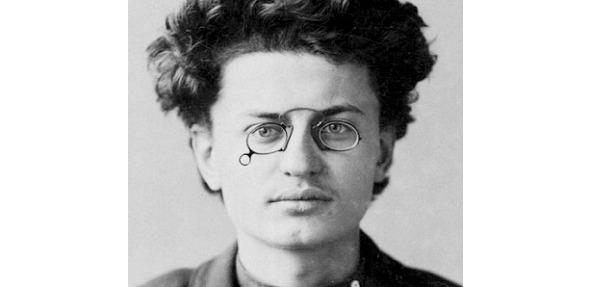
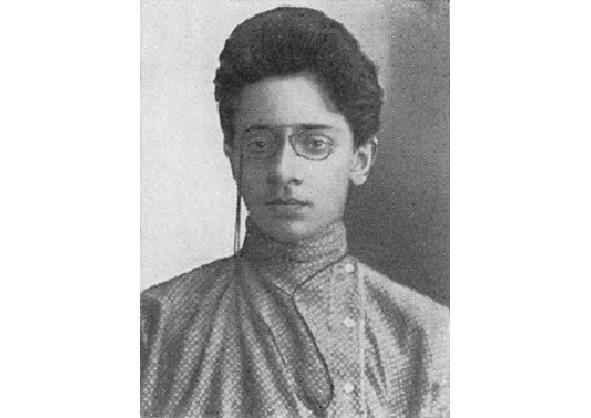
Lev Davidovich Trotsky (Bronstein), the future world-famous revolutionary, Lenin’s ally, the founder of the Red Army. Birth — 1879, November 7, the village of Yanovka, Kherson Province. Information about any profession Bronstein, practical, working activities, no. At the end of school education (Nikolaev), Trotsky, outside of any work experience, declares himself a friend of the proletariat, a professional revolutionary. Now, when Ulyanov-Lenin speaks at the First Congress of the RSDLP, he is 19 years old. Leib Bronstein is busy reviving the South Russian Workers’ Union. Soon he will be sent to Siberia for four years. The royal link is not a gulag. Soon enough, Trotsky escapes, not protected by guards and rows of barbed wire. In Europe — Vienna, London, articles written by Bronstein during his wanderings around Siberia have already gained popularity. Revolutionary becomes one of the editors of the newspaper Iskra
Jacob Sverdlov (Eshua Solomon Movshevich). Persistently scribbling on the violin, communicating among themselves in the spirit of the Torah, regularly, and attending the synagogue on their own, the Jewish boys have an advantage over the boys of all other religious denominations of Russia in organizing their own destiny. In this photo, our hero is 29 years old. By the time of the first congress of the RSDLP, Jacob is 23 years old. The first task from the party is the leadership of the Urals and, note, the Ekaterininburg committees of the RSDLP (b). The largest Motovilikha cannon factory in the country is enveloped in a fiery revolutionary spirit. One of his employees, Gabriel Myasnikov, will later become the murderer of the last de jure Russian emperor, Mikhail Romanov.
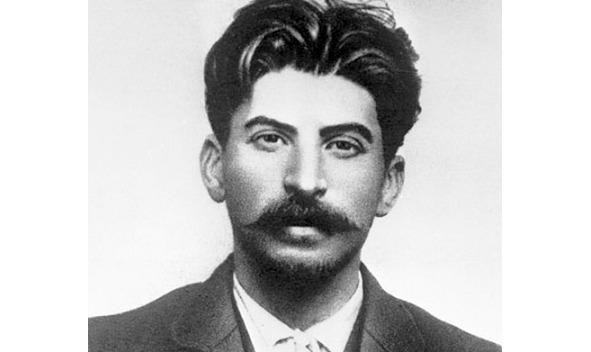
Upon exclusion from the seminary, I. Dzhugashvili receives a certificate that he has completed four classes and can work as a teacher in elementary public schools. For some time, Joseph has been working as a tutor, and even an “observer-calculator” at the Tiflis Physical Observatory. Actually, this is the entire experience of practical, generally useful work of the future leader. Even at the seminary, Dzhugashvili led the propaganda of Marxism in the workers’ circles, from a certain moment he began to receive money for it. Since 1901, now Koba (nickname — after the name of a romantic Georgian robber) goes to the illegal position. The first undertakings of the revolutionary — the publication of the newspaper “Struggle” and the organization of a large-scale strike of oil workers in Baku (1904), can be considered productive. Since 1903, the time of the Second Congress of the RSDLP, Stalin is a recognized revolutionary, now a “Bolshevik”, and spends most of his time abroad. Foreign voyages alternate with links — by the standards of the Stalinist GULAG “childish,” a few months a year, with the ability to run whenever they like. In 1906, Dzhugashvili was apprehended by a tragedy — the death of his wife, Catherine (Svanidze), from typhus, 8 months after the marriage. The personality of a revolutionary undergoes irreversible changes to excessive rigidity and asceticism. The son, Jacob, later nicknamed Stalin’s “Teen Wolf”, was raised by his mother’s sister until 1921. In March 1917, under a general amnesty from the organizers of the February Revolution, Stalin arrives in St. Petersburg
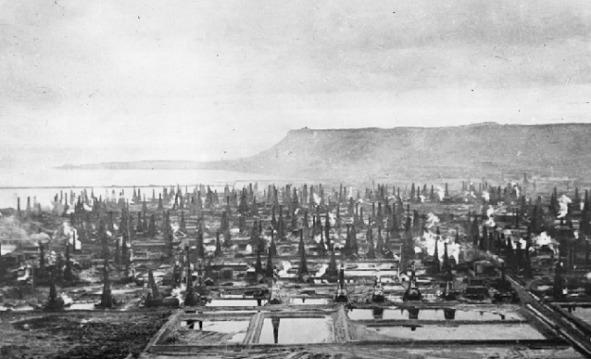
At the beginning of the twentieth-century turbulent exhaust gas, 95% of Russian and more than 50% of global oil production falls on Baku. The tycoons registered in Russia — Nobili, Rothschilds, Mantashevs (Russians of Armenian descent), make huge profits. Sometimes they donate to theaters and museums, but the “simple man” is outside the scope of their understanding. Meanwhile, the salary of a worker does not reach the ruble a day, he has to work and live in terrible conditions. The photograph depicts something resembling the landscape of Mordor — a forest of oil rigs and swamps of earthen tanks filled with oil. The wells are poisoned. For drinking you have to collect rainwater. Unpaid overtime work, 12—15 hour working day, endless fines, dwelling-barracks with rooms for 80 people. Such a tremendously low level of life, on the one hand, devalues life, on the other hand, makes possible the solidarity of representatives of thirty nationalities, ensures readiness for struggle. … Cossacks called by the authorities dispersed a 40,000-strong mob, killed 8 and wounded 40 workers. Workers, in turn, are detrimental to businesses. In the end, the first collective agreement is drawn up in Russia. A 9-hour working day is established, wages are raised to one ruble. Such a thing as a four-day paid vacation is realized as something fantastic before. The tsar’s reaction is interesting, according to one of the government documents: “… the pliability shown by the oil owners… drew the attention of his imperial majesty the sovereign emperor, since this compliance may have extremely adverse consequences on other factory and factory districts”