History of Antiquity
Sumerians. Ancient Egypt
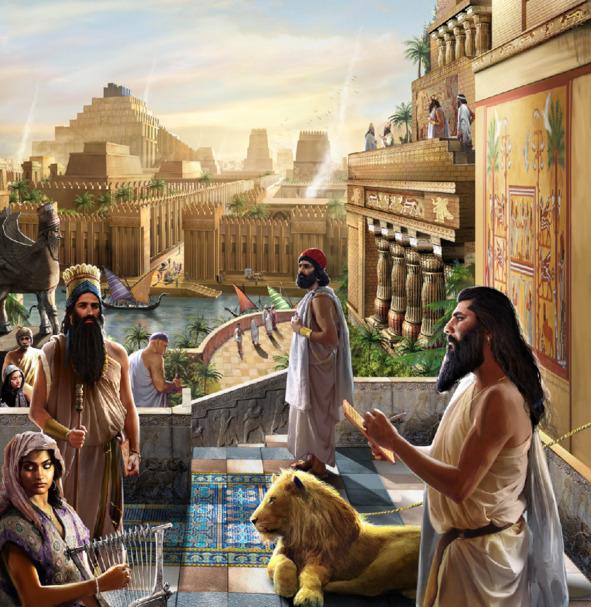
Ancient Babylon. Artistic painting. Once upon a time, ate and drank…
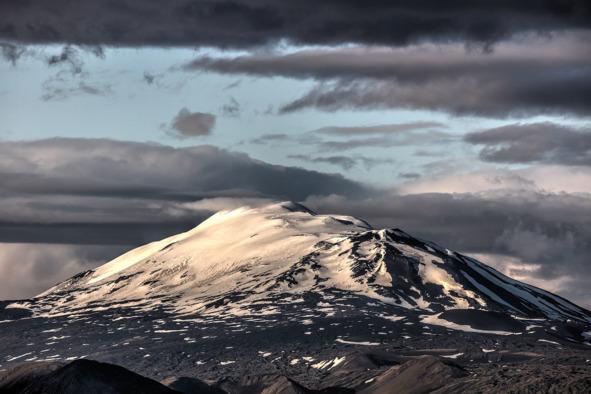
…Sumerians. Four and a half thousand years ago. Territory of southern Iraq. Cuneiform, the world’s first wheel, brewing. First, Babylon was formed as a small village. Sumerians dissolve into new peoples. But their withered blood gives new, wonderful shoots. The Babylonian kingdom rises, flourishes for several centuries, then it is ravaged by the Hittites (the area of residence is the south of modern Turkey). The Hittites are at war with Egypt, seizing its province, but unable to survive the bronze collapse — a sudden loss of writing and skills, possibly under the influence of the eruption of the supervolcano Hekla, lose to the «sea peoples» who came from the Balkans and Asia Minor.
From a modest nome, i.e., the rural settlement of Ashur, in the center of modern Iraq, the great power of antiquity, Assyria, is developing. Piece by piece, exuding bloody drool, it engulfs the territories of modern Turkey, Syria, Israel and partially Egypt. The pearl of Assyria, Babylon retains autonomy from its once province, seeks allies, revolts, dies and rebuilds again. In the absence of strong garrisons, shouts, swords, chariots, whips and overseers, military power in the new provinces simply does not work. Assyria gets tired of fighting. Descending from the northern mountains, at first as loyal allies, even more ruthless and uncultured Scythians wander through its territory, almost without encountering resistance. Media and Babylon are gathering armies according to the Assyrian model, destroying the new capital of Assyria, Nineveh, its sacred center Ashur and all this utterly militarized state.
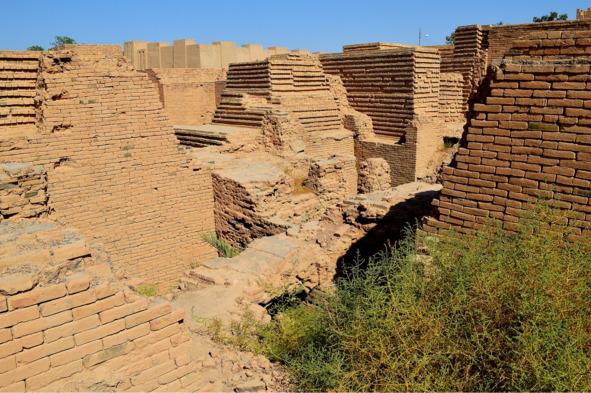
Excavated ruins of Babylon, 6th century BC. In the background is a temple complex, reconstructed by order of the current head of Iraq, Saddam Hussein.
The remnants of the armies of the once formidable superpower are looking for an alliance with the reborn, like Osiris, Egypt and in the end are lost somewhere in its endless deserts ...
Sample of Sumer poetry:
«… Your beauty is divine, dear
Leo, dear to heart
Divine beauty is your dear
You conquered me, I tremble before you…
Leo, let me caress you
My precious caresses are sweeter than honey…»
...
Ancient Egypt (Latin pronunciation «Ayguptus», Hebrew «Mitsraim», Arabic «Masr», self-name Ta-Kemet, «Black Earth»).
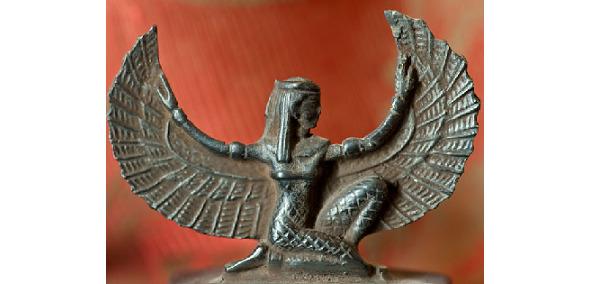
Ancient Greek goddess Isis, friend of all
The oldest Egyptian kingdom was founded five thousand years ago by the monarch Menes and his people, who supposedly arrived from the now flooded coast of Western India. Let's remember and color this historical scheme. Early Kingdom, Ancient, Middle and New. Pharaoh Psammetichus (664-610 BC) expels hard-hearted Assyrians from his country. Independence does not last long. In the fifth century BC, Egypt was captured by Persia (the Achaemenid dynasty). Two centuries later, the country is ruled by the Hellenic dynasty of the Ptolemies. As a rule, the conquerors, admiring the developed culture of the "Black Earth", treat the Egyptians rather softly. In total, for two and a half millennia of the era of the Ancient World, 32 rather long dynasties rule Egypt.
Poetry of Ancient Egypt:
…I heard the words of Imhotep and Jedefkhor
Words that everyone repeats
What about their tombs?
The walls have come crashing down
Even the place where they stood was not preserved
As if they never were
Nobody has come from there yet
To tell what is there
And soothe our hearts…
(Song from the house of the deceased king Antef, inscribed in front of the singer with a harp)
…In the first century BC, with the death of the son of Cleopatra and Caesar, the unfortunate youth Caesarion, Egypt completely passed into the hands of the Romans. Since the beginning of the eighth century AD, the Arabs have dominated here.
Until the very late period, the Egyptians did not know any developed monetary system. At the very least, financial means are substituted for 42 kg sacks of grain. and the debens are bars of copper or silver. To a large extent, everything in Ayguptos depends on what the rulers decided and how correctly their words were reflected on the papyrus by an almost equally significant figure — the scribe.
The kitchen of a standard Egyptian dwelling does not have a roof, but has a millstone for grinding grain and an oven. The basis of the diet of ordinary, and not ordinary residents of the country Ka-Temet, too, is wheat buns. Beer «hake», from date juice and bread, sweetish or bitter, considerable 10 degrees, almost like wine, with additions of mandrake, anise, saffron. Famous varieties — «Merry fellow traveler», «Fine».
For some religious reasons, the ancient Egyptians do not eat pork, as well as the Semites living a little to the east.
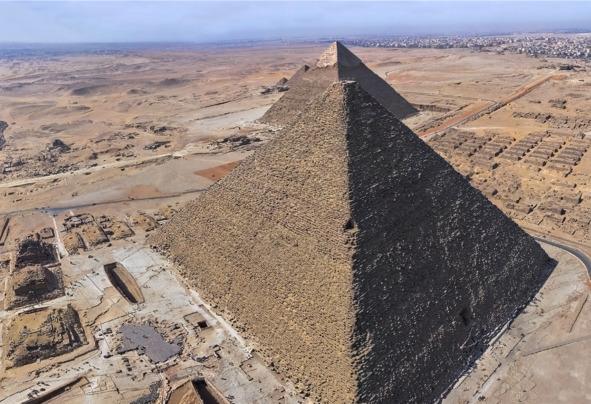
Egypt today. Behind the complex of majestic pyramids lies the desert, in which about 80 million mummies of ordinary people find their rest. It is interesting that at one time the Jews, admired by the culture, wisdom and kindness of the Egyptians, recognized them as almost equal to themselves. Three generations later, descendants born in a marriage with an Egyptian woman could already enter society
Temples and other large-scale religious buildings in Egypt are not intended for mass gatherings. Only priests are involved in the service. The basis of religion is the need to collect some disconnected «aspects» in order to continue to exist in a spiritual form. On the physical plane, this is expressed in the need to mummify and preserve the bodies of people who have gone to another world in a special way.
Greece and Persia
Ancient Greece. One thousand hundred years BC — the beginning of the so-called polis period. The first cities, houses, temples and fortress walls. The invasion of the Dorians from the north (in their pure form — the Spartans), the high achievements of culture and social structure. Amphoras and Forums. Militant Sparta rules over the Greek world on a par with the wise Athens. Mighty, albeit imperceptibly withering, Persia concludes a de jure treaty with the Greeks, on the protectorate, which Sparta monitors.
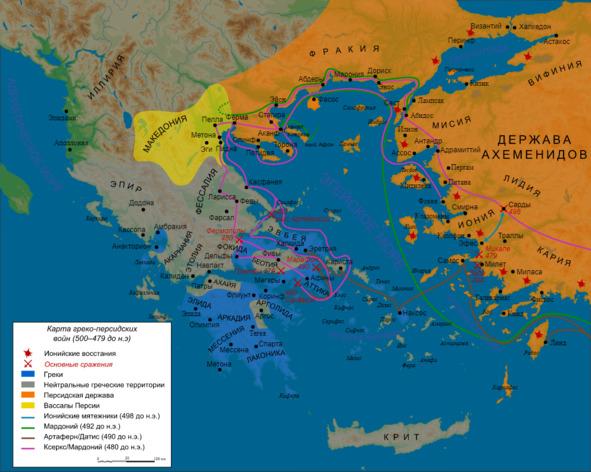
Greco-Persian Wars 500—479 BC.
By this time (or, to be precise, 492 BC), the new ruler of Persia, Darius the First, founds the Achaemenid empire, including, among other things, Syria, Asia Minor and Egypt. Accusing the Greeks of violating the union treaty, formalized in a "small text" as an entry into this empire, he sends an expeditionary force of 25,000 soldiers to Greece, but receives a decisive rebuff from the founders of democracy. The Persians lose 7,000 soldiers, the Greeks - only 194. 19 years after the Battle of Marathon that has not faded for two and a half millennia, the Battle of Thermopylae and the naval battle of Salamis follow. The troops of the son of Darius, Xerxes, suffer a final defeat at the Greek Plataea.
Ancient Greek poetry:
…And every time, as soon as I
I’ll get along with you, from a tender meeting
Suddenly my soul trembles
And speech grows numb on the lips
And a keen feeling of love
Runs faster through the veins
And ringing in the ears… and a riot in blood…
And cold sweat comes out…
And the body — the body keeps trembling…
The faded flower is paler
My look, exhausted by passion…
I am breathless… and, numb
In my eyes, I feel the light is dimming…
I look, not seeing… I have no strength…
And I wait in unconsciousness… and I know
Here, here I will die… here I am dying
(Sappho, Lesvos Island, 570—630 BC, translated by V. Krestovsky)
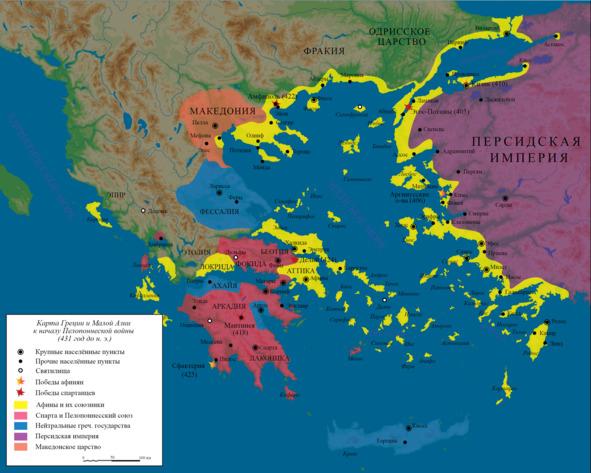
Greece and Asia Minor on the eve of the Peloponnesian War (431 BC). Numerous, relatively independent Greek colonies stand for Athens
But the testosterone-soaked, muscle-flexing allies now turn their gaze to each other. … In the First Peloponnesian, ancient Greek Civil War, Sparta prevailed. The country of aggressive ascetics seizes Athens, exhausted by struggle, and ends the century of its democracy with the accession of a militaristic oligarchy devoid of any creative principle. This is not at all pleasant to the freedom-loving Greek colonies on all sides of the Ecumene (the world mastered by mankind). Detachments of volunteers, grasping the oars, amicably rush to the metropolis. In the end, the troops of Thebes (a powerful polis somewhat north of Athens) and Athens, which are reborn in spite of the enemies, unite, and step by step, push the Dorians back to the southeast of the Peloponnesian peninsula. Here the Spartans, becoming, in their own way, a relic of the poor, but implacable warriors, century after century, turn into ordinary Greeks.
…Macedonia (northern part of the Balkan Peninsula), the Greek kingdom, before that, by the way, the former vassal of Persia rises and sets up its garrisons in all the major city-states of Greece.
The ruler of the now united Greece, the commander Alexander the Great, conquered Persia and part of the adjacent countries in 330 BC. e. Seven years later, this huge, but loose, like a jellyfish state disintegrates into Seleucia, Parthia and Egypt. Egypt is now ruled by the wise companion of Alexander Ptolemy, who becomes the new pharaoh and the founder of the dynasty of his name.
But quite soon, by historical standards, even more powerful western neighbor — Rome, will pay attention to sunny, even Great Greece…
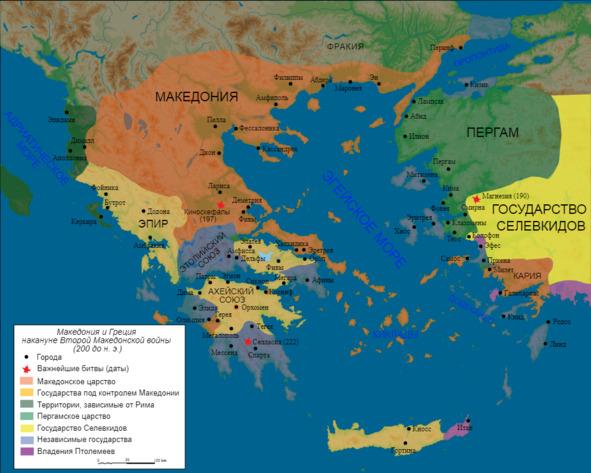
Second Peloponnesian War (197—200 BC). Macedonia and Greece on the eve of their conquest by Great Rome. Under the sun of Hellas, phalanxes and long spears will lose to legions and short swords
Ancient China. Thirty-six centuries BC. This is the bottom of the world history known to us.
The first state covered by written sources is the semi-mythical Shang-Yin (1600 BC — 1046 BC). Difference from states, for example, European ones — both in ancient and modern China there are no temples dedicated to the great gods. Everywhere there are only home altars dedicated to deceased ancestors, a kind of technical points of contact with them. The Great Sky, in which the souls of ancestors and great rulers live, is not a personified deity, the giver of the meaning of life and the resonator of all your actions.
…After Shang slides into the abyss of corruption and debauchery, the whole kingdom is easily conquered by the army of the benevolent rebel general U-Wang. Now it is called Zhou, after the ruler of one of the provinces, Wu-Wang’s father.
The flowering of Confucianism and Taoism falls on the fourth century BC. Be that as it may, prosperous Zhou is divided into seven warring states — Qin, Wei, Zhao, Han, Qi, Yan, Chu.
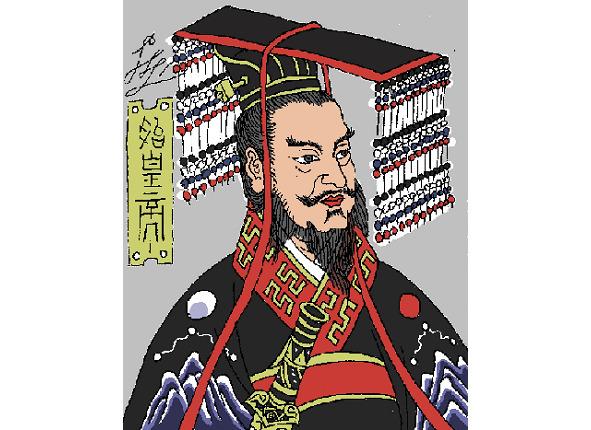
Emperor Qin Shi Huang in a medieval Chinese painting
For two centuries BC. the legendary emperor of one of them, Qin Shi Huang, deprives all his neighbors of independence. The northern sections of the walls of the former kingdoms are joined together and henceforth form the Great Wall of China. The dictator massively destroys scientists in whom he sees the main reason for the changes in the beneficial Heavenly Order and burns every single book, as far as possible. However, shortly after the physical death of Qin Shi Huang, this whole «unchanging» order, together with the state and the Qin dynasty, disintegrated.
Ancient Rome
A pencil sketch of a living picture this time is as follows. Seven centuries BC — the foundation of the capital of the future Empire by the children of the vestal Rhea Sylvia and Mars itself, lovers of wolf milk, brothers Romulus and Remus. Two centuries BC — the royal period, seven active Roman kings.
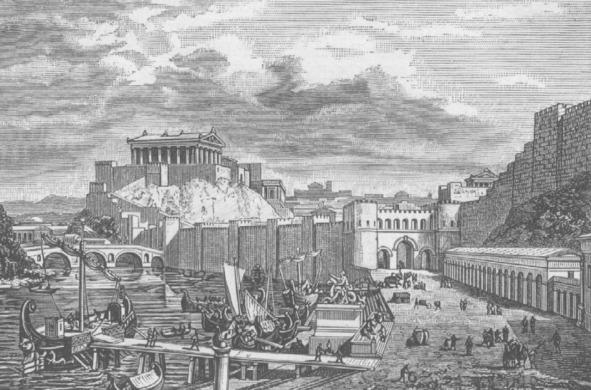
Capitol Hill in Antiquity. Here, as well as on the nearby Palatine Hill, Romulus, a descendant of the Trojans, founded Rome. If his brother Rem had won the dispute, the new community, and then the huge state, would have been called «Remoria»
Then, following the progressive model of the Hellenes and in opposition to the barbarians, the Romans form a Republic — the «Common Cause». New strokes — the invasion of Gauls, the same geese not sleeping on the Capitol, a sword in the scales — «woe to the vanquished», a war with Great Greece, which settled in southern Italy, King Pyrrhus and catastrophic Pyrrhic victories.
First Punic War. Struggle with Carthage for the island of Sicily, the founding of a fleet modeled on a progressive Carthaginian ship washed ashore. The theater of military operations moves to Africa, where the Roman victories first entail euphoria, and then a serious defeat. The remnants of the army are evacuated by sea. But on the way back, almost the entire Republican fleet perishes in the storm.
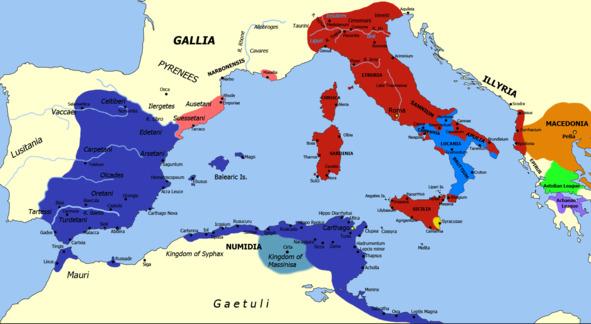
World of the Punic Wars. The third party to the conflict is Great Greece. Now this state entity belongs to the entire south of Italy and part of Sicily.
The fighting moves to Sicily, where the troops of Carthage are commanded by the commander Hamilcar Barca. The forces of the parties are extremely depleted. Toward the end of the day, the Carthaginian fleet is severely defeated by the Romans who have learned to fight at sea. Carthage pays Rome a hefty indemnity and renounces Sicily.
Second Punic War. Two centuries BC. The commander Hamilcar Barka dies, leaving the world, or rather the war, three sons — Hannibal, Magon and Hasdrubal. Their goal is the same as that of their father — Rome must be destroyed.
Hannibal transports his troops to Italy across the icy Alps and, among other things, inflicts a cruel defeat on the Romans at Cannes. 60 thousand Romans die here. A year later, having pacified three quarters of Italy, Hannibal tries to take the city of Rome. Due to unpleasant omens for both sides, the assault will not take place. The Romans capture the Greek city of Syracuse, allied to Carthage. At the same time, the great scientist of antiquity, Archimedes, perishes. The 30,000th Roman Expeditionary Force under the command of Scipio Africanus sets foot on the land of Africa. The commander makes an alliance with the Libyan tribes and defeats the army of Carthage at Zama. Hannibal flees to the king of Antioch, in the south of modern Turkey. This commander more than once participates in battles against Rome and the second time he personally meets with Scipio. Then he moved to Armenia, which became independent from the Seleucids, where he supervised the construction of the capital near modern Yerevan. In Bithynia (northern Turkey), the local king, not wanting unnecessary complications, decides to extradite Hannibal to Rome. The Carthaginian general takes poison.
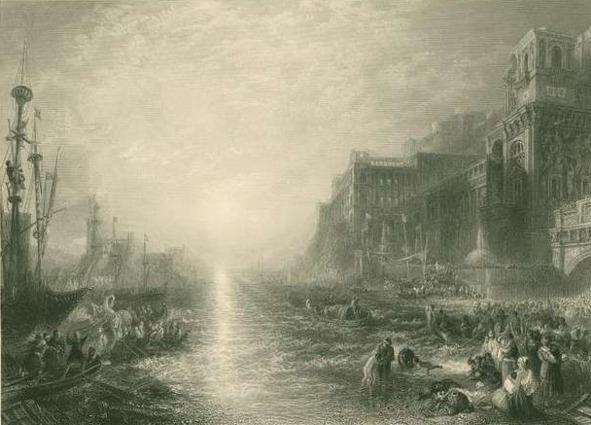
Sunset of Carthage. Medieval engraving
Fifty years of peace. Carthage pays indemnities, which seemed to the Romans themselves simply unaffordable. He is still rich and dangerous. Having violated the terms of the treaty, the Carthaginians rebuff the official ally of Rome, a certain Libyan tribe. The thought of Cato the Elder, «Carthage Dilindum Essay -“ Carthage must be destroyed», repeated at the Senate meeting, now acquires energy and flesh. The third Punic War begins. Legionnaires disembarking in Africa lay siege to the capital of the African and Asian empires. Three years later, the civilization of the Pun-Phoenicians-Canaanites ceases to exist on the physical plane.
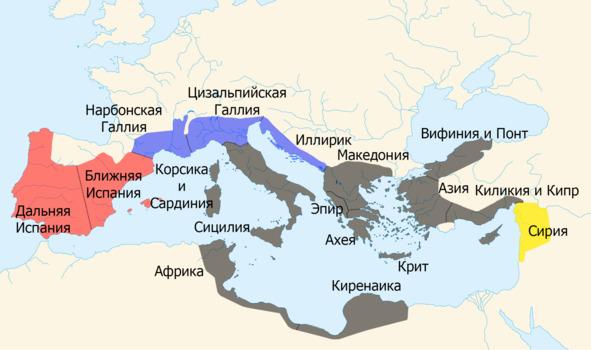
Rome during the Civil War
…The Roman Republic is experiencing the tyrannies of Sulla and Gaius Maria, who almost became kings, with difficulty reflecting the large-scale invasion of the Gauls and Teutons. Only by calling in troops from the provinces, the Romans suppress the uprising of the gladiators led by Spartacus. Ten years after the suppression of this rebellion, the Caesar-Pompey-Crassus triumvirate is formed. Dreaming no longer of money (he has it), but of military glory Crassus with four legions perishes in Parthia, (modern Iran and Turkmenistan) formed from the Seleucid state.
Fifty years BC e. An all-out war of the Romans under the leadership of Guy Julius Caesar against the Gauls begins throughout the territory of modern France. There is a brief invasion of Britain. With the death of the wife of Gnaeus Pompey (the Great), daughter of Caesar, the family ties between the Roman consuls disappear. The ambitious Gaius Julius crosses the Rubicon River (not alone, but with legions of hardened loyal soldiers) and captures Rome. The Civil War, which broke out on all sides of the world, takes away at least a quarter of the Roman male citizens. The loser of everything, Pompey tries to find refuge in Egypt, but dies off the coast of the Mediterranean Sea at the hands of a traitor.
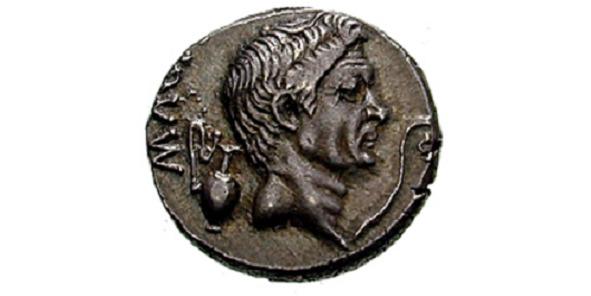
Guy Julius Caesar (100—44 BC) on a Roman coin
Caesar starts an affair with the heiress of the pharaohs, the Egyptian queen Cleopatra, which, in the end, leads to the inclusion of Egypt in the structure of the not republican, but not yet imperial Rome.
…Gaius Julius Caesar, dictator, great pontiff (literally «Builder of bridges»), high priest, willingly or unwillingly, the founder of the famous title Caesar — Ksar — King. A representative of the patrician estate, beloved by ordinary people (including soldiers). It is not known for sure whether Gaius Julius was involved in suppressing the uprising of the world’s most famous gladiator Spartacus. At this time, he, the military tribune, prepares new recruits. From 63 BC — thanks to his popularity and big money, the young Caesar becomes the Great Pontiff. From 58 BC the Gallic War starts. In something more like genocide, a million Gauls die. Ten years later, Caesar and his ambitions are against the Republic. Four years of the Civil War culminate in the Battle of Munda (Spain), the hardest of all that Caesar fought. This time, 30,000 rebel supporters of the republican system are killed. The dictator first triumphs after the victory of the Romans over the Romans, which is considered not comme il faut. In the same year, for the first time, an image of a living person appears on coins — of course, Caesar.
A year later, Gaius Julius Caesar, already dreaming of an invasion of Arabia, is killed by conspirators, led by Mark Brutus, possibly the illegitimate son of the dictator. At the stake of judges’ chairs and benches, the body of the beloved dictator burns the people. After the fiery speech of Gaius Julius’ comrade-in-arms, Mark Antony, here, over the ashes, the Civil War in the bleeding country breaks out with renewed vigor.
Ancient israel
The first Hebrew tribes, in the manner described in the Bible, or in some other way, appear in the territory with the general name Canaan forty-two centuries ago. This is followed by a series of periods of assimilation or isolation of the Jews among other nations.
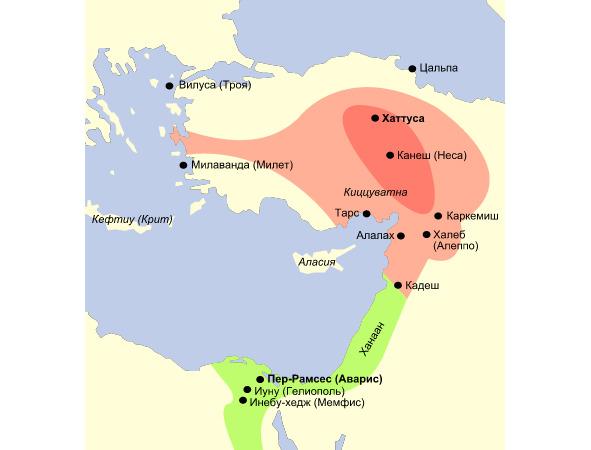
Canaan, «the Promised Land» on the map of the Ancient World
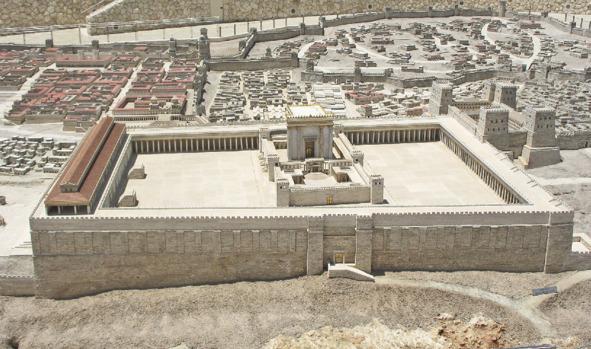
The Epoch of Judges, interpreters of the law, lasts three hundred years, marked, at the end, by a certain decline in morals. The last of the Judges, Samuel creates a kind of school of prophets who speak the truth to the rulers in the face, not caring about the consequences. He anoints the kingdom of the chosen one of God, Saul. His successor, the shepherd David, who ascended to the very pinnacle of power because of his decisive disposition, has the capital in Jerusalem. Having finally dealt with the Ammonites, Philistines and other tribes that have inhabited Canaan since ancient times, he created a mono-ethnic Jewish state. The son of David, Solomon erects the First Temple — the only legal place for God to serve among the Jews. After the death of the king, the country is divided into Israel with the capital Samaria, where ten tribes of Jews find shelter and Judea with the center of power — Jerusalem.
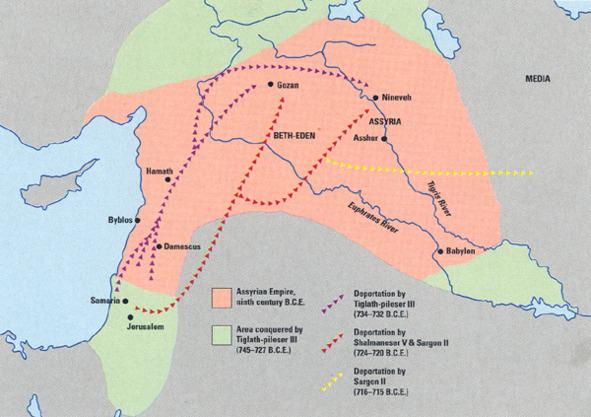
Judea (Jerusalem), Israel (Samaria) and Assyria (ancient capital — Ashur), eighth century BC
Seven centuries BC. The first superpower of antiquity, Assyria, turns Israel into a scorched desert. Ten of the twelve tribes are taken prisoner by the invaders. Their traces are lost. Later, Judea, which remained aloof from the battle, includes Babylon into its empire. Residents are taken away into slavery. After some time, thanks to the beloved wife of King Esther, the Babylonians declare them equal and allow them to return to their historical homeland. The liberated Jews build the Second Temple on the ruins of the First Sanctuary. Another one and a half centuries of relative peace and Judea falls under the control of the Greek dynasty of the Ptolemaic-Seleucids. The uprisings directed by the Hasmonean clan and the branch of Maccabees emanating from it (a nickname that has become a household name for the implacable defenders of the faith), dissatisfied with Hellenization, make the Hasmonean kingdom quite independent. But internecine wars break out. To resolve all issues, as an arbitrator, the Jews call on the great Wrath Pompey. All this ends with the fact that the Roman commander includes Judea in the structure of his Republic.
In the sixty-sixth year A.D. The First Jewish Revolt breaks out. The emperors of Rome, father and son, Titus and Vespasian, are systematically carrying out reprisals against the rebels. In Jerusalem, six hundred thousand inhabitants perish from hunger, in internecine massacres and at the hands of legionnaires. Another fifty years of dull discontent and under the Emperor Trajan follows the Second Uprising. As a result, the Romans destroyed Jerusalem and founded the Hellenized city of Aelia Capitolina in its place.
Fifteen years later, during the reign of Emperor Hadrian, who forbade circumcision so important for the Jews, the rebellion of Shimon Bar-Kokhba breaks out. The Iron Legions capture the last stronghold of the rebels — the mountain fortress of Betar. Judea completely loses its autonomy. The surviving 30% of its inhabitants are settled throughout the Ecumene.
Ancient China
A new colorful smear in our head — China, two hundred years BC. After the death of the great and terrible Emperor Shih Huang Ti, Confucianism (the school of learned scribes) was revived in the new Han Empire, a philosophy that still replaces the Celestial Empire.
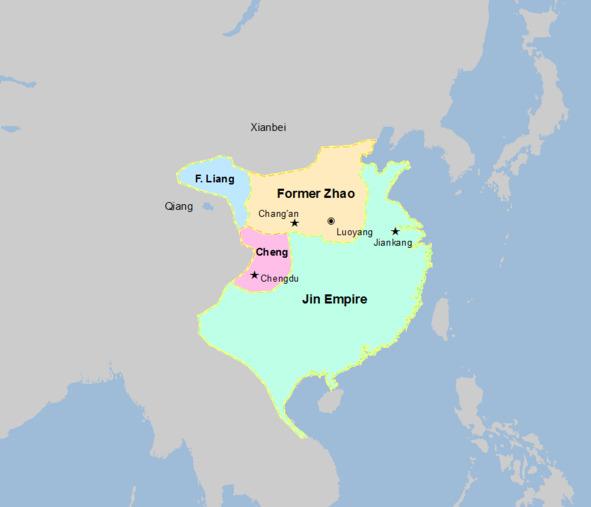
Jin Empire
Han ruled for six hundred years. It is replaced by the Jin dynasty. In the fourth century A.D. e. North China is invaded by the Huns. For two centuries, the most powerful Chinese gene pool turns aliens into true Chinese. The next dynasty restores the state as if nothing had happened.
A new series of wars, enlargements, fragmentation of kingdoms, leads to the emergence of the great, flourishing Tang Empire (636—907) in the east of modern China. This dynasty controls part of Central Asia, Sogdiana, the territory of present-day Tajikistan, Turkmenistan and Uzbekistan. A native of one of the regions, the border governor in the service of the Yellow Emperor An Lushan convinces the monarch to replace the officers of the titular nation at the court with mercenaries from the steppe personally loyal to the Sogdian. The further course of events is not so difficult to predict. An Lushan almost without hindrance, using the resources of a huge state, forms an army tied only to him. When the masks are thrown off, the indigenous Chinese can only shrug their hands sadly. The insidious alien makes a trip to the capital Chang’an (now the provincial Xi’an, the location of the famous Shi Huang Terracotta Army).
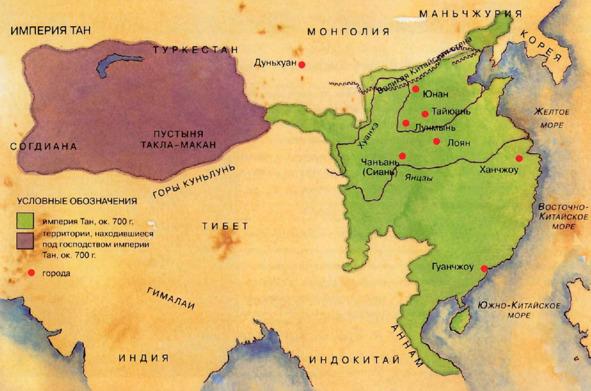
Tang Empire, 7th century AD e. Dangerous territorial acquisitions. The Tang empire is marked in green, the territorial acquisition of Sogdiana, which destroyed the metropolis, is in purple.
There should be a whirlwind of wars of all against all, for the state, the emperor, your family and just food. Women and children become soldiers or simply murderers. The greatest city with a population of millions, reminiscent of a chessboard stretching beyond the horizon, Chang’an is turning into a heap of ruins. Look! All roads and shoulders are littered with corpses. This water in lakes and rivers retains its purple color for months. Don’t try to quench your thirst with it. According to census takers and tax collectors, 50 million China is losing 36 million of its inhabitants. Perhaps a significant part of them do not die, but move to other areas. However, the An Lushan uprising is considered the largest post-WWII armed conflict in history in terms of casualties.
During the Song dynasty, in the twelfth century, China was invaded by the Manchu Jurchen tribe. The Celestial Empire is entering a new round of assimilation. At the beginning of the thirteenth century, a 300,000-strong army of even more brutal invaders invades from the North. With each new campaign, the Mongols of Genghis Khan are advancing more and more south. Trying to fight back, the Chinese widely use multiply-charged crossbows, powder charges, missiles, and primitive artillery. Millions of people die in fire and smoke. The capital of the Celestial Empire Zhongda — modern Beijing surrenders in 1264. 16 years later, the whole of China falls under the hooves of Mongolian horses. The grandson of Genghis Khan, Kublai Khan, proclaims the creation of the Yuan dynasty in the Great Yuan State. At the same time, four Mongol ulus left the single rule of the Horde.
Mongol expeditions to Japan and Vietnam have not met with much success. In the first case, this happens due to irresistible external reasons — «divine wind». In the second, because of the desperate resistance of the Vietnamese. Ciao paper banknotes are being massively introduced. Paper innovation is not always a sign of progress. The Chinese economy is in a fever. Most of the Chinese become slaves, in the Mongolian dialect, arats (commoners). Craftsmen even lose their craft skills. Agriculture and trade are declining. The complex irrigation system ceases to function.
In the middle of the fourteenth century, the secret organization «White Lotus» organizes its people for a decisive struggle against the invaders. Having tasted the taste of their own blood, the Mongols leave to the north, to the familiar steppes. One of the leaders of the uprising comes to power — the son of a simple peasant Zhu Yuanzhang. This man founds no less, a new Ming dynasty. The era begun by the successful son of a farmer is marked by the flourishing of science, crafts and shipping. Authorities organize an ocean expedition led by Admiral Zheng He. The «Golden Fleet» consists of 40—60 Baochuan «treasure ships», 117 meters long, 48 wide, and 200 escort ships. The number of the expedition is 28 thousand people.
The huge Chinese fleet makes seven long-distance voyages. But the composition and views of the ruling dynasty suddenly change. Orders are coming from Beijing: burn all ships, destroy expedition reports. China is adopting a strictly isolationist policy.
Meanwhile, the Jurchens from South Manchuria recall their military past. Initially, they stop paying tribute to central China. Then the nomads unite with Inner Mongolia and organize massive raids on the metropolis. Moving south and west, in 1683 the former vassals seize the last stronghold of the resistance of the Celestial Empire — the island of Taiwan. Now China is named after the Manchu dynasty itself — Qing. The aliens are trying to prevent mixed marriages. But they do not oppose their culture to the local, and everything, as quickly as always before, turns into Chinese. By the early nineteenth century, the Qing population was 300 million.
Chinese goods are in great demand in Europe. However, the Chinese accept only silver, gold, Russian furs and Venetian glass as payment. This approach does not suit the British, who are importing a new popular product from India into the Celestial Empire — opium. Dried in the sun, the milky juice of unripe opium poppy capsules contains morphine, codeine, narcotine. By 1830, sales reach 1,500 tons per year. It’s a lot. 35% of the Qing population becomes drug addicts. The Chinese emperor prohibits this simple happiness. In response, the Yellow Empire is attacked by the main drug dealer — Great Britain. China loses this war, pays an indemnity and hands over the island of Hong Kong to the winners, formally on a 99-year lease.
In 1851, the Taiping rebellion took place. The Chinese Christian Hong Xiutsuan became the organizer of the large-scale riot. The main idea of this Chinese dreamer is the expulsion of the Manchus and, note, the founding of the Taiping Heavenly Kingdom. The million-strong Taiping army is distinguished by discipline, a humane attitude towards the population, and the absence of robberies. A community of 25 families is becoming the cell of society in the territories occupied by Chinese Christians. Hierarchies and estates are to be liquidated.
After twelve years of confrontation, marked by the emergence of more and more centers of the Civil War, the Second Opium War takes place. Everything is proceeding according to the same scenario, with the same sad result for China.
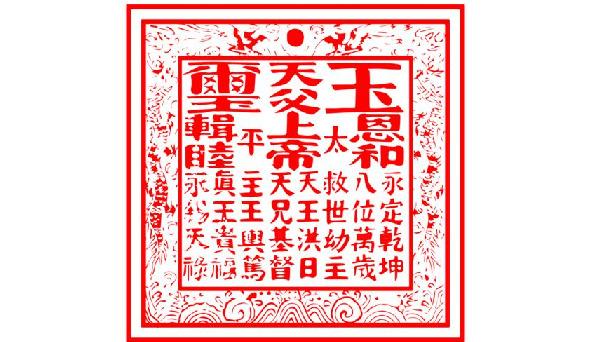
Taiping Heavenly Kingdom Banner
Hong Xiuquan, from the very beginning of the great Liberation campaign, departs from practical matters and indulges in meditation. Its commanders continue a fierce struggle, including among themselves. Considering Europeans as brothers in faith, the Taipings cannot understand why the British and French turned against their new relatives. The Heavenly Kingdom Army strictly prohibits smoking opium and, in addition, destroys everything associated with Buddhism, Confucianism and Taoism. Things are getting worse. The besieged capital of the Taiping, Nanjing, disappears into the flames of a majestic conflagration. Hong Xiuquan commits suicide. His son, heir to the throne, ends his young life on the chopping block. The last detachments of the Kingdom of Heaven, after a desperate attempt to storm Beijing, perish almost in full force on August 16, 1868.
During the Taiping uprising, between 20 and 30 million people are separated from their precious lives. The Chinese authorities, to this day, are trying to limit the spread of Christianity. In 1900, during the uprising of the ihetuan (boxers), the adherents of traditional beliefs exterminated almost all the Christians in Beijing (Chinese), seeing them as accomplices of the Europeans. Be that as it may, with or without them, the Celestial Empire is occupied by the forces of Germany, Russia and Japan. The winners receive an indemnity of 450 million lans of silver (the bar weighs 31 grams) and open up conservative China to the world even more fully.
In 1908, the two-year-old Emperor Pu I. ascends the throne of the Yellow Empire. Three years later, the Wuchansk uprising breaks out. The war of all against all leads to the collapse of the Qing Empire and the proclamation of the Republic of China. Tibet and Mongolia are leaving China «in their own way».
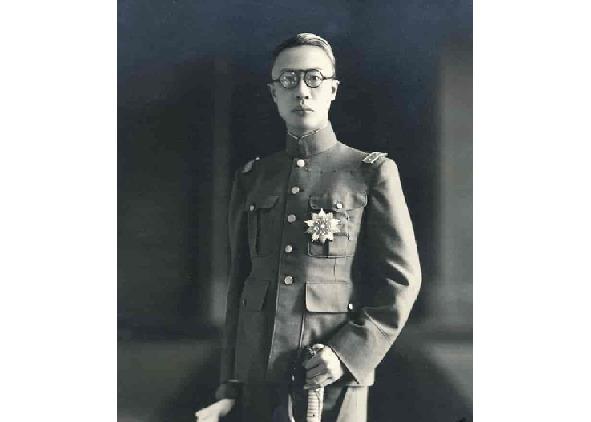
Emperor Pu Yi (1906—1967)
Pu Yi, aka Xundi — «The Forsaken Emperor» — since 1932 has been the ruler of the puppet republic of Manzhou-go, formed by militaristic Japan for its own purposes. In 1945, Pu Yi surrendered to a Soviet airborne assault force near the city of Mukden. For some time, the humble monarch was kept in a Soviet prisoner of war camp near Khabarovsk. He is later allowed to return to China. Here Pu Yi is re-educated according to the system of the Red Emperor, Mao Zedong for nine years, and after that, for the amusement of the entire Communist Party of China, they are given relative freedom. The last emperor watering plants in the Beijing Botanical Garden. Then, like an ordinary archivist, he goes through the books in the National Library
Ancient Rome by Octavian Augustus
…Several decades before the beginning of our era. Two ambitious generals, Octavian Augustus and Mark Antony, divide Rome into Eastern and Western empires.
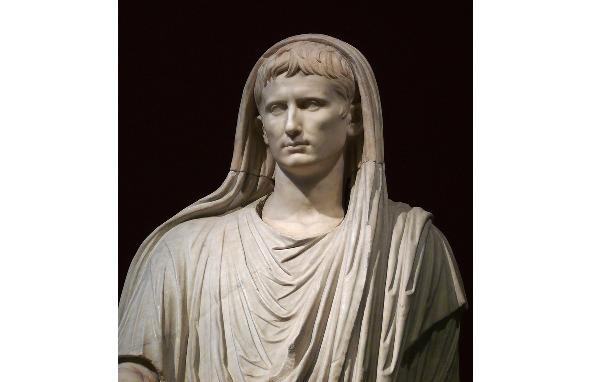
Gaius Julius Caesar Octavian Augustus (63 BC — 14 AD), adopted son of Caesar, successor who won the Civil War. The first real Roman emperor.
Mark falls under the spell of the heiress of the Egyptian dynasty of the Ptolemies, Cleopatra, who is not averse to becoming the queen of Rome itself. The emperor gets involved in a war with the Roman Senate and former friend Octavian Augustus. Alternating feasts with military preparations, he misses the blows of the metropolis one after the other and, in the end, ends his colorful life with a blow of the sword. The enchantment of thirty-nine-year-old Cleopatra no longer works on the winner. The heiress of the pharaohs follows the example of Anthony. After her, four children remain. Seventeen-year-old Caesarion, son of Caius Caesar, is killed by order of Augustus. Two twins from Anthony are raised by the sister of the new emperor. We do not know anything about the fate of the fourth.
Emperor Tiberius, stepson and heir to Augustus, was allegedly strangled during an illness by his own grand-nephew and adopted son Caligula.
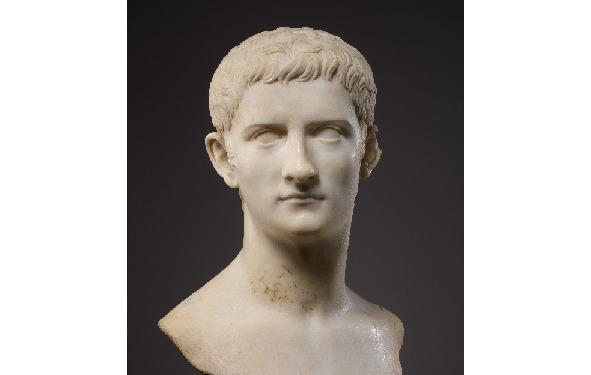
Guy Julius Caesar Augustus Germanicus (Caligula), 12 -41 y. AD, the second Roman emperor, according to Seneca’s definition «boundless depravity combined with boundless power.» Eight months after the ascent, initially peaceful Caligula falls ill with encephalitis. Having recovered, he becomes an insane dictator. Favorite expression — «Let them hate, if only they were afraid» — (Oderint dum mitvant). In 41 A.D. conspirators surround the emperor in one of the underground passages from the theater to the baths. The last thing that Caligula hears — the formula used in the sacrifice «Do it» (ok aje) — after which he is struck with a sword. Together with Caesar, the Praetorians kill his wife and two-year-old daughter
Having ascended to the pinnacle of power, Caligula builds bridges from ships, floating palaces, cracks down on senators — and he is loved by the people for the fact that life in the Empire is at least somewhat different. This emperor, however, was stabbed to death by his own bodyguards. The new ruler, a distant relative of Caligula, Claudius, is remembered by mankind according to Messalina, who has become a household name for an unfaithful and insidious wife. The next wife of Claudius Agrippina, the middle sister of Caligula, already has her son Nero. Her plot succeeds. Native blood, Nero becomes the emperor of Rome. But the mother’s reign over time ceases to appeal. The parent is going to bring to power her own son Claudius and Messalina, the beloved Britannica of the masses. Nero feeds his opponent with poisoned mushrooms in time. The ungrateful son also tries to poison Agrippina, but she in time accepts the invention of the eastern king, Mithridates Eupator, an effective antidote. Unable to drown his mother during a staged shipwreck (in the past, the empress’s hobby is diving for pearls), Nero explicitly orders a naval officer to stab her.
This is the story offered to us by the victorious ill-wishers of the emperor.
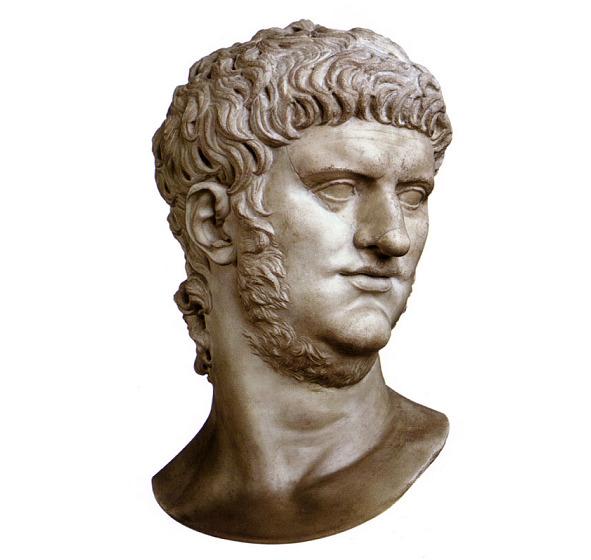
Nero Claudius Caesar Augustus Germanicus, 37—68, Roman emperor, the last of the Julian-Claudian dynasty, persecutor of Christians, nicknamed «Antichrist».
The tax-cutting policy brings the monarch nationwide popularity. But, after the death of Agrippina, the emperor loses his former administrative acumen. The rebuilding of Rome after a fire, the construction of the Golden Palace with an area of one and a half kilometers, gladiatorial fights comparable in scope to full-size battles, digging a canal across the Isthmus of Corinth and constant large-scale orgies drain the treasury. Legions rise in depleted and impatient provinces. One not at all fine morning, Nero does not find any of his guards in his palace. The emperor flees to a country house. Realizing that the sweet life is over, he takes it into account.
After the son of Agrippina, the brutal but sane emperors Titus and his son Vespasian rule. They are inherited by Vespasian’s younger brother, Domitian, (killed by his own servant for the execution of Nero’s assistant in suicide).
After the average Emperor Galba comes the golden autumn of the Empire. Five worthy rulers come to power in a row — Trajan, Adrian, Antoninus Pius, Lucius Verus and Marcus Aurelius. At the end of the time of this galaxy, the era of soldier emperors elected by the Praetorian Guard begins.
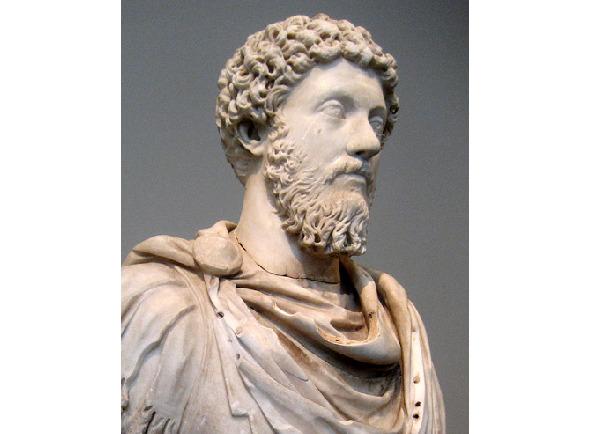
Emperor Marcus Aurelius (121—180). Since the departure of the last emperor of the era of the «Golden Autumn of the Empire», Marcus Aurelius, the era of legendary Antiquity ends. Rome is waiting for the extinction of the previous institutions of power, a series of defeats, the loss of the meaning of the existence of a superpower and a change of religion.
The coming to power in 323 of Constantine the Great marks the transition of the state to Christianity. Forty years later, Emperor Julian (the Apostate) is trying to revive paganism. He encourages the priests of Jupiter to be as godly as Christians. These efforts are in vain. Nobody seriously believes in Jupiter, Mars, Venus, Mithra, Hera and some guides to the afterlife, nums. The last emperor, the young Romulus Augustulus, was sent into exile by the rebellious barbarian commander Odoacer. Little is known about the further fate of Romulus, except that perhaps this boy became a Christian monk. Although Odoacer ruled over the remnants of Western Rome by formal permission from the monarch of the Eastern Empire, AD 476 historians are officially considered the last milestone of Antiquity.
…In the youth of Rome, (5th-2nd century BC), slaves are quite rare. As a rule, they have the status of family members. The second-first centuries BC and the beginning of the new era are marked by a significant increase in the number of prisoners of war. Over time, the ratio of the number of free people to slaves in Italy reaches 2.5: 1, in the provinces 10: 1. The situation of the slaves deteriorates sharply. Nevertheless, they cherish not an illusory hope of raising their status, free literacy, the generic name of the master in addition, and unlimited promotion up the social ladder. At least two emperors of Rome were originally slaves.
The price of a slave in the first century BC is 4—400 denarii, depending on the degree of success of the last war. The daily salary of a legionnaire is 1 denarius, (4 sestertius or 16 aces), including bonuses. For this amount, you can buy 20 loaves of bread of your choice, 4 liters of regular or a liter of fine Falernian wine. If we count in terms of gold, the price of which remains unchanged as an opportunity to acquire basic material goods, a soldier earns 40 thousand rubles a month.
Gladiator games last until the reign of the last ruler of the Empire — Flavius Theodosius (370—395). The institution of slavery comes to naught with a general softening of morals, as well as at the behest of lawyers, who usually take the side of the oppressed. Serfdom is taking over the baton of this phenomenon. Emperor Diocletian (284—305) issues a law attaching peasants — both tenants and owners of land, as well as artisans to their place of residence, or to a profession inherited by inheritance.
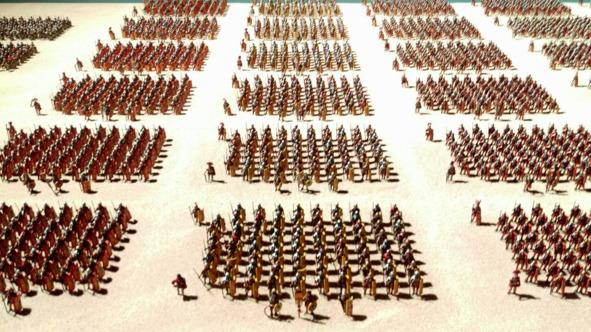
Roman legion in battle formation
…The Roman legion (legionis — military collection) consists of 5—7 thousand, later 4.5 thousand infantry and auxiliary units. Heavy cavalry (equits) — 300 people. Archers — 200 people. The latter act from the flanks, firing arrows along the line of raised shields. Velites — «Swift» — irregular infantry, recruited from local allied tribes or young legionnaires. Armament — a round shield with a diameter of 90 cm, a helmet, several darts «gasta velitaris», 120 cm long and a short, 50 cm. Roman sword — «gladius». In a free formation, dodging projectiles by jumping, the velites throw spears at the enemy and retreat behind the ranks of the heavily armed infantry.
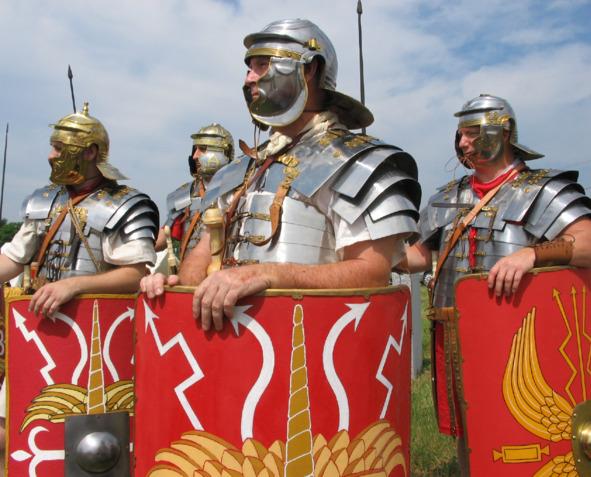
The first line of the legion lined up for battle is the ghastats (spearmen), warriors 20—25 years old, who really need combat experience. Armament — chain mail, or, in the era of the Empire — plate armor, rectangular shield scutum, gladius and two one and a half meter darts — pilum.
The second line is the principles («First»). These are warriors in their prime, 25—35 years old. They give the young men experience, let the hastats pass between the maniples and continue the fight.
On the third line are the triarii («Third») warriors 40—45 years old, veterans, the reserve of the legion. Among other things, they are armed with long shock spears.
The army is ruled by six tribunes (people’s representatives) and a representative of the clan aristocracy — a legate.
In the era of the Republic, the legion consists of 30 maniples («handful» or «hand»), two centuria («hundred») in each. The centuria has 60 to 120 fighters. The manipulators are united in ten cohorts («enclosure») of 360 legionnaires. One of the cohorts (First) is considered elite and has a doubled membership.
Roman legionaries. Historical reconstruction
In the days of the Empire, the maniple disappears as a tactical unit. There remains a cohort consisting of 6 centuries.
The legion deployed from the marching column follows to the place of battle with maniples or centuria, located in a checkerboard pattern. This makes it easier to move around rough terrain. Then the squares made up of fighters are rearranged into three solid lines. «Brothers» hurl pilums, sometimes putting the enemy to flight with this one volley, close shields and draw swords.
Ancient Latin America
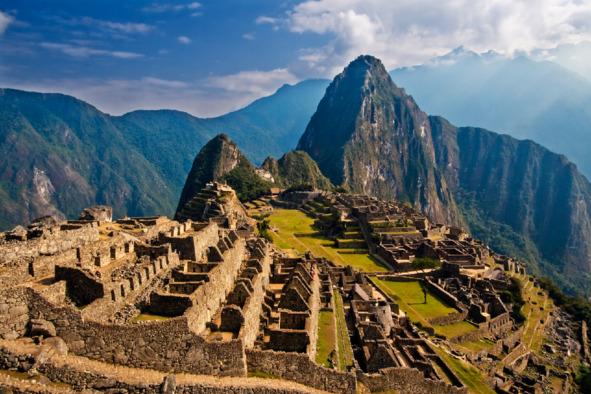
Inca city, Machu Picchu, territory of modern Peru. Height 2.5 km. Architects fit stones of various shapes to each other, like puzzles. The Incas also erected pyramids, but these temples never reached the splendor of Mayan structures.
The Incas. State of Tahuantisuyu. The western coast of South America, starting from the northern territories of modern Chile and Colombia. Another smear in memory — one thousand two hundred years BC. — the first ruler of Manco Capaca. The last, who led the revolt against the Spaniards, the Great Indian — Tupac Omaru (1570—1572).
There is no monetary system. The benefits are distributed according to the order established by the leader.
Aztecs. The self-name of the people is Meshika, hence the well-known toponym «Mexico». These Indians are to the south of Mexico from the north, in the thirteenth century AD. e. The Aztecs rebuild the city of Tenochtitlan, the future Mexico City on an island in the middle of a lake, and in a short time become the rulers of local tribes. But in 1519 the Aztecs meet even more ambitious Spaniards. After just six years, the huge, by the standards of Europe in the Middle Ages, the Aztec empire ceases to exist. Presumably, by this time the Indians were already 95% mowed down by smallpox and chickenpox, introduced by Columbus in 1492, and spread to both continents. The world, equal in culture to Ancient Egypt during its heyday, moves into the realm of legends.
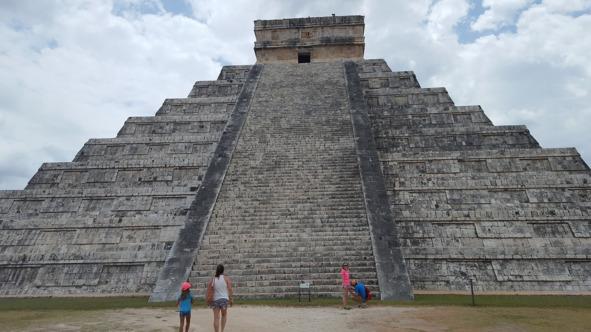
One of the Mayan pyramids in modern Mexico is the pyramid of Kukulkan. Initially, these structures are not intended for performing bloody rituals. However, the Aztecs who came to these lands use them for mass executions of prisoners of war.
For a warrior and a priest, it is considered permissible to write poetry. Let's listen to excerpts from the author's hymns of the Aztecs:
May our land be forever!
Yes, the mountains are indestructible!
So says Ayokuan Kuezpaltsin
Here in Tlaxcale, in Huesocinco
Let them feed everyone without exception
And ruddy maize and cocoa
May the Earth be forever!
(A. Kuezpaltsyn)
We got drunk in Michuacan
We were called to a feast, we went for the booty
We came and were completely drunk from the fight
…And they saw how our soldiers fled
How the gold quivered and the quetzal feather banners faded
If only the soldiers did not become prisoners
Hurry up — so that this does not happen to you
If the young warriors become prisoners.
They will be sacrificed, condemned to the slaughter
If this happens, what are we going to do?
We will growl as fierce as jaguars
We, the eagles, the old men, will call the eagles
Avoid captivity, fear the slaughter
Hurry up — so that this does not happen to you!
(«Song of the Old Men», by the warrior Aishakatl)
Mayan.
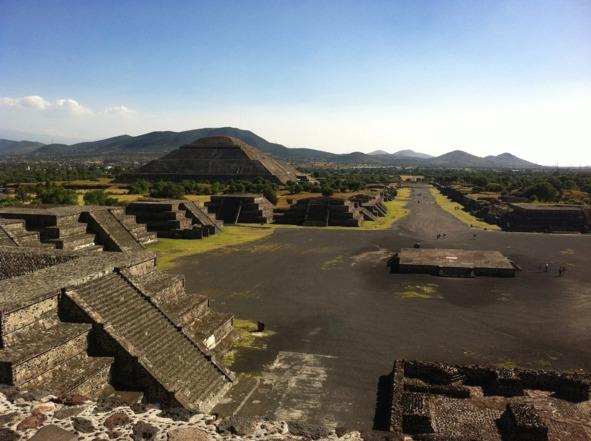
Former possessions of the Maya, the city of Teotehuacan («The place where the gods gather»)
The territory of the legendary founders of Mesoamerica is located somewhat south of the future possessions of the Aztecs. Scientists deduce the beginning of civilization as a thousand years BC. e. By the ninth century A.D. Mayan culture is in decline. The reason, according to the conclusion of paleogeologists, is a long-term drought caused by a change in ocean currents. The inhabitants of the country simply disappear. They leave behind magnificent pyramids, a complex irrigation system and a calendar.