


автордың кітабын онлайн тегін оқу Деловой иностранный язык. Английский язык для юристов
О.Л. Федотова, О.Е. Иванова-Холодная
Деловой иностранный язык. Английский язык для юристов
Учебник для магистров
Ответственный редактор
О. Л. Федотова

Информация о книге
УДК 811.111(075.8)
ББК 81.2Англ-923
Ф34
Авторы:
Федотова О. Л. — доцент кафедры английского языка № 2;
Иванова-Холодная О. Е. — доцент кафедры английского языка № 2.
Настоящий учебник разработан на кафедре английского языка № 2 на основе федеральных государственных образовательных стандартов (ФГОС ВПО) третьего поколения и предназначен для обучения по направлению подготовки «Юриспруденция».
УДК 811.111(075.8)
ББК 81.2Англ-923
© Федотова О. Л., Иванова-Холодная О. Е., 2017
© ООО «Проспект», 2017
Пояснительная записка
Учебник для магистратуры «Деловой иностранный язык. Английский язык для юристов» разработан на кафедре английского языка № 2 на основе Федеральных государственных образовательных стандартов (ФГОС ВПО) третьего поколения и предназначен для обучения по направлению подготовки «Юриспруденция».
Курс рассчитан на прохождение в течение двух зачетных единиц (72 академических часа) основной образовательной программы (ООП) магистратуры, из них 12 часов проводятся в аудитории под руководством преподавателя и 60 часов изучаются магистрантами в качестве самостоятельной работы. Каждая глава (модуль) рассчитана на 4 часа аудиторной работы и 20 часов самостоятельной работы магистранта. По завершении курса в качестве экзаменационного зачета предполагается защита проекта «Электронное портфолио достижений магистранта для трудоустройства» в форме презентации.
Курс включает в себя три унифицированно построенных главы (практические модули), каждая из которых, в свою очередь, состоит из трех разделов, последний из которых предлагается для самостоятельной работы над материалом. Результаты освоения раздела “Self Study” выражаются в выполнении практических творческих заданий и являются составными частями общего проекта. В каждой главе (модуле) содержится информация, позволяющая магистранту определиться с целями и задачами данного модуля, а также перечень компетенций, которые должны быть сформированы в результате работы. В конце каждой главы имеются глоссарий, вопросы для самоконтроля, а также ответы на тестовые задания.
Курс носит практический характер и направлен на развитие коммуникативной компетенции магистрантов посредством охвата основных форм, видов и ситуаций делового иноязычного общения юриста при осуществлении своей профессиональной деятельности.
Задания, выполняемые в аудитории под руководством преподавателя, построены таким образом, чтобы магистранты не получали готовые ответы на поставленные вопросы, а путем рассуждения и анализа приходили к умозаключению, аргументированно его высказывали в форме обсуждения в парах, ролевых играх или мини-докладах. Данный прием позволяет развивать в большей степени индуктивно-дедуктивные способности, а также способствует развитию критического и творческого мышления магистрантов.
Большая часть заданий направлена на развитие навыка структурирования информации, вычленения ее основных составляющих, переработки информации в разные формы устной и письменной коммуникации с учетом выбранного стиля общения. Особое внимание уделяется развитию чувства языка посредством использования в собственных высказываниях речевых клише, идиоматических выражений и формул речевого этикета, присущих различным ситуациям иноязычного делового общения.
Все задания курса предусматривают повторение и систематизацию уже имеющихся знаний и умений в области иностранного языка, полученных магистрантами на предыдущих уровнях общей образовательной системы по дисциплине «Английский язык» (уровень B1 в соответствии с Общеевропейской шкалой владения языком), по четырем основным видам речевой деятельности (говорение, аудирование, чтение и письмо).
По завершении курса предусматриваются выполнение и защита проекта по теме «Создание электронного портфолио достижений для трудоустройства юриста». Портфолио включает в себя следующие разработанные магистрантом документы:
1) рекламное объявление о вакансии юриста в компании соответствующего профиля (изучение рынка услуг);
2) сопроводительное (мотивационное) письмо;
3) резюме;
4) эссе;
5) образцы самостоятельных письменных работ магистранта;
6) можно приложить имеющиеся сертификаты или рекомендательные письма.
Защита проекта проводится в форме электронной презентации. Рекомендации по созданию портфолио и подготовке презентации даются в разделе для самостоятельной работы (Part С) каждой главы курса.
Курс дополнительно оснащен книгой для самостоятельного чтения (Reader), представленной текстами, взятыми из аутентичных профильных учебников. Содержание дополнительных текстов коррелируется с главами курса и позволяет магистрантам самостоятельно изучить вопросы и темы, рассматриваемые на занятиях под руководством преподавателя. Книга для чтения (Reader) включает в себя: аутентичный учебный материал по осуществлению эффективной коммуникации в области профессионального делового общения юриста; целевые установки для организации самостоятельной работы над материалом; образцы деловой документации, рекомендации и требования к составлению различных видов деловой документации, входящей в состав электронного портфолио достижений магистранта.
Глава 1.
Трудоустройство юриста. Профессиональные компетенции юриста. Портфолио
Цель изучения главы:
• формирование способности свободно пользоваться иностранным языком как средством делового общения в профессиональной сфере при трудоустройстве в иностранную компанию.
В результате работы над главой магистрант должен:
Знать:
• значение новых лексических единиц, терминов, связанных с процессом трудоустройства и характером работы юриста в компании;
• идиоматические выражения, клише, единицы речевого этикета, применяемые в ситуации общения в рамках заданной темы;
• стандартные формы оформления документов, а именно: объявления о вакансии, резюме соискателя на должность и сопроводительного письма;
• правила делового этикета.
Уметь:
• понимать письменное сообщение, используя различные виды чтения в зависимости от конкретной коммуникативной задачи;
• вычленять и понимать информацию, ограниченную коммуникативным заданием, а также воспринимать и осмысливать сообщения с учетом намерения, установки, состояния и проч. говорящего;
• передать содержание с опорой на лексические и синтаксические средства, отражающие логико-грамматическую структуру образца письменной коммуникации;
• построить собственную речь с элементами рассуждения, критики, оценки, выражения собственного мнения;
• составить собственное портфолио (резюме) в бумажной или электронной форме.
Владеть:
• навыками стандартного оформления деловой корреспонденции и документации типа рекламного объявления о вакансии, мотивационного письма, резюме и портфолио;
• навыками применения клишированных форм речи в деловой и юридической документации;
• навыками поиска необходимой информации посредством мультимедийных средств и интернет-ресурсов.
Unit 1.
In-house lawyers and their roles in a company
Part A . Application for the in-house lawyer position
1. Read the text and answer the questions.
1. What does the role of the in-house lawyer depend on?
2. What is the role of the in-house lawyer in small organizations?
3. What is the role of the in-house lawyer in large organizations?
4. What is the difference between in-house lawyers and law firm lawyers?
The job for an in-house lawyer is to apply his or her legal knowledge and skills to help a company succeed, while identifying and protecting the company against risks. The size and nature of the company will typically dictate the specific role of the in-house lawyer. In smaller organizations, in-house lawyers usually have a general role and are responsible for overseeing all of the company’s legal relationships, including relationships with other companies, government agencies, and investors, as well as internally with employees, management, and directors. In larger organizations, in-house lawyers usually have a specific role, handling the company’s needs in a discrete area of the law.
As compared to law firm lawyers, company lawyers learn more directly and acutely about the interplay of business and law — how business affects legal decision-making and how law has an impact on business affairs. In-house lawyers may also spend less time researching and writing about the law, in favour of making judgments about different facts that may have an impact on the business. Finally, in-house lawyers are responsible to one client — the company — as opposed to law firm lawyers, who serve many different clients.
2. Match the words with their definitions.
| 1. an in-house lawyer |
a. the directors and managers who have the power and responsibility to make decisions and oversee an enterprise |
| 2. a company |
b. a person or group that uses the professional advice or services of a lawyer, accountant, advertising agency, architect, etc. |
| 3. management |
c. an individual who works part-time or full-time under a contract of employment, whether oral or written, express or implied, and has recognized rights and duties |
| 4. business |
d. the person holding the position typically reports directly to the CEO, and their duties involve overseeing and identifying the legal issues in all departments and their interrelation, including engineering, design, marketing, sales, distribution, credit, finance, human resources, production, as well as corporate governance and business policy |
| 5. a client |
e. a person who manages an organized group of people or a part of an organization |
| 6. an employee |
f. business made up of lawyers who work together under a specific firm name |
| 7. a director |
g. a legal entity, allowed by legislation, which permits a group of people, as shareholders, to apply to the government for an independent organization to be created, which can then focus on pursuing set objectives, and empowered with legal rights which are usually only reserved for individuals, such as to sue and be sued, own property, hire employees or loan and borrow money |
| 8. a law firm |
h. an organization or economic system where goods and services are exchanged for one another or for money |
3. Basing on the definitions make up short stories on each of the terms given in the table above according to the model:
MODEL: In-house lawyer is a corporate employee of the company. He or she has only one client — the company who employed him or her. He reports to CEO. He is a member of the team and can have different roles in an organization, depending on the circumstances — for example, legal advisor, business support, and company secretarial. One of the biggest challenges in the practice of an in-house lawyer is dealing with non-lawyers.
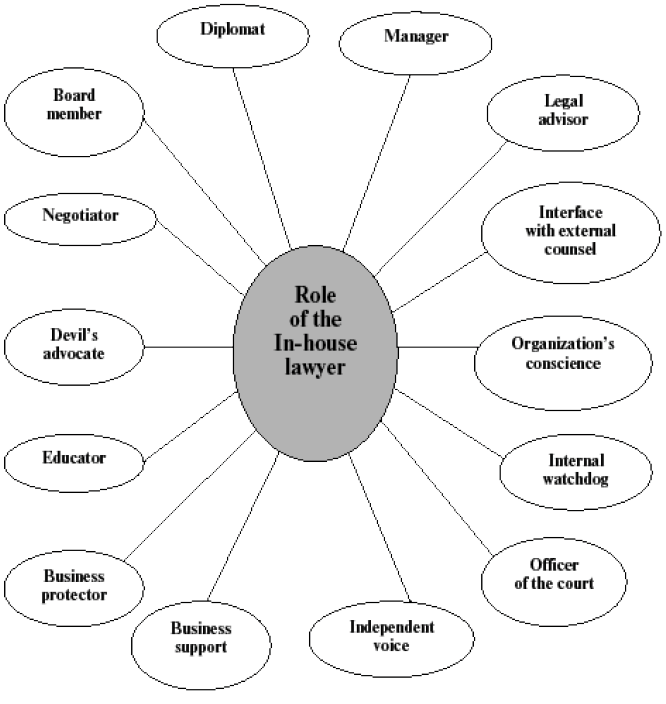
4. Work in pairs or small groups. Look at the graph on the diversity of an in-house lawyer’s roles in the company and give your reasons why and in what cases he needs to be able to wear multiple ‘hats’.
5. Look through the job advertisement and answer the questions.
1. What position is open?
2. Who published the advertisement?
3. What industry does the company operate in?
4. What areas of practice in law are preferable for an in-house counsel role?
5. What are the duties of the in-house counsel?
6. What requirements should an applicant meet?
7. What are the requirements to the applicant?
| Commercial / Corporate Lawyer — IN-HOUSE LAWYER • Leading Company • Excellent team environment XYZ has had substantial success recruiting for this leading company over the past few years. We have a new role for a 3-6 year lawyer to join the friendly and dynamic team. Our client is one of the US largest private companies with offices in cities around the USA. The company operates in the commercial, mining, construction, and infrastructure spaces. This is a diverse, interesting and challenging in-house legal role. With a positive outlook, this role will appeal to a capable corporate or commercial lawyer looking for an in-house counsel role in which they can enjoy assisting with the development and management of legal functions and commercial contracts. This role is broad and will provide substantial responsibility and opportunity. The business requires substantial legal/advice work and this role will involve ongoing work on complex commercial contracts and agreements. You will also be involved in managing relationships with stakeholders and suppliers. There will also be the opportunity to do some employment law and occupational health and safety work. You will enjoy applying your commercial acumen as well as your technical skills in this legal role. With the chance to work on complex and significant contracts and projects, and with excellent support systems on offer, this is a rare opportunity in the US market. You will possess about 3+ years (and up to about 6 years) experience working in the commercial legal field, either in-house or for a strong boutique, mid-large or national/international law firm. |
6. Match English words and word combinations from the advertisement with their Russian equivalents.
| 1. complex and significant contracts |
a. опыт работы |
| 2. support systems on offer |
b. акционеры |
| 3. experience |
c. трудовое право |
| 4. commercial acumen |
d. контракты на крупные и сложные сделки |
| 5. technical skills |
e. деловая жилка (предприимчивость) |
| 6. commercial lawyer |
f. техническое мастерство |
| 7. stakeholders |
g. юрист, специализирующийся в области коммерческого права |
| 8. employment law |
h. системы поддержки коммерческого предложения |
7. Work in pairs. In turns give explanations or descriptions of the words from the list in exercise 6 and ask your partner to guess the meaning and translate them.
8. Look through the text and make a list of personal traits which are necessary for all effective lawyers.
If you want to be an effective lawyer, you should have certain traits and attributes in order to excel in this occupation. One important trait which lawyers should possess is that of articulation. A lawyer who can articulate effectively is the one who will be more likely to succeed not only against opposing parties in court but also to impress and put their client at ease as well. An articulate lawyer is the one who will see results.
Another trait which lawyers should have is intelligence. Having this positive attribute will ensure that the person representing the client is the one who is smart enough to know what to do, when to do it and how to go about getting the results which are necessary to win the case and/or abide by the client’s wishes. Lawyers who use their brains are more likely to see the best possible outcome from a case.
It can arguably be said that those who become lawyers are individuals who like to read. The legal profession is filled with volumes of laws, regulations, cases and rules. If one does not favour reading, then becoming a lawyer may not be the best bet, as the legal field is the one which requires massive amounts of reading.
Good comprehension skills are a favourable trait which all lawyers should have. Although the one who likes to read may be a candidate for the legal profession, but reading means nothing if the person does not comprehend what he has just read. Statutes and procedural rules are sometimes difficult to understand and those who have good comprehension skills may prosper at being a lawyer as they will have to read the pertinent documentation much less than those without good comprehension skills.
A good personality and willingness to work well with others are two additional positive traits which all lawyers should possess. Some people may think that lawyers have to be tough as nails in order to excel in the legal profession but this is not entirely true. Although steadfast determination is a good trait to have, it does not mean a whole lot if the one does not have a good personality and willingness to resolve matters. The saying that one can catch more flies with honey than vinegar is also relevant with regard to being a lawyer. Negotiations go much better when the lawyers put their best foot forward and are willing to come to an amicable solution.
Lastly, persuasiveness is an additional trait which all lawyers should possess. Since the legal profession is based around lawyers persuading individuals to see their point of view lawyers must be persuasive in their speech and tactics.
A lawyer who can get his point across and persuade individuals to acknowledge it is the one who will see many victories.
9. Complete the sentences, and make up a summary of the text.
1. An __________________ lawyer is the one who will see results.
2. A lawyer ______________ will see the best possible outcome from a case.
3. A lawyer may not be the best bet if _________________.
4. You can not be a good lawyer without good ________________.
5. ______ and _______ are two additional positive traits which all lawyers should possess.
6. A lawyer who __________________ will see many victories.
10. Miscommunication between people can happen when one of the parties uses a second language. English speakers often use metaphors (figures of speech). Three of them you’ve met in the text. Write them out and explain their meanings.
1.
2.
3.
11. Match some more metaphors with their explanations and illustrate their usage in the situations of your professional communication.
| 1. You reap what you sow. |
a. You created a big problem. |
| 2. Don’t beat about the bush. |
b. I am miserable now but I know I will be happy. |
| 3. Never let your guard down. |
c. I really need to get rid of my anger. |
| 4. A little bird told me. |
d. You get what you deserve. |
| 5. You really opened a can of worms. |
e. Always pay attention, don’t lose the focus. |
| 6. Steam when you heat water. |
f. Stop wasting my time. You are trying to avoid answering my queries. |
| 7. That is not my cup of tea. |
g. I don’t want to reveal the source of information. |
| 8. There is a light at the end of the tunnel. |
h. It is not my style. |
12. Work in pairs. Test yourself and check your business abilities. Can you become an effective member of the team or is it better for you to start your own business? Discuss the results with the partner.
1. Are you a self starter?
a. I only make an effort when I want to.
b. If someone explains what to do, then I can continue from there.
c. I make my own decisions. I don’t need anyone to tell me what to do.
2. How do you get on with other people?
a. I get on with almost everybody.
b. I have my own friends and I don’t really need anyone else.
c. I don’t really feel at home with other people.
3. Can you lead and motivate others?
a. Once something is moving I’ll join in.
b. I’m good at giving orders when I know what to do.
c. I can persuade most people to follow me when I start som
...