


Valeriy Sterkh
Apocalypse. Interpretation of the XXI century
Fonts by «ParaType»
Translator Evgeniy Terekhin
Translator Valeriy Sterkh
© Valeriy Sterkh, 2021
© Evgeniy Terekhin, translation, 2021
© Valeriy Sterkh, translation, 2021
Explication of John’s Revelation, the most mysterious book of the New Testament, containing prophetic eschatalogical visions of the future preceding the end of the word. This interpretation is a combination of the ancient patristic tradition with a more contemporary approach which is based on the prophecies already fulfilled.
ISBN 978-5-4496-6180-7
Created with Ridero smart publishing system
Contents
1I believe in one God, the Father almighty, maker of heaven and earth, of all things visible and invisible. 2I believe in one Lord Jesus Christ, the Only Begotten Son of God, born of the Father before all ages. God from God, Light from Light, true God from true God, begotten, not made, consubstantial with the Father; through him all things were made. 3For us men and for our salvation he came down from heaven, and by the Holy Spirit was incarnate of the Virgin Mary, and became man. 4For our sake he was crucified under Pontius Pilate, he suffered death and was buried, 5and rose again on the third day in accordance with the Scriptures. 6He ascended into heaven and is seated at the right hand of the Father. 7He will come again in glory to judge the living and the dead and his kingdom will have no end. 8I believe in the Holy Spirit, the Lord, the giver of life, who proceeds from the Father, who with the Father and the Son is adored and glorified, who has spoken through the prophets. 9I believe in one, holy, catholic and apostolic Church. 10I confess one Baptism for the forgiveness of sins 11and I look forward to the resurrection of the dead 12and the life of the world to come. Amen.
Nicene Creed
Verily, verily, it is much later now than we think. The Apocalypse is already unfolding.
Hieromonk Seraphim Rose
Bible book abbreviations
Old Testament
Canonical books:
Genesis — Gen
Exodus — Ex
Leviticus — Lev
Numbers — Num
Deuteronomy — Deut
Joshua — Josh
Judges — Judg
Ruth — Ruth
1 Samuel — 1 Sam
2 Samuel — 2 Sam
1 Kings — 1 Kings
2 Kings — 2 Kings
1 Chronicles — 1 Chron
2 Chronicles — 2 Chron
Ezra — Ezra
Nehemiah — Neh
Esther — Est
Book of Job — Job
Psalms — Ps
Proverbs — Prov
Ecclesiastes — Eccles
Song of Solomon — Song
Isaiah — Is
Jeremiah — Jer
Lamentations — Lam
Ezekiel — Ezek
Daniel — Dan
Hosea — Hos
Joel — Joel
Amos — Am
Obadiah — Obad
Jonah — Jonah
Micah — Mic
Nahum — Nah
Habakkuk — Hab
Zephaniah — Zeph
Haggai — Hag
Zechariah — Zech
Malachi — Mal
Deuterocanonical books:
1 Esdras — 1 Esd
2 Esdras — 2 Esd
Tobit — Tob
Judith — Jdt
Wisdom — Wis
Sirach — Sir
Baruch — Bar
1 Maccabees — 1 Macc
2 Maccabees — 2 Macc
3 Maccabees — 3 Macc
New Testament
Matthew — Mt
Mark — Mk
Luke — Lk
John — Jn
Acts of the Apostles — Act
Epistles:
James — Jm
1 Peter — 1 Pet
2 Peter — 2 Pet
1 John — 1 Jn
2 John — 2 Jn
3 John — 3 Jn
Jude — Jude
Pauline epistles:
Romans — Rom
1 Corinthians — 1 Cor
2 Corinthians — 2 Cor
Galatians — Gal
Ephesians — Eph
Philippians — Php
Colossians — Col
1 Thessalonians — 1 Thess
2 Thessalonians — 2 Thess
1 Timothy — 1 Tim
2 Timothy — 2 Tim
Titus — Tit
Philemon — Phm
Hebrews — Heb
Revelation (Apocalypse) of John — Rev
Prologue
a. The Author of the Apocalypse
The Apocalypse, or Revelation of John the Apostle, is the last book in the New Testament canon. It was written by John, the son of Zebedee, one of the twelve disciples of Jesus, who is more commonly known as John the Theologian.
John to the seven churches which are in Asia: Grace be unto you, and peace (Rev 1:4).
I John, who also am your brother, and companion in tribulation, and in the kingdom and patience of Jesus Christ, was in the isle that is called Patmos, for the word of God, and for the testimony of Jesus Christ (Rev 1:9).
And I John saw these things, and heard them (Rev 22:8).
This nickname he got from the first lines of his other book — the Gospel of John: In the beginning was the Word [Logos], and the Word was with God, and the Word was God. The same was in the beginning with God. All things were made by him; and without him was not any thing made that was made. In him was life; and the life was the light of men. And the light shineth in darkness; and the darkness comprehended it not (Jn 1:1—5).
Here is what we know about him from the Gospels of Matthew, Mark, Luke, and John himself.
He met Jesus under the following circumstances. And it came to pass, that, as the people pressed upon him to hear the word of God, he stood by the lake of Gennesaret, [called] the sea of Galilee, and saw two ships standing by the lake: but the fishermen were gone out of them, and were washing their nets. And Jesus, walking by the sea of Galilee, saw two brethren, Simon called Peter, and Andrew his brother, casting a net into the sea: for they were fishers. And he entered into one of the ships, which was Simon’s, and prayed him that he would thrust out a little from the land. And he sat down, and taught the people out of the ship. Now when he had left speaking, he said unto Simon, Launch out into the deep, and let down your nets for a draught. And Simon answering said unto him, Master, we have toiled all the night, and have taken nothing: nevertheless at thy word I will let down the net. And when they had this done, they inclosed a great multitude of fishes: and their net brake. And they beckoned unto their partners, which were in the other ship, that they should come and help them. And they came, and filled both the ships, so that they began to sink. When Simon Peter saw it, he fell down at Jesus’ knees, saying, Depart from me; for I am a sinful man, O Lord. For he was astonished, and all that were with him, at the draught of the fishes which they had taken: And so was also James, and John, the sons of Zebedee, which were partners with Simon. And Jesus said unto Simon, Fear not. And Jesus said unto them, Come ye after me, and I will make you to become fishers of men. And when they had brought their ships to land, straightway left their nets, they forsook all, and followed him. And when he had gone a little further thence, he saw other two brethren, James the son of Zebedee, and John his brother, in a ship with Zebedee their father, mending their nets. And straightway he called them. And they immediately left the ship and their father Zebedee in the ship with the hired servants, and went after him (UG 36 [United Gospel]; Mt 4:18—22; Mk 1:16—20; Lk 5:1—11). This is how John became a disciple of Jesus.
It so happened that Jesus and the four of his disciples entered a synagogue in Capernaum. And forthwith, when they were come out of the synagogue, they entered into the house of Simon Peter and Andrew, with James and John. But Simon’s wife’s mother was taken with a great fever; and they besought him for her. And he came and saw his wife’s mother laid, and sick of a fever. He stood over her, took her by the hand, lifted her up, and rebuked the fever; and immediately the fever left her, she arose and ministered unto them (UG 38; Mt 8:14—15; Mk 1:29—31; Lk 4:38—39). John was the eyewitness to this healing.
After that, the number of disciples increased. This is how it happened. And it came to pass in those days, that he went out into a mountain to pray, and continued all night in prayer to God. And when it was day, he called unto him his disciples whom he would, and they came unto him: and of them he chose twelve, whom also he named apostles. And he ordained twelve, that they should be with him, and that he might send them forth to preach. And when he had called unto him his twelve disciples, he gave them power against unclean spirits, to cast out devils, and power to heal sicknesses, to heal all manner of sickness and all manner of disease. Now the names of the twelve apostles are these; the first, Simon, (whom he also named [Cephas] Peter,) and Andrew his brother [sons of Jona]; and James the son of Zebedee, and John the brother of James; and he surnamed them Boanerges, which is, the sons of thunder; Philip and Bartholomew; Thomas and [Levi] Matthew the publican [son of Alphaeus]; James the son of Alphaeus, and Judas (the [son] of James) Lebbaeus, whose surname was Thaddaeus; Simon the Canaanite, called Zelotes, and Judas Iscariot [son of Simon], who also was the traitor, which betrayed him (UG 50; Mt 10:1—4; Mk 3:13—19; Lk 6:12—16).
Another time Jesus suffered no man to follow him, save Peter, and James, and John the brother of James. And he cometh to the house of the ruler of the synagogue, and seeth the tumult, and them that wept and wailed greatly. And when he was come in, he saith unto them, Why make ye this ado, and weep? the damsel is not dead, but sleepeth (Mk 5:37—39; compare UG 67; Mt 9:23—24; Lk 8:51—52). Later, John saw Jesus raise from the dead the daughter of the synagogue ruler.
Next time Jesus taketh Peter, James, and John his brother, and bringeth them up into an high mountain apart by themselves to pray. And as he prayed, was transfigured before them: the fashion of his countenance was altered, and his face did shine as the sun. And his raiment became shining as the light, exceeding white as snow; so as no fuller on earth can white them. And, behold, two men appeared unto them, and they were talking with Jesus, which were Moses and Elias: Who appeared in glory, and spake of his decease which he should accomplish at Jerusalem. But Peter and they that were with him were heavy with sleep: and when they were awake, they saw his glory, and the two men that stood with him. And it came to pass, as they departed from him, Peter said unto Jesus, Lord, it is good for us to be here: if thou wilt, let us make here three tabernacles; one for thee, and one for Moses, and one for Elias. For he wist not what to say; for they were sore afraid. While he yet spake, behold, there came a bright cloud, and overshadowed them: And they feared as they entered into the cloud. And behold a voice came out of the cloud, which said, This is my beloved Son, in whom I am well pleased; hear ye him. And when the disciples heard it, they fell on their face, and were sore afraid. And Jesus came and touched them, and said, Arise, and be not afraid. And when they had lifted up their eyes, and suddenly had looked round about, they saw no man any more, save Jesus only with themselves. And as they came down from the mountain, Jesus charged them, saying, Tell the vision to no man, until the Son of man be risen again from the dead. And they kept it close, and told no man in those days any of those things which they had seen, Questioning one with another what the rising from the dead should mean. And his disciples asked him, saying, Why then say the scribes that Elias must first come? And Jesus answered and told them, Elias verily cometh first, and restoreth all things; But I say unto you, That Elias is indeed come, and they knew him not, but have done unto him whatsoever they listed, as it is written of him. And how it is written of the Son of man, that he must suffer many things of them, and be set at nought. Then the disciples understood that he spake unto them of John the Baptist (UG 90—91; Mt 17:1—13; Mk 9:2—13; Lk 9:28—36).
The apostles would often go out on their own to preach the Good News by the command of Jesus. One day they returned to Jesus and John said, Master, we saw one casting out devils in thy name; and we forbad him, because he followeth not with us. And Jesus said unto him, Forbid him not: for he that is not against us is for us (Lk 9:49—50; compare UG 95; Mk 9:38—40).
There’s one more Gospel episode that mentions John’s mother. Then came to him the mother of Zebedee’s children with her sons, worshipping him, and desiring a certain thing of him. And James and John, the sons of Zebedee, come unto him, saying, Master, we would that thou shouldest do for us whatsoever we shall desire. And he said unto them, What would ye that I should do for you? These two sons said unto him, Grant unto us that we may sit in thy kingdom, one on thy right hand, and the other on thy left hand, in thy glory. But Jesus answered and said unto them, Ye know not what ye ask: can ye drink of the cup that I shall drink of? and be baptized with the baptism that I am baptized with? And they said unto him, We can. And Jesus said unto them, Ye shall indeed drink of the my cup that I drink of; and with the baptism that I am baptized withal shall ye be baptized: But to sit on my right hand and on my left hand is not mine to give; but it shall be given to them for whom it is prepared of my Father. And when the ten heard it, they were moved with indignation against the two brethren James and John (UG 137; Mt 20:20—24; Mk 10:35—41). In speaking about his cup and the Baptism, Jesus referred to his future death on the cross.
Then came the day of unleavened bread, when the passover must be killed. And he sent Peter and John, saying, Go and prepare us the passover, that we may eat. And they said unto him, Where wilt thou that we prepare? And he said unto them, Behold, when ye are entered into the city, there shall a man meet you, bearing a pitcher of water; follow him into the house where he entereth in. And ye shall say unto the goodman of the house, The Master saith unto thee, Where is the guestchamber, where I shall eat the passover with my disciples? And he shall shew you a large upper room furnished: there make ready. And they went, and found as he had said unto them: and they made ready the passover (Lk 22:7—13; compare UG 154; Mt 26:17—19; Mk 14:12—16).
In the evening, Christ and his disciples came together to share a meal. Jesus was troubled in spirit, and testified, and said, Verily, verily, I say unto you, that one of you shall betray me. Then the disciples looked one on another, doubting of whom he spake. Now there was leaning on Jesus’ bosom one of his disciples [John], whom Jesus loved. Simon Peter therefore beckoned to him, that he should ask who it should be of whom he spake. He then lying on Jesus’ breast saith unto him, Lord, who is it? Jesus answered, He it is, to whom I shall give a sop, when I have dipped it. And when he had dipped the sop, he gave it to Judas Iscariot, the son of Simon. And after the sop Satan entered into him. Then said Jesus unto him, That thou doest, do quickly. Now no man at the table knew for what intent he spake this unto him (Jn 13:21—28).
After the meal, Jesus and the apostles left the house. Then cometh Jesus with them unto a place called Gethsemane, where was a garden, into the which he entered, and his disciples. And when he was at the place, he said unto them, Pray that ye enter not into temptation. And he saith to his disciples, Sit ye here, while I shall pray yonder. And he was withdrawn from them about a stone’s cast, and he took with him Peter and the two sons of Zebedee, James and John, and began to be sorrowful and sore amazed, and to be very heavy. Then saith he unto them, My soul is exceeding sorrowful, even unto death: tarry ye here, and watch with me. And he went a little further, and fell on his face, and kneeled down, and prayed that, if it were possible, the hour might pass from him. And he said, Abba, o my Father, all things are possible unto thee; if thou be willing, remove this cup from me: nevertheless not my will, but thine, be done. And there appeared an angel unto him from heaven, strengthening him. And being in an agony he prayed more earnestly: and his sweat was as it were great drops of blood falling down to the ground. And when he rose up from prayer, he cometh unto the disciples, and findeth them sleeping for sorrow, and saith unto Peter, Simon, sleepest thou? what, could ye not watch with me one hour? And said unto them, Why sleep ye? rise, watch and pray, lest ye enter into temptation: the spirit indeed is willing, but the flesh is weak. He went away again the second time, and prayed, saying, O my Father, if this cup may not pass away from me, except I drink it, thy will be done. And when he returned, he found them asleep again, (for their eyes were heavy,) neither wist they what to answer him. And he left them, and went away again, and prayed the third time, saying the same words. And he cometh the third time to his disciples, and saith unto them, Sleep on now, and take your rest: it is enough, the hour is come; behold, the Son of man is betrayed into the hands of sinners. Rise, let us be going: behold, he is at hand that doth betray me (UG 160; Mt 26:36—46; Mk 14:32—42; Lk 22:39—46).
Soon after, Jesus was arrested and brought before Caiaphas, the High Priest. And Simon Peter followed Jesus, and so did another disciple [John Zebedee]: that disciple was known unto the high priest, and went in with Jesus into the palace of the high priest. But Peter stood at the door without. Then went out that other disciple, which was known unto the high priest, and spake unto her that kept the door, and brought in Peter (Jn 18:15—16; compare UG 163; Mt 26:58; Mk 14:54; Lk 22:54—55).
After Caiaphas, Jesus was taken to Pilate, the prefect (procurator), who sentenced him to death through crucifixion. John came to the place of the execution to say his last good-bye to Christ. Now there stood by the cross of Jesus his mother, and his mother’s sister, Mary the wife of Cleophas, and Mary Magdalene. When Jesus therefore saw his mother, and the disciple standing by, whom he loved, he saith unto his mother, Woman, behold thy son! Then saith he to the disciple, Behold thy mother! And from that hour that disciple [John] took her unto his own home (Jn 19:25—27; compare UG 171—172; Mt 27:55—56; Mk 15:40—41; Lk 23:49).
On the third day, Jesus rose from the dead. The first day of the week cometh Mary Magdalene early, when it was yet dark, unto the sepulchre, and seeth the stone taken away from the sepulchre. Then she runneth, and cometh to Simon Peter, and to the other disciple, whom Jesus loved, and saith unto them, They have taken away the Lord out of the sepulchre, and we know not where they have laid him. Peter therefore went forth, and that other disciple [John], and came to the sepulchre. So they ran both together: and the other disciple did outrun Peter, and came first to the sepulchre. And he stooping down, and looking in, saw the linen clothes lying; yet went he not in. Then cometh Simon Peter following him, and went into the sepulchre, and seeth the linen clothes lie, and the napkin, that was about his head, not lying with the linen clothes, but wrapped together in a place by itself. Then went in also that other disciple, which came first to the sepulchre, and he saw, and believed. For as yet they knew not the scripture, that he must rise again from the dead. Then the disciples went away again unto their own home (Jn 20:1—10; compare Lk 24:12).
After his resurrection, Jesus appeared to his disciples on several occasions. After these things Jesus shewed himself again to the disciples at the sea of Tiberias; and on this wise shewed he himself. There were together Simon Peter, and Thomas called Didymus, and Nathanael of Cana in Galilee, and the sons of Zebedee, and two other of his disciples. Simon Peter saith unto them, I go a fishing. They say unto him, We also go with thee. They went forth, and entered into a ship immediately; and that night they caught nothing. But when the morning was now come, Jesus stood on the shore: but the disciples knew not that it was Jesus. Then Jesus saith unto them, Children, have ye any meat? They answered him, No. And he said unto them, Cast the net on the right side of the ship, and ye shall find. They cast therefore, and now they were not able to draw it for the multitude of fishes. Therefore that disciple whom Jesus loved saith unto Peter, It is the Lord. Now when Simon Peter heard that it was the Lord, he girt his fisher’s coat unto him, (for he was naked,) and did cast himself into the sea. And the other disciples came in a little ship; (for they were not far from land, but as it were two hundred cubits,) dragging the net with fishes (Jn 21:1—8).
Following their meal, Jesus said to Peter, Follow me. Then Peter, turning about, seeth the disciple [John] whom Jesus loved following; which also leaned on his breast at supper, and said, Lord, which is he that betrayeth thee? Peter seeing him saith to Jesus, Lord, and what shall this man do? Jesus saith unto him, If I will that he tarry till I come, what is that to thee? follow thou me. Then went this saying abroad among the brethren, that that disciple should not die: yet Jesus said not unto him, He shall not die; but, If I will that he tarry till I come, what is that to thee? This is the disciple which testifieth of these things, and wrote these things: and we know that his testimony is true (Jn 21:19—24).
Jesus ascended into Heaven forty days after his resurrection.
b. The history behind the writing of the Apocalypse
On the tenth day after the ascension of Jesus, the Holy Spirit descended on the apostles and their disciples at Pentecost. They began to prophesy in different tongues. Of those who saw and heard them, about three thousand men and women were added to the Church that day and got baptized. As the apostles preached in Jerusalem, new people were joining the Church daily (see Act 1—2).
John was taking care of the Blessed Virgin Mary without ever leaving Jerusalem until the day of her Assumption. Following her Assumption, John, chosen by lot, went to preach the Good News in Proconsular Asia, the Roman province at the west coast of Asia Minor with its capital in Ephesus (see Eusebius of Caesarea, Church History, 3,1).
The Apostle was later exiled for preaching the Gospel there, as he himself mentions in the Apocalypse. He wrote his book while in exile:
I John, who also am your brother, and companion in tribulation, and in the kingdom and patience of Jesus Christ, was in the isle that is called Patmos, for the word of God, and for the testimony of Jesus Christ (Rev 1:9).
Because John was told: “What thou seest, write in a book, and send it unto the seven churches which are in Asia; unto Ephesus, and unto Smyrna, and unto Pergamos, and unto Thyatira, and unto Sardis, and unto Philadelphia, and unto Laodicea” (Rev 1:11) and “Seal not the sayings of the prophecy of this book: for the time is at hand” (Rev 22:10), he obeyed the command immediately.
This is what the Church historian Eusebius of Caesarea tells us about the time of the writing of the Apocalypse and the life of the apostle:
“[The Roman emperor] Domitian was a brutal enemy of many: a great number of prominent and noble people in Rome were executed by him without trial; thousands of famous and innocent men and women were exiled, their property was plundered. Towards the end of [his rule], he proved himself to be Nero’s true successor in hatred and enmity towards God. He was the second one to start persecuting us, although his father, Vespasian, did not plan anything of the sort.
It was told at that time that the apostle and evangelist John, who was still alive, was convicted to be exiled to the island of Patmos for his testimony of the Word of God. Irenaeus mentions the number of the name of the Antichrist from the so-called Apocalypse of John. In the 5th book “Against Heresies”, he says with regard to John: “If the name of the Antichrist was to be revealed at this time, it would be revealed unto the one who was a witness of God’s mysteries. The revelation was given to him quite recently, almost in our century, before the end of the Domitian’s reign” [compare Irenaeus of Lyons, Against Heresies, 5,30].
At the time described, our faith shone in the world so brightly that even the writers, so totally unfamiliar with our teachings, did not delay to tell about this persecution and the martyrs. They accurately noted the time: in the fifteenth year of Domitian Flavius, Domitilla, the niece of Flavius Clement, one of the Roman consuls in those days, was sentenced along with many others to be exiled to the island of Pontia for confessing Christ” (Eusebius of Caesarea, Church History, 3,17—18).
It follows that John’s Apocalypse was written on Patmos about the year 96 from New Era (96 NE).
Let’s hear Eusebius further:
“When the fifteen years of Domitian’s reign were over, Nerva came to power; historians of that period write that, by the order of the Roman senate, the honors granted to Domitian were revoked, and those unfairly deported were returned home. It was around that time, according to the testimony of our ancient writers, that John the Apostle left the island of his exile and settled in Ephesus. After Nerva’s reign, which lasted for a little over a year, Trajan came to power.
[…] At that time the Apostle and Evangelist John, the one whom Jesus loved, was still in Asia. Upon his return from the island of the exile, after the death of Domitian, he was actively involved in taking care of the local churches. That he was still alive at that time is sufficiently confirmed by the two faithful witnesses, the paragons of true orthodoxy in the Church: Irineus and Clement of Alexandria. The former writes literally the following in his second book “Against Heresies”: “All the elders in the Province of Asia who communicated with John, the disciple of the Lord, testify that he spoke of this; he was with them until the time of Trajan” [compare Irenaeus of Lyons, Against Heresies, 2,22].
In his third book, he writes: “And the Church, founded by Paul in Ephesus — where John lived until the time of Trajan, — is the true witness of this testimony of the apostles” [compare Irenaeus of Lyons, Against Heresies, 3,3].
Clement, who also mentions this period, included the following story in his essay entitled “Who is the rich man that can be saved?” It is a highly instructive tale for all who like to listen to wholesome admonitions. So, take it and read it:
“Listen to this true story, not a fable, about John the Apostle. We committed it to memory just as it was passed down to us. Upon his return from Patmos to Ephesus, after the death of the tyrant, he was invited to visit the nearby regions to appoint bishops, plant churches, or sometimes introduce this or that person into the clergy, as led by the Spirit. When he came to a nearby city (some even mention its name), he helped the brothers to establish peace among themselves, and, noticing a young man, handsome and fervent in spirit, he asked the local bishop, whom he had appointed: “I fully entrust him to your care before the witness of the Church and Lord Jesus”. The bishop took the boy under his wing and promised to do as he was asked. John repeated his charge again and asked him to swear an oath one more time. Then John departed for Ephesus, and the bishop, taking the young man into his home, provided him with the proper support, care and protection, and, finally, got him baptized. After that he lessened his care and withdrew some of his protection, believing God’s seal of approval to be the best protection. The young man was prematurely allowed too much freedom and, to his own demise, got hooked up with some of his peers — the notorious lazybones, dabbling in sin. At first, they were taking him from one feast to another, but one night, they took him on a raid, and then, finally, decided that he was ready for more serious crimes. A gifted man, he was gradually getting used to this new lifestyle, and, like a stubborn horse, he took the bit between his teeth, left the straight path and rushed headlong to his own ruin. Abandoning all hope of being saved by God, he, finally, began to plot many crimes: if you are to perish anyway, why not suffer along with others by committing something worth remembering. Gathering a gang of robbers from among his comrades, he became their leader — a rapist, a killer and a villain more vicious than others. In the meantime, John was invited there again on some errand. Having done everything he came for, he said, “Now, bishop, please give account for the pledge that I and Jesus Christ laid on you, to which the church you oversee is a witness”. At first, the bishop was frightened, thinking that he must have been falsely accused of stealing money, which he had not taken. He could not just agree to something that didn’t happen, but neither could he distrust John. “I demand the soul of the young man and your brother”, he said. Upon hearing this, the bishop groaned inwardly and said, “He died”. “In what manner and what was his death?” “He died for God — as an arch villain and, what is more, a thief. Instead of being in the Church, he is now on the mountain with an army of robbers”. The apostle tore his clothes and, moaning loudly, showered his head with many blows, “What a guardian did I leave for my brother! Give me a horse and someone to lead the way”. And he hopped on the horse right on the spot and was off in no time. When he came to that place, he was seized by the robbers’ picket but didn’t run away or plead for mercy. He just cried, “This is why I came! Take me to your leader!” The leader picked up his weapon as he was expecting the visitor, but, having recognized John, turned and ran away in shame. John, forgetting his old age, started chasing him around crying at the top of his voice, “Son, why are you running away from your father, I am unarmed and old? Take pity on me! Don’t be afraid, there’s still hope. I will answer for you to Jesus Christ, and will, if necessary, give up my life for you, just like our Lord gave up his life for us. I will give up my soul for you. Stop running and trust me; I have been sent by Jesus Christ”. The thief lingered as he was listening to him, at first downcast, but then, throwing down his weapon, he embraced the old man in bitter tears, and his penitence became his best protection against evil. His tears became his second baptism. All this time, however, he was hiding his right arm. The apostle swore an oath that he had been forgiven by the Savior; he knelt and pleaded with him, kissing his right arm as if cleansed by the repentance. And in this way, he restored him to the Church. He constantly prayed for him, encouraged him to practice fasting, and fasted together with him, edifying him in every possible way with wholesome admonitions. They say, he left him no sooner than the young man was securely back in the Church as a paragon of true repentance, a symbol of rebirth and a victorious banner of the visible resurrection”.
This is Clement’s version of the story, which I cite here for the instruction and edification of all those who will happen to read it” (Eusebius of Caesarea, Church History, 3,20—24).
Many other deeds were accomplished by John, which we do not mention here. The apostle died in the city of Ephesus during the reign of Emperor Trajan (see Eusebius of Caesarea, Church History, 3,1; 3,23).
c. The Concept of Revelation
The Greek word for “apocalypse” means “revelation”. When the Church writers use this word, they typically mean the supernatural message through which God reveals to man some truths related to Faith and his Divine Mysteries:
Even the mystery which hath been hid from ages and from generations, but now is made manifest to his saints: to whom God would make known what is the riches of the glory of this mystery (Col 1:26—27).
For therein is the righteousness of God revealed from faith to faith: as it is written, The just shall live by faith. For the wrath of God is revealed from heaven against all ungodliness and unrighteousness of men, who hold the truth in unrighteousness; because that which may be known of God is manifest in them; for God hath shewed it unto them (Rom 1:17—19).
This is why John begins his “Apocalypse” in the following way:
The Revelation of Jesus Christ, which God gave unto him, to shew unto his servants things which must shortly come to pass; and he sent and signified it by his angel unto his servant John: who bare record of the word of God, and of the testimony of Jesus Christ, and of all things that he saw (Rev 1:1—2).
I John, …was in the Spirit… (Rev 1: 9—10).
In the giving of the Revelation to John, all the three Divine Persons were present: God the Son, because it says: “The Revelation of Jesus Christ”, God the Father, because it says: “Which God game unto him”, and the Holy Spirit, because it says that John saw prophetic signs in the Spirit.
For there are three that bear record in heaven, the Father, the Word, and the Holy Ghost: and these three are one (1 Jn 5:7).
The message of the revelation that came through John, contains some of the deepest mysteries about God’s providence in relation to man. These mysteries are given in a series of symbolic visions, most of which are not explained in the book. However, the Church Fathers were able to grasp the overall message of the Revelation. Many of them wrote their own interpretations on this book or its parts.
d. The prophecy for all times
— The Apocalypse is the pinnacle of all prophetic books which reveal the Divine plan concerning the final destiny of mankind. It spans a long stretch of history — from the moment of Revelation to the end of the world. Thus, the prophecy of the Apocalypse applies to the entire New Testament era, unfolding gradually in its entirety. The final fulfillment of Revelation will take place at the end of time, after the Day of Judgment.
That’s why it says:
Blessed is he that readeth, and they that hear the words of this prophecy, and keep those things which are written therein: for the time is at hand (Rev 1:3).
Behold, I come quickly: blessed is he that keepeth the sayings of the prophecy of this book (Rev 22:7).
The close fulfillment of the prophecy means here three things:
In relation to God, it is a testimony of God’s time-transcending nature, for he is above and beyond time:
But, beloved, be not ignorant of this one thing, that one day is with the Lord as a thousand years, and a thousand years as one day (2 Pet 3:8).
For a thousand years in thy sight are but as yesterday when it is past, and as a watch in the night (Ps 90:4 [Ps 89:5 rus]).
And, behold, I come quickly; and my reward is with me, to give every man according as his work shall be (Rev 22:12).
He which testifieth these things saith, Surely I come quickly. Amen (Rev 22:20).
For mankind, the near fulfillment of the prophecy means that Apocalypse is a permanent event, that is, it is being fulfilled constantly since its individual visions correspond to certain historical eras:
And he saith unto me, Seal not the sayings of the prophecy of this book: for the time is at hand (Rev 22:10).
For an individual, the near fulfillment of the prophecy means that life is fleeting from the standpoint of eternity, and sudden death is always a possibility. This calls for constant spiritual vigilance for the sake of the soul:
Be watchful, and strengthen the things which remain, that are ready to die: for I have not found thy works perfect before God (Rev 3:2).
Remember therefore from whence thou art fallen, and repent, and do the first works; or else I will come unto thee quickly, and will remove thy candlestick out of his place, except thou repent (Rev 2:5).
Repent; or else I will come unto thee quickly, and will fight against them with the sword of my mouth (Rev 2:16).
Behold, I come quickly: hold that fast which thou hast, that no man take thy crown (Rev 3:11).
It follows that the prophecies of the Apocalypse and their careful and thorough interpretation are of vital importance.
e. The rules for interpretation
The purpose of writing the Apocalypse was to explain to Christians the significance of certain historical events in light of the Divine Providence: to shew unto his servants things which must shortly come to pass (Rev 1:1).
The mystical representation of the future of Christ’s Church and of the whole world helps to prepare believers for the temptations of peacetime, and, particularly, for the hardships in the days of the Antichrist. When the Church is aware of the inevitability of persecution and the Final Judgment, in which everyone will receive according to his deeds, she is helped to go through the hardships:
He that is unjust, let him be unjust still: and he which is filthy, let him be filthy still: and he that is righteous, let him be righteous still: and he that is holy, let him be holy still. And, behold, I come quickly; and my reward is with me, to give every man according as his work shall be (Rev 22:11—12).
The prophetic visions of the Apocalypse are not always arranged in chronological order. However, each individual vision contains a strict chronological sequence. This sets the rules for interpretation, which help to align these visions against each other. To some extent, these rules were formulated by the Church Fathers, whose authority and opinion should undoubtedly be taken into consideration when interpreting certain visions.
The events of the last few centuries are a good enough reason to review our modern history in light of the Apocalypse so we can interpret it properly, thus filling up what was lacking in the ancient interpretations.
f. The proposed interpretation
This book offers an interpretation of John’s Apocalypse. The structure of the book is not typical for this type of literature and therefore requires some clarification. The interpretation presented does not follow the chapters of the Apocalypse. Rather, it is based on the author’s intent, which aims to convey to the reader the meaning of the Revelation in a sequence that is easy to grasp.
In general, the book stays within the framework of Orthodox Christian theology. However, since much of the text is the author’s own interpretations, which are his particular theological opinion, he would be grateful for any comments and clarifications from those who are well-versed in the Orthodox theology.
g. My pilgrimage to Patmos
The island of Patmos can only be reached by sea. The most convenient way to get there is from the island of Kos, which is one of the closest airports connecting the island to the outside world. It has a regular ferry connection with Patmos. You can also get to the birthplace of the Apocalypse from the continental port of Piraeus or from one of the nearby islands.
On my way to Patmos, I stopped at the island of Rhodes. It is the largest of the Dodecanese islands, and Patmos is one of them. From the east, Rhodes is washed by the calm waters of the Mediterranean, and from the west by the stormy Aegean sea. In the northern part of the island, there are lots of mooring piers. The one that is more known is called Mandraki Harbor, where the famous Colossus of Rhodes once stood. It was considered one of the Seven Wonders of the ancient world. The history behind the Colossus made me think of Daniel’s prophecy about the giant idol…
In 305 before New Era (BNE), Antigonus, the king of Syria, sent his son, the renowned commander Demetrius Poliorket, to capture Rhodes, but after a year-long war, Demetrius abandoned the siege equipment at the fortress walls and returned home without any success. The Rhodians sold the equipment and used the money to hire Hareth, the sculptor from Lind, to erect a triumphal statue of Helios. It took him 12 years to build the statue, which was 70 cubits high (over 30 meters). Yet, the majestic Colossus did not survive for more than half a century. A powerful earthquake of 226 BNE broke off the legs of the statue, and it crashed. The Сolossus remained in ruins for centuries. Its shattered pieces were pillaged in 653 NE.
The sea ferry which took me to Patmos set off from Rhodes at 5 pm. As it slowly pulled off, a trail of propeller-foamed waters stretched far behind, gently swaying in the piercingly azure waves. The ferry set its course, and the foamy trail behind made a slight curve, stretching out in a nearly straight line, churning from inside. On the left, one could see Rhodes vanishing in the distance together with the high walls of the Old City fortress, and on the right loomed the rocks of Asia Minor. Soon they were out of view, and everything around me was one endless sea with specks of small islands scattered here and there, bare and mostly uninhabited. Just a few of them had visible signs of life — the isolated abodes of solitary monks. From time to time, we saw pleasure boats, barges, sailing yachts.
At about 7:30, a larger and more populated island loomed on the horizon. The loudspeaker announced: the island of Kos. The ferry slowed down and, turning astern to the shore, began to moor. We spent considerable time loading and unloading RV trailers, the passengers coming in and out. It took us about an hour to finish up with the process. In the meantime, I could enjoy the beauties of the visible part of Kos in an unhurried manner. It was almost twilight.
By 10 pm, the ferry reached the island of Leros. By this time, the darkness was almost complete. Illuminated with hundreds of street lights and bright-lit windows of the local houses and hotels, Leros was a fabulous night scene. Again we had to wait for a while, but there was enough time to enjoy the stunning illumination of Leros.
I will also add that on the way back I hopped on a catamaran ferry, which made the stops much shorter. So, the return trip was significantly quicker.
It was around midnight when I, with a trembling heart, stepped on the shores of Patmos. In the deep darkness, the port of Scala shone brightly with its many lights, and on one side of a low mountain, the walls of the Monastery of St. John the Divine were lit with spotlights. The hotel agents met the pilgrims at the port gate. One of them gave me a ride to the hotel, which happened to be not too far away. After a long sea voyage, I could finally take a shower and get a good night’s sleep.
The next morning, I left my hotel and went for a walk to explore the area. Patmos is a small rocky island, shaped like the head of a seahorse. The highest elevation of the island is Mt. Saint Elijah, 269 meters above the sea level. Between the mountain peaks, there are picturesque green valleys. The austere rocky terrain is somewhat softened by the citrus orchards, vineyards, pines, cypresses, strawberry trees, eucalyptus trees, pomegranates, olive trees, and other green patches. The largest villages on Patmos are Chora, Scala, and Kambos. The local population, for the most part, lives in one or two-story houses, usually painted white. The main architectural attraction of the island is the medieval Monastery of St. John the Divine, located at the highest point of the village Chora.
The distance from the port of Skala to the Monastery of the Cave of the Apocalypse is 2.2 kilometers following the road to Chora. There is also a stone-paved trail for pedestrians between these two locations. It is a bit shorter, but has a steeper climb and leads somewhat away from the Cave.
The entrance into the Monastery of the Cave of Apocalypse begins at the gate with metal doors. On the low masonry walls, there are two plates on each side of the gate — one in Greek on the left and one in English on the right. There are only two phrases. The one above says: “Holy Cave of the Apocalypse”. The one below is a quotation from Revelation: “I was on the island of Patmos (Apoc. chap. A.9)”.
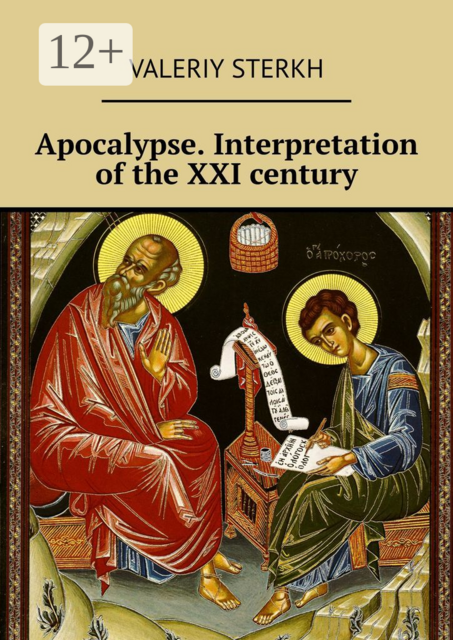
Further, there is a short alley leading up to the monastery. The monastery is a whitewashed stone building set on a rock, as if over the Cave. Above the entrance to the monastery, there is a mosaic icon of John the Apostle, dictating the text of the Apocalypse to his disciple Prokhor. Prokhor was one of the seven deacons appointed by the apostles. He was exiled to Patmos just like John and later became the bishop of Nicomedia.
I went inside. Ahead of me, on the right, there was a church shop. On the opposite end, to the left, I saw an exit to the stairs leading to a lower level. After several flights of stairs, I found myself at the entrance to the Holy Cave.
The internal space of the Cave is divided into two parts. On the left, there is a Temple of St. Anne, the mother of the Blessed Virgin, erected in the 11th century by archbishop Christodul. On the right, there is the Temple of the Holy Cave of Apocalypse, separated only by the stony overhangs from the ceiling. In this Cave, John the Theologian received his Revelation.
<…> At this point, I will pause the story about my pilgrimage, because even the most accurate description cannot adequately express the feelings of an Orthodox believer when he or she finds himself in the presence of a great mystery. One has to experience it to understand it.
Part 1. Revelation from Heaven
Chapter 1:1. The first vision of God’s glory
John the Theologian was exiled to the island of Patmos by Emperor Domitian, for the word of God, and for the testimony of Jesus Christ (Rev 1:9). There he was given a spiritual vision. This is his own story:
I was in the Spirit on the Lord’s day, and heard behind me a great voice, as of a trumpet, Saying, I am Alpha and Omega, the first and the last: and, What thou seest, write in a book, and send it unto the seven churches which are in Asia; unto Ephesus, and unto Smyrna, and unto Pergamos, and unto Thyatira, and unto Sardis, and unto Philadelphia, and unto Laodicea. And I turned to see the voice that spake with me. And being turned, I saw seven golden candlesticks; and in the midst of the seven candlesticks one like unto the Son of man, clothed with a garment down to the foot, and girt about the paps with a golden girdle. His head and his hairs were white like wool, as white as snow; and his eyes were as a flame of fire; and his feet like unto fine brass, as if they burned in a furnace; and his voice as the sound of many waters. And he had in his right hand seven stars: and out of his mouth went a sharp twoedged sword: and his countenance was as the sun shineth in his strength. And when I saw him, I fell at his feet as dead. And he laid his right hand upon me, saying unto me, Fear not; I am the