Предисловие
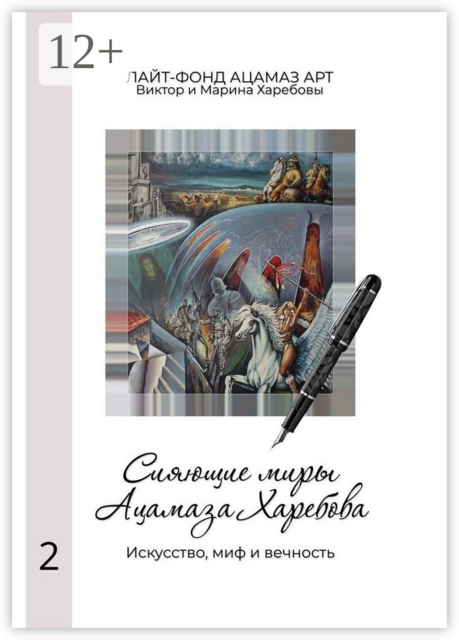
Первое погружение было обращено внутрь — к философии, памяти, тихим глубинам личного опыта. Картины открывались как зеркала духа, отражающие внутренние движения мысли и чувства.
Теперь перед нами иное измерение. Художник вступает в диалог не только с самим собой, но и с миром вокруг — с мифом и эпосом, с природой и ее вечным дыханием, с памятью народа и с архетипами человечества.
На этих страницах оживает нартский эпос — древняя поэма о героях, чьи подвиги стали символами не только для осетин, но и для всего человечества. Древние образы соединяются с современными смыслами, показывая, что миф никогда не уходит в прошлое, а продолжает жить в каждом времени.
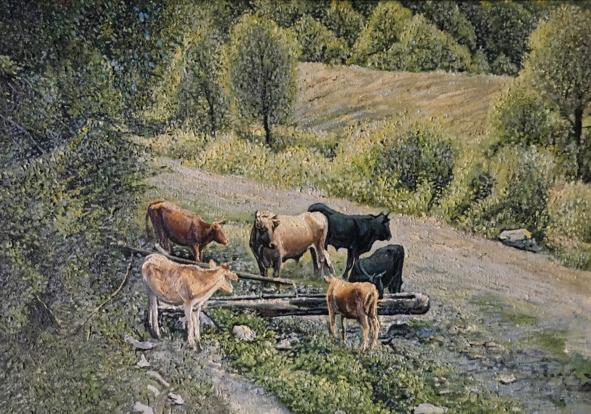
Рядом с героями преданий раскрываются иные пейзажи: горы Осетии, утренние туманы, таинственные камни и леса, а также берега Крыма, где закаты и грозы становятся философскими видениями.
Берега Крыма хранят память о черноморских скифах — ираноязычном народе, чья культура и язык связаны с теми же истоками, что питают и осетинский этнос. Через сарматов и аланов эта нить дошла до наших дней, и потому картины художника словно подсказывают: все в мире связано невидимыми корнями. Мифы, народы и культуры не исчезают бесследно, но продолжают жить в новых формах, в новых голосах, в новых временах.
Художник как будто открывает перед нами истину: история не идeт ровной дорогой, а движется по спирали. Каждое возвращение к мифу и к древним культурам — это не шаг назад, а новый виток, в котором прошлое раскрывается в ином свете. И в этом свете мы узнаем самих себя — как наследников, как продолжателей, как тех, кто несет древние корни в будущее.
Природа у Ацамаза — не фон и не украшение, а равноправный собеседник: она хранит тайну бытия, так же как миф хранит тайну памяти.
Эта книга — о встречах. О встречах с героями эпоса и с тишиной горных дорог, с шумом морских волн и с голосами древних преданий. Картины становятся мостами: между человеком и землей, между настоящим и вечностью, между личным воспоминанием и коллективной судьбой.
Мы приглашаем читателя продолжить путь — путь, который начинается в сердце художника и проходит через мифы, пейзажи и философию, чтобы снова вернуться к самому человеку. Этот путь — продолжение диалога, начатого прежде, но теперь он расширяется: становится полифонией голосов, в которой слышны и легенды предков, и дыхание природы, и вопросы вечности.
— — — — — — — — — — — — — — — — — — — —
The first journey was directed inward — toward philosophy, memory, the quiet depths of personal experience. The paintings unfolded as mirrors of the spirit, reflecting the inner movements of thought and feeling.
Now another dimension opens before us. The artist enters into dialogue not only with himself but with the world around him — with myth and epic, with nature and its eternal breath, with the memory of a people and the archetypes of humanity.
On these pages the Nart epic comes alive — an ancient poem of heroes whose deeds became symbols not only for the Ossetians but for all humankind. Ancient images merge with contemporary meanings, revealing that myth never belongs solely to the past but continues to live within every age.
Alongside the heroes of legend arise new landscapes: the mountains of Ossetia, morning mists, mysterious stones and forests, as well as the shores of Crimea, where sunsets and storms become philosophical visions.
The shores of Crimea preserve the memory of the Black Sea Scythians — an Iranian-speaking people whose culture and language share the same origins that nourish the Ossetian ethnos. Through the Sarmatians and the Alans this thread has reached our days, and thus the artist’s paintings seem to suggest that everything in the world is bound by invisible roots. Myths, peoples, and cultures do not vanish without a trace but continue to live in new forms, in new voices, in new times.
The artist seems to reveal a truth: history does not move along a straight road but unfolds in spirals. Every return to myth and to ancient cultures is not a step backward but a new turn, where the past discloses itself in a different light. And in that light we recognize ourselves — as heirs, as continuators, as those who carry the ancient roots into the future.
In Atsamaz’s art, nature is not a background or decoration, but an equal interlocutor: it guards the mystery of existence just as myth guards the mystery of memory.
This book is about encounters. Encounters with the heroes of the epic and the silence of mountain roads, with the roar of sea waves and the voices of ancient traditions. The paintings become bridges: between man and the earth, between the present and eternity, between personal remembrance and collective destiny.
We invite the reader to continue the journey — a path that begins in the heart of the artist and passes through myths, landscapes, and philosophy, only to return once more to the human being. It is a continuation of the dialogue begun earlier, now expanding into a polyphony of voices, where one hears the legends of ancestors, the breath of nature, and the questions of eternity.