автордың кітабын онлайн тегін оқу Anthology of Classic Short Stories. Vol. 7 (Humour, Satire and Tall Tales). Illustrated
Anthology of Classic Short Stories. Vol. 7 (Humour, Satire and Tall Tales):
The Ransom of Red Chief by O. Henry, What Stumped the Blue Jays by Mark Twain, When I Was a Witch by Charlotte Perkins Gilman and others
Illustrated
Satire, Humor and Irony in some cases have been regarded as the most effective source to understand a society, the oldest form of social study.
Contents:
The Cop and the Anthem by O. Henry
The Ransom of Red Chief by O. Henry
What Stumped the Blue Jays by Mark Twain
The Celebrated Jumping Frog of Calaveras County by Mark Twain
The Toys of Peace by Saki (H. H. Munro)
The Artful Hussar by Johann Peter Hebel
From The Surprising Adventures of Baron Munchausen by Rudolf Erich Raspe
The Golden Honeymoon by Ring Lardner
When I Was a Witch by Charlotte Perkins Gilman
Micromegas: A Philosophical History by Voltaire
The Cop and the Anthem
By O. Henry
On his bench in Madison Square Soapy moved uneasily. When wild geese honk high of nights, and when women without sealskin coats grow kind to their husbands, and when Soapy moves uneasily on his bench in the park, you may know that winter is near at hand.
A dead leaf fell in Soapy’s lap. That was Jack Frost’s card. Jack is kind to the regular denizens of Madison Square, and gives fair warning of his annual call. At the corners of four streets he hands his pasteboard to the North Wind, footman of the mansion of All Outdoors, so that the inhabitants thereof may make ready.
Soapy’s mind became cognizant of the fact that the time had come for him to resolve himself into a singular Committee of Ways and Means to provide against the coming rigor. And therefore he moved uneasily on his bench.
The hibernatorial ambitions of Soapy were not of the highest. In them there were no considerations of Mediterranean cruises, of soporific Southern skies drifting in the Vesuvian Bay. Three months on the Island was what his soul craved. Three months of assured board and bed and congenial company, safe from Boreas and bluecoats, seemed to Soapy the essence of things desirable.
For years the hospitable Blackwell’s had been his winter quarters. Just as his more fortunate fellow New Yorkers had bought their tickets to Palm Beach and the Riviera each winter, so Soapy had made his humble arrangements for his annual hegira to the Island. And now the time was come. On the previous night three Sabbath newspapers, distributed beneath his coat, about his ankles and over his lap, had failed to repulse the cold as he slept on his bench near the spurting fountain in the ancient square. So the Island loomed big and timely in Soapy’s mind. He scorned the provisions made in the name of charity for the city’s dependents. In Soapy’s opinion the Law was more benign than Philanthropy. There was an endless round of institutions, municipal and eleemosynary, on which he might set out and receive lodging and food accordant with the simple life. But to one of Soapy’s proud spirit the gifts of charity are encumbered. If not in coin you must pay in humiliation of spirit for every benefit received at the hands of philanthropy. As Caesar had his Brutus, every bed of charity must have its toll of a bath, every loaf of bread its compensation of a private and personal inquisition. Wherefore it is better to be a guest of the law, which though conducted by rules, does not meddle unduly with a gentleman’s private affairs.
Soapy, having decided to go to the Island, at once set about accomplishing his desire. There were many easy ways of doing this. The pleasantest was to dine luxuriously at some expensive restaurant; and then, after declaring insolvency, be handed over quietly and without uproar to a policeman. An accommodating magistrate would do the rest.
Soapy left his bench and strolled out of the square and across the level sea of asphalt, where Broadway and Fifth Avenue flow together. Up Broadway he turned, and halted at a glittering café, where are gathered together nightly the choicest products of the grape, the silkworm and the protoplasm.
Soapy had confidence in himself from the lowest button of his vest upward. He was shaven, and his coat was decent and his neat black, ready-tied four-in-hand had been presented to him by a lady missionary on Thanksgiving Day. If he could reach a table in the restaurant unsuspected success would be his. The portion of him that would show above the table would raise no doubt in the waiter’s mind. A roasted mallard duck, thought Soapy, would be about the thing—with a bottle of Chablis, and then Camembert, a demi-tasse and a cigar. One dollar for the cigar would be enough. The total would not be so high as to call forth any supreme manifestation of revenge from the café management; and yet the meat would leave him filled and happy for the journey to his winter refuge.
But as Soapy set foot inside the restaurant door the head waiter’s eye fell upon his frayed trousers and decadent shoes. Strong and ready hands turned him about and conveyed him in silence and haste to the sidewalk and averted the ignoble fate of the menaced mallard.
Soapy turned off Broadway. It seemed that his route to the coveted island was not to be an epicurean one. Some other way of entering limbo must be thought of.
At a corner of Sixth Avenue electric lights and cunningly displayed wares behind plate-glass made a shop window conspicuous. Soapy took a cobblestone and dashed it through the glass. People came running around the corner, a policeman in the lead. Soapy stood still, with his hands in his pockets, and smiled at the sight of brass buttons.
“Where’s the man that done that?” inquired the officer excitedly.
“Don’t you figure out that I might have had something to do with it?” said Soapy, not without sarcasm, but friendly, as one greets good fortune.
The policeman’s mind refused to accept Soapy even as a clue. Men who smash windows do not remain to parley with the law’s minions. They take to their heels. The policeman saw a man half way down the block running to catch a car. With drawn club he joined in the pursuit. Soapy, with disgust in his heart, loafed along, twice unsuccessful.
On the opposite side of the street was a restaurant of no great pretensions. It catered to large appetites and modest purses. Its crockery and atmosphere were thick; its soup and napery thin. Into this place Soapy took his accusive shoes and telltale trousers without challenge. At a table he sat and consumed beefsteak, flapjacks, doughnuts and pie. And then to the waiter he betrayed the fact that the minutest coin and himself were strangers.
“Now, get busy and call a cop,” said Soapy. “And don’t keep a gentleman waiting.”
“No cop for youse,” said the waiter, with a voice like butter cakes and an eye like the cherry in a Manhattan cocktail. “Hey, Con!”
Neatly upon his left ear on the callous pavement two waiters pitched Soapy. He arose, joint by joint, as a carpenter’s rule opens, and beat the dust from his clothes. Arrest seemed but a rosy dream. The Island seemed very far away. A policeman who stood before a drug store two doors away laughed and walked down the street.
Five blocks Soapy travelled before his courage permitted him to woo capture again. This time the opportunity presented what he fatuously termed to himself a “cinch.” A young woman of a modest and pleasing guise was standing before a show window gazing with sprightly interest at its display of shaving mugs and inkstands, and two yards from the window a large policeman of severe demeanor leaned against a water plug.
It was Soapy’s design to assume the role of the despicable and execrated “masher.” The refined and elegant appearance of his victim and the contiguity of the conscientious cop encouraged him to believe that he would soon feel the pleasant official clutch upon his arm that would insure his winter quarters on the right little, tight little isle.
Soapy straightened the lady missionary’s ready-made tie, dragged his shrinking cuffs into the open, set his hat at a killing cant and sidled toward the young woman. He made eyes at her, was taken with sudden coughs and “hems,” smiled, smirked and went brazenly through the impudent and contemptible litany of the “masher.” With half an eye Soapy saw that the policeman was watching him fixedly. The young woman moved away a few steps, and again bestowed her absorbed attention upon the shaving mugs. Soapy followed, boldly stepping to her side, raised his hat and said:
“Ah there, Bedelia! Don’t you want to come and play in my yard?”
The policeman was still looking. The persecuted young woman had but to beckon a finger and Soapy would be practically en route for his insular haven. Already he imagined he could feel the cozy warmth of the station-house. The young woman faced him and, stretching out a hand, caught Soapy’s coat sleeve.
“Sure, Mike,” she said joyfully, “if you’ll blow me to a pail of suds. I’d have spoke to you sooner, but the cop was watching.”
With the young woman playing the clinging ivy to his oak Soapy walked past the policeman overcome with gloom. He seemed doomed to liberty.
At the next corner he shook off his companion and ran. He halted in the district where by night are found the lightest streets, hearts, vows and librettos. Women in furs and men in greatcoats moved gaily in the wintry air. A sudden fear seized Soapy that some dreadful enchantment had rendered him immune to arrest. The thought brought a little of panic upon it, and when he came upon another policeman lounging grandly in front of a transplendent theatre he caught at the immediate straw of “disorderly conduct.”
On the sidewalk Soapy began to yell drunken gibberish at the top of his harsh voice. He danced, howled, raved and otherwise disturbed the welkin.
The policeman twirled his club, turned his back to Soapy and remarked to a citizen.
“‘Tis one of them Yale lads celebratin’ the goose egg they give to the Hartford College. Noisy; but no harm. We’ve instructions to leave them be.”
Disconsolate, Soapy ceased his unavailing racket. Would never a policeman lay hands on him? In his fancy the Island seemed an unattainable Arcadia. He buttoned his thin coat against the chilling wind.
In a cigar store he saw a well-dressed man lighting a cigar at a swinging light. His silk umbrella he had set by the door on entering. Soapy stepped inside, secured the umbrella and sauntered off with it slowly. The man at the cigar light followed hastily.
“My umbrella,” he said, sternly.
“Oh, is it?” sneered Soapy, adding insult to petit larceny. “Well, why don’t you call a policeman? I took it. Your umbrella! Why don’t you call a cop? There stands one on the corner.”
The umbrella owner slowed his steps. Soapy did likewise, with a presentiment that luck would again run against him. The policeman looked at the two curiously.
“Of course,” said the umbrella man—“that is—well, you know how these mistakes occur—I—if it’s your umbrella I hope you’ll excuse me—I picked it up this morning in a restaurant—If you recognize it as yours, why—I hope you’ll—”
“Of course it’s mine,” said Soapy, viciously.
The ex-umbrella man retreated. The policeman hurried to assist a tall blonde in an opera cloak across the street in front of a street car that was approaching two blocks away.
Soapy walked eastward through a street damaged by improvements. He hurled the umbrella wrathfully into an excavation. He muttered against the men who wear helmets and carry clubs. Because he wanted to fall into their clutches, they seemed to regard him as a king who could do no wrong.
At length Soapy reached one of the avenues to the east where the glitter and turmoil was but faint. He set his face down this toward Madison Square, for the homing instinct survives even when the home is a park bench.
But on an unusually quiet corner Soapy came to a standstill. Here was an old church, quaint and rambling and gabled. Through one violet-stained window a soft light glowed, where, no doubt, the organist loitered over the keys, making sure of his mastery of the coming Sabbath anthem. For there drifted out to Soapy’s ears sweet music that caught and held him transfixed against the convolutions of the iron fence.
The moon was above, lustrous and serene; vehicles and pedestrians were few; sparrows twittered sleepily in the eaves—for a little while the scene might have been a country churchyard. And the anthem that the organist played cemented Soapy to the iron fence, for he had known it well in the days when his life contained such things as mothers and roses and ambitions and friends and immaculate thoughts and collars.
The conjunction of Soapy’s receptive state of mind and the influences about the old church wrought a sudden and wonderful change in his soul. He viewed with swift horror the pit into which he had tumbled, the degraded days, unworthy desires, dead hopes, wrecked faculties and base motives that made up his existence.
And also in a moment his heart responded thrillingly to this novel mood. An instantaneous and strong impulse moved him to battle with his desperate fate. He would pull himself out of the mire; he would make a man of himself again; he would conquer the evil that had taken possession of him. There was time; he was comparatively young yet; he would resurrect his old eager ambitions and pursue them without faltering. Those solemn but sweet organ notes had set up a revolution in him. To-morrow he would go into the roaring downtown district and find work. A fur importer had once offered him a place as driver. He would find him to-morrow and ask for the position. He would be somebody in the world. He would—
Soapy felt a hand laid on his arm. He looked quickly around into the broad face of a policeman.
“What are you doin’ here?” asked the officer.
“Nothin’,” said Soapy.
“Then come along,” said the policeman.
“Three months on the Island,” said the Magistrate in the Police Court the next morning.
The Ransom of Red Chief
By O. Henry
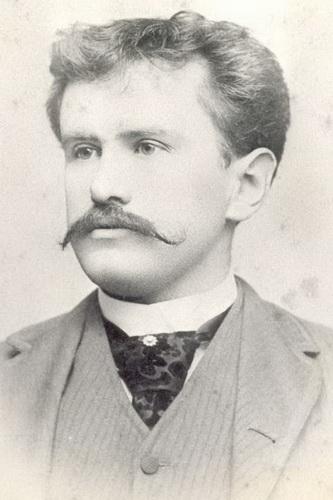
It looked like a good thing: but wait till I tell you. We were down South, in Alabama—Bill Driscoll and myself—when this kidnapping idea struck us. It was, as Bill afterward expressed it, “during a moment of temporary mental apparition”; but we didn’t find that out till later.
There was a town down there, as flat as a flannel-cake, and called Summit, of course. It contained inhabitants of as undeleterious and self-satisfied a class of peasantry as ever clustered around a Maypole.
Bill and me had a joint capital of about six hundred dollars, and we needed just two thousand dollars more to pull off a fraudulent town-lot scheme in Western Illinois with. We talked it over on the front steps of the hotel. Philoprogenitiveness, says we, is strong in semi-rural communities; therefore and for other reasons, a kidnapping project ought to do better there than in the radius of newspapers that send reporters out in plain clothes to stir up talk about such things. We knew that Summit couldn’t get after us with anything stronger than constables and maybe some lackadaisical bloodhounds and a diatribe or two in the Weekly Farmers’ Budget. So, it looked good.
We selected for our victim the only child of a prominent citizen named Ebenezer Dorset. The father was respectable and tight, a mortgage fancier and a stern, upright collection-plate passer and forecloser. The kid was a boy of ten, with bas-relief freckles, and hair the color of the cover of the magazine you buy at the news-stand when you want to catch a train. Bill and me figured that Ebenezer would melt down for a ransom of two thousand dollars to a cent. But wait till I tell you.
About two miles from Summit was a little mountain, covered with a dense cedar brake. On the rear elevation of this mountain was a cave. There we stored provisions. One evening after sundown, we drove in a buggy past old Dorset’s house. The kid was in the street, throwing rocks at a kitten on the opposite fence.
“Hey, little boy!” says Bill, “would you like to have a bag of candy and a nice ride?”
The boy catches Bill neatly in the eye with a piece of brick.
“That will cost the old man an extra five hundred dollars,” says Bill, climbing over the wheel.
That boy put up a fight like a welter-weight cinnamon bear; but, at last, we got him down in the bottom of the buggy and drove away. We took him up to the cave and I hitched the horse in the cedar brake. After dark I drove the buggy to the little village, three miles away, where we had hired it, and walked back to the mountain.
Bill was pasting court-plaster over the scratches and bruises on his features. There was a fire burning behind the big rock at the entrance of the cave, and the boy was watching a pot of boiling coffee, with two buzzard tail-feathers stuck in his red hair. He points a stick at me when I come up, and says:
“Ha! cursed paleface, do you dare to enter the camp of Red Chief, the terror of the plains?
“He’s all right now,” says Bill, rolling up his trousers and examining some bruises on his shins. “We’re playing Indian. We’re making Buffalo Bill’s show look like magic-lantern views of Palestine in the town hall. I’m Old Hank, the Trapper, Red Chief’s captive, and I’m to be scalped at daybreak. By Geronimo! that kid can kick hard.”
Yes, sir, that boy seemed to be having the time of his life. The fun of camping out in a cave had made him forget that he was a captive himself. He immediately christened me Snake-eye, the Spy, and announced that, when his braves returned from the warpath, I was to be broiled at the stake at the rising of the sun.
Then we had supper; and he filled his mouth full of bacon and bread and gravy, and began to talk. He made a during-dinner speech something like this:
“I like this fine. I never camped out before; but I had a pet ‘possum once, and I was nine last birthday. I hate to go to school. Rats ate up sixteen of Jimmy Talbot’s aunt’s speckled hen’s eggs. Are there any real Indians in these woods? I want some more gravy. Does the trees moving make the wind blow? We had five puppies. What makes your nose so red, Hank? My father has lots of money. Are the stars hot? I whipped Ed Walker twice, Saturday. I don’t like girls. You dassent catch toads unless with a string. Do oxen make any noise? Why are oranges round? Have you got beds to sleep on in this cave? Amos Murray has got six toes. A parrot can talk, but a monkey or a fish can’t. How many does it take to make twelve?”
Every few minutes he would remember that he was a pesky redskin, and pick up his stick rifle and tiptoe to the mouth of the cave to rubber for the scouts of the hated paleface. Now and then he would let out a war-whoop that made Old Hank the Trapper shiver. That boy had Bill terrorized from the start.
“Red Chief,” says I to the kid, “would you like to go home?”
“Aw, what for?” says he. “I don’t have any fun at home. I hate to go to school. I like to camp out. You won’t take me back home again, Snake-eye, will you?”
“Not right away,” says I. “We’ll stay here in the cave a while.”
“All right!” says he. “That’ll be fine. I never had such fun in all my life.”
We went to bed about eleven o’clock. We spread down some wide blankets and quilts and put Red Chief between us. We weren’t afraid he’d run away. He kept us awake for three hours, jumping up and reaching for his rifle and screeching: “Hist! pard,” in mine and Bill’s ears, as the fancied crackle of a twig or the rustle of a leaf revealed to his young imagination the stealthy approach of the outlaw band. At last, I fell into a troubled sleep, and dreamed that I had been kidnapped and chained to a tree by a ferocious pirate with red hair.
Just at daybreak, I was awakened by a series of awful screams from Bill. They weren’t yells, or howls, or shouts, or whoops, or yawps, such as you’d expect from a manly set of vocal organs—they were simply indecent, terrifying, humiliating screams, such as women emit when they see ghosts or caterpillars. It’s an awful thing to hear a strong, desperate, fat man scream incontinently in a cave at daybreak.
I jumped up to see what the matter was. Red Chief was sitting on Bill’s chest, with one hand twined in Bill’s hair. In the other he had the sharp case-knife we used for slicing bacon; and he was industriously and realistically trying to take Bill’s scalp, according to the sentence that had been pronounced upon him the evening before.
I got the knife away from the kid and made him lie down again. But, from that moment, Bill’s spirit was broken. He laid down on his side of the bed, but he never closed an eye again in sleep as long as that boy was with us. I dozed off for a while, but along toward sun-up I remembered that Red Chief had said I was to be burned at the stake at the rising of the sun. I wasn’t nervous or afraid; but I sat up and lit my pipe and leaned against a rock.
“What you getting up so soon for, Sam?” asked Bill.
“Me?” says I. “Oh, I got a kind of a pain in my shoulder. I thought sitting up would rest it.”
“You’re a liar!” says Bill. “You’re afraid. You was to be burned at sunrise, and you was afraid he’d do it. And he would, too, if he could find a match. Ain’t it awful, Sam? Do you think anybody will pay out money to get a little imp like that back home?”
“Sure,” said I. “A rowdy kid like that is just the kind that parents dote on. Now, you and the Chief get up and cook breakfast, while I go up on the top of this mountain and reconnoiter.”
I went up on the peak of the little mountain and ran my eye over the contiguous vicinity. Over toward Summit I expected to see the sturdy yeomanry of the village armed with scythes and pitchforks beating the countryside for the dastardly kidnappers. But what I saw was a peaceful landscape dotted with one man ploughing with a dun mule. Nobody was dragging the creek; no couriers dashed hither and yon, bringing tidings of no news to the distracted parents. There was a sylvan attitude of somnolent sleepiness pervading that section of the external outward surface of Alabama that lay exposed to my view. “Perhaps,” says I to myself, “it has not yet been discovered that the wolves have borne away the tender lambkin from the fold. Heaven help the wolves!” says I, and I went down the mountain to breakfast.
When I got to the cave I found Bill backed up against the side of it, breathing hard, and the boy threatening to smash him with a rock half as big as a cocoanut.
“He put a red-hot boiled potato down my back,” explained Bill, “and then mashed it with his foot; and I boxed his ears. Have you got a gun about you, Sam?”
I took the rock away from the boy and kind of patched up the argument. “I’ll fix you,” says the kid to Bill. “No man ever yet struck the Red Chief but what he got paid for it. You better beware!”
After breakfast the kid takes a piece of leather with strings wrapped around it out of his pocket and goes outside the cave unwinding it.
“What’s he up to now?” says Bill, anxiously. “You don’t think he’ll run away, do you, Sam?”
“No fear of it,” says I. “He don’t seem to be much of a home body. But we’ve got to fix up some plan about the ransom. There don’t seem to be much excitement around Summit on account of his disappearance; but maybe they haven’t realized yet that he’s gone. His folks may think he’s spending the night with Aunt Jane or one of the neighbors. Anyhow, he’ll be missed to-day. To-night we must get a message to his father demanding the two thousand dollars for his return.”
Just then we heard a kind of war-whoop, such as David might have emitted when he knocked out the champion Goliath. It was a sling that Red Chief had pulled out of his pocket, and he was whirling it around his head.
I dodged, and heard a heavy thud and a kind of a sigh from Bill, like a horse gives out when you take his saddle off. A niggerhead rock the size of an egg had caught Bill just behind his left ear. He loosened himself all over and fell in the fire across the frying pan of hot water for washing the dishes. I dragged him out and poured cold water on his head for half an hour.
By and by, Bill sits up and feels behind his ear and says: “Sam, do you know who my favorite Biblical character is?”
“Take it easy,” says I. “You’ll come to your senses presently.”
“King Herod,” says he. “You won’t go away and leave me here alone, will you, Sam?”
I went out and caught that boy and shook him until his freckles rattled.
“If you don’t behave,” says I, “I’ll take you straight home. Now, are you going to be good, or not?”
“I was only funning,” says he sullenly. “I didn’t mean to hurt Old Hank. But what did he hit me for? I’ll behave, Snake-eye, if you won’t send me home, and if you’ll let me play the Black Scout to-day.”
“I don’t know the game,” says I. “That’s for you and Mr. Bill to decide. He’s your playmate for the day. I’m going away for a while, on business. Now, you come in and make friends with him and say you are sorry for hurting him, or home you go, at once.”
I made him and Bill shake hands, and then I took Bill aside and told him I was going to Poplar Cove, a little village three miles from the cave, and find out what I could about how the kidnapping had been regarded in Summit. Also, I thought it best to send a peremptory letter to old man Dorset that day, demanding the ransom and dictating how it should be paid.
“You know, Sam,” says Bill, “I’ve stood by you without batting an eye in earthquakes, fire and flood—in poker games, dynamite outrages, police raids, train robberies and cyclones. I never lost my nerve yet till we kidnapped that two-legged skyrocket of a kid. He’s got me going. You won’t leave me long with him, will you, Sam?”
“I’ll be back some time this afternoon,” says I. “You must keep the boy amused and quiet till I return. And now we’ll write the letter to old Dorset.”
Bill and I got paper and pencil and worked on the letter while Red Chief, with a blanket wrapped around him, strutted up and down, guarding the mouth of the cave. Bill begged me tearfully to make the ransom fifteen hundred dollars instead of two thousand. “I ain’t attempting,” says he, “to decry the celebrated moral aspect of parental affection, but we’re dealing with humans, and it ain’t human for anybody to give up two thousand dollars for that forty-pound chunk of freckled wildcat. I’m willing to take a chance at fifteen hundred dollars. You can charge the difference up to me.”
So, to relieve Bill, I acceded, and we collaborated a letter that ran this way:
Ebenezer Dorset, Esq
We have your boy concealed in a place far from Summit. It is useless for you or the most skillful detectives to attempt to find him. Absolutely, the only terms on which you can have him restored to you are these: We demand fifteen hundred dollars in large bills for his return; the money to be left at midnight to-night at the same spot and in the same box as your reply—as hereinafter described. If you agree to these terms, send your answer in writing by a solitary messenger to-night at half-past eight o’clock. After crossing Owl Creek, on the road to Poplar Cove, there are three large trees about a hundred yards apart, close to the fence of the wheat field on the right-hand side. At the bottom of the fence-post, opposite the third tree, will be found a small pasteboard box.
The messenger will place the answer in this box and return immediately to Summit.
If you attempt any treachery or fail to comply with our demand as stated, you will never see your boy again.
If you pay the money as demanded, he will be returned to you safe and well within three hours.
These terms are final, and if you do not accede to them no further communication will be attempted.
I addressed this letter to Dorset, and put it in my pocket. As I was about to start, the kid comes up to me and says:
“Aw, Snake-eye, you said I could play the Black Scout while you was gone.”
“Play it, of course,” says I. “Mr. Bill will play with you. What kind of a game is it?”
“I’m the Black Scout,” says Red Chief, “and I have to ride to the stockade to warn the settlers that the Indians are coming. I’m tired of playing Indian myself. I want to be the Black Scout.”
“All right,” says I. “It sounds harmless to me. I guess Mr. Bill will help you foil the pesky savages.”
“What am I to do?” asks Bill, looking at the kid suspiciously.
“You are the hoss,” says Black Scout. “Get down on your hands and knees. How can I ride to the stockade without a hoss?”
“You’d better keep him interested,” said I, “till we get the scheme going. Loosen up.”
Bill gets down on his all fours, and a look comes in his eye like a rabbit’s when you catch it in a trap.
“How far is it to the stockade, kid?” he asks, in a husky manner of voice.
“Ninety miles,” says the Black Scout. “And you have to hump yourself to get there on time. Whoa, now!”
The Black Scout jumps on Bill’s back and digs his heels in his side.
“For Heaven’s sake,” says Bill, “hurry back, Sam, as soon as you can. I wish we hadn’t made the ransom more than a thousand. Say, you quit kicking me or I’ll get up and warm you good.”
I walked over to Poplar Cove and sat around the post office and store, talking with the chawbacons that came in to trade. One whiskerando says that he hears Summit is all upset on account of Elder Ebenezer Dorset’s boy having been lost or stolen. That was all I wanted to know. I bought some smoking tobacco, referred casually to the price of black-eyed peas, posted my letter surreptitiously and came away. The postmaster said the mail-carrier would come by in an hour to take the mail on to Summit.
When I got back to the cave Bill and the boy were not to be found. I explored the vicinity of the cave, and risked a yodel or two, but there was no response.
So I lighted my pipe and sat down on a mossy bank to await developments.
In about half an hour I heard the bushes rustle, and Bill wobbled out into the little glade in front of the cave. Behind him was the kid, stepping softly like a scout, with a broad grin on his face. Bill stopped, took off his hat and wiped his face with a red handkerchief. The kid stopped about eight feet behind him.
“Sam,” says Bill, “I suppose you’ll think I’m a renegade, but I couldn’t help it. I’m a grown person with masculine proclivities and habits of self-defense, but there is a time when all systems of egotism and predominance fail. The boy is gone. I have sent him home. All is off. There was martyrs in old times,” goes on Bill, “that suffered death rather than give up the particular graft they enjoyed. None of ‘em ever was subjugated to such supernatural tortures as I have been. I tried to be faithful to our articles of depredation; but there came a limit.”
“What’s the trouble, Bill?” I asks him.
“I was rode,” says Bill, “the ninety miles to the stockade, not barring an inch. Then, when the settlers was rescued, I was given oats. Sand ain’t a palatable substitute. And then, for an hour I had to try to explain to him why there was nothin’ in holes, how a road can run both ways and what makes the grass green. I tell you, Sam, a human can only stand so much. I takes him by the neck of his clothes and drags him down the mountain. On the way he kicks my legs black-and-blue from the knees down; and I’ve got to have two or three bites on my thumb and hand cauterized.
“But he’s gone”—continues Bill—“gone home. I showed him the road to Summit and kicked him about eight feet nearer there at one kick. I’m sorry we lose the ransom; but it was either that or Bill Driscoll to the madhouse.”
Bill is puffing and blowing, but there is a look of ineffable peace and growing content on his rose-pink features.
“Bill,” says I, “there isn’t any heart disease in your family, is there?
“No,” says Bill, “nothing chronic except malaria and accidents. Why?”
“Then you might turn around,” says I, “and have a look behind you.”
Bill turns and sees the boy, and loses his complexion and sits down plump on the round and begins to pluck aimlessly at grass and little sticks. For an hour I was afraid for his mind. And then I told him that my scheme was to put the whole job through immediately and that we would get the ransom and be off with it by midnight if old Dorset fell in with our proposition. So Bill braced up enough to give the kid a weak sort of a smile and a promise to play the Russian in a Japanese war with him is soon as he felt a little better.
I had a scheme for collecting that ransom without danger of being caught by counterplots that ought to commend itself to professional kidnappers. The tree under which the answer was to be left—and the money later on—was close to the road fence with big, bare fields on all sides. If a gang of constables should be watching for anyone to come for the note they could see him a long way off crossing the fields or in the road. But no, sirree! At half-past eight I was up in that tree as well hidden as a tree toad, waiting for the messenger to arrive.
Exactly on time, a half-grown boy rides up the road on a bicycle, locates the pasteboard box at the foot of the fence-post, slips a folded piece of paper into it and pedals away again back toward Summit.
I waited an hour and then concluded the thing was square. I slid down the tree, got the note, slipped along the fence till I struck the woods, and was back at the cave in another half an hour. I opened the note, got near the lantern and read it to Bill. It was written with a pen in a crabbed hand, and the sum and substance of it was this:
Two Desperate Men.
Gentlemen: I received your letter to-day by post, in regard to the ransom you ask for the return of my son. I think you are a little high in your demands, and I hereby make you a counter-proposition, which I am inclined to believe you will accept. You bring Johnny home and pay me two hundred and fifty dollars in cash, and I agree to take him off your hands. You had better come at night, for the neighbors believe he is lost, and I couldn’t be responsible for what they would do to anybody they saw bringing him back. Very respectfully,
“Great pirates of Penzance!” says I; “of all the impudent—”
But I glanced at Bill, and hesitated. He had the most appealing look in his eyes I ever saw on the face of a dumb or a talking brute.
“Sam,” says he, “what’s two hundred and fifty dollars, after all? We’ve got the money. One more night of this kid will send me to a bed in Bedlam. Besides being a thorough gentleman, I think Mr. Dorset is a spendthrift for making us such a liberal offer. You ain’t going to let the chance go, are you?”
“Tell you the truth, Bill,” says I, “this little he ewe lamb has somewhat got on my nerves too. We’ll take him home, pay the ransom and make our get-away.”
We took him home that night. We got him to go by telling him that his father had bought a silver-mounted rifle and a pair of moccasins for him, and we were going to hunt bears the next day.
It was just twelve o’clock when we knocked at Ebenezer’s front door. Just at the moment when I should have been abstracting the fifteen hundred dollars from the box under the tree, according to the original proposition, Bill was counting out two hundred and fifty dollars into Dorset’s hand.
When the kid found out we were going to leave him at home he started up a howl like a calliope and fastened himself as tight as a leech to Bill’s leg. His father peeled him away gradually, like a porous plaster.
“How long can you hold him?” asks Bill.
“I’m not as strong as I used to be,” says old Dorset, “but I think I can promise you ten minutes.”
“Enough,” says Bill. “In ten minutes I shall cross the Central, Southern and Middle Western States, and be legging it trippingly for the Canadian border.”
And, as dark as it was, and as fat as Bill was, and as good a runner as I am, he was a good mile and a half out of Summit before I could catch up with him.
What Stumped the Blue Jays
By Mark Twain
Animals talk to each other, of course. There can be no question about that; but I suppose there are very few people who can understand them. I never knew but one man who could. I knew he could, however, because he told me so himself. He was a middle-aged, simple-hearted miner who had lived in a lonely corner of California, among the woods and mountains, a good many years, and had studied the ways of his only neighbors, the beasts and the birds, until he believed he could accurately translate any remark which they made. This was Jim Baker. According to Jim Baker, some animals have only a limited education, and some use only simple words, and scarcely ever a comparison or a flowery figure; whereas, certain other animals have a large vocabulary, a fine command of language and a ready and fluent delivery; consequently these latter talk a great deal; they like it; they are so conscious of their talent, and they enjoy “showing off.” Baker said, that after long and careful observation, he had come to the conclusion that the blue jays were the best talkers he had found among birds and beasts. Said he:
“There’s more to a blue jay than any other creature. He has got more moods, and more different kinds of feelings than other creatures; and, mind you, whatever a blue jay feels, he can put into language. And no mere commonplace language, either, but rattling, out-and-out book-talk—and bristling with metaphor, too—just bristling! And as for command of language—why you never see a blue jay get stuck for a word. No man ever did. They just boil out of him! And another thing: I’ve noticed a good deal, and there’s no bird, or cow, or anything that uses as good grammar as a blue jay. You may say a cat uses good grammar. Well, a cat does—but you let a cat get excited once; you let a cat get to pulling fur with another cat on a shed, nights, and you’ll hear grammar that will give you the lockjaw. Ignorant people think it’s the noise which fighting cats make that is so aggravating, but it ain’t so; it’s the sickening grammar they use. Now I’ve never heard a jay use bad grammar but very seldom; and when they do, they are as ashamed as a human; they shut right down and leave.
“You may call a jay a bird. Well, so he is, in a measure—but he’s got feathers on him, and don’t belong to no church, perhaps; but otherwise he is just as much human as you be. And I’ll tell you for why. A jay’s gifts, and instincts, and feelings, and interests, cover the whole ground. A jay hasn’t got any more principle than a Congressman. A jay will lie, a jay will steal, a jay will deceive, a jay will betray; and four times out of five, a jay will go back on his solemnest promise. The sacredness of an obligation is such a thing which you can’t cram into no blue jay’s head. Now, on top of all this, there’s another thing; a jay can out-swear any gentleman in the mines. You think a cat can swear. Well, a cat can; but you give a blue jay a subject that calls for his reserve-powers, and where is your cat? Don’t talk to me—I know too much about this thing; in the one little particular of scolding—just good, clean, out-and-out scolding—a blue jay can lay over anything, human or divine. Yes, sir, a jay is everything that a man is. A jay can cry, a jay can laugh, a jay can feel shame, a jay can reason and plan and discuss, a jay likes gossip and scandal, a jay has got a sense of humor, a jay knows when he is an ass just as well as you do—maybe better. If a jay ain’t human, he better take in his sign, that’s all. Now I’m going to tell you a perfectly true fact about some blue jays.”
“When I first begun to understand jay language correctly, there was a little incident happened here. Seven years ago, the last man in this region but me moved away. There stands his house—been empty ever since; a log house, with a plank roof—just one big room, and no more; no ceiling—nothing between the rafters and the floor. Well, one Sunday morning I was sitting out here in front of my cabin, with my cat, taking the sun, and looking at the blue hills, and listening to the leaves rustling so lonely in the trees, and thinking of the home away yonder in the states, that I hadn’t heard from in thirteen years, when a blue jay lit on that house, with an acorn in his mouth, and says, ‘Hello, I reckon I’ve struck something.’ When he spoke, the acorn dropped out of his mouth and rolled down the roof, of course, but he didn’t care; his mind was all on the thing he had struck. It was a knot-hole in the roof. He cocked his head to one side, shut one eye and put the other one to the hole, like a possum looking down a jug; then he glanced up with his bright eyes, gave a wink or two with his wings—which signifies gratification, you understand—and says, ‘It looks like a hole, it’s located like a hole—blamed if I don’t believe it is a hole!’
“Then he cocked his head down and took another look; he glances up perfectly joyful, this time; winks his wings and his tail both, and says, ‘Oh, no, this ain’t no fat thing, I reckon! If I ain’t in luck!—Why it’s a perfectly elegant hole!’ So he flew down and got that acorn, and fetched it up and dropped it in, and was just tilting his head back, with the heavenliest smile on his face, when all of a sudden he was paralyzed into a listening attitude and that smile faded gradually out of his countenance like breath off’n a razor, and the queerest look of surprise took its place. Then he says, ‘Why, I didn’t hear it fall!’ He cocked his eye at the hole again, and took a long look; raised up and shook his head; stepped around to the other side of the hole and took another look from that side; shook his head again. He studied a while, then he just went into the Details—walked round and round the hole and spied into it from every point of the compass. No use. Now he took a thinking attitude on the comb of the roof and scratched the back of his head with his right foot a minute, and finally says, ‘Well, it’s too many for me, that’s certain; must be a mighty long hole; however, I ain’t got no time to fool around here, I got to “tend to business”; I reckon it’s all right—chance it, anyway.’
“So he flew off and fetched another acorn and dropped it in, and tried to flirt his eye to the hole quick enough to see what become of it, but he was too late. He held his eye there as much as a minute; then he raised up and sighed, and says, ‘Confound it, I don’t seem to understand this thing, no way; however, I’ll tackle her again.’ He fetched another acorn, and done his level best to see what become of it, but he couldn’t. He says, ‘Well, I never struck no such a hole as this before; I’m of the opinion it’s a totally new kind of a hole.’ Then he begun to get mad. He held in for a spell, walking up and down the comb of the roof and shaking his head and muttering to himself; but his feelings got the upper hand of him, presently, and he broke loose and cussed himself black in the face. I never see a bird take on so about a little thing. When he got through he walks to the hole and looks in again for half a minute; then he says, ‘Well, you’re a long hole, and a deep hole, and a mighty singular hole altogether—but I’ve started in to fill you, and I’m damned if I don’t fill you, if it takes a hundred years!’
“And with that, away he went. You never see a bird work so since you was born. He laid into his work like a nigger, and the way he hove acorns into that hole for about two hours and a half was one of the most exciting and astonishing spectacles I ever struck. He never stopped to take a look anymore—he just hove ‘em in and went for more. Well, at last he could hardly flop his wings, he was so tuckered out. He comes a-dropping down, once more, sweating like an ice-pitcher, dropped his acorn in and says, ‘Now I guess I’ve got the bulge on you by this time!’ So he bent down for a look. If you’ll believe me, when his head come up again he was just pale with rage. He says, ‘I’ve shoveled acorns enough in there to keep the family thirty years, and if I can see a sign of one of ‘em I wish I may land in a museum with a belly full of sawdust in two minutes!’
“He just had strength enough to crawl up on to the comb and lean his back agin the chimbly, and then he collected his impressions and begun to free his mind. I see in a second that what I had mistook for profanity in the mines was only just the rudiments, as you may say.
“Another jay was going by, and heard him doing his devotions, and stops to inquire what was up. The sufferer told him the whole circumstance, and says, ‘Now yonder’s the hole, and if you don’t believe me, go and look for yourself.’ So this fellow went and looked, and comes back and says, ‘How many did you say you put in there?’ ‘Not any less than two tons,’ says the sufferer. The other jay went and looked again. He couldn’t seem to make it out, so he raised a yell, and three more jays come. They all examined the hole, they all made the sufferer tell it over again, then they all discussed it, and got off as many leather-headed opinions about it as an average crowd of humans could have done.
“They called in more jays; then more and more, till pretty soon this whole region ‘peared to have a blue flush about it. There must have been five thousand of them; and such another jawing and disputing and ripping and cussing, you never heard. Every jay in the whole lot put his eye to the hole and delivered a more chuckle-headed opinion about the mystery than the jay that went there before him. They examined the house all over, too. The door was standing half open, and at last one old jay happened to go and light on it and look in. Of course, that knocked the mystery galley-west in a second. There lay the acorns, scattered all over the floor... He flopped his wings and raised a whoop. ‘Come here!’ he says, ‘Come here, everybody; hang’d if this fool hasn’t been trying to fill up a house with acorns!’ They all came a-swooping down like a blue cloud, and as each fellow lit on the door and took a glance, the whole absurdity of the contract that that first jay had tackled hit him home and he fell over backward suffocating with laughter, and the next jay took his place and done the same.
“Well, sir, they roosted around here on the housetop and the trees for an hour, and guffawed over that thing like human beings. It ain’t any use to tell me a blue jay hasn’t got a sense of humor, because I know better. And memory, too. They brought jays here from all over the United States to look down that hole, every summer for three years. Other birds, too. And they could all see the point except an owl that come from Nova Scotia to visit the Yo Semite, and he took this thing in on his way back. He said he couldn’t see anything funny in it. But then he was a good deal disappointed about Yo Semite, too.”
The Celebrated Jumping Frog of Calaveras County
By Mark Twain
In compliance with the request of a friend of mine, who wrote me from the East, I called on good-natured, garrulous old Simon Wheeler, and inquired after my friend’s friend, Leonidas W. Smiley, as requested to do, and I hereunto append the result. I have a lurking suspicion that Leonidas W. Smiley is a myth; that my friend never knew such a personage; and that he only conjectured that, if I asked old Wheeler about him, it would remind him of his infamous Jim Smiley, and he would go to work and bore me nearly to death with some infernal reminiscence of him as long and tedious as it should be useless for me. If that was the design, it certainly succeeded.
I found Simon Wheeler dozing comfortably by the bar-room stove of the old, dilapidated tavern in the ancient mining camp of Angel’s, and I noticed that he was fat and bald-headed, and had an expression of winning gentleness and simplicity upon his tranquil countenance. He roused up and gave me good-day. I told him a friend of mine had commissioned me to make some inquiries about a cherished companion of his boyhood named Leonidas W. Smiley—Rev. Leonidas W. Smiley—a young minister of the Gospel, who he had heard was at one time a resident of Angel’s Camp. I added that, if Mr. Wheeler could tell me anything about this Rev. Leonidas W. Smiley, I would feel under many obligations to him.
Simon Wheeler backed me into a corner and blockaded me there with his chair, and then sat me down and reeled off the monotonous narrative which follows this paragraph. He never smiled, he never frowned, he never changed his voice from the gentle-flowing key to which he tuned the initial sentence, he never betrayed the slightest suspicion of enthusiasm; but all through the interminable narrative there ran a vein of impressive earnestness and sincerity, which showed me plainly that, so far from his imagining that there was anything ridiculous or funny about his story, he regarded it as a really important matter, and admired its two heroes as men of transcendent genius in finesse. To me, the spectacle of a man drifting serenely along through such a queer yarn without ever smiling, was exquisitely absurd. As I said before, I asked him to tell me what he knew of Rev. Leonidas W. Smiley, and he replied as follows. I let him go on in his own way, and never interrupted him once:
There was a feller here once by the name of Jim Smiley, in the winter of ‘49—or maybe it was the spring of ‘50—I don’t recollect exactly, somehow, though what makes me think it was one or the other is because I remember the big flume wasn’t finished when he first came to the camp; but any way he was the curiosest man about always betting on anything that turned up you ever see, if he could get anybody to bet on the other side; and if he couldn’t, he’d change sides. Any way that suited the other man would suit him—any way just so’s he got a bet, he was satisfied. But still he was lucky, uncommon lucky; he most always come out winner. He was always ready and laying for a chance; there couldn’t be no solitry thing mentioned but that feller’d offer to bet on it, and take any side you please, as I was just telling you. If there was a horse-race, you’d find him flush, or you’d find him busted at the end of it; if there was a dog-fight, he’d bet on it; if there was a cat-fight, he’d bet on it; if there was a chicken-fight, he’d bet on it; why, if there was two birds sitting on a fence, he would bet you which one would fly first; or if there was a camp-meeting, he would be there reg’lar, to bet on Parson Walker, which he judged to be the best exhorter about here, and so he was, too, and a good man. If he even seen a straddle-bug start to go anywheres, he would bet you how long it would take him to get wherever he was going to, and if you took him up, he would foller that straddle-bug to Mexico but what he would find out where he was bound for and how long he was on the road. Lots of the boys here has seen that Smiley, and can tell you about him. Why, it never made no difference to him—he would bet on anything—the dangdest feller. Parson Walker’s wife laid very sick once, for a good while, and it seemed as if they warn’t going to save her; but one morning he come in, and Smiley asked how she was, and he said she was considerable better—thank the Lord for his inf’nit mercy—and coming on so smart that, with the blessing of Prov’dence, she’d get well yet; and Smiley, before he thought, says, “Well, I’ll risk two-and-a-half that she don’t, anyway.”
This-yer Smiley had a mare—the boys called her the fifteen-minute nag, but that was only in fun, you know, because, of course, she was faster than that—and he used to win money on that horse, for all she was so slow and always had the asthma, or the distemper, or the consumption, or something of that kind. They used to give her two or three hundred yards start, and then pass her under way; but always at the fag-end of the race she’d get excited and desperate-like, and come cavorting and straddling up, and scattering her legs around limber, sometimes in the air, and sometimes out to one side amongst the fences, and kicking up m-o-r-e dust, and raising m-o-r-e racket with her coughing and sneezing and blowing her nose—and always fetch up at the stand just about a neck ahead, as near as you could cipher it down.
And he had a little small bull pup, that to look at him you’d think he wan’t worth a cent, but to set around and look ornery, and lay for a chance to steal something. But as soon as the money was up on him, he was a different dog; his under-jaw’d begin to stick out like the fo’castle of a steamboat, and his teeth would uncover, and shine savage like the furnaces. And a dog might tackle him, and bully-rag him, and bite him, and throw him over his shoulder two or three times, and Andrew Jackson—which was the name of the pup—Andrew Jackson would never let on but what he was satisfied, and hadn’t expected nothing else—and the bets being doubled and doubled on the other side all the time, till the money was all up; and then all of a sudden he would grab that other dog jest by the j’int of his hind leg and freeze to it—not chaw, you understand, but only jest grip and hang on till they throwed up the sponge, if it was a year. Smiley always come out winner on that pup, till he harnessed a dog once that didn’t have no hind legs, because they’d been sawed off by a circular saw, and when the thing had gone along far enough, and the money was all up, and he come to make a snatch for his pet holt, he saw in a minute how he’d been imposed on, and how the other dog had him in the door, so to speak, and he ‘peared surprised, and then he looked sorter discouraged-like, and didn’t try no more to win the fight, and so he got shucked out bad. He give Smiley a look, as much as to say his heart was broke, and it was his fault, for putting up a dog that hadn’t no hind legs for him to take holt of, which was his main dependence in a fight, and then he limped off a piece and laid down and died. It was a good pup, was that Andrew Jackson, and would have made a name for hisself if he’d lived, for the stuff was in him, and he had genius—I know it, because he hadn’t had no opportunities to speak of, and it don’t stand to reason that a dog could make such a fight as he could under them circumstances, if he hadn’t no talent. It always makes me feel sorry when I think of that last fight of his’n, and the way it turned out.
Well, this-yer Smiley had rat-tarriers, and chicken cocks, and tom-cats, and all them kind of things, till you couldn’t rest, and you couldn’t fetch nothing for him to bet on but he’d match you. He ketched a frog one day, and took him home, and said he cal’klated to edercate him; and so he never done nothing for three months but set in his back yard and learn that frog to jump. And you bet you he did learn him, too. He’d give him a little punch behind, and the next minute you’d see that frog whirling in the air like a doughnut—see him turn one summerset, or may be a couple, if he got a good start, and come down flat-footed and all right, like a cat. He got him up so in the matter of catching flies, and kept him in practice so constant, that he’d nail a fly every time as far as he could see him. Smiley said all a frog wanted was education, and he could do most anything—and I believe him. Why, I’ve seen him set Dan’l Webster down here on this floor—Dan’l Webster was the name of the frog—and sing out, “Flies, Dan’l, flies!” and quicker’n you could wink, he’d spring straight up, and snake a fly off’n the counter there, and flop down on the floor again as solid as a gob of mud, and fall to scratching the side of his head with his hind foot as indifferent as if he hadn’t no idea he’d been doin’ any more’n any frog might do. You never see a frog so modest and straight-for’ard as he was, for all he was so gifted. And when it come to fair and square jumping on a dead level, he could get over more ground at one straddle than any animal of his breed you ever see. Jumping on a dead level was his strong suit, you understand; and when it come to that, Smiley would ante up money on him as long as he had a red. Smiley was monstrous proud of his frog, and well he might be, for fellers that had travelled and been everywheres, all said he laid over any frog that ever they see.
Well, Smiley kept the beast in a little lattice box, and he used to fetch him down town sometimes and lay for a bet. One day a feller—a stranger in the camp, he was—come across him with his box, and says,
“What might it be that you’ve got in the box?”
And Smiley says, sorter indifferent like, “It might be a parrot, or it might be a canary, may be, but it ain’t—it’s only just a frog.”
And the feller took it, and looked at it careful, and turned it round this way and that, and says, “H’m—so’t is. Well, what’s he good for?”
“Well,” Smiley says, easy and careless, “he’s good enough for one thing, I should judge—he can out-jump any frog in Calaveras county.”
The feller took the box again, and took another long, particular look, and give it back to Smiley, and says, very deliberate, “Well, I don’t see no p’ints about that frog that’s any better’n any other frog.”
“May be you don’t,” Smiley says. “May be you understand frogs, and may be you don’t understand ‘em; may be you’ve had experience, and may be you ain’t, only a amature, as it were. Any ways, I’ve got my opinion, and I’ll risk forty dollars that he can out-jump any frog in Calaveras county.”
And the feller studied a minute, and then says, kinder sad like, “Well, I’m only a stranger here, and I ain’t got no frog; but if I had a frog, I’d bet you.”
And then Smiley says, “That’s all right—that’s all right—if you’ll hold my box a minute, I’ll go and get you a frog.” And so the feller took the box, and put up his forty dollars along with Smiley’s, and set down to wait.
So he set there a good while thinking and thinking to hisself, and then he got the frog out and prized his mouth open and took a teaspoon and filled him full of quail shot—filled him pretty near up to his chin—and set him on the floor. Smiley he went to the swamp and slopped around in the mud for a long time, and finally he ketched a frog, and fetched him in, and give him to this feller, and says:
“Now, if you’re ready, set him alongside of Dan’l, with his fore-paws just even with Dan’l, and I’ll give the word.” Then he says, “One—two—three—jump!” and him and the feller touched up the frogs from behind, and the new frog hopped off, but Dan’l give a heave, and hysted up his shoulders—so—like a Frenchman, but it wan’t no use—he couldn’t budge; he was planted as solid as an anvil, and he couldn’t no more stir than if he was anchored out. Smiley was a good deal surprised, and he was disgusted too, but he didn’t have no idea what the matter was, of course.
The feller took the money and started away; and when he was going out at the door, he sorter jerked his thumb over his shoulders—this way—at Dan’l, and says again, very deliberate, “Well, I don’t see no pints about that frog that’s any better’n any other frog.”
Smiley he stood scratching his head and looking down at Dan’l a long time, and at last he says, “I do wonder what in the nation that frog throw’d off for—I wonder if there ain’t something the matter with him—he ‘pears to look mighty baggy, somehow.” And he ketched Dan’l by the nap of the neck, and lifted him up and says, “Why, blame my cats, if he don’t weigh five pound!” and turned him upside down, and he belched out a double handful of shot. And then he see how it was, and he was the maddest man—he set the frog down and took out after that feller, but he never ketched him. And—
(Here Simon Wheeler heard his name called from the front yard, and got up to see what was wanted.) And turning to me as he moved away, he said: “Just set where you are, stranger, and rest easy—I an’t going to be gone a second.”
But, by your leave, I did not think that a continuation of the history of the enterprising vagabond Jim Smiley would be likely to afford me much information concerning the Rev. Leonidas W. Smiley, and so I started away.
At the door I met the sociable Wheeler returning, and he buttonholed me and recommenced:
“Well, this-yer Smiley had a yaller one-eyed cow that didn’t have no tail, only just a short stump like a bannanner, and—”
“Oh, hang Smiley and his afflicted cow!” I muttered, good-naturedly, and bidding the old gentleman good-day, I departed.
The Toys of Peace
By Saki (H. H. Munro)
“Harvey,” said Eleanor Bope, handing her brother a cutting from a London morning paper of the 19th of March, “just read this about children’s toys, please; it exactly carries out some of our ideas about influence and upbringing.”
“In the view of the National Peace Council,” ran the extract, “there are grave objections to presenting our boys with regiments of fighting men, batteries of guns, and squadrons of ‘Dreadnoughts.’ Boys, the Council admits, naturally love fighting and all the panoply of war... but that is no reason for encouraging, and perhaps giving permanent form to, their primitive instincts. At the Children’s Welfare Exhibition, which opens at Olympia in three weeks’ time, the Peace Council will make an alternative suggestion to parents in the shape of an exhibition of ‘peace toys.’ In front of a specially-painted representation of the Peace Palace at The Hague will be grouped, not miniature soldiers but miniature civilians, not guns but ploughs and the tools of industry... It is hoped that manufacturers may take a hint from the exhibit, which will bear fruit in the toy shops.”
“The idea is certainly an interesting and very well-meaning one,” said Harvey; “whether it would succeed well in practice—”
“We must try,” interrupted his sister; “you are coming down to us at Easter, and you always bring the boys some toys, so that will be an excellent opportunity for you to inaugurate the new experiment. Go about in the shops and buy any little toys and models that have special bearing on civilian life in its more peaceful aspects. Of course you must explain the toys to the children and interest them in the new idea. I regret to say that the ‘Siege of Adrianople’ toy, that their Aunt Susan sent them, didn’t need any explanation; they knew all the uniforms and flags, and even the names of the respective commanders, and when I heard them one day using what seemed to be the most objectionable language they said it was Bulgarian words of command; of course it may have been, but at any rate I took the toy away from them. Now I shall expect your Easter gifts to give quite a new impulse and direction to the children’s minds; Eric is not eleven yet, and Bertie is only nine-and-a-half, so they are really at a most impressionable age.”
“There is primitive instinct to be taken into consideration, you know,” said Harvey doubtfully, “and hereditary tendencies as well. One of their great-uncles fought in the most intolerant fashion at Inkerman—he was specially mentioned in dispatches, I believe—and their great-grandfather smashed all his Whig neighbours’ hot houses when the great Reform Bill was passed. Still, as you say, they are at an impressionable age. I will do my best.”
On Easter Saturday Harvey Bope unpacked a large, promising-looking red cardboard box under the expectant eyes of his nephews. “Your uncle has brought you the newest thing in toys,” Eleanor had said impressively, and youthful anticipation had been anxiously divided between Albanian soldiery and a Somali camel-corps. Eric was hotly in favour of the latter contingency. “There would be Arabs on horseback,” he whispered; “the Albanians have got jolly uniforms, and they fight all day long, and all night, too, when there’s a moon, but the country’s rocky, so they’ve got no cavalry.”
A quantity of crinkly paper shavings was the first thing that met the view when the lid was removed; the most exiting toys always began like that. Harvey pushed back the top layer and drew forth a square, rather featureless building.
“It’s a fort!” exclaimed Bertie.
“It isn’t, it’s the palace of the Mpret of Albania,” said Eric, immensely proud of his knowledge of the exotic title; “it’s got no windows, you see, so that passers-by can’t fire in at the Royal Family.”
“It’s a municipal dust-bin,” said Harvey hurriedly; “you see all the refuse and litter of a town is collected there, instead of lying about and injuring the health of the citizens.”
In an awful silence he disinterred a little lead figure of a man in black clothes.
“That,” he said, “is a distinguished civilian, John Stuart Mill. He was an authority on political economy.”
“Why?” asked Bertie.
“Well, he wanted to be; he thought it was a useful thing to be.”
Bertie gave an expressive grunt, which conveyed his opinion that there was no accounting for tastes.
Another square building came out, this time with windows and chimneys.
“A model of the Manchester branch of the Young Women’s Christian Association,” said Harvey.
“Are there any lions?” asked Eric hopefully. He had been reading Roman history and thought that where you found Christians you might reasonably expect to find a few lions.
“There are no lions,” said Harvey. “Here is another civilian, Robert Raikes, the founder of Sunday schools, and here is a model of a municipal wash-house. These little round things are loaves baked in a sanitary bakehouse. That lead figure is a sanitary inspector, this one is a district councillor, and this one is an official of the Local Government Board.”
“What does he do?” asked Eric wearily.
“He sees to things connected with his Department,” said Harvey. “This box with a slit in it is a ballot-box. Votes are put into it at election times.”
“What is put into it at other times?” asked Bertie.
“Nothing. And here are some tools of industry, a wheelbarrow and a hoe, and I think these are meant for hop-poles. This is a model beehive, and that is a ventilator, for ventilating sewers. This seems to be another municipal dust-bin—no, it is a model of a school of art and public library. This little lead figure is Mrs. Hemans, a poetess, and this is Rowland Hill, who introduced the system of penny postage. This is Sir John Herschel, the eminent astrologer.”
“Are we to play with these civilian figures?” asked Eric.
“Of course,” said Harvey, “these are toys; they are meant to be played with.”
“But how?”
It was rather a poser. “You might make two of them contest a seat in Parliament,” said Harvey, “and have an election—”
“With rotten eggs, and free fights, and ever so many broken heads!” exclaimed Eric.
“And noses all bleeding and everybody drunk as can be,” echoed Bertie, who had carefully studied one of Hogarth’s pictures.
“Nothing of the kind,” said Harvey, “nothing in the least like that. Votes will be put in the ballot-box, and the Mayor will count them—and he will say which has received the most votes, and then the two candidates will thank him for presiding, and each will say that the contest has been conducted throughout in the pleasantest and most straightforward fashion, and they part with expressions of mutual esteem. There’s a jolly game for you boys to play. I never had such toys when I was young.”
“I don’t think we’ll play with them just now,” said Eric, with an entire absence of the enthusiasm that his uncle had shown; “I think perhaps we ought to do a little of our holiday task. It’s history this time; we’ve got to learn up something about the Bourbon period in France.”
“The Bourbon period,” said Harvey, with some disapproval in his voice.
“We’ve got to know something about Louis the Fourteenth,” continued Eric; “I’ve learnt the names of all the principal battles already.”
This would never do. “There were, of course, some battles fought during his reign,” said Harvey, “but I fancy the accounts of them were much exaggerated; news was very unreliable in those days, and there were practically no war correspondents, so generals and commanders could magnify every little skirmish they engaged in till they reached the proportions of decisive battles. Louis was really famous, now, as a landscape gardener; the way he laid out Versailles was so much admired that it was copied all over Europe.”
“Do you know anything about Madame Du Barry?” asked Eric; “didn’t she have her head chopped off?”
“She was another great lover of gardening,” said Harvey, evasively; “in fact, I believe the well-known rose Du Barry was named after her, and now I think you had better play for a little and leave your lessons till later.”
Harvey retreated to the library and spent some thirty or forty minutes in wondering whether it would be possible to compile a history, for use in elementary schools, in which there should be no prominent mention of battles, massacres, murderous intrigues, and violent deaths. The York and Lancaster period and the Napoleonic era would, he admitted to himself, present considerable difficulties, and the Thirty Years’ War would entail something of a gap if you left it out altogether. Still, it would be something gained if, at a highly impressionable age, children could be got to fix their attention on the invention of calico printing instead of the Spanish Armada or the Battle of Waterloo.
It was time, he thought, to go back to the boys’ room, and see how they were getting on with their peace toys. As he stood outside the door he could hear Eric’s voice raised in command; Bertie chimed in now and again with a helpful suggestion.
“That is Louis the Fourteenth,” Eric was saying, “that one in knee-breeches, that Uncle said invented Sunday schools. It isn’t a bit like him, but it’ll have to do.”
“We’ll give him a purple coat from my paintbox by and by,” said Bertie.
“Yes, an’ red heels. That is Madame de Maintenon, that one he called Mrs. Hemans. She begs Louis not to go on this expedition, but he turns a deaf ear. He takes Marshal Saxe with him, and we must pretend that they have thousands of men with them. The watchword is Qui vive? and the answer is L’état c’est moi—that was one of his favourite remarks, you know. They land at Manchester in the dead of the night, and a Jacobite conspirator gives them the keys of the fortress.”
Peeping in through the doorway Harvey observed that the municipal dust-bin had been pierced with holes to accommodate the muzzles of imaginary cannon, and now represented the principal fortified position in Manchester; John Stuart Mill had been dipped in red ink, and apparently stood for Marshal Saxe.
“Louis orders his troops to surround the Young Women’s Christian Association and seize the lot of them. ‘Once back at the Louvre and the girls are mine,’ he exclaims. We must use Mrs. Hemans again for one of the girls; she says ‘Never,’ and stabs Marshal Saxe to the heart.”
“He bleeds dreadfully,” exclaimed Bertie, splashing red ink liberally over the façade of the Association building.
“The soldiers rush in and avenge his death with the utmost savagery. A hundred girls are killed”—here Bertie emptied the remainder of the red ink over the devoted building—“and the surviving five hundred are dragged off to the French ships. ‘I have lost a Marshal,’ says Louis, ‘but I do not go back empty-handed.’”
Harvey stole away from the room, and sought out his sister.
“Eleanor,” he said, “the experiment—”
“Yes?”
“Has failed. We have begun too late.”
The Artful Hussar
By Johann Peter Hebel
A hussar in the last war knew that the farmer he met on the road was on his way home, having just sold his hay for a hundred guilders. So he asked him for a little something with which to buy tobacco and spirits. Who knows, he might have been pleased enough with a few coppers. But the farmer swore by heaven and hell that he had just spent his own last kreuzer in the next village and had nothing left. “If only we weren’t so far from my quarters,” said the hussar, “we’d both find all the help we needed; but since you have nothing, and I have nothing, we’ve no choice but to go and visit Saint Alfonsus. We’ll share whatever he gives us like brothers!”
This Alfonsus stood carved in stone in an old, little-visited chapel, just off the track through the fields. To start with, the farmer had no great desire for the pilgrimage. But the hussar wouldn’t hear of it, and on the way made such strong assurances that Alfonsus had never once forsaken him, that the farmer soon began to entertain hopes for himself.
Surely, you are thinking, a comrade and accomplice of the hussar is hiding in the secluded chapel?
Nothing of the sort! It is really the stone figure of Alfonsus before which they now kneel, and the hussar seems devoutly in prayer.
“Now” he whispered in his companion’s ear, “the saint has just beckoned me.” And so, arising, he approached the saint, put his ear to the stony lips, and then returned joyfully to his companion... “He’s given me a guilder! Look! He put it in my pocket!” And to the astonishment of the farmer, the hussar really did take out a guilder from his pocket, but one he already had with him, and as promised—shared it with him as a brother.
This made sense to the farmer, and he was quite content for the hussar to try the thing once more. All went just as it had the first time, only the hussar returned even more joyfully from the saint. “The good Alfonsus has this time given us a hundred guilders all at once! He’s put them in your pocket!”
The poor farmer turned deathly pale when he heard this, and repeated his avowal that he had not even a penny to his name. But the hussar implored him to have faith in Saint Alfonsus, and to have a look even so—Alfonsus had never yet deceived him! So, like it or not, he was obliged to turn out his pockets and empty them. The hundred guilders were there indeed, and since he had accepted the half guilder from the artful hussar, he now had to share his hundred guilders with him—it was no use remonstrating!
This was all very fine and cunning, but that’s not to say it’s right, especially in a chapel.