


автордың кітабын онлайн тегін оқу Communication Elevator
М. Л. Авакова, Е. А. Гончарова, Е. В. Милетова
Communication Elevator
Учебное пособие

Информация о книге
УДК 811.111(075.8)
ББК 81.2Англ-923
А18
Авторы:
Авакова М. Л., кандидат филологических наук, доцент кафедры английского языка и профессиональной коммуникации Пятигорского государственного университета;
Гончарова Е. А., кандидат филологических наук, старший преподаватель кафедры английского языка и профессиональной коммуникации Пятигорского государственного университета;
Милетова Е. В., кандидат филологических наук, доцент кафедры английского языка и профессиональной коммуникации Пятигорского государственного университета.
Рецензенты:
Ширяева Т. А., доктор филологических наук, профессор, заведующая кафедрой английского языка и профессиональной коммуникации Пятигорского государственного университета;
Катермина В. В., доктор филологических наук, профессор, профессор кафедры английской филологии Кубанского государственного университета.
Данное учебное пособие предназначено для студентов языковых и неязыковых специальностей уровня А2/B1 согласно общеевропейской компетенции владения иностранным языком. Представляет значительный интерес с точки зрения развития навыков устной практики и их последующего совершенствования.
Основной целью пособия является развитие диалогической и монологической речи в ситуациях социально-бытовой, социально-культурной, учебной сфер общения, формирование и совершенствование языковой, речевой и социокультурной компетенций, коммуникативной культуры языковой личности.
Учебное пособие может быть использовано для аудиторной, самостоятельной и факультативной работы студентов начальных курсов языковых и неязыковых специальностей, а также широким кругом лиц, изучающих английский язык.
Текст публикуется в авторской редакции.
УДК 811.111(075.8)
ББК 81.2Англ-923
© Авакова М. Л., Гончарова Е. А., Милетова Е. В., 2023
© ООО «Проспект», 2023
Unit 1.
WE ARE FAMILY!
Dive in
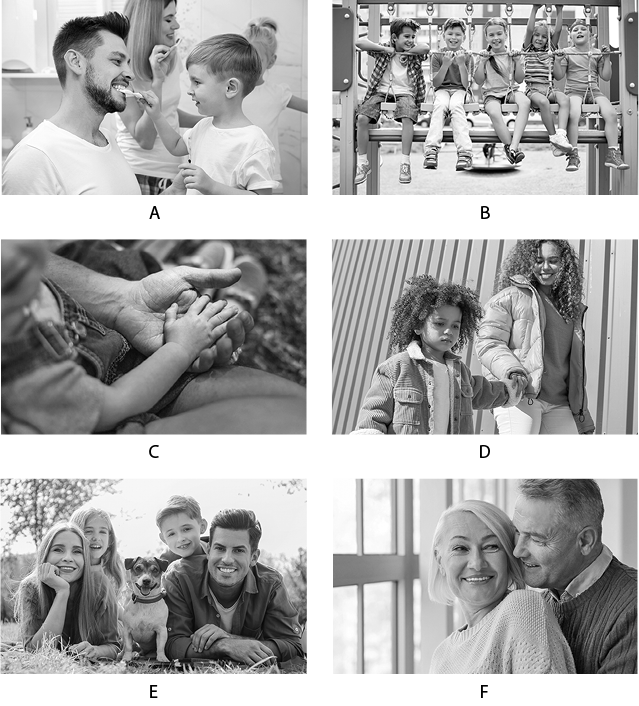
• Do you come from a large family?
• How many members are there in your family?
• Who is the eldest in your family?
• Have you got any brothers or sisters?
• How many of your relatives do you know personally?
VOCABULARY PRACTICE
| General Information about the Family |
||

|
to be single to live with parents to start a family to be married to have a family of one’s own to have immediate relatives (parents, grandparents, brothers, sisters) to have distant relatives (aunts, uncles, cousins, nieces, nephews) to be related to sb |
|
| Occupation |
||

|
to work as a (doctor, engineer, photographer, journalist, architect, librarian, accountant, clerk, book-keeper, shop-assistant, hairdresser, dressmaker, military man, taxi-driver, waiter, customs officer, nurse, stewardess, etc.) to work in / at a factory, at school, at the hospital, on a farm, at an office, at a teachers’ training college, at a plant, at a University to be a housewife to be an experienced lawyer, a skilled worker to be retired |
|
| People’s Name |
||

|
My first name is … My patronymic is … My surname / family name is … My full name is … |
|
| People’s Age |
||

|
to be a teenager to come of age to be of age / under age to be about the same age to be nearly / about / over forty to be in his / her early / late forties |
to be a middle-aged person to be an elderly person to be sb’s senior / junior to be 2 years younger / older than sb to look sb’s age |

|
Remember: 1. older/ elder — is used to say who was born before others in a family. e.g.: My elder sister is not married yet. 2. older — is used to show differences in age, in comparison using than e.g.: My father is 3 years older than my mother. |
|
| People’s Place of Birth |
||

|
to be from … to come from … to be a native of … |
|
| Biography |
||

|
My name is … to be born on … to be born in … I’m English. I have British Nationality. to start school to leave school / to finish school at the age of … to be an applicant for entry into … to become a student of Pyatigorsk State University |
|
| Engagement and Marriage |
||


|
to be single to be a spinster to be a confirmed bachelor to be a marriageable girl to fall in love with sb at first sight to date sb to be in love with sb to be head over heels in love with sb to be engaged to sb a fiancée (F) / a fiancé (M) to marry sb / to get married / |
to be married to sb to marry sb for love to be a marriage of convenience (for monetary or social gain) to receive wedding dowry to have a wedding ceremony / reception a bride (F) / a bridegroom (M) to be husband and wife to celebrate a wedding anniversary to make sb a good husband / wife to be happy in one’s marriage / married life |
|
|
Remember: Feminine a spinster a fiancée a bride |
Masculine a bachelor a fiancé a bridegroom |
|
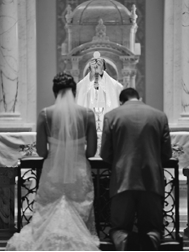
! Cultural Note: Wedding There are many types of wedding in Britain and in the US depending on your religion. Many people get married in church. Other people get married at a Registry Office (BrE) or Office of justice of the peace (AmE), often followed by a party at home or in a hotel. Marriage In Britain and the US it’s now common especially among young people for a man and for a woman to live together without being married. Some couples decide to get married when they have children. About one in three marriages ends in divorce (in the US one in two) so there are many parents bringing up children alone. These things are no longer considered as shocking as they were in the past. However many people still consider to be happily married one of their main aims in life. |
|
| Kids |
||

|
to be an only child in the family to be twins to have some children besides sb to be the pet of the family to love sb dearly to be special to sb |
|
| Divorce |
||

|
to divorce sb to get a divorce / to get divorced to be divorced from sb to fall out of love |
one’s marriage is on the rocks to be sb’s ex / former husband/ wife a divorcee (F/M) to pay maintenance |

|
Remember: 1. to divorce sb — describes the action. NB! No preposition! e.g. She divorced after years of unhappiness. to be divorced from sb — describes the permanent state NB! Preposition from! |
|

|
e.g. Charles is divorced from Ann. to get a divorce — describes the event. e.g. My parents got a divorce a year ago. 2. maintenance (BrE) / alimony (AmE) ! Cultural Note: Divorce is legal in Britain, though not in Ireland. In the US divorce is also legal, though different states may have different laws about it. In most states one may get a divorce after at least one year’s separation and in some states one can get a No-fault divorce (one that doesn’t blame either person). In both Britain and the US, the Court decides which parent should have custody of the children, how the property is to be divided and whether one parent, usually the husband should pay money (maintenance/ alimony) towards the living costs of the other and children. |
|
| Family relations |
||

|
to get on well with to be on good / friendly terms with sb to respect sb to treat sb well / badly to be easy / hard to deal with |
|
| Financial Support |
||

|
to earn money to support the family to be the head of the family to share earnings fairly with sb to manage the family budget |
|
| Family Duties |
||

|
to share household duties equally to look after the house / to keep house / to run the house / to rule the house/ to manage the house to take care of sb to bring up children to be on the wife’s shoulders |
|
| Quarrel and Making Up |
||

|
to have a quarrel to lack manners to find fault with sb to flare up at sb to be rude to sb to raise one’s voice to lose one’s temper (for no reason) (not) to let sb open one’s mouth to turn a deaf ear to sb to order sb about to find the way with sb to keep one’s temper to give in to sb to make up the quarrel to make up with sb |
|

QUESTION PATTERNS:
• What is your name? — My name is Elizabeth, Liz for short.
• What relation is Charles to Ann?
• Is Charles any relation to Ann?
• How many members are there in your family? — There are three of us in our family. / We are three in our family. / We are four in all.
• Who is he? — He is John.
• What is she? — She is a hairdresser.
• Have you got a large or small family?
• Where are you from? — I’m from California.
• Where do you come from? — I come from New York.
• What does your father do? — He works as an engineer.
SPEECH PATTERNS:
I was born on the third day in the month of April, on the year of the snake, 1965. I’m the fourth child in the family of 7 children that consist of 4 male and 3 female. I don’t remember much during the early years of my infant life as I never heard nor asked about it from my parents
When I was 6 years old my family moved to Australia. This was such an important event in my life, at the time, because everything in my life changed so much. At first I felt afraid and it was hard to make friends. But after a while I slowly made new friends and felt at home.
SPEECH PATTERNS 2:
• I was born in…
• I was an active (or quiet, knowledge-loving, shy, curious, etc.) child.
• My childhood dream was…
• My earliest memory is…
• I am grateful to my parents (or teachers, friends, etc.) because…
• My lifetime dream is…
• The most memorable day of my life was…
• One phrase that I will never forget is…
• If only one of my dreams could come true, I would wish for…
• I am driven by my desire/passion/wish to…
• The main lesson that my parents taught me was…
• The childhood hobby that most shaped my personality is…
• One event that influenced who I am today is…
• My motto in life is…
• My favorite book/movie/author is…
• When I was growing up, I always dreamed of becoming a…
• One thing I wish I knew five (or ten, twenty, etc.) years ago is that…
Quick chat
• Are friends more important than family? What do you think?
• Are chores assigned to children in your family?
READING
1. Read the text and match the headings to the paragraphs. Choose from the sentences A–I the one which best fits each gap (1–9).
A. to achieve your goal
B. I was a very active, curious, and communicative child.
C. is not just a bed of roses
D. and I was admitted to the college of my dreams.
E. this is why my parents offered me books and educational movies
F. when I was at school.
G. a part-time job and full-time study
H.to recover after failure
I.I study hard and devote my free time to reading scholarly reviews

My ups and downs ……
Who am I? ……
My goals ……
Conclusion ……
My childhood ……
1. I was born on a cold winter night, when even time seemed to stand still, in / my native Bennington, Oklahoma. I do not remember much of my early childhood, but my mom said that (1)…………………. I would ask dozens of questions each minute, even without waiting for the answers. I suppose (2)…………………. as early as my third birthday.
2. Fortunately, my thirst for knowledge did not come to an end (3)…………………. I was passionate about history and science. This passion helped me gain profound knowledge in these areas, (4)…………………. Today, I am a student at a law school, and I feel very happy about it.
3. I am certain that my degree will become my ticket to a better tomorrow. I want to become a renowned lawyer in the field of employment legislation. (5)…………………. and watching interviews with recognized specialists in the field.
4. Of course, I understand that life (6)………………… ., and challenges and hardships are an integral element of life. Since my parents could not help me cover my college expenses in full, paying off my student loan has become an important challenge for me. I combine (7)…………………. to earn my living and my education. I feel triumphant at the beginning of every month when I receive my salary and plan how I will spend my money.
5. I have come to believe that two main factors determine success. First of all is a person’s own determination and will to succeed. Are you ready to make sacrifices to achieve your goal, like working and studying at the same time? Are you prepared (8)…………………. and proceed to your goal again? Without strong internal motivation, it is nearly impossible to become successful. Equally important is the support of people around you. Being determined to succeed does not mean alienating everyone and stepping on other people in order (9)…………………… On the contrary, success is about recognizing your weaknesses and accepting support from people who genuinely want to help you. For instance, if it were not for my parents’ support of my educational endeavors, I would perhaps not be attending law school today [1].
2. Fill in the synonyms from the list.
difficulty, inquisitive, fortune, dare, original, happily,
scholarly, awareness, earnings, desire
1. success = ……………………………………………………………….............
2. curious = ……………………………………………………………….............
3. educational = ……………………………………………………………….............
4. thirst = ……………………………………………………………….............
5. fortunately = ……………………………………………………………….............
6. challenge = ……………………………………………………………….............
7. salary = ……………………………………………………………….............
8. native = ……………………………………………………………….............
9. knowledge = ……………………………………………………………….............
10. hardship = ……………………………………………………………….............
3. Read the text. Here are several ideas for strengthening your family:
STRONG FAMILY
Have regular dates
If you are married, make time for regular fun-time with your partner. A strong marriage can add strength to the family. Some families also have regular date nights with their children. Regardless of your family circumstance, make time for the important relationships in your life.
Keep a family journal or scrapbook of significant family
events and achievements
Remembering the good times can give us strength to endure the tough times.
Explore you family history
Trace your family lines. Find out about roots and share the lessons of life from heroes in your family line. Find out what your ancestors stood for. Family history is a wonderful activity for all ages.
Hold regular family meetings
Family meetings help us gi
...