General system theory of aging. Special role of the immune system
Қосымшада ыңғайлырақҚосымшаны жүктеуге арналған QRRuStore · Samsung Galaxy Store
Huawei AppGallery · Xiaomi GetApps

автордың кітабын онлайн тегін оқу  General system theory of aging. Special role of the immune system

V. I. Dontsov

General system theory of aging

Special role of the immune system


Contents

  1. General system theory of aging
  2. Introduction
  3. Main Points
  4. Chapter 1. Methodology and principles of studying the aging phenomenon
  5. 1.1. The main methodological errors, myths, and cliches in the general analysis of the problem of aging
  6. 1.2. History of views on the aging process
  7. 1.3. Methodology of knowledge: three stages, three paradigms
  8. 1.4. Features of the system approach as a modern universal scientific method of problem analysis
    1. 1.4.1. Using a systematic approach to analyze оf aging process
    2. 1.4.2. General methodology about the cause of phenomena
    3. 1.4.3. Aging Hierarchy
  9. 1.5. Essential modeling — the basis of understanding the phenomenon of aging
  10. Chapter 2. Theoretical approaches to the study of aging phenomenon
  11. 2.1. Essential definition and cause of aging
  12. 2.2. Chaos and order processes, entropy and energy
  13. 2.3. The basic formula and the basic law of aging
  14. 2.4. Basic global mechanisms: types of aging
    1. 2.4.1. The main common mechanisms are types of aging
    2. 2.4.2. Stochastic dependent death non-elements of the system
    3. 2.4.3. Stochastic dependent cumulative mechanism of aging
    4. 2.4.4. Regulatory aging
    5. 2.4.5. The relationship of the main mechanisms of aging
  15. Chapter 3. Modeling the phenomenon and mechanisms of aging
  16. 3.1. Mechanical model of system aging
    1. 3.1.1. An example of a mechanical model of aging systems
    2. 3.1.2. From mechanical to a biological system
  17. 3.2. Modeling of global aging mechanisms
    1. 3.2.1. Simulation of stochastic-dependent system “pollution”
    2. 3.2.2. Simulation of stochastic-dependent death of non-recovering system elements
    3. 3.2.3. Regulatory aging modeling
    4. 3.2.4. Obtaining an analogue of the Gompertz-Makema formula from the regulatory model of aging
    5. 3.2.5. Modeling the interaction of the three fundamental mechanisms of aging
  18. 3.3. Unified Systems Theory of Aging
  19. 3.4. A systematic approach to the diagnosis of aging
    1. 3.4.1. Fundamentals of the diagnosis of aging
    2. 3.4.2. Estimation of the rate of aging according to the graphs of the intensity of mortality
    3. 3.4.3. Does it exist a correlation of Strehler-Mildwan?
    4. 3.4.4. Mortality as an indicator of aging: opportunities and limitations
    5. 3.4.5. Individual diagnosis of aging — biological age
    6. 3.4.6. Artificial intelligence capabilities for analyzing human biomarkers
    7. 3.4.7. Diagnosis of syndromes and manifestations of aging
  20. 3.5. Systematic approach and ways of influencing aging
    1. 3.5.1. Fundamental causes of aging and general routes of exposure
    2. 3.5.2. Aging syndromes, their diagnosis and ways of correction
    3. 3.5.3. Types of metabolic disorders
    4. 3.5.4. Geroprotectors — special anti-age medicine
    5. 3.5.5. Elements of tactics in the diagnosis of aging
  21. 3.6. Whether the treatment of age-related diseases anti-aging therapy
  22. Chapter 4. The regulatory theory of aging as the main mechanism for the aging of biological systems
  23. 4.1. Some examples from evolutionary biology
  24. 4.2. Age-related cell degeneration as the basis of aging
  25. 4.3. Ways to restore regulatory programs
  26. 4.4. Practical approaches to life extension
  27. Chapter 5. Self-organization of growing cellular systems and the integrative role of the immune system
  28. 5.1. Self-organization of cellular systems — the basis of the formation of the body
    1. 5.1.1. Regulation of proliferation of single-type cells (Chalons)
    2. 5.1.2. “Cell hypercycle” — the basis of self-regulation and self-sustaining multicellular organism
    3. 5.1.3. The evolution of the cell hypercycle
    4. 5.1.4. Functioning of the cell hypercycle
  29. 5.2. T lymphocytes — growth regulators of somatic cells
    1. 5.2.1. Data on the regulation of lymphocyte growth of somatic cells
    2. 5.2.2. Specialized cellular system for regulating the growth of somatic tissues
    3. 5.2.3 Properties of lymphocyte growth regulators cells
    4. 5.2.4. The new concept of the emergence of immunity
  30. Chapter 6. A New Immuno-Regulatory Theory of Aging
  31. 6.1. Changes in the immune system during aging
  32. 6.2. New immuno-regulatory theory of aging
  33. 6.3. Prospects for immuno-correction of aging
    1. 6.3.1. Study of lymphocyte regulators of the cell growth experiment
    2. 6.3.2. Influence of an immunomodulator Transfer factor on aging
  34. Conclusion
  35. Appendix
  36. References

V.I. Dontsov. General system theory of aging. Special role of the immune system. 2019. — 320 p. Electronic edition. Figures — 57. Schemes — 4. Tables — 4. Formulas — 9.

Translation from Russian by the service of Springer Edit.


The monograph examines the general methodological problems of the aging of biological systems, debunking myths and cliches circulating in this area; modeling of the general aging process, highlighting the causes of aging, the main mechanisms, and their biological content, as well as consideration of the fundamental possibilities and directions of influence on this process.

A special place is occupied by the use of system analysis and consideration of integrative systems that combine hierarchically complex systems into a single whole, and the special role of the immune system, namely, that part of it, which is not responsible for immune phenomena proper, but regulates the interaction of various cell populations in the body. A single look at aging allows you to determine the possibilities and directions of influence on this process, and the allocation of aging syndromes, similar to those in common diseases, allows you to influence aging with conventional therapeutic agents.

The book is intended for specialists in the field of general biology and medicine, system analysis, for gerontologists and specialists in anti-age medicine and biology of aging, as well as for graduate students, teachers, and students of higher educational institutions, theorists and experimental studies.

Introduction

According to WHO, the level of health and life expectancy of the population are among the central indicators of the level and quality of life in the country. However, the increase in life expectancy, which is universally observed in all civilized countries, poses a serious problem associated with a simultaneous decrease in the birth rate, this is a worldwide trend of aging of the population. The problem of aging is occupied by the most diverse areas of theoretical science and their practical sections. General biology considers the emergence and evolution of ontogenesis, the species life span, the ecology of species and the Earth’s overall ecosystem.

Demography develops population gerontology, especially the aging of various population groups and the change in mortality in different historical epochs. Molecular biology, genetics, physiology, biochemistry, and histology have thoroughly studied all the features of the manifestation of aging at the level of molecules, genes, cells, tissues and organs, as well as changes in the systemic relationships of organs and tissues in the whole organism throughout life. Geriatrics studies in detail the course and treatment of diseases in the elderly.

However, it is philosophy, its methodological section — gnoseology, and the modern methodological scientific principle — system analysis that plays a leading role in questions about the essence of life and death, constant movement and self-renewal, and also in methodological questions about the essence and cause of the aging phenomenon and the fundamental possibility of overcoming it, about the future of man as a race with global interventions in the biological nature of man and in other generally significant, human-common problems.


Knowledge of philosophy and methodology eliminates the typical flaws characteristic of modern representatives of highly specialized science, first of all, of replacing the essence of aging with its mechanisms, which led to the unrestrained reproduction of the “theories” of aging.

Practical success is always based on new scientific knowledge and theoretical work, which is especially important for the science of aging. In recent years, quite a lot of fundamental work has appeared on molecular, genetic, cellular manifestations of aging, and ideas about the role of apoptosis, telomerase and other relatively new scientific data on cellular processes in aging processes are being exaggerated. At the same time, no clear idea of aging as a single process affecting the whole organism is formed. It is not clear how important the studied mechanisms of aging are for the aging of the whole organism, how they interact with each other and how important they are.

In this monograph, using the system analysis methodology, to consider the aging process as a whole as a phenomenon typical of all living things, as well as to highlight the most important aging processes and mechanisms for mammals and humans first of all.

We also present a new look at the main mechanisms of aging associated with the development of regulatory models of aging and specifying their manifestation — through the immune mechanisms, and the immune mechanisms here act in a specific form — as regulators of the proliferative activity of somatic cells, which is pronounced decreases with age, defining age-related atrophy of tissues — this is a new trend in immunobiology, in which domestic scientists are ahead in the world.

The monograph makes it possible in general to create a general idea of aging, its causes and main mechanisms, and to evaluate the possibilities and ways of influencing, having a clear idea about the points of application and the possible effectiveness of effects, which is always the main complexity of modern theories and practical impacts on aging.

Main Points

The presence of hundreds of theories of aging to date indicates not only and not so much the lack of a unified theory, general views, or lack of knowledge of the causes and essence of aging, but often a methodological lack of subject matter understanding.


The development of a systems approach — a new, whole world view, brought science out of a methodological crisis, while not discarding what has been achieved.

The general cause of aging can be expressed only in the language of high-level abstraction as an objective pattern of life, being, as a principle, but not as specific mechanism in the organism. The reduction of principles to mechanisms is the main methodological error in the sciences, including in gerontology.

System analysis reflects not the material structure of the object that morphological sciences study, but a hierarchy of essential principles reflecting the laws of functioning and communication within and between the structural levels of the object being considered, which acts as a complex hierarchical dynamic system.

The common cause of aging is known as part of ontogenesis, part of life itself, as a phenomenon of disruptions in the structure and function of the system accumulating with age, as movements from order to chaos. In general, it is a natural process in nature, since it proceeds with an increasein entropy — the accumulation of chaos in a systems.

Aging has been known since antiquity — as a reduction in vitality with age. The current general definition of aging as a reduction in overall vitality with age.


The first mathematical model of aging was created almost 200 years ago by B. Gompertz (1825) and still most accurately describes the age dynamics of human mortality and, apparently, of most other organisms. Mortality, as quantitative characterization of the inability to resist destruction, can be viewed as the reciprocal of vitality.

A simple assumption about the stochasticity of the aging process is enough: the viability over time decreases in proportion to itself at each time point in order to obtain the basic law of aging: mortality increases with age by the exponent. Such a nonspecific increase in the body’s vulnerability to all influences with age is called aging itself:

d X / d t = — k X, k is a coefficient, X is viability, t is time.

Considering the mortality (μ) as an inverse viability value (μ = 1 / X), the basic aging formula is obtained (B. Gompertz and W. Makekem):

μ = Ro exp (k t) + A, Ro is the initial mortality rate, k is the rate of increase in mortality, A is the coefficient characterizing the external influences to mortality.

The general mechanisms of such processes are clear — these are principally probabilistic regularities associated with the ultimate stability of any elements delimited from the external environment; then a complex organism consisting of such elementary units can only lose them over time. The nature of such “elementary units of life”: non-renewing elements of the body (nerve cells, nephrons, alveoli, teeth, etc.).


Another approach to the quantitative assessment of aging, based on the same definition — reducing overall viability with age, is to consider the overall viability of the system as an integral of the viability of its parts, which, as applied to the organism, means that the overall viability of the body consists of maintaining vitality (functional resource) of its main organs and systems:

Х = k1 х1 + k2 х2 +….+kn хn, where k is the coefficient, x1 … n is the viability of organs and systems. The definition of individual aging as a biological age is based on this.

The common single cause of aging is manifested by the Main types (common mechanisms) of aging.

A fully formed organism has many non-updated elements at all its hierarchical levels: unique genes, non-dividing cells (for example, nerve cells, including autonomic control centers), non-regenerating structures of organs (alveoli, nephrons, etc.), organs themselves and etc. The loss of non-regenerating elements with age is probabilistic, and therefore in the simplest case, it is described by the same type of formula (Gompertz) as the loss of overall viability. It is the 1-st General Type of Aging. The only possibility at present to combat this aging mechanism: replacement of lost structuring units — mechanical prostheses (e.g., dental care) and transplantation of organs and tissues. l

Age-accumulated of non-functional and toxic elements of different nature is 2-nd General Type of Aging. Activation of the organism’s “cleaning” systems is a well-known and widely used tactic to influence this aging mechanism.


Aging of self-renewing elements of the organism structure (skin, mucous, parenchymal organs, etc.) is determined by a decrease in the rate of their self-renewal by reducing growth factors is the 3-d Main type of aging — regulatory aging. Optimal is the impact on the regulatory centers and the introduction of tissue growth factors.

Global mechanisms of aging are manifested in the form of a variety of particular mechanisms for different structural units of the body, depending on the specific conditions and their structure. The effect on them is symptomatic. However, according to the common mechanisms, private mechanisms are grouped into aging syndromes, common to all effects (and diseases). Effects on them is the most promising at the moment, as you can use conventional remedies.

We have proposed a general model of growth an development and regulatory aging, which consists in disinhibition in the vegetative regulatory center (hypothalamus?) of stimulating cells when inhibiting cells die, which determines growth and development, but if death also affects stimulating regulatory cells, then over time the development program is depleted — regulatory aging. This is essentially and very simple model that describes changes in viability (and mortality as a quantitative criterion of aging in general) during all periods of an organism’s life.

Our formula is analogous to the formula of Gompertz-Makeham:

our formula: m=R*1/ (Ho*Exp (-k1*t) –So*Exp (-k2*t) + c) + A;

Gompertz-Makeham formula: m = Ro * Exp (k*t) + A.

The most important formal differences are:

1. The exponent component, reflecting the age dependent mortality rate, is the result of the interaction of 2 exponents, reflecting stimulatory and inhibitory effects. This allows to simulate the initial shape of the mortality rate charts (1—25 years), characterized by a complex U-shaped.

2. The exponent component is influenced (mainly in its final segment) by the coefficient “c”, reflecting the presence of long-livers persons with a genetically reduced rate of aging. This allows to simulate the final shape of the mortality charts (80—110 years), characterized by a complex S-shaped.

Our it is not empirical, and is based on fundamental biological processes and connects the aging process with the processes of growth and development. Regulatory non-dividing cells of the hypothalamus that produce growth factors in blood can be real morphological substratum (the “h” and “s” cells) of the described mechanism; for peripheral mechanisms — a variety of growing and self-updating proliferating somatic cells, the growth of which is regulated by the level of growth-stimulating factors.

The systemic nature of aging also requires a systematic approach to the diagnosis of aging and its effects.

The book describes the feature requirements for the indicator of Biological age, the components of bioage and the computer system determining of bioage and related indicators, including automatic processing of bioage biomarkers using elements of artificial intelligence.

Another computer system described in the book makes it possible to study aging in detail by studying the dynamics of population mortality using the formula of Gompertz-Makeham and its derivatives.

The use of mortality rate unless the external mortality component (“m-A”) graphs and the mortality rate increment (“d (m)”) graphs reflect the actual biological aging and show that the linear form of the graph (on a logarithmic scale) from the period of the end of growth and development remains the same, and decline in the rate of aging of centenarians.

The superposition of curves, reflecting the actual aging rate, shows that the aging is the same in history until 1950 for a number of countries, however, since the middle of the 20th century, the indicators of biological aging are constantly decreasing. Also increases maximum lifespan and reduces the coefficient k of Gompertz chart.

The effect of reducing the aging rate (“d (m)”) for middle ages is accompanied by the phenomenon of inversion of the overall mortality rate (“m”) for ages of long-livers: the natural “m” decrease, observed for all countries in earlier historical periods, is replaced by an increase in modern times. However, in the “d (m)” charts, it can be seen that the decrease in the aging rate of the long-livers is preserved throughout all historical periods. The latter means that the phenomenon of mortality inversion is associated with the external influences on mortality, and not with a change in the aging rate at this time.

Ways to restore regulatory programs — the most promising direction for the impact on aging.

The problem of recovery and correction of regulatory programs of the brain is central to age biology, since many body functions (sexual, immune, metabolic rate, total hormones and the balance of different types of hormones, nervous trophism, growth program, etc.) undergo drastic changes throughout life precisely because of the programmed changes in the regulatory centers, primarily at the level of the hypothalamus.

The methods of brain embryonic tissue transplantation developed in recent years make it possible to begin work on the restoration of depleted regulatory programs in old animals. The results indicate the fundamental possibility of restoring development programs lost or exhausted with age, as well as, possibly, imposing new programs (for example, during interspecific transplants) in order to influence the aging process in the right direction. An alternative to surgical intervention are the methods of pharmacological or physiotherapeutic activation of the corresponding nuclei of the hypothalamus, as well as the creation of new regulatory centers and pacemakers, including the use of psychotherapeutic techniques, hypnosis, etc.

The regulation of cellular growth at different levels of hierarchical structures of the body is essential for the integrity of the body.

The works of M. Eigen and P. Schuster show how different types of structures (cells) could be combined with their own regulation systems. According to the authors’ definition, a hypercycle is a principle of natural self-organization, causing integration and a coordinated evolution of a system of functionally related self-replicating units, uniting it into a single whole. The basis of the hypercycle theory is proof of the inevitability of the formation in the process of evolution of functional links of a higher order between self-replicating units  systems of a lower order that are part of a single hypercycle system. With such a union, a self-regulating system of a higher order is formed, which preserves the constancy of the interrelationships within the incoming systems.

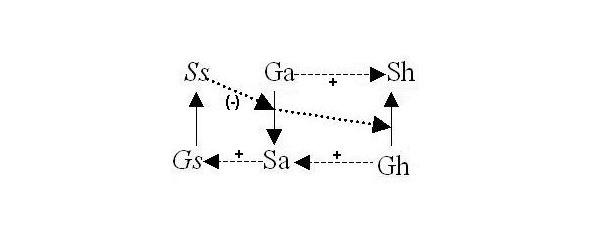
The 3 elements (regulated population, helper and suppressor populations) form an elementary self-regulating unit of 3 cell populations — CELL HYPERCYCL: the population of somatic cells is regulated by stimulating (h) and inhibiting (s) regulatory populations.

Despite the simplicity of the description and great biological significance, the “cell hypercycle” is not given worthy attention in the literature, but the concept of a cell hypercycle means:

— a new mechanism in evolution during the formation of multicellular organisms, which made possible the very existence of multi-cell as a whole;

— a fundamentally new level of regulation of cell growth in the body (the level of cell populations), and, therefore, a new system in the body;

— the presence of self-organization processes at this level;

— the basis for the formation of higher levels of regulation (neuro-humoral) and their indirect effect on cell growth;

— the basis for the formation of a special cellular system for regulating the growth of somatic cells in the organism — a new system in the organism (Dontsov, 1986, 1987, 1989, 1990, 2009, 2011, 2017a, b), which in turn is the basis for the formation of special systems — including including the immune system — a new theory of the formation of immunity (Dontsov, 1989, 1990, 2011, 2017a, b),

— as well as a new “immune theory of aging” as a depletion of the immunity system due to changes in regulatory systems (Dontsov, 1989, 1990, 2011a, b).

Thus, the self-organization of growing cell populations into a single mutually coordinated system is the central and initial moment of the formation of a cell regulation system at the level of interaction of different types of cell systems in the body..

Further development of the cell hypercycle in phylogenesis should have taken place according to general evolutionary laws — the following biological phenomena can theoretically be predicted and experimentally observed:

— increase the number of regulated units,

— specialization of cell populations (the selection of somatic and regulatory populations);

— specialization of regulatory populations, leading, for example, to the phenomenon of “memory” in the regeneration of organs and tissues, transferred by T-lymphocytes.

— the emergence of functional regulation (the emergence of mechanisms Go/G1 transition and its regulation separately from the G1/S transition),

— add-on regulation systems of the whole organism (for the regulation of growth and development).

In general, such a system is represented by a number of differentiated functional types of cells (skin, mucous membranes, liver, kidneys, etc.), which perform primarily their own type of functions. They are usually at rest, but when cells of a certain tissue are activated, they become G1 ready for cell division.

The somatic cells entering the cell cycle (G1) are regulated by both nonspecific and specific for this tissue regulating cells of the stimulating and inhibiting type, integrating various growing cells into a single system.

Already specialized cell regulators — the Cells Regulators of Proliferation (CRP System), which themselves begin to activate and divide, react to this state, and also secrete growth factors for functional cell types, stimulating them to grow and divide.

In the course of growth and division of functional cell types, regulatory feedback cells are activated and their ratio to stimulating cell types determines the growth kinetics of functional tissue types. At the initial stages, nonspecific regulatory cells are activated, at later stages, specific CRP, which determine the effects of specific “memory” detected during repeated regeneration.


The participation of lymphocytes in the processes of regeneration and normal tissue growth was emphasized by a number of authors, and from the very beginning the immune system was assigned the role of integrative, preserving the whole organism. Immunomodulators have long been proposed as stimulators of regeneration processes, as well as the idea that regeneration and the immune system are interrelated (Babeva et al., 1982, 1987; Giełdanowski, 1983; Romanova, 1984), and all organs influence a single mechanism on the growth of all other organs (Romanova, 1984), which requires a special system of such interactions.


The lymphocyte transfer of “regenerative information” by lymphocytes from animals with liver regeneration was able to induce the proliferation and growth of liver cells during the syngeneic transfer to intact animals (Babaeva, 1995; Babaeva et al., 1979, 1982, 1987, 2007).

The transfer of a hyperplastic reaction by lymphocytes is possible, apparently, for any tissue and for any processes, for example, with isoproterenol-induced hypertrophy of the salivary glands of rodents (Dontsov, 1985, 1986), with functional hyperplasia of the heart (Svet-Moldavsky et al., 1974) and other processes, as well as in hypo-plastic reactions and pathological osteopetrosis.

The growth processes of the whole organism are also associated with the immune system. It has long been known that general growth retardation (dwarfism of mice) can be eliminated by transferring lymphocytes from healthy animals, and T-lymphocytes have receptors for the somatotropic hormone and somatostatin, the number of receptors is higher during the growth of animals, and the effect of the hormone appears only in the presence of thymus; somatotropic hormone stimulates the production of thymocyte in dogs and restores the formation of autologous rosettes with thymocytes in hypothyroid rats, while somatostatin inhibits lymphocyte proliferation (Martunenko, Shostak, 1982 Payan et al., 1984).


Based on the idea of the important regulatory role of T-lymphocytes in the cellular growth of somatic tissues, it can be assumed that the system of regulatory T-lymphocytes should arise very early in phylogenesis and be sufficiently complex to manage the various processes of tissue growth, as well as their integration into a single growing system in the process of ontogeny. Based on all the above facts, we have assumed that the function of regulating the cell growth of different somatic cells is phylogenetically more ancient and more important. Actually, this is the evolutionary force that forms the complex system of T-lymphocyte regulators of the proliferation of any cells, including T and B-effectors of immunity, which are phylogenetically later and simpler. In this case, the immune system is only a part of a more complex and general system for regulating the cellular growth — the CRP system (Dontsov, 1989, 1990, 2011, 2011).

In particular, we have isolated and characterized such T-growth regulators of various somatic cells of the body, studied their kinetics, peculiarities of the phenotype, the reaction to some pharmacological agents, the selection of regulatory factors specific to somatic cells, etc. (Dontsov, 1990—2019).

Thus, it can be assumed that with aging, the function of T-lymphocytes of the CRP system decreases dramatically as a result of changes in the organism`s regulatory systems. We found a number of such data experimentally and showed the possibility of reactivation and rapid restoration of cell growth potential when exposed to the CRP-system cells (Dontsov, 1990, 2011).


The proposed new immune theory of aging, therefore, has not only theoretical interest but also allows you to use the full potential of immunopharmacology to counteract one of the most important mechanisms of aging  the reduction of cellular self-renewal in mammals and humans with age.

We have shown the possibility of restoring the cell tissue growth potential that decreases with age under the influence of Transfer Factor, which gives the right to speak about the likelihood of TF influence on other manifestations of aging. It has been shown that TF is able to reduce biological age, assessed by a variety of parameters, in humans; and correct age-related immunodeficiency with increasing potential of cell growth.
Chapter 1. Methodology and principles of studying the aging phenomenon

1.1. The main methodological errors, myths, and cliches in the general analysis of the problem of aging

The most famous and common is, apparently, a statement from which often popular, and often scientific, lectures on aging often begin.

They say that the general theory of aging does not exist, there are several hundreds of theories of aging, but none of them is true, that you need to create a “correct” theory of aging, which will indicate the unknown cause of aging and abolish aging, leading not only to eternal youth but also to immortality.

In fact, everything here is not true exactly the opposite: the theory of aging exist, it is one, it includes all existing “theories” as special cases — the mechanisms of aging, it is impossible to abolish aging as a general phenomenon of life, but also of Being as a whole, but’ eternal youth ‘does not mean immortality.

The common cause of aging is known as part of ontogenesis, part of life itself, as a phenomenon of disruptions in the structure and function of the system accumulating with age, as movements from order to chaos (Comfort, 1967; Galimov, 2006; Giaimo, 2014; Gibbs, 1928; Gompertz, 1825; Gladyshev, 2012; Hayflick, 2007; Dontsov, 1990, 1998; Dontsov, Krutko, 2009, 2012, 2016; Krut’ko et al, 2018; Nicolis, 1989).

In general, it is a natural process in nature, since it proceeds with an increase in entropy; in a particular form, this is known as the second law of thermodynamics — the accumulation of chaos in a discrete system.

But the reason is a principle, not a mechanism; it cannot be canceled (like most fundamental reasons); one can only oppose another principle (self-renewal and development).

The desired “eternal youth” would not lead to immortality, since aging is an increase in the probability of death with age, and eternal youth is only the constant (and not zero) probability of death throughout life. Such a situation would only lead to a different principle of extinction of the “ever young” population with a relatively small increase in Average life expectancy (ALE), but with a very large of psycho-social problems.

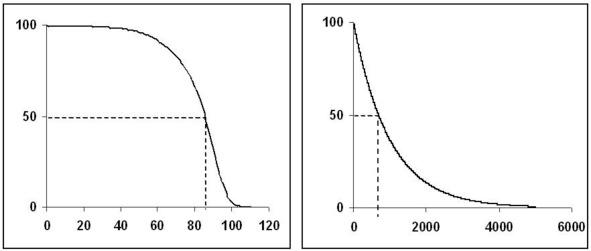
Indeed, during aging, when the probability of death increases with age by an order of magnitude, the main extinction of the population is drastically shifted to older ages, whereas with “eternal youth” the probability of death is constant throughout life and the average life expectancy (50% survival rate) sharply shifted to the left, which is typical of all systems with a constant stochastic loss of elements, for example, for the radioactive decay of elements.

From demographic data on mortality in developed countries, it is known that life expectancy in them now reaches 80—85 years or more, that is, the population is guaranteed life expectancy, which is considered by the population as personally expected, “guaranteed” duration of their own lives, about 85—90% of “Maximum” (90—100 years).

On the other hand, the “forever young” ALE would not reach even 15% of the maximum possible life span, and the absolute values of the ALE are not important here since the fundamental mortality curve depends on the principle itself — the immutability of mortality with age ((Figure 1)).

Figure 1. The probability of mortality of the population for an aging (left) and ageless (right) population. Horizontal — time (years), vertical — the percentage of survivors persons. Average life expectancy is indicated by the vertical dotted line on the horizontal time axis. The probability of mortality of the population: ageless population, for 20-year-olds 0.001% per year.

Among other myths, it should be mentioned first of all the idea that there is a Maximum life expectancy (MLE) equal to 100-120-140-170 years, etc. (depending on the personal preferences of the authors), and it can be achieved, it is enough just to study the experience and “device” of long-livers.

However, the available fixed maximum life spans are the Record life span (RLS) the exception is that the “tails” of the curves of the normal distribution of signs are impossible for any large part of the population to achieve. Such “tails” are typical for any statistical distribution and can only be oriented on the life expectancy policy. In addition, the MLE, in general, cannot exist as a definite digit: the extinction of a population is a probabilistic law (a curve, not a digit) and there is always some probability of living longer than a given limit. You can only talk about what percentage of the remaining population (and accordingly what percentage of the extinct population) is considered as the basis of the “MLE”, which should rather be interpreted as SLE (the species limit of life).

At the same time, a sharp increase in mortality with age leads to the fact that the differences between the life span of the remaining 1%, 0.1%, 0.01% and so on, the populations differ not even by years, but by months, therefore the MLE it is quite adequate to consider the life span of the life span for the remaining 1% or even 5—10% of the population


The notion that mortality is determined only by a specific cause, and by removing specific causes we remove the mortality itself, indefinitely extending the life span — the typical “myth of doctors.” This gave rise in the middle of the last century to numerous movements for general improvement. A number of longitudinal studies, however, showed that mortality in such groups, usually focused on the prevention of cardiovascular diseases, as the main cause of death, decreases very slightly, although the mortality from cardiovascular diseases itself is quite pronounced — there is a redistribution of mortality: “Compensatory phenomenon of mortality”, with increased mortality from other causes. For a gerontologist biologist, however, it is quite obvious that mortality is the result primarily of a decrease in viability, and causes of mortality are secondary: mortality does not add up as the sum of causes, but decomposes according to them, while the specific causes of death and internal super-strong effects for the body.


The concepts of the relationship between aging and evolutionary processes are widespread (Flatt, Schmidt, 2009; Giaimo, 2014; Hughes, 2010; Kirkwood, Melov, 2011). The myth that aging is evolutionarily important: like the death of old for “opening the road to the young” is a typical myth of non-specialists in the field of evolutionary theory and ecology. It has long been known, however, that in real life with very high mortality to old age, almost no wild animal survives. On the other hand, in many cases, age experience (birds, mammals) or sizes that increase constantly with age (fish) reduce (!), and do not increase, actual mortality under natural conditions. In addition, evolution can only affect the reproductive period, and the older ages are simply “not visible” to it. Evolutionary influences are important in a certain form — evolutionary found mechanisms of maximum adaptation are not required for the period of aging, and if they are important for the maturity period but have “off” or mismatch mechanisms with age and other unfavorable moments, these features will appear in old age as regulatory mechanisms aging (typically — climax).


A whole group of myths is connected with the possibilities of absolute regeneration of all structures of the body or, on the contrary, with the programmed aging and death, which leads to ideas about biological “hours of death” (Kirkwood, Melov, 2011; Afanas’ev, 2010; Olovnikov, 2005; Rando, Chang, 2012; Walker, 2011). This is usually associated with cellular self-renewal: with the fact that cells, on the one hand, have a life limit within them (Hayflick phenomenon), on the other hand, many cells are immortal in culture, and on the third side, only stem cells are immortal and only update all body tissues. In fact, everything here is not true. It has long been shown that the Hayflick phenomenon is a purely cultural phenomenon and only for a limited cell type, with which the author himself had long agreed, preferring now stochastic ideas about the nature of aging (Hayflick, 2007). Cells in culture change over time, mutate and undergo selection, so over time, it is a different culture (this is well known to practitioners who initially work with one type of cells for a long time — the results obtained on cultures of the “same” cells with different groups of scientists are contradictory).

It is known that self-renewal of cells, such as the liver, is primarily due to the liver cells themselves, and not stem cells — this is clearly seen when regenerating it in an experiment, when almost all hepatic cells can enter during the first regenerative mitosis during the day; only when such regeneration is blocked, stem cells begin to be activated in significant quantities — the so-called “oval liver cells” (Strick-Marchand et al., 2008). Stem cells are not immortal — silent stem cells eventually die for purely probabilistic reasons and mechanisms; stem cells that emerged into division form populations that are also depleted over time, some are replaced by other populations. Whether dividing stem cells can go to rest and replenish the silent pool of stem cells, and not only differentiate into more specific, highly differentiated tissue cells, remains little understood. With aging, rather, the active effects of an old organism on the stem and other cells are revealed, which can be seen in systems of syngeneic transfer between young and old animals (Albright, Makinodan, 1976; Gorskaya, 2011).


The notion that there is an “aging program” is another widespread myth (Kirkwood, Melov, 2011; Olovnikov, 2005; Rando, Chang, 2012). It is enough, however, to indicate that they ignore (or rather, do not understand or even do not know) stochastic processes, which naturally direct any systems to decay, and which do not require any special “program” for this. It is easy to understand on the basis of a mechanical analogue: a mechanical machine is created according to the drawings — “according to the program”, but when it starts to be used, the program is completed and its aging goes not according to the program, but according to the stochastic mechanism, due to the law of increasing entropy.


Thus, it is quite clearly seen that the basis of all the myths about aging is the lack of knowledge of scientific methodology and the inability to apply theoretical methods on the one hand, while inflating particulars on the other. As a result of the extreme specialization of the sciences, there are almost no scientists with a broad view — there are narrow specialists who do not see the big picture. On the other hand, there is the issuance of their own desires for scientific truth, as well as abstract reasoning for experimentally verified facts.


In questions about the cause of aging, the main mistake is a lack of understanding of the epistemological (theory of knowledge) fundamentals: the reason is not a specific mechanism, but a principle, another level of problem analysis. For the reason they give out various particular mechanisms, which leads to the “theories” of aging that grow beyond any measure and which do not “see” each other and any other mechanisms of aging.

The lack of systematic thinking does not allow us to see the problem of aging in general, and the lack of consideration of the hierarchy of the structure of the system does not allow us to see a qualitative difference in the manifestations of aging for different levels of organization of living systems.

Modern scientific analysis of the aging process should be carried out at a high level of abstraction, describing aging as a general phenomenon of the world, pointing out the most common mechanisms of aging and discovering fundamental ways of influencing them; should allow a general mathematical idea, the conclusions of which should not contradict the well-established experimental data on aging, in particular, the probability distribution of age-related mortality, and also clearly indicate the main physicochemical and biological mechanisms of aging.


Only for a man the question of prolonging life and preserving the personality, and especially the question of aging as a phenomenon of life, has become urgent. This, in particular, means that a person currently does not obey the laws of biological evolution and opens up to him purely human tasks and prospects for further development, based on the peculiarities of a human being — his intellect and psyche.

The real victory over aging means not the frozen “eternal youth”, but its further development in the physical and spiritual sense, controlled by the person himself.

For the level of all mankind — the taking under control of the biological nature of man and its further controlled development on the basis of a fundamentally new, that only man has — his mind and psyche.

1.2. History of views on the aging process

Aging of living organisms is difficult to study in the framework of a single discipline; therefore, this complex process is studied in various fields of science: biochemistry, molecular biology, genetics, demography, mathematics, medicine, and sociology (Anisimov, 2008; Atwood, Bowen, 2011; Burnet, 1970; Comfort, 1988; Babaeva, Zuev, 2007; Chebotarev, 1984; Chernilevsky, 2008; Dean, 1988; Gladyshev, 2012; Bogomolets, 1938; Gavrilov, Gavrilov, 1986; Davydovsky, 1966; Dilman, 1981; Dogel, 1922; Freitas, de Maga-lhães, 2011; Frolkis V.V., Muradjan, Fuente et al., 2011; Giaimo, 2014; Gompertz, 1825; Gorskaya et al., 2011; Harrison et al., 1982; Hayflick, 2007; Hughes, 2010; Jarygun, 2003; Khavinson, Konovalov, 2008; Khalyavkin A.V., Jashin, 2004; Kirkwood, Melov, 2011; Kishkun, 2008; 1967; Korshelt, 1925; Mechnikov, 1908, Nesterenko, 1984; Oliveira et al., 2010; Olovnikov, 2005; Rando, Chang, 2012; Semenkov et al.., 2005; Streler, 1964; 1992; Shabalin, 2005; Shmalgausen, 1926; Sohal, Orr, 2012; van Leeuwen et al., 2010; Veisman, 1914; Vojtenko, Poljuhov, 1986; Walford, 1969; Walker, 2011; Zavadsky, 1923).

General questions of the biology of aging and the specific manifestations of aging in various organisms in evolution are considered, for example, in reviews (Dean, 1988; Flatt, Schmidt, 2009; Freitas, de Magalhães, 2011; Hayflick, 2007; Hughes, 2010; Kirkwood, Melov, 2011; Masoro, Austad, 2011; Sohal, Orr, 2012; Vern et al, 2011; Walford, 1969).

The method of theoretical consideration of the issue is earlier than the experimental one, and no less important, and in some cases even the only possible way to obtain information on the most general laws, causes and essence of the phenomenon.

Gerontology studies the age dynamics of the vitality of the human body, the manifestations of aging at all hierarchical levels — from molecules and cells to organ systems and the whole organism, factors affecting viability, statistical patterns that characterize age-related changes in mortality in populations and in certain groups of the population, having certain differences related to gender, profession, ethnic characteristics, etc., as well as diagnostic methods for the aging of the whole organism and its parts and possible of life and would impact on aging with a view to slowing down and appeals.

The basis of modern scientific views on the essence of life and being in general is the doctrine of development, change, evolution, progress of all things, which, however, was known in ancient times: “Everything is in motion, everything flows, there is no rest and rest” (Heraclitus Ephesus, 480 y.).

One of the oldest explanations of the main cause of aging as a phenomenon inherent in living organisms was the study of the “life force” (Aristotle’s “entelechy”), which tends only to be wasted over time for any born organism, the beginnings of life and death. These ideas served as the basis for the development of the whole complex of theories of “wear” of the body — from Mop (1888) and Gertvig (1914), who considered that “the body wears like a machine”, to modern theories of wear their specific material substratum of this “wear” — unique genes, etc..

With the development of modern narrowly specialized science, the criticism of general notions as “idealistic” was replaced by crude materialism, which often reduces the reason, manifested as a general, to its particular specific manifestations.

Not surprisingly, as a result, all theories of aging, based on particular propositions, failed and are recognized only as a description of the mechanisms of aging, but not its root causes. It is impossible not to see the continuity between the term “life force” and the terms “vitality”, which are essential for medicine, biol

...