автордың кітабын онлайн тегін оқу Chod practice “The Laughter of the Hero”. Commentary. With a fairy tale about Rigpa and poems
Arta Lama Rinpoche
Chod practice “The Laughter of the Hero”. Commentary
With a fairy tale about Rigpa and poems
Fonts by «ParaType»
Translator Ragimov Vagid
Editor James Manteith
Photograph Boris Buzin
© Arta Lama Rinpoche, 2023
© Ragimov Vagid, translation, 2023
© Boris Buzin, photos, 2023
Arta Lama Rinpoche is a Teacher from the lineage of realized masters of Dzogchen in the ancient tradition of Bon. His book is a detailed commentary on the practice of Chod, “The Laughter of the Hero”, which is based on the view and approach of the Supreme Chariot, the Great Completion. The Chod text’s author is a renowned twentieth-century yogi and Dzogchen master Nyima Tsultrim Rinpoche, who achieved the highest realization in spiritual practice, the Rainbow Body.
ISBN 978-5-0059-4866-3
Created with Ridero smart publishing system
Contents
ARTA LAMA RINPOCHE
⠀
⠀
COMMENTARY
ON THE NYENGYUD CHOD PRACTICE
OF PRIMORDIAL LIBERATION,
«THE LAUGHTER OF THE HERO»
OFFERING OF THE BODY,
CALLED «LIGHTNING
OF A HUNDRED THOUSAND WORDS
AND LOGICAL REASONINGS,
WHICH SMASHES EGO-CLINGING
INTO DUST».
WITH A FAIRY TALE
ABOUT RIGPA AND MARIGPA,
AND POEMS
ZHANG ZHUNG NYENGYUD TRANSMISSION LINEAGE
Kuntu Zangpo, Shenlha Okar, Shenrab Miwo, Tseme Oden, Trulshen Nangden, Barlong Khuchzhung, Zangza Ringtsun, Chime Tsugphue, Sangwa Dupa, Yongsu Dagpa, Lubon Banam, Tride Zambu, Banam Cholpo, Trisho Jalwa, Rasang Samdrub, Darma Sherab, Darme Bhode, Shang Shung Triphen, Muye Lhajung, Mashen Legzang, Jershen Tagla, Rasang Yungdrung, Sechen Yungphen, Gepar Dobdrub, Jerpung Gephen, Se Gejal, Shang Shung Namgyal, Mujung Karpo, Horti Chenpo, Donkun Drubpa, Rasang Phengye, Gurub Sega, Dawa Jaltsen, Tapihritsa, Jerpung Nangzher Lopo, Nyima Tsultrim Rinpoche
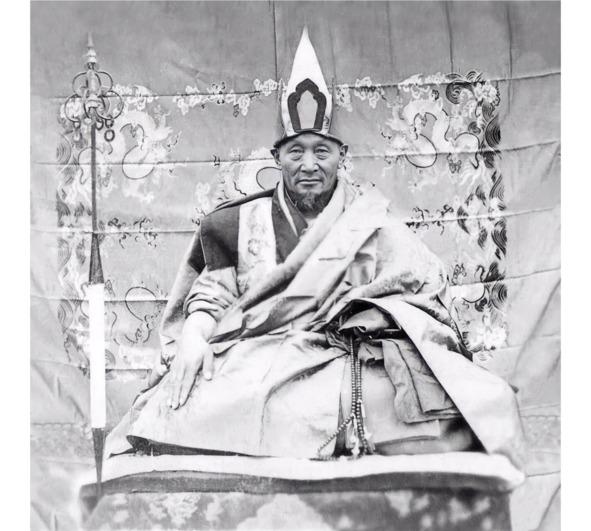
NYIMA TSULTRIM RINPOCHE
Nyima Tsultrim Rinpoche (nyi ma tshul khrims rin po che)[1] was a renowned yogi of the twentieth century who realized Rainbow Body in 1986. Rinpoche was born in 1927 in Tibet. He was famous in his country as both a philosopher and a greatly accomplished practitioner.
When Tibet was annexed by China, Nyima Tsultrim retired to the mountains, where he stayed for six years completely alone, eating nothing and practicing Chudlen (the accumulation of vital humors). Years later he was accidentally found by hunters, who reported him to the police, leading to his arrest.
The master spent many years in prison in Chamdo. After some time the wardens began to respect the great yogi: he was allowed to go outdoors and given only easy chores. They continued giving him food, which as before he did not eat, instead distributing it to other convicts. Despite his imprisonment, Rinpoche overcame all obstacles to his practice, practicing Togal while looking at electric bulbs, for instance. Nyima Tsultrim Rinpoche gained many followers and students in prison.
After Rinpoche’s release, he brought the Teaching wherever he went. His efforts led to the restoration of Shardza Ritro monastery, and he founded and restored an additional 15 monasteries. Nyima Tsultrim Rinpoche made a tremendous contribution to the preservation of Tibet’s teaching systems.
The master’s heritage includes «The Laughter of the Hero», which he wrote in prison based on the view of Dzogchen, the Great Completion. A large number of people died in those days, and their restless souls (agonizing in the intermediate state of bardo) continually manifested themselves to Rinpoche. As a result of these visions, the Chod of primordial liberation came into being.
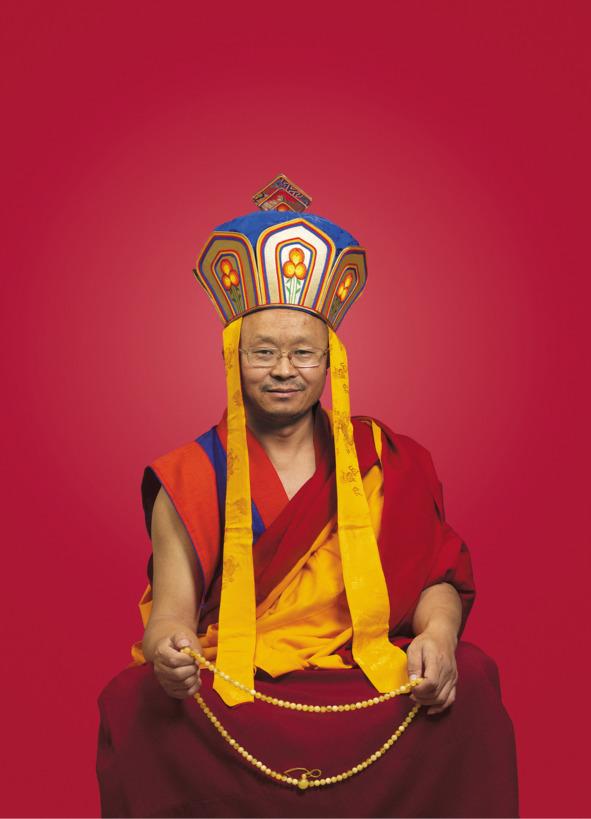
PREFACE AND AUTHOR’S BIOGRAPHY
Arta Lama Rinpoche (Tsultrim Namgyal) first had the good fortune of entering the gateway of Bon thanks to the homecoming of a true yogi, his uncle Nyima Tsultrim Rinpoche. Through this saint’s kindness, he received instructions on the ordinary preliminaries of Bon. He also received deep Dzogchen instructions on multiple occasions, thereby obtaining the opportunity to practice. In 1986 Tsultrim Namgyal Rinpoche took monastic vows. That year, together with his Lama, Nyima Tsultrim Rinpoche, he visited a holy site on Mount Kailash, where he made prostrations and performed thirteen kora circumambulations. Then he entered the monastery of Menri (smen ri) in Tsang, Central Tibet. He studied dudra (bsdus grwa)[2] with Lopon (slop dpon)[3] Kunzang Lodro (kun bzang blo gros) from the monastery of Yunling (g. yung gling), and received explanations on Mar yig (smar yig)[4], Pungso (spungs so)[5] and Lenwar (lan war)[6] from Sherab Chogden (she rab mchog ldan). He received many initiations, transmissions and profound instructions from Ragshi Togden (rag shi rtogs ldan) and Beru Togden (be ru rtogs ldan) in Hor Drachen (hor sbra chen).
In order to know the differences between the text of one’s own and other traditions, one must know authentic traditions precisely, and therefore it is said: “It is praiseworthy to study, without inclination toward any one side, all significant texts indicating the ways of logic — the ornaments of the world.” He thoroughly studied the texts of Sutra and Tantra. In the monasteries Chungpo Ritse Drukgon (khyung po ri rtse drug dgon) and Hor Yetha Lungkar Gon (hor ye tha lung dkar dgon), Lopon Drangsong Yungdrung Rinpoche (drang srong g. yung drung), whose kindness is difficult to repay, taught him philosophy. He also entered [the monastery’s] Shardza practice school (shar rdza’i sgrub grwa), where for many years both of us, as friends in the Teaching, received commentaries and initiations, studied extensive and concise Vinaya and received an abundance of commentaries, initiations, transmissions and instructions on Ye (ye), Tri (khri) and Drag (bsgrags). Lopon Drangsong Yungdrung Rinpoche, whose name is difficult to utter [because of devotion], was immeasurably kind to us. From Tsedrug Khen Rinpoche, Kose Tulku (rtse drug mkhan rin po che go se sprul sku) Tsultrim Namgyal Rinpoche received four initiations of Sekhar Choknga (gsas mkhar mchog lnga), four special initiations of New Bon (bon gsar ma) and most of the other initiations. Khenpo (mkhan po)[7] Tsugphue Tsultrim (gtsug phud tshul khrims) gave him transmission of Zhang Zhung Nyengyud (zhang zhung snyan rgyud) and taught him special rushens (ru shan)[8], tsa-lung (rtsa rlung)[9] and more. Hermit Yeshe Jaltsen (ye shes rgyal mtshan) gave him several commentaries on togal (thod rgal)[10] and performance of dark retreat (mun khrid). He received many transmissions and commentaries from yogi Namkha Jaltsen (nam mkha’ rgyal mtshan). He also offered the yogi certain instructions such as Nyamjue (nyams rgyud)[11] and others.
Khawo Togden Rinpoche (kha bo rtogs ldan) gave him transmission of Jalwe Kalung Chenmo (rgyal ba’i bka’ lung chen mo) and the text collection Drubkor Mangdag (sgrub skor mang dag). In addition, he studied many rituals and practices with his father Yeshe Sopa (ye shes bzod pa). He met with Chabje (skyabs rje)[12] Yongdzin Rinpoche (yongs ’dzin rin po che)[13] during his second visit to Tibet. He received pure vows of Gelong in the monastery of Patsang (spa tshang) from Yongdzin Rinpoche, Khawo Togden Rinpoche and Pala Dawa Jaltsen Rinpoche (spa bla zla ba rgyal mtshan) as Khenpo, Lopon and witness (mkhan slob spang)[14]. After that he gave teachings on the practices of tsa-lung and tummo (gtum mo)[15] to Lama Yonten Jamtso (yon tan rgya mtsho) and his students in the monastery of Tromtsang (khrom tshang) and to Lama Uri (dbu ri) with his brothers in a secluded place, Nyamsal (nyams gsal). Then he built a retreat hut and persevered in many practices for several years, so that whatever he had received before could be connected by means of his own mind stream (rgyud)[16].
In 1999 he joined a division of the practice school Drubdra Triten Norbutse (khri brtan nor bu tse) in Nepal. Chabje Yongdzin Rinpoche and Khen Rinpoche, the abbot of this school, granted him commentaries, transmissions, initiations and instructions on four categories of the highest texts, such as Mabu (ma bu), Chalag (cha lag) and others, of Sutra, Tantra and Dzogchen. Having graduated from the practice school, he has diligently worked on the two types of meditation, i.e. analytical meditation and the meditation of abiding, alternately until now. He received highest initations of Sherab Lhachog (shes rab lha mchog) and Chase Kengtse (phywa sras keng tse) from the 33rd Menri Tridzin Rinpoche (sman ri’i khri ’dzin rin po che)[17]. The latter instructed him on the need to meditate in sessions, which was of great benefit for him, and he developed an understanding that this alone was sufficient for practice, as he recounts. Also, with the support of other Teachers, he has plumbed the depths of the grammar topics Sumchupa, Tagjug and Dag yig (sum rtags dag), as well as astrology, poetry, construction of mandalas, and so forth.
In 2006 a few followers invited him to Russia, where he spent one year giving many teachings on Dzogchen, Tummo, Lojong (blo sbyong)[18] and other practice methods.
As he was born in a small area under the protection of the Three Jewels, blessed by the help of five deities and in fear of nine spirits from olden times, one might think that there it would not be possible to attain the highest result of practice, the fruit of utmost magnificence, and that it would be difficult to reveal the essence of such an amazing, painstakingly led life. But because he is a person of proper actions, due to causes and conditions, one Great Holy Being, [his Root Teacher], has rendered the highest virtuous assistance to him [and it has brought beneficial results]. «However beneficial accumulations in this and in subsequent lives may be, they emanate from good thoughts alone.» Accordingly, a spiritual practitioner of virtuous aspirations, extracting a certain essence from the support [of a human body] endowed with freedoms, residing on a quiet village’s outskirts with barns for yaks and sheep, applied singular efforts to the practice of the Teaching of Holy Beings. Also, unlike ordinary people’s, his view has the right direction and the gates of his behavior are closed by precious Vinaya. Therefore, all of this true spiritual practitioner’s power is rigorously directed toward future and subsequent lives. Compared to contemporaries, who perform non-virtues under the sway of the eight worldly dharmas (’jig rten bon brgyad)[19] — though he may seem the most foolish — if you look at the Teaching of Saints who have exhausted all the faults and amassed all the good qualities, there will be no doubt that he traverses the Great Immaculate Path. Since nowadays the people in our world known as the richest have plenty of mental problems and sufferings, reasonable people are interested in oriental spiritual traditions and see them as useful. And I have an opportunity to express what is suitable for my level of consciousness, simply as a way to purify my own non-virtues and to accumulate virtues.
It is said: «Without stability in the key points of the Teaching — even if you spend your life in the seclusion of desolate mountain valleys, you won’t be able to hurt the root of Samsara in the slightest.» Consequently, one must enter the Teaching through listening and contemplation, since realization of the meaning of the profound Teaching is far from easy. Many shepherds in our lands have imagined themselves to be great spiritual practitioners — more than can be counted.
Indeed, if you keep walking in an unknown place for several days without knowing the road, you won’t reach the destination. All the more reason that arriving in the land of Perpetual Bliss of Buddhas requires having an Instructor familiar with the Path. So, wherever he might be, in any directions and places, in compliance with his method of reliance on the greatest possible number of spiritual Instructors, he will surely be clad in the great armor of will and courage. It is also said in the teachings: «Rely on the Instructors consistently; you won’t attain [the meaning] by doing well just once. If you don’t treat chong[20] disease a long time, you won’t recover by taking medicine just once.» The essence of learning lies in unifying learned material with one’s own mind stream, as all the saints of old proclaimed unanimously. Thus, he dedicated many years to practice: accumulation of merit, purification of non-virtues and unification of listening (study), contemplation and meditation (application), withstanding the shortage of food and clothing and facing hardships. This practice has allowed his mind stream to integrate the meaning of what he has heard. Furthermore, a sage is a person who holds mastery over the so-called three actions: explanation, dispute and composition. It is praiseworthy that he has composed this commentary on the practice of offering one’s body, «The Laughter of the Hero», based on the experience present in his mind stream, and it can be respectfully equated to all of the three actions of a sage.
Regarding this composition, he turned to me for editing and other assistance, and I gladly complied, according to my capabilities and knowledge. I consider him an honest and competent person and an honorable example. This is also my joyous contribution to a virtuous endeavor.
In this composition, relying on his Lama, he provides unadorned experiential instructions and explains them in the given context. The work contains only explanations based on his knowledge, and he does nothing improper, does not attach a goat’s head to a sheep[21]. This text results from a ten-year sweat of labor and accrual, fraught with spiritual obstacles, and thus bears no resemblance to teachings made to order[22]. This teaching, an explanation of Chod combined with the Dzogchen view, is easy to understand and of good quality, so it can be said definitely that the level of this work is high.
Although he makes no mention of the number of difficulties he had to face while writing this commentary, this example of wearing the armor of patience and diligence in writing and explicating the Buddha’s Teaching is undoubtedly worthy of a spiritual practitioner. Furthermore, in the present times of decay, when spiritual knowledge is lost and deficiencies arise, when Tibetans are forgetting their own language and culture, efforts to advance the national culture are extremely important and therefore commendable, not to mention that this feat shows the way toward Eternal Bliss.
This brief introductory preface was written by the publisher Drangsong Namgyal (drang song rnam rgyal) on the first day of fifth month of 2008 in Nepal, in Langri Mungten, at the foot of a mountain.
NYENGYUD CHOD OF PRIMORDIAL LIBERATION, «THE LAUGHTER OF THE HERO» OFFERING OF THE BODY
I pay homage to Kuntu Zangpo by discarding my illusory body, which is devoid of truth!
This Nyengyud Chod practice of Primordial Liberation, “The Laughter of the Hero” Offering of the Body, consists of three parts: the preparation, the main part and the conclusion. The preparation includes taking Refuge, generating Bodhichitta and proclamation of vows.
Firstly, taking Refuge:
Om! In the Body of Bon beyond concepts,
In the perfect Deity of White Light,
In Shenrab, who manifests most variously,
In the three deities of the Three Bodies of Enlightenment
I take Refuge, I take Refuge, I take Refuge.
Say it three times.
Secondly, generating Bodhichitta :
To overturn the depths of Samsara where all beings have been previously my mothers,
May I become a teacher who will guide everyone! PHET
Thirdly, proclamation of vows:
O ye, gods and demons of the eight classes, hearken!
I have come to this place of fear,
I am holding a feast of meat and blood.
And I don’t mind falling ill, dying and being buried here.
I am basing the offering on these two gifts
And invoking two groups, the gods and the demons.
I am thereby turning the wheel of Yungdrung Bon,
And you shall not be frightened,
You shall not be scared,
You shall not be terrified,
You shall not tremble:
Eat, take, enjoy!
Partake of refreshments in the state of emptiness! HUNG!