


Emma Kochx
I know, what you think. Facial and body language
Fonts by «ParaType»
© Emma Kochx, 2025
Are you sure you’re hiding your thoughts? What if your face has already betrayed you? This work is a captivating dive into the world of body language and physiognomy, where every gesture, glance, and microexpression tells a story louder than words. Discover how facial expressions can reveal lies, how posture exposes hidden emotions, and how the eyes can unveil true intentions. This topic will change the way you see people forever. After reading, you’ll never look at anyone the same way again.
ISBN 978-5-0068-1916-0
Created with Ridero smart publishing system
Contents
INTRODUCTION
“You know how to look, but do you know how to see?”
People walked past him without noticing. He was sitting on a bench in the park — the very one where benches are always taken by moms with strollers, teenagers on their phones, and elderly folks reading newspapers. He wasn’t doing anything strange: just sitting there, slightly hunched, staring ahead. No sign, no outstretched hand, no pleading look. Only the trembling fingers on his knees gave away his anxiety. And yet, in the hour he sat there, dozens of people walked by — and no one saw him.
I was one of the few who did. But only because I once learned how to see.
From childhood, we’re taught to see the world with our eyes. We distinguish colors, shapes, faces. We’re shown what a smile looks like, what laughter sounds like. But we’re not taught what lies beneath it.
We hear, “I’m fine,” we see the corners of the mouth lifted — and we take it as truth. But the empty eyes, the strained voice, the clenched fists — we miss those. Because we look, but we don’t see.
Think about it. How many times have you felt that something was “off,” but couldn’t explain why? As if something in the person was silently saying: “Don’t trust the words.” That’s the body. It speaks — always. And it never lies. Unlike words, the body doesn’t know how to lie. It can hide, restrain, mask — but the truth always finds a way out. In facial expressions, gestures, micro-movements. In breathing, in the gaze, in the position of the legs.
Imagine a doctor who diagnoses not only by test results, but by how a patient walks into the room. He notices the heaviness in the step, the slouched back, the eyes avoiding contact. None of that is medical data — but it’s all a signal.
Or a teacher who sees a student turning away when asked about homework — not out of boredom, but because home isn’t a safe place. Or a parent who realizes their child isn’t just “quiet” — but deeply suppressed.
The language of the body is a second layer of reality.
If you don’t learn to read it, you miss half the meaning of every conversation, every interaction.
We live in the age of information. Thousands of words, texts, messages every day. We’ve become masters at “reading” — but worse at feeling. People hide behind screens, smile in stories, and suffocate from loneliness at night. Today, the ability to “read” — is not just a bonus. It’s a survival skill.
You go to a job interview: can you tell when the recruiter is tired and not really listening?
You’re negotiating: do you see when your partner is genuinely interested, and when they’re just being polite?
You’re in a relationship: do you notice when your loved one is not okay, even if they say they’re “fine”?
In all of these cases, the body says more than the words.
And if you can read that language — you win. Not by manipulating, but by understanding.
By building closeness. By making real contact.
For example, crossing arms — that’s observation. Deciding that the person is closed off and unwilling to talk — that’s interpretation.
Here lies the main mistake of beginners: they see one gesture — and jump to a conclusion.
But body language isn’t that simple. It always depends on context.
Maybe the person crossed their arms because they’re cold, or uncomfortable, or just used to sitting that way.
One gesture is a letter. But to read a sentence, you need more: mood, environment, personal history, the dynamic of change.
A professional observer — whether a psychologist, investigator, actor, or just an attentive friend — doesn’t rush to conclusions. They watch, take notes, compare. They ask themselves: “What am I seeing? How is it connected to what’s happening? Is the behavior changing over time?”
Only then comes interpretation. And even that — is not a verdict, but a hypothesis.
The world has become loud.
People have learned how to grab attention — but not how to hold it.
We’ve started looking superficially, quickly, drawing instant conclusions.
But if you want to truly understand — you have to slow down.
Look — and then see.
Remember that man on the bench?
No one noticed him.
But all it took was for me to stop, say hello — and he burst into tears.
Turned out, he had lost his son.
He was just sitting there, because he didn’t know where else to go.
He said nothing — but his body was screaming.
You just had to hear it. “You know how to look, but do you know how to see?” — this isn’t philosophy. It’s a choice.
Every day, you can walk past something important — or stop and notice.
Understand. Read what’s not being said.
Come closer — to another person, and to yourself.
Because to see means to live consciously.
And that — is true art.
PART I: THE FACE — AN OPEN MAP
Chapter 1. Face Type and Forehead
1.1. The Shape of the Face Is the Geography of Character
When you look in the mirror, you see a face. Cheeks, forehead, chin, nose. Maybe you notice a pimple on your chin or eyes that didn’t get enough sleep. But if you look just a little closer — you can see an entire landscape of personality. The shape of the face is like a map of the terrain: someone is a mountain range, someone is a lake district, and someone is a neat and cozy peninsula. Once you learn to read these “geographical shapes,” what unfolds before you is not just a face — but an atlas of character.
Ready for the journey? Put on your imaginary trekking boots — we’re heading out to explore the terrain of human faces.
Wide Face: The Gravity of Charisma
Imagine a square face, like in the movies: strong cheekbones, a firm jawline, a forehead as wide as a football field. These are the people who are hard to miss. They’re like massive architectural structures — they leave an impression that lasts for centuries.
An example? Bruce Willis. Or, say, Peter the Great in a portrait.
A face of decision. A face that says: “We’re building this. Even if all we’ve got is an axe and enthusiasm.”
A wide face is often associated with confidence, willpower, straightforwardness. These aren’t the ones who will beat around the bush. These are the ones who will stand up, say “Alright, enough whining” — and get to work. Sometimes without even asking if it’s needed. Because they’re sure it is!
Surprisingly, studies show that men with wider faces have higher levels of testosterone. And that directly affects dominance, decisiveness, and even leadership qualities.
No wonder, by the way, that many military leaders and athletes have exactly this type of face.
Elongated Face: The Intellectual Skyscraper
If a wide face is a massif, then an elongated face is a cliff peak — an elegant spire reaching upward. These people often resemble architects of thought: calm, composed, sometimes slightly pensive. They live one floor above — in their head.
Example? Benedict Cumberbatch (yes, that Sherlock).
A face like a Wi-Fi antenna: it picks up everything, analyzes everything. An elongated face is most often associated with an analytical mind, restraint, and a tendency toward strategic thinking. These people don’t charge ahead like broad-faced heroes — they calculate, assess, and only then act. Sometimes, admittedly, they think too long… and the train leaves the station — but at least they know exactly which platform it was on. Round Face: The Sunny Valley Now, here come the “hug-faces.” Round, soft, with smooth lines — warm and kind. These faces seem to say: “I’ll bake you a pie. Even if you didn’t ask.” Example? Jennifer Lawrence or young Leonardo DiCaprio — round shapes, expressive eyes, a charming smile. These aren’t just people — they’re cruise ships of friendliness.
A round face is often associated with kindness, responsiveness, and empathy. These are emotional diplomats. They care about harmony, atmosphere, mood. They know how to smooth over conflicts, create comfort, and often become the soul of the party.
But don’t be fooled — behind the soft form can lie an iron will. It’s just not expressed through frontal collision, but through charm and psychological flexibility. Narrow Face: Fine-Tuned Precision
And now — the arrow-faces. Narrow, elongated, with a pointed chin and modest cheekbone width. These are people who seem to live in a world of formulas, nuances, and details. Their energy flows inward; their strength lies in depth. Example? Tilda Swinton. Or young Audrey Hepburn. Airy, graceful — yet with powerful internal focus.
A narrow face may suggest a tendency toward introspection, introversion, self-observation. These people are often attentive, observant, sensitive to detail. They won’t waste words — but every word they do say could be quoted. They know how to remain unnoticed — not because they are weak, but because they choose to observe, listen, understand. Rectangular (Long) Face: “The Tower of Thought” Features: Elongated face, high forehead, narrow jaw. Association: A Gothic cathedral reaching for the sky.
These are analysts, strategists, observers. They won’t jump into battle before calculating all the moves. Such people often lean toward perfectionism, may be introverts — but inside their minds are entire symphonies of thought. They may seem cold — but not because they lack feeling, rather because their emotions are not on the surface. They have a hard time relaxing, tend to be self-critical, and sometimes get stuck in their thoughts. However, they possess intelligence and foresight. They know how to listen — and they know how to think. Square Face: “The Fortress of Character” Features: Broad forehead, massive jawline, strong cheekbones. Association: A stone-walled castle, a fortified citadel.
These are strong-willed, direct, and pragmatic people. They have a plan, and they’re not afraid to execute it. They’re not the daydreaming type — but they can build bridges, roads, businesses, and systems with remarkable discipline. You can trust them to steer the ship in a storm. But if you prefer floating on an inflatable mattress, they might seem… a bit too much. They can be too rigid at times, unable to “go with the flow.” They’re easily offended if they feel their strength is not respected. But their strengths include loyalty, reliability, and resilience. You can lean on them — literally and metaphorically.
Diamond-Shaped Face (High Cheekbones, Narrow Forehead and Chin): “The Mountain Pass” What comes to mind is rugged terrain, storms, and clear skies. These are complex, vivid, charismatic personalities. They can be sharp, charming, and unpredictable. Often — creative, artistic types. They love to experiment and can’t stand monotony. Their mood can change faster than a mountain weather forecast. Their weaknesses might include instability and a flair for drama. But they have tons of energy, creativity, and an infectious enthusiasm that lights up those around them. Triangular Face (Wide Forehead, Narrow Chin): “Wisdom from the Summit”
This face resembles an upside-down mountain — with intellect at the top and fragility at the base. These are intellectuals with strong individuality. They strive to be understood, often talk a lot, and love to prove their point. In relationships, they can be sensitive — even if they appear composed on the outside.
Often — creators, philosophers, visionaries. They can be temperamental, and tend to demand the recognition they deeply crave.
People with this face type are usually full of diverse ideas, possess high intelligence, strong ambition, and undeniable charisma.
Inverted Triangle (Narrow Forehead, Wide Jawline) — “Power from Below”
The face of such a person is like a mountain — a stable foundation built from the ground up. They are practical, strong, and resilient. Their mind may be a little chaotic, but their actions are in perfect order. They work with their hands, don’t like unnecessary words, but know how to get things done. These are often tech people, builders, craftsmen — people who get straight to the point.
People with this face type can be stubborn, a bit rough around the edges, not particularly inclined toward introspection. But nature has compensated for this with positive character traits like loyalty, stability, and results-driven thinking. Such a person won’t say, “I love you.” They’ll say, “I installed that shelf and fixed the outlet.” And somehow, that means much more. Now pay attention: in real life, “pure” face types are almost nonexistent. One person may have wide cheekbones but an elongated forehead. Another may have a round chin and a narrow brow. Just like in real geography: plains can border hills, and a lake might sit at the foot of a volcano. That’s why it’s important to look at proportions, balance, and dominant features. Your face shape is like the genetic landscape of your personality: somewhere a volcano of passion is bubbling, somewhere there’s a plain of logic, and somewhere — forests of feelings and hills of kindness. Face shape isn’t just about cosmetology, not just “what haircut should I get?” It’s the visual language of the soul. A map you can learn to read — to understand others, and yourself. So next time you look at someone — don’t just assess the features. Try to read the character, to peer into the depth. You might be looking at a dormant volcano. Or a fjord of wisdom. Or a sunlit plain of kindness. Or maybe — all of them at once. Because every face is a whole world.
1.2. The Forehead — The Pedestal of Reason: Logic, Intuition, Activity
The forehead is not just the patch of skin between the hairline and the eyebrows. It’s not just the surface where time draws its first wrinkles. It is the throne of reason, the control panel of thought, an open diary of the inner world — where between the creases and curves, more can be read than in a biography. For different people, the forehead is like a different sky: for some — clear and open, for others — low, heavy, and tense. For some — wide, like a steppe of ideas; for others — narrow, but lightning-fast, like a mountain gorge of decisions. Every forehead speaks its own language — of logic, intuition, and activity. Learn to listen — and you’ll understand more than words could ever say.
1. THE FOREHEAD AS LOGIC: The Stone of Thought
The forehead is the first station of reason. This is where logic, analysis, and structured thinking reside. For people with a high, broad forehead, the mind is like a library: trything is shelved, sorted, and catalogued. They see the world in diagrams, graphs, and interconnections. In their minds, there’s always an inner presentation going on — with Excel spreadsheets and conclusions. Such people can sit in thought for hours — replaying dialogues, refining plans, breaking down events to the last screw. In their gaze, there’s calculation — not cold, just precise. They don’t rush to conclusions, because they know the value of every detail. What does a “logic forehead” look like?
— High, straight, symmetrical.
— Smooth — especially in youth: their thinking isn’t chaotic, it’s structured.
— Often slightly protruding, like a shield. They don’t take things at face value. Everything must be tested, proven, verified.Sometimes they get lost in analysis, forgetting about feelings. But at the same time, these people are brilliant strategists, architects of solutions, and genius-level organizers.
2. FOREHEAD AS INTUITION: The Sky of Premonitions
Here is another kind of forehead. Slightly convex, smooth, like a wave. Its shape is not geometric — it is alive. This is not the engineer’s forehead, but the oracle’s. He does not calculate, he feels. Such people often cannot explain why they make one decision or another, but something above seems to whisper to them: “Do this.” And — they do. And they guess. Again and again. Intuitive foreheads are often found in creative souls, spiritual seekers, empaths, mediums, writers, artists. These are people who think in images, associations, metaphors. Their thinking is like water: not direct, but flowing and deep. What does a “forehead-intuition” look like?
— Convex, slightly rounded.
— Often — high, like a “dome” above the mind.
— A forehead upon which it is easy to imagine moonlight or a star chart. Such people have one distinguishing trait: decisions are made “from within,” inexplicably, but often correctly. It may be hard to explain; they are ideal in creativity, intuitive psychology, art, spiritual practices.
3. FOREHEAD AS ACTIVITY: The Field of Action
And now consider a no less interesting example — the volcano forehead. It may not be high, somewhat sloping, with active facial expression — you can immediately see from it that the person is thinking. This forehead is not about philosophizing or feeling. It is about action. For such people, in their head is not an archive, but a plan of action for the coming day. And every morning it is updated. These are energy-people. They do not need a hundred years to think. They see the goal, they do not see obstacles. Not because they are not smart — they just don’t waste time on unnecessary things. Their forehead is the control panel of a spaceship, where every lever has already been pushed forward.
What does the “doer’s forehead” look like?
— Medium height or even low.
— Often — with dynamic mimic lines.
— Sometimes — with strong brow ridges, like those of a primal hunter.
They switch on quickly, work quickly, and burn out quickly. They can act without analysis or intuition. But such people are ideal for crises, startups, emergency decisions. The forehead is not just a facial feature. It is literally an anatomical metaphor for your thinking. The forehead is what meets the world first. Look: when someone lifts their head and gazes into the distance, they in a way “lead” the world with their forehead. In ancient times people wore diadems, wreaths, turbans — precisely on the forehead. It was a sacred place. Because here is the center of decision making, the intuitive gaze, the projection of will. For the logical person the forehead is like a jewelry chest of blueprints. For the intuitive — like a window into another world. For the active — like a command post. Forehead and Facial Expression — what will the wrinkles tell? In ancient times they said: “On a person’s forehead — the words he did not speak.”
It’s true. Even if you are silent, your forehead will speak for you.
It is enough to look at its relief — and you can guess who stands before you: the thinker, the dreamer, or the silent observer.
Horizontal wrinkles — “lines of deliberation”
The most common. And perhaps the most talkative.
They appear from frequently raising the eyebrows — that is, from surprise, contemplation, constant analysis. Such lines are a sign of mental activity. The more of them and the deeper they are — the more actively the person thinks, feels, carries everything in their head.
His portrait: this is a person who often “chews over” events, analyzes the past, calculates the future, reacts to everything emotionally and intellectually. What can we say about the character of someone with such wrinkles? That they are prone to high mental load, increased anxiety, and tendency to control. If the wrinkles are deep and appear early — the body may live in constant tension, which over time will show on the nervous system and even in blood pressure. This often happens in responsible, thinking people who rarely relax. It’s time to learn to let go, rest, exhale — at least sometimes. These people go to bed not when they are tired, but when the noise of thoughts in their head finally quiets down.
One vertical wrinkle between the eyebrows — “the arrow of concentration»This is that very “thinker’s wrinkle” or “lone wrinkle.” It appears from frequent frowning of the brows, especially in states of c/ oncentration, distrust, internal struggle.
This person is often inward. Their thoughts are not always visible from outside, but inside them — a true analytical whirlwind. They can be critical, attentive, even strict — to themselves and to others. A person with such a face surprises with much attention to detail; he has an inherent internal demand, tendency toward self-criticism, introverted thinking.In such people there may be hidden stress and unexpressed emotions, which can manifest early in those who are used to “carrying everything on their own” and not sharing their experiences.
3. Two Vertical Wrinkles Between the Eyebrows — “Gates of Tension”
This is an intensified version of the previous case. Usually found in people who live in a mode of constant internal struggle: with themselves, with circumstances, with others’ opinions. Such a person is very responsible, possibly even stubborn. Often a leader, a controller, a manager; their will is strongly developed. These wrinkles say that the person has a strong character, is straightforward, does not forgive weakness and tends to hide their emotions, so they seem cold and unemotional, although that is not quite so. Such people need emotional release — but seldom allow themselves one. It is important for them to learn gentleness, and to allow themselves weakness.
4. Above the bridge of the nose — “The Bridge of Inner Conflict”
This is a horizontal or cross-shaped fold between the eyebrows, closer to the nose. Such a person may experience conflict between feelings and reason, between what “must be” and what “wants to be.” These are often finely feeling, but very reserved natures. They live in inner conflict with themselves, constantly controlling their emotions and feelings. Such people possess psychological depth. However, constant internal tension has a harmful effect on health. It is necessary to allow emotions an outlet, otherwise the tension will manifest not only on the face, but in the body. It is useful to work with oneself through creativity, therapy, physical activity.
5. Deep Fold Across the Entire Forehead — “Scar of the Past”
When on the forehead are one or two deep horizontal furrows, it indicates emotional heaviness lived through. Such a wrinkle is not just about age; it is about events that left a mark.
This is a person who has endured much. Thought much, suffered much, held much within. There is silence in their eyes, and on their forehead — the trace of storms lived through. They have a strong character, emotional stability, endowed with wisdom and bear the weight of past trauma. These wrinkles are memory, but not a sentence. To find new meanings, to breathe lightness into what has become heavy.
4. Shallow, Barely Noticeable “Vibrations” on the Forehead — “Soul’s Tremors”
Very emotional, sensitive people often have the tiniest, barely visible lines that appear and disappear depending on mood. You talk with them — and their forehead seems to live separately: then anxiety wrinkles it, then joy smooths it, then a tremor of uncertainty flickers. Such people are characterized by sensitivity, reactivity, quick inner excitation, they have a creative temperament. Such people burn out easily — it is important to regulate external stimuli. They need to learn to protect their energy, to not be too open to others’ storms.
How to take care of yourself if “thoughts in lines” already live on the forehead?
Do not fight the wrinkles — understand them. They do not make you worse. They say: “You lived. You felt. You thought.” Let go of control. Many wrinkles are from a cramped mind. Breathe. Meditate. Drink water. Sleep. Walk barefoot. Sometimes that matters more than cream. Express emotions in words, not only with your face. If you always stay silent, but inside you boil — the forehead will “speak” for you. Physical practices, such as yoga, forehead massage, facial exercises — all of this helps relax not just the skin, but the head. Your face is a book without a cover, but with the most sincere contents.
Wrinkles on the forehead are not a sign of fatigue, but traces that you have lived consciously. So don’t fear them, read them, understand them. And take care of who lives behind them — yourself. The forehead is not just part of the face. It is the façade of our thinking. It reflects not age, but the style of thought. Through it you can understand: are you a thinker, a seer, or a doer? Or — a little bit of everything? So next time, looking in the mirror, don’t rush to spot wrinkles or bald places. Look closely at the forehead. It is your personal horizon. Because from here you look at the world. And — from here the world looks at you.
1.3. Cheekbones: Will, Aggression, Stability
A person’s face is not just a surface. It is a map. On it there are plains, valleys, hidden paths and mountain ridges. And if you look closely, especially at the cheekbones — you can read a lot. More than words will say. More than behavior will show. Because cheekbones are the architecture of character.

Sharp Cheekbones: Incisors of Inner Will
Cheekbones, sharp, as if carved by a chisel — a trait of those whose life is a path of intense concentration. These people are, as a rule, restrained, composed, as though their inner selves are gathered in a fist.
They live not by inertia, but by intention. Every step is well thought-out. Every decision is weighed. Inside them is a string stretched between past and future, between fear and desire, between “I can’t” and “I must.” These are people whose inner world is not a quiet garden, but a mountain trail. They do not complain. They do not rush to share. Their strength is in the ability to be silent and to act. In their cheekbones is carved their toughness, their drive for control, their readiness to go all the way, even if the whole world is against them. Sharp cheekbones are like the tip of a dagger: beautiful, but dangerous. Don’t touch — you won’t be unscathed.
Soft, Smoothed Cheekbones: Flow, Kindness, Empathy
Cheekbones barely noticeable, smoothly blending with the line of the face — like waves that don’t crash, but caress the shore. These are the faces of those who move toward others. Those who listen before they speak. Who feel — even when they do not speak of it. Softness in the cheekbones is not from weakness. It is not a sign of submission, it is a sign of inner depth. These people do not run into the fray. They are those who bind wounds, who remain afterwards, who look into eyes when everyone else turns away. These are faces without sharp edges — because they do not cut. They accept. Such people have immense emotional resilience. Not in shouting, not in fists, but in the ability to hold another’s pain. For a long time. Quietly.
High Cheekbones: Born Observers and Bearers of Strength
Cheekbones rising under the eyes like two fortresses — found among those in whom energy lives, the desire to act, to be, to influence. This is a trait of leaders, observers, strategists. These people seem always “in the know.” Not because they control everything — but because they feel. Their gaze is sharp, squinting. They don’t just look — they see through. High cheekbones underscore this feeling: as if under their eyes there are not bones, but antennas. They pick up signals, vibrations, motivations of other people. These are faces with obvious strength. Sometimes — with charisma. Sometimes — with manipulativeness. But in any case they have influence. Their cheekbones are props of confidence. It is as if they hold the whole face in tension, in readiness — for speech, for action, for choice.
Low, Flattened Cheekbones: Quiet Resilience and Earthly Warmth
Cheekbones, almost invisible, set low, as if nature tried to hide them from the world — this is a trait of those who live in realities. They are not dreamers. They are not strategists. They are earthbound. Their value lies in reliability. They rarely promise more than they can deliver. But if they promised — they deliver. Their face is often simple, almost unremarkable, but in that there is depth. They do not play roles. Do not build masks. What is — that is what you see. Their cheekbones carry no challenge — and in that lies their honesty.
Asymmetric Cheekbones: Inner Contradictions, Power of Change
When one cheekbone is slightly higher, or a bit more angular, or when the face seems to tilt to one side — before you is a person mutable, fluid, living in half tones. There lives duality in them: they can be kind and brutal; strong and vulnerable. They do not have one “truth” — they have several. Asymmetry is often a reflection of trauma, breakthroughs, or internal conflict. Such people can swing to extremes. They may change life directions sharply, but not chaotically — in search of themselves. In that unevenness — the truth of life: for no one is absolutely straight. We are all a bit asymmetric inside. But for such people it comes out, into the architecture of the face.
Prominent Cheekbones with Strong Jaw: Frontal Fighters
If cheekbones protrude sharply and transition into a solid, wide jaw — before you is a front-line person. They do not go around things. They go straight. They do not seek diplomacy — they are focused on outcome. These are warrior-faces — not necessarily physical. They could be lawyers, managers, activists, doctors — anyone. But their common trait is the ability to take a blow and not yield. In those cheekbones — a fighting spirit. Not simply will, but will stripped to the nerves. Cheekbones are like the architect’s signature on a building. They don’t always shout about themselves. But they are the foundation. Through them you can tell how a person reacts to pressure. What lies under their skin — fear or resolve. Softness or restrained aggression. Acceptance or control. People have learned to read eyes — but cheekbones read something else. Not emotions, but structure. Not mood, but character. Look at cheekbones — and you’ll see: who is before you. A warrior, a listener, a wanderer or a leader. Because a face lies. But cheekbones — never. Sometimes you look at someone and see: those cheekbones they did not shape themselves. Those came from ancestors. From those who plowed the land, survived in the steppes, hid in trenches, built cities from ash.
Such cheekbones — dense, strong, a little rough. There is no glamour beloved by gloss, but there is power — inexplicable, ancient. It seems not anatomy, but the call of the tribe. In them is genetic memory: of those who did not fear. Who held on. Who did not complain when it hurt. And a person with such cheekbones can be soft, even vulnerable — but his face already carries the message: “I stand here not alone. In me — a whole lineage.” Such cheekbones are not chosen. They are inherited. Like a heavy name, like fate. You do not argue with them. You simply carry them. Or hide them — if ashamed of your strength. There are other cheekbones — those not given at birth, but carved by will.
In youth such faces are often round, soft, diffused. But with years — they sharpen, become narrower. The jaw becomes sharp, the cheekbones noticeable. As if a person themselves sculpted them from fear, from challenges, from pain. This is especially visible in those who lost much. Who bit their lips when they could not scream. Who learned to say “no,” when before they lived in appeasement. Such cheekbones — not just bone. They are armour. They are the layer of slaps you did not flinch from, but stood firmer. You look at that face and understand — it was not born like that. It became like that. It earned itself. And then there are faces — complex, ambiguous. They seem to have cheekbones, and then not. In profile they appear and disappear. Then seem symmetrical, then not. Lines break, forms tangle.
These cheekbones — like a metaphor of an inner labyrinth. In such people there is always a second layer. What you see — is not all. They may seem sharp — but inside delicate. Or appear gentle — but hide a wolf’s resolve. You cannot be superficial with them. You cannot “read” them in a minute. They live on several planes at once. Their face — not a portrait. It is a multilayered mosaic, assembled from half-tones, unspoken things, internal contradictions. A cheekbone — sometimes emerges into the light — sometimes retreats into shadow. Like an emotion left unsaid. Like a strength not shown. Sometimes, cheekbones look as if they’re tired themselves. They are heavy, wide, with a smooth transition into a dense lower jaw. There’s no aggression in such faces. There is — history.They are like stones, shaped by time. These people may have a weary gaze, a slightly hunched back — but the cheekbones still hold the face. They hold it, like the enduring columns of an old building. You look at these cheekbones and understand: this person didn’t just “live” — they survived. They’ve been washed ashore more than once after the storm. They know the value of words. Behind them — not just years, but loss. And still — they stand. It’s not “bravery.” It is — quiet continuation. There are cheekbones you can barely see. They are thin, delicate, like porcelain. Light passes over them gently, not lingering. These faces — like watercolors. There’s no harshness in them, no angles. There is — refinement. Often, they belong to artists — painters, musicians — or simply people who feel too much. They don’t hold the world — they let it pass through them. Every word — wounds. Every touch — leaves a trace. Their cheekbones — like a fragile boundary between this world and another. They may be beautiful. Even ethereal. But in them is a fragility you want to protect. Or, on the contrary — that frightens you, because behind it lies an infinite depth.Cheekbones are not just bone structure. They are inner accents. They are what the face is built upon.And if you know how to see — you’ll begin to understand: Whose cheekbones are a shield. Whose — a blade. Whose — a vessel. And whose — a scar. And when you look at someone — don’t rush to examine their eyes. The eyes can deceive, because in them there’s always a performance. But the cheekbones — always tell the truth. They do not know how to lie.
1.4. The Chin: Persistence, Control, Fear
The human face is a facade. But the chin — is the foundation. It goes unnoticed. It doesn’t shine like the eyes, doesn’t betray emotion like the lips, doesn’t grant grandeur like the cheekbones. But it is the point of support. The last line that stays still when the whole face trembles. The chin — is a nod to fate. Or a refusal to submit to it.

Chin as Resistance
Look at the one who stands before a challenge. Don’t look into their eyes. Look at their chin. If it’s raised — that’s not just a gesture of pride. It’s an internal laying-stone: “I will not bend.” Chin up — even if fear churns in your stomach, even if your legs feel like lead. It is a muscular shield, an instinctive protest, the last bastion before surrender. The world strikes — and you don’t lower your head. You just clench your jaw — and the chin remains in battle position. That is persistence. Not anger. Not bravery, but what comes after them: persistence — when you already fell, but still try to hold your chin up at the level of the horizon.
Chin as Conductor of Control
Have you ever noticed how one controls voice, speech, even silence? It all starts with the chin. A speaker who wants to be heard doesn’t just speak — they move their chin. They may push it slightly forward — and the voice sounds firmer. They may press it down — to create an effect of humility. They may freeze — and a pause will hang, heavier than words. Politician. Teacher. Manipulator. Predator. All of them know: he who controls his chin controls the dialogue.
And also — the chin reveals lies. When someone says “I am calm,” but the chin trembles — they are not calm. It’s not controllable. It’s the deep nerve, the reflex, a breach of inner control. Because the chin is connected with vulnerability. It is near the throat. Closer than anything. It is like a guard standing at the entrance to the soul. And a guard’s hands shake when truly afraid.
Chin as the Map of Fear
There are faces where the chin is slightly tucked. Just a bit. Almost imperceptible. But if you look closely — you see: the person seems to be holding themselves by the throat from the inside. This chin does not live, it is clenched, withdrawn. That is how fear hides. Not the kind that shouts. But the kind that lives with a person for years. Fear of rejection. Fear of failure. Fear of loneliness. This chin is not a throne. It is a cage. It does not carry will, it squeezes it. And the person may seem confident outwardly, may laugh loudly — but the chin does not lie. It trembles betrayingly at a whisper. It disappears in conflict. This is a chin tired of holding tension.
Stubborn Chin: A Donkey with a Granite Neck
And there are others. Chin forward, as if the person wants with their whole body to break through the wall with their forehead. These people don’t seek compromise. They don’t ask — they push ahead. In children, stubbornness is seen precisely there — when the lips are already twisted, and the chin is thrust into the air. In adults it becomes a character trait. Such a person can be difficult. Sometimes — impossible. But it is such a person who pulls the work forward when everyone else gives up. They do not admit defeat. Even when losing — their chin is like a bayonet: forward, forward, forward. Yes, they may be blind. Yes, they
may not always listen to others. But they have an engine built into their jaw.
Double Chin: Symbol of Softness or Armor?
In culture people often joke about double chins — as if weakness, extra weight, insecurity. But that is superficial. Sometimes a person with a double chin is softness in body, but stone in soul. A person who feels no need to prove anything to anyone. Their chin isn’t sharp like a blade, because they do not wave it like a flag. They live by other values. And sometimes — yes, it is armor. A layer between feelings and the world. A way to hide vulnerability. Like a soft collar you cling to when you feel afraid.
The Chin in History: A Silent Symbol of an Era
In Roman sculpture, the chin is a symbol of power. In emperors, it is always angular, masculine, pronounced. It was shaped not by the sculptors — but by the idea: “I am the law.”
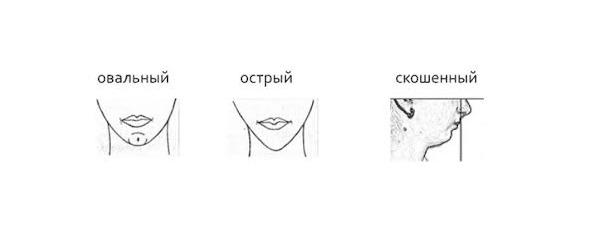
In portraits of royal courts, chins are often small, but raised — not out of strength, but out of arrogance. This is no longer power — it is distance. In 20th-century portraits, the chin became human. It trembles in a soldier. It is lowered in a poet. It is clenched in a doctor who couldn’t save. The chin is not just a shape. It is a state of time. People look into the eyes to read mood. They watch hands to predict action. They listen to the voice to sense intention. But the real truth — is beneath the lips. The chin doesn’t speak. It holds. It holds you in place when you want to run. It holds back a scream. Or silence. It holds dignity. Or fear. There is essence in it. And maybe that’s why it’s so overlooked. It’s like a weight. And weights don’t scream about themselves. They simply hold.
The Chin — a Mark of the Final Word
The chin governs how a person finishes a conversation — both literally and figuratively. For example, people with a firmly protruding chin often strive to have the last word. They speak decisively, may be stubborn arguers. If someone ends phrases with a slight lift of the chin — it’s an unconscious attempt to assert their opinion.And if, on the contrary, the y lower the chin at the end — they are more inclined to yield, to seek compromise. A chin under tension — is a signal of conflict. When a person holds back emotions, especially anger or anxiety, one of the most reliable indicators is the muscles of the chin and beneath it (including the sublingual area). Fine trembling in the chin = inner tension, a suppressed reaction. Stiffness or asymmetry = insecurity, “chewing over” a decision internally. Even if the face appears calm, the chin can reveal a hidden inner storm.
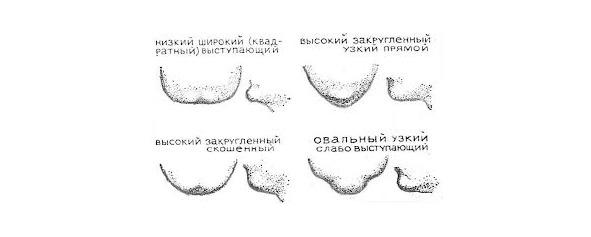
Interesting: many influential people have a pronounced square chin. This is not only anatomy but also a “signal of dominance” in nonverbal culture. Sometimes, in conversation, a person literally “presses” their chin down, especially during conflict. This is not just a gesture — it is psychological suppression. Such a gesture is often combined with lowered eyebrows and narrowed eyes. It is the behavior of an aggressor who unconsciously “looms,” even while sitting at the table. If you notice this micro-gesture — be careful. It says: “I am ready to dominate.” With age, the chin “drops” not only because of muscles but also due to the heaviness of life. People who have experienced losses and disappointments often carry this in the settling line of the chin. But an interesting nuance: in truly strong-spirited people, the chin retains a “resilient” shape — not anatomically, but in the direction of movement.It is always slightly forward, even if the person is old and physically weak. Superman, Batman, Hercules — always have a powerful, masculine, square chin. This is no coincidenceIt has become an archetype of strength, determination, and heroism. Villains, especially in animation, often have an elongated or excessively angular chin — as an exaggeration of control, coldness, manipulation.
In Eastern tradition, especially in Chinese physiognomy (miànxiàng), a long chin is considered a sign of wisdom, longevity, and a “reserve of energy” for old age. An interesting fact: men who grow a beard only on the chin may subconsciously try to strengthen their “mask of control,” add “firmness” to themselves, or, on the contrary, hide weakness in the lower part of the face. This choice is often not about fashion — but a correction of the internal signal the person wants to transmit. The chin is a gesture that never became a gesture. It does not shout. It simply holds the face in a certain position. And by this — it speaks. It tells how confident a person is without using words. It shows where the person has broken and where they have grown. It indicates whether they are ready to listen or have already decided everything.
Chapter 2: The Eyes — Windows of Truth. The Eyes
The eyes are not the mirror of the soul. That’s a cliché. The eyes are oceans filled with time, through which currents of fear, desire, power, guilt, and attraction break through. They are not just holes through which we look at the world. They are cracks through which the world looks at us — and judges. Some have eyes quiet like a forest lake, hiding cunning or fatigue. Others have prickly eyes, as if carved from flint. Still others have endless, elusive eyes, as if whole worlds lie behind them, but access is closed. Words can lie. The body can pretend. But the gaze reveals what the person does not even know about themselves. Because the gaze is not a reflection — it is an emission. It is a vector: it is aimed somewhere. It attacks, flees, demands, embraces, hides — and in this choice, truth is born. That is why, if you want to know a person — don’t listen. Look. Not at the face. Not at the smile. But into the eyes. They are not just part of physiognomy.They are the navigation center of human nature.
2.1 Eyes: Position, Size, Depth of Gaze — as a Map of Character and Potential
Position of the Eyes
Widely spaced eyes
Like wide-open gates — such people are often open, easily accept new ideas, and are tolerant of others’ space. Often this indicates good spatial thinking, a tendency to see the whole picture rather than details. These people adapt easily, quickly “grasp” the atmosphere, and don’t intrude into others’ souls without invitation. But at the same time, they ca