


автордың кітабын онлайн тегін оқу The Koran research. Исследование Корана. Prerequisites for creation of the Koran. Предпосылки создания Корана
Andrey Tikhomirov
Abubakar Damilare
Sergey Smetanin
The Koran research. Исследование Корана
Prerequisites for creation of the Koran. Предпосылки создания Корана
Шрифты предоставлены компанией «ПараТайп»
© Andrey Tikhomirov, 2018
© Abubakar Damilare, 2018
© Sergey Smetanin, 2018
Only scientific research! The study of the Koran is to find scientific explanations of the prerequisites for creation of Islam, to understand the formation of Islamic views on the world. The text of the book is presented in 2 languages: English and Russian.
Только научное исследование! Изучение Корана заключается в том, чтобы найти научные объяснения предпосылок создания ислама, понять формирование исламских взглядов на окружающий мир. Текст книги представлен на 2 языках: английском и русском.
18+
ISBN 978-5-4493-4579-0
Создано в интеллектуальной издательской системе Ridero
Оглавление
- The Koran research. Исследование Корана
- English version
- Used literature
- Русская версия
- Использованная литература
English version
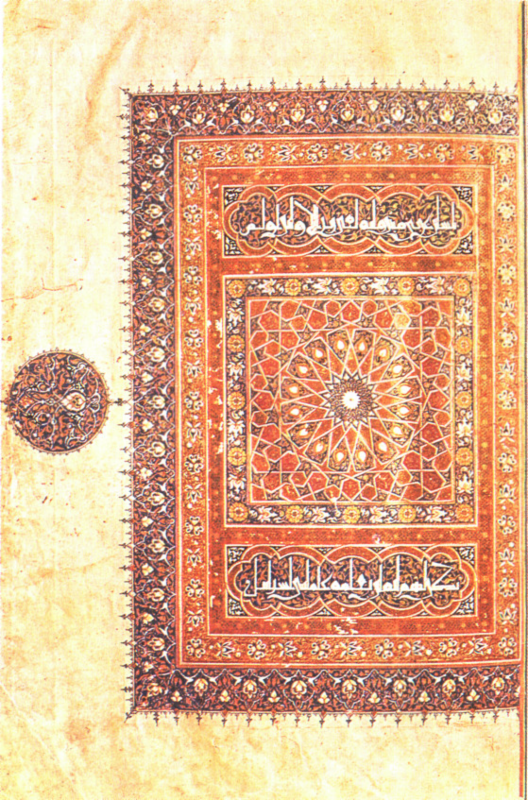
The Qur’an of Argun Shah. Egypt. 1368—1388.
In the artistic treasury of mankind, one of the most important places belongs to the medieval art of peoples inhabiting now large areas of Asia and Africa from the shores of the Atlantic Ocean to Indonesia and from the Mediterranean to the upper Nile. The main focus of the formation of this art were the countries of the Near and Middle East, North Africa and Southern Spain at the time when a huge feudal state, the Caliphate, was formed on their territory. It was created by the Arabs who inhabited the Arabian Peninsula.
The culture of settled and nomadic tribes of Arabia is known since ancient times. In the south, in the fertile Yemen, and in the western part of the peninsula (the Hijaz region), as early as the 1st millennium BC, there were rich kingdoms. Their prosperity, as well as the emergence of large-scale Arab cities, was determined by a favorable economic situation on the world caravan routes and extensive mediation trade with Egypt, Asia and India. Especially the people of the city of Hijaz became rich — the agricultural Medina and the commercial Mecca.
The main population of Central and Northern Arabia was cattle breeding nomadic tribes. They were called Bedouins — «people of nomadic life.» In search of pastures and water sources, Bedouins with herds of camels roamed the boundless arid steppes and semi-deserts of Arabia, crossed by dry riverbeds. The tent served as tents or tents, in which lived individual families. Each tribe believed in his patron god, performing sacrifices to his rough stone idol. Arabs deified the forces of nature, heavenly bodies, stones, trees, streams.
The general Arabian sanctuary was the Kaaba (literally: the cube) in Mecca.
The Arabian nomads created beautiful verse-songs, usually performed under musical accompaniment. The storytellers memorized the verses by heart. In Bedouin oral poetry, in vivid images, that which surrounded man was glorified — severe nature, people, animals. Poetry, characterized by simplicity, vitality, sincere feeling, were real works of poetic art. Moreover, the ability to write poetry was valued by Bedouins no less than military valor.
The population of Arabia lived in conditions of the disintegration of the tribal system and the formation of class society. One of the means of uniting numerous Arab tribes into a single state was the Muslim religion, or Islam. In Arabic, «Islam» means «submission», and the name «Muslims» comes from the word «Muslim» -translated to Allah, in the plural — «Muslimon.» Polytheism of the tribes, Islam opposed the cult of the one, only, eternal and all-powerful God of Allah.
The founder of the religion, an Arab merchant from the city of Mecca, Mohammed, on the representation of Muslims, is the messenger of Allah, the last prophet, sent to the people with God’s word embedded in his mouth. The revelations of God to Muhammad were collected by the followers of the prophet in the Qur’an. In this Holy book of Muslims for the first time received a clear design in written form in the Arab language as a language of religion, the state, literature and science. Founded by Muhammad, the Muslim community-the core of the future state-became the religious and political center of the unification of Arabia. However, at first Muhammad and his followers were subjected to severe persecution. Therefore, in 622 there was a resettlement (in Arabic: Hijra) of the creed and his entourage from Mecca to Medina, which marked the beginning of the Muslim chronology, which is still on the lunar calendar. By the end of 630, as a result of a long struggle, Muslims had subjugated all of Arabia. The pagan Kaaba was recognized as a common Muslim Shrine, and the idols surrounding it were broken. The center of the state became a Mecca. Pilgrimage to Mecca was imputed to Muslims as a duty. During prayers, performed five times during the day at the exact time, Muslims are facing in this direction.
«Deputy» Muhammad became the caliphs — both secular and spiritual leaders of the state.
At first, especially revered, «righteous» caliphs — Abu-Bekr, Omar, Osman, Ali — and when they replaced the caliphs of the Umayyad dynasty (661—750) Arabs conquered vast territories in Asia, Africa and South-Western Europe. Their military expansion was opposed by such powerful powers as Byzantium and Iran. However, weakened by the long and exhausting internecine war, they could not stand the rapid onslaught of the young Arab state. The Arabs conquered the Byzantine Empire, Syria and Palestine (640), Egypt (642) and the region of North Africa — the future of Tunisia, Algeria and Morocco (in 709 troops commander Musa Ibn Nusayri came to the shores of the Atlantic ocean). In 633—651, the Arabs conquered all the provinces of the vast Iranian state of the Sassanid dynasty, which covered the lands from the Euphrates to modern Afghanistan and from the Caucasus to the Persian Gulf. In 711 the armies of the Arabs, together with the forces of the Berbers (the indigenous population of North Africa) under the leadership of Tariq Ibn Ziyad compressed Strait through the rocks (he later named Gibraltar, meaning «Mountain of Tariq») invaded from North Africa to the Iberian Peninsula. Began the conquest of al-Andalus-so the Arabs called Spain. Most of the country was captured, with the exception of the inaccessible Northern mountain regions. After crossing the Pyrenees, Muslims tried to seize southern Gaul, but were defeated by the military, the Franks in the battle of 732 at Poitiers. They were forced to stop further offensive in Western Europe and moved beyond the Pyrenees. At the same time, Arab troops penetrated far to the East, conquering the whole of Central Asia by the middle of the 8th century and reaching the borders of China. So within a relatively short time, there was a Grand feudal state — the Caliphate. In the hands of the caliphs were vast lands and untold wealth.
Going beyond the Arabian Peninsula and rushing to the East and West, the Arabs, most of yesterday’s nomads, faced with the culture of countries where in ancient times there were centers of world civilization. Beautiful cities, decorated with palaces and temples, statues and paintings, became at first mainly a source of military production. It took a long time for Muslim conquerors to assimilate the spiritual and aesthetic values of the conquered peoples. The Caliphate included lands with traditions of Greek and Roman culture (for example, rich Byzantine colonies — Syria and Palestine). On the other hand, the impact of Iranian culture, which reached a special solemnity and perfection in the Sasanian era, was greatly affected.
Born from a combination of its own pre-Islamic past and the traditions of other ancient civilizations, Arab culture has achieved great and independent success in many areas of knowledge and artistic creativity. Arabs made a serious contribution to the world literature and poetry, philosophy and medicine, mathematics and astronomy, geography and history, created beautiful and original works of art.
The culture of Muslim countries has influenced many States in different parts of the world, has become a link between antiquity and the middle ages of Western Europe. The territories of Syria, Iraq, Egypt, Iran, Afghanistan, Central Asia, Azerbaijan and Turkey, Tunisia, Algeria, Morocco and southern Spain were decorated with beautiful, densely populated, landscaped cities with magnificent buildings. There were new types of monumental buildings: mosques that could accommodate thousands of worshipers, minarets-towers, madrasahs — buildings of Muslim educational institutions, hospitals, libraries, palaces buried in the greenery of gardens, covered markets for several kilometers, Inns — caravanserais, which were erected in cities and on the ways of caravan trade. Sultry climate led to the construction of open and underground water pipes, tanks, ponds, fountains. The richness of the decoration was distinguished by numerous public bathhouses, using the experience of the Roman baths. Construction equipment has created a special design made of mud, brick and stone. Various forms of arches were created — Lancet, horseshoe — shaped, multi-lobed, scalloped, — special systems of vaulted ceilings were invented. Unlimited and whimsical imagination differed all kinds of decorative art, from the ornamentation of buildings to the decoration of household utensils. The refined tastes of court culture coexisted with the powerful rise of arts and crafts in the cities, the highest peak that spans the 10—15 century. A wide trade and cultural exchange contributed to the flourishing of Sciences and various fields of creativity. The culture of the peoples of the Middle East in the first centuries of Islam stood above the European. Thanks to the active translation activity, many achievements of ancient philosophy and science were preserved and transferred to the peoples of Europe.
The idea of a medieval Muslim civilization would have been many times brighter and more grandiose had it not been for the heavy losses and brutal destruction it has been subjected to over the centuries. Time itself destroyed. Natural disasters, relentless sun, the winds, the advancing Sands turned blooming inhabited oases in the abandoned ruins of the dead. But the most destructive force was people. Society lived in the atmosphere of countless wars, foreign invasions, troubles, conspiracies, Palace coups. The years of relative prosperity were followed by periods of chaos, epidemics and a severe famine, carried off tens of thousands of lives. The foundations of the feudal system were shaken by popular uprisings.
For architecture especially harmful was the change of dynasties. The new dynasty, which usually reigned, destroying the previous one, sought to destroy everything that was created before it. This primarily concerned the Palace buildings. Newly built or significantly changed, and many mosques, for the construction of new mosques was considered for the Muslim charity case. With the fate of the ruling dynasties were associated flourishing and desolation of cities. Only a relatively few of them managed to outgrow the framework of dynastic residences, to avoid destruction, to rise and acquire an independent value. The new buildings absorbed the old medieval quarters, which were preserved only as inclusions in the urban landscape. And yet an unforgettable experience to this day leave the old quarters of Damascus, Aleppo, Cairo, Tunisia, Kairouan and especially the cities of Morocco.
After the lands of Syria, Palestine, Iraq, Egypt, Iran, Afghanistan, Central Asia and North Africa became part of the Caliphate, their culture, without losing the distinct local peculiarities began to develop in a different direction, gaining new features. In each of the Arab countries, art had its own identity, which distinguished the monuments of Syria from the monuments of Iraq, the works of medieval Egypt from what was created in North Africa and Muslim Spain.
The historical and cultural destinies of Iran, Afghanistan and Central Asia, which were relatively short-lived under Arab rule, were formed differently. Often entering into a single state education, they developed independently, in close cultural interaction with each other.
However, the similarity of the forms of development of feudalism, active trade and cultural ties and the fact of subordination of different peoples to one religion, one language, and one legal and social institution could not but give rise to the features of community in art. Fine arts as a means of propagating religious ideas were excluded from the sphere of Islam. The new religion based its power of influence on the word, not on the depiction of living beings. The main shrines were not icons and statues, but old handwritten Korans.
Highly developed calligraphy, which was a letter not only of religion, but also of poetry, philosophy, science, was regarded as an art, taking an honorable place among its other types. Reaching extraordinary sophistication in the application of various complicated handwriting, calligraphy has become one of the forms of the ornament played a significant role in the arts of the Muslim Middle Ages.
God in the countries of Islam could not be portrayed, but could be denoted by letters and signs. Therefore, in art, especially in the design of religious buildings, a geometric ornament was developed, often consisting of signs and motifs that had a religious symbolic meaning. For example, four vertical lines that schematically expressed the letters of this Arabic word denoted the word «Allah» («God»). Made in a square, they became a symbol of the Kaaba. Two crossed squares formed an eight-pointed star-the most common element of Muslim ornamentation.
Meanwhile, even before the Muslim religion similar elements took place in other cultures. The ancient Egyptian Pharaoh Ramses II created a sanctuary near Abu Simbel (now near the Sudanese border), deep in the rock. Before his entrance rise 4 sitting giant-with the features of the Pharaoh. In the mountain, it is home to several successive buildings. The first of them is supported by eight ten-meter statues depicting the God Osiris. Eight ten-meter statues depicting the God Osiris! «The One father» «father Moon» — that’s what was the form of address to God for many centuries and even in the IV century BC Nectaneb I said: «The Great built a house for his father Thoth, twice great, God of Simona (Hermopolis), the great God, which came from the nose of RA (i.e. the Sun), the Creator of his own beauty.»
Archaeologists found the Royal graves of Ur, reproduces the funeral ceremony of the III Millennium BC. Killed all who will help the king in the «next world». The women participating in this procession, according to archaeological excavations, were dressed in bright red robes, which sparkled various jewels. Warlords have been going with all signs differences musicians — with harps or lyres. They were followed by wagons pulled by bulls, or sleds. On the wagon sat the pages or driverless, sled led sled’s bridle. In the end, everyone took a pre-allocated place for them; duty soldiers, closing the procession, stood guard at the exit. All the men and women in their hands had a small bowl — the only item needed to complete the rite. Some victims in the last minutes of their earthly life had to perform certain tasks. At least, it is known that the musicians played their instruments until the very end. When through the centuries the tomb was opened, their hands still convulsively clutching the strings of the harp or lire.
The team all drank the deadly potion. In one of the tombs, archaeologists found a large copper pot in the middle of the moat, which was obviously filled with poison. After that, each laid down in his place in anticipation of death and the transition to a different life with his king or Queen. Then the gravediggers were killed sacrificial animals, put the lyre or harp on the bodies of the dead musician or musicians and rained on top of still struggling with the death of the people of the land, until the entire pit was not filled up until the end.
The Royal graves found by archeologists from Ur almost did not differ from each other by features of a funeral ceremony. In one case, the persons accompanying the king’s body were killed before the construction of the grave. But usually a religious rite was identical to that described above of the ceremony. The most striking example of a sacrificial grave can be considered the Royal crypt PG / 1237. The walls of the burial chamber are partially made of stone and covered with mats. Leaning against the wall, six bodyguards with knives or axes lay in a row. Before them stood a large copper vessel. Not far from the bodyguards lay the skeletons of four harpists. The hands of one of them and got up on the strings of the instrument. The bodies of 64 festively dressed and decorated women, arranged in a certain order, occupied the rest of the space. They had to go to that light without any resistance and all at the same time. The number 64 was considered sacred! (8*8=64). In this case, probably meant the number of nine-day weeks of the calendar of Venus, consisting of 576 (8*72=576) days (in the Palace of king Nabonides also had 64 rooms). 64 and a half of this number (32) found expression in the numerous ruins and burials from the Euphrates to the Nile, which the Bible often mentions. Whether it was the 32 kings or the 32 girls sacrificed, it didn’t matter. Sacred days, sacred the number of stars Venus maintained its significance almost have all peoples under life, and after death.
It is worth mentioning that all 64 women wore light red dresses as they prepared for death. This is because not only green, but also red color in ancient times was considered the color of life. If the people of the ice age and the Stone Age smeared their dead with clay so that they could be resurrected, then a few thousand years later the women of Ur wore red dresses for the same purpose. Painted with green makeup, dressed in red — so they went towards death.
To this should be added the complete indifference of the Arabs to all the ancient writing from the «times of ignorance», that is, before the appearance of the Koran. Even the great Arab scholars of the middle ages were little engaged in manuscripts of their ancestors or inscriptions on monuments.
The city of Marib, located at an altitude of 2000 meters above sea level, is visible from afar, like the veil-Morgan of an American city with numerous skyscrapers. Today the village stands on the step-forming ledges of the mountain, to which he was attached dwellings. Most of the former residence of the Queen of Sheba is not investigated.
The impressive panorama of Marib is complemented by the 12-meter-high supports rising to its left, partially covered with desert sand. They belong to the ruins of the temple of the moon God. There was discovered a short inscription indicating the name of the sanctuary and its God: «Baraan, God Ilumquh», by God here we mean the moon.
Americans found in Marib numerous stone sculptures of the heads of a bull with recesses for a drain of sacrificial blood. To the right of Marib lies the second temple — the round sanctuary of Balkis, Queen of Sheba. Archaeologists for several months unearthed in the sand near Marib temple oval 350 meters in circumference-temple Balkis. They dug up the remains of an elegant hall with columns and an extensive building with eight high pilasters. On the inner wall of the temple found located in a row 64 carved in a niche of false Windows, decorated with bars. Eight and sixty-four are the numbers of the heavenly goddess Venus, not the numbers of the moon. Obviously, among the ancient Arabs the image of the heavenly goddess, Venus merged with the image of the Queen of Sheba — Balkis. Just exactly in religious symbols merge images of the moon and Venus.
Archaeological excavations prove that the sanctuary of Balkis was dedicated to the moon God.
And here, when you delve into the complex interweaving of ideas of the ancient Arabs about Allah and his prophets, the question inevitably arises, what was the meaning of the temple of Balkis for them, if the Arabs have the Moon and the morning star — masculine?
What is interesting, but the type of boats, resembling the sickle of the moon, found in modern locals in the marshy lower Euphrates, near the city of Ur, reminiscent of Italian gondolas. Ancient robbers plundered the tombs of kings and pharaohs, but did not touch the «sacred» boats. Apparently, they were considered sacred and inviolable; these boats are similar to those found near the graves of the pharaohs on the Nile, although there they were much larger and sometimes richer. On these boats the dead king and his court — were sent to «the light». The boats of the dead are distributed throughout the space from Northern Europe to Africa and from the Mediterranean to the South Pacific. In short: this is a copy of the Crescent moon, which floats across the sky as the ocean to the East — toward the Sun. There, in the shining and sparkling country of the Sun, the celestial boat disappears. There is «another world».
Various multiplications of squares gave rise to a complex polygonal pattern. The triangle denotes the «eye» of God (the motive of the ancient magical notions), two-folded triangle «sign of David» — two symbolic eyes of God, who is supposedly overseeing everything. The Pentagon symbolized the five commandments of Islam (faith in the one God, five-time prayer, alms, fasting, and pilgrimage to Mecca).
Appeal to geometric figures existed in the pre-Islamic period among the Arab nomads. Living in the desert, they were guided by the stars, the Sun, the moon and marked their views with geometric signs. With the spread of Islam, ancient astrological symbolism is closely intertwined with the symbols of religion. The Crescent moon, boat, resembling a Crescent moon are found in many ancient cultures, e.g. in ancient Egyptian and Sumerian. Models of boats found by archaeologists as if copy the moon sickle, like a ship. Therefore, the ornament in the medieval Muslim society was «read» as an open book. Developing under the influence of visual traditions of other peoples, it is much more complicated. Along with geometric patterns and inscriptions, floral motifs are widely used in the ornament. Ornament — «music for the eyes» — became for artists the main sphere of application of creative forces, its unprecedented development as if filled restrictions of some fine arts. The religious ban, formulated only by the end of the 8th century, was not always observed. Many areas of creativity were associated with the requirements of secular culture-miniature, Palace paintings, and crafts.
The heritage of Muslim countries was dominated by the art of words, architecture, music, ornament, calligraphy, crafts, and miniature. The important role that mathematics played in the art of the Arab peoples was based not only on the outstanding achievements of the exact Sciences, but also stemmed from the very nature of architecture, music and ornament. In these kinds of art, the strict logic of numbers and rhythmic constructions gained a special aesthetic value.
The emergence of Islam in Arab society in the early 7th century was due to a number of socio-economic and political reasons. Earthly origin of the Muslim religion, socio-economic and ideological roots of the formation of Islam is not a product of a coincidence, one way or another leaves room for a «miracle», but as a natural result of the development of social relations in a certain period of the history of the Arab peoples.
On the Arabian Peninsula, inhabited mainly by nomadic pastoral tribes of Bedouin Arabs, there were important changes in that time. Relations based on property inequality and class privileges began to prevail over tribal or Patriarchal-communal relations and ties due to the decomposition of the old way of life. In the cities, this process was outlined earlier and was more intense.
For example, in Mecca, which grew up at the transshipment point of the caravan route from Yemen to Syria, there were merchants, slave owners and the poor. Slaves worked around the house, worked outside the city and in the nearby oases of the land, grazed cattle, were artisans. It should be said that according to the tradition of the city, inhabited by former nomads, had many «birthmarks» of the tribal system: the population of the districts were immigrants from separate clans, the ancestors and sheikhs of the tribes enjoyed hereditary authority, had some power over the tribesmen. However, monetary relations, trade and craft gradually undermined ties, based on blood kinship. In the cities where merchants were engaged in transit trade, usury prospered: to take «Dinar on Dinar» for the loan became usual norm. That is why the founder of the new religion, Muhammad, in order to win over as many people as possible, condemned usury and declared that Allah forbids «riba», that is, loan interest.
Gradually strengthened ties between tribes, there were alliances of tribes. The idea of uniting tribes found an increasing number of supporters among the tribal nobility and merchants.
The unification of Arab tribes and the strengthening of political and economic ties between cities and human settlements have become an urgent necessity. Different parts of the vast territory of Arabia was the subject of claims of the great empires of that time — Byzantium and Iran. The latter sought to keep under its control path leading from the Mediterranean to India and China, in particular the caravan route from Yemen through Hijaz in Syria, Palestine and Iraq.
As a result of the constant struggle that has been going on for many decades, Iran managed to defeat the satellite of the Byzantium of Ethiopia, which seized Yemen, expel its troops from there and establish its control over the transit trade. Indian goods could now fall into the Byzantine Empire only through Iran. The cessation of transit through Yemen had a serious impact on its economy, the Hijaz cities of Mecca, Taif and others associated with Yemen and the red sea coast (trade routes moved to the Persian Gulf), began to grow. The Meccan rich people who have lost a significant share of the gains from trade, increased exploitation of the working strata of the population, were growing debts of impoverished tribes, unscrupulous money-lenders have increased interest rates.
In Arabia, the socio-economic crisis was growing until unprecedented severity. The contradictions created by or exacerbated by the crisis required resolution. Relations between the owners of land once owned by the entire community and landless congregation, between the nobility and ordinary members of the tribes, between slaves and slave owners, artisans and rich moneylenders, wealthy merchants and their workers became increasingly strained.
The leaders of society clearly felt the need for a strong centralized power, able to keep in check the disgruntled and oppressed people. It would also provide an opportunity to unite the scattered parts of the country, its cities and oases, to ensure national independence, to restore the old caravan routes, to wage wars of conquest.
Old tribal beliefs and religions prevented unification trends and prevented the creation of a unified state on the territory of the entire Arabian Peninsula.
Islam turned out to be an ideological tool suitable for unifying purposes, as well as corresponding to the class interests of the privileged strata of Arab society. His strict, consistent monotheism, the preaching of the «brotherhood» of all Muslims, regardless of their tribal affiliation, met the requirements of the time. Muslims — a word formed from the Arabic «Muslim», that is loyal, obedient. Islam is the word of the same root, meaning: surrender to God, submission.
However, it would certainly be wrong to believe that Islam was the intended result of the activities of certain individuals who set themselves certain political or economic goals.
Islam is a spontaneous religious teaching. It took time. The emergence of Islam was preceded by the spread of the teachings of the Hanifs or hanifism — an early form of Arab monotheism. Hanifs opposed idolatry in various parts of Arabia and rejected polytheism. They preached the idea of monotheism, glorified asceticism. The widespread notion among Muslims that belief in one God begins only with Muhammad is untrue. The latter began religious activity as a follower of hanifism, who recognized instead of many gods the one God — Allah. In the first biography of Muhammad («Sira»), this is stated quite clearly.
Neither Hanifs, nor Muhammad was not original in the preaching of monotheism. Monotheistic religions were already known in Arabia. In the cities of Yemen, the oases of the Northern Hijaz, especially in Yasrib, a city later known as Medina, some tribes practiced Judaism. Jewish immigrants brought it there from the Roman Empire. Christianity was spread in the North of Yemen and East of Nejd. Christians of various persuasions met among farmers, artisans and merchants. They were also among the Bedouin nomads. Preaching the religion of monotheism, therefore, could not be perceived as a striking, unheard of hitherto, incomparable phenomenon.
Thus, Islam took moral and religious teachings not only from the Hanifs. It contains elements of Judaism, Christianity, Zoroastrianism, Manichaeism and ritual remnants of ancient Arab cults, which later became part of the Koran. This syncretism-one of the strong evidence of the earthly origin of the Muslim religion, its gradual formation. He refutes the theological version of the origin of Islam as a result of the «revelations» sent down to Muhammad, the prophet most valued by Allah and loved by him.
It is hardly correct to believe that Islam from the very beginning was the religion of the emerging feudal elite. The original Islam was not a complete ideological teaching. Only in the process of Arab conquests and the organization of the Caliphate, it acquires pronounced class features.
The Muslim community, which existed in Medina, had a hierarchical structure, and there were quite significant differences between the members of the community. This is stated, in particular, in the Koran. The most fanatical supporters of the prophet (mu’minun) Quran puts above just «submissive» — muslimun. Those who hesitated did not take an active part in the Affairs of the community, the «Holy» book of Muslims calls munafikun — «indecisive». On their heads, the Koran unleashes terrible threats in the name of Allah.
The privileged members of the community were the Muhajirs (the prophet’s immediate entourage from Mecca), and the ansars, the majority followers of Muhammad in Medina, were in a subordinate position. The main severity of taxes (zakat) fell on their shoulders.
The conquest of Mecca accelerated and facilitated the Islamization of Arabia. Fate numerous tribal gods, already played its role, was solved. Their images, once so jealously revered, were desecrated and destroyed. By the end of 630, most of Arabia was already under the authority of the» messenger of Allah», and soon emerged centralized theocratic state used Islam as an ideological tool to strengthen the new social order in the country and the implementation of a broad policy of conquest far beyond its borders.
Already in the days of the first caliphs (Abu-Bekr, Omar and Osman), the Arabs were able to capture all the neighboring and even more remote areas and areas of the Middle East. By the 8th and 9th centuries, Islam had become a religion that dominated among the Nations that inhabited vast territories from Spain to the Persian Gulf.
Beginning with the 9th century Islam began to spread in Northern and North-Western India, began to penetrate deep into the African continent. In the 14—16 centuries, he came to Indonesia.
In the countries of the Balkan Peninsula, the Muslim religion spread because of the centuries-old domination of the Turks and was imposed forcibly. Islam covered the southern regions of Central Asia, was introduced in the North Caucasus, and in the 9—10 centuries — in the Volga-Kama basin and the Urals. The rulers of the Bulgarian Kingdom, interested in the monotheistic faith, were the first to adopt Islam in order to turn it into a state religion.
Historical documents show that the peoples of Central Asia, the North Caucasus and other regions have been stubbornly resisting Arab hordes. They strongly opposed the penetration of Islam.
The process of spreading Islam took a long time. In many areas, the violent imposition of Islam has dragged on for centuries. However, one should not think that violence alone ensured the spread of a new religion. Measures of material, socio-economic encouragement, moral and psychological pressure, persistent propaganda, the decline of local beliefs and, finally, but not least, the coincidence of the interests of the ruling classes with the interests of the conquerors-all these factors were in a complex intertwining and communication.
Belief in one God — Allah, in his messenger — Prophet Muhammad, in the eternity of the Koran, in angels and evil spirits (Jinn), on the Day of Judgment, in the afterlife retribution (heaven and hell) — the basic tenets of Islam. They are reflected in the following verse of the Qur’an:»[4.135] O you who beljeve! be maintainers of justice, bearers of witness of Allah’s sake, though it may be against your own selves or (your) parents or near relatives; if he be rich or poor, Allah is nearer to them both in compassion; therefore do not follow (your) low desires, lest you deviate; and if you swerve or turn aside, then surely Allah is aware of what you do.
[4.136] O you who believe! believe in Allah and His Apostle and the Book which He has revealed to His Apostle and the Book which He revealed before; and whoever disbelieves in Allah and His angels and His apostles and the last day, he indeed strays off into a remote error.» (Sura 4 «The Women», 135 (136)). That is, the main thing — faith, and faith as we know is suggestion and self-hypnosis. That is, under the name of Allah — God «broadcast» ordinary «interested persons» who inspired believers that they are profitable. Why does «Almighty» God to say something, if everything is done and so on his will!
The basic tenets of the Muslim faith arose from old Arab beliefs and other monotheistic religions. Ideas about these religions were formed thanks to the extensive trade relations of the Arabs with the countries where these religions were widespread, as well as due to the fact that in various parts of Arabia there were settlements of Christians and Jews, their communities lived, in particular, in Medina. However, Muslims believe that it all began with the“ enlightenment „of Muhammad, with the suggestion to him «from above» the principles and rules of the true faith. Almighty and all-good Allah we have learned, say the representatives of the Muslim clergy, thanks to the prophet Muhammad, as Allah voluntarily chose him as his prophet and gave him instructions. Belief in Allah is the main tenet of Islam, which expresses the Muslim principle of monotheism.
Faith in Allah is the core of Islam around which all other religious beliefs are concentrated. Islam teaches consistently and strictly observes the dogma of monotheism, threatening earthly and heavenly punishments for its violation. Muslims, as required by the Koran, must tirelessly say «our Lord is Allah» (Sura 22 «The Pilgrimage»,»[22.40] Those who have been expelled from their homes without a just cause except that they say: Our Lord is Allah. And had there not been Allah’s repelling some people by others, certainly there would have been pulled down cloisters and churches and synagogues and mosques in which Allah’s name is much remembered; and surely Allah will help him who helps His cause; most surely Allah is Strong, Mighty.
[22.41] Those who, should We establish them in the land, will keep up prayer and pay the poor-rate and enjoin good and forbid evil; and Allah’s is the end of affairs.» And if it were not for Allah’s protection of people by some others, the monasteries, churches, places of prayer, and places of worship in which the name of Allah is remembered much would be destroyed. Help Allah to whom He will help, for indeed Allah the mighty, the glorious!»; Sura 46 «The Smoke»,»[46.12] And before it the Book of Musa was a guide and a mercy: and this is a Book verifying (it) in the Arabic language that it may warn those who are unjust and as good news for the doers of good. [46.13] Surely those who say, Our Lord is Allah, then they continue on the right way, they shall have no fear nor shall they grieve.»). These addresses characterize slave-owning society when the slave so addressed to the owner-mister, calling him «Lord», he can’t call him «my slave-Owner!» that sounds ironic!
The worship of other gods is considered a mortal sin, so even in the mind of a Muslim should not allow their existence. This proves that Islam, like all other religions, is based on hypnosis-suggestion and self-hypnosis by «interested persons» of the attitudes they need.
The image of Allah, as well as the Christian God, absorbed some features of the deities worshipped by the ancient Arabs long before the emergence of Islam. He, in particular, has retained many features of the Supreme God of the Northern Arab tribes of Allah Ta’ala. Allah Ta’ala, «the Supreme God», according to the beliefs of pre-Islamic Arabs was the Lord of rain (you can imagine how it is the responsible thing to do in hot, dry areas) and ruler of the world. Other deities, governing individual spheres of life people or of nature, were subservient to «the Almighty» deity — Allah Ta’ala and were deemed his daughters of. In this last fact, obviously, the remnants of matriarchy appeared.
Allah of Islam has preserved the epithets of his predecessor: the wise, the merciful, the Creator of heaven and earth, the Supreme, but «renounced» his «daughters».»[17.111] And say: (All) praise is due to Allah, Who has not taken a son and Who has not a partner in the kingdom, and Who has not a helper to save Him from disgrace; and proclaim His greatness magnifying (Him).». (Sura 17 «The Children of Israel» 111).
The analogy with an earthly king who loves the adulation and constant praise. Why would the «Almighty» God of praise from his creatures!? If the «all-knowing» God knows the future, from the point of view of religion that it is only flattery and he programmed it in advance!
The Koran often repeats that the Muslim God is one and only, created by no one, eternal, existing in him and for himself.
Muslim monotheism did not develop immediately. Islamic dogma, which affirms faith in the only true God, has been formed for many decades. Special zeal in this respect was shown by the Muslim theologians of the times of the Caliphate. The power of the Caliph among his Muslim subjects on earth was in harmony with the concept of the one-power Lord of heaven. Pious Muslims refined themselves in the scrupulous collection of all epithets worthy of the name of Allah. In the list of «the most beautiful names of Allah» there are about a hundred definitions, such as «one»,» first»,» eternal»,» all-seeing»,» all-knowing»,» all-knowing»,» Lord of the judgment day»,» merciful»,» powerful»,» punishing»,» strong" and so on.
Scholars believe that the number of such adjectives must be equal to a hundred, however, some calls and a great figure. In the Middle Ages around this were many scholastic disputes. Some scholastics claimed that ordinary Muslims know no more than 99 names of Allah, and only God’s chosen people know one hundredth, or prophets, which are the last, one-hundredth name gave magic power and helped to work miracles. The variety of epithets that characterize the Muslim God is explained by the fact, according to Muslims, that Allah, who overthrew the pagan gods, had to absorb all their strength, all their abilities. To be a worthy substitute for these gods.
Allah of Islam has many similarities with the gods of other monotheistic religions. It is largely similar to the Jewish Yahweh and the Christian God the father. However, the monotheistic principle in Islam is more consistent. The Christian dogma of the Trinity of God is strongly rejected by Muslims.
The Muslim God is anthropomorphic. Believers say about him as a person, even if unimaginably powerful, but still human. According to the Qur’an, Allah has a face, hands, eyes, he sits on the throne (Sura 20 «Ta Ha» (apparently, these are the initial letters of some spell of the ancient Arab sorcerers), 4 (5).»[20.4] A revelation from Him Who created the earth and the high heavens.
[20.5] The Beneficent God is firm in power.»; Sura 40 «The Believer», 15»[40.15] Possessor of the highest rank, Lord of power: He makes the inspiration to light by His command upon whom He pleases of His servants, that he may warn (men) of the day of meeting.», etc.). In short, man created it in his own image and likeness, a very similar interpretation in the Bible. The mention of slaves, which proves the existence of a slave-owning society. Nevertheless, all those who are lower in status in the slaveholding society, were considered slaves of his master, the king, whom they called «master», reissued in the name «Lord».
There has never been unity among Muslim theologians as to what qualities should be bestowed upon Allah. Some of them believed that it could be compared with a man; others opposed such simplification of the image of the heavenly Lord. Modern scholars are more inclined to the idea of the impossibility to comprehend the way of Allah, as «on earth there is nothing with which to compare it», and it is recommended to understand many of the expressions of the Quran about God as metaphors. He is the «omnipresent spirit „who created everything earthly and heavenly, he is“ everywhere and nowhere», and he is «unknowable», invisible. Thus, it is possible to see tendencies to displacement from consciousness of the believer of concrete, anthropomorphic representation about God.
God in Islam is endowed with contradictory features. On the one hand, he is kind, merciful, loves his creatures, and even forgives their sins. All the surahs of the Quran are polished by referring to him as being «merciful and merciful.» On the other — he is a formidable, not knowing leniency, severely punishing people for a minor offense. No one is given to know when and how he will manifest himself, what his attitude to this or that act will be expressed.
Muslims believe that God can create any miracle he wants, just as one commandment expressed by the word «be!» he created the heavens, the earth, the mountains, the rivers, the flora and fauna. A believer has no right to doubt the omnipotence of Allah. Any doubt, according to the teachings of Islam, a grave sin that God cannot forgive-an analogy with a vindictive man. However, everything in the world happens by the will of God.
All other Muslim principles are based on the authority of Allah: belief in angels, devils, the spirituality of the Koran, the messenger of Muhammad, etc. Any weakening of the faith, any doubt in its truth, as a rule, begins with a doubt in the existence of Allah. It is no accident that the Muslim clergy pays special attention to strengthening faith in Allah — «the Creator of all things.»
A preacher to the people, Mohammed is recognized as the most important. He is the seal of the prophets, the intercessor on the Day of Judgment, the intercessor for Muslims before Allah. The cult of Muhammad developed gradually, as Islam and the rise of the role of the caliphs. The hadiths spread by the clergy began to ascribe to the“ messenger of Allah „a variety of feats and deeds. Incredible achievements, difficult phenomena and miracles were considered as quite acceptable, if they were related to Muhammad. However, at the same time, the Qur’an talks about the death of Muhammad, that he is endowed with purely human qualities. This, apparently, was intended to bring the image of Muhammad to the faithful, to emphasize that a mere mortal can achieve divine honors, if he is true to God, unyielding in his religious convictions. Why did God choose Muhammad as his messenger? For what special prowess?
The ideology of Islam believes that this issue is idle. The ways of God are inscrutable, they say, repeating the old religious formula. In Sura 16 «The Bee» is said: 2»[16.2] He sends down the angels with the inspiration by His commandment on whom He pleases of His servants, saying: Give the warning that there is no god but Me, therefore be careful (of your duty) to Me.»).
To doubt the «messenger» Muhammad, the prophet of Muslims, is taught by the clergy-the same sin as to allow doubt in the existence of Allah. Before Muhammad, assure the Ministers of Islam, there were many prophets. But Muhammad, the last of the messengers of God, is the most glorious, the most authoritative. The increased emphasis that he is the last of the prophets, on the one hand, was intended to protect the faith from «false prophets», and on the other — to strengthen the prestige of the Muslim religion.
Judaism and Christianity influenced the teachings of Islam about Muhammad and the prophets. The names of the prophets-job (Muslims Ayub), Aaron (Harun), David (Daud), Solomon (Suleiman), Ilya (Ilyas), Isaac (Isak), Jacob (Jacob), Jonah (Yunus), the Virgin Mary (Maryam), etc., are known to have biblical origins. Jesus (ISA) is also recognized in Islam as «God’s messenger», but, according to the basic tenet of the Muslim’ religion, like other «messengers» — just a slave of Allah (slave system!) and is not related to him, although the Qur’an speaks of the immaculate conception, the miracles created by Jesus, and his ascension to heaven.
The trust in Allah, the veneration of the prophet Muhammad and persons in varying degrees associated with him — the indispensable requirements of Islam. You should read all the companions of the prophet who teaches Islam «faithful», because they are the best of creatures after the messenger of Allah. «Companions» of the prophet of Muslims, really existing and fictional, in the interpretation of Muslim priests differ little from Christian saints. Believers are obliged to honor and worship them. At the expense of the companions of the prophet expands, in fact, the divine Pantheon of «monotheistic» religion.
Even in pre-Islamic times Arabs believed in the spirits of nature — Jinn. They were presented to the Arabs in the form of intelligent fantastic creatures created from fire and air. The Jinn, according to ancient beliefs, was able to communicate with people, to do them good or evil, one way or another affect the fate of man. These ideas served as the basis for the belief in the existence of angels and demons, which found its place in Islam.
Angels, according to the Muslims, disembodied creatures moving at a fantastic speed. Their disembodied nature, however, does not prevent the imagination of believers to draw angels with wings, the more the angel wings, Muslims believe, the higher the speed of his movement. Angels in Muslim mythology are created from the light, they are asexual, implicitly fulfill the orders of Allah, being his «messengers». The closest to the throne of the «eternal» angels are Jebrail, Mikail, Israfil and Azrael. Jebrail obliged to transmit divine orders Mikail watching the order in the Universe, Israfil is always ready to blow the horn, announcing the Day of Judgment. Azrael Muslims represent a terrible angel of death. There is a belief that Azrael, wielding his sword, carries out the divine sentence of death of people and lets the soul out of the body. To some hardened sinners who have committed the most serious crimes, he is visible and gives them indescribable horror.
Each person, as Muslims believe, during his life has two guardian angels recording his good and bad deeds, which are subsequently weighed on special scales. Depending on what actions will be pulled, a person after death goes to heaven or hell — very similar to the ancient Egyptian court of Osiris.
In addition to these angels, the Muslim clergy uses the names of Nakir and Munkar — angels of the grave, who interrogate the dead, requiring them to report on earthly Affairs.
Muslims consider that cause of many misfortunes is daemon of evil-Iblis (the devil). It is also called Shaytan. Iblis, or Shaytan (Jewish version of «Satan»), is busy seducing the faithful, he knocks them out of the way of the true, repairing all sorts of machinations. It is invisible, but can be embodied in visible images. According to the beliefs of Muslims, it is a fallen angel cursed by Allah for disobedience, that is, receives that someone can resist the «Almighty» Allah! Iblis refused to worship man, perfect of creation. Allah talks to Iblis as a person to a person, that is, they are ordinary people — priests of different tribes who competed with each other for influence on members of different tribes, then to «feed» from them. An example from the Koran:»[7.10] And certainly We have established you in the earth and made in it means of livelihood for you; little it is that you give thanks. [7.11] And certainly We created you, then We fashioned you, then We said to the angels: Make obeisance to Adam. So they did obeisance except Iblis; he was not of those who did obeisance. [7.12] He said: What hindered you so that you did not make obeisance when I commanded you? He said: I am better than he: Thou hast created me of fire, while him Thou didst create of dust.» (Sura 7 «The Elevated Places»). It is easy to see that the Quran repeats the Christian myth of Satan in a peculiar way. As in Christian legends serpent-tempter seduces the first people, and in Muslim mythology has its own seducer-Iblis. The blame for the expulsion of Adam, who is considered by Muslims to be the first prophet and eve from Paradise rests for Iblis, who seduced and seduced the first inhabitants of Paradise. Myths about angels, good and evil spirits are an important element in the system of Muslim ideas and are used by the clergy to maintain the adherents of Islam naive belief in the supernatural.
The idea of a person having a certain «soul», able to exist independently of the body, arose, as we know, a long time ago. It is also reflected in the pagan cults of the Arabian tribes. However, belief in the existence of the soul, as a rule, did not communicate their idea of the resurrection of man after death and the afterlife. The afterlife in most cases was denied. «There is only our life in this world, we live and die,» the «pagan» Arabs believed, rejecting the teachings of the first preachers of Islam. Comparing life and death with the processes of compounds and decomposition of bodies in nature, they stressed: «We consume only time… If we die and become dust and bones, will we and our ancestors be resurrected?». The prophet tells us that we will live after death,» they exclaimed» but how is the life of a decayed corpse from which the soul flew out?!»
Spontaneous-materialistic tendencies and common sense prevailed over the idea of personal immortality. This fact is reflected in many sources. The author of Kitab al-Milal Wa-n-Nihal (Book of religious sects and philosophical schools) al-Shahrastani (died 1153) reports that there were many skeptics among the Arabs who questioned Islamic concepts. Muslims strengthened faith in the possibility of resurrection from the dead gradually, along with faith in the one God, in the messenger of Muhammad and other tenets of Islam. It has become an essential element of the Muslim concept of man, his purpose and meaning of life. The Qur’an divides human nature into two entities — physical and spiritual. Allah made man’s body out of clay. But man remained a simple lifeless idol until God «blew into him from his spirit» (Sura 32 «The Adoration», 8 (9)»[32.8] Then He made his progeny of an extract, of water held in light estimation. [32.9] Then He made him complete and breathed into him of His spirit, and made for you the ears and the eyes and the hearts; little is it that you give thanks.»). This «divine» soul is considered immortal, and the body is considered as a temporary shell, a receptacle for it.
Muslim clergy for centuries inspired people to think about the afterlife, taught to look at life as a time released by Allah to prepare for eternal life after death. The Quran repeatedly emphasizes the vanity and worthlessness of earthly life. «Local life — only game and fun» (Sura 6 «The Cattle», 32»[6.32] And this world’s life is naught but a play and an idle sport and certainly the abode of the hereafter is better for those who guard (against evil); do you not then understand?»). It is in the hereafter, after the resurrection, that the Quran teaches, that a person acquires a permanent «house of residence» (Sura 40 «The Believer», 42 (39)»[40.39] O my people! this life of the world is only a (passing) enjoyment, and surely the hereafter is the abode to settle;
[40.40] Whoever does an evil, he shall not be recompensed (with aught) but the like of it, and whoever does good, whether male or female, and he is a believer, these shall enter the garden, in which they shall be given sustenance without measure. [40.41] And, O my people! how is it that I call you to salvation and you call me to the fire? [40.42] You call on me that I should disbelieve in Allah and associate with Him that of which I have no knowledge, and I call you to the Mighty, the most Forgiving;»). Here, as you can see, Islam repeats what Christianity preaches, and all other religions that claim that earthly life is just a threshold to eternal life in the other world.
According to the teachings of Islam, the day of resurrection and the last judgment is preceded by the «end of the world». A number of horrifying phenomena will mark the approach of the «end of the world»: the sun will go out, there will be impenetrable darkness, rise monstrous winds, and mountains will move from their places, rivers and seas will come out of the banks. The advent of the «end of the world», according to Muslim beliefs, will also be a harbinger of widespread disbelief and the emergence of Dajjal. Dajjal, corresponding to the Christian Antichrist, begins to mock the Muslim faith, blaspheme God and praise the devil.
The reign of the terrible giant Dajjal, riding on the ravaged land on a huge donkey, will last 40 days («sacred figures!»). The prophet Isa (Jesus), who will descend from heaven to kill Dajjal, will put an end to his evil deeds. With the return of the prophet Isa to earth, order will be restored; a happy life will come, but only for forty years. At the end of this period, a «great day» will come.
The Koran describes this day in detail:»[70.8] On the day when the heaven shall be as molten copper [70.9] And the mountains shall be as tufts of wool [70.10] And friend shall not ask of friend [70.11] (Though) they shall be made to see each other. The guilty one would fain redeem himself from the chastisement of that day by (sacrificing) his children, [70.12] And his wife and his brother [70.13] And the nearest of his kinsfolk who gave him shelter, [70.14] And all those that are in the earth, (wishing) then (that) this might deliver him. [70.15] By no means! Surely it is a flaming fire [70.16] Dragging by the head, [70.17] It shall claim him who turned and fled (from truth), [70.18] And amasses (wealth) then shuts it up.». (Sura 70 «The Ways of Ascent», 8—18). That is, endless intimidation, although everything in the world is done at the will of the «Almighty» God!
«[79.37] Then as for him who is inordinate, [79.38] And prefers the life of this world, [79.39] Then surely the hell, that is the abode. [79.40] And as for him who fears to stand in the presence of his Lord and forbids the soul from low desires, [79.41] Then surely the garden — that is the abode.» (Sura 79 «The Draggers», 37—41). Stories about the «last judgment» involving these and other extracts from the Koran, often embellished with improvised additions in the same spirit, are a strong means of emotional impact on believers. Mention of the biblical «hell»/ Hell is a place of eternal torment, where, according to the teaching of the Christian Church, the soul of a sinner falls after his death. The word goes back to the Hebrew gehinnom, formed from the name of the valley near Jerusalem Geben Hinnom (literally «garden of sons of Hinnom»), where sacrifices were made to idols, after the approval of Judaism here were destroyed by the old idols and was constantly burning fire, destroying garbage and garbage of the big city, so that this place did not become again sacred to non-Judaists.
The Koran describes Paradise and hell in some detail. The idea of Jahannam, the Muslim hell, was formed under the influence of Jewish and Christian ideas about the afterlife, and these latter, as we know, were formed under the influence of more ancient myths that existed among the Assyrians, Greeks and other peoples. Hell, as it draws the Muslim clergy, consists of seven circles, or tiers. The Quran says about the «seed gates» leading into the seven parts of hell (Sura 15 «The Rock», 43—44»[15.43] And surely Hell is the promised place of them all: [15.44] It has seven gates; for every gate there shall be a separate party of them.») The «sacred» seven is also mentioned. Hell is equipped with all kinds of instruments of torture and a variety of means for torturing sinners.
Sura 22 «The Pilgrimage» divides all people according to two criteria: those who believe in Allah and those who do not believe in Allah, for the first — all sorts of good, for others — various misfortunes and troubles:»[22.18] Do you not see that Allah is He, Whom obeys whoever is in the heavens and whoever is in the earth, and the sun and the moon and the stars, and the mountains and the trees, and the animals and many of the people; and many there are against whom chastisement has become necessary; and whomsoever Allah abases, there is none who can make him honorable; surely Allah does what He pleases. [22.19] These are two adversaries who dispute about their Lord; then (as to) those who disbelieve, for them are cut out garments of fire, boiling water shall be poured over their heads. [22.20] With it shall be melted what is in their bellies and (their) skins as well. [22.21] And for them are whips of iron. [22.22] Whenever they will desire to go forth from it, from grief, they shall be turned back into it, and taste the chastisement of burning. [22.23] Surely Allah will make those who believe and do good deeds enter gardens beneath which rivers flow; they shall be adorned therein with bracelets of gold and (with) pearls, and their garments therein shall be of silk. [22.24] And they are guided to goodly words and they are guided into the path of the Praised One.».
Although everything in the world is by the will of Almighty God! In the Sura 65 «The Divorce» is it read:»[65.12] Allah is He Who created seven heavens, and of the earth the like of them; the decree continues to descend among them, that you may know that Allah has power over all things and that Allah indeed encompasses all things in (His) knowledge.»
If the Qur’an does not spare black paint to describe hell, then the brightest tones are used to depict Paradise, the place of eternal bliss of the righteous.
Scientific analysis of Muslim ideas about Paradise also shows that they consist of elements that have arisen at different times and among different peoples. We see here traces of borrowings from Zoroastrian, Jewish, and Christian sources.
Thus, in Zoroastrianism, a religion that became widespread in Iran in the I Millennium BC, there was an idea that nature falls into two kingdoms: the Kingdom of light and good, on the one hand, and the Kingdom of darkness and evil — on the other. According to the teaching of Zoroastrianism, after the death of a person depending on his behavior in earthly life, that is, God did not control human behavior, which proves, from the point of view of religion, that God is not an «omnipotent being».
Historical evidence suggests that Zoroastrian priests created Islam. Iran in its history was called differently, depending on those Iranian-speaking tribes that were dominant in a particular era, it is Persia from the Persians, it is Parthia from the Parthians, and it is Iran (Irian) from the Aryans (Indo-Europeans).
Since the end of the 4th century BC, the indigenous Persian lands became part of the Seleucid Empire. In the 3—2 centuries BC, most of Persia became part of the Parthian Kingdom, in which, in addition to the prevailing slave relations, there were also social relations characteristic of the period of decomposition of the primitive communal system (in particular, continued to exist rural community). The Parthian state was a fragile conglomerate of tribes and nationalities. With the growth of productive forces in Persia (as in other countries that were part of the Parthian power) by the beginning of the 3rd century AD. The work of slaves began to lose its importance in the agriculture of Persia, but for a long time remained in the craft and in the form of domestic slavery. The crisis of slaveholding relations at the turn of the 2nd and 3rd centuries was associated with the growth of social contradictions. In the context of the intensified struggle of the dominant elite of Persia to maintain its power over direct producers sought to strengthen and centralize the state.
The initiative of creating a strong state power was taken by the aristocracy and the Zoroastrian priesthood of the Farce region. In 226, Ardashir, the son of the ruler of the Principality of Istakhr, defeated the Parthian troops of King Artaban V. Proclaiming himself «king of kings» Ardashir I (226—241), marked the beginning of the reign of in Persia of the Sassanid dynasty (226—651), extended his power on a number of other areas, included in the composition of the Parthian power. In order to centralize Ardashir I shared the state into 18 satrapies (provinces), the head of which was dependent from the king shahradars; several lieutenants formed a Viceroyalty. For the same purpose, Zoroastrianism was proclaimed the state religion.
According to legend, Ardashir I regulated the caste-class system. In Sasanian Persia existed three privileged castes: priests, warriors and officials. The composition of the unprivileged caste included farmers and artisans. In relation to the non-Persian peoples, the Sasanian shahs pursued a policy of enslavement and forced assimilation. Oppressed peoples, subjected to ruthless tax exploitation, repeatedly rose to the liberation struggle, often taking the form of protection persecuted Sasanids local religions. Major anti-Sasanian uprisings took place in Armenia, Caucasian Albania (Azerbaijan) and Georgia. There are in the country new cities, crafts are developing, which become shopping centers on the way from Europe to India and China. The relative revival of economic life of the state was mainly due to the increased exploitation of peasant communities and began enslaving their nobility. People’s movements of the 3rd and 5th — 6th centuries, which took the form of religious struggle, were a reflection of the aggravated class contradictions. The Shah’s authorities in 528—529 the uprising led by Mazdak and his followers was brutally repressed, but the mazdakite movement was used to limit the influence of the tribal landowners ' nobility and the Zoroastrian priesthood. The lands and property taken from the nobility by the mazdakis and confiscated from it by the Shah in various periods constituted a significant Fund of state lands, which were given into conditional holding for military and civil service.
There was in the 6th century in Persia an early feudal state that preserved the remnants of early feudal relations. After the suppression of the traffic mazdakism Shah Anushirvan Khosrow I (531—579), was, along with the military reform and management reform, established the system of levying the land and poll taxes, which were collected partly in physical and partly in cash. This meant the formal consolidation of power in the Persian feudal lords over the direct producers. The merchant and usury played elite, who began to participate in the feudal exploitation of peasants and artisans a large role. The process of development of feudal relations in Persia was associated with the emergence of large, economically independent farms. Along with secular feudal lords, large landowners remained Zoroastrian temples. Feudalization of the country led to its political decentralization and economic isolation of certain areas. At the end of the 6th century, the Governor of Azerbaijan Bahram Chubin, taking advantage of the hatred felt by the local population to the yoke of the Sasanian shahs, declared himself an independent ruler. Supported by the nobility and the priesthood, he managed, albeit for a short time, to seize the Shah’s throne.
The reign of Shah Khosrov II Parviz (590—628), was passed in an unsuccessful attempt to end the feudal anarchy. After the murder of Khosrov II as a result of the conspiracy of the nobility on the Persian throne for 5 years was replaced by more than 10 shahs. Sasanian Shahs sought a way out of the crisis experienced by the state in an active foreign policy. At the beginning of the second decade of the 7th century, the Persian army won a number of victories in the fight against Byzantine emperors. The Sassanids captured Edessa, Antioch, Damascus, Caesarea, Jerusalem and other cities of the Middle East, but Persia could not keep these territories.
Small countries have always been the object of the struggle of superpowers. Since the end of the 6th century, not only Yemen, but also Western Arabia became the object of the struggle between the Eastern Roman Empire (Byzantium) and Sasanian Iran. The purpose of the struggle of these empires at that time was to capture the caravan routes from the Mediterranean to India and China, in particular the way from Yemen through the Hijaz to Syria. Both Byzantium and Iran tried to create a support for themselves in Yemen, using the local nobility, among which by the beginning of the VI century there were two political groups — Pro-Byzantine and Pro-Iranian. The struggle of these groups took place under the ideological shell of religion: Christian merchants acted as supporters of Byzantium, Jewish merchants sought an Alliance with Iran. Religious struggle in Yemen gave Byzantium a pretext for interference in its internal Affairs. Byzantium appealed for assistance to Ethiopia, which was in political Alliance with her. Ethiopia, whose army had earlier invaded Yemen and at one time even subordinated its power to the Ethiopian king (in the third quarter of the 4th century), undertook a military campaign in Yemen, which ended with the establishment of Ethiopian rule in it (525). The Ethiopian army under the command of Abraham, the Governor of Yemen, undertook a campaign against Mecca. However, due to the smallpox epidemic that broke out in the army, the campaign ended in failure. The attempt of Byzantium to establish its supremacy in Western Arabia with the help of Ethiopians caused a sea expedition of Persians to Yemen. Ethiopians were expelled from Yemen, and after a while there was established Iranian rule (572 — 628). Sasanian authorities tried to direct the transit of Indian goods to Byzantium only through Iran and to prevent transit through Yemen, which consequently fell into decline. Gradually failed irrigation system, decayed city. This led to the fact that the economy of then Arabia began to develop very poorly. The trade of Mecca was also undermined, and many Arab tribes that used to receive income from caravan trade have now become impoverished. The Meccan nobility,