


автордың кітабын онлайн тегін оқу Films and Levels. Human Being Theory applied
Jacob Feldman
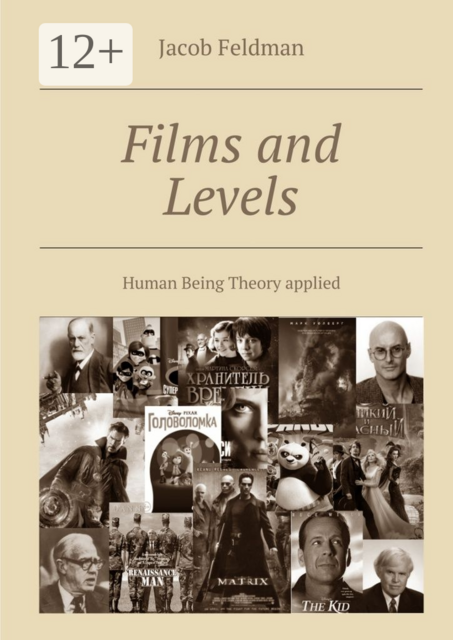
Films and Levels
Human Being Theory applied
© Jacob Feldman, 2017
Every serious course contains a textbook and a problem-solving book. This is a solving-problems book after textbook named “Human Being Theory (for Dummies)”. Author analyzes 15 selected films (1994—2016) using concepts of levels and temperaments from the textbook.
ISBN 978-5-4483-4906-5
Created with intellectual publishing system Ridero
Contents
- Films and Levels
- Preface
- Storytelling versus problem solving
- Films
- Levels
- By Feldman
- By Graves-Beck-Wilber
- Film Analysis
- Levels: Model and Interpretation
- Deepwater Horizon (2016)
- Good guys and bad guys
- The Film
- Time is money
- Goals and Means
- Risky decision
- Episode One
- Episode Two
- Episode Three
- Children’s theme
- Episode One
- Levels and ages
- Episode Two
- Summary
- P.S.
- Doctor Strange (2016)
- The plot
- Dr. Freud
- Freud’s model vs. Feldman’s model
- Even levels and synchronization
- About regulatory mechanisms
- The third level as a root of evil
- The evil forces
- Conflict with Mordo
- The authors’ model of the Universe
- Conclusion
- P.S.
- Inside Out, 2015
- Original model of a human psyche
- Mapping this model onto our model
- Conclusion
- The Matrix (trilogy)
- Axioms
- Self-consistency
- Styles of thinking
- Merovingian
- Persephone
- The Architect
- Commander Lock
- Oracle
- Keymaster
- Superheroes
- Villains
- Conclusion
- Son of a man
- Incredibles, 2004
- Main characters
- Supporting characters
- Very important episodes
- The first episode — “with the old woman”
- The second episode — “with the director”
- Temperaments
- Kung Fu Panda (trilogy)
- Profile of the super hero
- Temperaments
- Supporting characters
- Conclusion
- Renaissance Man, 1994
- Changing the profile
- Reality and fiction
- Conclusion
- Few more films (in brief)
- Hugo, 2011
- Disney’s The Kid (2000)
- Oz the Great and Powerful, 2013
- P.S.
- Lucy, 2014
- Epilogue
Preface
Storytelling versus problem solving
This book, named Films and Levels (FLS), is a sequel after my previous book, named «Human Being Theory (for Dummies)” (HBT)
HBTcontains manyideas and a fewexamples.
FLScontains manyexamples and retells briefly relevant pieces of HBT.
It is easy to describe a problem briefly afterit is formalized. But it is impossible to describe it briefly beforegood formalizing.
So what?
I have found a trickysolution. I use filmsas a raw material. I use only modern popular films. They are easy to find. Watching the film usually takes less time than reading the book with the same plot.
...