Preface
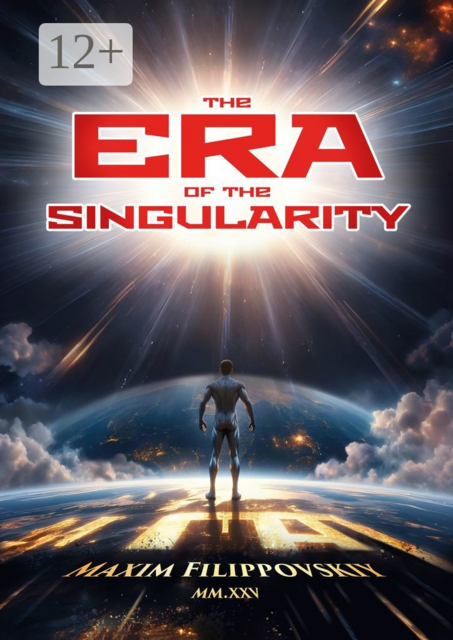
This volume before you is not merely a book — it is a manifesto of the epoch, a call to conscious creation of the future. Its title, The Era of Singularity or The Technological Neoapocalypticon, is profoundly symbolic. It signifies not a fatal fork in the road, but the paramount challenge of our time: which path of creation shall we choose? On one hand lies the dazzling potential of technological singularity, opening gates to digital flourishing and unprecedented longevity, albeit demanding a wise navigation through zones of unpredictability. On the other hand, the “Technological Neoapocalypticon” emerges not as a prophecy of collapse, but as a crucial revelation: it is systematized knowledge about the risks created by our own genius (AI, nanorobots, bioengineering). This book is not a “Bible of Doom,” but a reminder and a vulnerability map, indicating where exceptional responsibility is required. The choice is not between “paradise or perdition,” but between conscious creation and irresponsible risk. The very “or” in the title is not a cry of fear, but a powerful call for vigilance, dialogue, and collaborative design of a future worthy of human genius.
What awaits us beyond the horizon? “The Era of Singularity” is not a moment, but an entire new eternity. The point where artificial intelligence definitively surpasses our own, triggering an avalanche of uncontrollable progress. The world will become radically unpredictable. Will we become gods in symbiosis with machines? Or will we dissolve in digital noise, becoming dust beneath the feet of superintelligence? This is not science fiction — it is our immediate prospect.
The “Neoapocalypticon” is not an ancient scroll of fear, but our modern digital compass, systematizing key challenges. This term is not a prediction of doom, but a signal to awaken. The prefix “Neo-" emphasizes: we stand at the dawn of a fundamentally new era, where the power of impending technologies (AI, bioengineering, cyber-systems) creates not only risks but also unprecedented opportunities. It is a compendium of knowledge, vividly illuminating the junctures where a misstep leads to crisis (loss of control over AI, destructive application of biotechnologies). By understanding this “compendium” — this map of potential risks — we gain not an “instruction manual for self-destruction,” but a tool for designing the desired future. This is a path not to collapse, but to conscious transformation, where knowledge of the “dark side” of technological power becomes the foundation for its enlightened and responsible application. The apocalyptic element here is a revelation about the better path, possible only through a clear vision of all options.
The subtitle, The Dance of Infinity and Technologies to Come Until the End of Days, reveals the depth and inspiring power of our journey. “The Dance of Infinity” is a sublime metaphor for the evolution of technology: dynamic, intricate, like graceful fractals, yet permeated by the profound rhythms of progress and the human spirit (recall Nietzsche on eternal becoming, where each singular moment of being is simultaneously a moment of infinity!). It embodies creative energy and boundless potential for growth. “Technologies to Come” (nano, bio, AI, neuro) are potent tools actively transforming reality, erasing obsolete boundaries between the physical and digital, the organic and synthetic, opening spaces for unprecedented synergy. And the phrase “Until the End of Days” speaks not of an end, but of a grand transformation — the closing of one great chapter of humanity and the beginning of an entirely new era of co-creation with technology. The irony acquires a luminous meaning: it is precisely our conscious “dance” with technologies to come that will determine how the next, infinite chapter of our shared history is written.
This book is an exploration of the most crucial facet of our existence. The Singularity and the Neoapocalypticon are two sides of the same coin, named Future — forged by technology. We are drawn into this eternal “Dance” of progress. Will Humanity remain merely a spectator, doomed to watch as it is erased by technologies to come? Or will it find the strength to become a co-creator of a new epoch “until the end of days”? The answer to this question is being written right now. The book’s title is not merely a label. It is a mirror of our era, our new mythology, where immortality or oblivion is at stake.
We stand on the threshold of the Era of Singularity — a great leap into the unknown. This transition will become our paramount challenge of creation, defining the New Era. Technological progress carries both incredible opportunities for a better future and significant risks. The key lies in conscious choice. Our destiny depends on the ability to harmoniously direct the power of technology, creating a desired tomorrow. May this choice become a mindful Dance of Infinity, where creation prevails over destruction. Our path is our choice and our responsibility.
This book is the result of years of research into the sphere of innovation, encompassing existing technologies and developments, scientific hypotheses and theories from various fields of natural, technical, and social sciences. The conceptual foundation of the book is based on research into formational evolution, as proposed by K. Marx, which, after transformation and expansion, allowed for a detailed examination of the very essence of economic transformation and its stages.
The seemingly chaotic array of technologies is governed by a unified structure, wherein all development moves along a DNA-like spiral of successive epochs. Each epoch represents a sequential journey through five factors and modes of production within each distinct phase, which the author previously derived in a general theory of economic formation, accounting for historical tendency.
Our imaginary journey into the future will commence from the present day, defining the time of pre-singularity — the era immediately preceding humanity’s acquisition of its new meaning — and then proceed through five phases of singularity. Within these phases, humanity sheds routine dependencies but embodies the creator of reality, merging with quantum technology, liberated from the need to seek means of subsistence.
Remarkably, the reader themselves becomes a time traveler and observer of a world where technologies come alive. In this captivating journey, even the most rigorous hard science fiction acquires incredible flexibility and lightness: illusory utopia and dystopia, merging into a single ingot of contradictions, futuristically forecast the transhumanist transition. Here cyberpunk plays cosmic opera, technofantasy melodiously synthesizes techno-apocalypse, and the drama of humanity’s internal conflict magically transforms into eternity’s sardonic smile.
Is the history presented here pure invention? No. This history is entirely governed by the logic and goal of technological development — namely, the liberation of labor and the progress of humanity. Our heuristic methods and technological extrapolations of identified trends immerse the reader in a world of extraordinary inventions, while the poetic style of presentation lends ease to reading.
In the second part of the book, the author deemed it necessary to mention several existing companies and startups from various countries that are preparing our palette of possibilities, to name the very technologies shaping our future, and to compile a brief list of works by visionaries whose creations have, in one way or another, influenced this book.
The author expresses gratitude to family and loved ones for their friendly presence and participation in his life. Acknowledgment is extended to numerous authors and scientists for their contribution to human thought. Special thanks are due to the Editor-in-Chief of the journal “Theoretical Economics,” Doctor of Economic Sciences, Professor Valery Aleksandrovich Gordeev, for publishing the general theory of economic formation.