


Английский для военных/Military English. Метод кейсов/Cases. Решения, ответы, словарь, глоссарий
Қосымшада ыңғайлырақҚосымшаны жүктеуге арналған QRRuStore · Samsung Galaxy Store
Huawei AppGallery · Xiaomi GetApps

автордың кітабын онлайн тегін оқу  Английский для военных/Military English. Метод кейсов/Cases. Решения, ответы, словарь, глоссарий

Марина Юрьевна Грабарь

Английский для военных/Military English. Метод кейсов/Cases

Решения, ответы, словарь, глоссарий


16+

Оглавление

  1. Английский для военных/Military English. Метод кейсов/Cases
  2. ПРЕДИСЛОВИЕ
  3. Как пользоваться данной книгой.
  4. Как пишутся кейсы
  5. PART 1
  6. Questions
  7. Solutions
  8. — WMD-E (Uncertain/High Threat)
  9. Answer
  10. CASE 2
    1. Practical Speaking Training. Сrush the fear of public speaking
  11. DRAW A CARTOON
  12. Vocabulary and Terminology Section
  13. BE-KNOW-DO
  14. PART 2
    1. WMD
    2. CASE NUMBER 3. NUCLEAR
  15. Questions
  16. Solutions
  17. CASE NUMBER 4. BIOLOGICAL
  18. Questions
  19. Develop and exercise a bio-attribution process
  20. WMD. KEY TERMS
  21. PART 3. TERRORISM
    1. TERRORISM
  22. General Rules
  23. Case 6. International Terrorism
    1. Profile of a Terrorist
  24. Questions
    1. Solutions
  25. Key Words and Terms
  26. Terrorism can be defined as
  27. Case 7. Lessons on terrorism
    1. the checklist
  28. Keys:
  29. Case 8. Eradicating terrorism
    1. Examine the possible solutions to eradicate terrorism
  30. Pirates
  31. PART 4 CYBER SECURITY ON MILITARY
  32. CASE NUMBER 9
  33. Operating Structure
  34. CASE NUMBER 10
    1. THE ATTACK OF HACKING
  35. What could an attacker learn from this information?
    1. What could an attacker learn from this information?
  36. Solutions
  37. Lesson
  38. MALWARE GLOSSARY
  39. Keylogger. Basically a form of spyware, a keylogger captures everything you type, including passwords and other sensitive information. Some keyloggers also capture screenshots, log your web browsing history, record anything copied to the clipboard, and more
    1. A-Z of computer and data security threats
    2. Whether you’re an IT professional, use a computer at work, or just browse the Internet, this book is for you. It explains the facts about threats to your computers and to your data in a simple, easy-to-understand language
  40. CASE NUMBER 11
    1. CYBER ATTACKS
  41. Solutions
  42. HACKING GLOSSARY
  43. CASE NUMBER 12
    1. SECURE PASSWORD
  44. Solutions
  45. CASE NUMBER 13
    1. THE SPIES INVENTED
    2. J=T, T=H & E=E
    3. J=T, T=H & E=E
    4. TU ESDGP THETE NTH
    5. D=D, G=A, P=Y
  46. Solutions
  47. What are some fun ways to encrypt a message?
    1. Step-by-step in pics
  48. THE AUTHOR

ПРЕДИСЛОВИЕ

Для преподавателей английского языка или самостоятельной работы студентов.

Уровень английского B2.

Метод кейсов. Метод конкретных ситуаций — техника обучения, использующая описание реальных ситуаций. Обучающиеся должны исследовать ситуацию, разобраться в сути проблем, предложить возможные решения и выбрать лучшие из них.

Военный английский — это изучение и практика английского языка в контексте армии 21 века. Аутентичные материалы представляют реальные источники. В конце каждой темы есть раздел «Ключевые понятия и словарь», чтобы каждый учащийся мог ознакомиться с конкретной военной терминологией и информацией. В каждом кейсе есть все, что вам нужно. Решения, ответ, ключ. Кейсы организованы в четыре группы. Каждый из них может быть прочитан, обсуждён и использован для одной главной цели; и каждый может быть прочитан, обсуждён, и использован, чтобы понять сложность и поведение человека в различных ситуациях. Кейсы помогают преобразовать информацию и примеры в тексте в реальные знания. Предоставлены все ресурсы.


The cases in this book all deal with specific situations, specific problems, specific decisions.

They are all military situations, military problems, and military decisions.

They should thus be approached by students and instructors as cases that ask,

How should one handle this?

What is Military English?

Military English is the study and practice of the English language in the context of the

Military. The authentic materials were selected from real sources being re-written with a more appropriate level of grammar and vocabulary.

At the end of each unit, there is a vocabulary section

so as each student could review the specific military terminology and the information.

All cases have everything you need. Solutions, Answer Key.

.

Как пользоваться данной книгой.

Кейс (от англ. сase) — это описание конкретной ситуации или случая в какой-либо сфере: социальной, экономической, медицинской и т. д. Как правило, кейс содержит не просто описание, но и некую проблему или противоречие и строится на реальных фактах.

Соответственно, решить кейс — это значит проанализировать предложенную ситуацию и найти оптимальное решение.

Кейс-метод позволяет совершенствовать «мягкие навыки» (soft skills),которые оказываются крайне необходимы в реальном рабочем процессе.


Сейчас решение кейсов как метод обучения используется во всех ведущих бизнес-школах, университетах и корпорациях.


Решение кейсов состоит из нескольких шагов:

1) исследования предложенной ситуации (кейса);

2) сбора и анализа недостающей информации;

3) обсуждения возможных вариантов решения проблемы;

4) выработки наилучшего решения.

Как пишутся кейсы

Кейс объединяет в себе два компонента: исследовательский и учебный, поэтому процесс его создания предполагает работу консультанта (я как технический специалист), сертификаты :


— NATO CIMIC AWARENESS COURSE. Информационная подготовка. Civil-Military Cooperation Centre of Excellence (CCOE). Центр подготовки НАТО

— Основы контроля оружия. Химическое, биологическое, ядерное оружие тип1, ядерное оружие тип 2.EU Non-Proliferation Consortium. Консорциум Еевропейского Союза


и преподавателя одновременно (Международные квалификации TESOL, TEFL (право преподавать английский как иностранный в любой стране мира, следуя при этом современной коммуникативной методике).


Задача коммуникативной методики — научить спонтанной речи на любые темы, и перестать переводить мысли с русского на иностранный язык. Коммуникативный подход, в общем и целом, предполагает изучение слов в контексте, без перевода на русский язык. И задача преподавателя не только научить Вас понимать, ЧТО означает слово, но и КАК его употреблять.

PART 1
MILITARY LEADERSHIP STYLE


CASE NUMBER 1

State Loses Control Over Its Nuclear Weapons Illustrative Scenario:


The Democratic People’s Republic of Korea (DPRK) DPRK Nuclear, Chemical, Biological, and Missile Sites


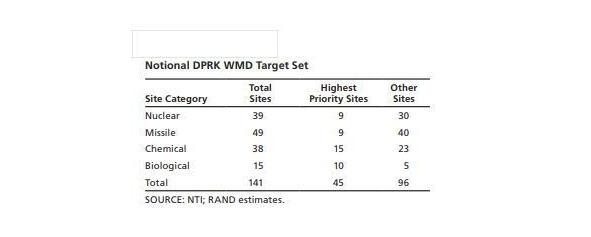
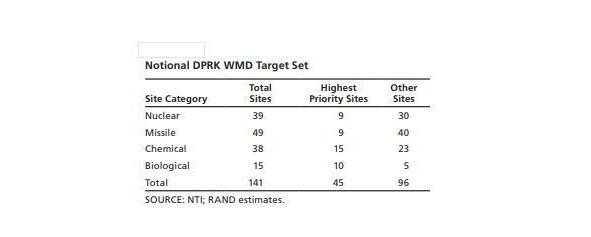
The DPRK’s WMD and missile programs include approximately 141 sites (excluding tactical sites) identified as being of potential interest for WMD-E operations, 39 of which are associated with its nuclear program, 38 are related to its CW program, and 15 are related to its bioweapons (BW) program. An additional 49 sites are associated with the ballistic missiles that might launch WMD.


For WMD-E operations, we assess that the order of priority of these sites would be:


— Nuclear fuel enriching and processing sites, and nuclear weapon manufacturing, testing, and storage sites

— Missile garrisons holding missiles capable of carrying nuclear weapons

— Research and development sites and nuclear-related universities

— Other nuclear sites — including mines, low-grade ore processing

— Biological weapons research and development, manufacturing, testing, and storage sites


— CW research and development, manufacturing, testing, and storage sites.


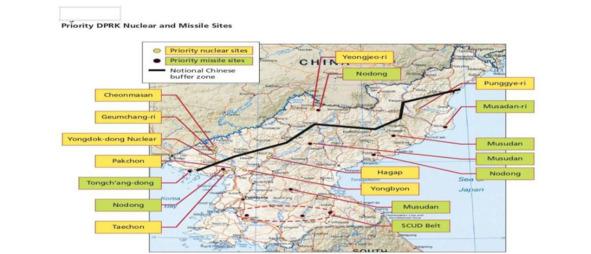
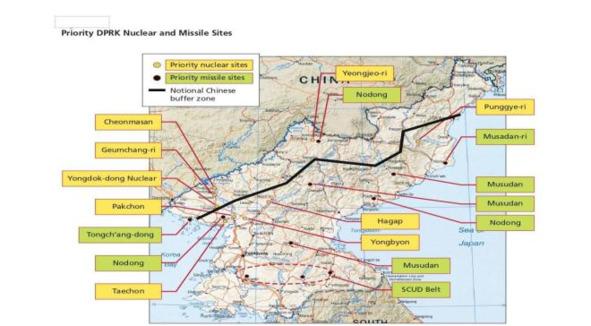
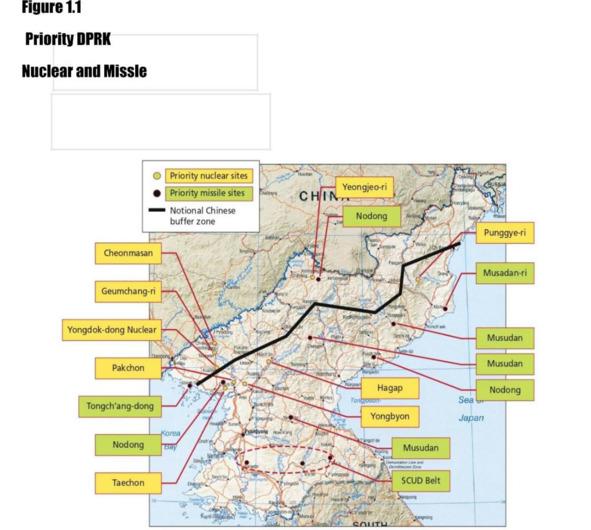
Unclassified sources identify nine sites in the DPRK that fall into the first category: Yongbyon Nuclear Research Center, one nuclear test site, four additional undeclared nuclear enrichment sites, one suspected underground nuclear storage site, one undeclared underground enrichment and reprocessing site, and one site associated with nuclear weaponization. These nine nuclear sites are shown in Figure 1.1.


The figure also depicts a notional buffer line that might be established by Chinese forces—50 km in this example — in the event that China decides to establish a zone within North Korea to control the flow of refugees or otherwise manage further developments on the peninsula. An interesting feature of such a zone would be the number of priority WMD and missile sites remaining outside it. In this notional case, five nuclear and seven missile sites would remain on the U.S. side.


A key operational decision — and one that will be greatly affected by the quality of available intelligence — will be whether and in what priority to seize and reduce each site. The combined commander/JFC would then develop a campaign plan to exploit these and any other sites found during the course of operations.


Table 1.1


Table 1.2


Table 1.3

Questions

— Campaign Design


A WMD-E campaign would balance key objectives and missions; strategic, operational, and tactical risks; and the joint forces needed to interdict, attack, and/or eliminate nuclear forces and sites quickly enough to minimize the risks of proliferation or use. The WMD-E maneuver scheme could adopt one or a combination of the following approaches:


— a northward movement of U.S. ground forces and RoK allies across the DMZ along one or more axes of advance; (2) the introduction of forces from the sea on one or both coasts to reduce the distances that ground forces need to advance to reach priority nuclear WMD sites; and/or (3) air maneuver operations involving airborne or air assault forces directly assaulting the highest-priority sites, with other ground forces maneuvering to meet up with these forces, and joint SOF, air, and naval forces supporting.


— Intelligence Requirements.


The quality and reliability of U.S. intelligence will be critical in winnowing the number of sites to be initially assaulted, seized, and secured down to those that will best reduce the risk of WMD being leaked or employed.


For example, poor intelligence can result in forces being sent to seize and secure sites bereft of WMD

Very good intelligence could, in theory, reduce the number of sites requiring coverage, support the efficient allocation of limited resources, and reduce risk. (In practice, however, North Korean efforts to hide weapons and disguise sites may significantly diminish the effectiveness of U.S. and allied intelligence.)


Two intelligence issues complicate planning for the WMD-E mission.

— First, intelligence gaps will likely mean that critical facilities rumored or reported to exist cannot be located.

— Second, as previously noted, many weapons — particularly CWs — are likely to have been dispersed to numerous tactical operational sites that cannot be identified in advance and are not included in estimates of a country’s WMD infrastructure.

3. Parametric Analyses of WMD-E Force Requirements


We estimated WMD-E forces under different scenario assumptions that varied the following parameters:

1 • the number and sizes of WMD sites for WMD-E operations

2• force requirements dictated by the operational environment

3• the ratio of supporting forces to mission forces.

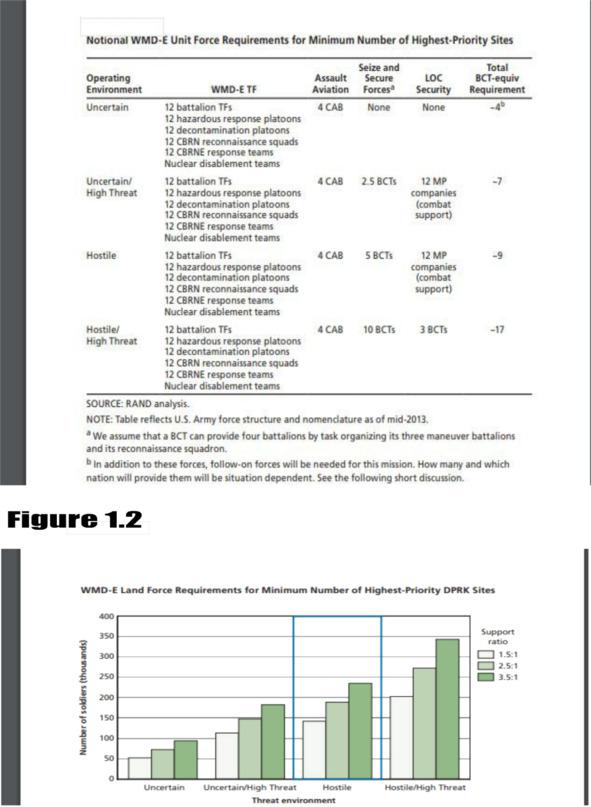
— Sensitivity of Force Requirements to Operational Environments and Support Ratios The ground force requirements are presented as a function of the operating environment (Uncertain or Hostile, and level of threat) and the assumed support ratio (low, midlevel, or high), broken out by the different elements of the WMD-E mission force.

Ground force requirements for WMD-E operations in our illustrative DPRK case are presented in Figure 1.2.


Estimated forces needed for WMD-E operations could be


5. Observations on the DPRK Case Study


As described in this case study, WMD-E operations in the wake ofa collapse ofthe DPRK.


— What are the assumptions driving results?


— What does Your results suggest?


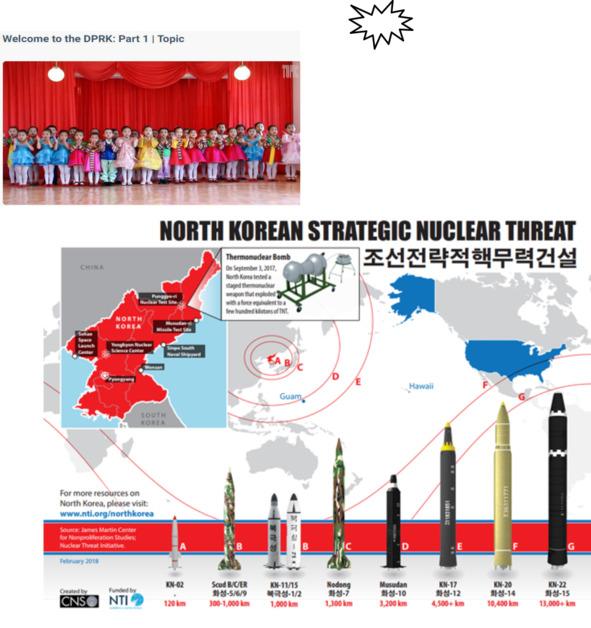
Welcome To The DPRK (Video)


https://drive.google.com/file/d/1YRUncnqAJ7YDe_N8UeRdpGOwFQZq KDwy/view? usp=sh aring


Solutions

Question 1


1. Campaign Design

A WMD-E campaign would balance key objectives and missions; strategic, operational, and tactical risks; and the joint forces needed to interdict, attack, and/or eliminate nuclear forces and sites quickly enough to minimize the risks of proliferation or use.


The WMD-E maneuver scheme could adopt one or a combination of the following approaches:


— a northward movement of U.S. ground forces and RoK allies across the DMZ along one or more axes of advance; (2) the introduction of forces from the sea on one or both coasts to reduce the distances that ground forces need to advance to reach priority nuclear WMD sites; and/or (3) air maneuver operations involving airborne or air assault forces directly assaulting the highest-priority sites, with other ground forces maneuvering to meet up with these forces, and joint SOF, air, and naval forces supporting.


Answer


Each of the three approaches listed above involves associated benefits and risks.


For example, a northward advance would establish secure areas for elimination operations but could also be quite slow, and such an advance could well face the greatest concentration of opposing DPRK forces — hence, the highest casualties, especially if those DPRK forces had the ability and will to fight.


The approach based on operationally maneuvering from the sea could also face stiff opposition, and it would introduce some logistical challenges, but it would also shorten the distances — and potentially the time — that maneuver and WMD-E TFs have to advance to key DPRK nuclear and missile sites in the north.

Finally,


Figure 1.1

might be the fastest way to seize DPRK nuclear sites until the WMD-E TFs arrive, but this approach could leave the assault forces exposed and isolated. Trade-offs between risks and timelines also exist:


Some risks might be mitigated, for example, by conducting heliborne assault opera-tions against a site only when heavier ground maneuver forces are closing on that site so that assaulting forces can be quickly reinforced.

Question 2


2. Intelligence Requirements.


The quality and reliability of U.S. intelligence will be critical in winnowing the number of sites to be initially assaulted, seized, and secured down to those that will best reduce the risk of WMD being leaked or employed.


For example, poorintelligence can result in forces being sent to seize and secure sites bereft of WMD


Very good intelligence could, in theory, reduce the number of sites requiring coverage, support the efficient allocation of limited resources, and reduce risk. (In practice, however, North Korean efforts to hide weapons and disguise sites may significantly diminish the effectiveness of U.S. and allied intelligence.)


Twointelligence issues complicate planning for the WMD-E mission.


— First, intelligence gaps will likely mean that critical facilities rumored or reported to exist cannot be located.

— Second, as previously noted, many weapons — particularly CWs — are likely to have been dispersed tonumerous tacticaloperationalsites that cannot be identified in advance and are not included in estimates of a country’s WMD infrastructure.

Answer


For the WMD-E mission in North Korea, even in a DPRK collapse scenario, forces searching for WMD will not know what type of resistance they might encounter. TFs should consist, therefore, of both WMD specialists and general-purpose forces that are adequate for the potential threat and tactical situation. This could be a significant consideration given the nature of North Korea’s armed forces and the degree to which its population is armed and indoctrinated to fear and distrust U.S. and RoK forces.

Figure 1.1


Question 3


3. Parametric Analyses of WMD-E Force Requirements


We estimated WMD-E forces under different scenario assumptions that varied the following parameters:


1 • the number and sizes of WMD sites for WMD-E operations


2• force requirements dictated by the operational environment


3• the ratio of supporting forces to mission forces.


Answer


1.The number and sizes of WMD sites for WMD-E operations.


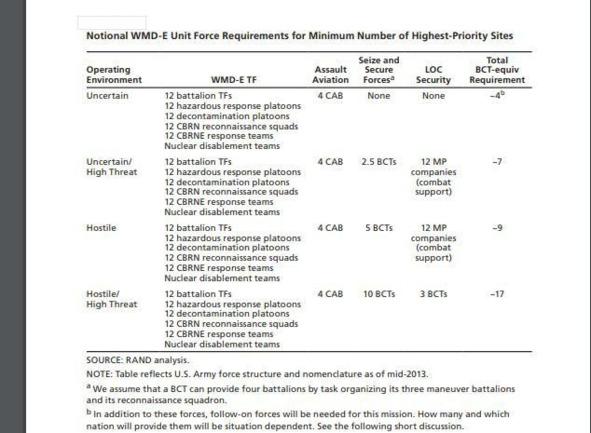
For WMD- E operations, we assess that the nuclear sites associated with fuel enriching and processing would be the next priorities, along with nuclear weapon manufacturing, testing, and storage sites. For our base case, we selected 12 battalion TFs as the minimum force that a commander should be allocated to seize, secure, search, and eliminate the priority nuclear sites. We note that 12 WMD-E TFs is a planning factor only.


For example, if intelligence suggests that the highest-priority nuclear activities should be conducted at nine sites, as shown in Table 1.1,

Table 1.1


then a minimum of ten battalion-sized TFs should be assigned to these nine sites. In the course of an operation, the U.S. commander might use these 12 WMD-E TFs

differently. For example, recall that in Figure 4.1 four of the priority nuclear sites and two of

the priority missile sites were located approximately 50 km from the Chinese border.


2. Operational environment and force requirements.


— WMD-E (Uncertain): This environment features a low threat level — consistent with the collapse of the DPRK regime and complete disintegration of the military. This might occur if a power struggle within the Kim regime resulted in open fighting that pushes an already dangerously unstable economy and society into chaos and collapse.