


автордың кітабын онлайн тегін оқу The Motor Boys Over the Rockies; Or, A Mystery of the Air
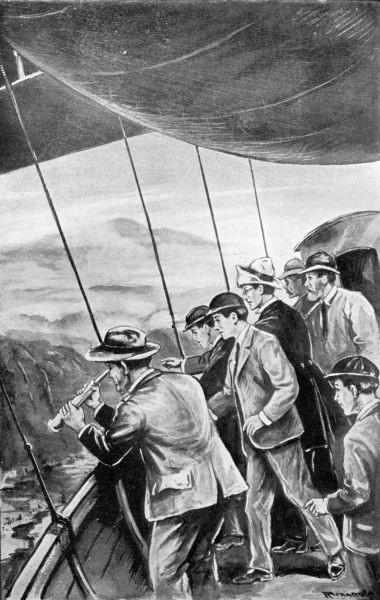
THE TRAVELERS SAW BELOW THEM A LONG NARROW VALLEY
THE MOTOR BOYS
OVER THE ROCKIES
Or
A Mystery of the Air
BY
CLARENCE YOUNG
Author of “The Racer Boys Series” and “The Jack Ranger Series.”
ILLUSTRATED
NEW YORK
CUPPLES & LEON COMPANY
BOOKS BY CLARENCE YOUNG
THE MOTOR BOYS SERIES
12mo. Illustrated.
THE MOTOR BOYS
Or Chums Through Thick and Thin
THE MOTOR BOYS OVERLAND
Or A Long Trip for Fun and Fortune
THE MOTOR BOYS IN MEXICO
Or The Secret of the Buried City
THE MOTOR BOYS ACROSS THE PLAINS
Or The Hermit of Lost Lake
THE MOTOR BOYS AFLOAT
Or The Stirring Cruise of the Dartaway
THE MOTOR BOYS ON THE ATLANTIC
Or The Mystery of the Lighthouse
THE MOTOR BOYS IN STRANGE WATERS
Or Lost in a Floating Forest
THE MOTOR BOYS ON THE PACIFIC
Or The Young Derelict Hunters
THE MOTOR BOYS IN THE CLOUDS
Or A Trip for Fame and Fortune
THE MOTOR BOYS OVER THE ROCKIES
Or A Mystery of the Air
THE JACK RANGER SERIES
12mo. Finely Illustrated.
JACK RANGER’S SCHOOLDAYS
Or The Rivals of Washington Hall
JACK RANGER’S WESTERN TRIP
Or From Boarding School to Ranch and Range
JACK RANGER’S SCHOOL VICTORIES
Or Track, Gridiron and Diamond
JACK RANGER’S OCEAN CRUISE
Or The Wreck of the Polly Ann
JACK RANGER’S GUN CLUB
Or From Schoolroom to Camp and Trail
Copyright, 1911, by
Cupples & Leon Company
The Motor Boys Over the Rockies
Printed in U. S. A.
CONTENTS
CHAPTER
PAGE
I.
The Airship Stolen1
II.
An Unconscious Watchman11
III.
On a Mysterious Trail17
IV.
A Farmer’s Clew28
V.
The Telegram41
VI.
The Airship Recovered51
VII.
A Trace of Mr. Bell63
VIII.
Home in the Airship71
IX.
Professor Snodgrass on Hand79
X.
Off for the West88
XI.
A Town in Trouble95
XII.
New Use for an Airship103
XIII.
Running the Cable110
XIV.
The Professor Is Missing117
XV.
At the Mining Camp123
XVI.
The Miner’s Story131
XVII.
Noddy Nixon Arrives139
XVIII.
Off for Lost Valley146
XIX.
Wrecked on the Desert156
XX.
A Lion in Possession163
XXI.
Mr. Bell Is Found172
XXII.
Over Lost Valley183
XXIII.
The Flickering Lights195
XXIV.
Bushes of Death201
XXV.
The Professor’s Cousin208
XXVI.
Planning the Escape216
XXVII.
In Disguise222
XXVIII.
Mysterious Rites227
XXIX.
The Fight234
XXX.
Noddy Nixon Defeated—Conclusion240
THE MOTOR BOYS OVER THE ROCKIES
CHAPTER I
THE AIRSHIP STOLEN
“Well, we ought to settle this question about our vacations, one way or another, fellows,” remarked a tall, good-looking lad, with something of an air of worriment, as he glanced at his two comrades who were stretched out in the shade of a big maple tree one hot afternoon. He plucked some blades of grass from the well-kept lawn, that extended back to a large, white house, with big pillars, put the spears of green into his mouth, and chewed them reflectively. Then he added: “Why can’t you and Chunky agree, Ned? What’s the use of disputing? It’s too hot.”
“Of course it is,” answered the smaller of the two lads thus addressed.
“Hot nothing!” puffed the stout youth, whom the first speaker had called “Chunky” in tribute to his fleshiness. “It’s only hot because you imagine it, Ned Slade.”
“Bob says that because he wants to go South,” retorted Ned. “Eh, Jerry?”
“Now don’t you agree with him, Jerry Hopkins!” cried Bob Baker. “Be on my side for once,” and he looked an appeal at his tall chum. “Ned wants to go to Canada.”
“I’d like to go to the North Pole to-day,” responded Ned, turning over, as if to find a cooler place in the grass. “But, speaking seriously, I think I’ve got as much right to insist that the next trip we take in our airship shall be to some new locality, as Bob has to suggest that we go South.”
“Of course you’ve got a right to insist,” agreed Bob, puffing over his exertion of turning on one side. “Of course you have, Ned. Who started this argument, anyhow?” and he spoke rather sharply.
“Guess I’ve got as much right to start an argument as you have, Bob,” was Ned’s retort, and there was an unpleasant tone in his voice, at which Jerry looked troubled.
“Come, fellows,” spoke the tall lad, soothingly. “It’s too warm to bicker. Get down to business. We’ll take a vote on it. Where shall we spend this vacation in our airship?”
“I say South!” exclaimed Bob quickly.
“He’s thinking of the Florida everglades, where the Seabury girls had their houseboat, or else he wants to try to locate another buried city in Mexico,” broke in Ned.
“I do; eh? Well, what attracts you to Canada?” demanded the stout lad.
“Maybe he’s heard that the Seabury girls are going there,” suggested Jerry, with a smile.
“No,” answered Ned. “I only thought it would be cooler. I’m willing to leave it to you, Jerry.”
“So am I,” agreed Bob, more amiably, and the little cloud that seemed to threaten to come over the friendship of the chums, had almost vanished.
“I was going to suggest a Western trip,” proposed Jerry quickly, wishing to strike while the iron was hot, “but as we have been there before, perhaps Ned will object.”
“It depends on what part of the West you’d aim for,” came from Ned. “Go ahead, Jerry, and tell us some more.”
“Sure,” agreed the tall lad, pleasantly. He glanced quizzically at his two chums. Bob was idly chewing a leaf, and Ned was gazing up into the blue sky through the leaves of the maple tree.
The three chums, whose devotion to vehicles of the gasolene type, from motor cycles to airships, had gained for them the title of “The Motor Boys,” lived in the town of Cresville, not far from Boston. Bob Baker’s father was Andrew Baker, a rich banker; Ned was a son of Aaron Slade, who was the proprietor of a large department store, and Jerry Hopkins was the only child of Mrs. Julia Hopkins, a wealthy widow.
The boys had had many adventures together, and the beginning of them was told of in the first book of this series, entitled “The Motor Boys.” Their activities started in a bicycle race, but they soon exchanged their wheels for motor cycles, and a short time after that they won a touring car, offered as a prize. In that they made a long trip overland, and, later, went to Mexico, to which trip Ned referred when he mentioned the buried city, for the boys actually did discover one, for which a friend of theirs, Professor Uriah Snodgrass, a noted scientist, was in search.
They returned home from Mexico across the western plains of the United States, and then, using some money they had made from a gold mine they had located, they bought a speedy motor boat.
The fifth volume of this series, entitled “The Motor Boys Afloat,” took up their adventures in connection with the speedy craft Dartaway. They had some stirring times around home, and then took quite a long trip along the Atlantic coast. From there they journeyed to the mysterious Florida everglades, to which Ned had also referred. But the happenings there, strange and weird as they were, seemed, to the boys at least, to be more than equalled in a trip they made on the Pacific, though this voyage was in a motor boat they hired, as their own was smashed in a freight wreck.
The growing interest in aeronautics soon led the motor boys to investigate the possibility of navigating through the air, and, shortly after their return from their trip on the Pacific, they began to build an airship. In this they were assisted by a Mr. Rupert Glassford, and in the ninth book of this series, called “The Motor Boys in the Clouds,” there was related the particulars of a trip they took for fame and fortune.
Their airship, a combination of dirigible balloon and aeroplane, was called the Comet, and was one of the most completely fitted-up air craft devised in recent years. There was ample accommodation for a long trip, and the travelers could keep afloat in it a long time, provided no accident occurred. In it, as related in the ninth book, they won a substantial prize in competition with a number of balloons and aeroplanes.
It was about this airship that Bob, Ned and Jerry were talking the pleasant summer afternoon, on which I have, once more, brought them to the attention of my readers. As they sat there on the grass, their minds went back to the wonderful air trip they had made and they thought of the efforts of Professor Snodgrass to capture strange insects and bugs, for that was the one hobby of the scientist. They also recalled the dastardly attempt made by Noddy Nixon, a town bully, to injure them, by firing at their craft. Noddy had made an attempt to build a sort of airship, but had failed.
Now the motor boys were on the point of planning a second flight in their craft, only, as has been indicated, they could not seem to agree on where to go. The long summer vacation had arrived, bringing a cessation of studies, and in the blood of the three chums there was a desire to be doing something.
For several seconds after Jerry Hopkins had announced his willingness to tell his chums of his plan, he remained silent; so long, in fact, that Bob asked:
“Well, what about it, Jerry? Are you, too, thinking of the Seabury girls?”
“Not exactly,” was the answer, accompanied by a short laugh. “I was just considering the best method of presenting the matter to you fellows, so you wouldn’t get on your ears again; that’s all.”
“Punch him, Bob!” cried Ned suddenly. “You’re nearer than I am. The nerve of him! Insulting us like that!”
Bob playfully raised his fleshy fist with the intention of thumping Jerry in the side, but the other, with a quick motion, snapped a pebble from his thumb, and the little stone struck Bob on the end of the nose, causing him to wince.
“Ouch! Quit that!” the stout lad cried.
“That was just my way of calling the meeting to order,” declared Jerry. “I’m ready to proceed, now. My plan would be to make as long a trip as possible. It would be something of a record to fly from here to, say, Kansas or Colorado.”
“Why not to Arizona while you’re about it,” put in Bob, still rubbing his nose in a reflective manner. “Then we could see if Jim Nestor is giving us our share of the gold from our mine, though, of course, I only said that last for a joke,” he added hastily.
“You couldn’t make Arizona on one supply of gasolene,” objected Ned.
“Who said we could?” fired back Bob. The spirit of contention was not yet stilled, so Jerry hastened to add:
“Of course, it wouldn’t be possible to make anything like as long a trip as that without coming down, but I calculated on that. We won’t try for speed, only for distance. The reason I proposed the West is that this season of the year is best for going out there: the prevailing winds are more favorable, and I think we would enjoy it immensely. Of course it is nice down South, and, as for Canada, I have heard that it is fine there in the summer, but if you left it for me to decide, I’d say let’s take the Comet and go West.”
“All right,” agreed Bob, whose usual good spirits had returned. “I’m willing. West it shall be,” and he looked inquiringly at Ned, who was not the one to hold out against his two chums.
“I’m willing,” he announced. “We’ll get the Comet ready for a long Western trip—across the Rocky Mountains if necessary. We’ll have a fine——”
Ned’s remarks were suddenly interrupted by the arrival of a small lad who rushed across the lawn toward where the three chums were sitting under the tree. The newcomer was much excited. His hat had fallen off, one cuff was all awry, and his hair was tousled, while his cheeks were flushed.
“I—say!” he cried, brokenly, not pausing in his rush. “I—just—came past—the shed—where you—keep your airship. It’s terrible—door broken open—lock smashed—things scattered all about—watchman not there—airship gone!” The little lad had to pause for breath.
“The airship gone!” exclaimed Jerry, leaping to his feet, an example followed by Ned and Bob. “What do you mean, Andy Rush? Is this a joke?”
“No joke at all—airship’s gone—I saw the vacant shed,” and Andy Rush sank down on the grass, completely exhausted by his run, and his rapid talk, which latter was characteristic of him, by nature as well as by name.
“Did you see it go?” cried Bob.
“No, I didn’t see it go—but it was gone when I came past,” answered the excitable little chap.
“Who took it?” demanded Bob, clenching his fists, as if he wanted to attack some one.
“Don’t know!” gasped Andy. “But—it’s gone. First—I thought—you fellows—had it out, but when—I came up here—and saw you sitting down—I knew it—wasn’t you. But it’s gone!”
“Come on, fellows!” commanded Jerry quickly. “Let’s see what’s up.”
Followed by Andy they hurried off toward the shed where the Comet was kept. This structure was some distance away from Jerry’s house. It had been specially built to house the airship, and was located in the midst of a large field, owned by Mrs. Hopkins, which field gave ample room for manœuvring the craft. It was some distance from a road, and in an unfrequented locality.
It did not take long to arrive at the place. Before they reached the shed they could see that the big doors were opened. So far Andy’s tale had been confirmed. A few minutes later the motor boys were staring into the empty shed. The big air craft was gone!
“It’s been stolen, boys!” exclaimed Jerry, as he stepped into the shed. “Our airship has been stolen!”
“And I’ll wager Noddy Nixon had a hand in it!” added Bob. “Let’s get right after him!”
CHAPTER II
AN UNCONSCIOUS WATCHMAN
After the first moment of hesitation, the boys, including Andy Rush, stepped within the big shed. It was as if they hoped to see the Comet concealed somewhere in the place, but the expanse of the airship planes, and the immense, bulging, gas bag did not greet their eyes.
“How long ago did you come past here, Andy?” asked Jerry, recovering some of his usual calmness.
“Not ten minutes ago,” replied the little chap. “I was on my way to town, and I thought I’d take this short cut. As soon as I came within sight of the shed, I saw the open doors.”
“And what did you do?” asked Bob.
“Looked in, to see if you were going off on a trip,” replied Andy. “I thought maybe you’d give me a ride. Then, when I saw the airship gone, and noticed that the doors were broken open, I knew something must have happened. I hurried off to find you—saw you sitting on the grass as if nothing had happened—great excitement—airship stolen—robbers in it—Noddy Nixon, maybe—airship wrecked—maybe—whoop!” and Andy ended up with a gasp, so rapid had been his utterance.
“Now just calm yourself,” begged Jerry. “Tell us all you can, Andy.”
“That’s all I know,” replied the small, excitable chap.
“The bars on the doors are broken,” called Bob, as he made an examination. “How do you s’pose that happened?”
“That’s so,” admitted Jerry, who had overlooked this part of Andy’s account. “And I wonder where Sud Snuffles is? He ought to be around. He’s paid enough to watch this place.”
“That’s right; where is Sud?” inquired Ned. “Maybe he went off in the airship with the thieves.”
“Nonsense,” exclaimed Jerry. “Let’s look around.”
The boys proceeded to make an examination of the interior of the shed. As Andy had related, it was in some confusion. Tools of various kinds were scattered about, and several boxes and chests had been broken open, and the contents, consisting of supplies for the craft, some canned food stuffs and spare parts, had been taken out. A big hammer near the front doors showed how the latter had been broken open.
“Those doors were smashed from inside!” cried Ned, after a more careful scrutiny.
“What makes you think so?” asked Jerry.
“Because the hammer’s thrown down inside, and the way the bolts are bent shows that the force was from within.”
“From within, eh?” murmured Jerry. “That’s interesting.”
“What does it indicate?” inquired Bob, who was not always so quick to see a point as were his two chums.
“Why it shows that the robbers, whoever they were, got into this shed from some other entrance than the big doors,” went on Jerry.
“Of course!” cried Ned. “The small door at the back! Why didn’t we think of it before? That’s the way Sud Snuffles goes in and out nights. I remember he said it was too much trouble to open the big double doors, and Sud was never very fond of work.”
“Come on; we must look for Sud, and see if the side door has been forced,” decided Jerry.
As they hurried through the big shed, to a small portal in the rear, Andy Rush remarked:
“I wonder how the thieves dare take the airship in broad daylight? Everyone around here knows it belongs to you fellows, and if Noddy Nixon or anyone else was seen in it, the police would be notified. It was a risky thing to do!”
“Maybe it wasn’t done in daylight,” suggested Jerry. “I was down here last evening, before dusk, and everything was all right, and Sud was on guard. He always stays all night. It may be that the ship was stolen last night, and Andy was the first one to notice it this morning.”
“I guess you’re right,” agreed Ned. “But now to find Sud, and see what explanation he has to make. If he has deserted his place, and gone off, we’ll discharge him.”
By this time the lads were at the small door. Near it was a chair and a cot, on which the watchman was in the habit of sitting or lying during the night. Sud Snuffles had been hired by the motor boys shortly after their return from their first long trip, for as the airship was in a shed, some distance away from the nearest house, they feared some mischievous persons might try to damage it. But, up to the present, there had been no trouble. Sud was an odd character, somewhat shiftless, and not much given to holding a steady position. He was very fond of traveling, and the night job just suited him, because he could roam about in the daytime, when there was no necessity for being on guard. He seemed to have a faculty of getting into all sorts of trouble, and slipping out again with ease.
“I don’t see anything of Sud,” remarked Jerry, peering about.
“Then he’s gone with the thieves!” decided Andy. “He’s in a conspiracy with them! Helped steal the airship—gone off on a trip—he’s fond of traveling—he’d go ten thousand miles—never come back—whoop!”
“Andy, will you be quiet,” begged Jerry. “This may be a serious matter. Look around and see if you can find any traces of Sud, boys.”
“He seems to have slept in the cot,” observed Bob. “The clothes are all mussed up.”
They began a hasty search of the rear of the shop, Andy joining in. But though they looked in several closets where tools or supplies were kept, and peered into all sorts of odd nooks and corners, there was no sign of the watchman.
“I’m afraid he has gone off,” began Jerry, but, the next moment, he and the others were startled by hearing a groan.
“What’s that?” cried Bob.
“Somebody’s killed!” gasped Andy, his face turning pale.
“Nonsense!” cried Jerry.
“It sounded from under the cot,” observed Ned.
His words were a signal for all to rush to the little bed. Jerry lifted up the clothes that draped over the front edge, concealing a view underneath. As the lad raised the coverlets, there was disclosed a pitiful sight.
Old Sud Snuffles, tied with numerous ropes, his head enveloped in a bag, lay under the cot. He was as helpless as a baby, and, as the boys looked at him in wonder and alarm, a stifled groan came from the bag. At the same time Jerry sniffed the air suspiciously.
“Boys!” he cried, “Sud has been drugged—chloroformed! We must bring him to consciousness, and then, maybe, he can tell us about the theft of our airship. There’s been some queer goings-on here!”
CHAPTER III
ON A MYSTERIOUS TRAIL
It was the work of only a few seconds for the active lads to get poor Sud from under the cot, and cut the ropes that bound him. Then the bag was taken from his head, and it was discovered that he was gagged. The smell of chloroform was more strong and Jerry, applying to his nose the rag that had served to stifle the voice of the watchman, detected on it the odor of the drug.
“This is desperate business,” remarked Ned soberly.
“Indeed it is,” asserted Jerry. “If Noddy Nixon has had a hand in this I’ll prosecute him for it. He’s going too far. This is the worst of his many tricks.”
“Do you think Sud will die?” inquired Andy, hovering about anxiously, moving here and there, like a restless bird. “Is he dead now? I can’t hear him breathe.”
“Oh, he’ll be all right as soon as we get him into the fresh air,” declared Jerry. “Bob, bring me the aromatic ammonia. I’ll give him a few drops, and then we’ll carry him outside.”
The boys, from long experience in traveling and camping, knew something about simple remedies, and soon a restorative was being forced through Sud’s lips. Then he was carried outside the shed, and his collar loosened. In a few minutes he opened his eyes, and stared wonderingly about him.
“Don’t—don’t hit me again!” he implored. “I ain’t never done nothin’ to you, Mr. Nixon—but I can’t let you take the airship without——” then the unfortunate man stopped, as he saw friendly faces about him.
“Was I—did I dream it?” he asked, passing his hand over his head. “Is the airship all right? Was Noddy Nixon here? Did he hit me?” and he felt of the back of his head.
“The airship is gone,” replied Jerry. “What happened, Sud? Were you attacked? Was Noddy Nixon here in the night?”
“He was, or else I dreamed it,” declared the watchman. “He struck me, too, and then I don’t remember what happened, except I smelled something funny. Then it got dark, and I heard noises—but you say the airship’s gone?”
“Completely,” broke in Bob.
“Then we must get right after Noddy Nixon, and the old man, and Jack Pender, who were with him!” declared Sud excitedly, trying to rise, but falling weakly back.
“Easy now, take it easy,” advised Jerry soothingly. “We’ll get after him, all right. But you must first tell us what happened. Do you feel strong enough?”
“Oh, yes, I’m all right now,” replied the watchman. “I’m getting better every minute. I’ll tell you as much as I know.”
“Take a little of this medicine and you’ll feel stronger,” advised Jerry, holding a glass to the man’s lips. When Sud had partaken of it, he resumed:
“It must have been about eleven o’clock last night, when I was just getting ready to turn in, that I heard some persons coming to the shed. By the way they walked I knew there was more than one, and I was wondering if you boys had decided to make a night trip, without speaking to me about it. Well, I went to the door, when there came a knock on it—the small back door, you know,” he said, and the boys nodded comprehendingly. “You can imagine my surprise when I saw Noddy Nixon, and two persons with him. Noddy walked right in, as if he owned the place, and told the others to come in, too.”
“Who were they?” interrupted Jerry.
“One was Jack Pender,” replied the watchman, and Jerry nodded his head. Well he knew Pender, an unscrupulous crony of Noddy’s, who had, more than once, made trouble for the motor boys.
“And who was the other?” Ned wanted to know.
“He was a stranger,” said Sud. “An old man, with a long white beard, and a peculiar scar on his jaw.”
“What sort of a mark?” inquired Bob.
“It was shaped like the letter L as near as I could make out.”
“What’s that?” cried Jerry. “Like the letter L, you say? And an old man, with a white beard? Yet it’s hardly possible that it can be he——”
“Who?” inquired Bob excitedly.
“The old hermit of Lost Lake,” answered Jerry musingly. “You know, fellows, he had just such a scar; but what would he be doing here, especially in company with Noddy Nixon? No, it can’t be!”
“I don’t know what sort of a man you’re speaking of,” went on Sud, “but this man seemed to know you. He spoke of Bob and Ned, and said he now owed so much to you that he could never repay it. He added that if he could use the airship to rescue the people from the deep valley he would be more than ever in your debt.”
“Rescue people from the valley? Be in our debt? And he spoke as if he knew us?” fired Jerry at the watchman. “Then it must have been the old hermit, Jackson Bell, whom we rescued—and whose son, Bobby, we saved from the gang of Mexicans. But I can’t understand it—it seems incredible—how came he here—how did he come to mention all this?” and Jerry looked with a puzzled air at Sud Snuffles, who was rapidly recovering.
“He didn’t mention it all at once,” said the watchman. “The old hermit, if that’s what you call him, let out by degrees what I have told you. So his name was Jackson Bell, eh? Well, Noddy didn’t call him anything.”
“Probably he did not want you to remember the name,” suggested Bob. “But I’m sure it’s the same man.” The description of the rescue of the hermit will be found in the book “The Motor Boys Across the Plains; or the Hermit of Lost Lake.”
“What else did you hear, and what happened?” inquired Ned.
“Well, I was naturally surprised to see Noddy and the two persons with him,” resumed the watchman, “and more so when Noddy gave me a note, and said Jerry Hopkins had written it, and that it was permission for him to take out the airship.”
“A note from me?” cried Jerry. “Let’s see it!”
Sud Snuffles fumbled in his pocket, and brought out a crumpled paper, which he extended to Jerry, who eagerly scanned it.
“A rank forgery,” he pronounced it, “yet good enough to fool you, Sud, especially at night.”
“What does the note say?” asked Andy.
“It reads: ‘Permission is hereby given Noddy Nixon and his friends to take out the Comet,’ and it’s signed with my name,” replied Jerry. “But go on, Sud. What happened next?”
“Well, when I saw the note I thought everything was all right, though it looked queer. Still it wasn’t up to me to say anything. Then Noddy went around as if he owned the place, and he began explaining to the old man with the white beard how the airship worked. He said that in it he could rescue the friends of the old man without any trouble.”
“I wonder what that rescue means?” mused Jerry. “Can some of Mr. Bell’s friends be held prisoners; and has he come to us for help, only to be roped in by Noddy Nixon?”
“It looks that way,” declared Bob.
“There’s some mystery here,” asserted Ned, “and it’s up to us to solve it.”
“And we’ll do it!” exclaimed Jerry. “Go on, Sud, tell us all you can. This is getting deeper and deeper.”
“There was some talk between Jerry and the old hermit, as you call him,” resumed the watchman. “The hermit said he would pay well for the use of the airship, and Noddy seemed to know all about running it.”
“Yes, though he hasn’t had much experience, he can run an airship all right,” admitted Ned. “He’s watched us.”
“Well,” went on Sud Snuffles, “they talked of going out West, and as I knew you boys had planned to go on your vacation in the Comet I wondered at your giving permission for that. It was this talk that made me suspicious, and I hung around where Noddy was talking to Mr. Bell, as you say his name was. That seemed to make Noddy mad, and he told me to go to bed. I wouldn’t do it, and, when the elderly man was away up in the front part of the airship cabin—for he inspected every part of it—Noddy and Jack Pender came close to me. Before I knew what was happening they both sprang at me, and knocked me down. I tried to yell and I fought as well as I could, but they were too much for me. The last I remember is feeling them tie something over my mouth, then I smelled something queer, and I seemed to go to sleep. The next thing I knew after hearing confused sounds, as if something was being smashed, was when you awakened me.”
“The smashing you heard was them battering away at the big bolts on the front door,” was Bob’s opinion, and his chums nodded. The portal fastened with bars and bolts instead of a lock and key.
“Well, I, for one, can’t understand all of it,” said Andy. “Whoop! But things must have happened, though.”
“Several things very evidently happened,” remarked Jerry dryly, “and rather mysterious happenings they were, too,” and then the leader of the motor boys explained his view of the matter. It was his opinion that Mr. Jackson Bell, at one time a hermit, but whom the boys had not seen in some time, had come East with a view of providing for the rescue of some persons (his friends, probably) from some strange valley. Unexpectedly he had met with Noddy Nixon, so Jerry believed, and Noddy had seized the opportunity to make some money out of Mr. Bell, deceiving him as to the ownership of the airship.
Jerry explained how he believed that Noddy had forged the note he took to Sud Snuffles, accompanied by Jack Pender, and the former hermit.
“Everything went well, I think,” went on Jerry, “until after Noddy had handed over the forged note, and prepared to take away our airship. Then he became fearful that it would be evidence against him, and he and Jack attacked Sud, to take the note away. They rendered the watchman unconscious, smashed open the big doors, and floated out in the Comet, for Noddy has seen us operate it often enough to understand the mechanism. Now the question is, to decide where they have gone. Very likely Noddy set off in quest of the mysterious valley, that Mr. Bell knows about.”
“Anyhow, I’m glad I managed to keep the forged note,” observed Sud Snuffles.
“Yes, it will be a sort of clew,” remarked Bob.
“It’s a wonder Mr. Bell didn’t get suspicious and leave when Noddy and Jack were struggling with Sud,” suggested Ned.
“He probably didn’t hear the fight,” was Jerry’s opinion. “Mr. Bell (if it really was he) was, very likely, in the cabin of our airship, and the fight, as Sud says, took place at the rear of the shed. Besides, probably Mr. Bell was thinking so deeply over the prospective rescue of his friends from danger, that he paid little attention to anything else.”
“What danger do you suppose his friends are in, Jerry?” asked Bob.
“Haven’t the least idea. It must be something desperate, though, to induce him to seek an airship with which to rescue them. It’s a mystery—a mystery of the air, and we’ve got to solve it.”
“Suppose we can’t?” asked Ned. “Maybe we’ll never see the Comet again. Noddy Nixon may smash it all to pieces.”
“Don’t suggest such a thing!” begged Jerry earnestly. “We’ll get right after Noddy, and we’ll try to get at the bottom of the mystery. If Mr. Bell, or his friends, are in trouble we will help them, and, if necessary, in the Comet, for we’ll get it away from Noddy and Jack. Then we’ll see what will happen.”
“But how are we going to chase after Noddy?” asked Bob. “We haven’t anything that can go as fast as the Comet.”
“Not quite as swiftly, but nearly,” answered Jerry with a smile. “Our automobile! We’ll get that out, and get right on the trail of this mystery! Come on, fellows! We’ve lost enough time as it is! Now for the chase!” and Jerry started back toward his house, followed by his chums and Sud Snuffles.
CHAPTER IV
A FARMER’S CLEW
The boys, with Sud, were soon at Jerry’s house. Mrs. Hopkins, looking from the window of her sitting room, saw their excited manners, and, fearing that something had happened, hurried down stairs.
“What’s the matter, Jerry?” she cried. “Is anyone hurt?”
“Only me, Mrs. Hopkins,” replied Sud, who was not a little proud to be thus the centre of attraction. “And I’m not hurt so very much,” he added. “It’s my feelings more than anything. The idea of me letting Noddy Nixon and Jack Pender tie me up the way they did.”
“You couldn’t help it,” commented Bob, while Jerry soon related to his mother what had occurred, and told of their plan to set off in search of the missing airship.
“Now, please be careful, boys,” the widow begged. “That Noddy Nixon is getting to be a desperate character. He may do you some injury.”
“I’d like to see him!” cried Ned. “If we get within sight of him and Jack they’ll jump overboard out of the Comet without waiting for us. But I think, Jerry, that we ought to have him and Jack arrested for stealing our airship. Let’s swear out a warrant for those two chaps, and then we can ask the aid of the police in locating them.”
“That’s what I’d do,” put in Sud, who was rubbing his head, where there was a lump, caused by the tussle with the two bullies. “Have ’em arrested, and I’ll make a charge of something or other against ’em.” Bob also thought it would be a good plan to take formal action.
“Well, we’ll see what your fathers say,” remarked Jerry, who had none of his own to consult. “We’ll go over and see Mr. Slade and Mr. Baker,” he added, turning to his mother, “and be guided by them. In the meanwhile, Sud, get out the automobile, will you, and see that it’s in shape for a long trip.”
“Oh, are you going away again, Jerry?” asked Mrs. Hopkins, in some distress. “I was in hopes that you would remain at home a few weeks this vacation.”
“We were just planning our vacation in the airship, when Andy Rush brought word that it had been stolen,” replied Ned. “I guess now we’ll have to stay home, or else go on a trip in the auto.”
“That’s right, I discovered that the Comet was gone!” exclaimed the excitable Andy. “Doors busted open—Sud unconscious—everything upside down—great excitement—tell the police—get a gun and shoot at Noddy—whoop!” and the little chap had to stand on his tiptoes to get out the last few words.
“There, there now, Andy,” spoke Jerry, soothingly. “Come on, fellows, we’ll take some advice on this. Get at the auto, Sud, that is, if you feel able.”
“Oh, I’m all right now,” answered the watchman, as he started toward the garage, which had recently been built at the side of Jerry’s house.
In turn Mr. Slade and Mr. Baker were informed of the theft of the airship, and asked as to the necessity of swearing out a warrant against Noddy and Jack. Both gentlemen were opposed to it, and Mr. Baker said:
“If you do get the warrants, and arrest those lads, you will also be obliged to arrest Mr. Bell, the hermit, as you call him. He was with the lads when they took the airship, you think, and, in the eyes of the law, is just as guilty. You don’t want to have him taken into custody, do you?”
“No, indeed,” replied Jerry. “Mr. Bell is a good friend of ours, and, though we can’t just understand what he is doing with Noddy and Jack, nor about the mysterious rescue of his friends, we know he has been deceived by those two chaps. No, we’d better not get any warrants. We’ll hunt for ’em on our own account, and settle with ’em when we find ’em. Come on, boys, back to my house, and then for an auto trip!”
“I wish I could come,” said Andy wistfully. Jerry looked at Bob and Ned. Both nodded in a friendly manner.
“All right, Andy, come along,” answered the widow’s son. “You did us a great service in letting us know, so soon, that the airship was stolen, and you’re entitled to some reward. Only there is one favor I’m going to ask of you.”
“What’s that?” inquired Andy quickly.
“When we sight Noddy in the airship, just keep cool,” went on the tall lad. “If you get excited and talk as much hot air as you usually do, you may explode the gas in the balloon, and then it will be worse than having the Comet stolen.”
“I’ll keep quiet,” promised Andy very earnestly. “I’ll not say a word.”
The four lads were soon back at Jerry’s house, and found Sud busy tinkering with the auto, for he knew something about cars. The gasolene tank was full, and he was putting water in the radiator.
The car was now ready to start, and the boys climbed in. Ned and Bob had notified their folks that they might be gone all day, and probably part of the night, and Andy Rush had, by telephoning home, secured permission to accompany them.
Jerry went into the house to bid his mother good-bye, and, as he came out, Bob stood up in the tonneau of the car, where he had taken his place with Andy.
“I say, Jerry,” began the stout lad, eagerly, “what about grub? It will soon be dinner time, and——”
“Oh, good land! I might have known that was coming!” and Ned fairly groaned. “There you go again, Chunky!”
“Well, I guess it will soon be dinner time, won’t it?” and the lad, who had gained a reputation in the way of always being hungry, appealed to Jerry.
“It will, if time continues to fly as it has this morning, Bob,” was the answer.
“Of course, and we’ll have to eat. Hadn’t you better take along a lunch? Or, if your cook is too busy to put up one, drive around to our place, and I’ll get a few sandwiches.”
“They keep ’em in barrels at Bob’s house,” explained Ned to Mrs. Hopkins, who was a smiling observer of the scene. “All Bob has to do is to push a button for whatever kind of sandwich he wants between meals. They know his failing. I dare say the cook is at this moment buttering bread, and cutting meat in anticipation of hearing Chunky’s despairing cry of ‘I’m hungry,’ at almost any minute.”
“Oh, you dry up!” commanded Bob, indignantly. “You’d think I was the only one in this crowd who ever ate anything.”
“Well, boys, if you think you’ll not be home before lunch,” began Mrs. Hopkins, “perhaps you had better——”
“No, mother, thank you,” interrupted Jerry, anticipating what she was going to say. “We’ll stop and buy our dinner on the way. We have delayed too long as it is.”
“Oh, well, as long as we’re going to eat sometime, that’s all I want,” commented Bob, with a sigh of relief, as he took his seat again. Jerry climbed up, and assumed charge of the steering wheel, while Ned cranked up, and with a series of “chugs-chugs” the auto started off, the boys waving a farewell to Mrs. Hopkins.
“It seems like old times to be traveling this way, doesn’t it?” asked Ned, of Jerry, as they went swinging along the country road. “Maybe we’ll have to take our vacation in this, after all.”
“It wouldn’t be so bad,” was his chum’s opinion, as he suddenly steered to one side, to avoid running over an angry dog, who seemed to object to the progress of the car.
“That’s so, we were talking about where we would spend our vacation, when Andy came along with his news,” put in Bob, from the tonneau.
“Now, don’t start that dispute again,” begged Jerry. “We are going to have a rather strenuous time, if I’m any judge, before we get through with this search.”
“Oh, I wasn’t going to start any dispute,” remarked Bob quickly. “I was going to say that I’d leave it all to you, where we’ll go this summer. I don’t care, as long as we get the Comet back.”
“Me either,” added Ned. “I’ll leave it to Jerry.”
“Then what do you say that we fulfill the agreement, which Noddy seems falsely to have made with our hermit?” asked the tall lad.
“You mean to go to the rescue of his friends?” inquired Ned, with a queer look at his chum’s face.
“That’s what I mean,” went on Jerry, quietly. “Wherever or whoever they are, let’s go to their rescue in the Comet. They must be in some peculiar situation or an airship would never be needed to save them. We’ll take Noddy’s place, and help our old friend, Jackson Bell.”
Jerry then went into details about his plan of pursuit. He proposed that they proceed in their auto, along the main, or state road, in a westerly direction, for Jerry believed that would be Noddy’s destination. It was Jerry’s belief that Noddy would not dare to run the airship at full speed, which would make it possible to overtake him in the auto.
“We’ll probably be gone on our quest several days,” went on the leader of the lads, and when Andy Rush heard this he expressed a fear that his parents would not like him to be away over night. It was then agreed that, in case Noddy was not overtaken that day, to send Andy back home by train.
A little later the search was under way, and, as the speedy machine swayed along over the hard road, the boys scanned the sky for any speck, large or small, which might proclaim the presence of the Comet. From time to time they stopped, to make inquiries from other autoists or persons driving, as to whether or not an airship had been sighted that morning.
Some of their questions were met with puzzled looks, as if the persons thought they were being made the butt of a joke. Others were interested enough, and made all sorts of inquiries, as to why the boys were searching, but they had seen nothing of the craft of the air.
The lads made a stop for dinner at a country hotel, and when Bob heard that there was to be chicken pot-pie his broad face was wreathed in smiles.
“I’m glad we didn’t bring any lunch along,” he remarked, “because we couldn’t have taken anything more than sandwiches. But chicken pot-pie—Ah, um!” and he sniffed the air suggestively.
They were under way again that afternoon, but as they proceeded mile after mile, and saw no signs of the airship, and heard nothing from the many inquiries they made, they all began to get a bit discouraged. It was about four o’clock, when Andy Rush, who had stared up into the sky so steadily that his neck was getting stiff, uttered an exclamation:
“There he is!” cried the little chap. “Stop the auto—get a gun—shoot him—make him stop—we’ve got him!” and he stood up and pointed at a black speck in the sky. Clearly it was not a bird, for it was moving too slowly, and it looked as if it might be some sort of an airship. Jerry jammed on the brakes, after shutting off the power, and took up a pair of powerful field glasses. These he trained on the speck, while his companions waited anxiously:
“It’s only a box kite,” said Jerry at last. “It’s pretty high up, though. Too bad, Andy.”
They went on again, and as the afternoon passed they began to give up hope, and talked of where they would spend the night, for they were determined not to go back home without some news of their airship. They had come prepared for a night’s stay at a hotel, and, not many miles from where they now were, was a railroad station, where Andy could get a train home.
As they were chug-chugging along a quiet road, Jerry saw, just ahead of him, a farmer driving toward them a spirited team of horses.
“Guess I’ll slow up a bit when passing them,” the tall lad remarked to his chums. “I don’t want a runaway.”
The team seemed so skittish as they approached that, for fear of frightening them, Jerry shut off all power, and the auto came to a stop.
“I’m much obliged to you,” called the farmer, as he held in the animals when passing the car. “It ain’t often that automobile fellers is as considerate as you be. I appreciate it. Besides, my team hasn’t gotten over a fright they had early this morning.”
“How was that?” asked Ned, while the farmer pulled up, the two fine horses evincing less fear of the auto, now that it was quiet. “Did a car scare them this morning?”
“Well, not exactly an automobile,” was the answer, “that is, unless autos run overhead in the air.”
Jerry caught at that remark at once:
“What do you mean?” he asked quickly.
“Why just this,” was the unexpected answer. “When I was going to market, about three o’clock this morning, my horses nearly ran away when something about as big as ten automobiles scooted along through the air, over their heads. It was some sort of a balloon.”
“Are you sure it was a balloon?” inquired Jerry.
“Well, some sort of a balloon,” replied the farmer. “You see, there was some moonlight, but I couldn’t make it out very well. It was an airship, I know, because I’ve seen pictures of ’em. It was shaped like a cigar, about a hundred feet long, or more, I guess, and sticking out from the sides, were big white wings. By Golly; but it scared me at first!”
“That’s our airship!” cried Bob.
“Your airship?” inquired the farmer, visibly astonished.
“Yes, we are in search of one stolen from us in Cresville,” said Jerry. “The one you saw may have been it. Which way was it going?”
“It come from that direction,” replied the man, pointing back toward Cresville, “and it was headed almost west, along this road you’re on now. First I knowed I heard a humming, buzzing sound, and I took a tight hold on the reins, as I thought an auto was coming. Then when I looked around, for the noise was in back of me, I seen a big light in the air. I thought it must be an all-fired big auto, that had a light so high up, and the next I knew the blamed thing was right over my head, and not more than fifty feet up. Then I knowed it was an airship, but I come near knowing nothing else right after, for my horses started to run, and I had all I could do to hold ’em. Well, the airship, or whatever it was, swooped on out of sight in the darkness, and I didn’t get my animals down to a walk for nearly a mile.”
“And it was going this way?” asked Ned, pointing in the same direction as that in which the auto was headed.
“It was,” answered the farmer. “But I don’t believe you’ll catch it. Them airship fellers don’t leave any trail behind.”
“Oh, we’ll catch him!” cried Jerry, determinedly. “We’re much obliged to you for this clew.”
“Oh, you’re welcome, I’m sure. Whenever anyone does me a good turn, I like to return the compliment. I hope you catch them,” and the farmer was about to drive on. “But what makes you think that was your shebang?” he asked.
“From the peculiar shape of it,” answered Jerry. “Ours is a combined dirigible balloon and aeroplane, and that’s what you saw. Besides, it came from the right direction. Come on, fellows,” he added. “We’re on the trail at last. Now to catch Noddy Nixon!”
CHAPTER V
THE TELEGRAM
But if the motor boys thought they would soon catch up to those who had stolen the Comet they were doomed to disappointment. For the rest of the day they drove the auto at top speed, but there was no sign of the missing airship, nor could they get any news of it.
“We might as well put up for the night,” was Jerry’s opinion, as it began to get dark. “We may pass it in the night, if we don’t. Andy, we’ll take you to the station, and send you home. I’ll telegraph your folks that you are coming, so they won’t be worried.”
“I wish I could come with you,” spoke the little chap.
But they knew it would be best for him to return, and after promising him a ride in the Comet, when they should have recovered it, they bade farewell to the excitable lad at the station. They put up at a hotel in the town of Rodmead, which was about a hundred miles from Cresville, the auto having made good time on her searching trip. After supper the lads talked over their plans.
“It’s certain that we’re going in the right direction,” remarked Jerry, “but when we’ll catch up to Noddy is another matter. I’m afraid it will take some time.”
“If we could only send word on ahead, and have him stopped,” suggested Bob.
“That’s a good plan!” exclaimed the elder lad. “I wonder we didn’t think of it before. I’ll telegraph to several of the large cities that are ahead of us, and ask if there’s any news of an airship having been seen in their vicinity.”
“But will you wait here until you get answers?” inquired Ned.
“No,” responded Jerry, after a moment’s consideration. “We can ask that replies be sent to us at different places ahead of us. For instance, the next fair-sized town is Branchville, and the city beyond that is Canton. We can telegraph to the chief of police in Canton, and ask that a reply be sent to us to be called for at Branchville. See my plan?”
“It’s a good one,” commented Bob. It was at once put into operation, and that night several inquiring messages were being clicked over the wires, while the boys went to bed to rest up for the search that lay before them.
They were on the road again, early the next morning, and while running to Branchville kept a keen watch on the sky overhead. But the only specks they saw were birds, and when they inquired for a telegram, and were handed one, they had small hopes of any success. Nor was there any news, the message from the Canton police chief being to the effect that no airship had been sighted near there.
“Well, we’ve got several other places to hear from before night,” remarked Ned hopefully. “Let’s get a move on us.”
“Yes,” agreed Jerry, “but we have several more messages to hear from before night,” his tone, however, was not quite as confident as it had been.
“Then let’s hit up the pace a little,” suggested Bob. “Maybe we can get in all our telegrams before dark.”
“Yes, I think we can stand a little more speed,” said the steersman, as he shoved over the gasolene lever, and advanced his spark. “We’ll hit up the pace.”
“Be careful you don’t get caught for speeding,” cautioned Bob.
“Oh, I don’t believe any of the constables in this country township have motorcycles with cyclometers on,” spoke Jerry, with a laugh. The auto was now moving swiftly along, but at no illegal rate of speed. However, it was not more than ten minutes after this that, as the lads passed a cross road, they heard some one shout after them:
“Hold on there! You’re goin’ too fast!”
“Better slow up,” advised Ned, after a swift glance at the man who had warned them. “There’s a fellow with a motorcycle, Jerry. Maybe he’s a constable.”
“Oh, I guess not,” was the response, for Jerry was anxious to get the next telegram, and the auto kept on.
“He’s coming after us,” announced Bob, when a backward glance had showed him the man in pursuit. “He’s coming, Jerry!”
“I heard him,” was the reply, as the explosions of the smaller machine sounded in the rear. “I hear him, but we’ll be out of this township in a few minutes, and he hasn’t any jurisdiction in the next, where they’re more liberal in the matter of speed laws.”
So on they kept, the man in the rear, on his motorcycle, calling to them, at intervals, to stop.
“There,” announced Jerry, as he passed a mile post, “we’re out of his territory now, and he can’t molest us.” But the motor cyclist still came on, and, as Jerry slowed up, when nearing a curve, the man in the rear, with a sudden burst of speed, swung his machine ahead of the auto. Then, jumping off, after a quick stop, he placed himself right in the path, so that Jerry was obliged to stop, to avoid running him down.
“I’ve caught you!” cried the man. “Maybe you’ll stop next time I yell at you! You exceeded the speed limits, and you’re under arrest!”
“Who are you?” asked Jerry.
“I’m Constable Hedden of Analomick township, and you fellers was running nigh onto forty miles an hour. I can tell, because I’ve got a cyclometer that registers the truth. You’re under arrest, and you’ll have to come before Squire Nashfell,” and the constable threw back his coat, to display a large star on his vest. “That’s my authority,” he added, proudly.
“Are you sure we were going too fast?” asked Jerry mildly, and his chums were surprised at his manner.
“Of course I am. Can’t I tell by my register?”
“But we are out of your territory,” put in Ned. “You have no right to arrest us in this township.”
“That’s all right,” said Constable Hedden. “You violated the speed law in Analomick township, and I can arrest you wherever I catch you; and I have you now!”
“Guess you didn’t think of that, Jerry,” remarked Bob in a low voice.
“Yes, I did,” answered the tall lad, in a whisper. “Just keep still, and say nothing. You and Ned remain in the car. I’ll settle with this fellow.” Then, addressing the constable, Jerry went on: “Well, what are you going to do with us? We can’t walk back to the office of the Squire with you, and leave our car here on the road. Can’t you trust us to come back?”
“Not much! I got bit once, an’ I ain’t goin’ to again. I’ll ride back with you to the Squire’s office, an’ prefer a charge against you.”
“What will you do with your motorcycle?” asked Ned, thinking he could “stump” the constable.
“Oh, I’ll jest hide it here in the bushes,” replied the man with a grin. Evidently he was well pleased with himself at having made such a haul. “I’m all ready for you automobile fellers these days,” he continued. “I can hide my wheel where no one will see it. Then, when the court proceedings are over, you will have to bring me back here, and I’ll get my machine.”
“Suppose we refuse?” asked Bob, who saw visions of a late, if not an altogether postponed, supper.
“Oh, I guess you won’t dare refuse to obey an order of the court,” said Mr. Hedden. “I’ve got you right, an’ the less trouble you make, the better off you’ll be.”
“All right,” agreed Jerry, with an ease that surprised his chums. “Put your machine in the bushes, and get in.”
“No monkey-business, now mind!” stipulated the constable. “If I catch you tryin’ to run away from me, it’ll go hard with you!”
Jerry said nothing, but there was a faint smile around his mouth, as he watched the constable carefully place the motor cycle in the bushes, where it was well out of sight. Then, as Mr. Hedden came back, the tall lad got out of the car, and began jacking up one of the front wheels, raising it, however, only a little way from the ground.
“What’s the matter?” asked Ned, quickly.
“Keep still, and you’ll see,” answered Jerry. Then, when the constable came out of the bushes that official asked, in some surprise:
“What’s the matter; got a puncture?”
“There might be,” answered Jerry cautiously, which was perfectly true. There might have been, only there wasn’t.
The tall lad began a careful examination of the front wheel. He turned it slowly around, and his face wore a puzzled air.
“I had a puncture myself, one day,” went on the official, “an’ it took quite a while to find it.”
Jerry did not reply. He went to the tool box, and got a wrench. Then, when he was applying it to one of the lugs that held the tire in place, the tool slipped from his hand, and went some distance across the dusty road.
“Oh, hang it!” exclaimed the lad, as if in distress, and he held one hand in the other, as though he had hurt himself. Ned and Bob, in the tonneau, looked on anxiously.
“I’ll get it for you!” cried the constable, desirous to be of some service. Probably he was in a hurry to get his prisoners arraigned, and fined, so he could collect his share.
The man with the big badge hurried across the road to where the wrench had fallen. For an innocent wrench it had traveled quite a distance, Ned thought.
No sooner was the man’s back turned that Jerry, with a quick motion, sprang into the car. His hand sought the spark lever and swung it over. The car could be “started on the spark” once it had been running for some time, and this was one of those times. In an instant the welcome explosions sounded, and, a moment later, Jerry threw in the clutch. Forward shot the auto, the jack under the front wheel offering scarcely any obstacle. It was left lying in the road while Jerry, throwing in the second speed, was soon far down the road, leaving a much-astonished constable staring after the auto and its occupants.
“Here you! Come back here!” he yelled. “That ain’t fair to git away that way! It’s a trick! Come back here!”
“Not to-day!” shouted Jerry, as he increased the speed. “You arrested us by a trick, and we got away by the same means. We’re even. Besides, we weren’t exceeding the speed limit, and you know it,” which was the truth.
The constable, his face distorted with rage, ran to the bushes where he had left his motorcycle, but Jerry knew that long before he could get it out, and in motion, the auto would be so far away that pursuit would be out of the question.
“I guess we’ve seen the last of him,” commented Ned, with a laugh. “That was a good trick, Jerry. I didn’t see what you were up to at first.”
“Was there really a puncture?” asked Bob.
“Of course not,” answered Jerry. “I did that to gain time. Then I threw the wrench across the road, hoping he’d go after it. I knew I could start on three wheels, and that the jack wouldn’t stop us, for I only raised it an inch from the ground. Well, we got out of that all right. Now for the next telegram.”
Their next stop was at Varden, and the town they hoped to hear from was Platville. They found a message awaiting them in the telegraph office. Nervously Jerry tore it open.
“Any news?” asked Ned, anxiously.
“Yes,” answered Jerry. “The message reads: ‘Airship disabled about three miles from here. May be yours.’ Fellows, I guess we’ve run down Noddy Nixon!”
CHAPTER VI
THE AIRSHIP RECOVERED
For a moment after Jerry’s announcement to his chums, who were in the car, neither of them spoke. Then Ned said:
“Come on, let’s start at once for Platville.”
“Yes,” agreed Bob, and, to his credit be it said that he did not propose stopping for supper, though he was very hungry.
“I think we’ll have a bite to eat first,” suggested Jerry. “We want to be in shape to tackle Noddy and Jack if we come up to them. It won’t take long to have a meal, and then we’ll go on.”
Bob looked gratefully at his chum, and his face, that was beginning to wear a woe-begone expression, took on a more cheerful cast.
“I guess that will be a good plan,” he said, and Ned laughed.
Platville was about fifty miles farther on, and they knew that in the darkness, for night was approaching, and over unfamiliar roads, they would hardly get there before morning. But this suited them, as they knew they could scarcely do anything toward recovering the airship in the dark.
They went to a hotel where, while they were getting supper, the auto was looked over by a man from the garage, and some adjustments made. Then, with a fresh supply of gasolene and oil, the seekers after the Comet prepared to resume their journey. They inquired as to the best road to take, and Jerry sent a telegram to the chief of police of Platville, stating that the real owners of the airship were on their way to claim it. The chief was requested to send some one out to guard the craft, and see that the present occupants of it did not get away with it. To this telegram there was no answer.
The night journey was begun, and, while it was pleasant enough at the start, it was soon made miserable, for it began to rain, and the roads were slippery and dangerous, necessitating slow progress. At midnight they stopped at a roadside-inn to get something to eat, and inquire as to the progress they had made. The distance covered was rather disappointing.
“At this rate we won’t get there until nearly noon,” said Jerry.
“Well, there’s one consolation. If the storm keeps up Noddy won’t be likely to go off in the airship,” remarked Ned. “He probably thinks he’s far enough off now so that we can’t catch him.”
They kept on, the storm becoming worse as they proceeded. About two o’clock that morning they ran into a deep mud hole and it took them an hour to work the auto out.
When they had managed to extricate it, they were all wet through from the driving rain, and there was no chance to don dry garments, which they had in their suit cases.
“This is fierce!” exclaimed Jerry, as he resumed his place at the steering wheel. “If I had Noddy Nixon here now, I’d stick him, head first, in that mud puddle.”
“Let me drive it for a while,” suggested Ned, “and you go back in the tonneau with Bob.”
To this Jerry agreed, for he was very tired and there was some protection under the top that covered the tonneau. He managed to get a little broken sleep, by curling up on the seat, while Ned directed the car along the muddy roads.
Morning came at last, and with it the spirits of the three boys rose somewhat. By signposts they learned that they were within ten miles of Platville, and, as they got on a highway that was not so soft, they could make better speed. They were soon in sight of the city, which nestled in a small valley.
“Now for a good hot breakfast!” exclaimed Bob, as he stretched out in his wet garments. “Then we’ll feel better.”
“The airship first!” insisted Ned, with a look at Jerry for confirmation.
“Oh, I think we can afford to change our clothes and get on some dry garments,” said the older lad. “If the ship is disabled I don’t fancy Noddy can repair it in a hurry.”
“If it’s damaged he’ll pay for it!” exploded Bob vindictively, and his chums nodded.
They went to a hotel, and arranged for a room, for they could not tell how long they would have to stay. The clerk looked a little askance at the three rain-soaked lads who entered the lobby that early morning, but when he knew that they were autoists a different expression came over his face, and his manner was more cordial.
“Which means that he’ll about double our bill,” commented Jerry, as he and his chums went to their rooms.
They made hasty toilets, and, after a quick breakfast they drove to the office of the chief of police.
“I don’t know whether it’s the machine you want or not,” remarked that official, when they told their errand, “but there’s an aeroplane down in a field about two miles outside of town. It came there yesterday afternoon, and seems to be out of kilter.”
“Did you send a man out to guard it?” asked Jerry, anxiously.
“Man to guard it? No.”
“We telegraphed you, asking you to do that,” went on the widow’s son. “The chaps who stole it may take a notion to keep on with it, after they get it fixed.”
“I never got that second telegram,” said the police officer. “I’m sorry. But I’ll go right out with you now, and do all I can to help you get it back. Stealing airships, eh? What will happen next, I wonder?”
It was with anxious hearts that the three chums, accompanied by the chief, drove out in the auto to the field where the Comet was supposed to be. Would it still be there, or had Noddy and Jack managed to repair it, and continue their flight? These were questions that each of the three lads asked himself.
“Did you see the airship?” asked Jerry, of the chief.
“Yes, I went out to take a look at it yesterday afternoon, when I got your message,” replied the official. “But as you didn’t say that it was stolen, I didn’t take any action. I supposed you were only one of the owners interested in seeing how far it had traveled.”
“Who was in it?” asked Ned, eagerly.
“Well, there were two young fellows, and an old man. And the old man didn’t seem to know much about airships. He was very quiet, but the two young men were quarreling between themselves as to who was responsible for the accident. It seems they lost the gas from the bag, and in coming down they broke one of the wings, if that’s what you call ’em.”
“I guess you mean one of the side planes,” spoke Jerry. “Well, if that’s all the damage, we can soon fix it. So Mr. Bell is still with them, eh? But we’ll soon explain matters to him, and I guess he won’t want anything more to do with Noddy Nixon and Jack Pender.”
The auto swung around a bend in the road. The storm had ceased, and the weather was fine. As the boys looked off to the right they saw, glittering in the sun, in a big field, a shape that was familiar to them. Bob uttered a cry.
“The Comet!”
“There she is!” shouted Ned enthusiastically.
“And not so badly damaged as I feared,” added Jerry as his eyes took in the outlines of the airship.
“Better leave the auto here,” suggested the chief. “That meadow is soft, after the rain, and you’ll sink in.”
They dismounted from the car, and eagerly ran across the field toward the airship, the chief following more slowly.
“There was quite a crowd out to see it yesterday,” the official remarked, “but one of the boys, Pixon or Snixon I think his name was,—he acted so mean, and talked of shooting anyone who came too close,—that the crowd thought it would be healthier to keep away. Then, too, he said the gas was dangerous, and might kill people.”
“Nonsense,” said Jerry. “The only way it could kill anyone would be for that person to be shut up in a room full of it. There is no danger. But that’s just like Noddy Nixon. I guess he didn’t want news that the airship was here to get out.”
“The man who owns the field made him pay for leaving it here over night,” went on the chief of police.
As the three chums approached nearer and nearer to the craft they looked for signs of life about it. The Comet was resting on nearly an even “keel” in the midst of a big green meadow. But, look as they did, the motor boys saw no one.
Jerry, who was in the lead, was now within twenty-five feet of the Comet. He was narrowly watching it, and suddenly he saw a figure emerge from the cabin.
“Hi there! Jack Pender!” cried the tall lad, as he broke into a run.
Jack Pender gave one look, uttered a warning yell, and then leaped over the side of the airship and ran across the meadow at full speed. An instant later another figure emerged from the cabin. It was that of Noddy Nixon. He, too, took in the situation at a glance, and saw the three motor boys and the chief of police.
Noddy tried to follow the example of Pender, his crony. He leaped over the side of the craft, but he was not so lucky in recovering his balance. Before he could run Jerry was upon him.
“Now I’ve got you!” cried the tall lad, shaking Noddy by the collar. “I’ll teach you to steal our airship!”
“You let me alone!” blustered Noddy, and he began to punch Jerry. This was more than Jerry could stand, and he turned in and gave the bully the best thrashing he had received in some time. It did not take long, either, for Jerry was thoroughly and righteously angry, and Noddy was like a lump of putty when it came to fighting. By the time Ned, Bob and the chief had come up, the bully was in a pitiable state.
“There, you get out of this, and thank your stars that you’re not arrested on a serious charge,” said Jerry indignantly, as he gave the ugly-faced lad a shove that sent him head-first into a puddle of water.
“You wait, Jerry Hopkins!” spluttered Noddy, as he got up. “I’ll fix you for this,” but he did not stay to talk further, for Jerry advanced toward him. Off over the fields, after Jack Pender, ran the discomfited bully.
“See anything of Mr. Bell?” inquired Ned, as he, with Bob and the chief, followed Jerry into the cabin of the airship.
“He doesn’t seem to be around,” was the answer.
It needed but a glance about the Comet to show that the hermit was not aboard.
“I guess he must have gone away in the night,” said Bob.
“Probably he couldn’t stand Noddy and Jack, or else he found out the trick they had played,” suggested Jerry. “But now let’s see what damage has been done, for we have our airship back again, and have routed the enemy,” and he smiled as if something pleased him.
“Here’s something that may give you a clew to things,” commented the chief of police, handing a letter to Jerry.
“Where did you get it?” asked the lad.
“That chap dropped it when he was having that little argument with you,” replied the official with a smile, as he thought of the strenuous “argument” that had taken place between Jerry and Noddy.
“It’s a letter, addressed to Noddy,” said Jerry, as he looked at it. “I think we’re justified in reading it. Only part of it is here, but it may interest us.” He read the fragment rapidly and a change came over his face.
“What is it?” asked Bob anxiously.
“This letter is from Tom Dalsett,” replied Jerry. “Tom Dalsett, who with Noddy, Jack Pender, and some others of that gang, made trouble for us in Mexico and at our Western mine. Dalsett writes to Noddy to come on out west, as he says he thinks there is a chance to beat us out of our claim to the gold mine, and put Jim Nestor, our foreman, out of possession.”
“The idea!” cried Ned.
“Fellows,” went on Jerry eagerly, “this is why Noddy was so anxious to get out West! He wants to steal our gold mine away from us, with the help of Dalsett and his gang. This letter is a valuable clew.”
“But what of Jackson Bell, the hermit?” asked Ned.
“I don’t know,” answered Jerry, somewhat puzzled. “That is another part of the mystery. But we’ve got our work cut out for us now, boys. We’ve got to go West and protect our mine from the same gang who tried, once before, to get it away from us. We’ll go in the airship, as soon as it’s repaired. We caught Noddy just in time.”
“And will we let Mr. Bell’s friends, in the mysterious valley, suffer?” asked Bob.
“No, we’ll save them, too, if we can. There are plenty of adventures ahead of us,” finished Jerry, as he folded the letter and put it in his pocket.
“Do you want to arrest those two fellows?” asked the chief, pointing in the direction taken by Noddy and Jack.
“No, let them go,” advised Jerry. “We’ll see if we can find Mr. Bell, and then we’ll repair the ship and start for the West.”
CHAPTER VII
A TRACE OF MR. BELL
The boys were not long in assuring themselves that their airship had suffered no material damage. The lifting gas, which was contained in the big bag, had simply leaked away, and of course Noddy and Jack Pender did not know how to make any more. In consequence of this they had been obliged to use the craft simply as an aeroplane, the dirigible balloon feature being eliminated. They were evidently not enough skilled in aeronautics to keep the craft constantly in motion, and so it had descended in the field, one of the planes, and a deflecting rudder, being broken, but not beyond repair.
“Those fellows certainly lived high while they were aboard,” grumbled Bob, after a visit to the storeroom. “They have wasted as much stuff as they ate.”
“And I suppose that worries you,” suggested Jerry, with a smile. “Never mind, Chunky, as long as we have our airship back we won’t complain.”
“Not after the way you licked Noddy,” added Ned. “I was wishing I could have a hand in it, but you finished him off too quick for me.”
“Yes, I fancy he’ll remember it for a few hours,” put in the chief of police. “Well, boys,” he added, “is there anything I can do for you? Do you want me to make a search for this Nixon fellow and the other one, or for this Mr. Bell? Is he a criminal, too?”
“Oh, no, he is a very good friend of ours,” Jerry hastened to say. “He is an old man, who once was a sort of hermit out West, near a lost lake that very few persons knew about. We found him and restored a long-lost son to him. But we have not seen him since. Accidentally we learned that he was with these two bullies in the airship, though why we don’t exactly know. But we certainly don’t want him arrested, though he seems to have disappeared.”
There was no doubt of it. Jackson Bell was not in the craft, though whether he had recently left, or had gone some time before the arrival of the three chums, was impossible to say.
“Well, if I can’t do anything for you I think I’ll go back to town,” went on the chief.
“Yes,” agreed Jerry, “and Ned and Bob had better go with you, in the auto. I’ll stay here,” continued the tall youth, “and guard the airship. You and Bob, Ned, can buy the things necessary with which to repair it, and we’ll make a flight from here as soon as we can get it in shape.”
“To rescue Mr. Bell and his friends?” asked Bob, who was contentedly munching a sandwich he had made from some canned chicken he found among the stores.
“Hardly, unless we can tell where they are,” answered Jerry. “We’ll go west to protect our mine, for this looks as if there was another conspiracy on foot against us,” and he held up the letter that had fallen from Noddy’s pocket. “We’ll have to teach Tom Dalsett and that gang another lesson, I guess. I only hope Jim Nestor will be on his guard. I think we’d better send him a telegram of warning, and let him know we are coming. I’ll write it, and you fellows can take it to town when you go in the auto.”
“Don’t be in too much of a hurry,” advised Bob. “I think I’ll make another sandwich. Don’t you want one?” and he started for the kitchen of the airship.
“Here, you cut that out!” ordered Ned, good-naturedly. “Work first and eat afterward.”
Bob looked a little disconsolate, but complied with his friend’s desire. Jerry had quickly written a telegram, and given it to Ned, who, with Bob and the chief of police, started across the field to where the auto had been left. They were soon speeding toward town.
Left alone in the airship Jerry strolled about it, taking note of the various features, and marking with displeasure where the carelessness of Noddy and Jack had done some slight damage.
The Comet is fully described in the ninth book of this series, entitled “The Motor Boys in the Clouds,” but perhaps a brief statement of the wonderful craft may not be out of place here. The airship consisted of two sections. There was the big cigar-shaped bag, which contained the gas, and which formed the dirigible balloon part of the ship. This bag was filled with a strong lifting vapor, of secret composition.
Then there was the aeroplane feature, the big wings being fitted at right angles to the gas bag, and strongly braced. Thus the Comet could be used as a balloon, or, at the will of the occupants, or in case of accident, could glide along like an aeroplane.
Below the big bag was the body of the ship, consisting of an enclosed framework, divided into several compartments. There was a living room, or cabin, a room where several berths provided ample sleeping accommodations, the motor or engine room, and a cooking galley. From the engine room the big propellers, two of them, could be controlled, as could also the rudders, one designed to send the ship to right or left, and the other to elevate or depress it. There was a small pilot house for the steersman, and windows in the cabin affording a view on all sides, while heavy glass ones in the bottom of the car enabled the occupants to look down on the earth below. There were lockers for the storage of food, supplies and the necessary materials for making the lifting gas on board, so that, if necessary, the bag could be filled even while the ship was in motion.
Jerry walked all about the craft, noting every feature. He saw that comparatively few repairs would be needed before he and his chums could set sail in it.
“Then we’ll start for the west,” Jerry said, talking to himself. “We’ll have to hustle to beat Noddy and that gang, for they evidently expect to get that gold mine away from us if they can. Then there’s this matter of Mr. Bell. I can’t understand that at all. Why was he with Noddy? What did he want of an airship? Was he really here at all, or was it some one who looked like him, and who helped Noddy to steal our Comet? I wish I could answer those questions. Maybe it wasn’t Mr. Bell, after all. It might have been one of the Dalsett gang, dressed up to represent him.”
As he thought of this possibility Jerry became uneasy. He began to wish Bob and Ned would return, for he feared Noddy might come back at any minute, accompanied by some of the scoundrels with whom he associated, and regain possession of the airship. But, as he thought of the broken plane, and realized that there was scarcely any gas in the bag, Jerry knew that whoever came could not run away with the flying craft.
He walked through the cabin again, and near one of the seats he noticed some torn pieces of paper. Idly he picked them up, and, as he scanned them, thinking more of the recent events he had passed through than of anything else, he saw that the fragments bore writing. One of the pieces contained a name—Thomas Bell—and at the sight of that Jerry uttered a cry:
“Tommy Bell!” he exclaimed. “Why that’s the name of Mr. Bell’s son—the one we rescued from the Mexicans! This looks like a letter written to him, and afterward destroyed. I wonder if I can make out anything from it? I’ll try, for maybe he and Mr. Bell are in trouble, and I can help them.”
With nervous fingers Jerry sought to piece together the fragments of the torn letter. But it was not all there. Only disconnected words could be made out, but from these the tall lad decided that it was a missive written by Jackson Bell to his son, but, for some reason, torn up before it was sent. And from the words he could decipher Jerry felt that he held in his hands some clew to the mystery—the mystery of the air, which Mr. Bell had set out to solve with Noddy and Jack, who had deceived him. For Jerry read such words as “will try to help them,” “can now get to the deep valley,” “they may yet be alive,” “Noddy is friend of the motor boys——”
“That’s where he’s wrong,” commented Jerry, grimly. Then he found a larger fragment, which he had overlooked. It contained these words: “and so Tommy, my boy, you may soon expect me back in the west, and together we will go to the aid of those people, some of whom were my friends, so long and so mysteriously lost. I feel that we can save them in the airship, which I thought of as a last resort, after reading what Jerry Hopkins and his chums had done in their wonderful craft. I will soon be with you. Jackson Bell.”
“Jackson Bell!” cried Jerry, springing to his feet, and staring at the signature on the scrap of paper. “Then Mr. Bell has been here—in this ship—there is no doubt of it! He wrote this letter to his son, but it was torn up, and never posted. Can there have been foul play here? Have Noddy and Jack made away with Mr. Bell?” The thought was too terrible. Jerry dismissed it at once, yet he could not help adding:
“The mystery is deepening. There are three puzzles now to solve. How to save our mine, how to rescue the people of the valley, and how to find Mr. Bell.”
CHAPTER VIII
HOME IN THE AIRSHIP
Jerry sat in the cabin of the Comet, staring at the fragment of paper bearing the signature of Mr. Bell. Many thoughts were in the mind of the lad. He was worried and puzzled. Clews seemed to point to a sudden departure of the former hermit from the airship. The torn letter was one of them.
“Of course,” reasoned Jerry, “Mr. Bell may have written the letter, and then, desiring to change something in it, he may have destroyed it, and written another, which he sent. But it looks as if he had hurried away from this ship.” This was true enough, for, all about, were evidences of a hasty flight. Bits of paper and string were scattered about, as if some one had packed up on short notice.
“But if Mr. Bell wrote to his son that he was coming in an airship to help rescue some people in a mysterious valley, why isn’t he on hand now?” reasoned Jerry, questioning himself. “Surely a slight accident to the Comet wouldn’t scare him. He ought to be around here, waiting for Noddy to fix it. But he isn’t. Evidently something happened just before we arrived on the scene.”
Jerry was right in this surmise, but it was not until some time afterward that he learned what had taken place, and the reason for the letter being torn up and scattered about the cabin.
Still musing on the mute evidence of the mystery, Jerry began a search for more fragments, thinking that, if he had the whole letter, he could piece it together. He was interrupted in his search by a shout from without, and he hurried out on deck. To his relief he saw Ned and Bob approaching, carrying as many packages as their arms would hold.
“Are you all right, Jerry?” called Ned, anxiously.
“All right,” responded his chum, “and I’ve made a great discovery.”
“Have you found Mr. Bell?”
“No, but something concerning him. Come aboard. Did you get the things to fix the airship?”
“Yes; everything.”
“Then come here; I’ve got news for you,” and, as his chums crowded closer, Jerry told them of finding the scraps of the mysterious letter. They eagerly scanned the fragments, making many comments on them, but agreeing, in general, with Jerry’s view.
For some time they talked over the possibilities of what might have happened, and they concluded that the thing to do was to leave for the west as soon as possible.
“We’ll make a trip over the Rockies,” declared Jerry, “and clear up this mystery. But the first thing to do, is to repair the airship.”
The bundles Bob and Ned had brought from town consisted of piano wire and bamboo poles, for strengthening the frame of the aeroplane, stout canvas for mending the torn places, some chemicals for making the gas, and other supplies. The packages were opened and the contents spread out on the deck. Then another inspection of the Comet was made to determine what to repair first. Jerry made up a sort of schedule, giving himself as well as his two chums enough work to keep them busy all that day.
It was well that the three lads had assisted Mr. Glassford in the manufacture of the airship, for now they were at no loss as to how to proceed. They knew every inch of the craft, and, if necessary, could have taken it apart and put it together again.
They worked rapidly, and were about to stop for dinner, in response to several impatient and pathetic consultations that Bob gave his watch, when, across the meadows, quite a crowd was seen approaching the stalled airship.
“Here comes a lot of curiosity seekers,” announced Ned.
“Well, we can’t help it, and we’ve got to expect it,” answered Jerry. “Make the best of it, but don’t let any of ’em come aboard. They may do some damage.”
The throng consisted, for the most part, of boys and men, though there were a few young women in it. They all gazed at the airship in open-mouthed wonder, but they showed a commendable desire to keep some distance back.
“I guess Noddy’s bluff about the gas being likely to explode, or kill people, was a good thing,” announced Ned. “It will keep them back.”
The boys made a hasty lunch, and reviewed their work of repairing the ship. The crowd grew larger and completely surrounded the stalled Comet. Toward the middle of the afternoon the throng was very dense, and some of the lads in it, becoming bold, by the fact that nothing had happened, began to run up on the deck when Jerry, Ned and Bob were off to one side.
“There’ll be trouble if we don’t look out,” said Jerry in a low voice to his chums. “Here, you get out of that!” he yelled to a daring youngster who had entered the pilot house, and was yanking on the wheels and levers.
Others in the crowd, emboldened by the feat of this lad, began to climb upon the airship, and our heroes would soon have been overwhelmed by eager, if kindly, curious investigators. The trouble, however, was speedily over, for several police officers unexpectedly arrived on the scene, and reported to Jerry. They said they had been sent out by the chief, who had instructed them to keep the crowd back.
This they at once proceeded to do, and the lads were not further hampered by the throng, but could proceed with the repair work in peace.
That night the most of it was done, and the following day, after sleeping on board the Comet, it was resumed. The crowd was larger than ever the second day, but more police were on hand and no harm resulted. Late that afternoon Jerry announced that he was ready for a trial flight.
“Are you going to put right for Cresville?” asked Bob.
“No, we’ll go up a short distance, circle around, and see how the ship behaves,” answered Jerry. “Then we’ll start for home in the morning. We’ll need a little time to stock up the cupboard, Chunky,” and the tall lad winked at Ned, while Bob blushed at this tribute to his eating powers.
“Yes, and we’ll have to arrange to have the auto taken care of,” added Ned.
“We’ll ship that home by freight,” decided Jerry.
It was soon circulated through the crowd that the airship was going to ascend, and the people crowded up so close that it was with difficulty that the boys could move about. But when Jerry, speaking loudly on purpose, told Ned and Bob to start the gas generating machine, there was a sudden movement of the big audience.
“That made ’em skedaddle!” exclaimed Ned with a laugh, though there was no danger.
In a short time the big gas bag was filled with the powerful vapor, and the airship began tugging at the guy ropes with which it was fastened to the earth. The boys looked carefully over every part, and then entered the cabin, to see that the controlling mechanism was in working order.
“I’ll steer first,” said Jerry. “Ned, you and Bob be ready to cast off the ropes when I give the word.”
The tall lad took his place in the pilot house. The indicator connected with the gas machine showed that enough vapor had been made to raise the ship without the use of the aeroplane feature. Jerry shut off the gas, and pulled the lever to get the planes and rudders in the right position.
“All ready?” he asked his chums.
“All ready,” replied Bob and Ned.
Everyone in the crowd seemed to be holding his breath.
“Cast off!” cried Jerry, and his chums released the holding ropes. Up shot the big airship, like a bird released from captivity. The crowd yelled and cheered. Up and up went the Comet. Then Jerry started the two big propellers, and the craft darted forward. Sending it up about a thousand feet, Jerry guided the ship about in a series of evolutions, designed to test the various planes and rudders. To his delight, it answered the helm perfectly. Noddy’s possession of the ship had, seemingly, not permanently harmed it any. Back and forth, around in circles and through figure eights, went the Comet, while the crowd below looked up in wonder.
“I guess it’s all right,” announced Jerry, after about an hour’s test. “We’ll go down, now.”
“Down she goes!” cried Bob.
So perfectly was the airship under control that Jerry landed it in almost exactly the same spot from where he had arisen. There was applause from the crowd at this feat of steersmanship.
There were only a few more adjustments to make before the Comet would be ready for the long trip to Cresville, and from there she would be sent over the Rocky Mountains.
The crowd lingered until dark, and then dispersed. Jerry went into town, and arranged to have the auto shipped home, and also paid a visit to the chief of police, thanking him for the services of himself and his men. Then Jerry went back to where his chums were on the airship.
In the morning, before a curious crowd had time to assemble, the motor boys had started the engines of the Comet, and were soon up amid the clouds, heading straight for Cresville.
“And the biggest part of our journey is still to come,” observed Ned, gazing down toward the earth.
“Yes, and the most mysterious,” spoke Bob, but neither he nor his chums knew how many wonderful things were before them.