автордың кітабын онлайн тегін оқу The Motor Boys Over the Ocean; Or, A Marvelous Rescue in Mid-Air
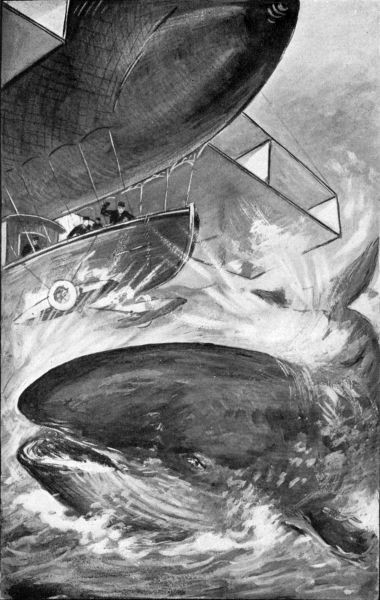
“SAFE!” CRIED JERRY, AND THERE WAS A BREATH OF RELIEF FROM ALL ON BOARD.
THE MOTOR BOYS
OVER THE OCEAN
Or
A Marvelous Rescue in Mid-Air
BY
CLARENCE YOUNG
AUTHOR OF “THE MOTOR BOYS,” “THE MOTOR BOYS AFLOAT,” “THE
MOTOR BOYS IN THE CLOUDS,” “JACK RANGER’S SCHOOL DAYS,”
“JACK RANGER’S TREASURE BOX,” ETC.
ILLUSTRATED
NEW YORK
CUPPLES & LEON COMPANY
BOOKS BY CLARENCE YOUNG
THE MOTOR BOYS SERIES
(Trade Mark Reg. U. S. Pat. Office)
12mo. Illustrated
Price per volume, 60 cents, postpaid
THE MOTOR BOYS
THE MOTOR BOYS OVERLAND
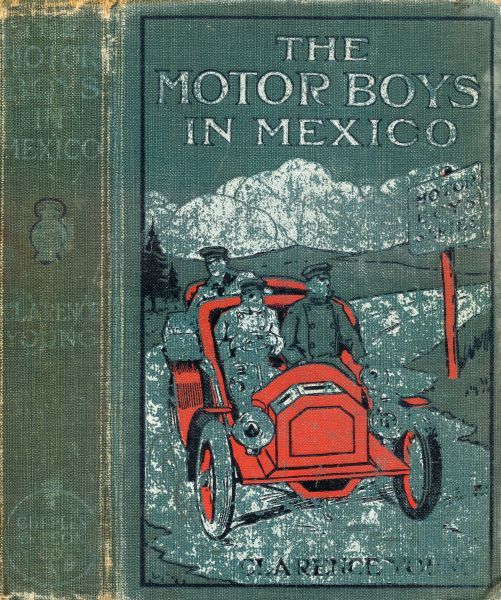
THE MOTOR BOYS IN MEXICO
THE MOTOR BOYS ACROSS THE PLAINS
THE MOTOR BOYS AFLOAT
THE MOTOR BOYS ON THE ATLANTIC
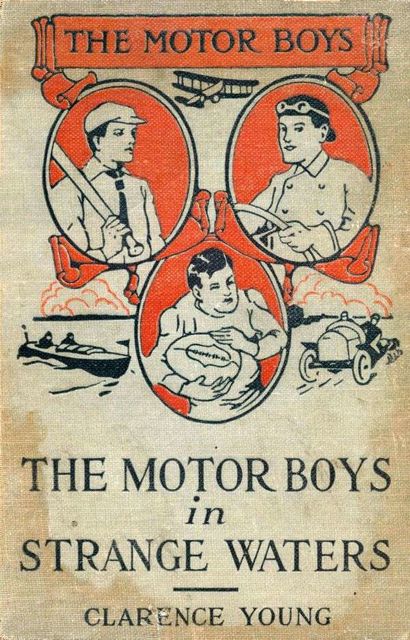
THE MOTOR BOYS IN STRANGE WATERS
THE MOTOR BOYS ON THE PACIFIC
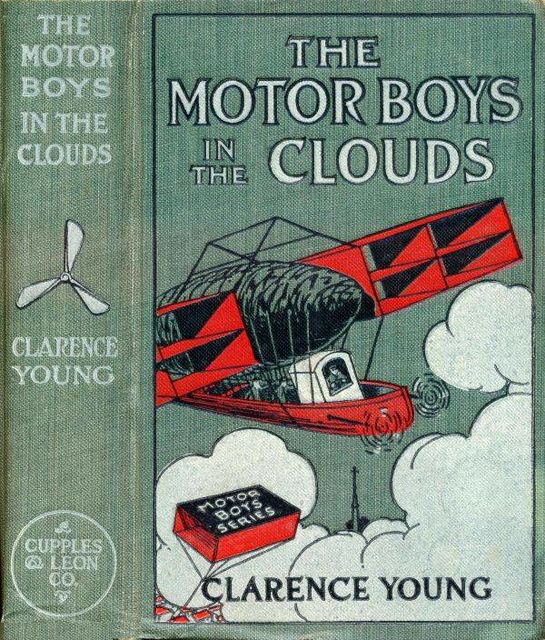
THE MOTOR BOYS IN THE CLOUDS
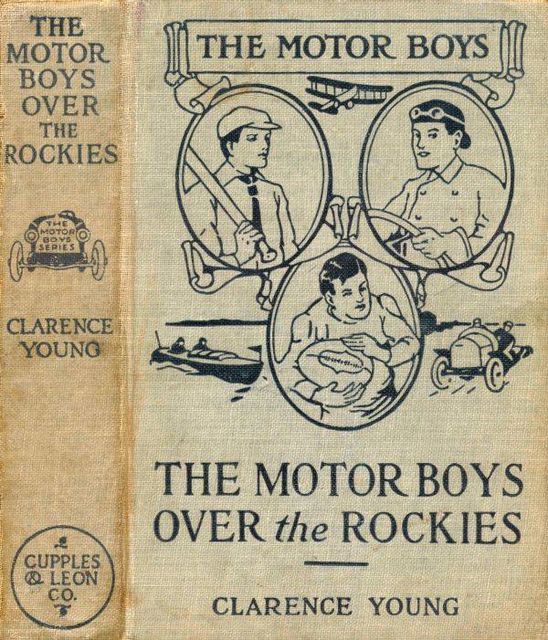
THE MOTOR BOYS OVER THE ROCKIES
THE MOTOR BOYS OVER THE OCEAN
THE JACK RANGER SERIES
12mo. Finely Illustrated.
Price per volume, $1.00, postpaid
JACK RANGER’S SCHOOLDAYS
JACK RANGER’S WESTERN TRIP
JACK RANGER’S SCHOOL VICTORIES
JACK RANGER’S OCEAN CRUISE
JACK RANGER’S GUN CLUB
JACK RANGER’S TREASURE BOX
Copyright, 1911, by
Cupples & Leon Company
The Motor Boys Over the Ocean
CONTENTS
CHAPTER
PAGE
I.
Ned Is Worried1
II.
News of Mr. Jackson14
III.
The Professor’s Quest20
IV.
Noddy Nixon Makes Trouble28
V.
“Stung!”38
VI.
An Unlucky Blowout48
VII.
A Surprised Intruder53
VIII.
A Disappointment68
IX.
Getting Even77
X.
Rebuilding the Comet88
XI.
On the Water94
XII.
In Peril105
XIII.
Off to the Meet111
XIV.
A Precarious Position117
XV.
Bombarded with Rockets121
XVI.
An Angry Farmer128
XVII.
Held Prisoners134
XVIII.
The Escape141
XIX.
At the Balloon Meet148
XX.
Mr. Jackson Is Gone155
XXI.
A Message for Help159
XXII.
To the Rescue166
XXIII.
Over the Ocean176
XXIV.
In the Hurricane184
XXV.
A Clew193
XXVI.
The Wreck204
XXVII.
Attacked by a Whale211
XXVIII.
The Singing Fish217
XXIX.
The Unconscious Crew223
XXX.
The Rescue—Conclusion228
LIST OF ILLUSTRATIONS
“SAFE!” CRIED JERRY, AND THERE WAS A BREATH OF RELIEF FROM ALL ON BOARD. DANCING ABOUT IN FEAR AND PAIN WAS MR. BUTTLE. “YE DON’T STIR A STEP TILL YE COME DOWN AN’ SETTLE FER TH’ DAMAGE.” CARRIED THE UNCONSCIOUS MILLIONAIRE ACROSS THE NARROW PLANKS.PREFACE
Dear Boys:
It hardly seems possible that I have written as many as eleven volumes of this series, yet such is the case. The present book is just one short of a dozen, and if you are pleased with this, perhaps I shall be encouraged to write the twelfth book.
As for the present volume, I have endeavored to give you in it a stirring account of what happened to Jerry, Ned and Bob after they had started out on an apparently simple errand to see a certain man.
Ned Slade’s father was in business trouble, and the lad and his friends volunteered to ask aid from a Mr. Jackson. They started out to find him, only to learn that he had gone to a balloon carnival, as he was interested in air craft. The boys went to the aviation meet, and arrived just as Mr. Jackson went up in his big dirigible balloon. Instead of coming back, as he was expected to do, the millionaire sent a wireless message stating that he and his friends were being blown out to sea in a hurricane.
He asked for help, and our heroes, in their airship, the Comet, started out over the ocean to the rescue. How they accomplished it, the perils they ran, the dangers from the escaping gas, and how they brought Mr. Jackson and his unconscious crew over a narrow plank, high above the ocean, into their own craft, you will find told of in this book.
I venture to hope that you will like this book as well as you have those in the past, for that will encourage me to write others for you.
Sincerely yours,
Clarence Young.
THE MOTOR BOYS OVER THE OCEAN
CHAPTER I
NED IS WORRIED
“Well, Chunky, what do you think of the idea?”
“Oh, I don’t know, Jerry. It seems as if it might be a good one, but we’ve got a fine air-ship now, and it would be a pity to spoil it.”
“Who said anything about spoiling it?” demanded Jerry Hopkins, in rather indignant tones, as he looked across the table at his chum, Bob Baker, whose stoutness had gained him the nickname of Chunky. “Who wants to spoil the Comet, you old calamity howler?”
“Well, aren’t you talking of ripping it apart and putting some new-fangled attachment on it? I say let well enough alone.”
“Say, if everybody was like you, Bob, there wouldn’t be much done in this world. ‘Let well enough alone!’ If Columbus had said that, America would never have been discovered.”
“Oh, get out!”
“No, I’ll not. Here I come and propose a good improvement for our air-ship, something that will make it possible to do stunts over water, and you sit down on it!”
“What, sit on the water?” asked Bob, with a mischievous grin. “You know I never was much good at floating, Jerry.”
“Oh, cut it out! Now be serious if it’s possible. Honestly, what do you think of the idea? Look at the illustration there. It shows a fellow in an aeroplane getting his start on the water instead of on land, and rising up in the air. The article says that by means of the hydroplanes it is possible for an aeroplane to also land on the water and float. Now what I want to do is to attach hydroplanes to our Comet. How about it?”
“Gee! Anybody’d think you were delivering a lecture on aeronautics, Jerry! But, as I said, I don’t know what to say. You sprang this thing on me so suddenly. I’d like a chance to think it over.”
“Think it over! Why, it oughtn’t to take long to decide on a feature like this. Our air-ship is old-fashioned now. We’ve had it quite a while, and you know there has been a big advance made among the birdmen lately. Hydroplanes are the latest idea, and I say we ought to put them on the Comet, and also make other improvements. But I can’t do it unless you and Ned agree, as we each own a third interest in our air-ship.”
“That’s so. I wonder where Ned is?” and Bob looked out of the window, hoping he might see the third member of the motor boys’ trio. “Didn’t you meet him on your way over to my house, Jerry?”
“No. I stopped for him, but his mother said he was down at his father’s department store. Say, I shouldn’t be surprised but what there was some trouble in the Slade family, Bob.”
“Why?” asked the stout youth, his attention temporarily taken off the subject of air-ships by the serious tone in which his chum spoke. “What makes you think that, Jerry?”
“Because Mrs. Slade looked worried, and, come to think of it, Ned hasn’t been around much with us lately. He’s been down in the store a number of nights, helping his father on the books, he said. I shouldn’t be a bit surprised if there was some trouble in the business.”
“I hope not. But I wish Ned were here to help settle this question.”
“It won’t take long to settle it when he does come,” retorted Jerry, rising and going over to the window, where he could get a better light on a magazine he had brought so that he too might show his chum some new ideas regarding air navigation. “I know Ned will agree with me,” went on the tall lad, “and you will be the obstructing party.”
“Well, large bodies move slowly, you know, Jerry. It takes me some time to make up my mind. Just what do you want to do to the Comet, anyhow? Put in a new steam-heating apparatus, or add a gymnasium, and shower-baths, and elevators?”
“Oh, don’t get funny, Bob! I’m serious. What I want to do is to add the hydroplane feature. That’s the biggest improvement, though there are several smaller ones to be put in. But it won’t be much work to attach the hydroplanes. All we need to do is to build on some air-tight floats, or boxes, which will do on the water exactly what the bicycle wheels of an aeroplane do on land—support it. Then, in case we have an accident, say over the ocean, we can just drop down, and float until we make repairs. Or, for that matter we can swim along on the water.”
“Why, you don’t expect to go over the ocean, do you?”
“No, but you never can tell what you want to do,” declared Jerry, “and the hydroplanes might be very useful some day.”
The time was to come, and that not far distant, when Jerry’s prediction was to bear fruit.
“Well, I’m not in favor of ripping the good old Comet too much apart,” declared Bob firmly. “She carried us many a mile, and did good service. Why, look at all we did in her. Look what a help she was in rescuing those poor people from the valley, when Professor Snodgrass got his flying lizard.”
“That’s all true, but if we have a motor-ship that can go on the water, the professor can get a flying fish, or something like that, in case he goes along with us on the next trip.”
“Oh, he’ll go all right enough,” spoke Bob, with a laugh. “Dear old professor! We wouldn’t know how to get along without him, though he sometimes does the oddest things.”
“You’re getting away from the main discussion,” said Jerry. “What about making the changes?”
“I’m not exactly in favor of them!” remarked Bob, after a moment’s thought. “The Comet was always good enough for us as she is, and why change her?”
“Oh, you and your ‘good enough’!” burst out Jerry. “Why don’t you have some progressive spirit in you?”
“I have, only I don’t want to spoil a good thing and——”
“Hello! Here comes Ned, now!” interrupted Jerry, looking out on the porch, the steps of which a youth was at that moment ascending.
“Well, we’ll see what he says,” remarked Bob. “I’ll wager that he’ll agree with me.”
“No, he’ll say that I’m right,” came from Jerry. “I’ll let him in.”
Jerry was so eager to hear what the new-comer would say, and Bob, because of his fleshy build, was so slow in getting up that the tall lad was at the front door before the young host had reached the portal, and had admitted Ned Slade.
“Just in time, Ned!” greeted Jerry. “You have the deciding vote.”
“What about?” asked Ned, and his chums were at once aware of a change in his manner. He spoke listlessly, and as if he was little interested. He seemed tired out, too, as if he had been working too hard, and yet it was only the beginning of the summer vacation.
“It’s about our motor-ship,” began Jerry.
“He wants to cut her all up, put on racing skates, or water shoes, or something like that, and add a lot of improvements,” broke in Bob, with a grin at his tall chum.
“Hydroplanes! hydroplanes! not water shoes, you old backwoodsman!” cried Jerry. “Here, Ned, let me explain,” and with that the tall lad launched into a lively description of the proposed changes, with Bob interrupting every now and then with an objection, or with some queer comment.
While the boys are thus engaged, I will take a moment to tell you something about them, for, though many of my readers are well acquainted with the motor lads, some of my new friends may never have been introduced to them.
The three chums were Jerry Hopkins, son of a widow, Mrs. Julia Hopkins; Bob Baker, whose father, Mr. Andrew Baker, was a wealthy banker; and Ned Slade, son of Aaron Slade, proprietor of a large department store.
The chums lived in Cresville, not far from Boston, and they had gained the title “Motor Boys” from the fact that they had been associated with motor vehicles for a long time.
Their early adventures on bicycles were told of in the first volume of this series, entitled, “The Motor Boys.” Later they got motor-cycles, and soon after that an automobile. In this machine they made a long trip overland, taking with them a certain Professor Uriah Snodgrass, a learned scientist, who was always searching for some queer bug, reptile, or butterfly.
The boys went to Mexico, discovered a buried city, and returned across the plains, and later they purchased a motor-boat.
In this fine craft, named the Dartaway, they had many adventures, not a few of which are set down in the fifth volume of the series called “The Motor Boys Afloat.” They made a long trip on the Atlantic, and during the following vacation had some surprising adventures in the Everglades of Florida. Some time later they made a voyage on the Pacific ocean in search of a mysterious derelict. On this and on other trips they had much trouble from a bully, Noddy Nixon, and his crony, Bill Berry.
By this time the conquest of the air was well under way, and it might have been expected that our heroes would take part in it. They built an air-ship, with the aid of a Mr. Glassford, and a wonderful craft it was. Christened the Comet, their motor-ship was a combination of a dirigible balloon and an aeroplane. That is, there was a gas bag, which alone would support the machine in air, and there were also side planes, which were of service in case of accident to the gas bag.
In the book called “The Motor Boys in the Clouds,” the air-ship is fully described, so I will not take up space here to give the details of its construction. Sufficient to say that it was capable of long flights; it had a powerful motor and other machinery, and there was a roomy cabin in which the travellers of the air could live in comfort. Large propellers enabled the Comet to travel at a good speed.
Aboard her the boys had some exciting times, and in the book named “The Motor Boys Over the Rockies,” they were the means of rescuing a party of white men and women who had long been held in captivity by a band of Indians.
Returning from this trip, on which they were accompanied by Professor Snodgrass, our friends resumed their studies, and, now that winter was over, and vacation at hand, they were planning for new adventures.
As has just been told, Jerry Hopkins had called on his chum Bob to propose certain changes in the Comet.
“Well, what do you think of my scheme?” asked the widow’s son, as he finished explaining to Ned.
“Oh, I don’t know,” was Ned’s rather listless answer.
“Oh, for cats’ sake!” cried Jerry. “Don’t be as Bob was! Say something, even if you don’t agree with me. If both of you are down on the idea, that settles it, and we’ll leave the Comet as she is.”
“That’s what I say!” remarked Bob.
“Let’s hear what Ned has to propose,” suggested the tall lad. He looked at his other chum, but Ned appeared strangely indifferent. He sat looking out of the window, his thoughts apparently elsewhere.
“Well, what about it, Ned?” asked Jerry, after a pause.
“About what?” inquired Ned, with a start.
“Why, this air-ship!” exclaimed Jerry, in some surprise. “Haven’t you been listening to what I’ve said?”
“To tell you the truth, I haven’t paid much attention,” admitted Ned.
“What’s the matter?” demanded Bob. “Are you in trouble, Ned?”
“Well, no, not exactly,” and Ned spoke slowly. “That is, I’m not, but dad—— Oh, I forgot. I’m not supposed to tell,” and once more Ned gazed gloomily out of the window.
“Look here, Ned,” spoke Jerry softly. “I didn’t mean to inflict this talk on you when you’ve got other things to think about.”
“Oh, that’s all right, Jerry.”
“And if there’s anything Bob or I can do——”
“Of course,” broke in the fat lad. “Can’t we help you, Ned?”
“Well, I don’t know. Dad doesn’t want it talked about, though it’s bound to come out soon, anyhow, I guess. If I tell you fellows it won’t go any further, will it?”
“Of course not!” exclaimed Jerry and Bob together.
“I needn’t have asked that; I might have known it wouldn’t,” said Ned. “Well, the truth of it is that dad’s business is in bad shape.”
“Do you mean that he is going to fail?” asked Jerry.
“Well, it might amount to that, though we hope to stave it off. I’ve been helping him on his books lately, that’s what makes me so tired. I’ve been up late for several nights. The business is in fairly good shape, and can be made better if we could do certain things.”
“What are they?” asked Bob.
“It’s too complicated to go much into detail over,” explained Ned, “but, in brief, it’s this: Certain opposition to dad’s department-store business is being organized by a powerful syndicate. Now, if dad could get the help and co-operation of a certain man, everything would be all right.”
“Who is the man?” asked Jerry.
“His name is Mr. Wescott Jackson. He once was in great trouble, and my father aided him. Dad knows that if he could get into communication with this man he would be only too glad to help him, lend him his influence, and all that, and then the business wouldn’t suffer.”
“Well, why doesn’t he ask aid of this Mr. Jackson, then, Ned?” inquired Jerry.
“He’d be only too glad to, but he can’t locate him. And, another thing, dad’s enemies are interested in keeping Mr. Jackson away from father. That is, they don’t want dad to get word to him of his trouble. So that complicates matters. If I could only talk to Mr. Jackson, and get his signature to certain documents, everything would be all right.”
“Well, why can’t you?” asked Bob.
“I don’t know where to look for Mr. Jackson.”
“Say! we’ve done harder things than that!” cried Jerry suddenly. “What’s the matter with the three of us having a hunt for this Mr. Jackson? Can’t we aid you, Ned?”
“I only wish you could.”
“We can!” declared the tall youth, with energy. “Bob—Ned! We’ll let the air-ship go for a while, and we’ll devote all our energies to finding Mr. Jackson. What do you say, Bob?”
“I’m with you from the drop of the hat!”
“Good! Then, Ned, you can consider that your father’s troubles, and yours, too, are in a fair way to be settled when the Motor Boys get on the trail,” and the tall lad clapped his chum on the back with hearty good-will.
CHAPTER II
NEWS OF MR. JACKSON
“You feel better already, don’t you, Ned?” asked Jerry a little later, following a brisk discussion of the possible plans for locating Mr. Jackson.
“I believe I do,” answered the son of the department-store proprietor. “It’s always a relief to be busy when you have trouble, for it takes it off your mind.”
“Yes, and we’ll find that Mr. Jackson, too,” declared Bob, with energy.
“I hope so,” added Ned. “But now, what about this new hydroplane business, Jerry? I can listen now with some attention since I’ve told you what was on my mind.”
“Good! Then I hope you’ll agree with me,” and Jerry proceeded to describe in detail what he proposed doing.
Ned listened attentively, and asked several questions, showing that he understood the plan proposed by his chum.
“Now then, Ned, are you with me or against me?” demanded Jerry, at length.
“Against him!” put in Bob eagerly. “Don’t let him spoil the Comet!”
“I’ll not spoil her,” cried Jerry. “Let Ned speak for himself, Chunky.”
“Then I’m for it!” exclaimed Ned, with sudden energy. “It’s quite a radical change, but I think it will be a good one. We may want to make a trip over water, but until I can help out my father I’m not going to do much else, so I can’t be of any aid to you, Jerry.”
“Oh, that’s all right. We have all summer to make the changes in, and Bob and I can be doing part of it at odd times, while you’re working with your father on the books. Of course, I mean when we’re not looking for Mr. Jackson; eh, Bob?”
“Do you think I’m going to help?” demanded the stout lad.
“Well, you’re in the minority, and you always said the majority ought to govern. We’re two to your one.”
“Oh, all right, go ahead!” exclaimed Bob, with a gesture of despair. “Put a bath-room in the Comet if you like, and I suppose I’ll have to stand for it.”
“No, you can lie down when you take a bath,” observed Ned, with a grin, and his chums laughed, taking it as a sign that the lad was forgetting some of his worries.
“Then we’ll go ahead when we get the chance,” observed Jerry. “But now let’s go down to your father’s store, Ned, and tell him we are on the job.”
“And get some idea of where to hunt for this mysterious Mr. Jackson,” suggested Bob.
“Sure—yes,” agreed Jerry.
“Oh, I don’t know that he’s so mysterious,” remarked Ned. “It’s only that he is a very busy man, and has so many interests—railroads, mines, ships, building canals and trolley lines—so many irons in the fire, that he may be in New York one day, and off for London or San Francisco the next. That’s why he’s so hard to get hold of.
“Then, too, he’s interested in some kind of sport, I heard dad say. Yachting or motoring or something like that, I can’t just remember, and he’s likely to be off on a trip. Even his secretary doesn’t know where to find him sometimes, and when you stop to consider that the men who are working against my father have some interests in common with Mr. Jackson, and don’t want him to know of my father’s trouble, you can see that it’s going to be no easy proposition.”
“Wouldn’t a letter reach him?” inquired Bob, as he got ready to accompany his chums out of the house.
“We’ve tried letters and telegrams,” explained Ned. “None of them are any good. I heard dad say that sometimes letters follow Mr. Jackson half way around the globe, and even then he doesn’t get them. Oh, he’s a hard man to get in touch with!”
“But we’ll do it!” declared Jerry, when they were on their way to the department store.
Mr. Slade was both surprised and pleased when his son, and the latter’s two chums, came into the office, and Ned had explained the decision at which they had arrived.
“Boys!” exclaimed the merchant, “I don’t know how to thank you for your offer. I needn’t say that it is going to be quite a task, for Ned has explained what a peculiar man Mr. Jackson is, but I like your spirit. I knew you and Ned were quite chummy, and had been through lots of adventure together, but I never imagined that you’d prove a friend to the older folks in the family.
“It is certainly very good of you, and I appreciate it more than I can tell. I’m afraid, though, that it will break up your vacation plans.”
“Not at all,” Jerry assured Mr. Slade. “We may get more fun out of hunting for Mr. Jackson than you imagine. We’ll try for him in the auto, and if that doesn’t catch him we’ll get after him in the motor boat, and as a last resort——”
“The airship, with the new hydroplane feature!” put in Ned with a laugh.
“Exactly,” agreed Jerry. “But, Mr. Slade, if we are to find this odd man, we ought to have something to work on. Where was he located last?”
“Out in San Francisco,” was the reply. “But where he went from there no one seems to know. He started East to inspect a new railroad he is building, and from then on all trace of him has been lost. I have agents in various parts of the country trying to get a trace of him, but so far—”
Mr. Slade was interrupted by the sudden ringing of the telephone bell. He swung around to his desk, in the private office where the talk was taking place, and unhooked the receiver. The boys listened to the one-sided conversation.
“Yes—yes,” said Mr. Slade eagerly. “What’s that? He is? Are you sure it’s the same man? In Boston, you say—No, just outside—what’s that? The name of the place is Durham? Yes, I get it. Oh, say, I’m ever so much obliged to you, Burkhardt. Yes, I’ll get right after him. In fact, I have some friends of mine here in the office now who are anxious to start off on the quest. Yes, they’re friends of Ned. Good-bye!”
Mr. Slade turned to the three chums.
“Boys!” he cried, “I have a trace of Mr. Jackson. He was in Boston yesterday, and is now stopping at a health resort in Durham, resting up after a hard business campaign.”
“In Durham!” cried Jerry. “That’s not far from here. We could do it in one day in the auto! We’re on his trail at last! Come on, fellows, let’s get ready for the trip!”
CHAPTER III
THE PROFESSOR’S QUEST
The good news of the location of Mr. Jackson was so unexpected, that, for a few moments the little party in Mr. Slade’s office hardly knew how to take it. Then they all began talking at once, at least the boys did, until the merchant, with a laugh, remarked that they were making so much noise that the clerks would think something serious had happened. This quieted the three chums.
“Well, we’d better get started,” urged Jerry. “Mr. Jackson may get away from Durham any minute.”
“Oh, I don’t believe he’s as bad as that,” ventured Mr. Slade. “If he’s there for his health he’ll be likely to remain for some time. I’d go see him myself, but I dare not leave my business at this critical juncture.”
“Oh, we’re only too glad to try and get into touch with him for you,” asserted Bob. “How can we tell him if we meet him? Does Ned know him?”
“No,” answered Mr. Slade’s son. “I never saw him, but dad has his picture.”
“Then we can take that along, and do a little detective work,” suggested Jerry. “We’ll inquire for a Mr. Jackson, and if he’s like the picture he’ll be our man.”
“I’m afraid the photograph wouldn’t be of great help,” said Mr. Slade. “It was taken a number of years ago, and I fancy Mr. Jackson has changed much in that time. However, I can describe him to you, and give you a letter to him, and that may answer. As I said, I ought really to go myself, but if I left here, my enemies would only make more trouble for me. Mr. Jackson is the only man who can help me.”
There was more talk, and Mr. Slade gave his son and the latter’s chums some directions as to how to proceed. He also made out certain documents, which, if Mr. Jackson would sign, would end the department store troubles.
“Now to get our auto in shape!” exclaimed Jerry as they prepared to leave the store. “I hope we can get some speed out of the machine without too much tinkering.”
“We’ll give it a try-out,” decided Bob. “Take a little run this afternoon, and see how she works.”
The car the boys now owned was not the one they had had originally. It was a more powerful machine, though so interested had our friends been in airship matters of late, that they had not given their auto much use.
That afternoon saw the three chums speeding down a quiet highway that led out of Cresville. The auto ran well, but they discovered a few defects and arranged to have them remedied at a garage.
“Then we’ll start for Durham the first thing to-morrow, fellows!” cried Bob enthusiastically. “Say, it’s fun to be doing something again. It’s like old times!”
“It sure is,” agreed Jerry. “Can’t you put on a little more speed, Ned?” For the merchant’s son was at the wheel. “Cut out the muffler, and use the accelerator pedal more. Make believe we’re after Noddy Nixon, and that he’s getting away from us. We may need speed if we have to race after Mr. Jackson.”
They were ascending a hill, and Ned had turned on all the power he dared use, when, as he swung around a bend, a small man suddenly darted out right in front of the machine.
“Look out!” yelled Jerry, leaning forward and grasping the lap robe rail in front of him.
“Jam on the brakes! Toot your horn!” cried Bob.
Ned did not answer. He had instinctively done three things, blown the horn, jammed on the foot and emergency hand brake, and had turned to one side. He also gave a loud yell.
But the man who had so suddenly brought about this commotion, paid not the least attention to the trouble he had caused. With a small net on the end of a long pole, extended in front of him, he was chasing a brilliant little red butterfly, which was flitting along, all unconscious of the danger so close to him.
Suddenly the net went down with a swoop, and the butterfly was out of sight.
“I got him! I got him! I have the little beauty! One of the rarest butterflies in this section of the country! It’s worth fifty dollars if it’s worth a cent! Oh, you little darling, I have you!” And the man went down on his hands and knees to get the prize from under the net.
“Well, wouldn’t that make you—” began Ned, as he eased up on his foot pressure, and shut off the power.
What he started to say he never finished, for Jerry cried out:
“If that isn’t Professor Uriah Snodgrass, I’ll drink a pint of gasolene!”
“Eh? What’s that? Were you calling me?” asked the little man in a mild voice, looking up sideways from his kneeling position on the ground. “Who wants Professor Snodgrass?” he inquired, peering through his spectacles.
Then he caught sight of the boys, who were alighting from the car. Over his face there came a smile of welcome. He got up, holding in a section of the net, carefully gathered up in his fingers, the red butterfly.
“Well of all the good luck!” cried the professor. “Here I meet my friends the motor boys again, when I least expect it. One moment, my dear boys, until I have put this specimen safely away, and I’ll be with you. Well, of all the strange and remarkable coincidences! I was just thinking of you, when I saw this butterfly dart out of the bushes, and of course, I took after it.”
“And nearly made an end to your collecting fad forever,” said Jerry.
“How’s that?” asked the professor.
“We nearly ran you down,” explained Bob.
“Oh, that? A mere trifle!” said the odd little scientist. “I run chances like that half a dozen times a day. I would risk almost anything for such a specimen. And what would I not risk if I could find the prize I am after?”
“Are you after something new?” asked Bob, as he watched Mr. Snodgrass carefully put away in the cyanide bottle the red butterfly.
“Yes, something very new,” answered Mr. Snodgrass. “I have been commissioned by the museum, for which I collect specimens, to get them a singing fish.”
“A singing fish?” cried Ned, thinking it was a joke.
“A singing fish,” replied the scientist. “That is, it does not exactly sing, but when taken from the water it makes a peculiar sound. It is said to be the only fish that does this. But, in addition, it has the power of flying for short distances out of the water, and it can also swell itself up to about twice its natural size. So you see it is a very valuable specimen to get, and very, very rare.”
“But you can’t find it on land,” objected Jerry.
“No, my dear boy,” admitted the professor, as he shook hands with his friends, “but I expect to shortly make a trip on the ocean. Then I hope to get my singing fish. I wish you boys were going on some voyage, and I could go with you.”
“We are going on a trip, but it’s mostly a land trip,” explained Ned. “We may use the airship, though. It all depends; and if Jerry carries out his plans, and attaches the hydroplanes, we might make a sea trip, but that’s all in the air as yet. We’re looking for a certain man.”
“And I’m searching for a rare fish,” went on the scientist. “At odd times I collect whatever specimens come in my way.”
“What are you doing in this part of the country?” asked Ned. “I thought you were in Boston.”
“So I am, but I heard of a man out this way who knows the habits of the singing fish, and I want to get some information from him. So I came on, and, as the man was not at home I improved my opportunity by strolling out into the country to see what I could find.
“I have been very fortunate; I find the red butterfly, and I meet my former friends. Both are most delightful surprises. But, may I ask, who is the man you are seeking?”
“Mr. Wescott Jackson,” answered Ned, after a moment’s hesitation.
“Wescott Jackson! Not the wealthy promoter?” cried Professor Snodgrass.
“That’s the man,” declared Jerry.
“Well, if that isn’t odd!” exclaimed the scientist. “Why I know him. In fact, he and I are great friends. He is one of the trustees of the museum where I am employed, and I once did him a great favor, in getting him a certain old rare Aztec altar, for he collects antiques. Yes, I know Mr. Jackson quite well.”
“Then you are the very man for us!” cried Ned in great delight. “Here, we can’t lose sight of you. Hop into the auto, professor. You help us locate Mr. Jackson, and we’ll help you get the singing fish! Is that a bargain?”
Mr. Snodgrass gazed through his spectacles at the boys for a moment.
“It is!” he exclaimed suddenly, as he got up into the auto; and Ned started off the machine.
CHAPTER IV
NODDY NIXON MAKES TROUBLE
“Hold on a moment, boys! Stop the car. Jam on the emergency brake, or whatever you call it. I must get out! Quick!”
Thus cried Professor Snodgrass about half an hour after he had entered the auto with the boys.
“What’s the matter?” demanded Ned, doing as requested, and bringing the machine to a sudden stop. “Have you lost your hat, Professor?”
“Easy now! Don’t talk or move! Keep perfectly quiet!” Speaking in a whisper, the scientist slid from his seat with his small butterfly net in his hand. Gliding forward like a hunter intent on making a shot at big game, the little man, his eyes fairly glaring through his spectacles, made his way cautiously to a small bush beside the roadway.
“What’s he after now?” asked Jerry with a hopeless look at his companions.
“I don’t know. A new kind of five-legged bug or a reddish-green hoptoad,” whispered back Bob, for, though they were very fond of their friend the professor, they could not help, at times, cracking jokes concerning his pursuit after his quarry.
“Please don’t make a move!” called the scientist to the boys, without looking around. “I’ll have the beauty in a moment now!”
“If he keeps this up,” commented Ned, “we’ll never get to Durham in time to catch Mr. Jackson.”
“That’s so,” agreed Bob.
“But we need the professor’s help,” argued Jerry, “and if he knows Mr. Jackson, the latter may receive us better than he would if we came alone, and he may sign the papers more readily, Ned.”
“In that case I’ll stop the machine at every mile-post, and let the professor catch bugs to his heart’s content,” declared the merchant’s son, for he was very much in earnest in his efforts to aid his father.
“Ah! There he is! I have him!” suddenly exclaimed the professor, as he made a swoop with his net. The next minute he was holding a small portion of the flimsy cloth in his fingers, and inspecting at close range some fluttering captive.
“What is it?” called Jerry.
“Is it a valuable specimen?” Bob wanted to know.
“It’s a three-winged—oh, pshaw! No, it isn’t either! I’ve made a mistake!” exclaimed Mr. Snodgrass in disappointed tones. “It’s not the kind I want at all—they’re too common,” and with a sigh he opened the net and let fly out some sort of a bug or insect.
“What was the trouble?” asked Ned, as he started the motor on the spark, and waited for the professor to retake his seat.
“I thought I had a three-winged dragon-fly,” replied the professor. “I caught a glimpse of him perched on a bush as we were dashing by, but when I had him in the net I saw that he had four wings, and was of the ordinary variety. A three-winged dragon-fly would be a rarity, and worth considerable, but the ones with four wings are worthless. Well, better luck next time,” and with that the scientist got in, and the auto was started.
Mr. Snodgrass once more began eagerly to scan the bushes on either side of the road, hoping for a sight of some other prize in the insect line, while the boys talked among themselves about the prospects of meeting Mr. Jackson.
“Are you sure you are ready to go off with us on a trip, Professor?” asked Jerry, when he and his chums had spoken of the possibility of making a voyage in the motorship. “We can’t tell where we’ll end up in this chase, though.”
“I’ll go anywhere you go,” was the quick reply, but the little man never took his eyes off the bushes, for he was ever on the alert for specimens.
They rode forward for some time longer, thoroughly enjoying the trip, and then, as it was getting late and they wanted to take the car to the garage to have it put in shape for the trip to Durham the following day, they turned back, and made a quick run to Cresville.
“Good luck!” called Mr. Slade after the party as the auto chugged off the next morning, the professor being on hand early.
They were to be gone at least three days, for it would take one day to go to Durham, another, or perhaps two, to negotiate with Mr. Jackson, provided they could find him, and still another day to come home. They would put up at a hotel in the meanwhile.
It was a fine day, the auto was in good shape, and, on the hard roads they made good time. Of course Professor Snodgrass was ready with his net, and on the lookout for any prizes he might spy, but the boys hoped he would not stop too often, and delay them.
They had covered perhaps thirty miles, and were bowling along at fast speed, Mr. Snodgrass being a little disappointed that he had not seen anything worth capturing, when, as they swung around a turn in the road, they saw, just ahead of them, a place where a ditch was being dug along the highway, to allow the laying of pipes. Dirt had been thrown up on either side of the road, leaving only a narrow path for the auto to pass through.
“Look out for that spot, Jerry,” called Ned to the tall lad, who was steering.
“All right,” was the ready response, and the speed of the car was somewhat checked.
“Can you make it?” asked Bob. “It looks pretty narrow to me.”
“Oh, I’ll do it,” answered Jerry, but, as he came nearer, and saw how very narrow the opening was, he brought the car to a stop. “Whoever did this excavating had lots of nerve to take up so much of the road,” he went on, as he got out to measure the space more carefully. “They’ve gone off and left it, and I don’t see any signs that they have lights here at night. It would be a bad place to get to after dark.”
While he was looking at the obstruction they were all startled by hearing the sound of an auto horn, blown with an energy and persistence that seemed to be a protest at their occupancy of the road.
“Some one’s in a hurry,” commented Ned, and, looking down the road, in the direction in which they were going, they saw coming toward them an auto containing two figures. It advanced swiftly.
“Hold on! Look out! Stop!” yelled Jerry, holding up a warning hand. “I don’t believe there’s room to pass!”
In spite of his injunction the other machine came on until, the occupants getting near enough to see the narrow pass, they brought the car to an abrupt stop. When it halted the three motor boys uttered a simultaneous exclamation at the sight of the occupants of the car.
“Noddy Nixon!” gasped Ned, and his chums echoed his words.
“Well, what of it?” snarled the bully. “Isn’t this a free country? Can’t I go where I like?”
They did not take the trouble to answer him, but gazed at the man seated beside him.
“Bill Berry,” murmured Jerry. “Here’s a fine chance for trouble, and I shouldn’t be surprised if we got some of it.”
“Back up your car, and let me pass!” insolently demanded Noddy, as he prepared to throw in his gears and start ahead. So close was the vehicle of our friends to the narrow passage that there was not room for the other car to get by. “Back up!” went on the bully. “What right have you to block the highway?”
“The same right that you have!” fired back Jerry. “We don’t want to block it up, but we were here first, and it’s your place to reverse and let us past.”
“Reverse nothing!” muttered Bill Berry. “Run ’em down, Noddy, if they won’t let you by.”
“I will!” declared the bully. “You’d better back up!” he called out, threateningly.
“Don’t give in to him,” urged Ned in a low voice to his tall chum.
“I’m not going to,” answered Jerry.
“Isn’t there room for us to pass him?” inquired Bob, for Noddy’s car was a little farther back from the obstruction than was that of our heroes. “I think you can make it.”
“It’s a pretty tight squeeze, but I’ll chance it if I have to.”
“Well, are you going to back up, and let me pass?” demanded Noddy again. “You’d better or I’ll smash into you!”
“Just try it!” retorted Jerry, a flush mounting to his cheeks. “It’ll be the last smash you ever make!”
“Why don’t you be decent, Noddy?” asked Ned, in what was intended to be conciliatory tones. “You can back up easier than we can; and besides, we were here first. Why don’t you do it?”
“Because I don’t want to. I’m in a hurry.”
“So are we,” said Ned, as he thought of the necessity for seeing Mr. Jackson.
“Come on,” spoke Jerry in a low voice to his chums as he turned to reënter the car, for they had all left it, including Mr. Snodgrass, who was eagerly looking about in the bushes for some rare insect. “Get back to your seats,” went on the tall lad, “and I’ll try to get through. It’s the only way to do with such a chap as Noddy.”
“What about the professor?” asked Bob in a low voice, for the scientist was some distance away from the car now, having walked back along the road. “If we call to him Noddy will hear us, and guess what we’re up to.”
“Wait until we get past, and then we can stop and wait for Mr. Snodgrass,” advised Ned.
“Good idea,” commented Jerry. “Hop in lively now!”
They were in their seats a moment later, and Jerry very luckily started the engine on the spark.
“Here! What are you going to do?” yelled Noddy, as he caught the chugging of the motor.
“We’re going on,” replied Jerry calmly, as he threw in the gear. As he let the clutch slip into place, the car suddenly shot ahead.
“They’re going to ram, you Noddy!” yelled Bill Berry. “Look out!”
“Nothing of the sort! We’re going to try to pass,” called back Ned.
“Go ahead, Noddy!” cried Bill.
“Look out or there’ll be a collision!” cautioned Bob, for Noddy’s machine was also trying to slip into the narrow passage ahead of the car of our friends.
“Stay where you are!” warned Jerry. “I can make it if you stand still for a second!”
“Well, I’m not going to!” flared up Noddy, and as the tall lad urged his car toward the little strip of roadway between the piles of dirt, steering with skill, the bully also sent his machine toward the same place.
A head-on collision seemed imminent, and for an instant Jerry’s heart failed him. He was about to jam on the brakes and stop, when he saw that by putting on a spurt of speed he could just make it.
His foot pressed the accelerator pedal, and with a snort, the auto of the motor boys shot ahead through a narrow opening.
“Look out!” shouted Ned. “You’ll have us in the ditch, Jerry!”
Jerry gave the steering wheel a quick twist to get clear of the ditch, and also to avoid running into Noddy’s car which was now forging toward him.
He just managed to pass by, and was steering back on the road again, when, before he could possibly avoid it, a little spotted calf dashed out of a lane leading into the highway.
The small animal, with a bleat, got directly in the path of the auto of our friends, and stood there with its legs far apart.
“Look out!” shouted Ned. “You’ll hit it, Jerry.”
But it was too late. The force acquired from the sudden spurt could not be overcome in an instant, even though Jerry jammed on both brakes with all his force.
A moment later he hit the calf squarely and the unfortunate little creature went down in the road, under the car.
CHAPTER V
“STUNG!”
“Here, hold on there! Stop that gasolene contraption! I’ll have th’ law on ye fer runnin’ down my calf-critter! What right ye got t’ go racin’ around th’ land killin’ a poor man’s critters right an’ left? Hold on, I’ll sue ye fer damages!”
A grizzled old man, wearing a pair of ragged overalls, with a ragged blue jacket to match, and with a bunch of white whiskers on his chin wiggling up and down as he shouted the above words, rushed down the lane out of which the spotted calf had come, and shook his fist at the lads in the auto.
“Hold on there!” he repeated.
“We are holding on,” remarked Jerry grimly, as he got out and looked under the car at the calf.
The creature had not been touched by the wheels, but lay between them. Unnaturally still it lay, nor did it bleat or give a sign of life. Jerry took hold of the tail, and was about to pull it out, hoping it was not much hurt, though his heart misgave him.
“Here, what ye goin’ t’ do?” demanded the angry farmer.
“I was going to pull the calf out from under our car,” replied Jerry. “It—it fell there.”
“Humph! A likely story. I saw ye deliberately run down my calf-critter. You let it alone until I git some witnesses, an’ prove a case agin ye! Let it alone!”
“I guess it’s dead, anyhow,” said Ned in a low voice, as he stood beside Jerry.
“Deader than a lobster,” added Bob. “You must have hit it an awful poke, Jerry.”
“Keep quiet, can’t you?” urged Ned. “This skinflint of a farmer will hear you,” for the man was gazing at the trio of lads with angry eyes.
Noddy Nixon, with a look of triumphant gloating on his face, came forward, followed by Bill Berry. Professor Snodgrass, oblivious to everything save his favorite pursuit, was some distance down the road, using his net with energy.
“I didn’t hit it hard at all,” Jerry said. “The calf ran right across the road. Why I hardly struck it at all. I had the brakes on ready to stop, anyhow.”
“Don’t talk to me about brakes!” snapped the farmer. “Ye broke my calf’s neck, an’ it was a valuable critter. Don’t ye dare touch it till I git some witnesses, an’ prove a case on ye. I want damages, an’ heavy damages, too! I want witnesses.”
“We’ll be witnesses for you!” broke in Noddy eagerly. “It was entirely the fault of those fellows that your calf was killed, Mr.—er—Mr.—?” he paused suggestively.
“Sackett is my name—Ebenezer Sackett, of Tewkesbury Township,” supplied the farmer. “I live right over that way a short piece, jest below th’ hill. I was drivin’ my calf down the lane, when all to onct this rip-snortin’ ragin’ and tearin’ automobile comes along an’ kills him. I want damages, an’ heavy damages, too!”
“We saw them kill the calf,” went on Noddy, seemingly eager to array himself against the motor boys, and on the side of the farmer. “Didn’t we, Bill?”
“Sure we did,” answered the bully’s crony.
“Then you must have very good eyesight,” remarked Jerry cuttingly, “for you were in your car, and how you could observe the calf, when it is so small that it doesn’t come to the top of our radiator, is more than I can understand.”
“Well, we saw it just the same, Mr. Sackett,” went on the ugly bully. “They killed your animal, and you ought to make them pay for it.”
“That’s what I intend,” asserted the farmer. “I’ll attach their machine, that’s what I’ll do ef they don’t pay. Hi there, Abner!” he called, as a man, evidently one of the hired help, came hurrying along the lane. “Abner, you go notify Constable Higbie that I got a case fer him. I want these fellers arrested fer killin’ my spotted calf!”
“Gosh all hemlock!” cried Abner, as he stared at the scene before him.
“You go git th’ constable,” repeated Mr. Sackett, “an’ I’ll hold these fellers until you come back with him. I’ll show ’em that they can’t monkey with Ebenezer Sackett of Tewkesbury Township.”
“Isn’t it against the law to let animals run at large on the highway?” asked Ned of Mr. Sackett.
“He wasn’t runnin’ at large,” was the answer. “I was leading him, an’ he broke away from me. Ye can’t git out of it that way. I want damages an’ I’m goin’ t’ have ’em! Th’ constable will be here soon, an’ ye kin take yer choice of payin’ or goin’ t’ jail.”
How long this dispute might have been kept up it is difficult to say, but Professor Snodgrass arrived just then, and, hearing the story, endeavored to conciliate the angry farmer. But there was no subduing Mr. Sackett.
“I want damages!” he declared firmly.
“Oh, say, there’s only one way to end this,” said Ned finally, putting his hand in his pocket. “It wasn’t our fault, but I suppose we’ve got to stand being gouged by this fellow. I’ll pay him, Jerry, as this trip is on my father’s account, and then we can get along. How much was your calf worth, Mr. Sackett?”
“Fifty dollars ef he was a cent!”
“Fifty dollars!” gasped Bob.
“Nonsense!” exclaimed Professor Snodgrass, who could be very practical on occasions. “I know something of farm animals. Pull that calf out, Jerry, and let’s look at him.”
Jerry and Ned grasped the tail, and soon had the creature out in the highway. The farmer offered no further objections to it being moved, now that it seemed as if he was in a fair way to collect damages.
“Humph! A very young calf,” commented Mr. Snodgrass. “Hardly fit to kill for veal. And it doesn’t seem to have been hit very hard.”
“No, it was a very gentle blow,” said Jerry. “The car was almost at a standstill when he ran into it.”
“It must have died easily,” went on the scientist. “Now, Mr. Sackett, you’ll have to lower your figure, for I know that calf was never worth any fifty dollars.”
“Well, it’s wuth forty.”
“Forty? Nonsense. If you sold it for fifteen you’d be getting more than it was worth. We’ll give you twenty dollars for the animal, and not another cent.”
“I’ll not take it,” stormed the farmer.
“That’s right! Make ’em pay more, or sue ’em!” put in Noddy.
“You mind your own affairs, Nixon!” said the professor curtly, and Noddy slunk back toward his machine.
“Will you take twenty dollars, or will you let the matter go to court?” asked the scientist, taking some bills from his pocket, and motioning to the boys that he would conduct the case for them.
“I want thirty dollars, anyhow,” said Mr. Sackett. “Ha! Here comes Abner with the constable. Now we’ll see what happens.”
“Offer him twenty-five, and I think he’ll take it,” said Ned in a low voice. “We can’t stay here any longer.”
“All right, if you say so,” agreed the professor, “but I think I could get him down to twenty. Well, Mr. Sackett,” went on the scientist, “we’ll pay you twenty-five dollars, and not another cent. If that’s not satisfactory we’ll give the constable a bond, and we’ll fight the case in the courts.”
This was said with such an air of decision that the farmer saw that it was useless to stand out for more.
“I’ll take it,” said Mr. Sackett reluctantly, “but th’ calf was wuth forty dollars ef it was a cent.”
“Nonsense!” declared the professor, as he paid over the money. “Haul the carcass out of the way, and we’ll be getting on, boys.”
“It’s a regular case of hold-up,” muttered Ned, as he dragged the calf farther out of the path of the auto.
The farmer pocketed the money with a gleam of satisfaction in his eyes. Noddy Nixon, looking disappointed, perhaps because the motor boys had not been arrested, started back to his machine, followed by his crony, and soon they were chugging away down the road. Our friends and the professor entered their car.
“Whew! That was a hot time while it lasted!” remarked Bob, when they had gone on some distance.
“Yes, and all Noddy Nixon’s fault,” added Ned.
“Talk about highway robbers,” declared Jerry, “Mr. Sackett comes pretty nearly being one.”
They were filled with righteous anger against Mr. Sackett, and this was added to when they learned something about him when they stopped a little later at a country hotel for dinner.
While they were waiting for the meal to be prepared they got talking to the hotel clerk. They mentioned their experience with Mr. Sackett, and told of paying for the calf.
“Excuse me, strangers,” broke in a farmer who was seated near a table reading, “but was this calf you speak of a brown and white spotted one?”
“It was,” answered Jerry.
“With a very long tail?” the man wanted to know.
“Very long,” spoke Ned, who had particularly noted the appendage as he dragged the creature out of the way.
“And was it a thin, poor-looking sort of a calf?” went on the man.
“It was,” said Mr. Snodgrass. “You seem to know this calf in question.”
“Know it? I guess I do!” was the answer. “And I know Eb Sackett, too. Why that calf had been condemned by the county inspector of cattle, an’ Eb had been ordered to kill it. Th’ calf had some catchin’ disease, an’ Eb was under orders t’ git rid of it inside of twenty-four hours, or pay a fine of fifty dollars. He was takin’ it off to shoot it, when you must have bunked into it.”
“Are you sure of this?” asked Ned.
“Course I am, strangers. Why, I’m a deputy cattle inspector, an’ I’m on my way now to see if Eb carried out the orders he got. But if you say the calf is dead there ain’t no use in me goin’ on.”
“Oh, it’s dead all right,” replied Jerry with a queer look at his chums.
“And we paid twenty-five dollars for the privilege of killing a calf that had been condemned, and would have been killed, anyhow,” murmured Ned. “Well, if we weren’t——”
“Stung!” interrupted Bob. “Stung good and proper!”
“By Mr. Ebenezer Sackett,” added Jerry.
“I guess his name ought to be Mr. ‘Sock-it,’ instead of Sackett,” commented the hotel clerk. “That certainly was a swindle he worked on you, gentlemen, and he socked it to you!”
“And it ain’t the fust time Eb’s done a trick like that, nor it won’t be the last,” spoke the deputy cattle inspector. “I’m sorry for you boys, an’ if you want to go back, an’ make him give up your money, I’ll do all I can for ye.”
“I’d like to, but we haven’t time now,” replied Ned, as he thought of the necessity for hurrying on to see Mr. Jackson.
CHAPTER VI
AN UNLUCKY BLOWOUT
“Easy marks, that’s what we are,” commented Ned, as with his chums and Professor Snodgrass, he sat down to dinner. “Very easy marks.”
“It might have happened to anyone,” declared Jerry. “But it sure does make me sore to think how he cheated us on that calf deal.”
They were still talking of Mr. Sackett, and, as the account of the happening became generally known in the hotel, many stories showing the meanness of the miserly farmer were told to our heroes. Mr. Sackett was characterized as a “skinflint” of the worst kind.
They started off again, soon after dinner, and made up for the time lost over the calf transaction by speeding up to the limit allowed by the law, and, in places where there were particularly good roads, and where there were no houses, they even exceeded the limit slightly. But their necessity justified it.
“Think we’ll make Durham before dark, Jerry?” asked Bob, as he noticed the sun beginning to sink low in the west. “How much farther is it?”
“The last sign-post said thirty miles,” remarked Ned, “but if it’s anything like the usual post, that means it will be at least forty before we strike Durham.”
“In that case we won’t get in until after dark,” was Jerry’s opinion. “But we have powerful gas lamps, and it won’t matter much. Here, Ned, you take the wheel a bit, I’m tired.”
The machine was stopped while the change was made, and they went on again. Jerry cast several anxious glances at a bank of clouds gathering in the west, and Bob, also noting them, remarked:
“I think we’re in for a storm.”
“Shouldn’t wonder,” agreed the tall lad. “Hit her up for all she’s worth, Ned. Take a few chances. I don’t believe there’ll be any speed-constables out now.”
It soon became evident that they were not going to make Durham before nightfall. In fact, after passing one post by which they were informed that their destination was thirty miles farther on, the next one made it thirty-two.
“Say, according to that we’re going backward,” commented Ned.
“Don’t mind,” advised Jerry. “Keep right on, and when we arrive we’ll be there.”
“Wise man,” asserted Bob with a laugh.
The threatened storm gathered more quickly as the afternoon waned, and they had not gone many more miles before the rumbling of thunder increased, and the intermittent flashes of lightning became almost continuous.
“We’re going to be in for it,” warned Bob, as the first few splashes of rain came.
“Yes, we’d better stop, put up the top, and the side curtains,” advised Ned. “I want the wind shield up, too, for I don’t like the rain in my face.”
They were soon better prepared to stand the downpour which quickly came, and with the heavy curtains and the top up, they were fairly snug and comfortable in the auto, as it chugged off through the darkness.
“Ugh!” suddenly grunted Ned, as he felt the wheels leave the hard macadam road, and slip into the soft mud of a dirt highway. “Now we’re in for it.”
The auto labored on, losing time as the rain turned the highway into a veritable slough. The downpour got heavier, and a wind springing up, seemed to force the water through every crack and crevice of the protecting curtains. The lightning, too, was incessant, and the thunder claps came with startling rapidity.
“Beautiful! Beautiful!” grumbled Bob. “It’ll soon be as black as tar, and we’ll get stuck ten miles from nowhere.”
“Oh, don’t find fault,” advised Jerry good-naturedly. “We may make it yet.”
Ned peered anxiously ahead through the mist of rain, seeking to make out the road, which was illuminated by the powerful gas lamps. It was risky driving, but there was no help for it, and he was not well acquainted with the route.
“Can’t you get a little more speed out of her?” asked Jerry, when there came a lull in the storm.
“I’m afraid to risk it,” replied the youthful steersman. “If we happen to hit a big stone it will be all up with us. Wow! This is Lonesomeville for fair!”
They were on a dark and deserted stretch of the road. There seemed to be no houses within miles, and the storm was at its height.
Suddenly there was a sound like a gun shot. The motor boys started, but well they knew what it was.
“A blowout!” groaned Bob.
“I should say it was,” agreed Jerry grimly. “It couldn’t have happened at a worse time, either. Where in the world are we?”
He peered through a crack in the curtains, out on the dismal rain-soaked blackness, but could make out nothing.
“Well, there’s no help for it. It’s up to us to put a new shoe and tube on,” spoke Ned, who had quickly brought the car to a stop. Then the three lads, having donned rubber coats, which fortunately they carried with them, got out of the car, and stood in the mud, with the rain pelting them, while they made ready to repair the damaged tire.
CHAPTER VII
A SURPRISED INTRUDER
“Going to stand here looking at it all night?” demanded Jerry after a pause, during which his two chums had vainly sought to prevent the rain from trickling down inside the collars of their coats. “Do you think the tire is going to mend itself, Bob?”
“I only wish it would!” devoutly exclaimed Chunky. “Wow! This is fierce!”
“No help for it,” mumbled Ned, as he wiped the dashing rain drops from his eyes. “Hand me the jack, Jerry, I’ll get the car up, you can take off the tire and we’ll make Bob put on the new shoe and tube. That’s a fair division of labor.”
“I’ll be gum-swizzled if I can see it, as Mr. Sackett would say,” exclaimed the fat lad. “You give me the hardest part to do.”
“Good for reducing flesh,” remarked Jerry as he reached under the seat and got out the jack and a new inner tube. “Fetch around one of the oil headlights, Bob, so we can see what we are doing, and unstrap a shoe.”
Bob started for the lantern, splashed into a deep mud hole, and uttered an exclamation of disgust.
“Wow! Say, I’m in up to my knees!” he complained.
“And I’m gradually sinking down,” added Ned. “It looks as if we were in a bog, or a quicksand. Fellows, I do believe the auto is going down!”
“Hey! What’s that? The auto sinking?” cried the voice of Professor Snodgrass. For the time being the boys had forgotten about him, and he seemed to have either fallen into a slumber, or to have been thinking so deeply there in the darkness that he was not aware of the accident. “Don’t tell me we’re sinking!” he implored.
“Well, if we’re not, it’s a good imitation of it,” declared Jerry, as he looked at the wheels of the auto, now deep in the soft mud.
“Oh, what will become of my valuable specimens?” cried the scientist. “I must save them!” and he leaped from the auto, holding in his arms half a dozen small boxes. He landed in a puddle of water, which splashed all over the motor boys, and their sudden exclamations of dismay further added to the alarm of the professor.
“I didn’t know we had run into a river!” he cried. “Why didn’t you warn me? I was thinking of a plan to capture the singing fish, and I didn’t pay any attention to where we were going.”
“Neither did the auto, apparently,” remarked Ned. “But it’s not quite as bad as a river, Professor. We’re comparatively safe. You’d better get back under shelter, and we’ll fix the tire,” for the little scientist was speedily being drenched, as he stood there in the storm without a protecting coat.
“Thanks. I believe I will. I wish I could help you boys. Wait until I put my boxes where they won’t get wet, and I’ll do what I can.” The professor reëntered the car.
“No, we’ll manage,” declared Jerry. “Get busy with the jack, if you’re going to, Ned.”
The merchant’s son went around to the wheel on which the tire had burst, and stooped down in the mud and water, while Bob held the lantern. The wind blew more powerfully, fairly stinging the rain into the faces of our heroes. They were deep in the muck, and even their raincoats were but small protection.
Ned tried to slip the jack under the axle, but the foot of the implement went so far down into the mud that no purchase, or lifting power, could be obtained.
“Get me a flat stone, or several of them, or a fence rail, or something to put under the jack,” ordered Ned, straightening up with a groan of anguish. “I’ve got to have something to set it on. Get busy, Chunky! Look around with your lantern for a flat rock.”
“Say, do you think I’m going to do it all?” demanded the stout lad in injured tones.
“You haven’t done anything yet,” retorted Ned sharply. The storm and the accident was getting on the nerves of all of them, and tempers were sorely tried.
“Here, Bob, I’ll help,” broke in Jerry good-naturedly, with the intention of pouring oil on troubled waters. “I’ll get the other lantern and we’ll give an imitation of two Diogeneses looking for a flat stone.”
As the tall lad made his way forward, splashing through the mud and water to detach the other headlight, Professor Snodgrass, who had safely packed away his specimen boxes, uttered a cry.
“Look, boys!” he called, “there’s a light coming this way. Maybe it’s another auto, and they’ll help you.”
They all looked. Down the road, dimly seen through the mist of the rain, was a bobbing light.
“If that’s an auto it’s either got the blind staggers, or else it’s steering itself,” remarked Ned.
“It’s a man with a lantern,” declared Bob.
“And he’s coming this way,” added Jerry.
“That settles it,” went on Ned, throwing the jack back into the tonneau.
“Settles what?” demanded Jerry.
“This repair job. I’m going to wait until morning. We can’t do anything in the storm and darkness.”
“What are we going to do? Stay out here all night, stuck in the mud?” asked the tall lad.
“We’re going to stay stuck in the mud all right, I guess, fellows,” retorted Ned, as he watched the progress of the moving light, “but we’re not going to stay out here all night, not to my way of thinking.”
“Why not? Where are you going?” inquired Bob. “Do you see a hotel off in the distance?” and he pretended to look like the villain in the play, who shades his eyes with his hand and gazes down the wings, for a sight of some one approaching on horseback.
“Here’s how I size it up,” went on Ned. “There’s a man coming with a light. He’s walking, so evidently he doesn’t live far from here, or he’d be riding. If he lives around here there must be some sort of a house, and when he gets here I’m going to ask him to take us in. I’d be willing to sleep in a stable to get out of this storm. We can leave the auto here, and in the morning we can put on a new tire, and start off. How about it?”
“It sounds good to me, if the man will take us in,” agreed Jerry.
“You’ll soon be able to tell,” remarked the professor. “He’s almost here.”
The bobbing light approached nearer, and soon, by its rays, the boys could see that the lantern was carried by a grizzled farmer, who wore a horse blanket as a raincoat. He stopped, and standing in a puddle of water demanded:
“Are ye stuck, strangers?”
“That’s what,” replied Jerry.
“Can you accommodate us over night?” asked Ned quickly. “We’re willing to pay you well.”
“Oh, I guess I could put you up,” drawled the man. “I live all alone, jest a piece down the road. I saw the lights on your machine, an’ I sensed that suthin’ were wrong, so I come out t’ help. This is a powerful bad bit of road, an’ lots of machines has trouble. Generally they comes t’ me fer help an’ I does what I kin. If ye’ll walk along I’ll light th’ way, though it’s a measly bad storm.”
“Will it be safe to leave the auto here, boys?” asked the professor.
“Oh, yes,” replied Jerry. “No one could run away with it to-night, but I’ll take the precaution of locking the ignition system, and that will prevent anyone tampering with it. I guess we’ll go with you, Mr.—” He paused and looked at the farmer.
“Buttle is my name, Enoch Buttle. Come right along. I ain’t got a very scrumptious place, but ye’re welcome.”
“I must get my valuables!” exclaimed the professor suddenly, as he reached back under the seat where he had piled his specimen boxes. “It would never do to leave them here.” As he emerged with the small packages in his arms, shielding them from the wet as well as he could, Mr. Buttle looked at the scientist sharply, and asked:
“Suthin’ ye’re particularly fond of there, neighbor?”
“I should say so!” exclaimed Mr. Snodgrass. “There’s at least a thousand dollars in these boxes.” He referred to his valuation of his specimens. A sharp and crafty look passed over the farmer’s face. It was gone in an instant, and before the boys, who were busy getting the auto in shape to leave standing on the road, had had a chance to notice the expression.
Splashing down the muddy road the four followed the lead of the farmer, and his bobbing lantern. The red tail light of the auto, as well as the two oil headlights had been left burning, so that no other traveller would crash into the obstruction.
Rather discouraged by their plight, pretty well wet through, anxious about getting an early start in the morning, there was no very cheerful spirit manifested among our friends as they trudged on. Professor Snodgrass carried his boxes, oblivious to everything else, even the pelting rain, which soaked him through. Jerry wanted the scientist to take his stormcoat, but Mr. Snodgrass would not hear of such a thing.
“Keep it yourself, Jerry,” he said. “I’m used to being wet through in my business. I’ll soon dry out when we get to Mr. Buttle’s house.”
“Can’t I carry your valuables for you?” asked the farmer who was walking beside Mr. Snodgrass.
“Oh, no indeed! I never let anyone but myself take these precious things,” replied the scientist. “If anything should happen to them I never could replace them.”
A little later they were at the farmhouse. It was a small one, quite old-fashioned, and, from what little glimpse the boys had of it as they entered, it did not seem to be in very good repair.
“Here’s where I live,” said Mr. Buttle. “It’s not very good, but it’s the best I’ve got. Now I can make you a cup of coffee, and fry some ham and eggs, if you’d like ’em.”
“Would we?” cried Bob, and there was a hungry gleam in his eyes.
“Wa’al, I’ll git right t’ work. I do my own cookin’. I’ve got an oil stove. Git off your things, an’ I’ll git th’ meal. I dunno whether we’ll call it supper or brekfust, but it don’t much matter. I’ll be right back, an’ after ye eat I’ll make ye up some beds on th’ floor. It’s the best I kin do.”
“Oh, we’ll be glad to get them,” said Ned, “no matter what they are.”
The old man, with a quick glance at Professor Snodgrass, bustled from the room, and our friends proceeded to take off some of their wet garments, hanging them over chairs near an old-fashioned fire-place in which, in spite of the fact that it was summer, a blaze was cheerfully burning.
“This will dry us out,” observed Jerry, holding his benumbed hands to the flames.
“That’s right, git close to th’ fire,” remarked Mr. Buttle, as he came in a little later, leaving open the kitchen door, whence came the savory smell of ham and eggs, mingling with coffee. “I lit th’ fire when the storm come up.”
“Say, does it strike you that our host hasn’t the most pleasant face in the world?” asked Jerry of his chums, when the old man had again gone out.
“You shouldn’t look gift-horses in the mouth,” observed Ned.
“You can’t see his mouth—too many whiskers,” came from Bob with a chuckle. “I’m glad we’re going to feed, anyhow.”
“No, but seriously, I don’t like his looks,” went on the tall lad. “If we had any valuables I’d feel like putting them under my pillow, provided we get one when we go to bed.”
“Oh, you’re nervous,” declared Ned, and then conversation on that line came to an end, for Mr. Buttle announced supper. It was as good a meal as could be expected under the circumstances, and the boys and the professor did full justice to it.
“An’ now for beds,” announced their host, and a little later, having been gone from the room for some time, he came back to state that the sleeping, arrangements were completed.
“I’ll have to put you three young fellows on beds on th’ floor in one room,” he said, “an’ Mr. Snodgrass kin have th’ next room. It’s the best I kin do.”
“Can’t we all be together?” asked Jerry, with a suspicious glance at his companions.
“I’m sorry, but my house ain’t quite big enough,” was the answer.
“Oh, I don’t mind,” Professor Snodgrass hastened to say. “I’ll take all my valuables in with me, for I wouldn’t want anything to happen to them. I’ll be all right, and we can leave the door open between.”
Jerry felt that it would hardly be right to say anything more, and so, in about half an hour, when they were nearly dried out before the welcome blaze, they went up to the improvised bedrooms.
“I thought you said we could have the door open between our room and the professor’s?” asked Jerry when he had looked at the arrangements.
“Wa’al, I did think so, but I jest discovered that th’ connectin’ door is locked, an’ I can’t find th’ key,” said Mr. Buttle, nervously moving about.
“Oh, it won’t matter,” was the professor’s opinion, and he went into his apartment carrying with him his precious boxes of specimens, while Jerry, with growing suspicion, caught a crafty look which Mr. Buttle gave the scientist.
“Lock your door, Professor,” whispered the tall lad, as they prepared for bed. “Lock it, and put a chair against it.”
“What for?” demanded Mr. Snodgrass. “Do you think——?”
“I don’t like the looks of that man,” went on Jerry. “Put your watch and money under your head. We’ll do the same.”
“Oh, you’re too fussy,” declared Bob, as the footsteps of their host could be heard descending the stairs, after he had called a “good-night” to them. “You’re nervous, Jerry.”
“Well, perhaps I am, but I’m going to lock our door just the same. No use taking chances.”
Jerry did so, and also took the precaution to draw a chair against the portal. He called to know if Mr. Snodgrass had done the same.
“Yes,” replied the scientist, “though I have no fear. My watch is only a cheap one, and I didn’t bring much money with me. I will put my specimen boxes where no one can get at them without awakening me.”
In spite of his worries Jerry was soon asleep, as were the others, for they were tired and worn out. Ned was thinking anxiously of what the morrow might bring forth, and he hoped soon to be in communication with Mr. Jackson.
Just what hour it was Jerry could not determine, but he was suddenly awakened by a noise as if some one had pushed a chair across the room. Instantly all his suspicions came back to him, but, before arousing his companions he made up his mind to investigate.
Cautiously he crawled to the door of their room, and, feeling about in the darkness, discovered that the chair he had placed against the portal was still in place.
“It wasn’t in here,” he murmured. “I wonder if the professor is up?” He was just about to rouse Ned and Bob, and had in mind to call the scientist, when from the latter’s apartment there suddenly came a series of startled yells.
“Ouch! Oh my! Let go! I’m bein’ stabbed! Some beast has holt of me! Let go, consarn ye, or I’ll stomp on ye!”
There was a riot of racket in the adjoining room.
“What’s the matter?” yelled Ned, jumping up.
“Is the place on fire?” asked Bob, pressing the spring of a portable electric light he had with him, and partly illuminating the room.
“Here! Get out! What are you doing? Thieves! Murder! Help, boys, help!”
“It’s the professor!” gasped Jerry. “That rascal is attacking him!”
“We’re coming, Professor!” sung out Ned. He began sliding back the chair that Jerry had placed against the door, while Bob held the light.
“Not that way! This!” shouted Jerry, and, putting his shoulder to the connecting door, he burst it open with a mighty shove.
The three chums piled into the professor’s room, and in the light of Bob’s lamp saw a curious sight.
Dancing about in fear and pain was Mr. Buttle. Fast to the thumb of each hand was an enormous, pinching, black beetle, some of the specimens recently gathered by the professor. The boxes were scattered about the room, and the scientist with apprehension on his face was scurrying about, gathering up several choice insects which had been released by the intruder.
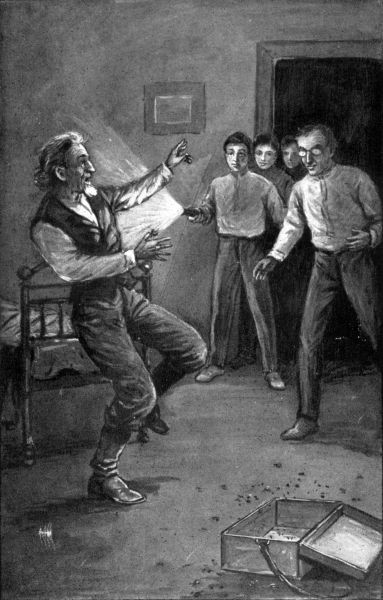
DANCING ABOUT IN FEAR AND PAIN WAS MR. BUTTLE.
“Take these beasts off me or I’ll sue ye!” cried Mr. Buttle. “Take ’em away ’fore they eat my thumbs off! Wow! Jehoshaphat, how they pinch!”