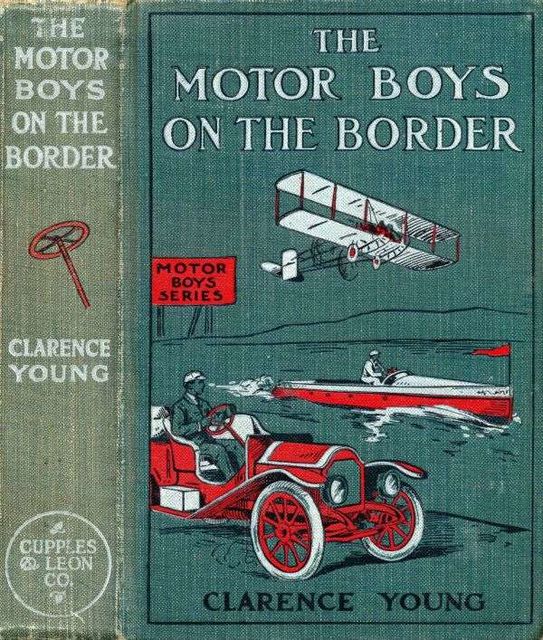



автордың кітабын онлайн тегін оқу The Motor Boys on the Border; Or, Sixty Nuggets of Gold
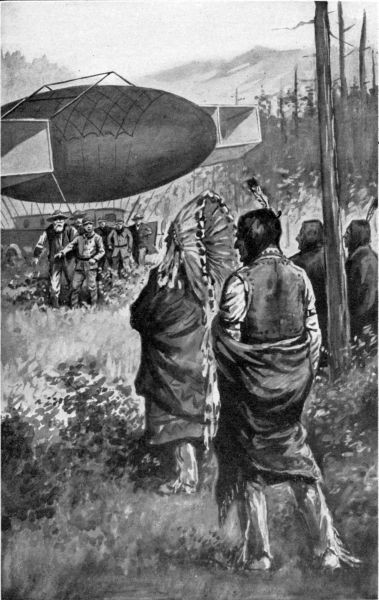
THERE STALKED INTO THE CLEARING A NUMBER OF INDIANS.
THE MOTOR BOYS
ON THE BORDER
Or
Sixty Nuggets of Gold
BY
CLARENCE YOUNG
AUTHOR OF “THE MOTOR BOYS,” “THE MOTOR BOYS
IN THE CLOUDS,” “THE RACER BOYS SERIES,” “THE
JACK RANGER SERIES,” ETC.
ILLUSTRATED
NEW YORK
CUPPLES & LEON COMPANY
BOOKS BY CLARENCE YOUNG
THE MOTOR BOYS SERIES
12mo. Illustrated.
Price per volume, 60 cents, postpaid.
- THE MOTOR BOYS
- THE MOTOR BOYS OVERLAND
- THE MOTOR BOYS IN MEXICO
- THE MOTOR BOYS ACROSS THE PLAINS
- THE MOTOR BOYS AFLOAT
- THE MOTOR BOYS ON THE ATLANTIC
- THE MOTOR BOYS IN STRANGE WATERS
- THE MOTOR BOYS ON THE PACIFIC
- THE MOTOR BOYS IN THE CLOUDS
- THE MOTOR BOYS OVER THE ROCKIES
- THE MOTOR BOYS OVER THE OCEAN
- THE MOTOR BOYS ON THE WING
- THE MOTOR BOYS AFTER A FORTUNE
- THE MOTOR BOYS ON THE BORDER
THE JACK RANGER SERIES
12mo. Finely illustrated.
Price per volume, $1.00, postpaid.
- JACK RANGER’S SCHOOLDAYS
- JACK RANGER’S WESTERN TRIP
- JACK RANGER’S SCHOOL VICTORIES
- JACK RANGER’S OCEAN CRUISE
- JACK RANGER’S GUN CLUB
- JACK RANGER’S TREASURE BOX
THE RACER BOYS SERIES
12mo. Illustrated.
Price per volume, 60 cents, postpaid.
- THE RACER BOYS
- THE RACER BOYS AT BOARDING SCHOOL
- THE RACER BOYS TO THE RESCUE
- THE RACER BOYS ON THE PRAIRIES
Copyright, 1913, by Cupples & Leon Company
The Motor Boys on the Border
CONTENTS
CHAPTER
PAGE
I.
Queer Actions1
II.
A Town Gone Mad12
III.
Disappointment22
IV.
An Unexpected Interruption32
V.
Noddy Nixon Threatens41
VI.
Forming the Syndicate49
VII.
A Night Chase56
VIII.
Marooned63
IX.
Noddy Packs Up75
X.
An Airship Flight84
XI.
Off for the Border92
XII.
The Professor is Missing99
XIII.
A Suspicious Character107
XIV.
In Kabspell117
XV.
Off in the Motorship125
XVI.
A Frightened Settlement133
XVII.
The Blackfeet140
XVIII.
Bear Steaks147
XIX.
On Guard154
XX.
A Night Attack164
XXI.
Into the Depths170
XXII.
A Disappointed Professor177
XXIII.
Watched184
XXIV.
The Luminous Snakes190
XXV.
The Hidden Man196
XXVI.
The Empty Pocket204
XXVII.
A Perilous Search211
XXVIII.
The Sixty Nuggets217
XXIX.
International Complications225
XXX.
A Flight by Night239
LIST OF ILLUSTRATIONS
THERE STALKED INTO THE CLEARING A NUMBER OF INDIANS. “CAN WE GO?” BURST OUT NED. LYING AT FULL LENGTH ON THE GROUND, WAS PROFESSOR SNODGRASS. “THE FIRST OF THE SIXTY NUGGETS!” HE SHOUTED.INTRODUCTION
My Dear Boys:
When Jerry, Ned and Bob returned from an automobile ride one day, and saw a great crowd around the railroad station of their home town, they were somewhat excited. They were made more so when they saw Jim Nestor, the foreman of the mine in which they held an interest, and another Westerner, wildly digging on the tracks. And when they heard the murmurs of “gold,” they did not know what to think.
And from then on they were involved in happenings that did not cease when they set out to recover the sixty nuggets, so strangely hidden on the border. Though the gold on the railroad tracks did not amount to much, the other pocket of the precious yellow metal did, as you will learn in the pages that follow.
In this book you may also read of the search Professor Snodgrass made for some luminous snakes, and how he found them; and I have also taken pleasure in writing for you an account of how Noddy Nixon tried to get away from the motor boys the gold they worked so hard for, and how our heroes braved even the perils of a band of Blackfeet Indians, who had escaped from their reservation.
That you will like this book as well as you have the others of the series, is the sincere wish of
Your true friend,
Clarence Young.
THE MOTOR BOYS ON THE BORDER
CHAPTER I
QUEER ACTIONS
“What’s the matter, Bob, can’t you crank an auto yet?”
“I sure can!” exclaimed a stout lad, who was bending over in front of a big car, laboriously grinding away at the starting handle.
“Then do it,” advised a tall youth at the wheel. “Turn it over good and hard.”
“Yes, go ahead,” put in a good-natured looking chap in one of the rear seats. “We don’t want to stay here all day, even if it is a nice place.”
“All—right—here—she—goes!” panted stout Bob Baker, as he again turned the crank.
There was only the noise of the flywheel spinning around; a sort of cough and wheeze, but no whirr and throb that told of an explosion of gas in the cylinders.
“Oh, if you can’t get her started let me try!” exclaimed Ned Slade, the lad in the tonneau. “I thought you’d had practice enough, Bob.”
“That’s right,” remarked Jerry Hopkins, the lad at the wheel. “Keep at it, Bob, it’ll take off some of that extra flesh.”
“Oh, you——!” began the fat lad, and then he stopped to gaze in some astonishment at his chum, Ned, who had started to leave the rear seat, with the evident intention of trying his hand at the crank. For on Ned’s face there was a curious look as he gazed over Jerry’s shoulder at the switch, just under the overhang on the dashboard of the car. Then a broad grin illuminated Ned’s features, to be succeeded by a hearty laugh.
“Huh!” ejaculated Bob. “I don’t see anything to go into spasms over. If you think it’s so funny come out here and try it yourself. I never saw such a cranky car. It went all right a while ago, and now——”
“It’s all because you don’t know how to crank it—that’s the reason it’s cranky,” began Jerry. “I’ll show you——”
“No—don’t—Oh, ho! Sit still—Oh, me! Oh my! Wait until I get my breath—Oh dear!” and Ned with one hand on the steersman’s shoulder held his own side with the other to help repress his mirth.
“Well of all the——” began Bob, half in anger.
“No wonder he couldn’t crank it!” cried Ned. “You haven’t got the switch on, Jerry. There’s no current—Oh dear! and to think that Bob was breaking his back and never getting a spark——”
“Was that the trouble?” cried Jerry.
“It sure was,” replied Ned, and, stepping on the footboard he reached to the dash, and snapped on the switch which connected the batteries with the spark plug in the cylinder heads. “Now try it, Bob!” he called.
“Not much!” exclaimed the fat lad, with great determination. “I’m done—finished! If you fellows don’t know enough to throw on the switch after all these years of running a car, and then expect to sit there and grin your heads off while I break my back cranking, you’re mighty much mistaken—that’s all I’ve got to say. You may think it’s a joke, but I don’t! I’m through with you,” and turning on his heel, after flashing a look at his two chums, Bob Baker started off down the road afoot.
“Here, where are you going?” called Jerry, after him.
“Home!” was the short answer, “and I’m not going out with you fellows again in a hurry!”
Ned and Jerry looked at one another. It was the first time in a long while that there had been any serious difference among the three chums.
“Oh, come on back!” urged Ned, for he saw that Bob was very much in earnest. “Come on back.”
“Not on your life!” snapped Bob. “I’m through.”
“We didn’t mean anything,” went on Ned, starting after his friend. “But it was so funny to see——”
“Ha! Ha! Joke!” sneered Bob. “If it’s so funny write it out and send it to the humorous column. You won’t get another chance to laugh at me, though.”
“He’s mad, all right,” murmured Ned.
“Looks so,” agreed Jerry. “Oh, I say Bob!” the tall lad went on, “come on back. Honest, I didn’t know the switch was off. Come on back. It’s a good ways to Cresville, and we’ve only just started the run. Come on back, and you can steer, and I’ll crank up. And if we get a puncture Ned and I’ll put on a new tire, and you won’t even have to get out of the car. I mean it!”
The figure, stalking down the road in anger, was seen to hesitate the merest trifle. But Bob did not turn around.
“That almost fetched him,” said Jerry. “Say something, Ned.”
“We’ll stop at the first place we come to, and get a bite to eat, even if it isn’t noon,” shouted the lad who had discovered the disconnected switch. “That ought to do the business,” he added, in lower tones.
It seemed to be, for Bob halted, appeared to be considering the matter at length, and then turned around.
“Does all that go?” he demanded.
“Sure,” chorused Ned and Jerry.
“And about me not having to help sweat putting on a tire?”
“That’s right,” Jerry assured him. Bob came slowly back.
“All the same,” he spoke as he climbed into the tonneau, “it was no fun cranking a car with the switch off.”
“We agree with you,” said Jerry, winking at Ned with the eye concealed from his offended chum. “But it wasn’t intentional,” he added, soothingly, as he went to the crank. “Go ahead, Bob, you can steer if you want to.”
“I don’t know as I want to. If we get a puncture you might blame it on me.”
“All right, then I’ll take the wheel,” went on Jerry, as the motor throbbed and hummed when he had turned the crank, for the car, though a good one, was not a self-starter.
“But everything else goes,” proceeded Bob, as the machine glided smoothly down the road. “And we stop at the first place where we can get sandwiches and ginger ale. I’m hungry.”
“You always——” began Ned, but Jerry stopped him with a nudge in the ribs.
“Keep your foot on the soft pedal,” he advised, in a whisper, for the two lads were on the front seat, with Bob in the rear. “No use getting him ruffled again.”
The three chums had taken advantage of a fine spring day to take a ride in their auto about the country near Cresville, a town not far from Boston. They had not gone far before they came to a delightful spot, where a roadside spring offered a chance to drink, and they took it. In stopping the car, Jerry had thrown out the switch, and when, with their thirst quenched, they wanted to start off again, the incident I have just narrated took place.
But now everything seemed to have been smoothed out, though Bob thought to himself that he had gotten a little the best of the bargain. He felt sure his chums had played no trick on him, in having him crank up without the switch being on, for it frequently had happened before that one of them forgot to make the electrical connection.
“But I get out of that tire work,” thought Bob, as the car swung along; “and they won’t guy me when I want something to eat. I guess we’re even.”
“Going to any place in particular?” asked Ned of Jerry, as the tall lad swung the machine around a curve.
“No, I just thought we’d run out for ten miles or so, and get back in time for lunch. Or we can stop at a roadhouse, and spend the whole day touring if you like. I was going——”
“Look out!” suddenly yelled Bob, for Jerry had turned to speak to Ned, and his eyes were not on the road ahead. “Look out or you’ll go over that dog!”
There was a scurrying in the dust as a yellow cur rushed from a roadside house, directly at the auto. Bob spoke only just in time, for Jerry, with a quick turn of the wheel, sent the car to one side with a dangerous swerve, but avoiding the dog.
The beast, with sharp barks, seemed to enjoy the confusion he had caused. Jerry, with muttered comments on all such dogs in general, and this one in particular, was swinging back into the road again, when there came a sharp hiss of air, and the auto settled slightly on one side.
“Oh, rats!” cried Ned. “A puncture!”
“It was that dog’s fault!” exclaimed Jerry, wrathfully. “I hit that board with a nail in it when I turned out for him. We ought to make the man who owns him pay us for a brand new tire.”
“That’s right,” agreed Ned, while Jerry guided the disabled car beneath a big tree, that they might take advantage of the shade in substituting a new inner tube for the punctured one. The dog, evidently thinking that the lads were stopping to take revenge on him, fled into the house, his tail between his legs.
“Here’s where I watch you fellows work!” exclaimed Bob, with a chuckle.
“All right! What we said goes!” declared Jerry. “Come on, Ned. Get busy.”
The car was soon jacked up, and the shoe taken off by Jerry, while Ned got out a new inner tube and proceeded to partially inflate it ready to slip it in in place of the damaged one.
“Say, this shoe sticks!” said Jerry, who was working hard. “Here, Ned, give me a hand.”
“Can’t for a minute. I’ve got to fill this tube.”
“Aw, say, I’ll help!” exclaimed Bob, who, all the while, in spite of the promise of immunity made to him, had fidgeted while sitting there comfortably while his chums worked. “I can’t be as mean as all that.”
“I thought not,” remarked Jerry, and then, with the help of his fat chum, he soon had the shoe off. The three made short work of changing the tire; and a little later they were on their way once more.
“There’s an eating place!” exclaimed Bob eagerly, as they swung up toward a roadside stand. “We got some dandy sandwiches there once.”
“And you haven’t forgotten it,” chuckled Ned. “All right, I’ll stand treat. Slow up, Jerry.”
A little later the three were drinking cool ginger ale and munching the bread and meat.
“I notice,” said Bob, as he casually took a bite, “that you fellows are eating with about as good an appetite as I have, in spite of the fun you made.”
“Oh, I admit I was hungry,” said Ned, as he held out his glass.
“Same here,” added Jerry. “It was working on that tire, I guess.”
It was nearly noon when they neared Cresville again, after swinging about in a ten-mile circle. They had greatly enjoyed the little trip, and were discussing whether or not they would take advantage of the following Saturday for a motor boat ride, or for a spin in their airship, since the chums possessed both those means of locomotion.
“I vote for the airship,” said Bob. “We don’t have to look out for punctures, and there’s no danger of getting stuck as in a motor boat.”
“Well, I’d like the boat,” said Ned. “But if you want the airship I’m willing. Noddy Nixon is back in town, though, I hear, and if we start flying he’s almost sure to do the same thing, and generally he manages to camp on our trail, somehow. But maybe we can shake him.”
“I guess so,” put in Jerry Hopkins. “We’ll—Hello!” he cried, suddenly interrupting himself, as the car swung around a curve, and approached a railroad crossing. “What’s going on at the depot?” he asked.
“There’s a crowd all right,” asserted Bob.
“An accident, I guess!” exclaimed Ned. “The through train must have just passed along, and hit someone! Put on speed, Jerry!”
The tall lad did so, and the car shot ahead.
“No, there doesn’t seem to be anybody hurt,” spoke Bob. “I can’t see any ambulance. The crowd seems to be watching two men who—by Jinks! What are they doing?” he finished.
“I see ’em,” added Ned. “They seem to be digging between the rails.”
“And yet they don’t look like section hands,” spoke Jerry. “They seem more like Westerners. Look at their big hats!”
“And red shirts,” remarked Bob. “Yet they’re grubbing between the ties for all they’re worth. That’s queer.”
“And see how excited the crowd is,” added Ned.
“Yes, and look at Mr. Hitter, the freight agent!” cried Jerry. “He’s hopping up and down like a hen on a hot griddle. We must see what’s going on!”
“Surest think you know!” agreed Bob. “Maybe it’s a lawsuit against the railroad, and they’re tearing up the tracks.”
With the boys eagerly looking ahead, the auto approached nearer the throng that surrounded two men whose strange actions seemed to fascinate those in the throng. Then Jerry uttered a queer cry.
“Look!” he fairly shouted. “One of those men is Jim Nestor, who is in charge of our mine in Arizona! What can he be doing East? Fellows, there’s something queer going on here!”
CHAPTER II
A TOWN GONE MAD
With a screech of the brakes, the auto came to a stop not far from the throng that surrounded the two men, who were still digging away with sticks between the railroad tracks. The three lads leaped out, wormed their way through the press of persons, and, gaining a place where they could get a better view, looked on in wonder.
“It’s Jim all right,” murmured Bob.
“Then he must have left our mine to shift for itself,” said Jerry.
“Maybe it’s no good any more,” suggested Ned. “Jim Nestor wouldn’t leave that gold mine without some good reason.”
Ned had spoke louder than he intended, and at his words one of the men looked up. A smile illuminated his bronzed face, and he called out:
“By crickey! There are the boys!”
“Jim Nestor!” exclaimed Jerry. “What brings you East? We thought you were at our mine!”
“I just had to come!” replied he who answered to the name of Jim Nestor. “Boys, it’s a queer story, but I’ve got something else on hand just now—me and Harvey Brill here. I’ll be with you in a few minutes, just as soon as we see how far this lode goes,” and he began digging again with his stick between the ties.
And now, may I beg your indulgence for just a moment or two—you, my new readers—while I explain a little bit about the three boys who are to be the heroes of this story? Those of you who have read the previous books in this series may skip this part, as I know you will, but others may care to know a little more about Bob Baker, Jerry Hopkins and Ned Slade.
The three chums had lived for several years in the New England town of Cresville. Bob was the son of Mr. Andrew Baker, a rich banker; Jerry the only son of a well-to-do widow—Mrs. Julia Hopkins; while Ned’s father, Aaron Slade, was a well-known department store proprietor.
The boys’ acquaintance began when they each became possessed of bicycles, and went on trips together. Then they got motor cycles, as related in the first volume of the series, “The Motor Boys,” and, winning a race, they got an auto as a prize.
In their car they went on a tour overland, with a certain Professor Snodgrass, an enthusiastic collector of bugs and insects for various colleges and museums. The professor was quite a character.
After their tour overland, during which many exciting incidents happened, the motor boys traveled to Mexico, discovering a buried city, and came home across the plains, on which trip they discovered the hermit of Lost Lake.
About this time motor boating came much into prominence, and our three heroes, of course, had to have a water craft. How they got one, and made many a trip in it, is told in the book, “The Motor Boys Afloat.” Their voyage on the Atlantic was filled with adventures of moment, and when they went to the strange waters of the Florida Everglades they had trials and troubles as well as a good time.
Their journey to the Pacific enabled them to locate a strange derelict, after considerable hardships.
It was to be expected, with the progress made in navigating the air, that the motor boys would, sooner or later, want a biplane, or some craft that could take them above the earth. In the book “The Motor Boys in the Clouds,” I related how they went on a long trip for fame and fortune, while later, when they went over the Rockies, they solved a strange mystery of the air. Then they traveled over the ocean and made a marvelous rescue in mid-air.
Getting on the wing again, they sought the airship treasure, and in the book that immediately precedes this one, called “The Motor Boys After a Fortune,” I related how the three chums sought to locate a quantity of radium, said to be deposited in the Grand Canyon of the Colorado. Incidentally they located a hut on Snake Island, and rescued a celebrated scientist.
The boys had not been back home very long when the present story opens. I might add that though the lads had many friends they had one or two enemies, of whom Noddy Nixon, a rival airship enthusiast, was one, together with his crony, Bill Berry. Noddy and Bill never lost a chance to do our friends a bad turn.
In one of their many adventures the boys had met with Jim Nestor, an old miner and prospector, and they had been able to help him locate a rich gold mine in Arizona. The boys were given shares in it for their help, and Mr. Nestor remained out West to work the claim, sending the boys their profits at intervals. It can well be imagined how surprised the lads were when they saw the old miner in their home town, engaged in the curious occupation of digging in the dirt between the railroad tracks.
“He must be crazy!” exclaimed Bob.
“What’s he up to, anyhow?” asked Ned.
“Sure, they’re both crazy!” declared a man in the throng about the depot. “They got off the through train a little while ago, and one of them—that big fellow—right away started to dig in the dirt with an old broom handle. Then the other did the same thing, and they’ve been at it ever since. Do you boys know ’em?”
“One of them—Jim Nestor—is the foreman at a gold mine in which we have an interest,” said Jerry. “The other I don’t know, except that Jim said his name was Harvey Brill.”
“Well, they’re both crazy,” said the man.
“That one chap may be—but not Jim Nestor,” declared Jerry, with a positive shake of his head. “Jim knows what he is doing, and I guess his partner does, too.”
“But what are they doing?” asked the man. “Have they lost something?”
“I don’t know,” answered Jerry. “But I’ll soon find out. I’ll ask Jim——”
He was interrupted by a shout from the man designated as Harvey Brill. He dropped his stick, caught up a piece of rock, and cried:
“I knew it! You can’t fool me, Jim, when I see pay dirt! I got a glimpse of it as soon as we hopped off the steam cars. My eyes are good for something yet. Look there!”
“That’s right. There’s the yellow stuff as sure as you’re born!” agreed Jim Nestor, as he critically examined the piece of rock his friend held out to him. “But how in the world do you reckon it ever got here—on the railroad track?”
“Give it up, but it’s here all right. Now we’ll have to get picks and shovels, a pan, a cradle maybe, and wash out some of the gravel, and——”
“Say, do you fellows want to be killed?” yelled Mr. Hitter, the freight, station and ticket agent, as he pushed through the crowd and confronted the two men. “Do you want to be run over?”
“Well, we ain’t just hankering after it, stranger,” said Jim Nestor, slowly. “Were you calculating on having us treated that way?”
“Why the down express is due in another minute!” cried Mr. Hitter. “If you don’t get off the track you’ll be run down! Get off I say!”
“Not just yet, son,” said Harvey Brill, calmly. “This is too good a place to leave. If we’ve got a minute I may turn up another bit of pay dirt. It won’t take me a second to get out of the way of the train, and that leaves me fifty-nine seconds to dig in.”
“But you must get off the track!” insisted the agent. “You can’t dig up the ballast that way. The rails may spread and cause an accident. Get out of the way! There’s the whistle of the train!” and he rushed about, dancing up and down, pushing the crowd off the rails. “Leave the track alone!” he shouted. “I’ll call out the police if you don’t.”
“I guess he’s right, Harvey,” said Jim Nestor, slowly. “We had better postpone our operations a while. Besides, I want to introduce you to the friends of mine we came East to see.”
“All right, Jim, I’m agreeable,” assented the other, as he picked up some more bits of rock. “But I sure do hate to leave this pay dirt.”
“Jim—Jim Nestor!” cried Jerry. “What’s it all about, anyhow? Why are you here? What are you digging on the tracks for?”
“I’ll tell you soon, Jerry,” said the old miner. “We came East on purpose to see you, and just by accident we happened to see signs of gold in the track ballast here. Of course it——”
“Gold!” cried half a dozen in the throng.
“Sure, gold!” put in Harvey Brill. “You can’t fool me on the yellow stuff,” and he held out his hand in which several yellow particles gleamed dully.
“Gold! Gold!” murmured the crowd, eagerly.
“Come on! Tell us about it!” urged Ned.
“Yes, we’ve got our car here,” added Jerry. “Come on to my house, Jim, and give us the story.”
“I’m agreeable,” assented the mine foreman. “Harvey, let me make you acquainted with three of the liveliest boys in the United States,” and he presented Jerry, Ned and Bob.
“Glad to know you,” spoke Mr. Brill. “I sort of hate to leave these diggings,” and he glanced back at the tracks; “but if there’s a train coming I s’pose I’ve got to. But I can come back. It’s as pretty a bit of pay dirt as I’ve seen in some time. Now where’s the gasoline gig?”
“This way,” spoke Jerry, leading his chums and friends through the throng. Mr. Hitter was having trouble. The crowd pressed across the tracks, eager to look at the place where the two miners had been digging.
“Get back! Get back!” cried the agent. “The express is coming!”
He fairly thrust the curious ones off the track as the whistle of the approaching train was heard. Into the auto hurried the boys and their friends and, forbearing to question Mr. Nestor and his acquaintance on the road, Jerry and his chums soon had them at his house.
“Now tell us all about it!” urged the tall lad. “Why are you here, Jim; and what do you want us to do?”
“What do I want you to do?” repeated Jim, slowly. “Well, I’ll tell you. I want you to help my friend here—Harvey Brill—recover sixty nuggets of gold.”
“Sixty nuggets of gold?” repeated the motor boys, in a chorus.
“That’s it,” said Mr. Brill, calmly. “Sixty nuggets, and all of ’em fairly big ones.”
“Are they on the railroad track?” asked Bob.
“No, son, they’re in the hardest valley to get to that I ever saw,” replied the old miser; “and they’re the prettiest nuggets I ever met up with. Sixty of ’em, and they’re on the border between Montana and Canada. I need help to get ’em back again, and Jim here suggested you boys. If you’d like to have a try, and go through some of the wildest country you ever saw, why——”
But Mr. Brill was interrupted by a cry from without. There was a pounding of feet on the porch of the Hopkins home, and a shrill voice yelled:
“Hey, fellows—Bob—Jerry—Ned!—Come on out—big excitement—whole town gone gold-crazy—they’re tearing up the railroad tracks—going to order out the militia—blow up the place with dynamite—people gone wild—taking up the ties—looking for nuggets—Hitter is dancing up and down—he’s sent for the railroad president in a special train—come on—lots of fun—it’s great—let’s get some—come on!”
A silence followed, broken only by the rapid breathing of someone just outside the long windows of the library, opening on the porch, near which the motor boys and their friends sat.
“What’s that—a phonograph broke loose?” asked Mr. Brill.
“I guess it’s Andy Rush,” said Jerry, laughing. “That’s the way he always talks.”
“Well, he wants to look out or he’ll bust!” said the man who had spoken of the sixty nuggets of gold. “I never heard such rapid-fire conversation.”
“Come on!” burst out Andy. “Everybody’s going—they’re wild—tearing up the tracks!”
“What do you suppose he means?” asked Ned.
“Give it up,” replied Bob. “It’s just some of his nonsense I guess.”
“No—look!” cried Jerry, pointing through the window at several men and boys, with picks and shovels over their shoulders, hurrying toward the railroad. At the same time, from the direction of the station, which was not far from Jerry’s house, could be heard a murmur of many voices.
“By Jove!” cried Ned. “Andy is right! The whole town has gone gold-crazy! Come on, fellows!” and he fairly leaped through the long window.
CHAPTER III
DISAPPOINTMENT
Ned’s chums were not long in following him, nor were the two Westerners far behind. Mrs. Hopkins, who had seen her son and his friends come in, wondered much at their sudden departure, with the excitable Andy Rush leading the procession.
“Oh, I just know something is going to happen!” exclaimed the widow. “I’m sure those boys are planning another of their wild trips.”
“Well, never mind,” said a friend who had called. “I’m sure it seems to do them good. But I wonder what it is this time?”
“So do I,” said Jerry’s mother.
In fact the motor boys themselves wondered much why Mr. Nestor had come East, bringing the friend who spoke so mysteriously of the sixty nuggets of gold. But there was no time now to question them, for the present excitement drove all other thoughts from their minds.
“What do you know about it, Andy?” questioned Jerry, as he raced along beside his small acquaintance.
“Not much—I was coming from the store—I had to get a loaf of bread and some——”
“Skip all that,” interrupted Bob.
“Well, I saw a crowd at the railroad—big mob—all yelling—digging at the tracks—some said gold—they want to take up the rails—pull out the ties—move the cars off the tracks—Hitter is wild—he wants the militia——”
Andy had to stop for breath. The boys could hear the excitement as they came nearer the depot. It was evident that the excitable little chap was more than half right.
“Look at the crowd!” yelled Bob. “I should say they were crazy!”
“What does it all mean?” asked Ned.
“I expect we’re to blame,” replied Mr. Nestor. “We started a gold rush, Harvey.”
“Is there really gold there?” asked Jerry.
“There sure is,” declared Mr. Brill. “You can’t fool me on the yellow stuff.”
“We just had a glimpse of it as we got off the train to come and see you,” explained Jim. “Nothing would do Harvey but he must prospect a bit, and we did—with broom handles we picked up.”
“And the gold was there,” declared his friend. “But it isn’t much that I got, though I’m going to look for more.”
By this time they were close to the crowd. Truly it was a frenzied throng. Men and boys were eagerly digging at the cinders and stone ballast between the rails and ties. Some had picks and shovels and others merely sticks, but one and all were tossing out the dirt, and eagerly looking for traces of gold.
“Here! Here! You’ve got to stop this!” cried the agent. “You’ll have the rails all loose, and the trains will run off the tracks. Oh, won’t somebody get the police? Send in a riot call! I want the militia! I’m going to wire the Governor for troops! I’ve sent for the directors of the railroad! This is awful!” and Mr. Hitter raced up and down the track.
Occasionally he would thrust aside some enthusiastic digger, who seemed to be undermining the rails, but this one’s place was immediately taken by another. Up and down the tracks, for some distance, men and boys, and even some girls, were digging away furiously.
“Oh, this is awful!” groaned Mr. Hitter. “The road will be ruined!”
“Not if there’s gold here!” exclaimed one man. “If the tracks are over a mine they can be moved. Better get a shovel, Hitter, and help yourself.”
“You’re crazy!” shouted the agent. “There is no gold here!”
“Yes, there is! Those fellows found some!” declared the man, pointing at Mr. Nestor and his friend.
“Oh, it’s all your fault!” cried the agent, addressing the motor boys and their friends. “You started this wild panic. Tell them there is no gold here!”
“But there is some!” insisted Mr. Brill, taking the yellow grains from his pocket. This seemed to make the crowd wilder than ever, and they pushed and shoved to get to the very place where the miner had found the golden particles.
“Oh, they’ll all be killed!” cried the agent. “Here comes the other fast express! Get out of the way!” he yelled.
The crowd did not seem to hear him, and Jerry and his chums were beginning to get alarmed, when there was a rush from the other side of the track, and several officers, led by the chief of police, dashed up.
“Oh, Chief!” cried Mr. Hitter. “This is terrible! There won’t be any railroad left, soon. Make ’em get back!” and he quickly told of the trouble, and explained about the coming train.
The chief acted without hesitation.
“Come, men!” he cried. “Get back or I’ll arrest you. Officers, draw your clubs!” he cried sternly. “Use ’em if these persons don’t get off the track. You’re trespassing!” he added. “Get back!”
He emphasized his words by shoving away those nearest to him.
“Lend a hand here!” the chief called to the motor boys.
“Come on!” yelled Jerry. “It’s partly our fault. Get ’em back out of the way of the train!”
The two Westerners lent their aid, and, much against their will, the mob got out of the path of the train, which whizzed past a moment later. The agent breathed a sigh of relief.
Many of the crowd had pieces of stone in which they detected yellow gleams. Others had hats or bags full of gravel.
“I’m going to have this tested at a jewelry store!” cried one man, as he rushed off up the street. His example was followed by others, and soon nearly half the crowd had started on a rush for the jeweler’s.
“I wish they’d all go,” said the freight agent. “Can’t you keep ’em off the track, Chief?”
“I’ll try, but it’s all foolishness anyhow. There’s no gold here.”
“There is!” asserted Mr. Brill. “I found some,” and he exhibited the yellow grains.
“But there isn’t any more,” declared Mr. Hitter. “I know there isn’t. How can there be gold where none was ever found before—and in railroad ballast at that? Oh, if you don’t want to see all the tracks torn up, tell these crazy folks that there’s no more gold here!” implored the agent.
“Well, I’ll take a look and see,” agreed Mr. Brill. “And I’m free to confess I don’t see how this gold got here anyhow. Certainly it isn’t the place for it, though some gold quartz might have gotten in the railroad ballast. But I’ll take a look. Come on, Jim. You know pay dirt better than I do.”
“All right,” agreed the mine foreman. The crowd suspended operations while the two made a careful investigation, not only in the place where the first particles had been found, but for some distance up and down the track. While they were doing this, loud voices were heard off to one side of the track.
“Let me past!” demanded someone. “Shove ’em out of the way, Bill. We’ve got as good a right to this gold as any one!”
“It’s Noddy Nixon!” exclaimed Jerry.
“Yes, and Bill Berry is with him,” added Bob.
“They’ve got a wheelbarrow,” said Ned.
It was true. The town bully and his crony, having heard the wild rumors of the gold “strike,” had come with shovels and a barrow to carry away as much as they could of the track ballast.
“Here! You stop that!” yelled Mr. Hitter, as he saw Noddy and Bill shoveling heaps of rock and cinders into the barrow. “You can’t do that—you’ll ruin the roadbed!”
“Don’t let him bother us, Bill,” advised Noddy. “My father owns stock in this road, and I have as good a right to this gold as anybody.”
He went on shoveling. Mr. Hitter raced up and down, calling for help, but no one paid much attention to him. All eyes were centered on the two miners. They made a careful examination, and then Jim Nestor announced:
“Nothing doing!”
“That’s right,” added his friend. “It’s streaked out!”
“What?” cried the throng about them.
“No more gold,” announced Jim. “It was just in that one spot, and it wasn’t much at that. Not more than a few dollars worth. Your road is safe, stranger,” and he nodded to Mr. Hitter.
“Thank goodness!” ejaculated the agent.
“But how did any gold get there?” asked Jerry.
“I don’t know,” replied Mr. Brill. “Some of the ballast might have been loaded in a car that had been out in the mining region, and some quartz might have got stuck in a crack, to fall out when they unloaded here. But that’s all the gold there is in these diggings,” and once more he looked at the particles he possessed.
“What’s that?” cried a fussy old gentleman, who had just come up, having only a few minutes before heard of the odd discovery. “You found gold, and think it came from quartz?”
“That’s my theory,” said Mr. Brill.
“Let me look at what you found,” said the old gentleman, and the miner did so. The old gentleman chuckled. Then he exclaimed:
“Well, I never. If this isn’t odd!”
“What is it?” asked Jerry.
“Why this is gold all right, but it isn’t from any gold quartz. It’s from my gold watch. It fell out of my pocket as I got off the train the other day, and rolled on the track. Before I could rescue it the train started and rolled over it. It was caught on the rails and ground to pieces, and some particles fell in the ballast. That’s where your gold is from. I was in a hurry at the time, and as the watch was not a very valuable one I did not report it to Mr. Hitter, but went off home. I just returned from a trip, and I heard about this excitement. But that gold is from my watch as sure as anything. I recognize a small piece that had my initials on it—see,” and he showed a bit of engraving.
“That’s right,” agreed Jim Nestor, slowly.
“It sure is,” assented his partner. “The gold strike has fizzled out.”
There was a groan of disappointment from the crowd.
“Stung!” cried one discouraged youth.
“Look!” cried Jerry, as he pointed to Noddy Nixon and Bill Berry, wheeling away a big barrow full of ballast, with Mr. Hitter racing wildly after them.
“Let him go,” advised the old gentleman. “He won’t come back after he has that assayed,” and he chuckled.
“I guess not,” agreed Mr. Nestor.
“I hope the sixty nuggets don’t turn out that way,” said Ned, in a low voice.
“Indeed they won’t!” exclaimed Mr. Brill. “I’m sorry I caused such a rumpus, but I didn’t mean to. I saw the gleam of gold as I got off the train, and it always excites me. But those sixty nuggets—they’re as real as heart could wish. Now if you boys want to hear the yarn, I’m ready to tell you, seeing that this excitement has petered out.”
“Indeed we do,” said Jerry, as he led the way out of the crowd.
“And we’ll help you recover the gold, too,” added Bob.
“Indeed we will,” came from Ned. “We were just wishing for some excitement.”
“Well, you’ll get it all right,” was Mr. Nestor’s opinion. “You’ll get it if you reach the border with us and have a hunt for those sixty nuggets of gold. Come on, Harvey, and spin your yarn. I reckoned as how these lads would help us,” and as they once more approached Jerry’s house, while the disappointed crowd filed away from the railroad, they had a glimpse of Noddy Nixon and Bill Berry hurrying with their barrow of track ballast to the nearest jewelry store.
CHAPTER IV
AN UNEXPECTED INTERRUPTION
“Say, fellows, it would be worth while going to see how he takes it,” remarked Ned, with a chuckle.
“How who takes it?” inquired Jerry.
“And takes what?—explanation yourself,” put in Bob, as the three chums, and their two Western friends, paused at Jerry’s front gate. “Who are you talking about?”
“Noddy Nixon,” went on Ned, laughing as he gazed down the road where the bully and his crony could still be seen trundling his barrow of dirt. “I’d like to be at the jewelry store when Noddy hears that what he has isn’t worth a hill of beans,” added Ned. “For of course he’s going to have it assayed. Let’s go watch him.”
Ned seemed as if about to start after Noddy, but Jerry, putting out a quick hand, pulled him back.
“No, you don’t!” exclaimed the tall lad. “It might be some sport to see what a fuss Noddy’ll put up when he finds out he’s been fooled, but it would only be a passing joke, and, if he saw us standing around, laughing at him, he’d get mad and raise a row. Now we don’t want that. We haven’t had a run-in with him in some time, and there’s no use looking for trouble. Let’s pass it.”
“Besides,” went on Bob, “we want to hear about the sixty nuggets of gold. There’s more interest in listening to a yarn about real gold than in seeing Noddy get fooled over something that isn’t gold; eh, Jerry?”
“Of course.”
“Oh, well, if you’re both against me, of course I’ll have to give in,” sighed Ned; “but I sure would like to see the look on Noddy’s and Bill’s faces when they hear that they’ve been stung. They don’t realize it yet, for they were some distance off when the old gentleman explained about it being his watch that caused the lode of gold.”
“That’s right,” put in Mr. Brill. “Curious how I got fooled myself that same way. But at least I knew it was gold, and I was so surprised at finding it in that place that I never stopped to look at the character of it.”
“Me either,” chimed in Jim Nestor. “But if you boys want to hear the story I guess Harvey is ready to tell it, and then, if you’re agreeable, we’ll start after the sixty nuggets of gold.”
“Hurray!” yelled Bob. “That’s great! Off for the border and the golden West!”
“Hush!” exclaimed Jerry, placing his hand on his chum’s arm.
“What’s the matter?” asked the stout lad, looking around.
“Well, there’s no use informing the whole town about what we may do,” went on Jerry, in a low voice. “Besides——” He paused suddenly, and continued—“well, let’s go in and talk it over.”
“Say, there was some other reason why you stopped me,” spoke Bob, as he and the tall lad dropped back of the others. “What was it, Jerry?”
“Well, I didn’t want to mention it before the others, but, just as you spoke, I saw Sim Fletcher walking around the corner, and I’m almost sure he heard what we were talking about.”
“Sim Fletcher—that chap who’s been hanging around with Bill Berry lately?”
“That’s the one.”
“Well, I’m glad you stopped me, then, for I shouldn’t want Sim to know any of our business any more than I would Bill Berry, or Noddy Nixon. But I guess it’s all right so far; isn’t it? I didn’t let out much.”
“Oh, no. I don’t believe any harm was done,” said Jerry, but, at the same time he looked closely in the direction where Sim Fletcher had been last seen.
“Well, boys,” began Jim Nestor, when they were all once more seated in the parlor of Jerry’s home, “I guess we can spin the yarn now without being interrupted by that fellow who talks like a phonograph going at full speed. Are you all ready?”
“We sure are!” exclaimed Ned.
“Well, then, in the first place,” went on the Westerner, with a glance at Harvey Brill, who sat staring about the well-furnished room; “in the first place let me say that I left your mine in good hands. It’s producing well, and the ore is just as high grade as ever. But I simply couldn’t stay there after Harvey told me his story. So I engaged a friend of mine—Jake Masterford—to look after things while I was away—and I know Jake’ll do it as well as I could. So you needn’t worry about the mine.”
“Oh, we aren’t worrying,” said Jerry. “Only it rather surprised us to see you here East, when we thought you were in Arizona.”
“I don’t blame you a bit,” spoke Jim. “And I’ll tell you how it happened. One afternoon, following a fine clean-up, and when I had the gold safely put away and was wondering what I’d have for supper, there come a cloud of dust up the trail, and I thinks to myself here’s someone in a hurry. I unlimbered my shooting iron, having some notion it might be a raid, and I was just going to call to the boys to get ready when I seen it was only one man. Then I knew it was all right, but I was sure some surprised when I recognized my old side partner, Harvey Brill, with whom I used to prospect years ago. I seen Harvey was some excited, and I was, too, when he told me his yarn.
“And here’s where I relinquish the stage and spot light to him,” went on the mine foreman; “them being the proper terms, as I understand ’em. Now, Harvey, spin your yarn.”
“It won’t take long,” said the man who had brought the news of the sixty nuggets of gold. “To begin with, I’m a miner and prospector, and have been ever since I was able to handle a pick and shovel.
“I can’t say that I ever had much luck until lately, and then I sure did strike it rich. I’d gone to Helena, Montana, with a party of other prospectors, and we got so low that we had to be grub-staked. Even that didn’t pan out, and then I cut loose from the others and struck off to the northwest, in the mountains.
“I won’t tell you all the trouble I had, nor what I suffered before I made my strike, as it hasn’t much to do with the story. But one afternoon, when I was plumb discouraged, I happened to dig my pick in a certain place, and when I turned out a stone I saw the yellow gleam. I knew it was gold at once, and I went at the spot like a dog after a rabbit.
“Again, to shorten things up, I kept on digging until I turned out just sixty nuggets of gold—some of good size, and some small, but the lot was easily worth twenty thousand dollars—maybe more.”
“Twenty thousand dollars!” gasped Jerry.
“Whew!” echoed Bob and Ned.
“That’s what,” resumed the miner. “Sixty nuggets of almost pure gold I found.”
“And where are they now?” asked Ned.
“That’s the trouble, son,” said the miner. “They’re hid in a place that I don’t know as we’ll be able to get ’em out of or not.”
“Why?” Jerry wanted to know.
“Because I hid em down in a deep valley, right on the border line between Montana and Canada. It’s the hardest valley to get into and out of that I ever saw. There’s only one trail that I know of, and when I came back on it, after hiding my wealth, a landslide started and I don’t know as anyone will ever be able to get down into the valley again.”
Bob murmured something that sounded like “airship.”
“What’s that?” cried Mr. Brill. “An airship? Well I never——”
“I told you these boys had an airship,” interrupted Jim Nestor. “If that valley’s on top of the ground they can get to it. But go on, let that part go for now. Tell ’em the rest of the story, and why you hid the gold.”
“I’ll shorten it a bit,” resumed the prospector. “As soon as I had my nuggets, I found out that I was being watched and trailed by some of the grub-stakers I had cut loose from. They were after me, and as they were desperate men I realized that they would rob me if I started away with the nuggets. That’s why I hid my gold.”
“But why couldn’t you get a posse—have the sheriff and some of his deputies protect you?” asked Jerry, who thought the man’s explanation a bit queer.
“Well, son, I s’pose I could have done that,” said Mr. Brill, slowly; “but I tell you—I’m a peculiar man, and for some years back a host of poor relations have been depending on me to support ’em. I’m about tired of it, and now that I have struck it rich, if they heard about it, I’d never have any peace. They’d all want to come and live with me, and my sixty nuggets wouldn’t last long with that crowd. So that’s why I don’t want much of a fuss when I go to claim ’em. I want to dig ’em up nice and quiet like, and enjoy my wealth myself.”
“I don’t blame you,” said Jim.
“But couldn’t you have waited until these grub-stakers had gotten out of the way, and then dug up your gold, and got away with it?” asked Bob.
“Son, you don’t know those fellows!” exclaimed the miner. “They’ll hang around that locality for more’n a year waiting for me to come back and give ’em a clew. It won’t do. They’re too sharp. I had to come away without the nuggets, and now we’ve got to fool ’em, and get that gold when they don’t know it. Besides, it’s going to be some job to get into that valley I reckon, even with an airship, though I never saw one of the contraptions.”
“I guess we can manage that part of it,” said Jerry with a smile, as he thought of their fine craft of the clouds. “But what happened when you found you were in danger of being robbed?”
“What happened? Why, I made up my mind I needed help, and I at once set out to hike it to my friend Jim Nestor. I knew where he was, having had a letter from him. I knew he could advise me. So I left the sixty nuggets of gold hidden near the border, and went for him. Then he——”
“I’ll tell the rest,” interrupted Jim, with a grin. “As soon as I heard Harvey’s story,” the foreman resumed; “I thought of you motor boys at once. ‘They’re the chaps for us,’ I said. ‘Let’s go East,’ and East we came and here we are. Now do you boys want to have a try for it?”
“Do we?” cried the three in a chorus, while Jerry added: “We sure do!”
“That’s what!” cried Ned and Bob.
“But do you think you can find this valley again?” asked Jerry.
“I’m sure I can,” said Mr. Brill. “It isn’t easy to locate, but there’s one curious thing about it that I never saw anywhere else, and that is there are a curious kind of luminous snakes in it—snakes that shine at night. I never——”
“What’s that?” suddenly interrupted a voice at the parlor door. “Luminous snakes? Snakes that glow with phosphorus? Do you mean that? Oh, my dear man, let me ask you to be careful! Do not, I beg you, do not disappoint me! Luminous snakes! Oh, is the ambition of my life to be realized?” and there rushed into the room a little man, with a very bald head, and a pair of very large spectacles over his bright eyes. He strode up to Mr. Brill, and grasped him by the arm.
“Say that again!” the little man implored. “Tell me about the luminous snakes!”
“Wha—what—who are you?” asked the miner, shrinking back as though he feared a lunatic had attacked him.
“Professor Snodgrass!” exclaimed Jerry. “We might know he’d be on hand when a new kind of bug or reptile was mentioned!”
CHAPTER V
NODDY NIXON THREATENS
Professor Snodgrass continued to gaze steadfastly at the astonished miner, still keeping hold of his coat. Then over the face of the little bald-headed scientist there came a change. Into his eyes there shot a gleam of joy.
“Stand still!” he commanded, though Mr. Brill was too much startled to do anything in the line of motion. “Don’t stir!” went on the professor. “I’ll have him in a minute. It’s on your neck! Oh, if only it doesn’t hop off! Easy now! There! I have it!” and with a quick motion he removed some insect from the coat collar of the miner. The latter moved quickly back and seemed about to bolt from the room.
“Wha—what am I up against?” he asked. “Is he crazy—or am I? What is he after, anyhow? Have I got bugs on me?”
“You did have, my dear man,” said the professor, calmly, as he took out a small box, with a glass top, under which he imprisoned his prize. “You were carrying about with you a very rare specimen of a jumping fly—something I have been hoping to capture for years. Now I have the little beauty. Oh, you can’t get away!” he added, as the insect leaped against the glass. “I have you safe.”
“Is—er—am I—what’s it all about, anyhow?” cried the miner, looking from one to the other.
“It’s all right, Harvey—it’s all right,” said Jim Nestor soothingly, for he knew the professor of old. “Mr. Snodgrass collects bugs and things for scientific purposes. He just found one on you, that’s all.”
“A jumping fly—excilio muscarium—it might be Latinized,” explained the scientist. “A very rare specimen. I am exceedingly obliged to you.”
“Oh—Oh, you—you’re welcome,” stammered Mr. Brill. “I hope I haven’t any more things on me,” and he looked himself over as well as he could.
“No more,” said the professor, aiding in the search. “I wish you had. But what is this I heard about the luminous snakes?” he asked. “Snakes that shine at night—illustris serpensus as they could be called. Many years have I longed to get such a specimen, and now, unexpectedly, I get on the track.
“I might explain,” he went on, turning to the boys, “that I have been sent out by a Boston museum to look for a new kind of blue lizard, but I can combine my search for that with the luminous snakes—the latter being much more valuable. I came to Cresville, thinking perhaps you boys might be going off on some expedition, as you frequently are, and I proposed to join you to look for the blue lizard. I came directly to your house, Jerry, since your mother has been so kind as to give me a standing invitation, and, just as I enter I hear—‘luminous snakes!’ Oh, how I rejoiced! This has indeed been a fortunate day for me!” and he looked at the jumping fly in his little box.
Mr. Brill was less excited now, since Jim Nestor had, in a whisper, explained more about the talented and kind professor, whose only hobby was bugs and reptiles.
“Tell me more about the snakes,” urged the scientist.
“They were only casually mentioned,” said Jerry, and briefly he related what is already known to my readers about the visit East of the two Westerners, and the curious train of events that had followed.
“And are you going after the sixty nuggets of gold?” asked the professor, eagerly.
“We hope to,” spoke Bob, while the chums nodded.
“Then may I go along to look for the luminous serpents?”
“Of course!” exclaimed Jerry. “But we’ll have to put this up to the folks,” he added to his chums. “I hope my mother will let us go, and——”
“Oh, I’m sure my folks won’t object,” said Bob, while Ned nodded to show that he, too, thought he could easily gain the necessary consent.
“Then the thing to do is to tell them about it,” went on Jerry. “Professor, you know where your room is—the same one you always have. Jim, I’m going to put you and Mr. Brill up here, and maybe——”
“We were calculating on going to a hotel,” said the mine foreman. “We’re not exactly used to plush carpets on the floor, and all that sort of thing.”
“Oh shucks!” exclaimed Jerry. “You’ll stay here. Besides, I think the hotel is over-crowded, anyhow. We’ve got lots of room. I’ll bring mother in and introduce you to her, and then we’ll leave you for a while. Dinner will soon be ready.”
“Dinner!” exclaimed Mr. Brill. “Why it’s long past noon. Besides we had a snack on the train—me and Jim.”
“We call supper dinner here,” explained Jerry, with a laugh. “There’s no sense in it, as far as I can see, but we always have dinner at night.”
“And breakfast at noon?” asked Mr. Brill.
“No, that goes by its regular name, but the noon meal is lunch, here in the East.”
“I don’t care what they call ’em, as long as there’s something to eat,” said Bob, with a sigh, at which they all laughed.
Mrs. Hopkins came in, and soon made the two miners feel at home. They were shown to their rooms, and the professor to his.
“Well, Jerry, what is it this time?” asked his mother, with a smile.
“Sixty nuggets of gold, and some luminous snakes!” he exclaimed.
“Oh, what boys!” cried Mrs. Hopkins. “There, I’m not going to listen to a thing about it now. I’ve got to see about dinner.”
“Then we’ll talk it over at the table,” proposed Jerry, as his mother hurried away to look to the comfort of her unexpected guests. “For we’re bound to go.”
“That’s right,” exclaimed Bob.
“Now, fellows, I’ll tell you what we’ll do,” suggested Jerry. “We’ll go to the station and get the baggage of the two miners, and then it will be nearly dinner time. My! how this day has passed! Come on, we’ll run down in the car.”
As they were about to enter it there was a rush of feet down the street, and a shrill voice burst out with:
“You’d better look out—he’s awful mad—says he’s going to fix you—blow up the place—have you arrested—sent to jail—he’s raving—completely fooled—you’ll soon see him—Oh my! wow!”
“What’s the matter now, Andy?” asked Jerry, turning to see the little chap panting from a run, and from his flow of words. “Is it a mad dog, or a runaway horse?”
“It’s Noddy Nixon!” gasped Andy. “He—he——” but words failed him, and he could only make motions with his lips.
“Oh, Noddy!” exclaimed Jerry. “Here, Andy, hop in and we’ll see if we can’t catch your breath for you,” and he cranked the car while the others took their seats.
They had not progressed far down the street before, near the jewelry store toward which he had gone, they saw Noddy Nixon. Beside him was Bill Berry, wheeling a barrow load of dirt, and the looks on the faces of the two showed anger and disappointment.
“Slow up, Jerry,” said Ned, in a low voice, and the tall lad did so.
Noddy Nixon, catching sight of them, said something to Bill, who stopped. Then the bully, shaking his fist at the three chums, exclaimed:
“I’ll fix you for this, all right!”
“Fix us for what?” asked Jerry, innocently.
“For playing that trick on me. You knew there wasn’t any gold there, but you pretended there was, and I dug up a whole lot of worthless dirt. Bah! I’ll fix you for it!”
“Wasn’t there any gold in your dirt, Noddy?” asked Ned, smiling.
“No, and you know there wasn’t!” snapped the bully. “You made me and Bill do a lot of work for nothing. But I’ll get square with you, and those two men. I know Jim Nestor—I’ll fix you!”
“Look here!” cried Jerry, not willing to take any more abuse. “We had no more to do with your digging up the railroad track than the man in the moon. You fooled yourself. There was gold on the track, but it came from a watch that was run over. We didn’t know it until a little while ago. If you’re so foolish as to cart off cinders, and think they’re gold, that’s not our fault.”
“That’s all right! I’ll fix you!” growled Noddy. “Go on, Bill. I don’t want to talk to ’em, but I’ll get square, somehow!”
“Be careful it isn’t in the same way when you took the Comet—our airship—and had to walk home,” warned Ned, referring to something that had happened when the motor boys went after a fortune of radium in the Grand Canyon. Noddy and his cronies had overreached themselves that time; but even then, Jerry and his chums had saved the bully from the hut on Snake Island.
“That’s all right—I’ll fix you!” threatened Noddy. “Come on, Bill.”
“What’ll you take for that load of dirt?” taunted Bob, but Noddy did not answer.
“Better let him alone,” advised Jerry, as he started the auto again.
“Think he’ll make trouble?” asked Ned.
“Oh, he might try.”
“Ha! Ha!” laughed Andy Rush. “He was fooled all right. I was at the jewelry store when he took the dirt in. He said it was full of gold, and he asked the clerk how much he’d give for it. ‘Get out of here with that trash!’ the clerk yelled, and when Noddy spilled a lot of it on the floor, and on a lady’s dress, Mr. Smith, the proprietor, was so mad that he shoved Noddy and Bill out. Then Noddy fairly raved and I ran to tell you. I thought he might do you some harm.”
“Much obliged,” said Jerry, to the little chap. “I guess we can handle Noddy,” and yet Jerry felt a vague uneasiness as he thought of the sixty nuggets of gold, and recalled that Sim Fletcher might have overheard something about them.
CHAPTER VI
FORMING THE SYNDICATE
“Well, I guess they’ll come to a decision to-day,” remarked Bob Baker, as he tilted back in his chair, and looked across at his two chums, Ned and Jerry.
“I’m sure I hope so,” said Jerry. “For if we go after that gold we’ll want some time to prepare, and get the airship in shape.”
“Are you going in the Comet?” asked Ned.
“No—at least not all the way there. That’s as far as I figured out. Of course we could make the whole trip in her if we wanted to, but I thought it would be better to ship her to—say Kabspell, put her together there, and then all get in and have a try for the valley of gold.”
“That wouldn’t be a bad scheme,” agreed Bob. “We could travel by railroad, I suppose, and if they have dining cars on the train——”
“Oh, you and your dining cars!” cried Ned. “Wouldn’t you get enough to eat if we took the airship?”
“Well, I might, but I have to do most of the cooking, and then, it’s rather cramped. You can’t really enjoy a full meal on board.”
“And Bob always wants a full meal,” laughed Jerry.
It was several days after the arrival of the miners, and the time had passed quickly. The chums had assembled at Bob’s house to talk matters over, and, in fact, they had talked about little else than the sixty nuggets of gold ever since hearing of them.
Jim Nestor and Harvey Brill had been made comfortable at the Hopkins home, as had Professor Snodgrass. The latter at once began roving about, as he always did, looking for new and strange insects, while the two Westerners went about town, Jim to call on some friends he had made during a previous visit.
“Yes, we’ve put it up to the folks now, as to whether we can go or not,” went on Ned.
“And they promised to have an answer for us to-night,” added Jerry.
“But I wonder why they wanted to have a conference with Jim and his friend again?” inquired Bob. “That’s twice they’ve held secret meetings when they didn’t let us in. Can it be that this thing isn’t going to pan out?” It was a fact that, following the information given them by their sons, Mrs. Hopkins, Mr. Slade and Mr. Baker had been in frequent communication, and had been closeted with the two Westerners.
“Oh, I guess it’s all right,” said Jerry. “There’s no fake about Harvey Brill; anyone could tell that. And as for Jim Nestor, we all know him. But I guess the folks think it’s a bit dangerous, on account of those plotting grub-stakers, and they want to see if there isn’t some safer way to get the gold.”
“Well, I hope they let us go,” spoke Bob, with a sigh. “I always get such a good appetite when I travel!”
“Hit him, Ned!” begged Jerry; but the stout lad quickly got out of reach.
“We’ll soon know,” remarked Jerry, after a bit. “Let’s go down to the river, and look over the motor boat. I promised Jim and his friend a ride in it, and we’ve got time before dinner.”
“All right,” agreed his chums; and soon they were tinkering at the motor, which needed some slight adjustments.
“I say though,” questioned Bob, as he paused with a bit of oily waste in his hand; “if we do go, what about school? The term doesn’t end for three or four weeks.”
“Oh, we can easily cut it, and make it up in the Fall,” said Ned, quickly. “Besides, if we want to, we can get Professor Snodgrass to coach us.”
“Not if he gets on the trail of the luminous snakes,” declared Jerry, with a laugh. “He’ll want to hunt for them all the while, for Mr. Brill said he didn’t see very many—just a few in the valley—and they may take all the professor’s time.”
“Well, we can take a chance,” said Ned. “Say, Bob, wipe that smudge off your nose.”
“I will. Thanks! There’s one on your ear.”
“I guess we can clean up,” announced Jerry. “She’ll do.”
They returned to Bob’s house, and a little later the whole party, including Mrs. Hopkins, Mr. Slade, Mr. Baker, and the two Westerners, were gathered about the table.
“I guess we can go, all right,” whispered Ned. “Dad looks as though he’d consented.”
“I hope so,” answered Jerry, for the grown folk had been in conference with the miners just prior to the announcement of the meal.
“Well, boys,” said Mr. Slade, after a pause, “I don’t see the necessity of keeping you in suspense any longer. We have decided that——”
“Can we go?” burst out Ned.
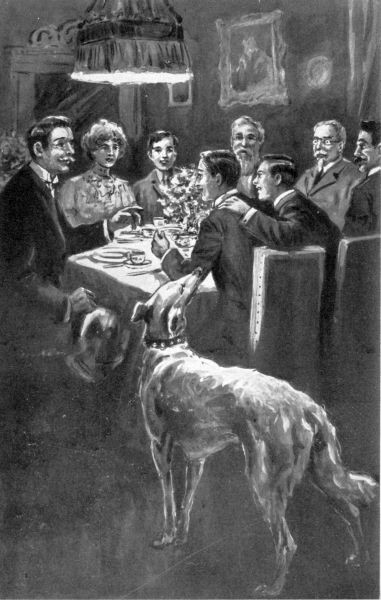
“CAN WE GO?” BURST OUT NED.
“Wait a bit, son,” advised his father. “There are one or two matters to be explained. You did not hear, did you, that your friend Mr. Brill expects to buy a valuable piece of mining property near the one you are interested in, out in Arizona?”
“No, he didn’t tell us,” said Jerry.
“Well it’s true,” said the prospector. “I didn’t mention it because I had so much else on my mind. But I got a chance to secure an option on a mine not far from yours. I can get it cheap, for the owners are getting discouraged about it, but Jim and I figured on a new way to handle the ore. But I’m afraid, unless I can locate my sixty nuggets of gold, that I’ll have to let the proposition go.”
“Why?” inquired Ned.
“Because I haven’t the money to take it up. I paid out two hundred dollars—nearly all the money I had in the world except my sixty nuggets—for a mere chance to buy an option inside of a month.
“The option itself will cost me ten thousand dollars, and if I get that it means that I have the right, within another month, to buy the mine for forty thousand dollars. Now I can swing half of that, for my nuggets are easily worth twenty thousand.”
“And I promised to take the other half interest,” said Jim. “But just at present my money is all tied up, and so I can’t advance Harvey the necessary ten thousand to get the option.”
“And if I don’t close, and take that option in a few days, I’ll lose the mine,” went on Mr. Brill. “And I hate to do that for I know it will pay. I did think I could get to my nuggets in time, but now I see I can’t, and so I guess the mine will have to go to somebody else.”
“Unless you can raise the rest of the ten thousand dollars,” put in Mr. Slade.
“Exactly,” spoke the miner.
“Well,” went on the department store proprietor, “we have talked the matter over,” and he indicated Mrs. Hopkins, the rich widow, and Mr. Baker, the banker. “We have decided that it would be too bad to lose the mine, and we have also agreed that you boys may make the trip after the nuggets—but——”
“Hurray!” yelled Bob, Ned and Jerry in a chorus.
“Wait!” exclaimed Mr. Slade, holding up his hand. “I’m not done yet. If we advance the necessary ten thousand dollars, as a syndicate of three, to secure the option, will you agree to reimburse us when you get the nuggets, and take possession of the mine?” he asked of Mr. Brill.
“I sure will!” cried the prospector. “I’ll sign any kind of paper you like.”
“And I will too!” declared Jim Nestor.
“Well, we thought you would,” went on the merchant; “so I had a contract drawn up. We have investigated your story,” he said to the prospector, “and think it is all right. We will let the boys have a try at finding the hidden nuggets.
“But mind you!” he exclaimed, becoming serious, and looking at the three chums, “it’s up to you boys now to find those nuggets, and keep ’em after you find ’em, or we’ll lose the ten thousand dollars we advance. You’ve got to find that gold!”
“And we’ll do it!” cried Jerry.
“We sure will!” exclaimed Bob.
“When can we start?” Ned wanted to know.
“Just as soon as the papers can be prepared,” answered his father. “Remember this trip isn’t all for fun. There are grave responsibilities attached to it, for, though the ten thousand dollars will be advanced by the three of us, still none of us wish to sustain a loss. So—find those sixty nuggets!” he finished, with a smile.
“Oh, we’ll get ’em—if those other fellows haven’t located ’em; and I don’t believe they have,” declared Mr. Brill.
“Well, boys,” began Mr. Baker, “now that is settled I think we can——”
He was interrupted by a rush of feet on the porch, and a shrill voice cried out:
“Hey, Bob! Jerry! Ned! Come on! Noddy Nixon is running off in your motor boat!”
CHAPTER VII
A NIGHT CHASE
“Who’s that?” cried Jim Nestor.
“The rapid-fire chap!” exclaimed his partner.
“That’s right—It’s Andy Rush,” declared Bob.
“Don’t stop to talk, Chunky!” fairly shouted Jerry, giving his stout chum the nickname sometimes applied to him. “Get a move on! If Noddy Nixon is trying some more of his tricks we’ll stop him short.”
“That’s what!” cried Jim Nestor.
“I’m with you,” added Harvey Brill.
By this time Jerry had reached the hall and caught up his hat. His example was followed by his chums and the two Westerners. As for Mr. Baker and Mr. Slade they sat back helplessly in their chairs.
Mrs. Hopkins looked alarmed at first, and then with a resigned air said:
“Oh, well, there’s no use worrying. Noddy and the boys are having one of their periodical outbreaks.”
“That young scamp ought to be sent out of the country,” declared Mr. Baker.
Meanwhile Jerry and his chums had reached the porch, where they found Andy Rush awaiting them.
“When did it happen?” demanded Bob.
“Did you see him?” inquired Ned.
“Where did he go with our boat?” came from Jerry.
“Up the river!” panted the small chap, still breathing hard from his running and shouting. “I happened to come past the dock—I saw someone down there—it was dark—couldn’t make out who it was—thought it was you fellows—I yelled—wanted a ride—no answer—thought that was funny—ran down—just in time to see Noddy and Bill Berry start off—wow!”
“What did you do?” asked Ned.
“Told Noddy he’d better not take your boat—said I’d tell you.”
“What did he say?” Bob asked.
“Just laughed and put on more power. Better hurry, if you want to catch him!”
“Of course we do!” asserted Ned; “but how can we if he has our boat, a good start and is heading up stream? We’d better tell the police——”
“Police nothing!” snapped Jerry Hopkins. “We’ll attend to this case ourselves!”
“That’s the way to talk!” exclaimed Mr. Nestor. “And when we get hold of that Noddy Nixon we’ll make him walk Spanish!”
“But it’s dark,” objected Bob. “We can’t see him, and besides, we have no other boat!”
“Come on!” cried Jerry shortly, as he raced toward the street. “Never mind the dark—we can get a lantern.”
“But a boat?” asked Ned.
“Down at the club house!” said Jerry, tersely. “We’ll borrow one of the craft—I guess they won’t mind. We’ve got to get our boat!”
“I’m on!” yelled Ned, as he raced beside his chum and Andy Rush, Bob, being heavier, brought up the rear with the two men, who were not used to running. However, all made fair time.
Jerry led the way toward the river. The motor boys had their own private boathouse, where their craft, the Dartaway, was kept. This was not their original motor boat of that name, for their first boat had met an untimely fate in a wreck, as my old readers know. But the lads had kept the name, and had bestowed it on a much larger and finer boat which they now owned.
“What do you suppose he took our boat for?” asked Ned of Andy, as they raced on.
“Just to be mean,” declared the small chap.
“His own was probably out of commission,” put in Jerry. “It usually is, and I guess he wanted a ride, so he took ours.”
“He may damage it,” came from Ned.
“It would be just like him to,” asserted Andy. “He doesn’t care where he runs with a boat or an auto.”
“No, nor an airship either,” said Jerry. For Noddy, following the example of the motor boys, had managed to acquire a craft of the air, as well as one that skimmed over the water. He also owned an automobile.
“Think there’ll be any boats at the club house?” asked Ned, as they neared the river.
“There usually are at this time in the evening,” said Jerry. “We’ll confiscate one if we have to.”
During the past year the Cresville Athletic Club, to which our heroes belonged, had branched out into aquatics, and had built a fine boathouse on the river for the use of such of its members as had motor boats. As Jerry said, there were usually one or more such craft at the dock these Spring evenings.
It was now quite dark, for dinner, at which had been talked over the plan for getting the sixty nuggets of gold, had been somewhat protracted, and night had fallen when Andy Rush made his startling announcement.
“There are two boats!” cried Ned, as he and Jerry, in the lead, came in sight of the club house.
“Yes, one is Mr. Wakefield’s Iris,” said Jerry, who knew every boat in the club. “And the other is Mr. Wood’s Eel.”
“Which one’ll you take?”
“The Eel, I guess. She’s faster, though not so easy to handle. Pile in! Do you see anything of him?”
“Yes, there he is, just going up to the reading room,” spoke Ned, for there was a separate building from the boathouse where the club members could read, or get a light lunch. “Shall I call to him?”
“No, just run up and explain things to him,” suggested Jerry. “I’ll be getting his boat in shape for the chase. I’ll have to light the lamps and see if there’s gas enough. Andy and Bob will help me. We’ll be ready to start when you come back. I know Mr. Wood will let us take the Eel.”
Ned raced off to catch the club member, and quickly explained what was wanted. Mr. Wood was an enthusiastic motorist, and had taken an interest in our heroes ever since they rode their first bicycle race under the club auspices, and had won motorcycles.
“Take my boat?” he cried. “Of course you may! She’s full of gasoline and all ready for a fast run. Go as far as you like! That Noddy Nixon again; eh? You fellows will have to teach him a lesson!”
“We have, but it doesn’t seem to do much good,” complained Ned, as he turned back to rejoin Jerry, who was busy getting the Eel in shape for the pursuit.
By this time Mr. Nestor and his partner, together with Bob, had caught up with the others. Andy was helping Jerry light the port, starboard and stern lights, as well as the white one in the bow.
“What’s up?” demanded Mr. Nestor.
“Going to start the stamp-mill going?” asked his friend.
“We’re going to catch the fellow that has our boat!” explained Jerry. “Get aboard.”
They got into the Eel, several club members coming down to the dock to learn the cause of the excitement.
“I hope you catch him!” exclaimed Mr. Wakefield, the club’s athletic instructor. He had no love for Noddy Nixon.
With Jerry at the helm, Ned cranked up, spinning the flywheel over. At the first try the Eel responded, and, with a series of powerful explosions in the cylinders, started away from the dock. Jerry headed up stream, in the direction Andy said Noddy had gone.
“Though he may have turned around again and steered for the lake,” said Ned. “Better go a bit slow, Jerry, until you get some trace of him.”
“I will. I’ll light the search lamp, too, and we may be able to pick him up when quite a way off. We’ll stop at the next club house to inquire if he passed.” For there was another boating association about five miles up the stream.
The search light sent out an intense white gleam over the dark waters of the river as the night chase was begun. The Eel glided ahead not unlike her namesake, and the motor boys, and their friends, with eager eyes, looked forward for the first glimpse of the bully who had their craft.
“This is some traveling!” exclaimed Jim Nestor admiringly, as the speed increased.
“It sure is,” agreed his partner. “It beats a pack mule or a burro!”
“Wait until you ride in our boat,” said Ned, with proper pride. “We’ll take you on a little trip before we start for the border.”